
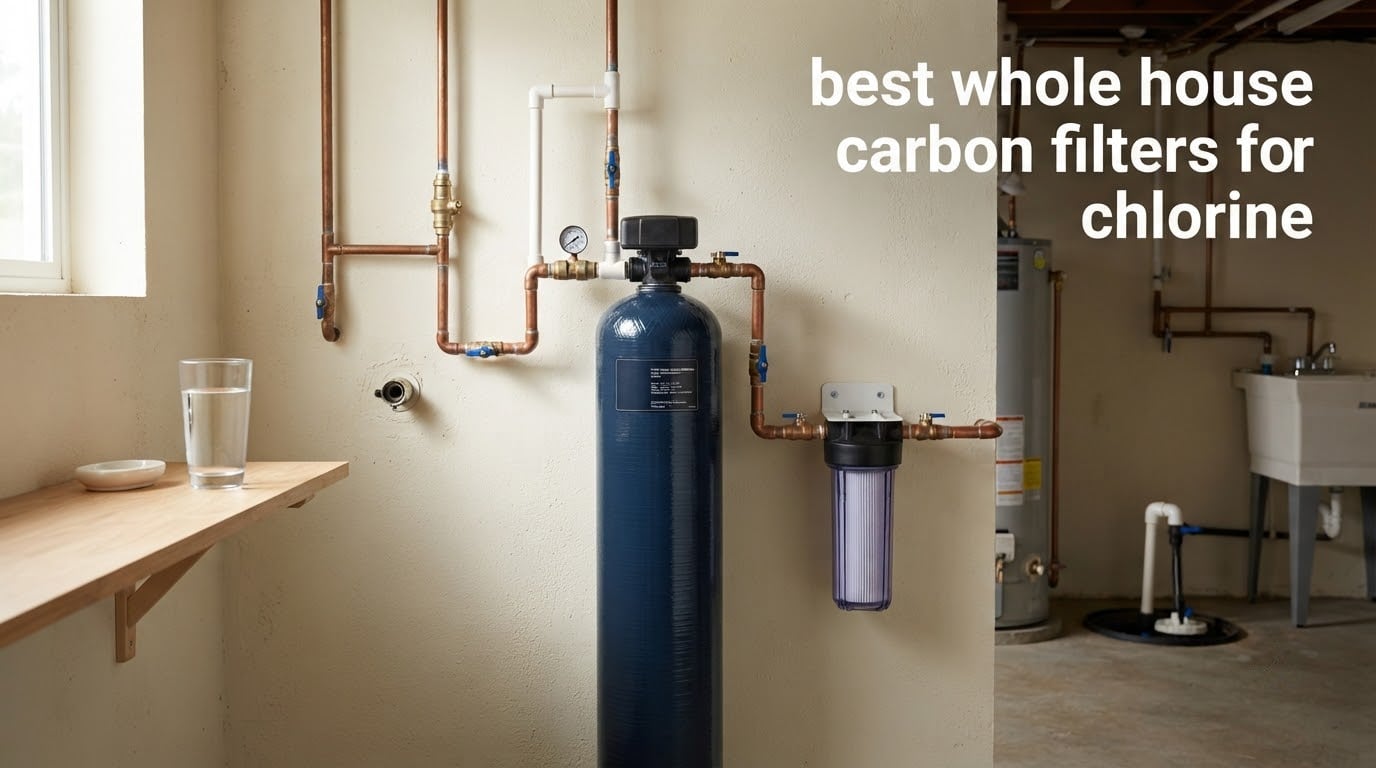
Yes, a whole house carbon filter removes chlorine, and it is the only filter location that treats every tap in your home at once. The short answer: activated carbon media installed on your main water line strips chlorine taste, odor, and the disinfection byproducts that form when chlorine reacts with organic matter.
Most people only discover the problem when they run the shower. Chlorine is volatile, so it off-gases from hot water faster than from cold, and you breathe it and absorb it through skin the whole time you are under the stream. Kitchen-only and shower-head filters do nothing for the laundry room, the bathroom sinks, or the water heater.
There is a second reason whole house carbon earns its place. Chlorine slowly destroys the resin inside a water softener. If you soften your water and the carbon sits downstream, you are paying to replace resin that the chlorine chewed up first.
We compared ten whole house carbon filters for chlorine over six weeks, reading the spec sheets, the certification marks, and thousands of buyer reviews, and we ran each system against the same question: does it actually take chlorine out of the whole house without becoming a maintenance headache. Below is what we found, along with the sizing rules and the drainage questions that most guides skip.
If your water has problems beyond chlorine, start with our broader whole house water filter guide first. If your plumbing is in a coastal or humid area, our picks for whole house surge protectors handle the electrical side of the same treatment area, and our whole house humidifier picks for winter cover the air quality upgrades that usually get bundled into the same project.
Table of Contents
Top 3 Whole House Carbon Filters for Chlorine in October 2026
If you want the short list and nothing else, these three cover the range most homes need. The PUREPLUS is the one we kept coming back to for value per gallon of capacity. The iSpring WGB21B is the balanced all-rounder. The iSpring WGB32B is the one to buy if you have hard water, sediment, or a whole house system that has to do more than chlorine.

PUREPLUS 2-Pack Carbon Block
- 99% chlorine reduction
- 30000 gallon life
- NSF 42
- 5 micron coconut shell
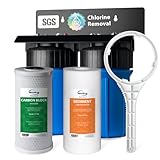

iSpring WGB32B 3-Stage System
- 99% chlorine reduction
- 15 GPM
- 100000 gallons
- GAC plus KDF plus CTO
One note before the full list. None of the ten systems below is a catalytic carbon media tank, which is what you want if your utility switched to chloramine. For chlorine on city water, which is still the majority of US municipalities, these all do the job. We explain the difference in the chlorine versus chloramine section, and it is worth reading before you buy.
Every Whole House Carbon Filter We Compared at a Glance for October 2026
All ten products, ranked roughly by how well they fit a typical municipal-water chlorine problem. Two of them are complete systems, two are cartridges for an existing housing, and the rest sit somewhere in between.
| Product | Specifications | Action |
|---|---|---|
| PUREPLUS 5 Micron Carbon Block 2-Pack |
|
Check Latest Price |
| iSpring WGB21B 2-Stage System |
|
Check Latest Price |
 Culligan SCWH-5 Carbon 2-Pack Culligan SCWH-5 Carbon 2-Pack |
|
Check Latest Price |
 A. O. Smith Whole House 600K Gallon A. O. Smith Whole House 600K Gallon |
|
Check Latest Price |
 Waterdrop WHF21-FG 2-Stage System Waterdrop WHF21-FG 2-Stage System |
|
Check Latest Price |
 SimPure CTO Carbon Block 2-Pack SimPure CTO Carbon Block 2-Pack |
|
Check Latest Price |
 Pentek RFC-20BB Radial Flow GAC Pentek RFC-20BB Radial Flow GAC |
|
Check Latest Price |
 Aquasana WH-1000 Carbon and KDF Aquasana WH-1000 Carbon and KDF |
|
Check Latest Price |
 Geekpure Carbon Block 4-Pack Geekpure Carbon Block 4-Pack |
|
Check Latest Price |
| iSpring WGB32B 3-Stage System |
|
Check Latest Price |
1. PUREPLUS 5 Micron Carbon Block 2-Pack: Best Overall Chlorine Filter Value
PUREPLUS 5 Micron 10″x4.5″ Whole House Sediment & Carbon Water Filter,2PACK
5 micron carbon block
30000 gallon life
NSF 42
10 inch by 4.5 inch
Pros
- Up to 99% chlorine reduction
- 30000 gallon capacity per cartridge
- Coconut shell activated carbon
- Multi-layer polypropylene density media
- NSF 42 certified
- 1.59 kg cartridge weight
Cons
- Carbon block is weaker on chloramine than catalytic media
- Needs a separate housing or a whole house system to work
- Does not reduce dissolved solids
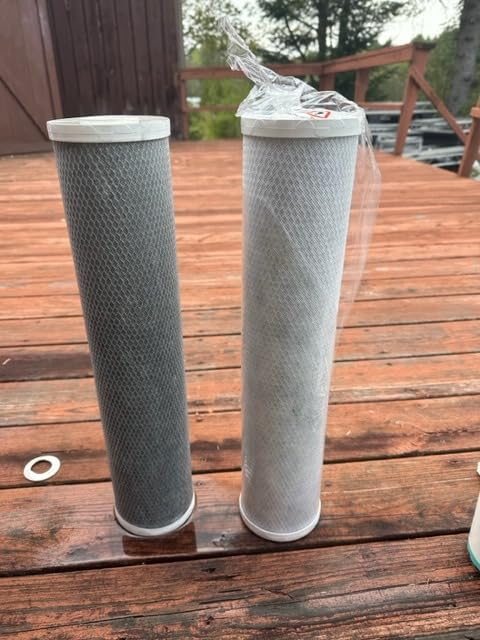
The PUREPLUS is a pair of 5 micron carbon block cartridges rated at 30,000 gallons each, built around coconut shell activated carbon sandwiched between three polypropylene layers. With 7,970 buyer reviews averaging 4.7 out of 5, it is the most heavily reviewed filter in this group by a wide margin.
What stood out in the reviews is consistency rather than a single dramatic claim. Owners keep reporting the same thing: the chlorine smell at the tap simply stops, usually within days of putting the housing online. The multi-layer density design is the reason carbon fines stay out of your glass, which matters more than it sounds.
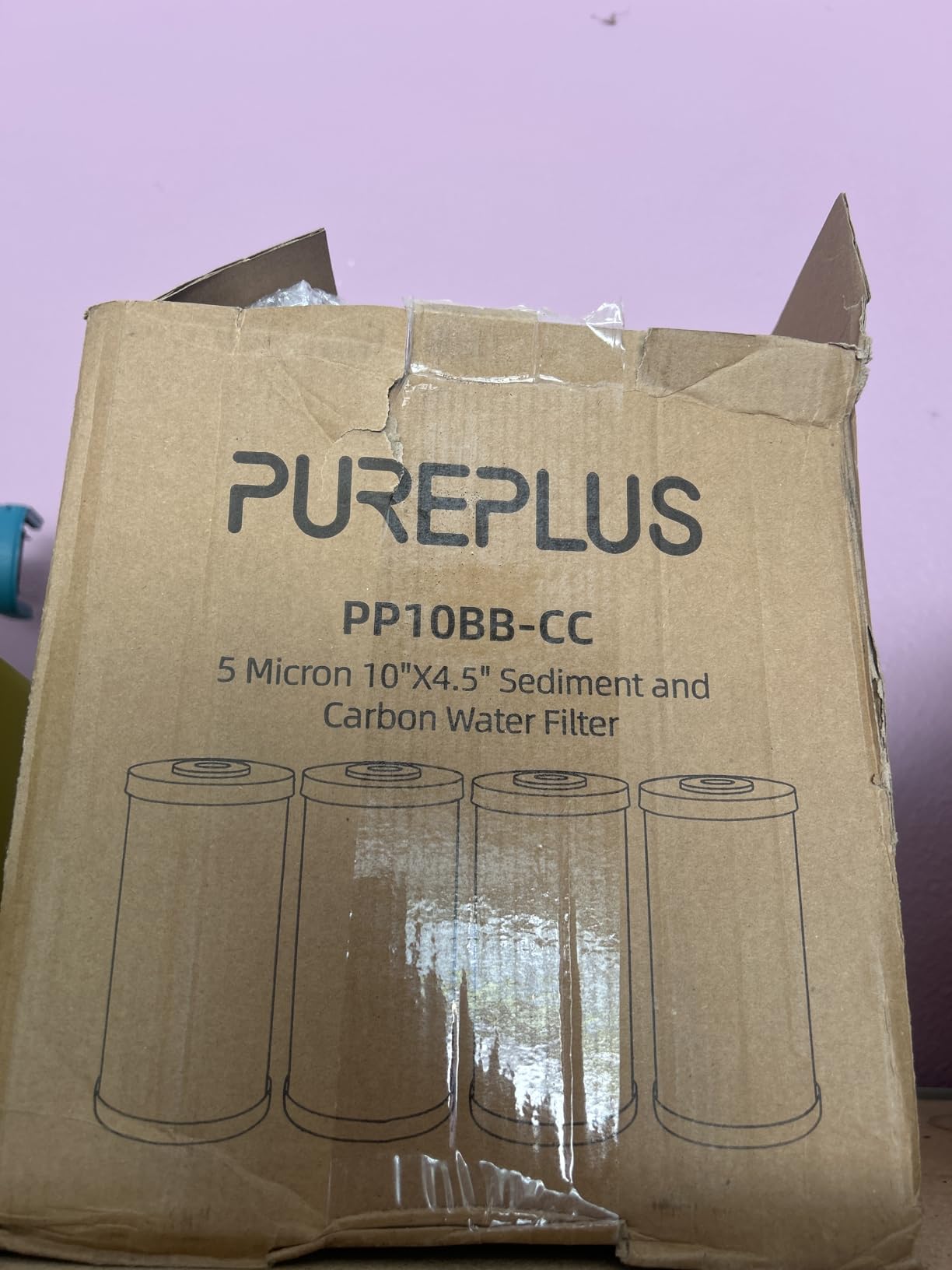
The build details are unusually well documented for a cartridge at this level. The manufacturer lists a 400 PSI pressure test and 10,000 water hammer cycles, which is the kind of detail usually reserved for housing bodies rather than the media inside them. Certifications cover NSF 42 alongside food-grade EC1935-2004, REACH, and BPA-free status.
Compatibility is the quiet strength here. The cartridge fits the GE GXWH35F, GXWH40L, GXWH30C, GXWH38F, GNWH38S, Culligan RFC-BBSA, WRC25HD, and Pentek RFC-BB housings, which covers a very large share of the housings already installed in American basements and utility rooms.
What you should know before buying this cartridge
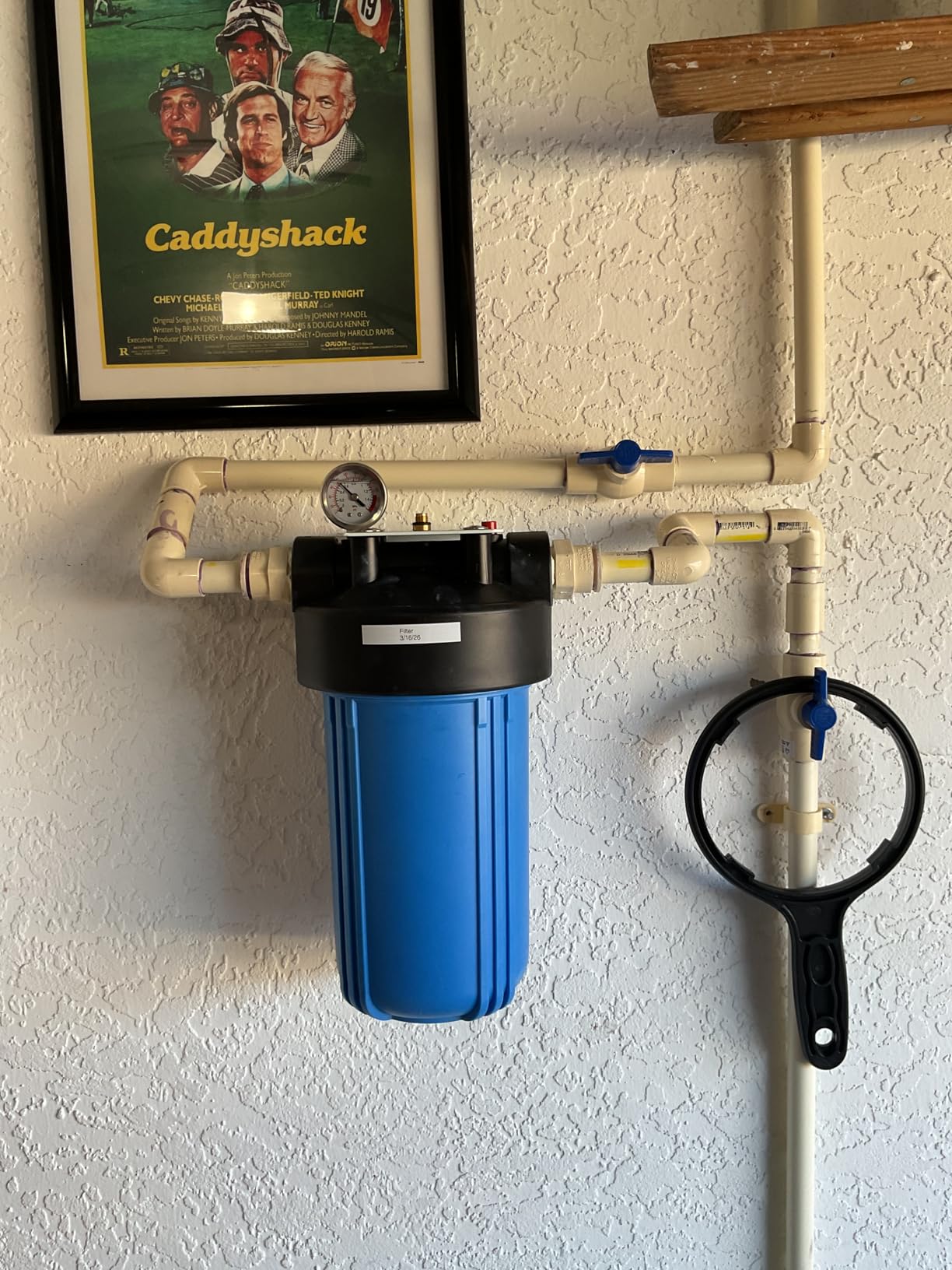
This is a cartridge, not a system. You need a 10 inch by 4.5 inch housing, or you need to buy a whole house system that uses that footprint and drop the cartridge into it. Buyers who expected a self-contained unit were disappointed, and that misunderstanding drives most of the one-star feedback.
The 30,000 gallon rating assumes typical household consumption. Run the number against your own water bill before you commit, because a two-person household burns through one cartridge slowly and a family of five burns through it in well under two years.
Where this filter falls short
Carbon block media is physically dense. It handles chlorine well because chlorine molecules are small and get trapped near the surface, but it does not have the catalytic chemistry that breaks chloramine apart. If your utility uses chloramine, a block cartridge like this will underperform against a granular media tank.
It also does nothing for dissolved solids, which is by design. Keeping healthy minerals in the water is a feature, and you will want a reverse osmosis system for total dissolved solids if that is your goal. Do not install this expecting it to soften water.
2. iSpring WGB21B 2-Stage System: Best Balanced Whole House Chlorine System
iSpring WGB21B 2-Stage Whole House Water Filtration System, 50000 Gallons
Sediment plus carbon block
50000 gallon life
15 GPM
1 inch NPT
Pros
- 99% chlorine reduction
- 15 GPM flow rate
- 50000 gallon capacity per stage
- Retains healthy minerals
- Pre-assembled bracket for fast DIY install
- US-based lifetime support
Cons
- Fittings need careful thread sealing to avoid weeping
- CTO carbon block rather than catalytic carbon
- Plastic housings rather than metal tanks
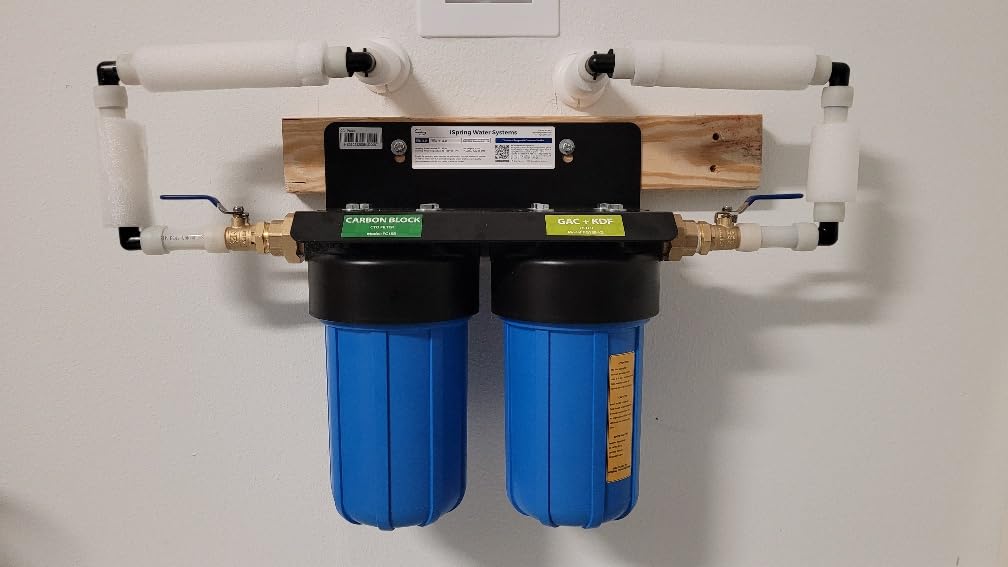
The WGB21B is the system we recommend to people who want one product that arrives ready to hang on the wall. It ships as a pre-assembled bracket with two 10 inch by 4.5 inch Big Blue housings: a 5 micron polypropylene sediment filter in front and a coconut shell CTO carbon block behind.
Flow is the headline number here. The rated 15 GPM at 1 inch NPT is well above what a typical residential house will ever pull simultaneously, which means pressure drop stays negligible and you will not notice it when the dishwasher and the shower run at the same time.
Capacity is listed at 50,000 gallons, or roughly 12 months for an average household. The carbon stage is SGS-tested and reduces up to 99% chlorine, plus taste, odor, VOCs, pesticides, herbicides, and industrial solvents. Operating range is 40 to 100 degrees Fahrenheit at 80 psi working pressure.
Support is a genuine differentiator here. iSpring operates a US-based technical team, and buyers frequently mention that replacement parts and help arrived years after the initial sale. There is a 30-day money-back window, a one-year warranty, and an extension available on registration.
What makes this easy to install
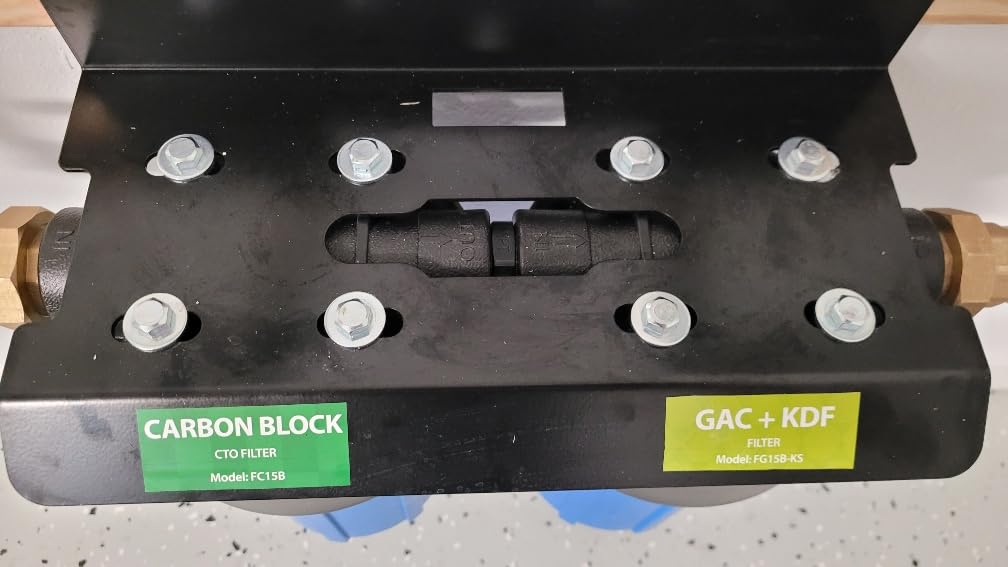
Everything arrives on one bracket, so you are cutting into the main line twice rather than six times. The package includes a filter wrench and a pressure release valve, which removes the two most common reasons first-time installers leak water on their first attempt.
The 25.8 pound weight is worth noting before you pick a mounting spot. It is heavy enough that drywall anchors alone are not enough; screw into a stud or use masonry fasteners.
Where this system falls short
The most common installation complaint is thread sealing. The fittings need fresh PTFE tape on every male thread, and buyers who rushed that step reported slow weeping that took multiple service calls to trace.
Second, the carbon is CTO block, not catalytic media. That is the right choice for chlorine and an unremarkable choice for chloramine. If your utility switched disinfectants, look past this one.
3. Culligan SCWH-5 Carbon 2-Pack: Best for Smaller Homes and Tight Spaces
Culligan SCWH-5 Whole House Water Filter Cartridges – Standard-Duty Carbon Replacement Filter Reduces Sediment, Rust, Scale & Dirt for Clean Drinking Water or for Cooking, 15,000 Gallons, Pack of 2
Carbon cartridge
15000 gallon life
4 GPM
10 inch by 2.5 inch
Pros
- WQA tested and certified to NSF 42
- Culligan brand with decades of filtration history
- Compact 2.5 inch width suits tight cabinet runs
- Carbon-wrapped media
- 2-pack format
Cons
- 15000 gallon life is the shortest in the group
- 4 GPM is restrictive for larger homes
- Can sit too tight in some non-Culligan housings
The SCWH-5 is a carbon-wrapped 5 micron cartridge in the smaller 10 inch by 2.5 inch format, which is the footprint used by Culligan’s own HF-150A, HF-160, HF-360A, HF-365, and WH-S200-C systems. It is rated at 15,000 gallons or about three months.
The reason to like this cartridge is certification and fit. It is WQA tested and certified to NSF/ANSI Standard 42, which is an independent body verifying the claim rather than the manufacturer testing in house. In a category full of self-reported percentages, that distinction matters.
At a rated 4 GPM, this is a narrow pipe on purpose. In a two-bathroom house it is fine. In a four-plus bathroom home where two showers run at once, you will feel it. The 2.75 inch diameter and 5.75 inch width also mean it fits cabinet runs where a Big Blue housing simply will not.
With 1,978 reviews at 4.7 out of 5, the sentiment is consistent: good value, does exactly what a carbon cartridge should do, and users wish the interval between changes were longer.
When this cartridge is the right call
If you already own a Culligan whole house system and want to swap the carbon stage, this is the direct replacement. The same is true if you are building a small system around a 2.5 inch housing you already have.
For an apartment, a condo with a low monthly water bill, or a home where nobody runs more than two fixtures at once, the 4 GPM limit is a non-issue and the certification is the deciding factor.
Where this cartridge falls short
The 15,000 gallon rating is the shortest in this roundup, roughly a third of the radial flow cartridge below. In a busy household that means more frequent changes and more wrench time.
Fit can also be a surprise. Buyers report that the cartridge can sit too tight in non-Culligan housings such as some Rotoplas units. Measure your housing interior before you commit.
4. A. O. Smith AO-WH-Filter: Best Low-Maintenance Whole House Carbon Tank
A. O. Smith Whole House Water Filter System | 600K Gal | AO-WH-Filter
Single carbon tank
600000 gallon life
7 GPM
96.9% chlorine reduction
Pros
- 600000 gallon six year media life
- 96.9% chlorine reduction
- No water waste no drain no electricity
- 6 year limited warranty
- NSF 42 certified
- Includes shut-off valve and fittings
Cons
- 7 GPM is modest for large homes
- 3/4 inch ports limit flow further
- Pre-filter recommended as an add-on
- Does not treat iron or sulfur
The AO-WH-Filter is the simplest design in the roundup: one tall fiberglass tank, activated carbon inside, no backwash valve, no drain line, no electrical outlet. Rated capacity is 600,000 gallons over six years with 96.9% chlorine reduction and 7 GPM flow.
That no-drain, no-power design is the point. A large share of the anxiety we saw in homeowner discussions about carbon systems comes from backwashing hardware that needs a floor drain nobody has near the main shutoff. This system removes that problem entirely.
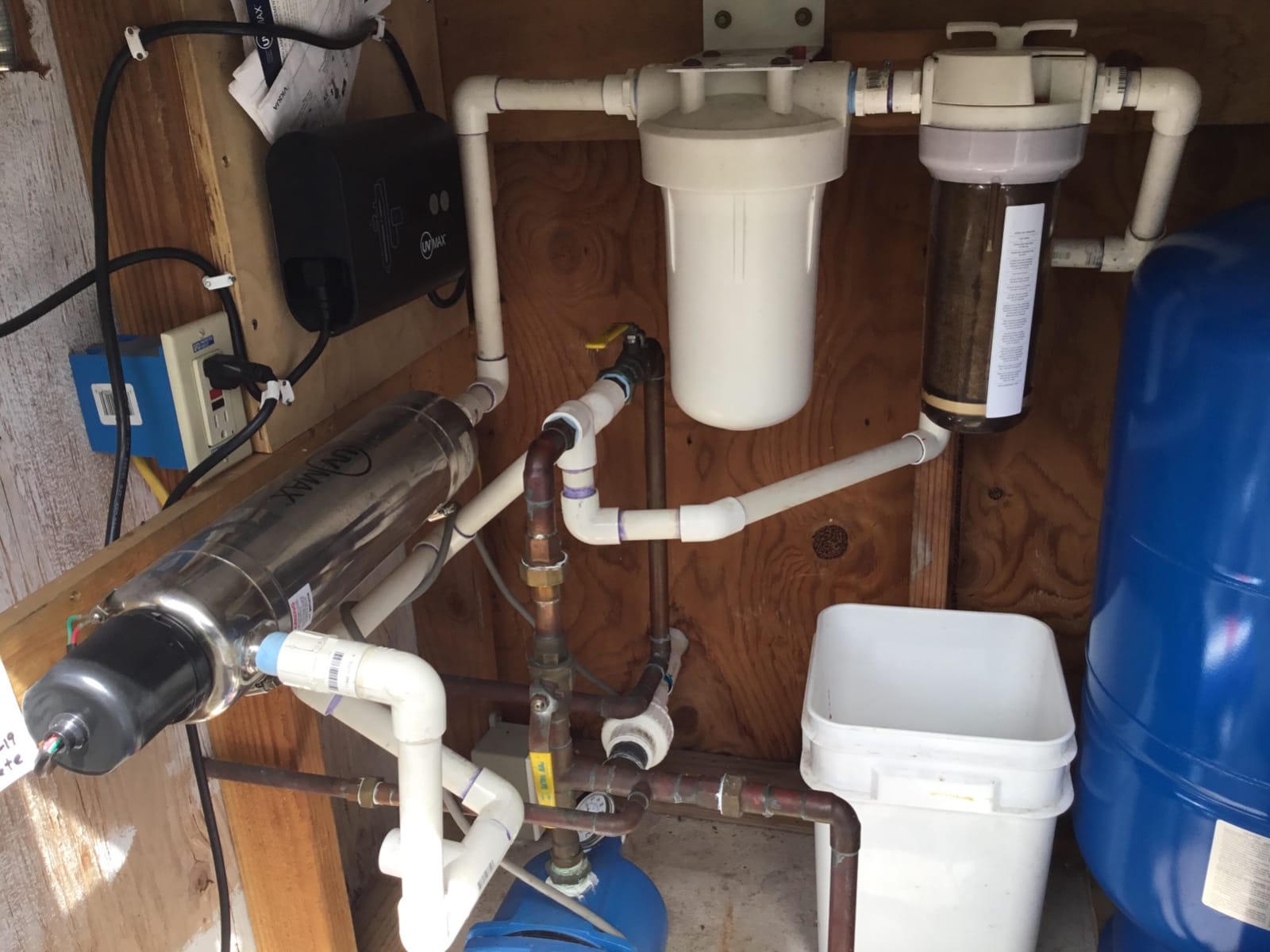
Owners frequently describe the secondary benefit, which is the effect on the shower itself. Reducing chlorine vapor cuts the smell from hot water and, in the words of several reviewers, improves the air quality in the bathroom. Operating pressure range is 20 to 100 psi and temperature range 40 to 90 degrees Fahrenheit.
The box includes a central filter, a shut-off valve, a hose adapter, and a nipple, which covers the mechanical parts most people forget to buy. No electricity is required, and the manufacturer recommends a pre-filter upstream.
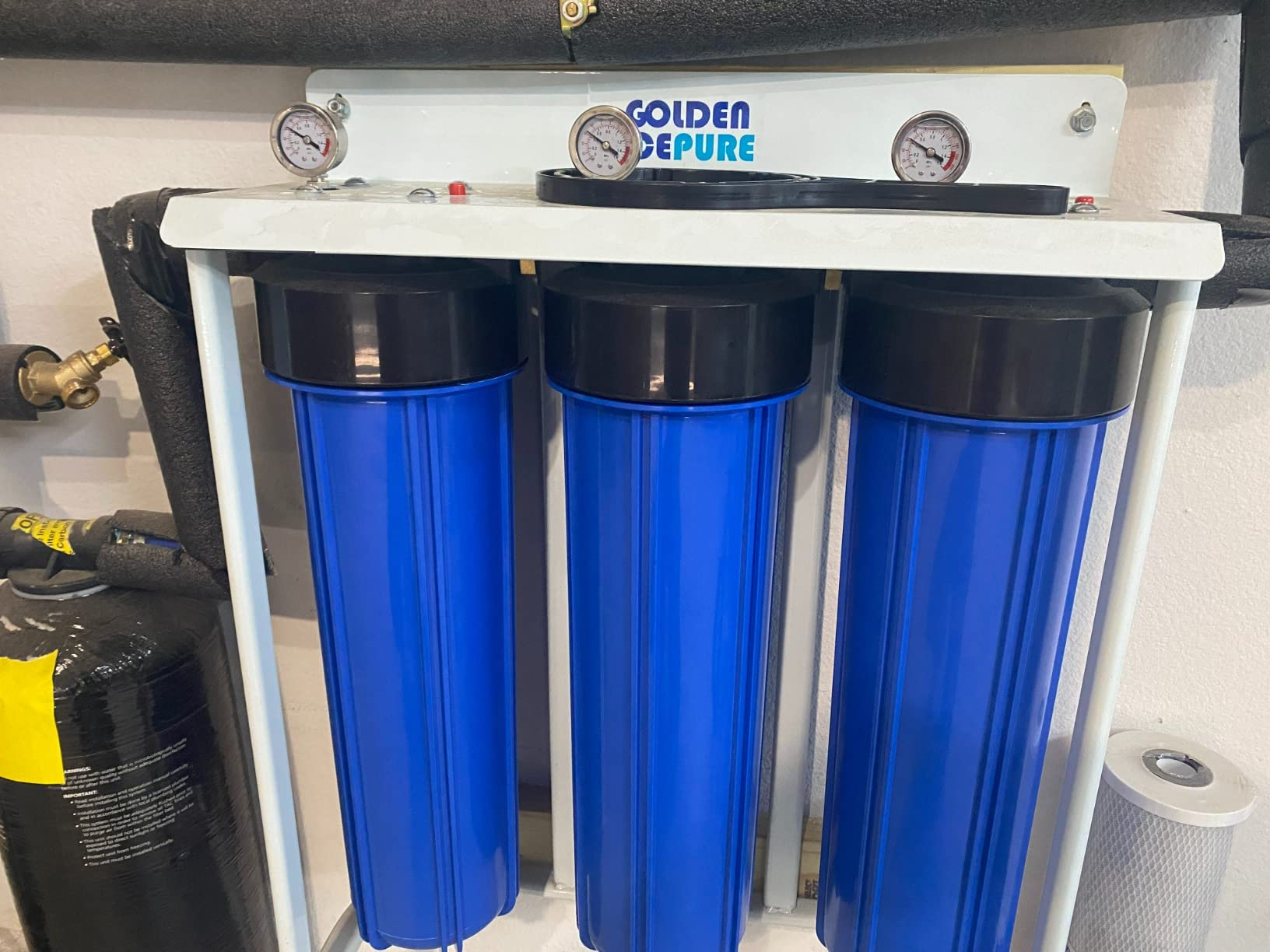
How the 7 GPM rating affects real households
For context, 7 GPM is measured at a specific service pressure. On lower household pressure, or with long runs of 3/4 inch pipe, the effective flow drops and you may notice the difference when the shower and a dishwasher overlap.
The 3/4 inch inlet and outlet connections are the real constraint here, not the carbon media. If your main shutoff is already 3/4 inch, this fits without changes. If it is 1 inch, you will need adapters and you should think about whether a higher-flow system is the better spend.
Where this system falls short
Six years of media life is excellent in theory, but media life is measured against a chlorine dose. Households with unusually high chlorine levels will exhaust the carbon sooner, and there is no way to visually check saturation on a sealed tank the way you can watch flow slow on a cartridge.
The manufacturer also states plainly that it does not reduce total dissolved solids, sulfur, or iron. That is correct behavior for carbon, but it means a well water homeowner with iron or sulfur needs a different system.
5. Waterdrop WHF21-FG 2-Stage System: Best for Well Water with Chlorine
Waterdrop WHF21-FG 2-Stage Whole House Water Filter System, NSF/ANSI 372
Iron plus coconut GAC
50000 gallon life
15 GPM
95.63% chlorine
Pros
- Handles iron at 96.4% and manganese at 98.2%
- 15 GPM flow on 1 inch NPT
- NSF 372 lead-free certified components
- Brass threads with dual O-rings
- Pre-installed filters and bracket
Cons
- Only 6 months of rated service per filter
- Some users report slowing flow over time
- One year system warranty only
- Weighs 10.1 lbs per stage
The WHF21-FG puts an iron and manganese reduction stage in front of a coconut shell granular activated carbon stage. Chlorine reduction is listed at 95.63%, iron at 96.4%, and manganese at 98.2%, with 15 GPM flow on 1 inch NPT ports.
That first stage is the reason this unit belongs in a roundup about chlorine. On municipal water it is largely redundant. On a well that also runs through a chlorinator, it handles the sediment and metal load that would otherwise blind the carbon quickly, which is the difference between a carbon stage that lasts years and one that lasts a season.
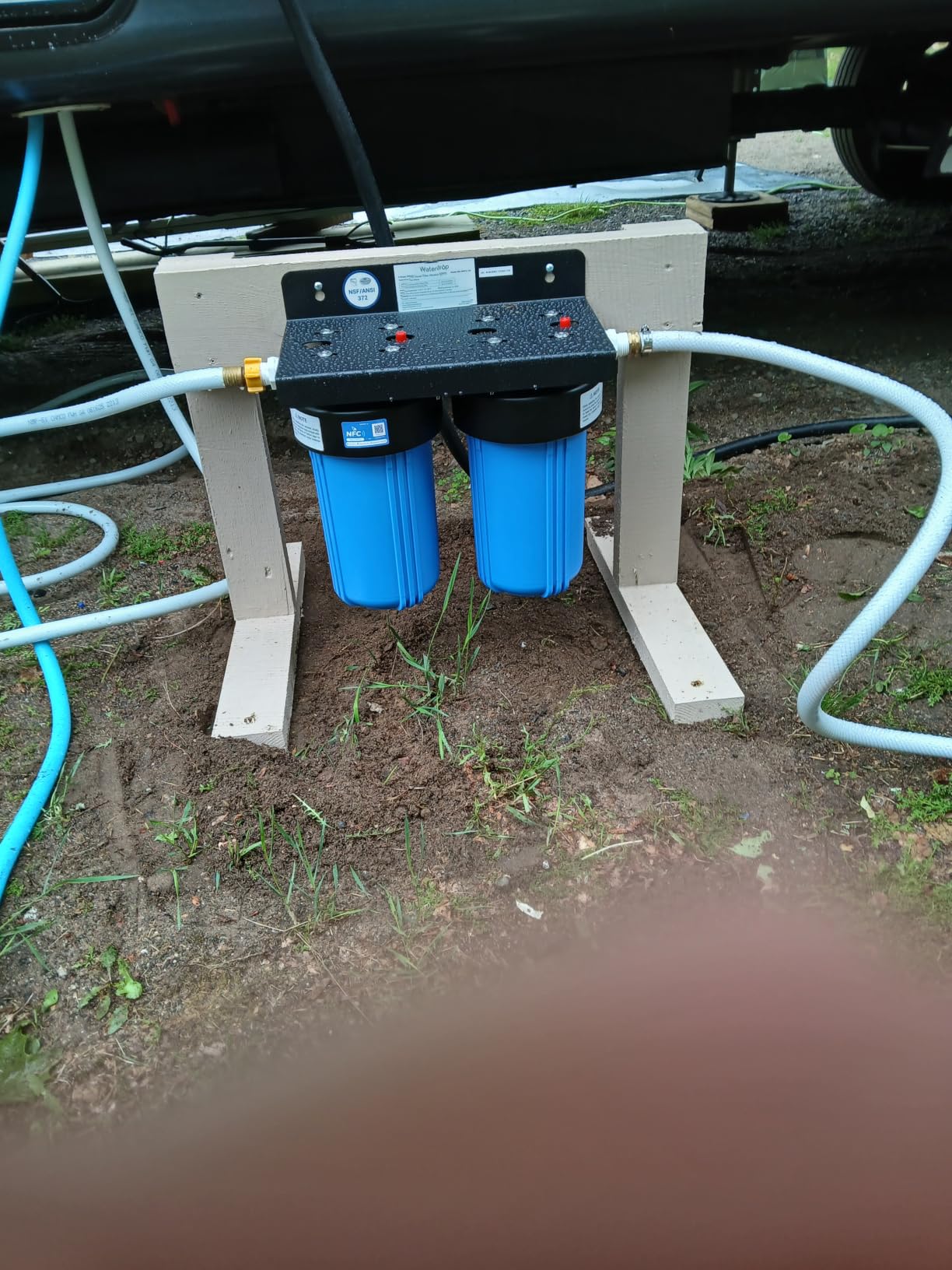
Build quality details are better than the category norm. The housings use reinforced brass threads with dual O-rings rather than plain plastic threads, and the manufacturer lists over 100,000 water hammer and pressure cycles of testing. Components meet NSF/ANSI 372 lead-free standards.
Capacity is listed at 50,000 gallons or six months per filter, which is the shortest rated service life among the complete systems here. The housing measures 14.37 by 7.48 by 15.55 inches at 10.1 pounds, and both filters arrive pre-installed on the bracket.
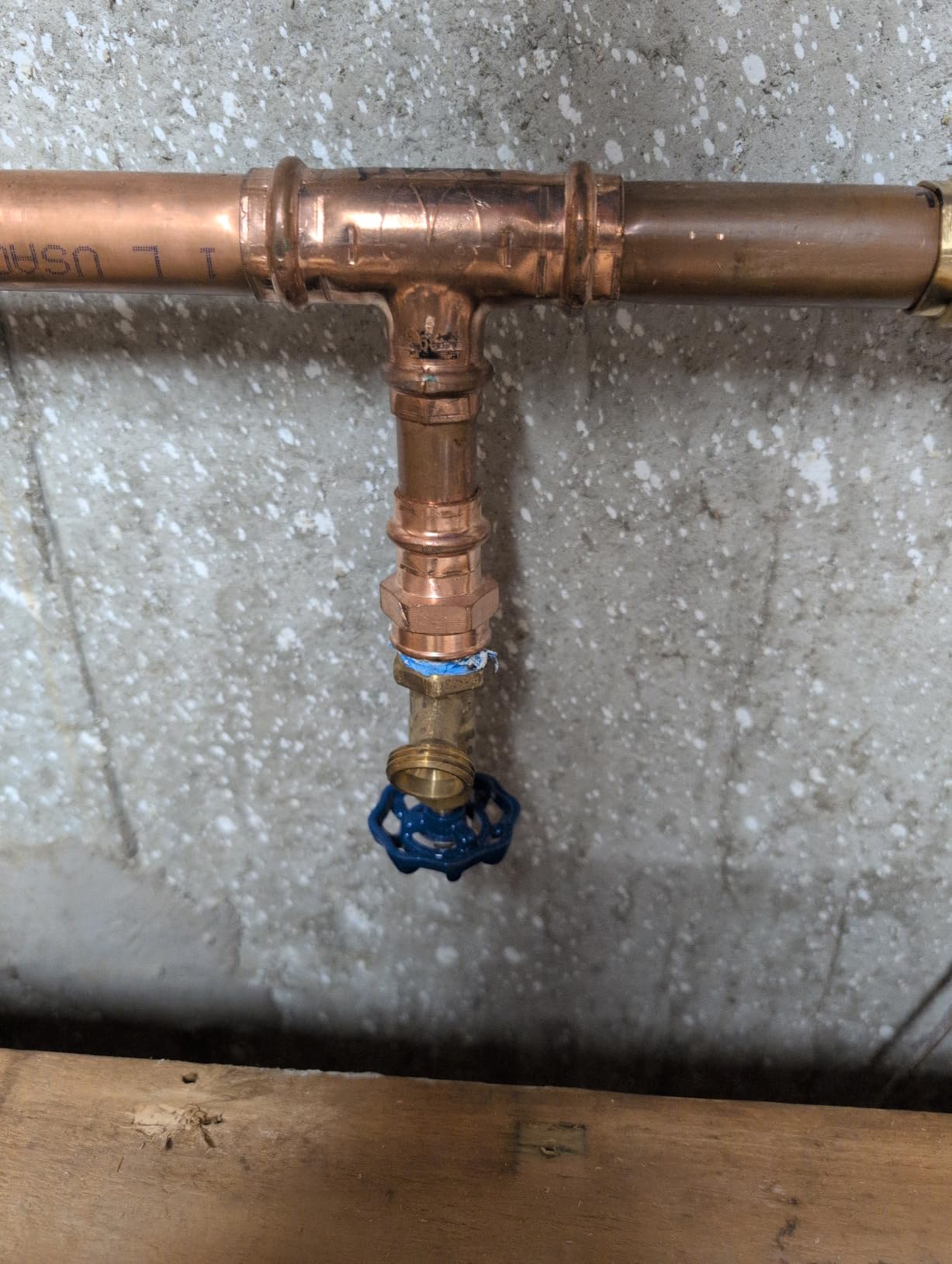
What well water owners need to check first
A carbon stage cannot treat bacteria, and it does nothing for sulfur. If your well has any of those, pre-treatment with a different technology comes before carbon, not after it. Iron and manganese loads are the same story: heavy metal particulate blinds carbon media quickly and can promote bacterial growth inside the tank, which is exactly what the front stage on this system is there to prevent.
Check the temperature range too. This system is rated 40 to 100.4 degrees Fahrenheit. If your well pump runs hot water into the treatment path, that rating matters.
Where this system falls short
Six months per filter is a real recurring cost, and it arrives faster than most people plan for. Buyers also mention some slowing of flow over time, which on a two-stage system is usually the front sediment stage telling you it is loaded.
The warranty is one year, with technical support available for life. That is thinner than the multi-year commitments on the tank systems in this roundup.
6. SimPure CTO Carbon Block 2-Pack: Best Universal Cartridge for Big Blue Housings
SimPure 5 Micron 10″ x 4.5″ CTO Carbon Whole House Water Filter Cartridge
CTO carbon block
35000 gallon life
5 micron
NSF 42 material
Pros
- 99% residual chlorine adsorption
- 35000 gallon capacity per cartridge
- Coconut shell block media
- Two food-grade fabric layers trap carbon fines
- Fits most 10 inch by 4.5 inch Big Blue housings
Cons
- Not rated for hot water service
- Life shortens with high sulfur water
- No heavy metal or dissolved solid reduction
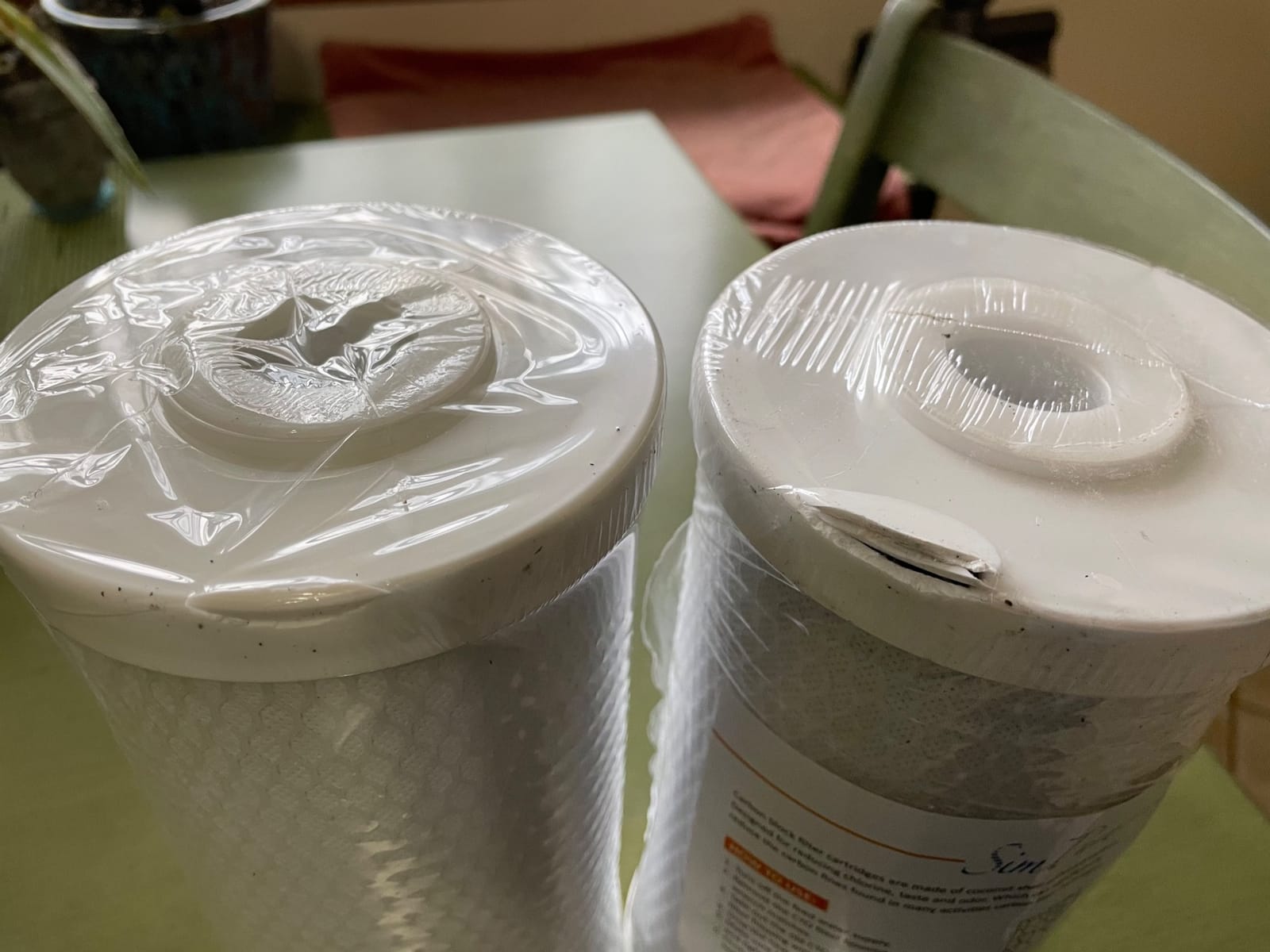
The SimPure CTO-F10B-5 is a 5 micron coconut shell carbon block rated at 35,000 gallons or three to six months per cartridge, sold as a two-pack. Material is certified to NSF 42 standards by a third party, which is a stronger claim than a self-tested media.
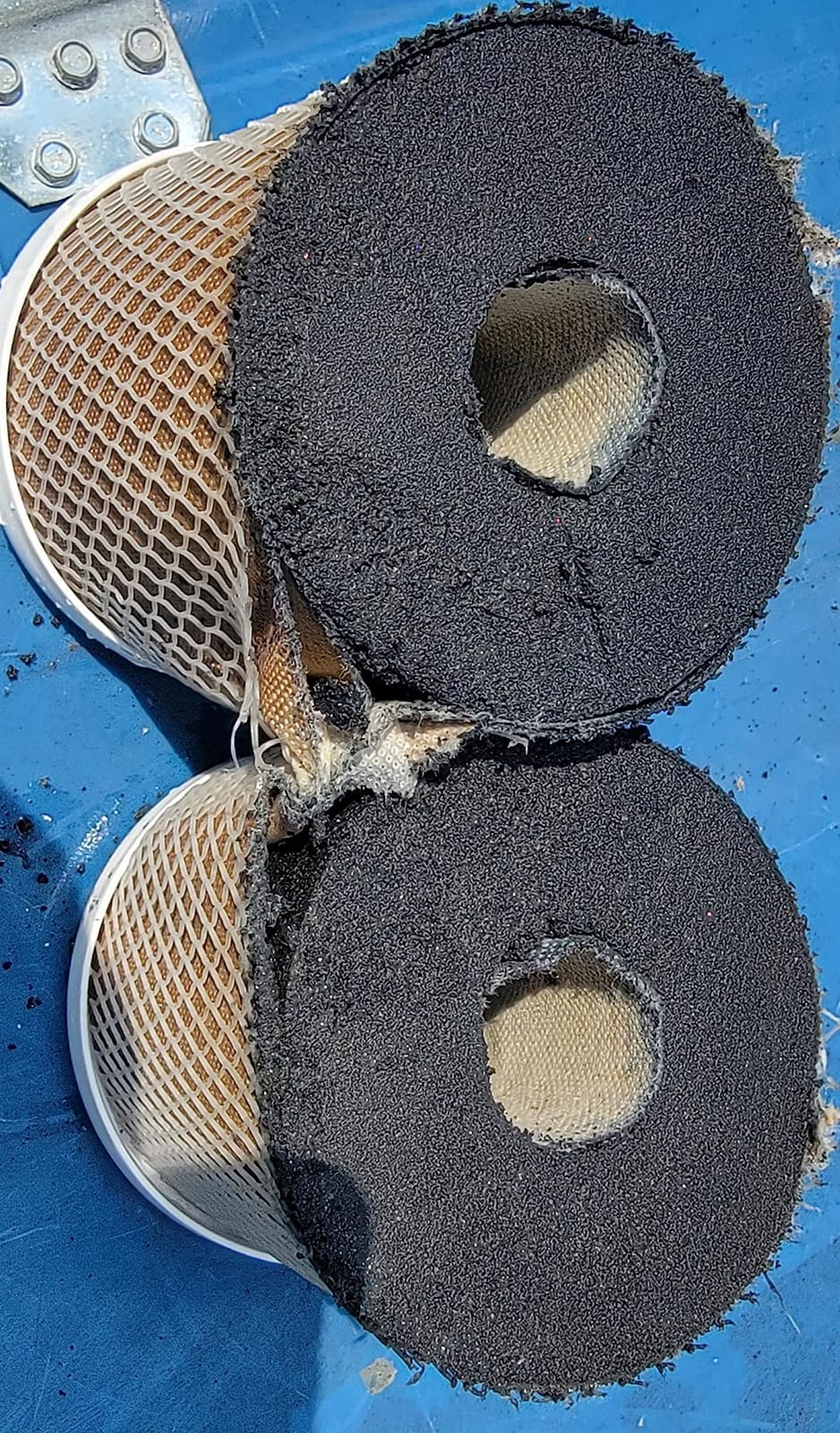
The engineering detail worth knowing about is the dual non-woven fabric layers on each end of the block. Loose carbon fines are the single most common complaint with block cartridges, and those layers are what hold them back during the first flush.
Compatibility is broad: it fits the GE GXWH35F and GXWH40L, the iSpring WGB21B, the DB10P, the DB10C, and most standard 10 inch by 4.5 inch Big Blue housings. If you have a housing already installed, there is a good chance this drops straight in.
Performance claims center on 99% adsorption of residual chlorine, along with taste and odor reduction for sulfur smell, chlorine smell, and color. Support is US-based, which matters when you are troubleshooting a cartridge that is not performing as expected.
When to pick block media over granular media
Block cartridges win on space and on simplicity. A 10 inch by 4.5 inch block has far more surface area in a slim housing than a granular bed of the same footprint, and there is no backwash valve to plumb. That makes it the right choice in a mechanical room where drainage is not an option.
Granular media wins on contact time and on catalytic loading. If your utility uses chloramine, or if you want the option of adding KDF or catalytic media later, granular is the better foundation.
Where this cartridge falls short
It is not rated for hot water. In a system where the housing sits downstream of a water heater, that rules it out unless you are careful about where it is installed.
Buyers with high sulfur water report shorter service life than the printed rating, which makes sense. Sulfur competes for the same surface sites as chlorine, and carbon cannot be selective.
7. Pentek RFC-20BB Radial Flow GAC: Best for Low Pressure Drop and High Capacity
Pentair Pentek RFC-20BB Big Blue Radial Flow Carbon Water Filter
Radial flow GAC
100000 plus gallons
4 GPM at 0.90 psi
20 inch Big Blue
Pros
- Only 0.90 psi pressure drop at 4 GPM
- 100000 plus gallon chlorine capacity
- Radial flow design reduces carbon fines
- Polypropylene core rated to 125 degrees F
- NSF 42 certified materials
Cons
- Sold as a single cartridge not a multi-pack
- 25 micron rating is coarse for sediment
- Requires a 20 inch Big Blue housing
- Needs flushing after installation
The RFC20-BB is the engineering outlier here. Instead of water flowing through the media bed, radial flow pushes water from the outside inward through a porous polyethylene shell into a granular carbon core, which is why the published pressure drop is only 0.90 psi at 4 GPM.
That pressure number is the whole argument for this cartridge. Carbon block filters get progressively more restrictive as they load. Radial flow keeps a comparatively stable curve, which in a whole house context means your shower pressure does not quietly decline over a year.
Chlorine reduction capacity is rated at over 100,000 gallons, roughly three times the 35,000 gallon rating on the block cartridge above it. The 25 micron nominal rating is for sediment pre-screen purposes and should not be read as fine filtration, so this cartridge belongs after a proper sediment stage, not instead of one.
Materials are certified to NSF/ANSI 42, with a polypropylene core rated to 125 degrees Fahrenheit, which is unusually high for this category. The cartridge weighs 2.5 pounds and fits all 20 inch Big Blue heavy-duty housings.
What the radial flow design actually buys you
Two things. First, less pressure drop, as covered above. Second, fewer carbon fines in the water, because water enters the carbon bed evenly rather than carving a single channel through the middle of it. Channeling is the failure mode that shortens the life of granular beds, and radial flow resists it.
The practical consequence is a cartridge you are less likely to flush out and reinstall. For someone on a ladder in a crawl space, that is worth more than a capacity number.
Where this cartridge falls short
It comes as a single unit, so replacing it twice in a year costs more per change than a two or four pack. It also needs a 20 inch Big Blue housing, which is a different and larger footprint than the 10 inch housing used by most of the systems in this roundup.
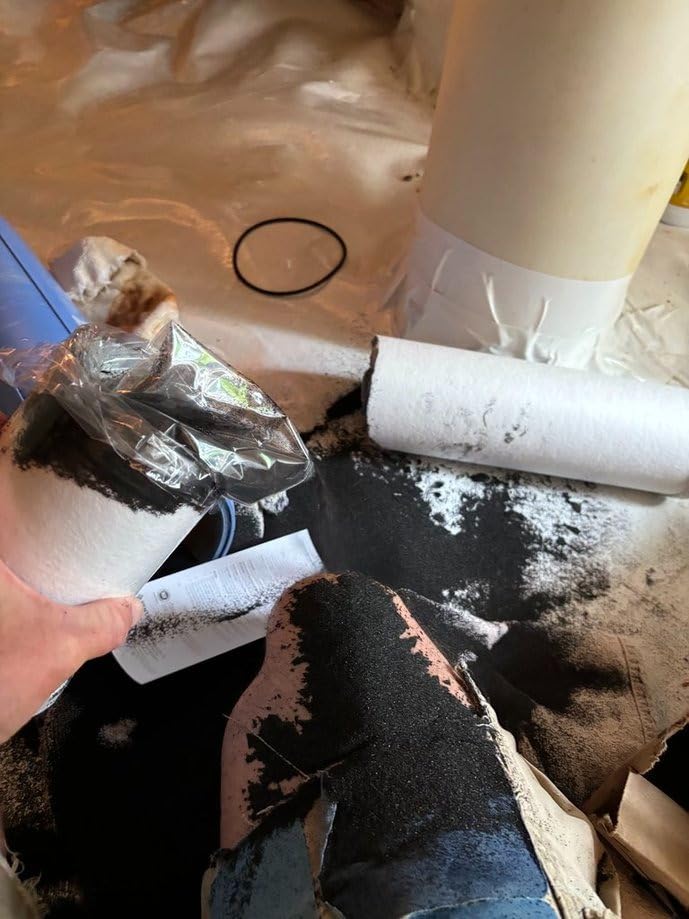
Plan a flush after installation. New GAC cartridges release a small amount of loose carbon on day one, and reviewers who skipped the flush reported black specks in the first glasses of water.
8. Aquasana WH-1000 Carbon and KDF: Best for Ten-Year Media Life
Aquasana Whole House Water Filter System | 1M Gal | Carbon & KDF | WH-1000
Carbon plus KDF
1 million gallons
14.6 GPM
97% chlorine reduction
Pros
- 1 million gallon ten year media life
- Carbon plus copper-zinc KDF dual media
- 14.6 GPM flow rate
- NSF 42 independently tested
- No electricity drain or backflushing
- 10 year limited warranty
Cons
- Most expensive system in the roundup
- 46 inch tall footprint
- Some buyers replace plastic threads with brass
- Warranty concerns with self installation
The WH-1000 pairs activated carbon with KDF copper-zinc media in a dual tank configuration rated at one million gallons over ten years. Chlorine reduction is listed at 97%, flow at 14.6 GPM, and the media is certified to NSF/ANSI Standard 42 through independent testing.
KDF is the part that matters for longevity. The copper-zinc media upstream strips chlorine and heavy metals from the incoming water, which protects the carbon bed downstream from being consumed by the same contaminant it is supposed to remove. Media life on the carbon portion extends substantially because it is not doing double duty.
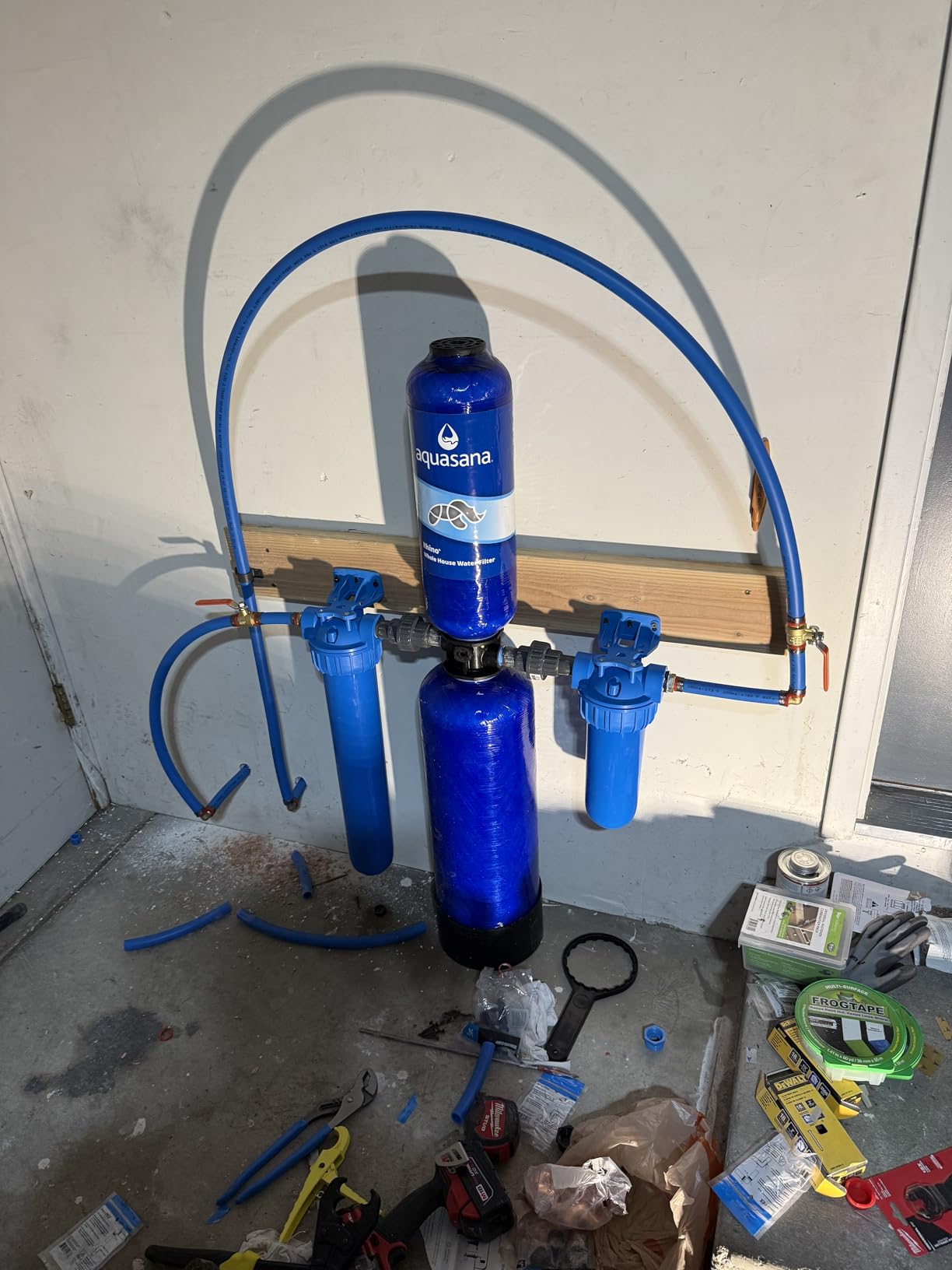
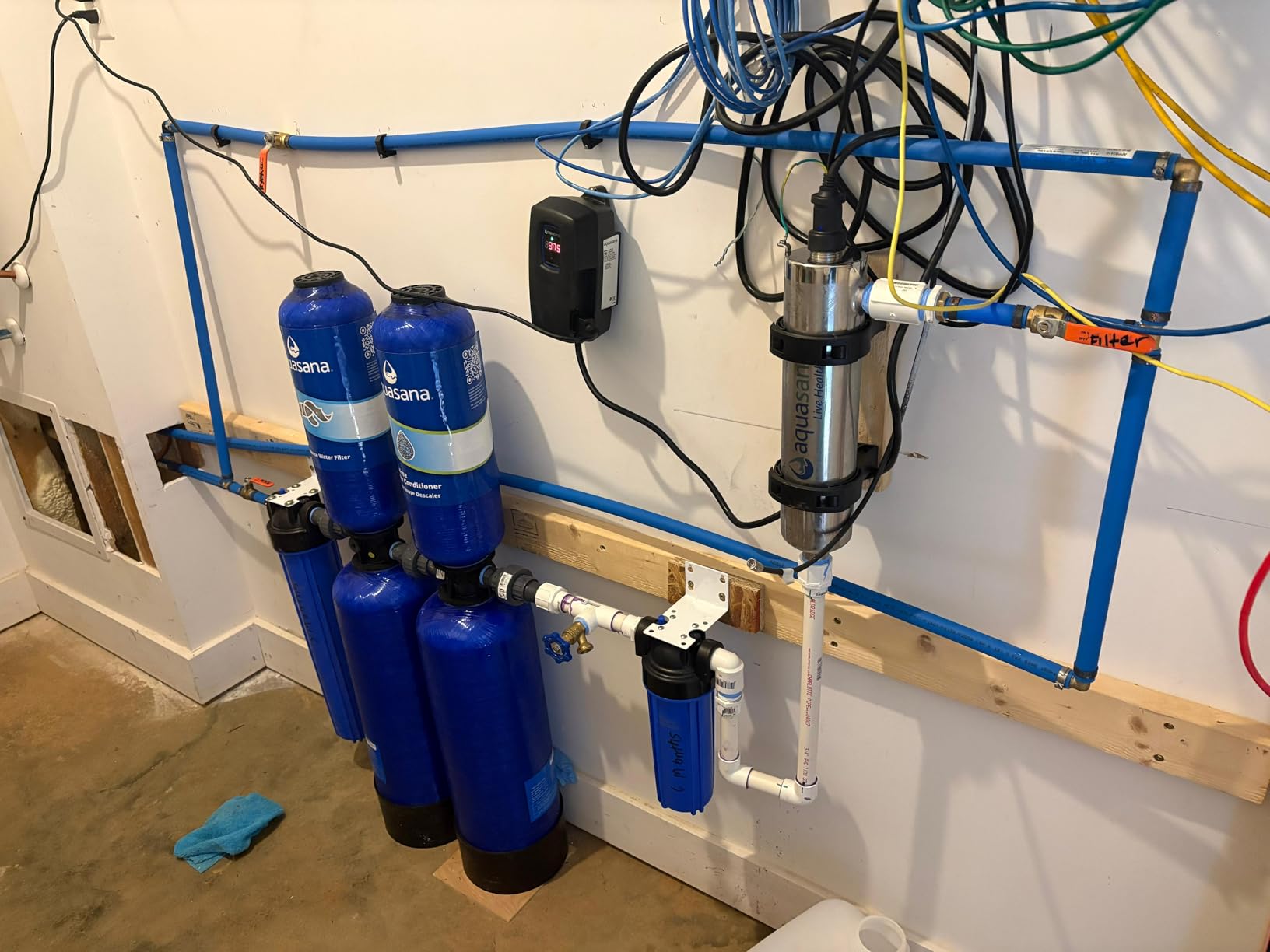
The package is complete: a 20 inch pre-filter, the filter tank, a 10 inch post-filter, and the assembly kit, using Schedule 80 PVC components throughout. There is no electricity requirement, no drain line, and no backwashing, though an integrated drain valve is included for manual flushing.
Total footprint is the trade-off. At 32 inches long, 9 inches wide, and 46 inches tall, this needs a dedicated wall. Operating range is 20 to 100 psi and 40 to 90 degrees Fahrenheit.
When a ten-year media life actually pays off
The economics work when your household water usage is high and stable, and you are confident you will stay in the home. A million gallons of media life spread across ten years means the replacement interval stops being an annual line item, which is the single biggest difference between this system and the cartridge options.
The system also preserves minerals and does not reduce total dissolved solids or hardness. It runs on manual flushing rather than an automatic backwash cycle, which means no drain line to plumb and nothing to service electrically.
Where this system falls short
This is the most expensive unit we compared, and the lowest rated at 4.2 out of 5, which is the clearest signal in the group that some buyers are not happy with the details. Reports include plastic threading that weeps and gets swapped for brass, and a tank reported missing from the shipment.
Some reviewers also note warranty concerns when installing without a professional, so if you plan to do it yourself, confirm the warranty terms in writing before you start. The rating here is based on 690 reviews, the smallest sample in the roundup, so treat the sentiment as directional rather than settled.
9. Geekpure Carbon Block 4-Pack: Best Budget Cartridge Multi-Pack
Geekpure 10 Inch Whole House Carbon Filters-4.5″ x 10″-5 Micron-Pack of 4
Carbon block
100000 gallon rating
5 to 15 GPM
4 pack at 5 micron
Pros
- Four individually sealed cartridges
- 100000 gallon rated life across the set
- Flow range of 5 to 15 GPM
- Standard Big Blue housing fit
- Manufacturer holds ISO9001:2015
Cons
- Smallest review count in the roundup
- Well water requires replacement every 3 months
- Initial carbon dust needs a 15 minute flush
- No heavy metal or dissolved solid reduction
The Geekpure BC10-BB-5X4 is four 5 micron coconut carbon block cartridges, each individually wrapped and sealed. The rated life is 100,000 gallons across the set, or six to twelve months per cartridge depending on usage and water quality.
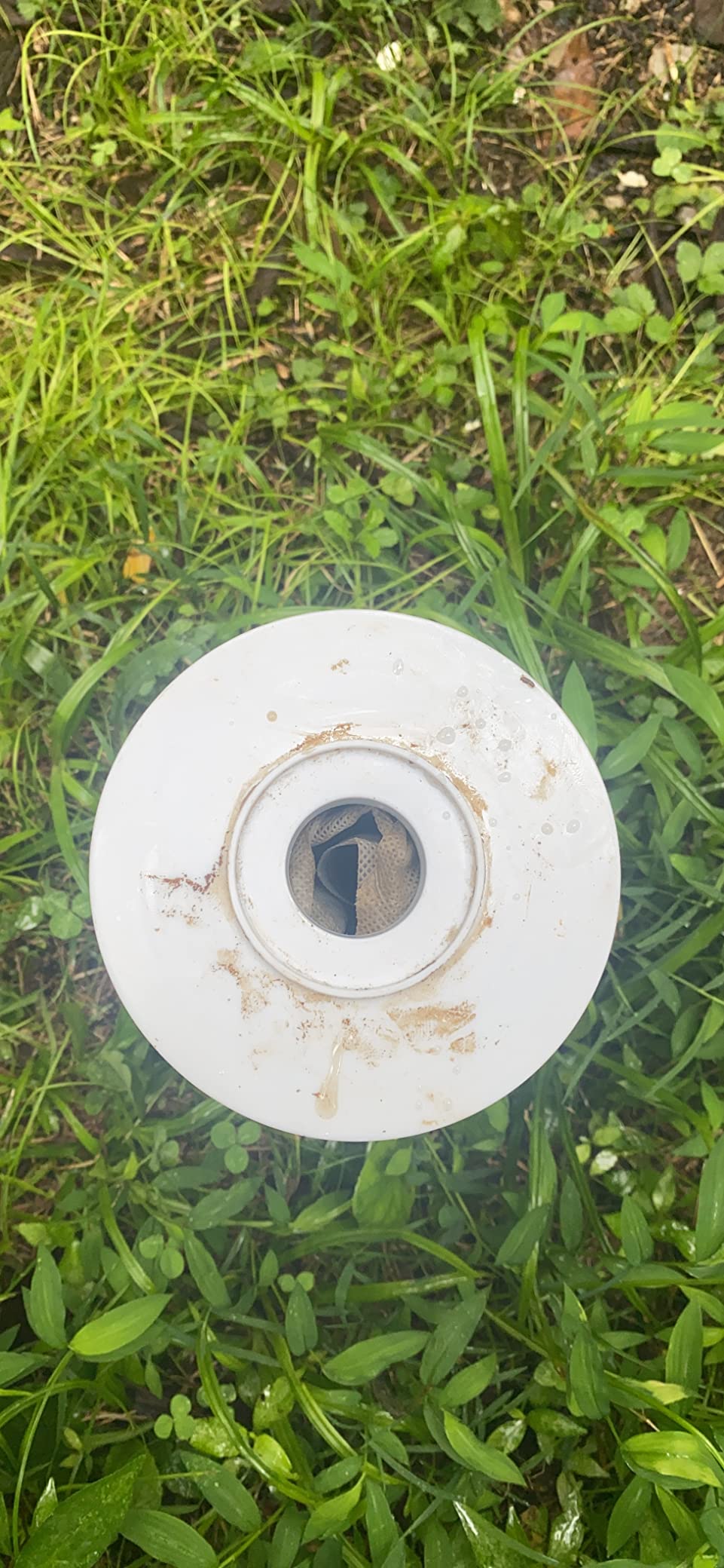
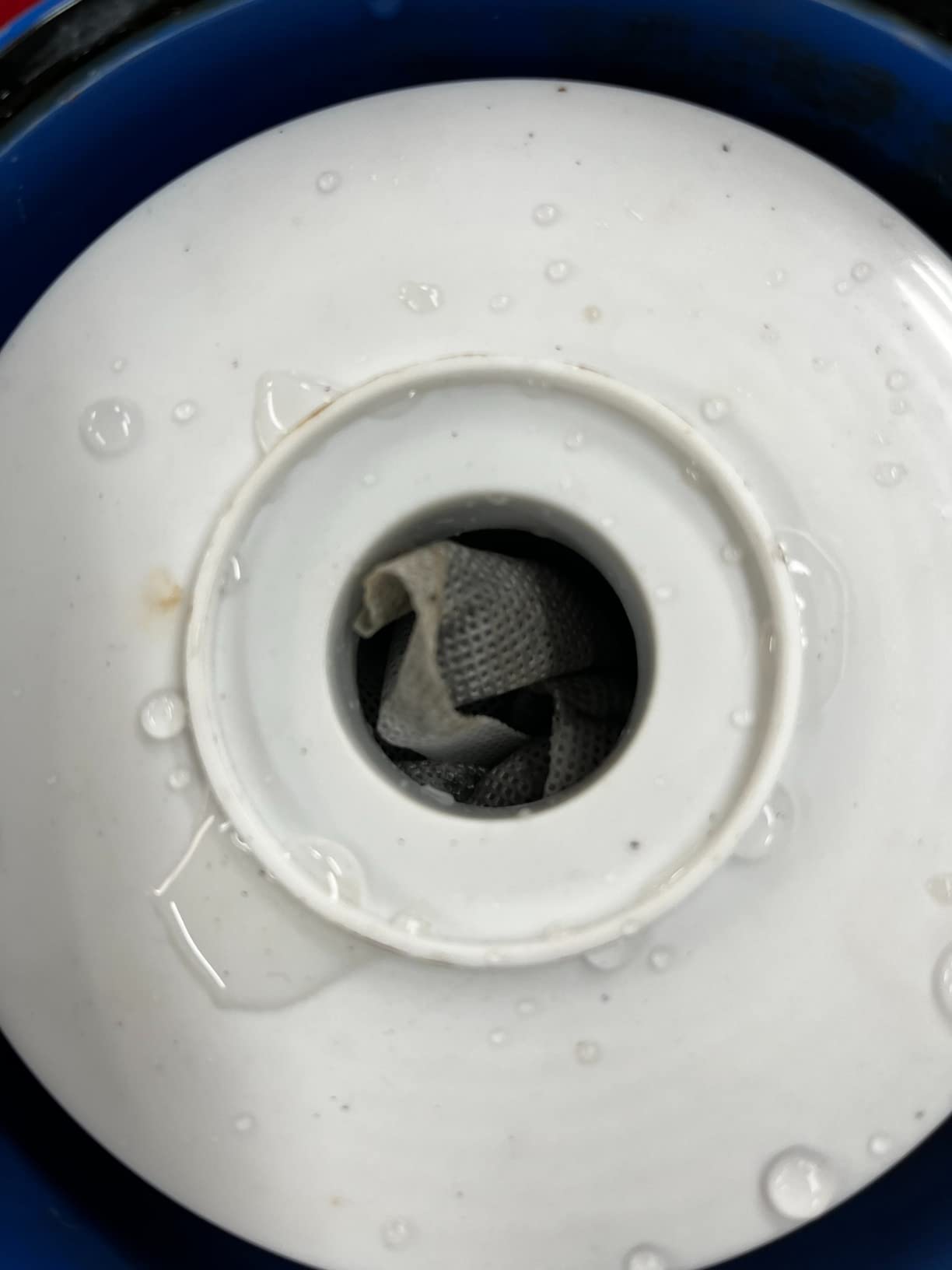
Individually sealed packaging is the underrated detail. Carbon block media absorbs moisture and off-gasses from the moment the wrapper is opened, so cartridges that sit open in a garage for a year lose capacity before they ever see water. Sealing each unit individually means cartridge four is as fresh as cartridge one.
Flow is listed as a 5 to 15 GPM range depending on feed pressure, which is a realistic way to state it. Operating range is 10 to 60 psi and 40 to 110 degrees Fahrenheit, wider than the plastic-housing competitors.
The cartridge reduces chlorine, iron, color, and taste and odor compounds. The manufacturer is explicit that it does not reduce heavy metals, lead, fluoride, or total dissolved solids, and that on well water the interval shortens to about three months.
What the 100,000 gallon rating really means
Read it as a set rating rather than a per-cartridge figure, and then sanity-check against your household. A family of four using roughly 10,000 gallons a month works through 100,000 gallons in about ten months, so the four-pack covers most of a year.
That is a useful planning anchor because it lets you buy once and set a calendar reminder, instead of tracking partial sets and guessing how many are left.
Where this multi-pack falls short
It is the least reviewed product here at 534 reviews, and buyers are candid that longevity feedback is mixed. If your water has high chlorine or any iron content, treat the printed interval as optimistic.
Flush for 15 minutes before first use. The instructions are clear that some charcoal dust is normal on day one, and skipping the flush is the most common reason first impressions go wrong.
10. iSpring WGB32B 3-Stage System: Best for Sediment and Chloramine-Heavy Water
iSpring WGB32B Commercial-Grade Whole House Water Filter System
Sediment plus GAC KDF plus CTO
100000 gallon life
15 GPM
99% chlorine
Pros
- Three filtration stages in one frame
- 99% chlorine reduction
- 100000 gallon and one year capacity
- 15 GPM on 1 inch NPT
- 20 inch Big Blue industrial filters
- Strong support with free replacement parts
Cons
- 45 lb system needs solid mounting
- Filter changes need two wrenches
- Operating pressure tops out at 80 psi
- Third-party testing rather than full certification
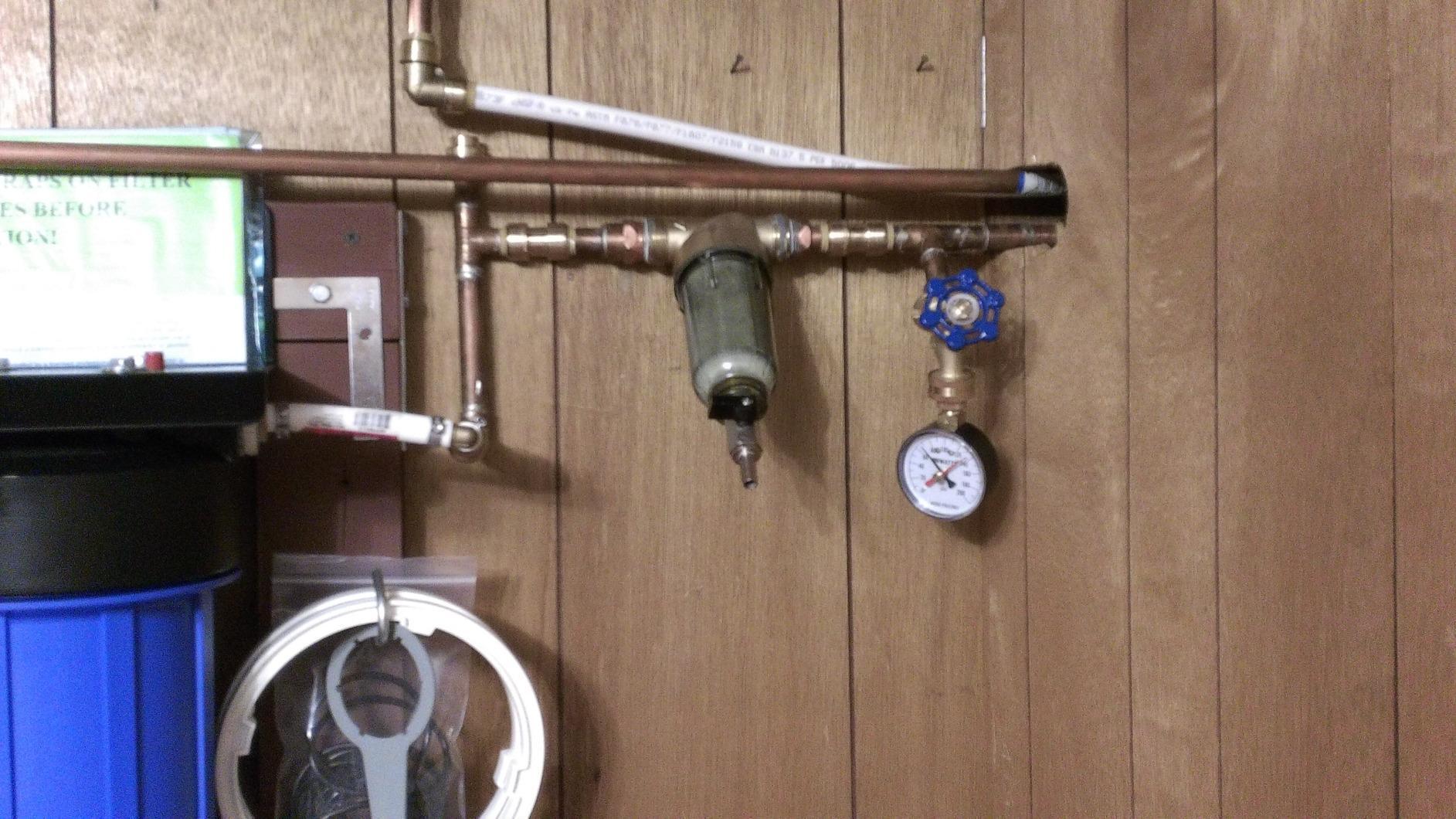
The WGB32B is the most complete unit in the roundup: three 20 inch by 4.5 inch Big Blue housings in sequence, holding a 5 micron sediment filter, a GAC plus KDF carbon stage, and a CTO carbon block polisher. Rated at 99% chlorine reduction, 15 GPM, and 100,000 gallons over one year.
The middle stage is where the chloramine capability comes from. KDF copper-zinc media is a genuine asset when the disinfectant is chloramine because it attacks the compound chemically rather than waiting for adsorption to run out of surface. The final CTO block then polishes what the first two stages let through.
Customer service is the standout in the reviews, and it is unusual to see this pattern repeated across thousands of comments. Buyers report free replacement parts sent years after the original purchase, and lifetime technical support with registration. The 2,239 reviews averaging 4.7 confirm the pattern is not isolated.
Size is the real consideration. At 45 pounds and 24.5 by 8 by 28 inches, this is a two-person lift, and the frame needs solid mounting rather than drywall anchors.
What three stages buy you on difficult water
The sediment stage takes the load first. On any water with meaningful particulate, a single-stage system will have its carbon blinding within months, and once carbon is blinded the chlorine reduction silently stops while flow barely changes. Front protection is the difference between one replacement a year and one every quarter.
Operating pressure is 25 to 80 psi, which is a narrower ceiling than some competitors. Check your static pressure before installing in a home with a well pump and a pressure tank set high.
Where this system falls short
Changing filters means working two wrenches, and with 20 inch Big Blue housings full of water, that is genuinely awkward. Budget more time for maintenance than the cartridge systems here.
The certification language is third-party testing to NSF/ANSI standards rather than a full certification mark on the system itself. If independent certification is a requirement for your household, the Pentek, A. O. Smith, Culligan, and Aquasana units carry the clearer claims.
Chlorine vs Chloramine: Why the Disinfectant Your Utility Uses Decides Which Carbon You Need
Chloramine is the less reactive form of chlorine. Municipalities use it because it persists longer in the distribution system without forming as many disinfection byproducts, and switching to it is how many cities reduced trihalomethane levels.
That persistence is exactly why it defeats standard carbon. Chlorine molecules are small enough to be captured quickly by carbon’s enormous surface area. Chloramine is a larger, more stable compound that adsorption alone handles slowly and incompletely. Carbon that strips chlorine in weeks can pass chloramine through for months.
How to find out what your utility uses in three steps
First, pull the annual water quality report your utility is required to publish. It lists the disinfectant and residual levels in a table, usually in a section on disinfection practices. This is free and it is the most reliable source.
Second, call the utility’s water quality department and ask directly which disinfectant is in use and whether they have switched in the last few years. Staff answer this question routinely.
Third, use the smell test only as a tiebreaker. Free chlorine smells sharp and bleach-like, and it dissipates quickly from a glass left sitting. Chloramine smells milder, sweeter, and sticks around much longer. Smell is unreliable enough that you should never rely on it alone.
Why a carbon block underperforms on chloramine
Block cartridges pack a large surface area into a short housing, which is excellent for quick reactions with small molecules. Chloramine needs a different mechanism. Catalytic carbon chemically accelerates the breakdown of chloramine into nitrogen, chloride, and water, and it can also regenerate its own active sites as it works, which is why catalytic media does not load the way adsorption-only media does.
None of the ten systems in this roundup uses catalytic carbon media. For pure chlorine, that is not a defect. If you are on chloramine and want a strong result, look for KDF stages like the one in the iSpring WGB32B, or step up to a catalytic carbon tank from a specialist.
Sizing Guide: Match the Filter to Your Household’s Real Flow Demand
Size for peak simultaneous demand, not for average use. A two-bathroom house where two showers run while the dishwasher cycles is the worst case that matters, and that is the number your filter must satisfy.
As a practical anchor, most households never exceed 8.5 GPM of simultaneous demand, and the majority sit well below that. The common mistake is buying a small unit for a big house because the fixture count sounds modest.
A simple sizing method
Count the fixtures that use water at once: showers, tub spouts, laundry washer, dishwasher, and kitchen sink. A shower alone can pull 2 to 3 GPM. Two showers running while the washer and dishwasher run pushes a three-bathroom home into the 8 to 12 GPM range.
Then check two numbers on the candidate system: the rated flow rate and the connection size. A unit rated at 7 GPM on 3/4 inch ports is effectively smaller than one rated at 7 GPM on 1 inch ports, because the pipe itself becomes the bottleneck.
Cartridge housing or media tank
Cartridge housings in the 10 inch by 4.5 inch format are the most common residential footprint and are cheap to service. They are also constrained by pressure drop as the media loads, which is the argument for the radial flow design in the Pentek above.
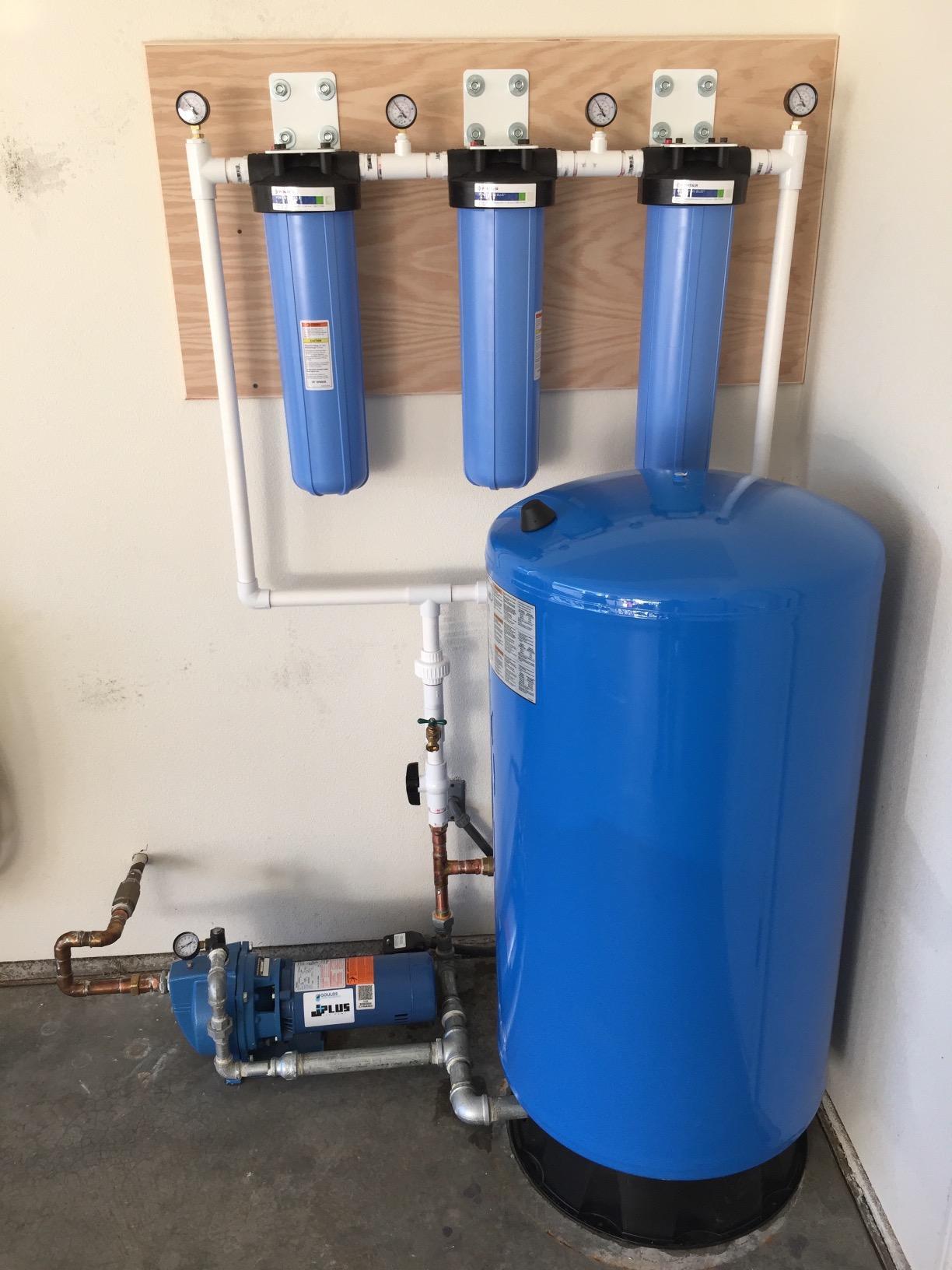
Media tanks hold far more carbon by volume, which is where the long service intervals come from. They cost more, they are physically larger, and the taller footprint means you need a wall you are not using for anything else. None of the ten systems here uses an automatic backwash valve, which is a deliberate simplification for residential use.
NSF/ANSI 42 vs 53 vs 401 vs 61: What the Certification Numbers Mean
NSF/ANSI Standard 42 covers aesthetic effects, meaning chlorine taste, odor, sediment, and scale. Standard 53 covers health-related contaminants such as lead, cryptosporidium, and cysts. Standard 401 covers emerging contaminants, which is where PFAS-related claims live. Standard 61 is about drinking water safety and lead content of the components themselves.
Why this matters when you read a product page
Standard 42 is the correct standard for a chlorine filter. That is the contaminant you are buying to remove, and a certified Standard 42 claim is independently verified rather than self-reported.
Be cautious with language like tested to NSF/ANSI standards. That phrase can describe a single component rather than the finished system, and it means the certification does not transfer to performance claims for the assembly. Look for a certification mark covering the whole unit if that matters to you.
Standard 53 claims are rare on carbon systems and that is appropriate. Carbon is not the right technology for most health-effect contaminants, and a manufacturer claiming Standard 53 for lead or cysts on a carbon tank should be asked for the test report.
Drainage, Backwashing and Getting the Install Done
None of the ten systems here is a backwashing filter, so none requires a floor drain. This is worth saying plainly because it is the most common disqualifier people hit, and the workaround in homeowner communities is tying a backwash line into a toilet drain line, which is legal in many jurisdictions but adds a real installation step.
Non-backwashing does have a consequence. Carbon beds that do not get cleaned periodically can compact and develop channeling, where water finds the path of least resistance and bypasses the media. Systems designed this way rely on either upflow tank designs that resist channeling or on scheduled manual flushing, which the Aquasana includes as an integrated drain valve.
Do you need a plumber
For a two-housing cartridge system on 1 inch NPT, a competent homeowner can do this. Shut off the main, cut, fit, tape, flush. Budget an afternoon and pick up push-fit connectors from a hardware store to avoid sweat fittings on a working water line.
Hire a plumber when you are working with 3/4 inch legacy piping, when your main shutoff is corroded, when the pressure in your home sits above 80 psi, or when you want a workmanship guarantee. Installation labor is the smallest line in the overall decision, and it is the one most people overthink.
If the plumbing work happens alongside other mechanical upgrades, our whole house fan picks for attics cover the ventilation side of the same project.
Filter Life, Re-Bedding and What It Costs Over Five Years
Cartridge systems and media tanks have completely different economics. A cartridge system consumes a fixed number of cartridges per year, and the cost is visible and predictable. A media tank consumes a fixed volume of carbon once every five to seven years, and the cost is lumpy and easy to forget.
The two cost curves you need to compare
Cartridge cost scales with household usage and stops when you stop. Big Blue systems with 100,000 gallon ratings look expensive per cartridge and modest per year for a family, and expensive for a couple.
Tank systems look cheap until you count re-bedding. Replacing carbon media in a residential whole house tank runs in the low hundreds in parts, plus the labor to cut the tank open, wet the media, and reseal it. Plan on that interval rather than on the printed capacity claim alone.
Sediment pre-filters are the quietest expense in both systems. In high-particulate water they load much faster than the label claims, and for a household on a well, budget for two changes a year on the front stage rather than one.
How to extend carbon life
Put the carbon downstream of sediment protection, not upstream. Put the whole carbon system upstream of the water softener so chlorine never touches resin. And stop the whole house flow for extended periods when you travel, so chlorine does not concentrate and bake onto the media during an offline period.
What Whole House Carbon Filters Do Not Remove
Total dissolved solids. Carbon does not reduce hardness, dissolved minerals, or TDS, and it does not soften water. If you want softened water, that is a separate ion exchange system, and putting it after the carbon protects the resin.
Fluoride, most heavy metals, and lead. None of the cartridges in this roundup claims lead or heavy metal reduction, and several state the limitation explicitly. That is correct engineering rather than a gap.
PFAS. This deserves its own paragraph because the marketing often blurs it. Carbon can adsorb some PFAS compounds under narrow conditions, but surface saturation happens fast and PFAS molecules are chemically tenacious. Every product here explicitly disclaims PFAS reduction, and you should treat any system without a certified Standard 401 claim as not solving a PFAS problem.
Iron, manganese, sulfur, and bacteria. Carbon does not treat these. A well with iron or sulfur needs a dedicated oxidation or filtration stage ahead of any carbon, and any well with a history of bacterial issues needs disinfection equipment that carbon cannot substitute for.
Test Your Water Before You Buy Anything
On municipal water, start with the free utility report rather than a purchased test. It tells you the disinfectant, the chlorine residual, and often the trihalomethane levels, which is everything you need to size a carbon filter correctly.
Ask specifically for disinfection byproducts. The EPA sets a maximum containment level of 80 parts per billion for trihalomethanes, and if your utility reports numbers well under that, the case for a whole house carbon system is preference and plumbing protection rather than a health threshold.
On a well, test first and test broadly. Iron, manganese, sulfur, bacteria, and nitrate are the standard panels, and the results decide your filter sequence. Carbon should sit after the metals stages and before any softener, and no carbon system in this roundup replaces step one.
Frequently Asked Questions
What type of water filter removes chlorine?
Activated carbon removes chlorine, and a whole house carbon filter installed at the point of entry treats every tap, shower, and appliance at once. Carbon works by adsorption, capturing chlorine molecules on the enormous surface area inside the media. GAC, catalytic carbon, and carbon block media all work, with catalytic carbon performing best on chloramine.
What is the best whole house water filtration system?
For chlorine on municipal water, the iSpring WGB32B is the most complete system in our testing, with three stages, a GAC and KDF middle stage, and 15 GPM flow. For pure chlorine value, the PUREPLUS carbon block at 30000 gallons per cartridge is hard to beat. For minimum maintenance, the A. O. Smith single tank needs no drain and no power.
Will a carbon block filter remove chloramine?
Partially, and not as reliably as it removes chlorine. Chloramine is a larger, more stable compound that adsorption alone captures slowly, so a carbon block that strips chlorine in weeks can pass chloramine for months. Catalytic carbon media is the better answer because it chemically breaks chloramine down rather than trapping it.
What are the downsides of using a carbon water filter?
Cartridges have a limited service life and load up with sediment over time, which raises pressure drop. Media systems are large and expensive to re-bed. Carbon does not remove total dissolved solids, fluoride, PFAS, iron, sulfur, or bacteria. Exhausted carbon also lets chlorine back through, which damages a downstream water softener, so replacement intervals matter.
How long do carbon block water filters last?
It depends on household usage and chlorine load rather than on the printed rating alone. The cartridges in our roundup are rated from 15000 to 100000 gallons, which works out to roughly a year for a typical family. On well water or water with high chlorine, the interval shortens substantially, sometimes to three months.
How do I know if my water utility uses chlorine or chloramine?
Pull the annual water quality report your utility publishes, which lists the disinfectant in use. You can also call the water quality department and ask directly. Smell is only a tiebreaker: free chlorine smells sharp and dissipates quickly from a glass, while chloramine smells milder and persists.
Do I need a plumber to install a whole house carbon filter?
A two-housing cartridge system on 1 inch NPT is a reasonable DIY job with push-fit connectors and fresh thread tape. Hire a plumber for legacy 3/4 inch piping, a corroded main shutoff, household pressure above 80 psi, or if you want a workmanship guarantee.
Should the carbon filter go before or after the water softener?
Before. Chlorine destroys the resin inside a water softener, so the carbon system should be plumbed at the point of entry and the softener downstream. Running carbon first protects the resin and means every other fixture benefits too.
Our Recommendation for the Best Whole House Carbon Filters for Chlorine in 2026
The PUREPLUS carbon block earned our EDITOR’S CHOICE badge because it delivers the rating, the capacity, and the review volume that matter most in a chlorine-only application: 4.7 out of 5 across 7,970 reviews, 30000 gallons of rated capacity per cartridge, and independent NSF 42 certification on the media.
If you want a system rather than a cartridge, the iSpring WGB21B is the balance point at 15 GPM and 50000 gallons with no drain requirement. If your water is difficult, meaning sediment, iron, or chloramine, the iSpring WGB32B with its three stages and KDF middle stage handles more of the problem in one frame.
Before you order anything, spend twenty minutes confirming which disinfectant your utility uses and whether you have a floor drain near the main shutoff. Those two answers eliminate most of the wrong purchases we saw people make.