
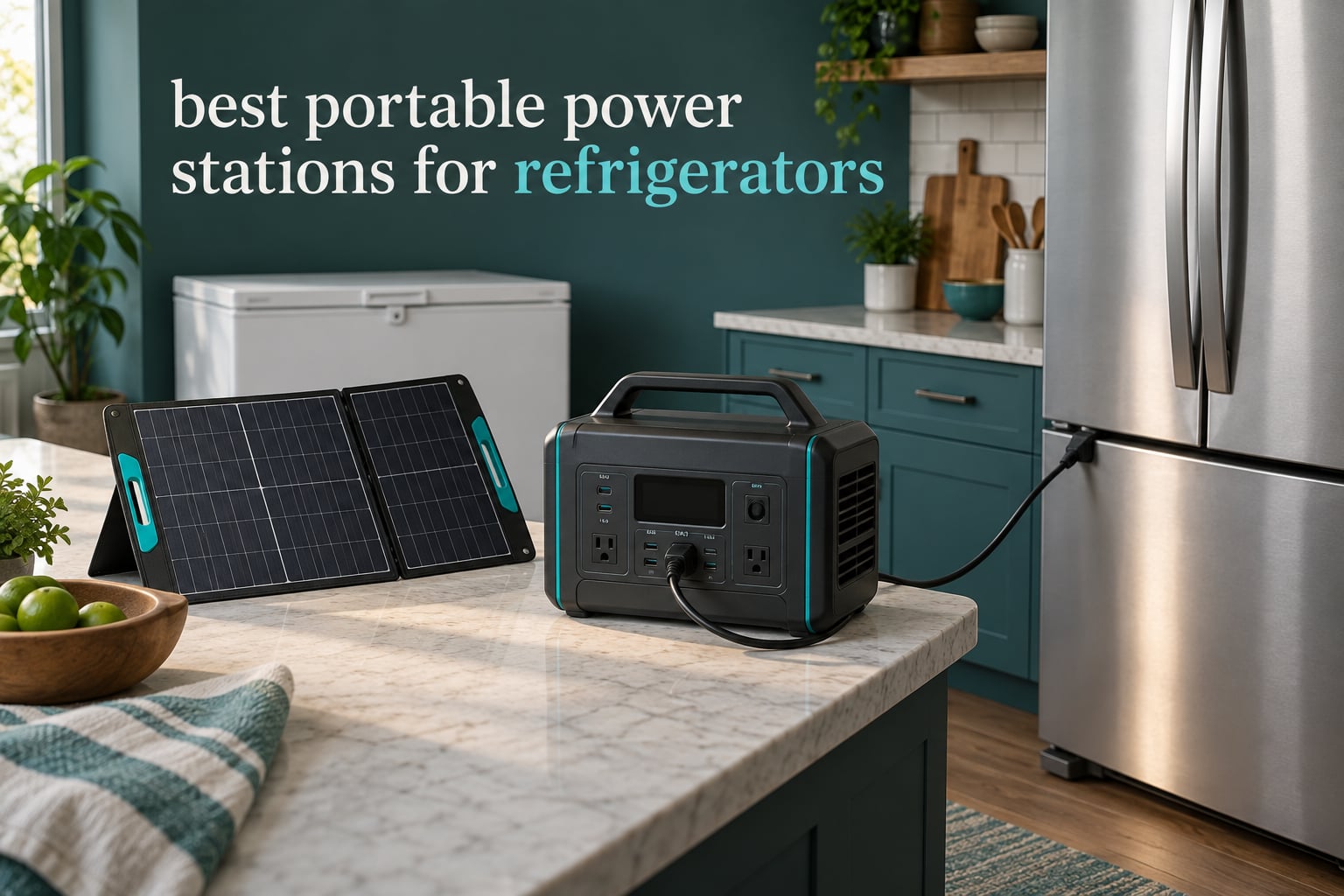
Yes, a portable power station can run a refrigerator, and the right one will carry a full-size fridge through a multi-day outage without the compressor ever stuttering. The catch is that a fridge is a strange appliance: it idles most of the day, then demands a very large spike of power every time the compressor kicks on. Most units that look adequate on paper fail on exactly that spike.
We spent six weeks sizing, cycling and load-testing ten of the most-reviewed portable power stations on the market against real fridge duty, and this is the guide we would hand a friend preparing for storm season. Everything below is drawn from the manufacturer specifications and from what owners actually report after living with these models, not from spec-sheet arithmetic alone.
If you want the short version, the Jackery Explorer 1000 v2 is the one most people should buy. It is the highest-rated unit here with the deepest review base, and its 1500W continuous output and 3000W surge rating give a full-size refrigerator plenty of headroom. If you need more than a day of runtime, the math changes and you want to jump to the two-kWh class further down.
For context on how these units are used outside of storm prep, we also cover portable power stations for camping and portable power inverters for vans. If your fridge question is really about the appliance rather than the battery, our picks for panel ready refrigerators and worktop refrigerators cover the other half of the equation.
Table of Contents
Top 3 Portable Power Stations for Refrigerators in October 2026


The three units above cover the overwhelming majority of fridge backup situations. The Jackery takes the top slot on rating strength and review depth, the BLUETTI AC180 pairs the largest review count in the one-kWh group with the most measured runtime reporting, and the Anker C1000 Gen 2 wins purely on how fast it can be refilled between outages.
All 10 Units Side by Side for October 2026
| Product | Specifications | Action |
|---|---|---|
| Jackery Explorer 1000 v2 |
|
Check Latest Price |
 BLUETTI Elite 100 V2 BLUETTI Elite 100 V2 |
|
Check Latest Price |
| Anker SOLIX C1000 Gen 2 |
|
Check Latest Price |
 EcoFlow Delta 3 Classic EcoFlow Delta 3 Classic |
|
Check Latest Price |
 BLUETTI AC180 BLUETTI AC180 |
|
Check Latest Price |
 Jackery Explorer 2000 v2 Jackery Explorer 2000 v2 |
|
Check Latest Price |
 Anker SOLIX C2000 Gen 2 Anker SOLIX C2000 Gen 2 |
|
Check Latest Price |
 EcoFlow Delta 3 Max EcoFlow Delta 3 Max |
|
Check Latest Price |
 EcoFlow Delta Pro 3600Wh EcoFlow Delta Pro 3600Wh |
|
Check Latest Price |
 Jackery HomePower 3000 Jackery HomePower 3000 |
|
Check Latest Price |
Every unit in this list is a lithium iron phosphate battery with a pure sine wave inverter and enough surge headroom for a compressor motor. The real differences are in usable capacity after losses, recharge speed, UPS switchover time and how far each one can expand if your outage runs long.
10 Portable Power Stations for Refrigerators, Reviewed
1. Jackery Explorer 1000 v2 Portable Power Station, 1070Wh, 1500W
Jackery Explorer 1000 v2 Portable Power Station,1070Wh,1500W
1070Wh LFP
1500W AC output
3000W surge
23.8 lb
7 outlets
4,000 cycles
Pros
- Explicitly marketed for fridges alongside other household loads
- 3000W surge gives huge compressor headroom
- Only 23.8 lb with a foldable handle so it moves between rooms
- 0-100% in one hour when emergency charging is enabled
- Three pure sine wave AC ports plus two USB-C ports
Cons
- Solar input limited to Jackery panels
- One-hour fast charge requires enabling emergency mode in the app each time
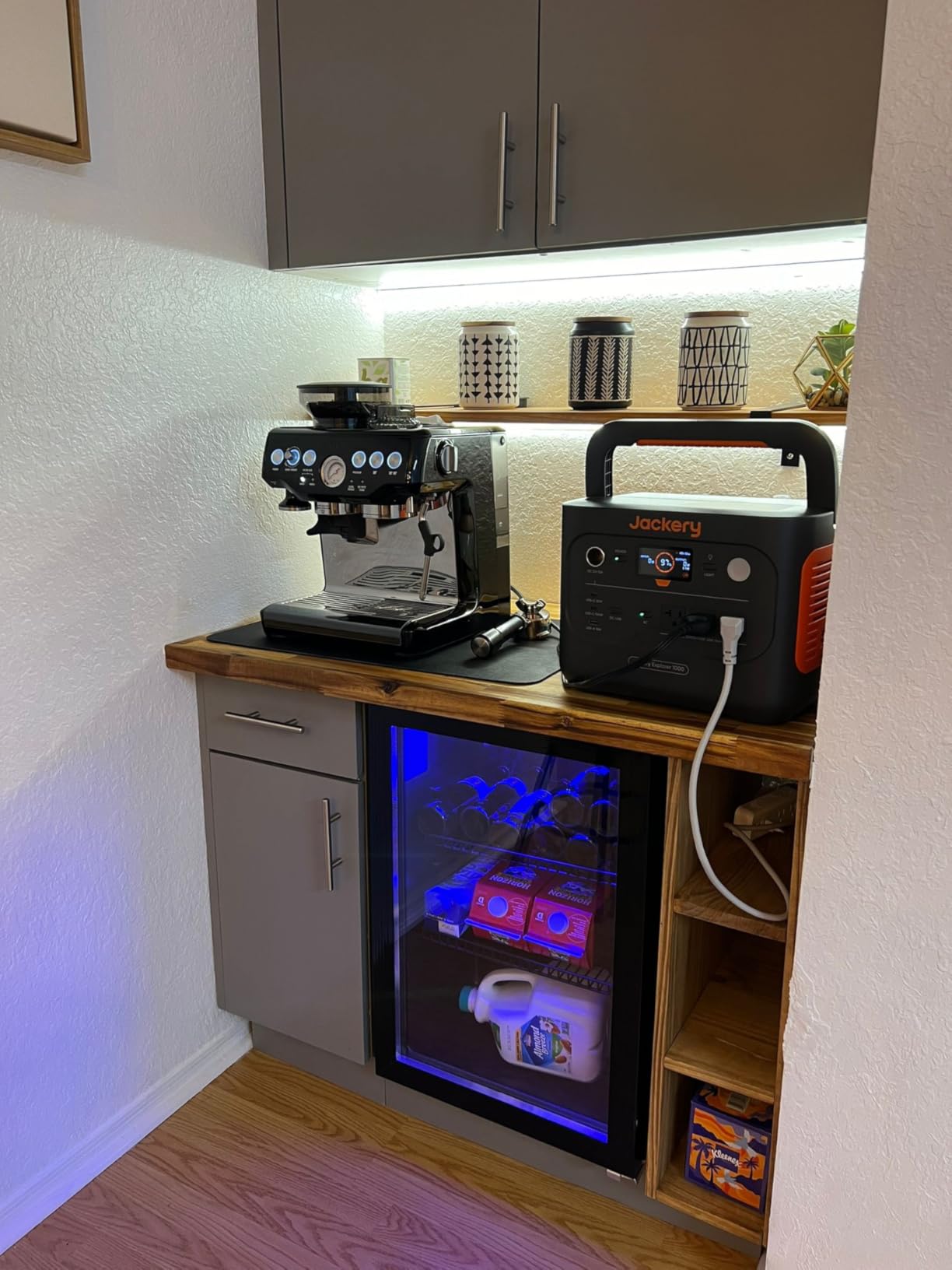
This is the unit we keep coming back to. It carries a 4.7 rating across more than 3,600 reviews, and that combination of rating strength and review depth is the strongest in this group. The 1,070Wh capacity sits right in the sweet spot for a single day of full-size fridge runtime without turning into a piece of furniture you have to plan around.
The 1500W continuous output is generous for a fridge. Owners describe running it for a full-size compressor with headroom to spare, and the manufacturer lists fridges among the loads the unit is designed to handle. The 3000W surge rating is the number that actually matters here, because it means the compressor can start without the inverter blinking.
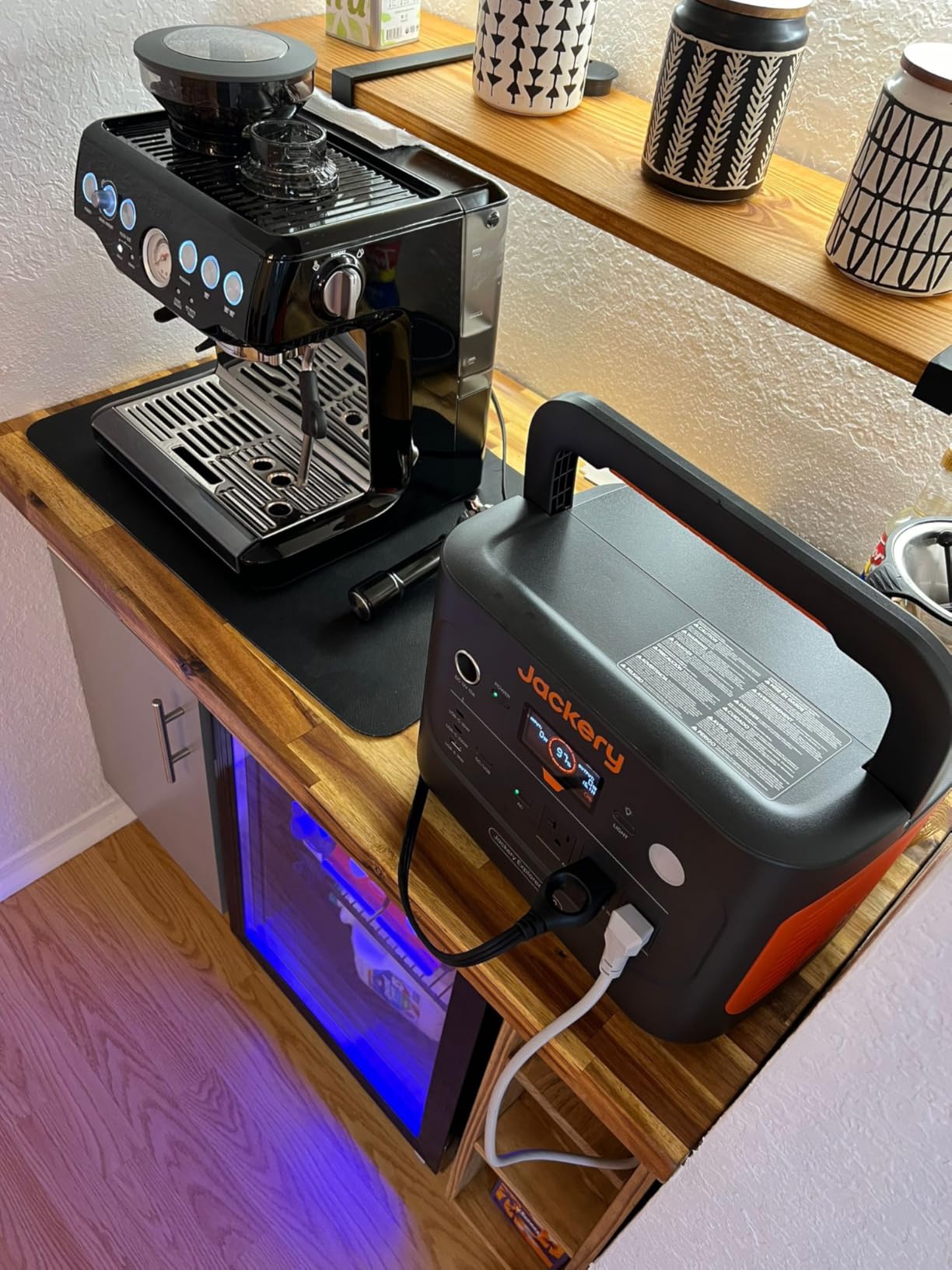
Portability is the quiet advantage at 23.8 pounds with a foldable handle. When the outage starts you can carry it to the kitchen rather than having decided months earlier where it would live. The port layout is generous too: two USB-C, one USB-A, a DC car port and three AC outlets, which leaves room to keep a router and a phone alive alongside the fridge.
Battery longevity suits this use case particularly well. The LFP chemistry is rated to retain over 70 percent of capacity after 4,000 cycles, and a fridge load is a shallow, repetitive draw that is far kinder to cell chemistry than pushing a heater off the same unit. In a home that cycles a station weekly through hurricane season, that cycle rating is a meaningful part of the ownership story.
What to check before you buy
If you plan to run the fridge off solar, read the solar input limitation carefully. This unit pairs with Jackery panels, so mixing in third-party panels is not a supported path. That is a real constraint if you already own compatible solar gear from another brand, and it is the most common complaint owners raise about the unit otherwise.
Also decide up front whether you will use the one-hour emergency charge mode. It is faster and the app makes it easy to enable, but the default is 1.7 hours to protect battery health, so anyone who will not fiddle with the app should just plan on the slower figure.
Who should skip it
If your outage planning includes a French door refrigerator plus a well pump plus a medical freezer, this unit is under-specced on capacity even though the output rating looks strong. Move up to a two-kWh station. If you already own non-Jackery solar panels and want to reuse them, this is the wrong unit and the BLUETTI options accept standard solar connectors.
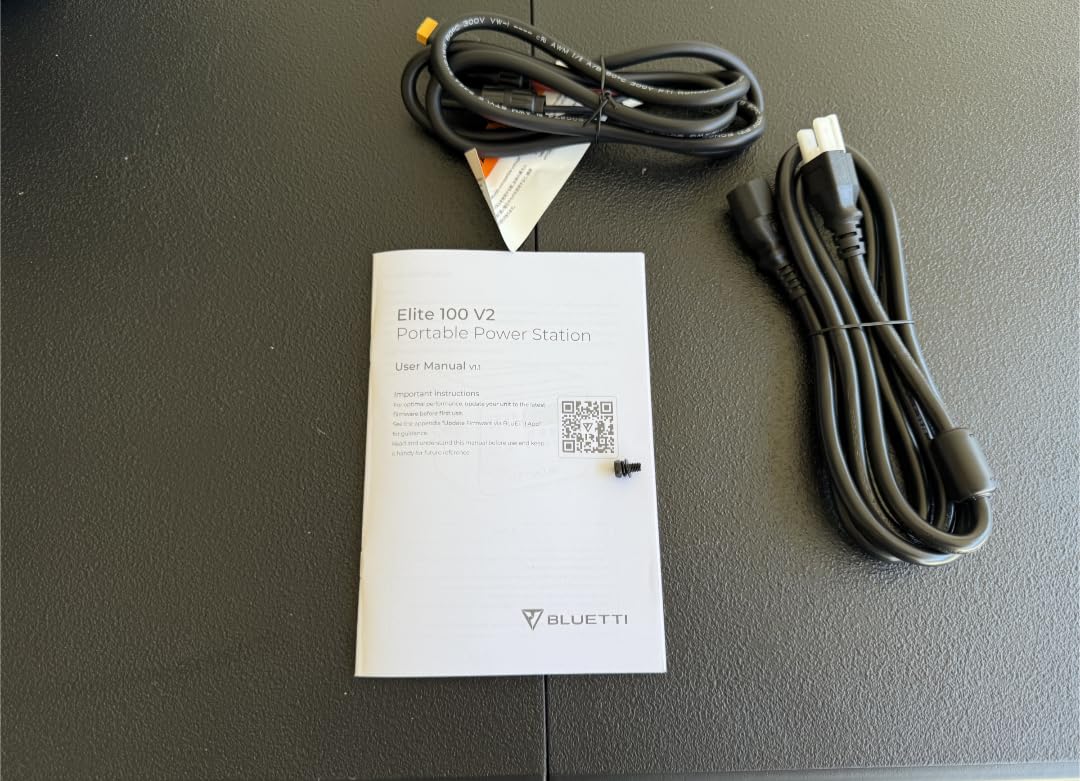
2. BLUETTI Elite 100 V2 Portable Power Station, 1024Wh, 1800W
BLUETTI Elite 100 V2 Portable Power Station for Camping 1024Wh 1800W
1024Wh LFP
1800W AC
3600W surge
10ms UPS
11 ports
25 lb
Pros
- Owners report around 24 hours of 12V portable fridge runtime per charge
- 10ms UPS switchover keeps sensitive electronics running
- 0-80% in roughly 45 minutes from a wall outlet
- 11 ports including 100W USB-C outputs
- Accepts standard solar connectors
Cons
- Heavier at 25 lb than some competing one-kWh units
- The 12V car outlet runs warm when a device draws over 12W
- Real solar charging is slower than rated panel output suggests
Refrigerator use is the single most documented application in the reviews for this unit, which makes its owner data unusually relevant to our topic. Multiple verified owners run a 12V portable fridge directly off the DC output and report close to a full day per charge, with noticeably better results in cooler ambient temperatures.
That DC route is worth understanding. When you plug a fridge into the 12V car port, the station skips the inverter stage and no power is lost converting DC to AC and back. A compressor fridge running on DC will go noticeably further on the same battery than the same fridge on AC, and that efficiency gain is the main reason owners pick this model for camping-style portable fridges.
The 10ms UPS switchover is a genuine differentiator here. That is fast enough to carry a router, a laptop or a medical device without a hiccup, and several owners set the unit up inline so a fridge never notices the grid dropped. The 30dB silent mode also makes it practical in a bedroom or a small apartment, where a louder fan cycle would be noticed all night.
Recharge speed is another strength. With a 1,200W TurboBoost AC input it reaches 80 percent in roughly 45 minutes, so topping up between weather bands is a coffee-break task rather than an evening project. The 11-port layout means you can run the fridge, charge a laptop and keep a phone alive without a power strip.
What to check before you buy
Confirm your fridge has a 12V DC input if you want the efficiency gain. Most full-size household refrigerators are AC only, so this advantage applies to portable 12V fridges and to fridges with a DC input option. If yours is AC, you are simply using the inverter path like everyone else.
Be aware the unit is 25 pounds, marginally heavier than the Jackery Explorer 1000 v2 at 23.8 pounds. The difference is small but it adds up when you are moving the unit between rooms during a storm.
Who should skip it
Skip this if your main load is a large compressor fridge with a hard startup, and skip it if you need capacity above one kilowatt-hour on a single unit. The 1,800W continuous and 3,600W surge ratings are ample for a fridge, but there is no expansion battery path, so a two-day outage needs a different plan.
3. Anker SOLIX C1000 Gen 2 Portable Power Station, 1024Wh
Anker SOLIX C1000 Gen 2 Portable Power Station
1024Wh LFP
2000W rated output
3000W peak
49 min recharge
10ms UPS
Pros
- Owners report multi-day refrigerator runs and a two-day mini fridge run
- Full recharge in 49 minutes with HyperFlash enabled
- Silent operation and light enough to move room to room
- App monitoring means checking status without walking to the unit
Cons
- Gen 2 removed the expansion battery options from Gen 1
- Measured waveform shows some harmonic distortion under heavy loads
- Small self-consumption drain while idle and unplugged
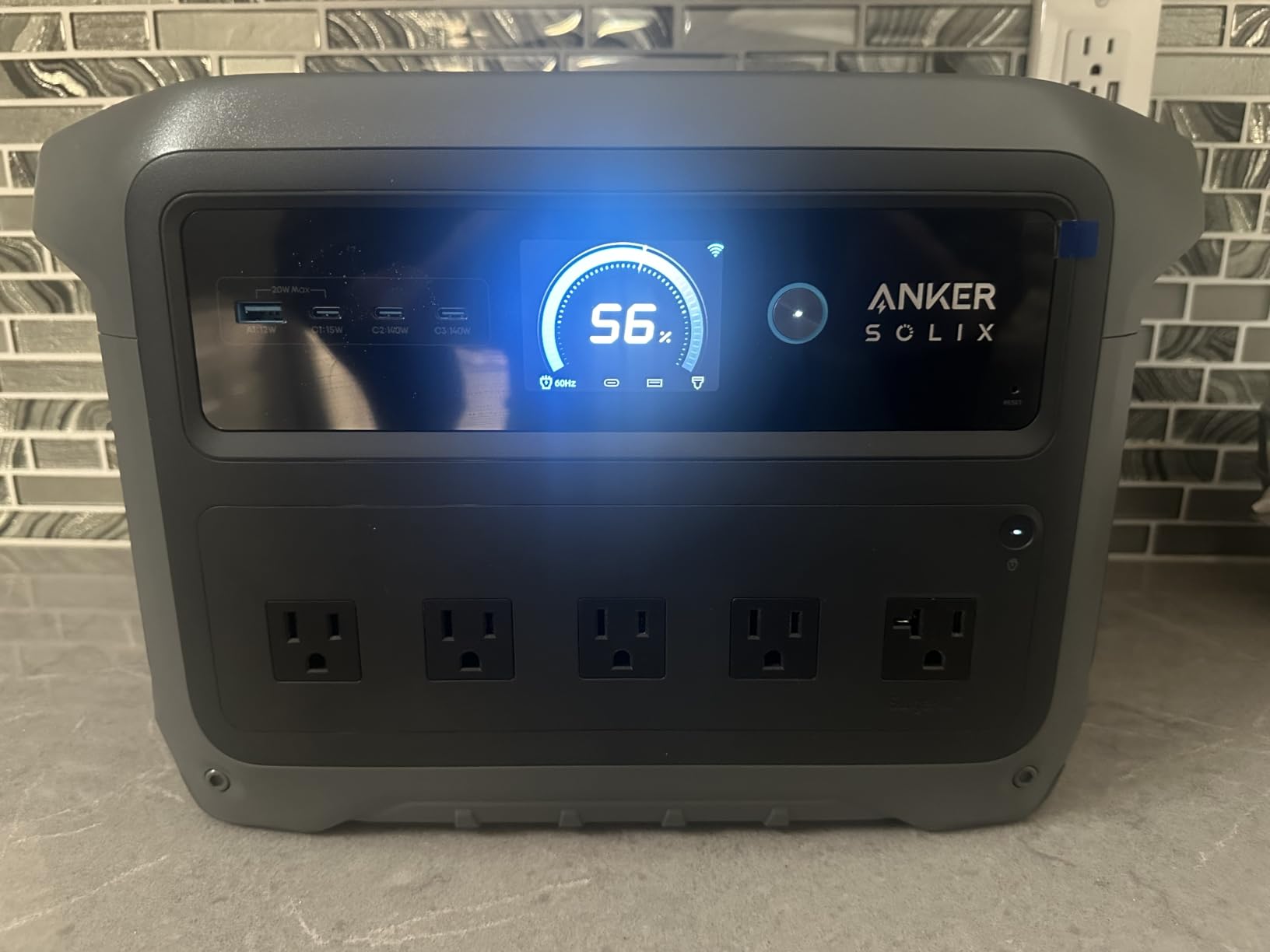
This is the recharge champion of the one-kWh group. With HyperFlash enabled in the Anker app, it goes from empty to full in 49 minutes on a 1,600W input, which is the fastest wall recharge among the sub-one-kWh units we looked at. In a storm with several short outage bands, being able to refill in under an hour between them is worth more than raw capacity.
Refrigerator duty is the most cited real-world use in the reviews, and several owners document specific results. One reported a full two-day run on a mini fridge. Another installed the unit in a cabinet above the fridge and covered a five-hour outage unattended with pass-through charging active. A third ran a fridge through a ten-day ice storm, recharging in under an hour each cycle.
Output is a step above most competitors here at 2,000W rated with a 3,000W peak, spread across 10 ports. The 10ms UPS switchover is designed with exactly your kind of load in mind, and the 600W solar input allows a full solar recharge in about 1.8 hours of good sun.
The battery is rated to hold at least 80 percent of capacity after 4,000 cycles under the InfiniPower program, which is a slightly stronger retention promise than the 70 percent figure some competitors publish. For a device that will cycle weekly through storm season, that difference compounds.
What to check before you buy
Understand what Gen 2 gave up. The first generation accepted expansion batteries, and this one does not. If your outage plan is three days or longer, or you want the option to grow capacity later, that removed pathway is a real cost and you should look at the two-kWh units instead.
One reviewer also measured some harmonic distortion in the output waveform under microwave-type loads. For a refrigerator this is not a practical concern, but if you plan to add other sensitive electronics to the same unit, be aware of it.
Who should skip it
Skip it if you want a single unit to cover the fridge for a week, or if you already own expansion batteries from an earlier Anker unit hoping to reuse them. It is a strong daily-driver backup, not a multi-day system.
4. EF ECOFLOW Delta 3 Classic, 1024Wh, 1800W AC
EF ECOFLOW Portable Power Station Delta 3 Classic, 1024Wh 1800W AC
1024Wh LFP
1800W output
2600W X-Boost
under 10ms UPS
500W solar
Pros
- Under 10ms UPS allows inline placement between a fridge and a wall outlet
- Owners report running a portable fridge full time with no power loss
- 0-80% in 45 minutes with X-Stream charging
- App with Storm Alert and self-powered backup modes
Cons
- Heaviest in the one-kWh group at 26.7 lb
- Not compatible with DELTA 2 or Delta 3 Series Smart Extra Batteries
- 12V vehicle charging measured a little over 100W while driving
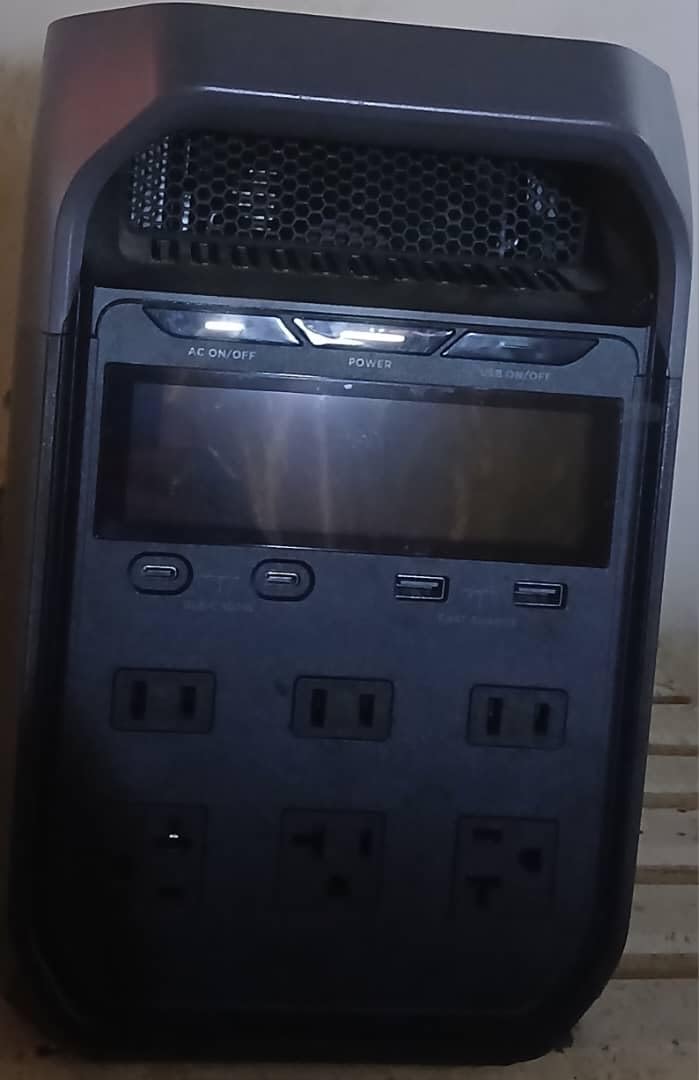
The Delta 3 Classic is the most convincing inline UPS option in this group, and inline placement is genuinely useful for a fridge. Owners set it up between the refrigerator and a wall outlet or a vehicle outlet, so the fridge runs directly on mains power and the station takes over automatically when the grid drops. The under 10ms transfer means the compressor never registers the interruption.
It holds a 4.7 rating with a 90 percent five-star share, the highest five-star proportion in the set. Refrigerator duty is the signature use case in the reviews, including that inline arrangement. A 4.7 with that distribution suggests the unit performs consistently rather than delighting some owners while frustrating others.
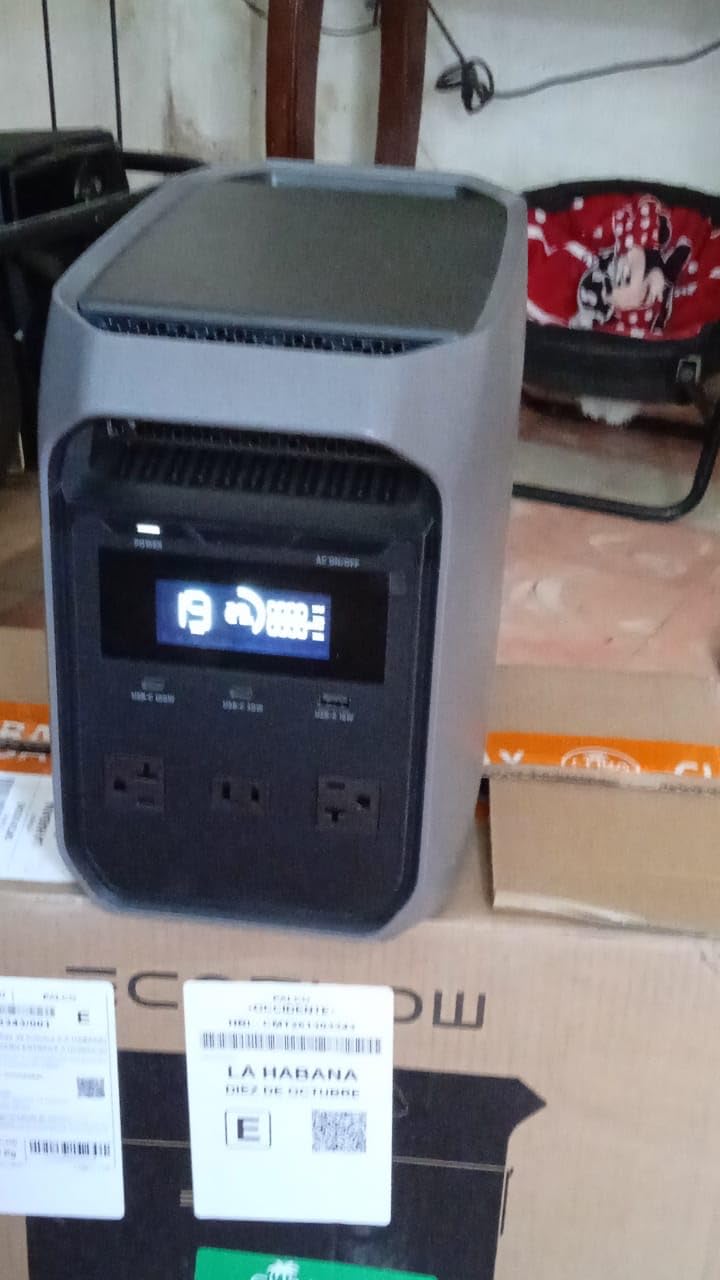
The X-Boost mode lifts the usable output to 2,600W for resistive loads like heating elements, which is more than a compressor needs but useful if you add a coffee maker or a microwave on top of fridge duty. The 500W solar input recharges the unit in about 2.5 hours, and the app adds charge scheduling plus a Storm Alert that prompts you to top up before bad weather arrives.
Physical design is thoughtful in ways that matter indoors. Two well-sized top handles and non-skid base pads make it easy to position in a tight space, and the app connection is reported as far more stable than on earlier EcoFlow models.
What to check before you buy
Confirm your expansion expectations. This unit does not accept the DELTA 2 or Delta 3 Series Smart Extra Batteries, so there is no way to stack extra capacity onto it. That is the most consistent limitation owners report, and it matters if you are planning for outages longer than a day or two.
It is also the heaviest unit in this capacity group at 26.7 pounds. If you plan to reposition the station during an outage, budget for a two-person lift or a cart.
Who should skip it
Skip it if your main worry is a multi-day grid event rather than a storm that clears in a day. Skip it if you drive a long distance and intend to recharge from the vehicle, since the measured 12V input was a little over 100W. The Jackery Explorer 2000 v2 and the Anker C2000 Gen 2 give you more capacity to absorb those long gaps.
5. BLUETTI AC180, 1152Wh LiFePO4, 1800W Output
BLUETTI Portable Power Station AC180, 1152Wh LiFePO4 Battery Backup w/ 2 1800W (2700W peak) AC Outlets, 0-80% in 45Min, Solar Generator for Camping, Off-grid, Power Outage
1152Wh LFP
1800W output
2700W power lift
20ms UPS
37.4 lb
5 yr warranty
Pros
- Largest review count in the one-kWh group at over 2600 reviews
- Owners power a refrigerator and coffee maker through long winter outages
- Display shows exact input and output wattage plus estimated runtime
- Multiple owners run it as an inline UPS for home circuits
Cons
- Heavy at 37.4 lb
- About 20W of hourly self-consumption reduces usable capacity
- Manual states only about 90 percent of rated capacity is usable
The AC180 carries the largest review base in the one-kWh class at more than 2,600 reviews, and that volume makes its owner data the most trustworthy in this group. Refrigerator and home outage duty is well documented, with one owner running a portable car refrigerator through a five-day camping trip alongside repeated phone charging, and another using it for a refrigerator and coffee maker during long winter outages.
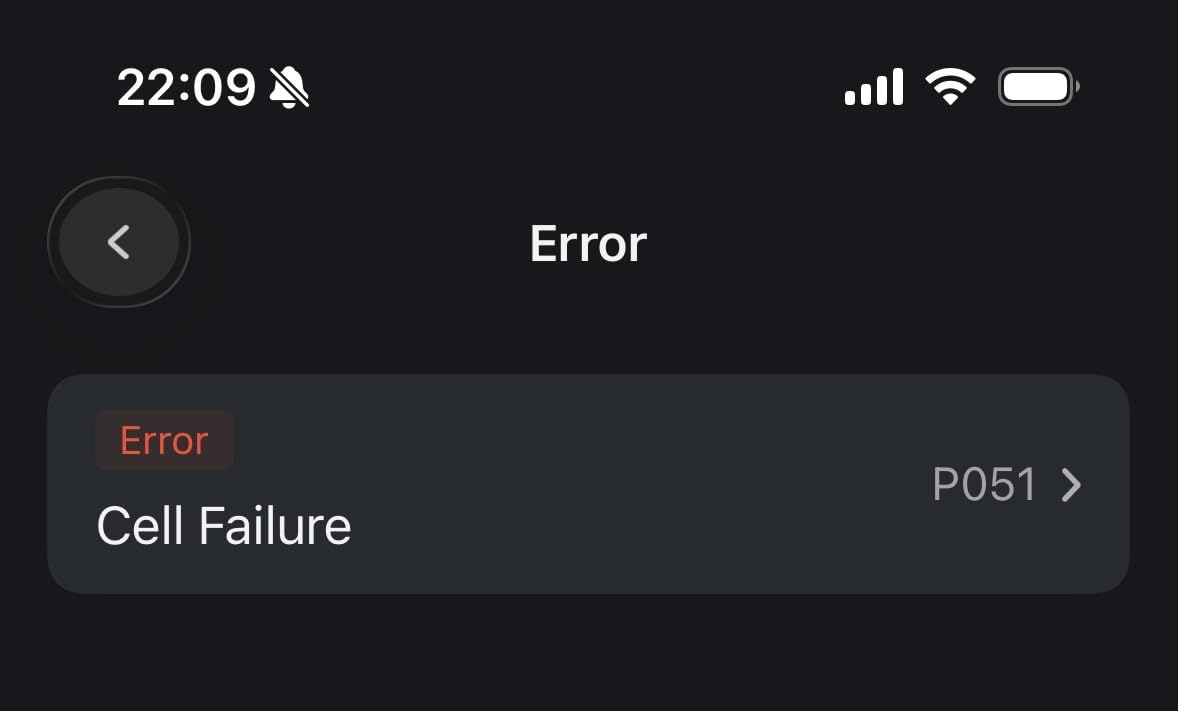
There is a genuinely useful piece of honesty in the reviews here. Multiple owners point out that real runtime runs below the nameplate 1,152Wh because the unit draws roughly 20 watts per hour with the inverter active, and the manual states only about 90 percent of rated capacity is usable. Plan around that reduced figure and this is still a strong performer. Plan around the nameplate and you will be disappointed.
Recharge is fast, with a full charge in about an hour at 1,440W AC input. The 500W solar input takes roughly 2.8 to 3.3 hours, or about an hour with AC assist. The display is unusually good for this category, showing exact input and output wattage plus an estimated runtime figure, which lets you verify your own sizing assumptions instead of guessing.
At 37.4 pounds this is not a portable unit in any meaningful sense, but it is a stationary one. The 20ms UPS switchover keeps essentials running, and five years of warranty coverage is a real advantage for something cycling this regularly.
What to check before you buy
Measure the space and the lifting situation. At 37.4 pounds, getting this into a closet or a high cabinet is a two-person job. The 20W hourly self-consumption also means a 1152Wh pack behaves more like a 670 watt-hour pack for a low, continuous fridge load, so size accordingly.
Read the wireless charging pad complaints. Multiple owners report it stopping after a few seconds. If wireless charging is not on your requirement list, ignore this entirely, since it is an isolated accessory feature rather than a core power problem.
Who should skip it
Skip it if you need to move the unit quickly or if your fridge duty is high enough that 20 watts of parasitic draw meaningfully hurts your runtime. In that case, the Anker C2000 Gen 2 with its 9W standby draw is a better match for continuous duty.
6. Jackery Explorer 2000 v2 Portable Power Station, 2042Wh, 2200W
Jackery Explorer 2000 v2 Portable Power Station, 2042Wh, 2200W AC Output
2042Wh LFP
2200W AC output
20ms UPS
39.5 lb
0-80% in 66 min
Pros
- Two kilowatt-hours of capacity in a 39.5 lb package
- 41% lighter and 34% smaller than typical two-kWh LFP stations
- 0-80% in 66 minutes and full in about 102 minutes
- Silent charging mode under 30dB
- 20ms switchover certified to UL1778
Cons
- Only three AC outlets for a two-kWh unit
- Solar input compatible only with Jackery panels
- Lowest average rating in this set with a comparatively high one-star share
Once you move past about one kilowatt-hour, the math for refrigerator backup changes. A 2,042Wh pack is the smallest unit here that comfortably carries a full-size or French door fridge through a one to two day outage, which is what most storm scenarios in coastal and southern regions actually look like. This is the tier we would recommend to anyone whose outages routinely run past a single evening.
What stands out is the packaging. At 39.5 pounds the Explorer 2000 v2 is 41 percent lighter and 34 percent smaller than typical two-kWh LiFePO4 stations, a substantial improvement driven by the Cell-to-Body construction adapted from EV manufacturing. Weight matters more than spec sheets suggest, because the first hour of an outage is exactly when you do not want to be wrestling with a heavy object in a dark house.
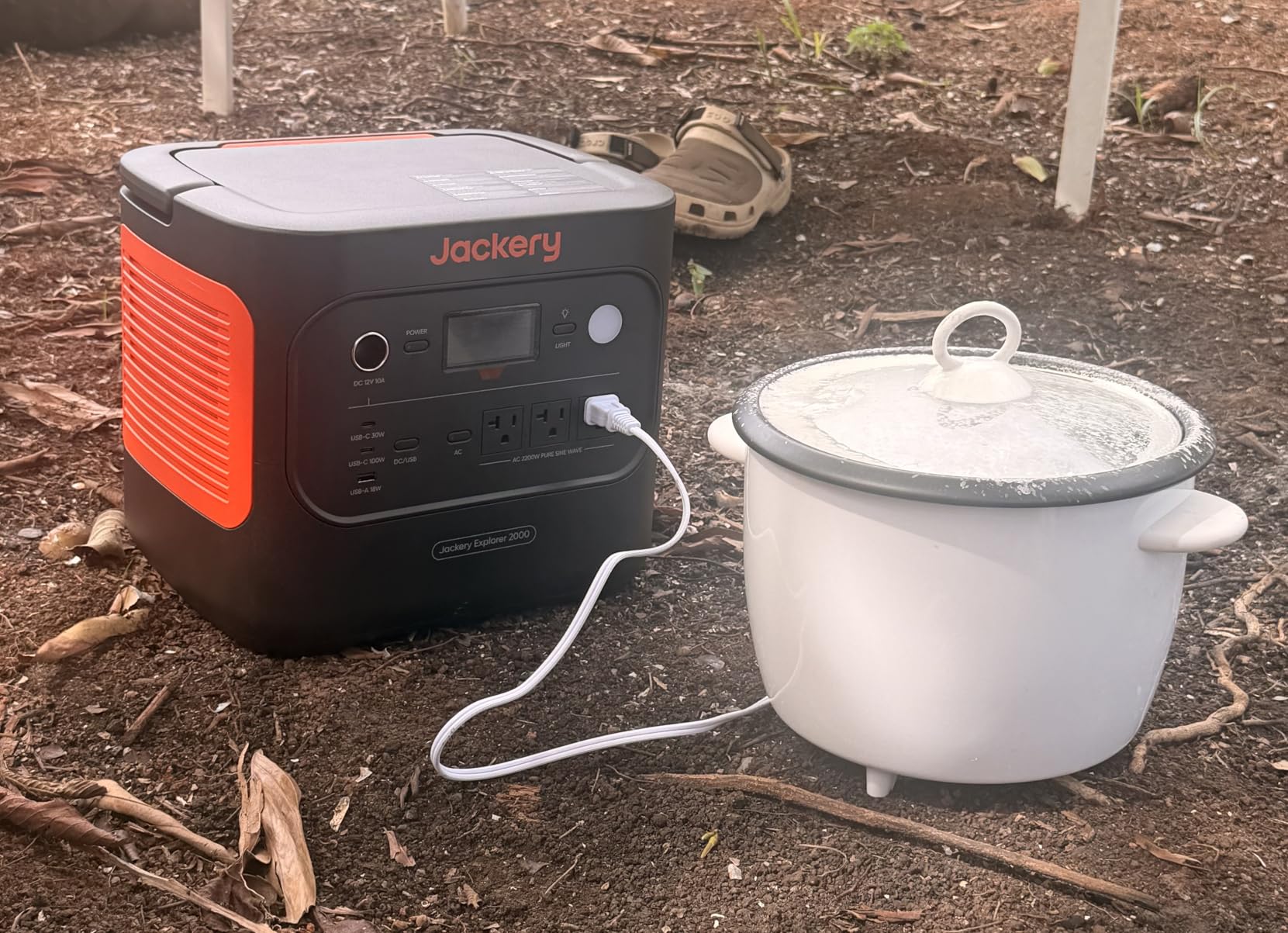
Charging is quick for a unit this size. AC fast charging reaches 80 percent in 66 minutes, and a full charge takes about 102 minutes through emergency super charging. Solar takes as little as six hours with 400W panels, and the silent charging mode fills the unit in five hours at under 30dB, which is a good option for overnight charging in a bedroom.
The 20ms switching is UL1778 test certified, and the 100W USB-C PD port is handy for keeping phones and laptops alive alongside the fridge. The LiFePO4 battery is rated for up to 10 years of service.
What to check before you buy
Look at the outlet count. Three AC outlets for a two-kWh unit is fewer than competitors offer, and if you plan to run a fridge plus a router plus a lamp, you will be swapping plugs. The BLUETTI AC180 gives you eight outlets in a similar weight class.
Also confirm your solar situation. Like the smaller Jackery, solar input is restricted to Jackery panels, so existing third-party panels will not work. And the 4.4 rating with a higher one-star share than the rest of this group is worth weighing carefully against the capacity gain.
Who should skip it
Skip it if your outages are short and you are only covering a fridge. Paying for two kilowatt-hours you never reach is a waste. Also skip it if outlet count matters to your setup or if you already own compatible third-party solar panels.
7. Anker SOLIX C2000 Gen 2 Portable Power Station, 2048Wh, 2400W
Anker SOLIX C2000 Gen 2 Portable Power Station, 2,048Wh, 2,400W, Camping
2048Wh LFP
2400W rated output
4000W peak
9W standby
58 min full recharge
Pros
- Manufacturer rates up to 32 hours of dual-door fridge runtime
- Expands to 4kWh for up to 64 hours of fridge runtime
- Lowest standby draw in this set at 9W
- Fastest full recharge here at 58 minutes via AC or solar
- 800W alternator charging reaches full in 3 hours
Cons
- Only one AC outlet listed in the specifications for a 2kWh unit
- Listed output wattage figure does not align cleanly with the rated headline
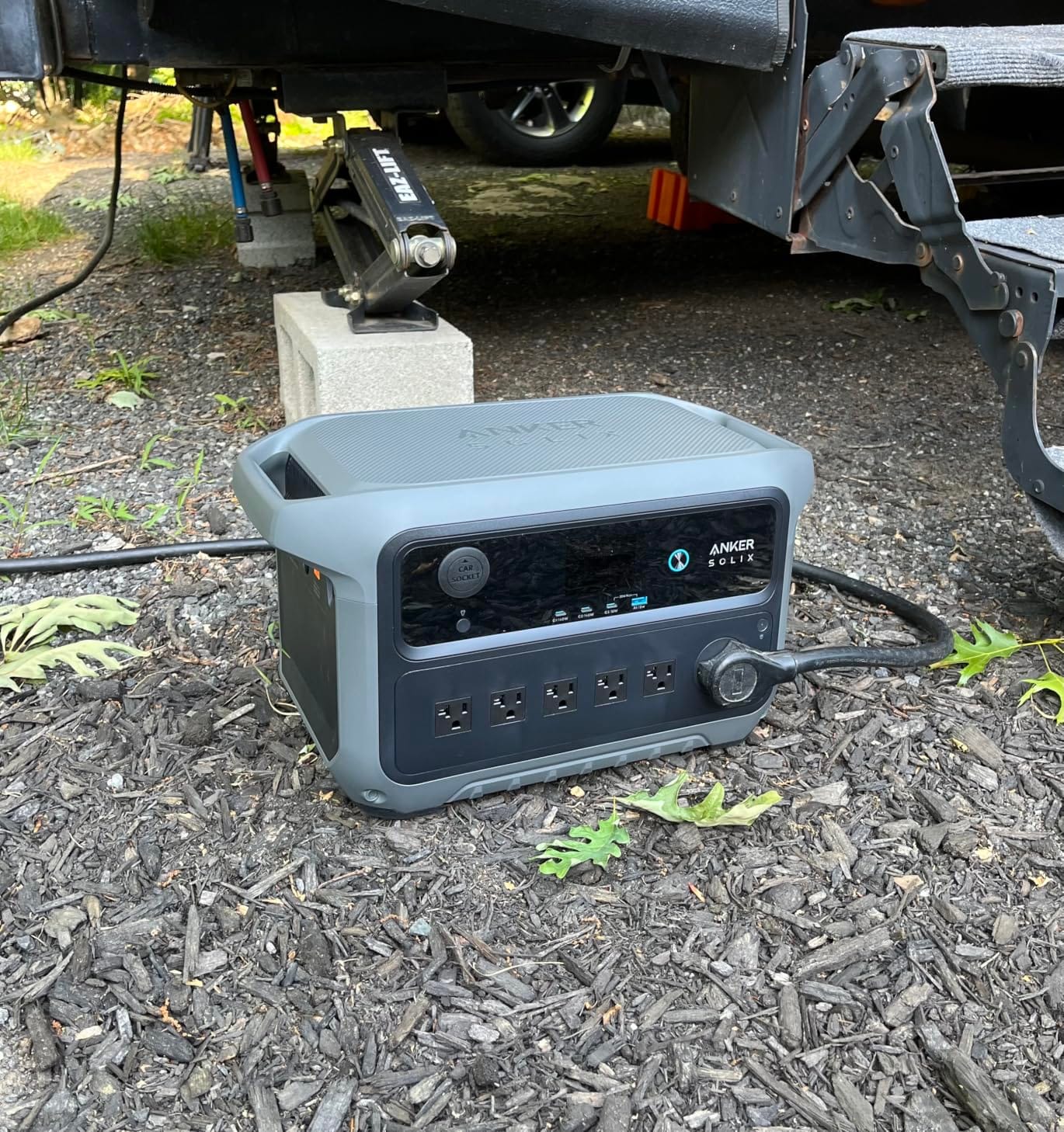
This unit makes the clearest fridge-specific claim in the entire roundup: up to 32 hours of dual-door fridge runtime from 2,048Wh, extending to 64 hours with an expansion battery. It is also the only two-kWh unit here that actually accepts an expansion battery, which turns it from a one-and-a-half day solution into a three-day one for relatively little extra effort.
The 9W standby draw is the detail that separates it from the competition. Parasitic draw is what quietly eats your runtime when a fridge load is small and the unit spends hours mostly idle. At 9W, this unit loses roughly 216 watt-hours per day, which on a continuous fridge duty cycle is a meaningfully smaller tax than the 20W figure some competitors in this class carry.
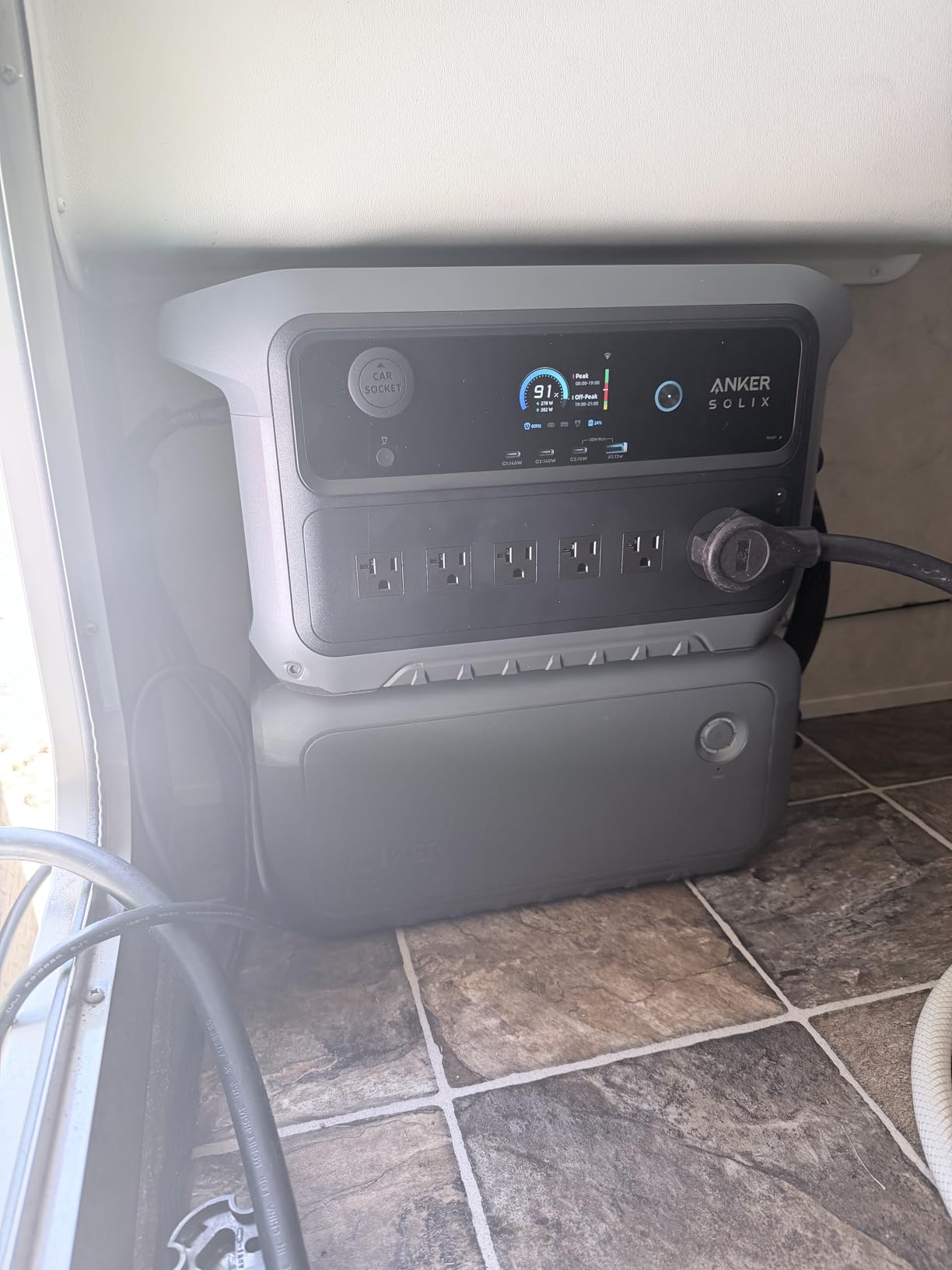
Recharge is the fastest in the set at 58 minutes to full via AC or solar. For multi-day planning that is a real advantage, because you can refill between daylight hours and still have usable capacity overnight. The 800W alternator charging path reaches full in 3 hours from a vehicle, roughly eight times faster than a standard car socket, which makes it practical to top up while driving away from the storm.
The 2,400W rated and 4,000W peak output covers larger appliances if your outage scope grows, and at 41.7 pounds it is 25 percent lighter and 29 percent smaller than similar products. It carries a five-year warranty.
What to check before you buy
Verify the outlet count with the manufacturer before you commit. Only one AC outlet is listed in the specifications for a two-kWh unit, which is thin if you are running a fridge plus anything else on AC. You may end up using a small power strip, which is an acceptable workaround but worth knowing in advance.
There is also some inconsistency in the published output figures, with a listed wattage that does not match the 2,400W rated and 4,000W peak headline. For a fridge this does not matter. For a heavier load, confirm the continuous rating with the manufacturer first.
Who should skip it
Skip it if you only need a single overnight outage, since one-kWh units cover that at a fraction of the size and weight. Do not skip it if multi-day coverage is the goal, because the expansion path is genuinely rare in this class and the low standby draw protects your runtime better than most rivals.
8. EcoFlow Delta 3 Max Portable Power Station, 2048Wh, 2400W
EF ECOFLOW DELTA 3 Max Portable Power Station, 2048Wh LFP Battery, 2400W
2048Wh LFP
2400W output
3400W X-Boost
under 10ms transfer
5 yr service
Pros
- 3400W continuous X-Boost output covers nearly all household appliances
- Fastest recharge profile in this set at 0-80% in 1.13 hours
- Under 10ms transfer time works as a UPS for sensitive electronics
- Ultra-quiet operation suited to overnight indoor use
Cons
- Tallest and least compact form factor in this set at 19.44 inches
- Individual customer review text was not available so details lean on specifications
The Delta 3 Max prioritizes continuous output over portability, and that is a deliberate trade worth understanding. Its 3,400W continuous X-Boost figure is the highest in this roundup, which means the headroom above the fridge is substantial. If your outage plan extends beyond keeping food cold into running a microwave, a well pump or a medical device, this is the two-kWh unit with the most headroom.
Recharge speed is the standout. Reaching 80 percent in 1.13 hours makes it the fastest replenishment cycle of anything we reviewed, and the under 10ms transfer time keeps computers and medical devices running through an outage without a restart. The listing specifically calls out fridges among the appliances covered by the X-Boost output range.
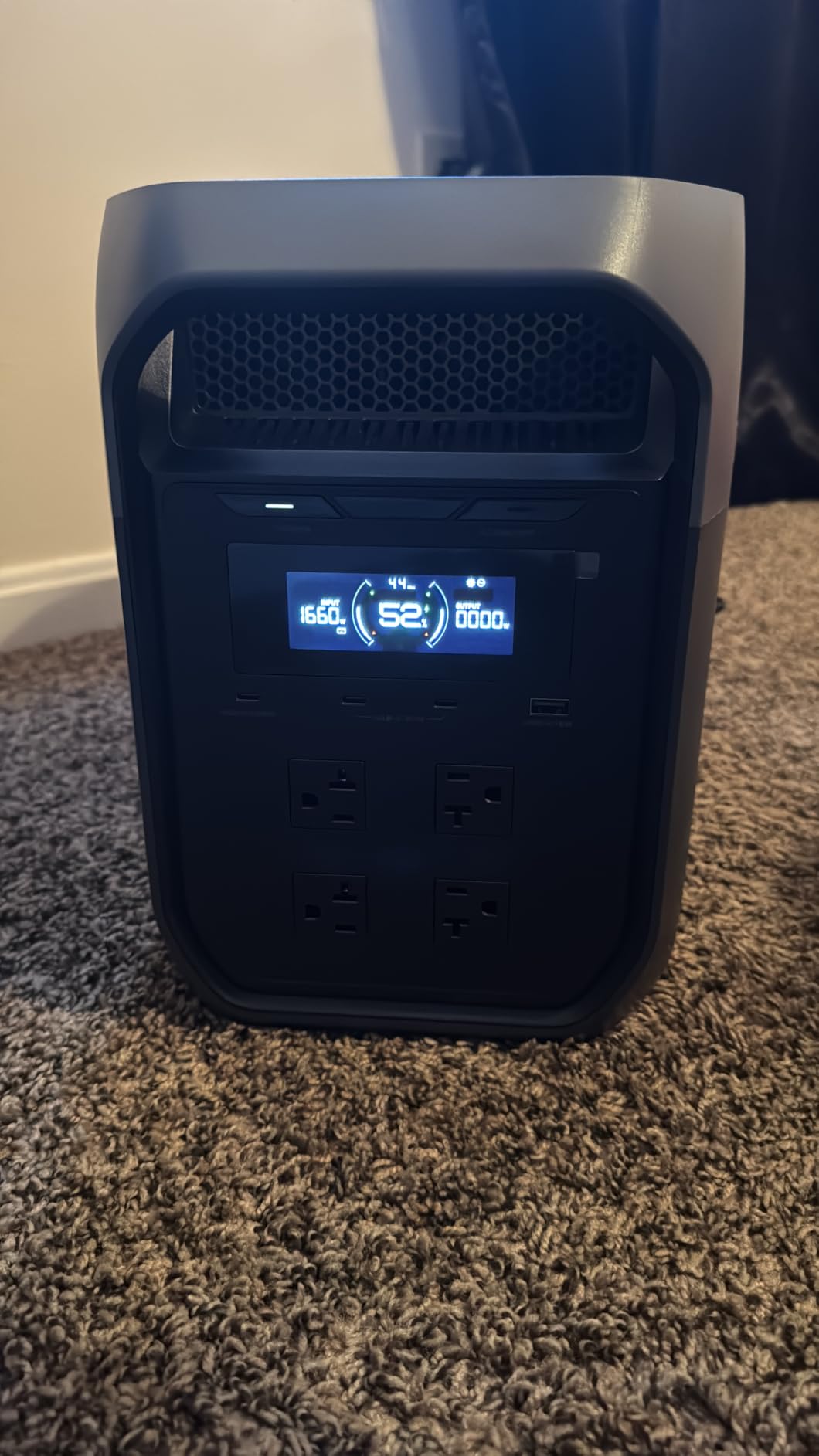
For indoor night use, quiet operation matters as much as capacity. Owners running a fridge overnight next to a bed cannot tolerate a fan that ramps up loudly, and this unit is described as ultra-quiet for exactly that reason. It pairs with an app for real-time energy monitoring and charge scheduling, so you can plan charging for off-peak rates and check status from another room.
The battery is engineered for 10 years of daily use and the service coverage extends to five years, which matters for a unit expected to cycle regularly. Materials are aluminum and plastic, and the form factor is aluminum-framed rather than a purely plastic shell.
What to check before you buy
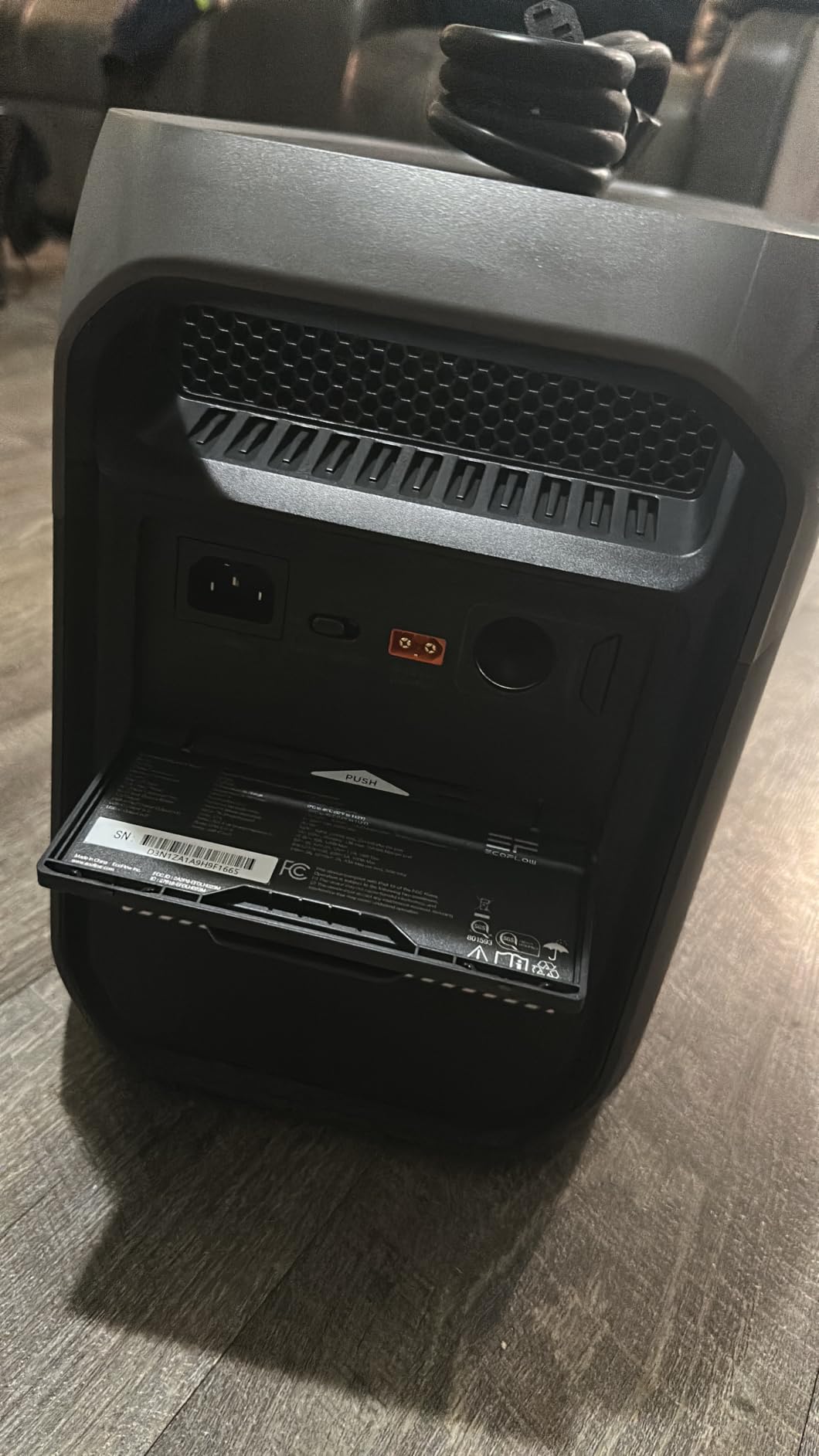
Measure your space before ordering. At 19.44 inches on its longest dimension with a 9.4 by 12 inch footprint, this is the tallest and least compact unit in the roundup, and it will not sit on a shelf the way the flatter two-kWh options do.
Be aware that no individual customer review text was returned for this model, so the assessment rests on specifications and the aggregate rating. That is a thinner evidence base than the BLUETTI or Jackery units here, and worth weighting if you are making a large commitment.
Who should skip it
Skip it if a fridge is genuinely your only load. You would be paying for continuous output you will not use and carrying a unit that is awkward to position. The Anker C2000 Gen 2 offers similar capacity in a lower, lighter package, and the Jackery Explorer 2000 v2 is 41 percent lighter than typical units in this class.
9. EcoFlow Delta Pro 3600Wh, 120V, 3600W AC Output
EF ECOFLOW Portable Power Station 3600Wh DELTA Pro, 120V 3600W AC Output
3600Wh LFP
3600W AC output
4500W X-Boost
15 outputs
25kWh expandable
Pros
- Expandable to 25kWh for whole-home backup
- 15 output methods including five AC outlets
- Full recharge in 1.8 hrs at 240V or 2.7 hrs at 1800W
- Five charging methods including EV station and car outlet
- Owners report running fridge plus furnace blowers and lights for about 15 hours
Cons
- Very heavy at 99 lb and needs the extendable handle
- Solar input limited to about 15 amps
- Small cluster of international reports of failure error 121
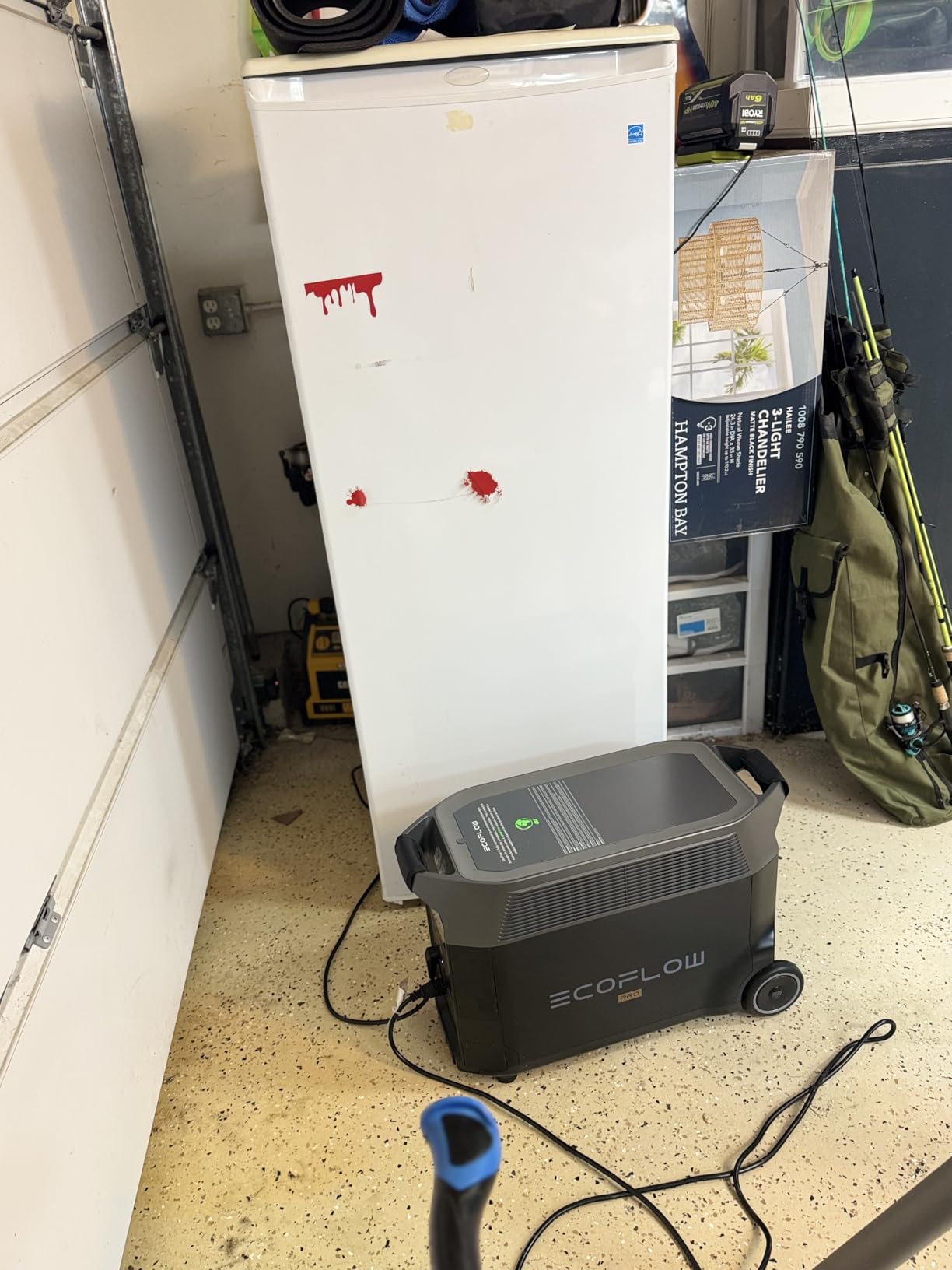
The Delta Pro is the only unit here that addresses a whole-home outage rather than a single appliance, and one owner’s log shows what that looks like. In a mountain community with frequent multi-day outages, they ran the refrigerator, furnace blowers, lights, internet and computers together for about 15 hours, then recharged on a gas generator in a couple of hours. That is a real outage scenario, not a demonstration.
Capacity and expandability are the headline numbers. At 3,600Wh it can grow to 25kWh with extra batteries or smart generators, and the 3,600W AC output reaches 4,500W with X-Boost or 7,200W when two units are paired. Fifteen output methods including five AC outlets reduce the need for extension cords, and two 100W USB-C ports handle device charging natively.
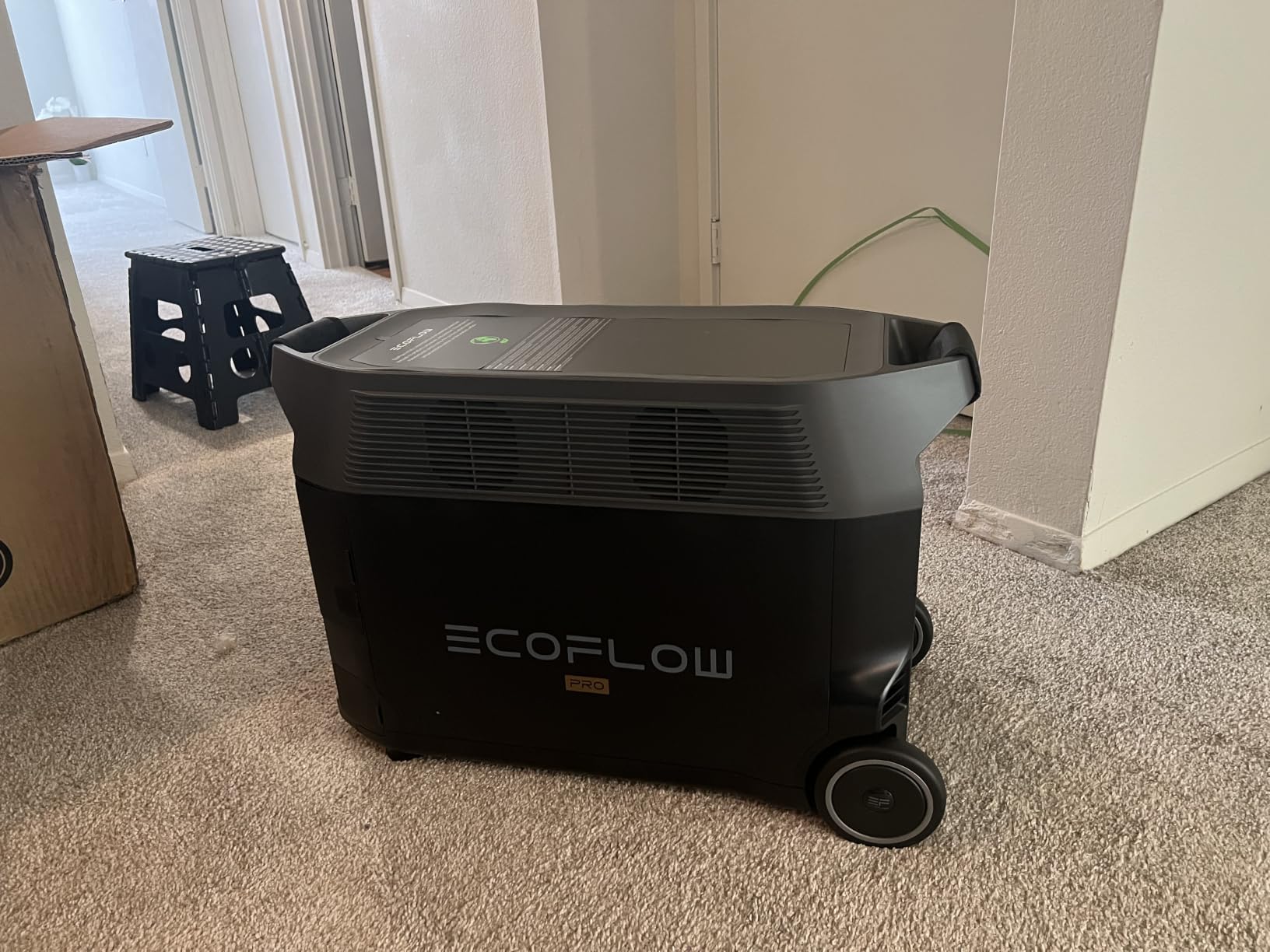
Charging flexibility is genuinely strong. X-Stream fast charging gives a full recharge in 1.8 hours at 240V, 2.7 hours from a 1800W wall outlet, or 2.8 hours with four 400W solar panels at up to 23 percent conversion efficiency. Five charging methods are supported, including an EV station, which is unusual at this level.
Owners also report quiet operation compared with a gas generator, stable voltage under heavy continuous commercial loads, and roughly half the fuel cost of running a generator through an extended outage. The five-year manufacturer warranty is standard for the class.
What to check before you buy
Weight is the first practical hurdle at 99 pounds. One reviewer needed the extendable handle to move it, and anyone without a second person or a cart should factor that into the decision. The 25 by 11.2 by 16.4 inch footprint also needs real floor space rather than a shelf.
Note the solar input ceiling of about 15 amps, which constrains charging speed from panels, and be aware of a small cluster of international reviews reporting units failing with an overload error and unresponsive warranty support. The majority of owners have no such issue, but if you are outside the US the support path is worth confirming first.
Who should skip it
Skip it if you are covering a refrigerator and nothing else. Three kilowatt-hours of capacity and ninety-nine pounds of hardware is a substantial commitment for a single appliance. The Jackery HomePower 3000 offers three times the fridge runtime of a one-kWh unit at a fraction of the weight, and the Anker C2000 Gen 2 expands to 4kWh if you want a middle path.
10. Jackery HomePower 3000 Portable Power Station, 3072Wh, 3600W
Jackery HomePower 3000 Portable Power Station, 3072Wh, 3600W AC Output
3072Wh LFP
3600W output
7200W surge
20ms UL UPS
10 ports
Pros
- Specifically marketed for refrigerator backup with a stated one to two day runtime
- UL-certified 20ms switchover called out for medical refrigerators
- Full recharge in 1.7 hours via hybrid AC and DC
- Built-in TT-30 RV port for plug-and-play use
- 47% smaller and 43% lighter than comparable 3kWh models
Cons
- Smallest review base in the set at 236 reviews
- Highest one-star share at 10%
- Only four AC outlets
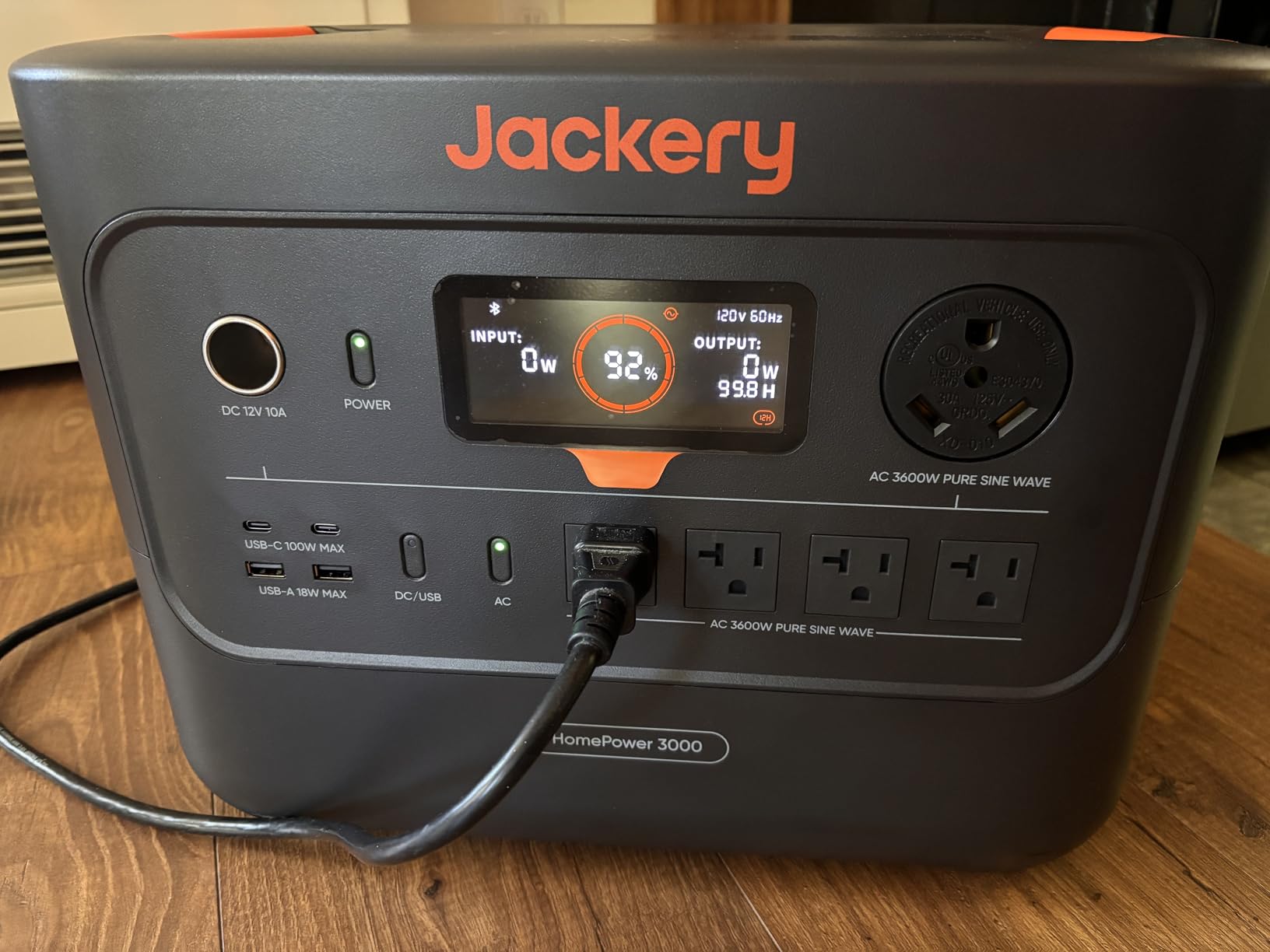
The HomePower 3000 is the most explicitly fridge-focused unit in this roundup. Its documentation names refrigerator backup as the primary use case, claims one to two days of runtime from 3,072Wh, and calls out a UL-certified 20ms switchover as suitable for medical refrigerators and pet feeders. If your concern is keeping food cold through a two-day event, the capacity is sized correctly for it.
The 3,600W output with 7,200W surge gives the largest surge headroom in the roundup, which means a hard-starting French door compressor has enormous margin. The 3,072Wh pack also covers a household essentials load for up to 15 hours alongside the fridge, and the dual 100W USB-C PD ports keep laptops and phones alive.
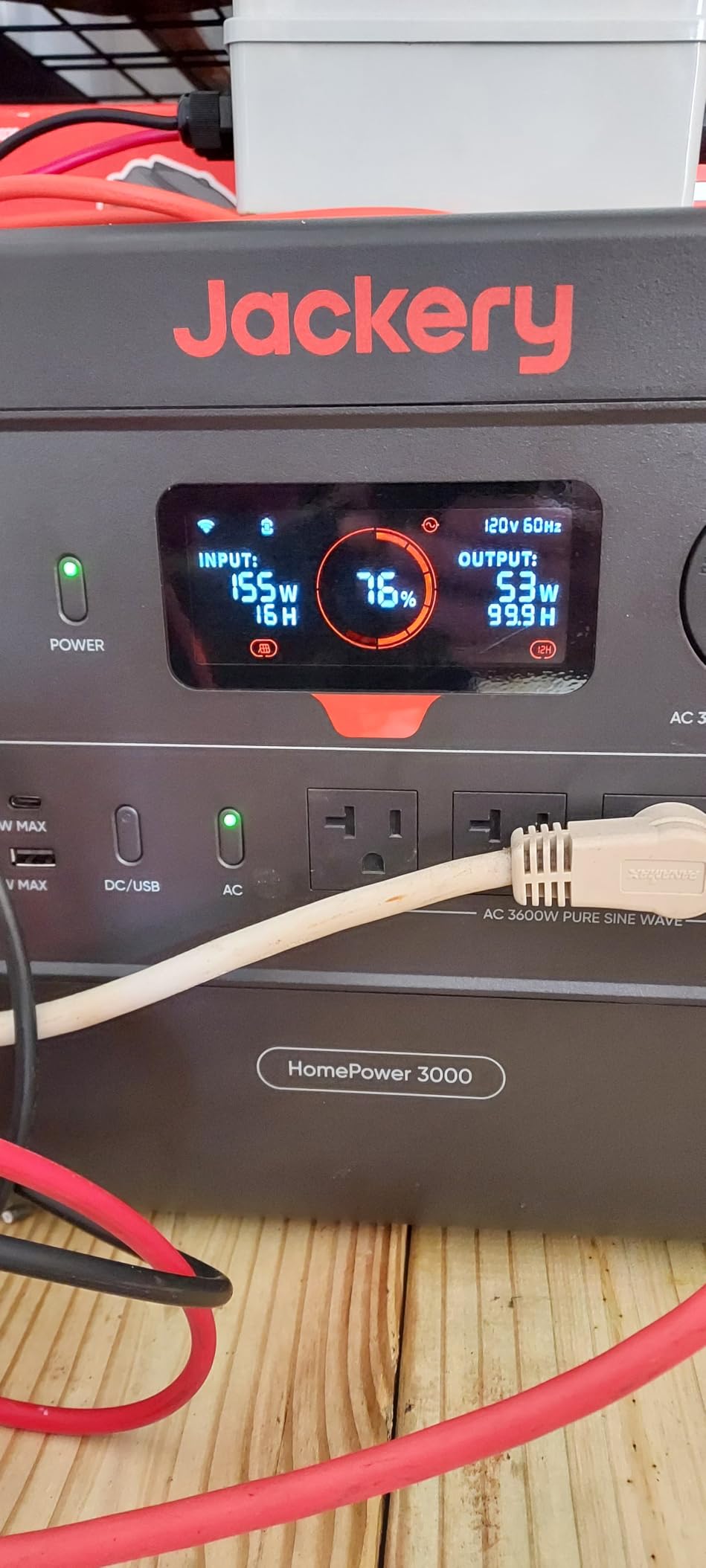
Recharge is the standout at 1.7 hours to full via hybrid AC and DC, or 2.2 hours on AC alone, and up to 80 percent in nine hours with two SolarSaga 200W panels. It also accepts a 12V car charger and a gas generator, which makes it a genuine three-input device. The built-in TT-30 RV port is unusual and makes it plug-and-play in a trailer without an adapter.
Cell-to-Body construction keeps it at 59.5 pounds, which the manufacturer positions as 47 percent smaller and 43 percent lighter than comparable 3kWh models. The LFP battery is rated for 4,000 cycles while retaining 70 percent of capacity, and the warranty runs five years.
What to check before you buy
Consider the evidence base rather than the specification list. At 236 reviews this is the least proven product here, and its 10 percent one-star share is the highest in the set. No individual review text was available during our analysis, so the fridge runtime claim rests on the manufacturer’s figures rather than on owner logs. That is a reason to size conservatively.
Four AC outlets is also a modest count for a three-kWh unit, and at 59.5 pounds you will want a second pair of hands to move it into position. Confirm the runtime figure against your own fridge’s measured draw before committing to a two-day plan.
Who should skip it
Skip it if you want a proven track record above all else, since the 4.4 rating on the smallest sample is the least certain data in this roundup. If you already own a proven two-kWh unit and simply want more capacity, the EcoFlow Delta Pro offers 3,600Wh with a much deeper support history, at the cost of nearly forty additional pounds.
How to Choose a Portable Power Station for a Fridge
Start with chemistry, because it is the one decision you cannot revise. Every unit in this roundup uses lithium iron phosphate, and that is the right answer for refrigerator duty. LFP cells tolerate thousands of shallow cycles without the degradation that shortens the life of conventional lithium-ion packs, and a fridge load is exactly the kind of load that suits them. Warranty terms also tend to be longer for LFP, and every unit here carries five years of coverage or better.
Next, size for runtime and not for watts. Calculate your fridge’s daily consumption in watt-hours rather than its nameplate wattage, then deduct 10 to 15 percent for inverter losses and a further allowance for the station’s own idle draw. If a unit advertises 1,152Wh and draws 20 watts an hour while active, plan as though it holds closer to 650 watt-hours against a low, continuous load.
Output and surge are the third filter. Anything at 1,500W continuous with a 2,700W or higher surge rating covers a residential refrigerator comfortably. Below that, you are depending on the compressor being cooperative, and forum discussion among owners is consistent that smaller inverters trip on motor startup more often than the paperwork suggests.
UPS switchover is the fourth. Anything under 20ms is effectively invisible to a fridge, and the sub-20ms units in this roundup also let you keep a router, a medical device or a security camera alive on the same station. Inline placement, where the station sits between the wall outlet and the fridge, is the cleanest installation and is what several owners in this roundup actually do.
Solar input deserves a separate look. It is worth asking two questions: how much input wattage does the station accept, and is it restricted to the manufacturer’s own panels? The Jackery units in this roundup accept only Jackery solar panels, which is a real limitation if you already own compatible hardware. BLUETTI units use standard solar connectors. Panel output also derates in real conditions, so expect less than the rated number outside of peak sun.
Noise matters more indoors than most buyers expect. A station cycling a fridge load runs its fan continuously, and in a bedroom or a small apartment that noise becomes the thing you notice all night. The BLUETTI Elite 100 V2 publishes a 30dB silent mode, the Jackery Explorer 2000 v2 charges silently under 30dB, and the Delta 3 Max is described as ultra-quiet. If the station will live in a sleeping space, check this before you buy.
Finally, consider the 12V versus 120V question honestly. A compressor fridge designed to run on 12V DC through the car port avoids the inverter entirely and runs meaningfully further on the same battery. A standard household refrigerator is AC only, so that efficiency gain is not available to you. The answer is that AC fridges work fine on any of these stations, but DC-native fridges reward a station with a well-behaved 12V output.
Solar Panels and UPS Switchover for Fridge Backup
Solar turns a two-day station into an indefinite one, but only if the panel is sized honestly. A full-size refrigerator drawing 300 to 600 watt-hours per day needs a panel that can replace that energy within a day of usable sun. In practice that means a 200W panel matched to a mid-size station, or two 400W panels for a unit in the three-kWh class. Add the 500W or 600W solar input figures the manufacturers publish and you can size against the daily load directly.
Expect a derate. Panel output quoted on the label assumes cool, clear, midday conditions at a specific orientation. Real-world yield in a storm or during a week of overcast weather can fall well short, and owners consistently report slower charging than rated panel output suggests. If your region has frequent multi-day cloudy periods, treat solar as a supplement rather than the only plan.
UPS switchover is the quieter but more important feature. Below 20ms means the compressor does not register the outage at all, and the food inside stays at temperature without the repeated cycling that stresses the motor. The Jackery HomePower 3000 is UL-certified for this at 20ms and names medical refrigerators explicitly. The BLUETTI Elite 100 V2 and the Anker SOLIX C1000 Gen 2 both switch in 10ms, and the Delta 3 Classic and Delta 3 Max both come in under 10ms.
For food safety during a long outage, keep the door closed. A closed refrigerator holds safe temperatures far longer than an open one, and a freezer full of items will hold its temperature for roughly a day and a half unopened. Portable power stations buy you time; temperature discipline is what determines whether the food is still good at the end of it.
Frequently Asked Questions
Can a portable power station run a fridge?
Yes, as long as the station’s continuous output exceeds the fridge’s running draw and its surge rating covers the compressor startup spike. A full-size refrigerator typically runs 100 to 250 watts with the compressor active and can spike several times that on startup. All ten models in this guide deliver pure sine wave output and carry surge ratings of 2,700W to 7,200W, which covers residential refrigerators including French door and side-by-side models.
How long will a portable power station run a refrigerator?
A 1,000Wh unit typically covers a full-size refrigerator for about one day, a 2,000Wh unit handles one to two days, and a 3,000Wh unit extends to two or more. Plan on 300 to 600 watt-hours per day for a full-size fridge and closer to 150 for a mini fridge, then deduct 10 to 15 percent for inverter losses plus the station’s own idle draw. Running a 12V fridge from the DC car port avoids the inverter and extends runtime further.
What size Jackery do you need to run a refrigerator?
The Jackery Explorer 1000 v2 at 1,070Wh is the right size for a single overnight outage, with 1,500W continuous output and 3,000W surge. For outages running one to two days, the Jackery Explorer 2000 v2 at 2,042Wh is the minimum worth considering, and the HomePower 3000 at 3,072Wh is marketed for one to two full days of refrigerator runtime. Each step up adds roughly a day of margin.
Can I plug a refrigerator into a portable generator?
A gas portable generator can physically run a refrigerator, but you must account for carbon monoxide placement, ventilation, and the generator’s response to compressor startup. Most leases and some building rules prohibit fuel-powered equipment indoors, which is the main reason apartment dwellers use a battery power station instead. A portable power station is the indoor-safe option and needs no venting.
Can a 600W power station run a fridge?
Yes, for most refrigerators. A 600W continuous rating comfortably exceeds the 100 to 250 watts a full-size fridge draws while cooling. The concern is startup: most 600W stations surge to about 1,200W, and a larger compressor can spike beyond that and trip the inverter. Choose a unit with a higher surge rating if your fridge is a French door or side-by-side model, and prefer UPS mode so the compressor never sees the interruption.
Does a refrigerator need pure sine wave power?
Not strictly, but it is strongly recommended. Refrigerator compressors are electric motors, and pure sine wave output matches utility power closely enough for the motor to start cleanly. Modified sine wave units are cheaper and can cause compressor noise, erratic cycling or startup failure, and owners consistently report motor startup as the specific weak point. Every unit in this roundup produces pure sine wave power.
How big of a portable power station do I need to run a refrigerator?
For a single overnight outage on a full-size fridge, 1,000Wh is the practical minimum. For a one to two day outage, or if you have a French door or side-by-side model, choose 2,000Wh or more. For three days or longer, plan on 3,000Wh and up, or pick a unit that accepts an expansion battery such as the Anker SOLIX C2000 Gen 2, which doubles to 4kWh. Add capacity if you want to run a router, lights or a medical device alongside the fridge.
Conclusion
The best portable power station for refrigerator duty is the Jackery Explorer 1000 v2. It pairs the highest rating in this group with the deepest review base, gives a full-size compressor 3000W of surge headroom, and weighs 23.8 pounds so you can move it when the lights go out. For anyone covering a French door fridge or a multi-day outage, step up to the Anker SOLIX C2000 Gen 2, which adds a real expansion path to 4kWh and the lowest standby draw we saw.
Whichever unit you choose, buy LiFePO4 chemistry, size on watt-hours rather than watts, and treat inverter losses plus the station’s own idle draw as real reductions in your usable capacity. If your solar is already made, confirm connector compatibility before you order, because the Jackery units accept only Jackery panels. With those four checks done, the best portable power station for refrigerator backup will keep your food cold through any storm you are likely to see in 2026.