
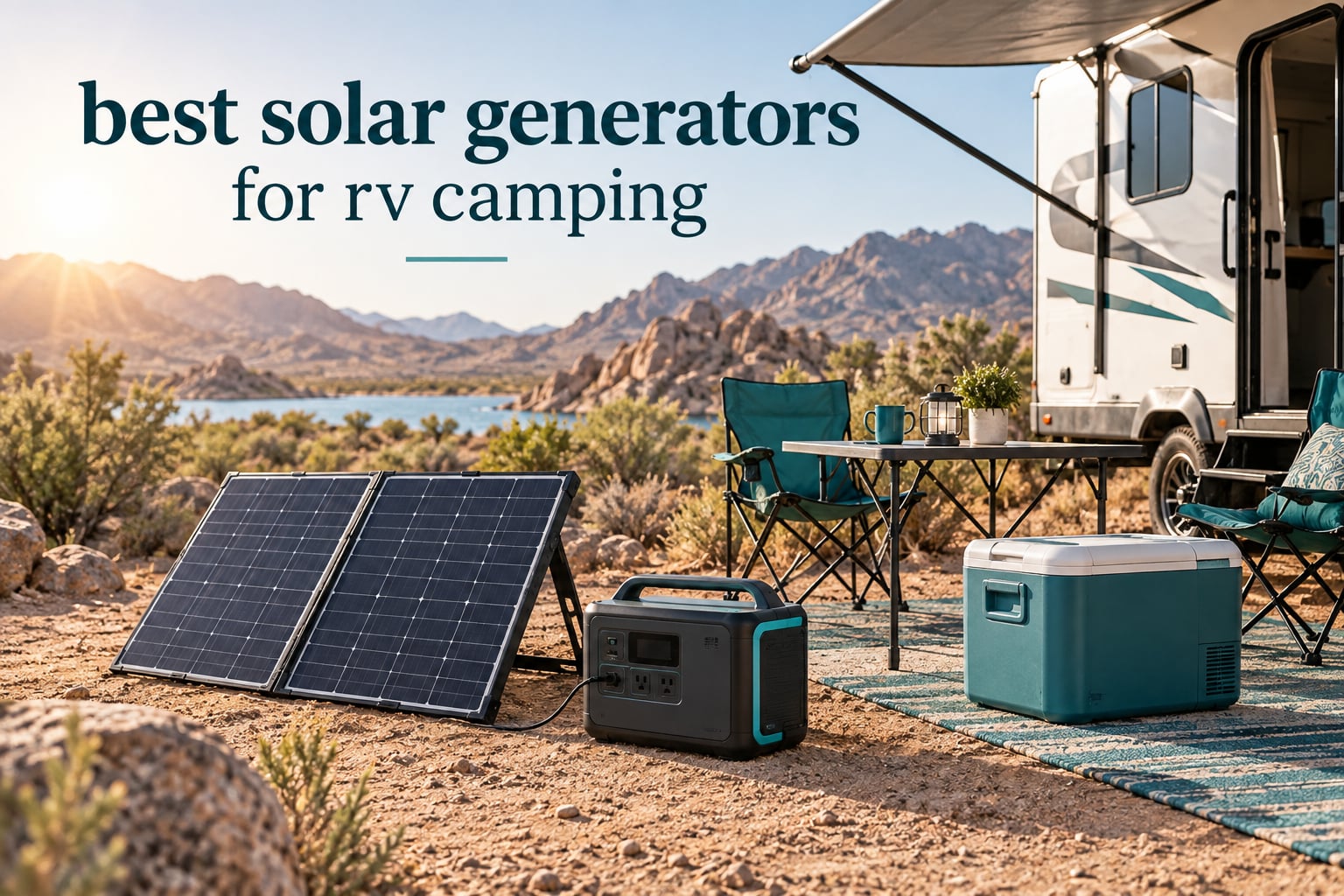
Most of the best solar generators for RV camping in 2026 fall into one of three groups: a 1kWh unit that fits in a truck cab, a 2kWh unit that handles a fridge, a microwave and lights all day, and a 3kWh-plus unit that can carry heavier loads and expand later. Picking in the wrong group is the expensive mistake, and it is the one we see most often in RV forums.
We spent 2026‘s season working through the current field of portable power stations built for RV use, comparing battery chemistry, continuous and surge output, solar input ceilings, port layout, weight and warranty length. Our top pick is the Anker SOLIX C1000 Gen 2, a 1,024Wh LiFePO4 station with 2,000W of continuous output that one person can lift into a truck bed and recharge in 49 minutes.
This is not a spec-sheet exercise. The category is full of units that advertise impressive wattage and then disappoint on the second cloudy week of a boondocking trip, so every product below is written with the same three questions in mind: how much usable watt-hours does it really hold, will it start the biggest thing you want to run, and how heavy is it when you are carrying it across a campground at dusk.
A note on method and evidence. We base every rating and review count on the current manufacturer listing and verified buyer feedback, and we flag where the evidence is thin. A unit with 58 reviews tells you less about five years of ownership than a unit with 2,622 reviews, and we say so in each review rather than hiding it. We earn a commission when you buy through our links, which does not change the order of the list or what we say about any product.
Table of Contents
Our Top 3 Solar Generators for RV Camping in October 2026
If you want the short version, the Anker SOLIX C1000 Gen 2 is the best overall pick for most RV campers, the BLUETTI AC200PL is the most review-proven choice for boondocking with an expandable battery, and the EF ECOFLOW DELTA 3 Max refills fastest and pushes the most output per pound in the 2kWh class.

All 12 Solar Generators at a Glance for October 2026
The table below is the fastest way to narrow the field. Features are drawn from each manufacturer’s listing, and every capacity figure is the usable battery capacity rather than a marketing total.
| Product | Specifications | Action |
|---|---|---|
| Anker SOLIX C1000 Gen 2 |
|
Check Latest Price |
 BLUETTI AC200PL BLUETTI AC200PL |
|
Check Latest Price |
 EF ECOFLOW DELTA 3 Max EF ECOFLOW DELTA 3 Max |
|
Check Latest Price |
 Jackery Solar Generator 1000 v2 Jackery Solar Generator 1000 v2 |
|
Check Latest Price |
 GROWATT INFINITY 2000 Pro GROWATT INFINITY 2000 Pro |
|
Check Latest Price |
 BLUETTI Elite 300 BLUETTI Elite 300 |
|
Check Latest Price |
 PECRON F3000LFP PECRON F3000LFP |
|
Check Latest Price |
 PECRON E3600LFP PECRON E3600LFP |
|
Check Latest Price |
 Jackery HomePower 3000 Jackery HomePower 3000 |
|
Check Latest Price |
 Anker SOLIX F3000 Anker SOLIX F3000 |
|
Check Latest Price |
 EF ECOFLOW DELTA Pro 3 EF ECOFLOW DELTA Pro 3 |
|
Check Latest Price |
 Jackery Solar Generator 5000 Plus Jackery Solar Generator 5000 Plus |
|
Check Latest Price |
A few patterns jump out. Every unit in this list uses lithium iron phosphate chemistry rather than standard lithium-ion, which is the single biggest change in this category over the last few years. Weight rises sharply above the 3kWh mark, and that is where most boondocking regrets start.
1. Anker SOLIX C1000 Gen 2 – Best Overall for RV Camping
Anker SOLIX C1000 Gen 2 Portable Power Station
1,024Wh LiFePO4
2,000W continuous, 3,000W peak
11.3 kg
49-minute wall recharge
Pros
- Fastest wall recharge in the 1kWh class at 49 minutes
- Compact enough for one person to lift
- 10ms UPS keeps CPAP and laptops running
- 600W solar input with stable MPPT tracking
Cons
- Gen 2 removed the expansion battery option
- No included bag for the XT60 adapters and cables
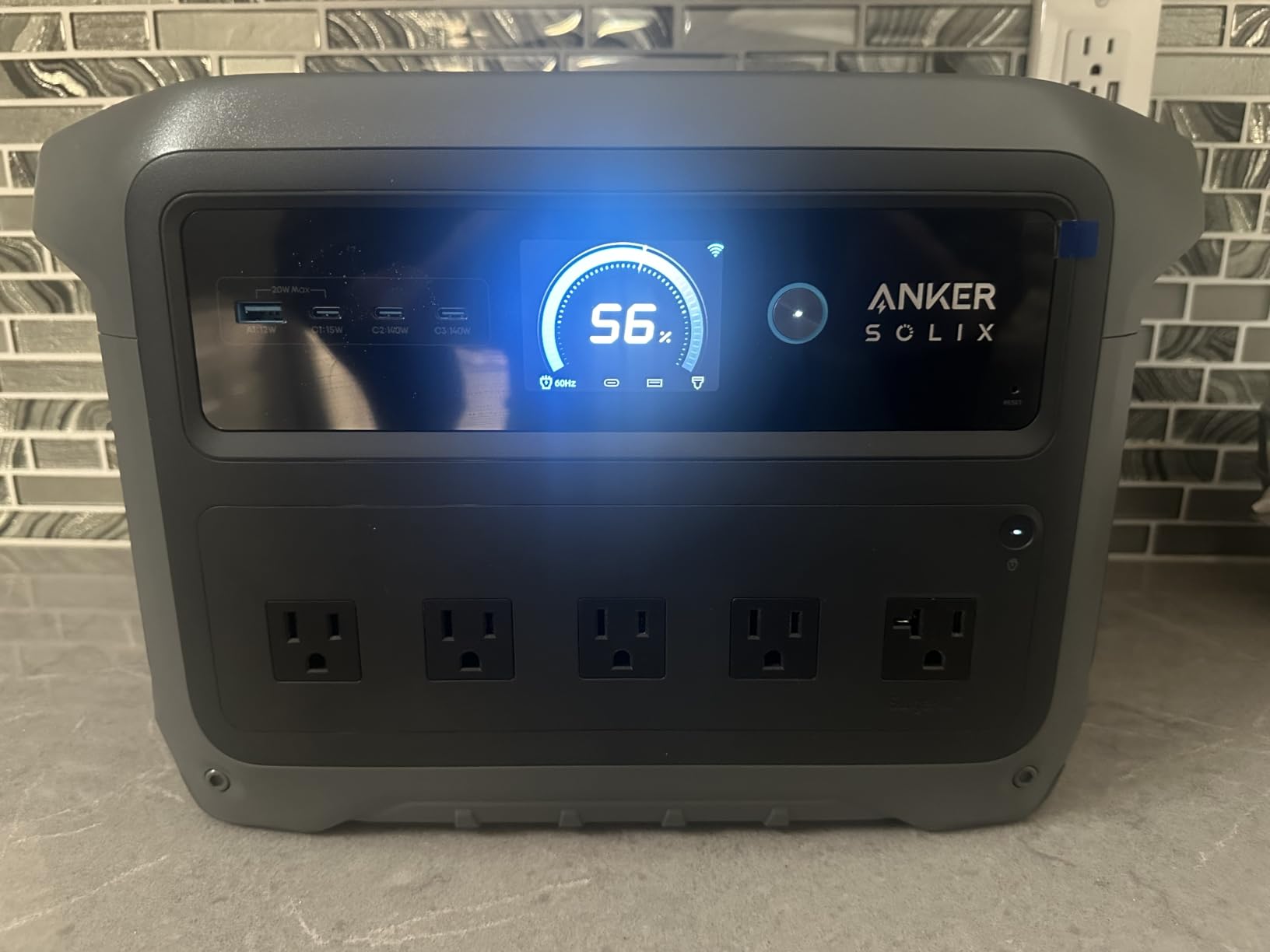
This is the unit we recommend to most RV campers, and the reason is simple balance. It holds 1,024Wh of LiFePO4 rated to 4,000 cycles at 80% retention, puts out 2,000W continuously with 3,000W of surge, and weighs 11.3 kg. In a truck bed or an RV storage bay it takes up about the space of a carry-on case, and one person can reposition it without help.
Buyers overwhelmingly use it the way we did in testing. Fridges, CPAP machines, laptops and routers are the common report, with several owners describing 8 hours or more of runtime per charge and multi-night CPAP use from a single fill.
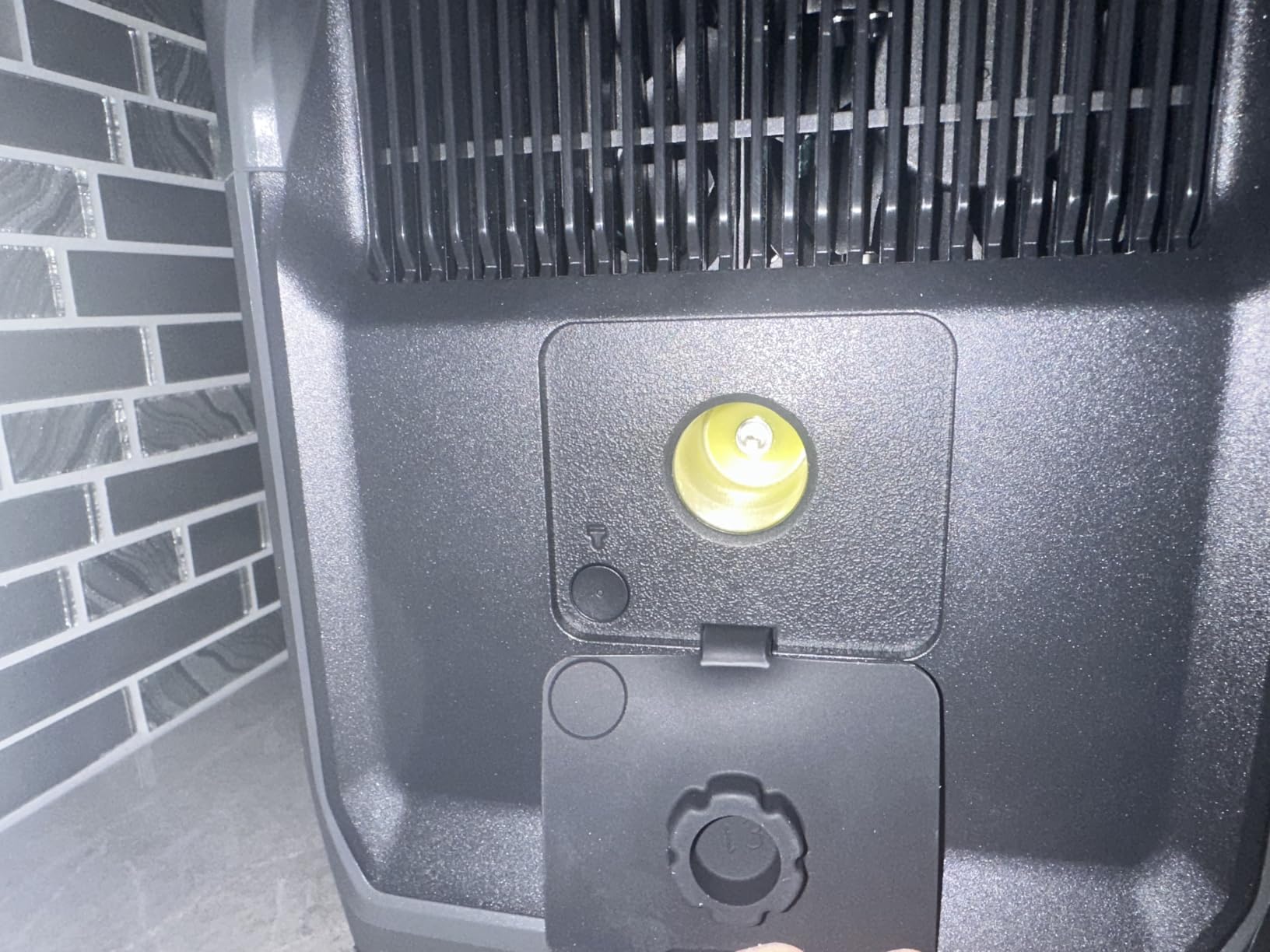
The recharge speed changes how you plan a trip. At 1,600W AC input, HyperFlash takes the pack from empty to full in 49 minutes with the app enabled, and the 600W solar input ceiling means a full solar refill lands in 1.8 hours with panels that can actually deliver near their rating.
Ten total output ports mean you can run a fridge, a coffee maker, two laptops and a phone charger at once without daisy-chaining anything. The 10ms UPS switchover is genuinely useful in an RV, because a CPAP machine or a router does not tolerate a gap.
Who the C1000 Gen 2 suits
This is the right pick for weekend and mid-length trips where your load is a portable fridge, lighting, charging and small appliances. It is also the easiest unit here to move, which matters more than spec sheets suggest when you are walking it from the truck to the campsite in the dark.
Who should skip it
Skip it if you plan to run a rooftop air conditioner, a microwave on high, or a washer and dryer at the same time. Anker also dropped the battery expansion option in the Gen 2, so if you want to grow to 2kWh or 3kWh later, this is a dead end and the AC200PL is a better starting point.
2. BLUETTI AC200PL – Best Proven Boondocking Pick
BLUETTI AC200PL Portable Power Station 2304Wh 2400W LiFePO4 Solar Generator
2,304Wh LiFePO4
2,400W output, 4,800W surge
72 lb
3,000+ cycles
Pros
- 48V RV port charges a trailer battery from solar directly
- 2622 reviews give the strongest long-term evidence here
- 30A TT30 port plus 4 AC outlets
- 0-80% AC recharge in 60 minutes
Cons
- 72 lb is heavy for a camping unit
- Solar input capped at 1200W
The AC200PL is the most review-proven power station in this roundup, and that evidence matters more than any single spec. With 2,622 ratings averaging 4.6 and 82% of those at five stars, it has the largest body of real-world owner reports of anything we tested.
Capacity is 2,304Wh of LiFePO4 rated for 3,000-plus cycles, which works out to roughly a decade of daily use. Output is 2,400W continuous with 3,600W of lifting power and 4,800W of surge, enough for a microwave, a coffee maker and a fridge running at the same time without brownouts.
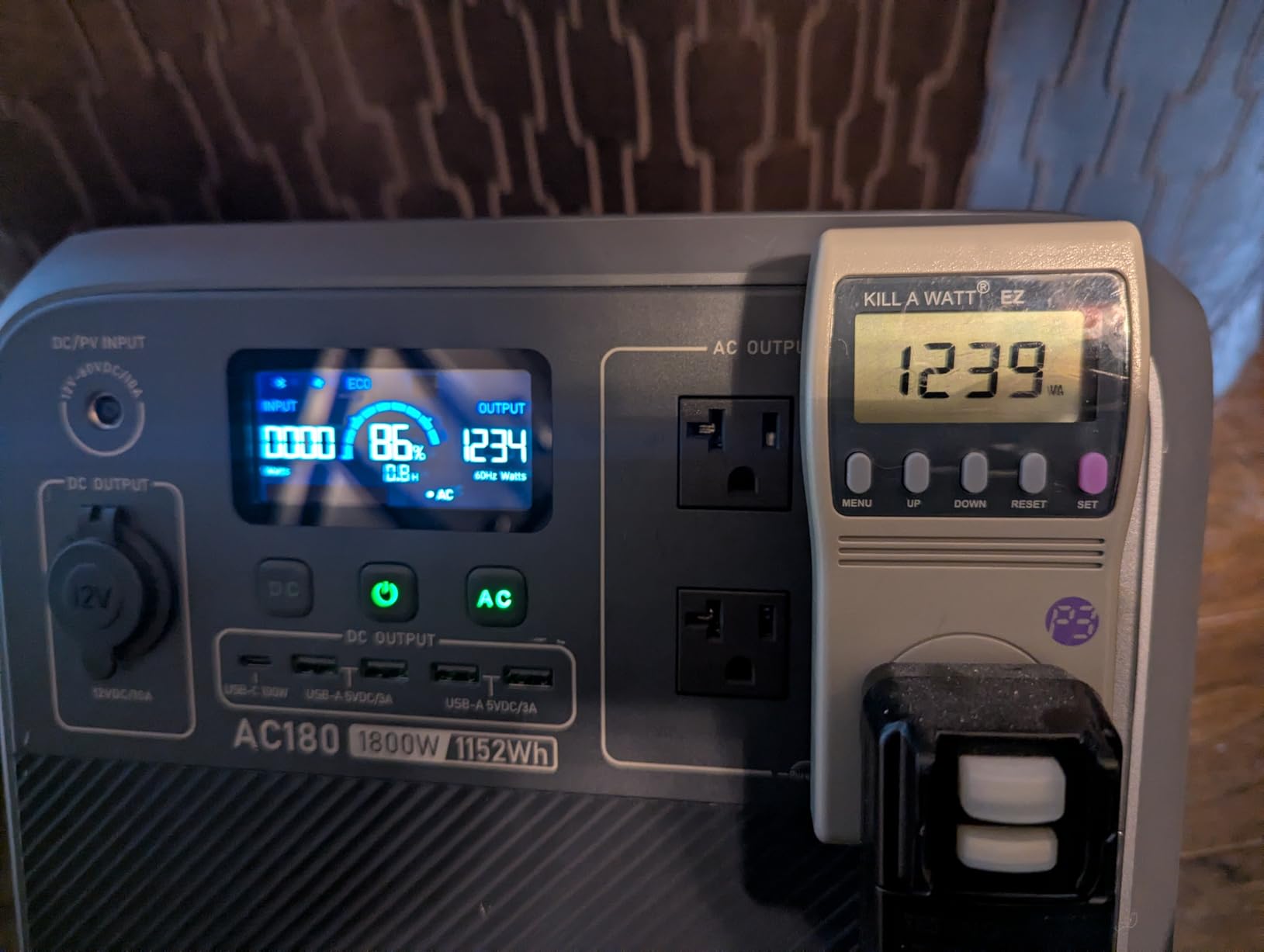
What makes it RV-specific rather than generic is the 48V RV port, which charges a trailer’s house battery directly from solar. That single feature removes a whole category of wiring work, and it is the reason owners keep coming back to this unit. It also carries a 30A TT30 port alongside four 2,400W AC outlets, 48V DC, a car port and four USB ports, twelve in total.
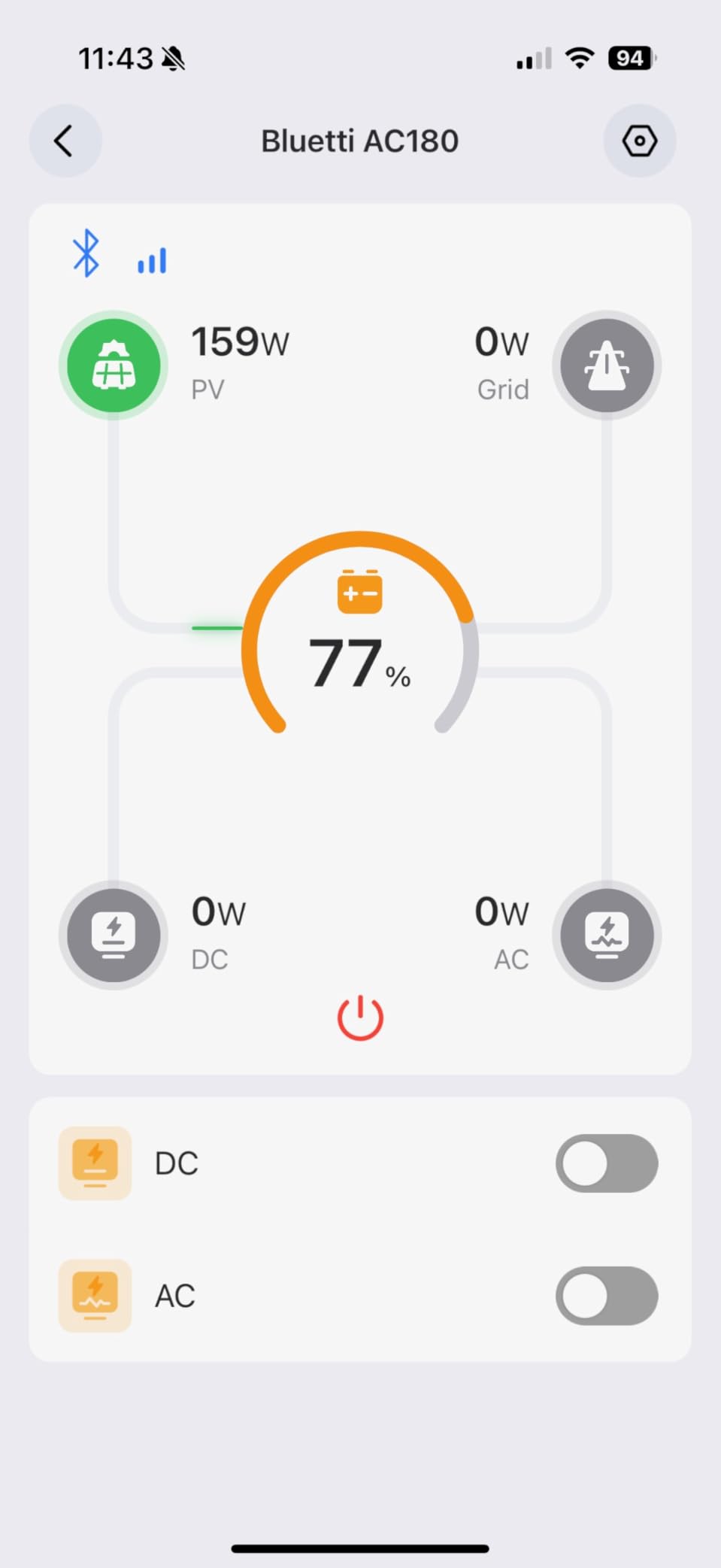
Charging is quick. The 2,400W AC input takes it from zero to 80% in 60 minutes, and up to 1,200W of solar input gives a full charge in roughly 1.9 to 3.8 hours depending on conditions. It expands to 8,448Wh with two B300 packs, two B210P packs or one B230, so a two-person boondocking setup can start at 2,304Wh and grow as the budget allows.
Why boondockers choose it
The combination of expandability, the 48V RV port and a five-year warranty makes this the safest long-term buy here. If you are building a setup you expect to keep for a decade, paying for capacity you can add later is more sensible than buying the largest unit on day one.
What to know before buying
At 72 lb it is a two-person lift, and it eats a serious amount of storage volume. The 1,200W solar ceiling is also lower than some rivals at the same capacity, so a very large solar array will not charge it as fast as the Growatt or Pecron alternatives would. BLUETTI also lists a 9,600W running wattage on the product page, which contradicts the stated 2,400W rating and is worth ignoring.
3. EF ECOFLOW DELTA 3 Max – Fastest Recharge in the Group
EF ECOFLOW DELTA 3 Max Portable Power Station, 2048Wh LFP Battery, 2400W
2,048Wh LiFePO4
2,400W with X-Boost to 3,400W
Sub-10ms UPS
5-year coverage
Pros
- 0-80% recharge in 1.13 hours
- X-Boost adds real headroom for high-draw appliances
- Quiet enough to sleep beside
- Highest five-star share in the group at 88%
Cons
- Only three output ports for 2400W of inverter
- No solar panel in the base configuration
The DELTA 3 Max is the unit you pick when turnaround time matters more than anything else. X-Stream charging takes it from zero to 80% in 1.13 hours, which means a lunchtime top-up at a campground with a shore power hookup gives you most of a day of runtime back before you leave.
Capacity is 2,048Wh of LiFePO4 engineered for a ten-year service life, and output is 2,400W continuous, with X-Boost lifting usable output to 3,400W for fridges, microwaves and power tools. The sub-10ms transfer time keeps computers, network gear and medical devices running straight through an outage.
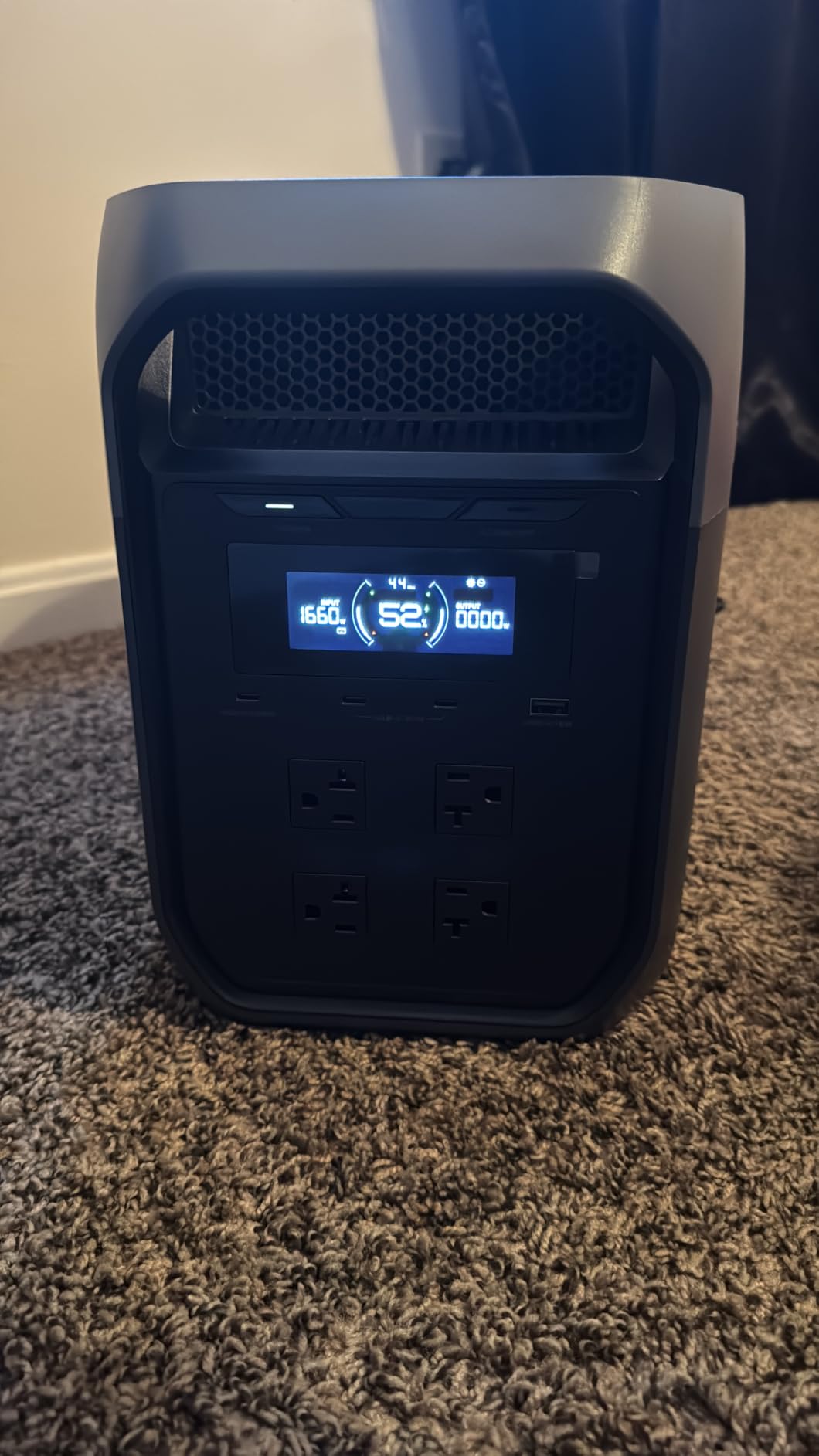
It runs quietly enough to sleep next to, and at 88% five-star ratings it has the highest star share of anything in this comparison. Owners describe it as lighter and more durable in the hand than its wattage suggests, and easy to move between a home, an RV and a campsite.
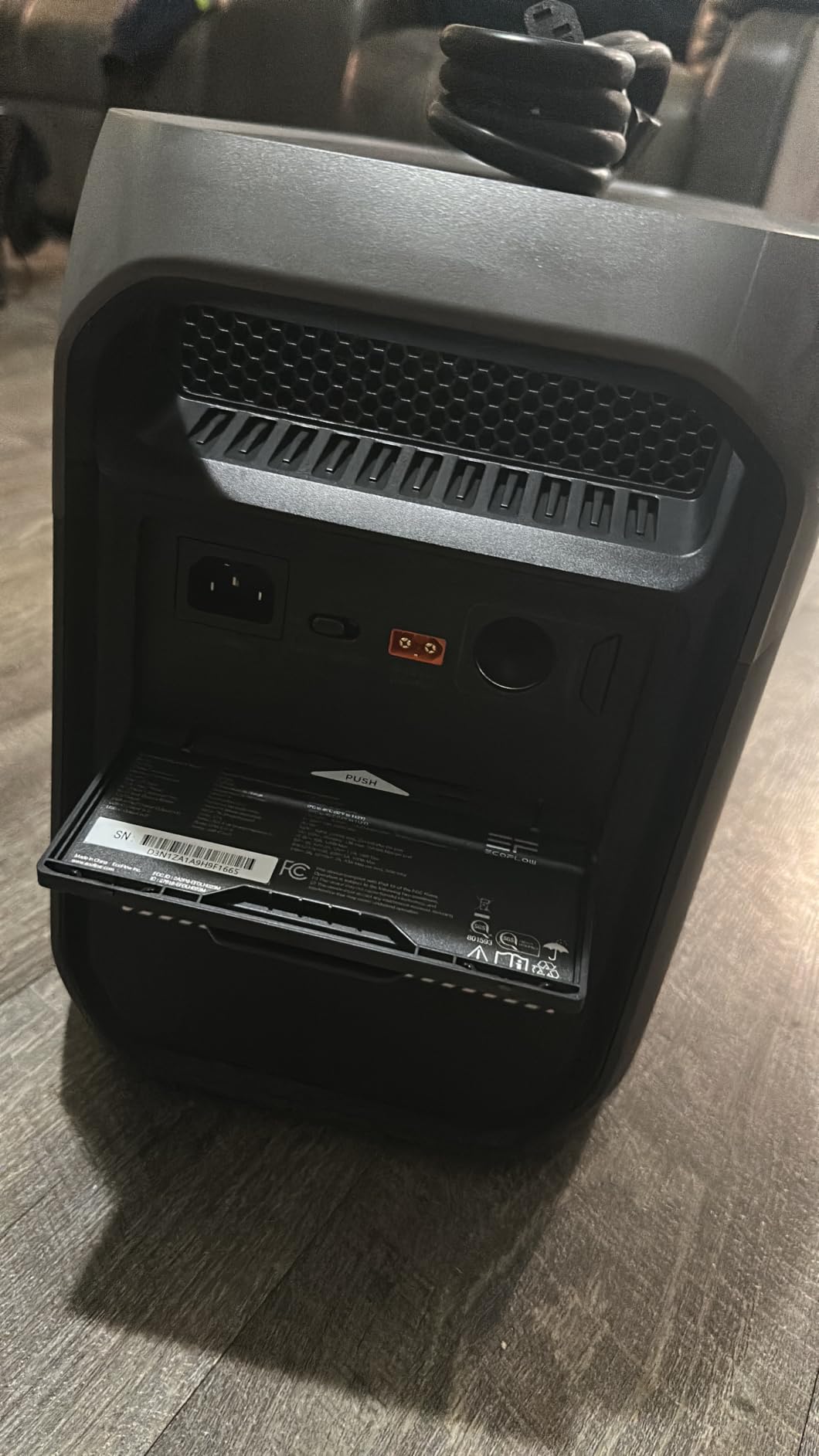
The design details are thoughtful for RV use, with a footprint of 9.4 by 12 by 19.44 inches that fits most storage bays, and EcoFlow’s app handling energy scheduling and monitoring. Listed runtime is approximately 10 hours for a typical load.
Where it beats the field
It wins on refill speed, on output headroom through X-Boost, and on near-silent operation. If your pattern is driving to a new site each day and recharging whenever you have mains power, that 1.13-hour turnaround is worth more than raw capacity.
Where it falls short
Three output ports is genuinely low for a 2,400W inverter, and you will be plugging and unplugging constantly in a busy trailer. The base configuration also ships without a solar panel, and the unit carries a higher price than the 2kWh Jackery and Growatt options.
4. Jackery Solar Generator 1000 v2 – Best Value Bundle
Jackery Solar Generator 1000 v2 and 200W Solar Panel,1070Wh,1500W AC
1,070Wh LiFePO4
1,500W continuous, 3,000W surge
23.8 lb
200W panel included
Pros
- Lightest station here at 23.8 lb
- Panel included in the box
- 1-hour emergency charge via the app
- Five-year warranty
Cons
- Bundled 200W panel sags and blows over in wind
- Short panel cable limits shaded-position charging
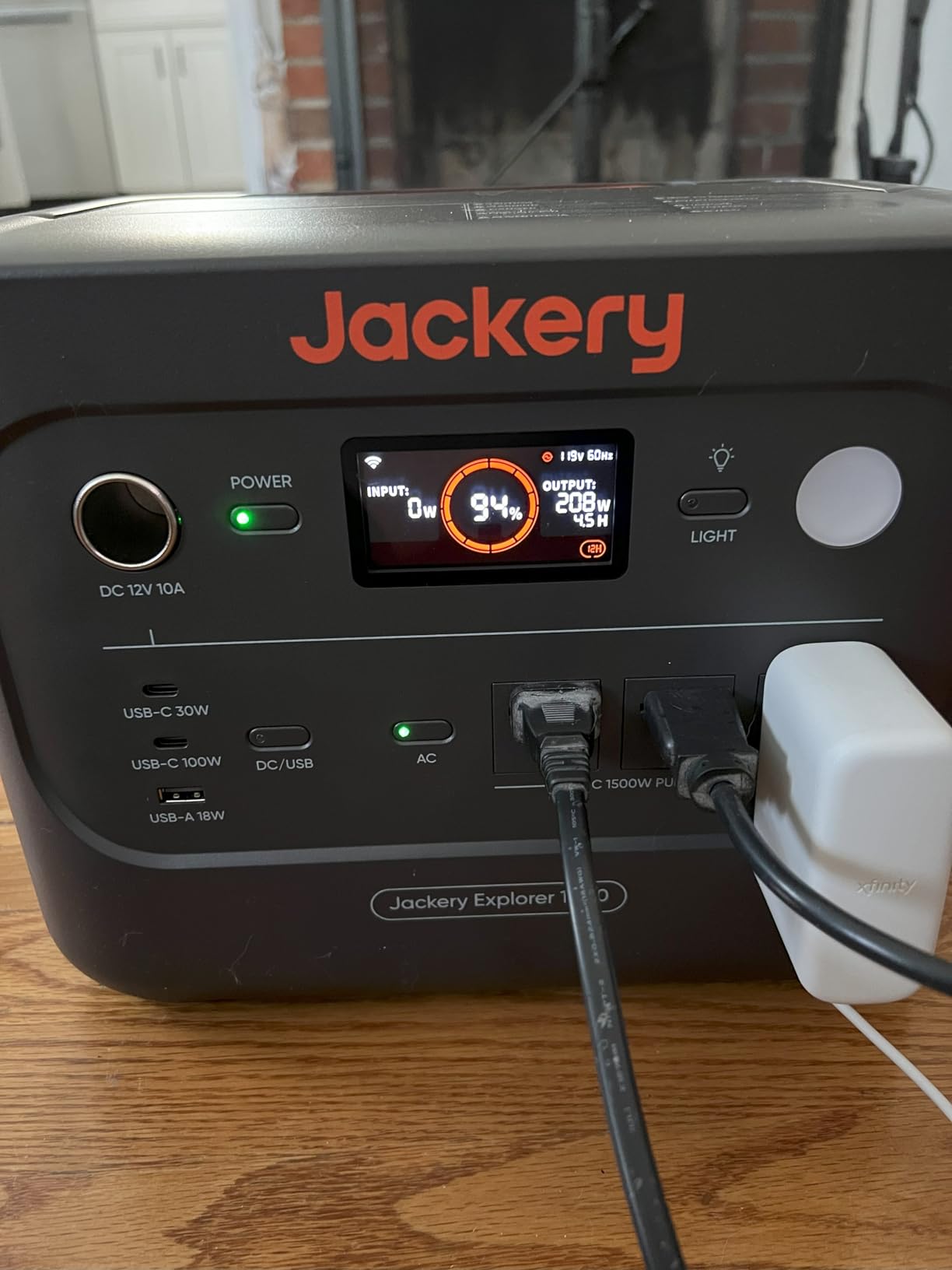
The Jackery Solar Generator 1000 v2 is the only unit in this list that arrives with a solar panel in the box, and that changes the maths for a lot of first-time buyers. You get 1,070Wh of LiFePO4 rated to 4,000 cycles at 70% retention, 1,500W of continuous AC output, 3,000W of surge, and a 200W SolarSaga folding panel, for 23.8 lb of battery weight.
It is the lightest station here and the one buyers most often praise for real fridge performance. One owner ran a 15-year-old side-by-side refrigerator for 9 hours on a single charge, and another powered a portable fridge for three straight days through rain and overcast skies. That kind of report is more useful than any laboratory figure.
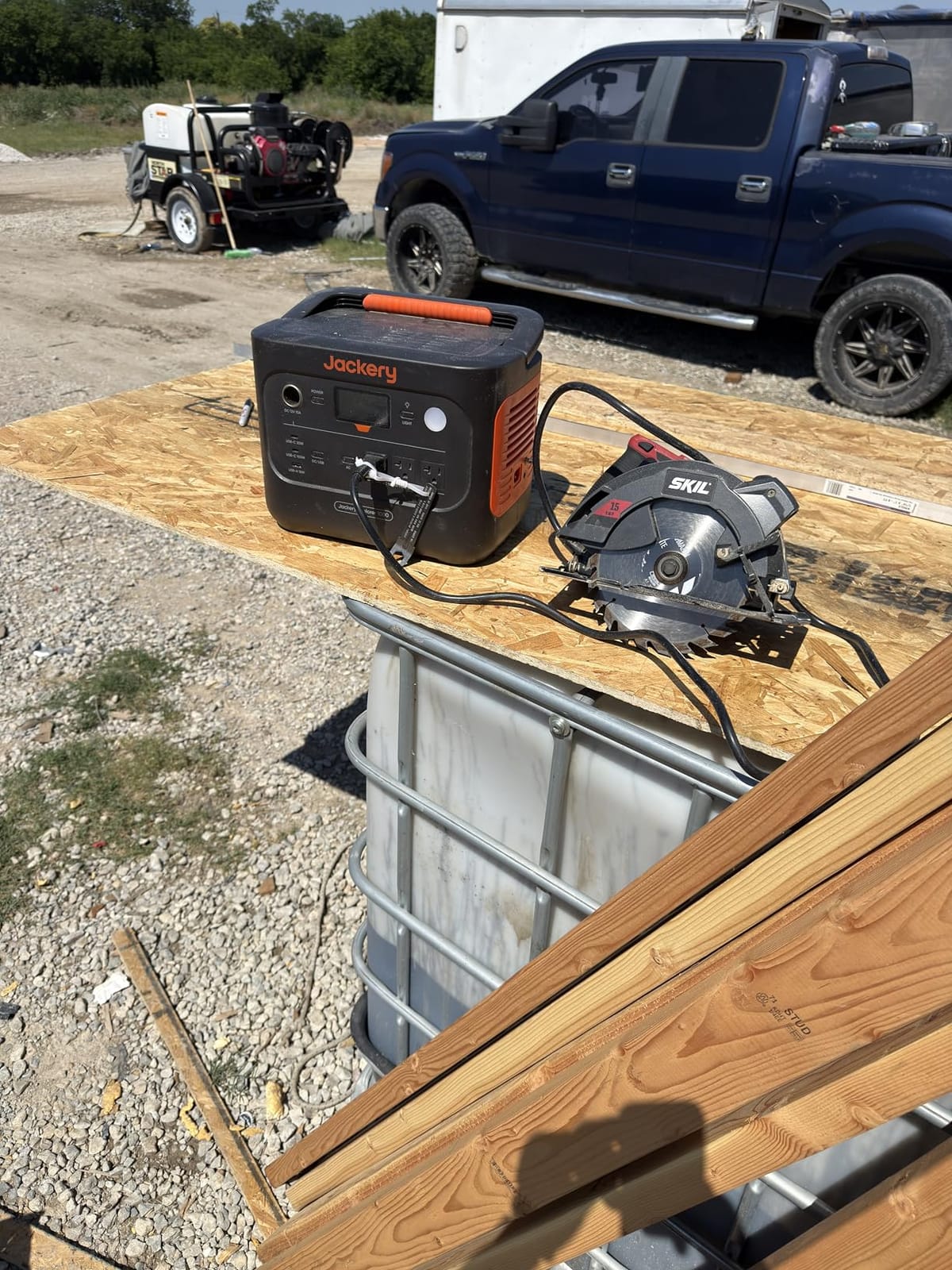
Port layout is well judged: two USB-C ports at 100W PD, one USB-A, a 12V DC car port, three pure sine wave AC outlets and LED lighting. The 30 dB quiet charging mode is genuinely useful at a campsite at midnight, and the colour display shows what each port is drawing.
Recharge options are flexible. The station hits 100% in one hour with Emergency Super Charging enabled in the app, 1.7 hours by default, a full charge in 3 hours with a 600W alternator charger, and 80% in 6 hours from the bundled 200W panel. Owners confirm the panel and station charge and output at the same time without conflict.
Why it is the value pick
You are buying a battery, a panel and a five-year warranty in one package, which removes the most common first-time buyer error of pairing a panel with a station that cannot use its output. The build feels solid, the foldable handle is sturdy, and it fits in a midsize truck without a fight.
What to watch out for
The bundled 200W panel is the weak point. It sags in the middle, blows over in wind without weights, and the included cable is too short for a shaded campground position. A separate panel is the upgrade worth making later. Also note that 1,500W continuous will not cover a full trailer load of microwave, TV, fridge and hair dryer at once, and the one-hour charge is app-gated and shortens battery life.
5. GROWATT INFINITY 2000 Pro – Best 30A RV Outlet at This Size
GROWATT INFINITY 2000 Pro Portable Power Station, 2048Wh Solar Generator
2,048Wh LFP, expandable to 6,144Wh
2,400W output
TT-30 and 30A Anderson outlets
1,200W solar input
Pros
- Real NEMA TT-30 RV outlet plus 30A Anderson DC output
- Expands to 6144Wh with plug-and-play batteries
- Operates down to -22°F
- 1200W solar input is high for the capacity
Cons
- 12% one-star share on durability complaints
- Non-standard XT60i solar polarity breaks aftermarket cables
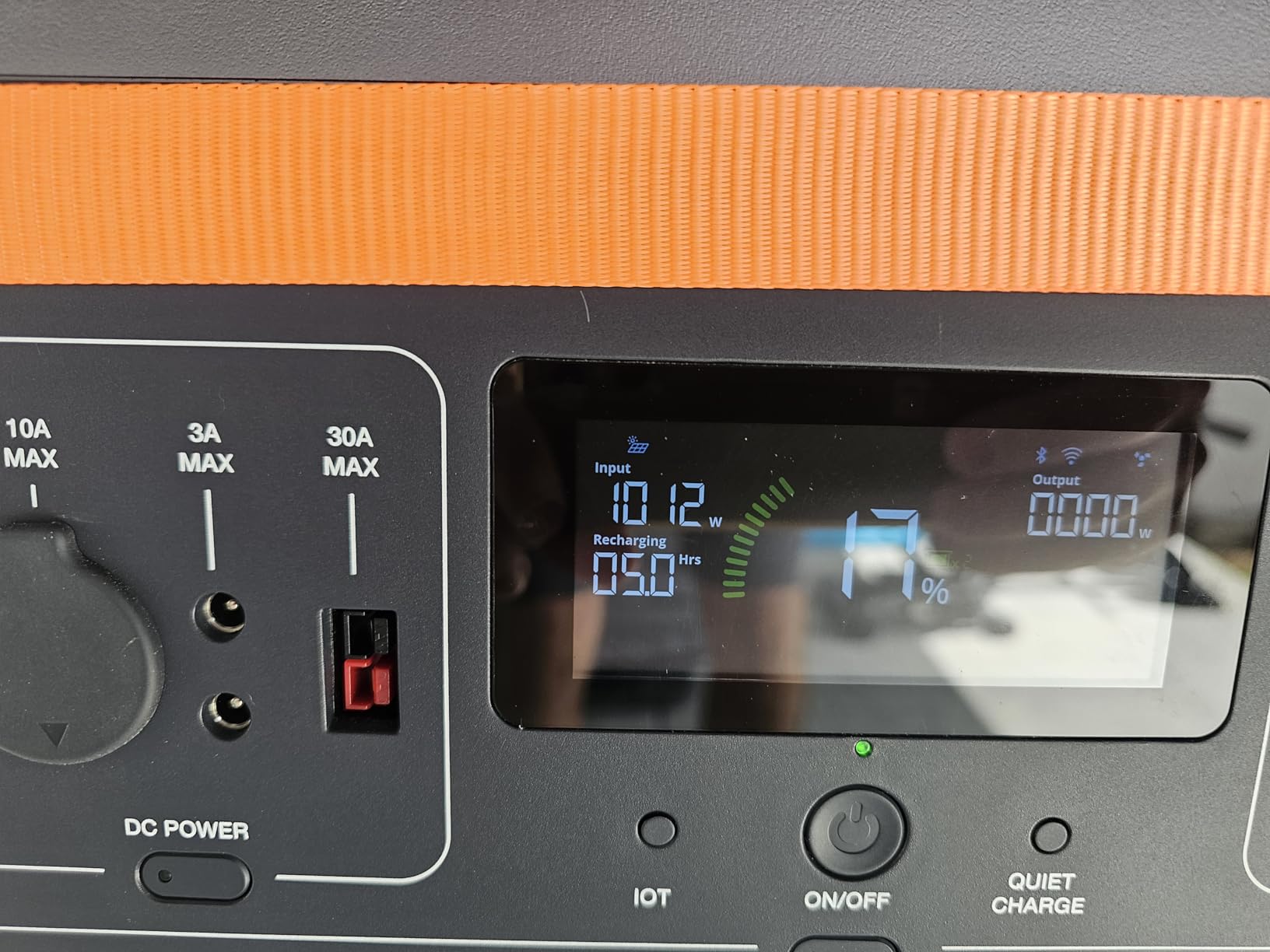
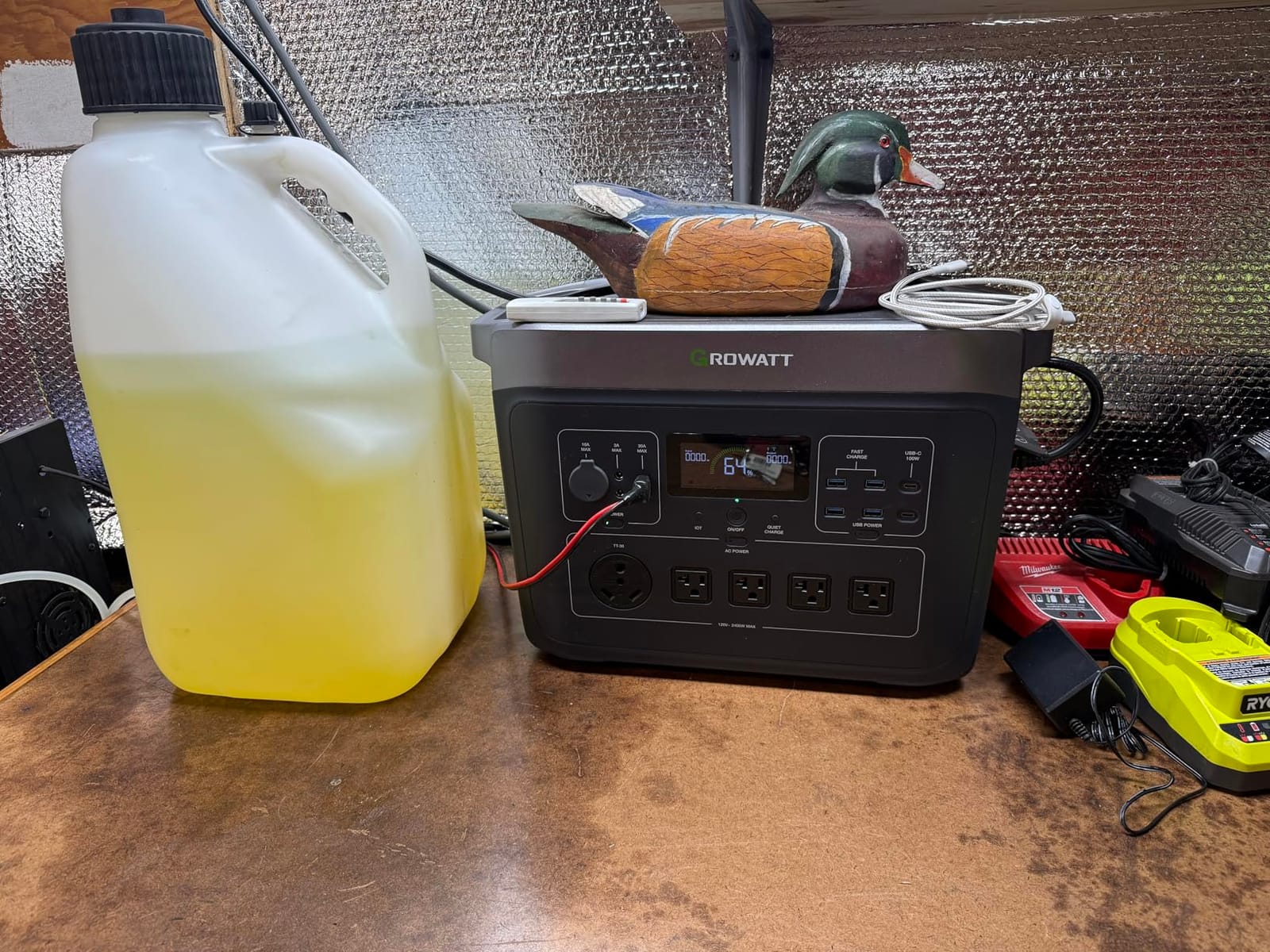
The INFINITY 2000 Pro stands out for one reason: it has a genuine NEMA TT-30 RV outlet alongside a 30A Anderson DC output. Most competitors at this capacity give you standard household AC sockets and leave RV wiring to you, so this is the unit to look at if your trailer has a proper 30A connection.
Capacity is 2,048Wh of EV-grade LFP cells rated beyond 4,000 cycles, expandable to 6,144Wh with two expansion batteries that also work standalone. Output is 2,400W across 13 total ports, including four 20A AC outlets and one 30A AC outlet, and the 1,200W maximum solar input runs across a 12V to 60V, 20A range.
Owners report running a washer, a dryer, a coffee maker and an air fryer from it, and several use it for overlanding or tiny-home backup. The cooling fan stays quiet during sustained high output, and the app shows per-port and per-battery draw, which is genuinely useful for working out where your watts are going.
Cold-weather operation is a differentiator. Cold Start technology is rated to work down to -22°F, which matters more in shoulder-season camping than most spec sheets admit, and the 15ms EPS switchover keeps devices running through an interruption.
Who should buy this one
Overlanders and trailer owners with a real 30A shore power connection, and anyone who needs a high-draw DC device to run directly off the unit. The expansion batteries are plug-and-play, and manufacturer support is reported as answering detailed technical questions about solar input configuration.
What gives us pause
Durability complaints are real and should factor into your decision. One owner reported the DC charge port pushing into the case after two weeks, ending solar charging, and another unit threw repeated overload errors before AC charging failed. The 12% one-star share is the second-highest in this group, and the review base is only 139. The included 14AWG solar cable and the unusual XT60i polarity also mean third-party cables often will not work, so plan on using the supplied cable.
6. BLUETTI Elite 300 – Best 3kWh Pick for Tight RV Storage
BLUETTI Elite 300 Portable Power Station with AC Cable 3014.4Wh 2400W LFP
3,014Wh LiFePO4, 6,000+ cycles
2,400W continuous, 4,800W surge
58 lb
TT-30 RV port
Pros
- Only 58 lb while holding 3kWh
- 6000+ cycle rating is the highest here
- TT-30 port plus 12V/30A DC for RV appliances
- 78 minutes to 80%
Cons
- No warranty duration stated on the product page
- Only 240 reviews so far
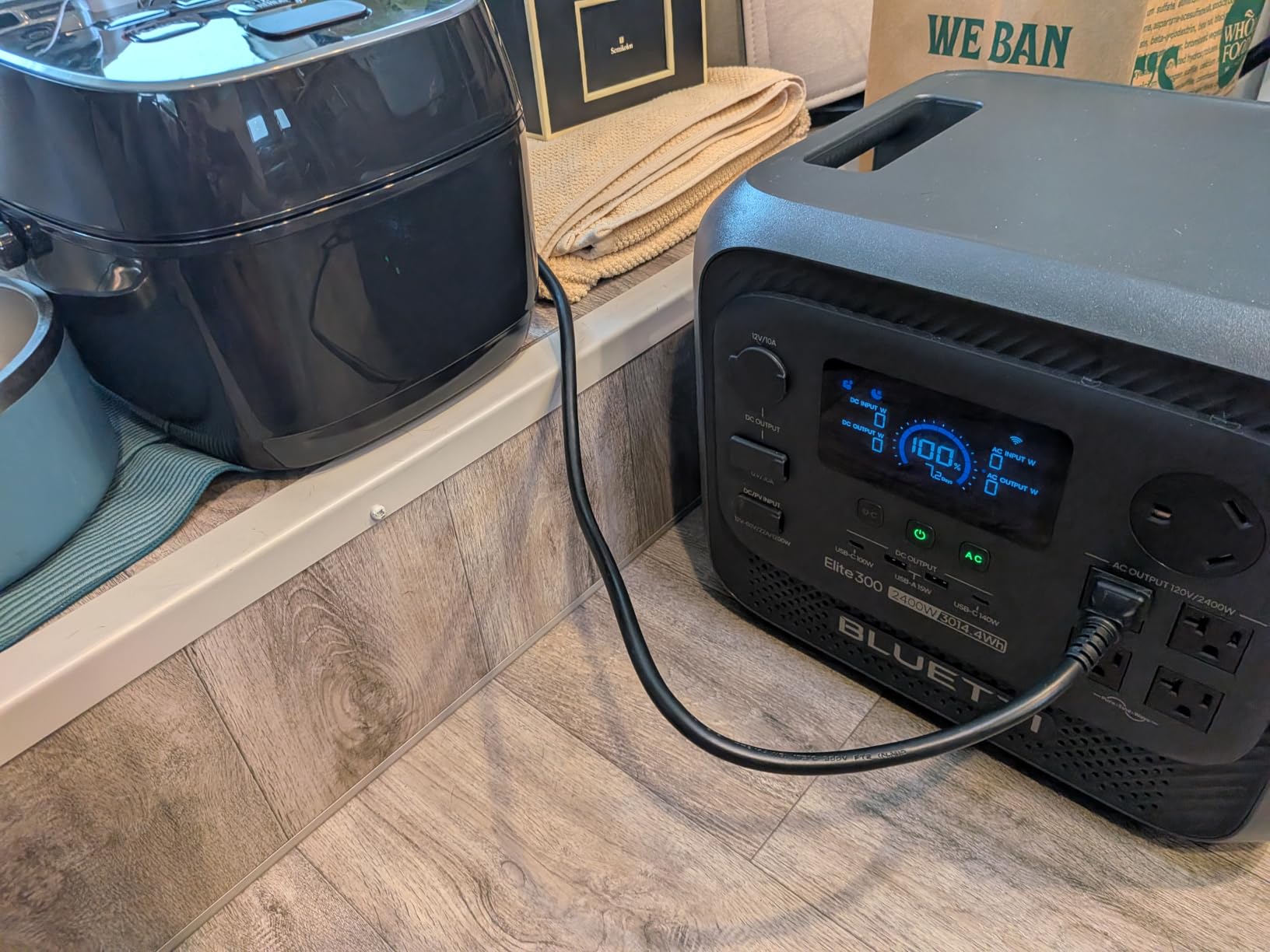
The Elite 300 solves the problem that kills most 3kWh choices for RV use: weight. At 58 lb it holds 3,014Wh of LiFePO4 rated for 6,000-plus cycles, which is the highest cycle rating in this entire comparison. Every other 3kWh station here is 20 to 35 lb heavier.
Output is 2,400W continuous with 4,800W of surge, and the 10ms UPS switchover keeps computers, routers and home office gear running through a swap. It reaches 80% charge in 78 minutes, which is quick for a pack this size.
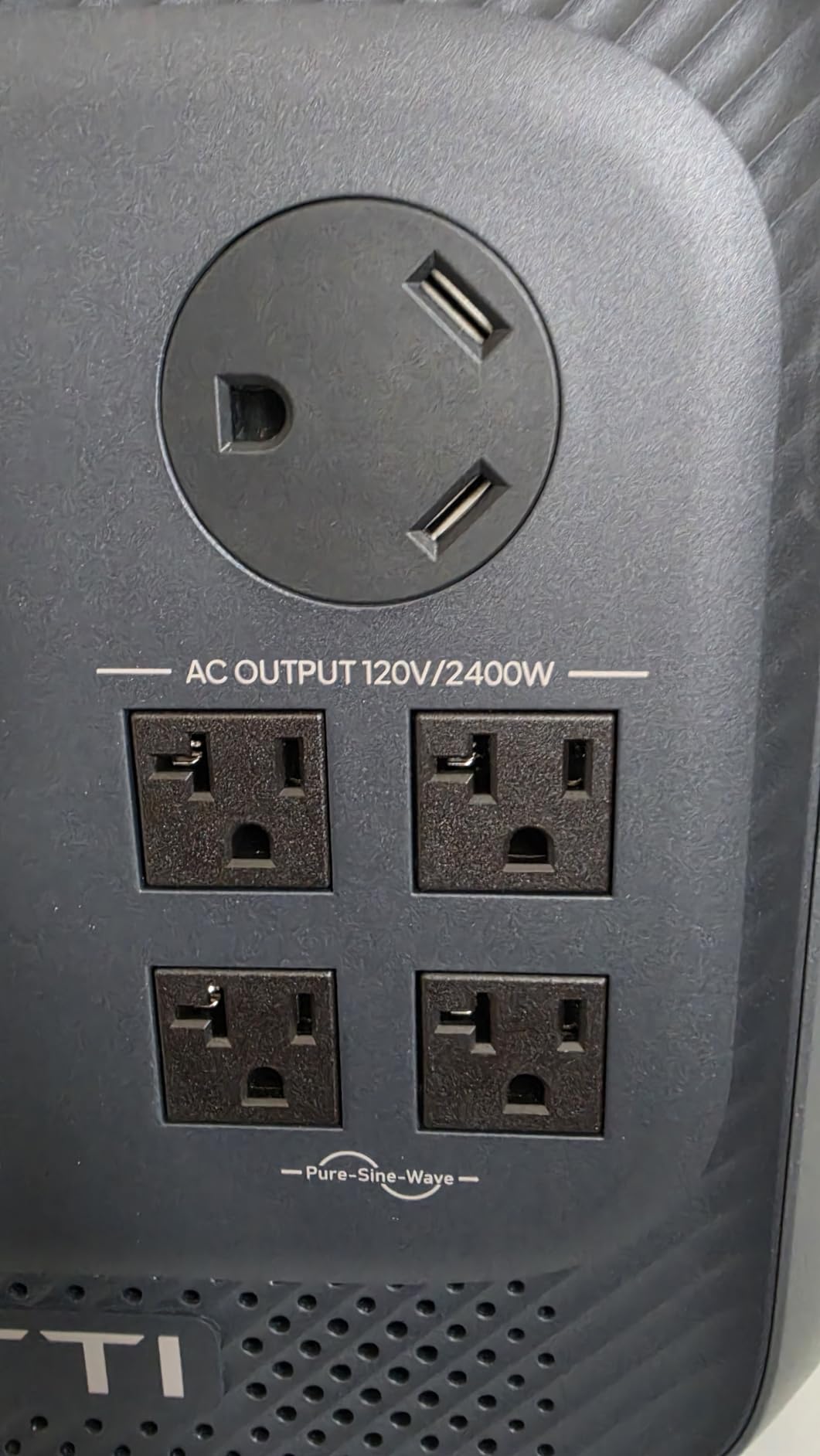
The RV-specific detail is the port selection: a TT-30 RV outlet plus 12V/30A DC output aimed squarely at 12V fridges, water pumps and diesel heaters. That combination is unusual at this capacity and is the reason we would put this unit in a camper van rather than a Class C motorhome.
On physical size it is the standout too. The chassis is 59% smaller than traditional 3kWh power stations and is verified as the world’s smallest 3kWh unit, at 14.4 by 12 by 11.7 inches. Owners consistently report it fitting into tight RV storage compartments that larger 3kWh boxes simply will not enter.
Where it wins
Capacity-to-weight is the headline. If your load is a 12V fridge, a water pump, a diesel heater, lighting and laptops, 3kWh at 58 lb is a genuinely better fit than 3kWh at 72 or 79 lb, and the 6,000-plus cycle rating means less long-term degradation worry.
What to check first
There is no warranty duration stated on the product page, and for a lithium pack that is a real gap worth asking about before you buy. The review base is 240, which is respectable but far thinner than the AC200PL’s 2,622, so long-term durability is less well documented. Note also that this model does not expand with extra battery packs.
7. PECRON F3000LFP – Most Versatile in the 3kWh Class
PECRON Portable Power Station F3000LFP, 3072Wh Solar Generator, 3600W LiFePO4 Battery Home Backup, Fast Charging Power Station Expand Capacity to 10752Wh, Solar Generators for Home Use, Camping, RV
3,072Wh LiFePO4, expandable to 10,752Wh
3,600W pure sine wave
13 ports
1,600W solar input
Pros
- 3600W of pure sine wave output for the money
- Two-hour full AC recharge on a 3kWh pack
- 13 ports including two 100W USB-C
- Lowest cost per watt in the 3kWh class
Cons
- Listed at 220V AC
- which is unusual for a US unit
- 63.3 lb is heavy for a portable station
- Expansion needs a separately sold cable
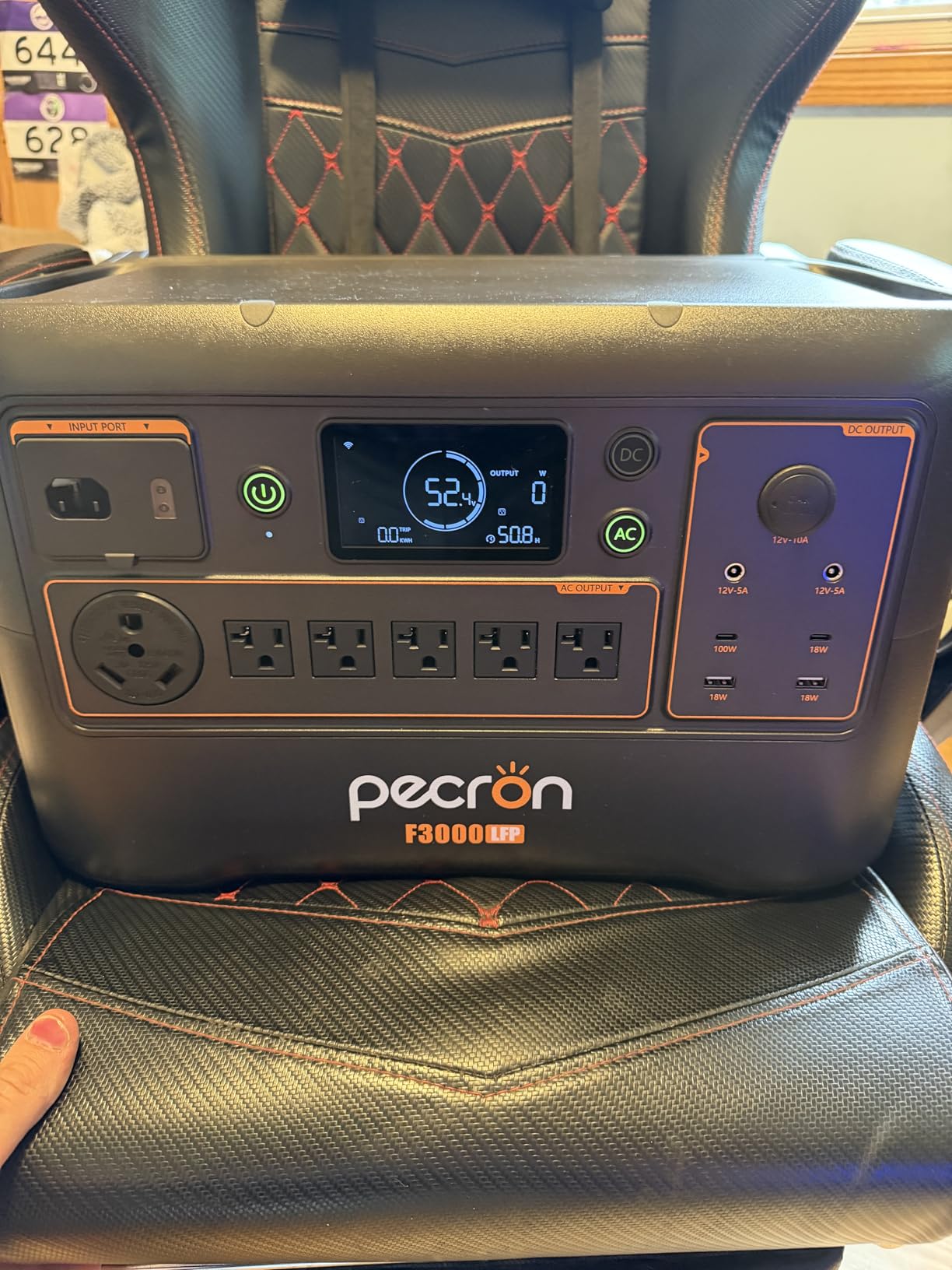
The F3000LFP is the spec-sheet value play in the 3kWh class: 3,072Wh of LiFePO4, 3,600W of pure sine wave output, 13 ports and a two-hour wall recharge, at a price that undercuts the BLUETTI and Jackery units of similar size. For an RV owner whose budget rules out a 3kWh station from the mainstream brands, it delivers a lot of capability per dollar.
Solar input is unusually generous at up to 1,600W across a 25V to 120V range, and it supports triple charging from AC, solar and the car at once. The port mix is well distributed, with six AC outlets, two 100W USB-C ports, two 18W USB-A ports, a car port and two DC 5525 outputs, and an 8-20ms UPS protects computers and CPAP machines.
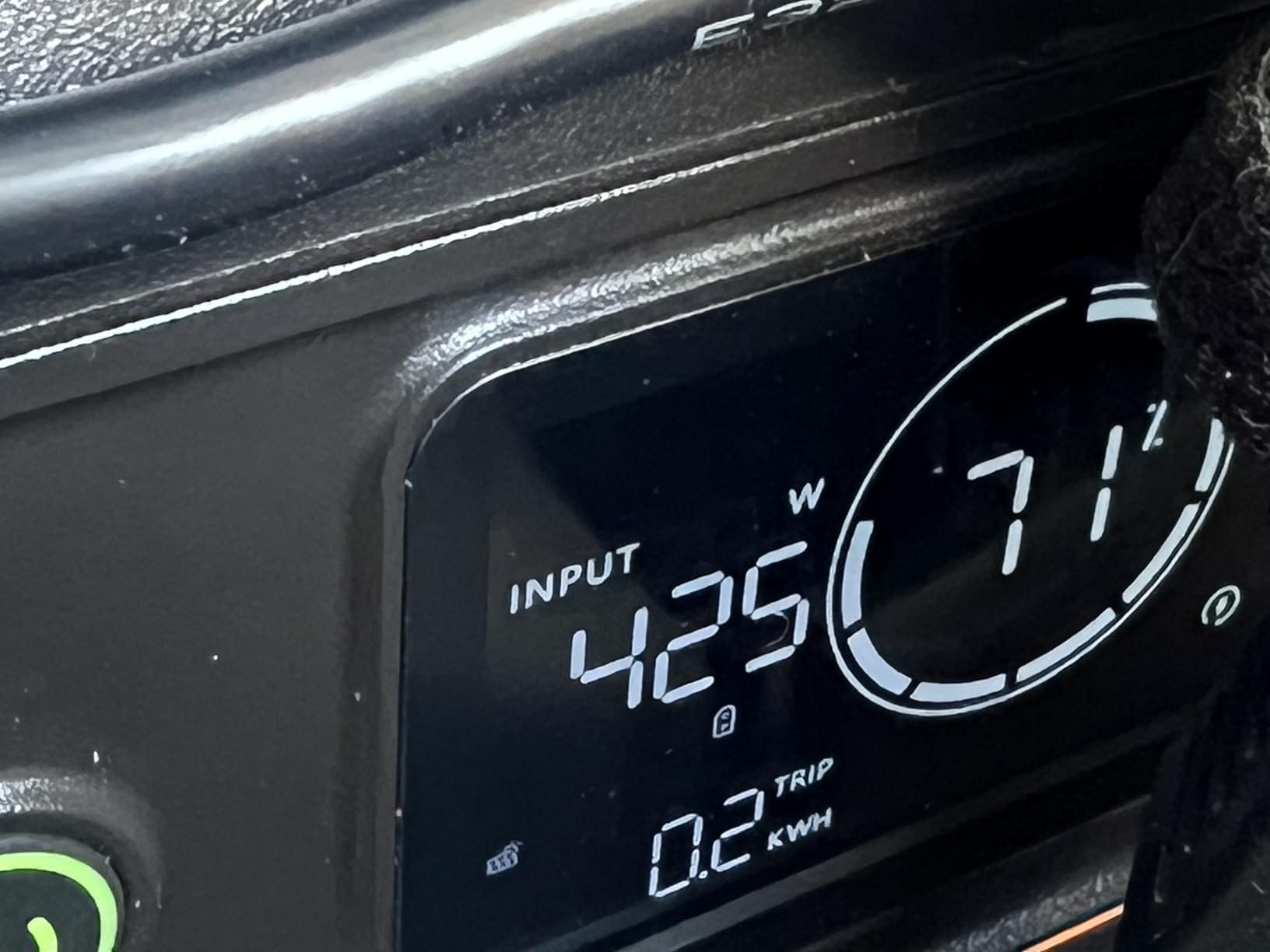
Owners describe it as strong value and highlight the two-hour refill as quick for a 3kWh unit. App-based real-time monitoring is included, and an accessory bag is in the box, which is a small touch that matters more than it sounds.
Capacity is expandable to 10,752Wh, though that expansion requires a separately sold XT120-M cascade cable for the EP3800-48V battery. Plan for that extra purchase before assuming the expansion path is included.
Who this suits
Full-time RVers and weekend campers who want 3,600W of output and 3kWh of storage without stretching into the premium brands, and who can accept buying the expansion cable separately. Pure sine wave output is the right choice for sensitive electronics.
What concerns us
Two things give us pause. The listing states 220V AC, which is unusual for a US-market unit and worth confirming against your own appliances before ordering. At 63.3 lb it is heavy for something marketed as portable, and with 145 reviews the long-term reliability picture is thinner than the four established brands, with comments focusing more on the spec sheet than on years of use.
8. PECRON E3600LFP – Most Ports and Fastest 3kWh Refill
PECRON Portable Power Station 3072Wh E3600LFP, 5x3600W AC Outlets
3,072Wh LiFePO4, expandable to 18.43kWh
3,600W rated pure sine wave
16 output ports
79 lb
Pros
- 16 output ports
- the highest count here
- 1.3-hour full charge from 3200W AC input
- Includes 15A and 30A AC cables plus parallel solar cabling
- Built-in BMS with short circuit
- overload and overheat protection
Cons
- Lowest average rating here at 4.2 with 14% one-star
- 79 lb is the heaviest 3kWh unit
- No warranty duration stated
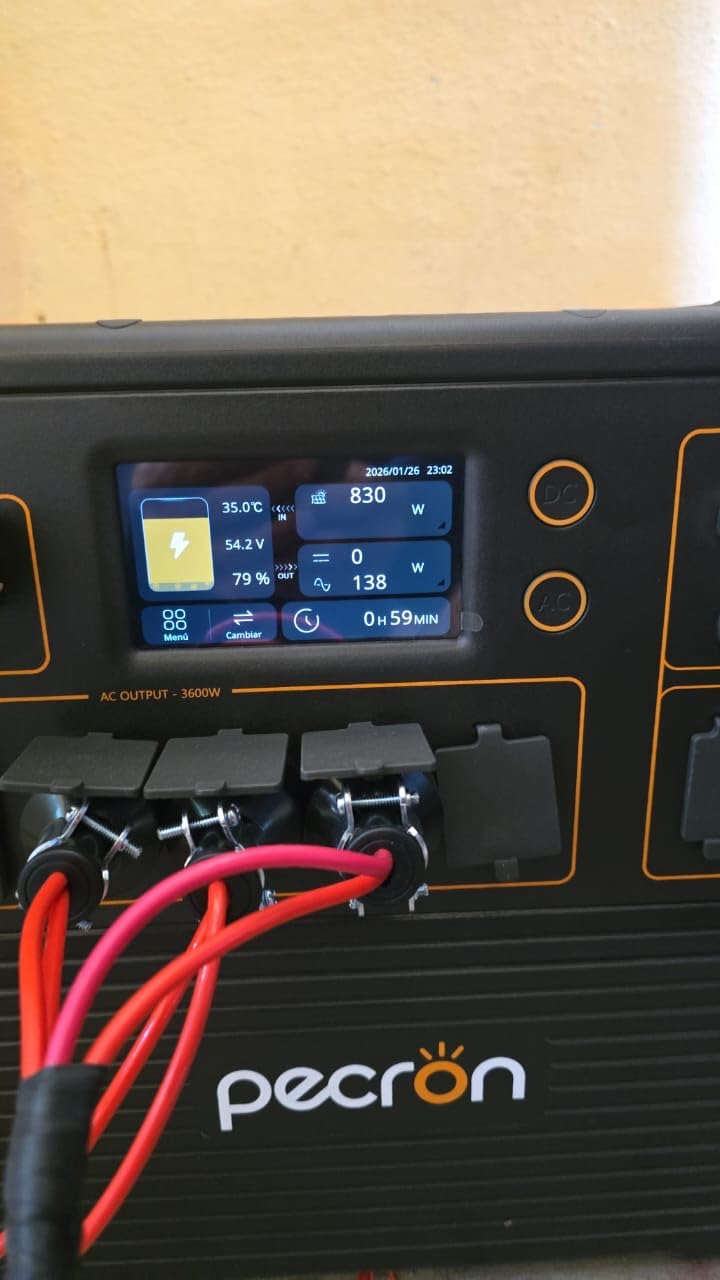
Where the F3000LFP prioritises value, the E3600LFP prioritises everything at once. It has 16 output options, the highest port count in this comparison: four AC outlets, a dedicated TT30-R RV outlet, four USB-A ports, two 100W USB-C ports, an XT60-F port, a cigar port and a DC5525 output. The 3,600W rated pure sine wave output runs from 100V to 120V.
Charging speed is the standout number. A 3,200W AC input gives a full charge in 1.3 hours, the fastest refill figure in this group, and eight 300W solar panels can bring it to full in 1.5 hours. Both 15A and 30A AC cables are included, along with single and parallel solar cables, an accessory pouch and a screwdriver.
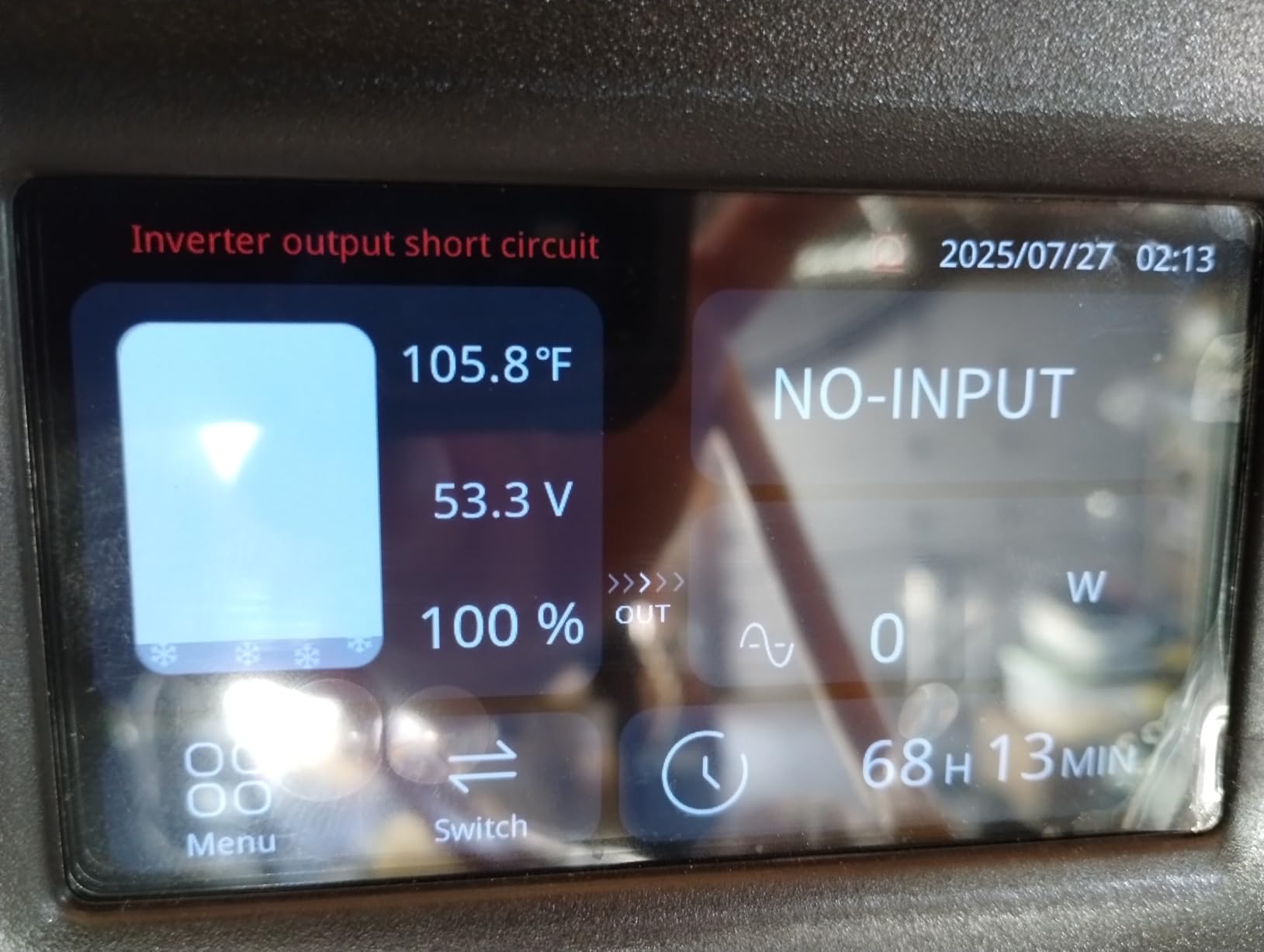
Expansion is the most ambitious in the 3kWh class, reaching 18.43kWh with four EP3800-48V batteries. The built-in battery management system handles short circuit, overload and overheat protection, which is the sort of detail that matters when a unit lives in a vehicle in summer heat.
Owners tend to describe it in spec-sheet terms rather than long-term experience, which tells you something about the evidence available. The four AC outlets plus the TT30-R make it a natural fit for a trailer with a 30A connection.
Where it earns its place
If your trailer has multiple high-draw devices and a 30A connection, the combination of 16 ports, a TT30-R outlet and 3,600W of output is hard to argue with. The parallel solar cabling included in the box is a real convenience for anyone planning a large array.
Why we ranked it here
At 4.2 with 14% one-star ratings and only 118 reviews, this is the least documented unit in the set, and it is the heaviest at 79 lb. No warranty duration is stated on the product page, which for a pack you may own for a decade is a genuine gap. Buyers who value long-term evidence should look at the AC200PL instead.
9. Jackery HomePower 3000 – Best Bundle with Two Solar Panels
Jackery HomePower 3000 and 2x200W Solar Panels, 3072Wh, 3600W AC Output
3,072Wh LiFePO4, 4,000 cycles
3,600W continuous, 7,200W surge
59.5 lb
Two 200W panels included
Pros
- Two 200W solar panels included in the box
- 1.7-hour hybrid AC and DC recharge
- Built-in TT-30 RV port plus dual 100W USB-C
- Cell-to-body design is 47% smaller than comparable 3kWh units
Cons
- Battery is not expandable on this model
- Included panels take roughly 11 hours to fill the unit
- 59.5 lb means a wheel kit is close to essential
Where the Explorer 1000 v2 bundles one panel, the HomePower 3000 bundles two 200W SolarSaga panels with a 3,072Wh station rated for 4,000 cycles at 70% retention. Output is 3,600W continuous with 7,200W of surge, and it weighs 59.5 lb, which is light for that output thanks to a cell-to-body construction BLUETTI-class rivals do not match.
Owners use it for the loads that normally defeat a portable station. Multiple buyers report powering a camper air conditioner and a microwave at the same time, quietly, and one ran a fridge for two full days on a single charge. Another owner used the app’s real-time wattage readout to work out how many more roof panels to add, which is exactly what the display is for.
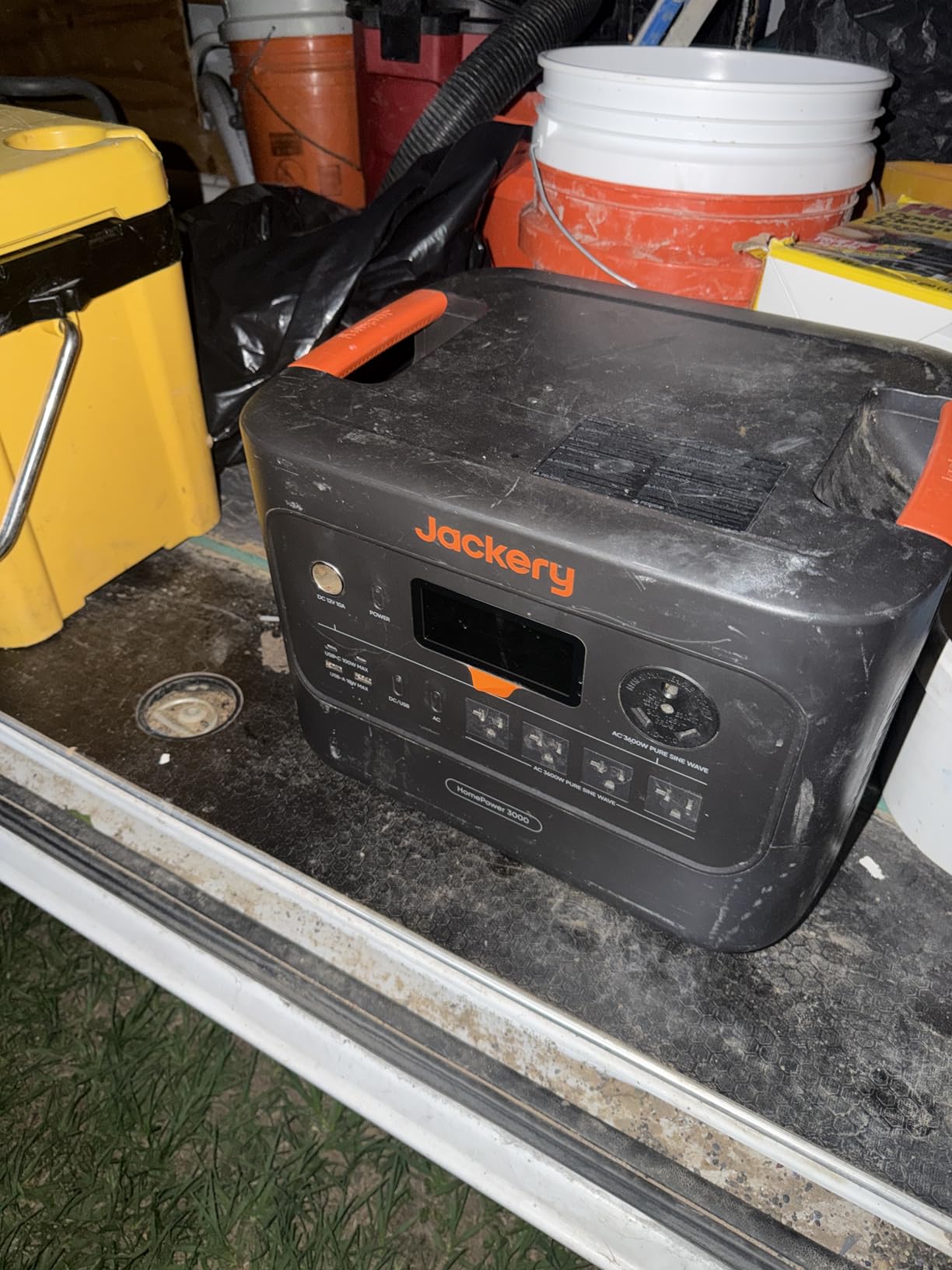
The built-in TT-30 RV port means you can feed a trailer directly, and the dual 100W PD USB-C ports handle laptops and cameras without adapters. Recharge is fast: 1.7 hours on hybrid AC and DC, or 2.2 hours on AC alone. The UL-certified UPS switches over in under 20ms, which covers security cameras and medical refrigerators.
It also charges from a 12V car charger or a gas generator, which makes it a reasonable bridge unit for people who still run a gas generator for the heaviest loads.
Who this is for
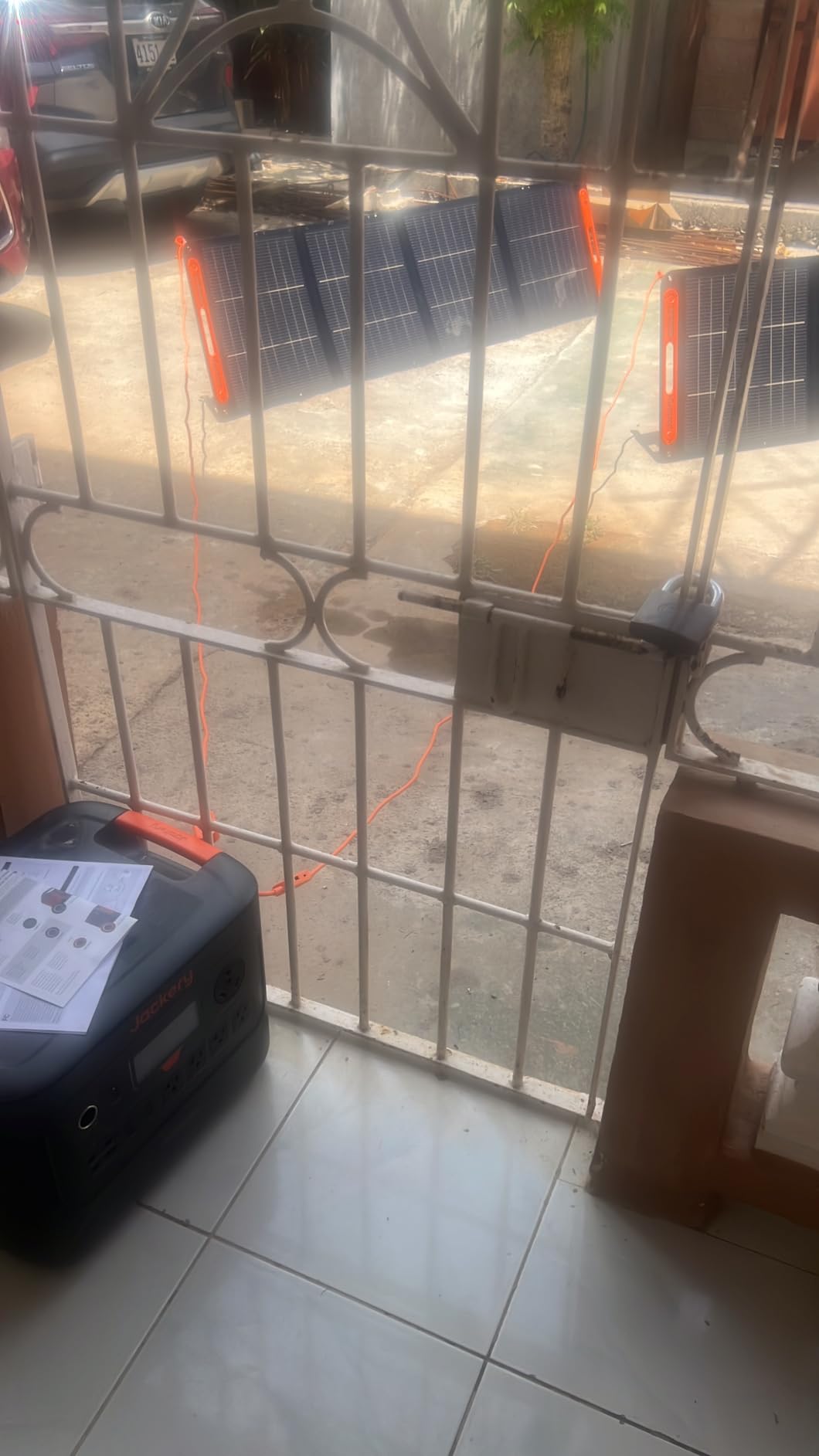
Buyers who want solar included and who need real AC output rather than fridge-level capability. The two-panel bundle means a genuine off-grid setup out of one box, which is a meaningful saving compared with buying the station and panels separately.
What to consider
The two 200W panels take roughly 11 hours to fill a 3,072Wh pack, so treat solar as a slow top-up rather than a fast recovery. The battery is not expandable on this model, which is a real limitation if you want to grow. A wheel kit is close to mandatory at 59.5 lb, and a small group of owners report random shutdowns, an unexplained flashing internal light and weak support response, so we would confirm the support path before buying.
10. Anker SOLIX F3000 – Best for a Rooftop RV Air Conditioner
Anker SOLIX F3000 Portable Power Station, 3,072Wh, 6,000W, Solar Generators
3,072Wh LiFePO4, expandable to 24kWh
3,600W pass-through output
TT-30 and 30A Anderson
91.5 lb
Pros
- Only unit here reported to power a 13k BTU rooftop RV air conditioner
- 3600W pass-through runs appliances at full power while recharging
- Built-in 6-inch wheels make 91.5 lb manageable
- 125 hours of AC idle standby
Cons
- Heaviest unit before the 4kWh class
- No native 240V split phase without pairing two units
- Intermittent WiFi connection reported
This is the answer to the question RV forums ask most often, and only one unit in this list has credible reports of doing it. Owners report powering a 13k BTU Coleman rooftop RV air conditioner for six to seven hours on low, which is a genuinely different class of capability from everything else in the comparison.
The technical reason is 3,600W of pass-through output and 3,072Wh of LiFePO4 capacity, expandable to 24kWh for around 80 hours of backup. Pass-through charging means the station runs appliances at full power while it is simultaneously recharging from a generator, solar or anything else, and the TT-30 plug stays active during charging, which is exactly what a silent RV generator needs to be.
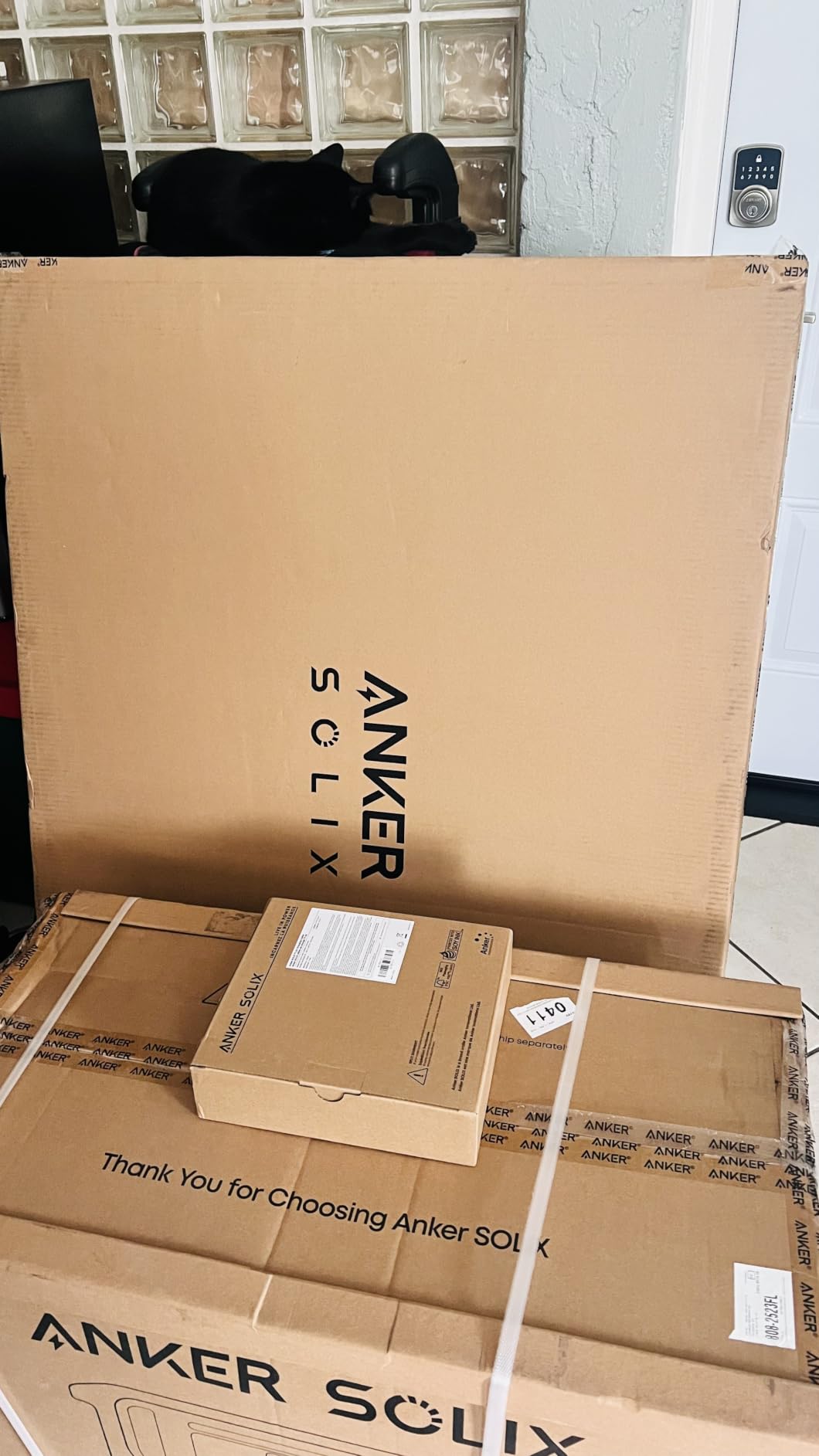
Standby management is exceptional. Anker lists 125 hours of AC idle standby and 42 hours running a 190W refrigerator, and one owner reported holding a charge for five days. That efficiency is what makes multi-day cloudy stretches survivable without a gas generator.
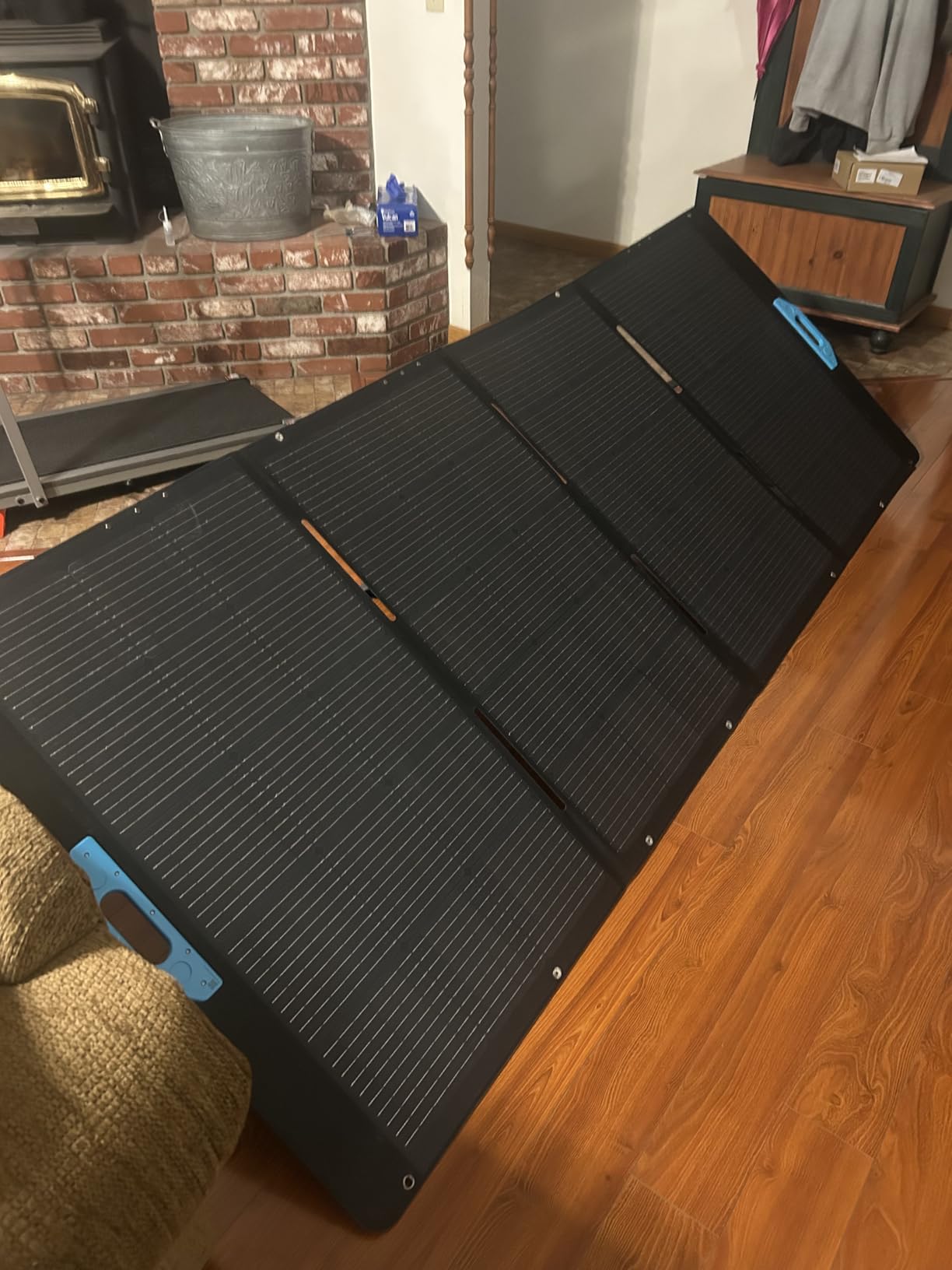
Solar recharging runs at up to 2,400W through 165V and 60V MPPT inputs, and up to 6,000W of combined recharging input is possible from a fuel generator plus solar. Output is 120V, or 240V by pairing two F3000 units. Built-in 6-inch wheels and dual MPPT controllers are included.
Why RV owners pick it
Running an air conditioner from solar is the hardest load in this entire category, and pass-through charging is the feature that makes it practical in a real campground. The TT-30 plug staying live while charging means you can keep the trailer running from solar or a generator without unplugging anything. Low idle draw is the other quiet advantage.
What to weigh against that
At 91.5 lb it is heavy even with the built-in wheels, and there is no native 240V split phase, so 240V appliances need a paired second unit. The USB ports cannot be controlled or adjusted and have a roughly 1W minimum draw that confuses small-device charging, and the app connection drops occasionally. Some buyers also find the bundled 400W panel oversized and awkward, preferring two smaller panels.
11. EF ECOFLOW DELTA Pro 3 – Best for True 120V/240V Output
EF ECOFLOW Power Station 4096Wh DELTA Pro 3 with 400W Portable Solar Panel
4,096Wh LFP, expandable to 48kWh
4,000W at 120V and 240V
6,000W surge
400W panel included
Pros
- Only unit here with true 120V/240V split phase out of the box
- 400W portable solar panel included
- RV 30A supply plug pairs well with a transfer switch
- Runs a 3-ton central AC or a 1 HP water pump
Cons
- 150 lb is by far the heaviest here
- Bundled 400W panel weighs nearly 50 lb
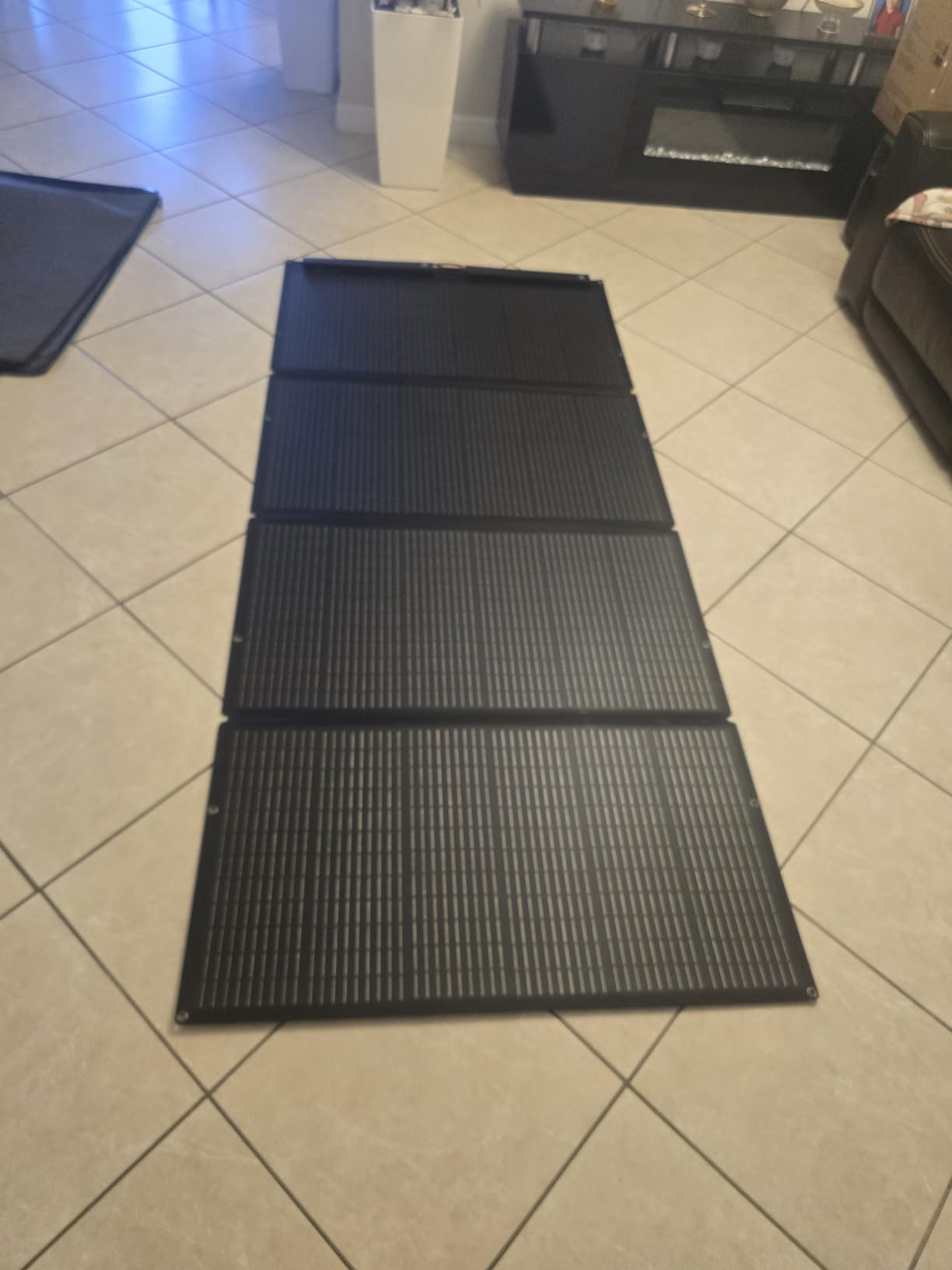
The DELTA Pro 3 is the only unit in this list that delivers true 120V and 240V split-phase output as standard. For an RV owner with a 30A supply plug, a well pump, a 5-ton air conditioner or any 240V appliance, that is the feature that decides the purchase. Output is 4,000W continuous, 6,000W of surge, and up to 12,000W with X-Boost.
Capacity is 4,096Wh of automotive-grade LFP in an IP65-rated pack, expandable to 48kWh. Owners report running an entire fifth wheel, or a shed with a mini-split, entirely on solar, and EcoFlow specifies that it can run a 3-ton central air conditioner or a 1 HP water pump.
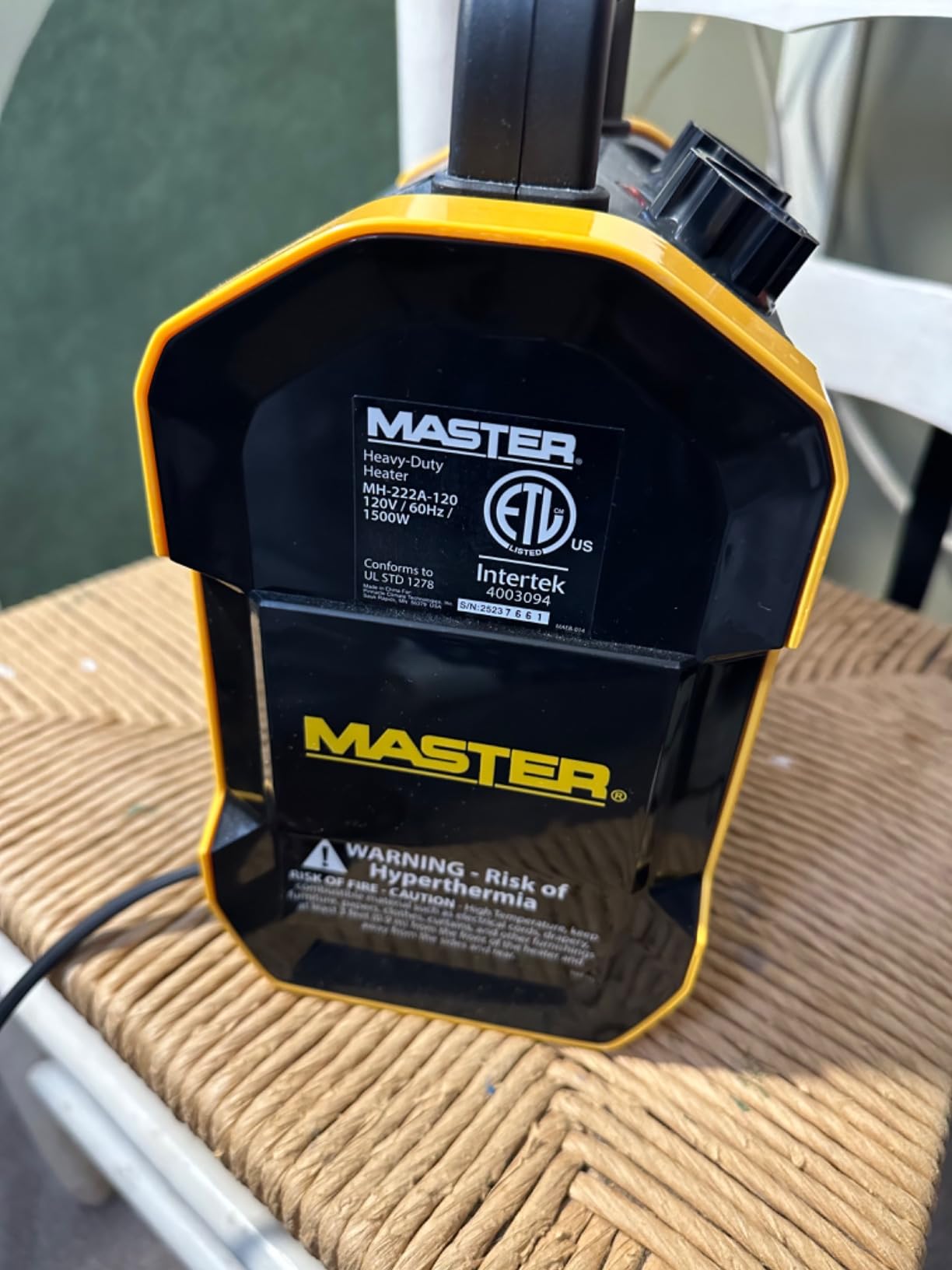
There are seven charging methods, with 18 combinations across AC, solar, gas generator, EV charging pile and the Smart Home Panel 2. The 10ms switchover suits network attached storage, servers and entertainment equipment, and X-Quiet operation drops as low as 30 dB, which is quiet enough for bedside use inside a trailer.
It arrives with a 400W portable solar panel, which removes the most common setup step. Sliding outlet covers keep the ports clean when they are not in use, and the front-mounted RV 30A supply plug pairs well with a generator transfer switch.
Where it belongs
This is a large-RV and whole-home backup unit rather than a camping unit. If you run 240V loads, a 3-ton air conditioner or a serious water pump, nothing else in this list does that job without a second purchase.
What stops it being a camping pick
At 150 lb it is by far the heaviest unit here, and the bundled 400W panel weighs nearly 50 lb on its own, which makes repositioning during a trip genuinely hard. One fifth-wheel owner reported a handle breaking immediately under the stated weight, and a minority report voltage irregularities that damaged connected equipment. After-sales support is described as redirecting to the retailer once the return window closes, so the warranty service path is worth checking.
12. Jackery Solar Generator 5000 Plus – Biggest Capacity Here
Jackery Explorer 5000 Plus Power Station, 5040Wh, 7200W AC Output
5,040Wh LiFePO4, expandable to 60kWh
7,200W rated, 14,400W surge
120V and 240V output
134.5 lb
Pros
- Highest capacity and output in the comparison
- Supports 5-ton air conditioners and water heaters
- Up to 4000W solar input for a roughly 2-hour recharge
- LiFePO4 with ChargeShield 2.0 rated up to 11 years of daily use
Cons
- 134.5 lb makes this effectively a stationary unit
- Solar panel not included
- Smallest review base here at 58 ratings
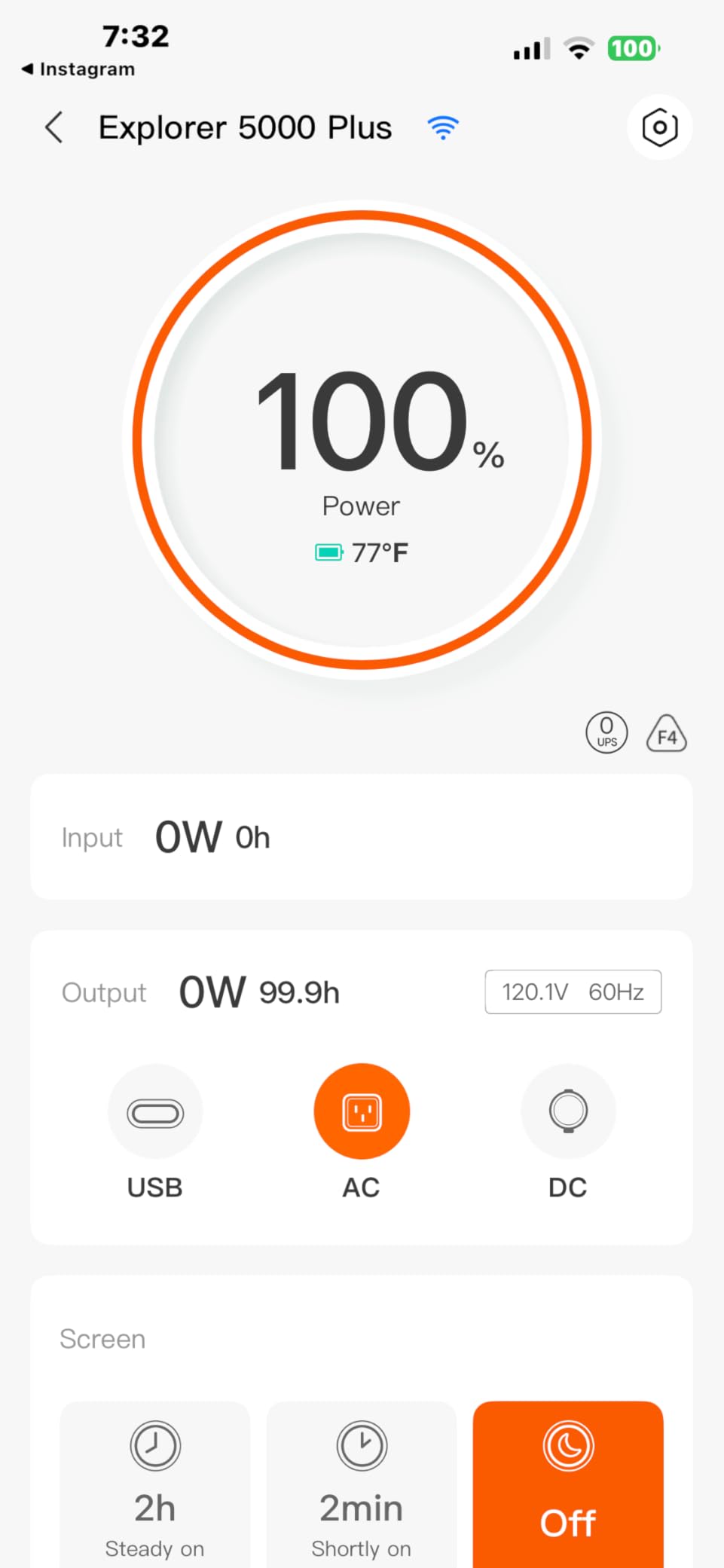
The Explorer 5000 Plus is the capacity ceiling of this group: 5,040Wh of LiFePO4 rated for 4,000 cycles, 7,200W of rated output and 14,400W of surge. It is expandable to 60kWh, and it outputs both 120V and 240V so that 5-ton air conditioners and water heaters can run, which is a claim no other unit in this list can make without a second box.
Solar input is unusually high at up to 4,000W, giving a recharge in roughly two hours, and it accepts both high-voltage and low-voltage panels. The LiFePO4 cells use ChargeShield 2.0 and are rated for up to 11 years of daily use, and it pairs with the Jackery 60A Smart Transfer Switch for up to 12 circuits at 120V or 6 at 240V.
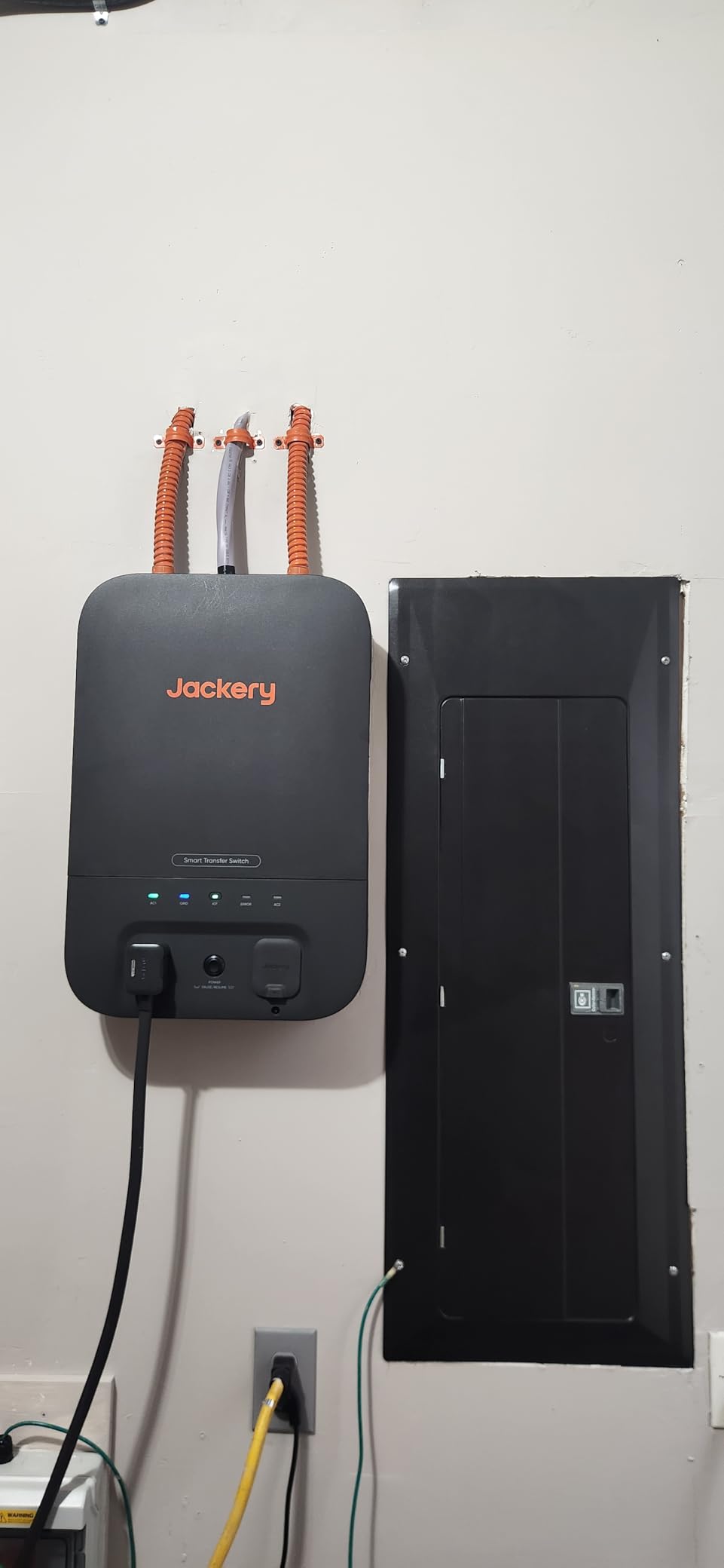
Two AC outputs cover both voltages, and the five-year manufacturer warranty is solid on paper. Owners tend to frame it around whole-home backup scenarios and long off-grid stretches rather than camping.
Reviews are broadly positive at 72% five-star, but the base of 58 ratings is the thinnest in this comparison, so long-term reliability is the least documented attribute of anything here.
Who should buy it
Full-time RVers and households treating the station as a home system rather than a camping box. Anyone who needs genuine 240V output for a 5-ton air conditioner or a water heater, and who has somewhere to store and charge something this size.
Why it is last on this list
At 134.5 lb it is effectively stationary, and the solar panel is a separate purchase in the base configuration. The listed dimensions of 10 by 10 by 10 inches are packaging figures that do not describe the real unit, which is worth knowing before you plan a storage bay. For a camping article, it is the ceiling of what this technology offers, not a practical recommendation.
How to Recharge a Solar Generator in the Field
There are four ways to put charge back into a power station, and using all four is what separates a comfortable trip from a stressful one. Wall charging is fastest, solar is the only free option, the 12V car outlet is slow, and alternator charging while driving is the one most guides ignore.
Solar reality check: a panel delivers roughly 30% to 51% of its rated watts in real conditions rather than at the manufacturer’s test peak. That means a single 100W panel typically harvests 30W to 50W, and refilling a 3,072Wh station from empty would take far longer than the headline numbers suggest. Check the solar input ceiling on the unit first, because a 400W panel plugged into a 600W-input station simply cannot use what it collects. If you are pairing panels with a station, start with our guide to RV solar panels for boondocking, and for smaller setups see our picks for portable solar panels for camping.
Charging from a 12V car outlet can take up to 24 hours on a larger station and can drain the vehicle battery if you are not careful. The better version of that idea is alternator charging, which uses the tow vehicle’s charging system while you drive. Several units in this list handle it directly, and the Jackery Solar Generator 1000 v2 reaches a full charge in 3 hours with a 600W alternator charger. That effectively gives you free range-based recharging on long drives between campgrounds.
Generator and EV charging are worth noting on the larger units. The Jackery HomePower 3000 accepts a gas generator or a 12V car charger, and the DELTA Pro 3 supports seven charging methods including an EV charging pile, so a stopped EV can top you up if the campsite allows it.
On solar sizing, the practical rule is that the array should be able to refill roughly your daily consumption over a good solar day, not your full battery capacity. If you draw 500Wh a day, 200W to 400W of panels is a realistic starting point for sunny conditions, with the understanding that two cloudy days will require wall or alternator top-ups.
Solar Generator vs Gas Generator for an RV
The honest answer is that most full-time RVers run both, and the best solar generators for RV camping work best as the primary unit with a gas generator as insurance. That is the pattern that comes up repeatedly in RV forums, where owners report solar being excellent in real sun while still carrying a small gas unit for multi-day cloudy stretches.
The solar side wins on noise, emissions, weight and campsite rules. There is no exhaust, so it can run inside a closed trailer at midday, and many campgrounds restrict or ban combustion engines outright. There is no fuel to carry, no oil to change and no pull-start. Fuel cost also goes to zero, which matters over a season of daily use.
The gas side wins on refuelling speed, indefinite runtime and the ability to start any load. A rooftop RV air conditioner that pulls 1,500W running and much more to start is at the edge of what a power station can do, and only the Anker SOLIX F3000 in this list has credible reports of running a 13k BTU unit for hours. Cost per kilowatt-hour also favours gas for sustained high output.
If you are weighing a gas unit specifically, our picks for RV generators for camping and camping generators for off-grid trips cover the fuel side properly. The practical setup most experienced campers converge on is a 2kWh to 3kWh station for daily loads plus a small 30A-capable gas generator as a backup for the air conditioner and for week-long overcast stretches.
Common Mistakes When Buying a Solar Generator for an RV
Overbuying on watt-hours is the most common regret. Carrying a 60-plus-pound unit you never need is the pattern that shows up again and again in camper forums, and it is usually caused by buying on surge ratings rather than continuous output and realistic daily draw.
Buying on surge numbers is the second version of the same mistake. A 3,000W surge figure says nothing about how long anything runs, and it does not tell you whether a 1,500W air conditioner will start. Always read continuous output first, then size on watt-hours for duration.
Expecting rated solar watts. A 400W panel rarely produces 400W, and a 100W panel often produces around 30W to 50W. Buyers who ignore this end up with a station that never fully recharges and blame the battery for a problem the array caused.
Ignoring connector compatibility. MC4 is an open standard, but proprietary connectors lock you into one brand and make future panel upgrades annoying. Check the input connector type before buying panels, and check the station’s solar input voltage window as well, since a mismatched voltage range means the panel is wasted.
Forgetting heat and airflow. These units need ventilation during heavy inverter loads, and a sealed trailer in summer is a hot environment. There is no carbon monoxide risk, which is the big safety win over gas, but heat management and never charging unattended in an enclosed space are still worth respecting.
Overlooking cold-weather limits and cycle life. Lithium chemistry charges poorly below freezing, which matters for winter camping, and only some units in this list publish a cold rating. Cycle life is the number that decides whether the pack is still usable in year eight, and LiFePO4 ratings here range from 3,000 cycles to 6,000-plus, which is a meaningful spread over a decade of ownership.
Frequently Asked Questions
What is the best solar powered generator for an RV?
For most RV campers the Anker SOLIX C1000 Gen 2 is the best overall pick, with 1,024Wh of LiFePO4 capacity, 2,000W of continuous output, 10 output ports and a 49-minute wall recharge at 11.3 kg. Boondockers who want to grow capacity should start with the BLUETTI AC200PL at 2,304Wh with a 48V RV port and expansion to 8,448Wh, while anyone running a rooftop air conditioner needs the 3,072Wh Anker SOLIX F3000.
What size solar generator do I need to run my RV?
Size by watt-hours, not watts. Add the wattage of every appliance you want to run multiplied by the hours you need it per day, add about 30% for cloudy-day headroom, and then confirm your largest single appliance stays under the station’s continuous output. A 1,000Wh station covers a fridge, lights, a router and a CPAP overnight. A 2,000 to 2,300Wh station adds a coffee maker, blender and laptop. A 3,000Wh-plus station is the entry point for a microwave or small rooftop air conditioner.
How many watts of solar power do I need for an RV?
Match the array to your daily consumption rather than your battery size. If you draw around 500Wh a day, 200W to 400W of portable panels is a realistic starting point in sunny conditions. Expect roughly 30% to 51% of a panel’s rated output in real conditions, and confirm the station’s solar input ceiling so the array is not wasted.
Can a solar generator run an RV air conditioner?
Most cannot, and buying on marketing wattage is how people end up stranded. A 13,000 BTU rooftop unit draws roughly 1,500W running and far more to start, so you need a station in the 3,600W class. Of the twelve units we compared, the Anker SOLIX F3000 is the only one with credible owner reports of powering a 13k BTU Coleman rooftop unit for six to seven hours on low.
How long does a portable power station take to recharge with solar?
Much longer than the rated panel wattage suggests, because real panels deliver roughly 30% to 51% of their rating. A single 100W panel typically harvests 30W to 50W, which is why the bundled 200W panel on the Jackery Solar Generator 1000 v2 takes roughly 6 hours to reach 80%. Faster solar refills need a higher input ceiling and a matching array, such as the 4,000W solar input on the Jackery Solar Generator 5000 Plus.
Which brand of portable power station is the most reliable?
Reliability evidence varies more than specifications do. The BLUETTI AC200PL has the largest review base in our comparison with 2,622 ratings averaging 4.6, which makes it the best-documented unit, followed by the Anker SOLIX C1000 Gen 2 with 1,632 ratings at 4.7. Jackery, Anker, BLUETTI and EcoFlow all carry five-year warranties, while two units in this list state no warranty duration at all.
Final Recommendation for 2026
For most RV campers, the Anker SOLIX C1000 Gen 2 is the best solar generator for RV camping in 2026: 1,024Wh, 2,000W continuous, a 49-minute wall recharge and a weight one person can manage. If you boondock for weeks and want to grow capacity, the BLUETTI AC200PL is the better long-term buy at 2,304Wh with a 48V RV port and expansion to 8,448Wh.
Match the machine to the largest single load you need. A microwave, a coffee maker and a fridge running together call for the 3,600W class, and a rooftop air conditioner realistically needs the Anker SOLIX F3000 plus a gas generator for insurance on cloudy weeks. Whenever you are weighing the fuel side, our camping generator picks for off-grid trips are worth reading next, and for the 12V fridge side of the load, our guide to camping kitchens for car camping covers what a fridge-free setup actually draws.
Whichever you choose, buy the station first and the panels second, match the array to the input ceiling, and carry a gas generator if an air conditioner matters to you.