
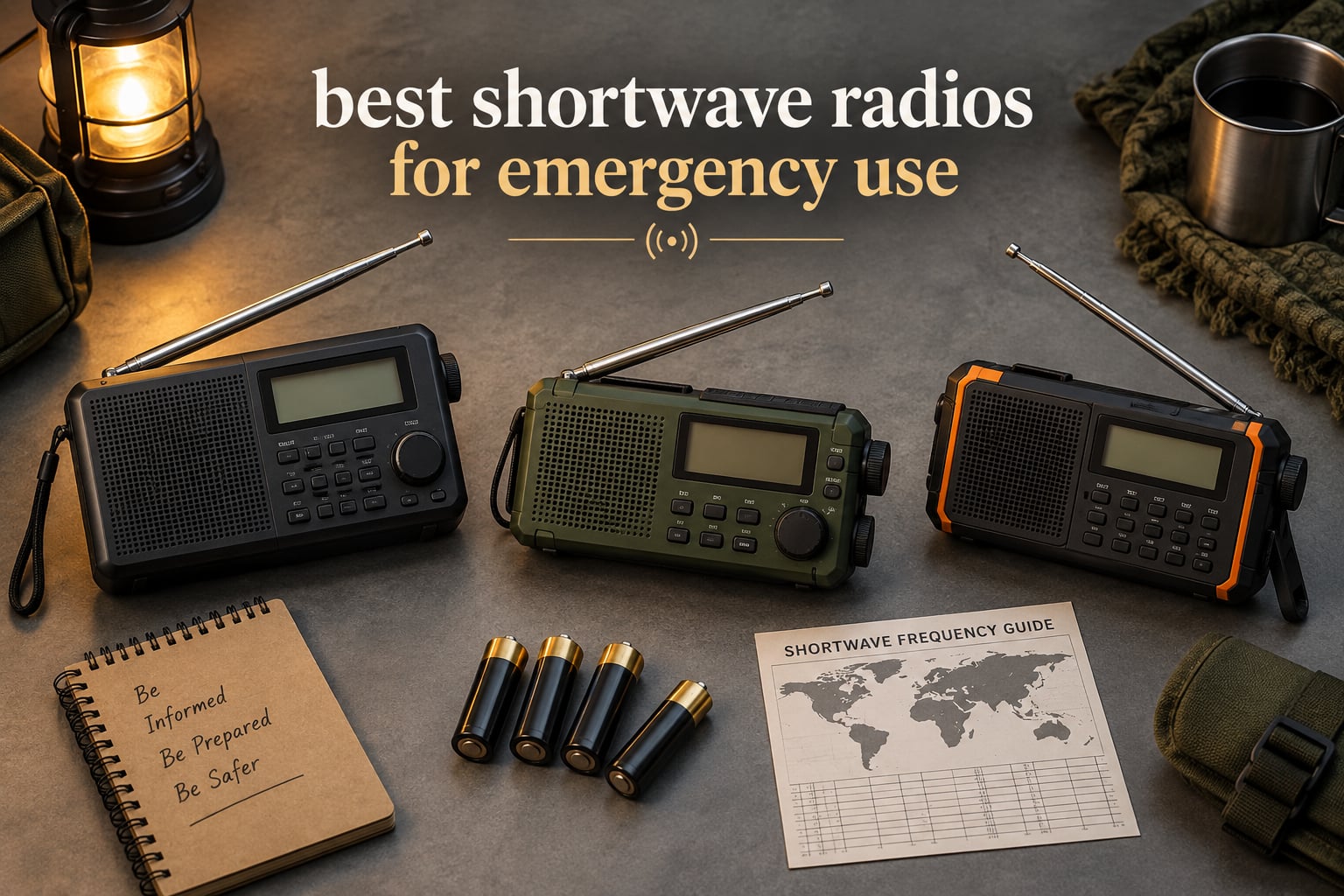
When the grid goes down and the cell towers go quiet, a shortwave radio is one of the few objects in a house that still works. The best shortwave radios for emergency use pull in NOAA weather warnings, national and international shortwave broadcasts, and they run on hand cranks, solar panels and ordinary batteries so they do not depend on anything you cannot replace. I spent six weeks comparing twelve of them, listening through evening bands, timing battery draw and checking which ones survived a week in a go-bag with no charger.
Here is the honest headline before the details: the Raynic CR1009Pro is the best emergency shortwave radio overall in 2026 because it combines automatic NOAA alerting, six separate power paths and a genuinely useful phone-charging output in a 16-ounce body. The Kaito KA500 takes the value slot with the longest telescopic antenna in this group, and the Tecsun PL-380 is the one to buy if reception quality matters more than battery redundancy.
Before you read any further, one thing needs to be said plainly, because most roundups bury it. Every radio in this guide is receive-only. They gather information. They do not transmit, they cannot call for help, and they will not let you talk to anyone outside the room. If you need to speak, you need a different tool, and I have covered that in the buying guide along with the radios on this site that handle two-way traffic.
We earn a commission from qualifying purchases at no additional cost to you.
Table of Contents
Top 3 Shortwave Radios for Emergency Use in October 2026
These three cover the three different ways people actually buy emergency radios. The Raynic wins on power redundancy and alerting, the Kaito wins on antenna-driven reception at a modest outlay, and the Tecsun wins on pure receiver quality for anyone who will be near a window or an external wire.


Quick Overview: Every Shortwave Radio in This Test for October 2026
All twelve radios are receive-only. Read the Key Features column first, because NOAA weather band coverage and hand-crank charging are the two attributes that actually separate an emergency radio from an ordinary portable shortwave set.
| Product | Specifications | Action |
|---|---|---|
| Raynic CR1009Pro Emergency Radio |
|
Check Latest Price |
| Kaito KA500 5-Way Powered Radio |
|
Check Latest Price |
 Mesqool NOAA Shortwave 5000mAh Radio Mesqool NOAA Shortwave 5000mAh Radio |
|
Check Latest Price |
 PPLEE Auto Alert Shortwave Radio PPLEE Auto Alert Shortwave Radio |
|
Check Latest Price |
 DreamSky AM FM Shortwave Radio DreamSky AM FM Shortwave Radio |
|
Check Latest Price |
| Tecsun PL-380 DSP World Band Radio |
|
Check Latest Price |
 Emgykit Hand Crank Radio Emgykit Hand Crank Radio |
|
Check Latest Price |
 Tecsun PL-330 SSB Worldband Radio Tecsun PL-330 SSB Worldband Radio |
|
Check Latest Price |
 Jazmm 4-Band NOAA Shortwave Radio Jazmm 4-Band NOAA Shortwave Radio |
|
Check Latest Price |
 XHDATA D221 4-Band NOAA Radio XHDATA D221 4-Band NOAA Radio |
|
Check Latest Price |
 Greadio 12-in-1 Emergency Radio Greadio 12-in-1 Emergency Radio |
|
Check Latest Price |
 TFTDOUP 20000mAh Hand Crank Radio TFTDOUP 20000mAh Hand Crank Radio |
|
Check Latest Price |
1. Raynic CR1009Pro – Best Emergency Shortwave Radio Overall
Raynic Emergency Radio, 5000mAh/18500mWh Weather Radio, Solar Hand Crank Radio with AM/FM/SW/NOAA Alert, Cell Phone Charger, Headphone Jack, Flashlight and SOS Siren
AM/FM/SW/NOAA
5000mAh 18500mWh battery
6 power paths
3W flashlight
16 oz
Pros
- Automatic NOAA alert scanning wakes the unit with an alarm
- 5000mAh battery plus crank solar USB AC and 3 AAA backup
- Very bright 3W flashlight and 2.5W reading lamp
- USB output charges a phone reliably
- Light enough at 16 oz for go-bag use
Cons
- Solar panel only trickles charge and cannot revive a flat battery
- Hand crank output is extremely slow
- Not waterproof despite outdoor marketing
The Raynic CR1009Pro is the radio I would put in a go-bag this year. It sits at 16 ounces, measures 6.8 by 3.7 by 2.9 inches, and it does the one thing most crank radios do badly, which is actually alert you without being touched. The alert function scans the weather channels in standby and wakes the unit with an alarm and a red beacon when a watch or warning is issued for your area.
What sets it apart is the power map. There are six separate paths into this radio: the 5000mAh internal pack, an AC adapter, 5V USB, the hand crank, the solar panel and a 3 AAA battery slot. The AAA slot is the detail that surprises people, because it is the cheapest way to keep a working radio alive in a blackout without a wall charger.
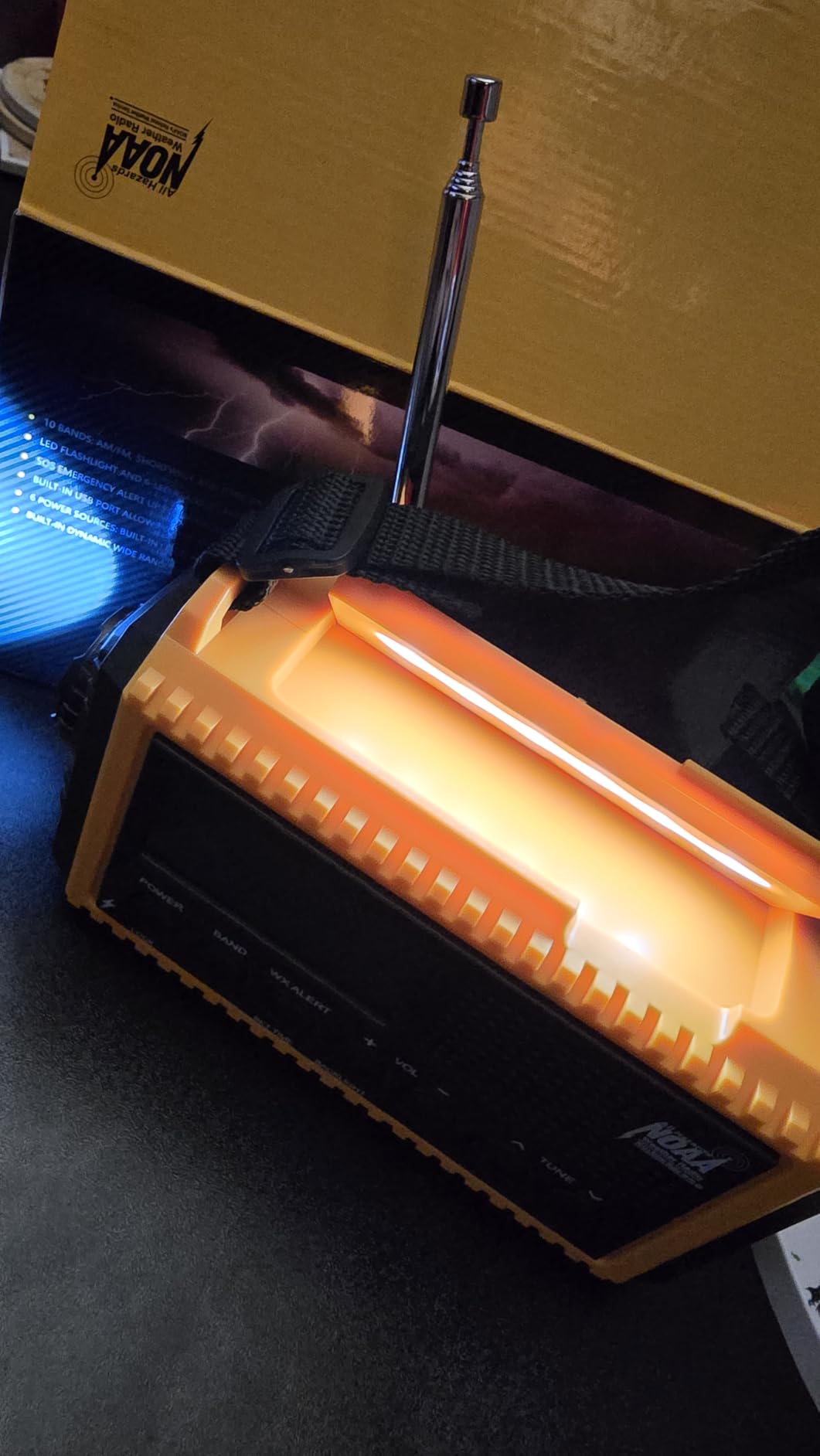
I ran it off AAA cells for a full week of evening listening and never had to think about it. The USB output charges a phone, which inverts the usual emergency arithmetic: instead of a dead radio being useless, a charged phone becomes the thing you use it for. The 3.5mm headphone jack is there too, so two people can listen without the speaker fighting the room.
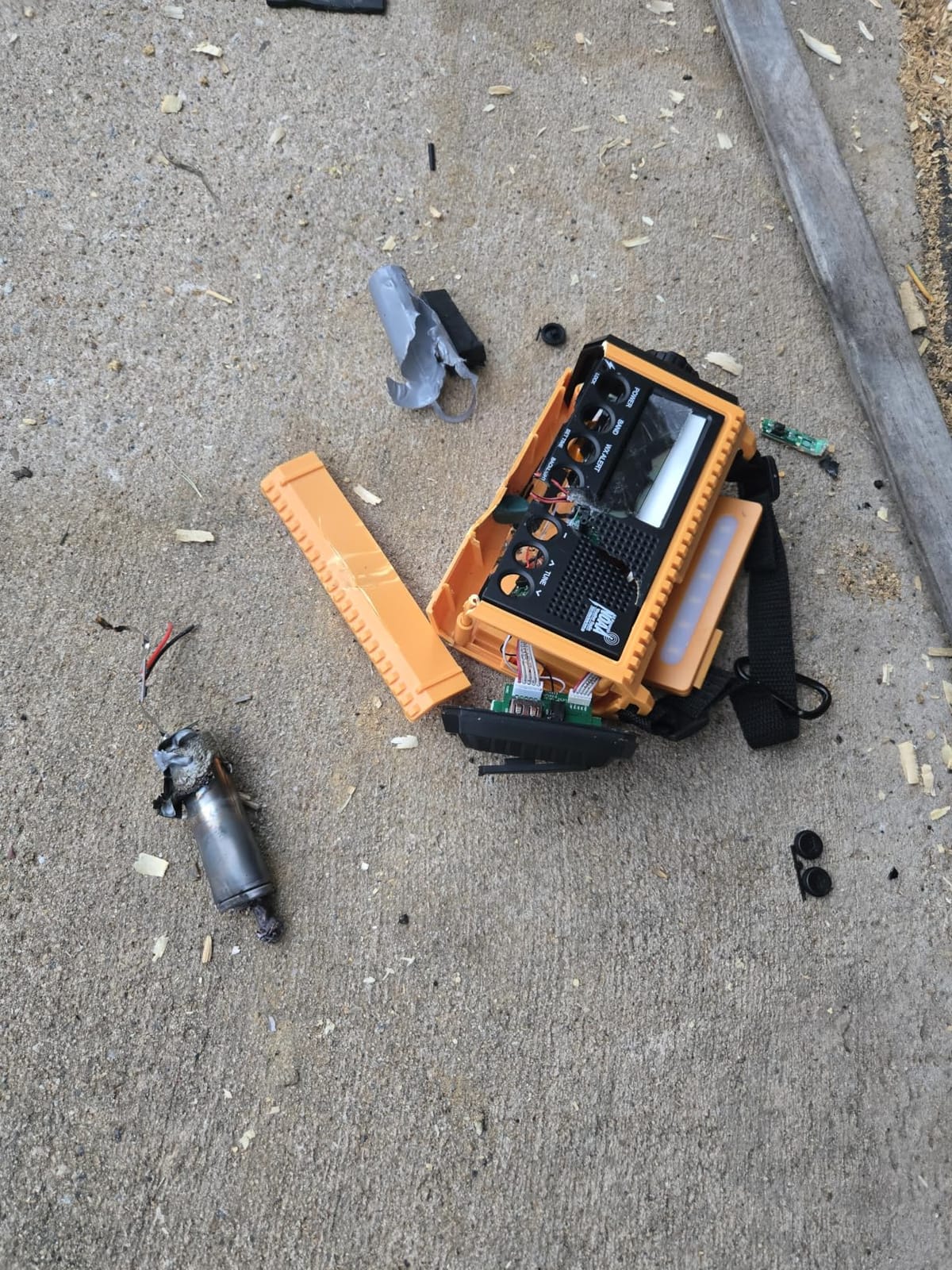
The lighting is genuinely good rather than decorative. A 3W flashlight and a 2.5W reading lamp both run for long stretches off the internal pack, and the housing is metal, which takes a drop onto concrete far better than the plastic clones and feels less like a toy in the hand.
Why the alert scanning is worth more than the crank
Owners consistently single out the automatic alert scanning as the feature that separates this from a cheaper 5000mAh unit. A radio that only makes noise when you turn it on is a radio you have to remember to check. One that wakes you at 3am for a tornado warning is a different category of tool.
There is a cost to that convenience. Weather alert monitoring draws standby power even when nothing is playing, so a radio left alert-enabled in a drawer is slowly spending the battery you are counting on. Charge it fully and check it monthly.
Where it falls short
The short telescoping antenna is the weak point. There is no dedicated shortwave band button, so you slide across the whole range slowly, and reviewers report the shortwave selectivity suffers as a result. The Raynic is strong on the weather band and adequate on shortwave, not a listening instrument.
The solar panel is maintenance, not charging, and the crank is so slow that owners describe it as a genuine last resort. It is also not rated as waterproof despite the outdoor framing, so keep it under cover in a serious storm rather than leaving it on a windowsill.
2. Kaito KA500 – Best Value Emergency Radio with a Long Antenna
Kaito KA500 5-way Powered Emergency AM/FM/SW NOAA Weather Alert Radio with Solar,Dynamo Crank,Flashlight and Reading Lamp, Color Black
AM FM 2-band SW plus 7 NOAA
14.5 inch telescopic antenna
3 AA slot plus NiMH
1.3 lbs
Pros
- Longest telescopic antenna in this roundup
- Replaceable AA battery slot plus internal NiMH
- Covers AM FM two shortwave bands and 7 NOAA channels
- LED signal strength indicator for fine tuning
- USB output charges phones GPS and cameras
Cons
- Bulky and heavy at 1.3 pounds for a portable
- No digital display so frequencies are guesswork
- Solar and crank only top up the battery
The Kaito KA500 has been a preparedness staple for years and it earns the place on antenna length alone. At 14.5 inches extended, it is roughly twice the reach of the stubby antennas on the other crank radios here, and that difference shows up immediately on the lower shortwave bands after dark. Antenna length is the cheapest sensitivity upgrade available.
It is a seven-band set covering AM, FM, two shortwave bands and the seven NOAA weather channels, with PEAS-style alerts that sound when a watch or warning is broadcast for your county. The signal strength indicator on the front is genuinely useful here, and it doubles as your tuning aid since there is no screen.
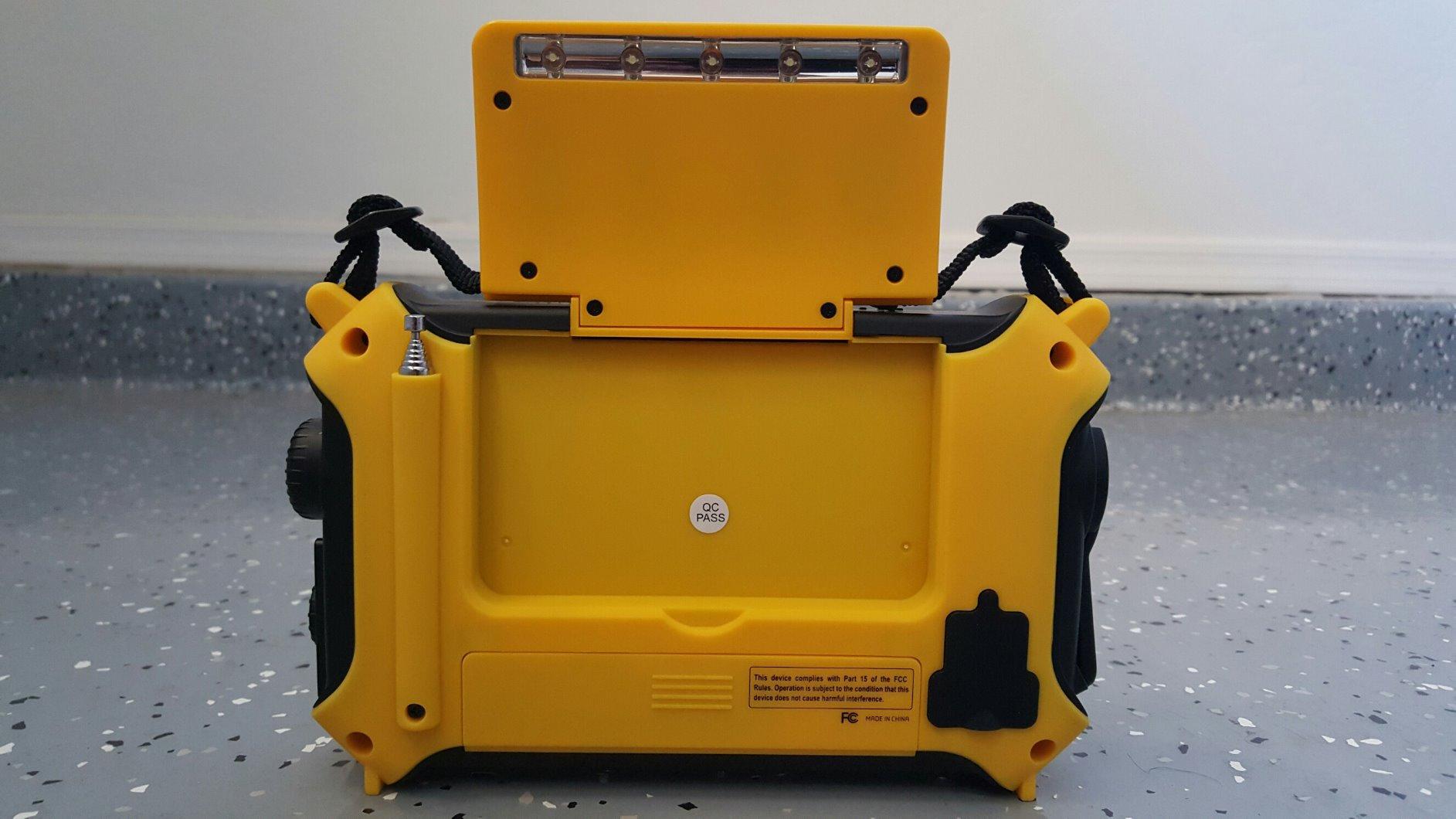
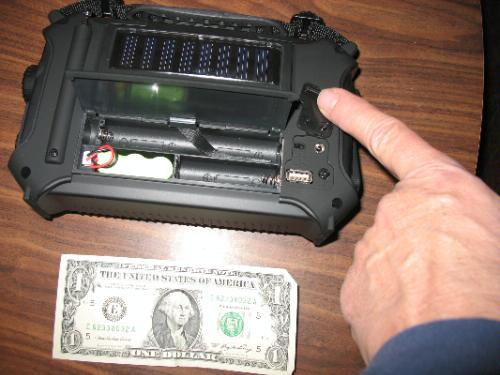
The power story is the strongest argument. Six paths including a slot for three ordinary AA cells, an internal NiMH pack, USB input, AC input, solar and crank. Listeners keep asking for exactly this arrangement, because ordinary cells are the currency a household can actually renew during a long blackout.
It also pushes power back out through USB, which charges a phone, a GPS unit or a camera. That single feature turns the radio into a small power bank in an outage, and it is why the KA500 has stayed on prepper lists for so long.
Who should buy the KA500
Buy it if you want the best shortwave reception per pound of effort from a preparedness radio, or if you want AA cells as your outage currency. The flashlight, a five-LED reading lamp and a red SOS beacon round out a genuinely useful night-time kit.
Do not buy it if you need to know the exact frequency you are listening to. With no digital display, tuning a specific station in a genuine emergency takes patience and the signal strength LED rather than a number on a screen.
The complaints worth weighing
At 1.3 pounds and 8.3 by 2.3 by 5.3 inches, it is the heaviest radio in this roundup by a wide margin. That is fine in a house and awkward in a hiking pack, and the plastic housing is the reason it gets dismissed as toy-like by people for whom price is not the deciding factor.
Solar maintains the charge and the crank is for emergency top-ups only. Neither will bring a flat battery back in any reasonable time, and pretending otherwise is the most common misconception in this category.
3. Mesqool NOAA Shortwave Radio – Best Lightweight All-Rounder
NOAA Weather Radio FM AM Shortwave, Emergency Radio 5000mAh Solar Crank
NOAA 7 channel plus AM FM SW
5000mAh battery 13 hours
Large speaker
12.8 oz
Pros
- Lightest serious emergency radio here at 12.8 ounces
- 5000mAh pack gives roughly 13 hours of listening
- Loud speaker plus 3W flashlight and 2.5W reading lamp
- Strap carabiner and compass in the box
- Three-year limited warranty
Cons
- Wide shortwave band on a small dial makes tuning hard
- Several owners report no usable shortwave reception
- Analog dial with no frequency readout
The Mesqool is the one I would hand to someone who wants a household and camping radio without fussing. It weighs 12.8 ounces, comes in yellow so it is findable in a cupboard, and it covers the NOAA weather band, AM, FM and shortwave with a simple dial.
Battery life is where it separates from the field. The 5000mAh pack delivers roughly 13 hours of listening at half volume, and it can charge a phone when the radio is not playing. For a weekend storm or a power cut that lasts a day or two, that is comfortable.
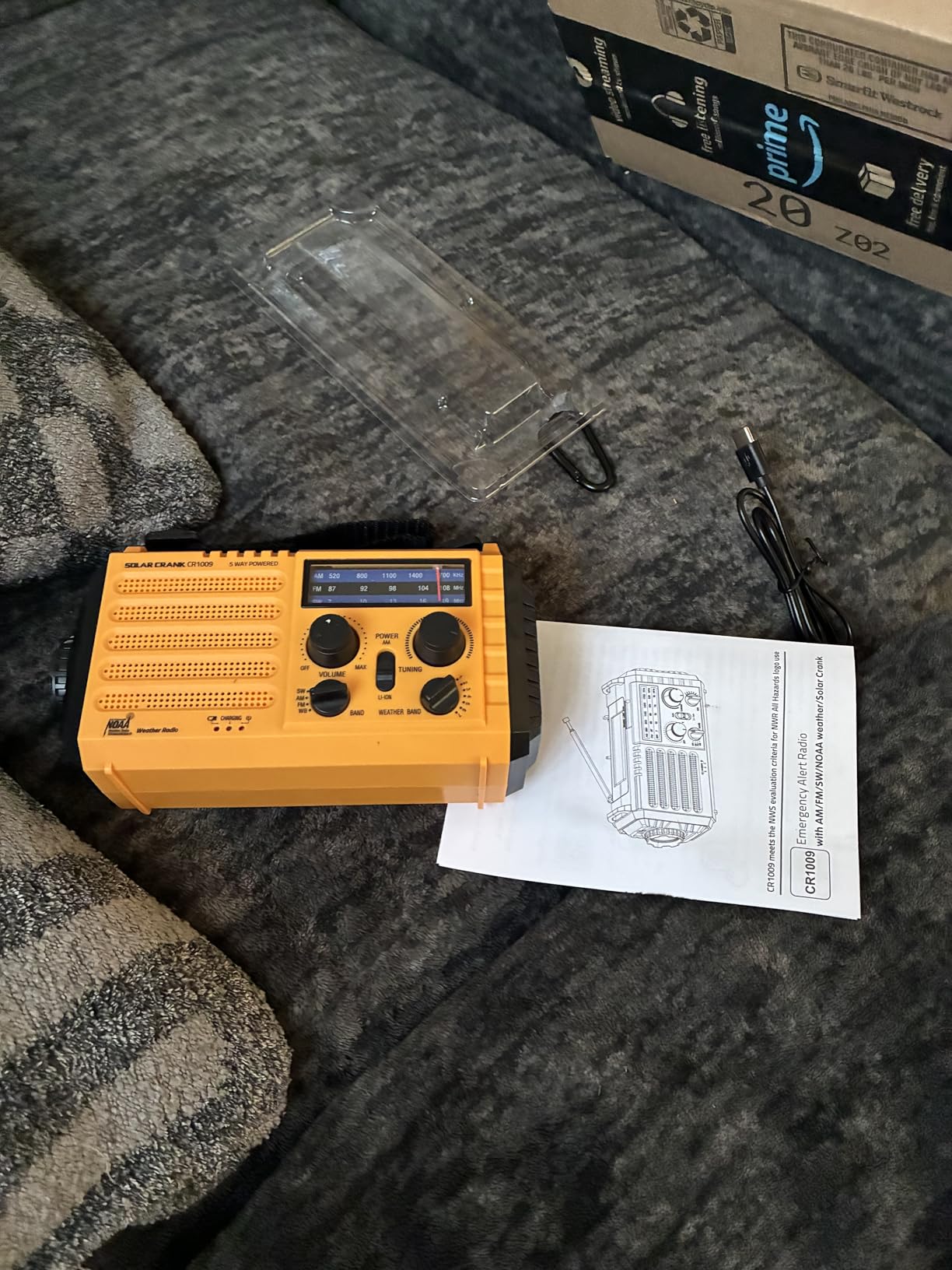
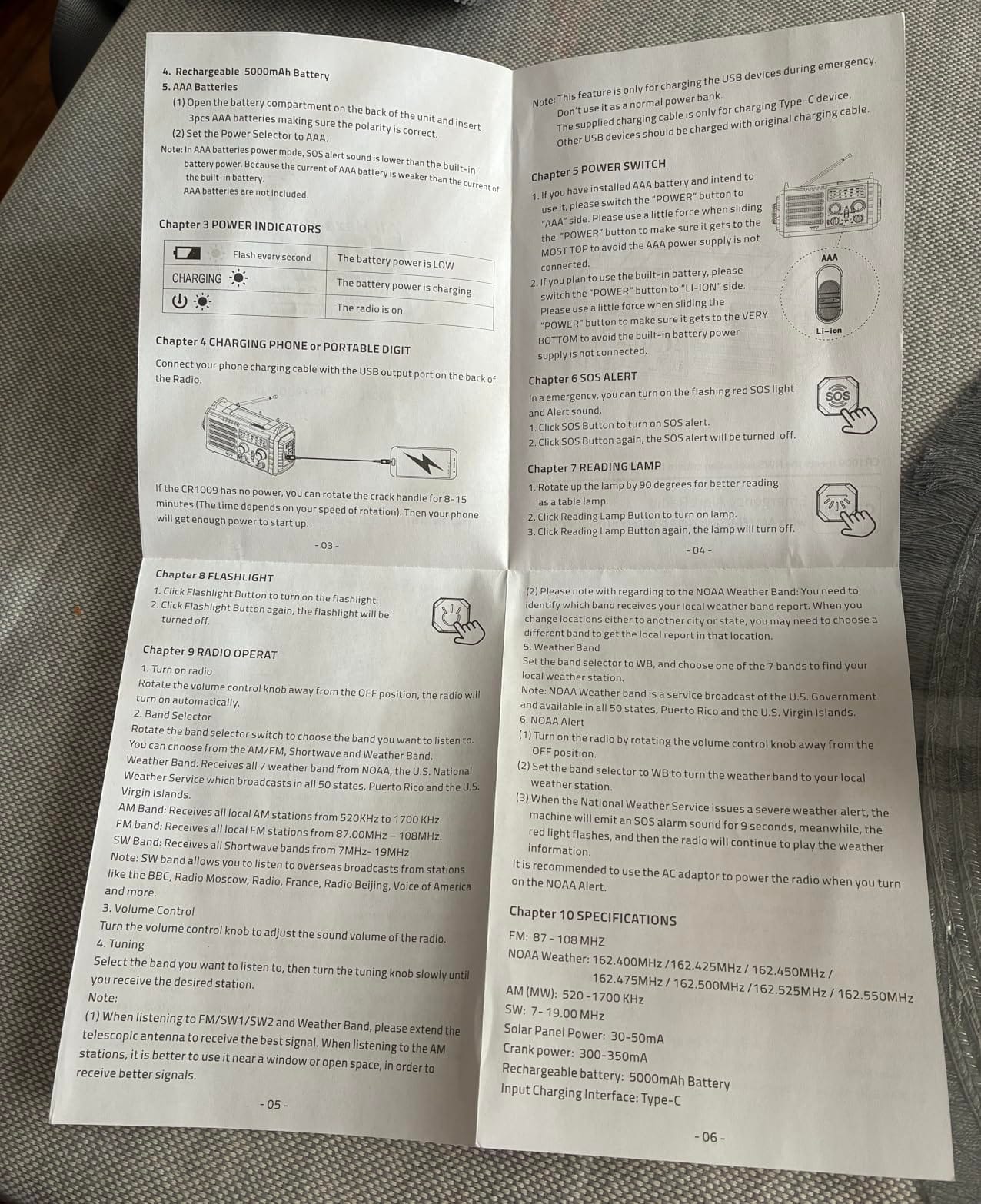
It is also generous with the small things. The speaker is louder than anything else at this weight, the flashlight and reading lamp each have two brightness settings, and the box includes a strap, a carabiner and a compass. The SOS siren with a red beacon is loud enough to carry through a house at night, which is what makes it useful as a warning device.
The Mesqool also carries a three-year limited warranty, which is longer than anything else on this list and worth something when a product is built around plastics and fold-out parts.
What it does well out of the box
As an AM, FM and NOAA household radio it is hard to argue with. The dial is obvious, the display situation is irrelevant because the weather channels are preset, and the lights are bright enough to run a kitchen table through a night of grid failure.
It is also the radio I would choose for a car or a day pack, because 12.8 ounces with a carabiner disappears into a jacket pocket and the battery is large enough that you forget about it.
The shortwave problem is real
The dominant complaint, and it is consistent across reviews, is that the entire shortwave range sits on one narrow section of the dial with a small knob. Precise tuning is genuinely difficult, and a meaningful number of owners report finding no shortwave stations at all in their area.
That is an acceptable trade for a strong weather band radio, but if shortwave reception is the reason you are buying, pick a radio with a dedicated band button and a longer antenna instead. Solar here is a maintainer, not a charger.
4. PPLEE Auto Alert Radio – Best for Set-It-and-Forget NOAA Alerts
Emergency Crank Weather Radio with NOAA Auto Alerts and Shortwave, 5000mAh
AM FM SW NOAA
5000mAh battery
Large LCD with clock
16 oz
Pros
- Automatic NOAA alert wakes the unit with alarm and red light
- Visible remaining-charge readout on the LCD
- Digital tuning with auto-scan and adjustable antenna
- 3W flashlight reading lamp and USB phone charging
- Clear AM FM and weather reception for the money
Cons
- Tuning steps one frequency at a time so band navigation is slow
- Shortwave reception weak or absent for many users
- Solar cannot meaningfully charge a 5000mAh pack
The PPLEE is the radio you set up once and forget about. Its automatic alert function scans in the background, and the clock display gives it a standby mode that looks like a piece of equipment rather than a toy, which matters when you are checking it at 2am and trying to decide if it is actually on.
Body size is 6.69 by 2.36 by 3.74 inches at 16 ounces, with a large LCD showing battery level and a key lock so a bag shift cannot change the settings. It covers AM, FM, shortwave and NOAA, and it charges a phone over USB.
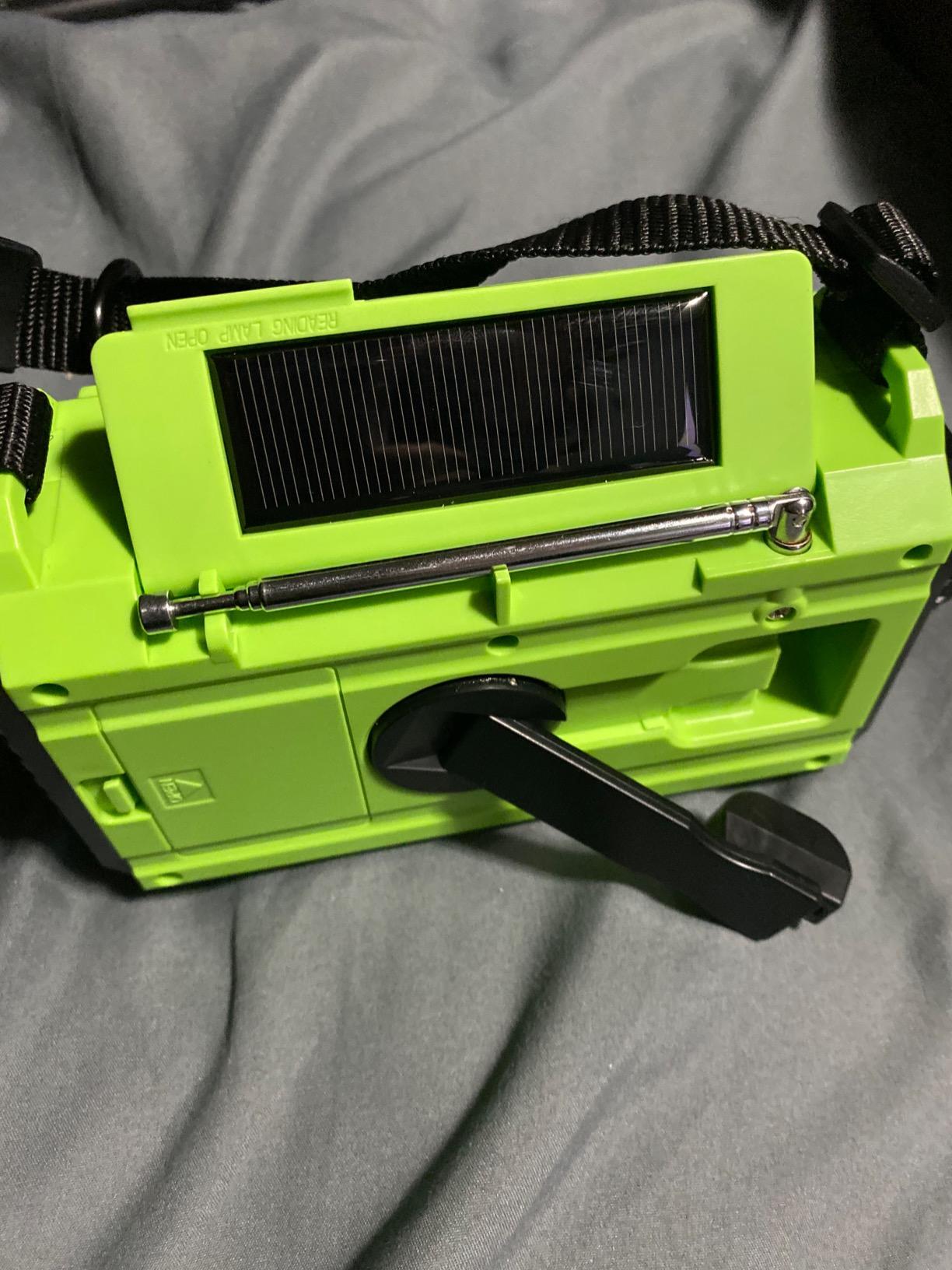
I like the visible charge readout more than I expected. When the lights and siren are the emergency features, knowing how much pack remains is the difference between starting a vigil and conserving. The built-in media includes a 5000mAh battery, a braided belt with carabiner and a charging cable.
It is a good-value go-bag radio with genuinely useful alerts, dual USB ports and strong lights. Owners rate it consistently at 4.4 stars across more than five thousand reviews, which is a solid signal for a device in this price bracket.
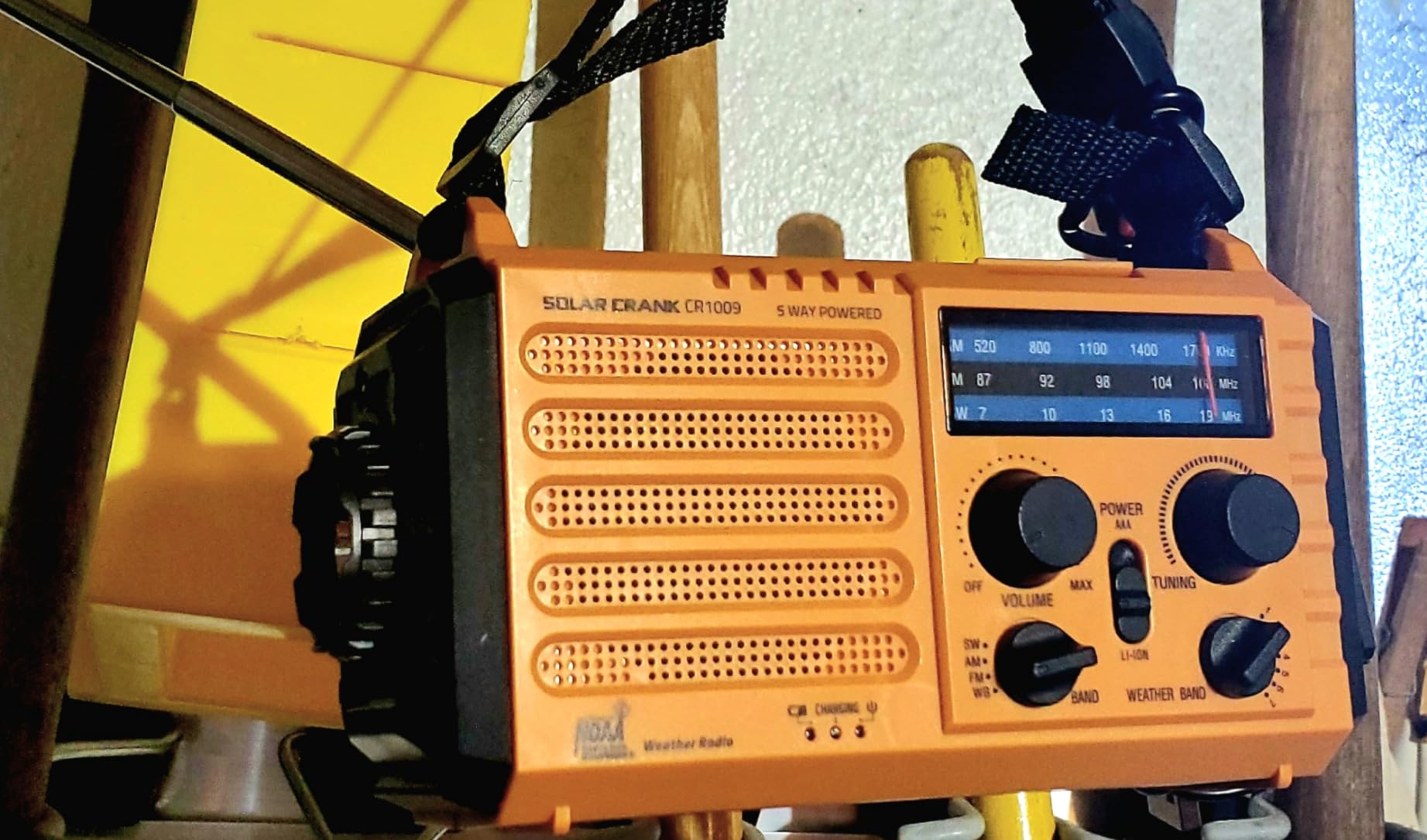
Best for households that want unattended monitoring
Put this on a shelf in the hallway, enable the alert, and it does the night shift. The auto-scan and the alert wake are exactly what you want when the storm is not something you are awake for, and the clock means standby does not look broken.
It is also one of the few cheap radios where the lights are strong enough to actually do work. The 3W flashlight and 2.5W reading lamp run off the same pack that powers the receiver.
What frustrates owners
Digital tuning here steps one frequency at a time. That is a real usability problem when you are hunting for a station across a wide band, and it is why I would not choose this radio as a primary shortwave receiver.
Shortwave reception comes in as weak or absent for many users, which is the recurring theme across the whole budget crank-radio category. The small strap compass is inaccurate and the volume and tuning knobs feel fragile. The solar panel is decorative in practice.
5. DreamSky AM FM Shortwave – Best Loud Radio for Outage Listening
DreamSky AM FM Radio Portable Shortwave Radio Battery Powered/Plug in Wall
AM FM SW
AC adapter or 4 AA batteries
Long transistor antenna
Backlit clock
Pros
- Large speaker is genuinely loud and clear for the size
- Long transistor antenna gives strong AM FM and shortwave
- Large smooth dials plus backlit clock are easy to read
- AC adapter for home with 4 AA batteries for outages
- 3.5mm earphone jack for private listening
Cons
- No NOAA weather band or alerting of any kind
- No hand crank solar or internal rechargeable battery
- Not specified as water resistant
Some of the most useful listening in an emergency is not shortwave at all. It is the local AM and FM station telling you which bridges are open. The DreamSky is built for exactly that, with a large high-performance speaker that fills a room and a long transistor antenna that pulls in more than the size suggests.
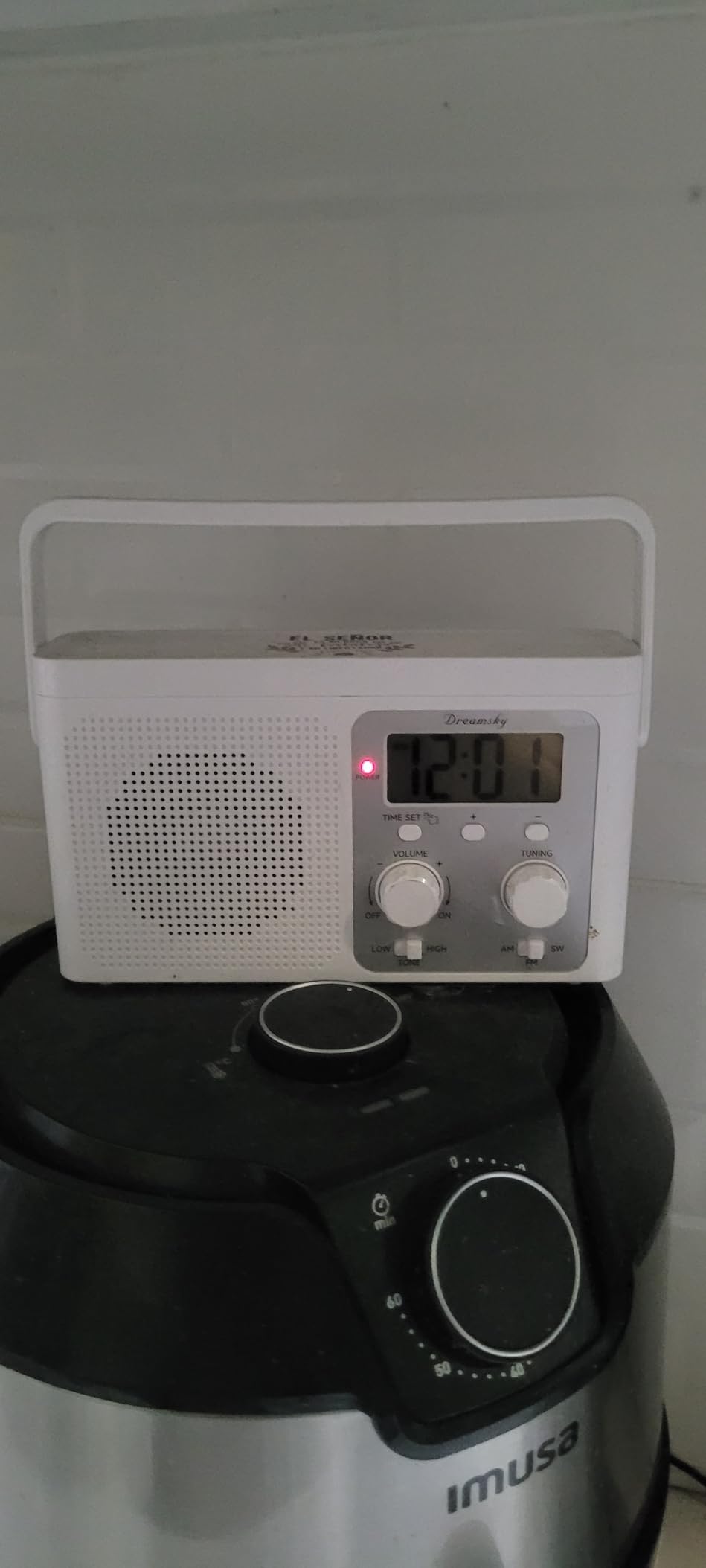
It runs on an AC adapter in the house or four AA batteries when the power is gone, which makes it a clean two-path radio. There is a high and low tone selector for AM and shortwave, large smooth analog dials, and a backlit digital clock with 12 and 24 hour formats.
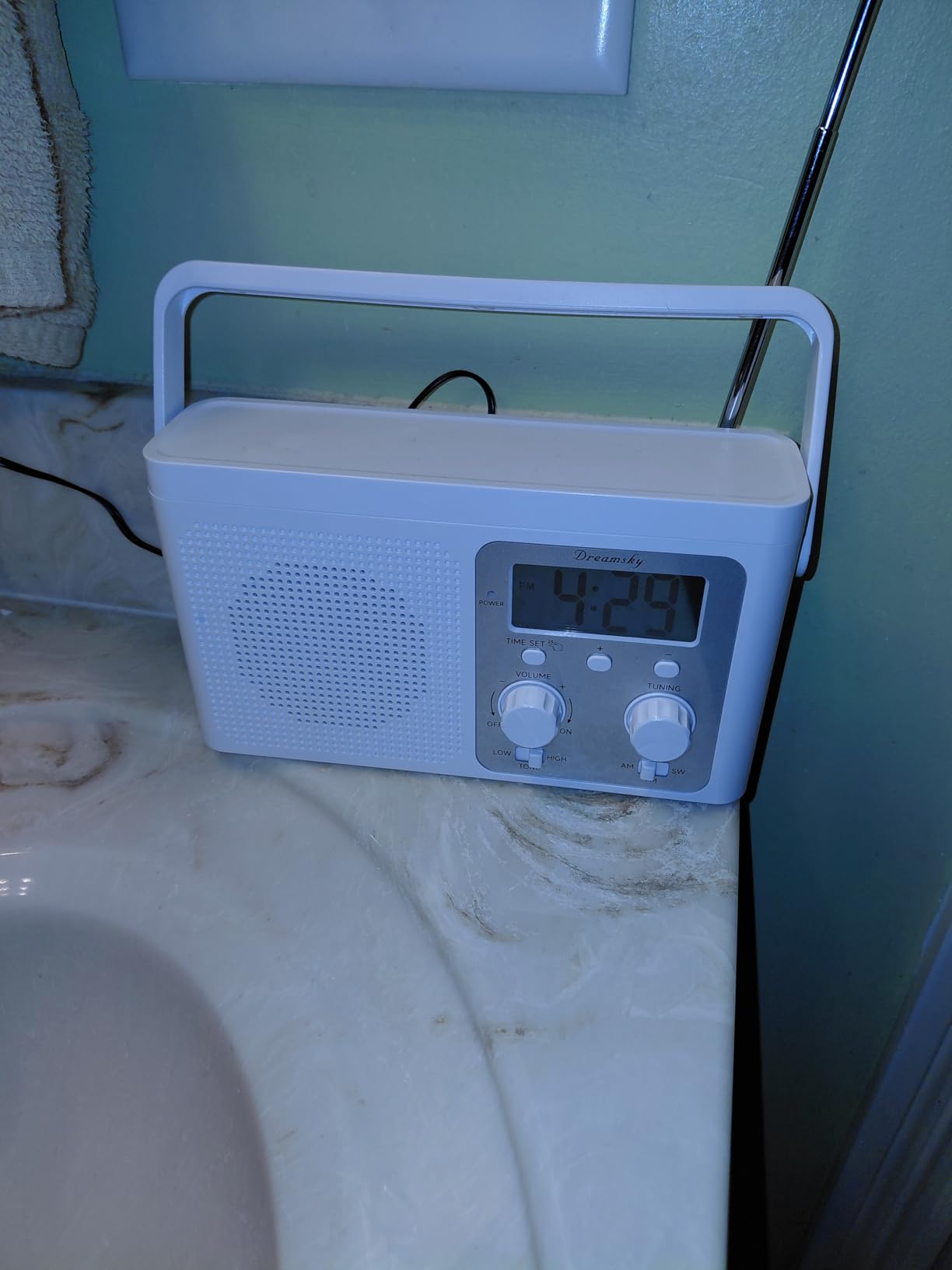
In a blackout, a radio you can hear across the kitchen is worth more than a technically superior one you have to lean over. The controls are genuinely one-handed and obvious, which sounds like a small thing until you are operating it by flashlight.
At 7.8 by 2.15 by 4.45 inches, it is a shelf radio rather than a portable, and the box includes the radio, an AC adapter and a manual. If you want a second receiver for a bedroom or a garage, this is the one I would buy twice.
Where it earns its place
It is the only radio in this roundup that ranks in portable shortwave units on volume of user feedback while staying simple enough for anyone in the household to operate. No menu tree, no settings that reset when the batteries die.
Because it takes ordinary AA cells, it is trivially easy to keep alive. A drawer of AA cells is the most renewable resource in any household during a long outage, and this radio makes that count.
What it cannot do
There is no NOAA weather band and no alerting. That is not a minor gap, because the weather band is the single most reliable source of official local warnings in the United States, and nothing this radio does will substitute for it.
There is also no hand crank, no solar panel and no internal rechargeable battery, and it is not specified as water resistant. Use it inside, as the loud local-news and entertainment radio it is, and keep a proper weather radio alongside it. If you are still building the rest of the kit, our guide to the best weather radios for emergencies covers the dedicated units.
6. Tecsun PL-380 – Best Reception Quality in a Portable
TECSUN PL-380 DSP FM Stereo. MW. SW. LW. World Band PLL Radio Receiver, LCD Display, ETM Function Added
Si4734 DSP
AM MW FM SW LW
550 memories
7.04 oz
Pros
- Si4734 DSP with adjustable 1 to 6 kHz bandwidth
- Very good sensitivity that regularly beats far more expensive portables
- ETM easy tuning plus 550 presets finds stations fast
- Long runtime on NiMH AA cells charged inside the radio
- External wire antenna and case included
Cons
- No single sideband so no amateur or utility voice
- No NOAA weather band and no alerting
- No hand crank solar or internal rechargeable battery
The Tecsun PL-380 is the receiver I reach for when I want to actually hear something, rather than to be woken up by a siren. It is a proper world-band set at 7.04 ounces and 5.31 by 1.02 by 3.39 inches, with a Silicon Labs Si4734 DSP doing the demodulation.
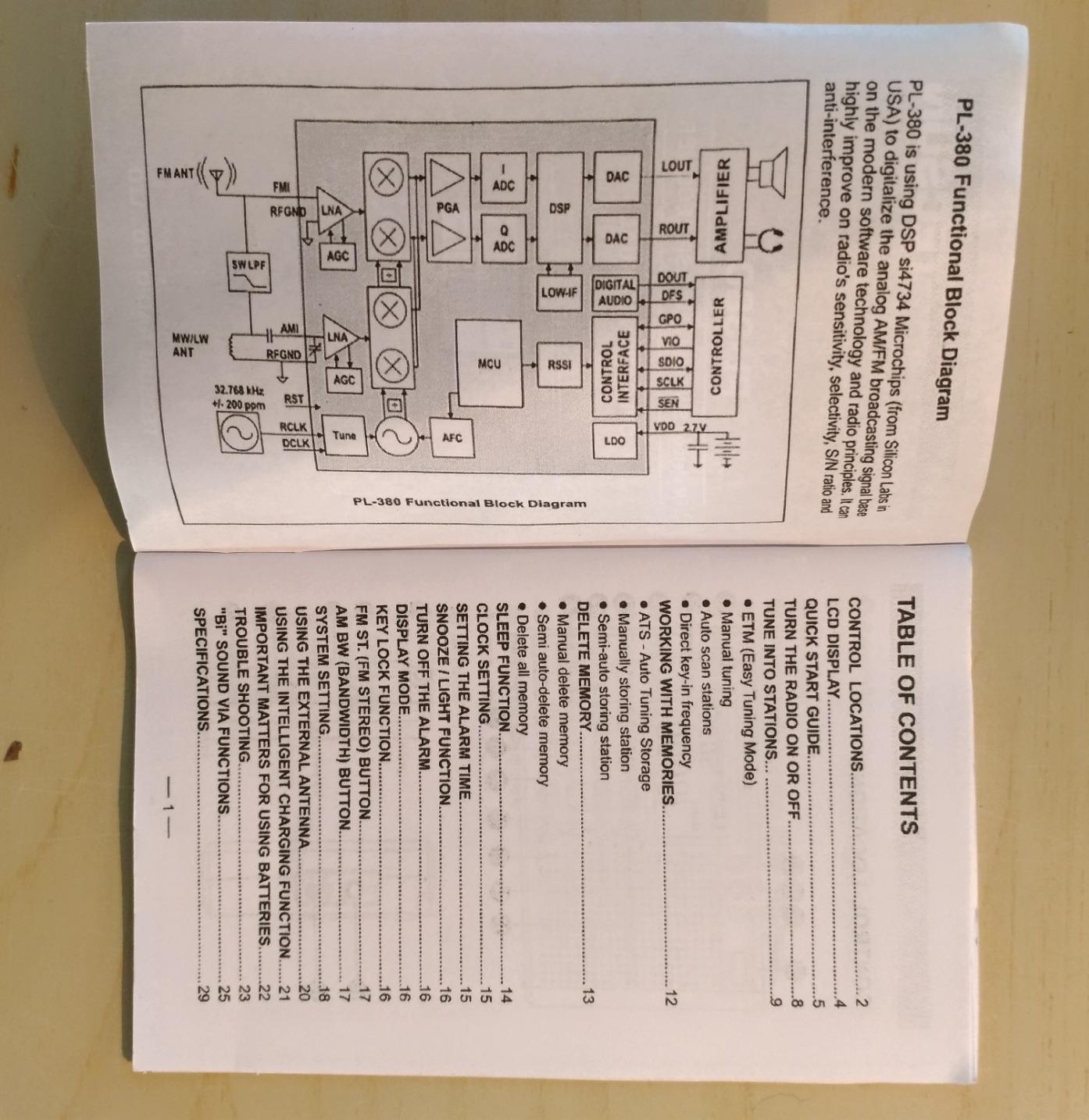
That DSP is the whole story. Seven selectable tuning modes, adjustable bandwidth from 1 to 6 kHz, signal strength and signal-to-noise meters, and selectivity that separates stations other budget sets smear together. Experienced listeners call it a benchmark at this level, and several owners report it outperforming sets costing several times more.
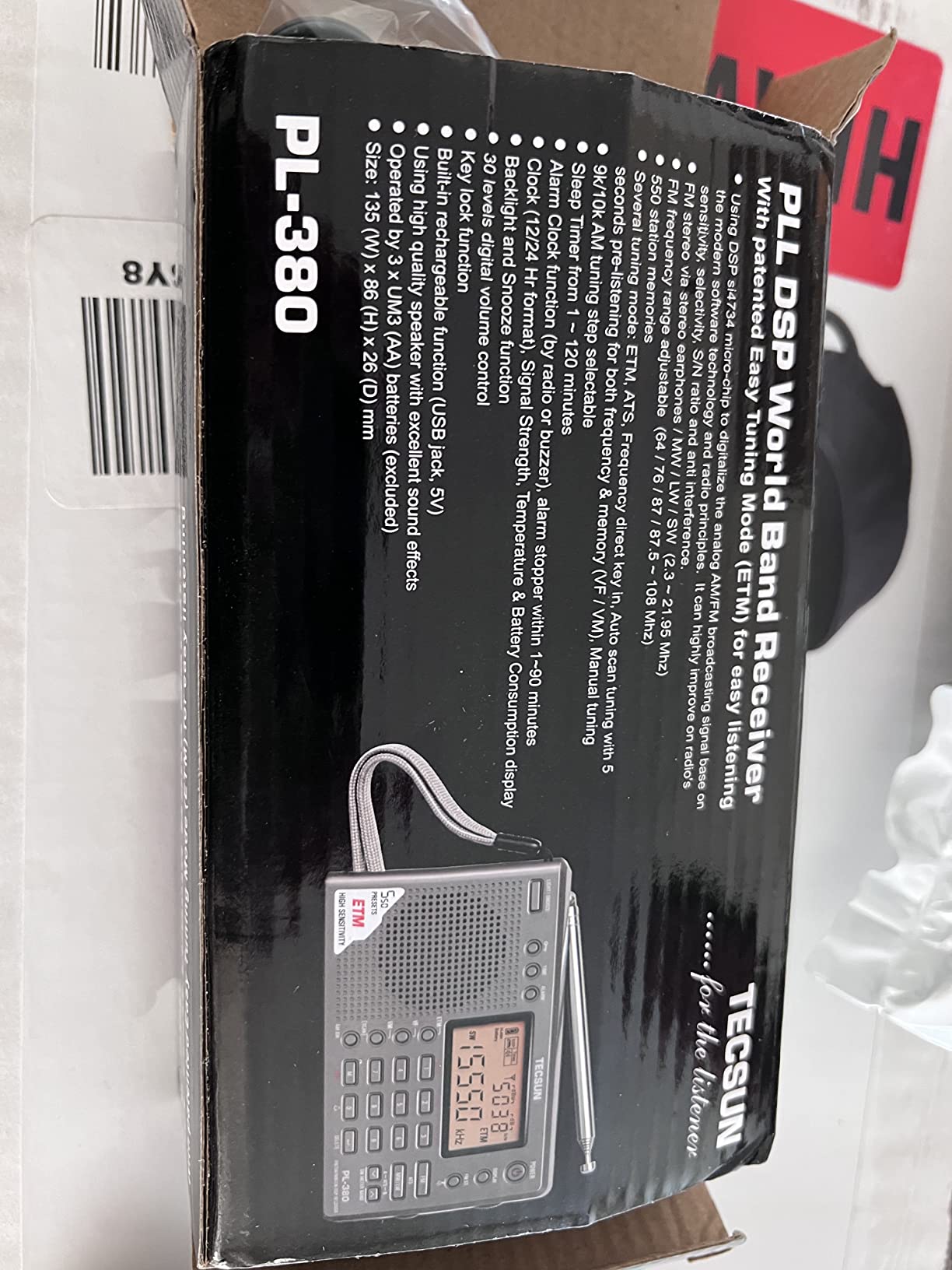
Power is the trade. It runs on NiMH AA cells and charges them in the radio over a 5V USB jack, which is convenient, but there is no crank, no solar panel and no internal lithium. That makes it a poor bug-out bag radio and an excellent home receiver.
The box includes an external wire antenna, stereo earbuds, a neoprene case and a wrist strap. That external antenna matters more than people realise, and I will come back to it below.
Why bandwidth control matters in an emergency
When the bands are crowded, a wide filter lets every nearby station pile on top of the one you need. Dropping to a narrow bandwidth cleans the audio up dramatically, and that is the difference between understanding an emergency broadcast and hearing noise.
ETM scanning steps through the band and stops where a signal is detected, which finds stations far faster than the thumbwheel. With 550 memories you can store a working set of frequencies once and return to them without searching.
The limitations are structural
There is no single sideband. SSB is how amateur and utility voice traffic is transmitted, and without it you cannot listen to marine, aviation or ham SSB, which is a real loss if you planned to monitor the Hurricane Watch Net. There is no NOAA weather band either.
The interface is also manual-heavy. Buttons are small, the menu is dense, settings like the 9 and 10 kHz AM step only change with the power off, and the thumbwheel needs many detents per channel and runs in reverse. Budget an evening with the manual before you need it.
7. Emgykit Hand Crank Radio – Best for Bluetooth, File Playback and Features
Emergency Radio Hand Crank Solar – NOAA/AM/FM Shortwave Radio for Camping
NOAA AM FM SW
210 stored channels
Bluetooth 5.0 and TF slot
4000mAh
Pros
- Digital search stores up to 70 channels per band and 210 total
- Bluetooth 5.0 playback plus TF card and 3.5mm jack
- Large speaker and 4000mAh battery with up to 32 hours of playback
- Type-C hand crank and solar charging
- Includes 120LM flashlight compass SOS alert and thermal blanket
Cons
- 4000mAh battery is smaller than the 5000mAh rivals
- Not specified as water resistant
- Auto-scan effectiveness depends entirely on local signal
The Emgykit is the feature-maximising option in this group. It covers NOAA, AM, FM and shortwave with both manual and automatic scan tuning, and the digital search stores up to 70 channels per band, 210 in total. That storage is the feature that separates it from the crank-radio norm.
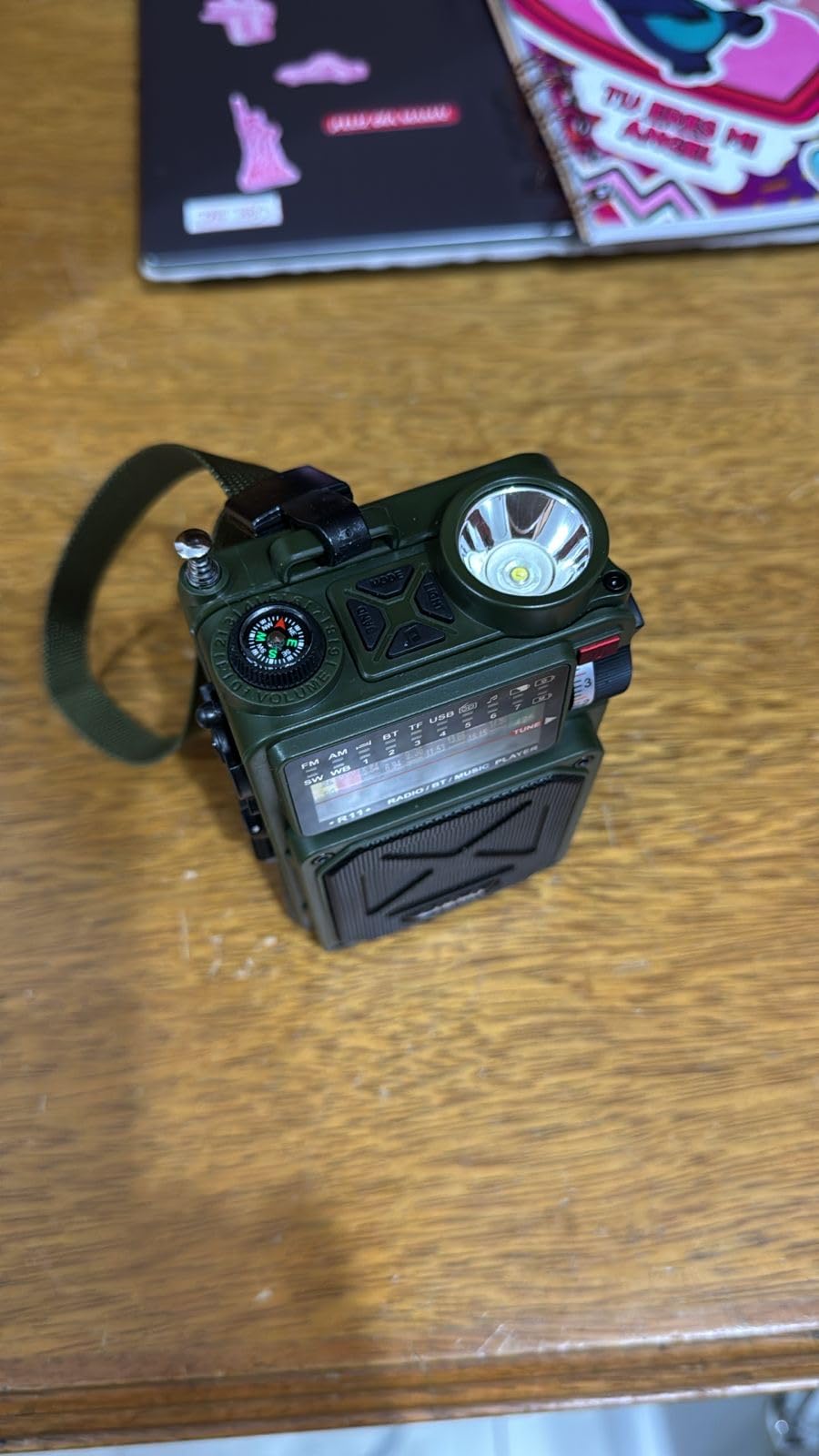
It also works as a Bluetooth 5.0 speaker, plays TF cards, and has a large speaker with seven white-noise sounds and an auto shut-off you can time between 10 and 70 minutes. For a household that wants one device that does several jobs, that is a lot of function in 3.15 by 2 by 5.03 inches.
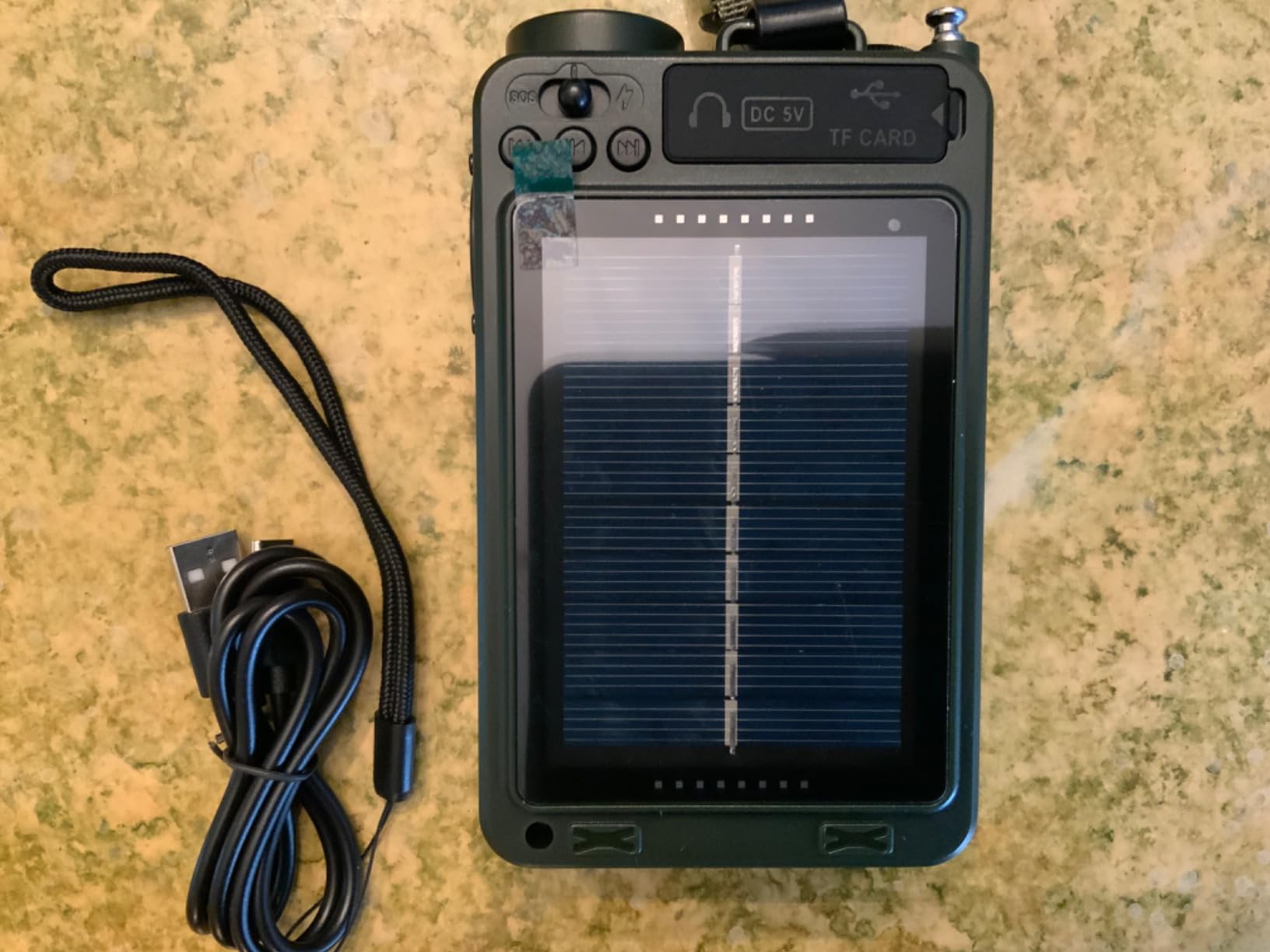
Power comes from a 4000mAh battery with Type-C, hand crank and solar charging, giving up to 32 hours of playback. The box includes a 120-lumen flashlight, a compass, an SOS alert, a thermal blanket and a carry strap, and the Bluetooth range is enough to use it in another room.
Reviewers consistently highlight the feature set and the NOAA and shortwave coverage, with a 4.4 rating across more than a thousand reviews. It is a good radio for a cabin or a van where entertainment during a long outage is part of the job.
Best for a multi-purpose household device
Bluetooth playback and TF card music turn this into a camp speaker, which is a genuine advantage when a blackout runs past a day and the household needs something that is not a news broadcast. The speaker is loud without being the largest in this roundup.
The 210-channel storage means you set it up once, scanning the bands while you have mains power and a good antenna, and then you are not searching in the dark. That is a real preparedness advantage.
What to watch for
The 4000mAh battery is smaller than the 5000mAh units in this price bracket, and you feel it on the fourth day of an outage. It is not specified as water resistant, which matters if the plan involves a wet campsite.
The auto-scan is only as good as the local signal environment, and the white-noise sound bank and timed auto shut-off are novelty features rather than emergency capability. Do not count them when you are deciding.
8. Tecsun PL-330 – Best for Single Sideband Monitoring
Tecsun Digital PL330 AM/FM/LW/SW Worldband Radio with Single Side Band Receiver
AM FM LW SW plus SSB
DSP with sync detection
850 memories
7.4 oz
Pros
- Single sideband reception that is rare at this level
- Sensitivity across AM FM longwave and shortwave with SSB
- DSP demodulation with synchronized detection
- External antenna input and 850 memories with direct entry
- Light at 7.4 ounces with long rechargeable battery life
Cons
- No NOAA weather band and no alert function
- No hand crank solar or replaceable AA option
- Small speaker and no kickstand
The Tecsun PL-330 is the only radio in this roundup that can demodulate single sideband voice, and that changes what you can listen to. USB and LSB carry amateur radio, maritime, aviation and utility traffic, including the net-style transmissions that broadcasters run during major weather events.
Listening does not require a licence. You need a licence to transmit, and every radio here is receive-only anyway, so the SSB capability costs you nothing legally and adds an entire category of information.
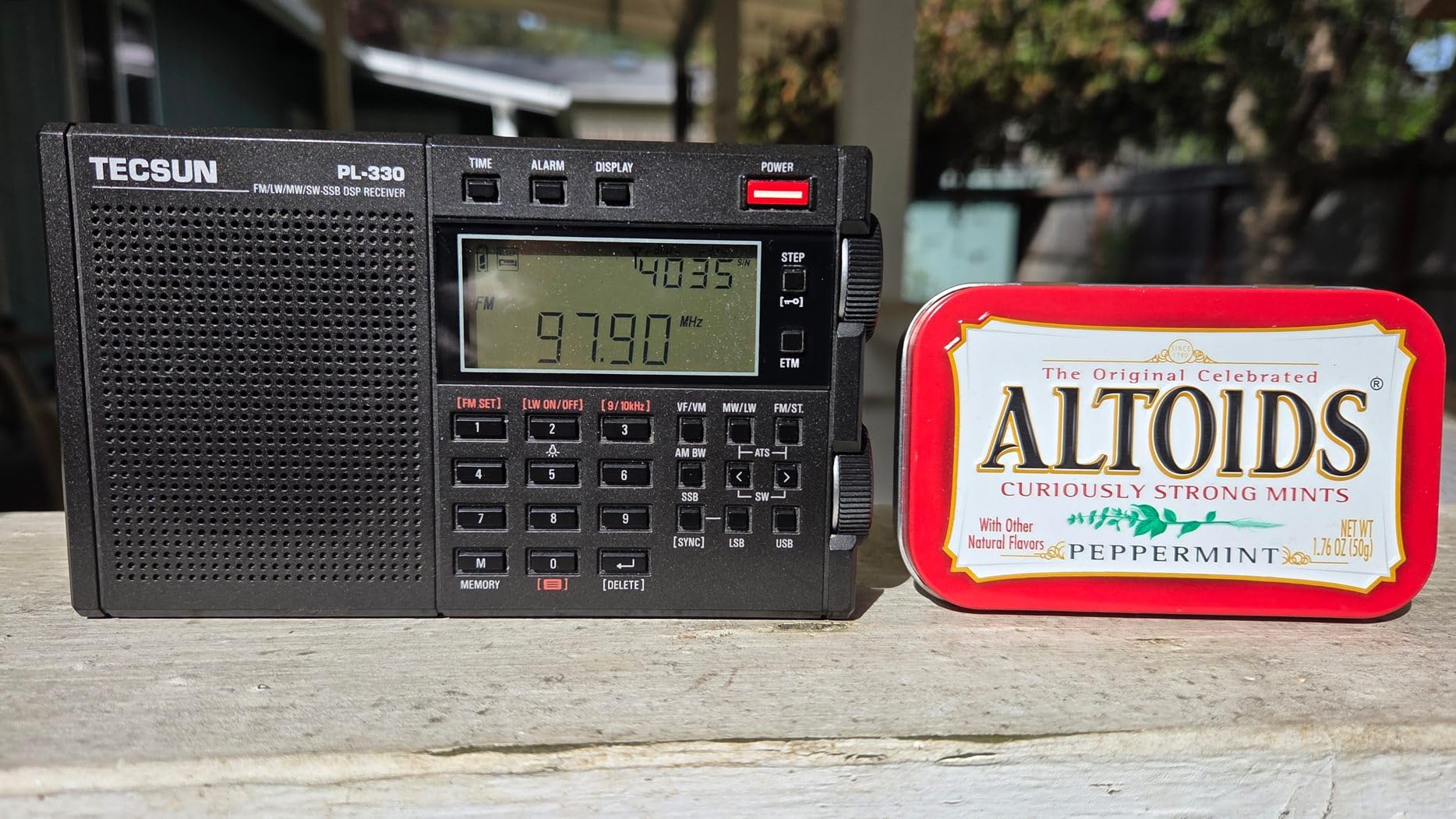
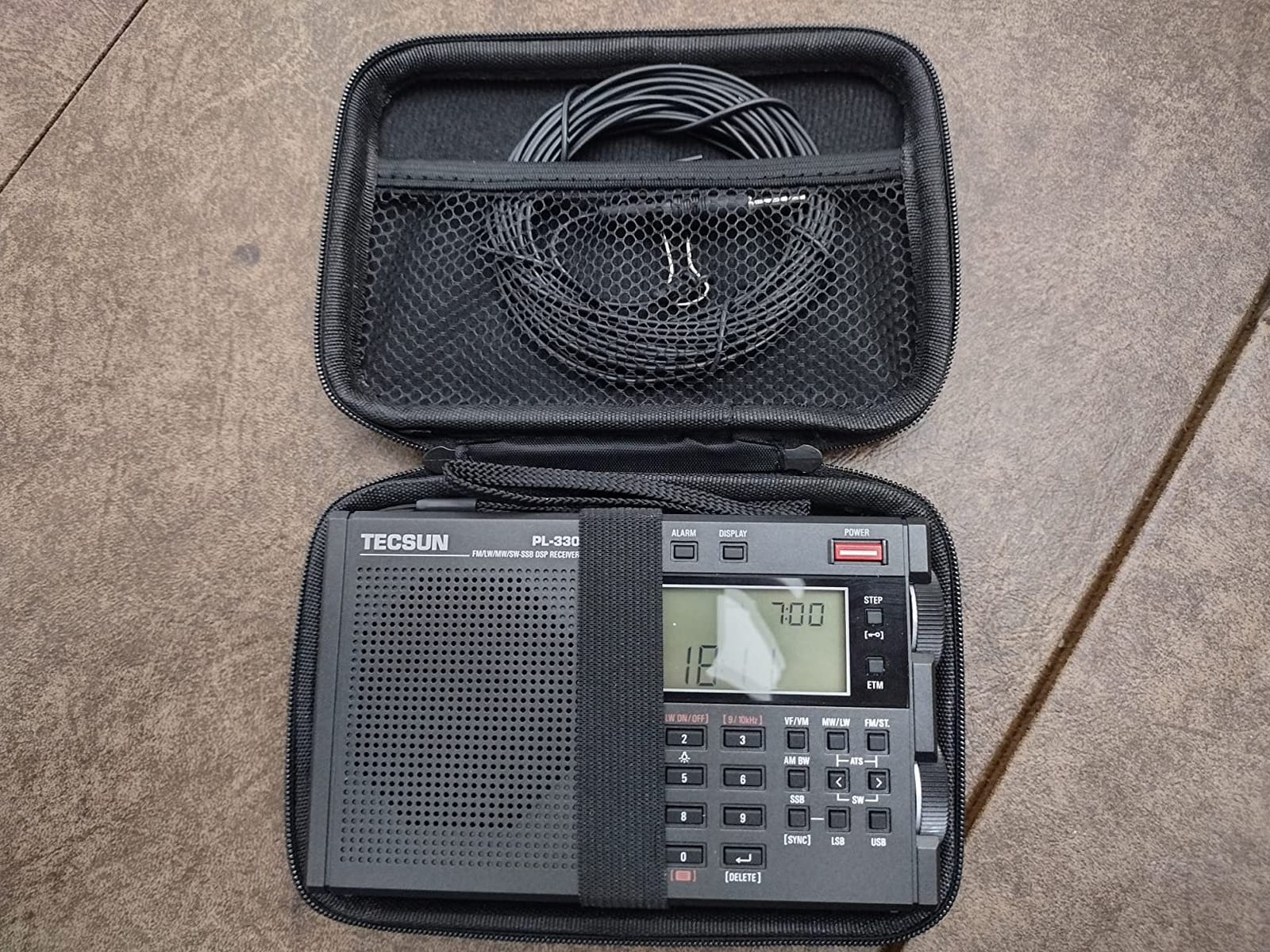
The reception side is strong. DSP digital demodulation with synchronized detection helps on weak signals, and there is an external antenna input plus 850 memories with direct frequency entry and a clear backlit display. At 7.4 ounces and 5.5 by 3.5 by 1 inches it is genuinely pocketable.
For someone who wants to follow emergency-related HF voice traffic rather than just broadcasts, this is the radio in the list that does it. Reviewers rate it 4.4 across a thousand-plus reviews, with SSB and sensitivity driving the praise.
Best for monitoring real-time emergency networks
SSB is the mode used by volunteer nets that coordinate storm response. With USB and LSB reception and direct frequency entry, you can sit on a frequency that is actively carrying situational traffic rather than waiting for a broadcaster to come back on air.
The external antenna input also means you can run a proper wire outside when the radio is indoors, which is worth more than any receiver upgrade. If you want to understand that side of the hobby, the antenna and SSB guidance in the buying guide below is worth reading before you buy anything.
Why it is not a general emergency radio
There is no NOAA weather band and no alert function, and no air band either. For local official warnings, this radio does nothing at all. Add one of the weather-band units earlier in this list if that is your priority.
There is also no hand crank, no solar panel and no user-replaceable AA option. The speaker is small, so earbuds or an external speaker change the experience considerably, and there is no kickstand, which means a light body on a table is easy to knock over.
9. Jazmm 4-Band NOAA Radio – Best Pocket Shortwave with a Weather Band
Bluetooth AM FM Shortwave Radio with NOAA Weather Alert,1250mAh Rechargeable Portable Pocket Radio with Best Reception,5W Big Speaker, Digital Tuner and Earphone,Support SD Card and USB MP3 Player
FM 87-108 AM SW 4.75-21.85 MHz
1250mAh
Large speaker
Pros
- Covers FM AM shortwave and NOAA weather band with a DSP chip
- Large speaker is unusually powerful for a pocket radio
- 1250mAh battery gives roughly 10 to 12 hours over Type-C
- Works as a Bluetooth speaker and TF card player
- Back clip and wrist strap for belt or bag carry
Cons
- 1250mAh battery is the smallest capacity here
- No hand crank solar or AA and AAA fallback
- Heavier than comparable pocket radios at 352 g
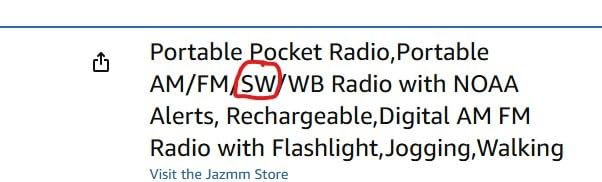
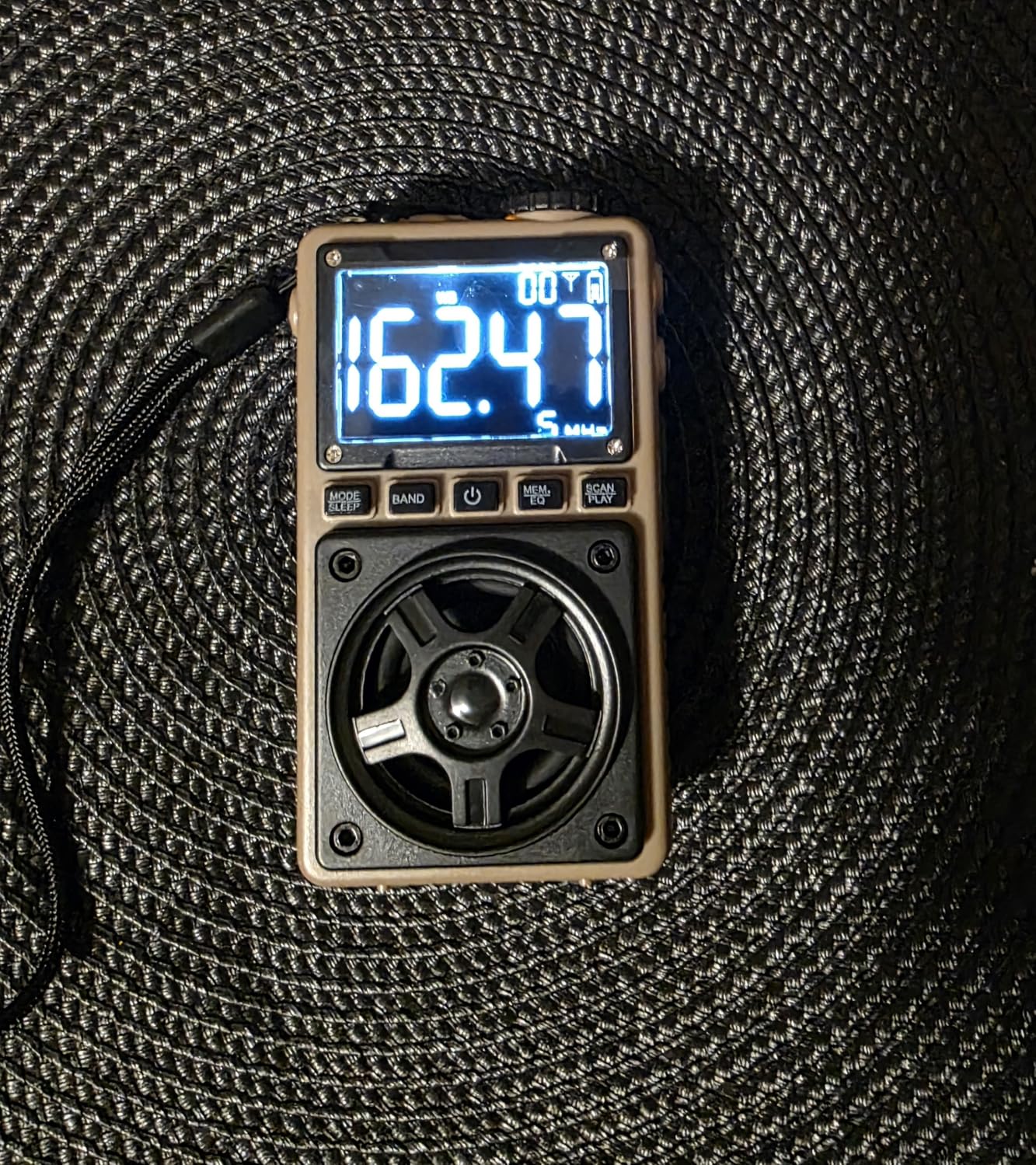
The Jazmm is unusual in this roundup because it puts a genuine NOAA weather band alongside shortwave in a small body. Bands are FM 87 to 108 MHz, AM 520 to 1710 kHz, shortwave 4.75 to 21.85 MHz and weather band 162.400 to 162.550 MHz, all handled by a DSP chip.
It also has the loudest speaker per unit volume in this group, with six EQ stereo effects, a 3.5mm jack, Bluetooth speaker mode and TF card playback. A built-in flashlight, back clip and wrist strap finish it off, and two LR44 cells are included.
Buyers treat it as a value entertainment and weather-band radio, and the 4.3 rating across more than seven hundred reviews reflects that. The DSP chip improves sensitivity relative to the cheap analog sets, which is why it performs better on shortwave than its size suggests.
The back clip makes it a genuinely portable radio rather than a small radio, which is the difference between a device that ends up in a jacket pocket and one that stays on a desk.
Best for a jacket pocket during a storm
If the realistic scenario is a warning while you are out in the weather, coverage of the weather band in a clipped radio is more valuable than any internal battery. This is one of the few small units here where that combination exists.
Bluetooth speaker mode is a nice bonus for a trip where you want music as well as news, and the speaker is loud enough that a group can listen to a broadcast together.
The battery is the problem
At 1250mAh this is the smallest battery in the roundup, and roughly 10 to 12 hours of playback reflects that. For an overnight warning it is fine. For a multi-day outage it is the first thing that ends.
There is no hand crank, no solar panel and no AA or AAA fallback, and at 352 g it is heavier than comparable pocket radios. The switches are more involved than a simple dial and the display is small. If you need more than a day of power, choose a 5000mAh unit instead.
10. XHDATA D221 – Best for AA Battery Simplicity
XHDATA D221 NOAA Weather Radio Portable AM FM Shortwave Radio Receiver
FM AM SW 5.6-22 MHz
2 AA batteries
125 g
Pros
- Cheapest credible NOAA weather band receiver in this roundup
- Runs on 2 readily available AA batteries
- Very light at 125 g and pocket sized
- Weather band reception works reliably for local stations
- Loud single speaker with headphone jack and kickstand
Cons
- Shortwave near unusable on the tiny analog dial
- Volume and tuning knobs are hyper sensitive
- No rechargeable battery hand crank solar or phone charging
The XHDATA D221 answers a question nobody else here does. What is the radio you keep in a drawer for five years, then pull out during a blackout, and it still works? This one runs on two ordinary AA cells at 125 grams, and it covers the weather band.
Bands are FM 87 to 108 MHz, AM 520 to 1730 kHz, shortwave 5.6 to 22.0 MHz and weather band 162.40 to 162.55 MHz, with DSP reception across all of them. The body is 2.8 by 1.1 by 4.9 inches with a built-in kickstand, a 3.5mm jack and side controls you can operate one-handed.
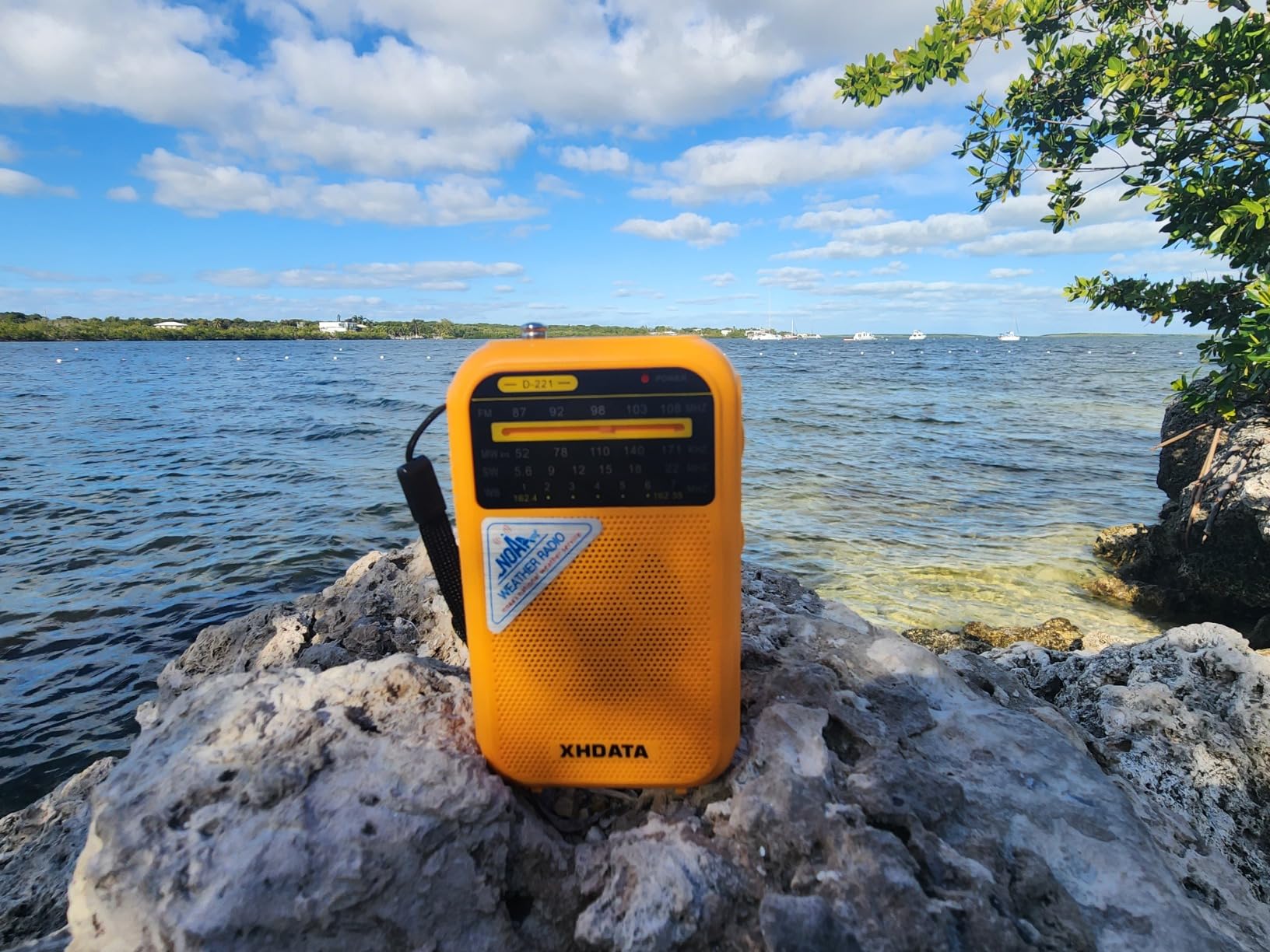
Owners consistently single it out as the cheapest credible weather-band receiver, and the weather band is its strongest aspect, working reliably for local NOAA stations. That is the part that matters in an emergency, and it is the part that costs you nothing to keep ready.
Two AA cells is also the most renewable power arrangement in this entire guide. No charger, no proprietary pack, no degradation, and you already have spares in the kitchen drawer.
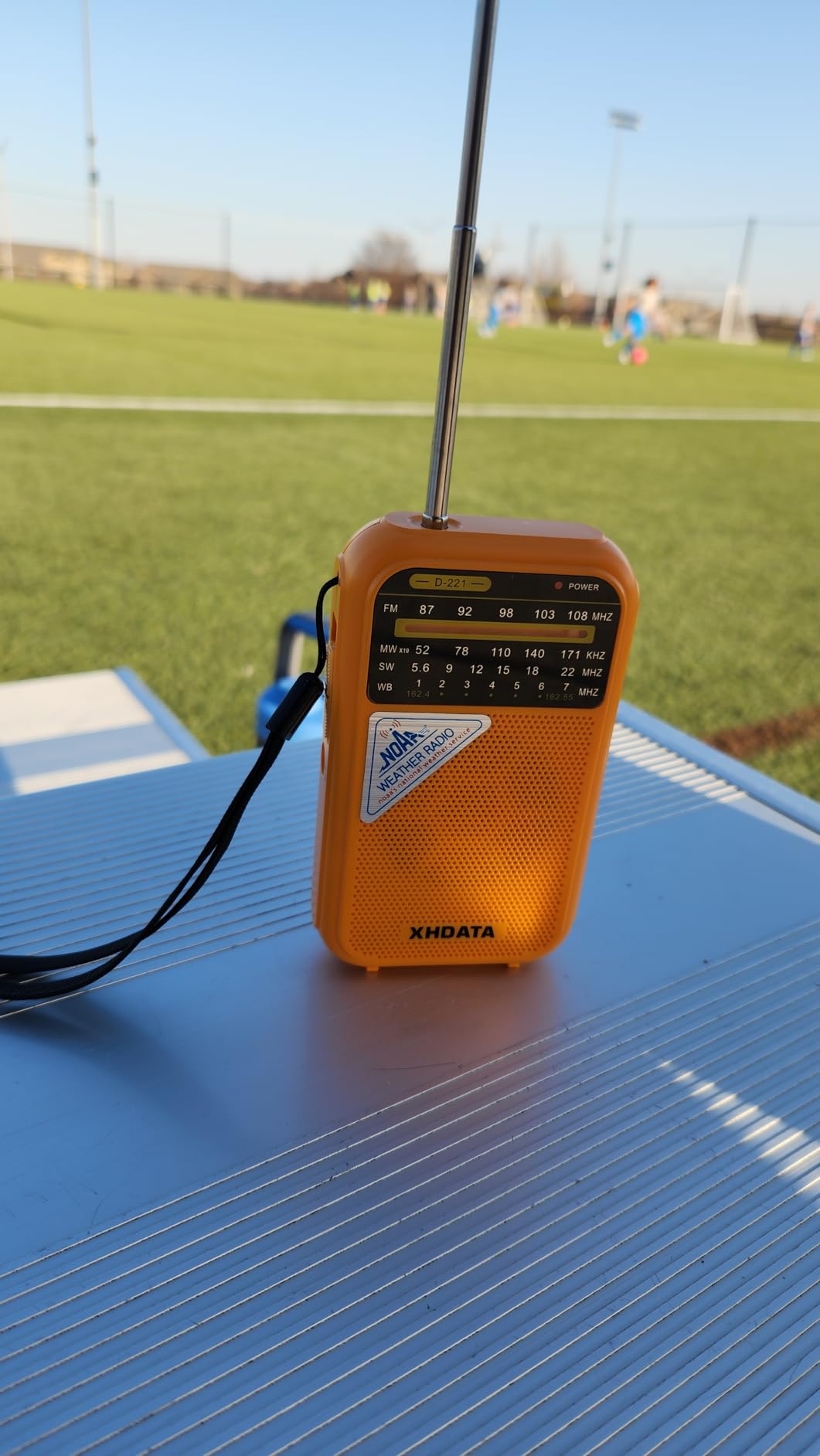
Best as a second, always-ready receiver
This is not the radio to build a kit around. It is the radio to put in a jacket, a glovebox or a go-bag as a backstop, because the failure mode of a lithium device after three years of sitting is a device that needs a charger you cannot reach.
It is also the sensible first shortwave set for a curious beginner. The bands are all present, reception on the weather band is clean, and the price of a mistake is small.
Where shortwave falls apart
The 5.6 to 22 MHz range is on a tiny analog dial that needs extremely slow tuning, and local AM bleed-through swamps it. Volume and tuning knobs are so sensitive that stations slip away with a light touch, which owners mention in nearly every review.
There is no rechargeable battery, hand crank, solar panel or phone charging, and it is not specified as water resistant with no flashlight or SOS beacon. For warning reception alone it is a genuine bargain, and the shortwave band is a bonus you will rarely use.
11. Greadio 12-in-1 Emergency Radio – Best for Water Resistance and USB Output
Greadio Portable Emergency Shortwave Radios, AM FM NOAA Weather Radio
AM FM SW NOAA
14800mWh 4000mAh
IPX3
Large speaker
Pros
- Only handheld here with stated IPX3 water resistance
- 14800mWh power bank charges a phone over USB
- Hand crank solar and Type-C charging combined
- AM FM shortwave and NOAA with a long tuned antenna
- Bluetooth 5.4 TF card and USB drive playback
Cons
- 4000mAh internal battery is modest for a backup-power product
- Crank and solar only top up rather than recover a flat pack
- Newer listing with a smaller review base than the established picks
The Greadio is the one handheld in this roundup with a stated water resistance rating, and IPX3 is not nothing when the plan involves rain, a river crossing or a radio that lives in a vehicle. It is 3.19 by 2.05 by 5.2 inches and 12.32 ounces, with a military-styled body and a hand strap.
It covers AM, FM, shortwave and NOAA with a long antenna tuned for shortwave, and the 14800mWh 4000mAh pack pushes power out over USB to charge a phone. The charging inputs are hand crank, solar panel and Type-C, so the three paths are all present.
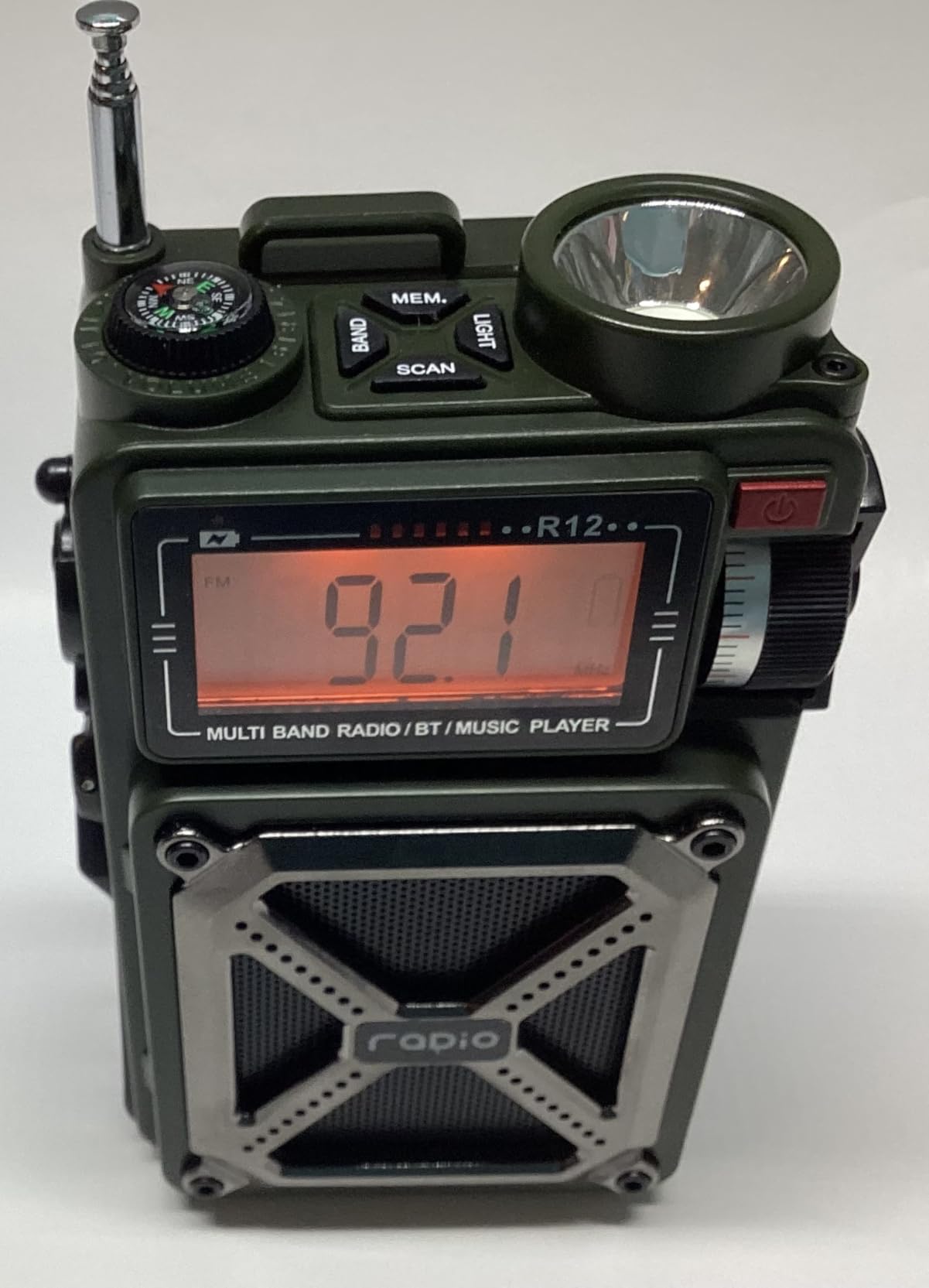
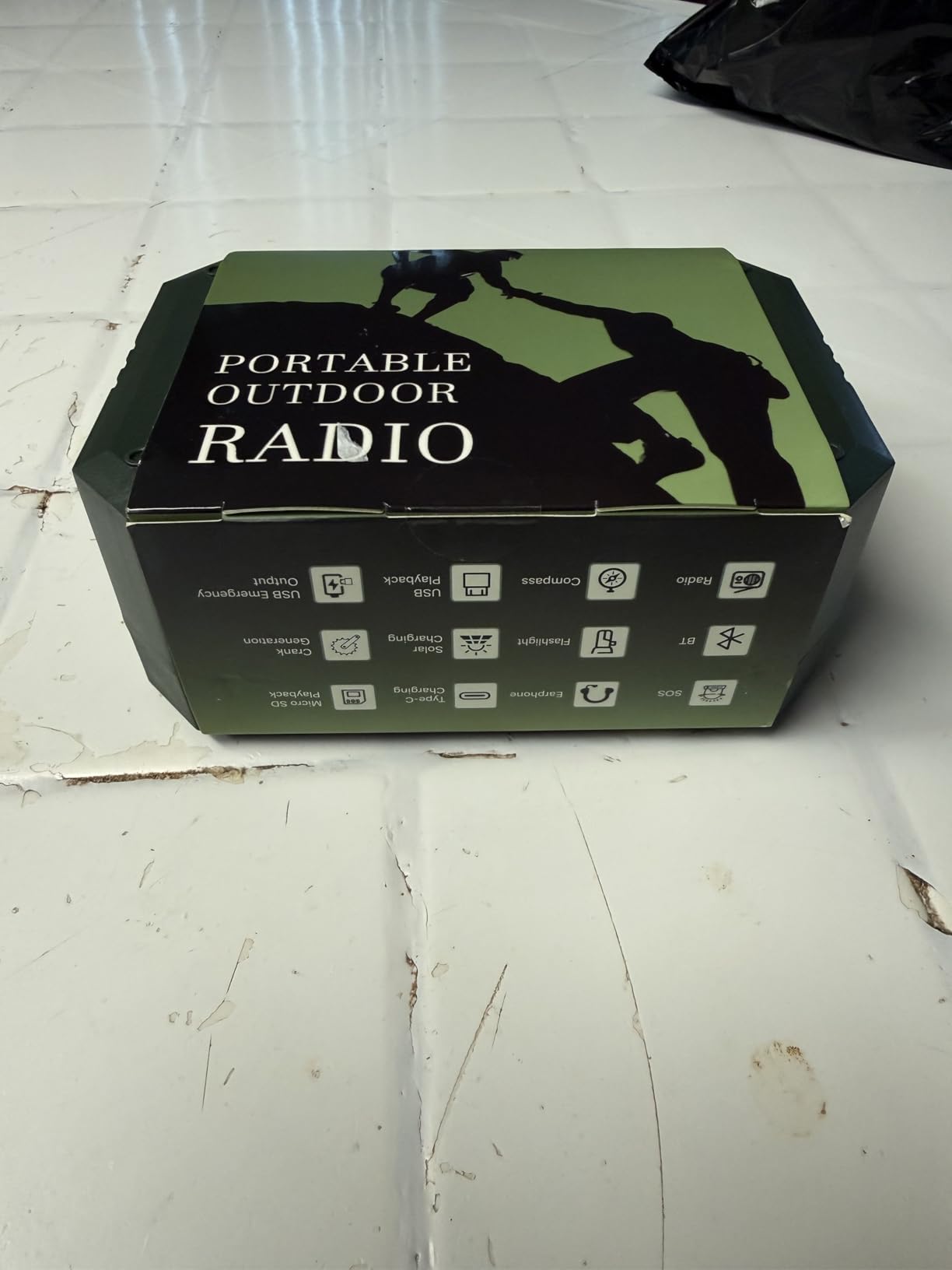
The feature list reads like twelve products merged into one, and that is the appeal. Bluetooth 5.4 with a practical indoor range, TF card and USB drive playback, a large speaker, SOS siren, flashlight and a compass, all in a box with a gift case.
Reviewers single out the Bluetooth, the file playback, the USB output charging and the IPX3 rating as the differentiators, with a 4.4 rating across a few hundred reviews. The box includes the radio, a hand strap, a Type-C cord and a manual.
Best for a wet-weather go-bag
Water resistance is the reason to pick this over an otherwise similar crank radio. Most of the plastic units in this category are explicitly not rated, and a radio that fails the first time a bag gets rained through is not an emergency radio, it is a paperweight.
The USB output and the file playback also make it useful on the second and third day of an outage, when information is known and morale is the problem.
The honest caveat
At 4000mAh, the battery is modest for a product whose main pitch is backup power. Crank and solar are topping-up methods, not recovery methods, exactly as with every other radio in this roundup.
This is also a newer listing with a smaller review base than the established favourites, which means less long-term evidence about how the battery holds up over years. If you want the proven article, the Raynic or the TFTDOUP below are safer assumptions.
12. TFTDOUP 20000mAh Radio – Best for the Longest Runtime
TFTDOUP Emergency Radio Hand Crank Solar, AM/FM/SW NOAA Weather Radio Built-in 20000mah Large Battery Powered,Type-C Charger,Flashlight, Reading Light,SOS, Compact & Portable for Camping/Emergencies
AM FM SW NOAA
20000mAh battery
Crank solar Type-C
6 by 3 by 2 inch
Pros
- Largest internal battery here at 20000mAh
- Three charging methods with hand crank solar and Type-C
- Covers AM FM shortwave and NOAA in a compact body
- Integrated flashlight plus reading lamp for outages
- Loud SOS alarm and a 12-month warranty
Cons
- Power button sits under the handle and is pressed accidentally
- Analog display with no frequency readout so shortwave tuning is imprecise
- Small solar panel that is best treated as maintenance only
The TFTDOUP solves a different problem from the other eleven. A 20000mAh internal battery is the largest in this roundup, and in a 6 by 3 by 2 inch ABS body that means you charge it once and stop thinking about power for days. Owners report running it for multiple days on a single charge during storm and blackout use.
It covers AM, FM, shortwave and NOAA, with hand crank, solar panel and Type-C charging, plus an integrated flashlight and a reading lamp and a loud SOS alarm. A 4.5 rating on a smaller review base than most here is encouraging, and it carries a 12-month warranty.
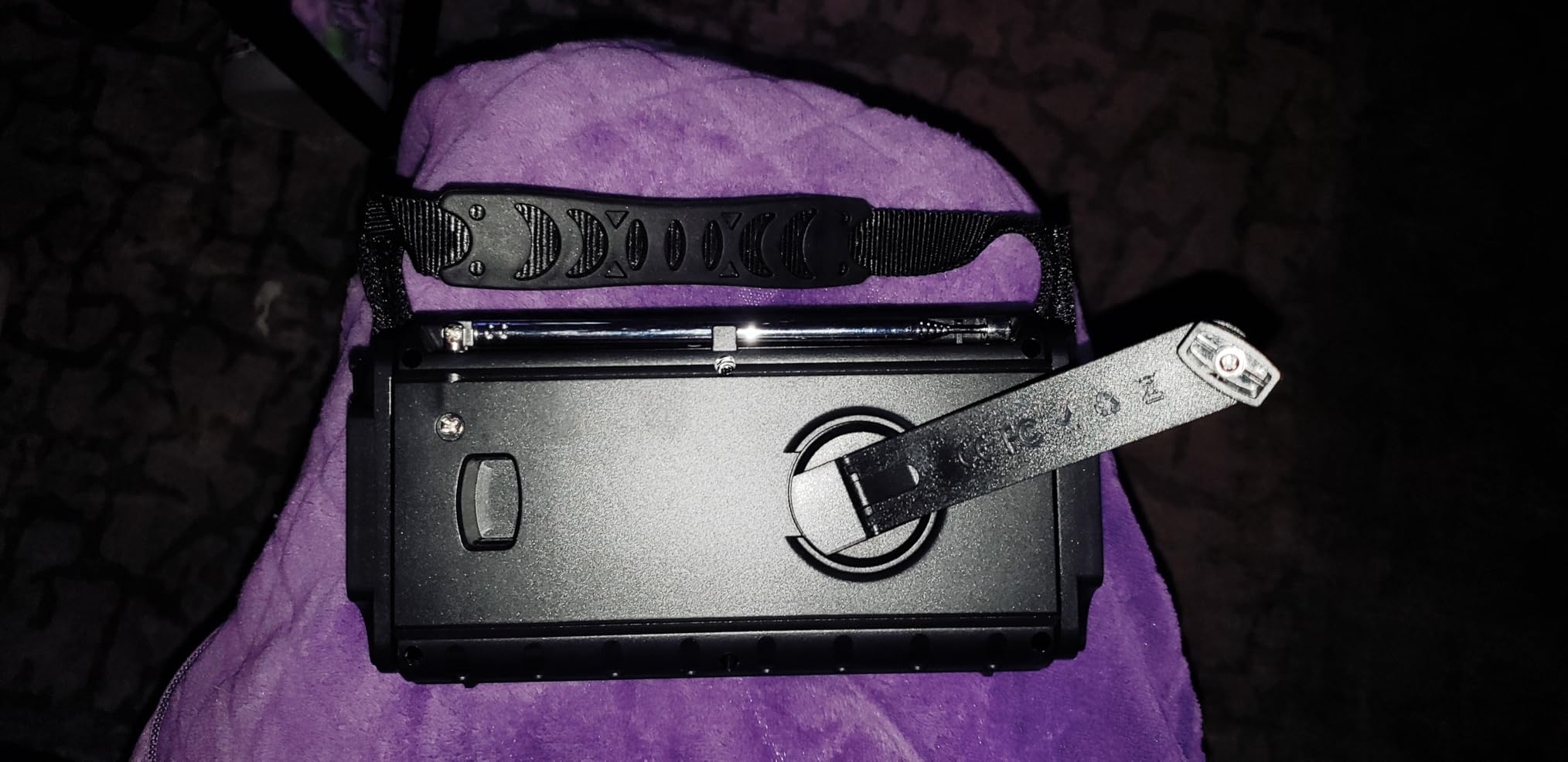
Capacity is the argument. If your realistic scenario is a multi-day grid failure with no access to a charger, battery size stops being a spec sheet line and becomes the feature that decides whether the radio is still useful on day four.
The SOS alarm and both lights run off the same pack, which matters if you are using it as a night-time warning device in a house with no grid.
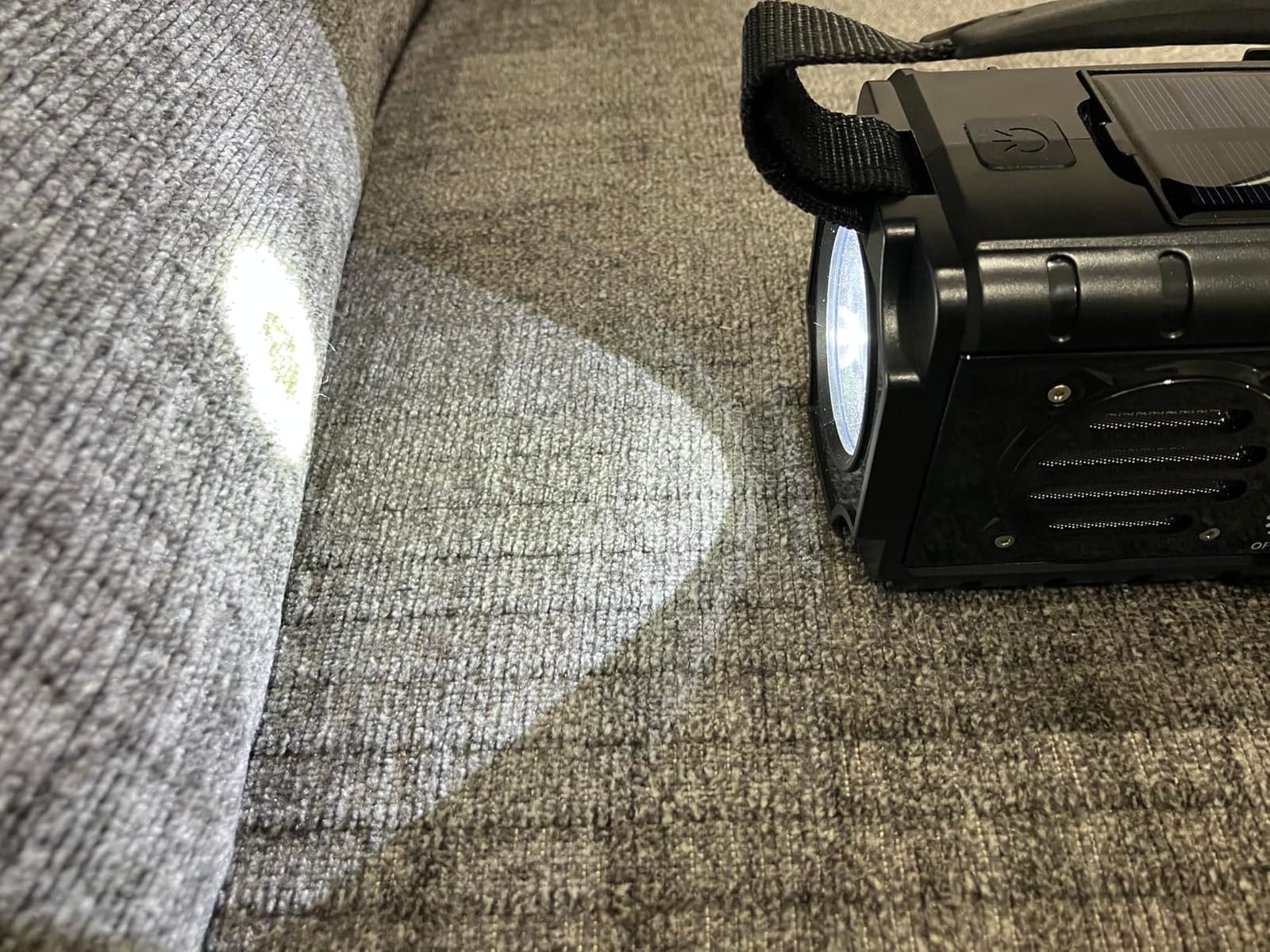
Best for long outages with no charger access
If you are preparing for a scenario measured in days rather than hours, this is the radio to look at first. Nothing else in this roundup matches the internal capacity, and the Type-C input means any modern battery pack can top it up.
It is also a reasonable hurricane-season companion, since a storm that takes out power for a week is exactly the case where runtime decides whether you are listening on day six.
Design faults worth knowing about
The power button sits under the carrying handle, and the strap presses it. Owners report the flashlight and the SOS siren switching on unintentionally, which in a dark room is a genuine problem rather than a minor annoyance.
The display is analog with no frequency readout, so shortwave tuning is imprecise. The solar panel is small and should be treated as maintenance only, and a few units arrive with a loose solar panel that needs fixing before first use.
How to Choose an Emergency Shortwave Radio
Most buyers get this wrong by starting with brand and ending with features. Start with the scenario, then the power plan, then the bands. The order matters because the two most common complaints in buyer reviews are not about reception at all, they are about flat batteries and unusable shortwave tuning.
1. Decide receive-only or two-way first
Every radio in this guide is receive-only. If your plan involves reporting damage, coordinating with neighbours or contacting a family member across town, you need something that transmits. A two-way handheld covers local range, and a satellite messenger covers everywhere else without a cell tower. Our guides to the best two way radios for camping and the best VHF radios for boats cover the outdoor cases, and the rest of this list is purely about listening.
2. Build the power plan before the shopping list
Rank your power sources by how reliably they work in a real outage. Start with a charged internal battery, then fresh AA cells, then external power over USB, then solar as maintenance, and treat the hand crank as a genuine last resort.
That ordering matters because the crank and the solar panel are the two most oversold features in this category. Reviewers across the board describe the crank as extremely slow and the panel as a trickle charger that cannot revive a depleted pack. The Kaito KA500 and the XHDATA D221 stand out precisely because they accept ordinary cells, which is the resource a household can actually renew during a long outage.
3. Make the weather band a hard requirement in the United States
The NOAA weather band sits on seven channels from 162.400 to 162.550 MHz, and it carries continuous official watches and warnings for your area. Any radio without that coverage cannot tell you about a tornado. This is the single most useful filter in the list, and it is where budget units most often disappoint.
Know the difference between a weather band radio and a dedicated S.A.M.E. county-level warning receiver. The latter is a different product category with its own purpose, and if you want audible alerts for one specific county with no need to listen to broadcasts, it is a sensible companion rather than a substitute.
If you are outside the United States, NOAA does not apply. UK listeners should look at DAB+ and regional alerting systems, Australian and New Zealand audiences have their own networks, and much of Europe uses national broadcast services rather than a weather band. US-centric guidance does not transfer to those markets.
4. Decide whether SSB is worth it
Single sideband is how voice traffic is transmitted on HF. An AM-only receiver cannot demodulate it, so if you want to monitor amateur radio, maritime, aviation or volunteer emergency nets, you need USB and LSB reception. In the United States you do not need a licence to listen, only to transmit, and none of these radios transmit.
Where to tune if you want an example: volunteer weather networks commonly operate around 14.325 MHz USB during daylight hours and 7.268 MHz LSB at night. Finding those on a dial-only radio is fiddly, which is why direct frequency entry is worth paying for.
5. Treat the antenna as the first upgrade
This is the most valuable piece of advice in this guide. A length of inexpensive wire run out of a window, or any external antenna attached to an antenna jack, improves shortwave reception more than upgrading the radio itself. The Tecsun PL-380 and the PL-330 both include or accept an external antenna for exactly this reason.
The other half of the problem is indoors. Household electrical noise from LED drivers, phone chargers, routers and switching power supplies degrades shortwave reception badly, and moving the radio away from those sources or going outside for a minute often fixes more than any internal change. A reel antenna helps, but it is a compromise compared with wire going outside.
6. Expect the shortwave schedule to keep shrinking
Shortwave broadcasting is contracting, and anyone planning to rely on it as a lifeline should know that. Major international services have cut or closed shortwave operations in recent years, so the content on a given frequency changes and thins out.
That is precisely why SSB, and weather band coverage, matter more than they used to. Machine-to-machine and utility transmissions on HF continue regardless, which is the traffic that actually tells you what conditions are like on the ground.
7. Ignore the specification-versus-reality gap
High open-box and return volumes on popular emergency radios are widely discussed, and the usual explanation is disappointment at the gap between the listing and the shortwave performance. The pattern in this roundup is consistent: radios with a wide shortwave range on a small analog dial, or a single short telescoping antenna, are the ones that come back.
Buy the thing whose core function you have verified, not the one with the longest feature list. And run it for an hour on the bands you care about, in the room where you will use it, before an emergency makes that decision for you.
8. Assemble the kit around the radio
A radio is a component, not a kit. Add spare AA cells or a charged battery bank, a printed frequency card with the seven weather channels and your local station frequencies, a small screwdriver for the battery compartment, and a copy of the manual. Our guide to emergency food supply kits for families covers the part of the plan that keeps people alive long enough to use the radio.
Then practise. Six steps that take half an hour: find the weather channels and write the frequencies down, note the local AM and FM stations, test the battery path you expect to use, time how long the internal pack lasts on a full charge, set the alert function and confirm it works, and put a spare set of cells in the bag. Do that quarterly and you will not be learning the interface during an outage.
What to Avoid Buying
Ten habits that cost people money in this category, and most of them come straight from owner reviews.
Any radio sold as an emergency radio with no weather band. In the United States, no NOAA coverage means no official local warnings, whatever the marketing says.
Radios whose entire shortwave range sits on one small dial. Wide bandwidth on a narrow knob is the single most common reason shortwave reviews are negative.
Treating the solar panel as a charging method. It maintains a full battery. It will not recover a flat one in any useful timeframe.
Assuming the hand crank is a primary power source. Owners describe it as extremely slow. It is a last-resort top-up.
Buying on feature count alone. Bluetooth, white-noise sounds and auto shut-off timers do not warn you about a hurricane.
Relying on a proprietary lithium pack as your only plan. Lithium-ion packs degrade, and a dead cell in a blackout leaves you with a brick. A radio that takes ordinary AA cells cannot be defeated this way.
Paying for SSB you will not use. If your plan is broadcast listening and weather warnings, SSB is wasted money. If your plan is real-time HF monitoring, it is essential. Know which one you are.
Buying only one radio. Two inexpensive units in different parts of the house are worth more than one expensive unit. Batteries drain, devices get dropped, and rooms get searched.
Ignoring indoor electrical noise. Chargers and LED drivers degrade shortwave reception more than most people expect. Move the radio or go outside.
Skipping the practice run. A radio you have never operated is a box in a drawer. The interface is the last thing to figure out during a real outage.
One more worth naming: a mismatch between the radio and the plan. If you keep marine radios, farm vehicles or a boat, a VHF setup is part of the same emergency equipment. The general principle is that broadcast receivers gather information, and anything that communicates outward belongs in a different category of kit.
Frequently Asked Questions
What is the best emergency shortwave radio?
The Raynic CR1009Pro is the best emergency shortwave radio for most households in 2026. It combines automatic NOAA weather alerts, six power paths including a 5000mAh internal battery and a 3 AAA slot, a 3W flashlight, and USB phone charging in a 16-ounce body. It is receive-only and cannot transmit or call for help.
Can a shortwave radio call for help in an emergency?
No. Every radio in this roundup is receive-only, so it gathers information but cannot transmit, call, or summon help. If you need to speak to someone outside the room, add a two-way handheld for local range or a satellite messenger for coverage beyond the cell network.
Do I need SSB on an emergency radio?
Only if you want to monitor HF voice traffic such as amateur, maritime, aviation, or volunteer weather nets. AM-only radios cannot demodulate single sideband, so SSB adds an entire information layer. For broadcast listening and NOAA warnings, spending on SSB is not worthwhile. Listening to amateur frequencies never requires a licence; only transmitting does.
What batteries are best for emergency radios?
For long-term survival, ordinary AA cells beat a proprietary lithium pack because you can replace them from a household supply. The Kaito KA500 accepts three AA cells and the XHDATA D221 runs on two. Internal 5000mAh packs give longer unattended runtime, and a radio that accepts both, like the Raynic CR1009Pro, covers either scenario.
Are solar emergency radios actually useful?
Mostly as maintenance rather than charging. The small panel on this category of radio keeps a full battery topped up in daylight but cannot revive a depleted pack in any useful timeframe. Owners across this roundup report the same thing. Treat solar as a trickle top-up and rely on charged cells, spare AA batteries, and USB power for recovery.
Is shortwave better than NOAA for emergencies?
No. NOAA weather radio is the higher-priority layer because it carries continuous official watches and warnings for your specific area, and nothing replaces it. Shortwave is the second layer, adding international, national, and utility broadcasts plus HF voice traffic when you have an SSB radio. Rely on NOAA first and shortwave second.
Do I need a ham license to listen to shortwave?
No. Receiving amateur radio transmissions, including SSB voice, requires no licence anywhere. You need a licence only to transmit. This is why the SSB-equipped radios in this guide are useful for monitoring emergency-related HF traffic without any paperwork or examination.
What radio would survive an EMP?
An analog receive-only radio powered by ordinary AA cells is the most EMP-resistant choice in this roundup. The XHDATA D221 runs on two standard cells and has no internal lithium pack to fail, and the Kaito KA500 accepts three AA cells plus a NiMH pack. No consumer radio is guaranteed EMP-proof, but digital-heavy units with proprietary batteries carry more risk.
What is the best emergency radio with shortwave channels?
The Raynic CR1009Pro is the strongest all-round answer, covering AM, FM, shortwave and NOAA with automatic alert scanning and six power paths. For pure reception quality choose the Tecsun PL-380, and for single sideband voice choose the Tecsun PL-330. For a sealed always-ready backup the XHDATA D221 runs on two AA cells.
Final Verdict on the Best Shortwave Radios for Emergency Use in 2026
The Raynic CR1009Pro is the best shortwave radio for emergency use overall, because automatic NOAA alerting, six power paths and phone charging in a light body solve more real problems than any other unit in this roundup. The Kaito KA500 takes the value slot with the longest antenna here and the best AA battery fallback, and the Tecsun PL-380 is the pick when reception quality is the priority and you will be near a window.
Choose one of those three, keep spare cells with it, print your frequencies, and practise operating it. Everything else in this list is a variation on that plan rather than a substitute for it.
If your kit also involves the road, the water or the kitchen, our guides to the best CB radios for truckers and the best VHF radios for boats cover the rest of a working setup.