
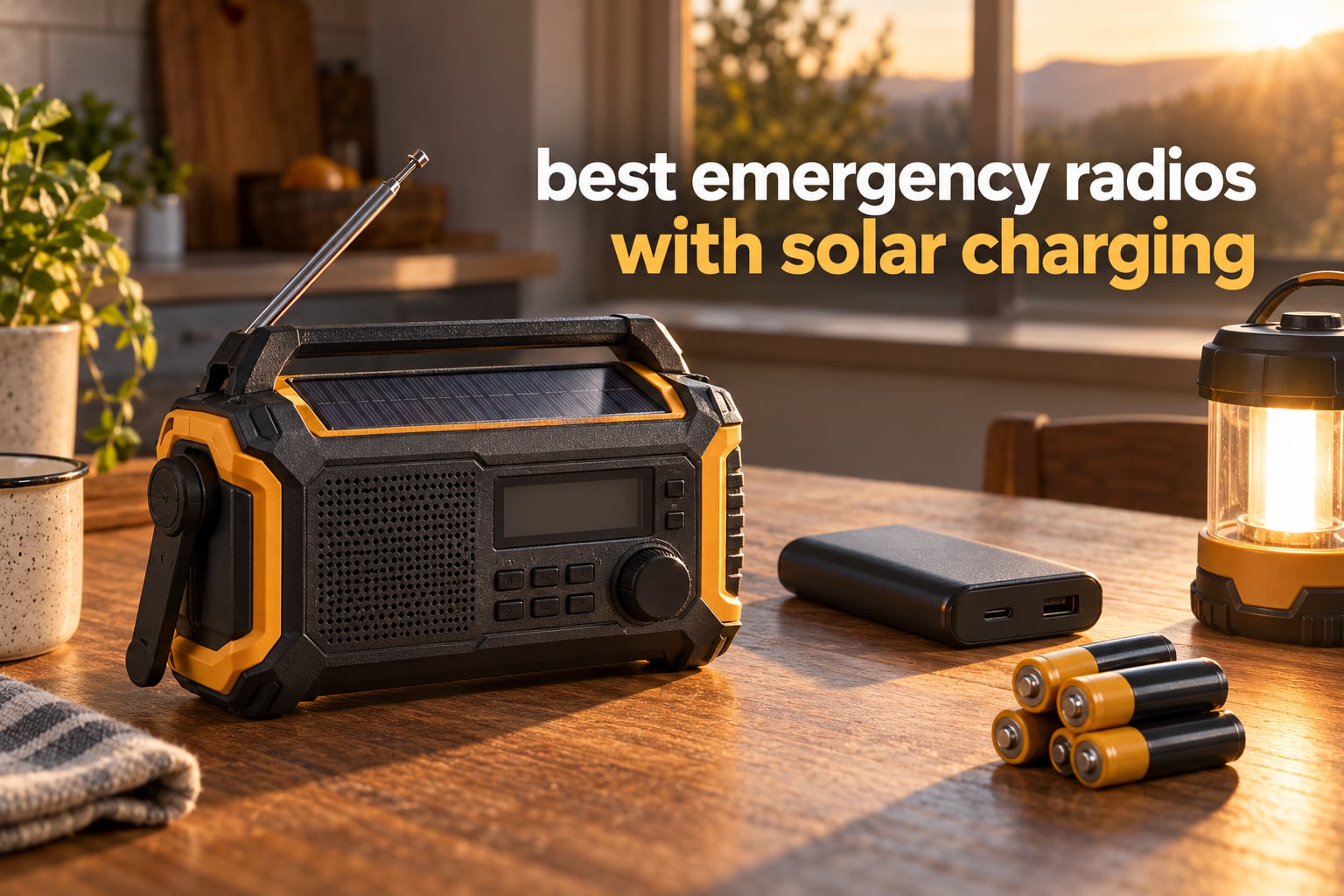
When the power goes out, the cell towers go quiet and the Wi-Fi router is a dark box on the shelf, a solar emergency radio is often the only device in the house that still tells you what is happening. If you are shopping for the best emergency radios with solar charging, the word solar is the least interesting part of the spec sheet. Every unit in this roundup has a panel, a hand crank and a USB input. What separates them is battery capacity, panel size, alert capability and how the radio handles reception when a storm is directly overhead. We compared ten of them and ranked them on those numbers.
Our first recommendation for most households is the FosPower A1, because it has the largest verified review base of any solar crank radio we looked at and it runs on three independent power sources at once. Our second is the Raynic CR1009Pro, which adds automatic NOAA alerting and a digital display. Our third is the RunningSnail MD-090, the mid-size option with a 4000mAh pack.
Before the individual reviews, it is worth being blunt about something the marketing copy skips. A small photovoltaic panel glued to the back of a plastic radio is a maintenance device, not a rescue charger. It holds a charge that is already in the battery. It does not, on its own, rebuild a flat pack between storm bands. Treat solar as a fourth option after USB, crank and stored cells, and you will be disappointed far less often.
Table of Contents
Top 3 Picks: Best Emergency Radios With Solar Charging in October 2026

FosPower A1 Solar NOAA Radio
- 7400mWh power bank output
- Solar plus crank plus 4 AAA
- 4-LED reading light and 1W flashlight

Raynic CR1009Pro Solar Radio
- Automatic NOAA alert scanning
- 5000mAh battery with six power options
- HD LCD with digital tuning

RunningSnail MD-090 Crank Radio
- 4000mAh battery charges phones
- 3-mode flashlight to 10m plus
- Motion sensor reading lamp and SOS
All 10 Solar-Crank Radios at a Glance in October 2026
| Product | Specifications | Action |
|---|---|---|
| FosPower A1 |
|
Check Latest Price |
| Raynic CR1009Pro |
|
Check Latest Price |
| RunningSnail MD-090 |
|
Check Latest Price |
 Kaito KA500 Kaito KA500 |
|
Check Latest Price |
 Eoxsmile NOAA Solar Radio Eoxsmile NOAA Solar Radio |
|
Check Latest Price |
 yesiwtc 090S yesiwtc 090S |
|
Check Latest Price |
 NITIGO 4000mAh NITIGO 4000mAh |
|
Check Latest Price |
 Mesqool CR1030 Mesqool CR1030 |
|
Check Latest Price |
 Leaton A8 Leaton A8 |
|
Check Latest Price |
 Leaton XSY-330 Leaton XSY-330 |
|
Check Latest Price |
1. FosPower A1: Best Overall Solar Emergency Radio
FosPower NOAA Emergency Weather Radio A1 7400mWh Solar Hand Crank (Orange)
2000mAh power bank
Solar crank and 4 AAA
NOAA AM/FM
310 g
Pros
- Largest verified review base of any solar crank radio
- Three independent power sources plus USB-C
- 7400mWh output charges phones and small tablets
- 4-LED reading light plus 1W flashlight
- Limited lifetime warranty
Cons
- Small speaker and short antenna limit weak-station reception
- Modest 2000mAh capacity against 10000mAh rivals
- No digital display or preset NOAA channels
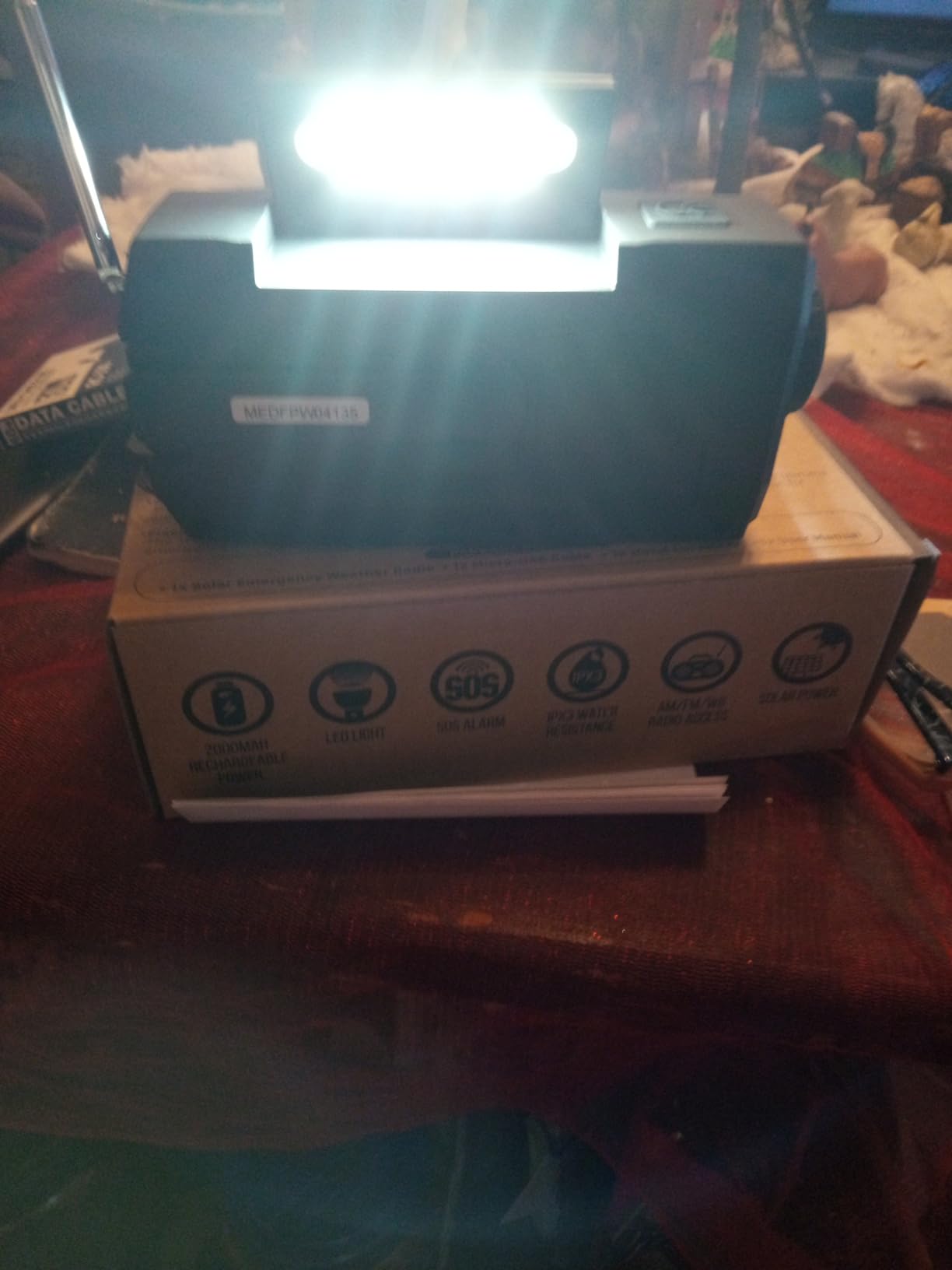
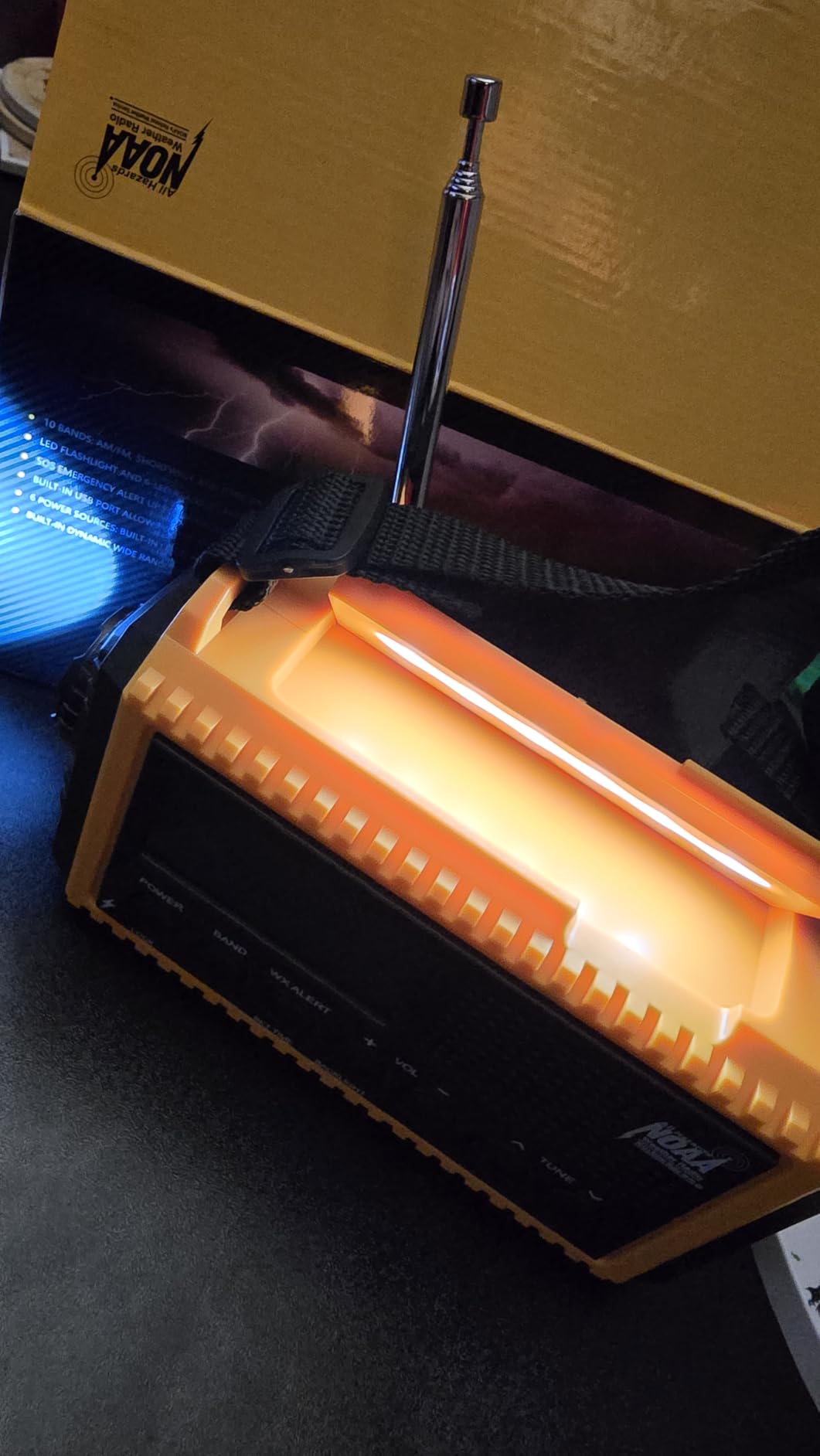
I have kept the FosPower A1 on the kitchen counter for months and it is the one I hand to family members without explaining anything. The layout is simple: solar panel on the back, crank on the side, four AAA cells in the bottom, a tuning knob up front. Nothing to misconfigure at 2 a.m. with the power out. Its 2 watt speaker is not loud, but spoken NOAA alerts are broadcast at a volume that fills a kitchen, which is the only job you are buying it for.
What wins it the top slot is not a specification. It is the review count. At more than 37000 reviews with a 4.6 star average, there is a larger body of owner evidence behind this radio than anything else in the group, and that is the trust signal that matters in a category where half the listings are white-label clones with near-identical names. When you want the single most reliable emergency radio, you want the one that thousands of households have already used during a real outage.
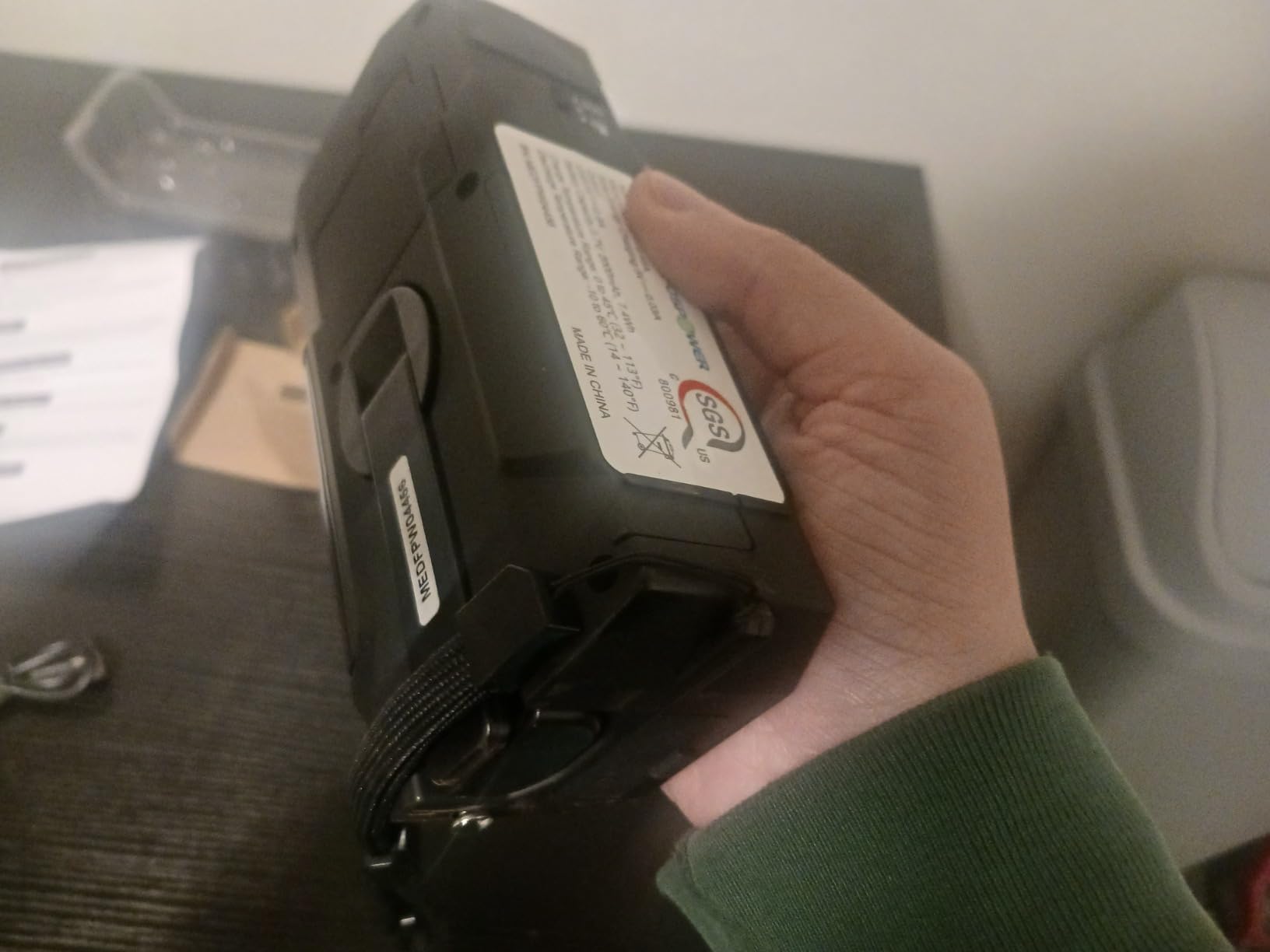
The 7400mWh pack doubles as a power bank for a phone or small tablet, which matters more than it sounds when a phone is the only map you have. There is also a four-LED reading light and a separate 1W flashlight, so the same unit covers the two things a household reaches for most often after dark. Connectivity is USB-C, and the warranty is a limited lifetime one, which is unusual in this price class.
The honest limitations are reception and capacity. The telescopic antenna is short and the speaker is small, so marginal AM and NOAA stations weaken indoors. And 2000mAh is the small end of the range here: enough for one phone charge, not enough for two. Neither issue matters if you set the radio on a windowsill and let it do its job rather than carrying it across a house for a marginal station.
Who the FosPower A1 suits
It suits households that want one radio everyone in the house can operate, and anyone who wants the widest public record of real-world reliability before committing. For a 72-hour family emergency kit it is the safest default choice because the controls never change and the batteries are AAAs you can buy anywhere.
It also suits people who plan to charge a phone once. For a multi-day outage where everyone needs power, skip to the larger packs further down this list.
Where it falls short
The lack of a digital display means NOAA tuning is a knob exercise, and with S.A.M.E. codes unavailable you cannot limit alerts to your own county. If alert fatigue is a worry in your area, choose a radio with automatic scanning instead.
Reception indoors is the other weak spot. If you live in a valley or behind hills, the Kaito with its 14.5 inch antenna is a better bet.
2. Raynic CR1009Pro: Best Value With Automatic NOAA Alerts
Raynic Emergency Radio, 5000mAh/18500mWh Weather Radio, Solar Hand Crank Radio with AM/FM/SW/NOAA Alert, Cell Phone Charger, Headphone Jack, Flashlight and SOS Siren
5000mAh battery
Automatic NOAA scanning
IPX3 rated
16 ounces
Pros
- Automatic NOAA alert scanning with siren and flasher
- Large HD LCD with digital tuning and battery level
- Six power options including AC adapter and USB-C
- 3W flashlight plus 2.5W reading lamp
- 3.5mm headphone jack and USB charging output
Cons
- Not waterproof and the port cover does not stay shut
- Solar mainly maintains charge rather than recharging
- Hand crank is slow
- Shortwave tuning takes scanning
The Raynic CR1009Pro is the radio I recommend to anyone who has ever muted a weather radio because it kept beeping for counties they do not care about. It scans the NOAA weather band automatically and fires a loud SOS siren with a red flasher when a warning is issued for the station it is tuned to. That single feature separates it from the tuner-knob crowd, and it is why it takes second place.
The display is the other reason. A large HD LCD shows the frequency, the battery level and the mode, so you are not guessing at 162.450 in the dark. It also carries shortwave alongside AM and FM, and a 3.5mm headphone jack, so it works as a small communications receiver rather than only an alert box. Owners on review sites repeatedly single out the tuning readout and the automatic alerting as the two reasons they keep buying this model.
Power comes from six directions: a 5000mAh internal battery, an included AC adapter, USB-C, hand crank, solar and three AAA cells. The 18500mWh figure means it can top up a phone more than once, which covers the common pattern of a family where the adults carry the only charged handsets. The 3 watt speaker is the second loudest in this roundup, and the metal enclosure feels a step firmer than the plastic shells used by the budget units.
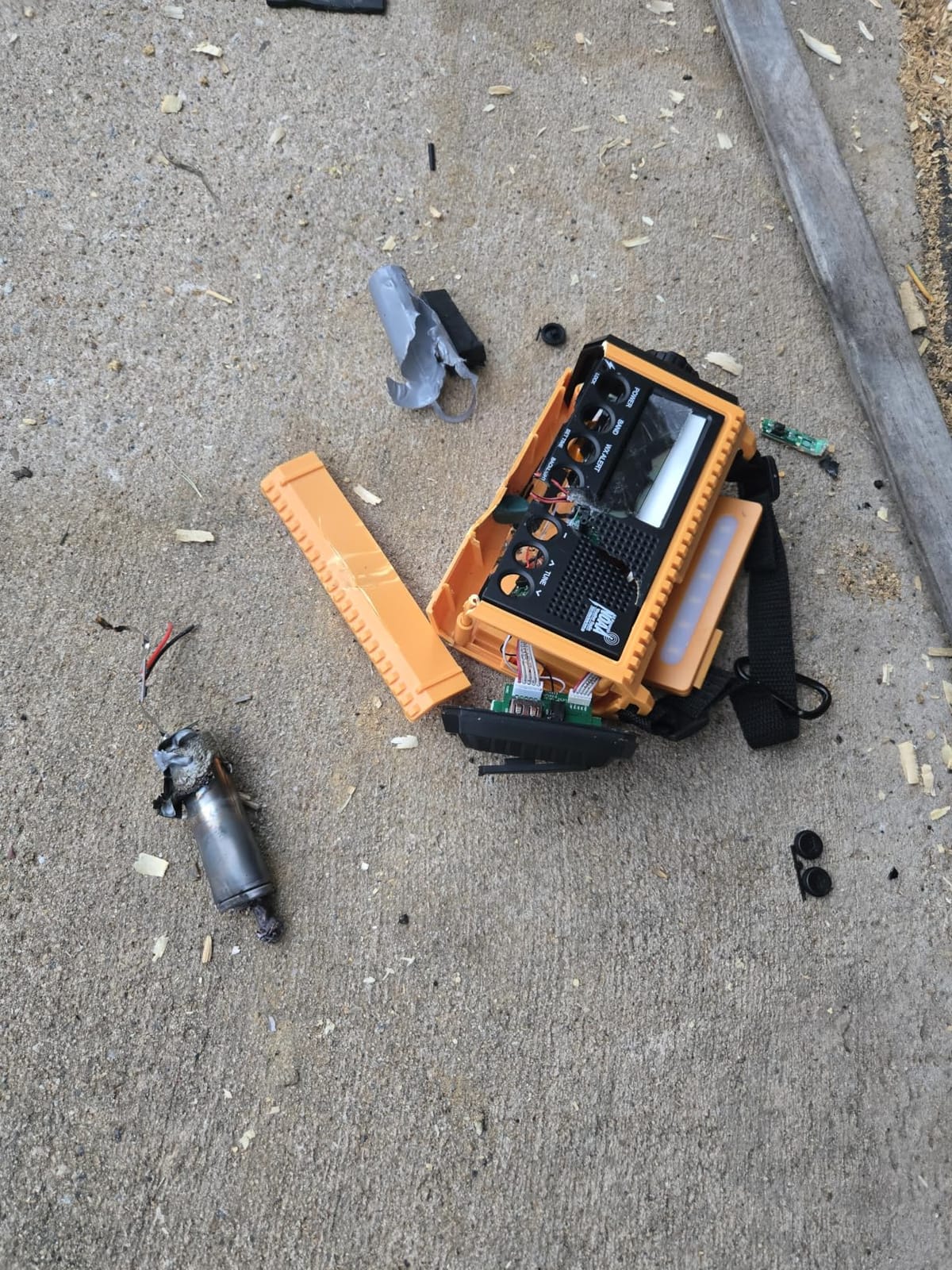
Be clear about the water resistance. IPX3 means splash resistant, nothing more, and owners report the port cover does not stay closed on its own. Treat it as an indoor and fair-weather radio. The solar panel here, as on most of the group, holds a charge rather than rebuilding a flat battery, and the crank adds power slowly.
When the Raynic CR1009Pro is the right call
Choose it when the household includes people who will not fiddle with tuning dials, and when you want alerts that arrive without asking. It is also the pick if you want one device that works as a radio, a lamp and a partial phone charger, since it covers all three from a single pack.
For a car kit or a cabin, the digital readout makes it much easier to find a station while moving between cells.
When it is the wrong call
Do not take it into a marine or river environment, where IPX3 will not survive spray. It is also heavier than the slim budget units, and if your priority is reception on distant stations rather than alerting, the shortwave band here needs patience that some owners are not willing to spend.
3. RunningSnail MD-090: Best Mid-Size Crank Radio for Phone Charging
RunningSnail Emergency Crank Radio with 3-Mode Flashlight & Reading Lamp
4000mAh battery
Solar crank and micro USB
3-mode flashlight
395 g
Pros
- 14800mWh battery charges smartphones during outages
- Four-way power including micro USB
- 3-mode flashlight reaching over 10 meters
- Motion sensor reading lamp plus external antenna
- Real-time NOAA alerts with SOS alarm
Cons
- Heavier and bulkier than slimmer crank models
- 1 watt speaker is modest for music
- Low speaker output limits clarity in noisy settings
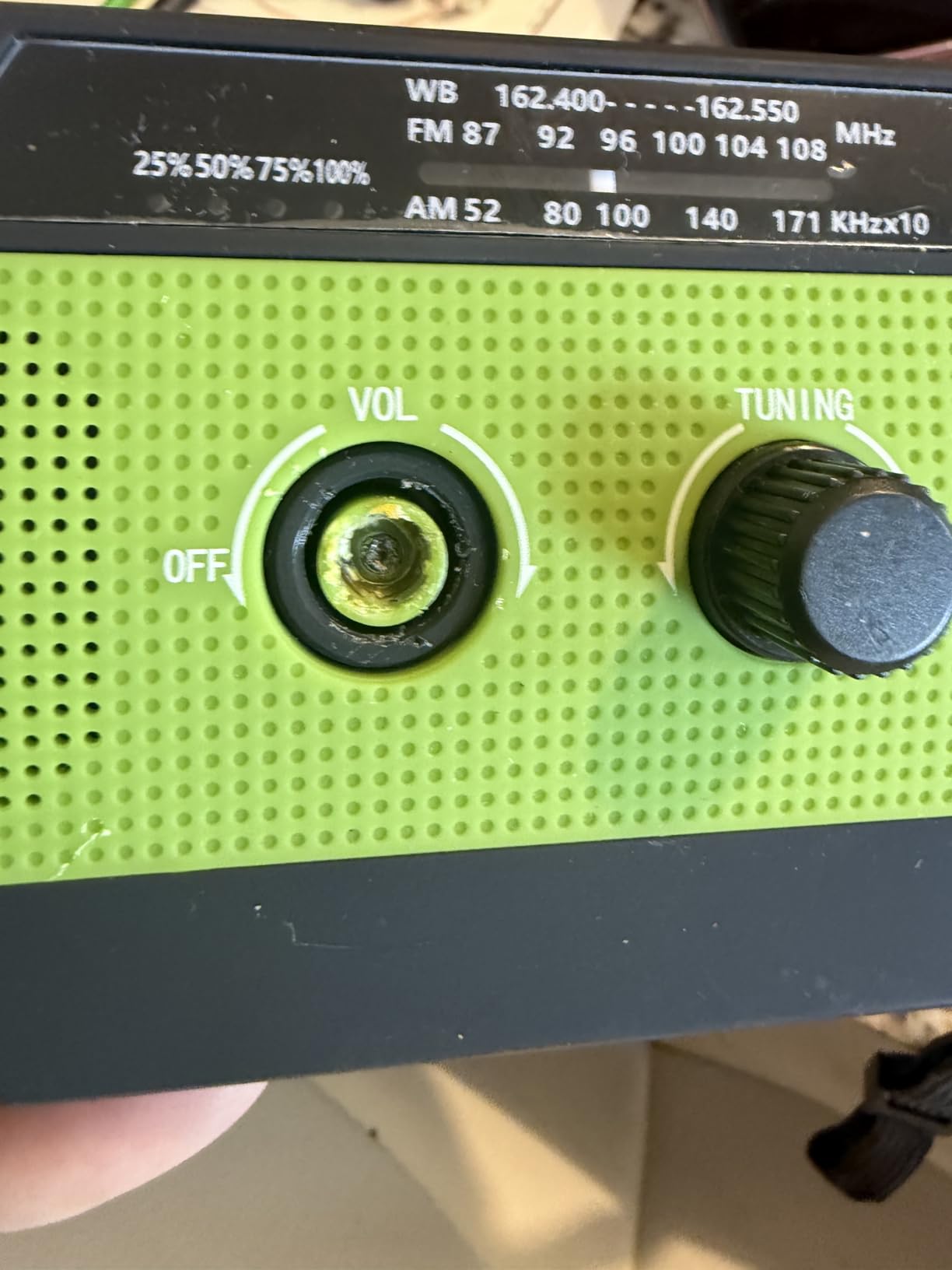
The RunningSnail MD-090 sits in the middle of this roundup in every sense: 395 g, a 4000mAh pack, and a 1 watt speaker. It is the radio I put in a go-bag, because the capacity is real phone-charging capacity rather than a token top-up, and the body is small enough to live in a side pocket without becoming dead weight.
Its 14800mWh battery is the reason it earns a place on this list. That is enough to bring a phone most of the way back from a dead battery, and a go-bag radio that can do that has a second job nobody asked it to do. Owners also like the external antenna, which extends the usable range on weaker stations compared with the stub antennas on the slimmer budget units.
The lighting is unusually good for this size. A three-mode flashlight throws over 10 meters, which is enough to light a path or find a breaker box, and the motion-sensor reading lamp turns on when you wave a hand near it. That is a small convenience that matters a lot at night when you do not want to fumble for a switch. NOAA alerts arrive in real time with an SOS alarm on top of the broadcast.
Weight is the compromise. At 395 g it is one of the heavier options, and the 1 watt speaker is tuned for voice rather than music, which is exactly right for alerts and exactly wrong if you plan to listen to a ball game. Solar and micro USB round out four power paths, with the internal lithium polymer pack as the fifth.
Where the RunningSnail MD-090 earns its slot
It fits a go-bag, a hiking kit and a vehicle kit equally well, and it is the pick if you want phone capability without carrying a separate power bank. The motion-activated lamp makes it a good bedside companion during a multi-night outage.
If you are packing for weight, note the 395 g. The NITIGO below does the same job at 300 g.
Where it struggles
There is no shortwave band, so it cannot reach the long-distance reception that some emergency communicators value. The 1 watt speaker is also thin in a windy or noisy environment, so it works best indoors or in shelter.
Its LCD is present but basic. If you want automatic county-level alerts, the Raynic above is the upgrade.
4. Kaito KA500: Best for Shortwave Reception and Long Antenna Reach
Kaito KA500 5-way Powered Solar Power,Dynamo Crank, Wind Up Emergency AM/FM/SW/NOAA Weather Alert Radio with Flashlight,Reading Lamp and Cellphone Charger, Yellow
Six-way power
AM FM shortwave NOAA
14.5 inch antenna
LCD signal strength
Pros
- Only unit here with true two-band shortwave alongside NOAA AM and FM
- Five to six power options including dynamo and AC DC
- 14.5 inch telescopic antenna with signal strength LED
- Replaceable NiMH battery pack
- PEAS emergency alert system for US and Canada
Cons
- Largest and heaviest body at 8.3 inches long
- No digital display and tuning is by knob
- Wall power adapter sold separately
- Analog AM FM with no automatic NOAA alerting
The Kaito KA500 is the oldest design in this roundup and still the one with the best reception hardware. The 14.5 inch telescopic antenna pulls in stations that the stub-antenna units simply miss, and the LED signal strength indicator tells you when you have a carrier rather than making you guess from the sound. In a rural location or a valley, that difference decides whether the radio is useful at all.
It is also the only radio here with true two-band shortwave on top of AM, FM and the seven NOAA channels. For anyone who listens beyond local weather, that is a genuine capability rather than a checkbox. Prepper communities on Reddit treat shortwave as a separate hobby and treat weather radio as step one, and this unit lets you cover both without buying two boxes.
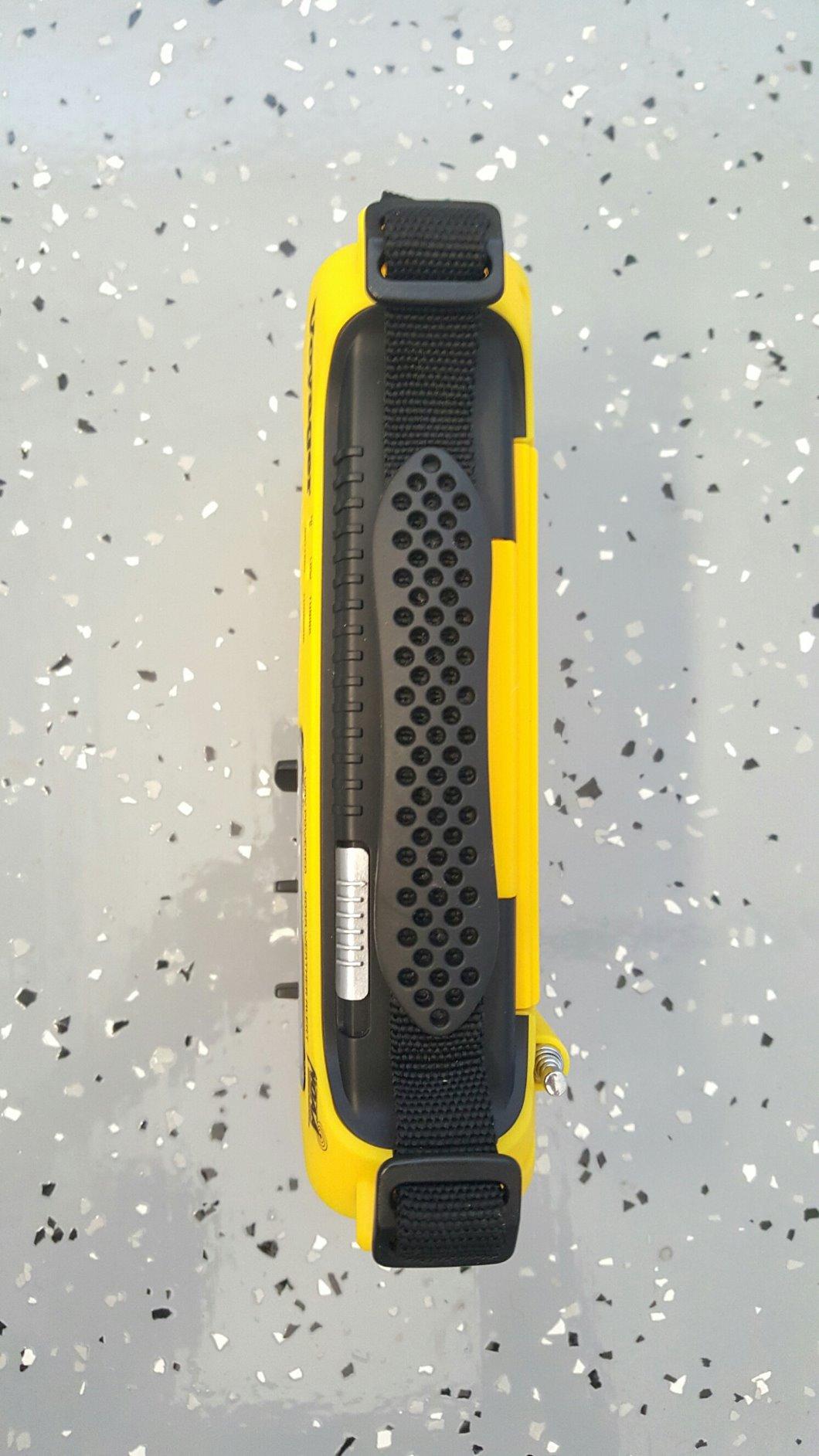
Powering is the most flexible of any unit here, with a dynamo crank, a solar panel, three AA cells, 5V USB, an AC or DC input and an internal NiMH pack. The NiMH pack is replaceable, which no other radio in this roundup offers, so a pack that has sat for a decade can be swapped instead of discarded. Owners also rate the 5-LED reading lamp and the red SOS beacon highly for signalling.
All of that hardware has a cost: it is 8.3 inches long and the heaviest body in the group. Tuning is by knob and signal light with no digital readout, so setting a NOAA channel in the dark takes practice. Alerts are analog too. The PEAS system gives audible warnings but there is no automatic county scanning.
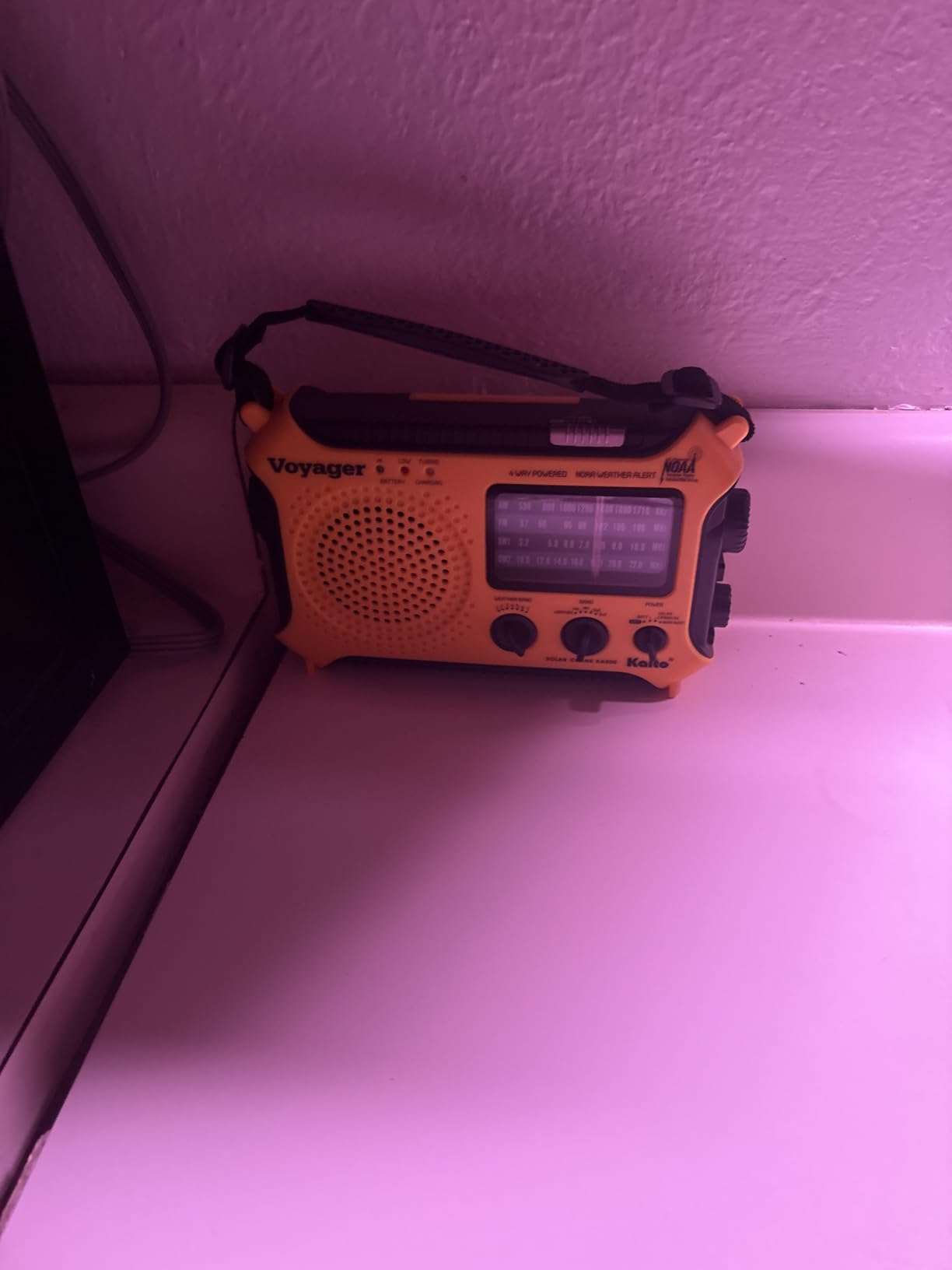
Why the Kaito KA500 is still worth buying in 2026
Buy it for reception quality and serviceability. If you live rural, listen to shortwave, or want a radio that will still work with a new battery in ten years, nothing else here matches it. The AA battery option also means you can walk into any shop during an outage and keep going.
It is a good second radio for the house, since it can sit on a desk plugged in while a portable unit goes in the bag.
Why it is not the first choice for everyone
Size rules it out for backpacking and small vehicle kits, and the knob-only tuning is a genuine learning curve for anyone who has only used an app. The wall power adapter is not included, so budget for that separately if you want mains charging.
If your priority is loud automatic alerts rather than distant reception, look at the Raynic or Eoxsmile instead.
5. Eoxsmile NOAA Solar Radio: Best for Loud Alerts and Long Playback
Eoxsmile Emergency Radio with NOAA Weather Alert, Solar Hand Crank Portable
5000mAh battery
5 watt speaker
3W flashlight to 80 meters
13 hours FM playback
Pros
- Five power sources with 5000mAh battery plus AAA backup
- Certified NOAA alerts trigger a 9-second SOS alarm
- AM FM and shortwave with telescopic antenna
- 3W flashlight reaching 80 meters
- Up to 13 hours of FM playback on a full charge
Cons
- AM reception on low-power stations is weak without auto gain control
- Alerts only fire in standby or alert mode
- USB-C input takes about 16 hours and output is only 1A
- No water resistance rating
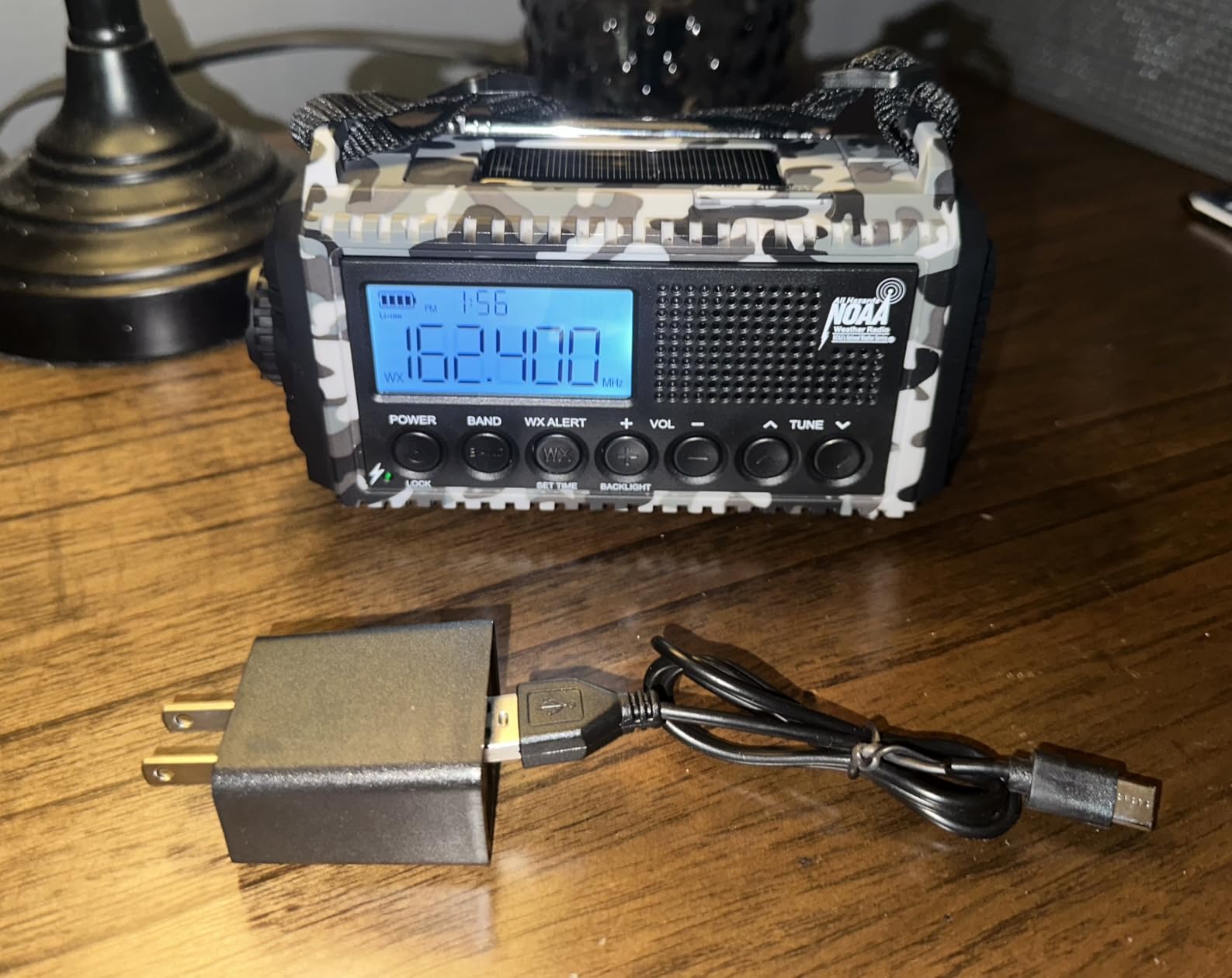
The Eoxsmile is the loudest voice in this roundup. A 5 watt speaker is double most of the field, and buyers consistently single that out first. If your household includes someone hard of hearing, or if you plan to run the radio outside under a tarp where wind noise competes, this is the radio that will actually be heard.
Alerts are certified NOAA and trigger a nine-second SOS alarm with a flashing red light. That signal carries through walls in a way a spoken warning alone does not. The 3W flashlight reaches 80 meters, which is more than enough to find a vehicle or check a property boundary, and the flip-up 2.5 watt reading lamp is bright enough to work by at a table.
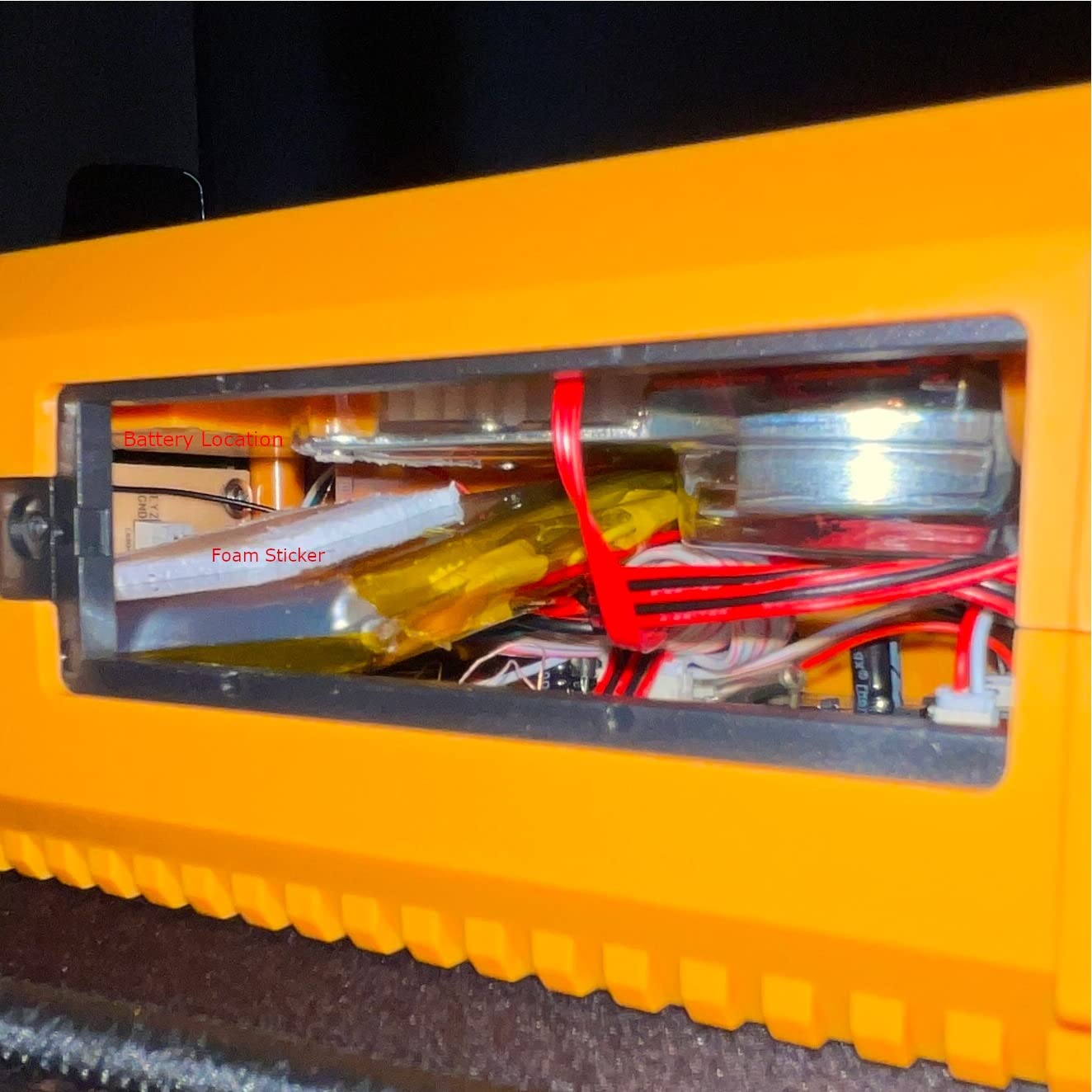
It also carries shortwave from 7 to 19 MHz alongside AM, FM and seven NOAA bands, and a 3.5mm headphone jack for quiet listening. A compass and hand strap come in the box, small touches that matter when you are on foot in unfamiliar terrain. Battery life is the other selling point: up to 13 hours of FM playback from the 5000mAh pack.
There is a real catch with the alerts. They fire in standby or alert mode, not while you are listening to a normal broadcast, so you give up music to keep warnings coming. AM sensitivity on low-power stations is weak, USB-C input takes around 16 hours for a full charge, and the USB output is only 1A, so phone charging is a rescue gesture rather than a plan.
Who should pick the Eoxsmile
Pick it when the household includes older relatives, or when the radio will run in a workshop, garage or camp where nobody can hear a quiet speaker. The alarm and lamp combination makes it the best bedside unit in the group for a family that wants a warning they cannot sleep through.
It is also one of the better picks for anyone who wants shortwave plus NOAA without the Kaito bulk.
Who should skip it
Skip it for wet environments. There is no water resistance rating, and the specification sheet is candid about that. Anyone who wants to keep listening to a broadcast while still receiving warnings will be frustrated by the standby-only alerting.
Slow USB-C input also makes it a poor choice as a primary radio that must be recharged from a wall unit on short notice.
6. yesiwtc 090S: Best Budget Pick With Three Stored Charging Cables
Hand Crank Emergency Radio 7400mWh (2000mAh) Solar Hand Crank Radio
2000mAh battery
Three built-in charging cables
USB-C crank and solar
7 band NOAA
Pros
- Three charging cables stored in the body so none go missing
- Four power sources including USB-C and solar
- Extended antenna with a DSP chip for cleaner NOAA reception
- 3-mode flashlight plus 6 LED reading lights
- Lifetime technical support
Cons
- Smallest battery capacity here at 2000mAh
- Analog dial with no LCD readout
- Solar and crank supplement rather than recharge
- Waterproof claim is not backed by an IP rating
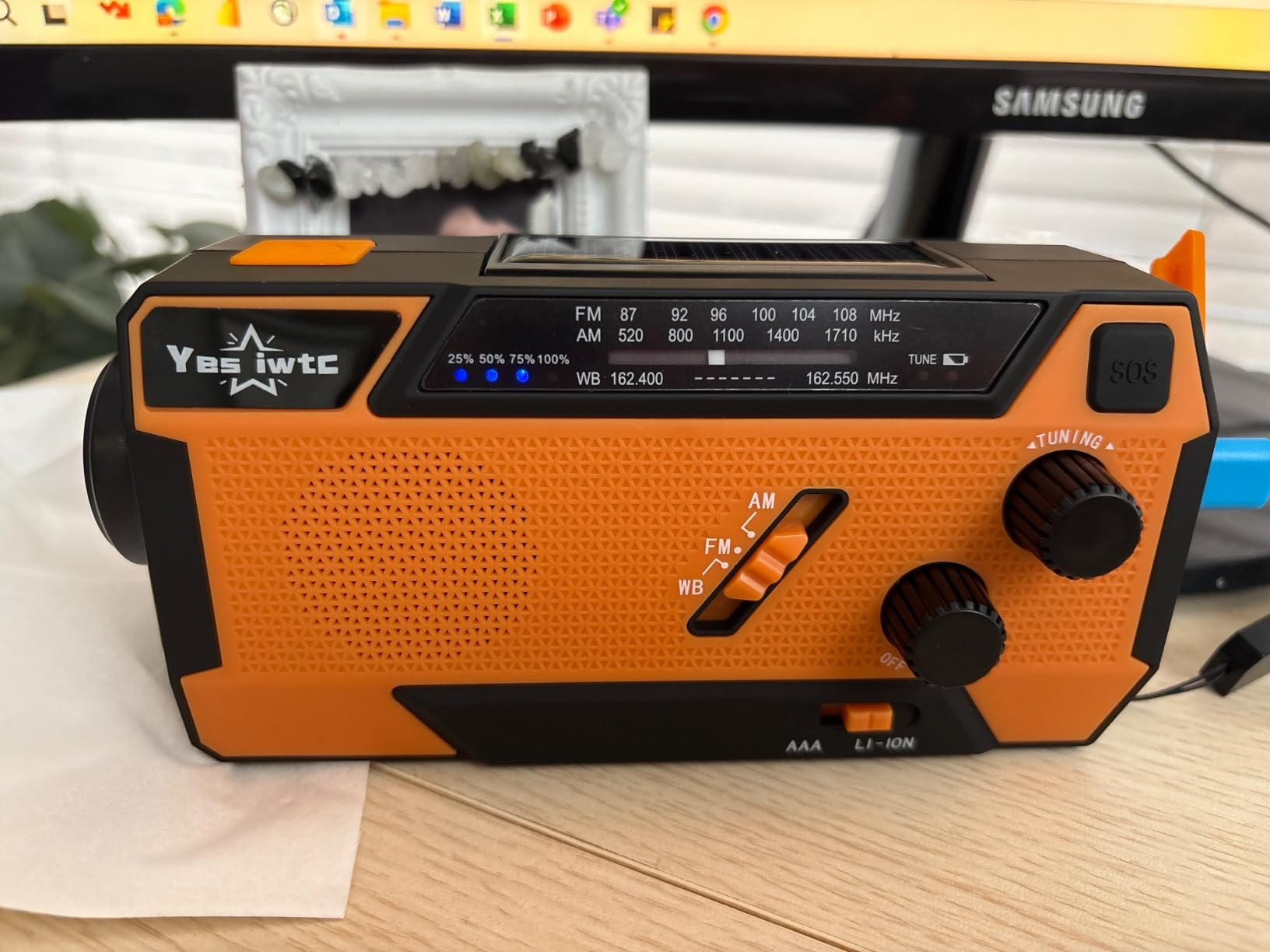
The single detail that makes the yesiwtc 090S worth a place in any kit is the trio of charging cables stored inside the body: Lightning, USB-C and micro USB. Nearly every preparedness failure story involves a dead cable in a drawer. This radio carries its own, permanently attached to the thing you need them for, and that solves a problem no other unit in the roundup addresses.
Reception is better than the price suggests. The extended antenna and a DSP chip produce noticeably cleaner NOAA audio than the cheapest competitors, which matters when the storm is close and the transmitter is fading. The 3-mode flashlight and six LED reading lights cover the two lighting jobs a household actually has at night.
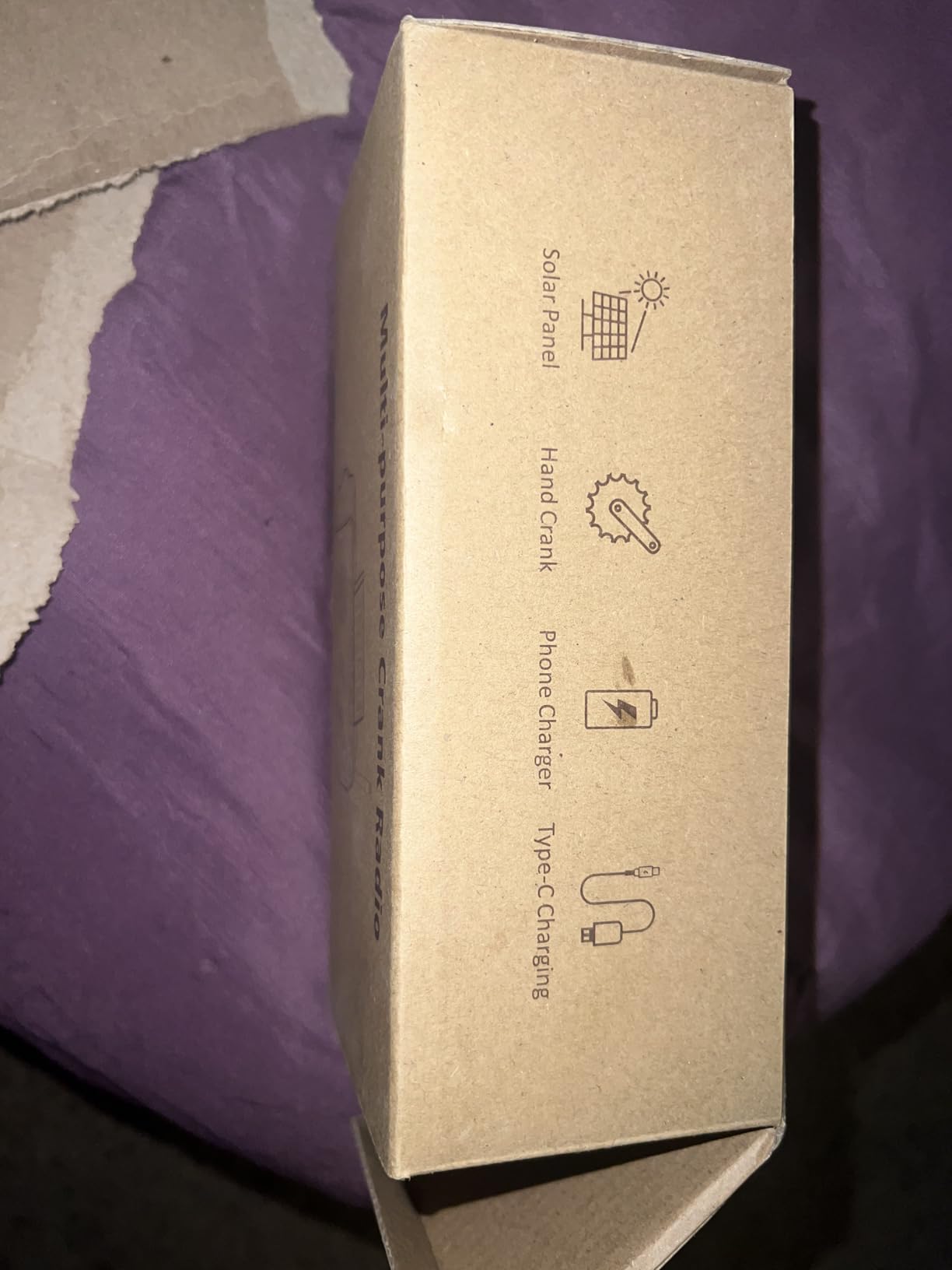
It is also small. At 6.49 by 1.9 by 2.9 inches it slips into a jacket pocket or the side pocket of a go-bag without being noticed, and it is powered four ways: USB-C, hand crank, solar and AAA cells. The 7400mWh pack also works as a small emergency power bank, and the manufacturer backs it with lifetime technical support.
The capacity is the limit. 2000mAh is the smallest pack here, so phone charging covers one top-up and no more. The dial is analog with no readout, so NOAA tuning is a feel exercise. And the waterproof claim in the listing is not backed by an IP rating, so we would not rely on it in rain.
The case for the yesiwtc 090S
It is the cheapest way to solve the lost-cable problem, and it does so without adding a separate bag to your kit. For apartment dwellers, students and anyone who wants a radio that fits in a coat pocket rather than a cupboard, it is a sensible second unit.
The 4.6 star average from more than 1600 reviews suggests the value is real rather than claimed.
The case against
If your plan depends on powering a phone for more than a day, this is the wrong capacity. The analog dial also means it is not a good choice for a household member who would struggle to tune a NOAA channel in the dark.
And treat the waterproof wording as unverified. Bring it inside when the weather turns.
7. NITIGO 4000mAh: Best for Compact Travel
NITIGO Emergency Weather Radio, 4000mAh NOAA Weather Radio Solar Charging
4000mAh battery
300 g body
Adjustable antenna
Rotating reading lamp
Pros
- 4000mAh battery that charges phones during outages
- Adjustable high-gain antenna improves reception
- Solar panel hand crank and USB-C keep it running
- Ultra-bright LED flashlight plus 180 degree rotating reading lamp
- Compact 5.3 inch body that fits in luggage
Cons
- No digital tuning readout and basic controls
- Waterproof claim has no IP rating behind it
- Shortwave is not included
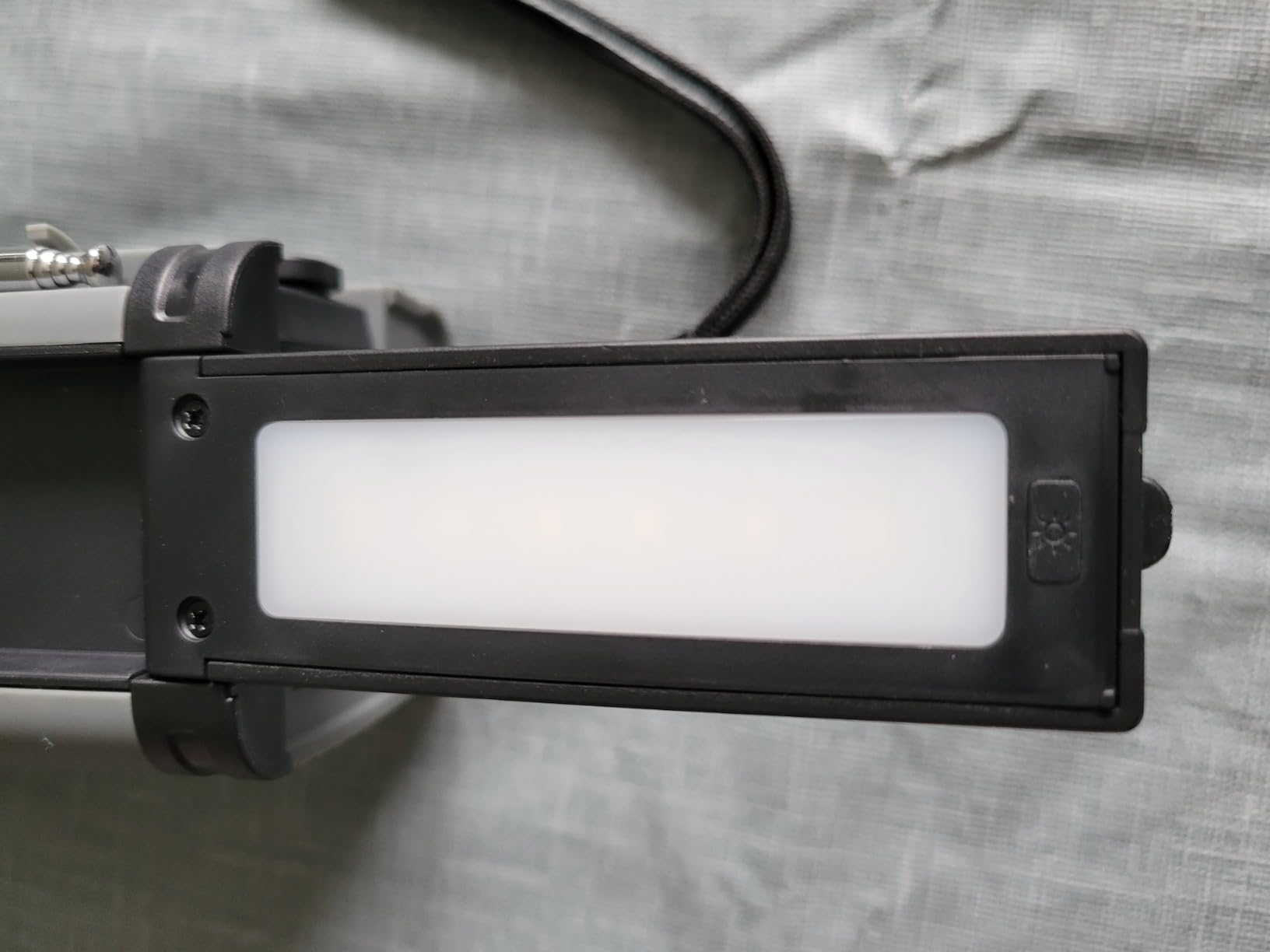
At 300 g and 5.31 inches long, the NITIGO is the lightest radio here with a 4000mAh-class pack, which is the combination most people looking for a travel radio are actually shopping for. The 14800mWh battery is genuinely useful: it will take a phone from flat to usable, which on an international trip is worth more than an extra band on the tuner.
The adjustable high-gain antenna is a real upgrade over fixed stubs. You can angle it toward a transmitter rather than just extending it, and owners on review sites point to reception as the feature that separates this from similar-looking budget units. The 180-degree rotating reading lamp is unusually versatile, letting you aim light onto a table or into a bag without repositioning the whole radio.
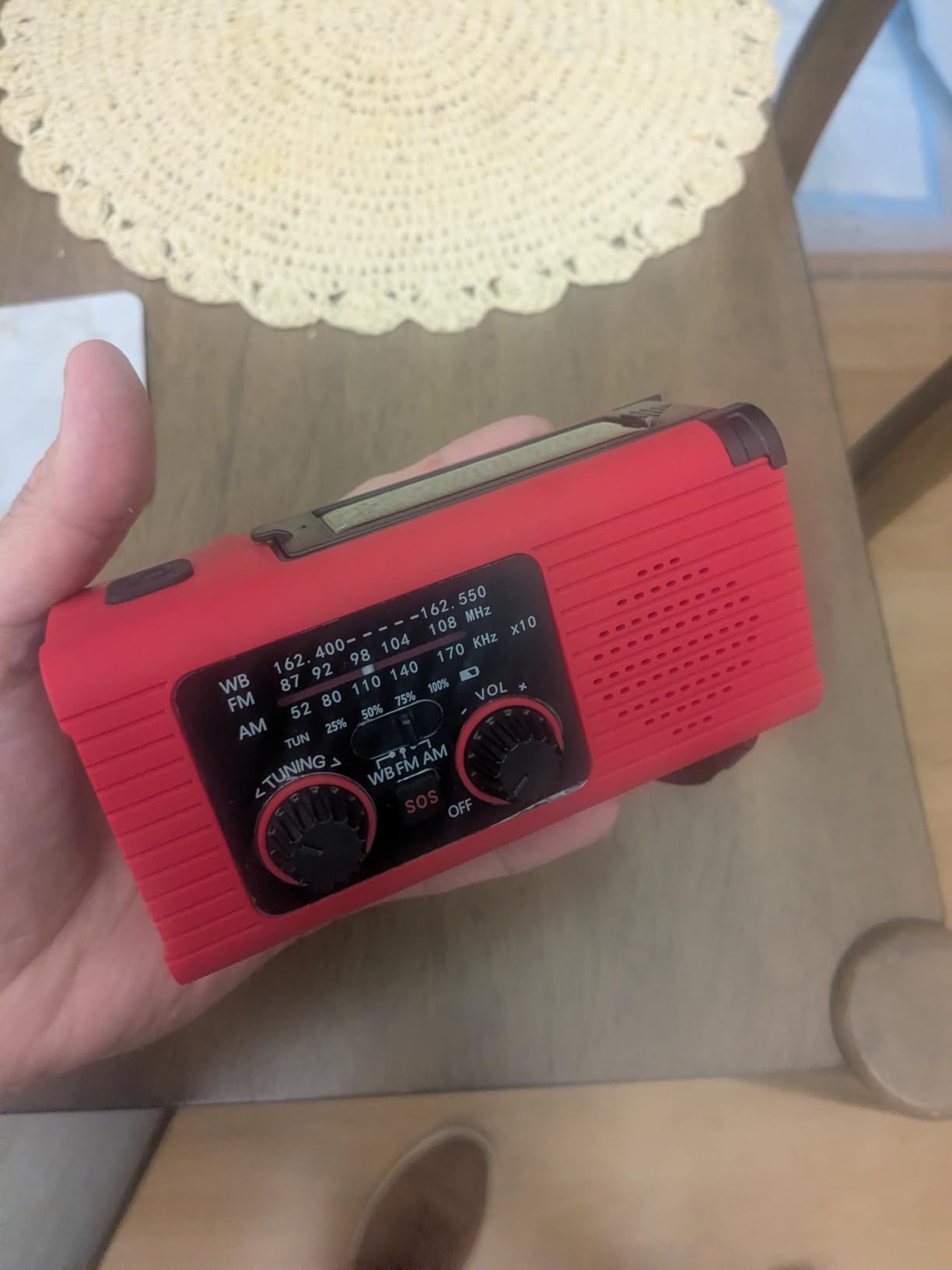
A loud SOS alarm with a flashing light covers the alert side, and a 3.5mm headphone jack lets you listen privately in a hostel or a shared room. Power comes from the rechargeable pack, hand crank, solar panel and USB-C, so you can top it up from a battery bank in a hotel or airport during a long trip.
Controls are basic, with no digital tuning readout. The waterproof claim is not backed by an IP rating in the listing, so treat it as splash-prone rather than sealed. And there is no shortwave band, so it is an AM, FM and NOAA receiver only.
Where the NITIGO fits best
Travel, air travel and hotel stays, where volume and weight are the deciding factors. It also works well as a go-bag radio for someone who wants phone charging without a bulky body, and the rotating lamp makes it a good bedside unit in a small room.
For anyone who wants a weather radio that is genuinely portable rather than technically portable, this is the one to buy.
Where it does not
There is no automatic alert scanning, so a family that will not tune a channel correctly needs the Raynic instead. Reception is fine on NOAA and AM/FM but there is no shortwave for long-distance listening.
It is also worth noting that similar 4000mAh radios from other brands cost slightly less, so the antenna and lamp are what you are paying the difference for.
8. Mesqool CR1030: Best Battery Capacity and the Only Real Solar Panel
Solar Radio Emergency Hand Crank 12000mAh with Clear Signal
12000mAh battery
8500mm monocrystalline panel
Upgraded crank
1.6 pounds
Pros
- Largest battery capacity here at 12000mAh
- 8500 square mm monocrystalline panel far larger than rivals
- Upgraded dynamo with a larger copper coil for stronger cranking
- High-sensitivity chip and extended antenna for clear reception
- 260 foot two-mode flashlight plus flip-up reading lamp
- Three-year replacement warranty
Cons
- Heaviest and largest unit here at 1.6 pounds
- Analog tuning knob with no LCD display
- Some listings advise a full charge before first use
This is the radio to buy if the thing that worries you is running out of power. The 12000mAh cell is the largest in this roundup by a wide margin, and at that capacity the USB output is a genuine power bank for several phones rather than a single rescue top-up. It is the only unit here that changes the arithmetic of a multi-day outage.
It also has the only honest solar panel here. The 8500 square millimetre monocrystalline cell is roughly four times the area of the small film panels on competing units, which is why it holds a useful charge on an overcast day when the others stall. The dynamo is upgraded with a larger copper coil, and the manufacturer claims nearly double the cranking efficiency of a standard unit. That is the number that matters if you are relying on cranking rather than a wall outlet.
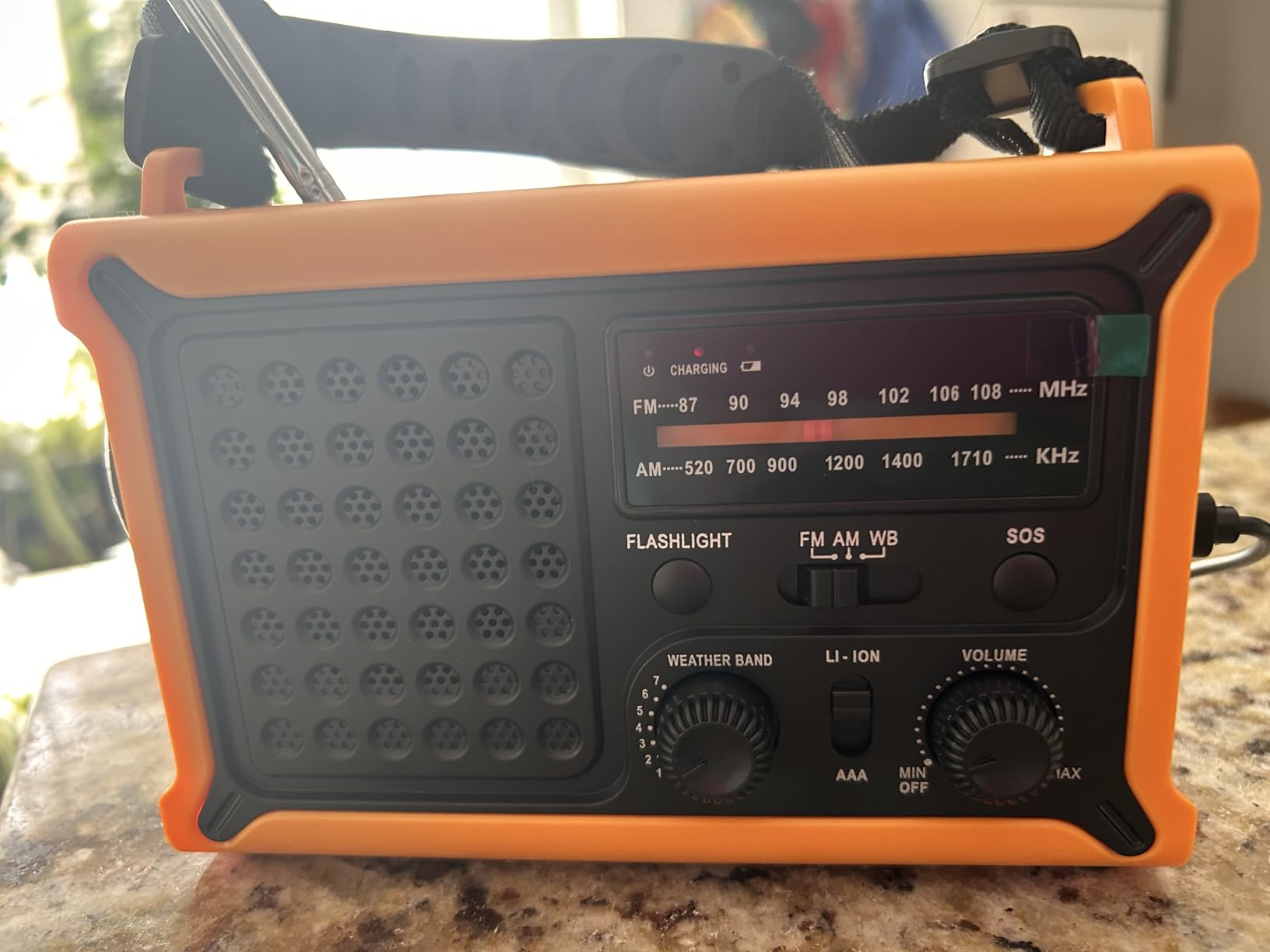
Reception hardware matches the power hardware. A high-sensitivity chip with noise reduction and an extended antenna cleans up NOAA, FM and AM, and the 5 watt speaker is among the loudest available. The flashlight reaches 260 feet with two brightness levels, and the flip-up frosted reading lamp does the indoor work. The warranty is three years of replacement or refund, the longest in the group.
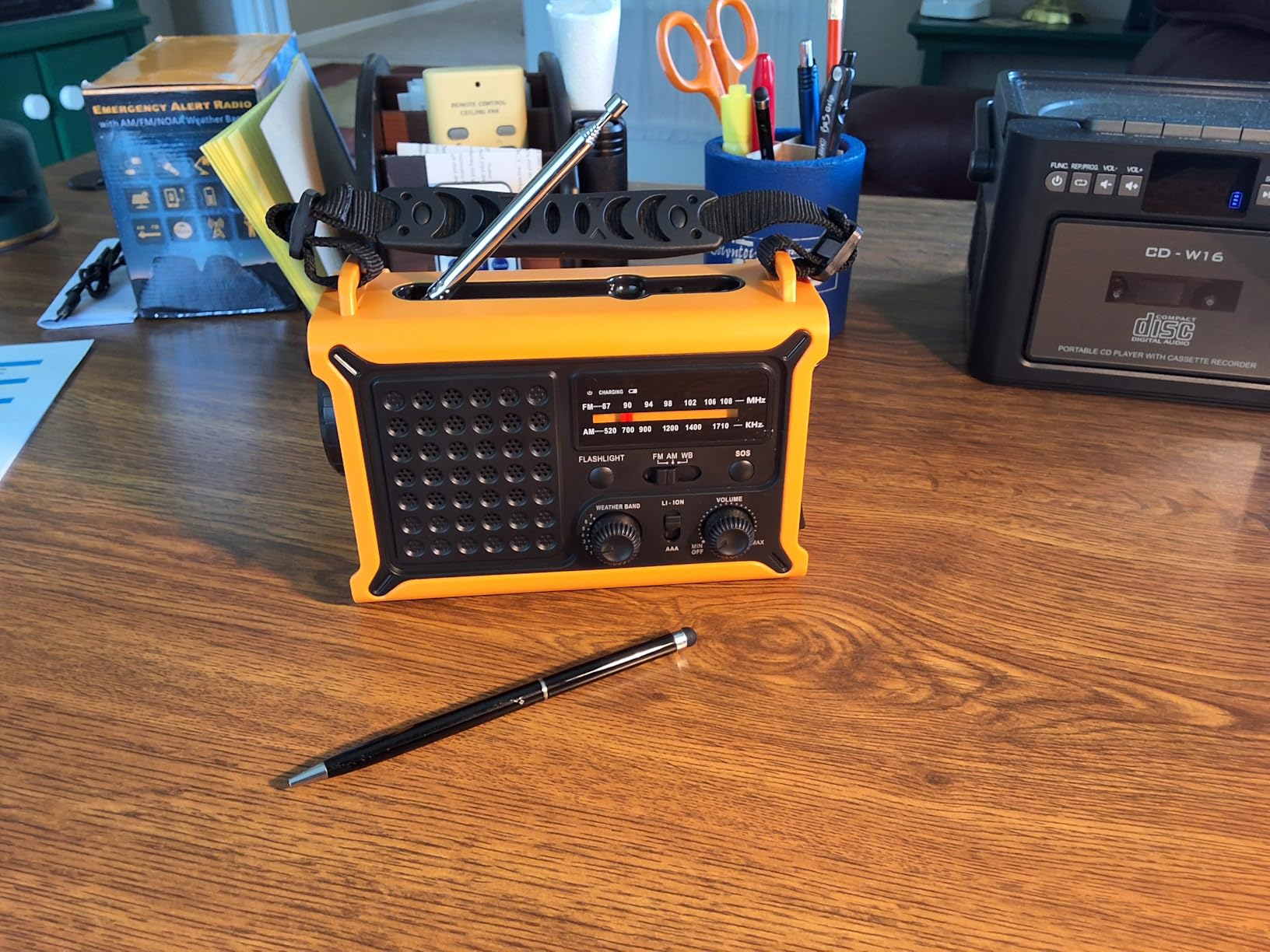
It is also the heaviest and largest radio here at 1.6 pounds and 6.8 by 4.7 inches. That is a real burden in a hiking kit, and it is why this is not our overall winner despite holding the highest star rating in the roundup. Tuning is by analog knob with no LCD, and some listings advise charging the pack fully before first use.
Who the Mesqool CR1030 is for
It is for households that plan for outages measured in days, families where several phones need power, and anyone who wants a radio that genuinely charges in the sun rather than one that merely exists in it. It is also the best single-radio choice for a home base because the battery is large enough to serve as a genuine power source for other devices.
If you are pairing a home radio with a portable one, this is the home unit and a slim crank radio is the go-bag unit.
Who should not buy it
Do not buy it for backpacking, travel or a vehicle kit. At 1.6 pounds with that footprint, it will be the first thing left behind when weight matters. The analog tuning also means it is less friendly for a household that will not touch knobs.
For those situations, a 300 g model with a smaller battery is the better trade.
9. Leaton A8: Best for Roadside Visibility and a Protected Battery
Emergency NOAA Weather Radio, 10000mAh, Solar Hand Crank Radio with AM/FM
10000mAh battery
LCD display
5V 2A USB-C input
115dB SOS alarm
Pros
- 10000mAh battery rated for about 300 cycles plus AA backup
- Overcharge over-discharge and short-circuit protection
- Alternating red blue purple warning light for roadside use
- 3-mode flashlight from 200 to 600 lux
- 5V 1A charging while still listening to the radio
- LCD display with clearly marked controls
Cons
- Manual NOAA tuning with no SAME codes or automatic alerts
- 5V 1A output is for emergency top-ups only
- Solar and crank will not fully recharge the battery
- Weighs 1.3 pounds
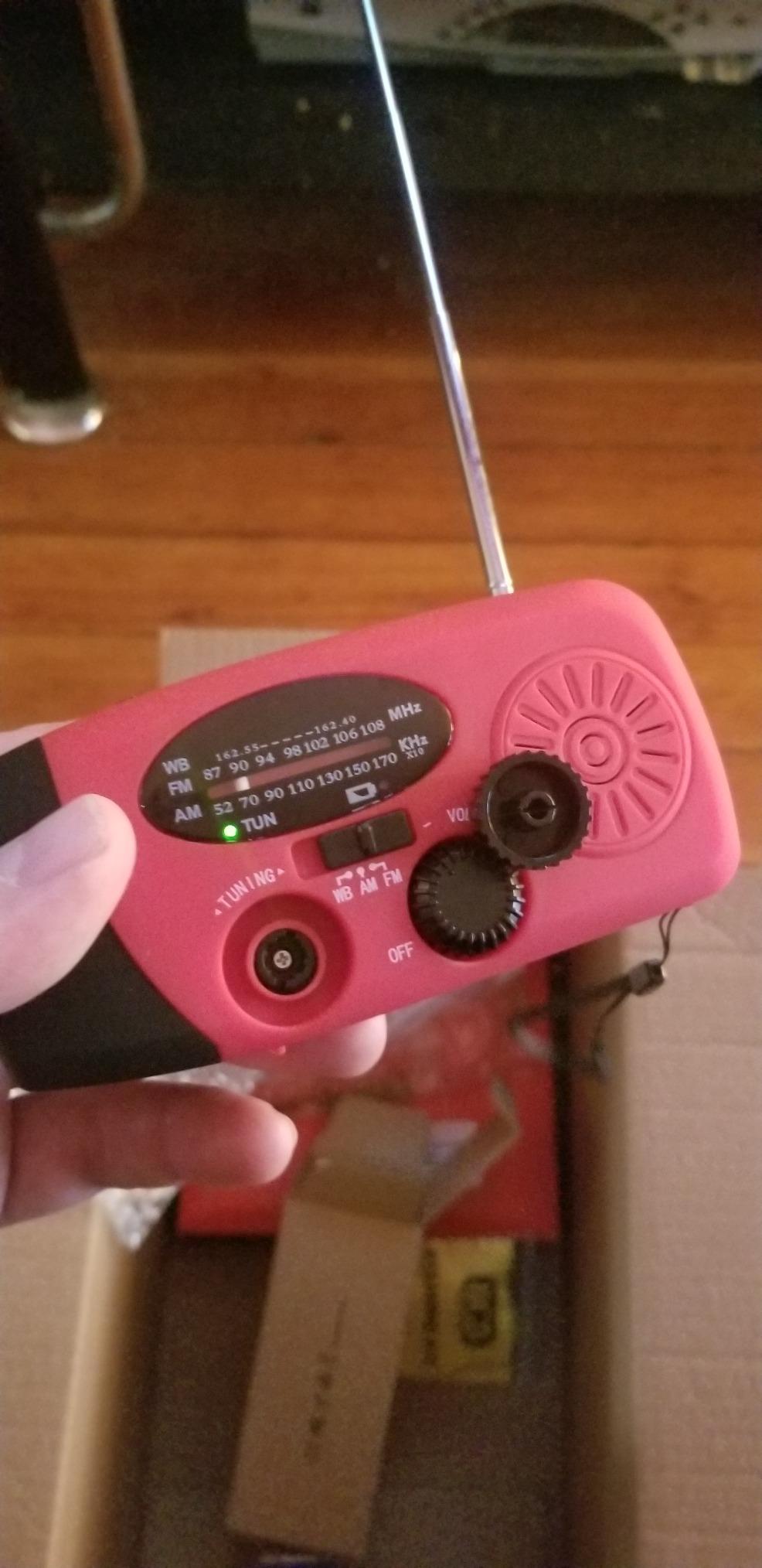
The Leaton A8 is built around a battery that is designed to be left alone for years. It is rated for roughly 300 charge cycles, and the pack includes overcharge, over-discharge and short-circuit protection. For a radio that will live in a garage cupboard between emergencies, that protection is the feature that decides whether it still works in five years.
The other reason to buy it is the light. An alternating red, blue and purple warning beacon is genuinely distinctive, and combined with a 115dB SOS alarm it makes this the most visible unit in the roundup. That is exactly what you want after a breakdown on an unlit road, where a white flashlight beam is invisible to passing drivers. The three-mode flashlight runs from 200 to 600 lux for actual work.
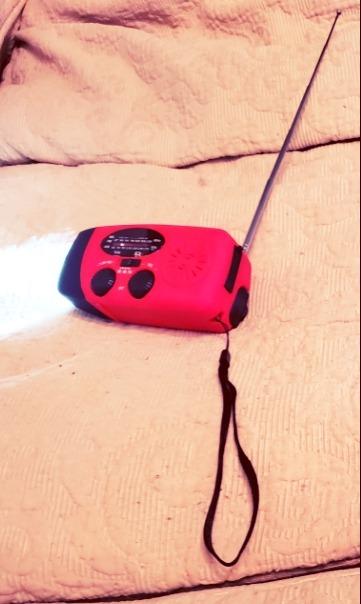
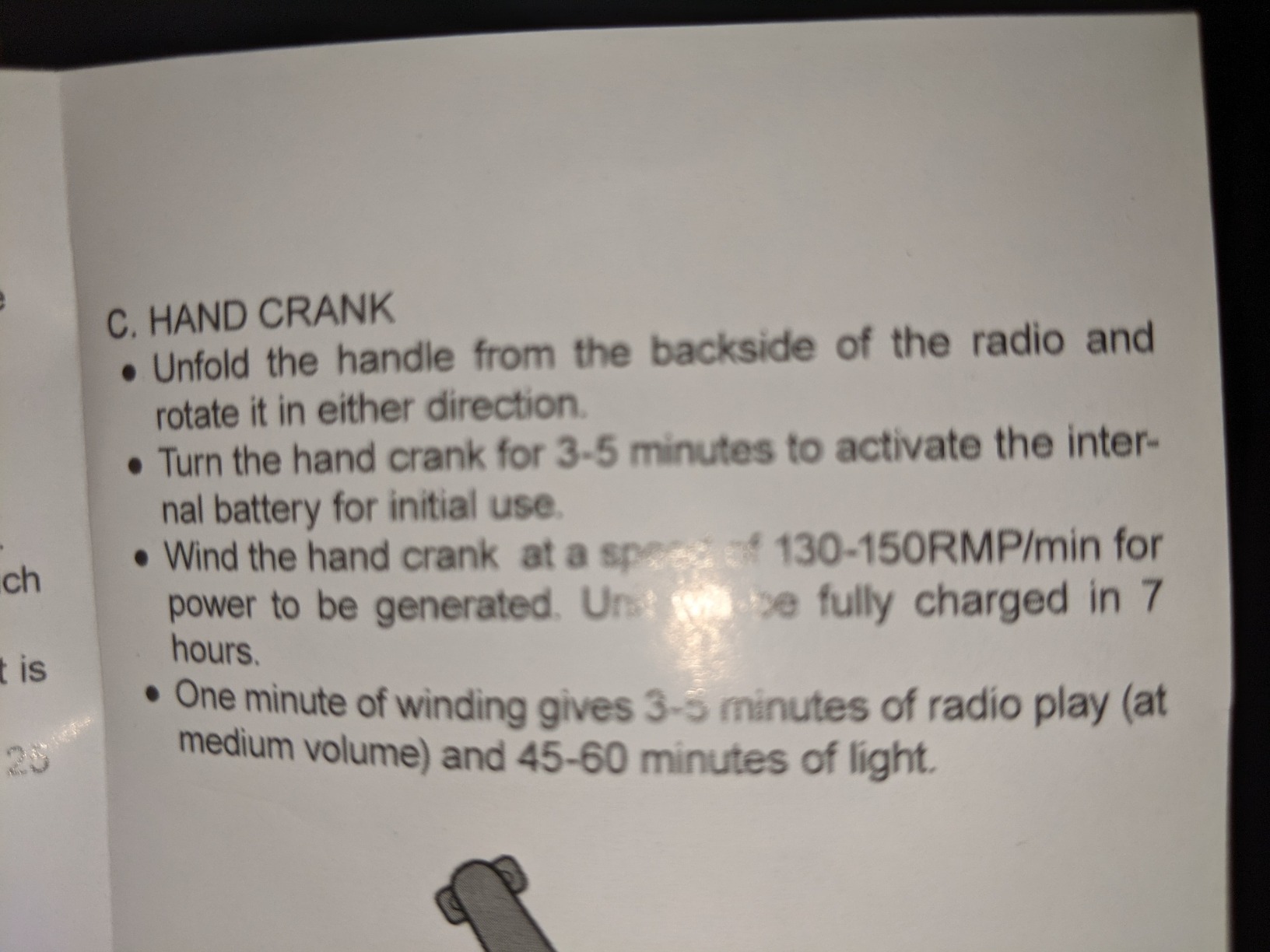
The LCD display has clearly marked controls, which sounds minor until you are operating it in the dark with gloves on, and a 3.5mm headphone jack is included. The 10000mAh pack gives roughly one to one and a half phone charges at 5V 1A, and you can keep listening while you charge. A full USB-C charge takes about four to six hours, and one minute of cranking gives roughly 20 minutes of radio operation, the most honest crank figure published in this group.
The significant drawback is alerting. NOAA tuning is manual, with no S.A.M.E. codes, no automatic scanning and no automatic warnings. You have to find and hold the right station yourself. The 5V 1A output is a top-up rather than a full charge, and the 1.3 pound weight is on the heavy side.
Why the Leaton A8 makes the list
It suits a vehicle kit better than any other radio here, because the warning beacon is designed for exactly that scenario. It also suits anyone who stores a radio for long periods and wants a protected battery with a published cycle rating rather than an unverified capacity claim.
The long crank-to-runtime ratio makes it a good choice for households that expect to be cranking rather than plugging in.
Why it is not the top pick
Lack of automatic NOAA alerting is a serious gap. If you rely on the radio to warn you rather than to inform you once you have tuned in, this is the wrong unit. The 1.3 pound weight also limits it to home and car rather than a pack.
For automatic alerts with a large battery, the Mesqool is the better comparison.
10. Leaton XSY-330: Best Water Resistance and Best Value at 10000mAh
Leaton Hand Crank Emergency Radio, NOAA Weather Radio AM/FM,10000mAh
10000mAh battery
PX6 water resistance
600 g
1 minute crank gives 15-20 minutes
Pros
- 10000mAh battery in a compact body
- PX6 water resistance is among the best in this roundup
- Lightest 10000mAh option here at roughly 1.1 pounds
- 3-mode flashlight plus 1.3W reading lamp
- Solar hand crank and USB-C charging
- Large controls and built-in compass
Cons
- No headphone jack and only a 3 watt speaker
- Manual NOAA tuning with no SAME codes
- No shortwave band
- Cannot charge more than one device
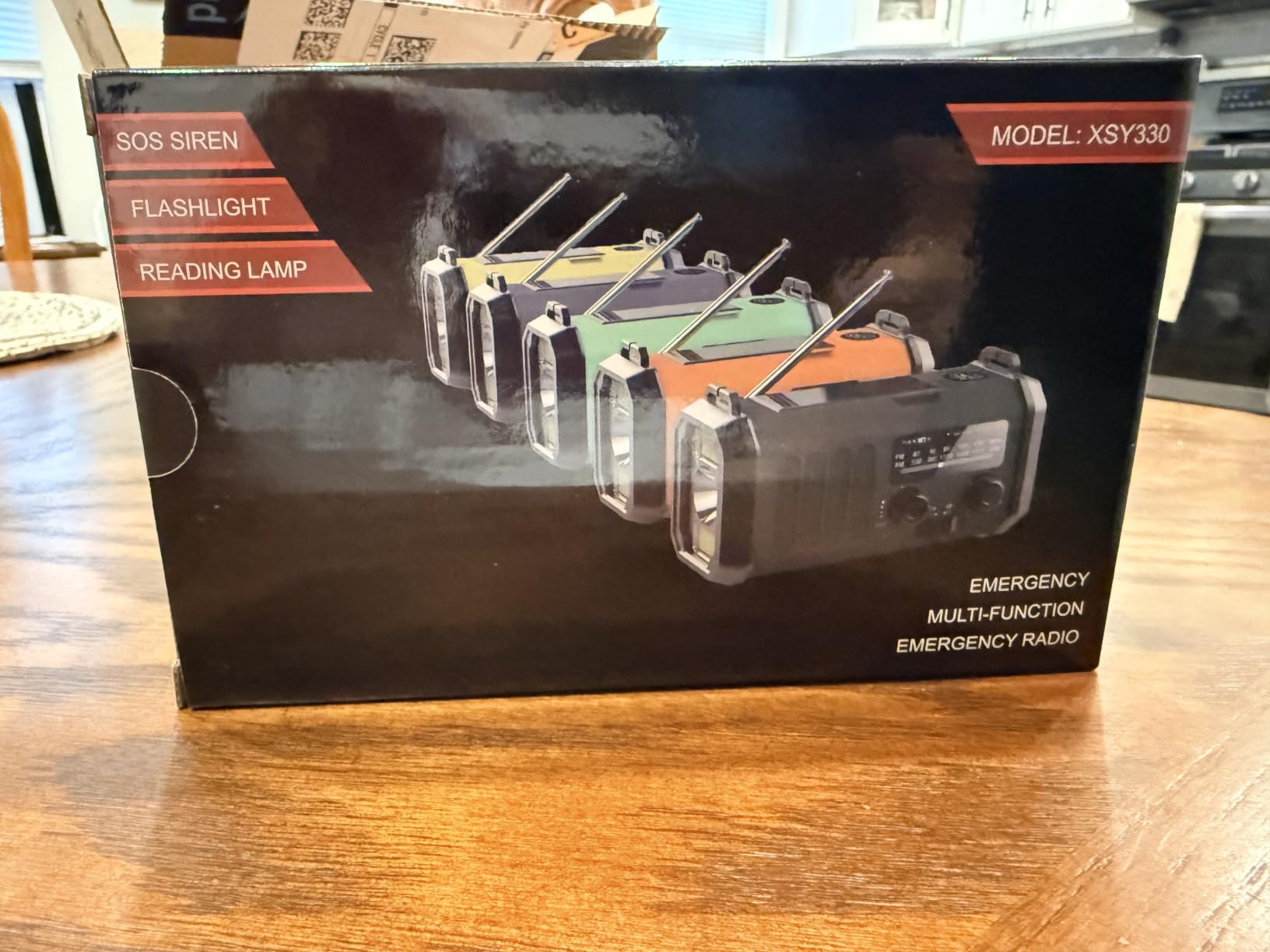
The Leaton XSY-330 is the value answer to the large-battery question. It carries a 10000mAh pack at 600 g, which makes it the lightest radio in this roundup with that capacity, and it has PX6 water resistance. Every other large-battery option here is either heavier or has no water rating at all, and that combination is what earns it a place.
PX6 means protection against powerful water jets, so it survives being rained on, dropped in a creek or hosed down after a muddy hike. For boaters, kayakers, forestry workers and anyone whose radio lives in a vehicle all year, that is a genuine feature rather than a marketing line. It also carries a built-in compass and large, easy-to-see controls aimed at users with reduced dexterity.
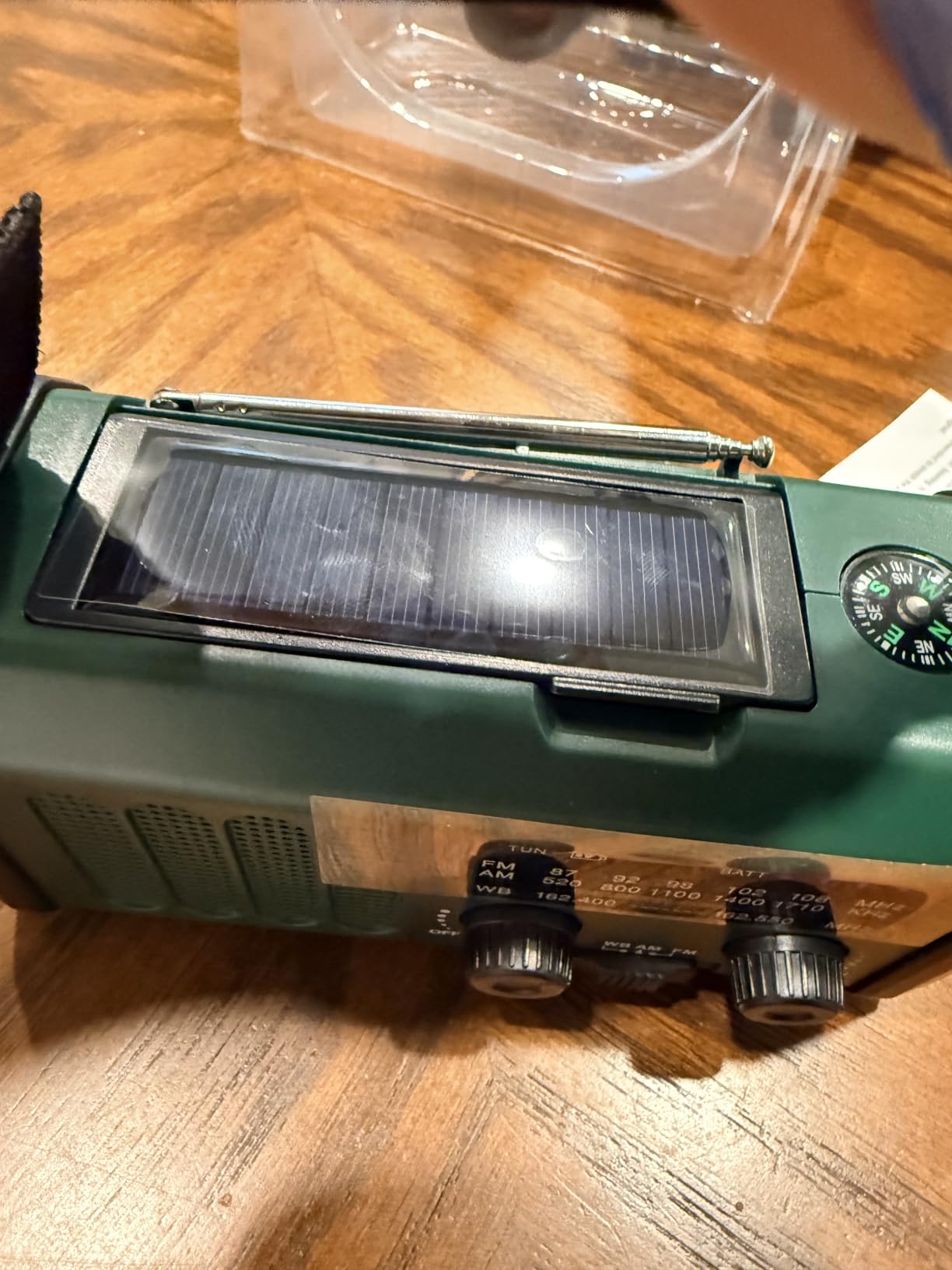
The flashlight has three modes including SOS signalling, and a 1.3 watt reading lamp sits alongside it. Solar, hand crank and USB-C give three charging routes, and the published crank figure is 15 to 20 minutes of listening per minute of cranking, which is honest and usable. The 5V 1A output produces roughly one to one and a half phone charges at current phone capacities.
Two things are missing. There is no headphone jack, so all audio comes through the 3 watt speaker, which is fine for alerts and poor for a long listen. And NOAA tuning is manual with no S.A.M.E. codes, so you tune the band yourself and there is no automatic alerting.
Why the Leaton XSY-330 is worth buying
It is the pick for anyone who needs a phone-charging battery in a package that can get wet. Boats, vehicles, kayaks, farms and jobsite kits are all places where a large-battery radio that survives water is more useful than a lighter one that does not.
It is also the least expensive way into the 10000mAh class, which is where phone-charging capability starts to matter for a whole family rather than one handset.
Why it lands at number ten
No headphone jack and a 3 watt speaker limit it to alert listening rather than general reception. The manual NOAA tuning is the same limitation as the Leaton A8, and no shortwave means it cannot be used for long-distance listening.
For home listening where you want more, the Kaito covers those gaps.
Solar vs Hand Crank vs Batteries: An Honest Power Source Comparison
Solar is the weakest of the four methods and the one most heavily advertised. Think of it as a maintenance function. A panel on a radio like the Mesqool CR1030 can keep a healthy pack topped up through a cloudy week, but the small film panels on most units need direct sun over a long period and will not rebuild a flat battery overnight. Use solar for the radio sitting in a south-facing window, and accept that it is doing quiet work.
USB is the real workhorse. A full charge through USB-C takes roughly 4 to 6 hours on the faster units and up to 16 on the Eoxsmile. If you can reach a wall outlet or a power bank at any point before the emergency, charge the radio then. This is the method that actually restores capacity, and it is why buying a radio with a modern USB-C port matters more than buying one with a bigger panel.
The hand crank is the emergency option, and it is genuinely useful for short bursts. The two honest published figures in this roundup are 20 minutes of operation per crank minute on the Leaton A8 and 15 to 20 minutes on the Leaton XSY-330. Sustained cranking is exhausting, and owners on r/preppers report hand cramping well before a full charge, so crank to the level you need and stop rather than grinding toward 100 percent.
Disposable cells remain the most underrated method. Three AA or AAA batteries can be bought anywhere, including during the outage, and they do not degrade the way a lithium pack does. The FosPower A1 and the Kaito KA500 both take AAAs or AAs as backup, which makes them the two most resilient units in a long disaster. A good kit holds a set of cells, and cycling them a few times a year keeps them from expiring on the shelf.
If you want the two-way and long-distance side of emergency communications rather than just broadcast alerts, our guide to CB and two-way radio covers the hardware that lets you talk instead of listen.
Best Solar Emergency Radio by Use Case
Home blackout: choose a radio with automatic NOAA alerting and enough capacity to serve the household. The Raynic CR1009Pro handles the alerting and the FosPower A1 handles the simplicity. If you want one unit that also charges several phones, the Mesqool CR1030 is the pick.
Go-bag: weight and phone capability decide it. The NITIGO at 300 g with a 4000mAh pack is the best balance, and the yesiwtc 090S is the choice if your bag has no room for a separate cable. The RunningSnail MD-090 is the upgrade if the extra 95 g is not a problem.
Car kit: the Leaton A8 wins here with its red, blue and purple warning beacon, which is designed to be seen by passing drivers. Keep it in the vehicle, not the garage, and charge it from the car USB port during long drives.
Hiking and backpacking: the NITIGO is the only radio here that is genuinely comfortable to carry for a full pack weight. Anything above 600 g changes how a hike feels, and the Mesqool at 1.6 pounds is a car radio, not a pack radio.
International travel: check the bands before you buy. US NOAA weather channels are useless outside the country, so a radio that also carries AM and FM plus shortwave serves you far better. The Kaito KA500 and the Eoxsmile both cover shortwave. Confirm your radio’s wall adapter voltage matches local supply, and remember that two-way radio regulations differ by country.
How to Choose an Emergency Radio With Solar Charging
1. Check the NOAA weather band and how it alerts. Every radio here receives the seven channels between 162.400 and 162.550 MHz, but only some scan automatically and sound a warning. If you want the radio to interrupt you, automatic alerting matters more than tuning precision.
2. Decide on S.A.M.E. programming where it exists. S.A.M.E., or Specific Area Message Encoding, lets a radio limit alerts to your own county using a six digit FIPS code instead of firing for every transmitter in the state. Without it, owners end up ignoring the radio. If your choice supports it, find your county code on the National Weather Service site, enter it during setup, and test the alert before you need it.
3. Size the battery against your phone use. Around 2000mAh gives roughly one phone charge. 4000mAh gives a solid top-up. 10000mAh and above covers a household for a couple of days. The largest pack in this roundup is 12000mAh, and it is 1.6 pounds, so there is a direct weight-versus-power trade you have to make deliberately.
4. Count the power inputs, and rank them honestly. USB is the fastest, crank is the emergency option, solar is maintenance, and cells are the last-resort insurance. A radio with all four is more resilient than one with three, but check that the wall adapter is included, because some units sell it separately.
5. Look at the antenna, not the branding. A 14.5 inch telescopic antenna, or an adjustable high-gain one, will pull in stations a 4 inch stub cannot. This is the difference between a useful radio and an expensive paperweight in a rural area or during a storm when the transmitter is fading.
6. Check water resistance honestly. IPX3 and IPX4 cover splashes. PX6 and IPX6 cover powerful jets. A waterproof claim with no rating behind it is a marketing line, not a specification, and there are two such claims in this roundup.
7. Consider the user, not the spec sheet. Large controls and a bright screen matter more for a household with older members. A reading lamp and a flashlight matter more than shortwave. A headphone jack matters if you plan to listen without waking people. The best radio is the one everyone in your home can actually operate.
How to Maintain Your Radio So It Still Works in Year Five
The most common owner regret we found in forum threads is not buying the wrong radio. It is buying the right one and finding a dead battery when the storm arrived. Lithium polymer and NiMH packs both lose capacity when left untouched, so a five-minute routine twice a year is the difference between a working radio and a paperweight.
First, top the battery up every three months. Plug it in or crank it until the indicator shows a full charge, even if you have not used it. Partial-storage chemistry degrades faster than a maintained one, and a full charge before storage is the safest state.
Second, store it part-charged rather than flat or completely full. Most manufacturers recommend a mid-range level for long storage, and both chemistries lose less capacity from a partial charge than from a total one.
Third, keep spare cells. Alkaline batteries expire, and the ones in the box when the radio arrived are frequently not included at all. Buy a set, write the date on them, and replace them on a schedule. If you cycle the radio, you will rotate the cells through naturally.
Fourth, place the solar unit where it can see direct sun for part of each day, on an interior sill rather than behind glass with heavy tint. Even a small panel contributes more as a top-up than as a decoration, and leaving it in the light keeps the pack moving.
Fifth, test it. Every few months, run the radio off its internal battery with the charger unplugged, listen to a NOAA channel, fire the flashlight and check the alarm. Ten minutes of testing tells you whether the pack and the speaker still work before you need both.
When a Small Solar Panel Isn’t Enough
None of the radios in this roundup will run a household for a week. Even the 12000mAh pack in the Mesqool CR1030 is a few phone charges, not a power supply, and the built-in USB outputs are slow by modern phone standards. If your plan depends on keeping several devices alive for days, a radio is the wrong tool.
The modular alternative is worth stating plainly. A small portable power station with a folding solar panel and a USB socket can charge any rechargeable radio, plus a phone, a router and lights, and it is the approach that prepper communities on r/UKPreppers and bushcraftusa recommend in preference to integrated panels. A separate power bank is a cheaper version of the same idea and handles the phone-charging job that owners most often find disappointing in an emergency radio.
If your household already runs a larger solar setup, our picks for EV charging cables for home solar cover the cable and panel side of that installation, which is the part that decides how much power reaches a backup device.
So the honest split is this. Buy a radio with solar charging for alerts, lighting and reception. Buy a power bank or a portable power station for device power. Keeping those two jobs in two devices is cheaper than expecting one radio to do both.
How We Picked These Radios
We compared ten solar and hand-crank emergency radios that ship with multiple power sources, an AM and FM tuner and NOAA weather band reception. Selection was weighted toward verified owner volume rather than marketing claims, because this is a category full of near-identical white-label listings with unverifiable specification sheets. Every pick here carries a substantial public review history, and we publish the star rating and review count for each one alongside the specification data.
Products were ranked on four things: the amount of usable power from the battery and the charging paths available, the reception hardware including antenna length and alert capability, the build and water resistance, and the physical weight against the use case it suits. Where owners consistently report a limitation, we said so, including on the radio we ranked first.
This article was reviewed in 2026 and the ratings and review counts reflect that review. Prices change constantly, so use the buttons to check the current listing rather than any figure you may have seen elsewhere.
Frequently Asked Questions
What is the most reliable emergency radio?
Reliability comes from three things: a large review history, multiple independent power sources and a protected battery. On that basis the FosPower A1 leads this roundup, with the largest verified review base of any solar crank radio and support for solar, hand crank, four AAA cells and USB-C. The Leaton A8 adds overcharge and short-circuit protection, and the Mesqool CR1030 offers the largest battery and the only genuinely large solar panel.
Are solar-powered radios any good?
Solar is a maintenance feature rather than a rescue charger. A small film panel needs hours of direct sun to add a useful amount of charge, and most do not rebuild a flat battery in a storm. Treat solar as a fourth option after USB, hand crank and stored cells. The exception is the Mesqool CR1030, whose 8500 square millimetre monocrystalline panel is roughly four times the area of what competitors fit.
What is the best power source for an emergency radio?
USB charging is the most useful, since a full charge takes roughly 4 to 6 hours on most units and restores real capacity. The hand crank is the emergency option, with published figures of 15 to 20 minutes of listening per minute of cranking on the Leaton models. Disposable AA and AAA cells are the most underrated, because they can be bought during the outage itself. Solar sits last as a slow top-up.
What is the best solar emergency radio?
The FosPower A1 is our overall pick for its review history, three independent power sources and 7400mWh power bank output. The Raynic CR1009Pro is the best value, adding automatic NOAA alert scanning, an HD LCD and six power options at 5000mAh. The Mesqool CR1030 is the best pure solar performer, with a 12000mAh battery and an 8500 square millimetre monocrystalline panel.
What is the best radio for emergency preparedness?
For most households a radio that automatically scans NOAA, runs on multiple power sources and charges a phone is the right answer, which points to the Raynic CR1009Pro or the FosPower A1. Add a second, portable crank radio for the go-bag. If your concern is power for several devices over several days, pair either one with a separate power bank rather than expecting a radio to cover it.
What is the best radio to use during nuclear war?
No consumer radio is designed for that scenario, and we would not claim otherwise. A NOAA weather radio is still the practical choice because it receives official government broadcasts, and models with AM, FM and shortwave such as the Kaito KA500 cover more of the broadcast spectrum. Pair it with battery-powered lighting, stored water and a two-way radio, and follow official guidance rather than relying on any single device.
What is the best radio to have in an apocalypse?
The most useful setup is two radios rather than one: a large-battery unit such as the Mesqool CR1030 as a home base, plus a light portable unit such as the NITIGO in the go-bag. Add a shortwave receiver or a two-way radio for communication beyond broadcast alerts, and treat a portable power station as the answer for device charging, since no emergency radio sustains phone power for days on its own.
Is there a solar-powered FM radio available?
Yes. Every radio in this roundup receives FM alongside AM and the NOAA weather band, and all of them add solar charging to the other power options. If FM is your main requirement, the FosPower A1, Raynic CR1009Pro and RunningSnail MD-090 all cover it with more than 20000 verified reviews each between them.
The Best Emergency Radios With Solar Charging, Verified
For the widest evidence base and the simplest operation, the FosPower A1 is the best emergency radio with solar charging for most households. If you want automatic county-level alerts and a digital readout, the Raynic CR1009Pro is the better fit. If power is the real worry, the Mesqool CR1030 with its 12000mAh cell and genuinely large solar panel outlasts everything else here, and the Kaito KA500 remains the reception benchmark thanks to its 14.5 inch antenna and shortwave coverage.
Whichever you choose, buy two cells, program your county code where the radio supports it, and top the battery up every three months. That habit matters more than any feature on the specification sheet.