
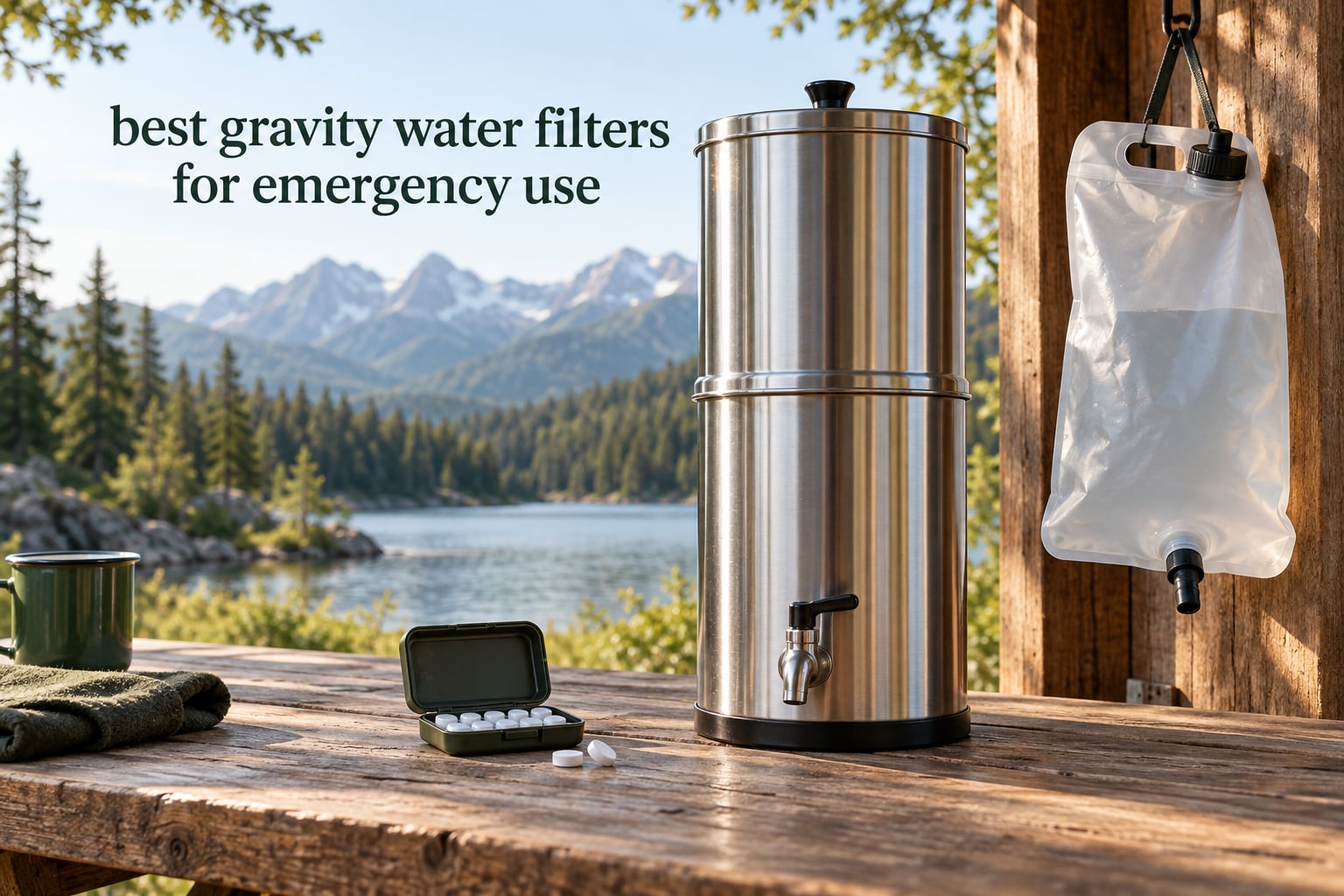
Power goes out, the taps run brown, and the boil-water advisory goes out at the same moment. In that window, the only filters that keep working are the ones with no pump, no batteries and no faucet connection. That is why the best gravity water filters for emergency use sit in our kitchens, garages and go bags rather than under the sink, where an outage means an empty pitcher and nothing to draw from.
We spent weeks comparing ten gravity systems against what actually matters during a disruption: how fast they produce water when four people are home, how long the elements last in storage, whether the certification is written down, and what they refuse to remove. We also checked what the preparedness forums actually ask about, because the recurring questions are about viruses, freeze damage and refill cycles, not about taste.
This guide covers countertop chambers, hanging bag systems and compact go-bag filters, and it names the gaps plainly. Gravity filtration handles bacteria and protozoa well. Viruses are a different story, and we tell you which one unit here addresses that and what to carry alongside it. The short version: the best backwashing filters for well water handle a different job entirely, and we explain where that line sits.
Table of Contents
Top 3 Picks for Emergency Water Filtration in October 2026
Waterdrop Gravity Filter Straw
- 700 ml/min flow
- 0.1 micron hollow fiber
- 1400 gallon element
- 1.5 gallon bag
LifeStraw Family 12 L Purifier
- Removes viruses
- 0.02 micron membrane
- 18000 liter capacity
- No chemicals

Big Berkey 2.25 Gal System
- 2.25 gallon stainless chambers
- 6000 gallons per pair
- No plumbing or power
- Nests for storage
The Best Gravity Water Filters for Emergency Use in October 2026
Every product below runs without power or plumbing. The table is the fast version; the reviews that follow cover the details that decide whether a system is useful when the water is bad and the lights are off.
| Product | Specifications | Action |
|---|---|---|
| Waterdrop Gravity Filter Straw |
|
Check Latest Price |
| Big Berkey 2.25 Gal System |
|
Check Latest Price |
 Sawyer SP160 Gravity System Sawyer SP160 Gravity System |
|
Check Latest Price |
 Purewell 3-Stage Countertop System Purewell 3-Stage Countertop System |
|
Check Latest Price |
 SimPure Gravity-Fed Filter 3L SimPure Gravity-Fed Filter 3L |
|
Check Latest Price |
 Membrane Solutions 6L Pro Membrane Solutions 6L Pro |
|
Check Latest Price |
| LifeStraw Family 12 L Purifier |
|
Check Latest Price |
 Katadyn BeFree 10L Katadyn BeFree 10L |
|
Check Latest Price |
 LifeStraw Peak Compact 3L LifeStraw Peak Compact 3L |
|
Check Latest Price |
 Outback Water 24 GPD System Outback Water 24 GPD System |
|
Check Latest Price |
1. Waterdrop Gravity Water Filter Straw: Best Overall for an Emergency Kit
Waterdrop Gravity Water Filter Straw, Camping Water Filter, 0.1 Micron
0.1 micron hollow fiber
700 ml/min max flow
1.5 gallon bag
1400 gallon element
Pros
- Flow rate high enough to keep a group supplied
- Backflushable with the included collapsible bottle
- Packs down to a very small volume
- 1400 gallon element life
- Works as a straw or hung from a bag
Cons
- Reservoir bag can spill when set down full
- Weak against tannin taste
- Flow clamp slows rather than stops flow
This is the kit we kept reaching for during testing because it produces water faster than anything else in its class and it needs no assembly. You fill the 1.5 gallon bag, hang the filter, and it runs at up to 700 ml per minute. That is fast enough that nobody waits, which matters more in a household outage than any spec on the box.
The 0.1 micron hollow fiber membrane is multistage, handling chlorine, sediment, sand, particulates, bad taste and odor. Filter life is rated at up to 1400 gallons, and the element backflushes using the collapsible bottle in the kit, so you are not carrying spare parts.

Reviewers consistently report no illness after multi-day trips, with 77 percent five-star ratings across 4151 reviews. The element fits inside a standard 27.5mm bottle thread at both ends, so you can run it into a bottle instead of a bag when the bag is the problem.
Two honest limits. The reservoir is a soft bag that some owners say will spill if you set it down while full, so hang it or hold it. And on tannin-stained water from swampy sources, the output keeps the color and the taste, because the membrane is built for pathogens and sediment rather than for removing organic flavor compounds.

What to check before the water goes bad
Check the flow clamp and the drainage valve hose, because those are the two parts you will fumble with in the dark. A purge cycle with the backflush bottle clears the element and confirms the membrane is intact, which takes two minutes and saves you from discovering a fault mid-outage.
TDS support is up to 500 ppm, so on very hard or salty source water expect the output to still taste mineral. Backflush after each trip, and store the element sealed and dry rather than wet, which is the single most common way a stored filter gets wasted.
Who should skip it
Skip it as your only household system if you need more than a couple of gallons at a time, because a 1.5 gallon bag means constant refilling with four people home. It also will not do anything about viruses, and a tannin-heavy swamp source will leave you with clearer water that still tastes like the swamp.
If you want a single bag system that covers a family of four for a weekend, look at the Katadyn BeFree 10L further down. If you want the same speed with documented certification, the Membrane Solutions 6L is the stronger paperwork story.
2. Big Berkey 2.25 Gallon Gravity System: Best for Families
Big Berkey 2.25 Gal Gravity Water Filter System with BB9-2 Filters
2.25 gallon stainless chambers
6000 gallons per element pair
No power or plumbing
Nests for storage
Pros
- High capacity for a household or shelter
- Very long element life and low cost per gallon
- Polished AISI 304 stainless build
- No installation of any kind
- Users report clean water with no chemical flavor
Cons
- Priming the elements is finicky
- Plastic spigot can leak
- No water level gauge and no stand included
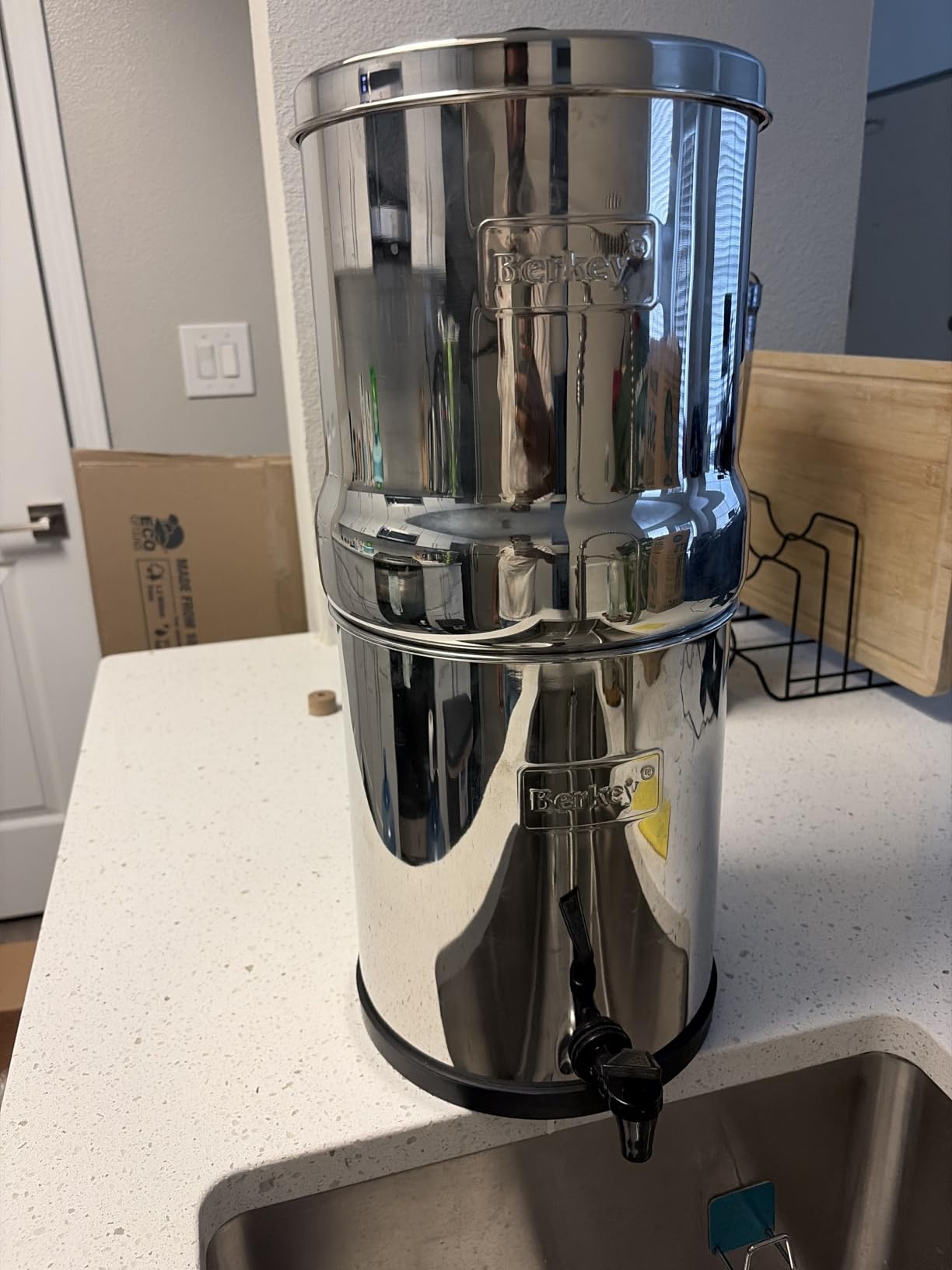
The Big Berkey is the highest reviewed system in this roundup at 4372 reviews, and owners talk about it like an appliance rather than a camping tool. Two 2.25 gallon chambers in polished AISI 304 stainless steel, sized by the manufacturer for roughly one to four people, and the whole thing nests inside itself when you are done.
Each pair of elements is rated for up to 6000 gallons before replacement, which is the number that actually drives cost per gallon over a lifetime. No electricity, no plumbing, no tools and no water pressure, and TDS support goes to 1000 ppm, double what most units here handle.
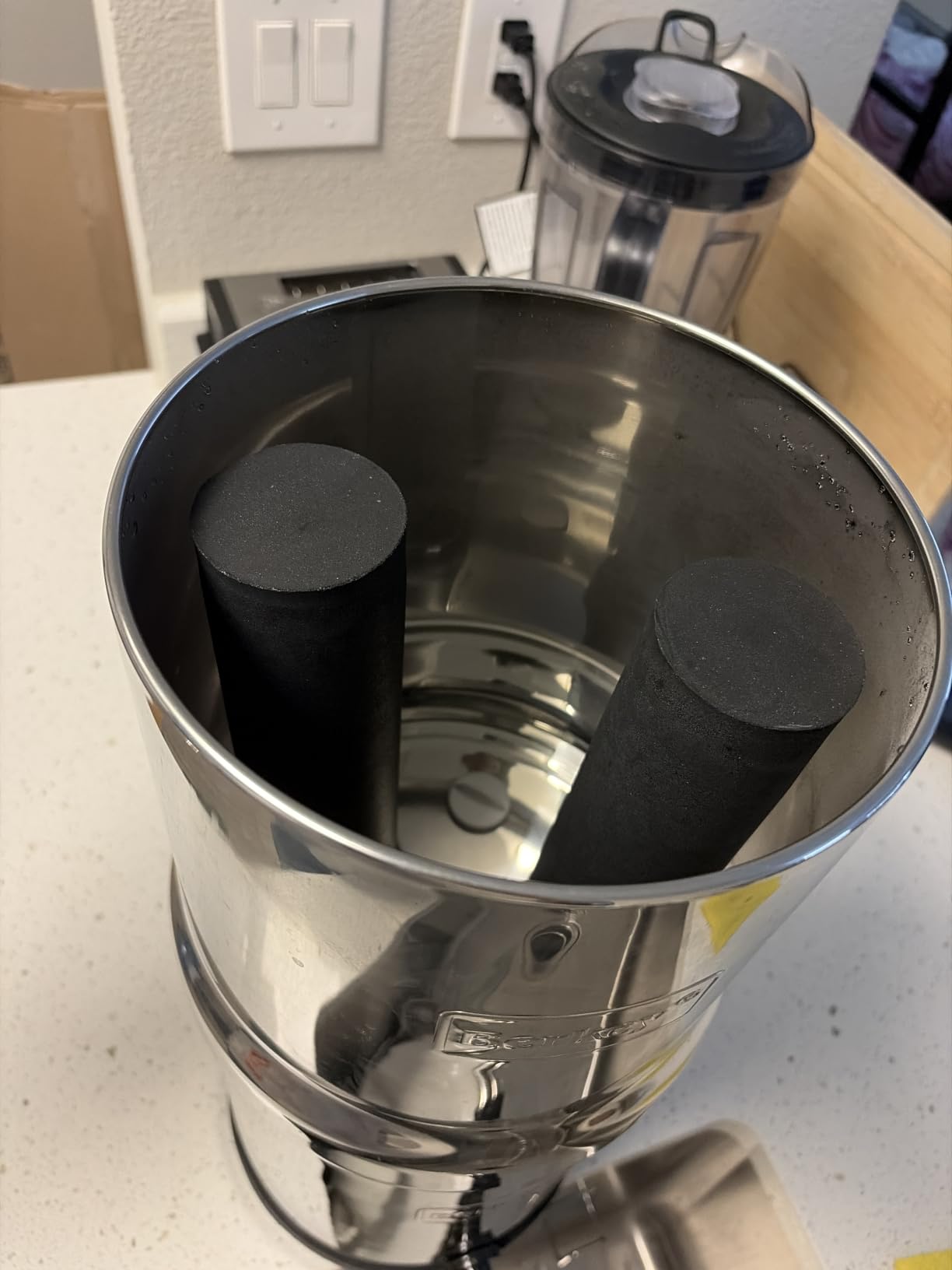
Owners report water that tastes clean with no chemical flavor, and one reviewer specifically rated it for filtering surface water as a grid-down backup. The system measures 8.5 inches across by 19.25 inches tall assembled and weighs 3.3 kg, so it needs a counter with real space, not a corner of a sink.
The complaints are consistent enough to plan around. Priming the elements is genuinely effortful, the faucet adapter is awkward on spray taps, and the included plastic spigot is the part most likely to leak, which is why owners upgrade to the stainless spigot. There is no water level gauge on the lower reservoir and no stand in the box.
What to check before the water goes bad
Prime the elements with clean tap water and run them until the output runs clear before you ever need the system. One detailed negative review involved a used unit failing a dye test, which is exactly the failure mode a fresh user should rule out on day one rather than during an emergency.
Plan your fill schedule with a number instead of a guess. At 2.25 gallons per fill, a family of four drinking and cooking at 12 gallons a day is running six fill cycles. Upgrading the spigot takes a few minutes and removes the most common leak complaint.
Who should skip it
Skip it if certification paperwork is your deciding factor, because the certification question around this brand is the most argued topic in preparedness forums and we address it in the buying guide. Skip it if you need something you can carry, or if your household is larger than four and drinking water is not the only use.
For a well water property where you want treatment across the whole house rather than one drinking tap, read our iron filter guide for well water first. For households wanting a documented virus claim, the LifeStraw Family is the honest comparison.
3. Sawyer SP160 One Gallon Gravity System: Best for Go Bags
Sawyer Products SP160 One Gallon Gravity Water Filtration System w/Dual-Threaded Mini Filter, Blue/White/Clear
0.1 micron absolute filtration
43 g total weight
1 gallon bladder
100000 gallon element
Pros
- Weighs almost nothing and packs flat
- Backflushes in seconds with the included plunger
- Interchangeable fittings for bottles and containers
- Highest TDS tolerance in this roundup
Cons
- Rigid bladder is bulky and awkward to pack
- Inlet placement is awkward at shallow sources
- Bag does not hang naturally to drain
For weight discipline this is hard to beat. The MINI filter fits in the palm of your hand at 2 ounces, and the whole packaged system weighs 43 grams. It is the unit we would put in a bug-out bag, because you can carry a spare without thinking about it.
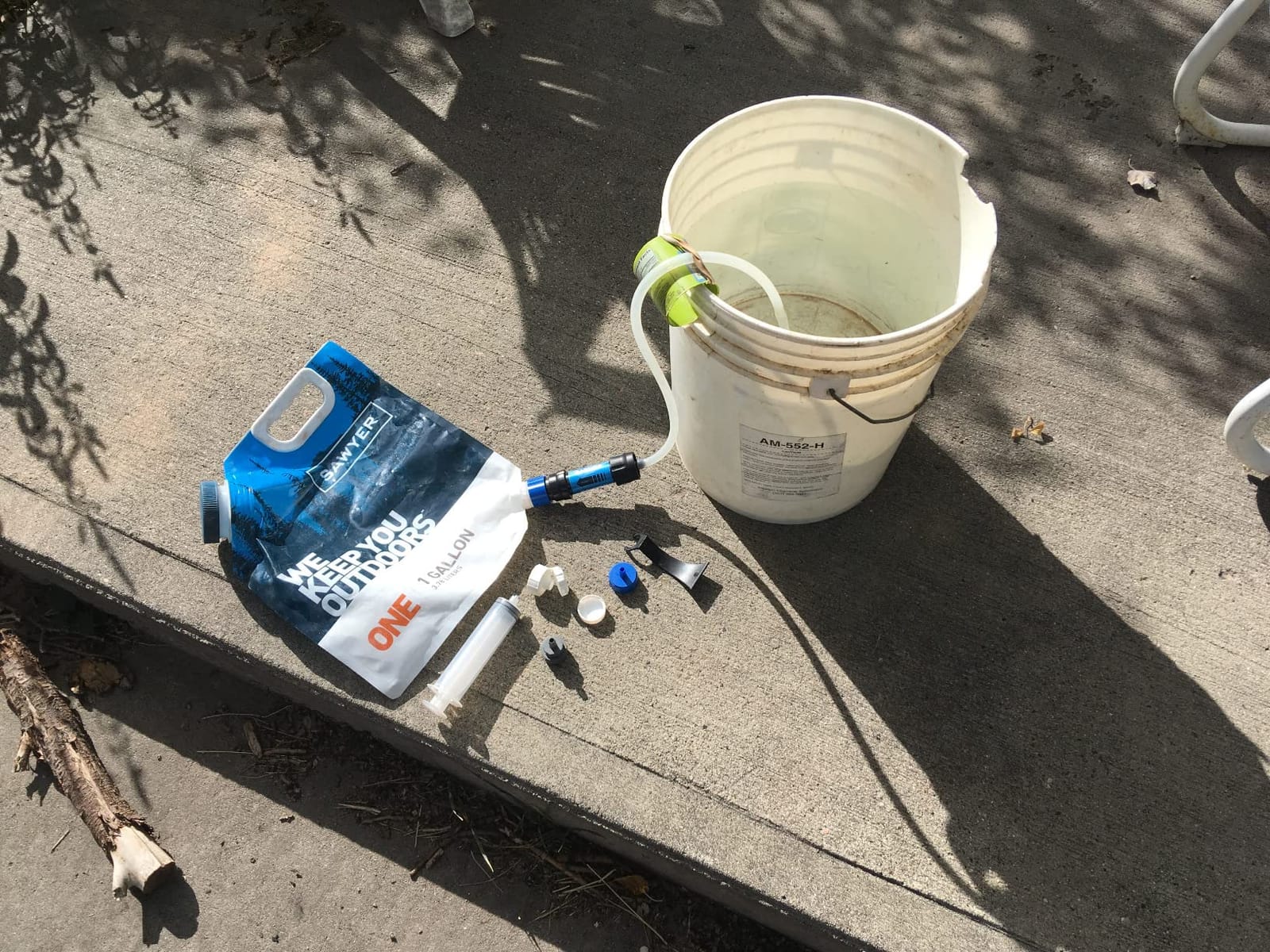
The filtration itself is the strongest argument. This is 0.1 micron absolute hollow fiber, each unit individually tested three times, and the element is rated by the manufacturer to 100,000 gallons. It backflushes with the included plunger and coupling, so field maintenance needs no tools and no spare cartridges.
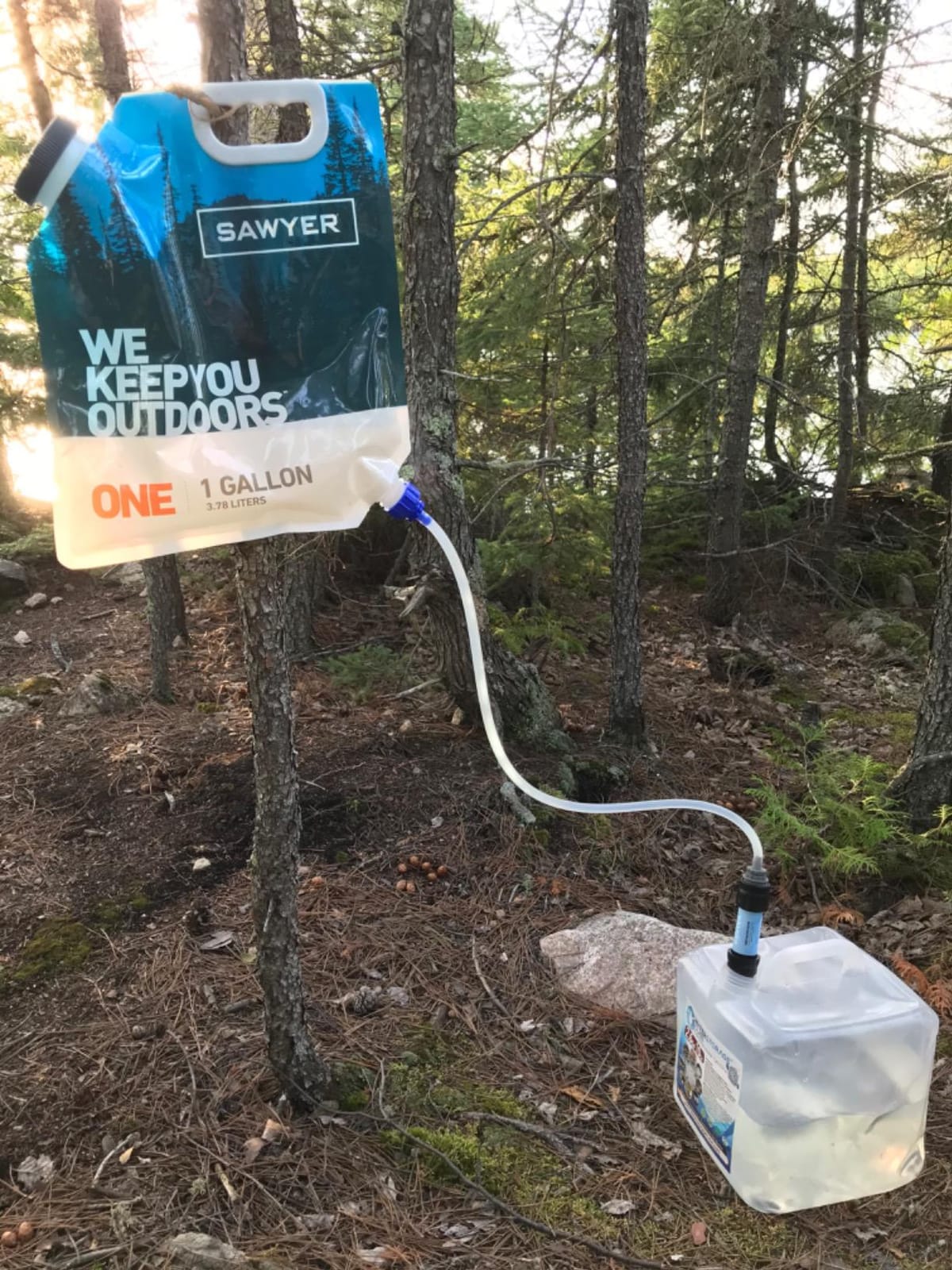
TDS support up to 2000 ppm is the highest in this roundup, which matters if you are drawing from a hard-water area or mixing treated water with a stored reserve. The dual-threaded cap runs into standard water bottles and Platypus-style containers, so the reservoir is optional rather than mandatory.
The bag is where owners complain. Across 2201 reviews the filter is almost universally praised and the 1-gallon bladder is not: it is rigid, crinkly, and the cap sits perpendicular to the bag so it sticks up even when folded. The inlet placement is the single most repeated complaint, and users recommend bringing twine and refilling often with groups.
What to check before the water goes bad
Test the male-to-male bottle adapter before a trip, because it is known to trap air and stall flow. Running a backflush and then filtering a liter of clean water tells you in five minutes whether your hose and adapter configuration actually moves water.
Pack the bladder separately or accept the volume. The filter itself is packable in a coat pocket; the bag is the piece that eats space, and rigging it with twine is the standard fix rather than an upgrade.
Who should skip it
Skip it if you are filtering for more than two people from a single fill, because a 1 gallon reservoir in a group is a constant refilling exercise. Skip it if viruses are part of your threat model, since a 0.1 micron filter will not touch them.
If your go bag also needs a personal drinking filter for hiking days away from the kit, our backpacking water filter picks cover that use case in more depth.
4. Purewell 3-Stage 0.01 Micron Countertop System: Best for Certified Filtration
Purewell 3-Stage 0.01μm Ultra-Filtration Gravity Water Filter System, NSF/ANSI 42&372 Certification, 304 Stainless Steel Countertop System with 2 Filters and Stand, Reduce 99% Chlorine, 2.25G, PW-OB
0.01 micron hollow fiber
About 4 gallons per hour
NSF/ANSI 42 and 372
Spigot and stand included
Pros
- Finest pore size in this roundup
- Documented NSF/ANSI 42 and 372 certification
- Spigot and stand ship in the box
- Gravity powered for indoor and outdoor use
Cons
- Does not reduce TDS
- Elements dated to a 6 month interval
- Cannot refill the upper chamber while clean water sits below
If your decision rule is written certification, this is the clearest one in the group. The system is certified to NSF/ANSI 42 for chlorine reduction and to NSF/ANSI 372, and the element combines a 0.01 micron hollow fiber ultrafiltration membrane, a silver ion membrane and an activated carbon block.
At 0.01 micron the pore size is the finest here, which is the number buyers care about when the source is untrusted. Flow is around 4 gallons per hour, more than adequate for a household drinking and cooking load, and each element is rated 3000 gallons with two supplied.
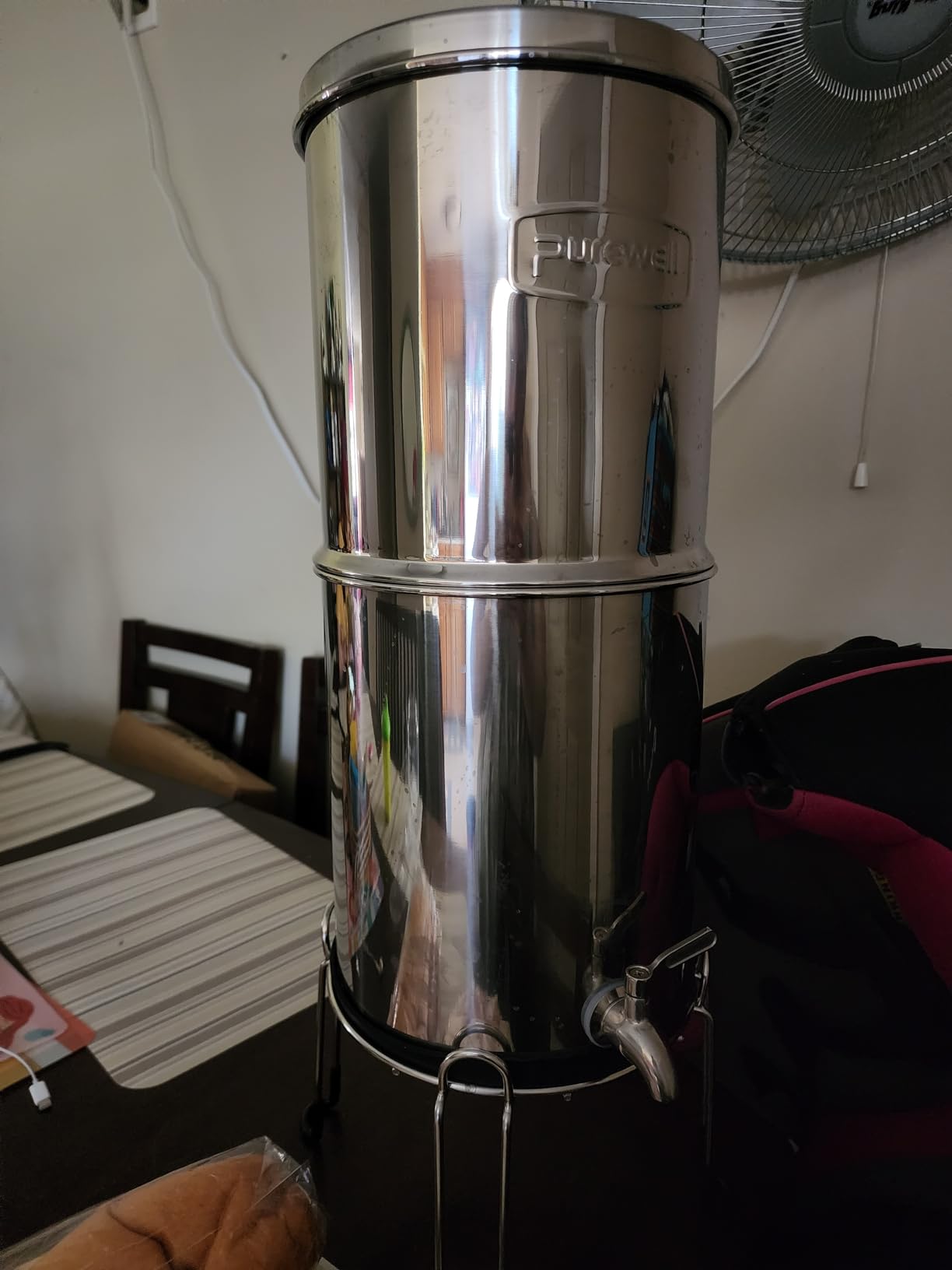
The package is unusually complete. A 304 food-grade stainless housing, a matching stainless spigot and a non-slip stand all ship in the box, which removes the two accessories most competitors make you buy separately. The system is 8.9 inches square by 20 inches tall and weighs 8.5 pounds.
It carries the lowest average rating in this roundup at 4.4, with 8 percent one-star reviews, and the reasons are specific. It does not lower TDS, so hardness and dissolved solids pass through. The elements are dated to a 6-month replacement interval whether or not you hit the gallon rating, which is a real cost in a stored kit.
What to check before the water goes bad
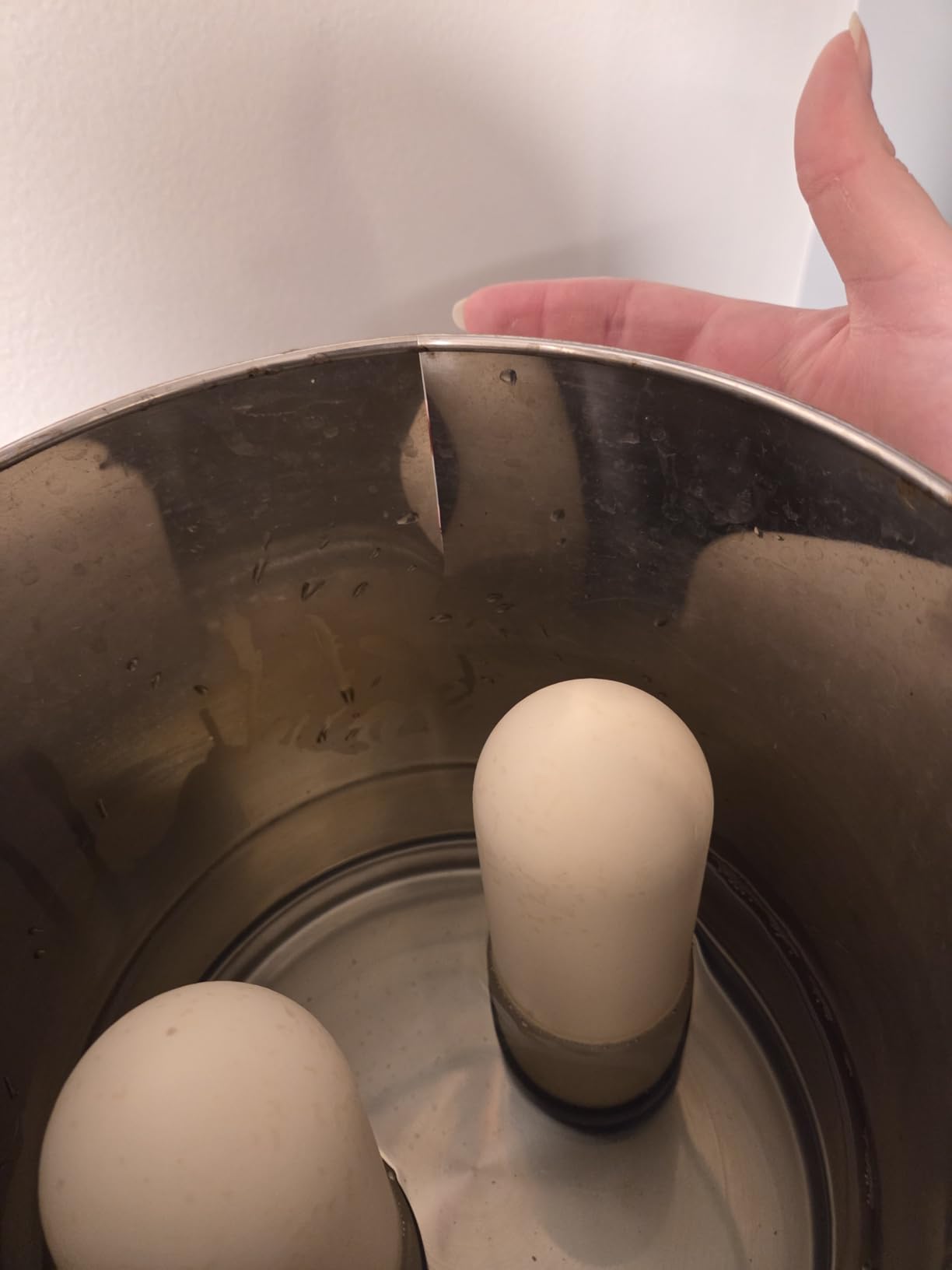
Run a full flush through both elements with clean water before the system goes into storage, because several users note the first run-throughs carry manufacturing residue. Check the spigot threads and the stand, since stainless spigots on plastic ports are the usual leak point on any countertop unit.
Mark the six-month replacement date on the housing itself with a permanent marker. A date written where you can see it prevents the most expensive mistake in this category, which is running an element well past its interval because you lost track.
Who should skip it
Skip it if you are on a well with hard water and expect taste improvement, since no TDS reduction means hard water tastes like hard water. Skip it if you need virus removal, because a 0.01 micron ultrafiltration membrane still does not address that category.
If the certification standard itself is what you are shopping on, the Membrane Solutions 6L below carries a broader set of standards including NSF/ANSI 401, and the buying guide explains what each one actually means.
5. SimPure Portable Gravity-Fed Filter with 3L Bag: Budget Pick
SimPure Portable Gravity-Fed Water Filter with 3L Bag
0.1 micron hollow fiber
27 liters per hour
2.8 ounce filter
5000 liter element
Pros
- Exceptionally small and light package
- 27 liters per hour beats most gravity systems
- Tree strap allows hands-free filtering
- Catch tray keeps raw water out of the clean line
Cons
- Bag holds closer to 2.25 L than the label
- Air bubbles must be purged before flow starts
- One owner reported a chemical taste
This is the unit we recommend to anyone building a first emergency kit who does not want to spend a lot on an unknown scenario. The filter weighs 2.8 ounces, the 3L TPU bag rolls down small, and the whole thing disappears into a pack side pocket.
Flow is 27 liters per hour through 0.1 micron hollow fiber, a 5 micron coconut shell activated carbon stage and a 0.2 micron PP fiber pre-filter. Rated lifespan is 5000 liters, or 1320 gallons, which the manufacturer frames as about 3.5 years for a family of four.
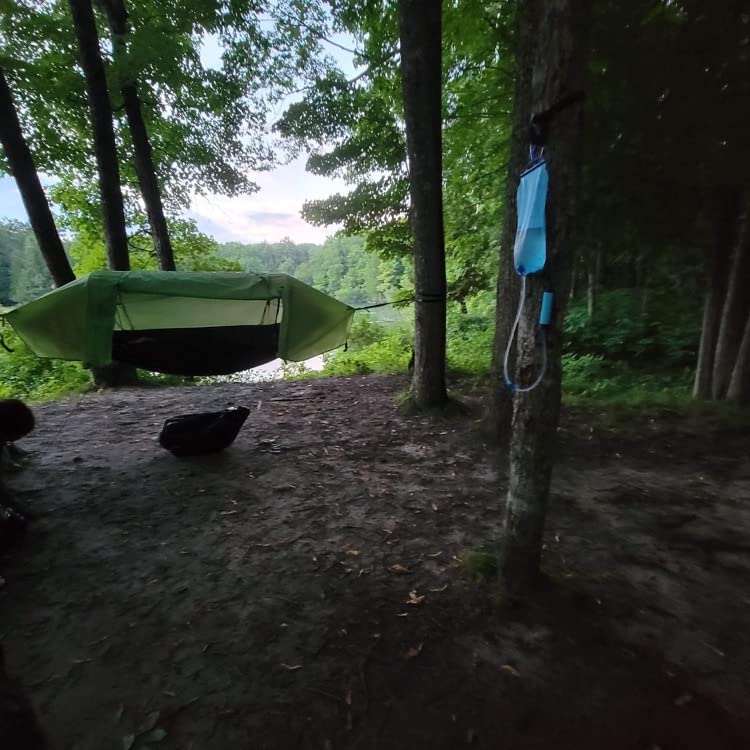
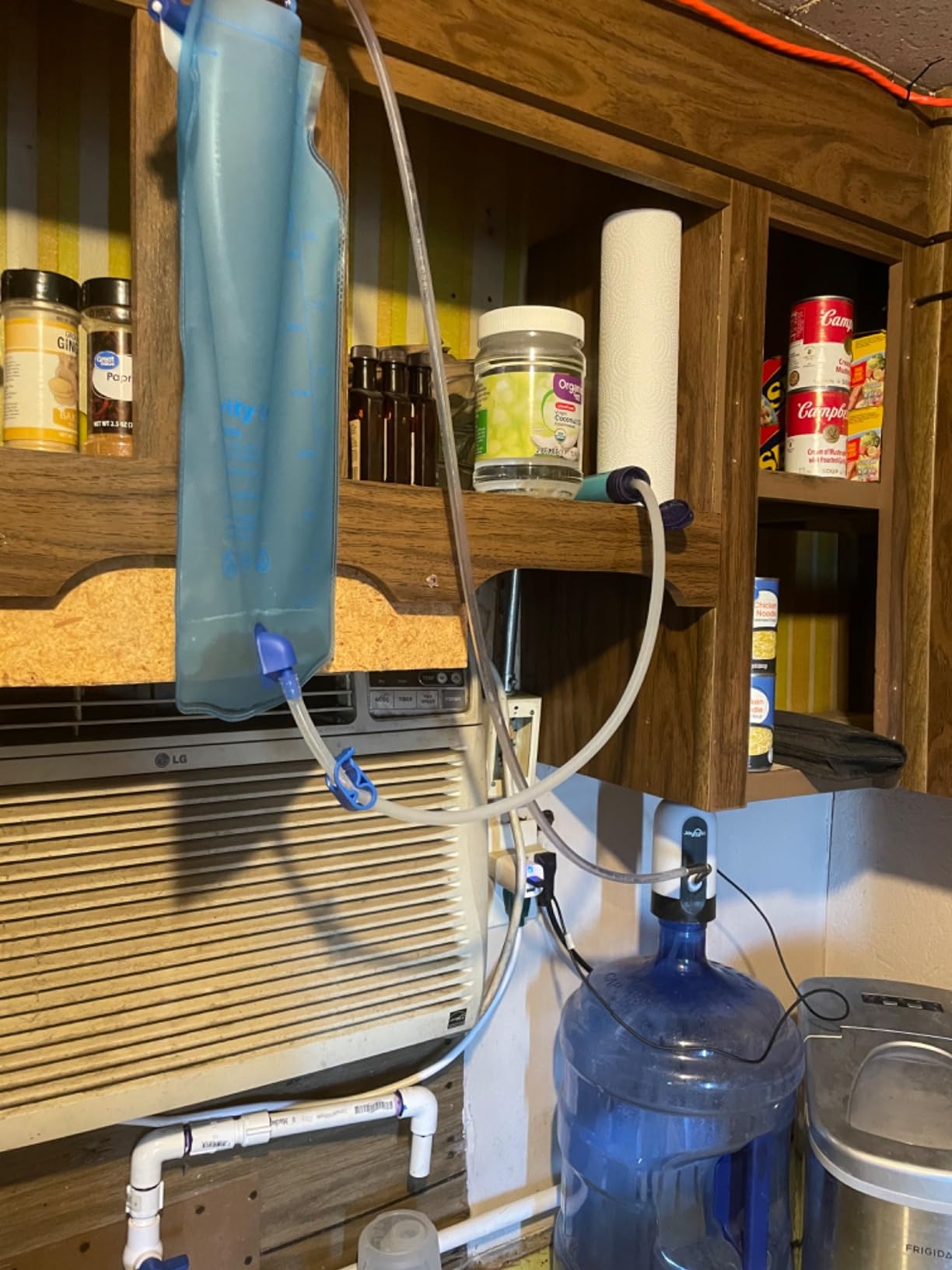
Three ways to use it, which is why it does not feel like a single-purpose tool. Drink straight through it as a straw, attach the 29.5 inch extension tube to drink at a distance, or hang it hands-free from the included tree strap with no pumping or squeezing.
Watch the bag capacity. Owners measuring it find 2.25 to 2.4 liters when filled to the top rather than the advertised 3 liters, and air bubbles in the line and element must be purged before flow starts. A small number of owners reported a persistent plastic or chemical taste, and one unit arrived with a cracked cap attachment and a leaking bag, which the seller replaced.
What to check before the water goes bad
Purge the air bubbles deliberately before you rely on the flow rate, because an un-purged line will look like a dead filter and tempt you to discard a perfectly good element. Hold the bag up and let the first liter run to waste, then check that the output is clear and free of any chemical odor.
Inspect the cap attachment point, since that is the reported failure site. The slim TPU bag is hard to dry out completely after washing, so store the kit with the bag fully dry and the cap off.
Who should skip it
Skip it as a household primary system for more than two people, and skip it if you are sensitive to taste complaints given the number of plastic-taste reports. A 2.4 liter real-world capacity in a 72-hour outage means many more fill cycles than the label implies.
If you want a bag system that holds a genuinely group-sized volume, the 6L Membrane Solutions unit below costs little more and is tested to more standards.
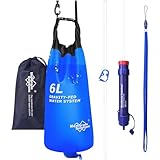
6. Membrane Solutions 6L Gravity Water Filter Pro: Best for Large Groups
Membrane Solutions 6L Gravity Water Filter Pro for Group Camping
6 liter reservoir
0.1 micron hollow fiber
Meets NSF/ANSI 42, 372 and 401
12.8 ounces
Pros
- Sized for 3 to 6 people in one bag
- Meets NSF/ANSI 42
- 372 and 401 standards
- Collapses flat without leaking
- Easy to fill from sources a bottle cannot reach
Cons
- Slower than premium pumped filters
- Some owners add tablets for standing water
- Rinsing before first use is recommended
No other kit in this roundup matches this reservoir size at this weight. The 6L bag is rated for 3 to 6 people, and the whole package is 12.8 ounces, which makes it a basecamp unit and a go-bag unit at the same time.
It also carries the broadest certification set here. The 0.1 micron hollow fiber element with coconut shell activated carbon and dual PP pre-filters was independently tested by NSF and SGS and meets NSF/ANSI 42, 372 and 401. That third standard, 401, is the one that covers emerging contaminants, and having it documented is unusual at this level.
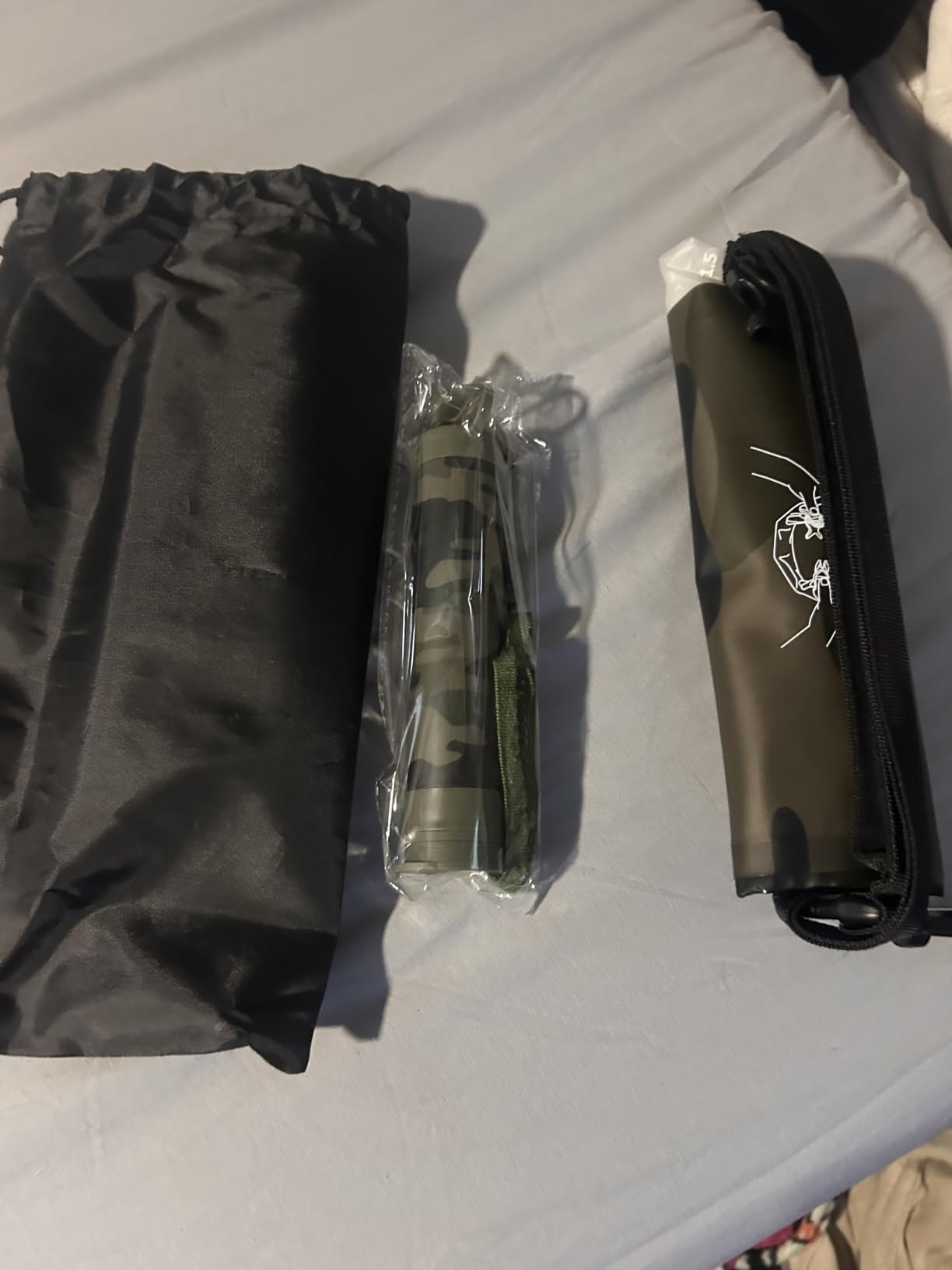
Filter life is rated at 1320 gallons, or 5000 liters, and flow runs up to 0.5 liters per minute. The puncture-resistant BPA-free TPU body has a reinforced hanging strap and rolls up compactly, and owners report it does not leak when packed.
The wide mouth is the feature that matters in real conditions, because you can scoop from a shallow puddle, a roadside ditch or a stream edge that a bottle neck cannot reach. Buyers report clear, good-tasting water and no illness across multiple trips, and several owners skipped the instructions because the setup is intuitive.
What to check before the water goes bad
Run water through before first use and again after any long storage, since the manufacturer recommends a rinse cycle and residual carbon fines are the most common cause of early complaints. Count your fill cycles rather than your days, because 6 liters per fill is the number that plans your day.
Keep the reinforced strap with the unit. The strap carries the full weight of a 6 liter fill, and it is the part most likely to be left behind when someone repacks a kit in a hurry.
Who should skip it
Skip it if you need virus removal, which is the same limitation as every other microfilter here except the LifeStraw Family. Skip it if you need very fast output, because 0.5 liters per minute is slower than the Katadyn and it is the mildest criticism owners raise.
Several owners pair it with purification tablets when drawing from standing water, and that is a sensible habit rather than a workaround. Our layering guidance below explains the order we would use.
7. LifeStraw Family Gravity Water Purifier 12 L: Best for Virus Removal
LifeStraw Family Gravity Water Purifier with Virus Removal, 12 L, Blue
0.02 micron purification
Removes viruses
18,000 liter capacity
9 to 12 liters per hour
Pros
- Only unit here with documented virus removal
- Highest rated product in this roundup
- No chemicals and no moving parts
- Top up the chamber and walk away
Cons
- Bulky and awkward to pack
- Output tube is a non-standard diameter
- Shipping bag does not reseal
- Needs several flush cycles before use
This is the only system in the roundup that claims virus removal, and that single fact changes what it is useful for. It purifies at 0.02 microns with 99.99 percent viruses, 99.9999 percent bacteria and 99.9 percent protozoan cyst reduction, and the listing states it surpasses EPA purifier standards without using iodine, chlorine or any other chemical.
Capacity is the other headline. It purifies 18,000 liters, or 4755 gallons, which the manufacturer frames as about three years for a family of four, and the flow rate of 9 to 12 liters per hour means you fill the chamber and walk away instead of standing there.
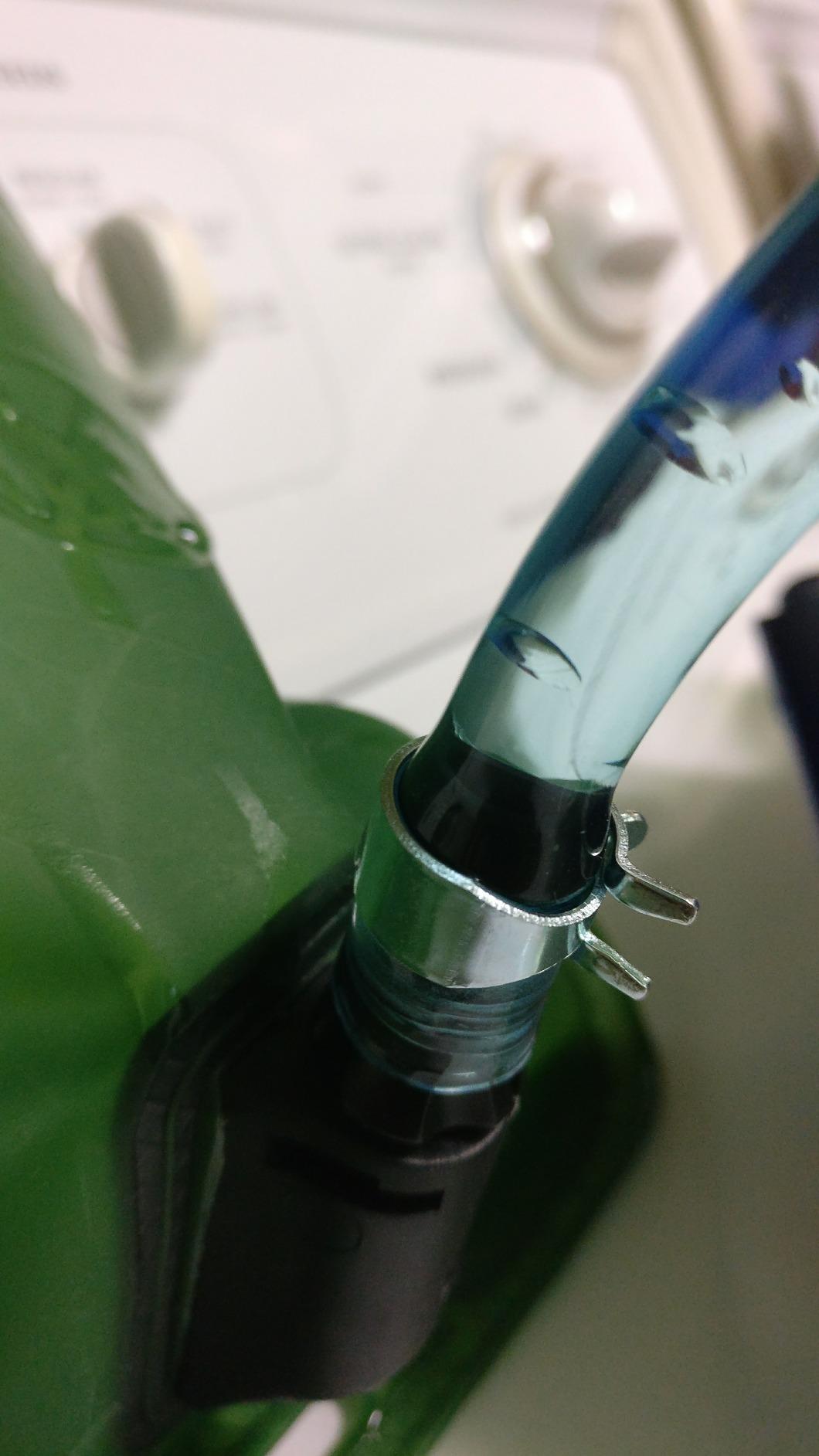
It carries the highest average rating in this roundup at 4.7 across 1771 reviews. Owners justify the purchase specifically on virus removal, which no competing unit in this list claims, and on long capacity with no consumable chemicals to track. It is also used by over 13.2 million people worldwide.
The dominant complaint is storage, not performance. The sealed bag it arrives in is not resealable, so buyers improvise cases, and replacement parts such as the squeeze bulb and clamp rings are not sold separately. The output tube is a non-standard diameter rather than standard quarter-inch hydration tubing, and several users supplemented it with purification tablets anyway because throughput is slow.
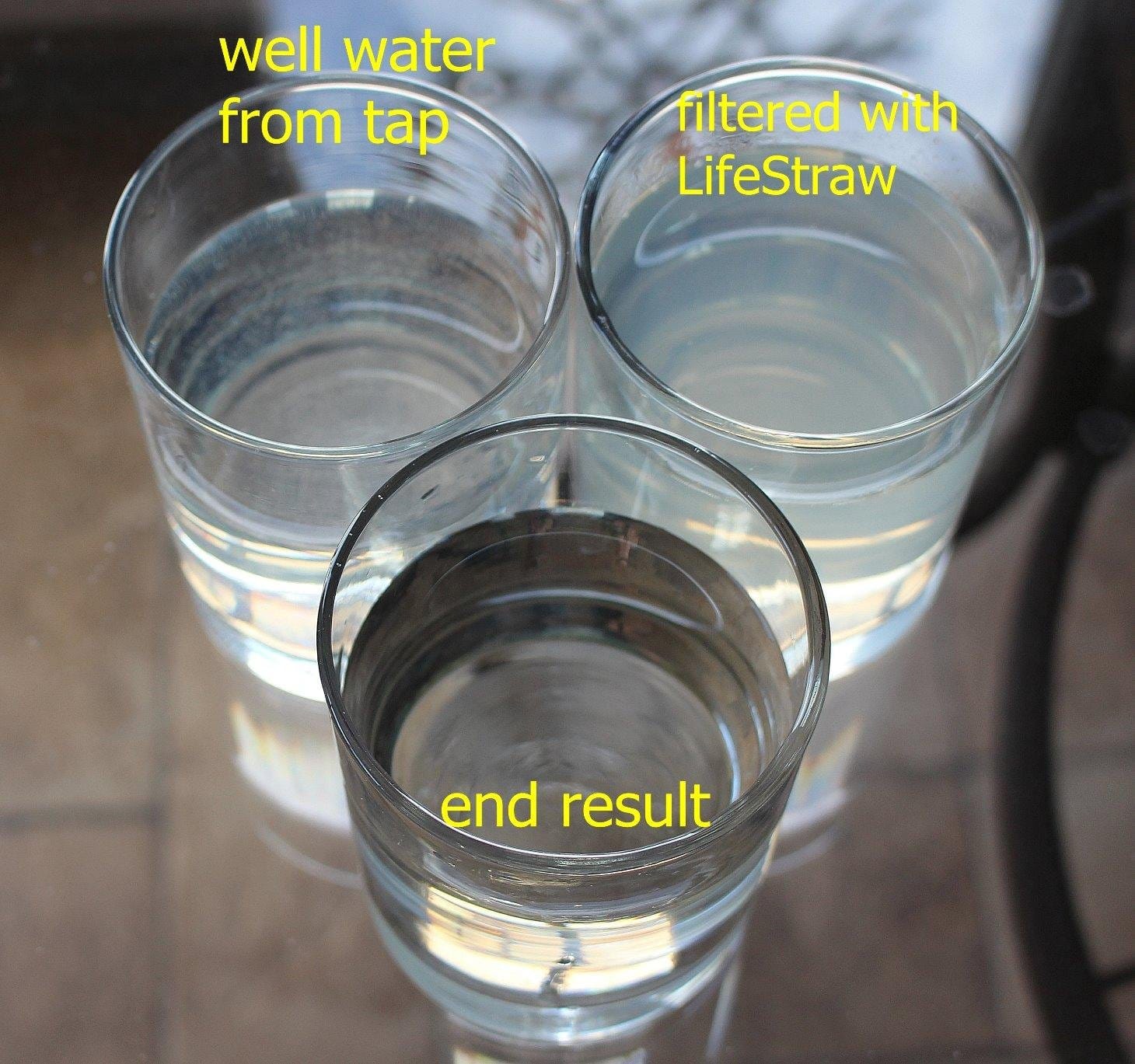
What to check before the water goes bad
Run several flush cycles with clean water before the unit goes into storage, because manufacturing residue has to clear before you trust the output. Then filter a known-good liter into a clear container and check it for odor, which is the fastest way to confirm the membrane is seated.
Buy a separate hard case or a sealed dry bag for it. The bag it arrives in protects it in transit and does nothing for a kit that lives in a garage for a year, which is the single most common regret owners report.
Who should skip it
Skip it if the virus claim is not part of your risk model, since you are paying for capability you may never need, and skip it if packability matters because the unit is bulky relative to its 1.5 pound weight. It is a home system, not a go-bag system.
If you want the same brand name in a package that fits in a bag, the LifeStraw Peak Compact below stores its filter inside the reservoir. It does not remove viruses, and we would not pretend otherwise.
8. Katadyn BeFree Gravity Filter 10L: Best for Speed
Katadyn BeFree Gravity Water Filter 10L for Base Camp & Large Groups
0.1 micron EZ-Clean fiber
Up to 2 liters per minute
10 liter reservoir
1000 liter element
Pros
- Fastest throughput in this roundup
- 10 liter reservoir serves a group from one fill
- Cleaning is a shake or swish with no tools
- Quick-connect cap accepts a hydration tube
Cons
- Bag only fills through the filter end
- Prone to punctures if handled roughly
- Does not filter viruses
When speed is the constraint, this is the answer. The 0.1 micron EZ-Clean hollow fiber membrane processes up to 2 liters per minute, several times faster than the other bag systems here, and the 10 liter reservoir holds enough for a group from a single fill.
Maintenance is the part we liked most. Cleaning is a shake or a swish in water with no tools and no disassembly, and owners report that it visibly restores flow rate. That matters in an emergency, because it means a slow filter can be recovered in the field rather than abandoned.
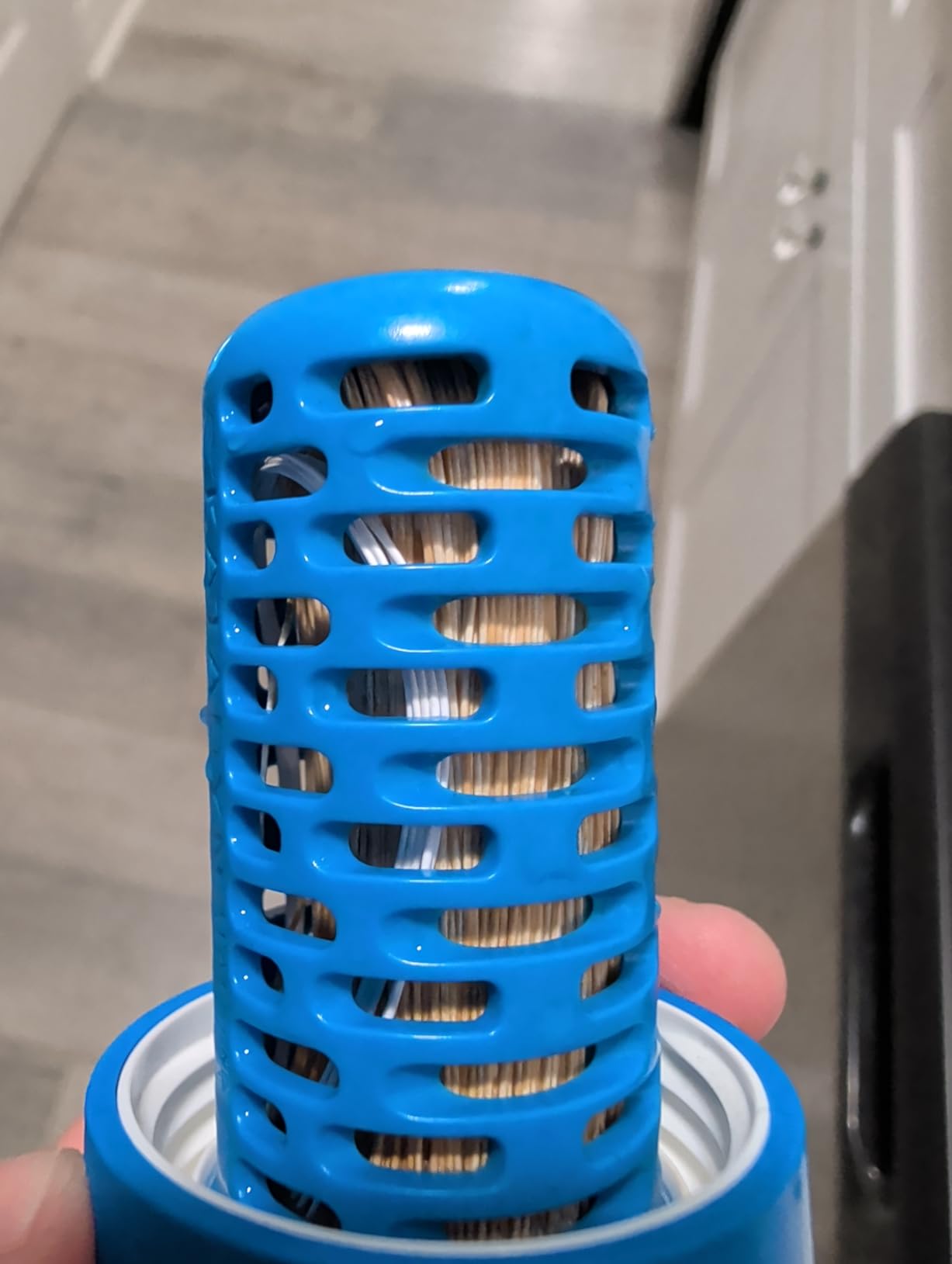
Long-term testers report durability, including one user who ran it daily for six weeks over a 450 mile stretch without a failure. The quick-connect cap accepts a hydration tube for direct drinking from the bag, and the wide flexible bag mouth makes collecting water easier when sources are dry and awkward.
The recurring weakness is the fill method. The bag can only be filled through the cap and filter end, so a shallow source takes several scoops, and the bag is described as prone to punctures if handled roughly. One 1-star review reported a screw-in ring seal loosening and print wearing off after a single use, which suggests quality control varies by batch.

What to check before the water goes bad
Shake and swish the element in clean water before storage, then run a liter through to confirm the flow rate matches what you expect. A unit that feels slow on day one is far easier to return than one that feels slow during a disruption.
Inspect the screw-in ring seal closely, since that is the reported failure point, and keep the hanging strap with the unit because it is functional but bulky and easy to leave behind.
Who should skip it
Skip it if viruses are in scope, since this is a microfilter for camp water and the product data says so plainly. Skip it if your source is a shallow slow-moving puddle, because the single-point fill makes collecting frustrating at exactly that kind of site.
Note that the listed element capacity is 1000 liters, well below several cheaper units here, so budget for replacements if you filter heavily. The 3L and 6L versions of the same filter exist if 10 liters is more reservoir than you need to carry.
9. LifeStraw Peak Compact Gravity Filter 3L: Best for Compact Storage
LifeStraw Peak Compact Gravity Water Filter, 3 L, Mountain Blue
3 liter reservoir
Filter stores inside the bag
Bacteria parasites and microplastics
Mounts on 1L and 1.5L bottles
Pros
- Filter stows inside the reservoir for a compact package
- Backwashing is easy and recovers flow
- Mounts on standard 1L and 1.5L bottles
- Element is easy to replace
Cons
- Slower flow than larger gravity systems
- Slight rubbery taste on the first run-throughs
- Does not remove viruses
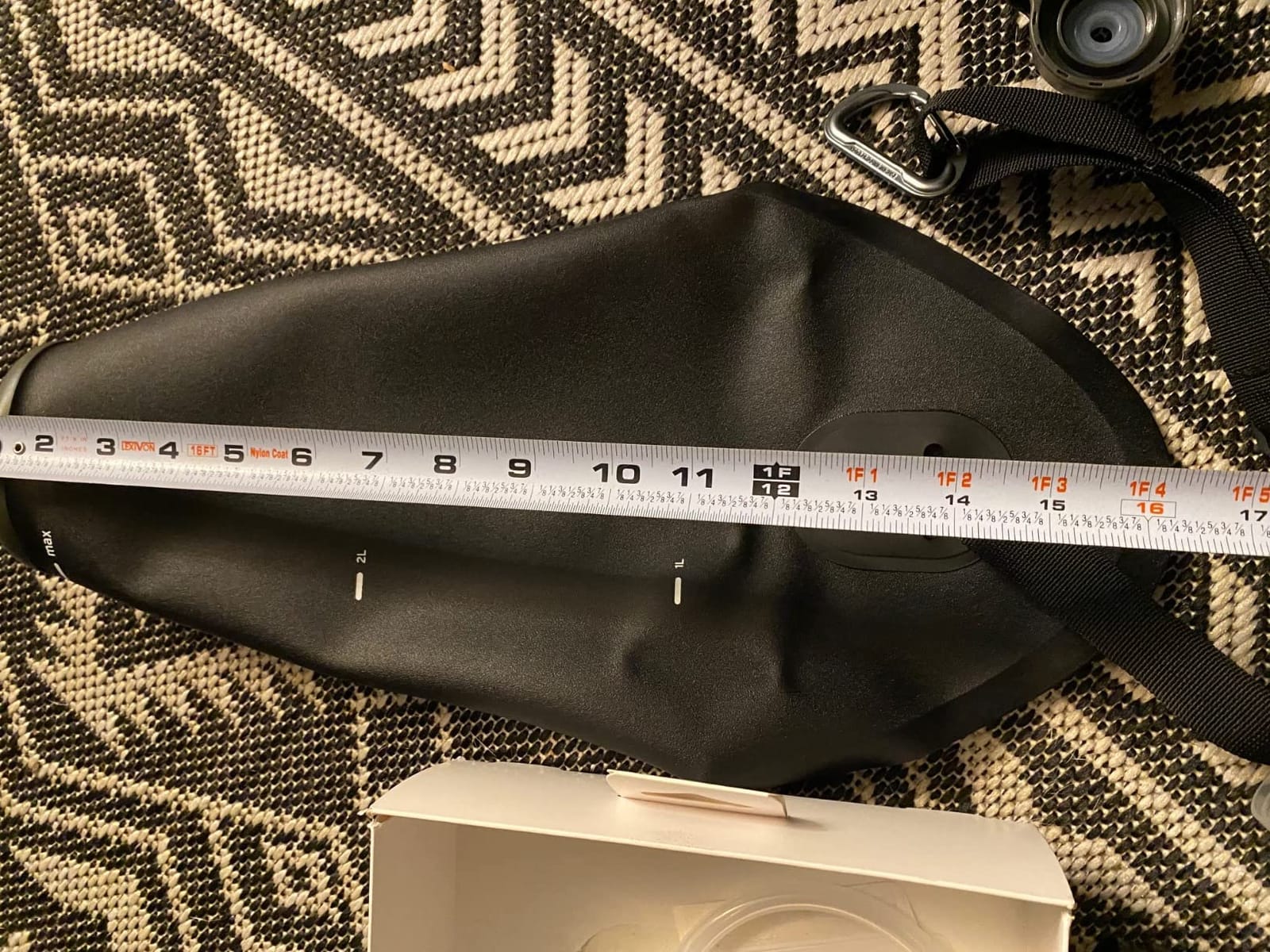
The design decision here is small and genuinely useful. The filter stores inside the reservoir, so the packaged unit is a single compact object rather than a bag and a loose cartridge, which is what makes it easy to keep on a shelf without losing a part.
Rated reduction is 99.999999 percent bacteria, 99.999 percent parasites including Giardia and Cryptosporidium, and 99.999 percent microplastics, with TDS support to 1000 ppm. It works four ways, as a gravity system, squeeze bottle, straw, or bottle-mounted filter, and it screws onto standard 1L and 1.5L bottles so the 3L bag can stay reserved for clean water.
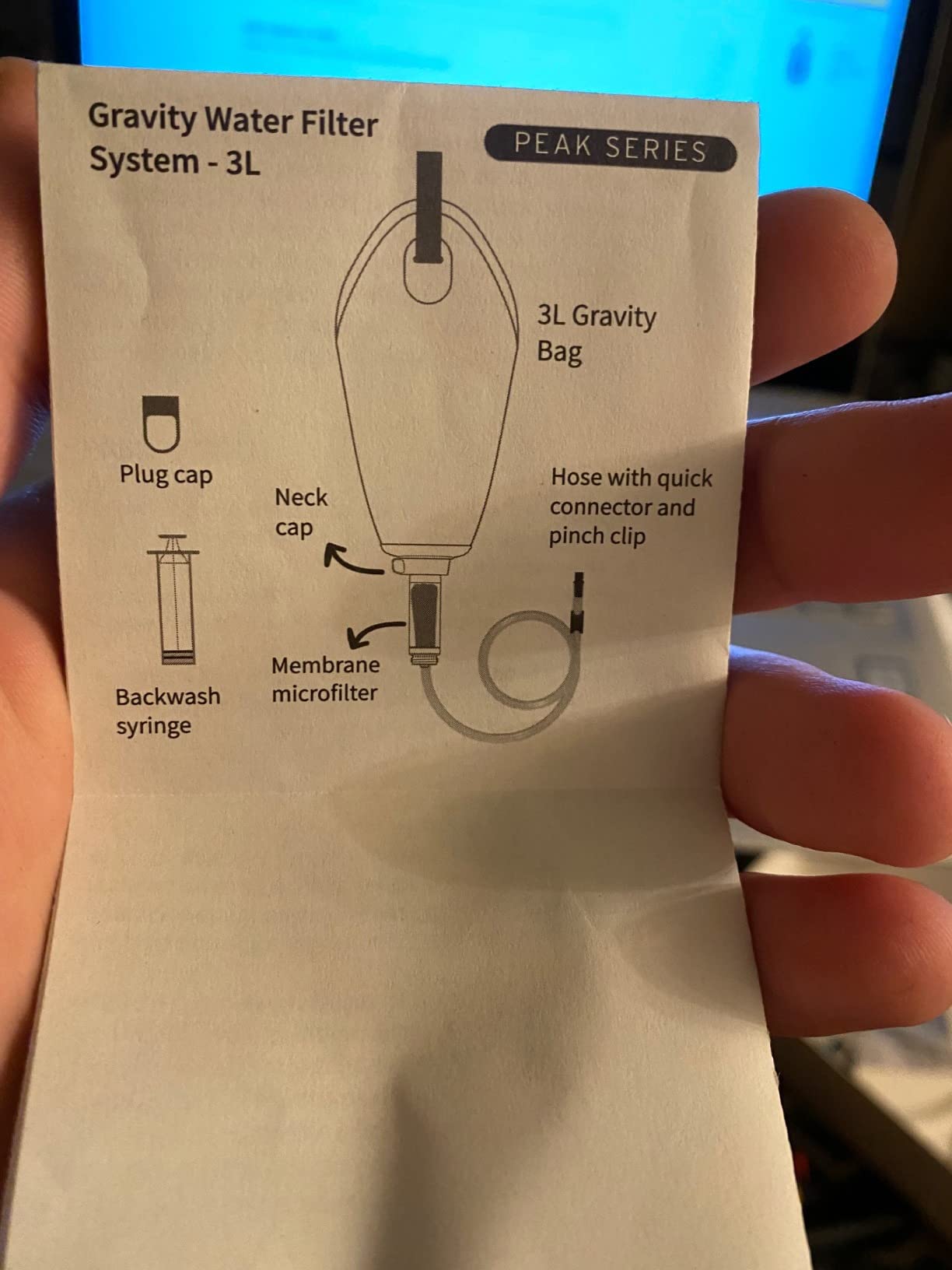
Backflushing is easy and restores flow when it slows, and the re-engineered membrane with its custom backwash accessory handles sand and silt better than earlier versions. One owner used a single unit as a group’s primary filter for a week of lake camping.
Flow is the most common complaint, and several owners note it slows further by the third or fourth day. A slight rubbery taste appears on the first couple of run-throughs and fades quickly. At 358 reviews this is the smallest evidence base in the roundup, so treat the claims with some proportion.
What to check before the water goes bad
Backwash before the first filter of a trip and again whenever flow drops, because that is the fastest recovery available. Run the first liter to waste to clear the slight rubbery taste, and confirm the bottle threading fits before you depend on it.
Keep the element dry and sealed in the reservoir when stored. The all-in-one design makes this easy, which is one of the reasons this unit suits a kit on a shelf better than a loose cartridge system.
Who should skip it
Skip it if throughput is your binding constraint, because this is the slowest refill in the group once the bag is full. Skip it if viruses are in your risk model, and skip it if you dislike any off-taste in early output, since some users noticed it and it is not universal.
With the fewest reviews here at 358, it is a reasonable second filter for a kit rather than a first one. If the review volume matters to your decision, the Waterdrop and the Big Berkey carry far more owner history.
10. Outback Water Emergency Filter 24 GPD: Best for Shelter-Scale Volume
OutbackWater Emergency Drinking Water Filter System, Gravity Fed 24 GPD
4-stage gravity filtration
Advertised 24 gallons per day
Countertop polyethylene
365 day shelf life
Pros
- Largest advertised output in this roundup
- Handles lakes
- rivers
- streams and rainwater
- Gravity powered with no pump or battery
- Light enough to move between locations
Cons
- Measured output far below the advertised rate
- Replacement filters cost close to a new unit
- Thin polyethylene construction
- Support reported as unresponsive
This is the unit built for a different scale of problem. It advertises 24 gallons per day, 90 liters, through 4-stage gravity filtration with no pump, battery or electricity, and the manufacturer rates it for lakes, rivers, streams and stored rainwater.
The polyethylene bucket system is 12 by 12 by 24 inches and weighs 6 pounds, so it moves between a kitchen, a garage and a shelter without a vehicle. It is marked as made in the USA with a 365-day shelf life, which is the kind of detail that matters for kit rotation.
That is where the good news ends. Owners who ran it for a week or more measured real output far below the advertised figure, in some cases as low as 1 to 3 gallons per day. One owner reports the unit stopped working after about six weeks on tap water alone, and several note that replacement cartridges cost close to what a new system does.
Construction is described as thin and flimsy for the price, and warranty help reportedly went unanswered. Positive reports focus on taste and ease of use rather than measured throughput, which is the tell that the headline number is not being met in practice.
What to check before the water goes bad
Measure actual output with a marked container before you need it. The gap between the stated rate and the reported real rate is large enough that you should plan your water budget on what you measure, not what the label claims.
Buy one spare cartridge when you buy the system, not later, because replacement cost approaches the unit cost and you do not want to be sourcing one during a disruption. Confirm the spigot, connectors and gaskets from the included parts list are all present at unboxing.
Who should skip it
Skip it unless you genuinely need shelter-scale output, because the measured performance does not support the advertised figure and the evidence base is only 107 reviews. Skip it if customer support responsiveness matters to you, which is a fair expectation for any kit you may depend on.
If your real need is a kitchen that keeps working through a week-long outage, the Big Berkey or the LifeStraw Family both have far more owner history behind them. If you want a treat system alongside a gravity filter, our alkaline water filter guide for kitchens is the relevant read.
What Gravity Water Filters Cannot Do
Gravity filters remove bacteria and protozoa, which covers the pathogens responsible for most waterborne illness in untreated surface water. Cryptosporidium and Giardia are the two cyst organisms, and every unit in this roundup is built to address them. Chlorine, sediment, rust, bad taste and odor are handled as well or better, which is why these systems also do double duty on municipal water during a boil-water advisory.
What they do not do is remove viruses. A 0.1 micron or 0.01 micron membrane is sized for cysts and bacteria, and no standard gravity microfilter in this roundup makes a virus claim. Only the LifeStraw Family does, at 0.02 microns. This is the most important limitation in the entire category, and it is the one most product pages bury.
Nor do they reduce dissolved solids. The Purewell listing states plainly that its elements do not lower TDS, and the same applies to hollow fiber systems generally. Hard water, salt and total dissolved solids need reverse osmosis or a mineral system, not a gravity chamber.
Here is the layered plan we would actually assemble. First, gravity filtration for volume, because you cannot drink your way through a 72-hour event on tablets alone. Second, purification tablets, which the preparedness communities on this SERP recommend consistently because they add no taste or odor, are iodine-free in common formulations, and cover the virus gap. Third, a rolling boil for one minute, three minutes above 6500 feet, as the last resort when nothing else is available.
How to Choose a Gravity Water Filter for an Emergency
Certification first, and read the standard rather than the badge. NSF/ANSI 42 covers chlorine reduction and taste and odor. NSF/ANSI 53 covers health-related contaminants including cyst reduction, which is the one that matters for untreated water. NSF/ANSI 372 covers lead. NSF/ANSI 401 covers emerging contaminants, and it is the least common. A manufacturer-run lab test is not the same thing as a third-party certification, and the difference shows up in how much weight the result can carry.
This is also where the Berkey certification debate lives. Preparedness forums return to it constantly, and the practical takeaway is simple: independent certification you can look up beats a self-published test result you cannot, and for a system you may rely on with your family’s water, that is worth something. The Membrane Solutions 6L and the Purewell carry the most documented standards in this roundup.
Flow rate is the second factor, and it should be measured against your household, not against a brand name. Twelve gallons a day is a reasonable planning figure for drinking and cooking. A system that takes an hour to refill while four people are waiting is a system you will stop trusting.
Third, think about element availability rather than element price. The real risk in an emergency is not the cost of a replacement cartridge, it is whether you can get one at all. Brands with widely available replacement elements and long-rated element life age better in a stored kit. Write the model number on the outside of the container so a replacement is findable in 2026 and every year after.
Fourth, plan for storage. Sealed elements stored dry in a temperature-stable space hold up better than elements left wet or exposed, and water stored in a kit needs rotating on a schedule you actually set. A kit that has not been opened in three years is an assumption, not a plan, so run a filter test every six months.
Fifth, durability in the environment it will live in. Freeze and thaw cycles crack plastic housings and can damage membranes, and a system that lives in an unheated garage through winter is exposed to exactly that. A stainless chamber such as the Big Berkey tolerates temperature swings better than a polyethylene bucket or a thin TPU bag, and units that nest for storage such as the Berkey or the LifeStraw Peak are easier to protect from impact during a hurried evacuation.
Finally, decide whether you need a filter or a purifier, and be honest with yourself. A filter handles bacteria and protozoa. A purifier makes a virus claim. If the scenario you are preparing for includes sewage contamination or a compromised municipal supply, buy the purifier and carry tablets as backup.
How We Evaluated These Filters
We compared all ten systems on the same set of criteria: stated filtration performance and pore size, whether removal claims come from third-party certification or from the manufacturer, measured flow and reservoir capacity, element rated life and the availability of replacements, the number of owner reviews behind the listing, and how each one behaves when it is stored rather than used.
We weighted certification heavily because it is the one variable a buyer can verify independently. We weighted review volume heavily too, because a claim on a product page is only as good as the number of people who have tested it in the field. Where performance claims conflicted with owner reports, as with the Outback Water unit, we said so in the review rather than repeating the listing.
Where a product cannot do something, we named it. No roundup that ranks ten emergency water filters is worth reading if it pretends all ten are interchangeable, and the virus gap is the clearest example of that.
Frequently Asked Questions
What is the best water filter system for emergencies?
A gravity system is the most dependable emergency filter because it needs no electricity, plumbing or pressure. For a household of four, a 2.25 gallon stainless chamber system with long-rated elements is the practical choice, and it should be paired with purification tablets because gravity filters do not remove viruses.
Do gravity water filters actually work?
Yes, for bacteria and protozoa including Giardia and Cryptosporidium, which is what makes them standard for untreated surface water. They also handle chlorine, sediment and taste effectively. They do not remove viruses, dissolved solids or PFAS, so they need a second layer for virus risk and a separate system for hard water.
What is the best emergency water filter for a family?
For a family of four, pick a system with at least a 2.25 gallon reservoir and about 4 gallons per hour of flow, which covers roughly 12 gallons a day of drinking and cooking water. A stainless steel chamber system such as the Big Berkey is the most common answer, and a 10 liter hanging bag is a faster alternative.
What does Berkey filter not remove?
The Berkey line is frequently discussed in forums partly over its certification status rather than its laboratory data. Treat self-published test results as a different category from independent NSF or IAPMO certification, and note that no gravity microfilter addresses viruses regardless of brand, so a tablet or boil backup applies.
Can you use a Berkey with well water?
Technically yes, since it is a pour-in countertop system with no plumbing connection. It is however a drinking and cooking solution rather than whole-house well treatment, so iron, hardness, sulfur and bacteria ahead of the fixture need separate handling. A sediment or backwashing system handles the pretreatment side.
Are gravity water filters good?
They are good at the specific job of making untreated surface water drinkable without power, which is why they are the core of most emergency kits. They are not good at everything, since they leave viruses and dissolved solids alone and they are slow, so they work best as the primary layer in a three-layer plan.
What is the safest way to purify water in a survival situation?
Use a layered approach. Start with gravity filtration for volume, add purification tablets for virus coverage with no taste or odor added, and keep a rolling boil as the last resort, one minute or three minutes above 6500 feet. Change to the next layer the moment you move to a more reliable source.
The Verdict: Which Gravity Filter to Buy First
If you want one system and nothing else, take the Waterdrop Gravity Water Filter Straw. It moves water faster than anything in its weight class, backflushes without tools, carries the deepest review base among the fast options, and packs small enough to live in a go bag rather than a cupboard.
Buy the Big Berkey alongside it if a household of four needs twelve gallons a day, and add the LifeStraw Family if your risk model includes viruses, because it is the only unit here that claims that capability in writing. Layer purification tablets on top of whichever you choose, and test the system twice a year so the first real use is not the first use.
That is the short version of the best gravity water filters for emergency use in 2026: no power, no plumbing, and a plan for what they cannot do.