
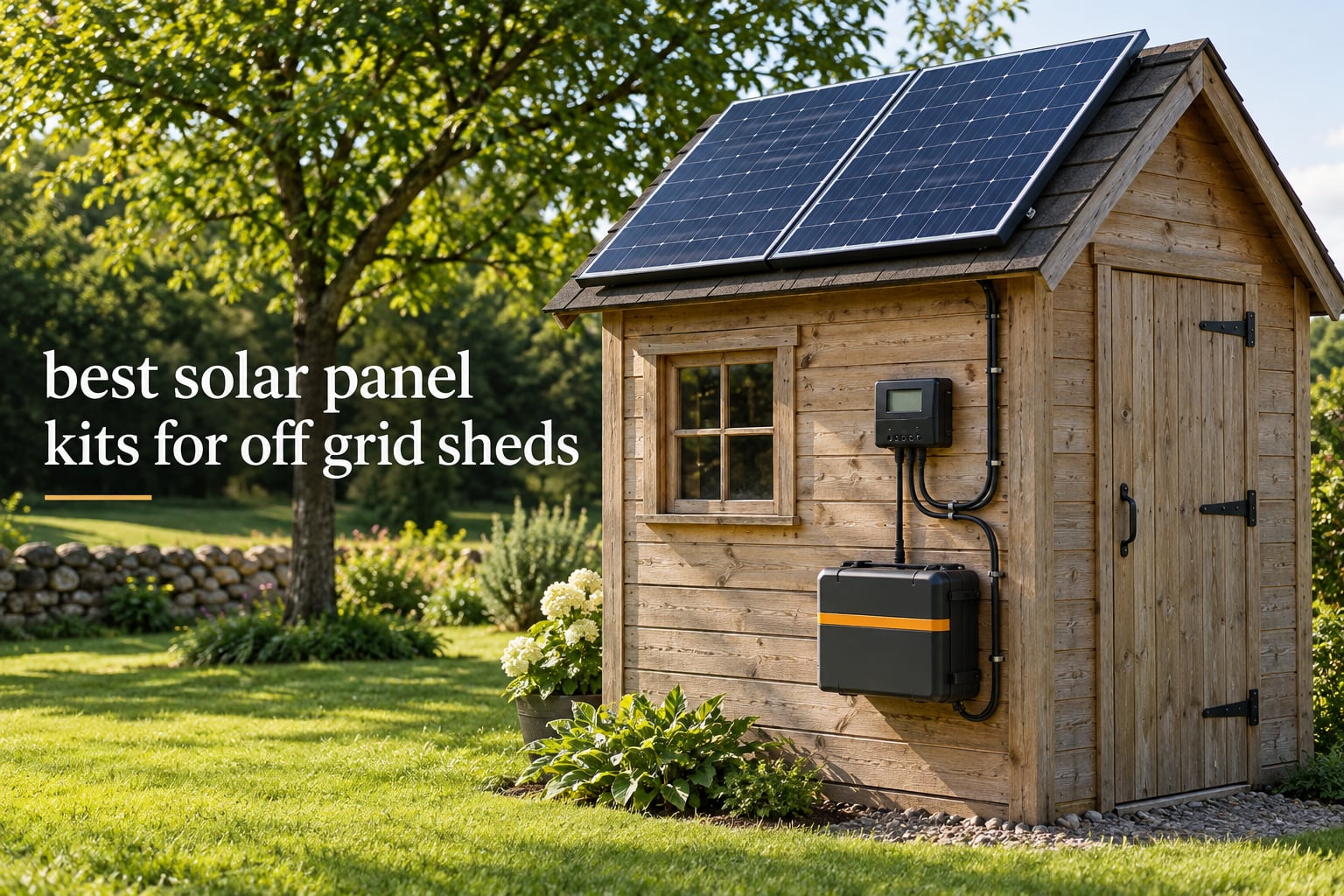
An off-grid shed solar kit is a self-contained, grid-independent power package for an outbuilding. It bundles one or more solar panels, a charge controller, a battery or battery bank, and sometimes an inverter, sized to run lighting, small appliances, tools, or security equipment without a mains connection. Panels turn sunlight into DC power, the charge controller regulates it into the battery, the battery stores energy for night and cloudy spells, and an inverter converts stored DC to 120V AC when you need a normal plug.
A shed is the easiest structure on most properties to electrify independently. It needs far less power than a house, it often sits well beyond the reach of the main panel, and a self-contained system avoids trenching conduit back to the house, permitting, and utility interconnection altogether. If you are still weighing a full off-grid build, our guide to off-grid solar systems for cabins covers the larger scale end of the same spectrum.
Below we compare the best solar panel kits for off grid sheds currently on the market, spec by spec. We looked at panel wattage, cell efficiency, charge controller type, battery chemistry, inverter output, what is actually in the box, and how each one holds up for the two loads shed owners ask about most: lighting plus cameras, and power tools. Last updated for 2026.
Table of Contents
Top 3 Off-Grid Shed Solar Kits in October 2026
Three kits stood out after we worked through the full list. The Renogy 100W starter kit earned the top slot on the strength of its rating and its review volume, the Renogy 200W kit covers the widest range of shed loads, and the Voltset 100W kit is the fastest install of the group.

Renogy 100W 12V Starter Kit
- 100W monocrystalline panel
- 30A PWM controller
- 22.5% cell efficiency
- Expandable to 400W

Renogy 200W 12V Kit
- 2 x 100W panels
- 30A PWM controller
- About 1000Wh per day
- Expandable to 400W

Voltset 100W Smart Controller Kit
- 100W panel
- 20A controller with LCD
- USB and Type-C ports
- Over 500Wh per day
All 12 Kits Compared Side by Side for October 2026
The table below puts every kit on the same columns so you can see the pattern immediately: most of this category is panel-plus-controller hardware, and the battery is usually the missing piece you add yourself.
| Product | Specifications | Action |
|---|---|---|
| Renogy 100W 12V Starter Kit |
|
Check Latest Price |
| Renogy 200W 12V Kit |
|
Check Latest Price |
| Voltset 100W Smart Controller Kit |
|
Check Latest Price |
 Topsolar 100W 12V Kit Topsolar 100W 12V Kit |
|
Check Latest Price |
 Renogy 100W Foldable Suitcase Renogy 100W Foldable Suitcase |
|
Check Latest Price |
 ECO-WORTHY 200W 12V/24V Kit ECO-WORTHY 200W 12V/24V Kit |
|
Check Latest Price |
 ECO-WORTHY 200W Complete Kit ECO-WORTHY 200W Complete Kit |
|
Check Latest Price |
 DOKIO 200W Two-Panel Set DOKIO 200W Two-Panel Set |
|
Check Latest Price |
 Voltset 20W MPPT Maintainer Voltset 20W MPPT Maintainer |
|
Check Latest Price |
 SOLPERK 20W Maintainer SOLPERK 20W Maintainer |
|
Check Latest Price |
 ECO-WORTHY 25W Maintainer ECO-WORTHY 25W Maintainer |
|
Check Latest Price |
 Hoysicy 20W Maintainer Kit Hoysicy 20W Maintainer Kit |
|
Check Latest Price |
1. Renogy 100W 12V Starter Kit – Best Overall for Lighting, Cameras and Wi-Fi
Renogy 100W 12V Solar Panel Starter Kit with 30A PWM Controller
100W panel
30A PWM controller
22.5% cell efficiency
About 500Wh per day
Pros
- Around 500Wh per day in good sunlight
- Panel plus controller plus brackets in one box
- Expandable to 400W later
- UL and IEC certified with a 25-year output plan
Cons
- PWM controller is less efficient than MPPT
- App monitoring needs a separate BT-1 module
This is the kit we keep coming back to for a first shed install. A 100W monocrystalline panel rated at 22.5% cell efficiency, a 30A Wanderer PWM charge controller, the cable, and a set of Z-brackets all arrive in one box, which means the only thing missing for a working system is the battery. Owners consistently report an average of around 500Wh of generation per day, which is enough to carry LED lighting, a router, and a couple of security cameras through a typical week.
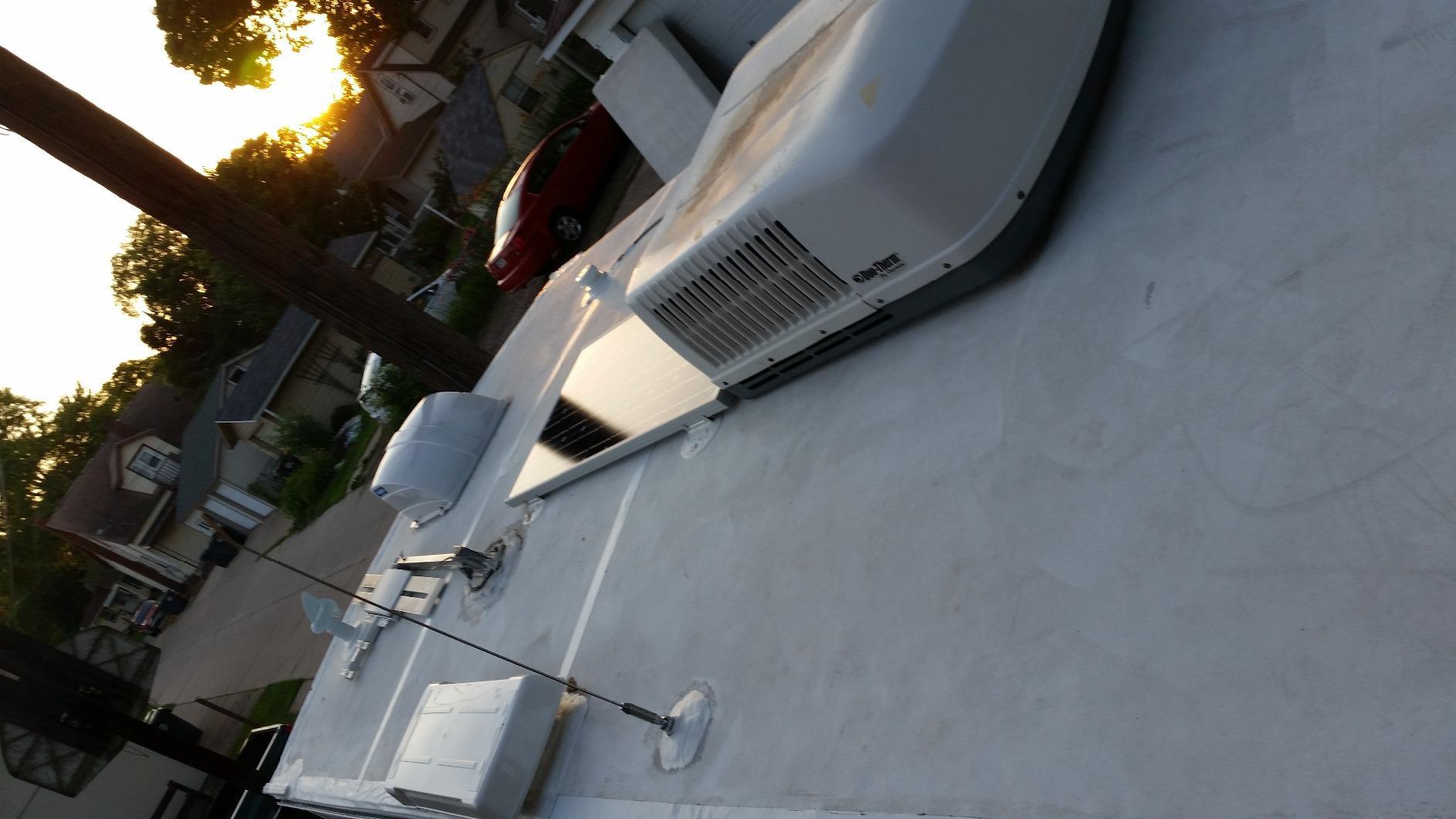
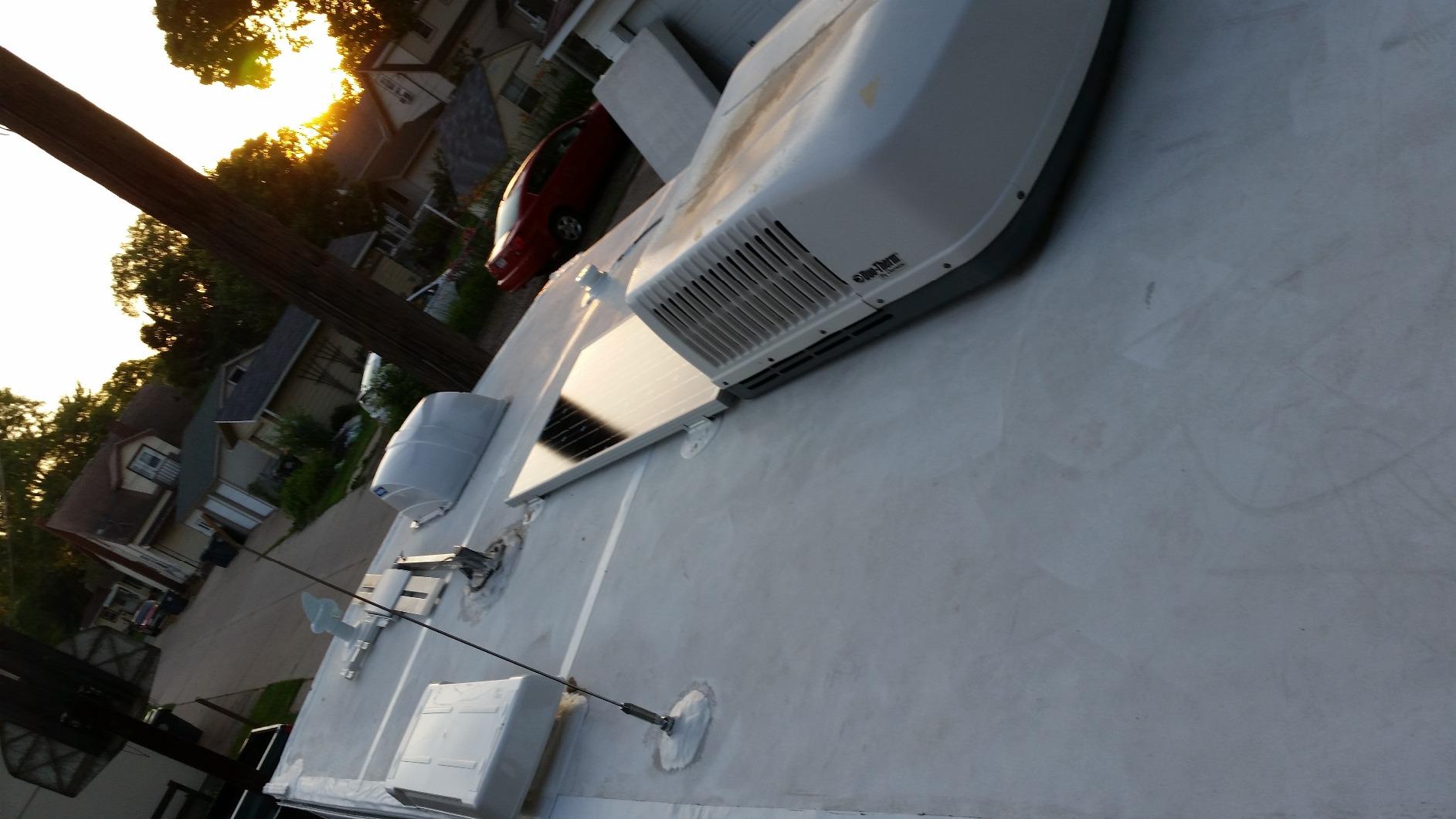
The panel itself is the stronger half of this package. It is certified to UL 61730, CSA and IEC standards, carries an IP65 junction box and IP67 connectors, and is rated for 2400Pa wind and 5400Pa snow loads, so it holds on a shed roof through ordinary weather without drama. It is also expandable to a 400W system, which means the controller and wiring design you start with will not box you in later.
The compromises are real and worth stating plainly. PWM charging wastes energy whenever panel voltage rises above battery voltage, which on a 100W array in bright sun is most of the day. Renogy offsets this by offering a Bluetooth port on the controller, but you need to buy the BT-1 module separately for app-based monitoring, and that is a second purchase on top of the battery. Warranty coverage is 10 years on panel materials and workmanship, 2 years on the controller, and a 25-year power output plan.
For a shed that needs lighting and connectivity, not power tools, this kit does the job with the least assembly and the strongest track record in the group.
How It Performs on Lighting-Only Sheds
A single LED strip running 30 to 40W for a few hours at night is the classic shed load, and this array covers it comfortably. Even on a partly cloudy day the panel pushes enough current to hold a 100Ah battery above its normal resting point. The same margin covers a Wi-Fi router and a doorbell camera without any meaningful draw on the reserve.
Where It Falls Short
This is not the kit to buy if your shed needs to run a circular saw, a bench grinder, or a dehumidifier. Those loads spike far above what a 100W PWM-fed array can deliver, and the controller has no inverter stage at all. It is also not the right choice for a shaded north-facing roof or a site with heavy tree cover, where the real-world yield will drop well under the 500Wh daily figure.
We keep our pick of the full shed and home-scale kits in our solar panel kit roundup for homes, but for a shed the smaller footprint of this kit is exactly what you want. Add a 100Ah LiFePO4 battery, mount the panel south, and you have a genuinely self-contained shed.
2. Renogy 200W 12V Kit – Best for Bench Tools and Larger Loads
Renogy 200W 12V Monocrystalline Solar Panel Kit + 30A PWM Charge Controller
2 x 100W monocrystalline panels
30A PWM controller
About 1000Wh per day
22% cell efficiency
Pros
- About 1000Wh of daily generation
- Controller handles four battery chemistries
- Pre-drilled frame with Z-brackets included
- Expandable to 400W
Cons
- PWM control loses energy compared with MPPT
- Listed weight and dimensions do not match the physical kit
Doubling the array to two 100W panels roughly doubles the daily harvest to about 1000Wh based on 5 hours of direct sunlight, which is the threshold where a shed starts handling real workshop loads rather than just accessories. The Wanderer controller here runs bulk, boost, float, and equalisation stages, and it accepts sealed, gel, flooded, and lithium batteries, so you are not locked into one chemistry.
Build quality is a step above the entry-level kits in this list. Multi-layered sheet lamination and advanced encapsulation protect the cells from physical damage, and a TPT backsheet dissipates excess heat for steadier output through the hot months. Bypass diodes improve low-light behaviour, which matters if the shed sees afternoon shade from a fence or a neighbouring building.
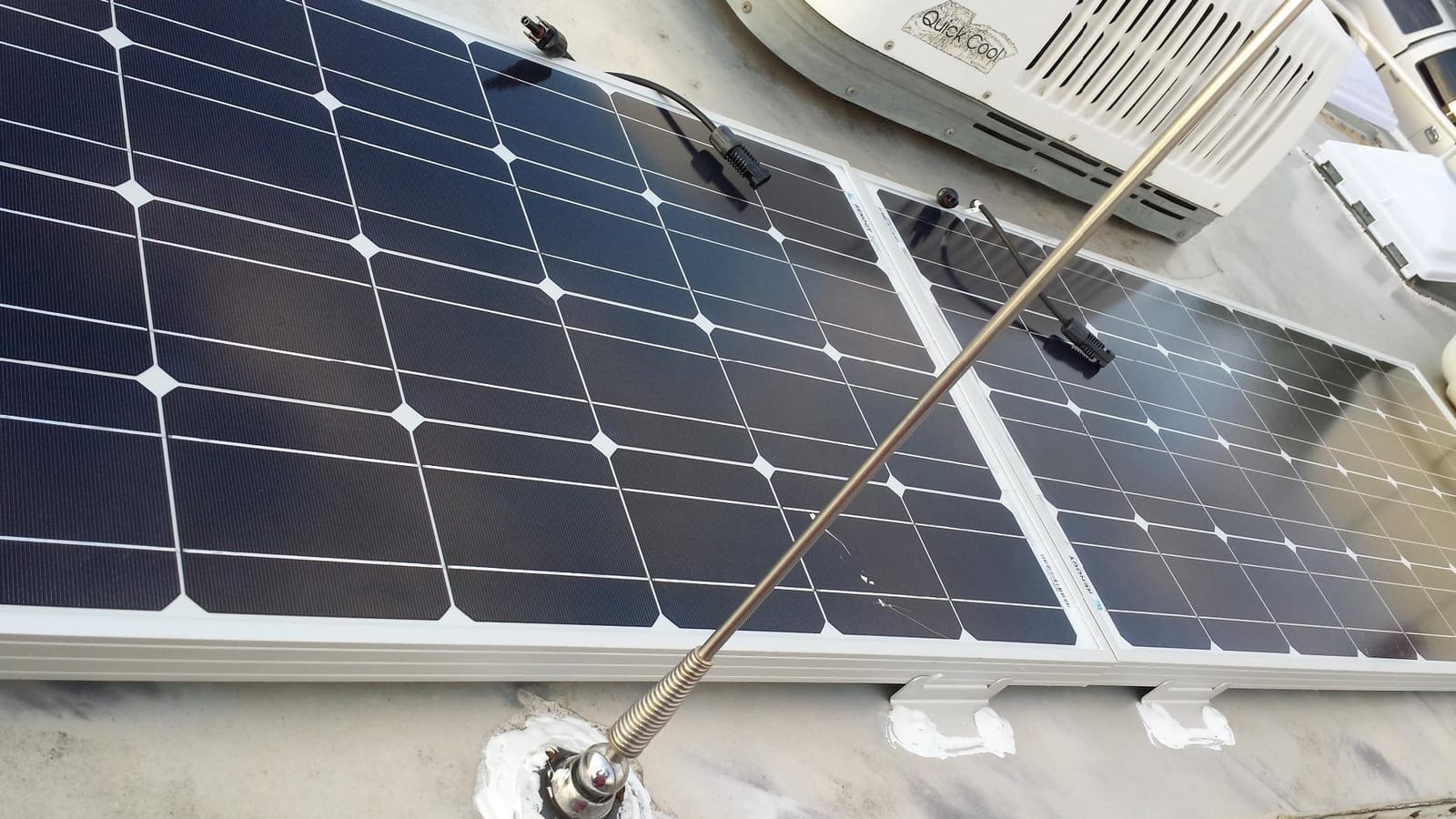
Two practical notes. First, the product page lists weight and dimensions that do not correspond to the physical kit, so measure your roof space yourself rather than planning from the listing. Second, you still have no inverter in this box, so a 200W array feeding a bare battery bank will not power a mains tool until you add an inverter sized for the surge current a motor-driven tool demands.
The 5-year material and workmanship warranty is shorter than the 10-year panel coverage on the 100W kit, but the included cables, brackets, and pre-drilled holes mean the mechanical side of the install is largely solved.
What Loads This Array Handles
A cordless tool charger, a bench light, a small fan, and a few hours of a router and cameras per day all fit inside 1000Wh without strain. That makes this the array we would pick for a shed doubling as a workshop where someone does light duty on site a few times a week. Pair it with a modest inverter and it moves up to short-duration power tool use.
Where It Falls Short
PWM charging is the main gap. On a 100W panel the loss is noticeable; across 200W it becomes a meaningful chunk of your daily budget, and an MPPT controller would recover part of it. The second limitation is weight and panel count: two rigid panels need roof area a small shed may not have, and one of them has to be shaded or the output penalty grows quickly.
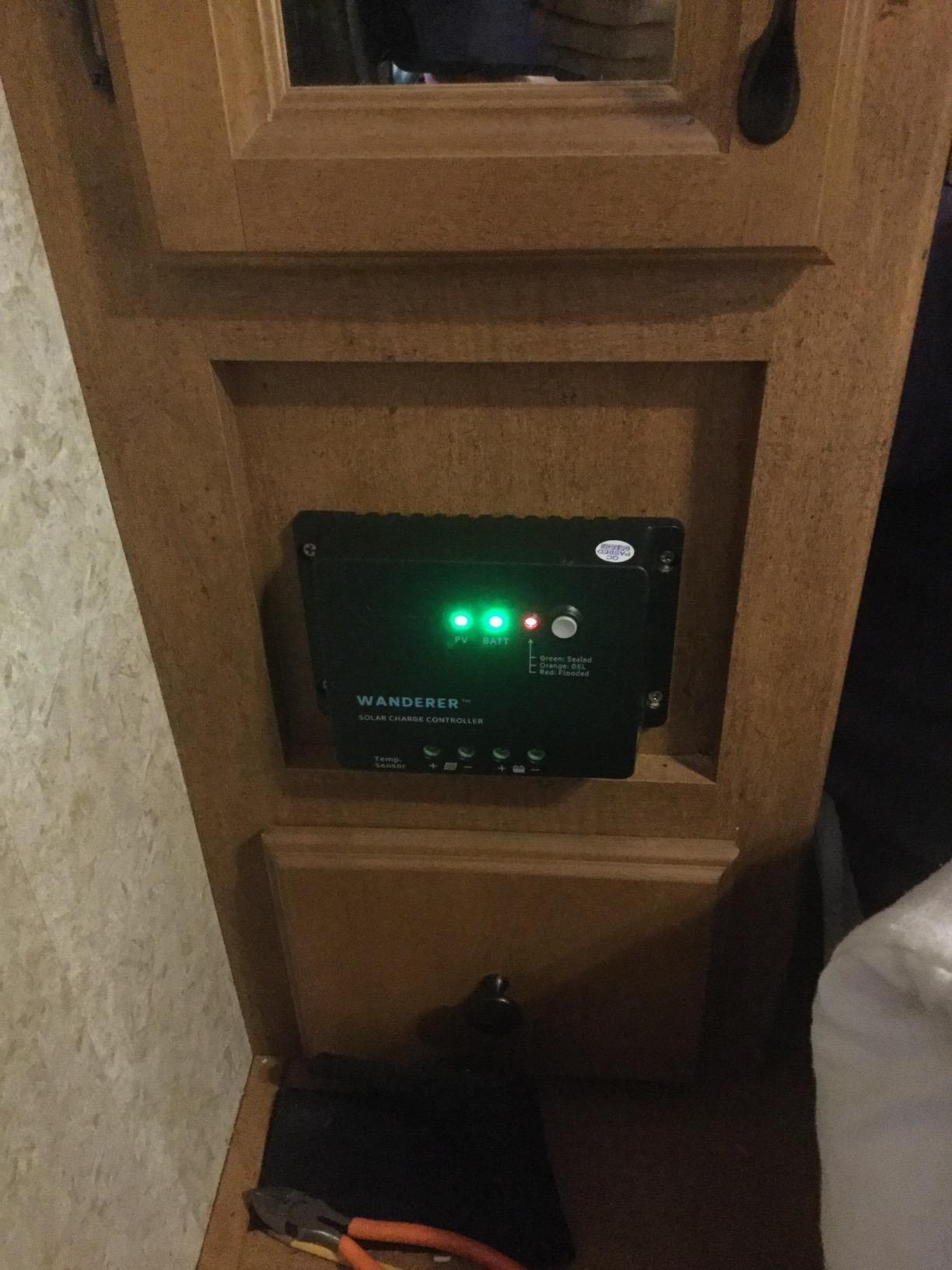
If your roof is tight, measure before ordering. A single larger panel set wide can fit where two tall panels cannot, and the 200W-class kits from other brands are worth comparing on footprint as much as on wattage.
3. Voltset 100W Smart Controller Kit – Best Plug-and-Play 100W Set
Voltset 100W 12V Solar Panel Kit with 20A Smart Charge Controller
100W monocrystalline panel
20A controller with LCD screen
USB and Type-C ports
Over 500Wh per day
Pros
- Complete kit with panel controller cable and 4 brackets
- Built-in USB and Type-C output ports
- Over 500Wh per day in good sun
- IP67 aluminium build
Cons
- Controller is a smart PWM-type unit rather than MPPT
- Listed dimensions look smaller than the real panel
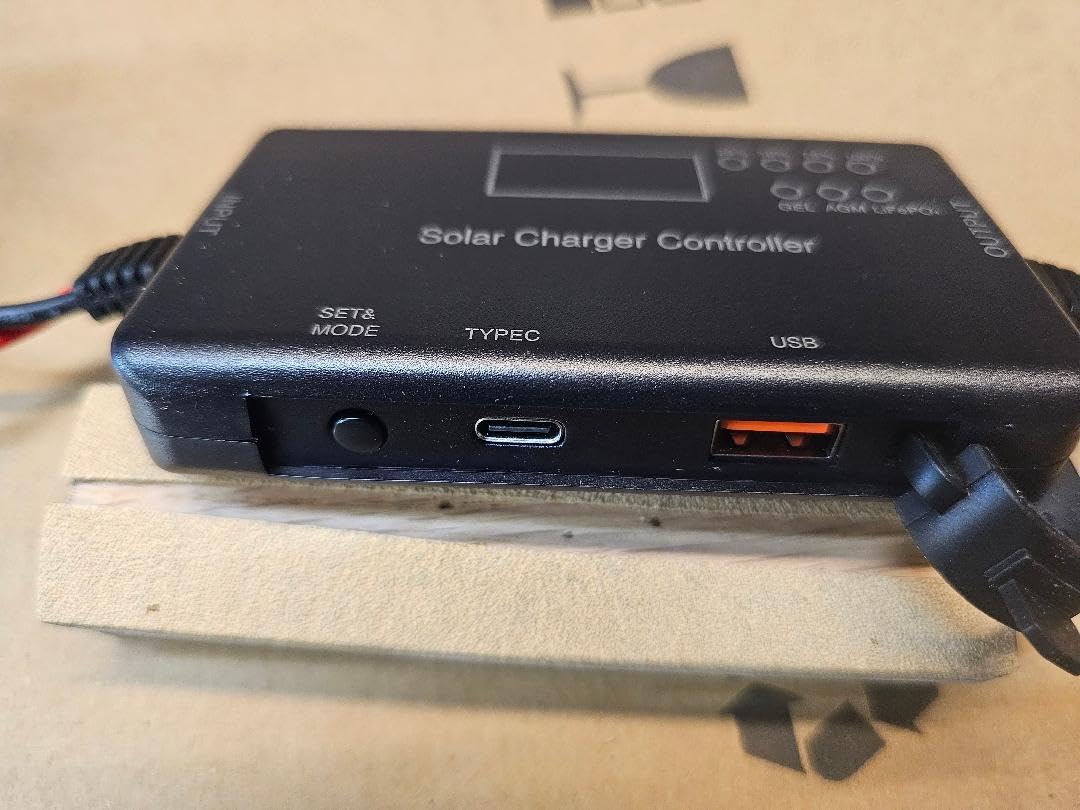
This is the kit we hand to anyone who says they have never wired a solar system before. The panel, a 20A smart controller, an alligator clip cable, and four Z mounting brackets are in the box, and the controller has a backlit LCD screen that shows current and voltage along with LED status indicators. Pressing the button for three seconds switches battery chemistry modes, which saves you from misconfiguring a LiFePO4 bank.
The two extra ports on the controller are the detail that matters most in a shed. The built-in USB and Type-C outputs let you charge a phone, a radio, or a small device directly from the controller without routing through an inverter, and the LCD means you can check state of charge without pulling a multimeter out of a toolbox.
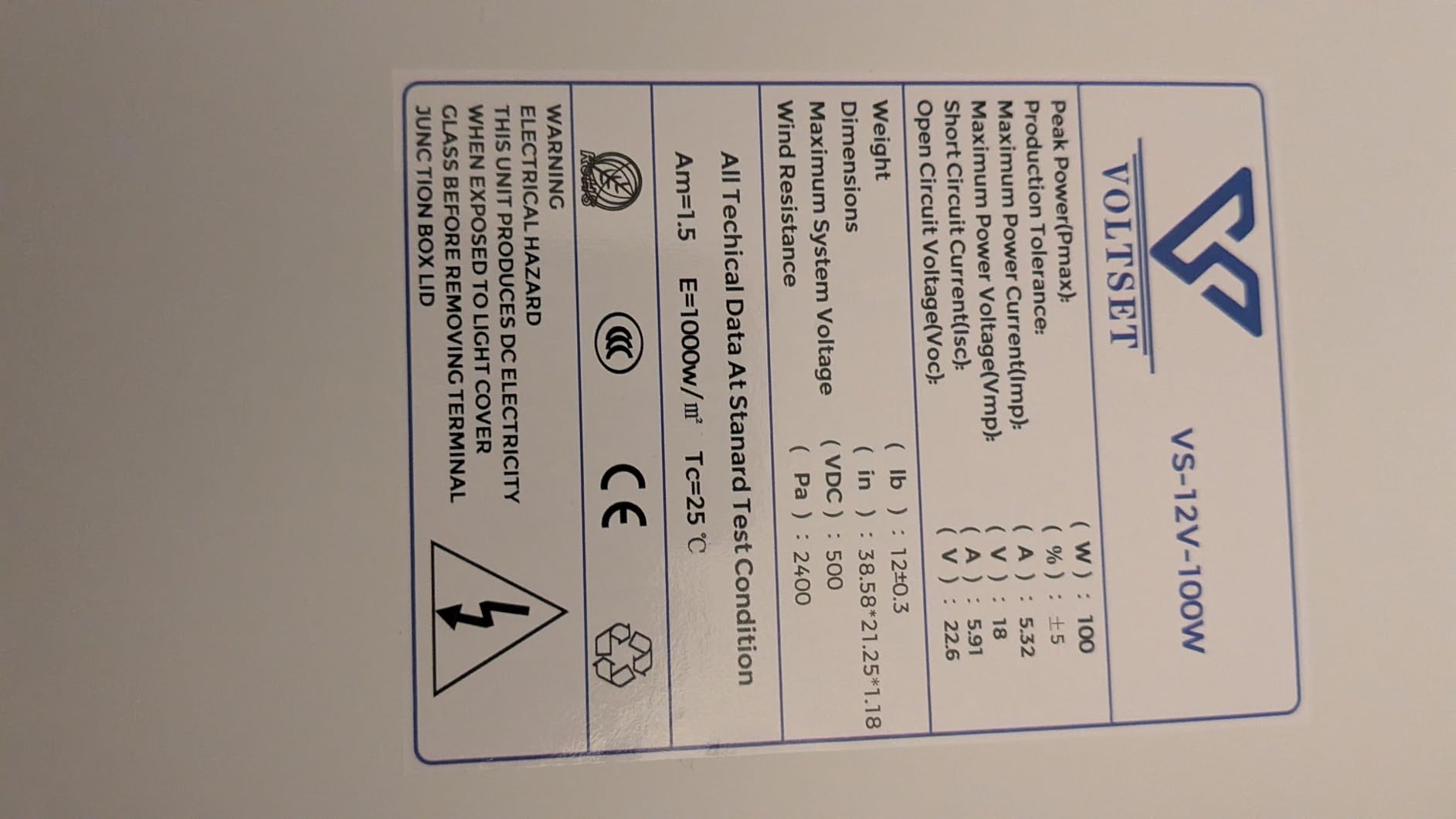
Protection is thorough for a kit at this level: overcharge, overvoltage, overcurrent, short circuit, reverse polarity, and overheating are all covered, and the panel is IP67 sealed in an aluminium frame with a stated lifespan of up to 25 years. It accepts LiFePO4, AGM, gel, flooded, and lithium ion batteries, and the pre-drilled holes make the mechanical mount a one-afternoon job.
The caveat to plan around is controller type. This is a smart PWM unit, not MPPT, so in bright sun it will still clip some of the harvest. If your shed is shaded for part of the day, that loss is smaller and the LCD becomes more valuable than peak efficiency would have been.
Why First-Time Buyers Like It
Alligator clip connections and no mode jumpers mean fewer wiring errors, which is the most common cause of a failed first install. It also accepts every mainstream 12V battery type, so if you later upgrade to LiFePO4 the controller keeps working. The claimed 500Wh-plus daily output lines up with what buyers report measuring in full sun.
Where It Falls Short
The listing dimensions are noticeably smaller than a typical 100W panel, and reviewers report the physical unit and its weight exceed what the page implies. Budget for real roof space. The PWM controller is also the efficiency ceiling on this kit, and there is no inverter, so AC loads still need separate hardware.
We rate it a touch behind the Renogy kits on long-term confidence because the controller efficiency is lower, but for a straightforward lighting-and-camera shed it is the fastest path from unpacking box to working system.
4. Topsolar 100W 12V Kit – Best for Campers, Boats and Trailers
Topsolar Solar Panel Kit 100 Watt 12 Volt Monocrystalline Off Grid System
100W monocrystalline panel
30A PWM controller
45.6 x 20.1 inch panel
Expandable to 260W at 12V
Pros
- Everything needed for a working system in one box
- Solid mounting hardware with pre-drilled holes
- Controller carries a full set of protections
- Tempered glass and aluminium frame
Cons
- 19.5% efficiency trails newer N-type panels
- Output current of 4.3A is modest
The Topsolar kit is aimed squarely at mobile use, and the design reflects that. The panel measures 45.6 by 20 inches and weighs about 15.8 pounds, which is manageable for one person to carry up onto a van roof or a cabin, and the four Z brackets plus a pair of red and black solar cables mean you can get it charging the same afternoon it arrives.
The 30A PWM controller includes overcharge, over-voltage, discharge, and short circuit protection, plus reverse polarity protection, which is more complete than several kits in this roundup at similar size. The panel itself is rated for 2400Pa wind and 5400Pa snow loads and uses tempered glass over an aluminium frame for outdoor service life.
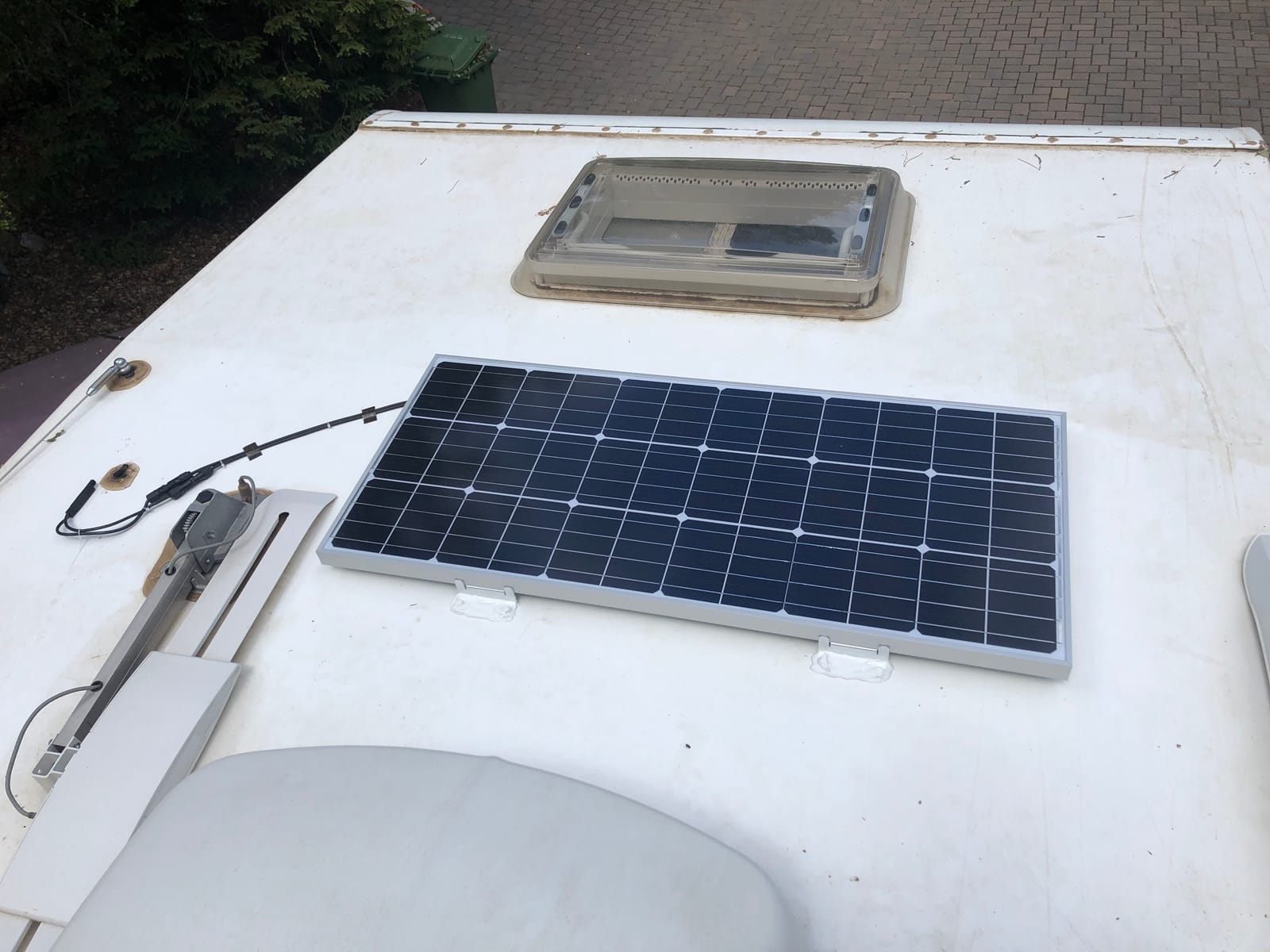
Two things hold it back on a stationary shed. Efficiency is listed at 19.5%, behind the 25% N-type panels found on newer kits, and the rated output current is 4.3A at maximum power point. Those numbers mean it produces less from the same nominal 100W nameplate than a modern cell design would.
Where it wins is flexibility. It can expand to a maximum 260W 12V system or a 520W 24V system, so a camper shed setup can grow and cross architectures without starting over.
Where It Fits a Shed Best
A small shed near a driveway or a gate where you want battery maintenance plus a trickle of charging, or a mobile shed that gets moved around. It also works well where a boat or trailer battery needs topping up between trips. The modest output suits loads that trickle rather than surge.
Where It Falls Short
This kit will not carry a power tool or a dehumidifier. At 4.3A maximum current you are topping up a bank, not driving a meaningful AC load through an inverter. On a shed with a real workshop function you would be waiting on the array for hours of recovery after any burst of consumption.
If you want the same footprint with better cell efficiency, compare the N-type suitcase panel covered later in this roundup. If the priority is simply a complete, protected, expandable box for a modest shed, this kit has held up well across a large body of owner reviews.
5. Renogy 100W Foldable Suitcase – Best for Take-It-With-You Power
Renogy 100W Portable Solar Panel, 25% High Efficiency Solar Panel Kit with 20A Charger Controller for 12V Battery&Power Station, N-Type Foldable Solar Panels w/Tempered Glass for RV, Camping Off-Grid
100W N-type panel at 25% efficiency
Pre-installed 20A controller
Folds to 24.8 inches
Pros
- Plug and play with controller pre-installed in the case
- Reported 5.8 to 7 amps in full sun
- Folds compactly for vehicle storage
- No night-time battery draw when kept connected
Cons
- Heavier and bulkier than expected for a portable unit
- Real output into 12V is closer to 40 to 60W
- Included cable is just under 10 feet
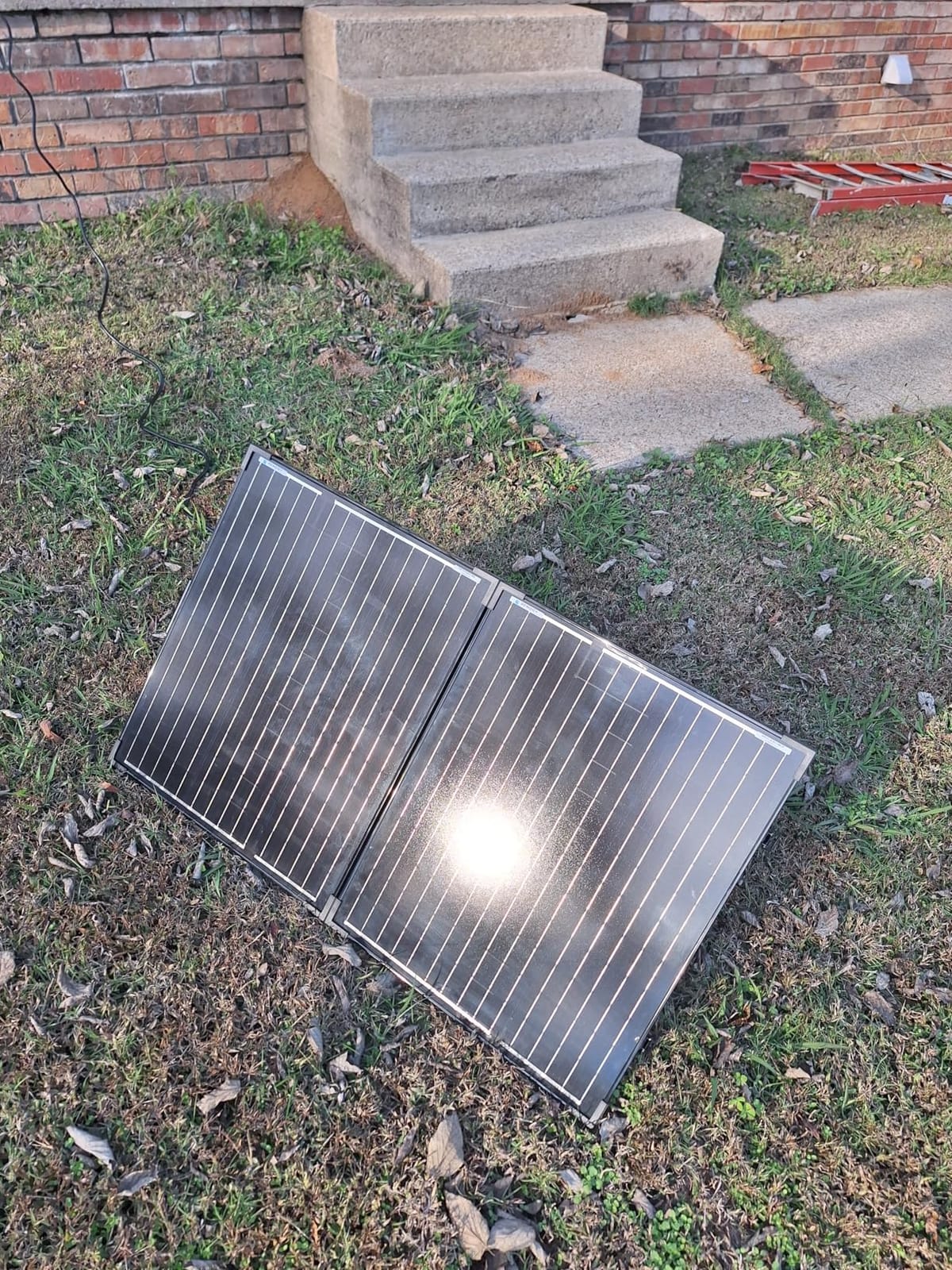
Only one kit in this roundup uses N-type cells in a package this portable. The construction delivers up to 25% conversion efficiency, and the two-panel suitcase folds to about 24.8 inches for storage. An integrated adjustable aluminium kickstand holds the angle, which matters more than it sounds on a roof where a panel sitting flat produces dramatically less than one tilted toward the sun.
The convenience design is genuinely strong. The 20A waterproof PWM controller is pre-installed inside the case, so there is nothing to wire except an alligator clip cable with a 15A fuse. Four-stage charging works with 12V power stations and with gel, AGM, flooded, and lithium batteries, and bypass diodes in the junction boxes reduce hotspot losses when part of the panel is shaded.
The important reality check is current, and reviewers are honest about it. A 100W nameplate panel charging a 12V battery typically delivers 40 to 60W, because the controller caps the current. Measured charging is usually reported in the 5.8 to 7 amp range rather than the 8 to 9 amps the nameplate implies.
For a permanent shed roof mount this design has one more drawback: forum users who leave foldable panels exposed year-round report hinge and latch wear after roughly a year of frequent repositioning. A rigid frame is a better choice for a fixed install.
Why We Like It for a Shed
It is the fastest kit here to deploy when the shed has no good mounting angle, because you set it on the kickstand and clip it to the battery. That makes it a good answer for a temporary or seasonal shed, or for testing a location before committing to roof hardware.
Where It Falls Short
At 17.4 pounds it is one of the heavier portable options, and the included cable is just under 10 feet, so roof mounting usually means buying an extension. It also carries a 5-year materials and workmanship warranty, shorter than the 10-year panel coverage on the fixed 100W Renogy kit.
If your shed work takes you off site, this is the panel that travels. For a fixed roof, step up to a rigid frame and you remove the hinge question entirely.
6. ECO-WORTHY 200W 12V/24V Kit – Best for Flexible System Voltage
ECO-WORTHY 200 Watts 12 Volt/24 Volt Solar Panel Kit with High Efficiency Monocrystalline Solar Panel and 30A PWM Charge Controller for RV, Camper, Vehicle, Caravan and Other Off Grid Applications
2 x 100W monocrystalline panels
30A PWM controller
Series 24V or parallel 12V
16.4ft 10 AWG cables
Pros
- Two panels plus controller brackets and long cables
- 800Wh per day under 4 hours of sun
- Configure as 12V parallel or 24V series
- Panels hold up well in wind and snow
Cons
- Heaviest kit here at 31.6 pounds
- PWM controller is less efficient than MPPT
- Only a one-year warranty
This kit is the one we would pick for a shed where the battery room is more than about 20 feet from the panel, because it comes with a pair of 16.4ft 10 AWG solar cables. That is longer than anything else in this roundup, and it is exactly the length that keeps voltage drop manageable on a run most people would otherwise solve by buying an extension.
The 12V and 24V flexibility is the other headline. The panels are pre-drilled with plug-and-play cables and can be wired in series for a 24V bank or in parallel for 12V, which means you can start at 12V with one battery and add a second panel later in series rather than replacing anything.
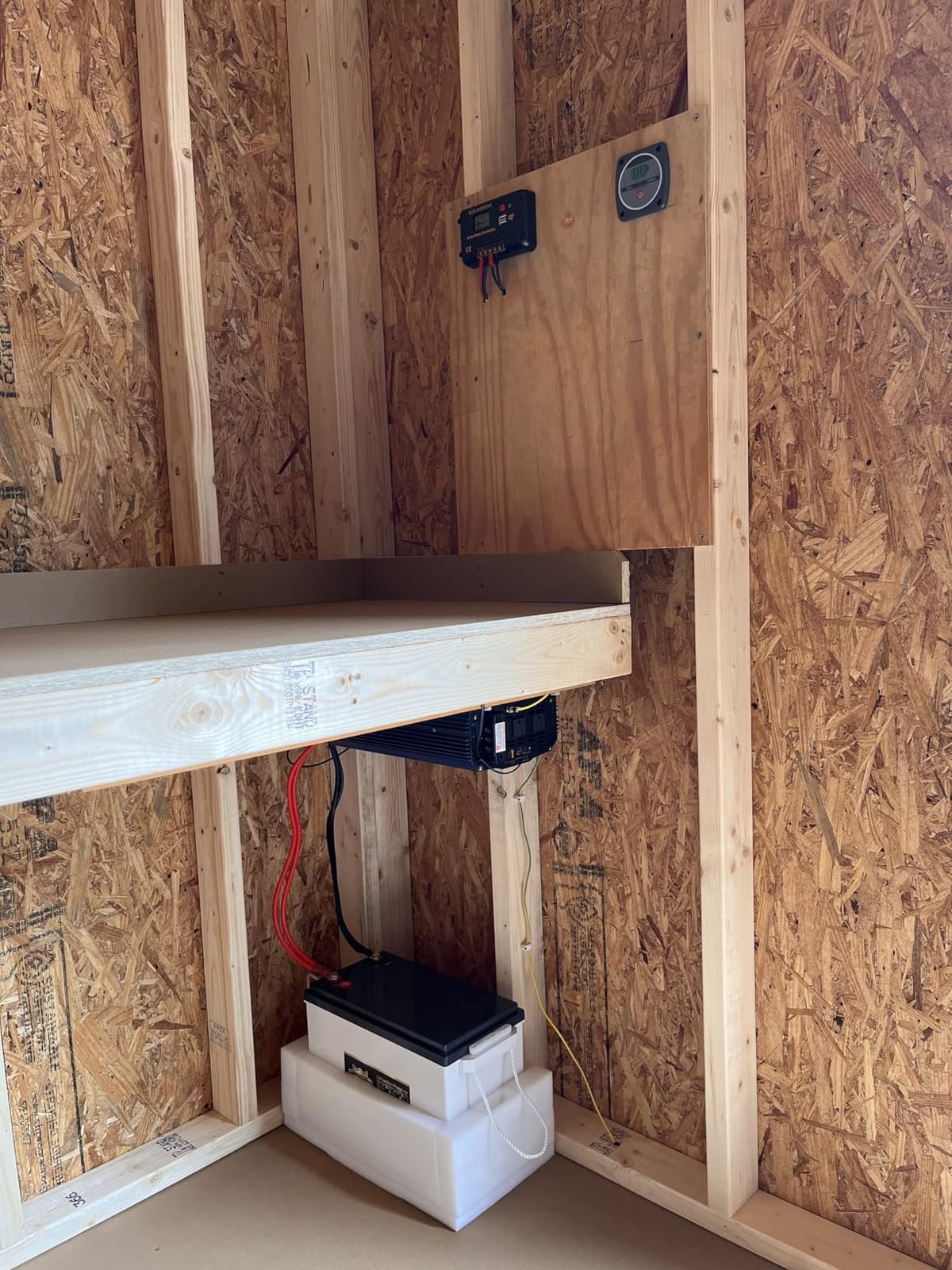
Daily output is quoted at 800Wh under 4 hours of full sunshine, using monocrystalline cells with efficiency up to 21.5%. The frame is a corrosion-resistant aluminium alloy rated for 2400Pa wind and 5400Pa snow loads, with an IP65 junction box, so exposure on a shed roof is not the weak point.
The package includes 2 x 100W mono panels, two sets of Z brackets, the 30A controller, a pair of 16.4ft 10 AWG cables, a pair of 2-in-1 connectors, and a 4.92ft tray cable. Very little is missing except the battery and any inverter.
When 12V and When 24V
Stay at 12V for a single battery and short cable runs, which keeps the component cost and the wiring simple. Move to 24V when the run is long or the bank grows, because halving the current at the same power cuts resistive losses in half.
Where It Falls Short
At 31.6 pounds this is the heaviest kit here, and putting two rigid panels on a shed roof is realistically a two-person job. The controller is PWM, so you give up efficiency, and the warranty is only one year, the shortest on any kit we recommend in this roundup.
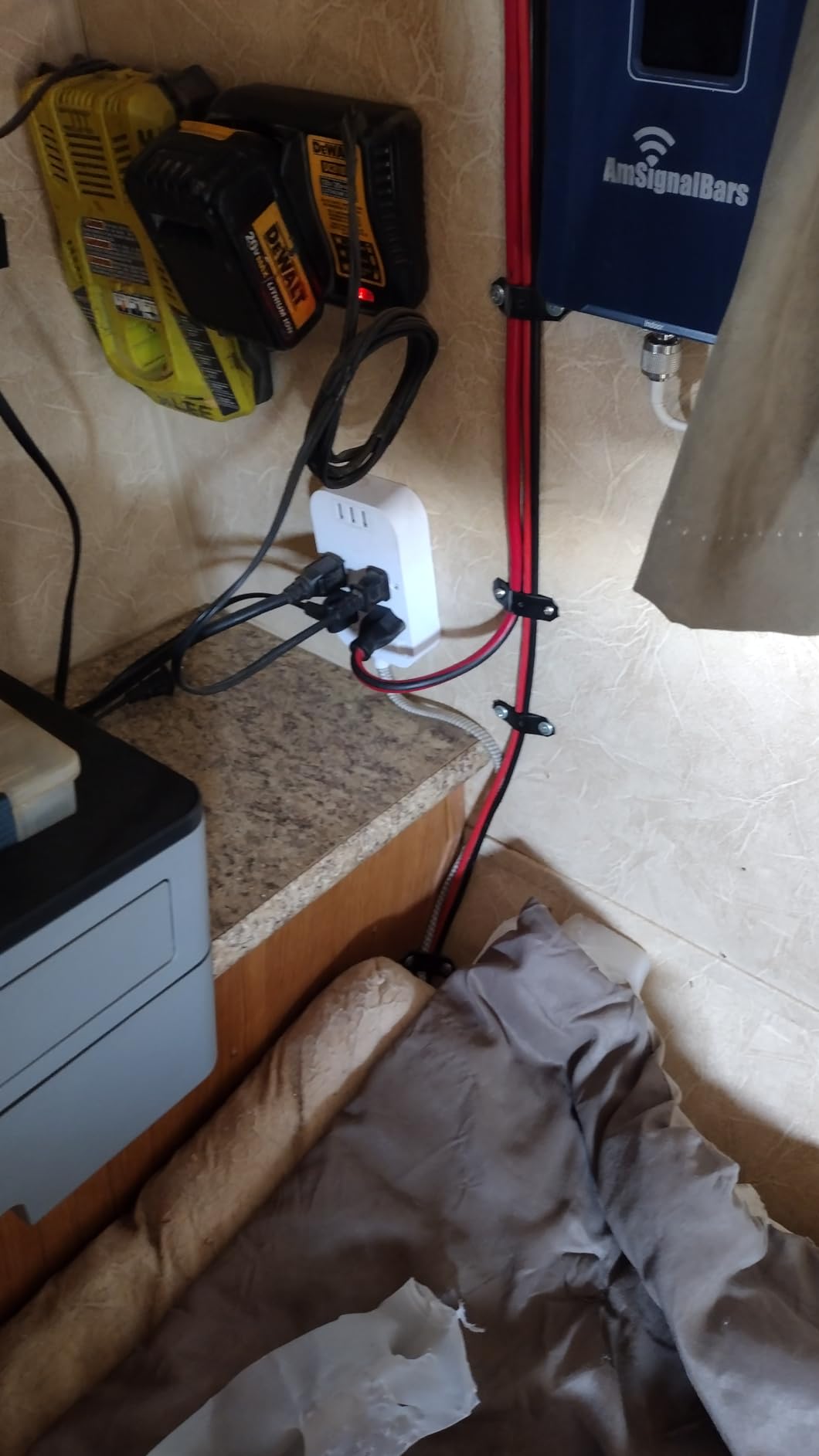
Judged purely on the cable length and the 12V or 24V choice, it is the most considered design for a real shed install. Judge it on warranty length and you should look at the Renogy options instead.
7. ECO-WORTHY 200W Complete Kit – Best All-in-One Kit With Battery and Inverter
ECO-WORTHY 200 Watt 12V Complete Solar Panel Starter Kit for RV Off Grid
200W N-type panels at 25% efficiency
12V 50Ah LiFePO4 battery
600W sine wave inverter
Pros
- Only kit here with battery and inverter included
- 25% N-type panels perform well in low light
- LiFePO4 rated for 4000 to 15000 deep cycles
- 20ms UPS keeps loads powered through transitions
Cons
- Most expensive kit in the roundup
- Lowest rating among the multi-panel kits at 4.1
- XT60 interface capped at 30A
This is the only kit on the list that delivers an actual system. You get 200W of N-type monocrystalline panels at 25% efficiency, a 30A charge controller, a 12V 50Ah LiFePO4 battery with an XT60 port, and a 600W two-in-one unit that acts as both a pure sine wave inverter and a 30A LiFePO4 charger with a 20ms UPS auto-switch. Daily output is quoted at 800Wh from 4 hours of sunlight.
The panel design is the standout technical feature. The dual-sided construction captures reflected light from the ground for up to 15% extra output, which on a light-coloured shed roof or gravel base is a real gain rather than a marketing line.
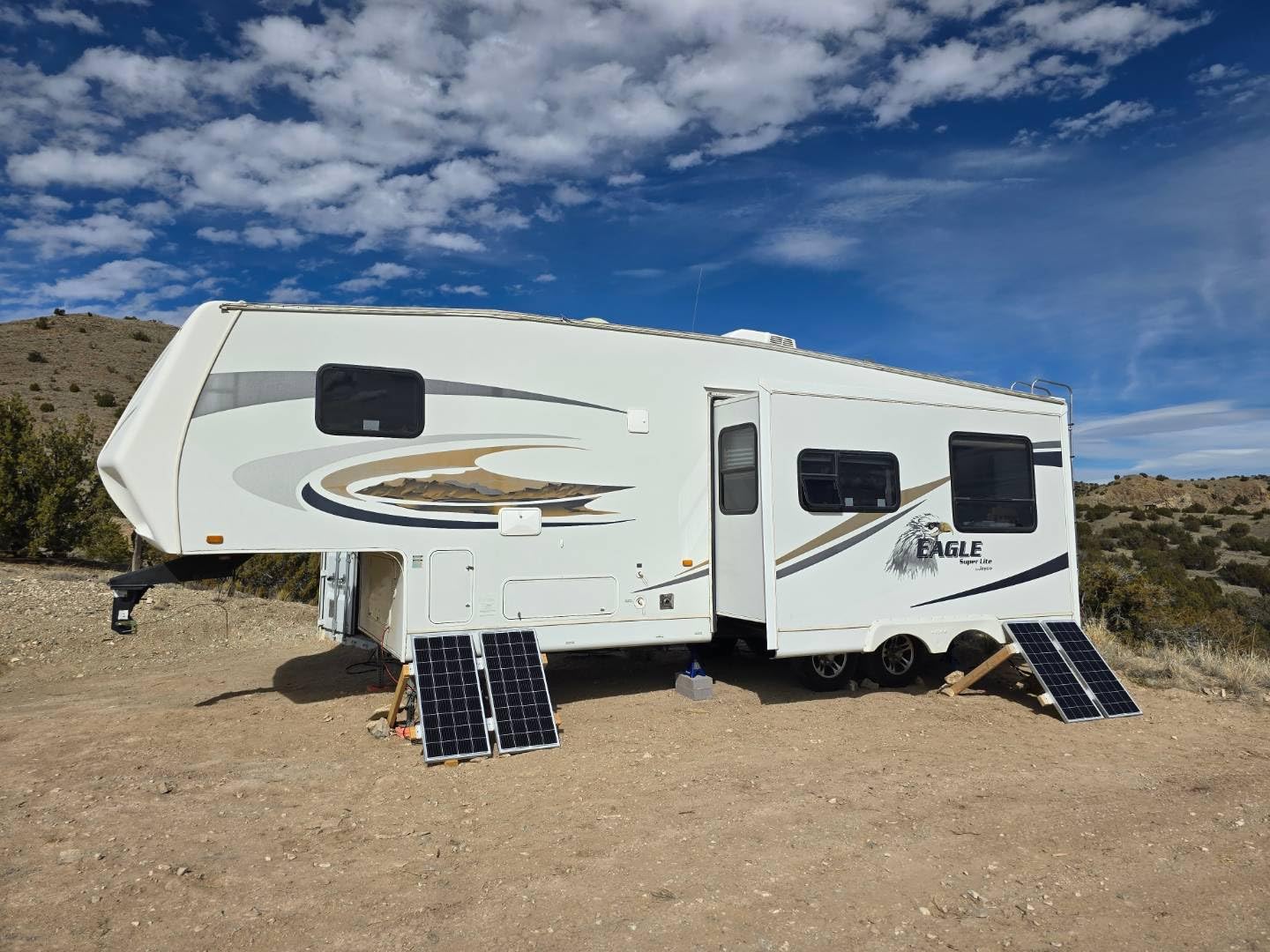
The battery choice is what makes this kit interesting for a shed. LiFePO4 chemistry is rated here for 4000 to 15000 deep cycles against 300 to 400 for lead-acid, and the charging current is adjustable from 5A to 40A through the app or a button. Note the XT60 interface is limited to 30A maximum input and output, so it is not a path to high-current charging.
The complexity is real. A 20ms UPS switchover and an app-controlled charger mean a wiring diagram you need to follow properly, not a two-clip job. First-time shed solar buyers on DIY forums consistently report that unclear wiring diagrams in manuals are one of their top frustrations, so budget an evening with the documentation open.
Who This Kit Suits
Anyone who wants AC outlets in a shed without sourcing an inverter and battery separately, or who wants backup behaviour during an outage. The pure sine wave output is also the right choice for motor-driven loads such as a small fridge or a fan, where modified sine wave output causes audible heat and unreliable start-up.
Where It Falls Short
It carries the lowest rating of any multi-panel kit we considered, at 4.1 with only 60% of reviews at five stars, and owner complaints cluster around cost, setup complexity, and occasional assembly or component quality issues. If your shed needs only lighting and cameras, this is far more system than the job requires.
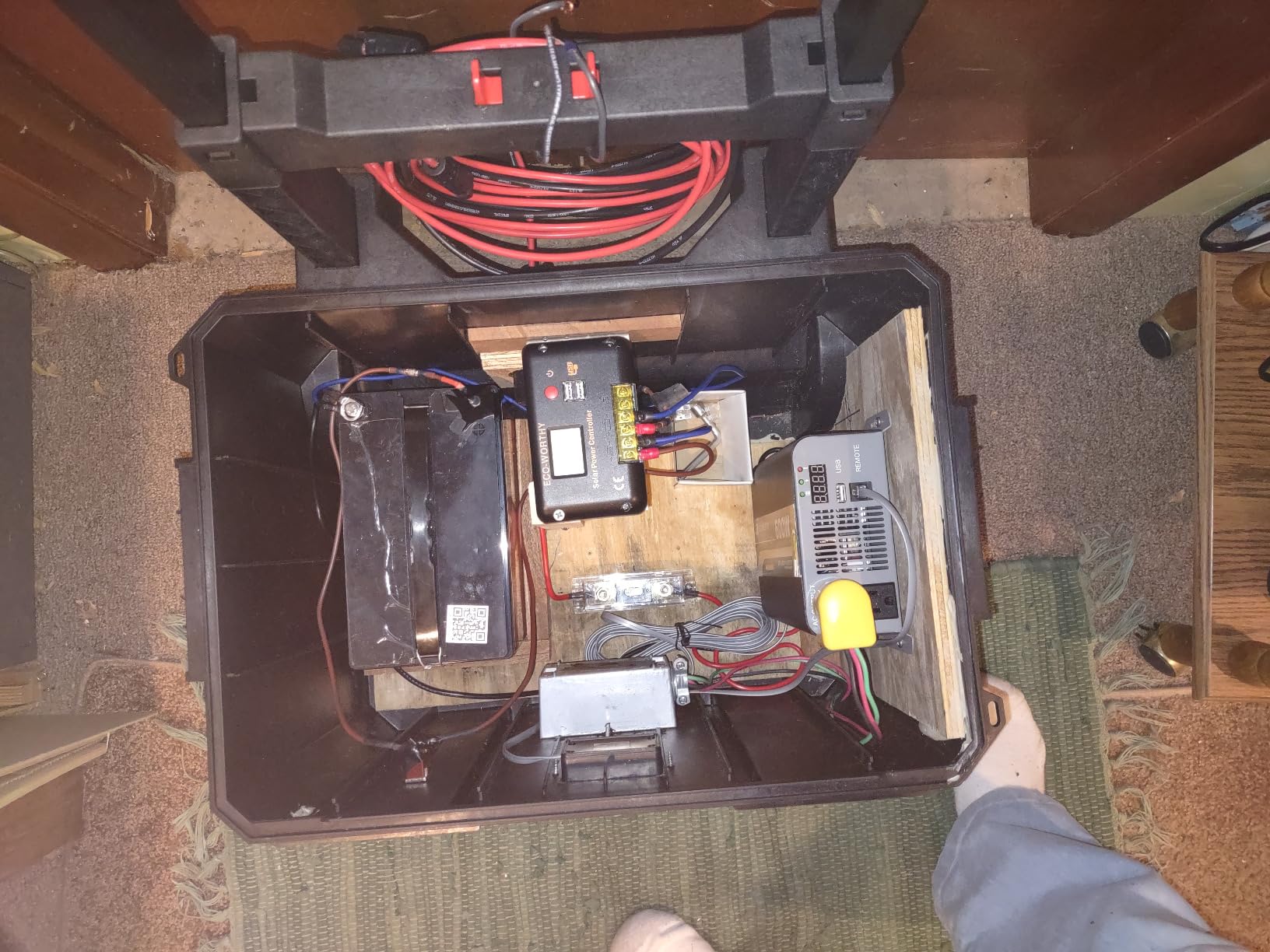
Our advice is to buy this if you specifically need mains power and a battery in the same box. If you can wire 12V DC loads directly, a panel and controller kit plus a battery you chose yourself is the more economical path.
8. DOKIO 200W Two-Panel Set – Best for Building Your Own System
DOKIO 200W Solar Panel Kit, 2-Pack of 100W, Brackets and 5 m Cable
2 x 100W panels
Half-cell layout with bypass diodes
5m MC4 cable
No controller included
Pros
- Lowest cost per watt among the 200W sets
- Half-cell layout reduces shading loss
- 5m MC4 cable lets the battery sit in the shade
- Foam-cornered packaging cuts transit damage
Cons
- Charge controller not included
- Some orders arrived as a single 200W panel
- Lowest rating here at 4.0
Half of what makes a shed kit good is the panel, and this package concentrates entirely on that. You get two 100W monocrystalline panels in a half-cell layout with bypass diodes, which halves the current per cell and reduces shading loss and overheating when part of the array is blocked by a vent pipe, a bracket, or afternoon shadow.
The included wiring is generous: a 3m alligator clip cable and a 5m MC4 adaptor lead let you place the controller and battery in the shade and keep the panels in the sun, which is the correct arrangement for a hot shed. Z-brackets and pre-drilled holes support RV, boat, cabin, roof, tilt, and pole mounting.
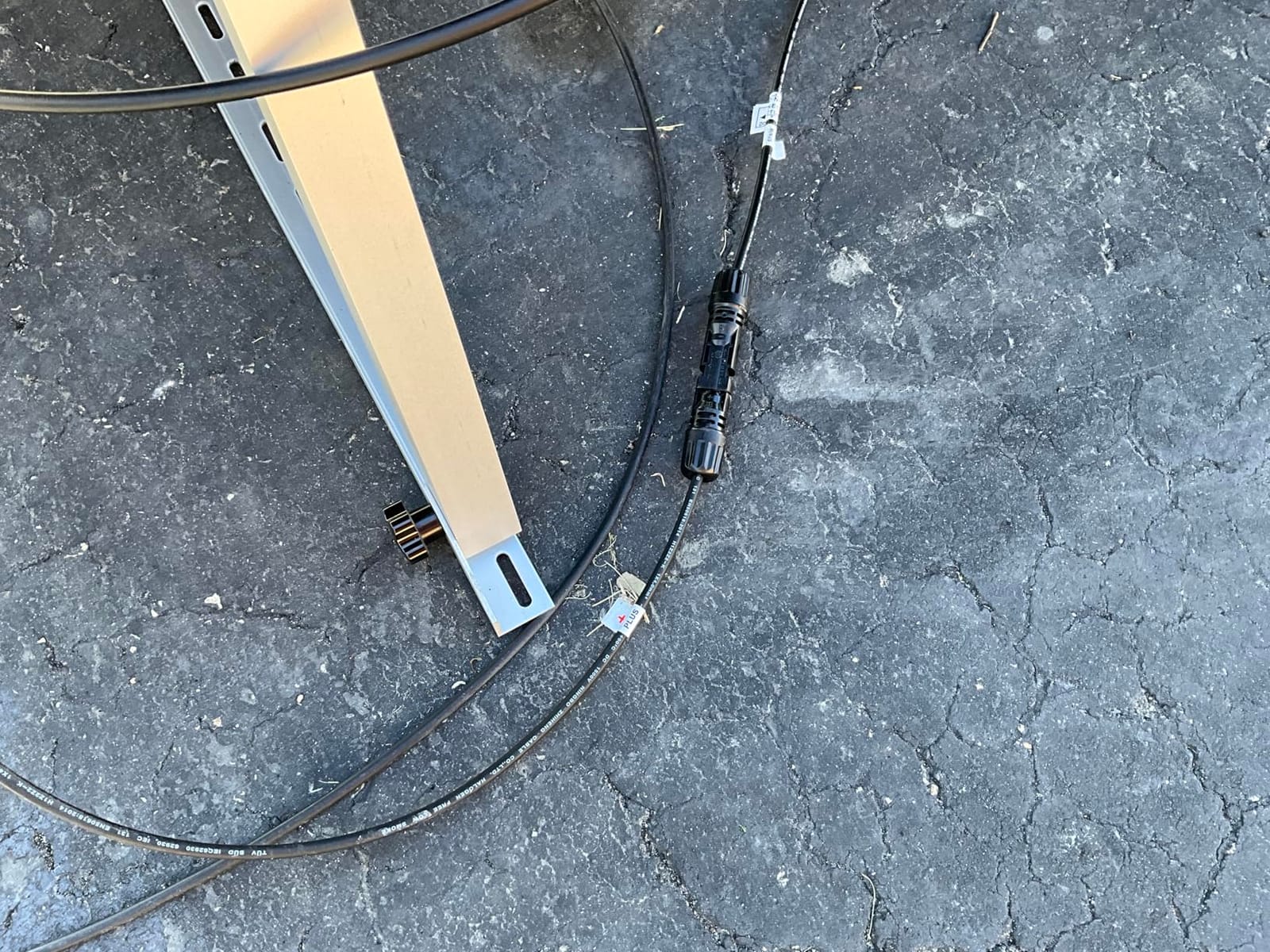
The catch is stated plainly on the listing: the charge controller is not included. You need to add one, and if you are choosing well that means an MPPT controller, which is where this kit becomes a good value rather than a cheap one.
Buyers who receive the advertised pair of panels report output at or above the nominal rating, and the foam corners and reinforced cartons are a sensible touch for a rigid panel shipment. The recurring complaints are fulfilment-related, with some orders arriving as a single 200W panel instead of two 100W panels.
When This Is the Right Buy
If you already own a controller, or you want to choose an MPPT unit deliberately rather than accept whatever ships in the box. It is also the kit for anyone planning a two-panel array where one panel must sit in partial shade, since the half-cell layout is the better engineering choice there.
Where It Falls Short
For a first-time shed buyer, adding a controller to the shopping list turns a weekend project into a research project. It also has the lowest average rating in the roundup at 4.0 with a 12% one-star share, and reviewers have raised complaints about the accuracy of the listing imagery.
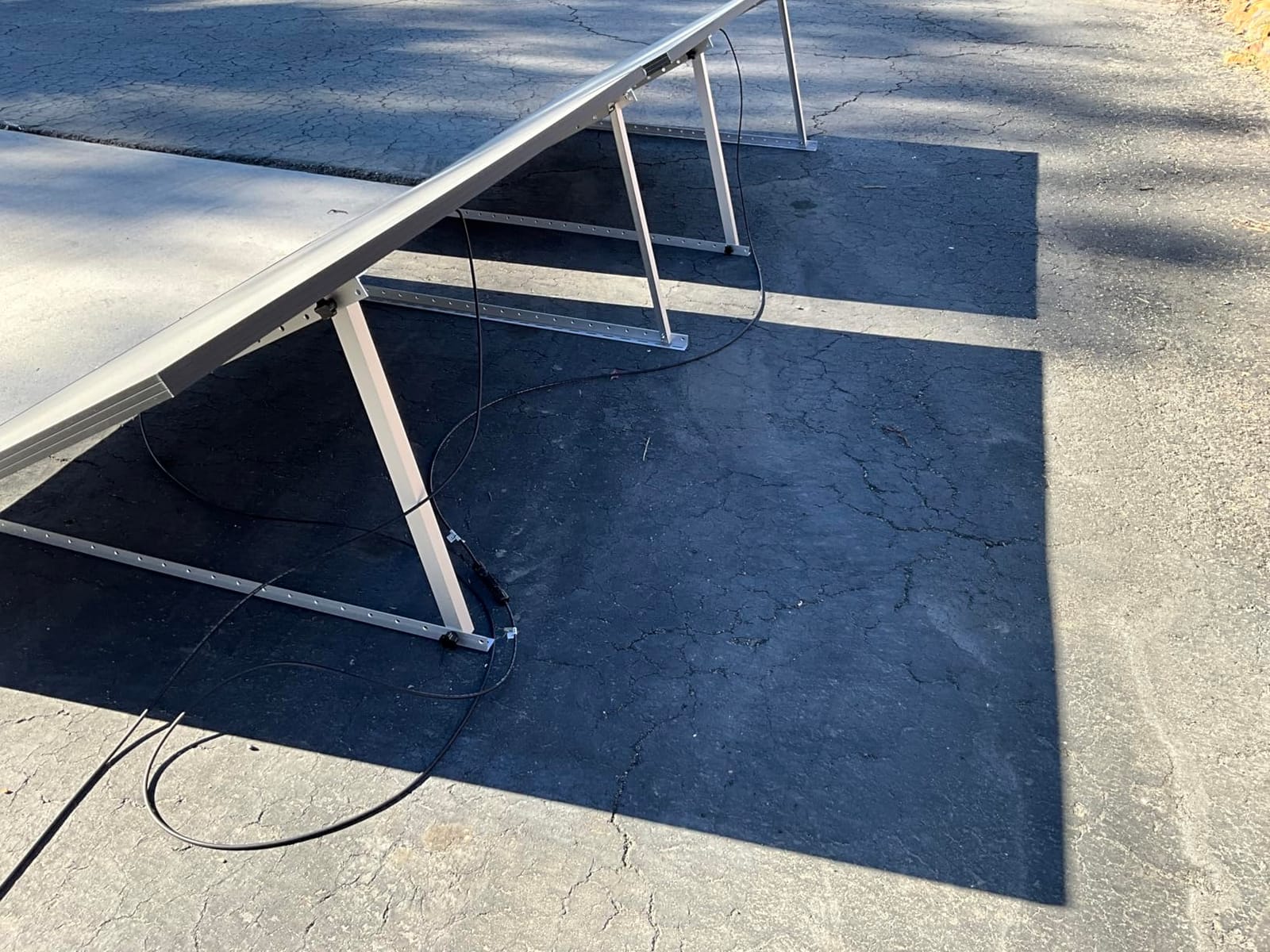
Buy it if you know what you are doing with an MPPT controller. Skip it if you want something that works out of the box on a shed roof this weekend.
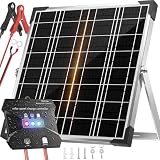
9. Voltset 20W MPPT Maintainer – Best Small MPPT Charger
Voltset 20W 12V Solar Panel Battery Charger Trickle Maintainer Kit
20W monocrystalline panel
10A MPPT charge controller
IP67 sealed build
Tool-free installation
Pros
- MPPT tracking charges faster than PWM trickle chargers
- Works with LiFePO4 AGM gel flooded and lithium
- IP67 sealing rated -40F to 185F
- No tools needed to mount and connect
Cons
- Only 20W so it maintains rather than powers loads
- Warranty is one year
Small panels usually mean PWM, and PWM is usually the reason a 20W maintainer underperforms. This one uses MPPT tracking, which is quoted as delivering 20 to 30% faster charging than comparable small panels. At this wattage the difference is real rather than academic, and it makes this the efficient choice for topping up a battery.
The controller adds useful detail: auto-stop at full charge and auto-resume when the voltage drops, LED indicators showing state from 25% up to 100%, multi-layer protection against overcharge, over-discharge, short circuit, and reverse polarity, and no night-time draw from the battery.
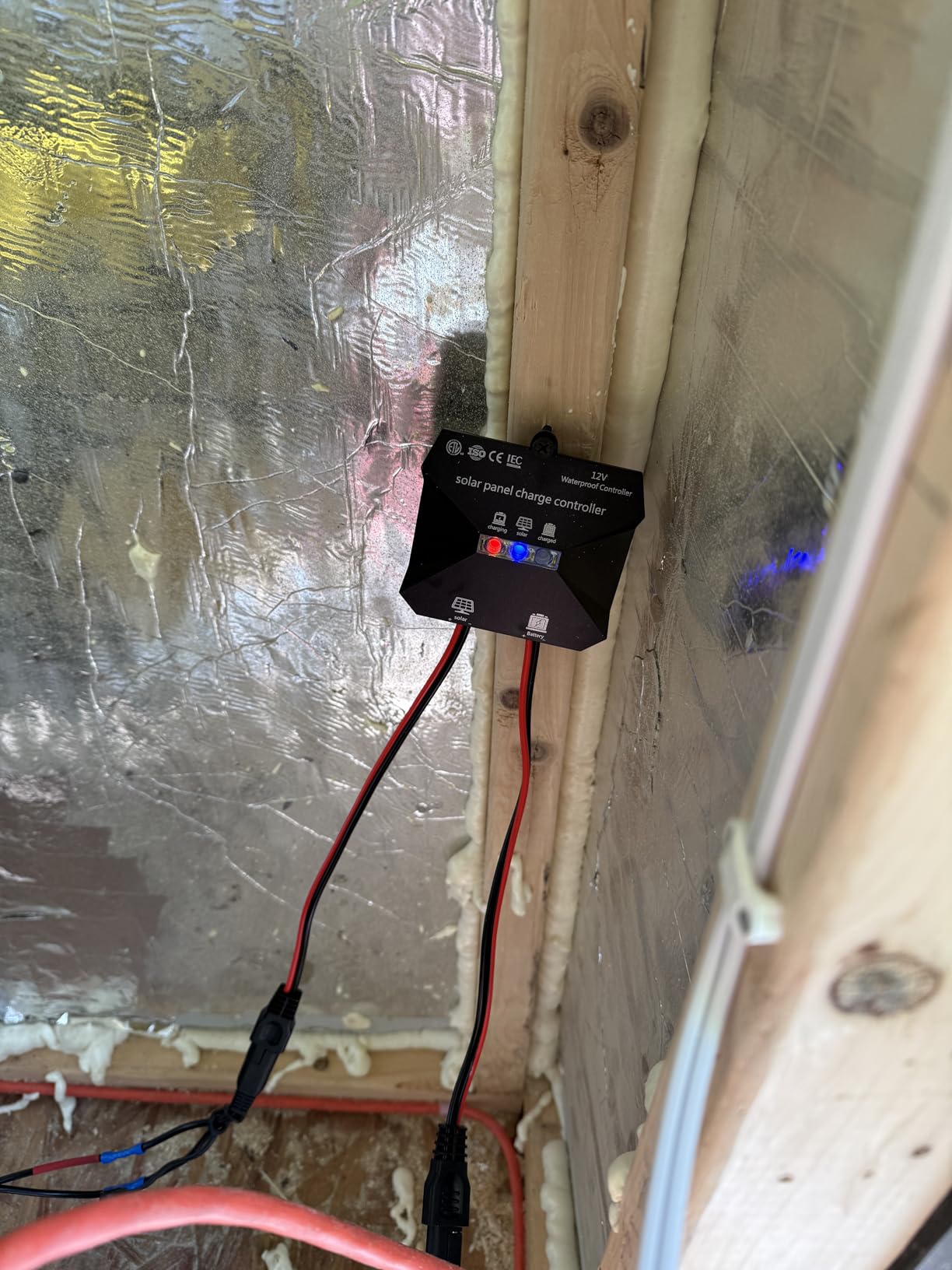
Construction is the other strength. IP67 waterproof sealing holds up in rain, snow, and extreme heat across a stated -40F to 185F range, and pre-drilled mounting holes mean setup needs no tools. Buyers highlight the fast MPPT charging and the broad battery chemistry compatibility, which includes LiFePO4.
What it will not do is power anything. A 20W panel maintains a battery; it does not run lights, a camera, or a router directly. Think of it as insurance for a battery that sits unused through the week.
Best Uses on a Shed
A gate opener battery, an electric fence battery, a dump trailer, a mower, a boat on a mooring, or a shed where you already have mains-powered lighting and only want the battery to stay healthy. It is also a sensible second panel if you have upgraded your main array to MPPT.
Where It Falls Short
The one-year warranty is the shortest we would want to see on anything you plan to leave outdoors permanently. And if you have ever wondered whether a small panel can carry a load, the answer here is no.
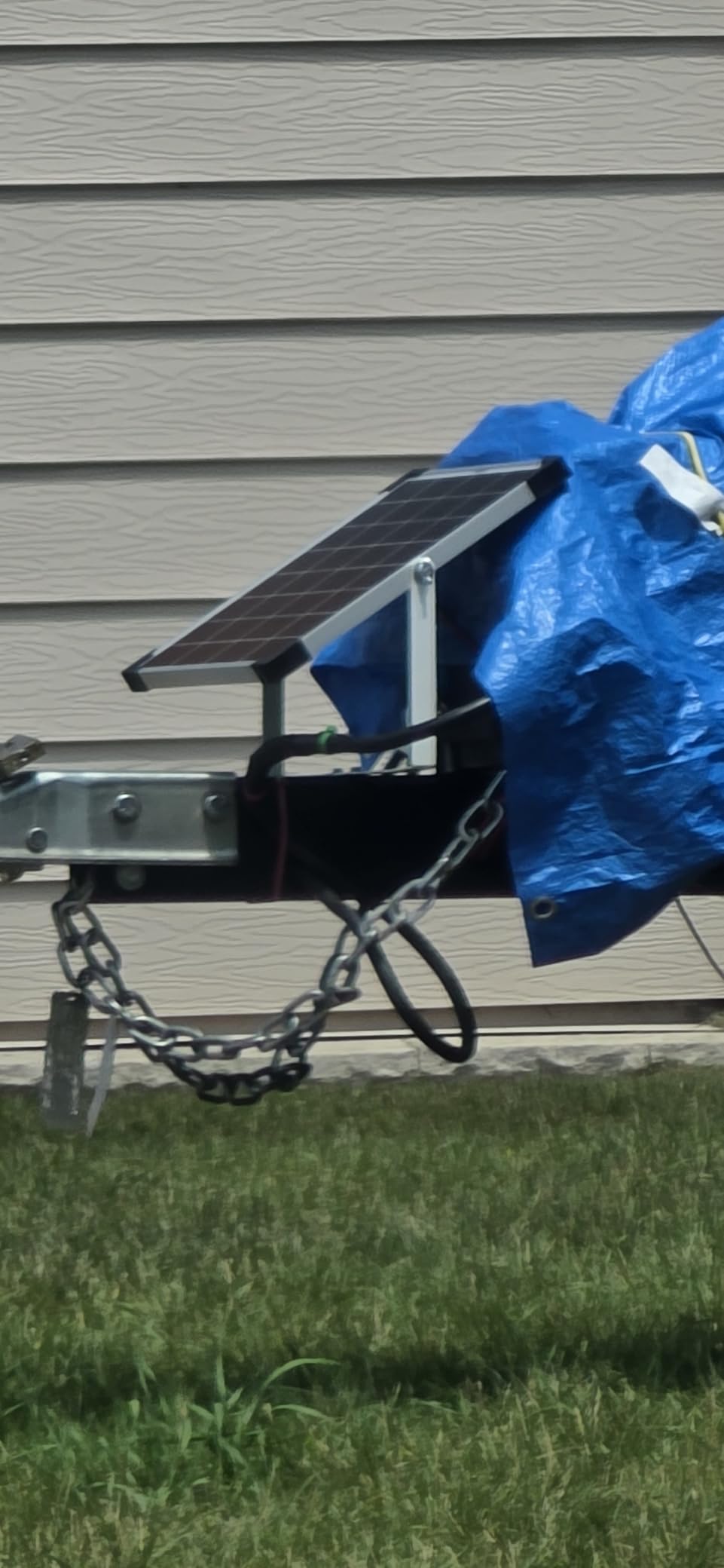
Within the 20W maintainers here, it is the one that recovers the most energy from a small panel. That makes it the efficient maintainer even though it is not a power kit.
10. SOLPERK 20W Maintainer – Best for Battery Top-Ups and Stored Equipment
SOLPERK Solar Panel Kit 20W 12V Solar Battery Charger Maintainer+Controller
20W monocrystalline panel
8A three-stage controller
360-degree bracket
3 pounds total
Pros
- Holds a charge even on cloudy days
- Three-stage charging prevents overcharging
- 360-degree bracket makes repositioning easy
- Long included cable reduces the need for extensions
Cons
- Trickle-maintenance power level only
- Some buyers had to extend the cable for roof mounting
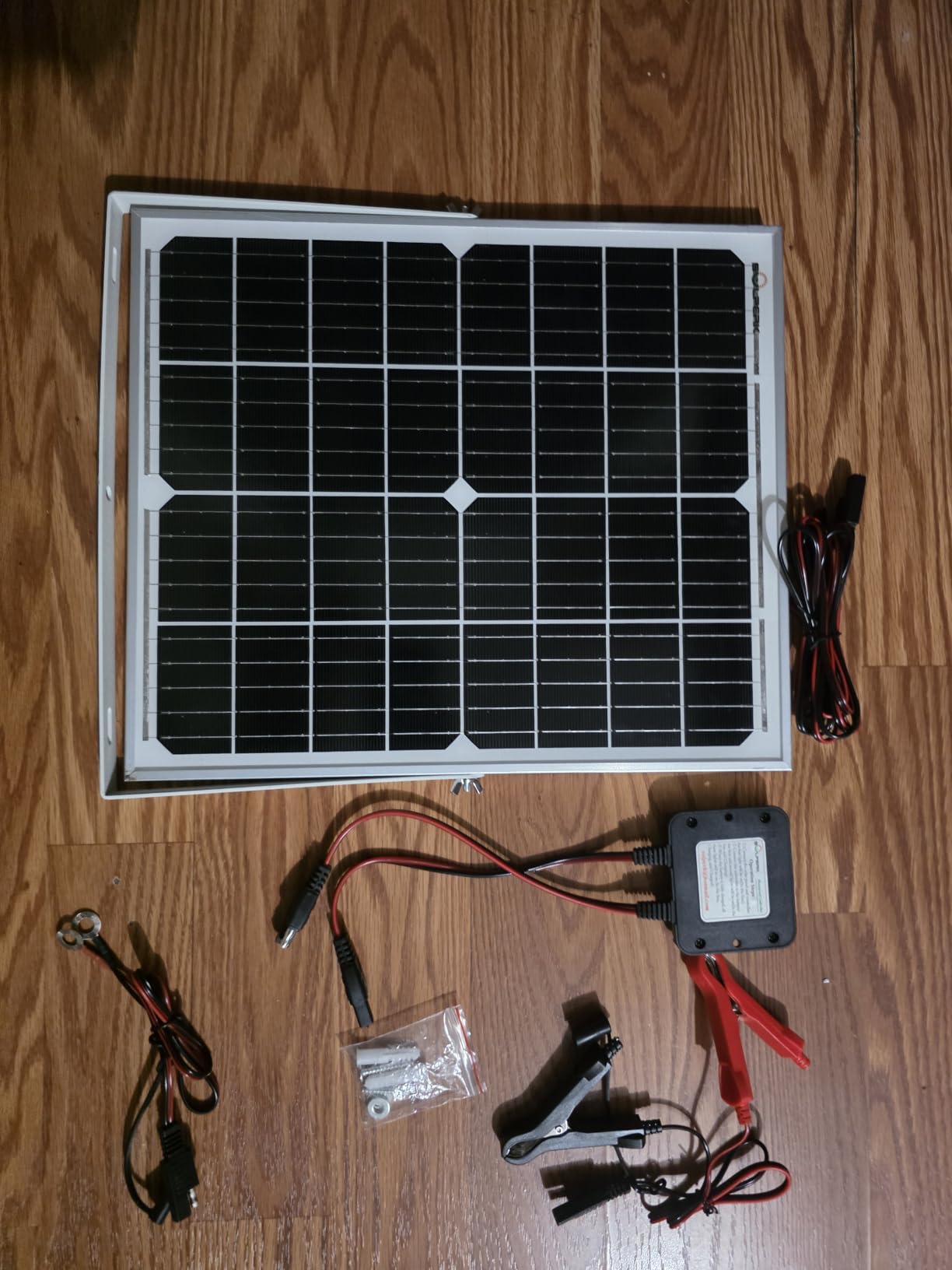
The 3785 reviews on this kit point to one consistent pattern: it keeps 12V batteries topped up reliably in ordinary and cloudy conditions. It is used almost entirely for maintenance on stored vehicles, RVs, boats, lawn mowers, dump trailers, and electric fence batteries, which tells you exactly what to expect from it.
The controller is an 8A smart unit with three-stage charging and no battery draw at night, and the two indicator lights show charging status at a glance. The bracket is fully 360-degree adjustable with pre-drilled holes, so positioning it for seasonal sun angles takes about a minute.
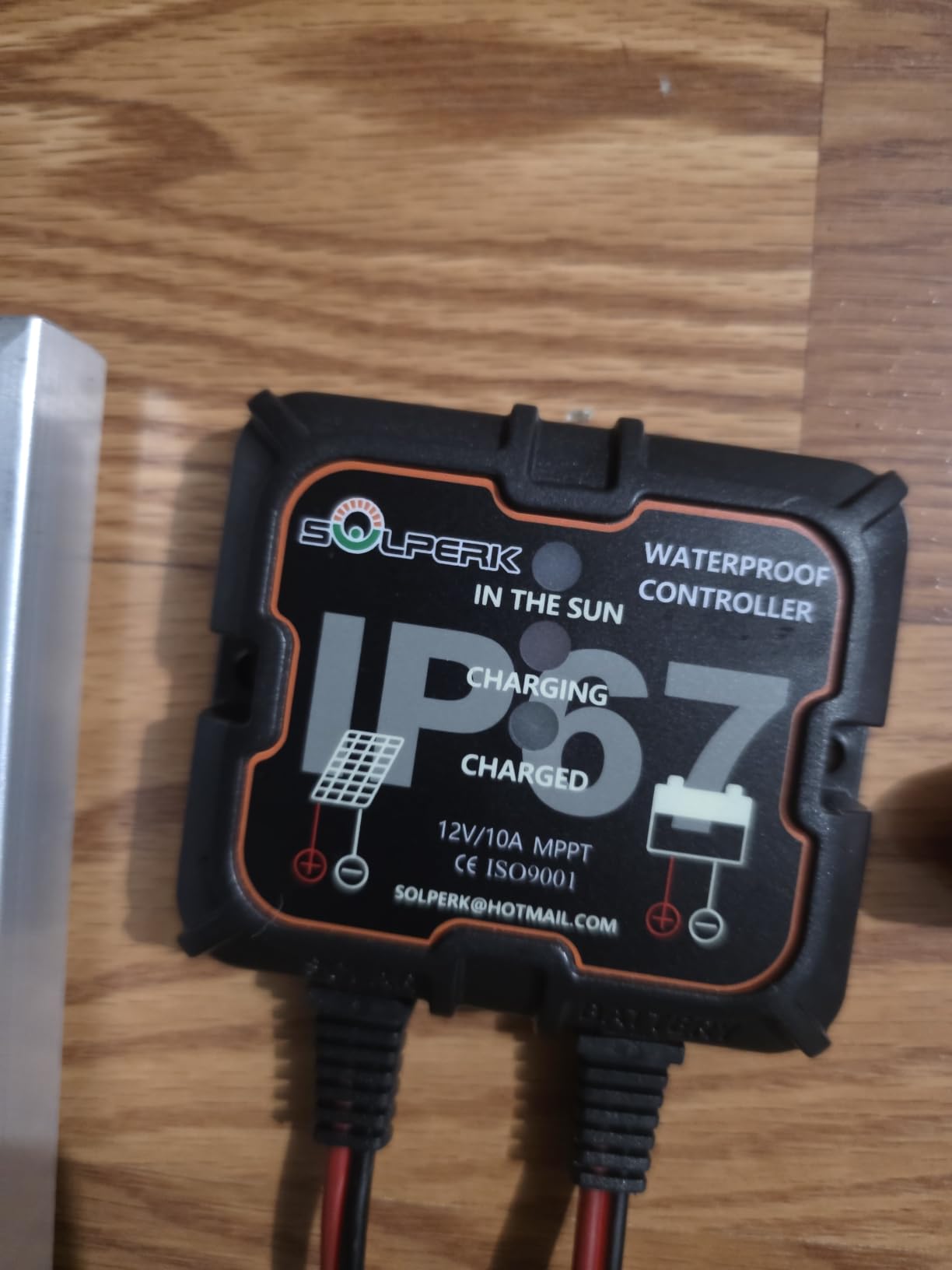
The build is genuinely outdoor-rated: low-iron tempered glass, a corrosion-resistant aluminium frame, and ratings of 2400Pa wind and 5400Pa snow load. It accepts LiFePO4, lithium ion, AGM, SLA, gel, EFB, and MF batteries, so it is not tied to one battery type.
At 3 pounds it is the easiest item in this roundup to carry up a ladder, and the included cable is long enough that most reviewers did not need an extension. The recurring complaint is the opposite: a few buyers mounting it high on a roof still needed more cable.
Where It Earns Its Place
Any battery in your shed or garden that sits idle between uses and slowly discharges. That is the whole use case, and 3785 reviews make it the best-documented maintainer in the group for this job.
Where It Falls Short
It is a maintainer, not a generator. Do not expect it to power a light, a camera, or a charger, and do not size your shed system around 20W. It also runs a PWM-style algorithm rather than MPPT, so it harvests less from those 20 watts than the Voltset unit.
If the job is maintenance, this is the safest buy in the list. If the job is power, skip down to one of the 100W and 200W kits.
11. ECO-WORTHY 25W Maintainer – Best Small Panel With a Waterproof Controller
ECO-WORTHY 25W 12V Solar Panel Battery Charger Trickle Maintainer Kit
25W panel at up to 23% efficiency
100Wh per day
Waterproof controller
Bracket included
Pros
- Around 25% more power than a typical 20W maintainer
- Users measured output in line with claimed specs
- Sealed waterproof controller with temperature compensation
- Works out of the box with no complicated wiring
Cons
- Smallest power output in the roundout
- Controller output voltage regulation is poor for direct loads
- Short included cables
Twenty-five watts sounds marginal until you compare it with the 20W units: the A+ monocrystalline cells here convert at up to 23% efficiency and produce about 100Wh per day. Buyers who have measured it report output in line with the claim and a battery topped up in roughly two hours of full sun.
The reason this panel earns its place is the controller. It is fully sealed and waterproof, with zero night-time power consumption and battery temperature compensation, plus protection against overvoltage, over-discharge, overload, short circuit, and high-voltage transients. Temperature compensation matters more in a shed than most buyers realise, because an unheated building can swing widely between summer afternoon and a freezing night.
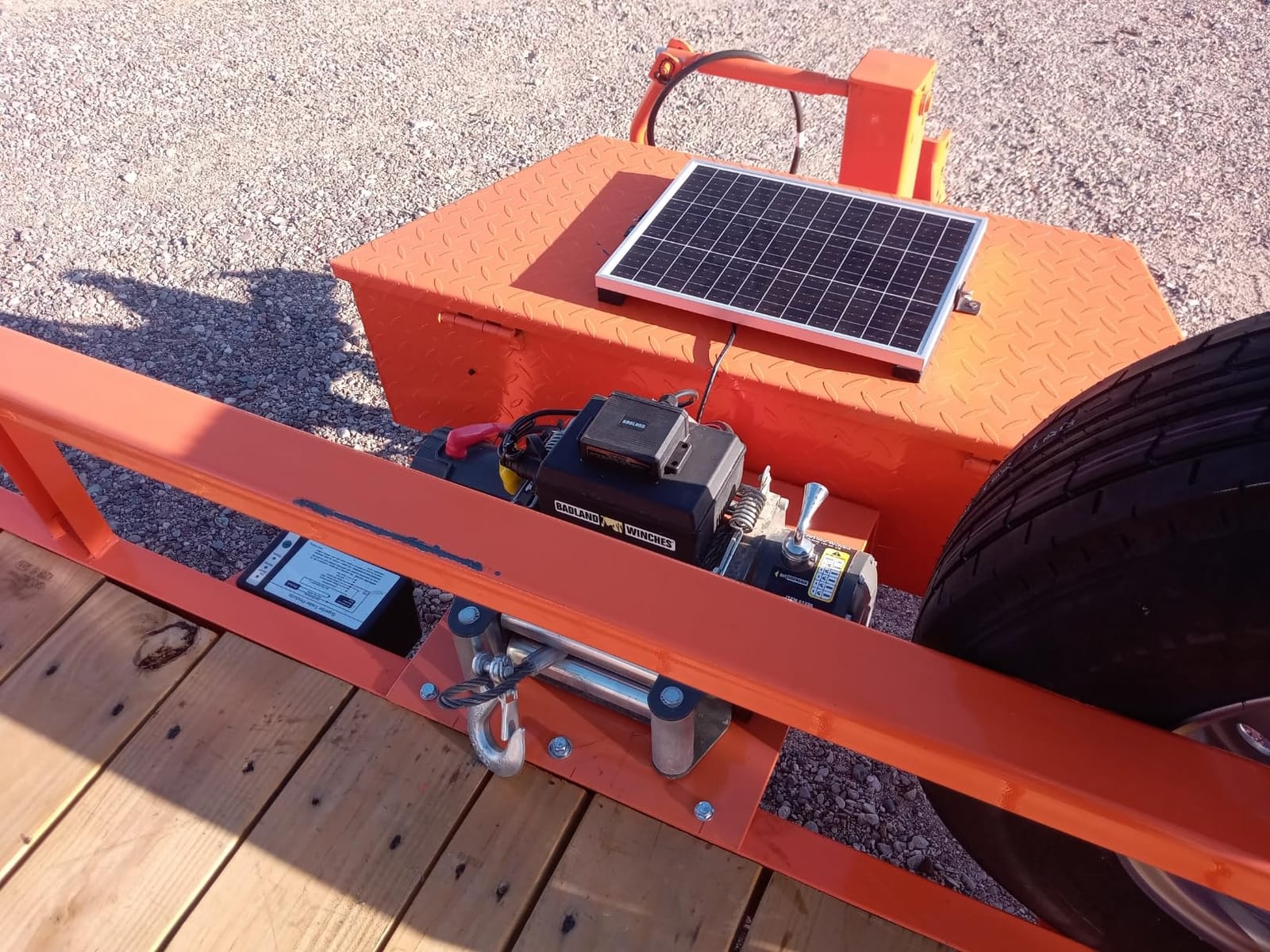
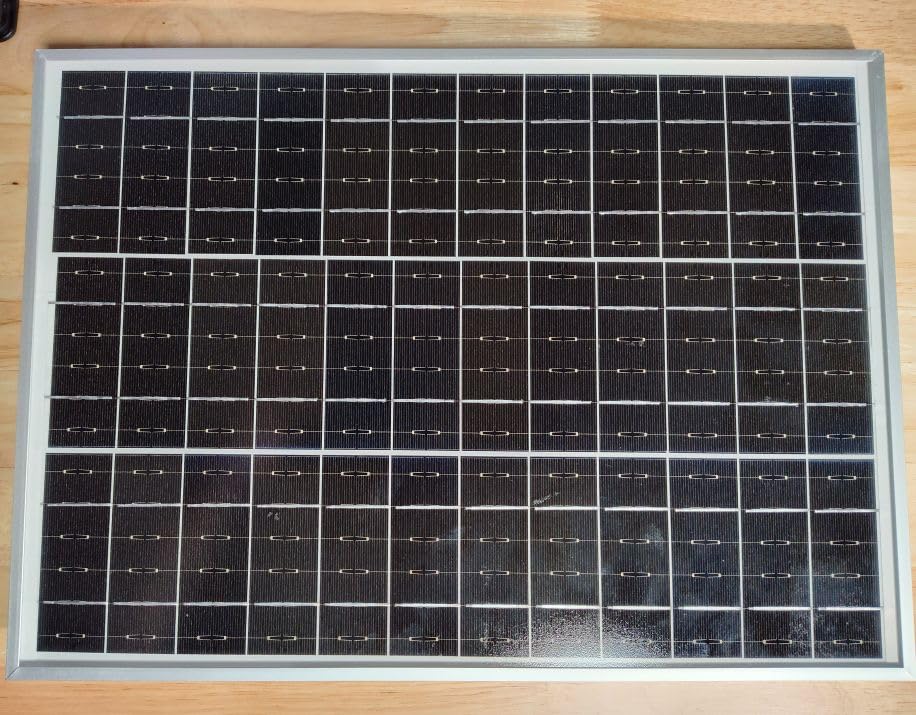
The panel is rated for 2400Pa wind and 5400Pa snow load and handles sandstorms, blizzards, and hail, so exposure on a shed roof or a fence line is fine. It accepts LiFePO4, AGM, SLA, lithium ion, gel, and MF batteries, and the box includes an adjustable bracket and a screw set.
The limitation worth flagging is that this is the smallest power output in the roundup. It maintains; it does not power. The single most-cited complaint is that the bundled controller regulates output voltage poorly, which makes it unsuitable as a clean 12V DC supply for direct loads such as a fan or a light strip wired straight in.
Why It Earns Its Spot
The efficiency per square inch is the best in this class, and the sealed temperature-compensated controller is the right choice for an unheated shed where condensation and cold are both present. If your maintenance duty is off-grid lighting or a gate, the 100Wh daily figure matters more than the panel wattage label.
Where It Falls Short
If you want to run anything from it, do not. The included cables are also short at about 1.5 feet, so a roof or fence mount needs extra cable. Like its 20W rivals, it is a battery keeper rather than a power system.
Choose this over a 20W maintainer when your priority is output per unit of roof space and a controller that tolerates temperature swings.
12. Hoysicy 20W Maintainer – Budget Pick for Gates and Small Sheds
Hoysicy 12V Solar Battery Charger Maintainer 20W Solar Panel Kit
20W monocrystalline panel
10A PWM charge controller
Alligator clip and O-ring leads
3.8 pounds
Pros
- Lowest entry point of the complete kits here
- Explicitly marketed for sheds cabins and gate openers
- Lightweight with pre-drilled mounting holes
- Both clip and O-ring terminals included
Cons
- Lowest average rating in the roundup at 4.3 with the highest one-star share
- Only 20W limits it to maintenance
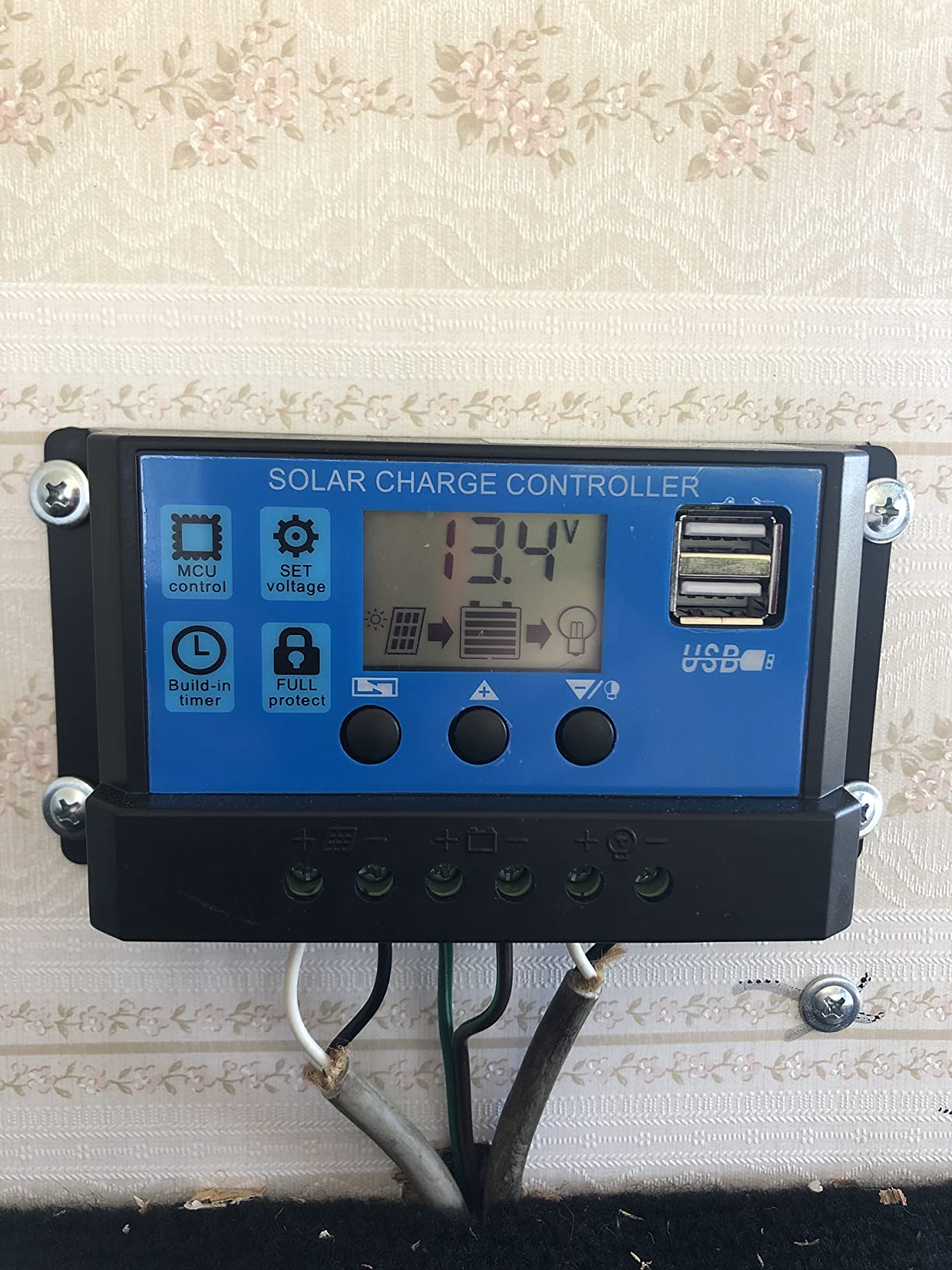
- No status display on the controller
This is the entry point of the roundup, and for one job it is genuinely enough: keeping a 12V battery alive on a gate opener, a cabin, or a small outbuilding. The listing names sheds, cabins, and gate openers explicitly, which is unusual in this category and tells you the intended duty.
The controller uses an advanced PWM algorithm with under-voltage and over-voltage protection, output overload, short circuit, and anti-back-connect protection. The panel uses monocrystalline cells in an anodised aluminium frame with a tempered glass coating, and protective corner caps on all four corners take the knocks that a low-mounted panel sees.
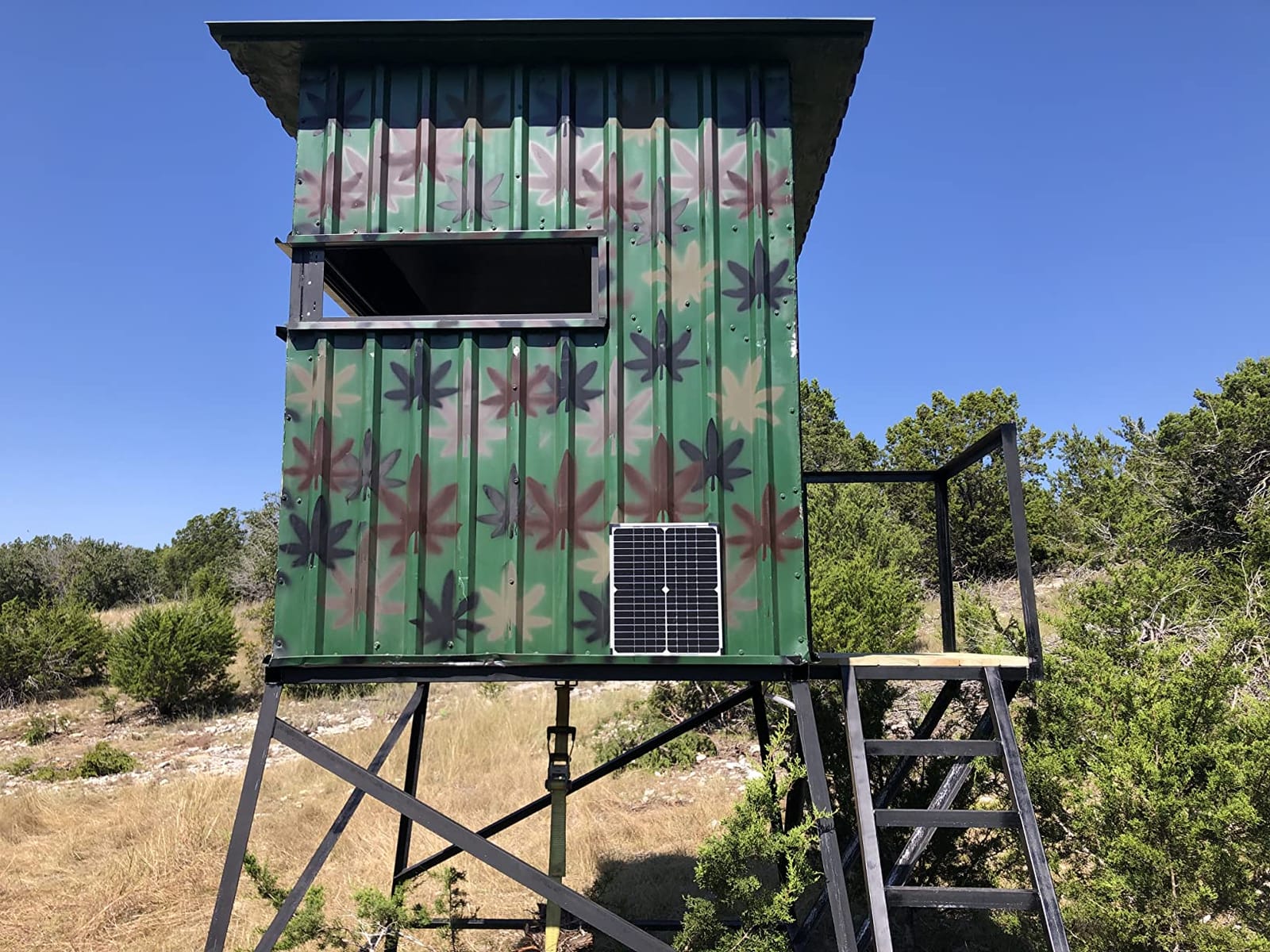
The package includes the panel, a 10A solar charger, and two 6.5ft cables with both alligator clips and O-ring terminals, so you can connect to whatever battery style you have. At 3.8 pounds it is easy to handle alone, and the 12-month warranty comes with lifetime technical support.
Its rating is the lowest of the twelve, at 4.3 with a 7% one-star share, and the complaints are predictable: trickle-level output and no display on the controller, so you cannot tell at a glance whether it is charging without checking the battery.
When It Is the Right Call
A gate opener, a lawn mower, or a battery you want to keep topped up between seasons, on a small budget and with no interest in monitoring. The clip and O-ring terminals mean it will fit almost any battery without an adapter.
Where It Falls Short
It cannot power shed lighting, cameras, or tools, and the absence of any state-of-charge display makes it a poor choice for a battery you intend to rely on. If you want a maintenance panel with better cell efficiency and a proper display, step up a tier.
Our budget pick, and a sensible first purchase before committing to a larger system for the same shed.
How to Size a Solar Kit for a Shed in Five Steps
How many solar panels do you need to run a shed? The honest answer depends on your appliance list, not on the size of the shed. Here is the method we use, and it takes about fifteen minutes.
Step 1: List every load and its running wattage. Write them all down, including the things you forget: a router, a security camera, a battery trickle charger. For a lighting-only shed you are typically looking at one 30 to 40W LED strip for a few hours, a 10 to 15W router, and a 5 to 10W camera. For a workshop shed, add a tool charger and a bench light. For a shed fridge, add roughly 100 to 150W while the compressor runs.
Step 2: Convert to watt-hours per day. Multiply each device’s running watts by the hours you actually use it. A 35W light for 4 hours is 140Wh. A 15W router for 24 hours is 360Wh. Add the daily total, then add 20 to 30% for losses in the controller, wiring, and battery conversion, plus whatever reserve you want for gray days.
Step 3: Size the battery in amp-hours. Divide daily watt-hours by 12V to get the amp-hours you need to move, then divide that by your usable depth of discharge. Do not plan to empty a battery. Lead-acid is realistically usable to 50%, AGM to about 50%, and LiFePO4 to 80% or better. So a 200Wh daily load on LiFePO4 needs roughly 200 divided by 12 divided by 0.8, which is about 21Ah per day of storage, and you would want several days of that for cloudy weather.
Step 4: Size the panel array. Divide daily watt-hours by the peak sun hours you can expect, then apply a derating factor. In practice, panel makers use something close to a 1.3 to 1.5 divisor rather than dividing straight by peak hours, and that gap is the basis of the familiar 33% loss allowance. A 1000Wh daily target in a region with 5 peak sun hours needs a 200W to 300W array once you derate.
Step 5: Size the charge controller to the array, not the battery. A controller must be rated for the short-circuit current of the panels. Divide panel watts by panel voltage to get array current, then add headroom so you can add a panel later without replacing the controller. The 30A controllers in this roundup pair comfortably with 100W and 200W arrays.
Shed Load Cheat Sheet
Here are typical figures for the loads shed owners ask about, using running watts and realistic daily hours:
LED strip or bulb: 10 to 40W, 3 to 5 hours, 30 to 200Wh per day
Wi-Fi router: 10 to 15W, 24 hours, 240 to 360Wh per day
Security camera: 5 to 10W, 24 hours, 120 to 240Wh per day
Cordless tool charger: 60 to 120W while charging, 1 to 2 hours, 60 to 240Wh per day
Small shed fridge: 100 to 150W running, duty-cycled, roughly 400 to 700Wh per day
Small dehumidifier: 200 to 350W running, 6 to 10 hours, 1200 to 3000Wh per day
Water pump: 300 to 600W running, 1 to 3 hours, 300 to 1800Wh per day
A lighting-and-camera shed lands in the 400 to 700Wh daily band, which a 100W to 200W array covers. A fridge plus tools lands around 1000 to 1500Wh, which wants a 200W to 400W array and a much larger bank. A dehumidifier is a different order of problem entirely and changes the answer from a weekend project to a design exercise.
How to Size a Solar Kit for a Shed
Add 30 to 50% more panel wattage for winter. Winter production in the northern regions can fall to a third of summer output, and a system sized exactly on annual averages will disappoint you in January. If your shed runs year-round, size on your worst season rather than your best. The forum consensus we found while researching this roundup is blunt on this point: buyers who sized for summer are the ones who end up carrying a battery into spring.
Which Panel Type Suits a Shed Roof
Rigid monocrystalline panels are the right default. Flexible panels are lighter and cheaper but they cannot be shaded at all without collapsing output, they have no useful life expectancy on a roof, and the adhesive fails. Rigid frames with an aluminium surround survive heat cycling and wind far better, and the tempered glass and 2400Pa wind ratings we see across this roundup are a reasonable baseline for an exposed shed roof.
Do You Need an Inverter?
Only if you want mains power. If every load is 12V DC, run the panel, controller, and battery and skip the inverter entirely. If you need a plug for a tool, a kettle, or a laptop charger, add a pure sine wave inverter, and size it on surge rather than running watts because motors draw several times their running current at start-up. Modified sine wave output causes heat and unreliable start-up in motor-driven loads like a fridge or a fan, so avoid it if those are in your list.
How Long Do Shed Solar Kits Last?
Panels are typically warranted for 25 years of output performance, and the rigid panels in this roundup claim a lifespan of up to 25 years. Controllers run 2 to 5 years, which is why the length of the controller warranty matters when comparing kits. Batteries are the weak point: lead-acid gives you a few hundred deep cycles, while the LiFePO4 pack in the all-in-one kit is rated for 4000 to 15000 cycles. Expect to replace a controller once and a battery maybe never, depending on chemistry.
Why Do Buyers Regret Shed Solar Kits?
The complaints we found across forums cluster into a short list. Kit contents are ambiguous, and people discover after buying that the battery, inverter, or a fuse was never in the box. PWM controllers still turn up inside kits marketed as complete, which disappoints buyers who expected modern efficiency. Manuals have poor wiring diagrams, which is the single most common frustration for first-time installers. Battery management systems cut charging at a higher temperature than the stated cutoff, which shows up as a battery that refuses to charge in cold weather. And foldable panels suffer hinge failure after about a year of frequent repositioning, which matters only if you actually move yours.
Battery Chemistry: LiFePO4 vs AGM vs Lead-Acid
Lithium iron phosphate is the right battery for a shed in 2026, and the chemistry gap is wider than most buyers expect.
Usable depth of discharge is the number that decides your battery size. Lead-acid and AGM realistically give you about half their nameplate amp-hours before damage begins; LiFePO4 gives you 80% or more. That means a 100Ah LiFePO4 bank stores roughly the same usable energy as a 200Ah AGM bank, in half the physical space and half the weight.
Cycle life is the second gap. Lead-acid manages a few hundred deep cycles before it degrades. The LiFePO4 pack rated for 4000 to 15000 deep cycles in this roundup is a two-order-of-magnitude difference, and it matters because a shed battery spends most of its life sitting unused between weekends rather than cycling regularly.
Cold weather is the third. Lead-acid should not be charged below freezing without a temperature compensation function, because the chemistry forms plates that shorten its life. LiFePO4 has an internal management system that cuts charging, and here is the practical caveat from forum research: some units trigger that cutoff at around 5C rather than the stated 0C, so verify the spec with the seller before winter rather than assuming your battery will charge on a freezing morning.
Our buying guide to battery banks for off-grid homes goes deeper on the capacity and parallel-bank questions if you are sizing more than one unit.
12V vs 24V vs 48V: Which Architecture a Shed Actually Needs
Most sheds should run at 12V. Move to 24V only when the wiring run is long or the bank grows, and treat 48V as a different project.
The logic is current. Power divided by voltage gives current, and resistive losses in the wire scale with the square of that current. Doubling the system voltage halves the current for the same power, which cuts the cable drop roughly by a factor of four. That is why a shed 100 to 200 feet from the battery benefits so much from a higher-voltage array.
At 12V, cable losses are manageable over short runs, and nearly every kit in this roundup is designed around it. At 24V, you wire two panels in series and a 24V battery, which is exactly the option the ECO-WORTHY 200W kit supports with its parallel-or-series configuration. At 48V, you need an MPPT controller with a high enough input voltage to accept the array, plus DC-DC converters if you want 12V accessories, and the component cost rises sharply.
One note from the r/SolarDIY discussions we reviewed while researching this: users planning larger off-grid builds consistently prefer 48V, and anyone planning to run a mini split needs an array with an open-circuit voltage around 90V or higher. That is a cabin or tiny-home calculation, not a shed one. For a shed running lighting, cameras, and bench tools, 12V is the right answer, and 24V is the sensible upgrade the day your cable run gets long.
Mounting Panels on a Shed Roof and Wiring the Run Back
Rigid panels need a south-facing roof with about 6 inches of clearance below for airflow, and most shed roof mistakes are clearance and shading errors rather than structural ones.
Start with footprint. Measure your actual panel dimensions before you buy, because a 100W panel is commonly around 45 by 20 inches and a 200W two-panel kit needs twice that. Forum threads on off-grid sheds are full of people trying to fit salvaged 65 by 39 inch panels onto small roofs in portrait orientation, and the honest answer is that many sheds simply cannot take a 200W rigid array without a pole or ground mount.
Portrait versus wide orientation is about the roof pitch. On a pitched roof, the tall orientation generally fits a sloped shed face better and can be mounted parallel to the slope with standoff brackets. On a flat or low-pitch roof, setting the panel wide spreads it across a larger area and reduces the chance of one panel shading another when the sun is low.
Keep the ridge and eave setbacks in mind. Leave a couple of inches from the ridge and the eave so water runs off rather than pooling against the frame, and check that no chimney, vent, or tree will shade the array before 10am or after 3pm. Any panel that loses half its day to afternoon shade is worth reconsidering at a different location.
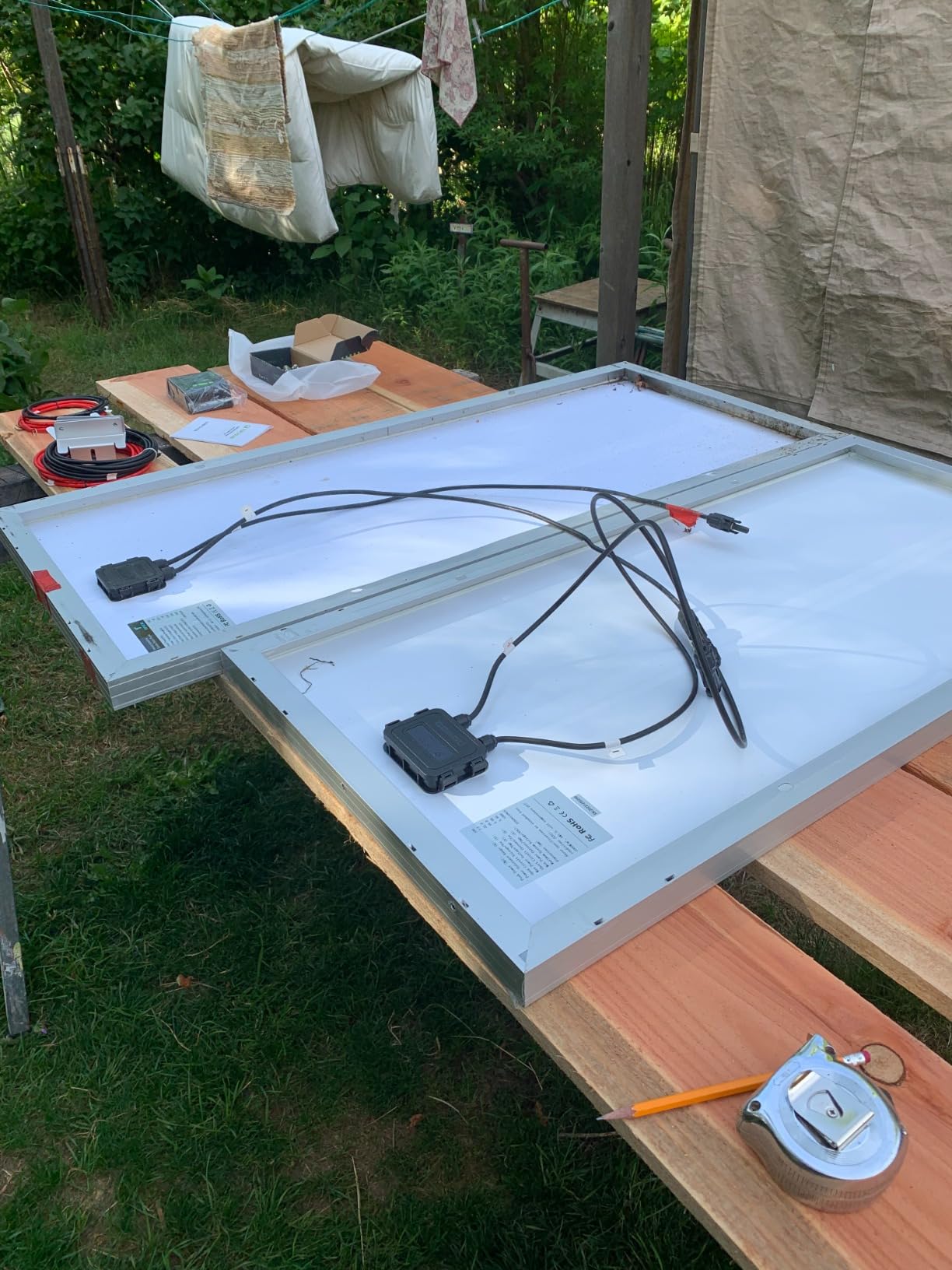
Now the wiring. The panel-to-controller cable should be as short as possible because every foot is a place current heats a resistor. For a longer run to the battery, gauge matters more than brand. At 10 amps over about 20 feet, 10 AWG is comfortable; beyond roughly 40 feet, step up to 8 AWG. The 16.4ft 10 AWG cables in the ECO-WORTHY 200W kit are a good example of the right thinking, and the 5m MC4 lead in the DOKIO set exists for the same reason.
Two safety habits that every forum thread repeats. Install a fuse no more than about 7 inches from the battery positive terminal, so a short circuit in the run cannot turn into a fire in the shed. And torque your terminals to the manufacturer’s figure, because a loose connection under vibration is a fire risk, not a nuisance.
If you are pairing solar with a generator for the biggest loads, our camping generator picks cover the machines that make sense for a small site.
Frequently Asked Questions
What is the best solar power kit for a shed with a battery?
The Renogy 100W 12V starter kit is our top pick because it pairs a 22.5% efficient monocrystalline panel with a 30A PWM controller, Z-brackets, and cable in one box, holds a 4.7 rating across more than 4000 reviews, and expands to 400W later. Add a 100Ah LiFePO4 battery and it covers lighting, a router, and security cameras. If you need mains power, the ECO-WORTHY all-in-one kit is the only one here that includes a battery and a 600W inverter.
How many solar panels do I need to run a shed?
For lighting, a router, and a camera, a single 100W panel with about 500Wh of daily output is enough. A workshop shed with tool chargers and a bench light wants a 200W array producing around 1000Wh per day. Add a shed fridge and you need 200W to 400W plus a much larger battery. Work it out by listing every load, multiplying running watts by daily hours to get watt-hours, dividing by panel voltage and usable depth of discharge for battery amp-hours, then dividing by peak sun hours and applying roughly a 1.3 to 1.5 derating factor for the array.
What is the best type of solar panel for a shed roof?
A rigid monocrystalline panel in an aluminium frame is the right choice for almost every shed. Flexible panels lose output entirely when shaded and their adhesive fails on a roof. Look for tempered glass, an IP65 or better junction box, and wind and snow load ratings around 2400Pa and 5400Pa. Orientation matters as much as type: aim south if you can, use the tall orientation on a pitched roof and the wide one on a flat roof, and keep airflow below the panel.
Do I need an inverter for my shed?
Only if you want mains power. If every load is 12V DC, run panel, controller, and battery and skip the inverter. Add one for tool chargers, kettles, or laptops, and size it on surge current because motors draw several times their running watts at start-up. Choose pure sine wave rather than modified sine wave if you will run a fridge, a fan, or any motor-driven load, since modified output causes heat and unreliable starting.
Can a solar kit run power tools in a shed?
Yes, but not comfortably. A 200W array feeding a 100Ah LiFePO4 battery through a 1500 to 2000W pure sine wave inverter can recharge after short bursts of use, which is enough for cordless chargers and light bench work. A circular saw or grinder will pull 500 to 1500W on start-up, so treat those as occasional rather than sustained loads. If tool use is the main purpose of the shed, plan on 400W or more of panel and a larger bank.
How long do solar panel kits last?
Rigid monocrystalline panels are typically warranted for 25 years of output performance, and the panels in this roundup claim lifespans of up to 25 years. Charge controllers are the shortest-lived component, usually 2 to 5 years, so compare controller warranty length when choosing. Batteries vary enormously by chemistry: lead-acid gives a few hundred deep cycles, while LiFePO4 is rated in the thousands. Plan to replace the controller once during the life of the panels.
The Verdict: Which Kit Fits Your Shed
If your shed needs lighting, a router, and cameras, the Renogy 100W 12V starter kit is the one we would buy. Add a 100Ah LiFePO4 battery, mount the panel south with the included Z-brackets, and you have a self-contained shed with no trenching and no mains connection. For a shed that doubles as a workshop, the Renogy 200W kit doubles the harvest to about 1000Wh per day and gives you the panel headroom to grow to 400W later.
If you need mains power without sourcing components separately, the ECO-WORTHY all-in-one kit is the only one here that arrives with a LiFePO4 battery and a 600W pure sine wave inverter already matched. If your priority is battery health rather than power, the SOLPERK 20W maintainer has the deepest body of owner feedback here for exactly that job.
Whichever kit you choose, size it on your worst sun season rather than your best, budget the battery and any inverter as separate line items, and keep the whole system self-contained on the shed side of the property. That is the approach that keeps these best solar panel kits for off grid sheds working quietly through the winter for 2026 and beyond.