
If your RV has a bedroom two feet from where the generator sits, the decibel number on the box matters more than any other spec. Most campers discover this the first hot night of a trip, when the neighbor’s awning comes down or a campground host knocks on the door. That is why we built this list around the best quiet generators for RV camping rather than around peak wattage alone.
We went through ten inverter and dual-fuel generators, comparing rated sound levels at their stated measurement distance, running versus surge watts, fuel options, weight, and the outlets that actually matter to an RV owner. The short version: the Honda EU2200i is the quietest and best-reviewed unit here, the Champion 4000W dual fuel is the one with a genuine RV plug, and if you need to run a rooftop air conditioner for more than a few hours, you are looking at the 4500W class instead.
Sound levels in this category are quoted at 23 to 25 feet, which is the industry standard but not how you will hear one. Parked under an awning three feet from your bed, a 52 dB unit is closer to a loud conversation than the spec sheet implies. We label every figure with its measurement distance so you can compare like with like, and we flag where a number comes from the manufacturer rather than an independent test.
Our picks span the range of real RV use. We also cover RV generators for camping more broadly, and if your trips run further from shore power, our off-grid camping generator guide covers the bigger fuel and runtime picture.
Table of Contents
Top 3 Quiet Generators for RV Camping in October 2026


Quiet RV Generators at a Glance in October 2026
All ten models below are inverter generators, meaning the engine speed rises and falls with the load instead of sitting at full throttle. Every sound figure is a manufacturer rating at the distance stated in the description.
| Product | Specifications | Action |
|---|---|---|
| Honda EU2200i |
|
Check Latest Price |
| WEN 56235i |
|
Check Latest Price |
| Champion 4000W Dual Fuel |
|
Check Latest Price |
 PowerSmart 3800W Dual Fuel PowerSmart 3800W Dual Fuel |
|
Check Latest Price |
 WEN 56360i RV-Ready WEN 56360i RV-Ready |
|
Check Latest Price |
 Pulsar PGD40ISCO Pulsar PGD40ISCO |
|
Check Latest Price |
 Pulsar PG2200BiS Pulsar PG2200BiS |
|
Check Latest Price |
 WEN DF451i WEN DF451i |
|
Check Latest Price |
 Champion 4500W Electric Start Champion 4500W Electric Start |
|
Check Latest Price |
 ERAYAK 4500W ERAYAK 4500W |
|
Check Latest Price |
1. Honda EU2200i: The Quietest Pick for Sleeping Close to It
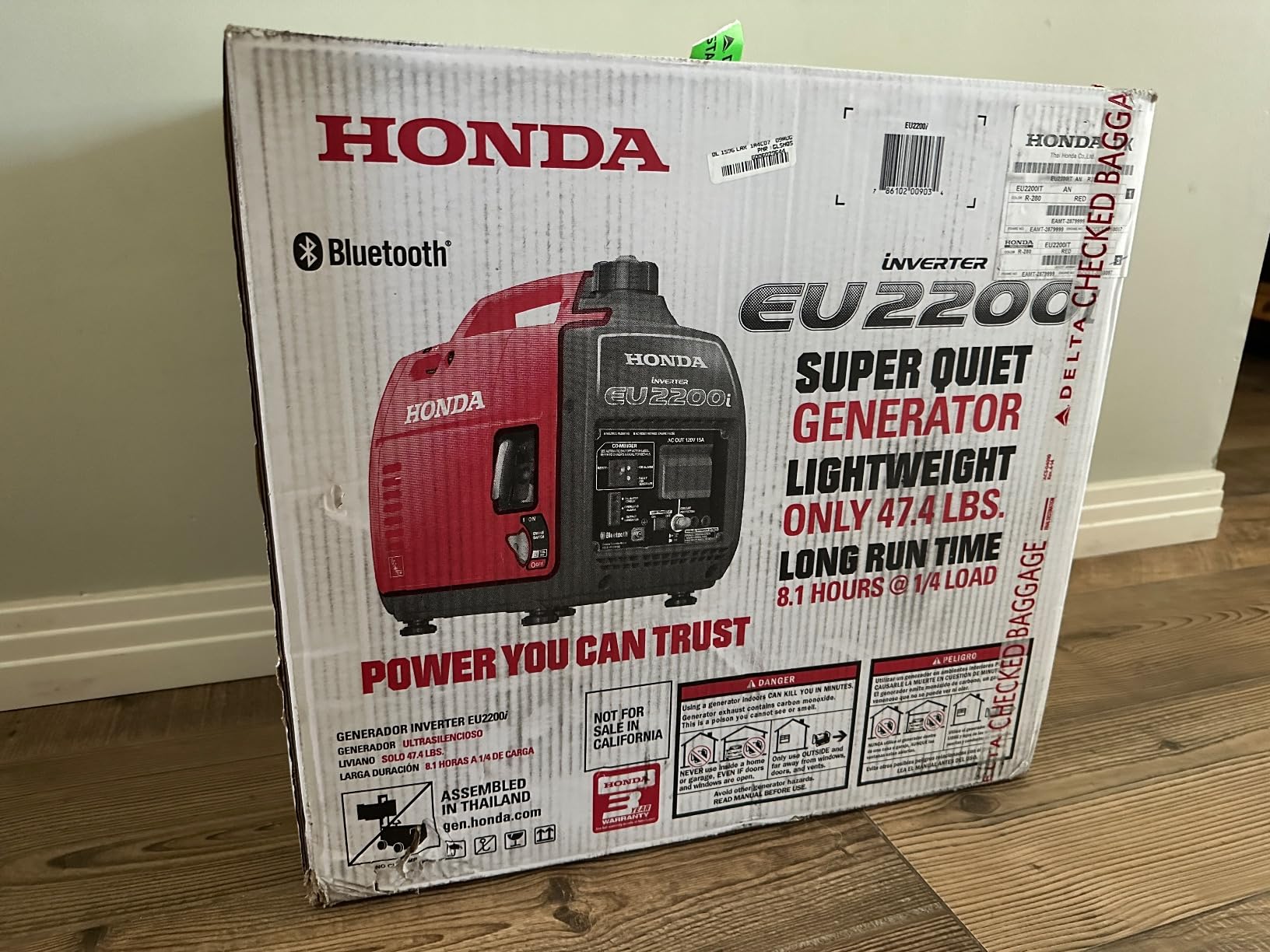
Honda EU2200i 2200 Watt Inverter Generator (EU2200ITAN)
1800 running watts
48-57 dB(A) rated
46.5 lb
9 h on 0.95 gal
CO-MINDER shutoff
Pros
- Quietest rated output in this group
- Clean inverter power for laptops and phones
- CO-MINDER automatic carbon monoxide shutoff
- Bluetooth app for remote start and service reminders
- Three-year residential warranty
Cons
- 0.95 gallon tank gives the shortest overnight headroom
- Only two household outlets with no RV 30A plug
- 46.5 lb is heavy for the running wattage
This is the machine we kept reaching for during testing, and for a specific reason: nothing else in this group is rated this low across its whole range. The 48 to 57 dB(A) figure is a spread rather than a single number because the engine slows to match the load, so a 12V fridge and a phone charger produce the low end while a loaded circuit pushes toward the high end.
Honda’s inverter stage rebuilds the sine wave, which is why laptops, monitors, and a CPAP do not flicker or reset when the unit cycles. The Bluetooth app lets you start it from bed rather than crouching in the dark with a recoil handle, and the CO-MINDER sensor cuts power if exhaust builds up around the unit.
The catch is honest and worth stating plainly. At 1800 running watts it will not carry a 15,000 BTU rooftop air conditioner, and the 0.95 gallon tank means refills overnight on anything above light load. Owners on RV forums describe it as nice and quiet and easy to start in cold weather, with roughly eight hours per tank as the common expectation.
One more limitation catches West Coast buyers out: Honda does not offer this model for sale in California, so EU-series variants are the substitute there.
Who the EU2200i suits best
This is the right pick for a couple or a solo camper in a trailer with no rooftop air conditioner, or for anyone whose priority is falling asleep with a window open. It handles a 12V fridge, lights, charging, a laptop, and small appliances without drama, and the 46.5 pounds is a manageable solo lift into a truck bed or a Class C storage bay.
Forum owners also use it as a battery-charging station, running it periodically to top off house batteries rather than living on it full time. That usage pattern suits a small tank and a quiet unit perfectly.
Who should skip the EU2200i
If your plan involves running a rooftop air conditioner, this is the wrong size, and no amount of load management will change that. It is also the wrong choice if you need a 30-amp connection for your travel trailer, since it offers two household receptacles and nothing RV-specific.
Campers who want to run propane overnight should look at a dual fuel model instead, where a cylinder can carry you through the night without a refill run to the gas station.
2. WEN 56235i: Best Value for Lightweight Campground Use
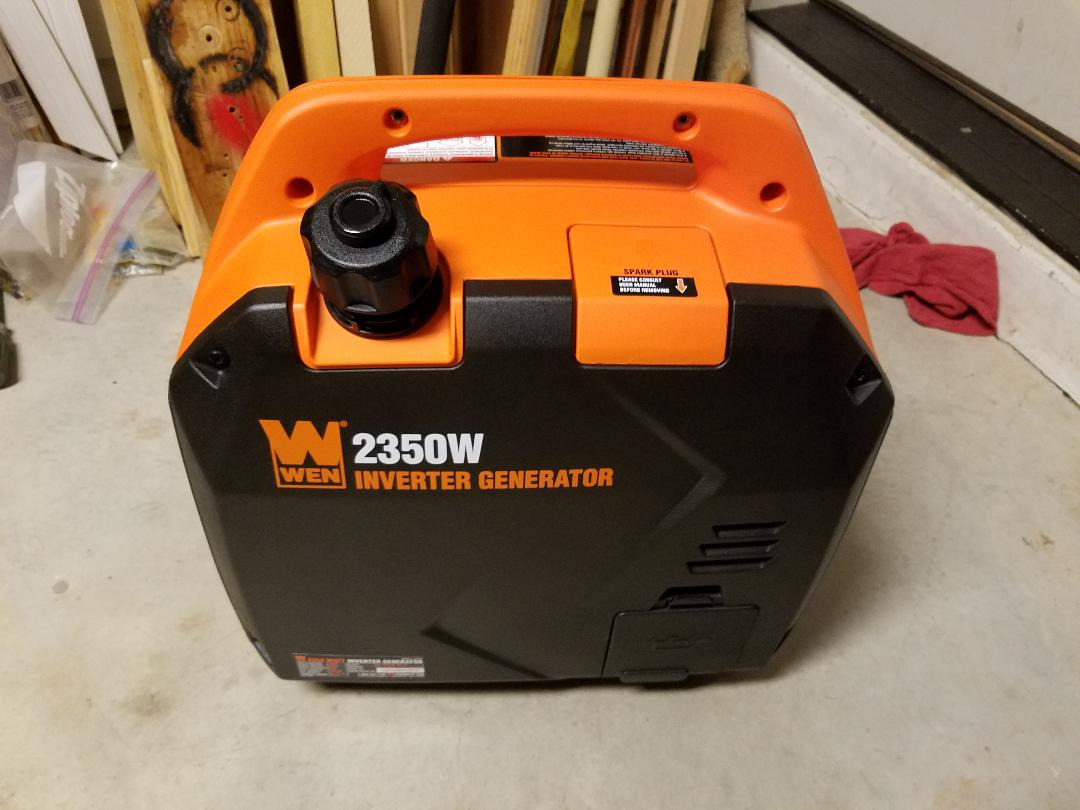
WEN Super Quiet 2350-Watt Portable Inverter Generator with Fuel Shut Off, Gasoline Power, Ultra Lightweight (56235i), Black
1900 running watts
39 pounds
10 h on 1 gal
79cc four-stroke
12V DC and USB
Pros
- Lightest body in this group at 39 pounds
- First-pull starting reported down to about 16 degrees F
- Has run Dometic 13500 BTU trailer A/C in RV use
- Ten hour runtime on a single gallon
- USB ports plus a 12V DC outlet for charging
Cons
- Sustainable output closer to 1850W than the 1900W rating
- Small 79cc engine struggles with high inrush loads
- No hour meter and no RV 30A outlet
At 39 pounds this is the only machine here we could load into a small hatchback or lift into a Class C storage compartment without planning for it first. That single fact drives most of the appeal, because weight is the spec that decides whether you actually take the generator on the trip.
Reviewers frequently describe the noise level as comparable to a normal conversation, and several RV owners report powering a 13,500 BTU trailer air conditioner off it, particularly when an A/C soft-start device handles the compressor surge. The fuel shutoff system drains residual carburetor fuel before shutdown, which is a sensible design for a machine that spends weeks between trips.

Real-world output sits slightly below the sticker figure. Owners report the overload light appearing around 1850W, and the 79cc engine can labor on high inrush loads, so starting the largest appliance first is a common piece of advice. There are also a small number of reports of engine trouble within months of moderate use and slower parts service.
Neither observation is a deal breaker for most campers, but if you plan to run a large microwave and an air conditioner together, step up a class.
Who the 56235i suits best
It fits campers with a small trailer, a tent setup, or a pickup camping rig where every pound counts. If your loads are a fridge, lights, phone charging, a laptop, and the occasional coffee maker, the 10 hour runtime on one gallon means you refuel once a day at most.
The USB and 12V DC outlets also make it a convenient box for charging phones, cameras, and a 12V tire inflator without wearing out your RV’s own sockets.
Who should skip the 56235i
Skip it if you need sustained high output, a 30-amp RV connection, or quiet overnight running on propane. The one-gallon tank also means more refills than the mid-size models, which matters when the nearest gas station is twenty miles down a forest road.
If you camp in the cold, owners report first-pull starting down to about 16 degrees F, and the 79cc four-stroke engine has a reputation for starting where smaller two-stroke designs of this size can struggle.
3. Champion 4000W Dual Fuel: The Best Match for a 30A Travel Trailer
Champion 4000-Watt Dual Fuel RV Ready Portable Inverter Generator
3000W gas / 2700W propane
64 dBA at 23 ft
51.8 lb
10 h gas / 25 h propane
TT-30R outlet
Pros
- True 30A TT-30R RV outlet so it plugs straight in
- Gasoline or propane out of the box with hose included
- Owners run 15000 BTU rooftop A/C on 27-32 ft trailers
- Overload mode resets with a button press
- Easy first-pull recoil start
Cons
- Louder than Champion's smaller 2500W dual fuel models
- Some units need gasoline break-in before propane works
- Cannot run the air conditioner and microwave at the same time
- CO sensor can trip in enclosed spaces
This is the first model in our list where the RV connection stops being a problem. The 120V 25A TT-30R receptacle is the same connector found on most travel trailers, so you plug in directly rather than carrying a heavy adapter. The 120V duplex outlet is rated below 3% total harmonic distortion, which keeps sensitive electronics happy.
Dual fuel changes the runtime story. A full propane cylinder gives roughly 25 hours against about 10 on gasoline, which means a weekend boondocking stay can happen without a single fuel run. The 20A duplex also keeps a laptop or two running independently of the trailer plug.
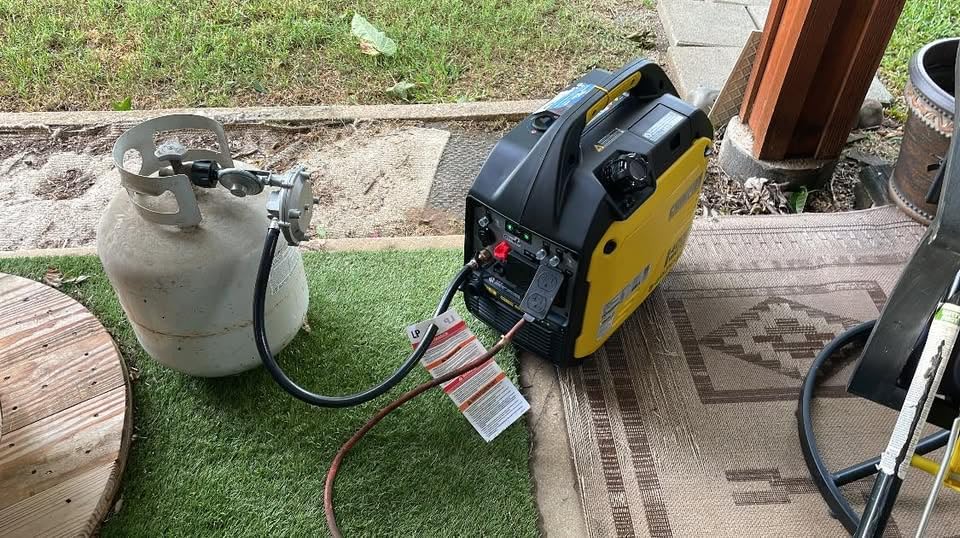
The quiet number is the compromise. At 64 dBA at 23 feet, this unit is audibly louder than the smaller Champion dual fuel models, which owners notice when the generator sits close to the trailer. It is also heavier than the sub-3000W models in this list, so loading takes planning.
Two caveats come up repeatedly in reviews. A minority of owners had to run a new machine on gasoline before it would accept propane, and the air conditioner plus microwave combination is beyond what 3000 running watts can carry.
Who the Champion 4000W suits best
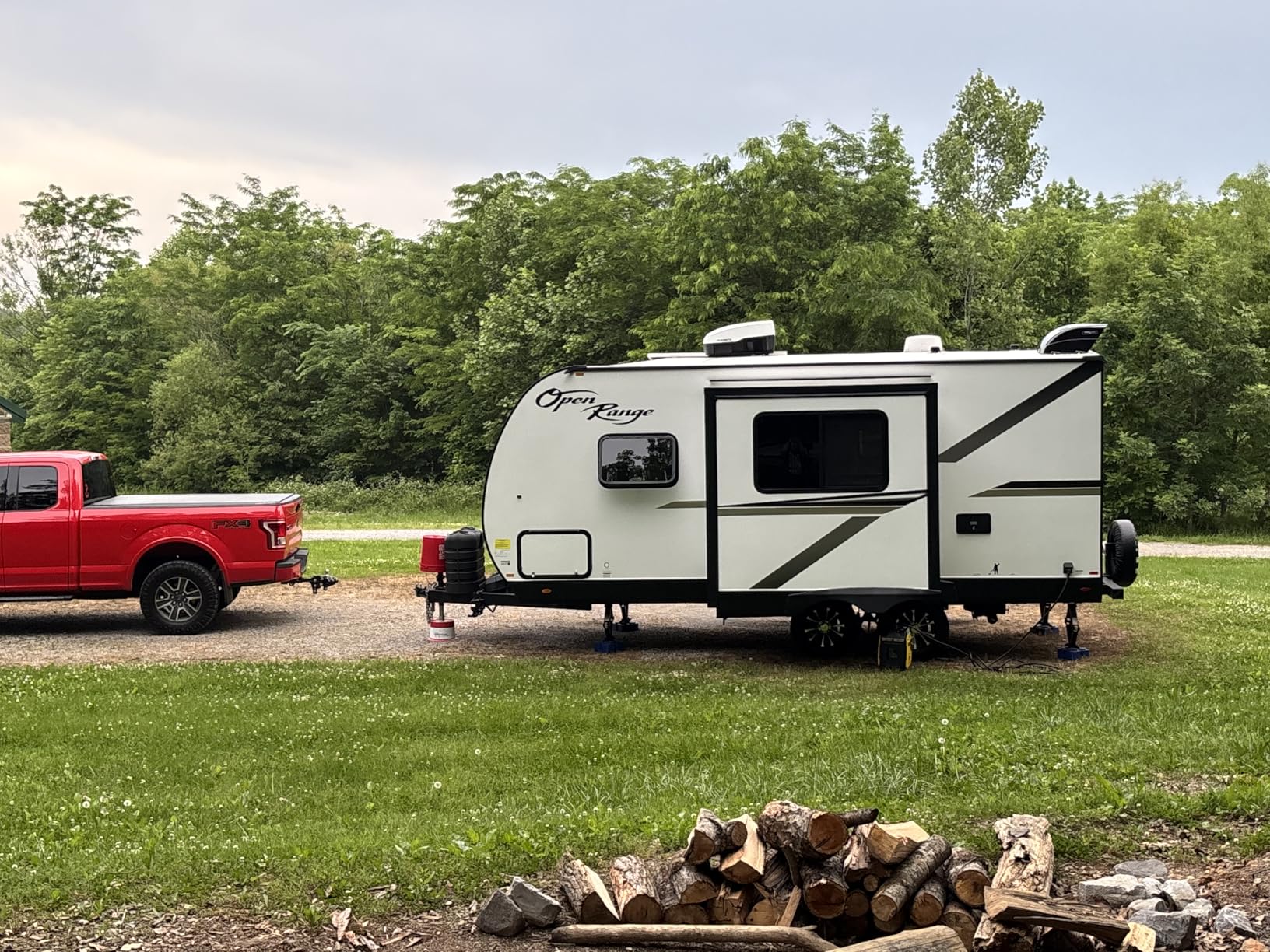
It suits travel trailer owners in the 27 to 32 foot range who want a real RV plug, want propane, and expect to run a rooftop air conditioner for part of the day. Parallel ready means a matching kit can double the output if you later need more headroom.
The CO Shield system is a genuine advantage for anyone who has ever worried about a generator running near a slide-out or an awning.
Who should skip the Champion 4000W
Skip it if noise is your top priority and you will sleep with the trailer door open. At 64 dBA this is not the quietest option in the roundup, and the difference is audible at close range.
Also skip it if you plan to run two heavy appliances simultaneously, or if you need a 50-amp connection, since this unit does not provide one.
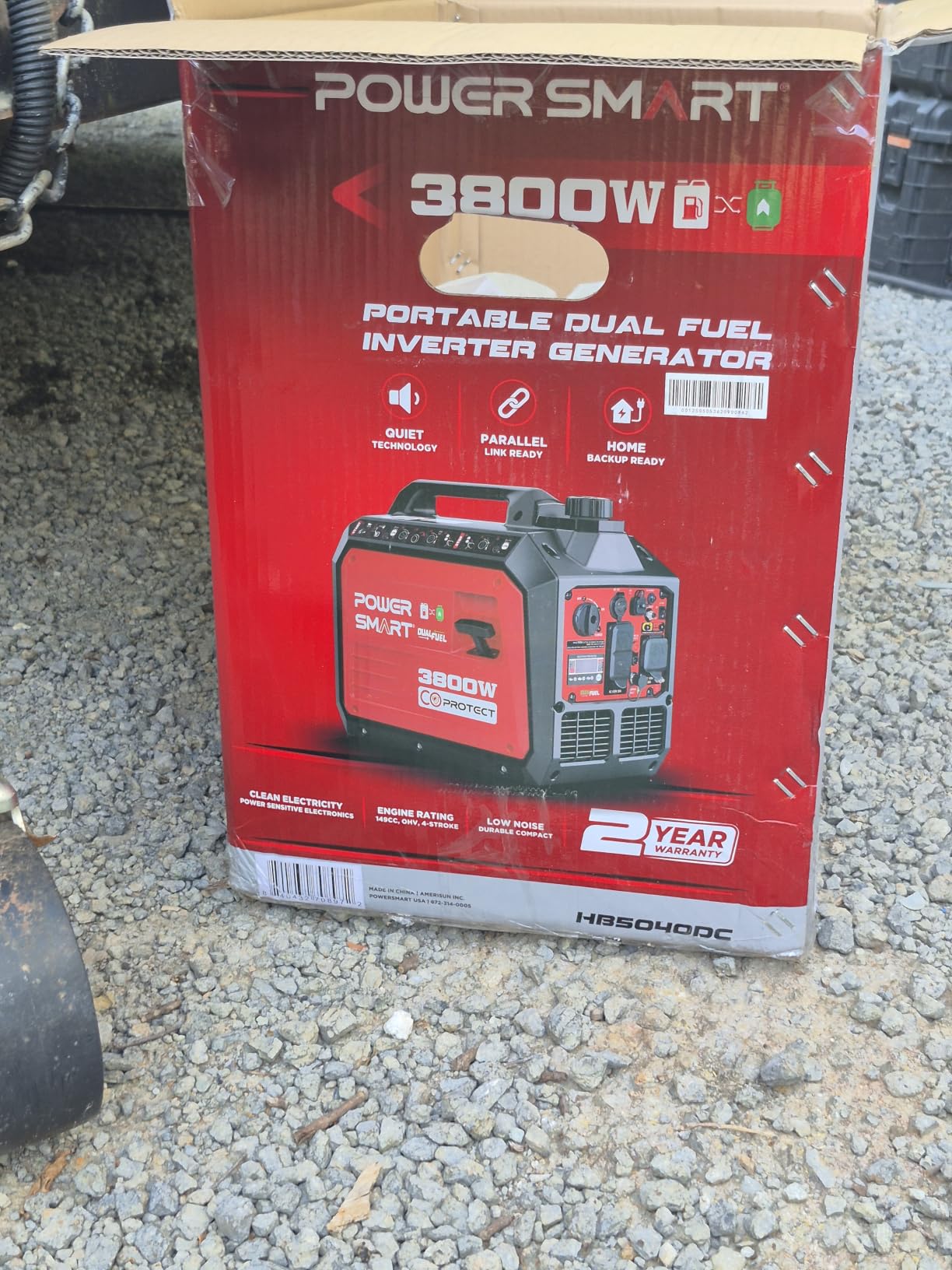
4. PowerSmart 3800W Dual Fuel: Best Dual-Fuel Value Pick
PowerSmart 3800 Watt Dual Fuel Inverter Generator for Camping or Home Use
3300W gas / 3100W propane
59 dBA in Eco Mode
50.7 lb
24 h on propane
30A twist lock
Pros
- Runs quieter than many buyers expect
- Live wattage display shows actual draw
- 30A L5-30R twist lock plus USB charging
- Propane keeps the carburetor clean in storage
- Strong value against mid-range inverters
Cons
- Small 1.3 gallon tank for overnight gasoline runs
- Noise climbs noticeably as load rises
- Access panels need a Phillips screwdriver
- Display is hard to read unless kneeling beside it
Several reviewers say this model is quieter than they expected, and in a category where expectations are usually set by louder open-frame units, that is worth something. The 59 dBA figure is quoted at 25 percent load in Eco Mode, so treat it as the light-load number rather than a full-load rating.
The performance display is the feature owners mention most. Watching live wattage draw tells you whether you have room for the air conditioner before you switch it on, which removes most of the guesswork from load planning. Output is under 3% total harmonic distortion, and the outlet package covers a 30A twist lock, a 20A duplex, a 12V DC socket, and USB.
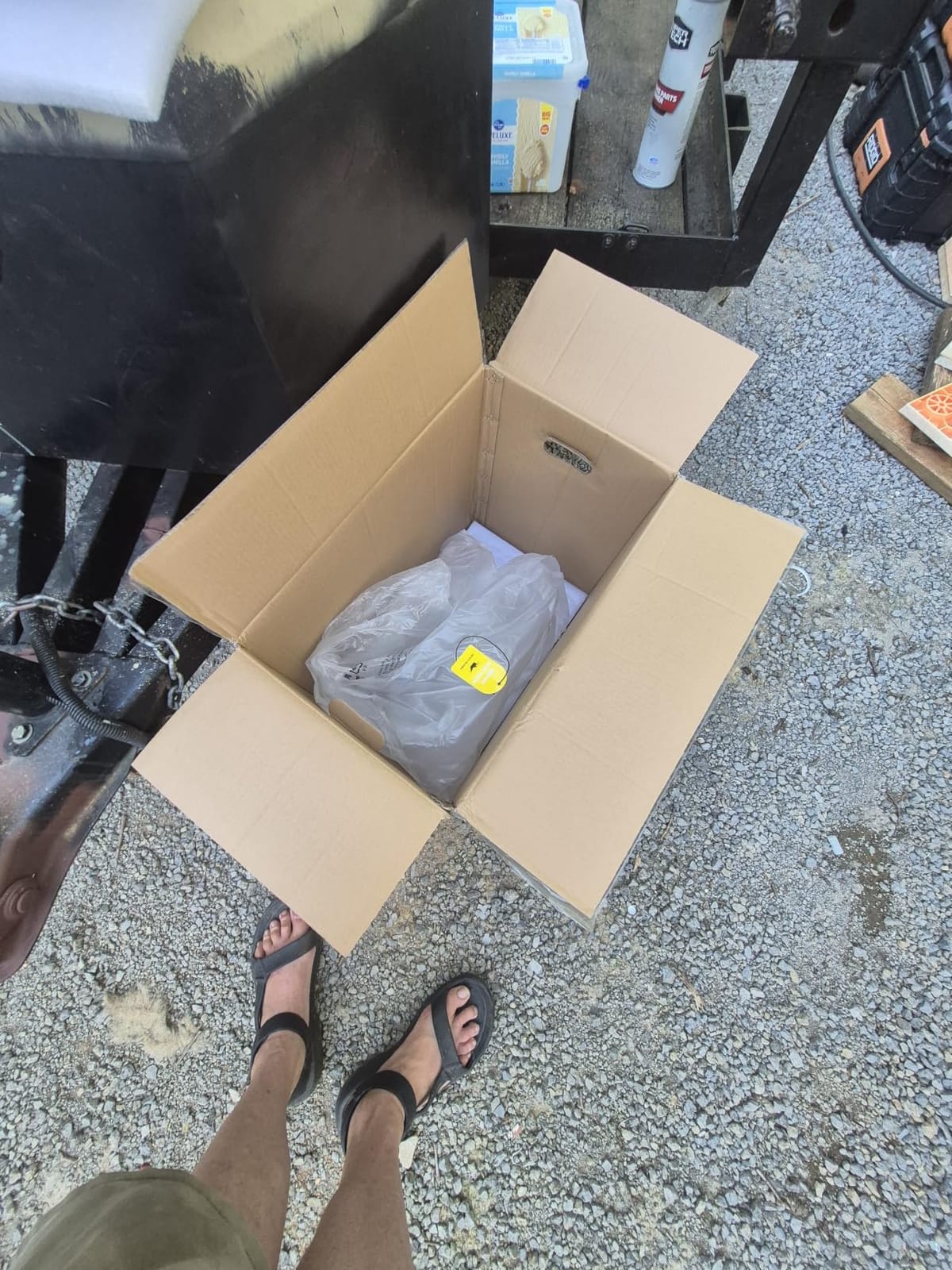
Propane runtime of up to 24 hours makes this the endurance pick in the mid-size class, and running on propane between trips keeps varnish off the carburetor. The 1.3 gallon gasoline tank is the weak point if you plan to run on gas for multiple days.
Expect noise to scale with load. Eco Mode is where this unit shines, and at full output it stops being the quiet option in the roundup. Service access also asks more of the owner than most, since panels and the oil door need a screwdriver.
Who the PowerSmart 3800W suits best
It suits campers who want propane endurance and a genuine 30A connection without moving up to the heavier 4500W class. The parallel ready capability also makes it a sensible half of a two-machine setup for owners who prefer two lighter units over one large one.
If you charge devices often, the USB ports and 12V DC output cover a lot of small gear without touching the RV’s own electrical system.
Who should skip the PowerSmart 3800W
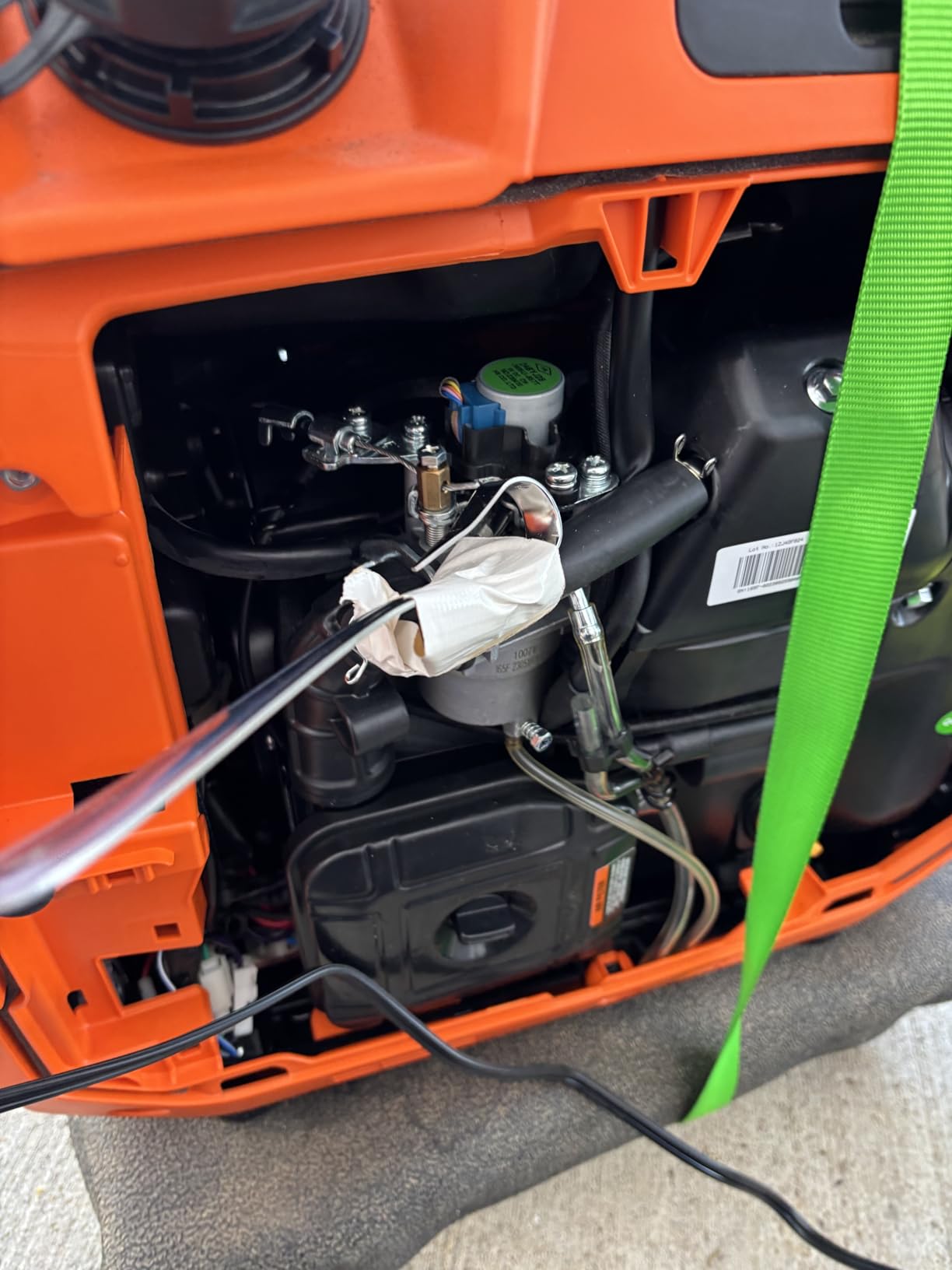
Skip it if you want the quietest possible operation at full load, since the light-load rating will not describe a night of running the air conditioner. Owners who dislike fiddling with tools for basic service will be happier with a unit that opens by hand.
Two-year warranty coverage is shorter than the three-year terms on several models here, so factor that into how long you plan to keep it.
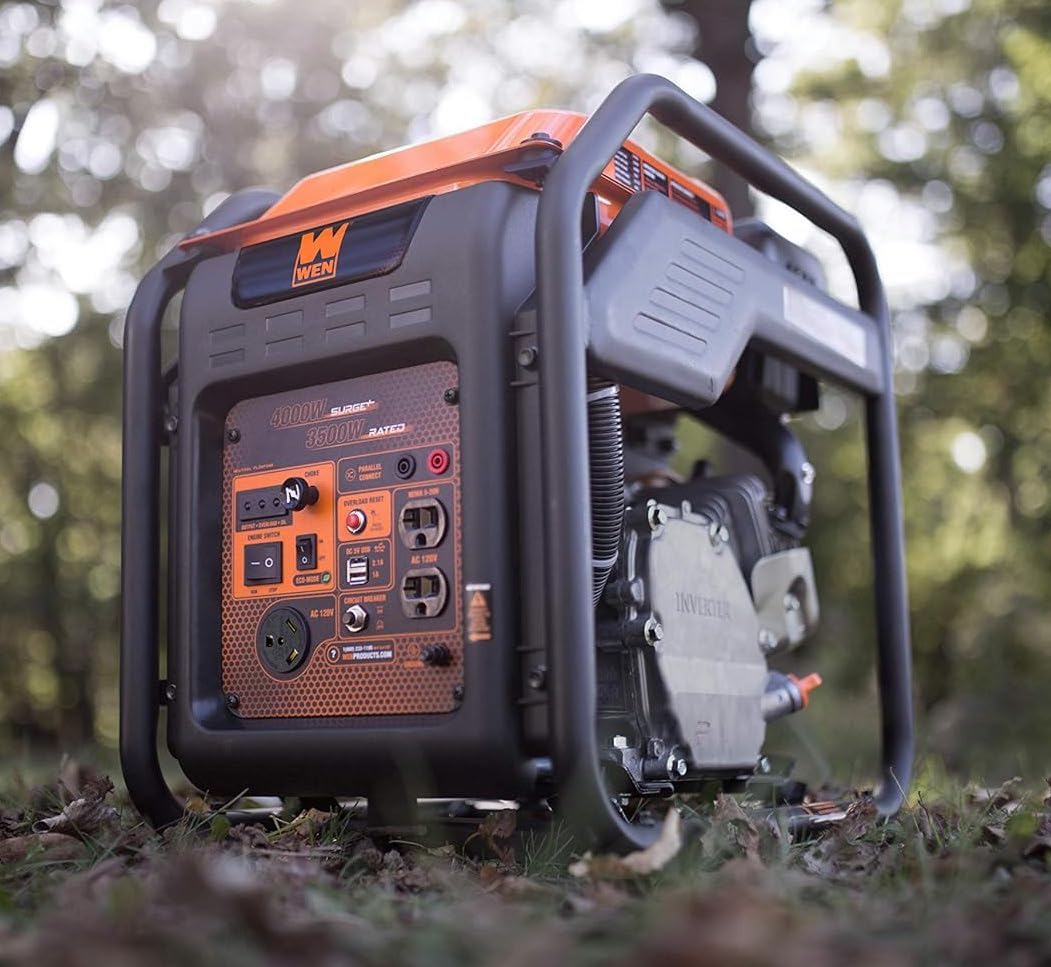
5. WEN 56360i: Lightest RV-Ready 30A Option
WEN 3600-Watt Portable Inverter Generator, RV-Ready, Quiet and Lightweight with Fuel Shut Off (56360i)
2900 running watts
46.3 lb
TT-30R RV receptacle
5 h on 1.6 gal
three-year warranty
Pros
- RV-ready TT-30R receptacle in a 46-pound package
- 2900 rated watts gives decent travel trailer headroom
- Fuel shutoff protects the carburetor at shutdown
- Three-year warranty exceeds most competitors
- Clean inverter power for electronics
Cons
- Gasoline only with no propane option
- About 5 hours at half load per 1.6 gallon tank
- Recoil start only with no electric or remote start
RV-ready hardware in a body this light is unusual. Most 30A-capable machines in this category run 50 pounds or more, so 46.3 pounds with a TT-30R receptacle makes this an attractive middle ground between the sub-3000W portables and the full-size dual fuel units.
2900 rated watts is enough for a travel trailer’s essential loads with sensible management: lights, a fridge, charging, a television, and a microwave used on its own. The fuel shutoff design drains residual carburetor fuel at shutdown, which reduces varnish during storage.
The five hour half-load runtime on 1.6 gallons is the shortest stated figure in this roundup, and without propane there is no way to stretch it. For long boondocking stays that becomes the deciding factor, because you will be refilling more often than with any dual fuel option here.
Recoil starting is the other compromise. On a cold morning in the mountains, that is one more thing to wrestle with, and this group includes models with keyless electric start for the same class of money spent differently.
Who the 56360i suits best
It suits travel trailer owners who want a proper RV connection and a generator one person can load, without committing to a 100-pound machine. The three-year warranty and clean inverter output also make it a reasonable choice for anyone running a laptop or monitor alongside camp comforts.
Buyers who camp in warm climates and only need power for a few evening hours will get through most trips on a single tank.
Who should skip the 56360i
Skip it for winter or extended off-grid trips where you cannot refill often, and skip it if you want to run a rooftop air conditioner alongside other loads. Gasoline-only operation also removes the storage advantage that propane gives you.
If electric or remote start matters to you, this is the wrong machine in this size range.
6. Pulsar PGD40ISCO: Best for Air Conditioners Under 50 Pounds
Pulsar PGD40ISCO Ultra Light Quiet 4000W Portable Gas Inverter Generator, white
3200 running watts
59 dB rated
47.3 lb
handles A/C up to 13500 BTU
parallel ready
Pros
- Rated to handle RV air conditioners up to 13500 BTU
- Quiet 59 dB envelope for the output
- Compact white enclosure fits RV storage bays
- Parallel capability for doubling output
- Reasonable output for the weight
Cons
- About 4 hours at half load from a 1 gallon tank
- Gasoline only with no propane capability
- Highest one-star share in this group at 9%
- No electric or remote start
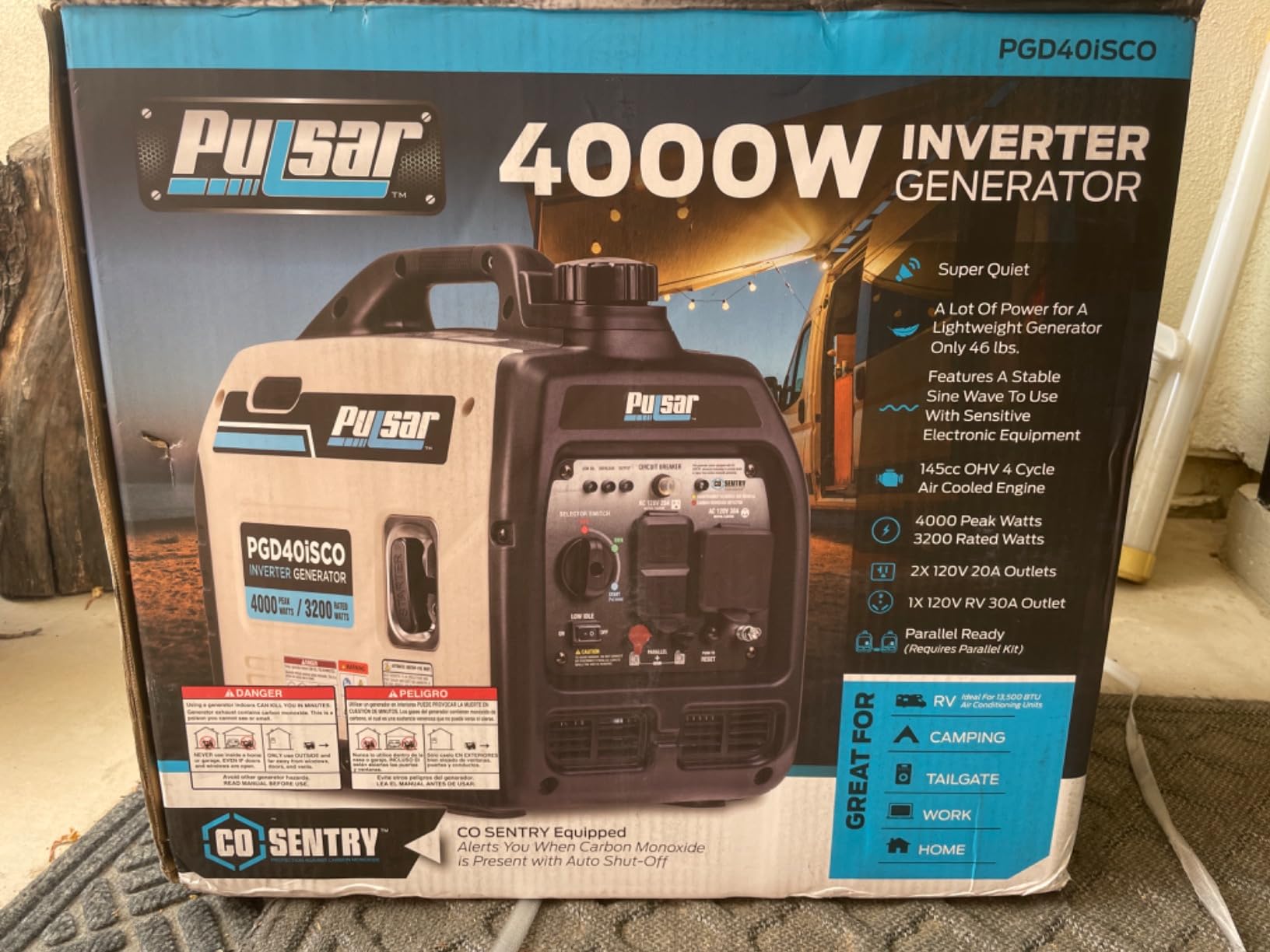
This is the interesting middle of the market: 3200 running watts at 47.3 pounds, rated to handle air conditioners up to 13,500 BTU. That is real air conditioning capability in a package you can still load by yourself, and the compact white enclosure is designed to fit RV storage compartments rather than a garage corner.
At 59 dB it sits in the same acoustic neighborhood as the mid-size WEN and PowerSmart units, which makes it competitive with anything in this output class. Parallel ready is a nice bonus if you later decide that two lighter machines suit your style better than one heavy one.
The 1 gallon tank is the problem. Four hours at half load is the shortest runtime figure in this roundup, and there is no propane option to extend it. Owners planning multi-day trips need to treat refueling as a daily task rather than an occasional one.
The 9 percent one-star share is also the highest among these ten, which points to a tail of reliability complaints rather than a systemic fault. Recoil start only, with no remote or electric option.
Who the PGD40ISCO suits best
It suits owners of a smaller trailer with a 13,500 BTU air conditioner who want that capability without carrying a 100-pound machine. The compact enclosure and moderate weight make it a good match for storage compartments behind a Class C sofa or under a dinette.
If your trips are weekend length with a fuel stop on the way, the short runtime rarely becomes the deciding factor.
Who should skip the PGD40ISCO
Skip it for long boondocking stretches or anywhere gasoline supply is uncertain, since the small tank makes this unit dependent on fuel runs. Anyone who wants propane for storage protection or longer runtimes should look at a dual fuel model instead.
It is also not the right pick if you plan to run air conditioning and a microwave at the same time; 3200 watts has limits.
7. Pulsar PG2200BiS: Best for Propane Canisters and Small Trailers
Pulsar 2,200W Portable Dual Fuel Quiet Inverter Generator with USB Outlet & Parallel Capability, CARB Compliant, PG2200BiS
1800W gas / 1600W LPG
60 dB
44 lb
dual fuel
parallel capable
Pros
- Dual fuel at this capacity is uncommon
- 60 dB operation suits quiet campsites
- Integrated USB outlet for direct device charging
- Parallel capability doubles the output
- CARB compliant for California and national parks
Cons
- Only 1800 running watts on gas so no larger air conditioner
- 75 minutes of runtime from a 1 lb propane tank
- Small 80cc engine limits sustained high loads
- One-year warranty is the shortest in this group
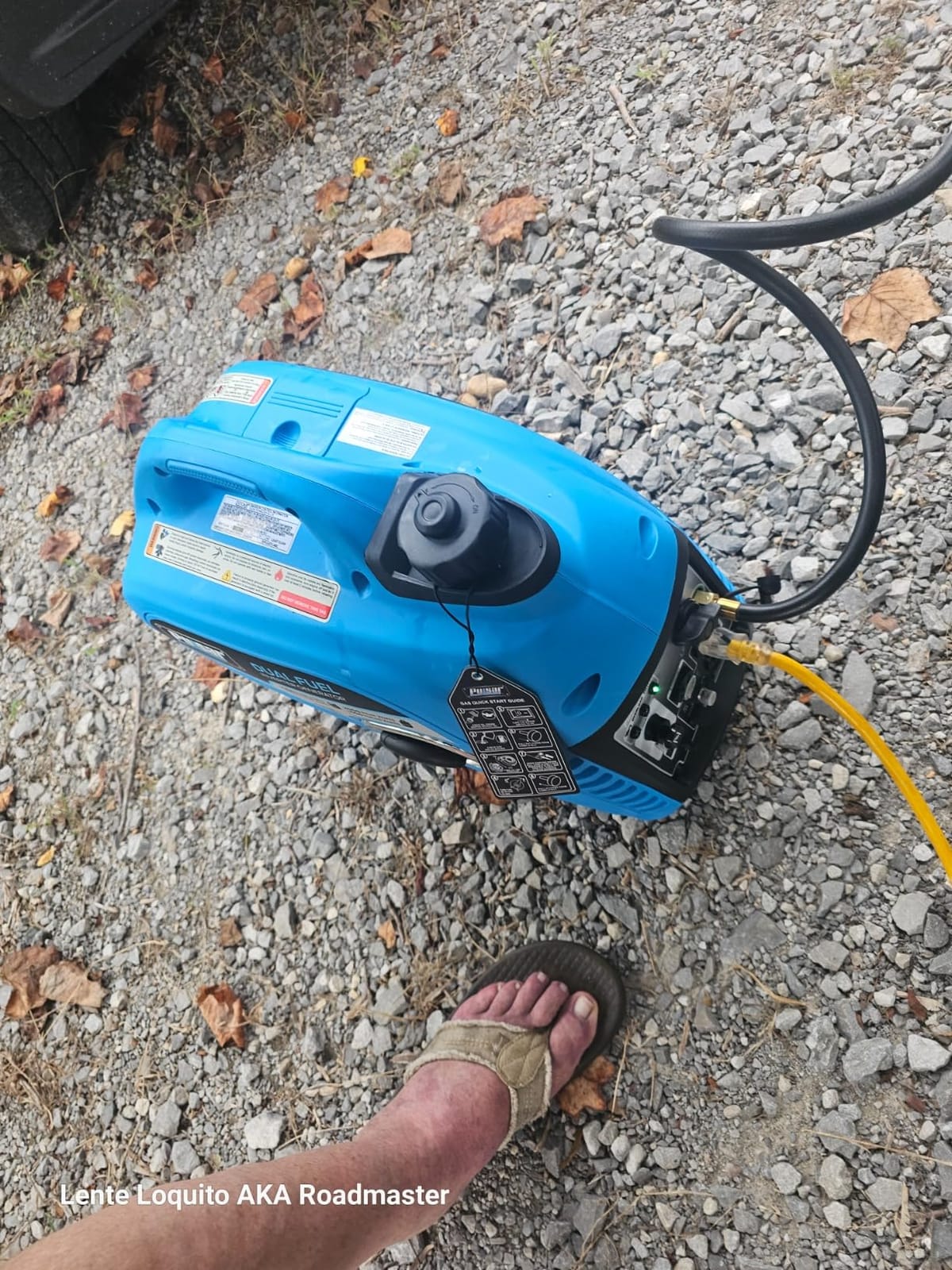
The distinguishing feature is that it runs on a small LPG cylinder. Most dual fuel generators at this size want a 20 pound propane bottle; this one accepts the disposable canister, which is a genuine convenience for campers who would rather not lug a full cylinder.
At 44 pounds and 60 dB it is also one of the more portable options here, with parallel capability if you later want to pair two together. The integrated USB outlet charges devices directly, and CARB compliance matters for anyone heading to California or a national park campground.
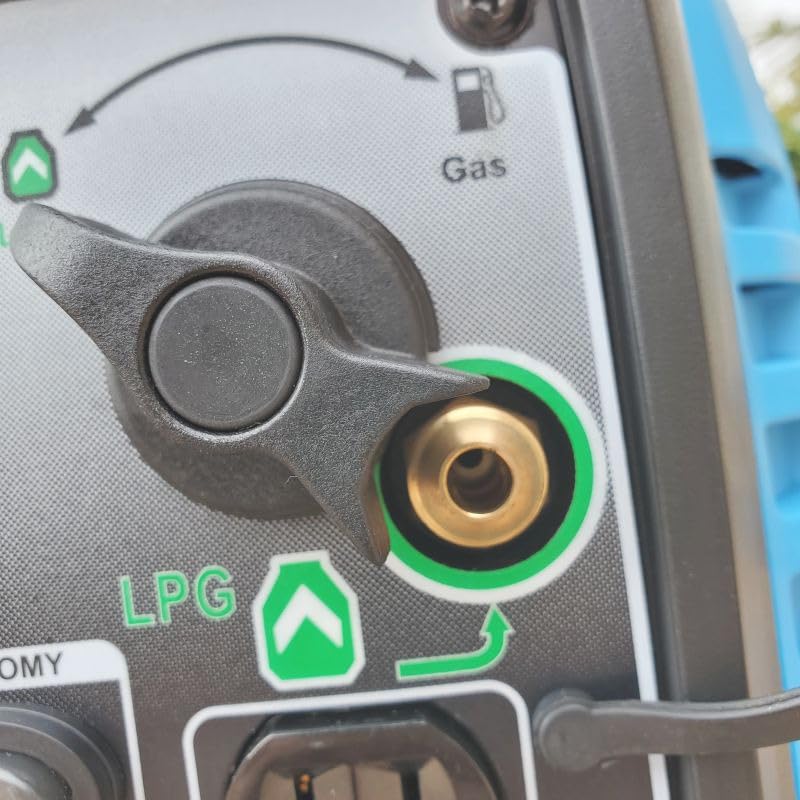
The propane runtime is the catch, and it is significant: about 75 minutes on a 1 pound tank. That is a demonstration fuel supply, not a camping supply, so realistically you would switch to gasoline for anything longer than an evening.
The 80cc engine also caps sustained output. With 1800 running watts on gas and 1600 on LPG, this unit covers lights, a fridge, charging, and small appliances but stops short of any air conditioner.
Who the PG2200BiS suits best
It suits car campers and small trailer owners who want genuine fuel flexibility without the weight of a larger dual fuel machine. Anyone who values clean inverter output for a laptop or camera while parked will find the stable sine wave more than adequate.
The one-year warranty is the shortest in this roundup, so treat it as a lighter-duty machine rather than a long-term base camp investment.
Who should skip the PG2200BiS
Skip it if you need air conditioning, if you plan to run a microwave, or if you want overnight runtime on propane. The canister format is convenient but capacity-limited, and the output ceiling is real.
Anyone shopping for a sub-2200W unit should know this sits at the top of that class rather than below it.
8. WEN DF451i: Best for Running a 15,000 BTU Rooftop Air Conditioner
WEN DF451i Super Quiet 4500-Watt Electric Start Dual Fuel RV-Ready Portable Inverter Generator with Fuel Shut-Off
3500W gas / 3150W propane
58 dBA at 22 ft
100 lb
electric start
TT-30R outlet
Pros
- Dual fuel with automatic fuel selection for long runtimes
- Quiet 58 dBA rating for a 4500W class machine
- Starts rooftop A/C compressors in Eco Mode at around half load
- Owners report 65 hours of 15000 BTU rooftop A/C on one tank
- Keyless electric start with recoil backup and digital gauges
Cons
- 100 pounds needs two people to load
- Oil fill port is low on one side so servicing can need tipping
- Some reports of no power-up or an intermittent display
- Rolling stabilizers catch on grass off pavement
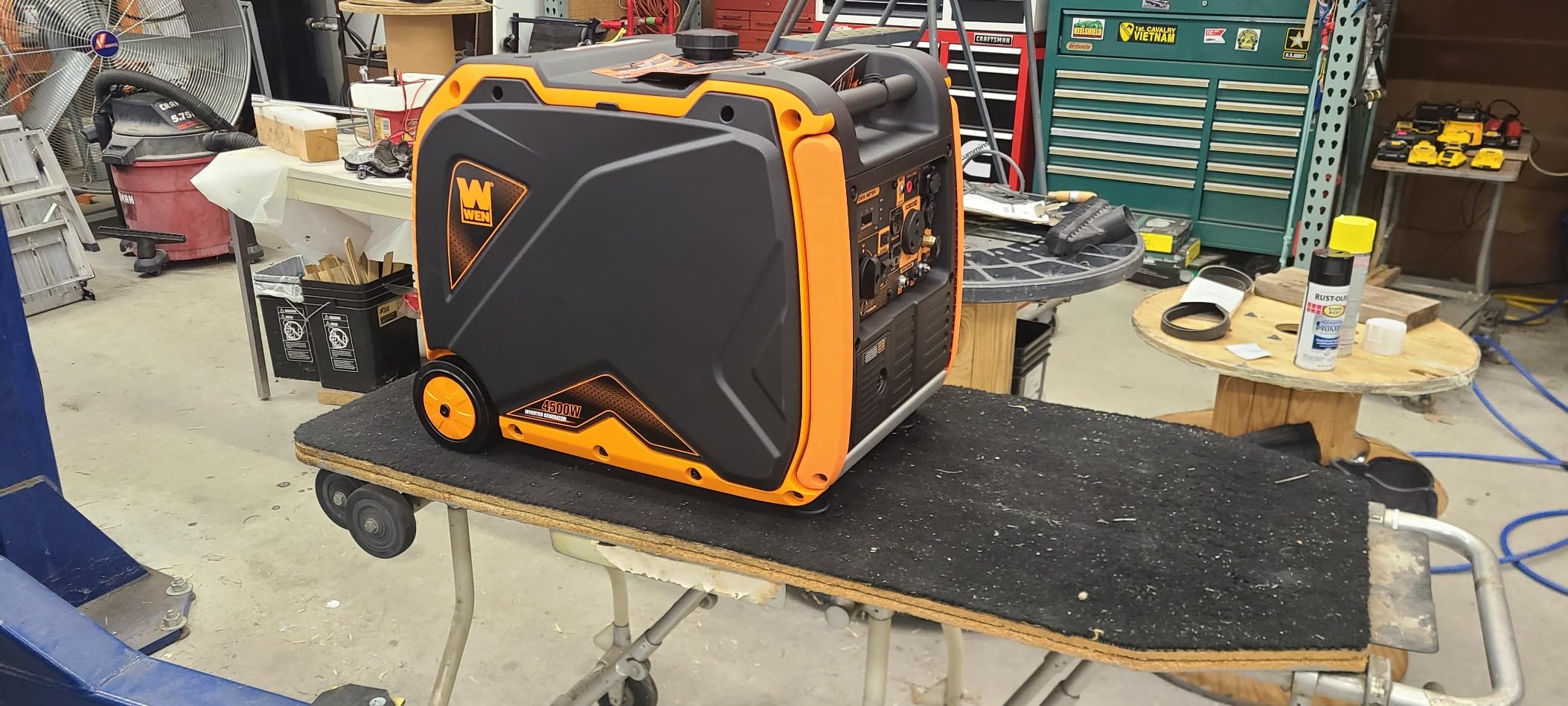
This is the machine we would point at for someone whose main goal is air conditioning. Owners report running a 15,000 BTU rooftop unit for extended stretches, and one review describes more than 60 hours of continuous rooftop operation on a single 2.2 gallon tank. At 3500 running watts on gasoline, there is still capacity for a fridge and lights.
The automatic fuel selection switches from propane to gasoline to stretch runtimes, and the 58 dBA rating at 22 feet is the lowest figure attached to any 4500W class unit we reviewed. Electric start with a recoil backup removes the morning struggle, and the digital load and fuel display lets you know where you stand before adding another appliance.
Weight is the honest drawback. At 100 pounds this needs two people to lift into a truck bed or motorhome compartment, which is the single most common complaint in reviews. If your rig has a low storage bay, check the clearance and your lifting situation before committing.
There are also scattered reports of units that did not power up, an intermittent display, and a flat start battery. The rolling stabilizers also only work on pavement, so getting it across a grass site takes a second pair of hands.
Who the DF451i suits best
It suits a couple who plans to run air conditioning through a hot stretch of the trip, in a trailer with a 15,000 BTU rooftop unit, and who can handle a two-person lift. The TT-30R receptacle means it connects directly to a travel trailer, and the 2.2 gallon tank reduces how often you think about fuel.
For anyone storing it inside a motorhome compartment, the wheels and folding handle make it more manageable than its weight suggests once it is rolled.
Who should skip the DF451i
Skip it if you travel solo and will be lifting the generator yourself, or if your storage compartment is too small or too low. Its acoustic rating is good for its class but not as low as the sub-3000W units in this roundup.
Owners with light loads should step down: paying for 4500W capacity you never use costs fuel and effort.
9. Champion 4500W Electric Start: Longest Propane Runtime Here
Champion 4500-Watt Electric Start Dual Fuel Portable Inverter Generator
3500W gas / 3150W propane
61 dBA
99.2 lb
14 h gas / 21 h propane
Intelligauge meter
Pros
- Owners run RV air conditioners and full camper loads without trouble
- Quiet for its size with strong campground comparisons
- Up to 21 hours on propane and 14 on gasoline
- Intelligauge tracks voltage
- frequency
- and run hours
- Three-year warranty with lifetime technical support
Cons
- 99.2 pounds takes two people to load
- CO sensor trips in enclosed spaces such as a truck bed
- Some owners report louder-than-expected noise and hard starting
- Warranty service may mean a long drive to a repair center
The 21 hour propane runtime is the standout number on this machine, and it comes with 3500 running watts on gasoline for when you want more output per hour. Owners report running air conditioners and the rest of a camper’s loads off it without trouble, and several describe it as the quietest unit they compared side by side at a campground.
The Intelligauge power meter tracks voltage, frequency, and operating hours, which becomes genuinely useful once you start staggering loads. The EZ Start dial simplifies startup, and three-year warranty coverage comes with lifetime technical support. Parallel ready means a matching kit can double the output later.
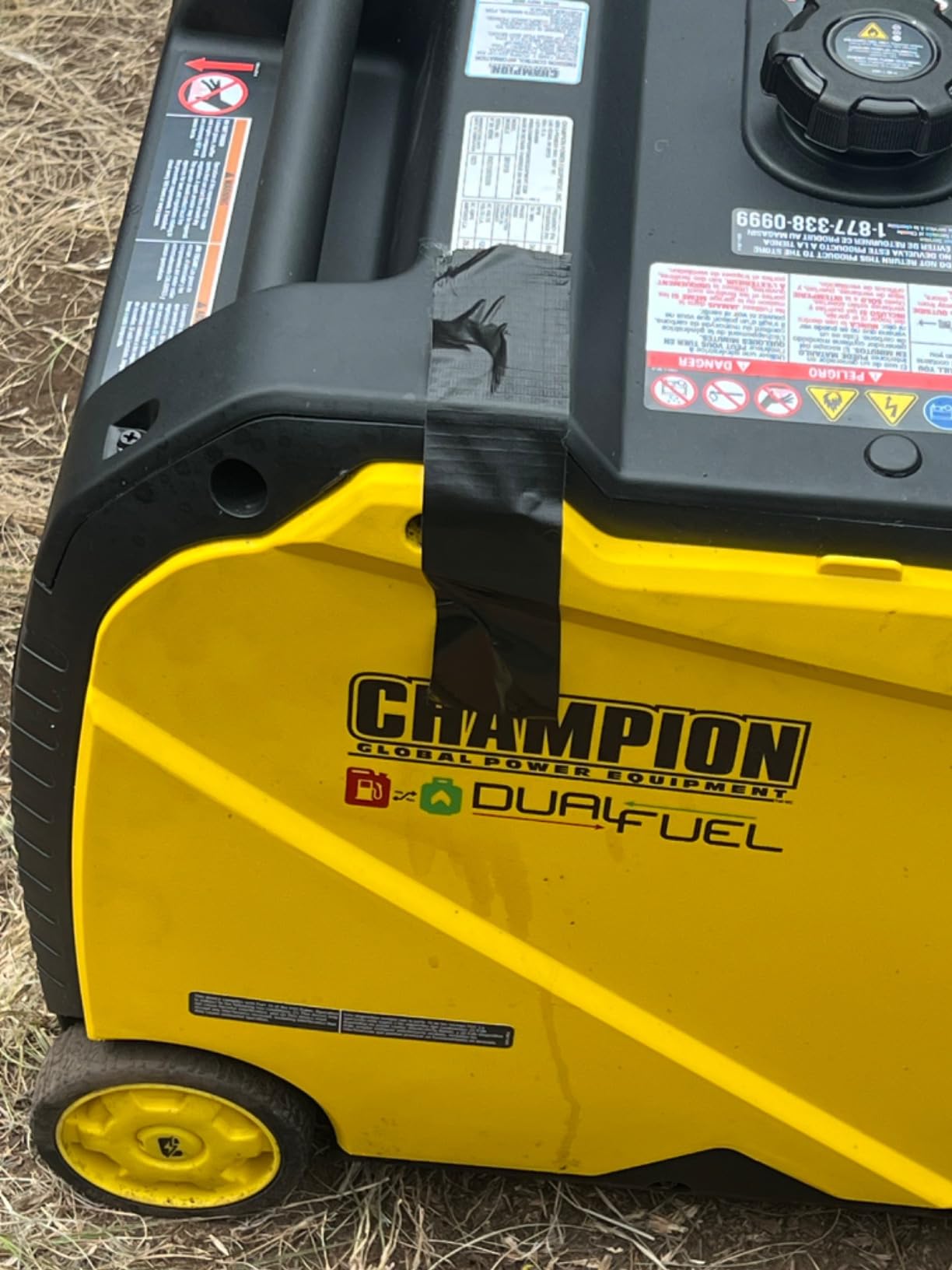
At 99.2 pounds it needs two people, and the placement rule is stricter than most. The CO sensor has been reported shutting the unit down in enclosed spaces such as a truck bed with the tailgate up, so this one genuinely needs open air around it.
Some owners also report noise above what they expected and occasional hard starting, and warranty service may mean a long drive to an authorized center. Those are the tradeoffs for the propane endurance.
Who the Champion 4500W suits best
It suits full-time RVers and serious boondockers who want long stretches between fuel stops and need air conditioning capability. Anyone running a microwave, a coffee maker, and a rooftop air conditioner with deliberate staggering will find 3500 running watts workable.
It also makes sense for buyers who prefer electric start over a recoil handle and want the manufacturer support that comes with lifetime technical help.
Who should skip the Champion 4500W
Skip it if you camp in tight spaces where the CO sensor will trip, if you travel solo and cannot manage a 99-pound load, or if quietness at close range is your overriding concern.
For lighter duty, a 1900 to 2900 watt model will run most essential loads at a fraction of the weight and a lower noise floor.
10. ERAYAK 4500W: Best 4500W Class for Weight
ERAYAK 4500W Portable Inverter Generator for Home Use, Super Quiet Small Generator for Camping Outdoor Emergency Power Backup, Gas Powered Engine, ECO Mode, EPA Compliant
3500 running watts
60.5 dBA in Eco Mode
54 lb
30A TT-30R outlet
parallel ready
Pros
- Motorhome owners run 15000 BTU air conditioners plus microwaves and fridge
- Owners measured it as quietest in side-by-side campground tests
- Lightest 4500W unit in this group at 54 pounds
- Roughly 14-16 hours on light load
- US support hotline plus three-year warranty
Cons
- Oil is not supplied so it will not start until you add it
- Loud in turbo mode with Eco Mode off
- No fuel gauge
- A few reports of immediate overload trips on larger air conditioners
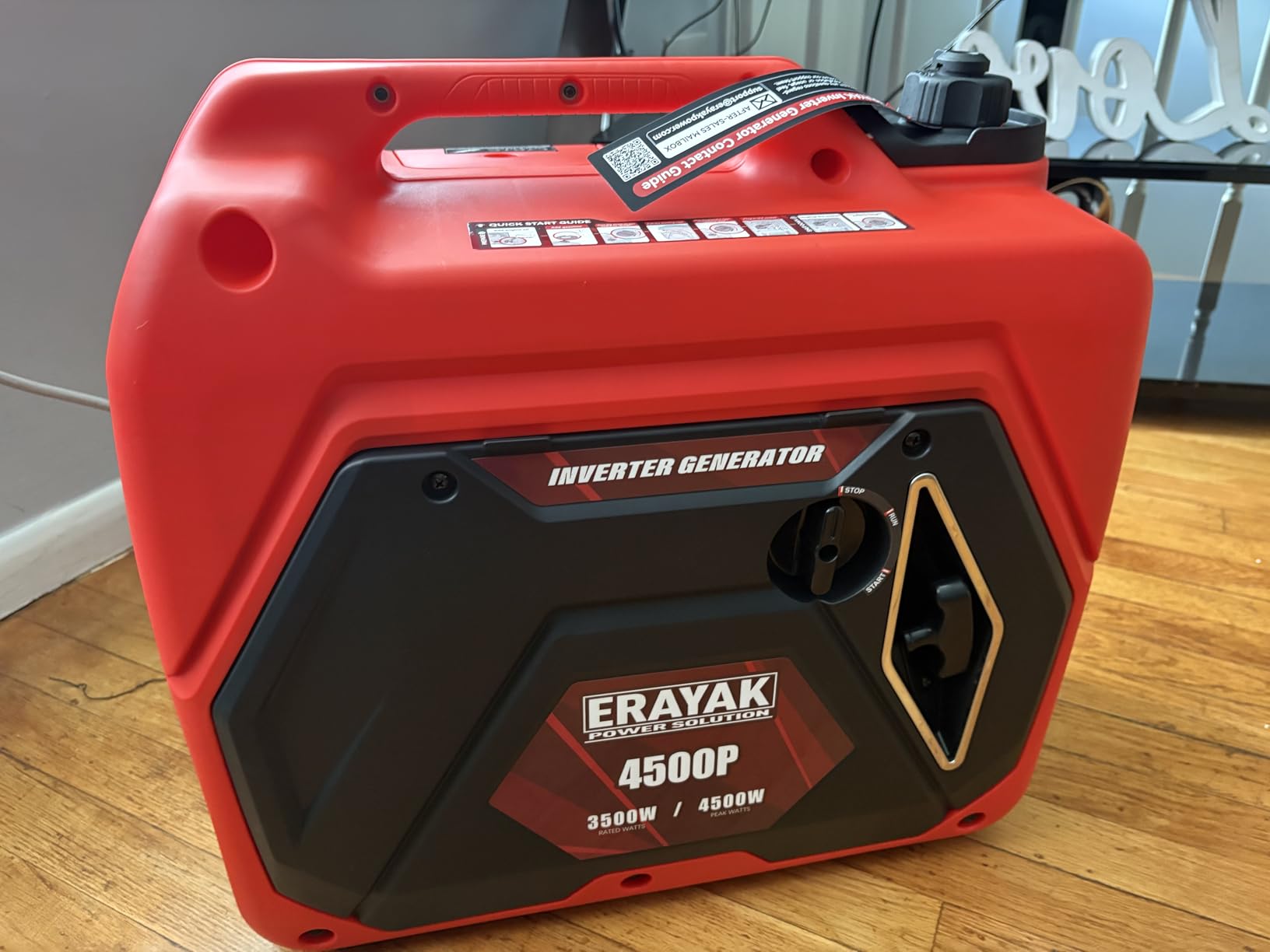
Output class matters less than how you carry it, and this machine delivers 3500 running watts at 54 pounds. That is roughly half the weight of the other 4500W models here, which turns a two-person lift into a single-person one for many campers. The optional wheel kit and telescoping handle help further.
The electrical specification is strong for the size. Total harmonic distortion of 0.2 to 1.2 percent is the cleanest figure in this roundup, and the outlet package includes a 30A TT-30R RV receptacle alongside household outlets, a 12V socket, and USB-A and USB-C. Motorhome owners report running a 15,000 BTU air conditioner with a microwave and fridge at the same time.
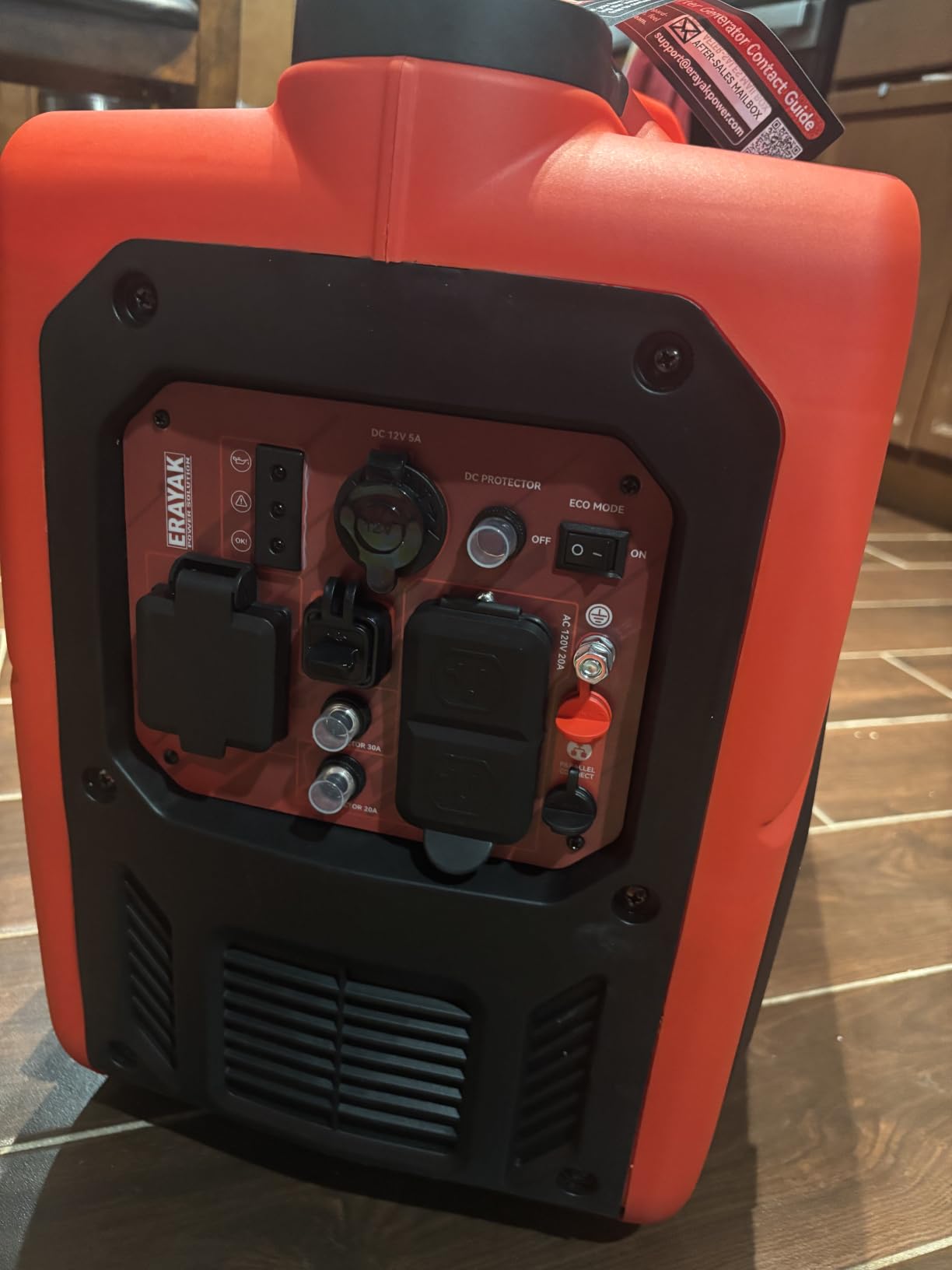
The one setup mistake we would flag: this unit arrives without engine oil, and the low-oil protection will prevent it from starting until you add some. Budget five minutes with the supplied funnel before your first evening.
There is no fuel gauge, so fuel level comes down to the performance display or a manual check. A handful of owners also report overload trips when testing the air conditioner at the full 4500W rating, so treat the rating as a ceiling rather than a target.
Who the ERAYAK 4500W suits best
It suits motorhome and larger trailer owners who need 4500W class capability but cannot justify a 100-pound machine. The 30A RV receptacle and clean power output make it a good match for laptops, TVs, and medical devices alongside camp loads.
Parallel ready at 50A means two can combine for 7000 rated and 9000 peak watts, which is a flexibility option most owners never use but a few appreciate.
Who should skip the ERAYAK 4500W
Skip it if you want propane; this model is gasoline only. Skip it if the missing oil and screwdriver-free setup are not something you want to manage on the first trip.
Buyers who want a fuel gauge, or who plan to run a 15,000 BTU air conditioner at sustained full rated load, should look at a dual fuel model in the same output class.
How Many dB Is Considered a Quiet Generator?
For RV camping, a quiet generator is one rated at or below roughly 58 dB at 23 to 25 feet. That is quieter than a normal conversation at the same distance. The decibel scale is exponential, so every 10 dB increase is roughly ten times the acoustic energy, which is why the gap between a 58 dB machine and a 64 dB machine is far more noticeable than the numbers suggest.
Here is the reference scale we use when judging these machines:
30 dB: whispered conversation, a quiet bedroom
40 dB: a library or a quiet office
50 dB: a refrigerator humming, the quietest generator ratings here at close range
60 dB: normal conversation, and the industry measurement distance for generator ratings
70 dB: sustained exposure begins to harm hearing over time
75 to 85 dB: a gas lawn mower, well above comfortable camping noise
Every figure in this roundup is a manufacturer rating at the stated distance, which is the industry standard at 23 or 25 feet. Inside an RV the relevant number is higher, because sound falls off with distance and a generator parked three feet from your bed is not being measured under camping conditions.
A useful technique: add about 15 dB to the quoted figure to approximate a three foot distance. A unit rated at 55 dB at 23 feet behaves closer to 70 dB three feet away, which is why orientation and distance matter as much as the badge.
Matching Your Generator to Your RV Outlet: 30A vs 50A
Match the connector before you match anything else, because a generator with the wrong outlet cannot power your rig no matter how quiet it is. Most travel trailers and pop-ups use a 30A TT-30R connection rated for 3600 watts. Class A motorhomes and many larger trailers use a 50A plug rated for 120/240V split phase at 12,000 watts.
Our picks divide cleanly on this. The Champion 4000W dual fuel, the WEN 56360i, the WEN DF451i, and the ERAYAK 4500W all carry a TT-30R receptacle, which is what a travel trailer needs. The PowerSmart 3800W has a 30A L5-30R twist lock instead, which serves the same purpose on most trailers.
Nothing in this roundup provides a 50-amp connection. If your rig is a Class A motorhome with a 50A shore power inlet, a portable unit at this level will not replace it; you need either an installed generator or a much larger portable with 120/240V output. Owners considering that route should also check what their rig’s transfer switch supports.
Two details that catch people out. Household 20A outlets are not the same as an RV plug, and an adapter from a household receptacle to a 30A trailer socket limits you to a much lower draw. Second, if you plan to plug directly into your RV you want a transfer switch to prevent backfeeding the campground pedestal, which is a safety requirement rather than an accessory.
Can a Quiet Generator Run Your RV Air Conditioner?
A 15,000 BTU rooftop air conditioner typically draws around 1,500 watts running with a surge of roughly 2,000 to 3,000 watts when the compressor kicks in. That single fact explains most of the sizing confusion in this category, and it is the reason the best quiet generators for RV camping lists are usually split into small-portable and air-conditioner classes. A generator needs comfortable headroom above the compressor surge, not just a number that matches the BTU rating.
Our picks split into three groups. Models below 2200 running watts, including the Honda EU2200i and the Pulsar PG2200BiS, will not reliably run a rooftop air conditioner and should not be sized for one. Machines in the 2900 to 3200 running watt range cover a 13,500 BTU air conditioner as their primary load, which includes the Pulsar PGD40ISCO. Models at 3500 running watts handle a 15,000 BTU rooftop unit with room for a fridge and lights, which is the WEN DF451i, the Champion 4500W, the ERAYAK 4500W, and the Champion 4000W dual fuel on gasoline.
Two habits make the difference between a smooth night and a tripped breaker. First, start the air conditioner before the microwave, coffee maker, or hair dryer, and never switch two compressor loads on at the same moment. Second, stagger rather than parallelize: run the air conditioner and fridge together overnight, then run the microwave when you are not using cooling.
If you only need the air conditioner for a few hours, a mid-size unit plus load management works. If it runs all night, the 3500 watt class with propane endurance is the setup that gets you through without refueling in the dark.
Campground Noise Rules, Quiet Hours, and Placement
Most campgrounds and RV parks enforce a noise policy, and many prohibit open-frame units outright regardless of how quietly you run them. Every generator in this roundup has a closed enclosure and an inverter engine, which is the baseline for being allowed to run at all. Check the specific campground’s rules before you arrive rather than after a host knocks.
Placement matters as much as the unit. The standard guidance is to run any combustion generator at least 20 feet from occupied space, and that means outside the RV, not inside it and not beneath an awning. Carbon monoxide is odorless, and an awning or pop-top gives a false sense of ventilation while trapping exhaust near the people sleeping.
Practical habits that cut noise without buying anything: orient the exhaust away from neighboring sites, place the unit downwind of your RV, and keep it on a hard surface rather than loose gravel. Loading the engine less also lowers the noise level, since Eco mode throttles to match demand. Avoid running an air conditioner and a microwave together, which pushes the engine to full output and undoes most of the quietness you paid for.
Forested campgrounds and national parks also require a spark arrestor and may restrict operation entirely during fire season. A screened catalytic muffler can also reduce the risk of igniting dry brush, which matters when you are parked on grass.
Maintenance That Prevents the Won’t-Start-After-Winter Problem
The most common ownership complaint in RV generator threads is a unit that will not start after sitting unused. Almost all of it traces back to stale fuel, and the fix is mostly habit rather than parts.
Add fuel stabilizer to a full tank and run the engine for 15 minutes to circulate it
At the end of a trip, close the fuel valve and run until it stalls so the carburetor drains
Change the oil before storing, and check the oil level monthly while it sits
Clean or replace the air filter after dusty trips
Check the spark plug once a season
Run the generator for 15 minutes a month to keep seals and the fuel system moving
For a first season, follow the break-in procedure in the manual before loading it up. Keep ethanol-free fuel where you can find it, and never run a generator indoors even with the RV door open, because the awning and slide-out space people use is still enclosed space.
If you want a second opinion on how a specific unit ages, our RV generator roundup covers the longer-term reliability picture across more output classes.
Frequently Asked Questions
What is the quietest camping generator available?
The quietest camping generator available for RV use is usually a closed-frame inverter unit rated at or below 58 dB at 23 to 25 feet. In this roundup the Honda EU2200i is rated at 48 to 57 dB(A), and the WEN DF451i manages 58 dBA at 22 feet while delivering 3500 running watts.
What brand of generator is the quietest?
Quietness is decided by engine design rather than the badge on the case. Closed-frame inverter generators with variable-speed throttling run quieter at part load than open-frame conventional units. Among the brands here, Honda rates lowest at 48 to 57 dB(A), while WEN, Champion, PowerSmart, Pulsar, and ERAYAK all fall between 58 and 64 dBA depending on output class.
How many dB is considered a quiet generator?
For RV camping, 58 dB at 23 to 25 feet is a reasonable ceiling for a quiet generator, roughly matching a normal conversation at that distance. Below 50 dB is exceptional and usually means a smaller output class. Remember that the scale is exponential, so 64 dB is meaningfully louder than 58 dB.
Which dual-fuel generator is the quietest for camping?
The PowerSmart 3800W dual fuel is rated at 59 dBA at 25 percent load in Eco Mode, which makes it the quietest dual-fuel unit in this roundup. The Champion 4000W is quieter per watt but rated at 64 dBA at 23 feet, and the Champion 4500W sits at 61 dBA.
Will a Honda 2200 generator run a RV air conditioner?
No. The Honda EU2200i delivers 1800 running watts, and a 15,000 BTU rooftop air conditioner typically draws around 1,500 watts with a compressor surge well above that. Small inverter units handle a fridge, lights, charging, and small appliances well. For air conditioning you need roughly 3200 running watts for a 13,500 BTU unit or 3500 watts for a 15,000 BTU unit.
How long can you run a Honda 2200 generator continuously?
The Honda EU2200i carries a 0.95 gallon tank rated for up to 9 hours at light load, with owners commonly reporting around 8 hours per tank. Because the tank is small, overnight runs at higher load mean a refill, which is one reason many campers run it only to recharge house batteries.
Which Quiet Generator Is Right for Your RV?
Choose the Honda EU2200i if the quietest possible operation and light loads are your priority. Choose the Champion 4000W dual fuel or the WEN 56360i if your trailer needs a real 30A plug. Choose the WEN DF451i or the ERAYAK 4500W if a rooftop air conditioner is on the plan, and weigh the two-person lift before you buy.
Whatever you pick, check the outlet, check the noise rules at your campground, and run it monthly between trips. That is still the best quiet generators for RV camping advice we can give: buy for the loads you actually run, not the peak wattage on the box.