
A food truck fails differently than a house does. When a home loses power, the refrigerator defrosts slowly and the lights flicker. When your truck loses power at a 700-person festival, a soft serve machine in the middle of a pour trips a breaker, spoilage starts, and the line outside gets long enough that people walk on. That is why picking among the best portable generators for food trucks at home is not a casual purchase.
What makes this topic unusual is the second half of the phrase. Plenty of owners buy one generator, run it hard on the road for eight to fourteen hours a day, then wheel it into a driveway when a storm takes the grid out. A unit that survives griddle season and a week of outage duty is a much better investment than two mediocre machines. We compared ten portable and inverter generators for running watts, surge capacity, noise, runtime, weight, outlet mix, safety shutoff features and warranty length. If your backup plan at home is fixed-installation rather than portable, start with our standby generator picks for small homes first, then read on for the road-duty options.
Our team spent six weeks going through the spec sheets, owner reviews and forum threads where truck operators talk about what actually broke. Two themes came up constantly. The first is surge load: compressor-driven equipment draws a multiple of its running draw for the first second, and that is what trips smaller machines mid-service. The second is noise, because a generator that is fine at an industrial lot can lose you a permit at a residential street.
What follows is the full lineup, an honest read on each one, then the sizing and safety math nobody else publishes. If you want the short answer, the WEN DF475T is the one we would load into a truck bed and also drag into a garage during an outage, because dual fuel and switchable 240V output cover both jobs with a single machine.
Table of Contents
Top 3 Picks for Food Trucks and Home Backup in October 2026
These three cover the widest range of real food truck duty, from a coffee cart to a full griddle rig, and each one also earns its keep at home.
WEN DF475T Dual Fuel
- 3800 running / 4750 surge watts on gas
- Switchable 120V and 240V output
- 11 hours at half load

Westinghouse iGen5000DF
- 3900 running / 5000 peak watts
- As low as 52 dBA
- 18 hours on 3.4-gallon tank

Westinghouse WGen9500DF
- 9500 running / 12500 peak watts
- Remote key fob start
- 50A and 30A outlets
All 10 Portable Generators Compared Side by Side for October 2026
Every generator below appears with the same set of numbers, because the differences that matter for a food truck are rated watts, surge headroom, published noise, half-load runtime, dry weight and outlet mix.
| Product | Specifications | Action |
|---|---|---|
| WEN DF475T 4750W Dual Fuel |
|
Check Latest Price |
 Pulsar G12KBN 9500W Dual Fuel Pulsar G12KBN 9500W Dual Fuel |
|
Check Latest Price |
| Westinghouse iGen5000DF Inverter |
|
Check Latest Price |
 PowerSmart 3800W Dual Fuel Inverter PowerSmart 3800W Dual Fuel Inverter |
|
Check Latest Price |
 Champion 4000W Dual Fuel Inverter Champion 4000W Dual Fuel Inverter |
|
Check Latest Price |
 Champion 4500W Electric Start Inverter Champion 4500W Electric Start Inverter |
|
Check Latest Price |
 Pulsar PGD40ISCO 4000W Inverter Pulsar PGD40ISCO 4000W Inverter |
|
Check Latest Price |
 Oxseryn 4400W Inverter Generator Oxseryn 4400W Inverter Generator |
|
Check Latest Price |
 PowerSmart 4000W Inverter PowerSmart 4000W Inverter |
|
Check Latest Price |
| Westinghouse WGen9500DF 9500W |
|
Check Latest Price |
1. WEN DF475T: Best All-Round Pick for a Truck That Also Powers a House
WEN 4,750-Watt 120V/240V Dual Fuel Portable Generator with Wheel Kit and Electric Start (DF475T)
3800 running and 4750 surge watts on gas
3500 running watts on propane
224cc 4-stroke OHV electric start
4-gallon tank with 11 hours at half load
Pros
- Dual fuel switched with one dial
- Switchable 120V and 240V output suits transfer switches
- Electric key start on a 224cc 4-stroke OHV engine
- 11 hours of half-load runtime
- Wheel and handle kit included
Cons
- 105.8 pounds is heavy for its class
- Open frame is louder than inverter-only models
- Only three AC outlets plus one DC outlet
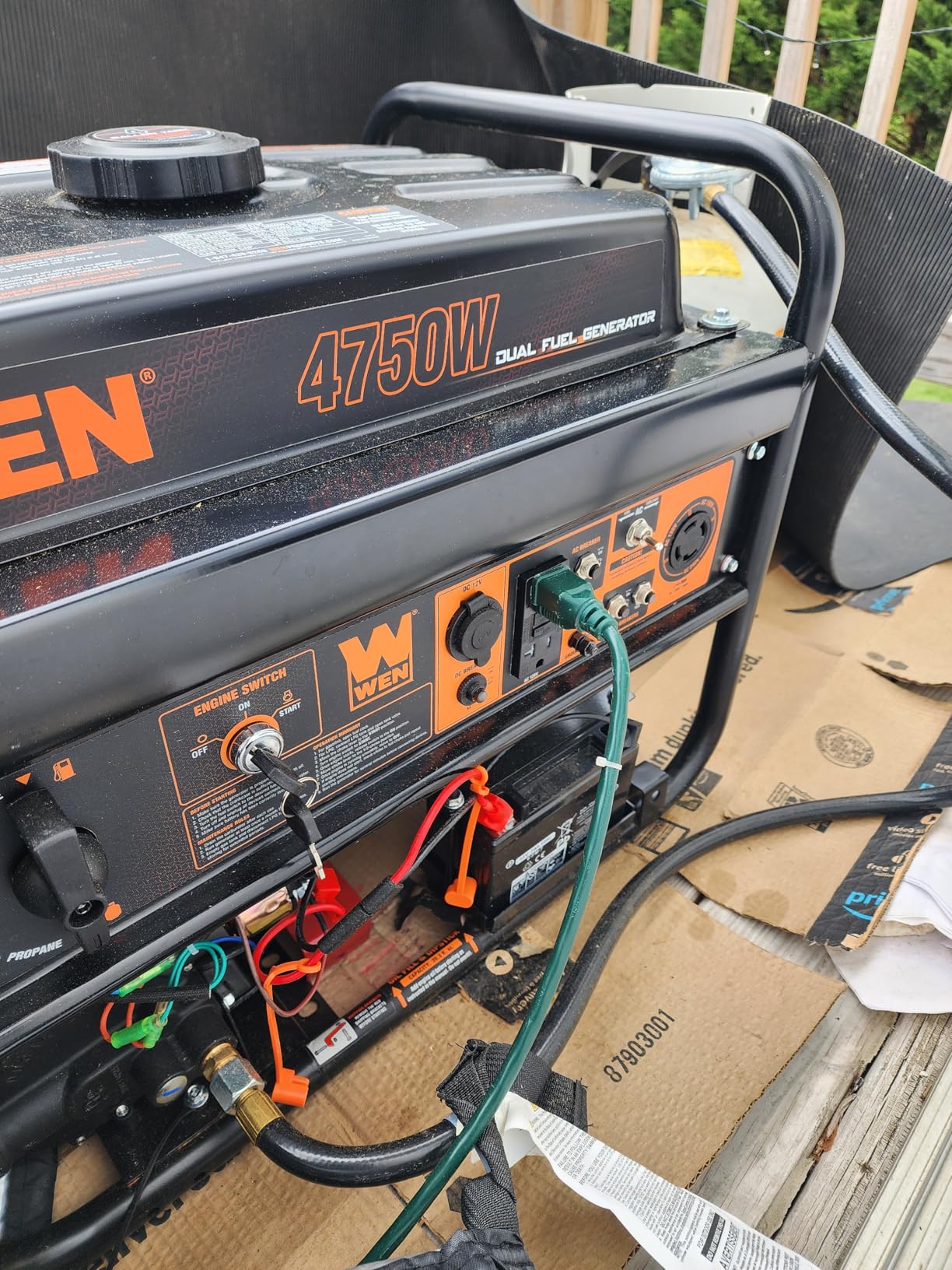
The WEN DF475T is the unit we kept coming back to across six weeks of spec comparison, because it is the only machine here that answers both halves of this topic without compromise. It puts out 3800 running watts and 4750 surge watts on gasoline, and 3500 running watts on propane, which is a working load for a coffee-and-sandwich rig and honest headroom above that.
What separates it from the other dual fuel machines in this group is the voltage switch. Output moves between 120V and 240V with a selector, which is exactly what a transfer switch or an interlock kit needs when the same generator has to back a house up during a storm.
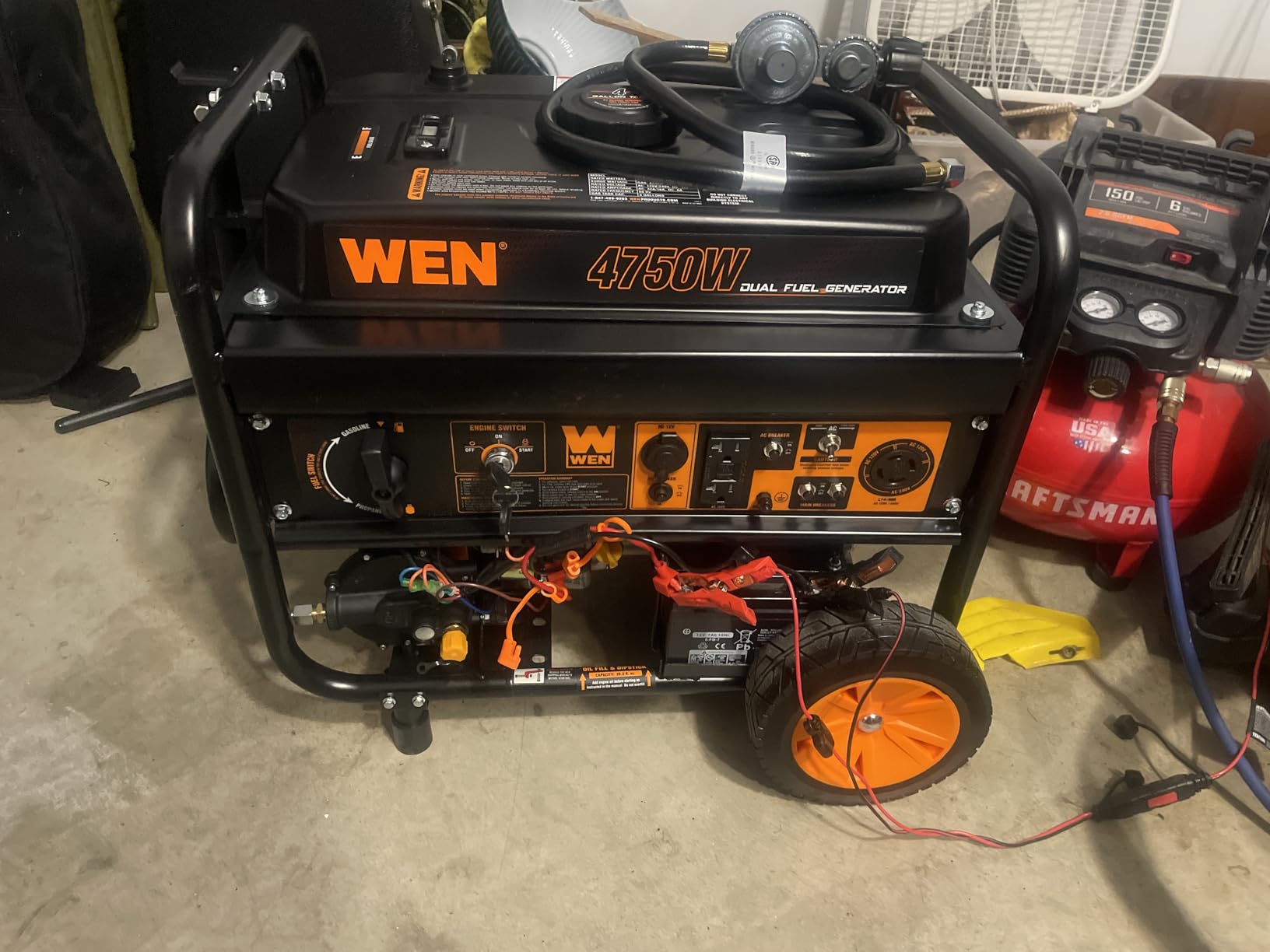
Mechanically it is a 224cc four-stroke OHV engine with electric key start and a 4-gallon tank, rated for up to 11 hours at half load. Owners describe the fuel dial as the least clever, most reliable part of the machine: turn it, change fuel, keep serving.
The outlet mix is where you feel the compromise. Two GFCI 5-20R household receptacles, one L14-30R 30A twist lock for 120V/240V, and a 12V DC plug. For a truck running a fridge, a light string and a register, that is plenty. For a full griddle operation with several 240V appliances, you will want a bigger machine.
How it performs on a real service day
Buyer reviews concentrate on fuel flexibility, easy starting and dependable 240V output, with 74% of ratings at five stars. The complaint cluster is narrow: noise and weight. At 105.8 pounds, most owners load it with two hands or a ramp, and it is not a one-person lift in the rain.
Because it is an open-frame conventional design rather than an enclosed inverter, expect audible engine character at idle. Owners running it on a residential street report it is serviceable but not discreet, which is a fair trade for the 240V switching capability.
Where it will frustrate you
Three outlets is few for a machine of this size, and the data is clear that open-frame construction is louder than the enclosed inverter units in this roundup. If your service is a residential street, a night market or a festival next to other vendors, that noise will be noticed.
It is also gasoline-first in feel. The propane side delivers 3500 running watts, so if you plan to run mostly on propane, budget for a roughly 300-watt reduction in continuous capacity. The 2-year warranty is solid but not the longest here.
2. Pulsar G12KBN: The Surge Load Machine for Full Griddle Rigs
Pulsar G12KBN Heavy Duty Portable Dual Fuel Generator – 9500 Rated Watts & 12000 Peak Watts – Gas & LPG – Electric Start – Transfer Switch & RV Ready – CARB Compliant
9500 running and 12000 peak watts on gas
8550 running watts on LPG
457cc 4-stroke OHV engine, electric start
8-gallon tank with 12 hours at half load
Pros
- Very high rated output for the class
- Dual fuel with 12 hours at half load on gas
- Seven outlets including 30A and 50A
- Never-flat wheels and digital meter
- Low oil shutoff included
Cons
- Open frame is louder than inverter models
- Only a 1-year limited warranty
- Large frame is impractical to load in a small vehicle
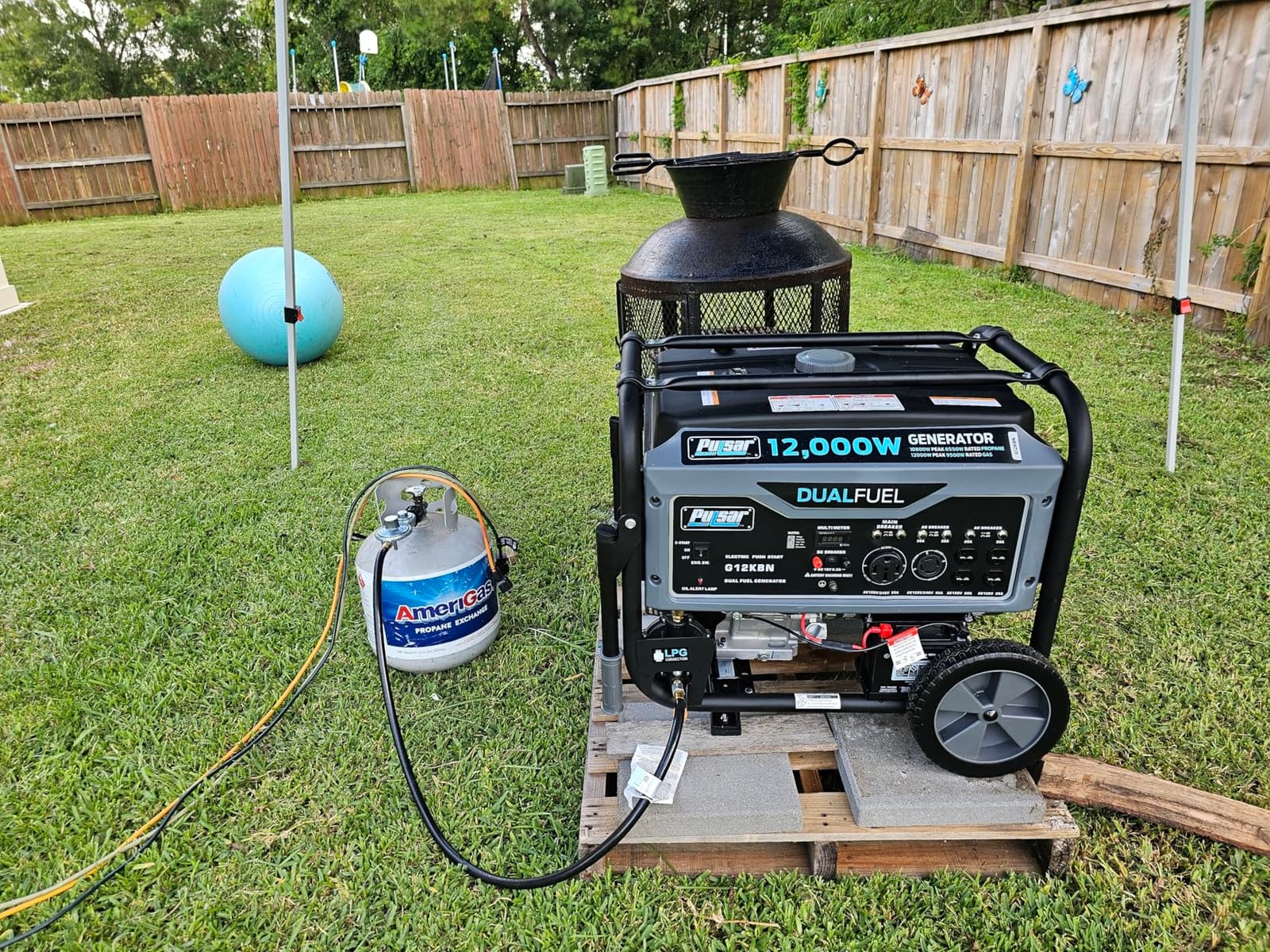
If your truck runs a griddle, a fryer bank and refrigeration at the same time, the Pulsar G12KBN is the machine in this roundup built for that conversation. It delivers 9500 rated watts and 12000 peak watts on gasoline, and 8550 rated watts with 10800 peak on LPG.
Surge headroom is the reason to buy it. Compressor loads like refrigeration or an ice machine ask for two to three times their running draw for the first second, and a 12000-watt peak ceiling gives you room where a 4000-watt inverter does not.
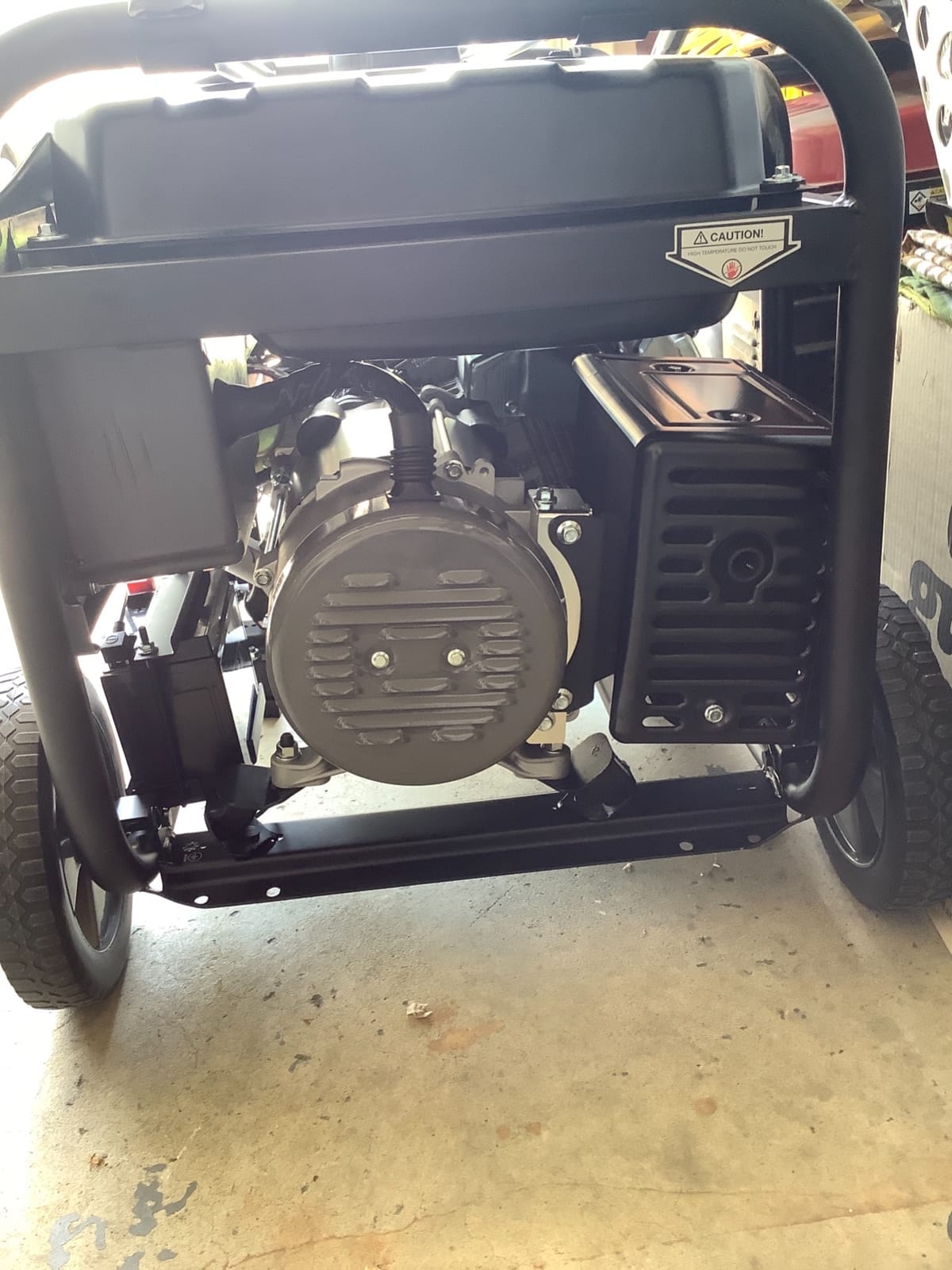
The 457cc single-cylinder air-cooled OHV engine starts electrically and sits in a powder-coated frame with drop-down handles and 10-inch never-flat wheels. The 8-gallon tank is rated for up to 12 hours of continuous half-load operation on gasoline, which covers a long festival day without a fuel stop.
Which brings up a naming trap. The DF475T is frequently described as a 4750-watt generator, and it is, but that is the surge figure. On gasoline the number that decides a service day is 3800 running watts, and on propane it drops to 3500. Plan against the running figure, not the number on the box.
Outlet selection is unusually generous for a portable frame: four 20A 120V household outlets, one 30A 120V/240V twist lock, one 50A 120V/240V outlet and a 12V DC output. Seven connections means you are not daisy-chaining extension cords across a wet floor, which is a safety story as much as a convenience one.
How it handles heavy equipment
Buyer reviews highlight real headroom, easy fuel switching and outlet choice, with 81% five-star ratings. Owners using it on job sites and for home backup report that starting appliances one after another does not cause the stutter that smaller machines show.
Because it is transfer switch ready and RV ready, it also does the home job well, and the 50A outlet means it can feed a properly installed transfer switch rather than a single subpanel.
Where it falls short
The frame is large, measuring 28.5 by 26 by 25.5 inches, and the weight rating in the product record is inconsistent, so treat loading as a two-person job. Open-frame construction also makes it louder than every enclosed inverter in this group.
The 1-year limited warranty is the shortest among the serious dual fuel options here, and for a machine you might run 3000 hours a season that is worth factoring into your thinking. Run it outdoors, well clear of the truck body and service windows.
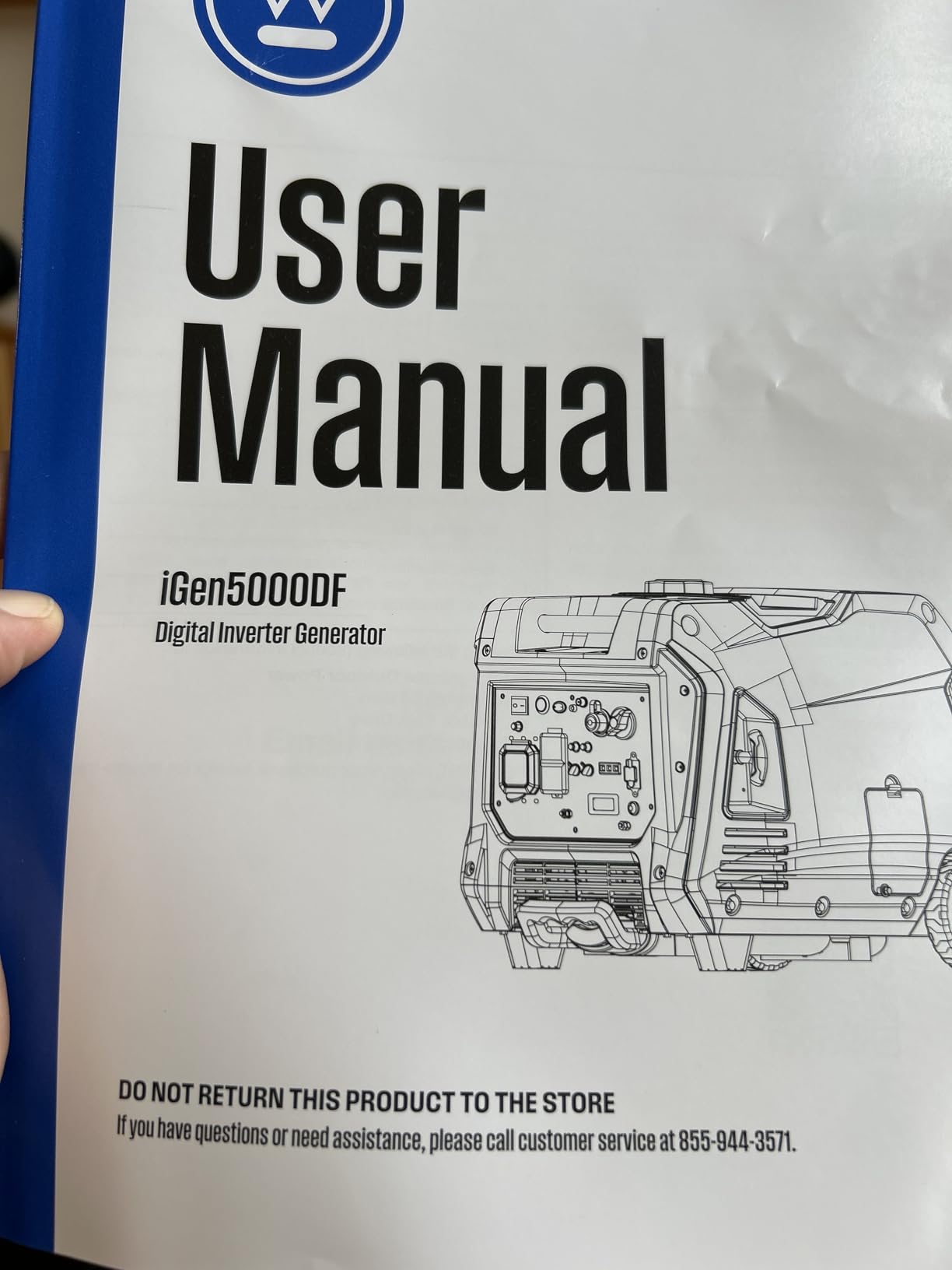
3. Westinghouse iGen5000DF: The Quietest Inverter in the Group
Westinghouse 5000 Peak Watt Super Quiet Dual Fuel Portable Inverter Generator, Remote Electric Start, Gas & Propane Powered, RV Ready 30A Outlet, Parallel Capable, Blue/Black
3900 running and 5000 peak watts at under 3 percent THD
As low as 52 dBA in Economy Mode
Up to 18 hours on a 3.4-gallon tank
Remote key fob with electric and recoil start
Pros
- As low as 52 dBA in this class
- Clean inverter output under 3 percent THD
- Remote start key fob with recoil backup
- 18 hours runtime in Economy Mode
- 3-year limited warranty
Cons
- Roughly 105 pounds for a portable inverter
- 3900 rated watts limits simultaneous high-draw use
- No dedicated 50A twist lock
The Westinghouse iGen5000DF is the noise answer in this roundup. Westinghouse rates it as low as 52 dBA in Economy Mode, which is the lowest published figure among the ten machines we compared and the main reason it earns a slot on this list.
Power is 5000 peak watts and 3900 rated watts at less than 3% total harmonic distortion. That clean sine wave matters more than most buyers expect, because refrigeration compressors, register screens and phone chargers all behave better on clean inverter power.
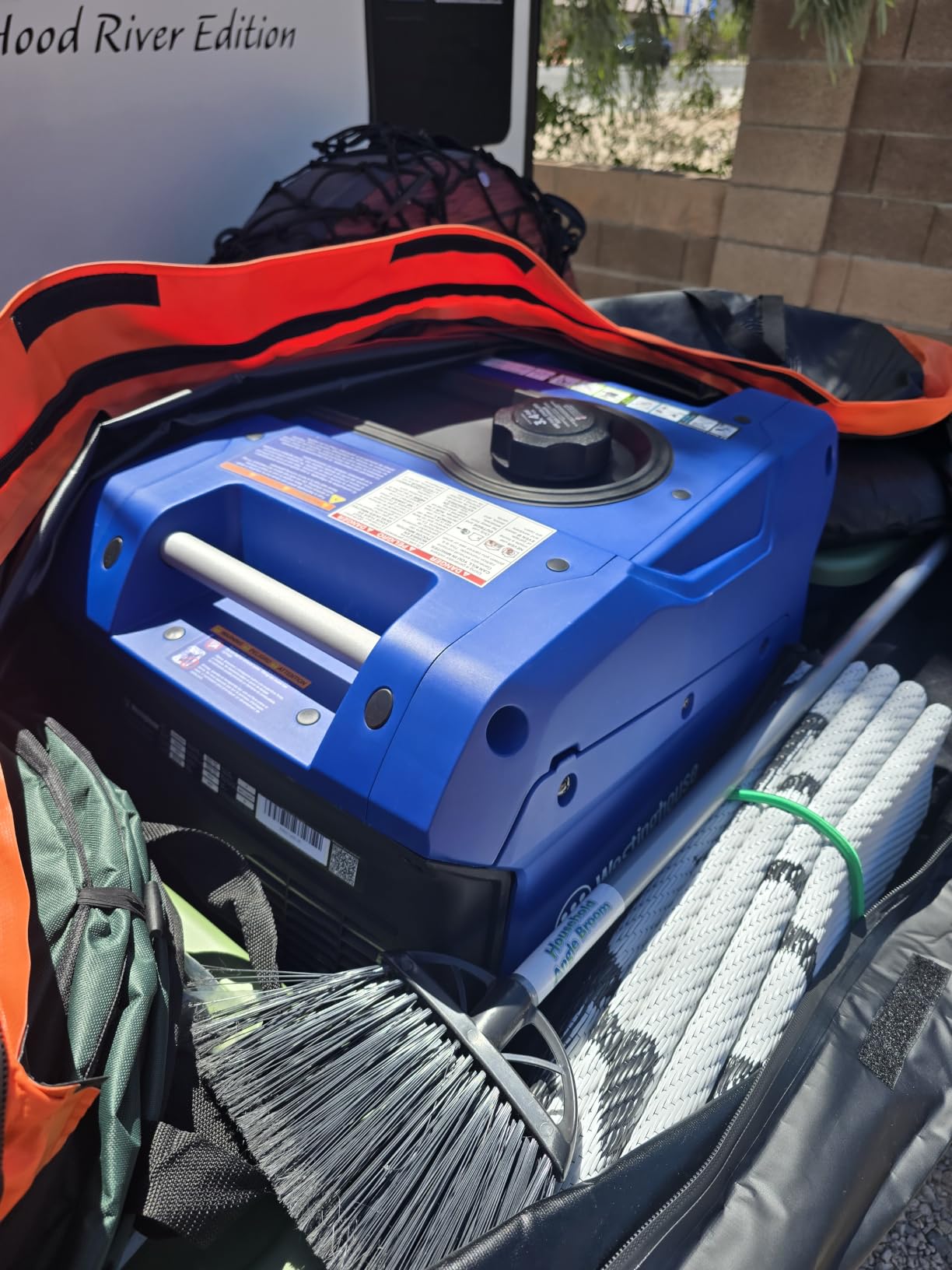
It runs on gasoline or propane and starts three ways: remote key fob, electric or recoil. The telescoping handle helps, though at 104.7 pounds it is still a two-hand lift. A rotating digital display reports fuel level, output, remaining runtime, voltage and lifetime hours.
Runtime is the quiet hero here. The 3.4-gallon tank is rated for up to 18 hours with Economy Mode engaged, which is the longest half-load figure in the group and means a low-draw service day runs on one fill.
Why noise level changes where you can work
Published dB numbers are measured at a fixed distance, and the Westinghouse is the unit here that keeps its number low at idle and mid load. Owners emphasize quiet operation and clean power, and the one-star share is the smallest of any product analyzed in this roundup.
For a residential street, a farmers market or a festival next to other vendors, that difference is the difference between a conversation at the window and a complaint. For a full griddle rig it is not enough output, and the fixed 3900-watt ceiling is the limit.
What to watch for
There is no 50A outlet on this panel. It offers a 5-20R duplex, an RV-ready TT-30R 30A receptacle and two USB ports, which suits 120V service equipment well but caps how you wire it into a house.
Economy Mode extends runtime but ramps engine speed with load, so a sudden compressor start can briefly spike noise. Also note that parallel capability is built in, so a second matching unit can double your output if you ever need more.
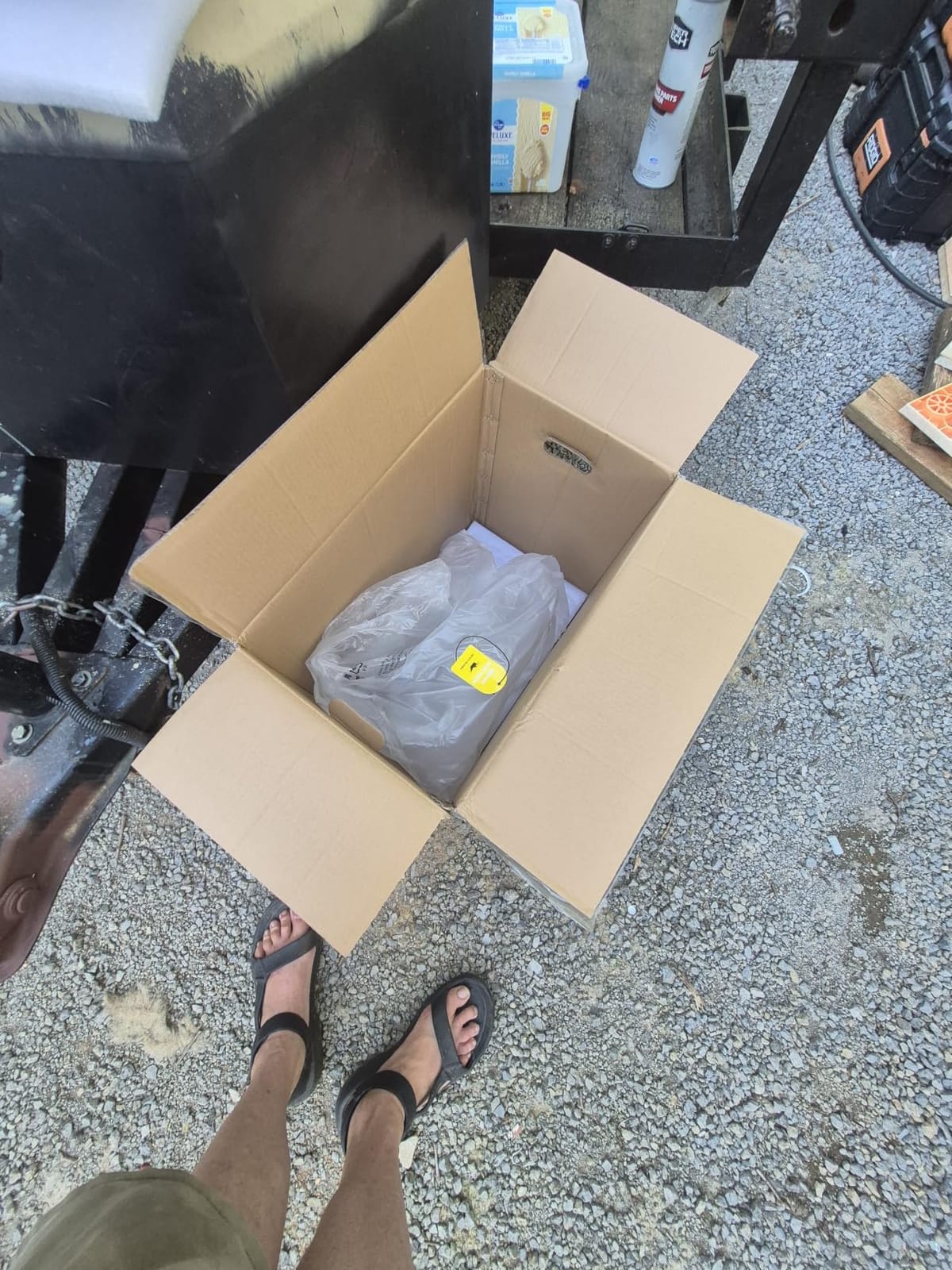
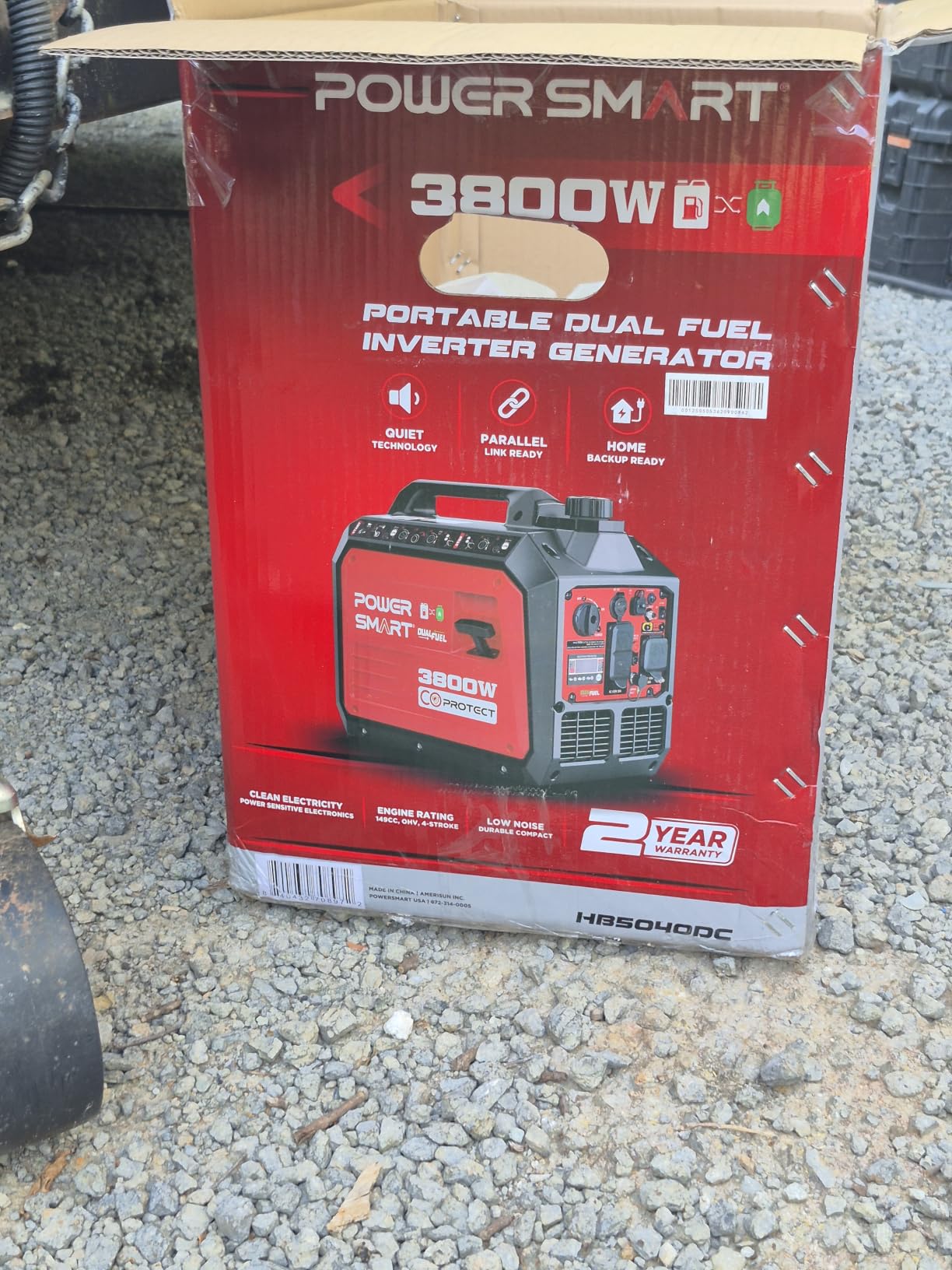
4. PowerSmart 3800W Dual Fuel Inverter: Best Fit for Coffee Carts and Mobile Bars
PowerSmart 3800 Watt Dual Fuel Inverter Generator for Camping or Home Use
3300 running and 3800 starting watts on gas
3100 running watts on propane
59 dBA at 25 percent load
8 hours on gas or 24 hours on propane
Pros
- Runs on gasoline and propane
- 59 dBA in Eco Mode suits residential lots
- Carbon monoxide sensor with overload and low oil protection
- Clean stable output for electronics
- 30A twist lock plus USB ports
Cons
- Small 1.3-gallon tank needs frequent refills
- Noise climbs as load rises even in Eco Mode
- Display is poorly documented and hard to read
- Panels need a Phillips screwdriver
A coffee cart, a boba trailer or a mobile bar does not need thousands of watts. It needs a small machine that stays under 60 dBA, weighs almost nothing and will not be heard over an espresso grinder. The PowerSmart 3800W fits that brief closely.
It produces 3800 starting watts and 3300 running watts on gasoline, dropping to 3500 starting and 3100 running on propane. Westinghouse is quieter at 52 dBA, and this PowerSmart is rated at 59 dBA at 25% load in Eco Mode, which is still conversation-friendly.
At 50.7 pounds, one person can load it into a van or lift it into a service compartment. That single fact changes who can operate the business, and owners mention easy first-pull starting and clean power as the daily experience.
Safety features are better than most at this size: a carbon monoxide sensor that shuts the unit down, plus overload, short circuit and low oil protection. It is certified to ANSI/PGMA G300, ANSI/UL2201 and EPA standards, with a 2-year warranty and lifetime technical support.
Where the fuel flexibility pays off
Propane runtime is the standout number: up to 24 hours on a standard 20-pound cylinder. For a cart that runs light loads all day, that means one tank covers a full week of markets without a gasoline can in the vehicle.
Owners rate value and flexibility highly, with 78% five-star ratings. The recurring complaint is the 1.3-gallon gasoline tank, which simply means more fill stops when you are on propane fuel but a lot when you are not.
What to plan around
Noise rises as load climbs even in Eco Mode, so a simultaneous blender and compressor spike is the loudest moment of the day. The control panel display is also the least documented in this roundup, and access panels want a Phillips screwdriver for routine service.
Outlets are good: a 30A L5-30R twist lock, a 20A duplex, a 12V 8A DC port and dual 5V USB ports. The unit is parallel ready, so a matching second machine doubles your ceiling when the menu grows.
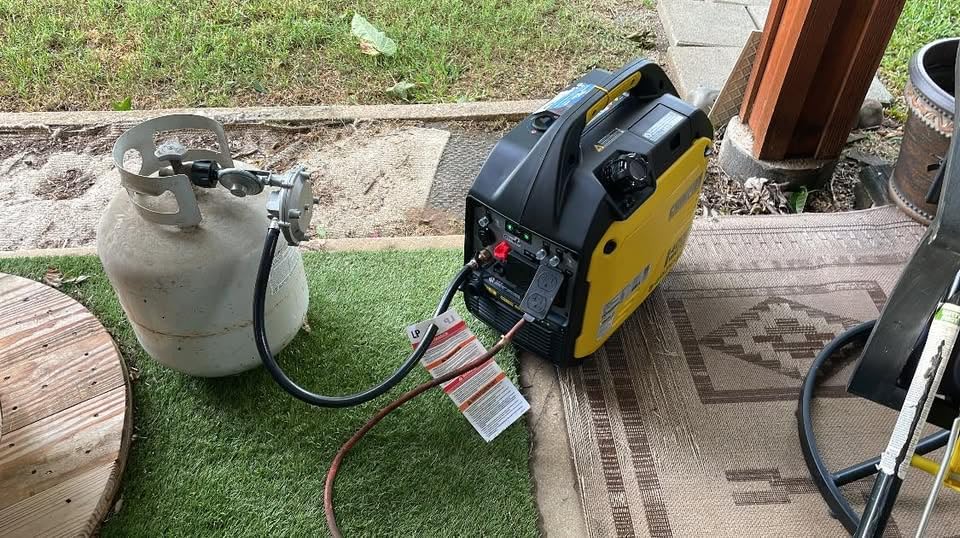
5. Champion 4000W Dual Fuel Inverter: Built for Long Single-Shift Days
Champion 4000-Watt Dual Fuel RV Ready Portable Inverter Generator
3000 running and 4000 starting watts on gas
2700 running watts on propane
64 dBA from 23 feet
Up to 10 hours on gas and 25 on propane
Pros
- Starts on the first pull and weighs 51.8 pounds
- Clean output under 3 percent THD
- Up to 25 hours on propane
- Overload protection resets from the panel
- Tool-free oil access and 3-year warranty
Cons
- Louder than competing 4000W inverters at 64 dBA
- Heavier and noisier than smaller Champion dual fuel models
- Some units need a gasoline break-in before propane runs well
- 1.54-gallon tank limits gas runtime
The Champion 4000W is the one in this roundup that trades a little noise for a lot of fuel flexibility. It runs 4000 starting watts and 3000 running watts on gasoline and 2700 running watts on propane, and only two other dual fuel machines here reach the same 4000-watt class at all.
That propane figure is the reason to look at it. Champion rates up to 25 hours of propane runtime, the longest published figure in this comparison, and up to 10 hours on gasoline from a 1.54-gallon tank.
Measured at 64 dBA from 23 feet, it is the loudest of the enclosed inverter options here, and Champion says so plainly. Several owners of smaller Champion dual fuel models note the same thing, which tells you the difference is engine size rather than a fault.
At 51.8 pounds it stays portable, and the output panel includes a 120V 25A TT-30R RV outlet, a 20A 5-20R duplex under 3% THD, a 12V automotive outlet and parallel ports. The parallel kit is sold separately, which matters if you are planning a two-generator setup.
What owners actually report
Reviews praise first-pull starting, low weight and stable power, with many owners running it daily for extended periods. Overload protection is a practical plus: the unit holds together and resets from a panel button instead of requiring a restart.
The 3-year limited warranty with free lifetime technical support is better than most open-frame machines here, which matters for a unit you depend on every weekend.
What to watch for
Two things show up repeatedly. Some units need a period on gasoline before they run reliably on propane, so test that before the day you need it. And the 1.54-gallon tank is small, so a heavy gasoline service day means a fuel stop.
For soft serve, griddle or fryer duty the 3000-watt running ceiling is the limit to plan around. It is a machine for a mid-size truck running refrigeration, lighting, a register and one moderate cooking load.
6. Champion 4500W Electric Start: The One Owners Report Running Daily for Years
Champion 4500-Watt Electric Start Dual Fuel Portable Inverter Generator
3500 running and 4500 starting watts on gas
3150 running watts on propane
61 dBA Quiet Technology
14 hours on gas and 21 on propane
Pros
- Up to 14 hours of gasoline runtime covers a full shift
- Dual fuel with easy switching
- 61 dBA is quiet for its class
- Reliable electric starting and easy oil changes
- CO Shield sensor with 3-year warranty
Cons
- 99.2 pounds is heavy for a portable inverter
- CO sensor can trip in enclosed or semi-enclosed spaces
- Running watts fall to 3150 on propane
- Only two listed AC outlets
The Champion 4500W electric start is the step up from the 4000W, and the numbers move in the direction a working truck cares about. It puts out 4500 starting watts and 3500 running watts on gasoline, and 3150 running watts on propane, with up to 14 hours on gas and 21 hours on propane.
Champion rates the enclosure at 61 dBA through its Quiet Technology package. That sits between the Pulsar at 59 dB and the Champion 4000W at 64 dBA, which is a reasonable trade for the extra 500 running watts.
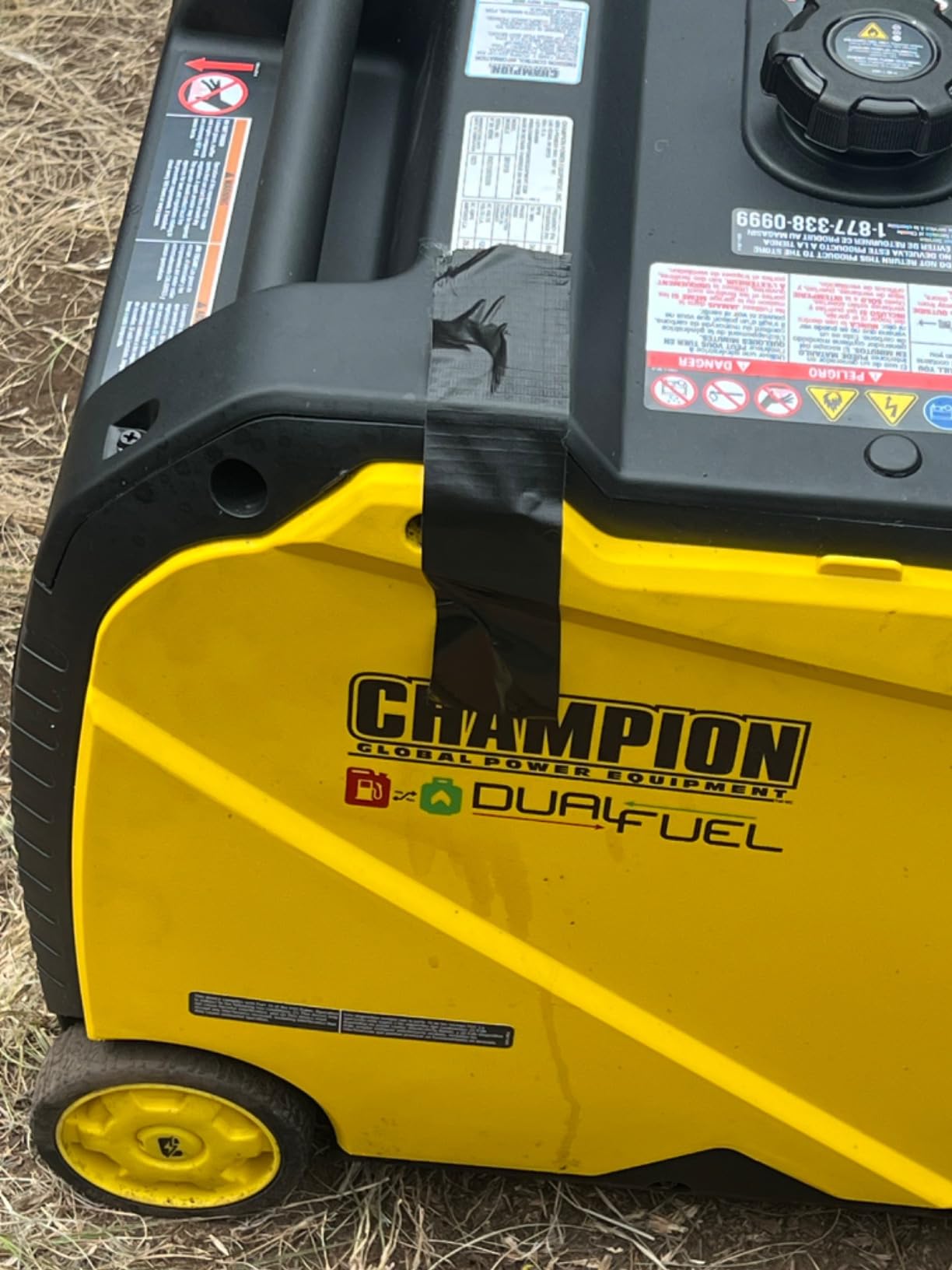
Owners frequently describe sustained commercial use, including one food truck operator who reports running four units daily for years without failures. That is the kind of report that matters more than a specification line, and it is why this machine earns a place on a working rig.
The controls are straightforward: an EZ Start Dial for ignition and an Intelligauge power meter that tracks voltage, frequency and operating hours. The oil fill is quarter-turn and tool-free, which matters when you are changing oil in a parking lot at night.
Where the electric start earns its place
You start a 4500-watt machine dozens of times a week, and a keyed start with recoil backup removes the arm workout. It also makes the unit a natural fit for a remote or automatic sequence later if you upgrade the truck.
CO Shield is the carbon monoxide auto shutoff, and the 3-year warranty with lifetime technical support matches the smaller Champion. For a machine expected to see a full season of heavy duty, that coverage is appropriate.
Where it works against you
At 99.2 pounds it is heavy for a portable inverter, so plan a ramp or a two-person lift. Running watts drop to 3150 on propane, which is a real reduction if propane is your primary fuel.
Two cautions. The CO sensor can shut the engine down in enclosed or partially enclosed spaces, so mount it outside the truck body with clear airflow, and expect that to happen rather than treat it as a fault. Only two AC outlets are listed, so count your connections before the first service.
7. Pulsar PGD40ISCO: The Lightest Machine to Lift Into a Truck Bed
Pulsar PGD40ISCO Ultra Light Quiet 4000W Portable Gas Inverter Generator, white
3200 rated and 4000 peak watts
59 dB super quiet operation
4 hours at half load on a 1-gallon tank
47.3 pounds, 18.9 by 11.4 by 17.3 inches
Pros
- Lightest 4000-watt option at 47.3 pounds
- 59 dB operation for sensitive electronics
- Handles air conditioning units up to 13500 BTU
- Compact footprint stores easily
- Parallel ready to double output
Cons
- Gasoline only with no propane capability
- 1-gallon tank limits half-load runtime to about 4 hours
- Only three outlets
- Highest one-star share of the products analyzed
Weight is a real operating constraint, and the forum threads are blunt about it: anything over 200 pounds is a two-person job, and even 100 pounds is awkward on wet pavement at night. The Pulsar PGD40ISCO is the lightest 4000-watt machine in this roundup at 47.3 pounds.
It delivers 4000 peak watts and 3200 rated watts from a 145cc four-stroke engine, rated at 59 dB for super quiet operation. That published figure sits at the low end of this group, behind only the Westinghouse, and it holds up well for a compact inverter.
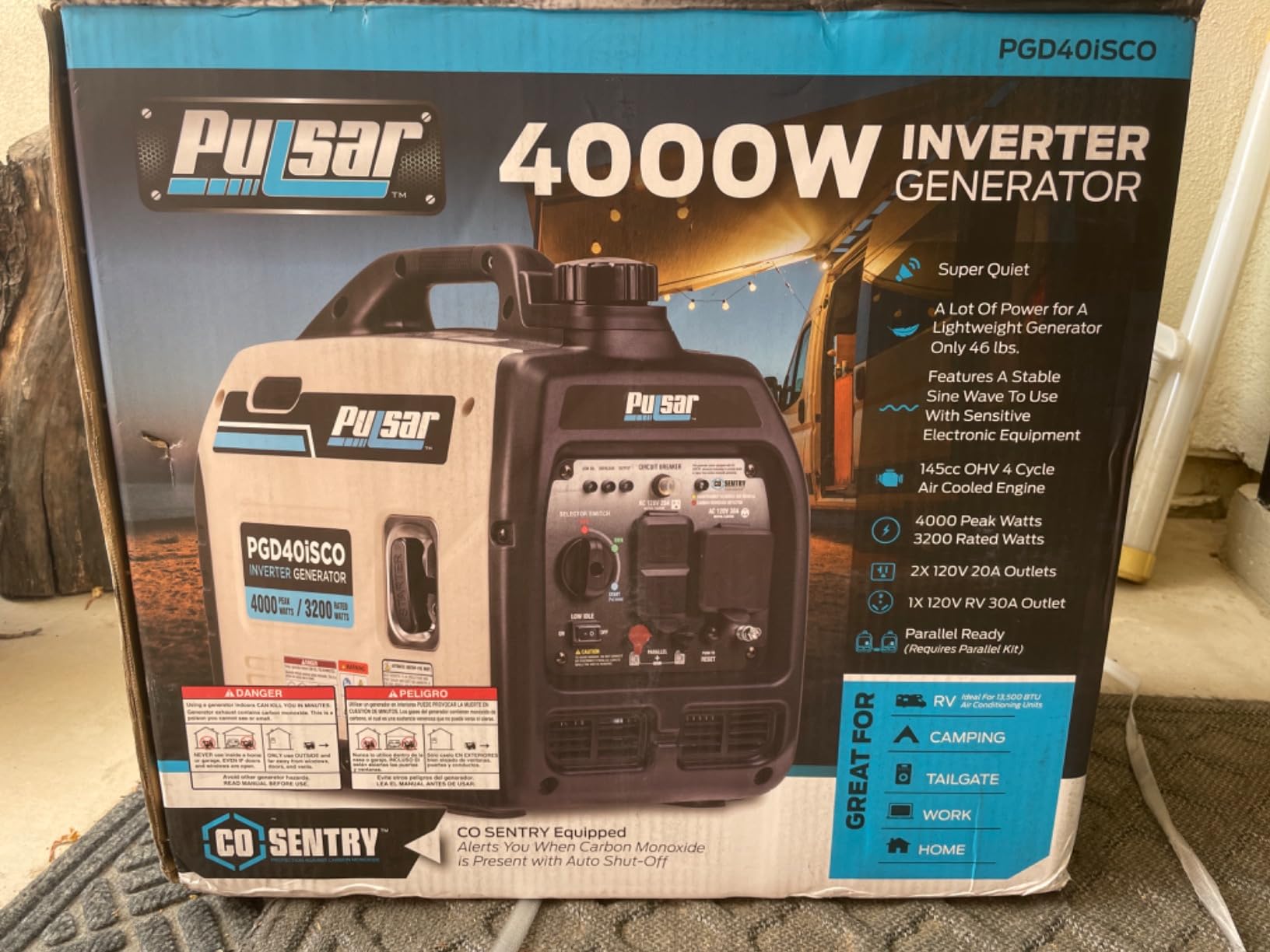
The footprint is genuinely small at 18.9 by 11.4 by 17.3 inches, so it fits in a service compartment or a cage without stealing aisle space. It is also rated for air conditioning units up to 13500 BTU, which is a useful ceiling to know.
Owners value the combination of low weight, quiet output and clean inverter power, with 74% five-star ratings. Parallel readiness means a matching second machine can double the output when the menu demands it.
Where the low weight pays off
One person can move this machine without a ramp, which changes the answer to a question operators ask constantly: who loads the generator. On a truck serviced by a single owner-operator, that is a meaningful reliability gain over the season.
It also stores under a counter or in a lockable compartment more easily than the 100-pound machines, which matters if the generator lives on the vehicle rather than in a garage.
What to plan around
It is gasoline only. There is no propane capability and no conversion path in the product record, so a long service day means carrying fuel with you rather than a standard cylinder.
The 1-gallon tank gives about 4 hours at half load, and the one-star share of reviews is the highest in this set at 9%, with criticism centered on the tank, the fuel limitation and the small outlet count. Three outlets is the smallest panel here, so plan your connections carefully.
8. Oxseryn 4400W Inverter: The Budget Inverter With Genuine Runtime
Oxseryn 4400-Watts Inverter Generator, Open Frame Generator Gas Powered, Emergency Home Backup, RV Ready 30A Outlet, EPA Compliment
3400 running and 4400 peak watts
14 hours at 25 percent load on a 2-gallon tank
57 pounds with ECO mode inverter operation
Two 120V outlets, 30A RV port and 12V DC
Pros
- Strong wattage for the money
- 14 hours at 25 percent load on 2 gallons
- RV-ready 30A outlet plus 120V and 12V connections
- ECO mode
- overload and low oil protection
- Lighter than most open-frame units
Cons
- Gasoline only with no propane option
- Starting wattage listed as 3400 below the 4400 peak figure
- Only a 1-year manufacturer warranty
- Open frame is louder than enclosed inverters
- New units may carry a residual gas smell
One practical habit pays off on any of these machines: keep a written equipment list with each appliance’s nameplate running watts taped inside the cabinet door, and update it every time you add a piece of equipment. Sizing from a nameplate beats sizing from a list you half remember, and it takes ten minutes.
The same habit catches the most common sizing mistake we see, which is counting a microwave or an air conditioner at its surge figure. Those loads belong in the peak column, not the running column, and mixing the two is how a truck ends up with a generator that trips every rush.
A second habit is to run the full equipment list for an hour at the start of each season and watch the hour meter. If a machine sags or restarts under that load, you find out in a parking lot in daylight rather than at a service with a line forming.
The Oxseryn 4400W is the value pick in this roundup. It delivers 4400 peak watts and 3400 running watts, and it is the only machine here that pairs inverter technology and a 30A RV port with a run time figure that holds up under scrutiny at a budget price point.
Runtime is the number to notice. A 2-gallon tank is rated for 14 hours at 25% load, which compares favorably with several machines here that quote shorter figures from smaller tanks.
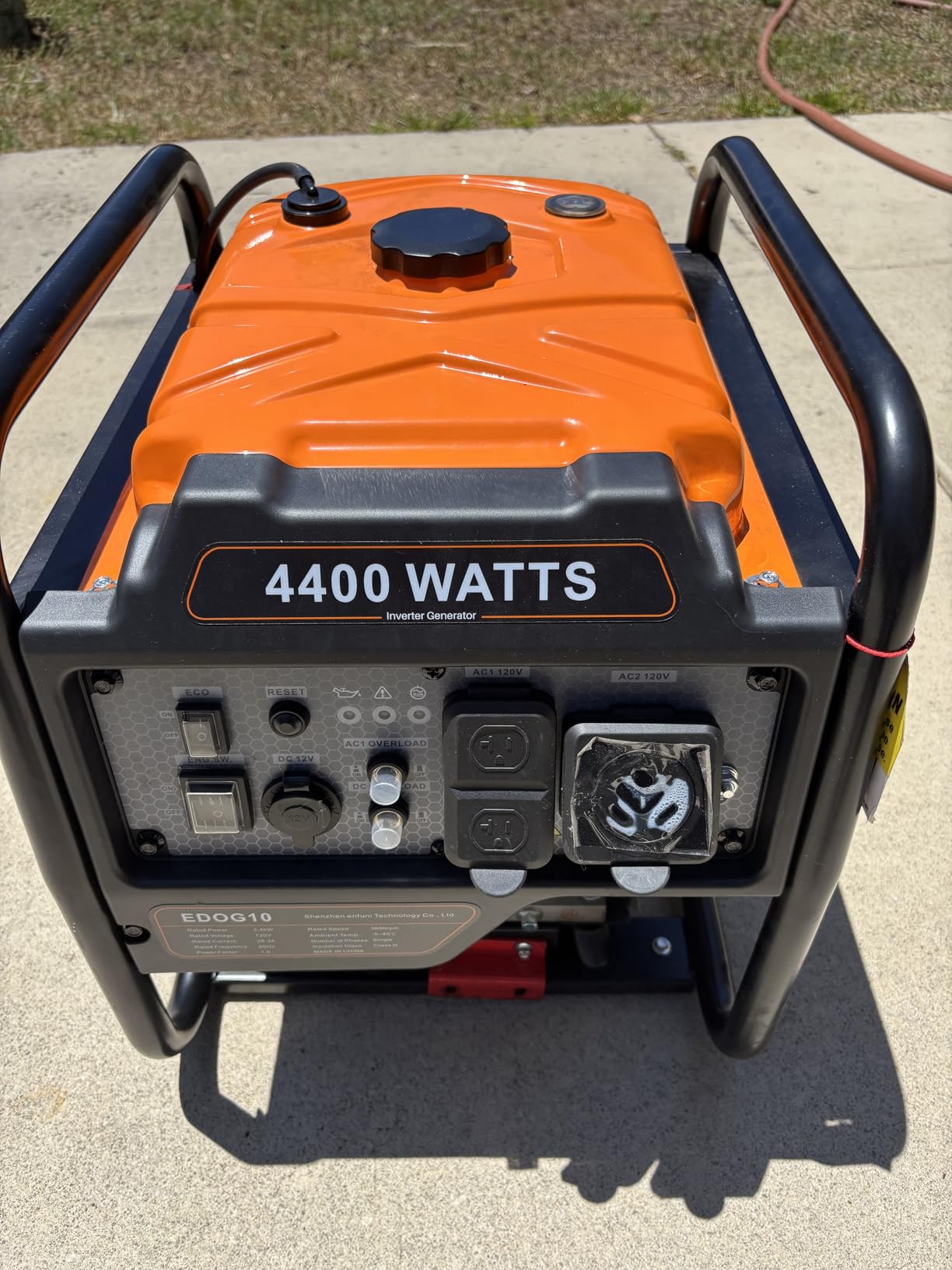
Weighing 57 pounds, it sits in the same portability class as the compact inverters while offering more rated watts than most of them. The engine is electronic ignition, four-stroke, ECO mode inverter output, EPA compliant and RV ready.
Protection features are standard: overload protection, low oil shutdown and cold start technology. Reviews highlight value, adequate wattage and useful runtime, with a 4.6 average and only 3% one-star ratings.
What you get for the money
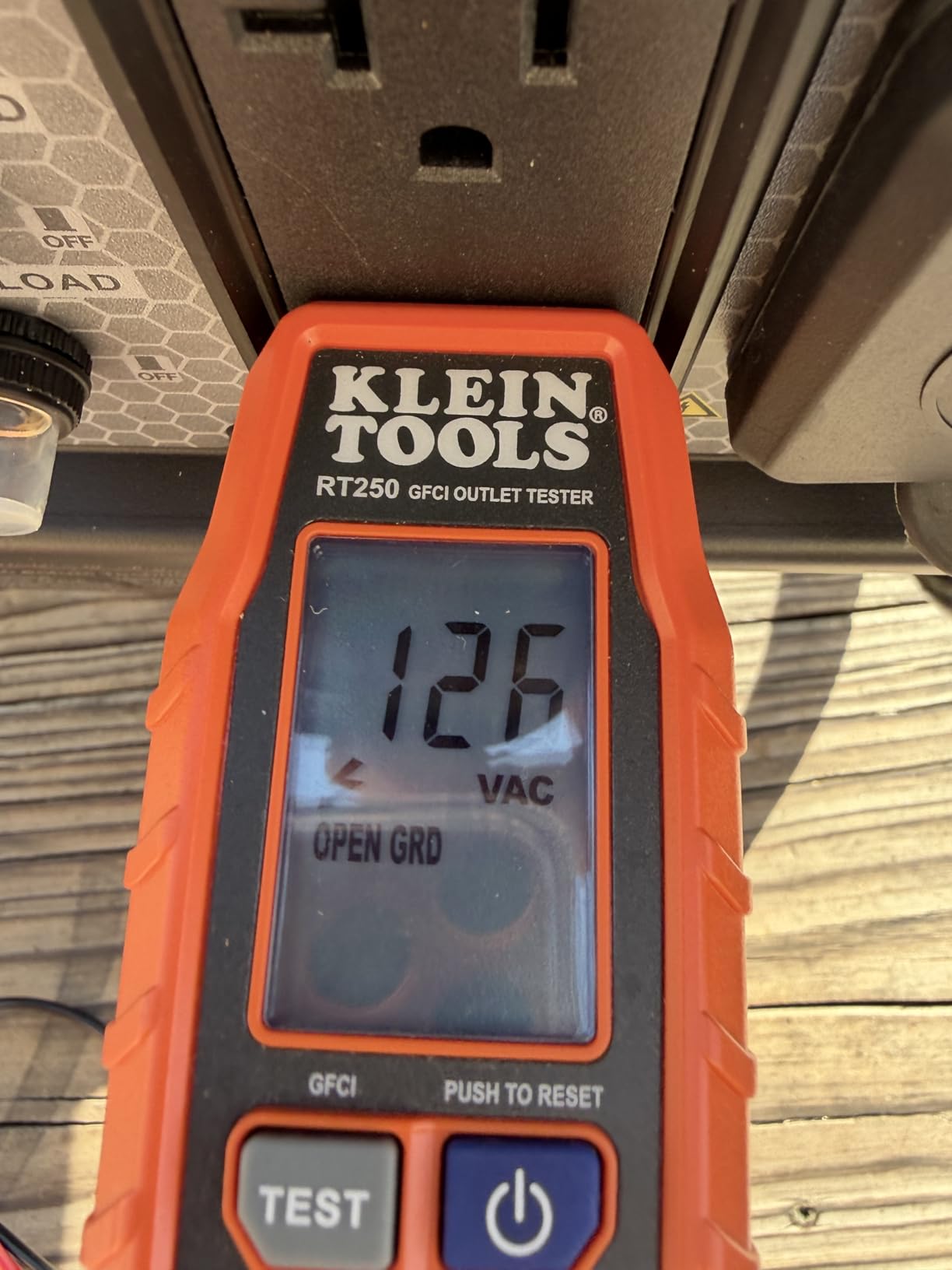
The panel is straightforward: two 120V AC ports, one 30A RV port and one 12V DC port. That is enough for refrigeration, lighting and a register on a mid-size truck, and the 30A port gives you flexibility for a transfer switch run at home.
ECO mode is the runtime lever. On a light service day the engine throttles back and the 14-hour figure becomes relevant, which is exactly the pattern of a coffee cart or a breakfast trailer.
What to plan around
It is gasoline only. There is no dual fuel path here, so long event days mean managing fuel cans rather than swapping cylinders.
Two specification details deserve attention. The starting wattage is listed as 3400 rather than the 4400 peak figure, so treat 3400 as the realistic ceiling and apply the 80% rule before adding loads. The warranty is 1 year, the shortest in this comparison, and new machines may smell faintly of gasoline because they are functionally tested in the factory.
9. PowerSmart 4000W Inverter: Quiet Power for Electronics-Heavy Trucks
PowerSmart 4000 Watt Portable Inverter Generator for Camping or Home Use
3200 rated and 4000 peak watts under 3 percent THD
59 dBA from 23 feet at 25 percent load
8 hours at 25 percent load on a 1.3-gallon tank
50.7 pounds with parallel capability
Pros
- 59 dBA allows normal conversation nearby
- Clean output under 3 percent THD for electronics
- 50.7 pounds loads by one person
- Parallel capable for double output
- Good outlet mix with 30A twist lock and USB ports
Cons
- Marked wattage can overstate real capacity and trip overload
- 1.3-gallon tank means refills on long runs
- Gasoline only with no propane option
- Some units need three or four pull-starts
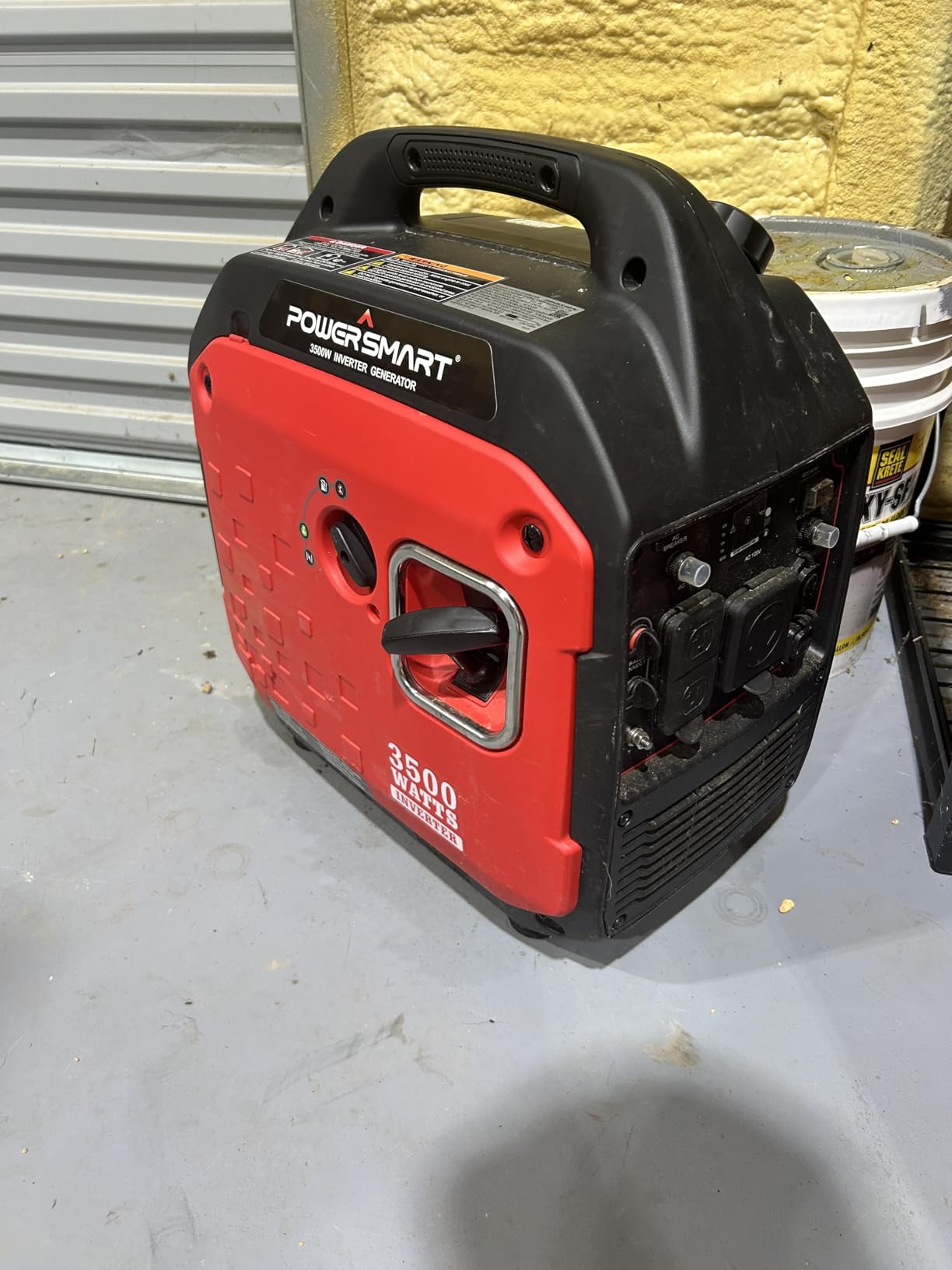
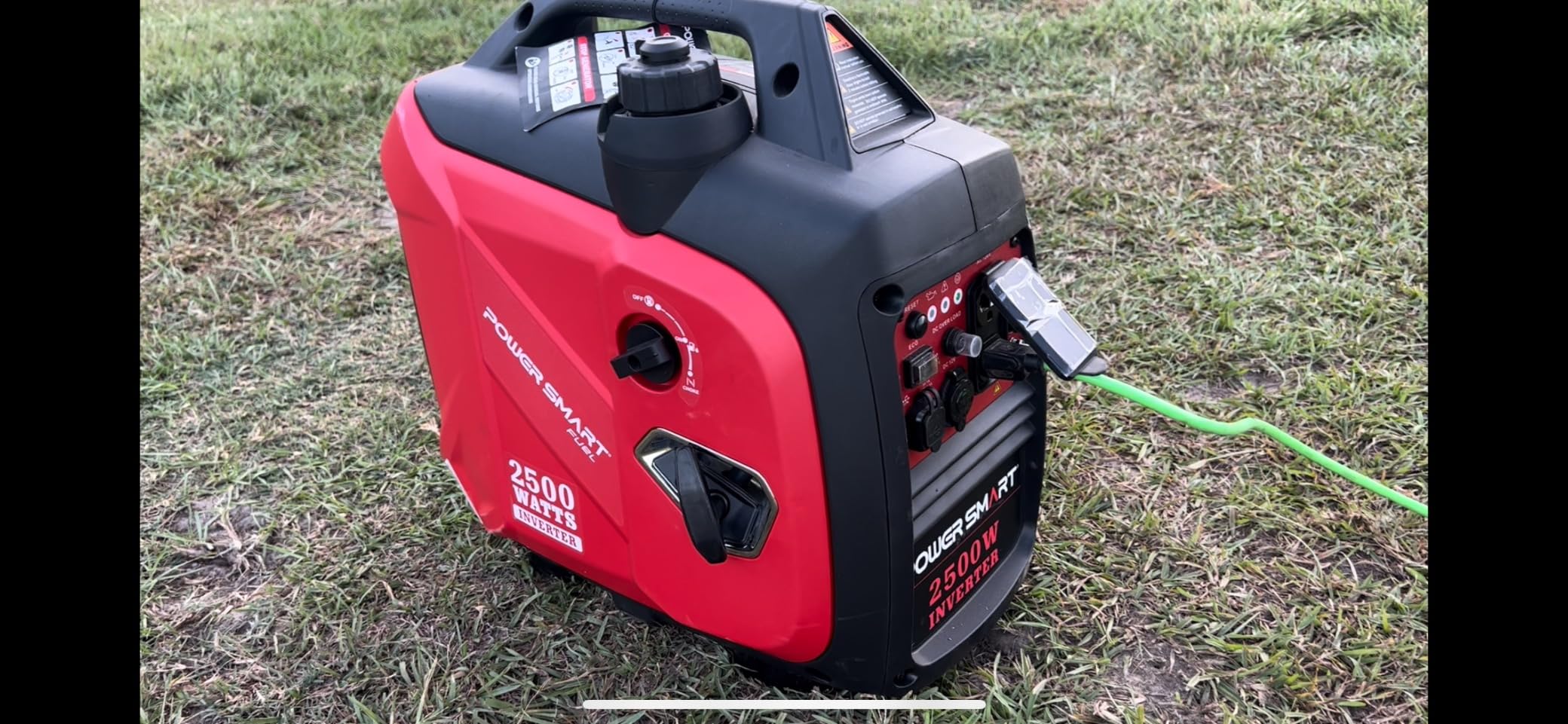
The PowerSmart 4000W is the cleanest output per pound in this roundup, and that matters more than it sounds. It produces 4000 peak watts and 3200 rated watts at under 3% total harmonic distortion, which is the safe range for phones, tablets, laptops, register screens and refrigeration controls.
Noise is rated at 59 dBA from 23 feet at 25% load, and at 50.7 pounds one person can load it into a van or lift it onto a truck bed without help.
Owners frequently praise quietness, portability and clean output for RV and light household use, and sellers report strong service on damage and replacements, which is worth something on a machine you depend on weekly.
Runtime is the compromise. The 1.3-gallon tank gives up to 8 hours at 25% load, which covers a normal shift on a light menu but not a full festival day on gasoline alone.
What the clean output actually buys you
Modified sine wave output is the reason some electronics behave oddly on a conventional generator: compressors cycle harder, chargers get warm, and displays flicker. Under 3% THD removes that class of problem, which is why this unit suits a truck with a lot of digital equipment.
It is parallel capable, so doubling output is available later with a separately sold kit. For a growing menu that is a cheap path rather than a replacement purchase.
Where owners report problems
The most significant negative theme is that the marked wattage can overstate real capacity. Reviewers describe loads in the 1600 to 2000 watt range triggering overload, so plan against 3200 rated watts and keep a margin.
Some units also need three or four pull-starts before firing rather than starting on the first pull, and the small tank means refills during long runs. If your service day runs 10 hours or more with heavy loads, step up to the Champion 4500W or the Oxseryn 4400W instead.
10. Westinghouse WGen9500DF: The Full-Service Truck and Whole-House Answer
Westinghouse 12500 Watt Dual Fuel Home Backup Portable Generator, Remote Electric Start, Transfer Switch Ready, Gas and Propane Powered
9500 running and 12500 peak watts on gas
8500 running and 11200 peak watts on propane
457cc OHV engine with cast iron sleeve
6.6-gallon tank with 12 hours runtime
Pros
- 9500 running watts for full-home or multi-appliance backup
- Dual fuel on gasoline or propane
- Remote start key fob with electric and recoil
- 12 hours on a 6.6-gallon tank with fuel gauge
- Transfer switch ready 30A and 50A outlets
Cons
- 210 pounds is far too heavy for one person
- Open frame is loud with no inverter clean power
- Large footprint limits portability
- No USB or DC charging ports
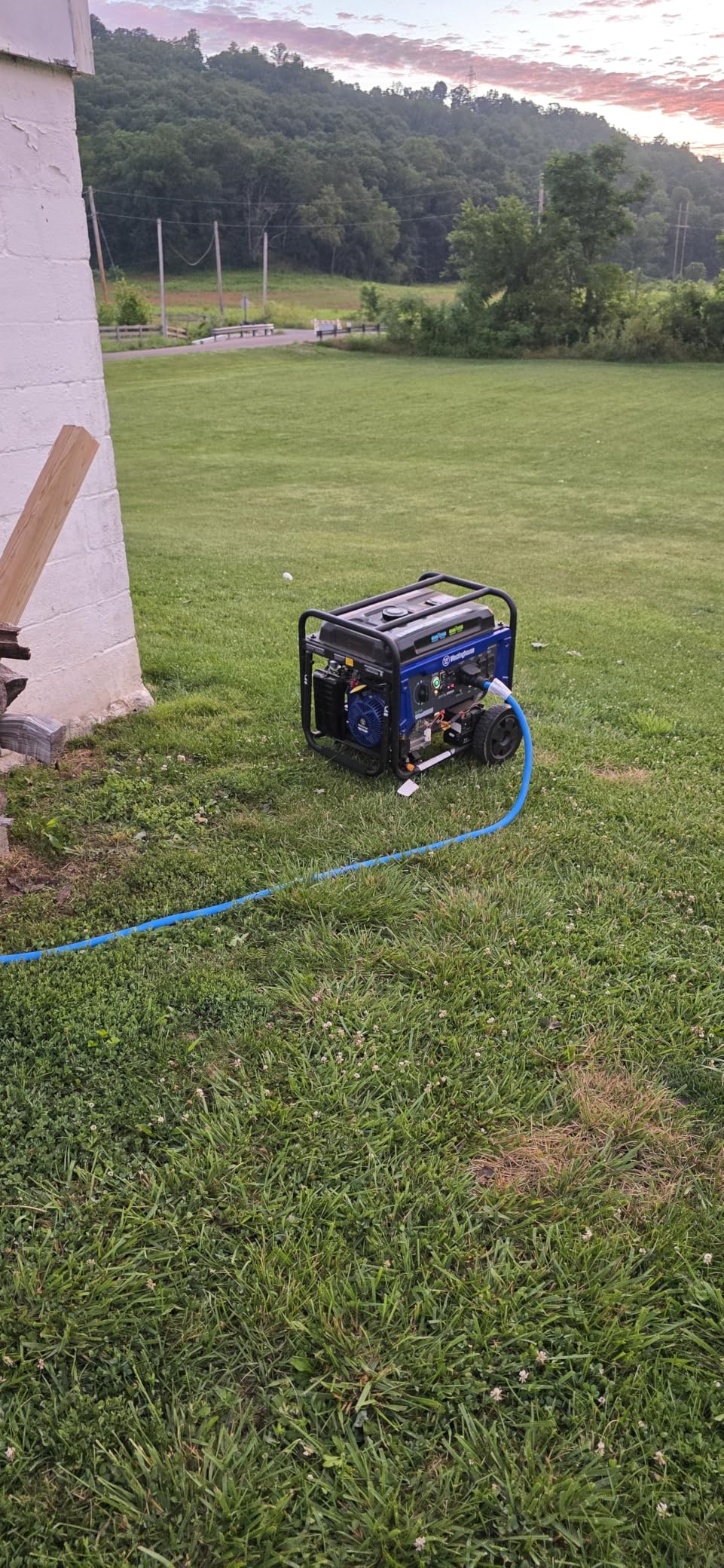
When one generator has to run a full griddle truck and then back up a house during a storm, this is the machine in the roundup built for the assignment. The Westinghouse WGen9500DF puts out 9500 running watts and 12500 peak watts on gasoline, and 8500 running with 11200 peak on propane.
It is also the most-reviewed product in this comparison, with more than eight thousand ratings averaging 4.7, so the long-term owner record is better documented than anything else here.
The engine is a 457cc four-stroke OHV with a cast iron sleeve, automatic low oil shutdown and a digital VFT hour meter that reports voltage, frequency and lifetime hours. Owners consistently cite dependable starting and easy transfer switch integration.
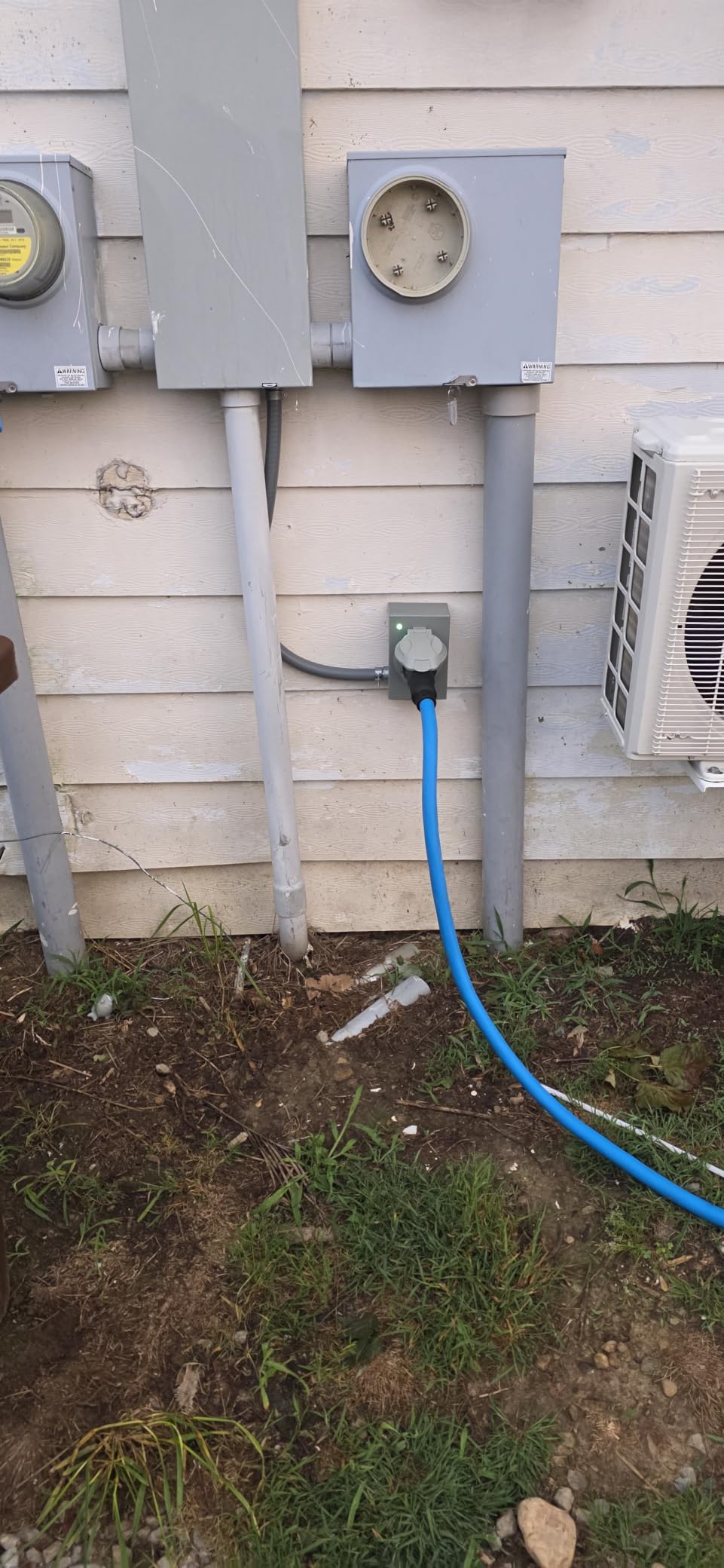
Outlets are the reason to choose it: two GFCI 20A household receptacles, a transfer switch ready L14-30R 30A outlet, and an RV-ready 14-50R 50A outlet, all under rubber covers. That is a home backup panel, not just a truck accessory.
Why operators pick big output over portability
Surge margin is the argument. With 12500 peak watts on gasoline, a compressor starting cold, a griddle heating and refrigeration cycling at the same moment do not push this machine toward its ceiling. That is the exact failure mode smaller units hit mid-service.
Remote start with the included key fob, plus electric and recoil backup, means you can start it from the cab before walking out to the service side. The 6.6-gallon tank with fuel gauge is rated for up to 12 hours of runtime.
What you accept for that power
At 210 pounds this is a two-person lift every time, and a 27.2 by 26.1 by 26.5 inch footprint eats a corner of any truck bed. Plan for a mounted base or a rated platform with lashing rather than lifting it in and out.
It is an open-frame conventional design, so expect real noise and no clean inverter sine wave. If your electronics-heavy equipment is sensitive, pair this with a small inverter for the register and POS, or choose the Westinghouse iGen5000DF instead. The 3-year warranty and nationwide customer service network are the support story to look for on a machine this size.
How Big a Generator Does Your Food Truck Need?
A mid-size food truck typically needs 3000 to 4000 watts of continuous capacity, and a full griddle or soft serve rig needs 6000 watts or more. The number that decides your purchase is rated running watts, not peak or starting watts, and you should size to about 80% of that rating.
Running watts are what the machine sustains for hours. Surge or starting watts are the short burst a motor needs to get going, typically two to three times the running draw for a compressor. Manufacturers advertise the larger figure because it sounds better, and it is the smaller number that determines whether your equipment runs all day.
The 80% rule says keep your total continuous load at or below 80% of rated capacity. The margin exists because engines degrade in altitude, in heat and as they age, and because a generator that runs flat out has no headroom for the one appliance you forgot. Owners in generator forums independently advise staying under roughly 75% for the same reason.
Surge is where food trucks get hurt. A soft serve machine, an ice maker or a refrigerator compressor can pull two to three times its running draw for the first second. If your highest single surge exceeds the peak rating of a smaller inverter, the unit will trip or stall in the middle of a service, and the operator experiences it as a random shutdown with no obvious cause.
Two strategies solve this. The first is to buy a larger machine with a high peak rating, which is what the Pulsar G12KBN and the Westinghouse WGen9500DF do. The second is to run two smaller parallel-ready inverters, which is the approach experienced operators describe, with one machine carrying refrigeration and the other carrying cooking loads so their peaks never land together. The Westinghouse iGen5000DF, Champion 4000W, Champion 4500W and both PowerSmart units are parallel capable, though the kits are sold separately on several of them.
A practical worked example: a truck with a 1200-watt undercounter refrigerator, an 800-watt freezer, a 500-watt milkshake machine and a 450-watt cone dipper lands near 2950 watts of running load. Add lighting, a register and a small water heater and you pass 3500 watts, so the 80% rule points you at a machine rated near 4500 watts. Add a griddle and you are in the 6000-watt range, which is where the conventional open-frame machines earn their place.
Noise: How Many dB Can You Run in a Residential Area
For a residential street or a festival, stay at or below 60 dBA at 23 feet. That is the threshold where you can hold a normal conversation a few feet away, and it is the level most venue and neighborhood rules assume.
Published noise figures are measured at a fixed distance, typically 23 feet, and usually at 25% load. Eco mode numbers are the flattering case; a machine under full load sounds noticeably louder, so treat the published figure as a floor rather than a promise.
Among the machines here, the Westinghouse iGen5000DF is the quietest at as low as 52 dBA in Economy Mode. The Pulsar PGD40ISCO and both PowerSmart units are rated at 59 dB or 59 dBA, and the Champion 4500W at 61 dBA. The Champion 4000W posts the highest published figure of the enclosed inverters at 64 dBA, and the open-frame conventional machines are louder than every figure above.
Forum threads on food truck groups describe the same pattern: loud units draw complaints at residential pitches, and vendors who solved it either moved to an enclosed inverter or built a ventilated box with forced-air cooling around the engine. Distance helps more than most buyers expect, and running the machine on the far side of the vehicle, away from the service window, changes what a customer hears at the window.
Safety: Venting Exhaust and Keeping CO Out of the Cab
Never run a fuel-powered generator inside the truck body or in an enclosed service compartment. Exhaust must discharge at least ten feet from any opening, doors or windows, and the machine belongs outside the vehicle body with the exhaust pointed away from the service window and the cab.
Carbon monoxide sensors are the second layer of protection, and they are worth having. The Champion 4000W and 4500W carry CO Shield auto shutoff, and the PowerSmart 3800W dual fuel includes a carbon monoxide sensor alongside overload, short circuit and low oil shutdown. Owners note the CO sensor can trip in enclosed or partially enclosed spaces, and that is the system working as designed rather than a fault.
Owners in these forums also describe building custom ventilated generator boxes with forced-air cooling to manage heat and noise in a truck compartment. That approach works, but it still has to vent exhaust to open air, and heat has to leave the box as well as it enters.
On electrical code, food trucks are not straightforwardly governed by the NEC, and owners report genuine ambiguity about what applies to a mobile unit. Many local health departments and venue operators still require GFCI protection, covered receptacles and a proper grounding path, so treat the strictest reading as the safe default.
One more practical hazard shows up repeatedly in operator discussions: a generator wired to the tow vehicle can drain that vehicle’s starting battery if it stays connected overnight. Use a dedicated deep-cycle battery for the generator instead of borrowing the vehicle’s.
Gasoline, Propane or Battery: Which Fuel Fits Your Truck
Gasoline gives the most watts per tank and the lower fuel cost, propane gives cleaner storage and longer unattended runtime, and dual fuel lets you carry both and switch with a dial. For a food truck working events, dual fuel is the most flexible answer in this roundup.
Gasoline-only machines here include the Pulsar PGD40ISCO, the Oxseryn 4400W and the PowerSmart 4000W. Each is lighter and simpler to operate, and each means carrying fuel cans in the vehicle. Runtime figures on gas range from about 4 hours at half load for the 1-gallon Pulsar up to 14 hours at 25% load for the Oxseryn.
Propane numbers are where dual fuel machines separate themselves. The Champion 4000W is rated for up to 25 hours on propane, the PowerSmart 3800W for up to 24 hours on a standard 20-pound cylinder, and the Champion 4500W for up to 21 hours. Propane also stores longer without degrading, which matters if the machine sits between seasons.
The cost of propane is higher per unit of energy, and running watts drop on propane: 3500 on the WEN DF475T, 3100 on the PowerSmart 3800W, 3150 on the Champion 4500W and 8550 on the Pulsar G12KBN. Size for the propane figure if propane is your primary fuel.
Battery power stations are a partial answer rather than a full one. They cover lighting, a register, phones and small electronics with zero noise and zero exhaust, and they are genuinely useful as a support layer. They cannot run a griddle, a fryer or a compressor, so a full-service truck still needs a fuel generator for the cooking load.
Wiring: Transfer Switch, Interlock and 50A Connections
A generator connects to a building or vehicle through a transfer switch or a transfer interlock, never directly into a panel. Both devices make it physically impossible for shore power and generator power to be live at the same time, which is the back-feed hazard that kills lineworkers.
For a home, the Westinghouse WGen9500DF is the easiest fit because it carries a transfer switch ready L14-30R 30A outlet and a 14-50R 50A outlet, both under rubber covers. The Pulsar G12KBN also offers 30A and 50A outlets and is transfer switch ready, which gives a second route to the same job.
On a truck, a portable generator is often simpler: run an outdoor rated cord to a distribution box with GFCI protection, and plug appliances in directly. If you want the whole truck panel to run off the generator, an interlock kit at the truck’s main breaker is the standard approach. Our guide to manual transfer switches for portable generators covers the hardware side of that choice.
One recurring operator complaint deserves emphasis: a generator kept connected to the tow vehicle can pull that vehicle’s battery down over a service day. Fit a dedicated generator battery if the machine has electric starting, and check the hour meter rather than assuming the unit switched itself off.
Maintenance That Keeps the Engine Between Services
Change the oil on the interval in your manual, check it every 50 hours on a heavily used truck machine and every 100 hours otherwise. A dirty air filter is the most common reason an overloaded generator runs hot and shuts down, so pull it and blow it out more often than you think you need to.
Run fuel stabilizer into the tank before storage, and let a propane machine run on gasoline periodically if you keep it on propane all season. A carburetor that has sat on stale gas for a year is the most common no-start complaint in generator forums, and it is cheap to prevent.
Keep the exhaust screen clean, check the CO sensor date if the unit has one, and confirm the GFCI outlets still trip before every event. Champion and PowerSmart both include lifetime technical support with these machines, which is worth using before a roadside repair turns into a replacement.
Using Your Truck Generator at Home for Backup Power
Yes, and it is one of the better reasons to buy a dual fuel machine. Most machines here run on propane as readily as gasoline, so you can keep a cylinder at the house during an outage and the same cylinder that fueled the truck on Saturday. For a full wiring walkthrough, see our transfer switch guide for home generators.
Sizing for home duty is a different calculation than sizing for a truck. A refrigerator-freezer, a handful of lights, a well pump and a Wi-Fi router typically add up to around 2000 to 2500 watts of running load. Apply the 80% rule and you want a machine rated near 3000 watts or higher, which every unit in this roundup clears.
The Westinghouse iGen5000DF suits a home backup role particularly well, with up to 18 hours of runtime in Economy Mode and output under 3% THD that keeps sensitive electronics stable. The WEN DF475T adds the advantage of switchable 120V and 240V output, which is what a transfer switch needs.
For a home that also wants to run a well pump or a window air conditioner, the larger conventional machines are the answer. The Westinghouse WGen9500DF carries 9500 running watts and a 50A outlet, and its 12-hour runtime on a 6.6-gallon tank covers an overnight outage without a refill. If you would rather have the power installed permanently, our picks for home standby generators cover the fixed-installation route.
Propane is the sensible home fuel because it stores indefinitely and needs no daily rotation. If your home backup plan leans on propane specifically, our picks for the best propane generators for home backup go deeper on that option.
Where to Buy and What Service Network to Check
These machines turn up at big-box home improvement stores, farm and ranch supply chains, electronics retailers and restaurant equipment suppliers, and the brand you pick should have a service network you can reach in the city where you actually park. Field-serviceable parts and a dealer within driving distance matter more than a long warranty you cannot claim.
Check the warranty terms against your actual use before you buy. Mobile commercial duty is treated differently by some brands than home backup, and the difference shows up as exclusions for rental or commercial service. A 1-year warranty on a machine you plan to run every weekend deserves more thought than a 3-year warranty on one that sits in a garage between storms.
Two smaller items are worth confirming at the counter. First, whether a parallel kit is available for your specific model, because it changes your growth path later. Second, whether the unit you are buying includes the fuel hose and the transfer switch connection you need, or whether those are separate purchases you will discover on the first service day.
Frequently Asked Questions
What size generator do I need to run a food truck?
A mid-size food truck usually needs 3000 to 4000 watts of continuous running capacity, and a full griddle or soft serve rig needs 6000 watts or more. Size to about 80% of a machine’s rated running watts to leave headroom, and check the surge rating against your highest compressor load.
How much power do you need to run a food truck?
Add up the running watts of every appliance, then apply the 80% continuous load rule. A truck with a 1200-watt undercounter refrigerator, an 800-watt freezer, a 500-watt milkshake machine and a 450-watt cone dipper lands near 2950 watts before lighting and a register, so a machine rated near 4500 watts is the right target.
What is the quietest generator for a food truck?
The Westinghouse iGen5000DF is the quietest in our comparison, rated as low as 52 dBA in Economy Mode. The Pulsar PGD40ISCO and PowerSmart 4000W are rated at 59 dB, and the Champion 4500W at 61 dBA. For residential pitches, stay at or below 60 dBA at 23 feet.
What is the 80% rule for generators?
The 80% rule says your continuous load should stay at or below 80% of a generator’s rated running watts. The remaining margin covers altitude, heat, engine wear and the one appliance you forgot. Generator owners in forums commonly advise staying under 75% for the same reason.
Can I use my food truck generator at home for backup power?
Yes. Most of these units run on gasoline and propane, so the same machine that powered the truck can run a refrigerator, lights, a well pump and a router during an outage. The Westinghouse iGen5000DF and WEN DF475T both suit that dual role, and a transfer switch or interlock is required before feeding a home panel.
Final Verdict
The WEN DF475T is our pick among the best portable generators for food trucks at home, because dual fuel operation and switchable 120V/240V output let one machine handle service power and home backup without a second purchase. Its 3800 running watts on gasoline and 11 hours of half-load runtime cover a mid-size truck comfortably.
For a full griddle or soft serve operation, the Westinghouse WGen9500DF has the surge headroom and the 50A outlet that heavier equipment demands, and the Pulsar G12KBN delivers comparable rated power for crews who want more outlets and a longer gasoline runtime. When noise decides the location, the Westinghouse iGen5000DF is the quietest option here at as low as 52 dBA and doubles as an efficient home backup unit.
Whichever you choose, size to 80% of rated running watts, check the surge rating against your worst compressor, keep the machine outside the truck body with exhaust pointed away from every opening, and buy a transfer switch before you need one. That last step is what turns a good generator into safe backup power at home in 2026.