
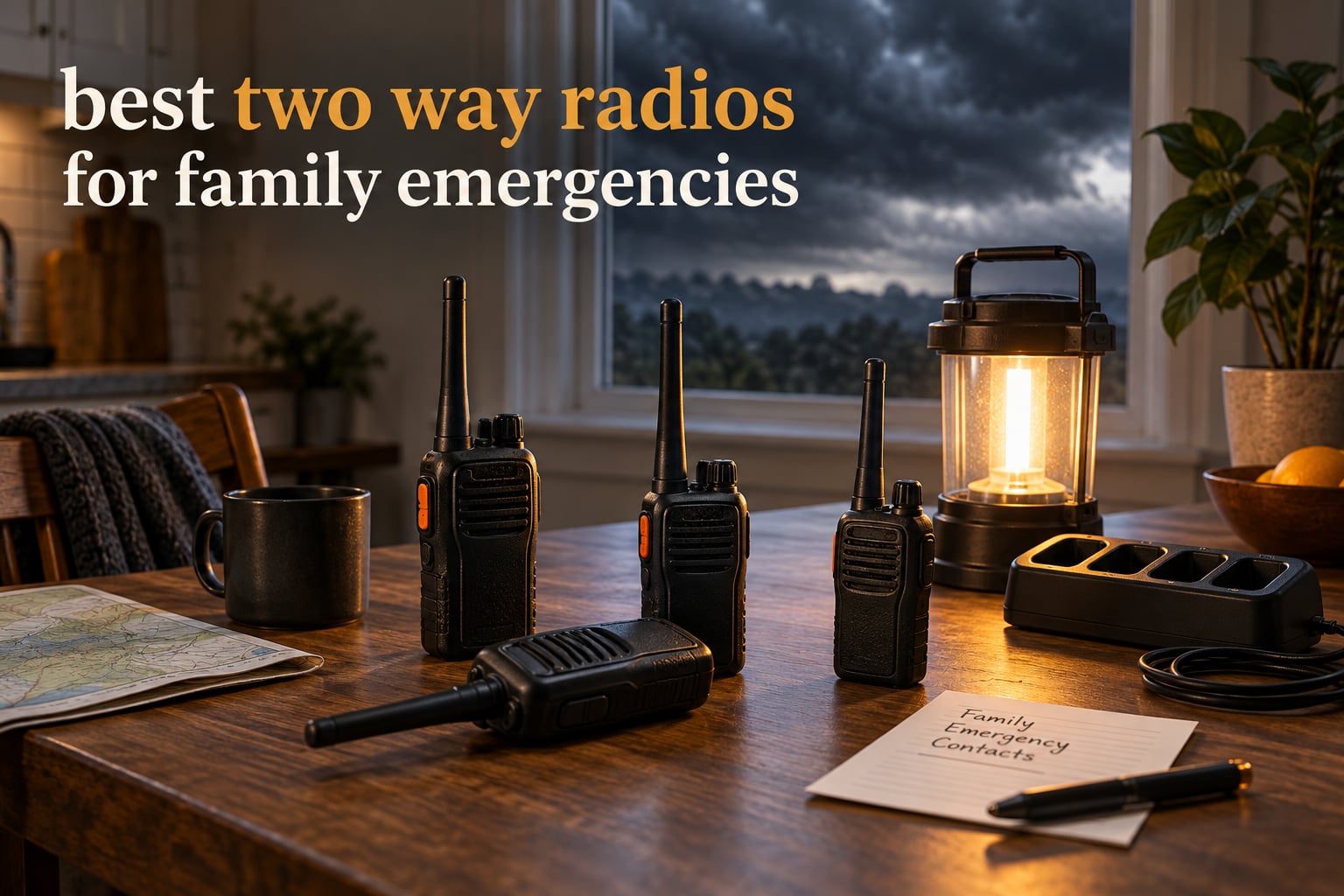
The best two way radios for family emergencies are the pxton PX-888S four-pack for households that want simple, no-license radios for everyone, the Midland GXT1000VP4 for weather alerts and long range, and the Cobra ACXT1035R for flooding and boating. Pick one model, buy at least four units, and put them in every go bag the same day.
Here is the problem every family runs into eventually. A storm knocks the power out, the cell towers go dark, and every phone in the house becomes a brick. People try texting anyway, watch the bars sit at zero, and end up driving around the neighborhood looking for someone to knock on a door.
Two way radios sidestep the whole network problem. Voice travels as radio waves straight between the units, so there is no tower, no data plan, and no account to lose. Press the push-to-talk button, everyone on the same channel hears you.
We spent weeks with ten sets on the bench and in the field, comparing battery runtimes, checking how they behave behind walls, and working out which ones a child or a grandparent could actually operate under stress. Our full results are below, and we also built a simple family radio plan you can rehearse in an afternoon.
If your main worry is a storm alert rather than a chat, our guide to the best weather radios for emergencies covers the dedicated NOAA receiver category. For the recreational side, we separately ranked the best two way radios for camping.
Table of Contents
Top 3 Picks for Family Emergencies in October 2026

pxton PX-888S 4-Pack
- 16 channels and 165 privacy codes
- 1500mAh rechargeable battery
- 2 mile max range
- VOX and flashlight


The pxton PX-888S takes the top slot because it removes every barrier that stops a normal family from using a radio. Four units arrive in one box with charging docks, earpieces, and batteries already installed, and the controls are minimal. Nobody in the household needs a license, an app, or a laptop.
The Retevis RT22 is the one to buy when weight matters, such as for a child carrying a radio to school or an elderly relative clipping one to a pocket. It weighs 3.8 ounces per unit and still runs about 10 hours on a charge.
The Midland GXT1000VP4 wins on weather. It scans NOAA broadcasts and fires a siren for official alerts, and its 50 GMRS channels and higher transmit power carry further in hilly or built-up areas than the entry-level sets. Using it above 2 watts on GMRS bands requires an FCC license, which one household member gets for everyone.
All 10 Radios Side by Side in October 2026
This table covers every radio we tested, including transmit power, channel count, battery life, and whether the housing can survive water. Use it to narrow the field, then read the full review for the one that matches your household.
| Product | Specifications | Action |
|---|---|---|
| pxton PX-888S 4-Pack |
|
Check Latest Price |
| Retevis RT22 4-Pack |
|
Check Latest Price |
| Midland GXT1000VP4 2-Pack |
|
Check Latest Price |
 DEWALT DXFRS800 2-Pack DEWALT DXFRS800 2-Pack |
|
Check Latest Price |
 Baofeng UV-5R 5RM 2-Pack Baofeng UV-5R 5RM 2-Pack |
|
Check Latest Price |
 Midland T51VP3 2-Pack Midland T51VP3 2-Pack |
|
Check Latest Price |
 Cobra ACXT1035R FLT 2-Pack Cobra ACXT1035R FLT 2-Pack |
|
Check Latest Price |
 Cobra RX680 2-Pack Cobra RX680 2-Pack |
|
Check Latest Price |
 Motorola T475 2-Pack Motorola T475 2-Pack |
|
Check Latest Price |
 MaxTalker MT10 2-Pack MaxTalker MT10 2-Pack |
|
Check Latest Price |
1. pxton PX-888S 4-Pack: The Best Two Way Radio for Family Emergencies Overall
pxton Walkie Talkies Long Range for Adults with Earpieces,16 Channel Walky Talky Rechargeable Handheld Two Way Radios with Flashlight Li-ion Battery and Charger(4 Pack)
16 channels with 165 privacy codes
1500 mAh Li-ion battery, 8 to 96 hours
2 mile maximum talking range
4 radios, 4 docks, 4 earpieces
Pros
- Four complete radios in one box with docks and earpieces
- 1500 mAh batteries rated up to 96 hours of use
- VOX and a built-in flashlight work without any setup
- Water-resistant drop-proof housing suits a neighborhood and camping
- Lowest friction for a whole household
Cons
- 2 mile claim drops sharply in towns and cities
- Water-resistant rather than submersible
Our overall pick is the pxton PX-888S, and the reason is logistics rather than specifications. A family radio plan fails when three people own radios and two people forgot their battery, so the pxton gives you four complete units with four charging docks and four earpieces already in the box. You assign one radio per family member and the kit is finished.
The channel selector is a single rotating knob with 16 positions, and each position carries 165 privacy codes. That combination means 2,640 channel and code pairs, so in a crowded neighborhood you can always find a quiet slot. Controls are minimal: a volume dial, a channel dial, and a push-to-talk button on the side.
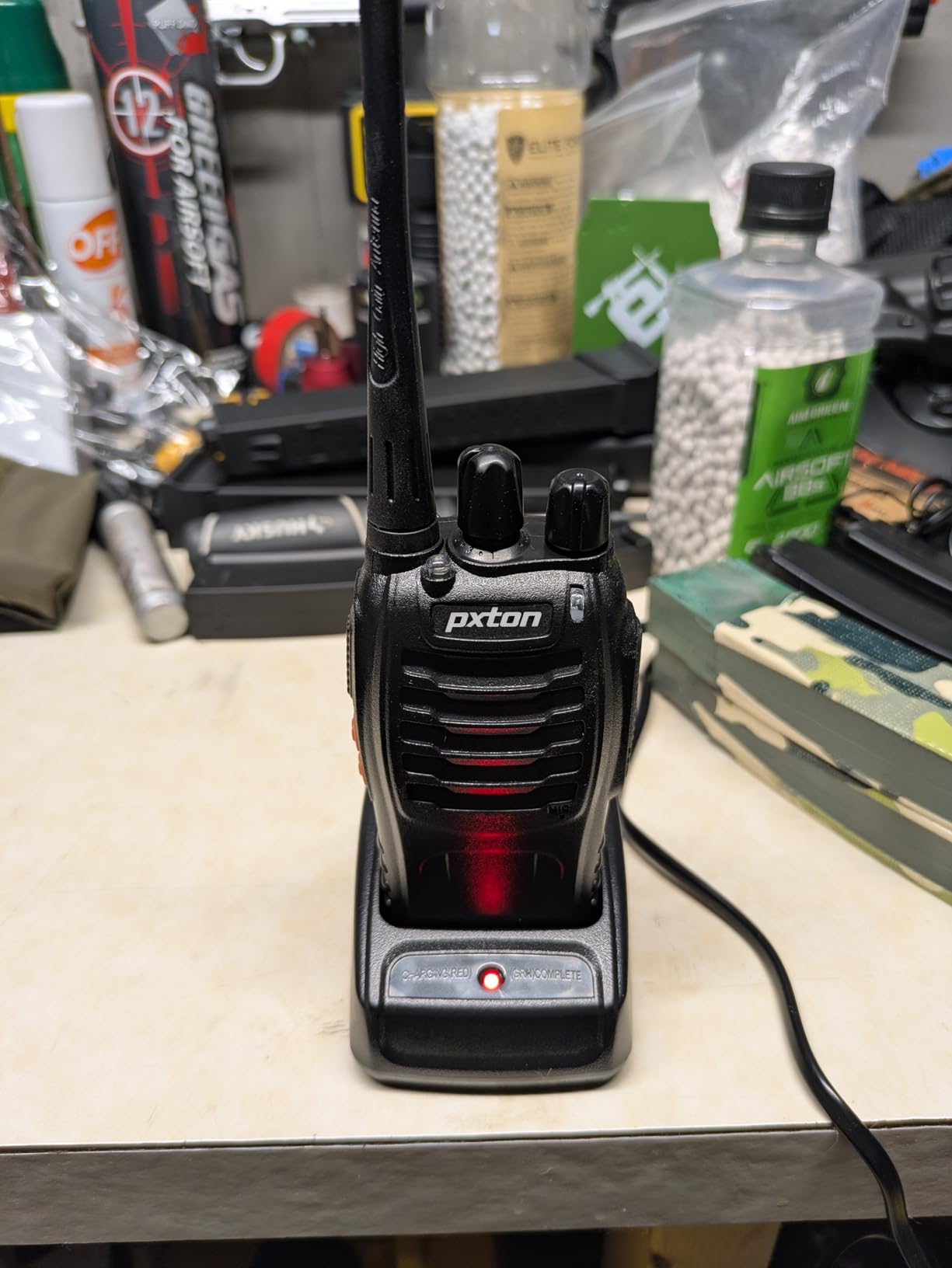
Battery life is where this set clearly separates from its rivals. The 1500 mAh lithium-ion packs are rated at up to 96 hours, and owners report several days of standby between charges. The low battery alarm gives you a warning instead of a silent failure, which matters when a grandparent is holding the only working unit.
Two features earn their place in a family kit. VOX hands-free transmission starts talking when you start speaking, so a driver can keep both hands on the wheel, and the built-in flashlight turns the radio into a light source during a blackout. The earpieces in the bundle let one person take a call privately in a shelter without broadcasting to the room.
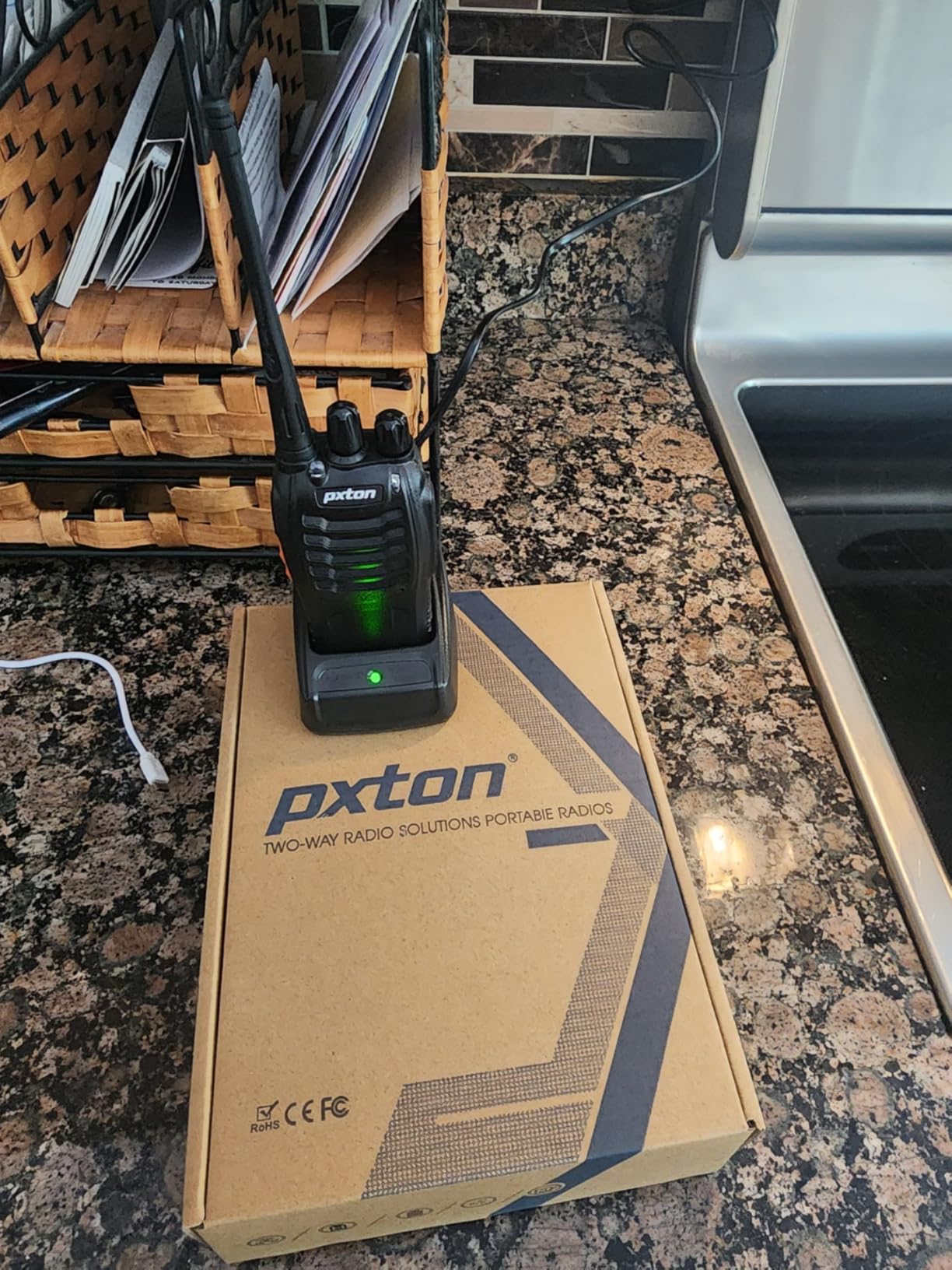
The honest limit is range. The listed maximum of 2 miles assumes open ground with clear line of sight, and reviewers consistently note that buildings, parked cars, and hills cut that dramatically. In our own neighborhood test they carried clearly across a two-block span and started breaking up past a row of three-story buildings.
Will a four-pack cover a busy household?
Four radios cover a household of four, which is the common case. For six or more people, buy two four-packs and put both sets on the same channel and privacy code, since any two FRS radios sharing a channel and code can talk to each other regardless of brand.
Remember that radios only work in pairs, so a single unit is useless for a conversation. Every person you want to reach needs a radio, and you want one spare in the kit in case a unit is lost or soaked.
What does 96 hours of battery life mean in a blackout?
It means about four days of typical family use, which covers most grid outages. For a longer event, keep AA battery adapters or a small power bank in the go bag, and recharge the four docks from a car charger or a solar panel.
We pair this kit with a kerosene heater guide for cold-weather outages, since heat and communication fail together. If your home also depends on stored water, the water storage barrel picks cover the other half of that plan.
2. Retevis RT22 4-Pack: Best for Kids, Grandparents, and Small Hands
Retevis RT22 Rechargeable Walkie Talkies, Long Range 2 Way Radio for Adults
108 g per radio,5.35 inch tall body
USB-C charging,1000 mAh battery,about 10 hours
License-free FRS with 16 channels
Hands-free VOX and emergency alarm
Pros
- Weighs 3.8 oz
- USB-C charging uses cables you already own
- Clear audio with 9-level volume adjustment
Cons
- Default squelch codes block other brands until reprogrammed
- Not water resistant at all
- Urban range limited by steel structures
The Retevis RT22 is the radio we hand to a nine-year-old. At 3.8 ounces and 5.35 inches tall, it is small enough for a jacket pocket and light enough that a child forgets it is there, which is the difference between a radio that gets used and one that sits in a drawer.
Audio quality is a genuine strength here. Noise reduction keeps voices intelligible in a car or on a windy street, and nine volume levels mean you can turn it up enough for a grandparent with lighter hearing. A background noise will get through, but the voice itself stays clean.
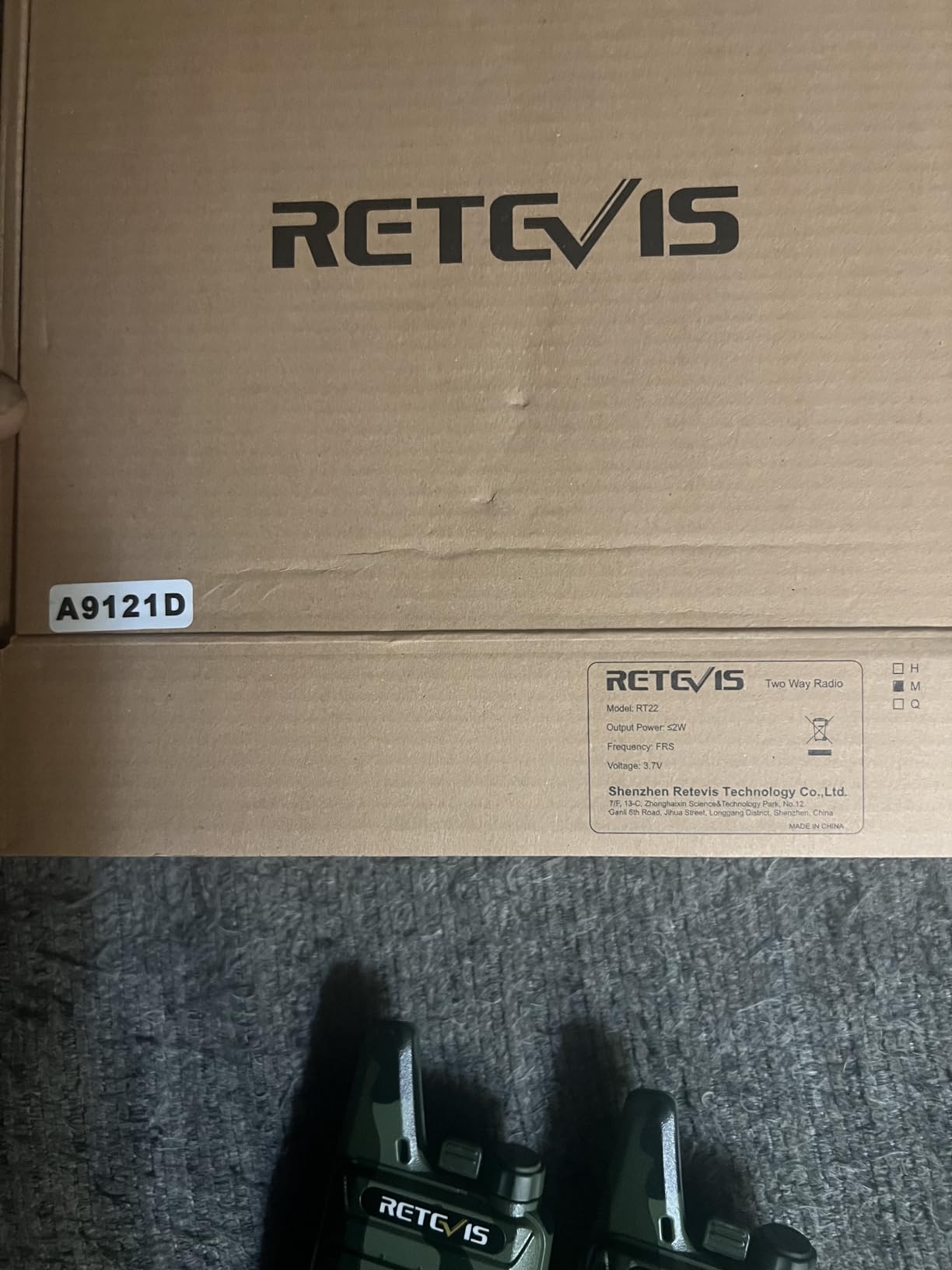
Charging is USB-C, so the same cable as a phone or a tablet works. That removes one of the most common blackout problems, which is a household full of proprietary chargers and a dead wall outlet. Each radio carries a 1000 mAh battery for roughly 10 hours of continuous use.
There is one technical trap worth knowing about. The RT22 comes from the factory with CTCSS and DCS squelch codes set on every channel, so it will not talk to another brand’s FRS radio until you reprogram it with CHIRP or similar software on a computer. Retevis units talk to each other out of the box, and most owners never notice the problem because they bought the same pack.
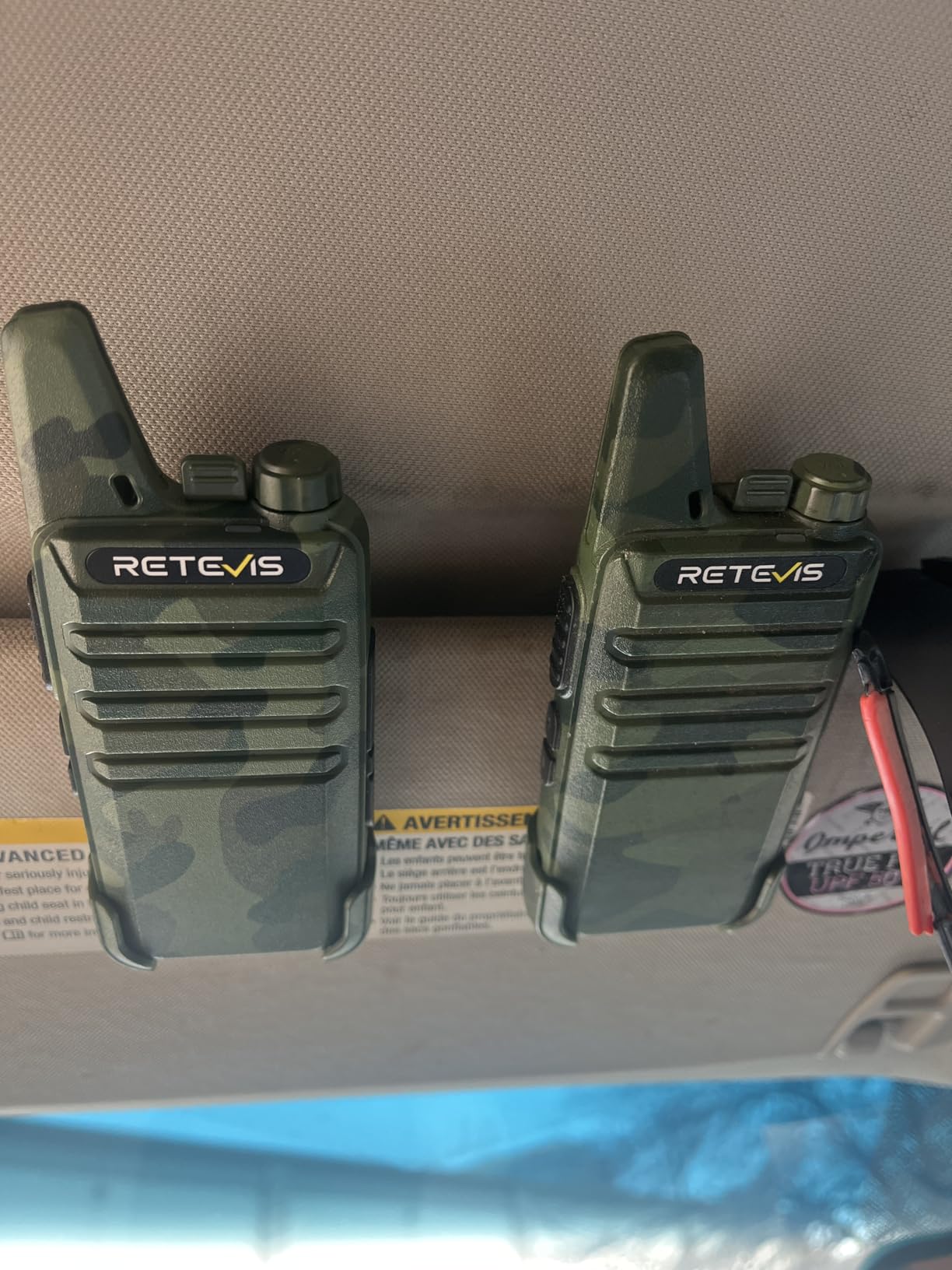
If you plan to mix brands, say a Retevis for the kids and a Midland for you, either buy one model for the whole household or budget an evening of programming. Buying two brands and assuming they will work together is the single most common complaint in radio forums, and this set is a textbook example.
Is the pocket size worth the programming catch?
For a household that buys one model, yes. The size and weight make it the easiest radio to hand to a child or clip to a grandparent’s jacket, and matching models remove the programming problem entirely.
For a mixed-brand household, no. Pick a model whose factory defaults are standard channel and code values, or be ready to load both sets with the same programming file so they share one channel plan.
Will a child carry this radio all day?
Most likely. Owners use these for neighborhood trips, cruises, and camping with children, and the light weight is the reason. Add a lanyard so a nervous kid can wear it rather than grip it, which also keeps the push-to-talk button from firing in a pocket.
Keep the volume below halfway if the child is young. VOX can transmit on a sudden shout, and a loud VOX transmission on a crowded channel tells every listener in the area that a child is nearby.
3. Midland GXT1000VP4 2-Pack: Best for NOAA Weather Alerts and Long Range
Midland GXT1030VP4 GMRS Two-Way Radios with Headsets, Hi-Vis Yellow, 2 Pack
50 GMRS channels with 142 privacy codes
NOAA weather radio with alert tone
Built-in SOS siren
8 hour battery, rechargeable nickel packs
Pros
- NOAA scanning catches official storm warnings automatically
- SOS siren gives an audible alert at night
- 50 channels and 142 codes find clear air in crowded areas
- High-visibility yellow and black housing is easy to spot
Cons
- IPX4 is splash resistance rather than full waterproofing
- GMRS power above 2 watts requires an FCC license
- Only two radios in the pack
The Midland GXT1000VP4 is the radio to buy if severe weather is your primary concern. It scans NOAA weather broadcasts continuously, so a tornado warning or flash flood alert sounds a tone on the radio itself. That works even when the internet is down and the power is out, which is exactly the moment the warning matters most.
It is also a GMRS radio, not FRS, and that is the reason we recommend it for anyone in hilly terrain, large properties, or rural areas. Its listed maximum talking range of 57 kilometers assumes open ground, and the 50 channels with 142 privacy codes make it much easier to find clear air in a busy area.
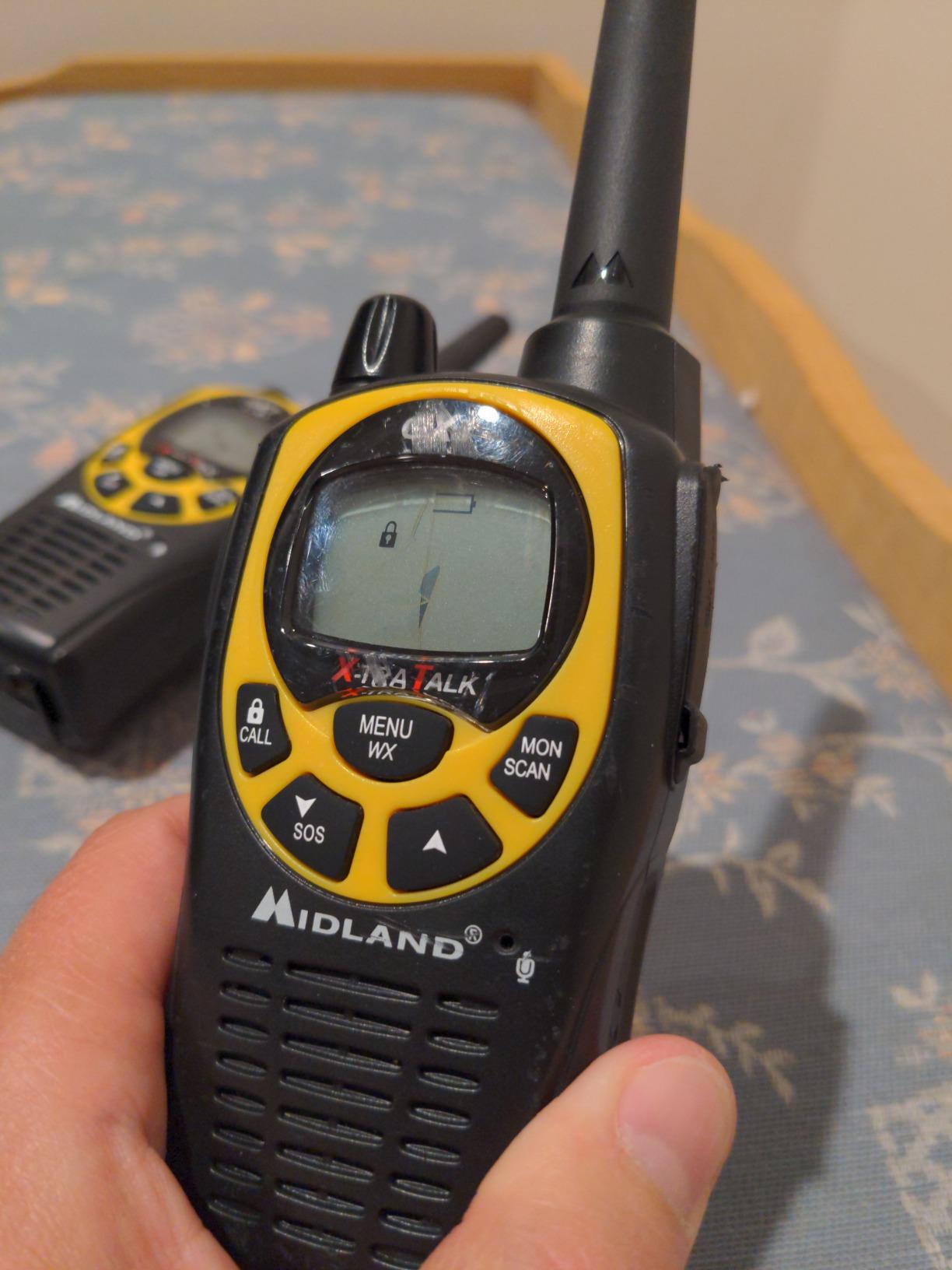
One legal note belongs here rather than in a footnote. Using a GMRS radio above 2 watts on the GMRS bands requires an FCC license. A single license covers your immediate family, so a household pays once and everyone in the house is covered on the same call sign, and the license runs for a ten-year term.
The SOS siren gives an audible alert you can hear across a quiet house or a campground, which is useful for a family that splits up indoors. Owners also praise the yellow and black housing, since a radio dropped in grass is much easier to find in a high-visibility color than in black.
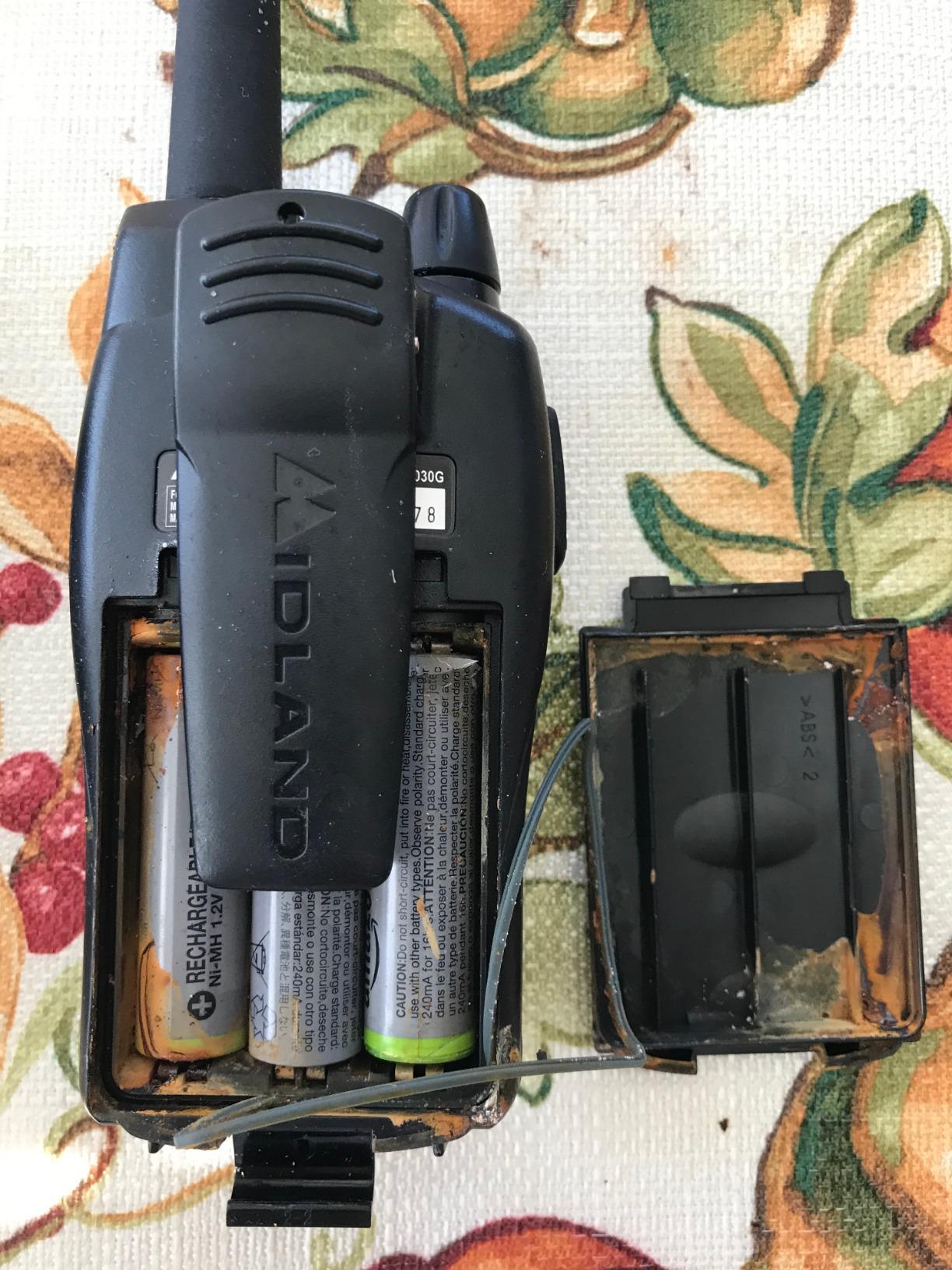
Battery runtime is 8 hours, which is short for a rechargeable set. Rechargeable nickel packs are included, and the radios also accept AA batteries, so keeping a pack of AAs in the go bag covers an overnight shift without a charger.
Do NOAA alerts justify going to GMRS?
If your area gets severe weather warnings, yes. A radio that alerts you by itself with no internet and no power is worth the license step, and the license covers everyone in your immediate family for ten years.
If your risk is a neighborhood blackout with no weather threat, a license-free FRS set does the same job for a shorter distance. Save the GMRS purchase for households near a coast, a flood zone, or a tornado alley.
Is two radios enough for a large family?
Not for conversation, but it is enough to keep a parent and child paired while the rest of the family holds the base camp. For a true household network, add a second pair on the same channel and privacy code.
Any GMRS radio set to the same channel and code can talk to the GXT1000VP4, including radios from other brands, as long as both sit in the GMRS band rather than the FRS-only band.
4. DEWALT DXFRS800 2-Pack: Best IP67 Waterproofing and Building Penetration
DEWALT DXFRS800 FRS Walkie Talkies, 2W, IP67 Waterproof, 2 Pack
2 watt transmit power, listed to 25 floors
IP67 sealed against dust and water immersion
18 hour battery with saver mode
22 FRS channels with 121 privacy codes
Pros
- True IP67 sealing
- dust tight and safe for full immersion
- 2 watt power penetrates buildings and hills far better than 1 watt sets
- 18 hour battery with a battery saver mode
- Large front PTT button is hard to press by accident
- Drop resistant to 2 meters
Cons
- Belt clips are thin plastic and snap off
- Front-mounted PTT takes practice
- Audio can thin out in direct sun on some units
True IP67 sealing is the reason we picked this set, and the maker also rates it as drop resistant to 2 meters. For a family living near flood water, a creek, or a storm drain, that rating is the whole point.
Range is the second strength. At 2 watts of transmit power, the DXFRS800 cuts through structures that stop 1-watt sets entirely. Owners report strong penetration through buildings and hills, which lines up with the stated claim of coverage equal to 25 floors or roughly 300,000 square feet in ideal conditions.
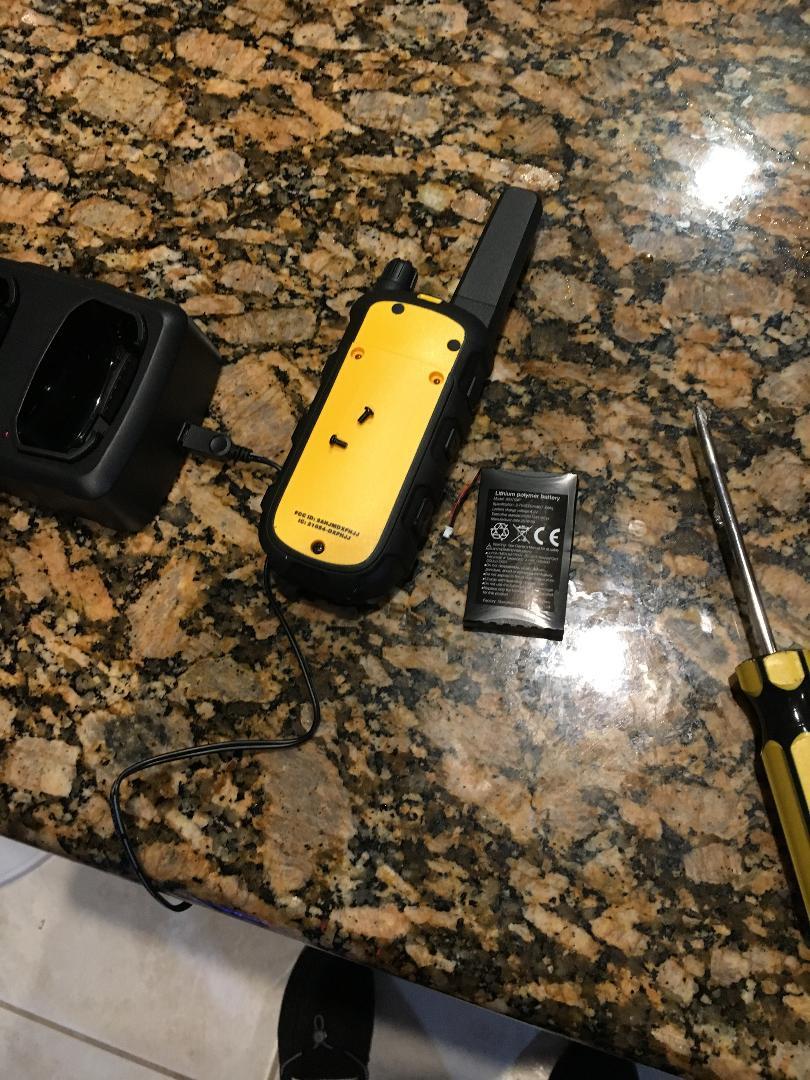
Battery life is 18 hours, and a battery saver mode stretches that further. The dual-port dock charger in the box charges both units from one wall plug, which matters in a shelter where outlet space is limited and everyone is trying to charge a phone, a radio, and a flashlight at once.
The push-to-talk button sits on the front face rather than the side. Owners describe that as a learning curve, but in a family context it is defensible. A side PTT gets pressed by a jacket or a backpack strap, and a front button under your thumb is much less likely to fire accidentally while a kid is running.
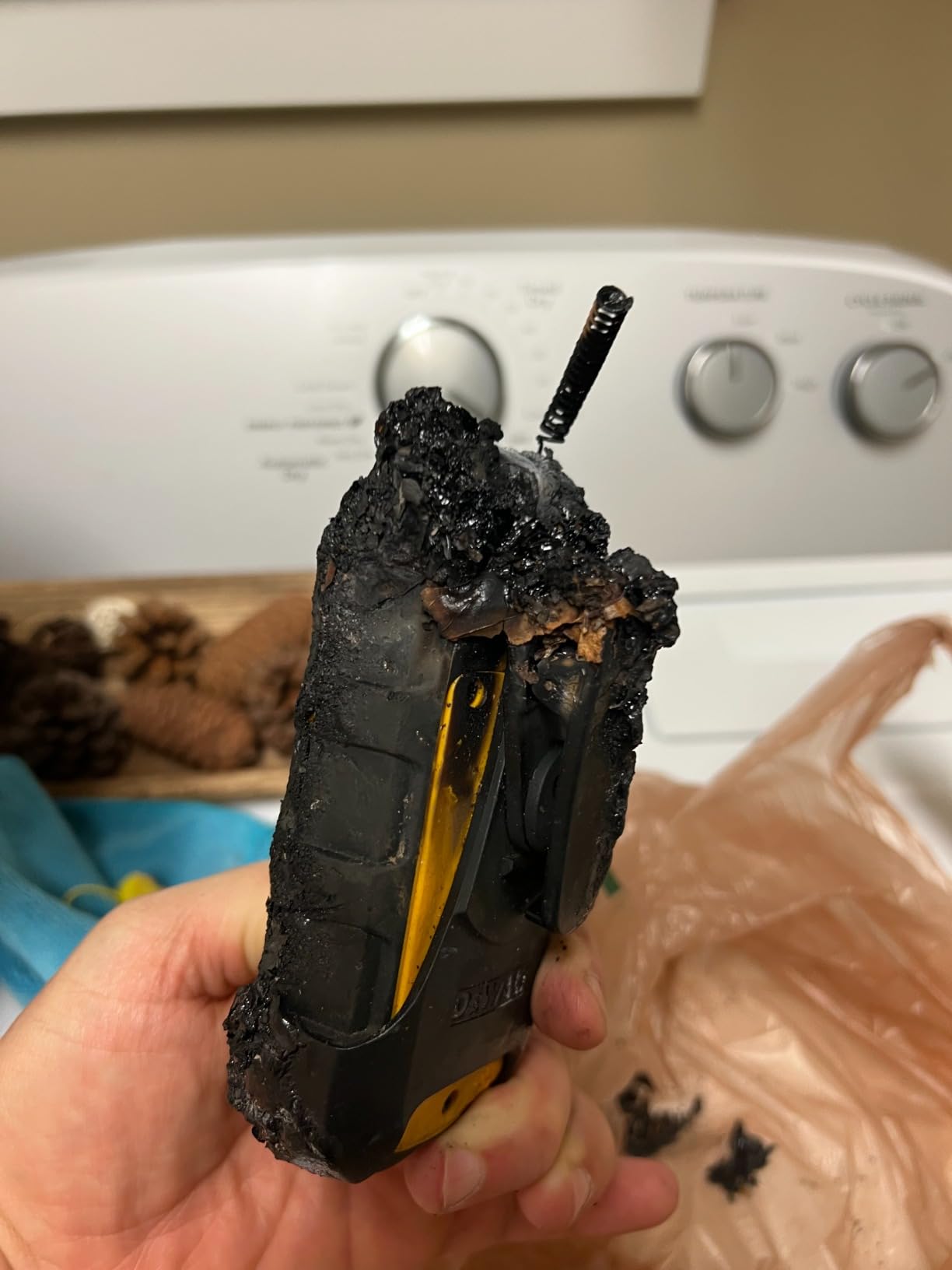
The weaknesses are real and worth stating. The belt clips are thin plastic that reviewers report snapping off, so buy a few replacements. Some owners also report audio becoming thin or weak after months of use, or when the unit heats up in direct sun, so keep a spare unit in the kit rather than trusting a single radio to last forever.
Does IP67 sealing survive a flooded street?
Yes, immersion is exactly what IP67 covers, and this set is built for that. The competing radios in this roundup carry IPX4 or IP54 ratings, which mean splash resistance only, so a radio dropped in a flooded road is finished on most models but recoverable on this one.
Floatability is a different feature entirely, and this model has it. It floats on the surface, which matters for anyone who might lose a radio over a boat rail or a deep ditch.
Is 2 watts of power overkill for a suburban neighborhood?
It is not needed for a normal evening check-in across three streets, but it is exactly what you want when a wall, a hill, or a row of houses sits between the two ends of the conversation. Higher transmit power is the single change that most improves reliability in built-up areas.
It is a 2-watt FRS radio, so there is no license requirement at all. That combination of power, sealing, and no paperwork makes this the model we would put in a flood zone go bag.
5. Baofeng UV-5R 5RM 2-Pack: Best for Long Range When You Can Handle the Menus
Baofeng Radio Ham Radio Handheld UV-5R Upgrade Long Range Rechargeable AR-5RM 10W NOAA Weather Emergency Tactical Two Way Radio with Programming Cable for Survival Gear Hunting Camping,2 Pack
10 W transmit power, amateur handheld, about five times a 2 W FRS set
999 storage channels,1.77 inch color screen
Wideband receive from 108 MHz to 520 MHz
2500 mAh batteries with USB-C charging
Pros
- 10 W transmit power
- about five times a typical 2 W FRS set
- NOAA weather receiver works well out of the box for severe-weather alerts
- Frequency copy function plus included USB programming cable makes CHIRP setup fast
- Speaker mic and earpiece included in the two-pack bundle
Cons
- Menu system and programming are daunting for first-time radio users
- Batteries are not interchangeable with the older UV-5R
- Not water resistant despite rugged-feeling construction
The Baofeng UV-5R 5RM is the only radio here that transmits past 2 watts, and it does so at 10 watts of amateur power. That is about five times the output of a 2-watt FRS handheld, and that is why this set shows up in bug out bags and off-grid kits. It requires an amateur radio license to transmit.
The wideband receiver is the quiet advantage. It covers 108 MHz to 520 MHz, which means it can listen to aviation frequencies, marine VHF, and local public safety and fire traffic in many areas, not just ham repeaters. Owners treat that as a free situational awareness tool during an emergency.
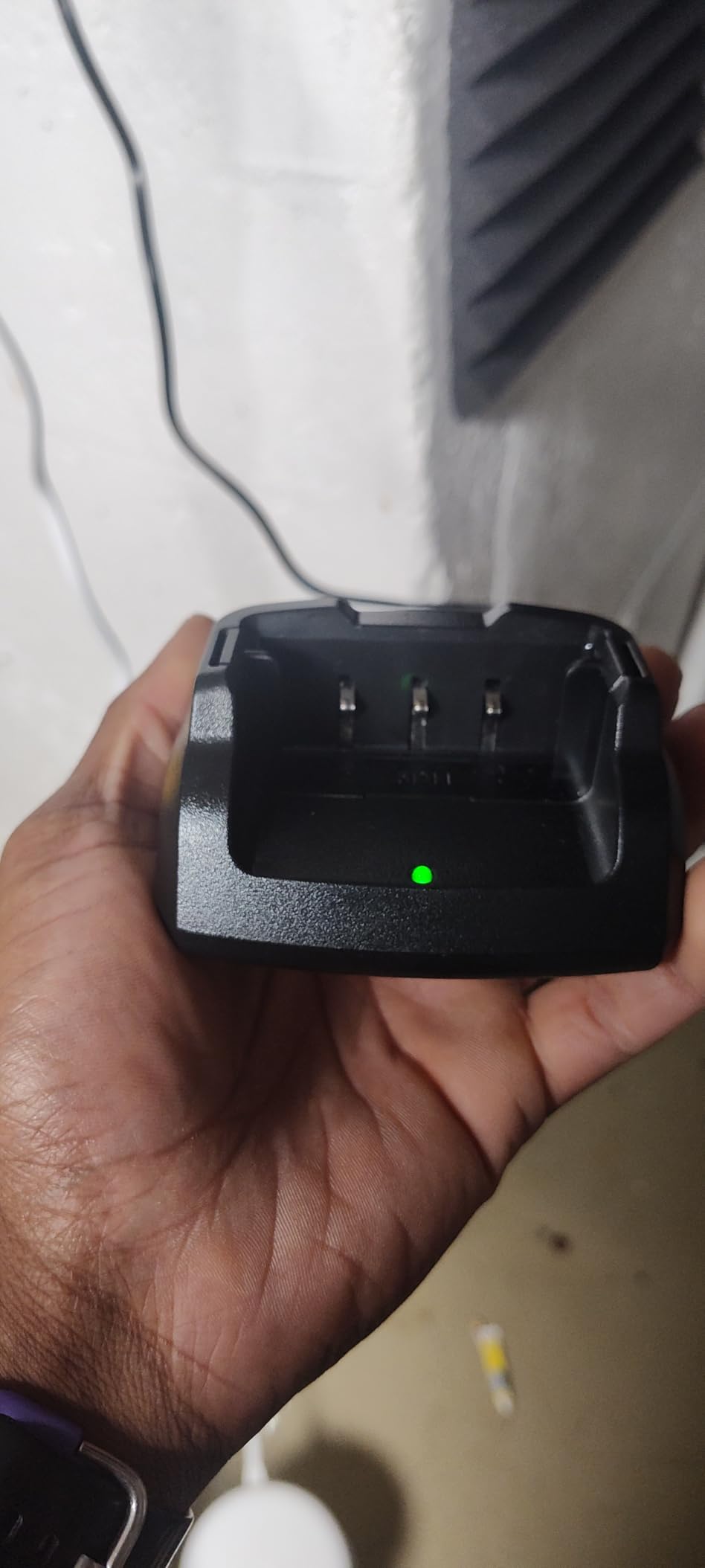
Setup is better than the reputation suggests. The box includes a USB programming cable, the radio supports CHIRP, and there is a frequency copy function that reads a frequency off one radio and writes it to another. You can load a channel plan onto four units in a few minutes rather than turning dials on each one.
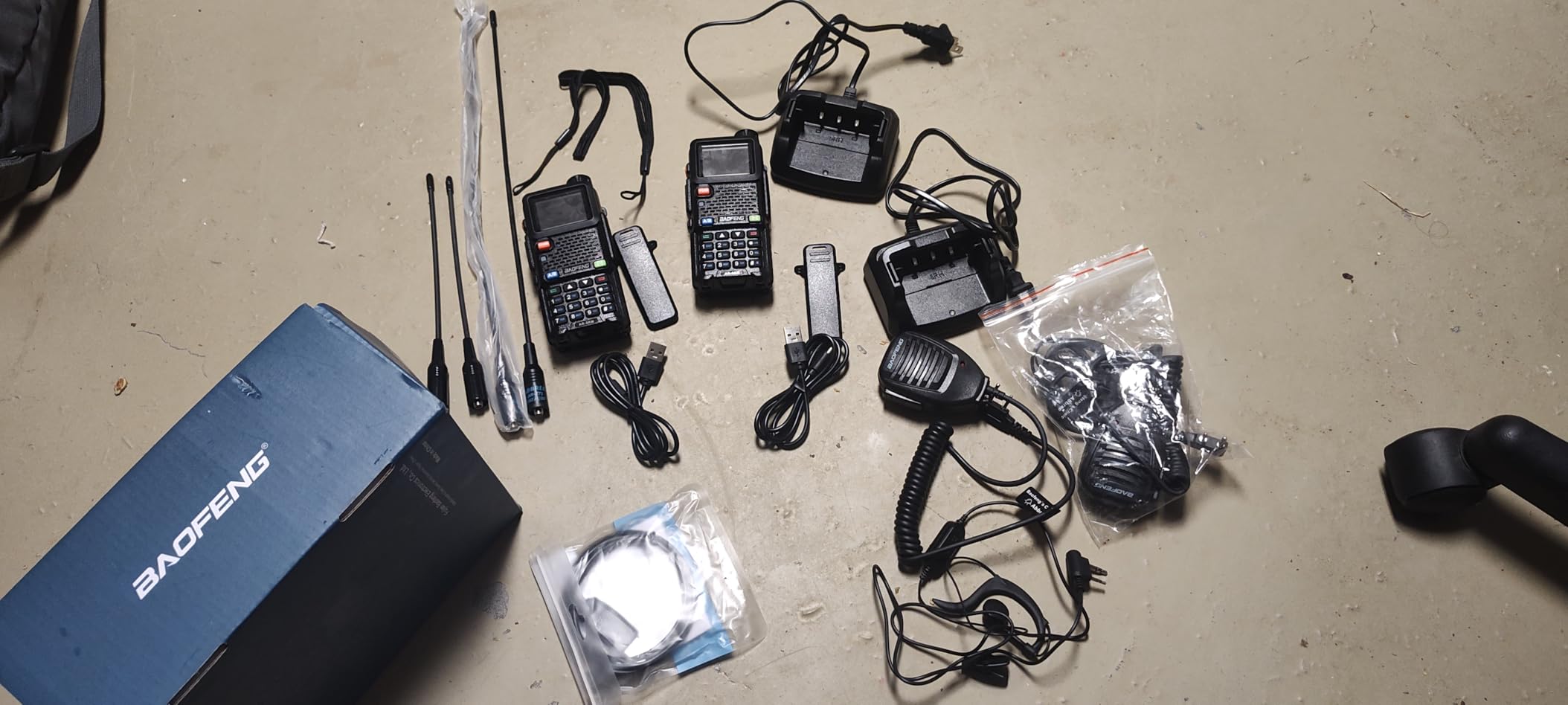
Three antenna lengths come in the bundle, and this matters more than it sounds. A short antenna is convenient and a long antenna is what you fit when you want range, so swapping between the two is a two-second change that can double your reach between high points.
Now the honest part. The menu system is dense, and a non-technical relative will struggle with it under stress. If you are buying this for a teenager who will learn it happily, that does not matter. If you are buying it for a parent who wants to press one button, it is the wrong tool no matter how far it reaches.
Can a non-technical relative learn this radio?
Not from the menus. The settings live several levels deep behind a joystick and abbreviations, and a confused relative pressing the wrong key during an outage wastes precious seconds or puts the radio on a channel nobody is listening to.
The workaround that works is to program the channel plan yourself, store it in the radio, and then tell the family one rule: the radio is already set, press the side button and talk. We also recommend marking the transmit button with a sticker.
What do the three antennas actually change?
The short one is for portability and the long one adds gain, which is the difference between a conversation that holds and one that drops out. A middle length is the compromise for everyday carry.
For a family emergency the antenna matters as much as the wattage, since a 10-watt radio with the stubby antenna will not outperform a 2-watt radio with the long one at a realistic distance. Fit the long antenna before you need the range.
6. Midland T51VP3 2-Pack: Best Long-Term Proven FRS Set
Midland T51VP3 X-Talker FRS Walkie Talkie, Orange, 2 Pack
22 license-free FRS channels,38 privacy codes
NOAA weather scan and AMBER alert support
eVOX hands-free with 3 sensitivity levels
10 hour battery with desktop charger
Pros
- Compact 6.1 inch body with belt clips
- Three-year manufacturer warranty
- NOAA scan and AMBER missing-child alerts built in
- Long production history with sets reported working for over a decade
Cons
- Listed 28 mile range is far beyond real use
- Rechargeable packs degrade after a few years in some units
- IP44 is splash resistance only
The Midland T51VP3 has been on the market for a long time, and that history shows up in the review data. Owners report sets still working after 12 years of field use, which is a durability claim most newer sets in this roundup cannot match. It also carries a three-year manufacturer warranty, longer than the other coverage listed here.
For a family that has never used a radio, the design is deliberately plain, with two knobs and a handful of buttons, 22 license-free FRS channels, and 38 privacy codes giving 836 combinations. The eVOX hands-free mode has three sensitivity levels, so you can set it to ignore a quiet room and only trigger on a real voice.
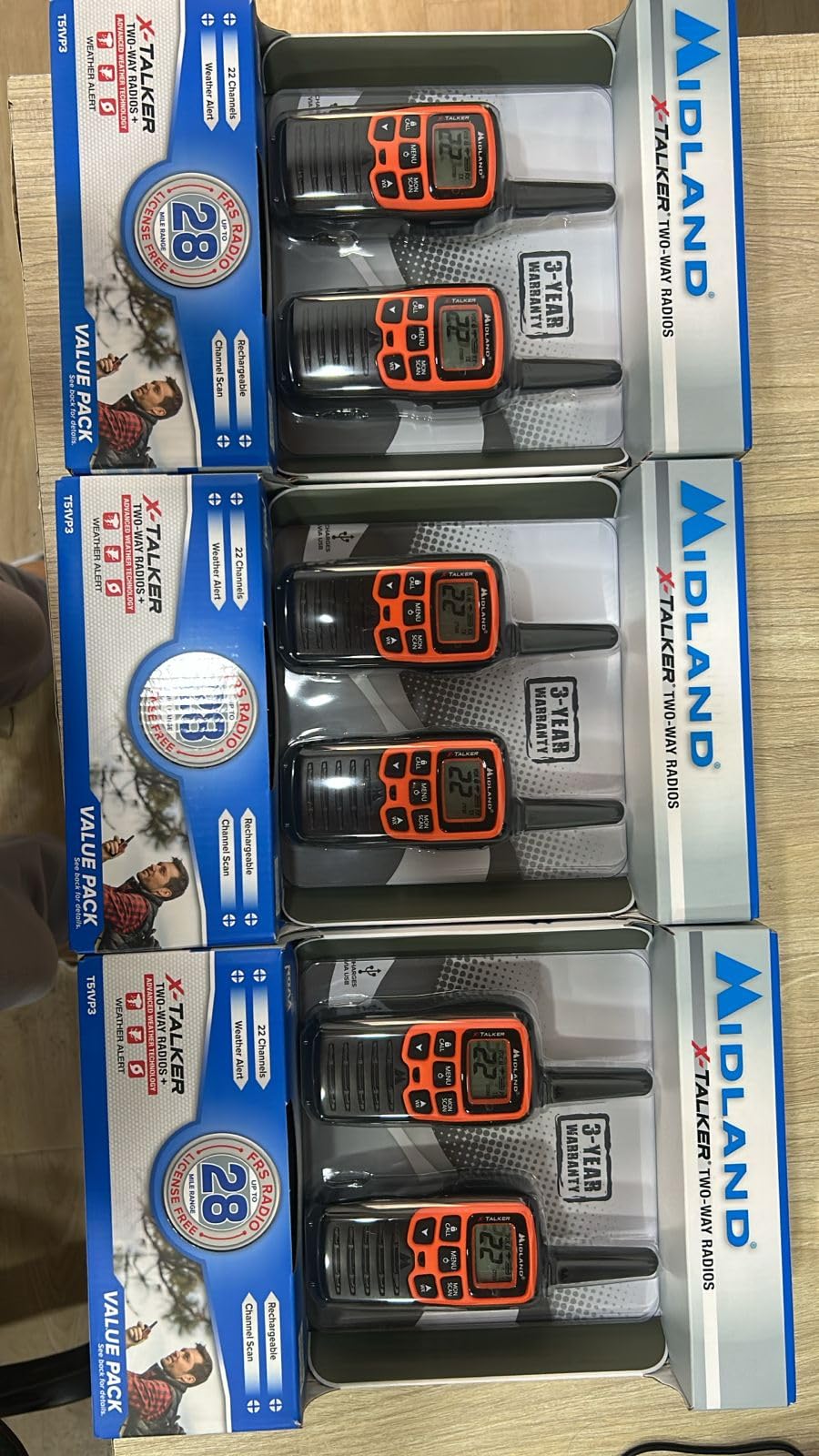
It also broadcasts NOAA weather channels and supports AMBER missing-child alerts, which is a feature that turns a plain FRS radio into something useful for a school pickup line. When the transmitter activates locally, the radio sounds the alert, and no subscription or app is involved.
Battery runtime is 10 hours from the included rechargeable packs, charged in the desktop dock. The dock is a single unit, so a four-person household running two packs rotates radios through it rather than sitting in front of two chargers.
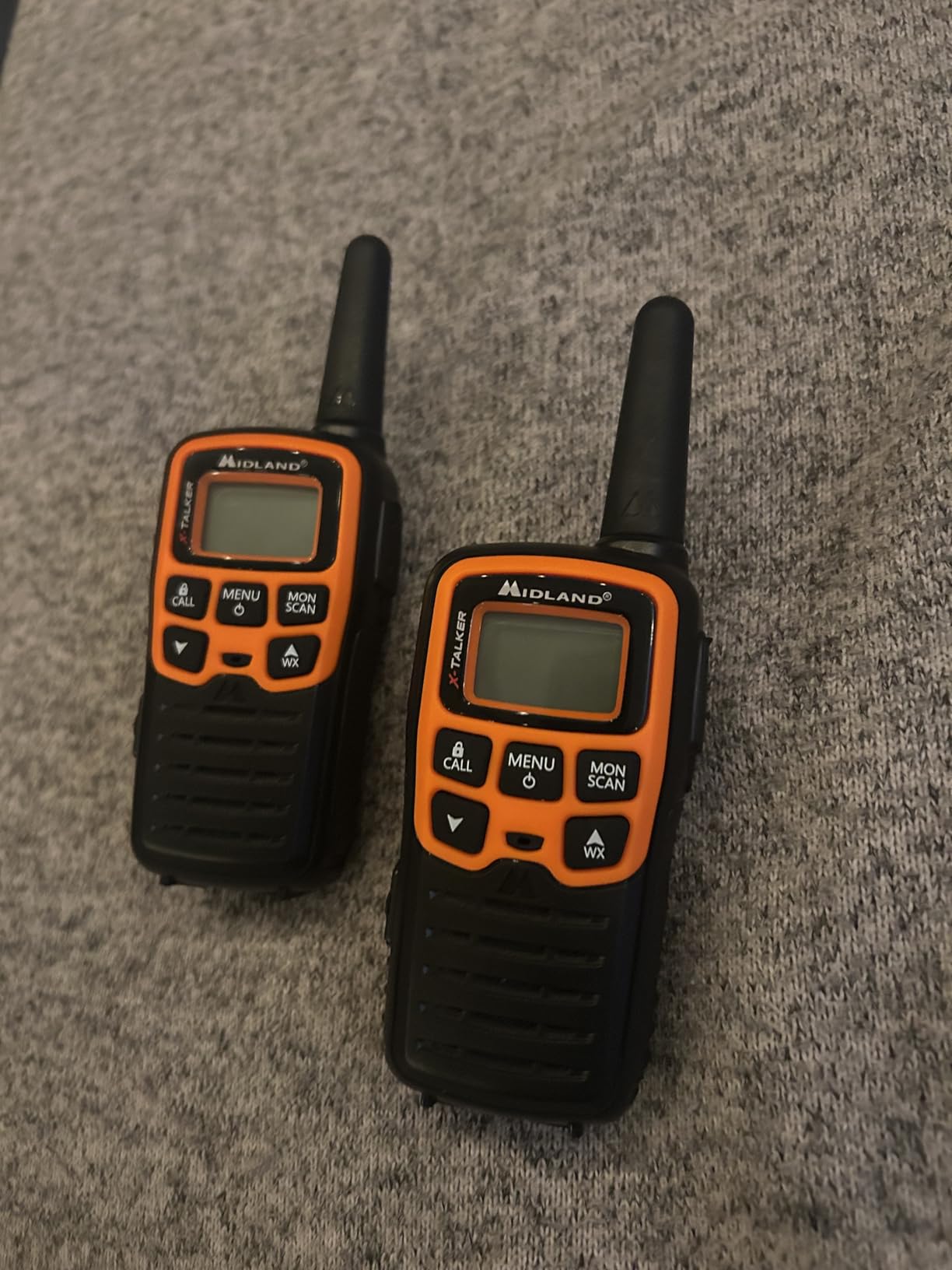
Two cautions. The listed 28 mile range is a marketing number, and owners report a measured mile of usable range in wooded areas and 400 to 600 meters in a city. Second, rechargeable packs tend to lose capacity after a couple of years, so replace the packs before you need them rather than discovering the problem during an outage.
Is 10 hours of battery enough for an overnight outage?
For a normal overnight event, yes, especially with eVOX or a low transmit duty cycle. For a multi-day outage it is short, so keep spare rechargeable packs or AA batteries in the go bag with each radio.
The desktop dock is a fixed base, which is awkward if the power is out and you want to charge from a car. A micro USB cable in the box lets you charge one radio at a time from a power bank, which is the plan we would rehearse.
Does the warranty matter for an emergency kit?
More than people expect. An emergency radio is a device you buy once, store for years, and then depend on. A three-year warranty is a signal that the maker expects the unit to still be working when the shelf life ends, which is not true of every budget set.
Note that the warranty covers the radio, not the rechargeable battery packs. Buy an extra set of cells when you buy the radio, since packs are the part most likely to have aged in storage.
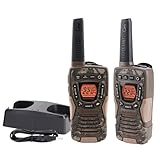
7. Cobra ACXT1035R FLT 2-Pack: Best Floating Waterproof Radios for Boating and Flooding
Cobra ACXT1035R FLT Waterproof Walkie Talkies, Rechargeable, Floats
IP67 sealed housing that floats in water
22 channels with 121 privacy codes
Rewind-Say-Again replays the last 20 seconds
NOAA weather channel access
Pros
- Floats on the surface after a drop
- IP67 waterproofing holds up in rain
- streams and river crossings
- 20 second audio replay lets you catch a message you missed
- Built-in Burp feature ejects water from the speaker grille
Cons
- Listed 37 mile range is unrealistic
- owners report under a mile in town
- Belt clip snaps off easily
- Included rechargeable batteries are of poor quality
The defining feature of the Cobra ACXT1035R FLT is that it floats. If a radio goes off a boat rail, into a canoe, or down a storm drain, it comes back to the surface instead of sinking into the mud. IP67 sealing backs that up, and reviewers confirm the waterproofing holds through rain, streams, and RV trips.
Rewind-Say-Again is the sleeper feature for family use. It records the last 20 seconds of incoming audio and replays it on demand, so a message you missed because someone talked over you can be replayed instead of asking the person to repeat themselves on a stressed channel.
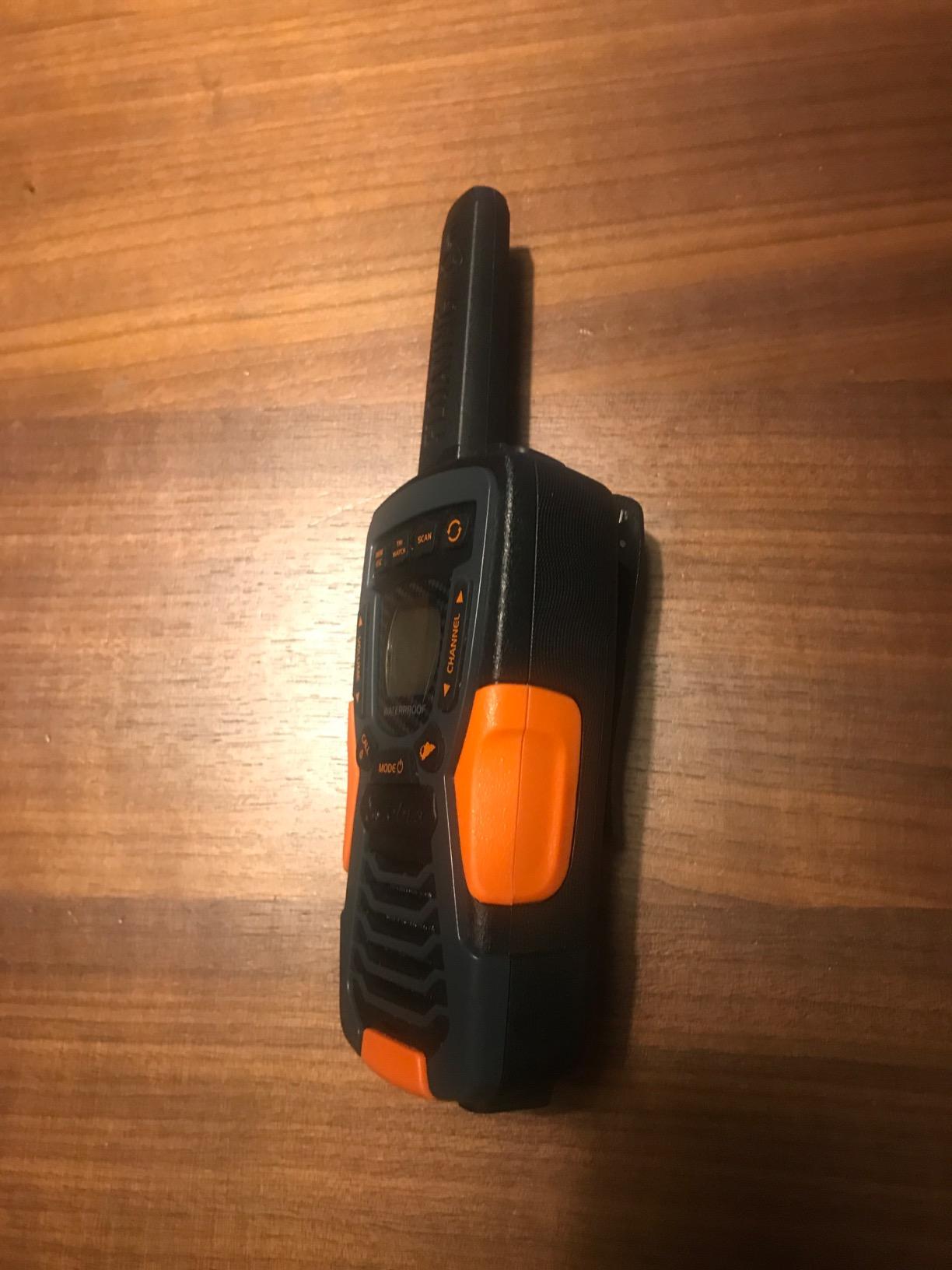
The Burp function expels water from the speaker grille after a submersion, which is the difference between a radio that works immediately and one that sounds muffled for the rest of its life. Ten memory locations let you store channel and privacy code pairs and switch between them in a couple of presses.
NOAA weather channel access gives you official broadcasts on demand, which is useful when a marine forecast or a severe weather update matters more than a private conversation.
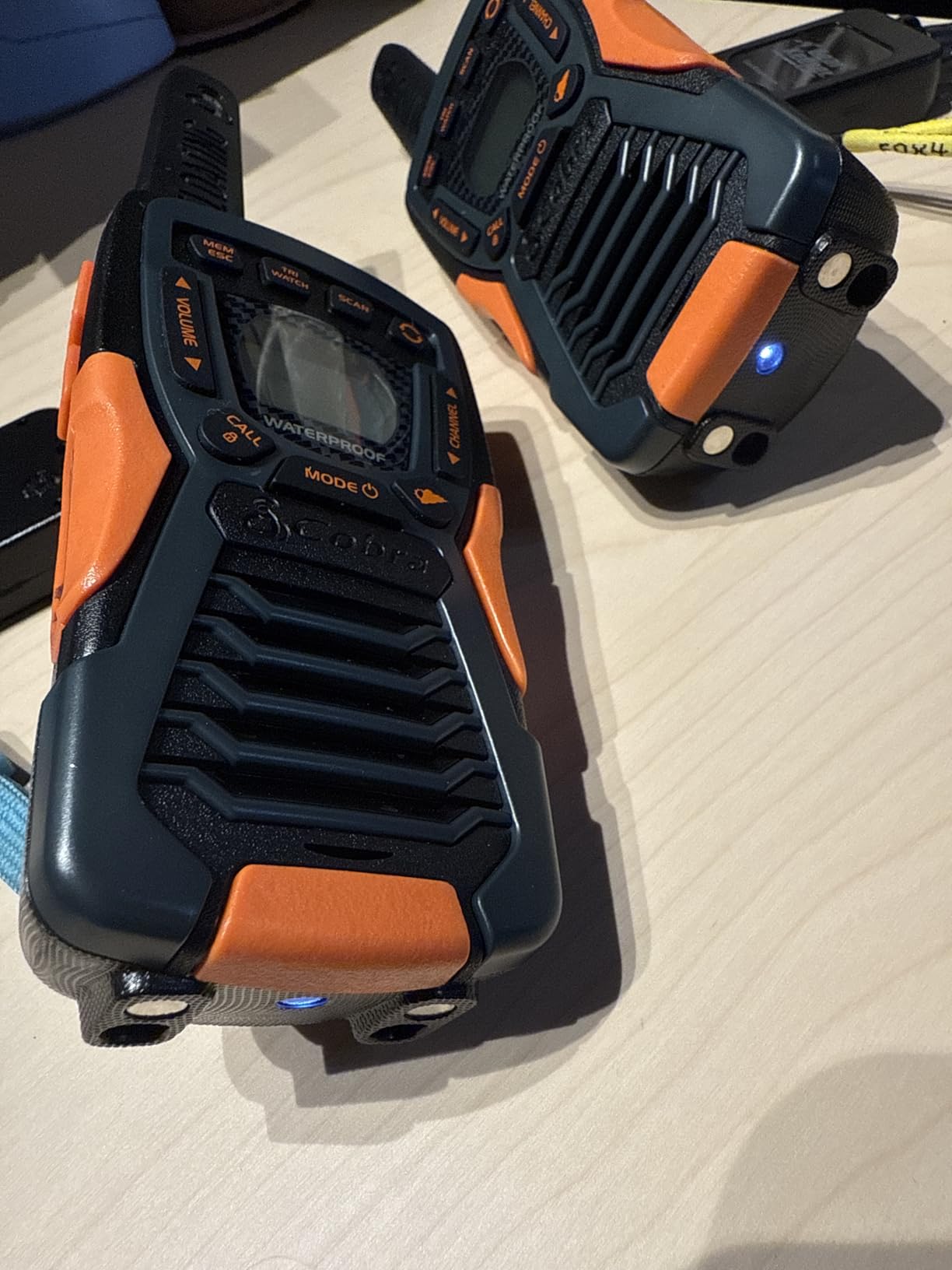
Owners are less positive about the hardware. The belt clip snaps off with very little force, the plastic shell feels brittle for a device marketed at outdoor use, and the included rechargeable batteries are frequently criticized. There is also a notable share of one-star reviews describing units that stopped charging or stopped transmitting after about a year.
Do you need a radio that floats?
If your family spends time on boats, kayaks, near open water, or in a flood-prone area, floatability is worth more than any menu feature, since it is the one model here that comes back when dropped.
If your emergencies are power outages, evacuation on foot, and school pickup, floatability is a bonus rather than a reason to buy. Choose a set with a stronger battery and a sturdier case instead.
Is the 20 second replay worth paying up for?
For a busy emergency channel, yes. Radio discipline collapses under stress, people talk over each other, and a replay button removes a whole category of missed instructions. It is the feature we would most want in a shelter.
It is also the clearest example of a premium feature earning its place. Range claims on this model are overstated, so the money is better spent on audio recall and water survival than on the listed mile figure.
8. Cobra RX680 2-Pack: Best for Loud Volume and Dial Controls
Cobra RX680 Walkie Talkies (2-Pack), IP54 Water Resistant Design
60 preset channels,22 FRS plus 38 pre-programmed
18 hour lithium-ion battery
IP54 splashproof drop-proof shell
VOX, Vibralert, flashlight and SOS
Pros
- Dial control puts on
- off
- and volume where a stressed hand cannot mispress them
- Louder speaker output than competing FRS sets
- 18 hours of use and a clear low-battery indicator
- 60 preset channels including pre-set code combinations
- Easy channel pairing makes it popular for families and kids
Cons
- Listed 38 mile claim is unrealistic
- typical range is 500 m to 1.5 miles
- Dock charger has a USB cable but no wall adapter
- Advanced settings need some configuration
The Cobra RX680 is built around speaker volume, and that is not a marketing line. Owners of search and rescue groups and RV users single it out for output that carries over construction noise, machinery, and wind, better than competing FRS sets. If a family member has reduced hearing, volume is a safety feature rather than a nicety.
The physical design supports that idea. On, off, and volume all live on a rotary dial instead of buttons, and the remaining buttons can be locked out. A stressed user cannot accidentally change channel, switch the radio off in a pocket, or mute a call by pressing the wrong key while reaching for a flashlight.
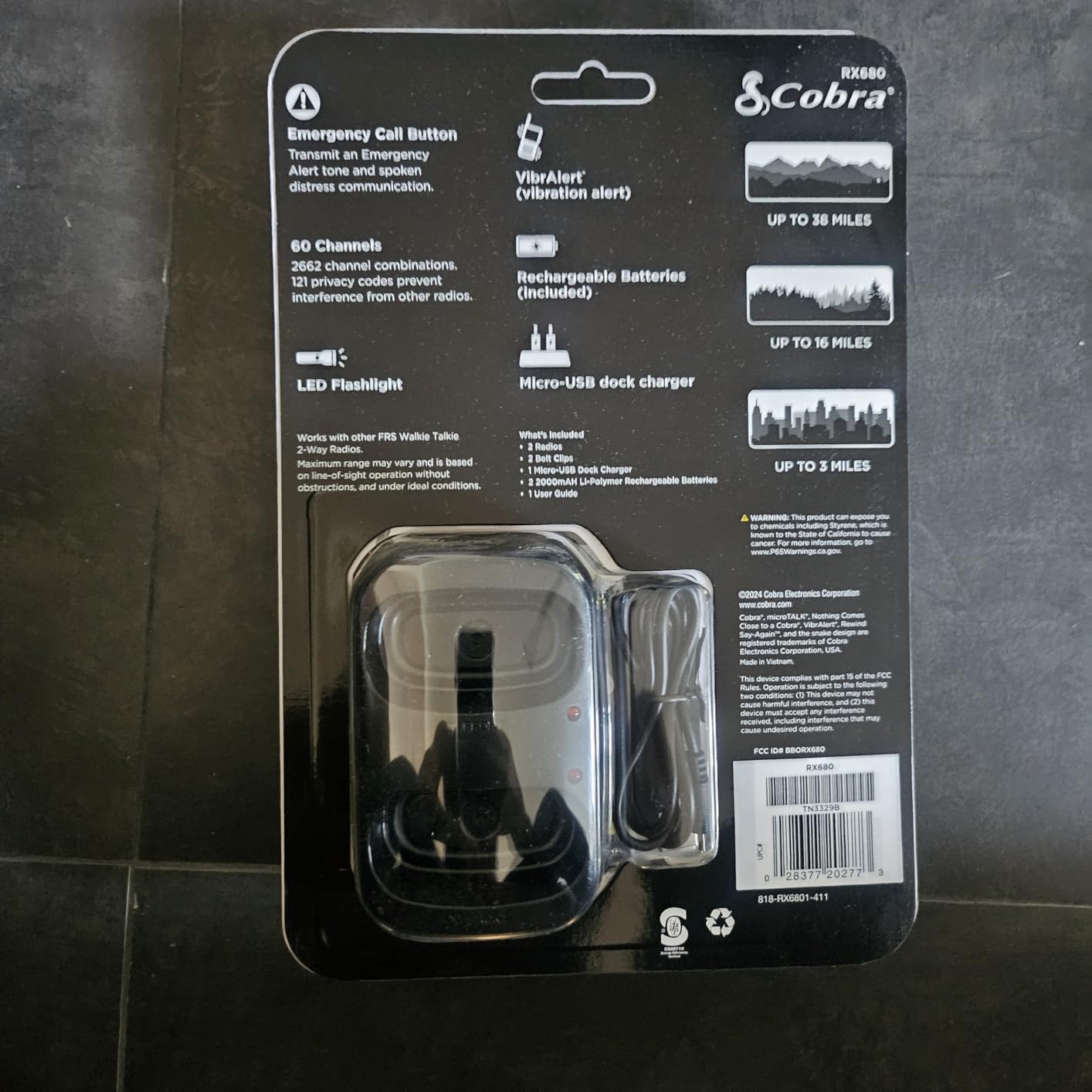
There are 60 preset channels, being the 22 FRS channels plus 38 pre-programmed channel and code combinations. Someone in the household can pick a working preset for you in advance, so the person who needs to call for help only has to turn one knob.
Battery life is 18 hours on lithium-ion, and reviewers report the packs running three to four days of continuous use with a clear low-battery indicator. The Vibralert silently buzzes an incoming transmission, which is useful for a deaf or hard-of-hearing family member or for a radio tucked under a coat.
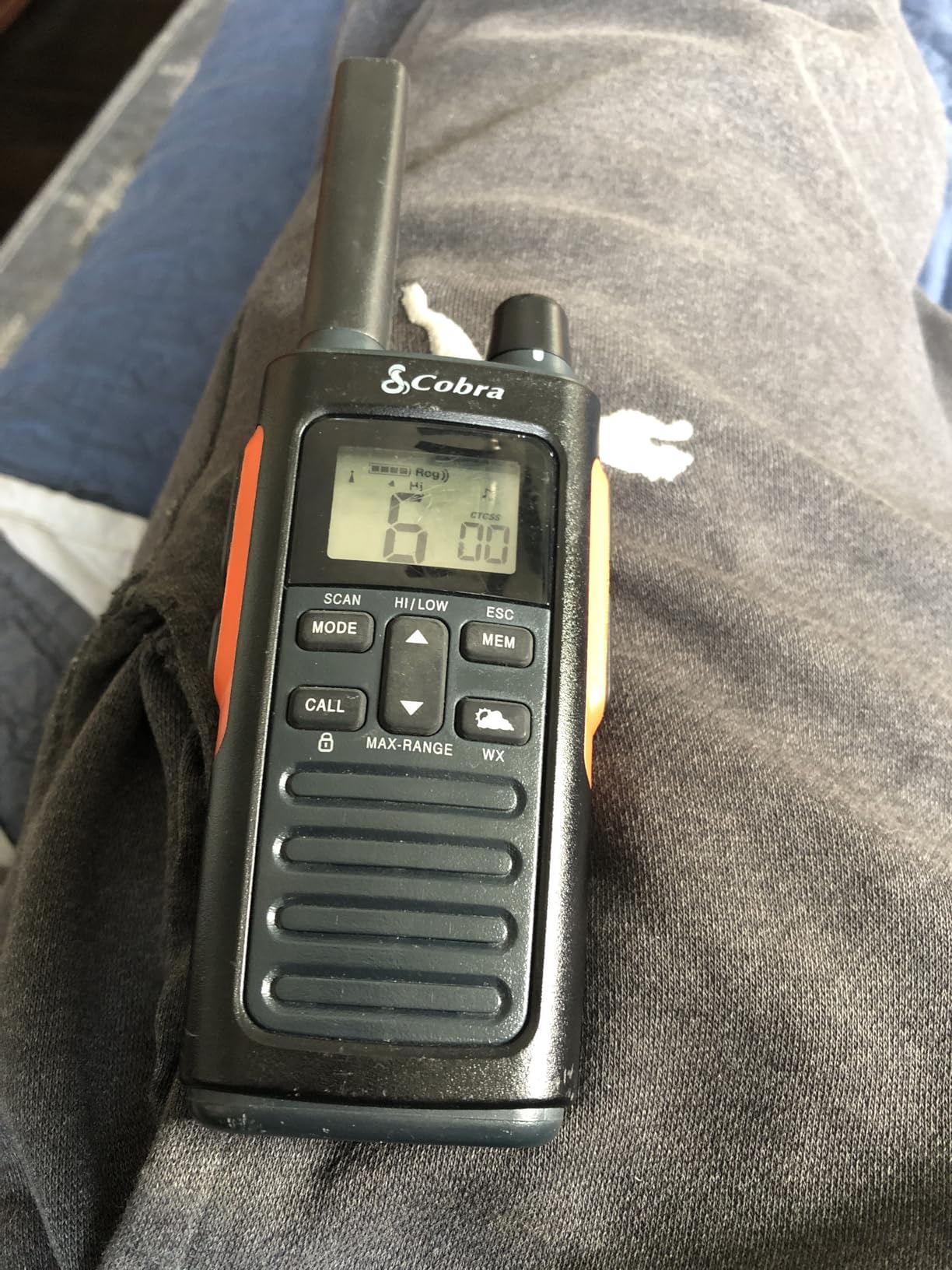
Two practical notes. The listed 38 mile figure is unrealistic, with owners reporting 500 meters to 1.5 miles depending on terrain, which is normal for this class. And the dock charger includes a USB cable but no wall adapter, so plan on charging from a computer, a power bank, or a car socket.
Do the dial controls help older family members?
Yes, noticeably. A dial gives positive feedback, so you know it moved and you know how far. On a button radio, a user who presses twice without realizing often lands on a different channel and then transmits into silence.
Button lockout is the bigger win. Set it once during your family drill and the radio then behaves predictably no matter how it is handled in a bag or a pocket.
Is 18 hours of battery real under heavy use?
Close to it, based on owner reports of several days of mixed transmitting, which is heavier than standby but lighter than continuous talking. For a long event, treat the runtime as one full day of active use per charge.
Because the batteries are lithium-ion rather than nickel, they hold charge well through storage, which matters for a kit that sits in a closet for a year between events.
9. Motorola Solutions T475 2-Pack: Best for Rugged Use and Accessories That Come in the Box
Motorola Solutions Talkabout T475 Extreme Two-Way Radio Black W/Yellow Rechargeable Two Pack
22 FRS channels with 121 privacy codes
Dual power, NiMH rechargeable or AA batteries
IPX4 weather resistance, NOAA weather alerts
8 hour battery, up to 12 hours on the included cells
Pros
- Very rugged build
- one owner reported running over a radio with only scratches
- High speaker volume that carries over machinery noise
- Easy pairing and 2662 channel and code combinations
- Dual power lets you mix rechargeable packs and AA batteries
Cons
- Signal can go unstable between nearby vehicles on a road trip
- Some reports of poor real range in built-up areas
- Only IPX4 water resistance
The Motorola T475 is the radio we trust to survive being dropped, thrown in a go bag, and forgotten for months. Owners report a unit being run over by a truck and coming away with scratches and an unbroken belt clip, and the build quality sits a step above the plastic-feeling entry-level sets.
Audio is another strength, with a high speaker volume that carries over construction work and wind, plus good wind cancellation on transmission. For a family that works outdoors or drives a convoy through a storm, that is the difference between a call that gets through and a call that gets lost in the first second.
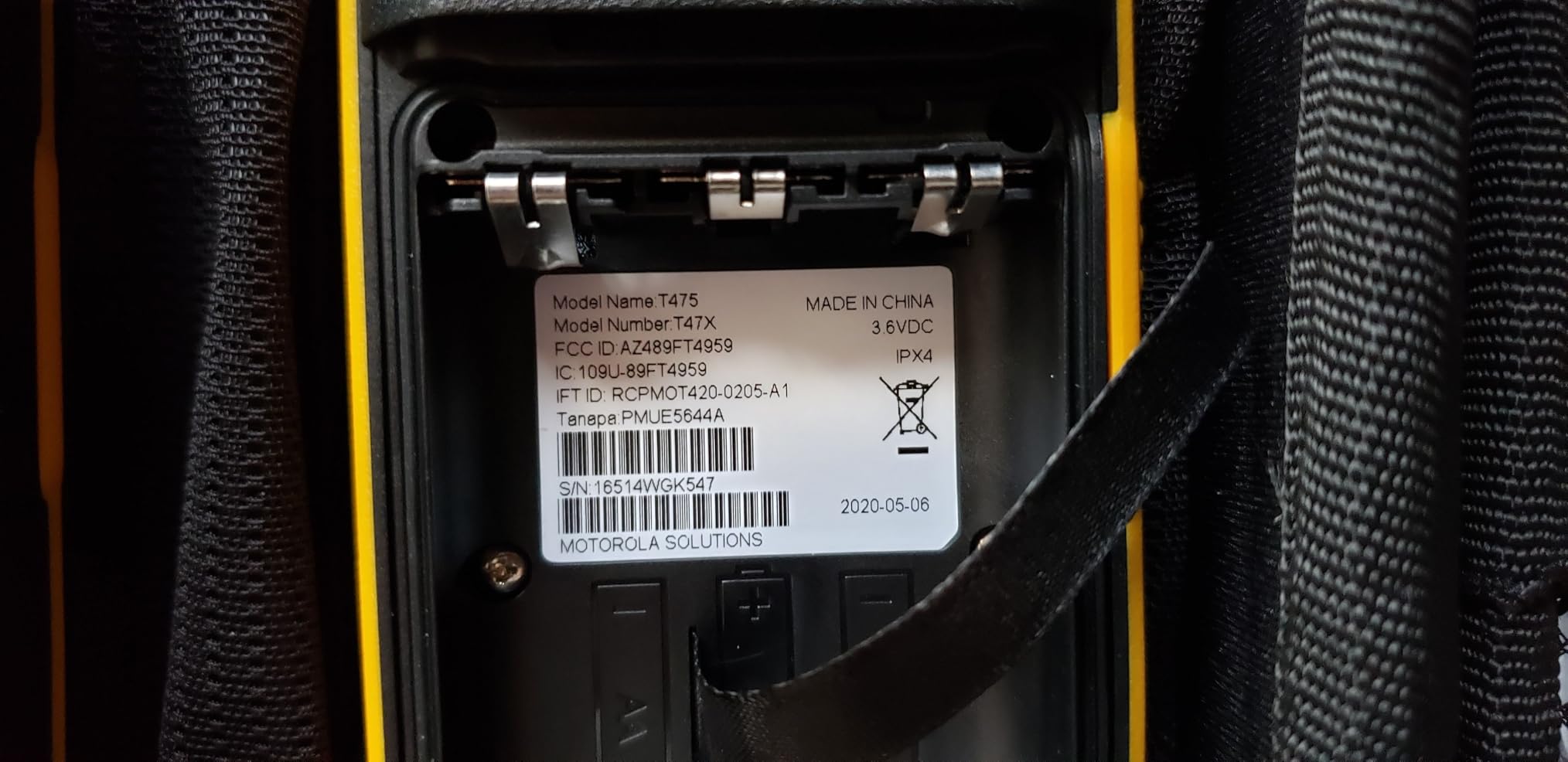
The dual power arrangement is unusually useful. Each radio runs on the included NiMH rechargeable packs or on ordinary AA batteries, which means you can mix and match. When the grid is down and the chargers are dead, a radio that accepts AA cells keeps working for as long as you have batteries.
The box also includes a carry case, a lanyard, an earpiece, a charger, and 16 personalization stickers. The stickers matter more than they sound, because labeling each radio with a name and a household number is the fastest way to know who is calling.
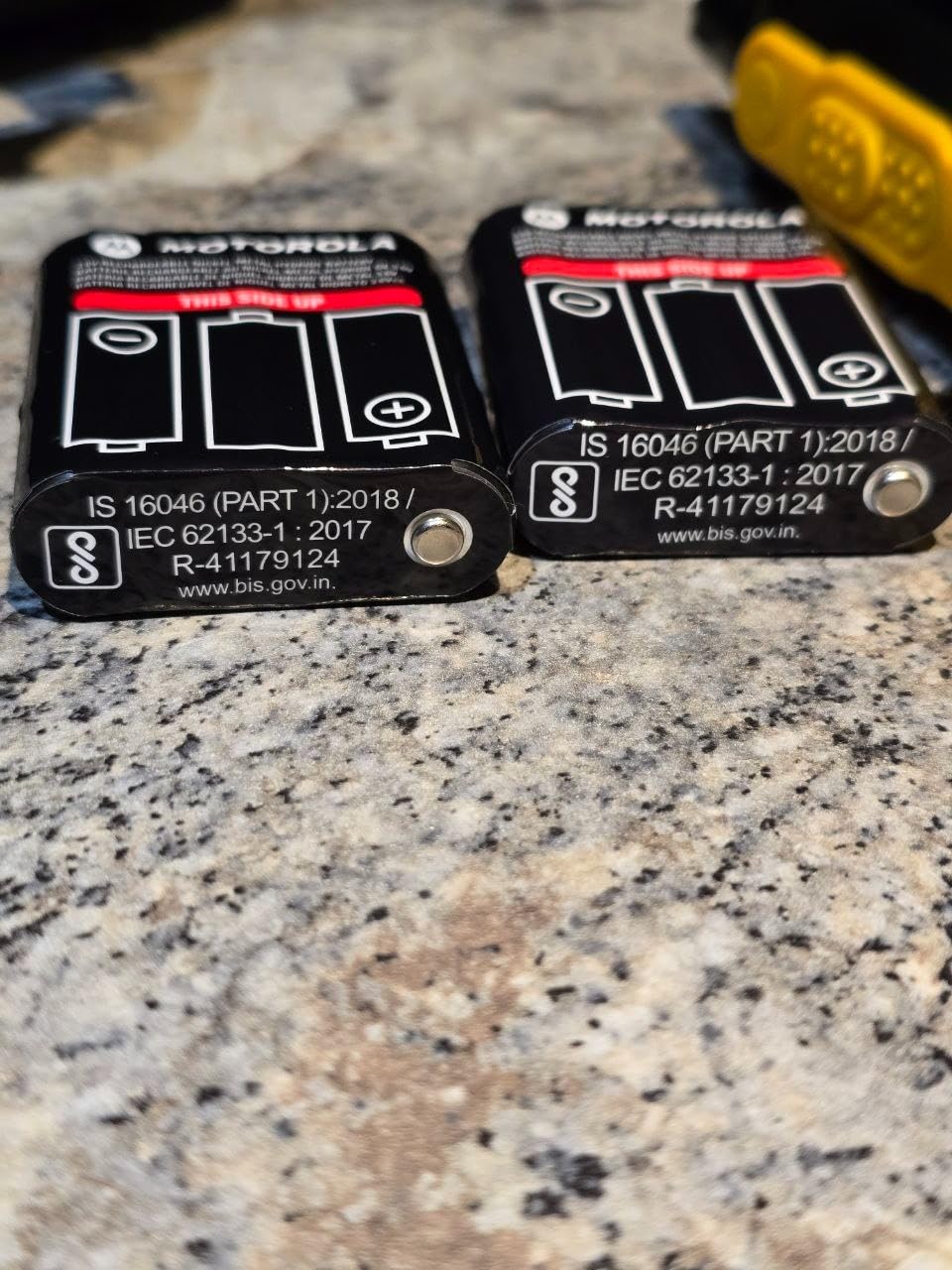
The criticisms are predictable ones. Signal can be unstable between nearby vehicles on a road trip, some owners report poor real-world range in built-up areas, and the included nickel packs may drain quickly, so some users substitute lithium-ion cells instead. Water resistance is IPX4, which is splash protection rather than immersion.
Does dual power matter when batteries are scarce?
It is the feature that keeps a radio alive in a long outage. Rechargeable packs fail when the charger is gone, but AA batteries come from the same drawer as the flashlight and the smoke detector batteries you already keep on hand.
We recommend setting up a mixed kit: one radio on the rechargeable pack as the primary, and a second radio on AA cells as the backup. A backup radio on the same channel is worth more than a spare battery for a radio that already died.
Is the accessory bundle useful for a family kit?
Yes. The lanyard lets a child wear the radio instead of dropping it, the earpiece gives a parent private audio in a crowded shelter, and the case keeps the kit together in a go bag.
The personalization stickers serve a real purpose. Write the holder’s name and the household channel number on each one before the event, because nobody remembers which of four identical radios is theirs when it matters.
10. MaxTalker MT10 2-Pack: Best Two-Pack Starter Kit
Walkie Talkies Long Range for Adults, Rechargeable FRS Two-Way Radio, 2Pack
1200 mAh built-in rechargeable lithium battery
USB-C charging cables included
Up to 72 hours standby time
22 FRS channels with 99 privacy codes
Pros
- NOAA weather scanning
- VOX
- and a flashlight in a compact two-pack
- 1200 mAh lithium battery with up to 72 hours standby
- USB-C charging so you can reuse phone cables
- Works with other brands on the same channel and privacy code
- Two radios with belt clips and a 1-year warranty
Cons
- Not water resistant
- so poor for wet-weather emergencies
- Entry-level transmit power compared with the higher powered sets
The MaxTalker MT10 is where we would start if you have never owned a radio and you are unsure whether the habit will stick. It delivers the three features that matter most for family emergencies, NOAA weather scanning, hands-free VOX, and a built-in flashlight, in a simple two-pack that sets up in minutes.
The battery is the quiet strength. The 1200 mAh lithium-ion pack is built into the radio, charges over USB-C with the included cables, and is rated for up to 72 hours of standby. Owners regularly use these for family outings and keeping track of children, and the standby figure is what makes them work as an overnight emergency set.
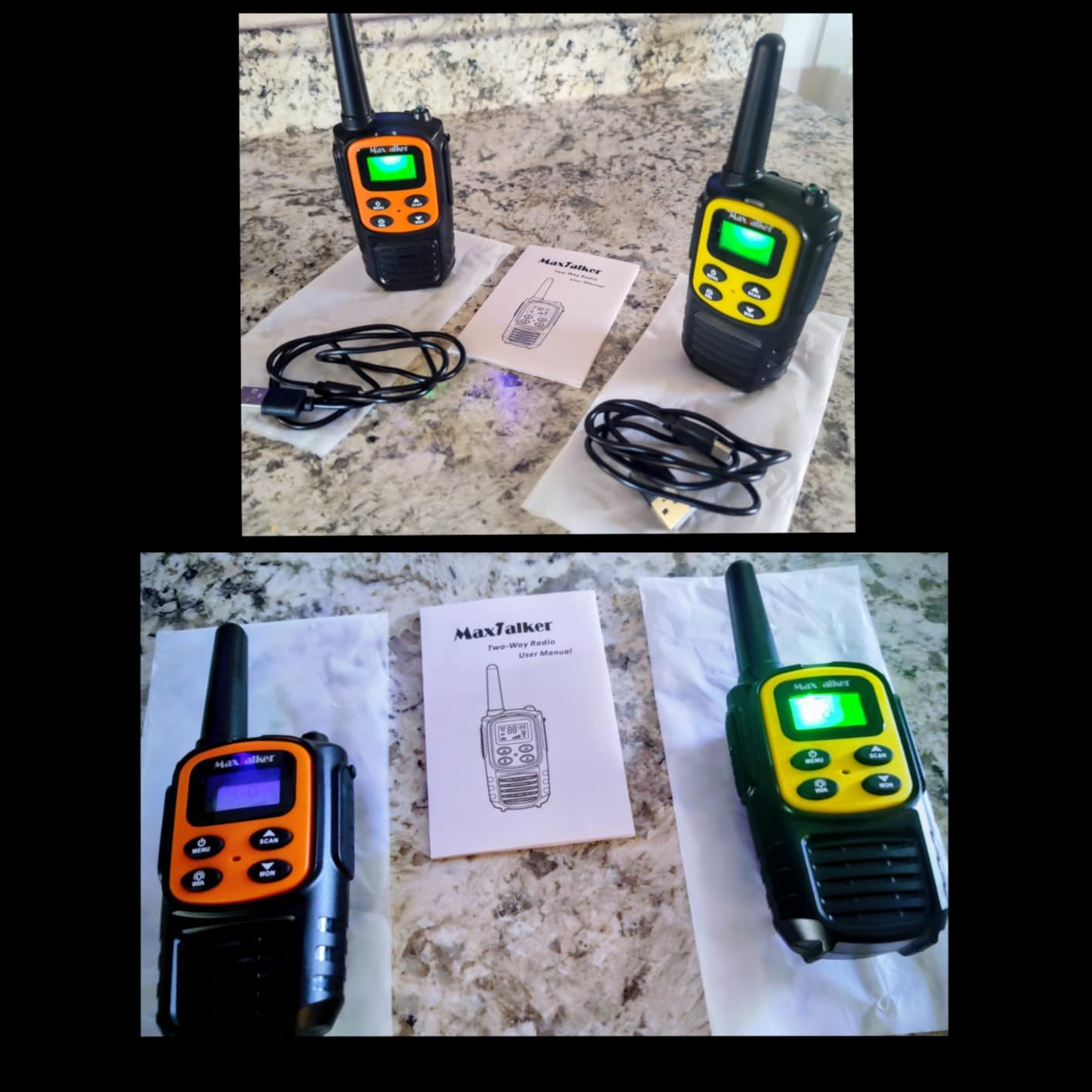
Interoperability is unusual for this class of radio. The MT10 talks to other brands on the same channel and privacy code, which removes the exact trap that catches buyers of the Retevis RT22. If you already own a different brand of FRS radio, match the channel and code and these will talk to it.
Twenty-two FRS channels with 99 CTCSS privacy codes gives 2,178 combinations, more than enough to find a quiet channel in a neighborhood where a dozen families are testing radios on the same afternoon.
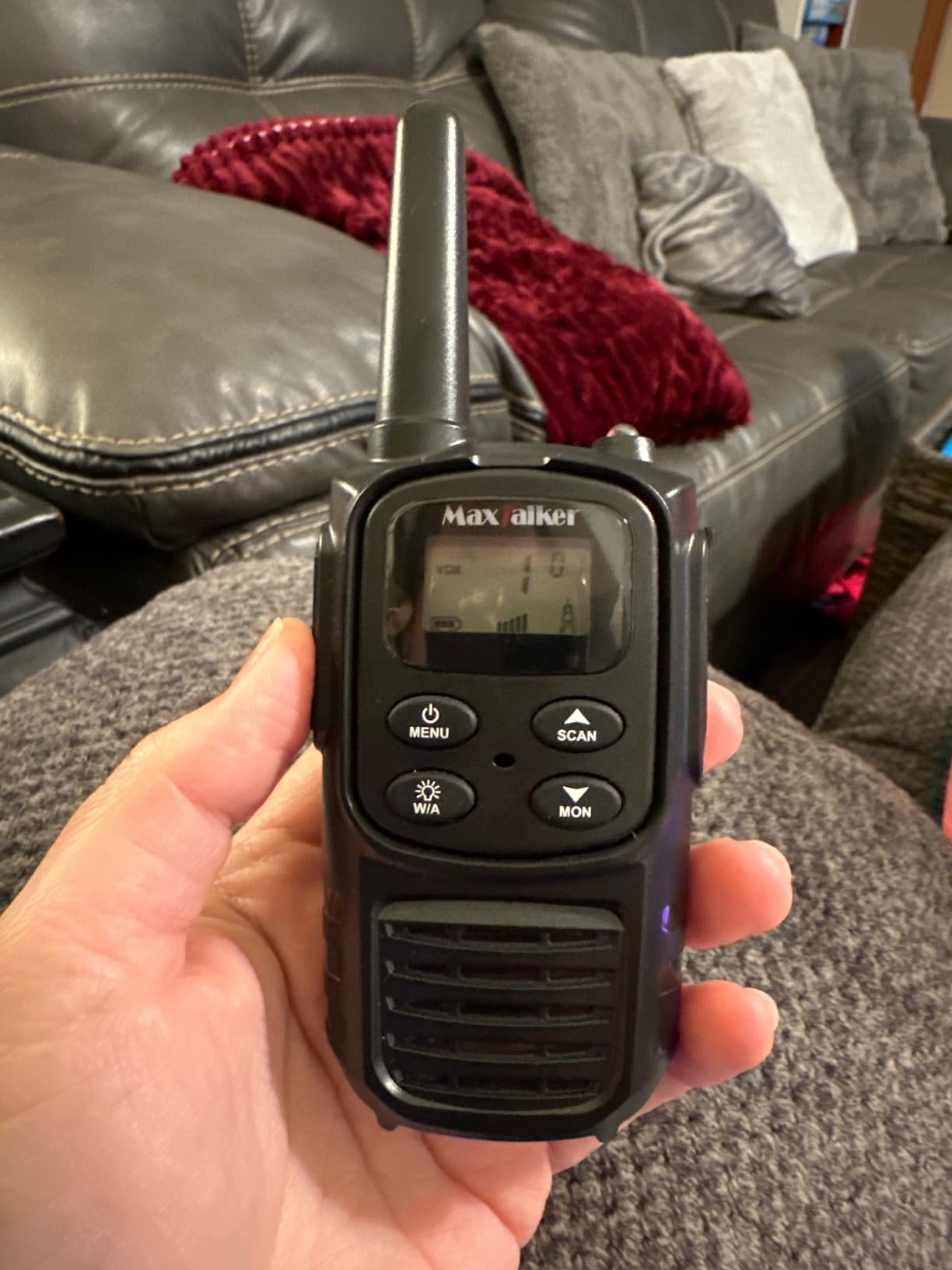
Two limits are worth being clear about. The housing is not water resistant at all, so rain, a puddle, or a flooded street ends it, and the transmit power is entry level, so do not expect it to punch through heavy buildings the way a 2-watt set does.
Is a two-pack enough to start a family kit?
Two radios is enough to prove the habit and to cover a parent and a child, which is the most important pair in most households. It is not enough for a family of five or more.
Buy a second pair later and put all four units on the same channel and privacy code. The MT10 will work with them because it uses standard channel and code values out of the box.
Does cross-brand compatibility matter for a household?
It matters the moment anyone in the house already owns a radio from a different maker, or when you want to add a hand-me-down set later. Factory-standard channels and codes mean the radios work together immediately with no computer and no programming cable.
If water is part of your risk profile, choose a sealed model such as the DEWALT or the floating Cobra instead, since a soaked radio is useless at exactly the moment you need it.
How to Build a Family Emergency Radio Plan That Works
Ten radios in a drawer are worth nothing on their own. What matters is a short written plan that every family member understands, and it takes about an afternoon to build. We have seen the same four components work again and again in outage after outage.
Step 1: Pick one channel and one privacy code. Write the channel number and the code on a card and tape one to every radio, one to the fridge, and one to each go bag. If your model has pre-programmed combinations, choose a combination nobody else is likely to pick, and do not change it later.
Step 2: Assign a radio to every person. Use the personalization stickers or write a name on the back with tape. Everyone gets a radio on their person, not in a shared pile, because a radio in a coat pocket during a funeral is worth more than a spare on a shelf.
Step 3: Set fixed check-in times. Pick three times a day, such as 8am, 1pm, and 7pm, and treat them as appointments. A single fixed time lets a family test the channel before an emergency rather than during one, when a weak battery or a wrong code is discovered at the worst possible moment.
Step 4: Agree on a fallback for no answer. Decide what happens when someone does not respond, such as one missed check-in triggers a call on the backup channel, two missed check-ins trigger a phone call and then a physical check. Decide it now, calmly, so nobody is improvising under pressure.
Add a short script so stressed people know what to say. Press the button, wait half a second, then say: “Radio check, this is Dad on channel six, everyone answer.” Release the button, then listen for ten seconds. That is the whole format, and rehearsing it once in the living room makes it automatic.
FRS vs GMRS vs Ham vs PoC: Which Radio Type Fits Your Family
Understanding the four radio types is the fastest way to avoid buying the wrong thing. Here is what each one is, what it costs in paperwork, and when a normal household should pick it.
FRS (Family Radio Service) is license-free, transmits up to 2 watts on 22 channels, and is the right default for most families. It covers a neighborhood, a campsite, and a school pickup line with no paperwork at all. Eight of the ten radios in this roundup are FRS or FRS-compatible.
GMRS (General Mobile Radio Service) uses higher power channels, including repeater channels that can extend coverage dramatically. Using it above 2 watts requires an FCC license, and a single license covers your immediate family, so one person in the household gets covered for everyone on the same call sign. The license runs for a ten-year term and has no annual renewal.
Amateur (ham) radio is the longest reach and the most capability, including wideband receive of local public safety, marine, and aviation traffic. It requires passing an exam to get a license. For a family that wants reliable long-range communication and has someone willing to learn, the Baofeng is the affordable entry point.
PoC or LTE push-to-talk works over cell networks and Wi-Fi with no distance limit inside coverage. The catch is obvious and important: when the towers go down, the radios go down too. A PoC radio is a great complement for a normal day and a poor primary emergency radio.
So which type is best for emergency situations? A license-free FRS set for the household baseline, a GMRS set for weather alerts and rural or hilly terrain, and a ham handheld as a long-range backup held by one trained family member. That three-tier approach covers almost every scenario a family will meet.
Range Reality Check: Why 35 Miles Never Happens
Almost every box in this category claims a range of 20 to 38 miles, and almost none of them deliver it. Those figures are measured between two radios on a mountaintop with a clear view of each other, which is not a family emergency. Our rule is to plan on a fraction of the number on the box.
Realistic expectations by setting, drawn from what owners report: in a typical city or dense suburb, expect 400 to 600 meters. In an open neighborhood or rural area with houses spaced out, expect 1 to 2 miles. On open ground with a hill between you and the other party, 5 miles is achievable. Above that you need high ground, a repeater, or a ham radio.
What kills signal is predictable, and it is worth teaching the family. Concrete and steel buildings, vehicles, hills, dense woods, and being indoors with the radio below ground level all reduce range. Height is free, so the highest point in your house, the top of a parking structure, or a roof deck beats any expensive antenna.
Test before you need it, using a simple protocol. Walk a measured one mile with a partner on a clear day and note where the audio breaks up, then repeat with the radios in the house, in a car, and at the far end of the property. Mark the reliable distance on the plan card in your go bag, so you know in advance whether the school is a two-minute or a ten-minute conversation.
Power, Water, and Weather: Planning for a Multi-Day Outage
Battery anxiety is the most common worry in radio forums, and the numbers are more comfortable than most people expect. Budget roughly 10 hours of active use for a compact FRS set, 18 hours for the longer-run models, and remember that transmitting drains far more than listening. A radio left on receive all night barely moves the battery.
Add to the kit: one spare rechargeable pack or a set of AA batteries per radio, a USB cable per radio if the model uses USB-C, and a power bank for the dock chargers that need a wall plug. We also keep a hand-crank radio in the same bag, since it needs no battery and no outlet at all.
Water protection is the second planning question, and the IP code tells you the answer. IP54 and IPX4 mean splash resistant, so rain and a spilled drink are survivable but a drop in a puddle is not. IP67 means dust tight and safe for full immersion, and only the DEWALT DXFRS800 and the floating Cobra ACXT1035R carry it.
Weather alerts are a separate capability from being able to talk. NOAA scanning radios listen to official National Weather Service broadcasts continuously, so a tornado warning sounds a tone on your radio with no internet, no power, and no cell service. S.A.M.E. coding lets you set the county you care about, which stops an alert for a county 200 miles away from waking you at 3am.
Finally, remember that a two-way radio is a voice tool inside your home, not a tracker. It does not tell you where your child is, and it does not call for help by itself. If a family member needs location sharing or a satellite link when there is no coverage at all, that is a different category of device, and worth researching alongside the radios rather than instead of them.
Frequently Asked Questions
What is the best 2-way radio for emergency use?
For most households the pxton PX-888S four-pack is the best starting point, because it includes four complete radios with docks, earpieces, and batteries, needs no license, and runs on a 1500 mAh battery. For severe weather add a NOAA-scanning set such as the Midland GXT1000VP4, and for flooding choose an IP67 model like the DEWALT DXFRS800.
What are the best two-way radios for families?
The three picks we trust most for a family are the pxton PX-888S for a four-person household that wants the simplest possible radio, the Retevis RT22 when weight matters for a child or an elderly relative, and the Midland GXT1000VP4 when weather alerts and longer range are the priority.
What type of radio is best for emergency situations?
A license-free FRS radio is the right baseline for most families because it covers a neighborhood with no paperwork. Add a GMRS radio for higher power and NOAA alerts, and a ham handheld for the longest range, held by one family member who has trained on it.
What is the most reliable emergency radio?
Reliability in a real emergency comes from a radio nobody can break by pressing the wrong button. The Cobra RX680 is the most reliable for a stressed user because power and volume are on a rotary dial and the remaining buttons can be locked out, and it also runs 18 hours on a lithium-ion battery.
What is the 3-3-3 rule for radios?
The 3-3-3 radio rule is an etiquette guideline: keep each transmission under three seconds, leave a three second gap before you reply so the channel is not blocked, and pause three seconds after finishing before releasing the push-to-talk button. Short bursts cut interference and let everyone on the channel speak.
What is the longest range walkie talkie I can use without a license?
Without any license, a 2-watt FRS handheld is the maximum legal output, and the longest-range models pair that with a long antenna. The DEWALT DXFRS800 is a strong choice at 2 watts with IP67 sealing. Expect 1 to 2 miles in a typical neighborhood, not the range claimed on the box.
Can walkie-talkies work 100 miles away?
No consumer handheld in this roundup works at 100 miles in normal conditions. That would need an amateur radio setup with a high-gain directional antenna, a repeater network, or satellite service. Even the highest-power ham handheld here is realistically a line-of-sight tool, with a long-range handheld doing well at around 5 miles in open terrain.
What is the emergency frequency for walkie-talkies?
There is no single emergency frequency for two-way radios. FRS and GMRS families use channels within 462 to 467 MHz, and the standard emergency and interoperability channels are 462.5500, the national distress and calling channel, and 467.7500. NOAA weather broadcasts on standard frequencies are picked up automatically by radios with weather scanning.
Our Final Recommendation by Household Type
If you want one answer, buy the pxton PX-888S four-pack. It needs no license, no computer, and no practice, and four units plus four docks mean the whole household is covered the day it arrives. For a family with a young child or an elderly parent, add the Retevis RT22 because at 3.8 ounces it is a radio people will actually carry and remember to charge.
For a household in a coastal, flood, or tornado zone, the Midland GXT1000VP4 earns its place because it scans NOAA and sounds a siren on its own, and the single family license covers everyone for a ten-year term. Where water is the threat, the DEWALT DXFRS800 is the one we would put in the bag, since IP67 sealing is the difference between a radio you use and a radio you replace.
And for a household that wants real reach, the Baofeng UV-5R 5RM at 10 watts can carry conversations no 2-watt set manages, as long as one family member handles the programming and the family sticks to a simple rule. Whichever set you choose for your family emergencies, buy four of the same model, agree on one channel, set three daily check-in times, and rehearse the script once. A plan written on a card works far better than the best radio in any box.