
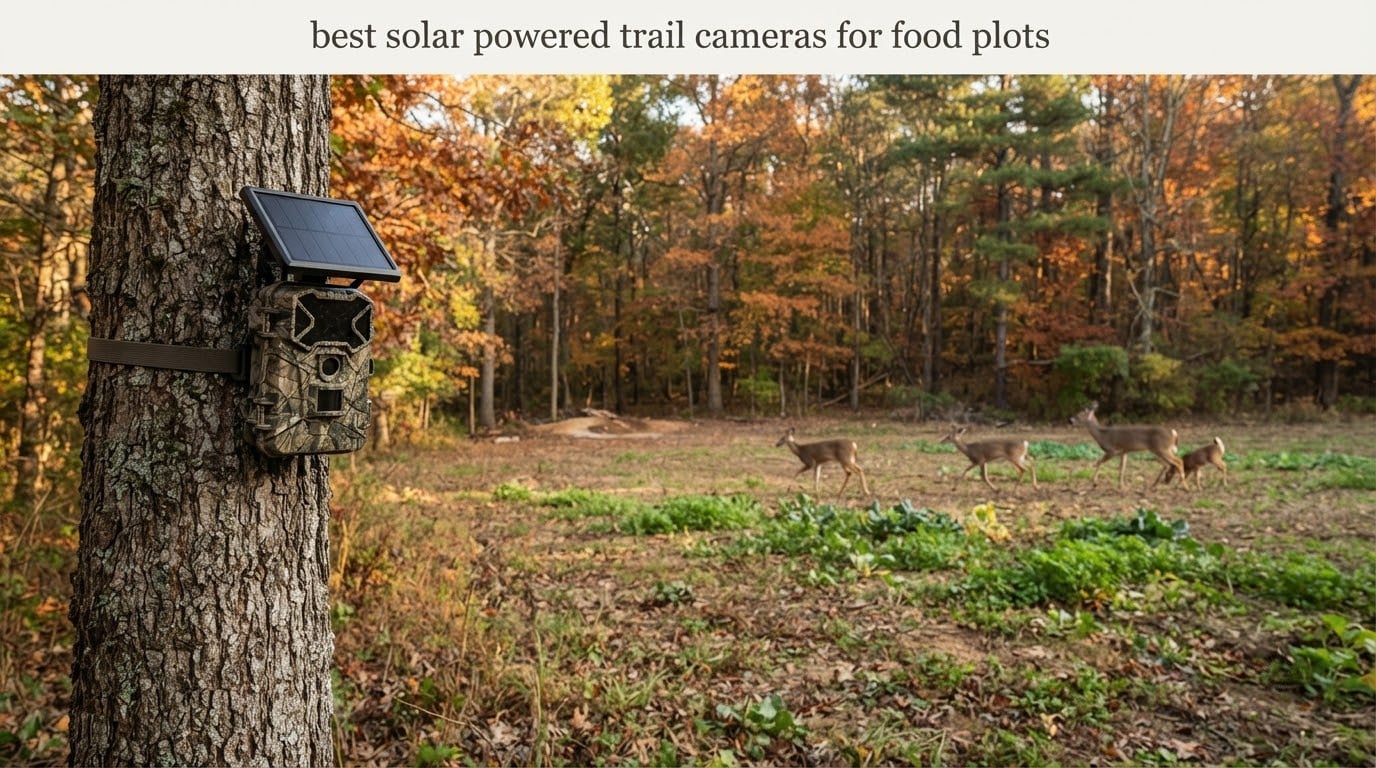
The best solar powered trail cameras for food plots are the CEYOMUR CY95, the MAXDONE PH970S and the MagicEagle H1-New, in that order. All three run a rechargeable battery off a built-in solar panel, so you can mount them on a plot, mineral site or remote access trail and walk away instead of swapping batteries every few weeks.
That sounds obvious until you look at how most food plots fail. A camera that dies in week two gives you an empty memory card and a wasted scouting window right when bucks are starting to move. Solar power is the fix, and it is the reason the whole list below is built around panel output and battery chemistry rather than megapixel counts. If you want the wider scouting context first, our guide to the best trail cameras for deer hunting covers the non-solar options too.
Our team spent the last season comparing ten solar powered game cameras across battery capacity, trigger speed, night vision type and connectivity. Nine of the ten here are local WiFi or SD card models with no monthly fee. Only two send photos straight to a phone over cellular, and one of those needs a data plan once its trial ends. That split matters more than it sounds, because a food plot is usually exactly the kind of place with no reliable signal and no WiFi.
We updated this roundup in 2026 with the field notes that matter most on a plot: how the panel behaves under tree cover, what happens to alkaline batteries in cold weather, and where to actually strap the camera on the food plot. For the equipment side of a plot setup, our picks for the best broadcast spreaders for food plots pair well with a camera that shows you which seed the deer are using.
Table of Contents
Top 3 Solar Powered Trail Cameras for Food Plots in October 2026
The CEYOMUR CY95 wins on the combination of a 5200mAh internal battery, a 0.1 second trigger across three PIR sensors and the largest review base in the group. MAXDONE PH970S matches it on paper with a 6000mAh cell and adds a five-shot burst. MagicEagle H1-New is the one to buy when the plot is genuinely remote and you need the photos to arrive on your phone.

CEYOMUR CY95 4K 68MP Solar
- 0.1s trigger with 3 PIR sensors
- 5200mAh battery plus 4 AA backup
- 850nm IR night vision to 65 ft
- 32GB TF card pre-installed

MAXDONE PH970S 4K 64MP Solar
- 6000mAh lithium with attached solar panel
- 0.1s trigger with 5-shot burst
- 65ft low-glow IR with 18 LEDs
- WiFi6 app control with no subscription

MagicEagle H1-New Cellular 4G
- 13000mAh battery with up to 3 months standby
- No-SIM 4G with automatic carrier selection
- 90ft no-glow 940nm infrared
- AI species recognition and live view
All 10 Solar Powered Trail Cameras Compared in October 2026
Every camera below is solar powered. Seven have no connectivity beyond a local app hotspot or an SD card, two stream over cellular, and one is a plain card-recorder with no wireless at all.
| Product | Specifications | Action |
|---|---|---|
| CEYOMUR CY95 4K 68MP Solar |
|
Check Latest Price |
| MAXDONE PH970S 4K 64MP Solar |
|
Check Latest Price |
 iZEEKER iG220 Solar Game Camera iZEEKER iG220 Solar Game Camera |
|
Check Latest Price |
 XTU 4K 64MP Solar WiFi Camera XTU 4K 64MP Solar WiFi Camera |
|
Check Latest Price |
 VIDVIS TCQSW 4K 64MP Solar VIDVIS TCQSW 4K 64MP Solar |
|
Check Latest Price |
 Misstech SV-TCKW 4K 64MP Solar Misstech SV-TCKW 4K 64MP Solar |
|
Check Latest Price |
 Assark PH960S 48MP Solar Assark PH960S 48MP Solar |
|
Check Latest Price |
| MagicEagle H1-New Cellular 4G |
|
Check Latest Price |
 Moultrie Edge Solar 40MP Moultrie Edge Solar 40MP |
|
Check Latest Price |
 Oculview 4G LTE Live Streaming Oculview 4G LTE Live Streaming |
|
Check Latest Price |
1. CEYOMUR CY95 4K 68MP Solar Trail Camera – Best Overall
CEYOMUR 4K 68MP Solar WiFi Trail Camera, Game Camera with 32GB TF Card
5200mAh battery
0.1s trigger, 3 PIR to 65 ft
68MP stills, 4K 30fps
IP66 solar panel
Pros
- 0.1s trigger across a 120-degree detection zone
- 5200mAh battery plus 4 AA backup cells
- 850nm IR gives cleaner detail than 940nm units
- 32GB TF card pre-installed so it works immediately
- Two-year warranty with 24-hour support response
Cons
- WiFi is a 33 ft hotspot only with no remote viewing
- Just two IR LEDs so night coverage is narrower
- You must pair the app to review clips on a phone
The CY95 is the camera we keep coming back to, and it earned that spot on the balance of numbers rather than one headline spec. Three PIR sensors cover a 120 degree zone out to 65 feet, and the 0.1 second trigger is fast enough to catch a buck moving laterally across an open food plot rather than a rear end walking away from you.
Power is the part that matters here. The top-mounted panel feeds a 5200mAh internal rechargeable battery, and there is room for four AA cells as backup. That combination is what separates a camera that survives a cloudy October from one that quits. Reviewers report a 32GB TF card ships pre-installed, which means no extra purchase before you strap it to a tree.
Image quality is 68MP stills and 4K video at 30fps with sound, and the night side uses 850nm IR out to 20 meters. Most hunting setups in this list quote 20 meters or 65 feet for the same distance, so the CY95 is sitting in the normal range rather than leading it. The 120 degree field of view is wide enough to take in a good chunk of a plot edge without backing away from the treeline.
What tells you the panel and battery are doing their job
A camera that recovers from a dead battery overnight is a camera that recovers. The 5200mAh cell is large enough that most users running a normal sensitivity setting on a daylight-exposed food plot never see the low-battery warning. The four AA slots matter in a different way: they are a bridge for a stretch of overcast days in a wooded plot where the panel output drops.
The 2.0-inch color LCD on the back also saves you a trip. You can check the card is filling, confirm the timestamp and confirm the lens is aimed at the mineral site without pulling the card and going home to a laptop.
Where it falls short on a food plot
The WiFi is a 33 foot hotspot. That is a genuine limitation rather than a nitpick, because you will be checking clips from the cab of a truck or the edge of the field, not standing next to the camera. Anything past about 30 feet and you are pulling the card.
Two IR LEDs is a small number. The claimed night range is met, but the illumination is more of a narrow pool than a flood, so a buck standing 20 yards off the axis of the lens can come out dark. Aim the camera straight down the trail the deer use, not across the plot.
2. MAXDONE PH970S 4K 64MP Solar Trail Camera – Best Value
MAXDONE Solar Trail Camera WiFi Bluetooth, 4K 64MP Night Vision Game Camera
6000mAh lithium
0.1s trigger, 5-shot burst
64MP stills, 4K 30fps
65ft low-glow IR
Pros
- Largest battery in the local-app group at 6000mAh
- 0.1s trigger with a 5-shot burst
- 65ft low-glow infrared that does not spook deer
- Two mounting options plus a pre-installed 32GB card
- Two-year manufacturer warranty
Cons
- App hotspot only with no cellular or home WiFi
- Power switch and card slot sit on the underside
- One owner reported IR failure and black night clips
The PH970S is the pick if the plot is shaded and the battery is the thing you are worried about. At 6000mAh it carries the largest internal lithium pack of any local WiFi camera in this roundup, and the solar panel is permanently attached rather than a separate piece you have to angle toward the sun.
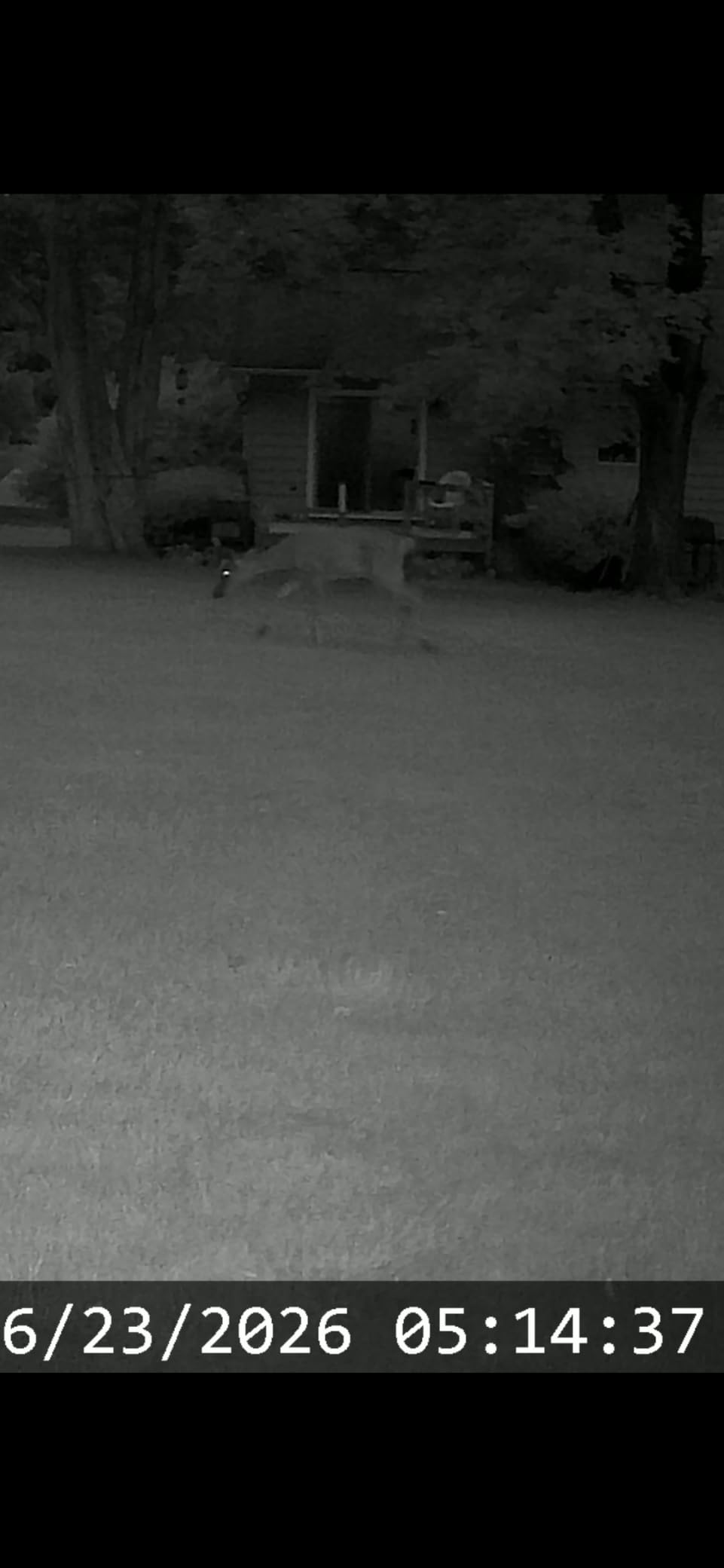
Trigger speed is 0.1 seconds across a 100 degree detection angle, and the five-shot burst is the detail that matters on a food plot. Deer rarely walk past alone. A burst captures the full body and the head in one clip, and reviewers who moved the camera between mounting points mention it is light and compact enough to do that easily, at 2.76 by 1.97 by 5.51 inches.
Video is 4K at 30fps from 64MP stills, and the 18 low-glow IR LEDs reach 65 feet. WiFi6 and Bluetooth control runs through a built-in hotspot out to 55 feet, and there is no subscription. The 32GB card is pre-installed and expands to 256GB.
Why the battery spec is the reason to pick it
In partial shade, a permanently attached panel on a large cell holds a better charge than the same panel on a smaller one. Reviewers specifically call out the attached panel keeping the 6000mAh topped up in semi-shade, which is the exact condition of a food plot bordered by mature timber.
Five-shot burst is the other reason. On a mineral site where animals gather and hesitate, a single frame often catches a rear end and a raised head separately. The burst packages them together.
Where it will frustrate you
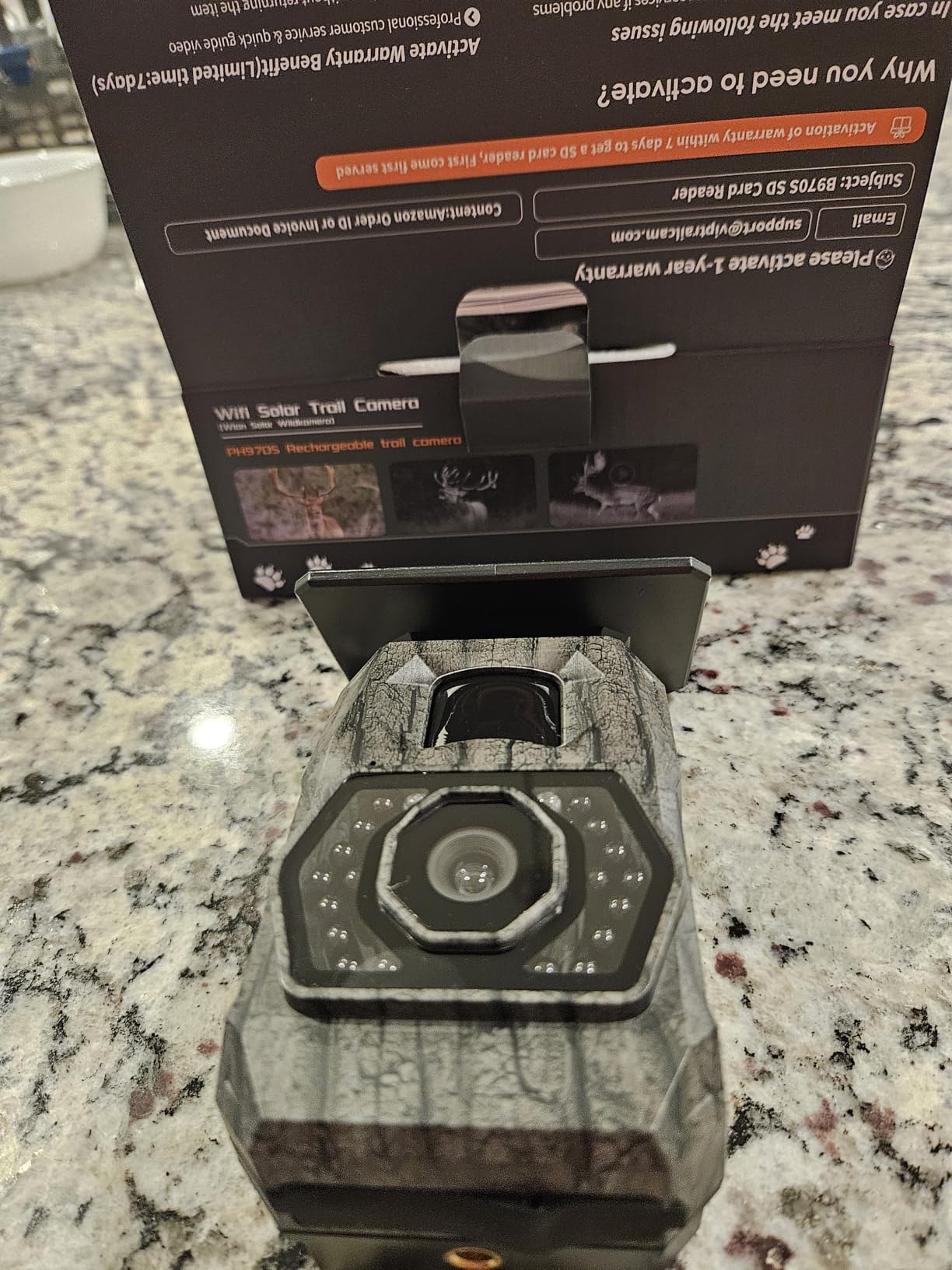
The hotspot-only design is the same limitation as the CEYOMUR, and reviewers note the app connection step can be slow. The power switch and memory card slot are on the underside, which is awkward on a tripod mount and means you are turning the camera over to swap cards.
One owner reported IR illumination failing within a few weeks, producing black night clips. It is an isolated report rather than a pattern, but it is the failure mode to watch for on a camera meant to sit untouched for months.
3. iZEEKER iG220 Solar Trail Camera – Best With No App or Subscription
iZEEKER Solar Trail Camera with Night Vision Motion Activated 4K 30fps 48MP, Game Camera, No WiFi, High Capacity Lithium Battery Deer Camera IP66 Waterproof, Wildlife Monitoring Outdoor Security
2600mAh lithium
0.1s trigger, 3-shot burst
36 low-glow 850nm IR
SD card only
Pros
- Nothing to pair and no monthly fee
- 36 low-glow IR LEDs for 20m night coverage
- Integrated body with front LCD makes aiming easy
- Condensation clears by opening the case
- Loop recording and time-lapse modes
Cons
- SD card is not included so it needs an extra purchase
- AVI files will not open in macOS QuickTime
- No wireless at all
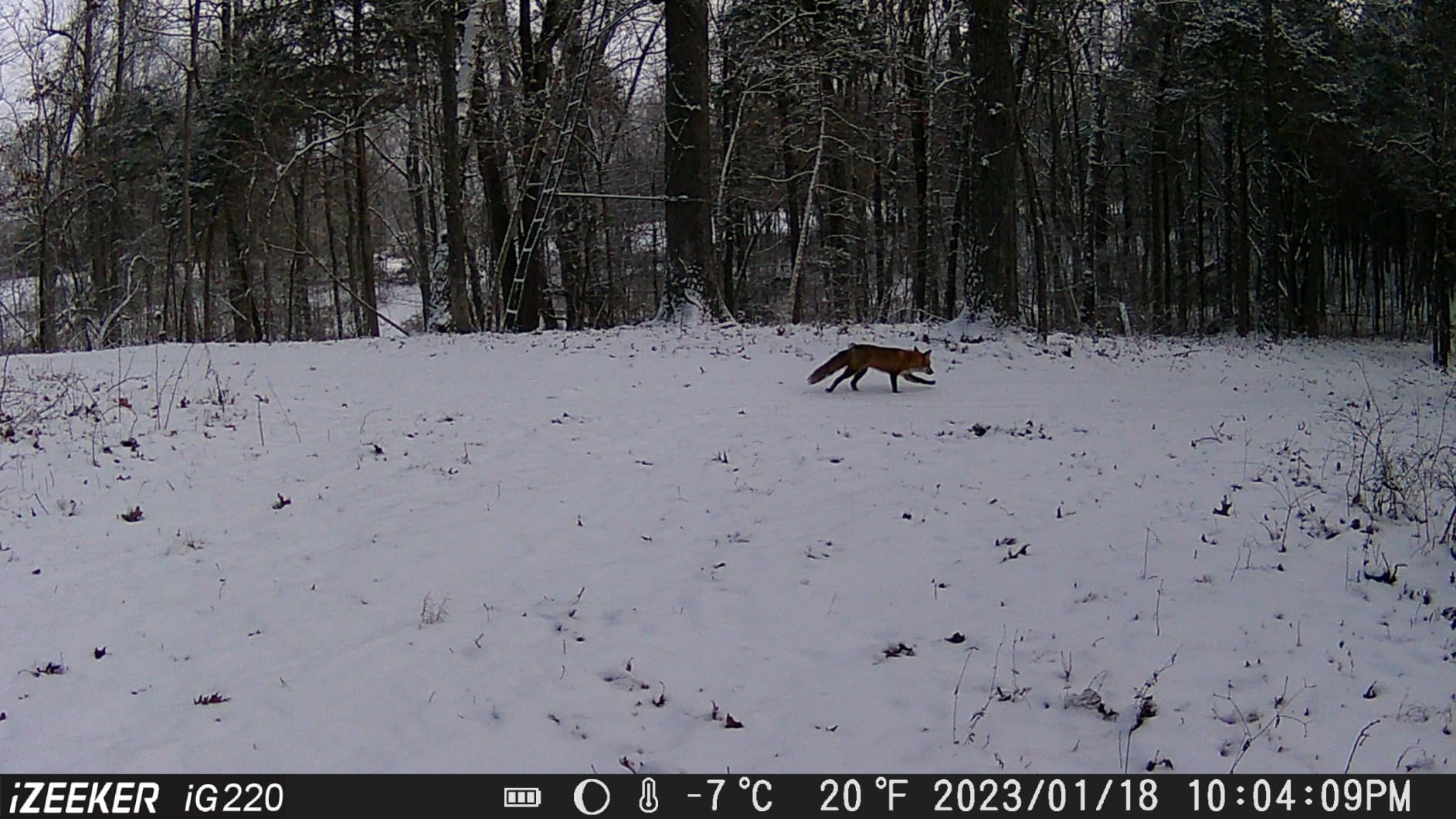
The iG220 is here because the cleanest food plot camera is sometimes the one that does the least. There is no app, no WiFi pairing and no subscription. It records to a microSD card up to 128GB, and you pull the card when you walk the plot.
That simplicity has a real cost in night performance. Thirty-six low-glow 850nm IR LEDs covering about 20 meters is more emitter coverage than anything else in this list, including the CEYOMUR with two. On an open food plot at night, that spread is what decides whether a buck at the far edge of frame is lit or a silhouette.
The trigger is 0.1 seconds with three continuous shots across a 90 degree field of view. Video runs 4K at 30fps with stills up to 48MP, and the IP66 body is an integrated design with a front-facing LCD and lens, which makes it simple to aim at a mineral site. Reviewers also mention that internal condensation clears just by opening the case.
When a card-only camera is the right call
If you are already driving the plot every few days for other reasons, or if you hand the card to somebody else to review, a card-only camera removes an entire category of problems. No pairing failures, no app account locked out in the field, no data plan running while the camera sits in the rain.
The 36-LED night array is the technical reason this model still makes the list despite the smallest battery here at 2600mAh. A smaller cell is fine when the camera is running a solar panel in an open plot, and 36 LEDs is what carries the night footage.
What to fix before you hang it
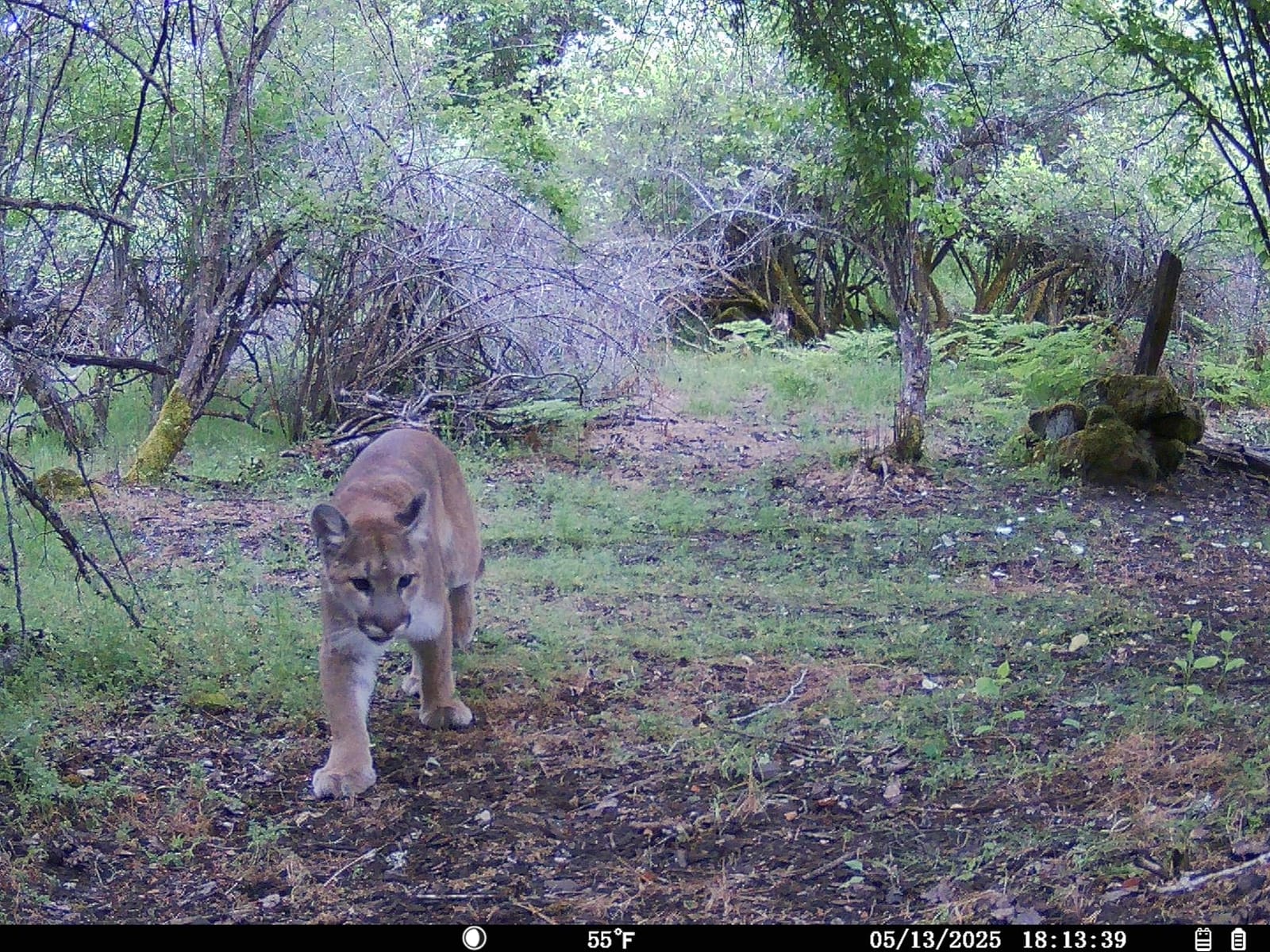
Buy a microSD card separately. It is not included, and the reader is, which is an odd combination that catches people out on the first walk to the plot.
Check the file format before you commit. Clips are written as AVI, which macOS QuickTime will not open natively and which needs a converter like PotPlayer or KM Player. On Windows it is a non-issue. The 4.0 average and 14% share of one-star reviews in this group are largely driven by that and by the missing card.
4. XTU 4K 64MP Solar WiFi Trail Camera – Budget Pick With the Widest Power Options
XTU 4K Solar Trail Camera WiFi Bluetooth, Night Vision, IP66 Waterproof
Solar, USB-C, DC 6V and 4 AA
0.2s trigger, 70 ft range
64MP stills, 4K video
WiFi app at 49 ft
Pros
- Only camera taking solar plus USB-C and DC 6V and 4 AA
- 0.2s trigger with 70 ft detection cuts empty clips
- Local app viewing within 49 ft with no monthly fees
- Complete mounting kit with metal base and strap
- Scheduled recording and time-lapse modes
Cons
- Memory card not included and capacity specs are inconsistent
- Built-in WiFi is a local hotspot with no remote viewing
- Rated 4.1 from 608 reviews
The XTU is the one to pick when the plot is remote enough that you want options. It runs from its internal rechargeable battery, and it also accepts solar charging, USB-C, DC 6V and four AA cells. That is four ways to keep it powered, and no other camera in this roundup offers that range.
Spectra are 64MP stills and 4K video, with 850nm IR night vision quoted at 65 to 70 feet from 22 LEDs across a 90 degree field of view. The trigger is 0.2 seconds, slightly behind the 0.1 second group, so it needs to be aimed closer to the approach path rather than across open ground.
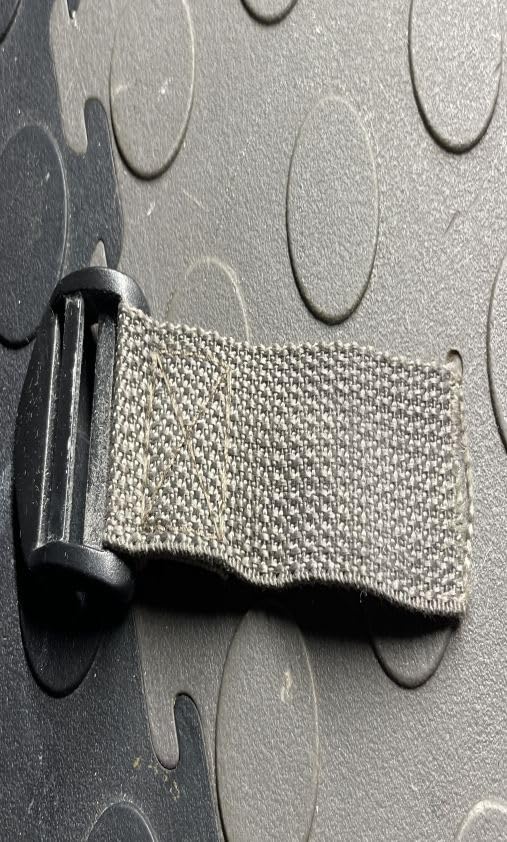
Local WiFi app viewing through the TrailCamGO app works out to about 49 feet with no monthly fee. The listing also includes a metal base, bracket, strap and anchors, which is a genuinely complete mounting kit for strapping to a post or a tree.
Why four power inputs changes the plan
Solar-only designs have a failure mode: a shaded plot where the panel never catches enough light. Because the XTU accepts DC 6V and USB-C, you can top it up from a small battery or a pack in the truck on the same trip where you check the mineral site. The four AA slots are a last resort rather than a daily choice.
For a one-time-per-season plot, that flexibility removes a decision. You are not choosing in advance whether the sun will be enough.
What the spec sheet does not settle
The microSD card is not included, and reviewers point out that the listing is inconsistent about whether the ceiling is 128GB or 256GB. Check the manual before buying a large card.
Its 4.1 rating comes from 608 reviews, a thinner field history than most cameras here. The hardware is competitive; the software polish behind the TrailCamGO app is not at the same level as the dedicated hunting brands.
5. VIDVIS TCQSW 4K 64MP Solar Trail Camera – Best for a First-Time Buy
4K 64MP Solar Trail Camera WiFi, 32GB SD Card,Night Vision Motion Activated
32GB microSD card included
0.2s trigger with 70 ft range
4K video and 64MP stills
IP66 shell with solar panel
Pros
- 32GB microSD card included so it is ready on day one
- 0.2s trigger with 70 ft PIR detection range
- Local WiFi and Bluetooth app control within 50 ft
- IP66 shell with a built-in rechargeable solar panel
- Time-lapse
- 5-shot burst and loop recording
Cons
- WiFi hotspot is local only with no remote viewing
- Only 8 IR LEDs for the stated 65 ft night range
- Resolution and video specs on the listing are inconsistent
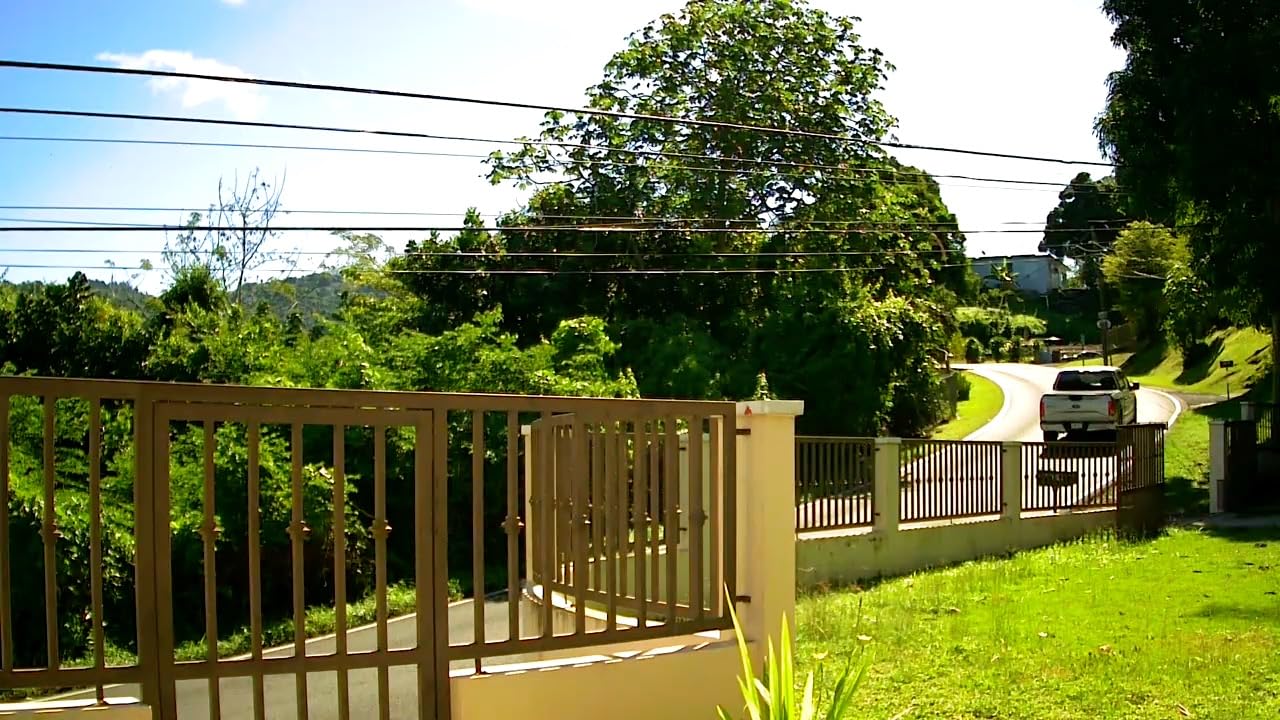
The VIDVIS is the least friction entry into solar cameras. A 32GB microSD card is in the box, expandable to 256GB, and the app connects locally over WiFi and Bluetooth within about 50 feet. You take it out of the box, register the app, and strap it up.
It also posts a strong sales rank for a recent listing, sitting in the top 50 in Hunting and Trail Cameras with 625 reviews, which is unusual for a new model. Detection runs 70 feet on a 0.2 second trigger through a PIR sensor, and the day side is 4K video and 64MP stills across a 90 to 110 degree angle.
Time-lapse, five-shot burst and loop recording are all present, and time-lapse is genuinely useful on a food plot because it shows you the whole window of activity instead of only the moments something crossed the PIR zone.
Why the included card matters more than it sounds
Two of the cheaper cameras here ship without a card, and that is the single most common first-week complaint in this category. Starting with 32GB already installed means the camera is recording on the walk to the plot rather than after a trip to buy a card.
Loop recording is the companion feature that makes it practical. Once the card fills, the camera overwrites the oldest files instead of stopping, so a camera left for a month does not simply stop working.
Check the specs before you rely on them
Only 8 IR LEDs back the claimed 65 foot night range, which is the smallest emitter count here. Reviewers describe the published listing as inconsistent, with 64MP stills listed against a smaller sensor and 4K video against 1440p. Treat the headline numbers as marketing and judge the actual files.
Mounting hardware is also unclear on the listing, with the solar panel listed as the only included item. The enclosure is a screw-in wall mount style, so plan on bringing your own strap if you are mounting to a tree rather than a post.
6. Misstech SV-TCKW 4K 64MP Solar Trail Camera – Best for Long Season Runs
Misstech Solar Trail Camera, 4K/64MP Clear Night Vision for Game & Outdoor
Remotely positionable solar panel
0.1s activation, 5-frame sequence
64MP stills, 4K video
f/1.6 aperture lens
Pros
- Solar panel can be mounted remotely for better sun exposure
- 0.1s activation with a 5-frame sequence mode
- 4.4 average rating with 74% five-star reviews
- Moon phase
- temperature and time stamped on every clip
- MapPin location saving helps relocate a hidden camera
Cons
- Files record as AVI and need conversion for editing
- 30-second clip limit followed by a 5-10 second gap
- Trigger speed drops for subjects at distance
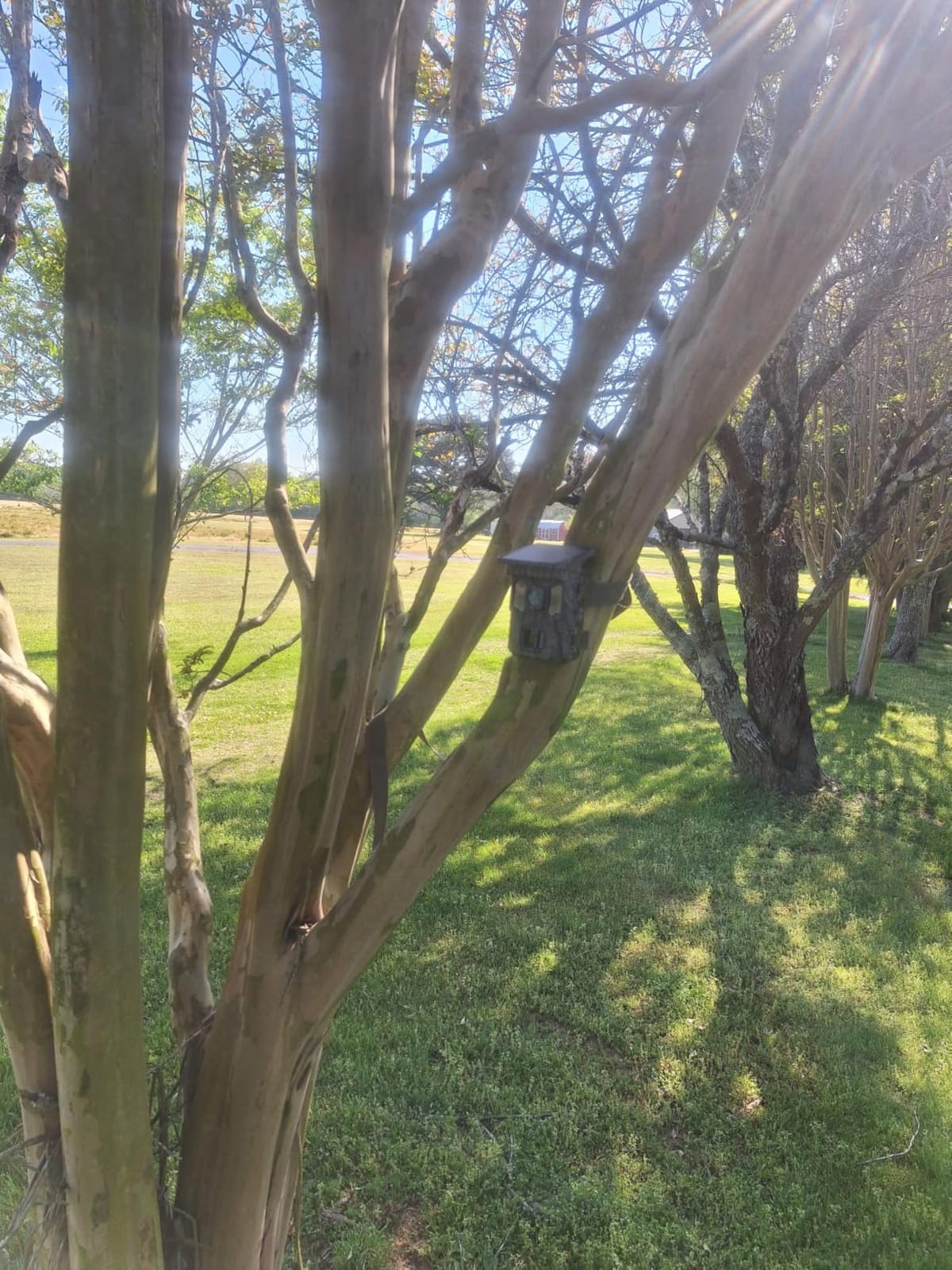
The Misstech is the one with a detachable solar panel, and that single design choice matters more on a real food plot than anything else in the spec list. Owners mount the panel above or beside the camera where it gets direct sun, and report the battery staying at full charge across multi-week runs. One reports pushing 2000 clips in a busy week without the charge dropping.
Imaging is 64MP stills and 4K video through an f/1.6 wide aperture, which is the widest aperture specified anywhere in this roundup and helps in the low light of a pre-dawn or late-evening feeding window. The trigger fires in 0.1 seconds and a five-frame sequence mode captures multiple frames per event.
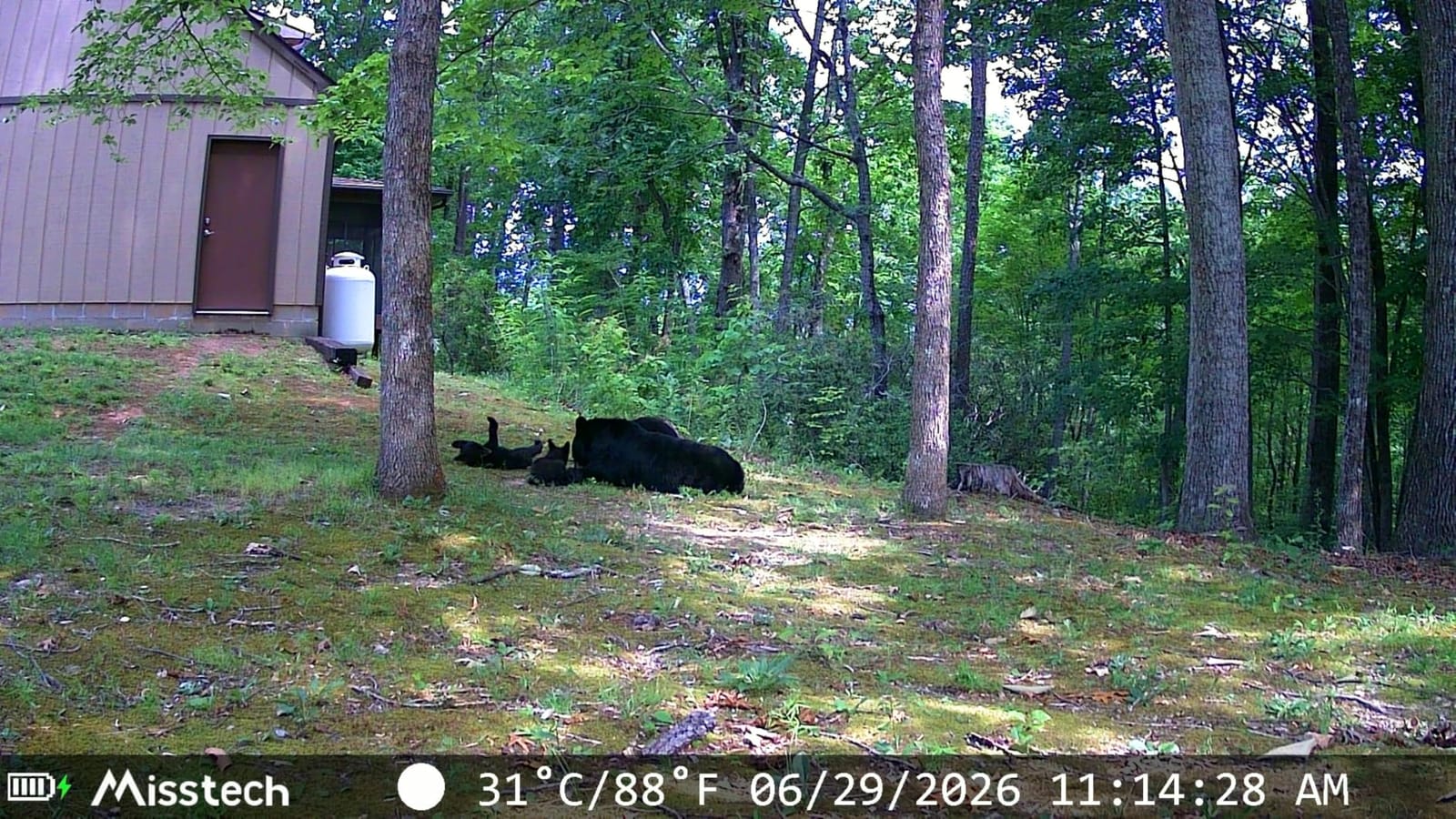
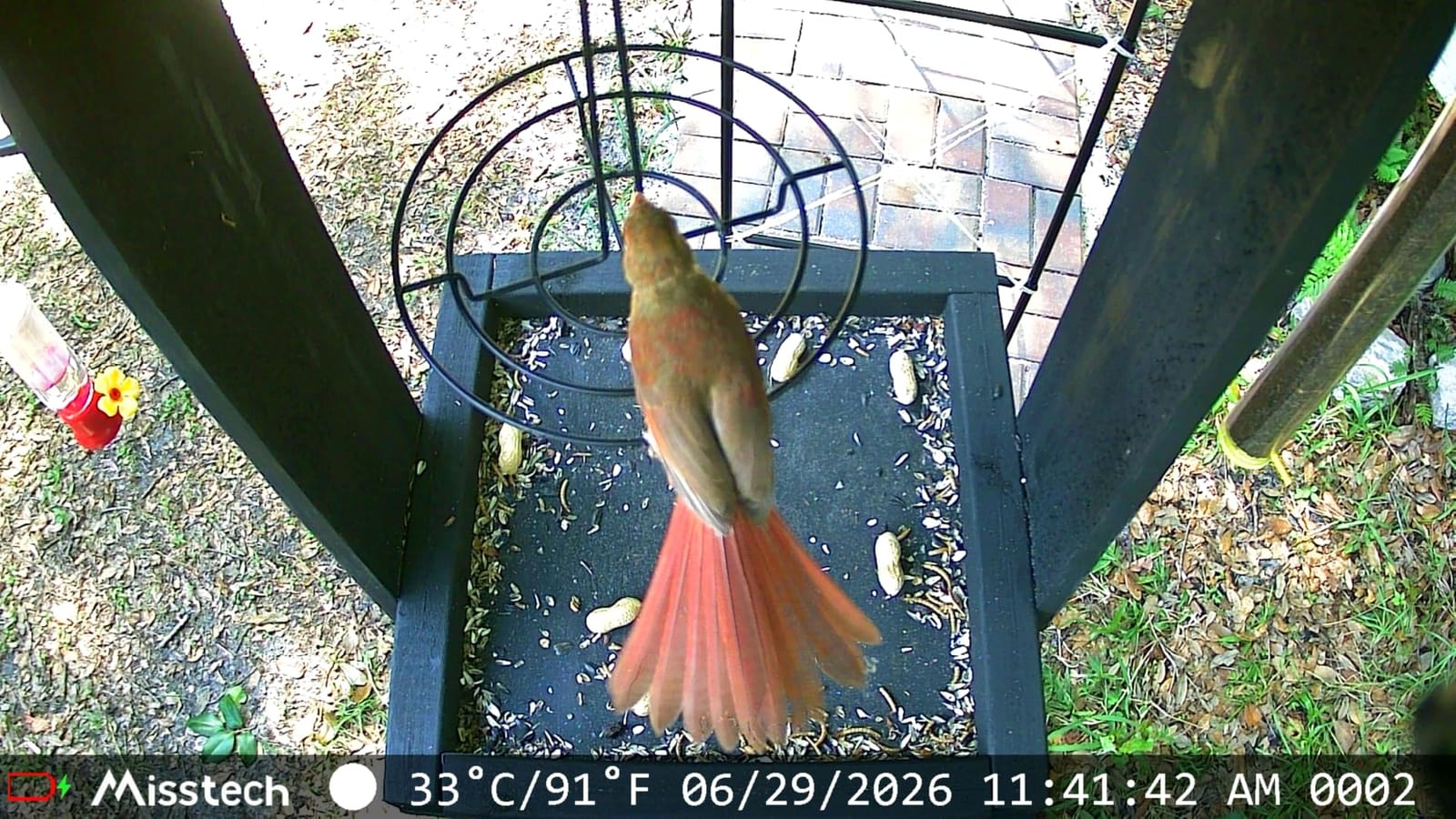
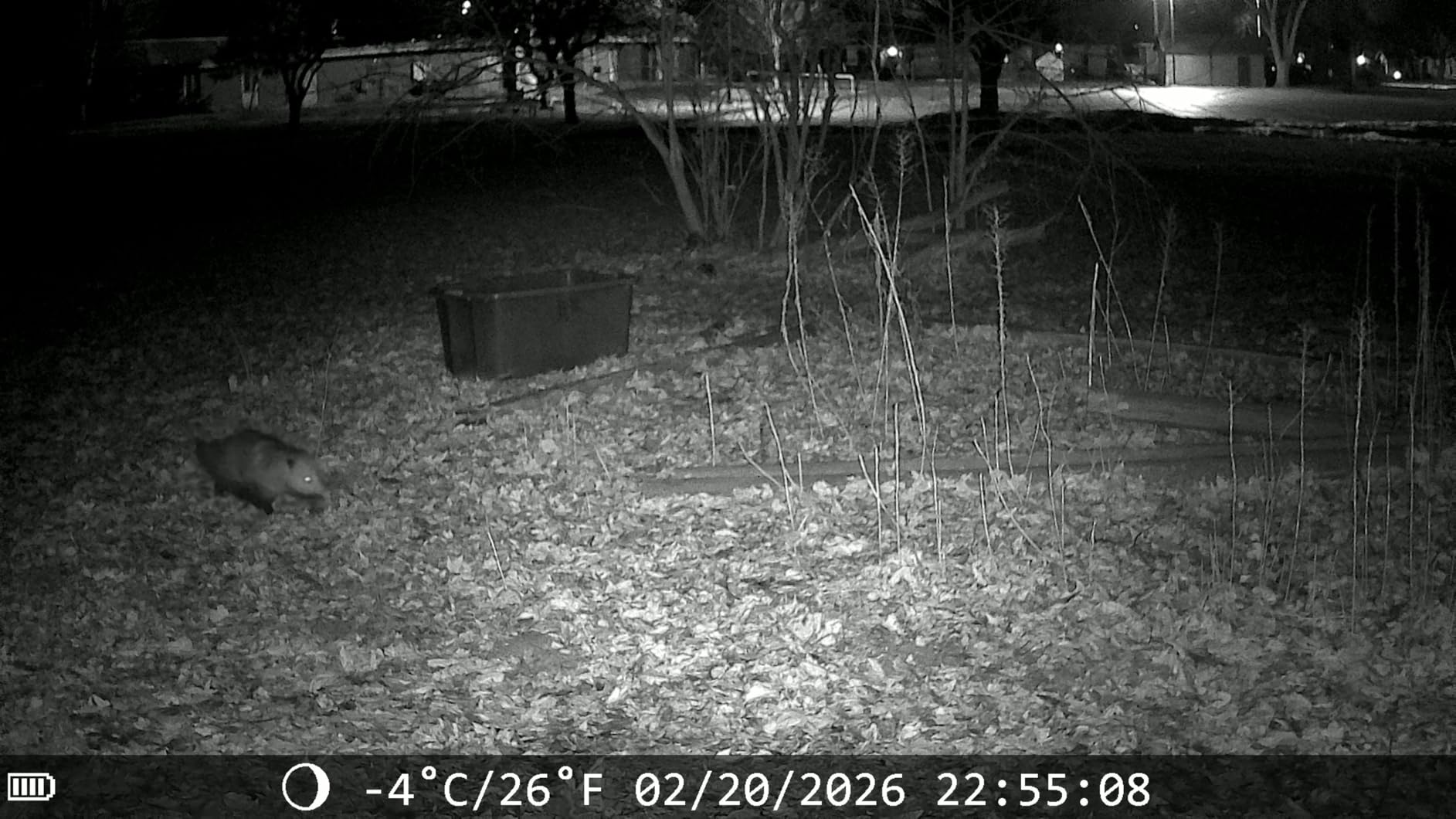
Every clip is stamped with moon phase, temperature and time, which is a small detail that pays off when you are trying to match a deer movement pattern to weather weeks later. MapPin in the Trailcam Go app saves a camera location so you can find a hidden unit again. The 4.4 average and 74% five-star share are the highest of any non-cellular camera here.
Why a remotely mountable panel changes shaded plots
Every fixed-panel camera in this list has the same constraint: the panel sits on the top or back of the housing, so it gets the same light as the camera. If the camera is strapped to a shaded north side of a trunk, the panel is shaded too. With a removable panel you can run a short lead to a branch, a post or an open patch of sky.
That is the single most useful feature for wooded food plots, and it is why the Misstech is worth considering even with its smaller review count.
Where the clip length will cost you
Recording stops at 30 seconds and then there is a 5 to 10 second gap before the camera restarts. On a food plot where a group of does walks through together, that gap can clip the start of the next group.
Files also record as AVI, which needs conversion before editing in software like DaVinci Resolve. And only an 8GB card is included, which is small enough that you will be pulling it more often than with the 32GB models.
7. Assark PH960S Solar Trail Camera 48MP – Best for Tight, Compact Mounts
Assark Solar Trail Camera 48MP 30FPS, WiFi Bluetooth Game Camera with Motion Activated 0.2s Trigger, Night Vision Motion Activated IP66 Waterproof for Wildlife Scouting with 32GB Micro SD Card
6000mAh lithium with fixed solar panel
Under 0.1s trigger within 65 ft
64MP stills, 4K at 30fps
65ft night vision, 18 IR LEDs
Pros
- Held full charge through a snowstorm that covered the panel
- 6000mAh battery with an integrated solar panel
- Ran 2.5 days and 2000 clips under near-continuous recording
- Compact body about half the size of many competitors
- 32GB card pre-installed and bracket included
Cons
- Night illumination is uneven with a bright center and dark edges
- PIR sensitivity falls off beyond roughly 10 yards
- Built-in WiFi hotspot only at about 45 ft
The Assark is the smallest camera in the roundup and it earns its place on a different criterion: making a good mount easier. Reviewers describe the body as roughly half the size of many competing trail cameras, which matters when you are strapping a camera to a sapling or a thin post rather than a mature tree.
Under the hood it is competitive with much larger units. The battery is 6000mAh lithium behind a fixed integrated panel, the trigger fires in under 0.1 seconds within 65 feet, and the day side is 64MP stills with 4K video at 30fps including sound. The 32GB microSD card is pre-installed and expands to 128GB.
Night vision uses 18 IR LEDs at 850nm rated to 65 feet. The interesting field report here is endurance: one owner ran near-continuous 25-second clips for 2.5 days and over 2000 videos, and another reports the camera still at full charge after a snowstorm that covered the panel.
When compact and endurance are the deciding factors
A small body changes what you can mount. You can put it on a young tree, a fence post or a ladder-strung brace without the camera reading as obvious from 60 yards, and you can move it between plots during scouting season without a dedicated mounting post.
Flexibility on the detection settings also helps here. The adjustable PIR with a customizable detection area and sensitivity lets you narrow the trigger zone to the trail a deer actually uses, which cuts the leaf movement that fills a card with empty frames.
What the night footage gives away
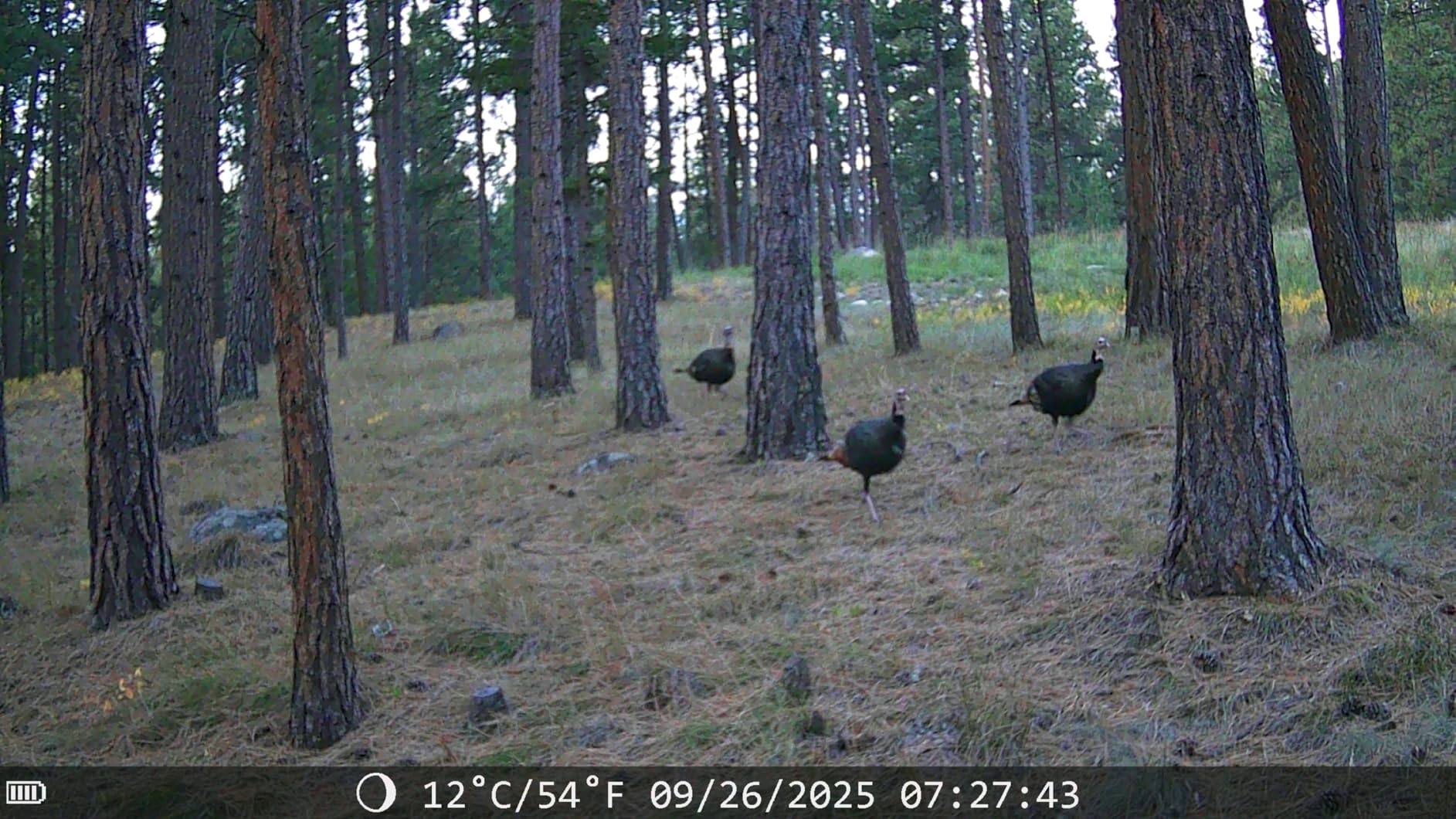
Reviewers describe the night illumination as a bright hotspot in the centre of frame with very dark sides. That is fine when a deer walks straight toward the camera, which is the normal case on a mineral site, and poor when it crosses at an angle.
PIR sensitivity also drops off beyond roughly 10 yards according to owners, so distant animals entering the plot are often missed entirely. A reviewer also notes this model is not offered with a detached solar panel, which removes the option the Misstech offers if your plot is shaded.
8. MagicEagle H1-New 4G Cellular Trail Camera – Best for Remote Plots Without Reliable Signal
MagicEagle® Cellular Trail Camera 4G Wild Game Cameras 13,000 mAh Battery Solar Panel 2K Audible Video No-Glow IR Night Vision IP66 Waterproof for Wildlife Deer Monitoring Home Security (Army Green)
13000mAh battery, up to 3 months standby
4G SignalSync with no SIM needed
90ft no-glow 940nm infrared
Rated -20C to 50C
Pros
- 4.8 average rating with 85% five-star reviews
- 13000mAh battery supports up to three months of standby
- SignalSync automatically selects the strongest of the major carriers
- AI species identification plus real-time live view
- Gravity sensor and A-GPS send an intruder photo if moved
Cons
- Only 5MP stills
- well below the 48-68MP of local WiFi models
- A cellular data plan is required after the free trial
- Solar panel mount hardware is undersized
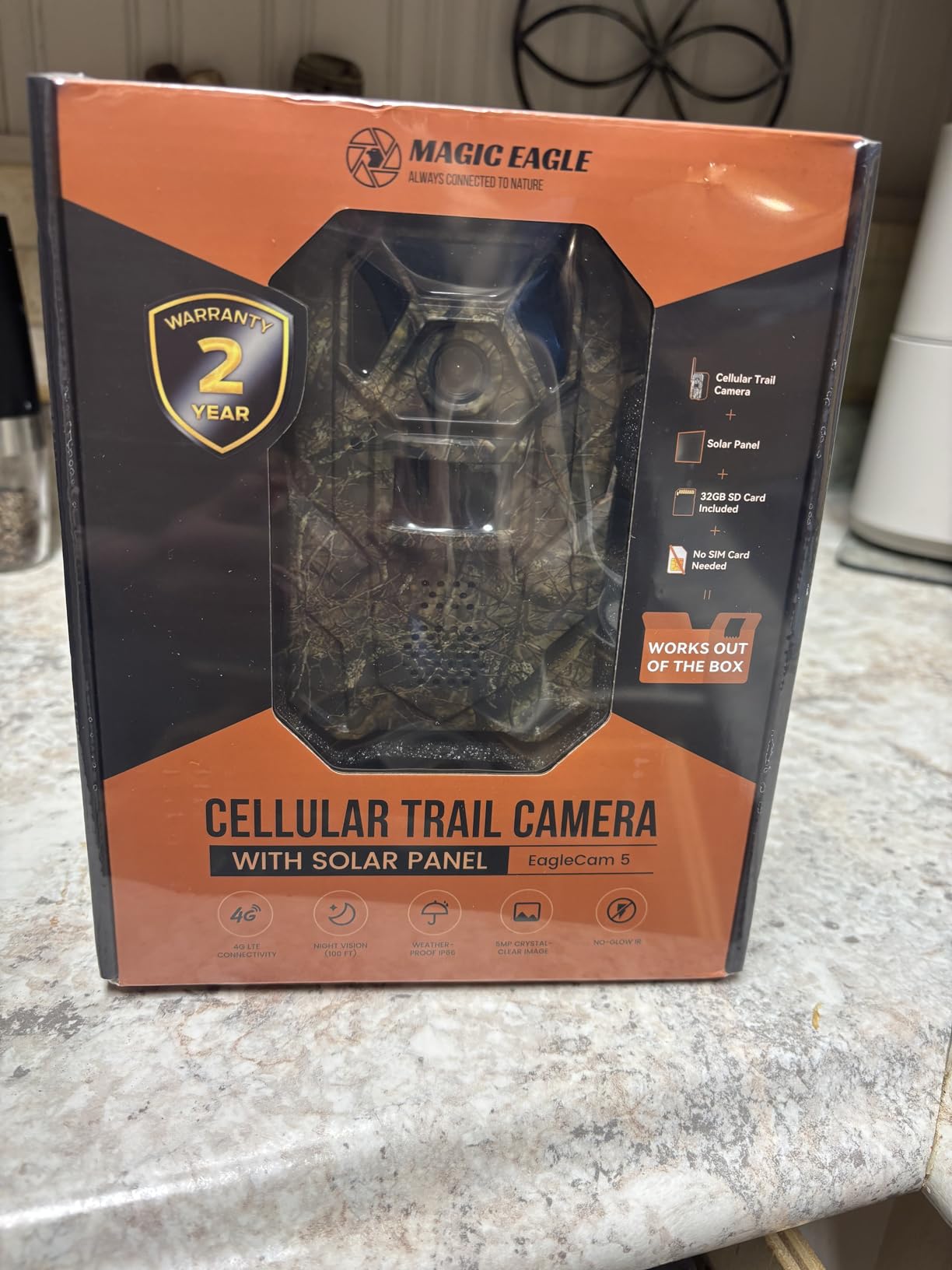
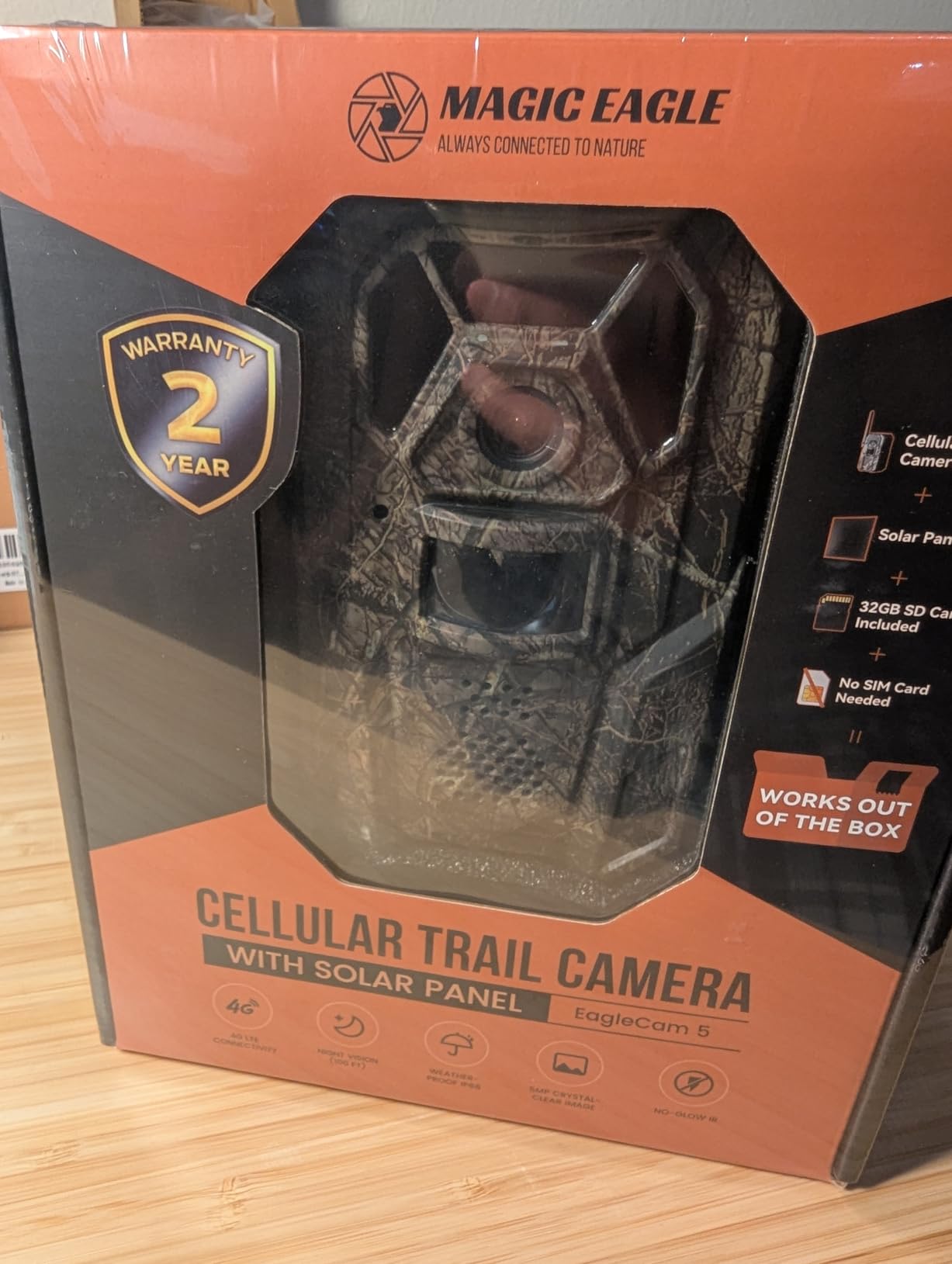
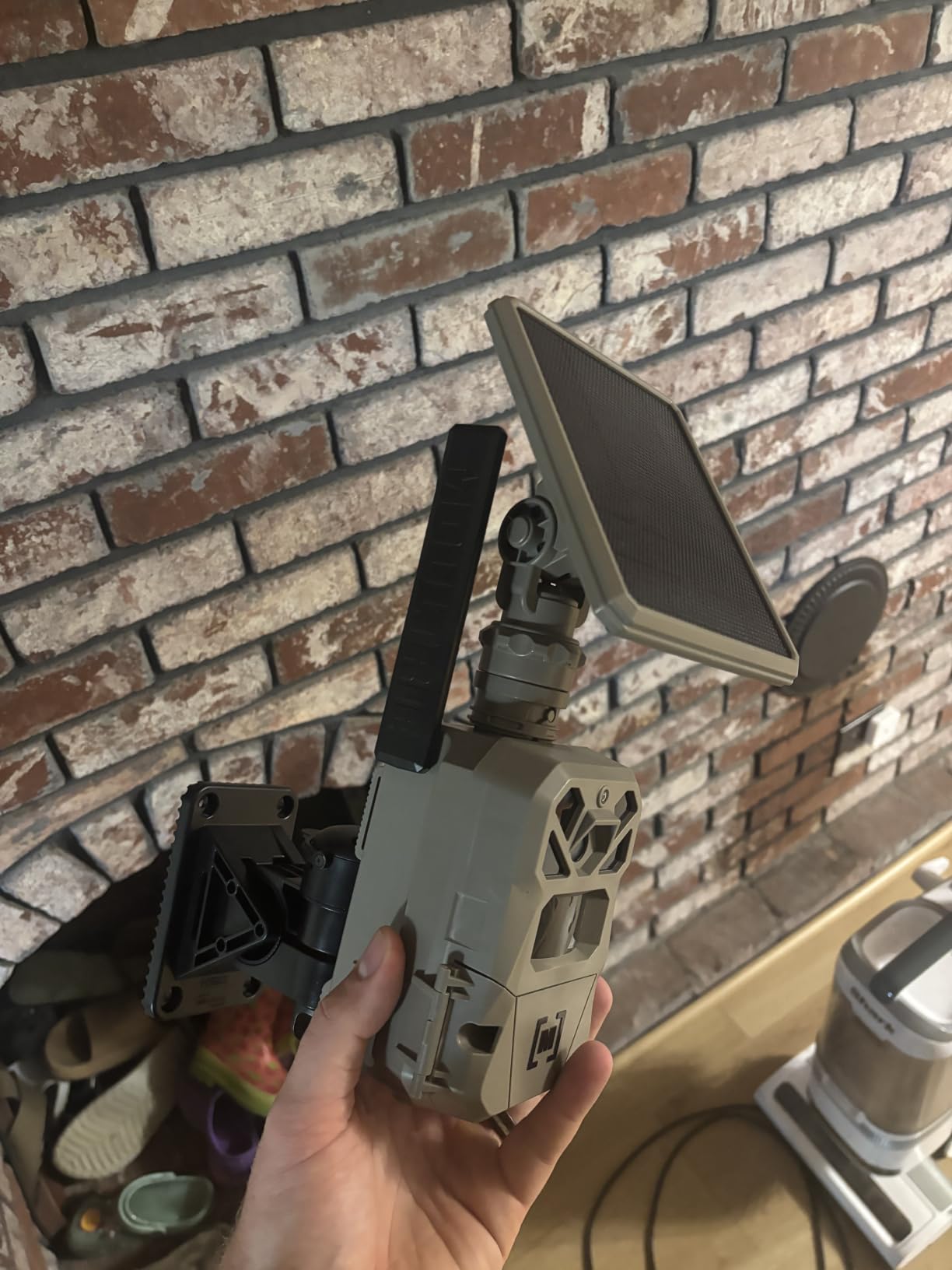
If your plot has no WiFi and no power, the MagicEagle is the camera that solves the problem instead of tolerating it. The SignalSync card is a cloud SIM with no physical SIM to install, and it selects the strongest of the major networks automatically, which means you do not have to guess which carrier reaches your land before you buy.
The 13000mAh battery is the largest here by a wide margin and is rated for up to three months of standby, which is most of a scouting season on a single charge before the panel is even needed. The included solar panel handles the gap. Operating range is rated -20C to 50C, which covers a northern winter.
Night vision is 940nm no-glow infrared out to 90 feet across a 108 degree field of view, and the trigger is 0.3 seconds on a 120 degree PIR. Video is 2K. There is also a gravity sensor and A-GPS that send an intruder photo if the camera is moved, which matters on a plot other people know about.
What the no-SIM carrier switching actually solves
Coverage is the number one reason cellular cameras disappoint. One carrier reaching a tower does not mean your plot does, and a camera that cannot upload while sitting on a full battery is the exact failure reported in hunting forums. Auto-selecting the strongest available network removes the guesswork and removes a reason to drive out and test bars before hunting season.
Live view without waiting for a file to transmit is the other practical gain. You can confirm the camera is pointed at the mineral site from the cab instead of waiting for a memory card.
What you give up for that convenience
5MP stills is a real drop. The local WiFi models here capture 48MP to 68MP, and the difference is obvious when you are trying to read a buck’s rack or identify a doe by a spot on her flank. Live view compensates, but a downloaded file does not.
A data plan applies once the included trial data runs out, so the running cost is a subscription rather than a one-time purchase. The bundled solar panel mount also draws complaints about undersized hardware, and setup has steps the manual needs to explain clearly.
9. Moultrie Edge Solar 40MP Cellular Trail Camera – Best for Multi-Camera Fleets
Moultrie Edge Solar Cellular Trail Camera – Integrated Solar, 40MP
Adjustable-angle integrated solar panel
0.4s trigger, 100ft PIR
40MP stills, 1080p with audio
100ft low-glow infrared flash
Pros
- Only camera here from a long-established hunting brand
- Integrated solar panel with adjustable angle
- Auto-connects to the strongest of four major networks
- AI buck detection cuts false alerts
- Easy Aim mount with real-time preview
Cons
- Subscription required for cloud storage and on-demand video
- 0.4s trigger is the slowest in this roundup
- Photo quality is fair at distance and it triggers on wind-blown vegetation
The Moultrie Edge Solar is the name buyers recognise from hunting catalogs, and it holds the number ten sales rank in Hunting and Trail Cameras. It is also the only camera in this roundup from a brand with a multi-decade record in game cameras, and several owners run three or four of them across their acreage.
The solar panel is integrated with an adjustable angle, which is a different solution from the Misstech’s detachable panel: rather than running a lead to better light, you tilt the panel toward the sun where the camera sits. On a post-mounted camera that works well, and it is the option to consider when the camera is already in open sun.
Stills are 40MP with 1080p video including audio, low-glow infrared flash covers 100 feet, and AI buck detection sends high-resolution alerts instead of every moving branch. The Easy Aim mount provides a real-time preview so you can frame the shot before you walk away. It weighs 2.5 pounds and ships with a battery pack, mount and strap.
What matters when you run several cameras
Fleet setups change the buying question. A subscription cost multiplied across four cameras running a season is the dominant line item, and the four-carrier auto-connect removes the SIM management that normally eats time on a multi-camera install.
Reviewers running several units report they rarely run out of battery and that the cameras work in all weather. The adjustable panel angle means you can compensate for a mount on each one individually rather than accepting whatever light the position gives you.
Why the trigger speed matters here
At 0.4 seconds this is the slowest trigger in the roundup, and that is the number to think about if your plot is open ground rather than a trail. A 0.4 second delay on a buck moving laterally across a wide food plot produces a frame of a deer halfway out of the shot. On a mineral site where animals walk toward the camera, it matters much less.
Real-time streaming is also not yet available on this model, and photo quality is described as fair at distance. It also triggers frequently on wind-blown vegetation, so set the sensitivity down before you leave it for the season.
10. Oculview 4G LTE Cellular Camera – Best for True Live Streaming
Oculview 4G LTE Cellular Trail Cameras, 360° 2K Live Streaming Game Camera, SIM Card Included, Low-Glow Night Vision, Solar Powered, Instant Alerts, Two Storage Ways, No WiFi Needed for Hunting&Trail
6W adjustable solar panel
2K live streaming with pan and tilt
850nm low-glow IR to 100 ft
Two-camera pack with SIM included
Pros
- Only camera in the group with true 2K live streaming to a phone
- 336-degree pan and 90-degree tilt covers far more of a plot
- SIM card included with major carrier access
- 6W adjustable panel needs about 10 minutes of direct sun
- Owners report working on 1-2 bars from a distant tower
Cons
- Stacked costs from card plus subscription and separate cloud storage
- Setup instructions are poorly written
- IP65 rating is one step below the IP66 on most others
The Oculview is the only camera here you can pan, tilt and zoom from your phone, and on a food plot that is a genuine advantage. A 336 degree pan and 90 degree tilt with 4x digital zoom covers far more of a plot than a fixed lens, and the 6W adjustable solar panel is the largest panel wattage specified in this roundup. Owners report it needs about ten minutes of direct sun for a full day.
It ships as a two-camera pack, so if you have two plots or a plot plus an access trail, this is one order rather than two. The SIM card is included and connects to Verizon, AT&T or T-Mobile, and reviewers report the link holding on one or two bars from a tower a long way off.
Action time is 0.2 seconds across a 120 degree PIR, night vision is 850nm low-glow to 100 feet with a built-in spotlight, and video is 2K MP4. You can store to a microSD up to 128GB or to cloud storage. The card is not included.
What pan and tilt actually gives you on a plot
A fixed camera has one blind spot, and on a food plot it is usually the approach a deer takes from the direction you did not expect. Being able to swing the lens toward a distant edge, or zoom on a group at a mineral site, turns one 90 degree cone into coverage of most of the field.
The 6W panel is also the strongest charging input here, which is the specification that decides whether a camera survives a run through a low-sun month. Reviewers reporting that ten minutes of direct sun covers the day is consistent with that.
Where the cost and software get in the way
This is the most expensive running total in the roundup once you count the microSD card purchase, the monthly subscription after the seven-day trial and the separate cloud storage fee. For a single camera left on a plot, that stack is hard to justify against a local hotspot model.
Setup documentation is also the weakest here, and one buyer was locked out of the app after a password reset with no way back to the camera. The IP65 rating is a step below the IP66 on every other camera in the list, and 4.1 with 13% one-star reviews is the lowest-rated cellular option of the three.
Solar Power Reality Check: Panel Wattage, Shade and Winter
A solar panel on a food plot camera is not a power source. It is a trickle charger with a job to do between visits, and the gap between what the listing implies and what the panel actually collects is where most disappointing cameras come from. Every panel in this roundup is fixed to the housing except the Misstech, so it collects exactly the light falling on the camera.
Full sun on an open food plot is the easy case. The panel sees direct light for most of the day and the internal battery stays at full charge indefinitely, which is why every camera here claims multi-week or multi-month runtimes. Partial shade under a timber edge is where the arithmetic changes, and the reason many cameras end a season with a low battery that a reviewer blames on the camera rather than the sun.
Two numbers in the list tell you most of the story. Battery capacity decides how many days the camera survives a cloudy stretch, and panel wattage decides how quickly it refills. The Oculview at 6W and roughly ten minutes of direct sun a day is the most generous input here. The rest run fixed panels with no wattage stated, and the Oculview’s is the only figure you can actually compare.
Winter is the harder case again. A panel in December collects a fraction of the light it collected in June, so a camera that runs all summer on solar in the open may need a battery top-up in midwinter. The MagicEagle’s -20C to 50C operating range and three-month standby rating is the one spec here that speaks directly to cold-weather deployment. For any other camera, treat the winter claim as untested rather than proven.
This is also the answer to the most common forum question in this category, which is whether a solar panel makes alkaline batteries unnecessary. It does not. Most of the solar cameras here run an internal lithium pack, and the alkaline slot is a backup, not a primary. A separate 12V panel feeding AA cells is a different design entirely, and one of the two forum reports on long battery life describes a SPYPOINT camera with a built-in solar battery that ran for two years in the woods sending photos daily with no maintenance at all, which is the counter-example to the usual drain complaints.
Where to Put a Solar Camera on a Food Plot?
Mount the camera about 3 to 4 feet off the ground and point it straight down the trail the deer use, not across the open plot. Deer move along edges rather than through the middle of a clearing, so an edge-facing camera catches far more than a centre-facing one at the same detection range.
Set it 10 to 15 yards back from a mineral or bait site, offset to one side rather than directly opposite it. Directly across from a mineral site you get a head-on frame of a deer’s face, which is the least useful identification shot. Angled in from the side you get a full side profile with the rack visible, and that is the frame that tells you what you are looking at.
Watch the wind and the sun. Position downwind of the mineral site where you can, because a camera that smells like the hunter teaches every deer in the area to avoid it. At the same time, make sure the top panel is not shaded by the trunk or the branch you strapped to, since the panel and the camera share whatever light reaches that spot.
Clear vegetation within the detection zone before you leave. A flexible detection area and lowered PIR sensitivity are the settings that matter, but neither helps if a branch 8 inches from the lens is being blown across the frame all night. Clear a corridor roughly 6 feet wide in front of the lens.
On bait, the answer people usually want is a mineral or corn rather than an attractant spray near the camera. A camera pointed at a fresh mineral site gets frames of the animals already committed to the spot, which is the data you are actually buying the camera for. Sprays placed close to the lens produce a lot of frames of very little.
Plot prep feeds directly into what the lens sees. Getting a level, well-drained seedbed with the right equipment, covered in our picks for the best land levelers for food plots and our guide to the best no till drills for food plots, decides where the deer concentrate and therefore where the camera earns its mount. Level the strip along the trail edge first, mount the camera facing along it, and you get more usable frames per dollar of camera cost than any resolution upgrade delivers.
Battery Chemistry, Storage and Connectivity Choices
Use lithium, not alkaline, in any camera here that takes AA cells. Moultrie Edge users in the field report the camera works reliably only on lithium, and alkaline failures are the single most common cause of a camera that powers on and then does nothing. Alkaline voltage sags in cold weather faster than lithium does, and a camera drawing solar trickle current needs the flatter discharge curve. The XTU is the model where the AA slot is genuinely useful, because it accepts solar, USB-C and DC 6V at the same time.
On storage, every camera here uses microSD, and the format questions people ask are answered simply. Cards up to 128GB are supported everywhere, and some models accept 256GB. Use a card rated for sustained write speed rather than the cheapest card on the shelf, because a full card of 4K clips is a sustained write, and card failure in a remote plot means the season is over. Cards are included with the CEYOMUR, MAXDONE, VIDVIS, Assark and MagicEagle. You buy one separately for the iZEEKER, XTU and Misstech, which ship with nothing or only 8GB.
On connectivity, there are three distinct categories and they are not interchangeable. Local WiFi hotspot models give you app previews within 30 to 55 feet and nothing further; seven of the ten cameras here are in this group and none of them charge a monthly fee. SD card models give you no wireless at all and are the most reliable of the three because there is no software to fail. Cellular models send photos and video to your phone from anywhere, and both of them here need a data plan once their trial allocation is used up.
Which one you want depends on how far you drive. A camera you visit weekly costs nothing extra. A camera on a plot two hours away that you want to check from the couch costs a subscription every month whether or not there is a buck on it, and that recurring line is what moves a cellular camera from a scouting tool into a monthly bill.
One note before you hang anything. A growing number of states are restricting trail cameras on public land, and rules about baiting and camera placement vary by state and by whether the ground is public or private. Check your state wildlife agency before mounting on land that is not clearly yours, and remove the camera before the season ends rather than leaving it up year-round.
Frequently Asked Questions
Which solar-powered trail camera is the best?
The CEYOMUR CY95 is our best overall pick for food plots, with a 5200mAh battery, a 0.1 second trigger across three PIR sensors and the largest review base we analysed. The MAXDONE PH970S matches it with a larger 6000mAh battery and a five-shot burst, and the MagicEagle H1-New is the choice when the plot is remote and you need photos to arrive on your phone over cellular.
What are the best solar trail cameras for hunting?
For general hunting use, the CEYOMUR CY95 and MAXDONE PH970S lead for trigger speed and battery capacity at 0.1 seconds. The Assark PH960S is the most compact option, the Misstech SV-TCKW is the only one with a remotely positionable solar panel, and the Moultrie Edge Solar is the pick if you run several cameras across multiple plots and want cloud storage.
Are there live feed trail cameras?
Yes. The Oculview is the only model here with true 2K live streaming, a 336 degree pan and a 90 degree tilt you can control from your phone. The MagicEagle H1-New and the Moultrie Edge Solar also offer app alerts and remote viewing over 4G cellular, though the Moultrie does not yet support real-time streaming. All three need a data plan after their trial data runs out.
How long do solar trail camera batteries last?
It depends on the cell and the light. A 5200mAh or 6000mAh internal lithium battery in an open plot will hold charge indefinitely on a good panel. In partial shade or through winter, expect the battery to carry the camera through cloudy stretches rather than run forever, which is why the AA backup slots and the removable panel on the Misstech matter.
Do solar trail cameras work in winter?
They do, but panel output drops sharply in low-sun months. The MagicEagle H1-New is the only camera here with a published cold-weather operating range of -20C to 50C and a standby rating of up to three months. For any other model, plan on a battery top-up in midwinter if your plot is shaded, and use lithium rather than alkaline cells because alkaline voltage sags faster in cold.
Why are my trail camera batteries dying so fast?
Three causes account for most of it. Immediate-upload settings on a weak cellular signal drain a battery faster than a panel can refill it. Alkaline cells lose voltage quickly in cold weather and are the wrong chemistry for a camera on trickle solar charge. And a panel shaded by the trunk or branch you strapped to collects almost nothing, so match the panel to the light at that specific mounting spot.
How much cellular data does a trail camera use?
A standard 20MP photo is a few megabytes, and a 2K video clip is far larger, so a busy plot generates more data than a quiet one. That is why the cellular models here cap photos by quality and offer lower-resolution settings, and why the plan tiers differ by resolution. Check the plan terms for the resolution cap before choosing one for a heavily trafficked mineral site.
How far can a trail camera detect deer?
Detection ranges here run from 65 to 100 feet depending on the model, but detection range and usable photo range are not the same thing. PIR sensitivity falls off with distance on several models, the Assark drops off beyond roughly 10 yards, and a night IR fill light reaches a different distance than the daytime sensor. Expect usable identification well inside the quoted detection figure.
Where should I place a trail camera on a food plot?
Mount it 3 to 4 feet high, 10 to 15 yards back from a mineral site, and angle it to catch a side profile rather than a head-on shot. Point it down the trail deer actually use along the plot edge, position it downwind where you can, and clear a corridor of about 6 feet in front of the lens so wind-blown vegetation does not fill your card.
What format should an SD card be for a trail camera?
Use a microSD card, and check the maximum capacity for your specific model because listings are inconsistent. Cards up to 128GB are supported everywhere and some models take 256GB. Choose a card rated for sustained write speed rather than the cheapest available, since a full card of 4K clips is a continuous write and card failure on a remote plot ends the season.
Is Moultrie or another brand better for food plots?
It depends on what you are optimising for. Moultrie is the only established hunting brand here and is the best choice for running several cameras with cloud storage. The CEYOMUR, MAXDONE, Assark and Misstech offer more battery capacity and megapixels for less money, and the MagicEagle is the strongest pick for a remote plot that needs cellular. The forums consistently reward buyers who report honestly on alkaline battery failures, so read the weaknesses before you buy.
Why are states banning trail cameras?
Restrictions have grown around privacy concerns, baiting practices and cameras left in place year-round on public land. Rules vary by state and by whether the ground is public or private, and some states limit where a camera can be mounted. Check your state wildlife agency before mounting on land that is not clearly yours, and take the camera down at the end of the season.
The Best Solar Powered Trail Camera for Your Food Plot
The CEYOMUR CY95 is the pick for most people reading this in 2026. It combines a 5200mAh battery, a 0.1 second trigger across three PIR sensors, 850nm night vision and a pre-installed 32GB card, and it costs less than the dedicated hunting brands while doing more of what a food plot camera actually needs. If your plot is shaded, take the Misstech with its remotely positionable panel. If it is genuinely remote, take the MagicEagle and accept the subscription.
Whatever you choose, get the mount right before you get the specs right. Height, angle and distance from the mineral site decide more usable photos than another ten megapixels will. Our broader guide to cellular trail camera systems covers the data plan side if you are going the cellular route.