
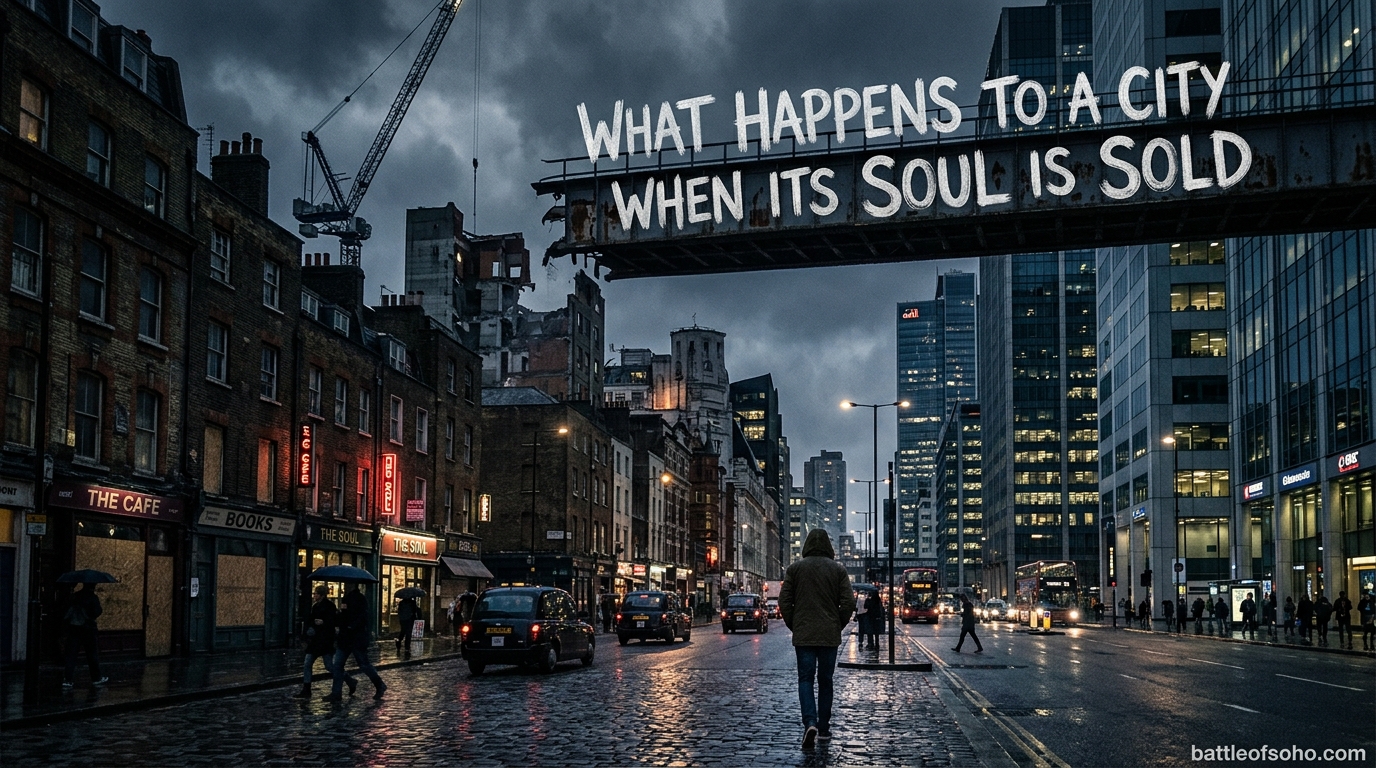
Every city has a soul. It lives in the corner deli where the owner knows your order by heart. It echoes through the music pouring out of a basement club at 2 AM. It sits in the decades-old laundromat, the family-owned bookstore, the murals painted by local kids on brick walls.
But what happens to a city when its soul is sold? The answer unfolds in neighborhoods across the world, from Brooklyn to Brixton, from San Francisco’s Mission District to Miami’s Little Havana. The process has a name, and it touches millions of lives every year: gentrification.
When a city sells its soul, it trades authenticity for affluence. It swaps community for commerce. The people who gave a neighborhood its character get priced out, replaced by chains, luxury condos, and a homogenized version of urban life that could exist anywhere. In this article, our team breaks down exactly what happens when a city undergoes this transformation, why it matters, and whether anything can be done to preserve what makes a place feel alive.
Table of Contents
What Does It Mean When a City Sells Its Soul?
A city’s soul is its identity, the living culture shaped by generations of residents. It is the mix of languages, foods, music, traditions, and relationships that make one place fundamentally different from another. When we say a city has “sold its soul,” we mean it has sacrificed that unique identity in exchange for development, investment, and a polished but generic version of itself.
The mechanism behind this transformation is gentrification. If you have ever wondered what is it called when rich people move into poor neighborhoods, that is exactly it. Gentrification is the process by which more affluent residents move into a historically lower-income area, driving up property values and rents until the original residents can no longer afford to stay.
The term was coined in 1964 by British sociologist Ruth Glass, who noticed that working-class neighborhoods in London were being taken over by middle-class professionals. She observed that once the process starts, it tends to continue “until all or most of the original working-class occupiers are displaced and the whole social character of the district is changed.”
Six decades later, her observation reads like a prophecy fulfilled. What began as a modest demographic shift has accelerated into a global phenomenon reshaping cities on every continent.
What Happens to a City When Its Soul Is Sold: The Transformation Process
Understanding what happens to a city when its soul is sold requires looking at the process step by step. Gentrification rarely happens overnight. It follows a pattern, and each stage brings profound changes to the neighborhood and its people.
Stage 1: The Artists Arrive
It almost always starts the same way. Artists, musicians, and young creatives move into a neighborhood because rents are cheap. They are looking for affordable studio space, larger apartments, and a community of like-minded people. Their presence brings galleries, cafes, and a certain energy that makes the area feel exciting and fresh.
This first wave is not gentrification itself. It is the precondition. The artists do not intend to displace anyone. They are simply looking for a place they can afford to live and work. But their presence starts to change how outsiders perceive the neighborhood.
Stage 2: Investors Take Notice
Once an area gains a reputation for being “up and coming,” real estate investors and developers take notice. Property that was inexpensive suddenly looks like an opportunity. Buyers purchase buildings, renovate them, and flip them for profit. Rents begin to climb.
At this stage, you start seeing new businesses open. Artisanal coffee shops, boutique fitness studios, and upscale restaurants replace the bodegas, dive bars, and family restaurants that served the community for decades. The neighborhood is changing, and the pace is accelerating.
Stage 3: The Professionals Follow
With the neighborhood now considered trendy and safe, young professionals with higher salaries move in. They are drawn by the restaurants, the bars, the proximity to downtown, and the sense of living somewhere with character. Their higher incomes support the new businesses and justify even higher rents.
Property owners see an opportunity to charge more. Long-term tenants on month-to-month leases or without rent protections face sudden increases. Some landlords resort to harassment or neglect, trying to push out existing tenants to make room for those who can pay double or triple the rent.
Stage 4: Displacement and Erasure
This is where the soul gets sold. The original residents, the small business owners, the artists who started the transformation, and the working-class families who built the community can no longer afford to stay. They are forced to leave, often for suburbs or cheaper cities far from their jobs, their schools, and their support networks.
In their place come corporate chains, luxury apartments, and a new demographic of residents who have no connection to the neighborhood’s history. The streets look cleaner. The buildings look newer. But something essential is gone. The place looks the same geographically, but it is no longer the same place.
The Economic Earthquake: Rising Rents and Displacement
The economic mechanics of gentrification are straightforward but devastating. When demand for housing in a neighborhood increases faster than supply, prices go up. Property owners raise rents, home values appreciate, and property taxes climb. For those on fixed incomes or earning working-class wages, even a modest increase can make a home unaffordable.
The National Community Reinvestment Coalition (NCRC) conducted one of the most comprehensive studies of gentrification in the United States. Their research, covering fifty years of data, found that approximately 15% of urban neighborhoods show signs of gentrification. While the study noted that gentrification remains uncommon overall, it is increasing, and when it does happen, the consequences for existing residents are severe.
According to the NCRC report, thousands of census tracts across major American cities experienced intense gentrification between 2000 and 2013. The most affected neighborhoods saw significant displacement of Black and Hispanic residents, while white residents moved in at rates far exceeding the citywide average.
Consider New York City. A report on hyper-gentrification in NYC documented how neighborhoods like the Lower East Side, Williamsburg, and Harlem transformed dramatically over two decades. Rents in some areas more than doubled. The people who worked in the restaurants, bars, and shops serving the new residents could not afford to live anywhere near their jobs.
San Francisco tells a similar story, perhaps even more extreme. The tech boom of the 2010s brought thousands of high-earning workers to the Bay Area. Median rents skyrocketed to some of the highest in the nation. Longtime residents of the Mission District, a historically Latino neighborhood, were displaced in waves. Tent encampments grew while luxury condos rose blocks away.
These are not isolated incidents. They are the economic reality of what happens when a city sells its soul. The math is brutal: when a bartender makes $45,000 a year and the average one-bedroom apartment costs $3,500 a month, something has to give. The person either leaves or becomes homeless.
Cultural Erasure: When the Heart Leaves the Neighborhood
Money is only part of the story. The deeper loss, the one people feel in their bones, is cultural. When a city sells its soul, it loses the traditions, relationships, and shared identity that made it worth living in.
Small businesses are often the first casualties. The family-owned restaurant that served the same neighborhood for forty years cannot compete with a landlord who wants to triple the rent. The independent bookstore, the record shop, the tailors who knew every customer by name, they all face the same pressure. When they close, they are usually replaced by national chains that look identical in every city.
Forum discussions on Reddit’s urban planning communities capture this loss in personal terms. Users describe watching their favorite local spots vanish one by one. The corner store where they bought candy as children becomes a vape shop. The diner where their grandparents had their first date becomes a bank branch. Each closure feels like losing a piece of personal history.
The displacement of artists and the creative class deserves special attention. These are the people who gave the neighborhood its cultural energy in the first place. They painted the murals, played in the bands, organized the street festivals, and made the area a place people wanted to visit. When they are priced out, that creative energy goes with them.
Reddit users on r/urbanplanning have debated this cycle extensively. Many point out that cities need their artists, their working class, and their service workers to function. Without them, the city becomes a hollow shell, beautiful but lifeless, like a museum where nobody actually lives.
One commenter described it perfectly: “A city without artists is just a collection of buildings with people sleeping in them.” That is what cultural erasure looks like. The buildings remain, but the soul is gone.
The Four Types of Gentrification
Not all gentrification looks the same. Researchers have identified distinct patterns, and understanding them helps explain why the process unfolds differently from one neighborhood to another. If you are wondering what are the 4 types of gentrification, here is a clear breakdown:
1. Expensive Gentrification (also called Super Gentrification): This occurs in already affluent neighborhoods where ultra-wealthy buyers push prices to extraordinary levels. Think of parts of Manhattan or London’s Notting Hill. The area was never poor, but the concentration of extreme wealth pushes out even upper-middle-class residents.
2. Rapid Gentrification: This is the fast-track version, where a neighborhood transforms within five to ten years. It often happens when a major employer, transit line, or policy change suddenly makes an area desirable. The speed of change gives existing residents almost no time to adapt or organize.
3. Slow Gentrification: This type unfolds gradually over decades. The neighborhood changes bit by bit, and the displacement is less dramatic at any single moment. However, over twenty or thirty years, the cumulative effect is just as severe. The original community is slowly replaced, and by the time people notice, the transformation is complete.
4. Spiraling Gentrification (Hyper-Gentrification): This is the most extreme form, where an already gentrified neighborhood undergoes a second or third wave of investment. Property values spiral upward continuously, pushing out even the professionals who arrived in earlier waves. New York’s SoHo and parts of San Francisco exemplify this pattern.
Each type shares the same core dynamic: existing residents and businesses are displaced by those with greater financial resources. The difference is speed, intensity, and who gets pushed out at each stage.
Cities That Sold Their Souls: Real-World Case Studies
Theory only goes so far. To truly understand what happens to a city when its soul is sold, you have to look at real places that have lived through it.
New York City: The Capital of Hyper-Gentrification
New York is perhaps the most documented case of urban soul-selling in modern history. Writer Jeremiah Moss chronicled this transformation in his work “Vanishing New York,” cataloging the loss of beloved institutions across the city. His account describes how hyper-gentrification replaced quirky, independent businesses with corporate chains and luxury retail.
The Lower East Side, once a haven for immigrants, artists, and counterculture movements, became one of the most expensive neighborhoods in Manhattan. Iconic music venues closed. Family-owned restaurants shuttered. The lunch counters and diners that served working-class New Yorkers for generations disappeared, replaced by upscale establishments catering to a very different clientele.
Brooklyn followed the same trajectory. Williamsburg transformed from an industrial, working-class neighborhood into one of the trendiest and most expensive zip codes in America. The artists who made it cool in the early 2000s were largely gone by the 2010s, priced out by the very culture they helped create.
San Francisco: When Tech Eats a City
San Francisco’s gentrification story is inseparable from the tech industry. Starting around 2010, an influx of highly paid technology workers flooded the city. Salaries in the hundreds of thousands of dollars became common, and the housing market responded accordingly.
The Mission District, a historically Latino working-class neighborhood, became ground zero. Families who had lived there for generations received eviction notices. Rents doubled and then doubled again. The neighborhood’s murals, taquerias, and community centers faced existential threats as speculative capital poured into real estate.
The human cost was staggering. Teachers, nurses, firefighters, and service workers could not afford to live in the city where they worked. Homelessness surged. The city became a symbol of the extremes that gentrification can produce: enormous wealth existing alongside desperate poverty, separated by just a few blocks.
Miami: Climate Gentrification in Action
Miami represents a newer and increasingly important variant of the phenomenon. Climate gentrification occurs when environmental changes drive wealthier residents into historically poorer neighborhoods, typically because those areas are at higher elevation and less vulnerable to flooding.
In Miami, historically Black neighborhoods like Little Haiti and Liberty City sit on higher ground than coastal areas threatened by sea-level rise. Developers recognized this geographic advantage and began buying land, building luxury developments, and marketing these areas as safe from climate impacts.
Longtime residents, many of them Black and low-income, found themselves facing rising rents and property taxes. They were being displaced not by traditional economic forces alone, but by the intersection of real estate speculation and climate change. It is a preview of what many coastal cities will face in the coming decades.
London: A Global Pattern
London confirms that this is not just an American story. Boroughs like Hackney, Brixton, and Tower Hamlets underwent massive transformation as international capital flooded the London property market. Working-class families, many of them from immigrant communities, were pushed to the outer edges of the city or out entirely.
Brixton, once the heart of London’s Afro-Caribbean community, saw its markets, music venues, and cultural spaces threatened by rising costs. The neighborhood that inspired generations of British music and culture became increasingly unrecognizable to the people who built it.
The New Frontier: Climate Gentrification
Climate gentrification deserves closer attention because it represents the future of urban displacement. As sea levels rise, wildfires intensify, and extreme weather becomes more common, the geography of desirable real estate is shifting.
In Miami, the pattern is already clear. Wealthy buyers are moving inland to historically lower-income, higher-elevation neighborhoods. Property values in these areas spike, and longtime residents face displacement driven by environmental factors they had no role in creating.
This is not just a Miami problem. Coastal cities worldwide face similar dynamics. In New Orleans, neighborhoods on higher ground have seen property values surge since Hurricane Katrina. In Los Angeles, areas less vulnerable to wildfire risk command premiums that push out existing residents.
The cruel irony of climate gentrification is that the communities most vulnerable to displacement, low-income neighborhoods and communities of color, are often the least responsible for the carbon emissions driving climate change. They bear the cost of a crisis they did not create, while wealthier residents use their resources to escape it.
Warning Signs: How to Tell When a City Is Losing Its Soul
Recognizing gentrification early can help communities respond before displacement becomes irreversible. Here are the key warning signs:
1. Rapid increases in rent and property values that far outpace wage growth in the area.
2. A wave of new businesses that cater to a different income bracket than existing residents, such as artisanal cafes, boutique gyms, and upscale restaurants.
3. Closures of long-standing local businesses, especially those serving immigrant or working-class communities.
4. An increase in building permits for luxury developments, condos, and renovating existing affordable housing into high-end units.
5. Demographic shifts visible in the neighborhood, with more affluent and typically younger, white residents replacing a more diverse population.
6. Changes in local political representation and advocacy, as new residents with different priorities begin to influence city planning decisions.
7. Public infrastructure improvements that arrive only after the demographic shift begins, such as better transit, parks, and street improvements that previous residents had requested for years.
If you notice several of these signs happening simultaneously, your neighborhood may be in the early stages of gentrification. Community organizations, tenant advocacy groups, and local policymakers can provide resources for those concerned about displacement.
FAQs
What happens to a city when it goes through gentrification?
When a city goes through gentrification, property values and rents rise as more affluent residents move in. Long-time residents and small businesses are often displaced because they can no longer afford to stay. The neighborhood’s cultural character changes as local establishments are replaced by upscale businesses and corporate chains.
What happens after a neighborhood gets gentrified?
After a neighborhood is gentrified, the original community is largely replaced by a wealthier demographic. Housing costs remain permanently elevated, making it nearly impossible for displaced residents to return. The area may see improved infrastructure and services, but the cultural identity, small businesses, and social networks that defined the neighborhood are typically lost.
What are the 4 types of gentrification?
The four main types of gentrification are: (1) Expensive or Super Gentrification, where ultra-wealthy buyers push prices up in already affluent areas; (2) Rapid Gentrification, where a neighborhood transforms within five to ten years; (3) Slow Gentrification, where change unfolds gradually over decades; and (4) Spiraling or Hyper-Gentrification, where an already gentrified area undergoes repeated waves of investment and price increases.
What is it called when rich people move into poor neighborhoods?
When wealthy or more affluent people move into lower-income neighborhoods, driving up property values and displacing existing residents, the process is called gentrification. The term was coined by British sociologist Ruth Glass in 1964 to describe the transformation of working-class London neighborhoods by middle-class professionals.
How does gentrification affect urban areas?
Gentrification affects urban areas by raising housing costs, displacing low-income and working-class residents, replacing small local businesses with corporate chains, and altering the cultural and demographic makeup of neighborhoods. While it can bring new investment and infrastructure improvements, these benefits often do not reach the original residents who are forced to leave.
Can a City Get Its Soul Back?
Understanding what happens to a city when its soul is sold is the first step toward changing the outcome. Cities do not have to accept displacement and cultural erasure as the inevitable cost of investment. Policy tools exist to preserve affordable housing, protect small businesses, and ensure that development benefits existing residents rather than replacing them.
Rent control, community land trusts, inclusionary zoning, and small business protections are all proven strategies. Cities like Vienna have maintained affordable housing for generations through deliberate policy choices. Change does not have to mean erasure, and investment does not have to come at the cost of community.
The question is not whether cities will change. They always have and they always will. The question is whether that change will serve the people who already live there, or whether it will serve only those wealthy enough to buy their way in. A city’s soul is not lost by accident. It is sold, block by block, building by building, until one day the people who gave it life can no longer afford to call it home.
That does not have to be the end of the story. Recognizing the signs, understanding the process, and demanding policies that put people before profit can change the trajectory. A city can grow without losing itself. But only if its residents refuse to let the soul be sold.