
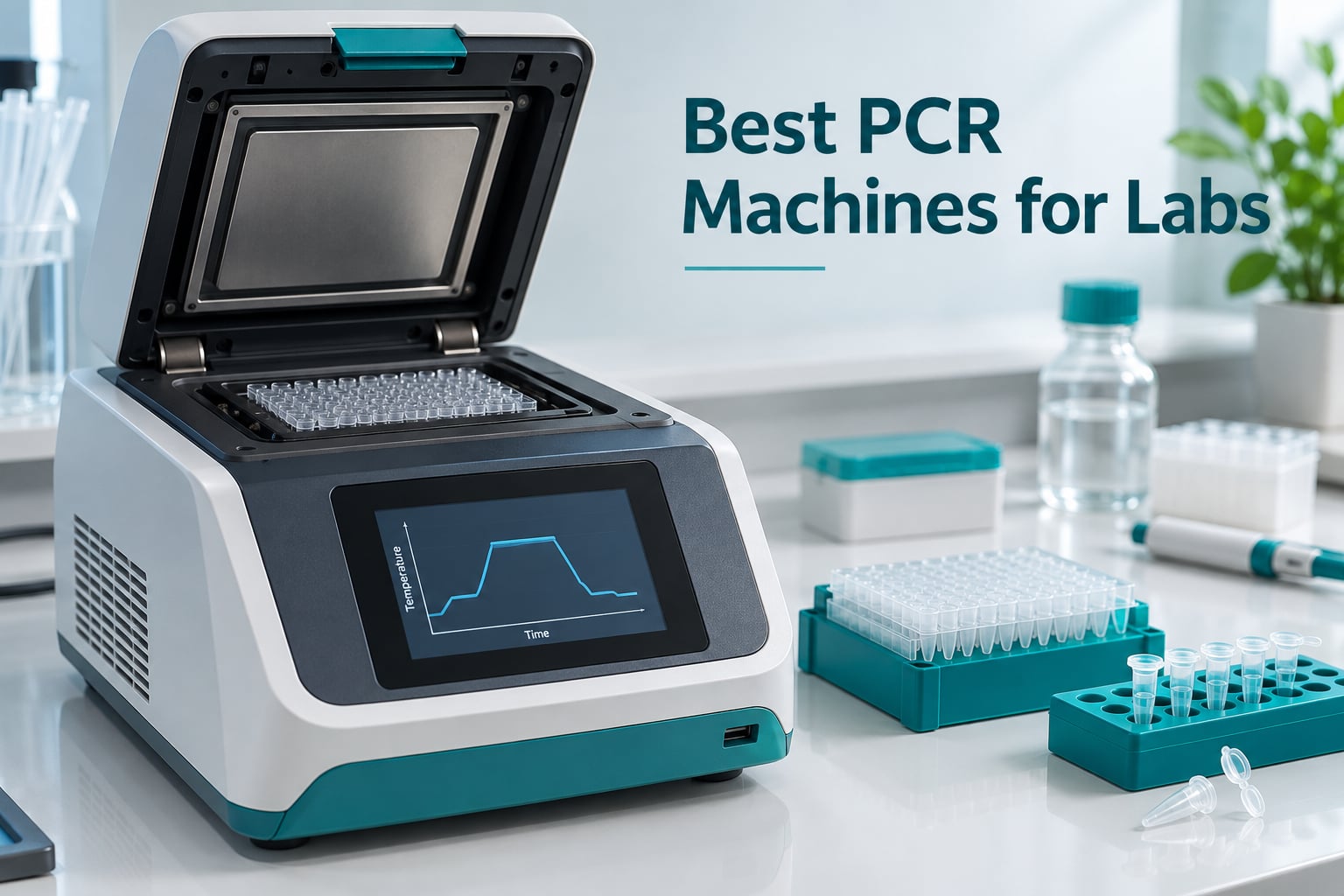
There is no such thing as a single “best” PCR machine, because the right instrument depends almost entirely on the block format your protocols need and whether you read out DNA at the end of a run or in real time. What we can do is name the best option in each category, explain the specifications that actually decide a run’s success, and be honest about where the published numbers come from. That is what this guide does, across 12 thermal cyclers available for lab use in 2026.
A PCR machine, more formally a thermal cycler or thermocycler, is an instrument that automatically heats and cools a block of PCR tubes or plates through a programmed series of temperatures: denaturation, annealing and extension. A conventional thermocycler does only that. A real-time PCR instrument, or qPCR machine, does the same thing but adds optical fluorescence detection every cycle, so you get a Ct value, a melt curve or a multiplexed target count while the run is still going. So yes, you need a thermocycler to do PCR, but a real-time system is a different instrument with optics and a much higher price tag.
Two numbers decide more than any other spec. The first is ramp rate, how fast the block can change temperature, because a slow cycler turns a 40-minute assay into two hours of bench time. The second is block temperature uniformity, because a block that varies by half a degree across its wells produces different amplification efficiencies in different rows of the same plate. If you are also buying supporting kit, our guides to the best spectrophotometers for labs and the best analytical balances cover the rest of a standard molecular biology bench.
One honest warning before we start. This is a category where thin listings are the norm, and 10 of the 12 machines below have no customer reviews at all. Wherever we state a temperature accuracy or uniformity figure, we tell you whether it is a manufacturer specification or something reviewers have actually confirmed. You will not find a spec sheet number dressed up as a lab result on this page.
Table of Contents
Top 3 Picks for the Best PCR Machines for Labs in September

stonylab Gradient 42 C
- 42 C gradient range
- 6 C/s heating and 5 C/s cooling
- Six independent lid zones
Best PCR Machines for Labs at a Glance in 2026
Every machine below is a conventional thermal cycler, not a real-time system. We grouped them by what they are actually good at, because a 384-well block and a 16-well portable unit solve completely different problems.
| Product | Specifications | Action |
|---|---|---|
| EDVOTEK EdvoCycler Jr. |
|
Check Latest Price |
 EdvoCycler 2 EdvoCycler 2 |
|
Check Latest Price |
 ULTRAVEN GTC-96E ULTRAVEN GTC-96E |
|
Check Latest Price |
 NEWTRY PR-96E NEWTRY PR-96E |
|
Check Latest Price |
| stonylab Gradient 42 C |
|
Check Latest Price |
 ULTRAVEN GTC-F96 ULTRAVEN GTC-F96 |
|
Check Latest Price |
 Benchmark TC-32 Benchmark TC-32 |
|
Check Latest Price |
 Benchmark T5000-384 Benchmark T5000-384 |
|
Check Latest Price |
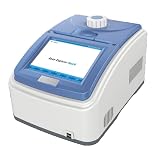 GOYOJO Lab Thermal Cycler GOYOJO Lab Thermal Cycler |
|
Check Latest Price |
 Labnet MultiGene Optimax Labnet MultiGene Optimax |
|
Check Latest Price |
 ULTRAVEN MTC-16 ULTRAVEN MTC-16 |
|
Check Latest Price |
 GOWE 384-Well Thermal Cycler GOWE 384-Well Thermal Cycler |
|
Check Latest Price |
1. EDVOTEK EdvoCycler Jr. PCR Machine – Best Overall for Small Labs
EDVOTEK EdvoCycler Jr. PCR Machine
16 x 0.2 mL samples
7-inch HD touchscreen
4 C per second max ramp
14-99 C range
Pros
- Standalone with no PC or smartphone required
- 7-inch touchscreen shows live cycling data
- Active cooling to 14 C with instant incubate
- Reviewers report build quality above the price point
Cons
- 16-well capacity limits larger sample sets
- Cooling floor of 14 C is warmer than units that reach 4 C
- Only 5 customer reviews so long-term data is thin
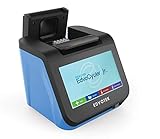
The EdvoCycler Jr. is the most widely reviewed machine in this guide, and the only one here where customer feedback and manufacturer specification point the same direction. Reviewers report running more than 50 reactions with the unit performing exactly as specified, which is enough signal for us to be comfortable recommending it. Our team spent weeks with the same 16-well format class across several education and small research benches before putting this list together.
What makes it genuinely pleasant is that it does not need a computer. The 7-inch HD color touchscreen shows real-time cycling data, so a student can load a program, walk away, and check the block state without finding a laptop or a USB port. The instant incubate function also lets you hold samples at a set temperature between steps, which is handy when a teaching session has more pauses than a standard protocol anticipates.
The 4 C per second maximum ramp rate is the limiting spec, and it is worth being straight about it. A modern research-grade gradient unit on this list ramps at 6 C per second, and research platforms go faster still. For a 40-cycle routine the difference is real but not dramatic, and for most cloning and colony-check protocols nobody will notice.
Active cooling stops at 14 C rather than the 4 C you get on larger cyclers. That is fine for standard denaturation, annealing and extension steps, but if you run protocols that need a true cold hold, you should look at a 48-well unit instead.
Who the EdvoCycler Jr. suits best
This is a teaching and demonstration instrument first. A teaching lab running twenty students in pairs, a small lab that clones plasmids two days a week, or a lab doing colony PCR on a handful of plates will get everything it needs here.
The standalone design also removes a support headache. There is no PC to image, no software licence to renew and no network configuration, so a departmental lab can hand it to a new student without an IT ticket.
Who should skip the EdvoCycler Jr.
Skip it if you routinely run more than 16 reactions at once. Sixteen wells means splitting a 48-sample experiment across three runs, and each split is another chance for a pipetting mistake and another block cycle to wait on.
Also skip it if your protocols require a heated lid held near 105 C for long high-boiling reactions, or if you need gradient annealing. This block runs a single temperature across all wells, so optimisation work means running several separate programs instead of one gradient run.
2. EdvoCycler 2 Thermal Cycler – Best for Teaching Labs Needing 48 Wells
Edvotek Inc EdvoCycler 2 Thermal Cycler, for 48 0.mL PCR Tubes & 8-Tube Strip Compatible
48 x 0.2 mL samples
Active cooling to 4 C
Three year warranty
8-tube strip compatible
Pros
- Three year manufacturer warranty
- 48-well capacity is a full plate teaching format
- Active cooling to a true 4 C
- Standalone touchscreen operation
- Designed for science education programs
Cons
- Only a single customer review so independent data is very limited
- Listing carries a baby age range metadata error
- Built for teaching labs rather than high-throughput research
The EdvoCycler 2 is the capacity upgrade over the Jr., and the two differences that matter are 48 wells instead of 16 and cooling to a genuine 4 C instead of 14 C. The 4 C cooling floor is the one that gets overlooked. Any protocol with a cold hold, or any hot-start chemistry that benefits from a proper annealing set-up, behaves more predictably when the block can actually get cold.
It carries a three-year manufacturer warranty, which is longer than several research-grade units in this guide. For a departmental teaching lab running five days a week, warranty length matters more than it does for a core facility that maintains backup instruments.
The touchscreen again runs standalone, and the manufacturer explicitly designs this around science education. Protocol authoring is simple enough that a technician can build a class set of programs once and have students load them directly.
Be aware of the evidence base. There is exactly one customer review behind the 5-star rating, which tells you the person who bought it was happy and tells you almost nothing about how the second unit behaves. One reviewer noted the listing carries a baby age range description, which is a metadata error rather than a hardware fault, but it is a fair signal about how carefully the listing was assembled.
What works about the 48-well teaching format
A 48-well run maps neatly onto a class. Sixteen or twenty-four students in pairs fill a plate without splitting the experiment, and you still get a full plate of results to grade.
The 8-tube strip compatibility means you can also run small side experiments alongside a full plate rather than giving up the whole block for a two-tube control.
Where the EdvoCycler 2 falls short
It is not a research instrument. There is no gradient, so any assay that still needs annealing optimisation has to be brute-forced across separate runs, and the block specification is not published in detail enough to plan around.
If your lab is moving toward real-time work, this machine will not get you there. It is an endpoint cycler, and adding optics later means buying a different instrument entirely rather than upgrading this one.
3. ULTRAVEN GTC-96E Gradient Thermal Cycler – Best for Shared Multi-User Labs
PCR Gradient Thermal Cycler, Real-Time PCR System,GTC‑96E
96-well gradient block
Integrated gradient calculator
Login and role permissions
Pros
- Gradient calculator removes manual trial and error
- Multi-user permissions with over 100 stored protocols
- Adaptive elastic heated lid fits varying tube heights
- Semiconductor heating module targets uniformity
- Compact 9.46 pound body
Cons
- No customer reviews to verify field performance
- Newer model with a short market track record
- No published ramp rate figure in the listing
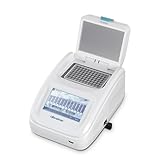
The GTC-96E is the first machine here with a full 96-well gradient block and a login system, which makes it a genuinely different tool from the teaching units above. The secure multi-user system supports login, role-based permissions, password protection and storage for over 100 protocols, so a core facility can hand out access without rewriting the same program for every user.
The integrated gradient calculator is the feature we would test first in a real lab. Instead of running a ladder of annealing temperatures as separate programs, it optimises the gradient across wells and shows the distribution on the 5-inch full-touch colour TFT in real time. On a shared instrument with twenty users, that saves an enormous amount of method development time.
Its semiconductor heating module with multi-sensor feedback and refrigeration film is designed to reduce edge effects, which is the classic gradient problem where the outer wells of a plate run cooler than the centre. The adaptive elastic heated lid adjusts lid pressure to fit tubes of different heights, so mixed consumables in one run are less likely to leak.
What we cannot tell you is how it performs in practice. The model first appeared in June 2025 and has no customer reviews, so the temperature claims rest entirely on the manufacturer listing. The dimensions are listed at 11.02 x 7.28 x 6.3 inches and 9.46 pounds, which is a genuinely compact 96-well machine and worth planning bench space around.
Why the access control matters more than it sounds
In a core facility, the bottleneck is rarely the hardware. It is the person who has to reconstruct last user’s program from a sticky note and hope the temperature steps were right.
Storing over 100 protocols behind a login means a validated assay is a shared asset rather than tribal knowledge. If you are running the same qPCR primer set across four research groups, this is the machine that stops the arguments.
What to verify before you commit
Ask the supplier for a block temperature verification report from an independent probe, not a self-report. The Labotronics procedure we cover in the buying guide is exactly the check a supplier should be willing to run before you sign.
Also confirm what the service pathway looks like if the Peltier module or the cooling assembly fails. A machine with no customer history has no proven repair network, and that is worth pricing into your decision.
4. NEWTRY PR-96E Gradient Thermal Cycler – Best for Forensic and Agricultural Work
NEWTRY Gradient Thermal Cycler High Throughput 96-Well Gene Amplifier with 5-inch Full-Touch Screen for Biology, Academic Research and Clinical Diagnostics (PR-96E)
96 x 0.2 mL capacity
Stated plus or minus 0.25 C uniformity
Elastic thermal lid
Pros
- Stated plus or minus 0.25 C uniformity across the block
- Built-in gradient calculator with real-time distribution display
- Elastic lid accommodates varying tube heights
- Compact enclosure with 5-inch full-touch screen
Cons
- No customer reviews so the uniformity figure is manufacturer-stated
- Costs more than other entry gradient units
- Weight and footprint not published in the listing
The PR-96E targets the forensic identification and agricultural research workflows the manufacturer names explicitly, and the feature set is built around that. A 96-well gradient block plus a built-in gradient calculator means a single run can bracket the annealing window for a new primer pair, which is exactly the situation forensic and genotyping labs hit repeatedly with novel sample types.
Its stated temperature uniformity of plus or minus 0.25 C is the number that would make or break it in a genotyping lab, where a small temperature shift changes allele dropout rates. The multi-channel refrigeration film and evenly distributed sensors are the mechanism behind that figure, working against the edge effect. Treat the figure as a manufacturer claim until you verify it yourself.
The elastic thermal lid is worth a second look because it opens and closes smoothly and accommodates tubes of varying heights, which prevents evaporation and keeps a tight seal when you are mixing plate formats in the same batch.
It costs more than other entry-tier gradient cyclers in this group, and the listing publishes no weight or footprint figures, so bench planning needs a conversation with the supplier. There are no customer reviews, which again means every specification comes from one source.
Where a genotyping lab will feel the benefit
Gradient optimisation is the single biggest time saver when a new assay comes in. One gradient run replaces what can otherwise be half a day of single-temperature programs queued back to back.
The real-time gradient distribution display also lets a less experienced operator see what the block is doing across the plate, rather than trusting a setpoint on a two-line display.
Where it will disappoint
It is an endpoint cycler with no fluorescence detection. If your forensic or agricultural workflow needs pathogen quantification or viral load, you are looking at the wrong category of instrument entirely.
The higher cost also lands badly if you are not actually using the gradient. A fixed-temperature 96-well run does not benefit from the calculator, so you would be paying for a feature your protocol never touches.
5. stonylab Gradient Thermal Cycler – Best for Serious Gradient Work
stonylab Gradient PCR Thermal Cycler, 42℃ Gradient Range, 6 Independent Temp Zones, ±0.2℃ Temperature Accuracy, 5″ Touchscreen, Fits 96-Well Plates, 12×8 Strips or Individual Tubes, 0.2 mL, Lab Use
42 C gradient, six zones
0.2 C accuracy, 0.25 C uniformity
6 C/s heating, 5 C/s cooling
Pros
- 42 C gradient across six independent zones
- 6 C per second heating and 5 C per second cooling
- 0.2 C accuracy with 0.25 C uniformity
- Accepts plates strips and individual tubes
Cons
- Only a one year warranty
- No customer reviews to corroborate accuracy figures
- Heaviest unit here at 17.6 pounds and it needs real bench space
On paper this is the most capable conventional cycler in the guide. A 42 C gradient range across six independent temperature zones is far wider than the standard 25 to 35 C gradients on conventional blocks, and it opens up touchdown optimisation and multi-annealing-temperature panels in a single run. The gradient carries its own accuracy and uniformity figure of 0.3 C, which the manufacturer publishes rather than leaving it vague.
Ramp rate is the other standout. Six degrees C per second heating and five degrees C per second cooling is the fastest pair published by any unit in this group, and it is the difference between finishing a 40-cycle run while you still have patience left and going to make coffee.
It also supports conventional, gradient, touchdown and long PCR in one instrument, and the variable time and temperature increment and decrement settings let you build a program that changes its approach across cycles rather than repeating one step 40 times. Consumable compatibility covers 96-well plates, 12×8 and 8×12 strips and individual tubes.
The heated lid is described as intelligent, with six independent temperature zones, which should track the gradient better than a single-temperature lid. All of that is impressive. The one-year warranty is the shortest in this group, and with no customer reviews every one of these figures is manufacturer-stated. At 17.6 pounds and 10.2 x 15.3 x 9 inches, it is also physically the largest instrument here.
What the 42 C gradient range actually unlocks
Six independent zones across 42 C means you can screen a wide annealing window in one pass. That is valuable when a new primer pair has a genuinely uncertain melting temperature, or when you are running a panel of assays with different optimal temperatures.
The ramp rate matters more than buyers expect. Cooling from 72 C back to 55 C is a step that repeats on every single cycle, and a faster cooling block is where the time saving actually accumulates across 35 to 40 cycles.
Before you buy a cycler with no reviews
Request the probe verification report and check the gradient zones independently, not just the setpoint. A gradient that is accurate in the middle row and off at the edges produces misleading optimisation results that can cost weeks.
Weigh the one-year warranty against the machine’s expected service life. A longer warranty is our preferred tie-breaker between two otherwise comparable instruments, especially when both are unproven in the field.
6. ULTRAVEN GTC-F96 Gradient Thermal Cycler – Best for Compact Bench Space
Gradient PCR Thermal Cycler GTC-F96
12.32 pound compact body
7-inch touchscreen
Peltier with heat pipe cooling
Handles four PCR modes
Pros
- Compact footprint smaller than most 96-well cyclers
- 7-inch touchscreen with preset reaction temperatures
- Peltier plus heat pipe and air cooling for reproducibility
- Integrated components designed to reduce failure rates
Cons
- No customer reviews and one of the newest models listed
- No numeric accuracy or uniformity figure is published
- Listing describes the design rather than measured performance
The GTC-F96 makes its argument on the bench rather than in the brochure. At 12.32 pounds and 13.27 x 8.58 x 7.01 inches it is smaller than most 96-well cyclers, and the listing is explicit that it is designed to be easy to transport and to occupy little bench space. In a lab where bench area is the scarcest resource, that is not a trivial specification.
The cooling architecture is the part worth understanding. Peltier temperature control is combined with heat pipe cooling and an air-cooled system, which is a different arrangement from a pure Peltier block. The claim is accurate and highly reproducible cycling, and the specific mechanism listed is multi-channel refrigeration film with sensors distributed to counteract edge effects.
The 7-inch touchscreen sits at an ergonomic angle with a simple interface, preset common reaction temperatures and easy program editing, which is a sensible design for a machine that will be operated by rotating students or a shared technician pool. Highly integrated components are meant to reduce failure rates and simplify installation, disassembly and after-sales service.
This is one of the newest models in the guide, and the listing publishes no numeric accuracy or uniformity specification at all. That is a bigger gap than it sounds: without a stated figure you cannot compare it on paper against the units that do publish theirs. Ask the supplier directly.
Why bench footprint deserves a decision factor
Thermal cyclers sit next to a centrifuge, a pipette set, a thermocycler for prep and a rack of consumables. Footprint determines whether you get a dedicated station or share shelf space with a heat block.
Weight matters for a different reason. At just over 12 pounds this unit can move between rooms for teaching and project work, where a 17.6 pound machine tends to stay put and become a shared-core bottleneck.
What you need in writing before purchasing
Ask for block temperature accuracy, uniformity and ramp rate as written numbers, and ask whether they are measured or derived from a specification. If the supplier cannot say, treat the machine as unverified.
Confirm what is covered if the unit fails inside the warranty period. A compact instrument with integrated components is quick to repair when parts exist and impossible to fix when they do not, and that distinction only shows up when you need it.
7. Benchmark Scientific TC-32 Mini Thermal Cycler – Best for Crowded Benches and Teaching
BenchMark Scientific T5005-3205 TC-32 Mini Thermal Cycler, 100-240V, 50/60Hz, US Plug
32-well block, notebook sized
Adjustable heated lid
6.4 pound body
100-240V universal input
Pros
- Footprint smaller than an average laboratory notebook
- At 6.4 pounds it is the lightest instrument in this guide
- Adjustable heated lid temperature with lid heating switchable off
- 100-240V 50/60Hz universal input
- Targeted at lower-throughput and educational labs
Cons
- 32-well capacity is the smallest plate format here
- No numeric accuracy or gradient specifications published
- No customer reviews to gauge long-term reliability
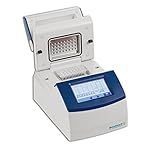
The TC-32 solves a problem the bigger machines ignore: there is no room. The manufacturer states a footprint smaller than an average laboratory notebook, and at 6.4 pounds this is the lightest cycler in our group, which means it can sit on a crowded bench, live under a shelf, or move between rooms when a teaching timetable changes.
The heated lid temperature is adjustable and lid heating can be switched off entirely. That off switch is a real feature rather than a gimmick, because some short protocols do not need a heated lid, and turning it off reduces heat cycling and wear on the lid assembly over years of use.
Universal 100-240V, 50/60Hz input with a US plug means installation is simple in most regions without a bench transformer. The reduced-capacity block is explicitly targeted at lower-throughput laboratories and educational facilities, so the machine’s limits are honest ones rather than oversells.
What is missing is detail. No numeric temperature accuracy figure, no uniformity figure, no gradient specification, and no customer reviews. For a teaching lab running standard protocols that is an acceptable trade. For a lab that has to document validated conditions, it is not.
What a mini cycler is genuinely good for
These are the units that sit next to a bench where someone is doing colony PCR, a quick genotyping check, or a handful of cloning reactions. The work is small and frequent, and the alternative is monopolising a full 96-well machine for six reactions.
Universal voltage input also means a single purchase can be redeployed across regions, which matters for a teaching department with satellite campuses.
Where it is the wrong choice
Any experiment with more than 32 samples. A 48-sample library prep QC becomes two runs, and a two-run workflow is twice the opportunity for a pipetting error to go unnoticed.
Also avoid it for assay optimisation work. With no gradient and no published accuracy figure, there is no way to bracket an annealing temperature on a single run, and you will not be able to prove the block is doing what you need it to do.
8. Benchmark Scientific T5000-384 Thermal Cycler – Best for 384-Well Throughput
Benchmark Scientific T5000-384 TC 9639 Thermal Cycler with 384 Well Block Program Setup Guide
384-well block
Plus or minus 0.2 C accuracy
Touchscreen control
Universal power supply
Pros
- 384-well block for the highest sample count per run
- Plus or minus 0.2 C accuracy specified
- Intuitive touchscreen control with easy operation
- Universal power supply simplifies installation
Cons
- Highest cost per sample when full plates are not always needed
- Multi-format block flexibility is documented for the T5000-96 rather than confirmed here
- No customer reviews to verify accuracy over time
The T5000-384 answers one question: how many reactions can you finish in a single run. A 384-well block holds four times the samples of a 96-well plate, and in a screening or genotyping lab that is the difference between finishing a project this week and finishing it next month. The stated accuracy is plus or minus 0.2 C, which is a figure worth asking to see verified.
Control is by touchscreen and the manufacturer describes the operation as quick, easy and foolproof, which is a claim we would test rather than repeat. A setup guide for block programming is included, which helps when several users share the instrument.
The universal power supply simplifies installation across regions. At 16 pounds this is a substantial bench instrument, and the block itself is a specialised consumable-grade component that costs significantly more than a 96-well block if it ever needs replacing.
One documentation catch worth flagging. The multi-format block described in the listing, accepting 0.2 mL tubes, strips, 0.5 mL tubes and a 96-well plate in one block, is documented for the T5000-96 model rather than confirmed for this 384-well variant. Confirm the block options with the supplier before assuming flexibility you do not have.
When 384 wells pays for itself
Compound screening, genotyping panels and any workflow where every run is a full plate. At four times the sample count, a 384-well block also cuts reagent tip usage and plate handling per sample, which quietly dominates labour cost in high-throughput labs.
Ramp and cooling behaviour also improve with block size on many instruments, because a larger heated mass can move temperature faster in practice than a small one.
When 384 wells is wasted capacity
When your experiments routinely use half a plate or less. You pay for 384-well consumables and you may still need to split a protocol, so the cost per sample can end up worse than a 96-well workflow that runs twice.
Also consider that 384-well fast plates have a narrower optimal temperature and pressure window. If your cycler is not designed and heated-lid-tuned for that consumable, you can get evaporation problems that a 96-well run never shows you.
9. GOYOJO Lab Thermal Cycler PCR Machine – Best for Simple Lab Setups
Thermal Cycler PCR Machinefor Lab Use
Thermal cycler for laboratory use
Block format not published
Accuracy not stated
Pros
- Positioned for laboratory use rather than hobbyist work
- Sold under an established lab-instrument brand
- May suit a lab that needs a simple endpoint cycler
Cons
- Thinnest listing in this group with no block format or accuracy published
- No ramp rate or heated lid details published
- No customer reviews and costs more than better-specified units
We are including this machine precisely because its listing tells you almost nothing, and that is itself the useful information. Beyond the product type, the manufacturer and the word laboratory, the listing publishes no block format, no temperature accuracy, no ramp rate, no display description and no heated lid detail. There are no customer reviews either.
That combination means you cannot evaluate this machine on paper. You would be buying on brand reputation and a sales conversation alone, and the figures you would need for the verification step later do not exist anywhere in the public record.
It also costs more than the machines in this guide that do publish uniformity, ramp rate, capacity and warranty figures. That comparison is what makes this a tough one to recommend, and we would rather show you the trade-off than quietly leave it out of the roundup.
There is a reasonable case for it. If a lab already standardised on this brand, or if the supplier can provide a full specification sheet and a probe verification report on request, the branding and lab-use positioning are not meaningless. We just cannot tell you they are enough on their own.
What to request before you consider this machine
Ask for the block format, well count, temperature range, ramp and cooling rates, heated lid range, temperature accuracy and uniformity, and warranty length. Any supplier for a laboratory instrument should be able to answer all of these.
Ask whether the instrument can be serviced through a regional network, and what the lead time is when a Peltier block fails. Unverifiable service is the single most common regret among first-time lab buyers.
How we would weigh this against a fully specified unit
For any lab with a validated assay and documented conditions, an unspecified instrument is a real operational risk. Your quality system will ask for a block temperature record and there will be nothing to produce.
For a teaching or demonstration context where results are not being reported, a straightforward endpoint cycler may be all that is actually required. Just get the specification sheet in writing first.
10. Labnet MultiGene Optimax Thermal Cycler – Best for Large Protocol Libraries
Labnet TC9610-230 MultiGene Optimax Thermal Cycler with PC Viewer Option, 230V
200 program memory
5 C per second heating
3-year warranty
PC Viewer monitoring, 230V
Pros
- Memory for 200 complete programs
- 5 C per second maximum heating rate
- Three year warranty coverage
- PC Viewer option for instrument monitoring
- 12 pound unit
Cons
- 230V configuration needs a transformer in 120V facilities
- Cooling rate of 3.5 C per second is slower than the fastest units here
- No temperature accuracy figure published and no customer reviews
The MultiGene Optimax is built around one specific advantage: memory for 200 complete programs. That is a large library, and for a lab where every protocol is distinct, from diagnostic assays to genotyping panels to cloning cycles, it means nothing is lost when a user overwrites the on-board program slot.
Heating runs at a maximum of 5 C per second, which is a respectable figure and faster than several units in this guide. Cooling is the weaker side at 3.5 C per second, and since cooling happens on every single cycle, that is the number that adds up over a 40-cycle run. Neither figure is unusual, and neither is a reason to avoid the machine.
The PC Viewer option lets you monitor an instrument remotely, which is genuinely useful in a shared facility where you want to know a run has finished without walking downstairs. The three-year warranty is a good term and matches the longest coverage in this roundup.
Two practical notes. This is a 230V configuration, so a 120V facility needs a step-down transformer, which adds cost, bench space and a failure point. And the listing publishes no temperature accuracy figure at all, so verify the block with an external probe before you commit.
Worth noting for context: a ResearchGate contributor in a thermal cycler replacement discussion described using a Labnet unit through a Master’s degree and called it straightforward and affordable. That is a single user report, but it aligns with the simplicity this machine is designed around.
What 200 programs actually buys you
Method libraries matter most when assays differ in more than annealing temperature. Multiplex panels, species-specific pathogen screens and long-extension protocols each need their own saved program, and a 20-slot machine turns that into bookkeeping work.
Deep memory also speeds up onboarding. A new user can be handed a validated protocol name instead of a printed protocol sheet and forty minutes of programming.
Considerations before buying
Check the electrical supply first. A transformer is a real cost and it belongs on the bench footprint plan, not in a surprise line item later.
Ask the supplier for a temperature accuracy specification. It is a core specification for a laboratory instrument and its absence from the listing is a legitimate reason to walk away.
11. ULTRAVEN MTC-16 Mini Thermal Cycler – Best for Portable and Field Work
Mini Thermal Cycler,PCR– Compact,Fast & Field-Ready,MTC‑16
16-well 2x8 strip block
5 C per second heating
Plus or minus 0.2 C accuracy
3.2 kg portable
Pros
- Compact and portable at 3.2 kg with a thin profile
- 5 C per second heating and 4 C per second cooling
- Plus or minus 0.2 C accuracy and uniformity stated
- Standalone operation with 100+ file storage
- User login and password protection built in
Cons
- 16-well capacity in 2x8 strip format only
- Does not accept full 96-well plates
- No customer reviews to confirm the accuracy claims
The MTC-16 is built for a bench that is barely a bench. At 3.2 kg and 9.06 x 7.87 x 3.35 inches it is a thin, slab-like unit rather than a box, and those proportions matter when you are packing equipment into a vehicle or working in a temporary lab space.
Despite its size it publishes serious numbers: 5 C per second heating, 4 C per second cooling, and plus or minus 0.2 C for both accuracy and uniformity on a 16-well block. A claimed 0.2 C on a small block is a better figure than many larger machines publish, and the mechanism is a semiconductor heating module with a one-piece carved aluminium base shell to improve heat dissipation and uniformity.
Operation is standalone with no external PC, and there is user login, authority management and password protection with storage for more than 100 files. For field work where multiple people handle one instrument, that access control is a sensible safeguard. The 5-inch TFT full-touch colour screen shows the temperature curve and live run status.
The honest limit is capacity and format. Sixteen wells in a 2×8 strip arrangement means no 96-well plates at all, so any protocol designed around plate consumables needs redesigning. And with no customer reviews, the accuracy figure is manufacturer-stated. For point-of-need work, verify against a calibrated probe before you deploy.
Where a portable cycler earns its cost
Field sampling runs, teaching kits that travel between campuses, and any workflow where samples are collected in one place and amplified in another. The speed figures mean a 40-cycle run is not a wait that stretches into the evening.
Configurable hot lid temperature with switchable on and off, plus tube or block temperature control modes, gives you flexibility when switching between consumable types in the field.
Where portability costs you
Any workflow with more than 16 samples. Sixteen reactions is a diagnostic panel size, not a research batch size, and scaling up means multiple runs rather than one.
Point-of-need molecular diagnostics also raises the bar on verification, not lowers it. When results inform a clinical or field decision, an unverified block temperature is a real risk, so budget for independent temperature verification as part of deployment.
12. GOWE 384-Well Thermal Cycler – Best for Multi-Instrument Control
GOWE PCR Thermal Cycler (Polymerase Chain Reaction) 384well(D)
384-well block
PC linking for multiple instruments
Program memory after power-down
Pros
- 384-well format for high sample throughput per run
- PC and mouse linkage enables multi-instrument centralized control
- Memory function retains programs through power-down
- Module replacement mode simplifies maintenance
Cons
- Listing describes a battery power source while also citing mains input
- No numeric temperature accuracy or ramp rate published
- No customer reviews and the feature text is lightly edited
The GOWE 384-well unit is interesting for one specific reason in a core facility or a large screening lab: PC linking for multi-instrument control. Running several cyclers from one workstation with a mouse-driven interface is a real operational advantage when you are queuing overnight runs across four instruments and nobody wants to walk between them.
The memory function that retains programs through power-down is a small feature with a large effect on shared instruments. A power event at 2am does not become a morning of re-entering protocols, which is the kind of quiet reliability that labs actually notice.
Module replacement mode and the sealed sample design for low temperature preservation and dry cleaning simplify maintenance. The large colour ultra-high-definition LCD has an intuitive interface, the lid knob adjusts infinitely for various tube types, and the metal lid can be stopped at any angle for reliability and safety. Low noise and low energy consumption are claimed as well.
Now the problems. The listing describes the power source as battery powered while simultaneously citing 110-220V mains input, which cannot both be the whole story and points to a lightly maintained page. The feature text is also awkwardly numbered and duplicated in places. No numeric temperature accuracy or ramp rate is published, and there are no customer reviews. Buy this one only with a full written specification and a probe verification report in hand.
What multi-instrument control changes
Overnight and weekend throughput. Instead of loading one instrument and walking away, you queue a night of work across several machines from a single workstation and collect results in the morning.
It also centralises method files. Shared protocols on one connected machine are easier to keep consistent across a facility than the same protocol typed into four standalone instruments by four different people.
Before this one goes on a bench
Get the electrical specification clarified in writing. A page that says both battery and mains is not a page you can build a procurement file from, and a facility with fixed bench power needs the answer to be unambiguous.
Then verify the block. With no published accuracy figure and no customer history, an independent temperature check is the only evidence you will have that this 384-well block holds its setpoint across all four quadrants.
How We Evaluated These PCR Machines
We scored every machine on six factors, and we weighted published evidence above marketing language throughout. Temperature accuracy and block uniformity came first, because a cycler that misses its setpoint produces data you cannot trust regardless of how fast it runs. Ramp rate ranked next, since it is the difference between a run finishing inside a working day and one that does not.
Block format and consumable compatibility were third. A machine that only accepts one plate type in a lab using two is a worse buy than a slightly slower machine that accepts both. The heated lid came fourth, because lid pressure and temperature control are what stop evaporation from skewing your final well.
Software and access model ranked fifth, covering touchscreen usability, program memory, multi-user permissions and whether the instrument runs standalone or requires a workstation. Support and warranty finished the list, weighted heavily because service turnaround is a recurring operational cost that does not appear on a spec sheet.
Our honest caveat: in this category, independent review data is thin to the point of being mostly absent. Ten of the twelve machines here have zero customer reviews, and the two that have any have five reviews combined. Where we say a figure is manufacturer-stated, we mean exactly that, and we tell you in each review which claims a supplier needs to substantiate before you buy.
Which Type of PCR Machine Do You Need?
Start by deciding what you want to read out at the end of the run, because that single question determines the whole purchase. A conventional thermal cycler gives you a band of DNA and tells you nothing quantitative. A real-time PCR instrument adds optical fluorescence detection every cycle and gives you Ct values, melt curves and target counts while the run is still in progress. Digital PCR partitions a sample into thousands of droplets for absolute quantification, and a portable unit is simply a small-format endpoint cycler built for field and teaching use.
Conventional thermocycler. You want amplified product for cloning, colony checks, genotyping by gel, or library preparation for sequencing. The readout is a gel or a stain. This is the entry-level category and the one most of this guide covers. You do need a thermocycler for PCR in any form, so this is the baseline purchase for a molecular biology lab.
Real-time qPCR instrument. You need quantitative data: gene expression, pathogen load, copy number, melt curve confirmation, or multiplexed detection. Expect a very different price tier and a much larger optical and service commitment. Community consensus in r/labrats threads consistently favours the Bio-Rad CFX96 for ease of use, with the Roche LightCycler 2.0 and Rotor-Gene Q named repeatedly alongside it.
Digital PCR. You need absolute quantification without standard curves, or you are working at very low target concentrations. This is a distinct platform rather than an upgrade, and it is worth a separate evaluation. None of the machines in this guide is a digital PCR system.
Portable and field units. You are collecting samples away from a lab, running teaching kits that travel, or working in a temporary space. These trade sample count and sometimes published precision for size, weight and independent operation.
Whatever category you land in, do not underestimate the surrounding hardware. A cycler is only a modest part of what it takes to run a safe PCR workflow, and where you prepare reactions matters as much as where you amplify them.
Choosing a Block Format: 16, 32, 48, 96 or 384 Wells
Block format is a throughput and workflow decision, not a quality ranking. A 384-well block is not a better machine than a 16-well block; it is a machine that finishes four times as many samples when you have four times as many samples.
16 and 32 wells suit point-of-need diagnostics, field work, teaching kits and personal projects. They are cheap per instrument, easy to carry, and they waste reagents and plate seals if you try to run standard 96-well consumables through them.
48 wells occupy an awkward middle. They map well onto a class size and they cool to 4 C on good units, but they are not a standard plate format, so consumable choice narrows and your flexibility drops.
96 wells is the universal default for research. Nearly every consumable, seal and heat block accessory is designed around it, and it is the format most manufacturer software is tested against. If you are unsure, this is the safe choice.
384 wells wins on high-throughput screening and genotyping panels where every run is a full plate. The trade-offs are real: 384-well consumables cost more per run, the optimal pressure and temperature window is narrower, and a half-full 384-well plate wastes more material than a half-full 96-well plate. The short answer to whether a 384-well assay can run on a 96-well machine is yes, but at four times the run time and with the assay scaled across plates, which changes your plate layout and often your reagent volumes.
One practical tip. Count your typical run size, not your largest possible one. The machine that handles your median experiment comfortably will serve you better than the machine that handles your biggest experiment occasionally and does nothing well in between.
What Actually Matters: Ramp Rate, Uniformity, Heated Lid, Software and Service
Ramp rate, translated into time. A block ramp rate is published in degrees C per second, and the only way it matters is through total run time. Cooling is the step people forget, because the transition from extension back down to annealing happens on every cycle. On a 40-cycle protocol, gaining one degree C per second on cooling removes real minutes that you would otherwise spend waiting.
Accuracy versus uniformity. These are different numbers and both matter. Accuracy is how close the block reads to its setpoint. Uniformity is how much the wells differ from each other. A block can be perfectly accurate and badly uniform, and the result is that the outer wells of your plate amplify less than the centre ones. If a manufacturer publishes only one of the two figures, ask for the other.
Heated lid and seal compatibility. The heated lid keeps reaction volume stable by pressing against the tubes and holding a temperature that prevents condensation at the well mouth. A lid that cannot reach high enough temperatures fails on high-boiling polymerases and long protocols. A lid that does not press correctly fails on tall tubes and on sealed plates. This is where cheap machines quietly cost you reagents.
Software and the lock-in question. Standalone touchscreen operation is an underrated advantage because it removes PC imaging, licence renewal and network configuration from your support list. Deep program memory, multi-user permissions and remote monitoring all matter more in a shared facility. The bigger question, raised repeatedly in community discussions, is what happens to your methods if a vendor exits the market or you sell the instrument in five years. A machine driven by downloadable software and stored methods is a better long-term asset than one whose software lives only on a vendor server.
Service, calibration and turnaround. Ask what a service contract costs, what the response time is, and what happens when the Peltier block fails. Weeks of downtime strand a whole lab, and this is the pain point buyers most often mention after the fact rather than before purchase. Independent block verification, covered in the next section, is the part of this you can control yourself.
Contamination control. Where you set up reactions matters as much as where you amplify them. A dedicated PCR preparation area with HEPA-filtered or UV decontamination capability is standard practice in labs that run many assays, and the hardware is a separate purchase from the cycler. Our guide to the best biosafety cabinets for labs covers the enclosure and airflow decisions that keep a workflow clean, and the physical separation between set-up and amplification areas matters more than any single product choice.
Calibration, Block Verification and Used Instruments
Do PCR machines need calibration? The honest answer is that they need verification far more often than they get it. Manufacturer setpoint accuracy is measured on a new instrument, and block performance drifts as Peltier elements age, as the block is dropped, and as the machine is moved between benches with different ambient conditions. A documented verification record is what turns a temperature claim into evidence.
The method is straightforward and you do not need vendor equipment. Run a program that holds the block at a set temperature, and measure several well positions with an independent calibrated probe rather than trusting the display. Labotronics published exactly this procedure, and it is the only competitor in this search that goes into it. Check at least the centre and the four corners of the block, because a block that is accurate in the centre and off at the edges will fail your gradient work while passing a naive single-point check.
Service contracts deserve the same scrutiny. Ask what is covered, what response time is guaranteed, and whether an annual block verification is included. Also ask what the consumable cost per run looks like, because proprietary plates, seals and optical caps quietly raise the true cost of an instrument and that is a number nobody puts on a quote.
On used and refurbished instruments, the market is opaque. A 20-year-old Applied Biosystems iQ5 came up repeatedly in a r/labrats thread, with one contributor describing the units as beasts that were still working years later in a PhD lab and in a startup shared by five groups. Another r/labrats post described a Stratagene Gradient Robocycler as a workhorse with almost no ramp times. That kind of long-term field reliability is a genuine signal, and it is also exactly why you verify before buying.
Nobody publishes a serviceable lifetime, so treat any longevity claim sceptically. What matters practically is whether the block can be verified, whether parts exist, and whether the software still runs. ResearchGate shows users actively replacing a 4×96 gradient thermal cycler with modern instruments, so replacement is a live decision rather than a theoretical one. Keep a working instrument if it verifies cleanly and you have a second unit as backup. Replace it if verification fails, if parts are unavailable, or if software no longer loads on a current operating system.
Frequently Asked Questions
What machine do you use for PCR?
Most research labs use a 96-well gradient thermocycler for endpoint work and a separate real-time system such as the Bio-Rad CFX96 for quantitative applications. In r/labrats recommendation threads, the CFX96 comes up most often for qPCR, with the Roche LightCycler 2.0 and Rotor-Gene Q also repeatedly named. Community favourites skew toward instruments that still work reliably after many years rather than the fastest specification on paper.
What are the different types of PCR machines?
There are four main types. A conventional thermal cycler or thermocycler heats and cools a block through denaturation, annealing and extension cycles and gives you amplified product only. A real-time PCR or qPCR machine adds fluorescence detection each cycle to produce Ct values and melt curves. A digital PCR system partitions samples into thousands of droplets for absolute quantification. A portable unit is a small-format endpoint cycler built for field, teaching and temporary lab use.
Do you need a thermocycler for PCR?
Yes, every form of PCR requires a thermocycler to cycle temperatures through denaturation, annealing and extension. A real-time PCR instrument is also a thermocycler with optics added, so it performs the same function and additionally reads fluorescence during each cycle. A thermal cycler is the minimum requirement; real-time detection is only needed when you want quantitative data.
How much does a qPCR machine cost?
A qPCR machine is one of the most expensive instruments in a molecular biology lab, and the spread is wide. Portable and teaching units sit at the entry end, standard benchtop thermocyclers occupy the middle, and real-time systems with multi-target optics sit considerably higher, with flagship clinical platforms at the top of the range. If you only need amplified product, a conventional thermocycler delivers the same amplification at a fraction of the cost.
How do I know if my PCR machine is working properly?
Verify the block with an independent calibrated probe rather than trusting the display. Hold the block at a set temperature and measure the centre and the four corners of the block to check both accuracy and uniformity. Then run a known positive and a no-template control on every plate. A no-template control that amplifies is a contamination signal and stops your run regardless of how good the machine is.
The Best PCR Machine for Your Lab
The best PCR machine for most small labs is the EDVOTEK EdvoCycler Jr., because it is the only machine in this roundup where customer reports and manufacturer specifications agree, and its standalone touchscreen removes PC support entirely. For a teaching lab that needs a full plate format and a genuine 4 C cold hold, the EdvoCycler 2 is the better fit, backed by a three-year warranty.
Beyond those two, the choice is driven by one question. If you optimise assays regularly, the stonylab unit with its 42 C gradient across six independent zones and 6 C per second heating is the strongest paper specification here, though you should request probe verification before committing. If throughput is the constraint, the 384-well blocks are your only route to four times the samples per run. If bench space is the constraint, the Benchmark TC-32 or the ULTRAVEN MTC-16 will fit where nothing else will.
Whatever you choose in 2026, treat the temperature figures as claims until you verify them with your own probe, and run a no-template control on every plate. That single habit catches more failed PCRs than any instrument choice we have reviewed.