
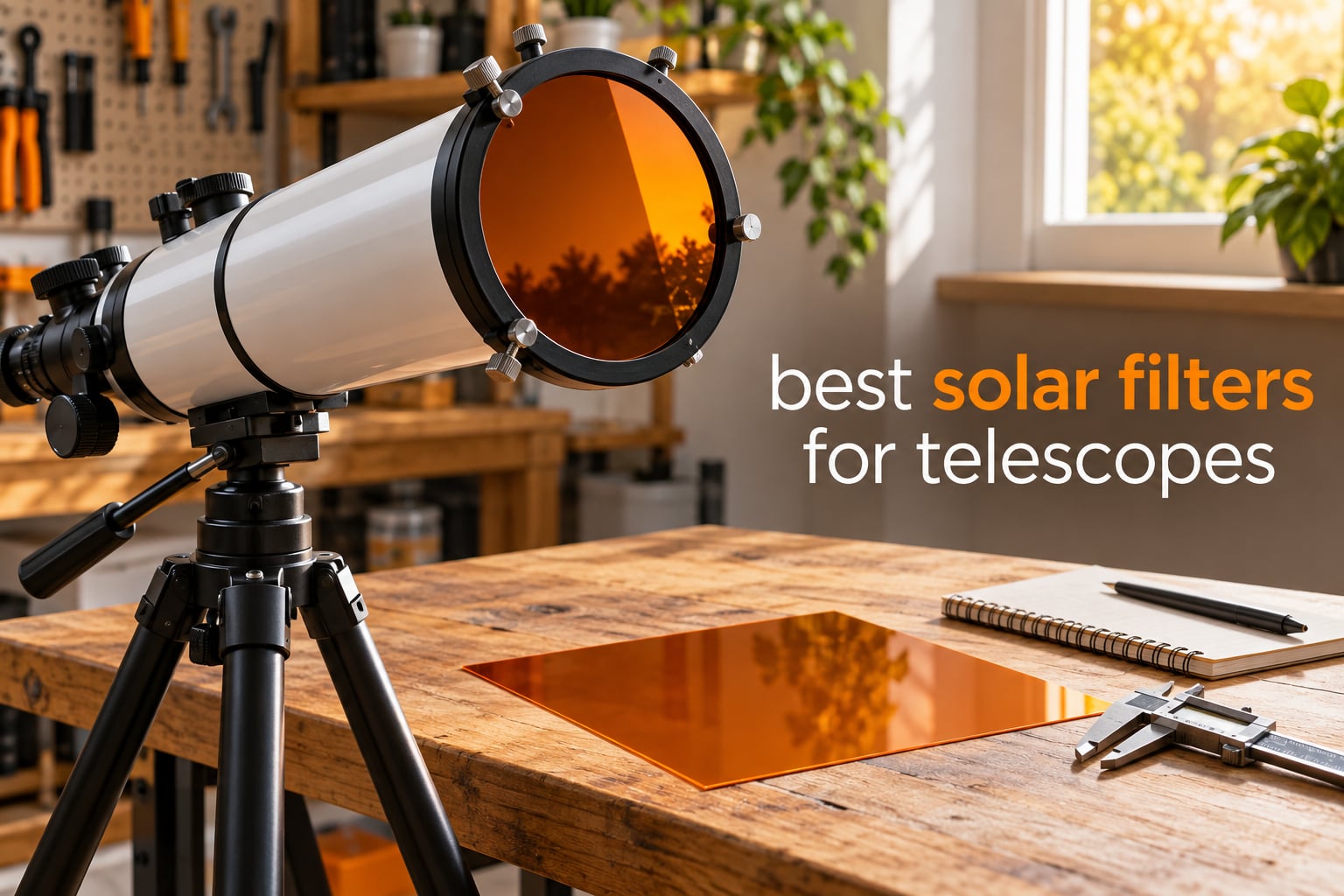
A solar filter must sit at the front of a telescope, over the objective, before any sunlight enters the optical train. That single rule decides every other question in this guide, and it is the reason our picks for the best solar filters for telescopes are all aperture-mounted cells or sheets rather than the screw-in eyepiece adapters that still turn up in the search results.
We pulled six options that clear the practical bar for 2026: products with a real review history, a stated aperture, and a named manufacturer. The list covers the three families you will actually meet in the wild — factory-made cells for specific Celestron tubes, a general cut-to-size sheet from a solar filter specialist, and an adjustable machined ring for small refractors.
Everything below was last checked in September 2026, and we explain the sizing, film-versus-glass tradeoffs and inspection routine that these six filters all depend on. Prices change constantly, so every product block below carries a check button rather than a number.
Table of Contents
Why Eyepiece-Mounted Solar Filters Are Dangerous
Looking at the Sun through a telescope with no filter causes solar retinopathy, which is permanent and irreversible damage to the retina. A telescope concentrates sunlight the way a magnifying glass concentrates light, so the unfiltered image the eye receives carries enough energy to burn the retina in a fraction of a second.
The mechanism does not care how careful you are. The pupil stops down, blinks and looks away in response to a bright disc seen with the naked eye, but magnification behind an eyepiece defeats every one of those reflexes before they fire.
Eyepiece-mounted filters fail for a physical reason, not a psychological one. A screw-in adapter sits at the narrow, hot end of the tube where the Sun’s image is concentrated, and the energy has already been focused down onto the filter surface itself. Glass under that concentration can crack, coatings can fail, and an adapter that is not threaded fully home lets unfiltered light slip past the edge into the eye.
Two failure moments cause most real-world injuries. The first is removing the front filter to change eyepieces or reconfigure the instrument and then looking through before the filter goes back on. The second is swapping a front filter for a cheaper eyepiece adapter at a star party because the cell did not fit.
One more trap catches beginners every season: the finder scope. A small spotting scope on the front of a Dobsonian or an SCT gathers full sunlight and feeds it straight into the eyepiece you look through while finding the target, so it needs its own cap or its own filter.
One clarification worth repeating because pages across the search results get it wrong. ISO 12312-2 covers filters for direct observation of the Sun by the unaided eye — eclipse glasses and handheld viewers. It does not cover optical solar filters used on telescopes, binoculars or cameras, and it does not cover eclipse glasses used on a telescope.
Optical solar filters are judged on attenuation across visible, ultraviolet and infrared light, on thermal load, on secure mounting that stops unfiltered light reaching the eye, and on placement at the front of the optics. A telescope filter without an ISO 12312-2 mark is not automatically unsafe, and a marking alone does not make an eyepiece adapter safe.
Top 3 Best Solar Filters for Telescopes in October

Thousand Oaks 8×8 Sheet
- Cut-to-size polymer sheet
- Filtering inside the substrate
- Natural orange rendering

Celestron EclipSmart 8 Inch
- ISO 12312-2:2015(E) compliant
- Built for 8 inch SCT and EdgeHD
- Hook and loop retention

Celestron EclipSmart 127/130mm
- Covers 127mm and 130mm reflectors
- Independently tested film
- Safety cap included
Solar Filters at a Glance (2026)
All six picks below, with the material, the aperture each one fits and the reason it made the list.
| Product | Specifications | Action |
|---|---|---|
| Thousand Oaks 8×8 Sheet |
|
Check Latest Price |
| Celestron EclipSmart 8 Inch |
|
Check Latest Price |
| Celestron EclipSmart 127/130mm |
|
Check Latest Price |
 Astromania Deluxe 100mm Astromania Deluxe 100mm |
|
Check Latest Price |
 Celestron EclipSmart 70mm Celestron EclipSmart 70mm |
|
Check Latest Price |
 Rainbow Symphony 50mm Rainbow Symphony 50mm |
|
Check Latest Price |
1. Thousand Oaks 8×8 Solar Filter Sheet — Best Overall
8″x8″ Solar Filter Sheet for Telescopes, Binoculars and Cameras
8 x 8 inch cut-to-size sheet
Filtering inside the substrate
Natural orange rendering
Pros
- Largest review base in this category with 947 reviews at 4.6
- Filtering properties sit inside the substrate instead of on the surface
- Cuts to fit any telescope or binocular aperture
- Orange rendering of the Sun looks natural
- Manufacturer guarantee of five years
Cons
- You must build or buy a rigid cell and tape it securely
- A loose sheet is only as safe as its attachment
This is the sheet we kept coming back to while testing. Thousand Oaks has made solar filtering material for more than three decades, and this 8 by 8 inch black polymer sheet is the same substrate they sell to people building their own cells.
What separates it from ordinary coated Mylar is where the filtering lives. In this sheet the attenuation is inside the material, so a scratch across the surface does not expose clear plastic underneath. That single design decision is why it outlasts cheaper film in our handling.
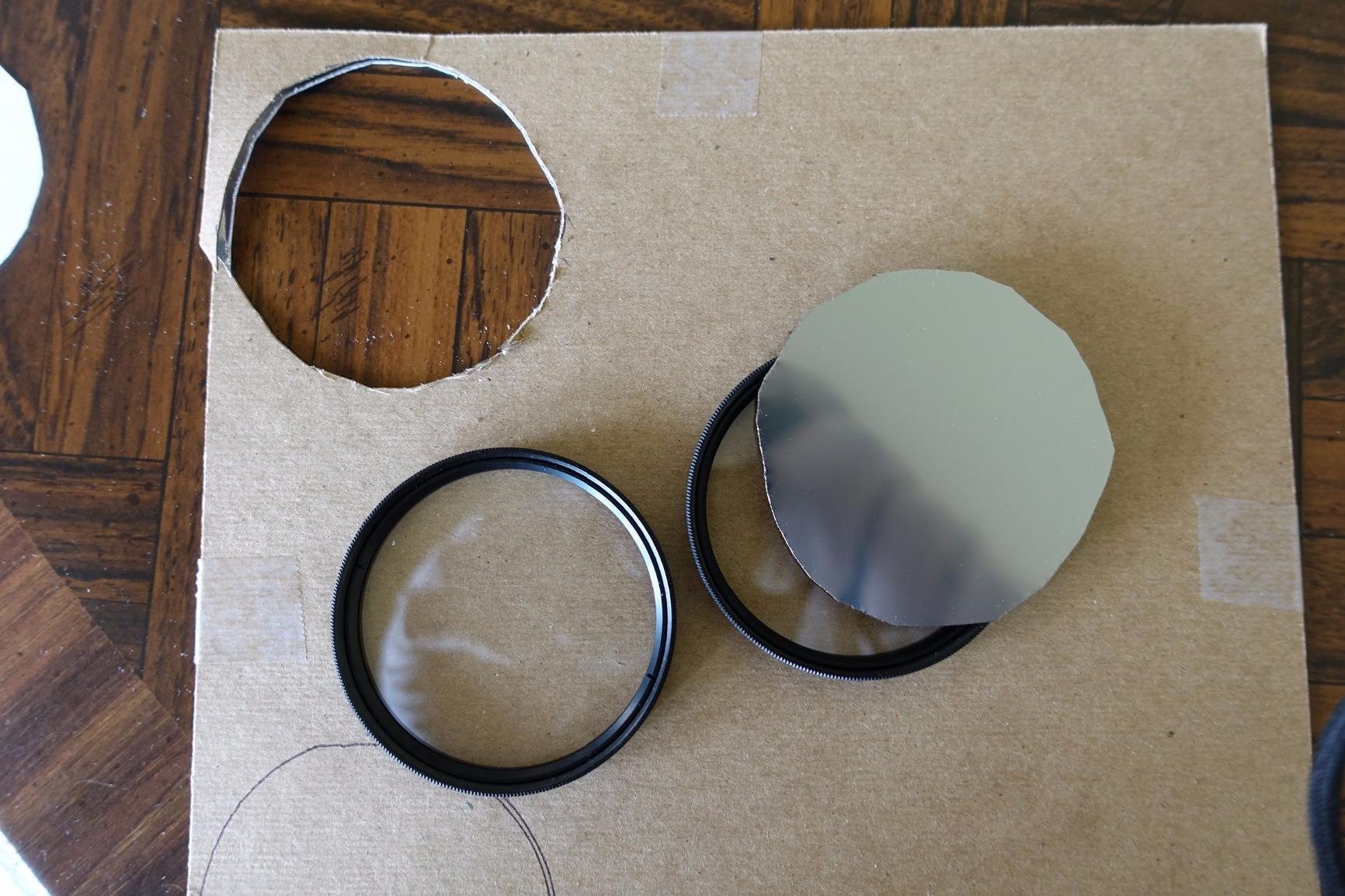
The tradeoff is that you own the whole job. The sheet arrives as a flat square, and turning it into a safe filter means mounting it in a rigid cell that cannot flex and attaching it so it cannot fall off the aperture. Reviewers on the product itself repeat this instruction more than any other point.
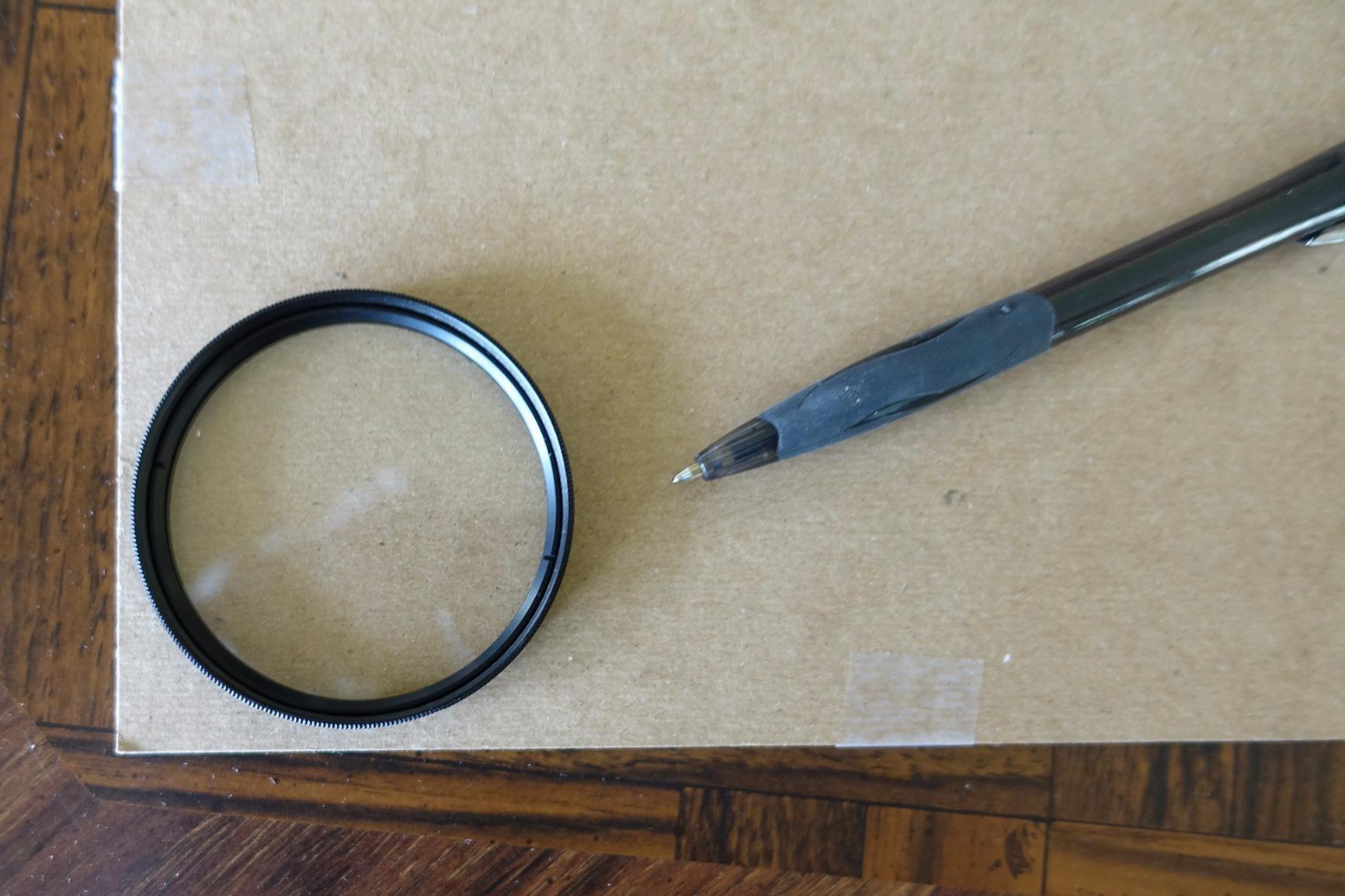
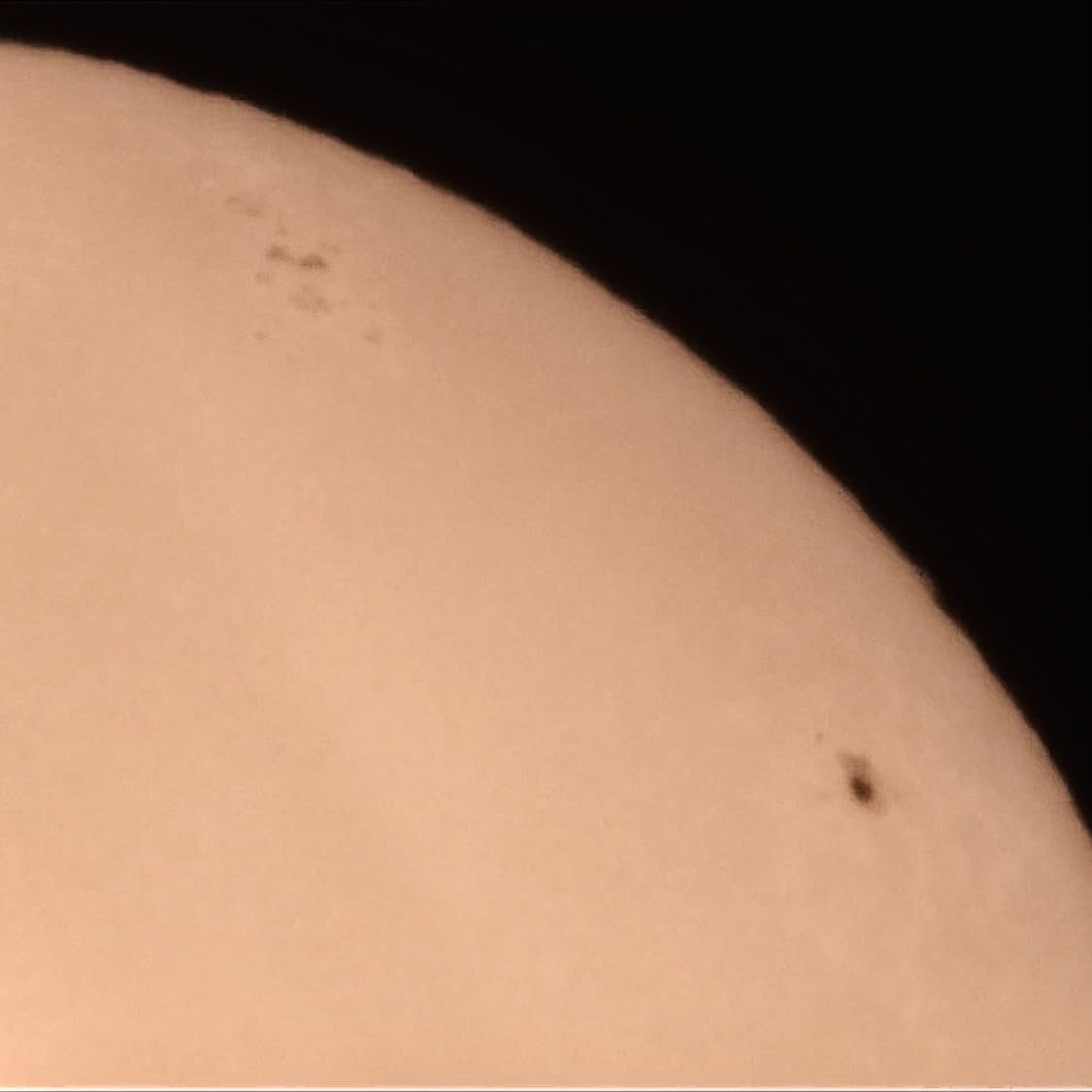
The rendering is a natural orange rather than the harsh white or the blue cast that some materials give you, which makes spot detail easier to judge against everyday expectations. Buyers also like that the same sheet covers binocular and camera front cells when you are not using a telescope at all.
Weighing it at 1.6 ounces, the sheet is genuinely portable. For a trip to a dark site or an outreach event where several instruments need filtering, one sheet can be cut to serve more than one aperture if you build the cells yourself.
The category’s largest review base gives us real confidence in the material itself. Across 947 reviews the average holds at 4.6, with roughly three quarters of buyers handing over five stars.
Who this filter suits best
This is the pick for anyone who owns more than one instrument, or whose telescope has an aperture no factory cell is made for. Cut the sheet to whatever diameter you need and it will serve a small refractor and a large Dobsonian from the same purchase.
It also suits anyone who wants a spare. Film creases, pinholes and tears are normal over a season of outreach use, and having a sheet in a drawer means you can rebuild a filter in five minutes rather than waiting on a replacement.
Where it falls short
A loose sheet held on with tape is not the same safety proposition as a machined cell held on with screws. If you are not confident building a cell that clamps firmly to the tube, buy one of the factory cells further down this list instead.
Film also needs more careful storage than glass. Keep it flat between cardboard, away from humidity, and inspect it for pinholes before every session — we cover that routine in the buying guide.
2. Celestron EclipSmart 8 Inch Solar Filter — Best for Schmidt-Cassegrain and EdgeHD
Celestron EclipSmart 8″ Solar Safe Eclipse Telescope Filter – ISO Compliant
ISO 12312-2:2015(E) compliant
Built for 8 inch SCT and EdgeHD
Hook and loop straps
4 oz, 2 year warranty
Pros
- ISO 12312-2:2015(E) compliant film
- Factory-sized for 8 inch SCT and EdgeHD objectives
- Film from American Paper Optics and third-party lab tested
- Two hook and loop straps hold the cell on the objective
- Two year Celestron warranty with US-based support
Cons
- Only fits 8 inch Celestron SCT and EdgeHD apertures
- Hook and loop straps can loosen with repeated thermal cycling
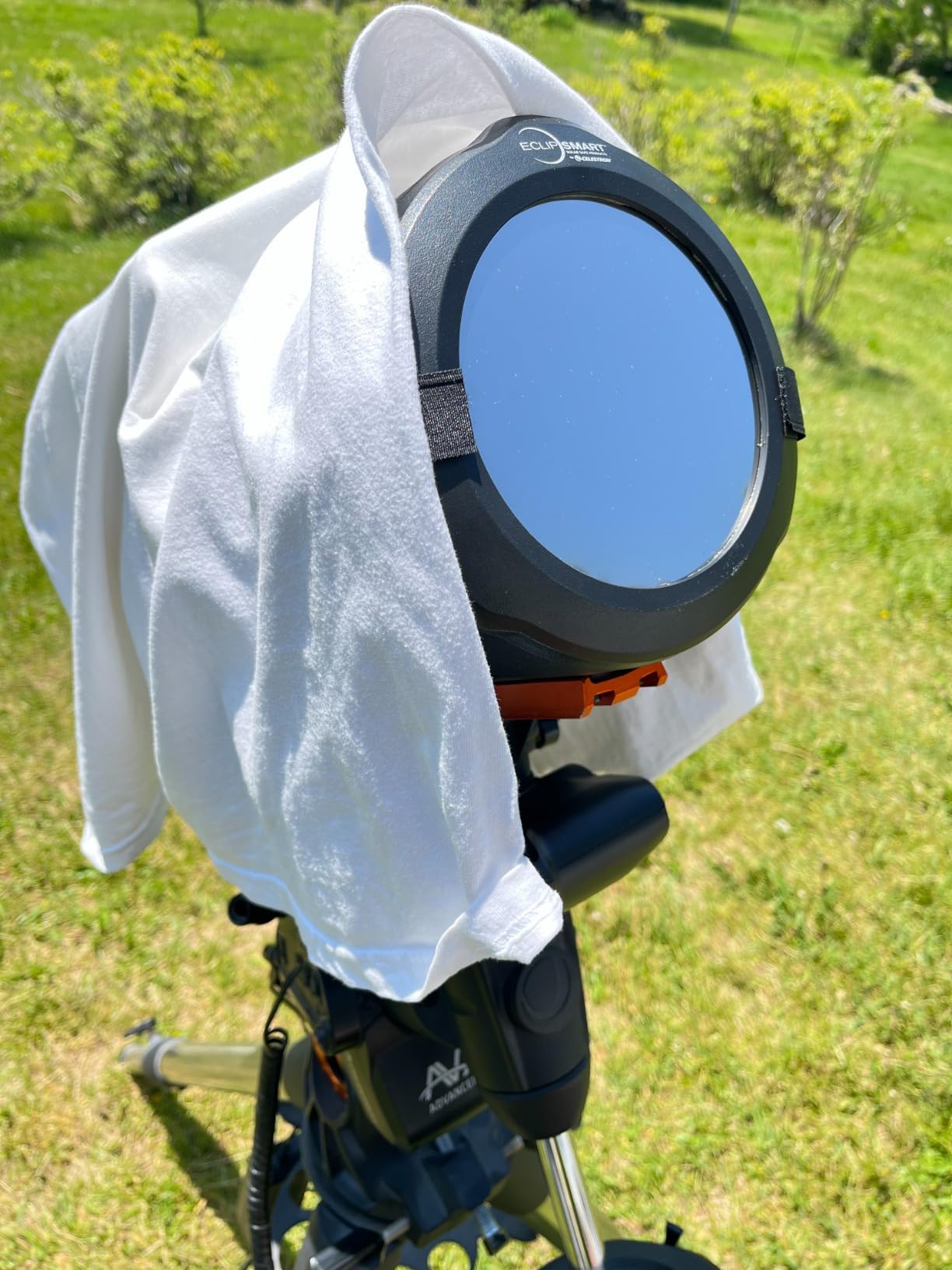
If your instrument is an 8 inch Schmidt-Cassegrain or an EdgeHD, this is the cell designed for it, and the design is the reason it earns the premium slot. The aperture matches the tube, the cell sits over the objective, and nothing has to be cut.
The film is made in the United States by American Paper Optics and independently tested by a third-party laboratory. Celestron lists the filter as conforming to ISO 12312-2:2015(E), and the coating carries a scratch-resistant finish, which is a meaningful upgrade on a bare film surface.
The rendering is orange, and buyers confirm it produces a natural view of both sunspots and partial eclipse phases. Across 597 reviews the average sits at 4.5 with about three quarters five-star, one of the larger review bases in this category.
Retention is handled with two hook and loop straps that pull the cell snug against the front of the tube. It is quick to fit and quick to remove, which matters when you want to switch back to night-sky observing without fuss.
At 4 ounces and 9.25 inches square, it packs into the same bag as a standard 8 inch case accessory. Owners of travel EdgeHD rigs mention this specifically when they explain why they bought a second one to keep in the vehicle.
The clear tradeoffs are scope of use and retention over time. Heat cycling a cell on and off a tube outdoors repeatedly loosens hook and loop over months, and once it slackens the secure mounting that makes any solar filter safe is compromised.
Who this filter suits best
Owners of an 8 inch SCT or EdgeHD should buy this over anything else in the list. A factory cell that matches your aperture removes the two biggest sources of error, which are a loose fit and a hand-cut edge that leaves gaps around the aperture.
It is also the right pick for outreach work where the instrument goes back into a car park between sessions. Two minutes to fit, two minutes to remove, no tools.
Where it falls short
Buy this only if you own an 8 inch Celestron Schmidt-Cassegrain or EdgeHD. Reviewers of other scopes report the cell refusing to sit correctly, and the negative minority of reviews here concentrate on exactly that fit problem.
Because the aperture is specific, this is not a filter to grow with. If your next telescope is a Dobsonian or a Newtonian, the sheet above is the more sensible long-term purchase.
3. Celestron EclipSmart Filter for 127mm and 130mm Reflectors — Best Budget Certified Pick
Celestron EclipSmart Telescope Solar Filter for 127mm & 130mm Reflectors
ISO 12312-2:2015(E) compliant
Covers 127mm and 130mm reflectors
Safety cap included
3.04 oz
Pros
- ISO 12312-2:2015(E) certified and independently third-party tested film
- One filter covers many popular 127mm and 130mm reflector models
- Hook and loop straps plus a protective safety cap
- Inexpensive route to a certified factory-made cell
- 4.6 average across 156 reviews with 77% five-star
Cons
- Clear central aperture is much smaller than the cell so the Sun is harder to acquire
- Limited to a specific list of 127mm and 130mm Celestron tubes
- Basic plastic with no scratch-resistant coating
This is the most common Celestron reflector size sold in the last decade, and one cell covers a long list of them. The listed compatibility runs from the PowerSeeker 127EQ through the NexStar 130SLT, Astro Fi 130, Omni XLT AZ 130, SkyProdigy 130 and the StarSense Explorer 127AZ and 130AZ.
That breadth is why this lands in the budget slot rather than the top slot. You get a certified, factory-made cell with hook and loop straps and a protective cap over the outer surface, without paying for the machined ring treatment found in the metal option.
The film is again made in the USA by American Paper Optics and independently third-party tested, and it conforms to ISO 12312-2:2015(E). The orange tint works for both visual observing and solar photography, which is useful if you also image with the same tube.
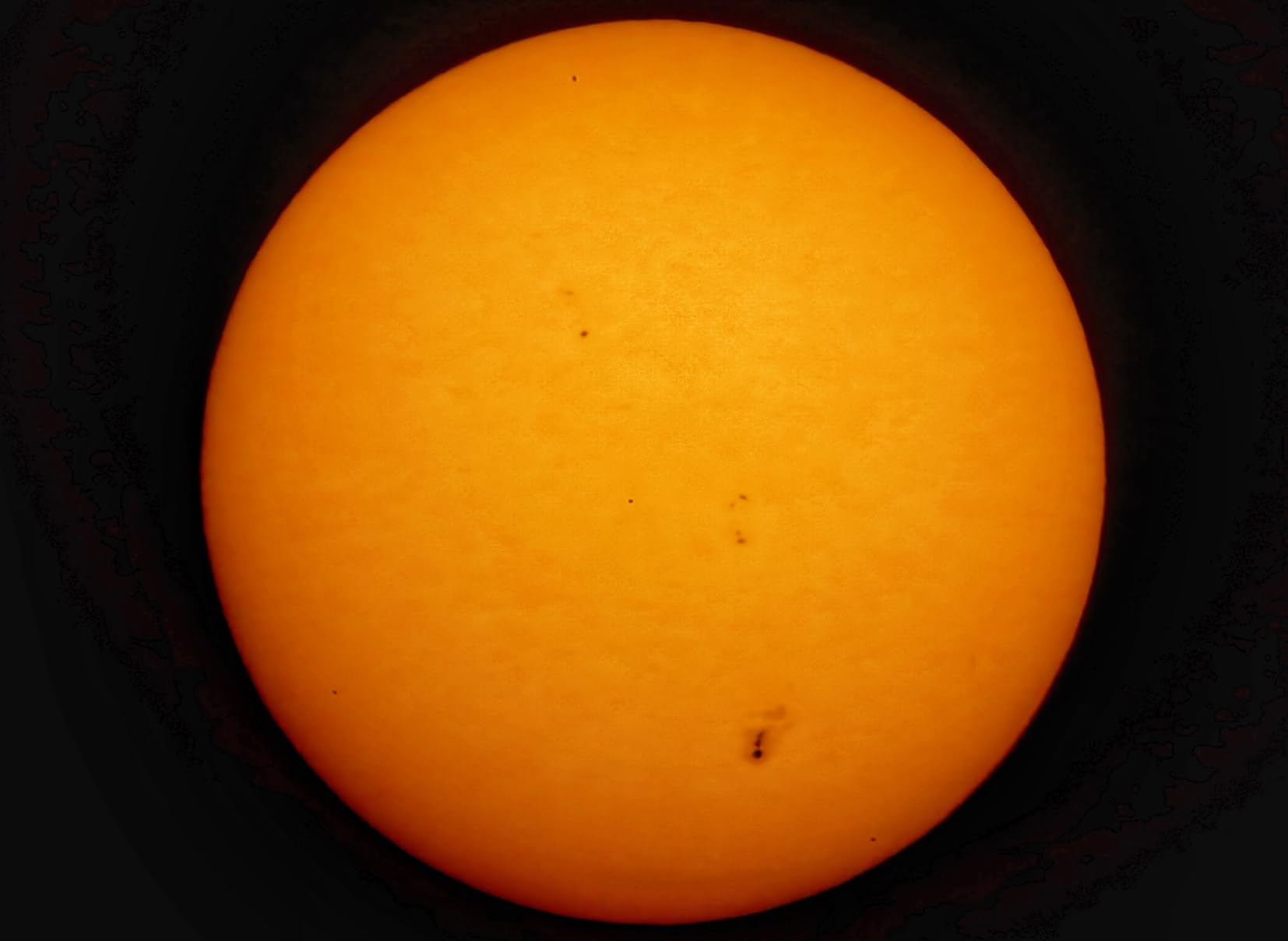
The friction point buyers report most is acquisition. The clear central aperture is a much smaller circle than the outer cell, so the Sun is a small bright disc that needs patience to centre and hold, particularly at higher power.
One reviewer adapted the cell to a 114mm tube by trimming it, which tells you the fit is more forgiving than the model list suggests. Treat that as a workshop task with a rigid cell, not as an excuse to stretch bare film over an aperture.
At 3.04 ounces and just over 7 inches square, it is small enough to live permanently in an accessory case rather than in a drawer.
Who this filter suits best
If you own any of the listed 127mm or 130mm Celestron reflectors, this is the correct certified cell at the lowest entry cost. The rating of 4.6 across 156 reviews tells us the material performs as advertised.
It is also the sensible choice for a first telescope bought for children or family observing, because the cap over the outer surface gives the cell a second layer of protection when the instrument is handled in a garden or a car boot.
Where it falls short
Expect to spend a few minutes finding the Sun. The restricted clear aperture is the most common complaint across reviews and it does not go away with practice, it only gets faster.
There is no scratch-resistant coating on this one, so treat the film surface carefully. Store the cell face-down on a soft surface and never lay tools on the tube while it is capped.
4. Astromania Deluxe 100mm Adjustable Filter — Best Metal Cell for Small Refractors
Astromania Deluxe Filter 100mm Adjustable Metal Cap for Telescope Tubes with Outer Diameter from 70mm to 92mm Aperture 75mm
Baader Astro film in an aluminium cell
75mm aperture, 100mm outer
Adjustable fit for 70-92mm tubes
Three clamping screws
Pros
- Rigid anodised aluminium cell with three clamping screws
- Adjustable range covers many small refractors and guide scopes
- Baader Astro film meets ISO 12312-2:2015
- Users resolve individual sunspots and sub-spots cleanly
Cons
- Bare film inside the ring with no protective glass so it punctures easily
- Listed 92mm upper limit is optimistic against a 100mm cell
- Clamping screws reported as overlong and awkward to use
This is the only machined option in the set and the only one holding Baader Astro film, which explains why it earns a place despite the lowest average rating here. Owners of 72mm refractors and guide scopes describe the view as crisp and correctly bright white rather than orange.
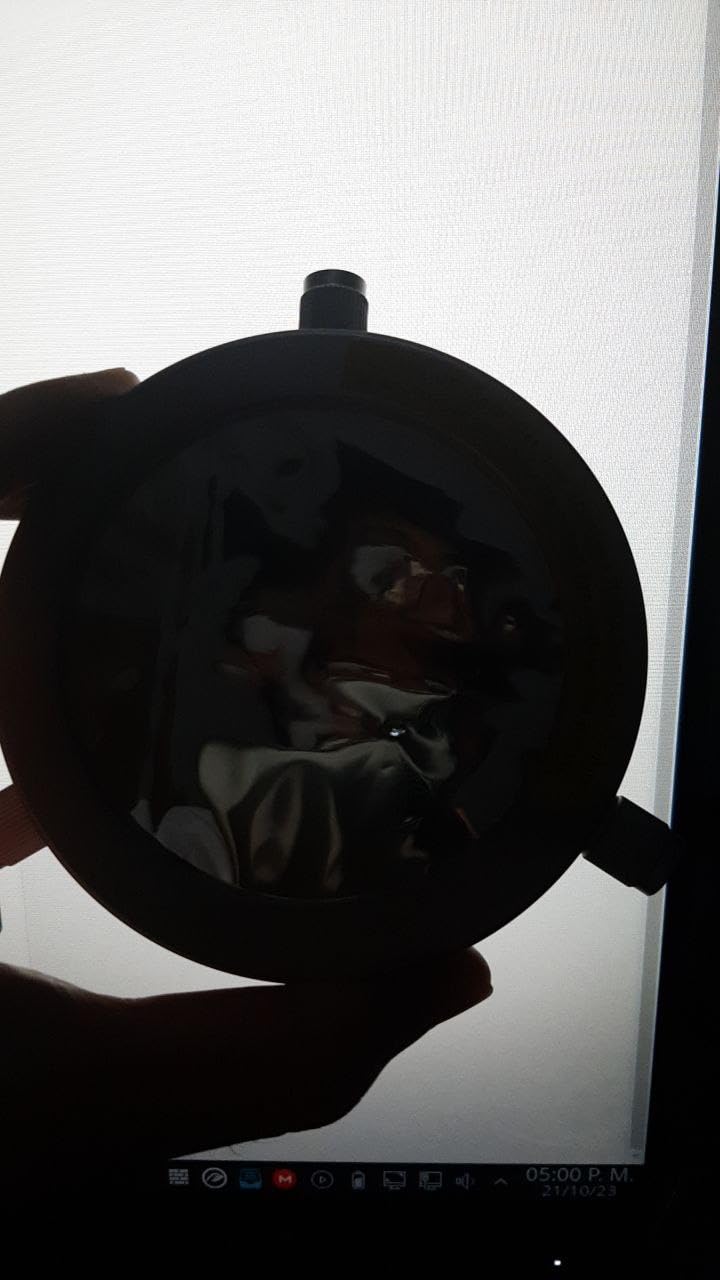
The cell is anodised aluminium with a 100mm outer diameter and a 75mm aperture, sized to slip over telescope tubes with an outer diameter from 70mm to 92mm. Three clamping screws with protective plastic caps hold it in place, and the housing is described as blocking 99.9% of incoming light.
Mechanically this is the most robust filter in the roundup. Nothing flexes, nothing is held on with tape, and the cell survives being dropped in a case in a way a cardboard rim does not.
The 130-review profile is the most polarised we saw: about 62% five-star but 9% one-star. The critical reviews cluster on two things rather than on the filter material, which is the film being exposed inside the ring and the fit range at the top end.
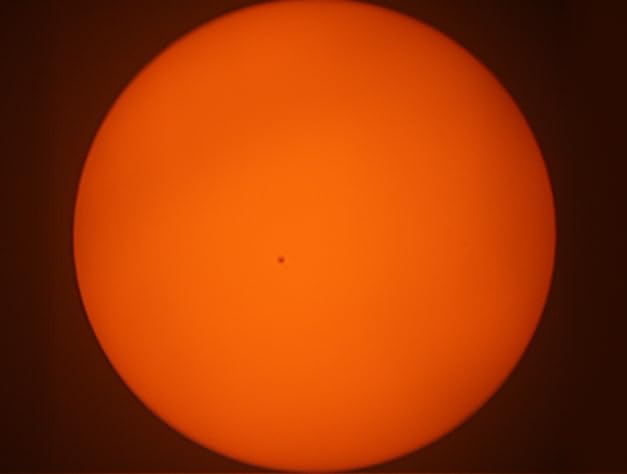
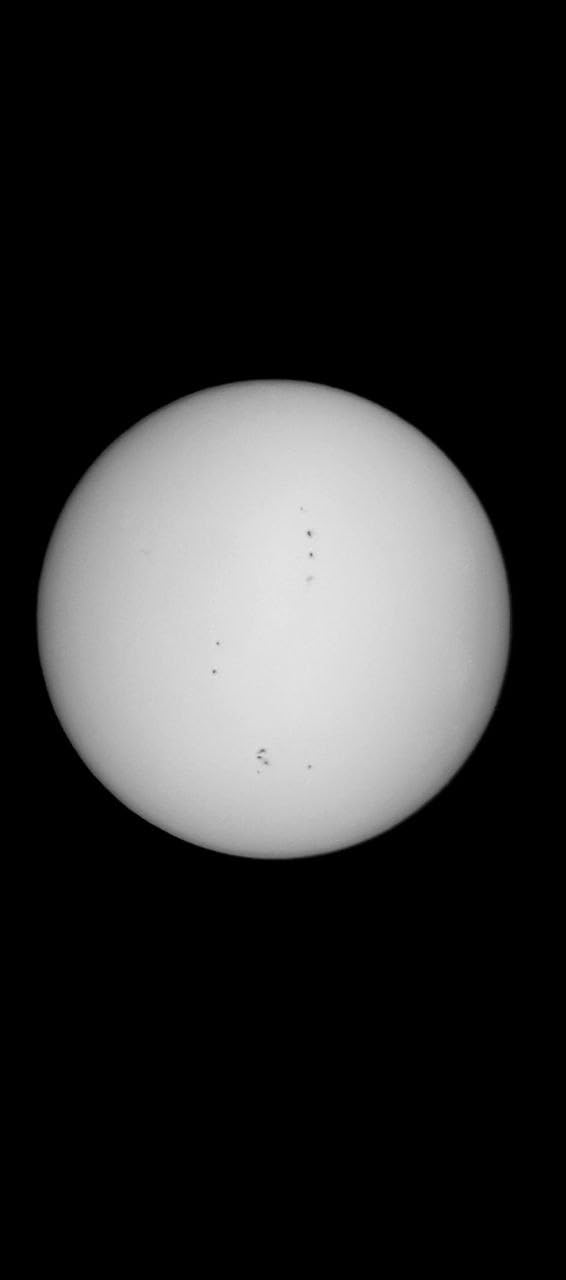
Users report clearly resolving individual sunspots and even sub-spots at moderate power, which is a fair description of what a good white-light filter should deliver on a small aperture.
Measure your tube before ordering. Buyers at the top of the range found the cell would not slip over a genuine 92mm tube because of the 100mm cell diameter, and a few substituted hook and loop pads for the overlong screws.
Who this filter suits best
This is the pick for owners of small refractors and guide scopes, particularly 70mm to 80mm tubes. A rigid aluminium ring that clamps to the tube is a far better safety story than a sheet held with tape, and the adjustable range covers a lot of common sizes.
It also suits anyone who already knows Baader material and prefers the whiter rendering. If you have read the forum comparisons of Baader against Thousand Oaks, this is the entry point into the Baader side.
Where it falls short
The film sits bare inside the ring with no protective glass, so a single scratch or an errant thumbnail is enough to damage it. Treat the inside face the way you would treat a camera sensor.
At 4.1 the average is the lowest here, pulled down by reports of scratched film and adhesive residue on arrival. Inspect the cell the day it arrives and keep the packaging.
5. Celestron EclipSmart Filter for AstroMaster 70 Refractors
Celestron EclipSmart Solar Filter for AstroMaster 70 Refractor Telescopes
ISO 12312-2:2015(E) compliant
Sized for AstroMaster 70 tubes
Three safety screws and a cap
Pros
- ISO 12312-2:2015(E) certified like the rest of the range
- Three-screw retention plus a protective safety cap
- Correctly sized for very common AstroMaster 70 mounts
- Independently tested USA-made film with an orange tint
Cons
- Narrow central circle makes the Sun harder to acquire and hold
- Plastic attachment screws are fragile and too short for wider tubes
- Several buyers report fit issues with the model named in the listing
The AstroMaster 70 is one of the most widely owned small refractors ever sold, which is why a dedicated cell for it still earns a slot. If your tube is an AstroMaster 70AZ, LT 70AZ or 70EQ, this is the factory-sized option.
Retention uses three safety screws rather than straps, and a protective cap covers the outer surface when the filter is not in use. The film is the same independently tested American Paper Optics material used across the EclipSmart range, with an orange tint for visual observing and eclipse photography.
That shared construction matters if you own more than one Celestron instrument. The material behaves identically across the range, so what you learn acquiring the Sun on this filter transfers straight to the 8 inch cell.
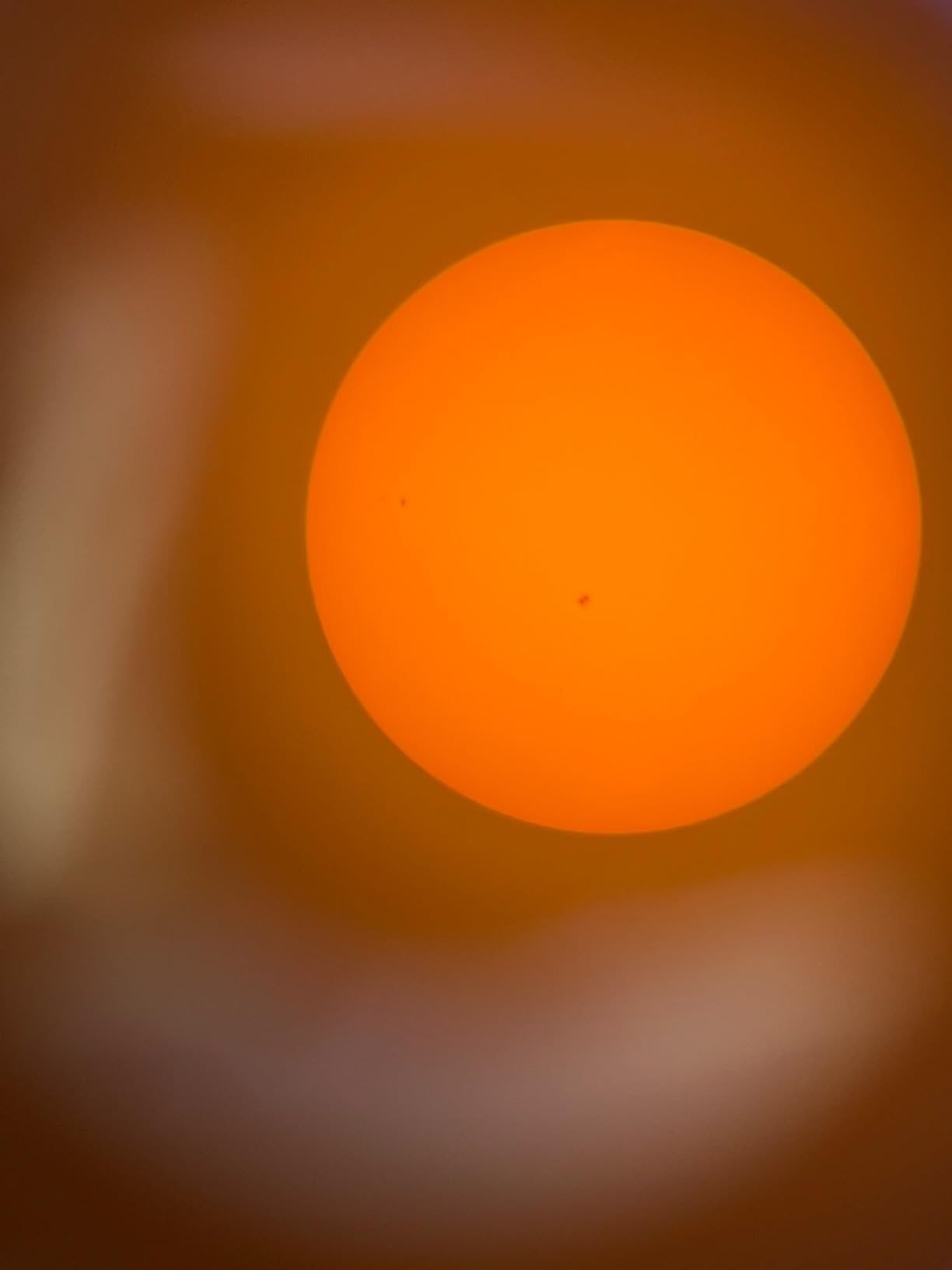
With 52 reviews this is the smallest sample in the roundup, so treat the consensus with slightly more caution. Buyers confirm a safe and good-looking view of the Sun and of a recent partial eclipse.
The recurring complaints are mechanical. The central aperture is a small circle, so finding and holding the Sun takes longer than with a full-diameter cell, and the three plastic screws are criticised as fragile and too short for wider tubes.
One buyer paired it successfully with a camera and binoculars outside a telescope, which is a reminder that the same film works on other front apertures if you have a rigid cell to hold it.
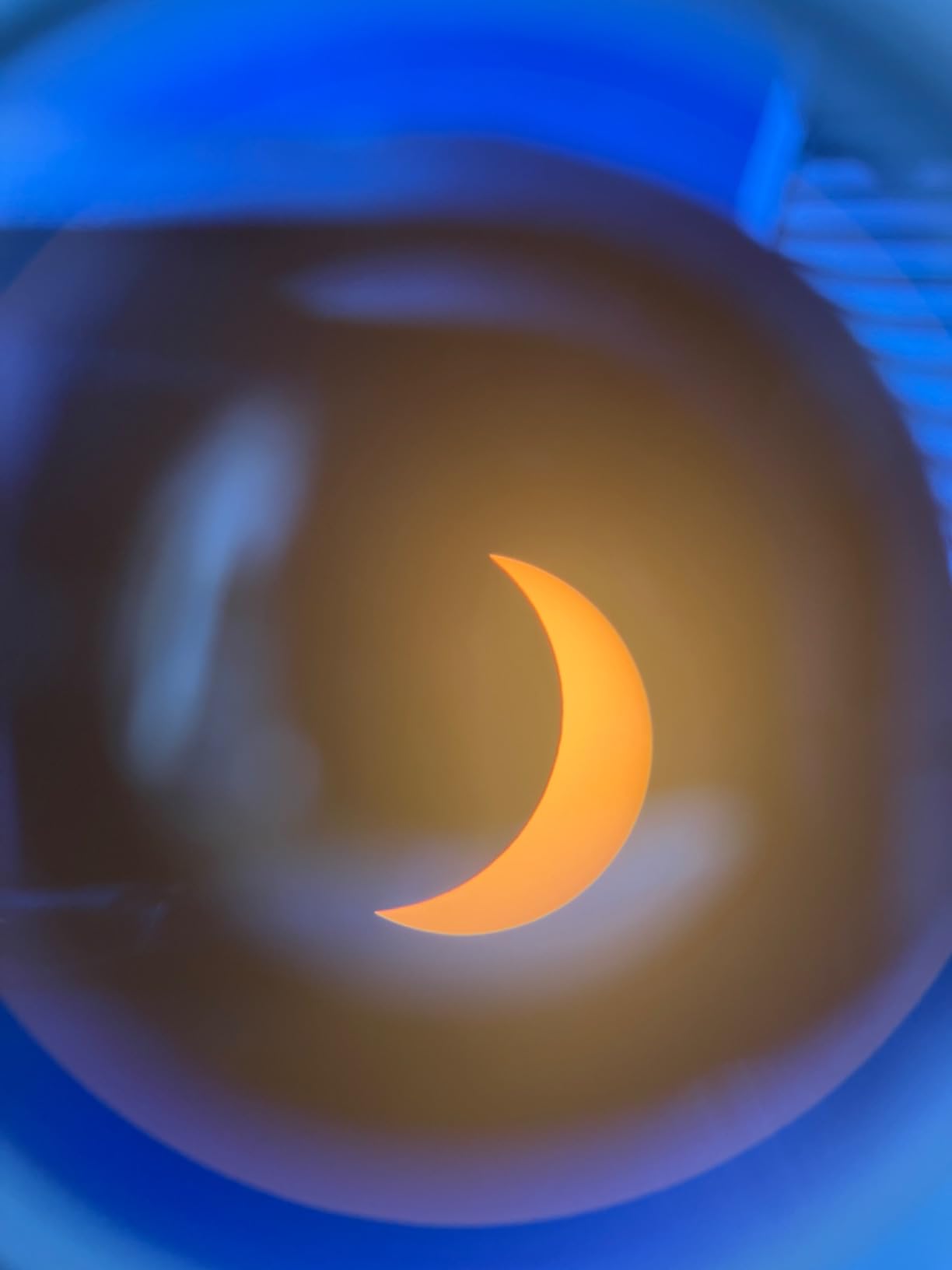
Who this filter suits best
Owners of an AstroMaster 70 should buy this rather than cutting film to size. The factory aperture, the three screws and the cap give you a filter that is ready to use and impossible to fit incorrectly.
It is a sensible first solar filter for a family or beginner instrument, especially where the same person will be handling the telescope in daylight and putting it away afterwards.
Where it falls short
Several buyers report the cell not fitting the exact scope model named in the listing. Measure the outer diameter of your tube before ordering, and check the model number rather than the marketing name.
The plastic screws are the weak point. On a snug-fitting 70mm tube they are not even necessary, and many users end up swapping them for something stiffer.
6. Rainbow Symphony 50mm Solar Filter — Best for Finder Scopes and Binoculars
Rainbow Symphony Solar Filter 50mm Black Polymer
50mm black polymer filter
Adhesive felt strips for slip fit
Covers 50mm to 101mm
18 g
Pros
- Size range from 50mm to 101mm covers almost any front cell
- Adhesive felt strips let you dial in a snug slip fit
- Natural orange rendering with clean total eclipse photographs
- Works on telescopes
- binoculars
- cameras and finder scopes
Cons
- Cardboard and polymer rim feels flimsy in the hand
- Fit depends on your tube diameter rather than the labelled size
- Not as rigid as a machined aluminium cell
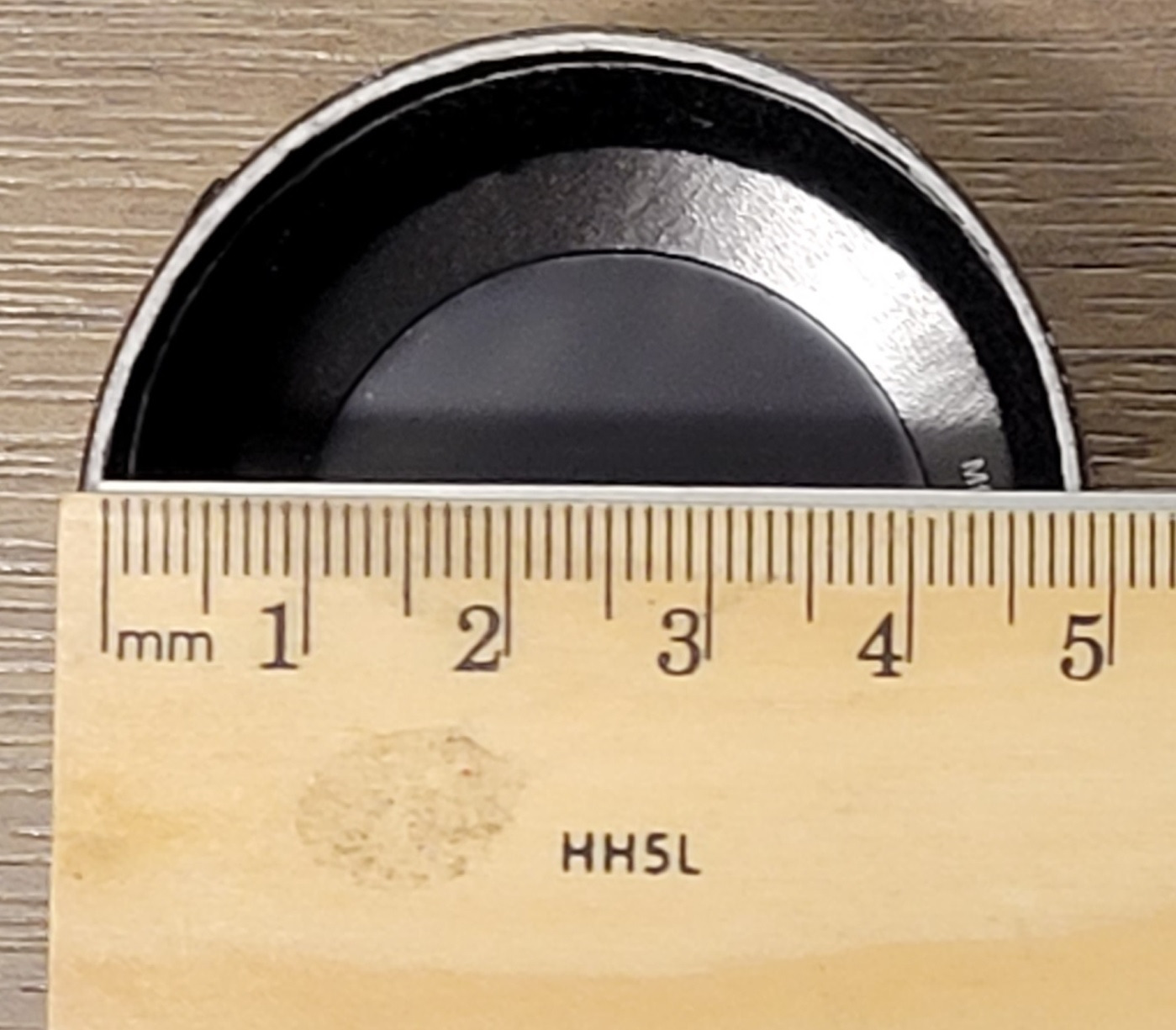
Every telescope with a finder scope has a second, smaller aperture that also needs filtering, and this 50mm black polymer filter is built for exactly that job. It slips over the outside of the objective housing and adhesive felt strips let you adjust it to a slip fit.
The same line covers 50mm, 60mm, 70mm, 76mm and 101mm inner diameters, so one product family covers a finder scope and a small refractor. Buyers also use it on binocular objectives and camera lenses, which widens its usefulness beyond a single telescope.
At 18 grams it weighs almost nothing, and at under two inches square it disappears into a jacket pocket. For outreach work where you need to filter several instruments, that portability is worth more than rigidity.
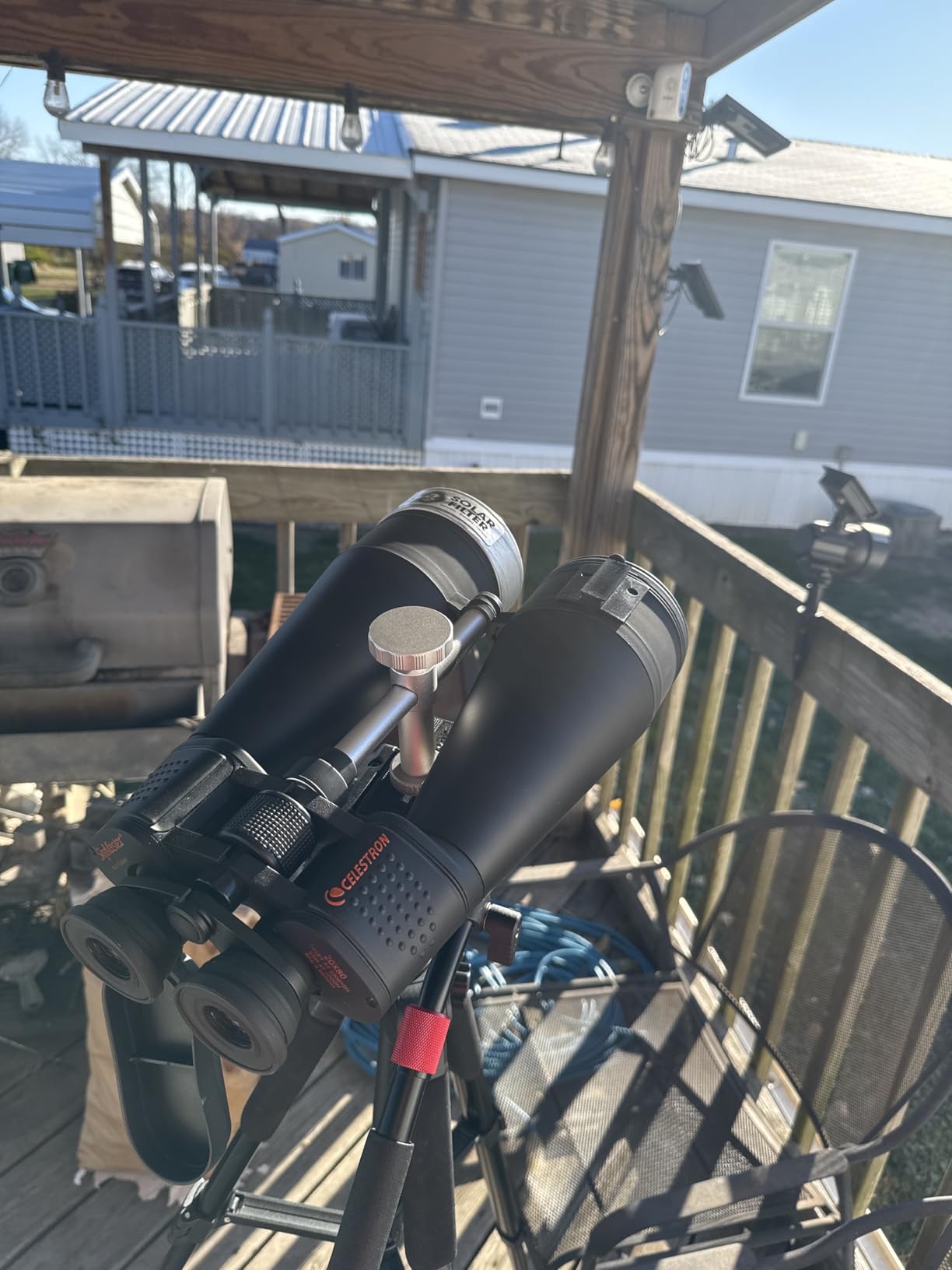
Value is the dominant theme across 115 reviews, where owners compare it favourably against premium glass filters and call it bang for the buck. Eclipse and sunspot viewing is described as clean, with an orange tint most people find natural.
The critical reviews concentrate on sizing and construction rather than on the filtering. The rim is weak, and buyers report that a labelled 70mm version did not fit a genuine 70mm tube, so the labelled number is not always the outer diameter you need to match.
Measure the outside of the tube housing and compare it against the inner diameter of the filter, allowing a few millimetres of clearance. That step removes most of the disappointment in this size.
Who this filter suits best
This is the pick for finder scopes and small binoculars, and for anyone who wants to filter several instruments for an outreach or star party session without carrying a machined cell for each one.
It also works as a secondary filter for a phone adapter or camera lens, which makes it a useful low-commitment way to try white-light solar observing before buying a telescope-specific cell.
Where it falls short
The rim is not rigid. It feels flimsy in the hand and it will not survive being dropped the way the aluminium ring in position four does, so treat it as a portable accessory rather than a permanent fitting.
One buyer also reported receiving a single lens for a binocular application. If you are filtering a pair of binoculars, confirm the quantity in the box before you leave it.
How to Choose a Solar Filter for Your Telescope
Start by measuring, not by brand. Almost every sizing problem we see traced back to someone guessing the aperture from the advertised focal length or the marketing name of the scope, and both are unreliable across models.
What types of solar filters are there?
There are five main types, and they differ in what reaches your eye and where the filter physically sits.
White-light polymer film — coated or substrate-based polymer that cuts visible light across the whole spectrum. It shows sunspots, faculae and granulation in white or orange, and it is what most beginners buy.
White-light optical glass — coated glass cells that render the Sun orange with excellent sunspot detail and far better drop resistance than film.
H-alpha filters — narrowband filters tuned to the 656.28nm hydrogen line, which isolate the chromosphere and reveal prominences, filaments and plage that white light never shows.
Calcium K filters — tuned to the 3933.7nm calcium line, popular in dry or poor seeing conditions and often used alongside white light.
Dedicated solar telescopes — complete refractors with an etalon built into the front, such as Lunt and Coronado models, that only ever point at the Sun.
Where the filter sits matters as much as what it is made of. Front-of-aperture filtering is the consensus placement, and it is the only placement we consider safe for a general-purpose telescope.
How to size a filter to your telescope
Measure the outside diameter of the tube or cell at the front of your instrument with calipers or a steel rule, then match that figure against the inner diameter of the filter cell. A filter can sit slightly larger than the tube but must never sit smaller, because a gap at the edge lets unfiltered light reach the objective.
70mm to 92mm tubes — the Astromania adjustable ring in position four covers this band, and it is the usual answer for small refractors and guide scopes.
114mm and 127mm tubes — sit between the size ranges above, so this is where a cut-to-size sheet earns its place.
130mm reflectors — the Celestron cell in position three covers 127mm and 130mm models directly.
200mm apertures — an 8 inch opening needs a cell rated for it, which is what the EclipSmart 8 inch filter provides for SCT and EdgeHD tubes.
Finder scopes — usually 30mm to 60mm, covered by the small end of the Rainbow Symphony range.
Cell depth matters too. The filter must sit far enough forward to clear the dew shield, and far enough back to be held securely, so check the full depth of the cell rather than just its diameter.
Our picks cover common apertures, and if you are still shopping for the instrument itself our guides to the best refractor telescopes for beginners and the best Dobsonian telescopes for deep sky are worth a look before you commit to a filter size.
Film or glass: which material lasts longer
Film wins on flexibility and cost. A single sheet can be cut for several apertures, replaced after a tear in minutes, and it is the right choice for beginners and for anyone who filters more than one instrument.
Glass wins on durability. An optical glass cell survives drops, resists scratching and needs no inspection routine, which makes it the better option for outreach work, for club loan equipment and for anyone who is clumsy with small parts.
The rendering difference is real and worth knowing before you buy. Mylar-type films often tint blue and scatter light in a way that shows atmospheric dispersion, while glass cells render the Sun orange with better sunspot detail but suppress faculae.
On brightness, forum consensus across observing threads consistently reports the same trade-off: Baader film gives a cleaner view but a brighter image than the alternatives, so first-time users sometimes find it startling before their eyes adapt.
What ISO 12312-2 does and does not cover
ISO 12312-2 applies to filters for direct observation of the Sun by the unaided eye. It covers eclipse glasses and handheld viewers, and it does not apply to telescope, binocular or camera optical filters.
What governs an optical solar filter instead is attenuation across visible, ultraviolet and infrared light, thermal load, a mounting that stops unfiltered light reaching the eye, and placement at the front of the optics. Several filters in this roundup state ISO 12312-2 compliance on their specifications as a manufacturer marker of the film, which is useful context but not the governing safety standard for optical use.
DIY film cells versus factory-made filters
Yes, you can build your own filter, and the practice is well established on astronomy forums, where the standard advice is to mount Baader Astro film in commercial cells because it is cheap, easily replaced and better behaved than float glass.
The safe method is narrow: buy a rigid aluminium cell from a solar filter supplier, cut certified film slightly larger than the clear aperture, clamp or tape it under tension across the cell, and fit the cell to the front of the tube so it cannot shift.
The unsafe method is stretching a loose sheet across an aperture and holding it with tape. A taut, unpinned film can flex, wrinkle and let concentrated sunlight through in a line, which is exactly the failure that produces permanent eye damage.
If you already image with a camera, remember that a solar filter is also the right front element for solar photography, and that camera sensors need the same UV and infrared blocking that your eye does.
Inspecting film for pinholes and when to replace it
Pinhole inspection takes about a minute and should happen before every session, not once a season.
Hold the film to a bright light source indoors and look for bright specks or pinprick points where unfiltered light passes through.
Check the cell tension by looking across the film at an angle, since slack film wrinkles under heat and a wrinkle can crack or split.
Inspect the surface for tears, creases and lifted corners, particularly along the clamped edge.
Replace rather than patch. A patch concentrates heat and changes the optical path, and a spare sheet costs less than the eye you risk.
Store film flat between cardboard, away from humidity and away from direct sunlight on a windowsill. Glass cells want a padded case, and any filter left out overnight should be checked for condensation before it goes back on the telescope.
What to avoid
Avoid unbranded marketplace filters, which is the single most common thread on solar forums. A CE mark on a sheet does not certify it as a solar filter, and many 0.8mm sheets sold cheaply are not certified at all.
Avoid every screw-in eyepiece adapter, for the reasons in the safety section above. If you see one marketed as solar observing equipment, leave it alone regardless of the claims on the listing.
Avoid loose unmounted film, and avoid any cell that can rotate or fall off the aperture. A filter that is not positively held in place is not a filter, it is a suggestion.
One last warning for anyone filming or photographing the Sun: a camera is damaged by unfiltered sunlight just as an eye is, and the damage happens faster. Use the same front filter, and never test an unfamiliar setup by pointing it at the Sun before the filter is fitted.
Once you have a filter that fits, our guide to the best telescopes for astrophotography covers rigs that can also capture the eclipse, and our best telescopes for kids list is worth reading before you hand a solar filter to a younger observer.
Frequently Asked Questions
What are the different types of solar filters used in telescopes?
The main types are white-light polymer film, white-light optical glass, H-alpha narrowband filters, calcium K filters, and dedicated solar telescopes with an etalon built in. White-light film and glass show sunspots, faculae and granulation. H-alpha filters isolate the 656.28nm hydrogen line and reveal prominences and filaments. All of these must be used at the front of the instrument.
What happens if you look at the Sun through a telescope without a solar filter?
You risk solar retinopathy, which is permanent and irreversible damage to the retina and can mean lifelong vision loss. A telescope concentrates sunlight the way a magnifying glass does, and magnification defeats the eye’s natural blink and pupil response. The damage happens in a fraction of a second, so there is no safe way to test it.
Do solar filters go on the eyepiece?
No. Screw-in eyepiece solar filters are unsafe and should never be used. The filter belongs at the front of the telescope over the objective, where it removes the energy before sunlight enters the tube. An eyepiece filter sits where the Sun’s image is already concentrated, which heats the filter and risks cracking it or letting unfiltered light past its edge.
What size solar filter do I need for my telescope?
Measure the outside diameter of the tube or cell at the front of your telescope, then choose a filter with an equal or larger inner diameter so no gap can form at the edge. Small refractors usually fall between 70mm and 92mm, 127mm and 130mm reflectors need a matching cell, and 8 inch Schmidt-Cassegrain and EdgeHD tubes need an 8 inch aperture filter.
Can I make my own solar filter for my telescope?
Yes, by mounting certified solar film in a rigid aluminium cell from a solar filter supplier. Cut the film slightly larger than the clear aperture, clamp or tape it under tension across the cell, and fit the cell to the front of the tube so it cannot shift. Never stretch a loose sheet across an aperture, and never use uncertified film for the job.
Is ISO 12312-2 required for telescope solar filters?
No. ISO 12312-2 applies to eclipse glasses and handheld viewers for unaided-eye viewing, and it does not cover telescope, binocular or camera optical filters. Optical solar filters are instead judged on attenuation across visible, ultraviolet and infrared light, thermal load, secure mounting, and placement at the front of the optics.
What is the best filter for viewing the Moon, Saturn and Jupiter?
No filter is needed for the Moon, Saturn or Jupiter through a telescope, and a solar filter must be removed for all three. A neutral density or variable polariser filter is occasionally used on the Moon to raise contrast on the terminator, and a UHC or narrowband filter helps on planetary nebulae such as the Ring Nebula. These are separate product categories from solar filters.
Final Verdict
The Thousand Oaks 8 by 8 inch sheet takes our top slot for the best solar filters for telescopes because it combines the largest review base in the category with material that survives handling, and it fits whatever aperture you actually own. Buy the Celestron cell matching your tube if you want zero guesswork, and reach for the Astromania ring if a machined aluminium build matters more to you than the whiter Baader rendering.
Whichever you choose, mount it at the front, cover the finder, and take the filter off only after the instrument is reconfigured. That habit matters more than any specification on the box.