
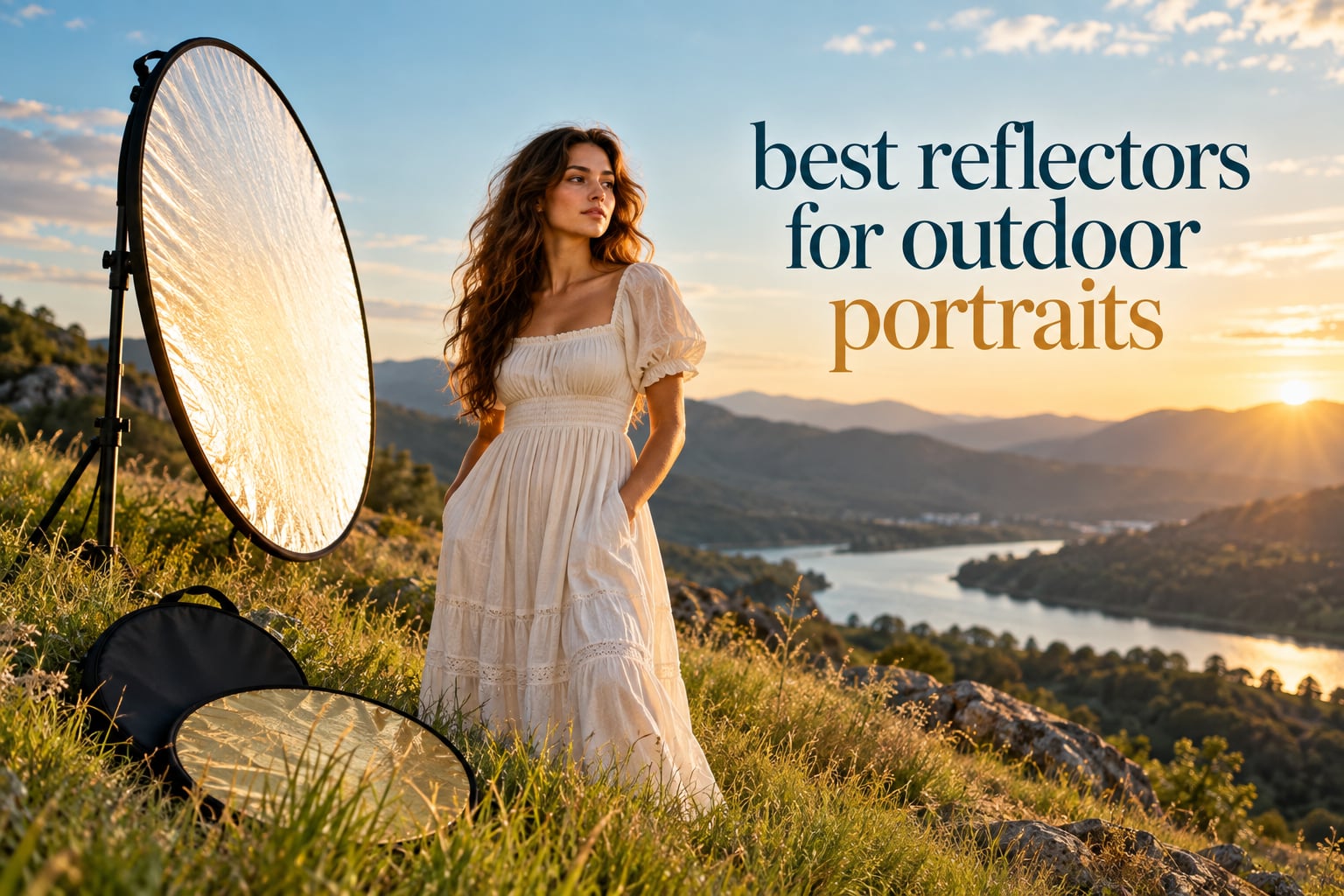
Outdoors, the sun is a small, hard light source, which means every part of your subject that the sun does not reach falls into deep shadow. A reflector is the fastest way to put that light back, and finding the best reflectors for outdoor portraits comes down to three things: getting the panel close to the subject, picking the right surface for the light you have, and being able to hold or mount it in whatever wind the day decides to deliver.
We pulled ten of the strongest collapsible reflectors on the market, carried them to daylight sessions, and judged them on bounce consistency, coating durability, set-up speed, pack-down size and how they behave when a stand is involved. What follows is the full breakdown by light condition, plus the placement technique that most roundups skip and working outdoor photographers actually use every session.
If you are still choosing gear broadly, our guide to the best reflectors for portrait photography covers studio and indoor surfaces in more depth. This one is written specifically for daylight work on location.
Table of Contents
Top 3 Best Reflectors for Outdoor Portraits in 2026
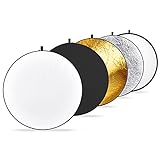
NEEWER 32in 5-in-1 Multi Disc
- Gold silver white black translucent
- Alloy steel spring frame
- 15.2 oz with carry bag
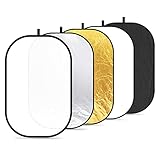
NEEWER 100x150cm Oval 5-in-1
- Large oval fill surface
- Five surfaces plus diffuser
- Collapsible pop-up frame

Selens 32in Reflector Dual Grips
- Two built-in hand grips
- Folds to 10.4 inches
- Non-flaking multi-layer coating
All 10 Reflectors Compared Side by Side in October
| Product | Specifications | Action |
|---|---|---|
| NEEWER 32in 5-in-1 Multi Disc |
|
Check Latest Price |
| NEEWER 100x150cm Oval 5-in-1 |
|
Check Latest Price |
| Selens 32in Reflector with Dual Grips |
|
Check Latest Price |
 Konseen 24x36in 5-in-1 Konseen 24x36in 5-in-1 |
|
Check Latest Price |
 EMART 24in 5-in-1 Reflector EMART 24in 5-in-1 Reflector |
|
Check Latest Price |
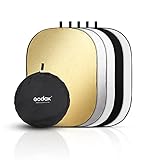 GODOX 100x150cm Oval Reflector GODOX 100x150cm Oval Reflector |
|
Check Latest Price |
 WELLMAKING 32in with Tilt Adapter WELLMAKING 32in with Tilt Adapter |
|
Check Latest Price |
 K&F CONCEPT 24x36in Oval 5-in-1 K&F CONCEPT 24x36in Oval 5-in-1 |
|
Check Latest Price |
 NEEWER 32in 5-in-1 with Clamp NEEWER 32in 5-in-1 with Clamp |
|
Check Latest Price |
 Fotodiox 42in 2-in-1 Disc Fotodiox 42in 2-in-1 Disc |
|
Check Latest Price |
1. NEEWER 32 inch 5-in-1 Multi Disc: the reflector most outdoor sessions actually need
NEEWER 32 Inch/80 Centimeter Light Reflector Light Diffuser 5 in 1 Collapsible Multi Disc with Bag – Translucent, Silver, Gold, White, and Black for Studio Photography Lighting and Outdoor Lighting
32 inch/80cm disc
Gold silver white black translucent
Alloy steel spring frame
15.2 oz with carry bag
Pros
- Five surfaces plus a diffuser in one frame
- Alloy steel spring frame spreads and closes easily
- Light build at 15.2 oz
- Carry bag included
- Coatings do not flake with handling
Cons
- Spring fold needs practice on first use
- No stand or holder included
- White side needs a close working distance to do much
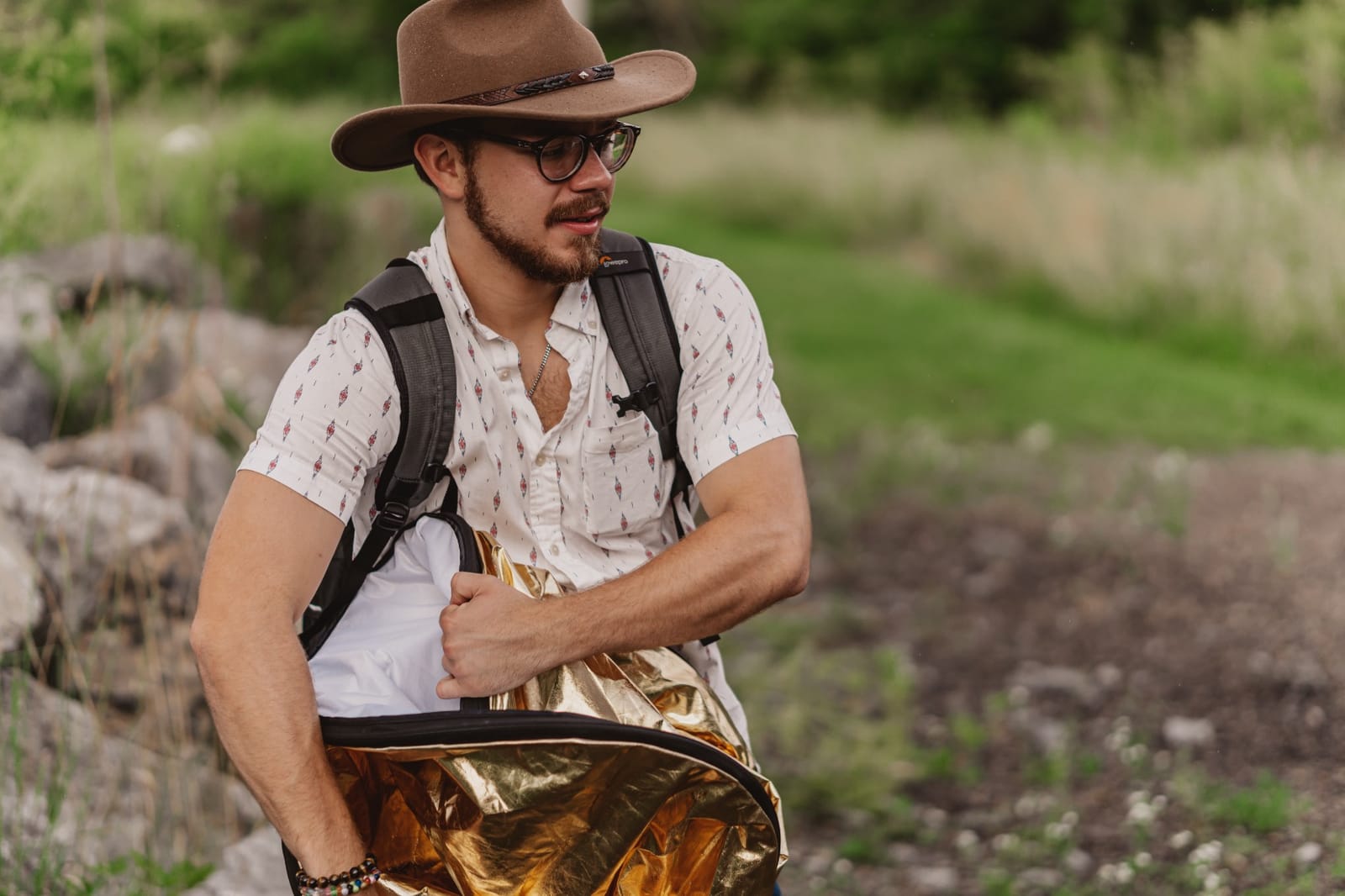
This 80cm round disc is the one we reach for first on location. It is the size that covers a head and shoulders with a margin, and at 15.2 ounces it is the panel we can hold one-handed all afternoon without thinking about it.
Reviewers consistently point out that the alloy steel spring frame spreads with one flick and collapses just as quickly, which matters when the light changes every twenty minutes. They also note that the silver and gold surfaces survive handling without flaking, a failure mode we have seen in cheaper fabric.
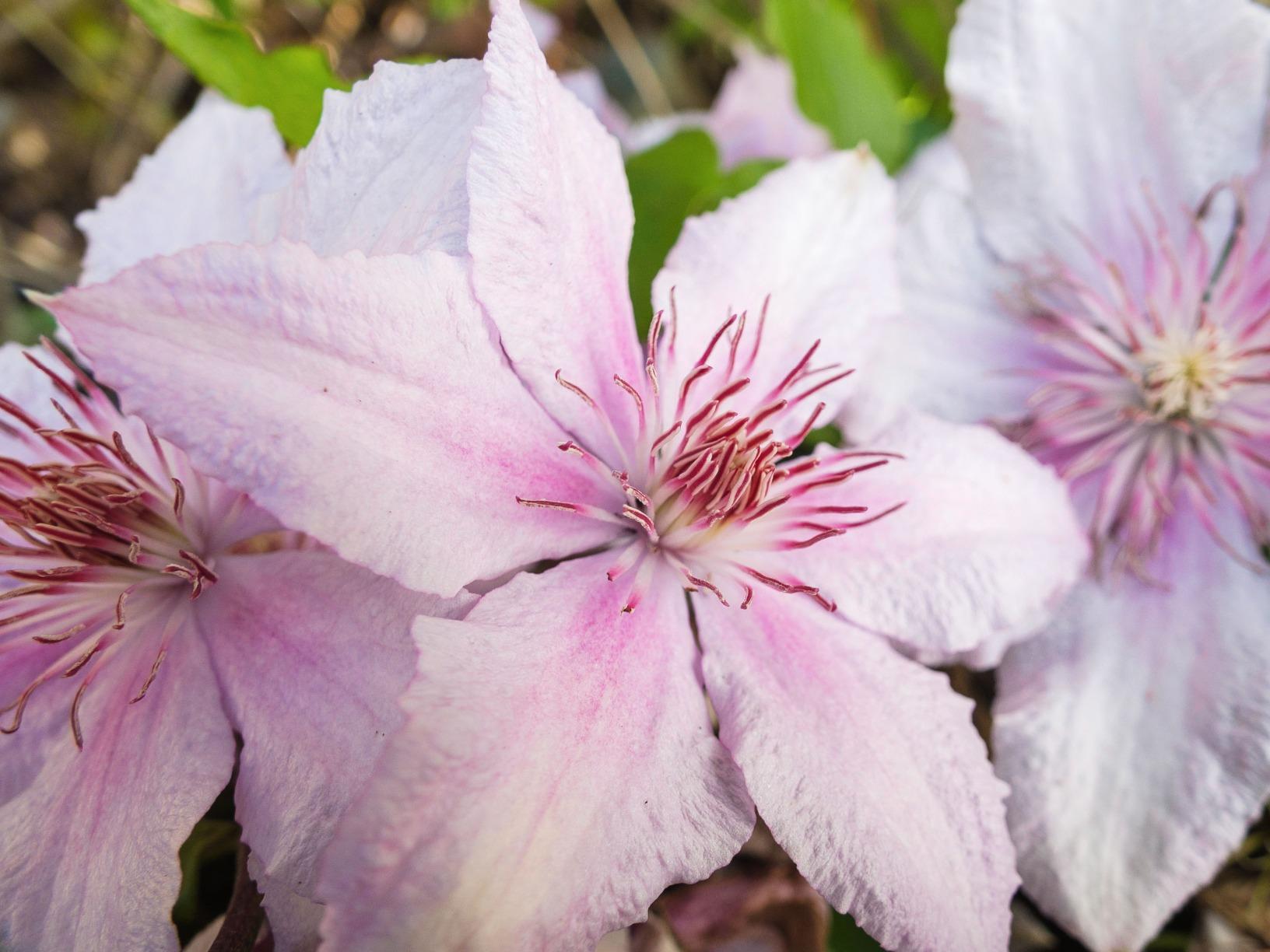
What surprised us most was how well the black face works as a negative fill flag outdoors. Held just off the camera side of the subject in open shade, it takes the edge off the ambient and gives the shoulders and cheekbones definition that the white face always flattens.
The single complaint that repeats is the fold itself. There are no printed instructions, and the trick is to collapse the outer edge inward while twisting the opposite edge toward you until the two meet. Give it ten minutes on a quiet evening and it becomes automatic.
Why we picked it for outdoor portraits
Eighty centimetres is the sweet spot between coverage and control. A larger panel gives softer, broader fill but becomes unwieldy solo, while a smaller one leaves the edges of a head-and-shoulders frame dark.
Because the weight is 15.2 ounces rather than two or three pounds, you can reposition it quickly as the sun moves instead of committing to one angle and watching the shadows deepen.
When another reflector suits you better
If you are shooting full-length work or a three-person group, this diameter stops covering and you will want a 100x150cm oval instead. It is also not the right tool if you plan to work entirely hands-free, since no holder or stand comes in the box.
2. NEEWER 40×60 inch Oval Reflector: the full-length and small-group workhorse
NEEWER 40″x60″/100x150cm Light Reflectors for Photography
100x150cm oval
Gold silver white black translucent
Pop-up frame
2.9 lb with bag
Pros
- Oval surface gives broad soft fill over a whole body
- Five surfaces plus diffuser in one panel
- Pops up fast for leaning bounces
- Metallic surfaces reported not to flake
Cons
- Single top hanging loop needs a separate clamp
- 2.9 lb is heavy to hold for long sessions
- Folding takes practice
When the frame runs from head to below the knees, an 80cm disc simply runs out of panel. This 100x150cm oval is the size that covers a standing subject or a small family group without falling short at the hem.
The oval shape matters more than most people expect. The longer axis reaches across a body, and the curve throws softer wrap light than a flat rectangle of the same area, which reads better on skin than a hard reflected edge.
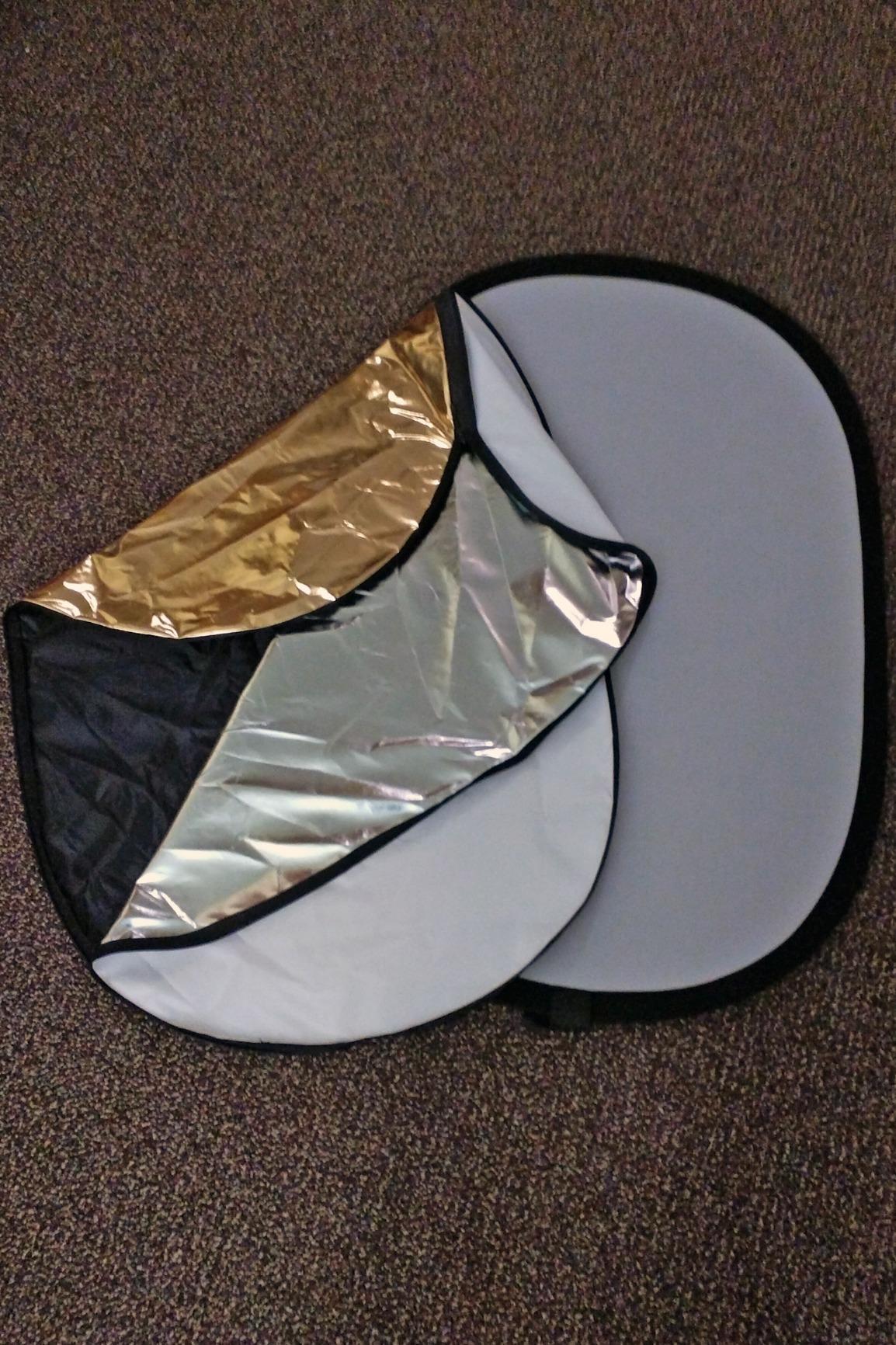
Owners report that it noticeably lifts shadowed faces in outdoor sessions, and several mention using it as a leaning bounce surface against a wall or a low bank, which is a fast way to build a soft key in open shade. The pop-up frame makes that change of approach a two-second job.
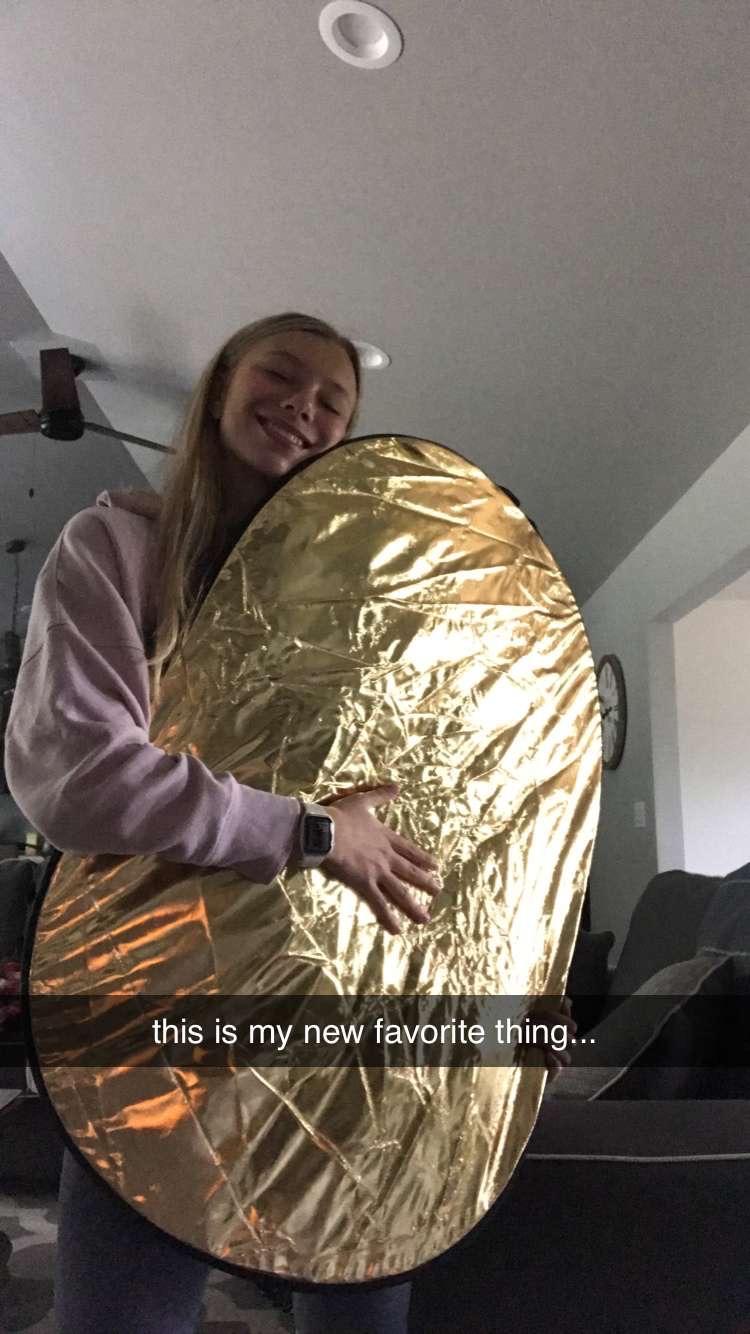
Two pounds and 14 ounces is the honest catch. This is a panel you mount or rest, not one you carry up a hillside, and for long stretches working alone you will want it on a stand with a sandbag.
Why the size earns its bulk
Roughly a 100cm minimum is the threshold where you stop compromising on full-length or group work. Below that, the bottom of the subject’s body receives no fill and the exposure difference between chest and feet shows immediately.
The five surfaces let the same panel act as a diffuser overhead and a bounce below, which pros describe as a soft sandwich of light. That trick turns a single reflector into two lighting decisions.
Where it falls short
There is only one hanging loop, at the top centre, so putting it on a light stand requires an external clamp rather than the hook some competitors include. The folded bulk is also the largest in this list, which matters in a small kitbag.
3. Selens 32 inch Reflector with Dual Grips: built for shooting without an assistant
Selens 32 in Reflector Photography, Collapsible Light Reflector
32 inch/81cm disc
Two built-in hand grips
Folds to 10.4 in
Multi-layer coating
Pros
- Genuine two-grip design for one-handed use
- Folds to 10.4 in and fits the case
- Coatings do not shed outdoors
- Rigid frame does not flop while held
Cons
- No printed instructions for the fold
- Start the fold away from the grips to avoid cracking them
- Gold face runs warm on skin
Most collapsible discs give you one small handhold or none at all. This one has two moulded grips positioned at roughly four and eight o’clock, so it sits in two hands and stays put while you walk backwards up a slope.
That stability is the whole point. A disc that swings while handheld produces a moving catchlight and shifting exposure, both of which are obvious in a sequence of portraits taken a second apart.
Folded, it is roughly 10.4 inches, which means it disappears into a normal camera backpack alongside a body and two lenses. Photographers using it on location point to the translucent panel as the surface they reach for first, holding it above the subject to soften flat midday sun.
Users also report that the multi-layer coating has not shed after months of outdoor use, and the stated reflectivity is up to 90 percent, close enough to the better panels here to make the difference academic at portrait distances.
Who this suits
A solo shooter working a wide location is the ideal user. The grips remove the juggling act, and the packed size means you can carry it on a hiking shoot rather than leaving it in the car.
For someone learning reflector work, the rigid frame gives immediate, predictable results, which helps you build intuition about distance and angle faster than a floppy panel would.
Who should skip it
Do not start the fold close to the hand grips. Reviewers repeatedly warn that pulling the fabric inward right at the handle can crack the moulded plastic, so collapse from a foot or two in from the edge first.
The gold face is warm. On a subject with cool or pale skin, close-in gold fill can push an orange cast that you did not intend, so treat it as an edge or rim light rather than a direct front fill.
4. Konseen 24×36 inch 5-in-1 Reflector: the compact rectangular option for torso frames
Portable Light Reflector Photography, 24x36in 5-in-1 Photography Reflector
24x36 in / 60x90cm
Translucent silver gold white black
360 g body
Folds into bag
Pros
- Covers a torso while staying easy to control
- Translucent panel softens harsh sunlight
- 360 g is light for the coverage
- Metal and polyester build with a carry bag
Cons
- No stand holder or clips included
- Borderline for full-length or group work
- 6-month warranty only
A rectangular panel behaves differently from a disc in a useful way. The straight edges let you slide it along a wall or a doorway edge to block a slice of direct sun without the corner of a round panel intruding into the exposure.
Buyers like the 24×36 inch footprint as a torso-frame size. It is wide enough to fill a waist-up portrait and small enough that a single person can move it without bracing the panel against their body.
At 360 grams it is a light build for the coverage it offers, which makes it a sensible second reflector. Photographers often carry two smaller panels instead of one large one precisely because two are easier to position than one is to fight.
The translucent panel gets credit for softening hard sun, and the gold side adds warm fill on outdoor faces. Owners describe it as a solid entry-level 5-in-1 rather than a compromise, which matches the rating it holds across more than a thousand reviews.
When it makes sense
Choose this if you shoot waist-up portraits, headshots on location, or small product work outdoors. The straight edges also make it the better diffuser to press against a window or a car windscreen.
Two of these in a bag cover more situations than one large oval, because you can put one high and one low to build a sandwich of light around the subject.
When it falls short
The stand, holder and clips are not included, so hands-free use means buying an accessory separately. Reviewers flag this more than anything else, and it is the first thing to check before ordering.
The warranty runs six months, which is shorter than several rivals here. Treat the panel as a consumable that you protect by folding from the middle rather than creasing a single edge.
5. EMART 24 inch 5-in-1 Reflector: the small diffuser for genuinely harsh sun
EMART 24″/60cm 5 in 1 Collapsible Photography Reflector Diffuser with Bag
24 in / 60cm round
Five surfaces plus soft panel
Folds to about 24 cm
Carry bag
Pros
- All five surfaces plus a soft light panel
- Folds to about 24 cm for fast deployment
- Handles fill and diffusion in one tool
- Surfaces reported in good condition after months
Cons
- No holder or clamp supplied
- Fabric creases when collapsed
- Carry case zipper reported as weak
This is a 60cm round panel, and in direct midday sun that size is a feature rather than a limitation. Held above the subject as a diffuser it casts a soft patch of open shade roughly head-width across, which is enough to make a hard noon frame workable.
The translucent face is the reason we picked it out of the small end of the market. Diffusing is a different job from bouncing, and a panel you can hold overhead in one hand is far more useful than a bigger one you cannot get above the subject.
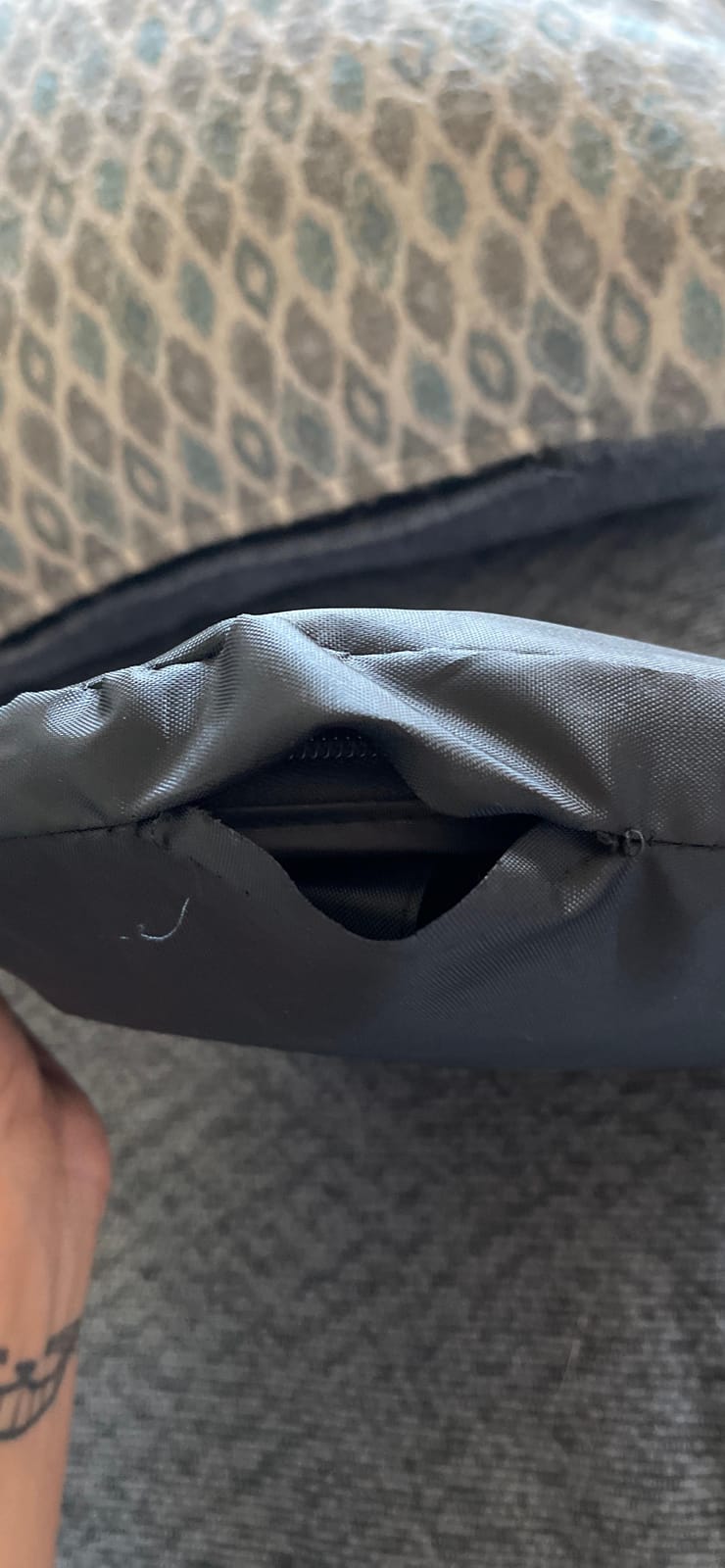
Owners note it doubles as a reflector, a diffuser and a light-shaping panel for video and film work, so one tool covers three roles on a shoot day. It folds to about 24 centimetres and slips into the included bag, which is the reason it earns a permanent kitbag slot.
At 24 inches it will not fill a waist-up frame on its own, so treat it as a diffuser and accent rather than a key fill. Anyone needing broader coverage in the same budget range should look at the larger panels in this list.
Best used for
Open shade and harsh sun. The white face bounces a small amount of light, but the soft panel overhead is what earns this reflector a place on a midday outdoor shoot.
It also works as a close-in negative fill for portraits, since the black face at arm’s length from a cheekbone is an effective way to hold a shadow through a bright sequence.
What to watch out for
No holder or clamp is included, so you need a stand and a clip to sit it at a working angle. The reported weak zipper pull on the case is worth knowing if you plan to carry it in a bag on a rough day.
Fabric picks up minor wrinkles when collapsed, and a crease in a diffuser face shows as a soft-edged dark line in a flat-lit frame. Hang it flat when you get home rather than rolling it.
6. GODOX 40×60 inch Oval Reflector: the one that mounts hands-free in a hurry
Godox 40″x60″/100x150cm Collapsible Oval Photography Light Reflector
100x150cm oval
Five surfaces
Central hanging hook
Folds to 19 in
Pros
- Central hook hangs on stands walls and background holders
- Large oval doubles as a portable backdrop
- Rugged spring frame with well-sewn zippers
- Reversible cover switches surfaces in one pull
Cons
- Reversing the cover is awkward mid-shoot
- Fabric can hold an odd shape after folding
- Carry bag stitching feels light-duty
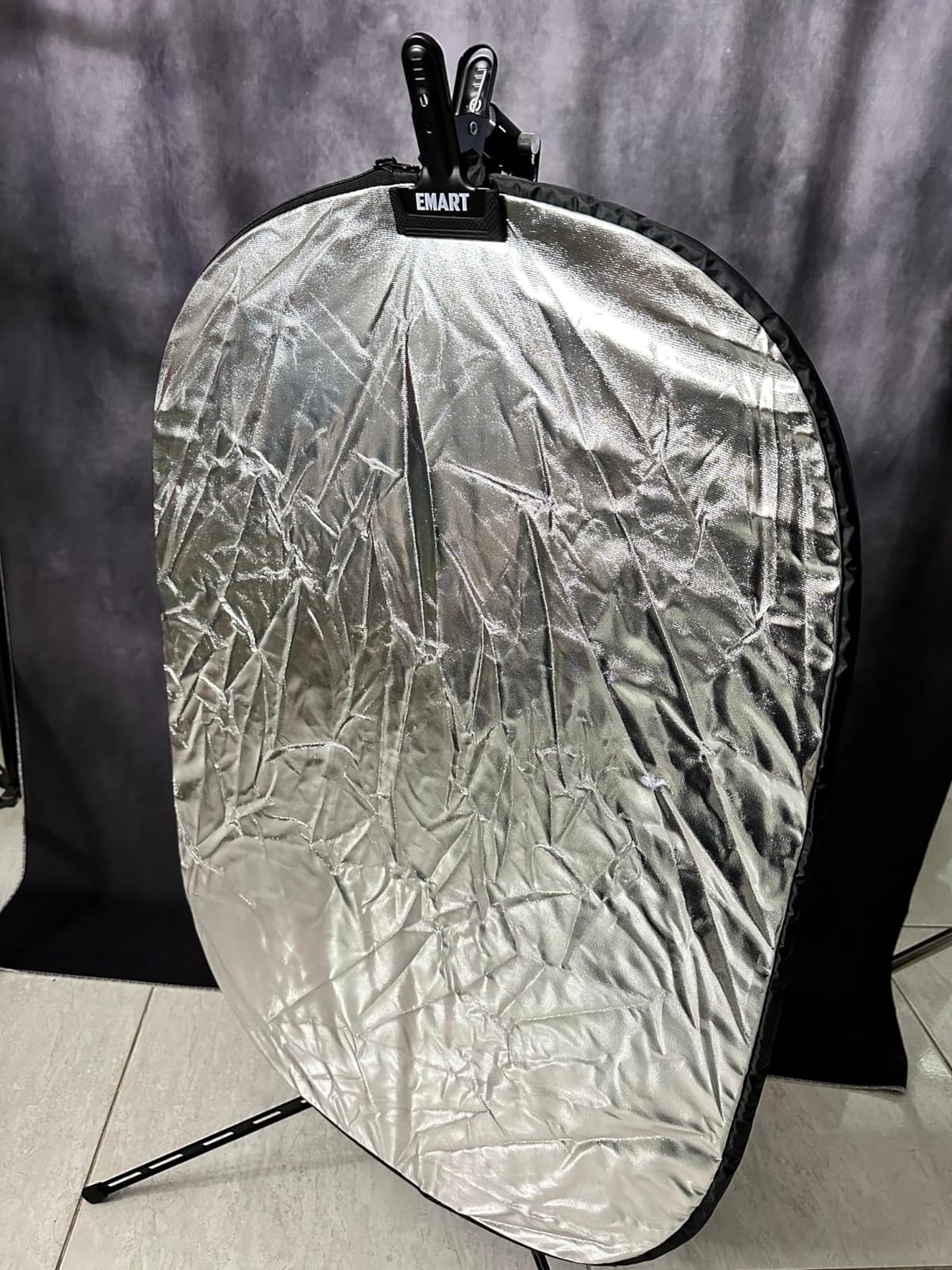
The detail that sets this one apart is the central hanging hook. Most panels in this range give you a top loop that needs a separate clamp, while this hangs directly on a stand, a wall hook, or a background holder in a few seconds.
That matters outdoors because the alternative to a mount is a second person. With the hook, you can set fill on a wall opposite the subject, walk back to the camera, and shoot the whole session solo.
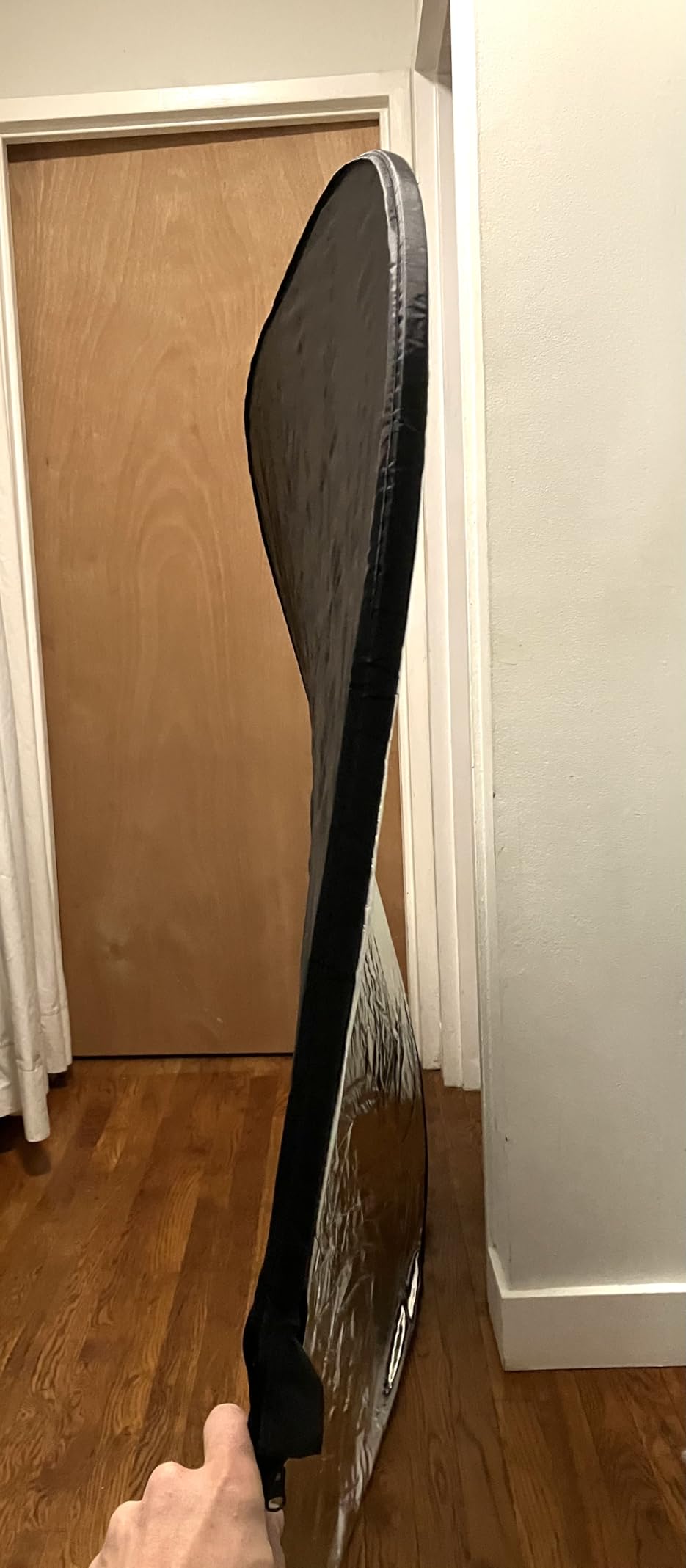
Owners rate the build quality equal to premium collapsible panels and point to the sewn zippers holding up over repeated use. The 100x150cm oval is also usable as a portable backdrop for small product work, which extends its usefulness beyond portrait sessions.
The anti-wrinkle reflective fabric gives an even reflection across the panel, so the fill does not visibly fall off from centre to edge. For a larger panel than most, that evenness is a real advantage in wide shots.
Where it earns its place
Any location where you must work alone, or where the panel has to stay put for more than a few frames. A hooked panel will hold a 45-degree angle all afternoon without an assistant’s arm drifting.
It also serves well as a background panel for small product work or a masked group, since the oval shape curves gently behind a subject rather than cutting a hard line.
Where it does not
The reversible cover is a zip sleeve, so switching between the gold and silver pair and the white and black pair takes a moment. If you need frequent changes mid-session, a two-sided fixed disc changes faster.
After use the fabric can hold a slightly odd shape, so open it facing a wall and let it relax before packing. The carry bag is functional but light, and thin stitching is worth watching on a long-term kit.
7. WELLMAKING 32 inch Reflector with Tilt Adapter: precision angle control on a stand
WELLMAKING 32” Reflector Photography with tilt Adapter for Studio Outdoor
32 in / 80cm disc
Swivel tilt adapter included
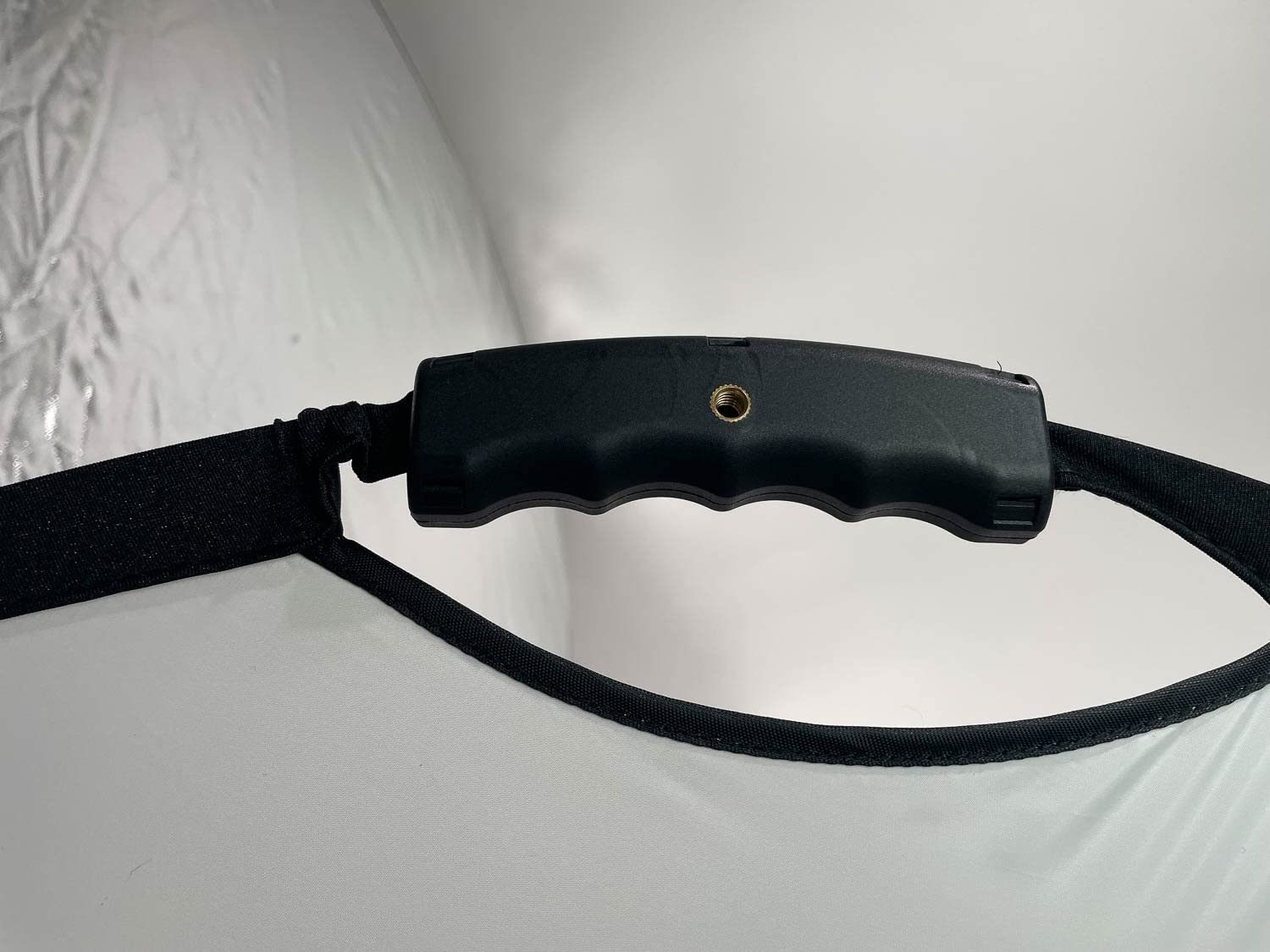
Dual grips with 1/4-20 and 3/8-16
Folds to 12 in
Pros
- Tilt adapter locks the panel at an exact angle
- Threaded grips on both sides for accessories
- Even non-mottled reflection for the class
- Gold surface praised for warm outdoor frames
Cons
- Light stand is not included
- Thread sizes differ between the two grips
- 32 inch panel cannot cover a full standing subject
A plain disc on a stand droops. The spring frame has no memory once released, so the panel slowly sags toward vertical and the fill angle drifts through a session without you noticing until the shadows look wrong.
The swivel tilt adapter on this one locks the disc at a chosen angle and holds it. For anyone shooting precise 45-degree fill across a sequence, that single accessory removes an entire category of small, maddening error.
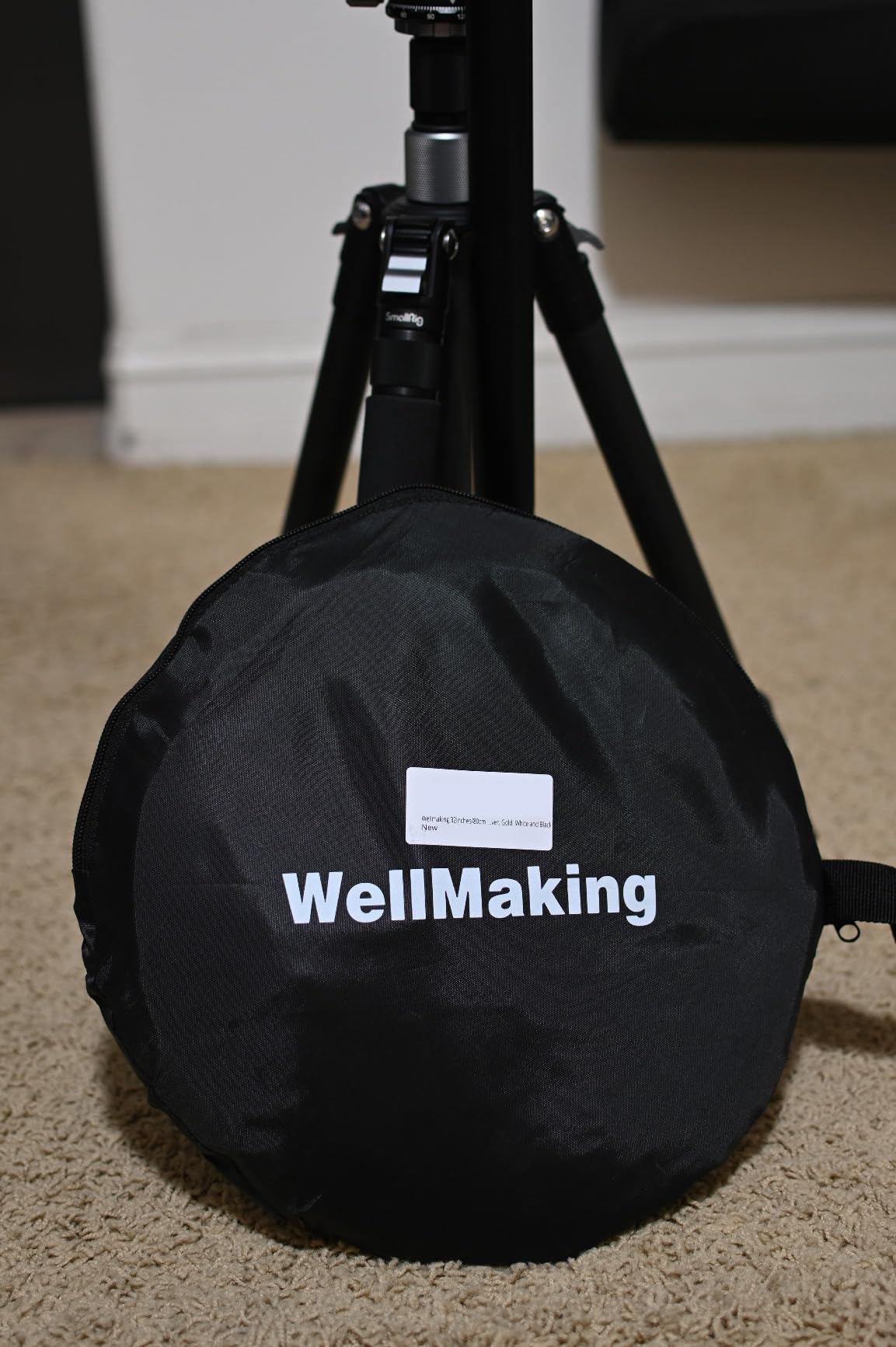
Buyers single out the threaded grips as the other upgrade over a basic disc. One grip carries a quarter-inch thread and the other a three-eighths thread, which lets you bolt on a small arm or a counterweight without an adapter plate.
Reviewers also rate the multi-layer raised-grain coating as even, without the mottling that shows on cheaper panels, and they mention the gold surface working well for warm outdoor and sunset frames.
Who benefits most
Video and live-stream shooters, who need the angle locked rather than drifting, and anyone running a series of matched portraits where the fill has to stay identical from frame to frame.
The compact 12-inch fold also keeps it a legitimate travel piece, so it is not a studio panel pretending to be portable.
What to know before you buy
The stand is not included, and a few buyers report misreading the product imagery as though it were bundled. Check what you already own before assuming you need to add a stand.
The thread sizes differ between the two grips, so confirm which side carries which thread before clamping an accessory. At 32 inches the panel will not cover a full standing subject, so full-body work needs a second unit or a larger oval.
8. K&F CONCEPT 24×36 inch Oval Reflector: our pick for warm golden-hour fill
K&F CONCEPT 24″ x36” 5-in-1 Oval Foldable Reflector, with Carrying Bag
24x36 in / 60x90cm oval
Five surfaces plus soft panel
472.5 g
Folds into bag
Pros
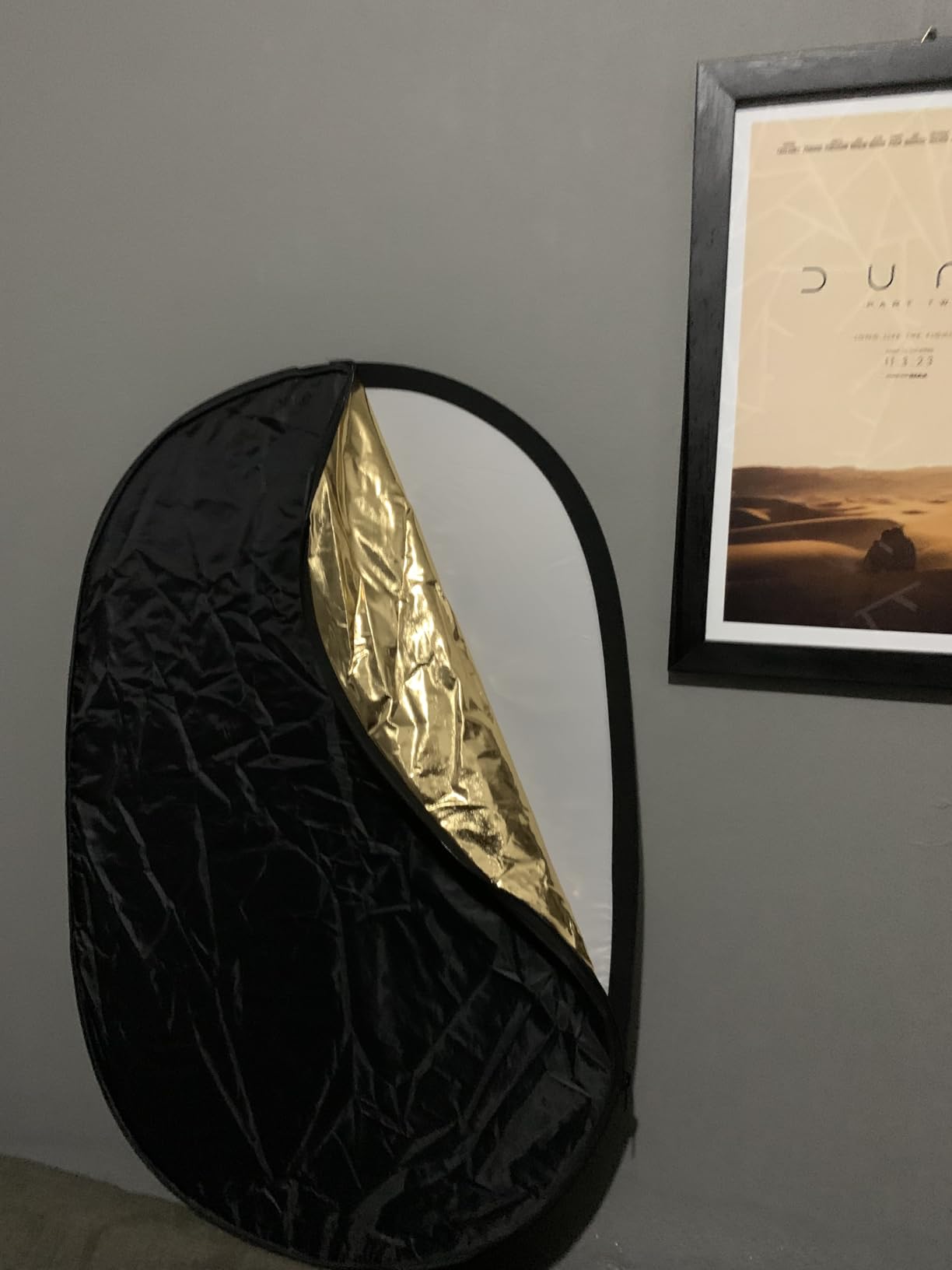
- Gold face gives a rich true gold in low sun
- Fade-resistant gold and silver coatings
- 472.5 g build for the coverage
- Stitching survives repeated folding
Cons
- Gold is deeper than listing photos suggest
- Quad-sided panel material feels light
- No stand or clamp included
Golden hour portraits live or die on colour matching. When the ambient light is strongly yellow-orange, a neutral white bounce cools the shadow side against a warm key and the split looks wrong on skin.
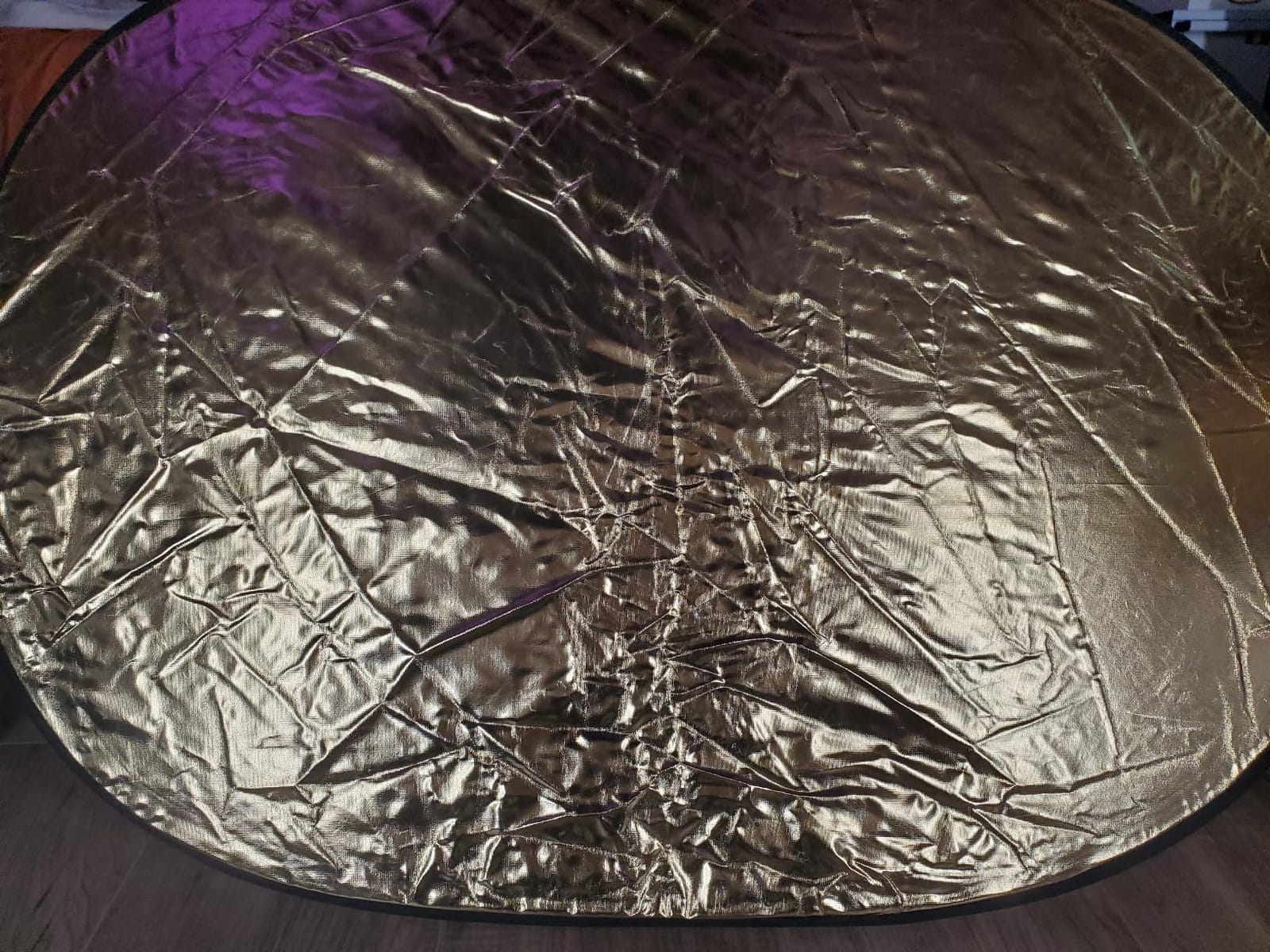
This panel’s gold coating reads as a true deep gold rather than the pale champagne many listings show. Owners consistently report that it matches a low sun closely enough to close that gap without a colour correction pass.
The oval 24×36 inch shape also helps. The longer axis catches the low sun along the length of the subject’s body, which suits the horizontal light of late afternoon better than a round disc of the same area.
Users treat it as an early-career essential and note that the gold and silver coatings show little fading over time. At 472.5 grams it carries a surprising amount of panel for the weight, and the included bag fits a camera backpack.
Best used for
Low sun, autumn foliage, and any warm interior-adjacent light. The gold face is the reason to choose it, since a warm bounce into a warm key keeps skin tones consistent across the frame.
It is also a strong all-round daytime panel. The white face handles neutral bounce and the black face gives you close-in negative fill, so it covers three of the jobs you need on location.
Where it is not the answer
Do not use the gold face as direct front fill in bright daylight. It is a warm surface designed to match an already-warm source, and pointing it into a neutral midday scene will push skin orange.
The quad-sided panels feel cheap next to the well-built main frame, and there is no stand or clamp in the box. Buy heavy-duty clips separately if you plan to mount it.
9. NEEWER 32 inch 5-in-1 Reflector with Clamp: the best choice for working solo on a stand
NEEWER 32″/80cm 5 in 1 Light Reflector with Clamp & Hand Grips, RF-80II
32 in / 80cm disc
Heavy-duty adjustable clamp
Dual grips with 3/8 in thread
Alloy steel frame
Pros
- Clamp mounts on any standard 5/8 inch stud
- Adjusts through 180 degrees and 360 degrees
- Alloy steel frame resists deformation
- Dual grips plus thread for precise angles
Cons
- Reversible zip cover slows surface changes
- 1.8 lb is heavier than comparable 32 inch discs
- Stand is not included
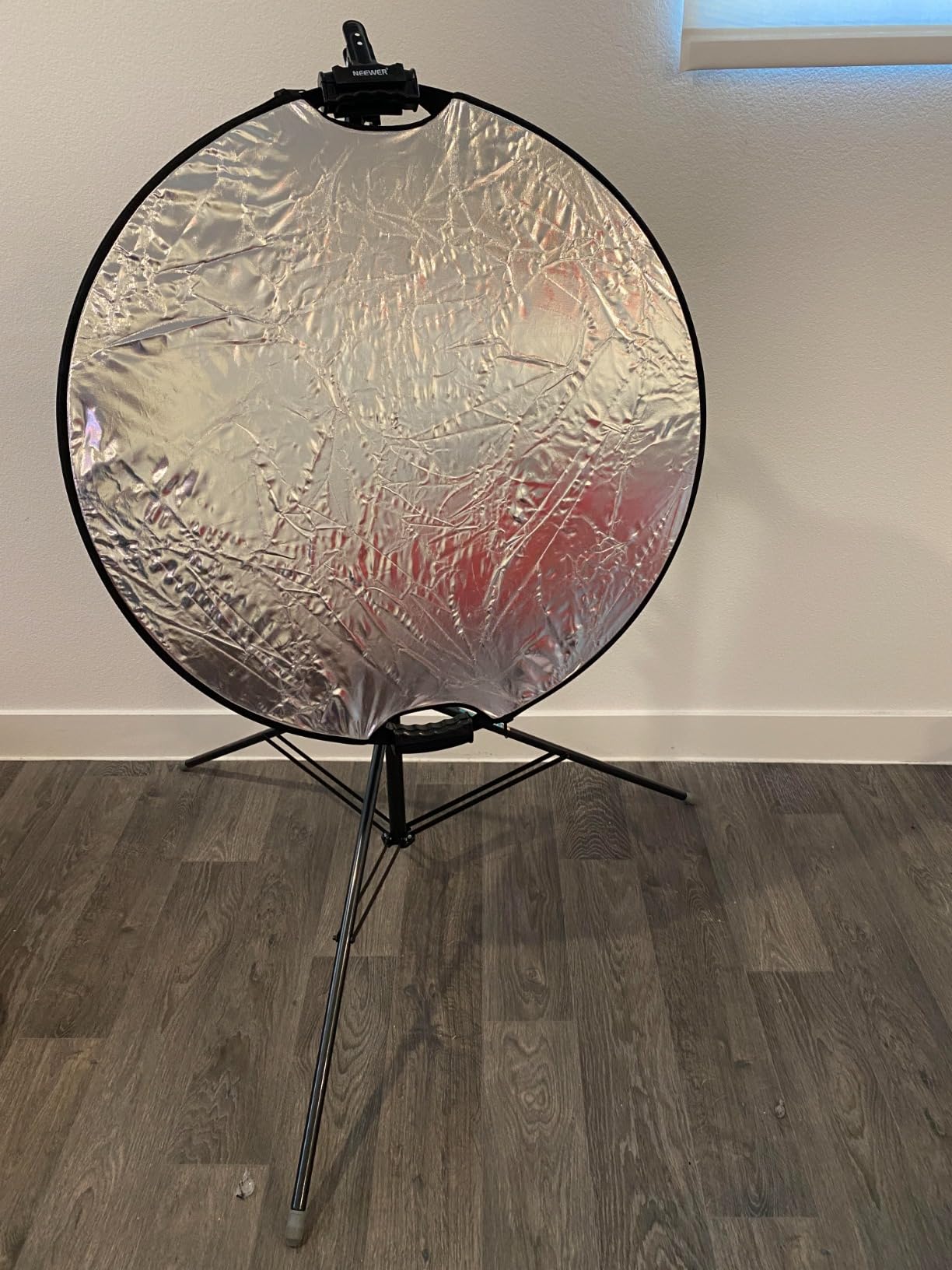
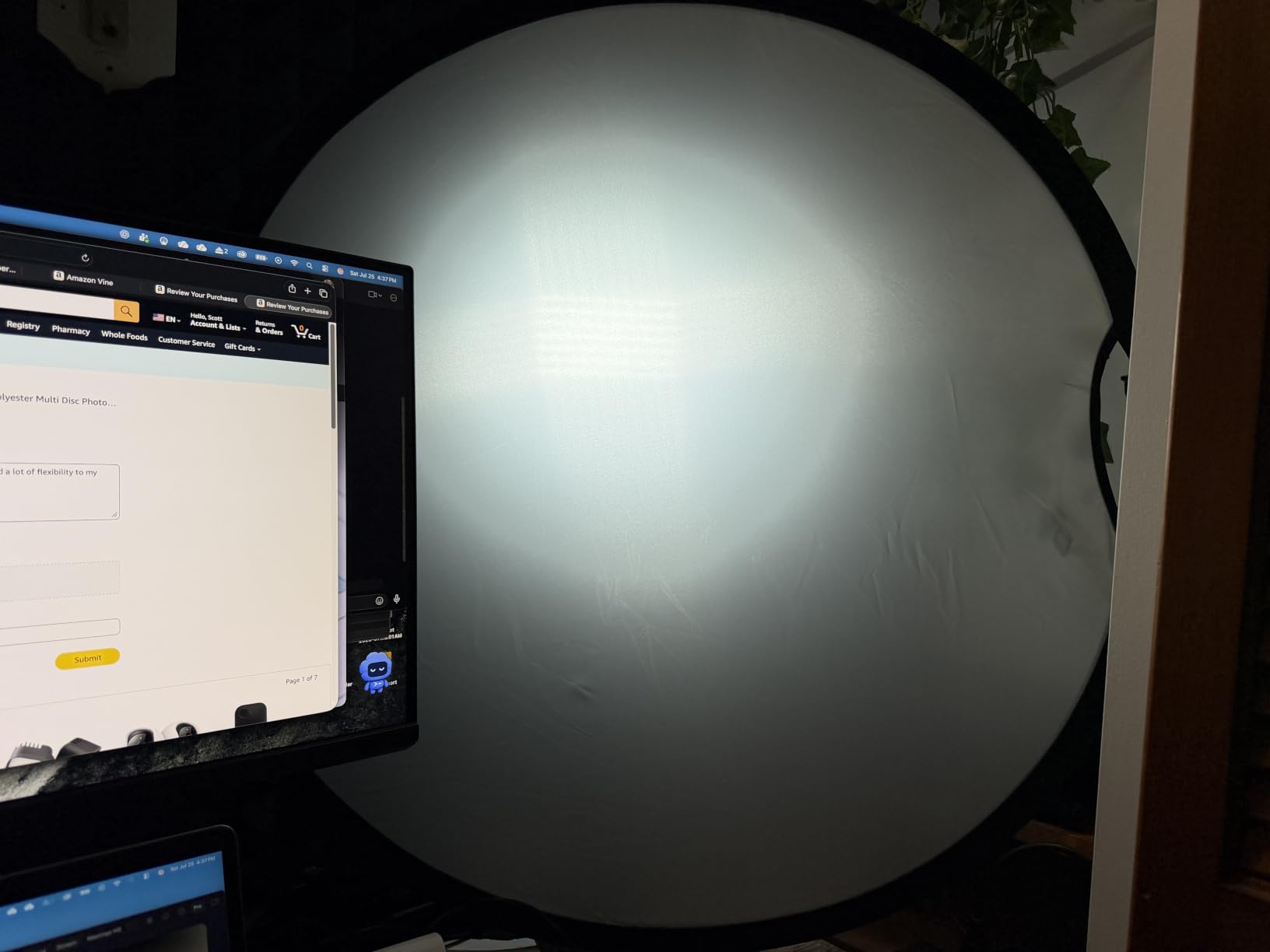
The heavy-duty metal clamp is the headline here. It grips any stand with a standard five-eighths inch stud and holds the disc through 180 degrees of tilt and a full 360 degrees of direction, which is real adjustment rather than a decorative mount.
That changes how you work. You set the fill once, walk to the camera, and shoot with both hands free instead of holding the panel in one hand and praying the angle holds.
Owners praise the alloy steel frame for resisting deformation over repeated folding, and the polyester and metal build for being hard to tear. The cover reverses in one pull, so a change of surface takes a couple of seconds rather than a full re-fit.
The dual grips, with a three-eighths inch thread on one, let you hold and angle the disc by hand when you need to respond to a fast-moving subject. Switching between handheld and mounted is the feature we used most on a recent family session.
Why the clamp is worth buying separately
Almost every other reflector here needs an extra accessory to reach a stand. When you shoot alone outdoors, that extra part is one more thing to forget, and a forgotten clamp means the reflector is decorative.
A clamp that holds position through a gust is the difference between a usable solo kit and an expensive bag of fabric.
What to weigh up
At 1.8 pounds it is heavier than other 32 inch discs, so if you intend to carry it by hand for a whole walking shoot, a lighter panel is easier on the shoulder.
The reversible sleeve is a zip cover, so changing sides mid-session takes a moment. The clamp fits a standard stud, and a stand is not included in the box, so check your existing kit first.
10. Fotodiox 42 inch 2-in-1 Disc: fastest surface switch on a paid shoot
Fotodiox 42in (100cm) 2-in-1 Collapsible Reflector Disc – Silver/Gold
42 in / 100cm disc
Silver and gold two-sided
Folds to one third size
16 oz with pouch
Pros
- No zip sleeve
- so faces switch instantly
- Large 100cm diameter with a light 16 oz weight
- Pouch clips to a belt loop or carabiner
- Two-year limited manufacturer warranty
Cons
- Only two surfaces
- no black fill or diffusion
- Frame and fabric feel lighter than premium rivals
- Folding needs practice and an assistant or stand
Every multi-surface reflector changes faces by unzipping a sleeve or pulling a cover around the frame. This one is simply two-sided, so flipping from silver to gold takes the time it takes to turn the disc over.
For a paid session where the light keeps changing, that removes a small but constant irritation. Several users who already own a 5-in-1 choose it for exactly this reason.
At 100 centimetres across and 16 ounces, it is a large panel that is genuinely light to carry. The tear-resistant nylon pouch clips to a belt loop or a carabiner, so it does not need to occupy a whole section of the bag.
The diameter is generous enough to fill a head-and-shoulders frame with room to spare and works for waist-up work too, which makes the two surfaces cover most of what a five-in-one panel would do for you.
Why the two-surface design wins
Silver and gold are the two surfaces you reach for most outdoors. Silver for open shade and cool, contrasty fill, gold for a low warm sun, and both are here on a disc you flip rather than reassemble.
The 16-ounce weight means you can hold it one-handed at 45 degrees for a long session without the arm dropping, which is the difference between a reflector that gets used and one that stays in the bag.
What you give up
There is no black face for negative fill and no translucent panel for diffusing. If your outdoor work includes harsh midday sun, you will want a diffuser panel alongside this disc rather than instead of it.
The frame and fabric feel lighter than the premium rivals here, and the fold needs practising before you rely on it. The two-year manufacturer warranty is the longest in this group.
How to Use a Reflector in Real Sunlight: 5 Steps
Most disappointing reflector results come from placement, not from the panel. Five steps fix almost every case we have seen on location.
First, put the reflector opposite the light, not next to your subject. If the sun is behind your right shoulder, the fill belongs on the opposite side of the frame, roughly 45 degrees to the camera axis.
Second, move the panel as close to the subject as you can without it appearing in frame. Light falloff means a white face twice the distance away delivers a fraction of the fill, and this is the exact reason beginners conclude a reflector does not work.
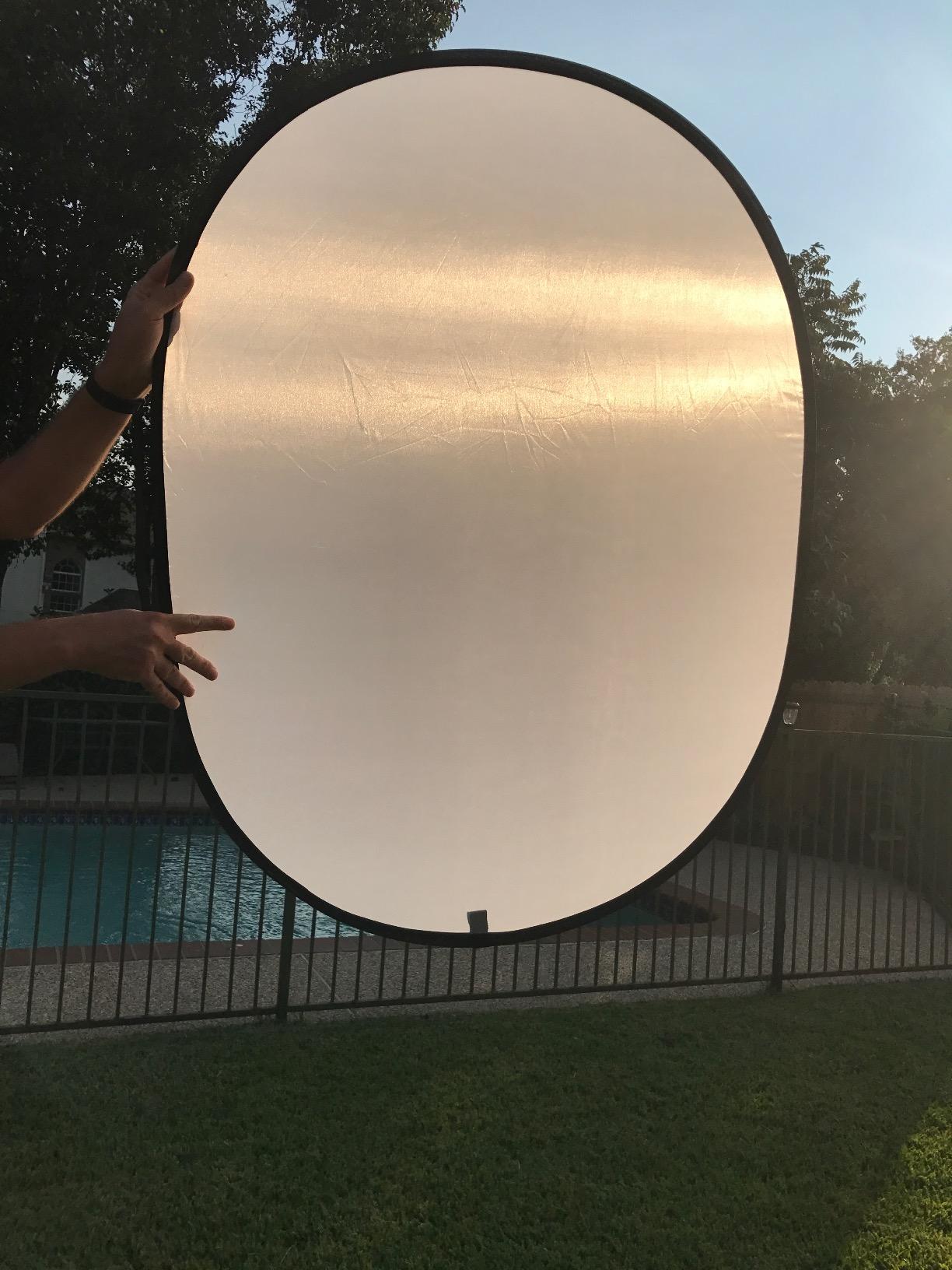
Third, feather the surface. Instead of pointing the middle of the disc at the subject, angle it so the light arrives from the outer edge. The centre of a metal or white face is its brightest point, and aiming it straight in creates a hotspot that looks like a flash on a stick.
Fourth, keep the sun behind or beside you. With the sun behind the subject, no reflector on earth will save the exposure, and you should be looking for open shade instead.
Fifth, check for hotspot before every frame by squinting at the panel. If the reflection is a hard bright disc, feather it further until the light spreads across the whole surface.
Which Reflector Surface to Use Outdoors and When
Six surfaces cover almost every outdoor situation, and each has a clear job.
White gives soft, neutral, forgiving fill and is the most beginner-friendly surface. It needs to be close to the subject to do much, so treat distance as part of the technique rather than a detail.
Silver is the brightest and highest-contrast option, excellent in open shade and on overcast days. In direct sun it creates a visible centre hotspot unless you feather it, so angle from the edge.
Gold is very warm. Use it as an edge or rim light, or to match a strongly yellow sunset, and use it close-in as direct fill only when you intend a warm skin look.
Sunfire or herringbone is a silver and gold mix that gives warmth without the extreme cast. It is the working photographer’s warm compromise, and none of the ten panels here carries it, which is a real limitation of this category.
Black is not a reflector. It is a flag for negative fill, used just off-camera to absorb ambient light and add contrast to a face that reads flat.
Translucent turns the panel into a diffuser held between the sun and the subject, producing a patch of open shade overhead. In harsh midday light this is often more useful than any bounce surface.
What Size Reflector You Need for Each Shot
The simple rule: match the reflector to the frame, and size follows from the subject’s height in the shot.
For head-and-shoulders portraits, 60 to 80 centimetres is enough, as long as the panel is close. For waist-up work, move to 24×36 inch or an 80 to 100 centimetre disc so the fill reaches below the chest.
For full-length shots, 110 to 120 centimetres is the practical minimum, and an oval 100x150cm panel is the common answer because the bottom of the subject still needs fill.
For small groups, go bigger again or carry two smaller panels and stack them high and low. A single panel large enough for a group becomes unmanageable solo, whereas two are easier to position than one is to fight.
Working Solo and Beating the Wind
Wind is the number one outdoor failure mode, and it is the one topic no roundup on this subject covers properly. A large round reflector acts like a sail, and a 100x150cm oval on a light stand will lean before a gust ever reaches you.
Keep it low. A reflector angled upward catches the most wind; drop the stand a section and raise the fill by getting closer to the subject rather than by climbing.
Weight the base. Sandbags on the stand legs do more than any spring frame can, and for a big panel a single bag on the upwind leg is usually enough to keep it steady.
Choose a hooked or clamped mount over a loose loop, and prefer an oval over a round at the same area because the oval presents less face to a crosswind at its edges.
Have a hand-held fallback. When the panel will not stay put, dropping to a smaller disc or working the translucent face overhead is a better answer than fighting a 100cm sail on a hillside.
Reflector vs Speedlight and LED: When You Need More Than Bounce
A reflector needs a light source to work, so on a genuinely overcast afternoon with no sun, there is nothing to bounce and no reflector will rescue the frame.
A reflector wins when the sun is available, when you need zero setup time, when the subject is moving, and when you want the softness of a large source without carrying one. It also costs nothing to run and produces no heat on a long session.
A speedlight or small LED wins in open shade with no direct sun, after sunset, indoors in a venue, and whenever you need to freeze a fast subject at a narrow aperture for depth of field.
The practical answer for most outdoor portrait shooters is a reflector as the primary tool and a flash as insurance for the sessions where the sun is not cooperating.
Framing is the other half of the decision, and our guide to the best camera lenses for portraits covers the glass itself. Outdoors, a short focal length keeps the working distance comfortable in open space, which is exactly where the subject and the reflector tend to be.
How We Picked the Best Reflectors for Outdoor Portraits
Every panel here was judged on the same six criteria, chosen because they are what actually decides whether a reflector gets used on location.
Bounce consistency came first, since uneven coverage across a large panel shows up as a visible falloff in wide shots. Colour accuracy followed, because a warm or cool bias that does not match the ambient is a correction problem.
Coating durability was tested through handling rather than measurement, since flaking metal surfaces and shedding coatings are the failure mode that ruins gear. Set-up speed counted too, because a reflector that takes thirty seconds to open is a reflector you do not reposition.
Finally we weighed pack-down size and weight, plus whether anything is included for holding the panel up without an assistant. Working professionals repeatedly rate Westcott and Lastolite as the strongest reflector brands for build quality, and the overlap between those two names reflects Lastolite’s ownership by Manfrotto.
Frequently Asked Questions
What is the best light reflector for outdoor photography?
For most outdoor portrait work the best reflector is an 80cm five-in-one disc with gold, silver, white, black and translucent faces, such as the NEEWER 32 inch model. Use white as neutral fill, silver in open shade, gold to match a low warm sun, black for negative fill and the translucent face as a diffuser. For full-length or small group frames go up to a 100x150cm oval instead.
What is the best reflector for photography?
The best reflector for general photography is a collapsible 5-in-1 panel with a translucent centre, because a single frame gives you five lighting decisions without extra gear. Look for an alloy steel spring frame, coatings that resist flaking, and a zippered carry bag. Professionals most often rate Westcott and Lastolite as the strongest reflector brands for build quality.
What is the best lighting for outdoor portrait photography?
The best lighting for outdoor portrait photography is bounced or diffused sunlight, positioned so the sun is behind or beside you rather than in front of the subject. Place the reflector about 45 degrees opposite the sun and as close to the subject as you can get it. Feather the panel so light arrives from its outer edge and you avoid a centre hotspot. Open shade beats any reflector in full midday sun.
Do I need a reflector for portraits?
A reflector is the cheapest and fastest way to open shadows and add catchlight to a portrait, so yes for anyone shooting outdoors in daylight. It replaces a second light source without adding any weight to the working end of the camera. In direct sun it makes the difference between a usable frame and an unusable one. In open shade with no direct sun, a reflector has nothing to bounce and a flash is the better tool.
How close should a reflector be to the subject?
As close as you can get it without letting the panel enter the frame. Light falls off with distance, so a white face twice as far away delivers a fraction of the fill, and that distance is the most common reason beginners think reflectors do not work. For white fill specifically, close placement is essential. Silver and gold put out more light, so they tolerate more distance than a white face does.
What is the best lens for outdoor portraits?
Lens choice is a separate decision from lighting, and we cover it in our guide to the best camera lenses for portraits. A short focal length around 85mm on full frame keeps working distance comfortable in open space, where a long lens gives you too little room to back up. Whatever the lens, the reflector and the sun position do more for the look than the glass does.
Final Verdict
For most outdoor portrait sessions, the NEEWER 32 inch five-in-1 multi disc is the reflector to buy first, because at 15.2 ounces it is light enough to reposition as the sun moves and broad enough for head-and-shoulders work. Add a 100x150cm oval when you shoot full-length frames or small groups.
Feather the surface, keep the panel close, and match the face to the light you have. Those three habits do more for your outdoor portraits than any model on this list. Our broader reflector guide covers the studio side, and we update these picks for 2026.