
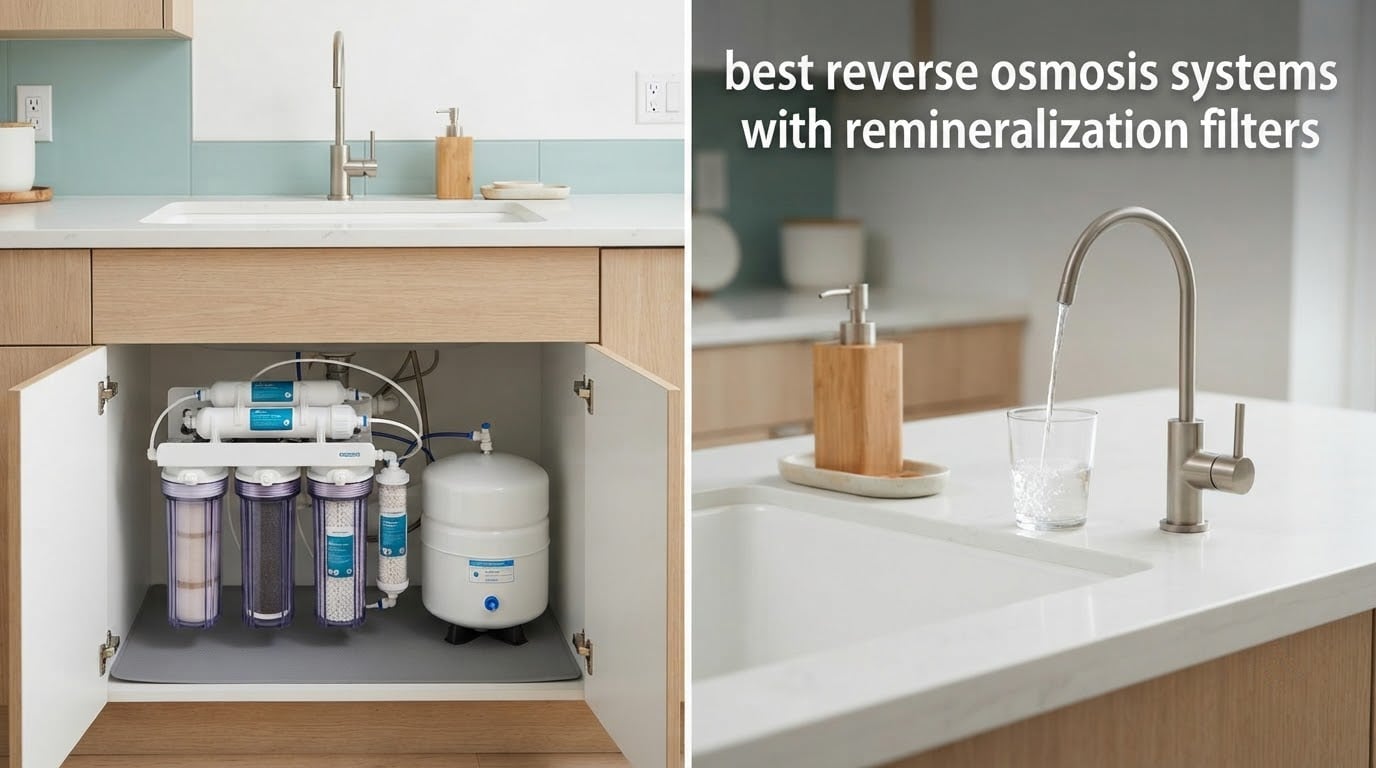
Most people buy a reverse osmosis system expecting sparkling, clean water and get something that tastes like nothing at all. That flat, slightly acidic taste is the reason the best reverse osmosis systems with remineralization filters now exist as a category rather than an upgrade. A remineralization filter is a final-stage cartridge that adds calcium and magnesium back into the water after the membrane strips them out, which lifts the pH and fixes the empty taste straight RO water has.
We spent weeks reading spec sheets, customer reviews and owner threads on this before putting the list together. Ten systems made the cut, and every one of them has a genuine alkaline or mineral stage rather than a post-carbon filter dressed up as one. If you are still working out whether you need reverse osmosis at all, start with our broader guide to reverse osmosis systems for drinking water, then come back here once you have decided the mineral stage matters to you.
The short version: if you brew coffee all day, drink plain water constantly and dislike flat taste, you want one of these. If you are on very hard well water or only care about filtration numbers, you are paying for a taste feature you will not notice. Our comparison table sits just below, and every number in it comes from the manufacturer’s own listing rather than our own estimates.
Table of Contents
What a Remineralization Filter Actually Does
A remineralization filter is a final-stage post-RO cartridge that adds small amounts of calcium, magnesium and other minerals back into the water after the membrane has removed them, raising the pH and correcting the flat taste of pure RO water. That is the whole mechanism, and it is worth understanding because most of the confusion in this category comes from confusing it with a carbon polishing filter.
The RO membrane pushes water through a semi-permeable membrane and flushes dissolved solids, including the minerals that give water its natural character, to the drain. Straight out of the membrane, that water typically measures a pH of around 5.5 because carbon dioxide passes through freely and forms carbonic acid. A remineralization cartridge then dissolves mineral media into that water, pushing the pH back toward neutral and returning a small mineral load.
There are three media types you will meet in these systems. Calcium carbonate pellets dissolve steadily and raise pH the most. Calcite is a cheaper, denser form that releases minerals more slowly and lifts pH less dramatically. Magnesium and potassium blends add a broader mineral profile but do very little for pH, which is why some systems combine them with calcium carbonate in the same canister. The SimPure T1-400ALK and the Waterdrop G5P700A both take the blend approach, adding calcium, magnesium and potassium together.
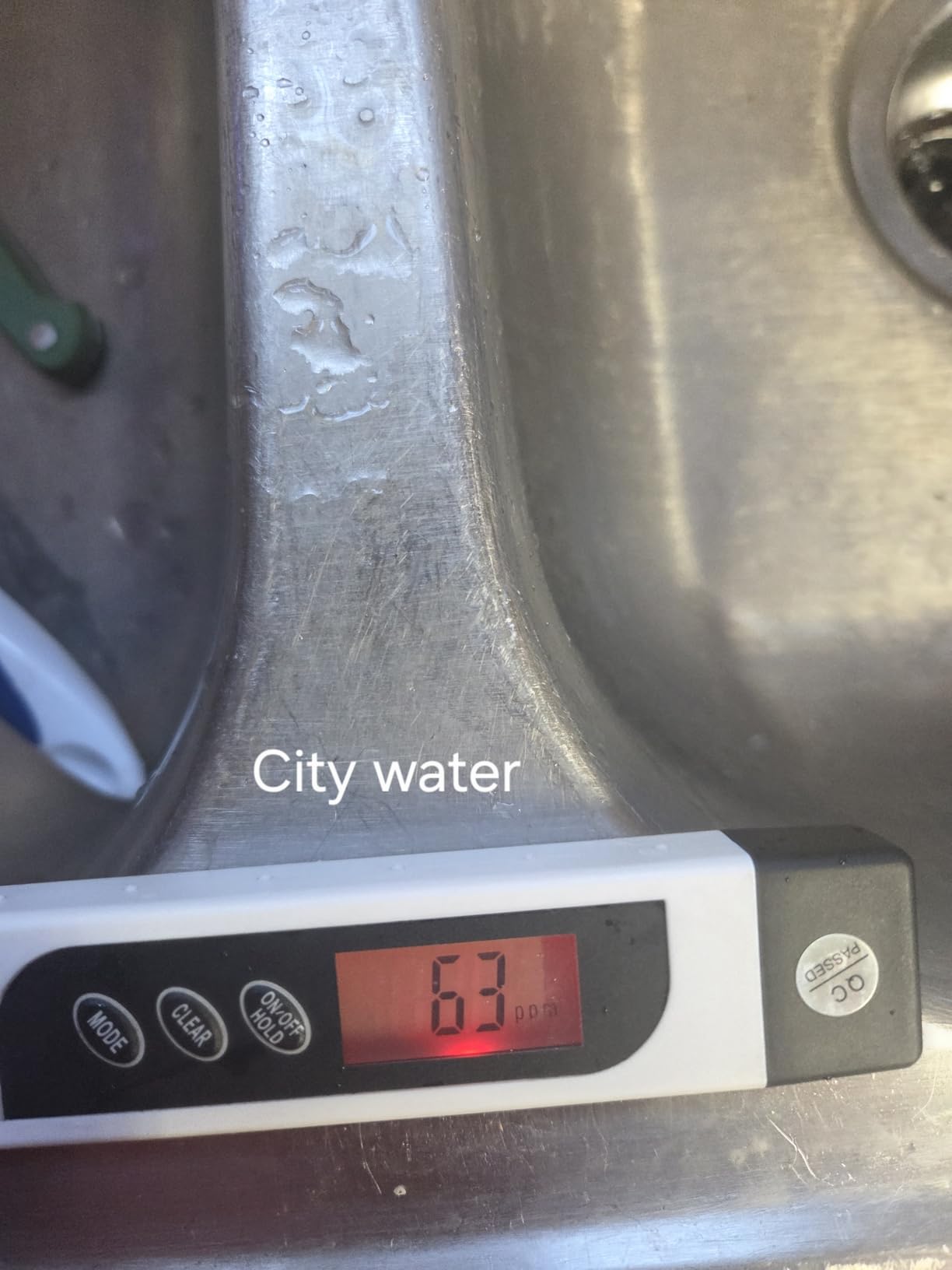
One thing buyers rarely expect: a working remineralization stage means your TDS meter will not read zero. Straight RO water often measures 2 to 10 ppm. After an alkaline stage that legitimately runs higher, and owners regularly assume their membrane has failed when it has simply done its job. Test your feed water and your RO water with the same meter on the same day, and compare those two numbers rather than hunting for an absolute reading.
There is also a retrofit path worth knowing about. If you already own a working RO system, you can buy an inline alkaline post-filter that screws between the membrane housing and the faucet for a fraction of the cost of replacing the whole unit. Owners on water treatment forums describe this as the cheapest way to fix flat water, and one of them simply disconnected the alkaline stage a month after installing it because they decided they preferred the plain taste. The cartridge is not a commitment, so buying a standalone inline post-filter to try the taste first is a reasonable approach.
Top 3 Best Reverse Osmosis Systems With Remineralization Filters in October

iSpring RCC7AK-BN
- 75 GPD 6-stage system
- Natural mineral AK stage
- NSF/ANSI 58 certified whole system
- Top-mounted faucet design

Frizzlife PD600-TAM3
- 600 GPD tankless output
- 2:1 pure-to-drain ratio
- Alkaline stage lifts pH above 7.5
- Live TDS and filter life display

iSpring RO500AK
- 500 GPD tankless alkaline RO
- Complete-system NSF/ANSI 58
- 24-hour automatic membrane flush
- Audible filter change alerts
Best Reverse Osmosis Systems With Remineralization Filters in 2026
| Product | Specifications | Action |
|---|---|---|
| iSpring RCC7AK-BN |
|
Check Latest Price |
 APEC ROES-PH75 APEC ROES-PH75 |
|
Check Latest Price |
| Frizzlife PD600-TAM3 |
|
Check Latest Price |
| iSpring RO500AK |
|
Check Latest Price |
 SimPure T1-400ALK SimPure T1-400ALK |
|
Check Latest Price |
 Home Master TMAFC Home Master TMAFC |
|
Check Latest Price |
 Waterdrop G5P700A Waterdrop G5P700A |
|
Check Latest Price |
 iSpring RCC1UP-AK iSpring RCC1UP-AK |
|
Check Latest Price |
 Waterdrop WD-T4-A Waterdrop WD-T4-A |
|
Check Latest Price |
 Home Master TMHP-L Home Master TMHP-L |
|
Check Latest Price |
1. iSpring RCC7AK-BN — Best Overall RO System With Remineralization
iSpring RCC7AK-BN NSF Certified, 75 GPD, Alkaline 6-Stage Reverse Osmosis System, pH+ Remineralization RO Water Filter System Under Sink Patented Top-Mounted Faucet Design for Easy Installation
75 GPD 6-stage RO
Natural mineral AK pH+ stage
NSF/ANSI 58 certified system
No power needed
Pros
- Complete-system NSF/ANSI 58 certification
- Transparent first housing shows filter condition
- Top-mounted faucet nut installs from above the sink
- Most-reviewed system in this group
- Mineral AK stage raises pH and adds minerals
Cons
- Slower flow than tankless units
- Higher water waste ratio than 2:1 models
- Needs a countertop hole for the faucet
The RCC7AK-BN is a 75 GPD six-stage system with a storage tank and a final natural mineral AK stage, and after 21k+ reviews at 4.6 stars it has the deepest owner history of anything on this list. It is also the one forum users name most often when they ask for an RO with mineralization.
It earns that record on the boring details. The 0.0001 micron membrane is certified to NSF/ANSI 58 as a complete system rather than as loose components, with published figures: TDS 93-98 percent, PFAS 96-99 percent, lead above 98.9 percent, fluoride above 97.4 percent. Feed temperature runs 40-100 degrees F and the system handles feed water to 750 ppm TDS with no power.
Two design choices matter daily. The transparent first-stage housing lets you watch sediment and carbon build up instead of guessing when to change it, which removes the most common complaint about canister systems.
Filter pricing is straightforward. The AK cartridge is a six-month item, the carbon block runs a year, and the membrane comes on two- and three-year cycles. Warranty is one year limited, weight is 12.5 kg, footprint is 15.5 by 16 by 18 inches.
What you will notice every day
The taste change from the mineral AK stage is immediate. Reviewers describe a fuller, rounder mouthfeel than straight RO water, and the pH lift removes that faintly acidic edge on the tongue.
You will also notice the flow. At 75 GPD with a tank you fill one glass at a time and wait. If you fill kettles or ice makers regularly, step up to a tankless model.
Where it falls short
The drain ratio is the technical compromise. Traditional tank systems send three or four gallons to the drain per gallon drunk, against 2:1 on the newer tankless designs.
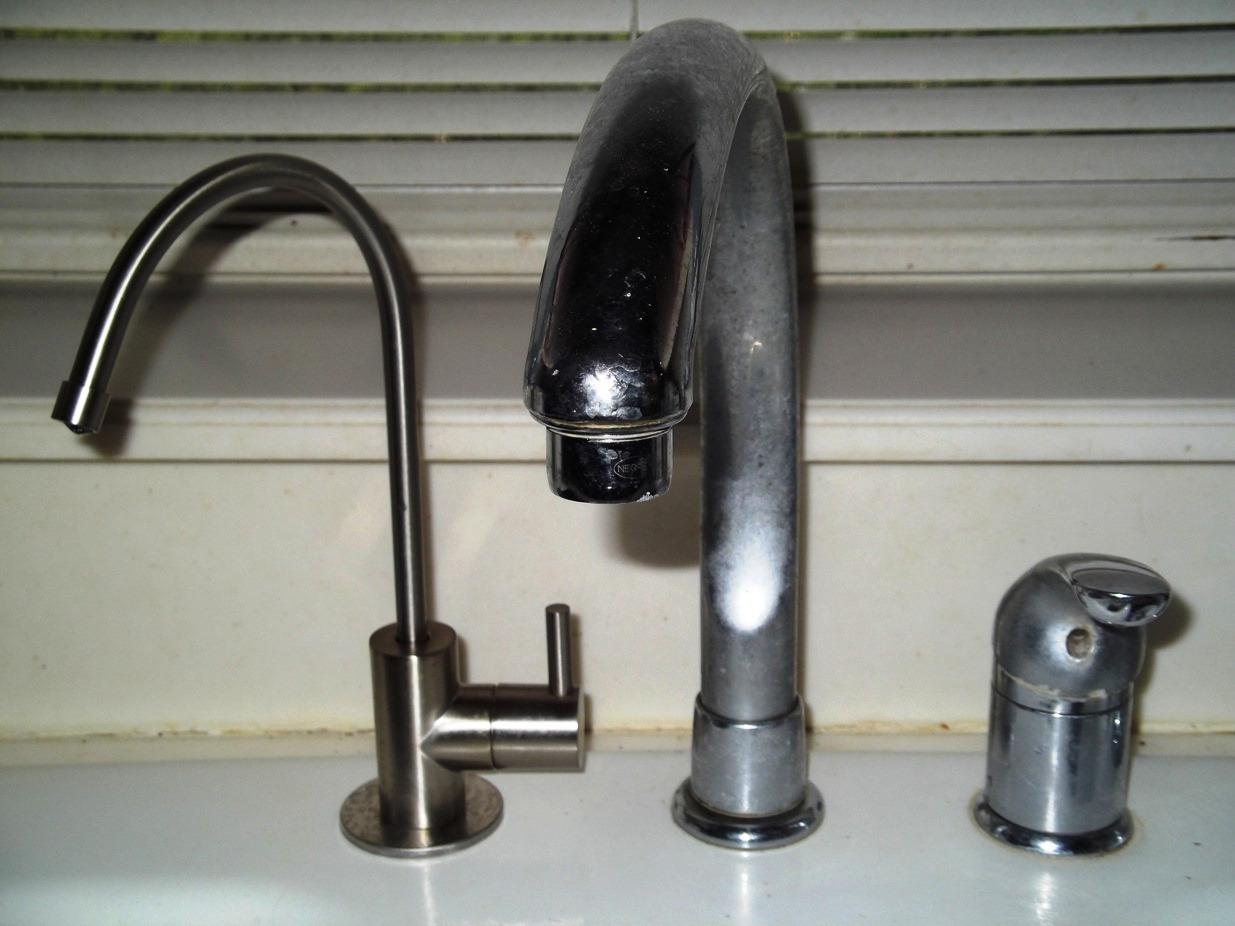
The included brushed nickel faucet needs a countertop hole, which is the step that stops a lot of installs. If you rent or cannot drill, our countertop RO guide covers the no-install options.
2. APEC ROES-PH75 — Best for High-TDS Feed Water and Long-Service Brands
APEC Water ROES-PH75, 6-Stage Under Sink RO System, Alkaline, 75 GPD
75 GPD 6-stage RO
Alkaline pH+ calcium cartridge
WQA certified
Feed water to 2000 ppm TDS
Pros
- Handles feed water up to 2000 ppm TDS
- Brand with 20 years of filtration history
- Premium calcium used in the alkaline cartridge
- Complete kit includes tank faucet tubing and wrenches
- WQA certified system
Cons
- Slowest flow rate in the group at 0.05 gpm
- Older canister layout takes more cabinet space
- No integrated filter-life reminders
The APEC ROES-PH75 is the sensible no-nonsense option here, and the spec sheet explains why people stick with it. APEC is one of the longest-standing names in residential filtration, and this six-stage 75 GPD unit handles feed water up to 2000 ppm TDS, higher than anything else on this list. If you are on well water or a hard municipal supply, that ceiling narrows the field considerably.
The alkaline stage uses premium-grade calcium to raise pH, a more deliberate approach than a magnesium blend. Buyers frame this unit as the reliable alkaline RO rather than the exciting one, and 4120 reviews at 4.5 stars with 81 percent five-star fits that description. Nothing about it is flashy, and nothing about it seems to break.
Certification is handled properly, with WQA certification on the system plus NSF/ANSI 372 and 58 highlights. That matters more than the word certified on its own, because 372 covers lead-free wetted materials while 58 covers actual removal performance. The listed contaminant claims run to 99 percent for chlorine, taste, odor, VOCs, fluoride, arsenic, lead and heavy metals.
The install kit is genuinely complete. Tank, faucet, tubing, drain saddle, feed water adapter and wrenches all come in the box, so there is no second hardware run. Operating pressure range is 40 to 85 psi, and because the system runs on water pressure alone it keeps producing during a power cut. Body dimensions are 15.5 by 5.25 by 17.5 inches.
When the high feed-water tolerance matters
The 2000 ppm ceiling is the feature to buy this for. Most competitors in this list cap feed TDS between 500 and 1000 ppm, and a well or a hard municipal supply can sit well above that. Exceed the rating and you get accelerated membrane scaling, shorter membrane life and a warranty claim that goes nowhere.
You can also size it conservatively. Because the flow rate is honest and low at 0.05 gpm, there is no gap between the marketing number and what arrives at the faucet. You know exactly what you are getting before you drill anything, which is a comfort when the alternative is trusting a headline GPD figure.
Where it falls short
That same honesty means this is the slowest pour in the group, and for a household of three or more that becomes the daily friction point. At 75 GPD with a tank, refills are noticeable. Owners who moved to a 600 GPD tankless unit generally describe the change as night and day, so the appeal here is durability and brand track record rather than convenience.
The canister layout is also physically larger under the sink than a tankless body, and there are no filter-life reminders built in. You are tracking intervals yourself, which for most people means setting calendar reminders rather than trusting the housing. Combined with the slow flow, that is a system you buy once and stop thinking about, which may be exactly the point.
3. Frizzlife PD600-TAM3 — Best Value in a Tankless Remineralizing System
Frizzlife Reverse Osmosis Water Filter – Alkaline Mineral pH+, NSF/ANSI 58&53&42&372 Standard, 600GPD Tankless RO Reverse Osmosis System, Under Sink, 2:1 Pure to Drain, Reduce FPAS/PFOA, PD600-TAM3
600 GPD tankless RO
2:1 pure-to-drain ratio
Alkaline stage above pH 7.5
Live TDS and filter life display
Pros
- 600 GPD output at a 2:1 drain ratio
- Alkaline stage lifts pH above 7.5
- Live TDS reading and filter life reminders
- Certified to four NSF/ANSI standards
- Tankless design frees under-sink space
Cons
- Requires electrical power under the sink
- Listed item weight is not a credible measurement
- Installation still needs a faucet hole
Frizzlife put the specs that matter on the spec sheet, which is why this one stands out in the tankless group. 600 GPD of output, a 2:1 pure-to-drain ratio, a third-stage alkaline filter that adjusts pH above 7.5, and a smart LED panel showing both real-time output TDS and remaining filter lifespan. Four separate features that are usually optional or absent, all present.
The certification is the broadest on this list, covering NSF/ANSI 58, 53, 42 and 372 together. Fifty-eight covers contaminant reduction, fifty-three covers structural integrity of the filter housing, forty-two covers taste and odor and 372 covers lead-free materials. When a listing says certified without naming the standards, this is the level of detail you are looking for.
Water efficiency is the real story. At a 2:1 ratio this system produces a gallon of purified water for every two gallons sent to the drain, against the three-to-four-gallon waste typical of the tank designs on this list. Owners frame that as cutting water use dramatically compared with the conventional systems they replaced, and on a daily drinking habit it compounds fast.
The display panel solves a problem most buyers never think about. Because the alkaline stage deliberately adds minerals, your output TDS will not read near zero, and without context that looks like a failing membrane. Seeing the number change as the filter ages tells you which stage is doing what, and the colour-coded filter change reminders remove the guesswork from intervals.
Why the tankless layout is worth it here
Tankless means no storage tank sitting under your sink collecting water at room temperature indefinitely. That removes the biological stagnation question entirely, and owners on water treatment forums specifically call out preferring tankless because water is not sitting at all. It also returns the cabinet space a pressure tank occupies and shortens the path water travels, which is part of why the pour feels quicker.
At 0.41 gpm maximum flow the PD600-TAM3 fills a 330 ml cup in roughly ten seconds, which covers filling a kettle or a few glasses without a wait. Pair that with the 2:1 ratio and you have a system that suits a household of three or four far better than the 75 GPD classics.
Where it falls short
It needs a power outlet under the sink for the pump and the display. That is a non-starter for some kitchens and a real inconvenience during an outage, when a pressure-tank system would keep producing and this one would not.
One listing detail deserves a flag. The stated item weight is not a credible physical measurement, so check the dimensions rather than relying on that figure when you are planning cabinet space. Body dimensions are 14.7 by 5.3 by 15.5 inches, and with 2476 reviews at 4.6 stars, 77 percent of them five-star and 15 percent four-star, the feedback skews positive with a meaningful neutral band around installation details.
4. iSpring RO500AK — Most Versatile for Certified Performance and Automation
iSpring RO500AK Alkaline Reverse Osmosis System, NSF 58 Certified, 500 GPD
500 GPD tankless alkaline RO
Complete-system NSF/ANSI 58
2:1 drain ratio
Auto membrane flush
Pros
- 500 GPD with 0.4 GPM real flow
- NSF/ANSI 58 certification for the complete system
- Auto-flush after 24 hours of inactivity
- Front panel lights and buzzer for filter changes
- Tankless body saves up to 70 percent of cabinet space
Cons
- Premium price point
- Needs an outlet under the sink
- Pressure range tops out at 70 psi
The RO500AK is the automation-focused end of the iSpring range, and the details that separate it from the RCC7AK-BN are all about maintenance rather than filtration. It auto-flushes after 24 hours of inactivity, which keeps the membrane wetted and extends its life during holidays or an empty house. Front-panel lights and an audible buzzer tell you when a cartridge is due.
Output is 500 GPD with a real flow rate up to 0.4 GPM, which fills an 8 oz cup in roughly ten seconds. That is the tankless experience people are buying, and the 2:1 pure-to-waste ratio means it produces substantially more clean water per gallon used than the traditional designs.
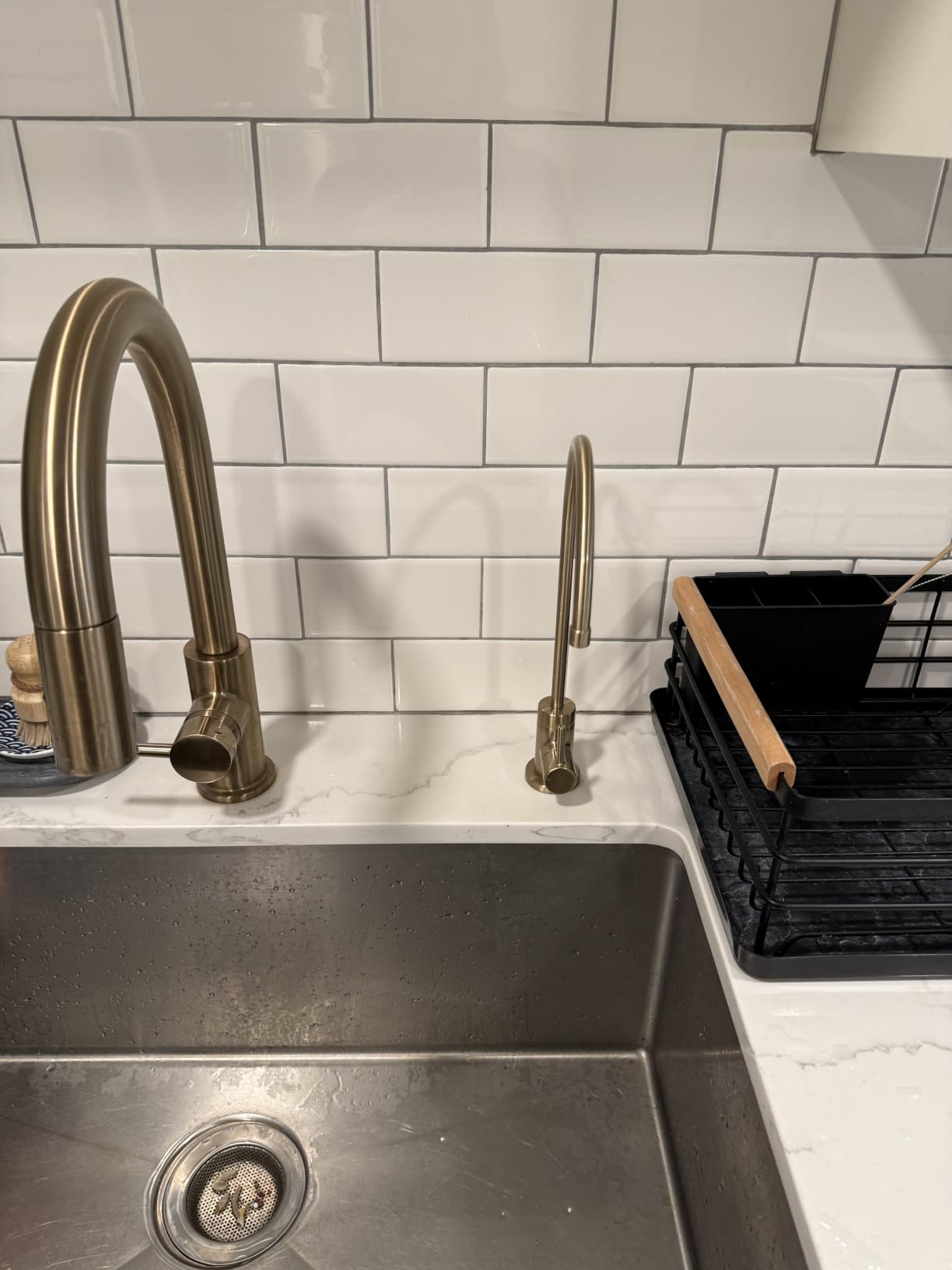
Certification is complete-system NSF/ANSI 58 with a scanable report, verified against published claims of up to 99 percent reduction for lead, PFAS, TDS, chromium, radium, fluoride and arsenic. The membrane itself is rated to 0.0001 micron and the feed water ceiling is 1000 ppm TDS.
Filter scheduling is well documented: FCF500 pre-filters at six months, FCA500 carbon at twelve months and the MRO500 membrane on a 24-month cycle, with a two-year pack available for the alkaline element. The warranty is one year with lifetime technical support, and quick-connect fittings accept both 1/2 inch and 3/8 inch connections so you are not hunting for adapters.
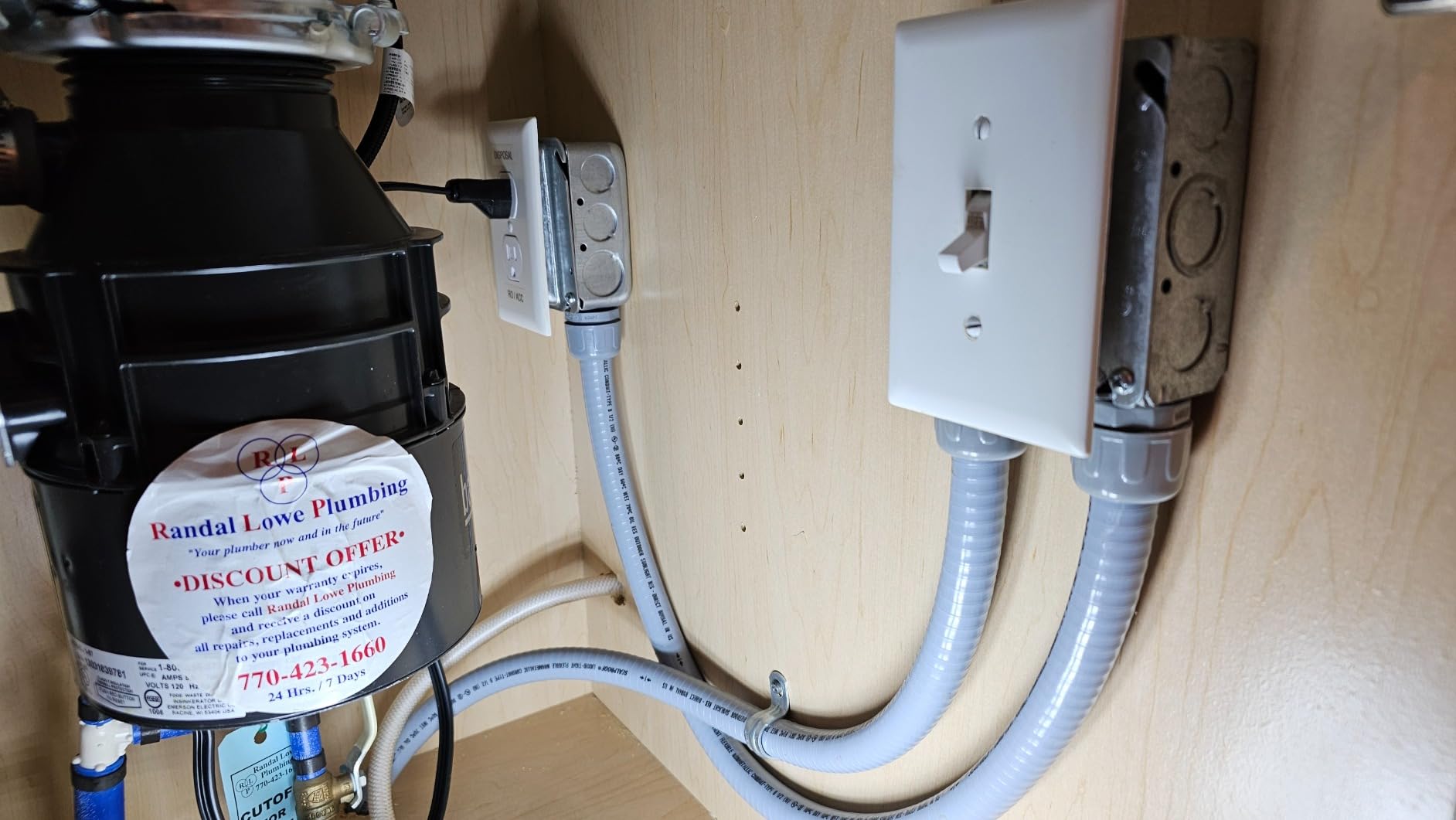
What the automation actually saves you
Most RO failures are not dramatic. They are a membrane that dried out over a holiday, or a carbon block that quietly clogs and starts letting taste through. The 24-hour auto-flush handles the first problem and the buzzer handles the second, and between them they remove the two maintenance failures that quietly shorten system life.
The cabinet footprint is the quieter win. The body measures 17.5 by 5.2 by 16.25 inches and weighs 21 pounds, and owners report freeing up to 70 percent of their under-sink space compared with a tank-and-canister layout. That space is often the difference between a system that fits and one that does not.
Where it falls short
Cost is the first objection and it is a fair one. Owners name price as the main reservation even while rating the unit highly at 4.6 stars across 1.6k reviews with 82 percent five-star. If you are filtering for a household of two, a 500 GPD system is more capacity than you will use, and a mid-range tankless unit delivers the same minerals for less.
The operating pressure range is also worth reading twice. It starts low at 15 psi, which is helpful for low-pressure homes, but it tops out at 70 psi, lower than several competitors here. In a home with unusually high incoming pressure you may need a regulator, and the power requirement means no water during a power cut.
5. SimPure T1-400ALK — Best Combination of Alkaline Remineralization and UV
SimPure T1-400ALK Tankless Alkaline Reverse Osmosis Water Filter 400 GPD
400 GPD tankless RO
Built-in flow-activated UV
Calcium magnesium and potassium
1.5:1 drain ratio
Pros
- One of few systems here pairing alkaline stages with a UV sterilizer
- 400 GPD capacity at 0.4 GPM flow
- Filter set yields about 1057 gallons
- SGS tested to NSF/ANSI 58
- Tankless design removes storage stagnation
Cons
- Lowest average rating here at 4.2 stars
- 1.5:1 drain ratio wastes more water than 2:1 units
- TDS will not read zero because of the alkaline stage
The SimPure T1-400ALK answers a specific worry: biological contamination in stored water. The UV sterilizer activates automatically on flow, so there is no manual switch to forget, and combined with the tankless layout there is no stored reservoir for organisms to establish themselves in. For anyone who wants UV plus mineralization in one under-sink tankless package, this is the design that does both without a storage reservoir.
Capacity is 400 GPD with a 0.4 GPM maximum flow and a 1.5:1 pure-to-drain ratio. That ratio is less efficient than the 2:1 designs here, so you should expect to use more water per gallon produced, but it is far better than the traditional tank systems further down this list.
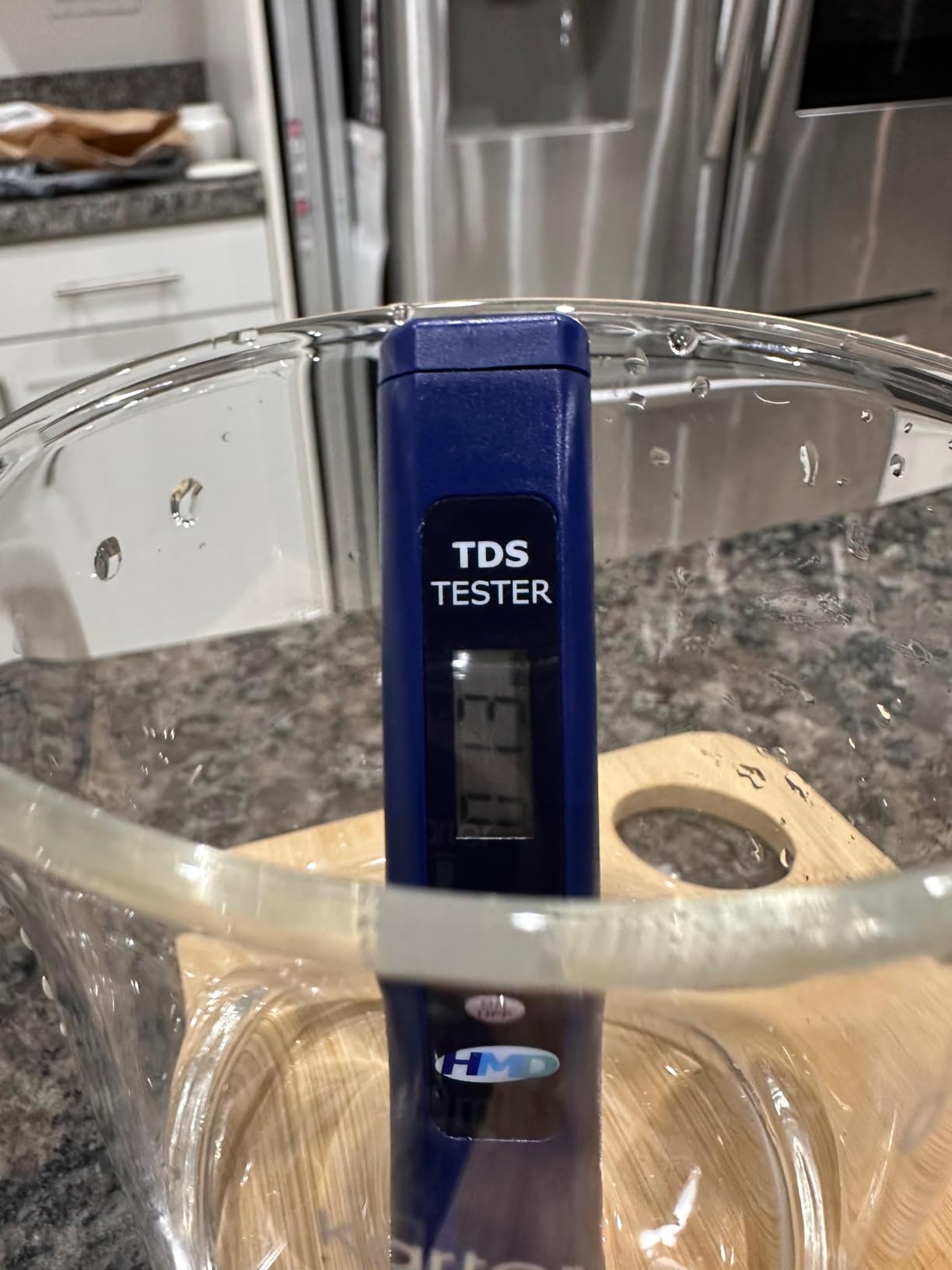
The alkaline filter adds calcium, magnesium and potassium rather than leading with calcium alone, so the mineral profile is broader even though the pH lift is gentler. The manufacturer states plainly that output TDS will not read 0 ppm for this reason, which is refreshingly honest and exactly the note we would give you.
Testing is where this unit differs from most. The ROULP-3012-400-T1 was independently tested by SGS against NSF/ANSI 58 rather than carrying in-house certification, and the claim is over 99.99 percent reduction across more than 1,000 contaminants including TDS, fluoride, nitrates, PFAS, PFOA, PFOS, lead, arsenic and chloride. One listed filter set delivers about 1,057 gallons of purified water.
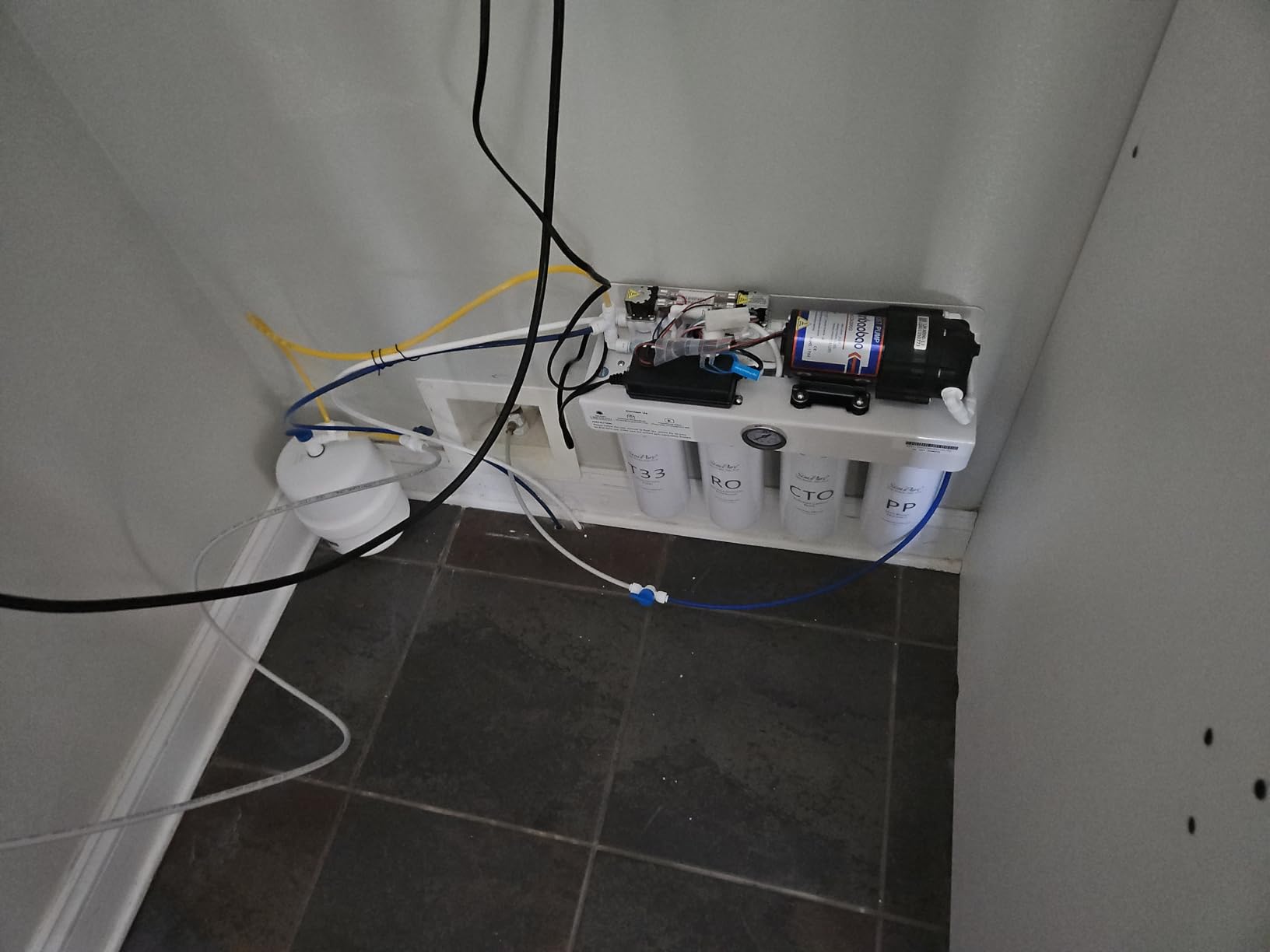
Who the UV stage is actually for
UV addresses viruses, bacteria and fungi that can enter a system downstream of the membrane. It is not a substitute for a good membrane and it does nothing for dissolved contaminants, but in a plumbed-in system where you cannot see the filter housings, it is a cheap second layer of protection for the storage and distribution side.
Reviewers who like this unit consistently point at the price-to-capacity ratio and the fact that UV and alkaline sit in one package. The flow-activated design means the bulb only runs when water moves, which avoids both standby power and unnecessary bulb wear compared with a continuously lit chamber.
Where it falls short
The rating tells its own story. At 4.2 stars across 1402 reviews, this sits at the bottom of the group, with 70 percent five-star and a notable 12 percent one-star band. That spread points to installation and support friction rather than filtration quality.
Two concrete issues come up repeatedly. Buyers measuring output are confused when TDS does not drop to zero, which is the intended behaviour of the alkaline stage and not a fault. Feed water is capped at 500 ppm TDS, so it is not suited to hard or well water. SimPure has served the US since 2006 and uses BPA-free components.
6. Home Master TMAFC — Best Supported Tank System With Two-Pass Remineralization
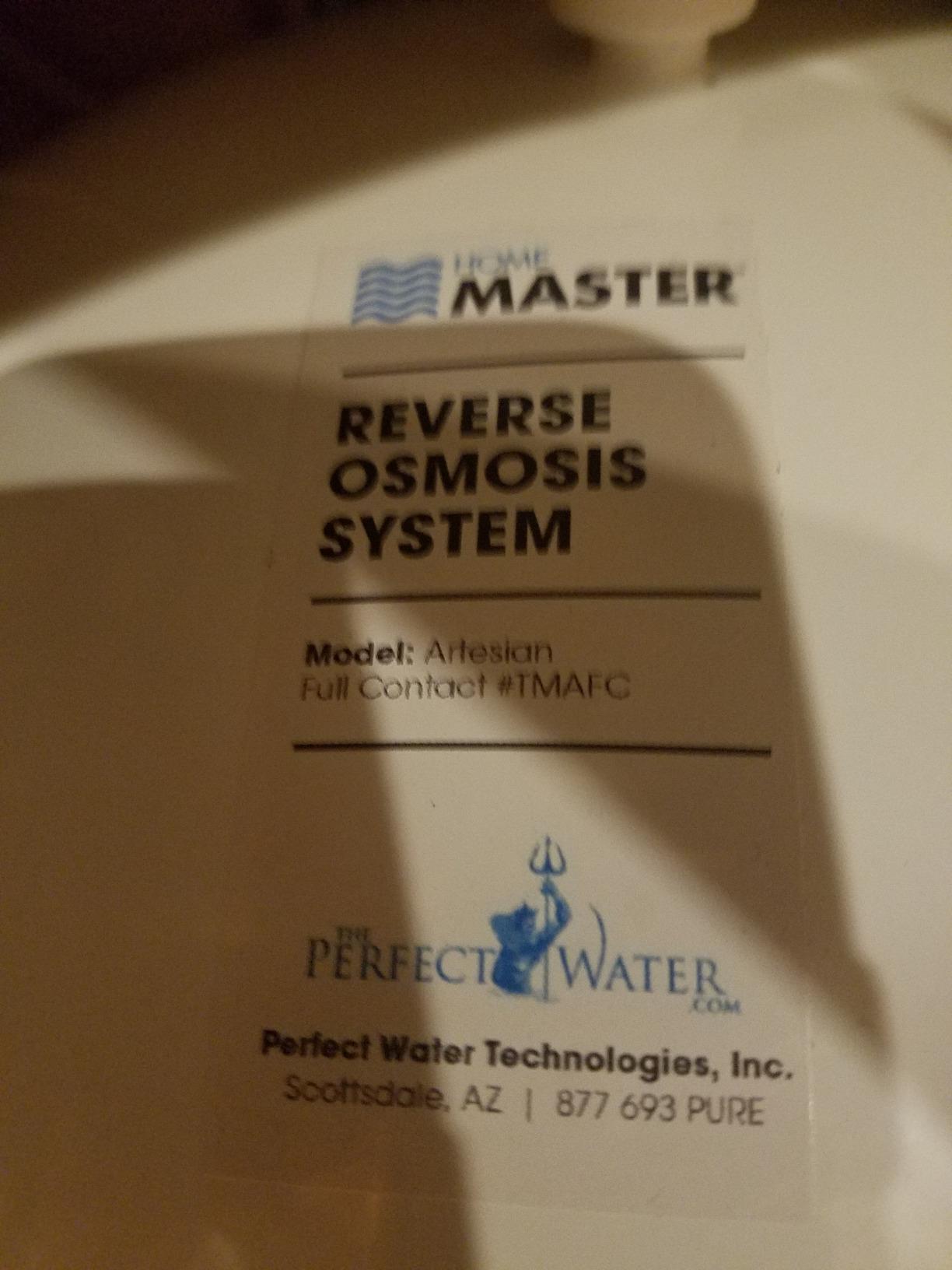
Home Master TMAFC Artesian Full Contact Reverse Osmosis System, 7-stages, Patented 2-Pass Alkaline Remineralization, Fast 4.5s Fill Rate, 8.5” catalytic carbon, 5-year limited parts
7-stage Artesian Full Contact
Patented 2-pass remineralization
4.5 second fill rate
5-year limited parts warranty
Pros
- 4.7 stars with 88 percent five-star
- Two-pass remineralization adds minerals twice
- 4.5 second fill for an 8 oz glass
- Tool-free modular annual filter changes
- 5-year limited parts warranty
Cons
- Only 50 GPD membrane capacity
- Older canister layout rather than compact tankless
- Annual cartridge interval is short
The TMAFC sits at 4.7 stars with 88 percent five-star and only 3 percent one-star across 909 reviews, the strongest rating distribution of any tank-based unit in this group. What earns that is the two-pass remineralization, a different approach from every other system here. Instead of adding minerals once at the end, this design passes the water through mineral contact twice during purification.
That second pass is why the taste gets the review volume it does. Two exposures mean a fuller mineral profile and a more rounded result, and for anyone who is specifically trying to escape flat RO water this is the system that most directly answers the problem. The trade-off is that each pass costs you throughput, and the membrane here is 50 GPD, the lowest in the group.
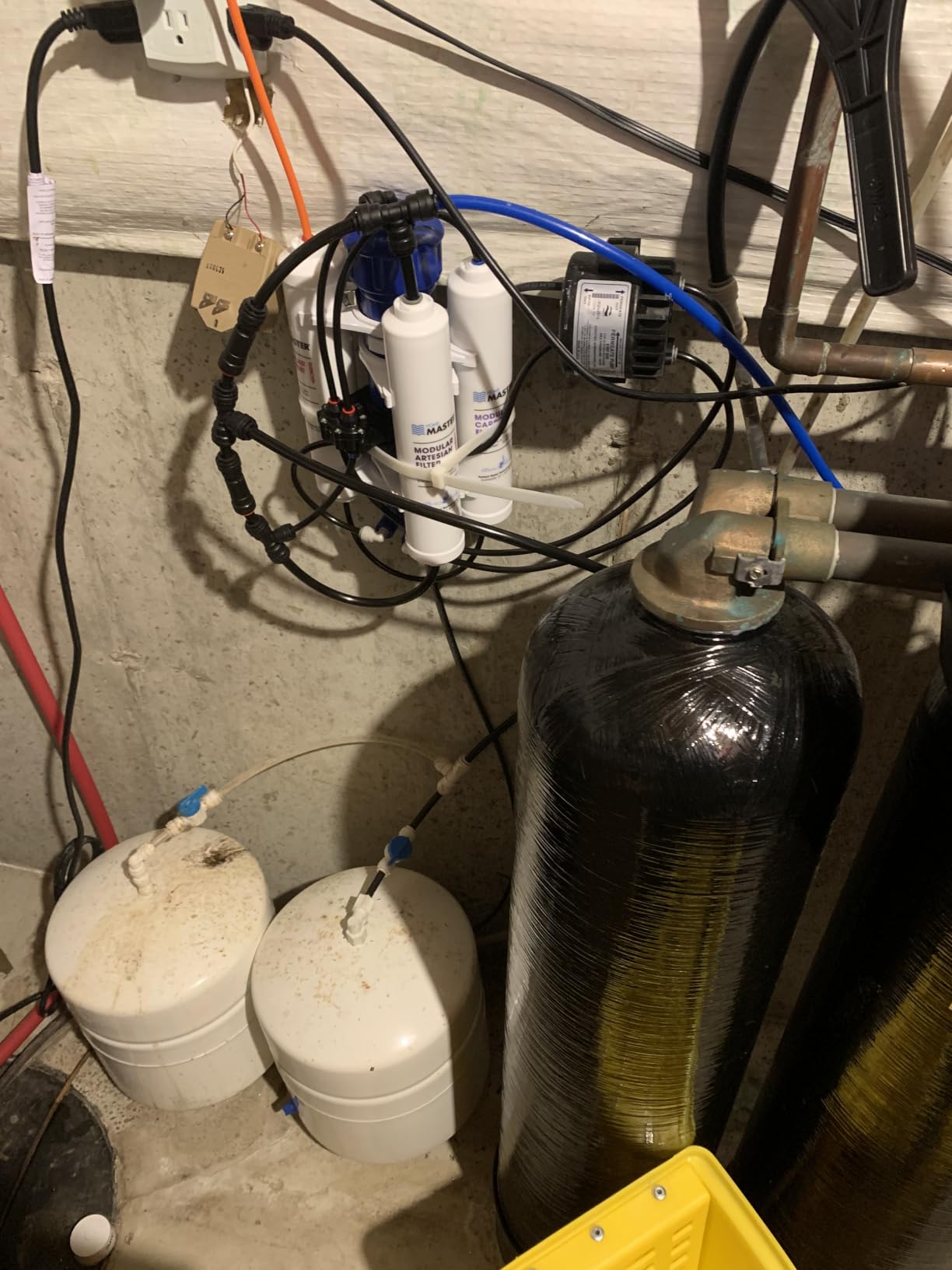
Speed is its counterweight. A 4.5 second fill rate for an 8 oz glass is far faster than typical 75 GPD designs, and the listed maximum flow rate of 1 gpm is unusually quick for a tank design. The DOW thin-film composite membrane is rated to 0.0001 micron, operating pressure runs 40 to 95 psi, and each pass uses 8.5 inch catalytic carbon for taste and chlorine polishing.
Build quality and support are where this brand separates itself. The purification cluster is 16 inches high, 8 inches wide and 5 inches deep with a 15 by 11 inch tank, all components are NSF certified, and it is made in the USA by an NSF listed company. The modular design allows tool-free annual filter replacement and the warranty runs five years on parts.
How two-pass remineralization differs
Every other system on this list adds minerals once, in a final canister after the membrane. The patented two-pass design here contacts the water with mineral media twice, so more of the calcium and magnesium actually makes it into the finished water before it reaches the tap. That is a real technical difference rather than a marketing label.
If your priority order is taste first and throughput second, this is the system built for that order. The 8.5 inch catalytic carbon per pass also does more taste and chlorine work than a standard carbon block, which compounds the effect when you are trying to make water taste good rather than merely clean.
Where it falls short
50 GPD is the honest limitation. Even with a 4.5 second glass fill, a household of three or four will feel the difference against a 600 GPD tankless unit when you are filling anything larger than a glass. If you want the mineral profile and you also want volume, you are choosing between them here.
The annual cartridge cycle is short, which means more frequent spend and more scheduled work. And the canister architecture is physically larger than a tankless body, at 20 by 13 by 16 inches with a 14.1 pound system plus its tank, so cabinet space is a factor if your under-sink area is already crowded.
7. Waterdrop G5P700A — Best for High Daily Output
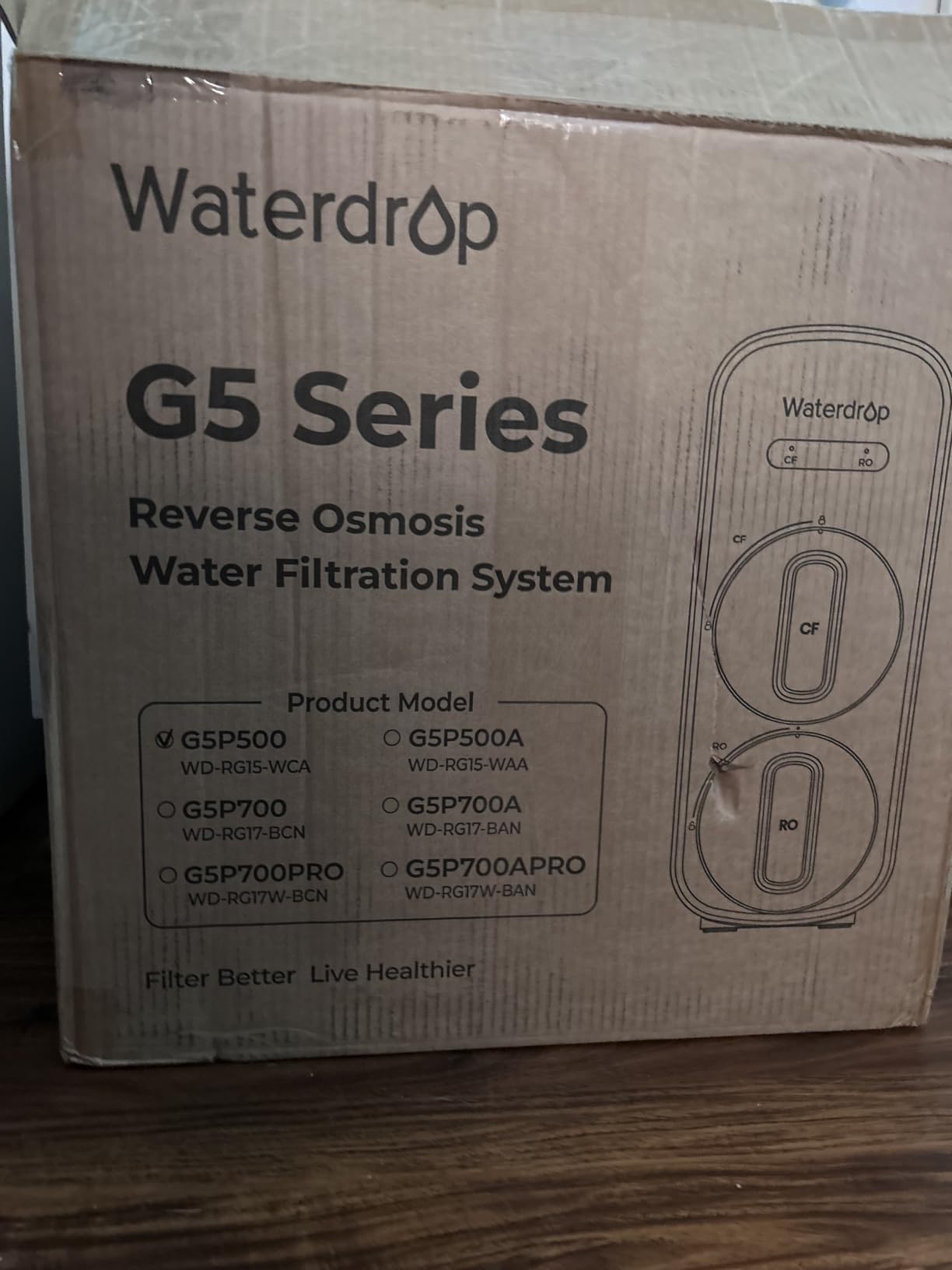
Waterdrop G5P700A Alkaline Mineral Reverse Osmosis Water Filter, 700 GPD
700 GPD tankless RO
8-stage SGS-tested filtration
2:1 pure-to-drain
Smart LED faucet
Pros
- Highest daily capacity here at 700 GPD
- Fills a 6 oz cup in about 6 seconds
- Restores calcium magnesium sodium and potassium
- Links to ice makers and refrigerators
- Compact tankless body with smart faucet
Cons
- Faucet install requires countertop drilling
- 500 ppm feed TDS ceiling is low
- 8 percent one-star share
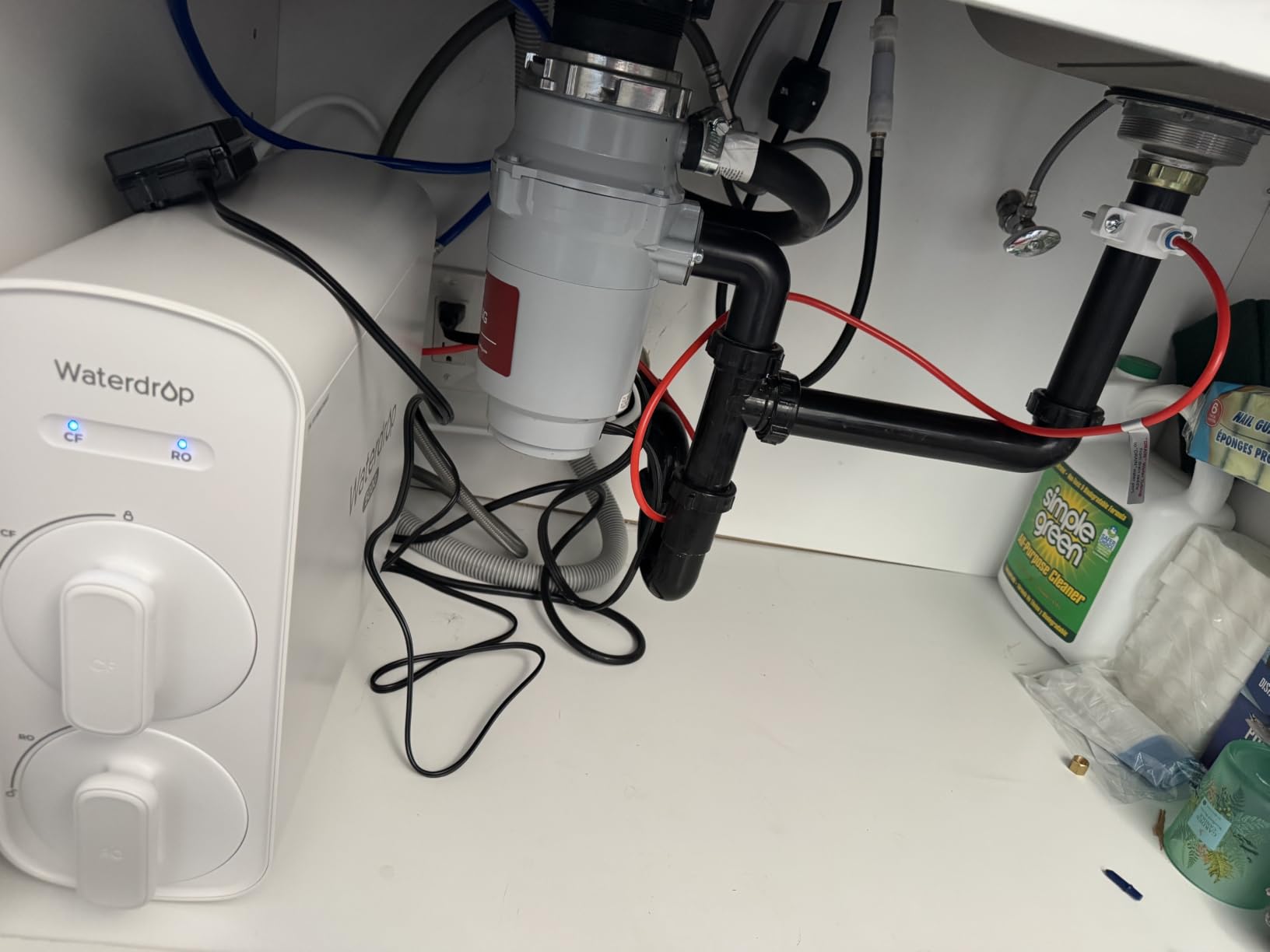
The G5P700A is the throughput pick. At 700 GPD it produces more water per day than the other nine systems here, filling a 6 oz cup in roughly six seconds, and the 2:1 drain ratio means it does not waste three or four gallons to get you one. If your household drinks a lot, brews constantly, or you want one purified supply feeding both an ice maker and a refrigerator, this is the capacity to buy.
Mineral restoration covers four ions rather than two. The 0.0001 micron RO membrane is paired with alkaline mineralization that adds calcium, magnesium, sodium and potassium to the finished water, so the taste profile is broader than a straight calcium carbonate stage. Filtration runs through eight stages tested by SGS.
The faucet is where the capacity gets used. It is a smart LED faucet with filter status indicators, and it measures 6.6 by 3.2 by 11.3 inches, which is taller than the standard drinking faucet most people replace. That height matters if you have an upper cabinet sitting close above the sink.
Connection options are a genuine advantage for a high-output system. It links to ice makers and refrigerators, so purified water is not limited to one glass at the tap. The body is 16.69 by 5.69 by 13.9 inches and the tankless design frees up to 70 percent of under-sink space. Operating pressure range is 14.5 to 87 psi, feed TDS up to 500 ppm, and the warranty is one year.
When 700 GPD is the right amount
Capacity is only useful if you can consume it. A household of one or two will not touch 700 GPD of drinking water, and buying for capacity you never draw means paying more for pump and membrane size you do not need. The number earns its place when several people drink filtered water daily, or when you are hooking up an ice maker and a refrigerator.
Reviewers focus almost entirely on the flow and the dispense speed. At 759 reviews and 4.5 stars with 81 percent five-star, the positive sentiment is about water arriving fast rather than about any single contaminant claim, which is what a high-output buyer is actually shopping for.
Where it falls short
The 500 ppm feed TDS ceiling is the clearest restriction. That is lower than the 1000 ppm some competitors accept and far below the APEC unit’s 2000 ppm, so on a hard supply you are outside the rated envelope. Check your water before buying, because exceeding that ceiling shortens membrane life and complicates warranty claims.
Countertop drilling is required for the smart faucet, and connection sizing comes up often enough in reviews to mention during planning. 8 percent of its reviews are one-star, and those cluster around drilling and fitting sizes rather than filtration performance. The unit is 21.4 pounds and available in white and black.
8. iSpring RCC1UP-AK — Best for Low Water Pressure Homes
iSpring RCC1UP-AK, 100 GPD 7-Stage Reverse Osmosis Under Sink Water Filtration System with Boost Pump, Alkaline Remineralization and UV Filter, Patented Top-Mounted Faucet Design for Easy Installation
100 GPD 7-stage system
Booster pump pressurizes feed
Flow-sensor UV with 3-minute delay
Alkaline remineralization stage
Pros
- Booster pump handles low feed pressure
- Flow-sensing UV extends bulb life
- 100 GPD fills an 8 oz cup every 5 seconds
- Long owner history including 13 years of service
- Lifetime technical support with available parts
Cons
- Booster pump is noticeably loud
- Needs an outlet for pump and UV
- Alkaline taste reads earthy until flushed
- Faucet hardware may not fit thicker decks
Low incoming pressure is the single most common reason an under-sink RO installation fails to perform, and the RCC1UP-AK solves it directly with a booster pump that pressurizes feed water through the membrane. That does two things at once: it pushes more water through a membrane that would otherwise stall, and it cuts the wastewater produced per gallon of purified water.
It is one of three systems here with a UV stage, and the implementation is smarter than most. The UV chamber uses a flow sensor so it only energises when water is actually moving, plus a three-minute delay before firing. That delay stretches bulb life and cuts standby power compared with a chamber that runs continuously.
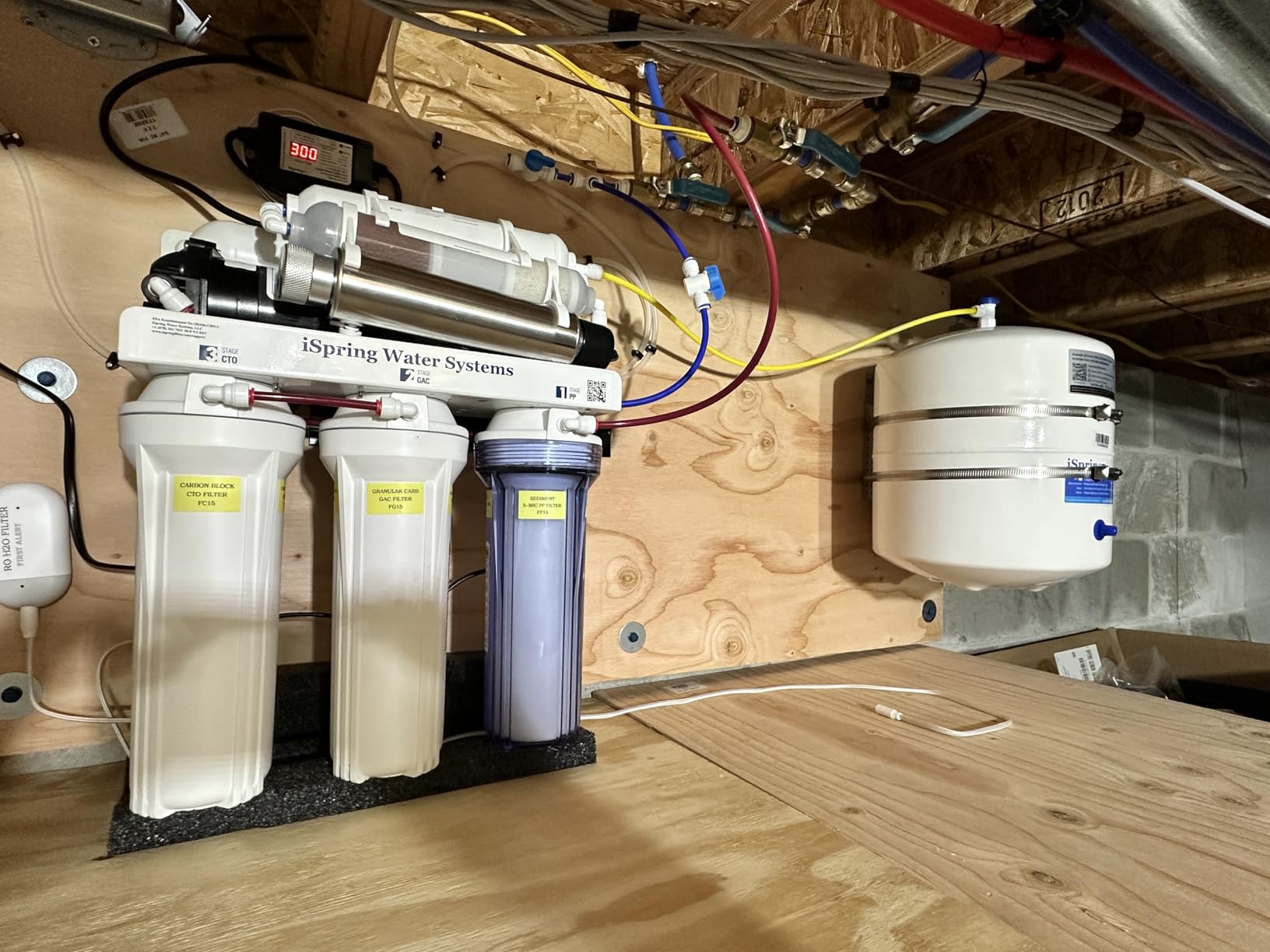
Seven stages run in order: three pre-filters, the 0.0001 micron RO membrane, then the alkaline filter that restores minerals. Claimed reduction is up to 99 percent across more than 1,000 contaminants including PFOA and PFOS, chlorine, fluoride, lead up to 98 percent, arsenic and asbestos. Feed water is rated to 750 ppm TDS.
At 100 GPD the system delivers an 8 oz cup roughly every five seconds for four or five minutes straight, and the storage tank refills from empty in about 40 to 45 minutes. Long-term reviewers report measurable results such as 244 ppm in and 44 ppm out, and one owner documents 13 years of continuous service on the same unit.
When a booster pump is the deciding feature
If you have tried an RO before and the water came out in a trickle, pressure was almost certainly the cause rather than the membrane. Feed pressure below roughly 45 psi means the membrane cannot push water through fast enough, and the result is a slow faucet and a large volume of rejected water to the drain. A booster pump fixes that at the source.
Because the pump raises pressure before the membrane rather than after it, you also get better recovery from the same membrane. Owners on water treatment forums describe the booster-pump route as the standard recommendation for older homes with galvanised plumbing, where pressure drops at the end of the day.
Where it falls short
The pump is loud, and owners say so plainly. Expect noticeable clatter in a kitchen where the sink cabinet sits next to where you sit, and a minority of the systems we looked at have needed a pump replacement under warranty. It also needs a receptacle under the sink for the pump and UV, so there is no water during a power failure.
Two smaller frictions are worth knowing. The alkaline cartridge can taste earthy for the first few seconds on a new line until you flush it, which trips up people who assume something is wrong. And the top-mounted faucet hardware may not clear a thicker sink deck without modification, so measure before you commit.
9. Waterdrop WD-T4-A — Best for Two Separate Water Streams
[Dual Flow] Waterdrop WD-T4-A Alkaline pH+ Reverse Osmosis Water Filter, NSF/ANSI 372 Certified, 10-Stage, 450GPD Tankless Undersink RO Filtration System, 2:1 Pure to Drain, BPA Free, Plug-in required
Dual flow outlets
10-stage 450 GPD tankless
2:1 pure-to-drain
NSF/ANSI 372 certified
Pros
- Two outlets for plain and mineral water separately
- 450 GPD at a 2:1 drain ratio
- Stated filter intervals on every cartridge
- Clean plug-and-play install per reviewers
- Large under-sink space saving
Cons
- Alkaline stream taste differs from the RO side
- Flow slower than the spec suggests
- Pump may not shut off until the faucet is cycled
- Countertop drilling for the dual faucet
The WD-T4-A solves a problem none of the other nine systems address: it gives you two outlets. One runs standard reverse osmosis water and the other runs a mineral-enhanced alkaline stream, so you can use one for coffee brewing where you want neutral water and the other for drinking where you want the fuller taste. Reviewers consistently treat that flexibility as the reason to pick it.
Capacity is 450 GPD, which sits in the middle of the tankless group, and filtration runs through ten stages with a dedicated mineral enrichment line. The 2:1 pure-to-drain ratio is among the more efficient designs here, cutting wastewater substantially compared with a traditional tank system.
![[Dual Flow] Waterdrop WD-T4-A Alkaline pH+ Reverse Osmosis Water Filter, NSF/ANSI 372 Certified, 10-Stage, 450GPD Tankless Undersink RO Filtration System, 2:1 Pure to Drain, BPA Free, Plug-in required customer photo 1](https://battleofsoho.com/wp-content/uploads/2026/08/B0F5V9G355_customer_1.jpg)
Filter intervals are stated on the box rather than buried, which is more useful than it sounds. The carbon fibre filter is six months, the RO membrane is 24 months, the carbon block is 12 months and the alkaline mineraliser is 12 months. Indicator lights and a buzzer handle the reminders. Certification is NSF/ANSI 372 with BPA-free materials.
Three filters come pre-installed, so the install starts closer to finished than most systems here. Reviewers describe it as clean and leak-free, with quick fittings that avoid pipe threading entirely. The body is 16.54 by 6.22 by 17.95 inches and needs a plug-in connection to run.
![[Dual Flow] Waterdrop WD-T4-A Alkaline pH+ Reverse Osmosis Water Filter, NSF/ANSI 372 Certified, 10-Stage, 450GPD Tankless Undersink RO Filtration System, 2:1 Pure to Drain, BPA Free, Plug-in required customer photo 2](https://battleofsoho.com/wp-content/uploads/2026/08/B0F5V9G355_customer_2.jpg)
Why two streams beat one
Remineralization is a taste preference, and preferences change. The owner who disconnected an alkaline stage after a month on water treatment forums is not unusual, and dual outlets remove the need to choose in advance. You keep plain RO for recipes where mineral content flattens coffee extraction, and use the alkaline side for everyday drinking.
It is also the cheapest way to A/B test whether remineralization is for you at all. Rather than committing to a dedicated alkaline system, you can run both streams for a month and compare them side by side before deciding which one you want as your default.
Where it falls short
Some owners report the alkaline stream has a slightly off taste compared with the plain RO side, which is a bit of a problem in a system whose selling point is the mineral water. Others describe real-world flow as slower than the spec sheet suggests, and one owner reports the pump occasionally staying on until the faucet is cycled.
Countertop drilling for the dual faucet is also required. At 482 reviews and 4.5 stars with 79 percent five-star, this has one of the smaller review bases of the ten, so the long-term track record is thinner than the established models further up this list. Weigh that if you are buying for ten years rather than two.
10. Home Master TMHP-L — Top Rated for UV and Two-Pass Mineral Restoration
Home Master TMHP-L HydroPerfection RO System, 9-stages, 99% rejection DOW membrane, Patented 2-pass Remineralization, 4.5sec Fill Rate, 1:1 Waste Ratio, UV 99.9% EPA 97952AZ1, Lux Faucet, Fridge Ki
9-stage filtration
Patented 2-pass remineralization
EPA registered LED UV
75 GPD DOW FilmTec membrane
Pros
- 4.8 stars with 88 percent five-star
- Nine stages combining RO UV and two-pass minerals
- EPA registered LED sterilizer
- KDF85 iron pre-filter included
- 5-year parts warranty and spare availability
Cons
- 1:1 drain ratio wastes roughly double a 2:1 unit
- Premium price point
- Needs power for the UV stage
- Older canister design
The TMHP-L is the most spec-heavy system here, and the ratings back that up. At 4.8 stars across 337 reviews with 88 percent five-star and only 2 percent one-star, it holds the highest average score of any product in this selection. Nine stages combine RO, UV sterilization and the same patented two-pass remineralization approach as the TMAFC.
The UV stage is the distinguishing spec. It is an LED sterilizer registered with the EPA under number 97952-AZ-1 for inactivation of viruses, bacteria and fungi, rather than a generic UV claim. Registration means it went through an efficacy review, which is a meaningfully higher bar than a marketing sentence.
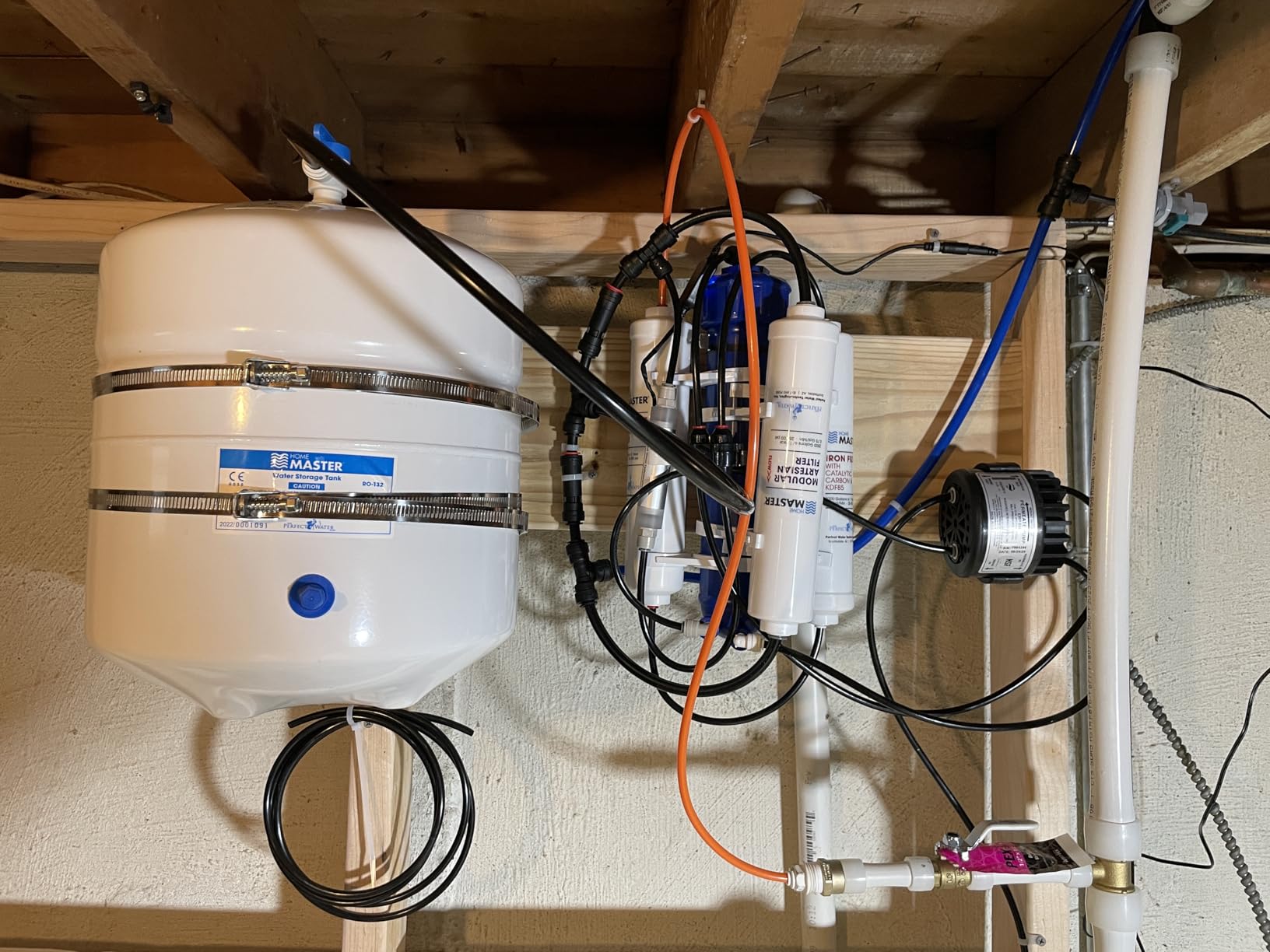
The membrane is a DOW FilmTec high-performance high-hardness model rated to 0.0001 micron at 75 GPD, which is worth noting because it is built for hardness rather than compromised by it. A KDF85 iron pre-filter handles sediment and dissolved iron, and claimed reduction covers up to 99 percent of chlorine, chloramines, chemicals, lead, heavy metals, fluoride, microplastics and TDS. Feed water is rated to 600 ppm with a 40 to 100 psi operating range.
The package is unusually loaded for the money you are spending. It includes the assembled system, a brushed nickel Lux faucet, a storage tank, a fridge connection kit and a garbage disposal drain adapter, so the install does not require a second shopping trip.
What the EPA registration is worth
Most UV claims in this category are unverified marketing. An EPA-registered sterilizer has documented efficacy for a specific organism claim, which makes it a meaningful choice if you are treating for biological contamination rather than dissolved contaminants. Combined with a pressurized tank, it matches the configuration water treatment forum users recommend when someone raises biological risk.
The two-pass remineralization then adds calcium and magnesium twice during purification, so the mineral restoration is deeper than the single-pass designs. With a 4.5 second fill rate for an 8 oz glass and a listed 1 gpm maximum flow, the speed is there too.
Where it falls short
The 1:1 drain ratio is the problem. For every gallon of purified water, one gallon goes to the drain, which is roughly double the waste of a 2:1 system and three to four times worse than what the newer designs achieve. On a household drinking close to a gallon a day, that is a recurring line item on your water bill that the taste features do not offset.
It is also among the priciest units in this group, and the UV stage requires an electrical connection, so it stops working in a power cut. The canister design is larger than a tankless body at 15 by 5 by 16 inches plus its tank. The five-year limited parts warranty and five-year spare part availability are real mitigations, but they only help if you own it long enough to benefit.
How to Choose an RO System With a Remineralization Stage
Read the certification standard number, not the word certified. Two different NSF/ANSI standards get marketed with the same word, and they answer completely different questions. NSF/ANSI 58 certifies contaminant reduction performance, so a listing can state the actual percentage removed for lead, fluoride or PFAS. NSF/ANSI 372 certifies that the wetted materials are lead-free, which says nothing about how well the system filters. NSF/ANSI 42 covers taste and odor, 53 covers structural integrity of the housing, and 401 covers emerging contaminants.
A system certified only to 372 has told you its parts are safe, not that it removes anything. Several products in this list carry both, and the Frizzlife PD600-TAM3 is the only one here covering four standards at once. When a listing says certified without naming the standard, treat the claim as unverified.
Sizing your capacity is simpler than the numbers suggest. A single person drinks one to two gallons a day, a couple runs three to four, a family of four sits in the seven to ten gallon range, and adding an ice maker or refrigerator connection pushes it higher. Anything at 75 GPD is built for one or two people. At 300 GPD and above you are buying headroom for entertaining, an ice maker or guests.
Choose tank or tankless based on how you actually drink water. A pressure tank system fills one glass at a time but produces water indefinitely without power, and it is cheaper with simpler filters to replace. A tankless system produces continuous high flow, frees cabinet space and removes the stored-water stagnation question, at the cost of an electrical requirement. Countertop units avoid drilling entirely and suit renters, at the cost of counter space and lower capacity.
Look at the drain ratio before anything else. Traditional tank systems discard three to four gallons per gallon produced, 2:1 designs discard two, and the 1:1 design here discards one. Multiply your daily drinking volume by that number to see the water going down the drain each year, because this is the running cost that does not appear on the product page.
Decide between an integrated alkaline stage and a retrofit post-filter. An integrated stage means one warranty, one install and standard replacement cartridges from the same brand. A retrofit inline alkaline post-filter costs a fraction of a new system, fits between the membrane housing and the faucet, and lets you try the taste before committing. If your current RO filters fine and only the taste bothers you, the retrofit is the sensible move.
Budget for the cartridges, not just the system. Every one of these has an alkaline element on a separate replacement cycle from the pre-filters and the membrane, and most also run a carbon block. Track all four intervals, and remember that the alkaline stage will not read near zero on a TDS meter even when it is working perfectly, so do not mistake a healthy reading for a failed membrane.
Installation and First-Flush Basics
Every system here is described as under-sink and most are genuinely DIY, but two steps cause most of the problems. The first is drilling the faucet hole, which is the one task that stops people partway through. The second is push-fit connections seated by hand, which owners describe as the most common cause of a leak when a tube is not pushed all the way in.
The order of operations matters. Shut off the cold water supply under the sink and open a faucet to relieve pressure. Mount the system in the cabinet, then install the tank and the membrane housing before connecting any tubing, because reaching behind an assembled cluster is how fittings get missed.
Next, run the feed line from the cold-water shutoff using the supplied adapter and install the drain saddle on the sink drain. Connect the membrane housing to the faucet with the tubing supplied, and the tank to the housing outlet. Check every push-fit connection by pulling gently on each tube, since a fitting that is seated but not fully home will weep rather than fail loudly.
Flush the system properly before you drink from it. Run it for the time the manual specifies with no faucet taps open so it self-flushes, then flush the faucet for several minutes on and off. New membranes and carbon blocks shed fine carbon particles for the first few gallons, and that clears with flushing rather than with a cartridge change.
Sanitise at the first filter change. When you replace the pre-filters for the first time, flush them as directed, then sanitise the storage tank, housing and tubing following the steps in your manual. Biofilm forming on media that has been sitting is the most common cause of an off-taste problem that people blame on the membrane, and sanitising at the first change prevents it.
Test your water after the first flush and again after three months. Comparing feed TDS against RO TDS on the same meter tells you what the membrane is doing. A rising output TDS alongside a flat feed number points at the membrane, while a number that climbs and then stabilises is simply the alkaline stage doing its job.
Frequently Asked Questions
Should you remineralize reverse osmosis water?
You should if you dislike the flat, slightly acidic taste of straight RO water, brew coffee or tea with it, or want a slightly alkaline pH at your tap. You do not need it for health reasons, because the overwhelming majority of dietary minerals come from food rather than water. If your supply is already very hard, you probably have more minerals than you need.
Do you really need to remineralize RO water?
Probably not for filtration quality, since the mineral stage adds nothing to contaminant removal. Add it for taste and composition. Many owners install an alkaline stage, find the taste unappealing, and disconnect it, so treat the cartridge as reversible. If you already own an RO system, an inline alkaline post-filter between the membrane and the faucet is the cheap way to try it.
What is the best remineralization filter for a reverse osmosis system?
For a new install, look for an integrated final-stage alkaline cartridge in a system certified to NSF/ANSI 58, such as the iSpring RCC7AK-BN or the Frizzlife PD600-TAM3. For a system you already own, buy a standalone inline alkaline post-filter that fits between the membrane housing and the faucet. Media type matters too: calcium carbonate lifts pH most, calcite is cheaper and slower, and magnesium or potassium blends broaden the profile.
What are the downsides of using an alkaline water purifier?
The added minerals raise your output TDS reading, which frequently confuses buyers into thinking their membrane has failed. Taste is subjective, and some people find the mineral addition off, which is why several owners simply disconnect the stage. It also adds one more cartridge to your replacement schedule and increases the drain ratio, and a very alkaline taste can be unpleasant on tea or coffee.
Is RO water hard on the kidneys?
No. For healthy people with normal kidney function, drinking reverse osmosis water does not damage the kidneys. Kidney concerns arise in specific clinical situations involving electrolyte imbalance or restricted fluid intake, not from drinking RO water in normal quantities. The minerals RO strips from water are a negligible part of your daily intake, because dietary minerals come overwhelmingly from food.
Why am I thirsty after drinking reverse osmosis water?
Two reasons. First, the lack of minerals makes the water taste thin, and people often drink more of it because it is less satisfying. Second, very low mineral content changes how the water feels on the palate, so your volume cues shift. Adding a remineralization stage addresses the taste half of this directly, and drinking to thirst rather than forcing a target handles the rest.
Which brand of reverse osmosis system is best?
There is no single winner, because the right unit depends on your feed water, pressure, household size and cabinet space. For an overall remineralizing RO with complete-system certification, the iSpring RCC7AK-BN is the safest general choice. For volume and water efficiency, the Frizzlife PD600-TAM3 leads. For low water pressure, the iSpring RCC1UP-AK is built for the problem.
Does reverse osmosis water strip calcium and magnesium?
Yes. The membrane passes water molecules while holding back dissolved salts, so calcium and magnesium go to the drain with everything else. That is why straight RO water tastes flat and measures a pH near 5.5. A remineralization cartridge reverses this by dissolving calcium carbonate or a mineral blend back into the finished water.
Does remineralization raise the TDS reading of my RO water?
Yes, and that is expected rather than a fault. Straight RO output often measures 2 to 10 ppm, while an alkaline stage pushes that higher because it is deliberately adding dissolved solids. Judge performance by comparing your feed TDS against your output TDS on the same meter, not by expecting a near-zero reading at the tap.
How often do RO filters need changing?
Sediment and carbon pre-filters typically run six months, carbon blocks around twelve, alkaline mineral cartridges six to twelve depending on the model, and RO membranes two to three years. Filter life is driven by feed water quality and usage rather than the calendar, so test rather than assume. If you skip a stage change, taste degrades long before the membrane actually fails.
Final Verdict: Who Should Buy Which System
The iSpring RCC7AK-BN is our pick for the best reverse osmosis systems with remineralization filters, and it wins on the combination that matters most: complete-system NSF/ANSI 58 certification, a natural mineral AK stage, transparent housing, and a top-mounted faucet design that makes installation straightforward. Its 21k+ reviews at 4.6 stars give it the deepest owner record of any system in this selection.
If you need more water, the Frizzlife PD600-TAM3 gives you 600 GPD at a 2:1 drain ratio with an alkaline stage above pH 7.5 and a live TDS display. The iSpring RO500AK is the premium route when you want complete-system certification plus automatic flushing and audible filter alerts. If your incoming pressure is low, the iSpring RCC1UP-AK with its booster pump is built for that specific problem.
Skip the whole category if you are on very hard well water, if you only drink RO water for cooking, or if your only priority is the lowest possible cost. And if you already own a working RO system that filters well and simply tastes flat, buy an inline alkaline post-filter rather than a new machine. That is the cheapest way to close the taste gap, and you can always add a dedicated stage later if you decide you want one. Check the current listings and reviews for each system before you commit.