
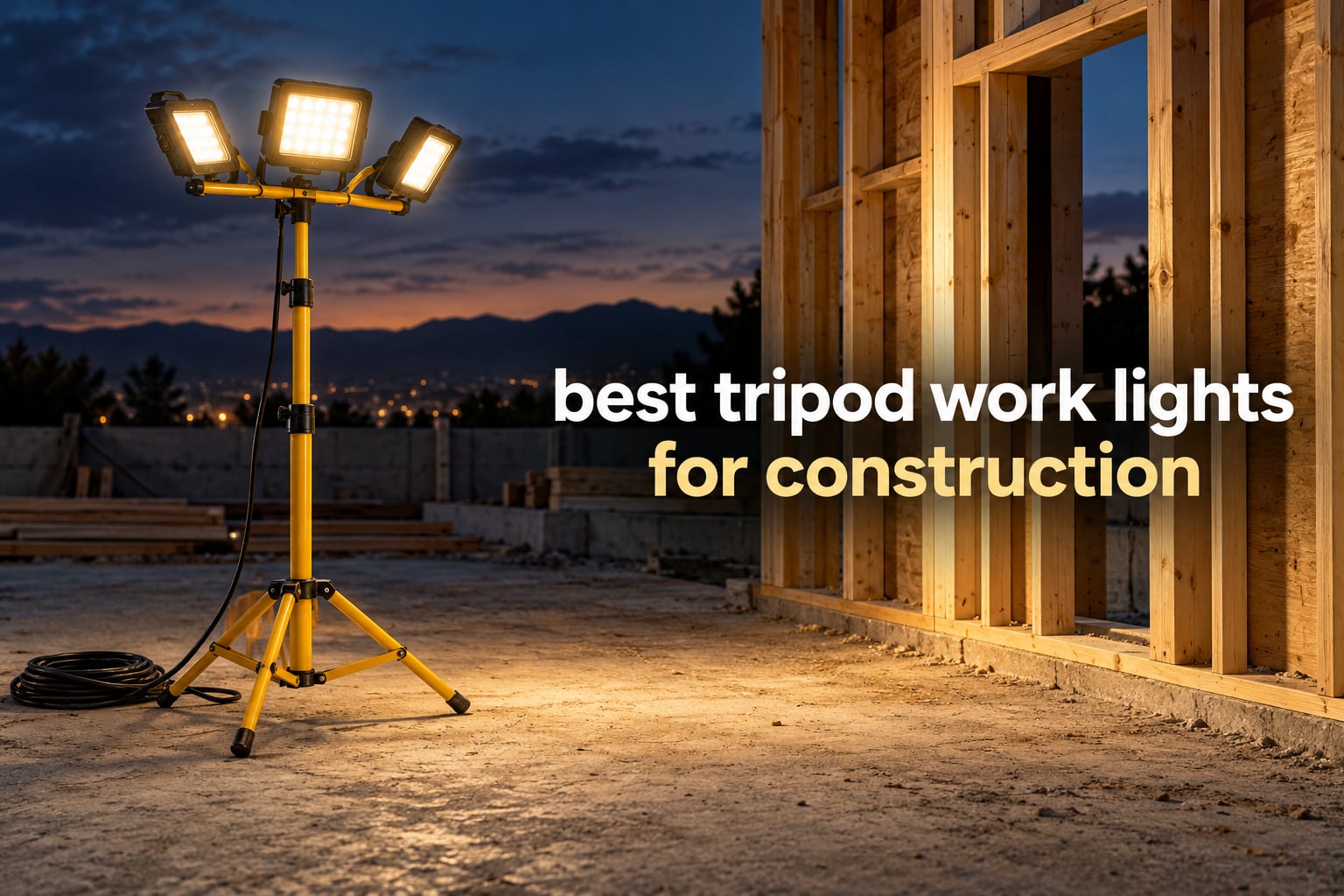
A tripod work light solves a problem that most crews discover the hard way. You need light at head height, spread across a whole work face, and you need both hands free for the actual work. A handheld flashlight gives you one of those three and a clamp work light usually gives you two. The freestanding light on a telescoping tripod gives you all three, which is why it has become the default answer to the best tripod work lights for construction question on active sites in 2026.
Our team compared ten of the highest-rated stand-mounted work lights currently available, from a battery-powered DeWalt platform light to corded 21000-lumen towers and one dual-power hybrid. We weighed the specs that actually decide whether a light survives a real job: usable output at working distance, how high the pole telescopes, whether the heads can be aimed, cord length, ingress rating, weight, and the physical weaknesses owners report after a season of use.
One thing came up again and again while we read owner feedback, and it shapes this roundup. Buyers on forums like r/Tools and ContractorTalk do not trust the headline lumen number on a no-name corded tower, because the same model gets listed with different wattages on different pages. So we lean on rated output, build material, warranty length, cord length, and the details that show up in complaints. The picks are split between corded towers that flood a room, cordless platform lights that go where the power is not, and one hybrid that does both.
Every product below is written up with a verdict, the numbers that matter, and the failure modes reported by people who own them. Prices move daily, so use the check buttons rather than any figure you may remember from another site.
Table of Contents
Top 3 Best Tripod Work Lights for Construction in 2026
All 10 tripod work lights compared side by side in October
Every light in this roundup, in one place. The key features column is deliberately short: output, aim control, and the physical detail that decides whether the light suits your site.
| Product | Specifications | Action |
|---|---|---|
 DEWALT DCL079B Cordless Tripod Light DEWALT DCL079B Cordless Tripod Light |
|
Check Latest Price |
 LUTEC Pro-15000LM Corded Tripod LUTEC Pro-15000LM Corded Tripod |
|
Check Latest Price |
 LUTEC Max-11000LM Dimmable LUTEC Max-11000LM Dimmable |
|
Check Latest Price |
 Jefedana 21000LM 3-Head Jefedana 21000LM 3-Head |
|
Check Latest Price |
 Wufoty 21000LM Single-Head Wufoty 21000LM Single-Head |
|
Check Latest Price |
 Aiptertet 30000LM 3-Head Aiptertet 30000LM 3-Head |
|
Check Latest Price |
 GUWELL 21000LM 3-Head GUWELL 21000LM 3-Head |
|
Check Latest Price |
 PACOLIT P 21000LM 3-Head PACOLIT P 21000LM 3-Head |
|
Check Latest Price |
 Tresda 12000LM Hybrid Tresda 12000LM Hybrid |
|
Check Latest Price |
 JDZKOMKE 21000LM 3-Head JDZKOMKE 21000LM 3-Head |
|
Check Latest Price |
How we picked the ten lights in this roundup
We did not rank on lumen count alone. A 30000-lumen listing is meaningless if the light is top-heavy, runs hot, and cannot be aimed away from the wall you are working on. These five criteria decided every slot in the list.
1. Output that holds up at working distance. We looked at rated lumens, color temperature, and how the heads are distributed, because three aimed heads at 21000 lumens total beat one fixed head at the same number.
2. Height and stand stability. A tripod that stops at desk height is useless on a wall. We checked telescoping ranges, leg locks, and reported top-heaviness. A 16-pound unit that never gets bumped beats a 10-pound unit that walks across the slab every time someone brushes past it.
3. Control at the head, not just at the wall. Vertical tilt, horizontal rotation, and per-head switching decide whether you light the ceiling or your own boots. We favored tool-free adjustment and treated manual twist locks as a step down.
4. Power logic for the site. Corded, cordless, and hybrid were compared on the practical question of where the power actually is. A 16.4 ft cord changes how often you drag an extension across a framed floor.
5. Build and warranty, weighted for daily handling. Cast aluminum, tempered glass, ingress ratings, and warranty length. This is also where the no-name tier splits: some carry a 3-year warranty and two years of replacement service, and some carry 6 months.
Two failure modes shaped the picks more than any spec sheet. Forum users repeatedly report that budget corded towers are inconsistent about stated wattage and output between listings, and that cheap die-cast housings crack after repeated loading into a truck. We wrote the verdicts around what owners report after weeks of use rather than what the box promises.
1. DEWALT DCL079B – the best cordless tripod work light for construction
DEWALT 20V MAX LED Work Light with Stand, Tripod Light, 3000 Lumens of Brightness with 3 Modes, Tool Only (DCL079B)
3000 lumens
Telescoping pole to 7 ft
11 hr runtime
IP-55 rated
Pros
- Cordless power removes extension cord runs
- Telescoping pole to 7 ft cuts shadows
- Three brightness settings
- Stays cool to the touch
- Over 11 hours runtime on a charge
Cons
- Tool only
- battery and charger sold separately
- 16 pounds is heavy to reposition by hand
This is the light I would hand a crew that is framing without power nearby. It carries the highest rating in our test group at 4.8 across 2446 reviews, and the reason is simple: the telescoping pole takes the head to 7 feet, which is high enough to light the top plate of a wall without the light being the thing you keep bumping into.
Setting it up takes one motion. The latch mechanism on the handle extends and collapses the legs without tools, so one person can reposition it mid-task. Three brightness settings let you drop to a lower output for finish work and climb back up for rough-in, and the natural white output stays cool to the touch during a long shift, which matters when the head is at 7 feet and nobody is holding it.
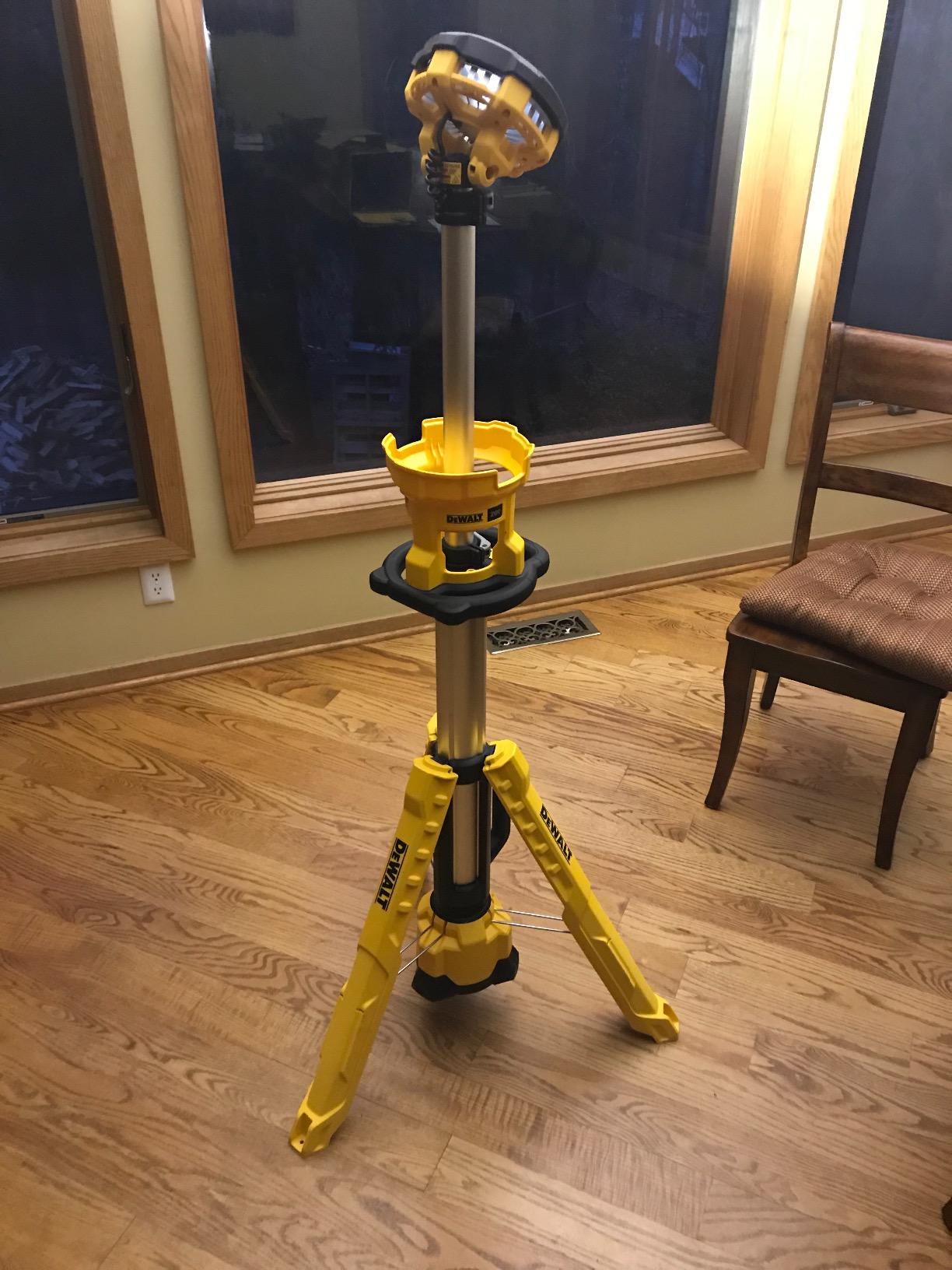
The IP-55 rating and the tough shroud around the head are what separate this from a garage light. It is rated for dust and weather, so it stays out when the framing schedule slips into an evening. Runtime is listed at over 11 hours, which comfortably covers a full working day at a middle brightness setting.
Where it asks more of you is the battery ecosystem. This is a bare tool, so you need a 20V MAX battery and a charger on site before it lights up. If your crew already runs 20V MAX tools, that is a non-issue and you effectively get the light nearly free. If you do not, the added cost of two batteries changes the whole calculation and the LUTEC corded options below are the better buy.
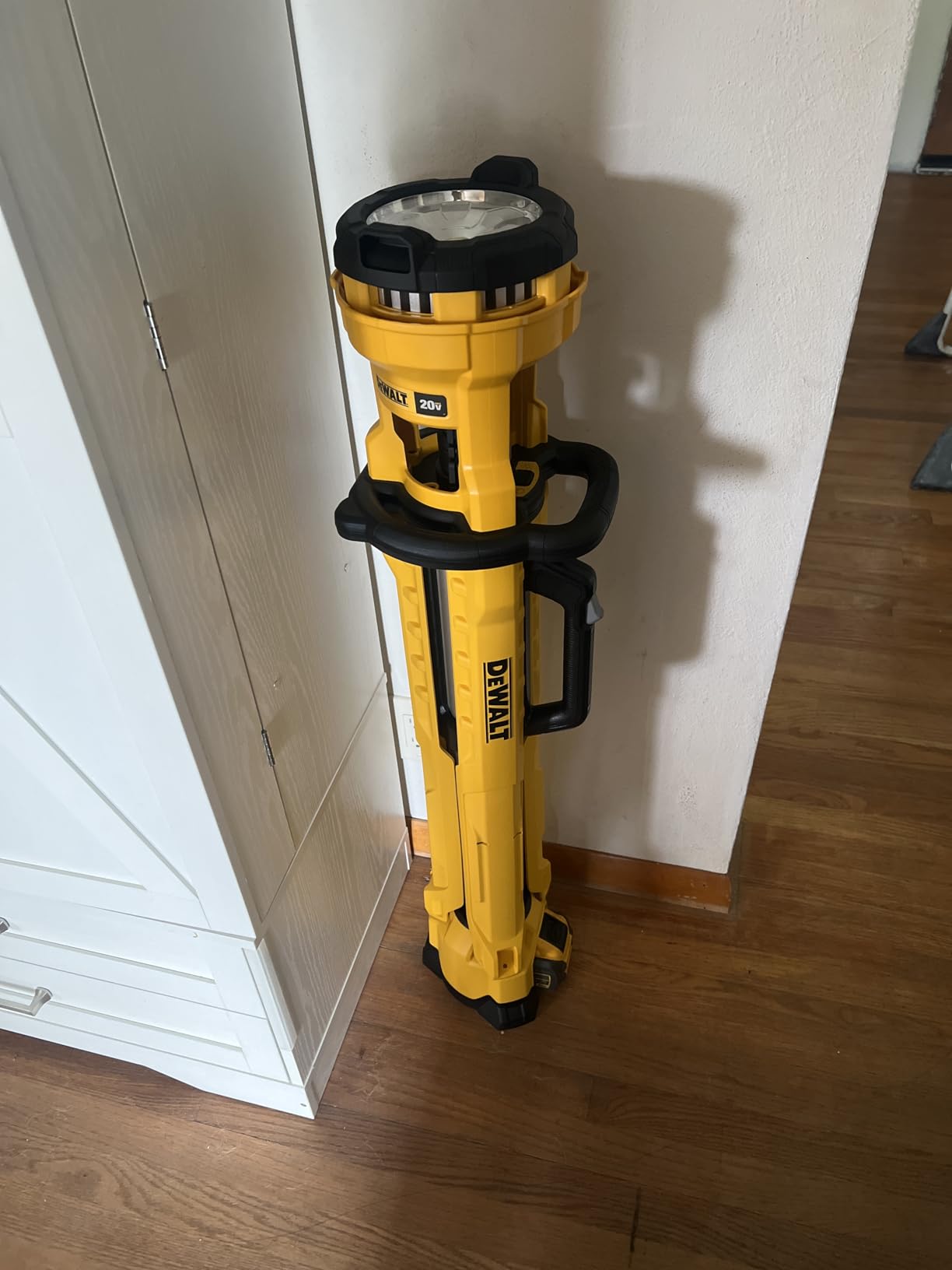
At 16 pounds it is also the heaviest unit in this roundup, and that weight is deliberate. It is a floor-standing design rather than a carry-around light, and the mass is what keeps it planted when the wind picks up on an exposed deck or a job without power.
What you need to know before you buy it
Check your battery count first. One pack means one light, and the listed runtime assumes a single charge. Most owners who regret this light regret the accessory decision rather than the light itself.
Plan the setup around a wall or structure. A 16-pound stand with a 7-foot pole is not something to reposition mid-walk, so pick your spot and orient the heads from there.
Where it is the wrong choice
If you are lighting a whole basement or a full floor plate, 3000 lumens from a single head will feel thin. This light is built to kill shadows over a person, not to flood a 20-foot room.
Anyone buying it without an existing 20V MAX battery and charger should look at a corded model instead. The cordless advantage only exists if you already live in that platform.
2. LUTEC Pro-15000LM – the best corded tripod light for whole-basement and yard coverage
LUTEC Upgraded 5000K 15000 LM 105 W LED Work Light with Telescoping Tripod
15000 lumens at 5000K
105W draw
Tripod to 5 ft 6 in
8 ft cord
Pros
- Floods a large basement or yard from one corner
- Folds to a compact cylinder for transport
- Die-cast aluminum feels solid
- 105W runs on lighter-gauge extension cords
- ETL wet location rated
Cons
- Heads run hot
- let them cool before packing
- Single master on/off with no dimmer
- 8 ft cord is short for large floors
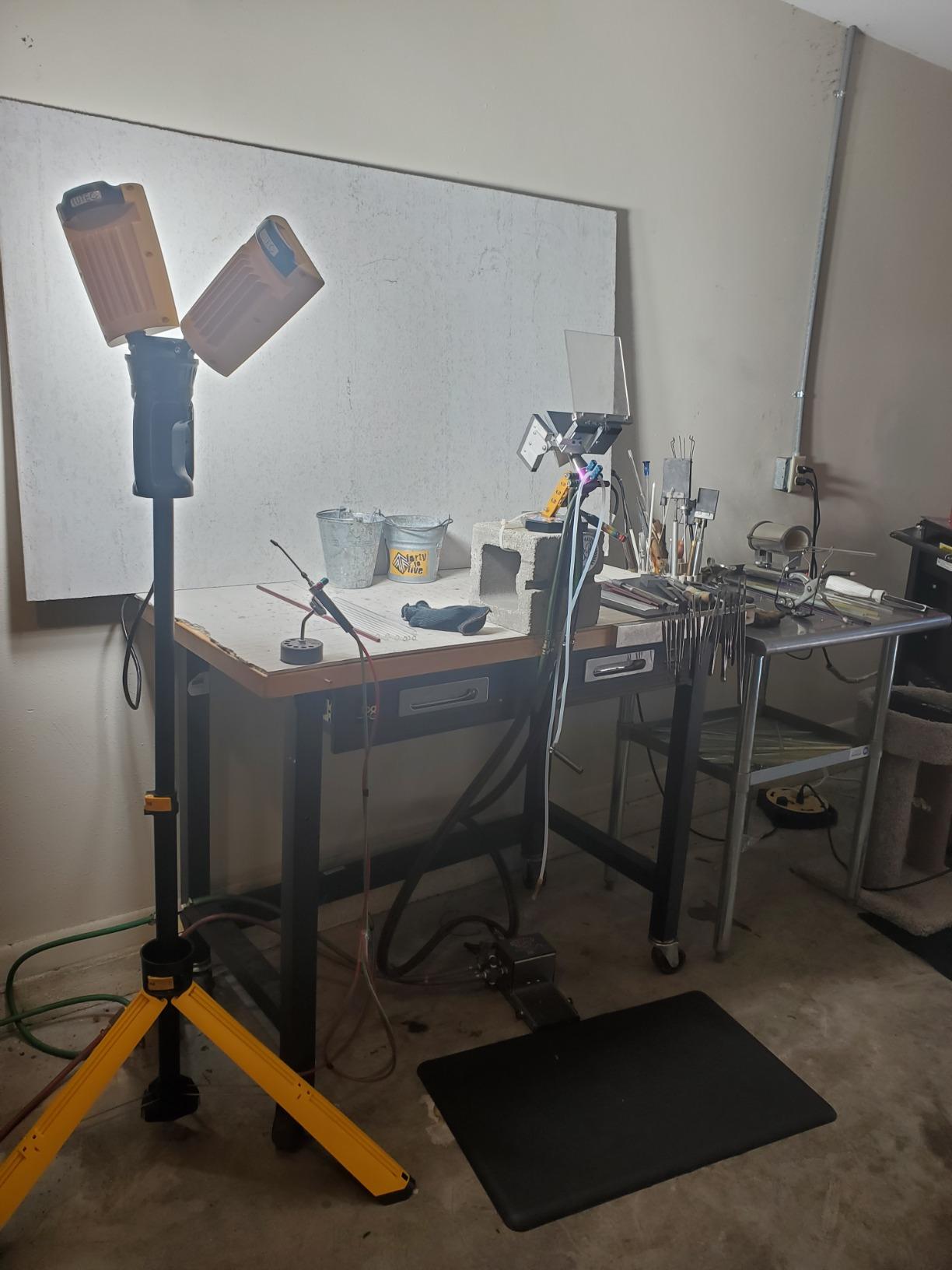
This is the coverage king of the group. At 15000 lumens across two heads with 90 degrees of vertical and 330 degrees of horizontal rotation, owners report lighting a 1200 sq ft basement or an entire backyard from a single corner, which is the situation a handheld or clamp light simply cannot solve.
The 105W draw is the underrated feature here. Because the load is moderate for the output, this runs on lighter-gauge extension cords without cooking them, which is exactly the practical difference between a light you can position in 30 seconds and one you have to plan a dedicated circuit for.
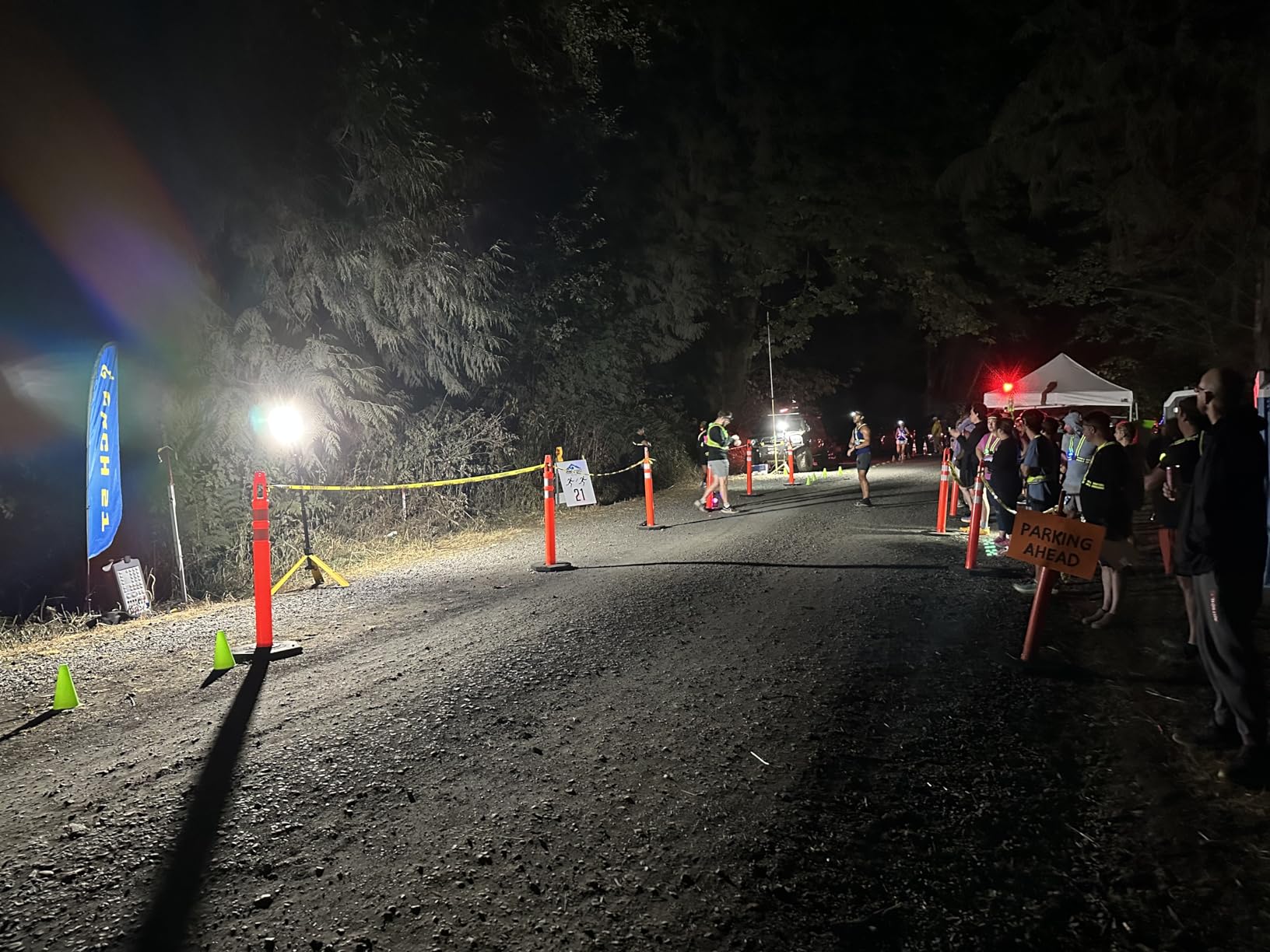
Build is die-cast aluminum with integrated LEDs, so there is no bulb to replace in year three. The heads and stand fold down into a compact, sharp-edge-free cylinder with a built-in cord wrap, and multiple owners keep more than one, citing home projects and emergency response work. The ETL wet-location listing is the certification detail we would want before using it outdoors.
Two real caveats. The heads build heat during use, so you let them cool before folding and storing, which matters on a rushed teardown. And the 8 ft cord is short for a large floor, so budget for an extension even though the draw will not punish you.
When this is the right buy
Buy this one if you have mains power on site and a large dark volume to fill. Basements, garages, crawl spaces, and backyard work at dusk are the cases where 15000 lumens pays for itself immediately.
It is also a good fit for emergency response work where you want a stable, self-contained light that does not depend on a battery pack holding its charge.
When it is the wrong buy
If your task is color-critical, this light has a single fixed 5000K output and one master on/off. There is no dimming and no color adjustment, so paint matching and finish work are not its strength.
If your site has no reliable mains power, a corded model is a dead end by definition. Look at the hybrid later in this list instead.
3. LUTEC Max-11000LM – the best value tripod light when paint color matters
LUTEC Upgraded 6290Max 11000 Lumen 92W Dimmable LED Work Light with Stand
11000 lumens max
5000 lumens low setting
3000K-5000K color
Telescoping tripod
Pros
- Adjustable color temperature from 3000K to 5000K
- Two brightness levels with per-head control
- Grooved aluminum housing runs cool
- Heads magnet together for storage
- Remote control operation
Cons
- 8 ft cord runs out on large floors
- Sharp corners on the yellow foot caps
- Two-step brightness with no smooth dimmer
The reason this one earns a spot above the 21000-lumen towers is the adjustable color temperature. You can dial the heads from a warm 3000K up to 5000K, which is the difference between guessing at a paint color at night and actually being able to judge it.
Brightness control is two-step, 5000 lumens or 11000 lumens, with per-head on/off. That is coarse next to a smooth dimmer, but for a jobsite it works in your favor: the low setting is genuinely usable for finish work without turning your head away from the wall.
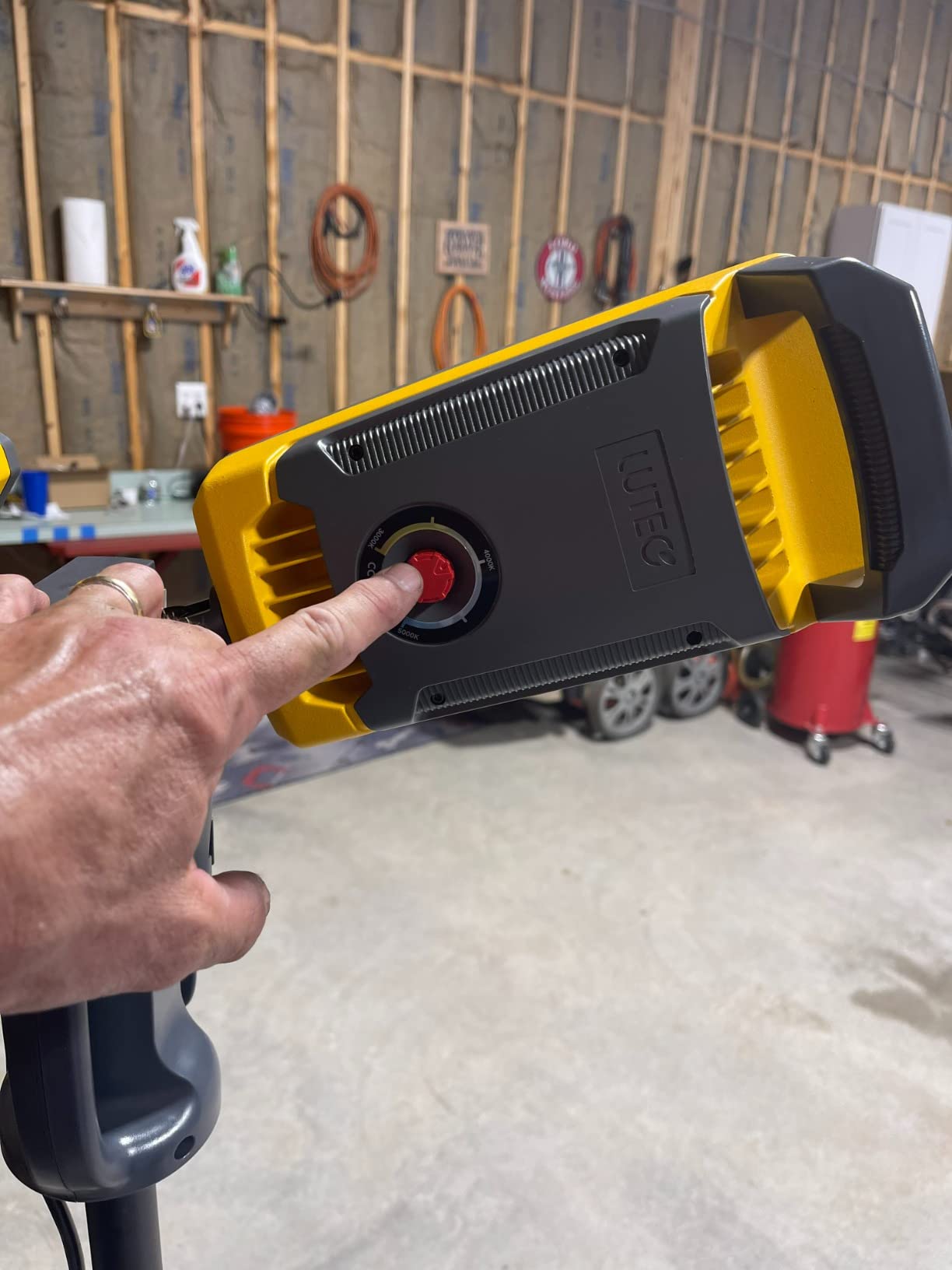
Thermal design is better than most of the group. The grooved aluminum rear housing increases contact area for heat dissipation, and owners specifically note there is no meaningful heat on the light heads, unlike several cheaper cast-aluminum towers that need cooling time before packing.
Transport is unusually thoughtful. The heads magnet together when folded, the unit collapses to a compact cylinder with a centered carry handle, and the included Allen wrench stores on a magnet. It is a small thing that tells you somebody thought about the van.
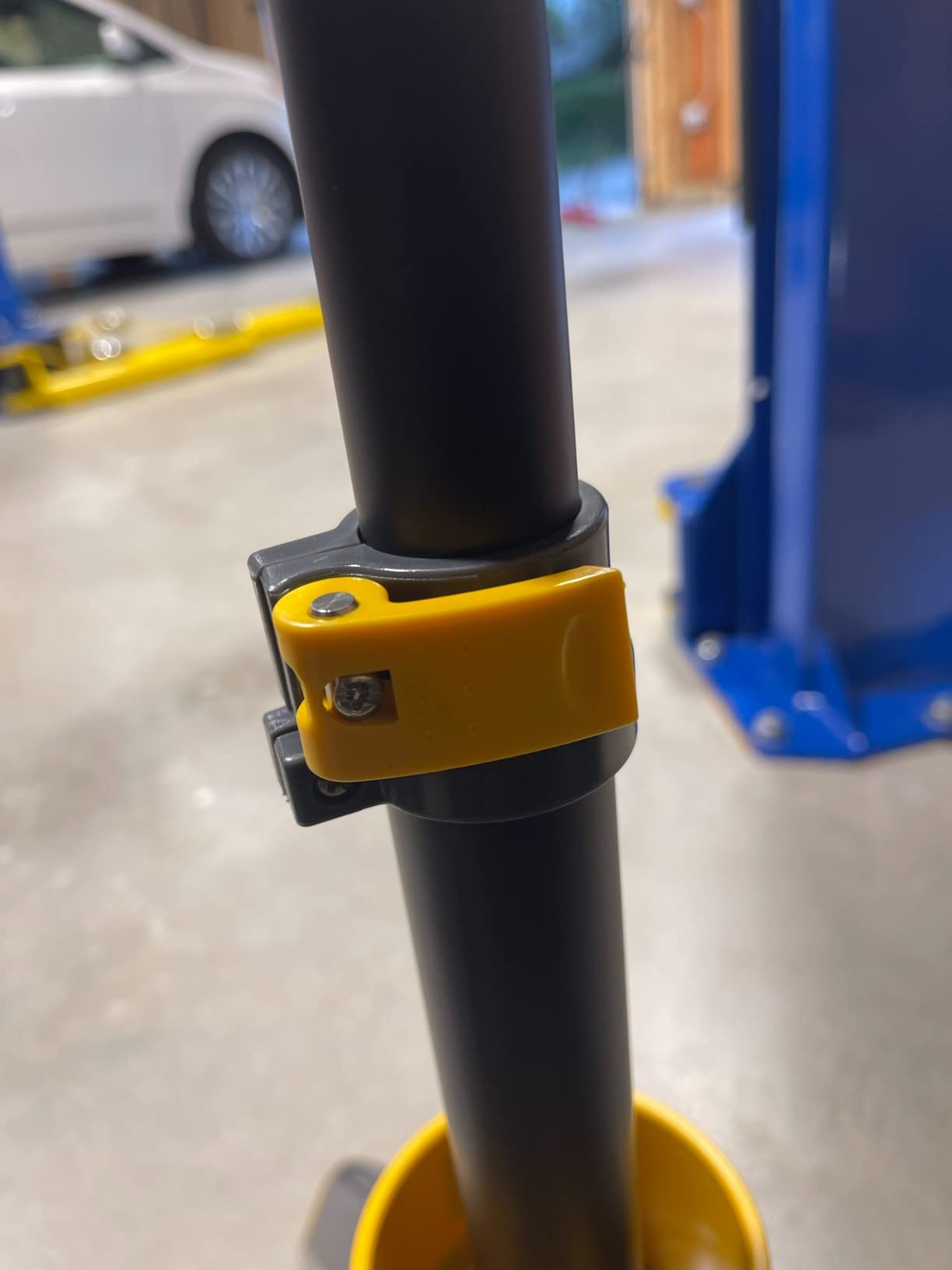
The complaints are physical and worth knowing. The yellow plastic end caps at the tripod feet have sharp corners that can catch hands during setup, the 8 ft cord is short, and the heads cannot swivel outward horizontally, so side-area coverage is narrower than a true 360-degree model.
Who should buy this one
Finish carpenters, painters, and anyone doing stain or color matching after dark. The 3000K end of the range is the reason, and no 6500K-only tower in this list can offer it.
It also works as a general site light where you want one lamp to cover inspection work in the morning and layout work at night, thanks to the two brightness levels.
Who should skip it
If you need light thrown far to the side, the limited horizontal swivel will frustrate you in a large open floor plate.
Anyone working in sustained rain should note that this model does not carry the IP rating that some lower-output LUTEC models do. It is a covered-site and dry-weather light more than an all-weather one.
4. Jefedana 21000LM – the best all-weather tripod light for dusty sites
Jefedana 21000-Lumen LED Work Light with Stand for Job Site Garage
21000 lumens at 6500K
3 heads with own switches
IP66 aluminum and glass
Tool-free locks
Pros
- IP66 cast aluminum with tempered glass
- Survives repeated drops without losing function
- Tool-free twist-lock height and angle
- Per-head on/off switches
- Folds small for van and truck storage
Cons
- Runs hot with switches mounted on the heat sinks
- Top-heavy when fully extended
- Bright enough to be uncomfortable up close
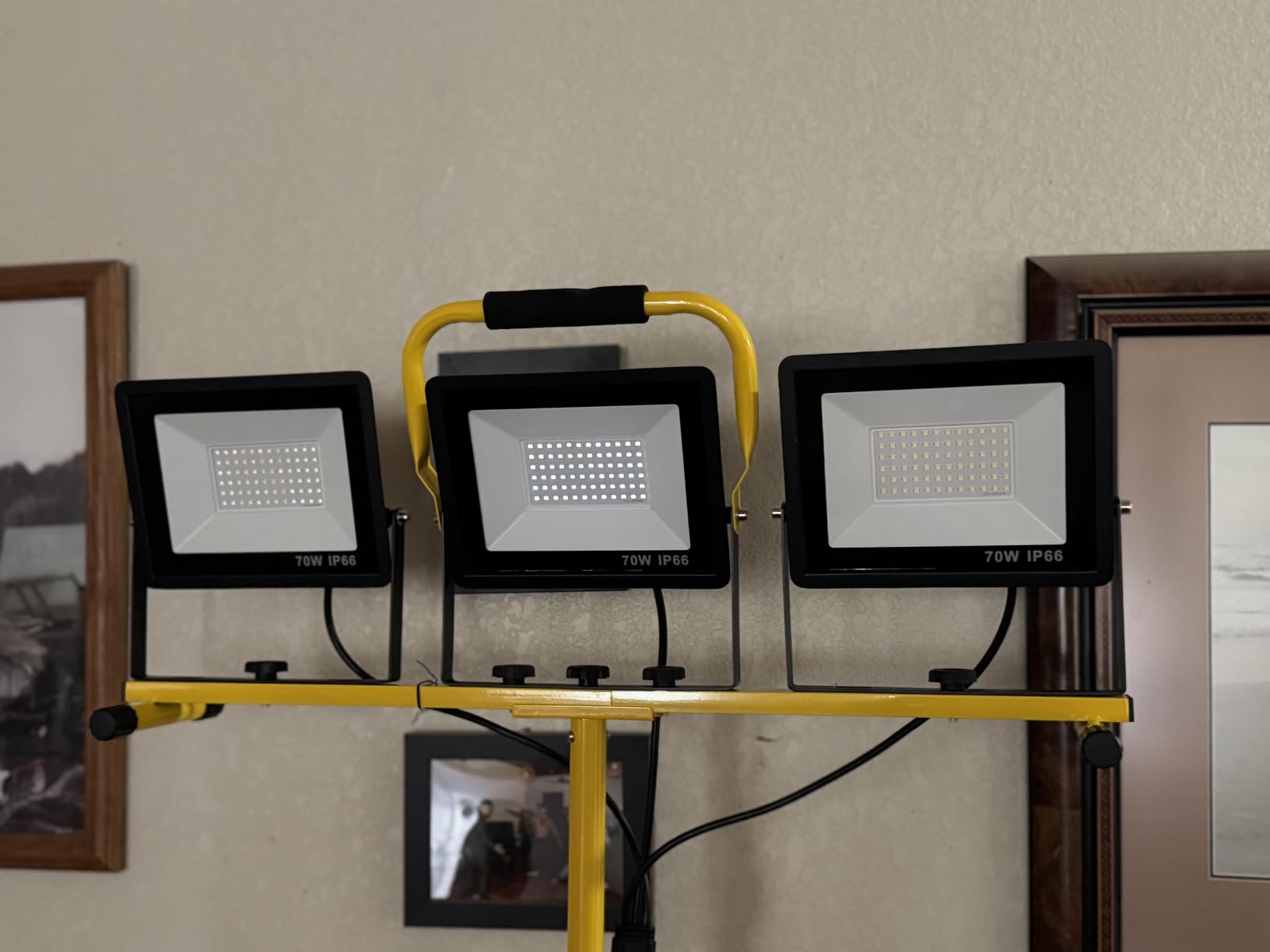
The IP66 rating with a cast aluminum housing and tempered glass is the headline here, and it is the reason this light suits frame-to-frame drywall, demo, and concrete work where silica dust and water are constants. Listed LED life is rated up to 100,000 hours, so the light is not a consumable part of your kit.
Each of the three heads has 72 LED beads and its own on/off switch, which is the feature that makes this genuinely flexible. You can light the ceiling and kill the head pointed at the wall behind you, which cuts glare considerably compared with running all three panels at full output.
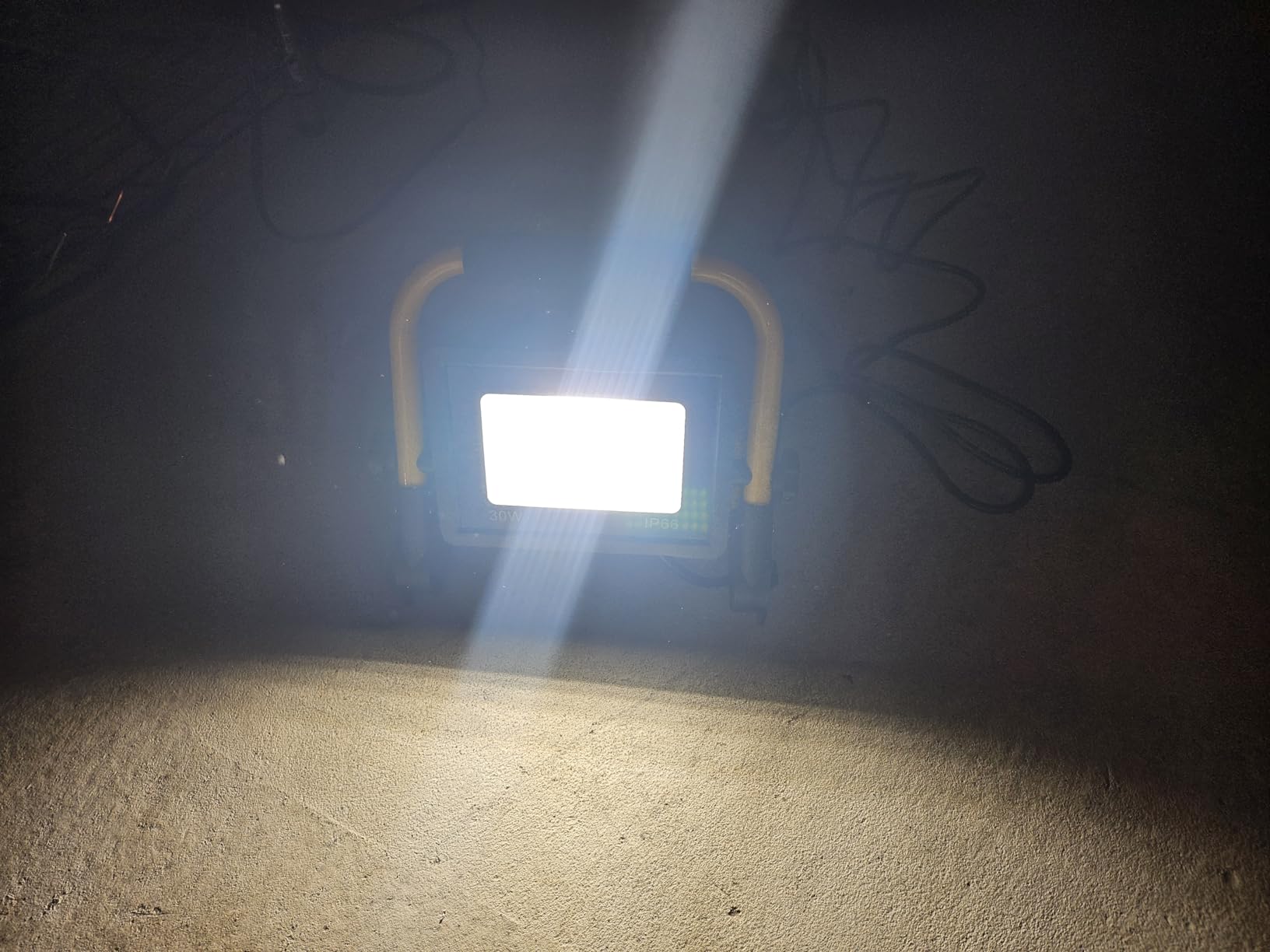
Adjustment is tool-free. Manual twist-lock knobs and rings let you change height and angle by hand, and the body rotates 360 degrees horizontally with a full upward vertical tilt. Owners report knocking it over repeatedly with no loss of function, and that it folds down small enough to live in a work van rather than taking a dedicated corner.
Heat is the honest drawback. The housings and the switches mounted on them get very hot, and the assembled unit is top-heavy when the pole is fully extended, so it is easy to knock if someone brushes past. A few owners also find 70W across three panels too glaring for close-up detail work and use it mainly at distance.
What makes it worth the trade-offs
The weather sealing is real rather than printed, and that changes how you use a light. Rain, mud, and concrete wash water stop being reasons to bring it inside at the end of the day.
Per-head switching gives you glare control, which is the single most underrated feature on a tripod tower. Most crews end up running fewer heads than the light has.
Where it frustrates owners
Heat on the switches means you do not want to grab the head mid-task to re-aim it. Aim it once, then use the individual switches.
The top-heavy feel is worth testing before you commit if your floor is uneven or you are working somewhere with a lot of foot traffic around the stand.
5. Wufoty 21000LM – the best budget tripod work light for garages
LED Work Lights with Stand, Adjustable Work Light, (1 Adjustable Head)
21000 lumens at 6500K
360 degree rotation
IP66 metal housing
Retractable tripod
Pros
- 21000 lumens lights whole garages
- Quick simple mounting and fast setup
- Lightweight heads
- IP66 works in basements and outdoors
- Folds for storage
Cons
- Integrated head bank cannot be detached easily
- Center head needs a fastener undone to remove it
- Very bright
- avoid facing the beams
At 4.7 stars across 445 reviews, this is the best-rated light in the group after the DeWalt, and the reason is straightforward: 21000 lumens at 6500K, IP66 metal construction, and a stand that sets up fast. For a garage, basement, or weekend renovation it covers more ground than lights several times its weight.
Adjustment is a 360-degree rotation on the light head with manual twist locks for height and angle, and the color temperature is a fixed 6500K daylight. Power factor is listed at 0.998, which is efficient for a light that may sit plugged in for hours.
The design decision that matters most is a limitation. The heads are built as one integrated bank, so you cannot pull the center light off and carry it as a standalone lamp the way several three-head rivals allow. Removing it means undoing a fastener, which several owners found awkward.
Nobody complains about brightness. In fact, many reviewers caution against facing the beams directly, so treat this as an area light to stand back from rather than something to work directly in front of.
Where this is the smart buy
Home garages, basements, and workshop benches where you want one lamp to light the entire space. The IP66 rating also makes it reasonable outdoors for yard and driveway projects.
It suits anyone who wants a lot of light without drilling a hole in a budget. Setup is quick and the heads are light enough to reposition without thinking about it.
Where it falls short
If you need to take a single head off the stand and carry it into a crawlspace or under a sink, the integrated bank is a real inconvenience compared with detachable-head models.
Single fixed color temperature also rules it out for paint and finish work where you need warm light.
6. Aiptertet 30000LM – the best tripod light for open floor plates and the longest warranty
30000 Lumen Work Lights with Stand, 3 Adjustable Head LED Work Light, with Adjustable and Foldable Tripod Stand, Waterproof Lamp with 6500 Kelvin Color Temperature
30000 lumen listing at 6500K
Tripod 47.2-68.3 in
Detachable heads
IP66 aluminum
Pros
- Highest listed output in this roundup
- Three heads aim in three directions at once
- Telescopes to roughly 6 feet
- Light enough to move between spots easily
- 3 year warranty
Cons
- Integrated LEDs cannot be replaced if they fail
- Some brackets do not match the product photos
- Heads warm up during extended use
This is the spec-sheet winner, with the highest listed output in the group and a telescoping tripod that runs from 47.2 to 68.3 inches, so you can put light roughly 6 feet up. For a gutted floor plate, a warehouse bay, or a large open deck, that headroom and spread is the whole argument.
Each head carries 120 LED beads and rotates 360 degrees horizontally and vertically with tool-free twist locks. The light assembly detaches from the stand and works by the handle alone, which turns it into a portable light for the crawlspace or the under-sink work you were about to do without any light at all.
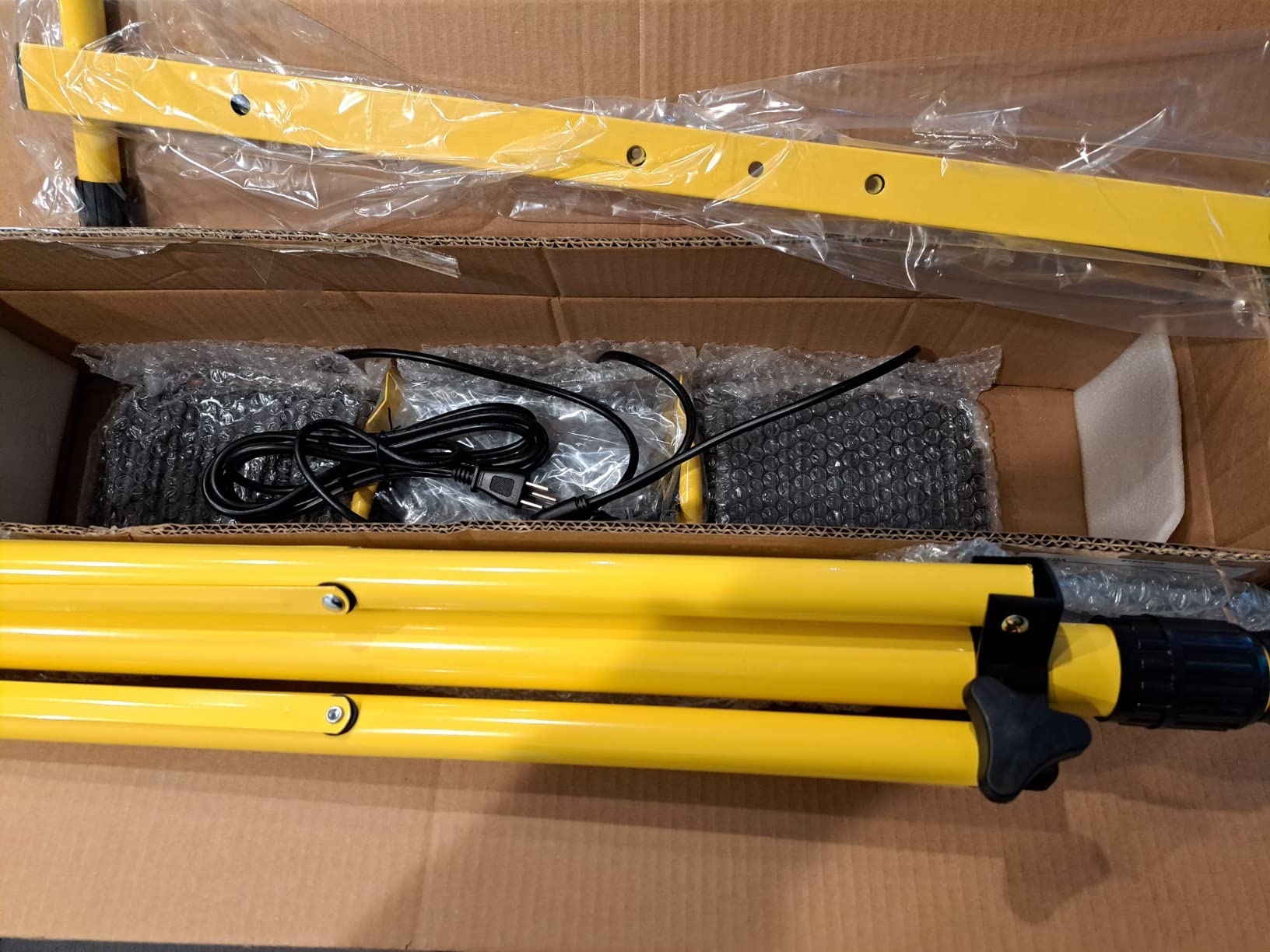
The 3-year warranty is the longest in this roundup, and the die-cast aluminum housing with tempered glass and rust-resistant shell is the right material for a light that lives outside. Owners describe it as a replacement for failing halogen work lights, which is the common experience of crews upgrading from an older garage tower.
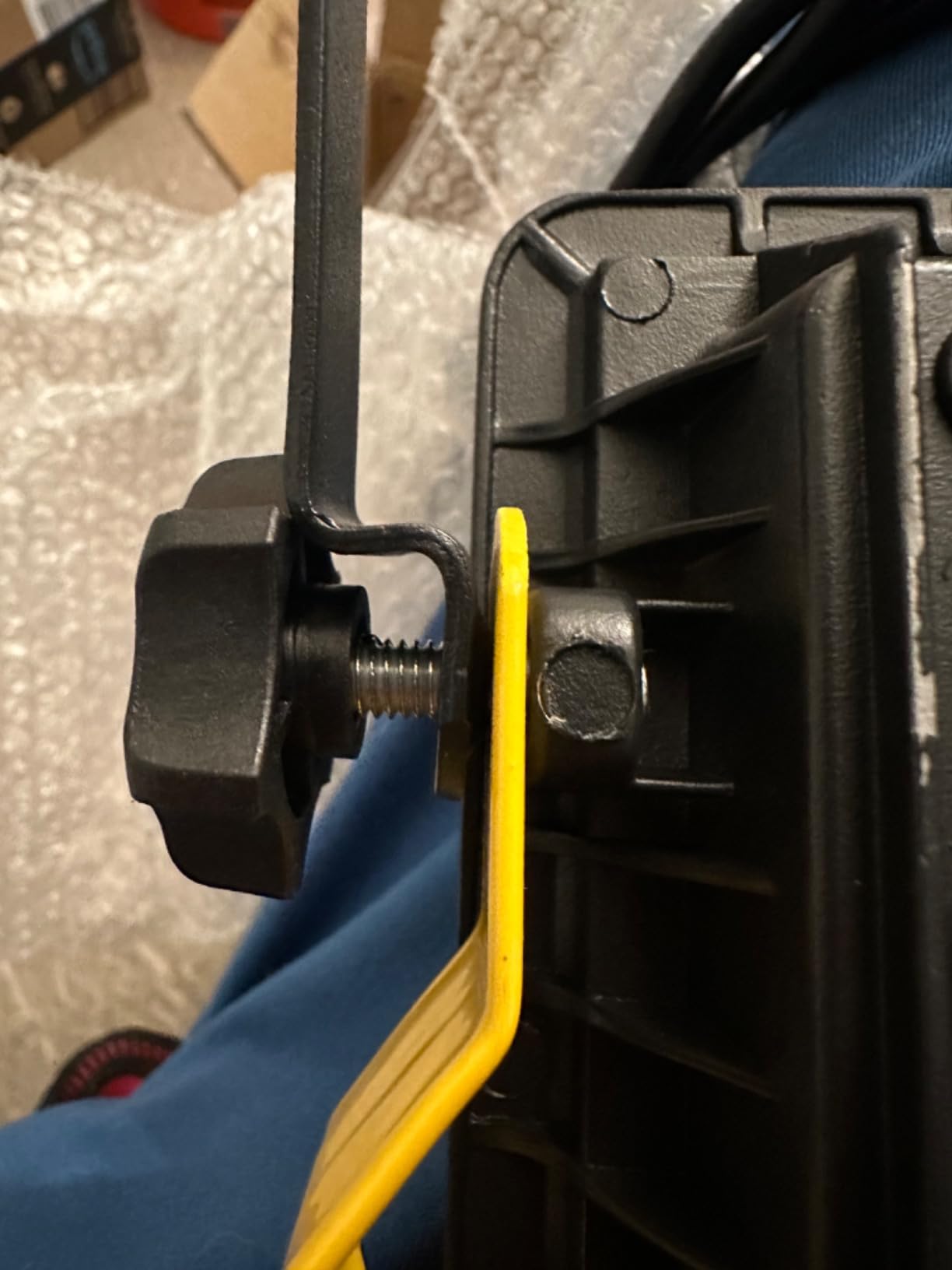
The complaints are practical rather than electrical. The integrated LEDs cannot be replaced if a panel fails, instructions are minimal, and there is a documented issue where the center head bracket cannot be tightened firmly enough to hold a given aim, with one reviewer returning the unit over exactly that. Two heads can also be stiff to tilt until the tension is adjusted with a longer Allen wrench than the one included.
Why it earns a place here
Detachable heads are a genuinely useful feature on an active job, because the same lamp that lights the deck at 6 feet becomes the light you carry into the closet at waist height.
The 3-year warranty is meaningful coverage on a category where the cheap tier often offers 6 months to a year. For a light bought to stay on site, that is the difference between a tool and a consumable.
Where it is not the right call
If you are close-up finishing work, this much light at arm length is uncomfortable, and the integrated LEDs mean a failed panel ends the light rather than being a cheap swap.
Inspect the center head bracket on arrival. It is the one physical issue owners flag repeatedly, and it is worth a five-minute check while you still have the packaging.
7. GUWELL 21000LM – the best tripod light when you need to aim three beams at once
21000 Lumen LED Work Lights with Stand, 3-Head Adjustable Tripod Work Light, Foldable & Detachable, IP65 Waterproof Construction Light for Job Site, Garage, Workshop, Indoor & Outdoor
21000 lumens at 6500K
84 AC-SMD LEDs per head
IP65 aluminum
Tool-free knobs
Pros
- Three heads can each aim at a different area
- Tool-free knobs speed up repositioning
- IP65 die-cast aluminum with tempered glass
- Folds and detaches for transport
- Even coverage across large spaces
Cons
- Very bright at full output up close
- Many owners run fewer heads than provided
- Harsh on the eyes working directly in front
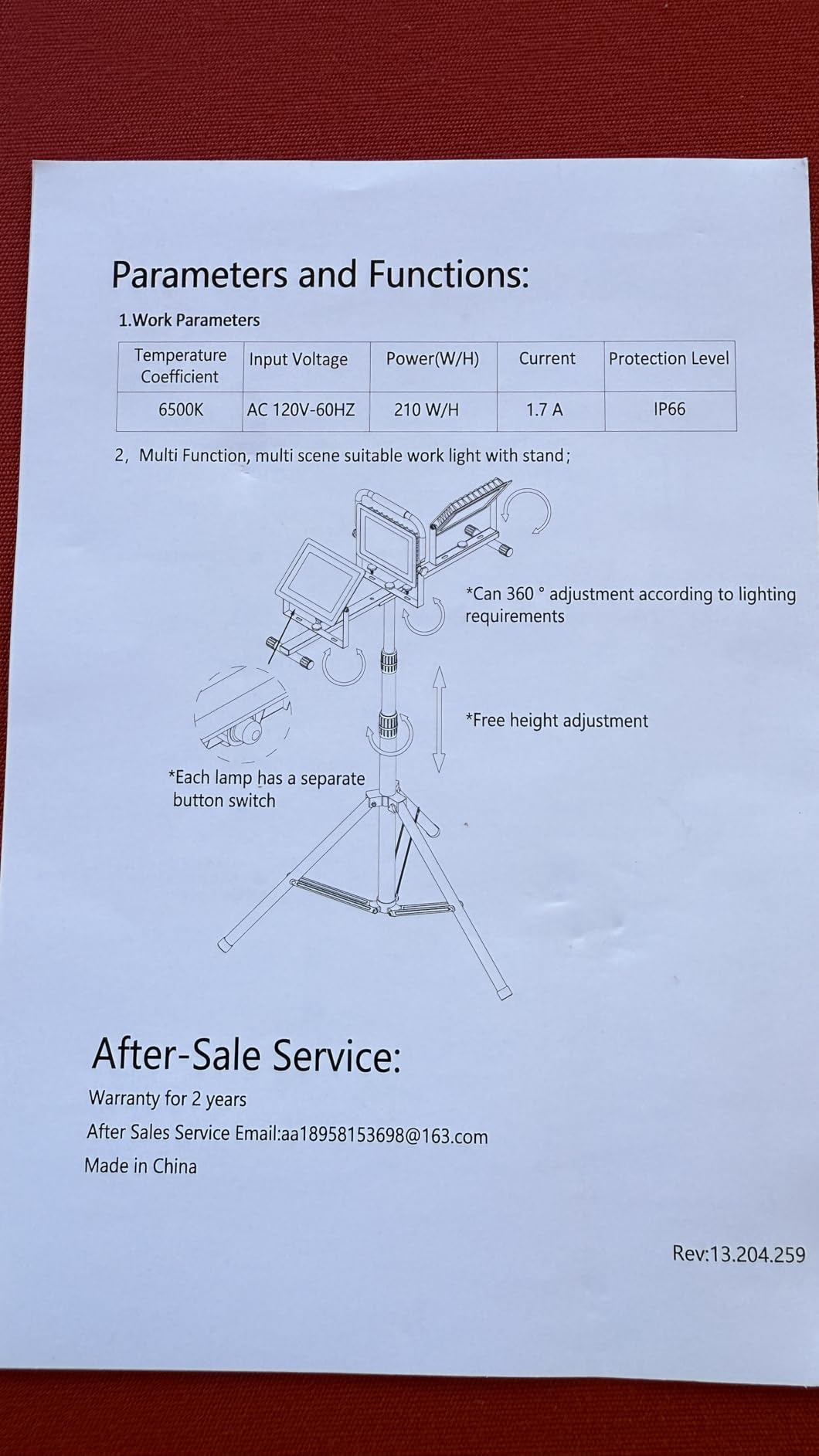
At 4.7 stars from 205 reviews, this one punches above its weight class. The 21000 lumens are spread across three heads of 84 AC-SMD LEDs each, and the reason all three matter is directional: you light the stairwell, the landing, and the hallway separately instead of flooding one zone and leaving the others dark.
Adjustment is the fastest in this group. Tool-free locking knobs and collars mean you can change height and direction by hand without hunting for a wrench, which is what makes it practical to re-aim between phases of a task.
The telescoping tripod folds for transport and the light assembly detaches, so the whole unit is a two-hand carry rather than a chore. Die-cast aluminum housings, tempered glass lenses, rust-resistant components, and rear heat-dissipation fins back the IP65 rating.
The consistent theme in owner feedback is that there is more light here than most tasks need. Several people running this on large sites deliberately use only one or two heads, because working directly in front of the panels at full output is genuinely harsh on the eyes.
Where multi-head aiming pays off
Interior fit-outs and commercial rough-ins, where a single overhead flood leaves dark corners and a bright center. Three aimed heads fix the unevenness that a single head cannot.
Landscaping and exterior night work where you want the perimeter lit without aiming a beam at the crew working inside the house.
Where it is the wrong tool
Close-up finish work at arm length. Turning down to a single head solves it, but if the job is detailed and sustained, a dimmable model fits better.
IP65 handles dust and rain well, but it is a step below IP66 in sealing, so a light that lives permanently in a wet wash-down area is better served by a higher-rated unit.
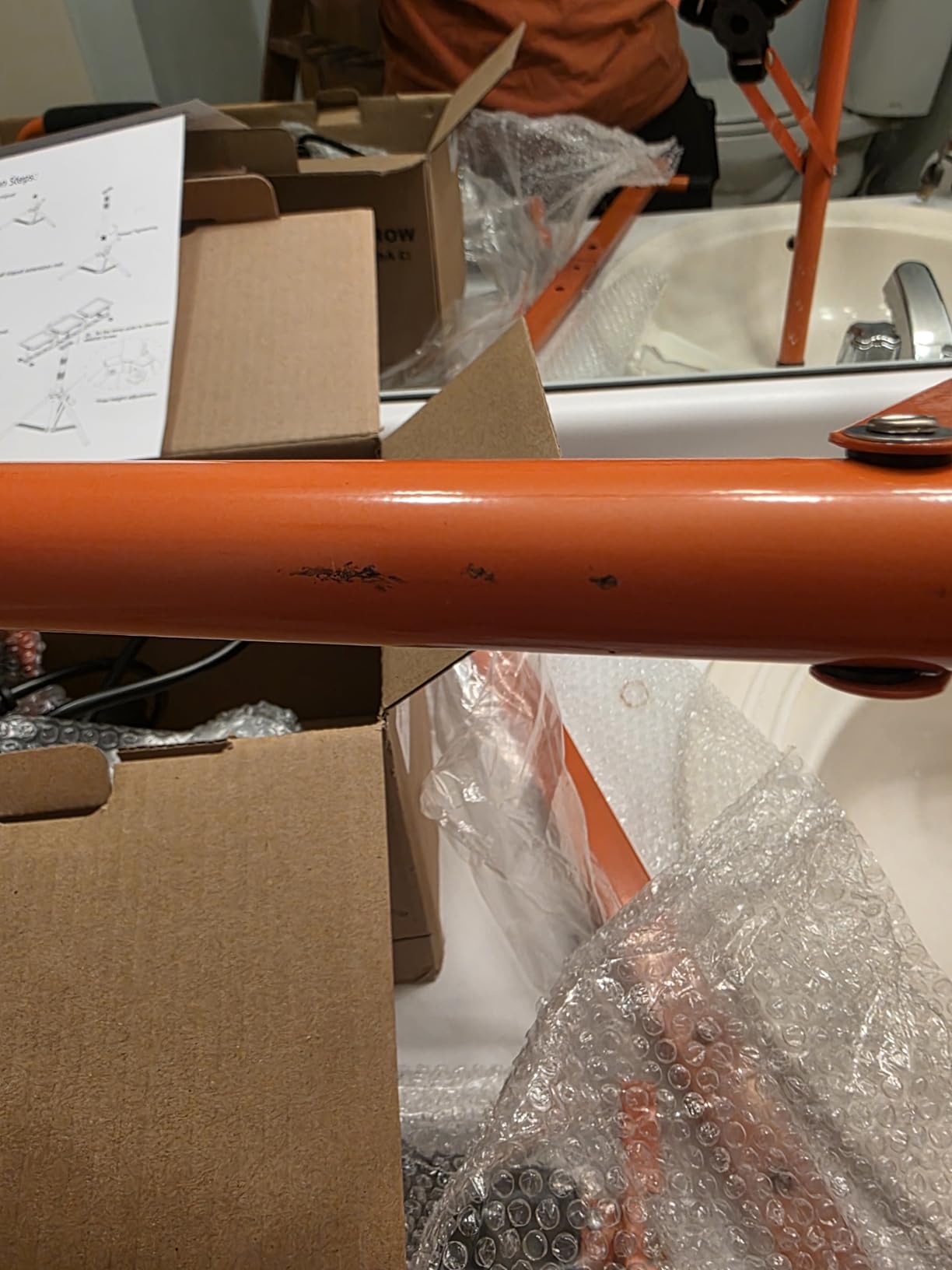
8. PACOLIT P 21000LM – the best tripod light for long cord reach
21000LM Tripod Work Light with Stand, 3-Head Adjustable IP66 Waterproof
21000 lumens at 6500K
16.4 ft cord
216 LEDs
IP66 aluminum and glass
Pros
- 16.4 ft cord is far longer than most rivals
- Individual on/off switch on every head
- Heads detach and work standalone
- IP66 cast aluminum with tempered glass
- 2 years of replacement after-sale service
Cons
- CRI of 70 renders color less accurately
- Very bright for close-up detail work
- Manual twist locks take practice
The 16.4 ft cord is the feature that separates this from every other light in the budget tier. It is roughly double a typical 8 ft lead, and on a framed floor or a long driveway that single difference removes the extension cord from the equation entirely.
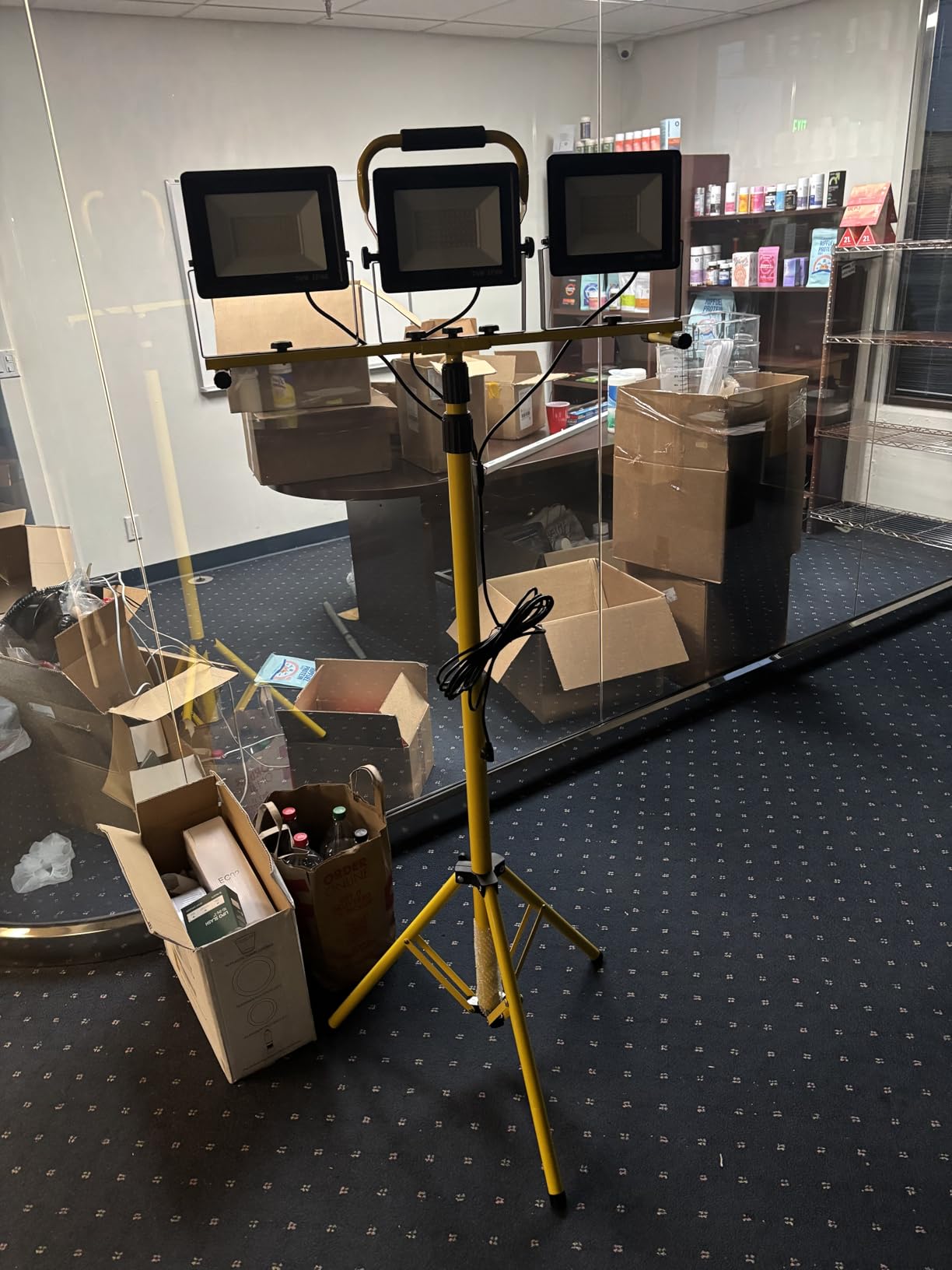
Output comes from 216 LEDs across three heads using concentrated lens beads for even coverage, and each head has its own on/off switch. The heads also detach and work standalone, so once the stand is deployed you can carry a head into a basement stairwell or a mechanical room.
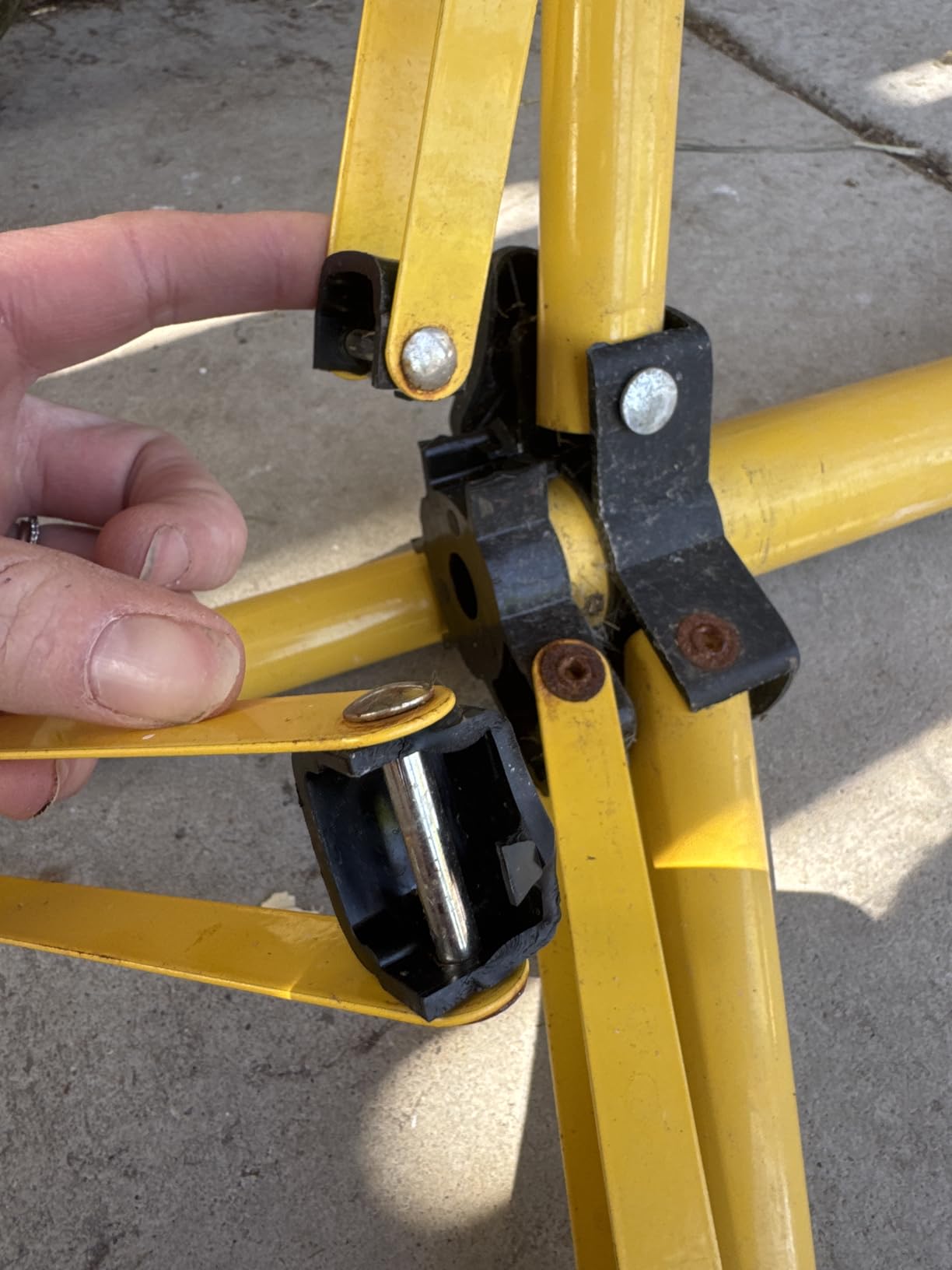
Construction is a cast aluminum housing with tempered glass and an IP66 rating, backed by 2 years of after-sale replacement service and a foldable telescoping tripod. Rotation is 360 degrees horizontally with a full one-way upward vertical tilt, so you can throw light at a ceiling or a soffit without dragging the stand.
One specification deserves attention before you commit. The color rendering index is listed at 70, which means colors read less accurately than on higher-CRI lamps. For framing, electrical, and concrete that is irrelevant. For paint matching, stain selection, or any finish work where color is the decision, it is a genuine downgrade.
Why the cord length changes your workflow
Extension cords are a trip hazard and a time sink. A 16.4 ft lead covers most of a room or a section of a job, so you set the light once instead of dragging cable every time you move.
That also reduces the number of cords crossing walkways, which is a real safety point on an active site where people are not watching their feet.
Where it falls short
CRI 70 rules it out of paint and finish work, and no amount of lumen output compensates for color you cannot trust.
The manual twist locks are less convenient than the tool-free knobs on some rivals, so budget a few extra seconds every time you change the height or aim.
9. Tresda 12000LM – the best tripod light for off-grid sites with no mains power
Tresda 12000LM Rechargeable LED Work Light with Telescoping Tripod Stand
12000 lumens corded
6000 lumens on battery
USB and Type-C output
Tripod 3-6.2 ft
Pros
- Runs on mains power or the included battery
- 12000 lumens corded lights a large work area
- Three brightness modes at 100/50/25 percent
- Heads adjust 180 vertical and 330 horizontal
- Carry bag included
Cons
- Battery runtime reported as short by some owners
- One unit would not power on from battery
- Bottom tripod leg lock is looser than the upper locks
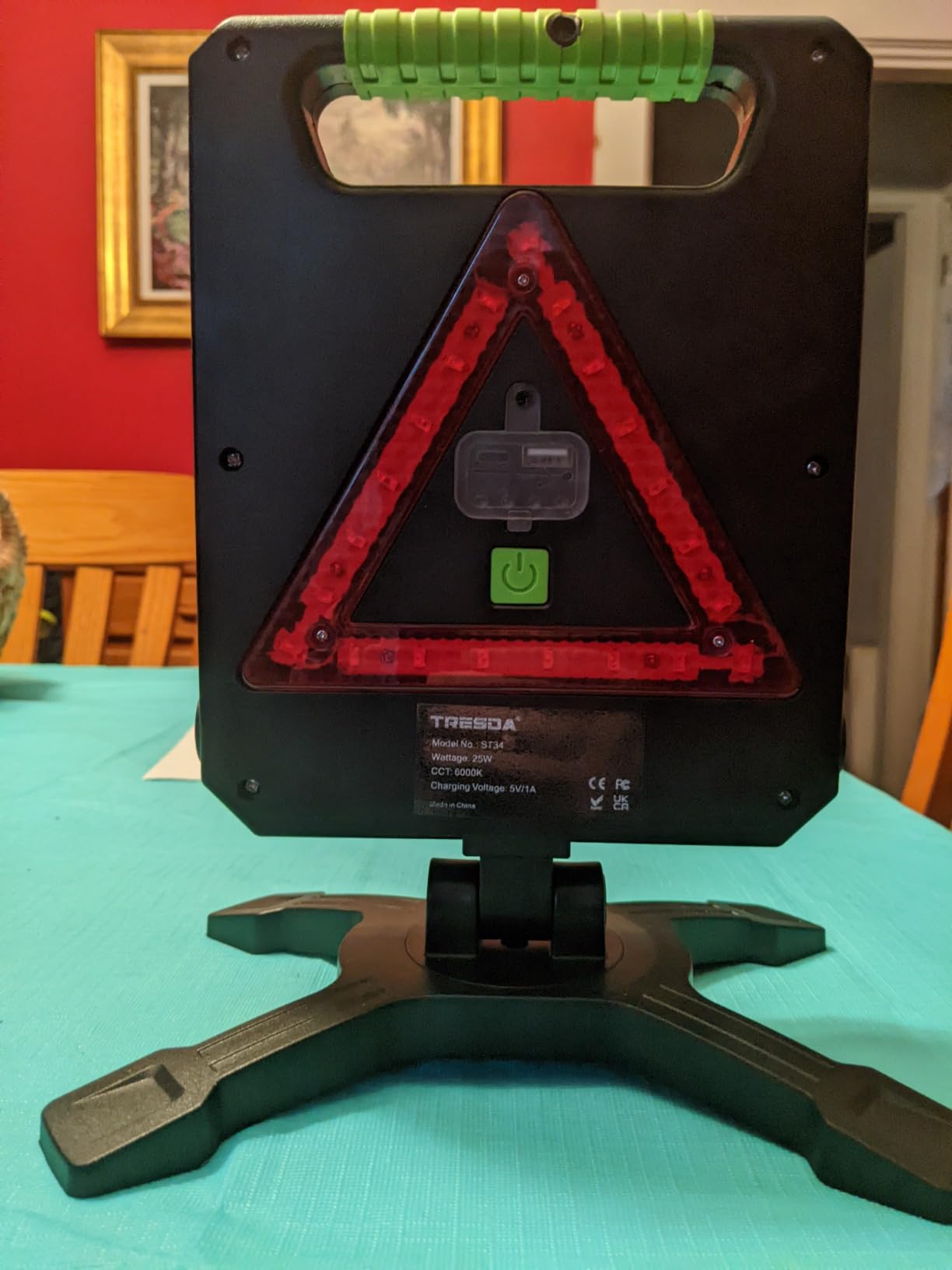
This is the only dual-power light in the roundup, and that is exactly why it earns a place. A 5200mAh 16V battery is included, so you get 6000 lumens with the site power switched off and 12000 lumens when you plug into the 4.9 ft 16AWG cord. The battery also carries USB and Type-C output ports, so it can back up your phone on a long job.
Listed throw is 120 ft corded and 100 ft on battery, which tells you the beam is a flood rather than a focused spot. The tripod adjusts from 3 ft to 6.2 ft on a bottom-lock design, and heads tilt 180 degrees vertically and 330 degrees horizontally.
This is also the lowest-rated product in our set at 4.3 from 157 reviews, and the reason is specific: the headline dual-power feature is inconsistent in practice. Multiple owners report battery problems, including a unit that would not turn on from battery at all and worked only when plugged in, and another that died after roughly two hours.
The physical notes are minor by comparison. One head can sag and will not stay raised, and the bottom tripod leg lock is looser than the upper pole locks, so check tightness after extending the legs. Corded performance itself is well reviewed: bright, stable, and quick to set up, with a carry bag included.
When the hybrid approach is worth it
It suits crews working remote sites, emergency response, or a job where the panel is not installed yet. Having a real light rather than a phone flashlight changes how much work gets done in the first hour.
The USB and Type-C output turns the same battery into a small power bank, which is a quiet benefit on a job with no reliable charging point.
When to choose a different model
If dependable battery runtime is your primary requirement, this is not the one. The reports of short runtime and units that will not start on battery are the reason its rating sits below the rest of this list.
The 4.9 ft cord is short for its corded brightness, so plan to use an extension when you are on mains power. Budget a few minutes to test the battery and the leg locks the day it arrives, before you need it.
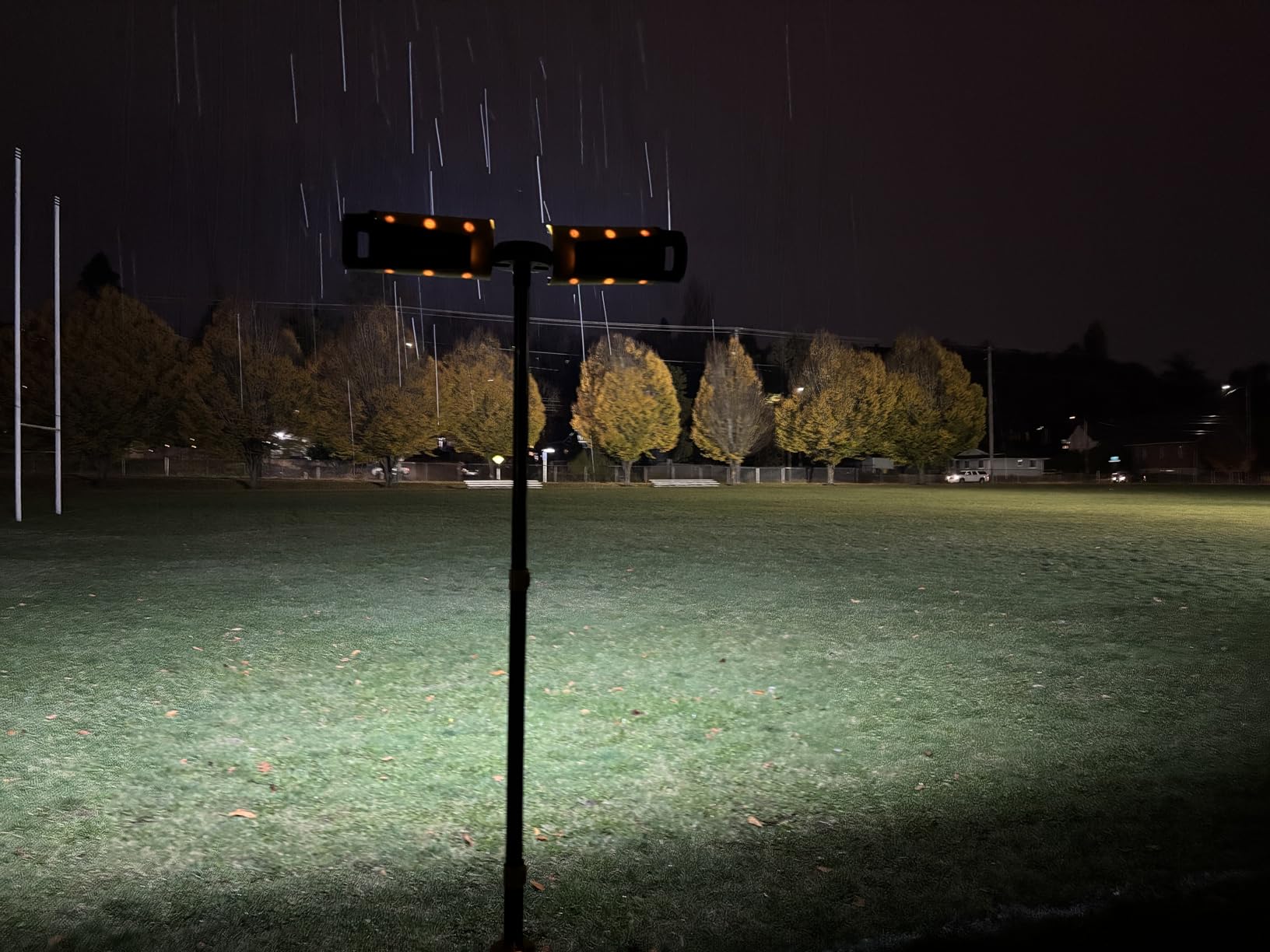
10. JDZKOMKE 21000LM – the best tripod light for crews that move it every day
JDZKOMKE 21000Lumens LED Work Lights with Stand, 3 Adjustable Work Lamp
21000 lumens at 6500K
0.998 power factor
Heat-sink design
IP66 aluminum
Pros
- Lightweight retractable tripod moves between jobs easily
- Three heads with 360 degree rotation
- 0.998 power factor for efficient output
- IP66 aluminum alloy with tempered glass
- 2 year warranty and 30 day money-back
Cons
- Integrated LED arrays cannot be replaced individually
- Manual twist locks take more effort
- Very bright for close-up work
This is the pick for a crew that packs up and moves every day. The retractable tripod is light and portable enough to carry between jobs without thinking about it, which is a bigger practical advantage than it sounds when you are loading a van six times a week.
Output is 21000 lumens at 6500K across three heads with 360-degree horizontal and vertical rotation, and the listed power factor of 0.998 means very little wasted energy for a light that runs long hours. The air-duct heat-sink layout is designed for sustained output rather than short bursts.
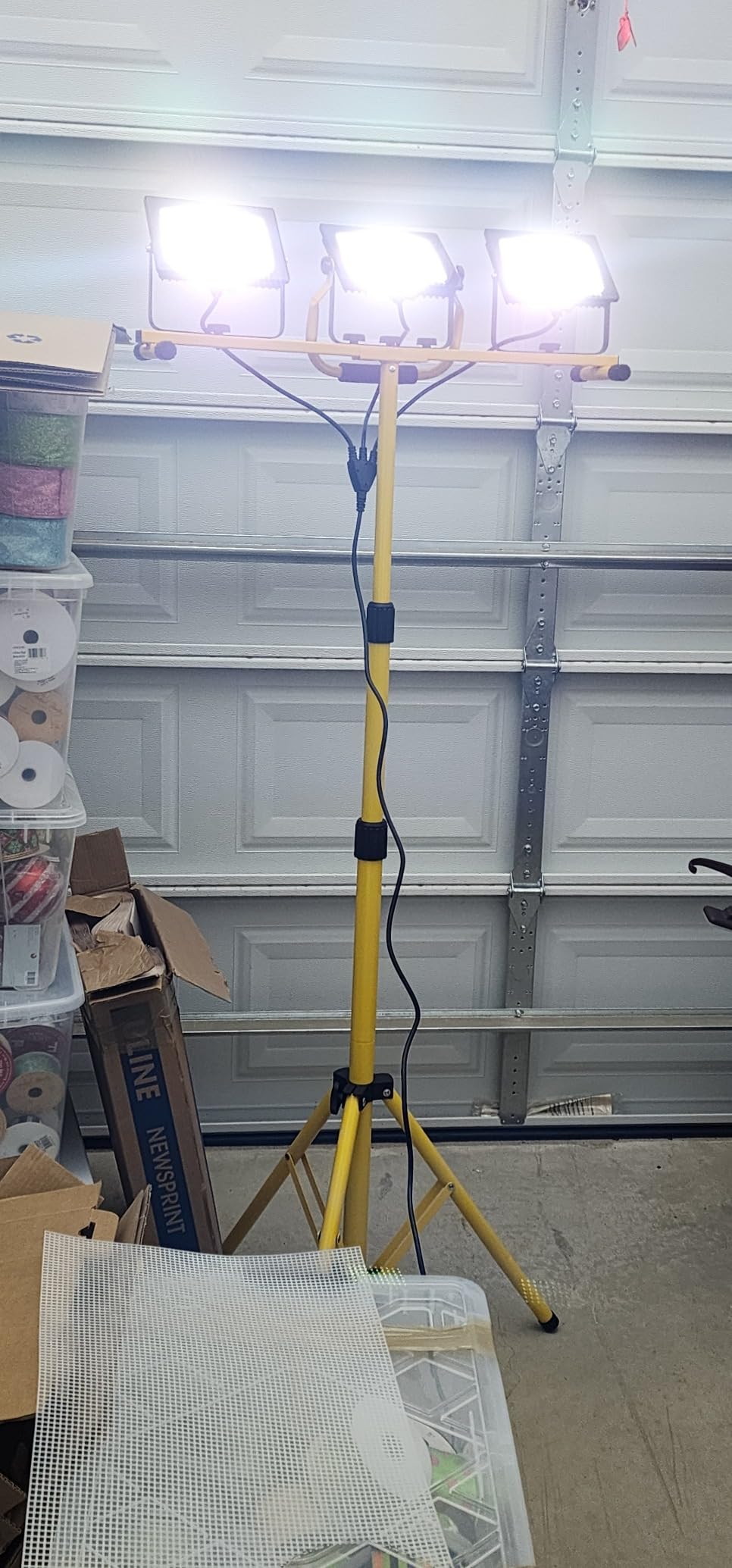
Backing is the strongest in the entry tier for anyone nervous about buying an unbranded light: a 30-day money-back guarantee, a 2-year warranty, and 7/24 customer service. The build uses a three-pin safety plug, tempered glass, and an aluminum alloy housing and brackets, all under an IP66 rating.
Limitations are the standard ones for this class. Integrated LED arrays cannot be replaced individually if a panel fails, manual twist locks are more effort than quick-release clamps, and full output is bright enough to be uncomfortable at close range.
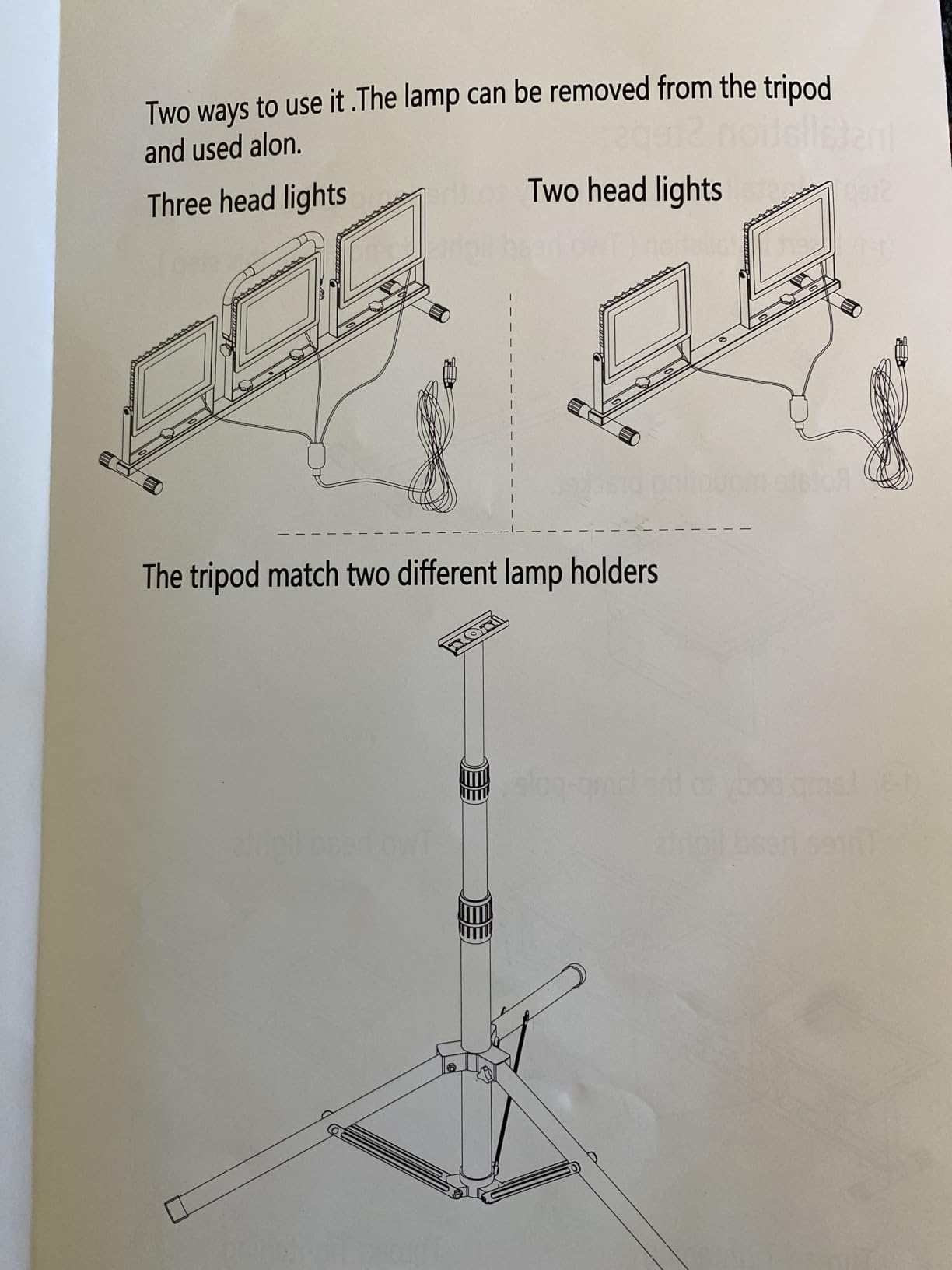
What makes it move well
The retractable tripod collapses rather than disassembles, so there is nothing to lose in the truck bed and nothing to set up on arrival beyond extending the legs. That is the difference between a light you deploy in under a minute and one that stays in the van.
Owners who deploy it on large sites commonly run fewer than all three heads, which is worth planning for. Aim the heads at the work face, not at the space you are standing in.
Where it is not the best choice
If a failed panel would end the light for good, integrated arrays are a real long-term risk. There is no bulb to swap and no module to replace.
For color-critical finish work, a fixed 6500K output and integrated arrays are a step down from a dimmable, adjustable-color model.
How many lumens do you actually need on a construction site?
For most construction tasks, 3000 to 5000 lumens covers a single work face such as a wall section, a cabinet, or a panel you are cutting. You need far more only when you are lighting a volume rather than a surface, and the number matters less than the number of aimed heads you have to distribute it.
Here is how the tiers map to real work.
Under 500 lumens: a single cabinet interior, a panel cut on a saw, an electrical box being terminated. This is flashlight and headlamp territory rather than tripod territory.
3000 to 5000 lumens: one work face at a time. Drywall hanging, framing a wall section, plumbing under a sink, finish carpentry at a bench. The DeWalt DCL079B sits here and is built to kill shadows over a person rather than flood a room.
10,000 to 15,000 lumens: a whole room or a basement with one corner position. Owners of the LUTEC Pro-15000LM report covering a 1200 sq ft basement and a full backyard from a single placement.
21,000 lumens and above: open floor plates, decks, large sites, and night pours where you are working well outside the pool of light. Beyond this point, head count and aim control matter more than additional lumens.
About 2000 lumens: yes, that is bright enough for a work light, provided the light source is aimed at the surface and positioned so you are not looking into it. It is not enough to light a room.
The 800 versus 1000 lumen question only matters for handheld lights. At tripod scale the difference is noise; what changes your day is switching between a high and a low setting so you can stop squinting on detail work.
One caution on advertised numbers. Forum users on r/Tools and ContractorTalk regularly flag that the same no-name listing shows different wattage on different pages, and reviewers of the cheap tier note that some units are blindingly bright while others feel ordinary. Treat listed lumens as a class indicator rather than a measurement, and buy on warranty length and build material when the brand name is unfamiliar.
Corded or cordless: which power source wins on a real site?
Cordless wins where there is no power. Corded wins everywhere else, because it is brighter per dollar and never needs a charge. If you already own batteries for a tool platform, a platform tripod light costs you the price of the light alone.
That last point is the one contractors argue about most. A crew already in the DeWalt 20V MAX ecosystem gets a 3000-lumen light at 11 hours of runtime for the cost of one accessory, which no corded light at any output can match economically. A crew with no batteries in that platform pays for two packs and a charger before the first hour of use, and the corded options become the better decision.
Battery platform lock-in is real and worth thinking about honestly. Choosing a light means choosing a battery family, and extra packs are an ongoing cost across all your other tools. The alternative is the hybrid approach, and the Tresda in this roundup is the only example: mains power for 12000 lumens, battery for 6000 lumens when the site is off-grid.
For corded setups, cord length is the deciding spec. Most lights in this group ship with an 8 ft lead, which runs out on anything larger than a single room. The PACOLIT P at 16.4 ft effectively doubles your reach and often removes the extension cord, which is both a time saving and a trip-hazard reduction.
Draw matters too. A 105W fixture can run on lighter-gauge extension cord without heating it, while a 210W tower is a heavier load that wants a properly rated run. And any corded light on a live site belongs on GFCI protection. If you are feeding from a generator, check its continuous load rating before assuming a single fixture is fine.
Tripod height, stability and the safety details most buyers skip
Raise the light above eye level. Almost every benefit of a tripod light comes from getting the source above the working surface so shadows fall away from your hands, and most complaints trace back to a light set too low. Telescoping ranges in this group range from a 5 ft 6 in maximum on the LUTEC Pro-15000LM to 7 ft on the DeWalt.
Weight is your stability. Taller and lighter is not better. A 16-pound platform light stays planted on uneven ground where a lighter tower walks across the slab, which is why the reported top-heaviness complaint is common across the budget tier.
Glare is a real safety issue, not a preference. Standing in front of a 21000-lumen panel at close range is uncomfortable enough to stop you working properly, which is why per-head on/off switches and two-step brightness are worth more than extra lumens. Aim the heads at the surface and stand with the light behind or beside you.
Color temperature decides what the light is useful for. A 6500K daylight tone is good for layout, inspection, and general construction, and it is what most of this group ships. A 3000K end is what you want for paint and stain, which is exactly what the adjustable LUTEC Max-11000LM provides.
Color rendering index is the number almost nobody checks. A CRI of 70 will show you a wall, but it will not show you the true color of a stain or a finish sample. If color is part of the decision, verify CRI before you buy.
IP65 and IP66 both handle dust and rain on an active site. IP66 adds protection against powerful water jets, which matters for wash-down areas, concrete work, and anything that gets hosed down. Neither rating is a reason to leave a light submerged or to skip the canopy during a downpour.
Cords across a walkway are a trip hazard on every site, every day. Route them along the edge of the work area, use the longest cord the light offers before reaching for an extension, and keep GFCI protection on anything plugged in.
Which tripod work light fits which trade?
Framing and drywall: you need height and shadow reduction, not raw flood. The DeWalt DCL079B is the pick because its pole reaches 7 feet and the output is aimed at the wall in front of you.
Electrical rough-in: you need two narrow beams rather than a flood, and you will be working in a dark cavity with the panel open. A two-head corded model with independently tilting heads gives you control of where the light lands. Pair the layout habit with our [best laser levels for construction](https://battleofsoho.com/best-laser-levels-for-construction/) guide for the reference side of the job.
Plumbing and under-sink: brightness close up matters more than coverage, and a detachable head is the feature that pays. The Aiptertet and the GUWELL both detach from the stand so you can carry light into the cabinet.
Paint and finish carpentry: adjustable color temperature is the deciding spec, not lumens. The LUTEC Max-11000LM at 3000K to 5000K is the only light in this roundup that lets you evaluate a color after dark, and its 5000-lumen low setting keeps the light out of your eyes at close range.
Concrete and night pours: you are outdoors, wet, and far from a wall. IP66 sealing, a folding tripod that survives being knocked over, and enough output to light a pour area are what matter. The Jefedana is built for that environment.
Auto repair: under-hood work needs a light you can move quickly and aim low. A single-head or two-head light with 360-degree rotation and a detachable assembly is more useful here than a three-head tower, and the IP rating handles the wash-down. If you are also running pumps on the same job, our [best trash pumps for construction](https://battleofsoho.com/best-trash-pumps-for-construction/) guide covers the drainage side.
Garage, basement, and workshop: this is where the high-lumen budget tier earns its place. The Wufoty and the JDZKOMKE light a full garage from one position, fold down to nothing, and cost less than a single corded head from a premium brand.
Multi-trade site setups: if the same light has to serve framing in the morning and inspection at night, look for two-step brightness and per-head switching, which is what the GUWELL and the PACOLIT P both offer.
Frequently Asked Questions
What is the best work light for construction?
The best work light for construction is the DEWALT DCL079B if your crew already runs 20V MAX batteries, because it puts light 7 feet up and runs over 11 hours on one charge. If you have mains power and want to light a whole room, the LUTEC Pro-15000LM at 15000 lumens covers far more area per dollar.
How many lumens for a good work light?
For a single work face such as a wall section, cabinet, or cut list, 3000 to 5000 lumens is enough. Light a whole basement or backyard from one corner and you want 10000 to 15000 lumens. Open floor plates, decks, and night pours benefit from 21000 lumens and above, where head count and aim control matter more than additional output.
Should I get a corded or cordless work light?
Get cordless if your site has no reliable mains power or your crew already owns batteries for that tool platform. Get corded if you have power, because corded lights are brighter per dollar and never need a charge. A hybrid model such as the Tresda 12000LM covers both cases but has the shortest battery runtime in this roundup.
Is 2000 lumens bright enough for a work light?
Yes, for close detail work on a single surface such as a panel, a cabinet, or a cut list, provided the light is aimed at the surface rather than at your face. It is not enough to light a room or a garage, and it will not replace a tripod light for area coverage on a jobsite.
What color temperature is best for construction work?
A 6500K daylight tone suits general construction work, layout, and inspection, and most tripod work lights in this roundup ship with it. For paint, stain, and finish work where you need to judge a color after dark, choose a lamp with adjustable color temperature down to 3000K, such as the LUTEC Max-11000LM.
What does IP66 mean for a work light?
IP66 means the light is dust-tight and protected against powerful water jets from any direction, which suits outdoor jobsites, concrete work, and wash-down areas. IP65 also blocks dust and rain but offers less protection against direct jets. Neither rating means a light can be left out in driving rain indefinitely.
How much does a tripod work light weigh?
Weights in this roundup range from around 10 pounds for the aluminum corded towers to 16 pounds for the battery-powered DeWalt DCL079B, which uses that mass to stay stable. Heavier is not automatically better, but a light that is tall and light can walk across a slab when someone brushes past it, so weight is worth factoring into your choice.
Bottom line: the best tripod work lights for construction in 2026
The best tripod work lights for construction are not all the same shape of answer. If your crew runs 20V MAX batteries, the DEWALT DCL079B is the one to buy: 7 feet of reach, three brightness settings, over 11 hours of runtime, and the strongest rating in this roundup at 4.8 from 2446 reviews. If you have mains power, the LUTEC Pro-15000LM gives you the widest coverage in the group at a moderate 105W draw that will not punish an extension cord.
Below those two, the choice is about the job. The Max-11000LM is the pick when color accuracy matters at night. The Jefedana, PACOLIT P, and GUWELL hold up in dust, water, and rough handling, and the PACOLIT’s 16.4 ft cord removes the extension from most setups entirely. The Tresda is the only real answer when the site has no power, and it comes with the battery caveats that implies. For garages and weekend work, the Wufoty and JDZKOMKE deliver 21000 lumens and a warranty that will not leave you exposed.
Whatever you choose, get the height above eye level, aim the heads away from where you stand, and use the longest cord the light gives you. Those three habits matter more on a real site than any number on the box. For the rest of your site kit, start with our [best concrete pumps guide](https://battleofsoho.com/best-concrete-pumps-for-construction/) and our [rebar cutter comparison](https://battleofsoho.com/best-rebar-cutters-for-construction/).