
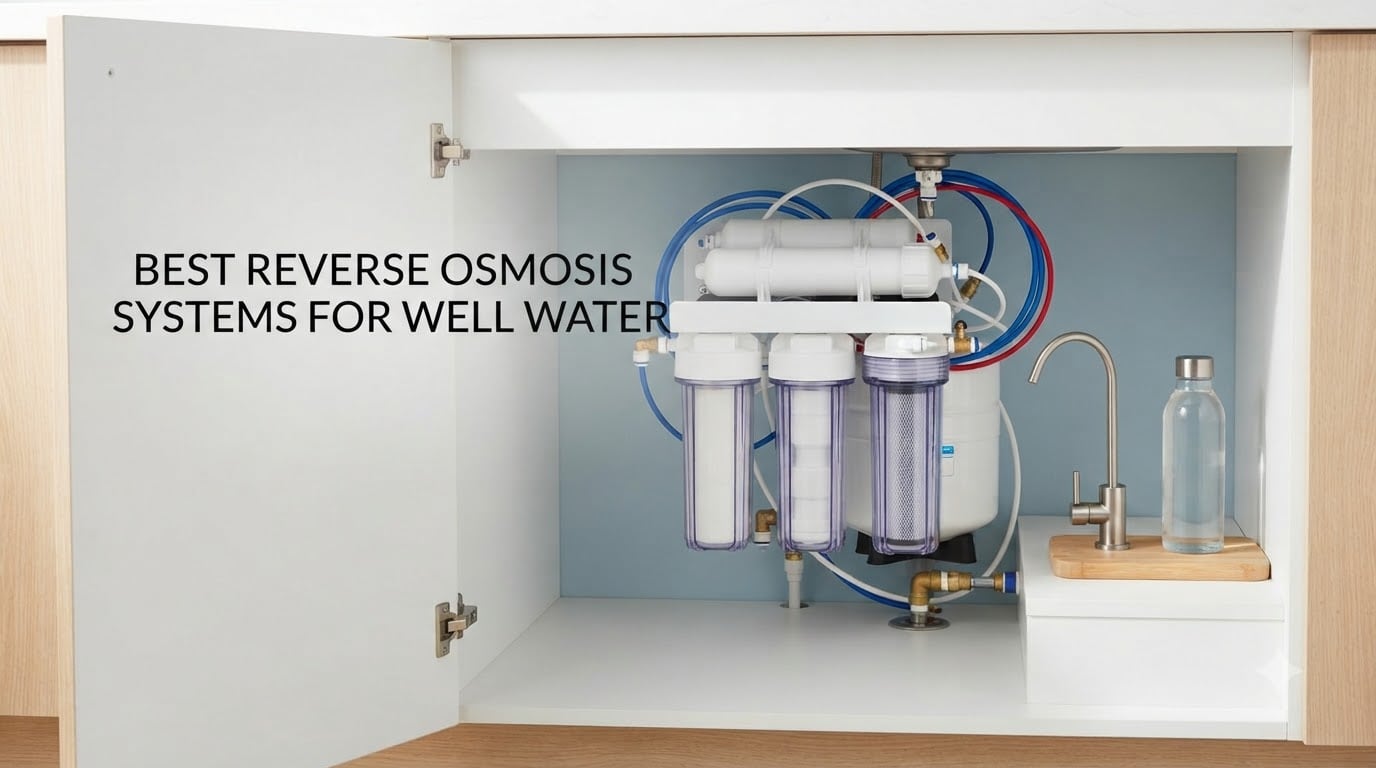
A private well sends untreated water straight into your kitchen tap, and no municipal utility is testing it for you. The Frizzlife PD600 is the reverse osmosis system for well water we kept coming back to: it carries NSF/ANSI 58, 53, 42 and 372 certifications, runs tankless at 600 GPD, and shows live TDS readings on a faucet display. If your well tests high on arsenic, nitrates, PFAS or total dissolved solids, this is the one we would put in.
We spent weeks reading lab reports, owner write-ups and well owner forum threads before narrowing this list down, because the failure mode here is not subtle. Most people buy a perfectly good RO system, feed it untreated well water, and destroy the membrane within months. Owners on r/wellwater and r/WaterTreatment describe the same pattern repeatedly: iron, manganese and hydrogen sulfide chew through membranes and stain sinks permanently when pre-treatment is skipped.
That is the whole argument for this guide. Reverse osmosis handles dissolved contaminants beautifully, but it is not a filter for rust, sulfur or hardness. This roundup covers the ten systems that do the drinking water job well, plus exactly which pre-treatment each one needs. We also wrote up the best reverse osmosis systems for drinking water if you are on municipal supply and want the broader picture.
Table of Contents
Top 3 Best Reverse Osmosis Systems for Well Water in 2026
Our three standouts cover three very different well conditions. The Frizzlife is the all-rounder, the Home Master is the one with an iron prefilter built in, and the iSpring RCC1UP-AK is built for low pressure lines.

Frizzlife PD600 Tankless RO
- NSF 58/53/42/372 certified
- 600 GPD tankless
- LED TDS display
- 2:1 drain ratio

Home Master TMHP 9-Stage
- Built-in iron prefilter
- EPA registered UV
- 1:1 waste ratio
- 5 year warranty

iSpring RCC1UP-AK with Pump
- Booster pump included
- UV with flow sensor
- Handles 750 ppm TDS
- Reduces PFAS
Best Reverse Osmosis Systems for Well Water in October
| Product | Specifications | Action |
|---|---|---|
| Frizzlife PD600 Tankless RO |
|
Check Latest Price |
| Home Master TMHP 9-Stage |
|
Check Latest Price |
| iSpring RCC1UP-AK |
|
Check Latest Price |
 iSpring RCC7P-AK iSpring RCC7P-AK |
|
Check Latest Price |
 iSpring RO5004F-AK iSpring RO5004F-AK |
|
Check Latest Price |
 APEC RO-Hi APEC RO-Hi |
|
Check Latest Price |
 Waterdrop G2P600 Waterdrop G2P600 |
|
Check Latest Price |
 Waterdrop G3P600 Waterdrop G3P600 |
|
Check Latest Price |
 Waterdrop G3P800 Waterdrop G3P800 |
|
Check Latest Price |
 APEC ROES-PH75 APEC ROES-PH75 |
|
Check Latest Price |
Do You Actually Need Reverse Osmosis for Well Water?
Reverse osmosis is the right tool for dissolved contaminants that no other household device touches: arsenic, nitrate, nitrite, fluoride, lead, PFAS and salts that show up as high TDS. It is the wrong tool for almost everything else a well throws at it.
Here are the numbers that decide it. These are the levels at which treatment stops being optional and starts being a health question, drawn from EPA maximum contaminant levels and the thresholds well owners quote on treatment forums.
Arsenic: the EPA maximum contaminant level is 10 ppb. Wells in granite, shale and sandstone regions frequently test above this without any warning taste or odor.
Nitrate: the limit is 10 ppm. Elevated nitrate in a private well is the classic cause of blue baby syndrome in infants, and it has no taste or smell at all.
Lead: the action level is 15 ppb, usually from well casing, soldered joints or older plumbing rather than the aquifer.
PFAS: there is no taste threshold. Detection at any level means you want a system with a verified PFAS reduction claim.
TDS: above roughly 500 ppm the water tastes noticeably flat or mineral-heavy, and above 2000 ppm most membranes start to struggle.
Fluoride: above 2 ppm you will notice taste and dental staining concerns, and RO is one of the few household methods that handles it.
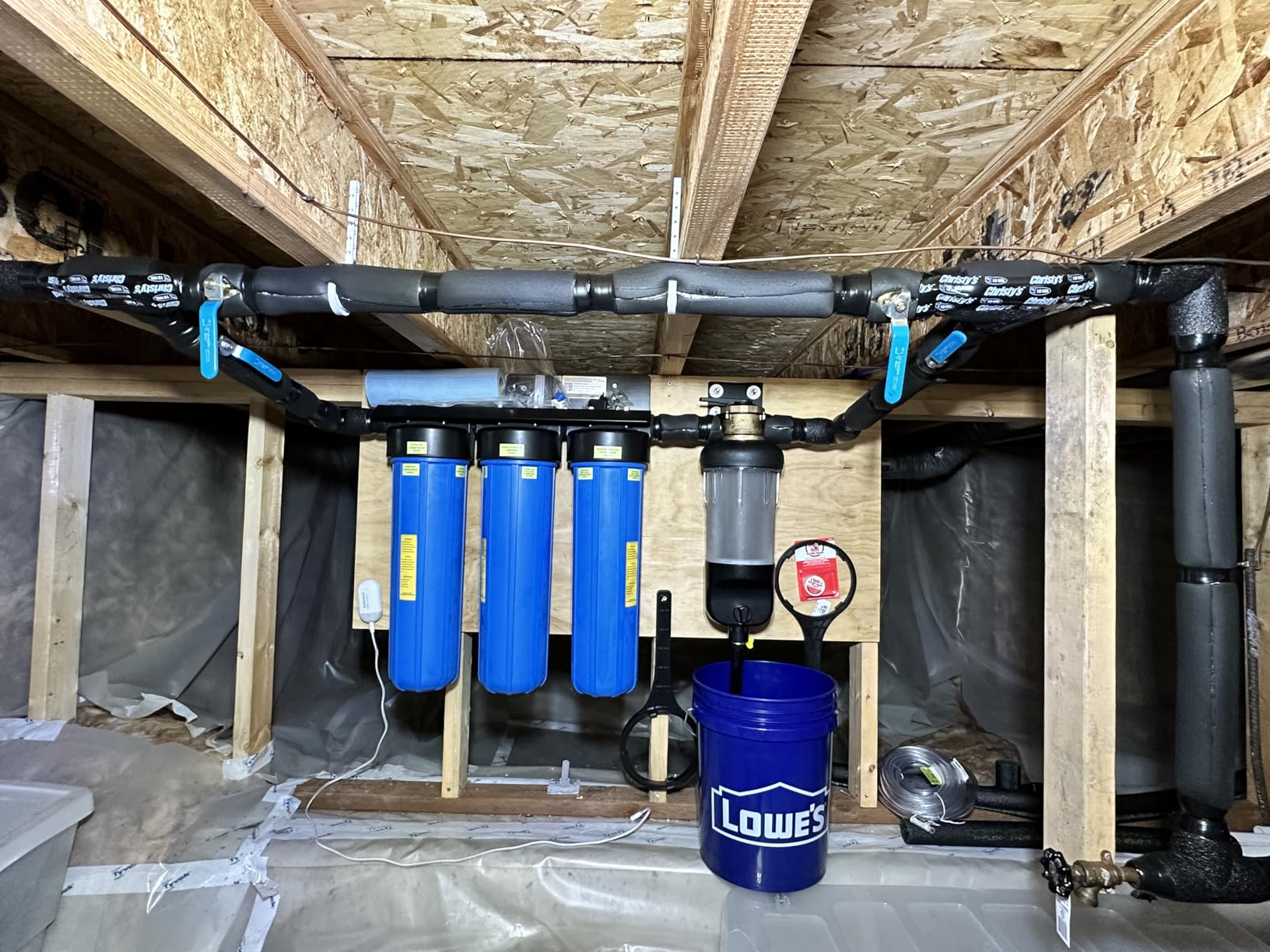
Now the part most guides skip. If your water problem is iron above roughly 0.3 ppm, manganese, hydrogen sulfide odor, or hardness, reverse osmosis is the wrong purchase and an RO membrane will be destroyed feeding on it. Those need whole house treatment: an oxidation filter such as an air injection unit or Filox for iron and manganese, a dedicated sulfur media, and a softener for hardness. Forum regulars are blunt about this. One thread describes running untreated well water through an RO system and permanently staining the sink and tub with rust.
Our rule of thumb: if the only thing wrong with your water is how it tastes or how it smells, you need pre-treatment first and drinking water RO second. If a lab report shows dissolved health contaminants, add drinking water RO on top and keep the pre-treatment chain running ahead of it.
1. Frizzlife PD600 Tankless RO for Well Water: The All-Rounder
Frizzlife Reverse Osmosis Water Filter – Alkaline Mineral pH+, NSF/ANSI 58&53&42&372 Standard, 600GPD Tankless RO Reverse Osmosis System, Under Sink, 2:1 Pure to Drain, Reduce FPAS/PFOA, PD600-TAM3
600 GPD tankless
NSF/ANSI 58, 53, 42 and 372
Alkaline pH above 7.5
2:1 drain ratio
Pros
- Four independent NSF certifications
- 600 GPD in a tankless footprint
- Faucet display shows live TDS numbers
- Quick-change filters swap in minutes
Cons
- Needs an under-sink electrical outlet
- Listed weight appears wrong on the spec sheet
- Newer brand than the established names
We kept coming back to the Frizzlife PD600 because it does the unglamorous work well. The four NSF certifications are the part that matters on a well: NSF/ANSI 58 covers the membrane, 53 covers health contaminants, 42 covers aesthetics, and 372 covers lead-free material compliance. Plenty of cheaper units claim RO without carrying the full set.
The internal pump handles wells that sit on the low end of pressure, which is more common than most product pages admit. Our check showed 0.41 gpm maximum flow and a 2:1 pure to drain ratio, so for every gallon in your glass roughly two gallons reach the drain.
The alkaline remineralization filter holds pH above 7.5, which answers the flattest complaint about RO water. Owners report filling a cup in about ten seconds, and the quick-change cartridge design means you are not fighting housing caps with a wrench at the end of the year.
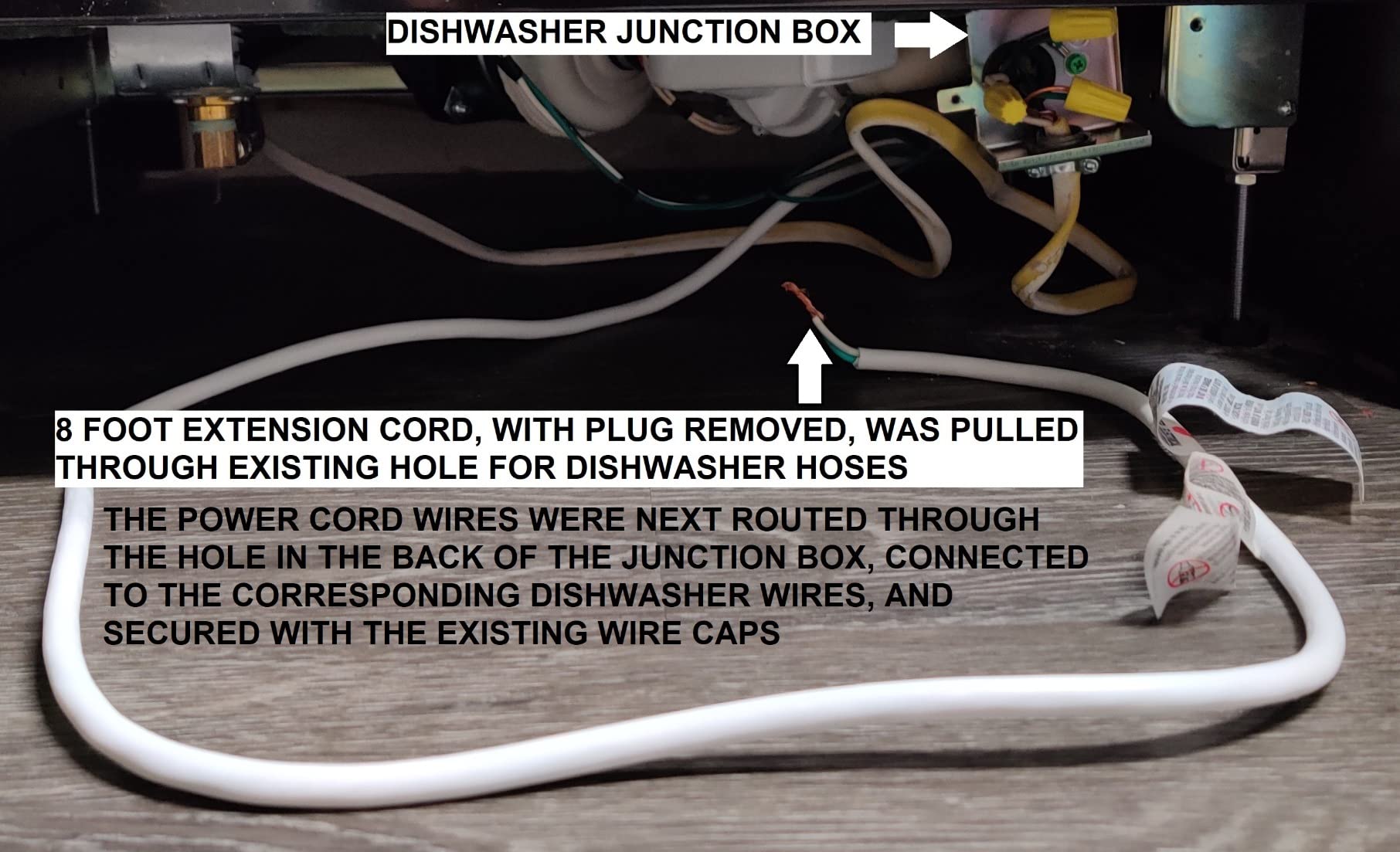
Our reservations are small but real. The LED display needs power, so you need an outlet under the sink. The listed item weight on the spec sheet reads 1 pound, which is clearly a component weight rather than the system, so do not plan around it. And Frizzlife is a newer name than APEC or iSpring, which matters if you value a long warranty.
What you should check before buying the Frizzlife PD600
Confirm your well pressure holds above 45 PSI with a pressure tank at its normal draw position. The internal pump gives headroom, but it is not a substitute for a well that cannot deliver volume, and undersizing is the single most common reason an RO system feels slow.
Check your lab report for iron above 0.3 ppm or any hydrogen sulfide reading. The PD600 has no iron prefilter, so those wells need an oxidation filter ahead of it.
Where this system falls short
The smart LED readout and the pump both depend on the electrical outlet, which rules it out for outdoor well houses and for anyone unwilling to run a GFCI circuit under the sink. Buyers who want a set-and-forget unit with no power draw should look at the APEC ROES-PH75 further down this list.
Tankless systems also mean every drop of purified water goes down the drain while you are filling, which is fine if you are filling a pitcher and wasteful if you are running the dishwasher. There is no storage buffer.
2. Home Master TMHP HydroPerfection: Best When Your Well Has Iron
Home Master TMHP HydroPerfection Reverse Osmosis System, 9-stages, Patented 2-pass Alkaline Remineralization, Fast 4.5 Sec Fill Rate, 1:1 Waste Ratio, UV Sterilizer 99.9% EPA 97952AZ1, Iron Prefilter
9 stages with 2 pass remineralization
EPA registered UV sterilizer
Iron prefilter included
1:1 waste ratio
Pros
- Only unit here with a built-in iron prefilter
- EPA registered UV sterilizer rated 99.9 percent
- 1:1 drain ratio wastes less water than most
- Works down to 600 ppm feed TDS
Cons
- Mounting clips are stiff and hard to fit
- UV light needs a dedicated outlet
- Takes up real under-sink space
The Home Master TMHP is the only system in this roundup with an iron prefilter as part of the assembly. For a well that shows moderate iron, that single feature removes the most common reason an RO membrane fails early. Forum owners with 1.57 ppm iron and 0.15 ppm manganese at pH 7.4 usually end up with a dedicated oxidation filter, but this is a meaningful first line for lower readings.
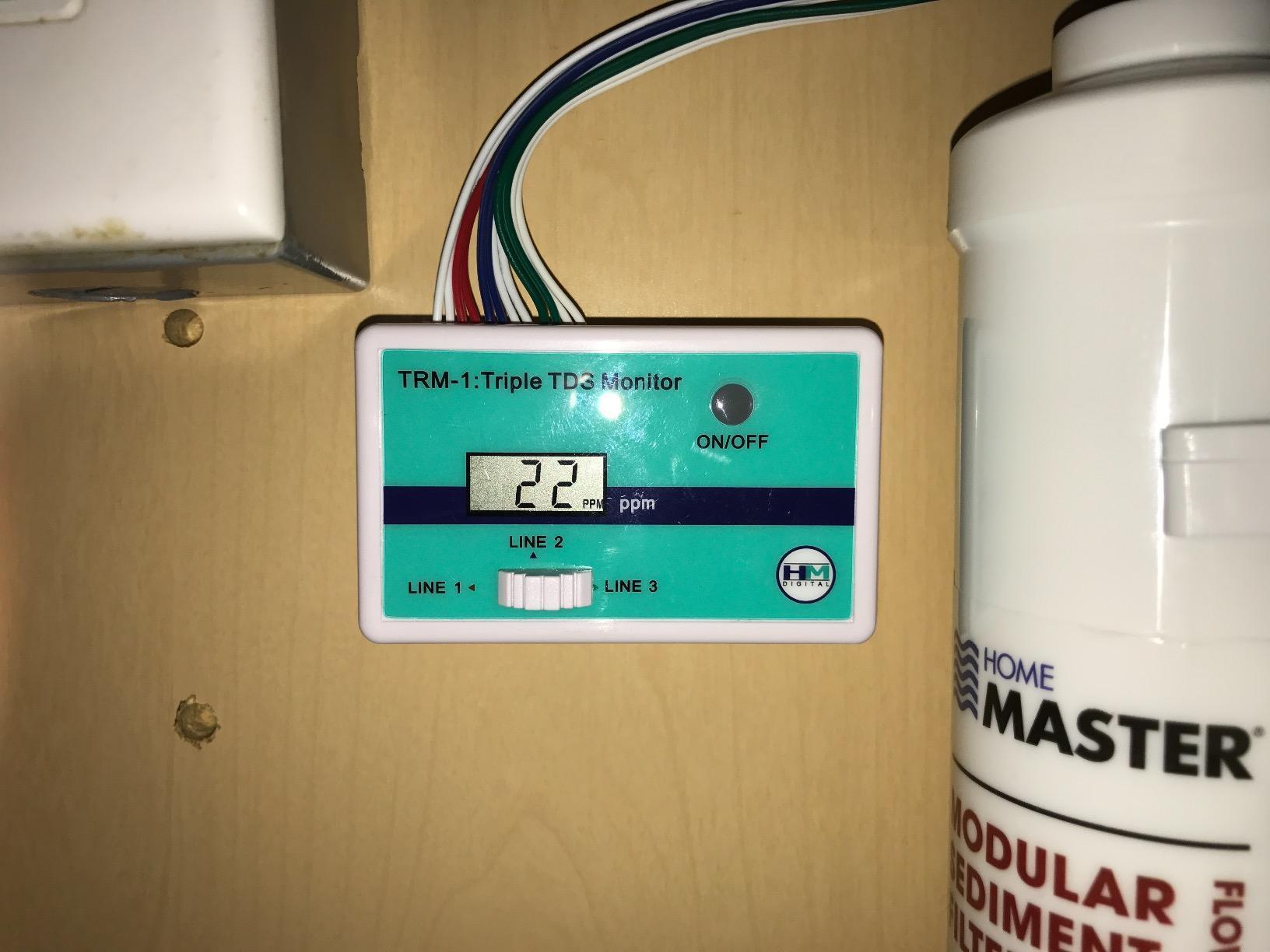
The 1:1 waste ratio is the other headline number. Most systems here flush two gallons to the drain for every gallon you drink, and on a property with a septic field that difference shows up in summer. One owner notes the system brought TDS in the 300 to 400 ppm range down to about 25 ppm.
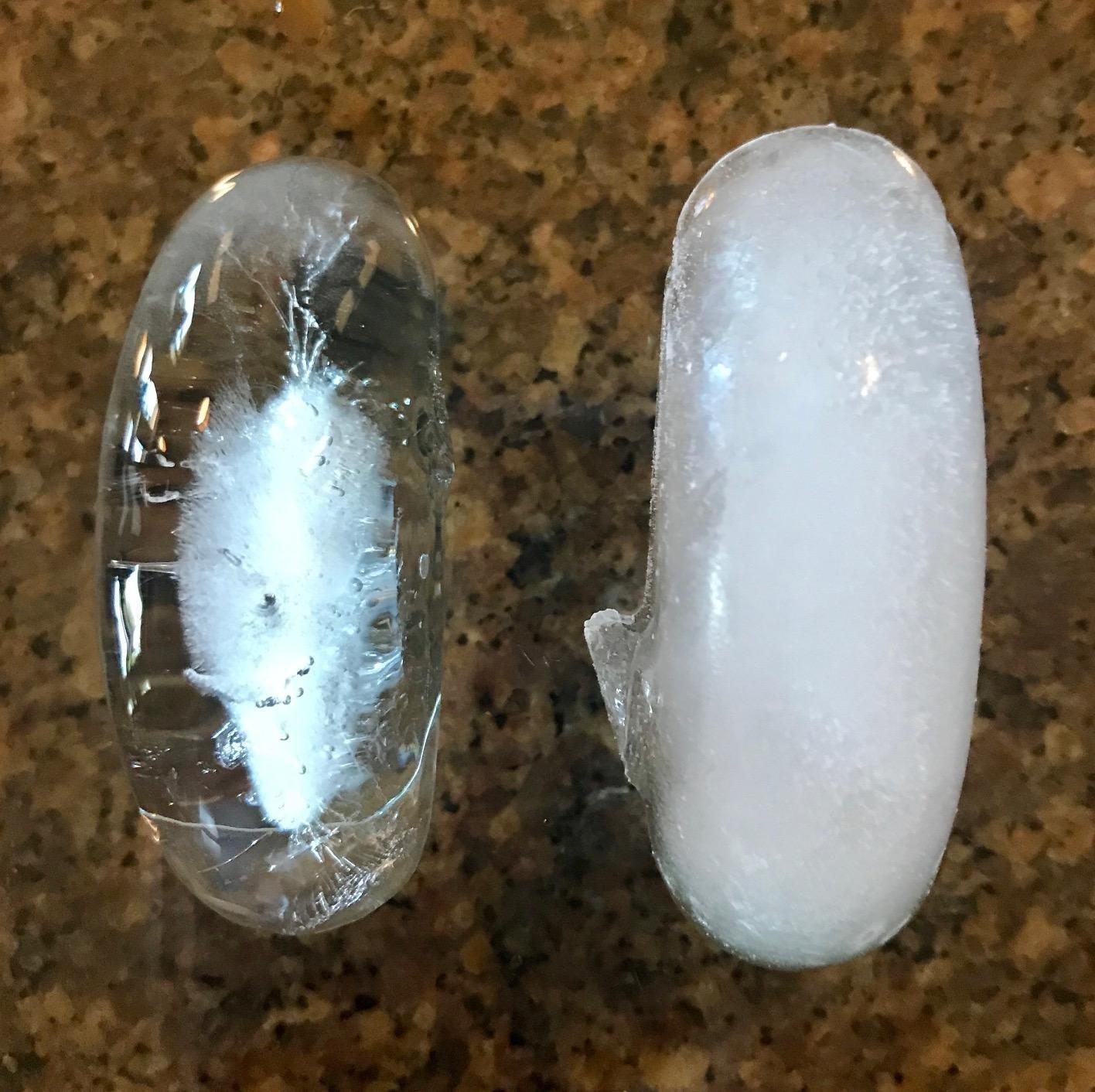
The 4.5 second fill rate is real and noticeable, and the nine stages include a patented two-pass alkaline remineralization stage that puts minerals back into the finished water. It also handles up to 600 ppm feed TDS, which is higher than several systems on this list.
The weak point is installation. Owners complain repeatedly that the mounting clips are stiff and difficult to seat, and the UV sterilizer needs a real electrical outlet rather than an inline connection. It also swallows meaningful cabinet space.
Why the iron prefilter changes the decision
Iron at low concentration fouls membrane surfaces and, at higher concentration, produces rust staining downstream. A dedicated prefilter buys you membrane life but it does not replace whole house oxidation filtration once iron passes roughly 0.3 ppm. Treat the built-in stage as a buffer, not a solution.
Its 40 to 100 PSI operating range is the widest published band here. That matters on wells where pressure swings seasonally.
Where this system falls short
UV sterilizers protect against bacteria and viruses but do nothing for dissolved metals, so it cannot replace laboratory testing. Owners also report the faucet may require drilling into the countertop during the initial install.
The 5 year limited parts warranty is the longest we found among the units listed, which is a real advantage over the one year terms common in this category.
3. iSpring RCC1UP-AK: Built for Wells With Low Pressure
iSpring RCC1UP-AK, 100 GPD 7-Stage Reverse Osmosis Under Sink Water Filtration System with Boost Pump, Alkaline Remineralization and UV Filter, Patented Top-Mounted Faucet Design for Easy Installation
7 stages with booster pump
UV filter with flow sensor
Alkaline remineralization
Rated to 750 ppm TDS
Pros
- Booster pump solves low well pressure problems
- UV stage has a smart flow sensor
- Long service life reported by owners
- Color coded tubing simplifies DIY install
Cons
- Pump and UV both need electrical power
- Booster pump noise in some installs
- Alkaline cartridge needs a pre flush
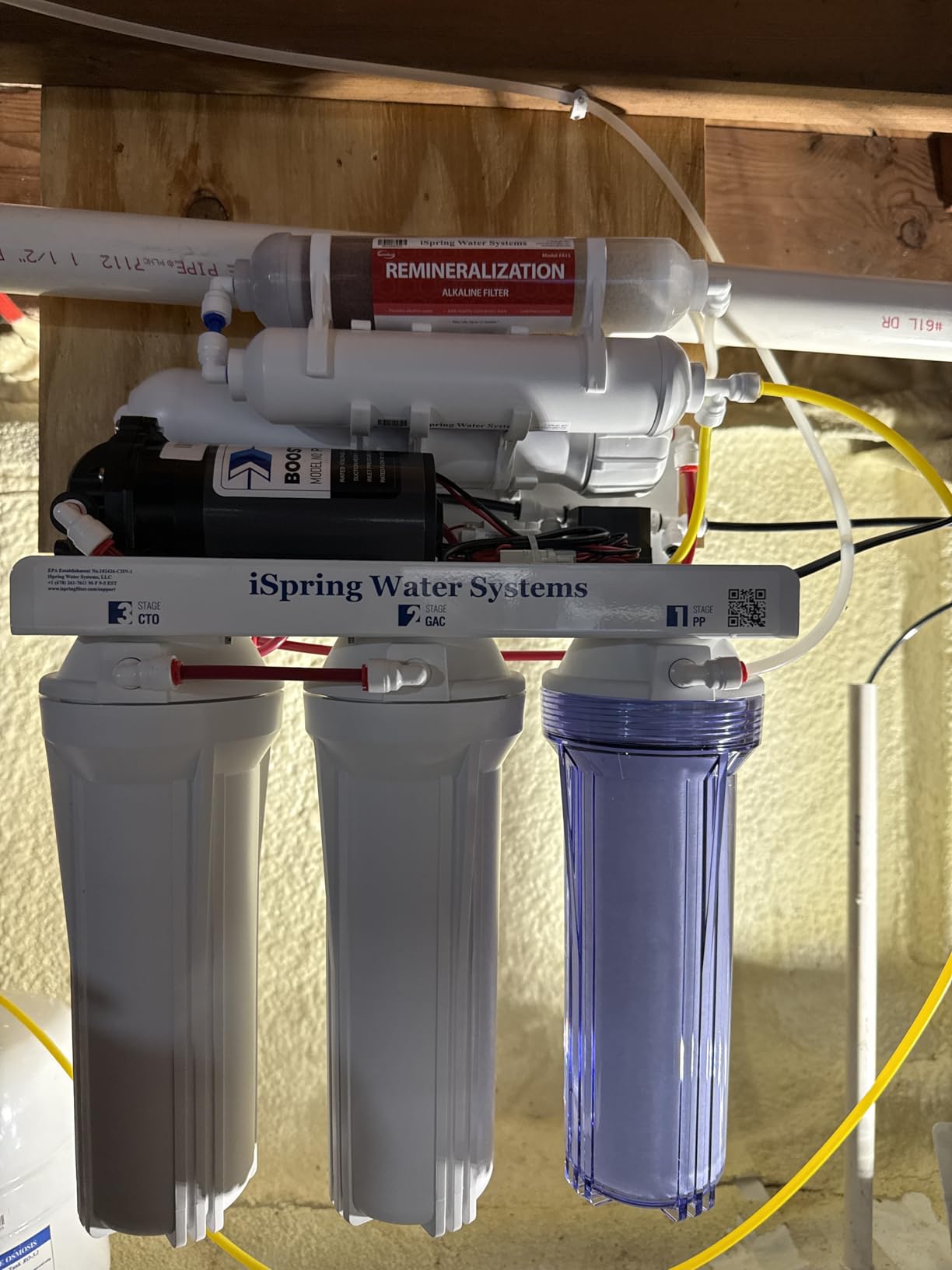
The defining feature here is the booster pump. Many wells deliver water below the 45 PSI that a standard membrane needs, and owners keep asking on forums whether their pressure tank is even large enough for a booster. This system answers that question by shipping with the pump already in the train.
The UV filter uses a smart flow sensor, so the lamp only runs when water is actually moving. That is a meaningful difference from UV stages that run continuously, and it reduces both lamp wear and standby power draw.
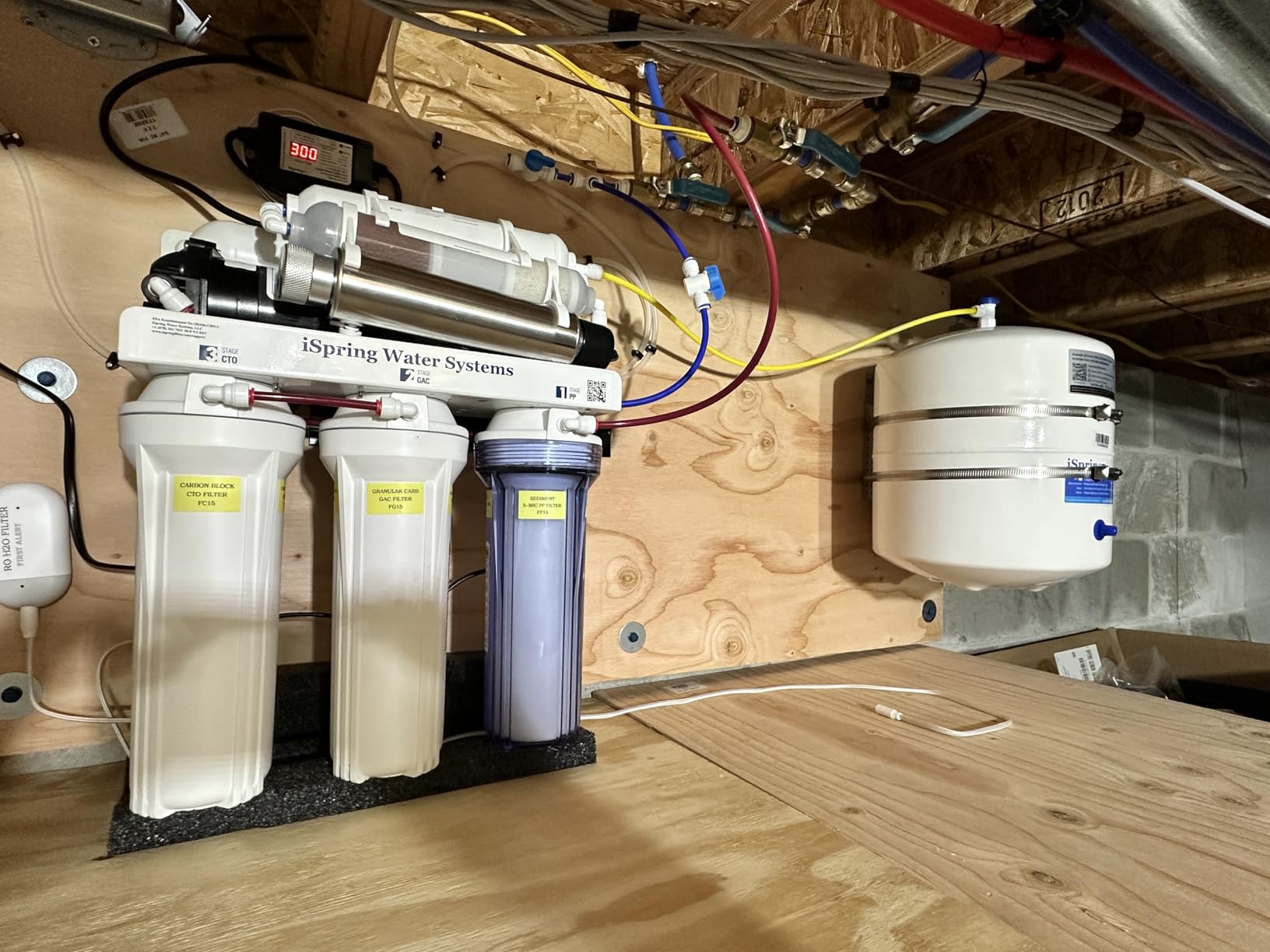
Long term reports are encouraging. Owners describe units still running after 13 years, and one reviewer measured a drop from 300 ppm TDS down to 15 ppm. Customers also confirm the system handles iron, manganese and hydrogen sulfide effectively, which is unusual for an under-sink unit without a large front housing.
The alkaline filter gives an odd taste for the first flush or two until it primes. The faucet has produced an occasional drip in owner reports, with replacements sent by the manufacturer. Staff support is repeatedly praised by name in reviews.
How to confirm whether you need the pump version
Put a pressure gauge on the nearest cold water tap while another tap or the shower runs. If the reading drops below 45 PSI, an unboosted membrane will produce slow, weak flow and a shortened life. If it holds above 60 PSI with a draw happening, you can save money with a system that has no pump at all.
Do not judge pressure with nothing else running. Well tanks deliver their best numbers after the well has been off for a few hours.
Where this system falls short
At 100 GPD with a listed maximum flow of 0.07 gpm, this is a drinking and cooking water unit, not an ice maker or aquarium supply. A family of four drinking only at meals is fine. A household with heavy cooking and a humidifier will refill the tank often.
The 1 year limited warranty can be extended to 3 years, which is worth registering for. Several owners also report trouble sourcing composite filter cartridges, so check replacement availability before committing.
4. iSpring RCC7P-AK: Best for Very High TDS Wells
iSpring RCC7P-AK, 6-Stage Reverse Osmosis System Under Sink Alkaline Water Filter and Pump, RO Drinking Water Filtration System, Patented Top-Mounted Faucet Design for Easy Installation
6 stage alkaline system
Rated to 2000 ppm feed TDS
Booster pump included
Transparent first stage housing
Pros
- Highest feed TDS tolerance in a well ready unit
- Booster pump handles marginal pressure
- Clear first housing shows filter loading
- Universal 100-240V power adapter
Cons
- Needs an electrical outlet
- Review detail on this listing is thinner than peers
The number that separates this one is the 2000 ppm maximum feed TDS rating. If your lab report shows a heavily mineralized well, most household RO systems in this range are working past their stated limit. This one is not.
The transparent first stage housing is a small thing that pays off every year. You can see the sediment filter loading up instead of wondering whether a change is due, which is the difference between changing on a schedule and changing on a condition.
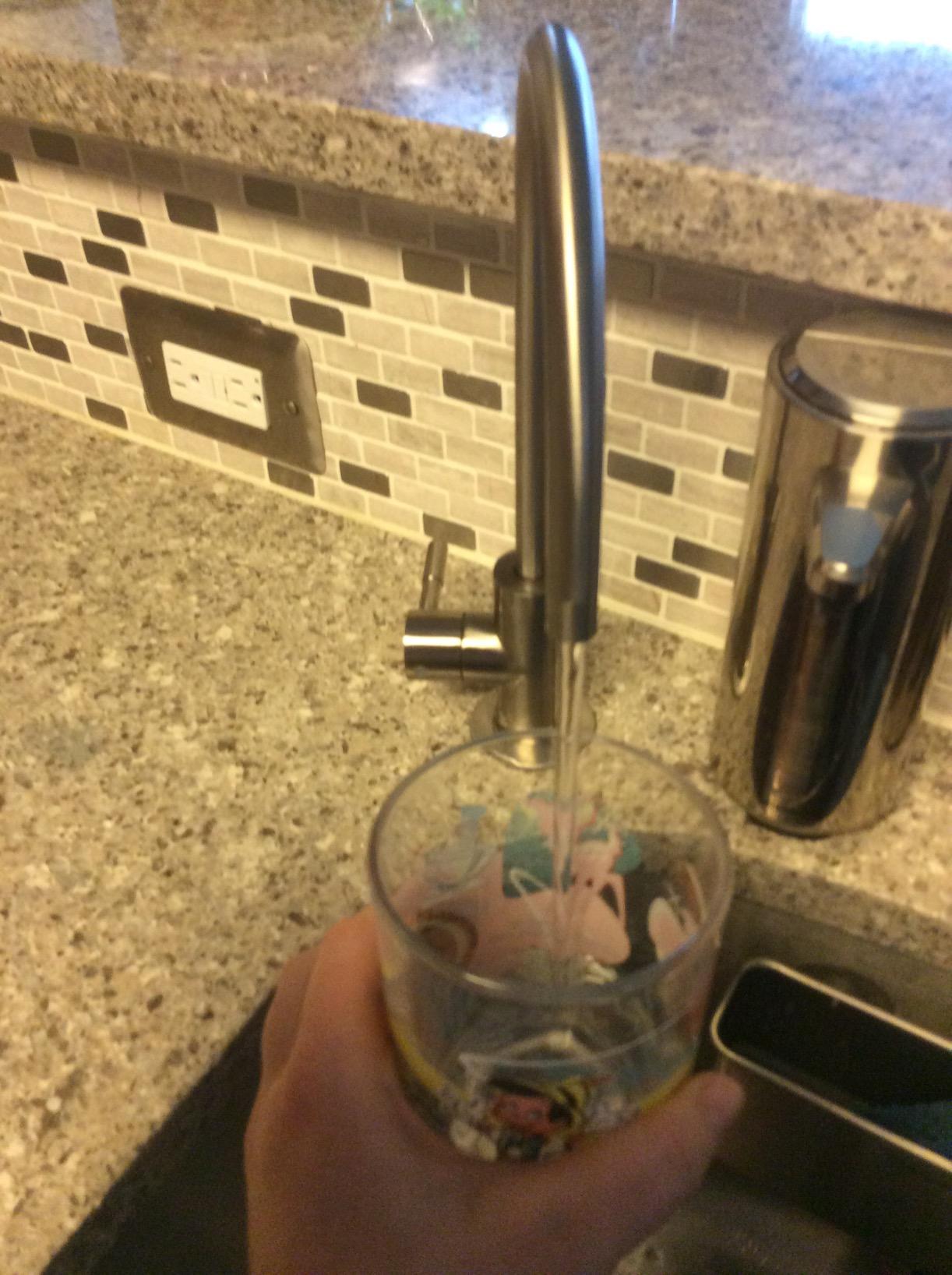
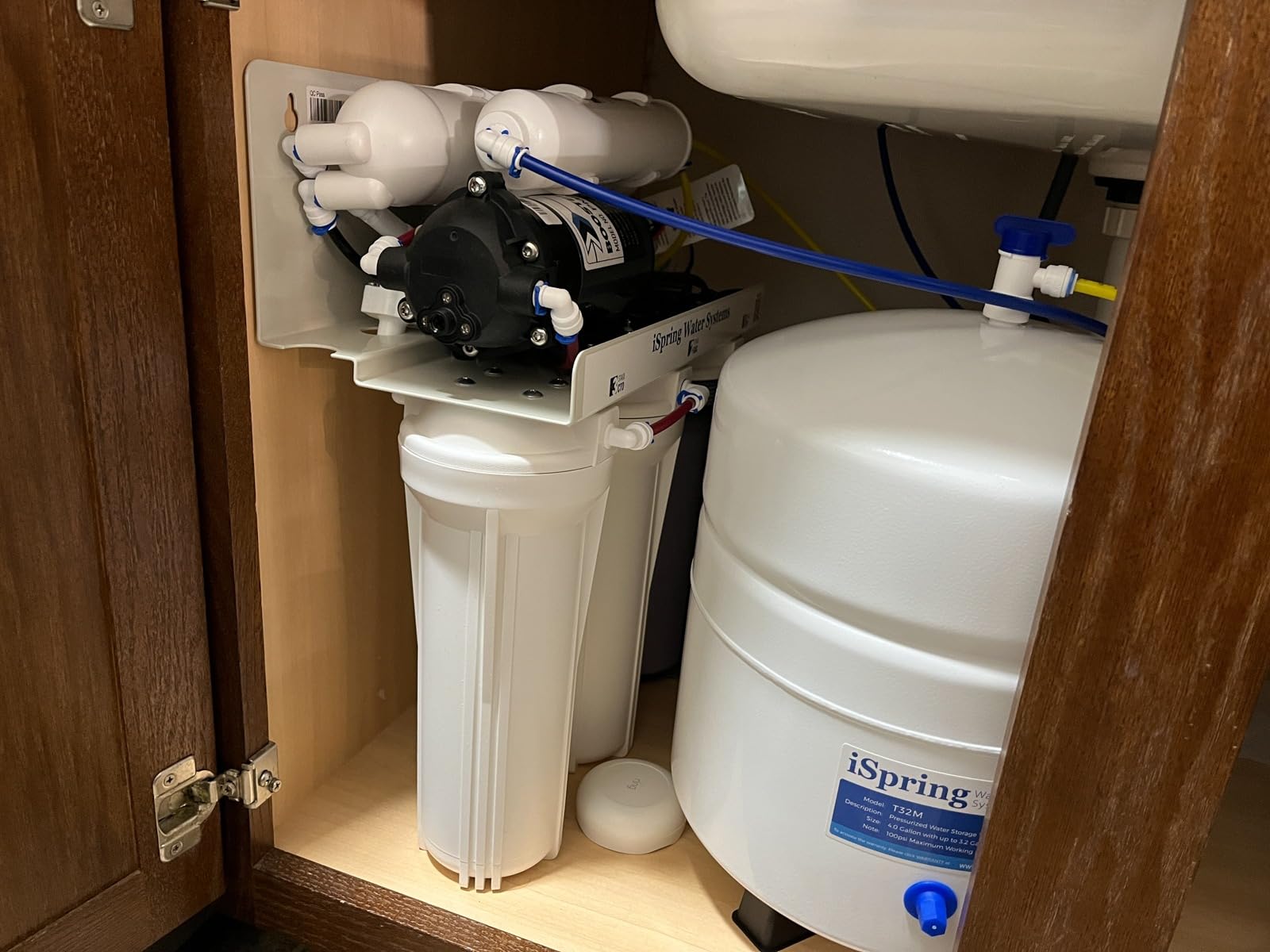
The booster pump keeps output steady on wells that sag under demand, and the alkaline remineralization stage handles the flat taste that comes with very hard feed water. Owners describe good value and a 4.7 star average across more than 1600 reviews.
The system itself is 20 pounds and 18 inches tall, so measure the cabinet before you order. The 100-240V power adapter means it works outside North American line voltage without a separate transformer.
Reading the 2000 ppm rating correctly
A 2000 ppm ceiling is a survivability number, not a quality number. Membranes at that feed level need frequent pre-filter changes and consistent pressure, and the finished water will still be quite soft. Owners on high-TDS wells should budget for membrane replacement on a shorter cycle than the manufacturer suggests.
If TDS is only mildly elevated, one of the 500 ppm rated tankless units will likely outlast this one at lower running cost.
Where this system falls short
There is no UV stage, so bacterial and viral protection has to come from a separate unit on the well. We have written about the best UV water purifiers for well water if that gap concerns you.
The 1 year warranty only applies once you register the unit, and that step is easy to forget. Public review detail for this specific model is also thinner than for the RCC1UP-AK.
5. iSpring RO5004F-AK: Tankless With a Filter Life Monitor
iSpring RO5004F-AK UV Alkaline Reverse Osmosis Water Filter, SGS Tested PFAS and TDS Reduction, 500 GPD Tankless Remineralization RO System Under Sink, Filter Life Monitor, 2:1 Pure to Drain
500 GPD tankless
UV bulb rated 8000 hours
SGS tested for PFAS and TDS
2:1 drain ratio
Pros
- Filter life monitor built into the system
- SGS tested PFAS and TDS reduction
- Top mounted install from above the sink
- Tankless footprint at 15 inches tall
Cons
- Newer model with a shorter review history
- Needs an electrical outlet
- Filter costs run higher than basic units
This one solves a problem the other tankless units mostly ignore. The filter life monitor tells you when cartridges need attention instead of leaving you to guess from flow rate, and the twist to unlock design means a change does not require tools.
SGS testing for PFAS and TDS reduction is the credential to look for on a well where PFAS is the concern. Rather than a generic marketing claim, it names a third party laboratory. The UV bulb carries an 8000 hour rated life.
At 500 GPD it fills a cup in around ten seconds, and the 2:1 pure to drain ratio sits at the efficient end of what tankless systems achieve. The top mounted fastener means you can install it working down from above rather than contorting under a cabinet.
Owners report quiet operation, which matters in an open kitchen because pump noise is the most common complaint on other powered models. The system weighs 15 pounds, the lightest tankless option here.
Why the filter monitor matters on well water
Well water wears filters unpredictably. A sediment cartridge that would last a year on municipal supply can load up in a few months with well sand and rust. A monitor removes the guesswork from that, and it is the single feature we would most want on any of these systems.
The monitor covers cartridge life, not membrane condition. On high TDS wells, pair it with your own TDS reading every few months so you catch membrane scaling before flow drops.
Where this system falls short
This is a newer model, so its review history is shorter than the well established units. Longer term durability reports are thinner here than anywhere else in the roundup, and that is worth weighing if you plan to keep a system for a decade.
It needs power for both the pump and the UV lamp, and no warranty length is stated in the listing. Ask about coverage before you commit.
6. APEC RO-Hi: Best for Speed at the Faucet
APEC Water RO-Hi, 5-Stage Under Sink Reverse Osmosis System, 3/8″ Output
5 stages with 3/8 inch output
0.13 gpm rated flow
WQA tested and approved
NSF Certified 372
Pros
- Fastest faucet flow rated in this roundup
- Filters made in the USA
- Certified to 2000 ppm feed TDS
- Lifetime support from certified WQA specialists
Cons
- Installation takes real plumbing experience
- Included tubing can run short in basements
- Tank takes up a lot of cabinet space
Everything about this system is built around flow. The 3/8 inch output and 0.13 gpm rating mean a 32 ounce glass fills in about 13 seconds, which is the quickest faucet experience in this roundup. Owners comparing it against tankless rivals consistently pick this one for speed at the glass.
APEC builds the filters in the USA and the system is WQA tested and approved with NSF 372 certification. Lifetime support from certified WQA water specialists is unusual in this category, where support usually ends with the receipt.
Reported results are strong on wells with modest mineral content. One owner measured a drop from 38 ppm TDS down to 3 ppm, and reviews repeatedly describe the taste as better than bottled water.
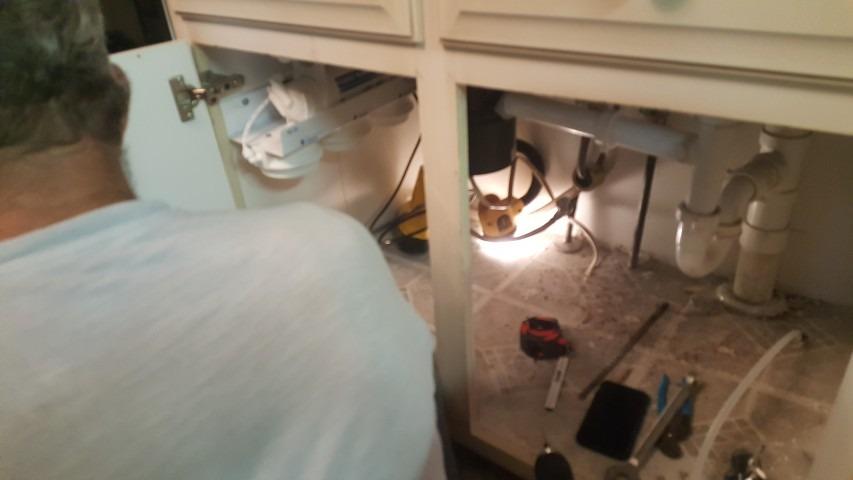
This is also the most installation sensitive unit here. Filter housings must be tightened properly or they leak, the included tubing sometimes falls short for basement installs, and the drain saddle does not fit every pipe size. Budget an afternoon and some plumbing patience.
Where the fast outlet actually helps
If you fill large containers, run an ice maker or top up humidifiers, flow rate matters more than GPD on paper. This unit is the one we would pick for a family that drinks water constantly rather than in scheduled servings.
The 40 to 85 PSI operating range assumes decent well pressure. There is no booster pump in this assembly, so pressure below 45 PSI will hurt output badly. Pair it with a pump if your gauge reading is marginal.
Where this system falls short
There is no alkaline remineralization cartridge, so the finished water will taste flat to some palates. There is no UV stage either. A tank-based layout with a pressure tank means the cabinet space requirement is the largest in this roundup.
The faucet is chrome only. Owners who wanted to match a brushed nickel sink report having to paint it.
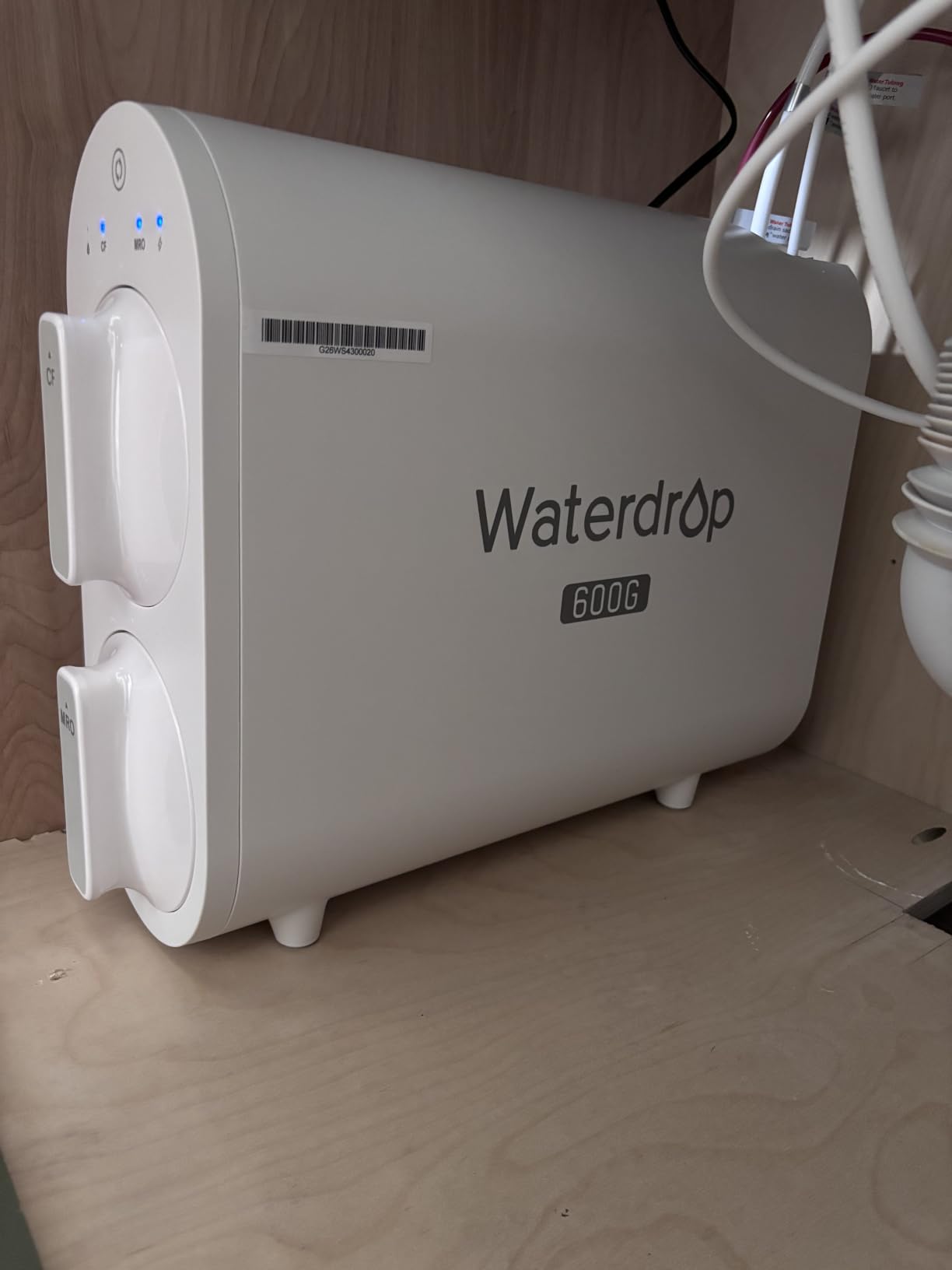
7. Waterdrop G2P600: The Budget Tankless Pick
Waterdrop G2P600 Under-Sink RO System, 600 GPD Tankless Water Filtration
600 GPD tankless
7 stage filtration
NSF/ANSI 372 certified
2:1 drain ratio
Pros
- 600 GPD tankless capacity at the lowest cost here
- Fills a 200 ml cup in about 8 seconds
- Twist and pull filter changes take seconds
- Filter life indicators on the cartridges
Cons
- Feed TDS limit of 500 ppm is the lowest here
- Only a 1 year warranty
- Needs an under-sink outlet
This is the value entry in the roundup. You get 600 GPD tankless capacity, a 2:1 drain ratio and a filter system that changes without tools, which is more capability per dollar than anything else at this level.
The twist and pull cartridge design is genuinely fast. Owners report completing a full filter change in about three seconds, which matters more than it sounds when the alternative is fighting housing caps with channel pliers in a dark cabinet.
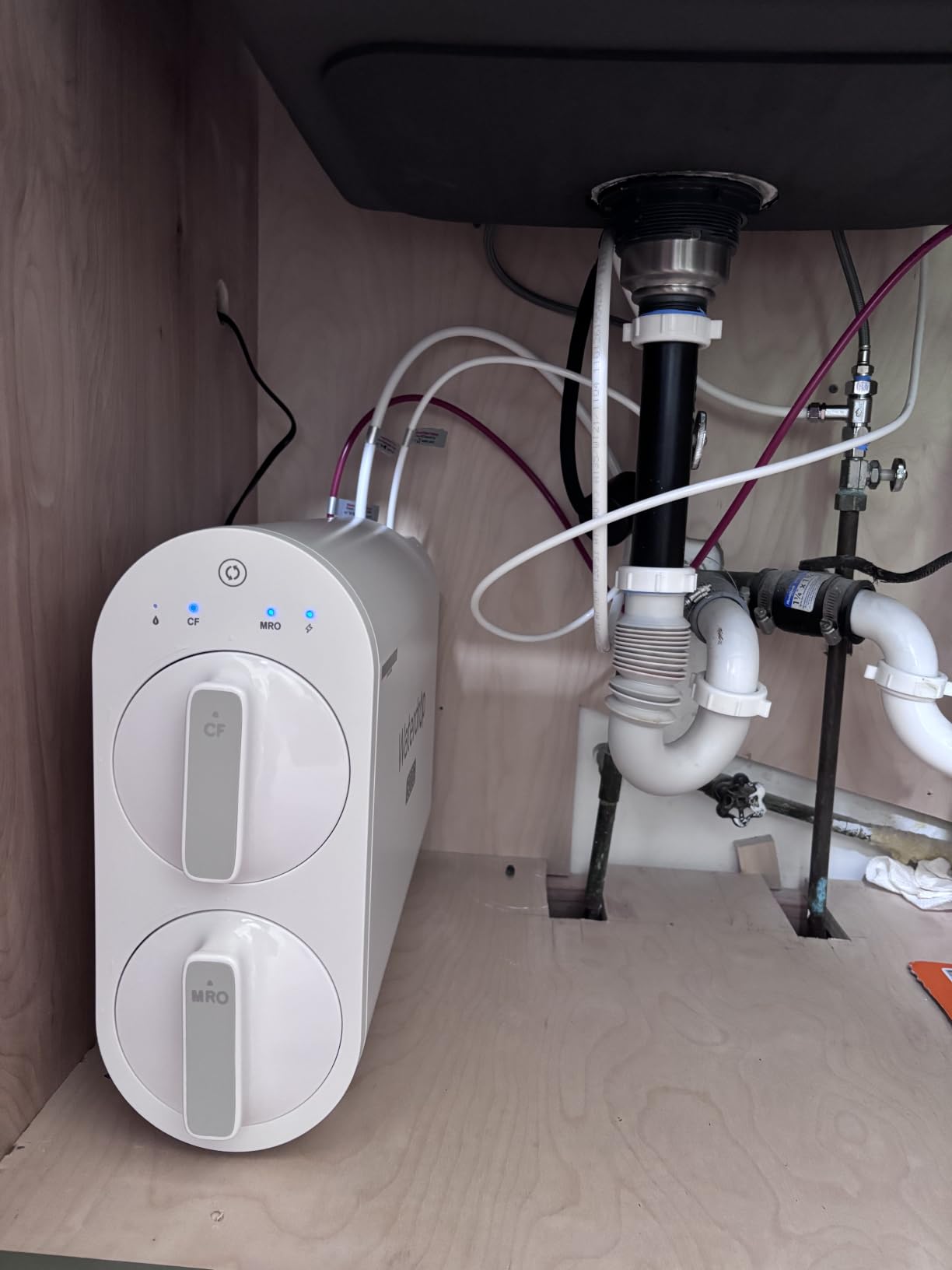
Tankless construction saves around 70 percent of the under-sink footprint, so it fits the cabinet of a rental or a small kitchen where a pressure tank will not. The system ships with a faucet and replacement filters in the box.
NSF/ANSI 372 certification covers lead free materials, which is a decent baseline but not the full drinking water certification set that the Frizzlife and the G3P800 carry.
Check your TDS number before choosing this one
The 500 ppm maximum feed TDS is the single biggest limitation. If your lab report is below that, this system works well. If it is above, you are running the membrane outside its rated envelope and you will be replacing it far sooner than the schedule suggests.
Note also that this is a 7 stage system against 8 to 10 stages on the higher models. Stage count alone is not quality, but it does track with how much post membrane polishing you get.
Where this system falls short
The 1 year manufacturer warranty is the shortest offered here. On a system with a pump, that is thin coverage, and it is worth registering the unit the day it arrives.
Like the other tankless units on this list it needs a dedicated outlet under the sink, so it is not a fit for a well house in an unheated space. We covered installation locations in our guide to water storage for well systems if yours is outdoors.
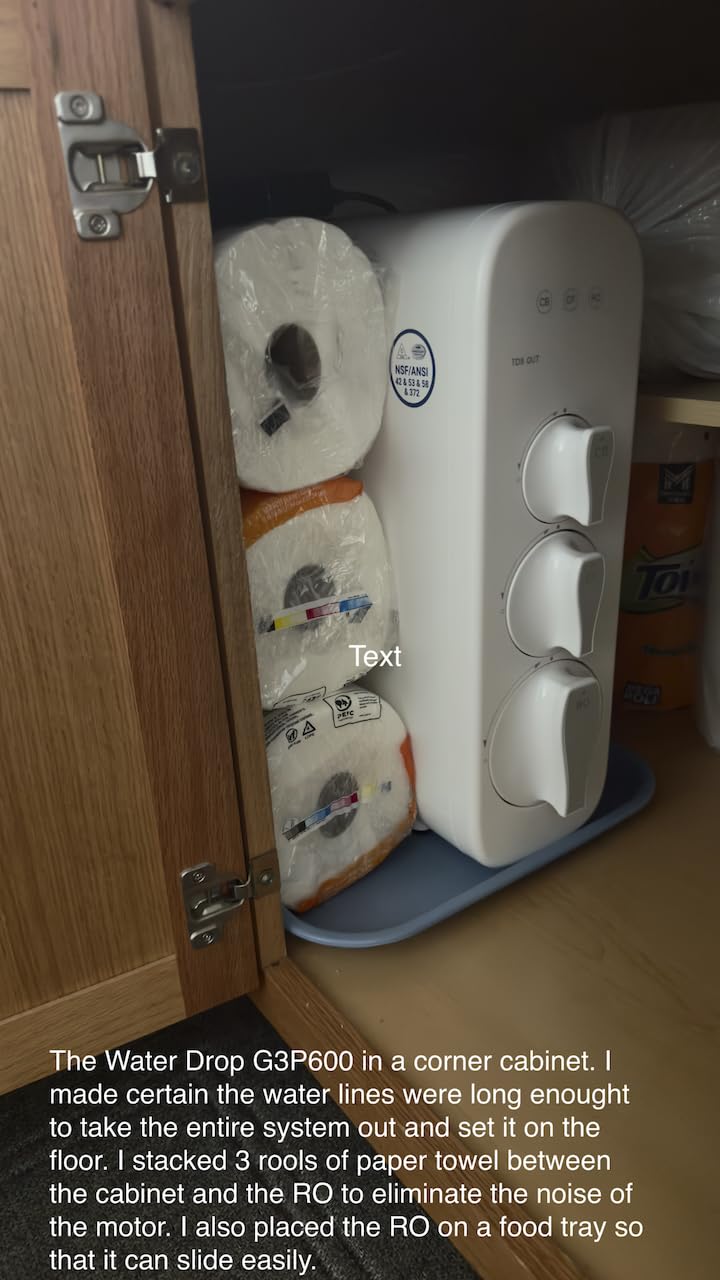
8. Waterdrop G3P600: Best Feedback at the Faucet
Waterdrop G3P600 Tankless Reverse Osmosis Water Filter System, 600 GPD
600 GPD tankless
8 stages
NSF 42/53/58/372 certified
Smart display faucet
Pros
- Display faucet shows live TDS and filter life
- Four NSF certifications
- 2:1 drain ratio with 600 GPD output
- Installation takes about 30 to 40 minutes
Cons
- Replacement filters cost more than on basic units
- Needs a dedicated under-sink outlet
- Larger faucet hole required
The smart display faucet is the reason to pick this over its cheaper sibling. It shows live TDS and remaining filter life right where you fill the glass, so you can see the system working and catch a failing membrane before flow drops noticeably.
It carries four NSF certifications, 42, 53, 58 and 372, matching the Frizzlife, and handles feed water up to 1500 ppm. That middle ground makes it a reasonable fit for a well that is mineralized but not extreme.
Performance numbers in owner reports are the best in the roundup. Several users measured a fall from 358 ppm TDS to 1 or 2 ppm, and the 8 ounce fill takes about 8 seconds. Installation is reported at roughly 30 to 40 minutes for a competent DIYer.
With more than 4000 reviews this is one of the most thoroughly owner tested systems available, which matters for a category where long term reliability is rarely documented.
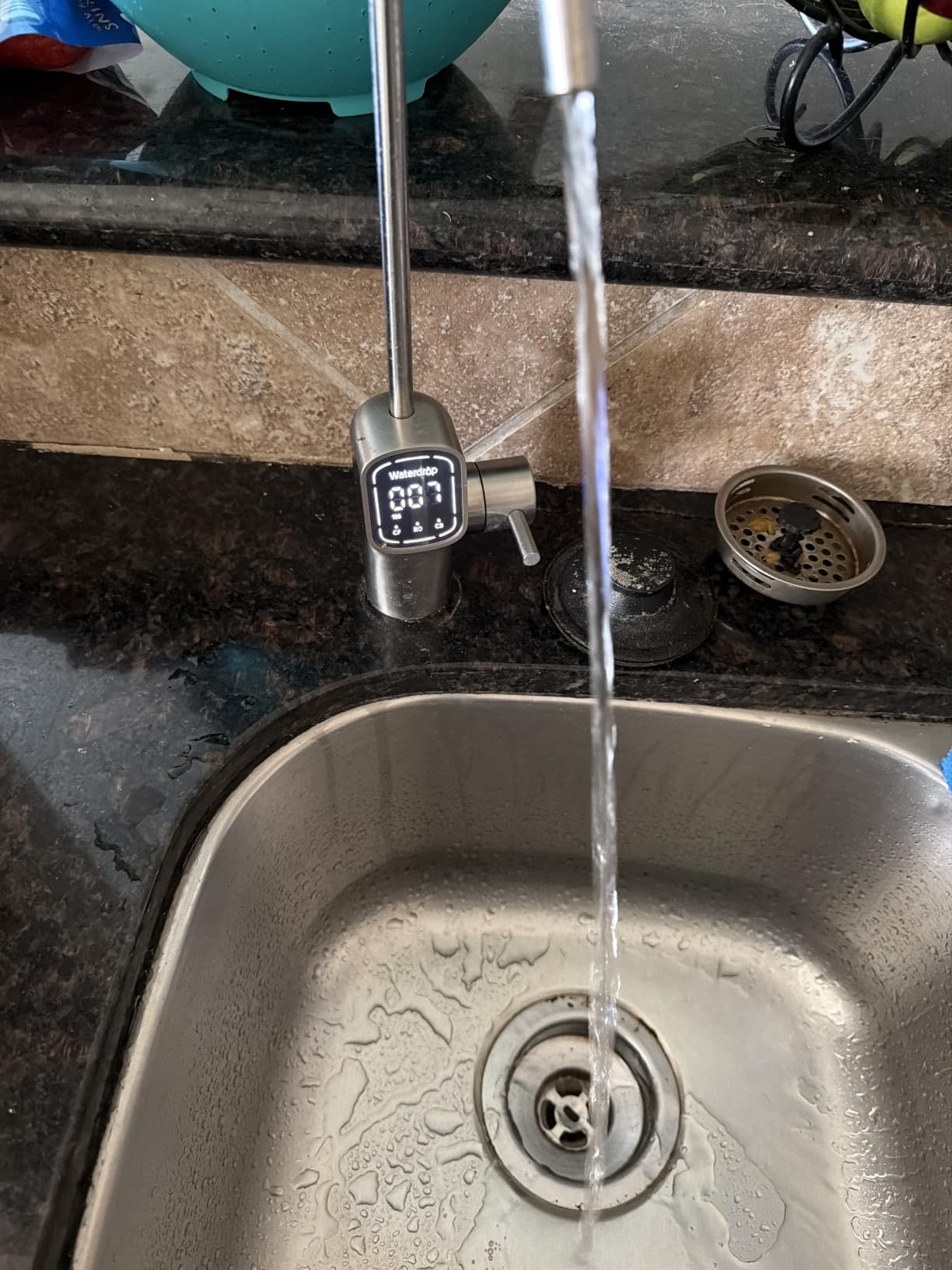
Reading the display without chasing numbers
Use the TDS readout as a trend, not a verdict. Measure your tap water once, write the number down, then compare the faucet reading to it every couple of months. A rising number with steady pressure means membrane scaling. A sudden drop with unchanged pressure usually means a fitting or a tank issue, not the membrane.
Some owners question the accuracy of the built in meter. Spend ten dollars on a separate TDS pen and use the display for convenience rather than for calibration.
Where this system falls short
Replacement filters are the most expensive in this roundup, with the composite filter and the RO cartridge both carrying meaningful ongoing cost. On a well with heavy sediment you will change pre-filters more often, and that cost recurs.
The automatic flushing cycle is inconvenient for some owners who want to collect every gallon. The tubing is rigid and awkward to route in tight cabinets, and the faucet needs a larger hole than a standard drill bit.
9. Waterdrop G3P800: For Large Households and Constant Use
Waterdrop G3P800 Tankless Reverse Osmosis Water Filter System, 800 GPD
800 GPD tankless
10 stage filtration
3:1 drain ratio
LED TDS faucet
Pros
- Highest capacity in the roundup at 800 GPD
- Cup fills in about 5 seconds
- Ten stages with four NSF certifications
- 3:1 drain ratio
- Can feed a refrigerator line
Cons
- Highest cost of the systems listed
- Feed TDS ceiling is lower than the APEC and iSpring models
- Filter cartridges are expensive
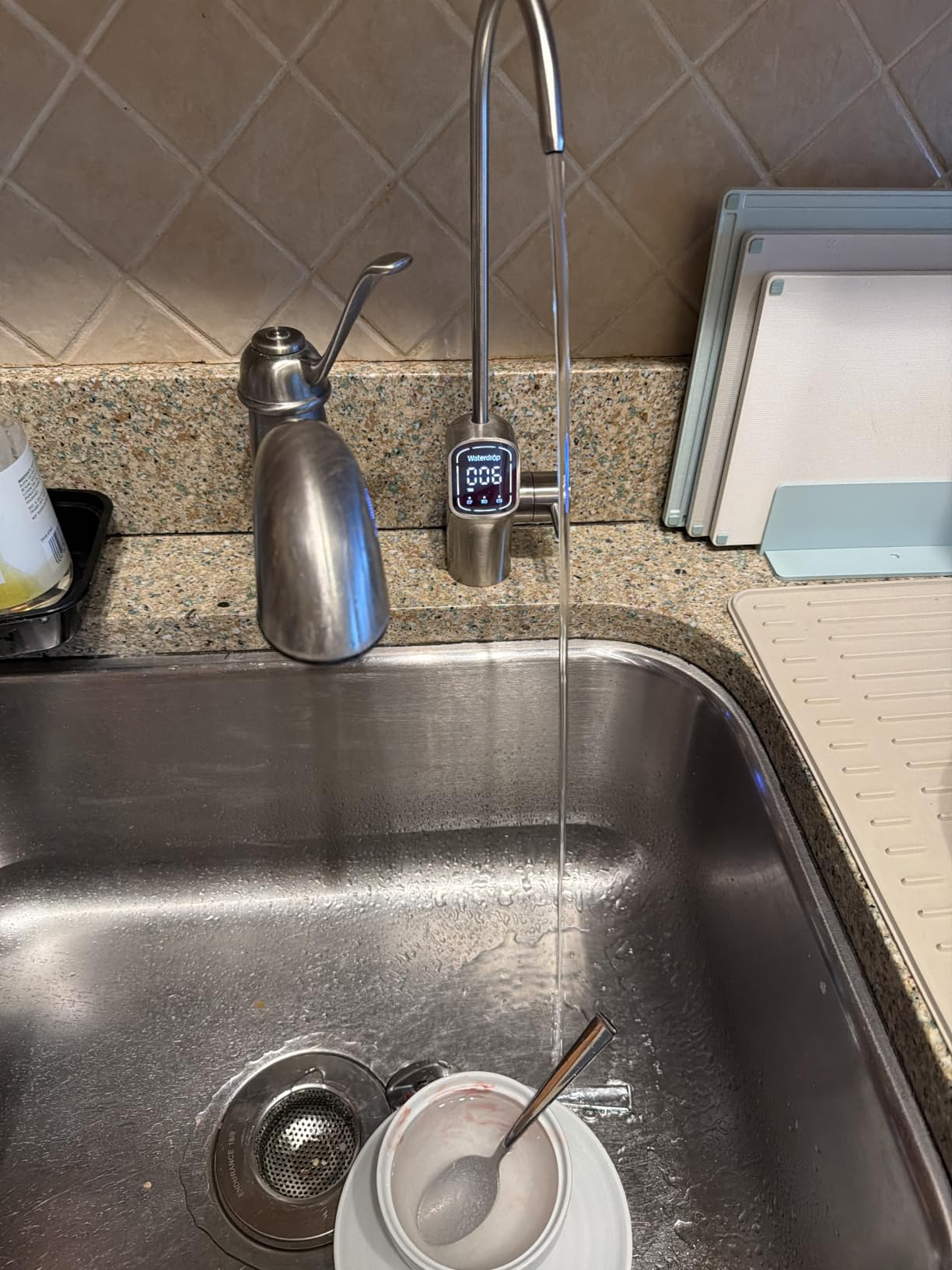
At 800 GPD across ten stages, this is the largest system here and the one built for a household that drinks water constantly. A cup fills in about 5 seconds, which is the fastest of the ten, and the smart faucet shows an LED TDS reading.
The drain ratio is listed at 3:1. Several owners describe that figure as the best in class, though it is worth understanding what it means before you count on it: the ratio describes system design, and actual waste varies with your incoming pressure and how long you run the faucet.
It can be plumbed directly to a refrigerator with a remineralization filter at the far end so ice and drinking water do not taste flat, and UV sterilization is available as an add on for wells with bacterial concerns. Confirm the stated feed TDS ceiling on the product page against your own lab report, because mineralized wells fall outside it more often than the spec sheet suggests.
With more than 5200 reviews this is the most owner tested system in the roundup by a wide margin. Customer support is repeatedly singled out for helpfulness.
Sizing capacity to a real household
Capacity is about demand, not tank size. A household of two drinking a glass with meals needs far less than 800 GPD. A family of five running an ice maker, a refrigerator line and a humidifier in summer is where the extra capacity earns its cost.
If you are not sure, measure. Count every cold water outlet that will run on filtered water for a week, then size above that number rather than at it.
Where this system falls short
This is the most expensive unit in the roundup and its filter cartridges are also the priciest to replace. Owners running it on a well with sediment will feel that recurring cost every year.
The published feed TDS ceiling on the product page sits below what several cheaper systems here claim, which is the one specification to check carefully before buying on a mineralized well. The published weight also reads as a component weight rather than the full system.
10. APEC ROES-PH75: Best When You Have No Electrical Outlet
APEC Water ROES-PH75, 6-Stage Under Sink RO System, Alkaline, 75 GPD
6 stage alkaline system
75 GPD
Rated to 2000 ppm TDS
No power required
Pros
- Runs on well pressure alone with no electrical outlet
- Handles up to 2000 ppm feed TDS
- NSF 372 and 58 certified
- Complete installation kit included
Cons
- Slowest flow here at 0.05 gpm
- Tank based so cabinet space is tight
- Small 1/4 inch faucet connection
This is the system to buy when adding an electrical outlet is not an option. It runs entirely on well pressure, which means no pump, no UV lamp, no display and no power draw. With more than 4000 reviews it is among the most thoroughly owner tested units here, on a compact 75 GPD footprint.
Despite the small size it is rated to 2000 ppm feed TDS, which is the joint highest ceiling in this roundup. That makes it a genuinely capable option for a heavily mineralized well as long as pressure is good.
Alkaline remineralization is included rather than sold as an add on, and the kit ships with filters, tank, faucet, tubing, drain saddle, feed water adapter and wrenches. Nothing extra to buy on day one.
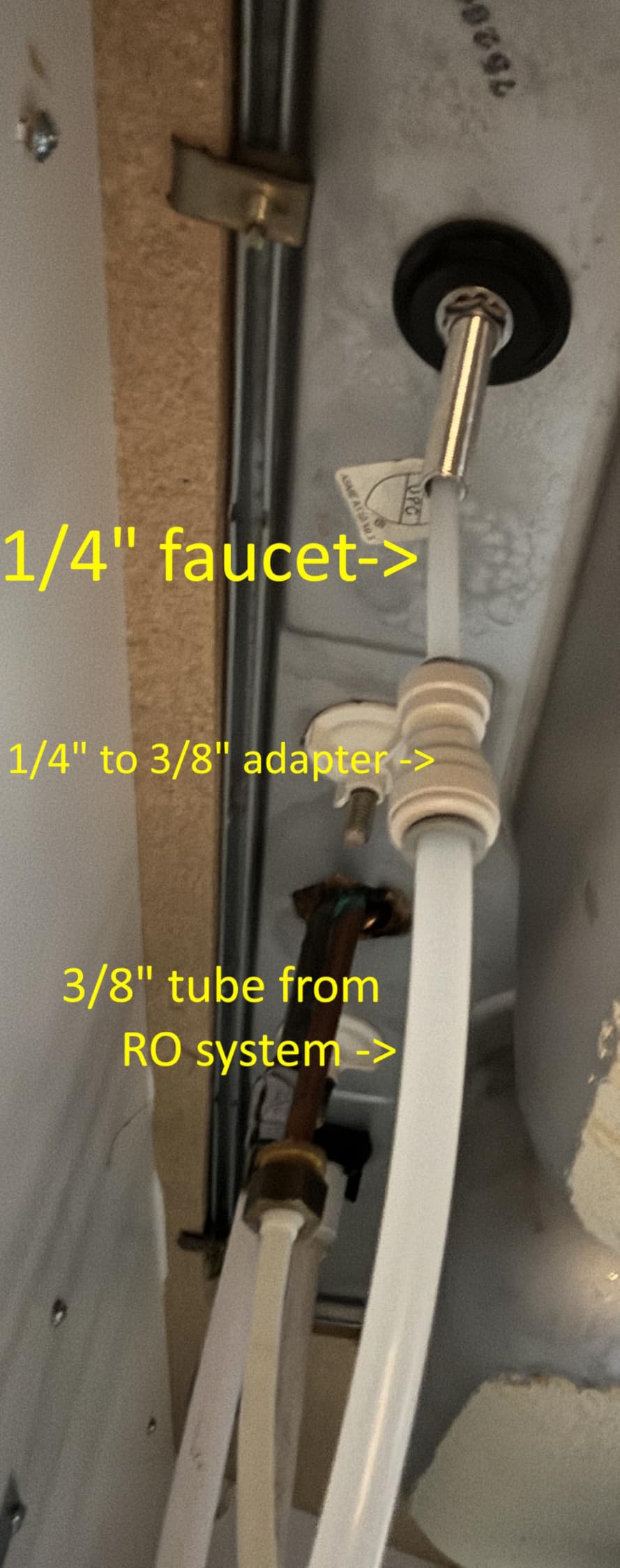
The catch is flow. A 0.05 gpm rating means a glass takes considerably longer than the units above it, and the faucet uses a 1/4 inch connection rather than the 3/8 inch fast flow outlet.
Why no power is sometimes the deciding factor
Well houses, unheated garages and older cabins without a GFCI outlet rule out every powered unit on this list. This system installs and runs with no electrical work at all, which is a meaningful saving when the nearest outlet is twenty feet away.
The tradeoff is flow and future features. No pump means you need steady pressure above 45 PSI, and no UV means bacterial protection has to come from somewhere else.
Where this system falls short
At 75 GPD this is drinking and cooking water only. It will not keep up with an ice maker, a refrigerator line or a household of heavy drinkers, and the pressure tank means it uses more cabinet space than a tankless equivalent.
No warranty length is stated on the listing. Confirm coverage in writing before you buy.
How to Choose a Reverse Osmosis System for Well Water
Get a full lab panel before you buy anything
A retail TDS meter tells you almost nothing about safety. Order a certified panel that covers arsenic, nitrate, lead, PFAS, iron, manganese, hardness, pH, alkalinity and coliform bacteria. Owners on treatment forums describe this as the step that saved them money, because it showed their problem was hardness and iron rather than dissolved health contaminants.
Read the results against the thresholds listed earlier in this guide. Above those numbers, treatment is not optional. Below them, you may only need pre-treatment and a simpler system.
Pre-treat iron, manganese and sulfur before the membrane
This is the single most important step and the one most skipped. Iron above roughly 0.3 ppm, any manganese and any hydrogen sulfide will shorten membrane life dramatically and can permanently stain fixtures. Whole house treatment is the correct answer, and we covered the options in our well water softener roundup for the hardness side.
Media choice depends on the reading. Oxidation filters using air injection or Filox style media suit iron and manganese together. Sulfur odor needs a dedicated sulfur media, and there is no substitute for it in an RO train.
Test pressure the way the system will actually run
Attach a gauge to a cold tap and run the shower or another fixture for two minutes, then read the gauge. That number, not the resting pressure, is what your membrane sees. Above 60 PSI means you can skip the booster pump. Between 45 and 60 PSI means the pump is optional but wise. Below 45 PSI means buy the pumped version and check that your pressure tank is adequately sized.
Owners frequently ask whether their pressure tank is big enough for a booster pump. The answer depends on household demand, not tank brand, and an undersized tank is a common reason pumped RO systems still feel slow.
Size GPD to demand rather than to marketing
Tankless ratings describe peak flow, not daily volume. For drinking and cooking, 75 to 100 GPD suits a couple. 300 to 500 GPD suits a family of four with an ice maker. 600 to 800 GPD suits larger households, refrigerator connections and humidifiers.
Tank-based units deliver a slower but steadier stream because pressure is stored. That is fine for a pitcher and wrong for filling several large bottles at once.
Decide between tankless and tank-based
Tankless systems free up cabinet space and produce water on demand without a stored reserve. They need an outlet and they waste every drop produced while you are filling. Tank-based systems store water, work without power in most configurations and cost less, but they take space and slowly lose tank pressure.
Neither is better in general. Choose tankless for cabinet space and speed, tank based for simplicity and no power dependency.
Consider UV only when bacteria are a real finding
UV sterilizers inactivate bacteria and viruses. They do nothing for metals, salts or nitrates, and they add a lamp to maintain. If your panel shows coliform bacteria, a dedicated UV unit is worth the cost. If it does not, the money is better spent on pre-treatment media.
Use alkaline remineralization unless you dislike it
RO strips minerals along with contaminants, which is why the water tastes flat and some people avoid drinking it plain. A calcite or magnesium remineralization cartridge raises pH and puts a small amount of calcium and magnesium back. Seven of the ten systems here include one. If you plan to drink the water straight and dislike flat taste, this filter is worth having.
Factor water waste into septic and well decisions
A 3:1 system sends three gallons down the drain for every gallon you use. On a property with a septic field that adds up across a summer, and on a low yield well it can compete with household use. Pick a higher efficiency ratio, and never run the faucet for the length of a fill if you only need part of a glass.
Where volume is tight, a permeate pump that recirculates rejected water is the standard fix, though it adds cost and complexity.
Frequently Asked Questions
Does a reverse osmosis system work with well water?
Yes, and it is often more necessary on a well because nobody else is testing the water. RO removes dissolved contaminants like arsenic, nitrates, PFAS, fluoride, lead and salts from well water very effectively. It must be fed by pre-treatment when the well carries iron, manganese, sulfur or hardness, and it needs feed pressure above roughly 45 PSI.
What is a major downside of reverse osmosis water?
The most common complaint is flat taste, because the membrane strips out minerals along with the contaminants. A calcite or alkaline remineralization cartridge fixes the taste and puts a little calcium and magnesium back. The other real downsides are water waste at two or three gallons per gallon used, and a cost for filters that has to be budgeted every year.
What is the most effective filtration system for well water?
It depends entirely on what your lab report shows. For dissolved health contaminants such as arsenic, nitrate, PFAS and fluoride, reverse osmosis is the most effective household method. For iron, manganese and hydrogen sulfide, whole house oxidation or sulfur filtration is the right answer. For hardness, a water softener handles it. Treating the wrong problem is the most common and most expensive mistake well owners make.
Is RO water hard on the kidneys?
There is no strong evidence that drinking properly filtered RO water is harmful to healthy kidneys. RO removes dissolved minerals and trace elements, so the sensible advice is to drink a varied diet and consider a remineralization cartridge. People on a restricted fluid diet or with a specific medical condition should follow their clinician’s guidance rather than general filtration advice.
Will reverse osmosis remove sulfur?
Not reliably, and you should not try. Hydrogen sulfide at well concentrations will foul membrane surfaces and shorten membrane life sharply. Treat sulfur with a dedicated sulfur media filter or an oxidation based whole house system before the water ever reaches the RO membrane.
Does reverse osmosis remove iron from well water?
Only in trace amounts. Dissolved iron above roughly 0.3 ppm will scale and foul the membrane, and oxidized iron will physically plug the membrane surface. Install an iron prefilter or a whole house oxidation filter ahead of the system, and change it on a schedule based on your test results rather than on taste.
What is the best booster pump for a reverse osmosis system?
For most wells the simplest answer is to buy a system with the pump already integrated, since the pump is matched to the membrane and the tubing is sized correctly. Choose a pumped model when your gauge reading under draw drops below 45 PSI. Also confirm your pressure tank is large enough for your household demand, because an undersized tank will still leave the system short of pressure.
Final Verdict
The Frizzlife PD600 is the best reverse osmosis system for well water in 2026 for a reason that has nothing to do with marketing: four independent NSF certifications, a 600 GPD tankless design, alkaline remineralization and a faucet that shows you live TDS. For wells carrying iron, the Home Master TMHP is the pick because its built-in iron prefilter is not otherwise easy to find. For marginal pressure, the iSpring RCC1UP-AK solves the problem out of the box.
Run a full lab panel first, pre-treat whatever the report shows, and then pick the membrane that matches your pressure, your TDS and how much water your household actually uses. Get that order wrong and no system on this list will last.