
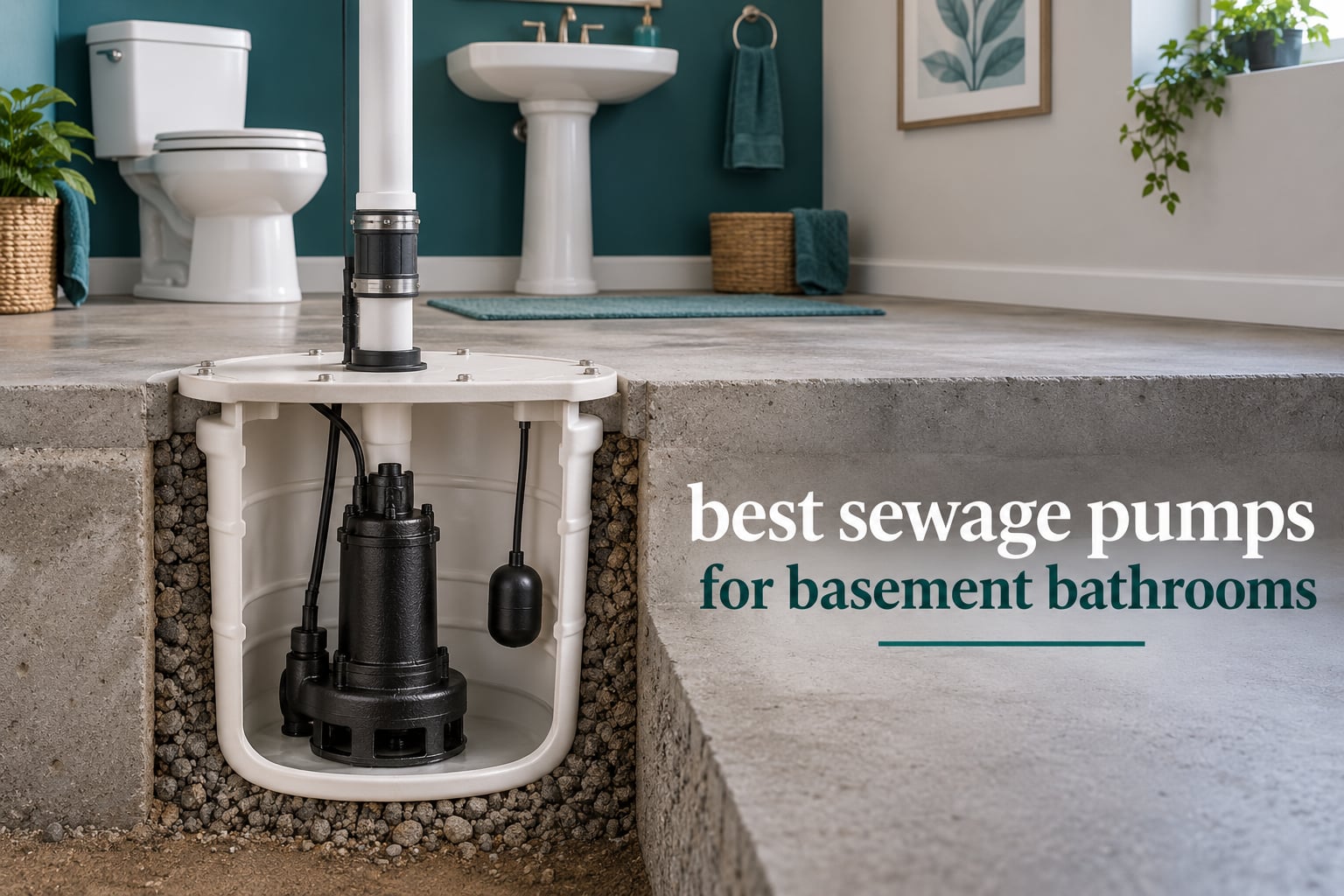
Basement bathrooms are the one room in a house that most often needs a pump, and most people only discover that they need one after a contractor quotes a line item called a sewage ejector pump. If your drains sit below the main sewer line, waste physically cannot leave the room by gravity, so something has to lift it. That something is a submersible sewage pump sitting in a sealed basin under the floor.
The three fears we hear over and over are the same ones forums repeat: sewer gas in a finished living space, clogs from wipes and hygiene products, and a flooded basement the morning after a power cut. Each of those has a specific fix, and in most cases the fix is the installation rather than the pump itself. A gas-tight lid, a check valve, an alarm float and a basin vented correctly will do more for a basement bathroom than any horsepower number on a box.
We spent weeks reading spec sheets, install guides and owner reports across eight pumps that cover the whole basement-bathroom category: conventional solids-handling submersibles, packaged basin systems, and macerator units for the tightest installs. Nothing in this list carries a price, because pump pricing moves daily; use the check buttons and read the specs. Ratings and review counts are copied exactly as listed at the time of writing, and they change too.
Table of Contents
Top 3 Picks for Best Sewage Pumps for Basement Bathrooms in October
These three cover the realistic range for most homes. The Zoeller is the one we would put in a finished basement, the Liberty LE51A is the strongest conventional pump on paper, and the Wayne RPP50 is the pick when the budget is the deciding factor.
What kind of pump does a basement bathroom need?
A basement bathroom needs a solids-handling submersible sewage ejector pump, not a sump pump and not an effluent pump. Waste flows by gravity from the toilet, sink and shower into a sealed basin below the floor. A float switch detects the rising level, the pump lifts the waste up a discharge line to the main sewer or septic line, and a check valve stops it running back and refilling the basin. Solids-handling means the pump can pass a 2 inch spherical solid without jamming, which is what happens when someone flushes a wipe or a hygiene product.
Three pump types get confused here constantly, and picking the wrong one is the top cause of early failure:
Solids-handling sewage pump. An open or vortex impeller that passes 2 inch solids whole. This is the default and correct choice for a basement bathroom with a normal gravity discharge to a municipal sewer.
Grinder or macerator pump. A rotating cutter or blade shreds waste into a slurry before it moves. Needed for long or high discharge runs, for a pressurised sewer tie-in, or where local code specifically requires one. A macerator is also the answer when there is no room for a buried basin at all.
Effluent pump. Handles grey water with a small particle size only. Put one on raw sewage and it will clog within weeks. It has no business serving a toilet.
One more category gets dragged into these searches constantly: the sump pump. A sump pump moves clear water out of a pit because groundwater or a leaky foundation is pushing in. It is a different machine with a different impeller and it is not an option once a toilet is on the line. If a page tells you a sump pump will serve a basement bathroom, close it.
Best Sewage Pumps for Basement Bathrooms in 2026
| Product | Specifications | Action |
|---|---|---|
| Zoeller Waste-Mate 267-0001 |
|
Check Latest Price |
 Wayne RPP50 1/2 HP Cast Iron Wayne RPP50 1/2 HP Cast Iron |
|
Check Latest Price |
 Liberty LE51A 1/2 HP Liberty LE51A 1/2 HP |
|
Check Latest Price |
 Liberty P382LE51 24×24 System Liberty P382LE51 24×24 System |
|
Check Latest Price |
 Wayne SEL50 Thermoplastic Wayne SEL50 Thermoplastic |
|
Check Latest Price |
 SANIFLO Saniaccess 3 SANIFLO Saniaccess 3 |
|
Check Latest Price |
 SANIFLO Saniplus SANIFLO Saniplus |
|
Check Latest Price |
 Liberty P372LE51 21×30 System Liberty P372LE51 21×30 System |
|
Check Latest Price |
Read the table as a decision tool rather than a ranking. Two of these are complete packaged systems with the basin moulded in, two are macerators that need no basin at all, and four are bare pumps that assume you already have a basin and controls.
1. Zoeller Waste-Mate 267-0001: the best overall sewage pump for a finished basement
Zoeller Waste-Mate 267-0001 Sewage Pump, 1/2 HP Automatic
0.5 HP cast iron
2 in. solids
125 GPM
21.5 ft max head
35.8 lb
Pros
- Heavy cast iron build owners call exceptionally durable
- Quiet running and fast basin drainage
- Copes with a full bathroom of shower sink and toilet
- Clear installation instructions and diagrams
- Owners report 8 to 9 years and more of service
Cons
- Integral float switch is the first part likely to fail and is sold separately
- Some reports of backward flow when the pump shuts off
- 35.8 lb unit is awkward to lower into a tight basin
- Needs careful discharge routing to limit pipe noise
The 267-0001 is the pump that comes up most often when plumbers and homeowners argue about reliability, and it is the one we would default to. It is a 1/2 HP cast iron submersible rated at 125 GPM with a maximum lift of 21.5 feet, which is enough head for a typical basement that has to reach a street main or a raised septic line. The housing is ASTM Class 25 cast iron and the impeller is a non-clogging vortex design that passes 2 inch spherical solids.
Operation is fully automatic through an integral two-pole float switch, so there is no separate float to hang and no control panel to wire. That matters more than it sounds, because the most common install mistake we see is a tether float set at the wrong height in a basin that is too shallow.
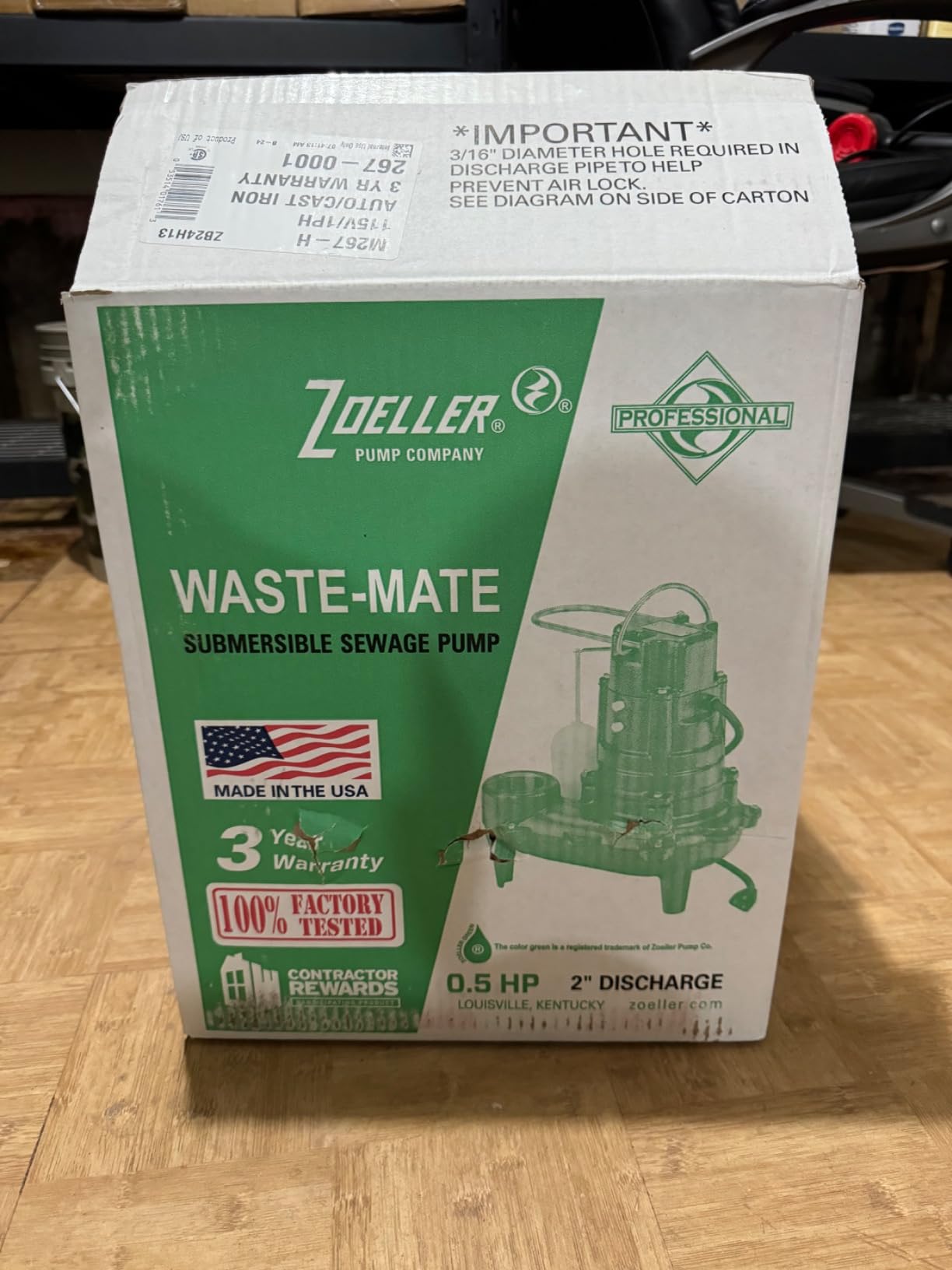
What owners consistently praise is the weight of the build. Cast iron of this density resists the abuse of a basin that is dropped on by a water heater, and the quiet running matters in a finished space next to a bedroom wall. Several owners describe a decade of service from the same unit, and the instructions and diagrams shipped with the pump are genuinely good for a DIY-adjacent reader.
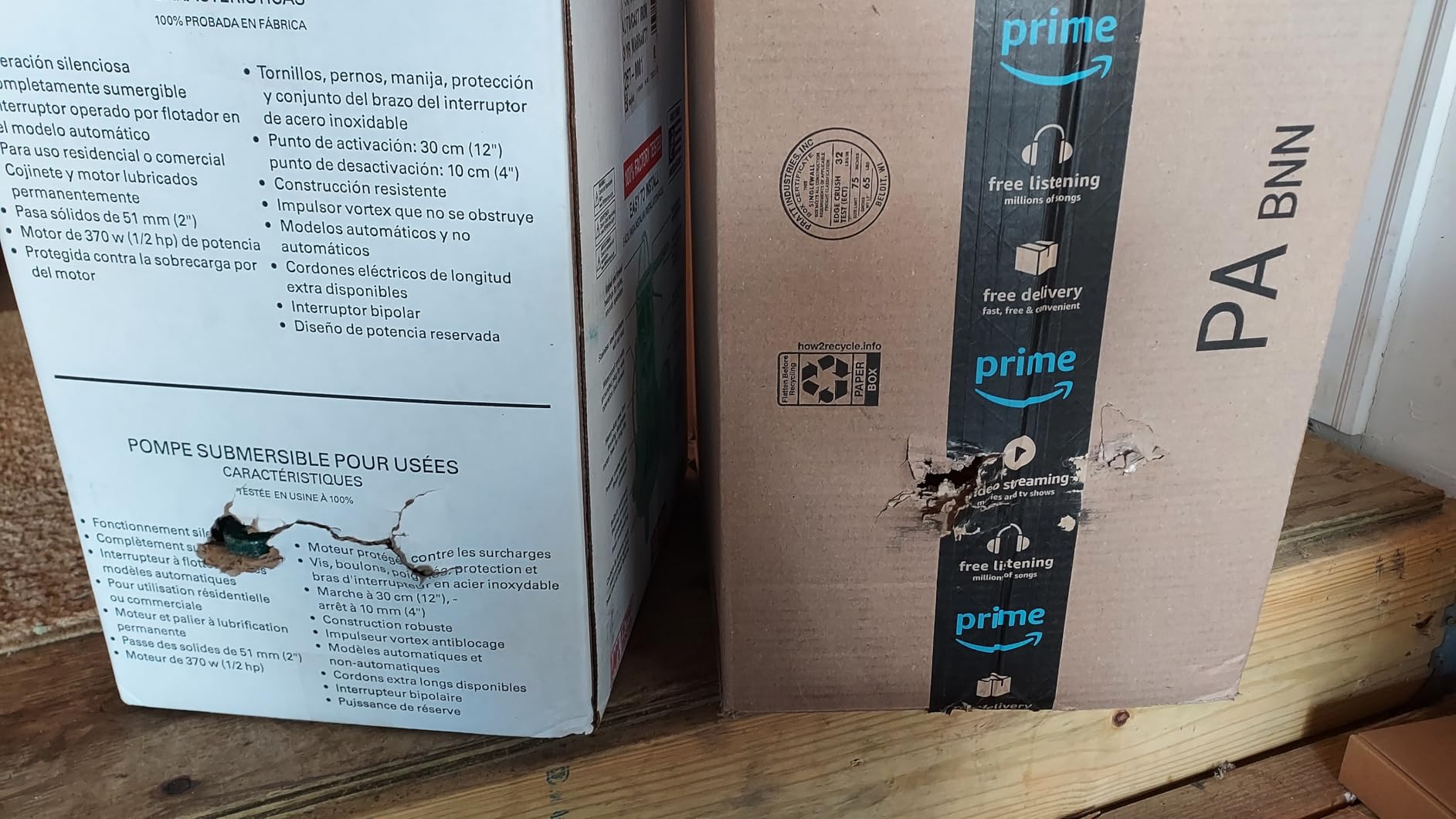
The honest weakness is the float switch. It is built into the pump and is not supplied as a separate service part, so when it finally fails after many years the whole assembly is usually replaced. A few owners also report residual backward flow at shutoff, which is a discharge-line and check-valve problem rather than a pump problem, and the 35.8 lb unit is genuinely awkward to lower into a tight basin by yourself.
What to check before buying
Measure your actual vertical lift from the basin to where the discharge ties into the sewer. This pump tops out at 21.5 feet, and flow drops steeply as you approach that number, so if your run is long and high you want more margin than the label gives you. A long flat run to a street main also adds friction that the head rating does not advertise.
Decide early whether you are buying a bare pump or building the basin yourself. The listing is product only, so a basin, a gas-tight lid, a check valve and a discharge pipe are all separate purchases. Owners who bought this as a bare pump and paired it with a good basin report the smoothest results.
Where it falls short
If your discharge ties into a pressurised or municipal sewer line that requires a grinder, this is the wrong mechanism and no amount of installation care changes that. It is also not the right pick for someone on a very tight budget, and the integrated float rules out field-swapping the pump for a different horsepower later.
If you want the rest of the basement system covered too, our guide to the best sewage ejector pumps for basements covers the packaged systems in more depth.
2. Wayne RPP50: best value cast iron sewage pump
WAYNE RPP50-1/2 HP Cast Iron Sewage Pump with Piggy Back Tether Float Switch – Up to 6,200 Gallons Per Hour – Heavy Duty Sewage and Effluent Pump
0.5 HP cast iron
6200 GPH
2 in. NPT
10 ft max head
21 lb
Pros
- Solid and quiet cast iron construction
- Passes solids through as advertised
- Drops into many existing basins with few plumbing changes
- Good value among 1/2 HP cast iron sewage pumps
- Rated for 18 in. diameter or larger basins
Cons
- Lowest average rating in this group at 4.1
- Several reports of motor or switch failure near the two-year mark
- Tether float needs basin depth and can cut out with the motor partly exposed
- A 2 in. adapter and extra PVC usually finish the install
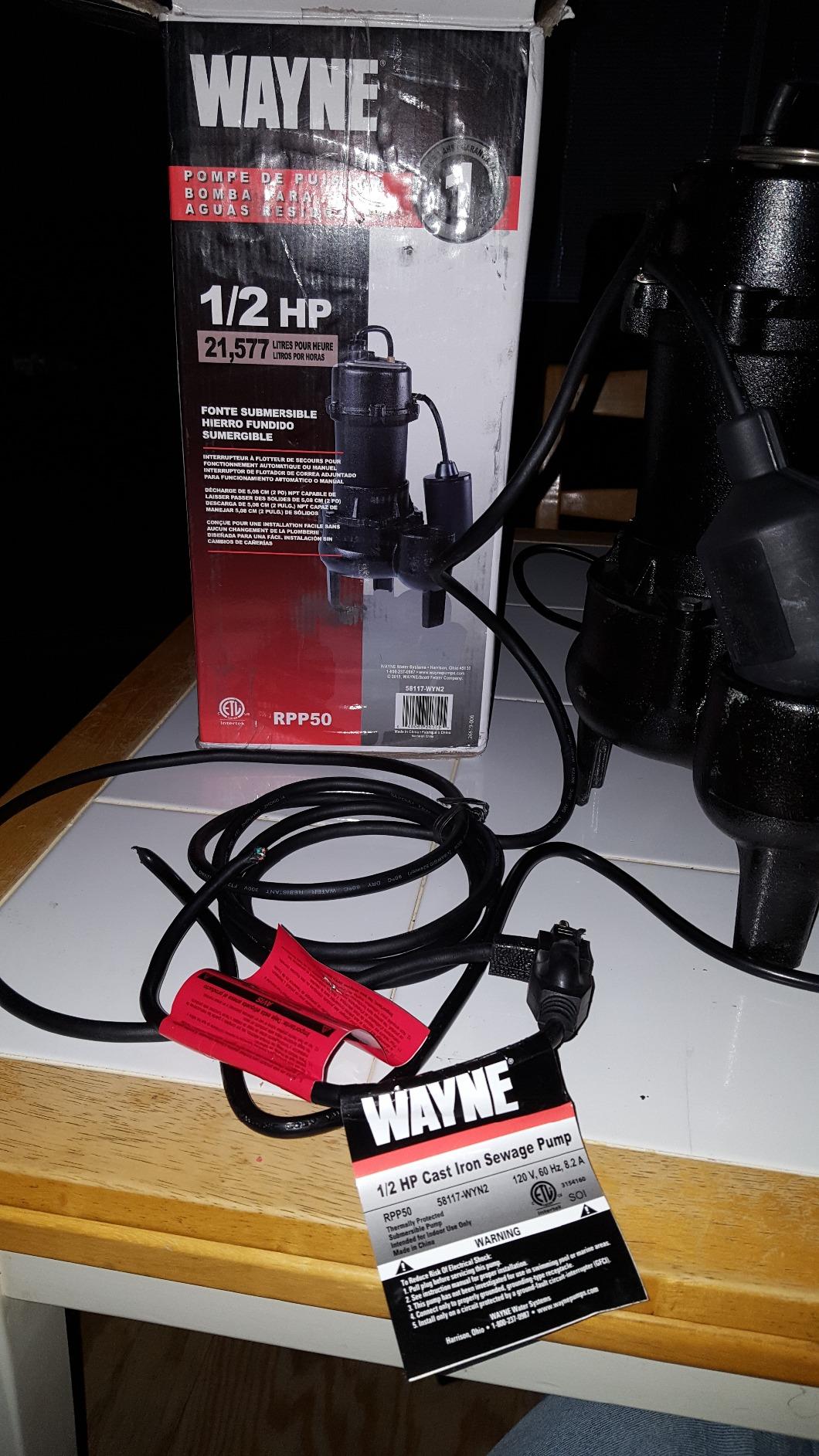
The RPP50 is the pick for a straightforward basement half bath or a laundry where the budget is tight but you still want a cast iron wet end. It runs at 103 GPM with a 10 foot maximum lift, handles up to 2 inch solids through a 2 inch NPT discharge, and is rated for basins 18 inches in diameter or larger. The piggyback tether float is a design we like in principle because the plug can be pulled to test the motor directly.
It weighs 21 lb, which is less than half the weight of the cast iron units above it, and that combination of cast iron plus manageable weight is unusual in this category. Installers report that it drops into a lot of existing basins without restructuring the plumbing, which is where most of the labour cost of an ejector install actually sits.
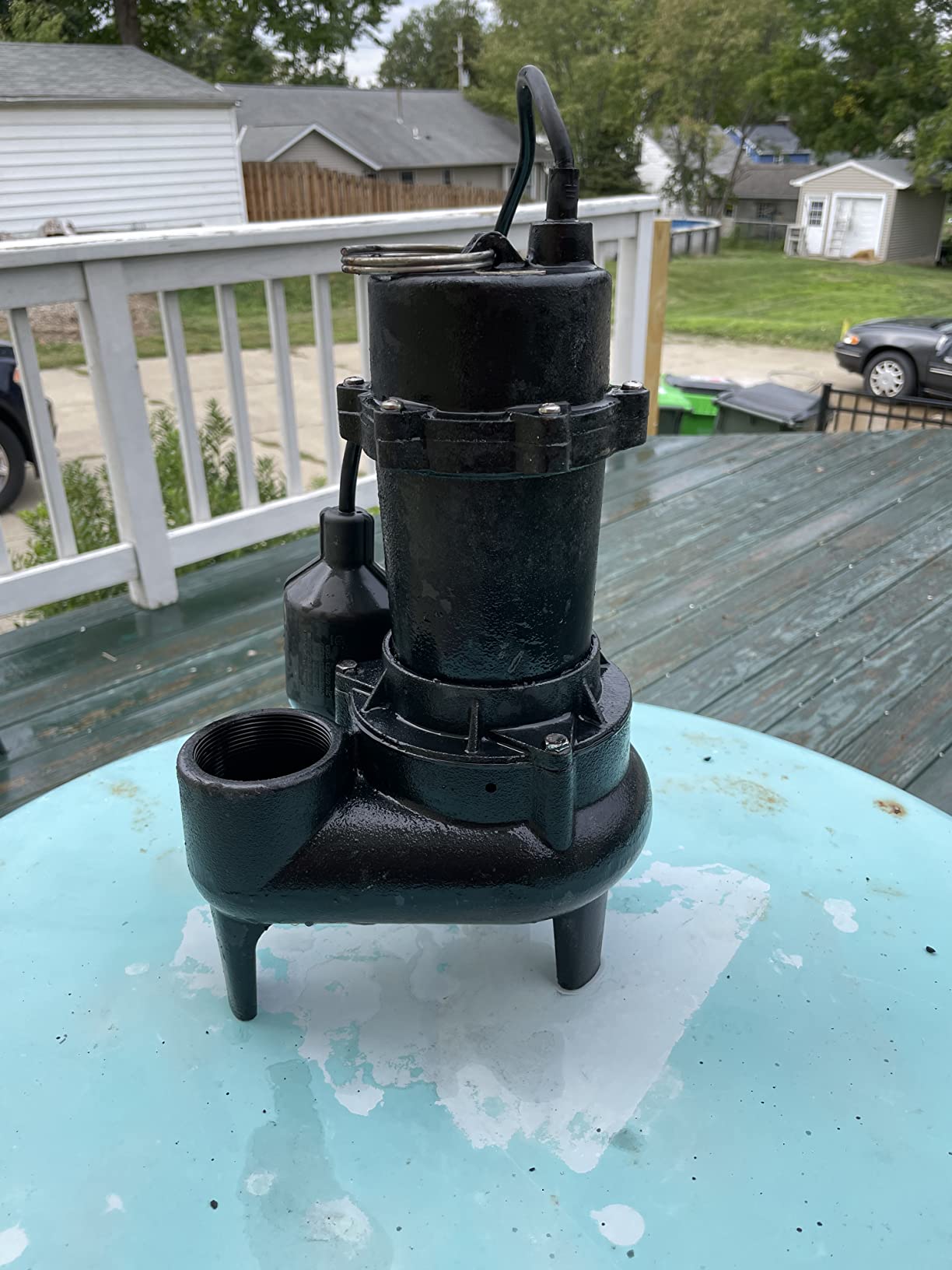
The rating is the reason this sits second rather than first. At 4.1 out of 5 with a meaningful share of one-star reviews, this is the weakest score in the group, and the complaints cluster in one place: durability. Several owners describe motor or switch burnout at roughly the two-year mark, and some units failed on first submergence. Others in the same review base report a predecessor unit running for two decades, so the failure pattern is inconsistent rather than universal.
The tether float is the second thing to think hard about. It needs enough basin depth to swing free and switch on reliably, and it can stop the pump while the motor is still partly exposed to air, which shortens motor life. A vertical float switch is the fix if your basin is shallow.
What to check before buying
Confirm your lift is under 10 feet. This is the shortest head rating among the cast iron pumps here, and it is the single specification most likely to rule it out of a deep basement with a long run to the street main. If the lift is marginal, step up to a higher-head pump rather than hoping.
Check the basin diameter. The pump is rated for 18 inch or larger basins, and a narrower pit will stop the float from operating correctly no matter how the tether is set.
Where it falls short
Budget for the fittings. A 2 inch threaded adapter and additional PVC are usually needed to complete the discharge, and the 1-year limited warranty is the shortest in this group. Owners who want a quieter, longer-lived motor and a longer warranty should look at the Liberty units instead.
For the mechanism differences that matter if you are weighing this against a grinder, see our grinder pump picks for basement bathrooms.
3. Liberty LE51A: the highest rated conventional sewage pump
Liberty Pumps LE51A 1/2-Horse Power 2-Inch Discharge LE50-Series Submersible Automatic Sewage Pump, Stainless Steel, Cast Iron
0.5 HP cast iron and steel
160 GPM
25 ft max head
2 in. discharge
42 lb
Pros
- Highest average rating here at 4.7 with 85 percent five-star reviews
- Oil-filled thermally protected motor
- Permanently lubricated ball bearings
- Stainless steel fasteners and shaft
- Best flow and head figures of the conventional pumps
Cons
- Bare pump only with basin check valve and controls sourced separately
- Heaviest conventional unit at 42 lb so basin handling needs two people
- Smaller review base than the Wayne and Zoeller models
The LE51A has the best paper specification of any conventional pump on this list: 160 GPM and a 25 foot maximum lift from a 1/2 HP motor, with a 2 inch discharge. That head figure is the highest here, and it is the number that decides whether a pump can push waste up to a street main from a deep pit or whether it will run and stall.
The motor is the reason owners rate it so highly. It is oil-filled and thermally protected, running on permanently lubricated ball bearings, with stainless steel fasteners and shaft. That is a mechanical design aimed at long service intervals rather than the first two years, and it carries a 2-year warranty against factory defects in material and workmanship.
It is a bare pump. The basin, the check valve, the float control and the lid are all separate items, so budget and plan for a full system rather than a drop-in replacement. At 42 lb it is the heaviest conventional unit here, and lowering it into a preformed basin is a two-person job, especially in a tight excavated corner.
The other limitation is the review base. At 230 reviews it is the smallest sample of the cast iron units, so the 4.7 rating is impressive but based on fewer owners than the Zoeller’s 961. Treat it as a strong signal rather than a certainty.
What to check before buying
Run the lift calculation before anything else. If your discharge has to climb more than about 20 feet, or run a long horizontal distance to a street main, the 25 foot rating leaves you thin margin. Below that, this pump has the most headroom in the group.
Plan the lift path for two people. With a 42 lb cast iron body and a preformed basin that is already awkward to position, the basin work will set your schedule.
Where it falls short
It is not a complete system, so the total project cost of a basement bathroom ejector depends heavily on what you already have in the floor. If you do not have a basin, the packaged Liberty systems further down this list will get you a working installation with fewer decisions to make.
It also cannot be swapped for a grinder later without replacing the pump, because a grinder unit in the same footprint has a different discharge arrangement.
4. Liberty P382LE51: best complete sewage system with a shallow basin
Liberty Pumps P382LE51 1/2-Horse Power 24 by 24-Inch Pro380 Series Simplex Sewage System
0.5 HP pump plus 24 in. basin
41 gallon capacity
140 GPM
24 ft max head
Pros
- Pump controls and molded basin supplied as one package
- Shallow 24 in. basin reduces excavation depth
- Separate access cover for float and alarm service
- Rated a full 24 feet of head in one package
Cons
- Bulky at roughly 66 lb and heavier than a bare pump
- Prefixed inlet pipe positions awkward against a basement wall
- Oversized footprint for a powder room or half bath
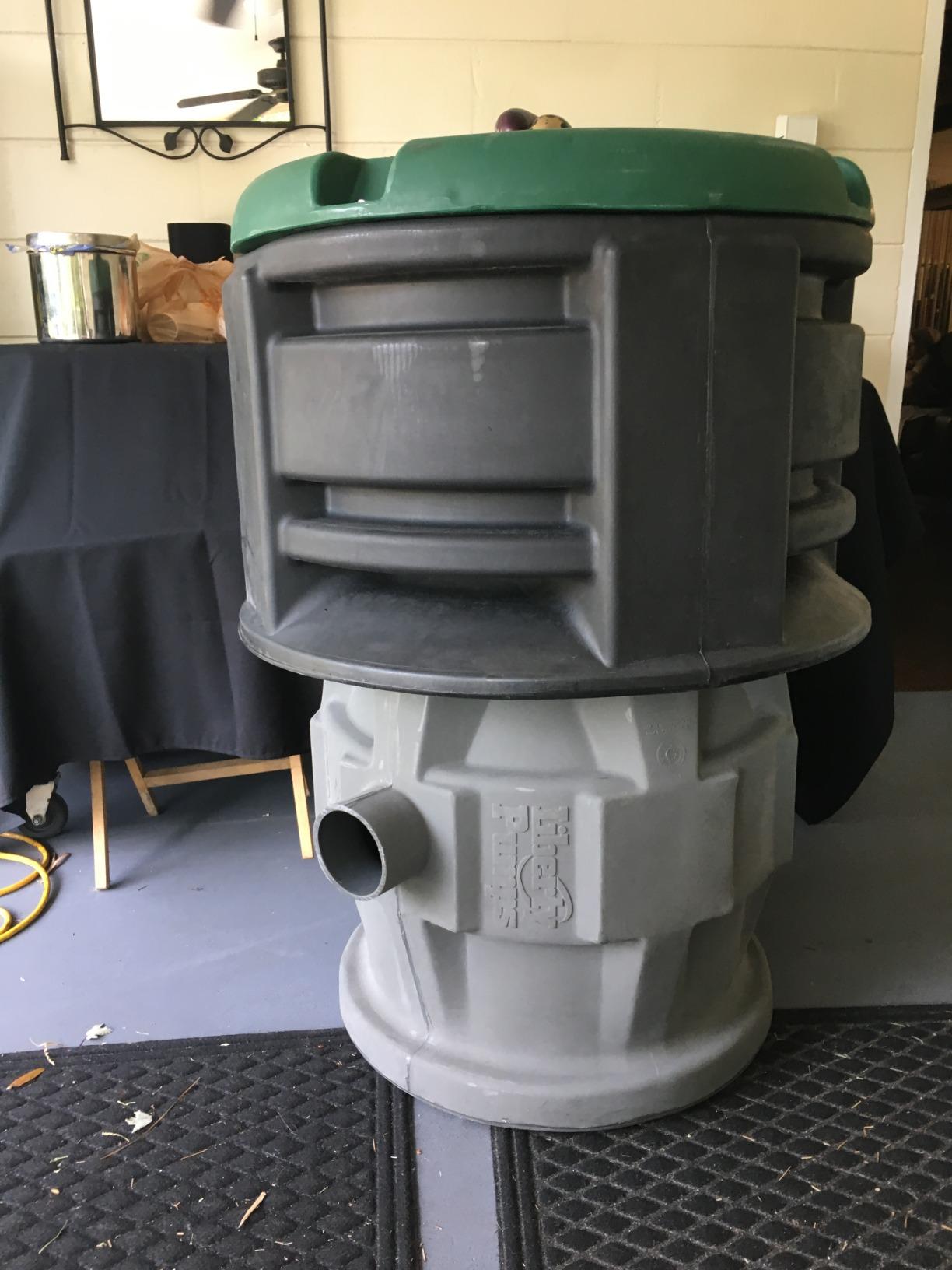
Most of the cost and most of the risk in a sewage ejector installation is in the basin, not the pump. The P382LE51 removes that problem by shipping as a factory-assembled package: pump, controls and a moulded 24 inch square basin with a 41 gallon capacity, an anti-flotation collar and a separate access cover. You are buying a working pump-up system rather than a motor in a hole.
The shallow basin is the practical win. At 24 inches it needs far less excavation depth than a 30 inch pit, which matters in a finished basement where floor depth is limited and where a deeper hole means more concrete cutting and a bigger repair. Rated head is 24 feet with 140 GPM flow.
The separate access cover is what will save you money over ten years. Owners mention that being able to get to the float and the alarm without cutting into the discharge piping turns a two-hour job into a ten-minute one.
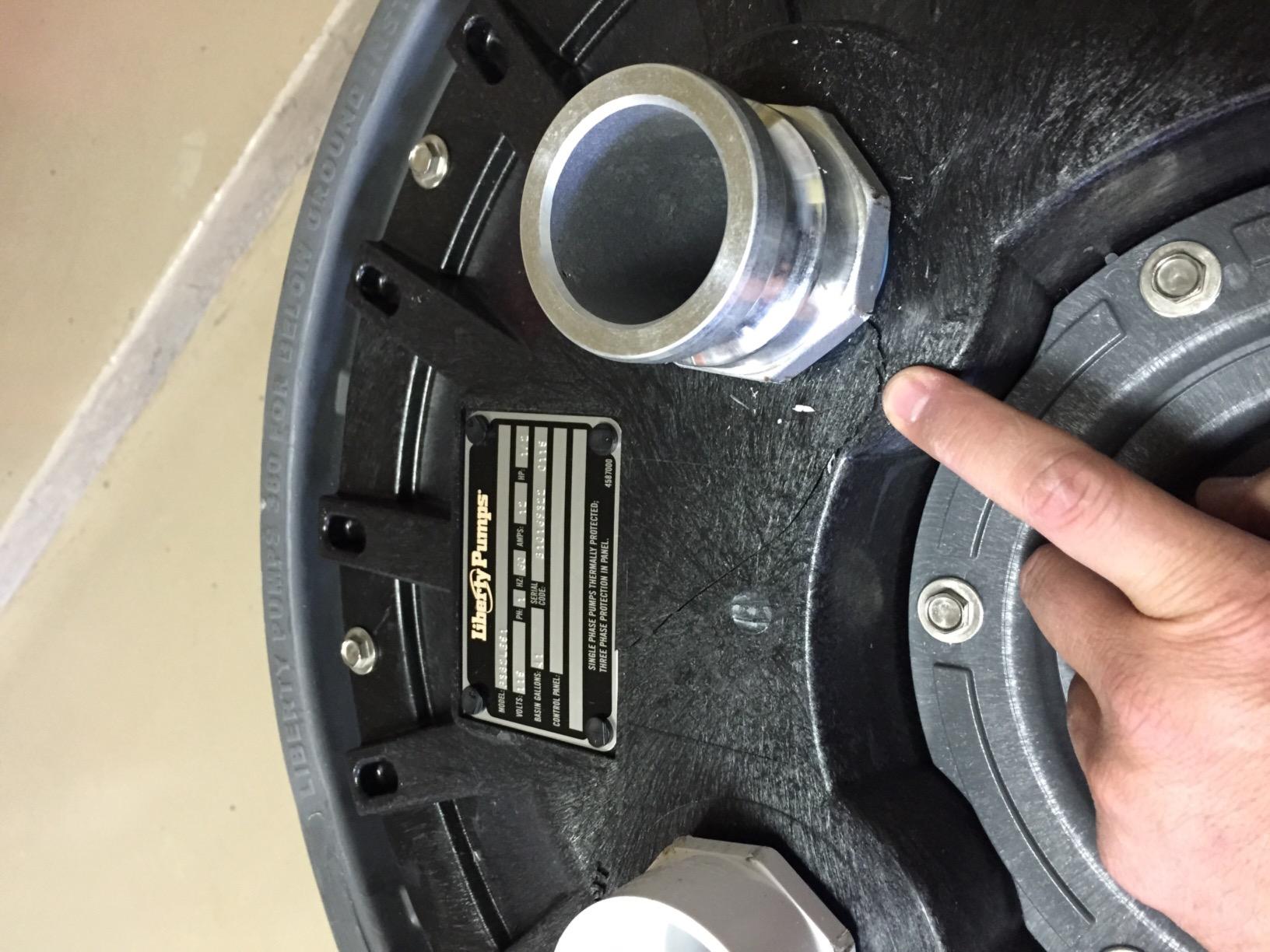
The friction here is physical. At roughly 66 lb the assembled unit is heavy and awkward to manoeuvre into position, and you need to plan the path from the doorway to the pit before the crate is opened. Owners also report that the moulded inlet pipe locations are not always where you want them against a basement wall, and relocating a preformed inlet is a real job rather than a five-minute adjustment.
For a small basement half bath, this package is more basin than the job needs. A powder room produces a fraction of the flow of a full bath, and you are carrying capacity you will never use.
What to check before buying
Measure the vertical space between the finished floor and the sewer or septic tie-in, then subtract the basin depth and the discharge routing. A 24 inch basin is forgiving, but it still needs room for a check valve, a discharge line and enough head to lift.
Plan the inlet positions against your actual wall layout before the unit arrives. The 24 inch square footprint is fixed, and the moulded inlets are not adjustable.
Where it falls short
This is a single-function conventional system, so a house that needs a grinder for a long discharge run is better served elsewhere. It is also the wrong tool for a tight remodel where there is no floor depth to bury a basin at all, which is exactly the situation macerator units are built for.
If you are comparing packaged systems against a bare pump approach, our basement sewage ejector pump guide breaks down what each package includes.
5. Wayne SEL50: best lightweight pump for a one-person install
WAYNE 1/2 HP Sewage Pump – Thermoplastic Construction, Automatic Tether Float Switch, Up to 10,000 Gallons Per Hour & Handles 2-Inch Solids– For Sewage and Wastewater Removal, SEL50
0.5 HP thermoplastic
10000 GPH
2 in. or 3 in. discharge
10 ft max head
21 lb
Pros
- Strong 10000 GPH flow for a 1/2 HP unit
- Discharge configurable as 2 in. or 3 in. NPT
- At 21 lb it is easy to handle alone
- Cast iron seal plate and ball bearings for quiet running
Cons
- Multiple reports of the plastic impeller cracking or detaching
- Tether float may not reach the water level in an unusual basin
- Thinnest feedback base here with 106 reviews
- 1-year warranty is the shortest in this group
The SEL50 solves one problem better than anything else in this list: weight. At 21 lb with a reinforced thermoplastic housing, it is the pump you can lower into a narrow excavated pit without a second person, which removes a real cost line from a basement job. The cast iron seal plate and lower ball bearings keep it quiet, and one owner reports a unit that moved 15000 gallons a day without a problem.
Flow is the other headline. It moves up to 10000 GPH, or 167 GPM at zero head, and holds 120 GPM at 10 feet. The discharge can be configured as either a 2 inch or 3 inch NPT connection, which is a genuinely useful option when you are matching existing pipe rather than buying new.
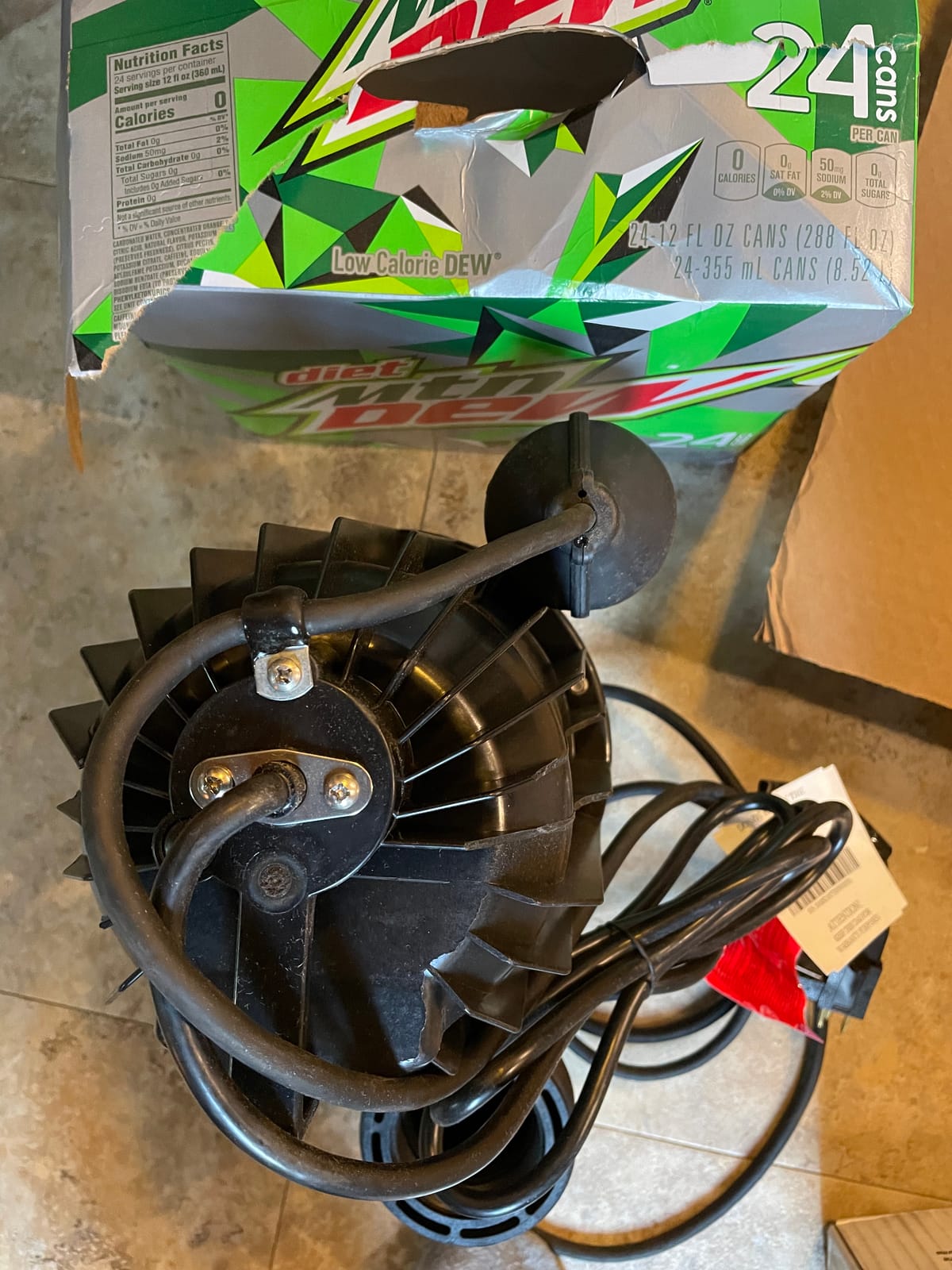
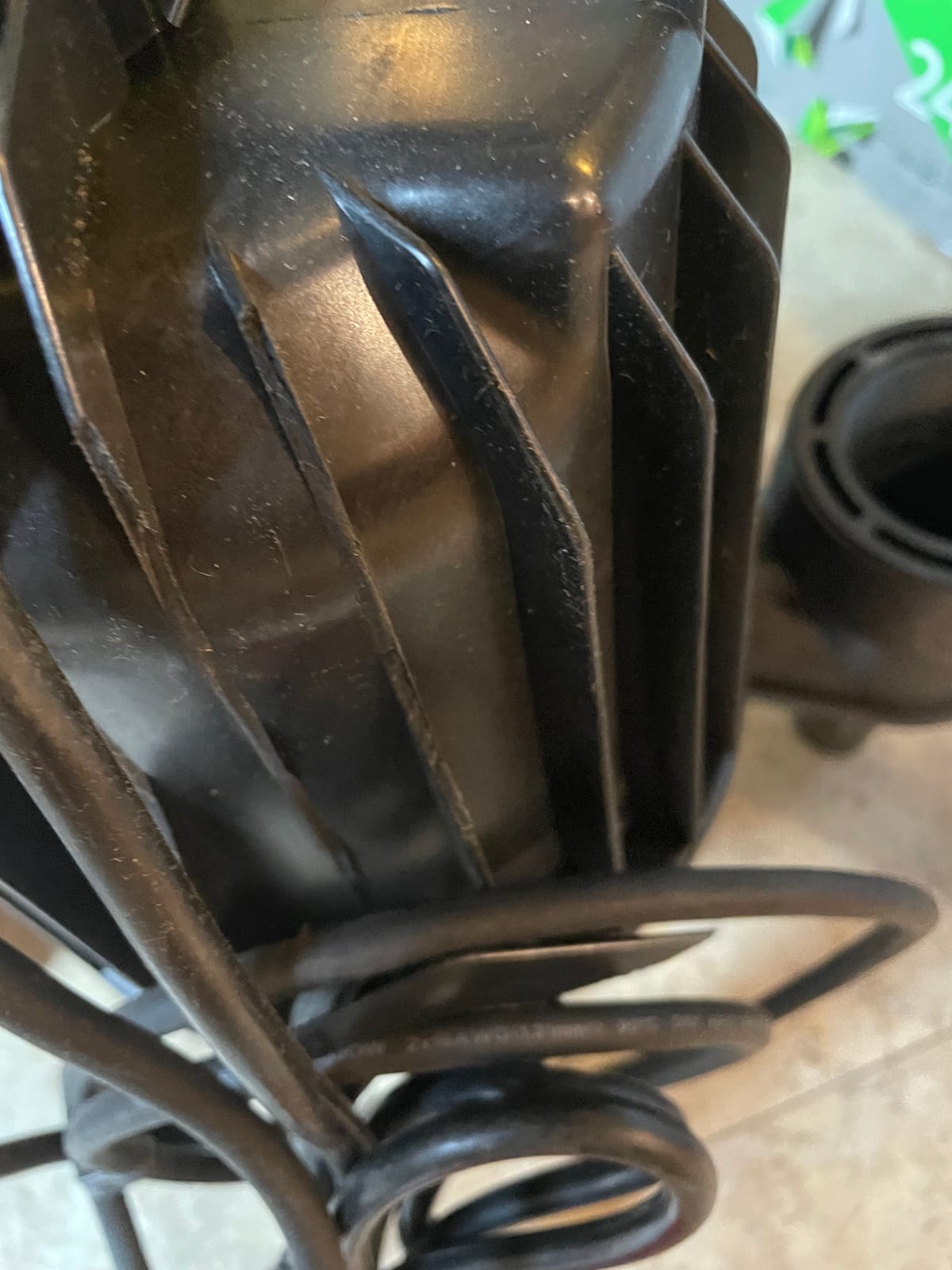
Here is the honest trade-off. The plastic impeller is the weak point, and several owners report it cracking, eroding or detaching entirely between several months and two years, with repeat failures even on warranty replacements. That single component is the difference between a pump that lasts and a pump you replace twice in a decade.
The review base is also the thinnest here at 106, and the 1-year limited warranty is the shortest. The tether float uses a piggyback design with the on level at 17 inches and the off level at 7 inches, so basin depth matters, and in a large or atypically shaped basin the float may simply not reach the water where you expect.
What to check before buying
Confirm you have help or a plan for the lift regardless of the weight, and check that your basin is at least 18 inches in diameter as the manufacturer requires. If the float geometry does not suit your pit, a vertical float switch is the cheapest possible fix.
Think about how much abrasive material will reach the pump. A full bath with a toilet and a laundry line discharging into the same basin is a heavier solids load than a half bath, and that is where the thermoplastic impeller earns its weakness.
Where it falls short
It is limited to a 10 foot lift, the shortest head rating in this group, so a deep basement or a long run to the street main rules it out. It is also a bare pump, and cast iron units like the Wayne RPP50 above it cost less than you would expect for a wet end that will not crack.
6. SANIFLO Saniaccess 3: best macerator for a full bathroom with no floor depth
SANIFLO Saniaccess 3 Pump – Full Bath Macerator Pump – Residential
0.5 HP full bath macerator
15 ft vertical lift
150 ft horizontal
53 dBA
AC/DC power
Pros
- Installs a full bath where gravity drainage is impossible
- Accepts toilet sink shower and other gray water
- Two service panels for blade and level sensor access
- Measured 53 dBA at 3 ft
- 4-year warranty with registration
Cons
- By far the most expensive option in this roundup
- Toilet bowl water level sits low so solids can smear
- Some owners report water reaching an unsealed area behind the toilet and shorting the unit out
When there is genuinely no room to bury a basin, the macerator route changes the project. The Saniaccess 3 is a full bathroom pump system that installs a toilet, sink and shower or bath without breaking the floor slab. It lifts up to 15 feet vertically or 150 feet horizontally from a soil stack, so it reaches places a conventional ejector cannot.
Mechanically it is a macerating blade in a compact housing with check valves on both sides and two service panels on top, one for the electrical components and level sensor and one for the blade itself. That access is what makes it serviceable, and it is certified to both CSA and IAPMO standards for residential use.
The quietness is not marketing. A measured noise level of 53 dBA at 3 feet is low for a macerator, which matters when the unit sits behind a finished wall next to a bedroom. Discharge at 15 feet of lift is 17 GPM with a 30 foot shut-off head, and the warranty extends to 4 years with registration.
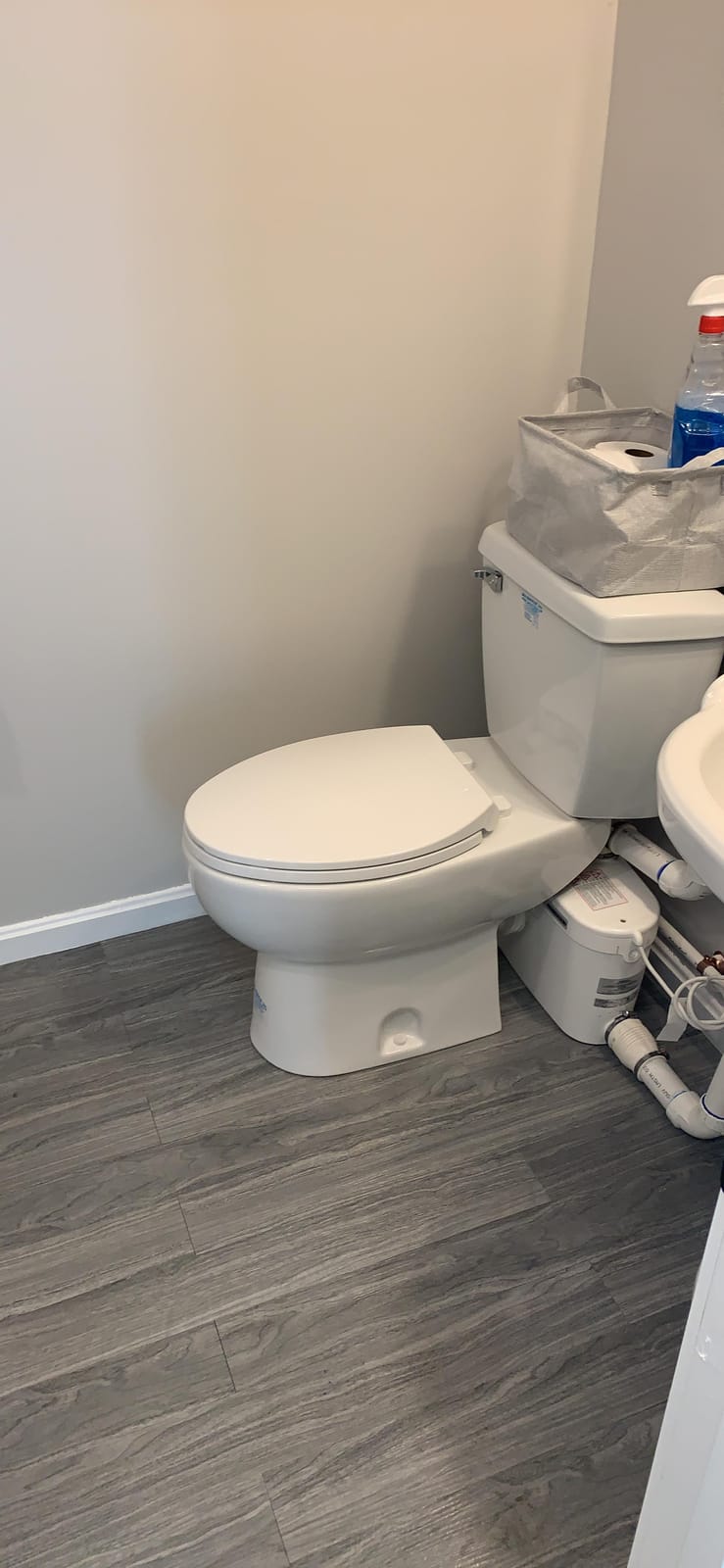
Basement finishers report a straightforward install and a compact all-in-one bathroom, and the service panels are singled out as the reason maintenance is easy. The recurring criticisms are the price, which is several times a bare sewage pump and lands in a different budget conversation entirely, and the toilet bowl’s low water level, which can leave solids smeared after a bowel movement.
One owner reported water reaching an unsealed area behind the toilet and shorting the unit out. That is an installation sealing issue rather than a design fault, but it is the one failure you cannot diagnose yourself, and it is worth having the install checked before finishes go on.
What to check before buying
Measure horizontal and vertical distance from the proposed toilet location to the nearest soil stack, and check both against the 15 foot and 150 foot limits with margin. These are maximums at a specific flow, not a promise at your actual run.
Confirm there is access to the unit after install. Both service panels are on top, and if the design buries the unit under a finished floor you lose the maintenance path and the blade service becomes destructive work.
Where it falls short
This is not the right pick for a full basement suite with a laundry, a wet bar and a shower all on one line, where a basin and a conventional solids-handling pump is cheaper and more robust. It is built for a residential full bath, not a multi-fixture commercial load.
If the project is larger than one bathroom, our guide to sewage lift stations covers the larger-capacity option.
7. SANIFLO Saniplus: best macerator when replacing an existing unit
SFA SANIFLO – Saniplus – Macerating Pump – Full-Bathroom Applications – Dual Purpose – Hardened Stainless Steel – 4 Years Warranty – Certified CSA (IPC, NSPC), IAPMO (UPC) – Made In France
Full bath macerator
15 ft vertical
150 ft horizontal
Hardened steel blades
CSA and IAPMO
Pros
- Hardened stainless steel blades and vibration absorbers run quietly
- Installs a full bath without breaking the slab
- Drop-in replacement for older Saniplus units so an existing toilet can be reused
- Owners report 13 to 15 years and more of service
Cons
- One third of reviews are one-star over in-warranty failures
- Replacement units move discharge and vent ports to the opposite side
- Internal failures can mean a paid part plus return shipping
- Steep price for the category
The Saniplus is the macerator to look at if a Saniplus is already installed, because it is a drop-in replacement and the existing toilet and flange can often be reused. That single fact can remove most of the labour from a replacement job, which is why replacement buyers end up in a very different cost conversation than first-time buyers.
Like the Saniaccess it is a dual-purpose unit handling full bathroom black and gray water, with 15 feet of vertical or 150 feet of horizontal reach. The blades are hardened stainless steel rather than plain plastic, and vibration absorbers on the housing keep it quiet. It is made in France, carries a 3-year warranty that extends to 4 years on registration, and is certified to both CSA and IAPMO standards.
Long-term owners describe it as a genuine workhorse, with several reporting 13 to 15 years of continuous service. That is the strongest longevity record in this roundup.
The satisfaction is polarised, and the split is the important part to understand before buying. About a third of reviews are one-star, and the failure pattern is consistent: motor or internal component failures inside the warranty period, where the fix can be a small internal part plus return shipping that may not be covered. So you may be dealing with a well-built unit whose weak point is a consumable component rather than the pump body.
The other warning is geometric. Current replacement units are not dimensionally identical to older Saniplus pumps, with the discharge and vent ports moved to the opposite side. If you are replacing an old unit, measure the existing pipe locations and orientation before you order, or the drop-in claim will not hold.
What to check before buying
If you already have a macerator, photograph and measure the existing discharge and vent connections and check which side they are on. That one measurement decides whether this is a two-hour swap or a re-plumb.
Register the unit if you buy it. The extra warranty year is free, and given the failure pattern in the reviews it is the part of the purchase most likely to be used.
Where it falls short
The price is steep for what is a compact plastic-bodied macerator, and the one-star share makes it a riskier pick than the Saniaccess 3 if you are starting from scratch. It is a specialist tool: brilliant for a replacement or a no-slab install, and unnecessary anywhere a basin can be buried.
8. Liberty P372LE51: best packaged system for easy float service
Liberty Pumps P372LE51 Sewage Pump System, 1/2HP, 115V, 2″ discharge, 21″x30″ basin
0.5 HP 115V system
21 x 30 in. preformed basin
2 in. discharge
24 ft max head
67 lb
Pros
- Pump and molded basin pre-assembled as one package
- Float access panel allows service without cutting into the plumbing
- Pump is field-swappable for a 1 HP grinder model
- Owners report a powerful jet and fast basin drainage
Cons
- Lid gasket ridge reported as wavy and can leak even when torqued
- Several basins arrived with pinholes already punched in the bottom
- Preformed inlet pipe locations are not always convenient
- 67 lb package makes it a two-person lift
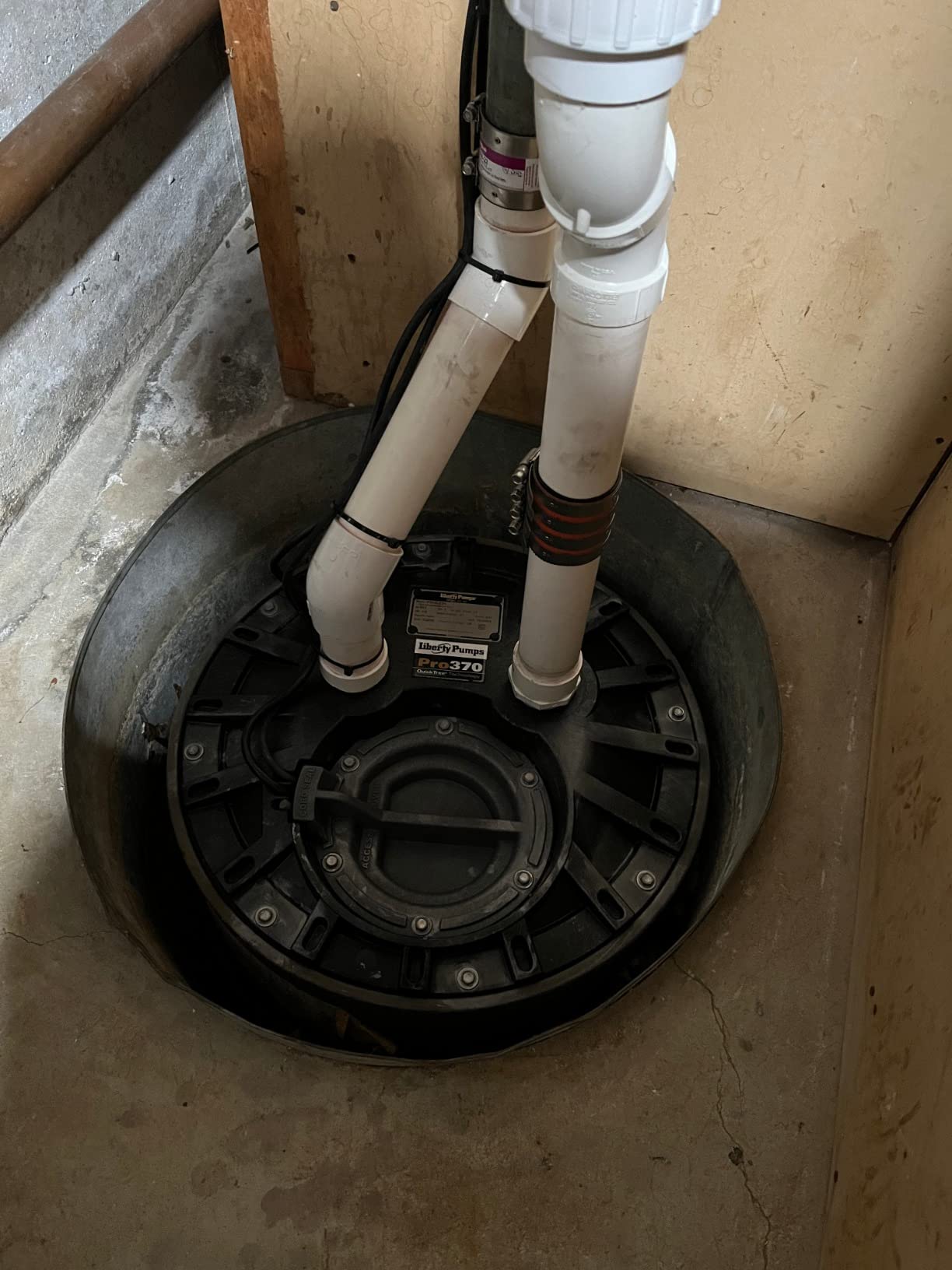
This is the other complete package, and it differs from the P382LE51 in ways that matter. The basin is 21 by 30 inches rather than square, the pump is pre-mounted in it, and the whole thing is rated for 24 feet of head on a 2 inch discharge. Owners report a powerful jet and fast basin drainage once it is in the ground.
The feature we value most is the float access panel. It lets you get to the float and the alarm controls without cutting into the discharge piping, and it is the difference between a five-minute service call and a half-day job with a plumber. The pump is also field-swappable for a 1 HP grinder model, so the basin stays useful if a future project pushes the head requirement higher.
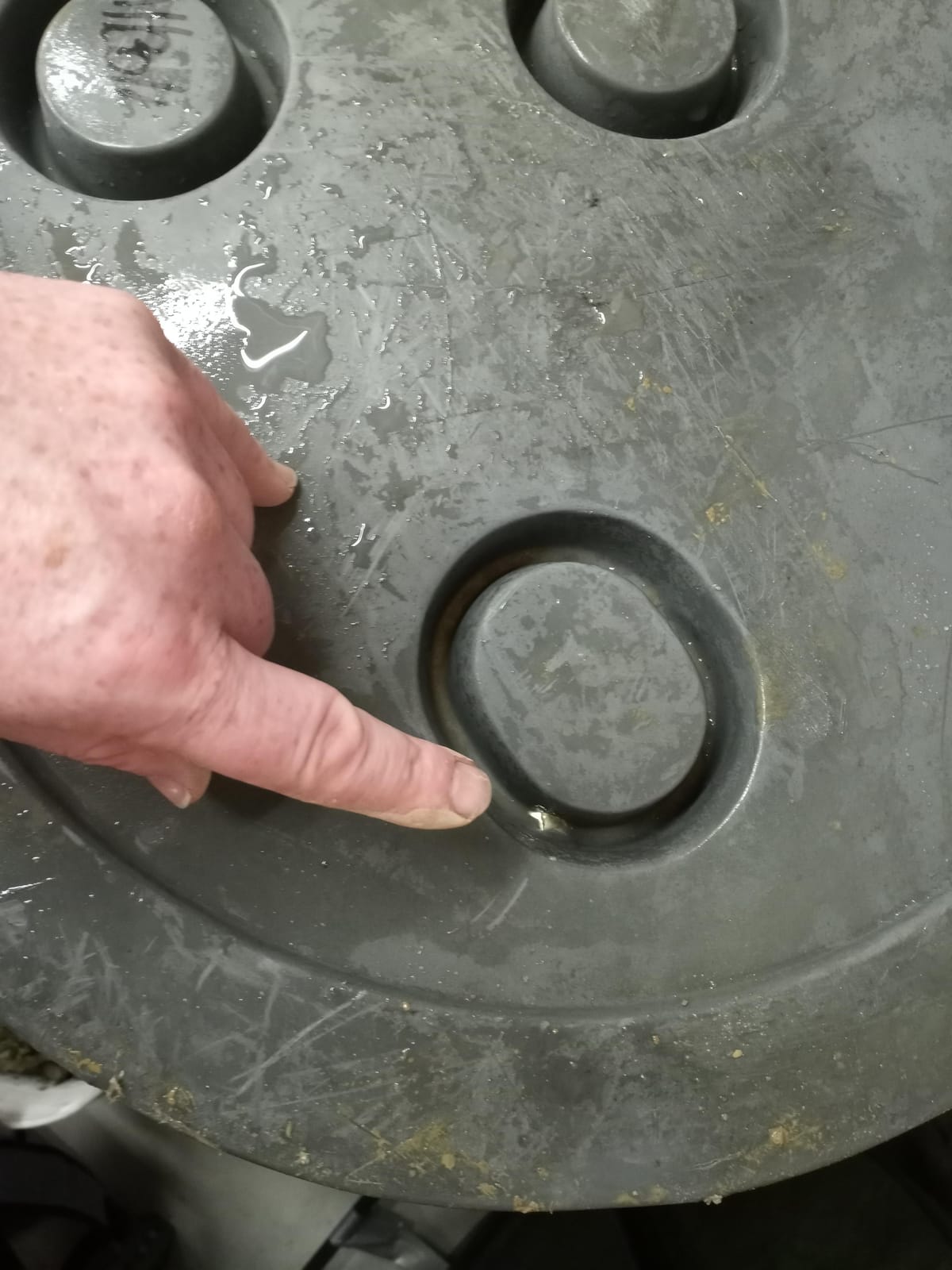
Quality control on arrival is the issue to watch, not the design. Several buyers found pinholes already punched in the basin bottom, requiring epoxy or a sealant before burial, and one owner documented a lid seal that leaked until resealed. A basin with a hole in it that gets buried is a flood with a long time lag, so inspect the basin floor and the gasket ridge carefully before it goes into the ground.
At 67 lb the assembled package is a two-person lift, and the preformed inlet locations can need relocating depending on your wall layout. Both are known and manageable, but neither is a surprise you want on install day.
What to check before buying
Inspect the basin before burial. Run water over the floor of the basin and along the gasket ridge, let it sit, and reseal anything that marks. It is the cheapest ten minutes in the whole project.
Confirm the inlet positions against your wall and the direction of your existing drain lines. Because the basin is preformed, moving an inlet after it is set is one of the more expensive mistakes available in a basement remodel.
Where it falls short
It is a conventional solids-handling system, so it will not satisfy a code that requires a grinder pump, even though the pump is swappable later. It is also deeper than a shallow package, so floor depth in a finished basement needs checking before the pit is cut.
If your project involves a shared or neighbourhood-scale waste flow rather than one household, the sewage treatment plant guide covers a different category of equipment entirely.
Do you even need an ejector pump?
Sometimes you do not, and this is worth checking before you spend money. If any of the following are true, a gravity solution may be simpler, cheaper and permanently odour-free.
Your lot slopes toward the building. A downhill fall from the bathroom to the sewer line means gravity can do the work with no pump and no pit. This is the single most common reason homeowners on sloped lots consider moving the bathroom upstairs, and it is a legitimate trade.
The municipal main is higher than your basement floor. Before assuming you need a pump, get a plumber to confirm the actual invert elevation. Some houses have more grade than people expect.
You can put the bathroom where the plumbing wants it. A basement bathroom stacked under an existing above-grade soil stack, near a wall with a wide drain slope, can sometimes drain by gravity even below the main’s invert.
A macerator will serve the room. If you only need a half bath, a macerator unit removes the pit, the lid and the vent entirely.
What does not work as an alternative is a sump pump. It is a different machine for clear water, and no arrangement of a sump pump makes a toilet safe to discharge.
Sewer gas and odour: keeping a basement bathroom clean
Sewer gas in a living space is the deal-breaker for most people, and in the large majority of cases the cause is the installation rather than the pump. A r/Plumbing owner traced a persistent smell to a lid that had never actually been screwed down or sealed. In order of likelihood, check these five things.
The lid is not sealed. The basin lid should be secured with the supplied screws and sealed with a proper sealant, not simply dropped into place. A gas-tight lid is the first barrier between the basin and your finished floor.
The basin is not vented. An unvented basin cannot equalise pressure, and the pump discharge becomes a path for gas to escape. The vent should tie into the drain-waste-vent system properly.
No air gap at the discharge. Where the discharge enters the sewer, an air gap prevents pressure from pushing basin air back into the room.
The check valve is failing. A failed check valve lets the basin refill, which can leave standing waste and odour in the pit long after the pump stops.
The floor drain in the room has dried out. A basement bathroom floor drain without water loses its trap seal and becomes a direct sewer gas route. Running water into it periodically restores the seal.
How to choose the right sewage pump
Work through these five decisions in order, because each one eliminates options that looked plausible before you checked it.
1. Match the mechanism to the job. A solids-handling pump with a vortex or non-clog impeller handles a standard basement bathroom discharging to gravity sewer. A grinder pump is required for long or high discharge runs, a pressurised sewer tie-in, or a local code that demands one. An effluent pump handles grey water only and must never be connected to a toilet.
2. Get the real lift number. Measure from the bottom of the basin to the sewer tie-in and add for every horizontal foot of discharge pipe. A pump quoted at 20 feet of maximum head will be running near stall at that figure, so leave margin. If your measured lift exceeds roughly 20 feet, move up in horsepower or move to a grinder.
3. Choose the wet end material. Cast iron and stainless hardware hold up under sewage duty and abrasion far better than thermoplastic. The gap shows up most clearly in the impeller, where several thermoplastic units in this roundup reported cracking within two years while cast iron units report a decade. Where the budget allows, this is the difference that pays back.
4. Understand the float switch. A tethered piggyback float is cheap, adjustable by cable length, and can be pulled to test the motor directly, but it needs basin depth and it can stop a pump with the motor partly exposed. A vertical float switch fits narrow basins and has no exposed tether to snag, at a higher cost.
5. Plan for failure, not just for purchase. Expect a service life in the range of 7 to 10 years for a conventional cast iron unit in normal service, with float switches and impellers the usual first casualties. An alarm float on a separate circuit is inexpensive and tells you the basin is filling before the floor does. If the basement has finished flooring or stored property underneath, that early warning is the difference between a mop and a renovation.
On brand heritage, the forum recommendation runs consistently toward the incumbents rather than the newest listings. Zoeller, Liberty, Wayne and Superior Pump come up repeatedly in plumbing forums because parts and service support exist for them years after a model is discontinued. Flotec and Little Giant are also established names in this category. That parts availability is worth more than a specification sheet advantage.
Installation basics: basin, check valve, venting and alarm float
A correct sewage ejector installation includes more than the pump. This is the list a good installer works from, and it is the list worth checking if someone else does the work.
A sealed basin sized for the room. A full bath with a toilet, sink and shower needs a larger basin than a half bath, and a basin that is too small causes short cycling, which burns out motors.
A gas-tight lid. Secured and sealed, because an unsealed lid is the number one source of sewer gas in a finished basement.
A check valve on the discharge. Without it the basin refills after every cycle and the pump runs twice as often as it should.
A proper vent tie-in. Connected to the drain-waste-vent system so the basin can equalise pressure.
An alarm float on its own circuit. Separate from the pump circuit so a stuck pump float still triggers a warning.
An air gap at the discharge connection. The point where the discharge enters the sewer line.
On permits and legal reality: an ejector installation is permit-controlled in most jurisdictions and involves both plumbing and electrical work. A competent homeowner can absolutely prepare the excavation, confirm the basin size and understand the component list, but the connection, the venting and the final inspection are licensed-plumber territory in most places. If you are choosing between installing it yourself and hiring out, the permit and inspection requirement is usually the deciding factor, not skill.
Frequently Asked Questions
What kind of pump do I need for a basement bathroom?
You need a solids-handling submersible sewage ejector pump, rated to pass 2 inch spherical solids, installed in a sealed basin below the floor. A sump pump is a different machine for clear water and cannot serve a toilet. An effluent pump is not strong enough for raw sewage. A grinder or macerator pump is only required for long or high discharge runs, a pressurised sewer tie-in, or where local code demands one.
Do you need an ejector pump for a basement bathroom?
You need one whenever the bathroom drains sit below the main sewer line, because waste cannot leave by gravity. You may not need one if your lot slopes toward the house, if the sewer main is higher than your basement floor, or if the room can be placed near a soil stack with a workable drain slope. Confirm the actual sewer invert elevation before assuming a pump is required.
Can you put toilet paper in a sewer ejector pump?
Yes, toilet paper and normal bathroom waste are exactly what a solids-handling sewage pump is designed to pass, and the packaged systems in this roundup are rated to handle toilet paper and solids without a grinder. Wipes, hygiene products and anything labelled flushable are the real clog risk, because they do not break down. Those belong in a bin, and a grinder pump reduces the risk rather than removing it.
How much does it cost to install a sewer ejector pump?
The pump itself is the smallest part of an installed sewage ejector system. The larger costs are the basin and gas-tight lid, the check valve, excavation, discharge line and vent tie-in, the electrical work for the alarm float, and the permit and inspection. Buying a packaged system with the basin and pump already assembled usually costs less in total than sourcing each part separately, because labour dominates.
How long do submersible sewage pumps last?
A conventional cast iron solids-handling pump in normal residential service is generally expected to last in the range of 7 to 10 years, and several owners of the pumps in this roundup report a decade or more of service. Float switches and impellers are usually the first components to fail, and an alarm float on a separate circuit gives you warning long before the pump itself gives out.
Why does my basement sump pump smell like sewer gas?
A sump pump pit should not carry sewer gas at all, because a sump pump handles clear water. If you smell sewer gas near a basement pit, the cause is an unsealed or unvented basin, a failed check valve letting the basin refill, a missing air gap at the discharge, or a dry floor drain in the room that has lost its trap seal. Sealing the lid, fixing the vent and running water into the floor drain normally resolve it.
Conclusion: which sewage pump to buy
The best sewage pumps for basement bathrooms come down to one honest recommendation. For a standard finished basement full bath discharging to gravity sewer, install the Zoeller Waste-Mate 267-0001 in a properly sealed and vented basin, with a check valve and an alarm float, and it is a pump you should not think about again for the better part of a decade. The Liberty LE51A is the stronger machine on paper and the highest rated here, and it is worth the extra effort if your lift is close to its limit. The Wayne RPP50 is the sensible budget choice, and the Liberty P372LE51 or P382LE51 packages are the right call if you do not already have a basin.
If there is no floor depth for a basin at all, the SANIFLO macerators solve a problem nothing else in this list can. For anything involving a long or high discharge run, a pressurised sewer, or a code that requires a grinder, step up the mechanism rather than the horsepower. Check the current listings for all eight, and get the sewer invert level confirmed before anyone orders anything.