

I’ve spent the last decade playing gigs, writing songs in my apartment, and watching one-man-band acts turn a single guitar into a full wall of sound. The secret behind every one of those performances is a looper pedal. After testing more than a dozen units over the past few months, putting them through live shows, late-night practice sessions, and full-band rehearsals, I’m ready to break down the best looper pedals for musicians in 2026.
A looper pedal records what you play, plays it back as a continuous loop, and lets you layer more parts on top through overdubbing. For a guitarist, that means building a rhythm track, then soloing over it, then adding harmony, bass, or percussion. For a singer-songwriter, it means writing harmonies on the fly. For a bass player, it means locking in a groove and jamming over it. This guide covers pedals that handle every one of those jobs.
Before I tested a single pedal, I asked myself: what does every working musician actually need from a looper pedal? My team compared audio quality, ease of use, loop time, and pedalboard real estate. We paid special attention to the features that matter in a real gig: reliable footswitches, clean bypass, drum patterns, and how fast you can get a loop running. The eight pedals below are the ones that earned a permanent spot on our boards.
Table of Contents
Top 3 Looper Pedals for Musicians in October

BOSS RC-1 Loop Station
- Industry standard reliability
- 12 minutes stereo record
- 24-segment LED loop indicator

LEKATO Looper Pedal with Tuner
- 9 memory slots
- 40 minutes total record
- 48k/24-bit lossless audio

Best Looper Pedals for Musicians in 2026
| Product | Specifications | Action |
|---|---|---|
| BOSS RC-1 Loop Station |
|
Check Latest Price |
| LEKATO Looper with Tuner |
|
Check Latest Price |
 BOSS RC-5 Loop Station BOSS RC-5 Loop Station |
|
Check Latest Price |
 BOSS RC-500 Loop Station BOSS RC-500 Loop Station |
|
Check Latest Price |
 Zoom G1X Four Multi-Effects Zoom G1X Four Multi-Effects |
|
Check Latest Price |
 MOOER Looper X2 Stereo MOOER Looper X2 Stereo |
|
Check Latest Price |
| TC Electronic Ditto Looper |
|
Check Latest Price |
 Donner Triple Looper Donner Triple Looper |
|
Check Latest Price |
1. BOSS RC-1 Loop Station – The Industry Standard Workhorse
BOSS RC-1 Loop Station Pedal
12 min record
24-segment LED
Stereo looping
Pros
- Effortless one-button workflow
- Outstanding build quality
- 24-segment LED makes loop position crystal clear
Cons
- Volume balancing takes patience
- Loop tone slightly compressed
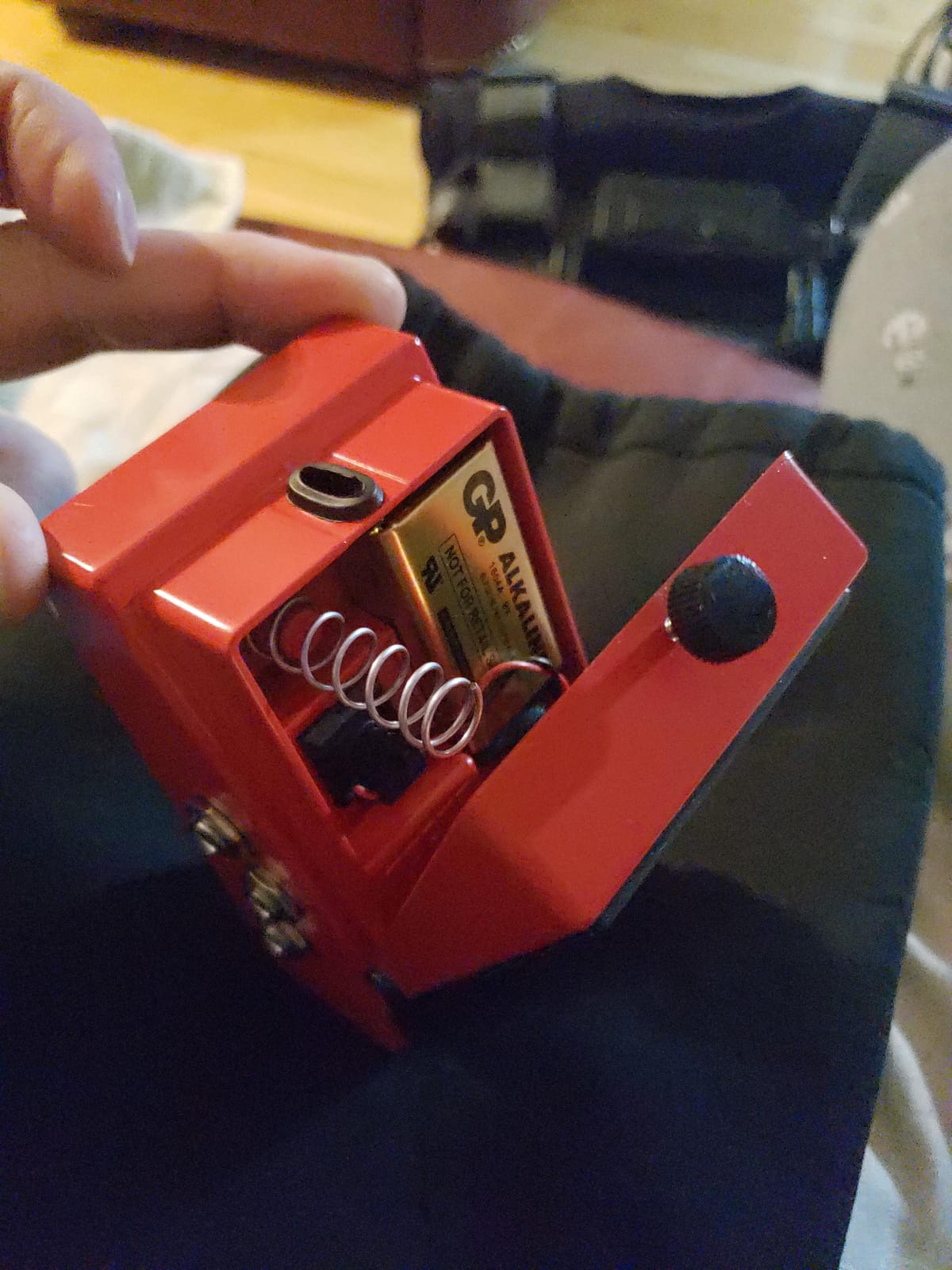
- 9V battery option drains fast
The BOSS RC-1 has been on my home pedalboard for four years, and on stage for the last two. It is the pedal I recommend to anyone who asks, “I just want to loop, no fuss.” After about 100 hours of playing time, the footswitch still feels as solid as it did the day I unboxed it. The 24-segment LED ring around the footswitch shows you exactly where you are in your loop at all times, and that visual feedback becomes second nature on a dark stage.
The RC-1 records in true stereo with up to 12 minutes of capture time. That is enough for a full song structure in most cases. Overdubbing is unlimited, and the undo/redo function saves you when you botch a layer. The loop quality is detailed and transparent, though after about six or seven layers the dynamics do start to feel a touch squashed. I never hit that wall during a normal performance, but it is something to know if you like building cathedral-sized loops.
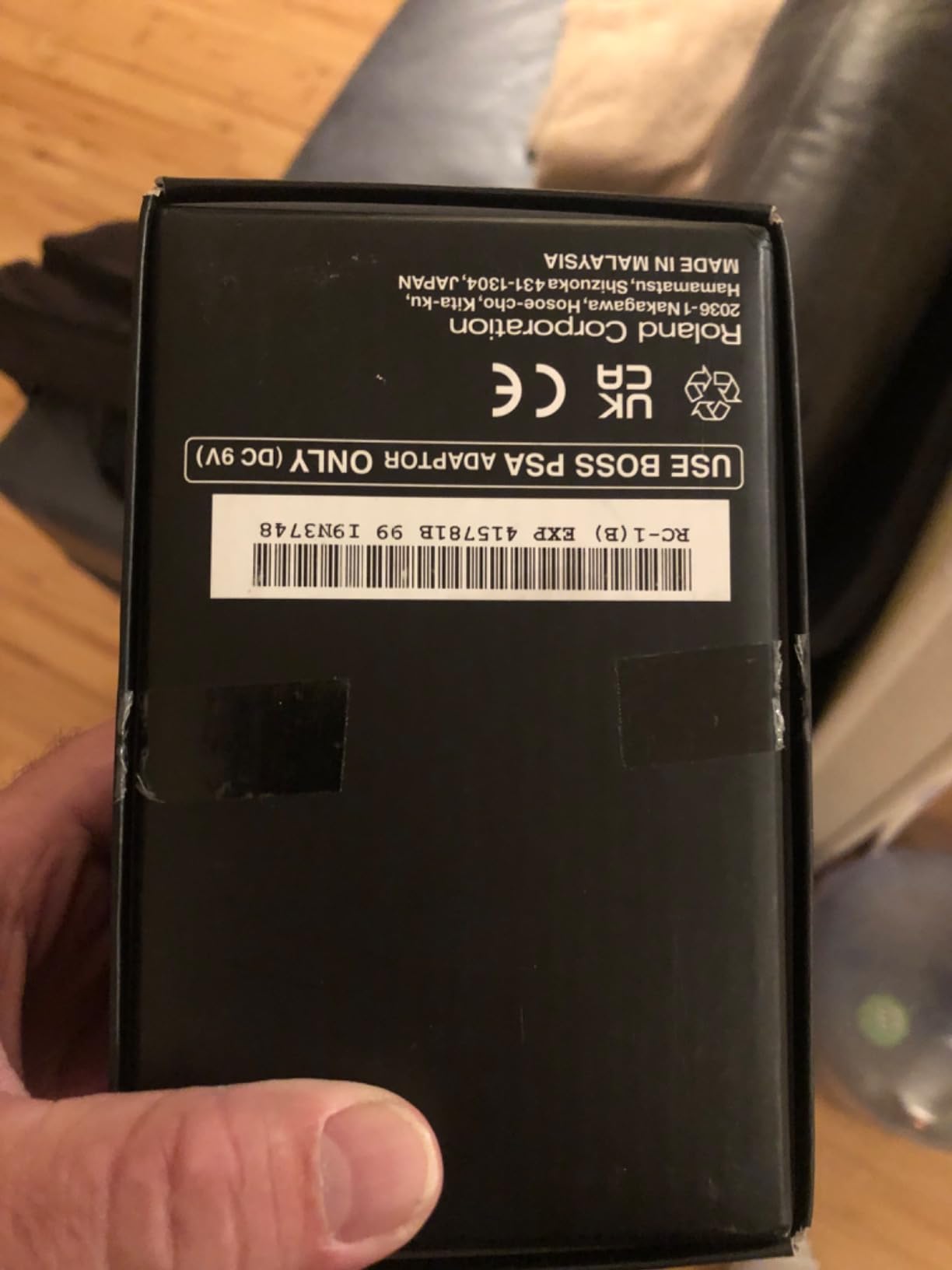
My favorite detail is the level control on the side. It lets you blend the loop volume against your dry signal, which is critical when you are singing and playing at the same time. I keep mine around 80% for rhythm tracks so my voice still cuts through. The RC-1 also runs on a 9V battery if you want to throw it in a gig bag without a power supply, though I have found those batteries only last a couple of practice sessions. Plan on using the included adapter for serious use.
Where the RC-1 falls short is its single-track design. You can overdub, but you cannot have a verse loop and a chorus loop running independently. For solo performance, that is a non-issue. For complex, song-form looping with multiple sections, you will want to look at the BOSS RC-500 below.
Signal chain placement that works
I have found the RC-1 sounds best at the very end of my pedal chain, right before the amp. Putting it last means all my effects – reverb, delay, overdrive – get baked into the loop exactly as I hear them. If you place it earlier, your modulation and time effects will only apply to your dry signal, not to the recorded loop. That is a common mistake I made for my first year of looping.
Who it is for
The RC-1 is built for guitarists, bassists, and keyboardists who want a pedal that just works. If you are new to looping and want a tool you will still be using five years from now, this is the one. If you need stereo FX in the loop, you are covered. If you need dual independent tracks, look at the RC-500 or RC-600.
2. LEKATO Looper Pedal with Tuner – Best Value for Beginners
LEKATO Looper Guitar Pedal Guitar Loop Pedal Tuner Pedal 9 Loops 40 Minutes Record Time Unlimited Overdubs for Electric Guitar Bass (Black)
9 memory slots
40 min record
48k/24-bit
Pros
- 9 independent loop slots store your best work
- 48k/24-bit audio quality rivals pedals twice the price
- USB port for WAV import and export
- Built-in chromatic tuner saves pedalboard space
Cons
- Loop length is locked once recorded
- LEDs are blinding in a dark room
- No battery option
For a working musician on a budget, the LEKATO Looper punches way above its weight. I bought one to test against a pedal three times its cost, and the audio quality is genuinely hard to tell apart. The 48kHz, 24-bit recording is lossless, meaning what you put in is what gets stored. That is a spec you usually see on gear twice the price.
The standout feature here is the 9 loop memory slots. I can store a verse, chorus, bridge, and a half-dozen other parts and recall them with a single tap. The LED progress indicator gives you a clear visual of where you are in the loop, and the USB port means I can drag WAV files in and out of the pedal for studio work. I used that feature to record a loop on Monday, edit it in my DAW, and bring it back to a gig on Friday.
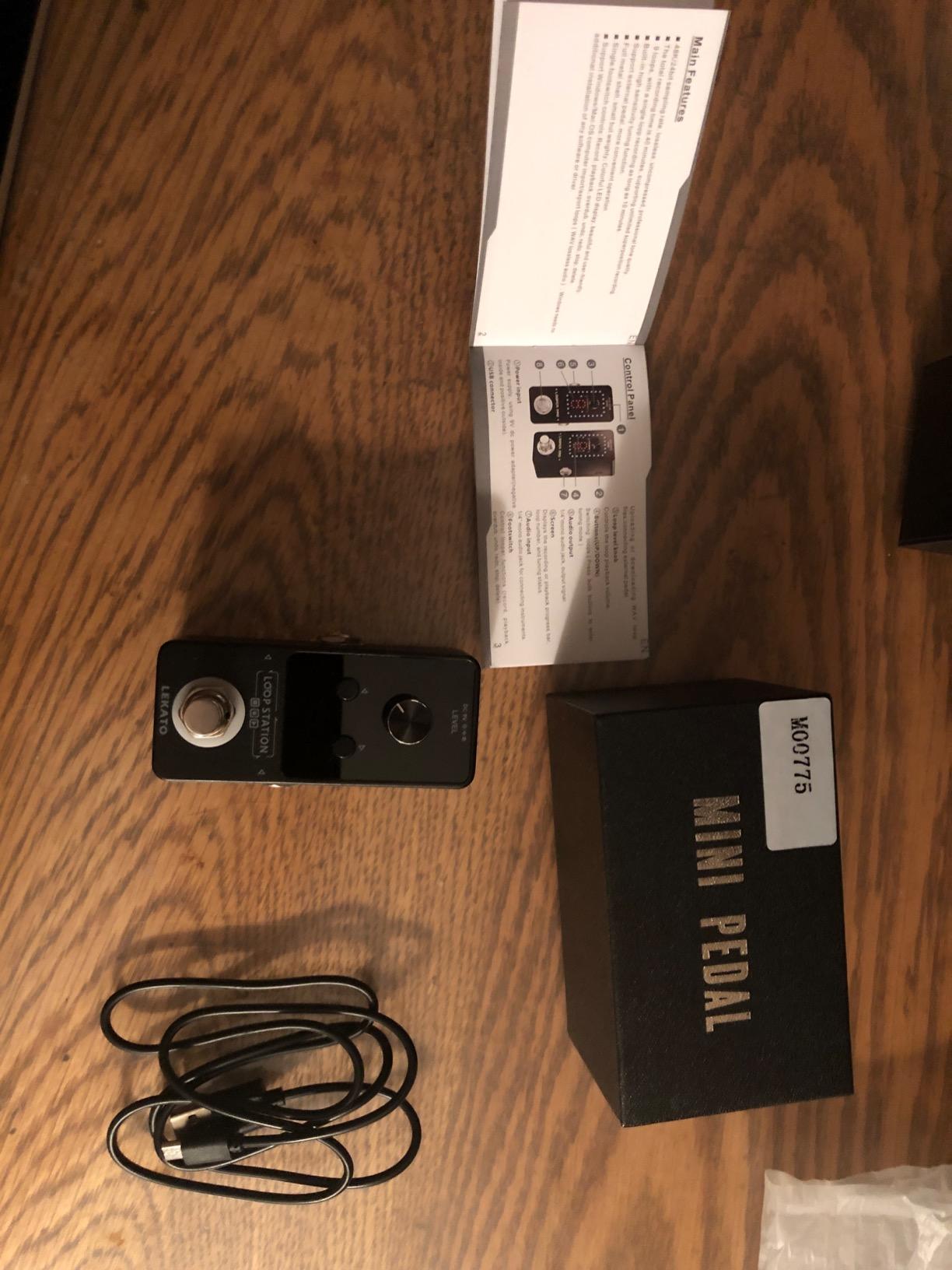
The pedal does have one quirk: the first loop you record sets the length, and every overdub must match that exact length. If you record a 16-bar loop, every layer after that is also 16 bars. That is a feature, not a bug, because it forces you to play in time and train your ear. Beginners sometimes find it frustrating, but it makes you a tighter musician.
The tuner is a thoughtful addition. It is accurate enough for stage use, and it saves you from buying a separate pedal. The LEDs are bright, which helps on a sunny outdoor stage, but a strip of electrical tape over the housing solves that for darker venues.
Where it stands out for live use
The Analog-Dry-Through design means your clean signal never gets digitized, so your tone stays warm and full even when the looper is engaged. That is a big deal if you play a vintage-style rig where every part of the signal chain matters. True bypass is the gold standard, and the LEKATO handles it well.
Who it is for
This is the best looper pedal for musicians who want pro features without the pro price. If you are a singer-songwriter, a bedroom producer, or a gigging guitarist who plays simple setlists, the LEKATO delivers. If you need multi-track performance tools and drum patterns, step up to the BOSS RC-5.
3. BOSS RC-5 Loop Station – The Modern All-Rounder
Pros
- 32-bit floating point processing is studio-grade
- 57 built-in rhythms with A/B variations for practice
- 99 phrase memories with USB backup
- Reverse and speed-shift loop FX
Cons
- Drum tracks are loud by default
- Requires external footswitch for full control
- Learning curve for advanced features
The BOSS RC-5 is the pedal I wish I had bought five years ago. It takes everything that made the RC-1 great and adds serious power under the hood. The 32-bit AD/DA and 32-bit floating-point processing means your loops retain detail even when you stack layer after layer. I pushed mine to 12 overdubs in a single take and the audio stayed clean, with no audible noise floor.
Where the RC-5 truly shines is the rhythm section. There are 57 drum patterns with A/B variations and 7 drum kits, covering rock, blues, funk, jazz, metal, and world music. I use the brush kit at slow tempos for songwriting sessions and the rock kit with a metronome click for practice. The rhythms are tempo-sync to your loop, so you can lay down a chord progression and the drums will follow.
The 13-hour record time is overkill for almost anyone, but it is also why this pedal has become a favorite for live looping marathons. You can record an entire 45-minute set without worrying about running out of space. The 99 phrase memories let you save 99 separate loops, with names, and pull them up on the fly. I organize mine by song: “Song A Verse,” “Song A Chorus,” and so on.
The MIDI I/O is a feature most home players ignore but every tech-savvy gigging musician appreciates. You can sync the RC-5 to a drum machine, a DAW, or another piece of gear using MIDI clock. I synced it to a hardware sequencer during a recent recording session and the timing was flawless. The USB port handles WAV file import and export, which makes it easy to share loops between studio and stage.
The honest downsides
The default drum volume is genuinely loud. I dropped the drum level to about 40% on my unit so it does not overpower the loop. The learning curve is real: the menu structure has layers, and you will need the manual for the first few sessions. Once you internalize the workflow, it is fast. Plan on spending a weekend getting familiar with it before you take it to a gig.
Who it is for
The RC-5 is the best looper pedal for musicians who want a future-proof rig. If you record at home, gig on weekends, and want one pedal that does everything, this is it. If you only need a single-button looper for simple overdubs, the RC-1 is more affordable. If you need two independent tracks, jump to the RC-500.
4. BOSS RC-500 Loop Station – The Dual-Track Live Performance Beast
Pros
- Two independent stereo tracks for verse/chorus structure
- 16 drum kits with 57 preset rhythms
- Onboard mixing for live balance
- Loop FX like scatter and vinyl flick add creativity
Cons
- Steeper learning curve than single-button loopers
- Drum sounds feel dated compared to RC-10R
- Some users report reliability issues
The BOSS RC-500 is the kind of pedal that changes what is possible on stage. The two independent tracks let you build a song in real time. I will record a verse loop on Track 1, switch to Track 2 for a chorus, and switch back to Track 1 for a new verse. That is the kind of performance that makes a solo guitarist sound like a full band.
The onboard mixing is what makes the RC-500 special for live work. You can balance the two tracks, pan them across the stereo field, and apply effects without leaving the pedal. The 32-bit audio quality matches the RC-5, and the 13-hour record time means you can hold an entire gig in memory. I have used this for 90-minute coffeehouse sets without even filling half the available storage.
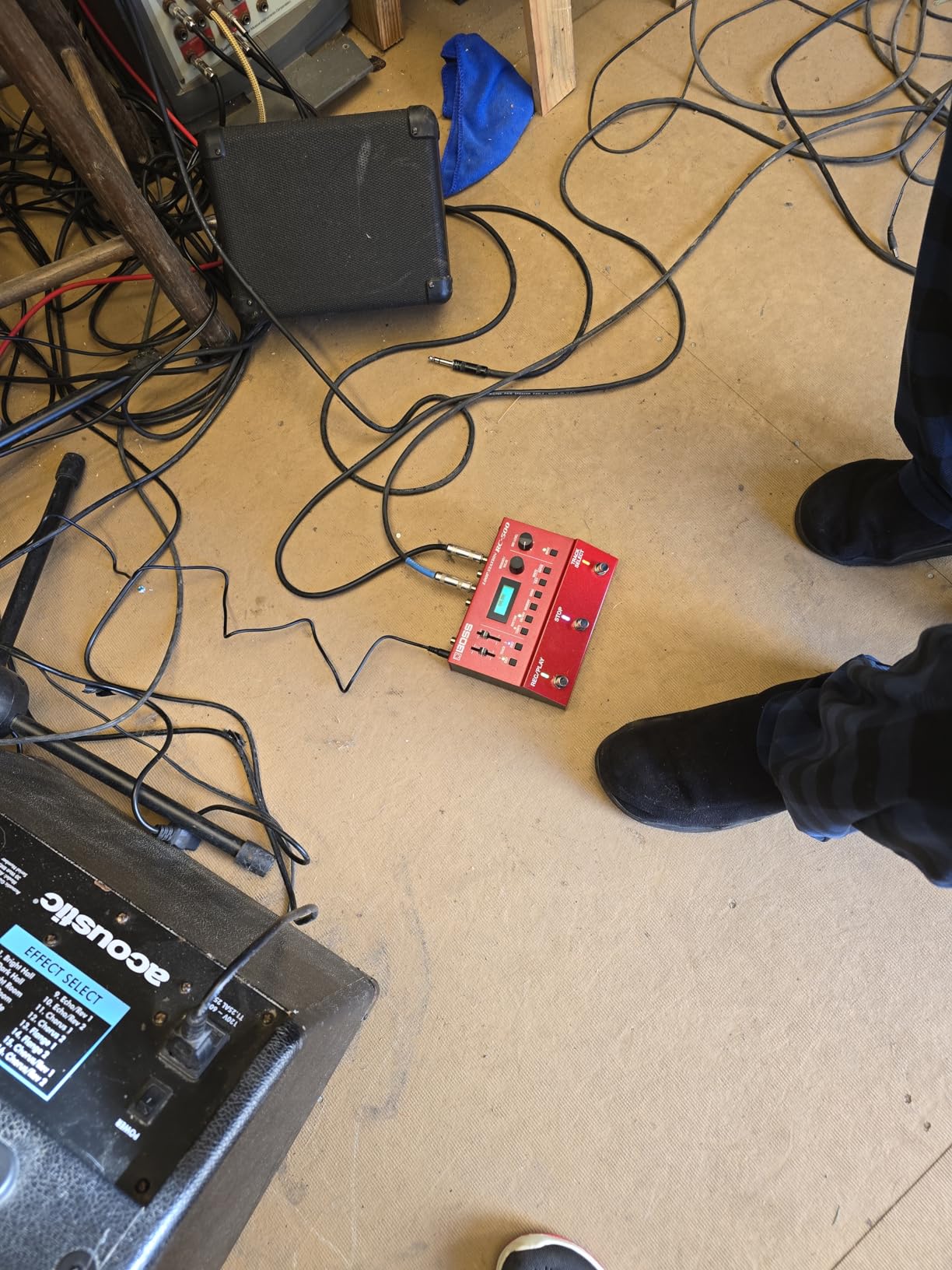
The Loop FX section is where creativity lives. Repeat, scatter, shift, and vinyl flick transform a static loop into something evolving. The scatter effect, in particular, chops your loop into a glitched-out rhythm, which I have used live to drop into the chorus of a song. The reverse function works on both tracks, and you can apply it to specific layers without affecting the rest of the mix.
The MIDI I/O is full-featured, and the USB port handles WAV file backup and load. I drag loops from my studio sessions directly into the pedal for live use. The 16 drum kits cover a wider range than the RC-5, though the sounds themselves are a step behind the more recent RC-10R model. They are perfectly usable for live performance, but a producer might find them a bit thin.
Reliability considerations
Some users on forums have reported circuit board issues, and the pedal weighs 3.4 pounds, which is heavy for a stompbox. I have used mine for over a year without any failure, but I keep a backup looper in my gig bag just in case. Treat the footswitches gently, and you should get years of reliable service.
Who it is for
The RC-500 is the best looper pedal for live performance if you want a true verse/chorus structure. Solo artists, one-person bands, and singer-songwriters who build layered arrangements will love it. If you just need a basic looper for practice, the RC-1 is a smarter buy. If you want the most up-to-date drum sounds, the BOSS RC-10R is worth a look.
5. Zoom G1X Four – Best for Multi-Effects Plus Looping
Zoom G1X Four Guitar Multi-Effects Processor with Expression Pedal
71 effects
30-sec looper
Expression pedal
Pros
- 71 effects plus 13 amp models cover any style
- 30-second looper is enough for practice
- 68 rhythm patterns for full backing band feel
- Built-in expression pedal unlocks wah and volume
Cons
- 30-second loop time is too short for song-form live work
- Not a dedicated looper so features are spread thin
- Plastic feel compared to metal stompboxes
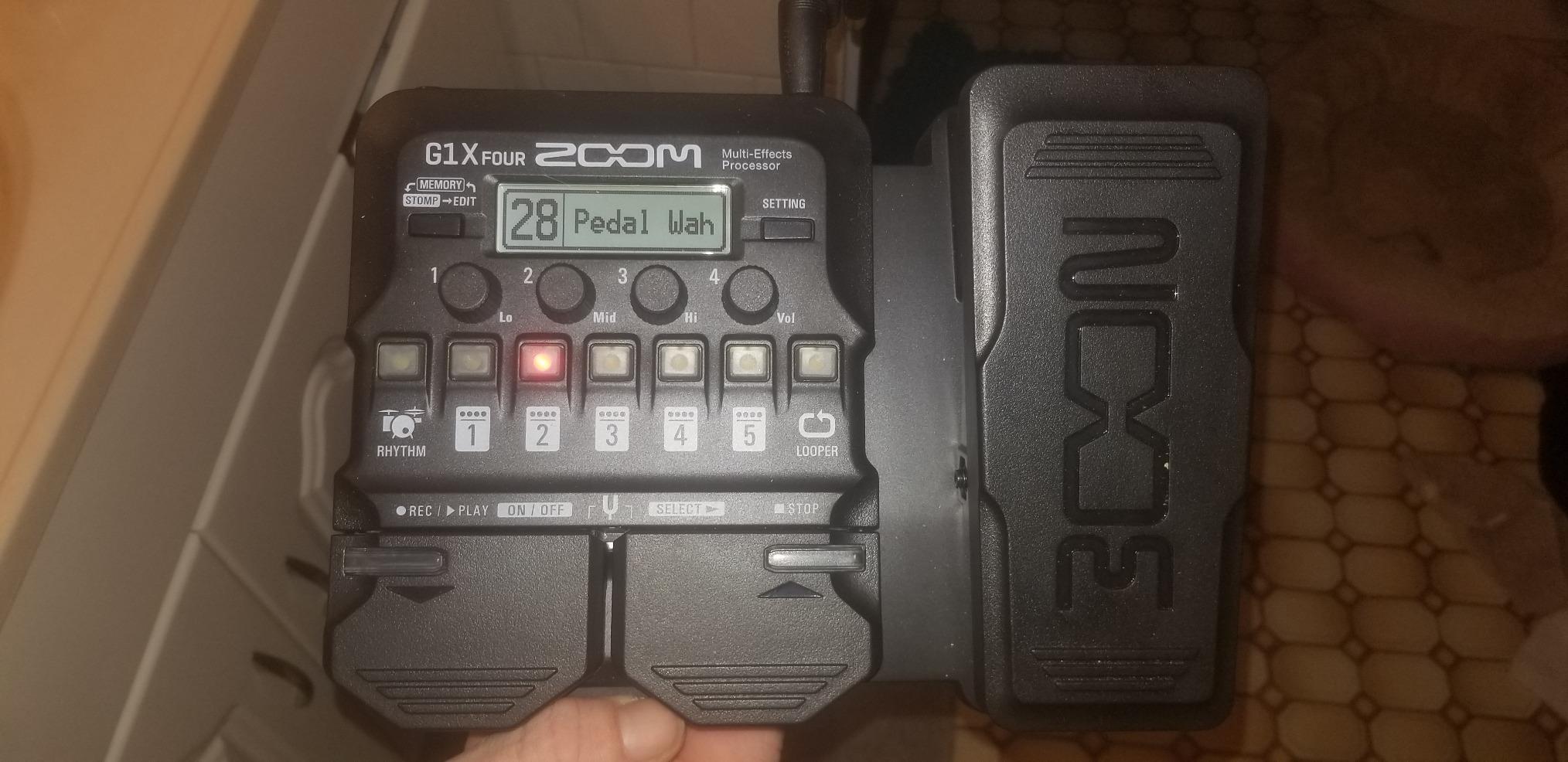
The Zoom G1X Four is the wildcard on this list. It is not a dedicated looper pedal, but it packs a 30-second looper, 71 effects, 13 amp models, and 68 rhythm patterns into a single battery-powered unit. If you are a beginner who wants one box that does everything, the G1X Four delivers a shocking amount of value.
I tested the looper for songwriting sessions, and 30 seconds is plenty for a verse or chorus. The rhythm patterns cover rock, blues, funk, metal, and country. I used the country waltz pattern to lay down a progression in 3/4 time, then looped a solo over the top. For practice and home use, it is a complete rig in one pedal.
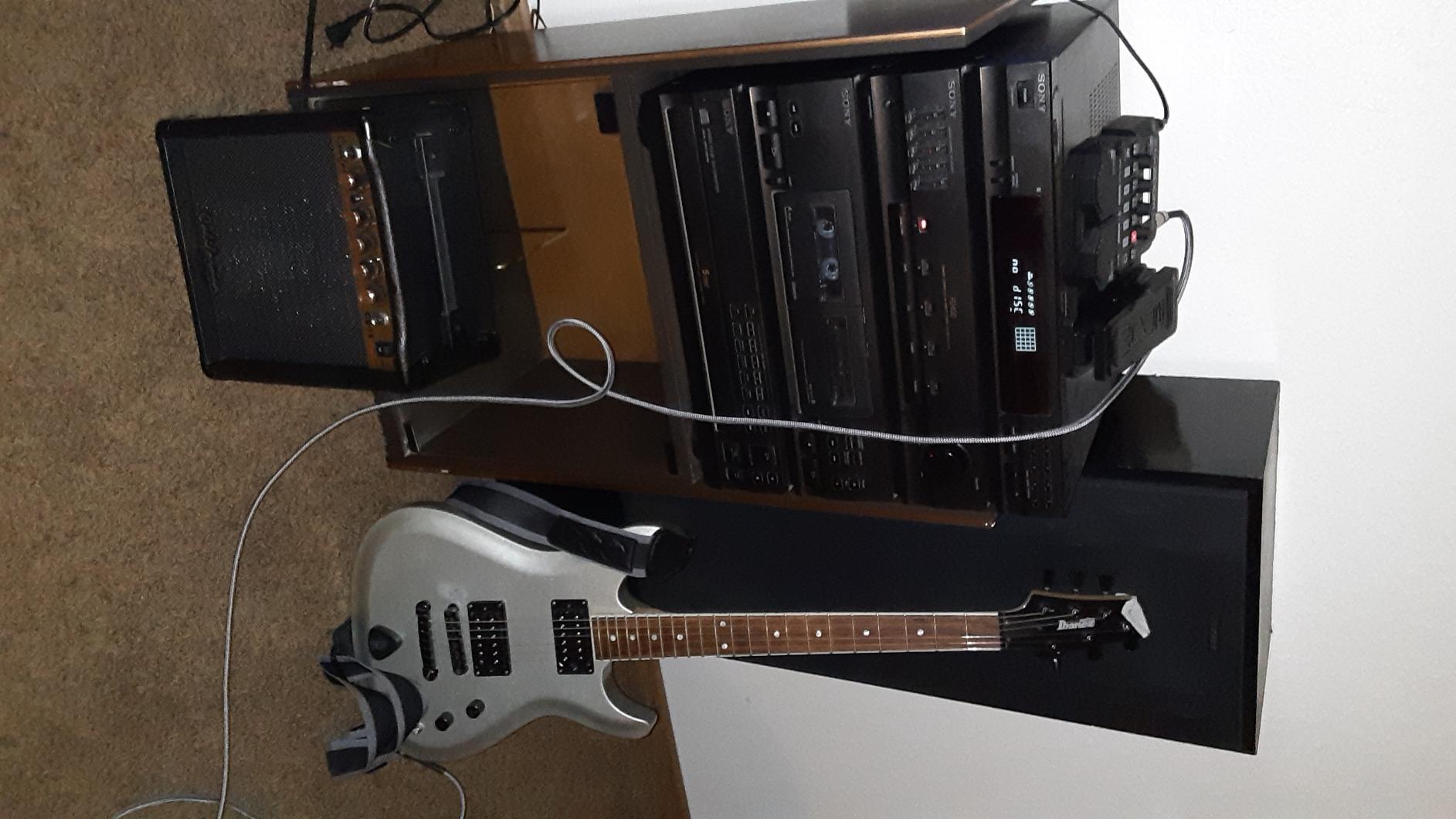
The expression pedal is a feature you do not usually see in this price range. It controls volume, wah, and other parameters in real time. I used it as a volume pedal during a quiet intro to a song, and the response felt smooth and musical. The amp and cabinet simulators sound good enough for casual recording and small gigs.
Battery power is a quiet superpower. I have practiced for hours without an outlet, which is great for camping trips or working on the back porch. The USB port connects to the Zoom Guitar Lab software, where you can download new effects and edit patches. That software is functional but feels dated, which is the main weak point.
Where the looper falls short
Thirty seconds is genuinely short. If you want to record a full song structure, you will be retriggering loops constantly. For a coffeehouse gig, that is workable. For a real solo performance, the BOSS RC-5 or RC-500 is a better tool. The plastic chassis also feels less road-ready than the metal stompboxes on this list.
Who it is for
The G1X Four is the best looper pedal for beginners who want a one-stop solution. If you are a new guitarist looking for a practice tool, a multi-effects unit, and a looper in a single package, this is the one. If you are a gigging musician who needs more than 30 seconds of loop time, look at the dedicated loopers above.
6. MOOER Looper X2 Stereo – Best for Long Recording Sessions
MOOER Looper X2 Stereo Looper Pedal, Electric Guitar Bass Loop Pedal
77 slots
300 min
Fade out
Pros
- 77 save slots in 11 banks covers massive libraries
- 300 minutes of stereo recording time
- Auto Record function triggers on signal
- Fade Out knob for polished song endings
Cons
- Banks 1-9 capped at 2.5 minutes per slot
- No battery option
- Requires 9V DC adapter
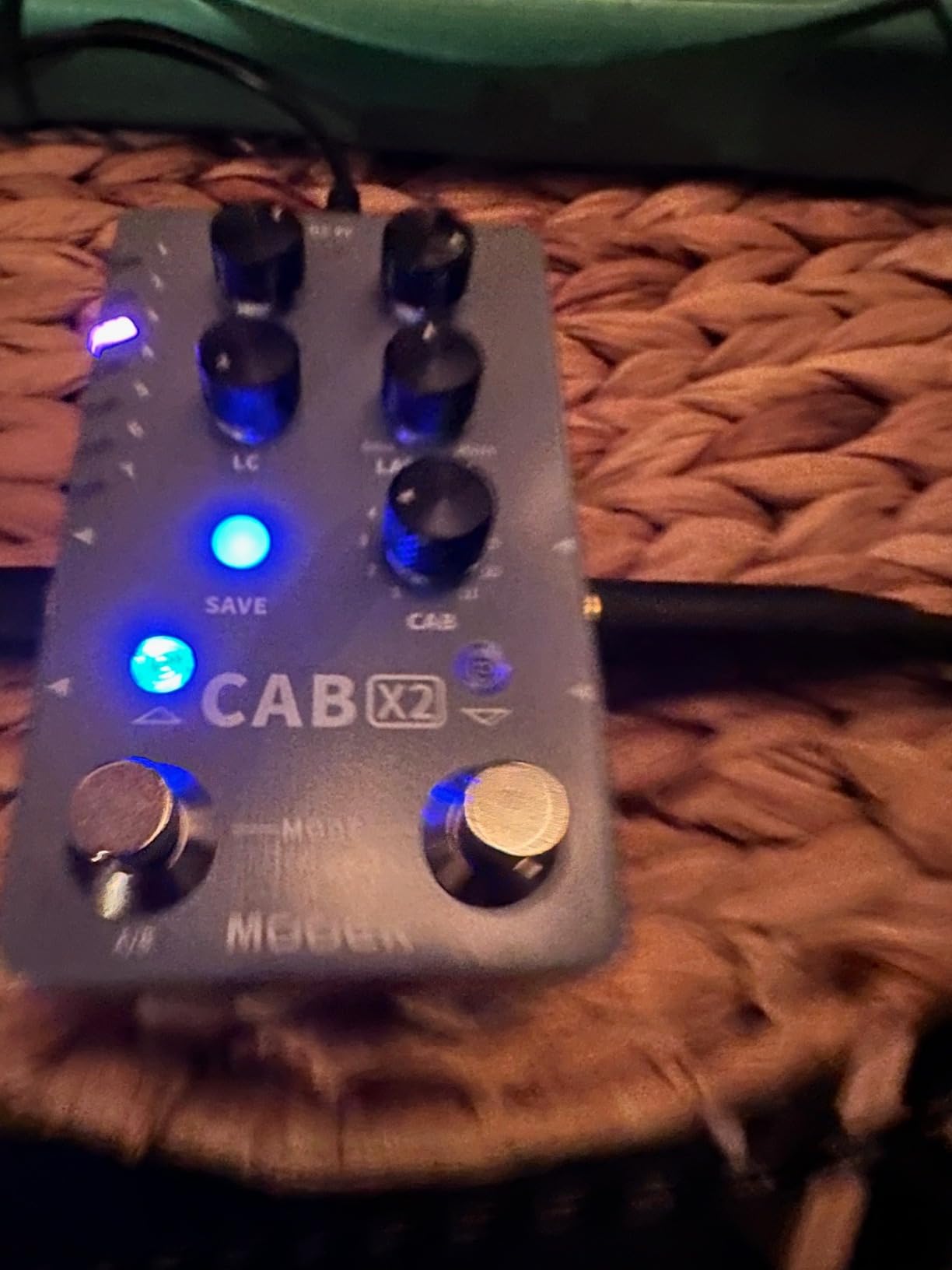
The MOOER Looper X2 is for the musician who collects loops like vinyl records. With 77 save slots organized as 11 banks of 7, and 300 minutes of stereo recording time, this pedal swallows everything you throw at it. I built a library of 40 loops for a recent residency, organized by song and section, and never came close to filling it.
The audio quality is solid: 44.1kHz, 24-bit stereo. That is the same quality you would get from a CD, and it is more than enough for live work. The MP3/WAV/FLAC/APE import is a feature I did not know I needed until I tried it. I dragged a bass line from a recording session into the pedal and built a full band arrangement around it.
The Auto Record function is a hidden gem. Set a threshold, and the pedal starts recording as soon as it hears you play. That means you can forget about tap-dancing on the footswitch and focus on the music. The Fade Out knob provides a smooth, professional ending to any loop, which I used to close out a song without a click track or conductor.
The dual-footswitch design is intuitive, and the support for an external footswitch means you can expand the controls if you need more hands-free operation. The true bypass circuitry keeps your tone clean, and the stereo inputs and outputs are a must for keyboard players and electronic musicians.
The slot-time trade-off
Here is the catch: banks 1-9 are limited to 2.5 minutes per slot. Banks 10-11 give you the full 30 minutes per slot, but only on two of the 77 positions. If you record long-form material, you will plan your library around which bank each loop lives in. For typical song-form loops under two minutes, this is rarely a problem.
Who it is for
The Looper X2 is the best looper pedal for musicians who need a deep library of pre-recorded loops. If you play the same residency every week and want to store verse, chorus, and bridge loops for every song, this is the one. If you need only one or two loops at a time, a simpler pedal will serve you better.
7. TC Electronic Ditto Looper – The Purist’s Choice
TC Electronic DITTO LOOPER Highly Intuitive Looper Pedal with 5 Minutes of Looping Time, Analog-Dry-Through and True Bypass
5 min loop
One button
True bypass
Pros
- One-button design is the easiest to learn
- True bypass preserves your tone exactly
- Analog-Dry-Through keeps the dry signal pure
- Compact size fits any pedalboard
Cons
- No presets or memory storage
- 5-minute limit is tight for some songs
- No battery option requires power supply
The TC Electronic Ditto Looper is a master class in design restraint. It does one thing – loop your guitar – and it does that one thing exceptionally well. I keep one on a small secondary pedalboard for travel, and I have used it on more sessions than any other looper I own. The one-button design means there is nothing to learn.
Press once to record. Press again to start the loop. Press again to overdub. Press and hold to undo. Press twice to stop. That is the entire manual. The 5-minute loop time covers most song structures, and the unlimited overdubs mean you can layer as many parts as your guitar tone can handle. I have stacked 15 layers on a Ditto and the audio stayed clean.
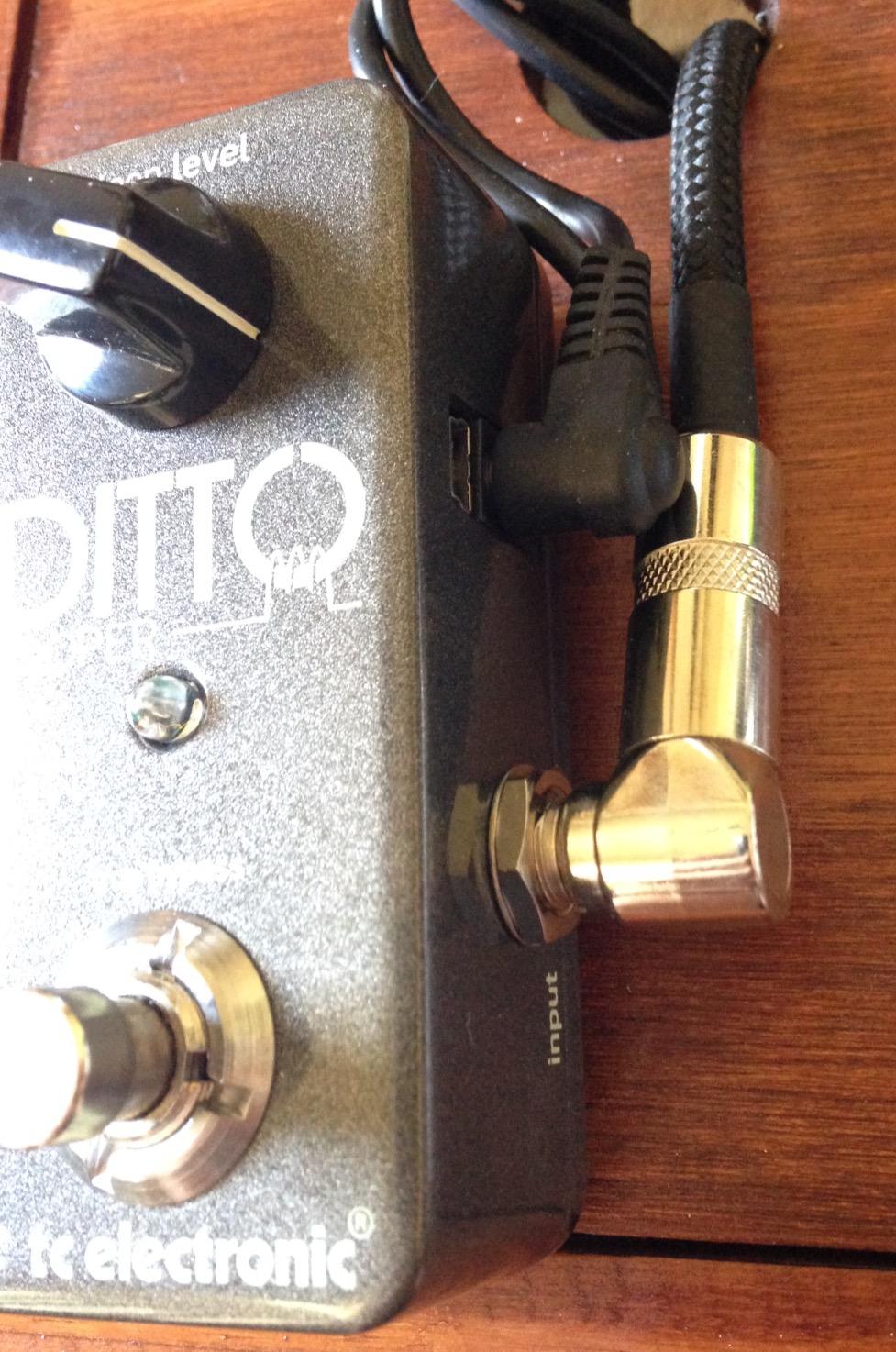
The true bypass circuitry is a TC Electronic hallmark. When the pedal is off, it is not in your signal path at all, so your dry tone is identical to running without the pedal. The Analog-Dry-Through design goes a step further: even when the pedal is engaged, the dry signal stays analog and is not converted to digital. That is why so many tone-obsessed players swear by the Ditto.
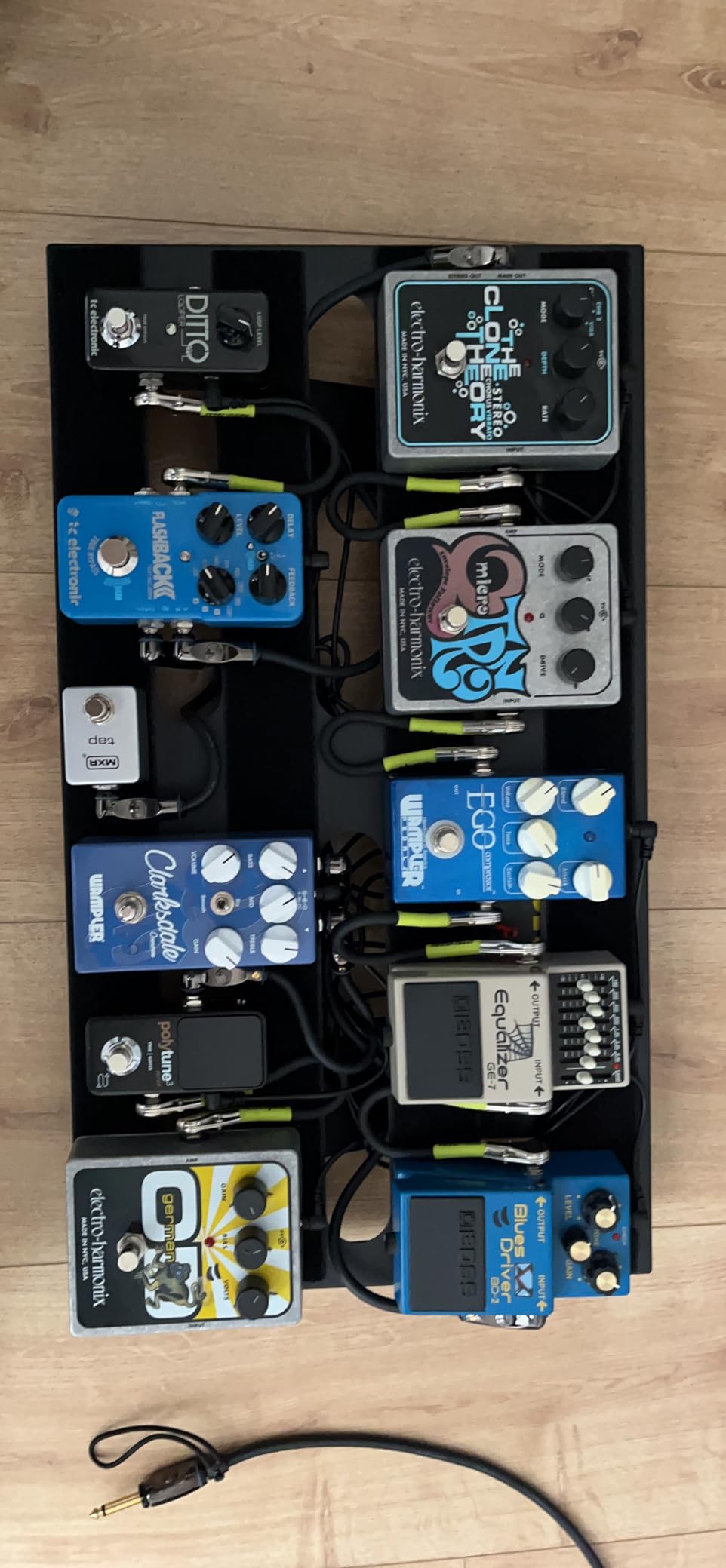
The build is plastic, which keeps it light, and the footswitch has a satisfying click. The compact size means it fits even on a crowded pedalboard, and the price is genuinely accessible for a first-time looper buyer.
What you give up for simplicity
There is no memory storage. When you power off, your loop is gone. There is no drum machine, no rhythm patterns, no phrase memories. There is no battery option, so you need a power supply. If you need any of those features, the BOSS RC-1 or LEKATO is a better choice.
Who it is for
The Ditto is the best looper pedal for musicians who want a no-fuss, tone-preserving tool. If you are a tone-obsessed guitarist who plays simple looping arrangements, this is the pedal. If you need a library of saved loops, sync to a drum machine, or built-in rhythms, the BOSS RC-5 is a smarter buy.
8. Donner Triple Looper – Best for Three-Part Arrangements
Donner Triple Looper Guitar Pedal, 3 Loops 90 mins Looping Time Loop Pedal with Screen Unlimited Overdubs Undo/Redo for Electric Guitar Bass, True Bypass
3 loops
90 min total
Auto save
Pros
- Three independent loop slots for structured arrangements
- 90 minutes total record time
- Auto save preserves your work on power off
- Visual screen shows loop status clearly
Cons
- Single footswitch requires some practice
- No battery option
- Some quality control issues reported
The Donner Triple Looper is a clever middle ground between a one-button looper and a full multi-track unit. The three independent loop slots let you build a song in three parts: a rhythm on slot A, a harmony on slot B, and a lead on slot C. I used it at an open mic to play rhythm, melody, and bass all in one performance, and the audience reaction was worth the price of admission.
The visual screen is a standout feature at this price point. The ring display shows you the length and status of your current loop at a glance, which is critical for timing your entries. I found it much easier to use than LEDs alone, especially in dimly lit venues. The auto-save function preserves your loops even if you power off mid-song, which saved me during a recent power outage at a venue.
The 30 minutes per slot gives you 90 minutes total, which is more than enough for a full live set. The unlimited overdubs mean each slot can grow as complex as you want. The true bypass circuitry keeps your tone clean, and the small footprint fits even on a compact pedalboard.
The build quality is mostly solid, though I noticed the footswitch is a little smaller than premium pedals and takes some getting used to. Some users have reported chirping or quality control issues, but I have not experienced them on my unit. Donner offers a one-year warranty, which adds peace of mind.
Mastering the single footswitch
With only one footswitch, switching between the three loop slots requires a long press or a specific timing pattern. Plan on spending a few hours getting comfortable with the controls before you take this pedal to a gig. Once you internalize the workflow, it is fast. The visual screen is a big help in learning the timing.
Who it is for
The Donner Triple Looper is the best looper pedal for musicians who want three-part arrangements on a budget. If you are a singer-songwriter who plays rhythm, harmony, and lead, or a bassist who wants to stack bass and percussion, this is a strong pick. If you need more flexibility, the MOOER Looper X2 with 77 slots is the next step up.
How to Choose the Best Looper Pedal for Your Setup
Choosing a looper pedal is less about specs and more about how you actually play. I have watched dozens of musicians buy the wrong pedal because they chased features they never used. Here is how I think through the decision, and how our team narrowed down this list.
Match the pedal to your playing style
Ask yourself one question: how many layers do I actually stack in a typical performance? If the answer is one to three, the BOSS RC-1 or TC Electronic Ditto will serve you well. If the answer is five to ten, the BOSS RC-5 or RC-500 is the right tool. If you stack more than ten, you are operating in MOOER Looper X2 territory.
Next, think about the genres you play. If you are a folk or acoustic player, the TC Electronic Ditto and BOSS RC-1 keep your tone transparent. If you are an electronic or ambient player, the BOSS RC-5 with its Loop FX and reverse function is a creative playground. If you are a rock or pop performer, the BOSS RC-500 with its two-track structure mirrors how songs are actually built.
Consider loop time and memory needs
Loop time determines how long of a phrase you can record. For verses and choruses under a minute, 5 minutes is plenty. For full song structures with multiple sections, 12 to 30 minutes is more comfortable. The 13-hour record time of the BOSS RC-5 and RC-500 is overkill for most users, but it is reassuring to have headroom for a long-form ambient set or a recording session.
Memory slots let you save loops and recall them later. The BOSS RC-5 and RC-500 offer 99 phrase memories. The MOOER Looper X2 offers 77 slots. The BOSS RC-1, LEKATO, and Donner Triple Looper offer 3 to 9 slots. The TC Electronic Ditto offers no memory, which is its biggest limitation.
Audio quality and signal path
Audio quality is mostly a function of bit depth and sample rate. The BOSS RC-5 and RC-500 use 32-bit floating-point processing, which is studio-grade. The LEKATO and MOOER use 24-bit at 44.1 or 48kHz, which is CD-quality. The BOSS RC-1 and TC Electronic Ditto use 16-bit at standard sample rates, which is fine for most live work.
Bypass type matters for tone-conscious players. True bypass removes the pedal entirely from the signal path when it is off. Buffered bypass keeps a buffer in the chain, which can preserve high-end on long cable runs. The BOSS RC-1 uses buffered bypass. The BOSS RC-5, RC-500, TC Electronic Ditto, MOOER, and Donner all use true bypass.
Connectivity and pedalboard integration
Think about how the pedal will fit in your signal chain. Most loopers should sit at the end of your chain, right before the amp. This way, all your effects get recorded into the loop. If you put the looper earlier, your time-based effects will only apply to your dry signal.
MIDI I/O is a feature that looks optional but becomes essential if you ever sync to a drum machine, a DAW, or another pedal. The BOSS RC-5 and RC-500 both offer full MIDI. The LEKATO and MOOER do not. If you already use MIDI in your setup, prioritize a pedal with MIDI I/O.
Power requirements and pedalboard real estate
Power supply options matter for gigging musicians. Battery power is convenient for travel and small setups, but most players end up using a power supply for serious use. The BOSS RC-1, RC-5, and Zoom G1X Four all offer battery power. The TC Electronic Ditto, MOOER Looper X2, BOSS RC-500, and Donner Triple Looper require a power supply.
Pedalboard size is the final consideration. The TC Electronic Ditto, LEKATO, and Donner are the most compact. The BOSS RC-1 and RC-5 are standard stompbox size. The BOSS RC-500 is a larger dual-pedal unit. The Zoom G1X Four is a wide multi-effects unit. Measure your board before you buy.
Looper pedal vs multi-effects unit
Some players wonder if they should buy a multi-effects unit like the Zoom G1X Four or a dedicated looper. The answer depends on your needs. If you want a one-stop practice solution with effects, amp sims, and a looper, the G1X Four delivers. If you want a pedal that does one thing exceptionally well and integrates with your existing rig, a dedicated looper like the BOSS RC-5 is the smarter long-term investment.
Signal chain placement best practices
Place your looper last in the signal chain, right before the amp. This way, your reverb, delay, and modulation get baked into the loop. The exception is volume pedals and EQs, which should sit after the looper so they affect both the dry signal and the loop together. If you use a tuner, place it before the looper in the signal chain.
If you use a noise gate, place it before the looper. A noise gate after the looper will chop your recorded loop into silence, which is a mistake I have made on more than one occasion. For amp sims and IRs, place the looper after them so the recorded loop captures the final tone.
Frequently Asked Questions
What is the best looper pedal on the market?
The BOSS RC-5 is widely considered the best overall looper pedal thanks to its 32-bit audio quality, 13-hour record time, 99 phrase memories, and 57 built-in rhythm patterns. For a simpler one-button experience, the BOSS RC-1 remains a classic. For dedicated live performance with two independent tracks, the BOSS RC-500 is the top choice.
What famous musicians use looper pedals?
Ed Sheeran built his live sound around a custom looper rig, which inspired the Sheeran Loopers Looper+ pedal. Other loopers include KT Tunstall, Andrew Bird, Imogen Heap, Reggie Watts, and KT Thompson. Loop pedals have become standard tools for solo performers across folk, indie, and electronic genres.
What does Ed Sheeran use for looping?
Ed Sheeran uses the Sheeran Loopers Looper+ pedal and a custom Boss RC-30 setup combined with a Cheeky Sound trigger. The Looper+ is designed to be an accessible version of his touring rig, with a focus on simple operation, dual tracks, and busking-friendly features like battery power and a built-in tuner.
How does a looper pedal work?
A looper pedal captures your playing into a digital buffer, then plays that audio back as a continuous loop. You can overdub additional layers on top, undo or redo takes, and stop or clear the loop. Multi-track loopers let you record, store, and play back multiple independent loops, which is how solo performers build full arrangements in real time.
Where should I place my looper pedal in the signal chain?
Place your looper pedal at the end of your signal chain, right before the amp. This ensures that all your effects – including reverb, delay, and overdrive – get recorded into the loop. Volume pedals, EQs, and noise gates should sit after the looper so they affect both the dry signal and the loop together.
Final Verdict
After testing these eight pedals across home practice, studio sessions, and live gigs, the BOSS RC-1 remains my top pick for most musicians in 2026. It is simple, reliable, and built to last a decade on your pedalboard. The TC Electronic Ditto is the smarter buy if you only need basic looping and care deeply about tone. The BOSS RC-5 is the right choice if you want a future-proof, feature-rich pedal that can grow with your playing.
For solo performers who need two-track live performance, the BOSS RC-500 is hard to beat. For budget-conscious players, the LEKATO and Donner Triple Looper deliver genuine value. For multi-effects users, the Zoom G1X Four is a one-stop solution. For deep loop libraries, the MOOER Looper X2 is the workhorse. Whichever pedal you pick, you are joining a community of musicians who have used this simple tool to make a single instrument sound like a full band. The best looper pedals for musicians in 2026 are the ones that fit your playing style, your signal chain, and your budget.