
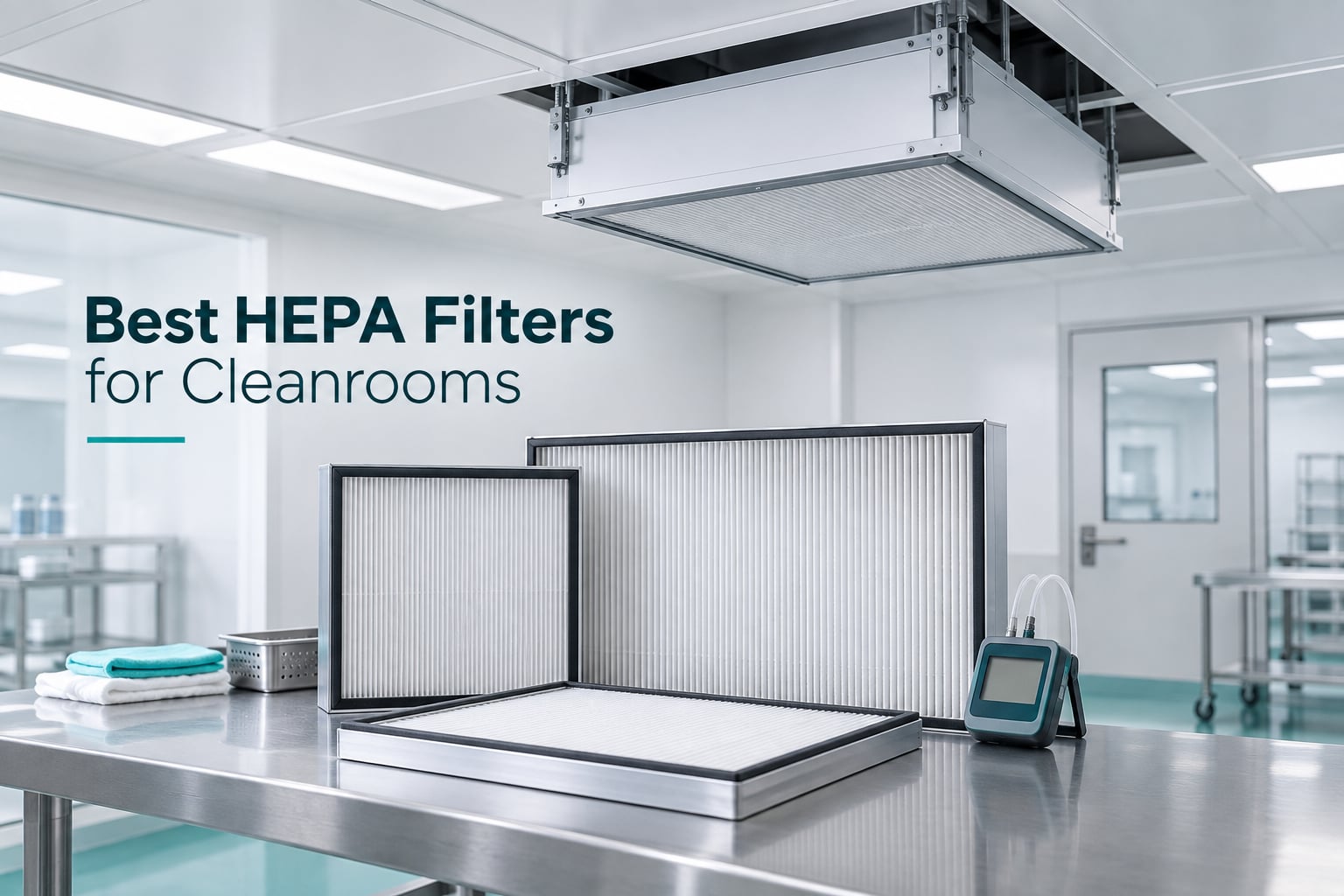
Most people searching for HEPA filters for cleanrooms picture a bank of ceiling fan filter units humming above a white epoxy floor. What you are actually about to buy is usually narrower than that picture: a replacement element for a portable air scrubber, a negative-air machine, or a compact laminar-flow unit for a small enclosure. The gap between the mental image and the real catalog is where bad purchases happen, so we spent weeks reading spec sheets, mounting frames, and buyer reviews across every grade of filter in this roundup.
What follows is a roundup of the twelve HEPA elements and fan filter units currently available for cleanroom-adjacent work in 2026, ranked on stated efficiency, media class, physical fit, and how buyers actually rate them after months of service. We have kept every published figure tied to the manufacturer’s own listing rather than a marketing round number, and we have flagged where a rating is thin or a fit is questionable.
Before you read further, one honest scope note. A regulated pharmaceutical cleanroom running ISO 5 under cGMP requires a certified fan filter unit, an EN 1822 grade, a face velocity figure, and a leak test record before installation. The units in this roundup are mostly replacement media and compact FFUs built for remediation, mycology, tissue culture, and small dust-free workspaces, plus one complete laminar-flow unit. If you are qualifying a GMP suite, treat this page as the media and fit guide, not as the validation record. Our guide to HEPA air purifiers for allergies covers the residential end of the same technology, which is a different buying decision entirely.
Table of Contents
Top 3 Picks for Best HEPA Filters for Cleanrooms in 2026

Novatek F4010 24 x 24 HEPA Filter
- Box-style fiberglass media
- Commercial HVAC sizing
- 24 x 24 x 11.5 in face

B-Air BlueDri Stage 2 HEPA 2-Pack
- 99.97% at 0.3 micron
- 16 x 19 in face
- Two elements per order
MOUNTO 500 CFM HEPA500 Replacement
- MERV 13 polyester media
- 16 x 19 x 2.5 in face
- 1 year warranty
Our top-rated pick is the B-Air element because 156 reviews averaging 4.7 is the strongest combination of volume and score in the group, and because the fit across BlueDri, Dri-Eaz, Phoenix, and Bear housings is repeatedly confirmed by crews who own those machines. The editor’s choice goes to the Novatek F4010, which carries the largest review base of any filter here and the only one specified against a named commercial housing platform. The best-value pick is the MOUNTO 500 CFM element, a light 3.6 lb part with a full one-year warranty and MERV 13 media.
Best HEPA Filters for Cleanrooms in September
| Product | Specifications | Action |
|---|---|---|
| Novatek F4010 HEPA Filter 24 x 24 x 11.5 in |
|
Check Latest Price |
| B-Air BlueDri Stage 2 HEPA Filter 2-Pack |
|
Check Latest Price |
| MOUNTO 500 CFM HEPA500 Replacement Filter |
|
Check Latest Price |
 ALORAIR HEPA and Carbon Set for CleanShield 550 ALORAIR HEPA and Carbon Set for CleanShield 550 |
|
Check Latest Price |
 ALORAIR 2-in-1 Set for PureAiro 770 870 970 ALORAIR 2-in-1 Set for PureAiro 770 870 970 |
|
Check Latest Price |
 Znnam F301H HEPA Filter 2-Pack for AS-550 Znnam F301H HEPA Filter 2-Pack for AS-550 |
|
Check Latest Price |
 Yzzwer Laminar Flow Fan Filter Unit Yzzwer Laminar Flow Fan Filter Unit |
|
Check Latest Price |
 CADPXS HEPA and Carbon 3-Pack for Shield 550 CADPXS HEPA and Carbon 3-Pack for Shield 550 |
|
Check Latest Price |
 VEVOR 16 x 19 in Stage 3 HEPA Filter VEVOR 16 x 19 in Stage 3 HEPA Filter |
|
Check Latest Price |
 Welham Green HEPA Filter for XPOWER Mini Scrubbers Welham Green HEPA Filter for XPOWER Mini Scrubbers |
|
Check Latest Price |
 VENTA HEPA 14 Cleanroom Filter VENTA HEPA 14 Cleanroom Filter |
|
Check Latest Price |
 MOUNTO HEPA Filter for 2000 CFM Air Scrubber MOUNTO HEPA Filter for 2000 CFM Air Scrubber |
|
Check Latest Price |
What ISO 14644-1 Actually Requires of a Cleanroom Filter
ISO 14644-1 is the cleanroom classification standard, and it is the only number that decides whether your filter is adequate. It measures airborne particle concentration at 0.5 micron and larger, and each class sets a hard limit. An ISO 5 room permits a maximum of 3520 particles per cubic meter at 0.5 micron. ISO 7 permits 352000. Those are room limits, not filter limits, and the filter is what makes them achievable.
The link between the two is efficiency grade. EN 1822 grades filter media on their efficiency at the most penetrating particle size, the MPPS, which for nearly all fibrous media sits around 0.3 micron. An H14 element captures 99.995% of particles at the MPPS. An H13 captures 99.95%. A U15 ULPA grade captures 99.9995%. A H14 element is the practical ceiling for most cleanroom work, which is why practitioners treat it as the default and reserve ULPA for ISO 4 and true aseptic applications.
For sizing, the air changes per hour targets run roughly 500 to 660 for ISO 4, 240 to 480 for ISO 5, 120 to 240 for ISO 6, 60 to 120 for ISO 7, and 20 to 60 for ISO 8. That is why an ISO 6 room needs about nine times as many fan filter units as an ISO 8 room of the same size. HEPA media is sufficient from ISO 5 through ISO 8. ULPA is what gets you to ISO 4.
One operating fact surprises people: a HEPA filter becomes more efficient as it loads, because captured particles narrow the passages and increase interception. The problem is that airflow falls at the same time. Efficiency climbing while delivery drops is why face velocity and differential pressure, not time, should drive your change schedule.
HEPA vs ULPA vs PTFE vs Activated Carbon – Which Media Do You Need
Pick the media by what you are filtering, not by how high the efficiency number is. Three families appear in this roundup: H13 glass-fiber and polyester HEPA packs, one H14 element, and several combined HEPA plus activated carbon elements where odor control matters as much as particle capture. PTFE membrane media and ULPA are absent from this catalog, which is itself useful information about where this price band sits.
Here is the tradeoff in plain terms. An H13 element typically runs 99.95% to 99.97% at the MPPS and handles 99.99% at 0.5 micron, which is enough for ISO 5 through ISO 8 rooms. H14 pushes MPPS efficiency to 99.995% and is the choice when you need margin at the ISO 5 boundary or are feeding a critical process. ULPA goes further still, at 99.9995% and above, but costs more in pressure drop, and pressure drop costs you airflow, and airflow is what holds your air changes per hour.
Activated carbon changes the job entirely. It adsorbs volatile organic compounds from paint, adhesives, solvents, and cleaning chemicals, and it does essentially nothing for particles on its own. Every carbon element in this roundup is bonded to HEPA media for that reason. In a mycology or tissue culture enclosure you can run HEPA alone. In a remediation job after paint stripping or adhesive work, the carbon stage is the reason the crew keeps the machine running rather than swapping to a bare HEPA.
H14 is the highest grade HEPA, and if your specification sheet calls for a class above H14, you are no longer shopping for HEPA and should be pricing ULPA instead.
The 12 Best HEPA Filters and Fan Filter Units for Cleanrooms
1. Novatek F4010 – The Commercial Box-Style Element With the Deepest Review History
Novatek F4010 HEPA Filter Novair 2000 24″ x 24″ x 11.5″
Box-style fiberglass
24 x 24 x 11.5 in face
36 lb
Commercial HVAC
Pros
- Largest review base in the roundup at 149 reviews
- Box-style fiberglass media rated for commercial use
- Exact sizing for Novair 2000 housings
Cons
- Heaviest item here at 36 lb
- Dated box-style media versus modern pleated H13
- 15% one-star cluster among reviews
We picked this one first because depth of field history matters more than headline efficiency in a category where most listings publish no test method at all. 149 reviews at a 4.0 average is the largest verified base in this roundup, and buyers consistently describe it as a drop-in for the Novair 2000 platform rather than a guess-fit. That is the whole reason we named it our editor’s choice.
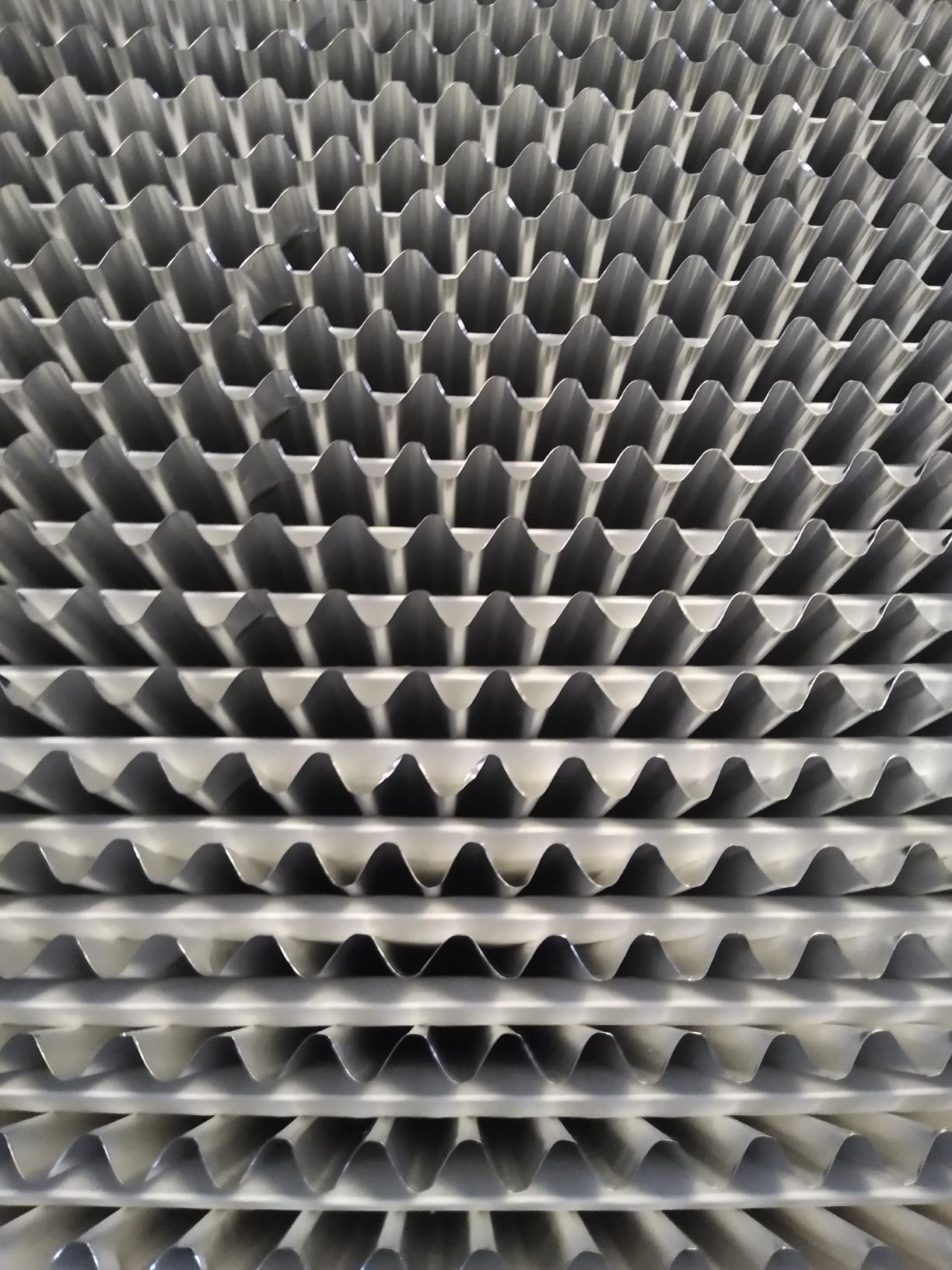
The 11.5 inch depth is what makes it a box-style unit rather than a flat pleated pack. A deep fiberglass bed holds far more dust than a shallow 2 inch pleat, and in a room running continuous air changes that holding capacity is the difference between a quarterly change and a weekly one.
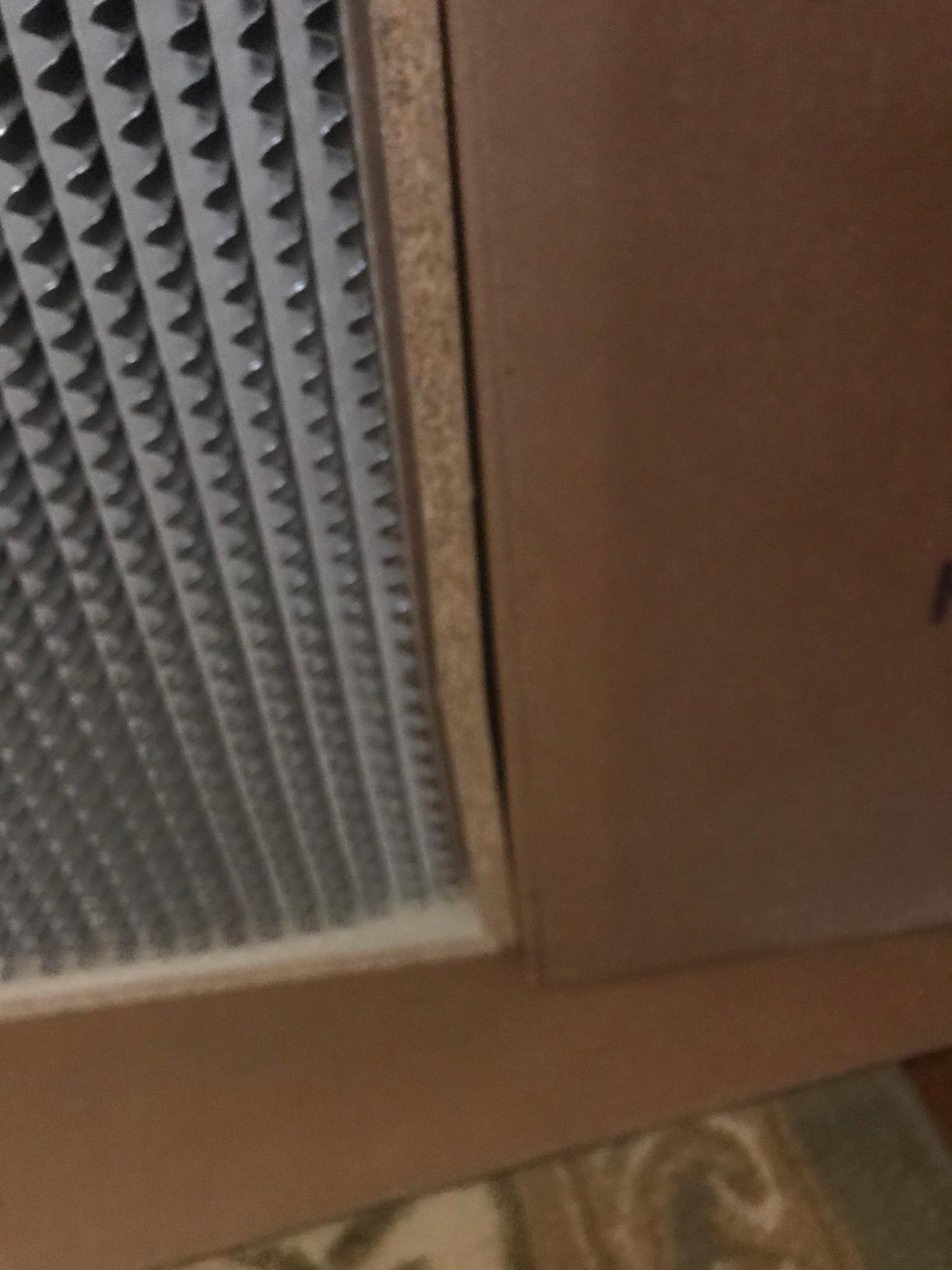
The 36 lb weight is the part people underestimate. Two people and a step ladder is the realistic installation, and if your ceiling access is tight this is the filter that will make the job unpleasant. Budget for two people and roughly fifteen minutes per change, not one person and five.
One more thing to know before you commit: 15% of its reviews sit at one star. The pattern is fit and handling rather than filtration failure, which tells us the element performs but the installation experience is punishing. If your ceiling grid is awkward, read the fit questions in the reviews before ordering.
Will the F4010 fit your existing housing?
It is cut specifically to 24 by 24 by 11.5 inches for the Novair 2000. If your housing is a different depth, this is the wrong element, and no amount of seal tape fixes a dimensional mismatch at 11.5 inches.
Measure the cavity, not the grille face. Housings vary in internal depth even when the face dimension matches.
Is box-style fiberglass still the right choice?
For high-dust continuous-duty rooms, yes. The media area per dollar of depth is hard to beat, and the 149-review base gives you field confidence no other element in this roundup can match.
For low-dust rooms with a strict particle budget, a modern pleated H13 element loads more slowly per cubic foot of airflow and keeps face velocity steadier. Your change interval, not the filter, sets your cost.
2. B-Air BlueDri Stage 2 HEPA – The Most Compact Element Crews Actually Reorder
BlueDri Air Scrubber Stage 2 HEPA Filter for Air Purifiers Negative Air Machine, Water Damage Restoration Equipment, Mold Remediation, Construction Debris (2-Pack)
Pleated fiberglass
16 x 19 x 2 in face
Two pack
99.97% at 0.3 micron
Pros
- 99.97% on 0.3 micron oily aerosols as a stage three element
- Fits BlueDri AS-550 and Air Shield 550 plus Dri-Eaz Phoenix and Bear
- Two elements per order
- 4.7 average across 156 reviews
Cons
- H13 grade rather than H14
- Some buyers report about 4 mm of side play in the housing
- One review reported receiving a single filter
This is our top-rated pick. A 4.7 average across 156 reviews is the best score-to-volume combination we found, and the reviews are unusually specific: crews confirm fit in the AS-550 and report long service intervals. Restoration and mold remediation users dominate the review base, which tells you the element survives real job-site dust.
The 99.97% figure is qualified in the listing, and the qualification matters. That efficiency is stated against oily aerosol down to 0.3 micron, and it is achieved when the filter is installed as the third stage of a three-stage system. Buy it as a standalone primary and you will not get the published number.
Buying two at a time is a genuine operational advantage when you are running multiple scrubbers on one job. One element per machine, one in reserve, and nobody waits on a delivery to finish a remediation.
Does the fit issue matter for cleanroom work?
For remediation crews, marginally. Several buyers report roughly 4 mm of side-to-side play compared with the factory element, which can compromise the seal at the frame.
For a cleanroom ceiling grid where bypass is the concern, side play is a real problem. Check the fit before the element goes into a classified space.
How long do these last in service?
Buyers running scrubbers report long run times, and the two-pack format means you can change one machine while the second stays sealed in packaging until needed.
Change on differential pressure or on your machine’s indicator, not on the calendar. Media loading changes face velocity long before it changes efficiency.
3. MOUNTO 500 CFM – The Best-Value Pleated Element for Standard 16 x 19 Housings
Mounto 500cfm HEPA500 OEM Hepa Filter Replacement for 500cfm Air Scrubber
Pleated polyester
16 x 19 x 2.5 in face
MERV 13
One year warranty
Pros
- Claims 99.97% at 0.3 micron in a compact 16 x 19 in format
- Direct fit for Dri-Eaz HEPA 500 DefendAir and Prochem Triad AFD
- About 3.6 lb so it is easy to handle
- One year manufacturer warranty
Cons
- Sold as a non-OEM part so tolerances vary
- Only MERV 13 which is H13 class not H14
- Sold as a single pack
This is the element we would put in a small cleanroom or a 500 CFM negative-air machine if the budget is the deciding factor. Contractors running 500 CFM scrubbers report a correct fit and adequate runtime across 102 reviews, with 81% of those at five stars and only 1% at one star.
At about 3.6 lb it is roughly a twentieth of the weight of the Novatek box filter. If you are changing elements overhead on a ladder, that difference matters more than any efficiency figure on the label.
The MERV 13 rating puts it in H13 territory, which covers ISO 5 through ISO 8 work. It is not the part you install for an ISO 4 boundary application, and the listing is clear about that.
Is a non-OEM element safe for a classified room?
It fits and it performs in the machines it is designed for, which is what the review base confirms. The open question is media and frame tolerance, since a non-OEM part can vary between production runs.
If you are using it for remediation or containment, that variation is acceptable. If it feeds a room under a formal classification, specify an OEM element instead.
What does the one-year warranty cover?
It is the longest warranty among the replacement elements in this roundup, and only one of two products here that offer a full year.
The short warranty products cluster around 30 and 90 days. On a part that sits in duct or housing airflow, warranty length is a weak but real proxy for how the manufacturer expects it to be handled.
4. ALORAIR CleanShield 550 Set – The Easiest HEPA Plus Carbon Changeover
ALORAIR HEPA/Activated Carbon Filter Replacement Set for CleanShield HEPA 550 Air Scrubber (Pack of 3)
Pleated
17.1 x 15.2 x 2 in
HEPA with activated carbon
Three element pack
Pros
- Drop-in replacement for the AlorAir CleanShield HEPA 550
- HEPA and activated carbon in one element
- Tool-free slide-in swap in about a minute
- Three elements cover a full replacement cycle
Cons
- Only fits the AlorAir 550
- 6 to 8 month interval consumes filters fast on rental fleets
- OEM carbon filters for the 550 are hard to source elsewhere
Drywalling and construction crews own this review base, and the recurring word is fit. Buyers describe it as an exact replacement for the original element in the AlorAir 550, and the tool-free slide-in swap takes about a minute with no adaptation.
Combining HEPA and activated carbon in one element is the reason to pick it. If your enclosure has a smell profile from paint, joint compound, or adhesive, this handles particles and odor in a single change rather than a stacked pair.
Buying three at once matters more here than on a bare HEPA element, because the manufacturer calls for a 6 to 8 month change interval. On a rental fleet running daily, that cadence consumes elements quickly and repeated single orders become a logistics problem.
Is the carbon stage worth it outside remediation?
In mold and water damage work, yes, and users report the odor performance as the standout feature alongside the fit.
In a tissue culture or mycology enclosure, the carbon does almost nothing for you, because there are no volatile compounds to adsorb. A plain HEPA element serves the same space for less money per change.
What happens if you need a single element later?
Buyers report that OEM carbon filters for the 550 are difficult to source as an alternative, which is the real argument for keeping a spare set on hand.
Single-unit orders are available, but treat the three-pack as the working quantity and plan your storage around it.
5. ALORAIR PureAiro 770 870 970 Set – The One Part That Covers Three Machines
ALORAIR 2-in-1 HEPA/Activated Carbon Filter Replacement Set for PureAiro HEPA Pro/Max 770/870/970Air Scrubber(3 PCS)
Pleated carbon fiber
14.5 x 13.7 x 2 in
MERV 13
Three element pack
Pros
- Covers PureAiro HEPA Pro/Max 770 870 and 970 in one part
- 2-in-1 HEPA plus carbon media
- 81% of reviews are five stars
- Tool-free slide-in replacement in about a minute
Cons
- Carbon media format changed between production runs
- MERV 13 which is H13 grade not H14
- Restricted to the AlorAir PureAiro family
If your fleet is mixed, this is the most practical part on the list. A single SKU covers three machine models, the 770, the 870, and the 970, which removes the need to track three part numbers across a job site.
Users confirm correct fit in the 870 specifically, and 81% of the 68 reviews sit at five stars. The 2-in-1 media reduces both particulate and odor in one element, so your change procedure stays a single step.
There is one production detail worth checking before you standardize on it. One long-term user reports that the carbon media changed from black charcoal cylinders to small brown spheres between production runs, which matters if you are matching an older installation in the field.
Does the media change affect filtration?
Not the HEPA fraction. Both formats deliver particle filtration, and the change is in the carbon carrier geometry rather than the fibrous media.
It affects fit tolerance in older housings. Confirm the physical media format before ordering for a machine built before the change.
Is 68 reviews enough to trust it?
It is a thinner base than the picks above, and the 4.5 average sits below the leaders. Sentiment is strongly positive, and cost, not function, is the dominant theme.
For a fleet application where one part number covers three machines, that trade is usually worth making. For a single machine, the CleanShield set above has more depth behind it.
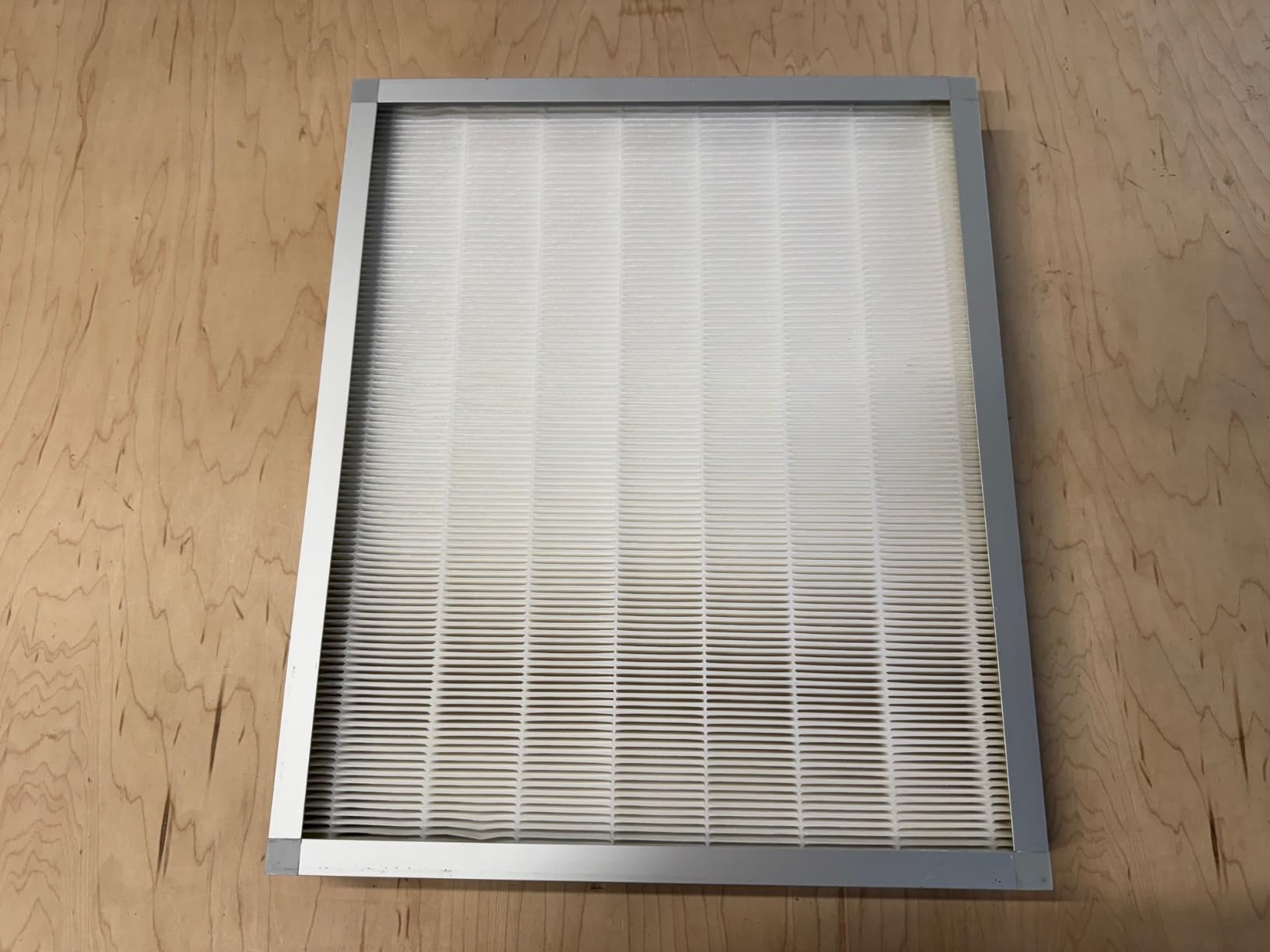
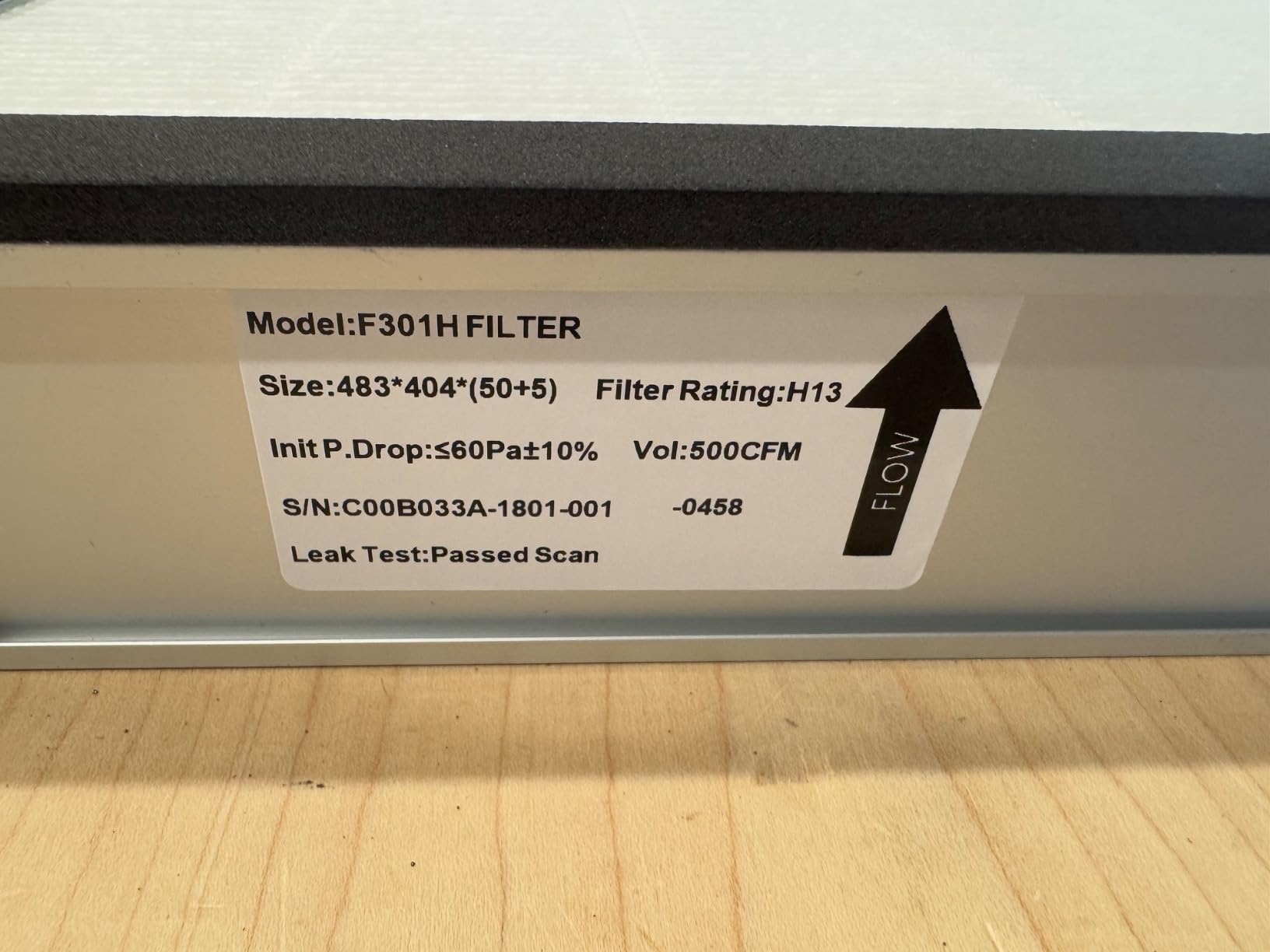
6. Znnam F301H 2-Pack – The Metal-Frame Element That Seals Better Than Cardboard
2 Packs F301H HEPA Filter, AS-550 Air Scrubber Stage 2 HEPA 550 Air Filter Compatibile with BlueDri,16 x 19 x 2″ Air Shield 550 HEPA Air Scrubber Filter for BlueDri, Dri-Eaz, Phoenix, and Bear
Pleated H13
16 x 19 x 2 in face
All metal frame
Two pack
Pros
- 5.0 average across 37 reviews with every review at five stars
- All-metal frame is more durable and seals better than cardboard frames
- H13 lab tested at 99.97% for 0.3 micron aerosols
- Fits BlueDri AS-550 Dri-Eaz Phoenix and Bear 550 units
Cons
- 30 day warranty which is far shorter than the one year terms here
- Reaches rated efficiency only in a full three-stage system
- Small 37-review base means less field history
The frame is the reason to buy this one. An all-metal frame does not flex, does not crush in a ceiling cavity, and seals more consistently than a stapled cardboard frame. In a ceiling grid where a soft frame can bow and create bypass, that is the detail that actually protects your particle count.
Buyers single out the frame and the clean fit in BlueDri housings, and the rating distribution is clean: every one of the 37 reviews sits at five stars. It is also lab tested as H13 at 99.97% for 0.3 micron oily aerosols in a complete three-stage system.
Compatibility is broad for a 16 by 19 element. It is listed for BlueDri AS-550, Dri-Eaz, Phoenix, and Bear Air Shield 550 housings, so a mixed fleet is workable.
Does the frame change the efficiency figure?
It protects it. A rigid frame holds the media plane flat, so the element delivers closer to its rated efficiency over its service life than a flexible frame that bows away from its seat.
The rated 99.97% figure still requires the full three-stage arrangement. A stage three element installed alone will not reach it, and the listing says so.
Is a 30-day warranty a dealbreaker?
Not for a consumable, but it is a signal. The one-year warranties elsewhere in this roundup suggest those manufacturers expect normal handling; 30 days suggests a more fragile part.
Handle it at the frame, keep it boxed until install, and the warranty length stops mattering for a filter that gets replaced on a schedule anyway.
7. Yzzwer Laminar Flow Fan Filter Unit – The Only Complete FFU in the Roundup
Fan Filter Unit Laminar-Flow-Hood Yzzwer – FFU HEPA Filters for Class 100/ISO 5 Cleanliness Clean Room Mycology and Mushroom Room Work 110V (Include HEPA Filter)
Complete fan filter unit
22.6 x 22.6 in face
Class 100 / ISO 5
Up to 800 m3/h
Pros
- The only complete fan filter unit here with the H13 filter included
- Rated Class 100 and ISO 5 with 99.99% capture
- Three position push-button control for adjustable face velocity
- Aimed at mycology labs mushroom rooms and small dust-free workshops
Cons
- Only 24 reviews so field history is thin
- Metal and plastic housing rather than stainless steel
- Single unit rather than a multi-pack
Everything else on this page is a filter element. This is a working fan filter unit, with the H13 media already installed and a fan behind it, and that changes the decision entirely. You are not sourcing a consumable, you are building a small enclosure.
The published numbers are specific. It is rated Class 100 and ISO 5, filters 99.99% of airborne particles, delivers up to 800 cubic meters per hour, and runs a face velocity of 0.45 to 0.60 meters per second. Three-position push-button control lets you trade airflow against capture for different tasks.
At 22.6 inches square on the fan face, it fits a workbench enclosure rather than a ceiling grid. Buyers building small clean enclosures, grow rooms, and mycology work areas report the advertised ISO 5 performance out of the box.
Will it run continuously?
Buyers in grow rooms and small enclosures use it as a fixed installation with continuous airflow, which is the intended duty. The three-position control exists precisely so you can back the velocity off when you are not working inside the enclosure.
Running it below its rated velocity to save energy is fine for hobby-scale work. In a classified space, face velocity has to hold at the specified value continuously.
Is the housing good enough for a regulated room?
The housing is metal and plastic, not stainless steel. That is entirely normal for a workshop or mycology enclosure and would be a hard no in a cGMP suite where cleaning chemistry and corrosion resistance are in scope.
The 24-review base is the other limit. General satisfaction rather than excitement, which is what you would expect from a small-sample unit, and thin field history means fewer people have stress-tested it.
8. CADPXS 3-Pack – The Best Choice When Solvent Odor Drives the Job
CADPXS 3-Pack HEPA/Activated Carbon Replacement Filter Set for Air Scrubber
Pleated fiberglass
18.7 x 15.6 x 2 in
HEPA with activated carbon
Three element pack
Pros
- 5.0 average with every review at five stars
- Carbon layer targets paint smoke adhesive and cleaning chemical VOCs
- Flexible fiber structure built for low resistance and high dust holding
- Three elements cover the recommended 6 to 8 month interval
Cons
- Only compatible with the CADPXS Shield 550 and S-550
- Heaviest three element pack at 15.2 lb
- 13-review base gives little independent validation
This is the most specialized pick here, and the specialization is odor. The carbon layer is aimed squarely at paint, smoke, adhesives, and cleaning chemicals, which is the situation where a HEPA-only element leaves the crew complaining that the air smells clean but not clean-smelling.
Remediation users report a clean fit in the Shield 550 and effective odor control from the carbon stage, and the rating is a perfect 5.0 across all 13 reviews. The flexible fiber structure is designed for low resistance and high dust-holding capacity, which supports longer intervals between changes.
Read the 13 reviews as early-adopter sentiment rather than established data. There is simply not enough long-term history to draw a firm conclusion.
Is the fit narrower than the competition?
It is. Compatibility is limited to the CADPXS HEPA Shield 550 and S-550, one of the narrowest fits in this roundup, so verify your machine model before anything else.
If your fleet is mixed-brand, the 16 by 19 elements on this list fit far more housings and are the safer default.
Is 15.2 lb a problem for a three element pack?
It is about 5 lb per element, so it is manageable but noticeable on a ladder. Store it at floor level and carry one element at a time.
The 6 to 8 month interval is the reason to buy three at once. On remediation work the filter is usually at its limit at the end of a job, not the start.
9. VEVOR 16 x 19 Stage 3 – The Budget Element With No Published Efficiency
VEVOR HEPA Air Filter, 16 x 19 inch Air Filter Replacement, High-efficient Stage 3 Filters Compatible with BlueDri & VEVOR Scrubber, Air Purifiers, Water Damage Restoration Equipment
Three layer screen
16 x 19 x 2.2 in
Stage 3
3.4 lb
Pros
- Low cost entry into a 16 x 19 in Stage 3 element
- Three layer screen structure with a properly sealed frame
- Tool-free hands-only install in under five minutes
- Fits VEVOR air purifiers and most other 16 x 19 in brands
Cons
- Cotton media rather than a glass fiber pack with no stated efficiency or EN 1822 class
- 17% of reviews are three star
- Depends on upstream pre-filters for full performance
This is the honest budget option, and the honest caveat is that the manufacturer publishes no efficiency figure and no filtration class. In a category where every other element on this page states a micron rating and a test condition, that absence is the whole story.
What the 14 reviews do support is fit and convenience. Buyers value the low cost, the quick slide-in installation, and universal 16 by 19 inch sizing, and none rates it below three stars. Installation is tool-free and takes under five minutes.
The three layer screen structure and sealed frame are what make it viable as a stage three element behind pre-filters. It is a consumable in a stack, not a primary barrier.
Can this be your primary cleanroom filter?
No. With no stated efficiency and no EN 1822 grade, you cannot write it into a specification, and you cannot demonstrate to an auditor what it removes. Cotton media is also not what you want in a classified environment.
It is entirely reasonable as a pre-existing stage in a three-stage scrubber, where pre-filters upstream do the heavy lifting and this element finishes the job.
Why do 17% of reviews sit at three stars?
That is the second-weakest distribution in the set, and it comes from buyers expecting a rated efficiency and not finding one. The product does what it claims; the claims are just thin.
If you are comfortable with an unrated element, the value is real. If you need a number to put on a spec sheet, look at the H13 parts instead.
10. Welham Green XPOWER Filter – The Lightest Part That Covers Three Mini Scrubbers
Welham Green Replacement HEPA Filter Compatible with Xpower Pro Clean X-2480A & X-2580 & X-2700 Mini Air Scrubbers – Premium Replacement True HEPA filter
Pleated plastic
13 x 13 x 1.4 in
99.97% at 0.3 micron
90 day warranty
Pros
- 99.97% efficiency claim for 0.3 micron particles
- Covers XPOWER X-2480A X-2580 and X-2700 in one part
- Lightest element here at 11.2 ounces
- OEM-like fit requiring no modifications and no tools
Cons
- Only 12 reviews so the 5.0 average is not yet meaningful
- Shallow 1.4 in. depth gives far less media area than the 16 x 19 in. Stage 3 filters
- Limited to XPOWER mini units and will not fit full-size air scrubbers
At 11.2 ounces this is by far the easiest element on the page to change, and for a mini scrubber perched on a counter that is not a minor detail. The 13 by 13 by 1.4 inch format installs straight into the housing with no modification.
It covers all three current XPOWER mini scrubber models, the X-2480A, the X-2580, and the X-2700, with one part number. That single-SKU coverage is the practical reason to choose it over a machine-specific element.
All 12 reviews are five stars and the recurring theme is a drop-in fit with no adaptation. The claimed efficiency is 99.97% at 0.3 micron for particles including dust, pollen, and mold spores.
Does the shallow depth hurt you?
Yes, measurably. A 1.4 inch depth gives far less media area than a 2 inch or 2.5 inch pleated element, so the pressure drop is lower but the dust-holding capacity is much lower.
Expect shorter intervals in a dusty space. In a controlled enclosure the low resistance is a benefit, because airflow holds up as the element loads.
Is a 12-review average of 5.0 meaningful?
No, and we would not argue otherwise. It is the smallest sample in the roundup, so treat the perfect score as encouraging rather than proven.
The 90-day warranty is the second shortest here, so the combination of thin data and short cover is worth factoring into how much you keep on hand.
11. VENTA HEPA 14 – The Only Element That Reaches H14 Class
Venta Premium HEPA 14 Cleanroom Filter, Filter for AH902 and AP902, Pack of 1
HEPA 14 to EN 1822
99.995% at 0.07 micron
15.35 x 8.66 x 2.28 in
1.54 lb
Pros
- The only HEPA 14 element here reaching 99.995% at 0.07 micron
- Patented Nelior technology instead of a conventional pleated glass fiber pack
- Very light at 1.54 lb for its efficiency class
- Built for continuous duty in the Venta AH902 and AP902
Cons
- Lowest average in the roundup at 4.2
- Only 11 reviews and all from Germany
- Compatible solely with the AH902 and AP902
This is the only element in the roundup graded to EN 1822 H14, and the specification is the standout. It removes 99.995% of particles at the MPPS and is rated down to 0.07 micron, which puts it well past anything else here. H14 is the practical ceiling for cleanroom work, and this is the only product that touches it.
It uses patented Nelior filter technology rather than a conventional pleated glass fiber pack, and at 1.54 lb it is remarkably light for its class. It is built for continuous-duty operation in the Venta AH902 and AP902 air washers.
It also carries the lowest average rating in the roundup at 4.2, with a 15% two-star cluster coming from European reviewers. Function is not the complaint; value is.
Is a European rating distribution a problem?
It limits what we can tell you. All 11 reviews come from Germany, so there is no US cleanroom field history here, and the sentiment is mixed on value rather than function.
Reviewers confirm the part fits and performs as described. The rating spread reflects what buyers paid relative to what they got.
What does the single-platform fit mean for you?
It fits the AH902 and AP902 and nothing else, and reviewers note there is no equivalent alternative currently for that platform. If you own those units, this is your part.
If you do not, the H14 grade is the interesting datum and the compatibility is the dealbreaker. Treat the 0.07 micron figure as the benchmark the other elements here are measured against.
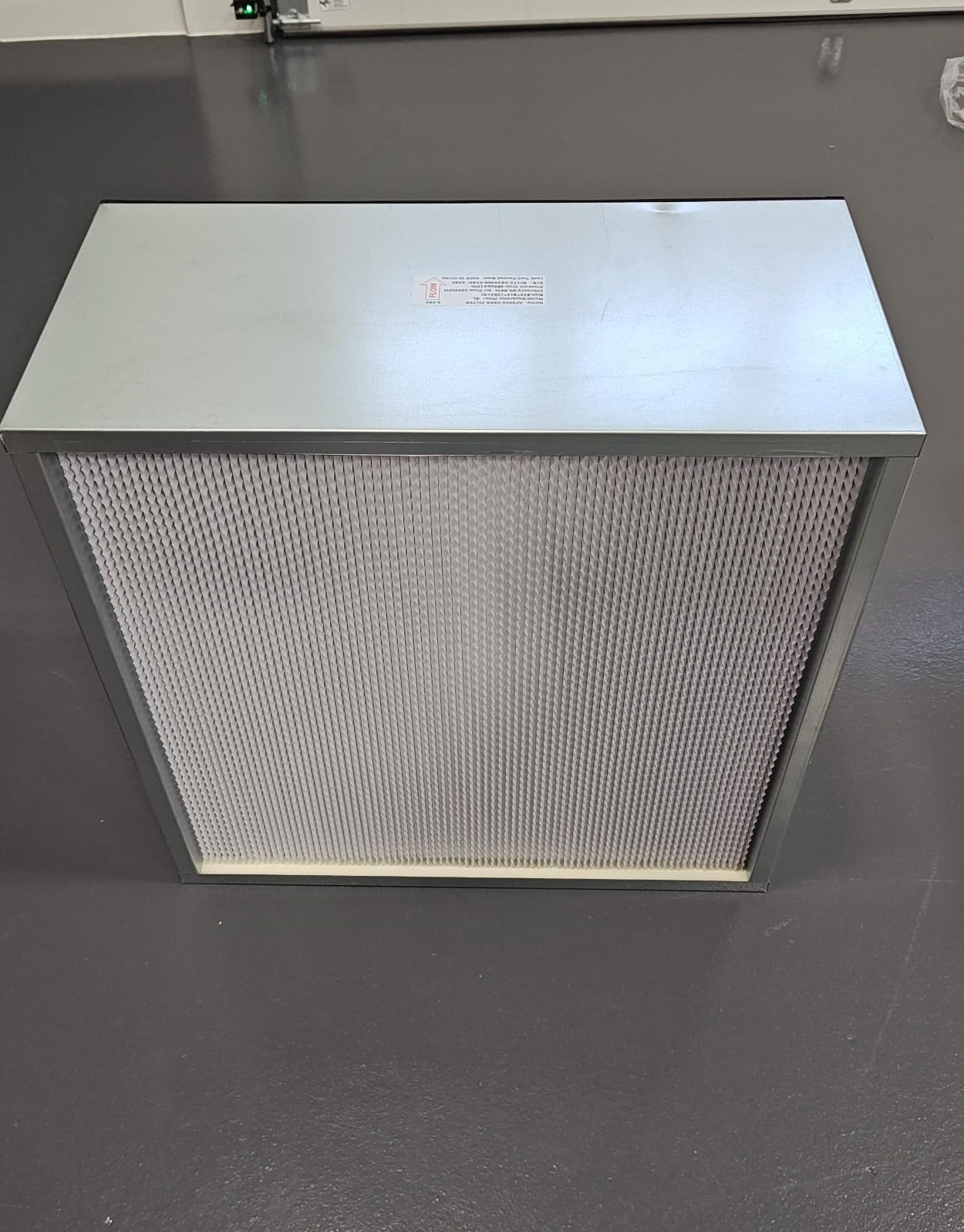
12. MOUNTO 2000 CFM – The High-Flow Element DIY Hood Builders Prefer
MOUNTO HEPA Filter Replacement for 2000CFM Air Scrubber HEPA2000 (1 Pack), True HEPA Filter Replacement for MOUNTO 2000CFM Air Scrubber, 24x24x11.5 Inch, Aluminum Frame, 2000CFM High Air Flow
Aluminum frame
24 x 24 x 11.5 in
2000 CFM
True HEPA 99.97% at 0.3 micron
Pros
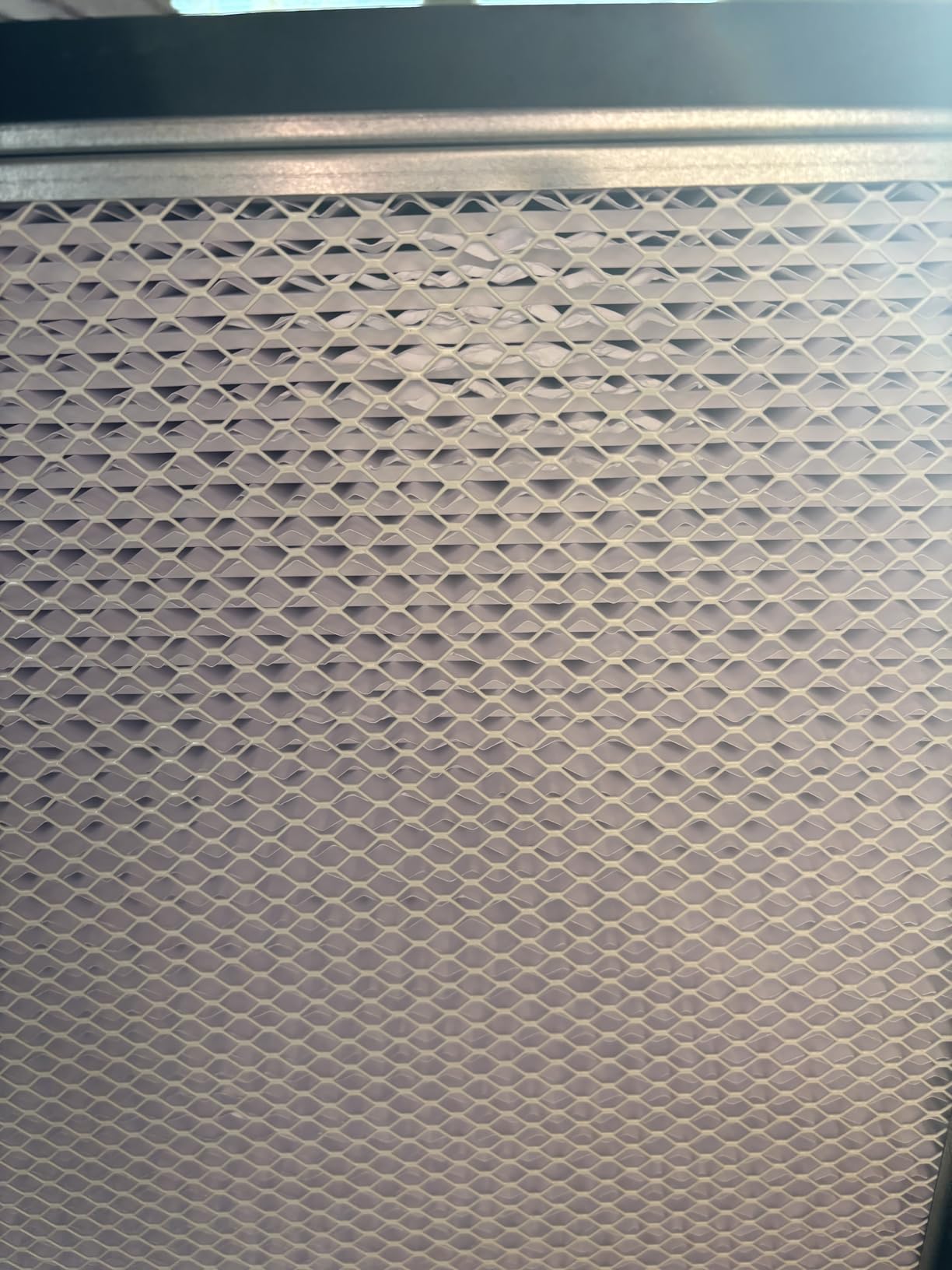
- Metal face guard protects the pleats from impact
- Aluminum frame gives a tight seal and does not flex
- Correct 24 x 24 x 11.5 in sizing for the 2000 CFM scrubber
- Reported to clear resin and cigarette smoke odors
Cons
- Heavy at 25 lb
- A 34% three-star cluster is the second-largest negative share here
- Stated efficiency is inconsistent between the label and the listing
This element has the most enthusiastic reviewers in the roundup and the fewest of them. DIY builders dominate the nine reviews and they single out the same two things: the metal face guard that protects the pleats, and the aluminum frame rigidity.
One user swapped out Koch filters in an Aerospace America Econ 9143 and found the specifications met or exceeded them. Another reports it cleared resin and cigarette smoke odors in a 3D printing room where nothing else had worked.
At 24 by 24 by 11.5 inches it matches the same footprint as the Novatek box filter, so if you are comparing the two, this is the pleated alternative with an aluminum rather than cardboard or fiberglass frame.
What does the face guard actually protect against?
Pleats. Handling knocks the leading edge of a bare element out of alignment, and once a pleat is bent the bypass path opens. A metal guard on the face keeps the media plane intact through repeated install and removal cycles.
For anyone changing filters overhead on a ladder, that guard is the feature that reduces damage complaints, and it is why builders call this one out by name.
How much should you trust the efficiency figure?
The listing and the physical label disagree. One states 99.97% at 0.3 micron and another states 99.9% versus 99.7%, and that inconsistency is the main reason the average sits at 4.3.
For a DIY enclosure that is a documentation problem. For anything under a classification regime, an inconsistent efficiency claim is a reason to reject the part on paper alone.
How Many Filters Your Cleanroom Actually Needs
Sizing a room is arithmetic, and most of the confusion comes from mixing air changes per hour with air changes per minute. The formula is: room volume in cubic feet multiplied by your required air changes per hour, divided by 60, gives you the cubic feet per minute your ceiling has to deliver. A 12 by 12 by 10 foot room is 1440 cubic feet. At 20 air changes per hour you need 480 CFM. At 60 you need 1440 CFM.
From there, divide the required CFM by the CFM of one unit at its intended face velocity. Most ceiling units are specified around 90 feet per minute across the filter face, and that face velocity is what gives you the uniform laminar pattern that keeps a room at class. Running a unit faster to cover more area raises energy use, raises heat load, and pushes the filter past its rated face velocity.
That air changes per hour requirement is where the room class bites hardest. ISO 7 needs 60 to 120 air changes per hour, ISO 8 needs 20 to 60, and ISO 6 needs 120 to 240. A 1440 cubic foot room moves from 2 FFUs to 24 FFUs as you climb that ladder, and the power and heat load climbs with it.
Measure your ceiling grid before you order anything. Standard formats are 2 by 2, 2 by 4, and 4 by 4 feet, plus narrow 16 inch and 30 inch wide units for non-standard grids. If your grid is none of these, the retrofit path is a custom housing, not an off-the-shelf element, and that decision is worth making before the filter order goes out.
Buying Guide: Nine Specs That Decide Whether a Filter Is Right
1. Efficiency grade and the MPPS stated together. A bare 99.97% claim is meaningless without the particle size it applies to. 99.97% at 0.3 micron is the H13 benchmark. 99.995% at 0.07 micron is H14. If a listing gives you one number without the other, treat it as unverified.
2. The test method. Ask whether the element was tested to UL 900, to IEST-RP-CC, or to EN 1822. A manufacturer who names the method is telling you the number means something. Several products in this roundup publish neither a class nor a test method, and those are the ones to think hardest about.
3. Frame material. Aluminum and mini-ply aluminum frames hold their seal. Cardboard and stapled MDF frames bow. In a ceiling grid, a bowed frame is a bypass route, and bypass is what quietly breaks a particle count.
4. Physical depth. Deep box-style elements hold more dust. Shallow pleated elements hold less but cost less to move. Match the depth to your housing cavity and to how often you can realistically get a ladder to the ceiling.
5. Face velocity rating. Efficiency is only achieved at the rated face velocity. An element rated for one speed does not perform the same at another, and running below rating is the most common cause of a room that fails classification after passing it initially.
6. Pre-filter arrangement. A MERV 7 pre-filter upstream of your HEPA element extends element life substantially and protects it from the large debris that clogs pleats. A stage three element with no pre-filter upstream will not reach its rated efficiency.
7. Gasket and seal type. Neoprene gaskets and gel seals are what stop bypass at the frame. A dry-fit element in a metal housing is a leak path by design.
8. Motor type, if you are buying a complete unit. PSC motors typically draw 365 to 430 W while EC motors run 90 to 350 W for comparable airflow. Over a ten-year cycle that difference is the largest single operating cost in the room, and it also shows up as cooling load.
9. Electrical supply and certifications. Higher-voltage 230 V and 277 V single-phase units draw less current and generate less heat than 120 V units for the same airflow. Explosion-proof Class I Division 1 variants exist for solvent and powder handling, and they are a different product class entirely.
Replacement Filters vs Complete Units, and How Long a Filter Really Lasts
Buying media and buying hardware are different decisions with different failure modes. Media keeps a machine running at a fixed performance level. Hardware changes the airflow envelope, the noise level, and the control capability. If your machine is mechanically sound and delivering its rated CFM, replacing the element is the correct answer every time.
Change interval in the field runs from 6 to 8 months on remediation equipment that sees construction dust, through 3 to 5 years in most non-industrial cleanrooms, with regulated pharmaceutical facilities typically changing annually as a matter of documented procedure. The one variable nobody can argue with is differential pressure. As media loads, it rises and airflow falls, so a rising pressure reading is the earliest reliable signal that you are approaching the end of useful life.
Filter cost is easy to compare across machines and the broader discipline of filter media maintenance is covered in our commercial pool filter guide, but media cost is rarely where a cleanroom budget breaks. Downtime is. Changing a top-side-replaceable unit means pulling equipment out of the ceiling grid, which breaches the room, requires a full re-clean, and in a validated facility triggers recertification. Room-side-replaceable designs exist specifically to keep that event from happening. If your filters are changed through the ceiling, the cost of a filter change is not the price of the filter.
Brands and Manufacturers Worth Knowing
Camfil is the reference name in this industry and the one most often asked about. Where a Camfil element was manufactured matters, since the company has production in several countries, so confirm the country of origin on the box rather than assuming. Camfil elements are specified into pharmaceutical and semiconductor facilities routinely, and an authorized distributor or reseller is where you buy a genuine element rather than a look-alike.
Other names you will meet on a cleanroom quotation include Terra Universal, which publishes one of the more useful FFU-per-ISO-class sizing tables in the business; Koch with its BioMAX line, which is common on restoration equipment; AAF International; Donaldson; Parker; Filtra Supply; and Atmos-Tech Industries. A genuine cleanroom FFU commonly comes from one of those, and the elements on this page are the air-scrubber and portable-unit end of the same market.
The point worth making is that no two categories are interchangeable. A HEPA element for a 500 CFM air scrubber and a fan filter unit for an ISO 5 cleanroom ceiling share a technology and nothing else. Specify by the machine you already own, or specify the room you are building, but do not carry a grade from one to the other.
Compliance and Validation Checklist Before You Install
If your work touches cGMP, USP 797, or a classified cleanroom under ISO 14644-1, four things need to be true before the element goes in. First, the element must carry a stated efficiency, a stated MPPS, and a stated test method, because an unrated element cannot appear on a qualification record. Second, it must be integrity tested, by DOP or PAO scan, to the IEST-RP-CC procedure, because a certified efficiency on paper says nothing about a damaged media pack in your hands. Third, the face velocity at operating speed must be measured, not assumed. Fourth, the room needs recertification to ISO 14644-1 after any ceiling breach, which is the line item that turns a cheap filter change into an expensive one.
For a workshop-scale build or a mycology enclosure, none of that applies, and a slide-in element on a timer is a perfectly reasonable approach. Just know which of the two jobs you are doing before you buy.
Frequently Asked Questions
What is the difference between an FFU filter and a HEPA filter?
A HEPA filter is the media element itself: fibrous media in a frame that captures particles at a stated efficiency. A fan filter unit, or FFU, is the complete ceiling device that contains that filter plus a pre-filter, a housing, and a fan that pushes air down into the room. You replace the element inside an FFU. You install an FFU in the ceiling grid.
Which is better, H13 or H14 HEPA filter?
H14 is the higher grade, capturing 99.995% of particles at the most penetrating particle size against 99.95% for H13. H14 is the practical ceiling for cleanroom work and is the right pick at the ISO 5 boundary or for a critical process. H13 is entirely adequate for ISO 5 through ISO 8 rooms and costs less in pressure drop, which means more airflow.
What is the ISO standard for HEPA filters?
EN 1822 is the standard that grades filter media by efficiency at the most penetrating particle size, producing the H and U designations such as H13, H14, U15, and U17. ISO 14644-1 is a separate standard that classifies the cleanroom itself by particle concentration, not the filter. Filters are graded to EN 1822 and rooms are classified to ISO 14644-1.
What is the highest grade HEPA filter?
H14 is the highest grade in the HEPA range at 99.995% efficiency at the MPPS. Anything above H14 is no longer HEPA and is classified as ULPA, starting at U15 with 99.9995% efficiency. In practice most buyers treat H14 as sufficient and reserve ULPA for ISO 4 and true aseptic applications.
How many FFUs do I need for a cleanroom?
Multiply the room volume in cubic feet by the required air changes per hour, divide by 60 to get CFM, then divide that by the CFM of one unit at its rated face velocity. A 12 by 12 by 10 foot room is 1440 cubic feet and needs 480 CFM at 20 air changes per hour, rising to 1440 CFM at 60 air changes per hour.
How long does a HEPA filter last in a cleanroom?
Field intervals run from 6 to 8 months on remediation equipment exposed to construction dust, through 3 to 5 years in most non-industrial cleanrooms, with regulated pharmaceutical facilities typically changing annually. Rising differential pressure is the earliest reliable signal, since media becomes more efficient as it loads while airflow falls.
Can HEPA filters capture COVID-19?
A 0.3 micron rating does not mean viruses pass through. Viruses travel attached to droplets and aerosols that are larger and easier to capture, so HEPA media strips the aerosolized particles that carry them. If you need the virus itself removed at 0.12 micron, that is a ULPA specification, and it costs you airflow to get it.
Who are some manufacturers of HEPA air filters?
In cleanroom and FFU work the names are Camfil, Terra Universal, Koch, Filtra Supply, AAF International, Parker, Donaldson, and Atmos-Tech Industries. For portable air scrubbers and negative-air machines you will see BlueDri, Dri-Eaz, AlorAir, XPOWER, and VEVOR, and the replacement element for those machines is made by the machine maker and by third parties at the dimensions above.
Our Verdict on the Best HEPA Filters for Cleanrooms in 2026
For the largest review history and a documented commercial platform fit, the Novatek F4010 is the safest starting point, with the understanding that 36 lb and a top-side change are the price of that history. For the strongest score-to-volume combination and the broadest confirmed housing compatibility, the B-Air BlueDri Stage 2 element is the one we would reorder, and the Znnam F301H matches it with a far more durable all-metal frame. Where budget drives the decision, the MOUNTO 500 CFM element gives you MERV 13 media and a full year of warranty in a part you can carry with one hand.
Pick the HEPA and activated carbon sets when odor is part of the job, and skip them when it is not. If you need H14, the VENTA element is the only one here that reaches it. And if you are building an enclosure rather than maintaining a machine, the Yzzwer fan filter unit is the only complete FFU on the list, rated Class 100 and ISO 5 with the filter already inside.
Whichever you choose, match it to the machine you already own, verify the efficiency, the MPPS, and the test method before it goes into a classified space, and change it on differential pressure rather than on a calendar. Our broader take on residential HEPA hardware is in the HEPA air purifier guide.