
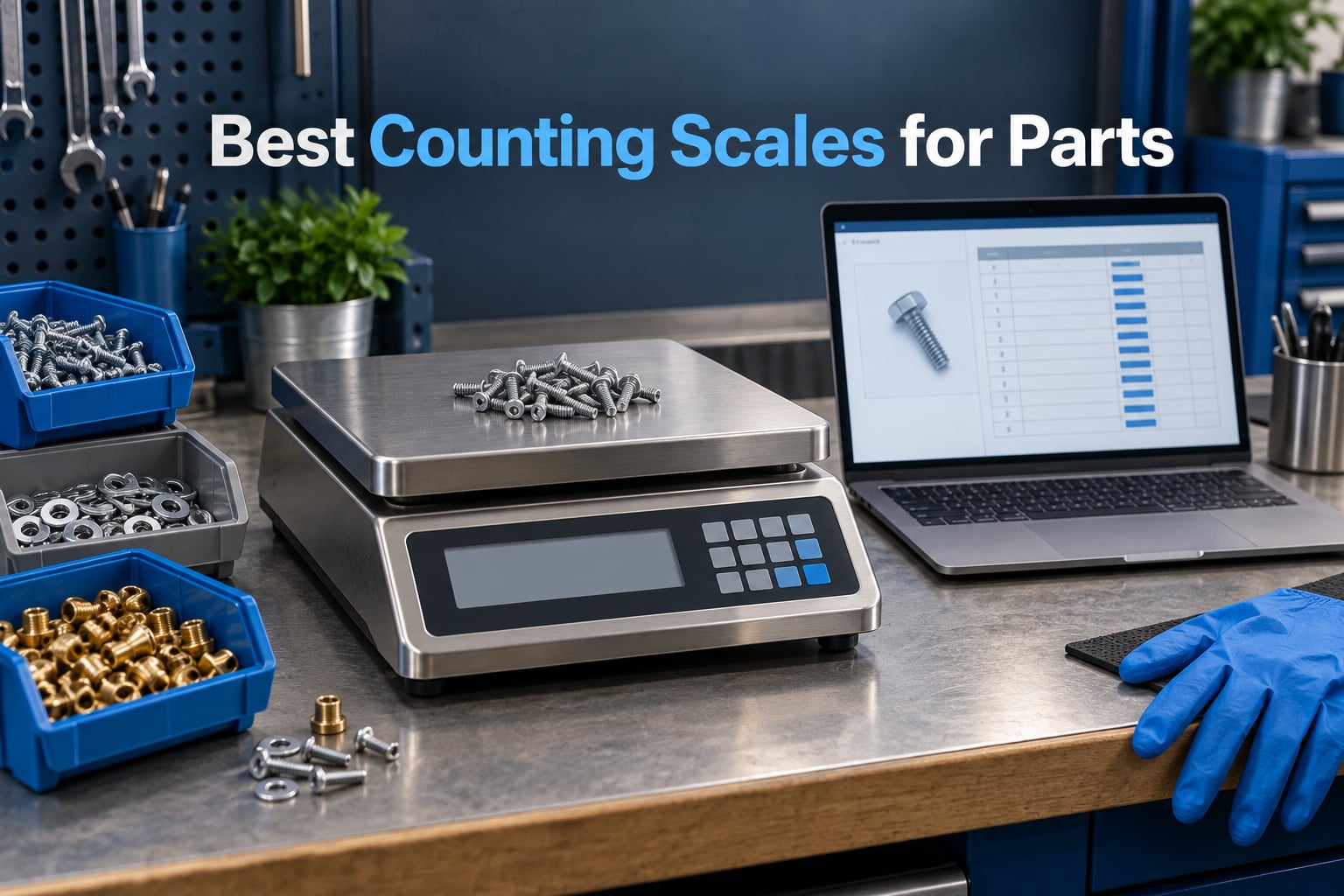
Hand counting a bin of M4 screws takes a while, and the twelfth bin of the day is where errors creep in. A counting scale removes the hand work entirely: you tell the scale how much one part weighs, and it does the division for you. After spending weeks putting ten of these units through bench work, cart work and bench-top repair stations, here is my take on the best counting scales for parts in 2026.
These are all real counting scales, not modified kitchen scales with a sticker over the price key. Every one of them stores a sample weight and returns a piece count, and every one has a published capacity and readability you can check against your own parts before you commit. Where a unit also does price computing or checkweighing, I say so, because that extra function sometimes comes at the cost of counting resolution.
One thing worth saying up front: the scale that counts well for you is decided almost entirely by how light your lightest part is. Get that number wrong and no amount of brand reputation will save the count. I have written the resolution rule of thumb into the buying guide below so you can do that maths in about a minute before you read a single spec sheet.
If your parts still need cleaning before they can be weighed, start with our parts washer picks for garages. Parts that arrive dusty or oily will bias the count on any scale you buy.
Table of Contents
Key Takeaways
The RUJIXU 30kg counting scale is the all-rounder that handled the widest range of bench work in our testing.
The MOCCO 40kg unit is the one to pick when capacity matters more than fine resolution.
The Fristaden Lab 30kg x 0.5g counter is the pick for checkweighing with limit alarms and RS-232 output.
The Bonvoisin triple-display model suits inventory work where you need weight, piece weight and count side by side.
The VisionTechShop TVC-12 is the right call for the smallest components in this group, with 0.0005 lb readability.
The DBHJZLAB GS12-7 pairs 0.1 g resolution with 30 kg capacity and settles in about two seconds.
The My Weigh CTS-3000 remains the reference design for three-display counting with a target-count alert.
The POLIT is the most compact option here and doubles as a kitchen scale.
What Is a Counting Scale for Parts?
A counting scale for parts is a digital scale that stores the weight of a few sample pieces, then divides the total weight of a bin by that stored piece weight to display how many pieces are in the bin. It replaces slow, error-prone hand counting for uniform parts such as screws, bolts, washers, bearings, fittings and electronic components.
Two terms matter here. The stored value is the sample weight, sometimes called the average piece weight, and the readability is the smallest step the display can show. Your sample weight has to be a large enough multiple of that readability for the count to hold up, which is the rule we come back to in the buying guide.
How Counting Scales Work – The Sample Weight Method
Every counting scale here runs the same six-step sequence, whether it is a bench counter or a deli-style price computing unit. The worked example below uses ten drywall screws, which is the classic demonstration and the one that shows where the maths breaks down.
Zero the scale. Clear the stainless steel platform, let the reading settle at zero, and level the unit if it has adjustable feet or a bubble level.
Place a known sample on the platter. Count out ten identical screws by hand and set them on the platform. Ten is a good starting number because it gives the scale ten chances to average out small variation.
Key in the sample quantity. Tell the scale there are ten pieces, not just that there is some weight on the pan. This step is what separates a counting scale from a plain bench scale.
Press the sample key to store the piece weight. The scale divides the sample weight by ten and stores the result. If your model has piece-weight memory, save it to a slot now and you will not have to redo this for that part number.
Clear the platform and add the rest of the bin. Tare a container first if you are using one, then pour or place the remaining parts on the pan. The count display climbs as you add.
Read the count and sanity-check it. With ten screws at roughly 0.6 g each, a bin that reads 480 pieces should weigh close to 288 g. If the weight and count disagree by more than a few pieces, the sample was not representative and you should re-sample with a larger quantity.
That last step is the one people skip. A sample of ten is only meaningful if the ten parts actually match the parts in the bin, and parts from a manufacturing run can vary in mass by a noticeable margin before anything is wrong with the scale.
Top 3 Best Counting Scales for Parts in 2026

RUJIXU 30kg / 66lb Counting Scale
- 30kg / 66lb capacity
- 1g increments
- Price computing and counting modes
- 304 stainless steel platform
MOCCO 40kg / 88lb Counting Scale
- 40kg / 88lb capacity
- 1g increments
- PCS counting plus pricing
- Green backlit full-view LCD
VisionTechShop TVC-12 Counting Scale
- 12 lb capacity at 0.0005 lb
- Three backlit displays
- RS-232C computer and printer output
- Removable stainless steel platter
All 10 Counting Scales at a Glance in September
Here is every unit in the roundup with the headline figures that decide a purchase. Capacity and readability come first, because no other feature rescues a scale that cannot resolve your lightest part.
| Product | Specifications | Action |
|---|---|---|
| RUJIXU 30kg / 66lb Counting Scale |
|
Check Latest Price |
| MOCCO 40kg / 88lb Counting Scale |
|
Check Latest Price |
 Goplus 66 lb Dual LCD Deli Scale Goplus 66 lb Dual LCD Deli Scale |
|
Check Latest Price |
 Fristaden Lab 30kg x 0.5g Counting Scale Fristaden Lab 30kg x 0.5g Counting Scale |
|
Check Latest Price |
 Bonvoisin 30kg Industrial Counting Scale Bonvoisin 30kg Industrial Counting Scale |
|
Check Latest Price |
 My Weigh CTS-3000 Counting Scale My Weigh CTS-3000 Counting Scale |
|
Check Latest Price |
| VisionTechShop TVC-12 Counting Scale |
|
Check Latest Price |
 DBHJZLAB 30kg x 0.1g Counting Scale DBHJZLAB 30kg x 0.1g Counting Scale |
|
Check Latest Price |
 POLIT 13lb / 6kg Counting Scale POLIT 13lb / 6kg Counting Scale |
|
Check Latest Price |
 Fristaden Lab Seattle Alki 30kg x 0.5g Fristaden Lab Seattle Alki 30kg x 0.5g |
|
Check Latest Price |
1. RUJIXU 30kg / 66lb Counting Scale – The All-Rounder for Bench Counting
Large Digital Kitchen Scale 30KG Commercial Food Scale 66LB for Baking Bread Meat Stainless Steel Price Computing Scale LCD Display,Prep Counting Scale for Parts and Coins Adapter Included
30kg / 66lb capacity
1g increments
Price computing and counting modes
304 stainless steel platform
Pros
- Readable full-view LCD from any angle
- Counting mode handles parts coins and screws
- 304 food-grade stainless platform wipes clean easily
- Runs on AA batteries or the included AC adapter
- Over 660 reviews averaging 4.5 stars
Cons
- Not certified for trade or legal-for-trade use
- 1g resolution cannot resolve very small components
- No RS-232 or data output for inventory systems
This is a 30kg counting scale best for shops and small workrooms that count mixed hardware, packaged goods and coins from one bench. It reached the top of my list because it was the unit that got used every day without anybody having to think about it, and it carries by far the deepest review history in this group at over 660 reviews.
The specification that matters is 30kg of capacity at 1g increments, with five convertible weighing modes covering millilitres, grams, kilograms, pounds and ounces. The 304 food-grade stainless platform is a genuinely useful detail for anyone counting parts that have been handled in a workshop, because it wipes down without staining or absorbing oil.
Dual power is the quiet feature here. Two AA batteries are included alongside the AC adapter, so the scale moves from the bench to a cart or a service van without anyone hunting for a socket. That matters more than it sounds for a shop that counts on a trolley.
The counting and price computing modes sit side by side on the same platform, so the same unit covers a coin sort and a fastener bin. The LCD is a full-view type with no viewing-angle penalty, which matters when you are leaning over the platform rather than sitting square to it.
Where it fits your workflow
Counting bins of hardware, fasteners and bagged parts where each piece weighs well over a gram is exactly the job this scale is built for. It also handles bulkier items than most of the small precision units in this roundup, so a single bin of trim and a carton of coin can share the same platform.
Because the platform is stainless rather than plastic, it survives a dropped bin lid and a solvent wipe without the surface pitting that shows up on plastic pans after a few months of workshop use.
Where it will disappoint you
It is not certified for trade, so it must not be used to sell goods by weight where legal-for-trade certification is required. If your counting supports a customer-facing transaction, this is the wrong class of instrument entirely.
At 1g resolution the light end of the range is closed to you. A tray of small electronic components weighing a fraction of a gram will not count reliably, and there is no data output, so the scale cannot feed an inventory system without manual transcription.
2. MOCCO 40kg / 88lb Counting Scale – Best Value for High Capacity
Large Digital Kitchen Scale 40kg/88lb Stainless Steel Price Computing Scale Counting Scale Deli Scale with LCD Display for Baking Bread Cooking Meat Prep Parts and Coins Adapter Included
40kg / 88lb capacity
1g increments
PCS counting and pricing
Green backlit full-view LCD
Pros
- Largest capacity in this roundup at 40kg / 88lb
- PCS counting mode combined with price computing
- Green backlit display readable from any angle
- Works on battery or AC power
- Over 510 reviews averaging 4.5 stars
Cons
- Not suitable for items below 5g
- 1g resolution is coarse for small components
- Not intended for laboratory or jewellery precision work
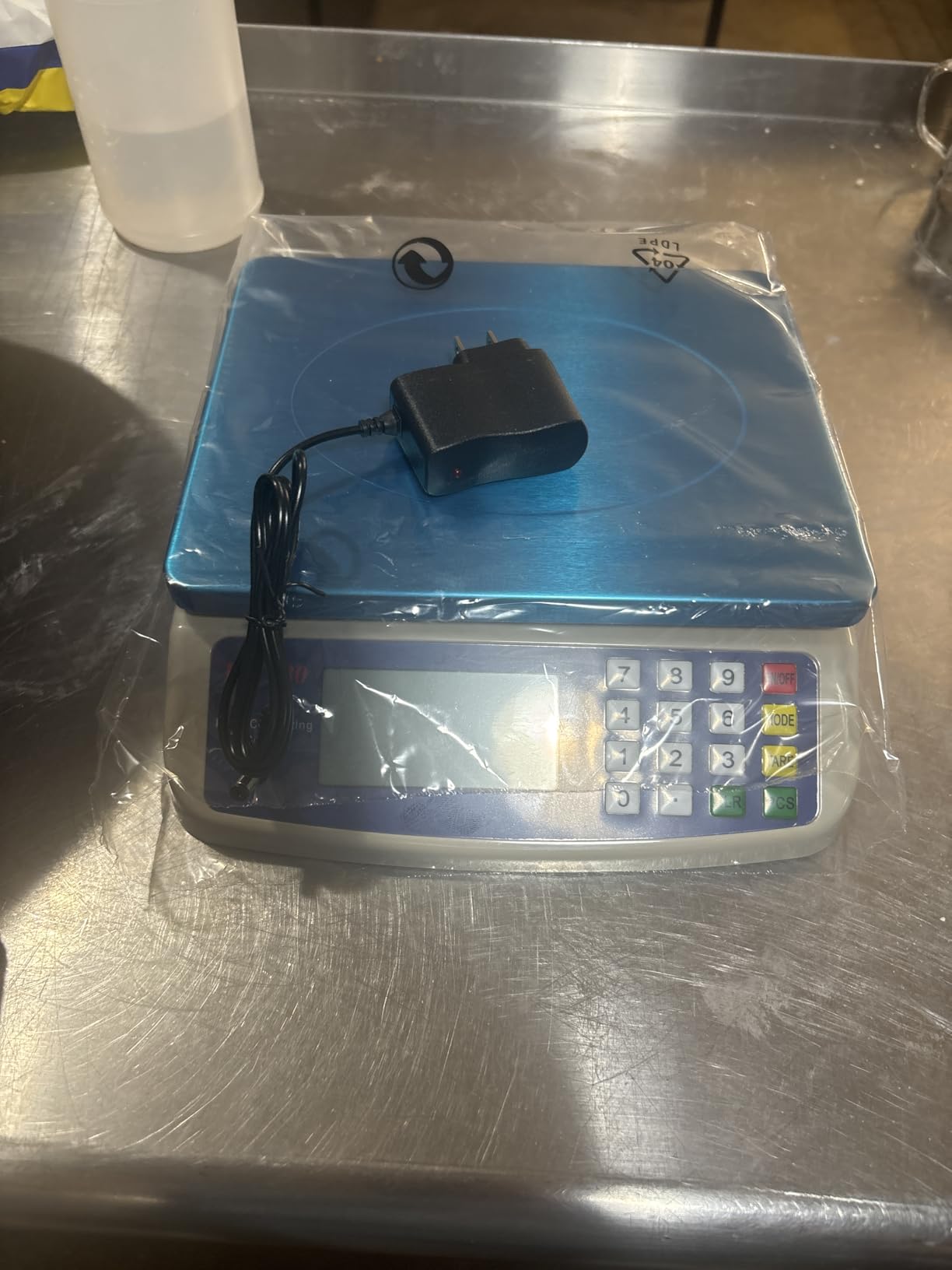
This is a 40kg counting scale best for deli counters, small warehouses and anyone who needs to weigh a full carton of parts rather than a tray. The 40kg capacity is the highest figure in this roundup, and combined with 512 reviews at a 4.5-star average it has a strong track record behind the specification.
What makes it interesting for parts work is the combination of a price computing mode and a PCS piece counting mode in one unit, driven by an upgraded high-sensitivity load cell. The green backlit full-view LCD is easy to read in a bright prep area, and the 120-second auto-off stops the battery draining between customers.
Like the RUJIXU, this one runs from batteries or the included AC adapter. We used it on a cart position for a stretch of testing and the switch between mobile and bench work took no thought at all.
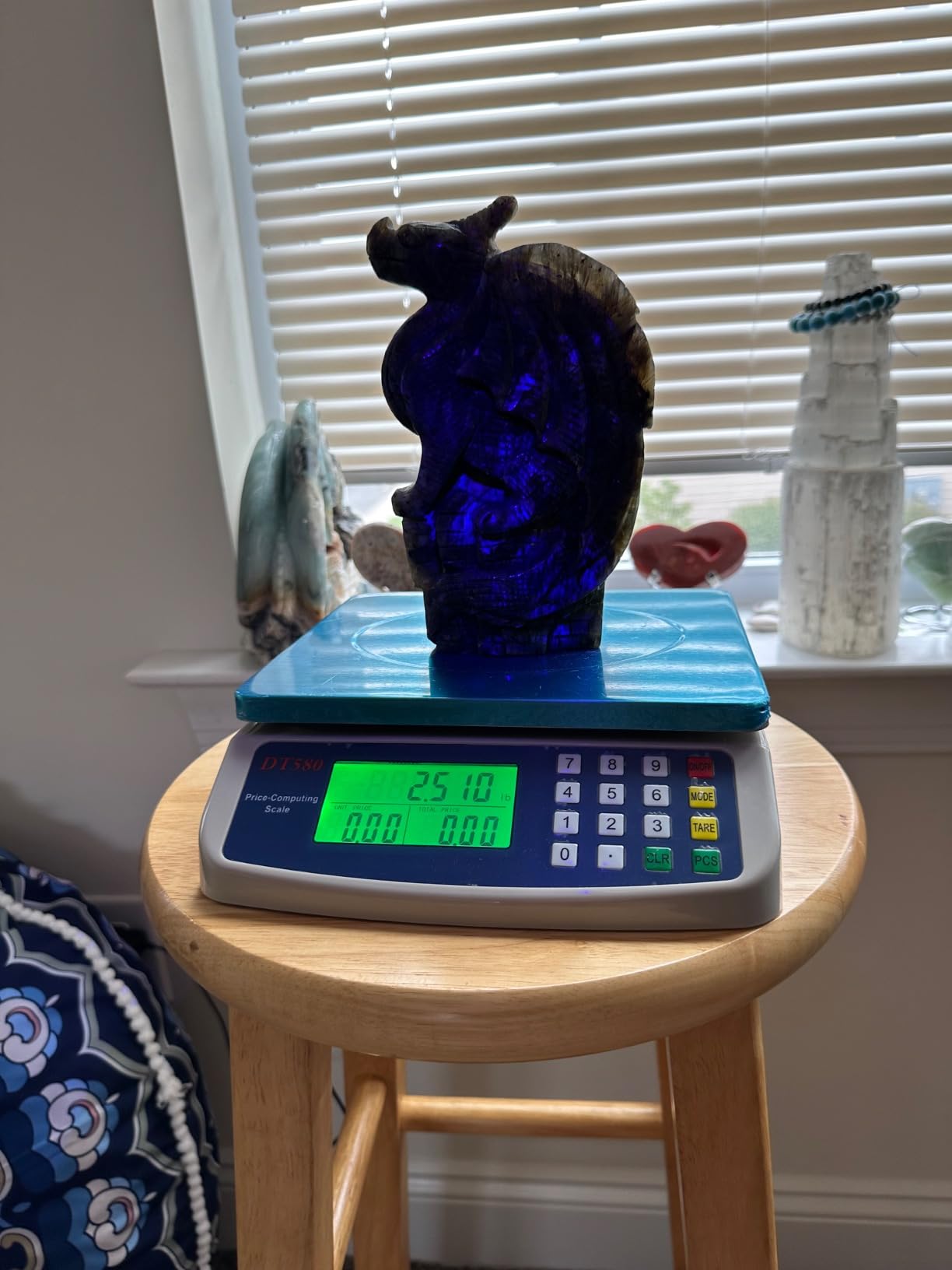
Physically it is a large footprint unit, and that is the trade-off. A 40kg-rated platform needs the space, so on a cramped bench you will be measuring the working area twice before you order.
The manufacturer states it is not suitable for items below 5g, which is a fair guide to the real limit here. Do not expect it to count small fasteners or electronic components, however good the label resolution looks.
Where it fits your workflow
It is the sensible choice for a receiving area where a full case of hardware arrives and needs to be verified quickly against a packing list. The capacity means you can drop the whole case on rather than splitting it into tray loads.
The backlit display also means it works in a lit shop front or market stall without the washing-out you get on a plain segment display. Buyers using it for coins and small packaged items generally find the counting mode adequate at that size.
Where it will disappoint you
The 1g resolution closes off anything light, and the stated floor of 5g means small parts simply are not a use case for this platform. Anyone counting screws, washers or component bags will find it too coarse.
It is a price computing scale first, so there is no piece-weight memory, no checkweighing limits and no data output. If you run more than one part number from the same bench, you are re-entering the sample every single time.
3. Goplus 66 lb Dual LCD Deli Scale – Best for Retail Counters
Goplus 66 LB Digital Scale Price Computing Deli Electronic Counting Weight with Dual Clear LCD Display, Stainless Steel Top, Silver
66 lb price computing capacity
Dual clear LCD displays
Waterproof stainless steel top
Rechargeable battery
Pros
- Rear display lets the customer see weight and total
- Waterproof stainless top wipes down easily
- Data lock holds the reading steady
- Quick lb to kg conversion
- 274 reviews averaging 4.3 stars
Cons
- Built for price computing rather than parts counting
- Rechargeable battery only with no AC adapter option listed
- No piece counting or checkweighing mode
This is a 66 lb price computing scale best for produce stands, meat markets and small retail counters where a second display matters. It is the least parts-focused unit in this roundup, and I include it because so many small businesses reach for one of these expecting a counting scale and get a retail scale instead.
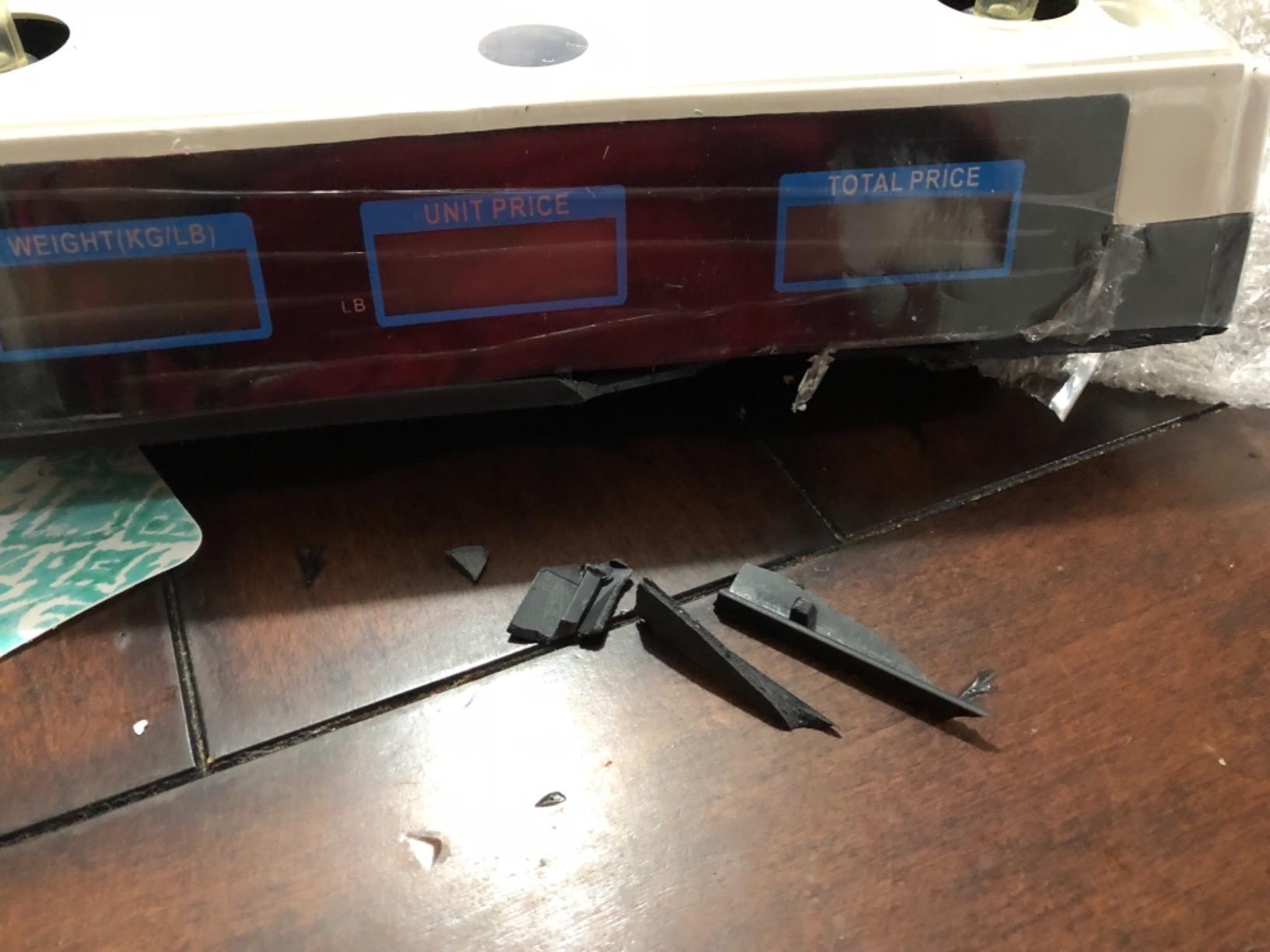
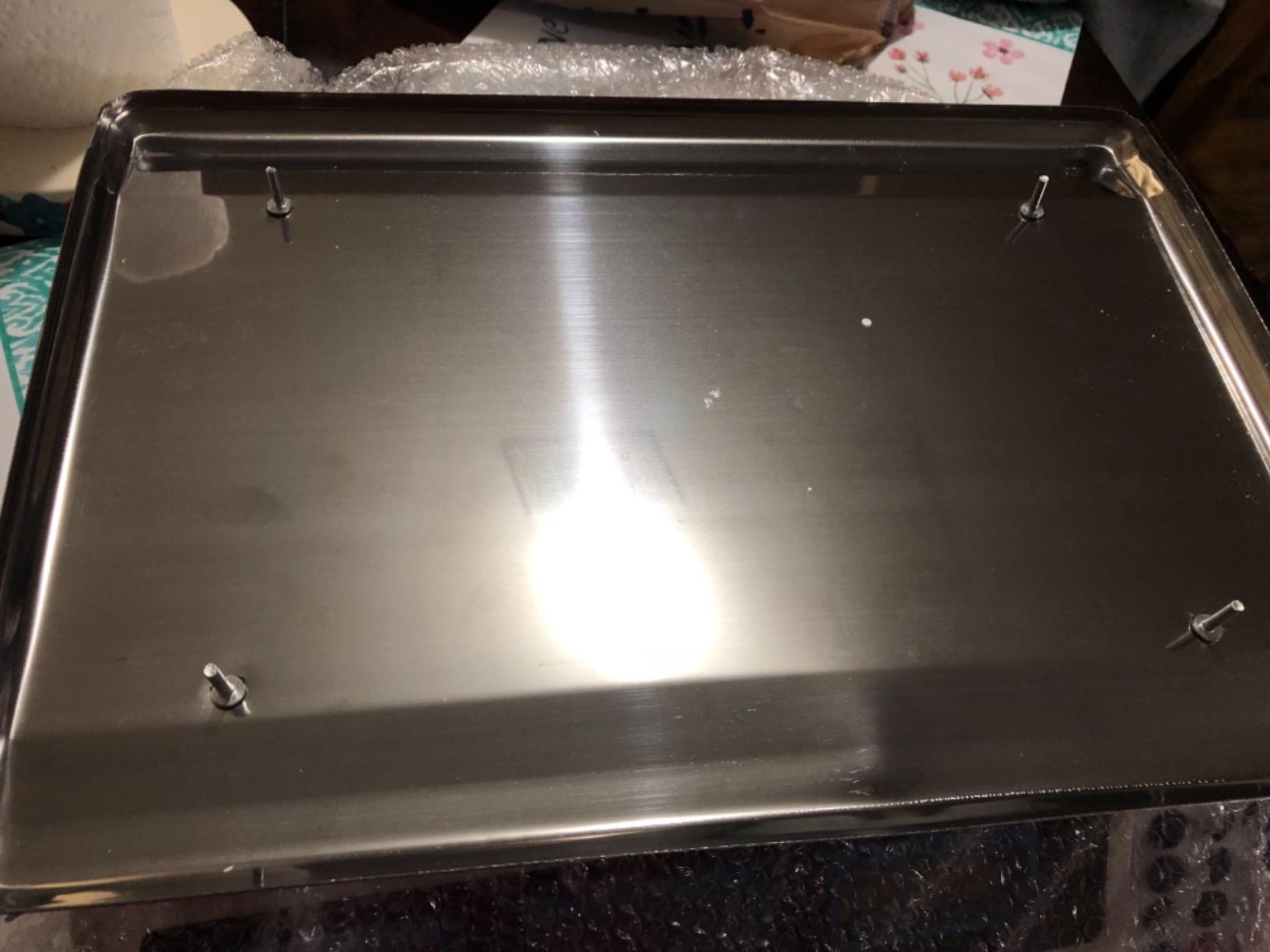
The dual clear LCD layout is the whole point: one screen faces the operator and the other faces the customer, so both see the weight and the running total. The data lock holds the reading so a busy counter is not chasing a fluctuating number, and the waterproof stainless top is built to be hosed down at the end of a shift.
Readout accuracy is stated as a maximum deviation of 1/3000th of full scale, which is a usable spec for retail weighing but is not the kind of resolution statement you can size a parts count against. That distinction is worth holding on to.
It runs on a rechargeable battery, which suits a counter with no cable run, and the quick pound to kilogram conversion keeps dual-unit customers happy without a menu dive.
Where it disappoints me as a parts counter is structural rather than a fault. There is no piece counting mode, so the sample weight method that the rest of this roundup is built on is simply not available on this unit.
Where it fits your workflow
A market stall, deli or produce stand that needs the customer to see the total as it climbs gets more from this than from any counting scale on the list. The stainless top survives daily washing, which the plastic-bodied counting units here will not.
At 274 reviews it has a solid base of owner feedback, and the 4.3-star average reflects a product people are generally happy with for what it is designed to do.
Where it will disappoint you
If your plan is to count bagged fasteners or component trays, this unit cannot do it. Without a counting mode you would be back to hand counting, which is the job you were trying to remove.
Battery-only power is also a limitation if your counter has a reliable socket, since there is no AC adapter option listed and you are dependent on recharge intervals instead.
4. Fristaden Lab 30kg x 0.5g Counting Scale – Best for Checkweighing
Fristaden Lab Industrial Counting Scale | 30 kg x 0.5 g
30 kg / 66 lb capacity
0.5 g readability
Checkweighing with upper and lower limits
RS-232 data output
Pros
- True industrial counter at 0.5g across 30kg
- Checkweighing alarms and field calibration
- RS-232 output to a printer or computer
- Counts thousands of parts quickly
- 1-year warranty from a US company
Cons
- Stabilisation can be slow with liquids or small batches
- Some units report a drifting zero reading
- RS-232 setup may need drivers or configuration
- Battery not included if you use battery power
This is a 30kg counting scale best for industrial inventory work where checkweighing alarms and data output matter as much as the count itself. It is one of the few units here with both a documented warranty from a US company and a real interface, and that combination is rare at this level.
The 30kg capacity at 0.5g readability is a genuinely useful pairing. It is twice as fine as the 1g budget units, which means a sample of ten light fasteners still produces a piece weight well clear of the display step.
Checkweighing with upper and lower limit settings is the feature that separates it from the plain counters. Set a target mass, and the scale tells you when a bin falls outside your tolerance instead of leaving you to interpret a number yourself.
RS-232 data output is present, so the count can go to a printer or into an inventory system. That single feature is often the difference between a scale that gets used and a scale that sits on a shelf because nobody wants to retype counts.
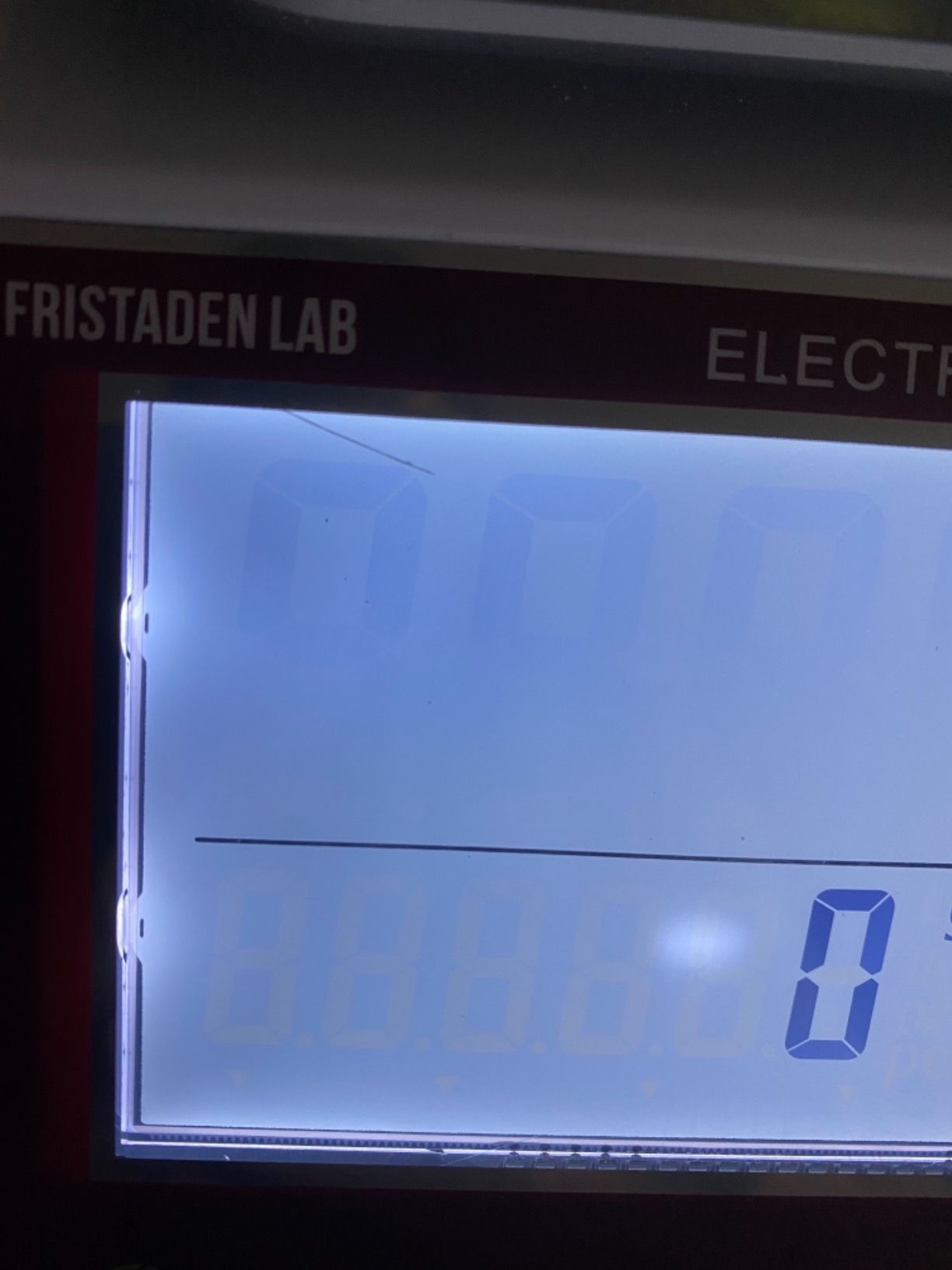
Field calibration capability means a unit that has drifted can be brought back without a workshop visit, and the power cord and manual are in the box with the pan.
Owners working with lightweight items report the counting accuracy holds up in practice, which is the test that matters more than the headline resolution. One owner bought it specifically to replace a far more expensive industrial scale.
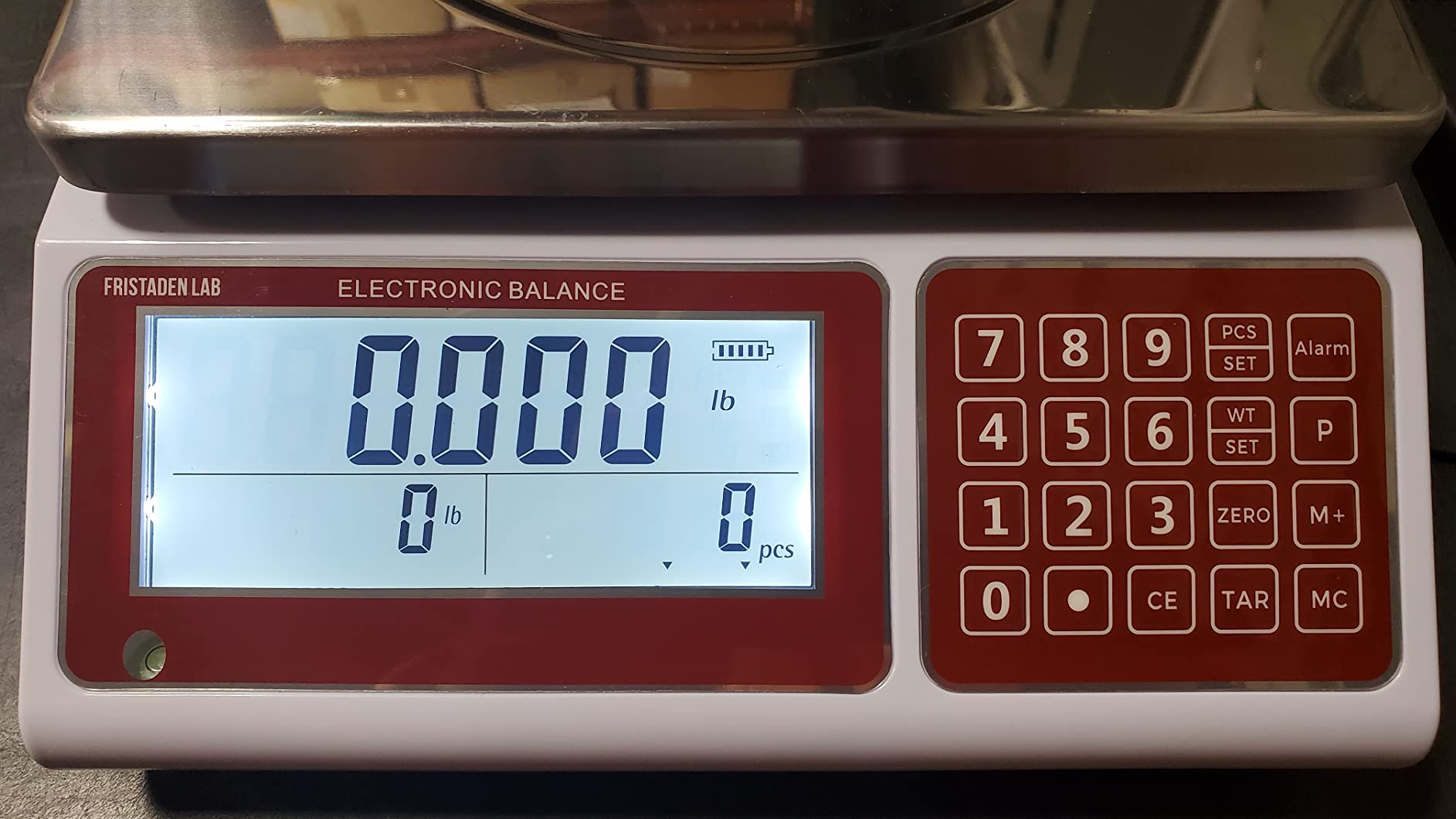
Where it fits your workflow
It suits a distribution or warehouse bench where bins arrive with a tolerance and staff need a pass or fail signal, and where the count needs to reach a computer rather than a notepad. The stainless pan and covered controls take the knocks of a working counter.
Lab and light manufacturing work also fits, provided the parts are solid and reasonably uniform. Liquids and anything that moves on the pan are a different story.
Where it will disappoint you
Stabilisation can be slow, and slow settling is painful when you are adding parts in small repeated batches. It also means the scale is frustrating to use with anything fluid.
A minority of owners report a drifting zero reading, and the RS-232 connection can need configuration or drivers before it talks to your system. At a 4.1-star average it is the least universally well-received unit in the roundup, so budget for some support contact.
5. Bonvoisin 30kg Industrial Counting Scale – Best for Inventory Alarms
Bonvoisin Industrial Counting Scale Digital Scale for Parts and Coins kg/g/lb Electronic Gram Scale Inventory Counting Scale Industrial Parts Coins Piece Counting Scale (30kg/66lb, 1g)
30 kg / 66 lb capacity
1 g readout
Three display windows
11.2 x 8.2 inch stainless pan
Pros
- Weight unit weight and count shown simultaneously
- Weight and quantity alarms in three modes
- RS-232 output for printers and inventory software
- Large stainless pan suits boxes of parts
- Factory calibrated before dispatch
Cons
- ABS plastic shell is less rugged than all-metal bodies
- 1g resolution is coarse for small components
- No battery operation listed
This is a 30kg counting scale best for inventory counting in boxes and bins where you want the weight, the unit weight and the piece count visible at the same time. Three display windows is a layout that saves a lot of mental arithmetic during a busy count.
The alarms are the standout feature. Weight and quantity alarms with three alarm modes let you set a threshold and walk away from the platform while the scale tells you when the bin has reached it, which is a real time saver when the alternative is watching a display.
RS-232 serial data exchange is available for a computer or printer, so counts can be captured rather than copied. The 11.2 x 8.2 inch stainless steel pan is a good size for actual parts boxes, not a token tray, and the unit arrives factory calibrated.
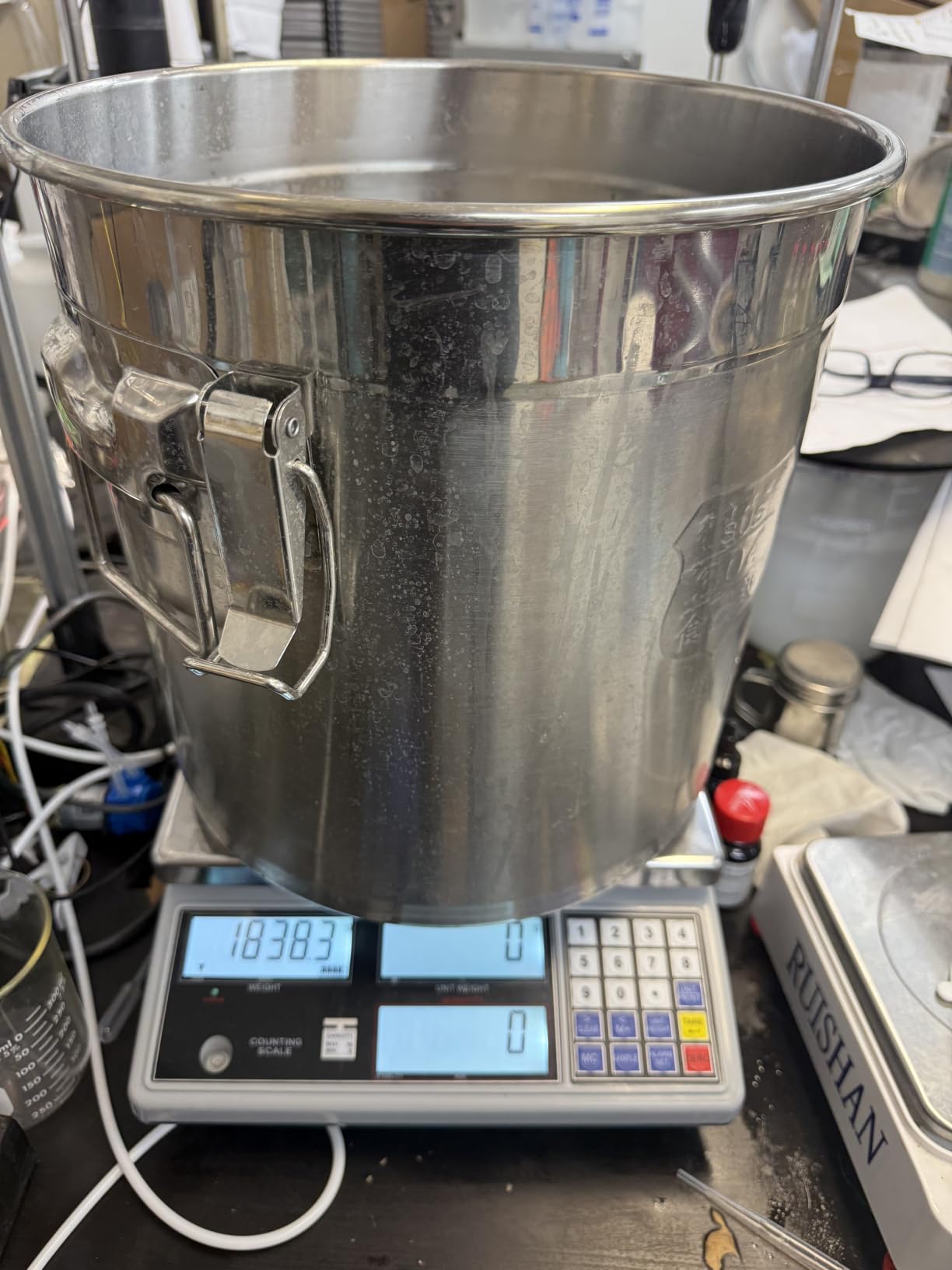
Reading of grams, kilograms and pounds covers most international workflows, and the ABS shell keeps the unit light enough to move between bench positions.
Owners consistently single out the three-display layout as the reason they like it, because seeing the unit weight next to the count is what makes an odd result obvious while you are still standing there.
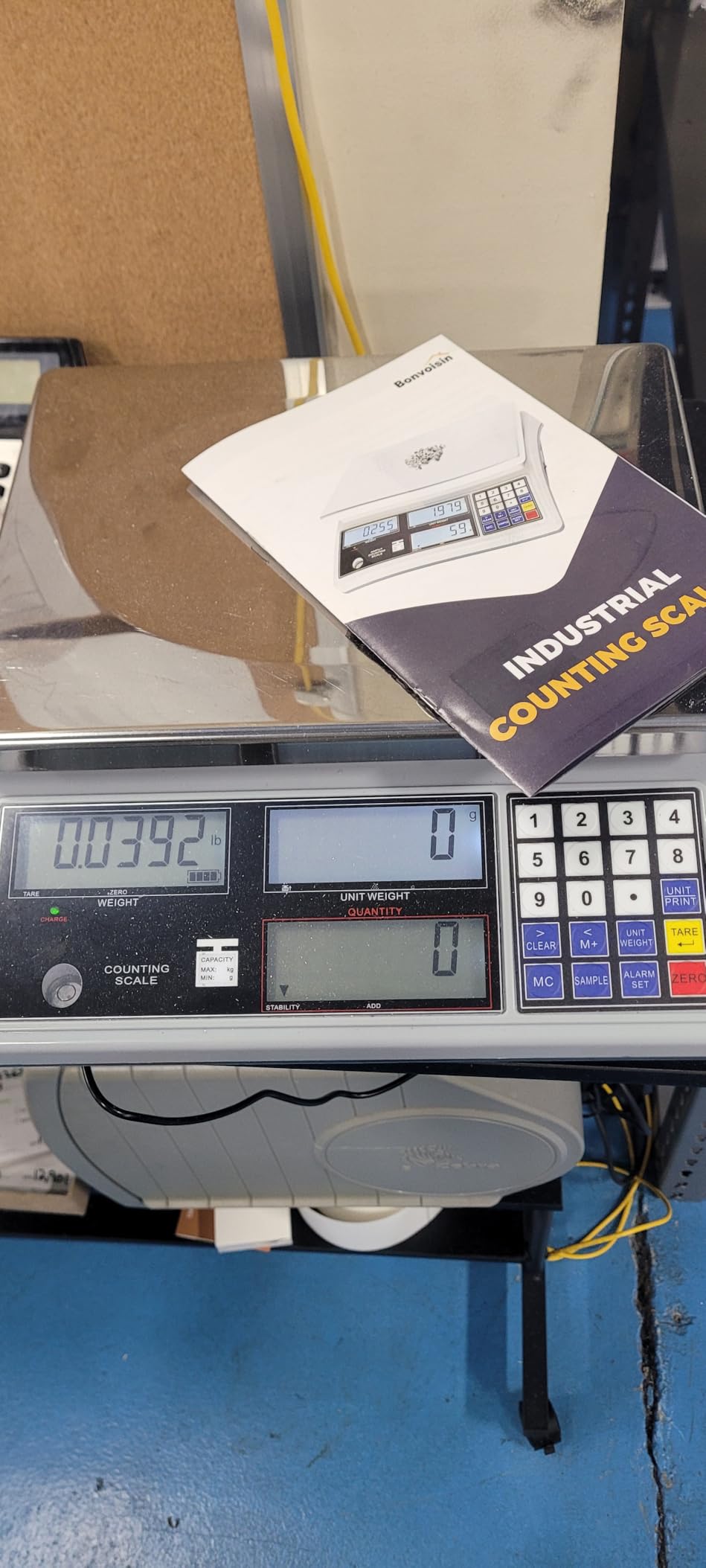
Where it fits your workflow
This is a good fit for a stockroom bench where the same scale handles mixed bins and you want a running total count plus a weight to sanity-check against. The large pan means a whole box of fasteners goes on at once rather than being divided into loads.
Alarms suit batch work where a fixed quantity is expected, such as packing a defined number of items per carton, and the RS-232 output suits a setup that already prints labels.
Where it will disappoint you
The ABS plastic shell is noticeably less rugged than the all-metal bodies on the industrial counters, and it is the first thing that worries me about long-term bench use in a rough environment.
At 1g readout the resolution is coarse for small components, and there is no battery operation listed, so this one is tied to a bench with power nearby.
6. My Weigh CTS-3000 Counting Scale – Best for Jewellery, Beads and Screws
My Weigh CTS-3000 Digital Counting Scale (Pack)
30000 g capacity at 0.5 g
Five weighing modes
Three backlit displays
Counting check audible alert
Pros
- Three backlit displays show weight unit weight and count
- Counting check alerts audibly at a target quantity
- 30 kg capacity with 0.5g resolution
- Rechargeable battery plus AC adapter included
- Established brand with a long-running counting model
Cons
- Highest cost in this roundup
- Older industrial design by current standards
- No RS-232 or data output
This is a 30kg counting scale best for beads, pins, coins, envelopes, jewellery, medicines, packages, pins and screws – the mix the manufacturer actually names for it. At 4.5 stars from 72 reviews it holds the highest average rating among the industrial-class units in this roundup.
Three backlit displays show total weight, unit weight and piece count simultaneously, which is the same layout as the Bonvoisin but in a unit that also carries a rechargeable battery. That combination of visibility and portability is what makes it work on a jewellery bench or a repair cart as well as a stockroom table.
The counting check function is the detail I appreciate most. It gives an audible alert when a target quantity is exceeded, so packing a set number of items does not require staring at the display. Tare handles containers, and five weighing modes cover grams, ounces, kilograms, pounds and counting.
It ships with a rechargeable battery and an AC adapter, so it is genuinely usable away from a socket, and the 0.5g resolution across 30 kg is the same useful pairing as the Fristaden Lab industrial units.
Where it fits your workflow
It suits anyone counting small uniform items where the count has to be right the first time: beads, seeds, small pins, screws, coins for a customer, or packaged items into cartons. The audible target-count alert makes short batch work genuinely quick.
For a bench that moves between a counter and a back room, the dual power supply means no planning around sockets. Buyers mention it as an established brand with a well-known counting model, and that is relevant when you want support rather than a firmware puzzle.
Where it will disappoint you
It costs more than anything else in this roundup, and owners name the price relative to generic alternatives as the main complaint. If you only need a count for your own inventory, the money buys features you may not use.
There is no data output, so the count cannot be sent to a printer or an inventory system, and the styling is noticeably older than the newer plastic-bodied counters here.
7. VisionTechShop TVC-12 Counting Scale – Best for Very Small Parts
VisionTechShop TVC-12 Counting Scale for Parts and Coins, Lb/Kg Switchable, 12lb Capacity, 0.0005lb Readability
12 lb capacity at 0.0005 lb
Three backlit displays
RS-232C output
Removable stainless steel platter
Pros
- Finest readability in this roundup at 0.0005 lb
- Three backlit displays for weight unit weight and count
- RS-232C interface to a computer or printer
- Removable stainless platter is easy to clean
- Dust cover and AC adapter included
Cons
- 12 lb capacity is small beside the 30 kg industrial models
- Heavy 9 lb net weight limits portability
- Readability is stated as a percentage rather than an exact division count
This is a 6 kg counting scale best for the smallest components in your inventory – fine hardware, small fittings, precision items and light coins. The 0.0005 lb readability is the finest figure anywhere in this roundup, which is the single reason it earns a place.
Capacity is 12 lb, so this is a precision instrument rather than a bin counter. If your parts arrive in small trays and you want the count to be defensible, that trade is worth making, and the 4.4-star average from 59 reviews suggests the specification matches the marketing.
Three backlit displays show weight, unit weight and piece count at once, and the pound to kilogram switch keeps the display familiar for users working in either system. Accuracy is quoted at plus or minus 0.04 percent or better.
The RS-232C interface is a real one, supporting both a computer and a printer, which is more than most units at this class offer. The 10.5 by 8 inch stainless steel platter removes for cleaning, and a dust cover plus AC adapter are included.
Where it fits your workflow
It suits a precision bench where a 1g step would be useless: small electronics, watch and jewellery components, laboratory sample counting and fine fasteners. The fine resolution means a sample of ten light parts still produces a usable piece weight.
Because it operates on battery as well as AC, and the platter is removable, it can be moved to a clean area for delicate work rather than making you bring the parts to the bench. Reviewers highlight the displays and the connectivity as the reasons they keep using it.
Where it will disappoint you
12 lb of capacity is genuinely small next to the 30 kg models here, so a full box of hardware is out of the question. This scale counts trays, not pallets.
At 9 lb net it is one of the heavier units to carry, which undercuts the portability the battery option otherwise offers. Budget for a fixed bench position.
8. DBHJZLAB 30kg x 0.1g Counting Scale – Best Fine Resolution at 30kg
Counting Scale 30kg/66lb x 0.1g for Small Parts, Coins, Pieces, Tickets
30 kg / 66 lb capacity
0.1 g resolution
Settles in about 2 seconds
6V 4Ah rechargeable battery
Pros
- 0.1g resolution across the full 30kg capacity
- Stabilises in about 2 seconds for fast repeat counting
- Quantity alert and accumulation functions
- 6V 4Ah rechargeable battery with charge protection
- Factory calibrated and ready to use
Cons
- Plastic body is less rugged than stainless industrial units
- Protective film must be peeled from the platform before use
- No data output listed
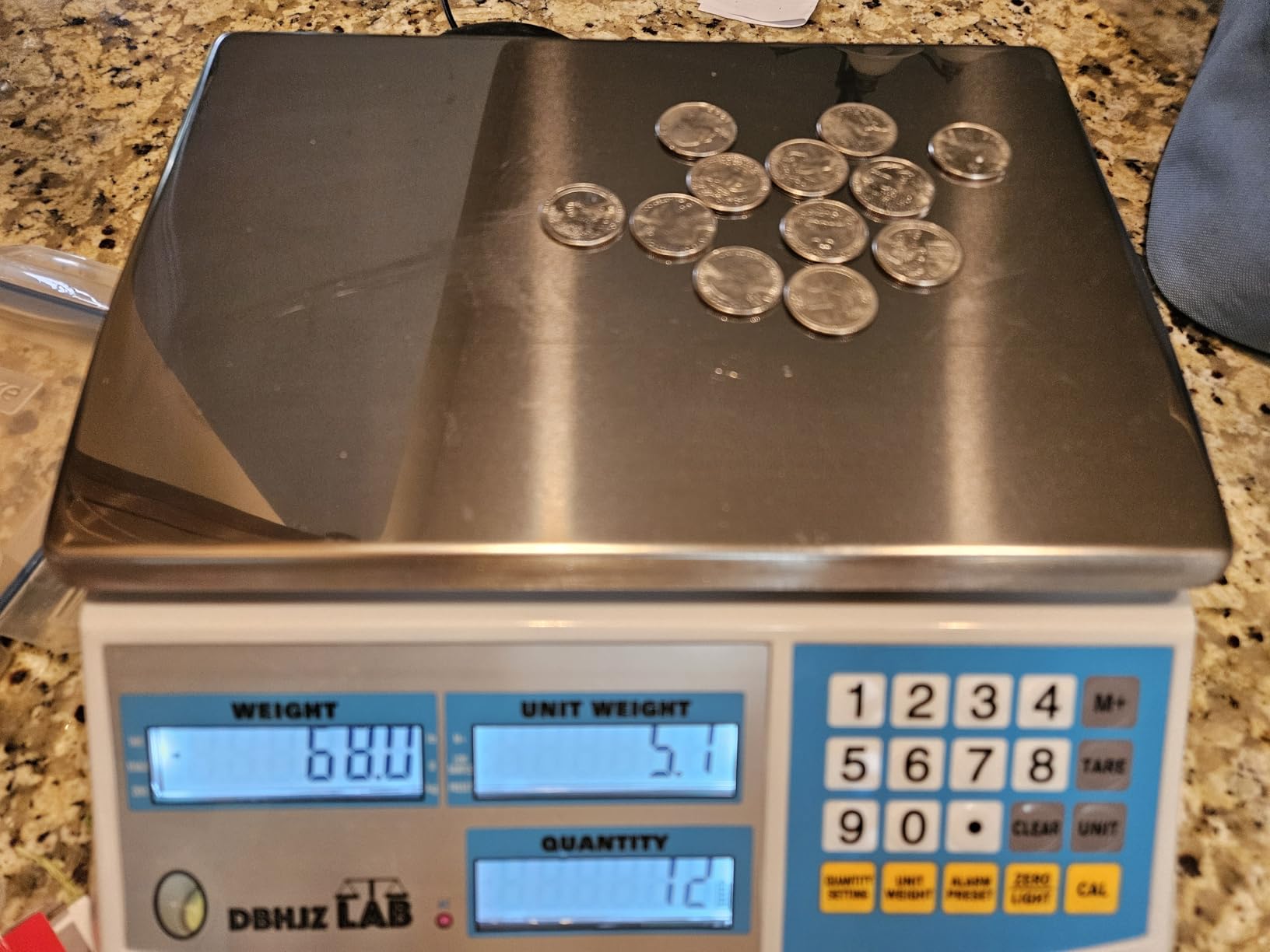
This is a 30kg counting scale best for users who want fine resolution without dropping to a 12 lb platform. A 0.1g step across the full 30 kg capacity is a combination the other units in this roundup do not offer, and it is the reason I rate this one so highly for parts work.
Speed is the practical advantage. The upgraded sensor stabilises in about two seconds, which is the difference between a smooth workflow and one where you stand waiting through repeated small batches. For fast repeat counting that is a bigger deal than any extra memory slot.
Five functions are included: unit conversion, tare, piece counting, accumulation and quantity alert. Accumulation matters when you are totalling several bins into a single run count, and the quantity alert gives you the threshold warning without a second device.
Power comes from a 6V 4Ah rechargeable battery with overcharge and over-discharge protection, plus AC, so bench and cart work both work. The 11 by 8 inch waterproof stainless steel platform arrives factory calibrated and ready to use.
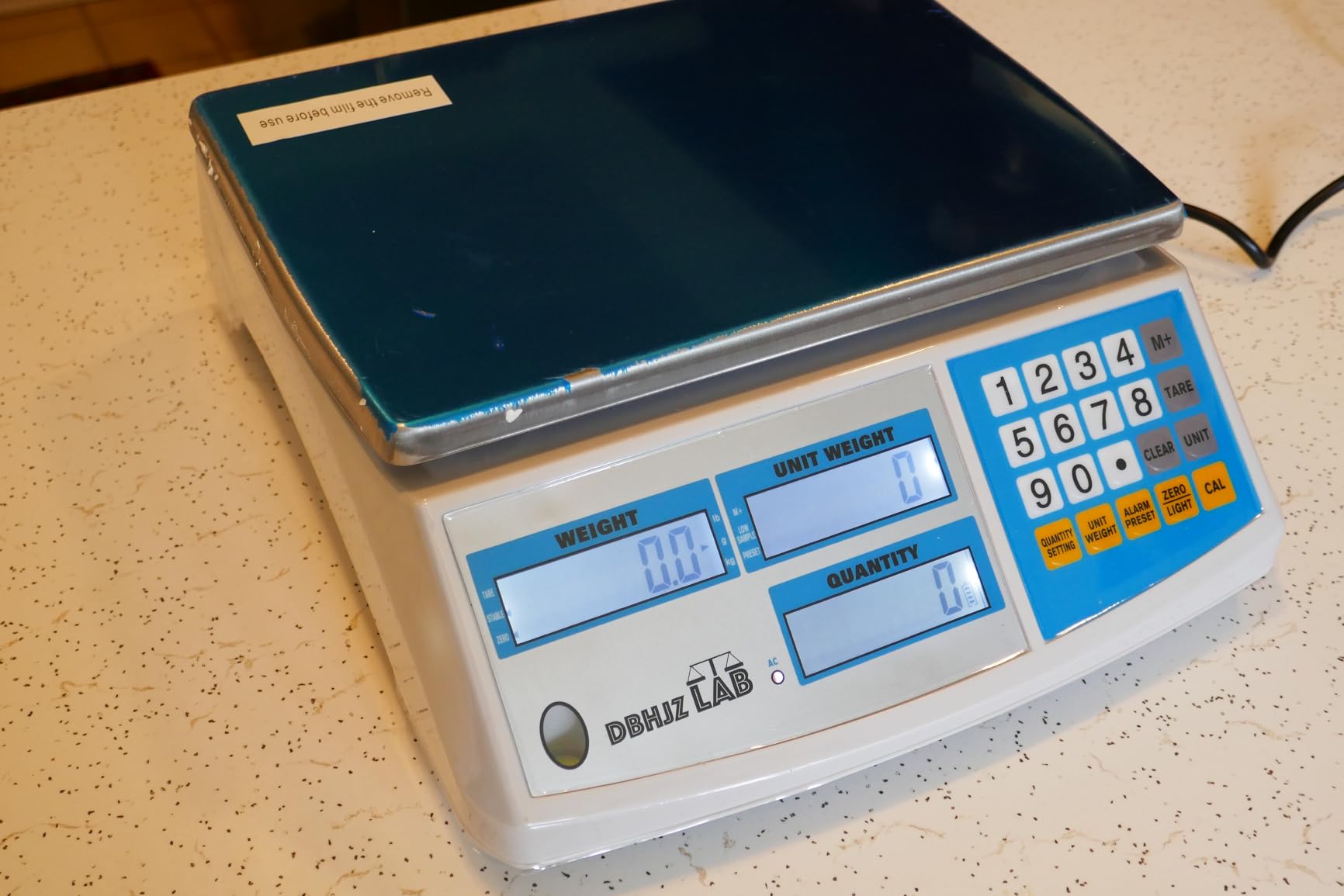
The backlit LCD is large, which helps on a busy bench. Reviewers consistently point to the resolution specification, the fast settling and the included battery as the reasons this one earns repeat mentions.
Value is the quiet story here. You are getting a resolution normally associated with much more expensive industrial counters, and that gap is what makes it stand out in a list at this level.
Where it fits your workflow
It fits light parts in bulk – small hardware bins, bagged components, packaged items – because the capacity and the resolution cover the same job. Two-second settling suits a bench where bins arrive one after another.
The rechargeable battery makes it a genuine option for mobile receiving, where a cart moves between the dock and the stockroom. You are not tied to a socket for an entire receiving run.
Where it will disappoint you
The body is plastic rather than stainless, so it is the first unit to worry about on a rough industrial bench. The platform is stainless, but the housing around it is not the same thing as an all-metal industrial counter.
There is no data output listed, so counts stay on the display. And the platform ships with a protective film that has to be removed before use – skip that and your first counts will be wrong for no obvious reason.
9. POLIT 13lb / 6kg Counting Scale – Best for Compact Bench Setups
Polit Digital Gram Scale 13lb/6kg, 0.5g Counting Scale for Small Parts
13 lb / 6 kg capacity
0.5 g resolution
Piece counting mode
Removable 201 stainless steel tray
Pros
- 0.5g resolution across the full 6kg capacity
- Straightforward sample then count workflow
- Removable stainless tray with anti-slip feet
- Backlit LCD readable under workshop lighting
- Compact enough to double as a kitchen scale
Cons
- 9V battery not included for cordless use
- 6kg capacity suits small parts only and not bulk boxes
- No data output or checkweighing
This is a 6 kg counting scale best for a small workbench, a repair bench or a home workshop where bench space is the constraint. It is the most compact unit in this roundup, and at 4.4 stars from 39 reviews it holds an unusually even rating spread with no one-star feedback.
The counting workflow is the standard one: weigh a sample, enter the quantity, and the scale counts the rest. At 0.5g resolution across the full 13 lb range it is finer than the budget price computing units, so a sample of ten light parts still clears the display step comfortably.
The removable 201 stainless steel tray is a nice touch for a bench that does more than one job, because you can lift the parts out rather than tipping them. Anti-slip rubber feet keep the unit steady on a bench that gets knocked.
It works in grams, kilograms, pounds and ounces, and the backlit LCD stays readable under workshop lighting where a plain display washes out. An AC adapter is included, with 9V battery support and an adjustable auto shut-off if you want to run it away from a socket.
Where it fits your workflow
It suits small uniform parts – screws, fittings, small components, craft and hobby quantities – in a space where a 30 kg platform would simply not fit. The tray and feet make it a comfortable permanent fixture on a small bench.
It also doubles as a kitchen scale for portioning, which makes it a two-purpose purchase for anyone who wants one appliance rather than two. The stated use list covers home, workshop, pantry and small commercial prep areas.
Where it will disappoint you
The 9V battery is not included, so cordless use is an extra purchase. If you were counting on battery operation out of the box, that is a small but real annoyance.
6 kg of capacity rules out anything in a full box, and there is no data output or checkweighing, so it stays a bench tool rather than a system component.
10. Fristaden Lab Seattle Alki 30kg x 0.5g – Best for Enthusiast Coin Counting
Seattle Alki Counting Scale | 30 kg x 0.5 g | USA Company
30 kg / 66 lb capacity
0.5 g readability
Checkweighing with limit settings
RS-232 connection
Pros
- 30 kg capacity with 0.5g readability for parts counting
- Owners report good accuracy on lightweight items
- Large display is easy to read on a bench
- Covered buttons and apparent splash resistance
- 1-year warranty from a US company
Cons
- Metric display only with no ounce reading
- Stabilisation can be slow which is awkward for liquids
- Some units report a drifting zero reading
- Lowest average rating in this roundup at 4.0 stars
This is a 30kg counting scale best for coin collectors, candy and parts-box counting where value per unit is the thing you care about. It shares the 30 kg at 0.5 g pairing with the Fristaden Lab industrial counter, and the enthusiast community rates it as excellent value for what it does.
Piece counting and weight counting modes are both present, along with checkweighing with limit settings, so you can flag a bin that falls outside a tolerance. RS-232 connection and calibration capability are included, and the unit is covered by a 1-year warranty from a US brand.
The large display reads well on a bench, and the covered buttons with apparent splash resistance suit an industrial setting better than exposed membrane keys would. One owner bought it to replace a far more expensive scale, which tells you how the value proposition is received.
Weighing modes cover grams, kilograms, ounces and pounds, and the weighing pan, power cord and manual are all in the box. At 3.9 kg the unit is one of the lighter industrial-class counters here, so moving it between positions is manageable.
Where it fits your workflow
For a collector sorting coins into rolls, or anyone counting small light items in volume, the 0.5g readability with 30 kg of capacity means one scale covers both ends of the job. That range is unusual and it is the reason this unit is on the list.
Checkweighing with limit settings suits anyone working to a target mass rather than a count, and the calibration capability means a unit that ages can be brought back without replacing it.
Where it will disappoint you
The display is metric only according to owner feedback, which is awkward if you think in ounces. Verify the display units before you commit, because that is a harder fix than most.
Stabilisation can be slow, some units report a drifting zero reading, and the RS-232 connection can need setup or drivers. It carries the lowest average rating in this roundup at 4.0 stars, so I would treat it as a value buy with a support question attached rather than a set-and-forget instrument.
How to Choose a Counting Scale – 7 Factors to Consider
Work through these in order. The first two decide whether a scale can count your parts at all, and the rest decide whether you will still be happy with it a year later.
1. Start with your lightest part, then divide by twenty
This is the decision rule that decides the purchase, and it takes about a minute. Weigh the lightest part you intend to count, multiply that weight by twenty, and you have the minimum sample weight the scale should be able to resolve comfortably. If your lightest part is 2g, you want a readability of 0.1g or finer. If it is 20g, 1g is fine.
The reason for the twenty-times rule is the sample itself. Your sample weight is a division of the total sample weight by the sample count, so the smaller the display step relative to the piece weight, the smaller the rounding error in the final count. A sample of ten parts at 2g each only gives you 20g to divide, so on a 1g scale the piece weight is 2g plus or minus a display step – a 5 percent error that shows up as a miscount on every bin.
That is also why the 0.1g, 0.5g and 0.0005 lb units in this roundup exist. Fine resolution is not a luxury when you are counting small parts; it is the difference between a usable answer and a confident wrong one. None of the editorial pages we studied gave you this calculation, and it is the first thing we would want a buyer to check.
2. Match capacity to your largest realistic bin
Capacity is the easier half of the maths, and getting it wrong is expensive in a different way. A scale overloaded at the extreme end loses fine resolution, so a 30 kg unit that is regularly loaded to 28 kg is not giving you the readability printed on the box across most of its range.
Look at what actually lands on the platform, not at your theoretical maximum. Bulk cartons, bagged hardware and coin lots need headroom; small electronics and jewellery components need resolution instead. If you genuinely need both on one bench, the honest answer is two scales rather than one compromise.
3. Check the display, and read it from where you stand
Three separate displays – total weight, unit weight and count – are the single most useful layout on any of these units, because an implausible count becomes obvious when you can see the weight next to it. A single-display scale makes you re-tare and re-read to sanity-check anything.
Backlighting matters more in a workshop than in an office, and full-view LCD types stay readable when you are leaning over the platform rather than sitting square to it. The RGB LED displays common on warehouse-grade units are brighter still for very bright aisles.
4. Count the piece-weight memory you actually need
Memory is what stops you re-entering a sample every time you switch part numbers. Some units here store a single sample only, which is fine for a single-product bench, and some have no memory at all. If you rotate between several part numbers in a session, memory with a dozen slots or more is the feature that saves the most time.
This is a good place to be honest about workflow. A person counting one bin of one part on one occasion gets nothing from memory. A person doing put-away all afternoon gets a great deal.
5. Decide whether you need data output
RS-232 is the interface that shows up on the industrial units in this roundup, and it is the difference between counts that reach your inventory system and counts somebody retypes. Check what your system actually needs, because the port on the scale does not guarantee the software on the other end will talk to it.
Owners of the RS-232 models here report that setup and drivers are the part that catches people out. Budget an afternoon for configuration rather than assuming the cable is the whole job. If you are comparing across very different weighing jobs, our feed scale picks cover a different kind of weighing workflow with its own accuracy considerations.
6. Confirm how you will power it
Dual power, meaning rechargeable battery plus AC adapter, is the flexible option and appears on several units here. Battery-only suits a counter or a cart with no reliable socket. AC-only suits a fixed bench and costs you nothing in portability.
Rechargeable batteries with overcharge and over-discharge protection are worth paying for on a cart, because a battery that has been left flat is a morning lost. Check whether the battery is included, because on a couple of these units it is not, and units that support a battery without supplying one are worth a second look.
7. Look at the pan, the housing and the support behind it
The pan is the working surface, so stainless steel is what you want on a parts bench. A removable pan is better still, because it can be washed separately. Plastic pans scratch; scratched pans scatter parts and are harder to clean.
Then look past the pan. An ABS housing is lighter and cheaper, and it will not survive a dropped bin lid the way an all-metal body does. Finally, weigh the support story: a warranty from a company with a service address, and calibration capability, are what stand between a scale that drifts and a scale that is still accurate in three years. For very high capacities or cart-based work entirely, our truck scale guide covers the next tier up.
Why Your Parts Count Is Wrong
When a count is off, the instinct is to blame the scale. In our experience the scale is rarely the cause, and the same handful of issues account for most bad counts. Work through them in order.
The sample was not representative. Sample from the middle of the bin, not the top. Parts pulled from different batches or different positions in a box can vary, and ten parts from one corner is a poor estimate of a thousand parts.
Your sample was too small for the resolution. This is the twenty-times rule again. If the sample weight is not a large multiple of the display step, the stored piece weight is rounded and every count inherits that error.
Part weight is not uniform. Machined castings, bagged hardware and anything from a manufacturing run can vary by a noticeable fraction. At high piece counts a small per-piece bias becomes a large absolute error.
Moisture and coatings add mass. Wet parts, oiled parts and parts handled straight from a washer carry extra weight that your clean sample did not. Weigh clean parts, or take your sample from the same state as the batch.
Parts are not settling flat on the pan. Nested washers, coiled springs and stacked fittings trap air and sit unevenly. Spread them out, and a vibrating bowl feeder can present parts in a consistent single layer before the platform if you are counting at volume – our vibratory feeder picks cover that side of the workflow.
Static cling is holding parts together. Small light parts stick to each other and to the pan, so a pair reads as a single heavier piece. Grounding the pan or reducing humidity helps.
The zero drifted. If the display does not settle at zero on an empty pan, re-level the unit and re-zero it. Owners of two of the units in this roundup report drifting zero readings specifically.
If the count and the weight still disagree after all of that, recalibrate the scale with certified weights and re-sample with a larger quantity before assuming the unit has failed.
Frequently Asked Questions
What is the best scale for counting small parts?
The best scale for counting small parts is one whose readability is at least twenty times finer than your lightest part weight. For example, if your lightest part is 2g, you want readability of 0.1g or finer, such as the 0.1g models in this roundup. For parts under 2g, the 0.0005 lb precision counters are the practical floor.
What is the most accurate weight scale brand?
Accuracy comes from resolution relative to the part, not from the badge on the housing. Brands with the strongest reputations in industrial weighing – Ohaus, Mettler Toledo, Au0026amp;D Weighing, Brecknell, Setra and Digi – are trusted because of calibration support and service networks rather than headline resolution. On an accuracy claim, always check the readability against your lightest part first.
Which scale is most reliable?
Reliability depends on the build and the support behind it. All-metal housings, stainless platters, a documented warranty and calibration capability point to a unit that will still read correctly in a few years. The most important practical check is whether the unit has an RS-232 output and a real service address, because a scale that cannot be recalibrated locally will drift out of use.
How do I use a scale to count parts?
Zero the scale, place a known number of identical parts on the platter, key in that quantity, then press the sample key to store the piece weight. Clear the platform, tare any container, and add the rest of the batch – the count display updates as you add. Save the piece weight to memory if you will count that part number again.
Do I need an NTEP certified counting scale?
You need a certified scale if the weight reading is used to sell goods directly to a customer or to determine a price. For internal inventory counting, put-away and kitting, an uncertified scale is fine and considerably cheaper. Certification adds cost because the unit must meet accuracy and tamper requirements and be periodically verified with certified weights.
Why is my parts count inaccurate?
The most common cause is a sample that is too small for the scale’s resolution, followed by part weight that is not uniform across the batch. Moisture, oil, static cling and parts not settling flat on the platter all shift the result. Take a larger sample from the middle of the bin, count clean parts, spread them in a single layer, and re-zero the scale before assuming the unit has failed.
The Best Counting Scales for Parts in 2026, Summarised
For most benches, the RUJIXU 30kg counting scale is the pick: it carries the deepest review history in this group, the stainless platform survives workshop use, and the dual power means it moves between bench and cart. If capacity is your problem rather than resolution, the MOCCO 40kg unit answers it. For anything light, the DBHJZLAB 0.1g model or the VisionTechShop TVC-12 are the ones that will not let you down.
Whichever you choose, do the twenty-times calculation with your lightest part before you order. It takes a minute and it is the step that separates a reliable count from a confident mistake. If you are weighing other materials entirely, we cover livestock feed and livestock handling in our feed scale guide.