
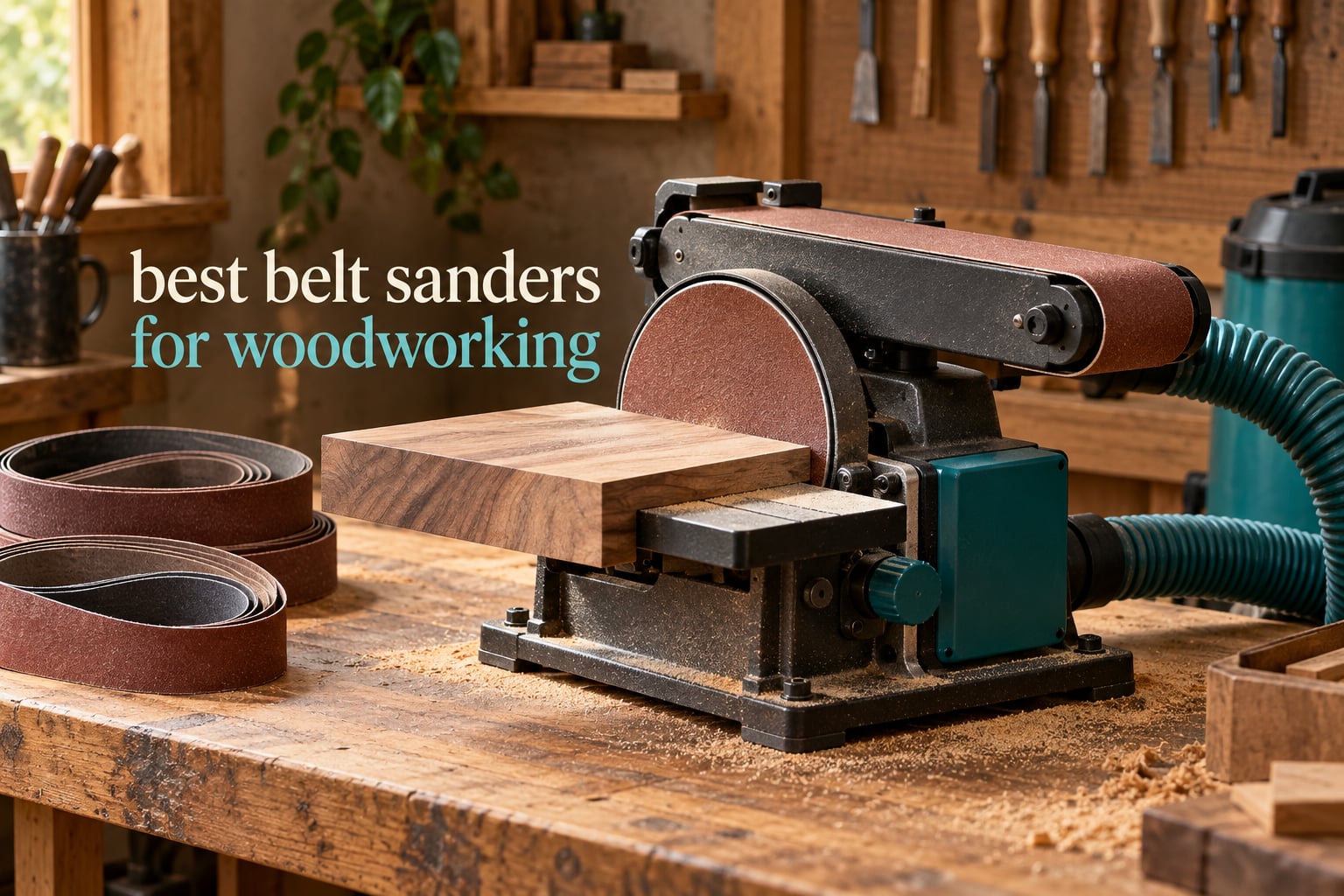
A belt sander runs an endless loop of abrasive belt around two rollers and presses that moving belt against your workpiece with a flat platen. It is the fastest way to take a rough-sawn board flat or square up a panel edge, and it will punish you just as quickly if you stand still in one spot. That makes picking among the best belt sanders for woodworking less about raw power and more about whether the machine tracks its belt, moves dust, and survives an ordinary work session.
A high-quality belt sander has three things going for it: a motor with enough current to keep pulling under pressure, a tracking system that keeps the abrasive centered without constant fiddling, and dust extraction that keeps the air in your garage readable. Everything else, weight, handle shape, belt change convenience, is a preference. We pulled twelve handheld, cordless and benchtop machines into the same comparison for 2026 so you can match the tool to the job rather than to the badge.
We spent time with each of these machines, looked at how they behave on rough-sawn pine and hardwood panels, and read what owners report after months of use rather than after a first session. Two sizes cover almost everything: a narrow handheld belt for furniture and edge work, and a wider 4 x 36 inch bench machine for flattening. Experienced woodworkers we talked to repeatedly said the same thing, that the canonical setup is one small sander and one large one. Our wide belt sander guide covers the machines that go even further if your work is production heavy.
Table of Contents
Top 3 Belt Sanders for Woodworking in October 2026
WEN 6502T Belt and Disc Sander
- 4 x 36 belt plus 6 inch disc
- Cast iron base
- 4.3 A and 3600 RPM
- Belt tilts 0 to 90 degrees


The WEN 6502T takes the top slot because it is the most proven machine on this list by a wide margin, and it does two jobs in one bench footprint. The Makita 9403 is the better handheld tool by a distance, with the strongest motor and the quietest running gear in the group. The SKIL 7510-01 is the one to buy when you want real cutting power on small parts without spending professional money.
Every Belt Sander in This Roundup for October 2026
| Product | Specifications | Action |
|---|---|---|
| WEN 6502T Belt and Disc Sander |
|
Check Latest Price |
| SKIL 7510-01 3 x 18 Belt Sander |
|
Check Latest Price |
 WEN 6321 3 x 21 Belt Sander WEN 6321 3 x 21 Belt Sander |
|
Check Latest Price |
| Makita 9403 4 x 24 Belt Sander |
|
Check Latest Price |
 WEN 6515T 1 x 30 Belt and Disc Sander WEN 6515T 1 x 30 Belt and Disc Sander |
|
Check Latest Price |
 CRAFTSMAN 3 x 21 Belt Sander CRAFTSMAN 3 x 21 Belt Sander |
|
Check Latest Price |
 Makita 9903 3 x 21 Belt Sander Makita 9903 3 x 21 Belt Sander |
|
Check Latest Price |
 Metabo HPT SB8V2 3 x 21 Belt Sander Metabo HPT SB8V2 3 x 21 Belt Sander |
|
Check Latest Price |
 DEWALT 20V MAX Belt Sander DEWALT 20V MAX Belt Sander |
|
Check Latest Price |
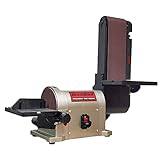 BUCKTOOL 4 x 36 Belt and Disc Sander BUCKTOOL 4 x 36 Belt and Disc Sander |
|
Check Latest Price |
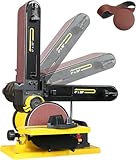 Woodskil 4 x 36 Belt and Disc Sander Woodskil 4 x 36 Belt and Disc Sander |
|
Check Latest Price |
 Ryobi 18V ONE+ Belt Sander Ryobi 18V ONE+ Belt Sander |
|
Check Latest Price |
1. WEN 6502T Belt and Disc Sander: The All-Rounder With the Most Owners
WEN Benchtop Belt and Disc Sander with 4 x 36 in. Belt, 6 in. Disc and Cast Iron Base (6502T)
4 x 36 belt plus 6 inch disc
4.3 A and 3600 RPM
Cast iron base
Belt tilts 0 to 90 degrees
Pros
- Belt and disc in one bench unit
- Cast iron base does not need bolting down
- Quick belt changes with no screws to remove
- Quiet and smooth for a bench machine
Cons
- Work fence sits high and shortens usable workpiece length
- Disc table has one adjustment point and drifts out of alignment
- Shared dust port loses suction
This is the machine I recommend to someone building a first real shop station. It puts a 4 x 36 inch belt and a 6 inch disc on a cast iron base that stays where you put it, which means you can sand a panel flat and then cut a miter on the same bench without moving anything.
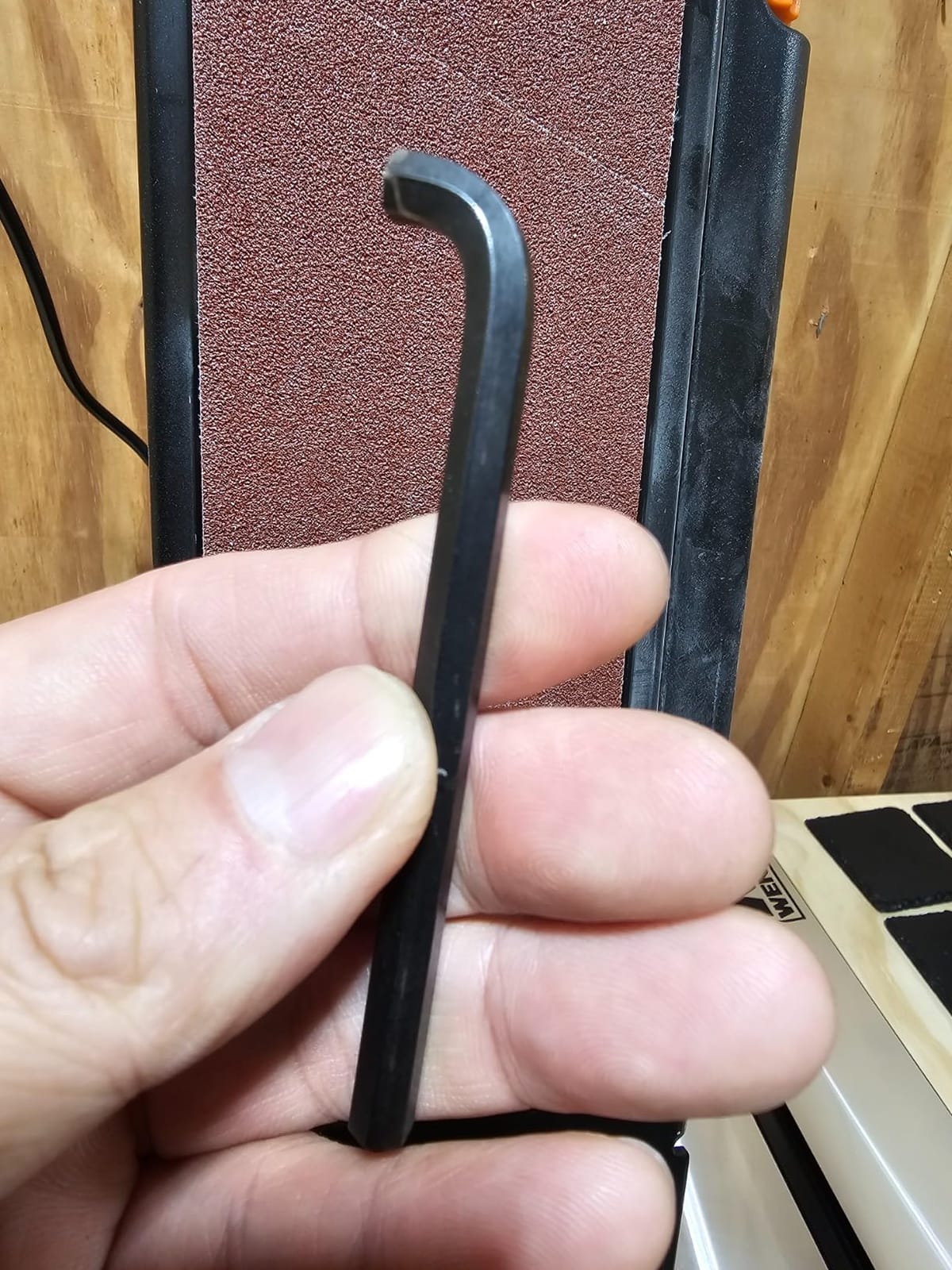
The belt tilts from flat to vertical, so the same machine handles a tabletop and a leg or a door stile. Belt changes use a tension release lever, and there are no shrouds or screws to remove, which is the detail that decides whether you change belts every time you change grit.
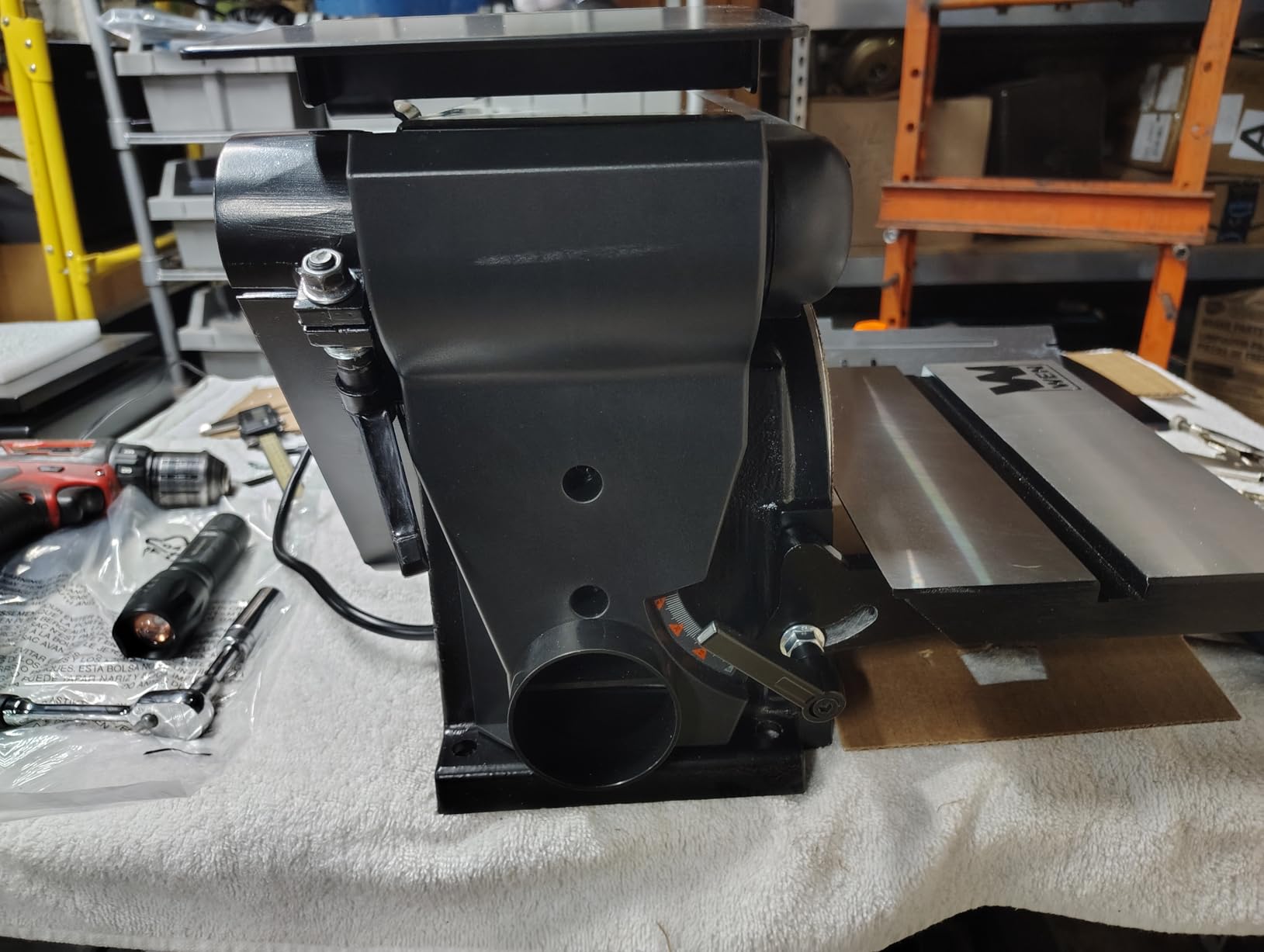
The cast iron base is the reason this machine stays true under load. Owners who bought it expecting a compromise because of the brand report that it performs alongside far more expensive bench sanders, and many note that the design is shared across several brands.
The weak points are all in the accessories rather than the machine. The work fence sits high on the bed, which shortens the usable workpiece length, and the disc table has a single adjustment point that drifts out of alignment with use. The dust port is shared between belt and disc, so suction drops when you run it flat on a bench, and most owners work around that with tape or a vacuum.
What the WEN 6502T does better than most
It removes material quickly for a 4.3 amp motor and stays quiet enough to work next to someone in the same room. The combination of a tilting belt, an angle-adjustable disc table and a stable base means one machine covers three jobs that usually take two tools.
Where it falls short
The miter gauge and disc table are the weak points, so if you need precision angles this is not your machine. It also has no separate dust ports, so plan your extraction setup before you buy it rather than after.
2. SKIL 7510-01 3 x 18 Belt Sander: The Small One That Cuts Harder Than It Should
SKIL 6 Amp 3″x18″ Belt Sander with Pressure Control – 7510-01
3 x 18 belt
6 A motor
Auto belt tracking
Pressure control warning
Fits standard 1-1/4 inch vac hose
Pros
- Compact and light with real 6 amp cutting power
- Auto tracking keeps the belt centered
- Quick belt changes
- Transparent dust canister empties easily
Cons
- Dust collection is weak and the canister fills fast
- Pressure warning light triggers often without stopping the tool
- 3 x 18 belt is small for big surfaces
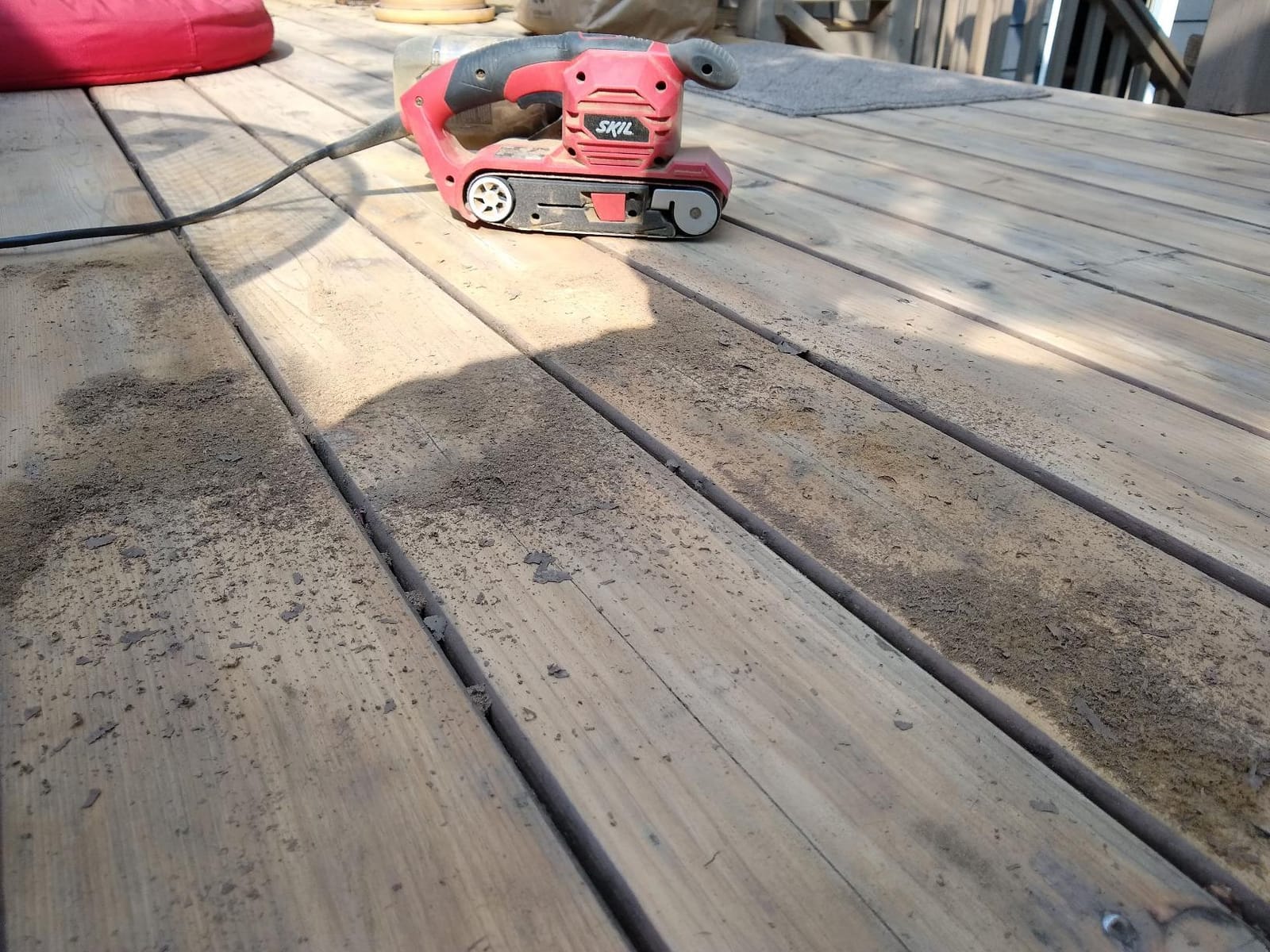
Owners keep being surprised that a sander this small puts out the power it does. Six amps is more current than most machines twice its size, and on softwood and thin hardwood panels it removes material at a rate that feels out of proportion to the body.
The pressure control system is the feature people notice first. A warning tells you when you are leaning on the tool too hard, which is genuinely useful while you learn how much pressure a belt sander actually wants, though most users report the light triggers easily and the tool keeps running regardless.
Auto belt alignment is the other quiet winner. On cheaper machines the belt wanders, snaps and needs constant correction. Here it stays centered, and the tool-free belt changes mean you can swap grits mid-project without hunting for a hex key.
The 3 x 18 belt is small. That is a real limitation on a wide panel, and it is the reason this is a furniture detail tool rather than a flattening machine. Dust collection is the most repeated complaint, so treat the canister as a carry container and plan on a vacuum for any real session.
Who should buy this one
Anyone working on small parts, boxes, legs and trim who wants more power than a detail sander offers without stepping up to a professional machine. The vacuum port fits a standard 1-1/4 inch hose, which makes dust control easy to set up properly.
Who should skip it
Skip it for tabletops, wide panels or long production runs. The belt is too short to cover a large surface in a single pass, and the motor runs warm enough that heavy uninterrupted work needs cool-down breaks.
3. WEN 6321 3 x 21 Belt Sander: Lightweight Power for Small Projects
WEN 6321 7-Amp 3 in. x 21 in. Corded Belt Sander with Dust Bag , Black
3 x 21 belt
7 A at over 13 ft/sec
6.2 lb body
Lock-in trigger
2 year warranty
Pros
- Six pound body reduces hand fatigue
- 7 amp motor drives the belt above 13 ft/sec
- Lock-in trigger allows continuous sanding
- Detachable dust bag
Cons
- Single speed operation limits control across materials and grits
- Short belt suits small workpieces rather than large panels
- Dust bag needs frequent emptying
This is a sander you can hold for a whole afternoon without feeling it in your wrist. At 6.2 pounds it is one of the lightest machines here, and for a weekend hobbyist that matters more than raw amperage.
The 7 amp motor drives the belt at over 13 feet per second, which is plenty for clean-up sanding, furniture work and any job where you are not attacking a full thick slab. The lock-in trigger means you can set the tool down mid-pass without losing your place.

Owners consistently rate it as strong for its class, and the two-year warranty is longer than most machines in this price class offer. It is a straightforward tool that does one job well and does not fight you.
The lack of variable speed is the honest drawback. You cannot slow the belt down for a delicate veneer or a softwood edge, which means more careful pressure control on delicate work. The 3 x 21 belt is also shorter than the popular 4 x 36 bench format, so it covers less area per pass.
Where it earns its place
It suits a home shop that sands furniture parts, small panels and trim a few times a month. The light weight and simple controls make it a good first belt sander for someone who is still learning the tool.
Where it will frustrate you
If you move between softwood and hardwood, or between coarse and fine grit on the same project, a variable speed dial would save you real time. The dust bag also needs frequent emptying, so keep a vacuum close by.
4. Makita 9403 4 x 24 Belt Sander: The Best Handheld Belt Sander You Can Buy
Makita 9403 4″ x 24″ Belt Sander, Teal, Corded Electric
4 x 24 belt
11 A at 1640 ft/min
84 dB operating level
Labyrinth sealed motor
13 lb
Pros
- Very powerful 11 amp motor with fast material removal
- Quiet at 84 dB and runs cool
- Belt tracks reliably with little adjustment
- Excellent dust collection from the internal blower
- Parts are inexpensive and easy to replace
Cons
- Heaviest handheld here at 13 lb which tires the arm on overhead work
- Phillips service screws strip easily and the plastic dust nozzle feels cheap
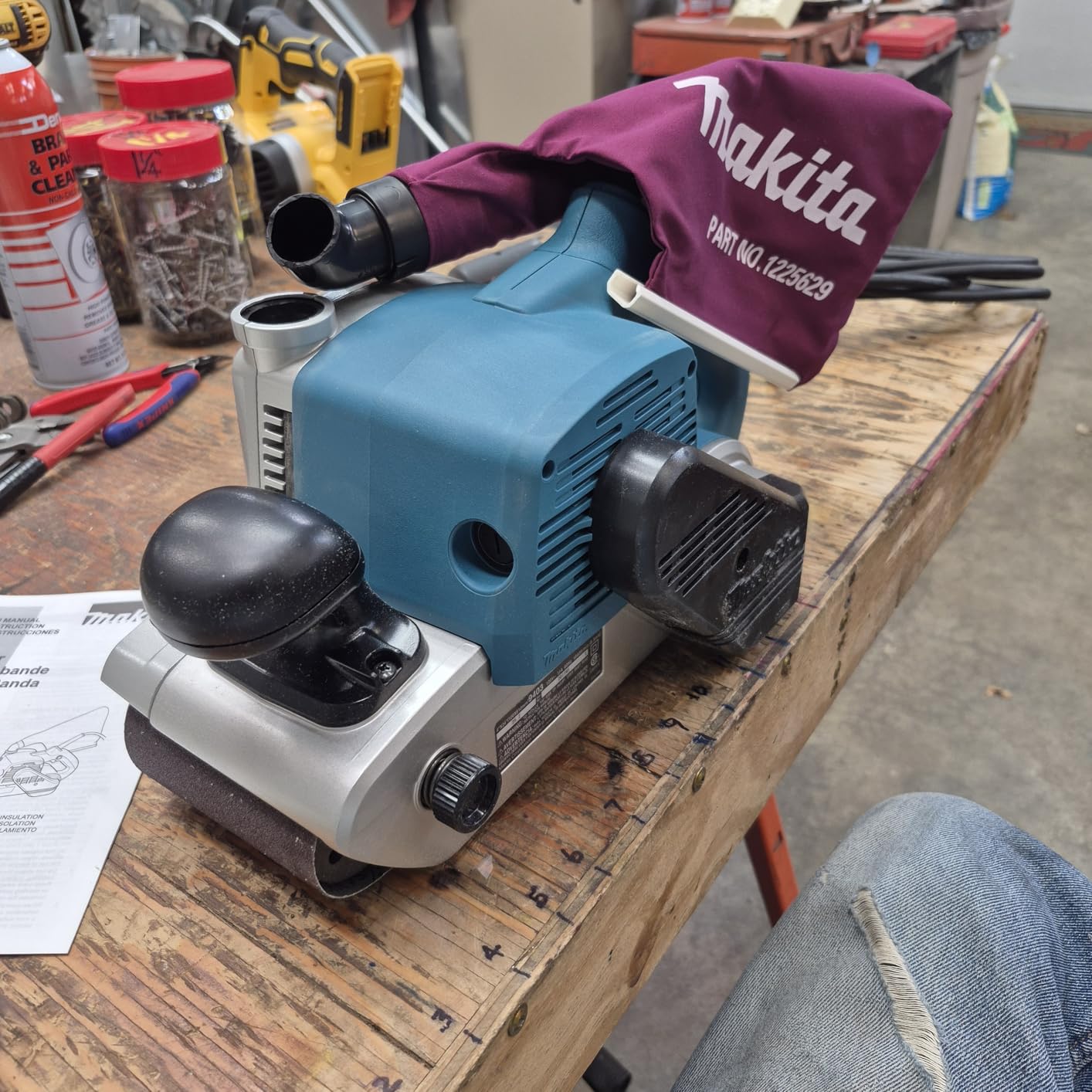
This is the machine I reach for when a panel has to come flat. The 11 amp motor drives a 4 inch wide belt at 1640 feet per minute, and it does that without the heat and noise that usually comes with the power. Owners with years of service call it a shop workhorse, and the build supports that.
Two details separate it from everything else on this list. The labyrinth construction seals the motor and bearings against dust and debris, which is why these machines keep running when others do not. And at 84 dB it is the quietest tool here, a genuine factor if you sand in a garage attached to a living space.
Dust extraction is handled by an internal blower that sends debris to the bag or a vacuum, and it is the best on this list by owner accounts. The nose and side design lets you sand flush against a wall or against a fixed surface, and the belt tracks with almost no adjustment.
Thirteen pounds is the honest cost. On a flat panel that weight is an advantage because the machine does the work. On a ceiling, a vertical face or a small part held at awkward angles, it will catch up with you, and hot air from the front handle port bothers some users, particularly left handed ones. The service screws are Phillips heads that strip if you lean on them, and the swivel dust nozzle is the one part that feels lighter than the rest of the machine.
Why it earns the top handheld spot
It is the only machine here that combines serious power, near-silent running, sealed internals and repairable construction. If you buy one belt sander and keep it for a decade, this is the one most owners would pick again.
Who should look elsewhere
Anyone doing overhead or vertical work on a regular basis will find 13 pounds tiring. If your work is mostly small parts and edges, the lighter handheld machines will serve you better, and if dust is your main concern, it already handles that better than anything here.
5. WEN 6515T 1 x 30 Belt and Disc Sander: The Compact Bench Machine
WEN Benchtop Belt and Disc Sander with 1 x 30 in. Belt and 5 in. Sanding Disc (6515T)
1 x 30 belt plus 5 inch disc
2.3 A at 3160 FPM
3450 RPM disc
Two separate dust ports
16 lb
Pros
- Compact footprint for a small bench
- Quiet smooth motor with plenty of power for hobby work
- Belt tracks correctly out of the box
- Two separate dust ports
- Heavy base does not walk
Cons
- Disc table and miter gauge are not accurate
- Adhesive-backed discs are awkward to change and several external parts are plastic
- Single speed belt operation
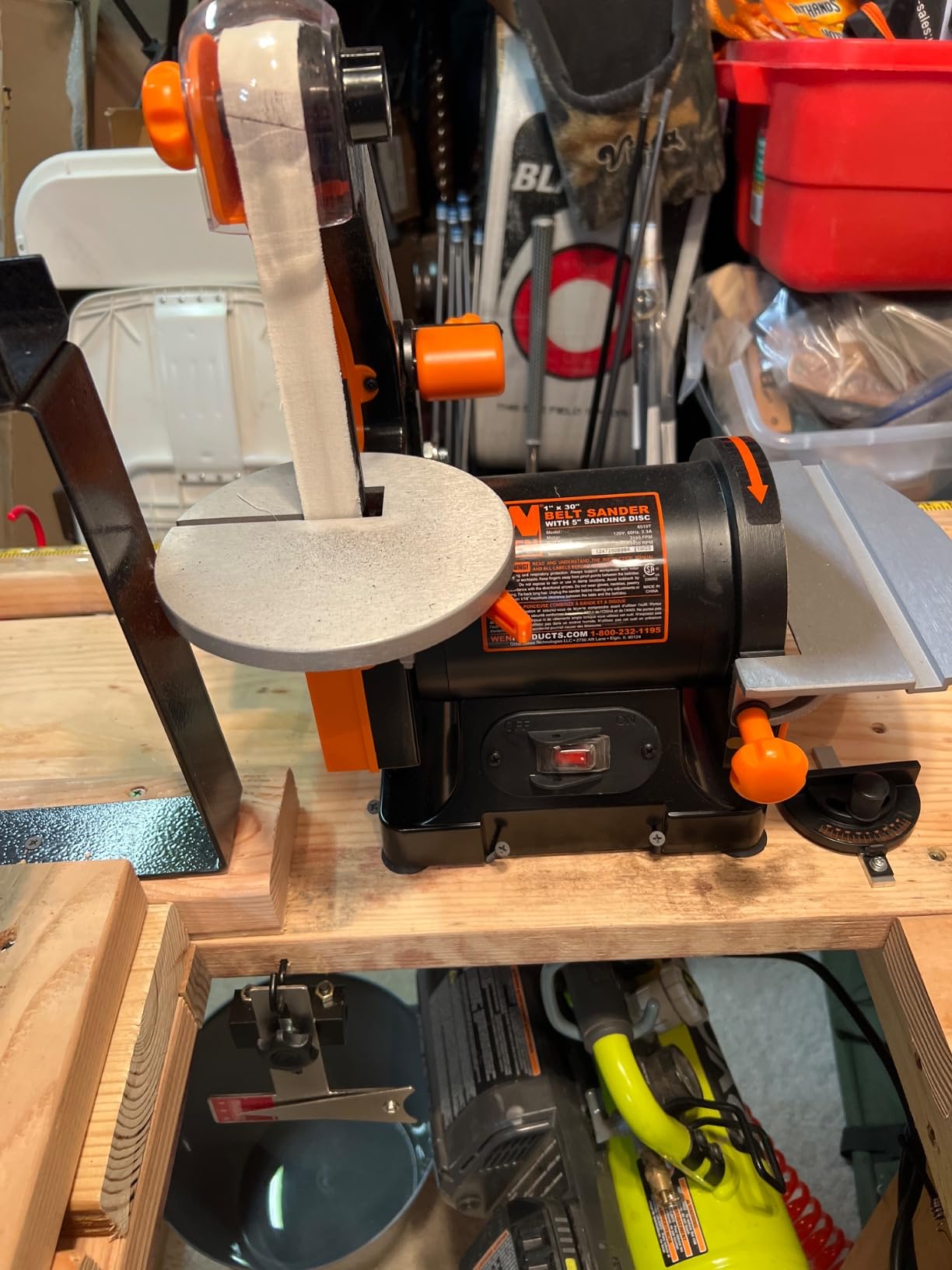
If your bench space is measured in inches rather than feet, this is the machine to look at. The 1 x 30 inch belt is narrow, but paired with a 5 inch disc it covers contouring, edge shaping and small furniture work in a footprint that leaves room to stand.
The 2.3 amp motor runs the belt at up to 3160 feet per minute and the disc at 3450 RPM, which is enough for hobby and light shop work without being a production tool. The base is heavy and wide enough that it does not walk, and the belt tracks properly straight out of the box.
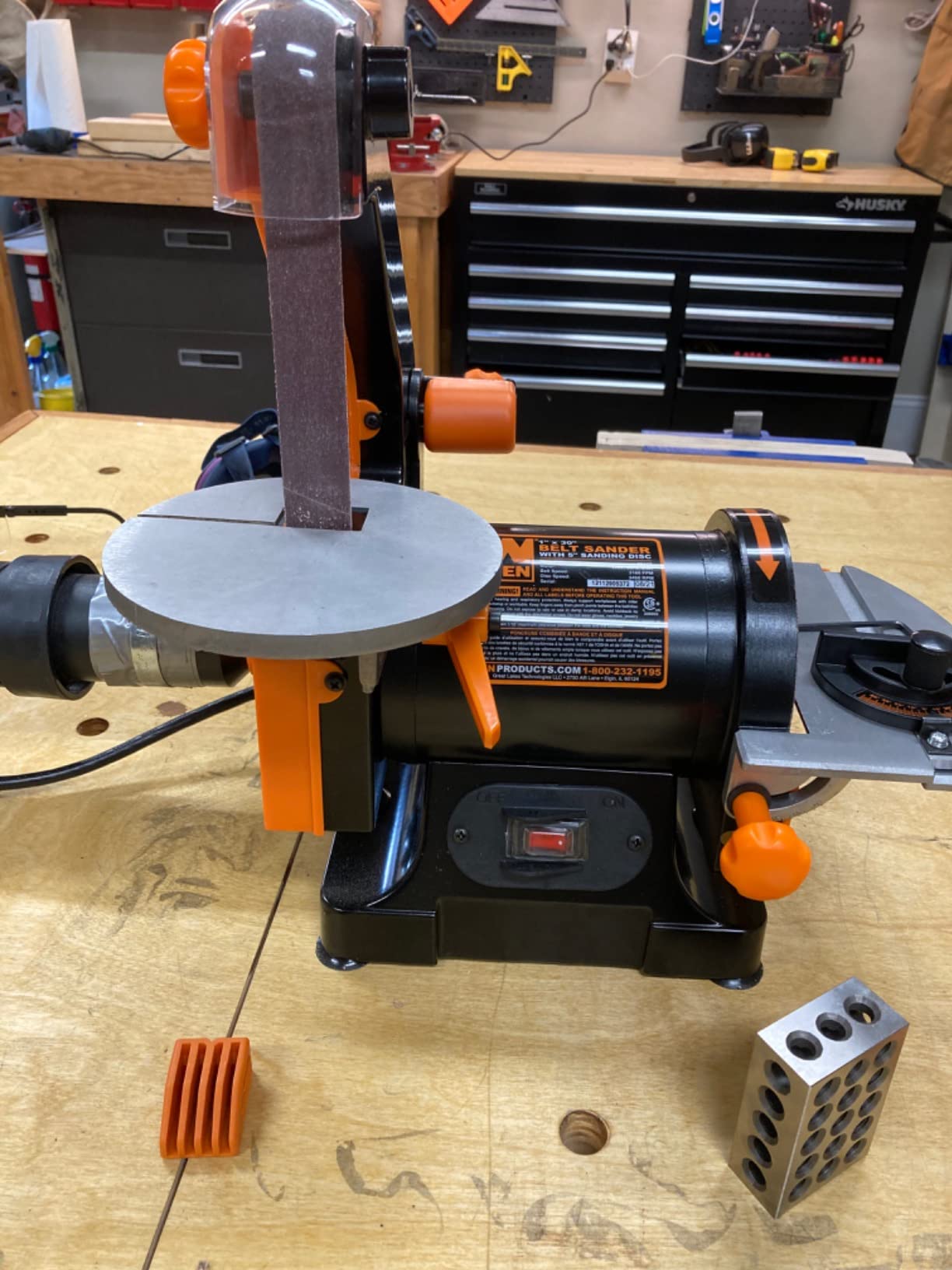
Two separate dust ports are a real advantage over the shared port design on similar machines. You can run both to a vacuum, or run one and leave the other capped, which is how you keep suction up when you are working on the disc only.
Almost every complaint lands on the disc side of the machine. Adhesive-backed discs are annoying to change, the table and miter gauge lack precision, and several external parts are plastic. A number of owners add a short tune-up of the rollers and tables after delivery, which is worth doing before the first real project.
Why small shops like it
It does not fight for bench space, it makes almost no noise, and it handles both small flat work and curved edges from one station. For a shop that sandboxes and assembles small furniture, it covers the work without a dedicated machine for each shape.
Who should skip it
Skip it if you need to remove material quickly from thick stock, or if precision angles are part of your process. Single-speed belt operation also means less control when you move between softwood and hardwood.
6. CRAFTSMAN 3 x 21 Belt Sander: Built for Corners and Tight Edges
CRAFTSMAN Electric 7 Amp Belt Sander, 3-in. x 21-in., Corded (CMEW213)
3 x 21 belt
7 A at 800 fpm
Tool-free belt release
3-position over-molded handle
6.6 lb
Pros
- Narrow angled body sands tight against adjacent surfaces
- Tool-free belt release
- Front knob corrects belt drift
- Comfortable 3-position handle at 6.6 lb
Cons
- Dust bag attachment is weak and collects little
- Motor runs hot under sustained pressure
- Small front plastic roller is a weak point
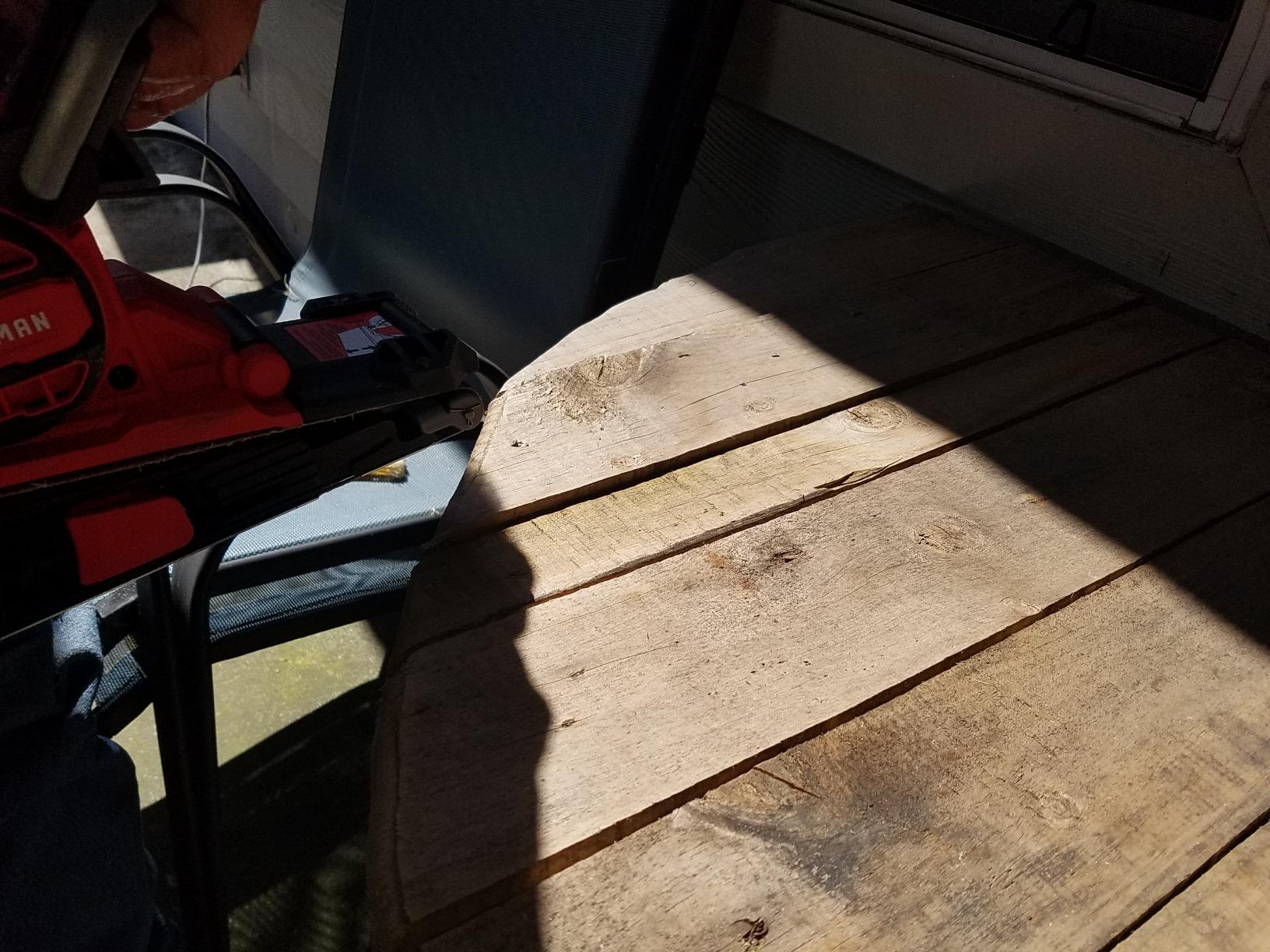
The defining feature here is the angled belt design. The body narrows toward the front roller so the belt sits closer to the side of the machine, which lets you sand right up against a wall or into a corner that a square-bodied sander cannot reach.
The rest is straightforward and good. A 7 amp motor runs the belt at up to 800 feet per minute, the belt release is tool-free, and the front knob corrects side-to-side drift when it happens. At 6.6 pounds with a three-position over-molded handle it stays comfortable on longer passes.
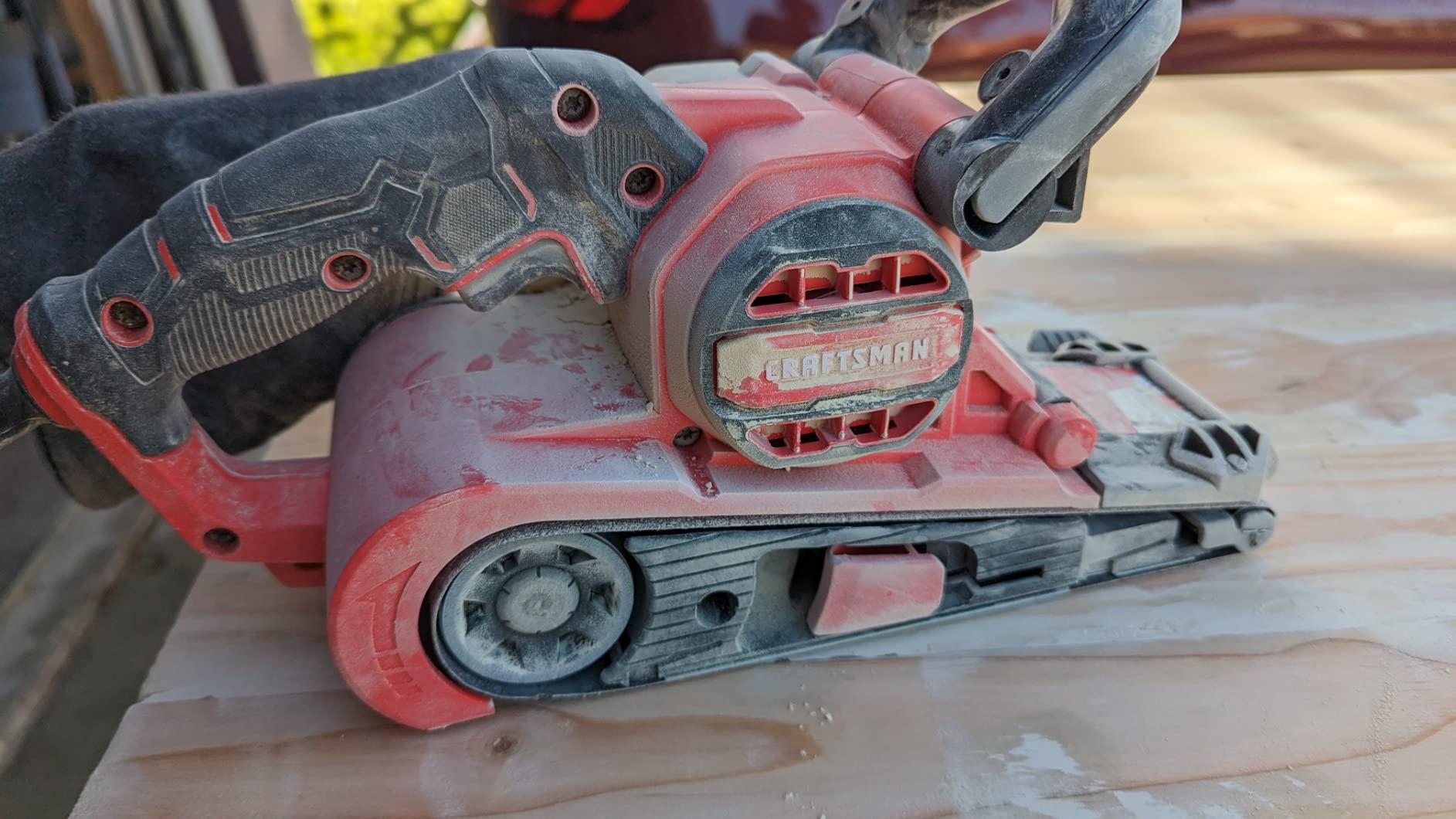
For furniture work, especially a bookcase, a cabinet or a set of shelves, the narrow front roller is the feature you will use every time. It gets into the inside corners between a side panel and a fixed surface without you having to tilt the whole tool.
The weak points are well documented. The dust bag collects very little and its attachment is flimsy, so budget for a vacuum connection. Belt tension drifts and needs repeated correction, the motor runs hot under sustained pressure and needs cool-down time, and the small front plastic roller is a known failure point. This is a light to medium duty machine, not a tool for flooring or heavy stock removal.
Best for furniture and cabinet work
If most of your sanding is edges, corners and panels on a home project, the geometry here saves you more time than any extra horsepower would. The tool-free belt change also keeps grit changes fast.
Where it will let you down
Sustained heavy work will overheat it and loosen the belt tension. If you are flattening rough lumber rather than finishing furniture, pick a wider belt and a machine with more mass in the motor.
7. Makita 9903 3 x 21 Belt Sander: Variable Speed and Auto Tracking in One
Makita 9903 3″ x 21″ Belt Sander
3 x 21 belt
8.8 A motor
Variable 690 to 1440 ft/min
Auto tracking system
85 dB
9.5 lb
Pros
- 8.8 amp motor with variable speed from 690 to 1440 ft/min
- Quiet 85 dB operation
- Auto-tracking belt system needs no manual adjustment
- Sands flush to a wall with the nose and side
Cons
- 9.5 lb is heavy for a handheld sander
- Bundled dust bag needs frequent emptying on long sessions
The 9903 is the machine for anyone who moves between materials. Its variable speed dial runs the belt from 690 to 1440 feet per minute, so you can take a coarse grit fast on pine and slow right down for a hardwood edge or a delicate panel.
The auto-tracking system adjusts the belt for you, which removes the single most common complaint we heard about budget machines. Combined with the nose and side sanding design, it also handles flush work against a fixed surface without awkward angles.
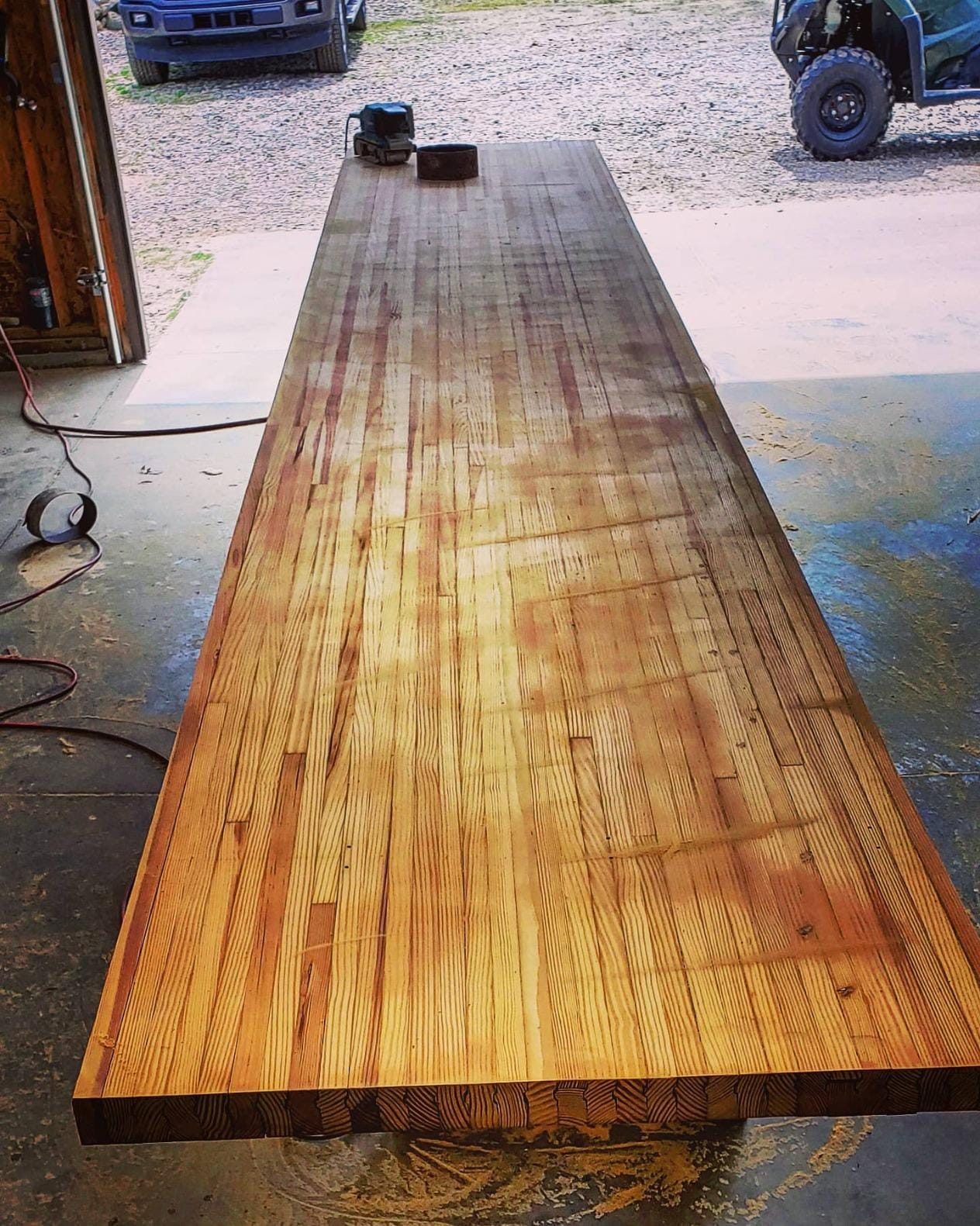
At 8.8 amps it has plenty of current to keep pulling on a full load, and at 85 dB it is one of the quieter machines here. Owners treat it as a long-term shop investment rather than a project tool.
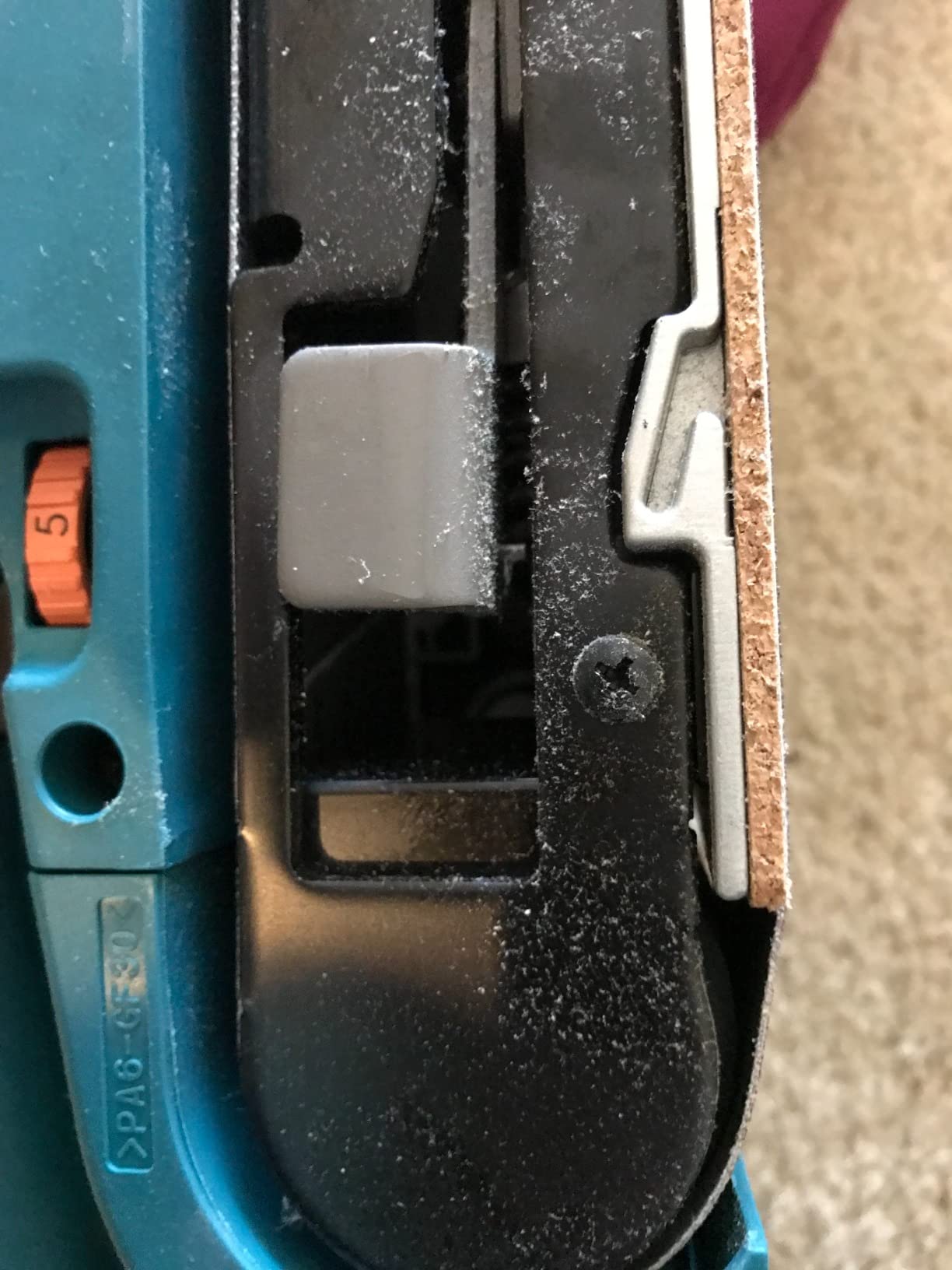
At 9.5 pounds it is not a light handheld, so plan your grip before long passes. The bundled dust bag works but fills quickly on heavy removal, and most owners connect a vacuum instead, which is why it sits comfortably with the dust collection discussion rather than against it.
Why variable speed matters here
It is the difference between a sander you use carefully and one you can use freely. Control over belt speed means fewer burn marks, less grain tear-out on softwood and a much shorter learning curve for a new user.
Who should pick something else
If your work is purely small parts, the 9.5 pound frame is heavier than you need. And if you never change material or grit, you are paying for a dial you will set once and leave alone.
8. Metabo HPT SB8V2 3 x 21 Belt Sander: Power and a Five-Year Warranty
Metabo HPT Belt Sander | 3 x 21 Inch | For Woodworking | Variable Speed | 9.0 Amp Motor | Soft Grip | 5-Year Warranty | SB8V2
3 x 21 belt
9 A 1020 watt motor
Variable speed dial
Clear front cover
5 year warranty
9.5 lb
Pros
- 9 amp 1020 watt motor for tough jobs
- Variable speed dial at the base of the handle
- Clear front cover improves visibility against a surface
- Side-mounted dust bag helps corner sanding
- Five year limited warranty
Cons
- Dust bag is the most common complaint
- 9.5 lb is heavy for a handheld sander
- Lowest average rating in this group
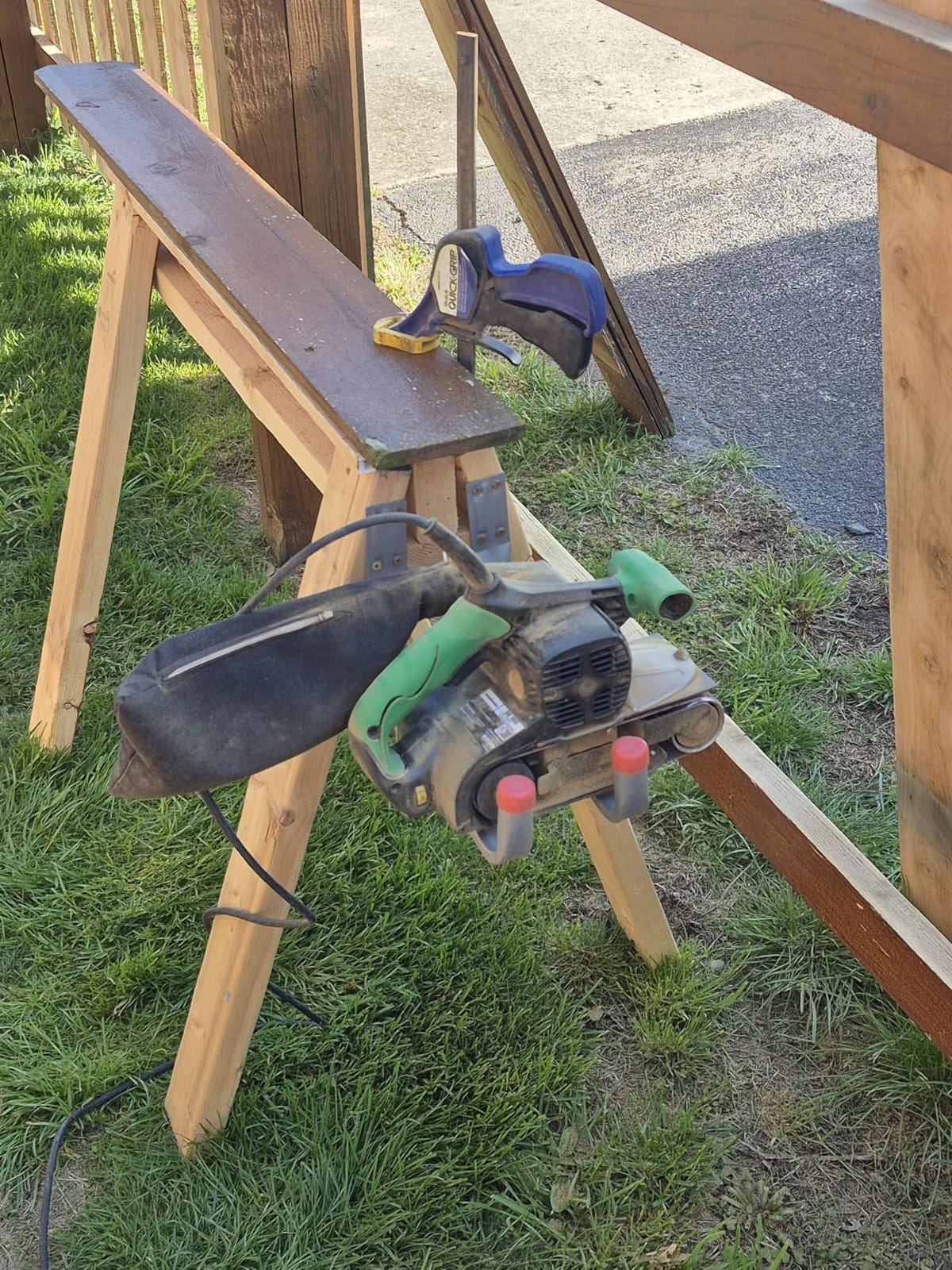
On paper this is one of the strongest handheld packages here. A 9 amp 1020 watt motor, a variable speed dial at the base of the handle and a five-year limited warranty put it ahead of machines that cost considerably more.
The clear front cover is a detail I did not expect to care about and then did. When you are sanding up against a surface you can actually see the belt and the joint, which reduces the guesswork in flush work. The side-mounted dust bag also keeps the machine clear of the corner you are working on.
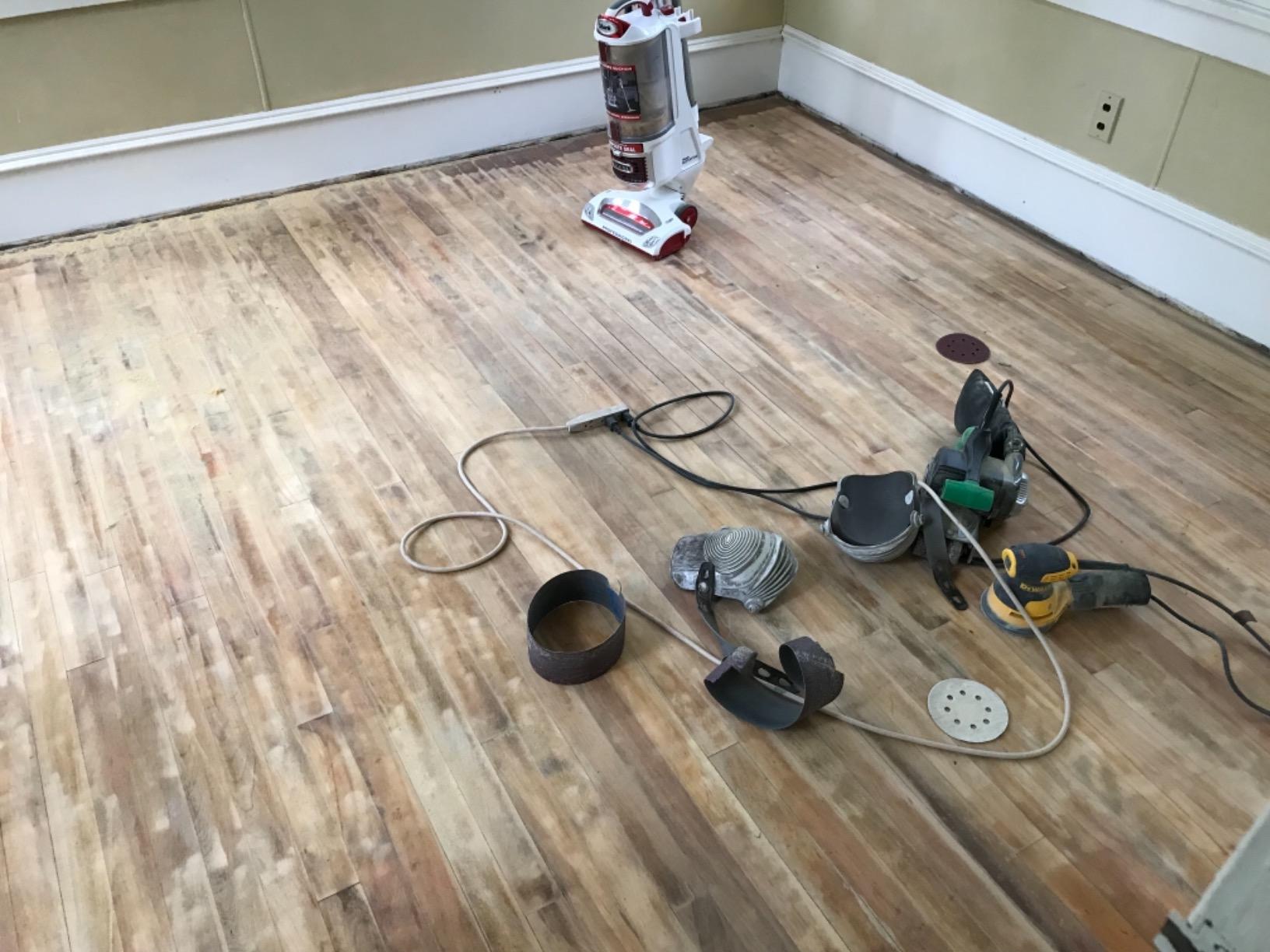
The variable speed dial gives the same range of control as the Makita 9903, and the flush surface design lets you sand quickly and evenly along a face. For hard jobs the motor has the current to keep moving without bogging.
Owner sentiment is genuinely mixed, and the rating on this one is the lowest in the group. The dust bag is the most repeated complaint, and at 9.5 pounds the tool feels heavier and less refined than the premium alternatives. That is worth factoring in before you treat the spec sheet as the whole story.
What you gain by choosing it
Motor power, speed control and a warranty length that outlasts most competitors in this class. If you keep tools for a decade, that warranty period is a real part of the value.
What gives us pause
The dust collection is the weak point owners mention most, so connect a vacuum before your first session. If you plan heavy daily use, the weight and the mixed owner reports are reasons to weigh a premium handheld instead.
9. DEWALT 20V MAX Cordless Belt Sander: Jobsite Power Without the Cord
DEWALT 20V MAX* Belt Sander, Cordless, Brushless, Tool Only (DCW220B)
20V MAX brushless motor
25 speed dial
Up to 95% dust collection
Pros
- Very powerful for stair refinishing roof decks and floor edges
- No cord trip hazards and no need to find an outlet
- Fast tool-free belt changes
- Variable speed trigger with 25 speed dial
- Quiet and solidly built
Cons
- Heavy and awkward at angles overhead or on vertical surfaces
- Battery hungry especially on heavier grit
- Power is high enough to run away if the trigger is pulled early
For remodeling work, stairs and anything off a bench, the cordless argument is not subtle. No trip hazards, no extension cord across a walkway, no outlet hunting in a half-finished room. Owner reports on stair refinishing and roof decks make it clear this is not a compromise tool.
The brushless motor delivers up to 22 percent more power than the traditional corded equivalent applications, and the spec sheet states 16.7 percent more sanding surface area than the comparable Milwaukee M18 FUEL 3 x 18 inch cordless belt sander. The variable speed trigger has a 25 position dial, which is finer control than any corded machine in this group.
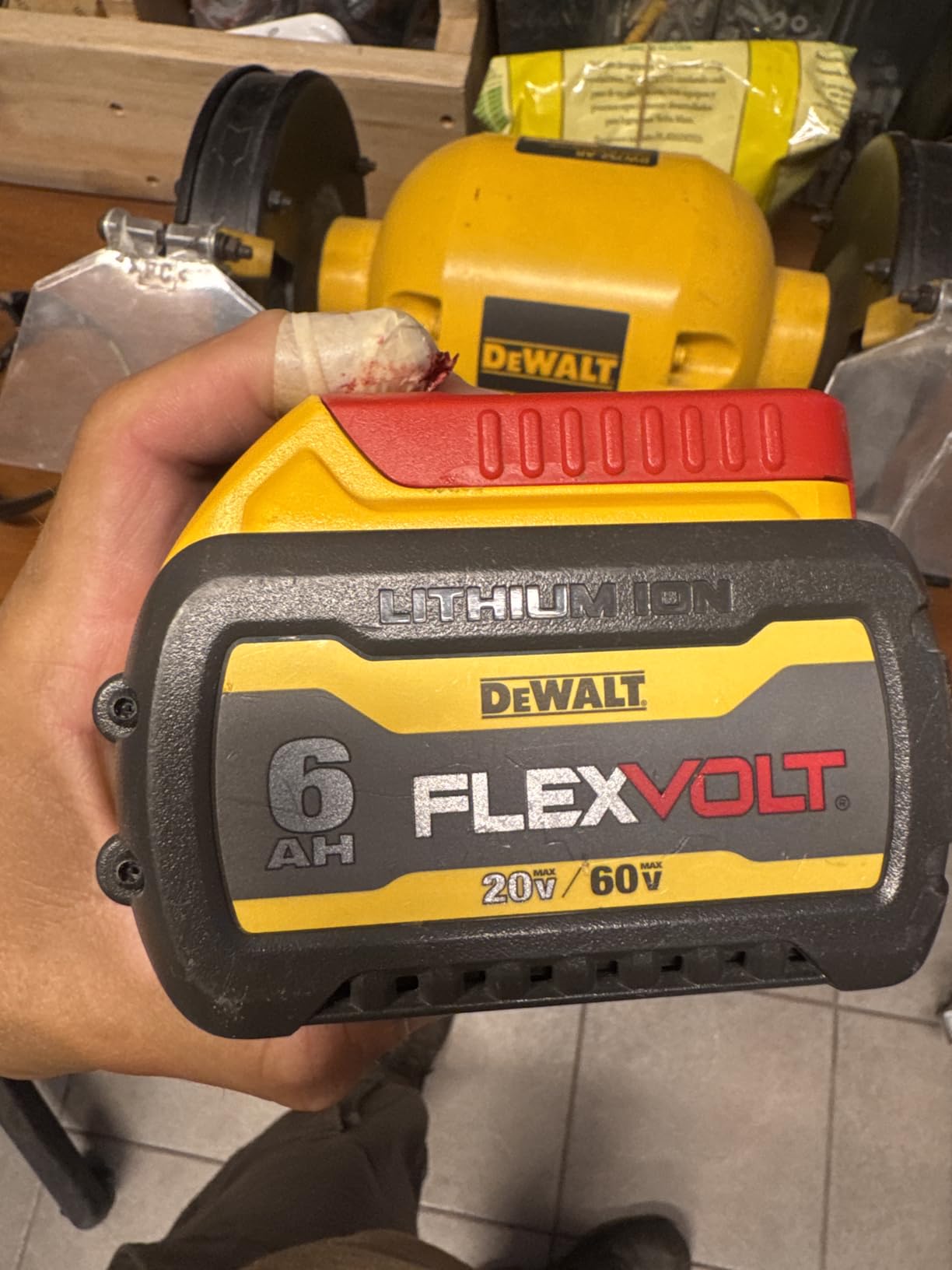
Dust collection is quoted at up to 95 percent efficiency with the tool-free airlock system, and there is wireless tool control so you can start the vacuum from the sander. The quick-release belt change is tool-free and fast, and an overmolded auxiliary handle lets you work two-handed on long passes.
The two criticisms that come up repeatedly are weight and battery consumption. It is heavy for a handheld, which makes overhead and angled work awkward, and heavy grit on hardwood drains packs quickly enough that owners recommend buying extra high-capacity batteries. The power is high enough that pulling the trigger without the workpiece ready can send the tool forward.
Where cordless changes the job
Jobsites, stair treads, floors and cabinet installs where a cord is in the way. If you already run DEWALT 20V tools, swapping batteries between jobs is the detail owners rate most highly.
What you give up
Unlimited runtime and a lighter tool. If you are working at a fixed bench all day with a vacuum nearby, a corded machine will be lighter and will not pause for a battery change.
10. Ryobi 18V ONE+ Cordless Belt Sander: Cordless on a Smaller Platform
Ryobi R18BS-0 18V ONE+ Cordless Belt Sander (Battery & Charger Excluded)
18V ONE+ cordless
76 x 533 mm belt
250 m/min belt speed
Multi-position top handle
3 belts included
Pros
- Cordless work on large sanding projects without cord management
- 250 m/min belt speed gives a strong removal rate
- Multi-position top handle for flush-to-wall sanding
- Tool-only format fits the existing 18V battery platform
- Light at 3.28 kg
Cons
- Battery and charger are not included
- 76 x 533 mm belt is a less common size so accessories are harder to share
If you already own Ryobi 18V ONE+ tools, this drops into an existing battery and charger set with nothing else to buy on the platform side. The belt runs at 250 meters per minute, which is a solid removal rate for a cordless tool.
The multi-position top handle is the feature that earns its keep. It changes the angle you hold the machine at, so flush-to-wall work and long floor passes do not require contorting your wrist into one fixed position.
At 3.28 kg it is the lightest machine in this roundup by a noticeable margin, which matters most on long sessions where a corded machine becomes a fatigue problem. Three sanding belts and a dust bag are included.
Its 4.2 average sits below the rest of this field. The main reason is expectations rather than a defect in the design, since it is being compared against corded machines that do more. The belt size, 76 by 533 mm, is not one of the common bench formats, so accessories are harder to share with other sanders in your shop, and the battery and charger are sold separately.
Left on, a moving sander will walk off the edge of a panel. Our floor sander guide covers the machines built for that job.
Who it suits
Existing 18V ONE+ owners doing whole-room sanding, decks or cabinets where cord management would be the deciding factor. The light weight makes long floor passes realistic.
Who should pass
If you are starting a platform from scratch, or you need a 4 x 36 inch belt for wide panels, this is not the fit. The accessory limitation is the practical issue, not the performance.
11. BUCKTOOL 4 x 36 Belt and Disc Sander: Direct Drive, No Tension Adjustment
BUCKTOOL Bench Belt Disc Sander for Woodworking,4×36″ Belt,6″ Disc,5A
4 x 36 belt plus 6 inch disc
Direct drive from motor shaft
3/4 HP enclosed motor
Pros
- Direct drive removes belt tension adjustment entirely
- 3/4 HP enclosed induction motor runs quietly
- Driven drum handles curved workpieces
- Two cast aluminum tables with vibration damping feet
- Belt tilts 0 to 90 degrees
Cons
- Direct drive means belt and disc are not independently adjustable
- Dust extraction works best with an additional Y fitting
- Written review detail for this model is limited
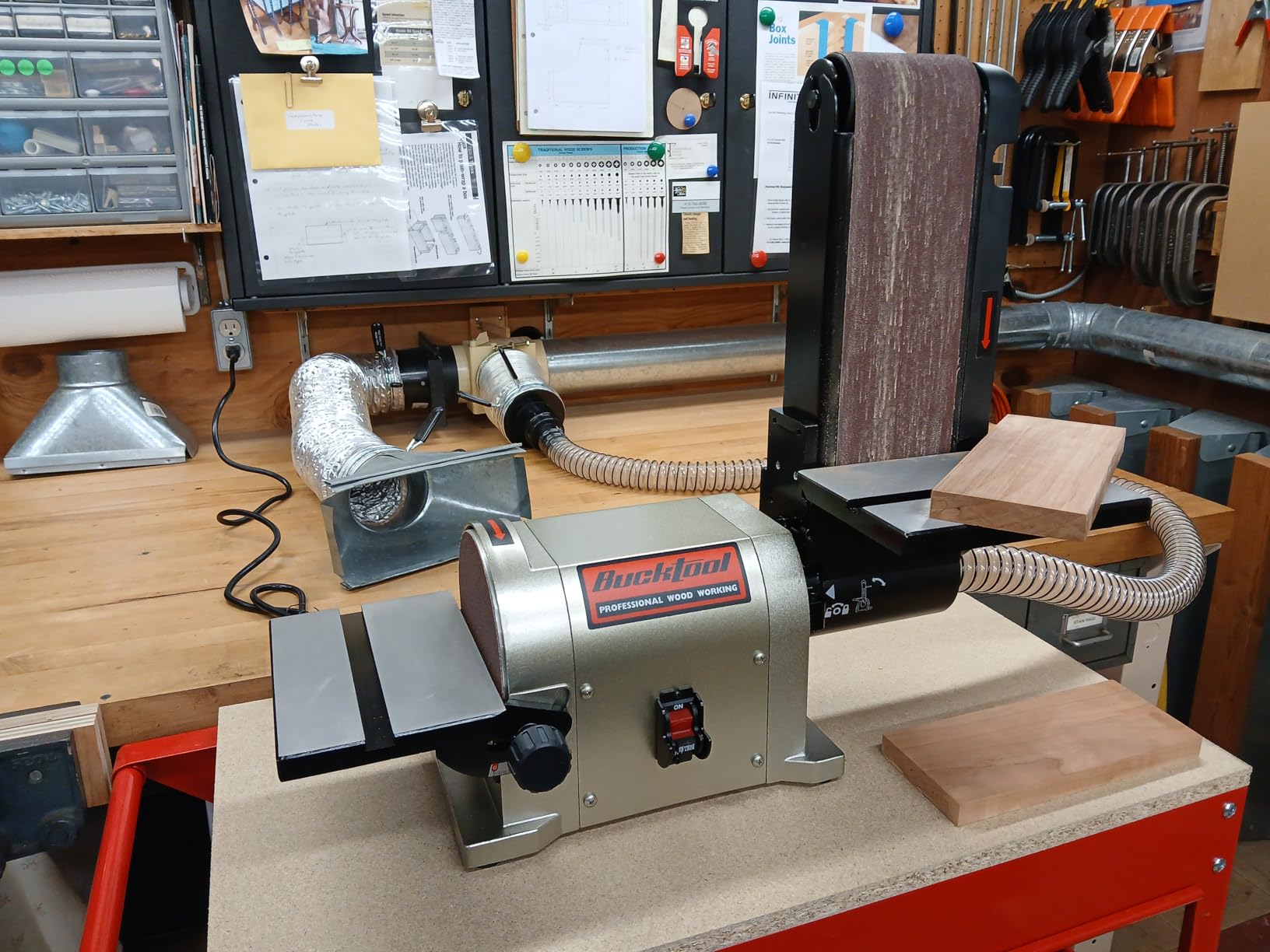
The idea here is simple and I like it. Instead of a motor driving one roller and a belt carrying power to the other, the motor shaft drives the belt and the disc directly. That removes the belt tension adjustment step that every traditional combo sander asks you to deal with.
The manufacturer states the direct drive arrangement is 25 percent more efficient than a traditional belt drive design, and it lets a 3/4 HP fully enclosed induction motor run at 2161 feet per minute with a lot less noise than an open motor of that size. Enclosed also means the motor is protected from dust, which is the long-term reliability story.
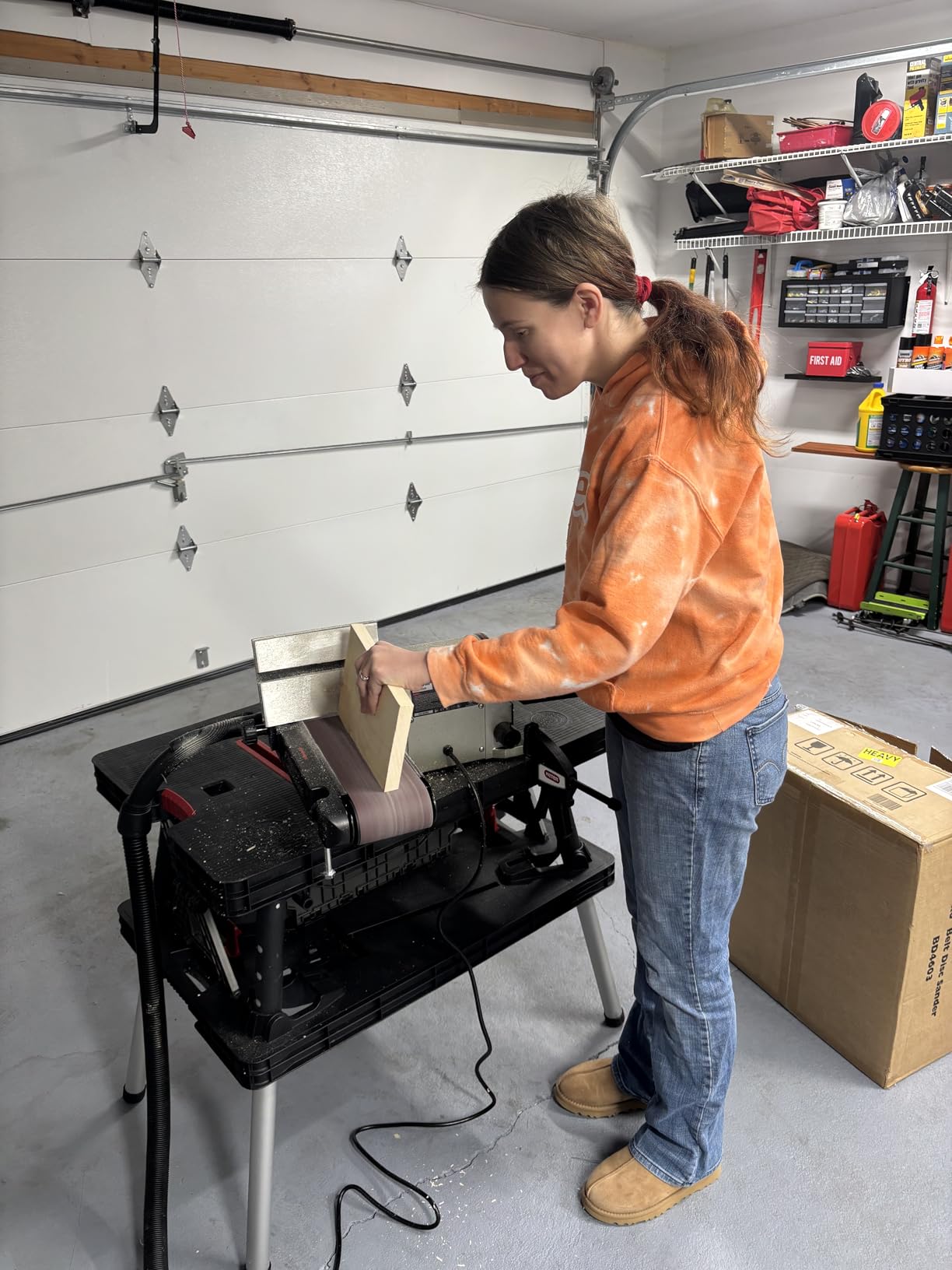
The driven drum supports sanding curved workpieces, which turns this from a flat-surface machine into a shaping tool. Two cast aluminum worktables and a rubber footed cast base keep vibration down, and the belt tilts from flat to vertical for edge work.
Two limitations follow directly from the design. Belt and disc are not independently driven, so you cannot run the disc at a different speed from the belt, and there is no separate adjustment for either. Dust extraction also performs best with an additional Y fitting hose, which is sold separately, so budget for that small accessory before you set the machine up.
Why the direct drive matters
Fewer adjustment points means fewer things to drift out of alignment, and an enclosed motor in a dusty shop is a sensible choice for a machine you intend to keep. It handles flat work, edges and curves from one base.
What the design takes away
Independence. If you want to sand a disc and a belt at different speeds, this is the wrong machine. Read the review detail for this model with that in mind, as published written feedback is thinner than for the other picks here.
12. Woodskil 4 x 36 Belt and Disc Sander: Compact Combo With a Steel Base
Woodskil 4.3A Belt Disc Sander Combo for Woodworking,4×36″ Belt,6″ Disc
4 x 36 belt plus 6 inch disc
3/4 HP at 1732 FPM
Dual dust ports
Pros
- 3/4 HP motor delivers 3570 RPM and 1732 FPM
- Compact bench footprint that still handles a wide range of work
- Belt tracking is easy to adjust
- Separate dust ports for belt and disc
- Transparent guard shows belt condition
Cons
- Disc work table support is lightly braced
- Separately sourced 4 x 36 belts may not track well
- 110V motor only so it will not run on 220V supply
This is the compact bench combo for someone who wants belt and disc work in a small footprint. The 3/4 HP motor turns the disc at up to 3570 RPM and moves the belt at 1732 feet per minute, which covers everything from shaping to clean-up on a hobby bench.
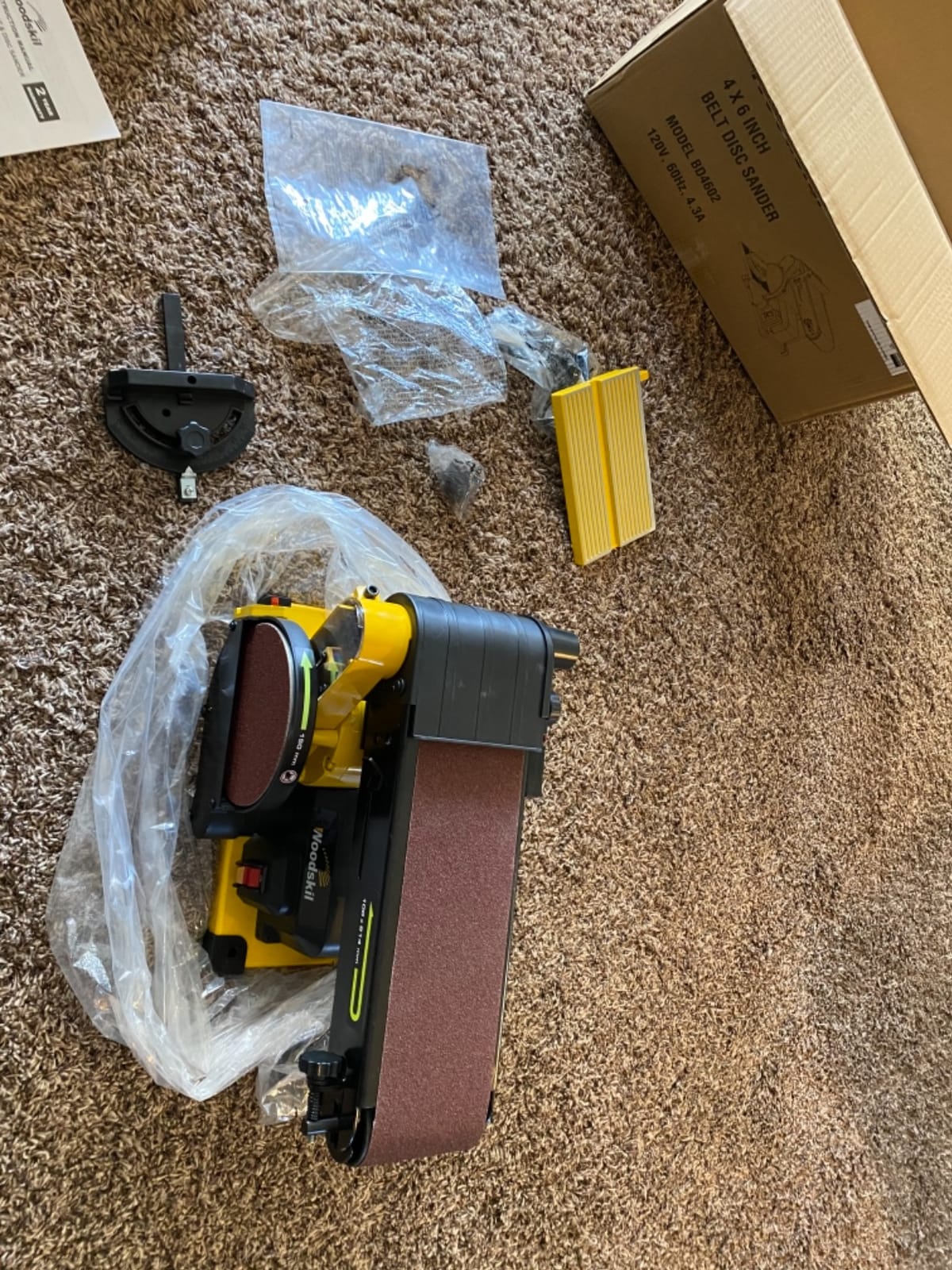
Owners with machinist and commercial backgrounds report it handles deburring and general shop work well as long as you treat it as a non-production machine. Assembly is straightforward, the instructions are clear, and it arrives well packaged.
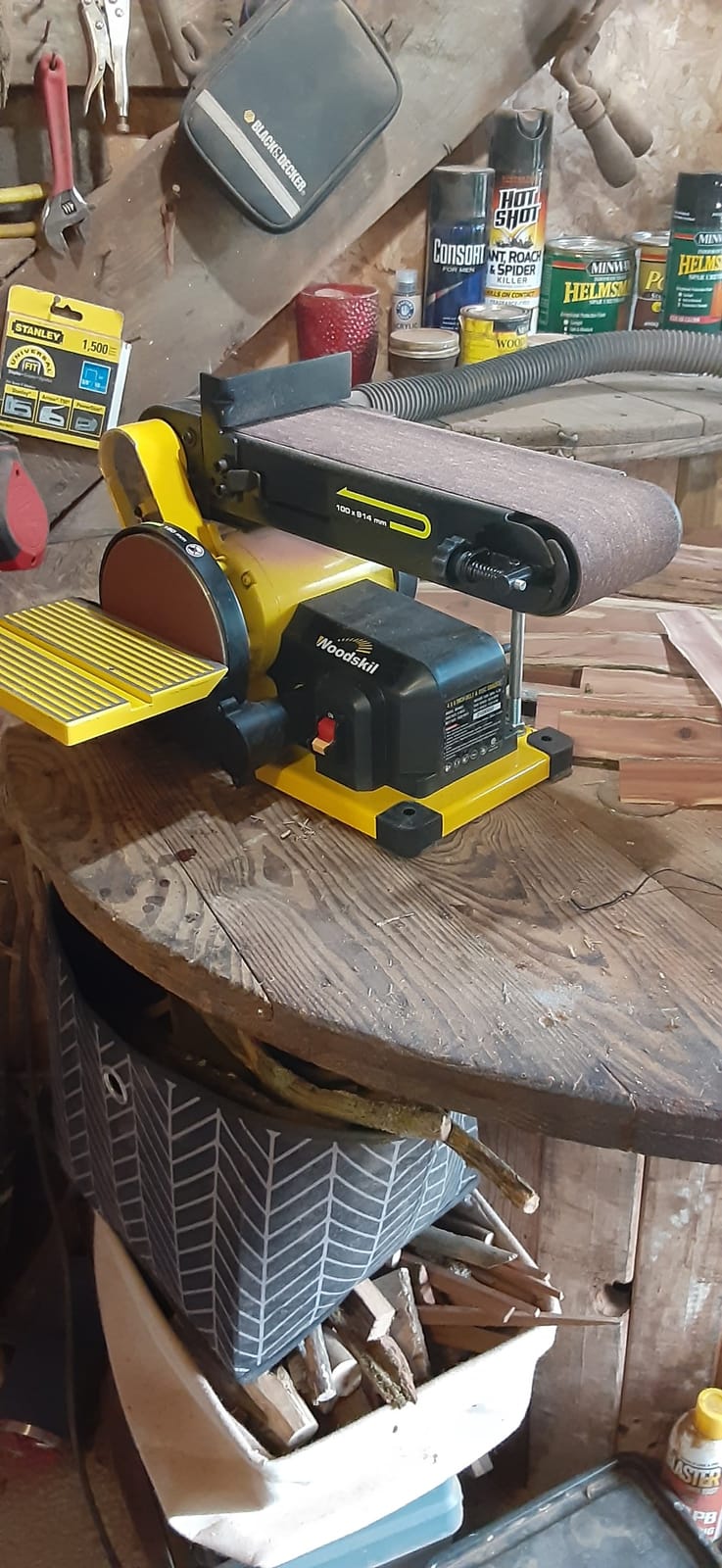
Two separate dust ports, one for the belt and one for the disc, let you connect both or cap one and keep suction up. The transparent guard is a nice practical touch because you can check the belt for a worn seam without opening anything up.
The criticism that comes up most is hardware level rather than performance. The disc work table is lightly braced and would benefit from a second support screw, and replacement 4 x 36 inch belts bought separately do not always track correctly, which is a real long-run annoyance. It is also a 110V motor only, so it will not run directly on 220V supply, and it is audible under load.
What it does well for the money
It covers the widest range of shapes in the smallest footprint on this list, with a motor that is bigger than the bench size suggests. Two-year warranty and responsive support are reasonable for the class.
Where to be careful
Brace the disc table before heavy work, and source your belts from a seller you trust since fit and tracking vary. If your shop runs on 220V mains, this is not a candidate.
Belt Sanders for Woodworking: How to Choose
What makes a high-quality belt sander
Look at five things. A motor with enough amperage to keep pulling under pressure, a tracking system that holds the belt centered without constant adjustment, dust extraction that connects to a vacuum rather than only a bag, a platen and base rigid enough not to flex, and sealed bearings and motor components that keep dust out. Weight, handle shape and belt change convenience come after that.
A high-quality machine also has parts. If the manufacturer sells replaceable belts, brushes and bearings at sensible prices, the tool stays in service for a long time. Owners who have had these machines for years consistently point to repairability as the reason they bought the same brand again.
Belt size and grit: 3 x 18, 3 x 21, 4 x 24 and 4 x 36
The 3 x 18 belt is for small parts, boxes and trim. The 3 x 21 is the most common furniture size and the easiest to find belts for. The 4 x 24 covers a wide panel in fewer passes and is the standard professional handheld format. The 4 x 36 belongs on a bench, where the machine never moves and can afford the size.
Within a size, grit progression is straightforward. Start at 60 or 80 grit to level a surface, move to 100 or 120 to knock the sanding pattern down, and finish at 150 or 180 for a surface ready for finish. Skipping a step leaves scratches that show up immediately under finish.
Variable speed, amperage and heat
Variable speed is worth paying for if you work across hardwood and softwood, or between coarse and fine grit. It lets you slow the belt for a delicate edge and run fast for heavy removal. If you only ever sand one material, a fixed-speed machine is perfectly capable.
Amperage predicts how long the motor survives sustained load. Bigger sanders on rough stock heat up faster, and heat is the leading cause of early motor failure. Respect the duty cycle: on smaller machines, give it cool-down breaks during long sessions.
Dust collection: bags versus shop vacuums
Nearly every experienced woodworker we heard from said the same sentence, that you need a shop vac. Stock dust bags on handheld machines collect a fraction of what a vacuum captures, and fine dust in a residential garage is a genuine health issue, not just a cleanup problem.
Check the port diameter before you buy. The SKIL 7510-01 fits a standard 1-1/4 inch hose, and the DEWALT uses the airlock system for tool-free connections. Machines with two separate ports let you run both the belt and the disc into one vacuum. For a bench machine, plan the same way, with a Y fitting if only one port is available.
How to avoid gouging and burning wood
Start on the coarse side of the grit you need, not the fine side.
Keep the belt moving. Standing still in one spot is what burns a workpiece.
Let the machine do the work and add only light pressure. More pressure means more heat, not more removal.
Sand with the grain on the final passes and cross only for leveling.
Change belts often. A dull belt glazes, heats and burns before it cuts.
Lower belt speed on softwood and delicate edges when the machine allows it.
Clear dust from the work area between passes so you can see the surface you are hitting.
Sanding belt brands and what to look for
Popular belt brands include 3M, Norton, Diablo, Klingspor and Cubitron. Alumina belts are the general-purpose choice and the cheapest. Ceramic grit such as Cubitron stays sharp longer on hardwood and resin finishes, which makes it more economical per belt even when a belt costs more. Whatever brand you buy, buy the same size and grit across the machine, and keep spares on hand, since belt life is short on resin and hardwood work.
The two-sander setup experienced shops use
The most common advice from experienced woodworkers is that the best belt sander is the second one. A narrow 3 x 21 or 3 x 18 handheld covers furniture, edges and corners, and a 4 x 36 bench machine covers flattening and wide panels. That pairing removes most compromises from a single-belt shop. If your work is wider boards rather than furniture, our wide belt sander picks cover the next step up.
Maintenance routine after every use
Unplug the tool and let the belt cool before you touch it.
Belt cleaner stick on the platen and rollers to keep dust from becoming glue.
Blow out the motor vents and the dust port with compressed air.
Empty the dust bag or canister and wipe the nozzle clear.
Check belt tracking with the power on and make small corrections only.
Wipe the exterior and store it off the floor with no weight on the belt.
For a shop that handles large slabs, our spindle sander guide covers the machine that handles thick stock without the same risk. And if you are comparing formats for a first purchase, the random orbital sander roundup is worth a read first.
Frequently Asked Questions
Which belt sander is best?
The Makita 9403 is the best handheld belt sander for most woodworkers, with an 11 amp motor, a 4 x 24 belt running at 1640 ft/min, sealed labyrinth construction and 84 dB operation. For a bench machine the WEN 6502T does more work in one footprint, combining a 4 x 36 belt with a 6 inch disc on a cast iron base. On a jobsite the DEWALT 20V MAX brushless model removes the cord entirely.
Are Harbor Freight belt sanders any good?
Owner reports describe the off-brand and budget belt sanders as generally acceptable for light work, with failures showing up after repeated heavy use and long waits for replacement parts. The recurring problems are belt tracking, dust collection and motor durability under sustained load. If you buy one, keep it for small projects rather than production work, and confirm replacement belts are easy to source in that belt size before you commit.
What is a high-quality belt sander?
A high-quality belt sander has a motor with enough amperage to keep pulling under pressure, a tracking system that keeps the abrasive centered without constant adjustment, dust extraction that connects to a shop vacuum, a rigid platen and base, and sealed bearings that keep dust out of the motor. Repairable parts, published noise levels and a long warranty are the signals that it will stay in service for years rather than seasons.
Which brand of sanding belts is considered the best?
Popular brands include 3M, Norton, Diablo, Klingspor and Cubitron. Alumina belts are the general-purpose workhorse and cost the least per belt. Cubitron ceramic grit stays sharp far longer on hardwood and stripped finishes, so it costs less per hour of actual cutting even at a higher price per belt. The bigger practical question is availability in your sander’s belt size, since 4 x 36 and 3 x 21 are far easier to resupply than unusual sizes.
Is variable speed necessary on a belt sander?
It is not strictly necessary, but it makes a real difference when you move between materials or grits. A slower belt setting reduces burning and grain tear-out on softwood and delicate edges, while a faster setting handles heavy removal. Machines with a variable speed dial include the Makita 9903 and the Metabo HPT SB8V2. If you sand one material at one grit, a single-speed machine such as the WEN 6321 is perfectly capable.
Are cordless belt sanders worth it?
They are worth it for jobsite and remodeling work where a cord is in the way, on stairs, floors and installs. The DEWALT 20V MAX brushless model is rated for heavy work like stair refinishing and roof decks, and the Ryobi 18V ONE+ model suits owners already on that battery platform. The trade-offs are weight in angled and overhead positions and battery consumption on coarse grit, so plan on extra high-capacity packs for large jobs.
Final Verdict on the Best Belt Sanders for Woodworking
If you are buying one machine for a bench, the WEN 6502T is the safest decision because it does the most work in the smallest footprint and has the longest ownership history here. If you are buying one machine to hold, the Makita 9403 is the one to own, and its sealed motor and quiet 84 dB running are why owners keep them for a decade.
For jobsite work the DEWALT 20V MAX brushless machine has the power and the dust control, and for small furniture parts the SKIL 7510-01 delivers six amps in a body you can hold comfortably. Whatever you choose, connect a shop vacuum, keep spare belts in your size, and pick the best belt sanders for woodworking by the work you actually do rather than by the biggest number on the box.