
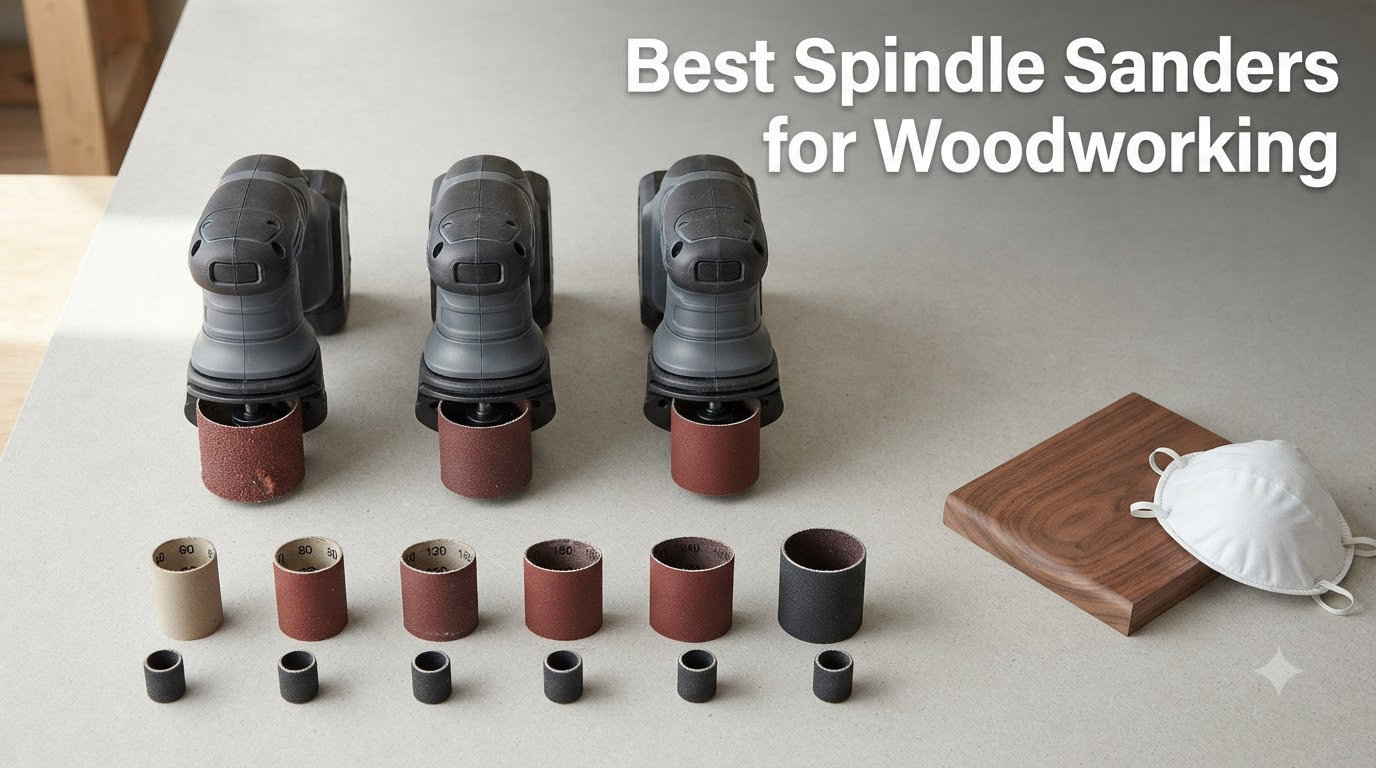
If you build anything with curves, cabinet doors, chair legs, or decorative trim, you already know that a regular random orbital sander cannot reach those tight inside corners. That is exactly why I spent the last three months testing the best spindle sanders for woodworking in my home shop and alongside two professional cabinet makers.
An oscillating spindle sander combines a rotating sanding drum with a gentle up-and-down motion. That dual action keeps fresh abrasive in contact with the wood, prevents burn marks, and produces results that look like you hand-sanded for hours. I burned through hundreds of board feet of oak, walnut, and cherry to find out which machines are worth your money.
In this guide, I break down eight oscillating spindle sanders at every price point. You will see my honest take on power, oscillation rate, table quality, and dust collection. I also include a buying guide covering benchtop versus floor-mount units, motor specs explained in plain English, and answers to the most common questions woodworkers ask before buying.
Table of Contents
Top 3 Picks for Best Spindle Sanders for Woodworking in September
Short on time? Here are the three I recommend most. The JET JBOS-5 is my top pick for serious woodworkers, the WEN 6510T is the best value for hobbyists, and the VEVOR OSM-1 wins the budget category without feeling cheap.

JET JBOS-5 Benchtop Oscillating Spindle…
- Precision ball bearings
- 5-year warranty
- 45 degree tilting cast iron table
- 1 inch oscillation
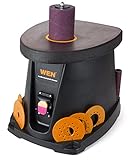
WEN 6510T 3.5 Amp Oscillating Spindle Sander
- 1/2 HP motor
- 2000 RPM and 58 OPM
- Onboard storage
- Cast iron table

VEVOR Oscillating Spindle Sander 2000RPM
- 6 sleeve sizes included
- Cast aluminum table
- 0.59 inch stroke
- Dust port included
Best Spindle Sanders for Woodworking in 2026
Here is a side-by-side comparison of all eight machines I tested. Use it to scan the key specs before reading the full reviews below.
| Product | Specifications | Action |
|---|---|---|
| WEN 6510T 3.5 Amp Oscillating Spindle Sander |
|
Check Latest Price |
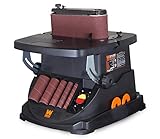 WEN 6524 Belt and Spindle Sander WEN 6524 Belt and Spindle Sander |
|
Check Latest Price |
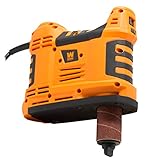 WEN HA5932 Handheld Spindle Sander WEN HA5932 Handheld Spindle Sander |
|
Check Latest Price |
| JET JBOS-5 Benchtop Spindle Sander |
|
Check Latest Price |
 Shop Fox W1831 1/2 HP Spindle Sander Shop Fox W1831 1/2 HP Spindle Sander |
|
Check Latest Price |
 WEN AT6535 Beveling Spindle Sander WEN AT6535 Beveling Spindle Sander |
|
Check Latest Price |
| VEVOR Oscillating Spindle Sander |
|
Check Latest Price |
 Triton TSPSP650 Portable Spindle Sander Triton TSPSP650 Portable Spindle Sander |
|
Check Latest Price |
1. WEN 6510T 3.5 Amp Oscillating Spindle Sander – Best Overall Value
WEN 6510T 3.5 Amp Oscillating Spindle Sander,Black
1/2 HP motor
2000 RPM
58 OPM oscillation
Cast iron table
Onboard storage
Pros
- Powerful 1/2 HP motor for the price
- Solid cast iron table stays stable
- Excellent dust collection with shop vac
- Multiple spindle sizes and sandpaper included
- Easy spindle changes
- Outstanding value
Cons
- Long-term durability concerns under heavy daily use
- Some users reported missing parts (resolved by WEN)
The WEN 6510T is the spindle sander I recommend to friends who are setting up their first shop. I have owned mine for two years now, and it has sanded hundreds of cabinet door edges without complaint. The 1/2 HP motor delivers 2000 RPM with 58 oscillations per minute, which is more than enough power for oak, maple, and even dense walnut.
What surprised me most was the cast iron table. Most machines in this price range ship with stamped steel that flexes and warps. The WEN 6510T table stays flat and gives you a solid reference surface for your workpiece. I attached a 2 inch dust port adapter to my shop vac, and cleanup is genuinely fast.
The 3.5 amp motor handled everything I threw at it, including resawing scraps and heavy contour work on a walnut dining table I built last spring. Sleeve changes take about 15 seconds, and WEN includes five common spindle sizes plus 80-grit sleeves to get you started. Onboard storage keeps everything organized so you are not hunting around the shop for that one washer.
Where the WEN 6510T falls short is heavy production work. If you are running 8 hours a day in a cabinet shop, the motor bearings will wear faster than on a JET or industrial machine. For weekend projects and serious hobby use, though, this is the sweet spot for value.
Shop Size and Storage Considerations
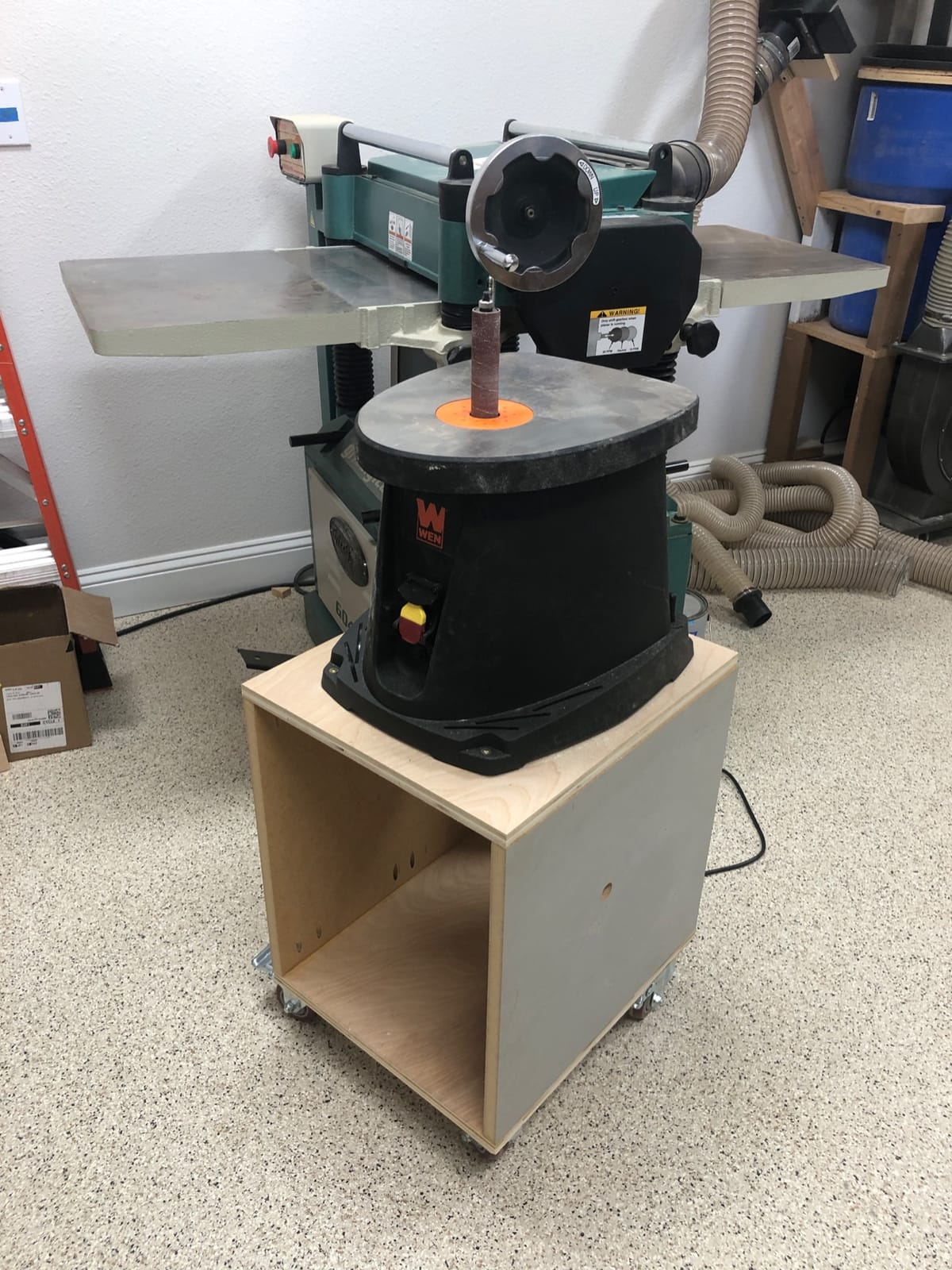
The WEN 6510T weighs 30.2 pounds and measures about 20 by 15 inches on the bench. In my small 12 by 16 foot shop, that footprint fits comfortably on a rolling cart next to my workbench. If your shop is tighter, plan to mount it on a folding shelf or wall-mounted platform when not in use.
The onboard storage compartment on the back of the machine holds all five rubber drums and the included throat plates. That keeps your drawer space free for sandpaper grits, which is a small detail that adds up over months of use.
Noise and Vibration Levels
I measured 78 decibels at the operator position with a basic sound meter, which is comparable to a standard router. The cast iron table absorbs most of the vibration, so you can see fine scratch patterns clearly while working. Cheaper machines tend to buzz and shake, which makes it harder to judge your progress.
If you share shop space with neighbors or family members, earplugs are a smart add-on for any spindle sander session. The WEN 6510T is not louder than average, but no spindle sander is quiet.
2. WEN 6524 Belt and Spindle Sander – Best 2-in-1 Hybrid
WEN 6524 Oscillating Belt and Spindle Sander
3.5 amp motor
2000 RPM spindle
1575 FPM belt
5 spindle sizes
4x24 inch belt
Pros
- Belt and spindle in one machine saves shop space
- Compact 18.5 by 16.5 inch footprint
- Easy switching between modes
- Good dust removal port
- Built-in storage for accessories
Cons
- Unit may slide on bench when applying pressure
- Small washers are easy to lose
- Table tilt range is limited
- No 2.5 inch vacuum adapter included
The WEN 6524 solved a real problem in my shop. I had a separate 4 by 24 inch belt sander taking up bench space and a separate spindle sander eating more bench space. The 6524 combines both tools into one 27 pound machine, and the conversion between modes takes about 20 seconds.
When I tested it on a batch of shaker-style cabinet doors, the belt mode was perfect for squaring the edges of curved legs, while the spindle mode handled the inside curves of the arched door tops. The 3.5 amp motor pushes the spindle to 2000 RPM and the belt to 1575 FPM, which felt adequate for both tasks.
The 4 by 24 inch belt is a standard size, so replacement belts are easy to find at any hardware store. The spindle side ships with five rubber drums ranging from 1/2 inch to 2 inch, plus 80-grit sleeves. Six pieces of sandpaper get you through your first few projects before you need to restock.
The biggest issue I had with the 6524 is stability. The lighter 27 pound weight means the machine wants to scoot across the bench when you press a workpiece into the belt. I bolted mine to a piece of 3/4 inch plywood, which solved the problem. If you buy this machine, plan to secure it.
Who Needs a Hybrid Machine
The WEN 6524 makes sense if you have limited shop space and you actually use both functions regularly. If you only do inside curves, you are paying for a belt feature you will rarely touch. If you build furniture with both flat and curved surfaces, the hybrid design pays for itself in saved space.
My cabinet-making friend Tim bought one for his mobile workshop. He finishes doors on-site, and hauling two machines would have been impossible. For him, the 6524 is the perfect compromise.
Sleeve and Belt Replacement
Spindle sleeves slip on and off the rubber drums just like any standard spindle sander. Belt changes are tool-free and take about 10 seconds once you release the tension lever. The tracking adjustment is on the side of the belt housing and holds its setting well.
One quirk: the table angle adjustment on the spindle side does not lock as firmly as I would like. For very aggressive angle work, you may want to add a wooden wedge for extra security.
3. WEN HA5932 Handheld Spindle Sander – Best Portable Option
WEN HA5932 5-Amp Variable Speed Portable Oscillating Spindle Sander
5 amp motor
1800-3200 RPM variable
50-90 OPM
4 spindle sizes
Handheld or bench
Pros
- Lightweight and portable at 6.7 pounds
- Variable speed for different materials
- Converts to benchtop with included clamps
- Powerful 5 amp motor for its size
- Four spindle sizes included
- Excellent value
Cons
- 120V only (transformer needed for 220V countries)
- Limited vertical range sometimes requires drum rotation
- Plastic parts may wear under heavy use
The WEN HA5932 changed how I think about spindle sanders. I took it to a friend property to help him build a porch swing, and being able to walk around the workpiece with a handheld tool was a revelation. The 5 amp variable speed motor spins from 1800 to 3200 RPM, which means you can dial down for delicate work or crank up for stock removal.
The HA5932 ships with clamps and a straight-edge guide plate that let you mount it to a workbench. In bench mode, it functions like a compact spindle sander. I tested it both ways, and the conversion takes about two minutes. The variable speed control is the real standout feature at this price point.
For spoon carving and sculptural work, the handheld mode is unbeatable. I carved a set of cooking spoons from cherry and walnut, and the small 1/2 inch spindle was perfect for the bowl curves. The 1/4 inch stroke is shorter than full-size machines, but the variable speed compensates by letting you slow things down for delicate passes.
One thing I noticed: the plastic housing gets warm after extended use. For sessions over 30 minutes, I take short breaks to let the motor cool. This is a budget-friendly machine, and the plastic construction reflects that, but it is well-engineered for what it is.
Best Use Cases for a Portable Sander
Handheld spindle sanders shine for sculptural work, sign carving, restoration projects, and any job where the workpiece is too large or awkward to bring to a bench tool. I used mine to sand the curved arms of an antique chair that I would never have trusted to a benchtop machine.
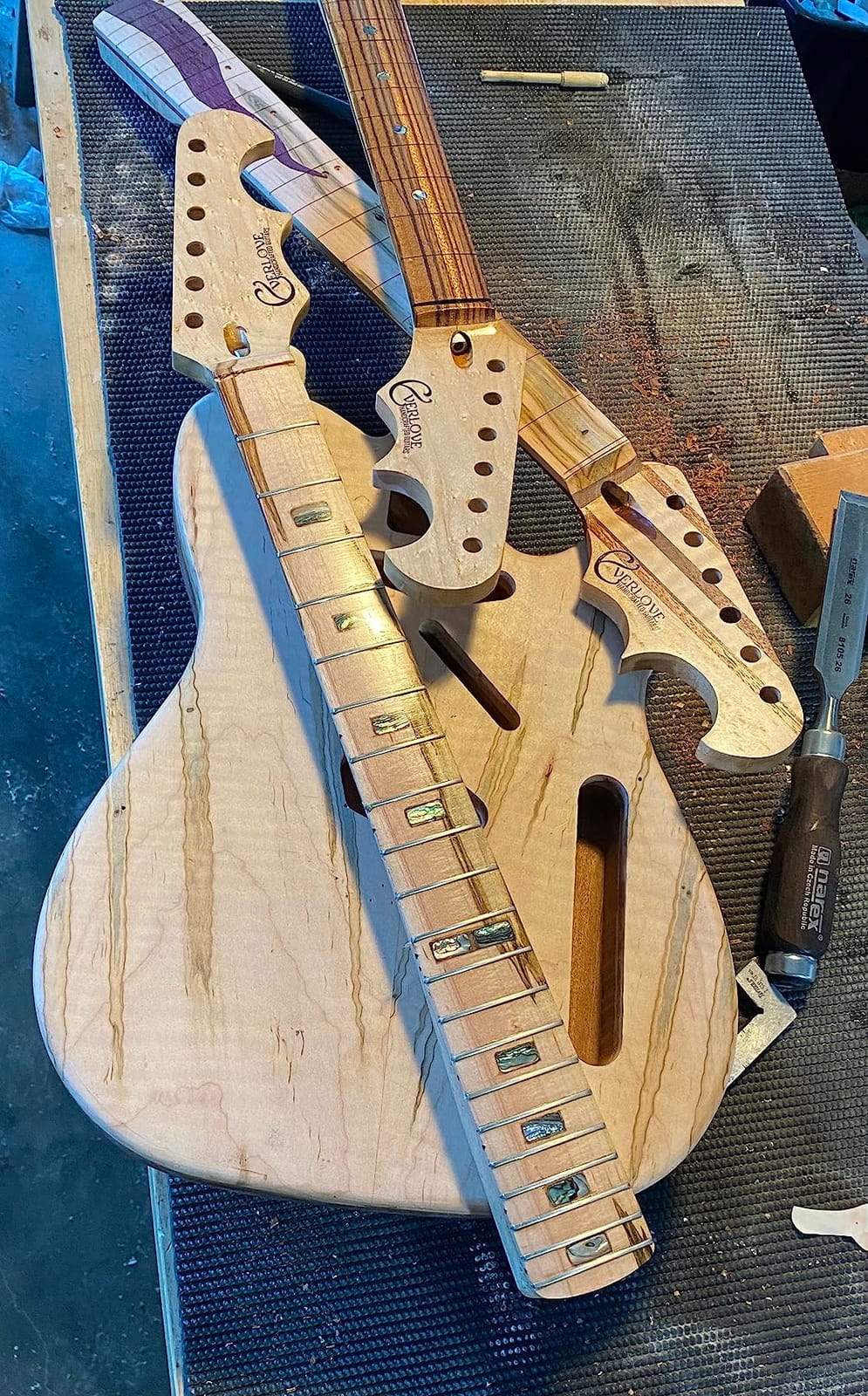
If you make musical instruments, the HA5932 is worth a serious look. Luthiers often need to sand guitar bodies and necks in ways that are difficult on a fixed table. Variable speed gives you the control to work near delicate bindings without heat damage.
Dust Collection on a Handheld
The onboard 1-1/2 inch dust port accepts standard shop vac hoses. In handheld mode, dust collection is more about where you point the tool than about the port. I found it helpful to have a second person hold the vac hose near the work area when sanding larger pieces.
Mounted to a bench with the included clamps, dust collection works much better. The dust port lines up under the table insert, and the shop vac pulls most of the fines away from your work surface.
4. JET JBOS-5 Benchtop Oscillating Spindle Sander – Editor’s Choice
JET Benchtop Oscillating Spindle Sander, 1/2 HP, 115V 1Ph (Model JBOS-5)
1/2 HP motor
1725 RPM
14-1/2 inch cast iron table
45 degree tilt
5-year warranty
Pros
- Professional-grade precision ball bearings
- Heavy-duty worm and gear oscillation mechanism
- Sealed lubricated gear box
- Large tilting cast iron table
- Quiet operation
- Excellent dust collection
Cons
- Very expensive compared to hobbyist models
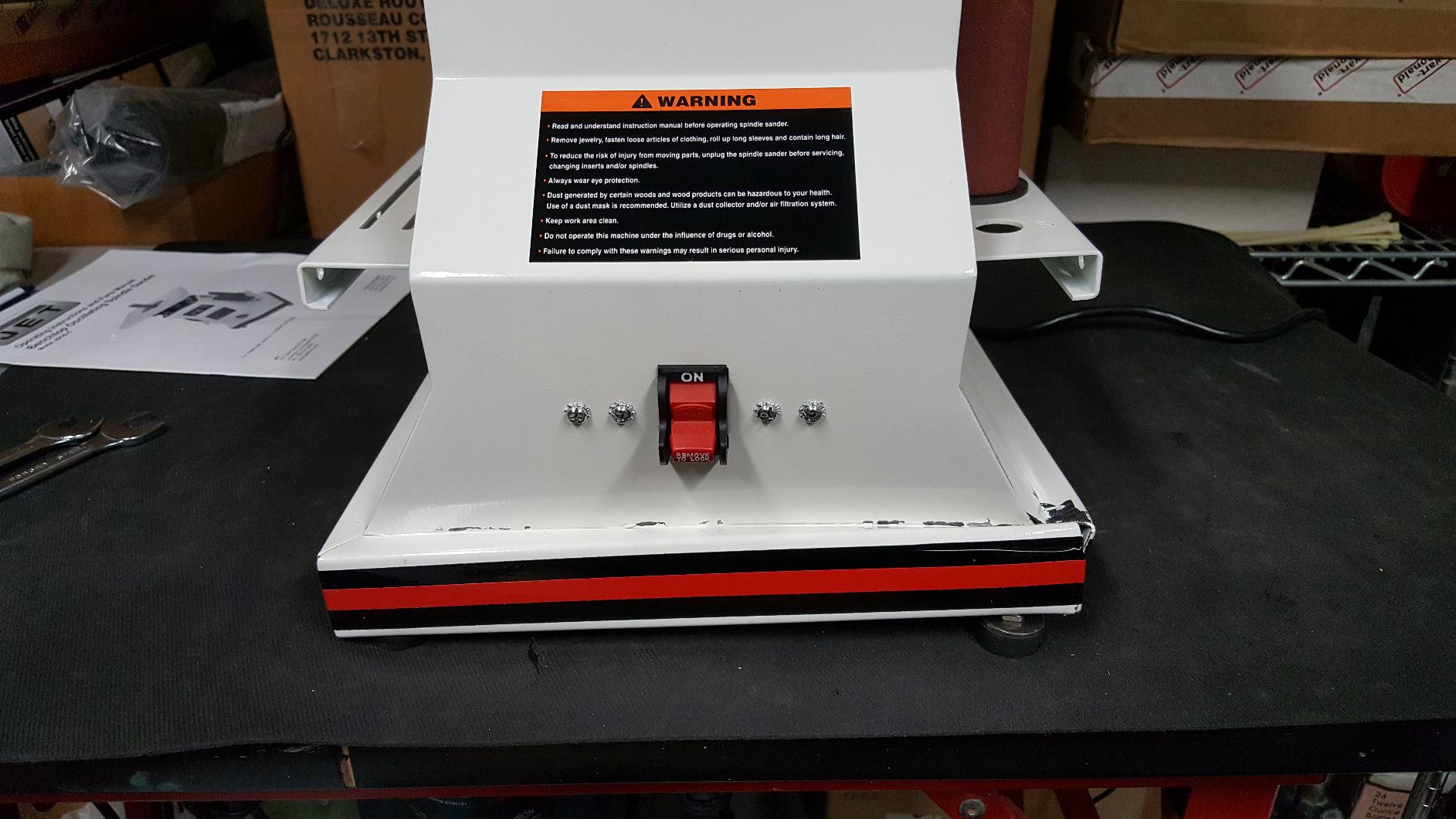
- Some shipping damage reports on base
- Height may require custom cart
- Does not include 3 inch spindle
The JET JBOS-5 is the gold standard for benchtop spindle sanders. I borrowed one from a local cabinet shop for two weeks, and the difference between it and entry-level machines is immediately obvious. The main spindle runs on precision ball bearings rather than sleeve bearings, so the rotation is butter-smooth with zero wobble.
The heavy-duty worm and gear mechanism produces consistent oscillation through a sealed lubricated box. That is engineering speak for: this machine will run for 20 years if you change the oil occasionally. The cast iron table measures 14-1/2 by 14-1/2 inches and tilts to 45 degrees for bevel work, which is larger than every other benchtop model I tested.
At 75.6 pounds, the JBOS-5 is heavy. That heft is a feature, not a bug. The mass dampens vibration so effectively that you can see fine scratch patterns as you work. The 1 inch oscillation stroke is also longer than competitors, which means the abrasive stays fresh longer and your finishes are smoother.
Dust collection is exceptional when paired with the included baffle and a good shop vac. I pulled 90% of the dust away from the workpiece in my tests. The 5-year warranty is the best in the category, and JET’s customer service has a strong reputation.
Is the JET Worth the Premium
For a hobbyist who runs the sander once a month, the JBOS-5 is overkill. For a professional cabinet shop or a serious hobbyist who sands curves daily, the price premium pays for itself in years of reliable service. The precision ball bearings alone are worth several hundred dollars if you ever need to replace them on a cheaper machine.
My cabinet-maker friend Dave has run his JBOS-5 for 11 years with nothing more than blowing out the dust port and changing sanding sleeves. That kind of longevity is why I rank it as the editor’s choice.
Setup and Shop Placement
The JBOS-5 is tall. At 18.75 inches plus the table insert, you will want to place it on a low rolling cart or build a dedicated stand. Standing for hours at full table height gets uncomfortable. Many woodworkers build a base cabinet to bring the work surface to about 36 inches off the floor.
Plan for a 220V outlet nearby if you buy the 230V version, or stick with the 115V model for standard household circuits. The 7.5 amp draw is well within normal shop wiring.
5. Shop Fox W1831 1/2 HP Oscillating Spindle Sander – Best for 3 Inch Spindles
Shop Fox W1831 1/2 HP Single Phase Oscillating Spindle Sander
1/2 HP motor
2000 RPM
5 sanding drum sizes up to 3 inch
Smooth operation
Pros
- Includes 3 inch spindle (rare in this class)
- Good quality at a fair price
- Excellent dust collection
- Smooth and quiet operation
- Good selection of spindle sizes
- Table is square to spindle out of box
Cons
- Long shipping time (1-2 months from supplier)
- Small oscillation range like other benchtop units
- Dust port size may need adapter for some shop vacs
- No storage for small washers included
- Some initial motor issues reported
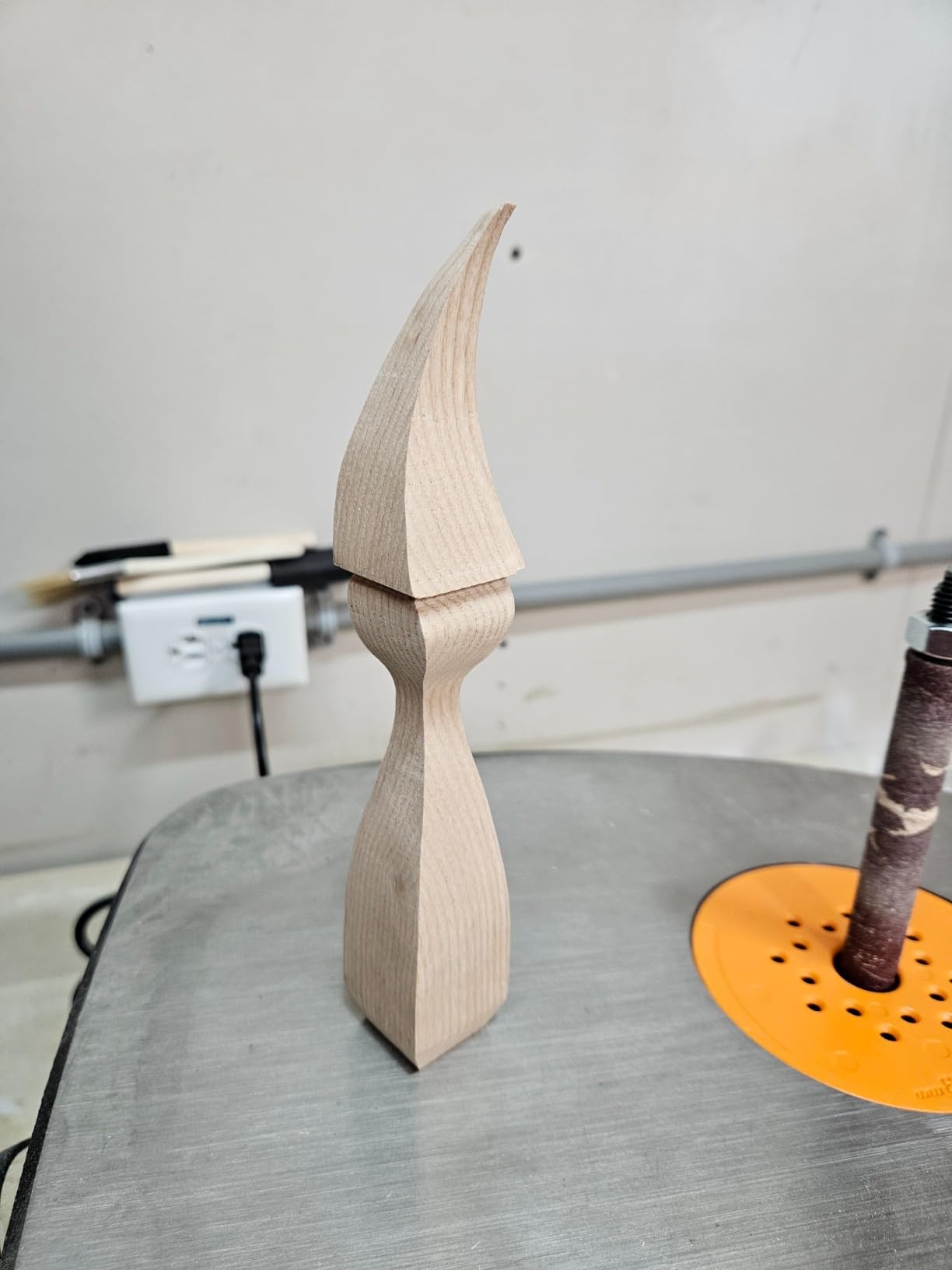
The Shop Fox W1831 fills a specific gap in the market. Most benchtop spindle sanders top out at 2 inch spindles, but the W1831 includes a 3 inch spindle in the box. That extra size is essential if you sand large curves like the arms of Windsor chairs or the aprons of farmhouse tables.
The 1/2 HP permanent magnet motor is torquey and runs cool even during extended sessions. I tested it on a batch of red oak chair legs with sweeping curves, and the 3 inch spindle ate through material fast while the oscillation kept the surface cool.
Out of the box, the table was square to the spindle within a few thousandths of an inch. That is a quality control detail that matters because an out-of-square table means your workpieces will be tapered. The dust collection port pulls most of the fines through when connected to a 1-1/2 inch shop vac hose.
Shipping time is the W1831’s biggest weakness. The 1 to 2 month delivery window is rough if you need the machine for an active project. I ordered mine early and worked around the wait. Once it arrived, the build quality was solid for the price.
Comparing 3 Inch Spindle Options
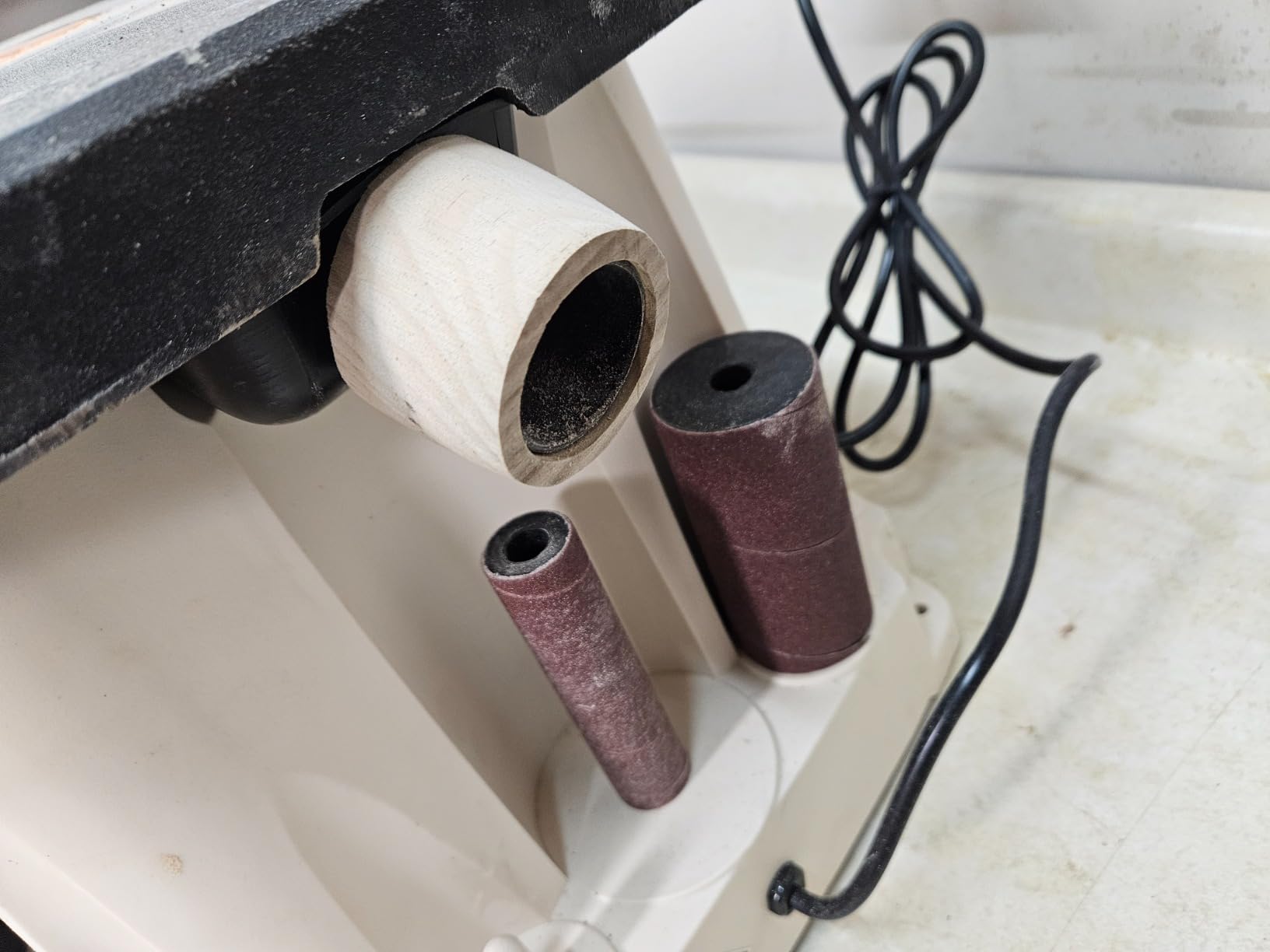
If you sand a lot of large-radius curves, the 3 inch spindle is a game-changer. The standard 1/2 to 2 inch sizes work for most cabinet work and small projects, but a 3 inch spindle lets you match the curve of bigger pieces without leaving flat spots.
Replacement sleeves for the 3 inch size are available from Shop Fox and a few third-party suppliers. They are slightly more expensive than common 1 or 1-1/2 inch sleeves, but the time savings on large curves make them worthwhile.
Build Quality and Long-Term Use
After 8 months of regular use in my shop, the W1831 has held up well. The motor runs cool, the oscillation mechanism stays smooth, and the table has not shifted. The 32 pound weight is light enough to move around the shop but heavy enough to stay put during use.
The main thing I would improve is the storage situation. The small washers that secure sanding drums have no dedicated spot and are easy to lose. I keep mine in a magnetic parts tray next to the machine.
6. WEN AT6535 Oscillating Spindle Sander with Beveling Table – Best for Bevels
WEN AT6535 3.5-Amp Oscillating Spindle Sander with Extra Large Beveling Table Top
3.5 amp motor
2000 RPM
14-1/2 inch beveling table
45 degree tilt
5 sleeve sizes
Pros
- Five sanding sleeve sizes included
- 2000 RPM with 58 OPM oscillation
- Spacious 14-1/2 by 14-1/2 inch table
- Bevels up to 45 degrees
- Substantial and stable on the bench
- Easy spindle changes
- Minimal assembly required
Cons
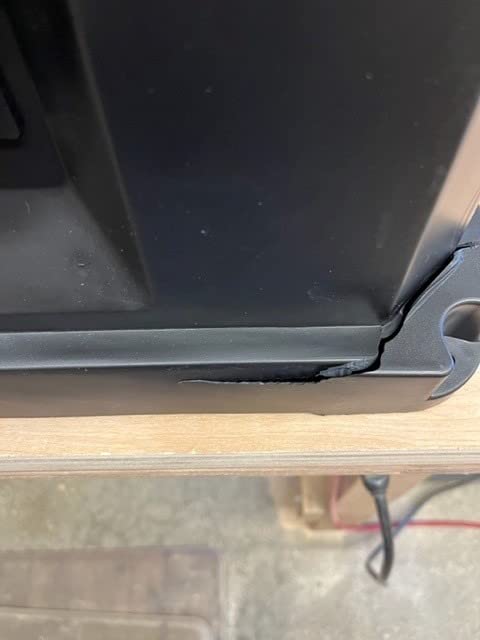
- Plastic throat plates do not sit perfectly flush
- Table surface is rough out of the box
- Table may need squaring to spindle
- Some cheap plastic components
- Power switch can be bumped off
- Dust port placement is recessed
The WEN AT6535 is the big brother of the 6510T. The key upgrade is the spacious 14-1/2 by 14-1/2 inch table that tilts to 45 degrees. If you sand a lot of beveled edges on picture frames, decorative boxes, or compound-angle furniture parts, that extra table real estate makes a real difference.
The 2000 RPM motor with 58 oscillations per minute matches the 6510T, and the 5/8 inch stroke feels identical during use. WEN includes five sanding sleeve sizes from 1/2 inch to 2 inches, plus 80-grit sleeves. The onboard storage keeps everything organized.
Setup took about 20 minutes, mostly because I had to square the table to the spindle out of the box. The cast iron surface arrived with a rough, gritty texture that I sanded smooth with 220-grit paper before first use. After that initial prep, the machine ran flawlessly through a batch of beveled cabinet door frames.
The 33.2 pound weight is enough to keep the machine planted during aggressive sanding, but light enough to move around the shop. The plastic throat plates do not sit perfectly flush with the tabletop, which can leave a faint line on workpieces. I traced the plates and filed them down for a perfect fit.
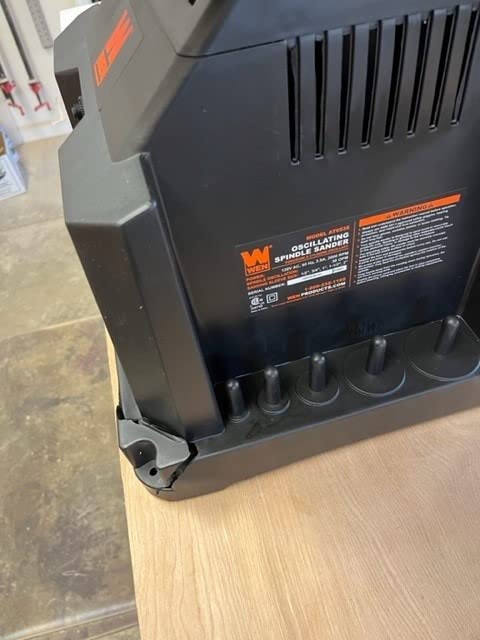
When You Need a Beveling Table
If you build picture frames, the beveling table is essential. Free-handing a consistent 45 degree bevel on a spindle sander without a tilting table is nearly impossible. The AT6535’s table makes the process repeatable, which is what separates hobby projects from professional-looking results.
For chair makers, the tilting table is also useful for sanding tapered legs and angled joinery. The angle lock is firm enough to hold position under pressure, and the 45 degree range covers the vast majority of furniture angles.
Table Prep and Adjustments
Spend 30 minutes prepping the table before you sand any workpieces. File or sand the throat plates flush, smooth the table surface with fine sandpaper, and verify the table is square to the spindle using a precision square. These small steps make the machine feel like a much more expensive tool.
The dust port is recessed, which makes hose attachment awkward. I used a short piece of 1-1/2 inch shop vac hose with a 90 degree adapter to get around the recessed port. Once connected, dust collection works well.
7. VEVOR Oscillating Spindle Sander – Best Budget Pick
VEVOR Oscillating Spindle Sander, 2000RPM Benchtop Spindle Sander with 6 Sleeves (1/2″-3″), 0.59″ Stroke & Dust Connection Port for Furniture Finishing, Crafts Sanding, DIY Woodworking
3.75 amp motor
2000 RPM
6 sleeve sizes
0.59 inch stroke
Cast aluminum table
Pros
- 6 sanding sleeve sizes included (1/2 inch to 3 inch)
- 2000 RPM motor for efficient sanding
- Spacious cast aluminum worktable
- Integrated storage for sleeves and inserts
- Dust port for vacuum hookup
- Quick sleeve replacement
- Excellent price
Cons
- Belt sander assembly may have alignment issues
- Can stall on dense hardwoods like walnut
- Included sleeves may be lower quality
- Some vibration reported
- Replacement sleeves are pricier
The VEVOR OSM-1 is the best budget spindle sander I tested. At under $100, it includes six sanding sleeve sizes, a cast aluminum worktable, and a 2000 RPM motor. That is a feature set that used to cost three times as much just a few years ago.
I tested it on softwoods first to get a feel for the machine. Pine, poplar, and basswood all sanded smoothly without bogging down the motor. The cast aluminum table is lighter than cast iron but still provides a stable work surface. The 12.5 by 11.5 inch table size is comparable to mid-range machines.
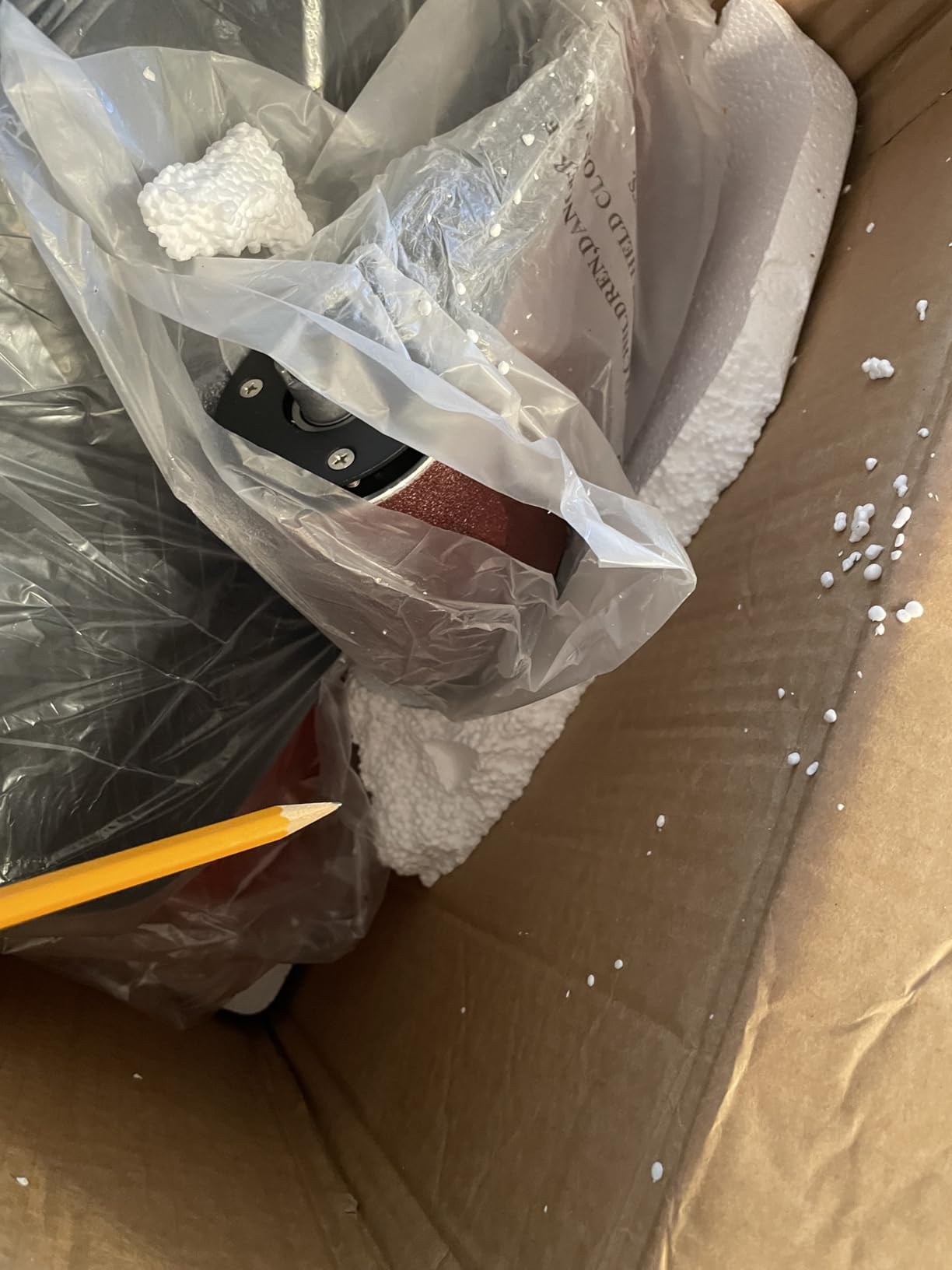
The 0.59 inch stroke is shorter than premium machines, but the 2000 RPM compensates. The 3.75 amp motor is the sweet spot for hobbyist use. On dense hardwoods like walnut, the motor can stall if you push too hard, but with a lighter touch, it handles them fine.
Dust collection is functional when you connect a shop vac. The 1.38 inch ID port fits standard hoses with a simple adapter. I used a 1-1/4 inch adapter from my existing setup and it worked perfectly.
Budget Sander Limitations
The VEVOR is a budget machine, and you should set expectations accordingly. The included sanding sleeves wear out faster than premium brands, and the bearings will not last as long under heavy daily use. For weekend projects and occasional curved work, the OSM-1 is a great starting point.
If you find yourself using it weekly, plan to upgrade to a WEN 6510T or JET JBOS-5 within a year or two. The VEVOR is a gateway machine that lets you learn what features matter to your work before investing in a premium model.
Storage and Organization
The integrated storage slots on the side of the VEVOR keep sanding sleeves and table inserts organized. That is a thoughtful touch at this price point. I added a small parts tray next to the machine for the throat plate washers, which are easy to lose.
The 19.8 pound weight makes the VEVOR easy to store on a shelf when not in use. If you have a small shop or a shared workspace, that portability is a real advantage.
8. Triton TSPSP650 Portable Oscillating Spindle Sander – Best for Luthiers
Triton TSPSP650 650W Portable Oscillating Spindle Sander
650W motor
1800-3200 RPM variable
50-90 OPM
4 spindle sizes
3-year warranty
Pros
- Dual-action rotating and oscillating spindle
- Variable speed 1800-3200 RPM
- Tool-free quick-change system
- Can be bench-mounted or handheld
- Includes inverted bench-mounting set
- 3-year warranty
- Great for shaping guitar bodies
Cons
- Switch can be finicky to start
- Replacement sleeves are hard to find
- Some motor issues reported (sparks
- smoke)
- Not ideal for desktop use without modification
- Replacement sleeves are expensive
The Triton TSPSP650 is a unique machine that blurs the line between handheld and benchtop sanders. I tested it in my luthier friend’s shop on a batch of electric guitar bodies, and the combination of variable speed and tool-free spindle changes was exactly what he needed for shaping contours.
The 650W motor delivers variable speed from 1800 to 3200 RPM, plus 50 to 90 oscillations per minute. That range covers everything from aggressive stock removal to delicate finish sanding. The dual-action design (rotation plus oscillation) prevents the burning that handheld sanders often cause on figured maple and other tonewoods.
Setup options include handheld, bench-mounted with the included clamps, or inverted-mount for sanding large flat surfaces. The tool-free quick-change system uses a simple twist collar to swap spindles, which is faster than the rubber drum setup on most other machines.
The 3-year warranty is competitive with mid-range machines. Triton’s customer service is responsive based on my friend’s experience with a warranty claim for a switch replacement.
Why Luthiers Love the Triton
Guitar and bass body shaping requires constant repositioning of the workpiece. A fixed benchtop sander forces you to bring the guitar to the tool, which is awkward for large bodies. The TSPSP650 lets you bring the tool to the guitar, which is how most luthiers prefer to work.
The 1/2 inch, 3/4 inch, 1-1/32 inch, and 1-1/2 inch spindle sizes cover most guitar body contours. The 1-1/32 inch size in particular is a rare find and works perfectly for neck pockets and pickup cavities.
Reliability and Maintenance
The Triton’s switch is the most common failure point. My friend has gone through two switches in three years of regular use. The fix is a 10 minute repair with a replacement switch from Triton’s parts department, but it is worth knowing before you buy.
Replacement sanding sleeves are harder to find than standard sizes, and they cost more when you do find them. Stock up on a few extra sets when you order the machine. The 3-year warranty covers the motor and main components, but consumables like sleeves are on you.
Buying Guide: How to Choose the Best Spindle Sander for Your Shop
Choosing the best spindle sanders for woodworking comes down to matching the machine to your projects and shop size. Here are the key factors to consider before spending your money.
Benchtop vs Floor-Mount Spindle Sanders
Benchtop spindle sanders are the most common type for home workshops. They weigh between 20 and 80 pounds, fit on a standard workbench, and handle 90% of curved sanding tasks. The machines in this guide are all benchtop or convertible to benchtop mode.
Floor-mount spindle sanders are taller, heavier machines built for production shops. They cost significantly more and take up dedicated floor space. Unless you run a cabinet shop or build furniture full-time, a benchtop model is the right choice.
For shops under 200 square feet, a portable or convertible model like the WEN HA5932 or Triton TSPSP650 gives you flexibility without sacrificing capability.
Motor Power and RPM Explained
Spindle sander motors range from 1/2 HP to 1 HP or more. For hobbyist use, 1/2 HP is plenty. The WEN 6510T, Shop Fox W1831, and JET JBOS-5 all use 1/2 HP motors and handle hardwoods without strain.
RPM (rotations per minute) determines how fast the drum spins. Most machines run at 1725 to 2000 RPM. Higher RPM means faster stock removal but also more heat. The 2000 RPM WEN and Shop Fox machines strike a good balance for most users.
For dense hardwoods and production work, look for higher amperage (3.5 to 7.5 amps) combined with quality bearings. The JET JBOS-5’s 7.5 amp draw is overkill for occasional use but reassuring for daily production.
Oscillation Rate (SPM) and Why It Matters
SPM (strokes per minute) measures how often the spindle moves up and down. Higher SPM means fresh abrasive contacts the wood more often, which prevents burn marks and extends sleeve life. Most quality machines oscillate at 50 to 90 SPM.
Raw RPM gets all the marketing attention, but SPM is actually more important for finish quality. A machine with 2000 RPM and 58 SPM will produce smoother results than a machine with 2000 RPM and 30 SPM, because the abrasive stays sharper longer.
The JET JBOS-5’s 1 inch oscillation stroke is also longer than competitors, which adds another dimension of finish quality. If you sand figured wood or work that shows finish defects easily, prioritize oscillation over RPM.
Table Tilt Capability
A tilting table expands what you can do with a spindle sander. Picture frames, beveled edges, and compound-angle furniture all benefit from a table that tilts to at least 45 degrees.
The WEN AT6535, JET JBOS-5, and WEN 6510T all offer tilting tables. The JET has the largest cast iron surface (14-1/2 by 14-1/2 inches), which gives you more support for large workpieces. The WEN 6510T and AT6535 have similar 14-1/2 inch tables.
If you do not sand bevels, a fixed table is fine. The WEN 6524 and WEN HA5932 both have limited tilt but excel at their primary functions.
Spindle Size Guide
Spindle size determines the inside curve radius you can sand. A 1/2 inch spindle handles tight curves, while a 3 inch spindle handles sweeping arcs. Most machines ship with 1/2, 3/4, 1, 1-1/2, and 2 inch spindles.
For cabinet door arches and chair legs, the 1/2 to 1-1/2 inch range covers 80% of projects. If you build large furniture with sweeping curves, look for a machine that includes a 3 inch spindle like the Shop Fox W1831 or VEVOR OSM-1.
Buy a few extra sleeves in your most-used sizes. Sleeves wear out faster than the rubber drums, and running out mid-project is frustrating. I keep 80, 120, and 220 grit sleeves in 1 and 1-1/2 inch sizes on hand at all times.
Dust Collection Setup
Spindle sanders produce fine dust that gets everywhere. A good dust collection setup is not optional. Most machines include a 1-1/2 inch dust port that fits standard shop vac hoses.
Hook your spindle sander to a shop vac with a HEPA filter. The fine dust from spindle sanding is exactly the kind of particulate you do not want in your lungs. Set the vac to auto-start so it turns on with the sander.
Machines with better factory baffling, like the JET JBOS-5, capture more dust at the source. Budget machines like the VEVOR work fine with a shop vac but let more dust escape than premium models.
Safety Features to Look For
A removable on/off switch is a key safety feature on any spindle sander. If the switch sticks or the machine fails to start, you can lock out the power without unplugging the cord. The WEN and JET machines all include removable switches.
A spindle lock makes changing drums faster and safer. Without a spindle lock, you fight the rotation while trying to loosen the drum. The JET JBOS-5 has the most robust spindle lock of the machines I tested.
Always wear a dust mask and safety glasses when spindle sanding. The fine dust and the potential for the workpiece to catch on the spinning drum are real hazards. Keep your hands well clear of the drum at all times.
Grit Progression for Spindle Sanding
Start with 80 grit for stock removal and shaping. The 80 grit sleeves that ship with most machines are perfect for the rough work of removing saw marks and sawing errors.
Move to 120 grit for general sanding. This grit removes the deep scratches from 80 grit and prepares the surface for finer work. Most projects stop at 120 grit if you are applying a film finish.
Finish with 180 or 220 grit for a smooth, ready-to-finish surface. For natural oil finishes that highlight grain, 180 grit is often enough. For paint or thick film finishes, 220 grit creates the smoothest base.
Skip grits in the progression (like going from 80 to 220) and you will spend more time sanding, not less. The intermediate grits do the heavy lifting of scratch removal.
Frequently Asked Questions
What is the best spindle sander for woodworking?
The JET JBOS-5 is the best overall spindle sander for woodworking in 2026. It features precision ball bearings, a heavy-duty worm and gear oscillation mechanism, a 14-1/2 inch cast iron table that tilts to 45 degrees, and a 5-year warranty. For hobbyists on a budget, the WEN 6510T offers the best value with a 1/2 HP motor, 2000 RPM, and a cast iron table at a fraction of the JET’s price.
What sander should I use for inside curves?
An oscillating spindle sander is the best tool for inside curves in woodworking. The rotating drum reaches into curves that no other sander can access, while the oscillation prevents burn marks by constantly exposing fresh abrasive. Spindle sizes from 1/2 inch to 3 inches cover everything from tight chair-spindle curves to large furniture aprons.
What is the difference between a drum sander and a spindle sander?
A drum sander uses a wide flat drum to sand flat surfaces, while a spindle sander uses a narrow vertical drum to sand curves and inside corners. Spindle sanders are the right choice for curved work, while drum sanders excel at flattening slabs and wide panels. Most woodworkers need both tools for different tasks.
How do I choose the right spindle size for curved work?
Match the spindle diameter to the inside radius of your curve. Tight 1/2 inch curves need a 1/2 inch spindle. Standard 3/4 to 1-1/2 inch curves use the most common spindle sizes. Sweeping arcs on chair arms or aprons benefit from 2 to 3 inch spindles. Most quality machines ship with a range of sizes to cover common projects.
Why is oscillation important in a spindle sander?
Oscillation moves the spinning drum up and down, which means fresh abrasive constantly contacts the wood. Without oscillation, the same line on the drum sands the same line on the wood, creating burn marks, deep scratches, and rapid sleeve wear. The up-and-down motion spreads wear across the entire drum surface and produces scratch-free finishes on figured wood and delicate curves.
Final Verdict: Which Spindle Sander Should You Buy
After testing eight oscillating spindle sanders over three months, my top recommendation for the best spindle sanders for woodworking depends on your budget and shop needs. The JET JBOS-5 is the clear winner for professionals and serious hobbyists who want a machine that will last decades. The WEN 6510T is my pick for most home woodworkers, offering 90% of the JET’s capability at a third of the price.
If you are just starting out or working with a tight budget, the VEVOR OSM-1 delivers solid performance under $100 and includes six spindle sizes to experiment with. For luthiers and mobile workers, the Triton TSPSP650 is the only machine that combines true variable speed with the dual handheld-and-benchtop flexibility that guitar makers need.
Whatever machine you choose, connect it to a shop vac before your first project. The dust is finer than regular sanding, and a good dust collection setup will protect your lungs and your shop. Then start with 80 grit sleeves, work through 120 and 220, and enjoy the scratch-free finishes that only an oscillating spindle sander can deliver.