
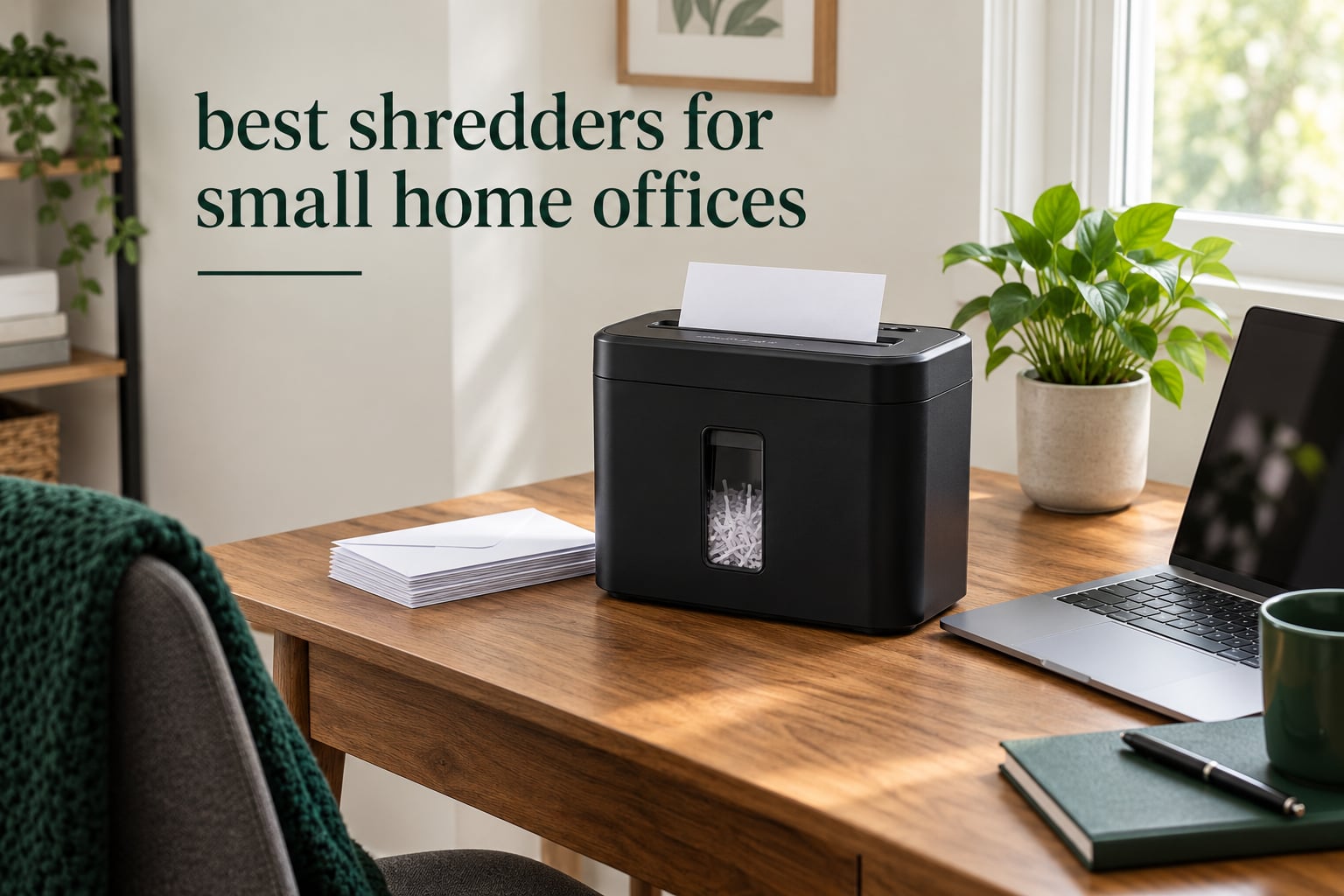
A shredder for a small home office is not a smaller version of an office shredder. It sits in a 100-square-foot room, runs for three minutes at a time, and has to share that room with a video call. The Aurora AS890C is the model we keep coming back to, because it puts the three things that actually matter in a home workspace — a genuinely compact body, a bin you can reach, and a cross-cut that handles staples and cards — into a footprint you can park in a corner.
That framing matters more than it sounds. Most roundups on this topic rank shredders the way an office buyer would, leaning on continuous run time and bin volume. Neither figure predicts whether you will still be using the machine in year three, or whether you will tolerate it in a room you work from. What predicts that is noise, footprint, jam handling and how the bin empties.
We compared eight shredders built for home and small-office volumes, reading every specification against the manufacturer listing and cross-checking it against thousands of owner reports. Two of them publish a decibel figure. The rest do not, and we say so rather than inventing numbers.
Before the individual write-ups, it helps to be clear about what this list optimises for. If you want the short version, our quiet shredders for home offices guide covers the noise axis in depth, and our home office bookcase picks cover the other half of the storage problem this machine creates.
Table of Contents
Top 3 Shredders for Small Home Offices for October 2026
The AS890C wins the top slot on the strength of its owner base rather than a spec sheet. More than 24,000 reviews at a 4.6 average is the deepest evidence we could find for any machine in this price bracket, and reports of 15-year ownership show up repeatedly.
The Amazon Basics 6-Sheet is the value pick: it is the only micro-cut machine here that owners consistently describe as quiet, and its 4.1-gallon bin is larger than most. The Aurora AU870MA is the safer default when security matters more than capacity, with a thermal cut-out and overheat LED that protect a motor in an intermittent-use home.
All 8 Shredders at a Glance in October 2026
Every model below sits in the home and small-office class. The features column is drawn from the manufacturer specification, not from marketing language. Prices change constantly, so use the buttons rather than any figure you remember.
| Product | Specifications | Action |
|---|---|---|
 Aurora AS890C Cross-Cut Aurora AS890C Cross-Cut |
|
Check Latest Price |
 Bonsaii C275-A Cross-Cut Bonsaii C275-A Cross-Cut |
|
Check Latest Price |
 Amazon Basics Micro-Cut Amazon Basics Micro-Cut |
|
Check Latest Price |
 Bonsaii 12-Sheet Micro-Cut Bonsaii 12-Sheet Micro-Cut |
|
Check Latest Price |
 Fellowes 14C10 Cross-Cut Fellowes 14C10 Cross-Cut |
|
Check Latest Price |
 Aurora AU1285MD Micro-Cut Aurora AU1285MD Micro-Cut |
|
Check Latest Price |
 Bonsaii 6-Sheet Micro-Cut Bonsaii 6-Sheet Micro-Cut |
|
Check Latest Price |
 Aurora AU870MA Micro-Cut Aurora AU870MA Micro-Cut |
|
Check Latest Price |
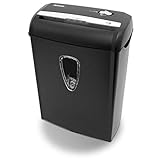
1. Aurora AS890C Cross-Cut – the Longest-Lived Small-Office Shredder
Aurora AS890C 8-Sheet Cross-Cut Paper/Credit Card Shredder with Basket
Cross-cut, 8 sheets, 3.4 gal basket, 70 dB, alloy steel, 12.6 in wide
Pros
- Owners report 15 years of service
- Handles staples and clips without jamming
- Automatic start-stop sensor
- Compact 12.6 inch wide body fits under a desk
Cons
- Small 3.4 gal basket fills fast at roughly 50 sheets
- 70 dB is the loudest published figure in this group
- Needs about 30 minutes cool-down after a long session
The AS890C is the machine I would put in a room where the shredder has to survive a decade rather than a lease. Review volume tells part of the story — 4.6 across more than 24,000 ratings is by far the deepest owner base in this group — but the recurring theme is longevity, with multiple owners describing machines that have run for 15 years or more before being replaced.
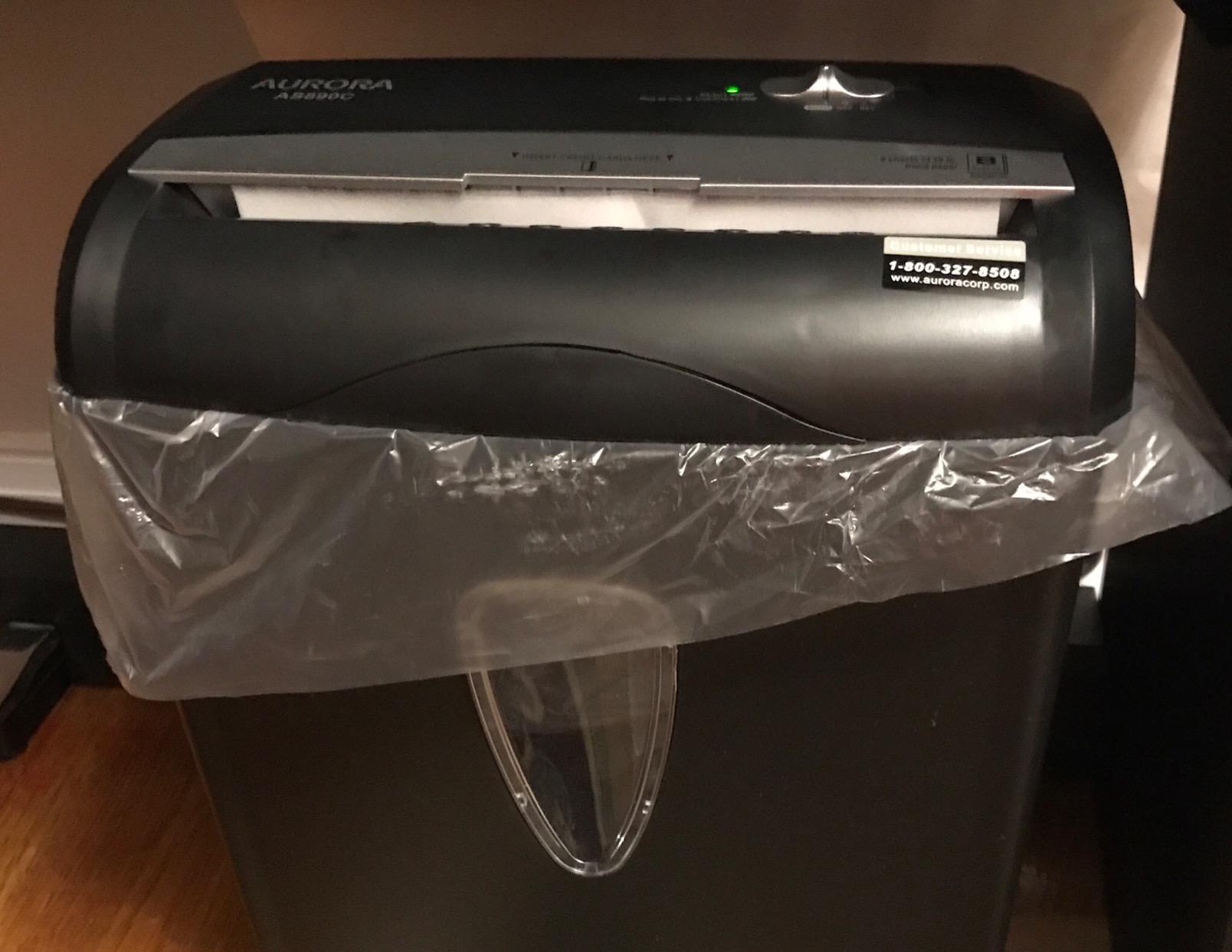
Mechanically it is straightforward. An alloy steel enclosure, an automatic start-stop sensor that means you drop the page in rather than holding a button, and a feed throat wide enough for standard letter paper and unopened junk mail. It handles staples, paper clips and credit cards without complaint, which removes the single most common cause of home shredder jams.
The honest weaknesses are all size-related. At 70 dB it is the loudest specification we can verify in this list, and the 3.4-gallon basket needs emptying roughly every 50 sheets, so it is not the machine for a tax-season clear-out.
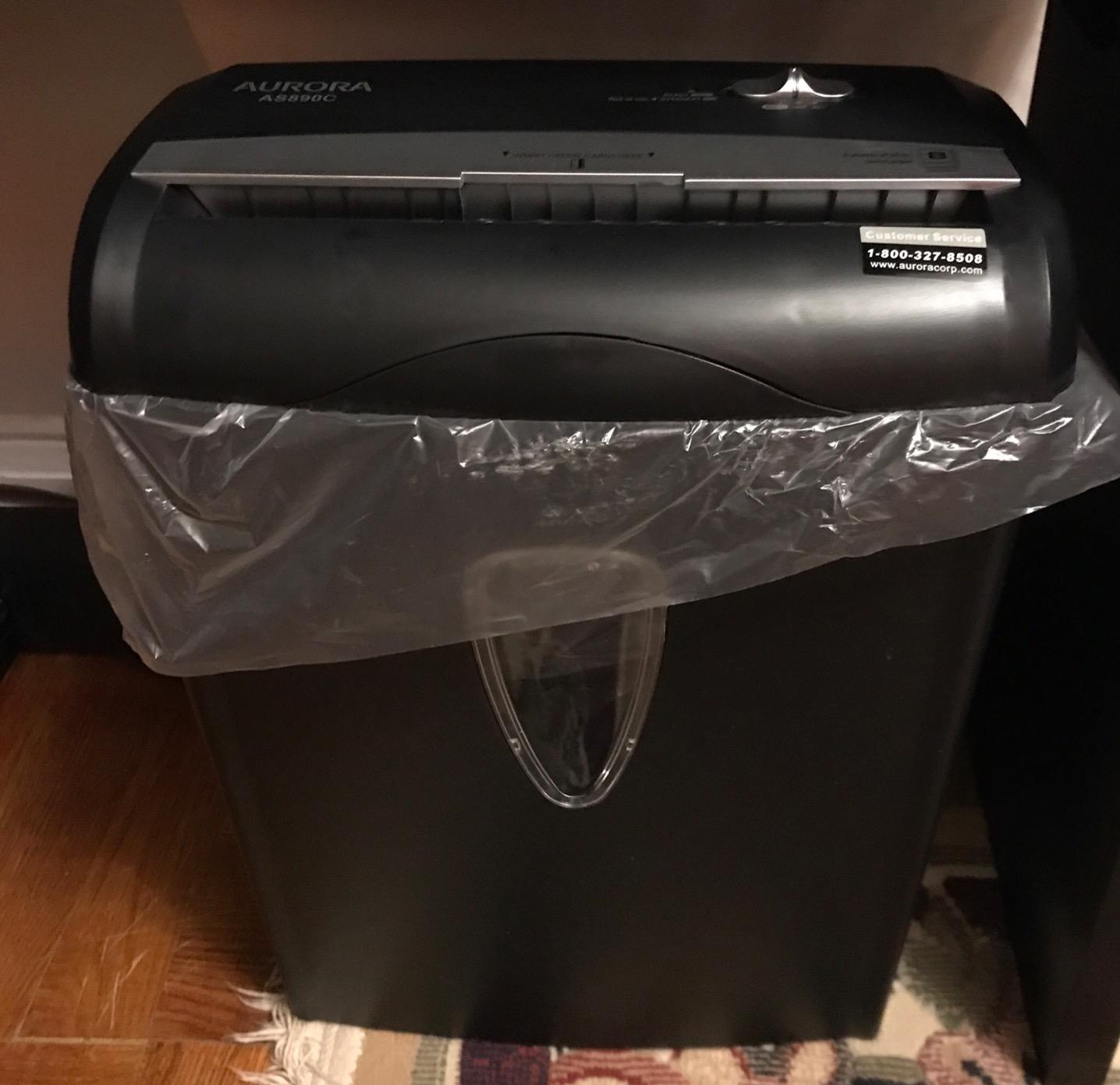
Owners also note it bogs down near its rated 8-sheet capacity. Feeding three or four sheets at a time is the pattern most long-term holders describe, and the manual reverse on the head clears the occasional jam without opening the machine up.
The head lifts out on its own handle for emptying, which matters on a two-piece design where the top-heavy shredder head is otherwise awkward to lift. That said, a separate head and bin is exactly the construction that leads to complaints about the head detaching when carried, so lift it straight up rather than swinging it.
Who the Aurora AS890C suits
Buy this if you shred a few envelopes a week, want the smallest reliable footprint you can find, and do not care about micro-level security. Cross-cut output is more than adequate for financial statements and preapproved credit offers.
It is also the right call for anyone in a rental or a small flat where the machine must survive being moved. Light enough to lift one-handed and narrow enough to slide into a gap between a filing cabinet and the wall.
Who the Aurora AS890C does not suit
Skip it if you take calls from the same room. 70 dB is a genuine conversation-level interruption, and this is the one machine in the list where that figure is published rather than inferred.
It is also the wrong choice for bulk shredding or for anyone who refuses to empty a small basket often. A 30-minute cool-down after a long session means it is built for bursts, not for a project.
2. Bonsaii C275-A Cross-Cut – the Biggest Bin for the Money
Bonsaii 12-Sheet Cross Cut Paper Shredder, 5.5 Gal Home Office Heavy Duty Shredder for Paper, Credit Card, Mail, Staples, with Transparent Window, High Security Level P-4 (C275-A)
Cross-cut 12-sheet, 5.5 gal window bin, 6 min run, P-4, under-desk size
Pros
- Runs 6 minutes continuously without overheating
- 5.5 gal transparent window bin empties rarely
- Compact 12.6 by 7.9 inch footprint suits under-desk storage
- Auto start-stop and manual forward reverse
- Overheat protection extends motor life
Cons
- Loud during operation
- Thin cheap-feeling plastic bin
- Bogs down near the full 12-sheet rating
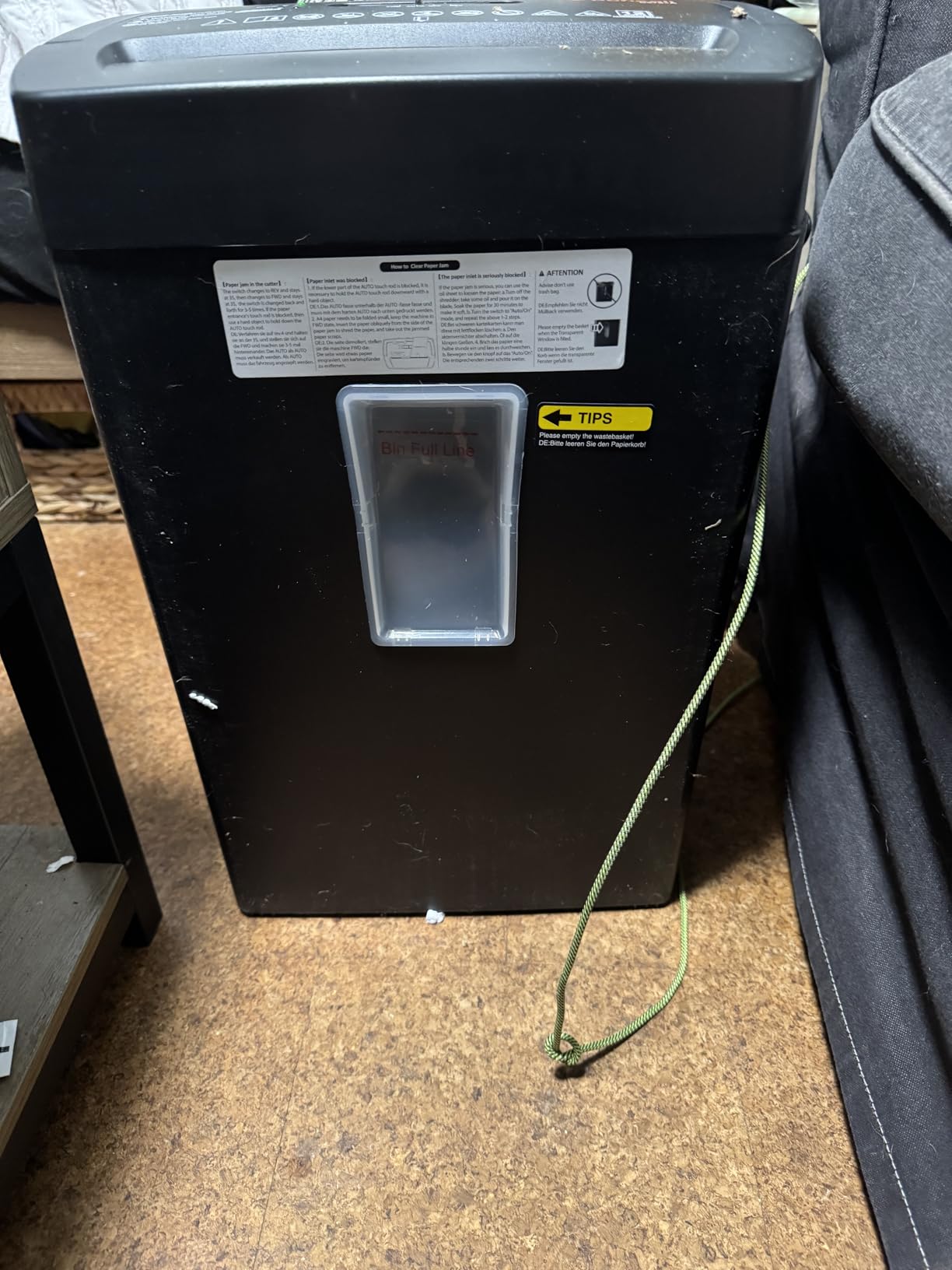
The C275-A is the pick when the question is how often you want to empty the basket. Its 5.5-gallon windowed bin is the largest on any machine here, and the transparent window means you stop finding out the bin is full the way you do with an opaque basket.
It also runs for up to six minutes continuously on a patented cooling system, which is a genuine step above the three-minute bursts typical of the class. Reviewers consistently report that it takes a full stack of twelve sheets, folded paper included, without complaint.
The specification is honest about security: 5 x 20 mm particles at a claimed P-4 level. That is a real security cut, just not micro-cut, and the pieces are wider than the 5 x 12 mm output of the micro-cut machines here.
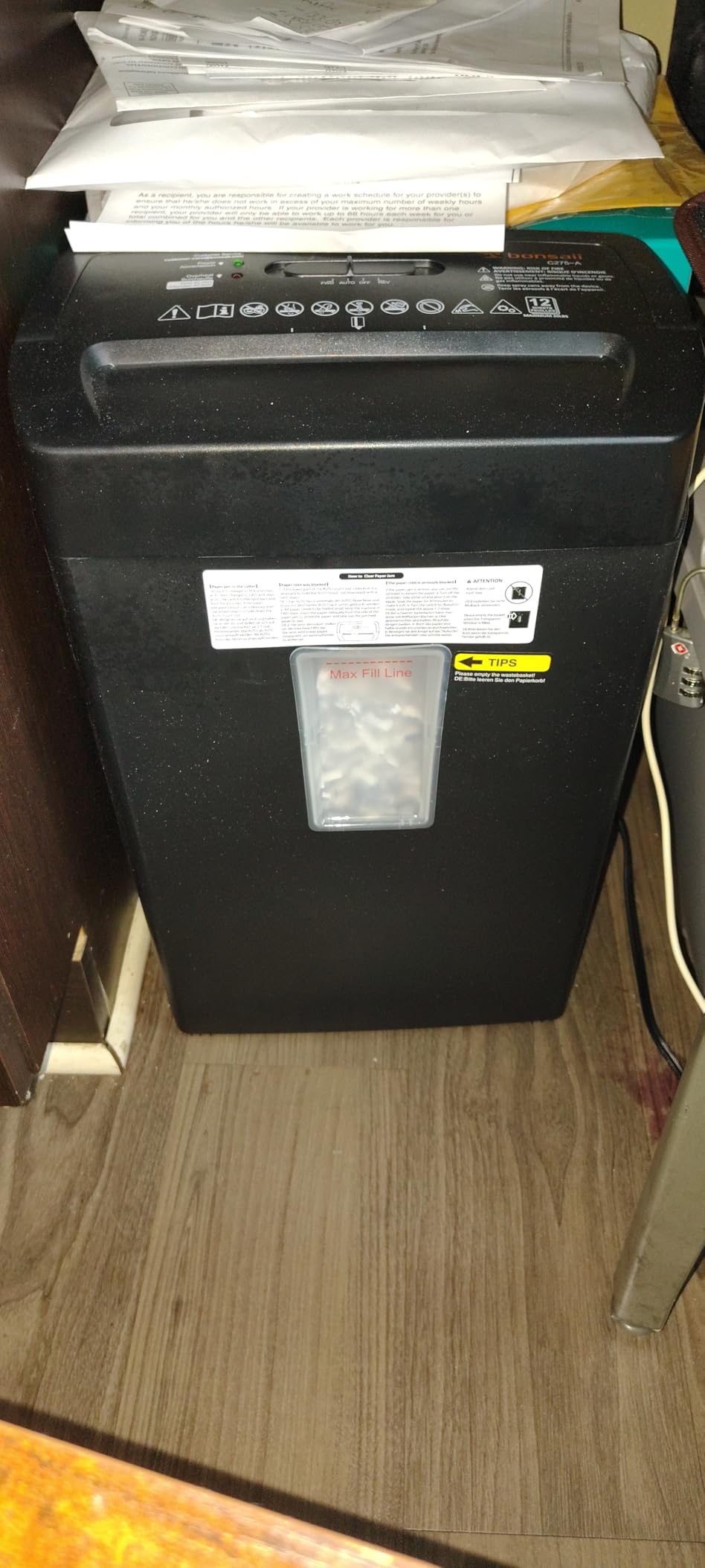
Its 12.6 by 7.91 by 18.3 inch body is one of the narrower footprints in the group, and Bonsaii markets it explicitly for under-desk placement in a home office. At 12 pounds it is heavy enough not to walk across a floor when you pull the bin out, and light enough to lift into a cupboard.
The drawbacks are consistent across reviews. It is loud for the volume it pushes through, the bin itself is thin plastic that reviewers describe as cheap-feeling, and it slows noticeably when you feed close to the rated 12 sheets.
Who the Bonsaii C275-A suits
This is the one to buy if you shred weekly rather than monthly. A large bin plus a six-minute run time means a stack of junk mail disappears in one sitting without you babysitting the machine.
It suits anyone who shreds client paperwork on a freelance basis and needs the larger bin to survive a project week without three trips to the kitchen bin.
Who the Bonsaii C275-A does not suit
Pass on it if noise is your binding constraint. This is not a machine to run while you are on a client call, and buyers report the volume directly in reviews.
Also consider the alternative if you are very sensitive to materials. A steel-bodied machine at this bin size costs noticeably more, and the plastic bin here flexes when you lift it out full.
3. Amazon Basics 6-Sheet Micro-Cut – the Best Value Security Pick
Amazon Basics 6 Sheet High Security Micro-Cut Paper and Credit Card Shredder, P-4 Security Level, Easy to Empty, Black
Micro-cut P-4, 6 sheets, 4.1 gal bin, 3 min on 30 off, LED indicator
Pros
- Micro-cut output is illegible and compresses well
- Quiet operation compared with most shredders in its class
- Owners report 4.5 to 7 years of service
- Overheat LED and auto shut-off protect the motor
- Strong value for a P-4 micro-cut
Cons
- Thin plastic base can crack under the head
- 30 minute cool-down after 3 minutes of use
- Shreds credit cards one at a time only
If your concern is that the shredder itself gives you away, this is the machine. It is the only product in the group where reviewers describe the operating noise as quiet rather than merely tolerable, and it does that while cutting to 4 x 12 mm micro-cut particles at a P-4 security level.
That combination is unusual at this level. Most quiet machines are strip-cut or wide cross-cut, and most micro-cut machines are loud. The duty cycle here is short — three minutes on, thirty minutes off — which is arguably the correct shape for home use, where you shred one envelope rather than a shift’s worth of paper.
Its 4.1-gallon bin is the second-largest in this roundup despite being a 6-sheet machine, and micro-cut output packs down tighter than cross-cut, so it goes further between empties than the capacity suggests.
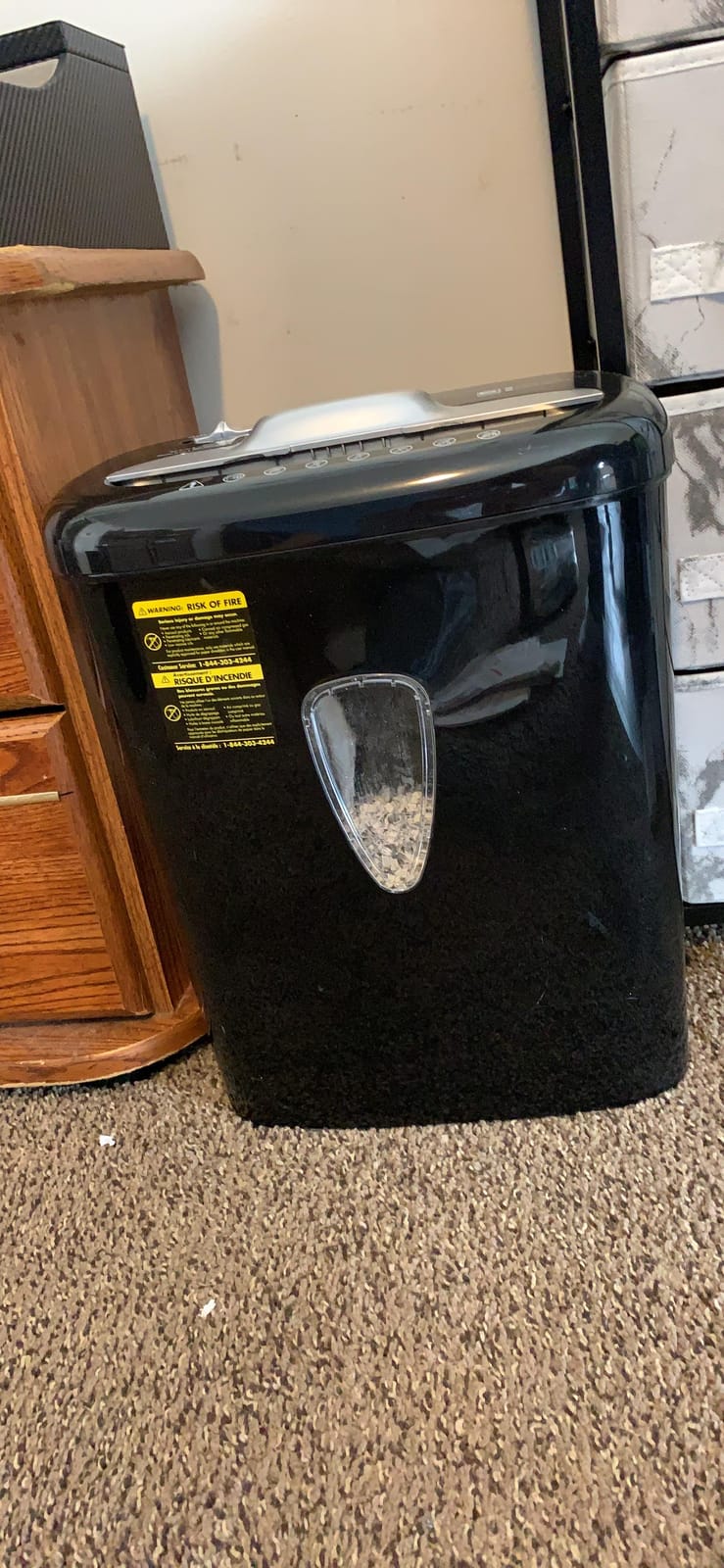
The 3-mode switch gives you auto, off and reverse on one control, with separate LEDs for power and overheat so you can tell a jam from a thermal stop. A lift handle on the head and a straightforward bin make emptying routine rather than a chore.
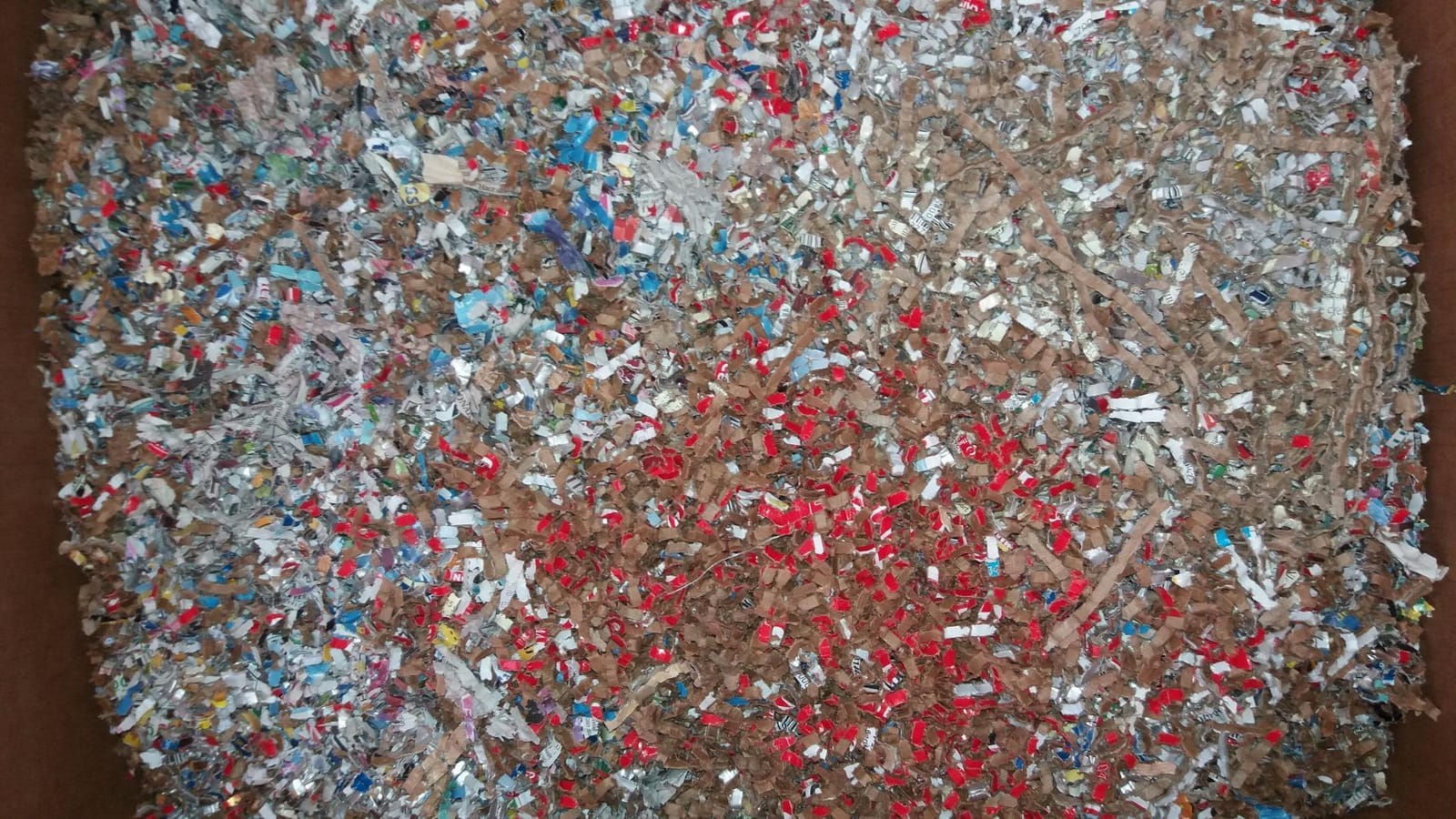
The most common complaint across more than 13,000 reviews is the thin plastic base, which some owners report arriving cracked or which can crack under the weight of the head. Check it on arrival, and keep it on a hard floor rather than a soft rug.
Who the Amazon Basics 6-Sheet suits
It suits anyone who works from a room where a call could overlap with shredding, and anyone who wants genuine micro-cut security without moving up a size. Six sheets handles a bill, a statement and a junk-mail offer without much fuss.
It also suits anyone who shreds irregularly. A three-minute burst is enough for a weekly pile, and if you overdo it the machine shuts itself off rather than cooking the motor.
Who the Amazon Basics 6-Sheet does not suit
It is the wrong pick for bulk work. You get six sheets per pass, it slows past two or three, and the thirty-minute cool-down means a stack of bankers boxes is a two-day project.
Skip it if you take a lot of calls and shred in bulk, and treat the credit card slot as single-item only — it takes one card at a time by design.
4. Bonsaii 12-Sheet Micro-Cut – for the Tax Season Clear-Out
Bonsaii 12-Sheet Micro Cut Heavy Duty Paper Shredder for Home Office
Micro-cut P-4, 12 sheets, 20 min run time, 60 dB, 4 casters
Pros
- 20 minute continuous run time suits bulk clear-outs
- Micro-cut P-4 at 5 x 12 mm with 12 sheet capacity
- Listed at 60 dB for shared rooms
- Four casters make it easy to reposition
- Visible window shows bin fill level
Cons
- 13 inch deep footprint is deeper than most here
- Only a 1 year warranty
- Weight is not published in the listing
This 12-sheet Bonsaii is the only machine here that solves the tax-season problem properly. Twenty minutes of continuous run time on a cooling system means you can put a box of records in and walk away, instead of feeding it in four-minute instalments all evening.
It still shreds to micro-cut: 5 x 12 mm particles at a P-4 level, through 12 sheets at a time. The listed noise figure of 60 dB puts it a full 10 dB below the Aurora AS890C, which is a large perceptual gap.
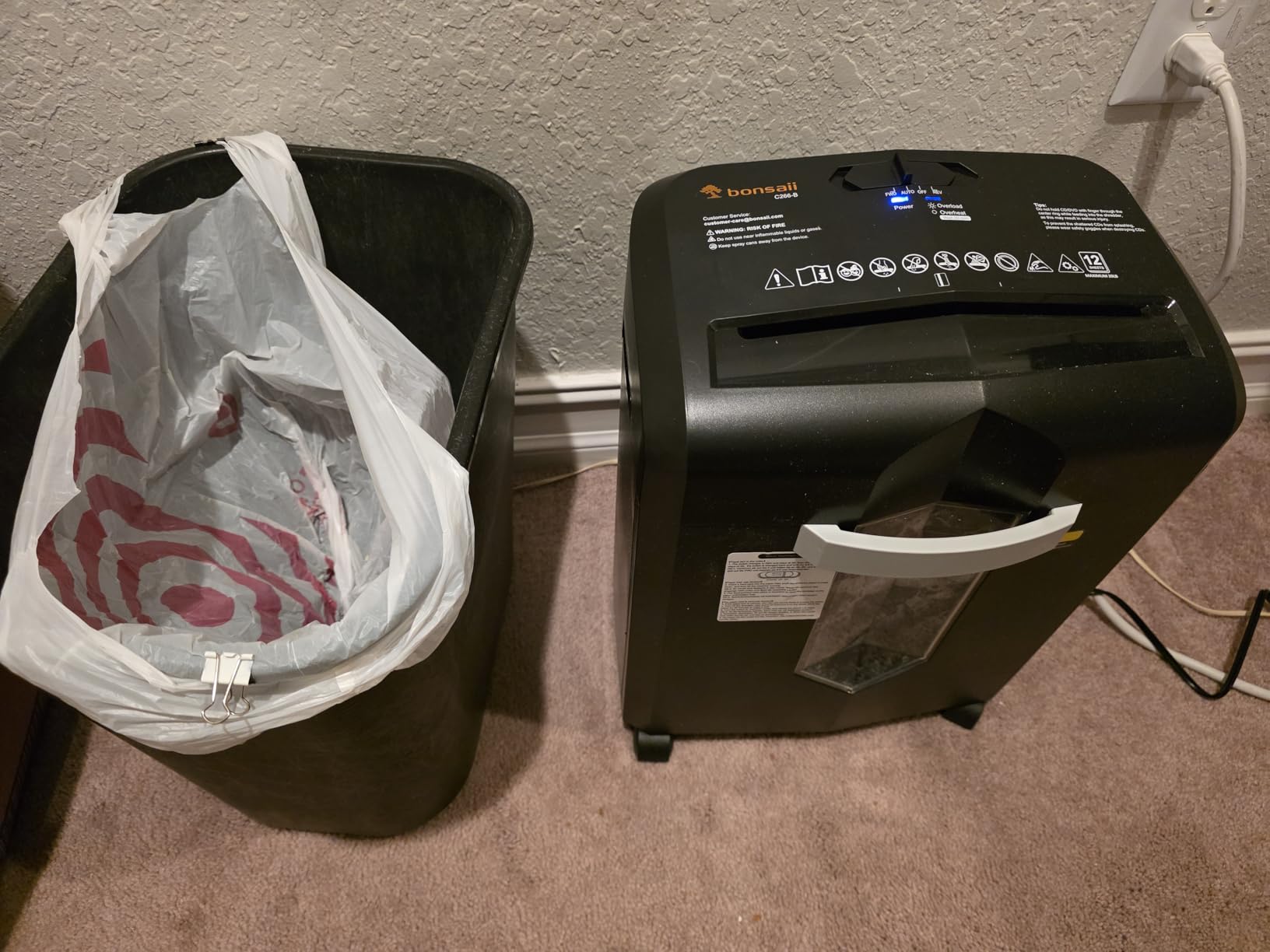
Four universal casters mean you can roll it out from a corner, do a bulk session, and put it back. The visible trash window removes the single most common frustration owners report, which is only discovering a full bin when the machine stops mid-document.
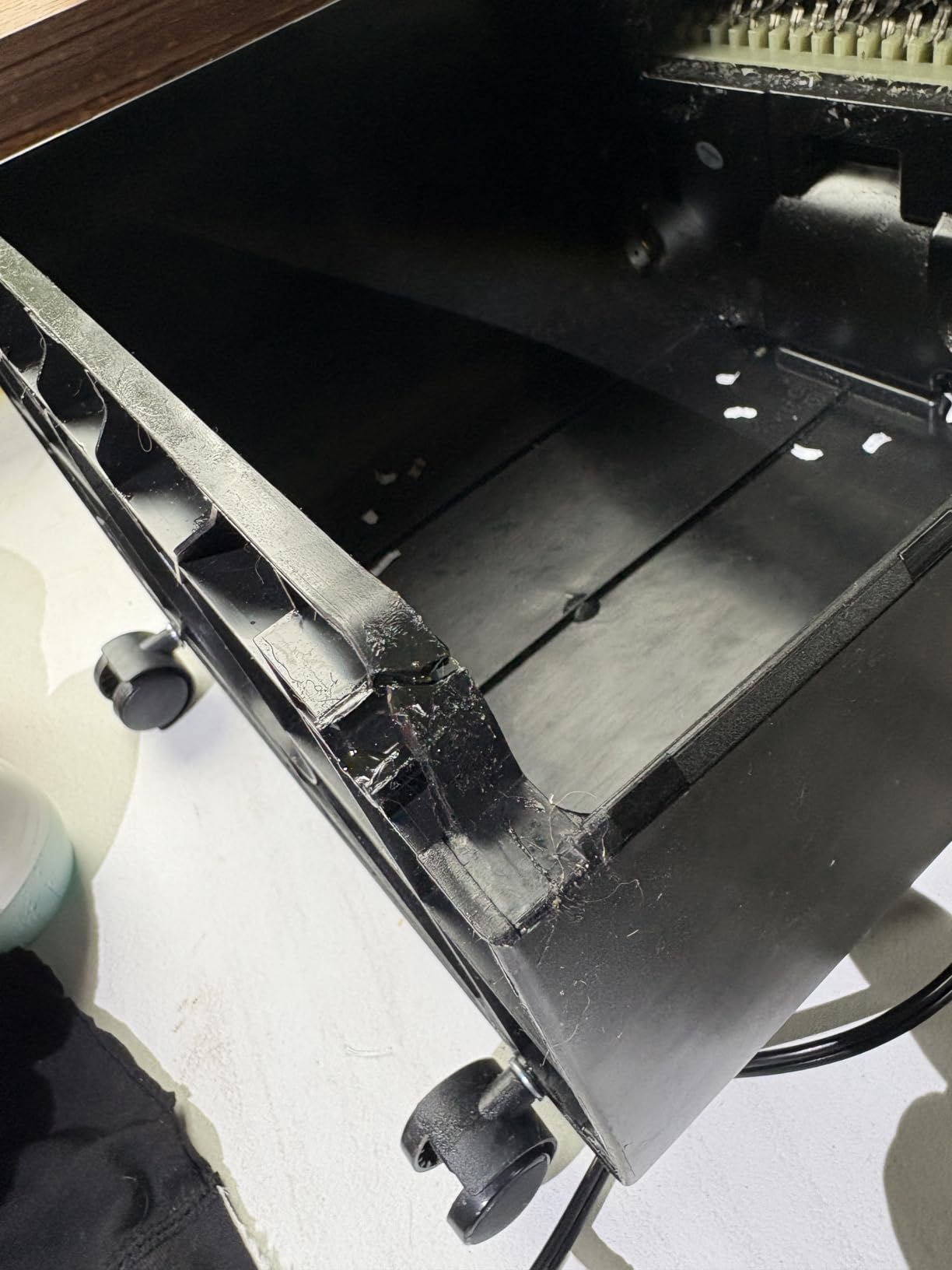
It also shreds CDs alongside paper, cards, staples and clips, so it handles the mixed media a freelancer’s box tends to contain. An auto start-stop function means the same drop-the-page-in behaviour as the other machines here.
The trade is footprint and overkill. At 13.15 inches deep it is deeper than anything else on this list, which matters in a room where floor area is the constraint, and a 20-minute run time is capacity you will rarely use outside of a few weeks a year.
Who the Bonsaii 12-Sheet Micro-Cut suits
Buy it if you have an annual purge — tax records, old client files, a move, an inheritance — and want one session rather than an evening of babysitting a motor cooling down.
It also suits anyone who shreds mixed media including CDs, and the casters make it practical in a multi-use room where the machine spends most of its time folded away.
Who the Bonsaii 12-Sheet Micro-Cut does not suit
It is not the right choice for a tight corner or under a shallow desk. Thirteen inches of depth is more floor than most of these units ask for, and the four casters add bulk to a body that is already tall.
If you shred a few envelopes a month, a 20-minute run time is wasted capacity and you would be paying for a cooling system you never stress.
5. Fellowes 14C10 Cross-Cut – the Most Sheets per Pass
Fellowes 14C10 14-Sheet Cross-Cut Home Office Paper Shredder
Cross-cut 14-sheet, 5 gal pull-out bin, 10 min run, 5-yr cutter warranty
Pros
- 14 sheets per pass which is the most of the eight tested
- 10 minute continuous run time
- Metal and plastic build with 5 year cutter warranty
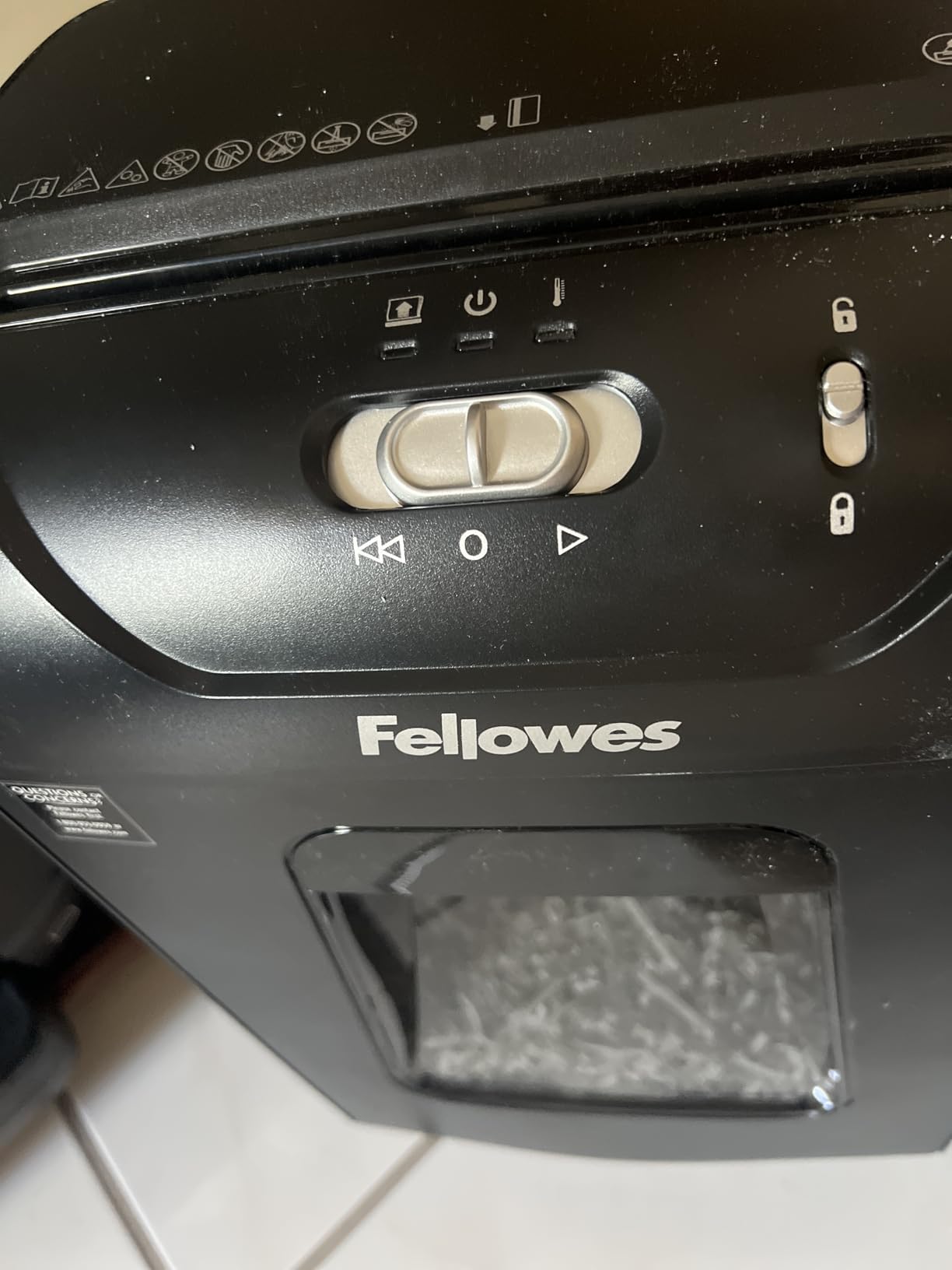
- Patented safety lock for homes with kids or pets
Cons
- Cross-cut particles are wide at 5/32 by 1-9/16 inch
- 19.7 inch tall body is the biggest footprint here
- No auto-reverse feature listed
The Fellowes is the throughput pick. Its 14-sheet rating is the highest sheet capacity of the eight we put together, and the 10-minute continuous run time is generous for a home office machine. When a page is thick or stapled, the difference between a 14-sheet rating and a 6-sheet rating is the difference between one pass and two.
Its particle size is 5/32 by 1-9/16 inch at a claimed P-4 level, which is cross-cut rather than micro-cut. That means readable fragments under a loupe and a wider bin volume per sheet, so the security ceiling is lower than the micro-cut machines on this list.
The build is metal and plastic with a 5-year cutter warranty, which is the longest blade guarantee among the machines on this list, backed by a 1-year product and service warranty.
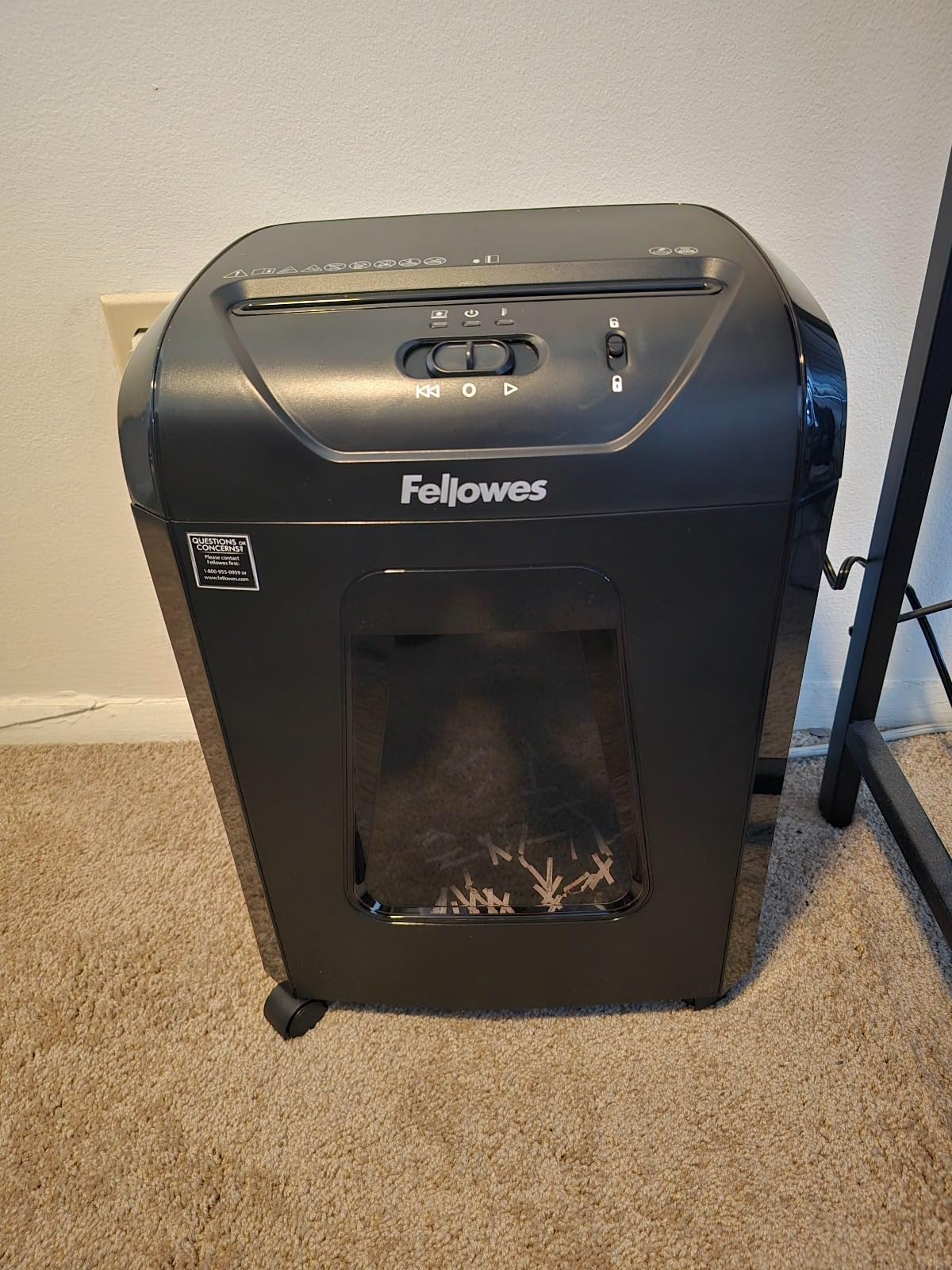
The 5-gallon pull-out bin holds more than 250 shredded sheets according to the manufacturer, and the pull-out design means you empty it without lifting anything heavy. A patented safety lock disables the machine, which is the feature most relevant in a home with children or pets.
It handles unopened junk mail as well as credit cards, staples and paper clips. The patent cast-metal base keeps the machine planted, which reviewers note matters when the paper feed is working hard.
Who the Fellowes 14C10 suits
It suits anyone shredding multi-page documents where re-feeding is annoying — bound reports, multi-page medical statements, client packs. Feed once and walk away.
It also suits anyone who wants the longest blade service life, since a 5-year cutter warranty reflects how the manufacturer expects the cutter block to hold up under sustained use.
Who the Fellowes 14C10 does not suit
Skip it if footprint is the binding constraint. At 19.69 inches tall it is the tallest machine in this roundup, and it will not tuck under most desks without measuring first.
It is also the wrong choice for maximum confidentiality, since cross-cut particles of this width are below the micro-cut standard. Choose the micro-cut models if the material is genuinely sensitive.
6. Aurora AU1285MD – the Low-Profile Shredder for Shelves and Cramped Rooms
Aurora AU1285MD Compact Desktop-Style High Security 12-Sheet Micro-Cut Paper and CD/Credit Card/Junk Mail Pullout Basket Shredder, White/Black
Micro-cut 12-sheet, low profile 11.8 in tall, 1.8 gal bin, auto-reverse, LED status
Pros
- Highest rating in this group at 4.7 across 618 reviews
- Low profile body fits a shelf beside a printer
- Anti-jam auto-reverse clears jams unattended
- Separate LEDs for standby overheat overload and door
- Translucent pull-out bin shows fill level
Cons
- Smallest bin here at 1.8 gallons
- White interior shows dust and dirt quickly
- Feed slot narrower than competing desktop models
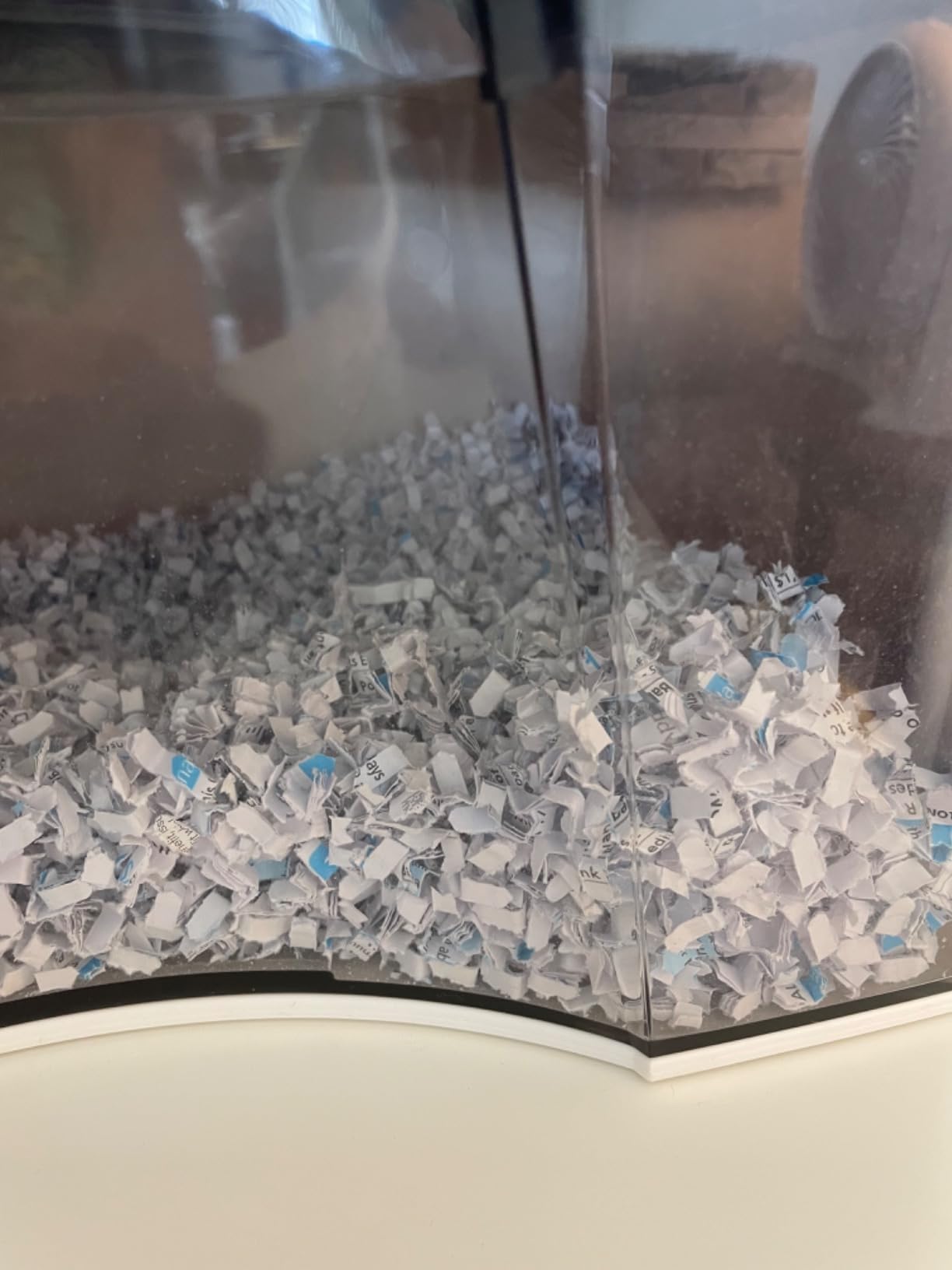
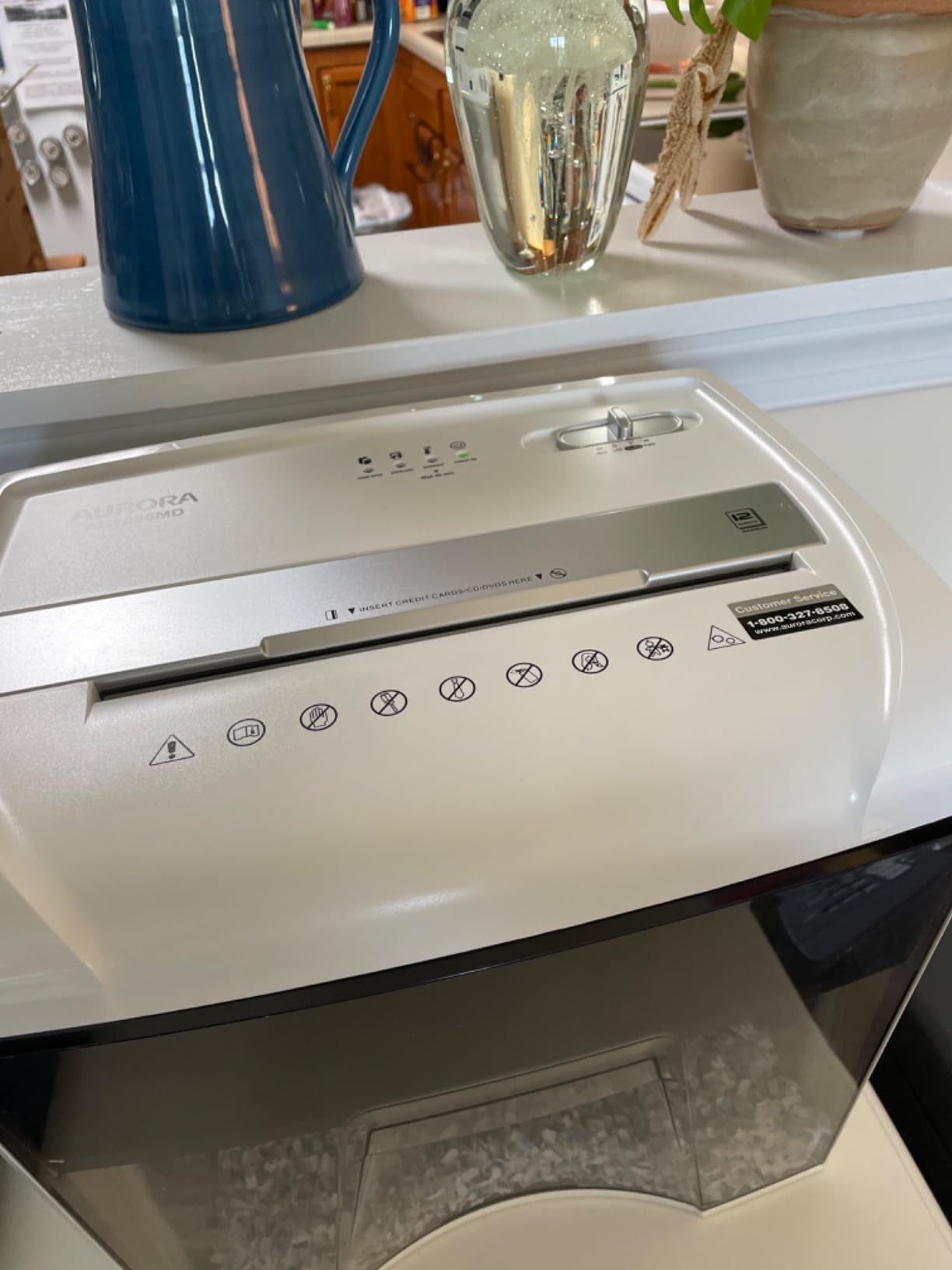
This is the only shredder in the roundup shaped like a printer rather than a tower. At 11.8 inches tall it sits on a shelf next to a printer or under a side table, and it carries the highest average rating of the eight at 4.7 across 618 reviews.
Despite the compact body it takes 12 sheets per pass and shreds to micro-cut P-4 particles of 5/32 by 15/32 inch. It also handles CDs and DVDs, junk mail, cards, staples and small clips, which no other machine in this group covers in full.
The detail that separates it from the other budget machines is the LED panel: separate indicators for standby, overheat, overload and door open. That answers the most common confusion owners report, where a single red light means something different depending on when it flashed.
Anti-jam auto-reverse is genuinely automatic here, rather than a manual reverse control you have to find. On a machine that runs in short bursts, a jam that clears itself is the difference between finishing a job and opening the head over a kitchen counter.
A ShredEase angled-feed feature keeps hands away from the blades, and a sharpening pouch is included. At 17.9 pounds the machine is heavy enough to stay where you put it, which matters on a shelf rather than a desk.
Who the Aurora AU1285MD suits
It suits the tightest room in this roundup. If a tower-shaped shredder will not fit or will dominate the space, this desktop-style body is the answer, and it still delivers micro-cut security and auto-reverse.
It also suits anyone who shreds media as well as paper, since it is the only pick here that handles CDs and DVDs as a stated function rather than an occasional outcome.
Who the Aurora AU1285MD does not suit
The 1.8-gallon bin is the smallest on the list, and with 12 sheets per pass it will need frequent emptying. Anyone shredding in volume should look elsewhere.
It is also a 120V US-only model with a US plug, and the white interior will show dust quickly in a room where the machine lives permanently rather than being pulled out occasionally.
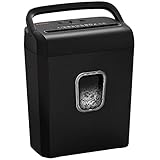
7. Bonsaii 6-Sheet Micro-Cut – Security on an Entry Budget
Bonsaii 6-Sheet Micro Cut Paper Shredder for Home, High Security Level P-4
Micro-cut P-4, 6 sheets, 3.4 gal window basket, manual reverse, thermal guard
Pros
- Micro-cut P-4 security at an entry price
- Very compact at 11.8 inches wide
- Transparent basket shows fill level
- Auto start-stop plus manual reverse
- Thermal protection extends motor life
Cons
- Very loud during operation
- Can overheat during bursts of heavy shredding
- Clogs if the basket is allowed to fill
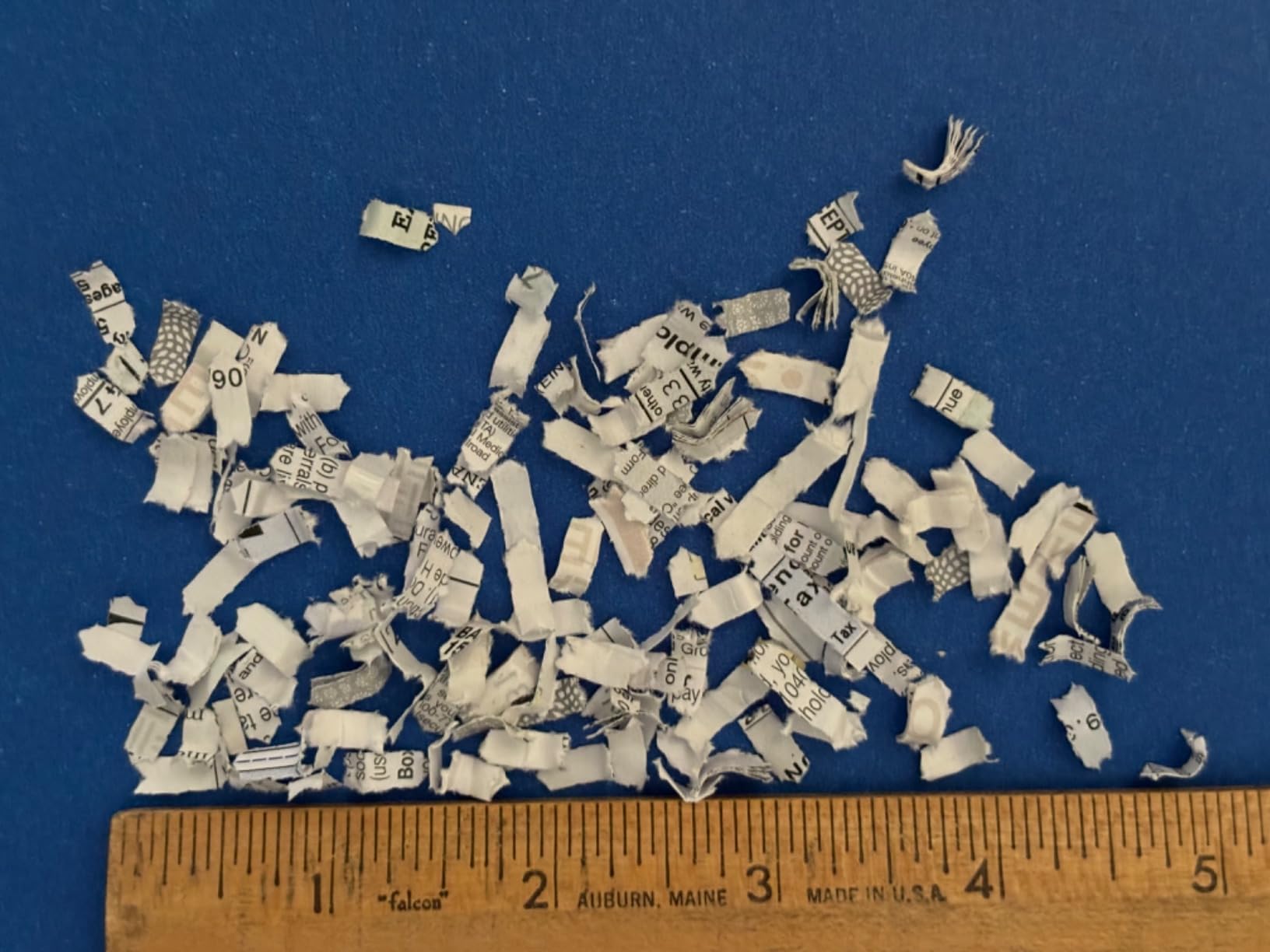
This Bonsaii is the cheapest route to genuine micro-cut security on this list, and for shredding a handful of statements a month that is exactly the right trade. It cuts to 5 x 12 mm particles at a P-4 level through 6 sheets at a time.
It is also one of the smallest bodies here at 11.8 inches wide and 14.45 inches tall, with a 3.4-gallon transparent window basket so you can see the fill level without pulling the head out.
Auto start-stop, manual reverse and thermal protection cover the basics of jam and heat handling. A portable handle on the head makes it easy to lift off the basket when emptying.
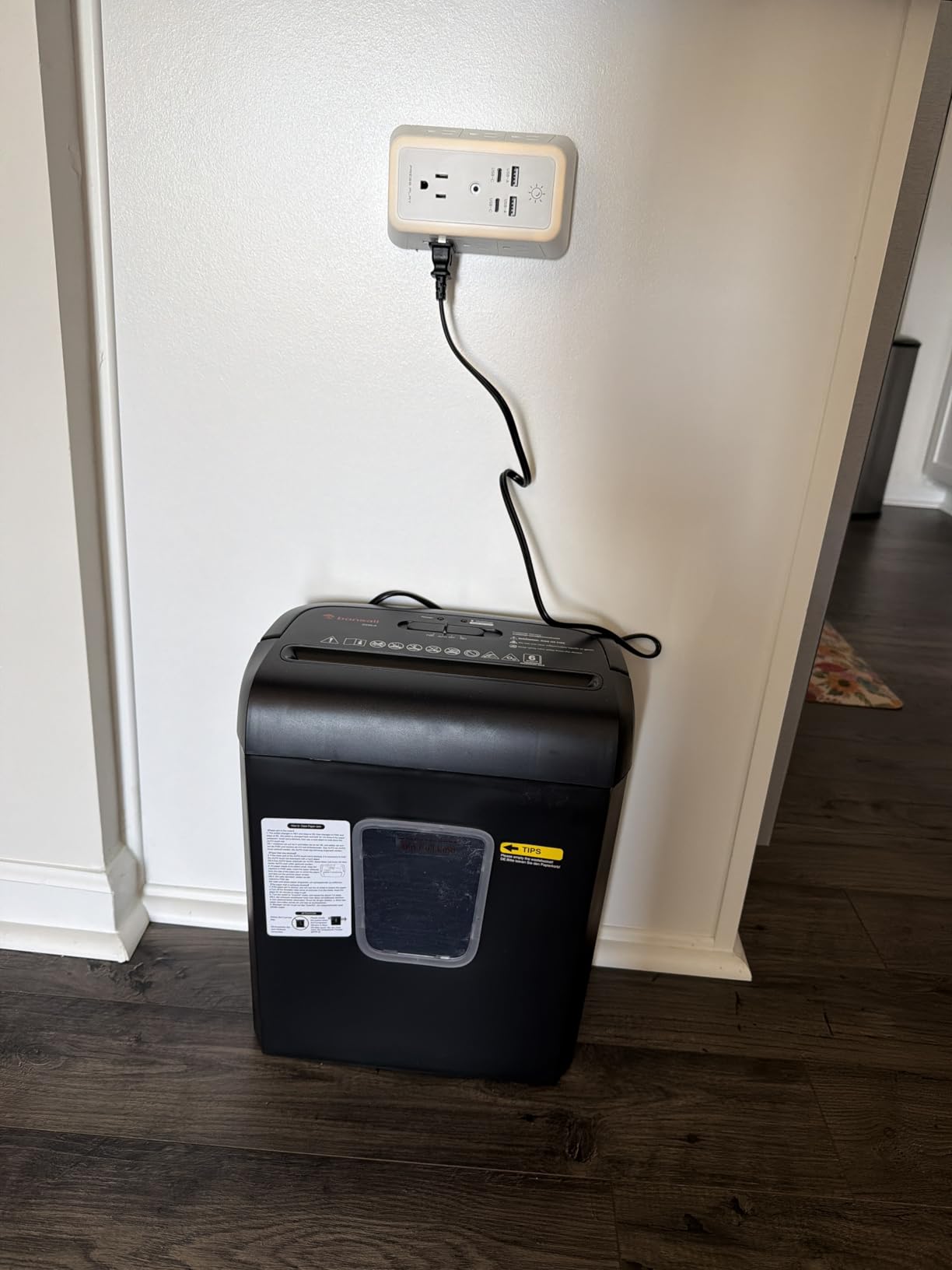
Reviewers rate the construction as sturdy for the price, and the 4.4 average across more than 3,000 ratings reflects a machine that does the job without drama at low volume.
The consistent complaints are consistent across owners: it is very loud in operation, it can overheat during bursts of heavy shredding, and it will clog if the basket is allowed to fill up. Treat the rated 6 sheets as occasional-use capacity, not a target.
Who the Bonsaii 6-Sheet Micro-Cut suits
It suits a first shredder purchase, a student, or anyone shredding a few envelopes and old bank statements without wanting to spend heavily. The security level matches the more expensive micro-cut machines on this list.
It also suits a very small desk or cupboard where width is the limiting dimension, since at 11.8 inches it is narrower than every other pick here.
Who the Bonsaii 6-Sheet Micro-Cut does not suit
It is not a machine for anyone on calls from the same room. Reviewers describe it as very loud, and it offers nothing on the noise axis.
Nor is it a bulk machine. Six sheets, thermal cut-outs during bursts, and a clogging tendency when the basket fills make it an occasional-use tool only.
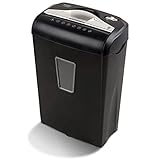
8. Aurora AU870MA Micro-Cut – the Dependable Middle of the Field
Aurora AU870MA High-Security 8-Sheet Micro-Cut Paper Credit Card Shredder Black
Micro-cut P-4, 8 sheets, 3.9 gal bin, 5 min run, overheat LED, 11.7 lb
Pros
- Micro-cut P-4 destroys cards and paper irreversibly
- 4.6 average across nearly 13000 reviews
- Auto shut-off and overheat LED add safety
- Manual reverse clears most jams without opening the head
- 3.9 gallon bin suits the footprint
Cons
- Only 5 minutes of continuous run time
- 17.4 inch tall body is less space-friendly
- Plastic enclosure less durable than metal units
The AU870MA is the pick for anyone who wants a proven middle ground: micro-cut security, an 8-sheet rating, and a large enough review base to trust. Nearly 13,000 ratings at a 4.6 average is the second-deepest owner evidence in this roundup.
Thermal protection with auto shut-off and an overheat LED indicator mean the motor stops before it is damaged, and manual reverse clears most jams without opening the head. Auto start makes feeding quick and hands-off.
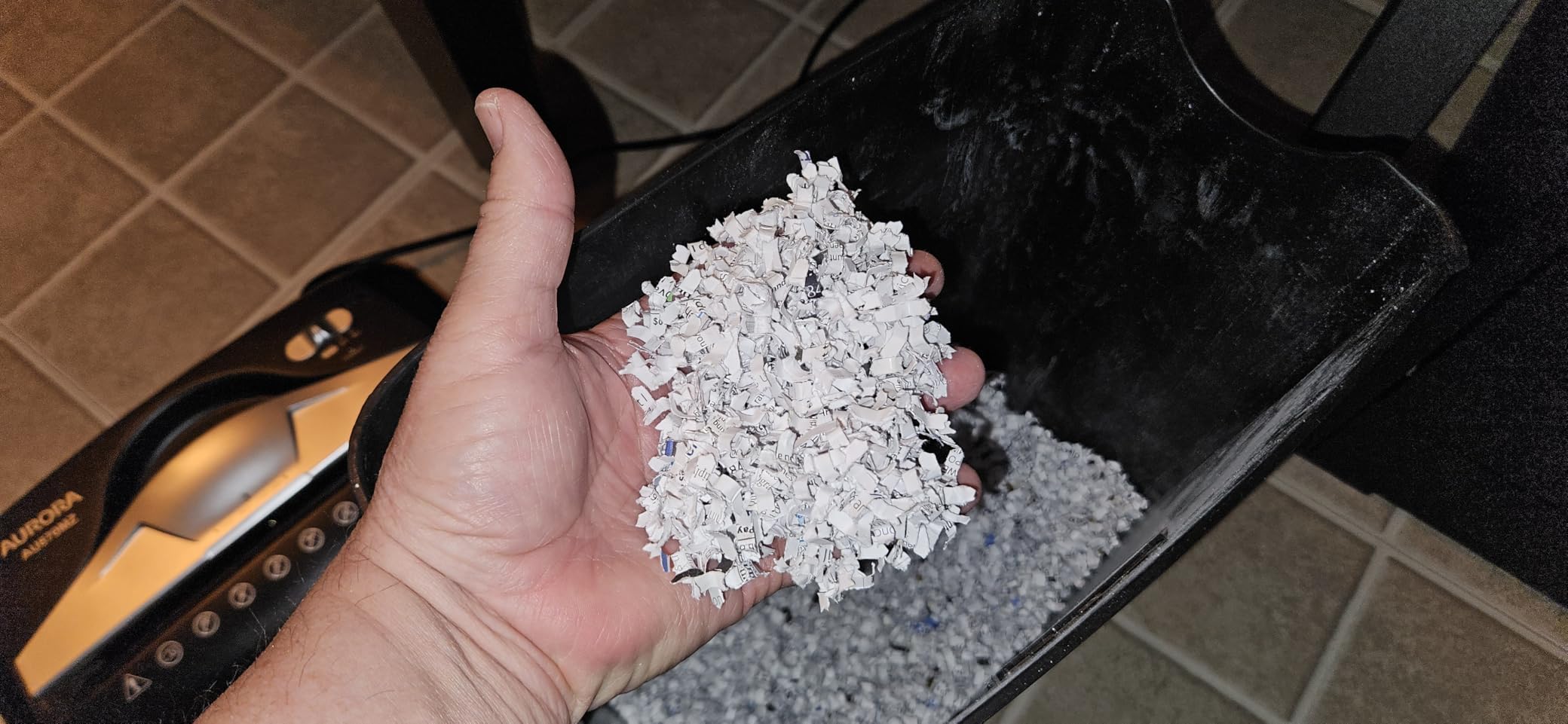
Output is 5/32 by 15/32 inch at a P-4 level, and it destroys credit cards outright rather than relying on a separate slot. That matters, because dedicated card slots are where several budget machines cut only partially.
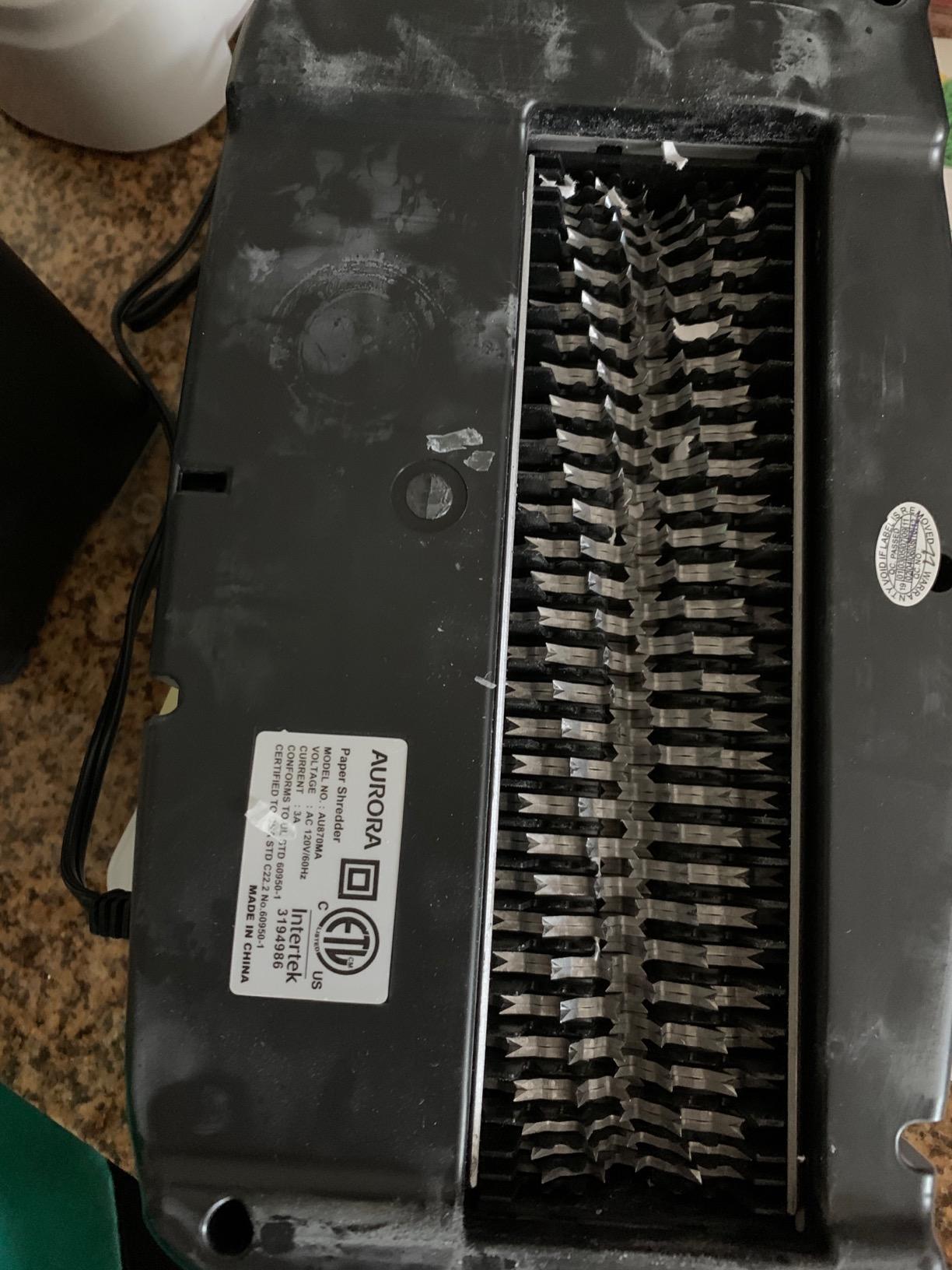
The 3.9-gallon wastebasket is a sensible size against the 8-sheet capacity, giving roughly a month of moderate use before emptying. The body is 7.13 inches deep and 11.81 inches wide, so it slips into a corner without dominating the room.
Two limits are worth stating plainly. The 5-minute continuous run time is short for bulk work, and at 17.44 inches tall the vertical body is less space-friendly than the low-profile Aurora AU1285MD if your storage is a shelf rather than a corner.
Who the Aurora AU870MA suits
It suits anyone who shreds a moderate weekly volume with genuinely sensitive material, and who wants the machine to shut itself down rather than overheat during a lapse in attention.
It also suits buyers who read review counts as a signal. A machine with this much long-term owner feedback is a lower-risk purchase than a higher-rated model with a few hundred reviews behind it.
Who the Aurora AU870MA does not suit
It is not for bulk shredding. Five minutes of run time and a cool-down after that makes annual clear-outs a multi-session job.
And if your only option is a low shelf or under-desk storage, its 17.4 inch height rules it out in favour of the compact Aurora AU1285MD.
Noise: Why Decibels Decide This Purchase
Yes, quiet shredders exist, but the honest picture is that only two of these eight publish a noise figure at all. The Bonsaii 12-Sheet Micro-Cut lists 60 dB and the Aurora AS890C lists 70 dB. For the rest, what we can report is what owners describe in reviews, and those descriptions cluster into a clear pattern.
That 10 dB gap matters more than the numbers suggest. Decibels are logarithmic, so 60 dB is roughly half the perceived loudness of 70 dB — the difference between a machine you run and a machine you wait for.
Bonsaii 12-Sheet Micro-Cut: 60 dB published, and the quietest verified figure in this group
Amazon Basics 6-Sheet: no published figure, but described as quiet relative to its own class
Aurora AU1285MD: no published figure, described as quiet enough for a home office or shared room
Fellowes 14C10: no published figure, marketed explicitly for quiet operation at home
Aurora AU870MA, Aurora AS890C, Bonsaii C275-A and the 6-Sheet Micro-Cut: described as loud or noticeably noisy by owners
Micro-cut is inherently noisier than cross-cut because more blades have to make more cuts per sheet. Any micro-cut machine in this list will be louder than a cross-cut machine of the same capacity, which is the central tension in this whole category.
Two other effects are worth knowing. The shredder’s own plastic bin amplifies what reaches the room, so a machine with a larger bin is often louder than its motor suggests. And every one of these units uses an auto start-stop sensor, so the motor only runs while paper is actually being pulled through — that makes short bursts far less disruptive than the headline figure suggests.
If noise is your binding constraint, do not rely on any number the manufacturer does not publish. Our dedicated quiet shredder guide goes further into how to test a machine before committing.
How to Choose a Shredder for a Small Home Office
What are the three types of shredders?
The three cut types are strip-cut, cross-cut and micro-cut. They differ in particle size, and particle size drives both security level and noise, which is why the safest option is also the loudest.
Strip-cut — long ribbon strips, roughly 5 to 10 mm wide, lowest security, fastest and quietest
Cross-cut — strips sliced lengthways into confetti, typically 3 to 6 mm pieces, usually P-3 to P-4
Micro-cut — confetti further reduced to fine particles, typically 4 x 12 mm or smaller, usually P-4 to P-5
None of the eight products here is strip-cut. Six are micro-cut and two are cross-cut, which tells you what the market has decided a home office needs.
What security level do you actually need?
P-levels run from P-1 to P-7 under the DIN 66399 standard, where higher numbers mean smaller particles. Every machine in this roundup claims P-4, and P-4 is the right ceiling for home use.
P-5 and above exist for medical, legal and government records where a reconstructed page could cause real harm. For financial statements and junk mail at home, P-4 micro-cut produces particles too small to reassemble in practice. Paying more for P-5 mostly buys you noise, heat and price.
How many sheets per pass and how big a bin?
Ten to twelve sheets per pass is the home-office sweet spot. Below six you will be re-feeding every statement, and above fourteen you are buying capacity you will use once a year.
Pair sheet capacity with bin volume, because they are separate decisions. A 12-sheet machine with a 1.8-gallon bin empties far more often than a 6-sheet machine with a 4.1-gallon bin. Micro-cut output also compresses tighter, so it goes further per sheet than cross-cut.
Bin or binless?
All eight machines here use a bin, and that is the right call for most homes. Binless designs shred straight into a bin or basket you supply, which saves the footprint of a machine head standing on its own.
The tradeoff is convenience. A binless design has no bin to lift out and no bin to empty into, so you end up pulling the bin yourself and lifting it into the kitchen. In a room you work in, that is a small annoyance repeated several times a week.
How quiet should a home office shredder be?
If you take calls from the same room, treat anything above about 60 dB as unusable and choose on review descriptions rather than marketing language. A normal conversation sits near 60 dB, so the shredder should stay below the conversation, not compete with it.
Also test the workflow rather than the motor. Shredding four pages at once is a five-second event. The question is whether those five seconds fall during a call, and the only real fix is to shred at the edges of your day.
Jam handling and auto-reverse
Jams are the most common complaint in every shredder forum and the single best predictor of long-term ownership frustration. Look for auto-reverse first.
Only the Aurora AU1285MD has automatic anti-jam reverse. Every other machine here offers a manual reverse control, which is fine — it just means reaching for the switch. Avoid anything with a manual crank, because that is the design owners complain about most.
Footprint: where does it actually live?
Measure the gap before you buy, and measure it including the space needed to pull the bin out. Width ranges from 11.8 inches on the Bonsaii 6-Sheet Micro-Cut to 13.44 inches on the Fellowes 14C10.
Height is the real constraint. Only the Aurora AU1285MD, at 11.8 inches, fits under a typical desk or side table. The rest run from 14.45 to 19.69 inches tall, which means a corner, a closet shelf or a stand beside the filing cabinet.
Run time and cool-down for intermittent use
This is where home buyers are most often misled. A long continuous run time is an office spec, and at home you shred in bursts of one envelope to a few pages.
Match the duty cycle to your real pattern. Three minutes on and thirty off suits a weekly pile. Six minutes suits weekly shredding with occasional large jobs. Twenty minutes is for annual bulk clear-outs, and pays off only if you have the corner space to store it.
What to shred, and what to recycle instead
Not everything needs a shredder. Junk mail that is not an offer and has no account number on it goes straight to recycling, and the small cards inserted with statements usually do too.
Shred anything with a name, address, account number, balance or signature. Shred preapproved credit offers, bank and medical statements, tax records, and client documents. Shred old debit and credit cards one at a time through a dedicated slot, and check the pieces afterwards.
For a large one-off box, many people skip the purchase entirely and use a library or bank drop-off instead. That is a sensible call once or twice a year, and a poor one if it means storing sensitive documents in the meantime.
How We Chose and Ranked These Shredders
Every specification on this page was read from the manufacturer listing for that exact model, and every performance claim was checked against the owner review record rather than against a competitor page. Where a figure is not published, we say so instead of estimating it.
We weighted security at 30 percent, noise at 25 percent, capacity and bin at 20 percent, jam handling at 15 percent and footprint at 10 percent. The weighting reflects one thing above all: this is a machine that has to live in a room, not a corridor.
The limits are worth stating. We did not run acoustic measurements ourselves, so decibel figures are manufacturer-published where they exist and review-derived where they do not. We did not perform long-term ownership tests, so longevity claims come from owner reports with high review counts behind them.
Frequently Asked Questions
What is the best paper shredder for a home office?
The Aurora AS890C is the best all-round choice for a small home office because it is compact, handles staples and cards without jamming, and has an owner base of more than 24,000 reviews at 4.6. If your priority is noise, the Amazon Basics 6-Sheet Micro-Cut is quieter and still cuts to a P-4 micro-cut standard.
What are the three types of shredders?
The three types are strip-cut, which makes long ribbons and offers the lowest security; cross-cut, which slices strips into confetti at roughly P-3 to P-4; and micro-cut, which reduces paper to fine particles at P-4 or higher. Micro-cut is the most secure and also the loudest, slowest and most expensive option.
Is there such a thing as a quiet paper shredder?
Yes. The Bonsaii 12-Sheet Micro-Cut publishes a 60 dB figure, the lowest verified number in this group, and its listing positions it for shared offices and home offices. The Amazon Basics 6-Sheet Micro-Cut and the Aurora AU1285MD are also described as quiet by owners, even though neither publishes a decibel figure.
What security level shredder do I need?
P-4 is the right level for home use and covers every shredder in this roundup. P-4 micro-cut output produces particles of roughly 4 x 12 mm, which cannot realistically be reassembled. P-5 and above are intended for medical, legal and government records and mostly add noise, heat and cost rather than useful protection at home.
What is better than a shredder?
For many documents, nothing replaces shredding, because the risk comes from an intact page being found. Secure digital deletion covers files instead of paper, bank and library drop-off handles one-off bulk shredding, and issuer mail-in programs cover documents you never need to hold. Junk mail with no account details should simply be recycled.
How long do paper shredders last?
Owner reports on these models range from roughly 4.5 to 7 years for well-used machines, with some owners describing an Aurora AS890C running 15 years or more. Oiling the blades every 20 to 30 shredding sessions, keeping the bin from overfilling, and avoiding continuous run times the machine is not rated for are the three habits that extend life.
The Verdict for Small Home Offices
The Aurora AS890C is our pick for the best shredders for small home offices because durability and compactness matter more in a home workspace than raw throughput. Take the Amazon Basics 6-Sheet if noise decides it, the Bonsaii 12-Sheet Micro-Cut if you have an annual purge, and the Aurora AU1285MD if the machine has to fit on a shelf.
Measure the gap where it will live, and check the bin before the motor.