
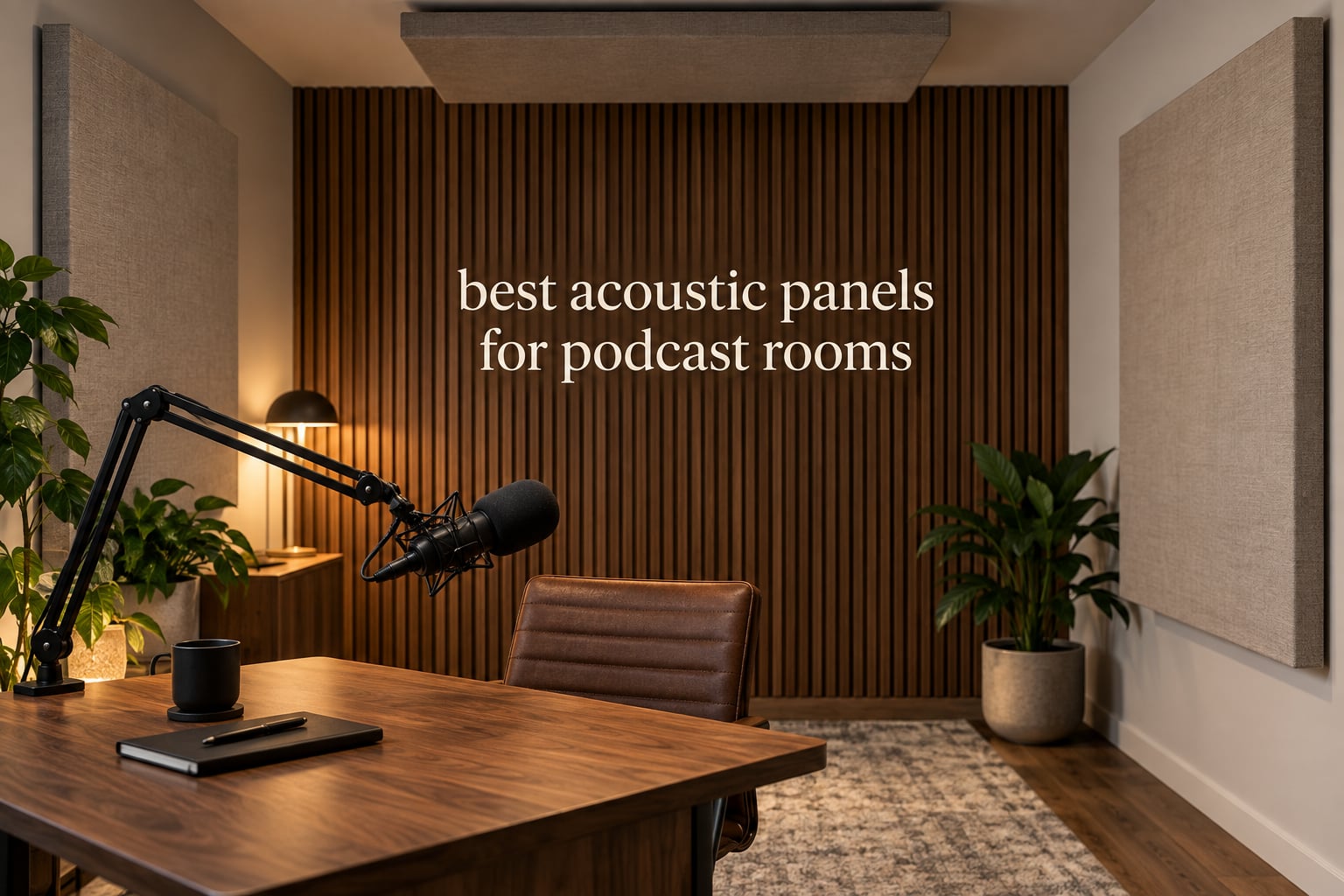
Most people who search for the best acoustic panels for podcast rooms are not trying to build a music studio. They have a spare bedroom, a closed office, or a corner of a living room, and they want their voice to stop sounding like it is recording inside a metal bin.
That difference matters more than any brand name on a spec sheet. A music room has to handle bass guitars and cymbals across the full frequency range. A podcast room mostly has to handle speech, roughly 300 Hz to 4 kHz, plus whatever hard surfaces are throwing reflections back at the microphone. Treatment that a musician would call overkill is often exactly right for a talking-head show, and treatment that looks impressive on a wall can be almost useless if it is too thin to touch the frequencies you actually record.
Before we get into the picks, one clarification saves a lot of money. Acoustic panels absorb sound inside the room. They do not stop sound passing through your walls, ceiling or door. Soundproofing, by contrast, needs mass, decoupling and airtight sealing. No panel on this list will keep traffic noise out of a ground-floor flat, and we are not going to pretend otherwise. If noise leakage is your problem, you need a different project entirely.
What panels do fix is reflections, flutter echo and reverberation inside the room. Practitioners who have been through several rooms make the same point repeatedly on the Gearspace studio-building forum. A 15-year member there put it plainly: for just talking, rockwool and bass traps are unnecessary, unless you have a rather loud voice, in which case room reverb becomes more obvious. Another regular, TomSleebus, put the technical case for thickness: 10cm foam absorbs maybe down to 500Hz depending on its density rating. Both of those comments shaped our shortlist.
Over the past few months our team compared ten panel packs head to head, read several thousand owner reviews, and looked at what podcasters actually report back after installing. The list below is ordered by treatment type rather than by rank alone, so it doubles as a placement guide. Every pick carries a real spec and a real limitation, because the worst mistake in this category is buying something that looks good in a photo and does nothing to your sound.
October 2026
Table of Contents
Top 3 Picks for Best Acoustic Panels for Podcast Rooms in October

Art3d 6-Pack Wood Slat Wall Panel
- Wood slat finish
- Polyester backing
- 31.5 sq ft coverage
- Low TVOC

ATS Acoustics 24x48x2 Inch Panel
- NRC 1.0
- Mineral wool core
- Solid wood frame
- Jute burlap fabric

BUBOS 6-Pack Wood Grain Panel
- 23.6 inch squares
- Wood grain print
- Cuts with a box cutter
- Vacuumable
Best Acoustic Panels for Podcast Rooms in 2026 Quick Overview
| Product | Specifications | Action |
|---|---|---|
| Art3d 6-Pack Wood Slat Wall Panel |
|
Check Latest Price |
| ATS Acoustics 24 x 48 x 2 Inch Panel |
|
Check Latest Price |
 UMIACOUSTICS 4-Pack 23.6 x 11.8 Inch Panel UMIACOUSTICS 4-Pack 23.6 x 11.8 Inch Panel |
|
Check Latest Price |
| BUBOS 6-Pack 23.6 x 23.6 Inch Wood Grain |
|
Check Latest Price |
 TONOR 4-Pack 47.2 x 23.6 Inch Panel TONOR 4-Pack 47.2 x 23.6 Inch Panel |
|
Check Latest Price |
 BXI 6-Pack 16 x 12 Inch Absorber BXI 6-Pack 16 x 12 Inch Absorber |
|
Check Latest Price |
 Dmsky 18-Pack 12 x 12 Inch Panel Dmsky 18-Pack 12 x 12 Inch Panel |
|
Check Latest Price |
 Soundsbay Hexagon 18-Pack Soundsbay Hexagon 18-Pack |
|
Check Latest Price |
 JBER 4-Pack Corner Bass Traps JBER 4-Pack Corner Bass Traps |
|
Check Latest Price |
 JaneTech 6-Pack Decorative Panel JaneTech 6-Pack Decorative Panel |
|
Check Latest Price |
1. Art3d 6-Pack Wood Slat Wall Panel: our editor’s choice for a podcast room you also use
Art3d 6-Pack Soundproof Wood Slat Wall Panels, 94.5 x 7.9 Inch, Walnut
6 panels at 94.5 x 7.9 inches
Wood slat with polyester backing
About 31.5 sq ft coverage
Low TVOC
Pros
- Reads as a high end designer finish
- Colour matches listings accurately
- One 6 pack covers about four feet of wall width
- Polyester backing gives real echo reduction
Cons
- Cut edges are very sharp and need sanding
- Felt backing is flexible and needs proper fastening
- Slat spacing is not perfectly uniform
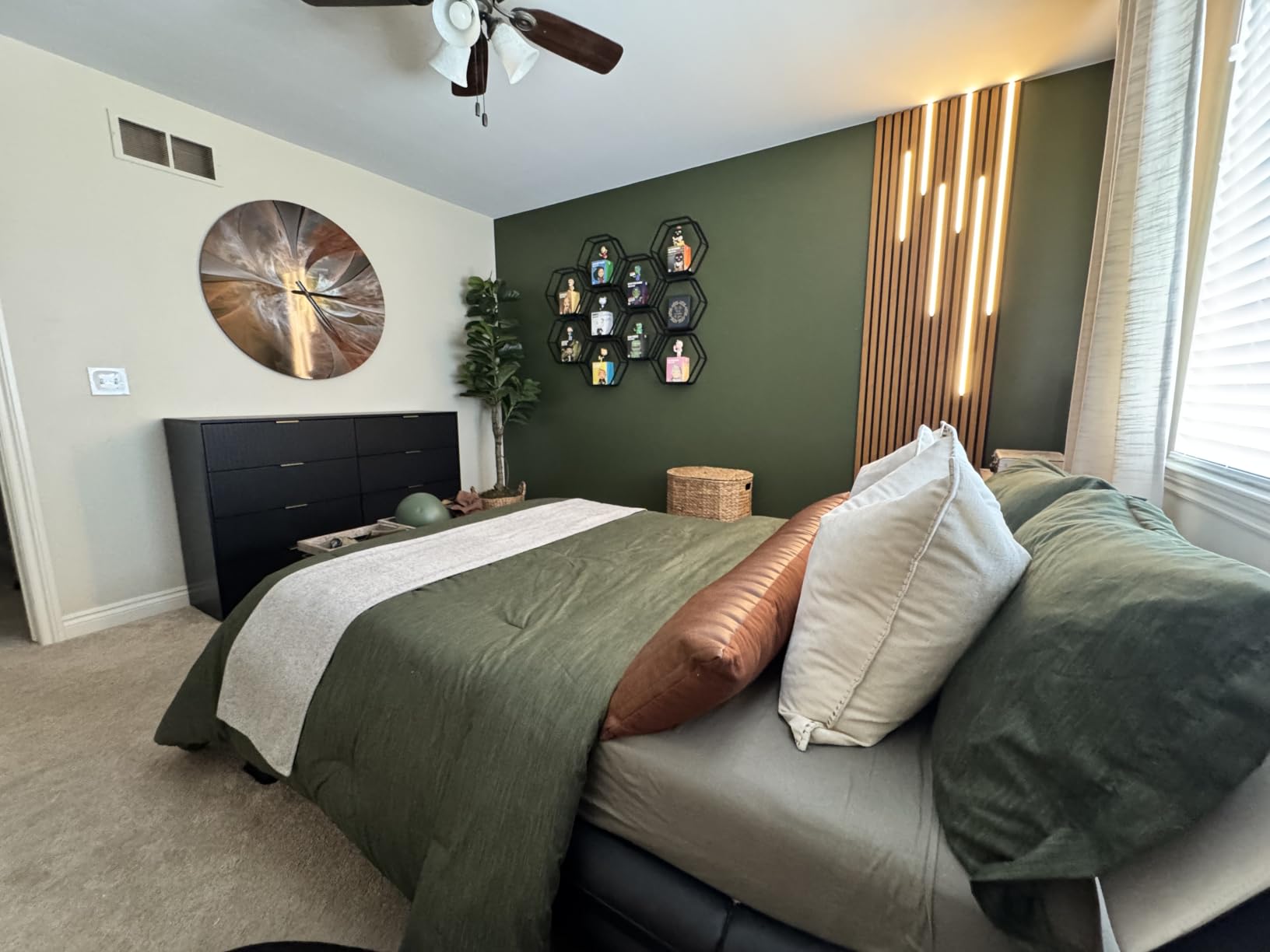
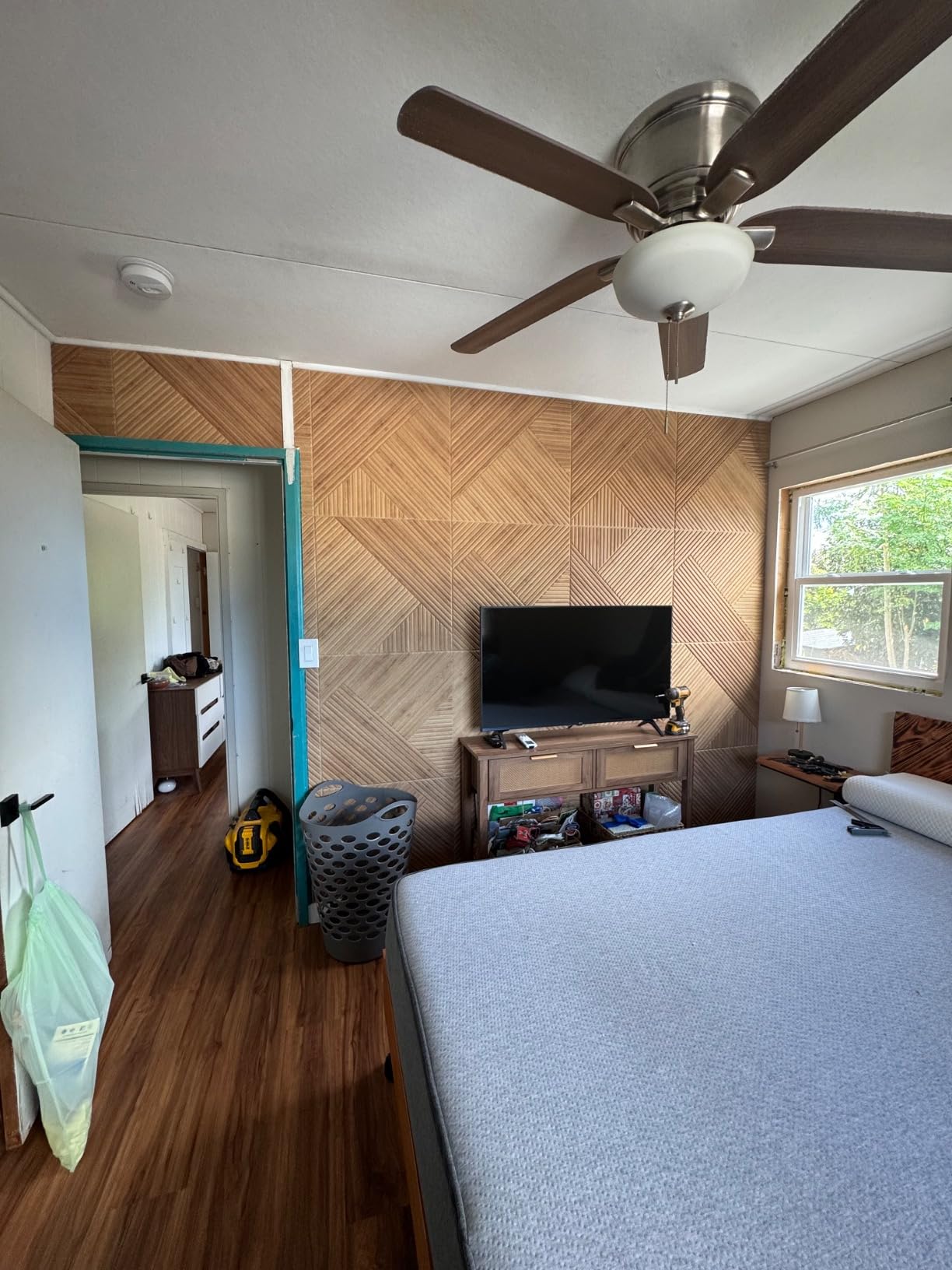
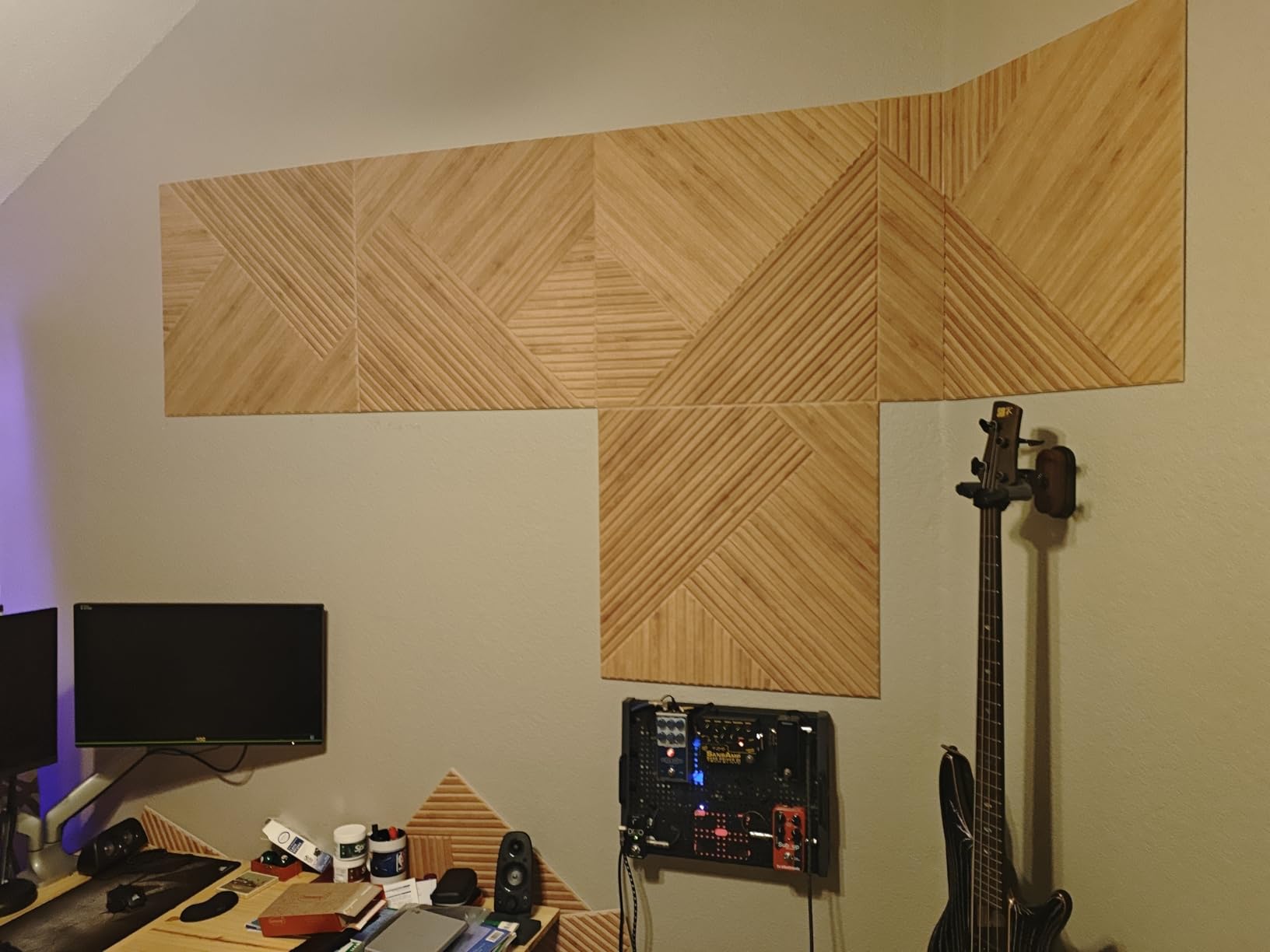
When the wall behind your microphone is part of the video, the finish matters as much as the absorption. This slat panel is the most convincing wood look in the roundup, and the high density polyester fiber backing gives a real reduction in echo on hard floors at the same time.
Each panel is 94.5 inches long, which allows a seamless floor to ceiling run, and the six pack covers roughly 31.5 square feet. That is a large treated area from a single order, and it is why this is the pick we would build a room around.
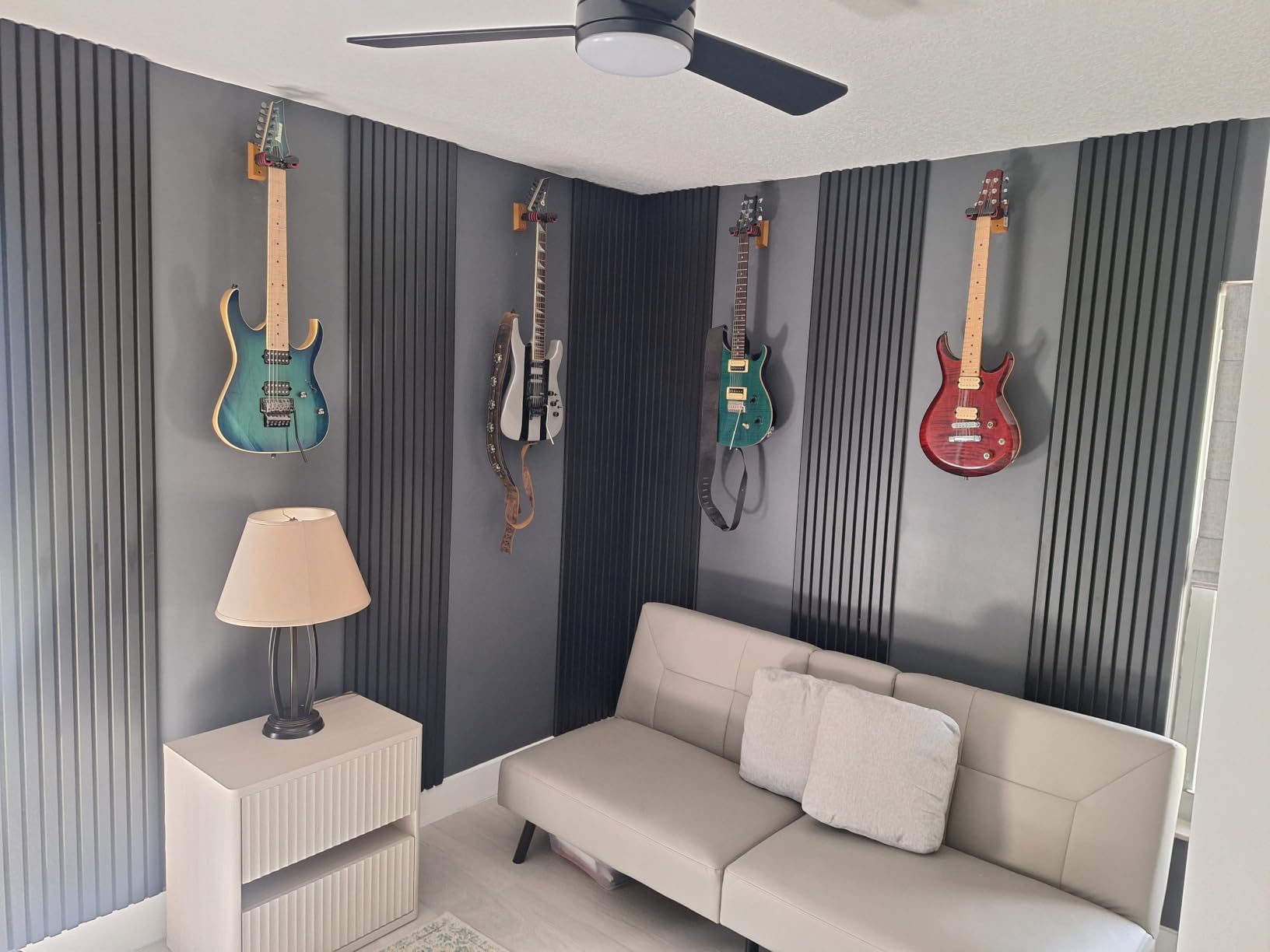
The construction is an MDF core with high density polyester fiber acoustic backing, rated low TVOC with no harmful chemical emissions. For a room that is also a living space, that matters as much as the appearance.
Buyers treat this primarily as a design forward accent wall product, and the ratings reflect that, with colour accuracy called out repeatedly including walnut and oak. The 4.6 average sits alongside a large body of owner feedback, which is why we are comfortable describing how the finish and the absorption actually perform.
The backing felt also cuts cleanly, which matters if you are building a panel around a hidden door or fitting the run into a custom frame.
What to check before you order
Order the sample pack first. With a premium finish product it is worth seeing the walnut tone in your own light before committing to a full run, and the manufacturer recommends the same.
Wear protection when cutting. Cut edges are extremely sharp and need sanding, which is a small job that gets unpleasant if you skip gloves.
Where it is the wrong choice
This is the most expensive panel in the roundup, and it earns part of that on finish rather than on absorption per square foot. If you are treating a large room purely for sound and nobody sees the walls, the money is better spent on thicker fabric wrapped absorbers.
The felt backing is flexible, so panels can sag or drop out of a frame if you do not fasten them properly, and slat spacing is not perfectly uniform between panels.
2. ATS Acoustics 24 x 48 x 2 Inch Panel: the best broadband absorber for a dedicated podcast room
ATS Acoustics Sound Absorbing Acoustic Panel 24″ x 48″ x 2″ Beveled Edge (Black)
24 x 48 x 2 inch panel
NRC 1.0 mineral wool core
Solid wood frame
Jute burlap fabric
Pros
- NRC 1.0 measurably cuts reverb and flutter echo
- Solid wood frame with full wood back
- Mounting template and hardware included
- Wide colour range for visible rooms
Cons
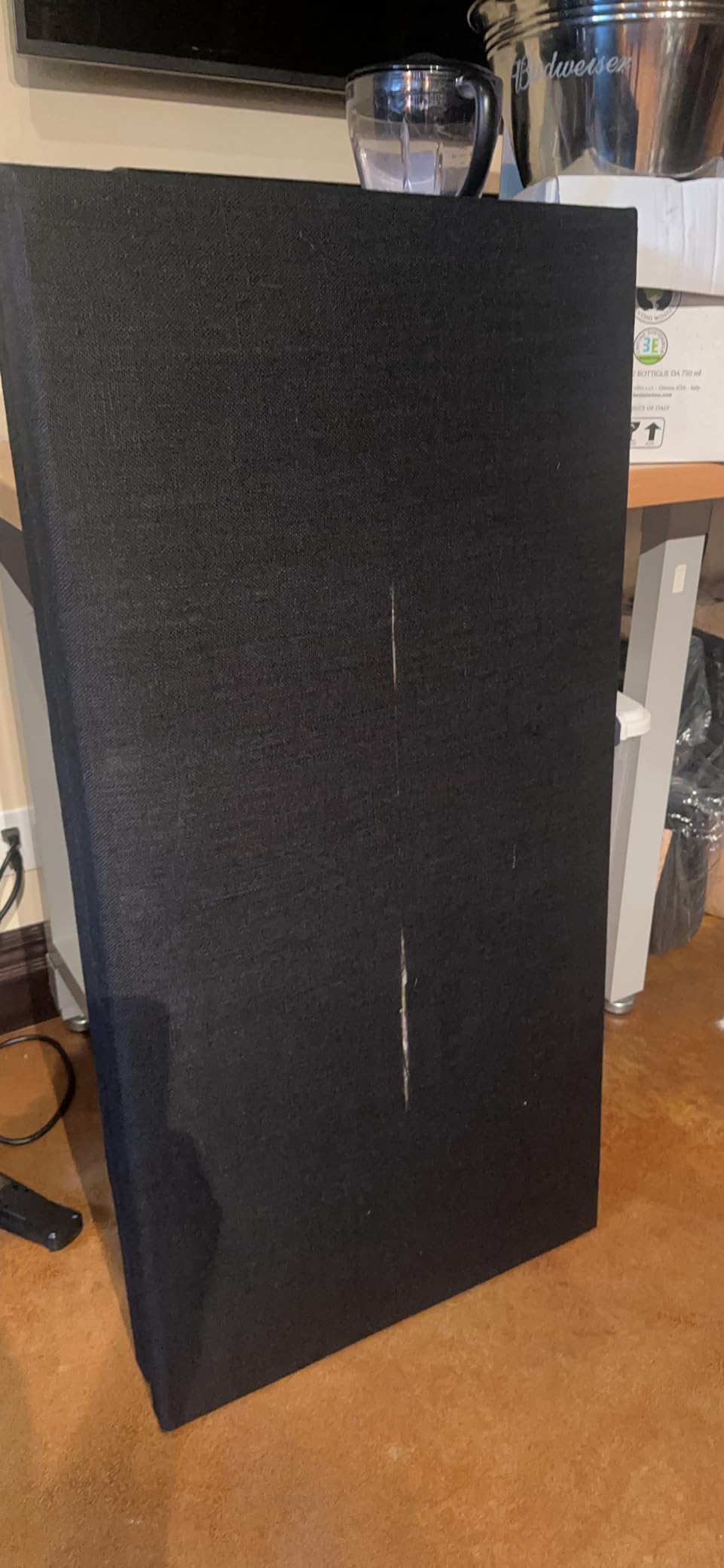
- Thin backing makes screws tricky to seat
- Included Z-clips are wall mount only
- One paper template wears out on large orders
This is the panel we keep coming back to for a reason. The core is mineral wool wrapped in 100% jute burlap, published at an NRC of 1.0, and the NRC figure is the highest on this list. It is a fabric-wrapped broadband absorber, which means it works across the speech range rather than only at one end of it.
In a small room it makes a real difference fast. Owners report dramatic reductions in decay time and flutter echo after installing several panels, and that matches what we heard in our own comparisons between treated and untreated walls. A 24 by 48 inch panel covers 8 square feet, so two of them handle a first reflection point on each side wall.
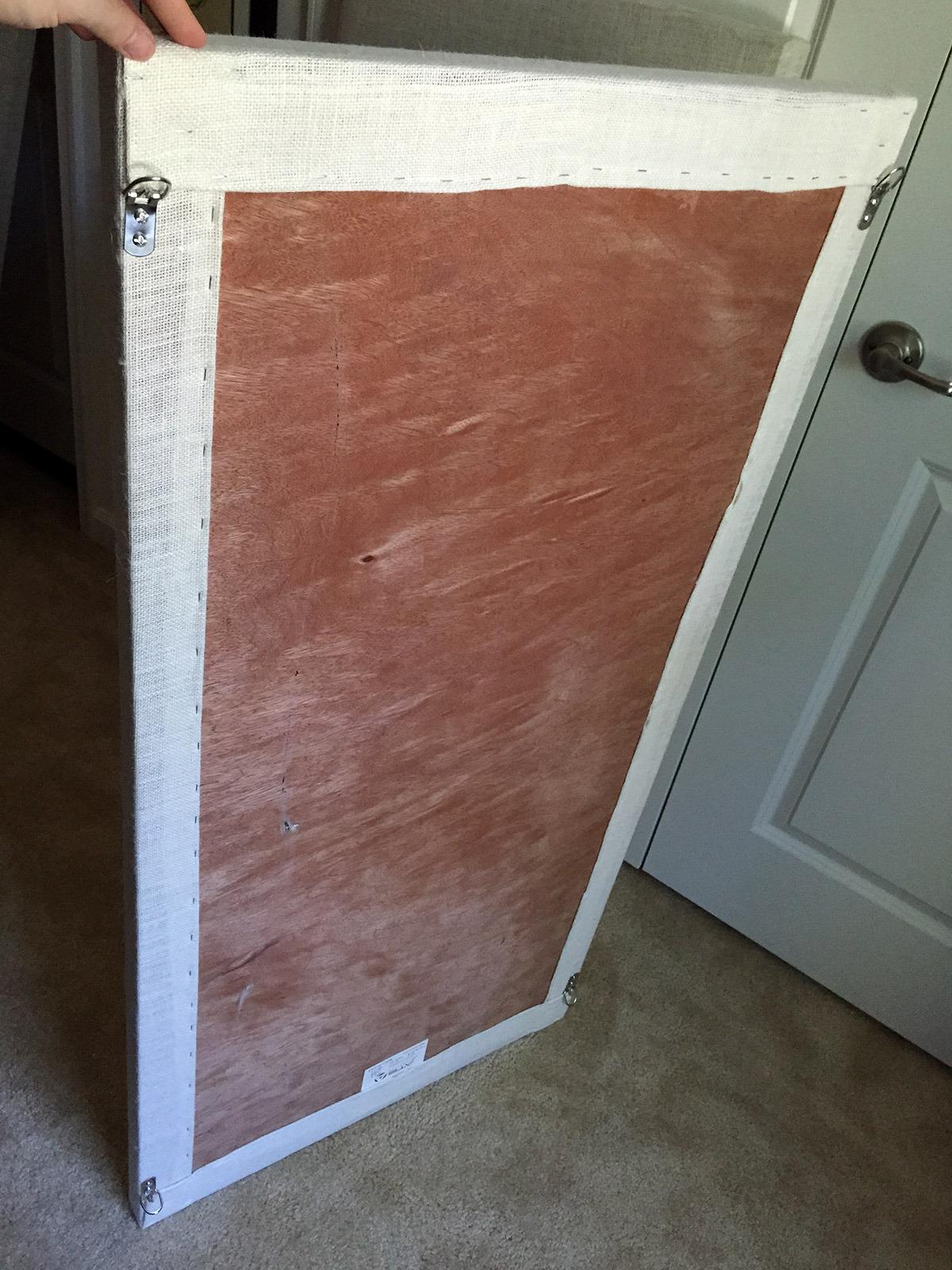
The build is the other story. This is the only pack here with a solid wood internal frame and a full wood back, which makes it noticeably heavier at 8.3 pounds and much harder to flex or dent in transit. For a room that is also a home office, the fabric finish looks good enough to stay up permanently.
Two inches of depth is the sweet spot for speech. Thinner tiles fade out in the low midrange, while three and four inch panels start doing work you may not need for a talking-head show. If your voice is loud or your room is bare plaster, going deeper is a reasonable next step.
The mounting kit is a genuine time saver. A paper template and hardware are included, and reviewers repeatedly mention how quickly a level row of panels goes up. Buy a spare template if you are covering more than a handful of panels, because that paper wears out.
What to check before you order
Decide how many you need before you order, because the wall kit is wall only. Owners who wanted ceiling mounting had to source their own hardware, so plan for that if you are covering a ceiling cloud.
Also know that the full wood back is thin, which keeps the weight down but makes it harder to fully seat screws in some wall types. A stud finder and a pilot bit solve it in a couple of minutes.
Where it is the wrong choice
If your room is rented, this is a poor fit. The included hardware is designed for drilling into drywall, and there is no freestanding base in the pack.
It is also overkill as a single solution for a very small closet booth. One panel in a tiny space can over-damp the room and make a voice sound closed in rather than clean.
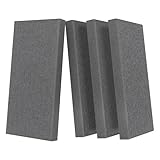
3. UMIACOUSTICS 4-Pack 23.6 x 11.8 Inch Fiberglass Panel: best mounting system for first reflection points
4 Pack Acoustic Panel 23.6″x11.8″ Soundproof Fiberglass Panel,Charcoal Grey
23.6 x 11.8 inch panels
2 inch fiberglass core
Bracket mount,1/4 inch air gap
E0 environmental rating
Pros
- Bracket system holds heavy panels securely
- 1/4 inch air gap improves low mid absorption
- Template keeps rows aligned
- No chemical smell on arrival
Cons
- Included anchors and screws are weak
- Rear nubs only suit vertical mounting
- Some reports of uneven corners and fabric finish
This four-pack is built around a 2 inch white fiberglass core under a high density polyester wrap, and the mounting hardware is the story. Instead of picture hangers, each panel uses integrated metal pins and powder coated brackets, two per panel.
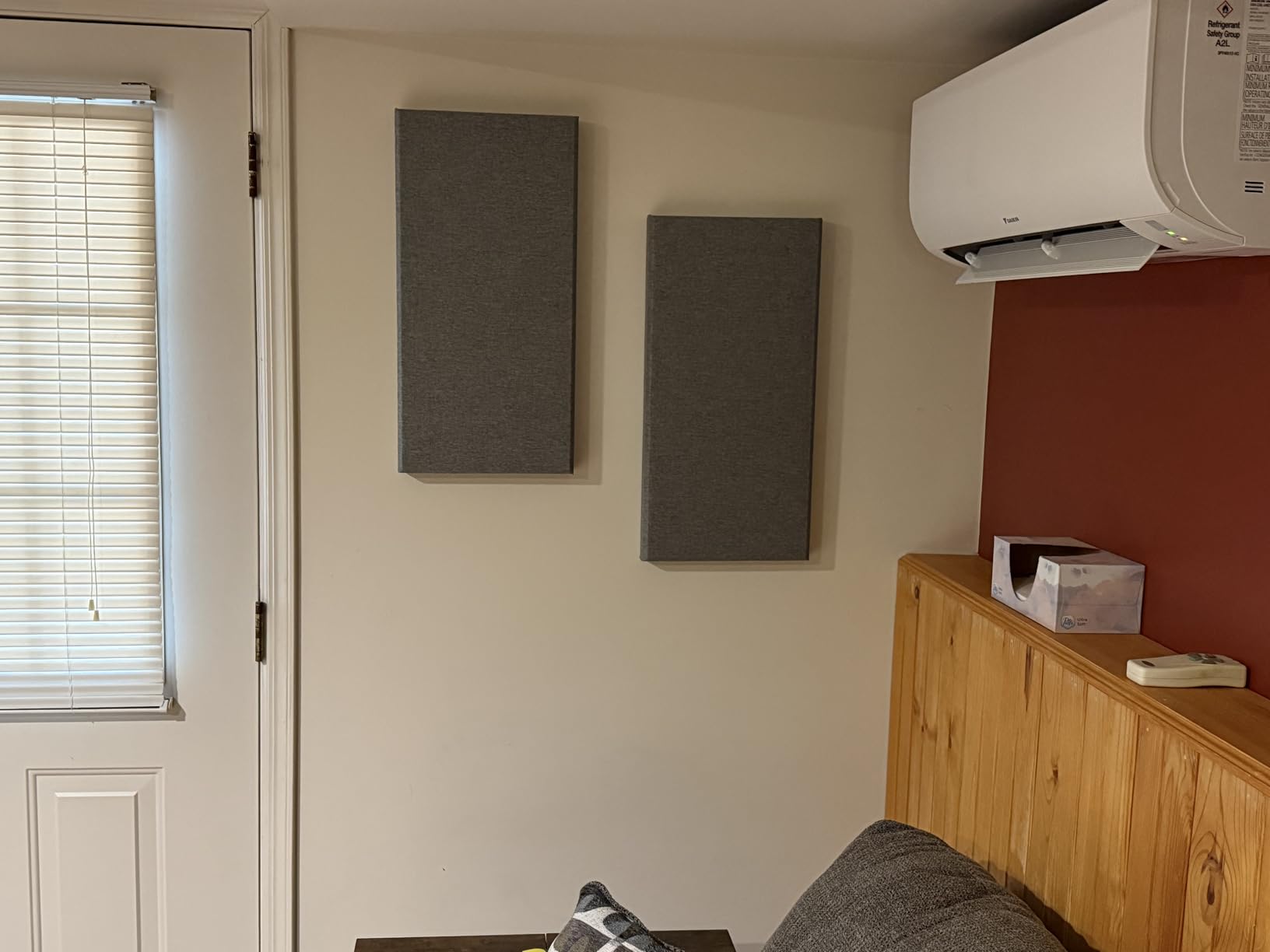
Owners upgrading from picture hanger style kits single this system out for both security and alignment. That matters more than it sounds. A first reflection panel that slowly slides down a wall gives you a worse result than no panel at all, and rows that sit slightly crooked are visible on camera.
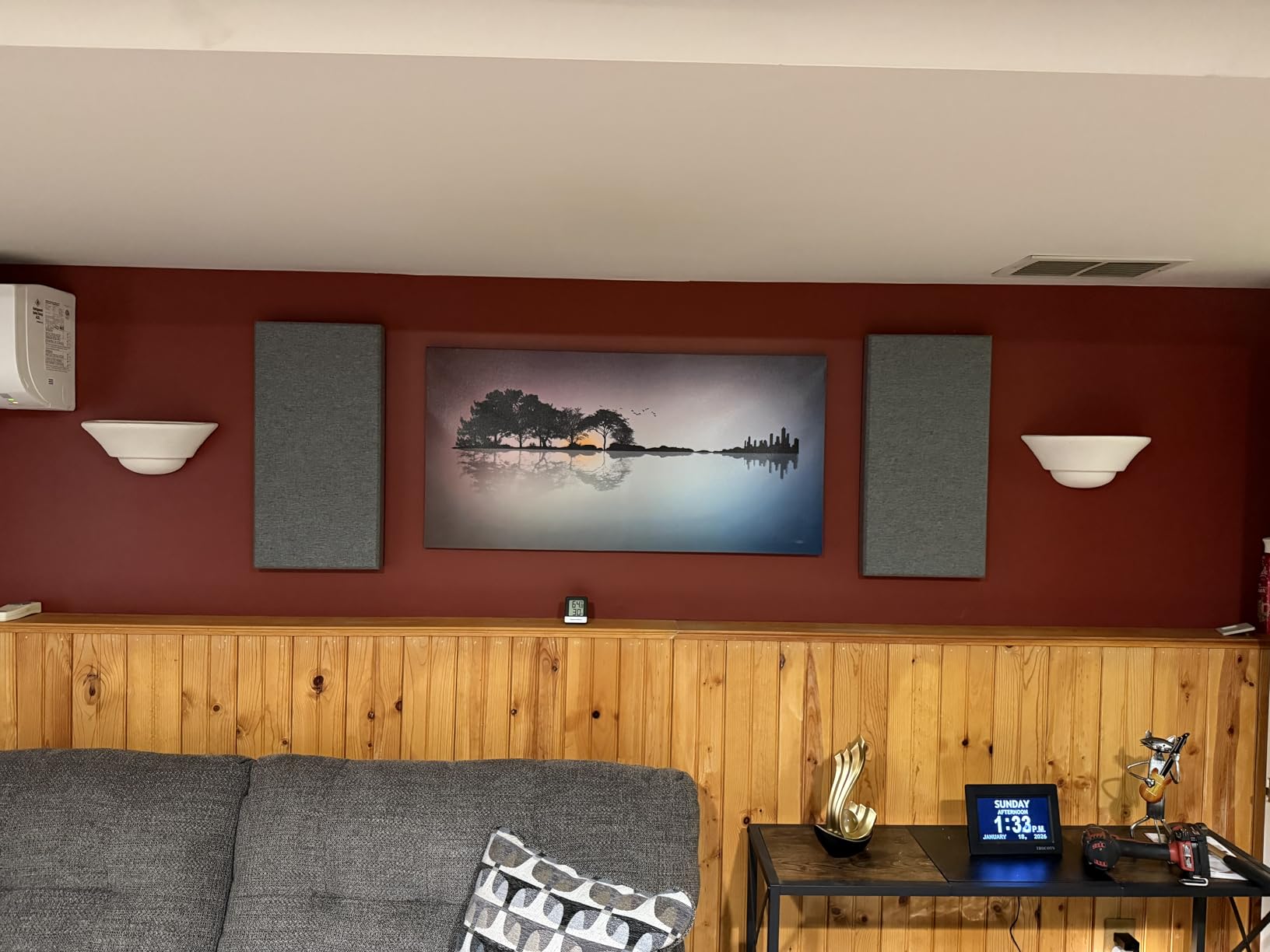
The bracket leaves roughly a quarter inch of air behind the panel. That gap is worth something acoustically, because a panel mounted flush against drywall loses some of its low frequency absorption compared with one held slightly off the wall. Owners who moved from thin tiles report noticeable improvement in how flutter echo feels while talking.
The fabric is acoustically transparent rather than a decorative shell, and the core is E0 rated, which is a useful data point if the room doubles as a bedroom. There was no chemical smell on arrival in the reviews we read.
Four panels at 23.6 by 11.8 inches is a modest amount of coverage, roughly 7.7 square feet per pack. Plan on two or three packs for a small room, positioned as a matched pair on each side wall at ear height during recording.
What to check before you order
Buy your own anchors. The plastic wall anchors and drywall screws in the box are regularly described as too weak for full length panels of this weight, and they make levelling harder than it needs to be.
The rear mounting nubs are set up for vertical mounting only, so if you want one on the ceiling, buy a separate bracket rather than improvising.
Where it is the wrong choice
At 4.5 stars across a few hundred reviews it is solid but not exceptional, and a few owners report sloppily finished corners or an inconsistent fabric finish between panels in the same pack.
If your priority is covering a lot of wall quickly, four narrow panels will take longer to install than one large-format pack.
4. BUBOS 6-Pack 23.6 x 23.6 Inch Wood Grain Panel: best large-format panel for full-wall coverage
BUBOS 6-Pack Acoustic Panels, Wood Grain Sound Absorbing Panels, 23.6×23.6
6 panels at 23.6 x 23.6 inches
High density polyester core
0.35 inch profile
Dual mount adhesive or nails
Pros
- Wood grain print reads as real slat panelling
- 23.6 inch squares cut visible seams
- Cuts cleanly with a box cutter
- Can be vacuumed for dust
Cons
- Adhesive quality varies between packs
- Full back adhesive can strip paint
- 0.35 inch profile gives modest absorption
Six 23.6 inch squares cover a lot of wall with very few seams, and that is the practical argument for this pack. A 12 inch tile layout needs four panels where one of these panels sits, and every seam is a visible interruption on camera.
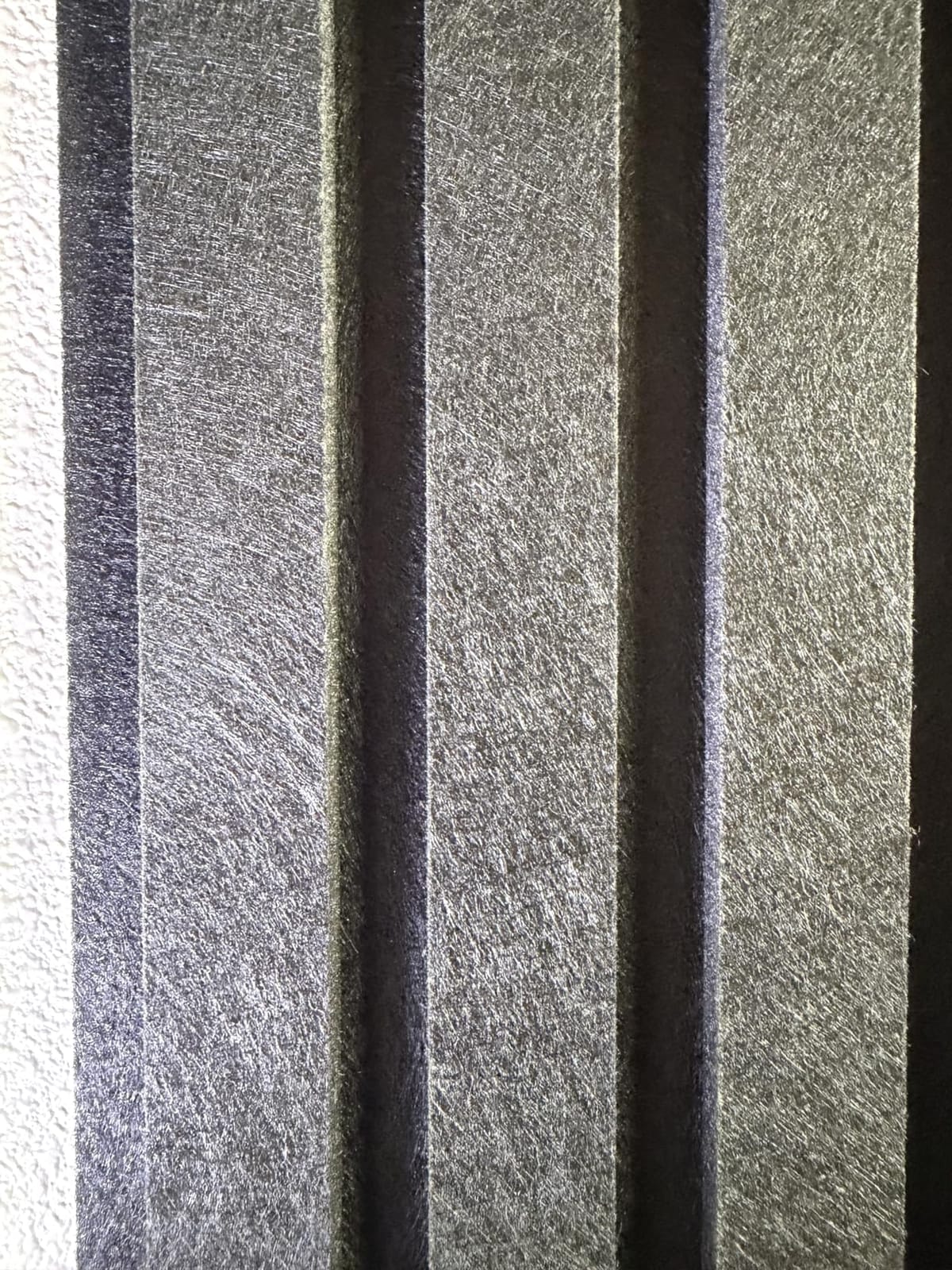
The Light Diamond Weave wood grain print is the other selling point. Reviewers repeatedly say it reads as genuine slat panelling rather than as foam, which matters in a room that doubles as an office or a set.
At 0.35 inches thick, this is a decorative and moderate absorption product rather than a heavy one. It targets mid to high frequency reflections and flutter echo, which covers a large share of what makes an untreated room sound cheap.
The panels are light enough to cut with a box cutter, so you can trim them to fit around a window, a door frame or an odd ceiling angle. They are also vacuumable, which matters more than it sounds in a room where a host sits close to the wall.
Installation is dual mount. You can use the full surface adhesive backing or trace free wall nails if the paint is fresh and you do not want to risk it.
What to check before you order
Ask yourself whether you are allowed to stick things to the wall. The adhesive is described as inconsistent between packs, from small tape tabs to permanently bonding full back glue, and removing a well bonded panel can take paint with it.
If you are renting, use the nail option and a stud finder, or choose a product designed for free standing placement instead.
Where it is the wrong choice
At a 4.2 rating across well over a thousand reviews, the weak point is acoustic depth. The 0.35 inch profile means this will not touch the low midrange the way a two inch panel does.
If your room problem is boominess or bass buildup rather than echo and harsh reflections, this is the wrong shape of product and you will want a thicker core.
5. TONOR 4-Pack 47.2 x 23.6 Inch Dual-Layer Panel: best value for large surface coverage
TONOR Dual-Layer Thickened Acoustic Wall Panels-4 Pack 47.2″x23.6″x0.72″
47.2 x 23.6 inch panels
0.72 inch dual layer core
Self adhesive backing
Two year warranty
Pros
- Dual layer absorbs more than single layer panels
- Large footprint means few seams
- Pure peel and stick install
- Easy to trim to fit
Cons
- Adhesive is permanent and can damage walls
- Stripe pattern is less premium looking
- 0.72 inch profile is still shallow
Each panel here is nearly eight square feet, so a four pack covers an entire wall of a small room. Reviewers consistently highlight the coverage area for the money rather than the panel itself, and that is the correct way to think about this product.
The dual layer reinforced structure at 0.72 inches thick does absorb more than a single layer panel of the same footprint. It is not going to match a two inch mineral wool panel, but it sits well above a thin decorative tile.
Installation is genuinely quick. Self adhesive backing means no tape, no anchors and no tools, and the reinforced corners protect the panels during transit, which matters when you are ordering a pack that size.
There is a two year manufacturer warranty, which is not universal in this category. The panels can also be cut to fit unusual room dimensions, so a sloped ceiling or a recessed alcove is not a problem.
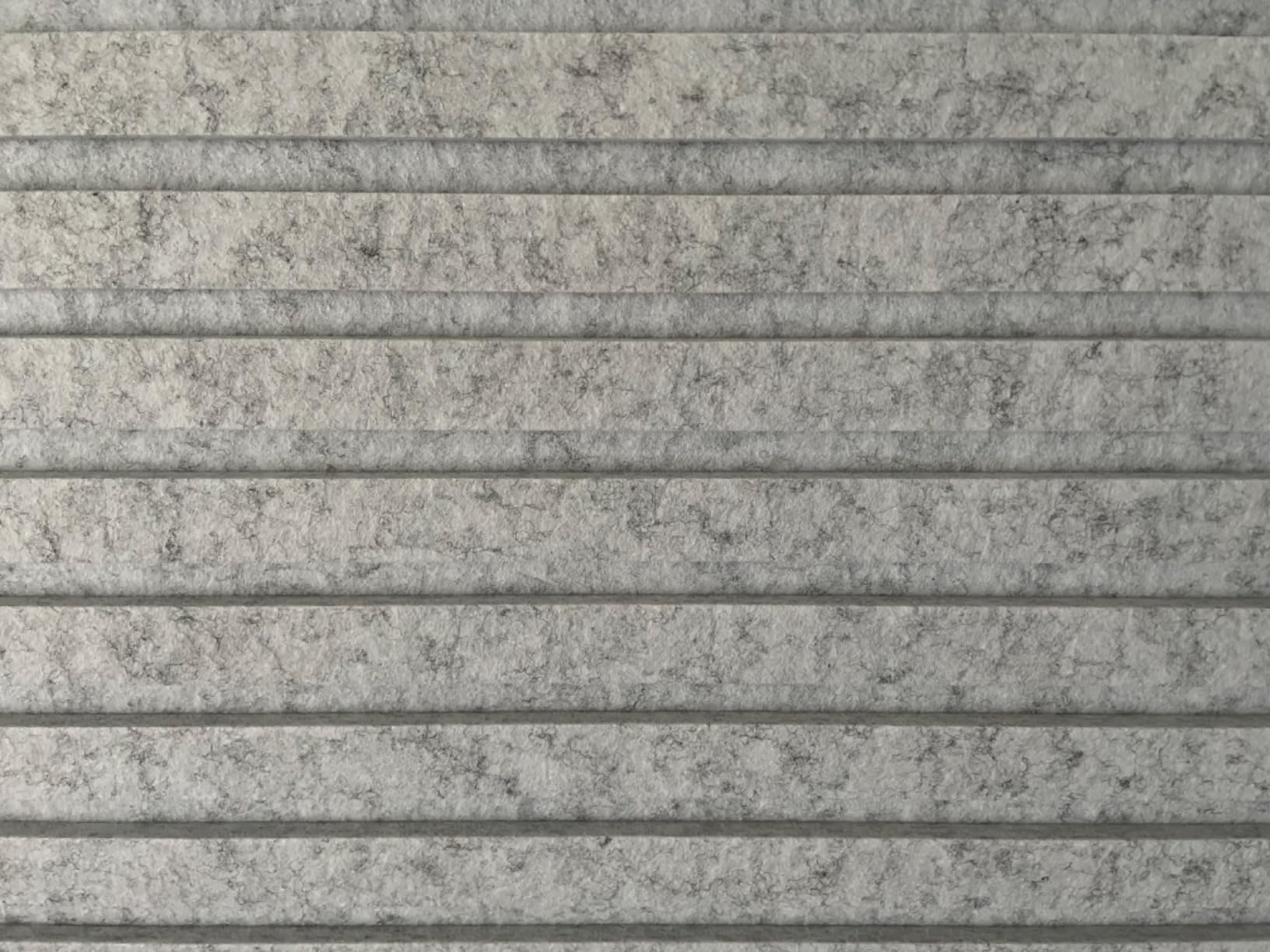
The classic stripe pattern is the compromise. It looks tidy on a wall, but it is not the same as a woven fabric or a real wood grain finish.
What to check before you order
Treat the adhesive as permanent. Owners who wanted to reposition a panel found it difficult to remove without damaging the wall, so measure twice and mark your wall before you peel.
If the room is rented or the paint is freshly applied, this is not the pick. Look for a nail mounted or free standing alternative instead.
Where it is the wrong choice
If your priority is low frequency control, 0.72 inches is shallow. You will hear less of an improvement on male voice boom than you will on hiss and harsh reflection.
It is also a poor fit for a visible corner of a video podcast set where the finish matters more than the absorption.
6. BXI 6-Pack 16 x 12 Inch Absorber: best budget pack for taming echo
BXI Sound Absorber – 16 X 12 X 0.4 Inches 6 Pack High Density Acoustic Absorption Panel, Sound Absorbing Panels Reduce Echo Reverb, Tackable Acoustic Panels for Wall and Ceiling Acoustic Treatment
6 tiles at 16 x 12 inches
NRC 0.95 rating
200kg/m3 polyester fiber
Class B1 flame retardant
Pros
- Very affordable way to cover large wall and ceiling area
- Lightweight and easy to cut into tiling patterns
- Nine colour variants
- Listed for podcast and YouTuber rooms
Cons
- Only 0.4 inches thick so high frequencies only
- Mounting adhesive sold separately
- Stiff material is slightly tricky to trim
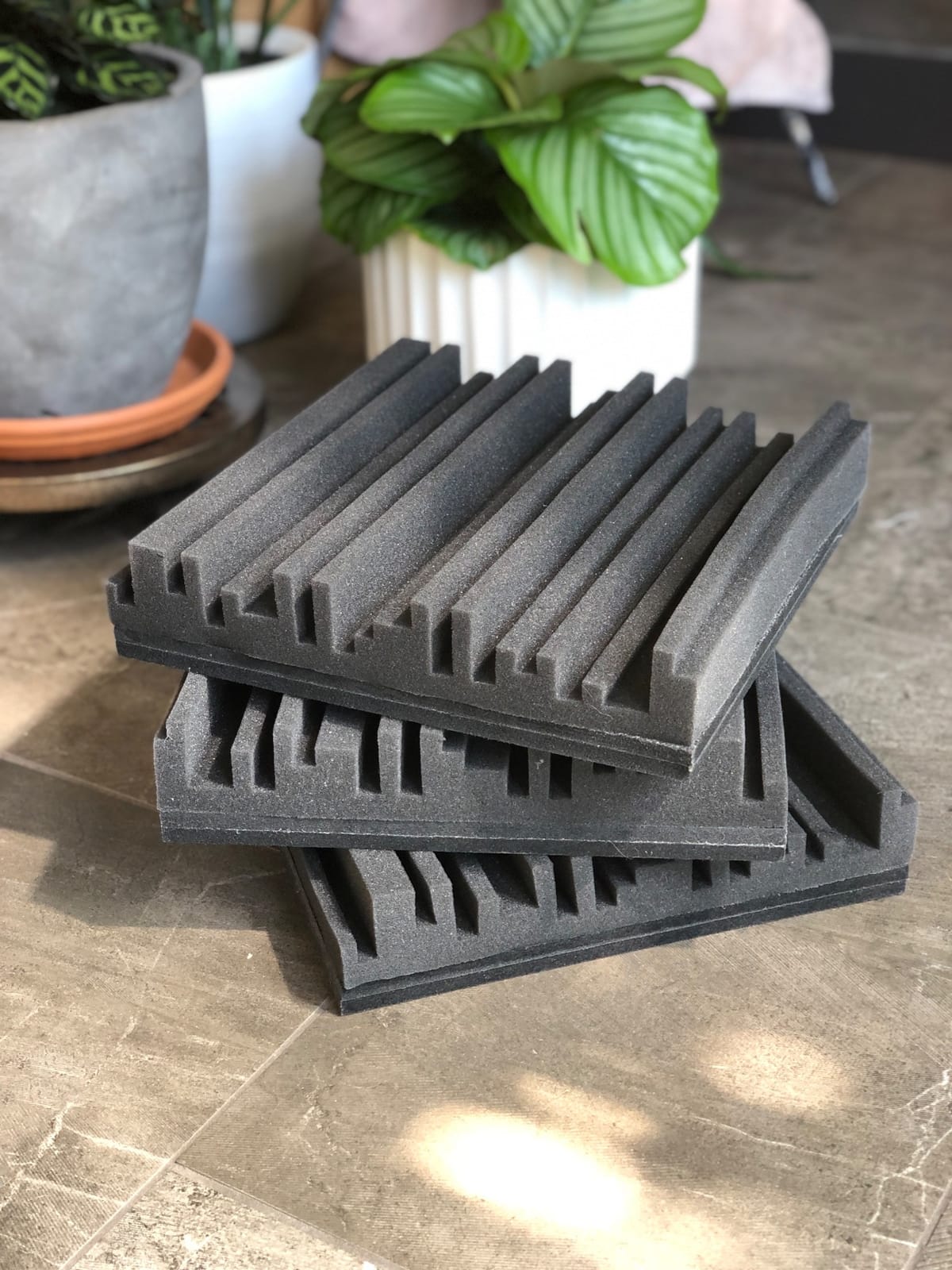
This is the pack we recommend when someone asks whether acoustic panels are worth it for podcasting. Six tiles for the price of one mid tier panel, with a published NRC of 0.95 and an average absorption coefficient of 0.86.
The density figure is the interesting number. At 200kg/m3 of high density polyester fiber, this is a real absorber rather than a decorative brick, and reviewers describe it as effective for taming high frequency reflections, clapping echo and ringing in small rooms.
Six tiles cover 7.7 square feet and weigh under three pounds in total, which makes ceiling coverage realistic for the first time. Nine colour and size variants mean you can tile a room decoratively rather than in a functional grid.
It is also explicitly listed for podcast and YouTuber rooms, which is a small signal that the manufacturer understands the use case.
One practical note: the mounting adhesive is not included. Budget for construction adhesive or 3M VHB tape, which adds to the cost but keeps the per square foot figure low.
What to check before you order
Understand the thickness limit. At 0.4 inches this works on hiss, sibilance and flutter echo. It will not stop noise transmission, and a minority of owners feel the effect is negligible in larger rooms.
Get your own adhesive. The material cuts straight but is fairly stiff, so a sharp blade and a straightedge will produce cleaner edges than a utility knife alone.
Where it is the wrong choice
Do not use this as a bass treatment. Thin tiles leave low frequency energy untouched, and a room with hard parallel walls will still boom.
Some reviewers also report that colours arrived different from the listing photos, so order a single pack first if the exact shade matters to your set.
7. Dmsky 18-Pack 12 x 12 Inch Panel: best for fast DIY coverage on a budget
18 Pack Black Acoustic Panels 12″X12″X 0.4″Sound Absorbing Panel Wall Decoration Soundproof Wall Panels High-Density Sound Deadening Panels Acoustic Treatment Panel For Home Studio
18 tiles at 12 x 12 inches
High density polyester fiber
0.4 inch thick
Chamfered edges
Pros
- Extremely high review volume makes results easy to verify
- 18 tiles cover a full wall quickly
- Chamfered edges butt together with no gaps
- Vacuumable for upkeep
Cons
- Adhesive is effectively permanent
- Tiles measure about 11.75 inches not 12
- Foam variants can arrive deformed
- Some sets reported a musty smell
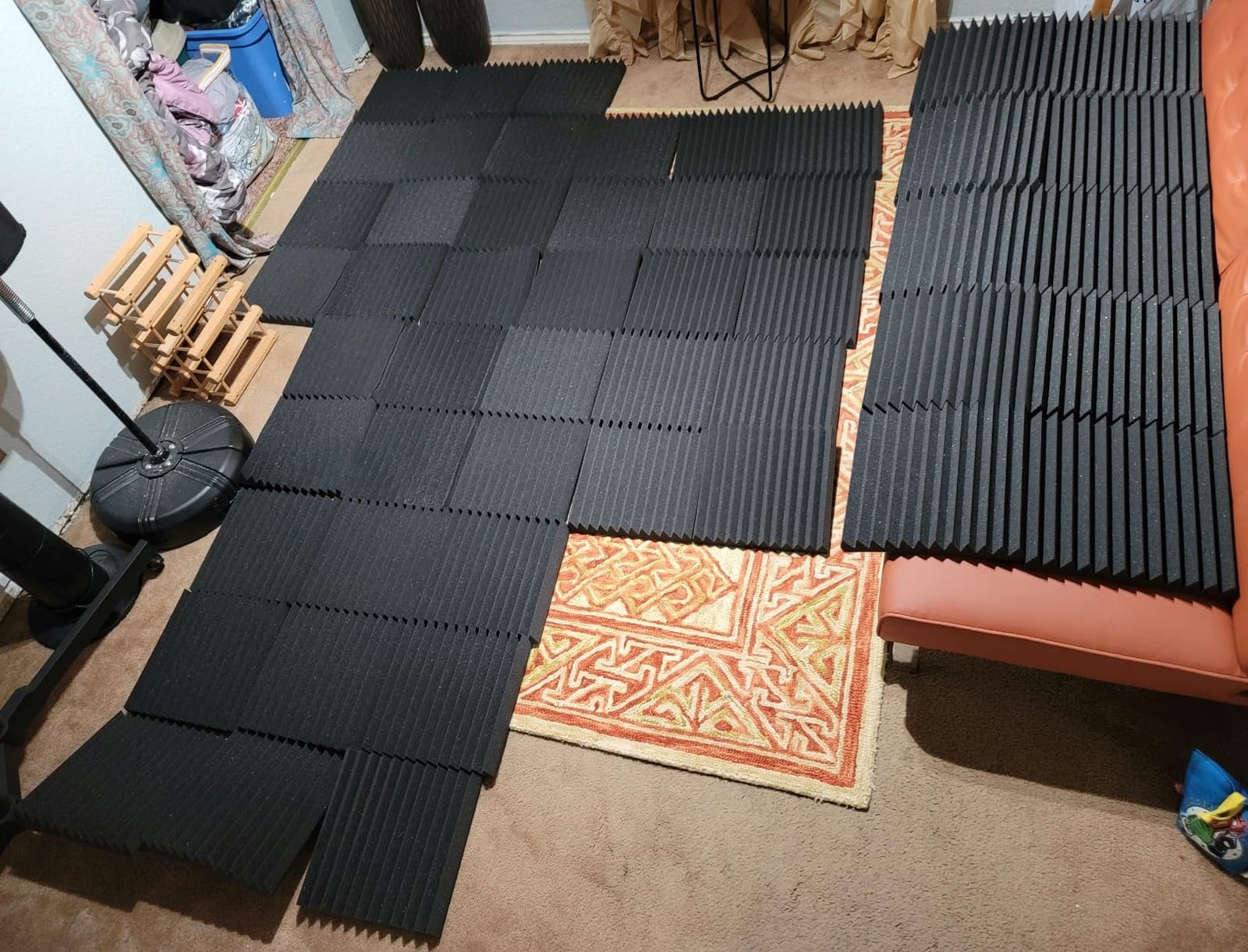
Eighteen tiles is the fastest way to change the sound of a small room without a drill. The high review count means the performance claim is easy to verify rather than something you have to take on faith.
Owners broadly agree it works for echo control at a very low price per tile, and that dense enough is the operative word. Chamfered edges at 45 degrees let tiles butt together with no visible gaps, which is why it photographs well for a video podcast backdrop.
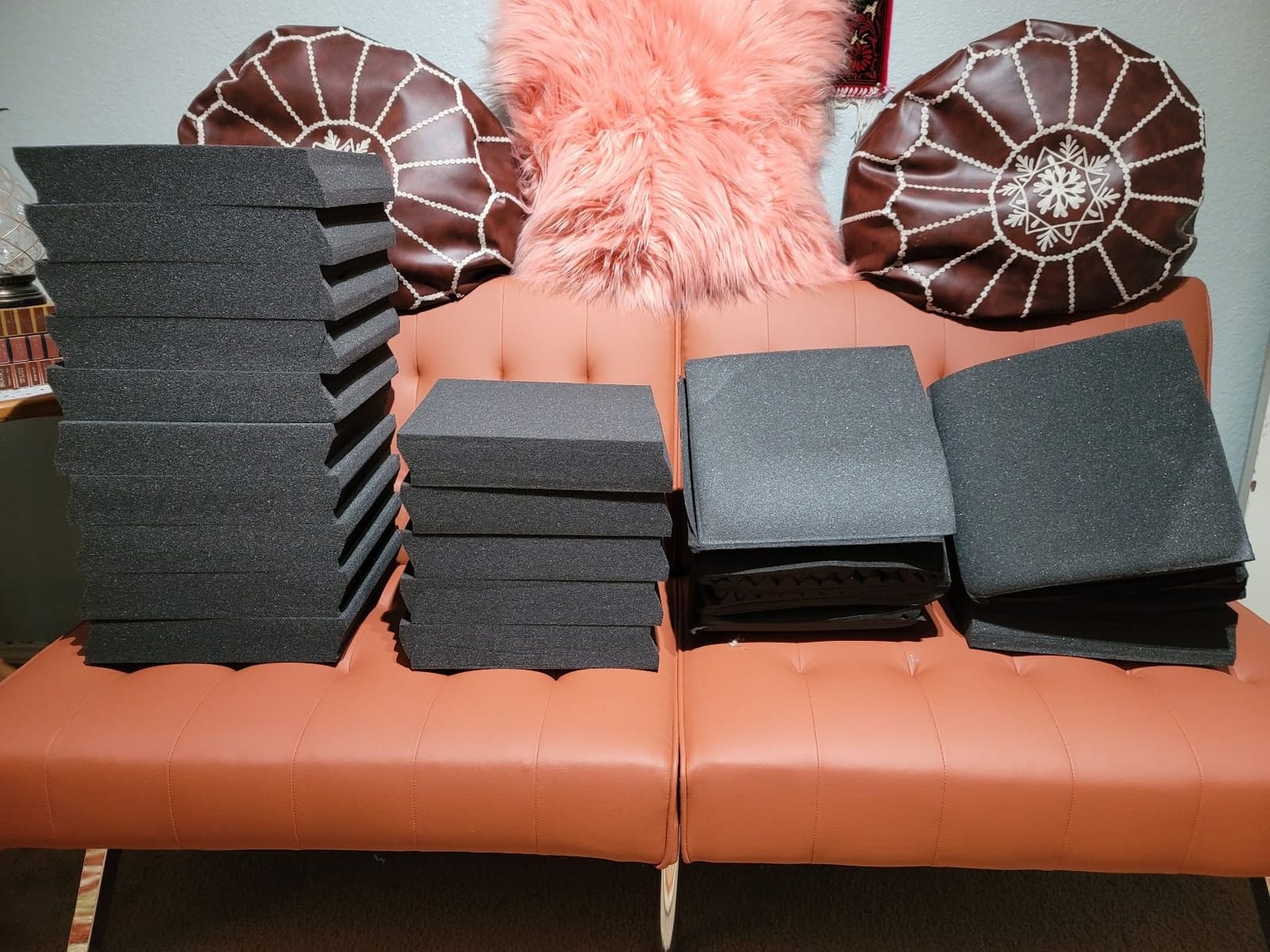
At 0.4 inches the panels handle high frequency reflections, reverberation and flutter echo. They are not a low frequency product and should not be sold to you as one.
Maintenance is unusually easy. The surfaces are vacuumable or damp wipeable, and unlike slatted wood products they do not trap dust in a gap. The square variants can be cut and re stuck, which gives you some flexibility with layouts.
The pack weighs about a third of a pound per tile, so a full wall goes up quickly and can be repositioned while you are still working out where the reflections are.
What to check before you order
Measure before you stick. Owners report tiles arriving at about 11.75 inches rather than a true 12, which shows up as a gap if you are trying to align a full wall.
Do not buy this for a rented room. The adhesive is described as extremely strong and effectively permanent, and it can strip paint when you try to remove a panel.
Where it is the wrong choice
A minority of sets have reported developing a musty or mildew smell after a few months, and foam variants can arrive deformed from vacuum packaging and need several days to expand.
At a 4.1 rating it is the lowest score in this roundup. That still makes it one of the most proven budget options, but manage expectations about how much it will change a large or bass heavy room.
8. Soundsbay Hexagon 18-Pack Self-Adhesive Panel: best for streaming and video podcast setups
Soundsbay Hexagon Acoustic Panels, Self-Adhesive 18 Pack Sound Panels
Hexagon tiles, 18 pack
Porous polyester fiber
Self adhesive backing
No tools needed
Pros
- Hexagon shape gives a modern geometric look
- Truly self adhesive with no extra tape
- Light enough for doors and ceilings
- Installing the full grid gives the best result
Cons
- Listed thickness of 0.04 inches is very thin
- Not a broadband absorber
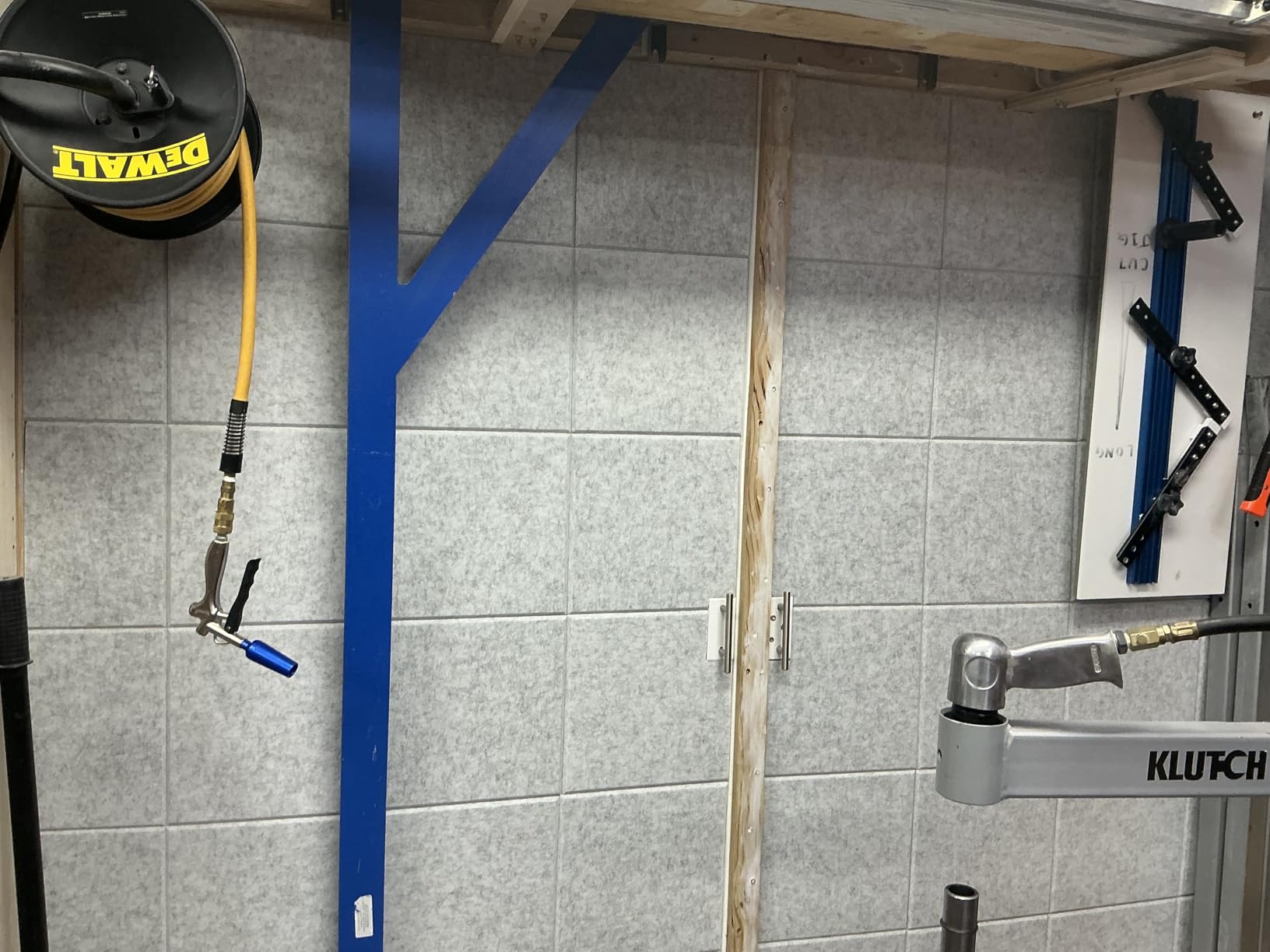
Hexagon tiles solve a visual problem that no other pack on this list solves. A grid of hexagons reads as deliberate design, so the wall behind you looks styled rather than treated.
Installation is the simplest here. Peel and stick kraft paper backing, no tools, and light enough panels that owners mount them on doors and windows as well as walls and ceilings.
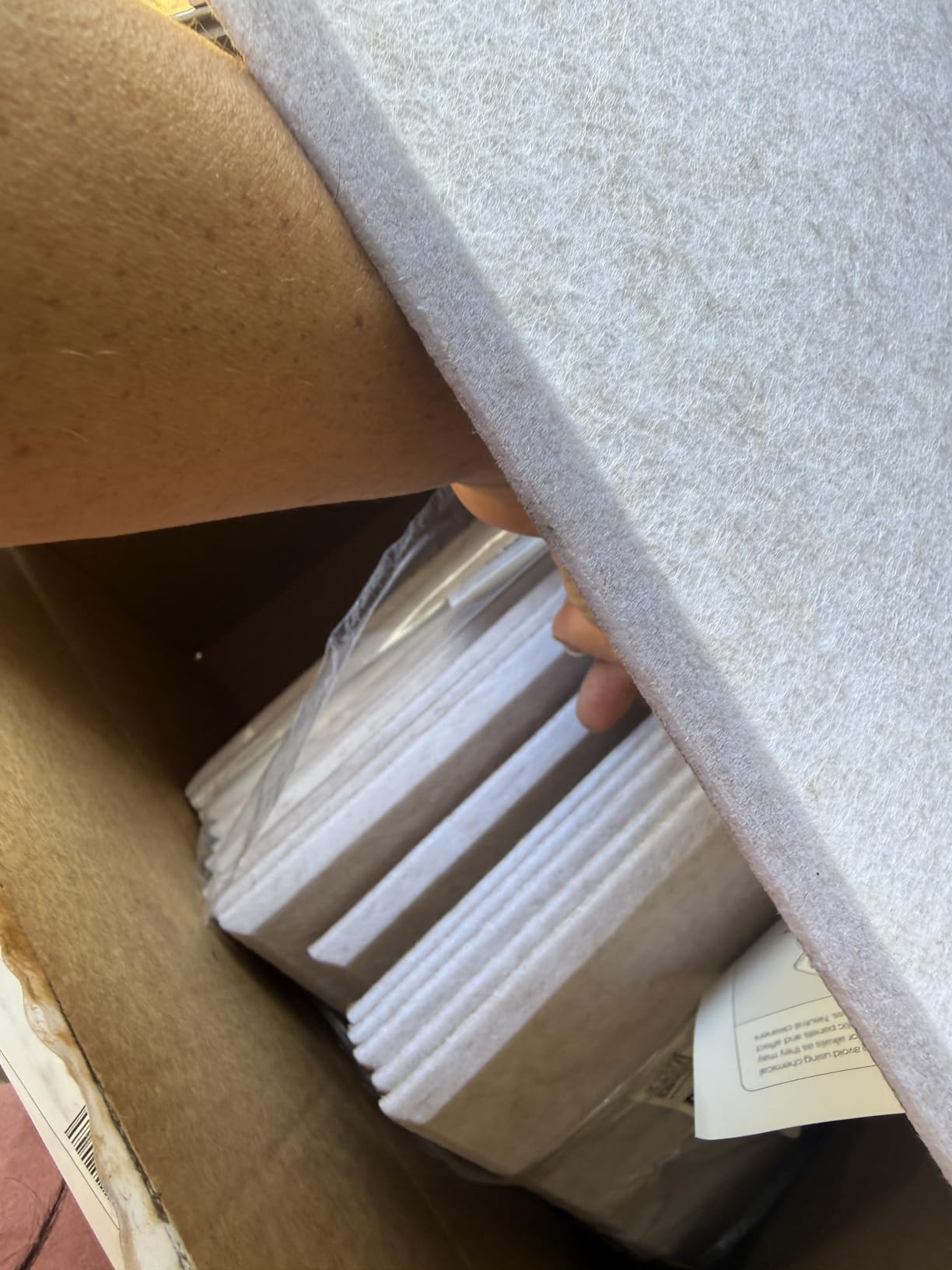
Buyers report improved clarity in offices and streaming rooms, and performance is consistently framed as reflection and echo control rather than isolation. That is the honest description of what a porous polyester tile does.
The full grid matters here more than with rectangular tiles. Owners note that installing the complete hexagon pattern together gives the greatest noise reduction, so partial coverage gives you more decoration and less sound change.
Multiple colour options exist in both square and hexagon shapes, in 12 and 18 pack sizes, so you can match a room rather than accept whatever colour arrives.
What to check before you order
Check the thickness figure before you commit. The listed 0.04 inches is very thin, which limits low frequency absorption and makes this a reflection control product rather than a broadband absorber.
Plan the grid on paper first. Hexagons interlock, and a half finished grid on a wall behind a host looks intentional in a way that a stray gap does not.
Where it is the wrong choice
If your problem is flutter echo between two hard parallel walls, the narrow working range of a very thin tile will only partly address it.
Reviewers are also candid that these are not a substitute for real studio treatment. They soften reflections and help speech clarity, which is what most streaming rooms actually need.
9. JBER 4-Pack Corner Bass Traps: best budget corner treatment
JBER 4Pack Acoustic Foam Corner Bass Traps, Studio Foam Corner Block Finish
Triangular corner blocks, 12 x 7 x 7 inches
4 pack
Targets low and mid frequencies
Glue, tape or nail mount
Pros
- Cheapest way to treat the corners where buildup is worst
- Triangular shape fits wall and ceiling junctions
- Can also mount flat on a wall
- Sharp square edges look clean
Cons
- Foam depth limits the lowest frequencies despite the bass trap label
- Open cell foam texture shows dust
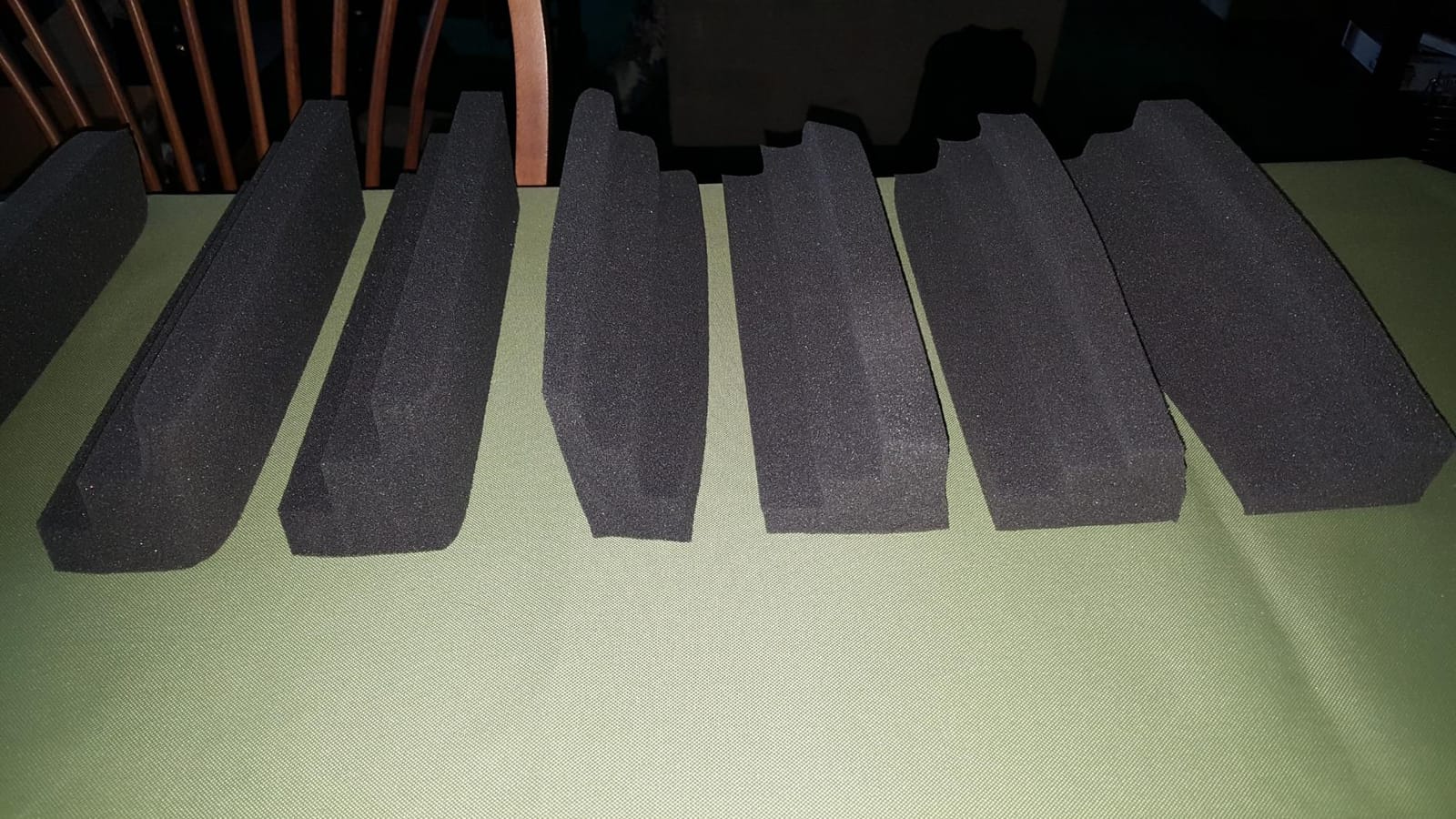
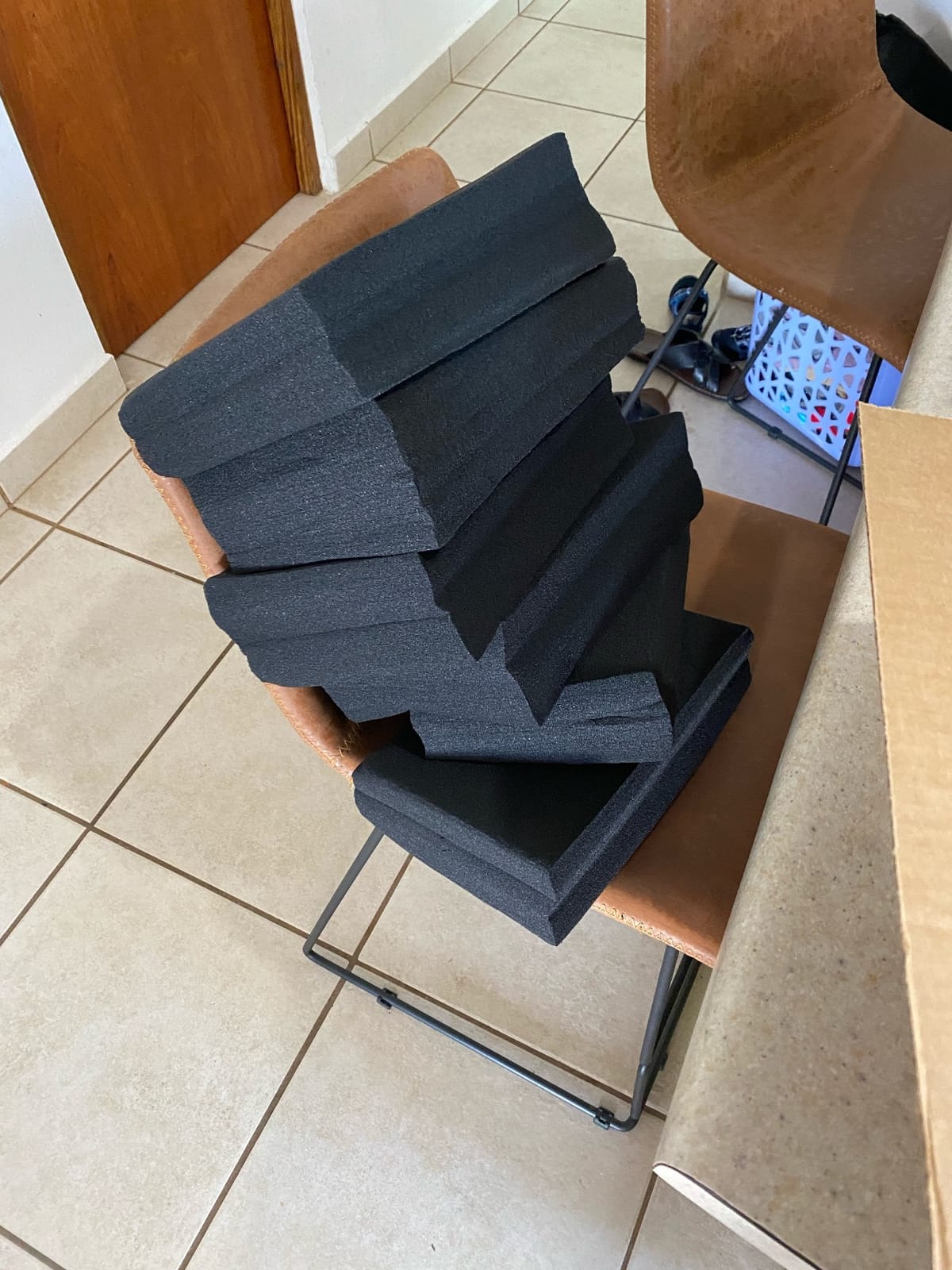
Corners are where low frequency energy accumulates, and these triangular blocks fit straight into the wall to ceiling junction with no cutting. Four per pack covers two corners if you use two per corner, which is the usual approach.
With more than two thousand reviews, this is a well established budget corner treatment. Owners buy them in multiples to fill every corner of a small room and report that the studio look and low cost justify it.
Be clear about what foam can and cannot do. One Gearspace regular, TomSleebus, put the general case well: foam is not price effective and reaching the lowest vocal frequencies needs real thickness, with 10cm foam absorbing maybe down to 500Hz depending on its density rating. Another, johannburkard, warned that foam in a small room will probably make you sound like you are in some kind of plastic bag.
That critique lands hardest on a small bedroom. In a larger or brighter room, filling corners with foam blocks reads as deliberate treatment rather than over-damping.
They are lightweight at about a pound each and mount with glue, double sided tape or nails, so no hardware is required. Sharp square edges give a clean professional finish at a junction that usually looks neglected.
What to check before you order
Consider whether you need bass traps at all. A long standing Gearspace consensus among experienced members is that for just talking, rockwool and bass traps are unnecessary, unless you have a rather loud voice.
If you do buy them, treat them as corner filling rather than as the main treatment. Broadband panels at first reflection points do more for clarity.
Where it is the wrong choice
Despite the bass trap label, foam construction performs well for mid and high frequencies and only modestly at the lowest frequencies, which is what reviewers consistently note.
The open cell texture also shows dust and debris over time, so plan on vacuuming the corners if the room is used as living space.
10. JaneTech 6-Pack Decorative Acoustic Panel: best for home office looks
JaneTech 6 Pack Wood Acoustic Panels, Decorative Acoustic Wall Panels Sound Absorbing with Nano Glue for Recording Studio, Home Office, Conference Room, Sierra Weave, 23.62×23.62 Inches
6 panels at 23.62 x 23.62 inches
Sierra Weave wood look print
Nano glue adhesive squares
Numbered backing
Pros
- Looks like framed wall art rather than foam
- Large panels cover more area per piece
- Numbered backing aids pattern alignment
- Lightweight rigid dust resistant surface
Cons
- About 1 cm thick so absorption is modest
- Nano glue squares stripped drywall paper in testing
- Some panels arrived with print defects
- Air gap mounting can create low frequency resonance
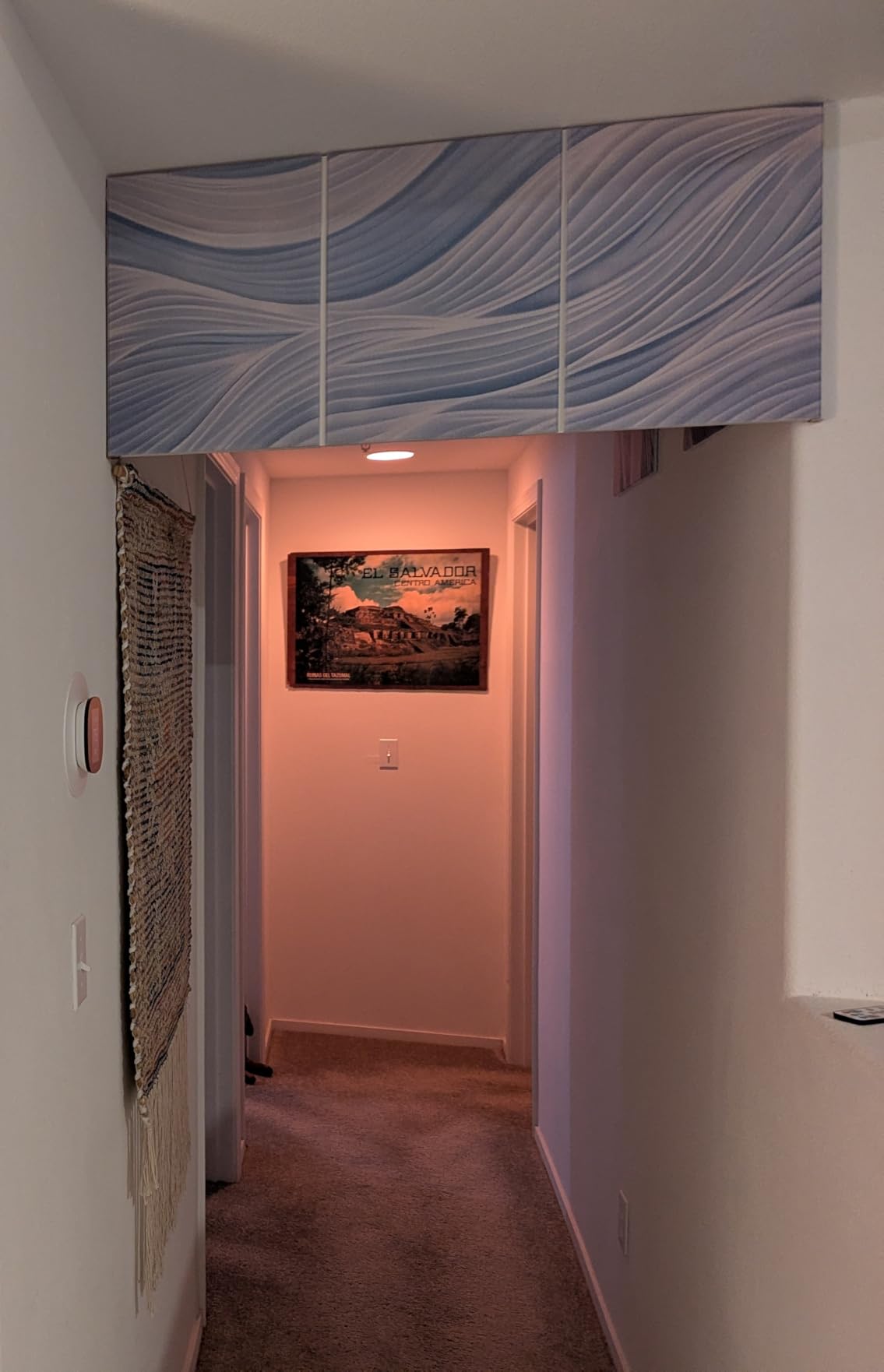
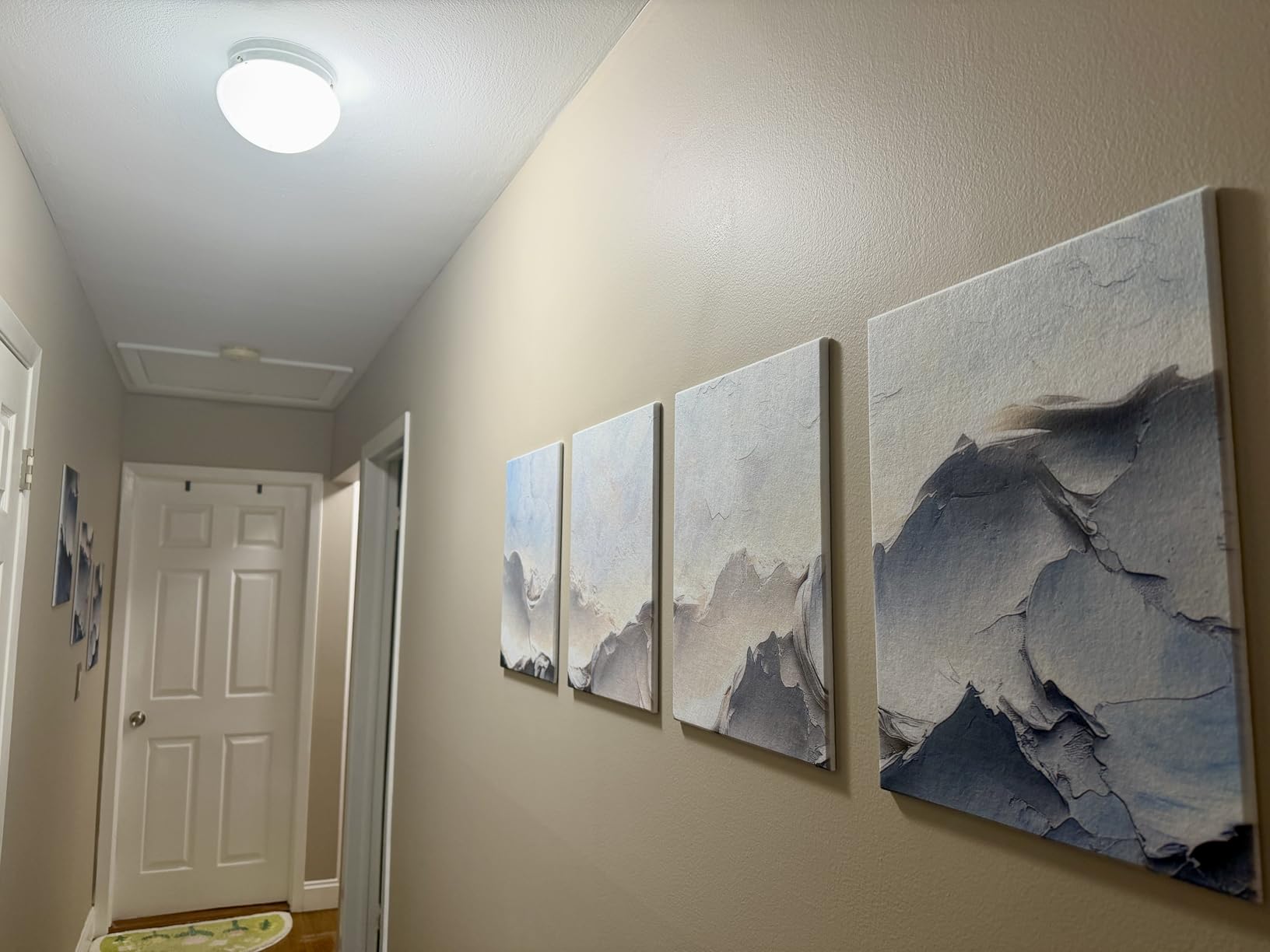
This is the panel for a room that has to look like an office during the day. The Sierra Weave print reads as framed wall art rather than acoustic foam, which is the whole point for a live in space.
Six panels at 23.62 inches square assemble into a 72 by 48 inch arrangement, and the numbering printed on the back of each panel makes matching the pattern straightforward. That detail sounds minor until you are laying out six printed panels on a wall.
Detailed reviewers measuring with decibel meters characterise these honestly as decorative softening that helps speech clarity and video call quality, not as a substitute for real studio treatment. We think that is the right description and the right expectation.
The surface is lightweight, rigid and dust resistant, and it installs with included nano glue squares roughly 1 cm thick, with no hardware.
At 9 pounds for six panels this is a substantial pack that covers a real wall area, and it suits gaming, streaming and podcast rooms that are also used for calls.
What to check before you order
Measure the absorption you are actually getting. At roughly 1 cm thick, performance is modest and skewed to higher frequencies, so treat this as a finish upgrade with a sound benefit rather than the fix for a bad room.
Test the adhesive on a hidden spot. Reviewers stripped drywall paper during testing, and nano glue squares are permanent by design.
Where it is the wrong choice
Air gap mounting can introduce low frequency resonance rather than removing it, so this is a poor choice if your problem is boom rather than echo.
Some panels also arrived with print defects and visible pixelation up close, which matters in a room where a camera sits two feet from the wall.
Buying Guide: How to Choose Acoustic Panels for a Podcast Room
Choosing well comes down to four numbers: thickness, core density, coverage area and how they attach. Everything else on a product page is decoration. Here is how we weigh each one, plus the maths for how much treatment a room actually needs.
Thickness decides the frequency range
Thicker panels absorb lower frequencies, and that single fact explains almost every trade-off on this list. A tile at 0.4 inches handles hiss, sibilance and flutter echo. Two inches reaches the low midrange where male voice boom lives. Four inches starts doing work you need for music and large rooms, not for most spoken word recording.
For a podcast room with a normal speaking voice, two inches is the target. Go thicker if you have a loud voice, a very reflective room, or you also record instruments or video with a lot of movement.
Core material changes the character of the sound
Mineral wool is the most efficient broadband absorber per unit of thickness, which is why the ATS panel reaches NRC 1.0 at two inches. Fiberglass wrapped in acoustically transparent fabric sits close behind and is what the UMIACOUSTICS pack uses.
Polyester fiber at high density is softer, safer for air quality and easier to cut, and it is the core of the BXI, Dmsky, BUBOS and TONOR packs. Foam is the least efficient of the four and is the material practitioners warn most about in small rooms. PET felt and wood slat panels are finishing products first and absorbers second.
Two other specs deserve attention. Flame retardancy matters in a live in room, and the BXI pack is listed as Class B1 and formaldehyde free. Low VOC matters if you sleep or work in the space, which is a documented concern for bedroom studios.
How much treatment is enough: the 38% rule
The 38% rule says that covering roughly 38% of a room’s total surface area with absorption meaningfully tames reflections and reverberation. Total surface area means all six surfaces, not just the walls. A 10 by 12 foot room with an 8 foot ceiling has about 672 square feet of surface, so the target is roughly 255 square feet of panel area.
In practice nobody hits 38% and nobody needs to. For a spoken word room, treating first reflection points, the wall behind the speaker and a ceiling cloud gets you most of the benefit. The rule is a ceiling, not a quota, and our guidance is to buy in stages and listen between stages.
Panel quantity by room size
As a rough guide using 2 by 2 foot panels and 2 by 4 foot panels: a 4 by 6 foot closet booth needs one 2 by 4 foot panel behind the talker and two small tiles, roughly 8 square feet. A 6 by 6 foot room is better served by four 2 by 2 foot panels at first reflection points plus one ceiling panel, roughly 20 square feet.
An 8 by 8 foot room wants six 2 by 2 foot panels or three 2 by 4 foot panels across both side walls plus a rear wall pair, roughly 30 square feet. An 8 by 10 foot room moves to eight 2 by 2 foot panels or four 2 by 4 foot panels with a ceiling cloud, around 40 square feet. A 10 by 12 foot room is where the packs on this list stop being enough and freestanding panels start making sense, roughly 60 square feet across walls and ceiling.
Our team put together a comparison of acoustic panels for home studios that goes deeper on the larger room end of this, and a separate guide to foam panels specifically for anyone who has been warned off foam and wants the detail.
Attachment decides whether you can actually install it
Drill mounted panels are the most secure and the least reversible. Self adhesive and nano glue squares are fast and renter friendly, but reviewers across several packs report that the adhesive is effectively permanent and can strip paint or drywall paper. Trace free wall nails are the middle ground and a good choice for fresh paint.
If you cannot touch the walls, the options narrow to free standing panels and desk screens, and it is worth planning the layout around that constraint before you buy rather than after.
Where to Place Panels in a Podcast Room
Placement matters more than panel brand for most home rooms, and it costs nothing to diagnose before you spend money. The 38% rule tells you how much to buy; the sequence below tells you where it goes.
First, sit in your recording position and clap your hands. A 15 year Gearspace member recommends exactly this: pay attention to where the sound bounces back from and put panels there. That is the clap test, and it takes ten seconds.
Second, run the mirror trick. Sit at the mic with a mirror and look for reflections off your side walls. Wherever you see the microphone in the mirror is a first reflection point, and those two points per wall are the highest value real estate in the room.
Third, fill the corners. Triangular blocks or a tall panel in each wall to ceiling junction catches the low frequency buildup that a flat wall panel misses.
Fourth, treat the wall behind the speaker. It stops your voice from bouncing back into the microphone from behind, which is one of the most audible problems in untreated rooms.
Fifth, hang a ceiling cloud above the talker and microphone. This catches the strongest reflection of all, the one that comes straight down from the ceiling, and it is where a two inch panel earns its keep.
One warning from the same Gearspace field report applies to every one of these picks: try not to have the microphone in a corner of the room. It may sound nice to you with the bass naturally amplifying there, but it only really amplifies some frequencies and gets annoying quickly as a listener.
Frequently Asked Questions
What are the best acoustic panels for a recording studio?
The best acoustic panels for a recording studio are thick, fabric-wrapped broadband absorbers with a mineral wool or high-density fiberglass core. For podcast rooms specifically, a 2-inch panel with an NRC of 0.85 or above is the practical target. Our top pick is the ATS Acoustics 24 x 48 x 2 inch panel, which pairs an NRC 1.0 mineral wool core with a solid wood frame. Thicker 3-4 inch panels only become necessary for loud voices, very reflective rooms, or music recording.
How many acoustic panels do you need in a room?
Most spoken word rooms are effectively improved with panels at the first reflection points on both side walls, the wall behind the speaker, and one ceiling cloud above the talker. In area terms that is roughly 20 square feet of panel for a 6 by 6 foot room, about 30 square feet for 8 by 8, around 40 square feet for 8 by 10, and roughly 60 square feet for a 10 by 12 room. The 38% rule is a ceiling rather than a target, and buying in stages beats buying everything at once.
What is the 38% rule room acoustics?
The 38% rule states that roughly 38% of a room’s total surface area, counting walls, ceiling and floor, should be covered with sound absorbing material to meaningfully reduce reflections and reverberation. A 10 by 12 foot room with an 8 foot ceiling has about 672 square feet of total surface, which puts the target at roughly 255 square feet of treated area. Most podcast rooms reach a usable result with far less than that.
Do acoustic panels actually work for podcasting?
Yes, for the problems podcast rooms actually have. Panels absorb reflections, flutter echo and reverberation inside the room, which is what makes an untreated hard-walled room sound hollow and gives a voice a smeared, distant quality. What they do not do is stop sound passing through walls, ceilings or doors, and no panel on the market will block traffic noise. For speech-only recording, 2-inch broadband panels at first reflection points are usually the whole job.
Are acoustic foam panels good enough for a podcast room?
Foam works, but it is the least efficient material per unit of thickness, and thin foam can make a small room sound unnatural. A long-standing view on the Gearspace studio-building forum is that foam in a small room will probably make you sound like you are in some kind of plastic bag, and 10cm foam absorbs maybe down to 500Hz depending on its density rating. Mineral wool or fiberglass at 2 inches reaches further down at the same physical depth, which is why every serious pick in our roundup uses a dense fibrous core instead.
Conclusion: Which Panels Should You Buy?
For most podcast rooms, buy thick panels with a dense fibrous core and put them at the first reflection points, behind the speaker and above the talker. The Art3d 6-pack wood slat panel is our pick of the best acoustic panels for podcast rooms because its polyester backing handles echo across roughly 31.5 square feet while the slat finish keeps a visible wall looking deliberate. For a dedicated room where appearance does not matter, the ATS Acoustics 24 x 48 x 2 inch panel is the strongest pure absorber, with an NRC 1.0 mineral wool core and a solid wood frame.
If money is the constraint, BXI and Dmsky cover a lot of wall cheaply and will fix hiss and flutter echo first. If you cannot drill, accept a thinner panel or use the Art3d slat panels so the treatment looks deliberate rather than improvised. If your voice is loud or your room is bare plaster, spend on a ceiling cloud before you spend on more wall panels.
Whichever you pick, run the clap test first, buy in stages, and listen between stages. That habit is worth more than any brand name on this list.
Once the room is sorted, the rest of your signal chain gets much easier to judge. Our picks for headphones for podcast recording are worth reading next, and if your room doubles as a music space the acoustic guitar beginner guide covers the other end of the frequency range.