
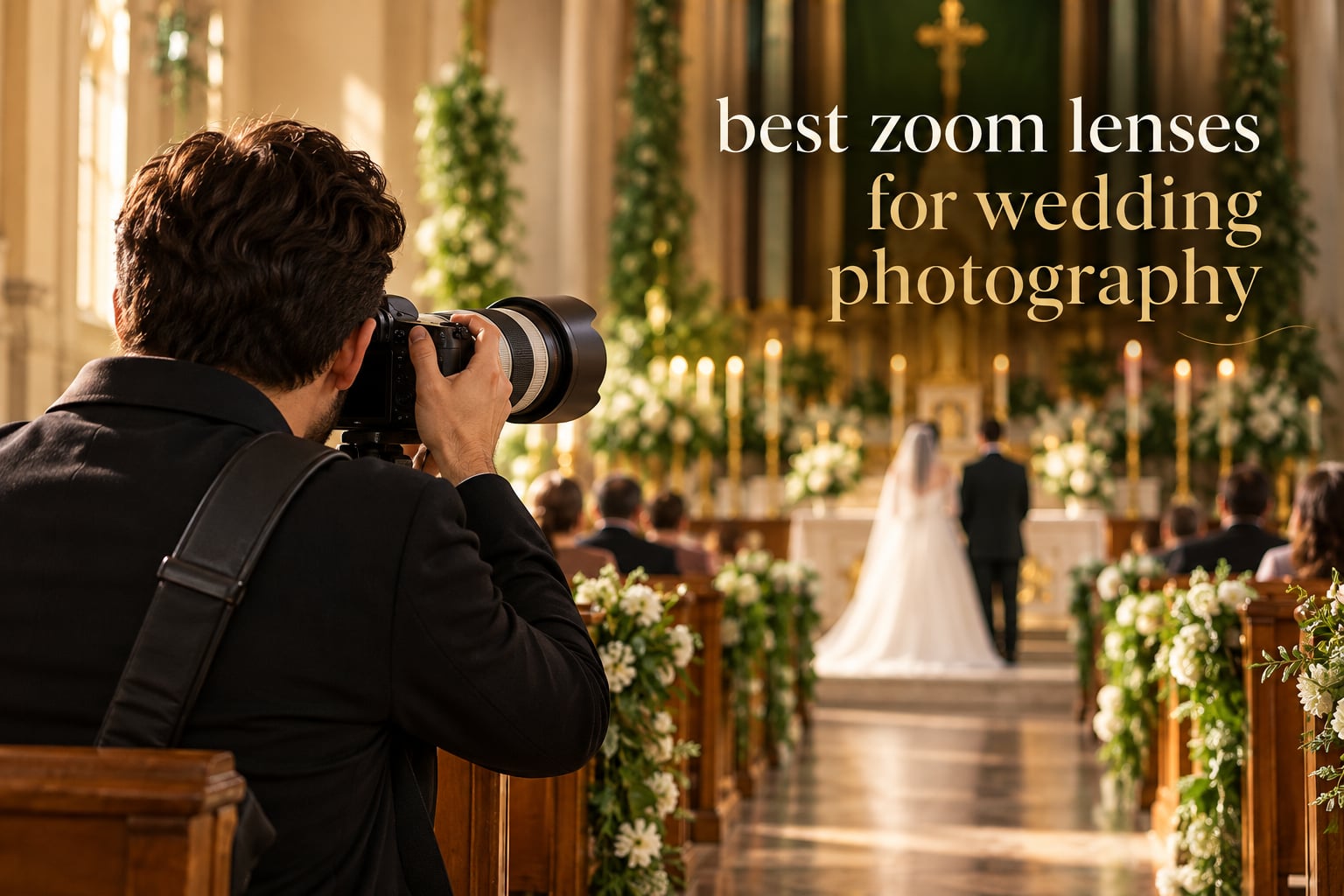
The 24-70mm f/2.8 and 70-200mm f/2.8 are the two most essential zoom lenses for wedding photography, covering everything from wide group shots to distant ceremony candids.
That single sentence is the answer most photographers land on after their first paid wedding, usually after a day spent missing the first look because a prime was still on the wrong body. A zoom keeps you in the moment. Nobody in the room notices you framing, and nobody misses the shot because you were elbow-deep in a camera bag when the bride turned toward the window.
Our team compared 12 zooms across the full-frame and enthusiast ranges, weighing focal coverage, aperture consistency, stabilization, autofocus behaviour and the mass you carry from ceremony to dance floor. We grouped them the way you actually shoot: a standard zoom for getting ready and group shots, a telephoto for the back row of the ceremony, and a few one-lens options for shooters who would rather pack nothing at all.
A note on price before we start, since none of it appears in the copy below. Lens pricing moves constantly, so treat the relative positioning here as guidance and use the check-price buttons to see current figures. What does not move is the physics: how much light a lens gathers, how fast it focuses, and how heavy it feels at hour eleven. If you are still deciding on a body, our zoom lens guide for travel photography covers the same decisions from a different angle.
Table of Contents
Top 3 Picks for Best Zoom Lenses for Wedding Photography in 2026

Canon EF 24-70mm f/2.8L II USM
- Constant f/2.8 across 24-70mm
- 805 g
- Closest focus 0.38 m
- Ring-type ultrasonic AF

Canon RF 24-70mm f/2.8L IS USM
- Up to 5 stops optical stabilization
- 898 g
- Nano USM autofocus
- Water resistant

Tamron 28-75mm f/2.8 VXD G2
- Constant f/2.8 at 540 g
- Close focus to 18 cm
- 67mm filter thread
- VXD linear motor
The Canon EF 24-70mm f/2.8L II takes the top spot on evidence rather than novelty. It carries 991 owner ratings at 4.7 stars, the largest review base of any lens we examined, and the owner summaries describe it as the reference standard zoom for the EF mount with a build that holds up to client work.
The Canon RF 24-70mm f/2.8L IS USM is the modern pick for mirrorless shooters, holding a 4.8 average with 92% five-star ratings and adding up to five stops of stabilization to a range that already handles the whole day. The Tamron 28-75mm f/2.8 VXD G2 takes the value slot, delivering a constant f/2.8 at 540 g for shooters who would rather save the weight and the spend.
Every Wedding Zoom in This Roundup in October
| Product | Specifications | Action |
|---|---|---|
| Canon EF 24-70mm f/2.8L II USM |
|
Check Latest Price |
| Canon RF 24-70mm f/2.8L IS USM |
|
Check Latest Price |
 Nikon NIKKOR Z 24-70mm f/2.8 S Nikon NIKKOR Z 24-70mm f/2.8 S |
|
Check Latest Price |
 Sony FE 24-70mm F2.8 GM II Sony FE 24-70mm F2.8 GM II |
|
Check Latest Price |
 Canon RF 70-200mm F2.8L IS USM Canon RF 70-200mm F2.8L IS USM |
|
Check Latest Price |
 Sony FE 70-200mm F2.8 GM OSS II Sony FE 70-200mm F2.8 GM OSS II |
|
Check Latest Price |
 Sigma 70-200mm F2.8 DG DN OS for Sony Sigma 70-200mm F2.8 DG DN OS for Sony |
|
Check Latest Price |
 Tamron 70-180mm f/2.8 VC VXD G2 Tamron 70-180mm f/2.8 VC VXD G2 |
|
Check Latest Price |
 Nikon NIKKOR Z 24-120mm f/4 S Nikon NIKKOR Z 24-120mm f/4 S |
|
Check Latest Price |
| Tamron 28-75mm f/2.8 VXD G2 |
|
Check Latest Price |
 Nikon NIKKOR Z 24-70mm f/4 S Nikon NIKKOR Z 24-70mm f/4 S |
|
Check Latest Price |
 Sony FE 24-240mm f/3.5-6.3 OSS Sony FE 24-240mm f/3.5-6.3 OSS |
|
Check Latest Price |
1. Canon EF 24-70mm f/2.8L II USM: The Reference Standard Zoom
Canon EF 24-70mm f/2.8L II USM Standard Zoom Lens Black
24-70mm at f/2.8
805 g
Closest focus 0.38 m
No stabilization
82mm filters
Pros
- Sharp results across the full zoom range
- Constant f/2.8 across 24-70mm
- Fast quiet ring-type ultrasonic autofocus
- Professional build owners call long-lasting
Cons
- No image stabilization for low light or video
- Front barrel extends when zooming
- 82mm filters cost more and do not interchange
I keep coming back to this lens because nothing about it is a compromise except the two things owners actually complain about. It holds f/2.8 from 24mm to 70mm, which means your ISO and shutter speed stay put when you swing from a full room to a single face at the bar.
On a wedding morning it covers the whole sequence without a single lens change. Bridal prep at 35mm, the dress and the details at 50mm, the wide room shot at 24mm, and a tighter candid at 70mm. That is one lens handling two hours of a schedule that never goes the way you rehearsed it.
Focus is handled by a ring-type ultrasonic motor with full-time manual focusing, and owners describe it as fast and quiet. That matters more than spec sheets suggest. A loud autofocus cycle during the vows is a distraction for everyone in the room, not just for you.
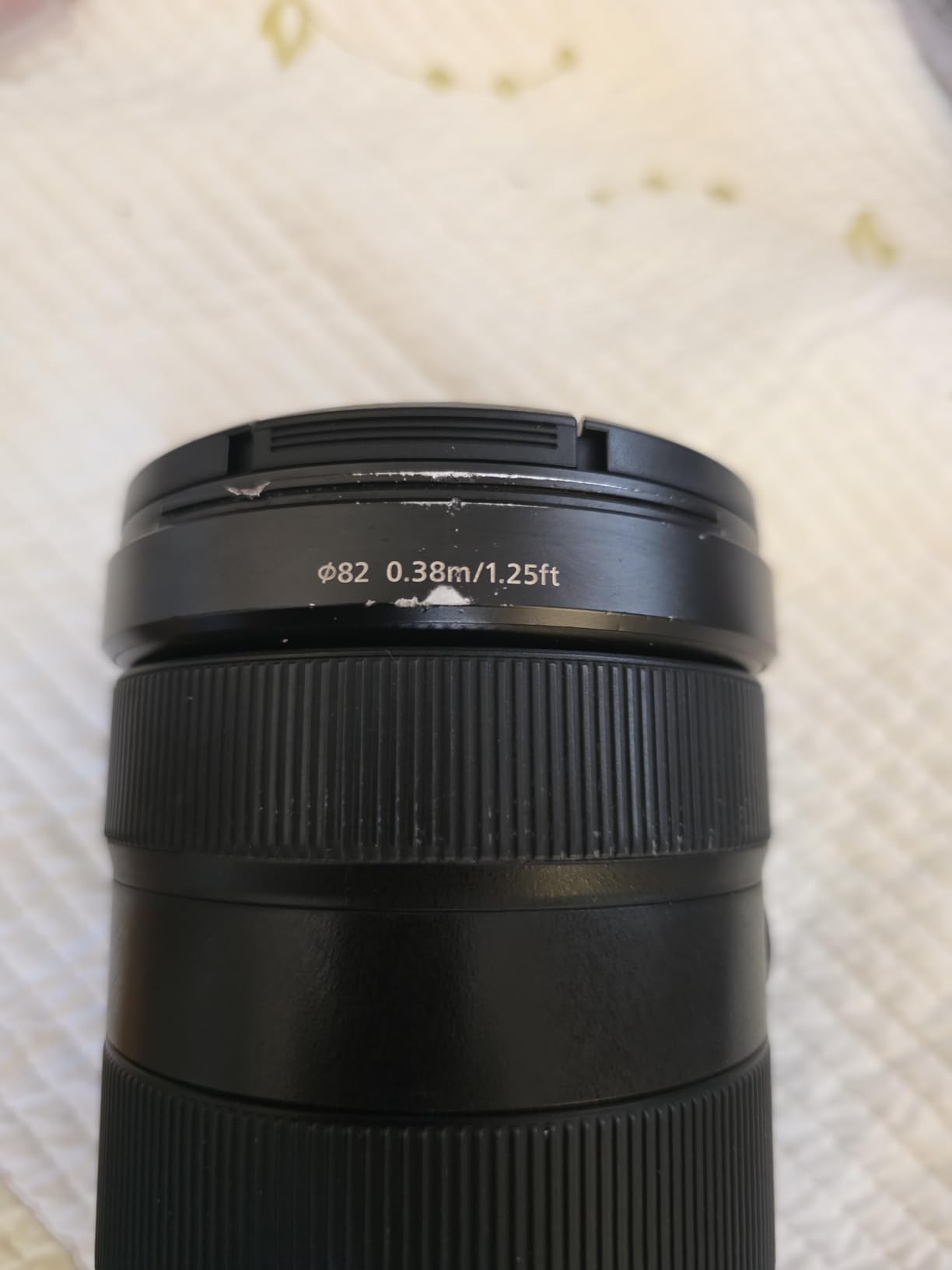
The closest focusing distance is 0.38 m, close enough that the 70mm end doubles as a detail lens for rings, florals and place cards. Nine diaphragm blades give you a rounded aperture, and the 84-degree angle of view at the wide end covers a room without fish-eye distortion.
Why it holds up on a long wedding day
At 805 g it is not the featherweight option, but it balances well on an EOS R-series body and the front-heavy feel is manageable with a sling. The build is what wins over years. Owners who bought it years ago describe it as the lens that stays on the body permanently.
That permanence matters more than it sounds. A lens you trust does not need testing in a bright hallway before the ceremony, and it survives rain on an outdoor ceremony without a second thought.
Where it will frustrate you
There is no in-lens stabilization, and that is the caveat owners repeat most. You will be relying on the camera body for stabilization, or on your own steady hands in dim receptions where a slower shutter speed is tempting.
The 82mm filter thread is also larger than it needs to be. Filters cost more at that diameter and will not fit with 77mm glass, so plan your filter budget before the season starts.
2. Canon RF 24-70mm f/2.8L IS USM: Best for Mirrorless Weddings
Canon RF24-70mm F2.8 L is USM Lens, Mirrorless Lens, Standard Zoom, Compatible with EOS R Series Mirrorless Cameras, High Image Quality, Portraits, Landscapes, Travel, Photography, Black
24-70mm at f/2.8
898 g
5 stops of stabilization
Nano USM
82mm filters
Pros
- Up to 5 stops of optical stabilization
- Smooth quiet Nano USM autofocus
- Excellent sharpness across the range
- Water resistant construction
- Control ring for direct setting changes
Cons
- Wide 82mm filter thread limits filter choice
- Heavier than the equivalent f/4 mirrorless zoom
This is the lens we reach for on RF bodies, and the reason is the stabilization. Five stops of optical shake correction on a wedding day is not a luxury feature, it is the difference between a usable frame and a blurred one when the reception lights drop and the shutter speed has to.
92% of its 682 owner ratings are five-star. That is the highest share of perfect scores in this group, and the reviews single out two things repeatedly: the stabilization and how quiet the Nano USM focusing is.
Silence is a wedding-specific selling point. During a ceremony you want a focus motor that a guest two rows back cannot hear, and the Nano USM is described in owner reviews as smooth, fast and effectively silent.
Close focus runs from 0.21 m at the wide end to 0.38 m at 70mm, so the same trick applies as with the EF lens. Get in close for the bouquet, pull back for the room, without swapping anything.

What stabilization actually buys you
Think of stabilization as extra shutter speed you can spend. Five stops means roughly a 1/32 gain in theory, though in practice you get a usable portion of that when your subject is also standing still. During the processional, during the ring exchange, during a candle-lit first dance, that margin is what keeps the frame.
It also smooths panning at longer focal lengths and helps when you are shooting at the end of a long reception when everyone is standing and the light is low. It does not stop subject motion, but it removes your own shake from the equation.
Where the bulk and cost of the mount tell on you
At 898 g this is the heaviest standard zoom in our group, and you feel it by hour ten. It is a two-handed lens during the ceremony and a one-handed burden after dinner. Pack it on the body that stays on a strap rather than the one you hand off to a second shooter.
The 82mm filter thread remains the practical annoyance. You are paying for the same oversized filters as the EF lens, and they will not fit with the 77mm glass on the RF telephoto. Water resistance is rated, which covers the outdoor ceremony case nicely.
3. Nikon NIKKOR Z 24-70mm f/2.8 S: Sharp and Compact Full Frame
Nikon NIKKOR Z 24-70mm f/2.8 S | Professional Large Aperture mid-Range Zoom Lens for Z Series mirrorless Cameras | Nikon USA Model
24-70mm at f/2.8
815 g
Two AF drive units
STM motor
82mm filters
Pros
- Edge-to-edge sharpness with strong contrast and color
- Fast and silent STM autofocus
- Compact for an f/2.8 zoom
- Sealed against dust and moisture
Cons
- Aperture ring is easy to bump accidentally
- Chunkier than the f/4 sibling
- 82mm filter thread
Nikon shooters get the same f/2.8 promise in a slightly smaller package, and the owner ratings back the confidence. The Multi-Focusing System runs two synchronized AF drive units, and the reviews describe edge-to-edge sharpness with superb contrast and color rendering across the range.
Two things stand out for wedding work. The Stepping Motor focuses fast and quietly in both stills and video, and the barrel is sealed around all moving parts, which is what you want when the ceremony moves from a chapel to an outdoor lawn.

At 815 g it is slightly lighter than the RF equivalent and more compact, so it sits better on a smaller Z body. Videographers highlight the lack of focus breathing, which keeps the frame steady when you pull focus during a walk-through moment.
The control ring and information display let you change aperture without taking your eye off the subject, and the aperture ring itself gives a proper mechanical click for discrete stops. That tactile precision is useful in a dark church when you cannot see the screen.
Why Z shooters love this focal range on a wedding
The 24 to 70 range is the one that matches a schedule. Wide enough for a full room of raised glasses, long enough for a candid across the venue during the vows. Owners comparing it to the f/4 sibling report a visible sharpness and contrast jump, and that difference is most obvious in a dim church.
It still leaves one gap. Seventy millimeters is not telephoto, so distant ceremony candids across a large aisle are out of reach without stepping back. Most photographers pair it with a telephoto on a second body rather than trying to make one lens do everything.
The bump risk and the filter bill
The most common complaint is the aperture ring. It sits close to the barrel, and photographers working on a strap report knocking it accidentally when the body swings. On an eight-hour day a bumped ring is more than an annoyance, because you may not notice the aperture changed until you check the file.
The 82mm filter thread is the same bill as the Canon standard zoom. If you already own 82mm glass, this is free. If you are starting from nothing, it is worth pricing both filter sizes before you commit to a system.
4. Sony FE 24-70mm F2.8 GM II: The Lightest Full-Frame Standard Zoom in Class
Sony FE 24-70mm F2.8 GM II Full-Frame Zoom Lens
24-70mm at f/2.8
695 g
Four XD linear motors
11 blades
82mm filters
Pros
- Exceptionally sharp edge to edge
- Lightest f/2.8 standard zoom at 695 g
- Fast quiet autofocus with strong tracking
- Minimal focus breathing for video
Cons
- Supplied lens hood is fiddly to fit and collects dust
- Tight and loose focus ring switch feels crunchy
- Not weather resistant
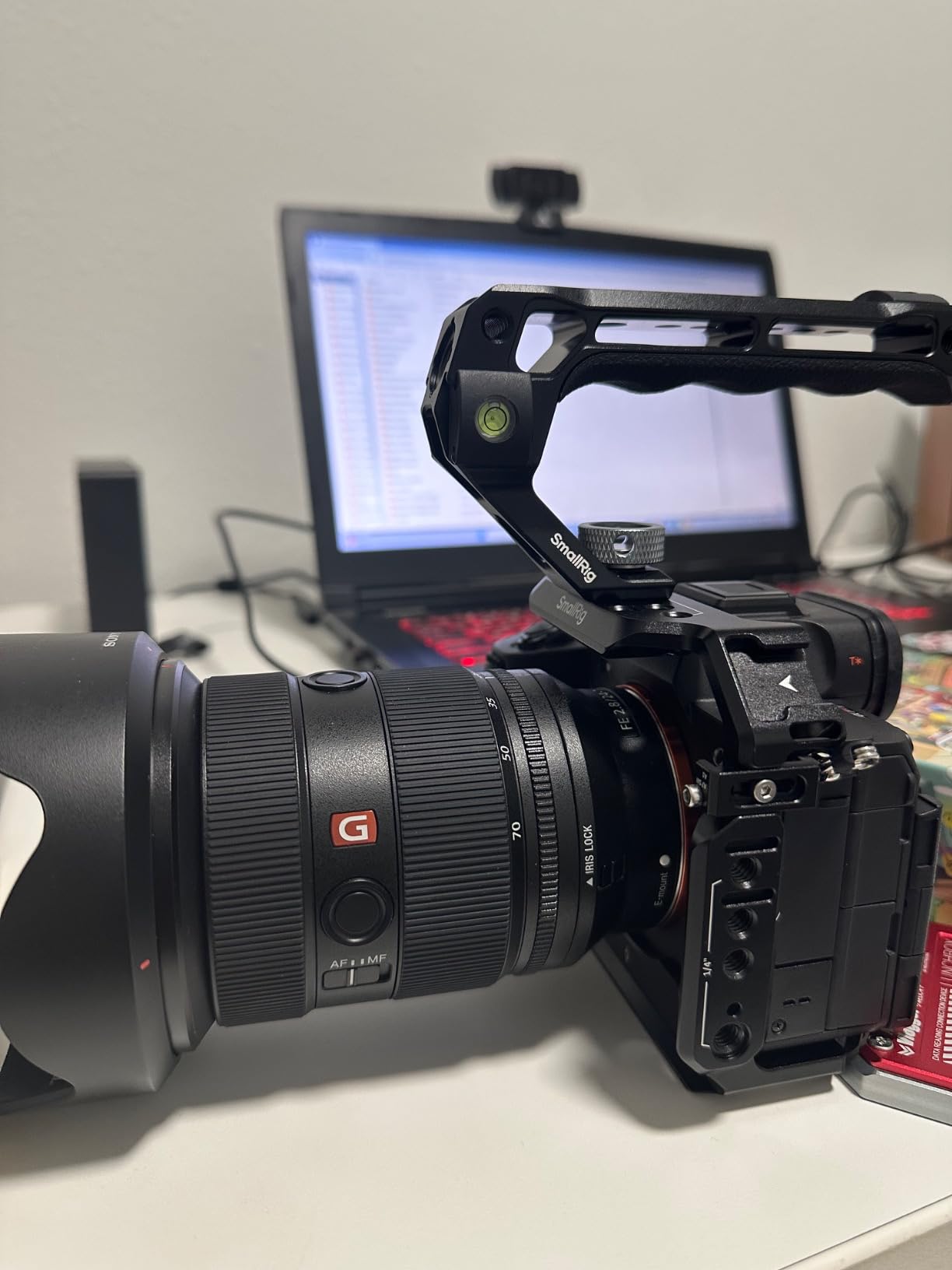
Weight is the deciding factor on a wedding day, and this lens wins it outright. At 695 g it is over 20% lighter than the model it replaced, 16 mm shorter, and roughly 18% smaller in volume. That is the difference between a lens that stays on the body for fourteen hours and one that comes off at dinner.
Owners with 350 ratings average 4.7 stars and describe it as the king of all-around zooms for the E-mount, frequently replacing multiple primes in the bag. Event and wedding shooters specifically call out the combination of constant f/2.8, optical stabilization and low weight.
Four XD Linear Motors drive the autofocus, supporting up to 30 fps continuous shooting on compatible bodies, and the optical design reduces focus breathing, focus shift and axial shift when you zoom. For a hybrid shoot that means a video track that does not lurch every time you tighten the frame.
Two XA elements, two ED elements and two Super ED elements with a floating focus mechanism handle the aberration control, which is where the edge-to-edge sharpness in the reviews comes from. Eleven diaphragm blades round the bokeh for reception portraits.
What the low weight changes on the day
Every gram you do not carry becomes shoulder comfort at hour eleven. A telephoto zoom is the real burden, but a lightweight standard zoom on the primary body means you can work all day from one strap instead of switching to a second harness mid-ceremony.
It is also the lens most people will actually keep mounted. Shooters describe it living on the body permanently, which is the best possible outcome for a wedding, where the shot you get depends on how fast you can raise the camera.
The two annoyances you should know about
The included lens hood is the single most repeated complaint. Owners describe it as fiddly to fit, and report the interior felt lining collecting dust and hair. If you shoot outdoors often, budget for a replacement hood rather than fighting it on the first warm day.
The tight and loose focus ring switch also feels crunchy to several owners, and the lens is not weather resistant. For indoor and temperate-climate weddings that is a fair tradeoff for the weight saving. For rain-outdoor ceremonies, pair it with weather-sealed glass or keep a cover in the bag.
5. Canon RF 70-200mm F2.8 L IS USM: The Ceremony Workhorse
Canon RF70-200mm F2.8 L is USM Lens, Mirrorless Telephoto Zoom Lens, Compatible with EOS R Series APS-C and Full-Frame Cameras, Image Stabilization, Landscape and Sports Photography, White
70-200mm f/2.8
2.6 lb
5 stops of stabilization
Dual Nano USM
77mm filters
Pros
- Very fast and near-silent autofocus
- Sharp across 70-200mm including wide open
- Beautiful bokeh at 200mm
- Collapses to a short stub at 70mm
- Three selectable stabilization modes
Cons
- Control ring is stiff and clicky for video
- Extending zoom design raises dust concerns
This is the lens that covers the back row. From the corner of a church or the far end of a marquee, 70 to 200mm at f/2.8 lets you photograph expressions during the vows instead of the backs of heads, and the background compression at 200mm separates the couple from everything behind them.
Owners report this as the dream telephoto for RF shooters. Fast, near-silent dual Nano USM focusing hits focus consistently, and 89% of its 558 ratings are five-star. Wedding professionals describe it as a staple for ceremony work specifically.
It collapses to a short stub at the 70mm end, which matters when you are packing. Many telephoto zooms are a permanent commitment of bag space; this one folds down small enough to travel with. The minimum focusing distance of 0.7 m still allows detail work at the reception.
Three selectable stabilization modes matter on a wedding day. Panning mode keeps a moving subject sharp while the background blurs, which is the standard look for a couple walking through a corridor of sparklers. Tripod mode and the standard mode cover the static ceremony frames.
Why the collapse design earns its keep
Weight is the honest drawback of any 70-200mm, and the collapse design does not change the 2.6 lb figure but it changes the shape of it. A stub that packs flat stops it wedging against the side of the bag and knocking your other lenses out of alignment during a car ride to the venue.
It is also compact and lighter than the EF predecessor, which owners call out as a real improvement for full-day carry. Expect to use a monopod for the reception dance floor, where you will be working at the long end for extended stretches.
The video caveat and the dust question
The control ring is the loudest functional complaint. Owners describe it as too tight and too clicky for video work, and some report it transmitting shake to the camera. If you are delivering video as well as stills, bring a wide prime for the moving shots and use this glass for the ceremony coverage.
The zoom extends rather than using an internal design, which raises questions about dust ingress on a dusty ceremony site. Weight is roughly the same as the older EF model despite the shorter body, so upgrading for lightness alone is not the reason to buy it.
6. Sony FE 70-200mm F2.8 GM OSS II: Fastest Telephoto Focusing Here
Sony FE 70-200mm F2.8 GM OSS II Full-Frame Zoom Lens
70-200mm f/2.8
1045 g
Inner zoom
11 blades
77mm filters
Pros
- Extremely sharp across the range even wide open
- Fast accurate autofocus with reliable Eye AF
- About 29 percent lighter than the first generation
- Inner zoom keeps a constant barrel length
- Weather-sealed magnesium construction
Cons
- White barrel stands out for discreet candids
- Telephoto weight takes getting used to
The 4.8 average and 93% five-star share make this the strongest rating profile of any lens here. Sports, wildlife, event and portrait owners report a genuine jump in keeper rate over earlier and third-party telephoto zooms, and the reasons are visible in the design.
Four XD Linear Motors deliver autofocus up to four times faster than the previous model, with tracking while zooming improved by roughly 30%. On a wedding that matters during the processional, when a subject is walking toward you and the frame is changing faster than your fingers.

The inner zoom design keeps a constant barrel length, which by nature limits dust ingress and keeps the balance point steady as you zoom. That constant balance is an underrated feature when you are panning across a ceremony for twenty minutes straight.
Independent focus, zoom and iris rings with a click on and off switch make this the most video-friendly telephoto in the group. Reduced focus breathing, focus shift and axis shift keep moving subjects stable through a take.
Why hybrid shooters gravitate to this one
When you are delivering both photos and video from the same camera, the compromise is always the lens. Separate rings mean you can hold a focal length while adjusting focus, and the reduced focus breathing keeps a rack focus from drifting the frame size.
Optical SteadyShot lets you shoot at slower shutter speeds, which is the difference between usable and unusable footage in a dim reception. Separate 1.4x and 2x teleconverters are also available, so a long ceremony shot can be tightened further without leaving the system.
The white barrel problem and honest weight
Several owners note that the white barrel stands out in candid or discrete shooting situations. That is a real limitation for documentary work where a big white telephoto announces your presence across the room. It matters less if you are working the edges of a venue.
It is still a genuine telephoto load at that weight, improved by roughly 29% over the first generation.
7. Sigma 70-200mm F2.8 DG DN OS: Best Third-Party Telephoto
70-200mm F2.8 DG DN OS for Sony
70-200mm f/2.8
1345 g
HLA motor
11 blades
77mm filters
Pros
- Constant f/2.8 across the telephoto range
- HLA linear motor is fast and dependable
- Weather-sealed Sports line construction
- 11-blade diaphragm for smooth bokeh
- 4-year warranty
Cons
- Heaviest telephoto here at 1345 g
- Sony E and L-Mount are separate variants
The pitch here is straightforward. A constant f/2.8 telephoto zoom with a fast linear motor, weather sealing and an 11-blade aperture, without the first-party tier pricing. At 4.8 stars across 200 ratings with 89% five-star, owners treat it as a genuine alternative rather than a compromise.
The High-response Linear Actuator delivers dependable autofocus that keeps pace with a walking subject. That is the specification that matters most in the ceremony, where a hunting telephoto turns a candid into a missed moment.

It completes Sigma f/2.8 DG DN full-frame mirrorless trio, so it pairs naturally with Sigma standard zooms if you already own one. The dust and splash-resistant Sports line construction is rated for outdoor work, which covers an outdoor ceremony in the rain.
Eleven blades give smooth background rendering at 200mm, and the 77mm filter thread is the smaller and cheaper option compared with the oversized 82mm standard zooms. A four-year warranty is among the longer commitments offered in this category.

Where third-party glass earns its place
The argument for Sigma and Tamron in a wedding bag is optics per unit of weight and money. You get the same constant aperture, the same class of weather sealing, and fast linear motor focusing that has closed most of the gap with first-party glass.
Owners report a noticeable drop in cost against first-party f/2.8 telephotos with no meaningful loss in the frames that matter. That gap in the bag budget is often the difference between owning two telephotos or one.
The weight is the honest answer
At 1345 g this is the heaviest telephoto in the roundup, and reviewers say so plainly. On a twelve-hour wedding that is a real endurance cost, especially for anyone with a shoulder or back that has already complained.
Our practical advice is to carry it on a second body that lives on a monopod or stays in the bag until the ceremony. Mount compatibility is version specific, so check that the Sony E version matches your body before you commit, since the L-Mount variant is a separate product.
8. Tamron 70-180mm f/2.8 VC VXD G2: Best Entry Telephoto for Sony E
Tamron 70-180mm F/2.8 Di III VC VXD G2 for Sony E-Mount Full Frame Mirrorless Cameras
70-180mm f/2.8
30.2 oz
VC stabilization
67mm filters
Minimum focus 0.3 m
Pros
- Strong price-to-performance in the f/2.8 telephoto class
- VXD motor gives fast precise tracking autofocus
- VC stabilization for dim reception venues
- Close focus to 0.3 m at 70mm
- 67mm filter thread keeps filter costs down
Cons
- Shorter range gives less reach than 70-200mm
- Fluorine-coated front still needs outdoor protection
This is the entry point into a constant f/2.8 telephoto, and it does something the lenses above it cannot: it stays light. At 30.2 oz it is the smallest telephoto here by a wide margin, which for a first solo wedding is arguably more valuable than the last 20mm of reach.
Owners describe fast, high-precision autofocus with vastly improved subject tracking from the VXD linear motor. Subject tracking is what carries a ceremony, because you cannot pre-focus on a face that is moving.
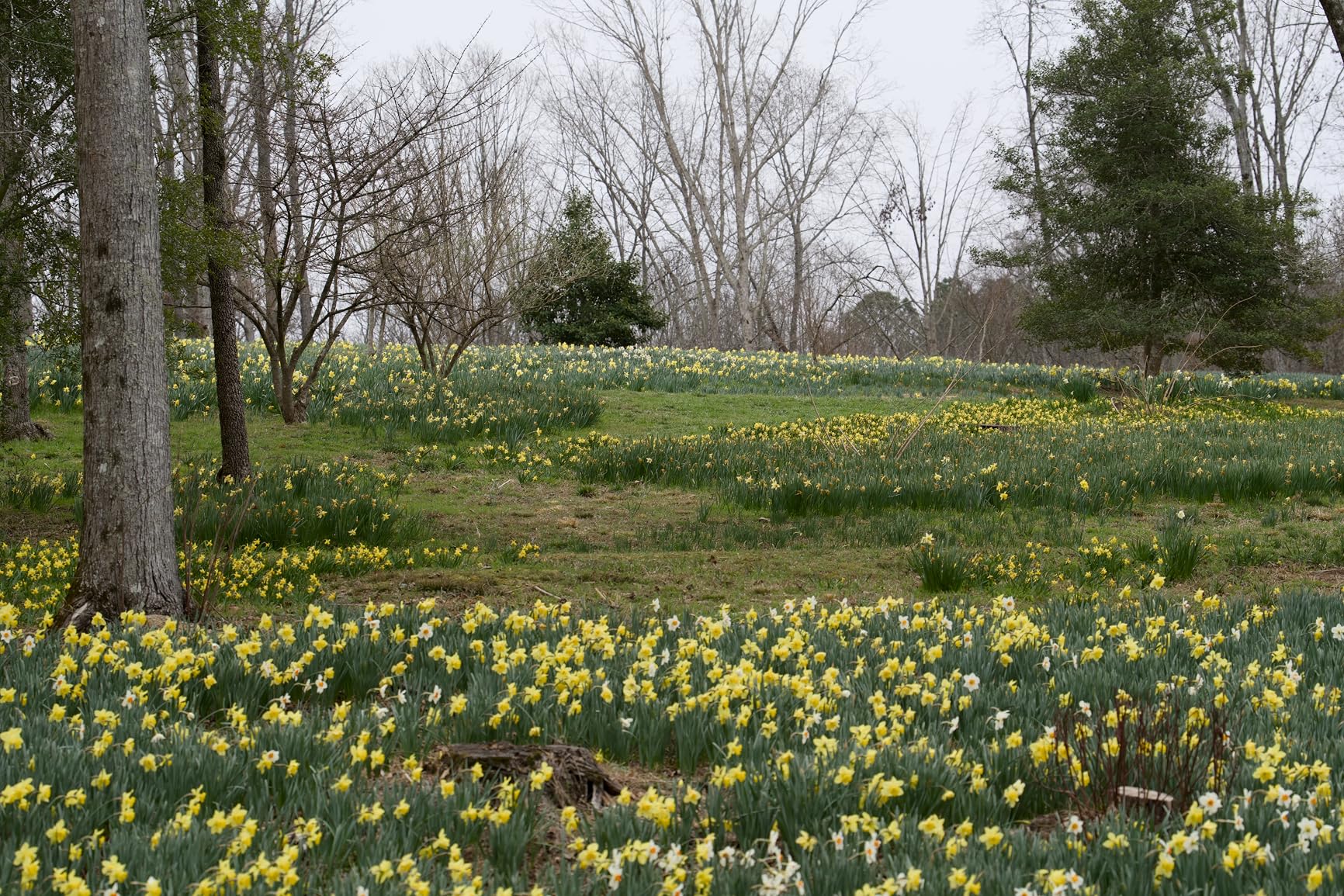
VC stabilization supports handheld shooting in dim reception venues. Tamron VC runs on a lens-specific gyro rather than relying on the camera body, so it works consistently across bodies and adds an extra safety margin when the shutter speed drops.
The 67mm filter thread is the same small diameter used by the Tamron 28-75mm, so the filters you already own for one fit the other, and that recurring filter cost quietly adds up across a kit. A six-year manufacturer warranty is also longer than most in this class.
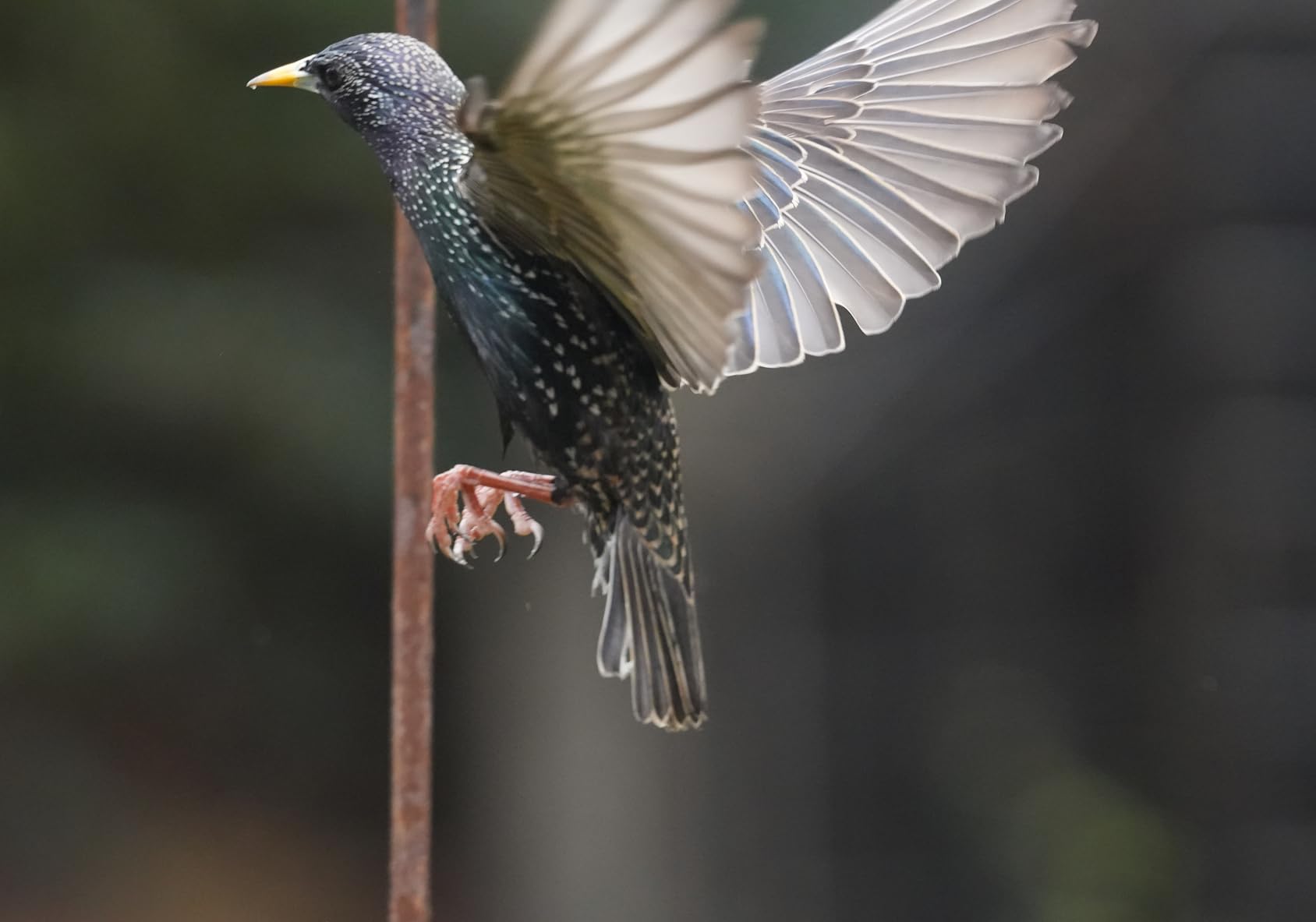
When the shorter range is not a problem
The 70mm to 180mm range covers most ceremony work. The scenario where you lose is a very large venue where you are shooting from the very back of the room, and 20mm of extra reach would let you fill the frame instead of leaning forward.
If your weddings are mostly in churches, barns and restaurants with moderate dimensions, this reaches plenty far. If you routinely shoot arenas and large outdoor ceremonies, the longer options earn their place.
The front element outdoors
The fluorine coating resists water and oil, but it is not weatherproofing. Owners still recommend protecting the front element when shooting outdoors, and the fluorine coating does not substitute for a filter or a lens cloth.
The zoom lock switch lets you hold the focal length steady while carrying the lens, which reduces accidental drift in a bag. Moisture-resistant construction covers light weather, and the minimum focus distance of 0.3 m at 70mm is short for a telephoto and useful for reception details.
9. Nikon NIKKOR Z 24-120mm f/4 S: The All-in-One Zoom That Covers Both
Nikon NIKKOR Z 24-120mm f/4 S | Premium Constant Aperture All-in-one Zoom Lens for Z Series mirrorless Cameras (Wide Angle to telephoto) | Nikon USA Model
24-120mm at f/4
630 g
Close focus 1.15 ft
77mm filters
Dual STM
Pros
- Constant f/4 keeps ISO and shutter speed steady
- Sharper in the corners wide open than the 24-200mm
- Five times zoom range in 630 g
- Very quiet dual STM autofocus
Cons
- No in-lens stabilization in the specification
- f/4 is one stop slower than an f/2.8 zoom
Here is the lens that blurs the line between a standard zoom and a telephoto. Twenty-four to 120mm at a constant f/4 in 630 g is a five-times range from wide to short telephoto, and it means one lens can photograph the getting-ready room, the ceremony and the group shots without a swap.
Owners upgrading from the Z 24-200mm report a clear and demonstrable sharpness gain at a similar size class, particularly in the corners wide open. Constant f/4 is the quiet hero here, since your exposure settings stay identical across the whole range.
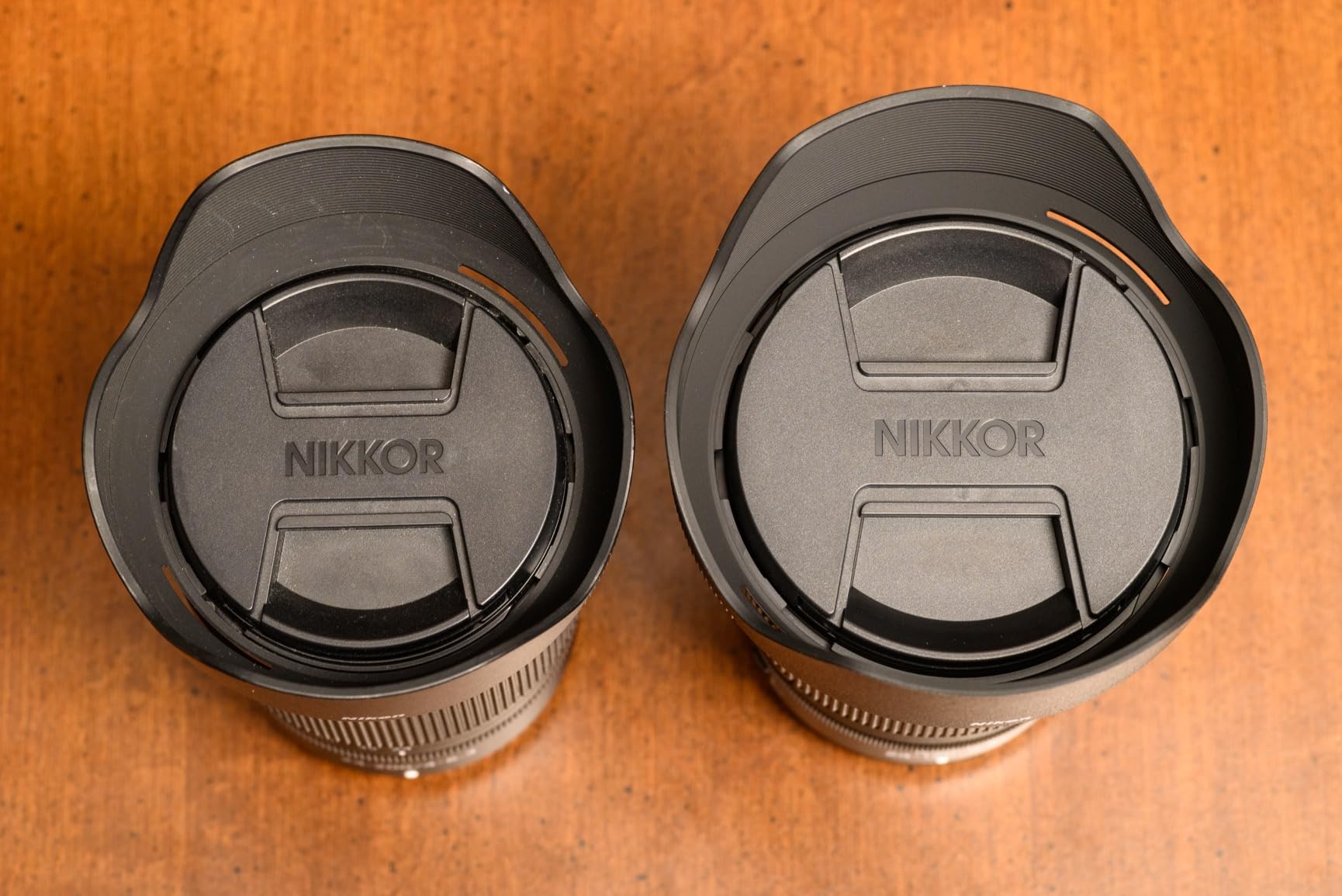
Close focusing to 1.15 ft works at any zoom position, including at 120mm. That is unusual at the long end and it turns the lens into a detail shooter for rings, florals and stationery without needing a macro lens in the bag.
Two high-speed, ultra-quiet STM stepping motors handle autofocus with virtually no focus breathing, which keeps video transitions steady. The custom control ring can be assigned to aperture, ISO or exposure compensation depending on how you shoot.

Why a constant f/4 makes sense
A constant aperture is about consistency, not speed. Your ISO and shutter speed do not change as you zoom, so your images from the walk-in to the last dance stay in the same exposure window. That makes grading a full wedding album far less work.
The trade is one stop of light. In a bright ceremony or an outdoor first look, f/4 is fine. In a dim reception with no flash, you will be pushing ISO or dropping shutter speed, and that is where an f/2.8 zoom earns its cost.
Two things to check before you buy
The listed specification carries no in-lens stabilization, and that is the most common buyer confusion with this lens. Some listings suggest otherwise. If your camera body has sensor stabilization you have a safety net, but do not count on lens VR.
It is also larger than the 24-200mm it replaces, and front element intrusion at the wide end means it will not take Nikon teleconverters. If you plan to add a 1.4x later, that closes off an option you may want for a large ceremony space.
10. Tamron 28-75mm f/2.8 VXD G2: Best Value f/2.8 for Sony E
Tamron 28-75mm F/2.8 Di III VXD G2 Lens for Sony E-Mount Black,Single
28-75mm at f/2.8
540 g
Close focus 18 cm
67mm filters
1:2.7
Pros
- Constant f/2.8 across a useful range
- Very light at 540 g
- VXD linear motor with fast precise autofocus
- Close focus to 18 cm with 1:2.7 magnification
- 67mm filter thread keeps costs down
Cons
- Not weather resistant for outdoor ceremonies
- Starting focal length is longer than a standard wedding zoom
This is the value answer in the roundup, and it carries 814 owner ratings, the second largest review base in the group behind the Canon EF standard zoom. At 4.6 stars it sits a notch below the f/2.8 primes, which owners attribute mainly to quality control and weather-sealing gaps rather than to the optics.
At 540 g it is one of the lightest professional-class f/2.8 zooms available, and 11% of its ratings sit at four stars, the highest four-star share in the group. That is an honest signal to read alongside the average: mostly very good, with some variance.
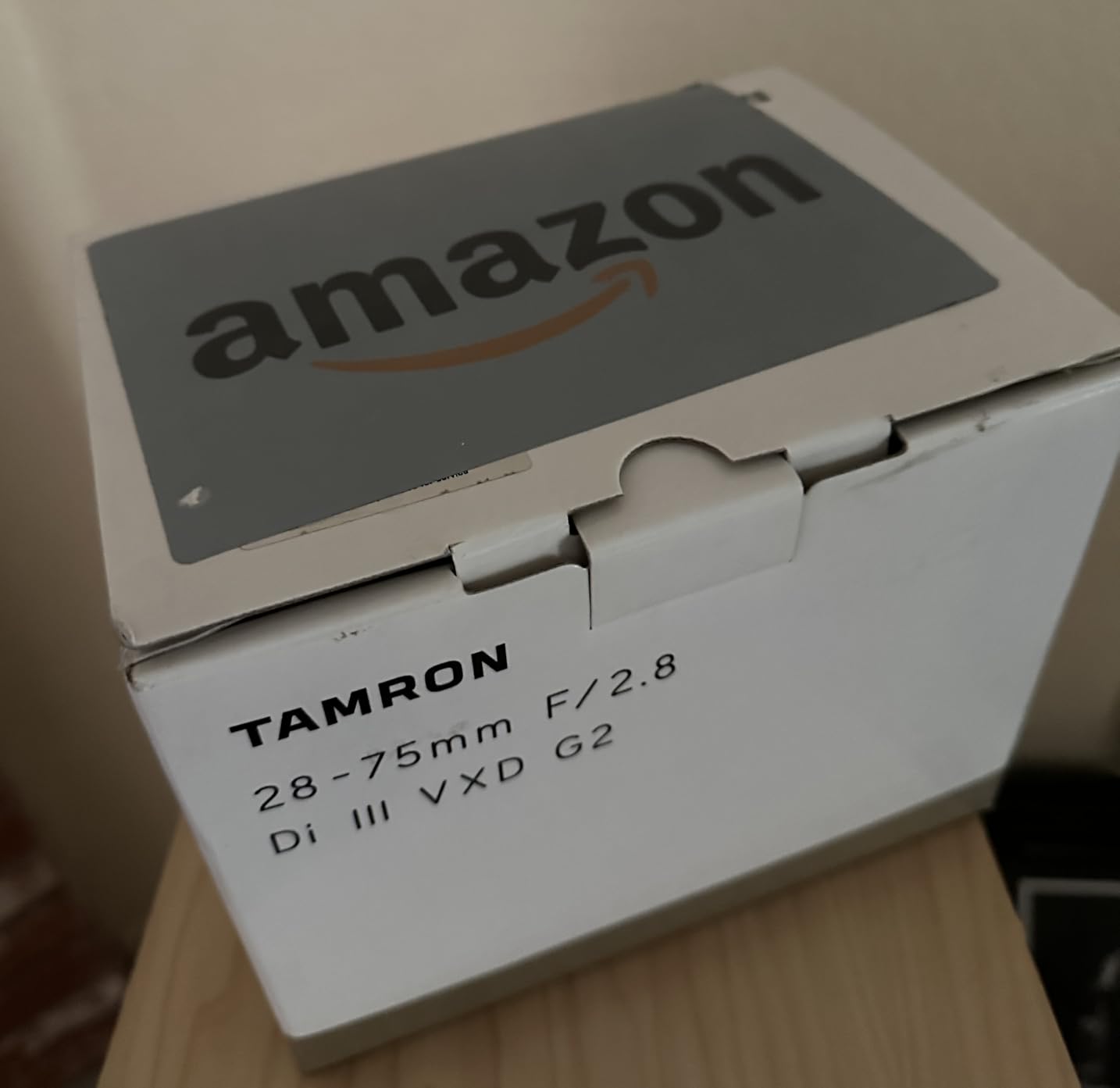
The VXD linear motor gives fast, precise autofocus, and close focus to 18 cm with 1:2.7 maximum magnification turns it into a capable detail lens. Florals, rings and table decor are part of the job, and doing them without a second lens saves bag weight.
Scratch and fingerprint resistant coating on the barrel is a practical touch for a lens that lives on a body all day. The 67mm filter thread is the smallest in the group, which keeps filter costs down across the season.
Why 28mm rather than 24mm is fine for most weddings
A 28mm starting point is a narrower view than a 24mm, so the widest group shots need you to stand a little further back. In a venue with a long aisle or an outdoor ceremony that is usually possible. In a cramped getting-ready room it is not always.
Many photographers pair it with a wide prime for exactly those rooms, which is a cheaper fix than a second premium zoom. If your work is venue-heavy with wide interiors, check the room dimensions before choosing this over a 24-70mm.
The weather-sealing gap is the real limitation
This lens is not weather resistant, and that is the drawback to plan around if you shoot outdoor ceremonies. In rain or on a dusty field, cover it, keep it on a second body indoors, or choose sealed glass.
Some sellers also apply a sticker over the Tamron branding, which is cosmetic but annoying on a lens you will look at every day. Everything else, from the constant f/2.8 to the light weight, lines up with what the reviews describe as the value standard zoom for the E-mount.
11. Nikon NIKKOR Z 24-70mm f/4 S: The Best Starter Zoom for Nikon Z
Nikon NIKKOR Z 24-70mm f/4 S | Premium constant aperture mid-range zoom lens for Z series mirrorless cameras | Nikon USA Model
24-70mm at f/4
1.1 lb
72mm filters
Seven-blade aperture
Silent focusing
Pros
- Constant f/4 holds exposure across the range
- Very sharp with virtually no distortion
- Light and easy to pair with a compact Z body
- Smooth silent focusing for ceremony video
Cons
- Seven-blade diaphragm gives polygonal bokeh
- Not weather resistant
- f/4 is one stop slower than f/2.8 zooms
Owners consistently describe this as the value standard zoom in the Nikon Z lineup, pairing near f/2.8 image quality with a constant aperture at a fraction of the weight of the f/2.8 S. For a photographer shooting a handful of weddings a year, that is the rational first buy.
The optical formula delivers extreme sharpness across the entire frame with virtually no distortion, which matters at 24mm where lesser standard zooms stretch the edges. A constant f/4 means exposure holds steady from wide to short telephoto.
Focusing is smooth and silent, which owners call out for ceremony video, and the customizable control ring lets you set the function that you actually use. Seven diaphragm blades and a 72mm filter thread round out a lens built around practical compromises.
The gap to the f/2.8 S narrows as light levels fall, and that is the main reservation in reviews. In a bright ceremony you will not see it. In a dim reception at f/4, you will reach for ISO sooner.
When f/4 is the right call
One stop of light is one stop of ISO. In a well-lit venue, that difference is largely theoretical, and the sharper lens with a lower pixel pitch might deliver the cleaner file anyway. The f/4 S is the smarter choice when you shoot in good light.
Many photographers pair it with a 70-200mm f/2.8 or 70-180mm on a second body, which is the classic two-lens event kit. The wide end handles the room, the telephoto handles the ceremony.
Where the compromises show
The seven-blade diaphragm produces more polygonal bokeh than nine or eleven-blade designs. At f/4 in a dim reception, that means a more angular background when you are hoping for creamy separation at a portrait.
The lens is also not weather resistant, so outdoor ceremonies need a different plan. Combined, those two points make this a strong indoor and moderate-climate pick rather than an all-weather one.
12. Sony FE 24-240mm f/3.5-6.3 OSS: The One-Lens Backup Kit
Sony FE 24-240mm f/3.5-6.3 OSS Full-Frame E-Mount Telephoto Zoom Lens
24-240mm variable aperture
780 g
Inner focus
72mm filters
0.27x
Pros
- One lens covers 24mm to 240mm
- Ten times reach with inner focus
- Optical SteadyShot at long focal lengths
- Dust and moisture resistant
Cons
- Variable f/3.5-6.3 is slow and hunts in dim receptions
- Soft in the corners and at the long end
- 780 g feels unbalanced on smaller bodies
We are including this one because it solves a real problem: covering a wedding on one lens. At 4.5 stars across 308 ratings it is the lowest-rated lens in the roundup, and the reviews explain why in unusually consistent terms. It is praised as a capable daylight and travel one-lens solution and criticised for low light.
Ten times of magnification takes you from a 24mm wide to a 240mm super telephoto, which means no lens changes from the morning prep to the last dance. Inner focus keeps the barrel length stable through the range.
Optical SteadyShot locks off effectively at long focal lengths, and the dust and moisture resistant design is a genuine plus for outdoor ceremonies. The linear motor drive focuses quickly when the light allows it.
Minimum focus runs from 0.5 m at the wide end to 0.8 m at 240mm with 0.27x maximum magnification. That is fine for reception details, though not a substitute for a dedicated close-up lens.
Where a one-lens kit wins
Second shooters, micro weddings, elopements and travel coverage all benefit from a single body and a single lens. You are not making decisions about gear during a moment you should be paying attention to, and the dust and moisture resistance handles weather.
For a working professional this is a backup lens rather than a main one. It covers the gaps when the telephoto is on the other body, and it is the safest choice when a second shooter joins you.
Why dim receptions expose it
The variable f/3.5-6.3 aperture is slow by modern standards, and by 240mm it is wide open at f/6.3. Owners describe autofocus hunting and slowing noticeably in low light, and dim receptions as the lens’s clear weak point.
There is more. It is soft in the corners and at the long end, at 780 g it can feel unbalanced on a smaller body, and the zoom ring is stiff out of the box. It is also unsuitable for gimbal-based video because of the balance shift when zooming. Treat it as daylight insurance.
Which Focal Length for Which Part of the Wedding
Choosing a wedding zoom is really about matching focal length to a schedule. Getting ready happens in a small room at close range. The ceremony happens across a large space. The reception moves between both, in worse light. Here is how the ranges map.
Getting ready, hair and makeup, dress details: 35mm to 70mm. Close enough for texture and fabric detail without distorting faces, which is why this sits at the short end of every standard zoom.
Wide group shots and venue interiors: 24mm to 28mm. The only end of the range wide enough to fit a large family group or a church nave, and the reason a 24mm start is worth the extra millimeters.
Couple portraits and first look: 50mm to 85mm equivalent. A flattering middle range that separates faces from the background without the compression of a long telephoto.
Ceremony candids from the back of the room: 70mm to 200mm. The range that lets you work from a corner rather than standing in the aisle, and the reason a telephoto zoom earns its bag space.
Altar vows and ring exchange: 70mm to 135mm. Long enough to stay out of the way, short enough to hold a group of attendants in frame at the same time.
Seated guest portraits: 85mm to 200mm. Background compression is what separates a face from a crowded room at the back of the venue.
Reception candids and first dance: 35mm to 70mm at f/2.8. A wide aperture matters more than reach once the light drops and you need to hold a fast shutter.
Detail shots of rings, florals and table decor: Any close end of your zoom. A minimum focus distance near 0.2 to 0.4 m saves carrying a dedicated close-up lens.
Venue exteriors and sparkler send-offs: 16mm to 35mm, ideally. This is the one range no zoom in this roundup covers, and it is where a wide prime still earns a slot in the bag.
Second camera support: Any of the above. A zoom on the second body means a second shooter can cover a different angle without doubling the glass.
Notice the pattern. Standard zoom handles the first half of the day, telephoto handles the ceremony, and the reception pulls you back to the fast standard zoom because that is where the aperture matters most.
Zoom vs Prime for Weddings: The Honest Tradeoffs
Primes win in one specific category and zoom everywhere else. A prime gives you the widest aperture available, the sharpest optics at one focal length and the least to carry. For portraits where you know the distance in advance, nothing beats an 85mm at f/1.8 on the second body.
Zooms win at everything that happens unexpectedly. Group photos, table shots, a relative you forgot about, the couple walking toward a door at an unplanned moment. The forum consensus among working photographers is consistent: a zoom means you never miss a frame because you were changing glass.
The two-body workflow is where the argument settles. Mount the standard zoom on one body and the telephoto on the other, and you cover both halves of the day without changing a lens mid-ceremony. Many pros run exactly this pairing.
Weight is the honest cost of that setup. Two telephotos across a fourteen-hour day is a different proposition from one telephoto and one lightweight standard zoom. If you are new and building a kit, buy the standard zoom first, add the telephoto later, and consider a monopod for the long day.
For hybrid work the picture changes again. Lenses built with linear motors and reduced focus breathing, like the Sony zooms here, hold up far better for video than older ring-drive designs. If you deliver motion as well as stills, that should narrow your shortlist.
How to Choose a Wedding Zoom Lens
Focal range first. Decide whether you want a standard zoom, a telephoto, or an all-in-one, and buy for the range you will use most. A 24-70mm covers roughly two thirds of a wedding day. Chasing maximum range for its own sake costs weight you will carry for hours.
Constant aperture versus variable. A constant f/2.8 holds its maximum aperture across the whole range, so exposure and depth of field stay consistent. A variable aperture like f/3.5-6.3 slows down as you zoom, which is why one-lens kits struggle in dim receptions. Constant f/4 zooms split the difference and save real weight.
Stabilization. Five stops on a lens-based system buys you real shutter speed margin in a dark reception. Some bodies also offer in-body stabilization, and some lenses do not, so check both before you assume you are covered.
Autofocus behaviour. Linear motors with strong subject tracking beat ring drives on moving subjects. For ceremony work, tracking performance matters more than peak focusing speed. Read reviews specifically about tracking rather than about how fast the lens focuses in a lab.
Weight and balance. Compare the number against how long you shoot. The heaviest telephoto here is 1345 g, and the lightest standard zoom is 540 g. That 800 g spread is the difference between a comfortable day and a sore one. Constant barrel length helps more than the raw number suggests.
Mount and ecosystem. Filter thread size is worth checking early, since filters are a real ongoing cost and do not interchange between sizes. Your zoom should also pair cleanly with the primes you will add later.
Worth noting if you shop lenses for other genres too: our wide-angle lens guide covers the venue-scale end of the range.
Renting versus buying. If you shoot a small number of weddings a year, renting the telephoto for each job is a defensible call. Professionals on photography forums frequently describe renting a 70-200mm as the sensible move rather than committing to ownership before the season has proved itself.
Used market red flags. The recurring risks in secondhand glass are fungus and haze inside the elements, decentering where the image shifts as you stop down, and focus motor wear that shows up as hunting or a noisy barrel. Shoot at every aperture and check corners against the centre before you pay. If you want close-up work, our macro lens guide covers what to look for in close glass.
Reaching further when you need it. If you regularly shoot long ceremonies, telephoto options extend well past 200mm, as our telephoto lens guide covers in detail. For venue scale and group shots, a dedicated wide zoom is a separate slot from the two core zooms.
Frequently Asked Questions
What is the best lens for taking wedding photos?
A 24-70mm f/2.8 and a 70-200mm f/2.8 are the two lenses most wedding photographers rely on. The standard zoom covers getting ready, group shots and reception candids, while the telephoto covers distant ceremony moments and background compression for portraits. Most working pros mount one on each of two bodies.
Is a 24-70mm lens good for weddings?
Yes, it is the single most useful focal range for a wedding day. At 24mm it handles wide group shots and venue interiors, at 50mm it gives flattering couple portraits, and at 70mm it still reaches for a candid. A constant f/2.8 keeps exposure steady across the whole range.
What are the three lenses every photographer should have?
The three most common lenses in a wedding kit are a 24-70mm for general coverage, a 70-200mm for ceremony candids and portraits, and a wide prime between 16mm and 35mm for venue scale and group shots. The third one is the most commonly skipped, and it is the one that limits group shots in small rooms.
What is the Holy Trinity of zoom lenses?
The term usually refers to three focal ranges that between them cover almost any event: a wide-angle zoom such as 16-35mm, a standard zoom such as 24-70mm, and a telephoto zoom such as 70-200mm. For weddings the standard and telephoto ranges do most of the work, because the wide end is often handled by a prime.
Can you shoot a wedding with only a 24-70mm?
For small and medium weddings in bright or well-lit venues, yes. You will be limited at large ceremonies where 70mm cannot reach from the back of the room, and in dim receptions where a wider aperture would help. Adding a telephoto on a second body is the first upgrade most photographers make.
Which Wedding Zoom Lens Should You Buy in 2026?
For most photographers buying their first professional lens, our pick is the Canon EF 24-70mm f/2.8L II. The largest review base in the group, a constant f/2.8, and the build quality that survives a decade of client work. Its lack of stabilization is the only real caveat.
If you shoot mirrorless and want the most capable standard zoom available, the Canon RF 24-70mm f/2.8L IS USM adds five stops of stabilization to that same focal range and holds the highest five-star share here. Nikon Z and Sony E shooters have equally strong equivalents in their own mounts.
Working photographers who need distance should add a telephoto zoom on a second body. The Sony FE 70-200mm F2.8 GM OSS II suits hybrid work best, the Canon RF 70-200mm is the quietest ceremony option, and the Sigma 70-200mm is the value route into the same focal range. Sony E shooters on a tighter budget should look at the Tamron 70-180mm f/2.8, which is far lighter.
Shooters who want one lens and minimal weight should start with the Tamron 28-75mm f/2.8 or the Nikon Z 24-120mm f/4 S. Both cover a full schedule in a single piece of glass, and both trade some low light capability for a constant aperture you can rely on indoors.
However you build the kit, the advice from photographers on the forums is the same: buy the standard zoom first, learn where you actually struggle, then let the telephoto earn its place. That is how you end up with the best zoom lenses for wedding photography that suit your own work rather than someone else’s kit list.