
Most people buy a telescope, mount it, point it at the Moon, and then discover that a galaxy in another galaxy is a grey smudge they cannot find twice in a row. The optics are fine. The problem is aiming. A finder scope is a small second telescope that shows you a wider, brighter field than the main eyepiece, so you can match what you see to a chart and put a faint target in the middle before you switch to high power.
After comparing all ten finders in this roundup for deep-sky work specifically, the Celestron StarPointer Finderscope is the best overall pick. Its dual-circle reticle puts two red circles on the sky instead of one dot, and with 691 owner reviews behind it, it is also the option with the most field history of anything here. If your sky is bright, look at the Rigel QuikFinder for a compact two-circle sight, or the Astromania 9×50 right-angle finder if you want magnification rather than an aiming aid.
This guide covers the best telescope finders for deep sky objects, and it is written around the one question that actually matters: which target are you trying to reach, and what do you need to see in order to reach it. That is a different question from which finder has the most features, and the two produce very different shopping lists.
We read the technical specifications, the owner review themes and the complaint patterns for all ten finders below, then scored them on four things: how much sky they show you, how well the image orientation survives chart matching, whether the mount holds alignment, and how they behave when the sky is not dark. Where a product was near-identical to another we said so instead of padding the list. A few pieces of forum wisdom are included because they explain failures that product pages never mention.
Table of Contents
Top 3 Best Telescope Finders for Deep Sky Objects in October

Celestron StarPointer
- Dual-circle reticle
- 40mm viewing window
- Adjustable red LED
- Dovetail mount
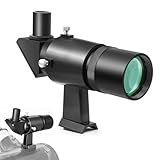
Astromania 9×50 RACI
- 9x magnification
- Right-angle correct-image
- Unilluminated crosshair
- Synta-style dovetail

Rigel QuikFinder
- 0.5 and 2 degree circles
- Pulsed reticle
- Two baseplates
- Built-in dew shield
Those three cover most situations. The StarPointer is the general answer. The Astromania 9×50 is the answer when you want real magnification and a right-angle eyepiece so your neck stays straight near the zenith. The QuikFinder is the answer when your telescope is an 80mm refractor on a light mount and a Telrad-class reflex sight would unbalance it.
What Makes a Finder Good for Deep Sky Objects?
A finderscope is a low-power, wide-field optical device mounted alongside your telescope tube. Whatever sits in the middle of its field also sits in the middle of the main eyepiece once the two are aligned. That single relationship is the whole point: the finder exists to point, and the telescope exists to magnify.
The difference between a telescope and a finderscope is magnification and aperture. A telescope might give you 100x with 150mm of aperture and a field of view half a degree wide. A finderscope gives you 6x to 10x with 30mm to 50mm of objective and a field of view seven or eight degrees wide. You cannot see a galaxy in the finder. You can see the stars you hop from to get to it.
Three technical terms decide whether deep-sky hunting works. Image orientation is the first. Many inexpensive straight-through finders show an inverted, left-to-right reversed image, so a chart held the normal way up will not match what you see, and beginners routinely assume the finder is broken. Right-angle correct-image (RACI) finders use an erecting prism so the view matches your naked-eye view of the sky. Magnification is the second: a red dot shows the sky at 1x, which means you see exactly the stars your eyes see and not one more. A 9×50 finder resolves fainter stars, which means you have something to hop to. Field of view is the third: a wider field means more context, so fewer hops and less chance of getting lost.
Two more ideas matter once you are under the stars. Parallax is the error you get when the target and the reticle are in different focal planes, so as you move your eye the target slides off the crosshair. Real finders have a focus mechanism to fix this. And the Bortle scale measures sky darkness from 1 (pristine) to 9 (inner city). It belongs in a finder decision because a red dot that is crisp in a Bortle 2 garden can be nearly invisible on a Bortle 8 patio.
Red Dot vs RACI vs Reflex Sight: Which Finder Type for DSOs?
Match the finder type to the target class, and the buying decision becomes obvious. Here is the framework we used to sort all ten products below.
Red dot and reflex sights (1x) show an aiming point over the naked-eye sky. Nothing is magnified, so they never reveal an object you cannot already see. Their strength is speed and honesty: whatever is in the telescope’s field is in the sight, so you never chase a false image. They excel on the Moon, planets, bright doubles and open clusters, and they stay comfortable under heavy light pollution because there is no faint, low-contrast imagery to lose. The Telrad and Rigel Quickfinder class adds concentric circles, which turns star-hopping from a guess into a measurement.
Magnified optical finders (6×30, 8×50, 9×50) gather more light and resolve fainter stars, which is exactly what you need for objects that never appear in a 1x view. This is the category built for deep-sky acquisition. The trade-off is width: a 6×30 with a 7.5 degree field shows a big patch of sky but its exit pupil is small, so faint stars are dim. A 9×50 with a narrower field shows fewer stars but brighter ones, and brighter guide stars are what make the final nudge reliable.
Right-angle correct-image (RACI) finders put the eyepiece at 90 degrees to the tube and add an erecting prism. The right-angle part matters more than most buyers expect: a straight-through finder forces you to crouch or lay on your back when the target is high, and holding that position for an hour is how observing sessions end early. Correct image orientation matters for chart matching. RACI finders are the most requested option in the forums for serious deep-sky work, and they are the only category that also works well for daytime terrestrial viewing.
Illuminated reticles solve a narrow but real problem: a wire crosshair on a black sky background can disappear. A dim red LED behind a glass reticle makes the crosshair visible without spoiling dark adaptation, provided you set it low. Leave the illuminator bright and it washes out exactly the faint stars you are trying to use as guide stars.
One honest caveat. On forum threads, plenty of experienced observers use a Telrad or Rigel-class sight with a low-power wide-field eyepiece as a two-stage system: the reflex sight for the coarse hop, the eyepiece for fine positioning. A member on theskysearchers.com describes exactly that pairing in daily use, and observers on stargazerslounge.com recommend a very low-power eyepiece as a finder eyepiece alongside a red dot. You can do a lot with that approach before you spend on a magnified finder.
All 10 Best Telescope Finders for Deep Sky Objects in October
| Product | Specifications | Action |
|---|---|---|
| Celestron StarPointer Finderscope |
|
Check Latest Price |
 SVBONY SV106 Guide Scope SVBONY SV106 Guide Scope |
|
Check Latest Price |
 Talcope Brightness Red Dot Finder Talcope Brightness Red Dot Finder |
|
Check Latest Price |
 SVBONY SV182 6×30 RACI Finder SVBONY SV182 6×30 RACI Finder |
|
Check Latest Price |
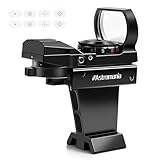 Astromania StarPointer Deluxe Astromania StarPointer Deluxe |
|
Check Latest Price |
 Tydeux Red Dot Finderscope Tydeux Red Dot Finderscope |
|
Check Latest Price |
| Astromania 9×50 Right-Angle Finder |
|
Check Latest Price |
| Rigel QuikFinder Reflex Sight |
|
Check Latest Price |
 XCCYG Red Dot Finder Kit XCCYG Red Dot Finder Kit |
|
Check Latest Price |
 SVBONY SV208 8×50 Finder SVBONY SV208 8×50 Finder |
|
Check Latest Price |
1. Celestron StarPointer Finderscope – Dual Circles and the Biggest Owner Track Record
Celestron StarPointer Pro Reflex Finderscope with Dual-Circle Reticle
40mm objective window
Dual-circle red reticle
Dimmable LED
Tool-free dovetail
Pros
- Two circles let you centre a target without covering it
- 40mm window is wider than most red dots
- Brightness dims to very low levels
- Holds alignment once set
- Eyes-open targeting is fast
Cons
- Plastic body feels cheaper than the price implies
- Soft battery cover chips easily
- Bulky on small Schmidt-Cassegrain tubes
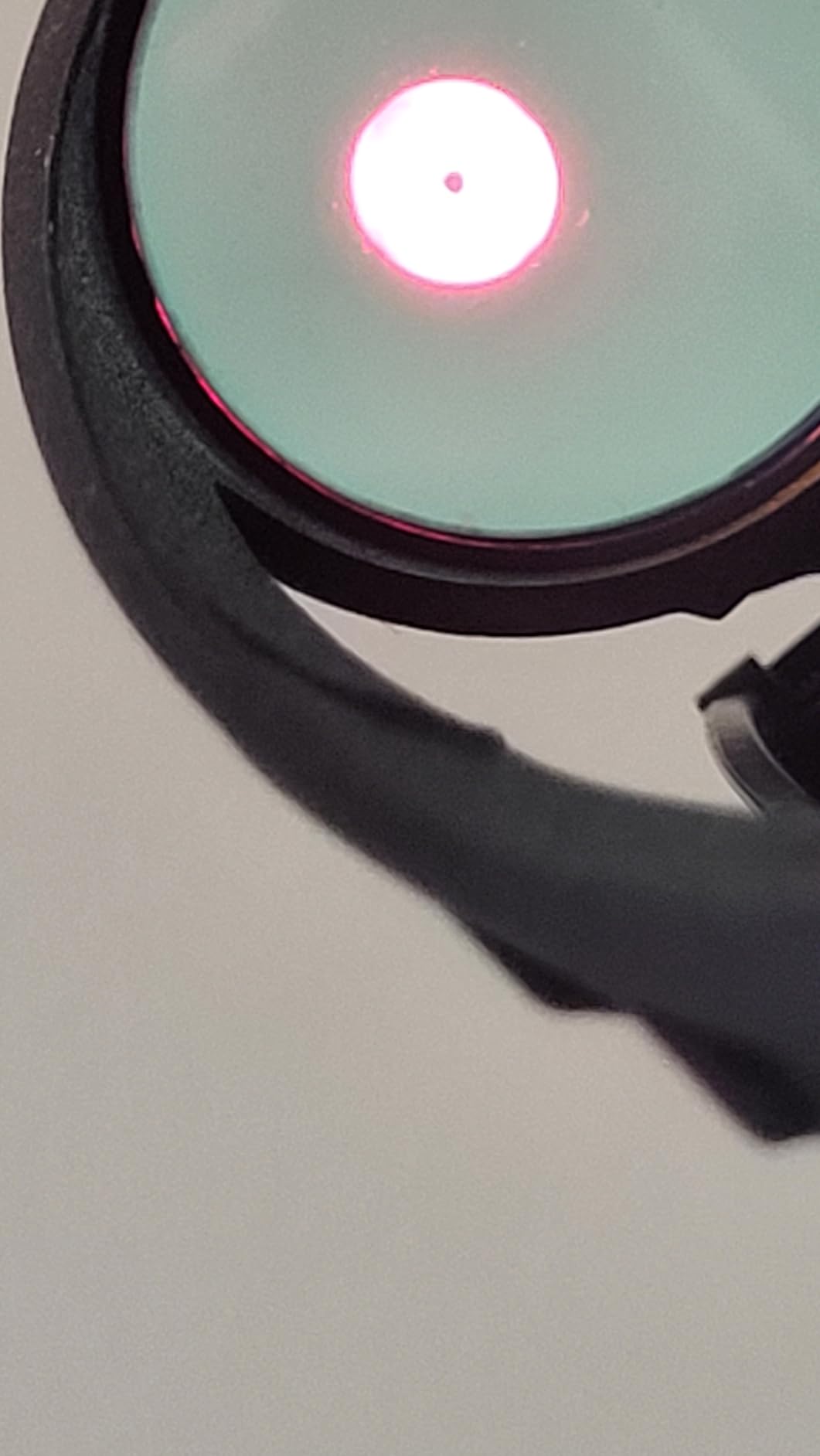
What separates this finder is the reticle, not the electronics. It projects two concentric red circles in focus with the stars, so you can drop a target inside the inner circle and still see it. That matters on a smudgy galaxy or a low-surface-brightness nebula, where a single dot would cover the very thing you are trying to centre.
The 40mm optical window is wider than most red dots here even at 1x, the Kellner eyepiece is multi-coated, and the LED brightness runs from a daytime setting down to a level low enough for a dark site. Both-eyes-open aiming is quick once you are used to it.
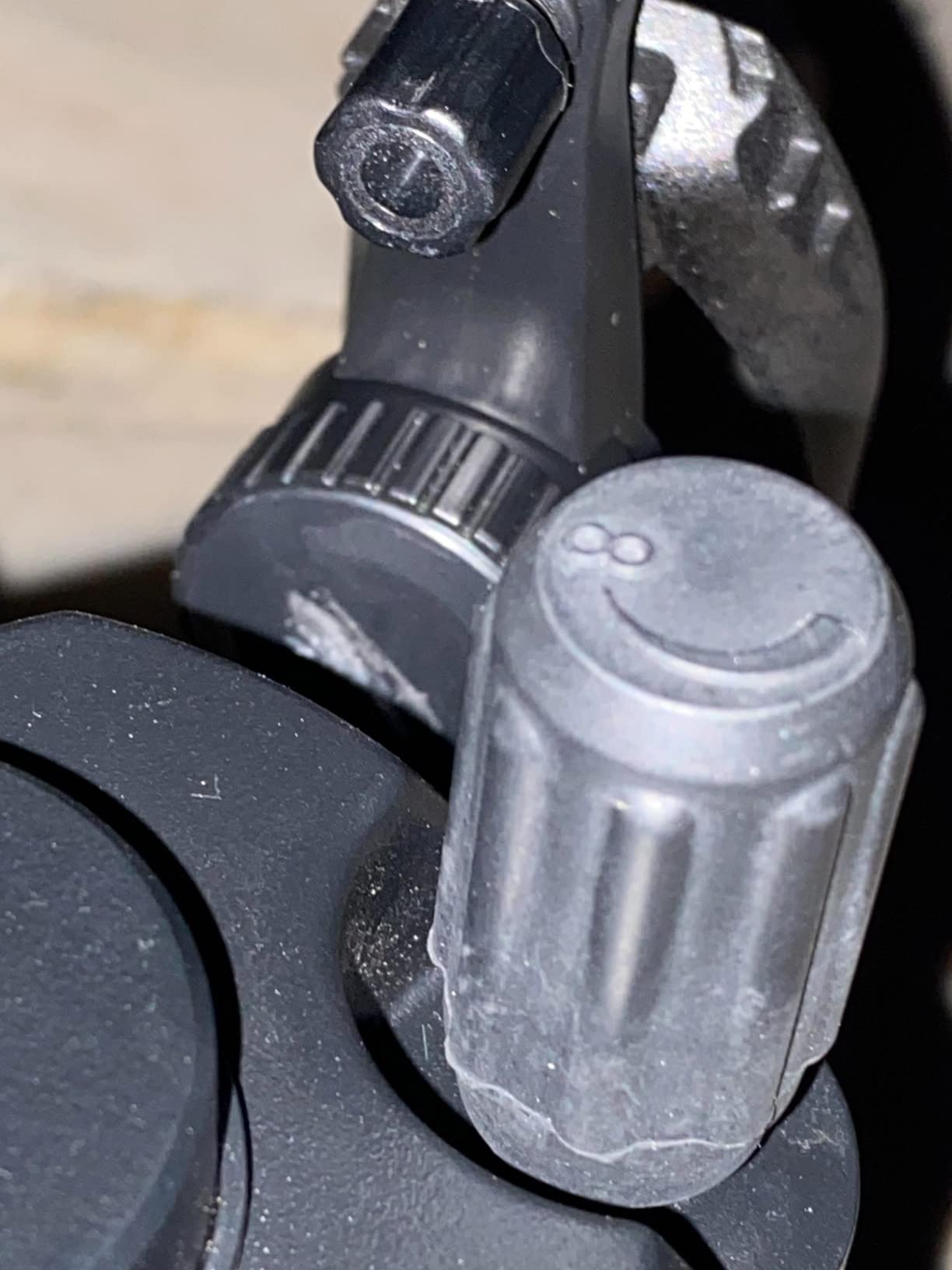
The weak points are physical. The body is plastic, and the soft battery compartment cover is the piece owners complain about most. The footprint is wide enough to foul the focuser or tube rings on a small Schmidt-Cassegrain, and a small number of owners report LED failures after light use.
At 4.1 it is the lowest-rated of the ten products, with the largest review base, so expect the usual budget-tier gripes. What you are buying is the reticle geometry and the most field history on this list.
Who this finder suits
Beginners who need a wide, bright field to learn star-hopping, and anyone who wants one finder that handles planets, the Moon and deep-sky objects. Zeroing takes about a minute and the springs hold for a whole session.
Who should skip it
Owners of compact Schmidt-Cassegrains with tight clearance, anyone who wants a metal body, and anyone who needs magnified guide stars. See the light-pollution section below before deciding.
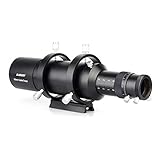
2. SVBONY SV106 Guide Scope – Metal Build and a Helical Focuser That Holds Stars Still
SVBONY SV106 Guide Scope Finder Scope 60mm,Helical Focuser Finder Multi-Use
60mm aperture
240mm focal length
2.39 degree field
Helical focuser
Pros
- All-metal optical structure holds alignment
- Sharp fully multi-coated optics
- Helical focus stops field rotation
- Works as guide scope or straight-through finder
Cons
- 2.39 degree field is narrow for star-hopping
- Needs rings or a bracket to mount
- Heavier than a red dot at 790g
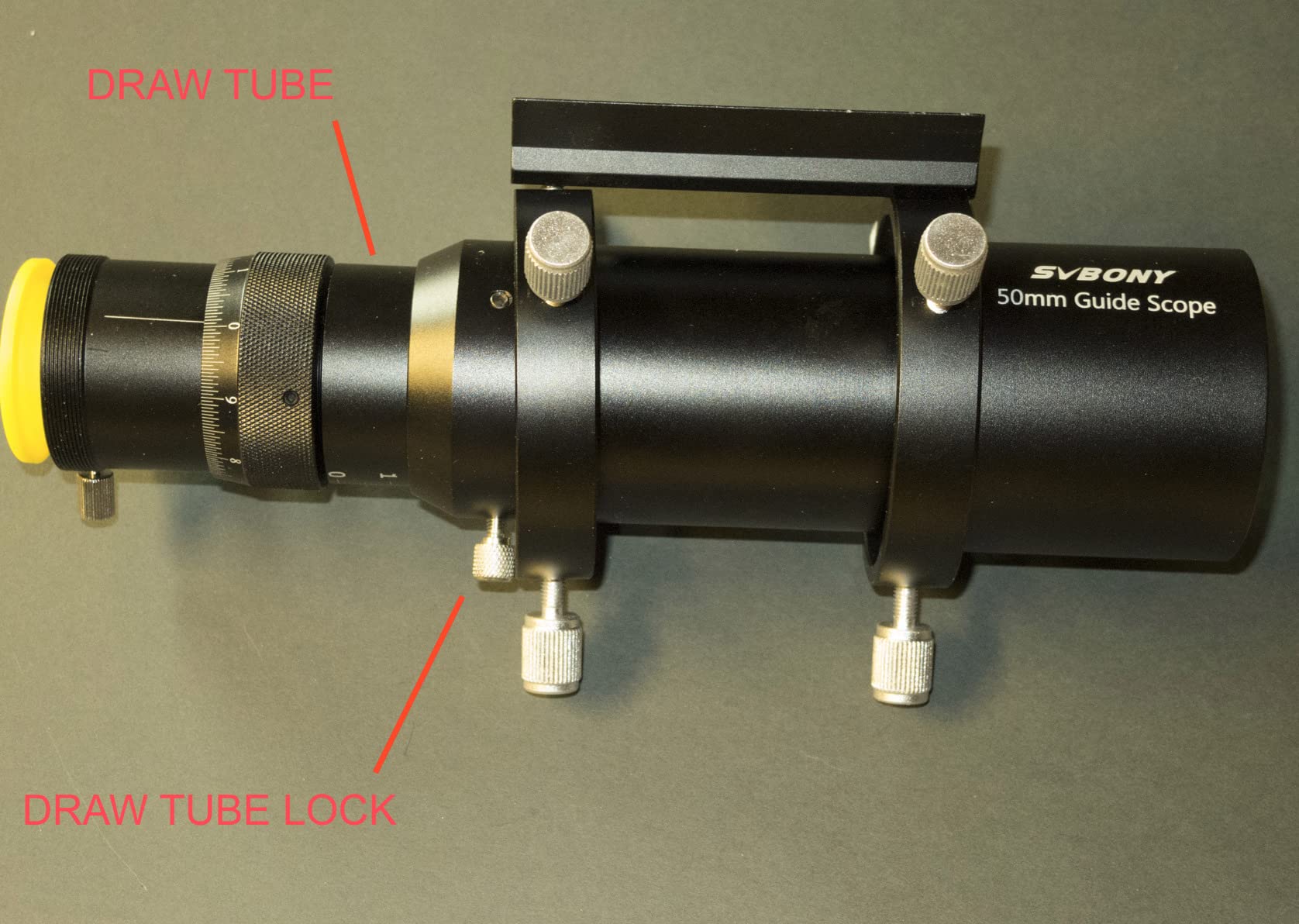
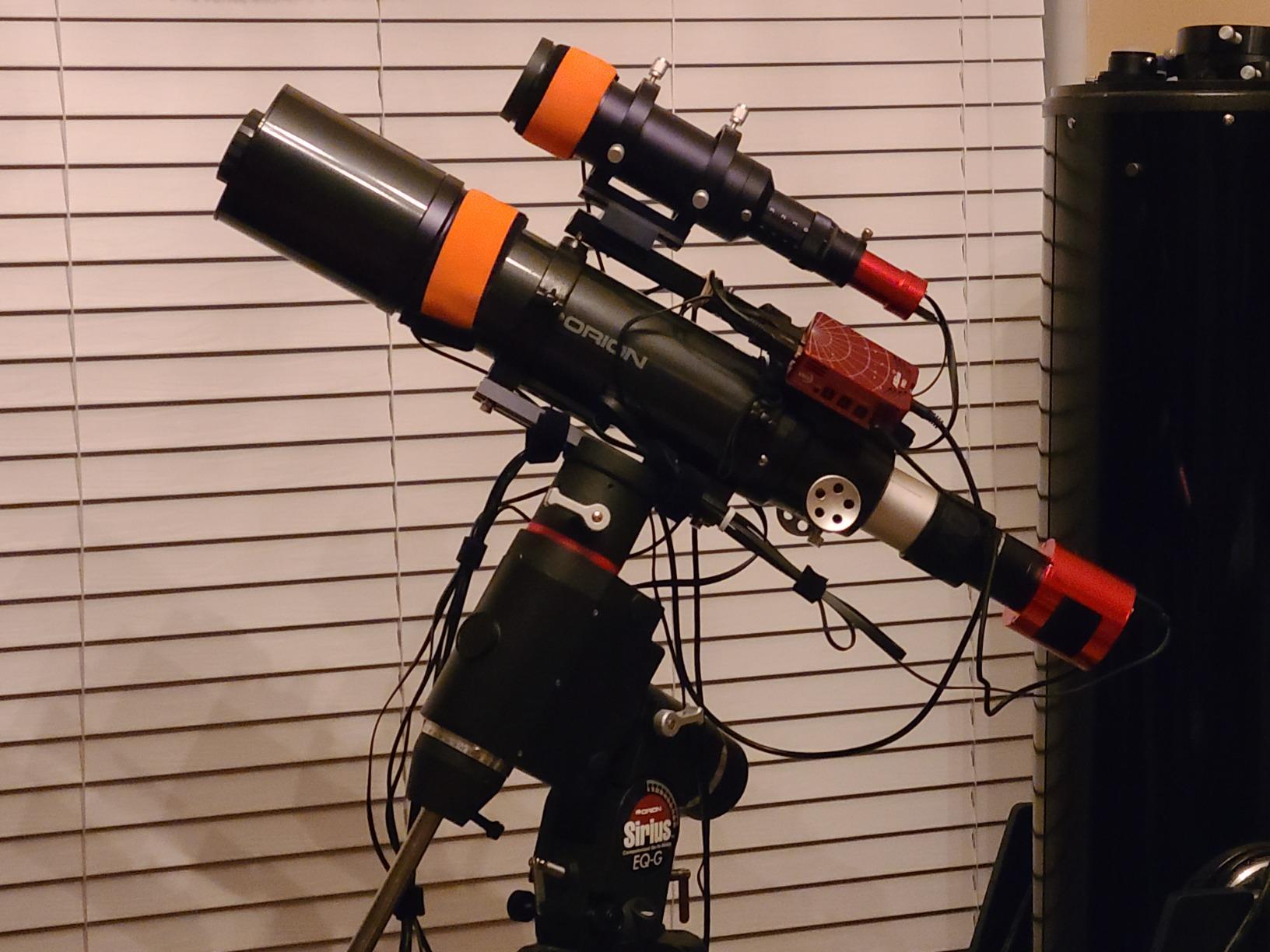
The SV106 is the odd one out here, because it is a guide scope first and a finder second. It has a 60mm objective, a 240mm focal length and a built-in helical focuser with 8mm of focus travel plus 35mm of telescoping back-travel for autoguiders. A compression ring protects inserted guide cameras, and the collar carries male T-threads for female T-thread autoguiders.
Its place in a deep-sky roundup is the helical focus. Focusing moves the objective along the optical axis without rotating it, so guide stars do not swirl across the field while you turn the knob and you do not lose your place. Owners also praise the all-metal optical structure, which is why it holds alignment where plastic units wander.
The optics are fully multi-coated and reported as sharp. At 4.6 from 291 reviews it is one of the highest-rated products here, and the complaints are consistent: a narrow 2.39 degree true field, a need for proper mounting rings or a bracket, and 790g of weight at the front of the tube.
That narrow field is the decisive limitation for visual work, since two degrees is not much sky to hop across. As a finder eyepiece or an autoguider, it is very hard to argue with.
Where it earns its place
With anyone who images as well as observes, and with anyone who wants a metal finder that will still hold alignment in a few years. Add a 1.25-inch eyepiece and it doubles as a straight-through finder at roughly 9.6x.
Where it falls short
It is the wrong pick if your only goal is finding faint galaxies visually. A RACI finder with a 7 degree field gets you to targets far more efficiently, and 790g is a real balance penalty on a small refractor.
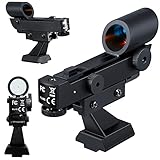
3. Talcope Brightness Red Dot Finder – The Simple Sight for a First Telescope
Talcope Brightness Red Dot Finderscope, Star Pointer Viewfinder Astronomical Telescope Accessories with Slide-in Bracket
Red dot on a clear window
Dimmable brightness
Slide-in bracket
84g
Pros
- Adds a usable aiming point to a telescope that shipped without one
- Dimmable dot aligns easily with thumb knobs
- Slide-in bracket fits most dovetail shoes
- Light enough for small mounts
Cons
- Non-magnifying so faint targets stay invisible
- Small fiddly adjustment knobs
- Basic plastic construction
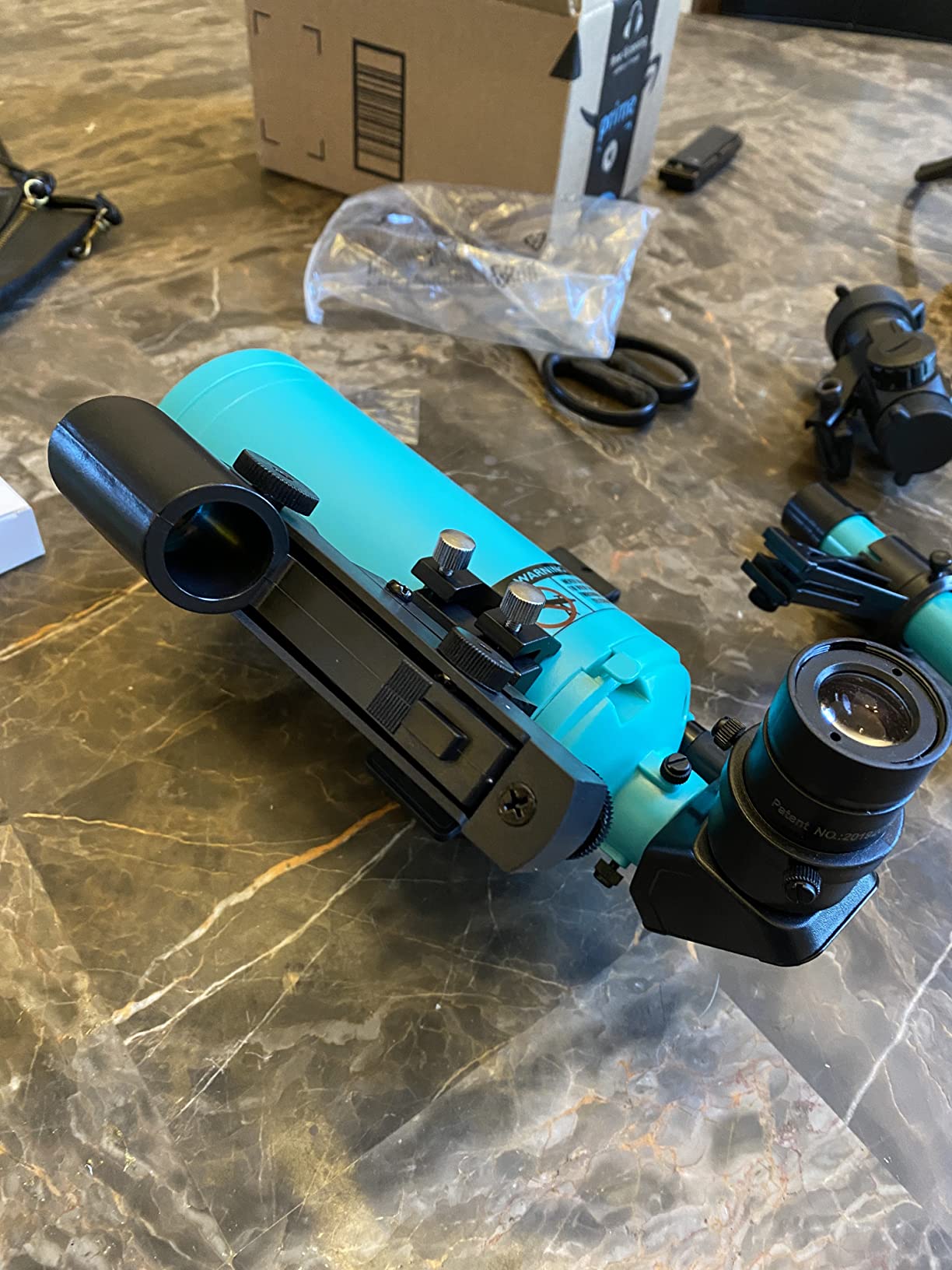
Plenty of first telescopes arrive with no finder, or with one that rattles. The Talcope RM is a clean answer: an LED red dot on a non-magnifying window, adjustable for day and night, with a slide-in dovetail bracket that drops into most popular finder shoes. The coin cell is included, so there is nothing to buy first.
It does one thing well. The dot dims low enough not to wash out your dark adaptation, and the two thumb knobs are enough to zero it. At 84g it will not upset the balance of a light mount, which matters more than it sounds: a finder heavy enough to tip a small Dobsonian is a finder you will take off again.
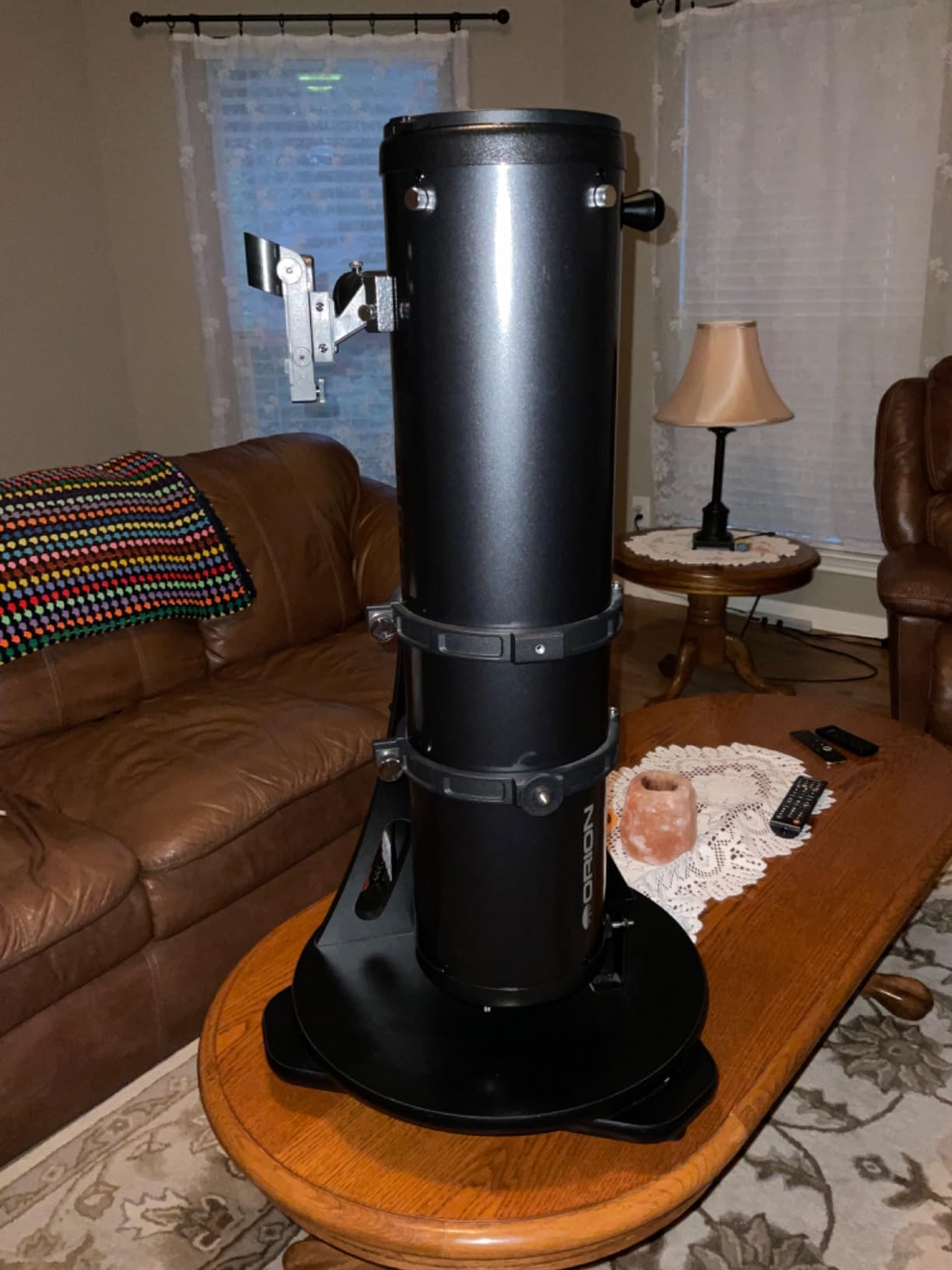
The limitation is structural. At 1x it shows the naked-eye sky, so if a galaxy is too faint to see without optics it is too faint here too. That makes it good for the Moon, planets and bright clusters, and weak for the job this article is about.
Build quality is basic plastic and the adjustment knobs are small enough to be annoying in the dark. A one-year guarantee is included. At 4.3 from 277 reviews, satisfaction is solid for what it is.
Who it suits
Anyone whose telescope came with no usable finder, anyone who wants a basic working aiming aid, and anyone with a travel scope where every gram counts. The dimmable dot also makes it usable for daytime terrestrial spotting.
Who should skip it
Anyone hunting faint deep-sky objects, since magnification is what does that job. Skip it if you already own a magnified optical finder, because a second aiming device adds weight and clutter without adding capability.
4. SVBONY SV182 6×30 Right-Angle Finder – The Widest Field in a Right-Angle Body
SVBONY SV182 Finder Scope, Right-Angle Correct-Image Optical Finder, 6x30mm
6x30 magnification
7.5 degree field
Fully multi-coated
Crosshair reticle
Pros
- Right-angle correct-image view removes neck strain
- 7.5 degree field makes hopping easy
- Sharp multi-coated optics with pinpoint stars
- Light and mostly metal
Cons
- Two-screw spring mount drifts out of alignment
- Mount friction ring is not rock solid
- 6x30 aperture is modest on very faint targets
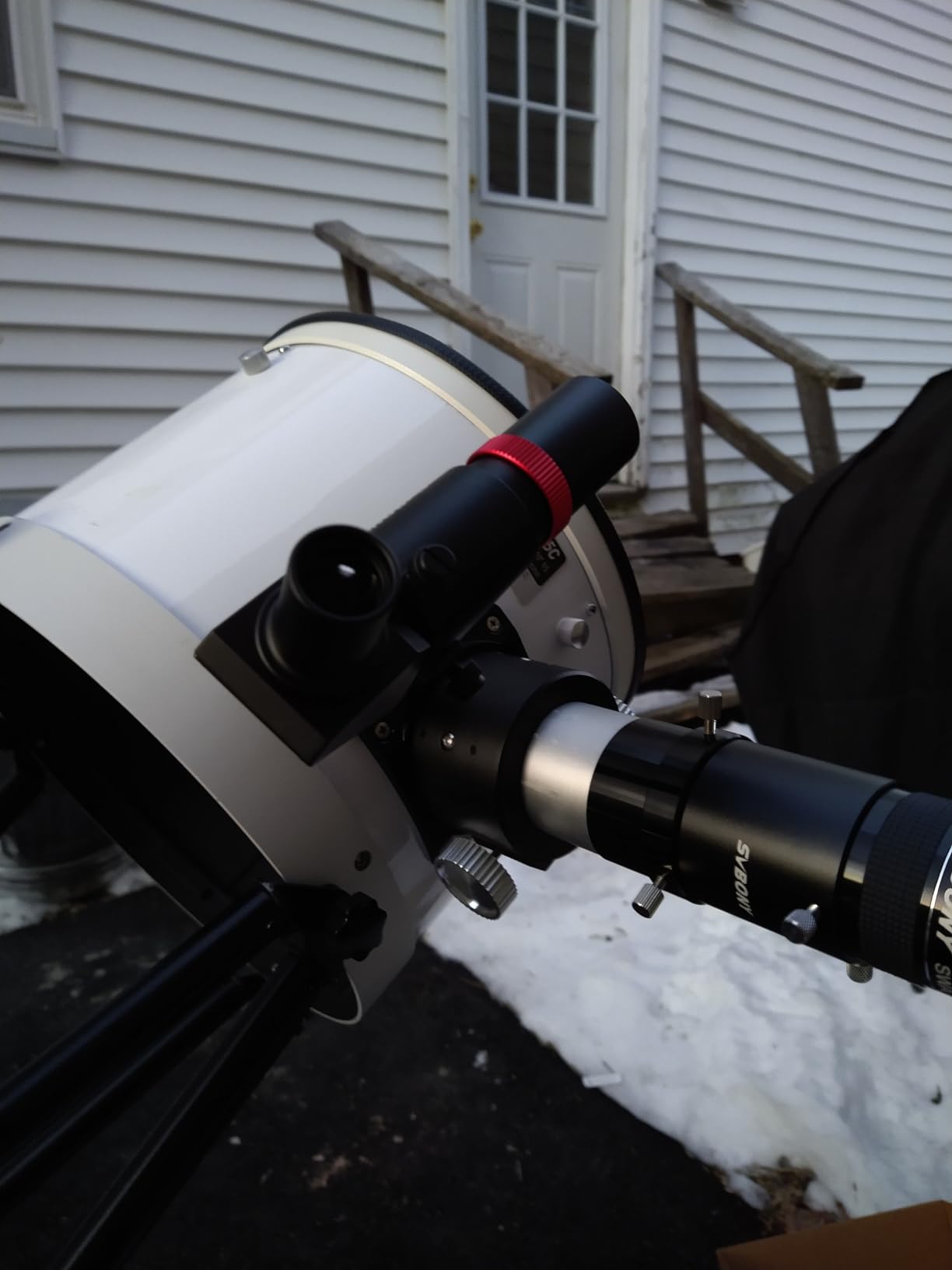
The SV182 answers a specific deep-sky problem: you need a wide field and you need to sit upright. Magnification is 6x with a 30mm objective, a 120mm focal length, a 5mm exit pupil and a listed 7.5 degree field, the widest of any right-angle finder in this roundup. The 90-degree diagonal and erect prism make the image upright and unreversed, so a chart held the normal way up matches what you see.
Optics are fully multi-coated and reviewers describe pinpoint stars. The extension arm gives eye clearance from the tube so you are not pressing against the hardware at awkward angles. Several owners say the right-angle view revived their interest in visual observing, which is the point: comfort decides whether you hunt faint objects for two hours or twenty minutes.
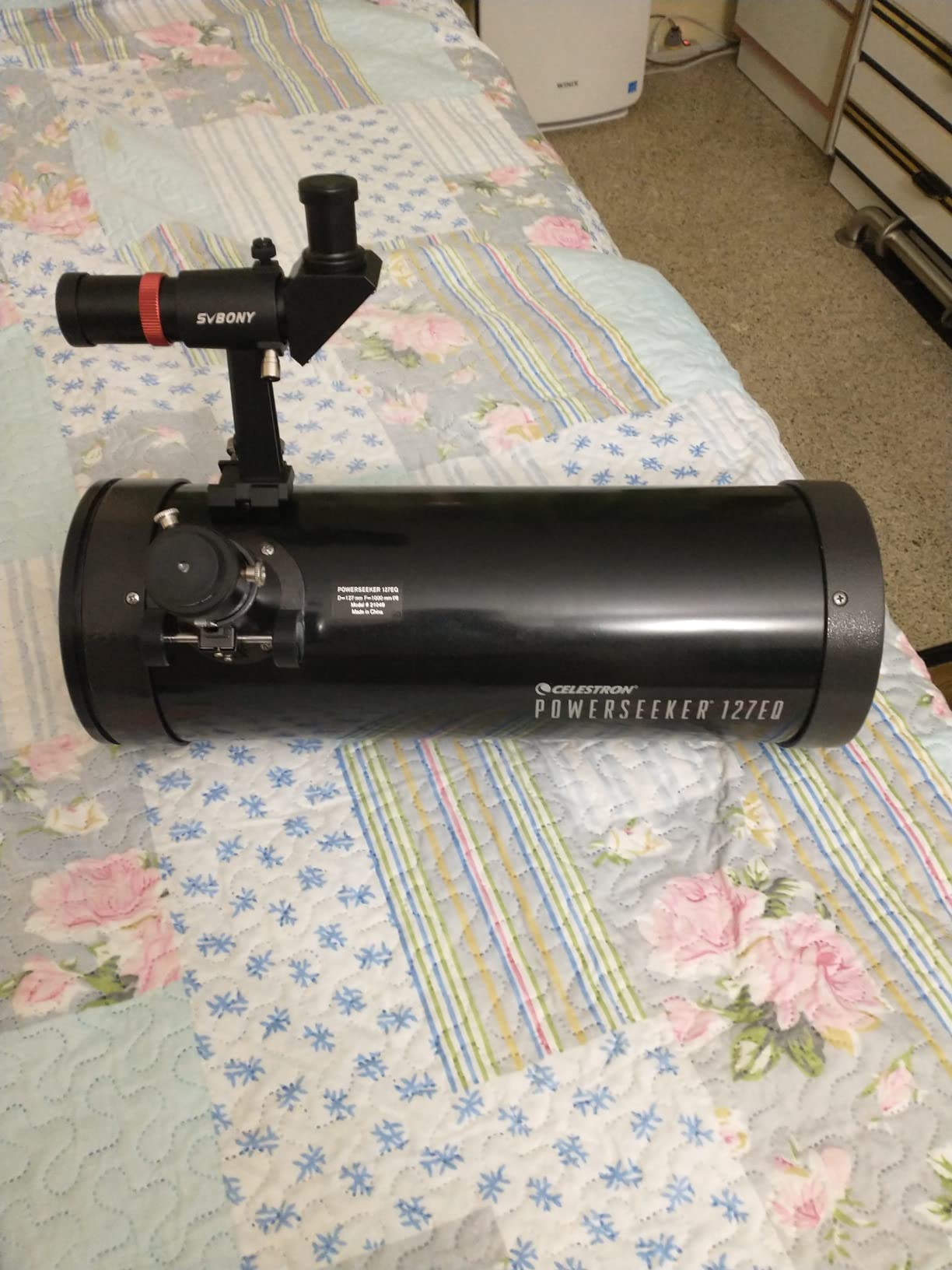
Two problems recur. The supplied mount uses two screws and a spring, and reviewers report it loses alignment between sessions, so a third adjustment screw is a worthwhile fix. The friction ring at the front is also criticised. A few examples reportedly arrived with eyepiece elements out of order, leaving the crosshairs badly out of focus.
On aperture, a 6×30 shows fewer and fainter guide stars than a 9×50, so the last hop toward a low-surface-brightness galaxy takes longer. It is specified for visual use rather than high-power eyepieces, which is a sensible division of labour.
Why it rates highly for deep-sky
Wide field plus correct image plus right angle is what makes long star-hopping sessions possible. At 7.5 degrees you usually see the whole asterism you are hopping from, so you make one confident slew instead of three cautious ones. It also doubles for daytime viewing.
Where it will disappoint
Anyone chasing the faintest galaxies from a bright backyard, where aperture rather than field width is the limit, and anyone who hates re-aligning a spring mount every time they set up.
5. Astromania StarPointer Deluxe – Four Reticles, Two Colours and Five Brightness Steps
Astromania StarPointer Red Dot Finder Scope for Telescope Deluxe Finder
Metal body
Four reticle patterns
Red or green LED
Five brightness levels
Pros
- Metal body feels a step above plastic red dots
- Four reticle patterns plus red or green choice
- Five brightness levels suit faint and bright targets
- Bracket unclips to leave a Picatinny rail
Cons
- Non-magnifying so it will not show very faint objects
- Some shipments missing base plate or screws
- Arrives in a plain brown box
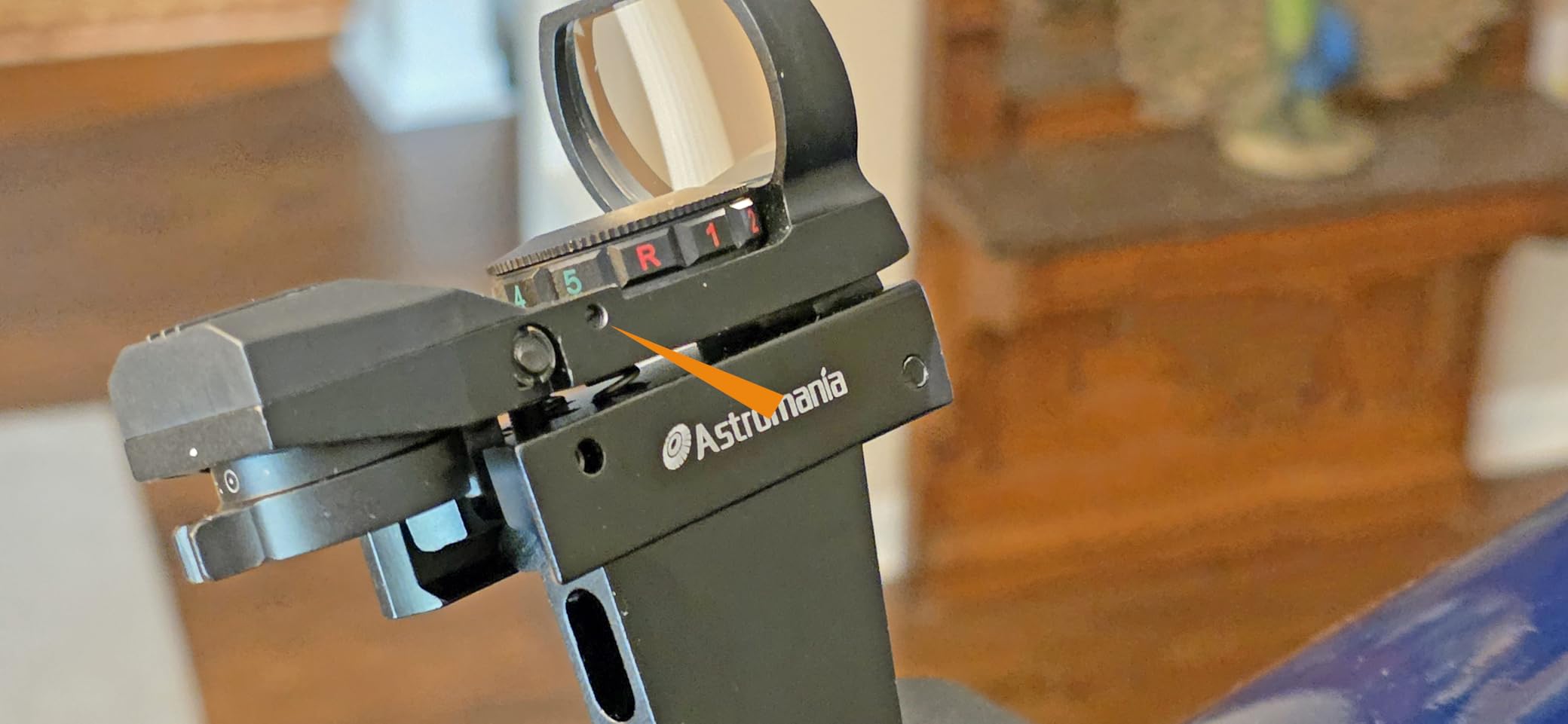
This is the most configurable red dot in the group, and configuration matters when you move between skies. Four reticle patterns are available, from a simple dot to circle patterns, and you can choose red or green illumination. Green is often easier to see against a very deep sky, while red preserves night vision better. Five brightness levels plus an off position stop the battery draining when the sight stays on the tube.
The body is metal rather than plastic, which is the biggest quality jump from the cheapest sights and is obvious in the hand. The dovetail bracket fits Vixen and Sky-Watcher shoes, and it unclips to leave a Picatinny rail underneath, so the same unit can sit in a camera hot shoe. Horizontal and vertical fine adjustment screws come with a hex wrench.
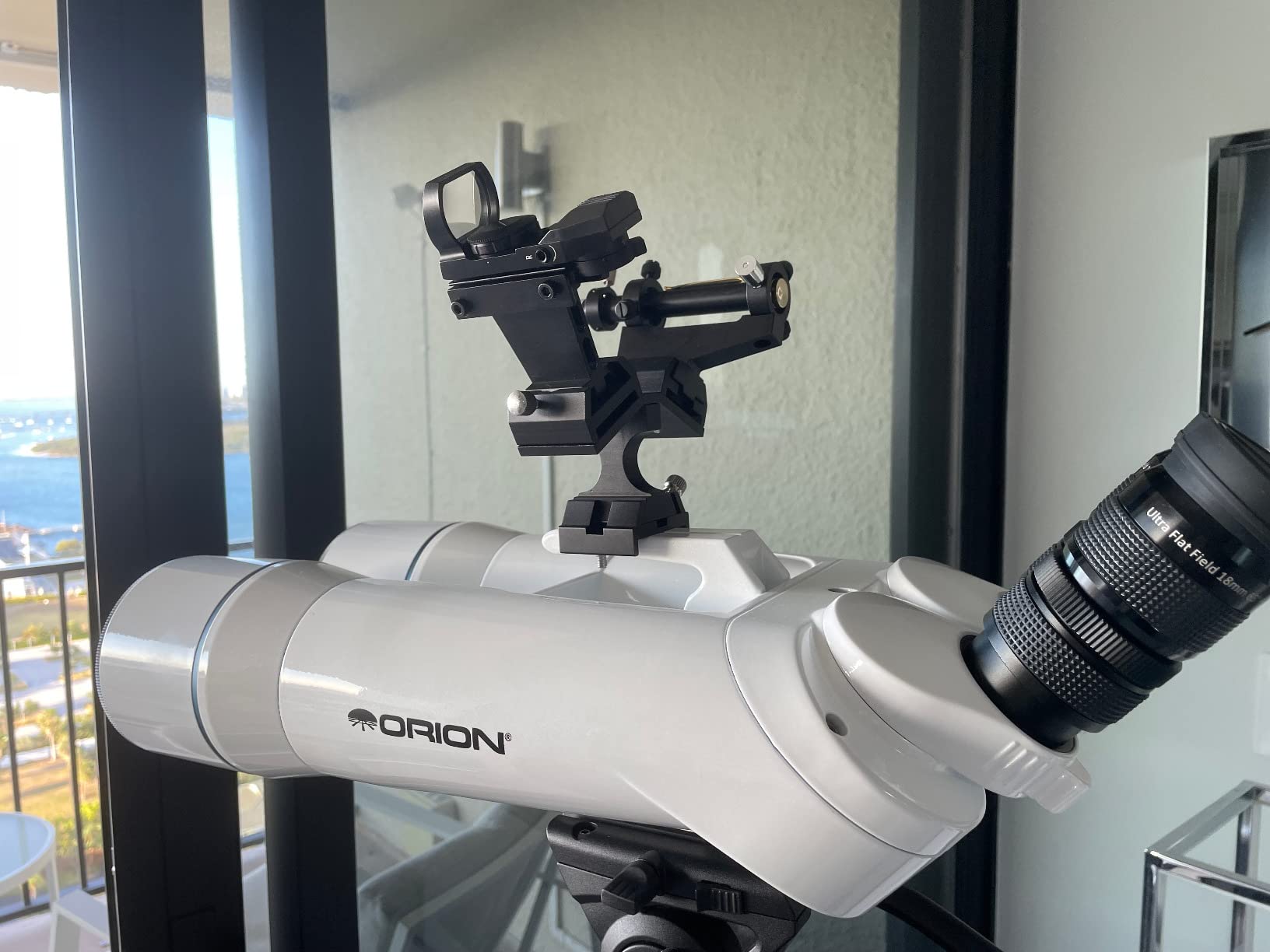
The complaints are about packaging, not function. Some shipments arrive without the base plate, compression spring or nylon screws, so check the box before the return window closes, and expect a plain brown box. At 4.4 from 215 reviews, satisfaction is high for the tier.
As a non-magnifying sight it shares the ceiling of the category: it cannot show a galaxy you cannot already see. The circles make star-hopping measurable, but magnified guide stars still need an optical finder.
Where it earns its place
With anyone who wants one red dot that covers a suburban backyard and a dark site, since switching reticle and brightness between them takes seconds. The removable Picatinny rail is a real bonus if you are starting astrophotography.
Where it falls short
Magnified deep-sky targets, full stop. It is also a marginal choice if you already own a RACI finder and only need an aiming aid, since the two overlap. The CR2032 cell is included, so there is no extra purchase.
6. Tydeux Red Dot Finderscope – The Lightest Sight in the Roundup
Tydeux Red Dot Finder Starpointer Finderscope for Astronomical Telescopes
Red dot sight
Dimmable brightness
Thumbwheel alignment
2.6 ounces
Pros
- Lightest finder here at 2.6 ounces
- Easy to align and holds its setting
- Lowest brightness setting avoids washing out faint stars
- Drop-in slide-in bracket
Cons
- Adjustment screws have very little range
- Thin plastic build
- No instructions and sometimes no battery in the box
The Tydeux solves a specific problem: you own a small, light telescope, and adding a finder pushes it off balance. At 2.6 ounces it is the lightest option in the roundup, so you can point the tube at a target, see a dot and adjust the screws without the front end feeling loose. That is why the community keeps recommending small reflex sights for 80mm refractors and travel scopes.
It is a straightforward red dot on a non-magnifying window with adjustable brightness and thumbwheels for both axes. Owners like that the lowest setting is genuinely low enough for faint stars to survive around the dot, and that once sighted in it holds its setting. A CR2032 cell is included and there is a two-year manufacturer warranty, the longest stated among the budget sights here.
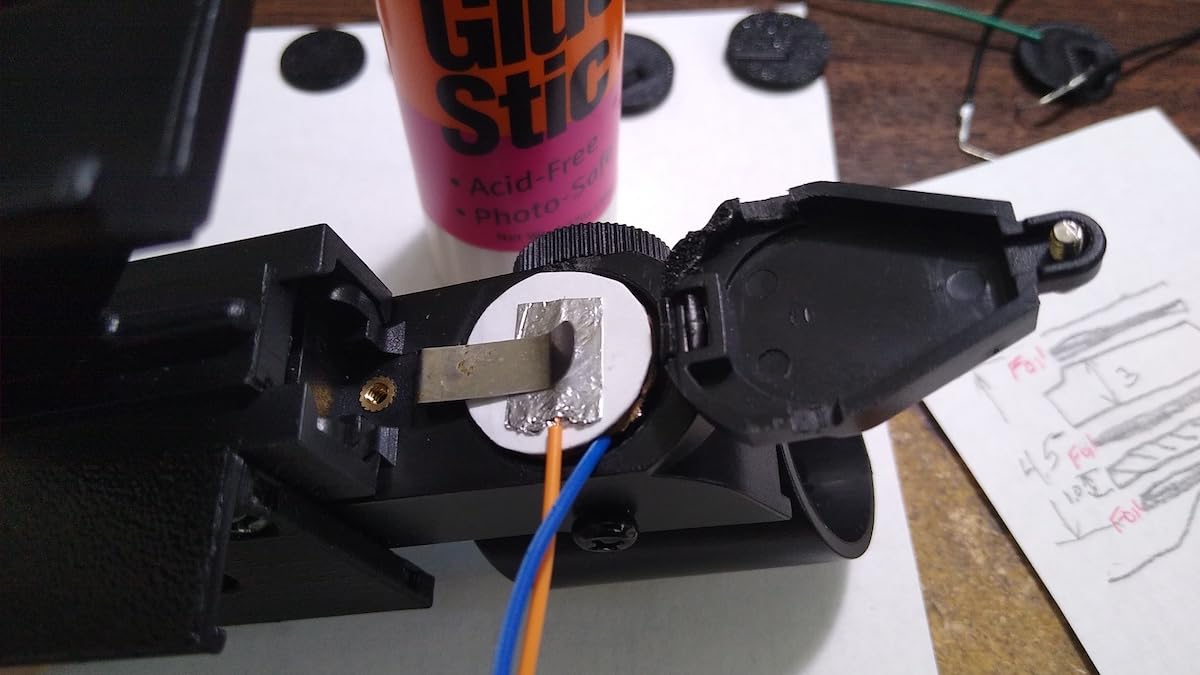
The weakness is adjustment range. Reviewers describe very little travel on the thumbwheel screws, which makes alignment fiddly on a tube with lots of clearance. The plastic is thin, no instructions are included, and a few owners received examples without a battery or with an LED that never powered up. At 4.3 from 141 reviews, that is a reasonable entry-tier outcome.
It is also a 1x sight, so it will not carry a real star-hop to a faint galaxy.
Why weight matters more than people think
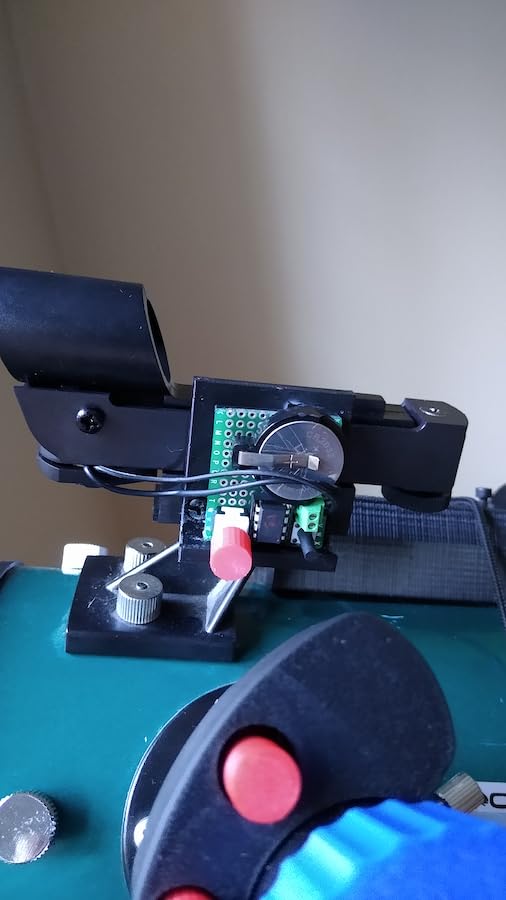
Adding a finder moves the centre of gravity forward on a short tube. On a lightweight refractor or small Dobsonian that can mean a wobbling tube and an eyepiece that will not stay where you left it. At 2.6 ounces, this one adds almost nothing.
Where it will disappoint
Anyone who wants a finder that locates faint targets rather than merely bright ones, and anyone with poor dexterity, since those short adjustment screws demand patience. Buy a magnified optical finder if your sky is dark.
7. Astromania 9×50 Right-Angle Finder – The Magnifying Deep-Sky Finder
Astromania Finder Scope, Right Angle Optical Finderscope for Telescope 9×50
9x magnification
50mm objective
Correct-image right angle
Crosshair reticle
Pros
- 9x shows many more stars than a red dot
- Bright image with pinpoints to the field edge
- Right-angle view removes neck strain
- Easy to align and focus
Cons
- Heavy and bulky on tubes under 5 inches
- Spring screws lose alignment between sessions
- Unusual focus on the objective cell
- Unilluminated thick crosshairs
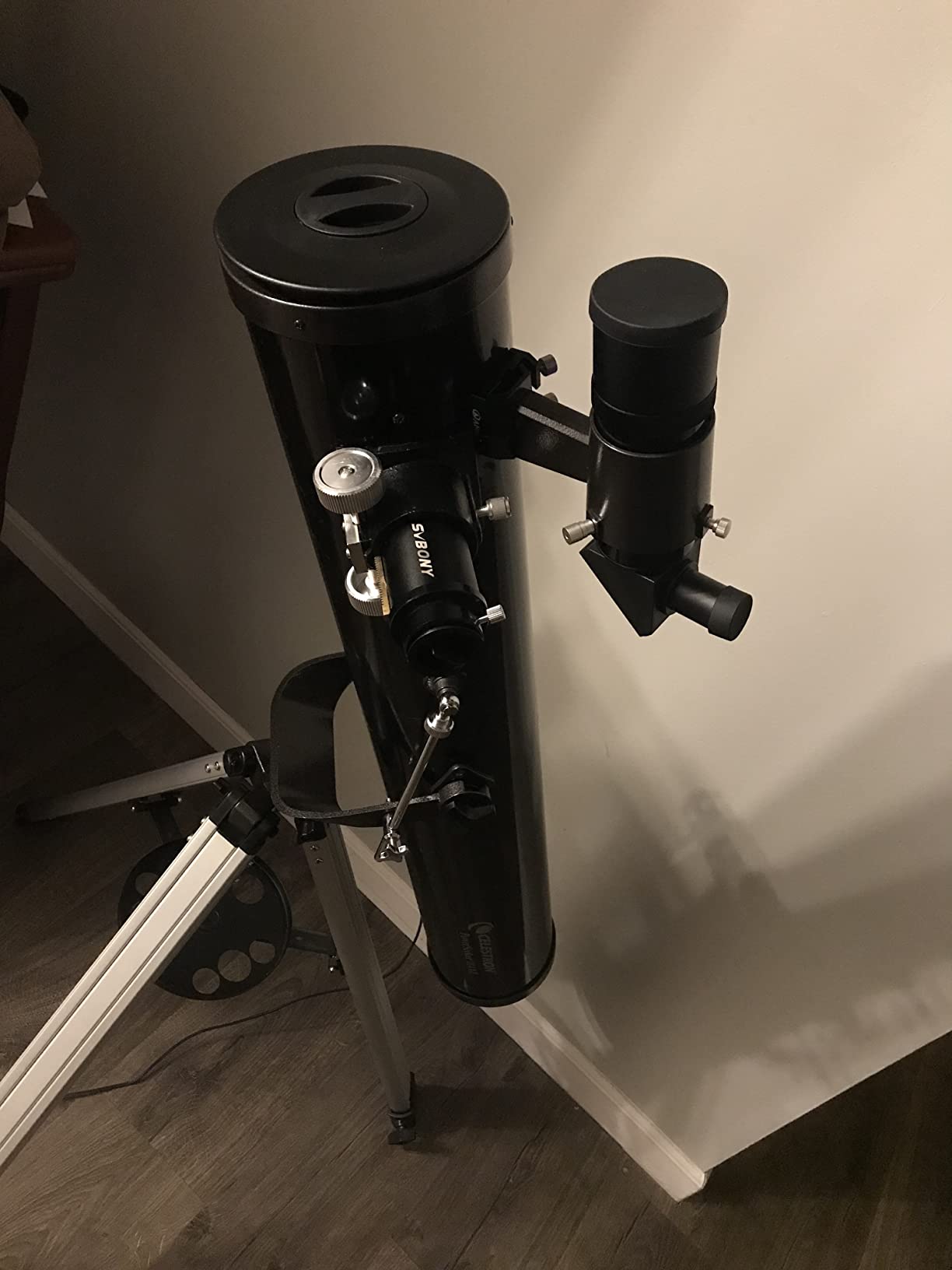
This is the finder category that exists for deep-sky work, and the Astromania 9×50 is the clearest example here. Magnification is 9x with a 50mm objective and a 5.56mm exit pupil, so the view is bright and resolves stars your naked eye cannot see. Owners are explicit about the benefit: 9x shows far more stars than a red dot, and more stars means more options for the hop. The upright correct-image prism keeps chart orientation natural.
Reviewers describe pinpoint stars staying sharp to the field edge and a bright, high-contrast image, which is unusual at this tier. The 90-degree viewing angle is the feature people notice most on a Dobsonian, since you can observe near the zenith standing upright instead of crouching. The rotating eyepiece lets you orient the crosshairs to suit your chart, and the machined aluminium body feels a step above the plastic competition.
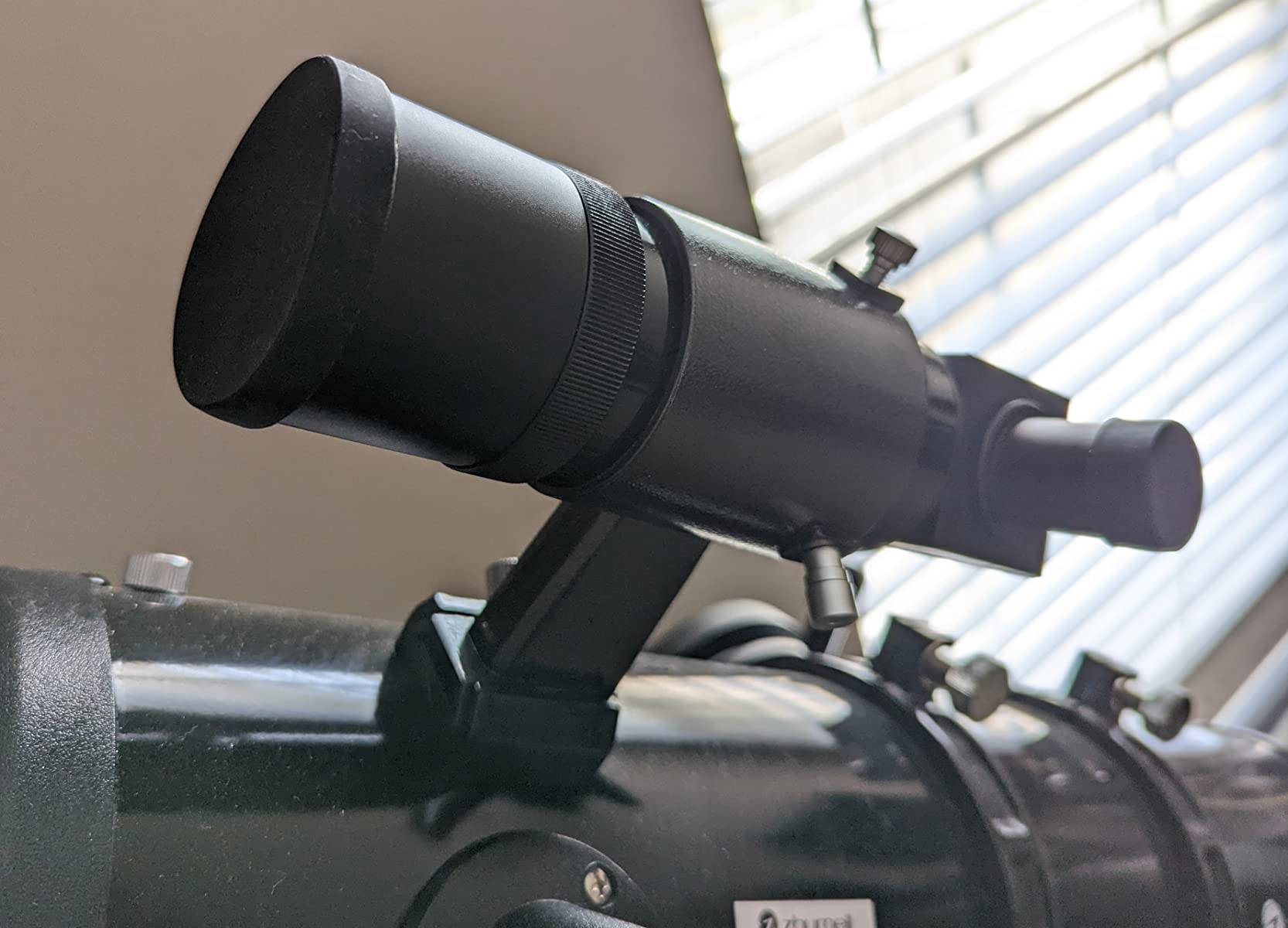
Now the trade-offs. At 1.1 pounds it is heavy, and owners call it particularly awkward on tubes under 5 inches. The spring-loaded adjustment screws lose alignment between sessions. Focusing is unconventional, since you unscrew the objective cell rather than turn a normal eyepiece focuser. The crosshairs are unilluminated and thicker than most, so they can obscure a faint target at the centre of the field.
The listed field of view reads 0.05 degrees, which is almost certainly a listing data error rather than a real value, so judge it on magnification and aperture. Some shipments have also arrived missing the base plate, compression spring or nylon screws, though customer support has replaced a damaged mount post under warranty.
Why magnification changes the outcome
A 1x sight can only ever show naked-eye stars. A 9×50 resolves a deeper layer of the sky, so when you are hopping toward an object with no bright anchor nearby, the finder supplies guide stars your own eyes cannot. That is the difference between a hop that works and a hunt that ends in frustration.
Where it will disappoint
Anyone on a small, light tube, where the weight penalty is real, and anyone who wants an illuminated crosshair for very dark skies. If you need magnification and a wide field, the SVBONY SV208 pairs 8x with a listed 7.3 degree field.
8. Rigel QuikFinder – Two Circles in a Fraction of the Size of a Telrad
Rigel Systems QuikFinder Compact Reflex Sight with Built-in Dew Shield, Extra Base & Battery
0.5 and 2 degree circles
Pulsed or continuous light
Two baseplates
4.8 ounces
Pros
- Far smaller and lighter than a Telrad
- Two circles are excellent for star-hopping
- Pulsing reticle reaches faint targets
- Dual baseplates make swapping scopes trivial
Cons
- Reticle too faint for daytime alignment
- Adjustment knobs sit on the far side from the eye
The QuikFinder is the Rigel half of the Telrad-versus-Quickfinder debate that comes up constantly on observing forums, and the reason it wins on small instruments is size. At 4.8 ounces, the listing describes it as one tenth the size and weight of a typical reflex sight, and it projects 0.5 and 2 degree red circles in focus with the stars. The compact design lets you keep both eyes open and see fainter targets than a large sight allows.
CloudyNights reviewers put the trade-off plainly: the Quickfinder is smaller and lighter than the Telrad, but it produces two circle sizes rather than three, so the measuring range is narrower. The reticle supports pulsed or continuous illumination with finely stepped brightness, and the pulse mode suits faint targets because it spends less time adding light to the field.
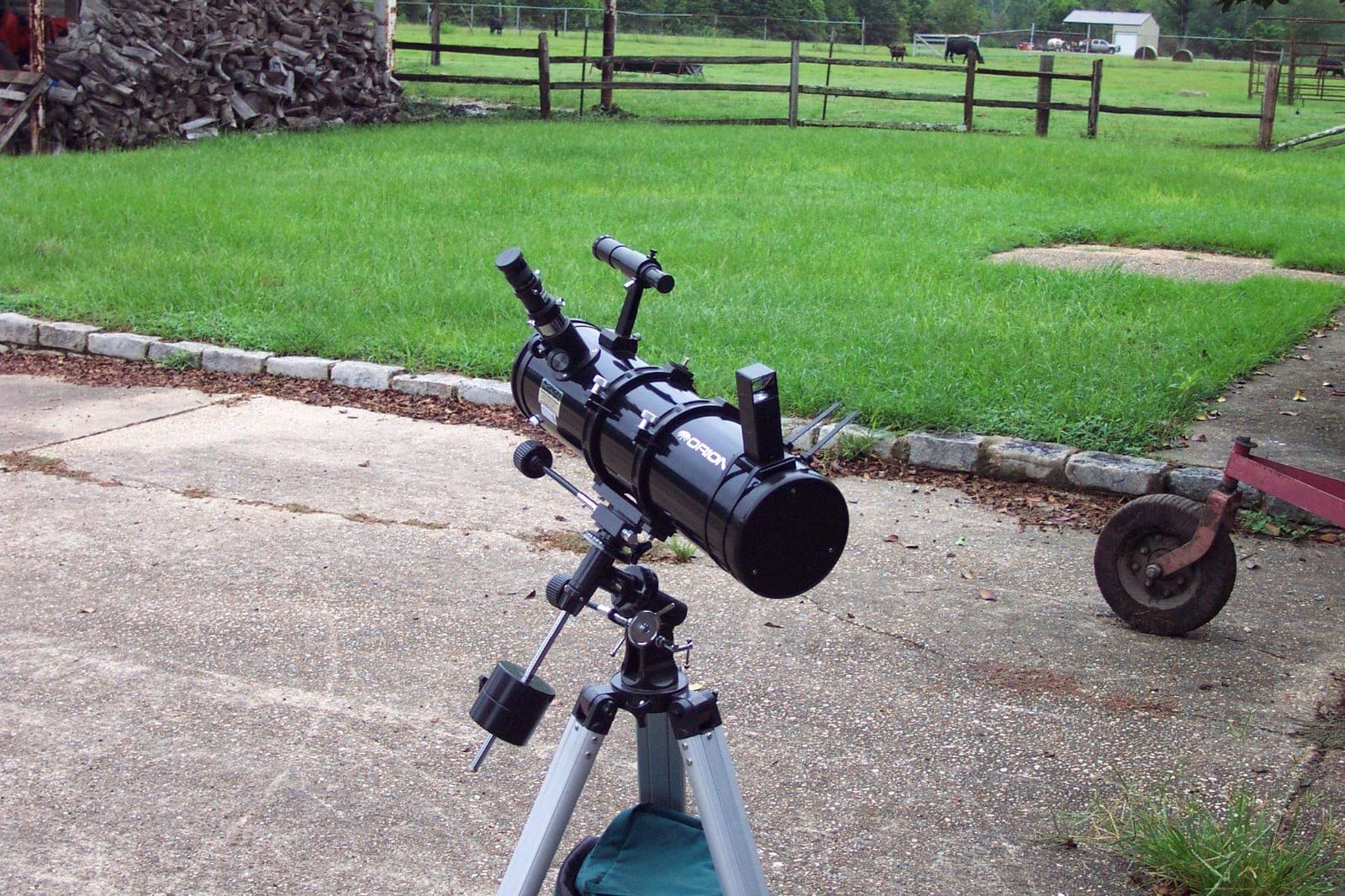
Two baseplates are included, which makes swapping between telescopes trivial, and the built-in dew shield protects the window on long cold nights. It stands far enough off the tube to look through easily, which sounds trivial until you have used a sight flush against a dew shield at midnight. Brightness, side-to-side, up and down controls cover adjustment.
The consistent drawback is a reticle too faint for daytime initial alignment, so you either align at dusk or find another method. The controls also sit on the side facing away from your eye. Despite that, owners rate it 4.4 from 130 reviews, and on an 80mm refractor or a scope with a single finder slot it is often the only reflex sight that fits properly.
Where it earns its place
On small refractors, lightweight mounts and travel scopes where a Telrad would upset the balance. Observers on r/telescopes repeatedly name the Telrad and Rigel Quickfinder as standard tools for serious deep-sky searching, because the circles let you measure offsets rather than guess. The two baseplates also make it a good first reflex sight with more than one telescope.
Where it falls short
Daytime alignment, and magnified acquisition, since it shows no more than your eyes can. The two-circle option is also a narrower measuring range than a three-circle Telrad, so plan your hops accordingly.
9. XCCYG Red Dot Finder Kit – Four Brackets for Retrofitting Older Telescopes
Red Dot Finderscope,Astronomical Telescope Star Pointer Viewfinder Star Finder Scope with 4 pcs Slide-in Bracket,Compatible with Most Astronomical Telescopes
Red dot sight
Adjustable brightness
Four slide-in brackets
Battery included
Pros
- Highest average rating in the roundup
- Includes four brackets for broad compatibility
- Bright enough to use in daylight
- Good battery life
- Holds alignment better than old spyglass finders
Cons
- Cheap plastic build
- Some owners report an intermittent switch
- Adjustment screws too loose to hold a setting
At 4.7 from 73 reviews, this is the highest-rated product in the roundup, and the reason is packaging rather than technology. Four slide-in brackets are included, so the finder fits almost any telescope with a dovetail shoe without a second purchase. Several owners used it to convert an old spyglass-type star finder into a modern red dot unit.
Owners report that once aligned it holds alignment far better than the old spyglass-style finder it replaced, which is the single thing that most improves a bad setup. The dot is bright enough for daylight use as well as night, and battery life is reported as good. At about 1.25 by 1.25 by 4 inches and 0.14kg, it will not upset a light tube.
The build is thin plastic, and the failure reports are the usual budget-tier ones: an intermittent on/off switch on some examples, and adjustment screws too loose to hold a setting. Maximum brightness is high enough to wash out faint targets, so treat the brightness control as something you adjust. The review base of 73 is the second smallest here, so there is less long-term field history than the bigger products have.
It is still a 1x sight with a Ramsden-style eyepiece and a coated window, so the category ceiling applies.
Who it suits
Owners of an older telescope whose original finder has failed, and anyone who wants a spare red dot for a second instrument. The four-bracket bundle is the reason to pick this over a single-bracket unit of the same type.
Who should skip it
Faint deep-sky targets, because nothing is magnified, and anyone who dislikes loose adjustment screws needing a re-tighten after every session. If you are buying once and want the best object rather than the best bundle, the Astromania deluxe metal sight is more durable.
10. SVBONY SV208 8×50 Finder – Illuminated Crosshair and a 7.3 Degree Field
SVBONY SV208 Finder Scope 8×50 Finderscope with Crosshair and Bracket
8x power
7.3 degree field
Red LED dark-field light
Glass reticle
Pros
- 8x with a 7.3 degree field is a strong star-hopping pairing
- Correct-image roof prism keeps orientation natural
- Red LED illumination preserves dark adaptation
- Glass reticle is more durable than wire
Cons
- Heaviest optical finder here at 632g
- Smallest review base at 40
- Illumination can wash out faint targets if set too bright
The SV208 is the most capable optical finder on paper in this roundup, and the specification explains why. It combines 8x magnification with a listed 7.3 degree field of view, which is a genuinely unusual pairing: most magnified finders give up field width, and most wide-field finders give up magnification. A 50mm objective with a 6.25mm exit pupil gives a bright image, and the BK7 correct-image roof prism keeps the view right-side-up and unreversed.
The illumination is the feature that separates it from everything else here. A red LED provides dark-field illumination behind the reticle, so the crosshair is visible on a black sky without destroying your dark adaptation, provided you set the brightness low. The reticle is glass rather than wire, which is more durable and does not sit as heavily over a faint target. There is also parallax compensation built into the objective lens thread focus, so the target and reticle share a focal plane once focused.
The catch is weight. At 632g this is the heaviest optical finder here, and that has to be weighed against a light tube. The review base is also the smallest we looked at, at 40 reviews, so there is less long-term field feedback. And an illuminated reticle needs a battery, and if you leave it bright it washes out exactly the faint stars you are using as guide stars.
The metal construction, prism optics, angle adjustment knob and included bracket make this a complete package, and at 4.7 from 40 reviews it is rated very highly. I would treat the small review base as a caution rather than a disqualifier, and check your tube’s load capacity first.
Who it suits
Visual observers who want magnification and a wide field in one unit, and who observe at dark sites where an unilluminated crosshair would vanish against the background. The correct-image prism also makes it usable in daylight for terrestrial viewing.
Where it will disappoint
Anyone on a lightweight mount, where 632g at the front end is a serious balance penalty, and anyone who expects a long-term ownership record from a product with a small review base. If weight is not an issue but magnification matters more than field width, the Astromania 9×50 gives a cleaner design with far more owner feedback.
How to Align a Finderscope and Star-Hop to Faint Targets
Even the best finder fails if it is aligned badly, and alignment is the step beginners skip. Do it in daylight, in this order.
Step 1, coarse alignment in daylight. Point the main telescope at something distant and fixed: a rooftop antenna, a chimney, a road sign several hundred metres away. Focus the main eyepiece on that object. Now look through the finder and turn the two adjustment screws until the object sits in the centre of the reticle. Coarse is fine at this stage. A red dot that will not align in daylight is a reason to buy a different finder, which is why the Talcope and the XCCYG kit score well on daylight usability.
Step 2, fine alignment at the eyepiece. Switch to a low-power eyepiece in the main telescope, around 30x to 40x. Find the same distant object, centre it, then go back to the finder and make the small corrections needed to centre it there too. Repeat once. This two-pass method removes parallax between the finder and the telescope, and it is the difference between a finder that stays aligned for a month and one that drifts every time.
Step 3, night re-check. After dark, point at a bright star, centre it in the main eyepiece, then adjust the finder until the star sits on the reticle. This catches any movement that happened while you carried the telescope outside. Do this every session if the mount uses springs, which several of the finders here do.
Fixing parallax. If the target slides off the crosshair as you move your eye, the target and reticle are in different focal planes. Focus the finder itself. Magnified optical finders have a focus ring or, in one case here, a threaded objective cell. A non-magnifying sight has no focus, so parallax is not an issue for red dots and reflex sights.
Star-hopping with circles. A reflex sight with a 0.5 and 2 degree circle gives you a measuring tool. Centre the 2 degree circle on a naked-eye star, then walk inward to your target in small steps, using the inner circle for the final approach. On a Telrad-style three-circle layout, the same method works with more resolution. The two-finder approach pairs that with a very low-power wide-field eyepiece for the last degree of precision, and observers describe using exactly that combination as a matter of routine.
A worked example makes it concrete. Say you want M57, the Ring Nebula, from a mid-sized cluster. Identify a bright star, drop it inside the outer circle, slew a small distance, re-centre, and repeat. Each step is small enough that the sky around you still looks the same, so you cannot get lost. When the faint fuzzy disc appears inside the inner circle, the object is now in the main field. With a 1x dot you can do the same hop, but without circles you are estimating offsets in eyeball degrees, which is where most attempts fail.
How to Choose a Finder for Deep Sky Observing
Work through these criteria in order and the choice makes itself. Start with the target class, because it determines the type. If you mostly observe the Moon, planets and the brightest clusters, a red dot is enough. If you want galaxies and faint nebulae, choose a magnified optical finder. If you intend to sit under the stars for hours, add right-angle.
Second, decide on magnification versus aperture. These pull in opposite directions. A 6×30 gives you a wide field and a small exit pupil, so it shows a lot of sky dimly. A 9×50 gives you a narrower field and brighter stars, so the last hop is faster. For faint galaxies, aperture wins, because faint guide stars are the thing you are missing. For open clusters and star hopping across large complexes, field width wins.
Third, get the image orientation right. Inverted and reversed images confuse beginners and break chart matching, which is why a right-angle correct-image finder is the most common recommendation for serious deep-sky work. A wrong orientation is not a defect in the sense of broken, but it costs you time every session.
Fourth, check the mounting shoe before you order. Most finders use a Synta-style dovetail, which fits Vixen, Sky-Watcher, Orion and GSO shoes. But mounting standards are not universal across Celestron CG-5, CG-4 and CG-X mounts, and a reflex sight base typically clips on rather than dropping into a dovetail. If your tube has no finder shoe at all, forum advice is consistent: use double-sided foam pads to attach a Telrad or Rigel base, or fit a Vixen plate adapter. This is the single most common reason a finder arrives and cannot be fitted.
Fifth, weigh it. A finder adds its full weight forward of the tube’s balance point. On a large Dobsonian or a long refractor that is nothing. On an 80mm refractor or a small tabletop Dob, it is the difference between a stable setup and a wobbling one. If your tube is small, look at 5 ounces or less, which covers the QuikFinder, the Tydeux and the Talcope.
Sixth, think about illumination and your sky. If you observe from a Bortle 7 or 8 location, a red or green LED with a dimming control is close to mandatory, and a high-brightness illuminator is worse than none. If you drive to dark sites, an illuminated crosshair is a small refinement rather than a necessity.
Seventh, consider the two-finder method before spending. A reflex sight for the coarse hop plus a low-power wide-field eyepiece for fine positioning is endorsed by experienced observers and it works. It is also why some people skip a magnified finder entirely and use a 32mm or 38mm wide-field eyepiece as the closest thing to a finder. If your existing eyepiece set already includes one of those, you may find a new finder is not the highest-value purchase available to you.
Finally, check what the mount gives you. If your mount is an altazimuth GoTo system, target acquisition is partly automated, and a simple red dot is often enough. If you push the tube by hand, a magnified finder earns its place quickly, because it shortens the number of manual moves between targets.
Finders Under Light Pollution: What Actually Works
This is the hardest version of the finder question and the one most guides ignore. Under a Bortle 7 or 8 sky, faint stars disappear from every finder, and a 1x red dot gives you almost nothing to aim at. Observers describe the same frustration repeatedly: a telescope they cannot use for deep-sky objects because the finder will not show them the field.
The failure is not a fault in the sight. At 1x, a red dot shows exactly what your eyes show. If your eyes see four stars, the finder shows four stars, and star-hopping stops being possible. The correct response is not a brighter dot, it is a finder that shows more than the naked eye, which means magnification and aperture.
Start by turning the illumination down as far as it goes. A red dot set to maximum brightness in a bright sky is a small spotlight that erases the faint stars around it, and this is the most common self-inflicted problem in the category. Several products in this roundup reach a genuinely low minimum setting, and those are the ones worth owning in a suburban garden.
Then move up to a magnified finder. A 9×50 with a 50mm objective is the tool the deep-sky community actually reaches for when the sky is bright, because a 5.56mm exit pupil on a faint star makes it visible. The Astromania 9×50 right-angle finder is the version of that idea we would pick, and the right-angle body is what makes it usable for a long session in a backyard.
Two further options are worth knowing. A reflex sight with circles, in the Rigel QuikFinder class, is highly effective in bright skies because you can hop by measured offsets from a star you can see, rather than trying to identify faint field stars. And the dark-field illumination on the SVBONY SV208 addresses the other half of the problem, which is seeing the crosshair against a sky that is not dark. Set it low and it is a real advantage; set it high and it is not.
Finally, accept the limit. From a Bortle 8 sky, a small telescope will always underperform at deep-sky work regardless of the finder. A good finder does not create photons. What it does is stop you wasting an hour failing to find an object that was never going to resolve well from where you are standing.
Frequently Asked Questions
What is the best telescope finder scope?
For deep-sky objects overall, the Celestron StarPointer Finderscope is the best telescope finder scope because its dual-circle reticle lets you centre a faint target without covering it, and its 40mm window shows a wider field than most red dots. If you want magnification rather than an aiming aid, choose a right-angle correct-image finder such as the Astromania 9×50.
What is the difference between a telescope and a finderscope?
A telescope provides magnification and light gathering for observing an object closely. A finderscope is a low-power, wide-field optical device mounted alongside the tube that shows you a bigger, brighter area of sky so you can point at a faint target before switching to the main eyepiece.
What are the differences between a Telrad finderscope and a red dot finder?
A red dot finder projects a single aiming point and shows you the naked-eye sky, which is fast and works well for bright targets. A Telrad-style reflex sight projects graduated circles, typically 0.5, 1 and 2 degrees, which let you measure star-hopping offsets precisely. Circles make faint-target acquisition far more repeatable.
Is a 9×50 or 6×30 finderscope better for deep sky objects?
For faint galaxies and nebulae, a 9×50 is usually better because its larger aperture resolves fainter guide stars, which is what you need for the final step of a hop. A 6×30 shows a wider field, often around 7.5 degrees, so it is better for wide star hopping across large complexes and it is lighter on a small tube.
Do I need a finderscope to find deep sky objects?
You do not strictly need one, since a very low-power wide-field eyepiece can work as a finder eyepiece, and many observers pair both. But a finder makes target acquisition far faster and more repeatable, and it is one of the cheapest large improvements you can make to a telescope setup.
Why is my red dot finder hard to use in light pollution?
A red dot shows the sky at 1x, so it can only display stars your eyes can already see. Under a Bortle 7 or 8 sky, those stars disappear and you have nothing to hop from. Turn the illumination down to its lowest setting, and consider a magnified finder with a 50mm objective to resolve fainter guide stars.
Conclusion: The Best Telescope Finders for Deep Sky Objects
The best telescope finders for deep sky objects fall into three groups, and the right one depends on your sky and your tube. Buy the Celestron StarPointer as the general answer: two circles, a wide 40mm window, a dimmable LED, and the largest owner review base in this roundup. Choose the Astromania 9×50 right-angle finder when you want magnification and upright, comfortable viewing for long faint-target sessions. Choose the Rigel QuikFinder when your telescope is small and light and a Telrad would tip the balance.
Whichever you pick, align it in daylight, re-check it at night, and spend five minutes learning the hop before you blame the finder. If you are still assembling a kit, our guides to Dobsonian telescopes for deep sky, tripods for beginners and mounts for astrophotography cover the rest of the setup. Clear skies, and happy hopping in 2026.