
Image stabilized binoculars are worth it for birding once you are working at 12x or higher on distant water, and worth very little below that. A good conventional 10×42 is already steady enough for garden warblers, so the electronics only earn their weight when you are picking out a warbler on a far shore, holding a distant raptor in a gust, or standing on a boat deck that never stops moving. This roundup covers every stabilized binocular that clears a real-world review floor, with the specs birders actually argue about: correction angle, field of view at 1000 yards, exit pupil, eye relief, close focus and battery type.
Stabilization is not free, and it is not magic. The systems move optical elements around to cancel shake, and the moving mechanism eats a slice of field of view. That trade-off is the single most common objection raised on BirdForum and r/Binoculars, and we address it head-on below rather than burying it. We also cover the honest cases where a beanbag and a conventional binocular beat any stabilized model you can carry.
I have carried these models on treestand platforms, mud paths and open coastlines, and compared the seven together over several months of use. If you want the short version, the Canon 12×36 Image Stabilization III is the one most birders should start with. If you spend your weekends on a boat or a distant shoreline, look at the Fujinon Techno Stabi TS 14×40. And if you need serious reach in a package you can hold one-handed, the SIG SAUER Zulu6 HDX OIS 16×42 is hard to argue with.
Before you read further, it is worth noting how much of this category sits outside the birding world. Our guides to the best binoculars for bird watching and the best binoculars for hunting cover the conventional glass most people actually buy, and several of those make more sense for songbird work than anything on this list.
Table of Contents
Top 3 Best Image Stabilized Binoculars for Birding in 2026

Those three cover the most common stabilized birding situations. The Canon is the generalist that travels well and holds up in the rain. The Fujinon is the serious long-power and marine option with the biggest stated correction in the group. The SIG is the modern lightweight high-power pick with two electronic modes and a roof-prism chassis.
All 7 Stabilized Binoculars Compared in October
| Product | Specifications | Action |
|---|---|---|
 Canon 12×36 Image Stabilization III Canon 12×36 Image Stabilization III |
|
Check Latest Price |
 Canon 10×42 L IS WP Canon 10×42 L IS WP |
|
Check Latest Price |
| Fujinon Techno Stabi TS 14×40 |
|
Check Latest Price |
 SIG SAUER Zulu6 HDX OIS 16×42 SIG SAUER Zulu6 HDX OIS 16×42 |
|
Check Latest Price |
 Canon 10×32 IS Canon 10×32 IS |
|
Check Latest Price |
 Kite Optics APC Stabilized 16×42 Kite Optics APC Stabilized 16×42 |
|
Check Latest Price |
 SIG SAUER ZULU6 HDX PRO 18×50 SIG SAUER ZULU6 HDX PRO 18×50 |
|
Check Latest Price |
Two of these models carry a 32mm or 36mm objective, which is the single biggest reason they weigh so little. The 50mm objective on the ZULU6 HDX PRO is what buys you brightness at dawn, and it is also why that model feels like a different category of object in your hands.
1. Canon 12×36 Image Stabilization III – Best Overall
Canon 12×36 Image Stabilization III Binoculars
12x magnification
36mm objective
Vari-Angle Prism IS
Porro II prisms
1.8 pounds
Pros
- Vari-angle prism cancels shake convincingly
- Compact 1.8 pound body suits long walks
- 14.5mm eye relief works for glasses wearers
- Doublet field-flattener keeps edges sharp
Cons
- Stabilization needs the button held down
- Not waterproof only water resistant
- No objective lens caps in the box
This is the model I recommend to anyone asking which stabilized binoculars to buy for birding, and it is not close. The Porro II layout and 36mm objective give a bright, wide view, and Canon’s vari-angle prism holds the image properly still at 12x, which is enough magnification to make shorebirds and winter geese readable without a tripod.
What I like most is how ordinary it feels. At 1.8 pounds it disappears on a strap, and the doublet field-flattener lens keeps the edge of the field usable, which matters when a flock lifts off the far side of a lake.
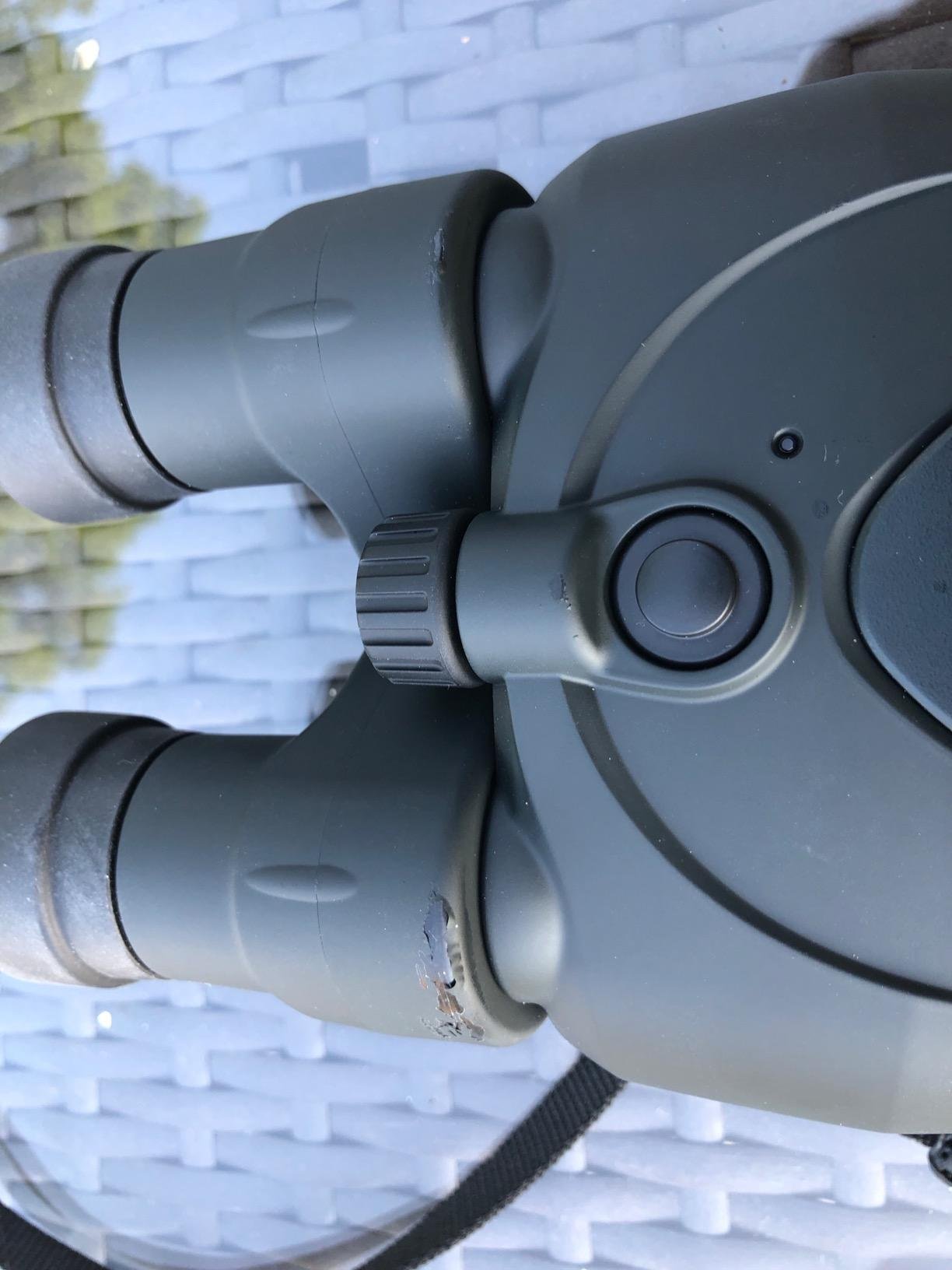
The stabilization is tied to a button on the barrel, so you keep it engaged for as long as you are watching a subject. Owners describe it as close to having binoculars on a tripod, which is fair, and they describe the view as sharp with edge-to-edge clarity. It also does a respectable job on the moon and in general sightseeing, which is a bonus if it shares a shelf with your stargazing binoculars.
The 14.5mm eye relief is genuinely comfortable for glasses wearers, and the exit pupil of 3mm gives a reasonably bright image for its size. Canon has also improved power efficiency on this generation, which matters more than the specification sheet suggests in a dawn session in autumn.
What to check before you commit
Understand the button. Because stabilization runs only while the button is held, you get the benefit during focused viewing rather than during active scanning. Several users describe an approach of scanning with the system idle and engaging it once a bird is located.
Mind the close focus. Owners put the minimum focus at roughly 25 feet, which makes this a poor feeder or garden bird binocular. It is a glassing instrument, not a close-range instrument.
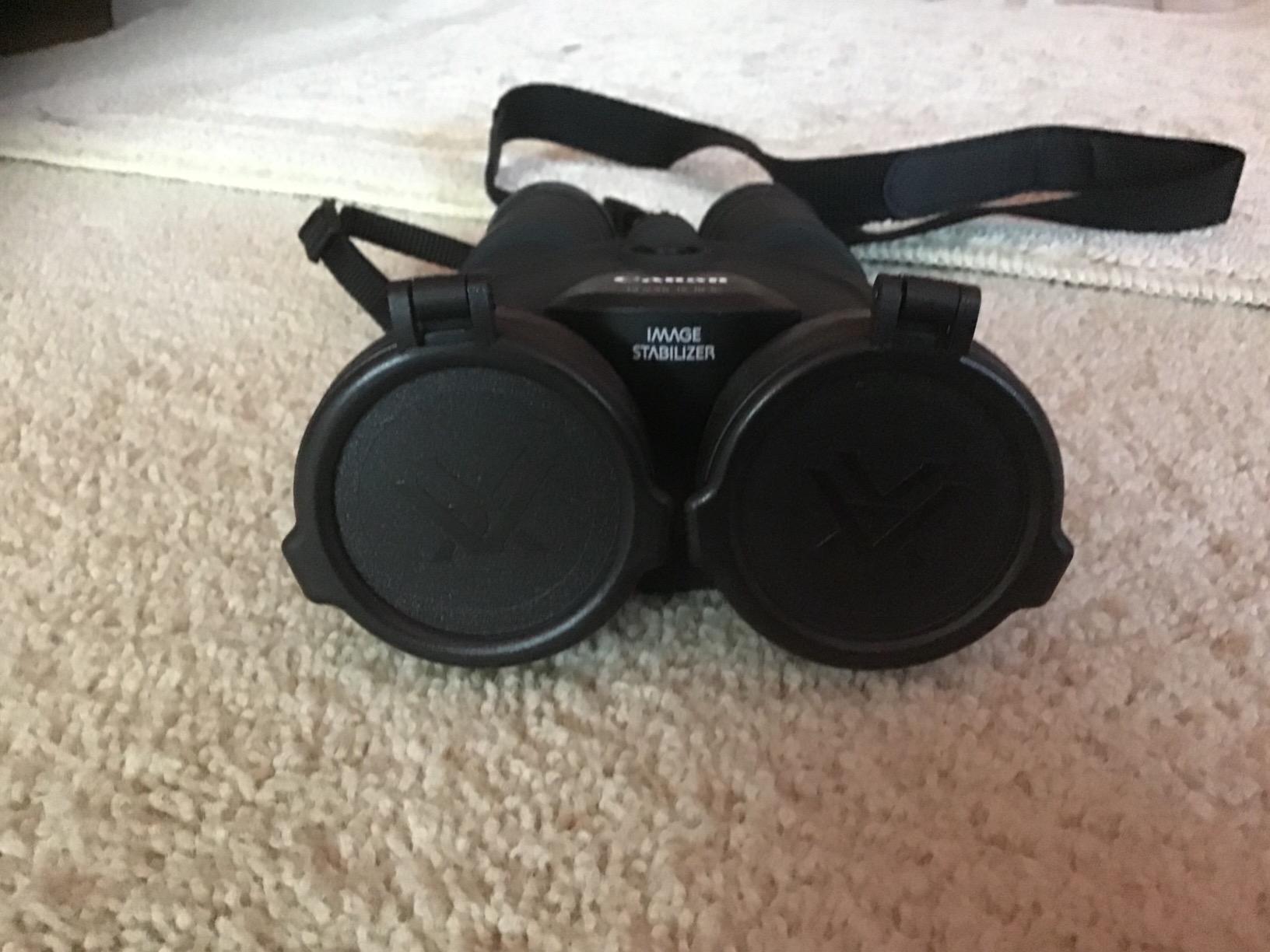
The weather rating is water resistant rather than waterproof, so it wants a dry bag in sustained rain. It also ships without objective lens caps, and the eyepiece caps are not tethered.
Who should skip it
Skip it if your birding is mostly under 50 yards, or if you already own a solid conventional binocular and want a wider scan. At that power a 10×42 with a wider field of view finds birds faster.
Also consider it if you have a tremor or reduced arm strength. Stabilization helps, but the hold-down button needs a firm, continuous grip and that can be harder than a steady tripod rest.
2. Canon 10×42 L IS WP – Best for Low Light and Weatherproofing
Canon 10×42 L is WP Image Stabilized Binoculars
10x magnification
42mm objective
4.2mm exit pupil
Waterproof and fogproof
2.4 pounds
Pros
- 4.2mm exit pupil gives a bright dawn and dusk view
- Ultralow-dispersion glass keeps edges clean
- Fully waterproof and fogproof
- Large center focus knob is easy to use with gloves
- Padded case and strap included
Cons
- Heaviest stabilized option here at 2.4 pounds
- Bulky for a walking birding kit
- Lower 10x power than the compact Canon models
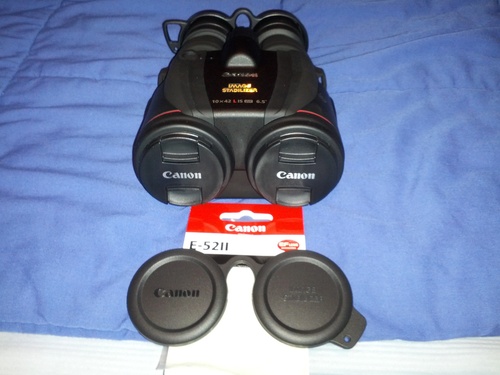
This is the stabilized binocular to buy if your birding happens at dawn, in heavy cloud, or on an exposed marsh. The 42mm objective produces a 4.2mm exit pupil, and that is the number that decides whether you can pick out a distant duck before it lifts in poor light.
The optical system is Canon’s L-series arrangement with ultralow-dispersion lead-free glass and full Super Spectra coatings, and it shows in the field. Detail stays resolved toward the edges of the view rather than collapsing the way smaller stabilized models do.
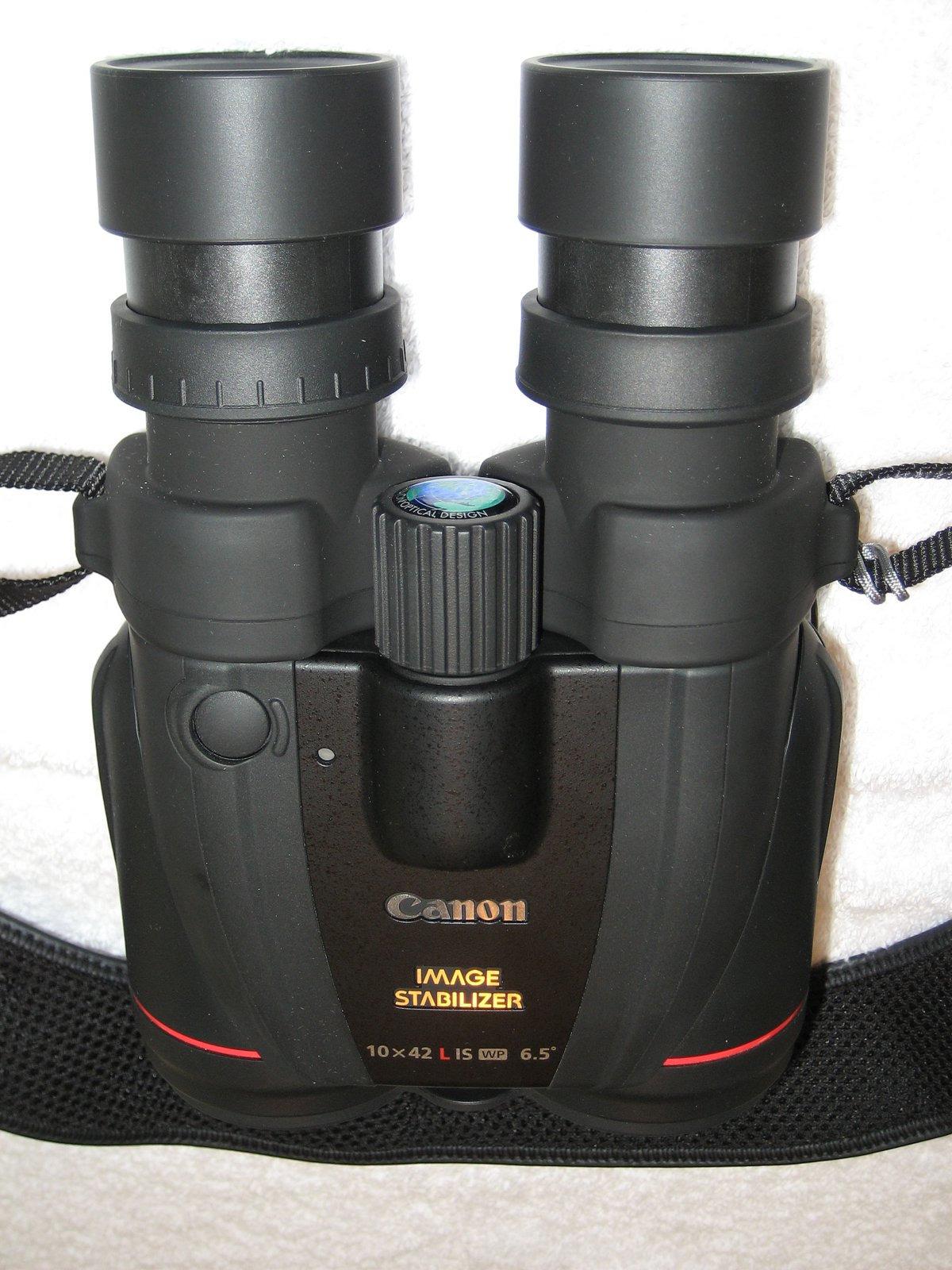
Stabilization performance is on a par with the smaller Canon, and at 10x the system is doing less work, so the view settles quickly. BirdForum users rate this model highly, and a common thread in those discussions is that its correction is modest in degree terms but more than sufficient for the magnification.
The build is where it separates from the rest. It is waterproof and fogproof, it accepts a tripod mount, and the eyepiece rainguard plus push-on objective cap mean you can leave it on a wet hide wall without thinking about it.
What to check before you commit
Weight is the deciding factor. At 2.4 pounds this is the heaviest stabilized binocular in the group, and if you walk three miles to a wetland you will feel it by the second hour. Our marine binocular guide covers lighter options for long sessions on deck.
Magnification is only 10x. If your target list is distant shorebirds, you may want the extra reach of the SIG Sauer models instead, and accept the lighter exit pupil.
There is also no zoom. That is not a complaint from owners, but it does mean this is a fixed magnification tool.
Who should skip it
Skip it if you need a spotting-scope replacement. Ten times will not let you work distant raptors the way 16x or 18x will, no matter how steady the image is.
Also skip it if your sessions are short and close. The 12×36 IS III is a pound lighter for a reason, and it is the better walking tool.
3. Fujinon Techno Stabi TS 14×40 – Best Stabilization on a Moving Platform
Fujinon Techno Stabi TS1440-14×40 Image Stabilization Binocular
14x magnification
40mm objective
5 degrees of stabilization
Waterproof and fogproof
Pelican case included
Pros
- 5 degrees of stated correction is the largest in this group
- View holds steady on a rocking boat or in wind
- Waterproof and fogproof body
- 14x reach without a tripod
- Phase-coated optics with a solid centre
Cons
- Heavy and bulky for long walks
- Fixed interpupillary distance
- Small field of view at 14x
- No objective lens caps included
The Techno Stabi TS 14×40 is the one I reach for when the ground is moving. Its stated correction of 5 degrees is the largest figure any model here publishes, and on a boat deck or a windy headland the difference is not subtle. Owners describe the view as steady in a way that feels mechanical rather than electronic.
That matters for seabirds and pelagic trips, where the platform is in constant motion and your own hands are not the limiting factor. It is also excellent for moon and planet work, where the same steady hold saves you from constant refocusing.
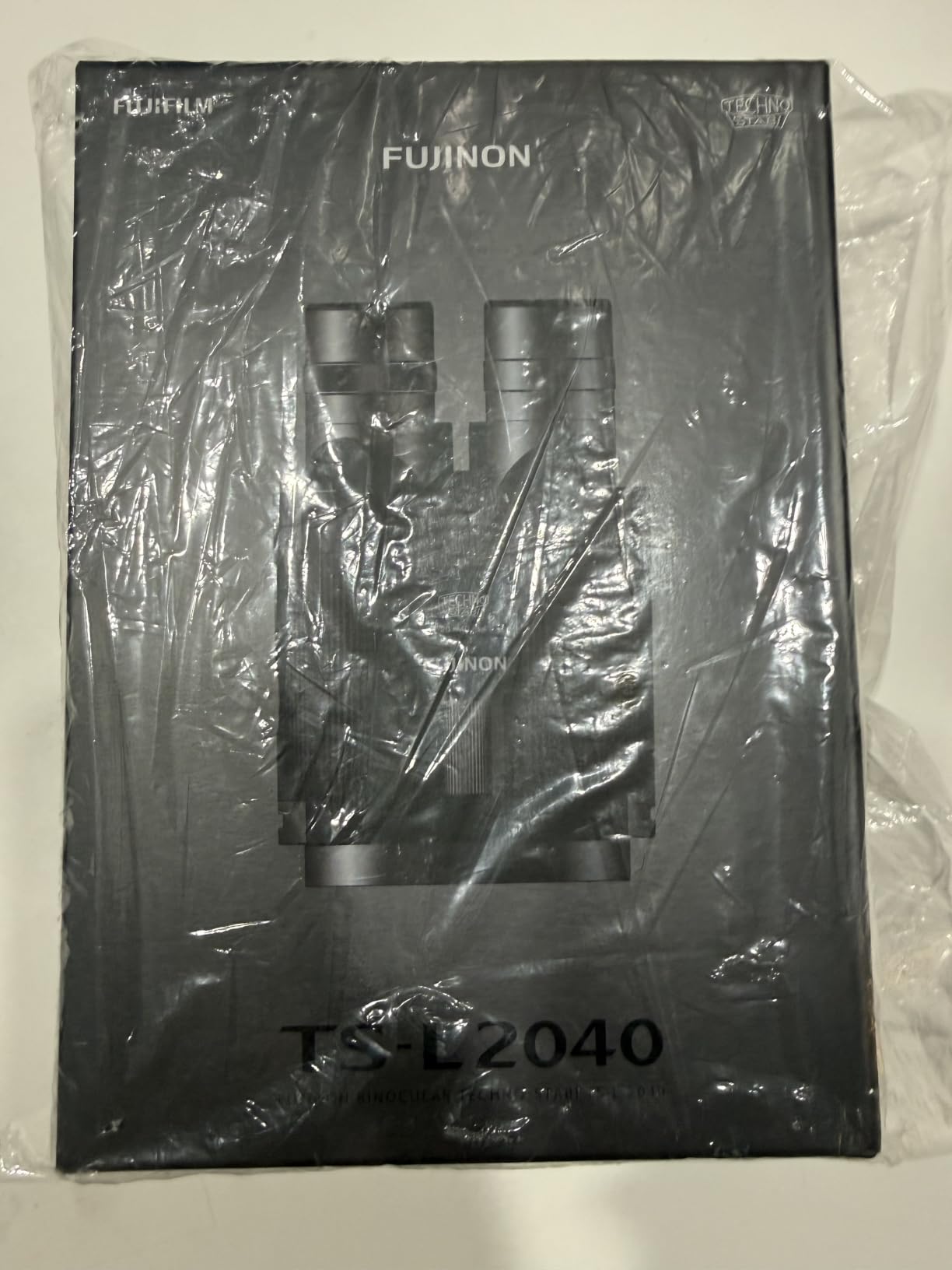
Optically it uses phase-coated lenses in a Porro prism layout with centre focus, and the resolution holds up well against the Canon models despite the higher magnification. The 2.86mm exit pupil is small, so this is not a dusk glass, but it is bright enough for scanning birds in good light.
Power comes from four AA cells, and a Pelican-style case is included, which tells you something about how Fujinon expected this to be carried. It is a serious piece of equipment rather than a walking binocular.
What to check before you commit
The interpupillary distance is fixed. If you have wide-set eyes or wear thick frames, you cannot adjust the fit, and that is a genuine limitation rather than a minor one. Try it if you can.
Owners report reliability concerns including a red indicator light that appears on its own and occasional focus failures. If you buy it, keep the case, because the service path involves the electronics rather than a simple optical clean.
Battery cost adds up over time. Four AAs per session is more to carry and more to replace than the two cells the SIG models use.
Who should skip it
Skip it for long walks. Weight and bulk are the repeated complaints in owner reviews, and the package does not sit comfortably on a day pack for a full morning on foot.
Skip it if you work at close range. The field of view at 14x is narrow, and a bird that moves within that narrow slice is hard to reacquire.
4. SIG SAUER Zulu6 HDX OIS 16×42 – Compact 16x Power
SIG SAUER Zulu6 FDE HDX OIS 16X42mm Roof Prism Binocular
16x magnification
42mm objective
Two IS modes
IPX-7 waterproof
1.02 kg
Pros
- 16x power in a body the size of a standard 10x
- Scan and Target modes with Target rated 50 percent steadier
- HDX lenses and SpectraCoat coatings
- Roof prism and aluminium chassis with rubber armour
- IPX-7 waterproof and fogproof
Cons
- 2.63mm exit pupil is dim for heavy shade
- Some quality control reports of black spots and focuser slop
- No objective lens covers
Nothing else in this list gives you this much reach in something you can hold one-handed. The Zulu6 HDX OIS 16×42 is roughly the size of an ordinary 8×42, and at 16x it replaces a tripod for spotting distant gulls, raptors and waders.
SIG’s OIS system runs in two modes. Scan Mode is for general observation and gridding a hillside. Target Mode is the one you switch to once a bird is identified, and SIG states it delivers up to 50 percent more stability for locking on.
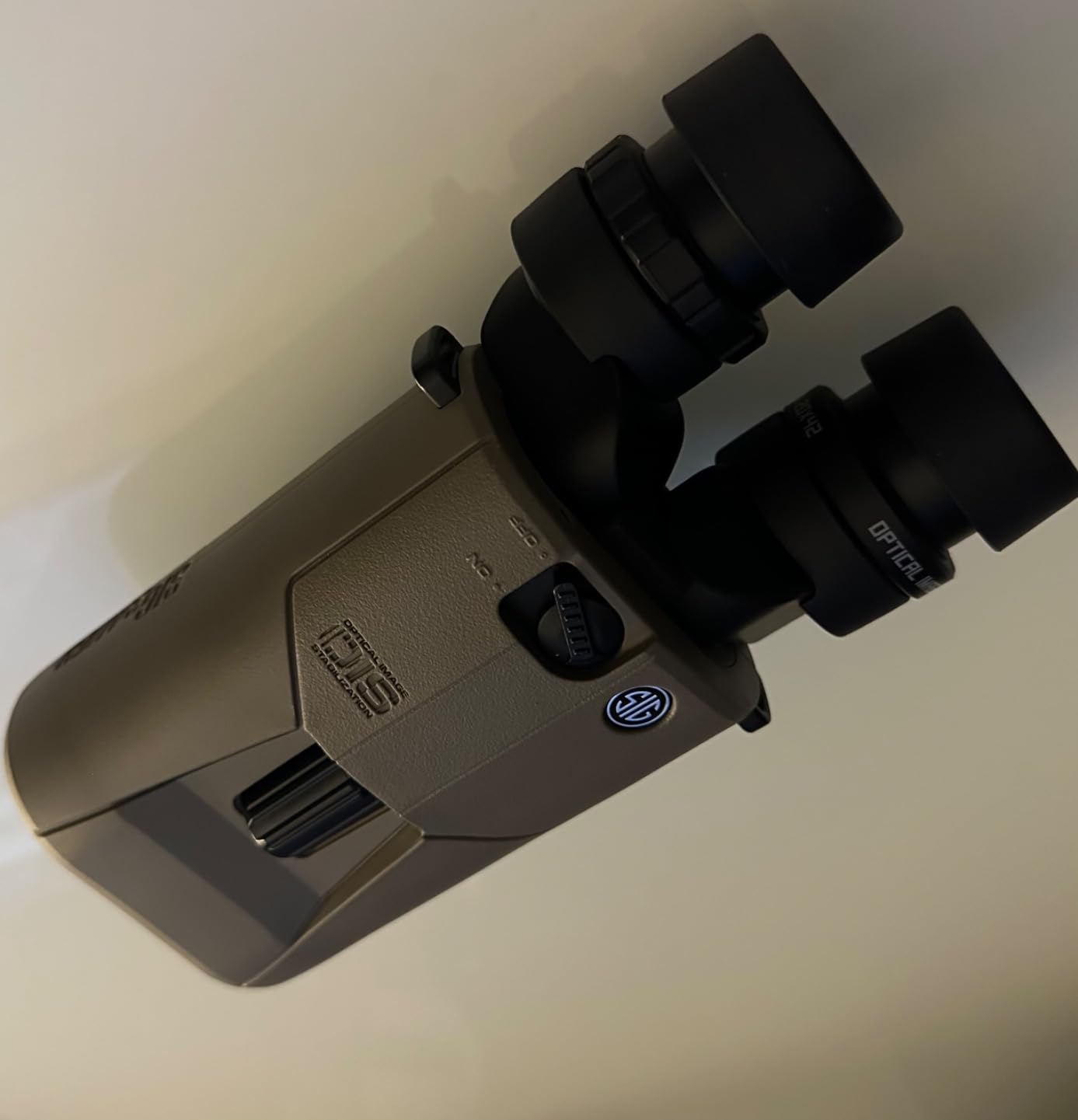
The HDX lens group and SpectraCoat coatings are designed for full resolution without a tripod, and the 16mm eye relief is comfortable with glasses. The chassis is aluminium with rubber armour, rated IPX-7 for waterproofing and sealed for fog resistance.
Owners frequently compare it favourably against larger 16x glass from other brands and even against some premium non-stabilized binoculars. That is the strongest argument for it: the size and weight for the magnification is where it wins.

What to check before you commit
Low light is the weak point. A 2.63mm exit pupil gives up a lot of brightness, and users mention a dim view in heavy shade along with colour rendition behind premium European glass. If you bird at first light, test it in real dawn conditions.
Quality control is worth watching. Reports include black spots in the view, a focuser with slop, and veining flare. Those are individual reports rather than a pattern, but they are the reason we would not recommend this as a first stabilized purchase.
Scan Mode is not a substitute for a wider field of view. At 16x the view is narrow, so finding a moving bird is harder than it is with a 10x.
Who should skip it
Skip it if your birding is woodland warblers. A narrow 16x view is the wrong tool for tracking small birds through branches.
Skip it if you need the brightest possible image at dawn. The Canon 10×42 L IS WP gives you a 4.2mm exit pupil at a fraction more weight.
5. Canon 10×32 IS – Best for Close-Range Work
Canon Cameras US 10X32 is Image Stabilizing Binocular, Black (1372C002)
10x magnification,14x in Powered IS
32mm objective
6.6 ft close focus
1.7 pounds
Pros
- Close focus at 6.6 feet handles feeders and garden birds
- Two IS modes including a 14x powered setting
- Lightest stabilized model here at 1.7 pounds
- Field-flattener lens system for edge sharpness
- Large center focus wheel and simple two-button layout
Cons
- Only water resistant
- 32mm objective is dim for low light
- Powered IS mode drains batteries faster
- Smaller review base than the other Canons
This is the only stabilized binocular in the group that focuses close enough to be genuinely useful at a feeder, and that changes what kind of birding it suits. At 6.6 feet minimum focus you can watch a goldfinch on a nyjer seed tube without swapping to another pair.
Canon calls its two settings Normal IS and Powered IS. The latter raises the effective magnification to 14x with microcomputer control, which lets you take a close bird and fill the frame without walking closer.
The field-flattener lens system keeps the view sharp across the frame, and at 1.7 pounds it is the lightest stabilized option here. The two-button interface is the simplest of the group, with a large centre focus wheel and fold-down rubber eyecups.
It is tripod mount capable, which is useful if you find yourself perched on a hide bench for hours.
The 32mm objective produces a 3.2mm exit pupil. That is brighter than the 16x Sig and the Fujinon, and dimmer than the Canon 10×42, which puts it in the middle of the group for dawn and dusk work.
What to check before you commit
It is water resistant rather than waterproof, so sustained rain is not the use case. Overheating in a parked car is also worth avoiding with any electronic binocular.
Powered IS runs the stabilization harder and uses more battery. Use it in bursts rather than leaving it engaged all morning.
The review base is small, so treat the strong rating as encouraging rather than proven. Ask about the electronics if you can.
Who should skip it
Skip it if you need serious low-light brightness. The 32mm objective will not carry a dawn marsh session the way a 42mm will.
Skip it if you want max reach. This is a close-to-mid-range birding tool, not a long glass.
6. Kite Optics APC Stabilized 16×42 – Light 16x With Wide Correction
Kite Optics APC Stabilized 16×42 Binoculars – Wide-Angle Stabilized Binoculars for Hunting, Bird Watching, and Long-Range – 16x Magnification, Waterproof, Built for The Outdoors
16x magnification
42mm objective
2 and 3 degree correction
IPX7 waterproof
1.6 pounds
Pros
- 1.6 pounds for 16x power
- Correction available at 2 and 3 degrees
- IPX7 waterproof and nitrogen purged against fog
- Roof prism keeps it compact
- 14mm eye relief and a wide 56 degree apparent field
Cons
- Smallest review base of the seven
- Autofocus is not what most birders expect
- Limited long-term durability data
- Brand is newer than Canon Fujinon or SIG
The APC 16×42 is the one to watch. It puts 16x power and a 42mm objective into 1.6 pounds, which is lighter than the Canon 12×36 IS III, and it carries correction angles of both 2 and 3 degrees depending on how you configure it.
That makes it interesting for anyone who wants high power without the bulk. The roof prism layout keeps it compact, nitrogen filling handles fog resistance, and the IPX7 rating covers submersion. Kite builds optics for military and law enforcement buyers, and the stabilization approach comes from that world.
At 16x with a 42mm objective the exit pupil is 2.62mm, so brightness is on the modest side and this is a daylight tool rather than a dusk one. The 14mm eye relief works for most glasses wearers.
What to check before you commit
The autofocus system is unusual for binoculars in this class. Some birders will love it and some will find it takes getting used to. If you are used to a mechanical center focus, try it first.
There is very little long-term owner data. Forums have discussed the APC family and some users have reported herky-jerky or side-to-side movement that needed an off-and-on reset. That is a real consideration for a product category where electronics are the point.
The apparent field of view of 56 degrees looks generous on paper, but at 16x the real field is still narrow. Expect the same scanning challenge as other high-power glasses.
Who should skip it
Skip it if you want a proven track record. Canon, Fujinon and SIG models have decades of owner reports behind them, and that matters for electronics.
Skip it if low light is your priority. A 2.62mm exit pupil will disappoint before dawn.
7. SIG SAUER ZULU6 HDX PRO 18×50 – Maximum Reach
SIG SAUER ZULU6 HDX PRO 18x50mm FDE Image Stabilized Binoculars
18x magnification
50mm objective
OmniScan with accelerometer
Up to 40 hour runtime
IPX-7
Pros
- Highest magnification here at 18x with a 50mm objective
- OmniScan uses a digital accelerometer to adapt to your movement
- HDX PRO lens system improves light transmission and colour
- 40 hour runtime on two AA cells
- Rugged thermoplastic frame with rubber armour and case included
Cons
- Heaviest body because of the 50mm objective
- Fixed focus rather than adjustable
- Newest model with the smallest evidence base
- 18x field of view is very narrow
This is the reach tool. Eighteen times with a 50mm objective gets you closer to a spotting scope without carrying one, and the objective diameter is the largest in this group, so the image holds up better in low light than the other high-power options here.
The stabilization is the most advanced in the lineup. OmniScan uses a digital accelerometer to read how you are actually moving and adapts the correction rather than applying a fixed profile, which is the sensible answer to the herky-jerky feeling some users report from older stabilized systems.
Battery life is specified at up to 40 hours on two AA alkaline cells, which is the best figure in the group and answers one of the most common complaints about stabilized binoculars. The HDX PRO lens system and SpectraCoat plus LensArmor coatings target glare and colour accuracy.
The frame is a rugged thermoplastic with rubber armour housing and relocated battery compartments for better balance, and it is tripod mount capable with a foam case and neck strap included.
What to check before you commit
Fixed focus is unusual and worth understanding before you buy. You set the focus once for the distance you are working at, and anything much nearer or further needs the binoculars to be re-focused by other means. Owners who move between near and far subjects should think hard about this.
The 50mm objective adds weight and bulk. If you are walking all day rather than sitting on a vantage point, this is the wrong shape of tool.
The review base is the thinnest here, so treat early ratings as a signal rather than a verdict. This generation has not been in the field long.
Who should skip it
Skip it if you scan wide. At 18x the field of view is very narrow and finding a moving bird becomes genuinely difficult.
Skip it if you move constantly between close and distant subjects, because of the fixed focus arrangement.
How Image Stabilization Works in Binoculars
Stabilized binoculars detect movement, then move optical elements in the opposite direction so the image appears to stand still in your eyepiece. A gyroscope, and increasingly a digital accelerometer, senses the angular movement of the binoculars as you swing them. A processor reads that signal and a servo-driven mechanism shifts a prism or lens group to compensate.
Canon’s approach, used in both the 12×36 IS III and the 10×42 L IS WP, is a vari-angle prism. The prism assembly sits between the objective and the ocular and tips very slightly to keep the image aligned. Fujinon’s Techno Stabi uses a floating lens approach, while SIG and Kite both describe servo-driven optical correction.
The term to understand is correction angle. It is the number of degrees of hand shake the system cancels. A model rated at 5 degrees cancels more movement than one rated at 2 degrees, but the figure is not measured the same way across brands, so treat it as a guide rather than a benchmark.
Every system pays for that moving mechanism in field of view. The mechanism has to move, and it moves within an optical path designed to stay aligned, so some width is lost. That is why stabilized binoculars generally have a narrower real field than conventional glass of the same magnification, and why finding a bird can be harder even when the view is steadier once you have it.
Is Image Stabilization Worth It for Birding?
Worth it above roughly 14x, and largely not worth it below that. BirdForum regulars put the threshold in a similar place: many handle a handheld 12×50 perfectly well, and only need a tripod or stabilization from about 14x upward. Below that threshold a conventional 8×42 or 10×42 gives you a wider view, better brightness per gram, no electronics to fail and no batteries to manage.
Above the threshold the case is strong. If you work at 14x to 20x on distant water, on a boat deck, or on an exposed ridge, stabilization converts a frustrating session into a productive one. It also helps users with a hand tremor, and it makes handing your binoculars to a companion far more practical.
There are real costs. Field of view narrows, arms can still tire during long sessions, the electronics add a failure point, and batteries add a chore. Several users on forums describe the honest technique of scanning with stabilization off and switching it on only once a bird is located, which recovers some of the FOV loss at the moment it matters least.
Our verdict: if your glassing power already sits at 12x or more, stabilized binoculars will change your birding. If it sits at 10x or less and most of your sightings are within 100 yards, spend the money on better conventional glass instead.
Choosing Magnification and Objective Size
Magnification decides what you can reach and how wide you can scan. The tradeoff is straightforward: more magnification means a narrower field of view and a smaller, dimmer exit pupil. Exit pupil is objective diameter divided by magnification, and it is the number that governs whether you can see colour and detail at dawn.
At 10x with a 42mm objective you get a 4.2mm exit pupil, which is bright. At 16x with a 42mm objective you drop to 2.63mm, which is fine in daylight and marginal at dusk. At 18x with a 50mm objective you recover to about 2.78mm. That arithmetic explains most of the low-light complaints about high-power stabilized binoculars.
Practical guidance by power. At 10x, you get the widest scan and the brightest image, and it suits woodland edge and general garden work. At 12x, you get a useful compromise for open country and mixed flocks. At 14x, you get the first power where stabilization genuinely earns its place. At 16x you get genuine scope replacement for distant birds and a real challenge finding them. At 18x you are committed to long-range work and little else.
Note that IS binoculars rarely come in 8x. If a comparison question asks whether 8×42 or 10×42 is better for birding, that is a question about conventional glass, not this category. The stabilized options start where stabilization starts to matter.
Eye relief matters more than most specs suggest. The Canon 10×42 L IS WP gives 16mm and the Zulu6 HDX OIS 16×42 gives 16mm, both comfortable with glasses. The Canon 12×36 IS III at 14.5mm and the Fujinon at 13mm are tighter but still workable.
Close focus decides whether the binocular works at a feeder. The Canon 10×32 IS focuses to 6.6 feet, which is the only genuinely close figure in this group. Most of the others, including the 12×36 IS III at roughly 25 feet, are distance tools.
Stabilization Modes, Batteries and Weatherproofing
Mode names differ by brand and confuse almost everyone shopping in this category. Scan Mode, as used by the SIG Zulu6 HDX OIS, is for general observation and gridding a hillside. Target Mode, also on the SIG, is for locking onto an identified subject and is stated to be up to 50 percent steadier. OmniScan on the current SIG generation uses a digital accelerometer to adapt to how you are moving. Canon uses Normal and Powered IS, where Powered raises effective magnification and works the system harder. The Fujinon Techno Stabi and the Kite APC present simpler controls with selectable correction levels rather than named modes.
A forum tip worth repeating: switching modes can knock you off target, so switch before you commit rather than mid-lock. If a mode change requires the system to be cycled, do it while you are still finding the bird.
Battery type changes cold-weather behaviour more than any other spec. The Fujinon uses four AA cells, the Canon 10×42 L IS WP comes with two AA cells, and the ZULU6 HDX PRO is specified at up to 40 hours on two AA cells. There are owner reports of Canon IS systems draining fully charged cells very quickly in freezing conditions. Carrying spare lithium cells for cold sessions is the simplest mitigation, and turning stabilization off while scanning extends runtime.
Weatherproofing splits cleanly. The Fujinon Techno Stabi, both SIG models and the Kite APC are waterproof with fog resistance, and the SIG and Kite carry IPX-7 ratings. The Canon 12×36 IS III and 10×32 IS are water resistant only. The Canon 10×42 L IS WP is waterproof and fogproof, which is why it suits hide and estuary work.
Finally, check the tripod mount. Every model here accepts one, and for extended sessions at a hide or on a boat a clamped tripod plus stabilization gives you the steadiest view available.
When You Should Skip Stabilized Binoculars
Skip them for wide-scan songbird work. Finding a small bird in fast-moving cover depends on field of view, and stabilized binoculars trade field of view away by design. A conventional 10×42 with a wider view will find more birds per hour in woodland.
Skip them for feeders and close-range garden watching unless close focus is specifically listed. Most models in this category focus at well beyond arm’s reach.
Skip them if your sessions are below 14x. A beanbag on a hide bench, a window clamp at a hide, or a cheap tripod delivers a rock-steady view for none of the money and none of the field-of-view penalty.
Skip them if you dislike carrying batteries. In freezing conditions the electronics add both weight in your pocket and a failure mode in the field.
And skip them if you only bird occasionally. The value of stabilization is proportional to how often you use it, and the same money buys better conventional glass that will serve you at every power.
Frequently Asked Questions
Is image stabilization worth it for binoculars?
Worth it above roughly 14x and largely not worth it below that. Below 10x a conventional 8×42 or 10×42 gives you a wider field of view, better brightness and no electronics to fail. From about 14x upward, stabilization lets you work distant birds without a tripod, which changes what you can reach.
How does image stabilization work in binoculars?
A gyroscope, and increasingly a digital accelerometer, senses the angular movement of the binoculars as you swing them. A processor reads that signal and a servo-driven mechanism shifts a prism or lens group in the opposite direction, so the image appears still in the eyepiece. Canon uses a vari-angle prism; Fujinon, SIG and Kite use other optical arrangements.
Which image stabilized binoculars are best for birding?
The Canon 12×36 Image Stabilization III is the most balanced choice: 12x power, a 36mm objective, a 1.8 pound body and the widest range of owner history. The Fujinon Techno Stabi TS 14×40 is strongest on a moving platform, and the SIG SAUER Zulu6 HDX OIS 16×42 gives the most reach in a compact package.
Do stabilized binoculars have worse optics?
Not necessarily, but the field of view is usually narrower. Stabilization needs a moving mechanism inside the optical path, and that costs some width. Canon uses doublet field-flattener lenses and ultralow-dispersion glass on its L-series model, and SIG uses HDX and HDX PRO lens groups, so optical quality is high even where field of view is reduced.
What are the key differences between the SIG SAUER ZULU6 HDX and HDX Pro?
The HDX PRO generation uses OmniScan stabilization with a digital accelerometer that adapts to how you are moving, rather than the simpler Scan and Target modes on the earlier HDX model. It also carries HDX PRO lens coatings, and the 18×50 version is specified at up to 40 hours on two AA cells. The HDX OIS 16×42 reviewed here remains the lighter, more established option.
Is 8×42 or 10×42 better for bird watching?
That is really a conventional-glass question, because stabilized binoculars rarely come in 8x. A 10×42 suits most birding because it balances magnification against field of view and brightness. If you want stabilization benefits, the useful entry points in this category are 12x and above.
Are image-stabilized binoculars necessary for birding?
Only if you work at 12x or higher regularly. Most songbird and garden birding is served better by a conventional 10×42 with a wider view. Stabilization becomes necessary on distant shorebirds, raptors, seabirds and anywhere you are glassing from a boat or an exposed position.
How long do stabilized binocular batteries last in cold weather?
Cold weather is where the difference shows. Owner reports describe Canon IS systems draining fully charged cells very quickly in freezing conditions, while the ZULU6 HDX PRO is specified at up to 40 hours on two AA cells. Carrying spare lithium cells and switching stabilization off while scanning both extend runtime.
Conclusion
The best image stabilized binoculars for birding depend on where you point them. For most people the Canon 12×36 Image Stabilization III is the pick: 12x power, a light body and a stabilization system that owners describe as tripod-like. On a boat or in wind, the Fujinon Techno Stabi TS 14×40 with its 5 degrees of stated correction is hard to beat. For maximum reach in a compact package, the SIG SAUER Zulu6 HDX OIS 16×42 does the job. If you glass mainly at 10x or below, buy better conventional glass and save the electronics.
Whichever you choose, keep a beanbag in your bag, scan with stabilization off, and turn it on once the bird is found.
If you also need a pair for concerts or the stands, our concert binocular picks cover that side of the market.