
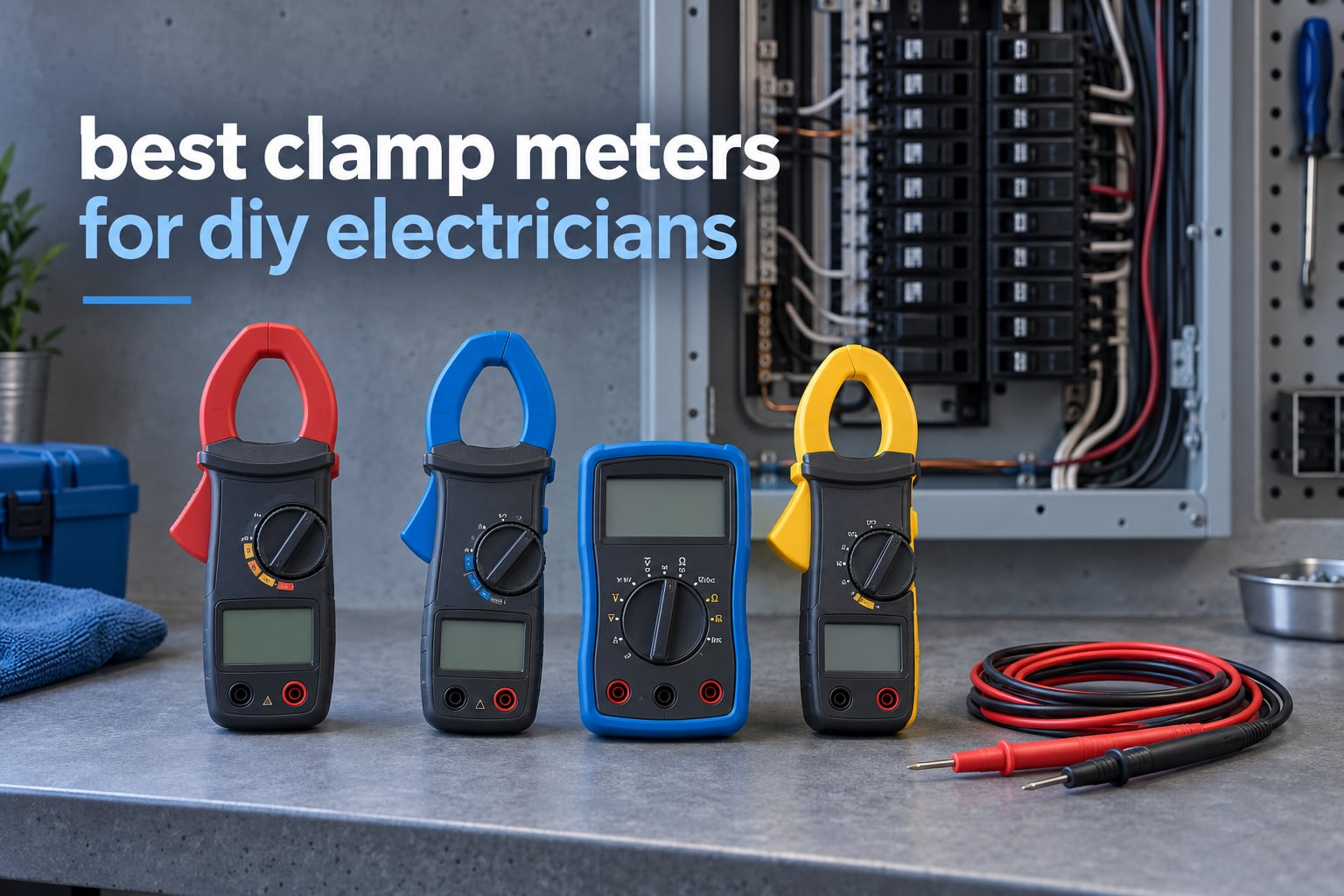
A clamp meter is the one tool that lets you measure amps on a live circuit without opening anything, disconnecting anything, or shutting the power off. That single feature is why it sits at the top of the bag for anyone doing their own electrical work in 2026. If your breaker trips, if you want to know what your air conditioner is really pulling, or if you are adding a circuit and need to know how much headroom the panel has, you need to be able to clamp a conductor and read the number.
Searching for the best clamp meters for DIY electricians usually turns up a wall of brand names and model numbers that assume you already know the difference between a 302 and a 325. We took ten of the most-reviewed meters on the market and sorted them by the things that actually matter in a house: accuracy, DC current capability, jaw size, backlight, and whether the reading is trustworthy near a live panel.
One safety note before any picks. A clamp meter is one of the safer live-testing tools because the sensing element is inside the insulated jaw, but only if you use it correctly. Clamp one conductor, not the whole cable. Keep your fingers on the insulation. If you are not certain a conductor is dead, treat it as live and call a licensed electrician. Nothing on this page is a substitute for training.
Table of Contents
Top 3 Best Clamp Meters for DIY Electricians in 2026

KAIWEETS HT206D T-RMS Clamp Meter
- True-RMS AC and DC current
- 6000 counts
- NCV detection
- K-type temperature probe
- CAT III 600V
- backlit two-color display

AstroAI 2000-Count Clamp Meter
- AC current to 400A
- AC and DC voltage
- live wire and NCV testing
- backlit display
- category III 600V
Fluke 323 Clamp Meter
- True-RMS AC current to 400A
- 30mm jaw
- CAT IV 300V and CAT III 600V
- resistance and continuity
- two year warranty
The HT206D leads our list because it is the rare budget meter that measures DC current through the clamp, carries a CAT III 600V rating, and still holds true RMS accuracy. The AstroAI is the cheapest way to get a working AC clamp in your hand, and the Fluke 323 is the pick if you want one brand name behind the tool for the next decade.
All 10 Best Clamp Meters for DIY Electricians in October
| Product | Specifications | Action |
|---|---|---|
| KAIWEETS HT206D T-RMS 6000-Count Clamp Meter |
|
Check Latest Price |
| AstroAI 2000-Count AC Clamp Meter |
|
Check Latest Price |
| Fluke 323 True-RMS Clamp Meter |
|
Check Latest Price |
 Klein Tools CL120VP Electrical Test Kit Klein Tools CL120VP Electrical Test Kit |
|
Check Latest Price |
 Fluke 302+ Compact Clamp Meter Fluke 302+ Compact Clamp Meter |
|
Check Latest Price |
 KAIWEETS KC400 Palm-Size Clamp Meter KAIWEETS KC400 Palm-Size Clamp Meter |
|
Check Latest Price |
 Klein Tools CL390 AC/DC True-RMS Clamp Klein Tools CL390 AC/DC True-RMS Clamp |
|
Check Latest Price |
 Fluke 325 True-RMS Clamp Meter Fluke 325 True-RMS Clamp Meter |
|
Check Latest Price |
 FNIRSI DMC-100 9999-Count TRMS Clamp FNIRSI DMC-100 9999-Count TRMS Clamp |
|
Check Latest Price |
 Milwaukee 2235-20 400A Clamp Meter Milwaukee 2235-20 400A Clamp Meter |
|
Check Latest Price |
1. KAIWEETS HT206D — the best all-round clamp meter for DIY work
KAIWEETS HT206D Digital Clamp Meter T-RMS 6000 Counts, Multimeter Voltage Tester Auto-ranging, Measures Current Voltage Temperature Capacitance Resistance Diodes Continuity Duty-Cycle (AC/DC Current)
True-RMS AC and DC current
6000 counts
CAT III 600V
NCV and LowZ
K-type probe to 1000C
Pros
- Measures both AC and DC current through the clamp
- True-RMS sensing for modern electronics loads
- Two-color backlight that turns red above 80V or 3A
- Low input impedance and low pass filter for motor and VFD signals
- Temperature probe and duty cycle included
Cons
- Supplied test leads have poor conductivity
- No probe-based mA current measurement
- Plastic body is light for daily professional use
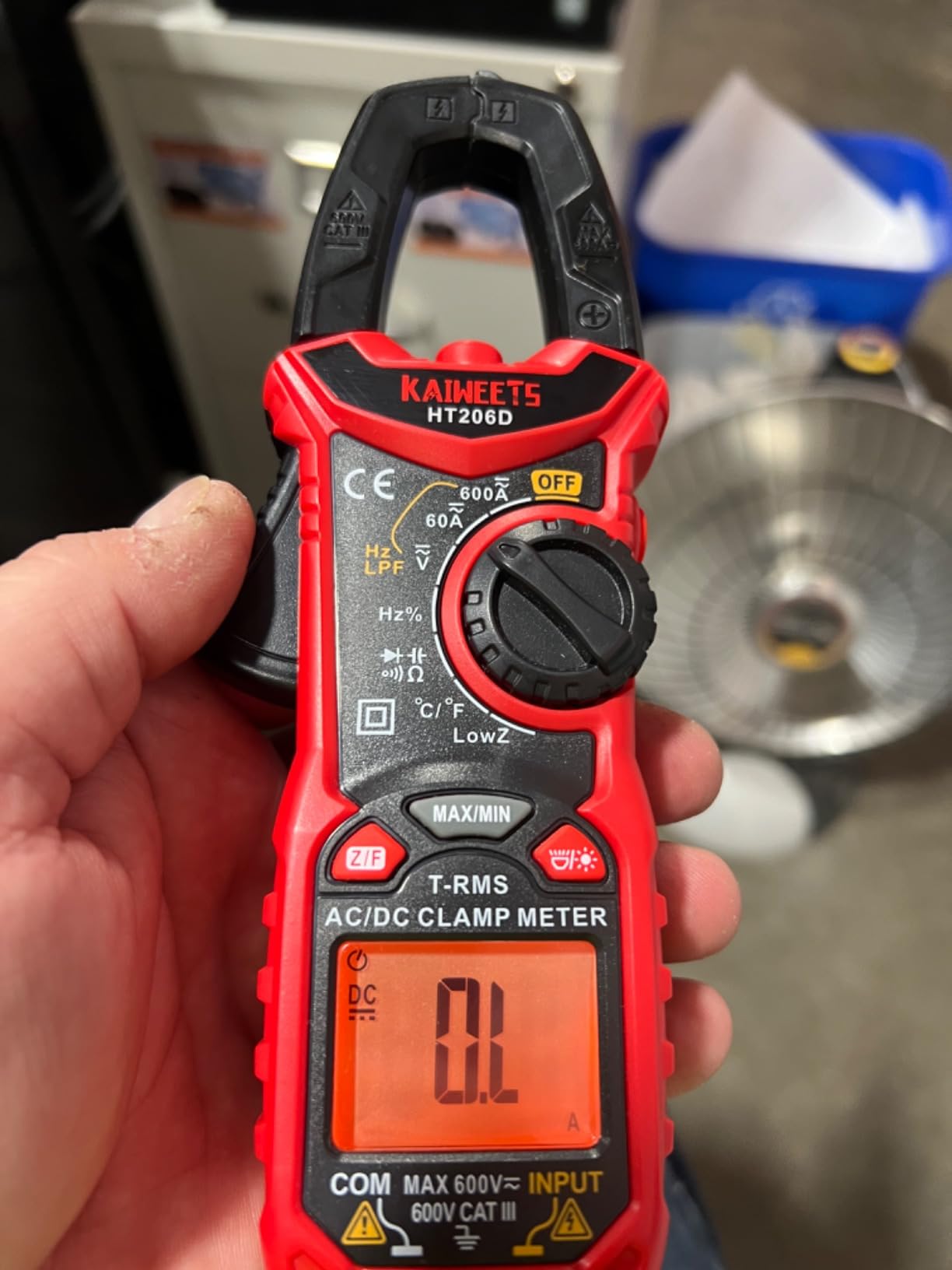
I have kept this meter on my own bench for months and it is the one I reach for when I do not know what a circuit is doing. It measures AC and DC current through the jaw at 6000 counts, which is far more resolution than a house panel needs and more than most meters in this list offer. The true RMS sensing is the part that matters more than the count number, because half the loads in a modern house are switching supplies.
What makes it the best clamp meter for DIY electricians in 2026 is the combination, not any single spec. You get a low input impedance mode that kills ghost voltage, a low pass filter for variable frequency drive signals, non-contact voltage detection, and a K-type thermocouple good to 1000 degrees C. Owners consistently report that readings line up with far more expensive reference meters on household circuits.
The display is the cleverest part. It is a two-color backlit LCD that switches to red when it sees a reading above 80 volts or 3 amps, so a casual glance tells you whether you are looking at a normal measurement or a live high-energy circuit. There is also an LED flashlight on the body, which matters more than it sounds like it should when you are leaning into a dark basement panel with one hand.
It runs on two standard AAA batteries and powers off after fifteen minutes of inactivity. The temperature function is genuinely useful for checking an air handler or a range, and the duty cycle reading helps when you are chasing a motor rather than a branch circuit. At 7.68 ounces and 7.5 by 2.8 by 1.3 inches it fits in a work glove, which is not a small thing.
The honest weaknesses are the accessories and the shell. The included test leads have crimped connections that produce erratic resistance readings, and most serious users swap them for a better set within a month. There is no probe-based mA mode, so you cannot use the leads to chase a small leak current, and the plastic housing is light enough that I would not hand it to a full-time apprentice as a primary tool.
When this is the right meter to buy
Buy this one if you are replacing outlets and switches, chasing a tripping breaker, or adding a circuit and want to know exactly what the existing loads draw. It is also the meter I would hand to someone learning, because the warning backlight and the red high-range display teach good habits. If you work on heat pumps, mini splits, or anything with an inverter compressor, the true RMS reading and low pass filter are why this beats cheaper options.
When to pick something else
Skip it if you are chasing milliamps through the test leads to find a leaking receptacle, because it has no probe mA mode. Working electricians who drop tools daily will find the housing too light, and anyone who needs a documented calibration trail for a service department should look at a professional instrument instead. For those cases, the Klein CL390 or the Fluke 325 cover the same ground with a more substantial body.
2. AstroAI 2000-Count Clamp — the least expensive way to start
AstroAI Digital Clamp Meter Multimeter 2000 Counts Amp Voltage Tester Auto-ranging with AC/DC Voltage, AC Current, Resistance, Capacitance, Continuity, Live Wire Test, NCV, Blue
2000 counts auto-ranging
AC current to 400A
AC and DC voltage
live wire and NCV test
CAT III 600V
Pros
- Small enough for a single hand and a thin tool bag
- Backlit LCD plus a built-in flashlight
- Live wire test with audible and visual alarm
- Carrying case and test leads included
- Includes two AAA batteries ready to go
Cons
- No DC current measurement through the clamp
- AC readings in the jaw can run high
- Occasional reports of light build quality
This is the meter I hand to friends who want to check whether their dryer is tripping the breaker. It does one job well: it clamps a single conductor and reads AC current up to 400 amps, which covers every residential branch circuit and service entrance you will ever point it at. The 2000-count auto-ranging display picks the range itself, so there is no dial to misread at half past midnight.
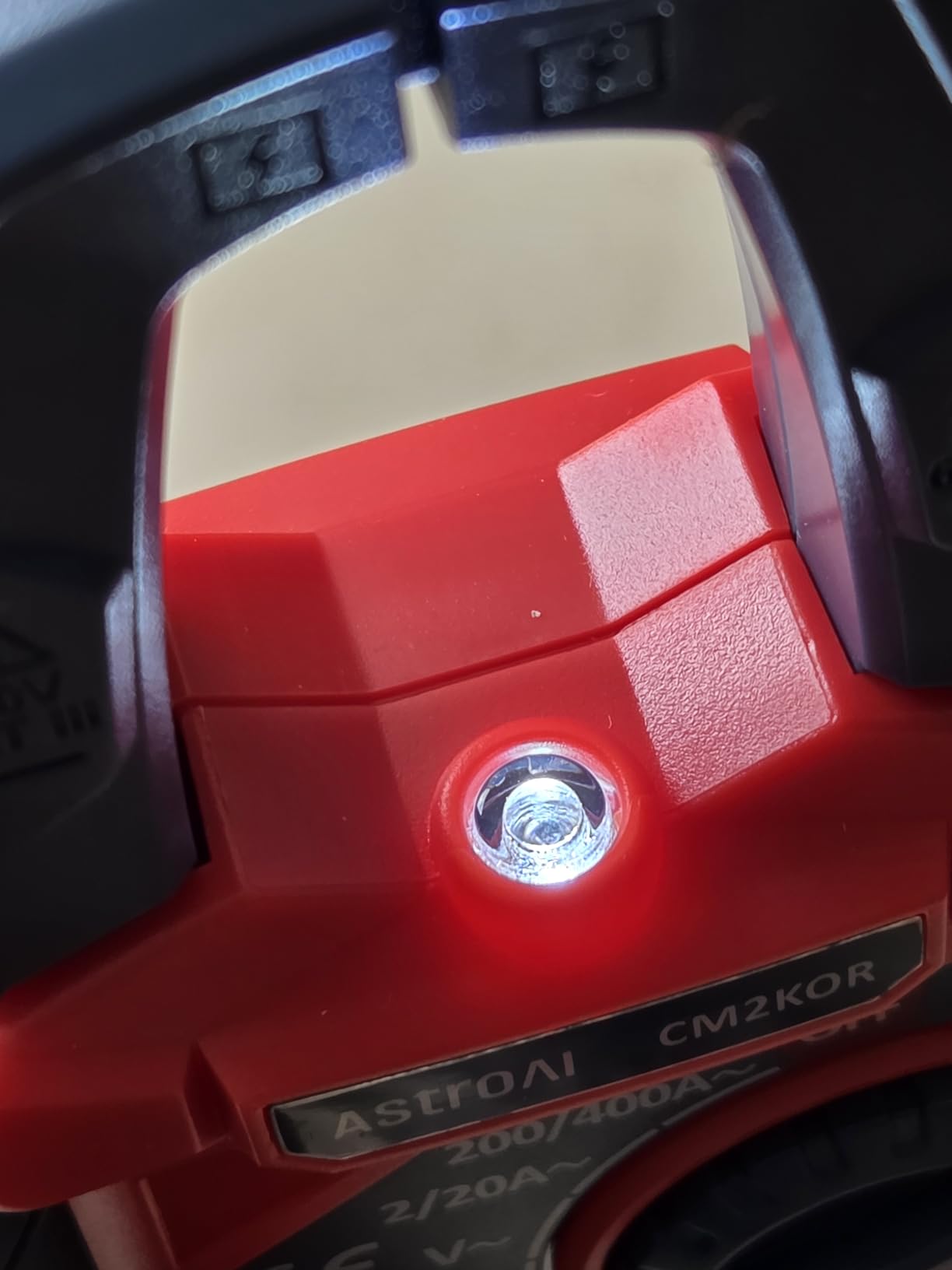
The extras are more than I expected from a meter at this end of the market. It has a live wire test and a non-contact voltage detector with a two-level alarm, a green indicator for a weak AC signal and a red one for a strong signal, plus data hold with min and max tracking. The backlit screen and flashlight make it usable in a crawlspace, which is where most of my actual troubleshooting happens.
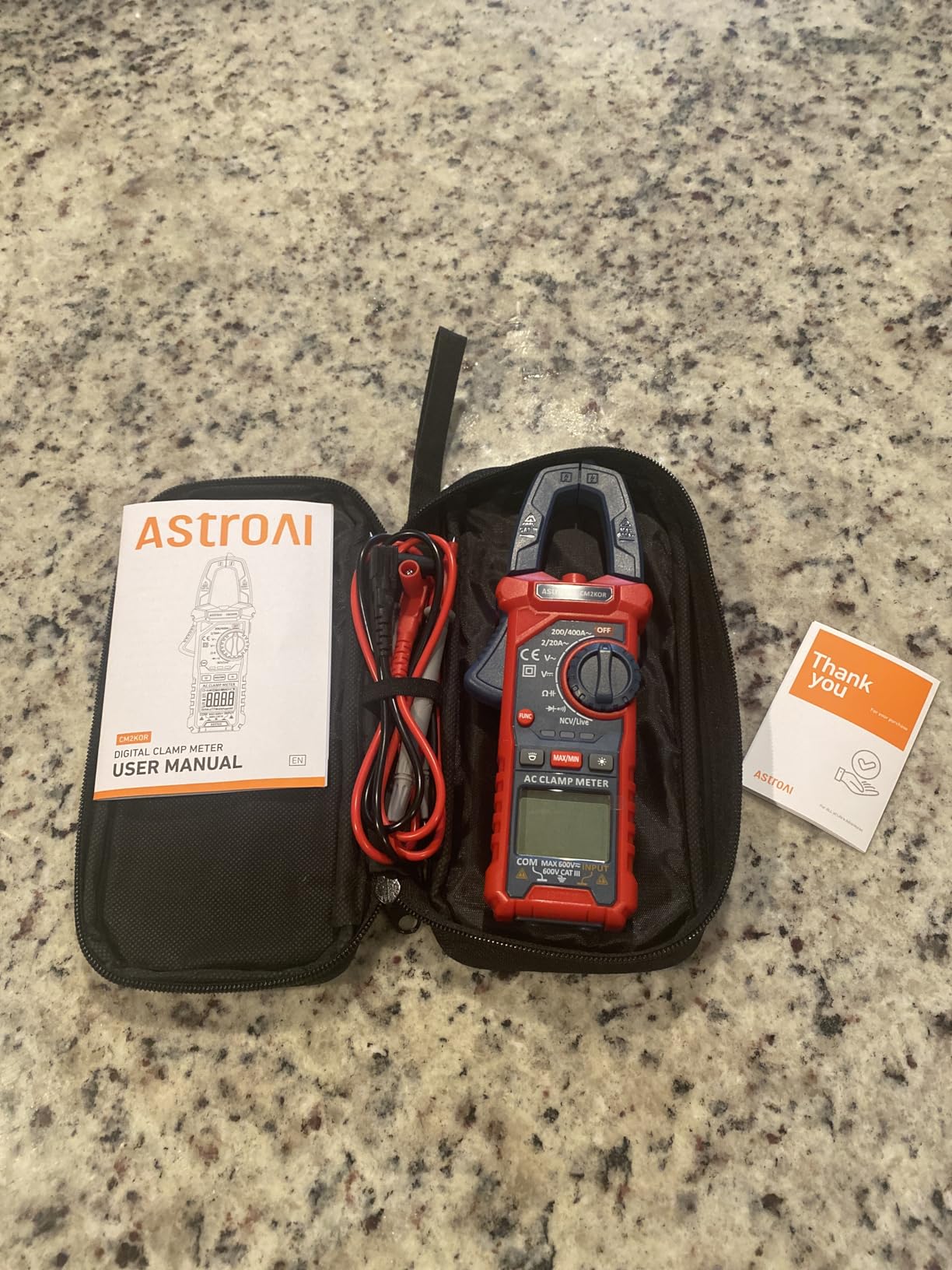
Size is the quiet win here. At 2.68 by 1.14 by 7.67 inches it disappears into a pocket or a small parts bag, and the included storage pouch means you can keep it in the van without a separate case. Owners also like that it is one of the highest reviewed clamp meters in the category, so there is a large body of feedback if something goes wrong.
Weight is the other side of that coin. It is not a meter you want to leave in a truck bed, and the plastic has a lighter feel than the Flukes or KLeins. For a garage, a rental unit, or a weekend project, that trade is worth making. For daily work, the KAIWEETS HT206D or Klein CL390 hold up far better to drops.
Now the limitation that catches people out, because the listing is easy to skim. There is no DC current measurement. If you are working on a car battery, a solar inverter, or a modern HVAC unit with a DC component, this meter simply cannot do it. It also will not read a whole cable correctly, since two opposing conductors in the jaw cancel each other out and the display sits at zero.
When this is the right meter to buy
Buy it if you are outfitting a first tool bag, teaching yourself to read a panel, or you mostly need to answer the question of what is drawing power on an AC circuit. The live wire and NCV functions cover the first ninety seconds of any job, and the size means it will actually be on your belt instead of in a drawer. It also makes a decent secondary meter for a van.
When to pick something else
Move up if you need DC current, if you are measuring on a motor or an inverter-driven load where true RMS matters, or if the meter will live in a work truck. The absence of DC amps and the average-responding AC sensing are real limits, not nitpicks. In those cases the KAIWEETS HT206D costs a little more and removes both problems.
3. Fluke 323 — the dependable nameplate for panel work
Fluke 323 Clamp Meter for Commercial/Residential Electricians, Measures AC Current to 400 A & AC/DC Voltage to 600 V, Resistance and Continuity, Includes 2 Year Warranty and Soft Carrying Case
True-RMS AC current to 400A
30mm jaw
CAT IV 300V and CAT III 600V
Resistance to 4 kOhms
Soft case included
Pros
- True-RMS sensing on linear and non-linear loads
- 30mm jaw opens around bundled conductors
- CAT IV 300V and CAT III 600V safety ratings
- Simple layout that needs no training
- Two year manufacturer warranty
Cons
- No DC current measurement
- No backlit display for dark panels
- Supplied test leads are considered low quality
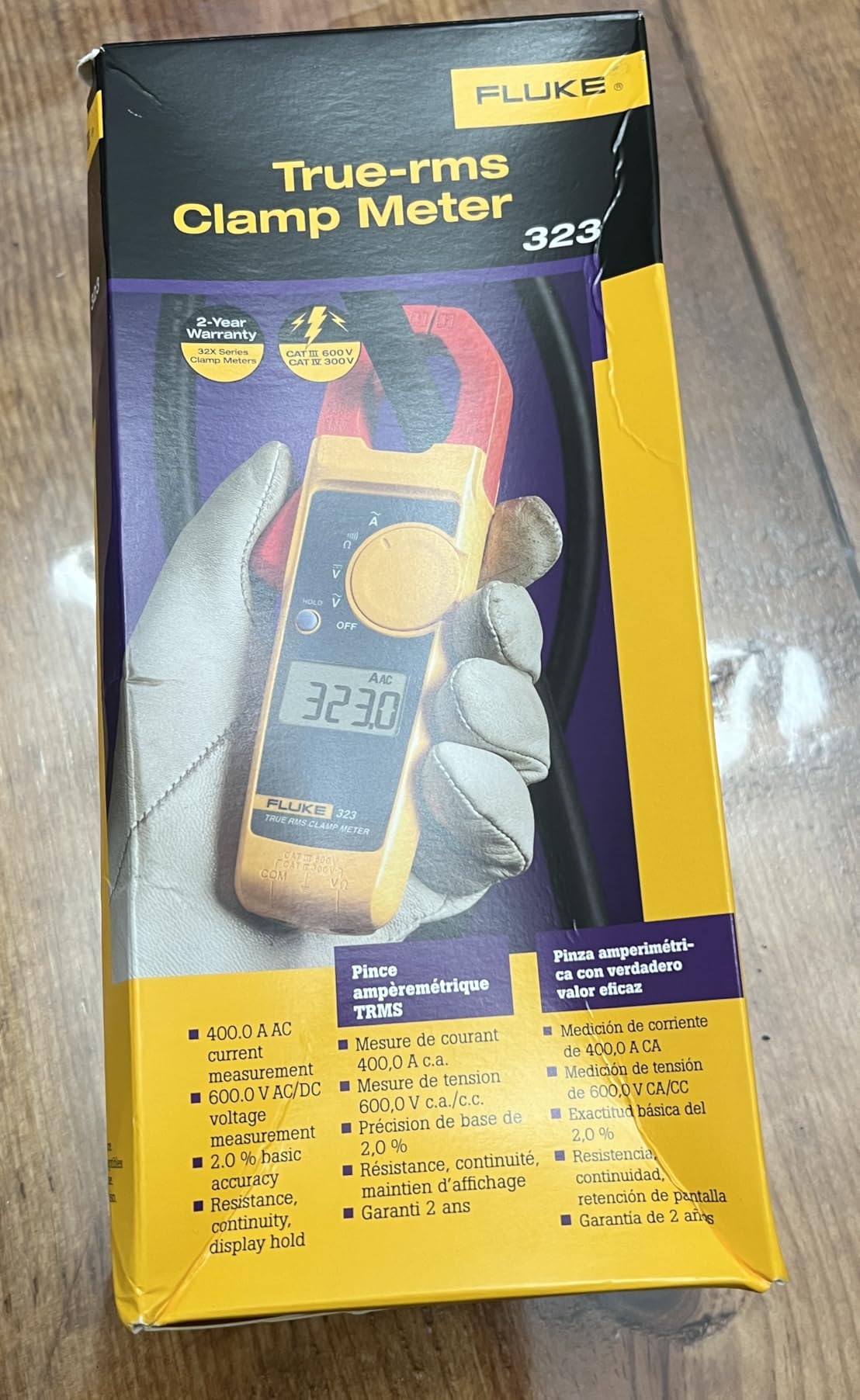
Nothing in this roundup has a longer track record than the Fluke 323. Owners describe running them for twenty to forty years and passing them down, and that kind of history is the entire argument for the Fluke name. For a homeowner who plans to keep one meter forever, that matters more than any feature on the spec sheet.
The measurement core is straightforward and correct. True-RMS sensing gives you an honest number on switched-mode power supplies and LED drivers rather than a value that reads low. It measures AC current to 400 amps and AC and DC voltage to 600 volts, with resistance to 4 kOhms and an audible continuity sensor that saves you from staring at the display.
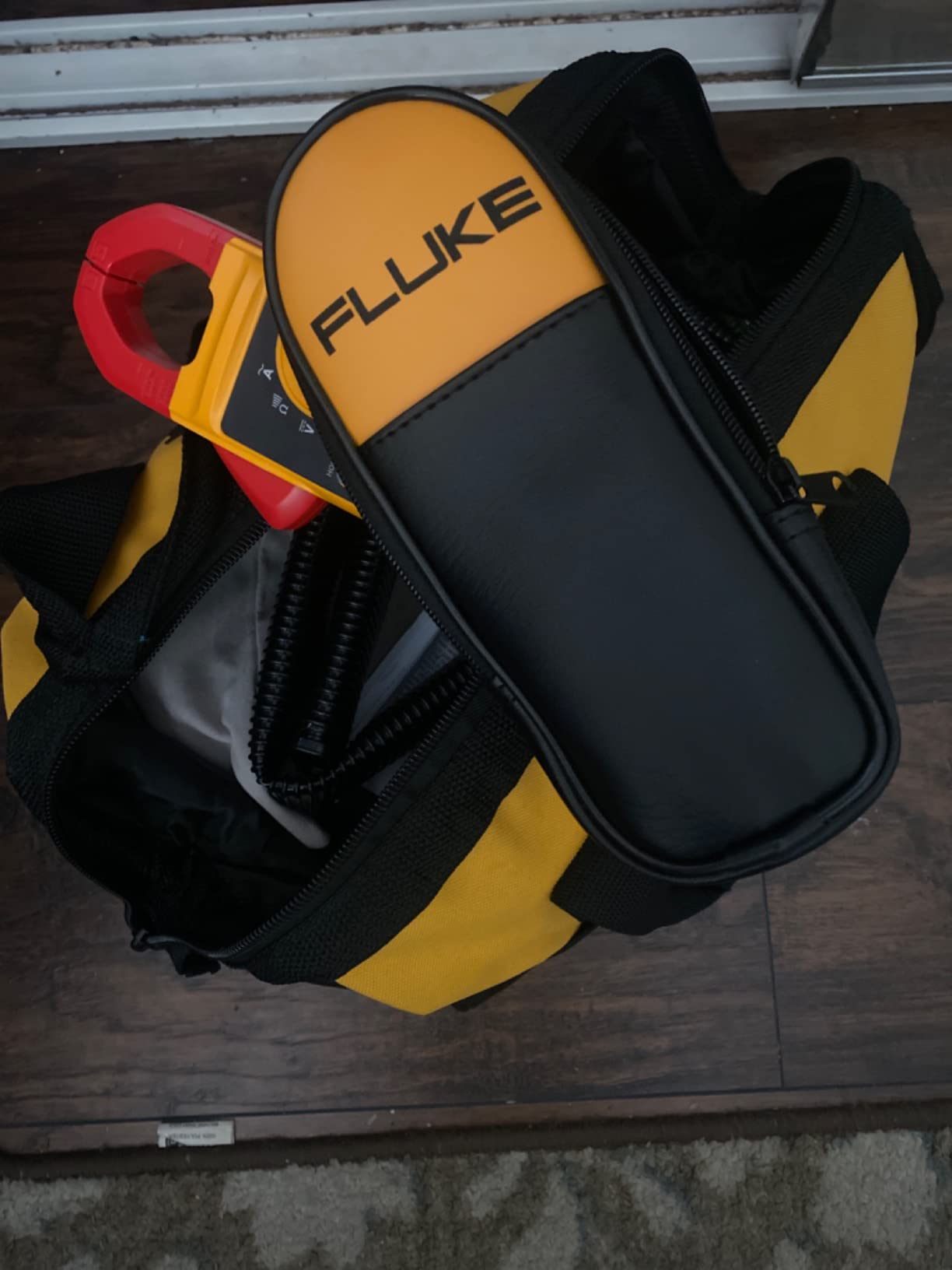
The 30mm jaw is wider than most meters in this price range, which matters when you are trying to get around a bundled hots and a neutral in a full panel. And the safety ratings are the ones you want to see at a service entrance: CAT IV 300V for the meter inputs and CAT III 600V for the installation category. It is IEC 61010-1 compliant and ships with a soft carrying case and a two year warranty.
What you give up is real. There is no DC current, which rules out automotive and many HVAC diagnostics. There is no backlight, so a dark basement panel means angling a flashlight and squinting. The current accuracy of plus or minus 2 percent plus or minus 5 counts is fine for a 20A branch but sloppy when you are trying to see whether a 3 amp circuit is really at 2.4.
Two smaller complaints recur. The supplied test leads are the first thing most electricians replace, and the soft case is only large enough to accept the meter if you pull the leads out first. Neither is a reason to skip the tool, but both are reasons to budget for a better lead set.
When this is the right meter to buy
Choose the 323 if panel work is your main use case and you want a meter that will still work in twenty years. The true RMS sensing, the 30mm jaw, and the CAT IV rating make it the safest sensible choice for measuring current at a residential service or a distribution panel. It is also the meter I would hand to someone who plans to do this work for the rest of their life.
When to pick something else
Do not buy it if you will be working in unlit spaces regularly, because there is no backlight and that gets old fast. If you need DC current, choose the Klein CL390 or the Fluke 325, both of which read DC through the jaw. If you need capacitance, frequency, or temperature, the 325 adds all three to this same chassis.
4. Klein Tools CL120VP — the best kit for a first-time homeowner
Klein Tools CL120VP Electrical Voltage Test Kit with Clamp Meter
Auto-ranging AC clamp
GFCI receptacle tester
dual-range NCVT
carrying pouch
4.8 star rating
Pros
- Ships with a GFCI receptacle tester and NCVT detector
- Bundles clamp meter with leads and a pouch
- Auto-ranging means no range dial guesswork
- Highest rating of the ten meters we tested
- Klein construction holds up to jobsite use
Cons
- No DC amps through the clamp
- No capacitance measurement
- Small pouch gives limited protection
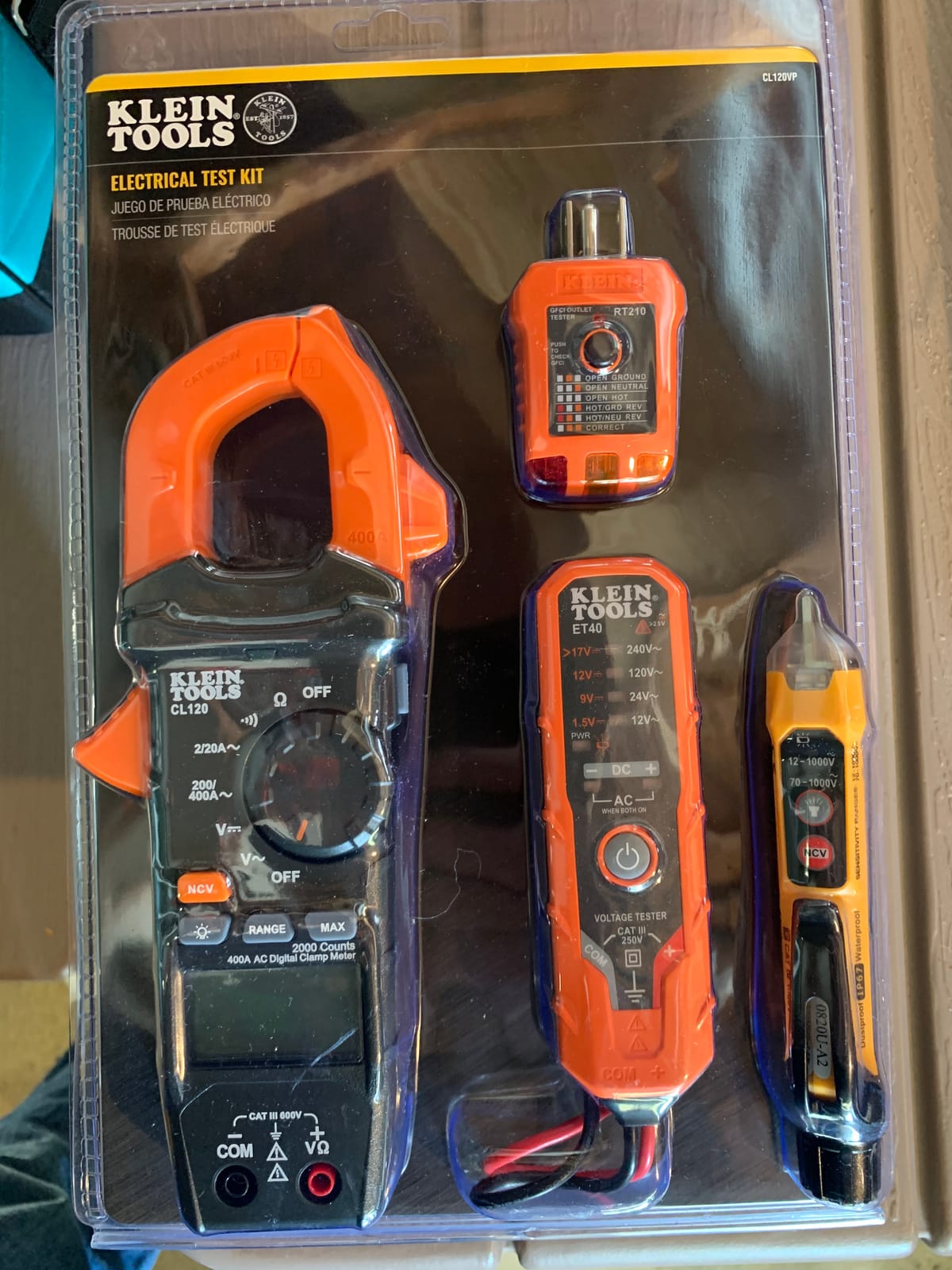
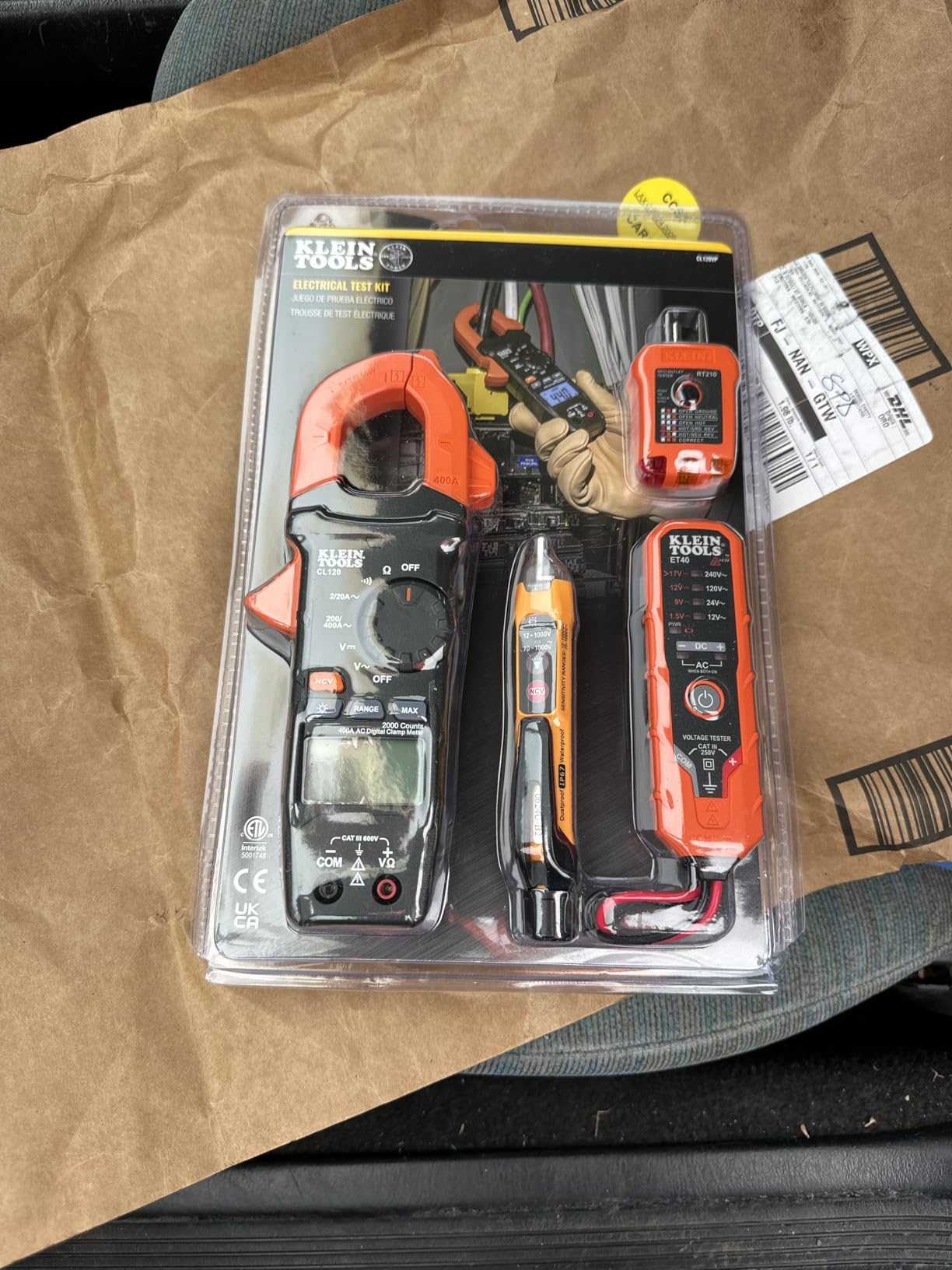
The CL120VP is really a kit rather than a single meter, and that is why it works so well for someone who has never owned a test instrument. You get the clamp meter, a pair of test leads, a non-contact voltage detector, and a receptacle tester in one pouch. My honest reaction the first time one of these showed up was mild irritation at the redundancy, then a complete change of mind after using the receptacle tester to find a reversed-polarity outlet in under a minute.
The clamp portion measures AC current and AC and DC voltage up to 1000 volts, plus resistance and continuity through the leads. It auto-ranges, so there is no rotary switch to think about, and the NCVT3P detector has two sensitivity ranges and a built-in flashlight. The Cat No. RT210 receptacle tester flags open ground, reverse polarity, and the other common miswirings that a plain voltage check will not reveal.
It carries a 4.8 star rating across nearly four thousand reviews, which is the strongest satisfaction signal in this group. That consistency is a fair argument on its own, because a tool that a lot of people bought with modest expectations and kept using is doing something right. The integrated test lead holder on the side of the clamp is a small touch that stops leads from tangling in a bag.
There is also compatibility with Klein magnetic hangers, which is genuinely useful if your panel is at head height and you need both hands. The kit runs on standard batteries and the pouch keeps everything together. For a landlord, a property manager, or anyone who services several houses, the grab-and-go format is worth a lot more than an extra measurement function.
What it does not do is read DC current through the jaw or measure capacitance, so it is not the tool for a car battery or a modern inverter unit. Some buyers complain the pouch is thin and the sealed plastic packaging is hard to open, and not every tool in the kit arrives with batteries installed. Those are annoyances, not dealbreakers.
When this is the right meter to buy
Buy this kit if you own a house and you keep meaning to figure out your own electrical system. The receptacle tester alone justifies a large share of the spend, because checking every outlet for a wiring fault takes an afternoon and finds real problems. It is also a sensible first purchase for an apprentice who needs a complete grab-and-go bag.
When to pick something else
Look elsewhere if your work involves DC current, capacitors, or a variable frequency drive, because this kit measures AC amps only. Electricians doing service work usually want a bare meter they can drop in a pocket rather than a pouch of four tools. In that case the Klein CL390 is the natural step up within the same brand.
5. Fluke 302+ — the compact choice for crowded panels
Fluke 302+ Digital Clamp Meter, 30mm Jaw, Measures AC Current to 400A, Measures AC/DC Voltage to 600V, Includes 2 Year Warranty
30mm jaw
AC current to 400A
AC and DC voltage to 600V
1.8 percent accuracy
CAT IV 300V
Pros
- Compact body with a 30mm jaw for large conductors
- Fluke accuracy at a lower step than the 325
- AC and DC voltage to 600V plus resistance and continuity
- Two year warranty and TL75 test leads included
- CAT IV 300V and CAT III 600V ratings
Cons
- No DC current measurement
- No temperature or capacitance functions
- Basic feature set with nothing extra
The 302+ is the Fluke to buy when you want a small meter and you do not want a compromise on the current reading. At 8.15 by 2.95 by 1.34 inches and 15 ounces it is noticeably smaller than the 323 and 325, which matters when you are working in a tight panel with a cover off and a flashlight between your teeth.
The accuracy figure is the headline. Fluke rates it at 1.8 percent for troubleshooting, which is the tightest number among the Flukes in this roundup and better than the plus or minus 2 percent plus or minus 5 counts quoted for the 323. It measures AC current to 400 amps, AC and DC voltage to 600 volts, plus resistance and continuity.
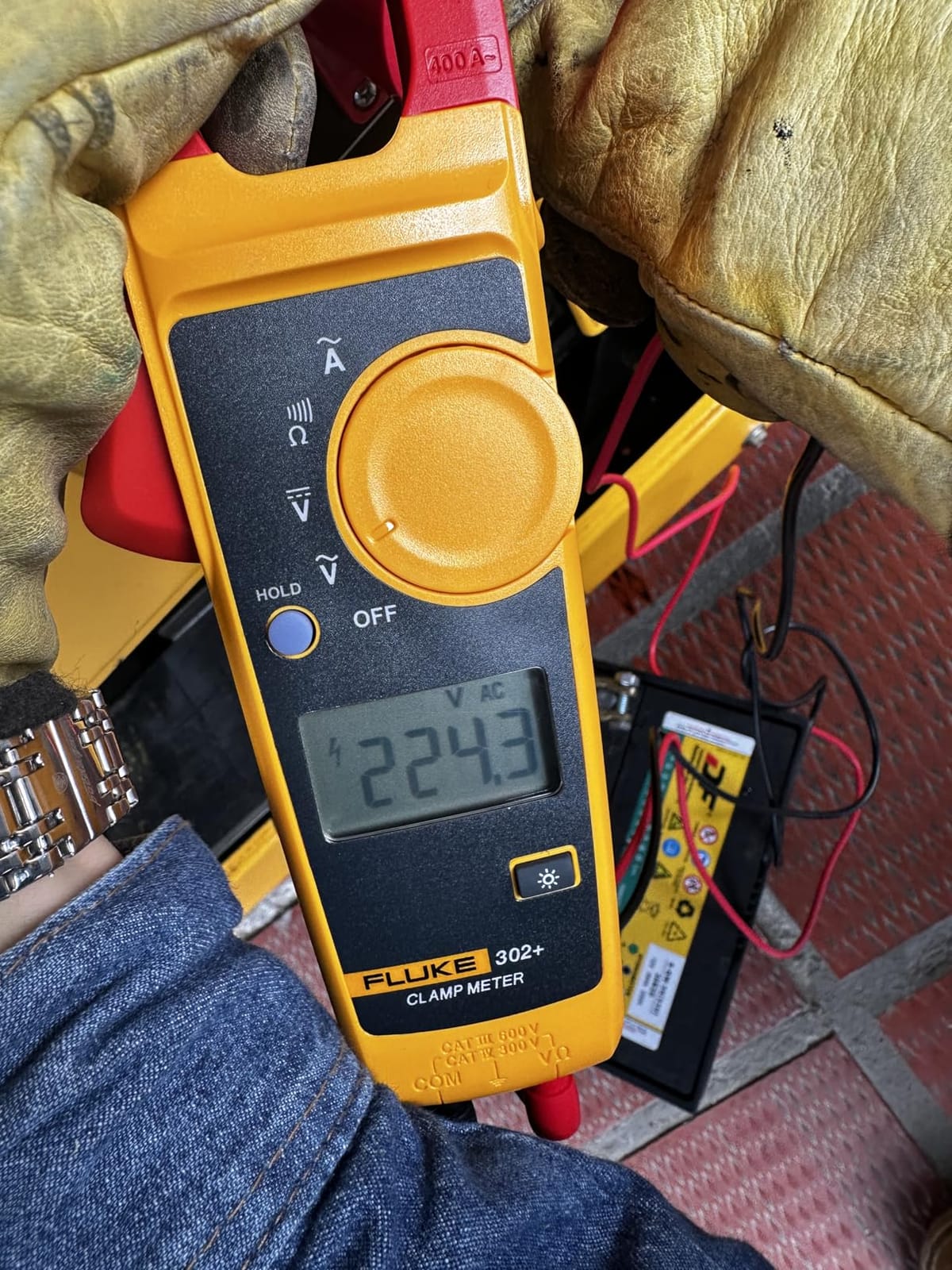
The 30mm jaw handles bundled conductors that would stop a thinner clamp, and the CAT IV 300V and CAT III 600V ratings are appropriate for household panels and service work. It runs on two AA batteries, which is a longer interval between changes than the AAA cells used by most meters at this size, and Fluke includes their own TL75 hard point test leads rather than a generic pair.
The trade is that the feature list is thin on purpose. There is no temperature, no capacitance, no frequency, and no DC current through the jaw. There is also no backlight, so like the 323 it wants a flashlight alongside it. Fluke covers it with a two year manufacturer warranty, and the part number FLUKE-302+/EM ESP is the version sold in this market.
Owners tend to frame it as the sensible middle of the Fluke clamp line, sitting below the 325 on functions and below the 323 on nothing important. A few buyers note that the listing for this model carries limited written review detail, so the assessment leans more on the spec sheet and the Fluke name than on specific owner reports.
When this is the right meter to buy
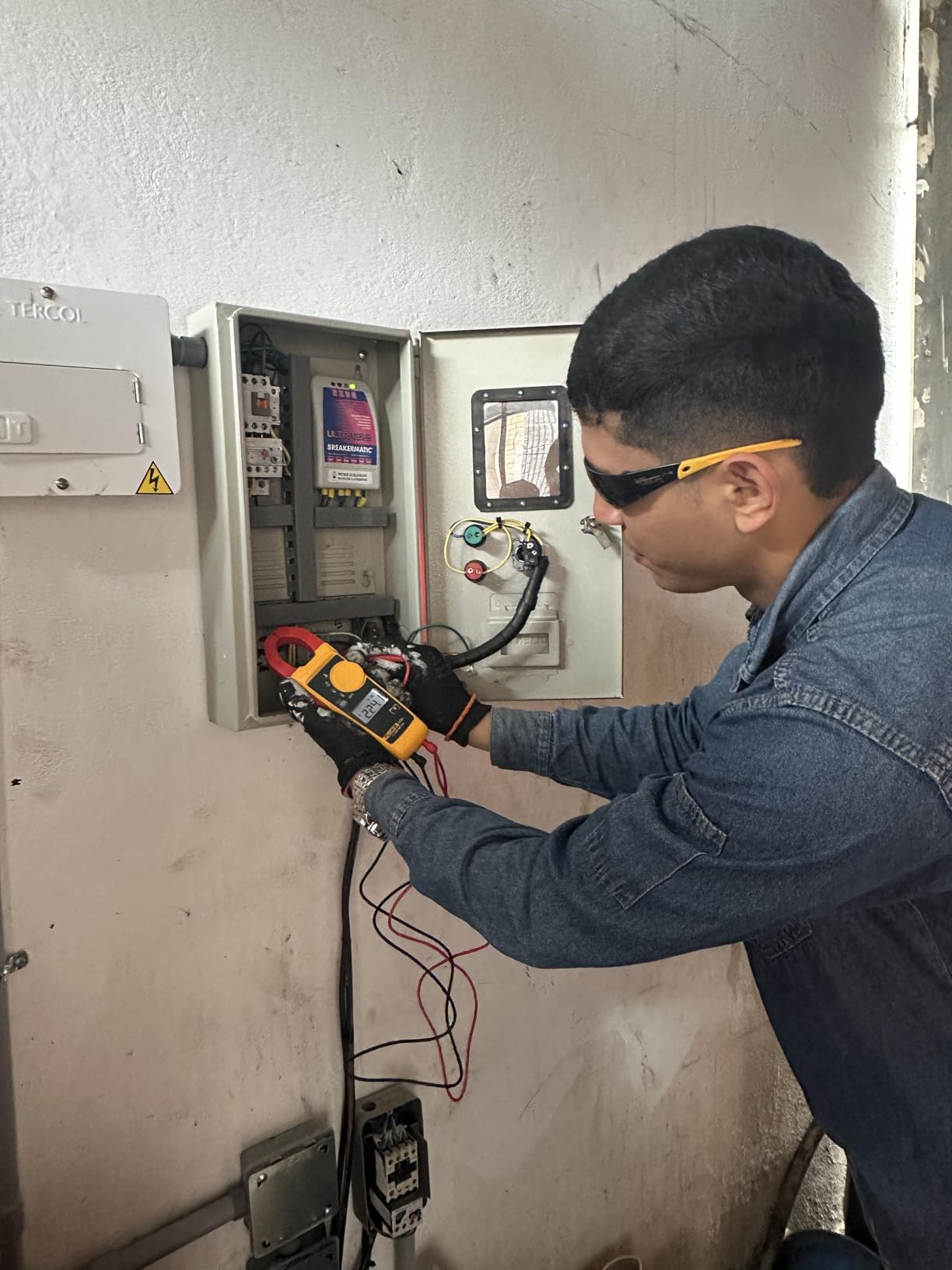
Pick the 302+ when your main tasks are reading branch current, checking a hot tub or range circuit, or confirming what a load draws during startup. The compact body and the 30mm jaw are made for panel work, and the accuracy is closer to the 325 than to the 323. It is also a good first Fluke if you want the brand name without the full feature bill.
When to pick something else
Step up to the Fluke 325 if you also want DC current, frequency, temperature, and capacitance, since the 325 adds all of them to the same 30mm jaw. Step sideways to the KAIWEETS HT206D if DC current matters and you would rather have a backlit screen with a warning color. Either way, the 302+ leaves you short on functions, not on accuracy.
6. KAIWEETS KC400 — the meter that fits where nothing else will
KAIWEETS Digital Clamp Meter, Portable Size, 2000 Counts, Measures High AC Current 400A, 600V AC/DC Voltage, Resistance, Continuity, Diode, Auto Ranging Multimter, Voltage Tester, KC400
2000 counts
AC current 2A to 400A
600V AC and DC
palm-size body
CAT III 600V
Pros
- Roughly half the size of a traditional clamp meter
- One-click function button instead of a rotary dial
- Backlight switches on above 80V or 3A
- Data hold and max value lock
- Three year warranty
Cons
- AC current only with no DC clamp measurement
- Supplied test leads fit loosely
- 2000-count resolution limits detail
At 3.54 by 0.79 by 6.3 inches this is the smallest meter in the roundup, and the size is genuinely the feature. It fits into a hand that is already holding a flashlight, and the narrow profile slides into a gap where a full-size jaw simply will not open. I have used a meter this shape to reach a conductor behind a mounted panel where the cover could not come off.
It is not a stripped-down tool otherwise. AC current ranges run 2A, 20A, 200A, and 400A, so you can read a small control circuit or a full service entrance with the same jaw. AC and DC voltage go to 600 volts, resistance to 20 MOhms, and it includes continuity and diode polarity detection behind a single FUNC button.
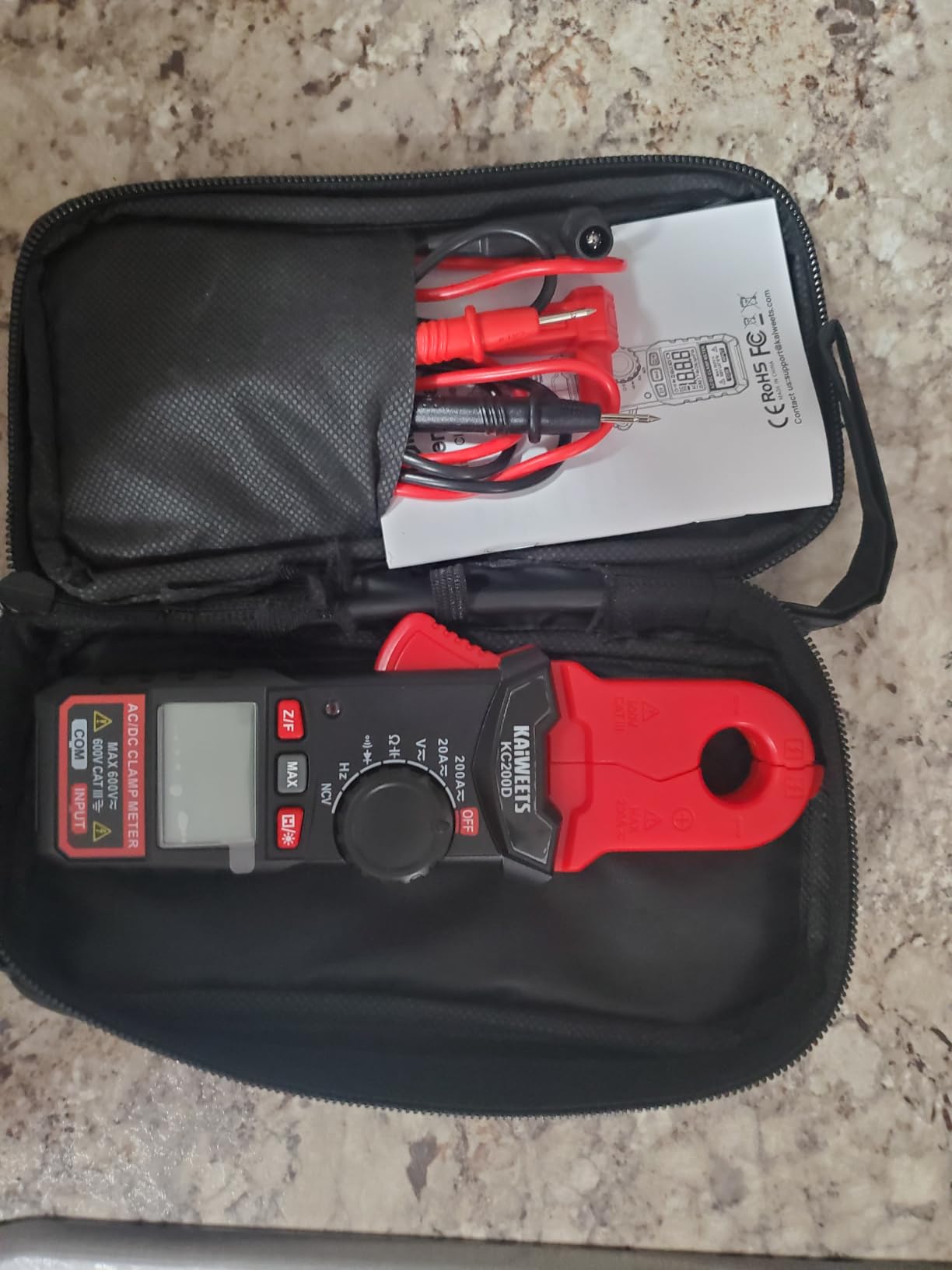
The backlight is automatic and switches on above 80V or 3A, which removes the usual button-press-and-hope routine. It also has data hold and a max value lock for catching a spike you did not see in time, plus a fifteen minute auto power-off. The box includes test probes, a manual, an AAA battery, and a zipper case, backed by a three year manufacturer warranty.
The AC current accuracy is rated at plus or minus 2.5 percent reading plus 8 digits, and DC voltage at plus or minus 0.5 percent plus 5 digits. Those numbers are respectable but not class-leading, and the 2000-count display means the last digit is doing less work than on a 6000-count meter. Its 4.3 rating is the lowest of the ten, which tracks with it being the simplest design here.
The most-reported physical complaint is the test leads, which fit loosely in the sockets and need constant reinsertion. That is annoying enough to fix on day one with a different lead set. There is also no DC current through the clamp, so it will not help on a car battery or a solar inverter.
When this is the right meter to buy
Buy the KC400 for reach, not for features. It suits anyone working in tight enclosures, behind appliances, inside a soffit, or in a shallow utility box where jaw clearance is the deciding factor. The four AC current ranges also make it a good second meter for reading small control circuits that a 400A-only clamp cannot resolve.
When to pick something else
Skip it if precision matters. A 2000-count display and 2.5 percent plus 8 digits accuracy is fine for checking whether a breaker is loaded but not for fine diagnosis. If you need DC current, low amps, or higher resolution, the KAIWEETS HT206D is the same brand with the opposite priorities, or the FNIRSI DMC-100 offers 9999 counts.
7. Klein Tools CL390 — the best for HVAC and automotive work
Klein Tools CL390 AC/DC Digital Clamp Meter, Auto-Ranging, 400 Amp
AC and DC current to 400A
DC microamps and capacitance
thermocouple included
CAT III and CAT IV 600V
0.3A minimum
Pros
- Reads DC current through the clamp
- True-RMS auto-ranging on complex signals
- Very broad function set including capacitance and duty cycle
- Reverse-contrast backlit display
- Includes thermocouple leads batteries and case
Cons
- Cannot measure below 0.3A
- No in-circuit 10A range
- Soft case wears out before the meter
The CL390 is the value sweet spot of this whole roundup, and HVAC technicians pick it out by name. It measures both AC and DC current up to 400 amps through the clamp, which covers a compressor contactor, a car alternator, and a starter circuit without changing tools. Add true RMS auto-ranging and you have a meter that handles inverter-driven equipment properly.
The function list is unusually long for the money. Through the leads it does AC and DC voltage, resistance, continuity, frequency, and duty cycle, plus DC microamps, diode test, and capacitance. The included thermocouple probe handles temperature, which lets you check a supply and return air split in a single visit instead of guessing from the thermostat.
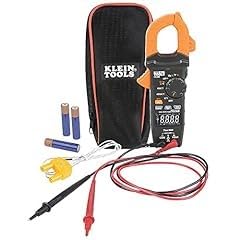
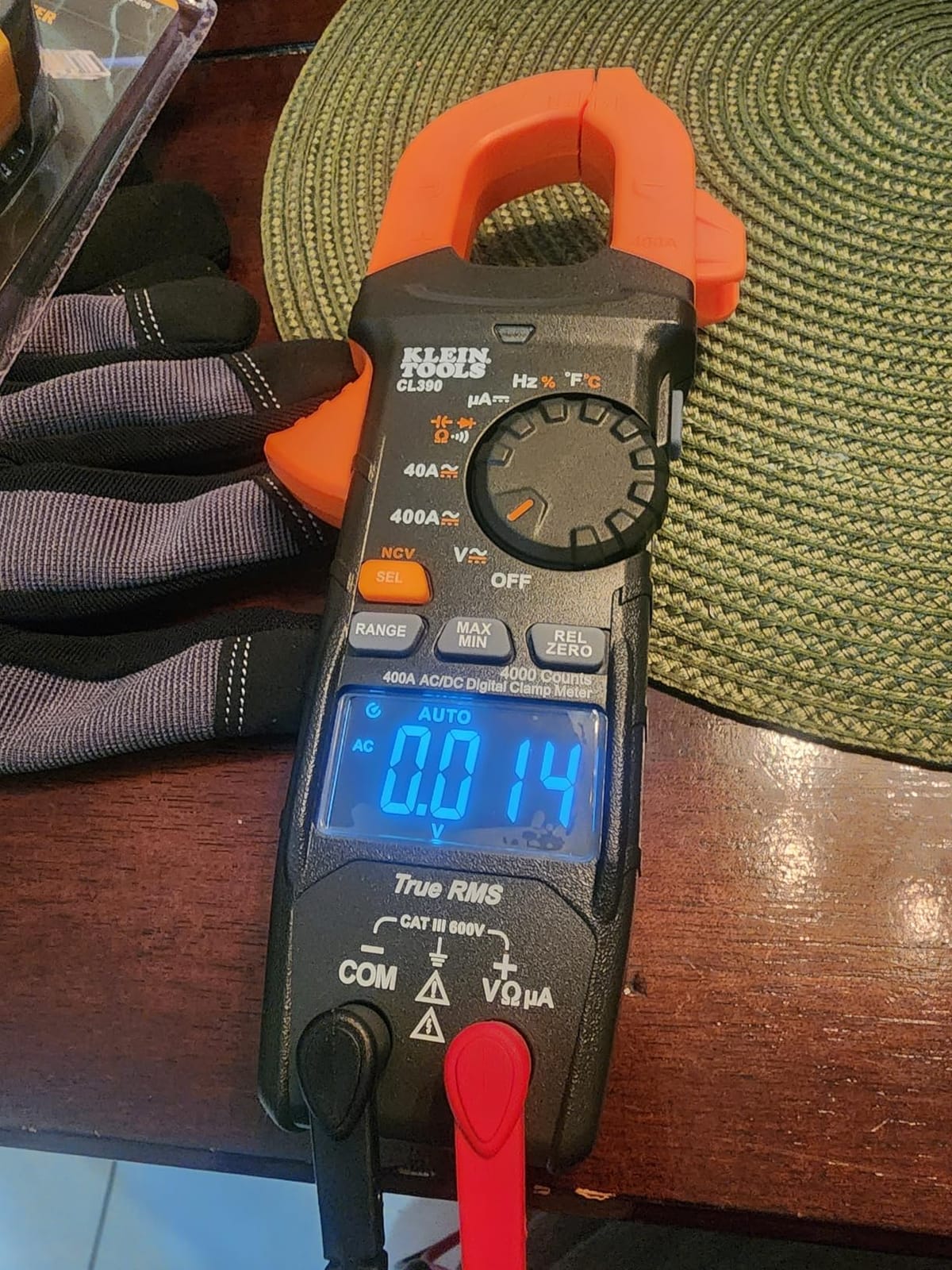
The display is a high-visibility reverse-contrast LCD, which stays readable in a bright attic and a dark mechanical room. Non-contact voltage testing is built into the jaw, the test lead holder is on the side of the body, and it works with Klein magnetic hangers for hands-free panel work. Safety ratings are CAT III 600V and CAT IV 600V, both at 600 volts, which is unusual at this price.
Two limits deserve a close look before you buy. The minimum measurable current is 0.3 amps AC or DC, so an induction motor control circuit sitting below that will read nothing, and there is no in-circuit 10A range to fall back on. Owners also report that clamp accuracy softens on very low current readings, and that the included soft case wears out well before the meter does.
One more practical note from owners: the reverse-contrast display can be harder to read in direct sun unless you raise the brightness, so it is not automatically the best screen for a rooftop condenser in full sun. Everywhere else it is a genuinely nice panel to look at.
When this is the right meter to buy
Buy the CL390 if you service appliances, mini splits, or vehicles, or if you just want the most capability per dollar in this list. DC current through the clamp plus temperature plus capacitance covers a very wide slice of real troubleshooting. It is also a strong choice for a serious DIYer who plans to keep working on their house for years.
When to pick something else
It is the wrong tool for small control circuits under 0.3 amps, and the missing 10A in-circuit range is a real gap for electronics work. If millivolt accuracy or inrush capture matters, a higher-end instrument is the answer. If you only need AC amps on a residential panel, the Fluke 323 is simpler and lighter.
8. Fluke 325 — the best upgrade for a serious hobbyist
Fluke 325 True-RMS Clamp Meter with Frequency, Temperature & Capacitance Measurements
True-RMS AC and DC to 400A
600V AC and DC voltage
frequency temperature and capacitance
30mm jaw
CAT IV 300V
Pros
- Measures both AC and DC current at this level
- Adds frequency temperature and capacitance to the 323
- True-RMS accuracy verified against reference meters
- Data hold and min/max for transients
- Lightweight and compact for a service cart
Cons
- Resistance stops at 40 kOhms
- No inrush measurement and no NCV
- Millivolt readings are not accurate
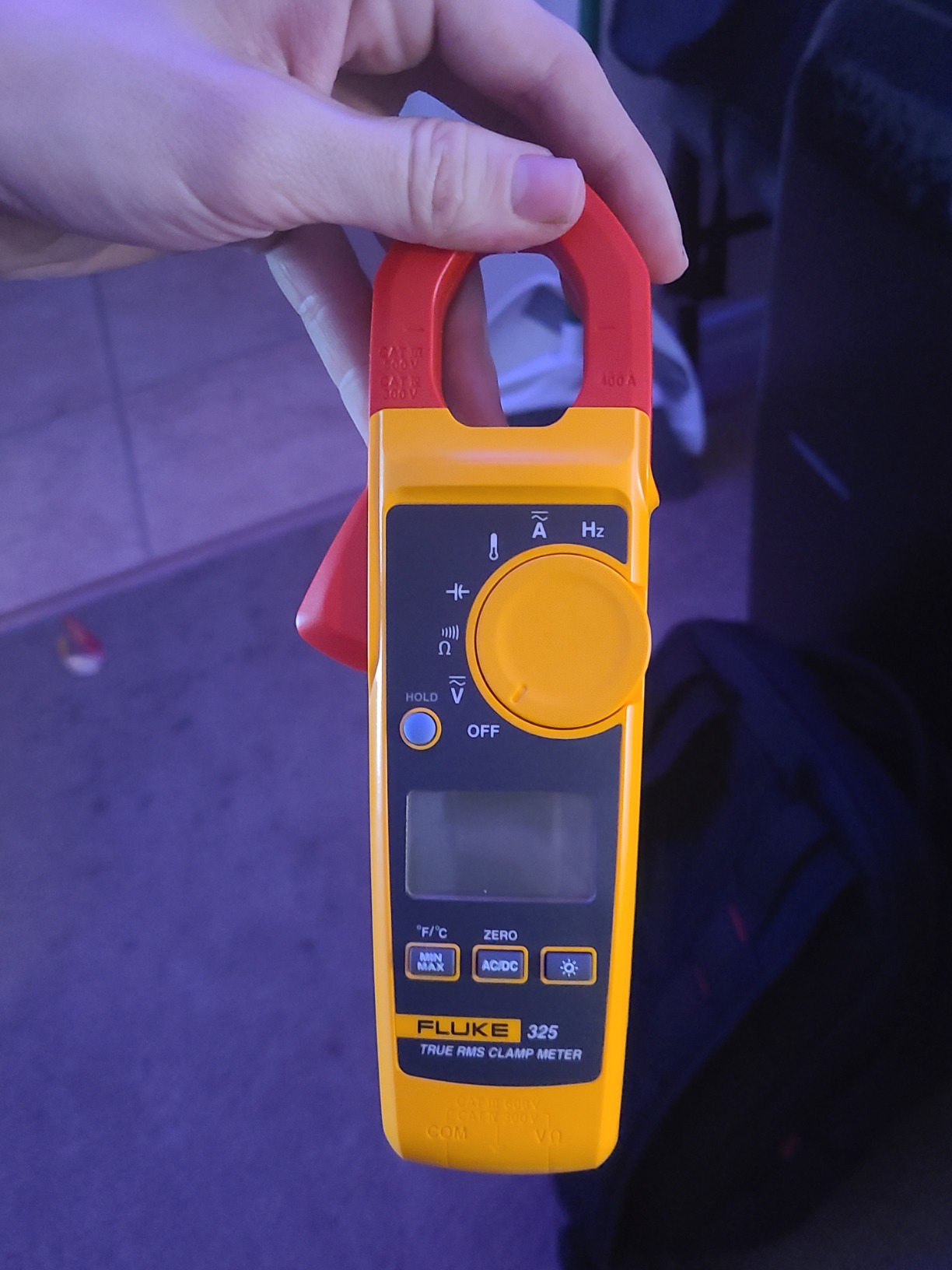
The 325 is the meter that ends the argument about whether a Fluke clamp is worth the money, because it is the one in this roundup that measures both AC and DC current to 400 amps. That single feature, combined with true RMS sensing, is why HVAC and automotive techs keep them for a decade or more and then buy a second one as a backup.
Everything the 323 does, it does, plus frequency, temperature, and capacitance. AC and DC voltage go to 600 volts, resistance reaches 40 kOhms, the 30mm jaw handles bundled conductors, and there is an audible continuity sensor. Data hold and min/max tracking let you capture a motor startup spike that would be gone before you looked at the screen.
Long-term owners describe it as taking abuse and staying accurate, and they credit it with consolidating several tools into one bag. The light weight and compact body mean it goes into a service cart without becoming cargo. It carries a two year warranty and the usual CAT IV 300V and CAT III 600V ratings with IEC 61010-1 compliance.
The ceilings are worth knowing. Resistance stops at 40 kOhms, so it will not test a thermistor. Millivolt readings are not accurate, which rules out AC ripple testing. There is no inrush measurement, no automatic AC or DC voltage selection, and no non-contact voltage detection, which surprises people who expect a meter at this level to have one.
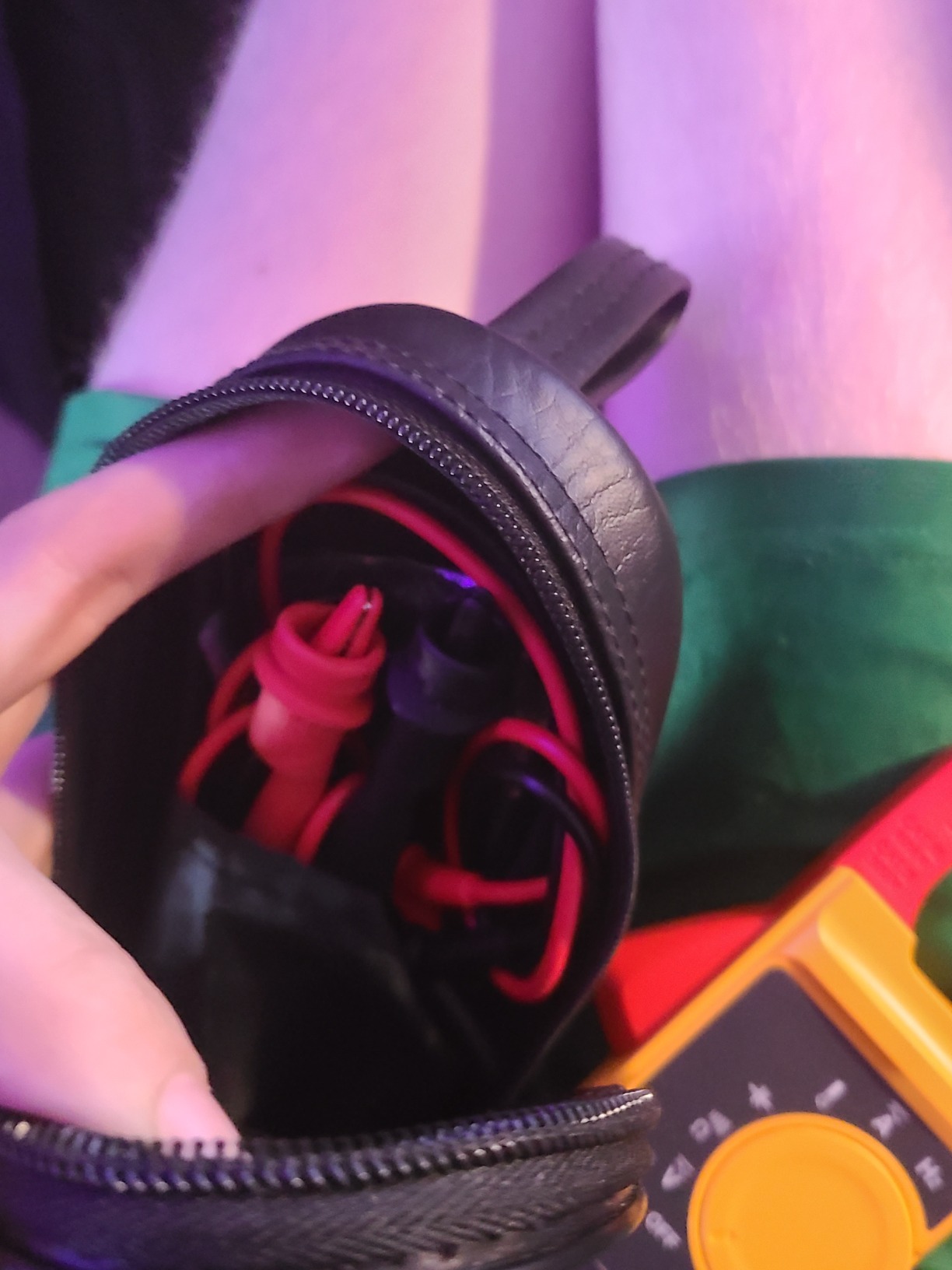
One more quirk catches users out: resistance and continuity share a combined mode, so the continuity buzzer can sound during an ohms test until you get used to it. Reviewers also note the supplied leads feel stiff in cold weather and that the dial area feels fragile under a heavy glove.
When this is the right meter to buy
Choose the 325 if you are past casual outlet work and want one instrument that covers current, voltage, frequency, temperature, and capacitance. It is a strong choice for someone who will keep it for many years, or for an apprentice whose employer expects a professional-grade clamp. The DC current capability is the reason most people upgrade to it.
When to pick something else
Do not buy it if you only need AC amps on a household panel, because the Fluke 323 covers that for less and you are paying for functions you will not use. Skip it if you need millivolt accuracy, inrush capture, or non-contact voltage detection, and consider a higher-end Fluke model or a graphing meter instead. A beginner is rarely ready for the 325.
9. FNIRSI DMC-100 — the best for graphing a fault
FNIRSI DMC-100 Clamp Meter 9999 Counts TRMS, 600A AC/DC Amp Meter
9999 count TRMS
AC and DC current to 600A
2-inch color TFT
rechargeable 1500mAh battery
curve recording
Pros
- Real-time curve and graph recording for intermittent faults
- Rechargeable battery with Type-C charging
- AC and DC current to 600A in a compact body
- Color screen with ten brightness levels and dual themes
- Simultaneous voltage and current readout
Cons
- Temperature function is not accurate
- Graphing captures only about 25 seconds
- Sealed lithium battery cannot be replaced
- Light build quality
The DMC-100 is the odd one out in this list, and that is exactly why it is interesting. It records a live current curve on a two-inch full-color TFT screen, keeping eight data sets on screen and 30 historical records. When a breaker trips intermittently, or a motor stumbles only on a warm afternoon, that graph turns guesswork into evidence.
Underneath the screen it is a serious meter. Resolution is 9999 counts with true RMS, AC and DC current runs to 600 amps, and it also measures AC and DC voltage, resistance, capacitance, and frequency, plus temperature through the included probe. NCV detection, live wire testing, continuity, and diode checks are all present, and it shows voltage and current at the same time.
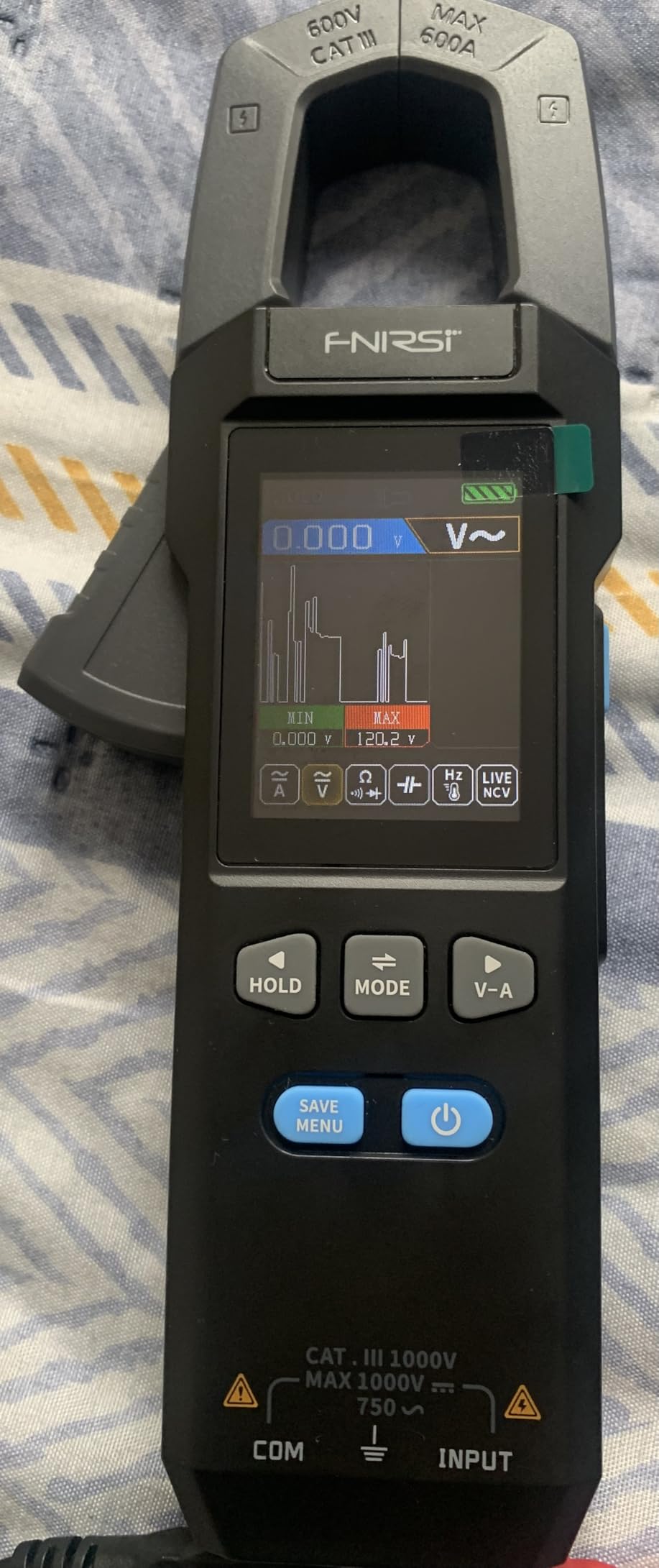
The rechargeable 1500mAh lithium battery with Type-C charging is the practical headline. No meter dies halfway through a crawlspace because a AA corroded, and the screen has ten brightness levels plus dark and light themes, so it stays readable in direct sun on a roof or in a dark panel. At 6.72 ounces it is one of the lightest meters here, which is a bonus for a device you carry everywhere.
There are real limits. Owners report the temperature function is not accurate, the graphing only captures roughly 25 seconds and does not label the values, and the sealed lithium cell cannot be replaced when it ages. The build is lighter than professional alternatives, the LED flashlight is weak, and some reviewers doubt the reliability of the live wire function. The 9999-count resolution also oversells the real accuracy underneath it.
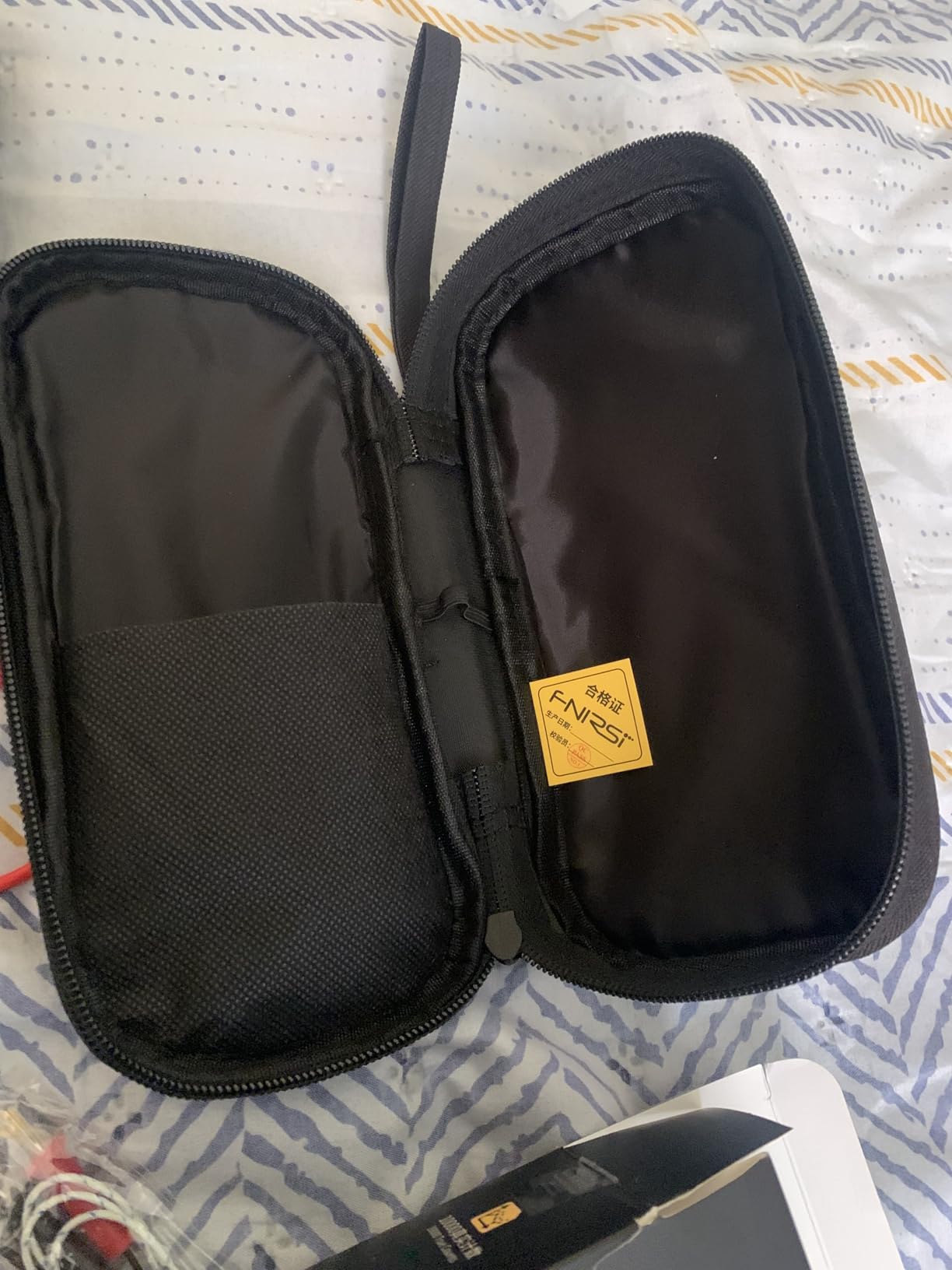
Professionals with decades of experience tend to treat it as a backup meter rather than a primary, even while praising the DC clamp, capacitance, and graphing. For a homeowner or hobbyist doing automotive work, that is more than enough, and it doubles as a multimeter with two pen probes and a temperature probe in the box.
When this is the right meter to buy
Buy the DMC-100 if you are chasing a fault that only happens sometimes, or if you work on cars and want one device that does current, voltage, capacitance, and temperature. The rechargeable battery alone changes how you pack for a job. It is also a strong value choice for a homeowner who wants more resolution than a 2000-count meter.
When to pick something else
Pass if you need measurement accuracy you can defend, a serviceable battery, or a tool that will live in a commercial van for a decade. The sealed cell and the light housing argue against it as a primary professional instrument. For dependable accuracy in a household panel, the Fluke 323 or the Klein CL390 is the steadier choice.
10. Milwaukee 2235-20 — the best thin jaw for crowded panels
Milwaukee 2235-20 400 Amp Clamp Meter
Thin 1.0 inch jaw
True-RMS AC current to 400A
AC and DC voltage to 600V
MIN and MAX hold
5 year warranty
Pros
- Thin 1.0 inch jaw reaches conductors in tight panels
- True-RMS measurement at a mid-range price
- Backlit black on white display with LED work light
- MIN and MAX plus data hold capture transients
- Rugged overmold housing with a five year warranty
Cons
- Resistance limited to 4000 ohms
- No DC current capacitance frequency or temperature
- Annual calibration service is recommended
- Smallest review base of the ten
The Milwaukee 2235-20 is built around one problem, and it solves it better than anything else here. The jaw profile is 1.0 inch thick, which lets you slide it sideways onto a conductor in a crowded panel or a tight wire bundle where a deep hinged jaw would not fit without pulling the conductor out of your way.
Everything else follows a sensible priority list. True-RMS measurement gives an honest reading on modern electronics loads, AC current goes to 400 amps, AC and DC voltage to 600 volts, and there is resistance to 4000 ohms with an audible continuity alert. A dial-style rotary switch is unfashionable and completely unambiguous under a gloved hand.
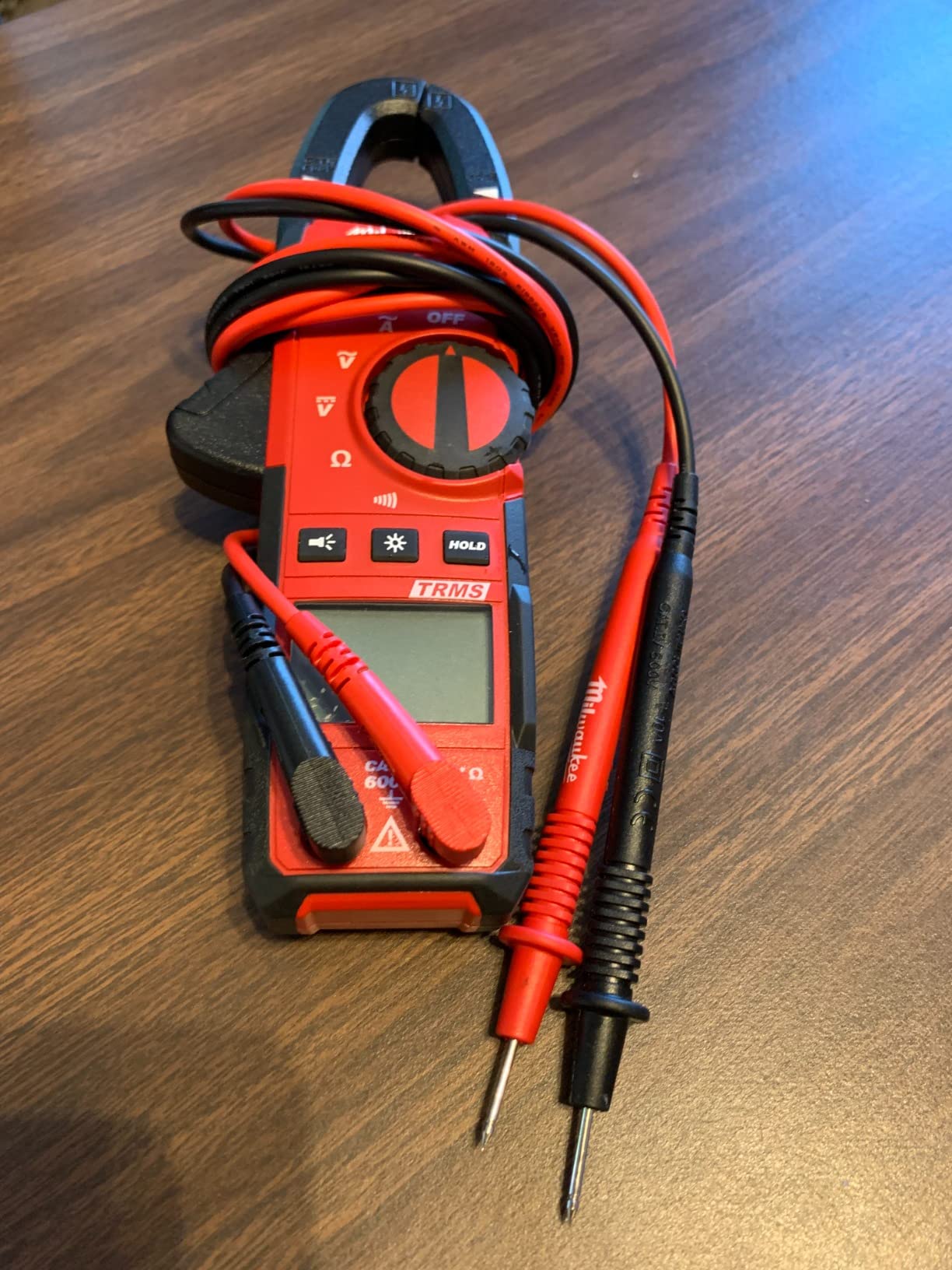
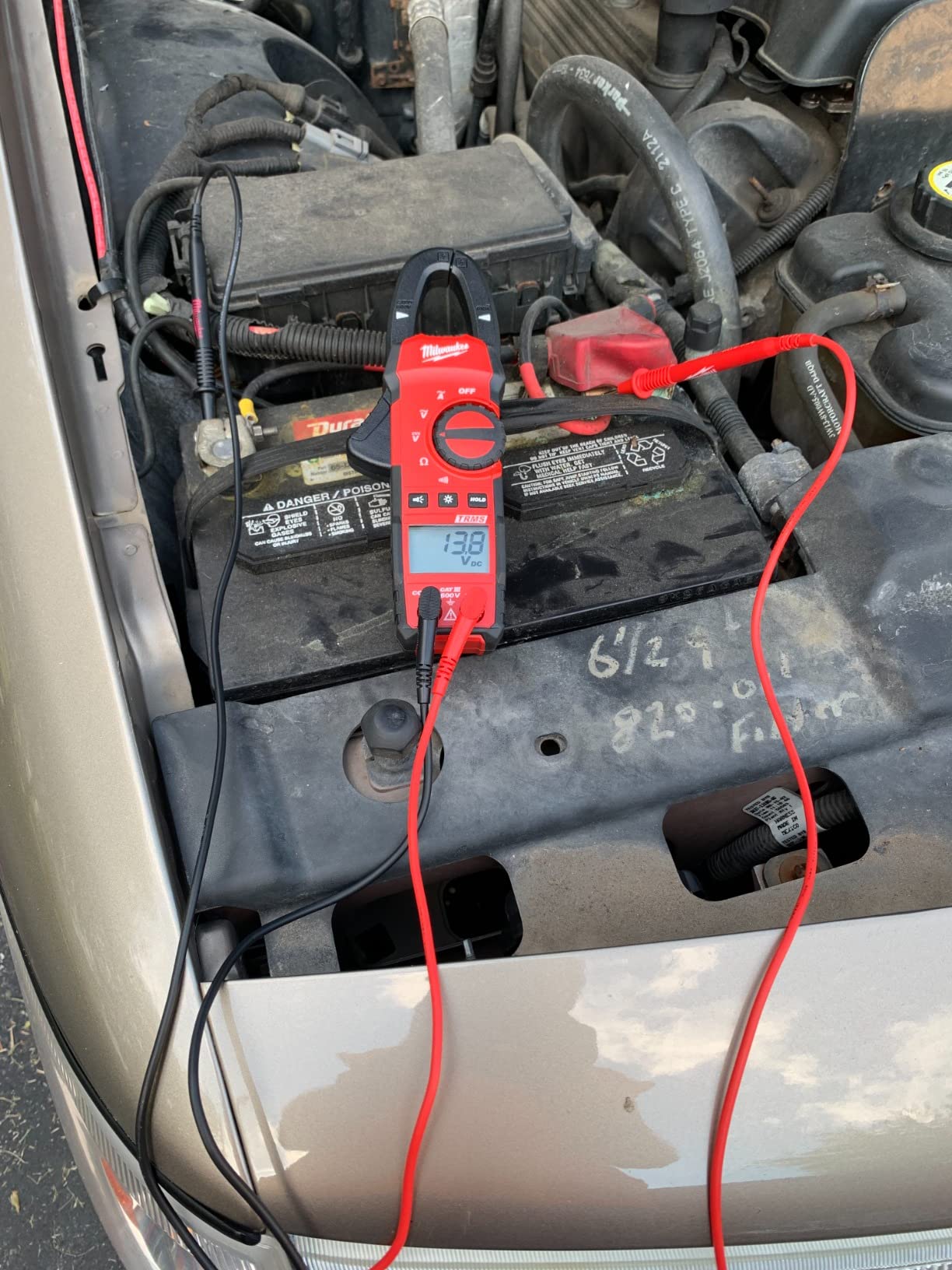
The display is a backlit black on white screen, which has more contrast than most backlit meters at this price, and there is a built-in LED work light for the rest of the panel. MIN and MAX recording plus data hold let you catch a startup surge, and the overmold housing is built to take the drop that every tool in a truck takes eventually.
Battery changes are quick with two standard AAA cells, and Milwaukee includes test leads, batteries, and a manual. The warranty is five years, which is the longest in this roundup. A small caution: Milwaukee recommends an annual calibration service, so it carries an ongoing maintenance cost that the other meters do not.
The gaps are the functions you can live without. There is no DC current through the jaw, no capacitance, no frequency, and no temperature. Resistance stopping at 4000 ohms is fine for continuity work and short of what you need for electronics. This listing also carries the smallest review base of the ten, so there is less long-term owner feedback to lean on.
When this is the right meter to buy
Buy the Milwaukee if you work in full panels, older homes with crowded wiring, or anywhere a thick jaw will not reach. The thin profile, the strong backlight, and the work light are the combination that makes it pleasant in a dark panel, and the five year warranty is the strongest here. It is a good fit for an apprentice who will drop it.
When to pick something else
Choose something else if you need DC current, capacitance, or temperature, since none of those are here. Avoid it as a precision instrument, because 4000 ohms of resistance range and 2.5 percent class accuracy are troubleshooting figures. If you want a full-featured meter at a similar step, the Klein CL390 is the direct comparison.
Clamp Meter vs Multimeter: Which One Do You Actually Need?
Neither is better, because they measure different things. A clamp meter measures current on a live, unbroken conductor by sensing the magnetic field around it. A multimeter measures voltage, resistance, and continuity with probes on de-energized circuits. Most DIYers end up owning both, and if you have never bought a meter of either type, our multimeter roundup for electricians is the place to start with voltage and continuity.
Think about the job. If a breaker trips, an outlet runs warm, or you want to know what a range or a heat pump is drawing, you need current, and only a clamp meter gives it to you without disconnecting anything. If you are checking voltage at a receptacle, testing a switch for continuity, or confirming a resistor, you need a multimeter.
There is one category where the clamp meter alone can be misleading. A meter with a jaw will not tell you whether a wire is de-energized. Voltage, resistance, and continuity still come from a multimeter, or from a receptacle tester, or from the NCVT detectors included in some of the kits above. Treat the clamp as a current tool, and keep a probe meter for everything else.
How to Choose a Clamp Meter Without Wasting Money
Do you need True RMS?
True RMS meters read the real RMS value of the signal instead of estimating it from a squashed waveform. In a modern house, that matters for LED drivers, switched-mode power supplies, inverter-driven mini splits, and anything with a variable frequency drive, where an average-responding meter can read noticeably low. For a panel full of incandescent and resistive loads, an average-responding meter is fine. Our honest verdict: if your home has any heat pump, induction range, or LED-heavy lighting, pay for true RMS.
What CAT rating do you need?
CAT III covers distribution equipment and permanently installed fixtures, which covers your panel and most fixed wiring. CAT IV covers the service entrance and the conductors leaving it, and it is the rating you want if you will ever clamp at the meter base or the main lug. Most DIY work only needs CAT III 600V, but a CAT IV rating is cheap insurance if the meter will be near the service.
How much amp range do you need?
Most home branch circuits are 15A or 20A, and a 200A residential service is the common ceiling. A meter that reads 400 amps is not overkill, it is the standard, and the low ranges are what let you see a 3 amp lighting circuit at all. Look for meters with a 2A or low-current range. Ignore counts above 6000 unless you are measuring small currents, because resolution without accuracy buys you nothing.
Jaw size and panel access
A 30mm jaw handles a bundled hots and neutral in a standard panel. A thin 1.0 inch profile like the Milwaukee handles conductors that a deep hinged jaw will not reach without disturbing the wiring. Check the dimension of the conductors in your panel before you buy, because the jaw is the one thing you cannot upgrade later.
DC current, mA mode, and why they matter
DC current through the clamp is needed for automotive work, solar, and many HVAC units, and only the KAIWEETS HT206D, Klein CL390, Fluke 325, and FNIRSI DMC-100 here provide it. Low-current mA measurement, whether through the jaw or the probes, is the diagnostic that finds a leaking or arcing receptacle or traces a two-wire circuit, and it is worth more to a homeowner than most of the other features on this page.
Features a beginner should skip
Bluetooth logging, Bluetooth apps, inrush capture, duty cycle, and millivolt measurement cost real money and do nothing in a residential panel. The features worth paying for are true RMS on AC, DC current through the clamp, a CAT rating, a backlight with a work light, and a data hold. Everything else can wait until you outgrow the tool.
Fluke vs Klein: which brand should you buy?
Klein wins on grip and on giving you more measurement per dollar. The CL390 reads DC current, microamps, capacitance, and temperature, and includes a thermocouple, and the CL120VP kit includes a receptacle tester and a non-contact detector. Fluke wins on accuracy, on the CAT IV 300V rating carried across the 302+, 323, and 325, on a two year warranty as standard, and on build that owners report lasting for decades.
For most homeowners, either is a defensible purchase. Buy Klein if you want the most capability for the money and you work on appliances or vehicles. Buy Fluke if you plan to keep the tool for a long time, if you will measure at the service entrance, or if accuracy and a documented track record matter more than feature count. Owning both brands is completely normal; professionals on ElectricianTalk threads name the Fluke 323, 325, and 376 alongside the Klein CL390 and CL800 as their daily go-to tools.
How to Measure Current With a Clamp Meter Safely
Clamping a conductor is the safest live measurement in residential electrical work, but the technique is where beginners go wrong. Work through these five steps and you will get a correct reading the first time.
De-energize what you can. Switch off the breaker for the circuit if you are removing anything. A clamp meter is safe on a live conductor, but working energized is only justified when you genuinely cannot shut the circuit down.
Identify a single conductor. At the panel, the black or red wire into the breaker is the conductor you want. Neutral is usually a bundle of white, and ground is bare copper or green.
Clamp one conductor only. Open the jaw, close it around the single wire, and press the trigger until it fully latches. Never clamp the whole cable.
Read the value and let it settle. Motors and compressors surge on startup, so watch the reading for a few seconds and record both the running and the peak value.
Verify before you trust it. If you get a number roughly double what the circuit should draw, you probably clamped a conductor with a return path in the same jaw. If you get zero, the current is not flowing, or you clamped a neutral instead of a hot.
Two more habits keep you safe. Keep one hand behind your back when probing inside a panel, and make sure your meter is rated for the category you are in. If a measurement means you will have to remove a panel cover on a circuit you cannot positively de-energize, that is the point to stop and call a licensed electrician.
While you are in there, it also pays to have the right gear on. Our guides to the best work boots for electricians and the best cable reels for electricians cover the supporting equipment that makes panel work less painful.
Frequently Asked Questions
Which clamp meter is the most accurate?
Among the meters in this roundup, the Fluke 302+ carries the tightest quoted accuracy at 1.8 percent for troubleshooting, and the Fluke 323 is rated at plus or minus 2 percent plus or minus 5 counts on current. Both are Fluke True-RMS models with CAT IV 300V and CAT III 600V ratings. Accuracy figures degrade at the top of each range, so match the range you use to the circuit rather than relying on the headline number.
Which clamp meter is better, Fluke or Klein?
Klein gives you more measurement per dollar, with DC current, microamps, capacitance, and temperature on the CL390. Fluke leads on accuracy, CAT IV 300V safety ratings across its 300-series clamps, and a build that owners report lasting for decades. Most DIYers are well served by either. Buy Klein for appliances and vehicles, and buy Fluke if you will keep the meter for years or work at a service entrance.
Is a clamp meter better than a multimeter?
Neither is better, they measure different things. A clamp meter measures AC and DC current on a live, unbroken conductor without disconnecting anything. A multimeter measures voltage, resistance, and continuity with probes. You need a clamp meter to find an overloaded circuit or check an air conditioner’s draw, and a multimeter to check voltage at an outlet or test continuity.
Do I need a True RMS clamp meter for my house?
You need it if your home has LED drivers, switched-mode power supplies, a heat pump, an induction range, or a variable frequency drive, because average-responding meters read low on those non-linear waveforms. In a home with only resistive and incandescent loads, an average-responding meter is fine. Five of the ten meters in this roundup are true RMS, including both Flukes in the 300 series and the Klein CL390.
What CAT rating do I need for household electrical work?
CAT III 600V covers distribution equipment and permanently installed fixtures, which is what most household panel work needs. CAT IV 300V covers the service entrance and the conductors leaving it, and is the rating to look for if you will clamp at the meter base or main lug. The Klein CL390 is rated CAT III 600V and CAT IV 600V, and the Fluke 302+, 323, and 325 carry CAT IV 300V with CAT III 600V.
The Best Clamp Meter for DIY Electricians in 2026
Start with the KAIWEETS HT206D if you want one meter that covers almost every household task. It measures both AC and DC current through the jaw, carries true RMS sensing and a CAT III 600V rating, and has the clearest safety display of the group with a backlight that turns red above 80 volts or 3 amps. It is our top pick for the best clamp meters for DIY electricians because it removes the compromises people actually hit.
If you want the simplest first instrument, the Klein Tools CL120VP kit is the better buy, because the receptacle tester and non-contact detector will find more problems in your house than any measurement function. If you want the nameplate that lasts, the Fluke 323 is the standard, and the Fluke 302+ is the compact version of the same idea. For vehicles and heat pumps, go straight to the Klein CL390 or the Fluke 325 for DC current.
And keep a multimeter. Every one of these meters has limitations, and the honest workflow is a clamp for current, a probe meter for voltage and continuity, and a licensed electrician for anything you are not certain about. Whichever one you choose, buy a better set of test leads for it, and read the CAT rating before you open a panel.