
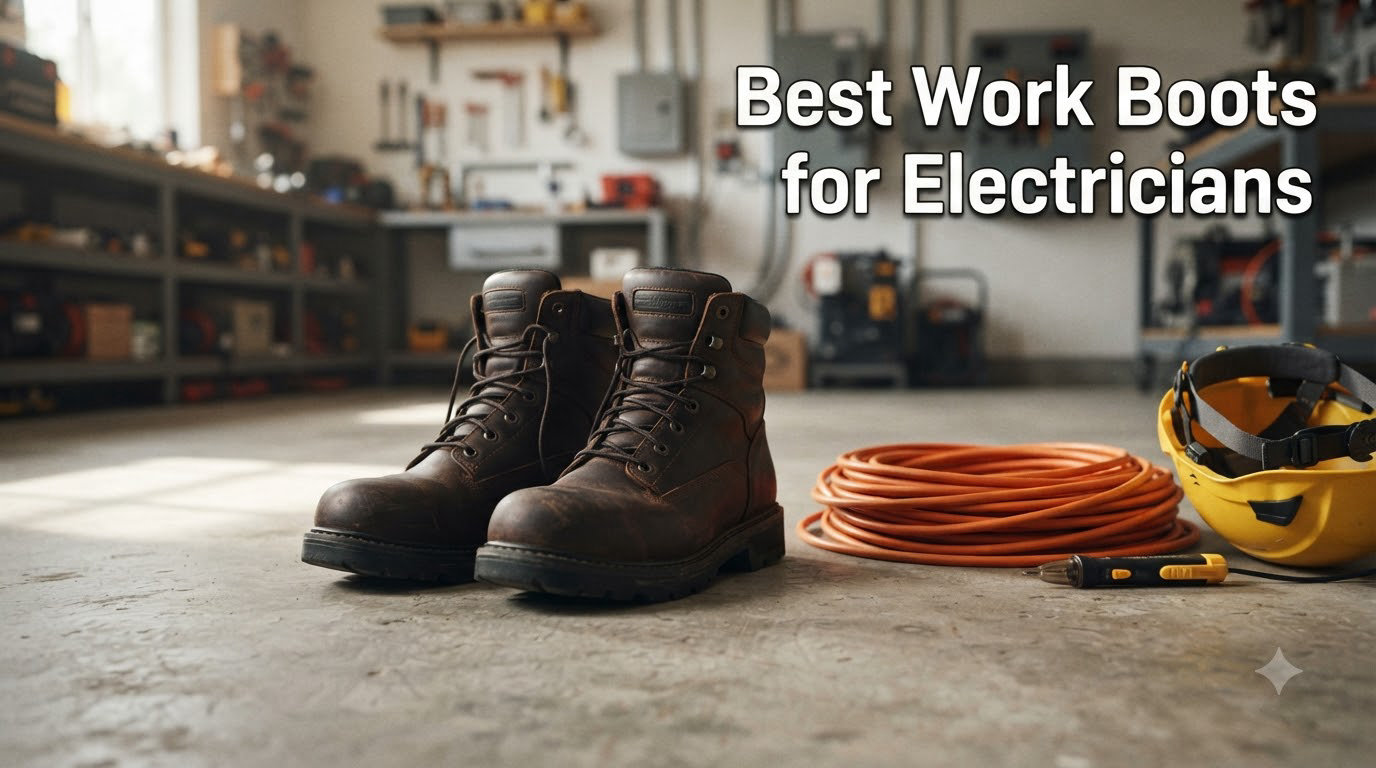
As an electrician, your boots have to handle more than a long shift. They need electrical-hazard protection, dependable traction on concrete and ladders, and enough cushioning to keep your feet from fading before the last room is finished.
The best work boots for electricians are EH rated under ASTM F2413, use non-metallic components where useful, and match your job’s toe and sole requirements. I compared the verified specifications and review patterns across 12 models so you can choose for a real workday, not just a product photo.
EH protection is secondary protection, not a license to touch energized conductors. Follow your employer’s rules, inspect boots for wear or damage, and use other required protective equipment.
Table of Contents
Top 3 Picks for Best Work Boots for Electricians in September


The Thorogood is my overall pick because its full-grain leather, shock-absorbing footbeds, EH rating, and resoleable Goodyear welt suit a demanding electrical schedule. Carhartt offers a more approachable route with a waterproof moc-toe design, while Keele Ridge is the practical budget choice for medium-duty work.
Forum discussions reinforce the same priorities: full-shift comfort beats a flashy first-day feel, EH status must match the jobsite, and a wedge sole is excellent on smooth floors but can be less sure in mud. Those trade-offs shape every review below.
Best Work Boots for Electricians in 2026
1. Thorogood American Heritage 8 Inch Steel Toe Work Boot — Best Overall
Thorogood American Heritage 6″ Leather Waterproof Insulated Work Shoes for Men with Composite Shank Nano Safety Toe Oil and Slip-Resistant Outsole, Size 12
ASTM F2413 steel toe
EH rated
MaxWear Wedge
Goodyear welt
Pros
- Roomy toe box
- Shock-absorbing footbeds
- Resoleable construction
Cons
- Premium price
- Break-in may be needed
I would choose this boot first for a commercial electrician who spends the day walking concrete and climbing. The steel toe gives familiar impact protection, while the MaxWear Wedge and dual-density footbeds make the design more comfortable than a basic moc.
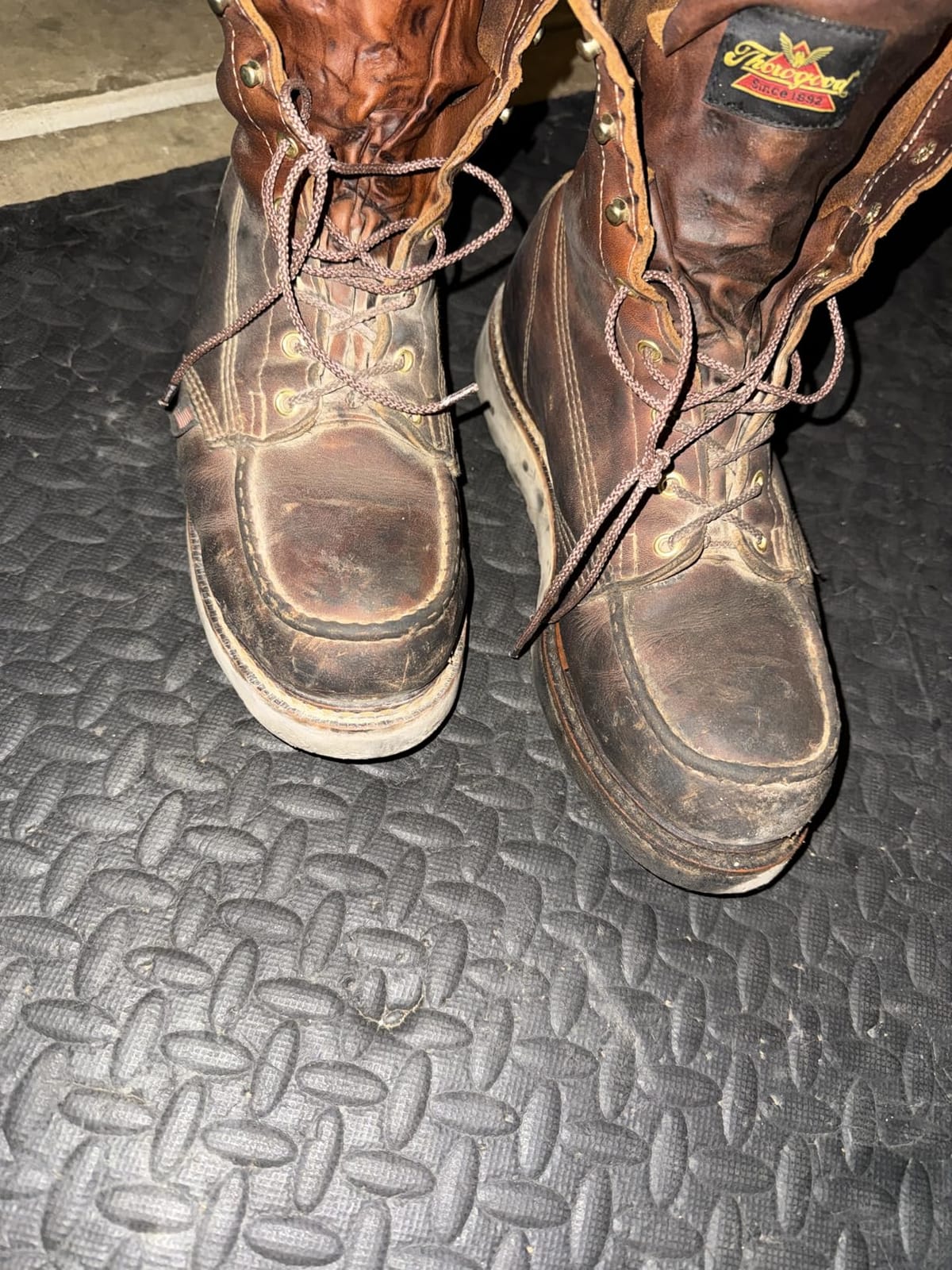
Its Goodyear storm welt is the detail that pays off after year one. I value the option to resole rather than discard the upper when the outsole is worn, especially for a boot that may become a daily tool.

The tradeoff is weight and cost. It is not the lightest boot in this group, and the break-in period can be noticeable for people with narrow feet, so I would wear it around the house before a full shift.
Who should buy this boot?
Buy it for long hours indoors, ladder work, and anyone who values rebuildability over the lowest upfront cost. It is a strong answer when steel-toe protection and EH performance are both mandatory.
What should you check before ordering?
Confirm that the exact model and listing retain the ASTM F2413 EH markings you need. Check the roomy toe box against your sock and foot shape, and remember that EH footwear does not replace insulated gloves or de-energizing procedures.
2. Carhartt Moc Toe Waterproof Work Boot — Best Value Wedge

Carhartt 6” Moc Toe Waterproof Work Boots for Men – Oil-Tanned Leather Boots with FastDry Lining, Dual-Density Rubber Wedge Traction Outsole, EH Rated, Black – 12W
Oil-tanned leather
Storm Defender
EH rated
dual-density wedge
Pros
- Immediate comfort
- Reliable waterproofing
- Good value
Cons
- Long laces
- Outsole may wear faster
This is the pair I would recommend to an apprentice who wants a comfortable wedge without paying for a premium rebuildable boot. The oil-tanned leather flexes quickly, and the Storm Defender membrane helps when work moves through wet basements or rainy service calls.
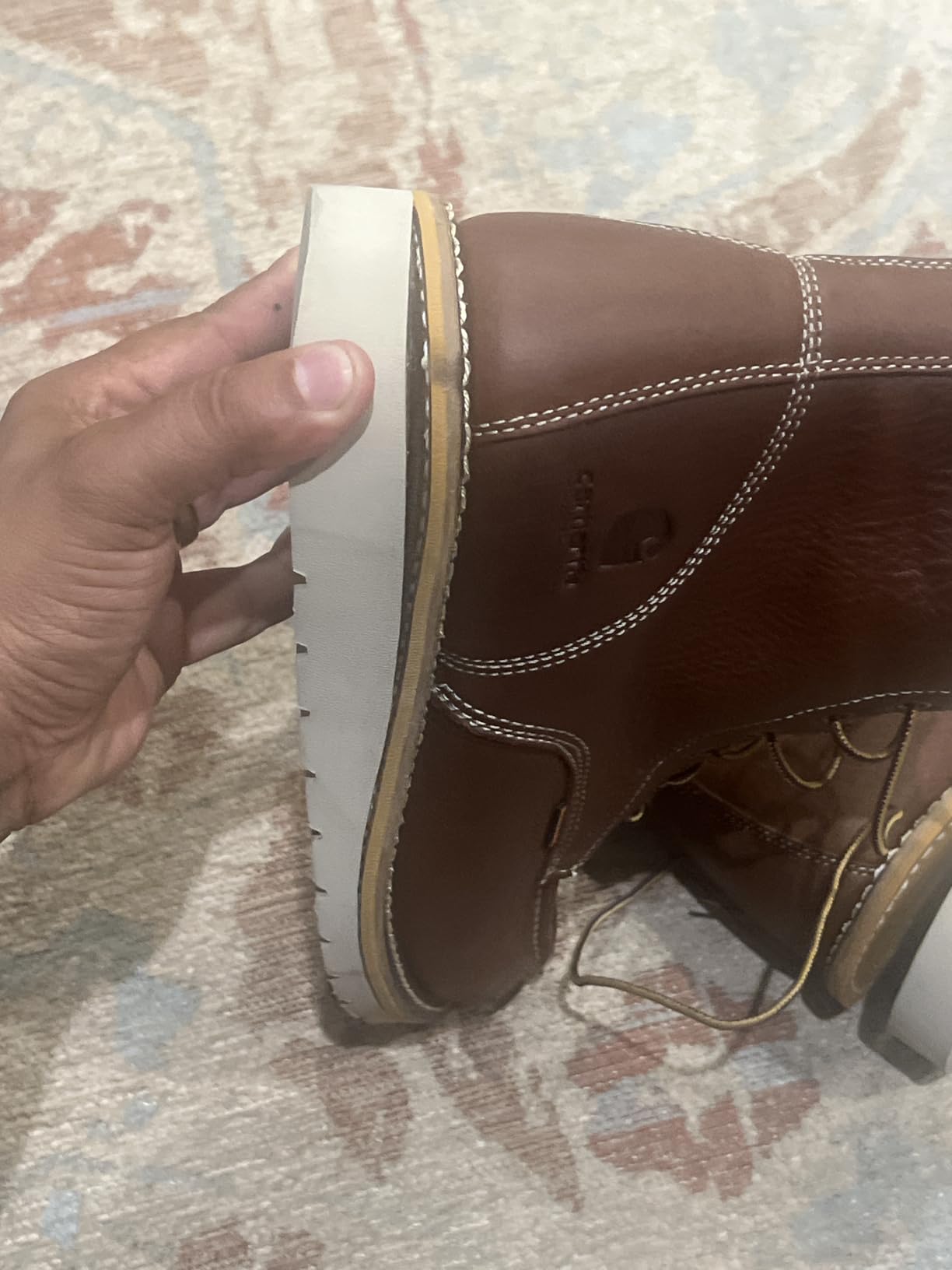
FastDry lining and a PU Strobel pad are meaningful on a hot, sweaty day. I also like that the outsole is ASTM F3445-24 SR rated, because smooth concrete and occasional oily surfaces punish a weak tread.
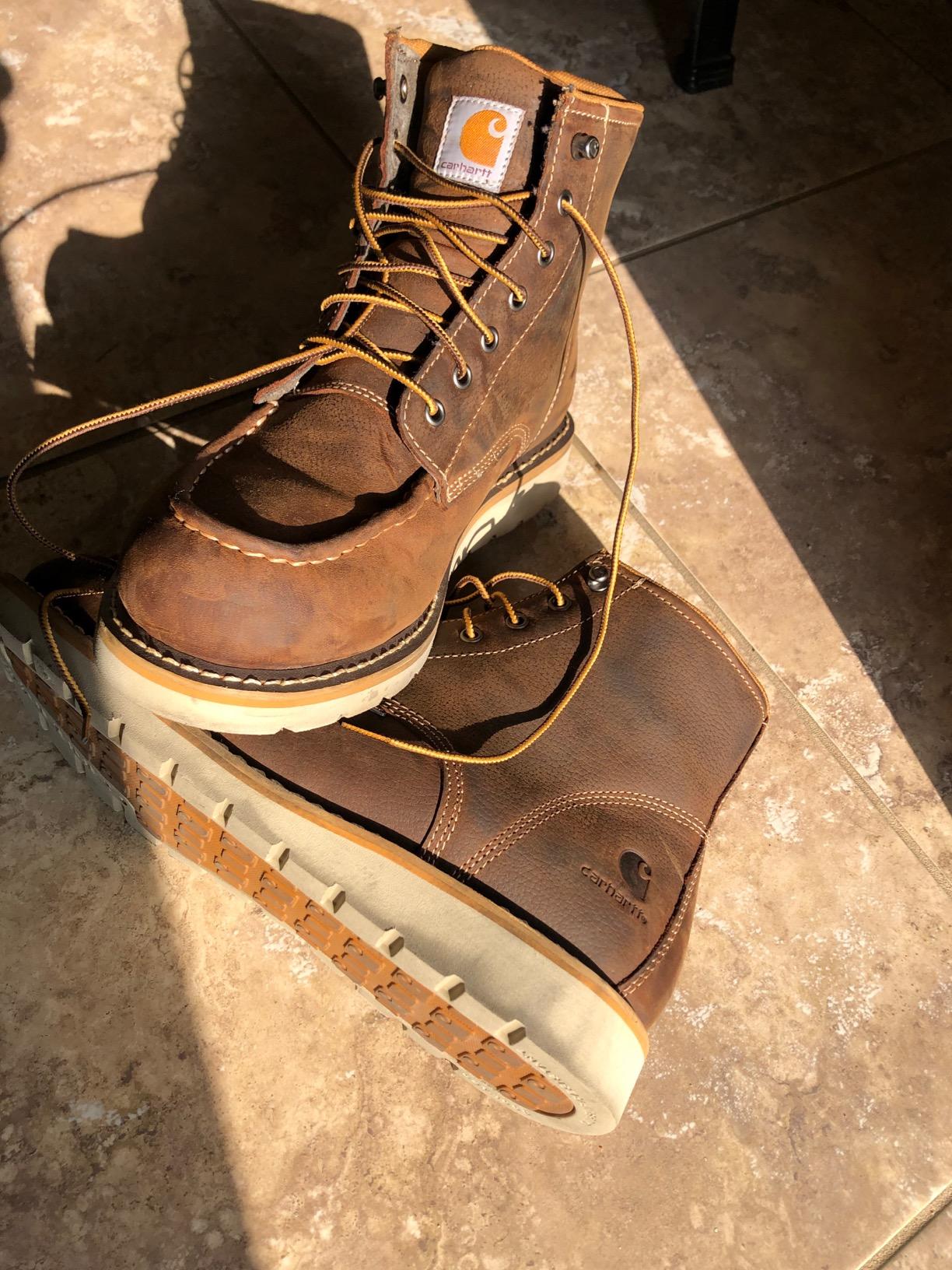
The wedge is excellent for distributing pressure over flat floors, but it is not my first choice for loose mud. The laces can also be longer than needed, so I would tie them carefully and replace them if they begin to snag.
Who should buy this boot?
Choose it for residential or commercial work dominated by indoor concrete and for buyers balancing waterproofing, comfort, and cost. It is especially useful for an apprentice building a first serious kit.
What should you check before ordering?
Make sure the listing identifies the EH construction as ASTM F2892-24. If your employer requires a safety toe, note that this is a moc-toe model without a listed protective toe, so it is not a universal substitute for every jobsite rule.
3. Timberland PRO Boondock Composite Safety Toe — Best Waterproof Composite Boot

Timberland PRO Men’s Boondock 6 Inch Composite Safety Toe Waterproof Industrial Work Boot, Black-2024 New, 10.5
Composite toe
Waterproof membrane
Anti-Fatigue
EH protection
Pros
- Excellent waterproofing
- All-weather traction
- Comfortable cushioning
Cons
- Break-in period
- Heavier than some composites
I would pick Boondock for an electrician moving between indoor mechanical rooms and wet outdoor sites. Its composite safety toe avoids the cold conductivity associated with steel, while the waterproof membrane and all-weather TPU outsole make weather less disruptive.
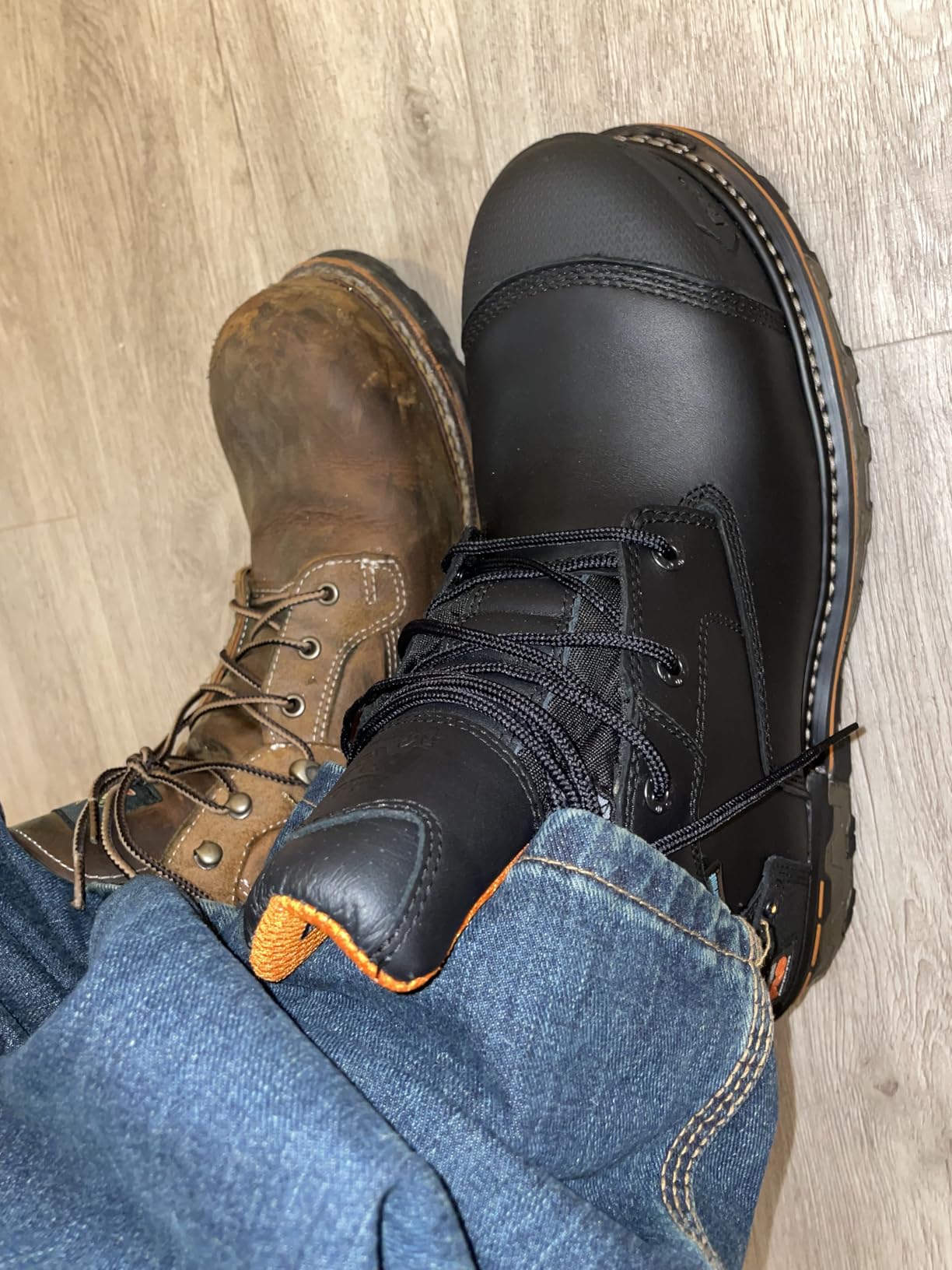
Anti-Fatigue Technology is the feature I notice most in a long shift. It is not a magical energy-return system, but the geometry and cushioning can soften repeated concrete impacts when paired with a supportive fit.
It is heavier than several competing composite models, and the top speed hooks can bother a high instep. I would plan a short break-in period and adjust the lacing rather than assuming the first fit is the final fit.
Who should buy this boot?
Choose Boondock for wet climates, outdoor service work, and anyone who wants a protective composite toe without giving up all-day cushioning. It is a strong option when waterproofing matters more than minimum weight.
What should you check before ordering?
Check the exact model for the ASTM F2413 I/C and EH markings required by your employer. Wear your usual work socks during fitting, because a waterproof membrane and tall boot can change how much volume your foot needs.
4. Timberland PRO Pit Boss 6 Inch Steel Safety Toe — Best Budget Steel Toe

Timberland PRO Men’s Pit Boss 6 Inch Steel Safety Toe Industrial Work Boot, Brown-2024 New, 10.5
Steel safety toe
EH protection
24/7 Comfort System
oil-resistant outsole
Pros
- Durable construction
- Little break-in
- Strong arch support
Cons
- Heavy steel toe
- Sizing may run large
The Pit Boss is the practical pick for an electrician who needs a traditional steel toe and a mature, widely used support system. The 24/7 Comfort System, rubber outsole, and direct industrial protection make it a sensible all-round work boot.
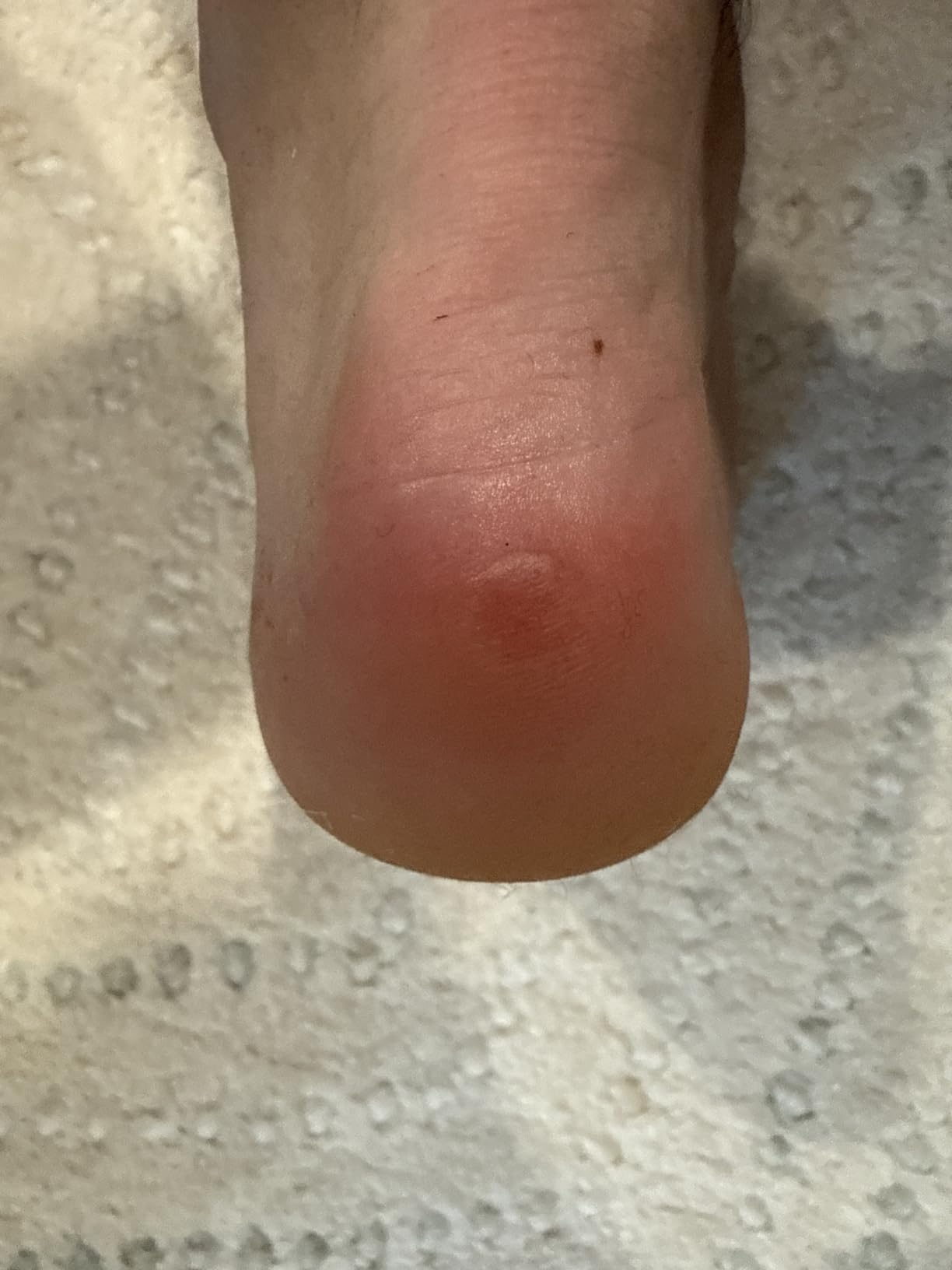
I would expect some extra weight at the end of a 10-hour day, especially when carrying tools or climbing stairs. Try the fit with thicker socks, and be prepared to adjust if the toe box feels roomy.
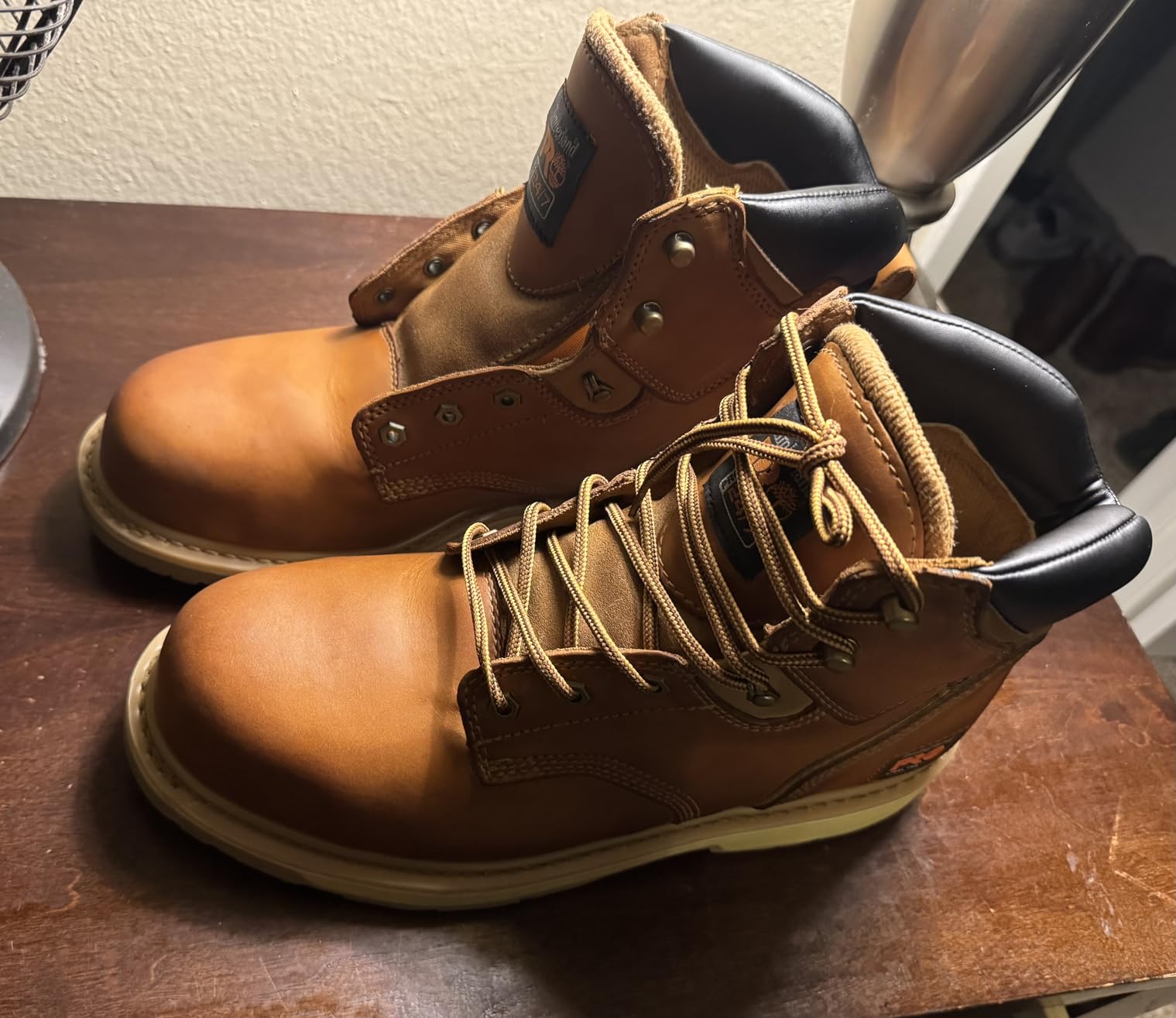
The steel toe can feel cold outdoors, which matters in winter. In a warm indoor plant, the more immediate concern is breathability, so I would rotate boots and use a moisture-wicking sock rather than wearing the same pair wet day after day.
Who should buy this boot?
Buy it for a straightforward industrial or commercial setup that calls for a steel toe and EH protection. It is a good first work boot when budget matters, but not the first choice for someone minimizing every ounce.
What should you check before ordering?
Check the listing for the current ASTM F2413 standards and your employer’s toe requirement. The product’s “true to size” feedback is mixed in practice, so use the retailer’s measurement guidance and return policy.
5. Wolverine Overpass Composite Toe Waterproof — Best Lightweight Indoor Option

Wolverine Men’sOverpass 6″ Mid Composite Toe Waterproof Work Boot, Summer Brown, 10 Medium
Composite toe
Waterproof leather
Ortholite footbed
slip-resistant outsole
Pros
- Lightweight feel
- Minimal break-in
- Waterproof comfort
Cons
- May run long
- Not Prime eligible
For indoor maintenance or service work, Overpass feels closer to an athletic shoe than a heavy work boot. The composite toe, flexible contour welt, and removable Ortholite footbed make it a comfortable choice when the route involves more walking than heavy outdoor work.
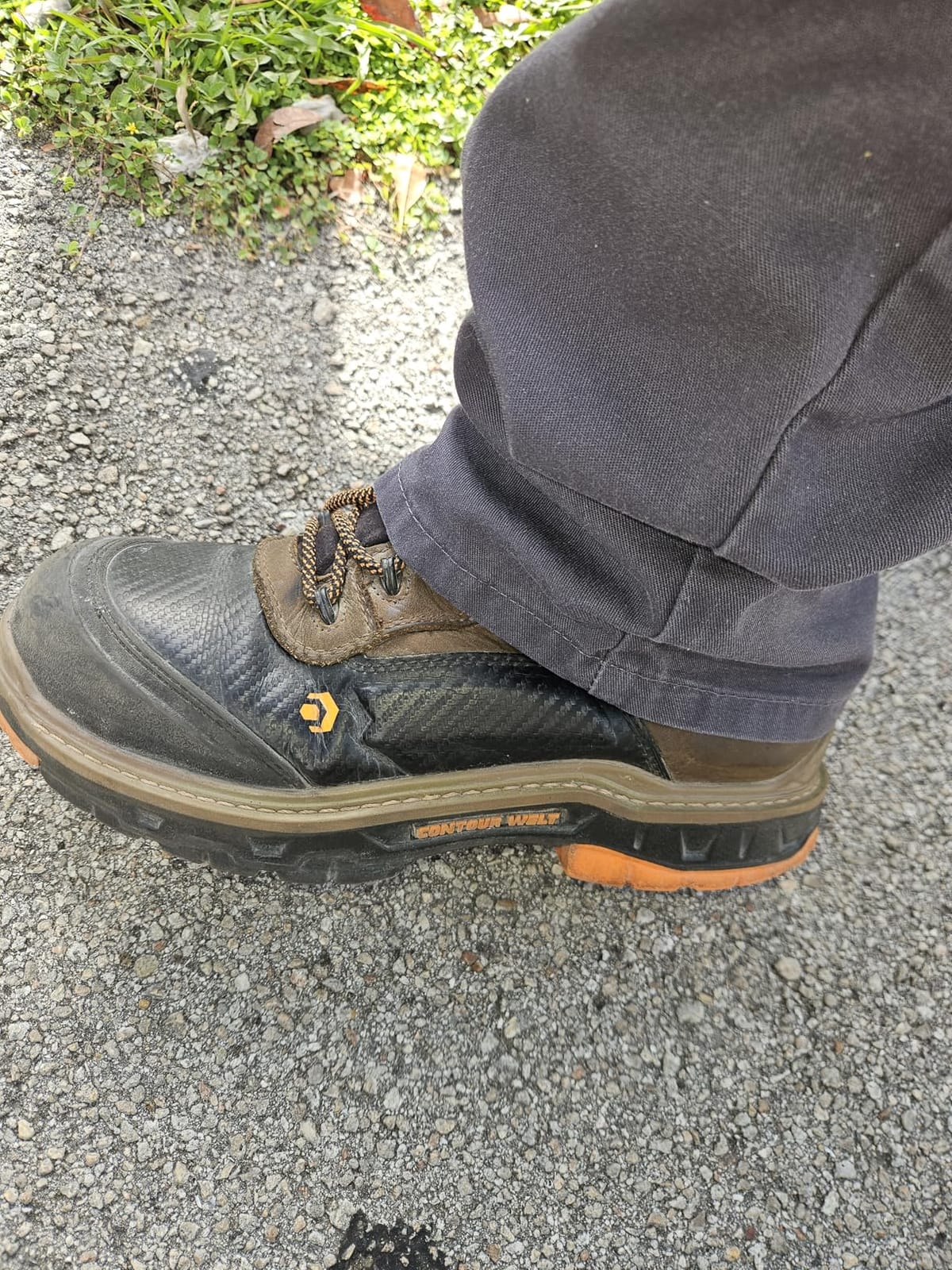
Waterproof leather and an outsole rated for slip, oil, water, abrasion, and chemical resistance cover several common job hazards. I would still inspect the tread periodically if the floor is polished smooth or covered in fine dust.
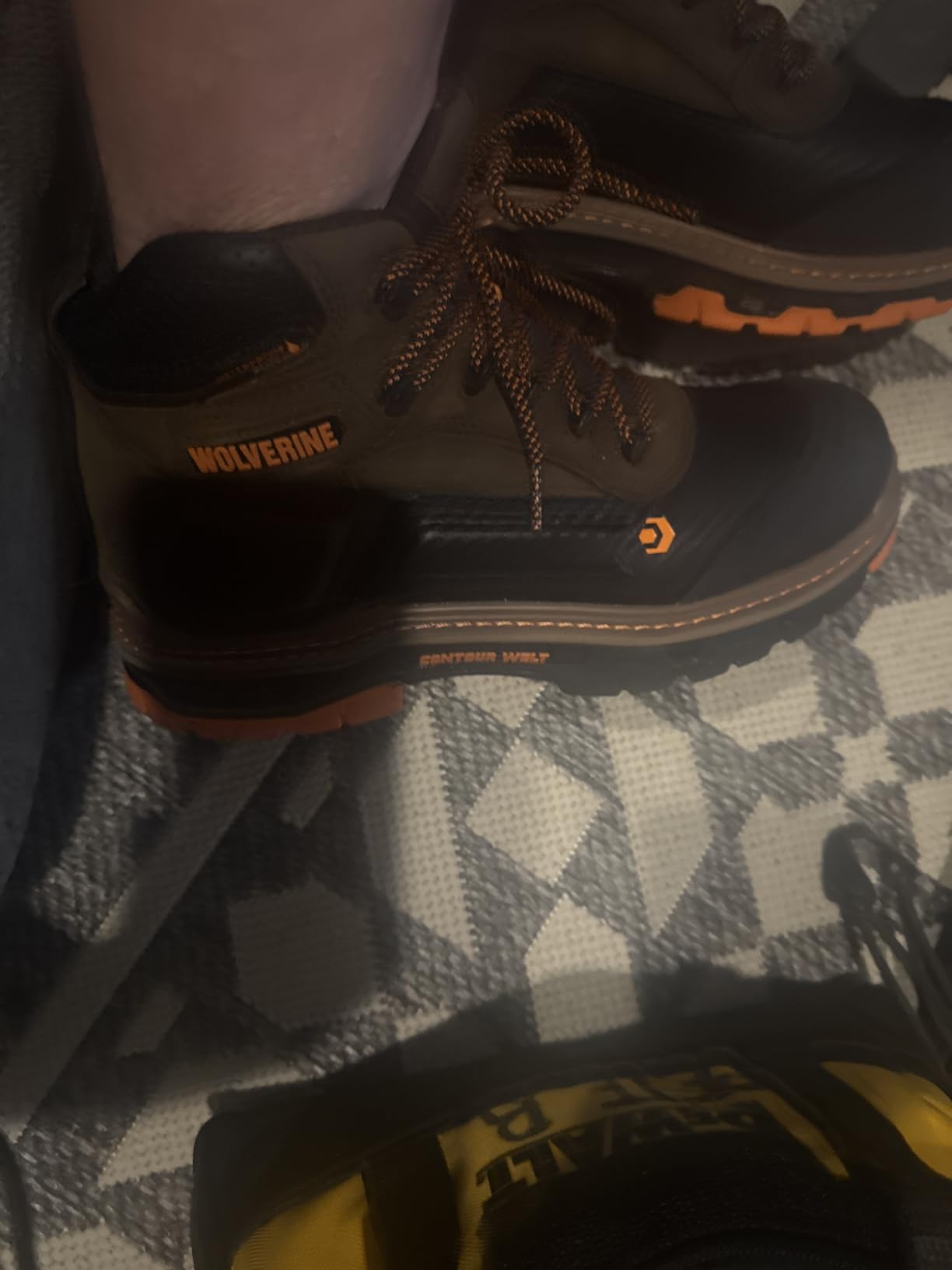
Some users report that the boot runs long, so I would measure both feet and check width before ordering. Its carbon-fiber material should be treated like any composite toe: it is protective, but it is not a reason to ignore impact limits or jobsite rules.
Who should buy this boot?
Choose it for facility maintenance, commercial service, and other indoor roles where low weight and immediate comfort matter. It is less compelling for severe mud or a heavy industrial environment.
What should you check before ordering?
Verify the ASTM F2413 M I/75 C/75 EH designation and the availability of your size. A waterproof boot can feel warmer in summer, so pair it with a breathable sock and let it dry fully between shifts.
6. Irish Setter Wingshooter ST — Best Non-Metallic Safety Toe

Irish Setter Wingshooter ST 8″ Mens NMT Toe Work Boot, Amber, 10
Non-metallic toe
EH rated
UltraDry waterproof
HRO outsole
Pros
- Lightweight toe
- Heat-resistant outsole
- Resoleable welt
Cons
- Toe box may stretch
- Laces need attention
The Wingshooter is a good fit for electricians who want a non-metallic safety toe and a more traditional leather boot. Its HRO outsole is designed for heat resistance to 475F, and the UltraDry system is useful when work includes damp ground or changing weather.
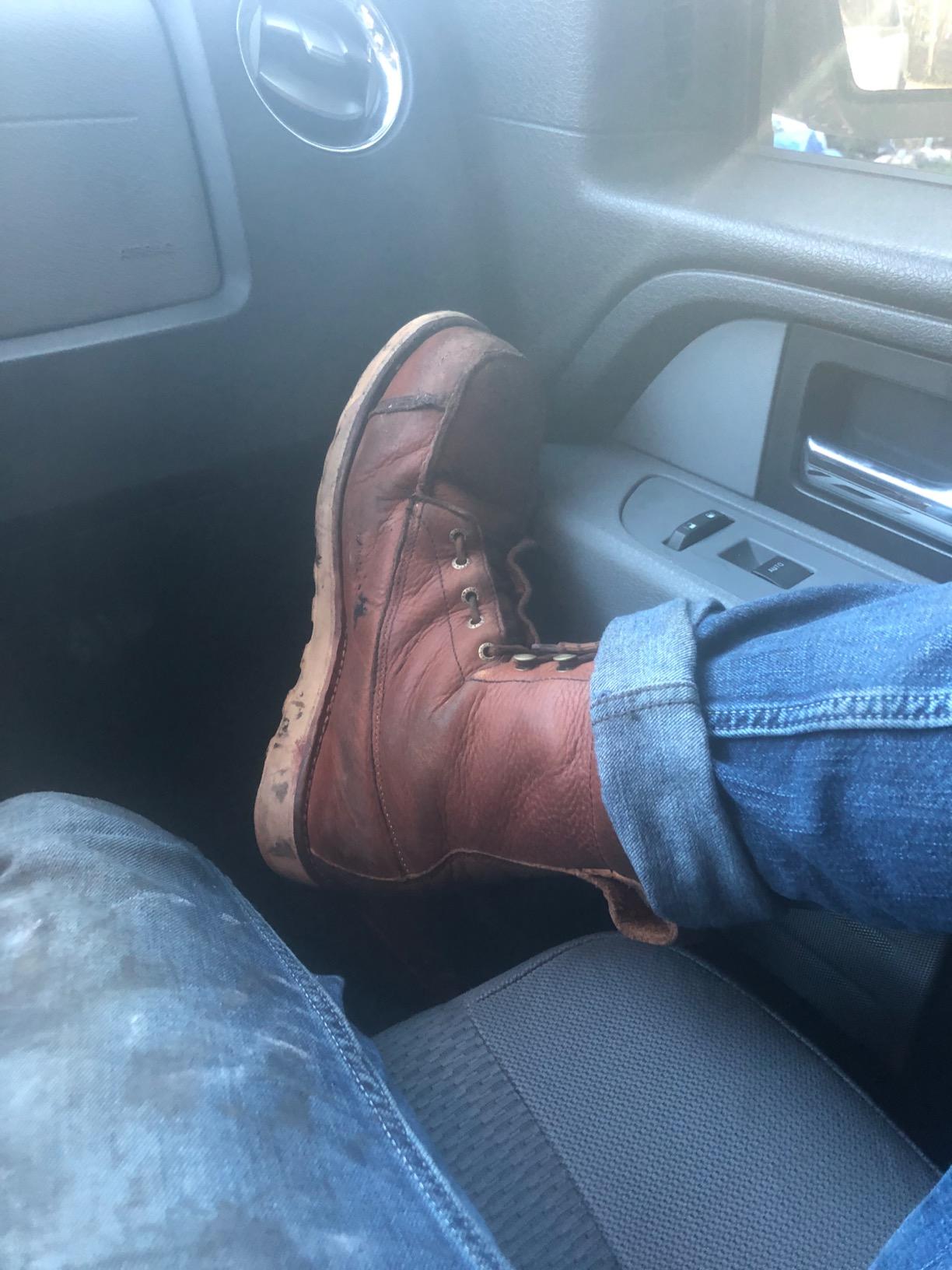
The Goodyear welt and resoleable platform make this a long-term value candidate. I also appreciate the removable polyurethane footbed because it gives an apprentice or service electrician room to add an orthotic or replace the cushioning.
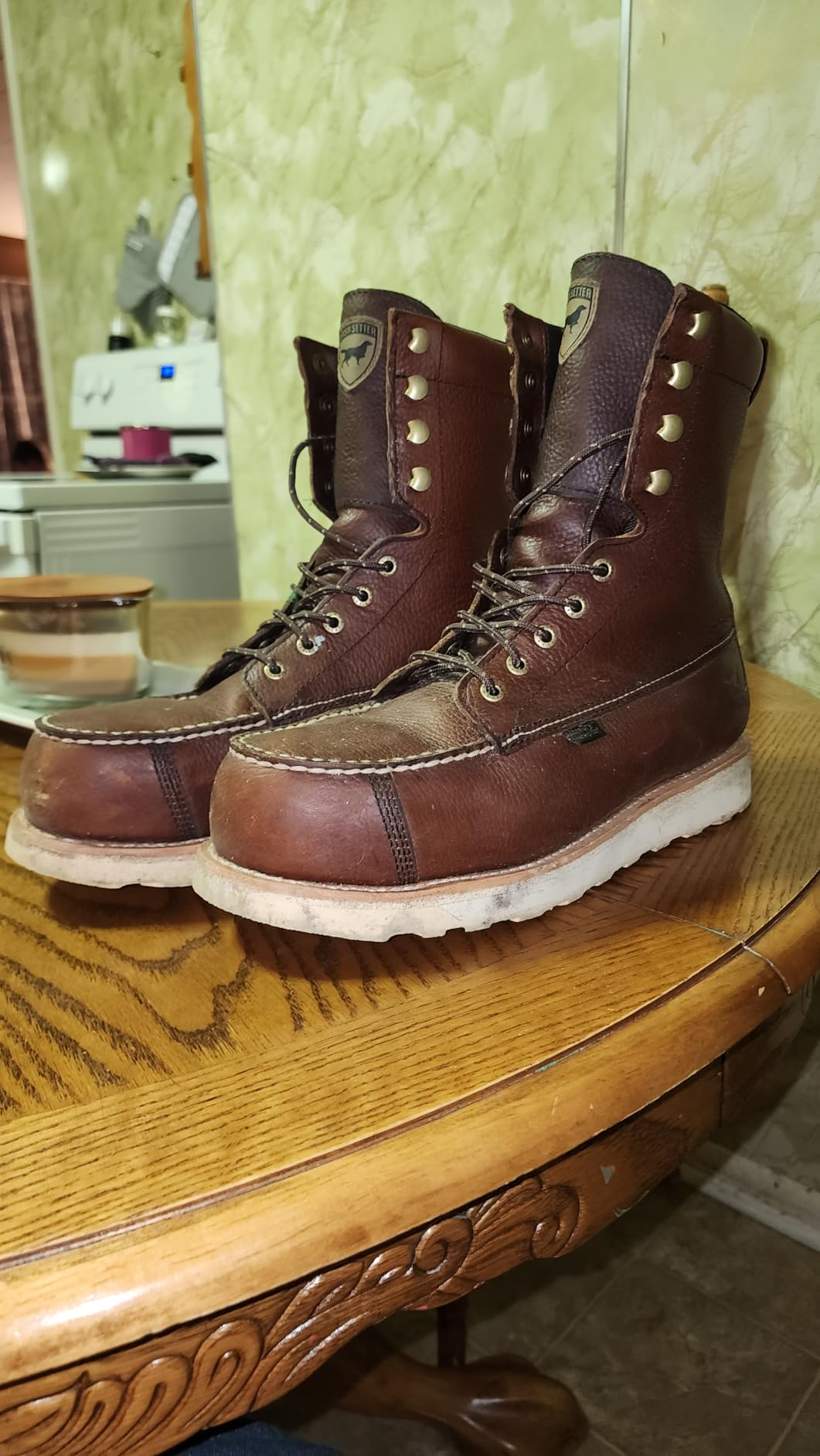
Leather needs more care than synthetic fabric, and the toe box can stretch over time. I would keep the laces and waterproofing treatment in good condition rather than waiting for the leather to dry hard or crack.
Who should buy this boot?
Buy it for mixed indoor and outdoor work where a non-metallic toe, waterproofing, and resoling are priorities. It suits someone who wants a heritage-style boot without a steel toe.
What should you check before ordering?
Confirm the exact listing’s ASTM F2413 M/I/C and EH markings. Consider a half-size adjustment only after measuring your feet, because the reported toe-box stretching is gradual and depends on use.
7. Timberland PRO Gridworks Wedge — Best Soft-Toe Wedge

Timberland PRO Men’s Gridworks 6 Inch Soft Toe Waterproof Industrial Wedge Work Boot, Golden Brown-2024 New, 8.5
Soft toe
Waterproof membrane
Anti-Fatigue
EH protection
Pros
- Lightweight
- Waterproof
- Shock-absorbing design
Cons
- Soft toe may not qualify
- Quality-control feedback varies
Gridworks is my soft-toe wedge recommendation for electricians whose employer does not require a safety toe. The combination of a waterproof membrane, Anti-Fatigue Technology, and an all-weather TPU outsole is practical for service work and indoor facilities.
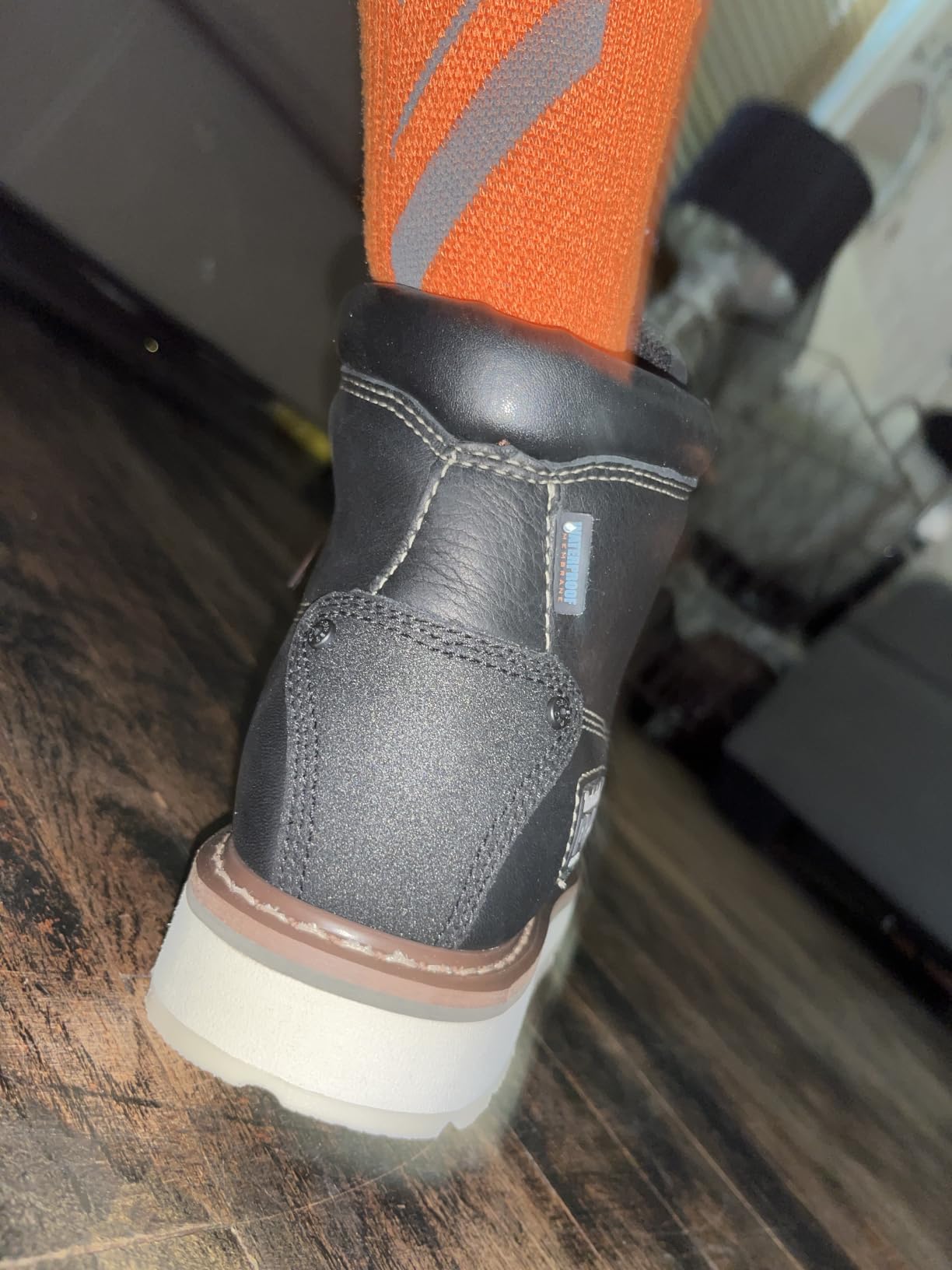
Its lighter construction is easier on feet during a route with many steps or ladder climbs. The wedge shape spreads pressure across the forefoot, which many people prefer on concrete compared with a sharply defined heel.
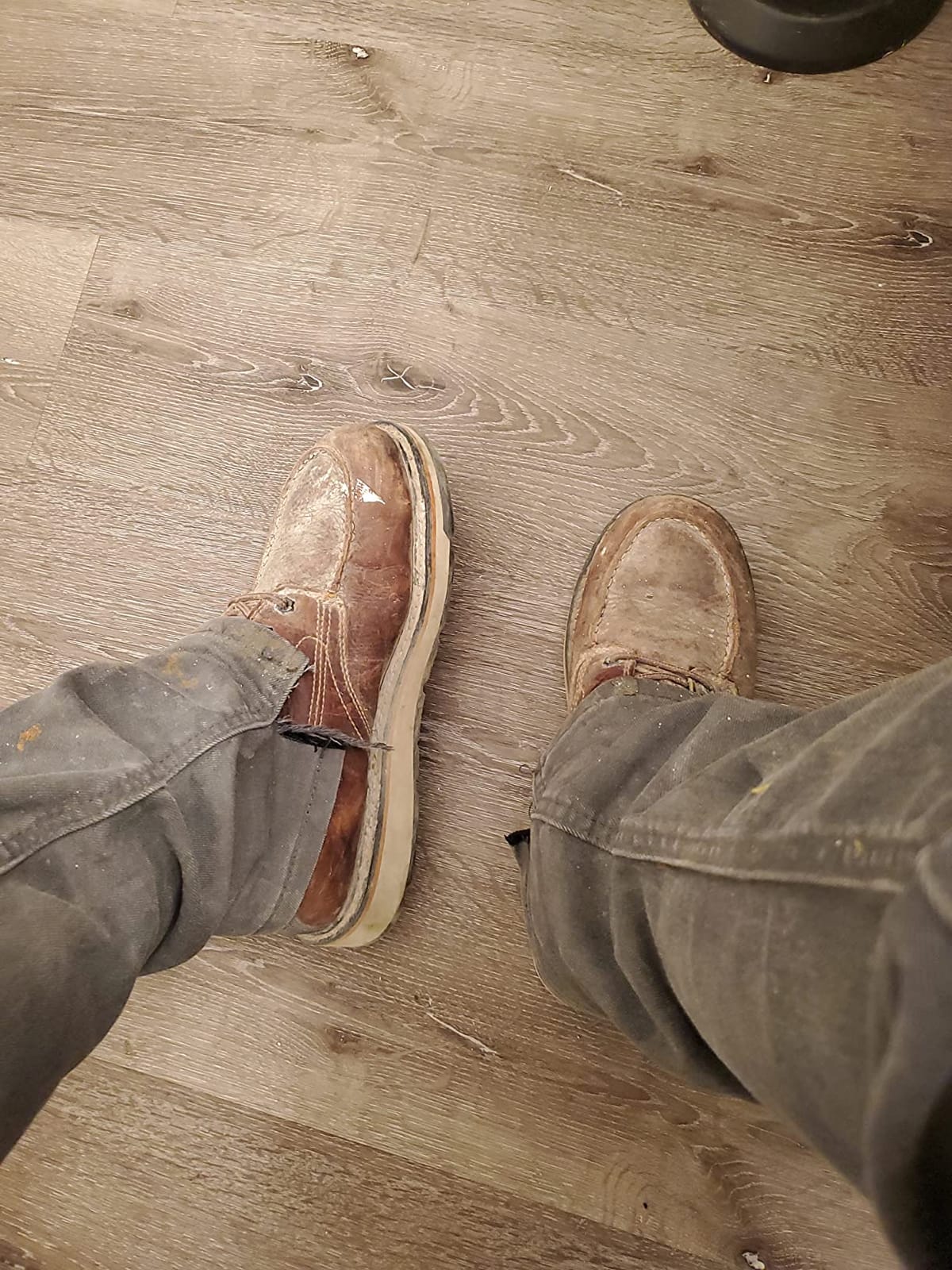
There are two important checks. A soft toe is not a safety toe, and the listing’s quality-control feedback is mixed, so I would inspect seams, outsole bonding, and symmetry as soon as the boots arrive.
Who should buy this boot?
Choose it for indoor service, maintenance, and light commercial work when the toe rule permits soft toe. It is a sensible comfort-first option for people who dislike the feel of a heavy protective cap.
What should you check before ordering?
Ask your safety manager whether “soft toe” is allowed. If it is, confirm the EH protection and waterproofing, then allow a break-in period before judging the fit.
8. Timberland PRO Direct Attach MaxTRAX — Best Slip-Resistant Soft Toe

Timberland PRO Mens Wheat Direct Attach MaxTRAX Soft Toe WP SRO Boot 10.5 W
Soft toe
MaxTRAX tread
Thermolite insulation
EH SRO compliant
Pros
- Excellent wet traction
- Insulated
- Comfortable
Cons
- No safety toe
- Not Prime eligible
MaxTRAX stands out for traction. The patented tread, oil- and abrasion-resistant TPU outsole, and 200 grams of Thermolite insulation make it a compelling choice for electricians who work in cold or wet conditions and do not need a safety toe.
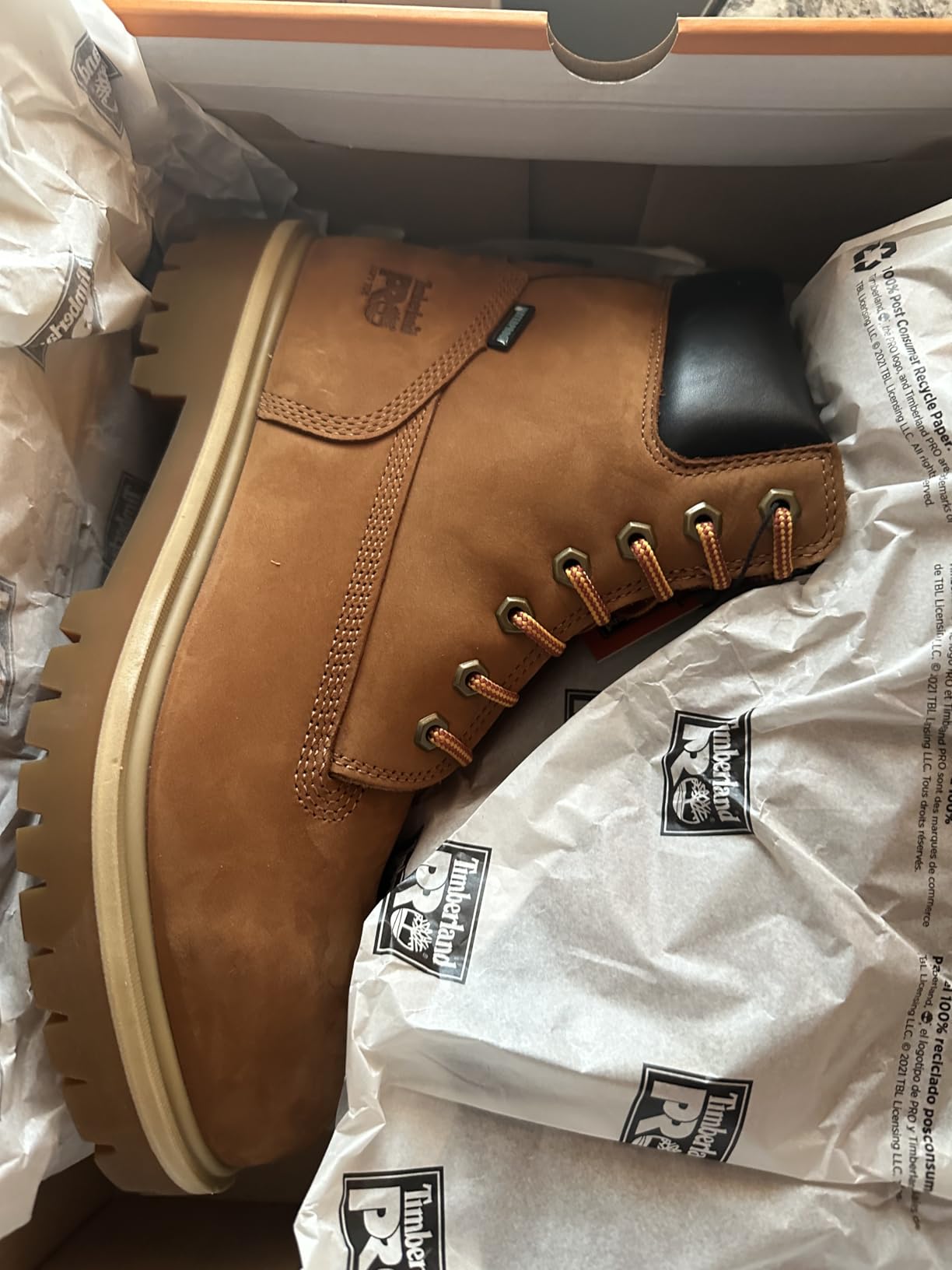
Users rate its wet and oily-surface grip highly, and the direct-attach construction feels flexible from the first wear. I would still test any boot on the specific ladder and floor surfaces used at your own site.
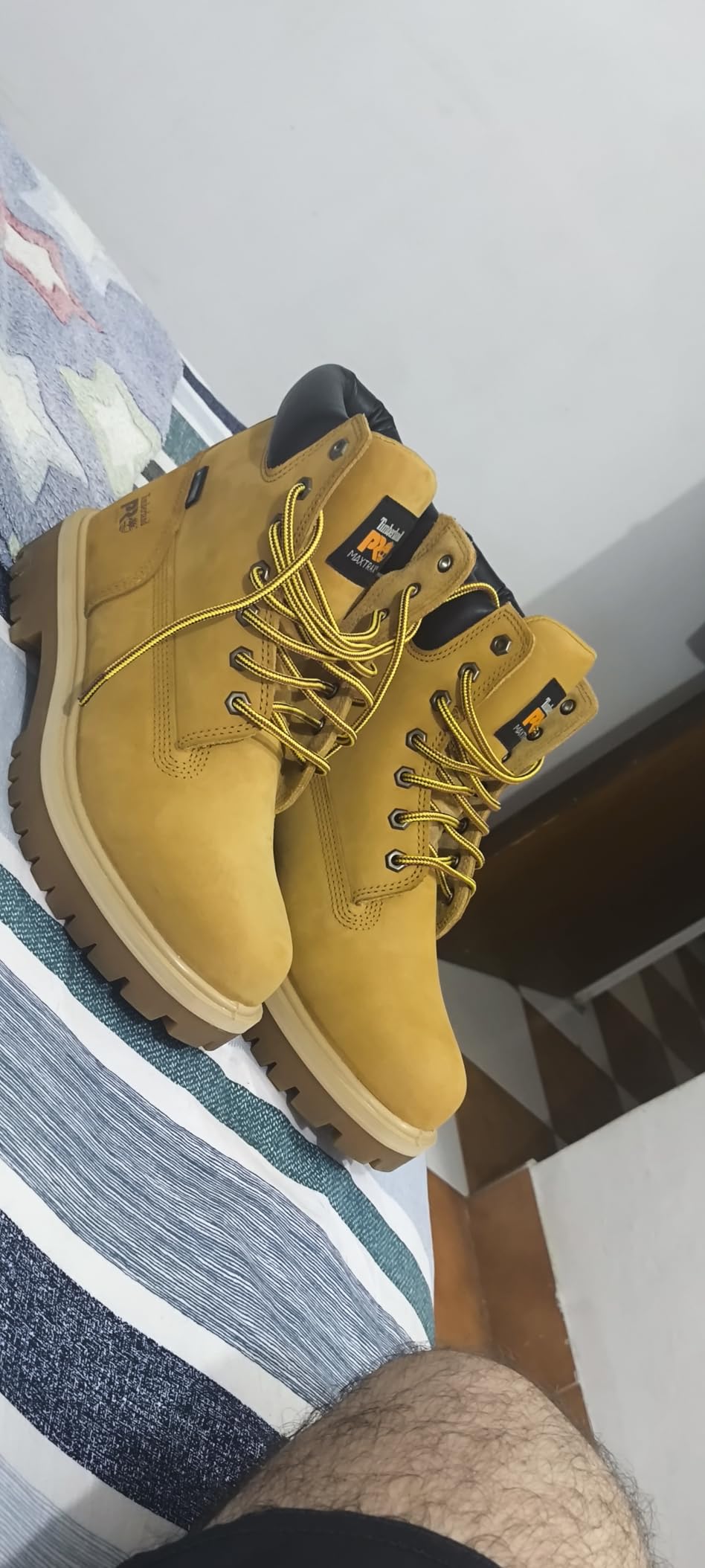
Insulation is a benefit in winter but a drawback in hot interiors. The model is also listed as soft toe, so it is not appropriate for every industrial employer regardless of how good the outsole feels.
Who should buy this boot?
Buy it for cold-weather service work, outdoor maintenance, and sites where wet or oily traction is a daily concern. Choose a protective-toe model instead if the job requires impact or compression protection.
What should you check before ordering?
Check the ASTM F2892-24 EH SRO listing and your employer’s toe policy. A close-fitting room in the toe is important when insulation is present, so do not buy too small just to keep warmth in.
9. Irish Setter Ashby Aluminum Toe — Best Resoleable Mid-Range Boot
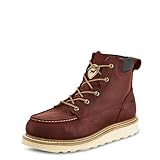
Irish Setter Ashby 6″ Mens Aluminum Toe Work Boot, Brown, 10
Aluminum safety toe
EH rated
HRO outsole
Goodyear welt
Pros
- Lightweight aluminum toe
- Resoleable
- Heat-resistant outsole
Cons
- Laces may fray
- Toe-box fit varies
The Ashby is a useful middle ground for an electrician who wants a safety toe and a resoleable leather boot. Aluminum is lighter than traditional steel, while the HRO rubber-EVA Traction Tred outsole is designed to handle heat up to 475F.
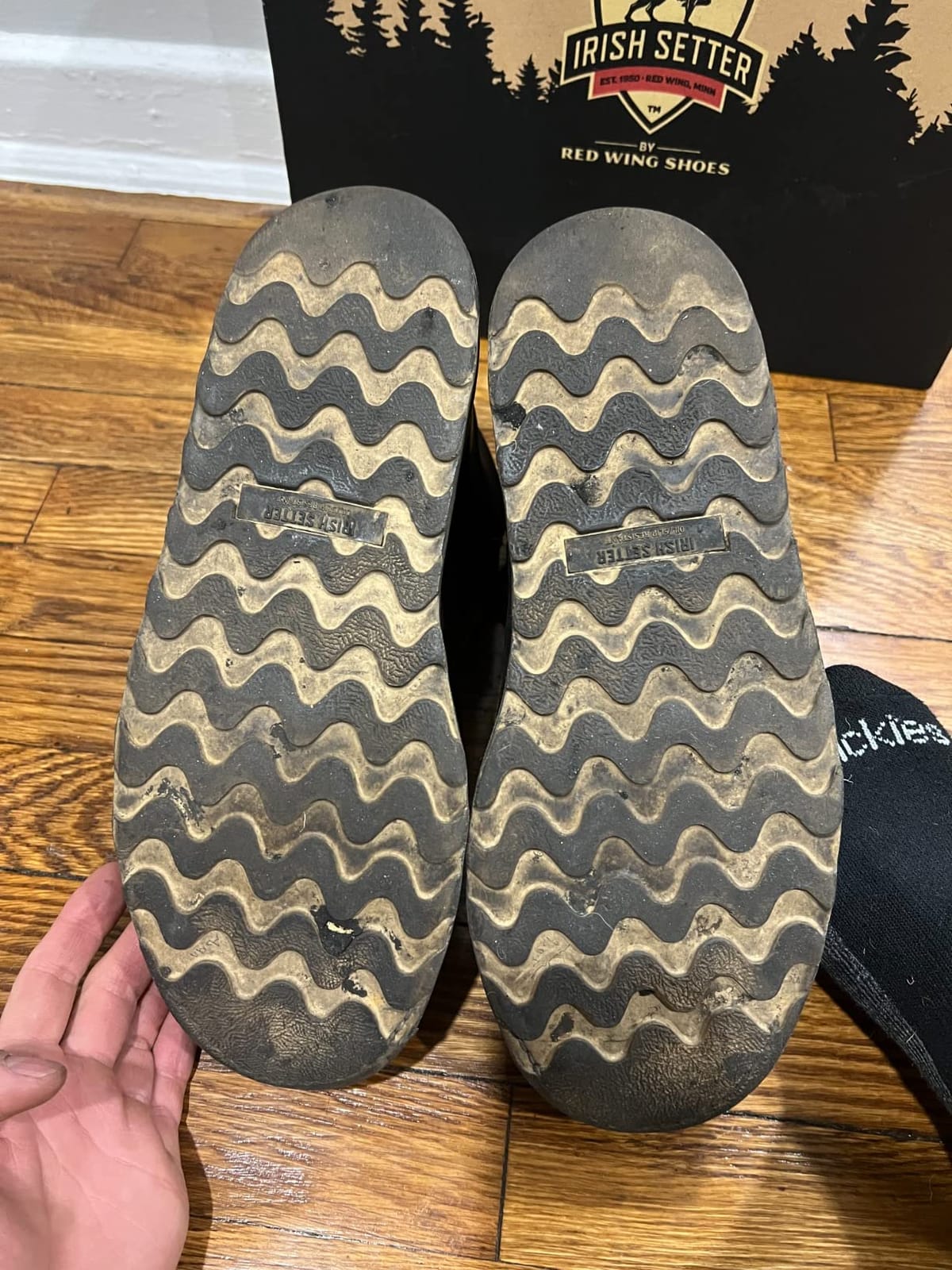
Its removable footbed and Goodyear welt give it a more serviceable feel than a basic direct-attach boot. I would look at this pair when you expect to wear the same boot several days a week for years.
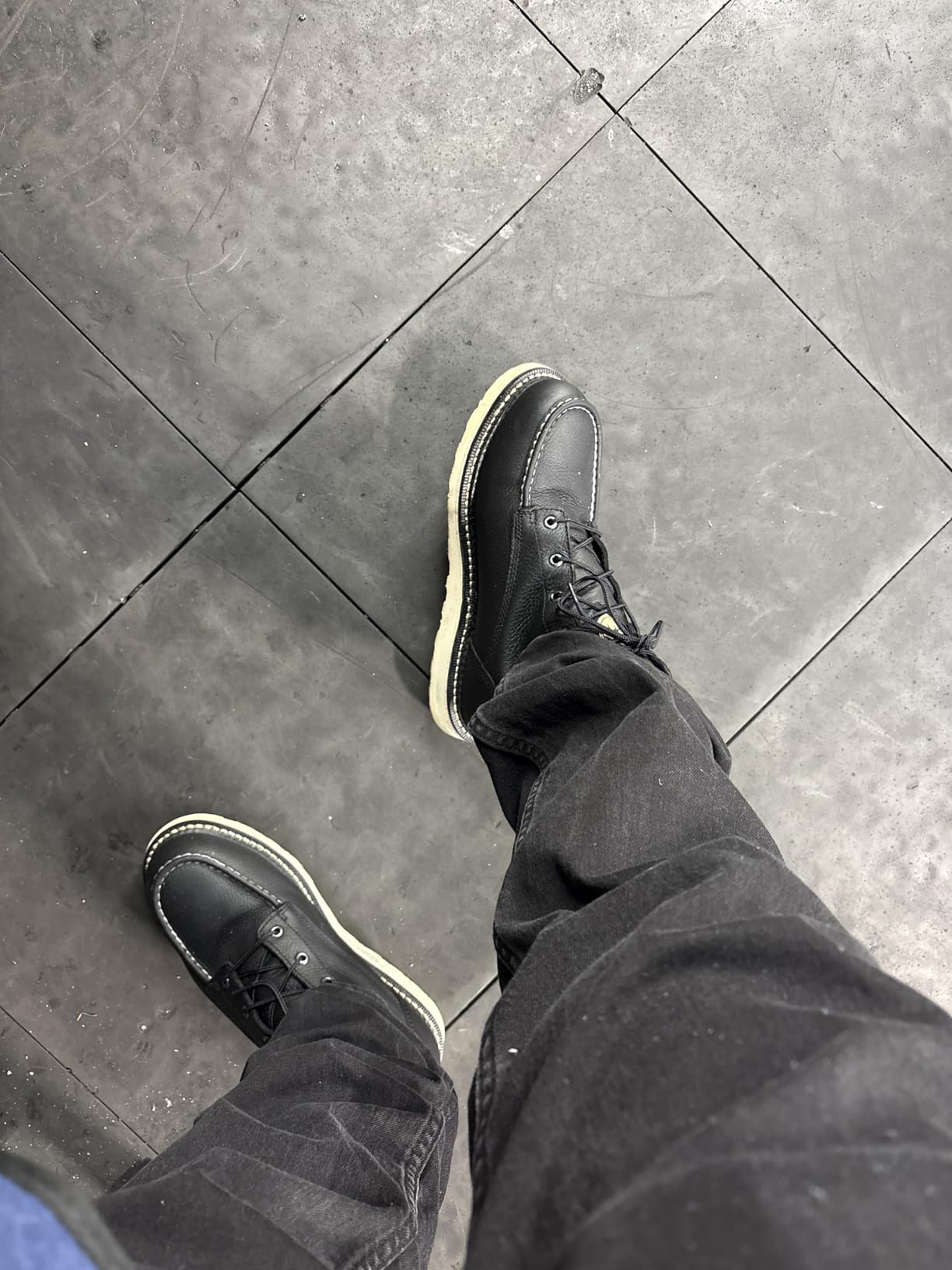
Fit is the main variable. Some owners report toe-box issues and a break-in period, while the supplied laces may not last as long as the leather. I would replace the laces early if you notice fraying rather than waiting for a failure.
Who should buy this boot?
Choose it for medium-duty commercial work where you want aluminum-toe protection, EH marking, and a resoleable build. It is a good fit for someone who wants more longevity than a budget model without paying for the heaviest premium option.
What should you check before ordering?
Confirm the ASTM F2413 M/I/C EH marking and compare your foot measurements with the toe box. If you need extra arch support, plan to test the removable footbed before adding an insert.
10. Timberland PRO Keele Ridge Steel Safety Toe — Best Affordable Waterproof Hiker
Timberland PRO Men’s Keele Ridge Steel Safety Toe Waterproof Industrial Hiker Work Boot, Brown-2024 New, 10.5
Steel safety toe
Waterproof membrane
EH protection
heat-resistant outsole
Pros
- Affordable price
- Accurate sizing
- Waterproof comfort
Cons
- No insulation
- Not for heavy industrial use
Keele Ridge is the most affordable waterproof steel-toe option in this set. I would consider it for medium-duty work, apprentice use, and jobs where a hiking-inspired profile is more comfortable than a tall moc.
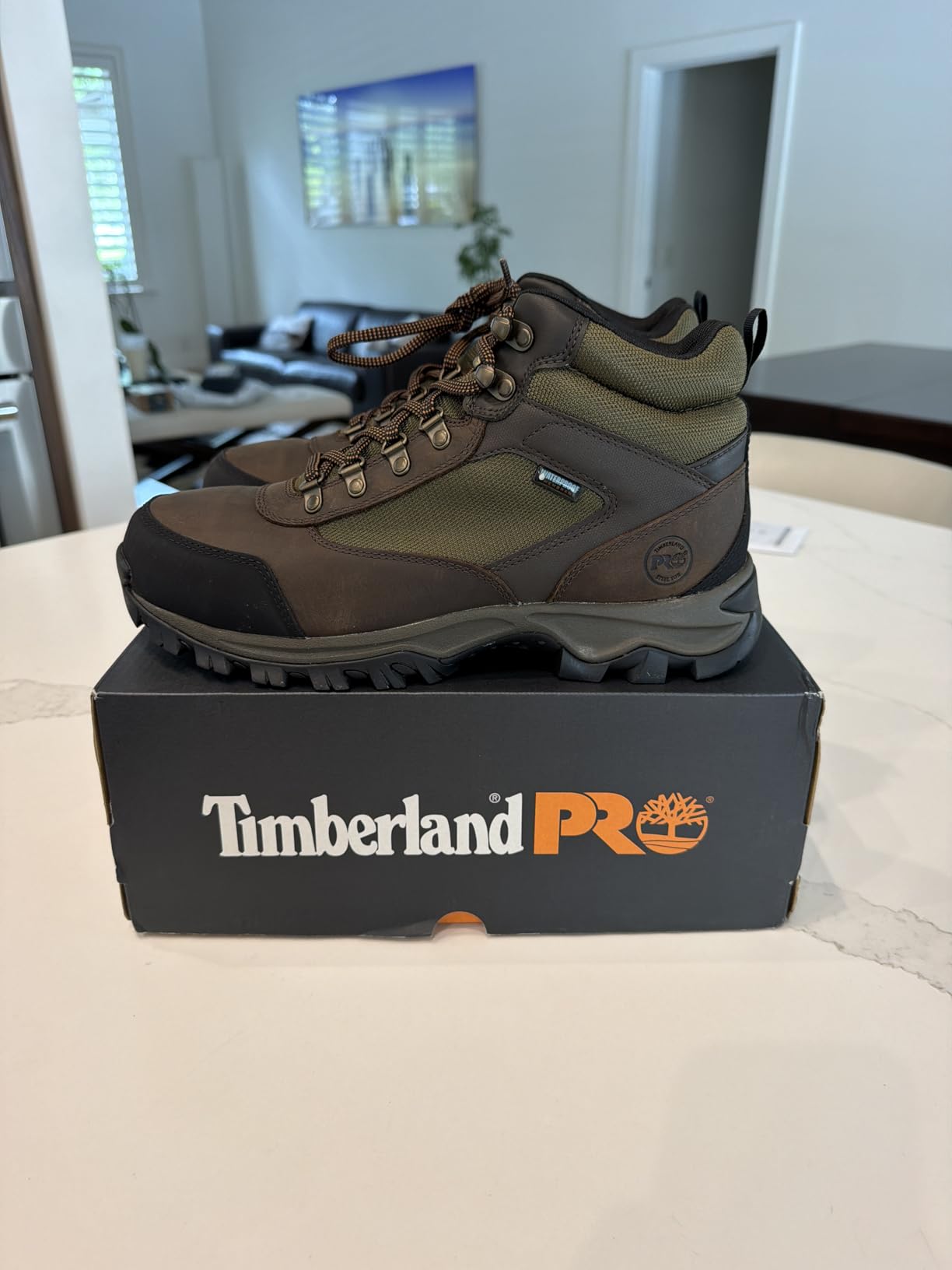
The waterproof membrane and metal lace guides are practical details for daily service work. The steel safety toe meets the listed ASTM impact and compression standards, and the outsole is heat resistant.
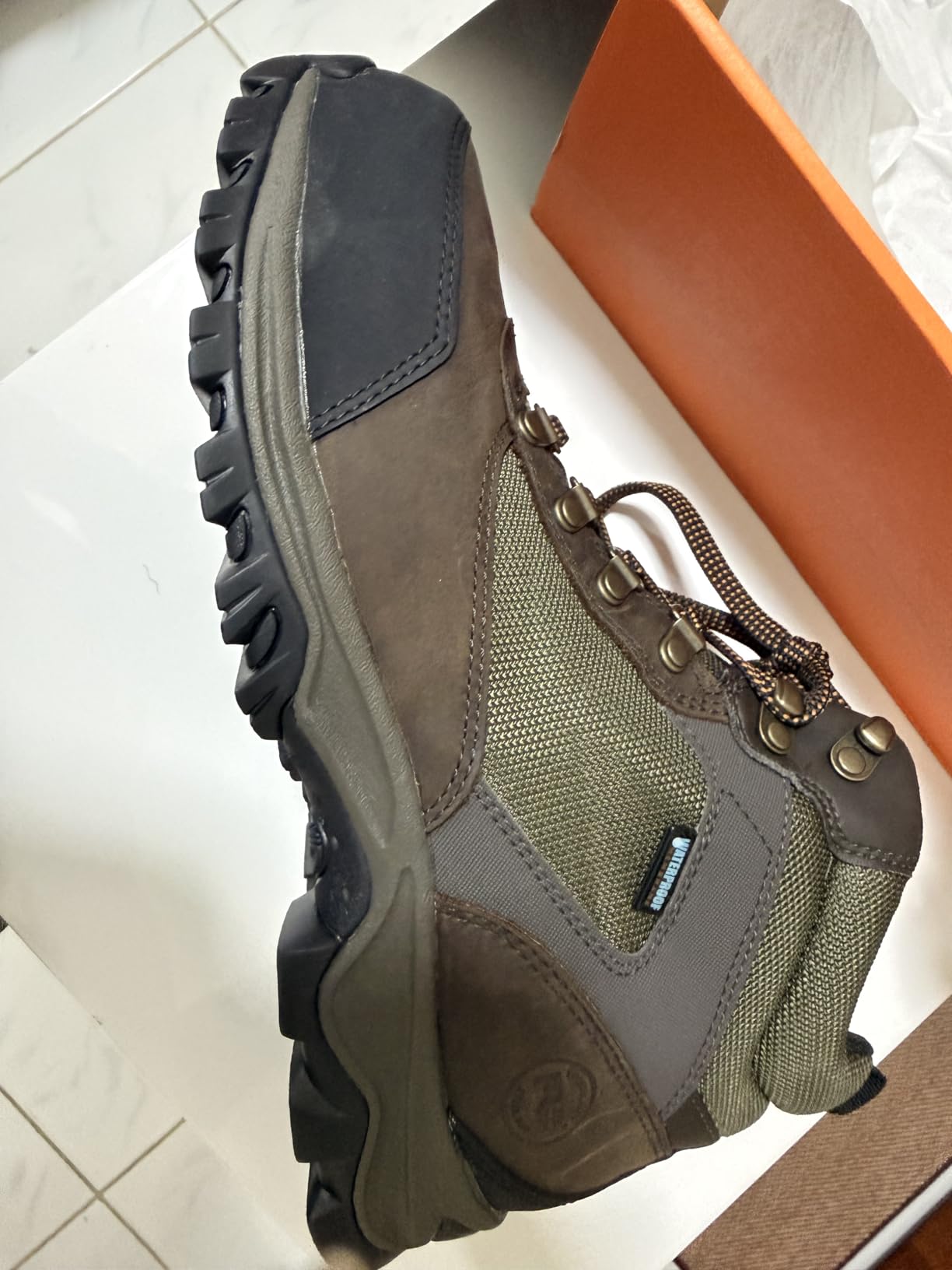
It is not insulated, and some owners question stitching durability after rough use. I would treat it as a value boot, inspect the seams early, and move to a heavier construction if your site involves repeated abrasion or severe impacts.
Who should buy this boot?
Buy it for moderate commercial work and anyone who wants a steel toe, waterproofing, and a lower upfront cost. It is not my recommendation for harsh industrial punishment or cold-weather work without an additional layer.
What should you check before ordering?
Check the exact ASTM F2413 I/C and EH standards and whether your workplace allows the hiking-boot profile. Sizing is generally described as accurate, but measure your feet if you plan to use thicker winter socks.
11. Carhartt CMF6380 Rugged Flex — Best Defined-Heel Composite Boot

Carhartt Men’s Rugged Flex WP 6″ Composite Toe Work Boot, Dark Brown Oil Tanned, 10.5 W US
Composite toe
Defined heel
Storm Defender
Rugged Flex outsole
Pros
- Comfortable out of box
- Good ladder grip
- Durable waterproofing
Cons
- Runs warm
- Lace rivets may fail
The CMF6380 is my pick for electricians who prefer a defined heel and ladder-lock grooves. The composite toe is non-metallic and non-conductive to heat or cold, while Storm Defender waterproofing handles wet conditions.
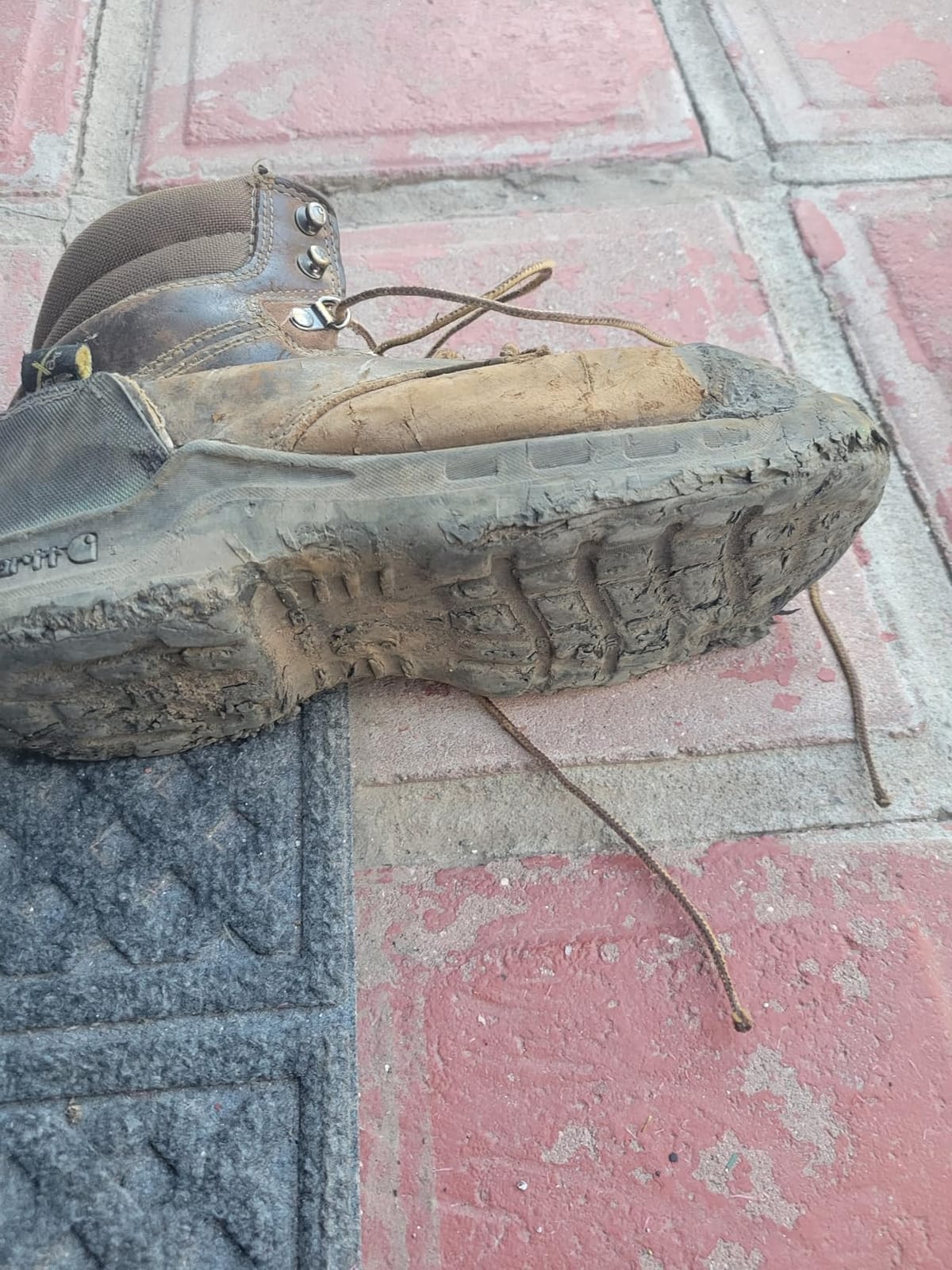
The defined heel helps keep the boot planted when climbing, and the lug outsole offers more directional traction than a flat wedge. Cushion Comfort PU insoles help with fatigue, although the boot can run warm in summer.
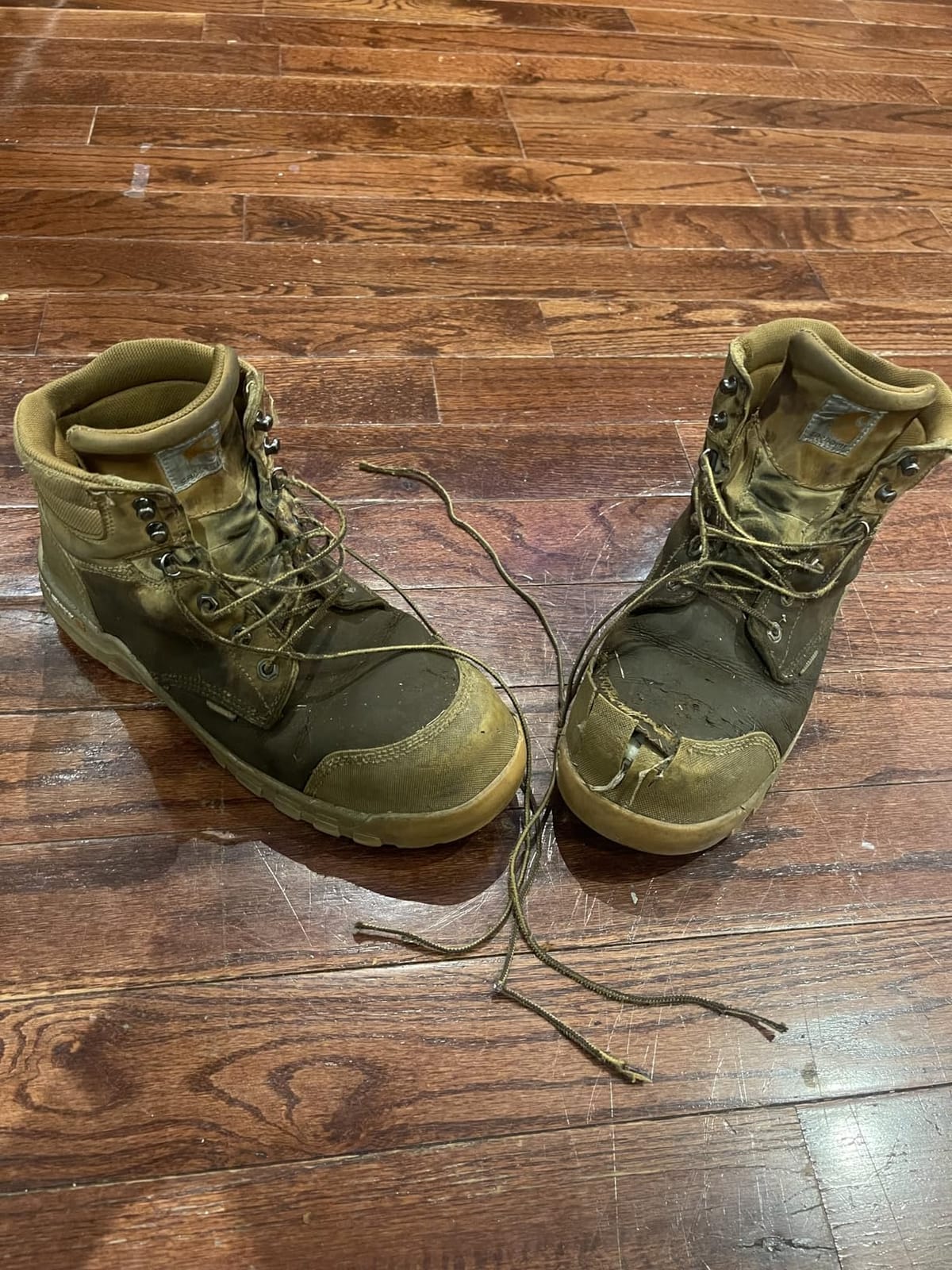
The product is not flawless. Some users report lace-rivet failures, so I would inspect that area and carry a spare lace. It is also listed at a relatively heavy 4.56 pounds, which may matter on a route-heavy day.
Who should buy this boot?
Choose it for ladder work and mixed surfaces where a defined heel is more reassuring than a wedge. It is a good option for electricians who value a composite toe and waterproofing over ultralight construction.
What should you check before ordering?
Verify the ASTM 2413-24 listing and EH status on the exact model. Try it with the socks and insoles you will use on the job, since warmth and fit are recurring owner concerns.
12. Carhartt CMF6366 Composite Toe — Best Practical Composite-Toe Value

Carhartt Men’s 6 Inch Rugged Flex Composite Toe Boot,Brown Oil Tanned,11 M US
Composite toe
EH protection
FastDry lining
oil and slip resistance
Pros
- No break-in
- Lightweight composite toe
- Multiple widths
Cons
- Stock insoles may wear
- Laces may need replacement
The CMF6366 is a straightforward work boot for an electrician who wants a composite toe, EH protection, and a comfortable start. FastDry lining and Cushion Comfort PU insoles make it approachable for a new apprentice.
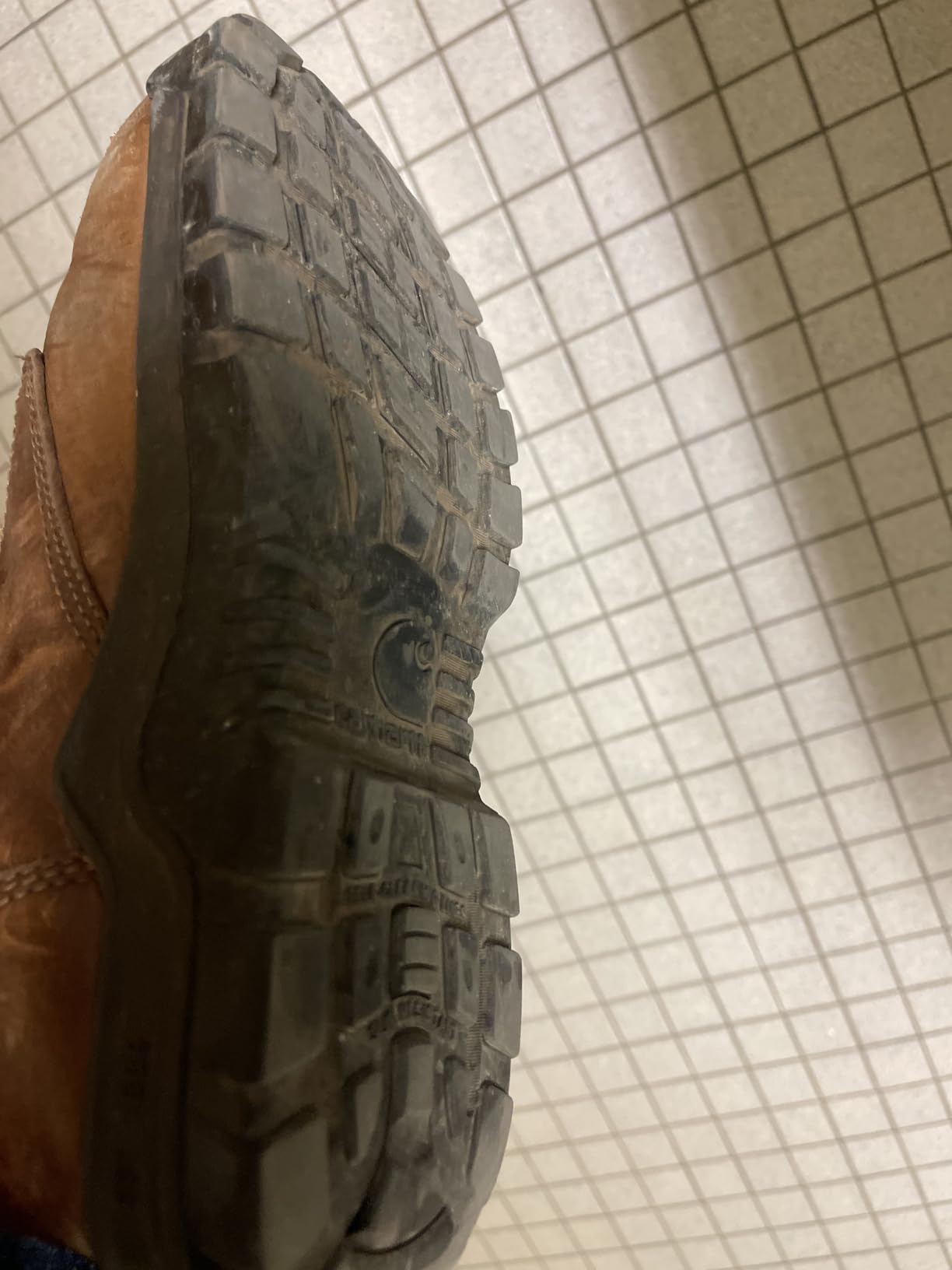
Owners report longevity of roughly 1.5 to 3 years with regular use, which is strong value for the category. The oil-, chemical-, and slip-resistant outsole is a sensible baseline for mixed maintenance work.
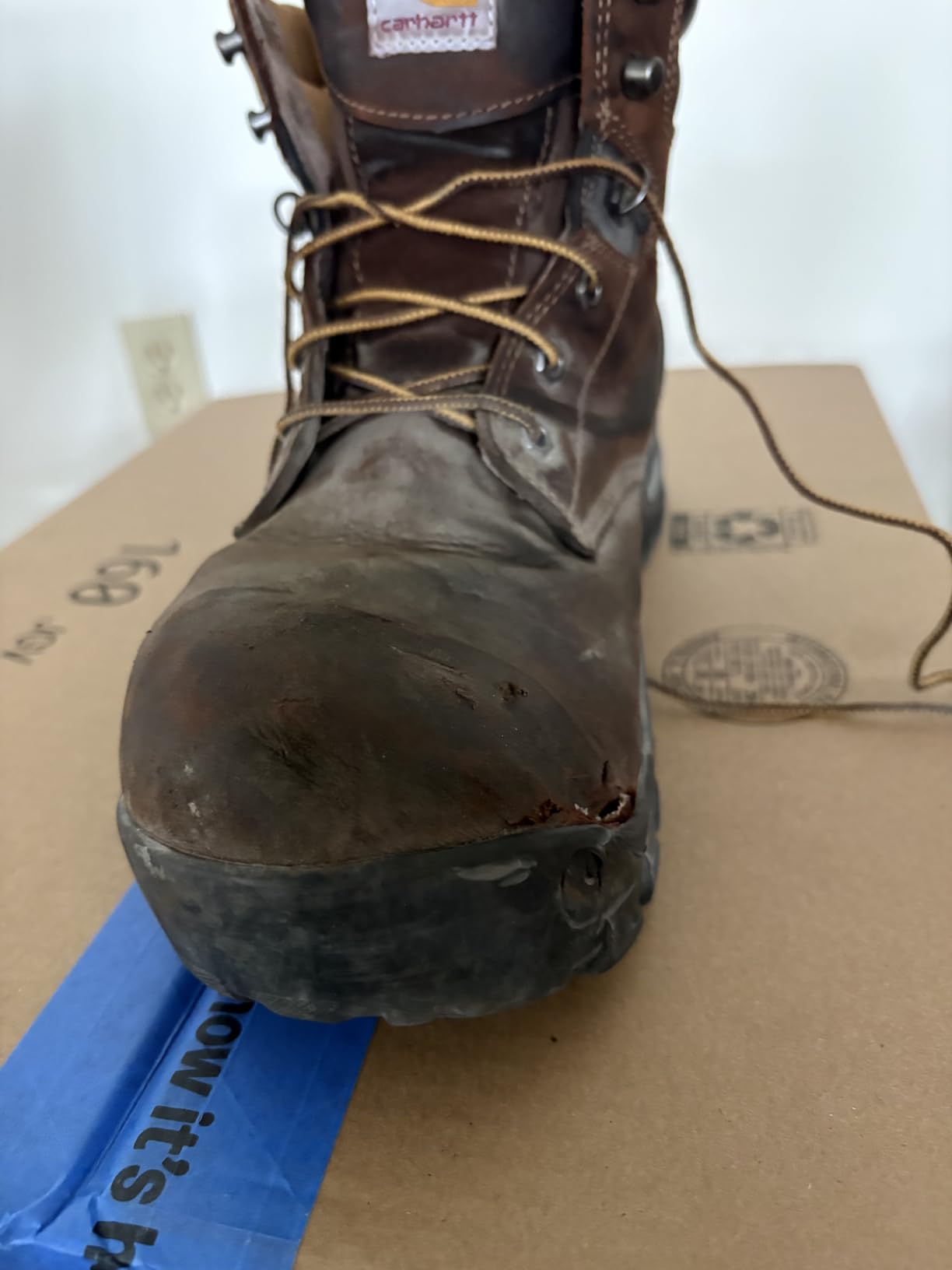
Some pairs develop leather separation at the welt, and the stock laces may not be the most durable component. I would inspect the welt at the first few inspections and replace thin or fraying laces before they break.
Who should buy this boot?
Buy it for commercial, warehouse, and maintenance work where a composite toe and immediate comfort are enough. It is a good choice for a buyer who wants a wide range of widths and does not need a specialized wedge or premium resoling platform.
What should you check before ordering?
Look for the ASTM F2413-24 EH language and confirm that the exact listing is the safety-toe version. Test the stock insole for arch support before adding a thicker insert, since an extra layer can reduce toe room.
How to Choose Work Boots for Electricians
Start with the jobsite rule, not the color or brand. Electrical-hazard boots are tested as secondary protection under ASTM F2413, with the research identifying a dry-condition test of 18,000 volts at 60 hertz for one minute; that rating does not mean the boot is insulating equipment for live work.
EH protection is different from a safety toe. A composite, carbon-fiber, or aluminum toe can reduce metal weight, while a steel toe may be preferred where impact protection or employer policy dictates it; always check the exact model’s ASTM markings.
Choose the toe and fit together
A safety toe needs enough room for your toes during a long shift, but a loose boot can cause heel slippage and blisters. I measure both feet in the afternoon, wear my normal work socks, and walk on a hard floor before committing to a pair.
Composite toes are usually lighter and do not become as cold as steel, while steel toes are familiar and can be a site requirement. Aluminum is another lighter-metal option, but fit and workplace policy still decide whether it is right.
Choose the sole for the floor and ladder
A wedge sole spreads pressure over concrete and feels stable on flat indoor surfaces. A defined heel gives a clearer edge and can help with ladder rungs, but it concentrates more pressure under the heel; loose mud and rough ground may favor a lugged outsole instead.
Look for slip-, oil-, and abrasion-resistant rubber, and consider HRO construction if heat is a routine exposure. The best boot for an indoor plant may be the wrong boot for a wet trench, so match the outsole to the route you actually work.
Plan for climate, break-in, and care
Waterproof membranes help in rain and damp basements, but they also run warmer in summer. Insulated boots are useful in cold regions but can be uncomfortable in a hot warehouse, where a breathable soft-toe or composite-toe model may be better.
Break in a new pair gradually, keep leather clean and conditioned, and dry boots fully between shifts. Remove caked mud before it dries, replace damaged laces early, and inspect the outsole, toe, seams, and EH labeling regularly.
Buy for the full ownership cycle
For frequent use, a Goodyear welt and resoleable construction can provide better long-term value than a low-cost boot that must be replaced whole. Wedges often feel best on concrete, but lugs and a defined heel are safer choices when the route includes mud, gravel, or ladders.
My practical hierarchy is simple: satisfy the safety rule, test comfort for at least a full shift, then pay for traction, waterproofing, or resoling only when your work needs them. That order prevents a beautiful boot from becoming an expensive daily distraction.
Frequently Asked Questions
What boots should I wear as an electrician?
Wear EH-rated work boots that meet the applicable ASTM F2413 standard, match your employer’s toe requirements, and have a slip-resistant outsole. Choose a composite or aluminum toe for lower weight, or a steel toe when the jobsite requires it, and make sure the fit remains comfortable through a full shift.
What are the best safety boots for electricians?
The best safety boots for electricians combine an EH rating with the correct protective toe, stable traction, and enough cushioning for concrete. Strong options include the Thorogood American Heritage for a resoleable wedge, the Carhartt CMF6366 for composite-toe value, and the Irish Setter Wingshooter ST for a non-metallic toe.
What type of boots are approved for electrical work?
Boots approved for electrical work should carry the EH and applicable ASTM F2413 markings required by your employer or site. EH footwear provides secondary protection against incidental contact with electrical circuits; it does not replace de-energizing, insulated tools, protective gloves, or other electrical safety procedures.
What is the number 1 rated work boot?
There is no single number-one work boot for every electrician. The best choice is the boot that meets the site’s EH and toe rules while fitting comfortably for 8 to 12 hours; in this roundup, Thorogood American Heritage is the strongest all-round pick, while Carhartt Moc Toe is a value-focused wedge option.
Final Recommendation
For most electricians, I would start with the Thorogood American Heritage because it balances EH protection, steel-toe coverage, concrete comfort, and resoleable construction. Choose the Carhartt Moc Toe when waterproof wedge comfort matters more than rebuildability, or the Timberland PRO Keele Ridge when a lower-cost steel-toe boot is the priority.
Use the employer’s safety standard as the first filter, then test the boot through a real shift. For 2026, the smartest electrician footwear is the pair that protects correctly, supports your feet, and is ready for the floor, weather, and ladder conditions you face every day.
1 thought on “12 Best Work Boots for Electricians (September 2026) Honest Reviews”