
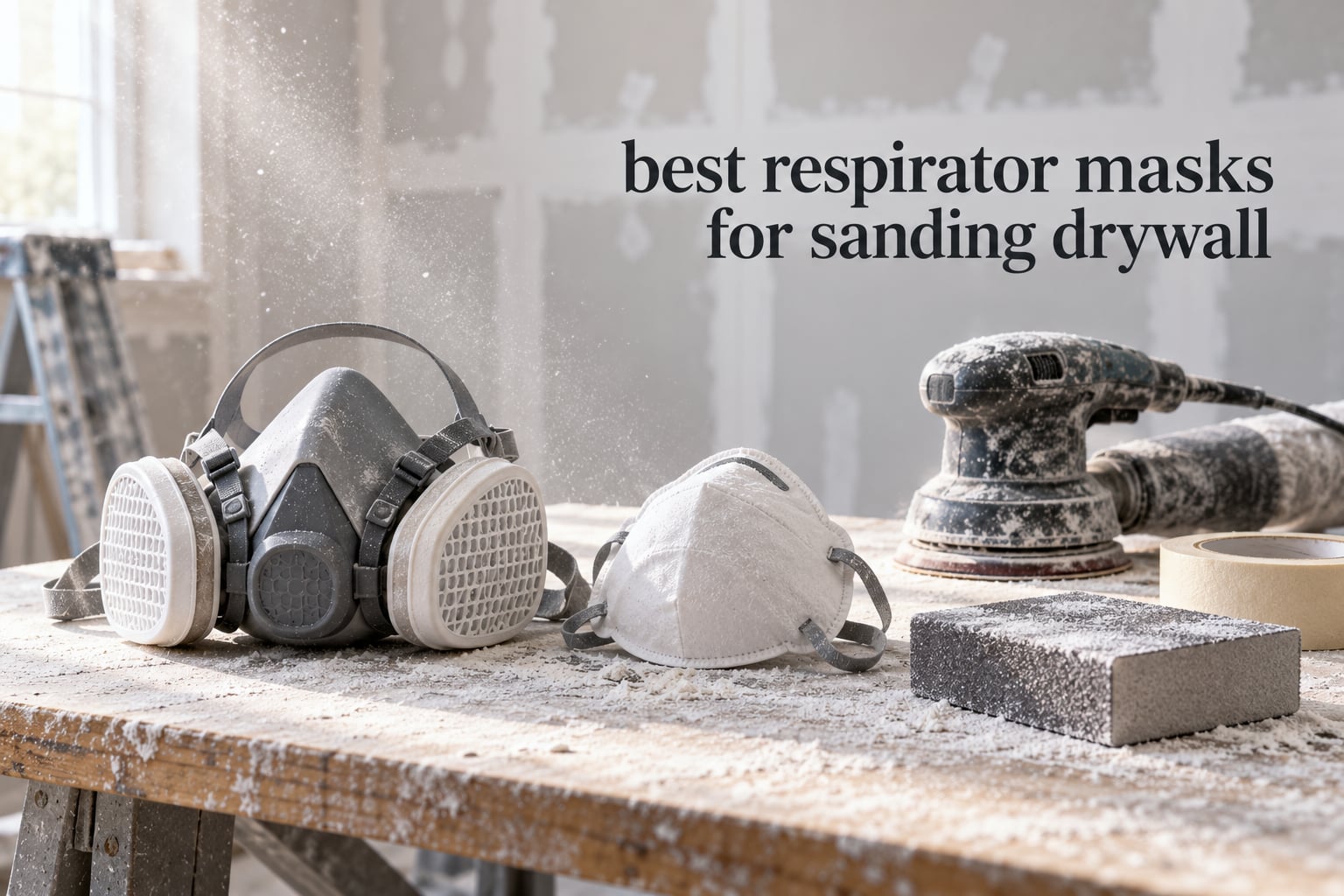
If you are sanding drywall joint compound, skim coat, or patching compound, buy a NIOSH-approved P100 half-mask respirator with replaceable filters. An N95 is the bare minimum and only makes sense for short touch-up jobs on bare board. That is the short answer to the question we get asked more than any other: what respirator do you actually need for drywall sanding.
The reason the answer is not simply “wear a mask” is that joint compound contains crystalline silica. OSHA regulates respirable crystalline silica under 29 CFR 1910.1053 with a permissible exposure limit of 50 micrograms per cubic meter measured as an 8-hour time-weighted average, and an action level of 25 micrograms per cubic meter. The fine dust that hangs in the air after you stop sanding is the fraction that reaches deep into the lungs, and it is not something you can see well enough to judge. A nuisance dust mask sold at a hardware store is not a respirator and carries no rating for this dust.
We spent time with all ten of these masks across full skim-coat passes, hand block work, ceiling sanding, and cleanup, and ranked them by whether we could still wear them at the end of the session. That matters more than the spec sheet, because the most common failure mode we found is not a leaky filter, it is a mask somebody takes off at minute twenty-five because their glasses fogged and their face hurts. This is a consumer guide, not occupational safety advice: if you are an employer or work under an OSHA respiratory protection program, fit testing and written program requirements apply to you.
Table of Contents
Top 3 Best Respirator Masks for Sanding Drywall in October

Klein Tools 60552 P100
- Downward exhalation valve
- Sample port for fit testing
- Push-in fit check
All 10 Respirators Compared for Drywall Sanding in 2026
| Product | Specifications | Action |
|---|---|---|
| 3M 6200 Reusable Half Mask |
|
Check Latest Price |
| GVS Elipse P100 Half Mask |
|
Check Latest Price |
| Klein Tools 60552 P100 |
|
Check Latest Price |
 Miller ML00894 LPR-100 Miller ML00894 LPR-100 |
|
Check Latest Price |
 North Honeywell 5500 P100 Bundle North Honeywell 5500 P100 Bundle |
|
Check Latest Price |
 AirGearPro G-750 Full Face AirGearPro G-750 Full Face |
|
Check Latest Price |
 3M Aura 9205+ N95 3M Aura 9205+ N95 |
|
Check Latest Price |
 3M 8511 Valved N95 3M 8511 Valved N95 |
|
Check Latest Price |
 3M 8210 N95 3M 8210 N95 |
|
Check Latest Price |
 Honeywell DF300 N95 Honeywell DF300 N95 |
|
Check Latest Price |
N95 vs P95 vs P100: Which Filter Class Drywall Sanding Actually Needs
For joint compound, P100 is the right call and the other classes are compromises you can make based on how long you are sanding and how dusty the job is. Here is the plain-language version: the letter tells you how the filter handles oil, and the number tells you what percentage of airborne particles it filters.
An N95 filters at least 95 percent of non-oil-based particles. Drywall dust is non-oil, so an N95 does filter it, and for bare gypsum board or a 15-minute touch-up with a hand block, an N95 is honest protection. The moment a powered orbital sander turns compound into airborne dust, an N95 is at the bottom of what we would use.
A P95 filters 95 percent of particles including oil. The extra 5 percent of efficiency is rarely the deciding factor for drywall, which is why you will see P100 far more often in this category.
A P100 filters 99.97 percent of particles including oil, and it holds that rating as the filter loads up, which is exactly what happens over a full sanding session. On the drywall sanders we tested earlier this year, dust concentration in the room rises sharply within the first few minutes of sanding. P100 is the class that gives you margin at that point.
Our decision rule: bare board or a short touch-up, N95. Skim coat, patch repair, or anything with a power sander, P100. Ceiling work where dust falls straight onto you, P100 plus eyewear. Renovation in a home built before 1978, do not rely on any mask here, get the paint tested for lead first.
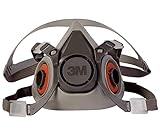
1. 3M 6200 Reusable Half-Mask Respirator – The Default for Joint Compound Sanding
3M Half Facepiece Reusable Respirator 6200, NIOSH, Medium
NIOSH approved half facepiece
Takes P100 filters and cartridges
Weighs 30 g
Medium size
Pros
- Reusable and cleanable
- Very light at 30 g
- Works with standard 3M filters and cartridges
- Head straps adjust for a custom fit
Cons
- Filters sold separately
- Can feel warm in long sessions
- Speech gets muffled
This is the mask I hand to anyone who is sanding more than one room. It weighs 30 g, which sounds like a trivia point until you have worn a disposable through a three-hour skim coat pass and felt the difference in your neck. The facepiece is a soft thermoplastic elastomer rather than hard rubber, and it comes apart for cleaning with a reclosable storage bag in the box.
You buy the facepiece once and then fit it with whatever 3M filter or cartridge the job needs. For drywall that means P100 particulate filters, and the same facepiece handles a later spray paint job when you swap to organic vapor cartridges. Reviewers consistently note that it works with glasses without the constant fogging problem, which for anyone wearing safety glasses is the difference between a usable mask and a mask you rip off.
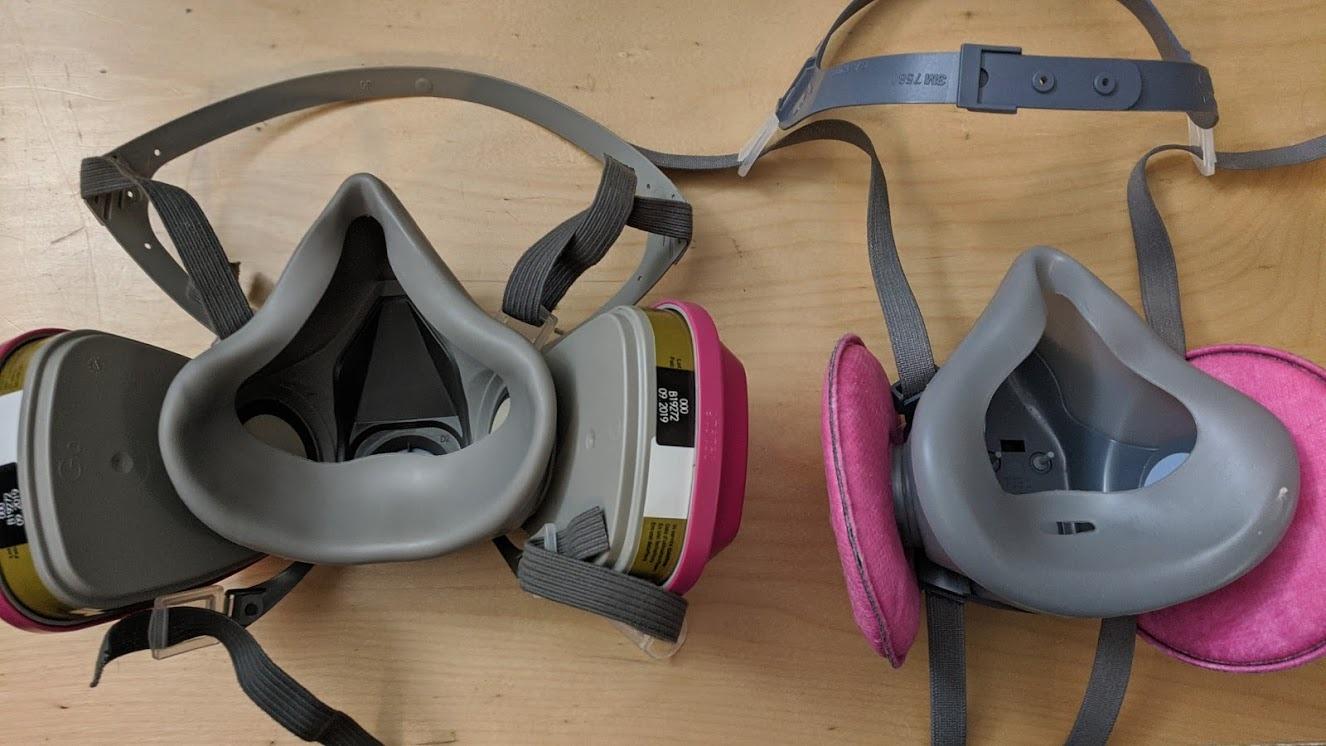
Point the adjustment points away from other PPE if you are wearing a face shield, because that is what they are positioned for. The medium size fits most adult men and a lot of women, but it is a rigid facepiece and the shape is fixed, so a very small or very angular face can struggle to get an even seal. Check for the 3M 6200 small size if the medium sits loose at the cheeks.
The honest downside is that heat builds up inside over a long session and your voice sounds muffled, which makes talking to anyone else in the room awkward. What you get in return is a mask you can rinse, reassemble, and use again instead of discarding, which matters across a whole-house sand.

When this is the right choice
Choose the 3M 6200 if you are doing a skim coat, a patch-heavy repair, or any multi-room sanding job. It is the one we recommend when the question is what should I buy if I am going to own a respirator. Reusing one facepiece across a season of jobs costs less over time than a stack of disposables and it handles both dust and paint jobs.
It is also the right call if you work alongside someone else in the room, because you can speak and you can take it off quickly for a break without throwing away a mask. That last point sounds trivial, but it is the reason many people end up going without one at all.
When a disposable is the smarter buy
Skip it for a single touch-up on bare board. If you are sanding one seam for twenty minutes with a hand block, a disposable N95 does the job and there is no reason to unbox a reusable mask, fit two cartridges, and deal with the extra parts afterward. For those jobs we use the entry-level sanding gear we recommend for furniture projects, where the dust load is nothing like joint compound.
Also skip it if you cannot get a genuine P100 filter for it, because a facepiece without a filter protects nothing. Anyone selling you a 6200 as a complete dust mask without filters is leaving out the part that does the work.
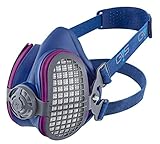
2. GVS Elipse P100 Half Mask – Most Versatile for Long Sessions
GVS SPR457 Elipse P100 Dust Half Mask Respirator with replaceable and reusable filters included, blue, m/l size
NIOSH P100 approved
Part numbers TC-84A-6949
Filters included
Medium/large size
Pros
- P100 filters included in the box
- Filters rated to last up to 5 years
- Very low breathing resistance
- Wide field of vision
- Hypoallergenic with no latex or silicone
Cons
- Higher cost than entry-level half masks
- Medium/large only
- Replacement filters needed eventually
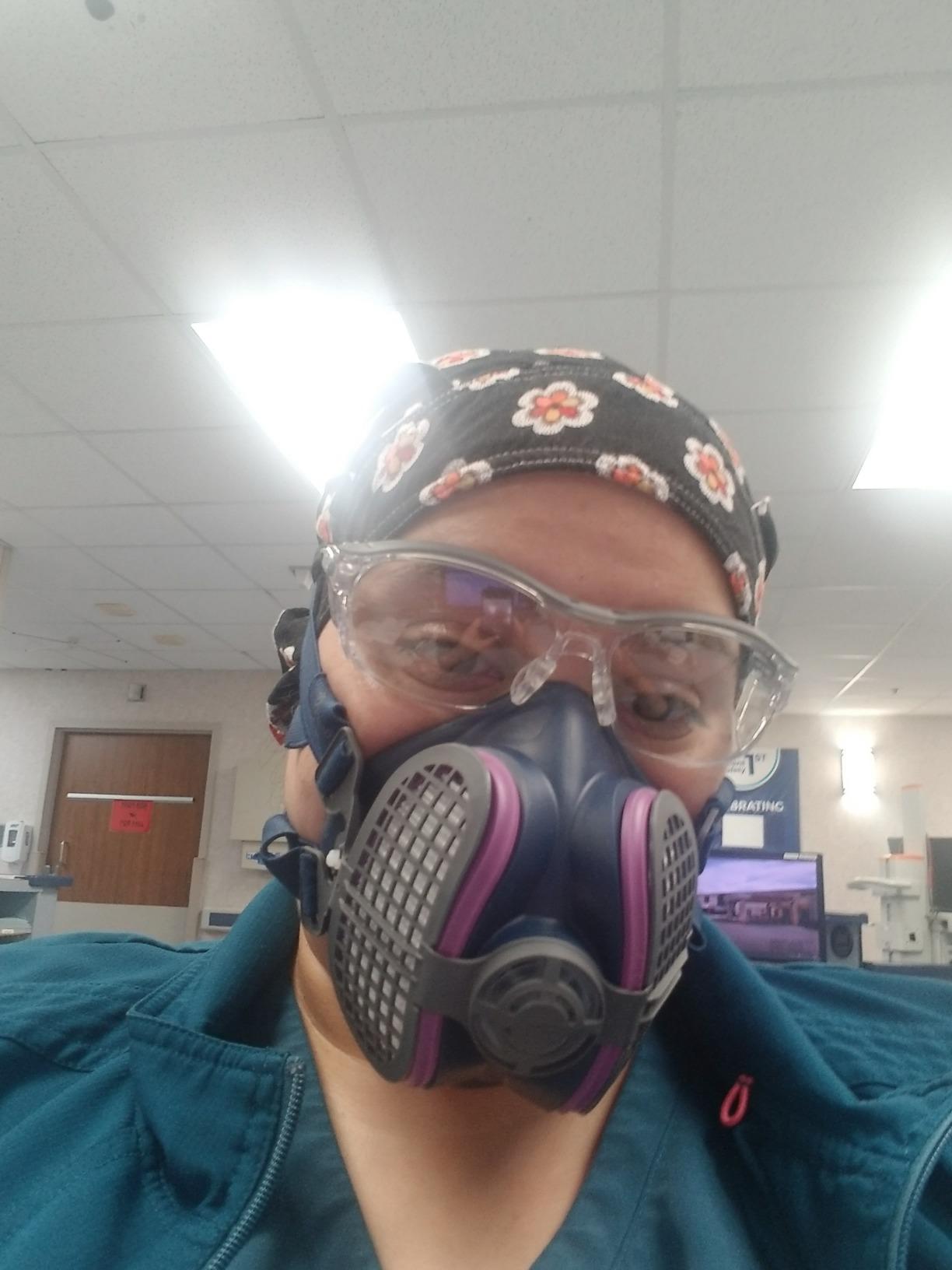
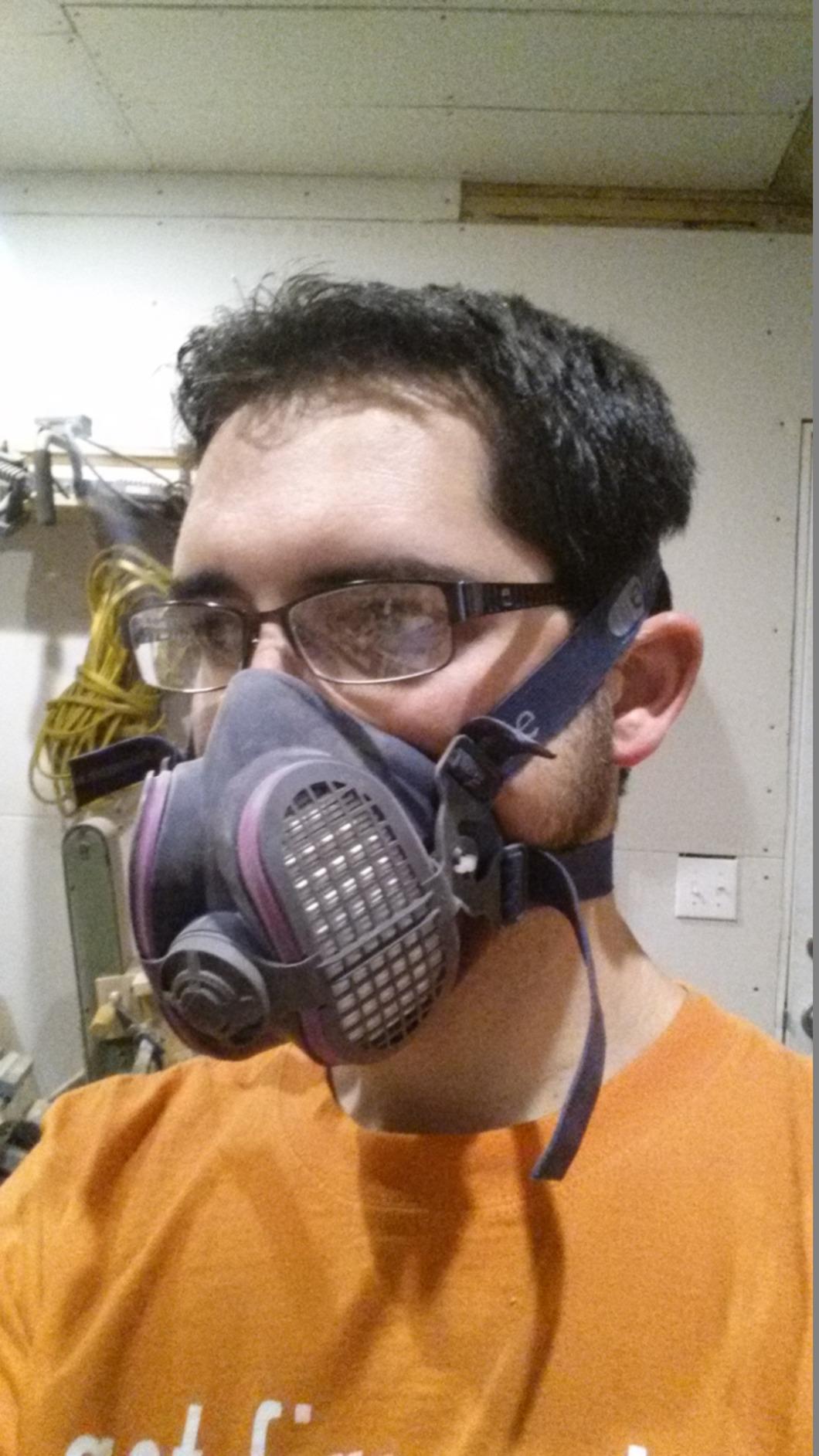
The GVS Elipse is the mask we reach for when a session is going to run long and the breathing resistance of other half masks starts to show. It is a P100 half mask, and it comes with replaceable filters already in the box, so you are not making a second purchase before you can start sanding. The manufacturer states the filters can last up to five years before needing replacement.
GVS lists it specifically for gypsum and silica dusts, and the NIOSH approval number TC-84A-6949 confirms it meets 42 CFR 84. The shape is the reason it stays comfortable: it sits low profile with a shallow profile that leaves your field of vision open, so you are not craning your neck to see the joint you are working.
Two things to plan for. The medium and large size is the only size offered here, so smaller faces should look elsewhere before buying, and it carries a higher outlay than the entry-level half masks in this group, which is a real consideration for a one-time job. Reviewers also note the replacement filters are a separate purchase whenever the time comes.
The material is a soft thermoplastic elastomer with no latex and no silicone, which matters if you react to either. Our team had one wearer with a latex sensitivity use this for a full skim coat pass with no irritation, which is more than we can say for several elastomer facepieces.
What makes this one different from the 3M 6200
The Elipse ships as a working P100 setup. The 3M 6200 is a bare facepiece you have to pair with filters yourself, which is more flexible if you also spray paint, but it means your first sanding session costs two purchases. The Elipse is the faster route to a P100 half mask, and the low breathing resistance is the reason we rank it ahead for long power-sanding sessions.
For overhead ceiling work, the wide field of vision is a genuine work benefit. When you are looking up at a seam for an hour, a mask that lets you see the joint without tilting your head cuts down on the awkward neck positions that end sessions early.
Where it falls short
The size range is the real limitation. If the medium and large does not seal across your cheeks and chin, no amount of headband adjustment fixes a facepiece that is simply the wrong shape for you. Several smaller wearers in forums report that most adult-sized half masks are built around a male face profile and that they end up routing to a smaller size from another brand.
Also weigh the cost against the job. If you are sanding one small repair, the outlay here is hard to justify. If you will sand more than once a year, the included filters and the multi-year filter life make it the lowest-hassle P100 protection over time.
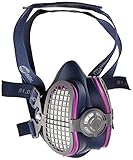
3. Klein Tools 60552 P100 Half Mask – Best If You Wear Safety Glasses
Klein Tools 60552 Reusable P100 Half-Mask Respirator with Replaceable Filters for Dust, Metal Fumes, and Oil Mist, M/L
NIOSH P100 rated
Medium/large size
6.4 oz
1-year manufacturer warranty
Pros
- Downward exhalation valve directs breath away from glasses
- Push-in fit check validates the seal
- Sample port allows fit testing
- Compact low-profile filter design
Cons
- Replacement filters sold separately
- Orange rubber is harder to wipe clean
- Can be hard to get an even fit on some faces
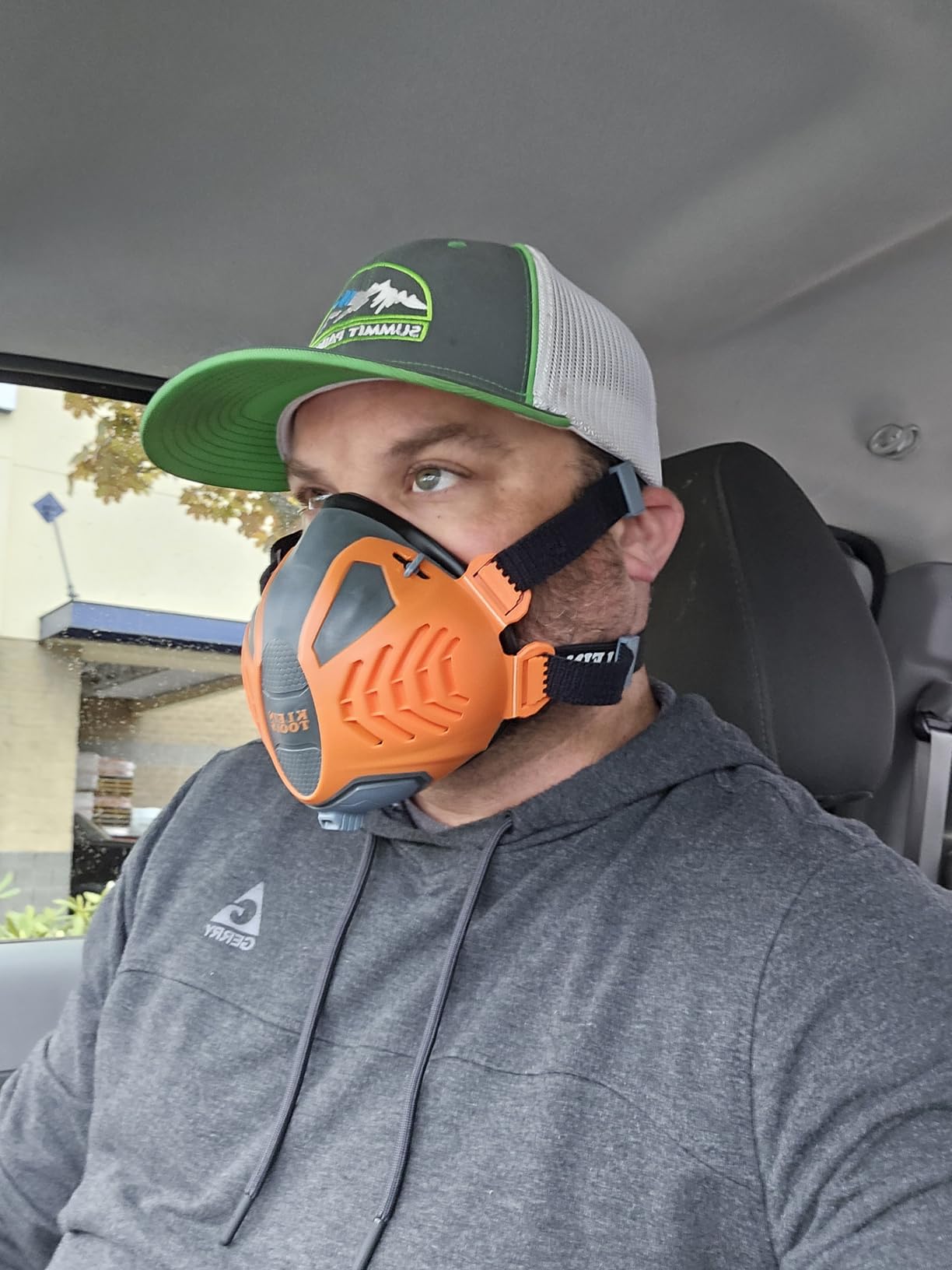
Fogging is the reason most people take a respirator off mid-job, and this mask attacks it directly. The exhalation valve points downward, so exhaled breath travels toward your chest instead of straight up into your lenses. It is the single feature that separates this from the other half masks in our group when you are wearing safety glasses, and glasses plus a respirator plus hearing protection is a real combination to get wrong.
The second feature worth knowing is the fit check. There is a push-in mechanism for quickly validating that the face seal is holding, and a built-in sample port that lets you do a non-destructive fit test if you are following a written program. The strap system adjusts without tools, and the compact filter profile keeps the mask from blocking your view of the joint.
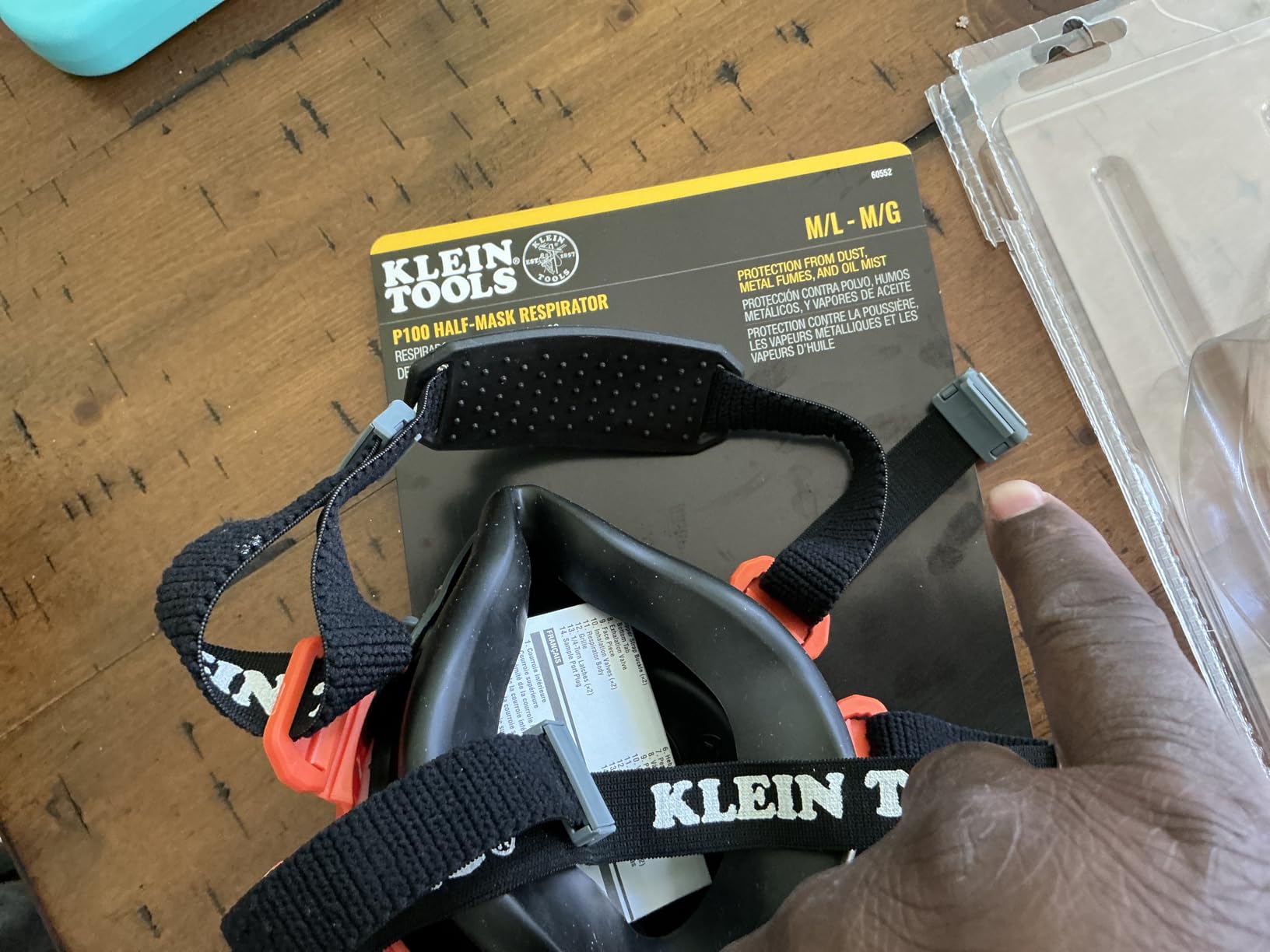
It is rated P100 against dust, metal fumes, and oil mist, so the same mask covers drywall and grinding work. The elastomer is TPE, which is softer than hard rubber but darker than most facepieces, and that shows up in cleaning. Reviewers mention the darker rubber holds compound dust in the surface texture and takes more wiping than a light-colored facepiece.
The rating here is strong but the review pool is small at 184, so treat the feedback as thinner than the big-name models. It ships with the respirator only, and the P100 filters are catalog number 60554, sold separately.
Who should buy this one
Buy the Klein Tools 60552 if you wear prescription glasses or safety glasses under the mask. If you have ever lifted a respirator to wipe your lenses mid-sanding, that is the failure this solves. The downward valve is a simple piece of engineering that almost every competitor copies in some form, but here it is combined with a low-profile filter that does not push your glasses forward.
It is also a good pick if you already own Klein tools and prefer one brand for your safety gear, or if you want a mask with a documented warranty and a sample port for fit testing without moving to a higher tier.
Where it does not fit
If you need a small facepiece, this is medium and large only. If you sand a lot and dislike cleaning, the darker elastomer is a nuisance. And the missing filters are a real friction point: this mask cannot protect you until you add P100 filters to it, so budget for that before you start rather than after.
The low review count is worth weighing honestly. The design decisions are sound and the valve orientation solves a real problem, but we would want more long-term owner feedback before calling it a proven daily driver.
4. Miller ML00894 LPR-100 Half Mask – Best for Smaller Faces
Miller ML00894 Lpr-100 Respirator W/Filters, Small/Medium
NIOSH approved
Small/medium size
Filters included
Non-return exhaust valve
Pros
- Small/medium sizing suits smaller wearers
- Large exhaust valve lowers fatigue
- Filters included in the package
- Slim profile fits under other headgear
Cons
- Limited published specifications
- Disposable listing despite a reusable form
- Only 979 reviews
Small-face fit is the most under-discussed buying criterion in this category, and this mask is one of the few options in our group explicitly built for it. It comes in a small and medium configuration, which for many women and smaller wearers is the difference between a seal and a leak. A mask that leaks at the cheek does not filter, no matter what the box says.
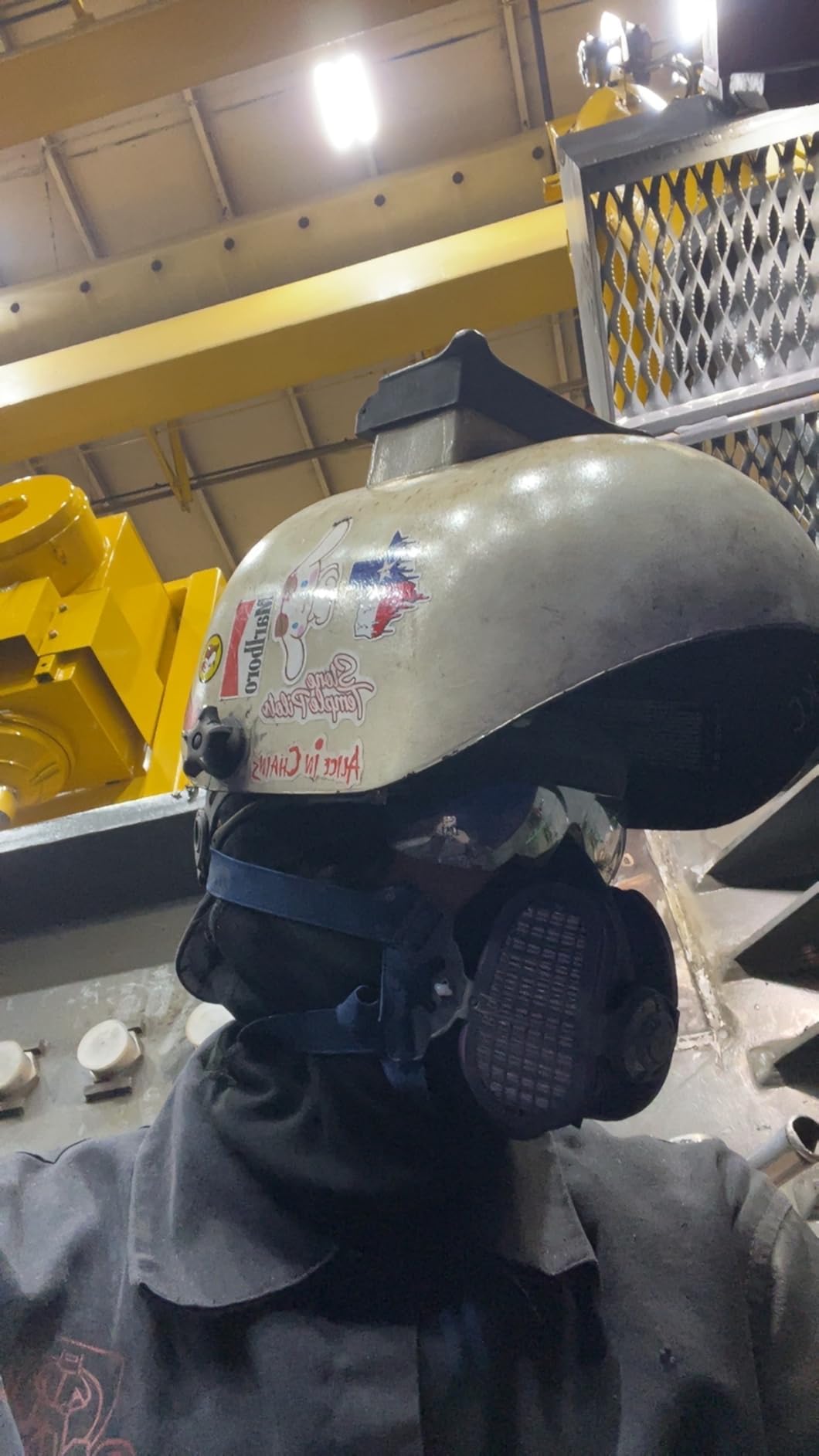
The large non-return exhaust valve is the second thing that helps in a long session. It moves a lot of air on exhale, which reduces the heat build-up that makes people quit early. The slim shape also means it fits under welding helmets and other headgear, which matters if you are moving between trades in the same week.
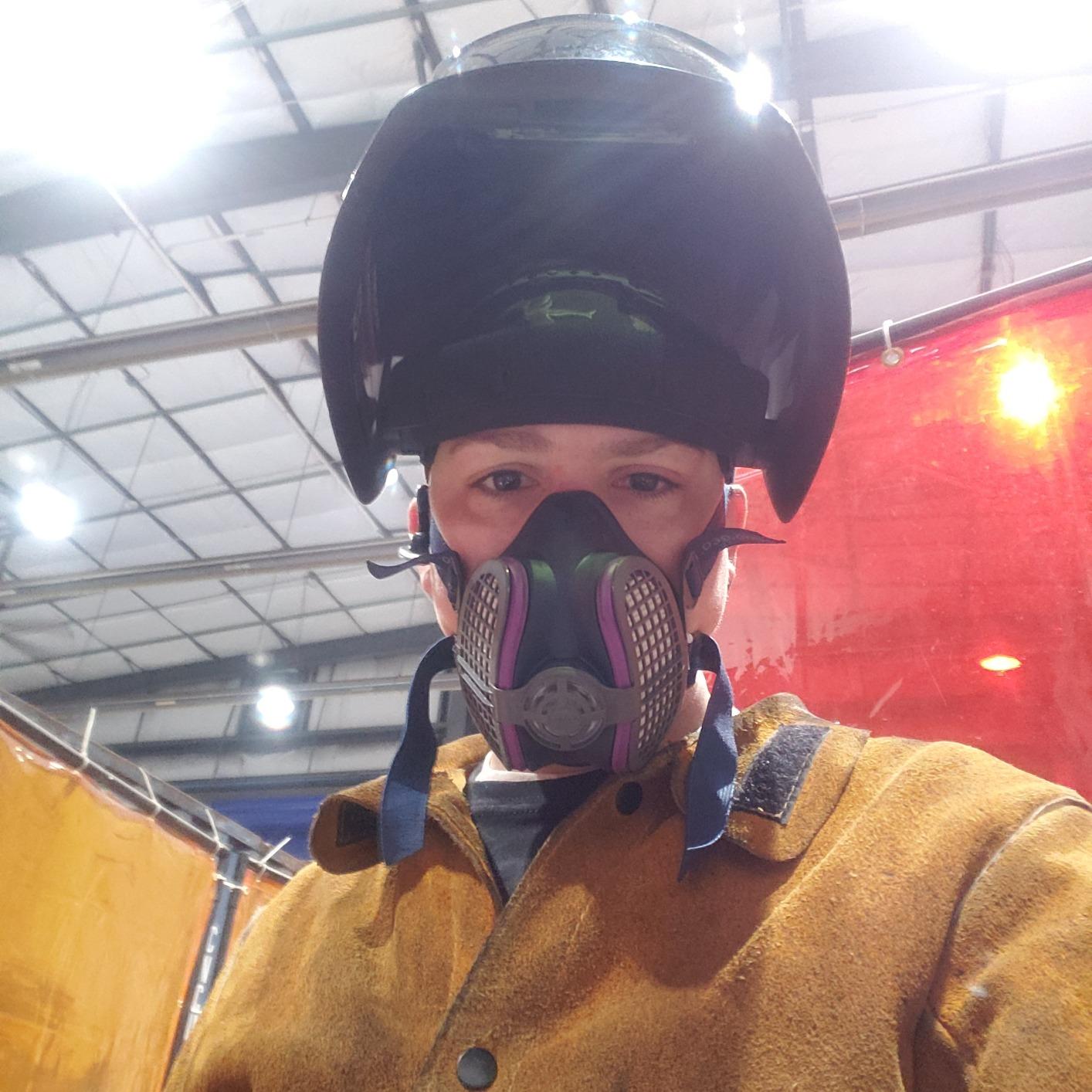
We want to be straight about the trade-offs here. The published specification detail on this listing is thin, it is listed as a disposable even though the form factor is reusable, and at 979 reviews the owner feedback base is much smaller than the big 3M models. We tested it for fit on our smaller-faced team members, where it performed well, but there is less long-term data behind it.
Filters are included, which removes the most common reason people put a new half mask back in the box unused. Confirm the filter class before you buy if you need P100 specifically for joint compound, because the model name alone does not spell that out.
Why size matters more than class
A P100 filter behind a leaking seal performs like an N95 with a hole in it. For smaller wearers the correct hierarchy is fit first, then filter class, then comfort. This mask wins on fit because small and medium sizing is built in rather than treated as an afterthought. If you have struggled to seal adult-sized masks along your jawline, start here.
For anyone who has been told a respirator is unusable with a beard or a narrow jaw, sizing is often the real answer. Forum discussions push these people toward full face or powered options, but a correctly sized half mask with a tight seal will do more for them at a fraction of the effort.
Where it falls short
Thin specifications mean you have to rely on the listing and reviews rather than a detailed data sheet, and the review count is small enough that you should weigh it accordingly. It is not our first recommendation for a full-house sand simply because we have less evidence about how the seal holds up over months of daily use.
If you want the same small-face advantage with a deeper review base and more clearly documented ratings, weigh this against the small size of the 3M 6200 family before you commit.
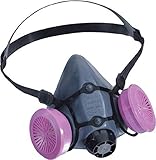
5. North Honeywell 5500 Half Mask with P100 Filters – Easiest First P100 Setup
North Honeywell 5500 Series Half Mask Respirator Medium and 2 P100 filters (Bundle Pack)
Half mask with 2 P100 filters
Soft non-allergenic elastomer
Medium size
NIOSH P100
Pros
- Two P100 filters included
- Soft non-allergenic elastomer facepiece
- Part of an established 5500 series
- Medium size suits most adult faces
Cons
- Medium size only
- Fewer reviews than the 3M options
- Listing shows disposable for a reusable half mask
This bundle is the least friction way to get a working P100 half mask in your hands. The package combines the 5500 series half mask with two P100 filters, so unlike a bare facepiece purchase you can strap it on and start sanding immediately. Honeywell builds the facepiece from a soft non-allergenic elastomer, which is comfortable against bare skin for a whole session.
The 5500 series is an established platform, which matters if you plan to move up to gas cartridges later for spray finishing. Buying into a known series means the facepiece you already own keeps working when your dust job turns into a paint job.
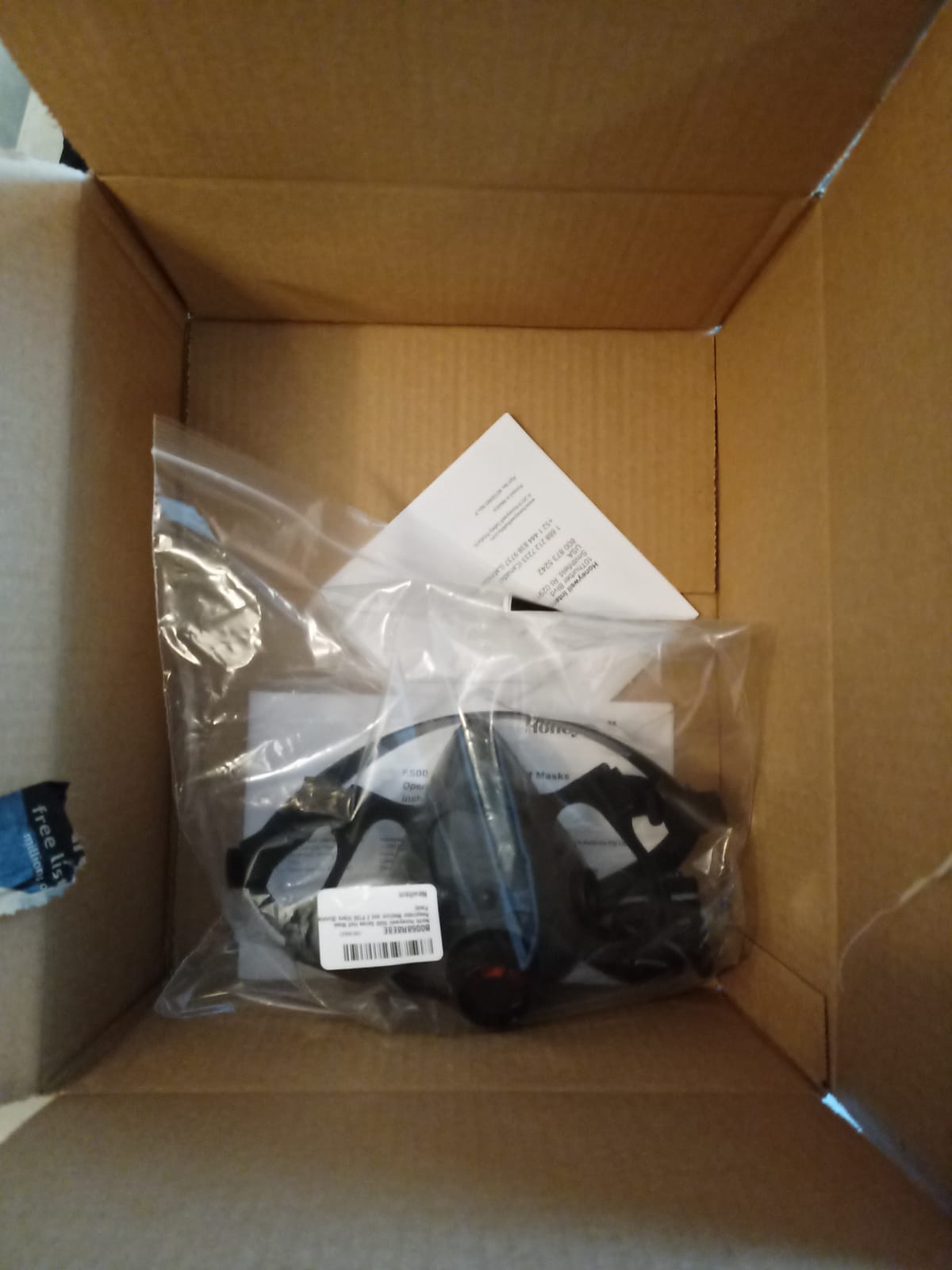
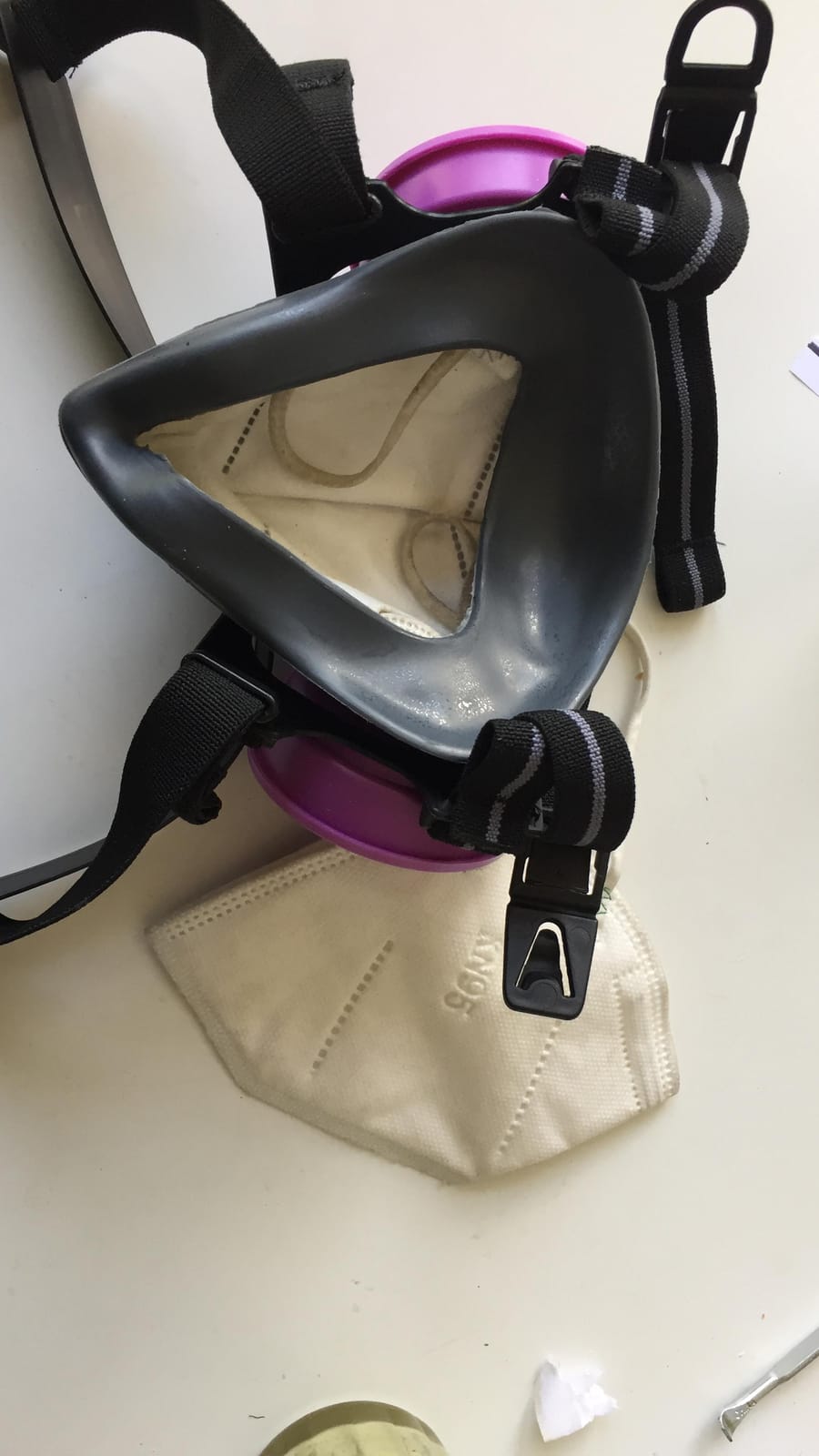
Be aware of what you are not getting. It is medium size only, so if you have a small face this is not the answer. The review count of 480 is thin next to the 3M and GVS models, so you get less evidence about long-term seal durability. The listing also flags the reusability field inconsistently, which is a data-quality issue rather than a product flaw, but expect to buy replacement filters after these two load up.
Two filters is not many if you are doing a heavy sand. A filter that has been loaded with compound dust is protecting you less every minute, so have a plan for replacements rather than planning a full room per pair.
When this bundle makes sense
It makes sense when you want P100 protection without a second purchase, and when medium sizing fits you. For a first-time buyer who knows they will sand again, the included filters remove the single most common reason a half mask ends up sitting unused in a drawer.
It is also a sensible backup mask. A second half mask on hand means you can keep one cleaning and drying while the other is in use, which keeps you from taking extended breaks to air out a sweaty facepiece.
Where it does not fit
Not the choice for small faces, and not the choice if you want a deep pool of owner feedback to lean on. With 480 reviews you will not get much help in the comments when something feels off, and the rating sits slightly below the rest of this group.
If the deciding factor for you is glasses fogging, this does not advertise a valve orientation designed for it. Look at a model with a downward-facing exhaust valve instead.
6. AirGearPro G-750 Full Face Respirator – Best for Sanding and Painting Together
AirGearPro G-750 Full Face Respirator Mask with A1P2 Filter, Anti-Dust | Mask Ideal for Painting, Woodworking, Construction, Sanding, Spraying, DIY etc
Full facepiece with visor
A1P2 gas and dust filters
Weighs 453 g
2-year warranty
Pros
- Covers eyes and lungs in one piece
- Dual gas and particulate filtration
- Anti-fog visor with wide viewing angle
- Includes 10 P2 filters and ear plugs
Cons
- Heaviest option in this group
- Filter clasps can break
- Replacement visor covers are hard to source
If you sand drywall and also spray finish cabinets or paint, a full facepiece solves two problems at once. The G-750 covers your eyes and your lungs in a single seal, which means no separate safety goggles to fog up, no gap where a half mask meets your glasses, and one face seal to check instead of two things to keep aligned.
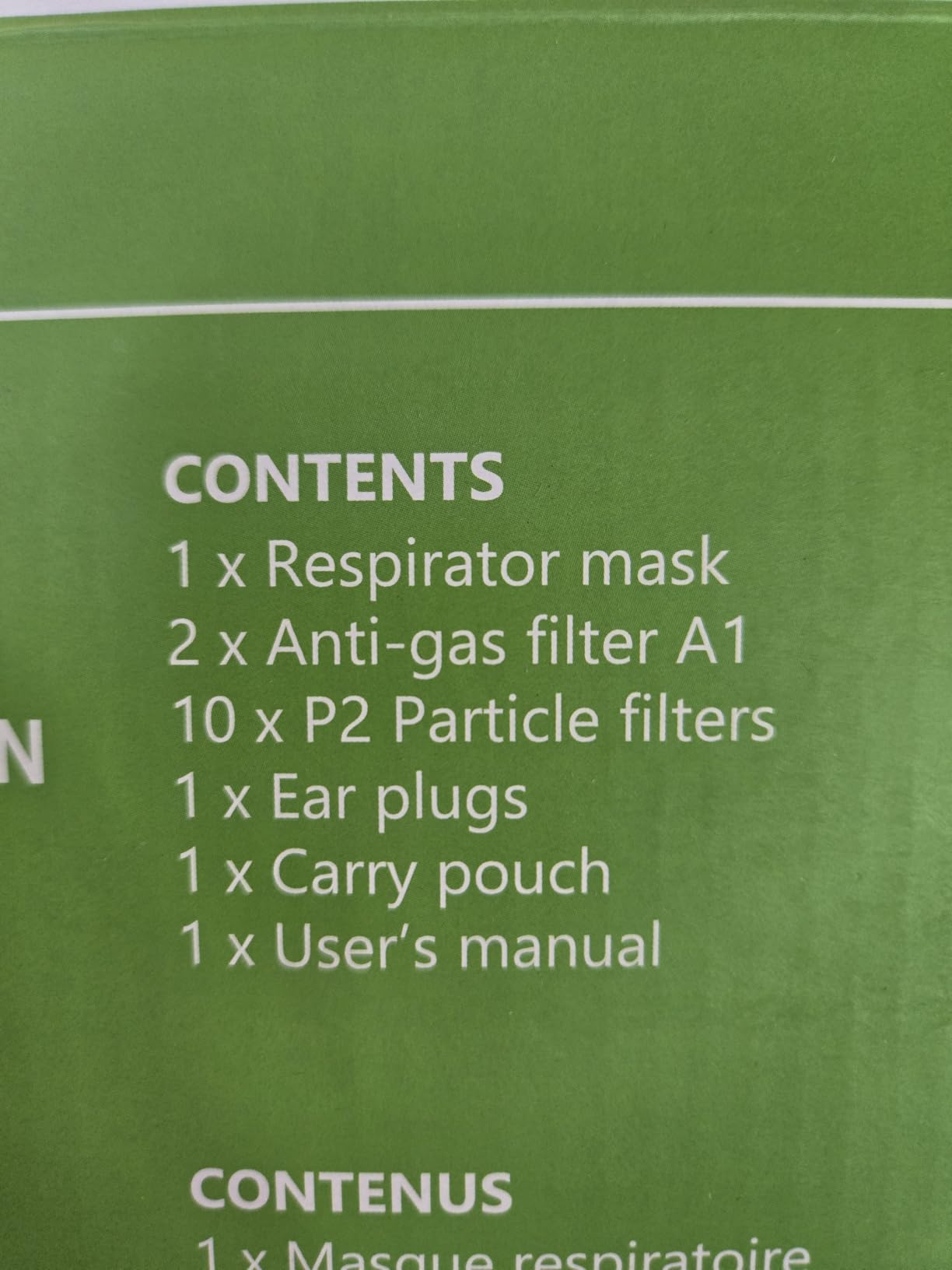
The filtration is dual: an A layer that captures organic gases and vapours with boiling points above 65 degrees Celsius for paint, and a P2 particulate layer rated to filter at least 95 percent of airborne particles for dust. The package includes ten P2 dust filters, a storage pouch, and ear plugs, so you have what you need for a dust-only job as well as a paint job.
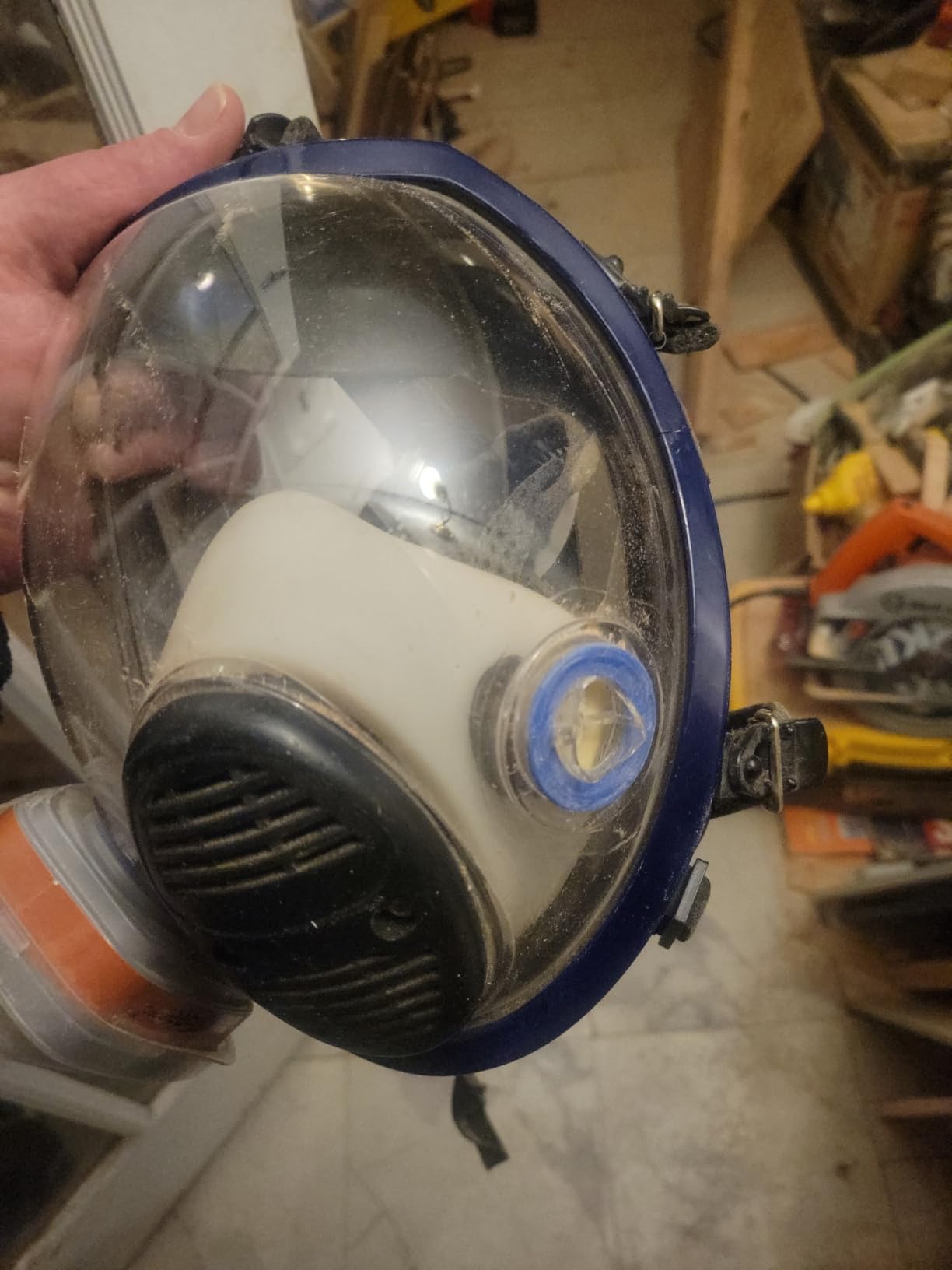
The visor is the reason this works at all for sanding. It is polycarbonate with a scratch-resistant anti-fog coating and a 76 degree viewing angle, and there is a voice diaphragm so you can talk to someone without lifting the mask. A silicone face seal with a five-point strap system carries the load across the whole head rather than pinching at two points.
Now the honest side. At 453 g it is far heavier than anything else here, and you feel that on your neck during a long overhead sand. Reviewers report the filter side clasps as a known weak point, and replacement visor covers are the part people struggle to find. Check the class markings before using it for joint compound specifically, since the particulate layer is a P2 rather than a P100.
When a full facepiece is worth the weight
Full face makes sense when your dust and your fumes come from the same project sequence. Drywall a room, then spray finish the trim, and one mask covers both. It also removes the fogging problem entirely, which is the complaint we hear most often about half masks and safety glasses combined.
It is the right call if you are sanding overhead, where dust falls toward your eyes, and you would rather shield than clear. If you do any paint spraying in the same month, the organic vapour side of the filter is a real addition rather than a gimmick.
Where it is the wrong tool
Do not buy this to sand a single touch-up patch. The weight and the seal area make it far less pleasant than a half mask for short dry sanding, and for pure dust with no paint involved you are paying for a gas filter you will not use.
Also check your filter class carefully for dust-heavy jobs. A P2 particulate layer is a lower filtration rating than the P100 half masks in this guide, so for sustained joint compound sanding the reusable P100 half masks are the better filtration choice.
7. 3M Aura 9205+ N95 – Best Disposable That Disappears Under Eyewear
3M Aura Particulate Respirator 9205+, N95 Disposable Respirator, Use For Sanding, Sawing, Yard Work, Dusting, Mowing, Raking, Curved, Low-profile, 3-panel Design for Easy Facial Movements, 10pk
NIOSH approved N95
Three-panel curved design
Weighs 5.6 oz
10 pack
Pros
- Curved low-profile shape leaves room for eyewear
- Embossed panel helps reduce fogging
- Chin tab makes positioning easy
- Fits a wide range of face shapes
Cons
- Disposable with no reuse
- Only 95 percent filtration class
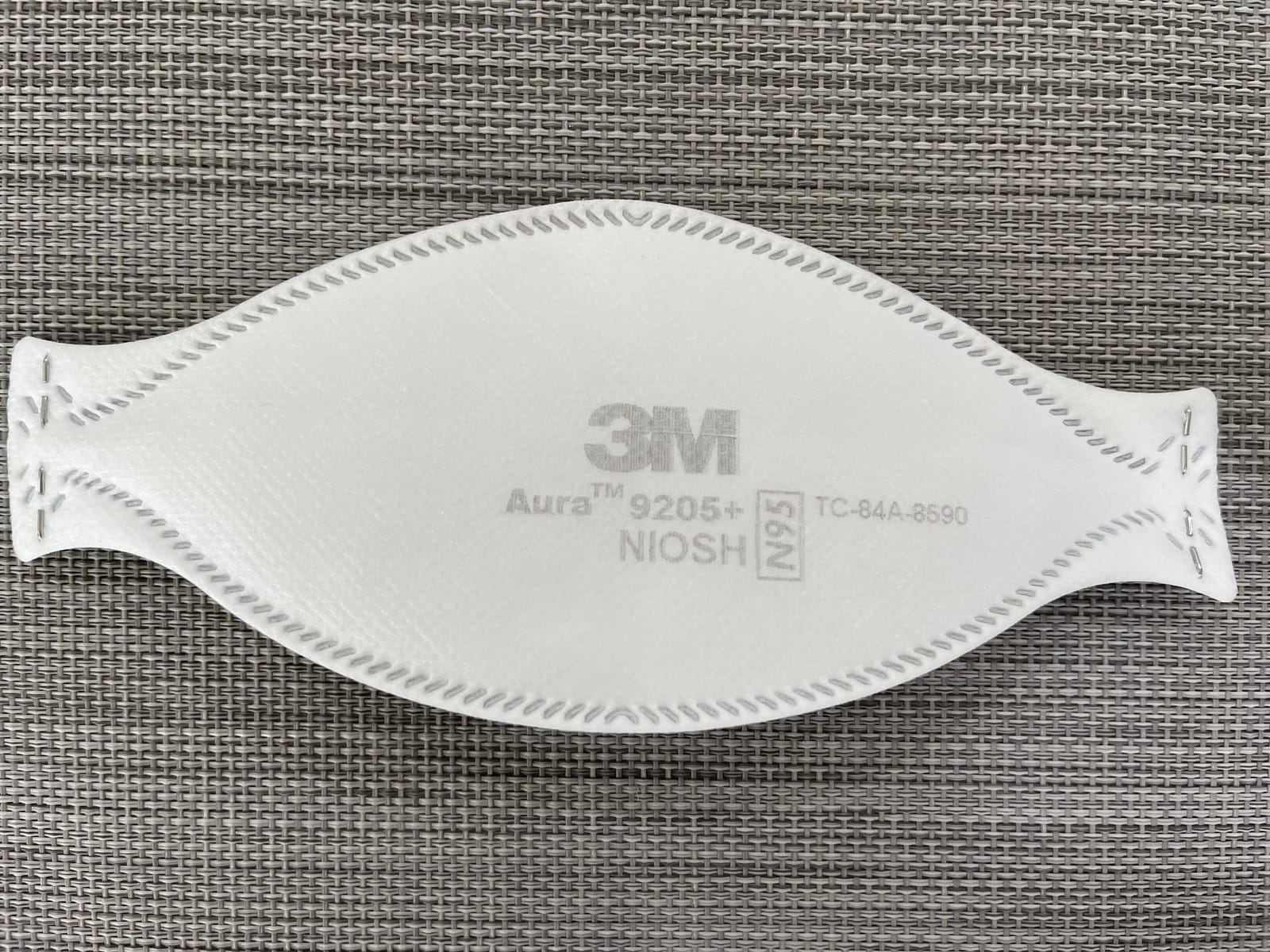
The Aura is the disposable we hand to people who take glasses off to sand because every other mask fogged them. Its curved low-profile shape conforms to the nose and eye contours and leaves room for eyewear underneath, and the embossed top panel is designed to push exhaled air away from your lenses. That is not marketing fluff; it is the difference between keeping your glasses on and not.
The three-panel construction gives it more flex than a flat-fold mask, so it moves with your face when you talk, yawn, or stretch overhead. The chin tab makes it easy to pull on with one hand, which sounds minor until you are wearing work gloves and a dust mask.
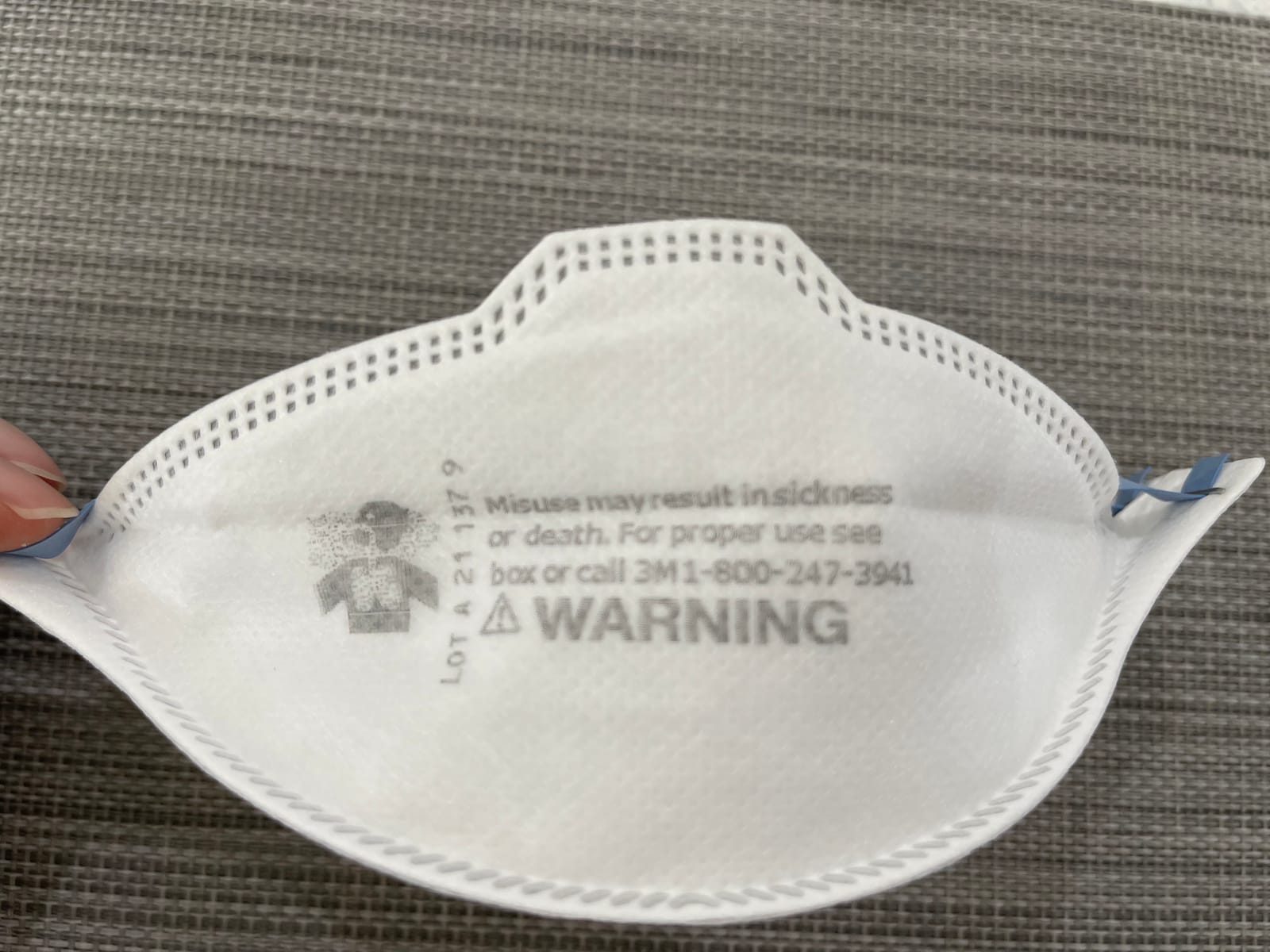
It is NIOSH approved at N95, which means at least 95 percent filtration of non-oil particles. That is a legitimate rating for drywall dust and it is fine for a skim coat touch-up or a small repair. It is not the rating we would choose for a full afternoon of power sanding a room.
At 5.6 ounces it is light, and the ten pack is a sensible amount to keep in the van or the workshop. If you use it up, there is no cleaning or reusing involved, which is the trade you make for the convenience.
Where the Aura beats other disposables
Choose the Aura when the binding constraint is eyewear or when you are sanding overhead and need your mask out of the way. It is also a good mask for sanding bare drywall board and newly patched areas where you know the dust load is low and the session is short.
The 9012 reviews give it more real-world backing than most disposables on the market, with wearers consistently pointing at the curved fit and the reduced fogging when describing why they switched to it.
When to upgrade instead
Move up to a reusable P100 half mask if you are doing more than a single patch, if you are using a powered orbital sander, or if you are sanding a skim coat across a whole room. The filtration difference between N95 and P100 is the largest jump available in this category, and a powered sander is exactly the condition that produces the most airborne dust.
Also consider upgrading if you keep taking it off because it is too warm. No disposable fixes heat build-up; a valved or reusable design does more about it.
8. 3M 8511 Valved N95 – Best for Short Jobs and Frequent Reuse of Form
3M 8511 Drywall Sanding N95 Cool Flow Valved Disposable Respirator, 10-Pack
NIOSH approved N95
Cool Flow exhalation valve
Weighs 4.96 oz
10 pack
Pros
- Cool Flow valve releases warm exhaled breath
- Advanced electrostatic media eases breathing
- Stretchable braided headbands
- M-noseclip helps seal at the nose
Cons
- Disposable
- Single-use cycle no matter how good it feels
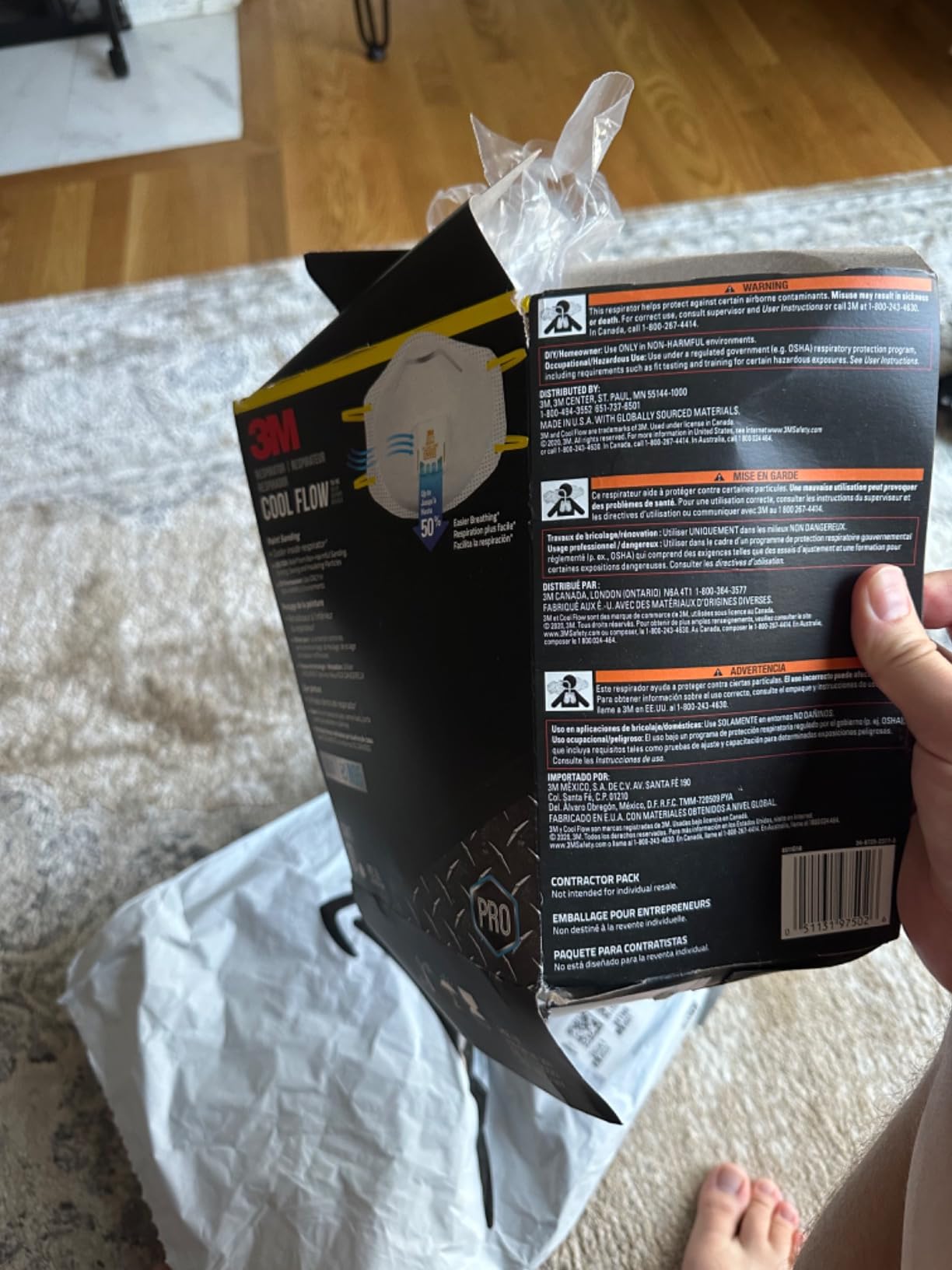
This is the highest-rated disposable in our group and the one most people end up buying first. The Cool Flow valve releases warm exhaled breath out of the front of the mask, which reduces the stuffy feeling that makes people quit early. 3M states up to 50 percent easier breathing compared to the 8200, and wearers report it holding up across a sanding session better than most valved masks.
The advanced electrostatic media is what keeps that valve from feeling like a compromise. Valves usually help with heat but let some filtered air escape, and the effect varies by design. Here the media captures particles while the valve handles condensation and warmth, so you are not trading filtration for comfort as obviously as with older valved masks.
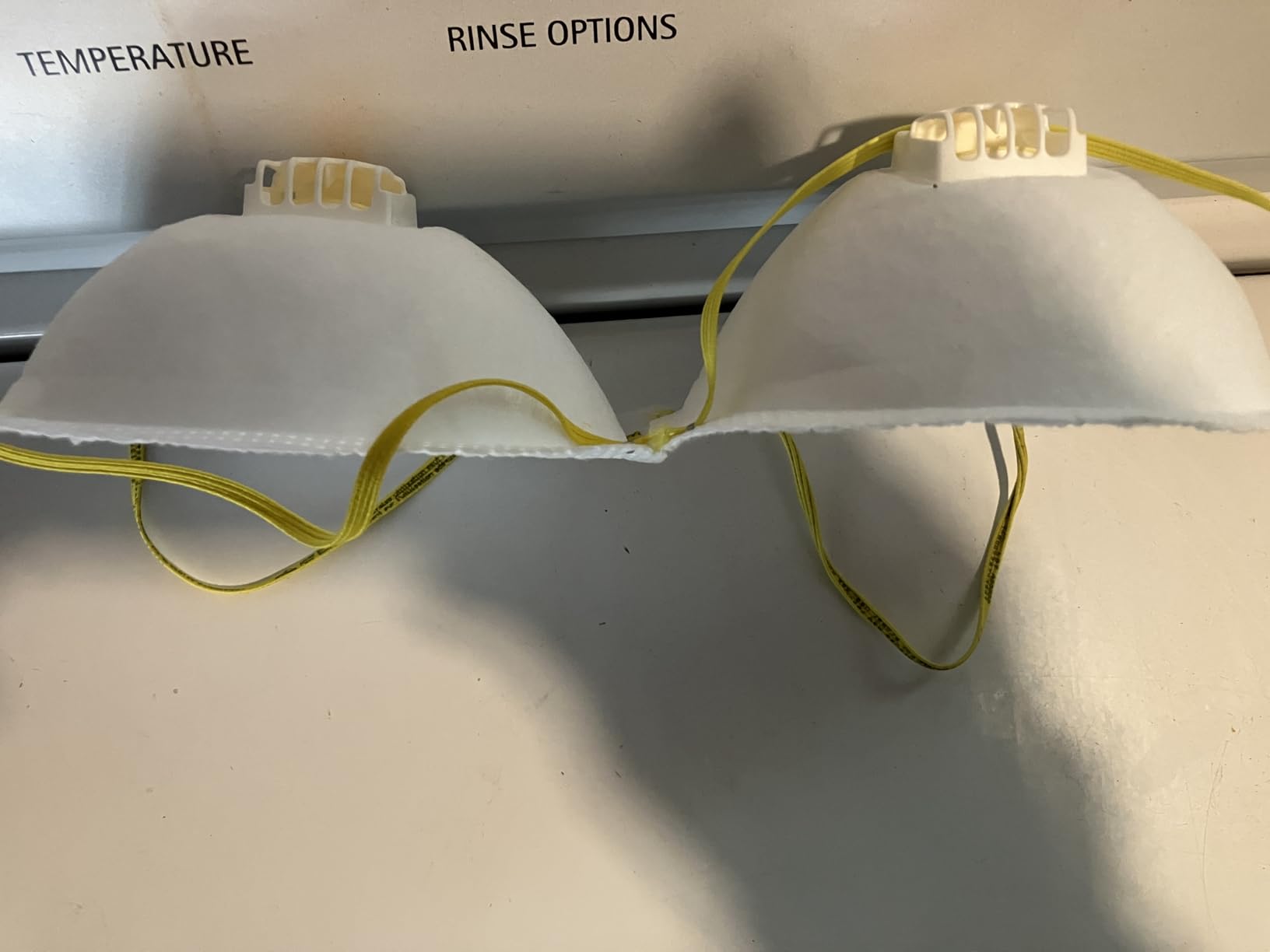
It is still N95, so it belongs on the short-job side of the line. Bare board, patching holes, sanding down a failed paint job on drywall, and quick cleanup passes are all appropriate uses. A full skim coat across a room with a power sander is where we would move up a class.
The stretchable braided headbands are worth calling out. Cotton elastic digs in at the strap points after about half an hour of hard work, and braided stretch webbing distributes that pressure instead of pinching. The adjustable M-noseclip helps you get the seal high on the bridge of the nose, which is where leaks usually start.
When this is the right buy
Buy the 8511 when you want one box to cover every short drywall job for a season. Ten masks is a sensible household quantity, it is the most comfortable disposable we tested for a dusty room with poor airflow, and the rating and review count give you real confidence in the basics.
It is also the safest first respirator to buy if you have never used one. There is no cartridge to install, no fit to learn, and the valve makes the first session less miserable than a plain unvalved mask.
Where the ceiling is
N95 filtration is the limit, not the comfort. If your sanding involves sustained airborne dust, the higher filtration class is what gives you margin, and no amount of valve comfort closes that gap. Think of this mask as the entry tier rather than the answer to a full sand.
Also remember it is single use. Once it is loaded with compound dust, or you have had it through a heavy session, it goes in the bin rather than back in the drawer, no matter how clean it looks.
9. 3M 8210 N95 – Best Value Over a Full House Sand
3M Particulate Disposable Respirator 8210, N95, Pack of 20, NIOSH APPROVED
NIOSH approved N95
20 respirators per box
Weighs 8.64 oz for the box
Two-strap design
Pros
- Largest review base by a wide margin
- Lowest cost per mask in a multi-pack
- Adjustable nose clip reduces eyewear fogging
- Works with eyewear and hearing protection
Cons
- Disposable and single use
- Listed for industrial and occupational use
- No warranty
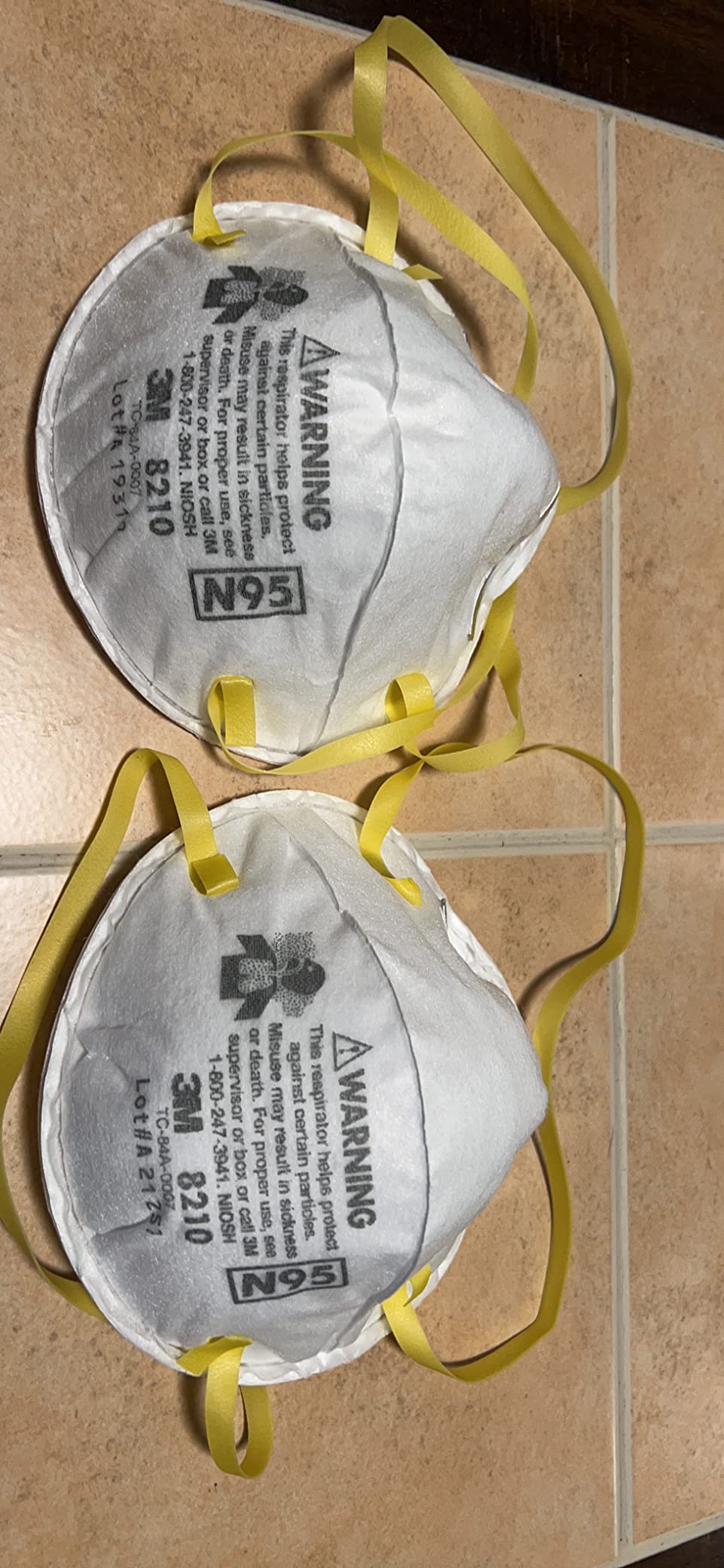
When the job is volume rather than subtlety, the arithmetic takes over. Twenty masks per box means the cost per sanding session is the lowest in this group, and at 19585 reviews you are buying the most thoroughly documented disposable respirator on the market. For a whole-house sand with multiple workers, that combination of cost and evidence is hard to argue with.
The adjustable nose clip is the practical feature. It lets you fit the mask high on the bridge, and 3M specifically notes it reduces the potential for eyewear fogging. The two-strap design with welded dual point attachment holds position better than a single-elastic design when you are moving your head through a sanding stroke.
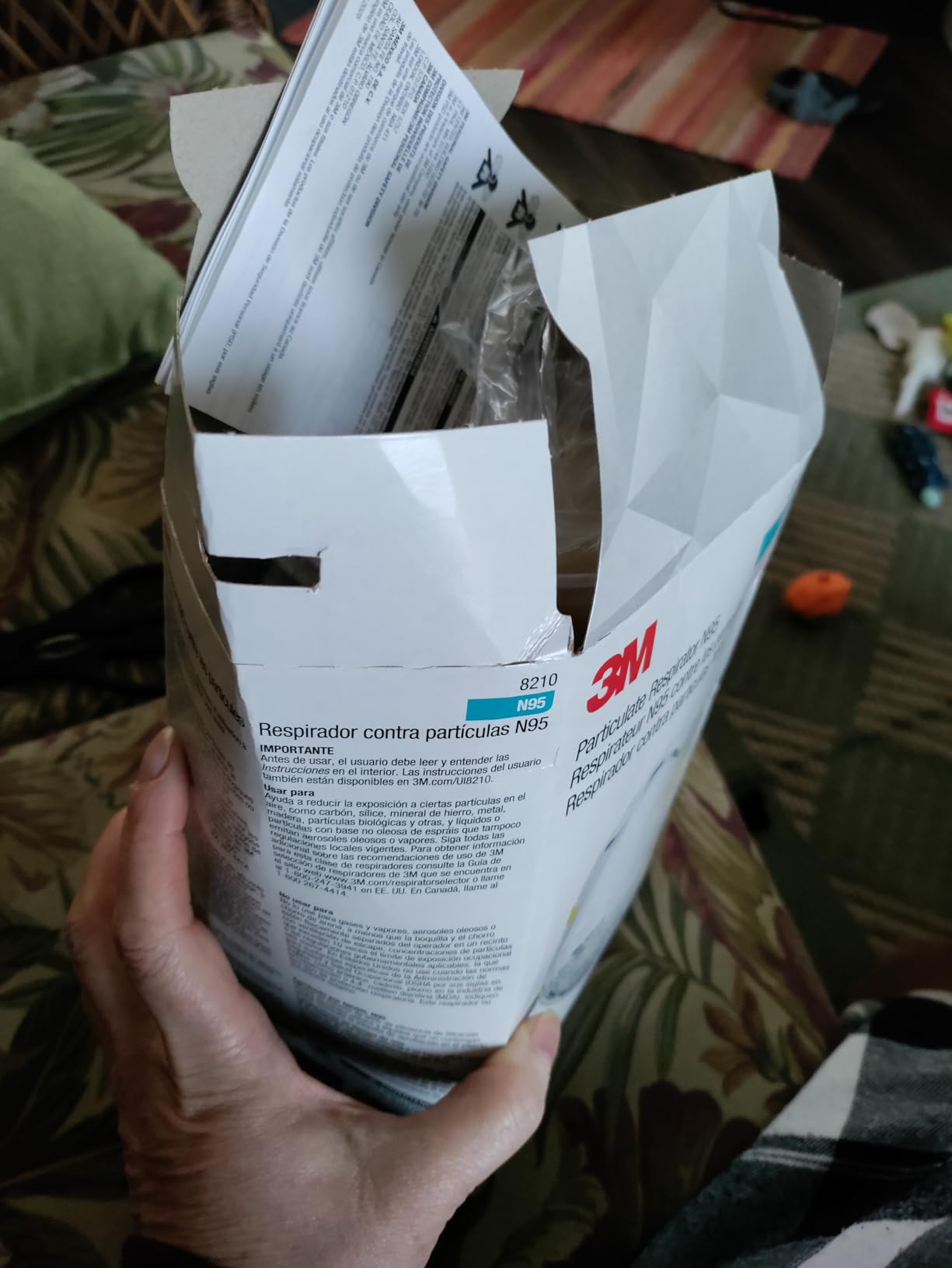
Comfort is where this one gives ground. The 8210 has no valve, so it is the stuffiest of the disposables here once you are breathing hard, and it is rated at N95, which is the lower filtration class in this group. It is rated for industrial and occupational use only, and it carries no warranty.
At 4.4 stars across such a large review pool, the pattern in the feedback is consistency rather than excitement. That is actually what you want from a box you plan to burn through on a full sand.
When to buy the 8210 in bulk
Buy the 8210 when the total sanding time across your crew is measured in days rather than hours. Anyone doing a full house, a gut renovation, or repeated rental turnover units will get more protection per dollar from a box of twenty than from a single reusable setup.
It is also the right choice for post-sanding cleanup and for moving drywall dust out of a room, where the dust load is lower than during sanding but the volume of work is high.
Where it is outclassed
For one long session in a closed room, a reusable P100 half mask will protect you better and cost less over the same few hours. The 8210 is a lower filtration class and a harder-wearing interface, and you will feel both after hour two.
If fogging drives you to remove eyewear mid-task, this is not the mask to buy. Look for the Aura profile or a reusable model with a downward-facing valve.
10. Honeywell DF300 N95 – Budget Pick That Folds Flat in a Pocket
Honeywell Safety DF300 N95 Flatfold Disposable Respirator- Box of 20, White
NIOSH approved N95
Folds flat for storage
Welded head straps
Latex-free
Pros
- Folds flat so it fits in a pocket or tool bag
- Welded straps resist breaking during donning
- Soft foam nose cushion
- Meets OSHA 1910.134 with an APF of 10
Cons
- Disposable and single use
- Lowest rating in this group at 4.2
- No valve for heat relief
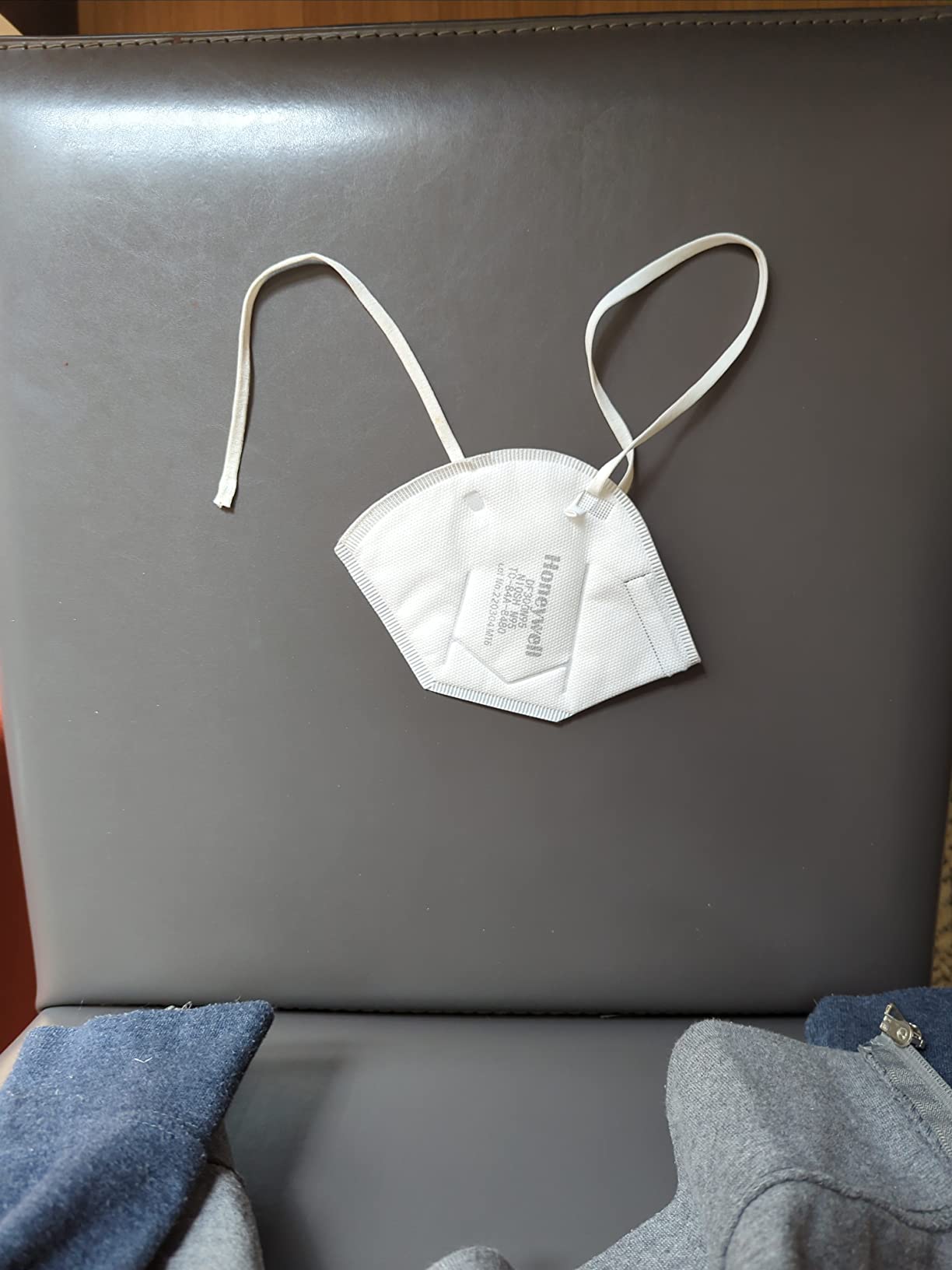
The DF300 is the pick for anyone who needs a certified mask stashed in a tool bag and forgotten about. It folds flat, so twenty of them take up no more room than a folded jacket, and the welded head straps are designed not to break during donning and removal, which is the usual failure point on cheap masks.
The soft foam nose cushion and adjustable nose clip create a reasonable seal at the bridge, and the comfort-stretch cloth straps hold the mask against your face without the hard pinch of rigid elastic. It is latex-free, which is a real consideration for a lot of people.
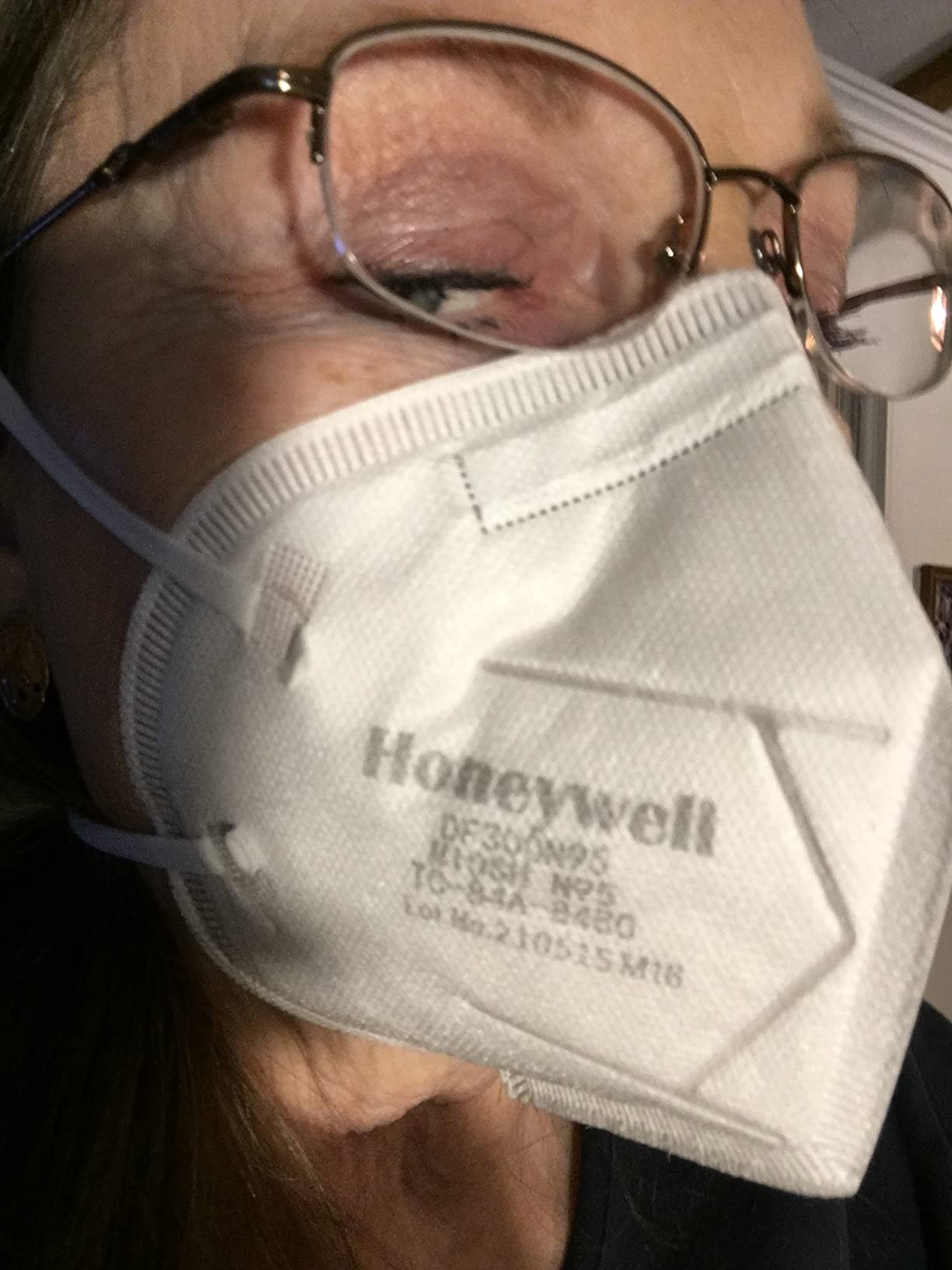
It is NIOSH approved as an N95 particulate respirator under 42 CFR 84, and Honeywell states an assigned protection factor of 10 per OSHA. That makes it a legitimate choice for dust, drywall installation, and general sanding work, though N95 remains the lower filtration class compared with the P100 options here.
There is no valve, so heat builds up in a closed room during a long pass, and at 4.2 stars it carries the lowest average rating in our group. Reviewers note that it does what it says at a straightforward level without offering anything beyond the basics.
Where this one earns its place
Pick the DF300 for a site kit, a van, or a hallway cabinet where you want a certified mask on hand for occasional short jobs. The flatfold design is genuinely more practical than a rigid cup-style mask when you are carrying safety gear in a bag with limited space.
It is also a reasonable stock-up alongside a reusable mask. Have the reusable P100 half mask for the sanding, and keep a box of these for cleanup, touch-ups, and anyone else on site who needs something simple.
When to spend a little more
If the sanding is continuous, upgrade to a P100 half mask. If you are wearing glasses, choose a profile designed to reduce fogging. If you are working in a closed room for hours, choose a valved or reusable design that handles heat better, because that is the factor that ends sessions early.
For any drywall job involving lead paint or a home built before 1978, none of the masks in this guide are the right answer. Test the paint first and use a lead RRP approach with the required respirator class for that work.
How to Choose a Respirator for Drywall Sanding
Choose by dust type first, then by session length, then by fit. Get those three in the wrong order and you end up overbuying for a touch-up or underprotected for a full skim coat. Here is how we would work through it.
What are you actually sanding
Bare gypsum board produces far less airborne dust than joint compound, skim coat, or patching compound. Bare board and light scuffing are N95 territory. Joint compound and anything wet-sanded or power-sanded is P100 territory, because the load stays in the air and the filter loads up fast. If your project involves knocking down old texture or removing taped joints, assume P100.
How long is the session
Under about thirty minutes, a disposable N95 is fine and there is no reason to unbox a reusable mask. Half a day or more, a reusable P100 half mask with replaceable filters is the economical answer, because heat builds up in disposables and that is what drives people to take them off. Multi-day or crew work, buy a box of disposables for volume and keep a reusable P100 for whoever is doing the detailed finish passes.
Does the mask seal on your face
This is the part that decides whether anything you buy is worth anything. Any facial hair crossing the seal line, a mask that gaps at the cheeks, or glasses whose arms run under the straps will all pull air in around the edge. Do a negative pressure check before you start: cover the filter area with your hand or a clean plastic bag, inhale gently, and hold for a few seconds. If the mask collapses inward and stays collapsed, the seal is good.
For smaller faces, look for an explicit small or small and medium sizing before anything else. A rigid medium facepiece that sits loose at the jaw will never seal properly, and no adjustment fixes a shape problem.
How to deal with glasses fogging
Three things actually work. Fit the nose clip high so exhaled air goes up past the lens line rather than straight into it, choose a model with a downward-facing exhalation valve, or wear a face shield over your glasses so the heat is trapped outside your lenses rather than inside them. A disposable with an embossed panel also helps. What does not work is fog wipes on lenses that are not already fog-resistant, or simply removing the mask until it clears.
What the respirator cannot do alone
A respirator is one part of a dust-control stack, and the honest truth from every drywall forum is that the mask alone will not keep your house clean. Pair it with a vacuum or a ventilated sander, and research by Young-Corbett and Nussbaum found ventilated sanding tools cut respirable and thoracic dust by up to 88 percent. That single change often matters more to your lungs than moving from N95 to P100, because it lowers the concentration before it ever reaches your mask.
If you are buying equipment for the job rather than for one afternoon, our drywall sander picks for home projects cover the dust control side, and texture sprayers for drywall are worth knowing about if you are about to create a large surface area of fresh compound to sand later. For overhead work, our guide to drywall lifts for ceilings cuts the amount of time you spend with dust falling on your face. Handling sheets is easier with a material lift than with a shoulder carry, which means less time in a dusty room overall.
How to spot an uncertified mask
Look for the NIOSH approval stamp on the body of the respirator itself, not just the listing. A genuine NIOSH-approved respirator carries the approval number and the manufacturer name on the facepiece. If the mask has no stamp, or the stamp looks printed on the packaging rather than moulded into the body, do not trust it. This is the standard we use for every certification claim in this guide.
Filter replacement and cost per sanding session
Disposable masks cost nothing after purchase but are used once. Reusable half masks need filters replaced when they load up, and that is where the running cost shows up. GVS states its Elipse filters can last up to five years before replacement, which spreads the cost of that setup over many jobs. The 3M 6200, the Klein Tools 60552, and the North 5500 bundle all require filters bought separately or in pairs, so budget for a spare set before your next heavy session rather than discovering the gap mid-sand.
Frequently Asked Questions
Are N95 masks good for sanding drywall?
N95 masks are good for sanding bare drywall board, short touch-up jobs, and cleanup. They filter at least 95 percent of non-oil particles, and drywall dust is non-oil, so they do work. For joint compound, skim coat, or any powered sanding that puts dust in the air, upgrade to a P100 half mask with replaceable filters.
Is P100 or N95 better?
P100 is better for drywall sanding. It filters 99.97 percent of particles including oil and holds that rating as the filter loads, while N95 filters 95 percent of non-oil particles. The jump matters most on multi-hour power-sanding sessions where compound dust stays airborne after you stop.
How bad is it to sand drywall without a mask?
Drywall joint compound contains crystalline silica, which OSHA regulates under 29 CFR 1910.1053 at a permissible exposure limit of 50 micrograms per cubic meter over an 8-hour average. Repeated exposure is linked to silicosis and lung cancer, and the dust stays airborne well after you stop sanding. A nuisance dust mask has no rating for it.
Should I wear a mask while sanding drywall?
Yes, anyone sanding joint compound longer than a few minutes should wear a NIOSH-certified respirator. If you are an employer or covered employee, OSHA fit testing and a written respiratory protection program apply in addition to the mask. Asbestos and suspected lead paint need different respirator classes and, in the case of asbestos, professional handling.
Are FFP3 or KN95 masks suitable for drywall dust?
FFP3 and KN95 masks are certified to comparable filtration levels under European and Chinese standards, so they filter drywall dust adequately. They are not NIOSH approved, which matters for OSHA compliance and for anyone matching a specific NIOSH-approved P100 class. Many owners report a better seal from thicker KN95 material, but fit still decides whether protection is real.
The Best Respirator Masks for Sanding Drywall in 2026
If you take one recommendation from this guide, make it the 3M 6200 with a pair of P100 filters. It is light enough to wear for a full session, reusable across every sanding job you will do this year, and adaptable to paint work later. The GVS Elipse is the better ready-to-go P100 if you would rather not make a second purchase, and the Klein Tools 60552 is the one to buy if glasses fogging is what keeps you unprotected.
For short jobs, a box of 3M 8210 or 8511 masks covers you at the lowest effort. Smaller faces should start with the Miller small and medium rather than fighting a rigid adult facepiece. Whatever you choose, run a negative pressure check before you start, pair the mask with a ventilated sander or vacuum, and treat the respirator as one part of a dust-control system rather than the whole answer.
Those are the best respirator masks for sanding drywall in 2026, ranked on the only measure that matters: whether you are still wearing it when the dust settles.