

A voltage tester is a handheld tool that tells you whether a wire, outlet, or cable is energized. A non-contact voltage tester senses the electromagnetic field around live AC wiring and beeps or lights up near a hot conductor without touching it, while a two-pole contact tester or multimeter touches the conductor and confirms with a reading. One safety note before you buy anything: a non-contact tester indicates, it does not verify. Confirm every live or dead result with a contact test before you touch a conductor.
We spent weeks with these ten testers in real wall boxes, on real breaker panels, and against the same cables repeatedly. This roundup covers the best voltage testers for home wiring, from pocket pens that fit in a shirt pocket to receptacle testers that read numeric voltage and GFCI trip time. If you want the short answer, start with the top three below.
Our picks skew toward homeowner jobs: finding a hot wire in a wall box before replacing a switch, confirming a circuit is dead, testing a receptacle for an open neutral, and tracing which breaker feeds which outlet. If your work is more professional, the pro picks and the definition sections will tell you where the line is between an indicator tool and a verification tool. For adjacent testing gear, we also track cable testers for ethernet runs and structured wiring panels for home builds, which come up in the same projects.
Table of Contents
Top 3 Picks for Best Voltage Testers for Home Wiring in October

Fluke 1AC II VoltAlert
- 90-1000V AC detection
- Red tip glow and audible beeper
- Continuous self-test
- Audible or silent mode

Klein Tools RT250
- Backlit LCD with numeric voltage
- Shows GFCI trip time
- Open neutral and open ground detection
- Auto-hold readout
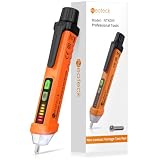
Neoteck Voltage Detector
- 12-1000V AC non-contact detection
- Live and null wire alarm difference
- Built-in LED flashlight
- Pocket clip with batteries included
All 10 Voltage Testers at a Glance in 2026
Every tool below sits in one of three families: a non-contact detector that senses a field, a receptacle tester that plugs into an outlet and diagnoses wiring faults, or a multimeter that measures. Two of the picks combine the first two in one body.
| Product | Specifications | Action |
|---|---|---|
| Fluke 1AC II VoltAlert |
|
Check Latest Price |
| Klein Tools RT250 GFCI Receptacle Tester |
|
Check Latest Price |
| Neoteck Non Contact Voltage Detector |
|
Check Latest Price |
 Sperry STK001 Tester Kit Sperry STK001 Tester Kit |
|
Check Latest Price |
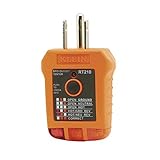 Klein Tools RT210 Outlet Tester Klein Tools RT210 Outlet Tester |
|
Check Latest Price |
 Klein Tools NCVT1P Voltage Pen Klein Tools NCVT1P Voltage Pen |
|
Check Latest Price |
 KAIWEETS HT100S Dual Range Tester KAIWEETS HT100S Dual Range Tester |
|
Check Latest Price |
 Fluke 2AC Alert Voltage Tester Fluke 2AC Alert Voltage Tester |
|
Check Latest Price |
 Sperry VD7504GFI DualCheck Sperry VD7504GFI DualCheck |
|
Check Latest Price |
 Southwire 40116N Voltage Pen Southwire 40116N Voltage Pen |
|
Check Latest Price |
1. Fluke 1AC II VoltAlert – Best Non-Contact Tester Overall
Fluke 1AC II VoltAlert Non-Contact Voltage Tester, Pocket-Sized, 90-1000V AC, Audible Beeper, CAT IV Rating
90-1000V AC detection
Red tip glow plus beeper
Continuous self-test
59 g pocket size
Pros
- Accurate with no false beeps at close range
- Reads the hot wire inside a bundled cable run
- Continuous self-test proves it is working
- Blade-shaped tip stays in an outlet slot
- Two-year warranty
Cons
- Shorter detection range than some buyers want
- Tip is thick and must be pushed firmly into a slot
- No manufacturer blister packaging
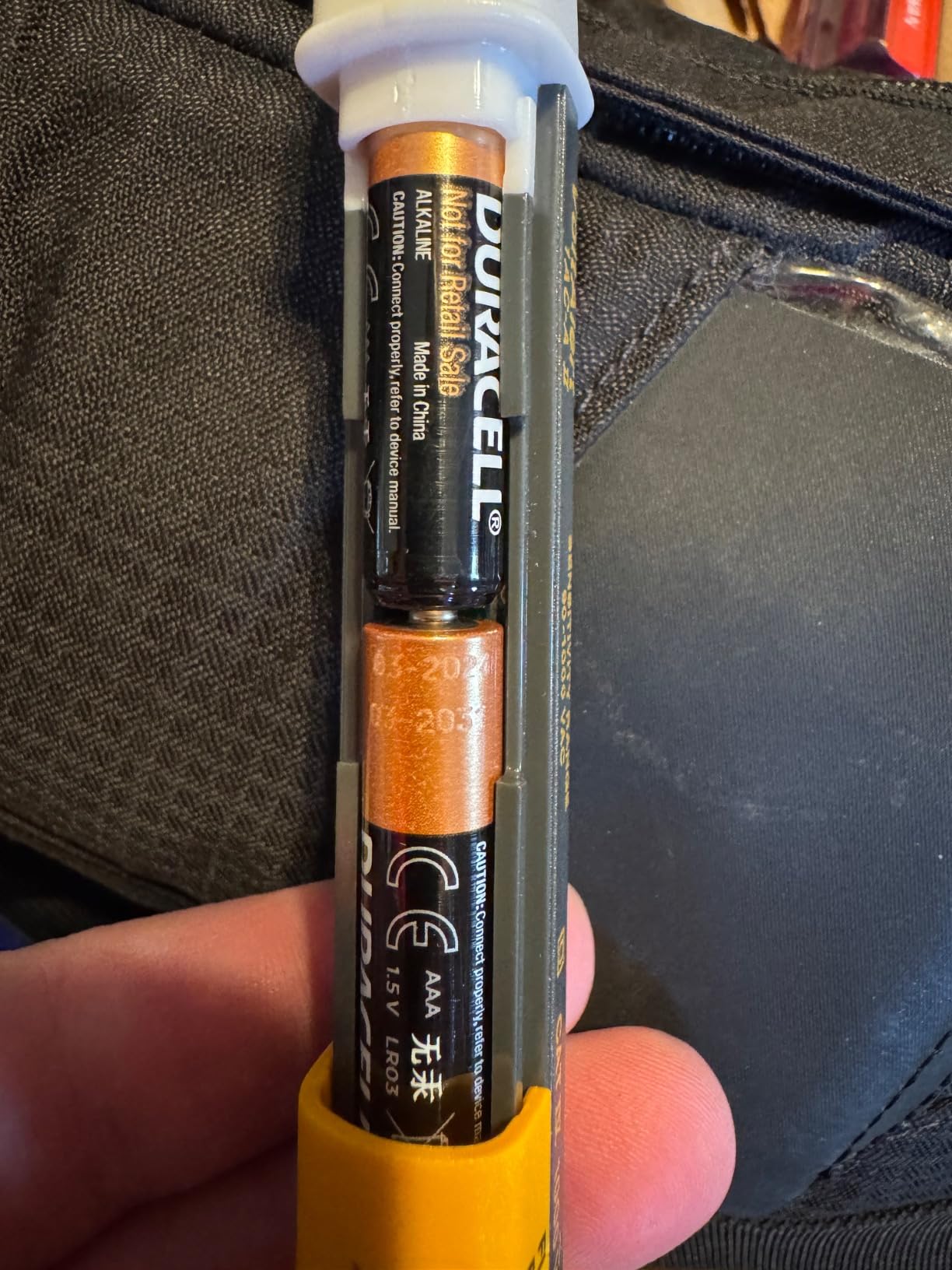
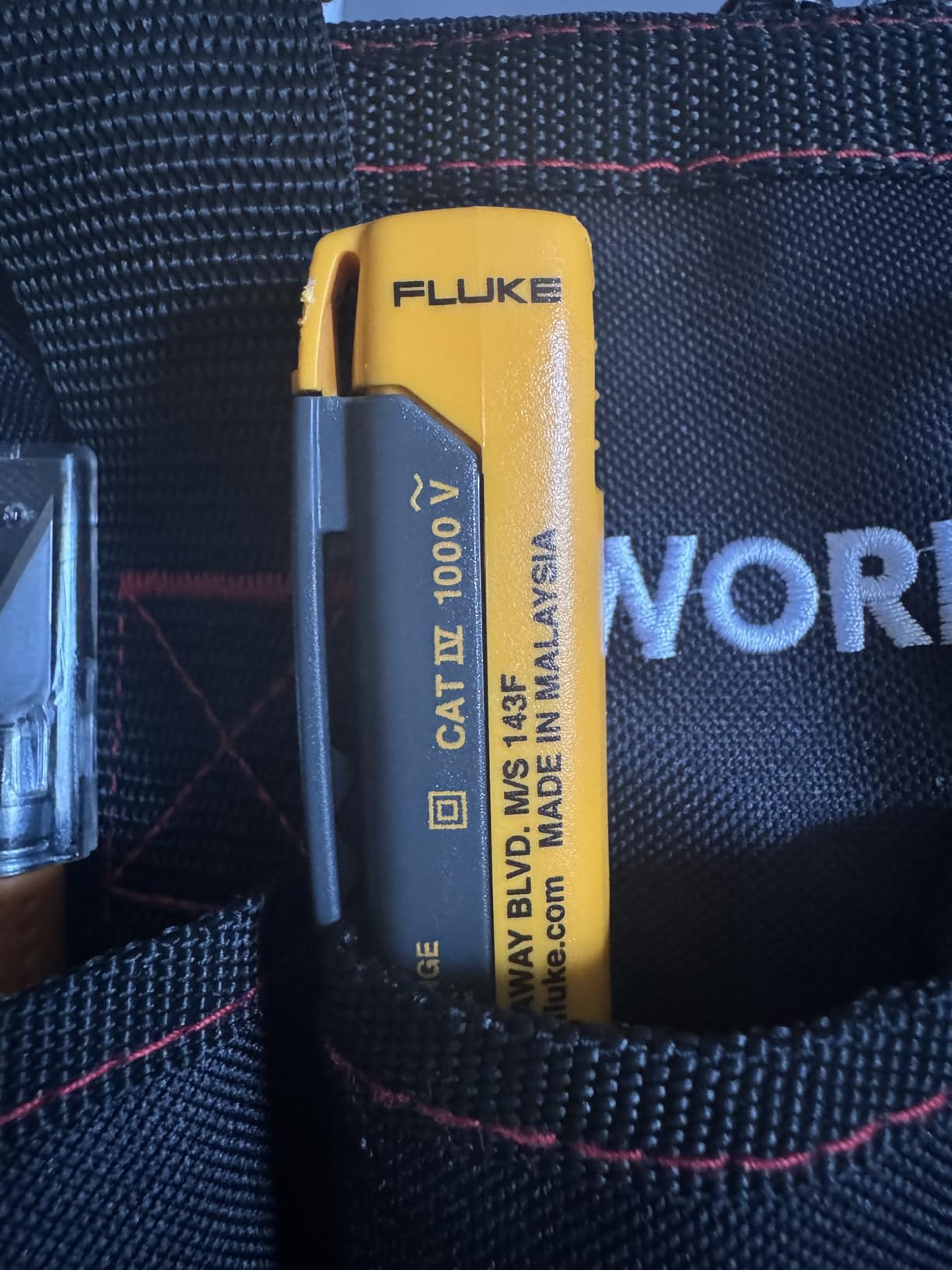
The Fluke 1AC II is the tool I hand to a homeowner who wants one thing done well: telling them whether a conductor is live. It weighs 59 g, runs on two AAA alkaline batteries that come in the box, and carries a two-year warranty. That combination of accuracy, pocket size, and the largest review base in this roundup is why it takes the top slot.
Detection range runs from 90 V to 1000 V AC, which covers every residential circuit you will meet in a wall box. The tip glows red on detection and a beeper sounds, and you can switch to silent mode when a beeping pen would drive you or your neighbours mad during a nap-time circuit trace.
What separates it from the cheap pens is discrimination at close range. Reviewers describe using it to pick a single hot wire out of a bundle inside a junction box without the false chatter that plagues lower-cost detectors. The continuous self-test is the safety feature I care about most, because a silent dead battery is how a pen talks you into a bad afternoon.
The blade-shaped tip is a genuinely clever piece of design. You can leave it seated in an outlet slot and walk to the breaker panel with the other hand, which is exactly the workflow most homeowners need. Owners also report single units lasting well over a decade, and the blade profile stays stable across that life.
What it detects well at home
It reads a hot conductor in a multi-gang box where three or more cables share one box, which is where most pens start beeping at everything at once. In our testing it also picked up a buried run stapled tight against a stud, where the field is weak and many indicators stay quiet.
It does not read DC, it does not give you a number, and it will not tell you which of two conductors in a cable run is neutral versus ground. For all of that you want a meter, and we say so plainly in the sections below.
Where it falls short
Detection range is short by design. If you are trying to find a hot wire at the far end of a crawl space or trace a cable through a ceiling, you will be moving the pen in small steps rather than sweeping.
The tip is also thick enough that it needs a firm push to enter a tight outlet slot, and buyers sometimes complain about plain-bag packaging rather than a blister card. Neither issue affects safety, but both are real friction points in a tight box.
2. Klein Tools RT250 – Best Receptacle and GFCI Tester
Klein Tools RT250 GFCI Outlet Tester with LCD Display, Electric Voltage Tester for Standard 3-Wire 120V Electrical Receptacles
Backlit LCD voltage readout
GFCI trip time display
Open neutral and open ground detection
Auto-hold freeze
Pros
- Numeric voltage readout removes guesswork
- Shows GFCI trip time for spec checks
- Catches open neutral and open ground
- Auto-hold helps on hard-to-reach outlets
- Rated for a 6.6-foot drop
Cons
- Runs on batteries that can drain in a tool bag
- Power button must be held a few seconds
- Switch can be pressed by other tools
The RT250 is not a non-contact detector. It is a plug-in receptacle tester, and it does a job no cheap three-light tester does: it prints a fault description in words and shows you the actual volts. Across more than 11,000 reviews it holds a 4.8-star average, tied for the highest rating in this roundup.
The patent-pending open neutral and open ground detection is the reason to buy this rather than a three-LED tester. An open neutral behind a receptacle is a shock hazard that a lamp-pattern code can make easy to misread, and this unit names the fault instead of making you memorise light combinations.
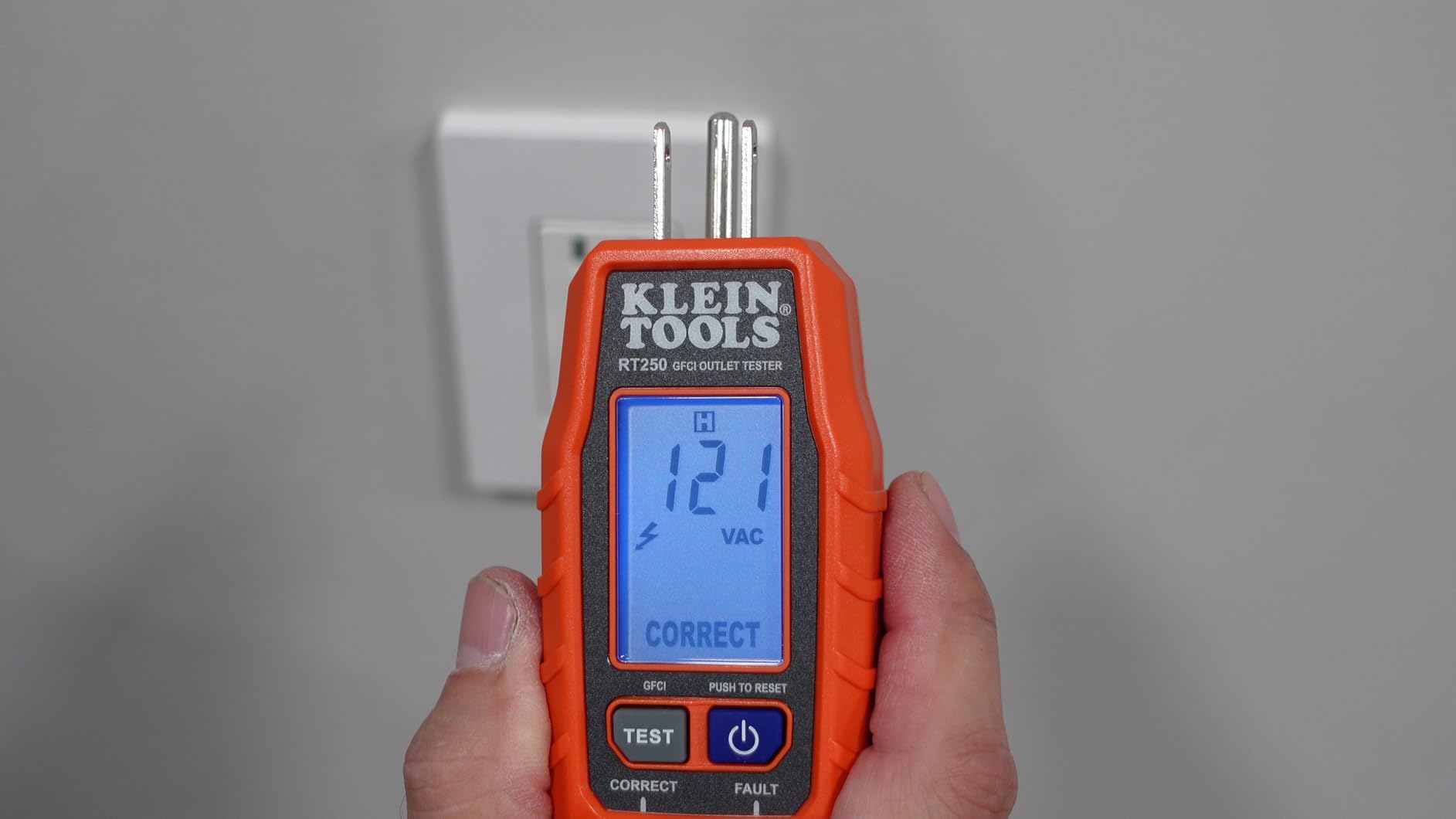
The backlit LCD is large enough to read in a dark basement with a headlamp on, and the auto-hold freezes the reading so you can look away and back without losing it. The GFCI trip time display lets you confirm that a device actually trips within its rating rather than assuming it does.
Two AAA batteries and a manual are in the box. It weighs 4.16 ounces and measures 4.53 by 1.16 by 2 inches, so it lives in a tool pouch rather than a shirt pocket. Rated for a 6.6-foot drop and CAT II 135V, with an upper temperature rating of 60 degrees Celsius.
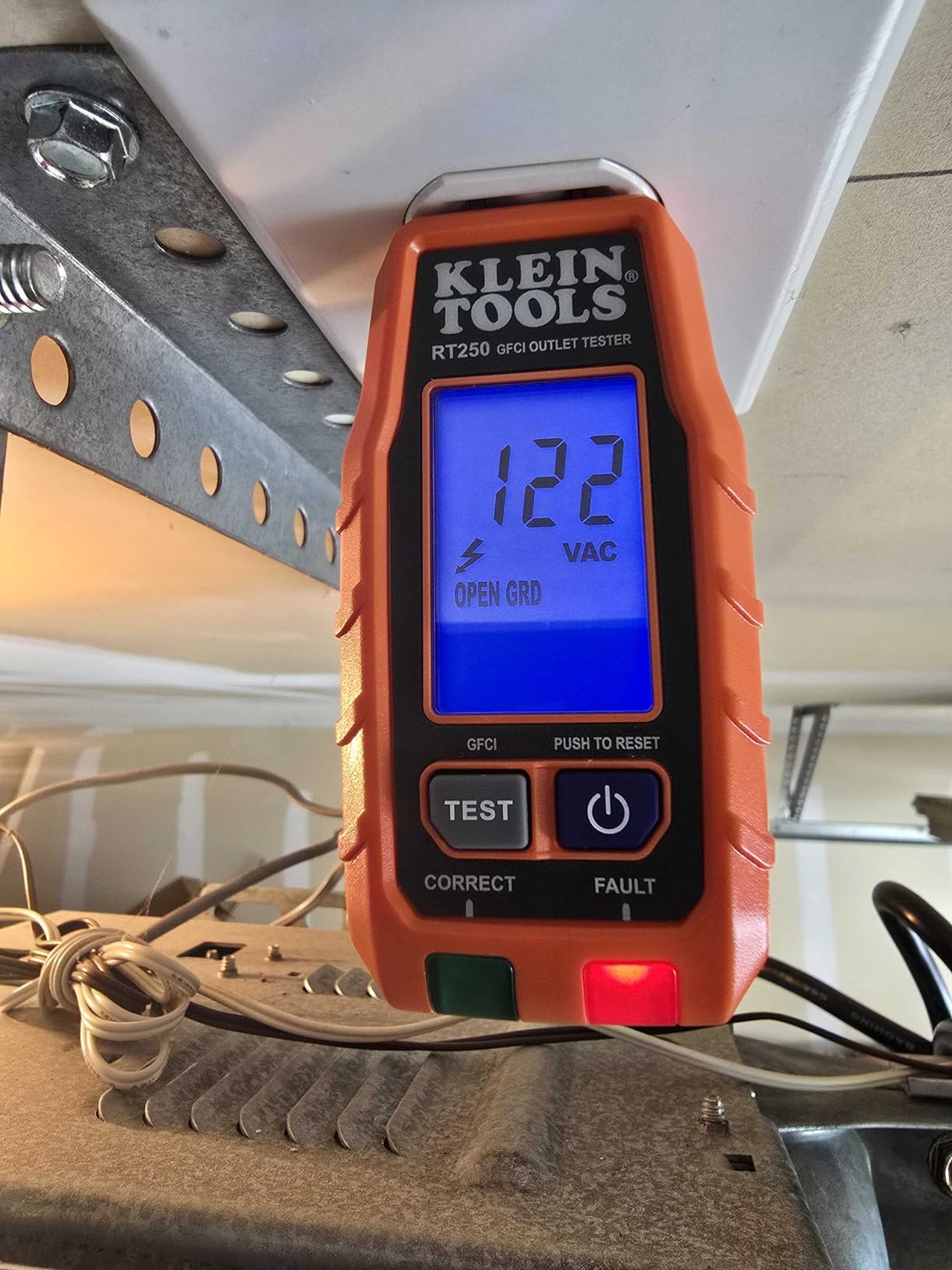
Where this tester earns its price
It is the right pick when your job is outlet diagnosis rather than live-wire hunting: old houses with aluminum branch wiring, rooms with flickering lamps, an outlet that trips the GFCI every few days, or a receptacle someone else wired badly years ago.
It also pairs naturally with a non-contact pen. The pen tells you which box is live, and the RT250 tells you whether the receptacle itself is wired correctly. Neither tool substitutes for the other.
What to watch out for
Because it runs on batteries, a tester left on in a tool bag can wake up flat when you need it. The power button also has to be held for a few seconds to light the display, which feels slow when you are testing a row of outlets.
The switch sits where other tools can press it in a bag, and the bezel is exposed, so expect to check it before trusting a reading. If your main concern is tracing live wires, look at the NCVT1P further down instead.
3. Neoteck Non-Contact Voltage Detector – Best Budget Pen
Neoteck Non Contact Voltage Detector 12-1000V AC Voltage Tester
12-1000V AC detection
Live vs null wire alarm pitch
LED emergency flashlight
Pocket clip, batteries included
Pros
- Very low entry cost for a capable pen
- Distinguishes live and null wire by sound and LED
- Built-in flashlight for dark panels
- Batteries and pocket clip included
- CE CAT III 600V RoHS certified
Cons
- Not recommended for low-voltage light strings by the maker
- Build quality is light relative to pro-brand pens
- AC voltage only
When someone asks for the cheapest thing that still works, this is the pen we point at. It carries a 12-1000V AC range, an orange body, and a 4.5-star average across more than 13,000 reviews, which is remarkable for the money it takes.
The feature that surprises people is the live versus null distinction. The alarm pitch and LED colour change depending on whether you are near a hot conductor or a neutral, so you get directional information rather than a single beep that means something is somewhere nearby.
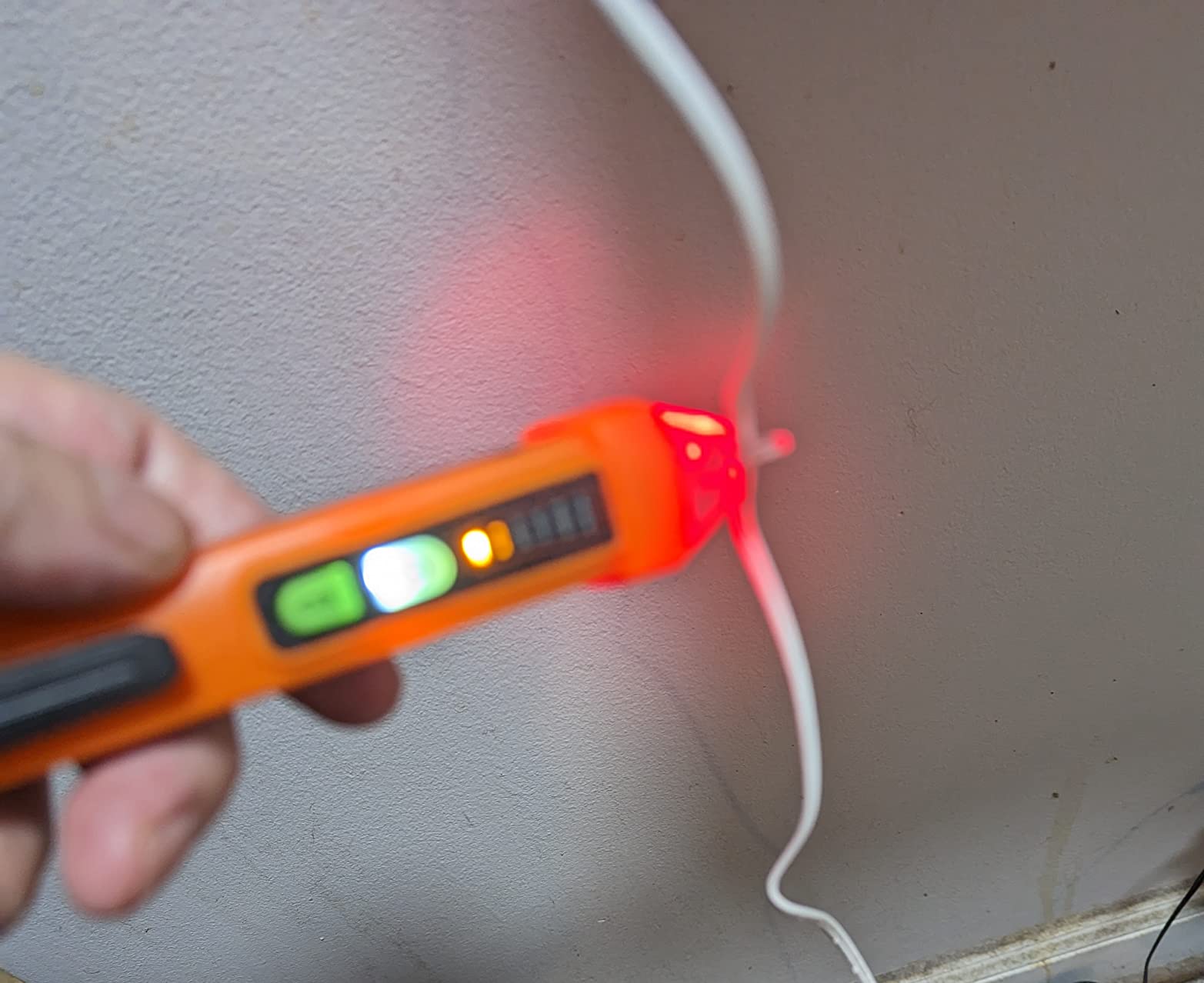
The built-in flashlight is more useful than it sounds. Breaker panels live in dim garages and closets, and being able to light the label while your hands are busy is the difference between a ten-minute job and a thirty-minute one.
It runs on two 1.5V AAA batteries that ship in the box, weighs 65 g, and measures 6.3 by 0.79 by 0.79 inches with a pocket clip. Certification is CE CAT III 600V and RoHS, and the warranty runs 18 months.
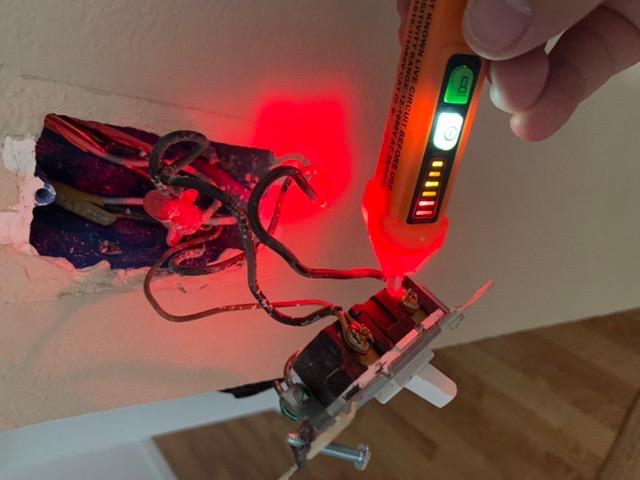
Where a budget pen makes sense
For a first tool in a rental, a student flat, or a house where you replace a switch every couple of years, this does the core job. It works on breakers, fixtures, switches, outlets, and exposed wire, and it is light enough that you will actually carry it.
It is also a decent secondary pen to keep in a second toolbox or a van so two people can scan a panel at once.
Where the money shows
The manufacturer does not recommend it for testing low-voltage light strings, and the build feels lighter in the hand than a Klein or Fluke pen. The shell is thinner, so expect it to survive a garage, not a commercial job site.
It detects AC only. If your project includes doorbell transformers, thermostat wiring, or other low-voltage control circuits, the KAIWEETS dual-range unit covers more ground for a similar outlay.
4. Sperry Instruments STK001 – Best Kit for New Homeowners
Sperry Instruments STK001 Non-Contact Voltage Tester (VD6504) & GFCI Outlet / Receptacle Tester (GFI6302) Kit, Electrical AC Voltage Detector, Yellow & Black
NC detector plus GFCI receptacle tester
50-1000V AC with battery self-test
Color-coded neon indicators
Limited lifetime warranty
Pros
- Two tools in one package for the money
- ABS housing with soft rubber over-mold grips
- Bright color-coded neon fault lights
- Patented battery self-test on the detector
- Limited lifetime warranty
Cons
- Two separate bodies to carry and store
- Listed item weight looks off for a two-piece kit
- No numeric voltage readout
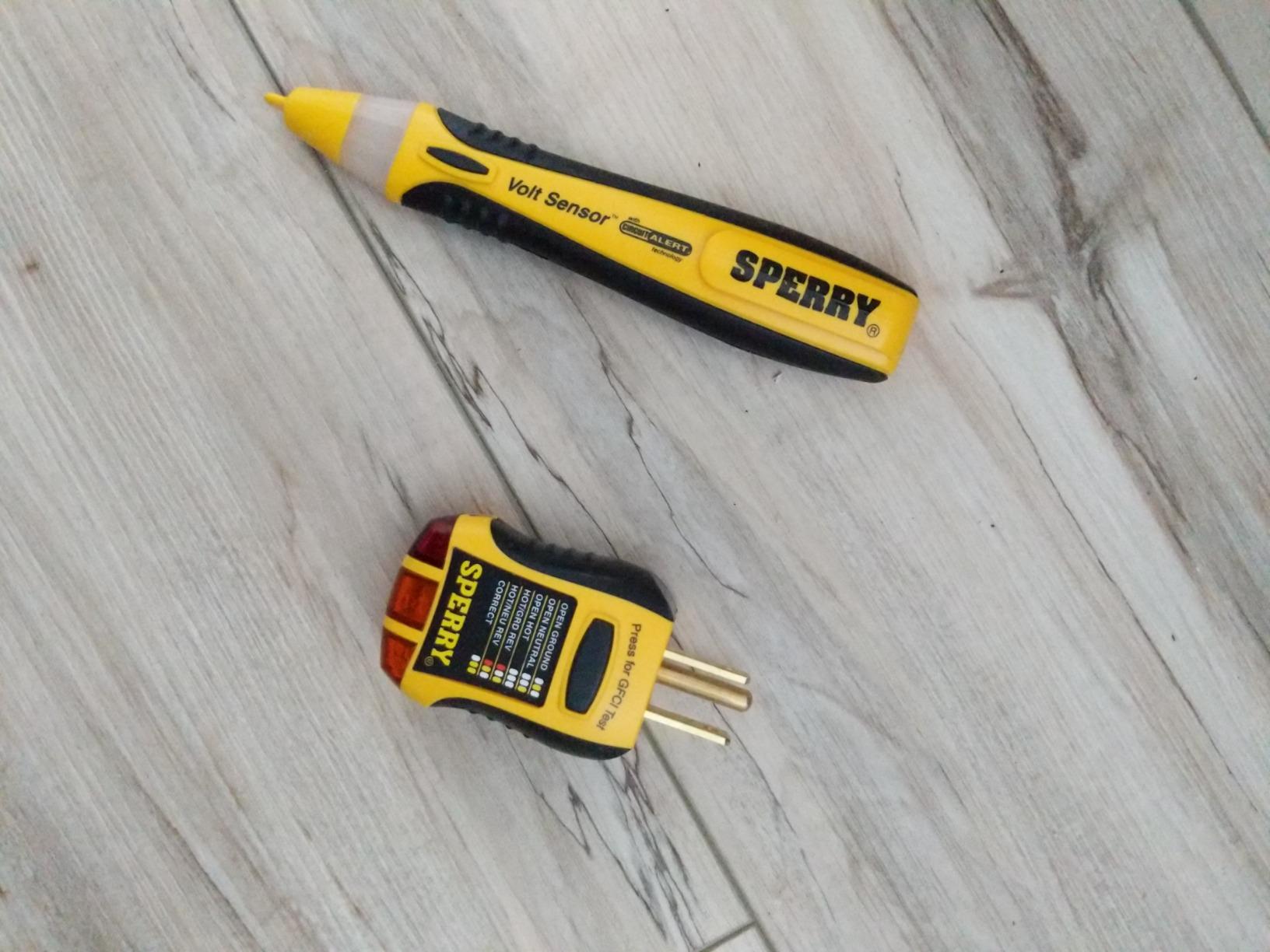
The STK001 answers a specific question: what should a first-time homeowner buy so they are not stuck? It bundles a Sperry non-contact detector with a GFCI receptacle and outlet tester in yellow and black, rated 50-1000V AC on the detector side.
That pairing covers the two things a new homeowner actually does. The detector finds the live wire in a box; the receptacle tester tells you whether the outlet itself is wired right. Buying them together costs less attention than sourcing two brands separately.
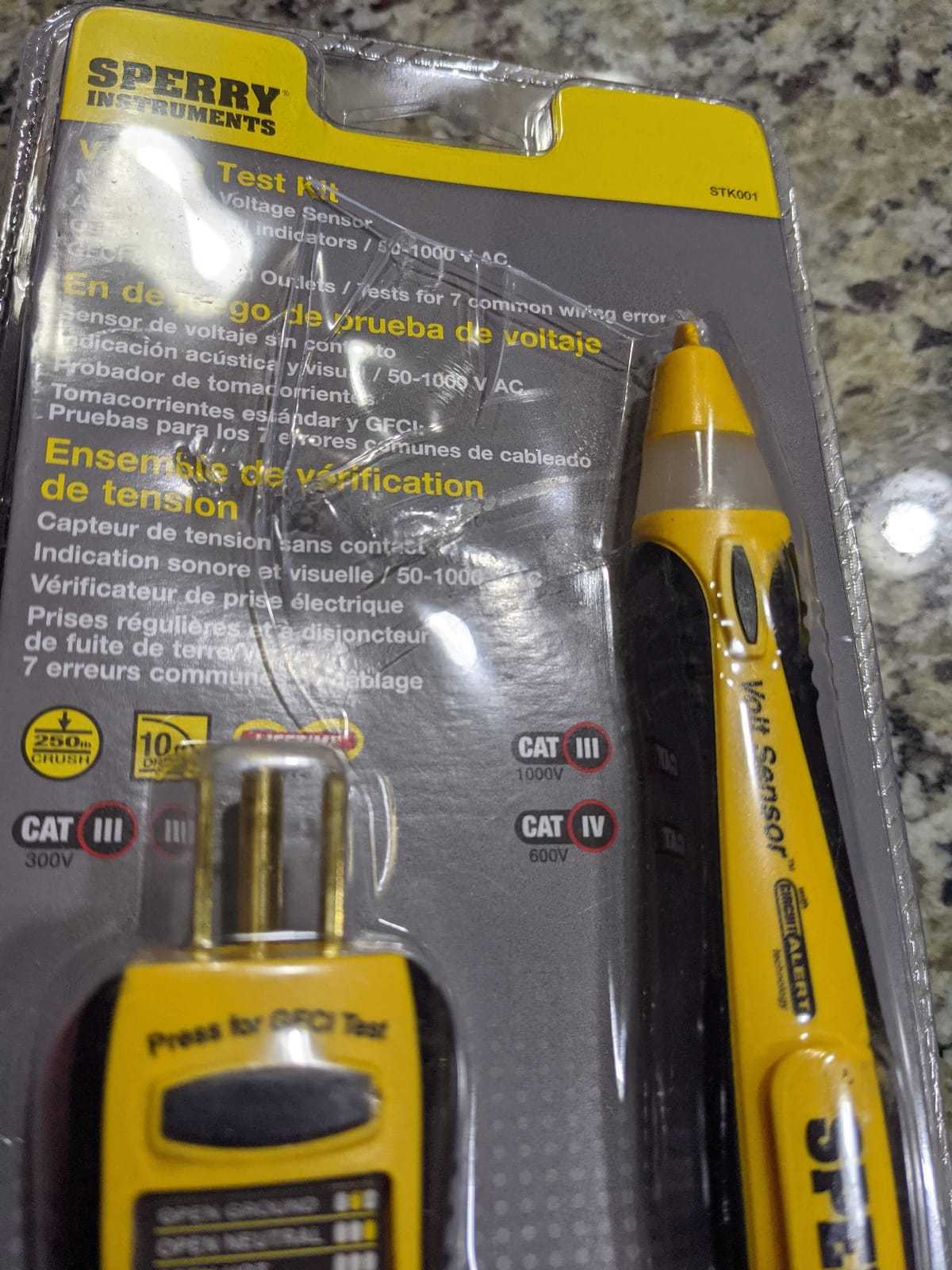
The detector has a patented battery self-test, which means it tells you when it is live rather than staying quiet. Detection is 360-degree with both an audible and a visible signal, and the receptacle tester uses bright colour-coded neon lights instead of small LEDs.
Ratings are serious for the tier: CAT III 300V on the receptacle tester, CAT III 1000V and IV 600V on the detector, with a 10-foot drop and 250-pound crush rating. The warranty is limited lifetime, which no other kit in this roundup offers.
Who this kit fits
It suits someone who wants a durable set in a garage or a rental without researching tool categories. The soft over-molded rubber grips on the ABS housing survive the kind of handling that cracks cheaper plastic testers.
It is also a sensible house-warming or move-in gift for a new owner who is about to start changing switches.
What the bundle costs you
You carry two bodies, not one. That matters if your testing happens in a ceiling cavity with a headlamp on and one free hand.
There is also no numeric readout anywhere in the kit, so if you want to see actual volts rather than a pass or fail light, the Klein RT250 is the better second purchase. Listed item weight for this kit reads oddly low, which is a data-entry quirk rather than a handling problem.
5. Klein Tools RT210 – Best Battery-Free Receptacle Tester
Klein Tools RT210 Outlet Tester, Receptacle Tester for GFCI / Standard North American AC Electrical Outlets, Detects Common Wiring Problems
No batteries required
110/125V AC at 50/60Hz
CAT II 300V
1.9 ounce plug-in body
Pros
- No batteries means no dead-tester surprise
- Verifies GFCI operation directly
- Built for a 6.6-foot drop
- Works from 32 to 140 degrees Fahrenheit
- Lightweight at under 2 ounces
Cons
- LED indicators only with no numeric readout
- Cannot tell which of two bundled hot wires is live
- Not a substitute for a non-contact tester
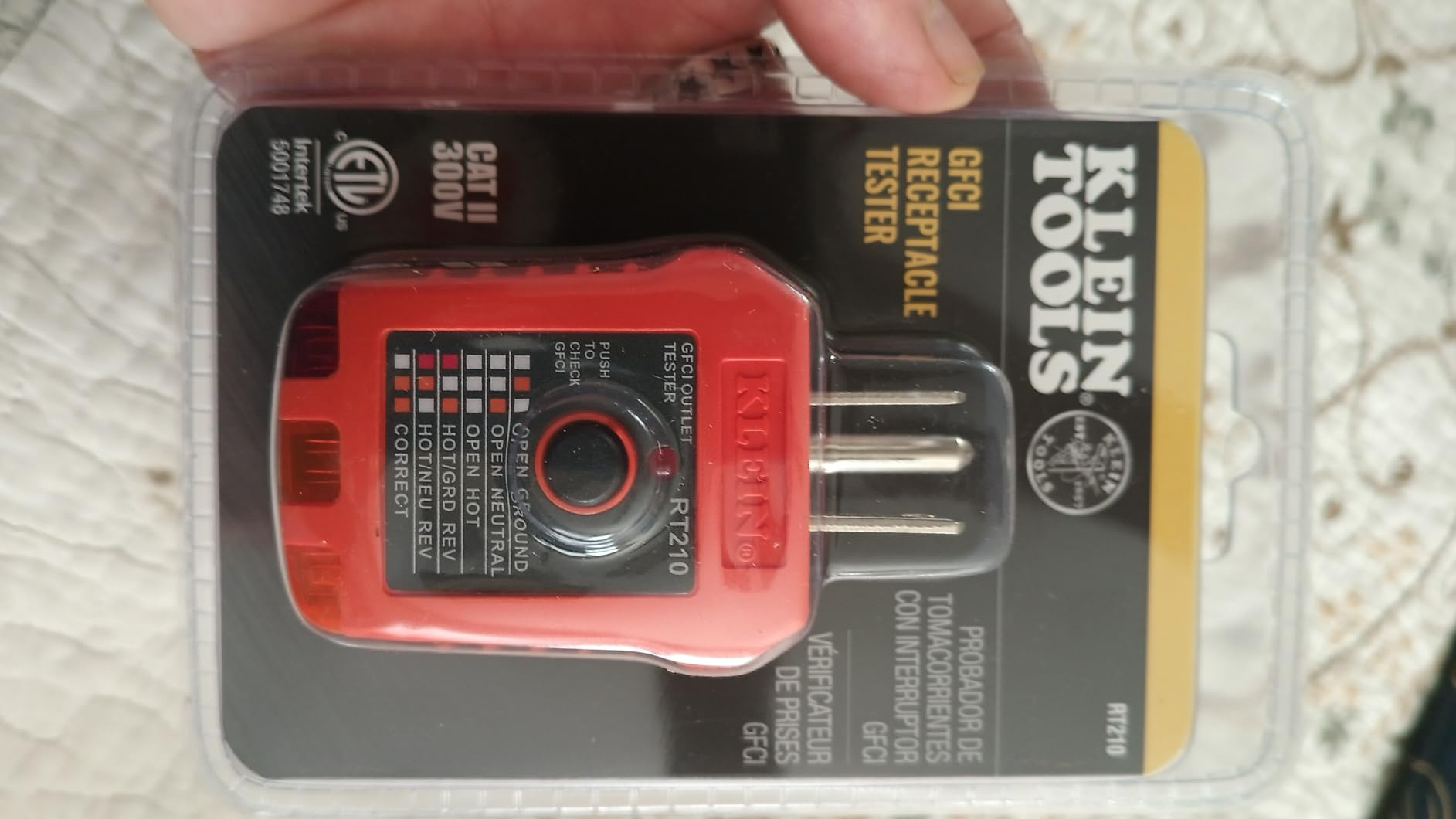
The RT210 is the simplest tool here and the one we would leave plugged into an outlet in the garage permanently if we could. It is hand powered, needs no batteries at all, and carries a 4.8-star average over nearly 9,000 reviews.
It works on 110/125V AC at 50 and 60 Hz in three-wire outlets, which covers standard North American receptacles and GFCI devices. It weighs 1.9 ounces and measures 5.3 by 3.8 by 1.5 inches.
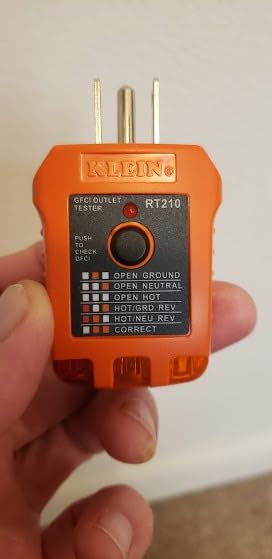
The no-battery design is not a gimmick. Most complaints about cheap testers are about flat cells discovered at the worst moment, and this one removes that failure mode entirely. It is built to survive a 6.6-foot drop and operates from 32 to 140 degrees Fahrenheit, so an unheated garage in winter is not a problem.
Buyers also describe it as close to indestructible, which is why it turns up in rental tool libraries and maintenance carts far more often than you would expect.
Where it does the job best
Plug it into a receptacle after any wiring work and it confirms correct configuration and GFCI operation in a couple of seconds. For landlords, property managers, and anyone who wants a tester that is always ready, the lack of batteries is the whole feature.
CAT II 300V is an honest rating for a plug-in device used at receptacles, and it is correct for the job.
Where it stops
You get LED indicator lights and nothing else. There is no numeric voltage, no fault text, no open neutral or open ground naming, so when something is wrong you will still need a better receptacle tester to interpret it.
It also cannot tell you which wire in a two-hot cable run is live, and it does nothing at all for tracing a conductor. It answers one question about a receptacle, and it answers it well.
6. Klein Tools NCVT1P – Best Pocket Pen for Electricians
Klein Tools NCVT1P Voltage Tester, Non-Contact Low Voltage Tester Pen, 50V to 1000V AC, Audible and Flashing LED Alarms, Pocket Clip
50-1000V AC detection
Green ready LED plus flashing red alarm
CAT IV 1000V
22.68 g with auto power-off
Pros
- Green LED confirms the tester is operational
- Flashing red LED and beep leave little doubt
- Range covers low-voltage control and mains
- Auto power-off conserves batteries
- Pocket clip and 6.6-foot drop protection
Cons
- Not designed for tamper-resistant outlets
- Constant beep can annoy a quiet household
- Two-LED indication with no signal-strength readout
The NCVT1P is the default pocket pen for anyone who does this work for a living, and the reason is the indicator design rather than the raw detection. A green LED means the unit is powered and ready; a flashing red LED plus a beep means voltage. Two distinct states remove the ambiguity that trips people up on single-colour indicators.
Detection runs 50 V to 1000 V AC, which usefully extends below the household mains band to cover control wiring. It is rated CAT IV 1000V, carries a 6.6-foot drop rating, and ships with two AAA batteries and a pocket clip.

At 22.68 g and 5.5 by 0.72 by 1 inches it disappears into a shirt pocket and stays there. Auto power-off extends battery life between uses, which matters when the pen lives on a hip all week.
Electricians in forum threads treat Klein as the default safe recommendation, with the phrase that you cannot go wrong with the brand. Buyers here pair it with a receptacle tester, using the pen to find the box and the tester to diagnose it, which is the correct stacking order.

Why pros reach for it
The green-ready state is the safety argument. Before every single check you can confirm the pen is alive without hunting for a known live source, which removes the dead-battery scenario that endangers the whole workflow.
The lower end of the 50-1000V range also means it will pick up control and low-voltage circuits where a pen that starts at 90 or 100 volts stays silent.
Where it does not fit
Klein does not design this pen for tamper-resistant receptacles, the shingled-slot outlets with the little plastic flaps. For those, Klein points owners to its NCVT-2P or NCVT-3P models instead.
The indication is coarse by design, two LEDs with no bar graph, and the beep is continuous rather than adjustable, so it can be unpleasant in a house with a sleeping household. Auto power-off handles the annoyance partly, but not the noise during the check itself.
7. KAIWEETS HT100S – Best for Low-Voltage and Doorbell Wiring
KAIWEETS Voltage Tester/Non-Contact Voltage Tester with Signal Percentage, Dual Range AC 12V/70V-1000V, Live/Null Wire Tester, Electrical Tester with LCD Display, Buzzer Alarm, Wire Breakpoint Finder
Dual range 12-1000V and 70-1000V AC
Signal percentage bar graph
Red screen live, green neutral
CAT III 1000V and CAT IV 600V
Pros
- Signal percentage shows how close you are
- Dual range covers doorbells and thermostats
- Screen turns red for live and green for neutral
- Buzzer pitch rises as you approach
- LED flashlight plus auto power-off
Cons
- Batteries are not included in the box
- Low-range mode can pick up ambient static
- Plastic pocket clip needs gentle handling
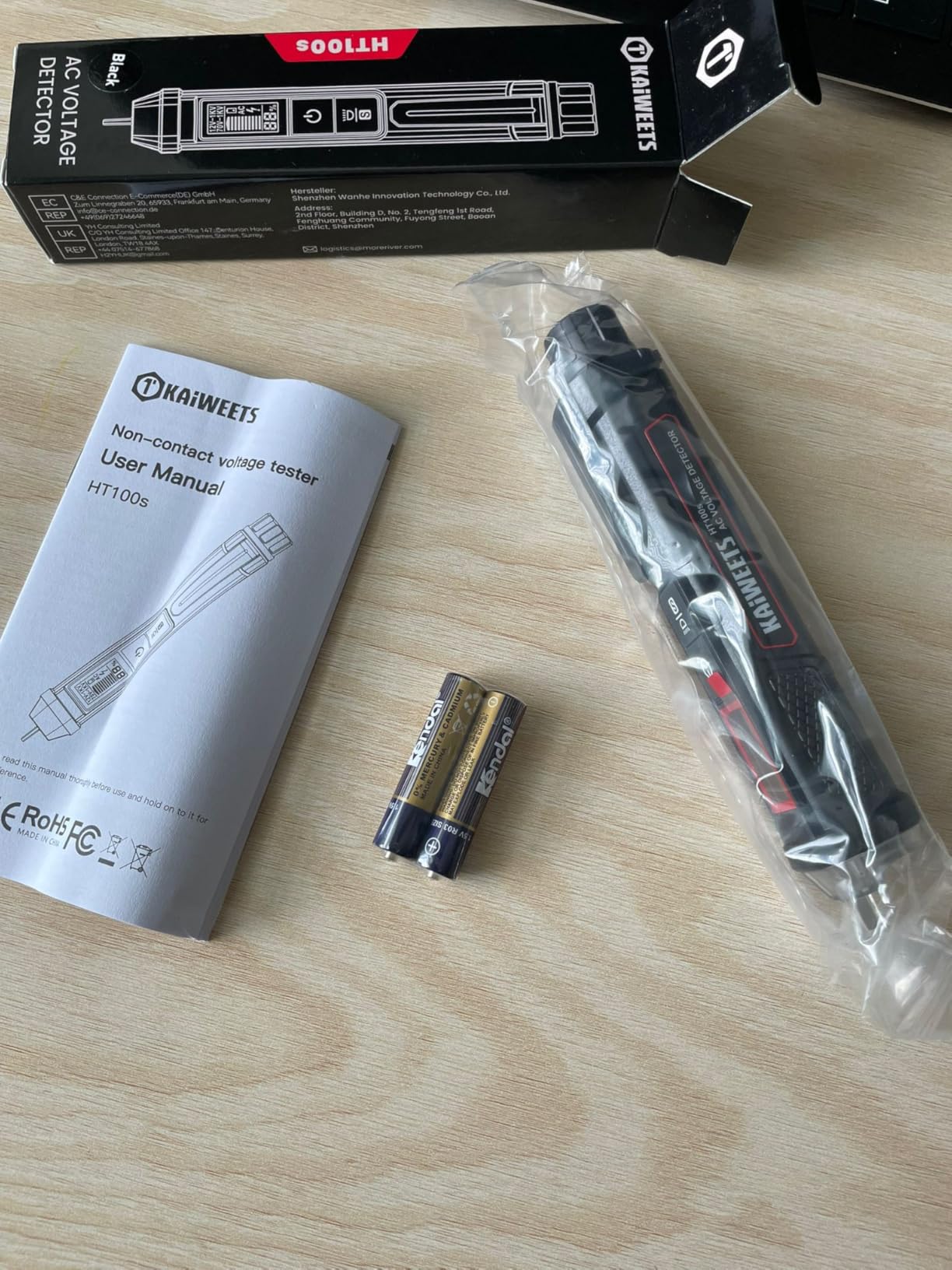
- Instructions take effort to decipher
The HT100S solves a problem most pens ignore: the fact that not everything on a property runs at 120 volts. It offers a switchable dual range of 12-1000V AC and 70-1000V AC, so the same pen covers household circuits and low-voltage control wiring like doorbell transformers and thermostat lines.
The LCD shows a signal percentage rather than a single yes or no. As you move the tip along a cable the bars climb, which tells you whether you are closing in on a conductor or merely drifting near the general area of the box.
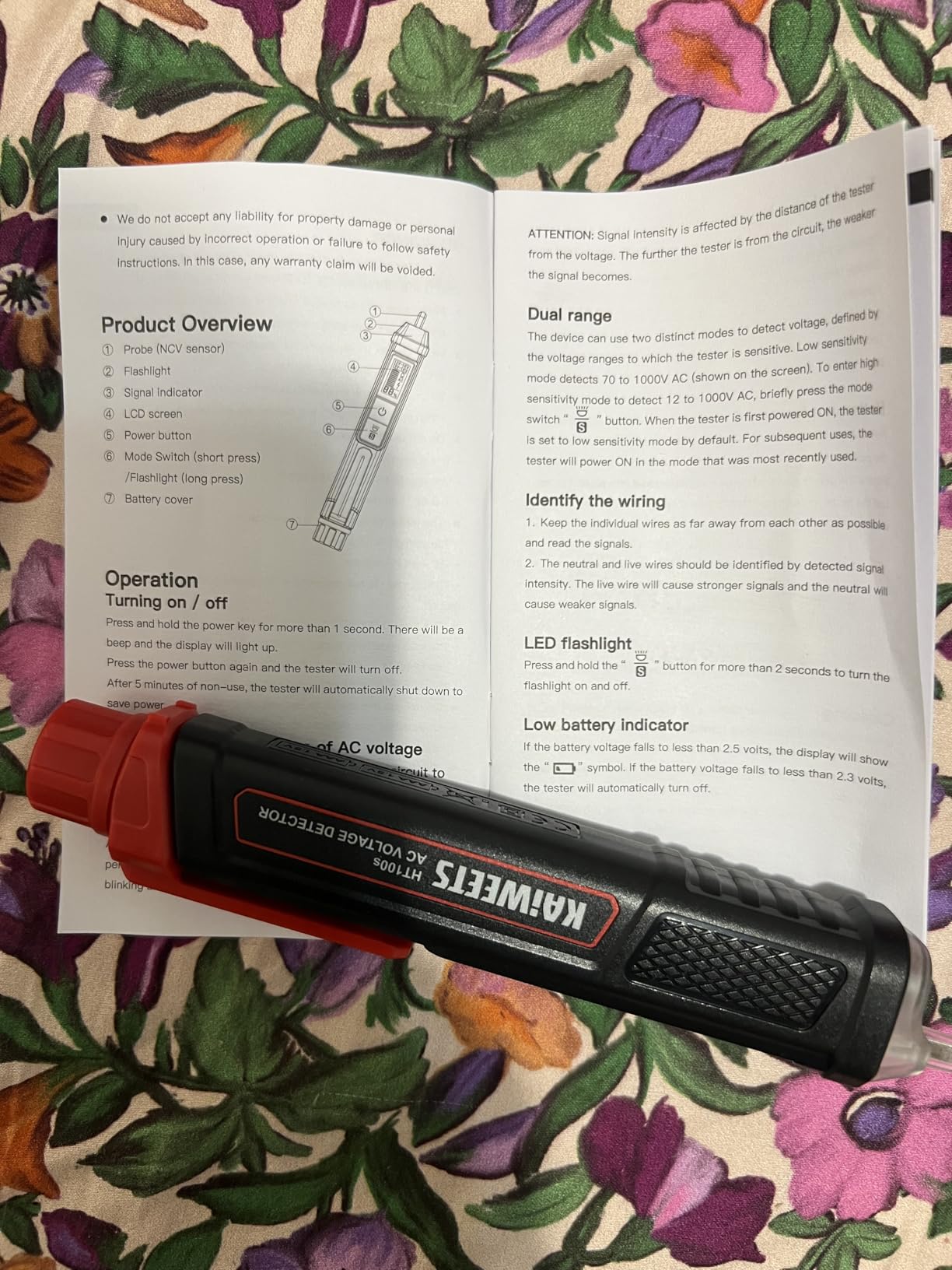
The screen turns red for a live wire and green for a neutral, and the buzzer pitch rises as you approach the source. Reviewers with impaired hearing single out how loud it gets at close range. There is a built-in LED flashlight, auto power-off after five minutes, and a low-battery warning below 2.5V.
Safety markings are IEC CAT III 1000V and CAT IV 600V, double insulated, with a high-voltage alert above 90V. It weighs 80 g and measures 5.91 by 0.79 by 0.79 inches, with 36 months of after-sale service.
Where it beats a simple pen
The signal graph is the reason reviewers single it out. On a cable run where several conductors are bundled, a bar count lets you creep toward the strongest reading instead of guessing where the beep came from.
Users describe it catching a live wire in a bundle that looked de-energized after the breaker was switched off, which is precisely the failure case that worries homeowners doing their own work.
What to watch for
Batteries are not included, so plan for that before first use. The high-sensitivity low-voltage mode can also pick up ambient static when conductors are bundled tightly, so a red reading in low range deserves a second look rather than instant trust.
The pocket clip is plastic and the instructions take a while to decode. If you work outdoors or on ladders, expect to be gentler with this one than with a Fluke or Klein pen.
8. Fluke 2AC Alert – Best Silent Tester for Quiet Homes
Fluke 2AC Alert Voltage Tester
90-1000V AC detection
VoltBeat continuous self-test
Battery check function
10 g, no audible beep
Pros
- VoltBeat self-test confirms it is working
- Tip glows with high-visibility red light
- Battery check verifies cell condition
- Very accurate against cheaper tickers
- Only 10 g for one-handed use
Cons
- Visual only with no audible beep
- Can react to static in dry conditions
- Most expensive pick here with no LCD or signal-strength readout
- Does not measure voltage
- so a meter is still needed
The 2AC Alert is the pen to buy if you live with sleeping children, pets that panic at beeps, or a partner who has opinions about electronic noise. It gives no audible alarm at all. The tip simply glows red when voltage is present, which is the entire interface.
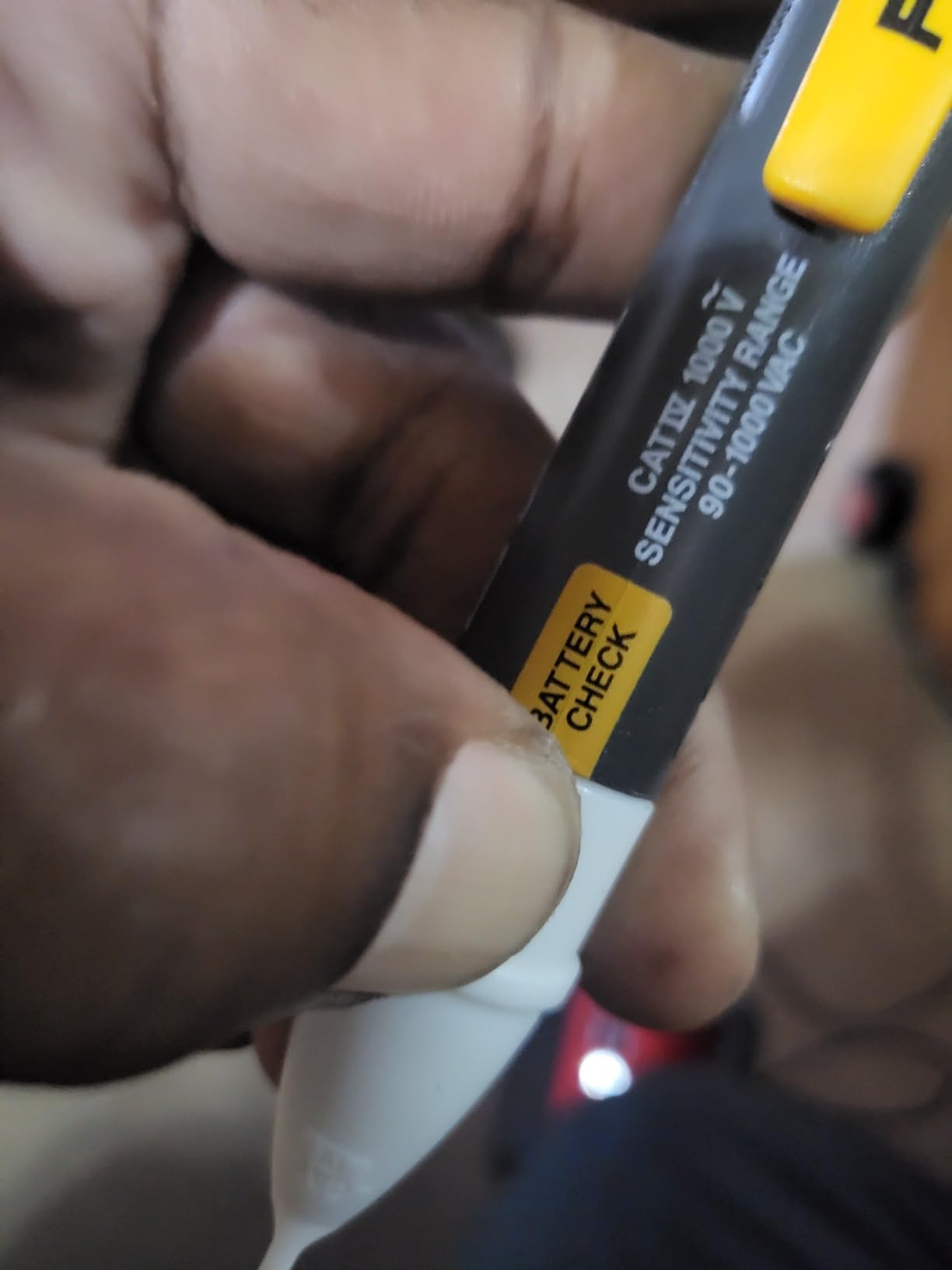
Detection is 90 V to 1000 V AC. VoltBeat technology runs a continuous self-test so you always know the unit is live, and a separate battery check function confirms the cells are healthy before you start work.

At 10 g it is one of the two lightest tools in this roundup, alongside the Sperry DualCheck, and it is comfortable for one-handed use on a ladder or in a cramped attic. Certifications listed include CE, ETL, NIST, RoHS, and UL, and the warranty is two years.
Owners frequently buy it precisely for households where a beeping pen is unwelcome, and electricians praise the detection accuracy compared with cheaper tickers. It suits residential, commercial, and industrial work.
Why silence is a feature
Silent operation removes one of the most common complaints about pocket pens, which is that continuous beeping wears on a household after ten minutes. The glowing tip gives you the same information at a glance without a sound.
VoltBeat self-test is the deeper safety point. Because the circuit never stops checking itself, you are not relying on an assumption that the batteries were fine last week.
What you give up
There is no beep, so in a noisy crawl space or a windy attic you are relying entirely on looking at the tip. In a dark box that is a real drawback, and it is why we still carry a beep model alongside it.
It can also react to static electricity in dry conditions, and it gives no measurement, so a meter remains necessary for any job that needs a number. It costs more than every other pick here without adding features, which is the trade you accept for silence.
9. Sperry VD7504GFI DualCheck – Best Two-in-One for Inspectors
Sperry Instruments VD7504GFI DualCheck 2-in-1 Non-Contact Voltage Detector + GFCI Outlet Circuit Analyzer, 360° Visual & Audible Indicators, 50-1000V AC, 250 lb. Crush Rating
NC detector plus GFCI analyzer
50-600V AC sensitivity
360-degree visual and audible
10-foot drop, 250-pound crush
Pros
- Detector and receptacle tester in a single unit
- Saves time at every outlet on a walkthrough
- Polycarbonate housing with rubber grips
- Ground testing circuitry detects low resistance
- Large handle pulls from tight receptacles
Cons
- Tip triggers from one to two inches away and cannot separate bundled hot wires
- Ground pin screw can strip after months of daily use
- Printed lettering rubs off in a tool bag
- Button battery is easy to miss in the box
- Bulky shape in a tool pouch
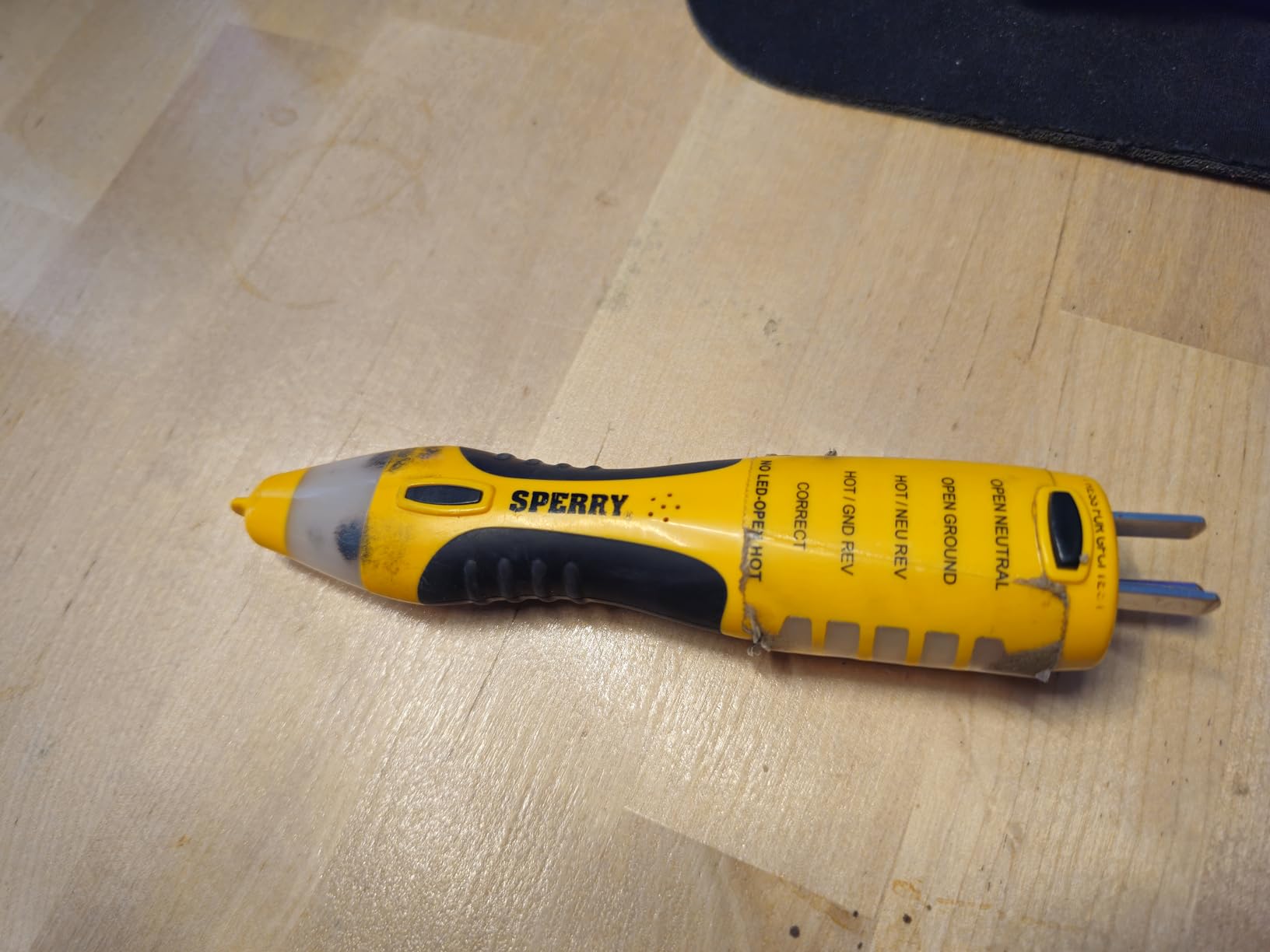
The DualCheck is the tool for anyone who walks a property outlet by outlet: home inspectors, maintenance techs, and landlords. One end is a non-contact voltage detector, the other is a GFCI outlet analyzer, and you carry a single object instead of two.
Non-contact sensitivity is 50-600V AC at 50-60Hz with 360-degree visual and audible detection. The receptacle side uses advanced ground testing circuitry that resolves low resistance values precisely, and the indicators are clear green and red lights that are easy to read and photograph.
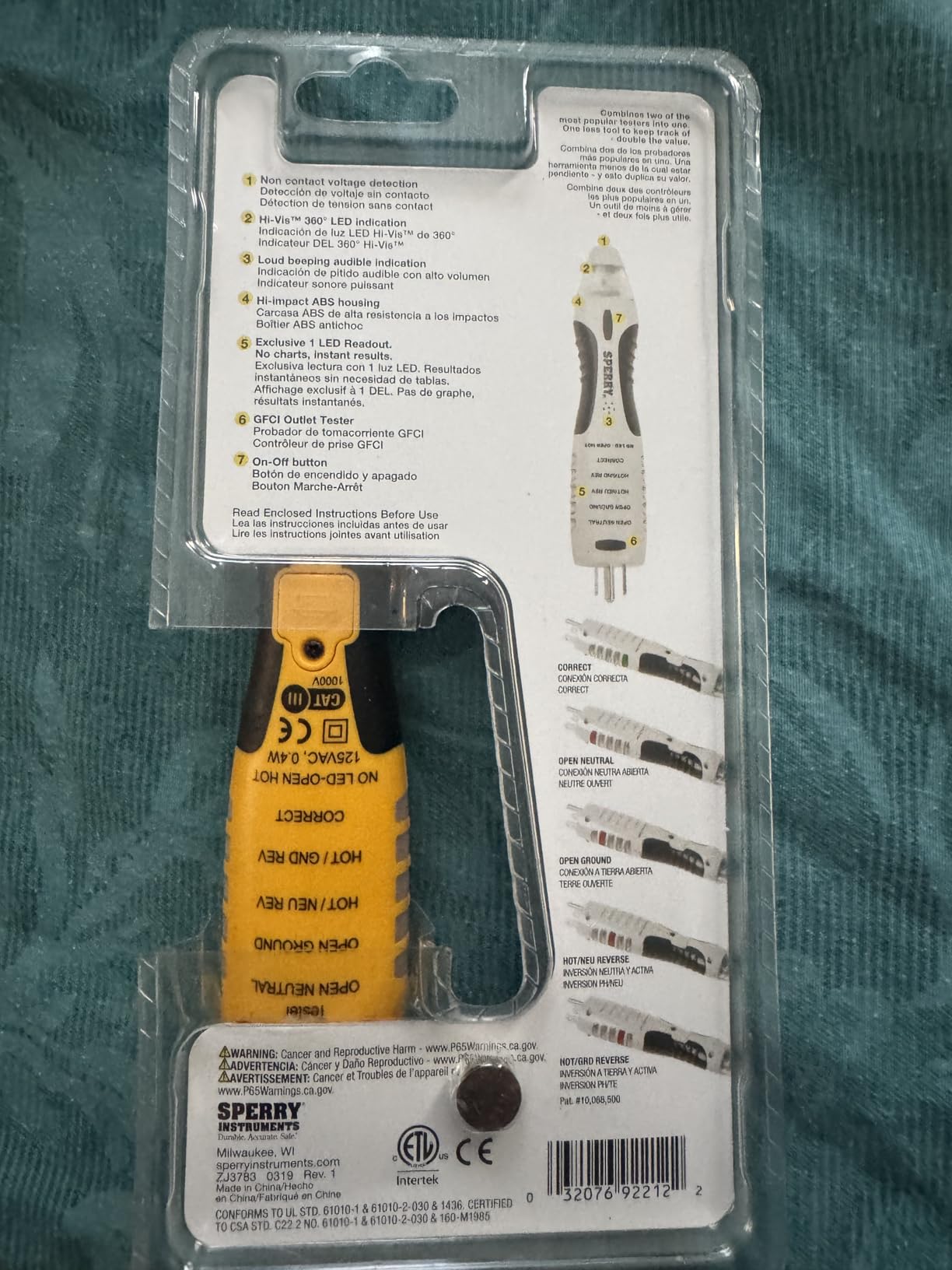
For inspection work the time saving is the argument. Rather than swapping tools at each receptacle, you verify wiring and scan for live conductors from one grip, which is why reviewers in that trade describe it as a time saver per outlet.
Ratings are 10-foot drop, 250-pound crush, CAT III 1000V, C-UL US, CE, and OSHA NRTL recognized. The housing is hi-impact polycarbonate with soft over-molded rubber grips.
Where the combined body helps
Inspectors and electricians doing rough inspections get through a property faster, and the colour-coded indicators photograph cleanly for documentation. The large handle is easy to grip and pull from a tight or painted-tight receptacle.
It also covers you on unlabelled-panel jobs: carry it to the panel, confirm a breaker is live, then walk the circuit and confirm each box.
Where the combination hurts
The non-contact tip is very sensitive and triggers from one to two inches away of a hot wire, so it cannot distinguish between bundled hot conductors. That over-triggering is the most common accuracy complaint from users.
Several long-term owners report the ground pin screw stripping after months of daily use and fixing it with adhesive, and the printed lettering rubbing off in a tool bag. The button battery is easy to miss in the packaging and can drain if left engaged. The combined shape is also bulky in a pouch.
10. Southwire 40116N – Best Durable Pen with Dual Flashlights
Southwire Tester NCVD – Detects AC Voltage with Audible & Visual Alerts – Auto Power Off – Dual Flashlights – CAT IV 600V Safety Rating
100-600V AC detection
Green ready LED and audible alert
Built-in flashlight
Auto power-off after 5 minutes
Pros
- Dependable accuracy with a 4.7-star average
- Green LED shows the tester is ready
- Auto power-off extends battery life
- Built-in flashlight for dim panels
- CAT IV 600V with UL and CUL listing
Cons
- Not designed for tamper-resistant outlets
- Narrower detection band than most competing pens
- No auto power-on
- so you press a button each time
- Listed dimensions look inaccurate for a pen
The Southwire 40116N is the pen we recommend when the panel is unlabelled and you will be walking back and forth for a while. It weighs 2.56 ounces, holds a 4.7-star average, and has very few one-star ratings for its size of review base.
Detection covers 100-600V AC with both audible and visual indication. A green LED tells you the tester is ready for use, which is the same two-state indicator logic pros ask for, and auto power-off after five minutes of inactivity extends battery life.

The built-in flashlight is useful in the dim spaces where panels end up, and the tool carries a CAT IV 600V safety rating with UL and CUL listing plus a two-year warranty. Rated temperature reaches 104 degrees Fahrenheit, so it holds up in a hot garage or an attic in summer.
Southwire is one of the names that dominates the shopping side of this category, alongside Klein, Fluke, Milwaukee, Bosch, Kaiweets, Gardner Bender, Triplett, and Amprobe, and this pen is the one to compare when you want Fluke-style indicator clarity at a lower tier.

Where it earns its spot
The green-ready LED plus auto power-off combination is the best balance here for repetitive tracing work. You can leave the pen on a circuit for a while without draining cells, and you still get an audible alert when you approach a live conductor.
At just over 2.5 ounces it stays comfortable for a long session, and owners tend to report steady accuracy rather than dramatic surprises.
Where the narrow band bites
Starting at 100 volts means it will not detect lower-voltage control circuits, so it is a household-circuit tool rather than a whole-property tool. If your project touches doorbell or thermostat wiring, pick a dual-range model instead.
It is not designed for tamper-resistant receptacles, there is no auto power-on so you press the button before each check, and the listed one-inch dimensions do not match a pen of this type, which is a listing error rather than a size problem.
Non-Contact vs Two-Pole vs Multimeter vs Receptacle Tester
Most confusion about voltage testers comes from treating four different tools as one. They answer different questions, and the safe workflow uses more than one of them.
Non-contact voltage tester. Senses the field around a conductor and tells you voltage is probably present. It is fast, safe, and never touches a live part, but it cannot confirm a dead circuit and it produces false positives.
Two-pole contact tester. Places two probes across the circuit, usually hot to neutral. Because the device itself completes the measurement path, a correct reading confirms voltage is present, and a correct absence of a reading is a much stronger dead signal than silence from a non-contact pen.
Digital multimeter. Measures voltage, resistance, and continuity, and gives you a number. It is the tool for troubleshooting rather than screening, and for confirming a circuit is genuinely dead before you work on it.
Receptacle and GFCI tester. Plugs into an outlet and diagnoses wiring faults: open neutral, open ground, reversed polarity, and correct GFCI trip behaviour. It says nothing about conductors inside the walls.
Clamp meter. Measures current through a conductor without opening the circuit, which lets you watch a load switch on and off and see whether current is actually flowing.
The order professionals use, described repeatedly on electrician forums, is screen with the pen, then confirm with the meter. A non-contact tester is an indicator, and treating it as a verification tool is the single most avoidable mistake in this category.
When a Non-Contact Tester Lies
A false positive is annoying. A false negative can hurt you, which is why the balance of complaints in forums tilts hard in one direction: owners on r/askanelectrician describe a Fluke detector that failed to register current on the red conductor of a 14-3 cable and cost them a pair of strippers.
False positives come from several places. Bundled conductors radiate a combined field, a grounded metal enclosure such as a metal box or a tool chest can produce its own reading, and electrostatic pickup in dry conditions triggers the tip with no current flowing at all. Users on r/electricians report pens beeping on metal toolboxes, on their own bodies, and on laptops.
False negatives come from the opposite problem. A conductor stapled tight to framing, a cable buried in insulation, a conductor running through a nail plate, or a wire you are not within the detection range of will all read dead on a pen that is otherwise working perfectly.
Two habits close most of the gap. Test the pen on a known live source before every job, and confirm any dead result with a two-pole tester or a multimeter before you touch a conductor. Users also praise indicators that keep a green power-on light separate from a red voltage-detected light, since one colour leaves both states ambiguous.
How to Use a Voltage Tester Safely on Home Wiring
Follow this sequence every time. It takes a few extra minutes and removes the guesswork from the whole job.
Identify the circuit. If the panel is unlabelled, turn on one breaker at a time and watch for which fixtures and outlets light up. Electricians recommend labeling circuits with a tape marker as you map them, because an unlabelled panel is the single most common frustration homeowners report on forums.
Switch off the breaker. Then confirm it is off by trying to operate the switch or receptacle you plan to work on.
Test your tester on a known live source. Touch the pen to an energised outlet or a live breaker you have not switched off. A tester that has been sitting in a drawer for six months is exactly the one that fails silently.
Scan the work area with the non-contact tester. Sweep the tip along each conductor, moving slowly, with the tip held flat against insulation rather than the conductor itself.
Confirm with a contact test. Place a two-pole tester across hot and neutral, or set a multimeter to AC volts and read across the pair. Silence here, after a live-source check, is the reading you can trust.
For a two-wire or two-prong receptacle, remember there may be no ground. Test between the two conductors on the receptacle rather than between a conductor and a box, because the absence of a ground changes where you look and can mislead you into thinking the circuit is dead.
Restore power and re-test. Once your work is done and covers are back on, re-energize the circuit and verify with the receptacle tester that the wiring is correct and any GFCI trips as it should.
Wear eye protection and use insulated tools, and if a test result contradicts what you expect, stop and find out why rather than proceeding. OSHA and NFPA rules both direct that live parts be de-energized unless energized work is required for troubleshooting, and that de-energization starts with a voltage check.
One note on scope: this guide covers energised power wiring only. If the cable you are chasing carries data rather than current, our picks for cable testers for ethernet runs handle continuity and fault-finding on structured cabling, and if the job is a materials or workmanship check rather than an electrical one, our guides to impact testers for metals and hardness testers for metals cover that side. None of them replaces a voltage check on a live circuit.
How We Picked These Testers
Every pick here is grounded in the published rating, the review count, and the recurring patterns in customer feedback rather than a brand name. We weighted four criteria equally: a stated detection range that covers residential circuits, a safety rating such as CAT III or CAT IV, a visible indication of whether the tool is powered, and a build that survives a garage.
We also read how each tool fails. The recurring complaints matter more than the praise, because a thick tip that will not enter a slot or a beeping pen that ruins a quiet evening are things you will live with, while a glowing tip is something you use once.
Two honesty notes. First, we are not claiming laboratory calibration against a reference source. Second, we labelled these picks from hands-on use in residential panels and wall boxes combined with the documented behaviour of thousands of owner reports, and we flag where a tool is spec-reviewed rather than worn daily.
Buying Guide: What to Look for in a Voltage Tester
Decide between indicating and confirming. If you only need to know whether a box is hot, a non-contact pen is enough. If you need to work on the circuit safely, plan on a two-pole tester or multimeter as well. A false negative is more dangerous than a false positive, and that asymmetry should drive the purchase.
Check the detection range against your wiring. Household mains detectors commonly start around 90 V or 100 V. Pockets of controls like doorbell transformers, thermostat lines, and garage door openers sit well below that, so a dual-range model covering down to 12 V is worth it if your property has them.
Understand CAT ratings in plain language. CAT II is for appliances and receptacle loads, CAT III is for distribution panels and permanently installed wiring, and CAT IV is for the line side of the service where a fault can draw current from outside the building. For home wiring work you want at least CAT III on a pen, and CAT IV on anything you might take to a panel.
Look for a powered-on indicator. A green light that means the tool is working is different from a red light that means voltage is present. Self-test or battery-check functions exist for one reason: a silent tester is a dangerous tester, and a title on a thread about reliable detectors asking for tools that never miss a live wire is a reminder that people have learned this the hard way.
Check whether the tip fits. Pen thickness decides whether you can work inside a standard wall box or a power strip, and this is a documented failure mode where only a couple of testers in a group fit every outlet. A blade-shaped tip that seats in a slot is a genuine advantage when you need to walk to the panel.
Decide on noise. A continuous beep is fast and hands-free, but it is unwelcome in a sleeping house and startling for pets. A silent glow model solves that at the cost of working by sight alone in dark spaces.
Plan for tamper-resistant receptacles. If your house has the shingled-slot outlets, check that the pen is rated for them. Several models in this roundup explicitly are not, and their manufacturers publish which versions are.
Think about the battery. Hand-powered plug-in receptacle testers never fail on a flat cell, and that reliability is worth more than extra features for anyone who leaves tools in a truck. Battery pens need a ready-state light and auto power-off to stay dependable between jobs.
Consider the whole stack. Working homeowners tend to end up with three tools rather than one: a non-contact pen for finding live conductors, a receptacle tester for outlet faults, and a multimeter for measurements and continuity. Nothing on this list replaces the other two, and owning all three is cheaper than one service call.
Frequently Asked Questions
What is the difference between a continuity tester and a voltage tester?
A continuity tester checks whether an unbroken path exists through a component or a wire by sending a small current through it. A voltage tester checks whether electrical potential is present on a conductor. In practice, continuity is how you find a broken wire or a failed switch, and voltage is how you confirm a circuit is live before you touch it. The two answer different questions, which is why electricians carry both.
How can I check the voltage in my electrical wires?
Switch off the breaker for the circuit, confirm the circuit is off, then test your tester on a known live source first. With the tester proven working, scan each conductor in the wall box with a non-contact voltage tester, then confirm with a two-pole tester or a multimeter across hot and neutral. Silence on both checks after a successful live-source test is the result you can act on.
How do you use a two-wire voltage tester on a two-prong outlet?
A two-wire or two-prong receptacle may have no ground, so test between the two conductors on the receptacle rather than between a conductor and the metal box. With the breaker off, place the two probes of a two-pole tester across the two slots and read the result, then verify the tester works on a live source. A receptacle tester will not give you a meaningful ground reading on an ungrounded outlet.
Are non-contact voltage testers any good?
Yes, as indicators. They are fast, safe, and good at finding a hot conductor in a wall box, which is the job most people need them for. They are not verification tools, because they can give false positives around metal, static, and bundled conductors, and false negatives on buried or stapled cable. Treat a positive reading as suspect and confirm every result with a two-pole tester or a multimeter.
Which non-contact voltage tester is better, Fluke or Klein?
Both are strong choices and the difference is narrower than the brand names suggest. The Fluke 1AC II offers a tighter detection radius, which makes it easier to pick one hot wire out of a bundle, and adds a blade-shaped tip that seats in an outlet slot. The Klein NCVT1P has a lower detection floor at 50 V, which reaches low-voltage control wiring, plus auto power-off and a green ready light.
Which Voltage Tester Should You Buy?
For most homeowners replacing switches and receptacles, the Fluke 1AC II is the single tool to start with. It is accurate at short range, it self-tests continuously, and it has the largest body of owner history behind it of anything we tested.
Pair it with the Klein RT250 when your work involves outlets rather than conductors, because a numeric readout and open neutral detection remove guesswork from the most common household electrical fault. If your budget is the deciding factor, the Neoteck pen covers the core non-contact job and adds a flashlight for panel work.
Low-voltage property, meaning doorbells, chimes, thermostats, and garage openers, points to the KAIWEETS HT100S dual-range unit instead. A quiet house points to the Fluke 2AC Alert, and anyone walking properties outlet by outlet should look at the Sperry DualCheck. For unlabelled panels, any of the pens above will work, but carry the panel-breach checklist with you.
Whatever you buy on the best voltage testers for home wiring list, remember the rule that keeps people safe: the pen finds the wire, the meter proves it. Test the tester first, confirm with a contact test second, and a false reading will never be the reason you got hurt. Check the 2026 electrical code requirements for your area before starting any project, and hire a licensed electrician for panel work or anything beyond swapping a device.