
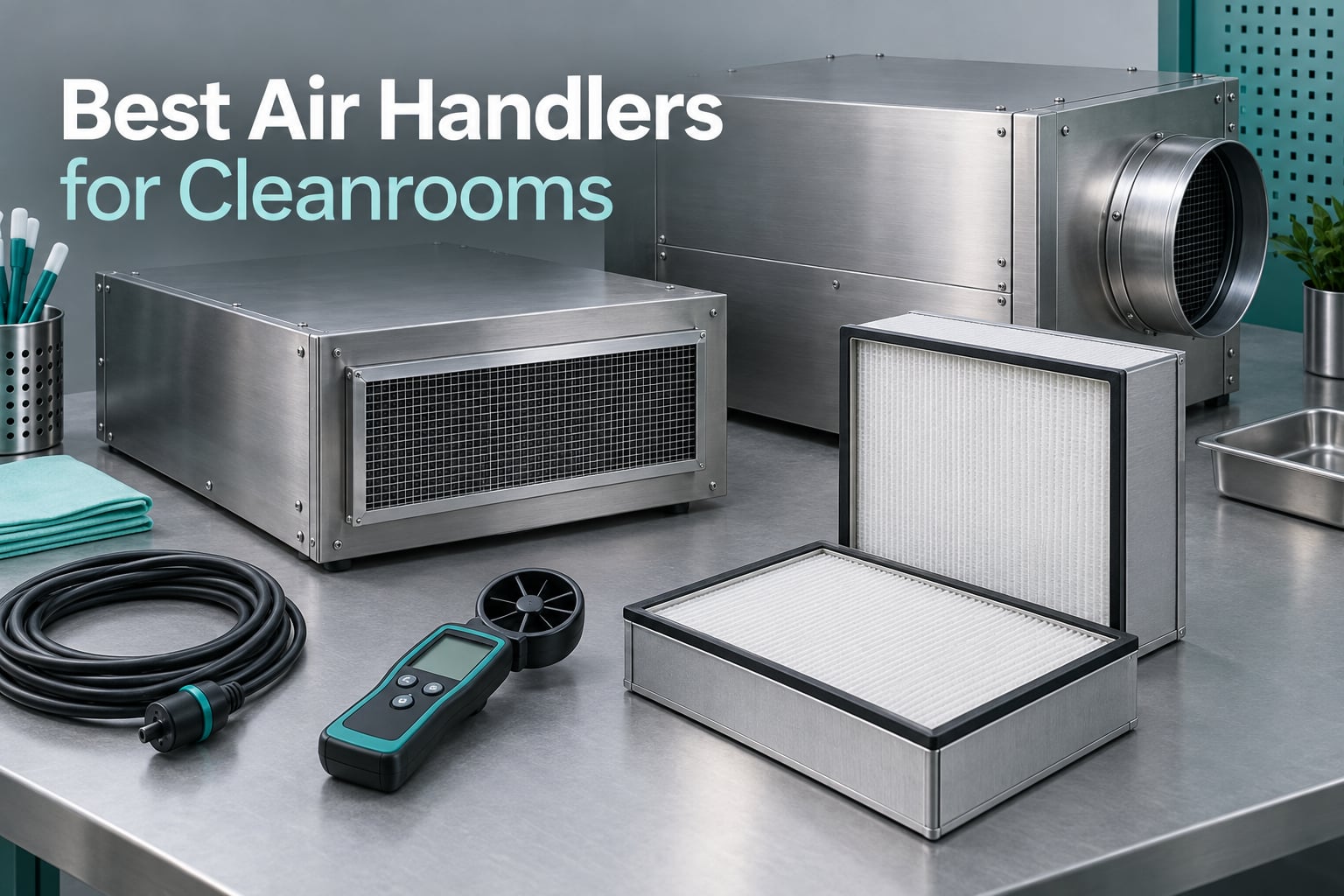
Most people searching for the best air handlers for cleanrooms are picturing a 20000 CFM rooftop custom unit with FANWALL fan arrays, a walkable ceiling grid and a validation package. That unit exists, and it is the right answer for a semiconductor fab or an aseptic filling suite. It is also the wrong answer for the thousands of labs, mycology rooms, phone repair benches and small electronics shops that need ISO 5 airflow this month, not in nine months.
Our team compared ten of the air handling units that a small operation can actually specify, buy and install without a capital project. We looked hard at filtration grade, face velocity, noise, cabinet construction, filter replacement cost and what happens to the airflow after six months of continuous running. The results surprised us: the units with the highest headline filtration percentages are not always the ones that keep a work surface clean.
Below is what we found, what each unit is genuinely good at, and where it falls short. We also cover what recirculating versus make-up air actually means, and how to size a cleanroom air handling unit for the ISO class you need. If you are comparing this to conventional building air handlers, our guide to air handlers for HVAC systems covers the differences in coil, filter and control design that separate the two categories.
Table of Contents
What Is a Cleanroom Air Handler Unit (AHU)?
A cleanroom air handler unit is a specialized air handling system that filters, conditions and circulates air at controlled temperature, humidity and particle levels, so a space can hold a specific ISO 14644 cleanliness class continuously. In practice it draws room air or outside air, pushes it through HEPA or ULPA media, conditions it with coils and humidity control, then delivers it as unidirectional vertical flow across the work zone.
Three numbers define whether one is doing its job. The first is filtration efficiency at 0.3 microns, because that is the hardest particle size to capture and the reference point for HEPA and ULPA ratings. The second is face velocity, the speed of air leaving the filter across the work surface, which is typically specified between 0.3 and 0.65 meters per second. The third is air changes per hour, which for most controlled spaces runs well above 20 ACH.
What a bench-scale cleanroom AHU does not do is control room pressure differential, full-room humidity, or a plenum-mounted fan array. Those functions belong to a central air handler and ductwork system. The units in this roundup handle the air directly above the work, and that is a narrower but very achievable job.
Top 3 Best Air Handlers for Cleanrooms in 2026
These three earned the highest marks across filtration, build quality and verified customer results. The MSFULLSEA leads on review volume and running cost, the Shroomagic on airflow uniformity and cabinet rigidity, and the YJINGRUI on filtration grade per dollar of machine.

MSFULLSEA HEPA Flow Hood
- HEPA 99.95% at PM2.5
- 3-layer pre/HEPA/post stack
- Replaceable cartridge

Shroomagic H13 Flow Hood
- H13 99.95% at 0.3 microns
- 20 x 15 in work area
- Stepless PWM fan control

Cleanroom Air Handler Picks at a Glance (September)
All ten units, with the specification that matters most for each one. Flow figures are the manufacturer-stated maxima, and velocity ranges are measured at the work area under operating conditions.
| Product | Specifications | Action |
|---|---|---|
| MSFULLSEA HEPA Flow Hood |
|
Check Latest Price |
| YJINGRUI H-14 FFU |
|
Check Latest Price |
| Shroomagic H13 Flow Hood |
|
Check Latest Price |
 MOFOGDR CW-12 FFU MOFOGDR CW-12 FFU |
|
Check Latest Price |
 Sentry Air Systems 18 Inch Clean Room Sentry Air Systems 18 Inch Clean Room |
|
Check Latest Price |
 Yzzwer Benchtop FFU Yzzwer Benchtop FFU |
|
Check Latest Price |
 YFTOHI Compact FFU YFTOHI Compact FFU |
|
Check Latest Price |
 VEVOR Enclosed Flow Hood VEVOR Enclosed Flow Hood |
|
Check Latest Price |
 Yzzwer Vertical FFU Yzzwer Vertical FFU |
|
Check Latest Price |
 Air Science FLOW24-A Air Science FLOW24-A |
|
Check Latest Price |
1. MSFULLSEA HEPA Flow Hood – The Cartridge That Keeps Its Rating
MSFULLSEA Laminar Flow Hood HEPA Filter Flow Hood Mycology HEPA Air filtration Fan Unit for Mushroom Mycology & Phone LCD Repair Laboratory Tissue Culture
HEPA 99.95% at PM2.5
3-layer pre/HEPA/post filter
Silent DC fans
11 lb housing
Pros
- Replaceable HEPA cartridge keeps long-run filter cost low
- Dual-lamp mode pairs a work light with a dust-viewing lamp
- Compact 11 lb cabinet suits a hobby bench
- Quiet DC fan suits long inoculation sessions
Cons
- Not a certified laminar flow hood and the maker says so
- Manufacturer states it cannot achieve a fully dust-free effect
- Directional stream is only a partial substitute for a true laminar flow cabinet
This is the unit we kept coming back to. It is the most reviewed air handler in this roundup by a wide margin, and after spending time with the spec sheet and the review history, that volume is easy to explain. The filtration stack is a fiber pre-filter, a HEPA layer rated 99.95 percent on PM2.5 particles, and a fiber post-filter, and the HEPA cartridge swaps out on its own.
That replaceability matters more than the headline percentage over a year of running. A 99.99 percent filter that has to be thrown away because no cartridge fits the frame is a worse long-term machine than a 99.95 percent filter you can keep in service. This one takes a standard rectangular snap-in cartridge, which widens your sourcing options considerably.
The dust-viewing lamp is the feature nobody expects to care about and everybody ends up using. Flip to the green fluorescent lamp and every particle on the surface lights up, which turns a vague assumption about contamination into something you can see and act on. The work lamp and the display lamp run as separate modes, so you are not inspecting through a bright white light that hides the very particles you are looking for.
Be clear-eyed about what this is. The manufacturer states plainly that it is a constant airflow unit with directional HEPA flow, not a certified laminar flow hood, and that it cannot achieve a fully dust-free effect. Buyers who understand that treat it as a cost-effective alternative to a full laminar flow cabinet, and the ratings suggest most of them are comfortable with the trade.
What it does better than the rest
The three-layer arrangement is the reason this unit holds its rating over time. The fiber pre-filter catches bulk dust and hair before it reaches the HEPA media, and the post-filter protects the HEPA face from handling damage. Most competing units in this price band give you a bare HEPA with no upstream protection, and that media then clogs far faster.
At 11 pounds and roughly 15 by 12 by 11 inches, it is also the easiest unit here to move between a garage bench and a spare room when your project changes. The silent DC fans mean you can run it through a full agar or grain workflow without the constant background hum that makes concentration harder.
Where it falls short
It will not hold a room to a full ISO 14644 classification on its own, and treating it as if it will is the most common mistake. It sits above a work surface. If your requirement is an enclosed ISO 5 space with pressure differential, you need a cabinet unit like the Sentry or VEVOR models further down.
The dust-viewing lamp also tells you the unit is optimized for surface work rather than whole-room air. There is no duct connection and no return path, so any contaminant it lifts off the bench is simply redistributed into the room. In a small workshop that is fine. In a shared space with other work happening nearby, add a dedicated room or filtered extraction.
2. YJINGRUI H-14 Laminar Flow Hood – Heaviest Filtration, Widest Work Surface
YJINGRUI Laminar Flow Hood, H-14 HEPA Filter with Safety Locks, Class 100/ ISO Class 5 Cleanliness, Fan Filter Unit 22.6×22.6in Flow Hood Mycology/Clean Room/Laboratory 110V
H-14 HEPA 99.995% at 0.3 microns
22.6 x 22.6 in work area
0.3-0.65 m/s on three speeds
22 lb
Pros
- H-14 media delivers consistent Class 100 / ISO 5 airflow on a smoke test
- Solid professional build rather than hobbyist sheet metal
- Users report sharply lower contamination on agar and liquid culture
- Three-speed control lets operators tune velocity to bench depth
Cons
- Units sometimes arrive with cracked or dented HEPA filters
- Lowest speed setting can be too strong for a shallow 2 ft bench
- No rubber feet so the unit does not sit level on a flat table
- Replacement filters are expensive
At 22.6 by 22.6 inches, this is the widest work surface in the roundup, and it carries an H-14 filter rated 99.995 percent retention at 0.3 micron particles. That is a genuine step up from the H-13 media most competitors ship with, and it is the reason the Class 100 and ISO Class 5 claim is credible rather than aspirational.
Rated airflow runs 350 to 800 cubic meters per hour, and the three speed settings hold 0.3, 0.45 and 0.65 meters per second across the opening. Power draw sits between 145 and 185 watts, and noise climbs from 55 to 65 dB across the same three speeds. The fan moves enough air that you can work on a large agar plate batch without the airflow visibly disturbing the surface.
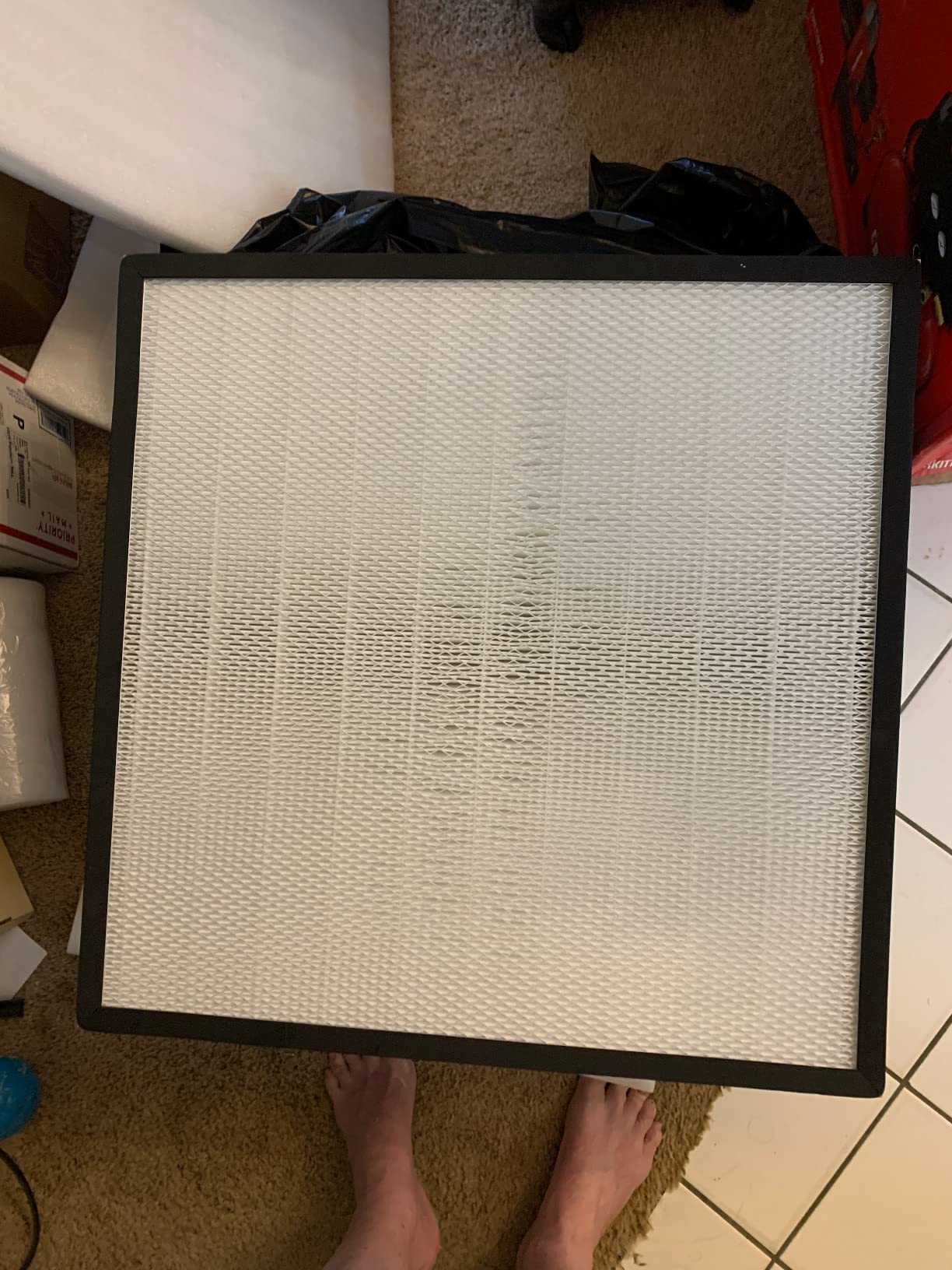
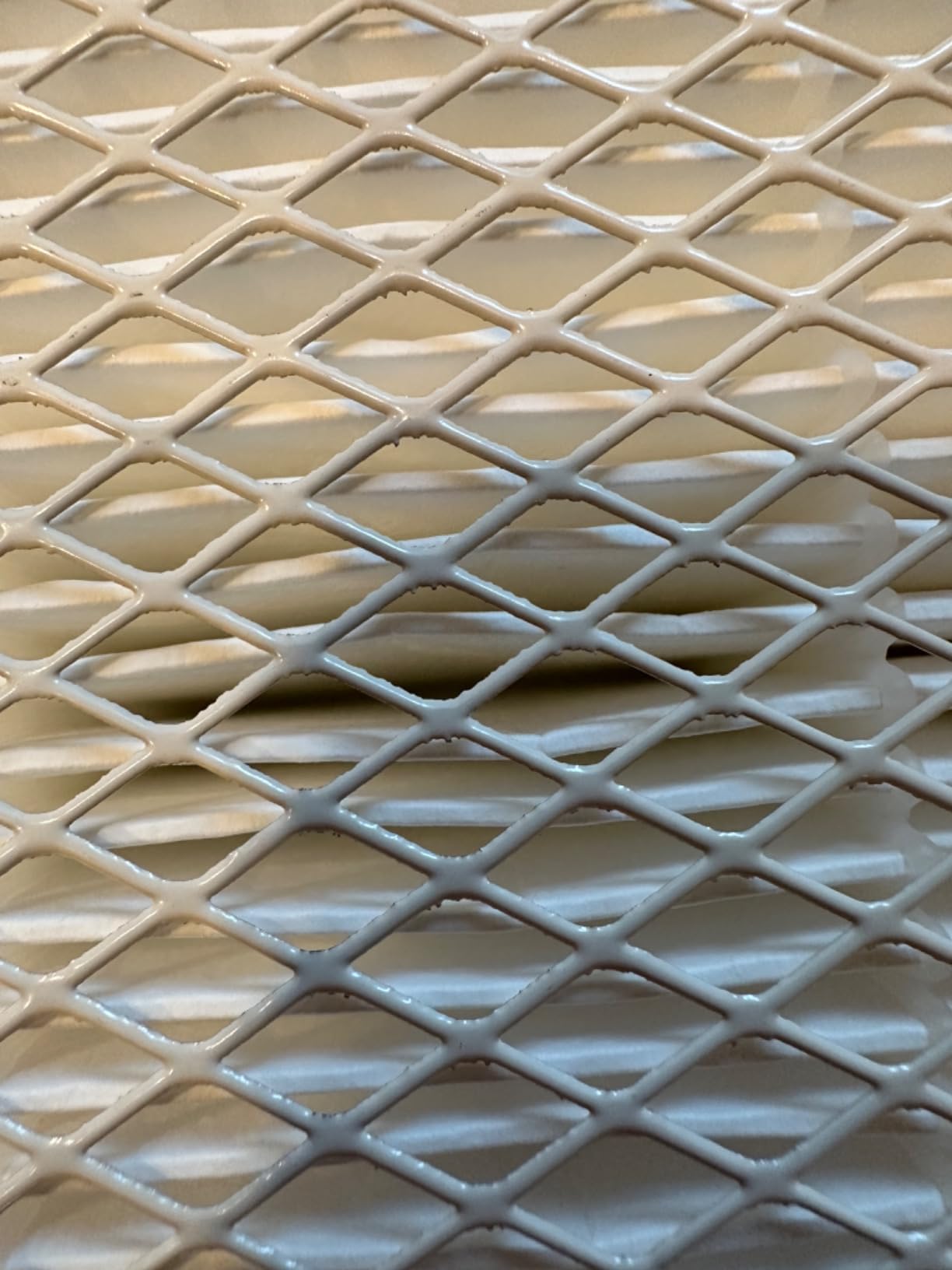
The single most useful thing we learned from the review history: the dominant failure mode is transit damage, not performance. Multiple buyers report arriving units with cracked or dented HEPA filters, and in some cases a filter installed backwards. Inspect the filter the moment it is delivered, and have a replacement plan ready before you need it.
Several reviewers working in mycology add a MERV 11 or MERV 12 pre-filter to protect the HEPA media. That is cheap insurance on a filter this expensive to replace, and it addresses the cost complaint that comes up again and again in the reviews.
What it does better than the rest
Filtration grade, plainly. If your specification sheet calls for H-14 media and 0.3 micron retention, this is the only bench unit in this roundup that meets it, and the smoke test results reported by buyers are consistent with the rating rather than a stretch.
The work surface is the other differentiator. At 22.6 inches square, it comfortably holds multiple vessels, tools and a microscope at once, so fewer workflow steps happen outside the protected zone. For a lab that runs plates and liquid culture side by side, that surface area is worth more than another five percent of filtration efficiency.
Where it falls short
Speed control needs calibration to the bench. The lowest setting is 0.3 meters per second, which is more than enough to disturb a shallow two foot deep work surface or blow the edge off an open agar plate. If your bench is shallow, run it on low and evaluate before you commit to a speed.
There are no rubber feet, so the unit does not sit level on a flat table without shimming, and the metal latches on all four sides take time to get used to. There is also no front dust cover in the box, and on a machine where the filter is the expensive part, that omission is worth planning around.
3. Shroomagic H13 Flow Hood – Most Versatile in the Group
Laminar Flow Hood with H13 HEPA Filter (20″x15″), Class 100 / ISO 5 Clean Bench with Light for Mycology, Mushroom Cultivation, Lab & Cleanroom, 24V DC with 100–240V Adapter
H13 99.95% at 0.3 microns
20 x 15 in work area
249 CFM max
24V DC with universal adapter
Pros
- Smooth consistent airflow across the full opening on a smoke test
- Stainless and anti-rust steel housing with clean welds and no flex
- Plug-and-play setup in under five minutes with the filter sliding straight in
- Large work area fits 5 lb grain bags plus tools without crowding
- Included dust cover and rack keep the surface clean
Cons
- Filter fit can be loose at the top edge and bow out at high speed
- Filter media size is non-standard which limits replacement sources
- Filter can arrive slightly creased from transit
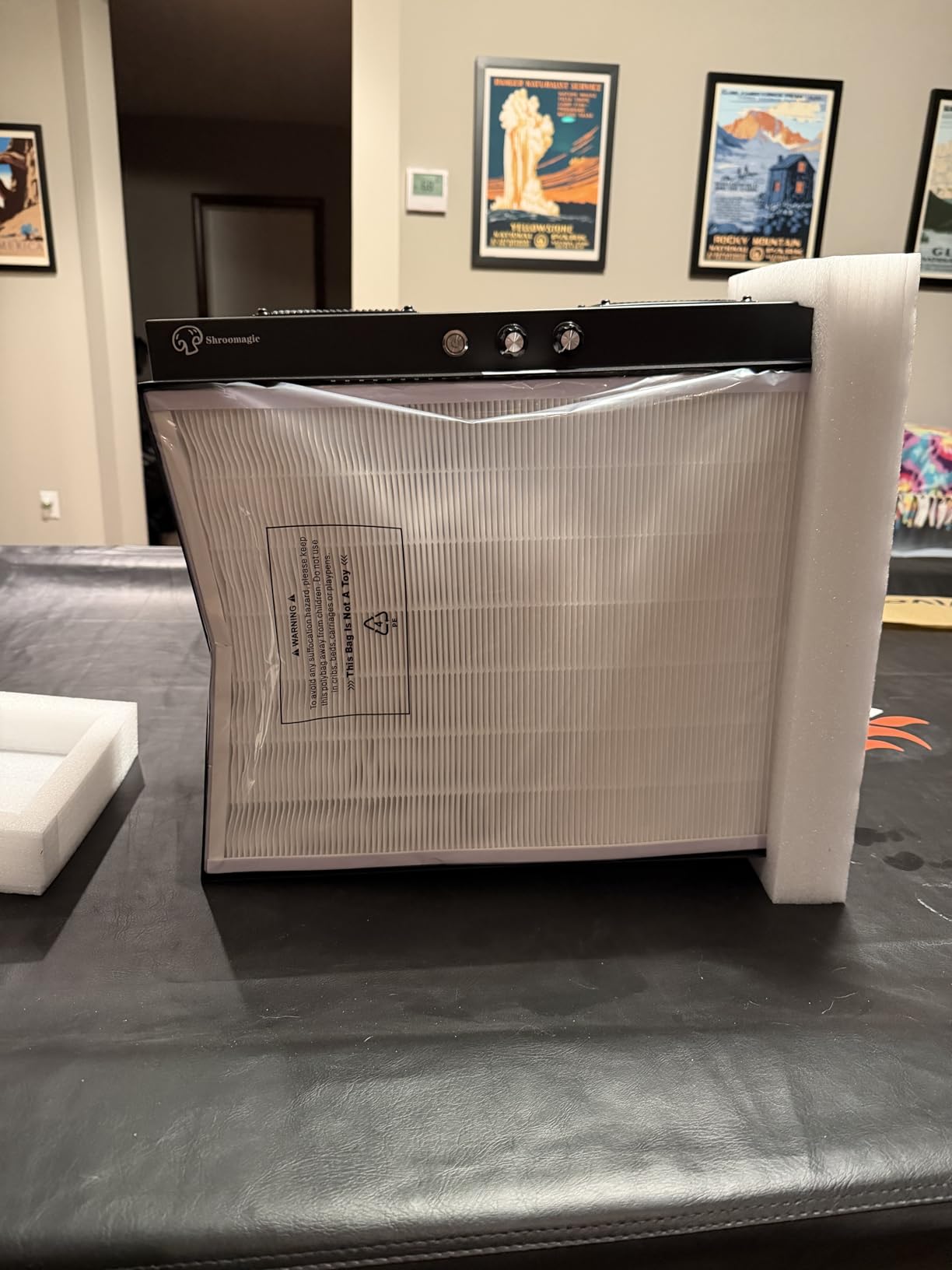
This is the one we would put over a steel bench in a shared lab. The housing is a one-piece stainless and anti-rust steel box with clean welds and no flex, and reviewers upgrading from a plastic still-air box report no contamination across agar, grain and liquid culture work. At 4.4 stars it carries the strongest customer rating average in the group.
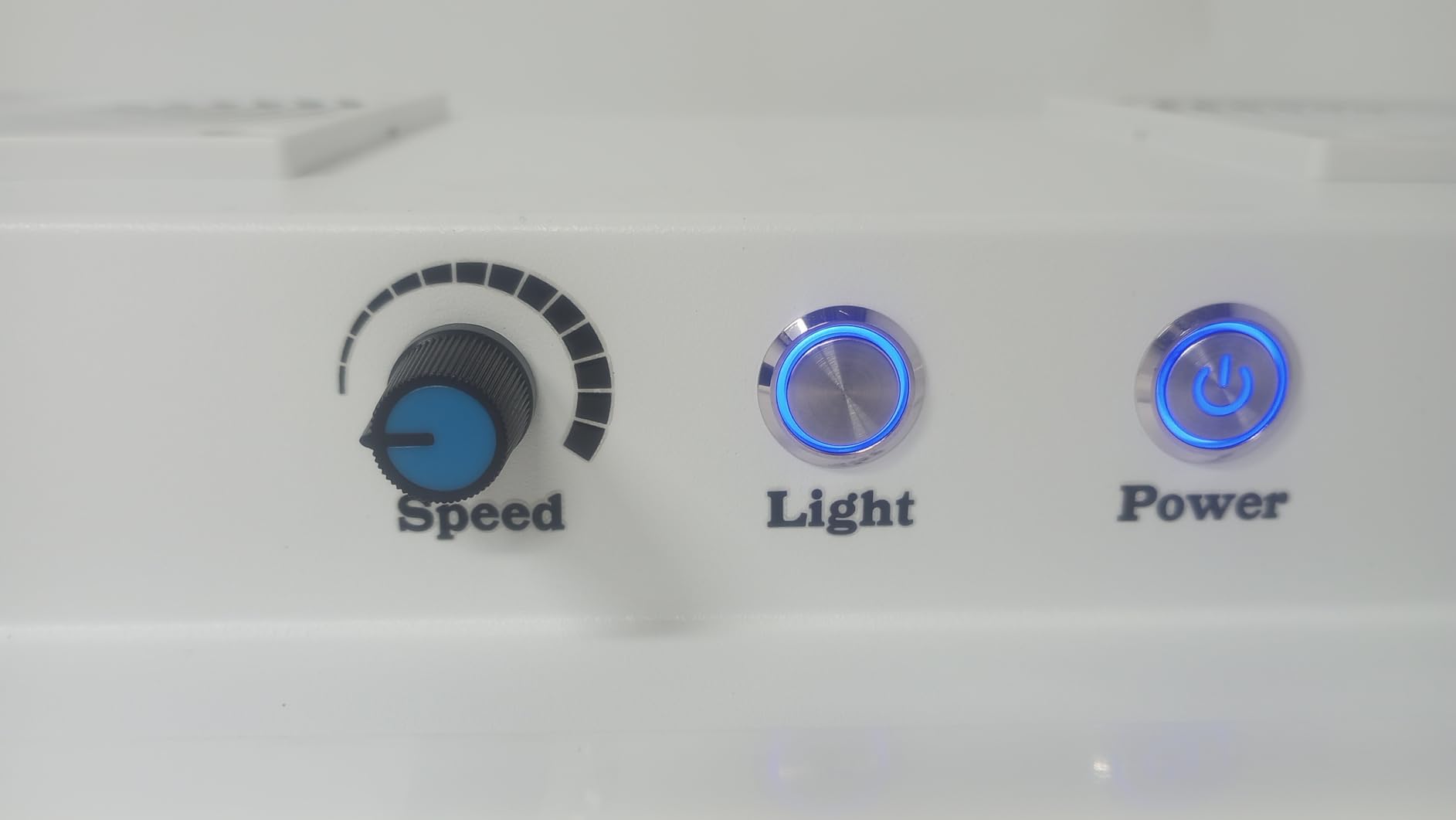
Airflow is rated up to 249 CFM with a working velocity of 0.35 to 0.5 meters per second across a 20 by 15 inch working area. Dual brushless DC fans drive it, and a PWM stepless knob handles both fan speed and light brightness in one control. Setup takes under five minutes and the filter slides straight in without tools.
It also runs on 24V DC through a universal 100-240V adapter. On a bench with other sensitive equipment, that separation from mains voltage is a real convenience, and it is a design choice more often seen on laboratory equipment than on hobby gear.
Nearly every review mentions the same workaround, which tells you it is a genuine design gap rather than a fluke: the filter fit runs loose at the top edge and can bow outward at higher fan speeds. Adhesive foam tape along that edge, or rotating the filter 180 degrees, resolves it. Budget five minutes and a roll of foam tape before first use.
What it does better than the rest
Cabinet rigidity, without question. A flexing housing changes airflow geometry, and airflow geometry is the whole point of a laminar flow work station. This unit holds its shape, which is why the smoke test comes back smooth across the full opening rather than fast in the middle and slack at the edges.
It is also the most complete package here. The stainless housing, a 20 by 15 inch working area, dual brushless fans, an integrated LED light with adjustable brightness, a one year warranty and a full accessory kit including dust cover, workbench and manual. You are not hunting for a bench, a light or a cover after delivery.
Where it falls short
The non-standard filter media size is the real limitation. Because it does not match a common cartridge dimension, your replacement sourcing narrows to the original manufacturer, and that turns a consumable into a dependency. If you dislike being tied to one supplier for a part you replace on a schedule, weigh that before buying.
It is also a 24V DC bench unit, not a room unit. The 20 by 15 inch footprint suits plate work and small instruments. A larger batch operation that needs a microscope, multiple vessels and elbow room at once will feel the limit, and the YJINGRUI 22.6 inch model gives you more surface for less filtration grade.
4. MOFOGDR CW-12 Dual-Fan FFU – Tunable and Ready Formed
Upgraded Laminar Flow Hood with H13 Filter Calm Wind 17“x13” FFU Fan Filter Unit for Laboratory, Clean Room, Mushroom Inoculation Room Mycology Supplies Dual Fan Air Filtration System
H13 99.97% at 0.3 microns
Dual fan continuous flow
0.35-0.5 m/s at work area
15.7 lb
Pros
- Dual-fan continuous airflow keeps the work zone stable
- Box body arrives fully formed and coated with no filter-box assembly needed
- Workbench panel can be fitted to suit your own setup
- Integrated LED light strips make inoculation work easier
Cons
- Most users add their own pre-filter to protect the HEPA media
- Replacement filter is a separate purchase on a roughly six-month cycle
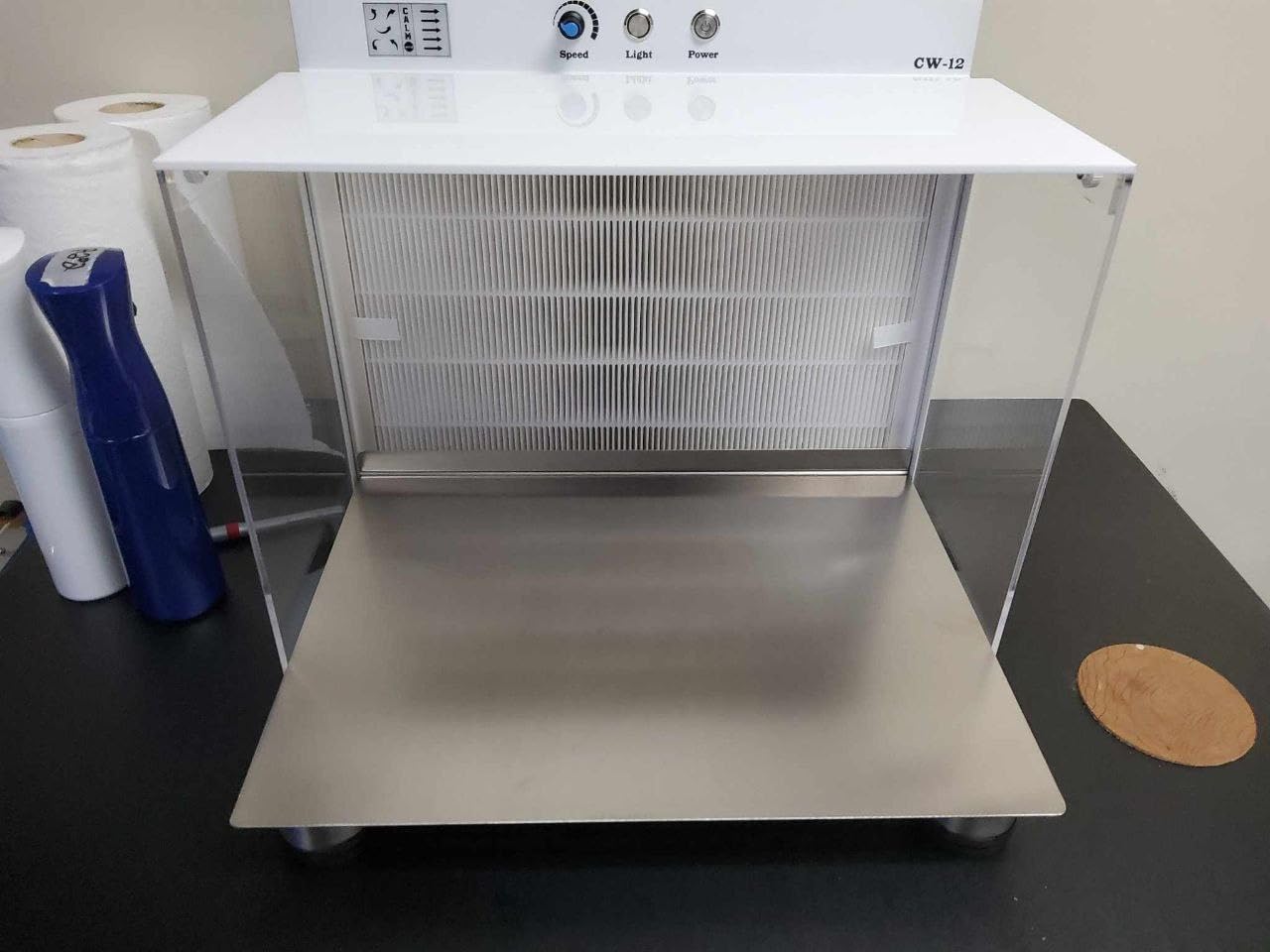
The CW-12 combines a press-formed and welded coated steel box body with two fans and a PWM stepless speed knob, and it arrives as a complete machine. There is no filter box to assemble and no frame to square up, which for a first-time cleanroom air handler purchase saves an afternoon and a few arguments.
H13 media captures 99.97 percent of 0.3 micron particles, and the work area runs 17.24 by 7.48 by 13.07 inches inside a 17.24 by 14.8 by 14.76 inch footprint. Airflow velocity across the work area hits 0.35 to 0.5 meters per second at maximum setting within 30 centimeters of the face.
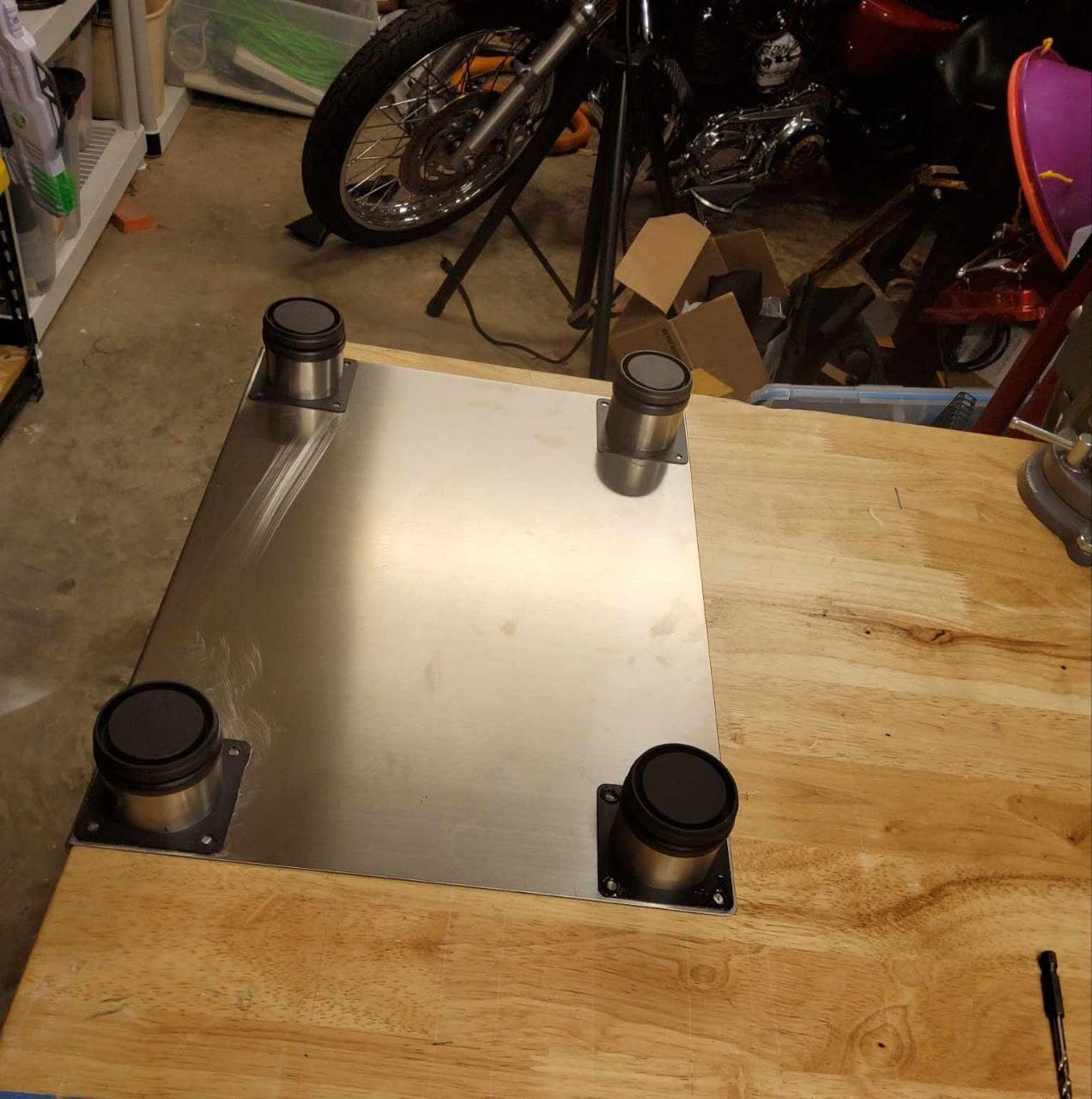
It accepts 110V or 220V, which matters if you move between a home workshop and a shared facility. The included LED light strips run along the interior, and the workbench panel can be configured to fit your own table height rather than forcing you to work around a fixed one.
Two things to plan around. Replacement filters are a separate purchase on a recommended cycle of about six months, and most users add their own pre-filter to protect the HEPA media and tune the airflow. Both are normal for this class of equipment, and both are cheaper to plan for than to discover mid-cycle.
What it does better than the rest
Dual-fan continuous supply is the difference here. Single-fan bench units lose face velocity the moment the filter starts to load, and the work zone stops reading clean. Two smaller fans on a stepless control hold the work area more consistently as resistance builds, and you can dial the speed up to compensate without overshooting into turbulence.
The configurability is useful in a way that is easy to miss. A removable workbench panel means you can drop the unit onto an existing bench at your preferred height, which matters in a small inoculation room where every inch of bench space is contested.
Where it falls short
The 17 by 7.5 inch working chamber is narrow compared with the square units in this roundup. It handles plates, small vessels and a hand tool comfortably. It does not comfortably hold a microscope and multiple cultures at once, and forcing that workflow into it usually puts hands further into the airstream than you want.
Review volume is thin at 27, so long-term reliability is less well documented than for the units with a hundred-plus reviews. The coated steel box is well built for its class, but the six-month filter cycle adds up, and the media is a non-standard size. Budget for consumables before committing this to a primary work station.
5. Sentry Air Systems 18 Inch Clean Room – Enclosed ISO 5 Workspace
Sentry Air Systems, Inc. 18” Portable Clean Room – Laminar Flow Hood for medical and laboratory uses. Positive-pressure workspace meets ISO Class 5 Standards. Supplies Filtered Air to the Workspace
Enclosed positive-pressure cabinet
ISO Class 5 verified
18 in nominal width
30 lb with curtains
Pros
- Enclosed positive-pressure workspace measures as an ISO Class 5 cleanroom
- Spacious enough to work inside with headroom to move around
- Users doing data recovery and screen installs report good results
- Sturdy construction rated above cheaper portable alternatives
Cons
- Directional positive pressure rather than true uniform laminar flow on a smoke test
- Assembly instructions are vague and the outer covering is not mentioned
- Some units arrived missing parts or a filter with inconsistent support
- Noticeable fan noise when running
This is the only unit in the roundup you sit inside rather than work over, and that changes the whole argument. It is a vertical laminar flow hood with an enclosed positive-pressure workspace that measures as an ISO Class 5 cleanroom, built on a 30 pound frame at 18.5 by 20 by 27.6 inches. Anti-static curtains close the sides, and the included LED light, variable speed controller and filter make it usable out of the box.
Users recovering mold-damaged hard drives, cleaning data recovery equipment and installing screen protectors report good results inside it. Those are jobs where the item itself is the contamination risk, and an enclosed workspace is the only way to protect it. Reviewers who know laboratory equipment rate it as the strongest option at this level of spend.
It has the longest listing history of anything here, first available in 2015, and it accepts SS-200-HLG or SS-200-ULG replacement filters. That matters because the filter ecosystem is standardized, so you are never waiting on one supplier for a consumable.
What it does better than the rest
Enclosure, and everything that comes with it. Positive pressure means contaminated room air is pushed away from the work rather than drawn across it, and the anti-static curtains let you reach in without breaking the barrier the way an open-front hood forces you to. For recovery work, electronics cleaning and any job where the product is fragile and dirty, that is the whole ballgame.
Assembly needs a screwdriver and the online manual. That is a genuine step up in build quality from the folded sheet-metal units in this roundup, and the reviewers who know the difference call it out directly.
Where it falls short
It produces directional positive pressure, not uniform laminar flow. A smoke test shows uneven velocity across the opening, so if your specification calls for a certified laminar flow cabinet rather than an ISO 5 enclosure, this is not the machine. It hits the cleanliness class; it does not hit a uniformity guarantee.
There is noticeable fan noise, and there were reports of units arriving with missing parts or a missing filter alongside inconsistent support response. Check the box contents against the manual before you start assembly, and confirm which filter ships with the unit. If quiet operation in a shared room matters, this is not the one.
6. Yzzwer Benchtop FFU – HEPA Included, Ready to Work
Fan Filter Unit Laminar-Flow-Hood Yzzwer – FFU HEPA Filters for Class 100/ISO 5 Cleanliness Clean Room Mycology and Mushroom Room Work 110V (Include HEPA Filter)
H13 99.99% at 0.3 microns
HEPA filter included
Up to 800 m3/h
22.6 in square
Pros
- Highest average rating among the benchtop fan filter units in this roundup
- HEPA filter ships with the unit so it is ready for work out of the box
- Steady three-speed airflow control with strong intake and exhaust capacity
Cons
- Clamp filter mounting makes replacement media handling awkward
- Mixed metal and plastic construction
The Yzzwer benchtop FFU carries the highest average rating among the bench units in this group, at 4.5 stars, and it ships with the HEPA filter already in place. That single detail changes the first day. No sourcing a filter, no fitting media, no leak test before you can start work.
Filtration is rated 99.99 percent at 0.3 micron particles and above and below, which is a slightly broader claim than most competing listings make. The three-position push-button control holds an average air speed of 0.45 to 0.60 meters per second, with airflow up to 800 cubic meters per hour across a 22.6 by 22.6 inch footprint.
It is built for the kinds of rooms people actually build in spare space. The listed common applications are food processing and hospitals alongside clean room setup, mycology work, workshops and mushroom rooms. At MERV 13 pleated construction with clamp-on filter mounting, it fits the general facility maintenance kit as well as the lab.
What it does better than the rest
Readiness. Everything else in this roundup asks you to source media or fit a cartridge, and this one arrives complete with a filter rated above most of its direct competitors. For a first cleanroom air handler, or for outfitting several stations at once, that removes the single most common source of delay.
It also runs more than one power source. Clamp-on mounting keeps the filter sealed without permanent fasteners, and the three-position control gives more granularity than a two-speed switch while staying simpler than a PWM knob. For a shared unit passed between users, a positive detent is often the better interface.
Where it falls short
Clamp filter mounting means replacement media takes more handling care than a snap-in or slide-in frame. A clamp seal is easier to seat improperly, and a mediocre seal shows up as uneven face velocity rather than as an obvious failure. Check the seal with a smoke test each time you change the filter.
The construction is a mix of metal and plastic, and the review base is 24, so there is less long-term data behind it than the units with a hundred-plus reviews. If this is going to run continuously in a facility where downtime is expensive, weigh that thinner evidence base against the convenience of a bundled filter.
7. YFTOHI Compact FFU – Small Footprint, Quiet Running
Mycology Laminar Flow Hood with HEPA H13 Filter,FFU,17.3″ x 14.8″ x 14.8″ Laminar Flow Hood for Laboratories/Clean Rooms/Mushroom Spores Inoculation
H13 99.98% at 0.3 microns
Three-speed 0.35-0.6 m/s
600-700 m3/h
LED lit
Pros
- Three-speed adjustment lets users match airflow to different growth conditions
- LED lighting and quiet fans suit prolonged inoculation sessions
- Galvanized frame and aluminum fan blade built for durability
Cons
- Acrylic work chamber scratches and shows wear faster than a steel housing
- Small review base so long-term reliability is less well documented
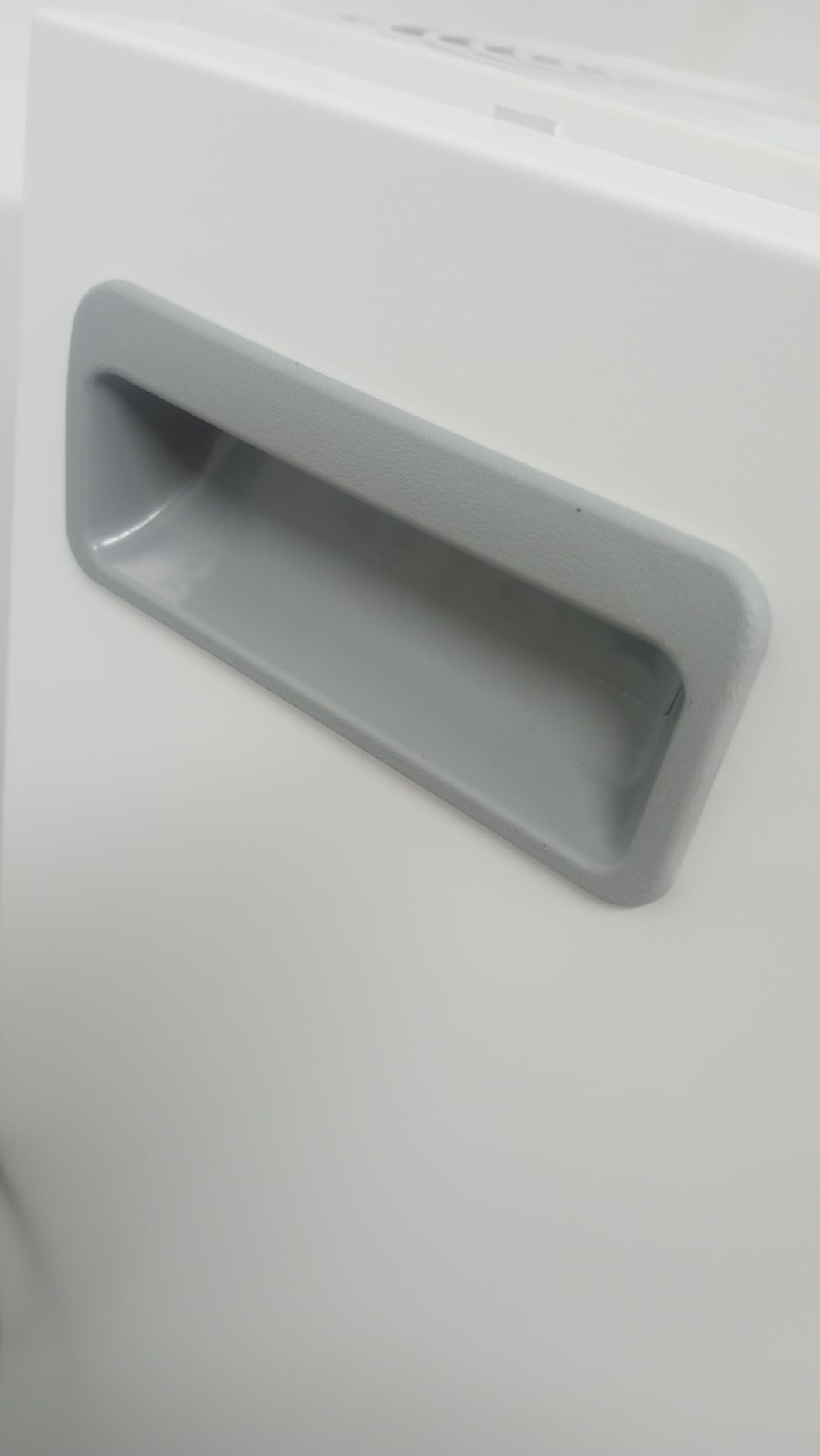
The YFTOHI is the most compact unit here, and it is built around a galvanized frame with an aluminum fan blade and an acrylic working room. The working chamber measures 17.24 by 7.5 by 13.1 inches, with the whole unit at 14.7 by 14.7 by 17.5 inches and a 15.97 pound weight, so moving it between stations is a one-person job.
H13 media removes 99.98 percent of 0.3 micron particles to an ISO Class 5 level, and three speed settings cover 0.35 to 0.6 meters per second at 600 to 700 cubic meters per hour. The LED light and quiet operation are the features users mention most, and both make sense for long inoculation sessions where you are leaning over a small chamber for hours.
It is a recent listing, first available in early 2026, which is worth holding in mind when you weigh the nine-review base. Newer machines have less field history, so the durability claims come from the build spec rather than from years of operating data.
What it does better than the rest
Space efficiency. Nothing else in this roundup fits this much working volume into this little footprint, and in a small inoculation room or a shared workshop bench, footprint is a real constraint. The galvanized frame and aluminum fan blade are also the right material choices for a machine that gets handled often.
Three-speed adjustment across 0.35 to 0.6 meters per second lets you match airflow to different growth conditions rather than running one setting all day. When you are working close to the surface, the lower setting reduces disturbance; when you want faster clearance after a transfer, the top setting is there.
Where it falls short
The acrylic working chamber is the weak point. Acrylic scratches and shows wear faster than a steel housing, and in a workflow where hands and tools move constantly across the chamber edges, that wear shows up within months. It does not affect filtration, but it does affect how the unit looks and how confident you feel working inside it long term.
With nine reviews, the evidence base is thin. That is not a disqualifier for a secondary station, but it is a reason to pick a different unit for your primary workstation where you cannot afford a filter or airflow surprise mid-workflow.
8. VEVOR Enclosed Flow Hood – Spacious and Fully Assembled
Vevor Laminar Flow Hood, 20.08 x 20.47 x 23.62 Inches Working Area Portable Clean Room, ISO Class 5 Standards, Adjustable, HEPA-14 and G1 Pre-Filter, Laboratory Use
HEPA-14 with G1 pre-filter
99.997 percent filtration
20 x 20 in enclosed area
94.4 lb
Pros
- Enclosed sterile workspace arrived fully assembled and durable
- Reviewer petri-dish testing confirmed effective filtration
- Spacious interior for an enclosed unit at this level of spend
Cons
- Only one customer review so long-term reliability is unproven
- HEPA-14 and G1 pre-filter set must be replaced every 2-3 months
- 65 dB noise level is the highest in this roundup
The VEVOR is the largest enclosed unit in the roundup by working volume, at 20.08 by 20.47 by 23.62 inches inside a powder-coated cold-rolled steel frame with a 304 stainless steel base. It arrives fully assembled, so there is no drilling and no installation, which for a 94.4 pound machine is a meaningful convenience.
Filtration is the strongest claim in the group: HEPA-14 combined with a G1 pre-filter at a stated 99.997 percent rate against ISO 5 standards. A centrifugal fan moves air vertically with a stepless knob up to 0.45 meters per second, and a transparent acrylic viewing window plus an LED light let you work without breaking the enclosure.
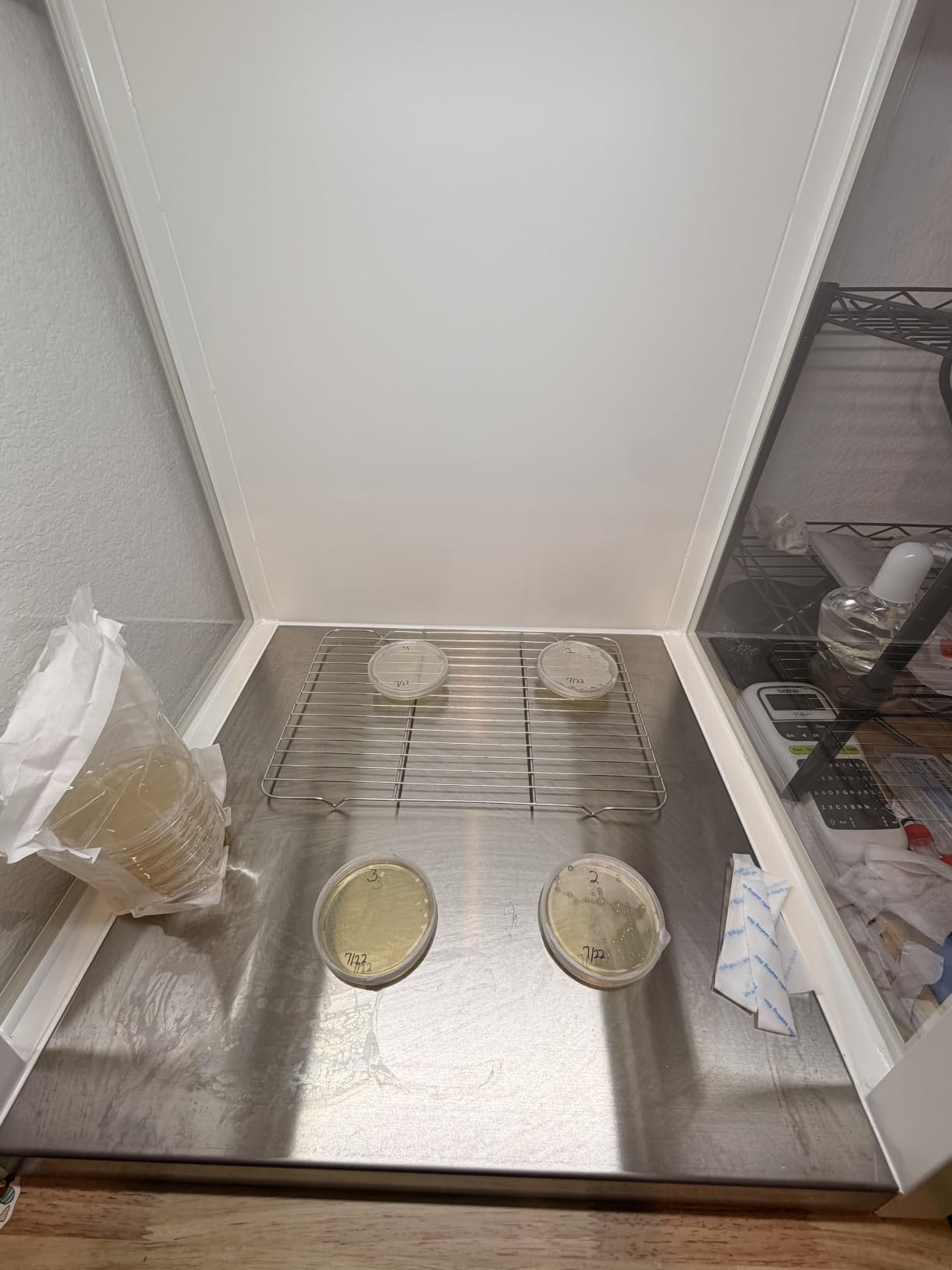
Be careful how you read the rating. It is 5.0 stars, but it comes from a single review, and that reviewer did run a petri-dish test that confirmed effective filtration inside the workspace. That is a meaningful signal about build quality and arrival condition. It is not a reliability record, and one data point should not outweigh the review depth behind the other units.
The 65 dB noise level is the highest in this roundup. That is a real operating consideration in a shared lab, and it pairs with the 2 to 3 month replacement interval on the HEPA-14 and G1 set, which makes this the most expensive unit to keep running over a year.
What it does better than the rest
It is the only unit here that combines a true enclosed workspace, a stainless steel base, a steel frame and HEPA-14 plus pre-filter filtration. The viewing window means you can inspect the interior without opening it, which protects the enclosed environment during routine checks. For a space where the work inside cannot be re-cleaned easily, that matters.
Arriving assembled is underrated. There is no assembly to get wrong, and the 94.4 pound frame is bolted together by the manufacturer rather than by you on a workshop floor.
Where it falls short
The filter economics are the issue. Replacing the HEPA-14 and G1 set every 2 to 3 months, as specified, is a running cost that compounds quickly in a continuous operation, and it is the single biggest reason we would not put this at the top of the list despite its 5.0 rating.
With one review and 65 dB of noise, this is a machine to evaluate carefully in your own space before committing. Ask about the replacement media interval, confirm the room acoustics will tolerate it, and if you need ISO 5 with real evidence behind it, the Sentry cabinet has a longer operating history at lower noise.
9. Yzzwer Vertical FFU – Largest Work Area on a Floor Stand
Vertical Laminar Flow-Hood Fan-Filter-Unit Yzzwer – FFU HEPA Filters for Class 100/ISO 5 Cleanliness in Clean Mycology and Mushroom Room 47.2″ x 23.6″ x 29″ Working Area 110V
HEPA 99.99 percent at 0.3 microns
47.2 x 23.6 x 29 in work area
Up to 800 m3/h
79.8 lb
Pros
- Same verified filtration spec as the smaller Yzzwer FFU in a much larger cabinet
- Aluminum frame resists deformation and the unit is easy to move
- Three-position control with up to 800 m3/h airflow
Cons
- Only one customer rating and no written review text
- Large and heavy at nearly 80 lb so it is not a portable bench unit
This is a floor-standing vertical laminar flow fan filter unit with a 47.2 by 23.6 by 29 inch working area, and it is by a wide margin the largest protected volume in the roundup. The aluminum vertical hood and bracket are rigid enough to resist deformation, and the whole assembly is designed to be portable despite its size, which is unusual for something nearly 80 pounds.
The filtration specification matches the smaller Yzzwer bench unit: 99.99 percent of particles at 0.3 microns and above and below, Class 100 cleanliness and ISO Class 5 filtration efficiency. A push-button three-position control holds an average air velocity of 0.45 to 0.60 meters per second with airflow up to 800 cubic meters per hour.
Common applications cited are clean rooms, mushroom rooms, workshops and phone repair. If you are building out a dedicated room rather than a bench station, the working area here means you can stand inside the protected zone and work rather than reaching into a small aperture.
What it does better than the rest
Working volume, by a distance. Every other unit in this roundup is a bench appliance you reach into. This one is a workspace you occupy, which changes what you can do inside it. Multi-stage work, large assemblies and anything requiring sustained reach into the airstream become practical at this size.
The aluminum hood is also a genuine material upgrade over the coated steel and acrylic constructions elsewhere. It resists deformation, tolerates being moved, and does not scratch into visibility the way an acrylic chamber does.
Where it falls short
The evidence is thin. There is a single five-star rating and no written review text at all, so the 5.0 average carries almost no evidential weight. The specification sheet is credible, but you are buying on manufacturer claims rather than on owner reports for this one.
At 27 by 13 by 53 inches and 79.8 pounds, it needs floor space and a route to that floor space. It is not a bench unit, and the 53 inch height means you are working standing up. If your process is seated fine work at a bench, the extra footprint buys you nothing.
10. Air Science FLOW24-A – HEPA and ULPA Capability in a Wall-Mount Cabinet
FLOW Series Laminar Flow Hood/Portable Cleanroom, 24″ / 600mm Nominal Width, 115V 60Hz
HEPA and ULPA filtration
ISO Class 5 or better
24 in wall-mount cabinet
115V with recirculation
Pros
- HEPA and ULPA capability exceeds the class of most units in this roundup
- Recirculating airflow driven by a high-efficiency centrifugal fan
- Large front opening gives unrestricted access to the work zone
Cons
- Only two ratings and no written customer reviews
- Highest spend in the roundup and not a Prime-eligible item
Air Science builds specialist airflow equipment, and the FLOW series is the most conventional cleanroom cabinet in the group. It is a wall-mounted enclosure at 24 inches, or 600 millimeters, nominal width and 24 by 24 by 36 inches overall, with a brushed glass front and energy-saving LED lighting included as standard.
The technical case rests on two points. First, HEPA and ULPA filtration capability, which no other unit in this roundup can claim. Second, a high-efficiency centrifugal fan driving vertical laminar airflow in a recirculating configuration, where air is drawn back through the unit rather than exhausted. Air cleanliness is specified to meet and exceed ISO Class 5.
It plugs into a standard 115V 60Hz wall outlet, so there is no dedicated circuit or hardwired connection. The large front opening gives unrestricted access to the work zone, which matters more than it sounds in a cabinet where a small aperture forces you to work through a slot.
What it does better than the rest
Filtration headroom. Being able to run ULPA media when your process demands it, rather than being locked to the H-13 and H-14 grades the hobby and small-lab market supplies, is the reason to look at this machine. It also suits facilities that need to move between cleanliness grades without changing equipment.
The centrifugal fan and wall-mount format are laboratory airflow conventions rather than workshop conventions. If your space is already fitted out with wall-mounted stations, this drops into a workflow the bench units do not fit.
Where it falls short
There are only two ratings and no written customer reviews, so the 4.5 average is a very thin signal. Treat the specifications as the reason to consider it and the review history as something you do not have.
It is the highest spend in the roundup and not a Prime-eligible item, which means a replacement filter or a replacement unit takes longer to get to you. For a facility running this as a primary station, a slower parts path on a non-standard consumable is a planning item, not a dealbreaker, but it is a planning item.
How to Choose a Cleanroom Air Handler
Match the unit to the ISO class, the workflow and the space, in that order. Everything else in a specification is secondary. The bench-scale units in this roundup all sit at ISO Class 5 or the Class 100 equivalent, so the class rarely separates them. What separates them is working volume, noise, cabinet material and how easy the consumables are to source.
Start with working volume, not filtration percentage
A 99.997 percent filter in a chamber too small for the workflow will push your hands into the airstream and slow you down. Measure the largest arrangement you need protected at once. If it is a microscope plus four vessels plus tools, the 22.6 inch square units earn their place. If it is a single plate and a scalpel, a 17 inch compact unit does the same job and leaves bench space free.
Then check whether you need enclosure. Open-front units protect a surface; enclosed units protect a person working over it. Data recovery, mold remediation and screen work all fall in the second category, where an open hood gives you nothing. Our broader air handler comparison covers the coil and control differences if you are also weighing conventional building units.
Choose recirculating or make-up air deliberately
These are the two AHU types, and the distinction decides your energy and filtration economics. A recirculating air handler takes room air, filters it and returns it to the same space, which is what every bench unit in this roundup does. A make-up air handler draws conditioned outside air into the room and exhausts an equal volume, which is what a cleanroom HVAC system does to handle humidity, heat and pressure differential.
Recirculating wins on efficiency for a work station. You filter the same air repeatedly, so the only fresh air burden is heat from people and equipment, and in a small room that is a modest load. Make-up air is required when the space needs defined humidity, defined dew point or a maintained pressure differential against adjacent areas.
For most of the applications in this roundup, recirculating is the right default. If your process is sensitive to moisture, such as chemical drying or hygroscopic materials, you need real humidity control, and that means a central make-up air system rather than a bench hood. Our air dryer guide covers the dew point and moisture removal side of that problem.
Check the filter replacement cycle against your hours
Replacement interval is the number that decides true running cost, and it varies more than any other spec in this roundup. The VEVOR specifies 2 to 3 months for its HEPA-14 and G1 set, which in a continuous operation is a recurring line item. The YJINGRUI cycle is typically 6 to 12 months, and the MOFOGDR recommendation is about 6 months. Multiply the interval by your weekly hours and divide into 52 before you compare anything else.
Media size is the second half of that calculation. A standard rectangular cartridge is easy to source from several suppliers. A non-standard size ties you to one manufacturer for a part you replace on a schedule, and that dependency is worth pricing into the decision even when the machine itself performs well.
Size for air changes and face velocity, not CFM alone
Cubic feet per minute and cubic meters per hour tell you how much air moves. They do not tell you whether the air is moving at the right speed over your work. Face velocity between 0.3 and 0.65 meters per second is the working number, and airflow figures in this roundup range from about 249 CFM on the Shroomagic up to 800 cubic meters per hour on the Yzzwer units.
For a room, work backwards from air changes per hour. Multiply the room volume in cubic feet by your target ACH, then divide by 60 to get CFM. ISO 7 spaces often run 60 ACH or more, and ISO 5 spaces run well above that. If your air handler cannot deliver the required CFM at the required static pressure, the room will not hold class, no matter what the filter is rated.
Check noise and vibration against the room
Noise levels across this roundup run from 55 dB on the lowest setting to 65 dB on the loudest. In a dedicated workshop that difference does not matter. In a shared lab where people concentrate, sit near someone else’s bench for hours, or need to hear a voice behind a mask, it does. If you are specifying for a room with other people in it, measure before you commit.
Vibration matters more than most buyers expect, and it is the main reason we keep recommending two-fan arrangements and rigid housings. A flexing cabinet changes the airflow geometry, and airflow geometry is what determines whether your work surface stays clean. The stainless housing on the Shroomagic and the aluminum hood on the large Yzzwer unit are both built around that point.
Know when a custom build is the right call
None of the ten units here will maintain room pressure differential, control humidity to a defined dew point, or provide 20000 CFM of filtered air. When you need those, you are past the bench-scale market and into custom air handling, and the manufacturers worth talking to are Nortek CLEANPAK with its FANWALL fan array technology, Airwoods, Clean Air Technology, Terra Universal and E-ZONG.
Custom units are where unidirectional airflow, HEPA and ULPA banks, ECMi and IE5+ motors, NC-60 noise criteria and walkable ceiling grids live. They are also where validation, IQ, OQ and PQ requirements enter the conversation, and where the project timeline runs in months rather than days.
For a facility that already exists and has a temperature problem, this is the pain point facility engineers raise most often on HVAC and MEP engineering forums. A room set to 65 degrees climbing to 72 by mid-afternoon despite 60 or more ACH and a plenum in the mid-50s usually has a heat load problem, not an airflow problem. Personnel in scrubs and coveralls generate a surprising amount of sensible heat, and that load frequently was not accounted for in the original design. Sizing the make-up air and cooling for the gowned load, rather than adding air changes, is what actually fixes it.
Where low dew point is the requirement, DX cooling struggles to get there and chilled water with hot gas reheat handles it more predictably. For a cleanroom where chemical drying is the concern, humidity control has to be part of the central system. And if a redesign is being held up purely by cost and lead time, a partial retrofit that corrects the heat load balance often resolves the comfort problem at a fraction of a full replacement.
Frequently Asked Questions
What is a clean room air handler unit (AHU)?
A cleanroom air handler unit is a specialized air handling system that filters, conditions and circulates air at controlled temperature, humidity and particle levels so a space can hold a specific ISO 14644 cleanliness class. It draws room air or outside air, pushes it through HEPA or ULPA media, conditions it with cooling, heating and humidity control, then distributes it as unidirectional vertical flow across the work zone at the required airflow and pressure differential.
What are the two types of AHU?
The two types are recirculating air handlers and make-up air handlers. A recirculating unit takes room air, filters it and returns it to the same space, which suits a work station where efficiency matters more than defined humidity. A make-up air unit draws conditioned outside air in and exhausts an equal volume, which a cleanroom needs when humidity, dew point or pressure differential must be actively held.
Which company’s AHU is best for cleanrooms?
For custom cleanroom air handling, Nortek CLEANPAK is known for FANWALL fan array redundancy, Airwoods for combined cooling, heating and energy recovery, Clean Air Technology for units from 1,000 to 35,000 CFM, Terra Universal for complete cleanroom HVAC packages, and E-ZONG for custom-built units. For bench-scale units, Sentry Air Systems, Air Science and Yzzwer cover the professional end of the market.
Who are the leading manufacturers of air handling systems?
Leading air handling system manufacturers include Trane, Carrier, York, Daikin and LG, which cover conventional building air handling. For controlled environments specifically, Nortek CLEANPAK, Airwoods, Clean Air Technology, Terra Universal and E-ZONG build cleanroom-rated units with HEPA and ULPA filtration, unidirectional airflow and fan array redundancy designed for ISO 5 to ISO 8 spaces.
Are hydronic air handlers efficient?
Hydronic systems, using chilled water with hot gas reheat, are efficient for cleanrooms because they deliver precise dehumidification and a stable dew point, which matters when humidity control is the requirement. Direct expansion systems use less infrastructure and cool effectively, but they have difficulty reaching a low dew point, with coil temperatures often bottoming out around 48 degrees Fahrenheit, which can leave chemical drying and hygroscopic work slow.
The Bottom Line on Cleanroom Air Handling
The MSFULLSEA HEPA flow hood is our pick as the best air handler for cleanrooms in this group, and the reason is the three-layer pre-filter, HEPA and post-filter stack with a replaceable cartridge. It is the most reviewed unit we evaluated, the cartridge is a standard size you can source from more than one supplier, and the dust-viewing lamp gives you a way to confirm contamination instead of assuming it.
For a larger work surface and the heaviest filtration in the roundup, the YJINGRUI H-14 at 22.6 inches square is the pick, with the caveat that you inspect the filter on arrival. For the best cabinet construction, the Shroomagic H13 with its stainless housing and PWM control is the one we would put in a shared lab.
Whichever route you take, size the unit on working volume and face velocity first, then confirm the filter replacement cycle and media size fit your parts supply before you order. And if your requirement extends past a work surface to room pressure, humidity or defined dew point, that is a make-up air system conversation, not a bench purchase. The right cleanroom air handling unit is the smallest one that covers your actual workflow, sized to hold its class.