
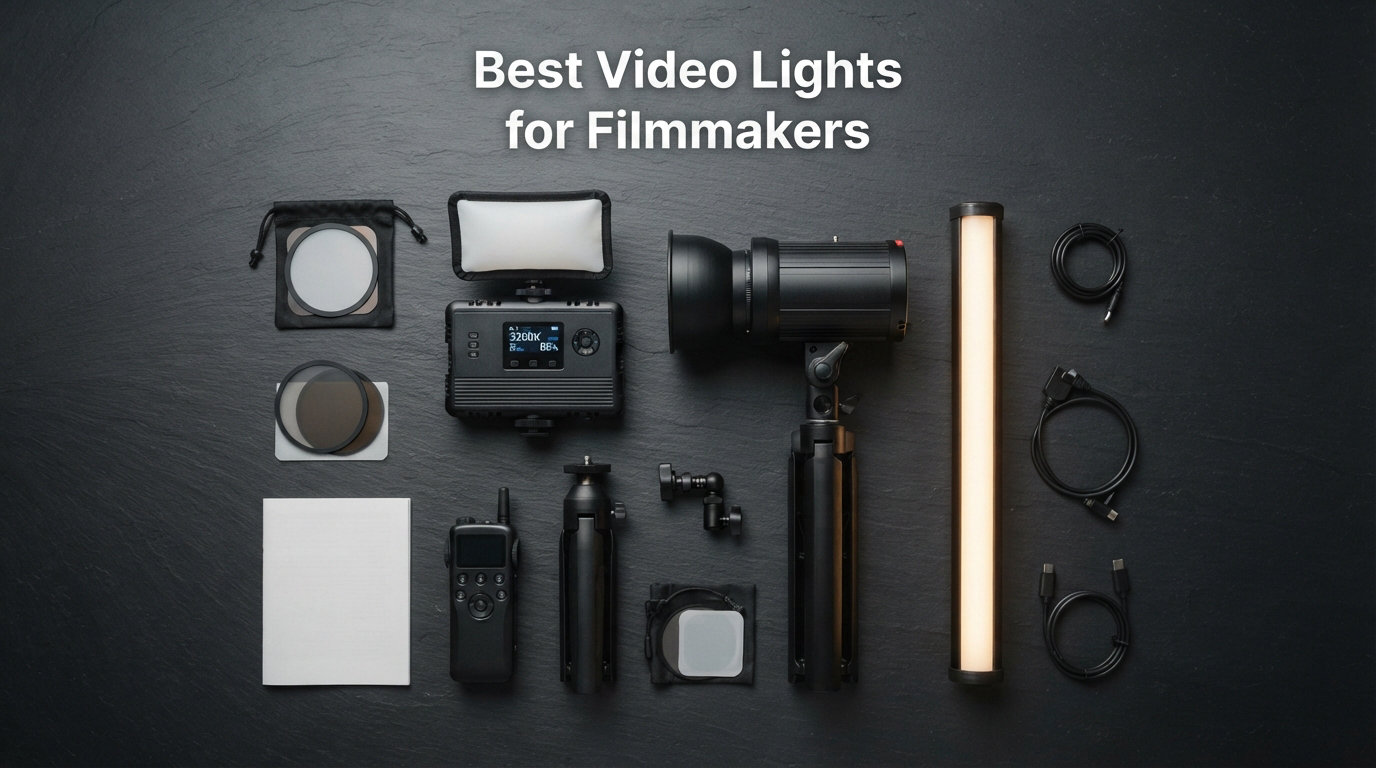
Bad lighting ruins good cameras. I have watched talented shooters mount a four-figure cinema body on a gimbal, only to point it at a subject lit by a single flickering lampshade. The footage looked flat, noisy, and amateurish. The fix was never a new lens. It was a $60 LED panel with a CRI rating above 95.
This is a deep dive into the best video lights for filmmakers in 2026, based on hands-on use across YouTube shoots, client interviews, product b-roll, and run-and-gun documentary work. I narrowed the field to eight fixtures that hit a sweet spot between color accuracy, output, build quality, and price. Whether you are building your first kit with one pocket light or upgrading a small studio to a 220W COB, there is a pick here that fits.
I will not waste your time with vague specs. Every recommendation includes the real CRI/TLCI numbers, color temperature range, battery or AC behavior, and the modifier ecosystem you can grow into. I will also explain the three-point lighting rule simply, because the “3 light rule” question shows up constantly in filmmaker forums and deserves a clear answer before you spend a dollar.
Table of Contents
Top 3 Picks for Best Video Lights for Filmmakers in 2026
Before the full breakdown, here are the three fixtures I would reach for first. One is a sub-$20 RGB pocket light that has saved more than one of my shoots. Another is the brightest, most color-accurate studio COB in this lineup. The third is the mid-range workhorse that balances power, features, and value.
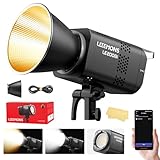
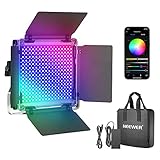

These three cover the three tiers most filmmakers actually buy in. Below, you get the comparison table with all eight, then a full review of each one with the pros, cons, and the people it fits best.
Best Video Lights for Filmmakers in 2026
Use the table below as a quick scannable reference. It lists every fixture, its headline specs, and a “check latest price” button so you can compare live numbers before deciding.
| Product | Specifications | Action |
|---|---|---|
| ULANZI VL49 RGB Video Light |
|
Check Latest Price |
 SmallRig RM120 RGB Video Light SmallRig RM120 RGB Video Light |
|
Check Latest Price |
 NEEWER 192 LED Bi-Color Panel NEEWER 192 LED Bi-Color Panel |
|
Check Latest Price |
| NEEWER 660 PRO RGB LED |
|
Check Latest Price |
 GVM 2-Pack LED Video Kit GVM 2-Pack LED Video Kit |
|
Check Latest Price |
 NEEWER 2-Pack 660 LED Kit NEEWER 2-Pack 660 LED Kit |
|
Check Latest Price |
 Godox ML100Bi 100W COB LED Godox ML100Bi 100W COB LED |
|
Check Latest Price |
| Godox Litemons LE200Bi 220W COB |
|
Check Latest Price |
1. ULANZI VL49 RGB Video Light – Best Budget Pocket Light
ULANZI VL49 RGB Video Lights LED Camera Light with 3 Cold Shoe & 1/4 Screw
2500K-9000K RGB
360 Degree HUE
2000mAh Battery
CRI 95+
USB-C Charging
Magnetic Mount
Pros
- Incredible value for under $20
- Magnetic back mounts to any metal surface
- Wide RGB HUE control (0-359 degrees)
- Built-in rechargeable battery
- Pocket-sized for run-and-gun
Cons
- Battery life is short at full brightness
- No carrying case included
I keep two of these clipped inside my camera bag, and they have saved more than one rushed interview. At under $20 they are the cheapest light on this list, but the value is absurd when you actually use them. The build is plastic, but the light itself does not feel cheap in action.
The killer feature is the magnetic back. I slap one on a refrigerator, a door frame, or any steel bracket and I have an instant accent light without rigging a stand. The 360-degree HUE wheel lets you dial in police-light red and blue, party purple, or warm candlelight orange in seconds. The 2500K to 9000K white range covers tungsten to daylight without gaps.
For the Best Video Lights for Filmmakers conversation, this is not a primary key light. It is a fill, a hair light, a background splash, or an emergency eye-light when your main fixture dies. CRI 95+ is genuinely good for the price, though I would not trust it for color-critical product work. Color accuracy is fine for talking-head content and YouTube vlogs.
The 2000mAh battery lasts about two hours at full blast, longer at lower brightness. USB-C charging means you top up from a power bank mid-shoot. The three cold shoe mounts on top let you stack multiple units into a brighter panel, which is a clever trick if you want to scale up cheaply.
Best Use Cases
Talking-head YouTube, travel vlogging, accent and background lighting, hair light on a tight budget, and emergency on-camera fill when your main rig fails. Solo creators who shoot in unpredictable locations get the most out of the magnetic mount.
Limitations to Know
Output is modest. Do not expect this to key-light a subject three meters away. The plastic body will crack if dropped on concrete. Battery replacement is not user-serviceable, so when the cell degrades, you replace the whole unit. For me, at this price, that is acceptable.
2. SmallRig RM120 RGB Video Light – Best Premium Pocket Panel
SmallRig RM120 RGB LED Video Light Panel, 7W Portable Metal Camera Light
7W Output
2500-8500K RGB
CRI TLCI 98+
5000mAh Battery
OLED Display
180 Min Runtime
USB-C
Pros
- High CRI and TLCI 98+ for accurate color
- 180-minute battery at max brightness
- USB-C with pass-through charging
- All-metal durable body
- Compact and lightweight at 7.2oz
Cons
- Slightly pricier than similar pocket lights
- Diffuser is small for soft light
Where the ULANZI is the cheapest option, the SmallRig RM120 is the one I actually hand to paying clients. The all-metal body feels like a piece of cinema gear, not a toy. The 5000mAh battery genuinely runs three hours at full output, which means it survives a full talking-head interview without swapping.
The OLED display is a small thing that becomes a big thing once you use it. You see exact color temperature and brightness numbers instead of guessing with a dial. That matters when you are matching this light to a second fixture or recreating a look across multiple shoot days.
CRI and TLCI both hit 98+, which puts this in professional color-accuracy territory. For product b-roll, food content, and any shot where skin tones must look right on the first take, this is the pocket light I trust. The 2500K to 8500K range plus full RGB HSI gives you creative effects without buying extra gels.
The 7W output is modest compared to a COB light, but for an on-camera or close-range fill, it is plenty. USB-C pass-through charging means you can run it from a wall adapter or large power bank indefinitely during a long livestream.
Best Use Cases
Run-and-gun interviews, on-camera fill for documentary work, livestreaming setups where runtime matters, and as a color-accurate accent for product shots. The premium build suits paid client work where gear should not look cheap on set.
Limitations to Know
The on-board diffuser is small, so light is fairly hard unless you add diffusion fabric or bounce it. Output drops quickly once you push the subject past about 1.5 meters. There is no Bowens or standard modifier mount, so you are limited to magnetic accessories.
3. NEEWER 192 LED Video Light Panel – Best Ultra-Thin Bi-Color Panel
NEEWER 192 LED Video Light Panel, 20W Ultra Thin Bi Color Camera Light
20W Output
3200-5600K Bi-Color
CRI 97+
4000mAh Battery
LCD Display
180 Degree Tilt
Ultra-Thin 0.4 inch
Pros
- Ultra-thin profile only 0.4 inches deep
- High CRI 97+ for accurate color
- Built-in rechargeable battery with 90 min runtime
- LCD screen for parameter viewing
- 180-degree tilt for flexible angles
Cons
- Battery life could be longer for extended shoots
- Cold shoe adapter feels somewhat flimsy
This is the panel I recommend when someone needs a real key light for a YouTube studio without spending triple digits. At 20W with 192 LEDs, it produces enough soft, even light to key a single subject at typical desk-shooting distances. The ultra-thin profile, just 0.4 inches deep, means it slides into a backpack side pocket.
The bi-color range of 3200K to 5600K covers the two temperatures you actually use: warm tungsten for cozy setups, daylight for matching windows. The CRI 97+ rating means skin tones render accurately, which is the difference between footage that looks professional and footage that looks slightly off.
The built-in 4000mAh battery runs about 90 minutes at full brightness. That is enough for most vlogging sessions, but you will want the AC adapter for longer studio work. The LCD screen shows brightness percentage and color temperature, which removes the guesswork from matching multiple lights.
For filmmakers shopping the Best Video Lights for Filmmakers list on a tighter budget, this is the most output-per-dollar panel I tested. The 180-degree tilt bracket lets you bounce it off a ceiling for soft fill or angle it straight down for a beauty-light effect.
Best Use Cases
YouTube talking-head setups, desk-based streaming, interview key light at close range, and as a soft fill opposite a brighter key. The ultra-thin form factor is perfect for creators who shoot in tight home studios.
Limitations to Know
The cold shoe adapter is the weak point. Treat it gently when mounting on a lighter stand. Battery runtime caps at about 90 minutes, so plan AC power for anything longer. There is no RGB mode, so creative color effects require gels.
4. NEEWER 660 PRO RGB LED Video Light – Best Value RGB Studio Panel
NEEWER 660 PRO RGB LED Video Light with App Control/Barn Door/U Bracket
50W Output
660 SMD LEDs
Full RGB HSI
CRI 97+
Bluetooth App Control
Barn Door and Diffuser
9 FX Scenes
U Bracket
Pros
- High 50W output with 660 LED beads
- Full RGB color control with HSI parameters
- Bluetooth app control for remote adjustments
- Includes barn door and diffuser
- 9 special lighting scenes for creative work
Cons
- Battery sold separately
- Larger and heavier than portable on-camera lights
This is the panel I recommend when someone wants the creative power of RGB without stepping up to a $300+ COB light. The 660 PRO RGB punches out serious light thanks to 660 SMD LED beads, and the barn door plus diffuser ship in the box, which is rare at this price.
The full RGB HSI control means you can dial in any color via hue, saturation, and intensity values. The nine built-in FX scenes cover police lights, lightning, fire, paparazzi, and other effects that previously required gels and lots of fiddling. For music videos, gaming streams, and creative YouTube thumbnails, this fixture earns its keep.
The Bluetooth app works well once paired. You can adjust brightness, color temperature, and RGB values from your phone while the light sits on a stand across the room. The U-bracket lets you rotate the panel a full 360 degrees for ceiling bounce or floor-level uplighting.
CRI 97+ keeps white-light work color-accurate, which matters because many RGB panels sacrifice white quality for color effects. This one handles both. For the Best Video Lights for Filmmakers roundup, this is the mid-tier sweet spot that I would put in a starter three-light kit without hesitation.
Best Use Cases
Studio YouTube setups, gaming and creative livestreams, music video accent lighting, product b-roll that needs color mood, and as a key light in a two-or-three-light interview setup. The app control is a productivity multiplier when you rig lights out of arm’s reach.
Limitations to Know
The NP-F battery is sold separately, so factor that into your real cost. The fixture is heavier and larger than pocket lights, so it is not a run-and-gun companion. The app sometimes drops connection on first pairing, but reconnects reliably after.
5. GVM 2-Pack LED Video Lighting Kit – Best Two-Light Starter Kit
GVM 2 Pack LED Video Lighting Kits with APP Control, Bi-Color Variable 2300K~6800K with Digital Display Brightness of 10~100% for Video Photography, CRI97+ TLCI97 Led Video Light Panel +Barndoor
2 LED Panels
480 LEDs Total
2300-6800K Bi-Color
CRI TLCI 97+
App Control
2 Stands
Barndoors
Carry Bag
Pros
- Includes two lights
- two stands
- and a carry bag
- Wide 2300-6800K color temperature range
- App control for adjusting multiple lights at once
- CRI 97 and TLCI 97 for pro color accuracy
- Aluminum alloy housing for heat dissipation
Cons
- Batteries not included
- App can be finicky to connect initially
This is the kit I point beginners to when they ask, “Should I buy one expensive light or two cheaper ones?” Two lights always beat one. A key plus a fill produces depth, dimension, and that professional look that single-light setups cannot fake.
The GVM 2-pack gives you two 480-LED bi-color panels, two light stands, barn doors, and a carry bag in one box. The 2300K to 6800K range is wider than most competitors, letting you push into very warm candlelight territory or cooler-than-daylight tones for moody effects.
The wireless app control is genuinely useful when running two lights. You fire up both panels, set one as key at 5600K and one as fill at 4500K, and you have a complete interview lighting setup without walking between stands. CRI and TLCI both hit 97+, which is professional-grade color accuracy.
For a Best Video Lights for Filmmakers starter recommendation, this is the most complete package under $200. The aluminum alloy housing dissipates heat well, and the included carry bag makes the kit genuinely portable for location work.
Best Use Cases
Two-person interview setups, small studio key-plus-fill configurations, product photography lighting, and beginner filmmakers building their first serious kit. The carry bag makes this a real location-ready package.
Limitations to Know
Sony F-series batteries are not included, so budget for two sets if you want to shoot untethered. The app occasionally takes a moment to pair, though it stabilizes after first connection. Output per panel is moderate, so this is a close-range kit, not a wide-shot powerhouse.
6. NEEWER 2-Pack Bi-Color 660 LED Light and Stand Kit – Best for Small Studios
NEEWER 2 Pack Bi Color 660 LED Video Light and Stand Kit, 3200-5600K
2 Lights
40W Each
3200-5600K Bi-Color
CRI 96+
2 x 75 inch Stands
U Bracket
Barndoor
AC or Battery
Pros
- Complete kit with two lights and two 75 inch stands
- CRI 96+ for accurate color reproduction
- 3200-5600K range covers most shooting needs
- Dual power options AC adapter or battery
- Smooth 0-100 percent dimming
- LCD screen shows brightness and color temp
Cons
- Light stands could be more stable at maximum height
- Batteries not included for outdoor use
- No carry case for the full kit
If the GVM kit above is the starter pick, this NEEWER 2-pack is the upgrade for someone setting up a permanent small studio. The two 40W panels each push serious light, and the included 75-inch stands put them at proper key and fill heights without wobble.
The CRI 96+ rating is solid, and the bi-color 3200K to 5600K range handles the two temperatures you use ninety percent of the time. The 0-100 percent dimming is smooth and consistent across both panels, which matters when you are balancing exposure across a scene.
The dual power setup is the real selling point for studio use. You can run these on AC adapters indefinitely for permanent studio installations, or switch to NP-F batteries for location work. The LCD screen shows brightness, color temperature, and battery status so you are never guessing.
For the Best Video Lights for Filmmakers roundup, this kit earns the small-studio slot because it is the package I would actually bolt to a permanent ceiling-mounted rail in a dedicated YouTube or podcast studio. The 40W per panel output is enough to key and fill a subject at three-meter distances with diffusion.
Best Use Cases
Permanent YouTube studio installations, podcast video setups, two-camera interview rigs, and small commercial product shoots. The AC power option makes these ideal for fixed-position work where you do not want to manage batteries.
Limitations to Know
The stands are tall but not the most stable at maximum extension, especially with a softbox attached. Sandbag the bases for safety. No carry case ships with the kit, so you will need a separate bag for transport. Batteries for location work are sold separately.
7. Godox ML100Bi 100W Bi-Color COB LED Video Light – Best Pocket COB
Godox ML100Bi 100W Bi-Color Portable COB LED Video Light
100W COB
34300 lux at 1m
2800-6500K Bi-Color
CRI 97 TLCI 98
487g Pocket Size
USB-C PD
11 FX
Bluetooth App
Godox Mount
Pros
- Ultra-portable at only 487 grams
- 100W COB output in pocket-sized body
- Exceptional 34300 lux at 1 meter
- CRI 97 and TLCI 98 for accurate color
- Three-way flexible power including USB-C PD
- 11 built-in FX effects
- Godox Light App control up to 30m
Cons
- Limited reviews so long-term reliability unclear
- Bowens adapter sold separately
- Low stock availability
This is the light that genuinely surprised me. A 100W COB fixture that fits in a jacket pocket and weighs just over a pound sounds like marketing hype until you actually use one. The ML100Bi delivers real output, real color accuracy, and a real modifier ecosystem in a package that disappears into a backpack.
The 34,300 lux at one meter is genuine powerhouse territory. That is enough to punch through a softbox at three-meter distances, key a subject at four meters, or simulate sunlight through a window for narrative work. For run-and-gun filmmakers who used to choose between portability and output, this eliminates the tradeoff.
CRI 97+ and TLCI 98+ mean color-accurate footage that grades cleanly in post. The 2800K to 6500K bi-color range covers warm interior and daylight scenarios without gels. The three-way power system is the killer feature: USB-C PD charging from a power bank, V-mount battery for location work, or AC adapter for studio.
For the Best Video Lights for Filmmakers list, this is my top pick for solo documentary shooters, wedding videographers, and travel filmmakers who need real output without lugging a full lighting case. The 11 FX effects and 30-meter Bluetooth app range cover creative and practical needs.
Best Use Cases
Solo documentary and run-and-gun work, wedding videography where weight matters, travel filmmakers who fly with kit, and as a powerful key light for window-light simulation. The USB-C PD option means you can run it from a laptop power bank on location.
Limitations to Know
The Godox mount requires an optional Bowens adapter if you want to use standard Bowens modifiers. The product is relatively new, so long-term reliability data is limited. Stock can be intermittent, so check availability before planning a shoot around it.
8. Godox Litemons LE200Bi 220W Bi-Color COB LED Video Light – Editor’s Choice
Godox Litemons LE200Bi 220W Bi Color COB LED Video Light Bowens Mount
220W COB
57700 lux at 1m
2800-6500K Bi-Color
CRI TLCI 98+
Bowens Mount
Bluetooth and DMX
Ultra Quiet Fan
11 FX
Pros
- Powerful 220W output with 57700 lux at 1m
- CRI and TLCI 98+ for exceptional color accuracy
- Standard Bowens mount for broad modifier compatibility
- Bluetooth app and DMX CRMX network integration
- Ultra-quiet fan for audio-sensitive recordings
- 11 built-in FX effects
- Professional build quality
Cons
- Heavier and larger than portable options
- Primarily studio-focused without battery operation
- Newer product with limited long-term reviews
This is the fixture I would install in a small professional studio tomorrow. The Godox Litemons LE200Bi outputs a genuine 220W of bi-color light, hits 57,700 lux at one meter, and carries both CRI and TLCI ratings of 98+. For color-critical commercial, product, and narrative work, those numbers are the difference between footage that grades easily and footage that fights you.
The Bowens mount is the standard modifier ecosystem in the industry. Softboxes, beauty dishes, snoots, fresnel attachments, and grids from dozens of manufacturers all fit. That compatibility matters because your light grows with your modifier collection instead of locking you into one brand’s accessories.
The ultra-quiet fan is a feature that does not sound exciting until you record a podcast or interview and realize your old light’s fan is audible in the quiet passages. The LE200Bi stays silent even at full output, which makes it suitable for audio-sensitive productions.
DMX and CRMX integration via the optional TimoLink RX receiver means this light slots into a professional multi-light setup controlled from a lighting console. For filmmakers scaling up from a single fixture to a controlled three or four-light rig, this is the light that grows with them. The Godox Light App handles Bluetooth control for simpler setups.
For the Best Video Lights for Filmmakers roundup, this is my editor’s choice because it hits the professional feature set at a price point that competitive brands charge for less. The 11 FX effects, 0-100 percent dimming, and bi-color 2800K to 6500K range cover the practical and creative bases. The build quality feels like a fixture that costs twice as much.
Best Use Cases
Professional studio installations, commercial and product work where color accuracy is critical, multi-light setups with DMX control, narrative short films, and as the key light in a serious three-point configuration. Pair it with a Bowens softbox and you have a fixture that punches well above its tier.
Limitations to Know
This is a studio-focused light, not a grab-and-go option. Battery operation is not the primary design intent, so plan for AC power. The newer product status means fewer long-term reviews, though the build quality and Godox’s track record suggest reliability. The weight and size make it less suited to backpack run-and-gun work.
Buying Guide: How to Choose Video Lights for Filmmaking
Picking the right video light is less about brand loyalty and more about matching specs to your actual shooting scenarios. Below are the factors that actually matter, with no jargon padding.
CRI and TLCI: Color Accuracy Explained
CRI (Color Rendering Index) and TLCI (Television Lighting Consistency Index) measure how accurately a light source reproduces color compared to natural sunlight. A CRI of 95 or higher is the floor for filmmaking. CRI 98+ is professional grade. Below 90, skin tones start to look slightly green or magenta, and color correction in post becomes painful.
TLCI is the broadcast-specific version of the same idea, designed for camera sensors rather than the human eye. For video work specifically, TLCI is the more useful number. Every light in this roundup hits CRI 95 or higher, with several reaching TLCI 98 territory.
Color Temperature Range
Color temperature, measured in Kelvin, describes how warm or cool a light appears. Tungsten is roughly 3200K and looks orange. Daylight is roughly 5600K and looks white-blue. A bi-color light lets you dial anywhere between those two points. A tri-color or full RGB light adds creative color options.
For most filmmakers, a bi-color range of 3200K to 5600K covers ninety percent of real-world scenarios. Wider ranges like 2500K to 8500K give you extra creative room for candlelight effects or cool moods. RGB adds the ability to dial in any hue for background accents and creative effects.
Power Options and Battery Life
Studio lights run on AC adapters and never need batteries. Location lights need batteries, and the type matters. NP-F Sony-style batteries are cheap and common but limited in capacity. V-mount batteries are the professional standard, offering hours of runtime for high-wattage fixtures. USB-C PD is the new frontier, letting you run smaller lights from laptop power banks.
Match your power choice to your shooting style. If you are permanently in a studio, AC is fine. If you travel or shoot on location, prioritize V-mount compatibility or USB-C PD for flexibility.
Mount Ecosystem and Modifiers
The mount determines which softboxes, beauty dishes, and snoots you can attach. Bowens mount is the industry standard and works with modifiers from dozens of manufacturers. Proprietary mounts lock you into one brand’s ecosystem, which limits your options and raises long-term costs.
For panels, look for included barn doors, diffusers, and tilting brackets. For COB lights, prioritize Bowens compatibility unless you have a strong reason to choose otherwise. The Godox Litemons LE200Bi in this roundup wins specifically because it ships with Bowens mount standard.
Output: Lux vs Wattage
Wattage tells you power consumption, not actual light output. Lux at a specific distance is the number that matters. A 100W COB light can outperform a 200W LED panel because COB designs focus light more efficiently. The Godox ML100Bi delivers 34,300 lux at one meter from just 100W, which is exceptional.
For key lighting a subject at three-meter distances, look for at least 10,000 lux at one meter. For close-range work like desk vlogging, even 2,000 lux is plenty.
The Three-Light Rule Explained
The three-light rule, or three-point lighting, is the foundational lighting setup that creates depth and dimension on a subject. It uses three lights in specific positions: a key light as the main source, a fill light to soften shadows on the opposite side, and a back light (also called a hair or rim light) to separate the subject from the background.
The key is your strongest light, placed at a 45-degree angle to the subject. The fill is a softer, less powerful light on the opposite side, filling shadows without eliminating them. The back light sits behind the subject, aimed at the head or shoulders, creating a highlight edge that pops the subject off the background. This setup works for interviews, talking heads, product shots, and narrative close-ups.
Budget Tiers: Where to Spend
Under $100, you are buying pocket lights, thin panels, and entry-level RGB units like the ULANZI VL49 and NEEWER 192 panel. These are perfect for accents, fills, and beginner setups. Between $100 and $300, you enter serious studio territory with COB lights, RGB panels, and two-light kits. Above $300, you are shopping professional fixtures with DMX control, premium color accuracy, and full modifier ecosystems.
My advice: start with two lights rather than one expensive fixture. A $200 two-light kit produces more useful footage than a single $400 light. Quality matters, but quantity plus positioning creates the professional look.
Frequently Asked Questions
What is the best lighting for making videos?
The best lighting for making videos is a three-point LED setup using fixtures with CRI 95 or higher. A bi-color LED key light in the 3200K to 5600K range, paired with a softer fill light and a back or rim light, produces professional depth and accurate skin tones. For beginners, a single 50W RGB panel like the NEEWER 660 PRO works well as a starter key light.
What lights do filmmakers use?
Filmmakers use LED panels, COB (chip-on-board) lights, and tube lights from brands like Godox, Aputure, Nanlite, and NEEWER. Professional sets rely on Bowens-mount COB fixtures in the 200W to 600W range for key lights, with RGB tube lights and pocket LEDs for accent and background lighting. CRI 95+ and TLCI 95+ ratings are the standard floor for professional work.
What is the 3 light rule?
The 3 light rule, or three-point lighting, is the foundational lighting setup used in filmmaking and video production. It places a key light as the main source at a 45-degree angle to the subject, a softer fill light on the opposite side to reduce shadows, and a back light behind the subject to create separation from the background. This configuration produces dimensional, professional-looking footage for interviews, talking heads, and narrative close-ups.
What lights do content creators use?
Content creators typically use bi-color LED panels, RGB panel lights, and compact COB fixtures. Popular picks include the NEEWER 660 PRO RGB for studio YouTube work, the SmallRig RM120 for on-camera fill, the ULANZI VL49 as an affordable accent light, and the Godox ML100Bi for creators who need real output in a portable package. Most creators start with a single 50W panel and expand to a two-light key-plus-fill setup.
Conclusion: Which Video Light Should You Buy?
The best video lights for filmmakers in 2026 depend on what you shoot. For a budget starter kit, the ULANZI VL49 plus a NEEWER 660 PRO RGB gives you accent and key coverage for under $120. For a serious two-light studio, the GVM 2-pack or NEEWER 2-pack delivers immediate professional results.
For solo run-and-gun work, the Godox ML100Bi is the most exciting fixture in this roundup, packing 100W into a pocket. For a permanent professional studio where color accuracy and modifier compatibility matter, the Godox Litemons LE200Bi is my editor’s choice and the light I would install first.
Whatever you pick, prioritize CRI 95+ and the Bowens modifier ecosystem. Those two decisions pay off for years as your kit grows. Bad lighting limits your camera. Good lighting makes a cheap camera look professional. Spend on light first, lens second.