
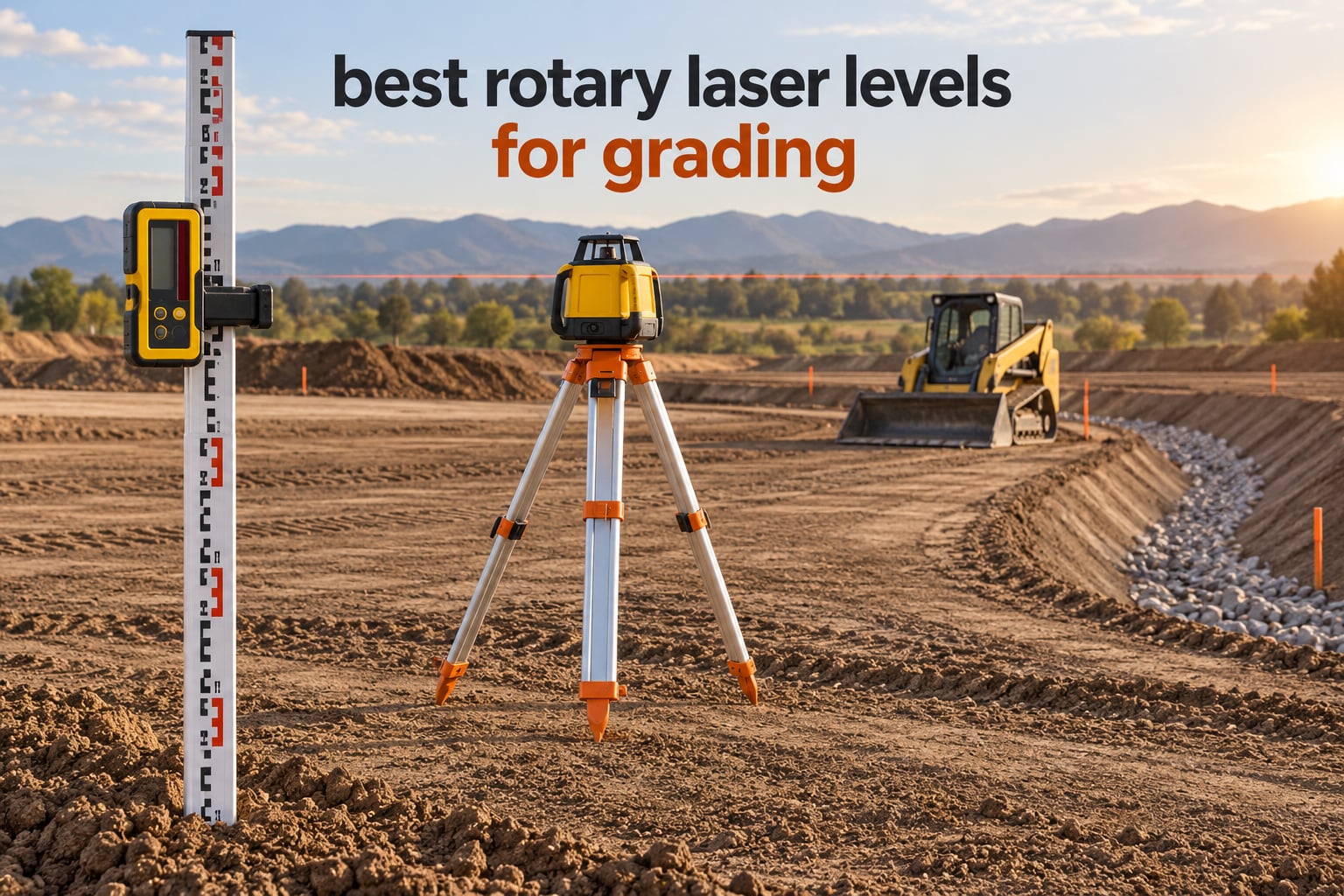
Our pick for most grading work is the Topcon RL-H5A with its LS-80L receiver, because it self-levels in seconds, holds a 10 arc second accuracy figure, and covers an 800 m diameter site off a single battery pack. If you need a wider working diameter or a 13 foot rod in the box, the Johnson Level 99-027K is the bigger, more complete package.
Grading is one of those jobs where a small elevation error becomes an expensive one. A driveway that drains the wrong way, a slab that ponds, or a swale that runs uphill all get torn up and redone, and every one of those failures traces back to a reference elevation that drifted. A self-leveling rotary laser gives you that reference from one instrument, replacing the two-person tape-and-transit routine that most small crews fall back on.
That is why the best rotary laser levels for grading are not simply the most accurate units on the shelf. The instrument has to hold a beam long enough to reach the far corner of your cut, survive dust and rain, self-level again after somebody kicks the tripod, and run a whole day without a battery swap. The nine picks below cover everything from a weekend land-leveling job to a machine-control pad, and we explain where each one stops being the right answer.
We spent October 2026 reading spec sheets, owner reviews, and trade forum threads on these heads, then mapped each one to the grading tasks it actually handles well. If you are still working out which category of tool you need, our guide to laser levels for construction covers line lasers, plane lasers, and point lasers side by side. We also have a broader roundup on rotary lasers for construction if your work includes walls, ceilings, and interior layout as well as dirt.
Table of Contents
Top 3 Best Rotary Laser Levels for Grading in October

Topcon RL-H5A
- 10 arc second self-leveling
- 800 m diameter coverage
- 60 hour runtime
- IP66 housing
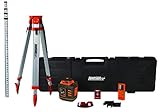
Johnson Level 99-027K
- 2000 ft working diameter
- 13 ft grade rod
- Dustproof wash-down housing
- Class 3A red beam

Spectra LL300N-1
- 1650 ft range at 3/32 in
- Complete crew kit
- IP66 aluminum body
- 5 year warranty
The Topcon takes the top slot because it is the only head here that pairs a 4.7 rating with the deepest review base on the list, which is the best available evidence that it still self-levels correctly after years of concrete and dirt work. The Johnson 99-027K earns second place for raw working diameter and the longest grade rod in its kit, and the Spectra LL300N-1 takes third because it ships with a tripod, rod, receiver, and case already assembled.
Best Rotary Laser Levels for Grading in 2026
| Product | Specifications | Action |
|---|---|---|
| Topcon RL-H5A Self-Leveling Construction Laser |
|
Check Latest Price |
| Johnson Level 99-027K Self-Leveling Rotary Laser System |
|
Check Latest Price |
| Spectra Precision LL300N-1 Rotary Laser Level Kit |
|
Check Latest Price |
 Johnson Level 99-028K Dual Slope Rotary Laser System Johnson Level 99-028K Dual Slope Rotary Laser System |
|
Check Latest Price |
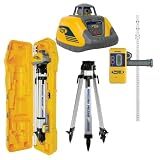 Spectra Precision LL100N-2 Laser Level Kit Spectra Precision LL100N-2 Laser Level Kit |
|
Check Latest Price |
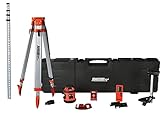 Johnson Level 99-026K Self-Leveling Rotary Laser Kit Johnson Level 99-026K Self-Leveling Rotary Laser Kit |
|
Check Latest Price |
 Bosch GRL2000-40HVK REVOLVE2000 Rotary Laser Bosch GRL2000-40HVK REVOLVE2000 Rotary Laser |
|
Check Latest Price |
 Klein Tools 93RLS Green Rotary Laser Kit Klein Tools 93RLS Green Rotary Laser Kit |
|
Check Latest Price |
 VEVOR 203HG 2000 ft Green Rotary Laser VEVOR 203HG 2000 ft Green Rotary Laser |
|
Check Latest Price |
Two things stand out when you read across that list. First, most of these kits ship as a complete crew, which matters more than people expect because a rotary laser without a matched receiver is a very expensive paperweight. Second, beam colour splits the group roughly in half, and that is not a cosmetic difference when you are reading grade across a sunlit pad.
1. Topcon RL-H5A Review: Best Rotary Laser Level for Most Grading Jobs
Topcon RL-H5A Self-Leveling Construction Laser w/LS-80 Receiver
10 arc second self-leveling
800 m site diameter
60 hr battery pack
IP66 housing
Pros
- Holds accuracy over long shots for concrete and dirt work
- One button setup with automatic re-leveling
- 60 hours on the rechargeable pack
- IP66 sealed against dust and rain
- Slope function works for drainage and ditch work
Cons
- Four blind spots in the rotation from the corner posts
- Manual slope control is awkward for daily grade work
- Only one receiver head included
Our overall pick is the head most graders end up keeping. The electronic self-leveling motors are rated at plus or minus 10 arc seconds, and the working envelope covers an 800 m diameter, which on a typical residential lot means you can put the instrument in the middle of the site and reach every corner without moving the tripod.
Roughly 769 owners have scored it at 4.7, and the pattern in those reviews is consistent. People set it up, walk away, and come back to find it still running. The one-button start and automatic re-leveling after a disturbance mean a kicked tripod costs you a few seconds rather than a reset trip back to the instrument.
Runtime is the sleeper feature. The rechargeable pack runs up to 60 hours, and four D cells push that to 100 hours, so a full week of short site days does not touch a charger. The IP66 rating is the other quiet advantage on a grading job, where the head lives in the dust and gets rained on.
The drawbacks are real and worth weighing. Four blind spots in the rotation come from the corner posts blocking the beam, which means you occasionally have to wait for the head to come around. Manual slope control frustrates operators who set grade every day, and the kit includes only one receiver head, so a second operator means a second purchase.
What the RL-H5A handles well in the field
Drainage and ditch work is where the slope function earns its keep, and owners consistently report it holding grade on concrete pads and dirt work. The battery maths is the clincher for anyone working a spread-out lot, because a full day of readings never depends on finding an outlet.
Users treat the LS-80L receiver as adequate rather than exceptional, which is worth knowing before you plan two-person rod work. One receiver means one rod, one operator, one reference plane.
Where the RL-H5A disappoints
A small number of owners report auto-leveling motors that failed and warranty service disputes around them, so the service network matters more here than on a cheaper unit. Buying from a dealer with a local calibration bench removes most of that risk.
If your work is mostly straight-line layout rather than elevation, the blind spots and the awkward manual slope controls will frustrate you more than they do a grader. Our transit level comparison covers the alternative when line and angle accuracy matter more than grade.
2. Johnson Level 99-027K Review: Best for Large Jobsites
Johnson Level & Tool 99-027K Self-Leveling Rotary Laser System, 8.75″, Red, 1 Kit,Orange
2000 ft working diameter
13 ft grade rod
Wash-down housing
Class 3A red beam
Pros
- Stable readings over 100 feet with consistent spot size
- One person operation with the included tripod
- 13 ft rod is longer than most competing kits
- Metal housing with durable tripod and rod
- Limited area mode for indoor layout
Cons
- Included detector feels cheaply made and is finicky under 50 ft
- Very large hard case is awkward in a truck
- Calibration instructions call for a 3 mm hex rather than a screwdriver
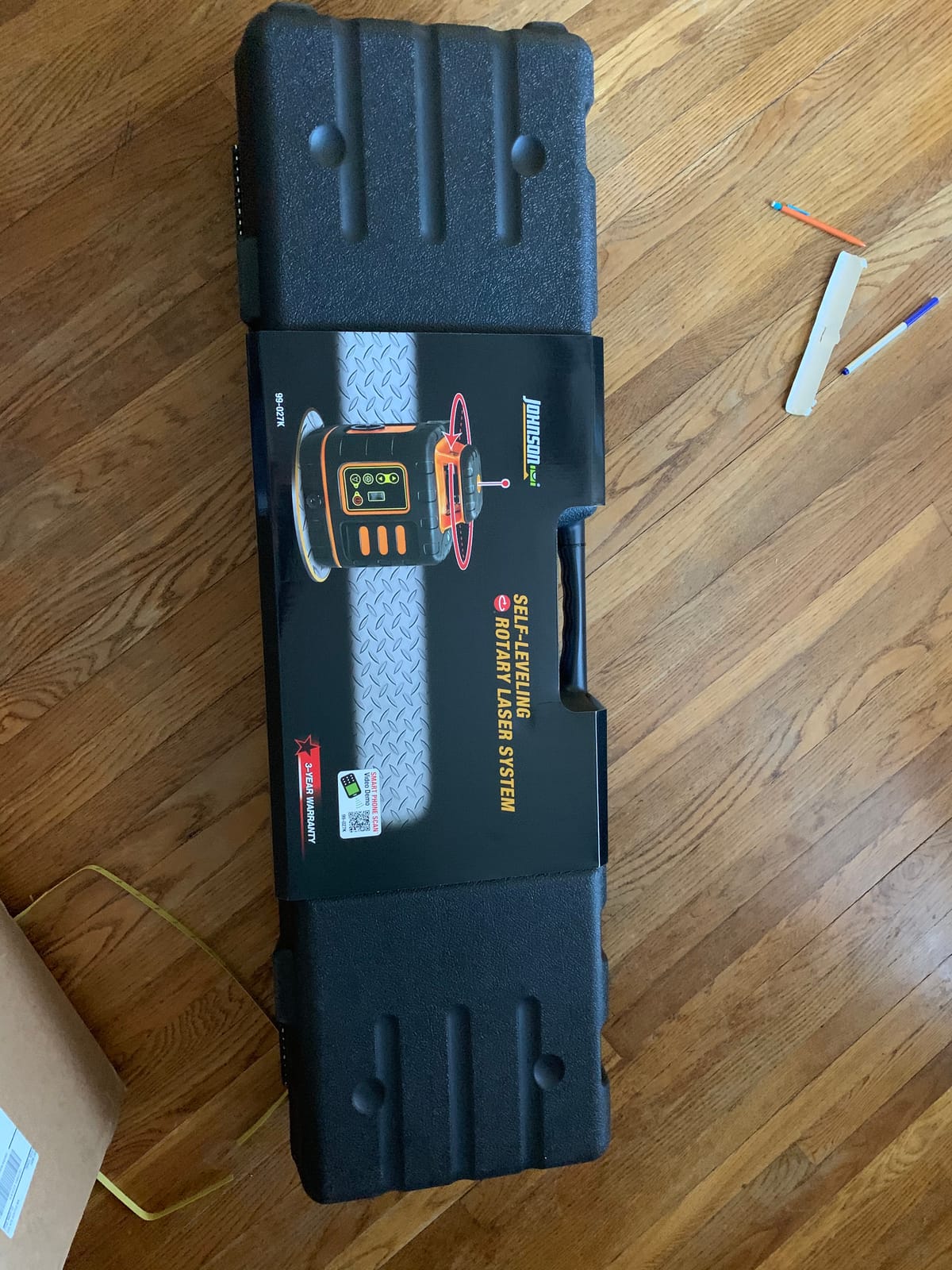
This is the one to buy when your site is wider than the instrument. The 2000 ft working diameter is the largest figure on this list, and combined with the 13 foot grade rod in the box, it means fewer tripod moves on a long pad or a full-lot grade.
612 owners rate it 4.6, and the most common description is stability. Users report consistent spot size and accurate readings beyond 100 feet, and the heavy-duty contractor tripod is frequently singled out as the reason one-person operation actually works instead of becoming a two-person job.
Two accessories get more praise than the laser itself. The 13 foot rod outclasses most bundled rods, which means fewer extensions when you are checking a deep cut, and the limited-area distribution mode makes the same head useful for interior layout when the job moves indoors.
The detector is the weak point. Owners describe it as cheaply made and finicky below 50 feet, which is exactly the range you use most on close-in grading. If you do a lot of work under 50 feet, budget for a better receiver or accept slower readings.
Where the 99-027K earns its keep
Large-pad work, terracing, and long drainage runs are the strong suits here. Buyers report matching a water level on a big pad and holding it, which is the practical test that matters for cut and fill.
The class 3A red beam with a 90 degree split beam covers both horizontal and vertical work from the same head, so a single unit handles grade checks and layout plumb.
Where it will let you down
The hard case is genuinely oversized, and several owners mention truck storage as the reason the kit lives in a garage rather than the cab. Calibration documentation also confuses people, since the instructions reference a flat screwdriver while the job needs a 3 mm hex.
An occasional unit arrives out of spec and needs calibration before it will hold. Check the level in your first hour of use, not your first week.
3. Spectra Precision LL300N-1 Review: Best Complete Kit for Long Shots
Spectra Precision LL300N-1 Rotary Laser Level Kit inc Tripod & Rod Alkaline
1650 ft range at 3/32 in accuracy
HL450 receiver included
Tripod and GR151 rod
Five year warranty
Pros
- Receiver
- clamp
- tripod
- rod and case in one package
- Automatic self-leveling with fewer mechanical parts
- One button operation needing almost no training
- IP66 aluminum body with hard-hat drop protection
Cons
- One reviewer reported a unit whose auto-leveling stopped working
- Full kit weight makes it awkward for spot checks
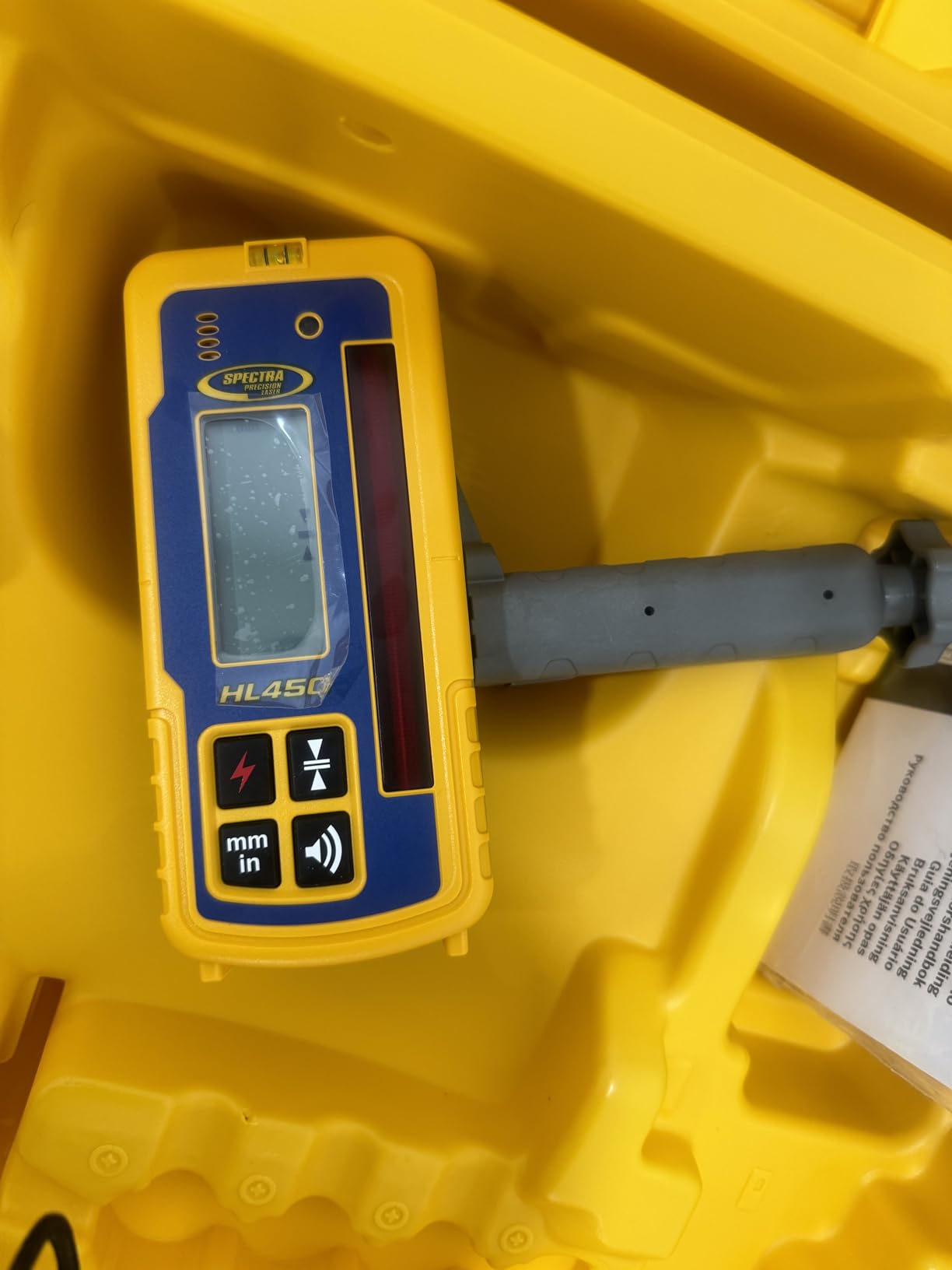
Buy this kit if you are starting from nothing. The LL300N-1 arrives with the LL300N transmitter, an HL450 receiver with C45 clamp, a Q104025 tripod, a GR151 tenths grade rod, alkaline batteries, and a system case, so there is no second purchase before you can work.
394 owners give it 4.7, and they consistently point to the 1650 ft range paired with 3/32 inch accuracy as the combination that handles big site work. Automatic self-leveling with fewer mechanical parts means faster setups and less to go wrong in the field.
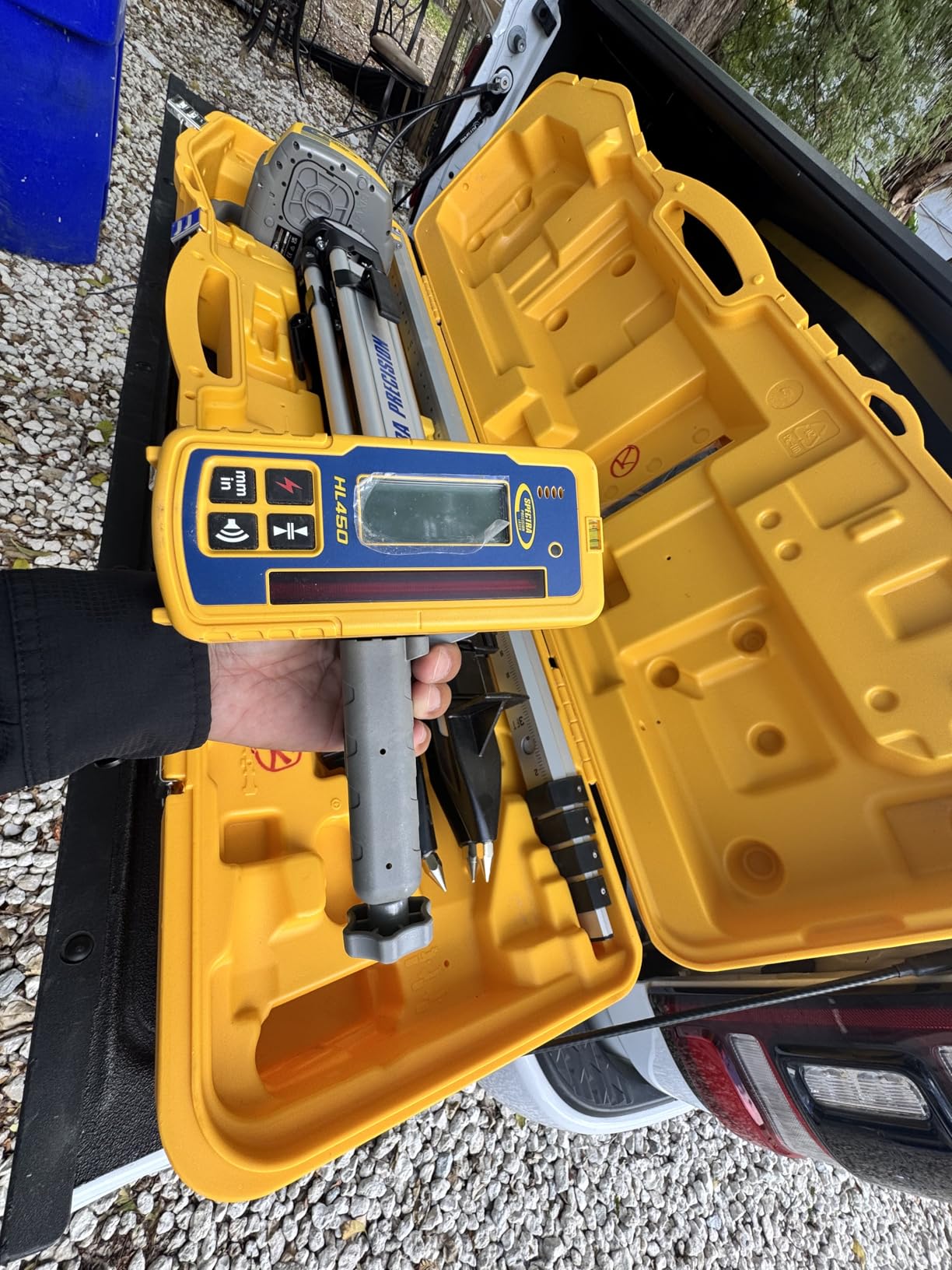
Five years of manufacturer warranty is the longest coverage on this list, and for a tool that lives outdoors, that term is doing real work. Owners who bought for the kit format appreciate that the tripod and rod are genuinely included rather than described as compatible.
The aluminum body and IP66 sealing hold up outdoors, and the hard-hat rotary protection covers the drop case that a head in a truck bed will eventually see. Training is close to zero, which matters when the operator is whoever is on site that week.
Best fit for grading work
Long grading shots are where this kit separates from the rest. Buyers report setting up on big jobs and reading grade across the full working radius without moving the instrument, which is the situation a 1650 ft range exists to solve.
The tenths rod suits excavation and drainage checks, and the bundled clamp means the receiver and rod are a matched set from day one rather than a compatibility gamble.
Where it disappoints
One reviewer received a unit whose auto-leveling stopped working, so treat the first setup as a commissioning check rather than a formality. The full kit also weighs in as a complete package, which makes it less convenient to grab for quick spot checks than a bare head.
Cross-brand receivers rarely pair with Spectra transmitters, so if you already own a receiver from another maker, plan on replacing it. That incompatibility catches people more often than any other issue in this category.
4. Johnson Level 99-028K Review: Best for Dual-Axis Grade and Drainage
Johnson Level & Tool 99-028K Electronic Self-Leveling Dual Slope Horizontal/Vertical Rotary Laser System, Red, 1 Kit
5 degree programmable dual slope
Levels horizontal and vertical
Alarms for out of range
NiMH pack and charger
Pros
- Programmable dual slope simplifies grade and drainage setup
- Self-levels horizontally and vertically
- Visual and audible alarms guard readings
- Rechargeable pack
- charger
- remote
- tripod and 13 ft rod
Cons
- Heavier and bulkier than single-slope kits
- Alkaline batteries not included with the kit
If your problem is setting a swale or a cross slope, grade capability is the whole reason to buy. The 99-028K offers a programmable 5 degree dual-slope function, which is the feature that separates a grading laser from a leveling laser. A 5 degree slope is roughly an 8.7 percent grade, which covers most drainage swales, driveway cross-falls, and roof pitch layout.
362 owners rate it 4.5, and the recurring description is that the programming takes the arithmetic out of grade work. Instead of computing and dialling a percentage, you set the slope on the head and read it back off the rod.
Self-leveling works in both the horizontal and vertical planes, so the same instrument handles footings, fencing lines, and drywall track after you finish the dirt. The visual and audible alarms warn when the beam drifts outside its leveling range, which is a real safeguard on a site where the tripod gets clipped.
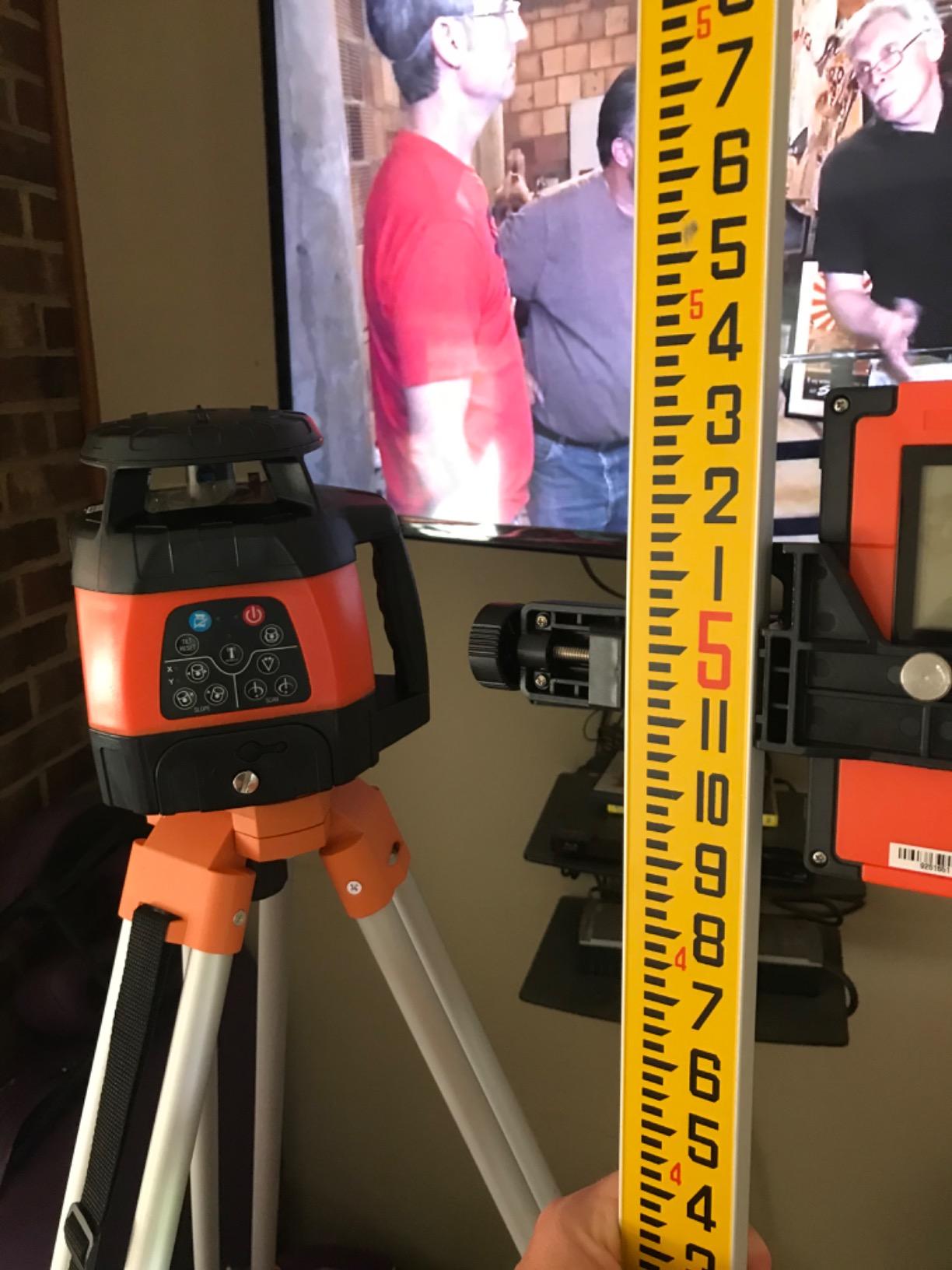
The kit is genuinely full, with a NiMH rechargeable pack, a 6.4V charger, a remote control, a detector with clamp, a tripod, a 13 foot rod, and a hard-shell case. For a crew that owns a single Johnson detector, that spare is the difference between a working morning and a waiting morning.
Where dual-axis grade earns its price
Drainage and swale work is the clearest case. A programmable dual slope means you can set a swale in one pass rather than walking the cut repeatedly, and the alarms stop you chasing a reading that has drifted out of range.
Buyers who run footings and fencing alongside grading value the vertical self-leveling, since it turns one head into a layout tool without a second purchase.
Where you should look elsewhere
The kit is heavier and bulkier than the smaller single-slope systems, and alkaline cells are not included, which is an annoying discovery on the first cold morning. If you only ever need flat elevation, you are carrying a slope machine you will not use.
Grade entry is also not the same as digital grade entry on the newest professional heads, so crews who want numeric percentage readback at the rod should look at a higher tier.
5. Spectra Precision LL100N-2 Review: Best for Footings, Slabs, and Layout
Spectra Precision LL100N-2 Laser Level Kit with HR320 Receiver and Clamp, 15′ Grade Rod (Inches), Tripod, and System Case, Yellow
Height of Instrument alert
HR320 waterproof receiver
15 ft rod and tripod
Automatic self-leveling
Pros
- True one button automatic self-leveling
- Height of Instrument alert stops rotation after a bump
- Complete crew kit with receiver clamp rod and tripod
- Waterproof and dustproof receiver
Cons
- Beam is hard to see in bright outdoor conditions
- Some buyers question long-term durability
The LL100N-2 is the lighter option in the Spectra line, and its standout feature is the Height of Instrument alert. When the head is jarred or knocked, the unit stops rotating, which prevents you from reading a false elevation off a machine that has shifted since you set it.
398 owners rate it 4.4, and the one-button operation is the most common reason for the score. There is no menu to learn and no slope to dial, so a new operator can be reading grade within a minute of opening the case.
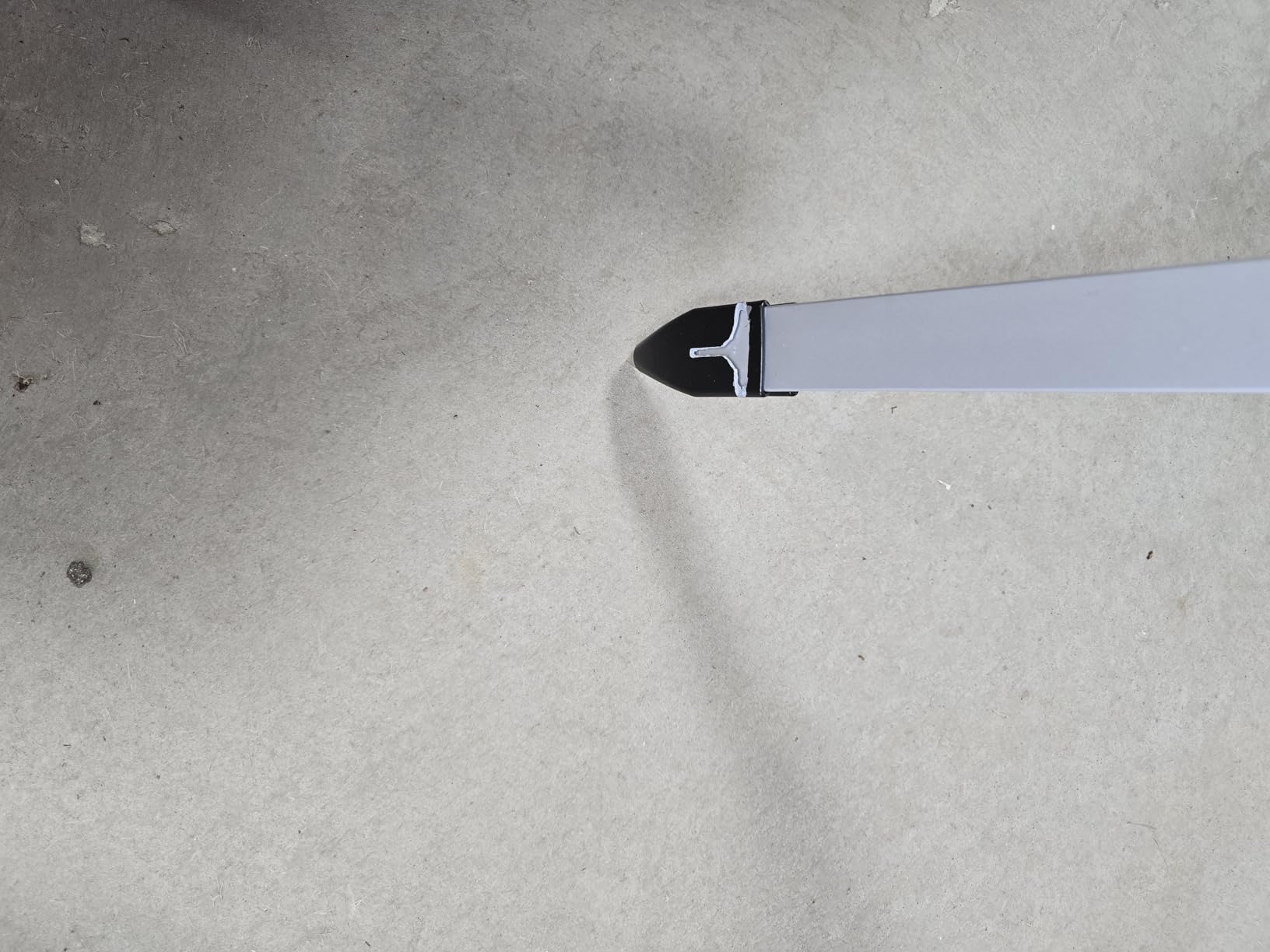
The kit is complete as well, with an HR320 receiver, a C59 rod clamp, a 15 foot grade rod in inches, an adjustable tripod, a system case, and alkaline batteries. The 15 foot rod is longer than most bundled rods, which is useful on deep cut checks.
Durability design is straightforward rather than exotic. The transmitter has drop and outdoor weather protection, and the HR320 receiver is waterproof and dustproof, which is the part of the system that takes the most abuse on a rod.
Where the LL100N-2 fits best
Footings, slabs, and batter board layout are the strong applications here. The alert stops the expensive mistake of trusting a reading taken after a bump, and the automatic self-leveling keeps repeat setups consistent between reference points.
If your crew moves between dirt work and foundation layout, the same kit covers both without a second instrument.
Where it falls short
Buyers frequently note that the beam is faint in bright outdoor conditions, which slows down long shots on a sunny day. This is a red beam unit, so a green head is the answer if daylight reading speed matters more to you than anything else.
A few reviews also question durability over years of daily use, so if the head stays on the truck permanently, budget for a service plan.
6. Johnson Level 99-026K Review: Best All-in-One Kit for Grading and Concrete
Johnson Level & Tool 99-026K Self-Leveling Horizontal Rotary Laser System w/ Hard Case Kit, 50 x 14.5″, Red, 1 Kit,Orange
800 ft working diameter
200 to 600 RPM variable speed
Locking pendulum protection
Wall mount bracket
Pros
- Accurate and reliable for grading
- foundations and pours
- Runs on rechargeable pack or AA batteries
- Adjustable 200 to 600 RPM for beam visibility
- Alarms and locking pendulum protect the mechanism
Cons
- Detector is cheaply made
- Included grade rod will not stay fully extended
- Rod lacks a bubble level
The 99-026K is the kit to buy if one instrument has to cover grading, foundation layout, and concrete pours. The 800 ft working diameter handles a normal residential lot, and the 90 degree split beam covers alignment work in the same setup.
435 owners rate it 4.3, and the strongest recurring praise is for power flexibility. It runs on the included NiMH rechargeable pack with a 6V charger, or on AA batteries, which solves the dead-pack-at-noon problem that ends a lot of grading days.
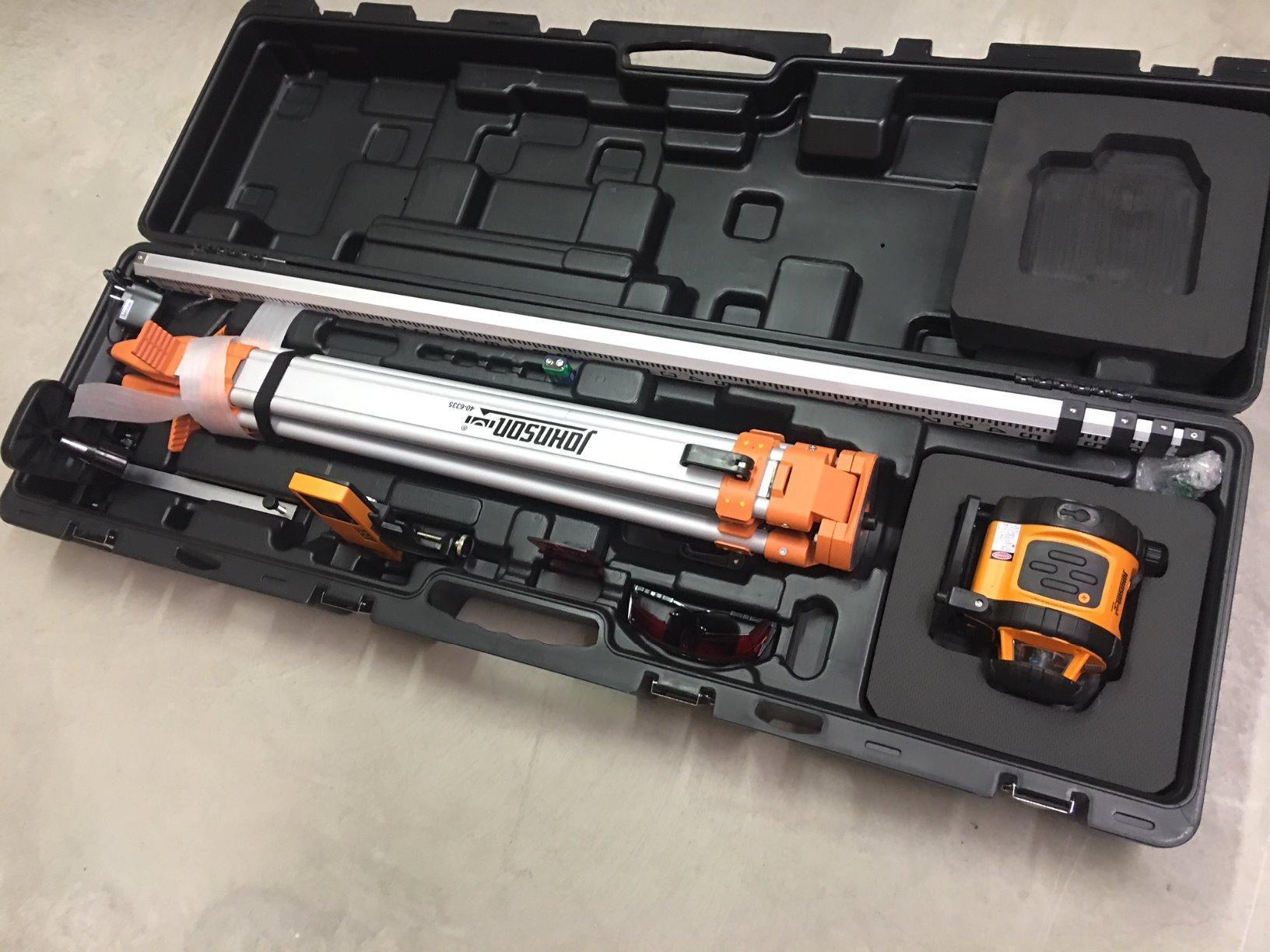
The variable 200 to 600 RPM range is more useful than it sounds. Turning the rotation down gives a dimmer, steadier beam that is easier to follow in dust, while turning it up increases visibility in bright conditions, and the illuminated vertical vial helps on vertical setups.
Protection features are the other strength. Visual and audible alarms flag out-of-range conditions, and the locking pendulum guards the internal mechanism during transport, which matters for a head that lives in a truck bed.
Where it works well for grading
Small and mid-size contractors get the most out of this kit, based on owner reports. Pads, footings, and drainage work are all called out as accurate, and the bundled tripod and 13 foot rod mean you are not shopping for accessories on day one.
The wall and ceiling mounting bracket expands the same head into interior layout, which is where the split beam earns extra value.
Where the kit falls apart
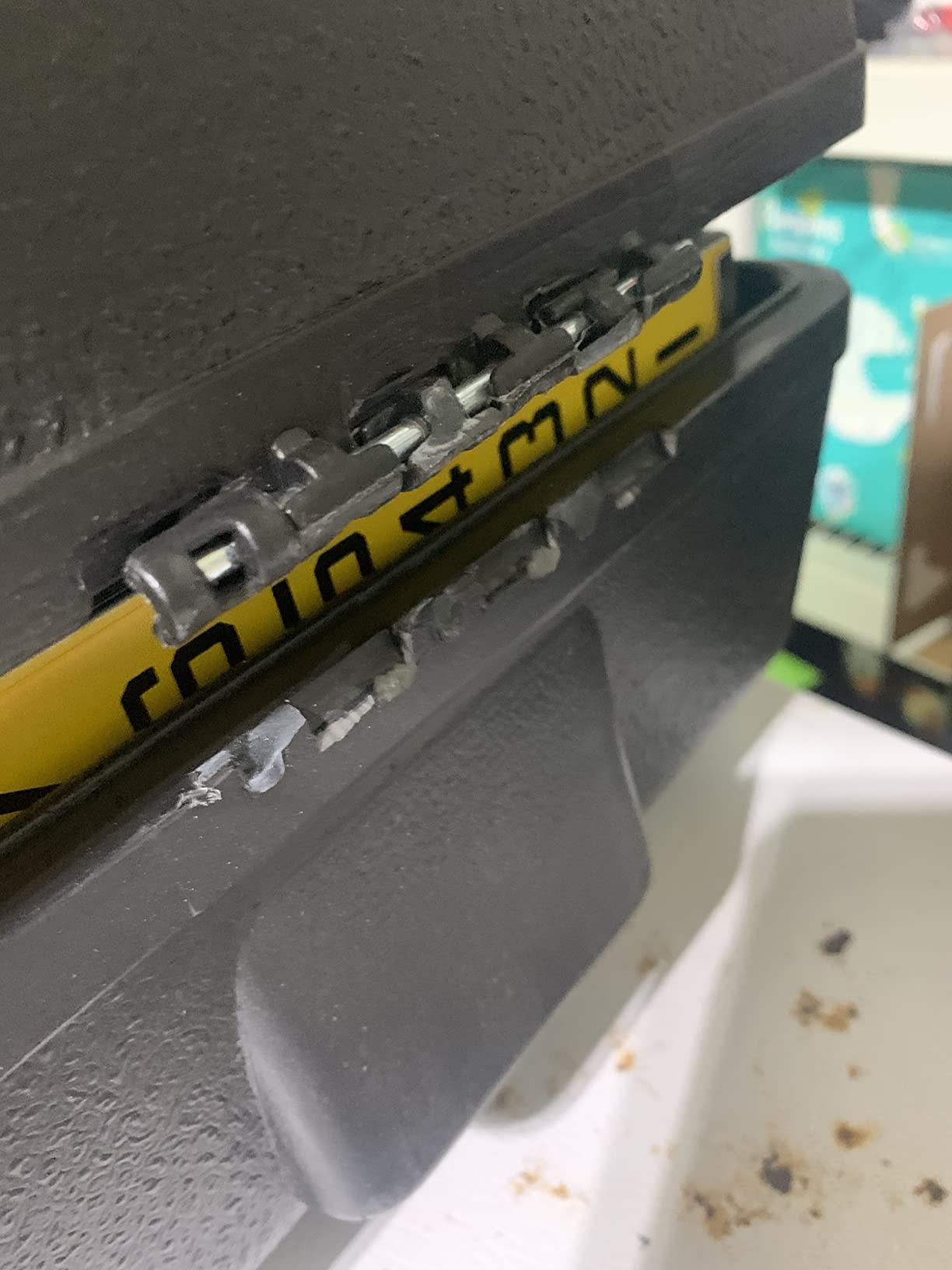
The included rod is the biggest problem. Owners report it will not stay fully extended, and a telescoping rod that creeps changes every reading taken from it. The rod also lacks a bubble level, so you have nothing to confirm it is plumb.
The detector is again described as cheaply made, and the hard case is bulky. Keep the head, replace the rod, and this becomes a solid tool.
7. Bosch GRL2000-40HVK Review: Accuracy and Dual Slope for Layout Work
BOSCH PRO GRL2000-40HVK REVOLVE2000 Self-Leveling Horizontal/Vertical
1/16 in accuracy at 100 ft
2000 ft working range
Dual slope on X and Y
Disturbance monitor
Pros
- 1/16 inch accuracy at 100 feet with electronic self-leveling
- Manual dual slope on both X and Y axes
- Disturbance monitor protects accuracy on active sites
- 90 degree vertical beam for layout and plumb
- Full accessory kit in the box
Cons
- A noticeable share of one-star reviews on early failures
- Higher cost than the other professional kits here
The Bosch is the accuracy play in this group. Its published figure is 1/16 inch at 100 feet, which is the tightest stated number in the roundup, and it pairs that with a 2000 ft working range so the accuracy is usable at distance rather than only on a short rod shot.
Manual dual slope on both the X and Y axes is the grading feature, and the 90 degree vertical beam makes the same head usable for layout, squaring, and plumb. The LR20 receiver, BT160 tripod, GR13 rod, RC4 remote, wall mount, glasses, and hard case all ship in the box.
The disturbance monitor is the feature that changes behaviour on a live site. It flags when the tool position changes, which stops the expensive habit of trusting a reading from a head that was bumped twenty minutes ago.
Where the Bosch earns its cost
Mixed-trade contractors benefit most. The same head handles grading, batter board layout, and plumb work, and the 1/16 inch figure is comfortable enough for drainage swales and site pads without a second opinion.
Reviewers also like that the remote control lets you adjust from the far end of a pad rather than walking back to the head.
Where it disappoints
Durability is the weak spot, and we will not paper over it. A noticeable share of one-star reviews describes units failing sooner than expected, and the review set is the smallest among the professional models here at 126, so there is less long-term evidence to lean on.
It is also the most expensive kit in this roundup, which puts a lot of pressure on the accessory bundle to justify the spend.
8. Klein Tools 93RLS Review: Best Green Beam for Daylight Grading
Klein Tools 93RLS Green Self-Leveling Rotary Laser Level Kit, 1150-Foot
Class 3R green laser
1150 ft range with detector
24 hour runtime
Impact sensing
Pros
- Accuracy verified out to about 750 feet in open yard work
- Solid build with rubberized handle and two mounting options
- USB-C rechargeable instead of disposable cells
- Green beam far easier to see in working conditions
- Detector and tripod both include bubble levels
Cons
- A small number of buyers report outright failures
- Long-term life of the non-removable internal battery is unproven
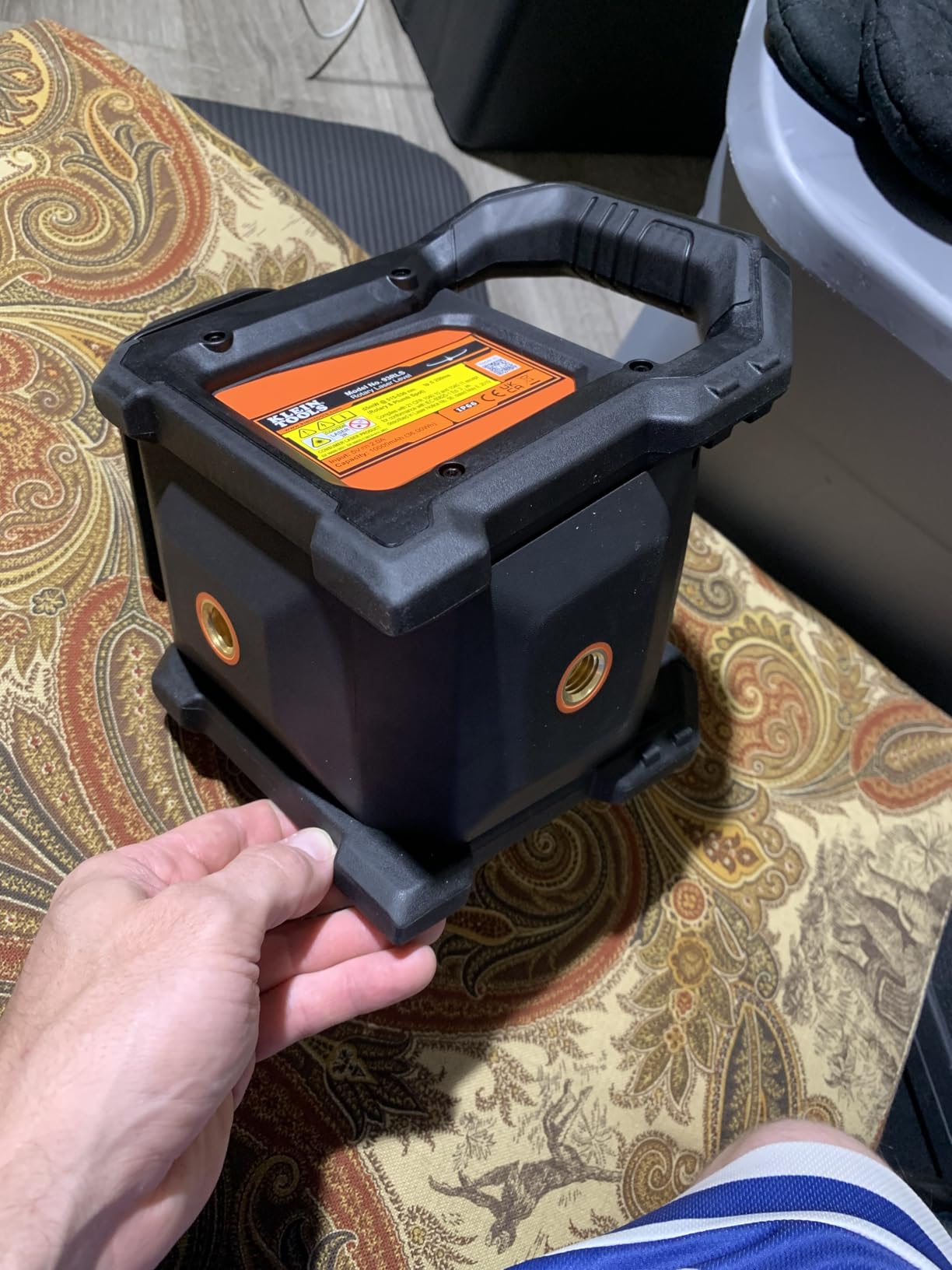
The Klein is the daylight pick. It is a class 3R green laser, and green beams are far easier for the human eye to pick out than red at the same output, which is the single biggest speed difference on a sunny grading job. Owners report working at roughly 750 feet in open yard conditions.
Impact sensing pauses the unit if it is disturbed, which is a cheaper way to protect accuracy than an expensive repair. The kit includes a detector, a 9 foot grade rod, a tripod, and a carrying case, and both the detector and the tripod carry small bubble levels, a detail that saves real time on setup.
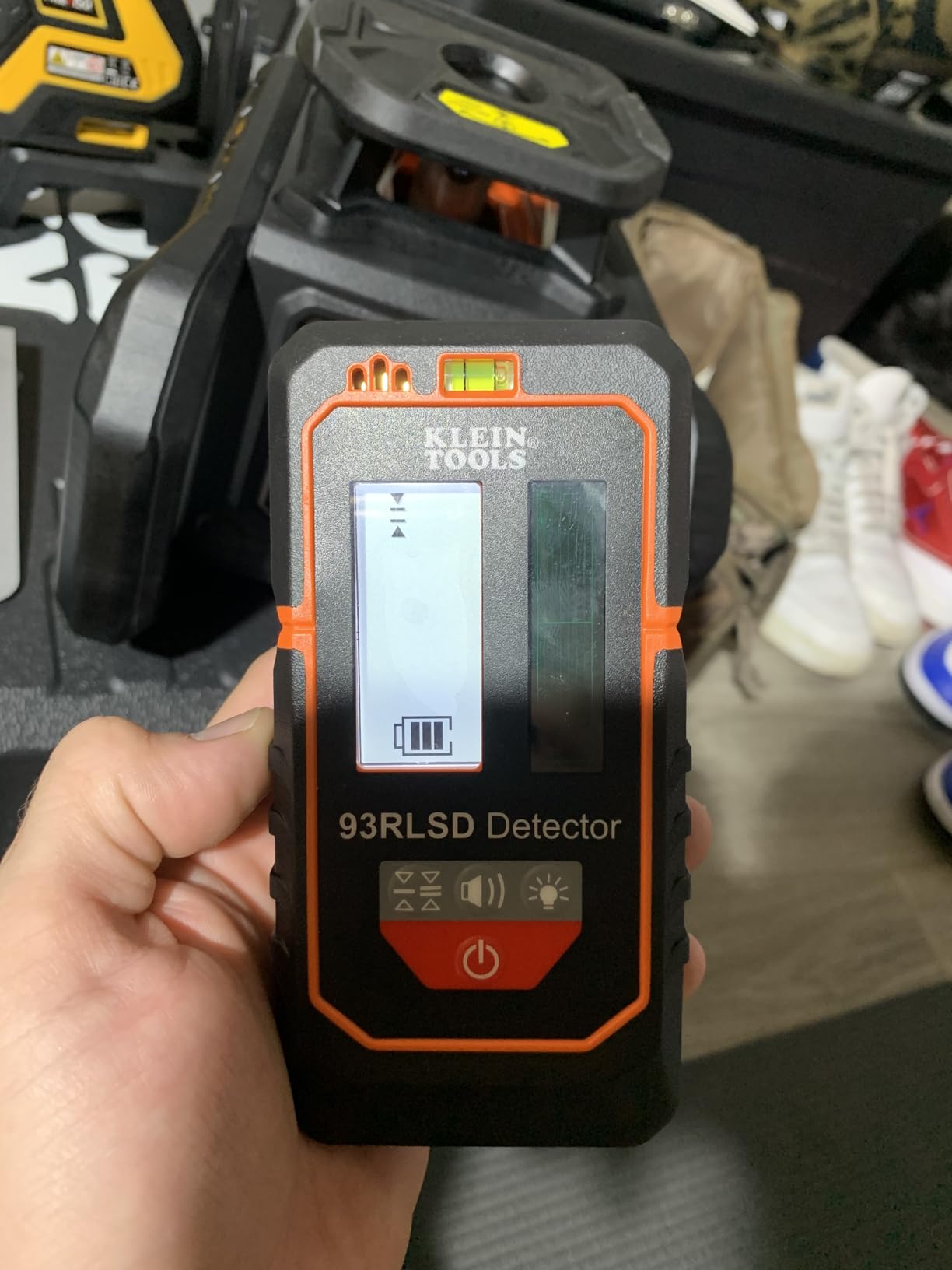
Charging is USB-C, and the built-in rechargeable battery runs up to 24 hours. Coverage is 360 degrees horizontal and vertical with an integrated plumb spot, so it doubles as a layout instrument between grading tasks.
The build quality gets consistent praise, particularly the rubberized handle and the two mounting options. Users working slabs, yards, and septic fields report readings that matched their expectations at long distance.
Where the green beam pays off
Daylight outdoor work is the clear answer. On a bright pad, a green head shortens the time to lock onto the beam, and owners of red-beam units in the same conditions report the opposite experience. If you are grading in open sun, this is the difference between a fast day and a slow one.
The 1150 ft range with the included detector is enough for most residential and light commercial sites, and the rod bubbles mean fewer failed setups.
Where it falls short
The review base is small at 38, so the long-term record is thin, and a handful of one-star reviews describe outright failures. The bigger structural concern is the non-removable internal battery, and owners rightly point out that its service life is unproven. When it goes, the head may go with it.
If you already run a shared 18V platform, a unit that takes a swappable pack is the safer long-term buy.
9. VEVOR 203HG Review: Budget Pick for DIY Land Leveling
VEVOR Rotary Laser Level 2000 ft, 360 Degree Self-Leveling Green Cross Line
2000 ft working distance
5 speeds and 4 scan angles
IP66 composite housing
NiMH rechargeable
Pros
- Very low cost for a 2000 ft working distance
- Useful for land leveling and fence alignment at 600 ft
- Multiple rotation speeds and scanning angles
- IP66 housing with rechargeable batteries included
- Readable instructions and quick start guide
Cons
- Beam is dim in daylight
- Beam fades at long distances
- Housing feels less rugged than professional units
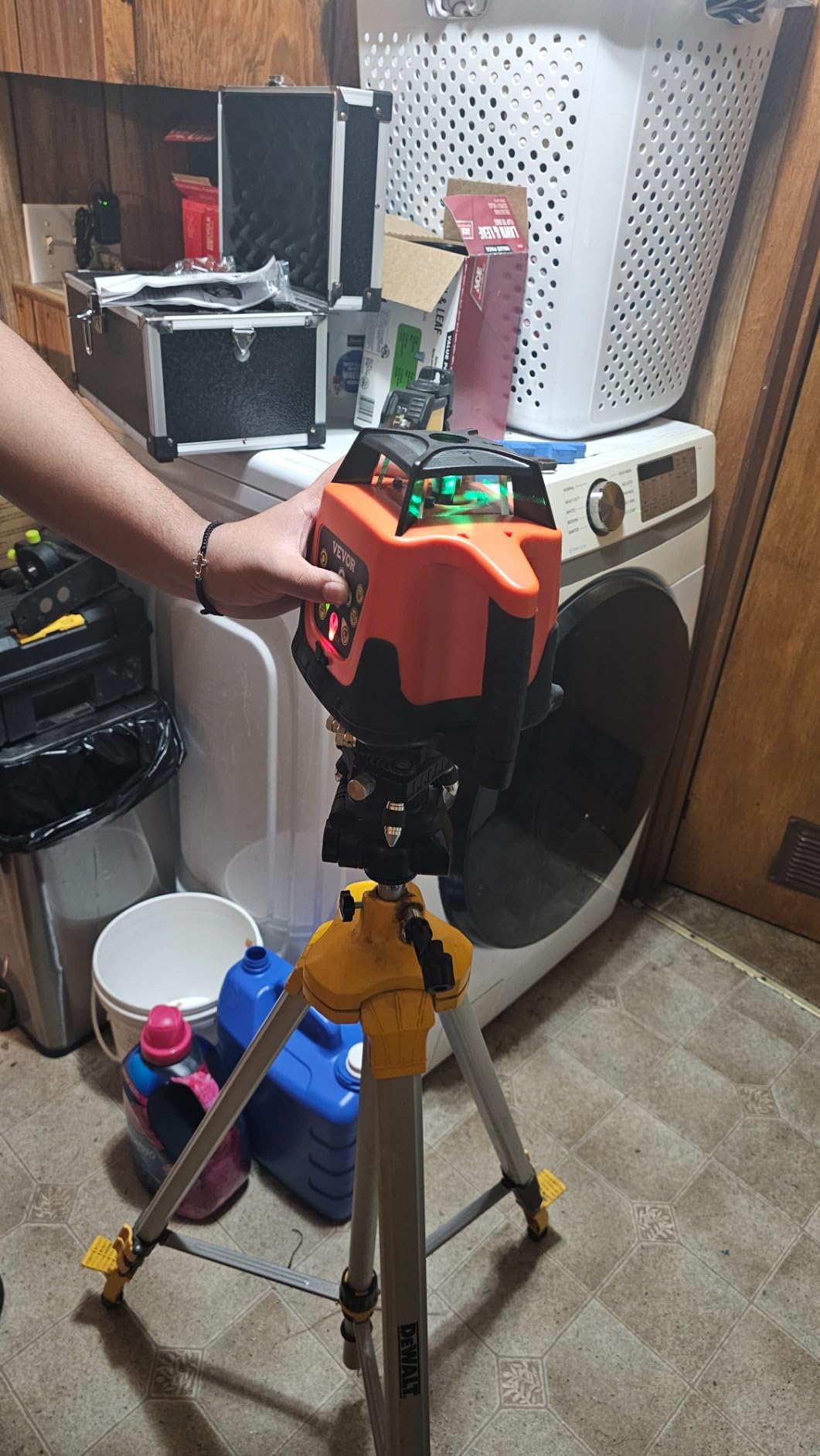
No other unit here gets a working distance this large for this little money, and for weekend land leveling that is a real trade. Owners report matching a water level across a 30 by 30 foot pad, and using it for fence alignment and property line layout at 600 feet.
83 owners rate it 4.3, and the feature set is generous: five rotation speeds from 0 to 600 rpm, four scanning angles, a remote control that works out to 65 feet, a target board, and tinted glasses. The IP66 composite housing takes weather, and four 1.2V NiMH cells give 8 to 12 hours of runtime.
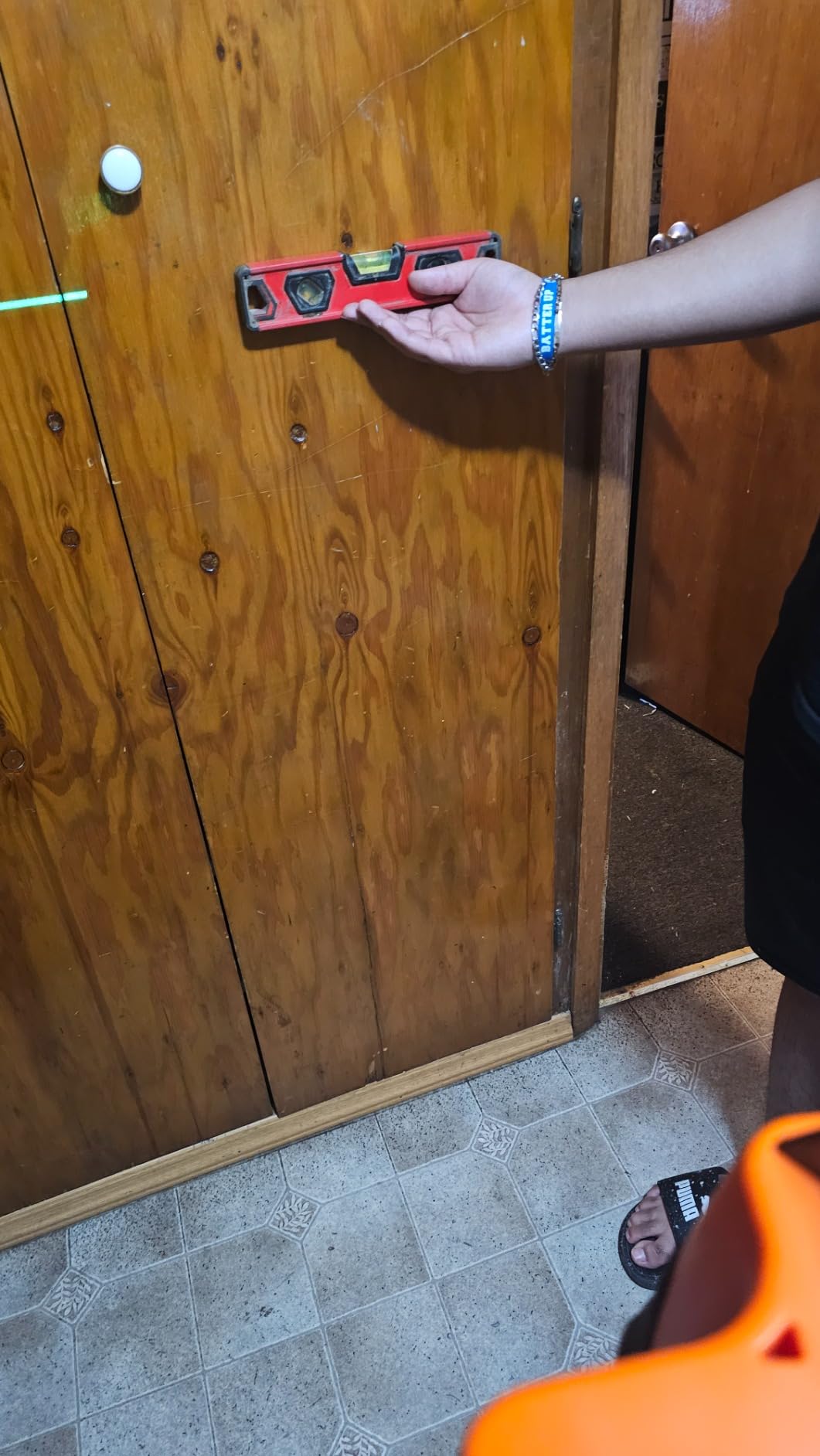
The self-leveling tolerance is plus or minus 3 degrees, and the mounting thread is a standard 5/8 inch, which is the detail that matters more than the spec sheet, because it fits tripods you already own even if the included one is not great.
Be honest about the beam, though. Several owners report it is too dim for daytime outdoor work and fades at distance, and the housing feels light next to a professional unit. That combination limits it to early morning, evening, or shaded work.
Where the budget pick works
Flat, small-area work is the sweet spot. Land leveling, garden beds, fence lines, and light site prep are all jobs where you work at close range with the receiver, and that is where the beam brightness stops being a problem.
It is also a sensible backup instrument. A second head for interior layout or spot checks costs far less here than anywhere else on this list.
Where you should skip it
Do not use it as your primary machine-control or drainage-swale instrument. Some units failed within the first few hours of use, and the review set is small enough that failure rates are hard to read accurately.
Sourcing a properly fitting tripod is also a known friction point. If you are grading a live site, a professional head with a serviceable battery is the cheaper decision over five years.
How to Choose a Rotary Laser Level for Grading
How we evaluated these nine
We scored every unit on five things that decide whether a grading laser survives a real week. Those are stated accuracy, working radius, actual grade axis capability, receiver ecosystem fit, and warranty plus service access. Marketing adjectives scored nothing.
We also read owner reviews closely for the failure patterns that spec sheets never mention, including blind spots, detector quality, and rod durability. Where a product’s review set is thin, we said so instead of treating a small average as settled fact.
Single-axis or dual-axis grade: which do you need?
Single-axis grade tilts the laser plane along one line only, which covers drainage running one way, a driveway with a single fall, and a swale on a simple plan. Dual-axis grade tilts on two independent lines, which is what cross-slopes, crowns, patio grids, and two-way drainage require.
The honest answer is that most residential and light commercial grading needs dual-axis, because the moment you set two intersecting lines of grade you have outgrown a single-axis head. The Johnson 99-028K is the unit here that does it in an affordable package.
Reading accuracy at 100 feet correctly
Accuracy is quoted as plus or minus a distance over a distance, and the number scales with range. A head rated 1/8 inch at 100 feet is twice as accurate as one rated 1/4 inch at 100 feet, and both are meaningless if you are reading at 30 feet instead of 100.
Converting to metric helps when you are comparing brands. 1/8 inch at 100 feet is about 3.2 mm per 30 m, and 1/16 inch at 100 feet is about 1.6 mm per 30 m. If your quote is in metric, use that conversion before you assume a unit is worse than it is.
Receiver and rod pairing is not optional
A rotary laser and its receiver are usually a matched pair, and cross-brand combinations frequently will not lock onto each other because of differing pulse rates. This is the most common expensive surprise in this category, and owners only discover it after the purchase.
Also check the rod itself. A telescoping rod that creeps changes every reading, so a bundled rod that will not hold its extension is worth replacing before you trust it. Bubbles on the detector and tripod save setup time that you would otherwise lose on every rod placement.
Battery platform and runtime
Runtime is measured in hours on a working day, not in watt-hours on a spec sheet. The Topcon RL-H5A leads here with up to 60 hours on its rechargeable pack and 100 hours on four D cells, while the Klein 93RLS runs up to 24 hours on a non-removable internal battery.
Non-removable batteries are the risk to watch. A swappable pack means a dead battery costs a swap, while a fixed battery can end the instrument’s working life when it fails. Buying into a shared cordless platform you already own is the cheapest way to solve this.
Beam colour for outdoor grading
Green beams at 515 to 532 nm are noticeably easier to see than red at 635 nm in daylight and in dust, and that visibility is often the deciding factor on a wide outdoor pad. Red beams are cheaper and completely adequate for shaded work, interior layout, and early or late sessions.
If your grading is mostly outdoors in daylight, the Klein 93RLS is the green option here. If your work shares hours between interior layout and exterior grade, a red unit is not a compromise, it is a rational choice.
Using a rotary laser for machine control
For skid steer, dozer, and motor grader work, you need a machine-control receiver, which is a different category of receiver from the rod eye on a grade rod. It mounts on the machine mast and feeds the blade control rather than giving an operator a light signal.
Forum operators consistently report that laser grade control makes a mediocre operator good and is worth the money in labour saved, so the value case is hours, not specs. One operational gotcha comes up repeatedly: the control will not engage until machine travel speed is above roughly 0.3 to 0.4 MPH.
Trade forums also frame the market for dual-slope machine control around Trimble, Topcon, and Spectra. If your receiver needs to talk to a specific machine control system, confirm compatibility before buying the head. Our dozer grading guide covers the machine side of that pairing.
Verifying your laser with a two-peg test
Check the instrument in the first hour you own it. Set the head up between two points roughly 100 feet apart on reasonably flat ground, take rod readings at both, then rotate the head 180 degrees and take both readings again.
Matching readings confirm height of instrument is correct. A consistent difference between the two sets points to collimation error, and any difference at all between the two readings at one end means the head needs calibration before it sets anyone’s grade.
This check matters because forum users have documented self-leveling units settling one to two degrees off level from gimbal friction out of the box. Two pegs and ten minutes will tell you whether your head is one of them.
Topcon vs Spectra vs Johnson vs Bosch: Which Brand for Grading?
Short version: Topcon for the best-balanced single purchase, Spectra for the most complete kit and the strongest warranty, Johnson for the most hardware in the box at the best radius, and Bosch for the tightest stated accuracy. There is no wrong answer here, only a mismatch with your job size.
Topcon has the strongest combination of rating and review depth on this list, and its blind spot is a single receiver head. Spectra ships the most complete package and carries a five year warranty, but its receivers rarely pair with another brand’s transmitter, which locks you into one ecosystem. Johnson bundles the most accessories and the longest rod, and its detector quality is the recurring weak point across three kits.
Bosch publishes the tightest accuracy figure and adds a disturbance monitor, but the review set is the thinnest here and early failures show up more often. Our advice for most contractors is to buy the brand with a serviceable battery and a nearby calibration bench, not the brand with the best number on a spec sheet.
If you also need a machine for the work, we compared the best rotary cutters for tractors to keep brush clearing ahead of your grading pass.
Frequently Asked Questions
What is the best priced laser level for grading?
The VEVOR 203HG is the lowest-cost unit here and handles flat land leveling, garden beds, and fence alignment at 600 feet. For grading with any grade requirement, the Johnson Level 99-026K and 99-028K kits give you a receiver, tripod, and rod in one purchase. Buy a budget head only for short-range flat work in low light, since beam brightness is its real limit.
What type of laser level is used for grading?
A self-leveling rotary laser with grade capability is the standard tool. It projects a continuously rotating horizontal plane that establishes one reference elevation across a site, and a rod-mounted receiver reads high, low, or on-grade at any point inside the working radius. Single-axis grade tilts one line, dual-axis tilts two, and cross-slopes need dual-axis.
Is Topcon or Spectra better?
Topcon is the better balanced purchase for most grading crews, with the deepest review history here and a single-battery runtime of up to 60 hours. Spectra is better if you want the receiver, tripod, grade rod, and case supplied as a tested kit with a five year warranty. Pick Topcon for range and battery life, or Spectra for a ready-to-work package.
What brand makes the best laser levels?
Topcon, Spectra Precision, Leica, and Johnson are the four names that show up most often on real grading jobs, and all four build serviceable heads with replaceable batteries. Bosch is worth considering for its stated accuracy and disturbance monitor. The practical filter is service access, so buy from a brand with a calibration bench near you rather than the highest number on paper.
How much does a grade laser cost?
Budget heads start in the low hundreds and are fine for flat, short-range work in shade. Mid-range complete kits with a receiver, tripod, and grade rod land in the middle of the range and cover most residential grading. Professional dual-axis and machine-control setups run well into four figures. The kit contents matter more than the number, because a receiver and rod are required purchases otherwise.
Are skid steers good for grading?
Yes, a skid steer with a laser grade-control receiver makes a mediocre operator good, and operators consistently report that the control pays for itself in labour saved. It needs a machine-control receiver rather than a standard rod eye, mounted on the mast and linked to your blade control. Expect the control not to engage until travel speed passes roughly 0.3 to 0.4 MPH.
Can you use a laser level to square a building?
Yes. A rotary laser with a 90 degree split beam projects a vertical plane, which lets you square batter boards and check foundation corners from a single set-up point. The Bosch GRL2000-40HVK and the Klein 93RLS both add vertical and plumb capability to the same head you use for grade, so one instrument covers both tasks.
Final Verdict: Which Rotary Laser Level for Grading Should You Buy?
The Topcon RL-H5A is our pick for the best rotary laser levels for grading, and it stays our pick because it balances accuracy, working radius, and battery runtime better than anything else in this roundup. It self-levels in seconds, holds 10 arc second accuracy, and runs up to 60 hours on one pack.
Buy the Johnson Level 99-027K if your site is wide enough that a 2000 ft working diameter and a 13 foot rod save you tripod moves. Buy the Johnson 99-028K if you need programmable dual-axis grade for swales and cross-slopes, and the Spectra LL300N-1 if you want a complete crew kit with a five year warranty.
For daylight work where beam visibility decides your speed, the Klein 93RLS is the green-beam answer. If you are just levelling flat ground close in, the VEVOR 203HG does the job at the lowest outlay, and if you need the tightest stated accuracy with a disturbance monitor, the Bosch GRL2000-40HVK earns its place in the kit.
Whichever you choose, buy the receiver and rod as a matched set, run a two-peg check before the first grading pass, and confirm the battery is swappable. Those three habits prevent more bad grades than any spec difference between these nine. For the wider picture, read our rotary laser roundup for construction next.