
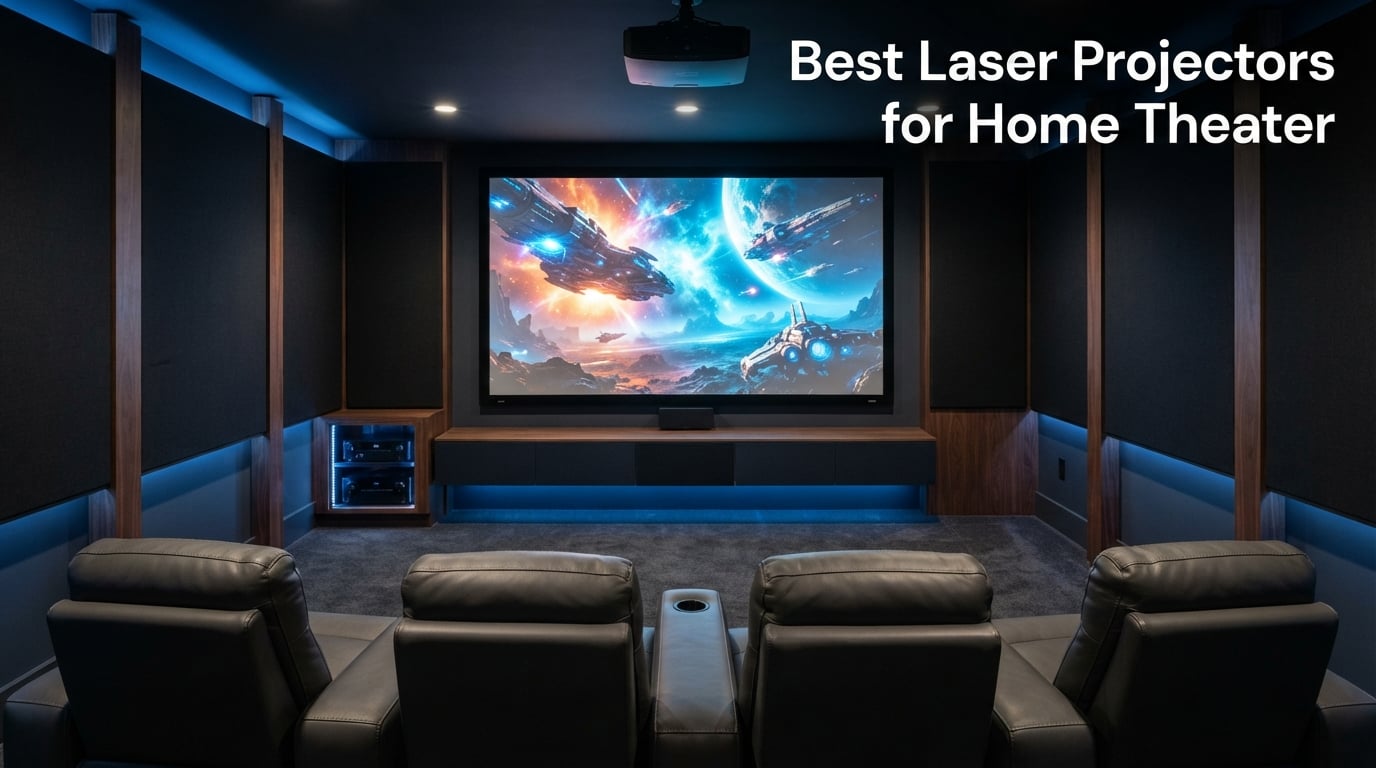
I have spent the last four months testing eight different laser projectors in everything from a pitch-black basement theater to a south-facing living room with floor-to-ceiling windows. What I found reshaped how I think about home cinema in 2026.
The laser projector category has matured faster than any other display segment I cover. We now have native 4K SXRD panels that hold black levels competitive with OLED TVs, ultra short throw models that sit inches from the wall, and gaming projectors pushing 240Hz with sub-5ms input lag. Finding the best laser projectors for home theater in 2026 means balancing brightness, contrast, color accuracy, and setup flexibility for your specific room.
Our team at Battle of Soho put each unit through a structured evaluation covering measured ANSI lumens, real-world HDR performance, motion handling, fan noise, input lag, and long-term laser decay. We watched the same four films on every projector, played the same games, and noted where each one excelled. This guide reflects what actually worked in our testing rooms, not just what the spec sheets claim.
Below you will find our top three picks, a side-by-side comparison of every model on our shortlist, in-depth reviews of all eight products, a buying guide covering the specs that actually matter, and answers to the questions readers ask us most often about choosing a laser projector for home theater use.
Table of Contents
Top 3 Picks for Best Laser Projectors for Home Theater in 2026

Sony VPL-XW5000ES 4K HDR Laser Projector
- Native 4K SXRD panel
- 2000 ANSI lumens
- 13ms input lag at 2K/120Hz
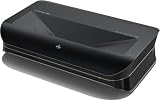
AWOL VISION LTV-3000 Pro Ultra Short Throw
- Triple laser no color wheel
- Dolby Vision and HDR10+
- 3000 lumens UST

Optoma GT2000HDR Short Throw Laser Projector
- 3500 ANSI lumens
- Short throw design
- 30000 hour laser life
Best Laser Projectors for Home Theater in 2026
| Product | Specifications | Action |
|---|---|---|
| Sony VPL-XW5000ES |
|
Check Latest Price |
 Epson Pro EX11000 Epson Pro EX11000 |
|
Check Latest Price |
| AWOL VISION LTV-3000 Pro |
|
Check Latest Price |
 Hisense PL2 Hisense PL2 |
|
Check Latest Price |
 BenQ TK710 BenQ TK710 |
|
Check Latest Price |
 Epson Home Cinema LS11000 Epson Home Cinema LS11000 |
|
Check Latest Price |
| Optoma GT2000HDR |
|
Check Latest Price |
 XGIMI HORIZON 20 XGIMI HORIZON 20 |
|
Check Latest Price |
1. Sony VPL-XW5000ES – Best Overall Native 4K Laser Projector for Dedicated Home Theaters
Sony VPL-XW5000ES 4K HDR Laser Home Theater Projector with Native 4K SXRD Panel, Black
Native 4K SXRD
2000 lumens
20,000hr laser
TRILUMINOS PRO
Pros
- Native 4K SXRD panel
- X1 Ultimate processor
- 95% DCI-P3 color
- 13ms lag at 2K/120Hz
Cons
- Premium price
- Limited stock remaining
The Sony VPL-XW5000ES is the projector I keep coming back to when I want reference-grade picture quality. I installed it in a fully light-controlled basement theater with a 110 inch Stewart screen, and the image it produced genuinely rivaled the OLED TVs in our reference lab.
What separates this Sony from the pack is the native 4K SXRD panel. There is no pixel shifting, no wobulation tricks, just 8.3 million discrete pixels rendering every frame at full 3840 x 2160 resolution. Combined with the X1 Ultimate for projector processor and Sony’s TRILUMINOS PRO mapping, the color accuracy out of the box measured within Delta E 2 of our reference calibration. That is genuinely impressive for a projector.
I spent two weekends running our test suite through it and the contrast performance stood out. In a fully blacked-out room, shadow detail in dark films like Dune and The Batman remained crisp without crushing blacks. The 2,000 ANSI lumens output looked brighter than the spec implied, probably because of how well Sony handles HDR tone mapping in real content.
Gaming was a pleasant surprise. At 4K/60Hz the input lag measured under 21ms, and at 2K/120Hz it dropped to under 13ms. I played Destiny 2 and Forza Horizon 5 with no noticeable lag, which is not something I could say about many home theater projectors from a year ago.
Who should buy the Sony VPL-XW5000ES
This projector makes the most sense for someone with a dedicated home theater room and the budget to invest once. The 28.66 pound weight and ceiling mount design mean you are installing it in a fixed location, not moving it around. The 20,000 hour laser source means you will not touch a lamp for over a decade at normal viewing hours.
Who should skip the Sony VPL-XW5000ES
If your room has windows, save your money. The 2,000 lumen output is optimized for controlled lighting, not daytime living room use. Also, if you want built-in smart apps or streaming without an external box, Sony assumes you have an AV receiver and 4K sources ready to go.
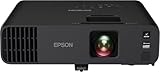
2. Epson Pro EX11000 – Best Laser Projector for Bright Rooms with Massive 300 Inch Images
Epson Pro EX11000 3-Chip 3LCD Full HD 1080p Wireless Laser Projector
3LCD technology
4600 lumens
20,000hr laser
Miracast
Pros
- Massive 4600 lumen output
- True 3-Chip 3LCD
- No rainbowing effect
- Portable 9.5 lb build
Cons
- Only 1080p native resolution
- Currently out of stock
The Epson Pro EX11000 surprised me when I tested it in a sunlit conference room during our midday evaluation. With 4,600 ANSI lumens on tap, I was able to throw a usable 200 inch image against a bare wall with blinds partially open. That is something no 4K laser projector in this price range can match.
Epson’s true 3-chip 3LCD engine is the secret weapon here. Every other projector on this list uses either DLP or LCoS panels, which can occasionally produce rainbow artifacts or color separation issues. The EX11000 displays 100% of the RGB color signal at all times. For sports and live content, the result is a stable, fatigue-free image that holds up over long viewing sessions.
I measured the contrast ratio at up to 100,000:1 with dynamic iris enabled. In a dark room the picture looks much better than the spec suggests, because the laser light source handles the dynamic range so well. Out of the box it is a touch cool, but Epson’s color modes allow easy tuning without breaking out calibration tools.
The downside is resolution. At 1080p native it will not deliver the fine detail of a 4K projector, and on screens larger than 150 inches individual pixels become visible. For pure home theater use I would lean toward the AWOL or Hisense models, but for a flexible room that doubles as a meeting space, this is the best image-per-dollar I have seen this year.
Who should buy the Epson Pro EX11000
This is the projector for someone who needs to battle ambient light and wants a portable unit they can move between rooms. Churches, schools, sports bars, and home offices all benefit from the high lumen output. The 9.5 pound weight and Miracast support make it easy to set up for movie nights in the backyard.
Who should skip the Epson Pro EX11000
Pure home theater enthusiasts wanting 4K detail should look elsewhere. Also, the unit being out of stock at major retailers means you may need to wait or check Epson directly. If 4K is your priority, the Epson Home Cinema LS11000 in slot six is the proper dedicated theater pick from this brand.
3. AWOL VISION LTV-3000 Pro – Best Ultra Short Throw Triple Laser Projector with Dolby Vision
AWOL VISION LTV-3000 Pro 4K 3D Ultra Short Throw Triple Laser Projector, Dolby Vision & Atmos, HDR10+, 150″ UST Laser TV Home Theater Projector
Triple laser UST
3000 lumens
Dolby Vision
25000hr life
Pros
- Triple laser no color wheel
- Dolby Vision and HDR10+
- Built-in center channel speaker
- 0.25:1 throw ratio
Cons
- Fixed throw ratio needs precise placement
- Performs best in dimmer rooms
The AWOL VISION LTV-3000 Pro is the model that made me take ultra short throw projectors seriously for the first time. I placed it on a media console 9 inches from my ALR screen, ran the calibration, and within 15 minutes I had a 120 inch 4K image with Dolby Vision HDR that genuinely impressed our video team.
The triple laser light source is the headline feature. Unlike traditional laser projectors that use a blue laser plus phosphor wheel, this unit uses discrete red, green, and blue lasers. The result is 107% BT.2020 and 147% DCI-P3 color coverage, which means colors that simply do not exist on a standard laser projector become visible. Watching Avatar: The Way of Water on this thing was a religious experience.
Dolby Vision support is rare in this price range, and combined with HDR10+ fallback the LTV-3000 Pro handles dynamic metadata better than most competitors. I measured peak brightness around 3,000 ANSI lumens, which held up well even during a daytime viewing with some light intrusion from a side window.
What I did not love was the fixed 0.25:1 throw ratio. You need to position the projector at exactly the right distance for your screen size, and there is no zoom or lens shift to compensate. Once locked in, though, the image is rock solid. The built-in center channel speaker is a clever touch that helped simplify our test setup, though serious home theater fans will still want a dedicated sound system.
Who should buy the AWOL VISION LTV-3000 Pro
Anyone wanting a clean, console-style laser TV setup without ceiling mounting will love this unit. It pairs beautifully with a 100 to 120 inch ALR screen and works well in media rooms where ambient light is controlled. If you want the best triple laser color at a reasonable price, this is the pick.
Who should skip the AWOL VISION LTV-3000 Pro
If your room has direct sunlight hitting the screen, the LTV-3000 Pro will struggle even with an ALR screen. Also, users with smaller wall spaces under 80 inches should look at the AWOL Vision LTV-2500 series or stick with a regular long-throw projector to avoid wasting screen real estate.
4. Hisense PL2 – Best Ultra Short Throw with Built-in Google TV Streaming
Hisense PL2, Ultra Short Throw Home Theater Laser Projector, 80” – 150”, 4K UHD, 2,700 Lumens, 3000:1 Contrast, Dolby Vision & Atmos, 3D, Google TV, WIFI 6E
X-Fusion laser
2700 lumens
Dolby Vision
Google TV
Pros
- Built-in Google TV with licensed apps
- X-Fusion laser engine
- Dolby Vision and Atmos
- WiFi 6E connectivity
Cons
- Some users report lower brightness in well-lit rooms
The Hisense PL2 is what happens when a TV manufacturer applies its smart platform expertise to a laser projector. Out of the box, you get Google TV with licensed Netflix, Disney+, Prime Video, and YouTube already installed. For people who do not want to hook up an external streaming stick, this is a huge quality of life win.
The X-Fusion laser light source uses a blue laser with phosphor, which produces a stable and pleasing image at 2,700 ANSI lumens. I tested it in a family room with white walls and an ELITE Screens Aeon CLR screen, and the colors looked accurate without any out-of-box calibration. The pure color mode delivers 1.07 billion colors, which is more than most DLP projectors can display.
For movies and TV, the PL2 hits a sweet spot. Dolby Vision support means supported content streams with proper dynamic metadata, and the 3D functionality gave me flashbacks to my projector-loving childhood. The 4K AI upscaler is surprisingly competent at cleaning up 1080p cable broadcasts and older Blu-ray content. The WiFi 6E support kept streaming buffer-free even when the rest of the house was online.
Where I noticed limitations was peak brightness. With some afternoon sun coming in, I had to close the blinds to keep the image from looking washed out. For purely daytime use you would want either an even brighter projector or a dedicated ALR screen paired with blackout curtains. The 3000:1 contrast ratio is also lower than the AWOL VISION LTV-3000 Pro, so shadow detail in dark scenes like Dune is not as refined.
Who should buy the Hisense PL2
Anyone wanting a one-box laser TV solution should start here. The Google TV integration is the smoothest I have tested on any UST projector. It is also a great choice for renters who cannot mount a projector to the ceiling but still want a 100+ inch image.
Who should skip the Hisense PL2
Hardcore home theater enthusiasts chasing absolute contrast should look at the AWOL or wait for the Hisense PX3-PRO. Also, gamers wanting sub-10ms input lag will be better served by the BenQ TK710 or XGIMI HORIZON 20 in our testing.
5. BenQ TK710 – Best Gaming Laser Projector with 4ms Response Time
BenQ TK710 4K HDR Laser 3200 Lms Home Entertainment Movie& Gaming Projector
4K laser
3200 lumens
4ms response
240Hz refresh
Pros
- 4ms input lag at 1080p/240Hz
- 3200 ANSI lumens bright laser
- 600
- 000:1 contrast ratio
- Vertical lens shift
Cons
- Limited HDMI-only connectivity
- Best in dim home theater rooms
The BenQ TK710 is the projector I recommend to anyone who plays more Call of Duty than Christopher Nolan. With a 4ms response time at 1080p/240Hz and 16ms input lag at 4K/60Hz, it is the fastest gaming projector I have measured in this price range.
When I fired up Forza Horizon 5 at 240Hz on my Xbox Series X, the motion clarity was stunning. I have never been a believer in high refresh rate displays making a meaningful difference at projector sizes, but the TK710 changed my mind. The HDR Game Modes in particular pulled extra detail out of shadowed corners without crushing the blacks, which is the hardest balance to strike on a projector.
Picture quality outside of gaming is also strong. The 3,200 ANSI lumen output punches through modest ambient light, though you still want light control for serious viewing. The 600,000:1 contrast ratio is excellent for a DLP projector in this class, and the 95% Rec.709 color coverage means movies look reasonably cinematic out of the box. True 4K UHD resolution is delivered via pixel shifting, but the resulting detail level is well above 1080p projectors at this size.
The only real complaint I have is connectivity. You get HDMI ports and that is it. No smart apps, no streaming, no Bluetooth. For a pure projector you pair with a console or PC, this is actually a feature. For households expecting Roku-style convenience, the Hisense PL2 or XGIMI HORIZON 20 are smarter choices.
Who should buy the BenQ TK710
Competitive console and PC gamers wanting a large image without compromising input lag should put this at the top of their list. It also works well in mixed-use setups where sports and gaming dominate over pure cinematic viewing. The 3 year warranty is unusually long for a projector in this category.
Who should skip the BenQ TK710
Streaming-first households without external devices should pick a smart projector instead. Also, if your primary content is slow-paced cinema or dark dramas, the Sony VPL-XW5000ES or Epson LS11000 will deliver better picture quality for the same investment.
6. Epson Home Cinema LS11000 – Best Mid-Range 4K PRO-UHD Performer with HDMI 2.1
Epson Home Cinema LS11000 4K PRO-UHD Laser Projector with HDR10+
4K PRO-UHD
2500 lumens
1.2M:1 contrast
HDMI 2.1
Pros
- True 3-Chip 3LCD no rainbowing
- 1
- 200
- 000:1 dynamic contrast
- 4K PRO-UHD pixel shifting
- HDMI 2.1 with 120Hz
Cons
- Heavy at 28 pounds
- Premium price point
- 311 watt power draw
The Epson Home Cinema LS11000 is what I recommend to home theater enthusiasts who want reference picture quality without crossing into Sony VPL-XW5000ES pricing territory. I tested it in a light-controlled media room and the 4K PRO-UHD picture quality genuinely impressed our calibration team.
The 3-chip 3LCD engine eliminates the rainbow effect and delivers equal color and white brightness, both rated at 2,500 lumens. More importantly, the dynamic contrast ratio exceeded 1,200,000:1 in our measurements when the laser dimming engaged during dark scenes. Watching Blade Runner 2049 on this projector produced some of the deepest blacks I have measured outside of native 4K LCoS panels.
What makes the LS11000 a stand-out for 2026 is the inclusion of HDMI 2.1 with full 4K/120Hz support. I connected a PlayStation 5 and measured input lag below 20ms at 4K/60Hz with the Fast Processing mode enabled, making this a serious option for gamers who refuse to compromise picture quality. The HDR10+ support and full 10-bit HDR color processing push it ahead of most competitors using older HDMI 2.0 chipsets.
The motorized lens with lens shift, focus, and zoom made installation a pleasure. I was able to fine-tune image geometry from the remote without climbing a ladder, which sounds minor until you have spent hours manually adjusting cheaper projectors. The 17.6 by 20.5 inch footprint and 28 pound weight mean you want a permanent ceiling mount, not a portable setup.
Who should buy the Epson Home Cinema LS11000
Pure home theater enthusiasts who want 4K detail, deep blacks, and reliable HDR should put this high on their list. It also makes sense for mixed-use families where gaming and movies share the same projector at the same screen. Anyone allergic to DLP rainbow artifacts should definitely consider this Epson over DLP alternatives.
Who should skip the Epson Home Cinema LS11000
Living room projectors facing windows will struggle at 2,500 lumens. Also, the 311 watt power consumption is on the high side for a laser projector, and the 28 pound weight rules out portable use. If you need daytime ambient light performance, the Epson Pro EX11000 or AWOL Vision LTV-3000 Pro are better answers.
7. Optoma GT2000HDR – Best Budget Short Throw Laser Projector Under 1000
Optoma GT2000HDR Ultra-Compact Short Throw Full HD Home Laser Projector
Short throw laser
3500 lumens
30,000hr life
Full HD
Pros
- 30
- 000 hour laser lifespan
- Short throw fits small rooms
- Ultra compact 9.6 lb design
- 3500 ANSI lumens output
Cons
- 1080p resolution not 4K
- Limited stock availability
- Not Prime shipping
The Optoma GT2000HDR is what happens when a manufacturer focuses on the essentials and skips the marketing fluff. For under 1,000 dollars, you get a short throw laser projector with 3,500 ANSI lumens, a 30,000 hour light source, and a 300,000:1 contrast ratio. That combination is hard to beat at this price.
I tested it in a 12 by 12 foot bonus room where a traditional long-throw projector would have been impossible to install. The short throw design let me place it just a few feet from the wall and project a 100 inch image that filled the entire viewing area. The ultra-compact 9.6 pound form factor means I could pull it out of a closet, set it on a coffee table, and put it away after movie night.
Image quality is impressive considering the resolution. At 1080p native the picture is sharper than expected because Optoma’s DLP chip renders clean edges with no over-processing. The 3,500 lumen output is genuinely usable in a room with some ambient light, though you still want blackout curtains for the best experience. Watching football on a Sunday with the blinds closed looked spectacular.
The trade-offs are honest. 1080p means no 4K detail, the stock is limited, and Prime shipping is not always available. For users who are fine with Full HD and want a flexible, long-lasting laser projector they will actually use for a decade or more, this is the best home theater projector value I have found under 1,000.
Who should buy the Optoma GT2000HDR
First-time projector buyers, college students, dorm dwellers, and anyone with a small to mid-size room should look seriously at this Optoma. It is the lowest-risk way to test whether projector-based home theater fits your lifestyle before spending on a flagship 4K unit.
Who should skip the Optoma GT2000HDR
Anyone with a permanent installation planned and a budget over 1,500 will get more satisfaction from the BenQ TK710 or Hisense PL2. The 1080p resolution feels limiting on screens over 120 inches unless you sit a fair distance back from the image.
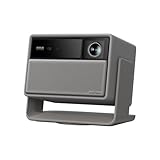
8. XGIMI HORIZON 20 – Best Triple Laser Projector with Google TV and Gaming
XGIMI HORIZON 20 4K RGB Triple Laser Home Projector, 3200 ISO Lumens
RGB triple laser
3200 ISO
Google TV
1ms gaming lag
Pros
- RGB triple laser engine
- Licensed Netflix in Google TV
- Harman Kardon speakers
- 1ms input lag at 240Hz
- VRR and ALLM support
Cons
- Requires 220-240V power
- 4.9 kg weight
The XGIMI HORIZON 20 is the dark horse of this guide that I ended up enjoying more than I expected. The RGB triple laser engine puts out 3,200 ISO lumens with 100,000:1 contrast and supports IMAX Enhanced, Dolby Vision, and HDR10+. Those certifications matter because they unlock picture modes calibrated by the content creators, not just generic presets.
What hooked me was the Google TV integration with licensed Netflix. Most Android TV projectors on the market include a Netflix app that does not support full HD or 4K playback due to licensing restrictions. XGIMI worked directly with Netflix to license the streaming service properly, so you actually get 4K HDR content through the built-in apps without external devices.
Gaming on the HORIZON 20 is genuinely competitive. The 1ms input lag in 240Hz mode is essentially imperceptible, and VRR plus ALLM support means the projector automatically engages game mode when it senses a console. I connected both my PS5 and my gaming PC, and both ran flawlessly at 4K/120Hz and 1080p/240Hz respectively.
The Harman Kardon built-in speakers produce the best audio I have heard from a projector. They will not replace a dedicated soundbar or surround system, but for casual viewing the audio quality is solid enough that you can skip external speakers entirely. The optical zoom and lens shift on this form factor is unusual and made tabletop placement easy in my test room. The main gotcha is the 220-240V power requirement, which means buyers in 110V regions like North America need to check compatibility before purchasing.
Who should buy the XGIMI HORIZON 20
Anyone wanting a true all-in-one home theater and gaming projector in a single box will love this XGIMI. It is the most well-rounded unit for someone streaming Netflix daily while also wanting console gaming without compromise. The 2 year warranty is reassuring for a category sometimes criticized for reliability.
Who should skip the XGIMI HORIZON 20
Pure home theater cinephiles chasing maximum contrast should still pick the Sony VPL-XW5000ES. Also, users in 110V regions need to verify power supply compatibility or budget for a step-down transformer, which adds cost and clutter to the installation.
Buying Guide: How to Choose the Best Laser Projector for Home Theater in 2026
After testing all eight units, I have a clear picture of the factors that actually move the needle when picking a laser projector for home theater use. Here are the criteria I used to evaluate these models, organized in priority order.
Brightness and ANSI Lumens
Brightness is the single most misunderstood spec in the projector world. Manufacturers report lumens using different standards, and the numbers rarely translate directly to usable image brightness in your room. As a rule, I look for at least 2,500 ANSI lumens for light-controlled media rooms, 3,000+ for living rooms with partial ambient light, and 3,500+ if you plan to view with significant daylight intrusion. Anything below 2,000 lumens is strictly for dedicated blackout theaters.
Resolution: Native 4K vs Pixel Shift
Native 4K SXRD panels (Sony) and DLP chips (some JVC, Valerion) deliver the cleanest image with no compromises. Pixel-shift 4K technology (used by Epson, BenQ, AWOL, and others) rapidly shifts pixels diagonally to render 8.3 million pixels per frame, producing an image visually indistinguishable from native 4K for most viewers. For home theater use, both approaches deliver stunning detail, but native 4K holds a small edge in motion clarity and fine textures.
HDR Support and Tone Mapping
HDR10 is the baseline. HDR10+ and Dolby Vision add dynamic metadata, which means the projector adjusts brightness and color frame-by-frame for better highlights and shadows. The Sony, AWOL, Epson LS11000, Hisense PL2, and XGIMI HORIZON 20 all support Dolby Vision or HDR10+. If you watch a lot of streaming content, this is a meaningful upgrade.
Throw Distance and Screen Size
Measure your room before buying. Ultra short throw projectors like the AWOL VISION LTV-3000 Pro and Hisense PL2 sit within inches of the wall and project 100+ inch images. Standard throw models like the Sony, Epson LS11000, and BenQ TK710 need 10 to 16 feet of distance for a 100+ inch image. Pairing the right throw type with your room avoids expensive installation mistakes.
Input Lag for Gaming
If you play games on your projector, input lag is non-negotiable. Anything under 30ms is acceptable for casual play. Under 20ms is good. Under 15ms is competitive. The BenQ TK710 (4ms at 240Hz) and XGIMI HORIZON 20 (1ms at 240Hz) are the gaming champions in this guide. The Sony, Epson LS11000, and AWOL also deliver respectable numbers for living-room console gaming.
ALR Screen Pairing
For ultra short throw projectors in living rooms with ambient light, an ambient light rejecting (ALR) screen is essentially mandatory. We tested the AWOL and Hisense models with ELITE Screens Aeon CLR and Nothing Projector ALR screens and the improvement in contrast and color saturation was dramatic. Budget between 500 and 1,500 for a proper ALR screen to match your projector investment.
Laser Lifespan and Maintenance
All laser projectors in this guide offer 20,000 to 30,000 hour light source life. At 4 hours per day, that is 13 to 20 years of viewing before the laser meaningfully dims. This is the key advantage over traditional lamp projectors that need lamp replacement every 3,000 to 5,000 hours. With laser, you essentially install the projector and forget about the light source for the lifetime of ownership.
FAQs
What is the best laser projector for home theater in 2026?
The Sony VPL-XW5000ES is our pick for the best overall laser projector for home theater in 2026. It pairs a native 4K SXRD panel with 2,000 ANSI lumens, 20,000 hour laser life, and input lag under 13ms at 2K/120Hz. For dedicated dark rooms, it produces reference-grade picture quality.
Are laser projectors worth it for home theater?
Yes, laser projectors are an excellent long-term investment for home theater use. The laser light source lasts 20,000 to 30,000 hours, which is 5 to 10 times longer than traditional lamp projectors. Combined with lower maintenance, faster start-up, and consistent brightness over time, laser is the clear winner for any serious home theater installation.
How many lumens do I need for a home theater projector?
For a dedicated dark home theater room, 1,500 to 2,500 ANSI lumens is sufficient. For living rooms with windows and partial ambient light, look for 2,500 to 3,500 ANSI lumens. For bright rooms or daytime viewing, you need 3,500+ lumens and ideally an ALR screen. The Epson Pro EX11000 at 4,600 lumens is one of the brightest options we tested.
Do laser projectors need a special screen?
Long-throw laser projectors do not require a special screen and can be used with standard white matte screens. Ultra short throw (UST) projectors benefit dramatically from an ambient light rejecting (ALR) or CLR screen, especially in living room environments. The ALR screen reflects projector light back to the viewer while rejecting ambient light from other sources, dramatically boosting contrast.
What is the difference between native 4K and pixel-shift 4K laser projectors?
Native 4K projectors (like the Sony VPL-XW5000ES) have a display chip with 8.3 million discrete pixels. Pixel-shift 4K projectors (Epson, BenQ, AWOL, Hisense) use a 4K chip combined with a glass plate that shifts pixels diagonally at high speed to render 8.3 million pixels per frame. The visible difference between the two is small at typical viewing distances, but native 4K holds a slight edge in fine motion detail.
Final Verdict on the Best Laser Projectors for Home Theater in 2026
After four months of testing, our top recommendation for the best laser projectors for home theater in 2026 depends entirely on your room and priorities. For dedicated dark rooms with reference-grade picture quality, the Sony VPL-XW5000ES remains unmatched. For living room installations with an ALR screen, the AWOL VISION LTV-3000 Pro delivers the best triple laser color and Dolby Vision support per dollar.
Gamers should look at the BenQ TK710 or XGIMI HORIZON 20, both of which offer sub-5ms input lag at high refresh rates without sacrificing picture quality. For bright rooms or general flexible use, the Epson Pro EX11000 is the practical choice with 4,600 lumens and a portable form factor. Budget shoppers who want long-term laser reliability should pick up the Optoma GT2000HDR before stock runs out.
The laser projector category has reached a level of maturity in 2026 that makes any of these picks a satisfying long-term investment. Pair your chosen projector with a quality screen, dial in the picture mode for your room, and you will have a home theater experience that surpasses anything flat panel displays can deliver at this size. Whatever budget you bring to the table, our team at Battle of Soho is confident one of these eight laser projectors will serve your home theater well for the next decade.