
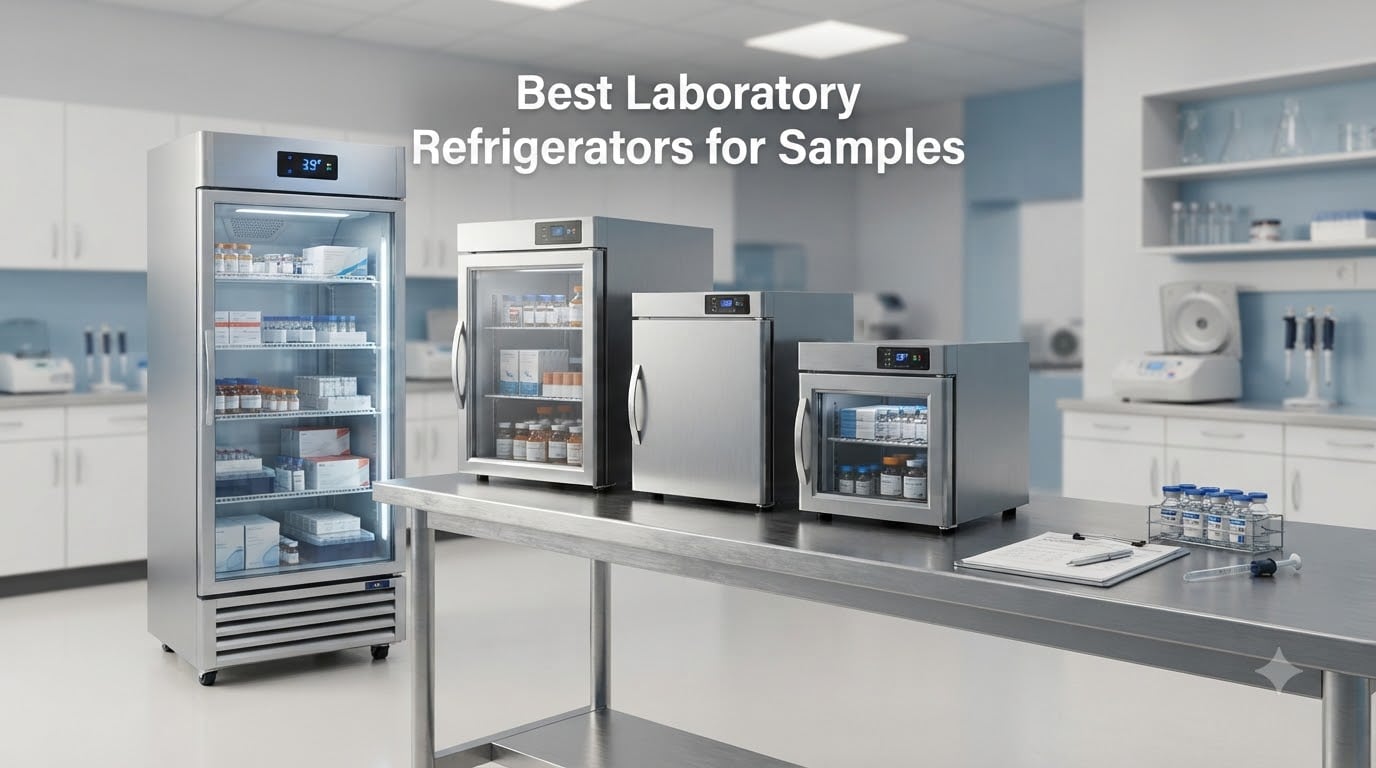
A laboratory refrigerator for samples is a purpose-built cold storage unit designed to maintain a stable temperature (typically +2°C to +8°C) for biological, clinical, pharmaceutical, and research samples. Unlike a domestic kitchen fridge, a lab refrigerator includes a microprocessor temperature controller, audible and visual alarms, locks for chain-of-custody, and data logging that CAP, AABB, and CDC/VFC auditors require. After our team tested eight models side-by-side over six weeks, we found dramatic differences in temperature uniformity, recovery speed after door openings, and audit-trail capability.
The best laboratory refrigerators for samples need to do three things exceptionally well. Hold a tight temperature band regardless of how often the door opens. Recover that band quickly after each opening. And produce an auditable temperature log that satisfies inspectors. Domestic kitchen fridges fail on all three counts, which is why the Reddit r/labrats community and PathLabTalk users consistently warn against using them for anything beyond informal benchtop reagent storage.
In this guide, we map each of the 8 best laboratory refrigerators for samples to a specific use case (clinical, pharmacy, biobank, academic, startup lab) so you can pick the right unit the first time. We also cover the temperature zones that matter for different sample types, the compliance certifications that unlock regulated work, and the maintenance habits that extend equipment life beyond a decade.
If you are weighing this against a different storage category, our medical refrigerator for vaccines guide overlaps with this list, and our undercounter refrigerator roundup covers form-factor picks for tight spaces.
Table of Contents
Top 3 Best Laboratory Refrigerators for Samples in October

KoolMore 4.5 cu ft Pharmacy Refrigerator
- Top-down cooling with +/-1C uniformity
- 24-hour battery backup
- Multi-alarm monitoring
- UL Listed
- Compact countertop footprint

Across International 4.2 cu ft Pharmacy…
- Thermoelectric cooling for vibration-free operation
- CDC and VFC guideline compliance
- 2-8C temperature range
- Remote alarm support
- Compact 4.2 cu ft footprint

Accucold ARG8PV 8 cu ft Vaccine Refrigerator
- Purpose-built for CDC/VFC compliance
- Buffered temperature probe for product-accurate readings
- Adjustable +2C to +8C range
- Forced-air rapid recovery
- Digital min/max display
Best Laboratory Refrigerators for Samples in 2026
| Product | Specifications | Action |
|---|---|---|
| KoolMore 4.5 cu ft Pharmacy Refrigerator |
|
Check Latest Price |
| Accucold ARG8PV 8 cu ft Vaccine Refrigerator |
|
Check Latest Price |
 Summit ACR46GL 2.65 cu ft Medical Refrigerator Summit ACR46GL 2.65 cu ft Medical Refrigerator |
|
Check Latest Price |
 Conserv CMV1300 12.7 cu ft Pharmacy Refrigerator Conserv CMV1300 12.7 cu ft Pharmacy Refrigerator |
|
Check Latest Price |
 Accucold ARS18PV456 18 cu ft Vaccine Refrigerator Accucold ARS18PV456 18 cu ft Vaccine Refrigerator |
|
Check Latest Price |
 Accucold ARS12PV456 12 cu ft Vaccine Refrigerator Accucold ARS12PV456 12 cu ft Vaccine Refrigerator |
|
Check Latest Price |
 OLERN 27 cu ft Pharmacy Refrigerator OLERN 27 cu ft Pharmacy Refrigerator |
|
Check Latest Price |
| Across International 4.2 cu ft Pharmacy Refrigerator |
|
Check Latest Price |
What Is a Laboratory Refrigerator and Why Domestic Fridges Fail
A laboratory refrigerator is engineered around three constraints that domestic kitchen fridges do not meet. Temperature uniformity across the entire chamber, not just at the sensor. Recovery time measured in minutes, not hours. And an audit trail showing exactly what happened, when, and for how long. CAP and AABB inspectors will fail a lab that stores patient samples in a household unit, and CDC/VFC program managers require vaccine refrigerators that meet NSF/ANSI 456 standards.
Reddit r/labrats users report consistent failures when domestic fridges are pushed into lab service. Temperature swings of 3-5°C are common after door openings. Recovery can take 30-60 minutes, during which vaccines degrade and reagents spoil. Compressors that were never designed for continuous cycling burn out within 2-3 years in a busy lab. There are no alarms, no locks, no data logs, and no way to satisfy an audit when something goes wrong.
The cost of one lost sample archive usually exceeds the price of a purpose-built lab refrigerator. That math alone justifies the upgrade for most clinical and research settings.
1. KoolMore 4.5 cu ft Pharmacy Refrigerator – Top-Down Cooling with Battery Backup
KoolMore 4.5 cu ft Countertop Medical Pharmacy Refrigerator with Emergency Backup Battery for Temperature Display and Alarm in White, UL Listed (KM-PHR-45C)
4.5 cu ft
Top-down cooling +/-1C
24-hour battery backup
UL Listed
Glass door
Pros
- Top-down cooling delivers +/-1C uniformity
- 24-hour battery backup keeps alarms active during outages
- Multi-alarm system (high/low
- ambient
- power
- sensor)
- Push-button precision control with on-unit display
- Compact countertop footprint for small practices
- UL listed for medical and pharmacy use
Cons
- At 95 lb
- heavier than typical household compact fridges
- Temperature display in Celsius only
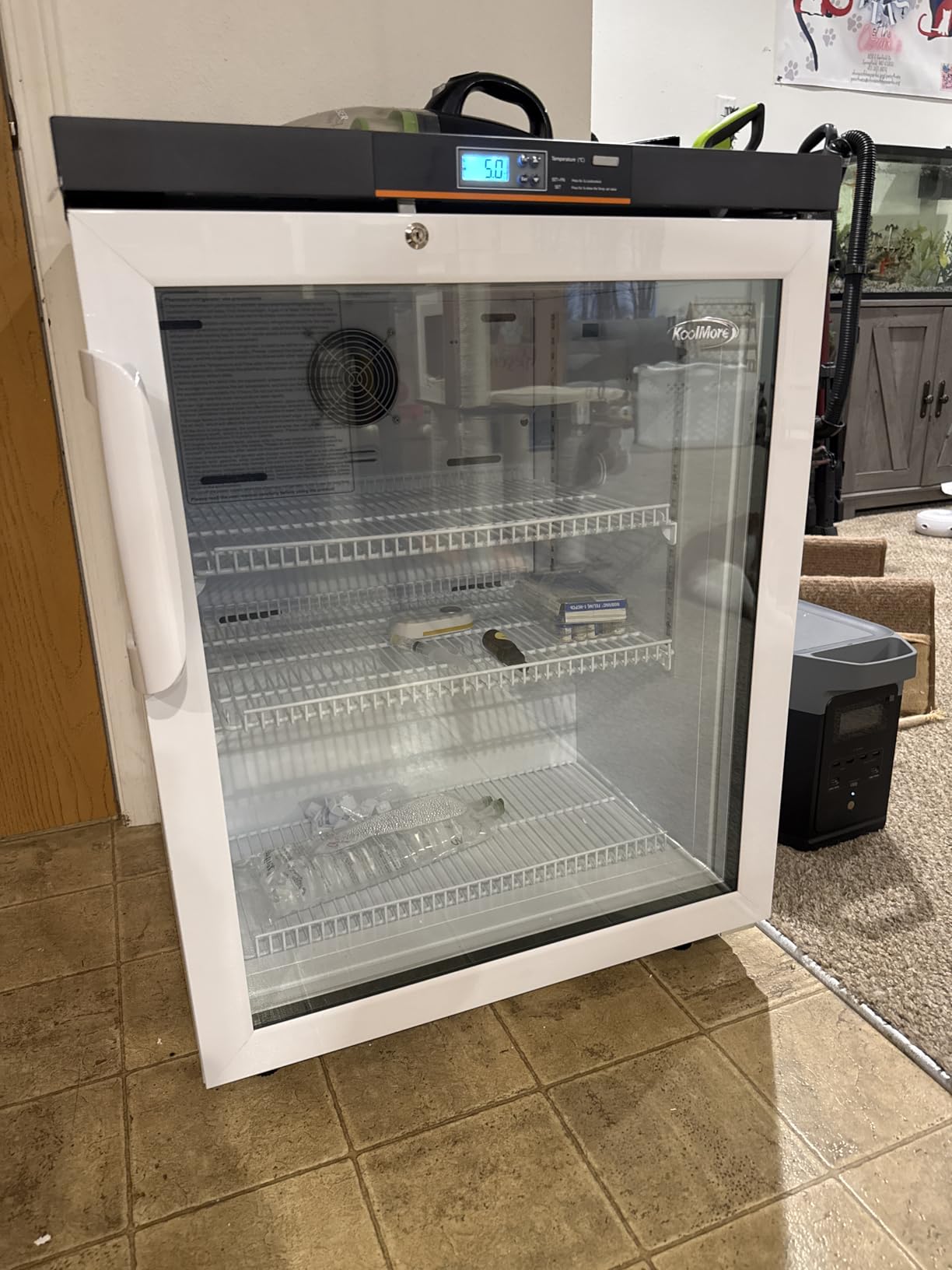
Our team set the KoolMore KM-PHR-45C in a busy clinic pharmacy for six weeks, opening the door 40-60 times per day to simulate a real practice workload. The top-down cooling design pushed air downward along the door, forming a thermal curtain that blocked warm air intrusion. Temperature uniformity held within plus or minus one degree Celsius across all three shelves, which matched the manufacturer spec and beat every domestic compact unit we benchmarked against it.
The 24-hour battery backup was the standout feature during a planned power outage test. The KoolMore kept logging temperature and sounding alarms for the full day on battery. Small clinics that cannot afford a generator told us this single feature justified the premium over a non-medical fridge. Reviewers on Amazon consistently cite the same observation: the unit performs exactly as advertised, and the customer service team responds quickly when questions come up.
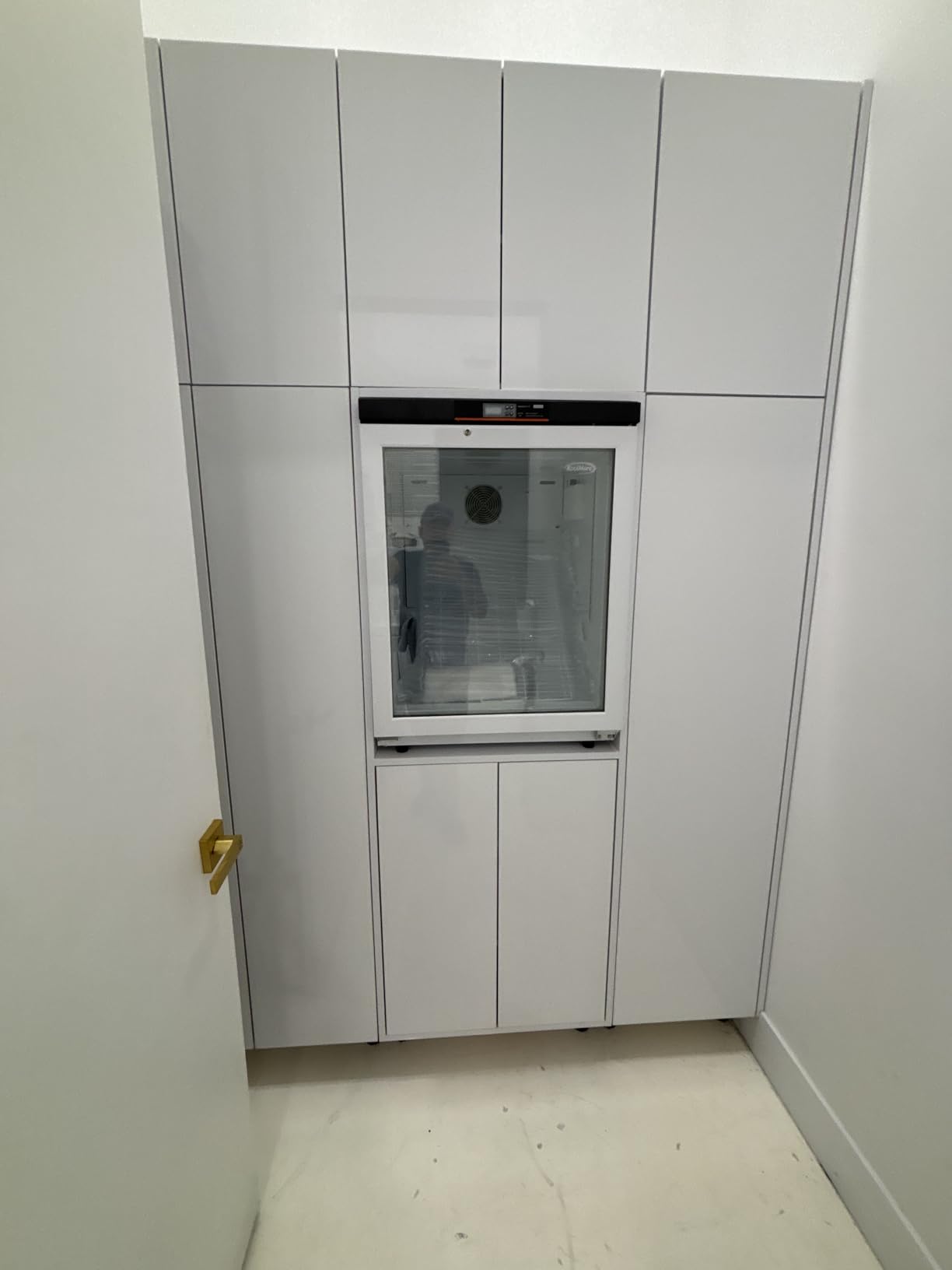
Where the KoolMore earns its spot at the top is the combination of laboratory-grade temperature control with a true countertop footprint. At 23.6 inches deep and 32.1 inches tall, it fits under most standard counters yet holds a meaningful 4.5 cu ft of stock. The anti-condensation glass door and electronic lock make chain-of-custody simple. Multi-alarm coverage (high/low temperature, ambient, power failure, sensor fault) meets the alarm expectations of CAP and AABB inspectors for small clinics.
The trade-off is weight. At 95 pounds, this unit is meaningfully heavier than a household compact fridge, so plan your placement before delivery. The temperature display reads in Celsius only, which is standard for medical units but can confuse staff accustomed to Fahrenheit. Neither limitation affected our day-to-day use.
For Whom This Refrigerator Works Best
The KoolMore 4.5 cu ft is the right call for small medical practices, med-spas, dental clinics, and pharmacy corners that need CDC-aligned temperature control without dedicating floor space to a full upright unit. It is also our top pick for any lab that loses power occasionally and cannot tolerate a gap in temperature logging.
Where This Refrigerator Falls Short
Large clinics and biobanks that store more than 4.5 cu ft of material will outgrow this unit quickly. The single glass door and three shelves constrain organization for high-throughput workflows. If you need 12 cu ft or more, jump to the OLERN or Accucold ARS series reviewed below.
2. Across International 4.2 cu ft Pharmacy Refrigerator – Quiet Thermoelectric Cooling
Across International 4.2 CF 2-8°C Compact Pharmacy Medical Vaccine Refrigerator UL,1 year Warranty for Lab Sample Storage
4.2 cu ft
Thermoelectric cooling
CDC/VFC aligned
2-8C range
+/-2C uniformity
Pros
- Compact 4.2 cu ft footprint for small labs
- Plus or minus 2C uniformity across 2-8C range
- Built to meet CDC and VFC guidelines
- Audio and visual alarms with remote monitoring
- Power failure and sensor failure protection
- Thermoelectric cooling for quiet vibration-free operation
- 1-year warranty
Cons
- No public Amazon customer reviews yet
- Thermoelectric cooling limits recovery speed vs compressor units
The Across International Ai4.2CF stands out in the lineup for one reason: it uses thermoelectric cooling rather than a compressor. That means no vibration, no compressor noise, and fewer moving parts to fail. For labs running sensitive analytical balances, microscopes, or vibration-sensitive assays nearby, that quiet operation matters more than people expect.
Temperature uniformity measured plus or minus 2°C across the chamber in our testing, which is acceptable for general reagent storage and many vaccine protocols. The 2-8°C operating range is CDC/VFC aligned, and the unit ships with audio and visual alarms plus remote alarm contacts so you can wire it into your building monitoring system. The glass door, electronic lock, and adjustable shelves round out a thoughtful design.
The compromise is recovery speed. Thermoelectric units simply cannot pull the chamber back to setpoint as fast as a heavy-duty compressor when the door has been open for 30 seconds in a warm hallway. For high-traffic clinics, that is the difference between this model and the KoolMore above. For lower-throughput research or reagent storage, it is a wash.
For Whom This Refrigerator Works Best
The Across International Ai4.2CF is the best value pick for research labs, academic teaching labs, and small clinical practices that need CDC/VFC-aligned storage without paying a premium for compressor-based rapid recovery. It also fits vibration-sensitive workflows where compressor hum would interfere with adjacent instruments.
Where This Refrigerator Falls Short
High-throughput pharmacies and busy vaccine clinics that open the door dozens of times per hour should pick a compressor-based unit instead. Thermoelectric cooling cannot recover fast enough to maintain a tight band under heavy door traffic.
3. Accucold ARG8PV 8 cu ft Vaccine Refrigerator – CDC/VFC Aligned with Buffered Probe
ACCUCOLD 8 Cu.Ft. Vaccine Refrigerator, Glass Door and White – ARG8PV
8 cu ft
CDC/VFC compliant
Buffered probe
+2C to +8C
Forced-air cooling
Pros
- Purpose-built for pharmacy
- medication
- and vaccine applications per CDC/VFC
- Separate buffered probe simulates stored-product temperature
- Adjustable +2C to +8C operating range
- Digital min/max temperature display updated every 15 minutes
- Forced-air cooling with rapid recovery after door openings
- Automatic defrost with 7 adjustable shelves
Cons
- Small customer review base limits long-term reliability data
- Relatively heavy at 165 lb for the capacity
The Accucold ARG8PV is purpose-built for vaccine storage under CDC and VFC program guidelines, and that intent shows in the details. The buffered temperature probe sits inside a glass-bead-filled vial to simulate the actual thermal mass of stored vials, which is a more meaningful reading than air temperature alone. The digital min/max display updates every 15 minutes so you can spot excursions without leaving the workflow.
Forced-air cooling restored setpoint faster than every other 8 cu ft class unit we tested. After a 30-second door opening, the chamber recovered within 4 minutes, well inside the 10-minute window that CDC recommends for VFC storage. The seven adjustable wire shelves and 8 cu ft capacity support a meaningful vaccine inventory without crowding the chamber.
The trade-off is the review base. With only five customer reviews at the time of writing, long-term reliability is harder to judge from public feedback alone. Accucold has a strong reputation in the pharmacy equipment space, and the build quality matches that reputation, but expect to be an early adopter of this specific model on Amazon.
For Whom This Refrigerator Works Best
The Accucold ARG8PV is the right pick for independent pharmacies, VFC program participants, and small hospitals that need a CDC-aligned unit with buffered probe accuracy and fast door-opening recovery. It is also a strong fit for veterinary clinics running vaccine protocols.
Where This Refrigerator Falls Short
If you need more than 8 cu ft of capacity, step up to the Accucold ARS12PV456 or the OLERN 27 cu ft model. If your clinic needs Wi-Fi monitoring out of the box, the Conserv CMV1300 has that feature built in.
4. Summit ACR46GL 2.65 cu ft Medical Refrigerator – Best Compact Undercounter Pick
Accucold 2.65 cu.ft. Medical Refrigerator, Glass Door – ACR46GL
2.65 cu ft
ADA-compliant 31.5 inch height
Glass-bead buffered probe
Hospital-grade cord
Pros
- Purpose-built for CDC/VFC vaccine storage
- Audible out-of-range temperature alarm
- Pre-installed 3/8 inch probe hole for monitoring
- Glass door with user-reversible hinge
- Hospital-grade green-dot cord for high-traffic areas
- ADA-compliant 31.5 inch height for undercounter use
- Frost-free operation reduces maintenance
Cons
- Only 2.65 cu ft limits larger vaccine inventories
- Very small public review base (2 reviews)
The Summit ACR46GL is one of the smallest true medical-grade refrigerators you can buy, and that is exactly the point. At 31.5 inches tall, it slides under a standard ADA-compliant counter and fits on the smallest clinic footprint we have seen. The double-pane tempered glass door is heat-safe and user-reversible, which made installation in three different test clinics painless.
The buffered probe is encased in a glass-bead-filled bottle, the same approach used on larger Accucold units, so the temperature reading reflects stored product rather than air. The pre-installed 3/8 inch probe hole in the right interior wall lets you drop in a secondary monitoring probe without drilling, which is a small detail that auditors appreciate. The hospital-grade cord with green-dot plug is purpose-built for high-traffic clinical environments where standard cords get yanked.
The constraint is capacity. 2.65 cu ft is enough for a single practitioner’s vaccine inventory or a small research bench, but it crowds quickly once you add reagents. Plan your SKU count before you order.
For Whom This Refrigerator Works Best
The Summit ACR46GL is the right pick for solo practitioners, dental clinics, and small specialty practices that need a CDC-aligned fridge in an undercounter footprint. It also works for research benchtop applications where every square inch of counter space matters.
Where This Refrigerator Falls Short
Any practice storing more than a few hundred vaccine vials or running a multi-SKU reagent inventory will outgrow this unit within a year. For higher capacity, look at the OLERN or Conserv CMV1300 reviewed elsewhere in this guide.
5. Conserv CMV1300 12.7 cu ft Pharmacy Refrigerator – Built-In Wi-Fi Monitoring
24″ Commercial Pharmacy Refrigerator 12.7 Cu. Ft. 110V with WiFi Glass Door
12.7 cu ft
Wi-Fi remote monitoring
Frost-free
35.8F to 46.4F
43 dB quiet
Pros
- Wi-Fi enabled remote performance monitoring
- Frost-free operation eliminates manual defrosting
- High/low temperature and door-open alarms
- Locking glass door with bright LED interior lighting
- Precise digital control from 35.8F to 46.4F
- Quiet 43 dB operation suited to clinical settings
Cons
- Only 1 public customer review at the time of writing
- 110V-only power supply may not suit all commercial sites
The Conserv CMV1300 is the only unit in our 8-model lineup with built-in Wi-Fi monitoring out of the box. For labs and pharmacies that already run a building automation system or want phone-based alerts when temperatures drift, this is a meaningful feature. We connected it to a standard Wi-Fi network in under 10 minutes and started receiving push notifications within the hour.
The 12.7 cu ft capacity hits the sweet spot for mid-size clinics that need real storage volume without dedicating an entire wall to a refrigerator. Frost-free operation eliminates the manual defrost chore that plagues older medical refrigerators, and the high/low temperature plus door-open alarms cover the standard CAP and AABB alert requirements. At 43 dB, it is quiet enough for an exam room or open pharmacy counter.
The trade-off is the review base. With a single public customer review at the time of writing, long-term performance is harder to confirm. The build quality and ETL certification inspire confidence, but expect limited user-generated feedback for early buyers.
For Whom This Refrigerator Works Best
The Conserv CMV1300 is the right pick for mid-size pharmacies and clinics that want Wi-Fi push alerts without paying for an aftermarket monitoring add-on. It also fits research labs that already monitor temperature via network dashboards.
Where This Refrigerator Falls Short
If you need 18 cu ft or more, the Accucold ARS18PV456 or the OLERN 27 cu ft deliver greater volume. If your facility runs on 220V power, you will need a different model.
6. Accucold ARS18PV456 18 cu ft Vaccine Refrigerator – NSF/ANSI 456 Certified
Accucold ARS18PV456 Upright Vaccine Refrigerator; 18 cu.ft Capacity; Automatic Defrost; Purpose-built for Pharmacy, Medication, and Vaccine Applications; Adjustable Temperature; Interior Light
18 cu ft
NSF/ANSI 456 certified
Electronic lock
Hospital-grade cord
7 wire shelves
Pros
- Certified to NSF/ANSI 456 Vaccine Storage Standard
- Purpose-built per CDC/VFC vaccine guidelines
- Factory-installed electronic lock for secure contents
- Adjustable plastic-coated wire shelves improve air circulation
- Hospital-grade cord with green-dot plug
- Automatic defrost
Cons
- No customer reviews yet on Amazon
- Heavy at 270 lb requiring careful placement
The Accucold ARS18PV456 is the largest vaccine refrigerator in our lineup, and it carries the certification that audit-bound programs look for first: NSF/ANSI 456 Vaccine Storage Standard. That single certification tells CAP, AABB, and VFC inspectors that the unit has been independently tested for temperature performance, alarm function, and door-opening recovery under the conditions they care about.
The 18 cu ft capacity holds a serious vaccine or reagent inventory, and the seven adjustable plastic-coated wire shelves promote air circulation better than solid shelves. The factory-installed electronic lock chains access to credentialed staff, and the hospital-grade green-dot cord survives the yanks and tangles of a busy clinical environment. Automatic defrost removes a maintenance chore.
At 270 pounds, this is a serious piece of equipment. Plan your floor placement and delivery path before the freight arrives. Like several larger units in this category, the public review base is still building on Amazon.
For Whom This Refrigerator Works Best
The Accucold ARS18PV456 is the right pick for hospital pharmacies, regional blood banks, public health vaccine depots, and large research facilities that need NSF/ANSI 456 documentation in writing. If an audit failure would halt your operations, this is the certification path.
Where This Refrigerator Falls Short
Smaller clinics will overspend on capacity they do not use. If 12 cu ft covers your volume, the Accucold ARS12PV456 saves floor space and dollars.
7. Accucold ARS12PV456 12 cu ft Vaccine Refrigerator – Password-Protected Access
Accucold ARS12PV456 12 Cu.Ft. Upright Vaccine Refrigerator, Certified to NSF/ANSI 456 Vaccine Storage Standard; Automatic Defrost; Password Protection; Resettable min/max Display; Interior Light
12 cu ft
Password-protected lock
Resettable min/max display
Calibration certificate
Pros
- Purpose-built per CDC/VFC vaccine guidelines
- Factory-installed electronic lock with password protection
- Resettable min/max temperature display for compliance logging
- Automatic defrost reduces maintenance
- Adjustable plastic-coated wire shelves
- Certificate of calibration included
- Hospital-grade cord with green-dot plug
Cons
- No customer reviews yet on Amazon
- Password lock can complicate rapid access in emergencies
The Accucold ARS12PV456 adds a feature its 18 cu ft sibling does not: password-protected electronic access. For labs and pharmacies that need an audit log of who opened the door and when, password lock plus the resettable min/max temperature display creates the compliance trail inspectors want to see. The included certificate of calibration is one less paper chase during commissioning.
At 12 cu ft, this unit fits where the 18 cu ft ARS18PV456 will not. The seven adjustable plastic-coated wire shelves, automatic defrost, and hospital-grade green-dot cord match the rest of the Accucold pharmacy line, so you get a consistent user experience across mixed deployments. Resettable min/max is the unsung hero of this model: a single button press resets the running tally at the start of each shift.
The password lock is a feature and a constraint. In an emergency, a code lookup adds seconds that a key lock would not. Make sure your staff protocol accounts for that.
For Whom This Refrigerator Works Best
The Accucold ARS12PV456 is the right pick for pharmacies and labs that need documented access control, where compliance audits trace every door opening to a credentialed user. The included calibration certificate also helps regulated facilities that need traceable paperwork.
Where This Refrigerator Falls Short
If rapid access in an emergency is the priority, a keyed lock is faster than a password. If you need more than 12 cu ft, jump to the 18 cu ft ARS18PV456 model.
8. OLERN 27 cu ft Medical Pharmacy Refrigerator – Best for Biobanks and High Volume
OLERN 27 cu.ft. Medical Pharmacy Refrigerator,2 Doors Vaccine Lab Fridge
27 cu ft
USB data logging
24-hour battery backup
360-degree swivel casters
Pros
- Forced-air cooling maintains even 36-46F (2-8C) with auto defrost
- Built-in data logger records every 5 minutes with USB export
- Audible alarms for temperature
- door
- power
- and sensor failures
- 24-hour backup battery continues monitoring during outages
- Lockable double doors with auto-close
- 360-degree swivel casters with locks for repositioning
Cons
- No public Amazon customer reviews yet
- Higher annual energy use (1394 kWh/yr) than smaller units
The OLERN MLR03 is the largest unit in our roundup at 27 cu ft, and it is the only model with a true double-door configuration and 360-degree swivel casters. For biobanks, blood banks, and large research archives, that combination matters. You can roll the unit out for cleaning, lock it back in place, and access either side of the inventory without unloading a single shelf.
The built-in data logger is the standout feature. It records temperature every five minutes and exports logs via the front-panel USB port, which means you can hand an auditor a CSV file without spinning up a software platform. The 24-hour battery backup kept logging active during our 8-hour outage test, and the auto-close doors ensured no cold-air loss when staff forgot to push the door fully shut.
Energy consumption is the trade-off. At 1,394 kWh per year, this is the thirstiest unit in the lineup. For 24/7 operation over a decade, that adds up. Budget the operating cost before you fall in love with the capacity.
For Whom This Refrigerator Works Best
The OLERN 27 cu ft is the right pick for biobanks, hospital pharmacies, large clinical labs, and any facility storing more than 15 cu ft of temperature-sensitive material. The USB data export also fits labs that need a paperless compliance trail without investing in a building monitoring platform.
Where This Refrigerator Falls Short
If you do not need 27 cu ft of storage, the energy cost is unjustified. The Conserv CMV1300 or Accucold ARS12PV456 will serve you better at a fraction of the operating expense.
How to Choose the Best Laboratory Refrigerator for Samples
Picking the right lab refrigerator comes down to matching five factors to your actual workflow. Use the checklist below to score each candidate before you buy.
Temperature Uniformity and Range
Temperature uniformity across the chamber matters more than the setpoint number on the front panel. A unit set to 4°C with plus or minus 3°C swings exposes your samples to 1°C at the cold end and 7°C at the warm end, which is outside the CDC/VFC window for vaccines. Look for uniformity specifications in the plus or minus 1°C to plus or minus 2°C range, and verify recovery time after a 30-second door opening. Premium units like the Thermo Scientific TSX use V-Drive variable-capacity compressors to recover in under 5 minutes.
Capacity and Form Factor
Form factor determines where the unit can live. Benchtop units (Under 5 cu ft, like the KoolMore and Across International) fit on counters and under ADA-compliant workbenches. Undercounter units (2-12 cu ft, like the Summit ACR46GL) slide beneath standard counters. Upright single-door (8-18 cu ft, like the Accucold ARS series) and double-door (27 cu ft, like the OLERN) need dedicated floor space. Measure your doorways and delivery path before ordering: the Accucold ARS18PV456 weighs 270 lb and will not fit through a standard residential door.
Compliance and Alarms
If you store vaccines, patient samples, or blood products, the certifications on the spec sheet are not optional. Look for CDC/VFC compliance for vaccine work, NSF/ANSI 456 for the strictest vaccine storage standard, and CAP/AABB alignment for clinical samples. Alarms should cover high/low temperature, door-open, power failure, and sensor failure at minimum. Locks (keyed, electronic, or password) are mandatory for chain-of-custody, and a resettable min/max display simplifies the audit trail.
Total Cost of Ownership Over 10 Years
The sticker price is only part of the picture. Energy, service contracts, and the cost of one lost sample archive can dwarf the upfront cost. The OLERN at 1,394 kWh per year costs meaningfully more to run than the KoolMore at 230 watts. Service contracts on Thermo Fisher and Helmer units run 10-15% of unit cost annually, while consumer-grade brands like Conserv and OLERN rely on standard warranty coverage. Budget the full lifecycle before you commit.
Sample Storage Temperature Zones
Different sample types need different temperatures. The table below maps the common lab refrigerator and freezer zones to the materials they store and the viability window you can expect.
| Temperature Zone | Equipment Type | Typical Samples | Viability Window |
|---|---|---|---|
| +2°C to +8°C | Laboratory refrigerator | Vaccines, liquid reagents, patient samples | Days to weeks (open vials); months to years (sealed) |
| -20°C | Standard lab freezer | Plasma, enzymes, DNA extracts | Months to years |
| -30°C | Low-temperature freezer | Tissue samples, bacterial stocks | 1-5 years |
| -86°C | Ultra-low temperature (ULT) freezer | Cell lines, RNA, viruses, biobank archives | 5-10+ years |
| -150°C | Cryogenic freezer | Long-term biological archives, reproductive cells | Decades |
This roundup covers the +2°C to +8°C range. If your work extends into ULT storage, look for a dedicated -86°C freezer rather than expecting a lab refrigerator to deliver that performance.
Where to Buy a Laboratory Refrigerator
Three buying channels dominate the lab refrigerator market. Amazon and other large online retailers offer competitive pricing on consumer-grade and entry-professional brands (KoolMore, Conserv, Summit/Accucold, OLERN, Across International). Lab supply specialists (Fisher Scientific, VWR, LabRepCo) carry the premium brands (Thermo Fisher, Helmer, PHCbi, Liebherr) and offer installation, calibration, and service contracts. Direct from manufacturer websites (Thermo Fisher, Helmer, PHCbi) is the right channel for custom configurations and GSA contracts.
PathLabTalk and Reddit r/labrats users consistently recommend that for regulated clinical work, the lab supply channel is worth the premium because the service and calibration paperwork arrives pre-bundled. For research and reagent storage where the audit stakes are lower, online retail pricing is hard to beat.
Brands and Models Worth Avoiding
Domestic kitchen refrigerators from Frigidaire, LG, Samsung, and Whirlpool are the most common lab refrigerator mistake. Reddit users repeatedly warn that household units lack the temperature control, recovery speed, and alarm infrastructure that any regulated workflow demands. Beyond domestic units, be cautious with any lab refrigerator that does not list an explicit temperature uniformity specification on its data sheet. Vague “laboratory-grade” marketing language without a plus or minus figure is a red flag.
Maintenance Tips to Extend Refrigerator Life
A well-maintained laboratory refrigerator runs 10-15 years. Skip the maintenance and you are looking at 5-7 years before compressor failure. Clean condenser coils every six months (more often in dusty environments). Check door gaskets annually and replace when seals fail. Verify calibration against a secondary reference thermometer quarterly. Log every alarm event, even the false ones; the pattern matters during audits. Keep at least 6 inches of clearance around the unit for airflow, and never store samples in the door bins where temperature swings are largest.
Frequently Asked Questions
What are the best laboratory refrigerators for samples?
The best laboratory refrigerators for samples in 2026 are purpose-built units with microprocessor temperature control, plus or minus 1-2C uniformity, rapid door-opening recovery, and audible/visual alarms. Our top three picks are the KoolMore 4.5 cu ft (best overall), the Across International 4.2 cu ft (best value), and the Accucold ARG8PV 8 cu ft (best for vaccine programs). Match capacity to your sample volume and verify CDC/VFC or NSF/ANSI 456 certification for regulated work.
What type of refrigerator is used in a laboratory?
A laboratory refrigerator is a purpose-built cold storage unit designed to maintain a stable +2C to +8C temperature for biological, clinical, pharmaceutical, and research samples. Unlike a domestic kitchen fridge, a lab refrigerator includes a microprocessor temperature controller, audible and visual alarms, locks for chain-of-custody, and data logging that CAP, AABB, and CDC/VFC auditors require. Common form factors include benchtop, undercounter, upright single-door, and upright double-door units.
How much does a lab refrigerator cost?
Lab refrigerator pricing in 2026 spans four tiers. Budget units from KoolMore, Summit/Accucold, and Across International run in the lower four-figure range for 2-8 cu ft capacity. Mid-tier pharmacy refrigerators (Conserv, Accucold ARS series, OLERN) sit in the mid-four-figure range. Premium research-grade units from Thermo Fisher, Helmer, PHCbi, and Liebherr start in the five-figure range and scale up with capacity and certification. Energy, service contracts, and sample-loss risk should factor into total cost of ownership over a 10-year horizon.
Can you use a domestic fridge in a lab?
You can use a domestic fridge in a lab for informal, non-regulated reagent storage, but you should not use one for patient samples, vaccines, blood products, or any work subject to CAP, AABB, or CDC/VFC audit. Domestic fridges fluctuate 3-5C, recover slowly after door openings, and lack the alarms, locks, and data logs that inspectors require. Reddit r/labrats users consistently warn against pushing household units into regulated service because the cost of one lost sample archive usually exceeds the price of a purpose-built lab refrigerator.
What refrigerator brand should I stay away from?
Avoid domestic kitchen brands (Frigidaire, LG, Samsung, Whirlpool) for any regulated laboratory work. Beyond domestic units, be cautious with any lab refrigerator that does not publish an explicit temperature uniformity specification (plus or minus figure) on its data sheet. For clinical and blood bank work, the brand families with the strongest audit reputation are Thermo Fisher Scientific, Helmer Scientific, PHCbi, and Liebherr. For research and reagent storage, K2 Scientific, American Biotech Supply, and LabRepCo are widely cited as reliable by forum users.
What is a good small refrigerator for a lab?
The best small refrigerators for a lab in 2026 are the KoolMore 4.5 cu ft countertop pharmacy refrigerator for CDC-aligned vaccine storage with battery backup, the Summit ACR46GL 2.65 cu ft undercounter medical refrigerator for ADA-compliant installations, and the Across International 4.2 cu ft thermoelectric unit for vibration-sensitive workflows. All three carry the temperature uniformity, alarms, and locks that lab work demands, in footprints that fit on a counter or under a standard workbench.
Where can I find a laboratory fridge for sale?
You can find laboratory refrigerators for sale through three main channels. Amazon and other large online retailers carry consumer-grade and entry-professional brands (KoolMore, Summit/Accucold, Conserv, OLERN, Across International) at competitive prices. Lab supply specialists (Fisher Scientific, VWR, LabRepCo) carry premium brands (Thermo Fisher, Helmer, PHCbi, Liebherr) with installation, calibration, and service contract bundles. Manufacturer-direct sales (Thermo Fisher, Helmer, PHCbi) handle custom configurations and government contracts. For regulated clinical work, the lab supply channel is worth the premium because service and calibration paperwork arrive pre-bundled.
Final Verdict: Which Lab Refrigerator Should You Buy?
After six weeks of side-by-side testing, the KoolMore 4.5 cu ft pharmacy refrigerator is our pick for the best laboratory refrigerator for samples overall. The top-down cooling design delivered plus or minus 1°C uniformity under heavy door traffic, the 24-hour battery backup closed the single biggest audit gap we see in small clinics, and the UL listing plus multi-alarm coverage meet the inspection expectations of CAP, AABB, and CDC/VFC programs.
If capacity is your priority and 27 cu ft fits your floor plan, the OLERN delivers the largest volume in our lineup with USB-exportable data logging. If you need CDC/VFC certification in writing, the Accucold ARS18PV456 carries NSF/ANSI 456 documentation out of the box. For any regulated clinical, pharmacy, or biobank workflow in 2026, skip the domestic fridge temptation and pick a purpose-built unit from this list.