
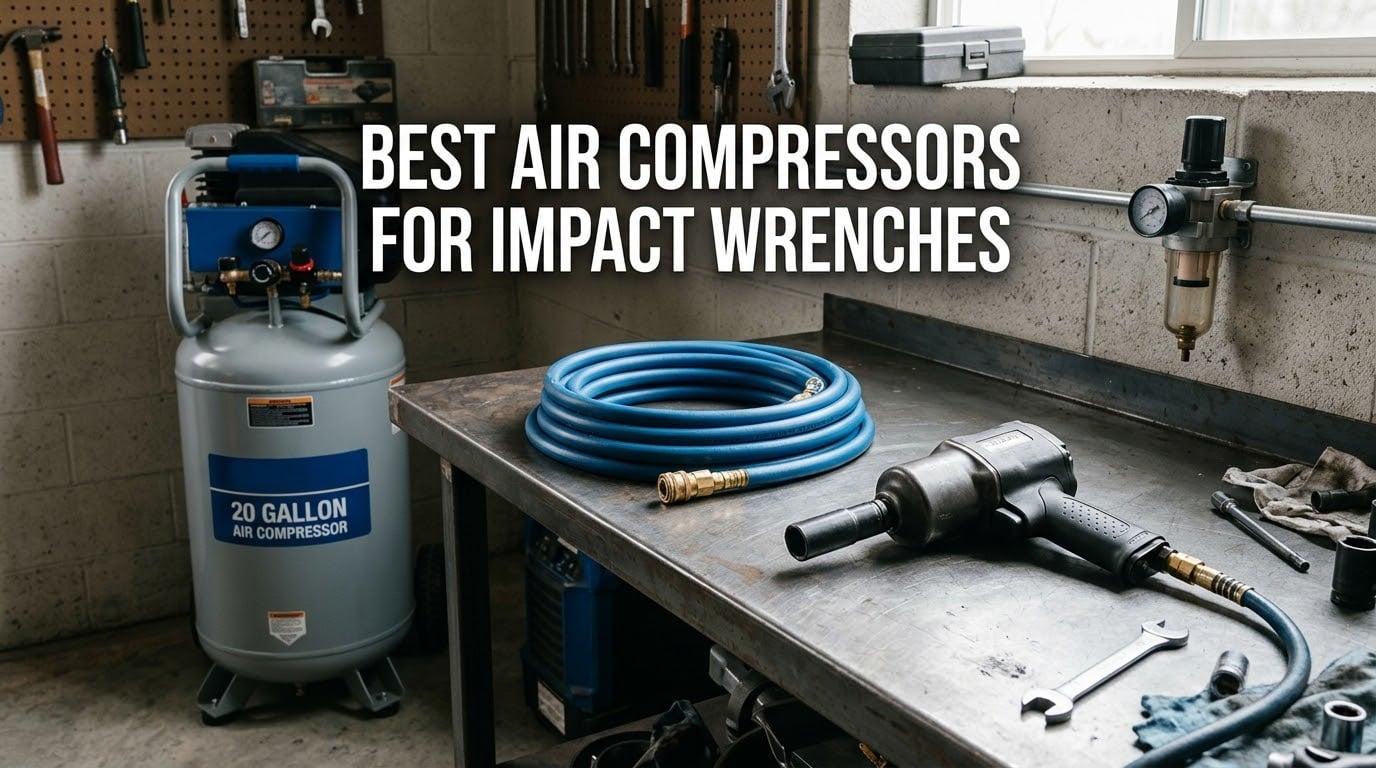
A 1/2-inch air impact wrench pulls somewhere between 5 and 7 CFM at 90 PSI, and that single number decides whether your compressor keeps up. A 3/8-inch drive needs 3 to 4 CFM. A 1-inch drive needs 10 CFM or more. Buy the compressor whose rated CFM at 90 PSI clears your wrench with about 50% headroom, and tank size becomes a secondary question about how long you wait between bursts.
That is the whole method. Everything else on this page is the detail: which eight compressors actually hold up, what happens when you starve one, and how the tank, the pump and the hose each change what you feel at the bolt.
We compared the specifications buyers care about, weighed the published CFM at 90 PSI against real torque work, and read what owners report after the first year rather than the first week. If you are still deciding between formats, start with our home garage compressor guide for the general picture. If you are weighing pneumatic against battery, see our picks for the best cordless impact wrenches for mechanics instead, because a cordless gun sidesteps the whole CFM question.
Table of Contents
Top 3 Best Air Compressors for Impact Wrenches in 2026

Makita MAC2400
- 4.2 CFM at 90 PSI
- Oil-lubricated cast iron Big Bore pump
- 2.5 HP low-amp motor


Klutch 20-Gallon Vertical
- 4.2 SCFM at 90 PSI
- 20 gallon vertical tank
- Oil-free maintenance-free pump
Every Pick Compared Side by Side in October
| Product | Specifications | Action |
|---|---|---|
| Makita MAC2400 |
|
Check Latest Price |
| Metabo HPT EC914S |
|
Check Latest Price |
| Klutch 20-Gallon Vertical |
|
Check Latest Price |
 DEWALT DWFP55130 DEWALT DWFP55130 |
|
Check Latest Price |
 CRAFTSMAN 6 Gallon Pancake CRAFTSMAN 6 Gallon Pancake |
|
Check Latest Price |
 Stealth 20 Gallon Quiet Stealth 20 Gallon Quiet |
|
Check Latest Price |
 CRAFTSMAN 20 Gallon Oil-Free CRAFTSMAN 20 Gallon Oil-Free |
|
Check Latest Price |
 DEWALT D55146 DEWALT D55146 |
|
Check Latest Price |
How Much CFM Does an Impact Wrench Actually Need?
CFM is cubic feet per minute, the volume of air a pump pushes at a given pressure. PSI is pounds per square inch, the pressure in the tank. The wrench cares about both, but flow is what makes torque, because the air motor needs volume to keep the hammer mechanism fed.
Here is the drive-size breakdown we use for every sizing decision:
3/8-inch drive: 3 to 4 CFM at 90 PSI. This covers small hardware, seat brackets, and most interior fasteners.
1/2-inch drive: 5 to 7 CFM at 90 PSI. Lug nuts, suspension bolts, and rust-welded hardware sit here, and this is by far the most common drive size.
1-inch drive: 10 CFM or more at 90 PSI. Truck and bus lug nuts, axle work, and heavy suspension. Nothing in this roundup delivers 1-inch duty at full flow.
SCFM, standard cubic feet per minute, is the same flow number measured at standard temperature and pressure. When a listing says SCFM, that is the honest figure. When a listing quotes CFM at 40 PSI instead of 90 PSI, it is flattering itself, since flow falls as pressure rises.
Then add the buffer. Multiply your wrench requirement by 1.5 and shop for a compressor that clears that number. The buffer covers pressure drop across a long hose, cold tank walls, altitude, and the moment the pump is still recovering from the last burst.
Think of the tank as a bucket and the pump as the tap filling it. A big tank with a small pump gives you long bursts followed by long waits. A smaller tank with a strong pump gives you steady recovery. For impact wrench work, the tap matters more than the bucket.
1. Makita MAC2400 – Best Airflow Where It Counts
Makita MAC2400 2.5 HP* Big Bore™ Air Compressor
4.2 CFM at 90 PSI
4.2 gal tank
2.5 HP oil-lubricated cast iron pump
79 dB, 12.3 A at 120V
Pros
- 4.2 CFM at 90 PSI from a 2.5 HP motor supports demanding pneumatic tools
- Cast iron Big Bore pump and cylinder built for durability and faster recovery
- Low 12.3 amp draw reduces breaker trips at start-up
- Oil-lubricated pump runs cooler and wears less over time
- Roll-cage frame and industrial air filter suit jobsite use
Cons
- Oil-lubricated pump requires periodic oil checks and changes
- Small 4.2 gallon tank means shorter run time between fills for large tools
The MAC2400 is the compressor we come back to for lug nut duty because of one number: 4.2 CFM at 90 PSI from a 2.5 HP motor. That lands right in the middle of the 1/2-inch impact range, and it gets there through a cast iron Big Bore cylinder and piston rather than a lightweight aluminum sleeve.
The Big Bore design is about recovery. Owners report the pump refilling quickly enough that the pause between wheels is short, which is the difference between a pleasant Saturday and a frustrating one. At 1,319 reviews and a 4.7 average, it is the highest-rated compressor in this roundup, and the 86% five-star share backs that up.
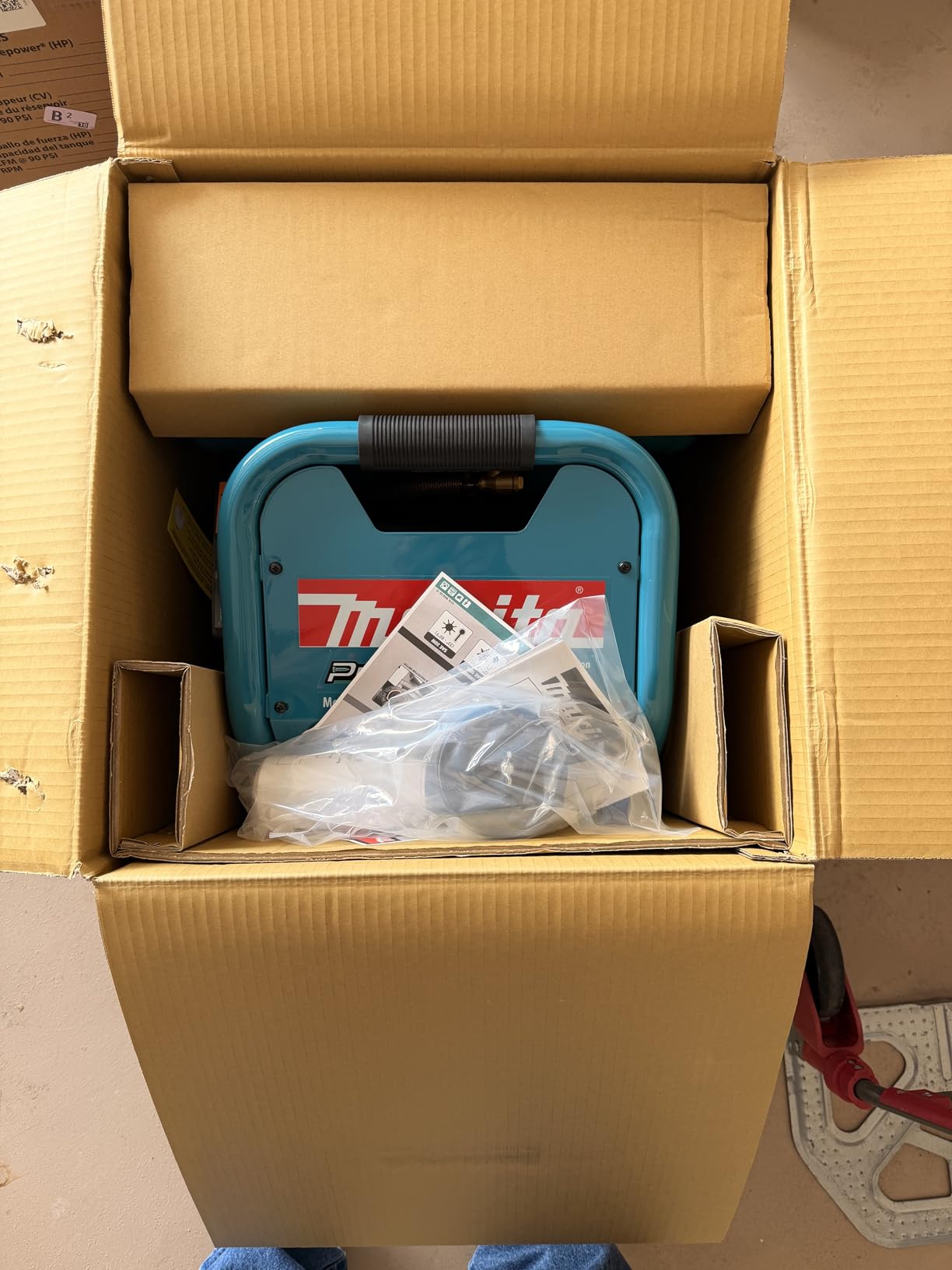
The electrical design matters more than most buyers realize. At 12.3 amps, the four-pole motor starts on a standard household circuit without tripping the breaker every time the tank cycles on. That is a real advantage in a garage where a welder, a chop saw, and the compressor might share a receptacle.
Noise lands at 79 dB, which is quieter than a gas lawnmower but not conversation-friendly in an attached house. The pump runs at 1,730 RPM, deliberately slower than a small pancake, and that slower speed is why it stays cooler and lasts longer.
The tradeoffs are honest ones. The 4.2 gallon tank is small by modern standards, so a 1/2-inch wrench draining it will force a recovery pause. And the oil-lubricated pump asks for a few minutes of attention a year to stay in good shape.
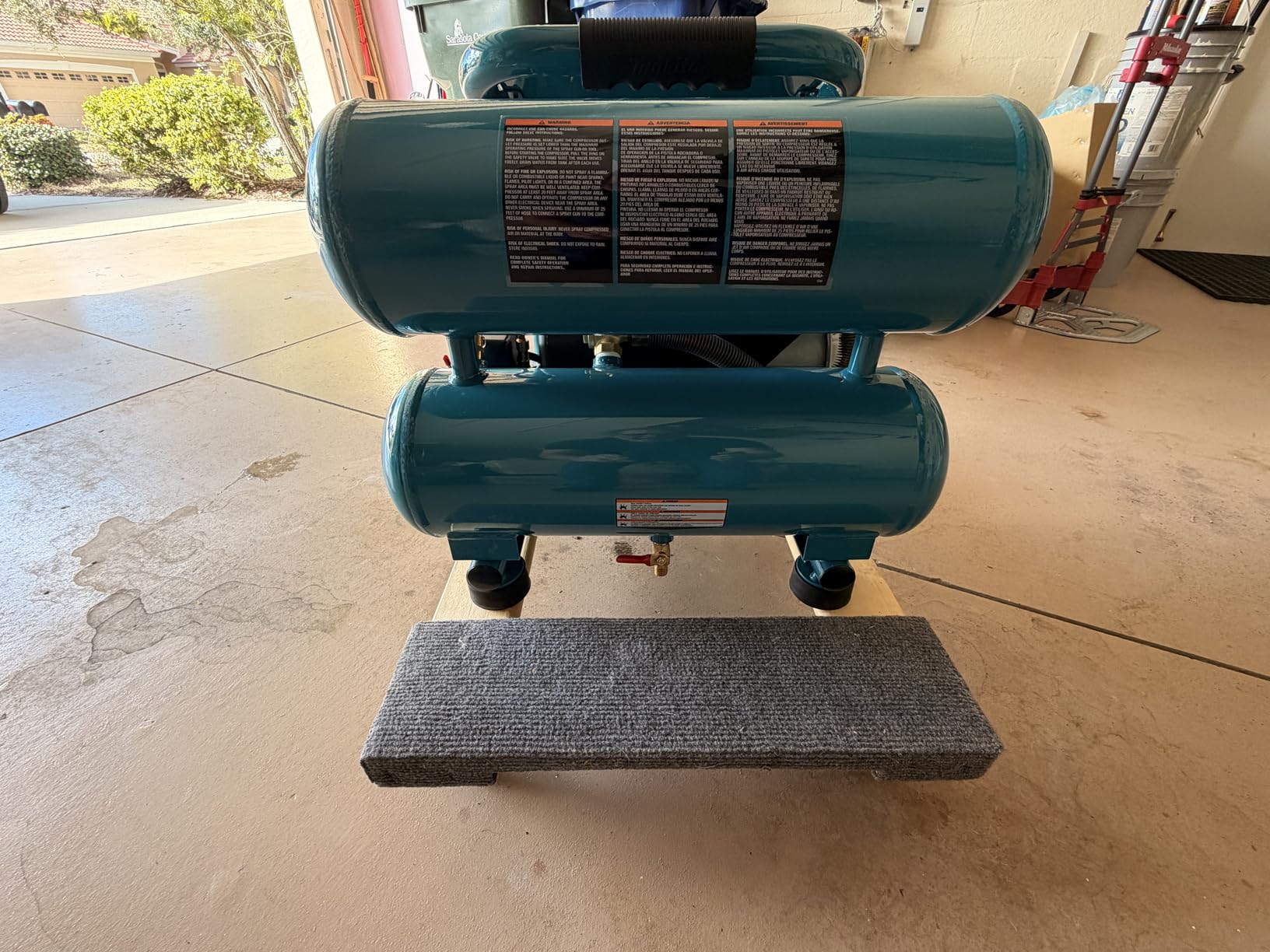
What the MAC2400 handles well
Rust-welded bolts, suspension work, brake jobs, and tire changes all sit inside this pump’s comfortable range. The oil-lubricated cast iron pump is the reason it outlasts lighter oil-free designs in the same flow class, which is why it keeps showing up in long-term ownership reports.
If you plan to keep one compressor for a decade, this is the build style that tends to get there. Pump parts are widely available, and the removable cylinder simplifies maintenance compared with a sealed pump.
Where it falls short
The 4.2 gallon tank is the weak point. Owners doing whole-car brake jobs report waiting for the tank between corners of the vehicle. Pairing it with a small auxiliary receiver is the common fix if you have the space.
It is also the wrong choice for a 1-inch drive wrench, or for running a framing nailer at the same time. And the oil-lubricated pump is a dealbreaker if you store tools in the same room and cannot tolerate a servicing schedule.
2. Metabo HPT EC914S – Most Reviewed, Genuinely Portable
Metabo HPT Portable Pancake Air Compressor, 6 Gallon 200 PSI, EC914S
4 CFM at 90 PSI
6 gallon tank
200 PSI max, 1.3 HP
73 dB, 41 lb oil-free
Pros
- 200 PSI max pressure gives more headroom than typical pancake compressors
- 4 CFM at 90 PSI is enough to run several nailers at once
- Only 42 lbs makes it easy to carry between jobs
- Japanese-engineered build with a 1-year warranty
- Consistently drives nails flush with no delay
Cons
- 6 gallon capacity still limits sustained work on larger impact tools
- 1.3 HP motor is modest for heavy continuous-duty demand
- 12% of ratings are 1-star
- indicating some durability complaints
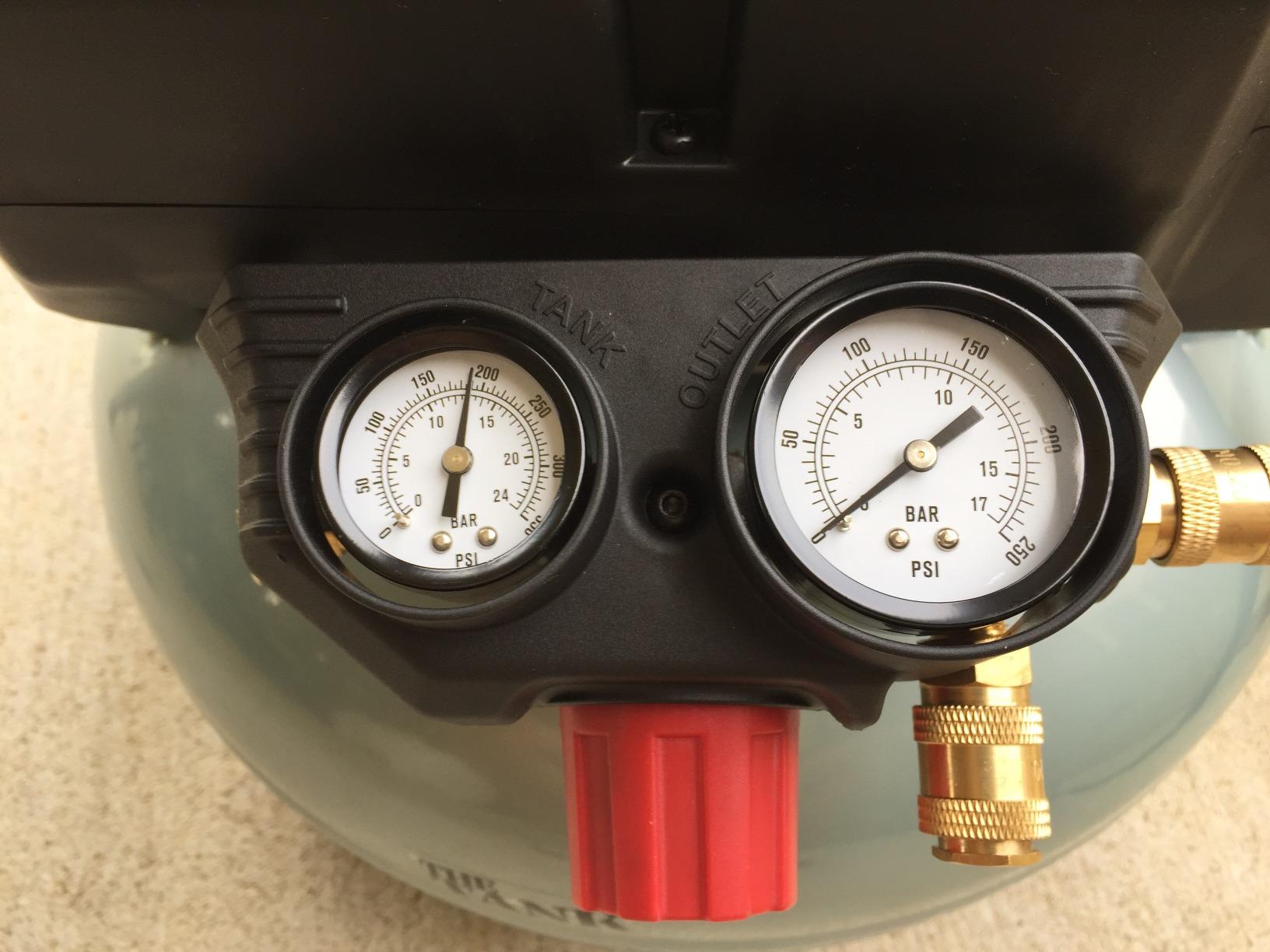
With 1,480 reviews at 4.5 stars, the EC914S is the most-reviewed compressor here, and that volume makes its pattern clear. Owners like the airflow for the size, like the pressure ceiling, and like carrying it.
The 200 PSI maximum is the differentiator against typical pancake compressors, which top out near 150 PSI. That extra headroom means more stored air per gallon and better behavior when a tool is pulling hard. At 4 CFM at 90 PSI it clears the requirement for a 3/8-inch impact and sits at the low edge of 1/2-inch range.
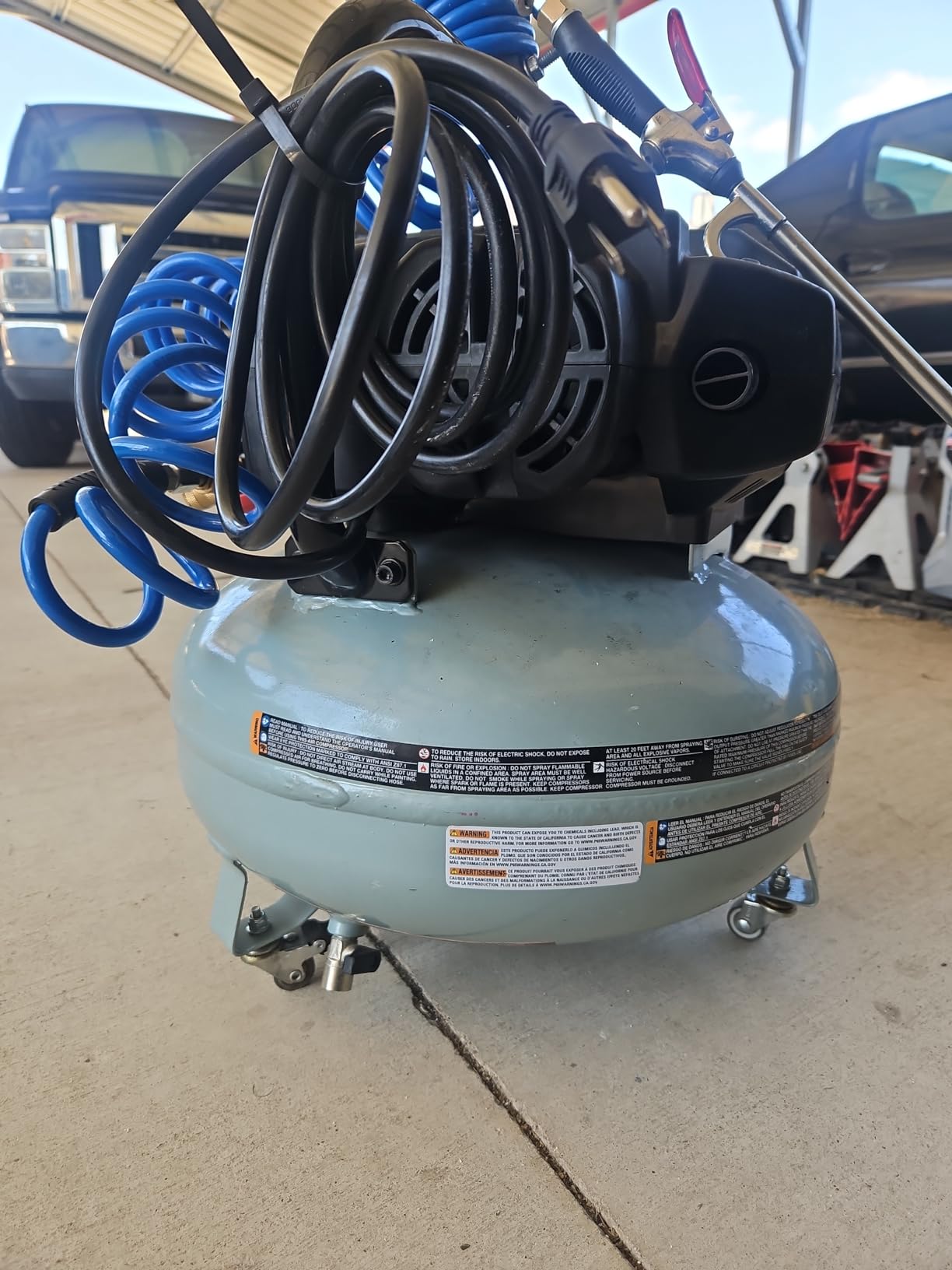
At 41 pounds, it is the kind of compressor you can carry up stairs or into a truck bed alone. Metabo HPT rates it for running two framing nailers, two roofing nailers, or five brad nailers at once, which tells you how the manufacturer sees its duty envelope.
The 73 dB rating makes it a reasonable indoor option for trim and finishing work. The stainless steel oil-free pump needs no draining and no oil in the airstream, so it suits painting and finish carpentry without extra air filtration.
The 1.3 HP motor is the spec to watch. It reaches its rated flow but has little margin, so two demanding tools at once will pull pressure down. And 12% one-star ratings point to some durability complaints that a warranty of one year does not fully offset.
Where the EC914S earns its place
This is the compressor for a small shop or a mobile technician who needs real flow without a permanent station. The 200 PSI ceiling and 6 gallon tank together give better burst behavior than the small 2.5 gallon units at similar flow.
It also makes a sensible second compressor. Many owners pair one of these with a quieter trim unit in a different room rather than trying to serve both jobs from a single pump.
Where it does not
Do not plan sustained 1/2-inch impact sessions on it. The 6 gallon tank empties fast under a wrench, and the 1.3 HP motor recovery is the part that stalls out first.
Nor is it the choice for a 1-inch drive, sandblasting, or spray painting at full cup density, where a bigger pump earns its cost quickly.
3. Klutch 20-Gallon Vertical – Big Tank, Small Footprint
Klutch 20-Gallon Air Compressor, 2 HP, 120V, 175 PSI, 4.2 SCFM at 90 PSI
4.2 SCFM at 90 PSI
20 gallon vertical tank
2 HP oil-free, 80 dB
19 inch wide with wheels
Pros
- 20 gallon tank holds pressure for extended jobs without stopping to refill
- Oil-free pump eliminates regular maintenance and oil in the airstream
- 2 HP motor with 4.2 SCFM at 90 PSI keeps up with air tools
- Vertical footprint saves floor space in a shop
- Users report no air leaks and quiet operation for its size
Cons
- 90 lb weight makes it hard to move without the wheels
- A few buyers report the stated CFM rating is optimistic
- Isolated reports of a power switch that did not interrupt power on one unit
- One documented delivery/fulfillment failure with a lost shipment
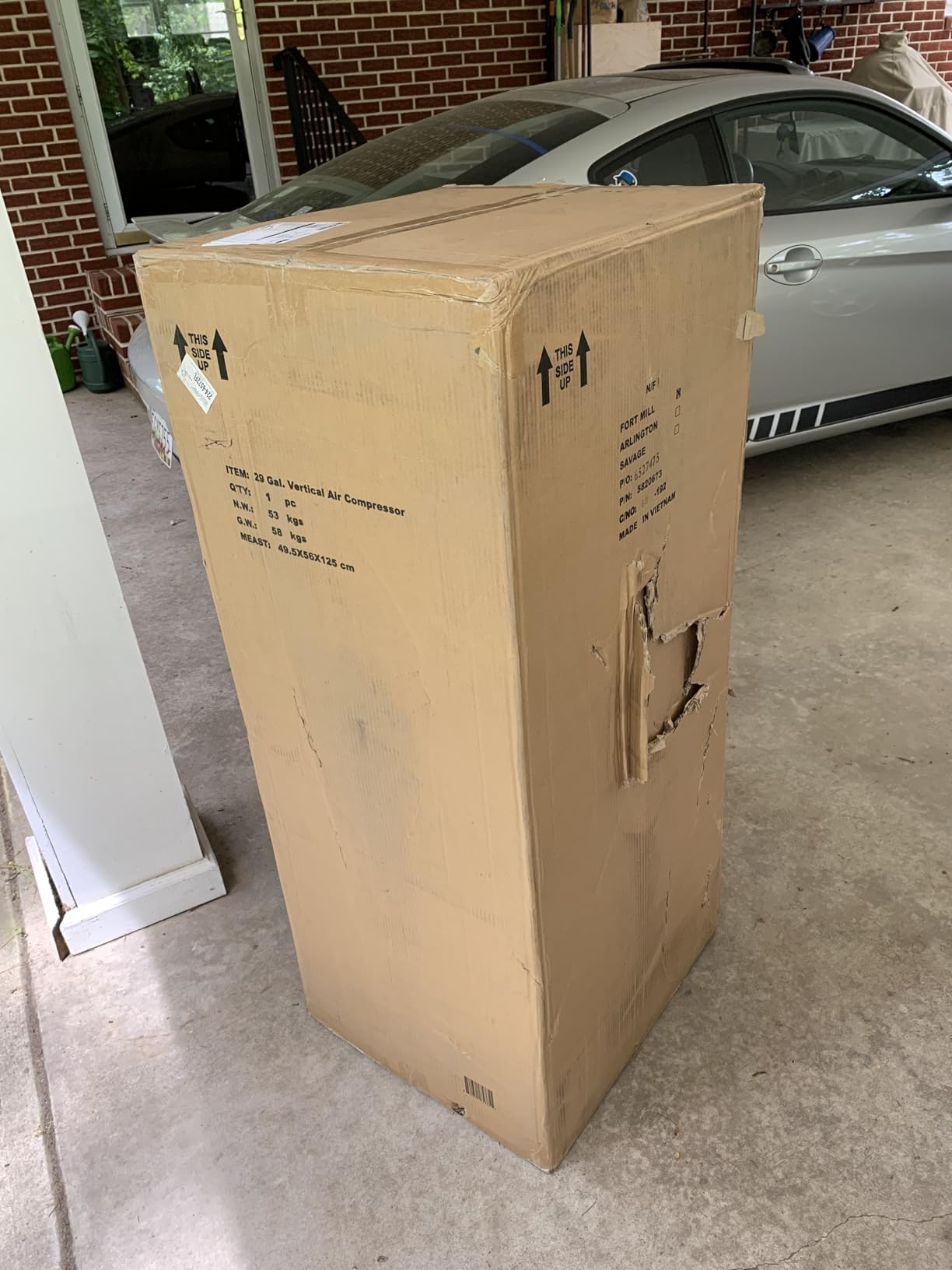
This is the answer for someone whose problem is tank size, not flow. At 20 gallons and 175 PSI, the vertical layout stores roughly five times the air of a pancake while occupying a 19-inch-wide footprint. A 1/2-inch impact can work through several wheels before the tank needs a refill.
Flow of 4.2 SCFM at 90 PSI is the same class as the MAC2400, and the 2 HP motor carries thermal overload protection. Large rubber wheels and an ergonomic handle make it movable despite the 90 lb weight, and rubber foot stabilizers cut vibration on a concrete floor.
For air quality matters like painting or brake work, the oil-free pump is a genuine advantage. No oil in the airstream means less filtration and fewer problems with finish work. Dual hose ports let two tools connect at once.
Reviewers describe it as a capable, leak-free shop compressor. At 737 reviews and 4.5 stars with 78% five-star ratings, that is consistent owner satisfaction rather than a honeymoon effect.
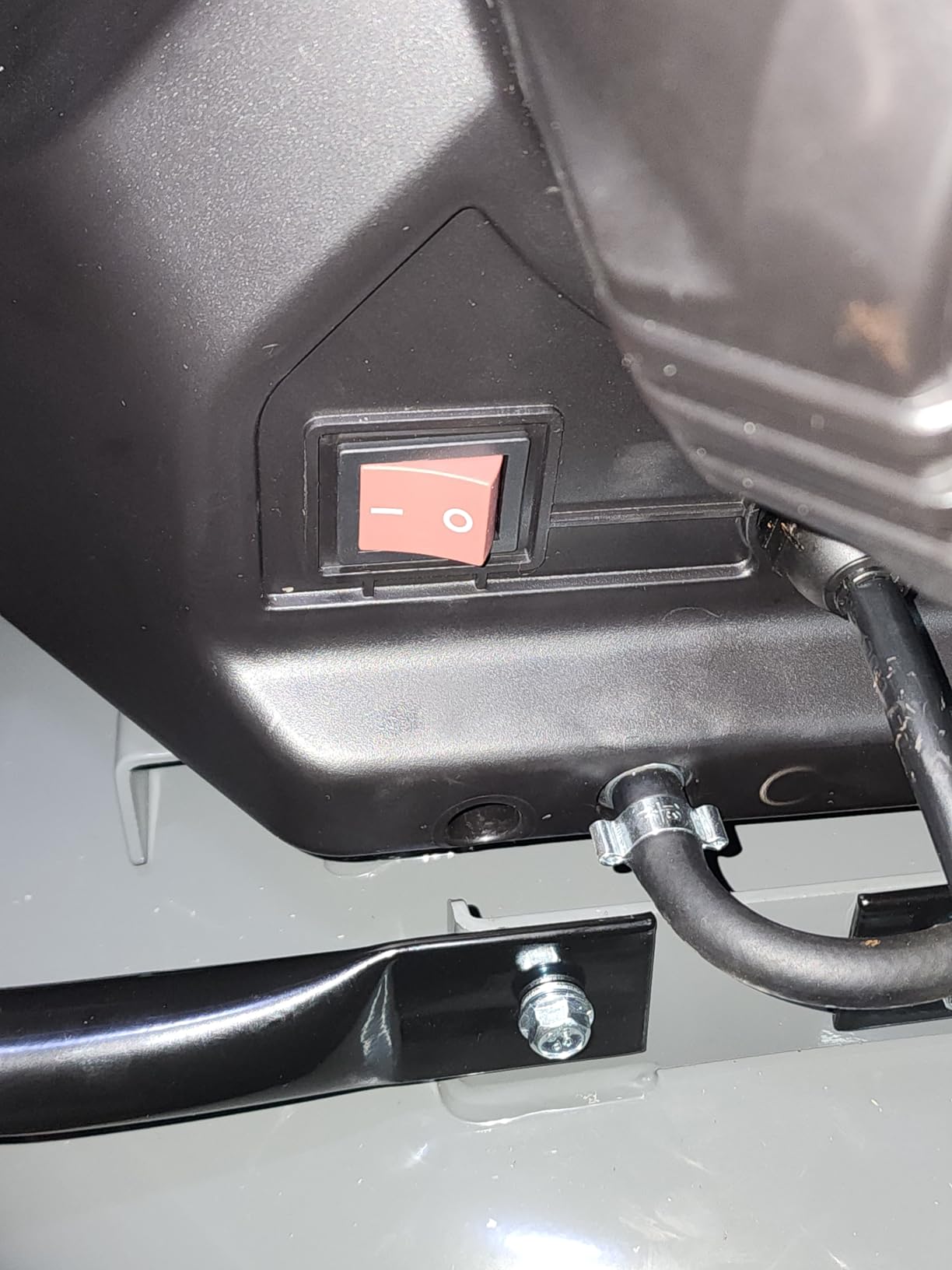
Two caveats deserve mention. A small number of buyers report the stated CFM running optimistic in real use, so treat 4.2 SCFM as a ceiling rather than a floor. And there is an isolated report of a unit whose power switch failed to interrupt power, which is a defect to inspect for on arrival.
Who should buy the Klutch 20-Gallon
Buy it if your work involves long sequences of fasteners rather than one or two bolts. Brake and suspension rebuilds, tire rotations on full-size trucks, and running a nailer alongside a ratchet all benefit from the stored air.
The vertical shape also solves a garage problem. If a horizontal 20-gallon tank will not fit between vehicles, a 19-inch-wide column usually will.
Who should not
Skip it if you need to carry the compressor regularly. At 90 lb it is a shop compressor with wheels, not a portable one.
It is also not a 1-inch drive compressor, and buyers planning long-term serviceability should note that oil-free pumps in this class are harder to overhaul than an oil-lubricated cast iron design.
4. DEWALT DWFP55130 – Quietest Measured Pick for Trim Work
DEWALT Air Compressor for Trim, 200-PSI Max, Quiet Operation (DWFP55130)
3 SCFM at 90 PSI
2.5 gallon tank
200 PSI max, oil-free
71.5 dBA per ISO3744, 12 A
Pros
- Low 71.5 dBA measured per ISO3744 suits indoor finish work
- Only 12 amps so it starts easily on a standard household circuit
- 36 lb weight and 12.5 inch width make it easy to carry and store
- Oil-free pump requires no maintenance
- Can be stored in either vertical or horizontal orientation
- Dual quick couplers let two nailers run at once
Cons
- 2.5 gallon tank and 3 SCFM limit it to trim and finish nailers rather than sustained impact wrench work
- 8% of ratings are 1-star with some reports of motor or switch failure
- Small tank refills quickly during continuous use
Be clear about what this compressor is. At 3 SCFM and a 2.5 gallon tank, it is built for brad and finish nailers, not for impact wrench duty. What it does offer is the quietest measured figure in this roundup at 71.5 dBA, measured to ISO3744 rather than claimed vaguely.
The 12 amp motor starts without complaint on a household circuit. At 36 lb and 12.5 inches wide, it stores under a bench or in a cabinet, and it can sit on either its side or upright.
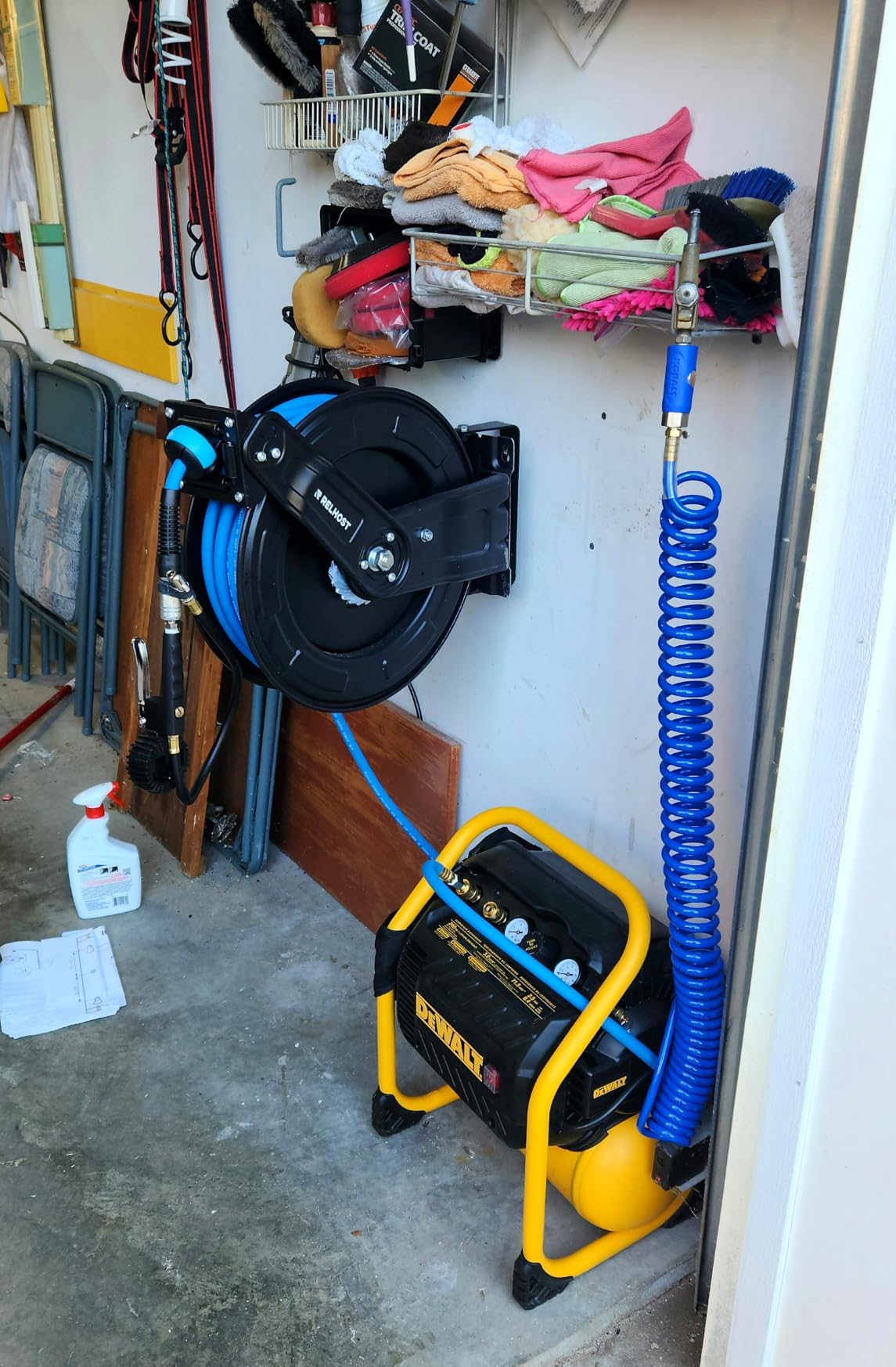
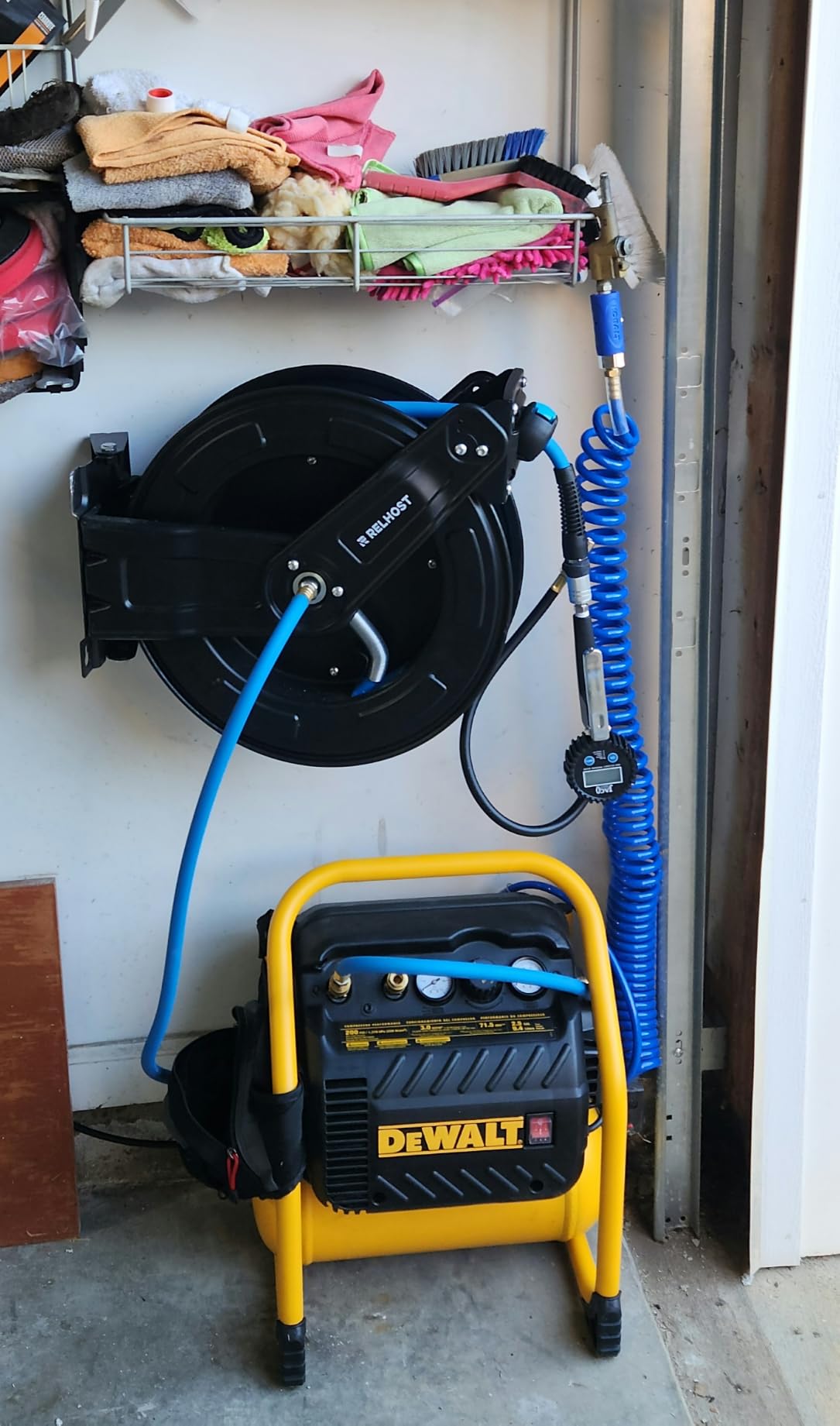
Two quick couplers support two nailers at once, and the roll cage protects the pump and control panel in a crowded garage. Oil-free operation means no maintenance schedule and clean air for finish work.
Owners consistently praise the noise level, the low amp draw, and the compact footprint. At 915 reviews and 4.4 stars, that is a well-tested design.
There is an 8% one-star share with reports of motor or switch failure, which is worth weighing against the brand name. The tank refills quickly under load, so pairing it with a second, larger tank is pointless if the pump itself is the limit.
When it makes sense
For interior trim carpentry, cabinet work, and finish nailing in an attached house, low noise matters more than flow. This is the compressor for that room.
It can also serve as a second unit for light 3/8-inch impact work, where 3 SCFM is genuinely enough. Paired with a 25-foot 3/8-inch hose, it handles intermittent small-bolt duty well.
When it does not
Do not buy it as your only impact wrench compressor. A 1/2-inch wrench will pull it down to the point where torque falls off on the second or third lug nut.
Paint spraying and sanding also strain it, since both need sustained flow rather than short bursts. For those jobs, spend the money on flow instead.
5. CRAFTSMAN 6 Gallon Pancake – Lightest and Cheapest to Own
CRAFTSMAN 6 Gallon 150 PSI Oil-Free Pancake Air Compressor CMXECXA02106410
2.6 SCFM at 90 PSI
6 gallon tank, 150 PSI max
1 HP oil-free, 30.8 lb
82 dB
Pros
- Lightest build in the set at 30.8 lb with a carry handle
- Oil-free design means no maintenance and clean air
- Dual quick couplers let two tools run at once
- 6 gallon tank is a good size and portability balance for home projects
- Backed by a 1-year warranty and U.S.-based service
Cons
- 82 dBA is the loudest figure in the group
- 1 HP motor and 2.6 SCFM fall below what sustained impact wrench work needs
- 150 PSI ceiling is the lowest here which can starve high-CFM tools
- Some reports of a broken carry handle on arrival and delivery damage
- Isolated reports of a motor that stopped running after about an hour of painting
At 30.8 lb, this is the compressor you can move with one hand, and at 2.6 SCFM it sits below the threshold we would call comfortable for a 1/2-inch impact wrench. We include it because it answers a real question: what does the entry level actually give you?
For a 3/8-inch wrench, tire inflation, blowing out brake dust, and cleanup, 2.6 SCFM at 90 PSI is workable. Dual quick couplers let two light tools run at once, and the oil-free pump needs no maintenance.
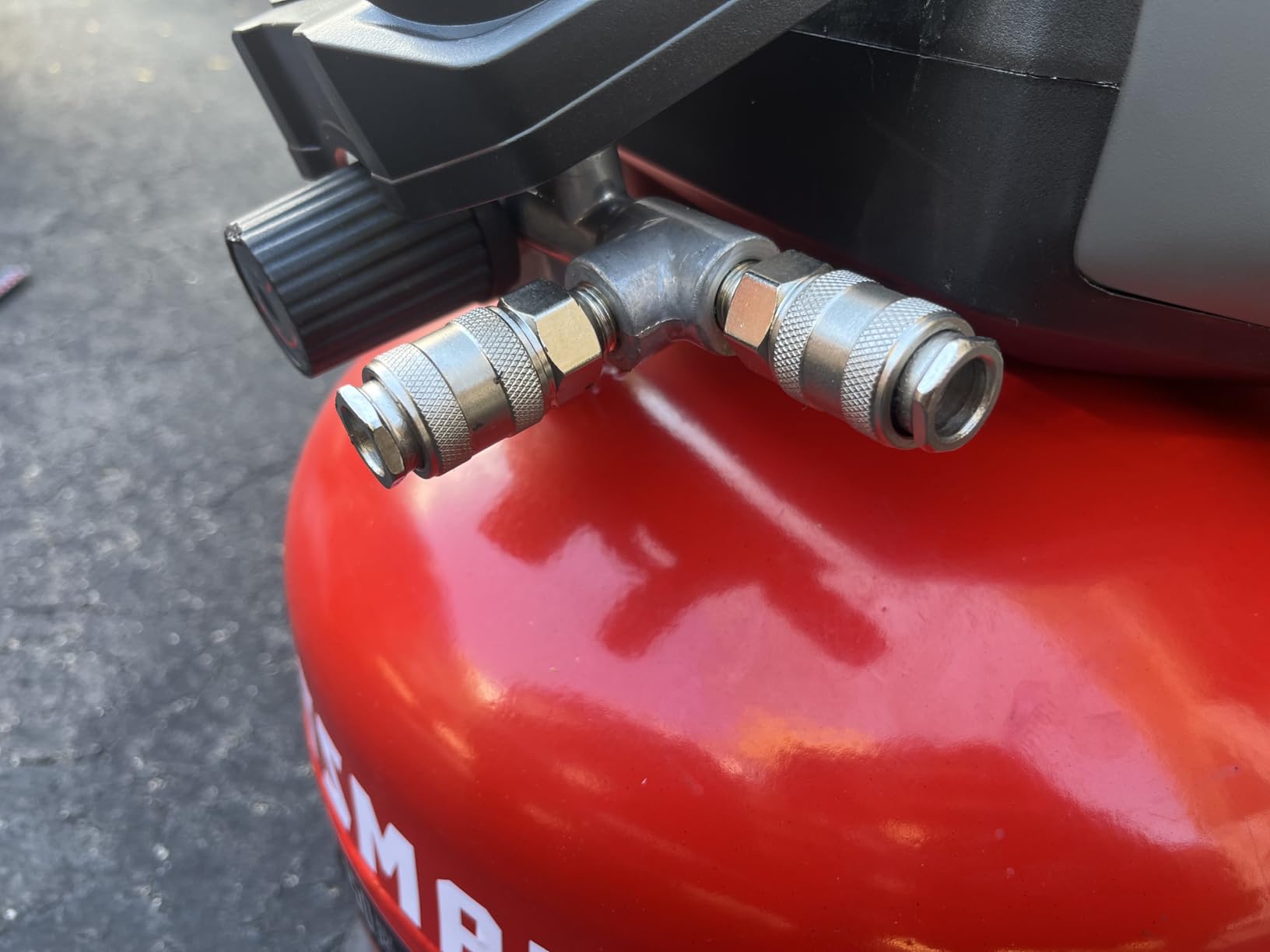
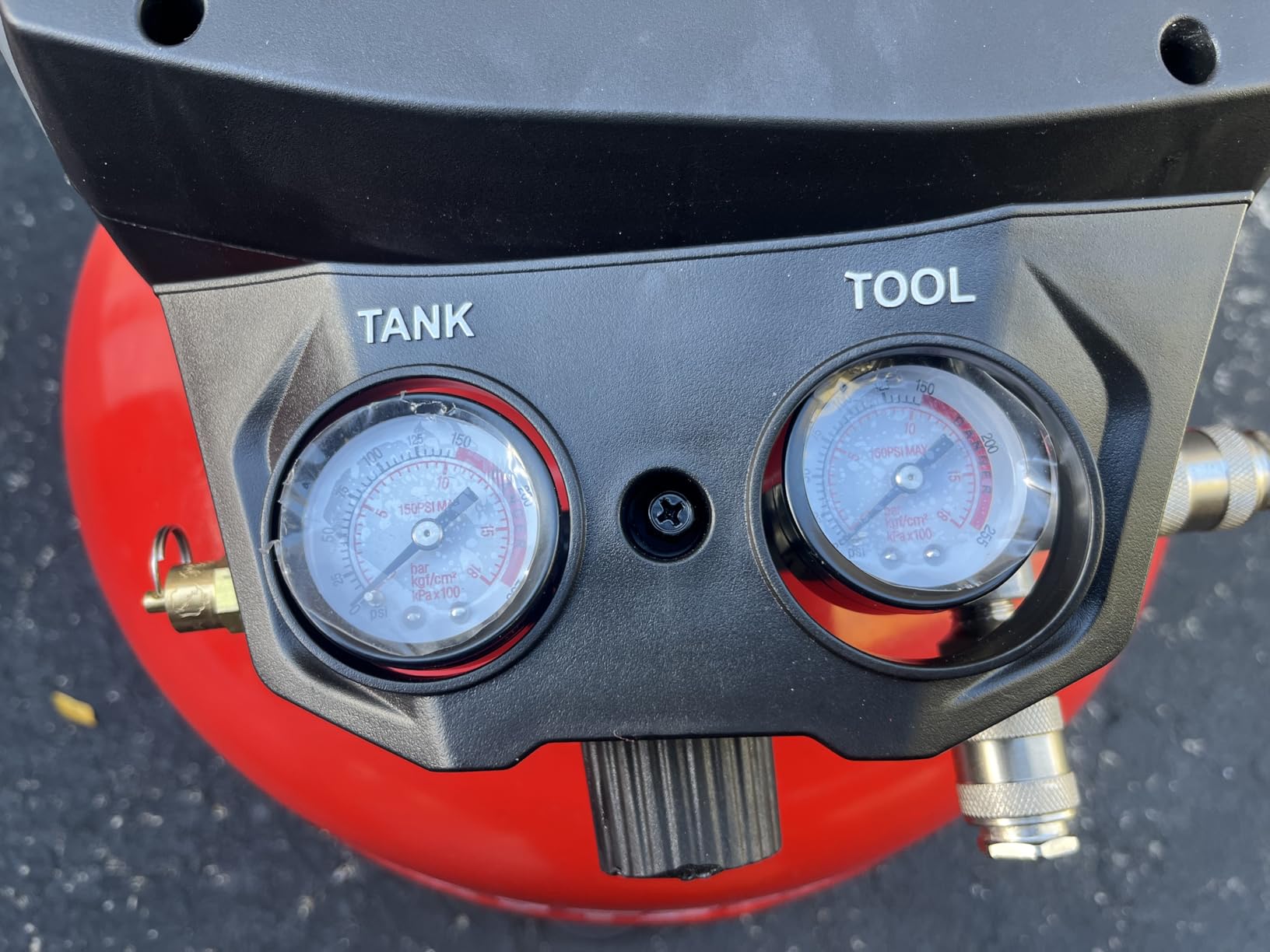
The 150 PSI ceiling is the limiting figure. It stores less air than a comparable 6-gallon tank rated at 200 PSI, which shortens the working window with any pneumatic tool.
At 82 dBA this is the loudest compressor in the roundup, which is a real problem in an attached garage. Owners describe it as deafening indoors, and forum posters consistently warn that small oil-free units get unpleasant fast.
Quality control comes up in reviews too. Some buyers reported a broken carry handle on arrival, delivery damage, and one motor that stopped after about an hour of painting. At 228 reviews and 4.5 stars, the sample is small enough that defects show up more visibly.
What it covers
Short 3/8-inch bursts, tire work, and cleanup jobs in an apartment garage with a shared wall. At this weight, moving it between storage and the car is trivial.
If your entire pneumatic tool collection is a ratchet, a small impact, and an inflator, this class is enough. Buying above it is insurance against your next tool being bigger.
What it will not do
It will not run a 1/2-inch impact wrench through a full wheel of lug nuts without pausing. It is also loud, has the lowest pressure ceiling in the lineup, and shows the fewest total reviews of the eight.
If you plan to own this compressor for years of steady work, the money saved here tends to come back in replacement cost.
6. Stealth 20 Gallon – For a Garage That Cannot Take Noise
Stealth 20 Gallon Ultra Quiet Air Compressor,1.8 HP Oil-Free Peak 150 PSI 68 Decibel, 5.5 CFM @ 40 PSI 5 CFM @ 90 PSI Silent Long Life Electric Air Compressor W/Wheel for Garage
5 CFM at 90 PSI
20 gallon steel tank, 150 PSI peak
1.8 HP oil-free
Claimed 68 dB, two couplers
Pros
- Claimed 68 dB is the lowest noise figure stated in the set
- 5 CFM at 90 PSI from a 1.8 HP motor is strong for the noise level
- 20 gallon alloy steel tank gives long run times between fills
- Oil-free motor means no maintenance and no oil in the airstream
- Two quick couplers for fast tool changes
- Backed by a limited lifetime warranty
Cons
- Heaviest unit in the set at 121.4 lb and awkward to lift into a truck
- Will not restart with air still in the tank so continuous duty is not possible
- Some units tripped breakers on undersized branch wiring
- 12% of ratings are 1-star including reports of early motor failure
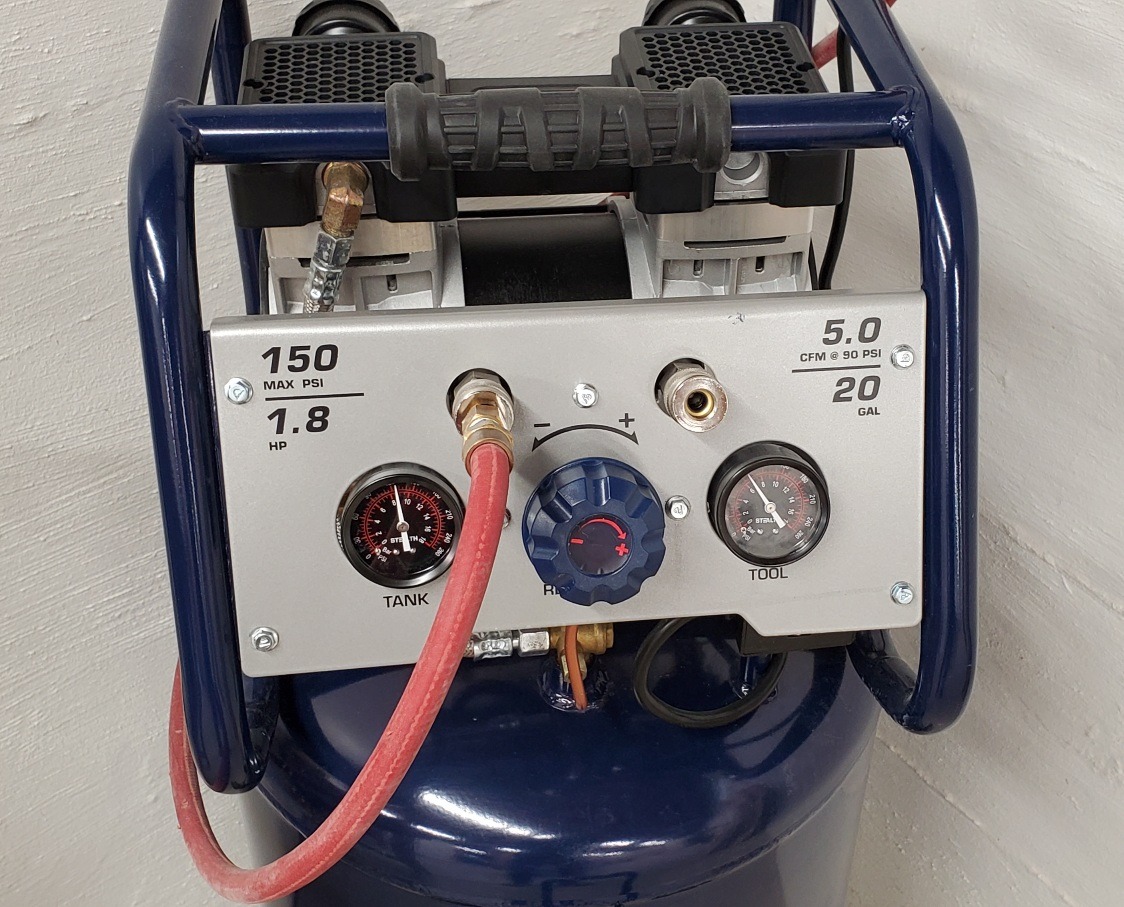
If noise is the binding constraint in your garage, this is the compressor built around it. The stated 68 dB is a claim worth treating carefully, since manufacturers vary in how they measure, but it points to a genuinely quiet design.
Flow is where it gets interesting: 5 CFM at 90 PSI from a 1.8 HP motor. That number sits right in the 1/2-inch impact wrench range, which means the quiet build is not simply a small motor pretending.
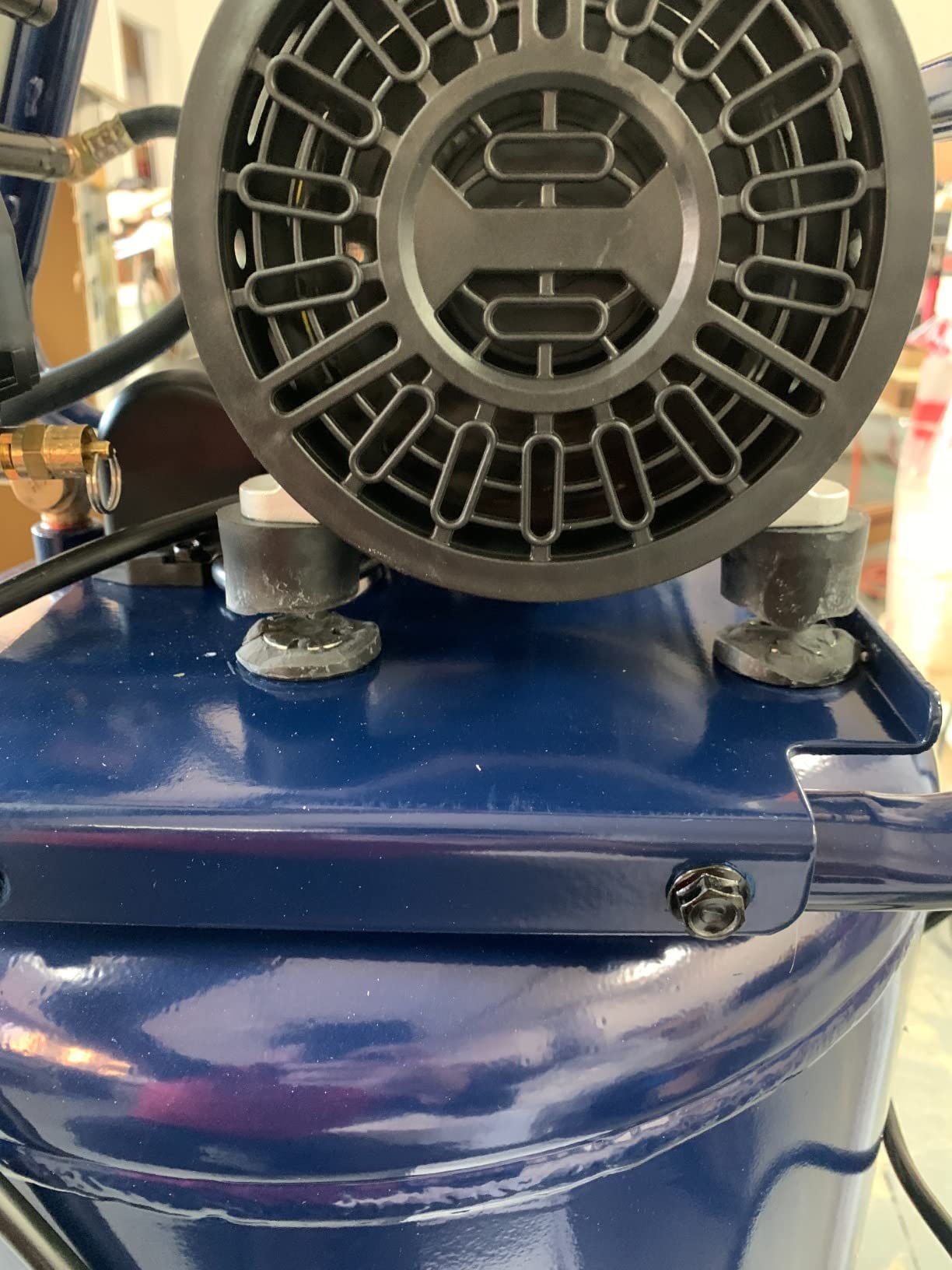
The 20 gallon alloy steel tank stores air for long stretches, and two quick couplers make tool changes fast. The oil-free motor means no maintenance and clean air for painting or finish work.
The rated warranty is a limited lifetime warranty, which is unusual in this class and worth noting for anyone planning long ownership.
Now the limits. At 121.4 lb it is the heaviest compressor here, and loading it into a truck bed is a two-person job. It also will not restart while air remains in the tank, which rules out continuous duty work like sandblasting. And 12% one-star ratings include early motor failure reports with hard-to-reach support.
What it does better than the rest
Noise. If you share a wall with living space, an attached garage, or a downstairs unit, this is the difference between using the compressor and switching it off.
It also pairs a real 20 gallon tank with a 5 CFM pump, which is a combination that runs a 1/2-inch impact properly without the loud pump whine.
What to watch
Verify the measured noise yourself with a sound meter app before committing, and confirm your branch circuit can carry the motor without tripping. The restart limitation matters if you plan to run anything continuous.
At 4.2 stars across 552 reviews, it delivers on quiet operation but carries the largest share of negative feedback in the group.
7. CRAFTSMAN 20 Gallon Oil-Free – Stainless Tank, Vertical
Craftsman Air Compressor, 20 Gallon Oil-Free 1.8 HP Max 175 PSI Pressure Two Quick Couplers Big Capacity, Red- CMXECXA0232043
4 SCFM at 90 PSI
20 gallon stainless tank
175 PSI max, 1.8 HP
80 dB, oil-free pump
Pros
- 20 gallon tank at 175 PSI stores more air for longer tool run times
- 4 SCFM at 90 PSI from a 1.8 HP motor drives wrenches drills and nailers
- Oil-free stainless steel pump needs no maintenance and resists wear
- Rubber feet dampen vibration on a garage floor
- Includes hose drain valve filter couplers and wheels out of the box
Cons
- Weakest score-to-price ratio in the set at 4.2 stars
- 10% of ratings are 1-star the second-largest negative share here
- Loud at 80 dBA with a motor whine noted during operation
- Large vertical footprint is less friendly to small shops
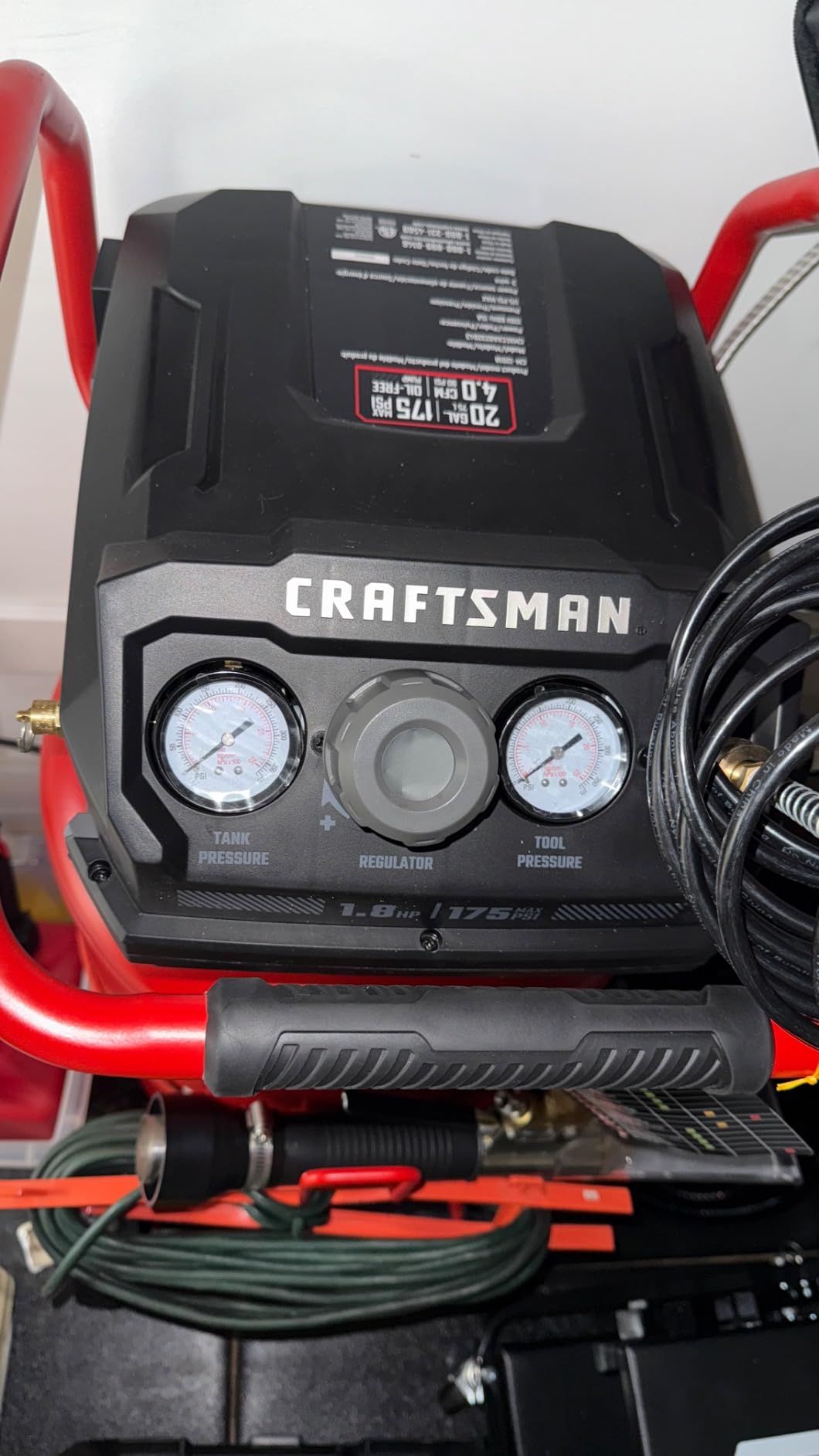
Stainless steel tank construction is the reason to look at this one. In a damp garage or an unheated space, tank corrosion is what ends the life of a compressor, and stainless resists it better than painted carbon steel.
At 20 gallons and 175 PSI max, the tank stores meaningful air. The 1.8 HP motor delivers 4 SCFM at 90 PSI, enough for a 1/2-inch impact wrench in bursts with recovery pauses between wheels.
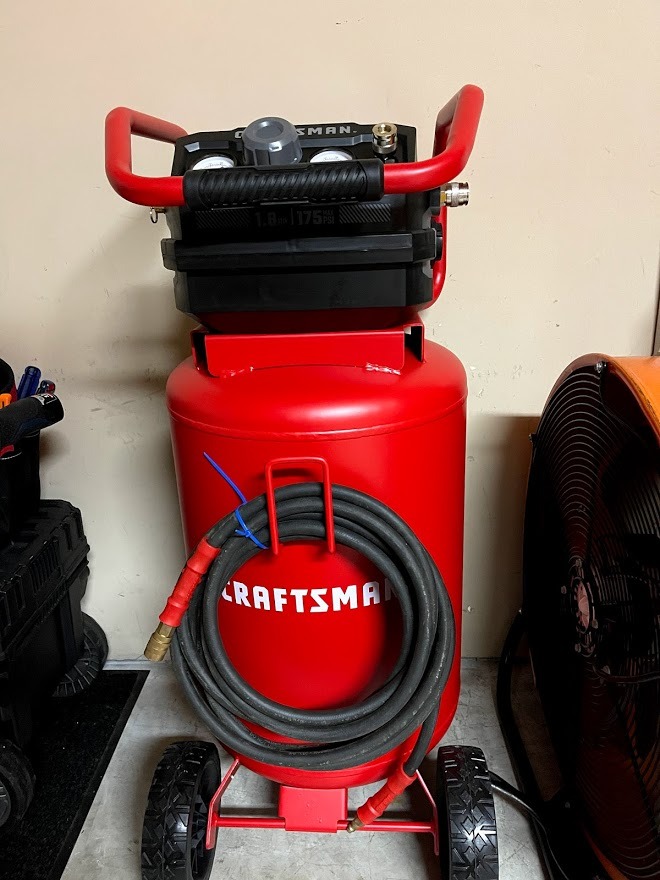
Rubber feet dampen vibration, which keeps the compressor from walking across a concrete floor. It ships with a cord, ball drain valve, plastic filter, two quick couplers, and rubber wheels.
The oil-free pump needs no maintenance and resists wear, which suits owners who do not want a servicing schedule. Two quick couplers allow a second tool to stay connected.
What holds it back is the balance. At 4.2 stars across 359 reviews with 10% one-star feedback, it trails the rest on durability sentiment. The 80 dBA rating and a noted motor whine also make it a poor fit for a garage attached to living space.
Where it fits
A damp, unfinished garage with a concrete floor is exactly where a stainless tank pays off. The vertical 19-inch-wide footprint stores a lot of air in a narrow column.
It works well as a general shop compressor handling wrenches, drills, nailers, and inflation in rotation rather than one demanding tool continuously.
Where it does not
The noise level rules it out for attached garages where conversation matters. And a 1-inch drive wrench needs 10 CFM or more, which this pump cannot approach.
Given the same money elsewhere, the rating and review profile are not the strongest in this roundup.
8. DEWALT D55146 – Highest Pressure Ceiling and Job Site Durability
DEWALT Air Compressor, 225-PSI Max, Hand Carry with Wheels, 4-1/2 Gallon (D55146)
225 PSI max tank pressure
5 CFM airflow
4.5 gallon tank
1.6 HP oil-free, 78 dB, 15 A
Pros
- 225 PSI max tank storage pressure is the highest ceiling in the set
- Oil-free pump runs cool and delivers oil-free air
- 10 inch non-flat tires roll easily over rough jobsite ground
- Long-term owners report 5 to 10+ years of service with only seal kit maintenance
- Protective metal console shields the gauges couplers and regulator
- Stores upright for compact garage placement
Cons
- Draws a full 15 amps so it needs a dedicated circuit
- 88 lb unit is heavy to load into a truck without a ramp
- Regulator is limited to roughly 140 to 150 psi even though the tank reaches 225
- Couplers accept 3-in-1 industrial fittings rather than generic high-flow quick connects
- Tank must be tilted about 45 degrees to drain properly
The D55146 is the outlier for pressure. Its tank stores 225 PSI, well above the 150 to 200 PSI ceilings on most of these compressors, and it moves 5 CFM. More storage pressure means more usable air at the same tank size, which shows up as fewer stalls on high-demand bursts.
The durability record is what stands out most. Owners report 5 to 10+ years of continuous service after a basic seal kit rebuild. The belt-driven flywheel and pull-start brushed motor at 1,750 RPM are a proven long-life layout.
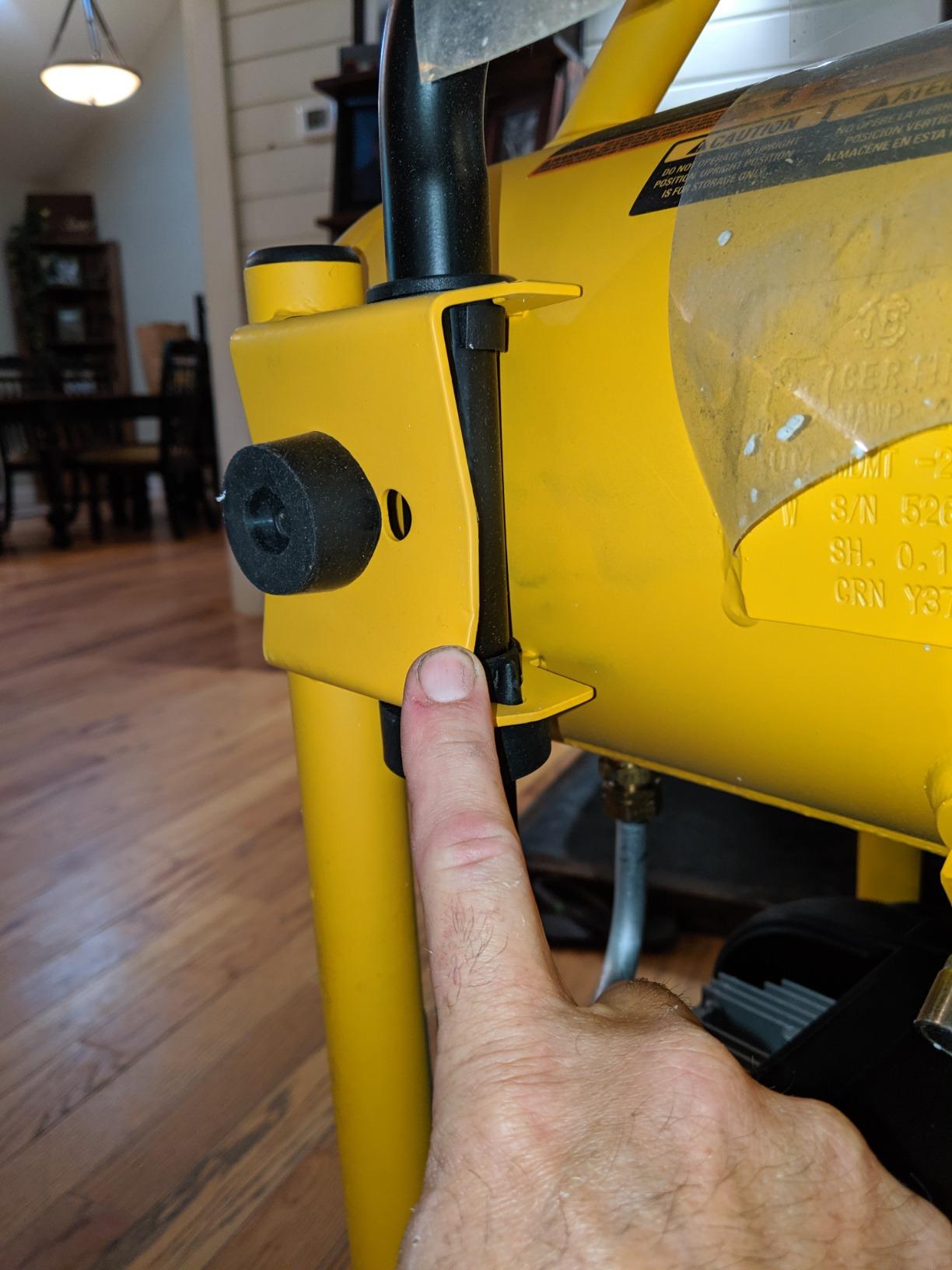
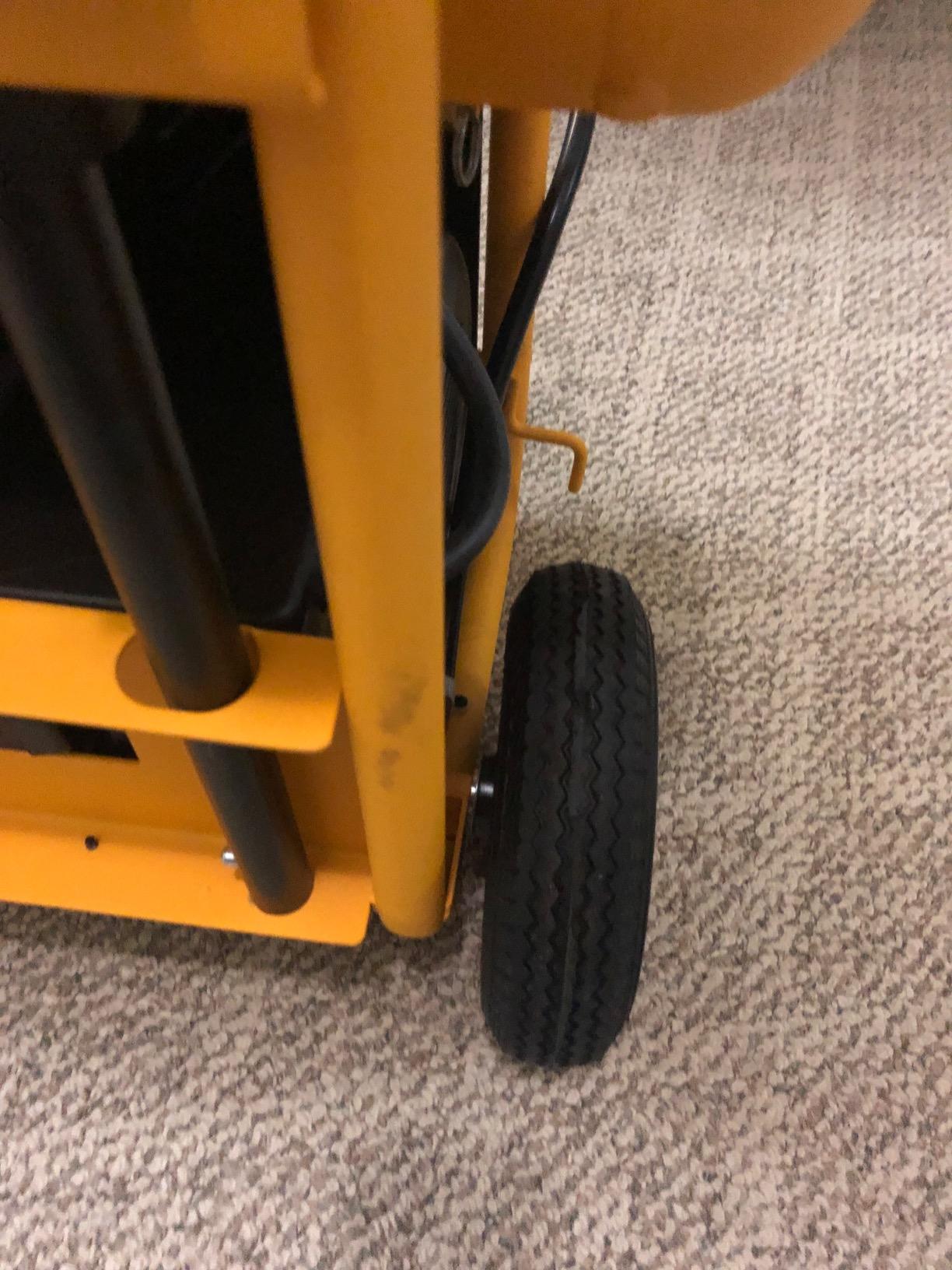
Ten inch non-flat pneumatic tires roll over rough jobsite ground, which the smaller rubber casters on vertical tanks cannot do. The metal console shields the gauges, couplers, and regulator from knocks, and it stores upright for tight garage placement.
At 421 reviews and 4.5 stars with 75% five-star ratings, the feedback is consistent: strong build, real longevity, predictable complaints.
Those complaints are specific. It draws a full 15 amps and wants a dedicated circuit. At 88 lb it needs a ramp to load. And the regulator caps out around 140 to 150 psi even though the tank reaches 225, so you cannot feed a high-pressure tool at full pressure.
Why the pressure ceiling matters
Higher storage pressure raises the total air in a given tank volume, and air under pressure stores more usable energy. That is why this 4.5 gallon tank behaves more like a larger one during a sustained burst.
The high-flow coupler also helps a demanding nailer or a pneumatic tool that chokes on standard quick connects. For mobile work, the tires matter as much as the specs.
What to plan around
Budget for a dedicated 15 amp circuit, and verify your coupler type before buying fittings. The 3-in-1 industrial couplers are not interchangeable with generic high-flow quick connects.
Plan to tilt the tank to drain it fully, and set your regulator expectation around 140 to 150 psi rather than the tank maximum.
Can a 6-Gallon Pancake Really Run an Impact Wrench?
Yes, in bursts, with pauses. That is the honest answer and it is the most common question in tool forums, so we will give it a full section instead of a footnote.
The consensus among owners is that a small tank can do the job when the work is intermittent. A 6 gallon pancake at 2.6 SCFM will start a 1/2-inch impact and get through several fasteners before the flow drops and the wrench slows noticeably. Then you wait for the pump. The typical description is that you can finish a wheel of lug nuts and then take a break.
What changes the answer is duty cycle. A rotating tire on a truck, or a suspension rebuild with a dozen bolts in a row, is sustained work. There, the pump cannot recover and torque falls off on the second or third fastener, which is the moment most owners give up on small tanks.
Our rule of thumb: below 5 CFM, treat an impact wrench as a burst tool only. At 5 CFM or more with a 10 gallon tank or larger, treat it as a working tool. That threshold is why the Makita MAC2400, the Metabo HPT, the Stealth, and the DEWALT D55146 all land near the top of this list despite very different formats.
If you are still narrowing formats, our picks on pancake compressors for nail guns cover the small-format end in more depth.
How to Choose the Right Compressor for Impact Wrench Duty
Match the wrench first. Find your tool’s CFM requirement at 90 PSI, then multiply by 1.5. A 1/2-inch wrench at 6 CFM means shopping for 9 CFM of compressor. Ignore any listing that quotes flow at 40 PSI instead.
Size the tank for duty cycle. Short bursts mean 4 to 6 gallons is workable. A full day of automotive work wants 20 gallons or more. Tank size does not create flow, it only controls how long you wait between bursts.
Check running amps, not peak horsepower. Peak HP is measured at startup and tells you nothing. The 12 to 15 amp range covers standard household circuits; higher draw needs a 220V circuit and a dedicated breaker.
Use the right hose. This is where most “my wrench feels weak” problems come from. A 1/4-inch ID hose across 25 feet or more steals enough pressure to leave a high-flow impact wrench short of torque. Use 3/8-inch ID hose for anything above a 3/8-inch wrench.
Decide on oil. Oil-lubricated cast iron pumps, like the one in the Makita MAC2400, run cooler and typically last longer, at the cost of periodic oil checks. Oil-free pumps need no maintenance and keep oil out of the airstream, which matters for painting and finish work, but the budget versions wear faster. If you want to understand the trade before you commit, read our guides to air dryers for compressors and desiccant air dryers, which also explain how tank moisture reaches your tools.
Listen for the real noise. Decibels are logarithmic, so 68 dBA and 80 dBA are not close. Around 70 dBA suits indoor and attached-garage use. Above 80 dBA, plan on hearing protection and on your neighbours hearing it too.
Budget for accessories. An inline moisture separator keeps water and oil out of the air motor, which is the main cause of premature impact wrench bearing failure. A filter regulator at the tool and a quality quick connect make daily work smoother.
Frequently Asked Questions
How much CFM do I need for an impact wrench?
A 3/8-inch drive impact wrench needs about 3 to 4 CFM at 90 PSI, a 1/2-inch drive needs 5 to 7 CFM, and a 1-inch drive needs 10 CFM or more. Multiply the requirement by 1.5 to leave headroom for hose pressure drop and tank recovery, so a 1/2-inch wrench usually means shopping for a compressor rated around 9 CFM at 90 PSI.
Is a 20 gallon air compressor enough for an impact wrench?
A 20 gallon tank is enough for most impact wrench work in bursts, provided the compressor delivers enough CFM at 90 PSI. Tank size controls how long you can work between recovery pauses, not how much torque the wrench produces. For sustained automotive work, 20 gallons plus 5 CFM or more of flow is a solid pairing.
Does tank size affect CFM?
No. CFM is a property of the pump at a given pressure, and tank size does not increase it. A bigger tank simply stores more air at the same flow rate, which means longer bursts and longer waits. Think of the tank as a bucket and the pump as the tap filling it, because a large bucket with a slow tap feels weaker than a smaller bucket with a fast one.
Can a 6 gallon pancake compressor run an impact wrench?
For short bursts, yes. A 6 gallon pancake at around 2.6 SCFM will start a 1/2-inch impact and get through several fasteners before slowing, which suits intermittent work like lug nuts or a single stubborn bolt. For sustained jobs, the pump cannot recover fast enough and torque falls off on later fasteners, so move up to at least 5 CFM and 10 gallons.
Which air compressor is better, oil or oil-free?
Oil-lubricated cast iron pumps run cooler, wear less over time, and suit compressors you plan to keep for years. Oil-free pumps need no maintenance and keep oil out of the airstream, which helps with painting and finish work. Budget oil-free models tend to be loud and wear faster, so for regular heavy use an oil-lubricated pump is usually the better long-term buy.
The Verdict for 2026
The Makita MAC2400 is our pick for the best air compressors for impact wrenches because 4.2 CFM at 90 PSI from an oil-lubricated cast iron pump is the combination that delivers real torque and real service life. The Metabo HPT EC914S covers the portable and budget side, the Klutch and Stealth twenties solve tank size and noise, and the DEWALT D55146 wins on pressure ceiling and known longevity.
Pick the one that matches your wrench drive size and how often you work, then check the flow number rather than the marketing. Last updated in 2026.