
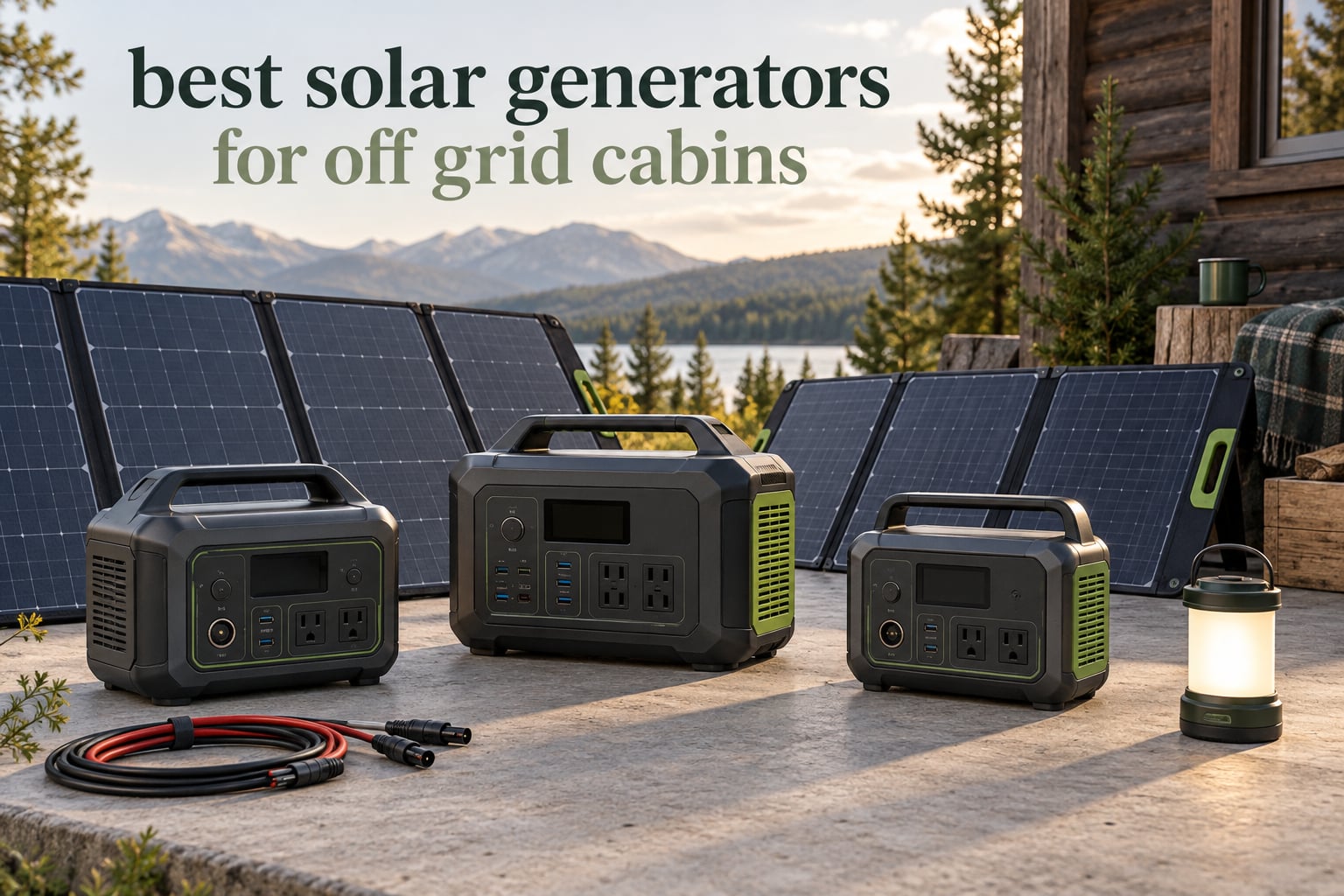
Most people buy a portable power station for a weekend, run it for three evenings, and then wonder why the fourth night is dark. Cabin power is a different problem, because a fridge, a water pump and a Starlink dish cycle all night whether or not anyone is watching. The best solar generators for off grid cabins are not the units with the biggest number on the box. They are the ones whose daily watt-hour budget, inverter surge rating and solar input ceiling line up with what your cabin actually draws.
That is the whole method here. We worked through the daily load budget first, then matched it against ten LiFePO4 stations that hold real user records, and we sorted them into weekend, full-time and whole-cabin tiers. If you want the wider system picture rather than a single box, our guide to off-grid solar systems for cabins covers the panel, wiring and storage side of the same build.
A solar generator is simply a battery with a built-in inverter that happens to be charged by panels instead of fuel. Panels make direct current, an MPPT charge controller walks that current into the battery, and the inverter converts stored energy back into 120V AC for your appliances.
The battery decides how long you have power, and the inverter decides whether the load can start at all. Confusing those two numbers is the single most expensive mistake in this whole category, which is why we put the sizing math before the product verdicts.
Two rules shaped every pick below. First, LiFePO4 chemistry only, because a cabin that cycles its battery daily will kill an NMC pack years earlier. Second, buy the platform, not the box, since a unit you can add expansion batteries to will grow with your cabin and a sealed 1kWh island cannot.
Our battery bank comparison covers what the component route looks like when you go that way instead.
Table of Contents
Top 3 Picks for Cabin Power in October 2026
The three units below cover the widest range of real cabin loads, from a single-room retreat to a house with a well pump. The EcoFlow DELTA 3 took the top slot on the strength of its rating and owner record, the BLUETTI Elite 200 V2 offers the most inverter headroom per unit of capacity, and the EcoFlow DELTA 2 Max replenishes faster than anything else in the group.

Quick Overview of the Best Solar Generators for Off-Grid Cabins in October 2026
All ten stations below use lithium iron phosphate chemistry, which is the only battery type we would put in a cabin that cycles daily. Capacities run from 1024Wh at the weekend end to 4096Wh for whole-cabin use, and the tiers are noted so you can stop reading the moment you find your own bracket.
| Product | Specifications | Action |
|---|---|---|
| EcoFlow DELTA 3 |
|
Check Latest Price |
 EcoFlow DELTA Pro 3 EcoFlow DELTA Pro 3 |
|
Check Latest Price |
 BLUETTI Elite 200 V2 BLUETTI Elite 200 V2 |
|
Check Latest Price |
 EcoFlow DELTA 2 Max EcoFlow DELTA 2 Max |
|
Check Latest Price |
 Anker SOLIX S2000 Anker SOLIX S2000 |
|
Check Latest Price |
 BLUETTI Elite 100 V2 BLUETTI Elite 100 V2 |
|
Check Latest Price |
 Anker SOLIX C1000 Gen 2 Anker SOLIX C1000 Gen 2 |
|
Check Latest Price |
 Jackery 1000 v2 Kit Jackery 1000 v2 Kit |
|
Check Latest Price |
 BLUETTI AC180 BLUETTI AC180 |
|
Check Latest Price |
 OUPES Mega 1 OUPES Mega 1 |
|
Check Latest Price |
1. EcoFlow DELTA 3 – Best Overall for Cabin Owners
EF ECOFLOW Delta 3 Portable Power Station, 1024Wh 1800W
1024Wh LFP 4000 cycles
1800W AC, 3600W surge
Expands to 5kWh
Full charge in 56 minutes
Pros
- 4.8 average rating
- the highest of the ten stations here
- Reaches 80% in 30 minutes on 500W solar plus 1500W AC
- IP65 battery pack rated for dust splash and oil
- 13 outlets let a dozen appliances run at once
- Expands to 5kWh across the EcoFlow battery range
Cons
- Solar panel not included in the base configuration
- Expansion needs EcoFlow branded extra batteries
- 12.5 kg is heavy for a 1kWh unit
The DELTA 3 is the unit we keep coming back to because it refuses to specialise. It is not the biggest box here and it does not have the highest inverter rating, but it balances capacity, output, charge speed and expansion in a way nothing else at the 1kWh level manages. For a cabin running a fridge, a router, a lamp or two and a laptop, that balance is worth more than raw wattage.
Its battery is 1024Wh of LFP rated to 4000 cycles at 80% capacity, which works out to roughly a decade of daily use before the pack needs replacing. The inverter delivers 1800W continuous, lifts to 2200W with X-Boost, and holds 3600W of surge for motor-driven loads. Six of the ten models here cannot add capacity, but this one expands to 5kWh through EcoFlow’s extra battery range.
Charging is where it separates itself. A full charge takes 56 minutes, and combining 500W of solar with 1500W of AC gets you to 80% in 30 minutes. That matters in a cabin because it means a short sunny window after a cloudy week can still rescue a flat battery, which is the difference between an inconvenience and a trip home.
Noise is the other quiet win. The cooling system stays under 30 dB at a 600W load and under 40 dB at 1200W, so the unit can sit in the main room rather than being exiled to a shed. Reviewers on this listing consistently single out charging speed, the IP65 pack protection and the outlet count as the reasons they keep it.
Why it suits a weekend or lightly equipped cabin
A 12V compressor fridge, a router or modem, a laptop chain and a couple of LED lights add up to well under 500Wh a day, so this unit recharges on a modest panel array and still has overnight reserve. The 13-outlet layout also means a cabin with a scattered load pattern does not need a power strip. UPS behaviour under 10 ms keeps a desktop or network box from rebooting during a switchover.
Where it will disappoint you
At 12.5 kg it needs a deliberate lift, and it does not scale past 5kWh, which makes it a poor match for a cabin that later adds a well pump or a second family. Panel bundling is absent, so your first solar purchase lands on top of the station cost. Owners who outgrew it usually moved up a tier rather than adding batteries.
2. EcoFlow DELTA Pro 3 – Best for Whole-Cabin and 240V Loads
EF ECOFLOW DELTA Pro 3 Solar Generator 4096Wh with 2X400W Solar Panels
4096Wh LFP expandable to 48kWh
4000W continuous 120/240V split
8000W starting watts
Bundled 2x 400W panels
Pros
- 4096Wh LFP capacity expandable to 48kWh
- 120/240V split output handles a 1 HP water pump or 3-ton AC
- 10 ms UPS switch-over protects sensitive electronics
- 30 dB X-Quiet operation works beside a bed
- IP65 CTC pack with automotive grade cells and 5 year warranty
Cons
- 115 lb needs two people to move
- Only 91 reviews on this listing so field history is thin
- Large footprint for a portable station
This is the only unit in the group that delivers true 120V/240V split output, and that single fact moves it into its own category. If your cabin runs a deep well pump, a 3-ton air conditioner or any hard-wired 240V appliance, this is the unit that will start them without a workaround.
Storage is 4096Wh of LFP expandable all the way to 48kWh, so a cabin that expects to add a second fridge, an electric water heater element or a workshop can grow into the platform rather than replace it. The inverter puts out 4000W continuous, 6000W with X-Boost, and scales to 12000W, with 8000W of starting watts behind the spec sheet.
Sound is genuinely unusual at this size. X-Quiet operation runs as low as 30 dB, and the battery pack carries an IP65 rating with automotive grade LFP cells, so an unheated utility space in shoulder season is not automatically a problem. The listing bundles two 400W panels, the largest bundled array among the ten products here.
Reviewers describe it as a quiet, high-capacity model that copes with large appliances, and the recurring positives are exactly the three things a whole cabin cares about: expandable capacity, split-phase output and near-silent cooling.
The 115 lb weight is the flip side of that build, and it comes up in nearly every review.
Why split-phase output is the reason to buy it
This is the answer for full-time occupancy in a four-season cabin, a small off-grid house, or a property with a pressure system and a refrigerator-freezer running together. Two 400W panels get you most of the way on a normal summer day, and the expansion ceiling means the system can outlast the cabin’s own growth. The 10 ms switchover keeps office gear and network equipment alive.
Where the weight and thin review record bite
Weight is the real constraint. At 115 lb this is a two-person move from a truck bed to a cabin deck, and if your station lives in a shed you can wheel but not carry, that changes the answer. The 91-review record is also thinner than the alternatives, so you are buying on the platform’s reputation more than on long-term owner data for this specific listing.
3. BLUETTI Elite 200 V2 – Best Value 2kWh Unit for Full-Time Cabins
BLUETTI Elite 200 V2 Solar Generator & 2x200W Solar Panel Included 2073.6Wh
2073Wh LiFePO4 6000+ cycles
2600W continuous AC
1000W solar input, 60V MPPT
53.4 lb with dual handles
Pros
- 2600W inverter runs microwaves and air fryers that 1kWh units cannot
- CNAS certified LFP cells rated over 6000 cycles for a 17 year life
- 10W standby draw stretches runtime on light loads
- 0-80% in 50 minutes and full in about 85 minutes on AC
Cons
- Not expandable with Bluetti external battery modules
- Solar input capped at 1000W and 60V MPPT voltage
- No 30A 12V output or 5521 DC ports
- Rubbery buttons feel less tactile than the AC180 controls
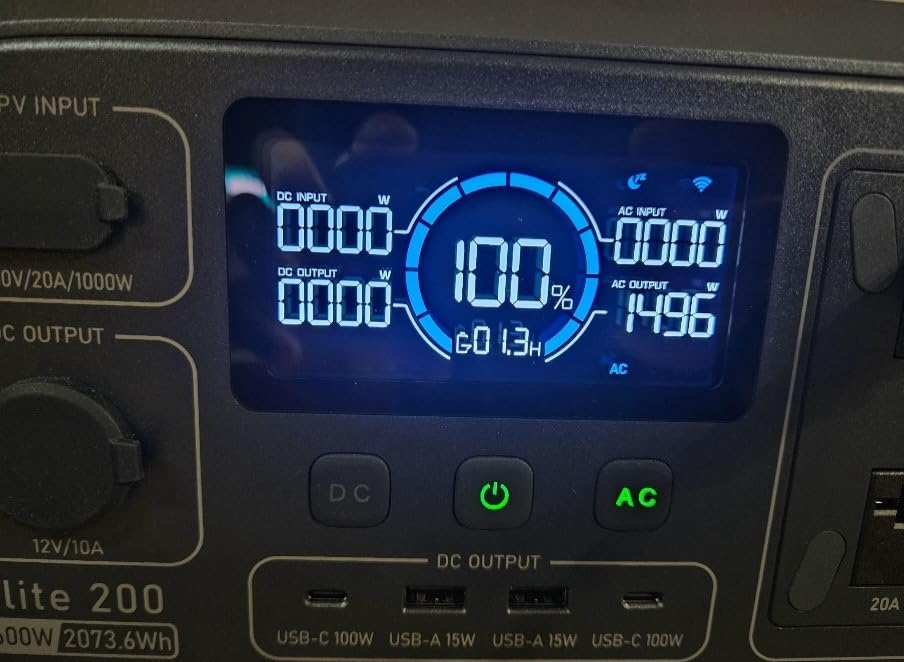
The Elite 200 V2 is the best value pick in the roundup because it puts a genuinely large inverter behind a 2kWh battery at a size two people can still carry through a doorway. Several 2kWh rivals in this group sit at 1500W continuous, and that difference is the gap between running a microwave and watching one trip the breaker.
The battery is 2073Wh of LiFePO4 rated above 6000 cycles, which BLUETTI projects at roughly 17 years of service life. Continuous output is 2600W with 3900W of power lifting, and four AC outlets sit alongside two USB-C, two USB-A and a 12V car socket. At 53.4 lb with dual handles it stays a two-person carry rather than a furniture move.
Two design details reward attention. Standby consumption drops to 10W, which matters enormously in a cabin that sits mostly idle between weekends, because a self-discharging battery on a shelf is just a slow discharge. Charging reaches 0-80% in about 50 minutes on AC and DC together, and a full charge on AC alone takes roughly 85 minutes.
Owners report running a 29 cubic foot refrigerator-freezer for more than a day on a single charge, and the review pattern is consistent: inverter headroom, quiet operation and battery longevity on the positive side, expandability and solar ceiling on the negative. BLUETTI’s app adds monitoring, firmware updates and an energy calculator, though it lacks fine-grained charging limits and real-time temperature data.
Why inverter headroom matters for full-time living
A full-time small cabin with a fridge-freezer, a well pump on a modest start, lighting, a router and Starlink fits comfortably, and the 2600W inverter gives you room to run a coffee maker or microwave without rationing. The 1000W solar ceiling means a pair of 400W panels is a realistic daily refill, and the 10W idle draw protects a station that spends days between visits.
Why the sealed platform is the trade-off
The platform, not the box, is the limit. This unit does not accept BLUETTI’s external battery modules, so 2073Wh is the ceiling and there is no growth path if you add a second fridge or a workshop later. The 60V MPPT voltage also constrains how you wire large arrays, and there is no 30A 12V output for RV-style distribution.
4. EcoFlow DELTA 2 Max – Best for Fast Replenishment
EF ECOFLOW Portable Power Station DELTA 2 Max 2048Wh, 2400W LiFePO4 Battery
2048Wh LFP, 3000 cycles
2400W continuous, 4800W surge
80% charge in 43 minutes
Expands to 6kWh
Pros
- 2400W continuous covers most household appliances with X-Boost lifting to 3400W
- 80% charge in 43 minutes on combined solar and AC
- Expandable from 2kWh to 6kWh with plug and play extra batteries
- 15 outlets give room for simultaneous loads
- 30 dB operation suits overnight indoor use
Cons
- Solar panel sold separately in this configuration
- 3000 cycle rating trails newer 4000 to 6000 cycle competitors
- 20 inch tall footprint is bulky for its class
- 23 kg weight is a two-person lift
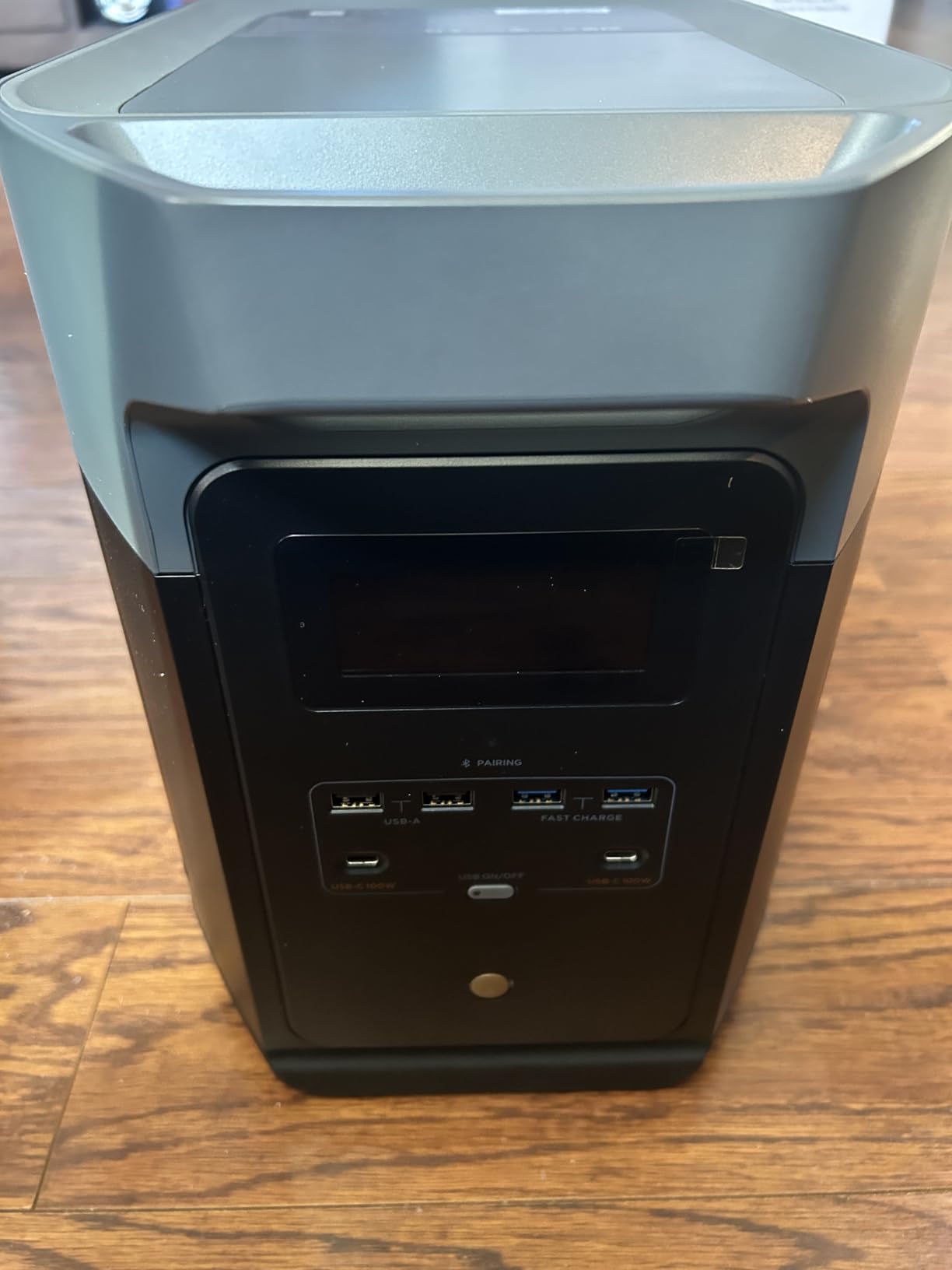
The DELTA 2 Max answers a very specific cabin problem: what happens when the weather closes in for a week. Its 2048Wh LFP battery reaches 80% in 43 minutes when you combine 1000W of solar input with AC, which turns a dark week into a short recovery rather than a long one.
Output is 2400W continuous, 3400W with X-Boost and 4800W of surge, spread across 15 outlets. That outlet count is unusually generous for a 2kWh unit and means a cabin with a scattered load pattern does not need extension strips. The battery is rated 3000 cycles to 80% capacity with a 5 year service window, and the built-in BMS tracks voltage, current and temperature in real time.
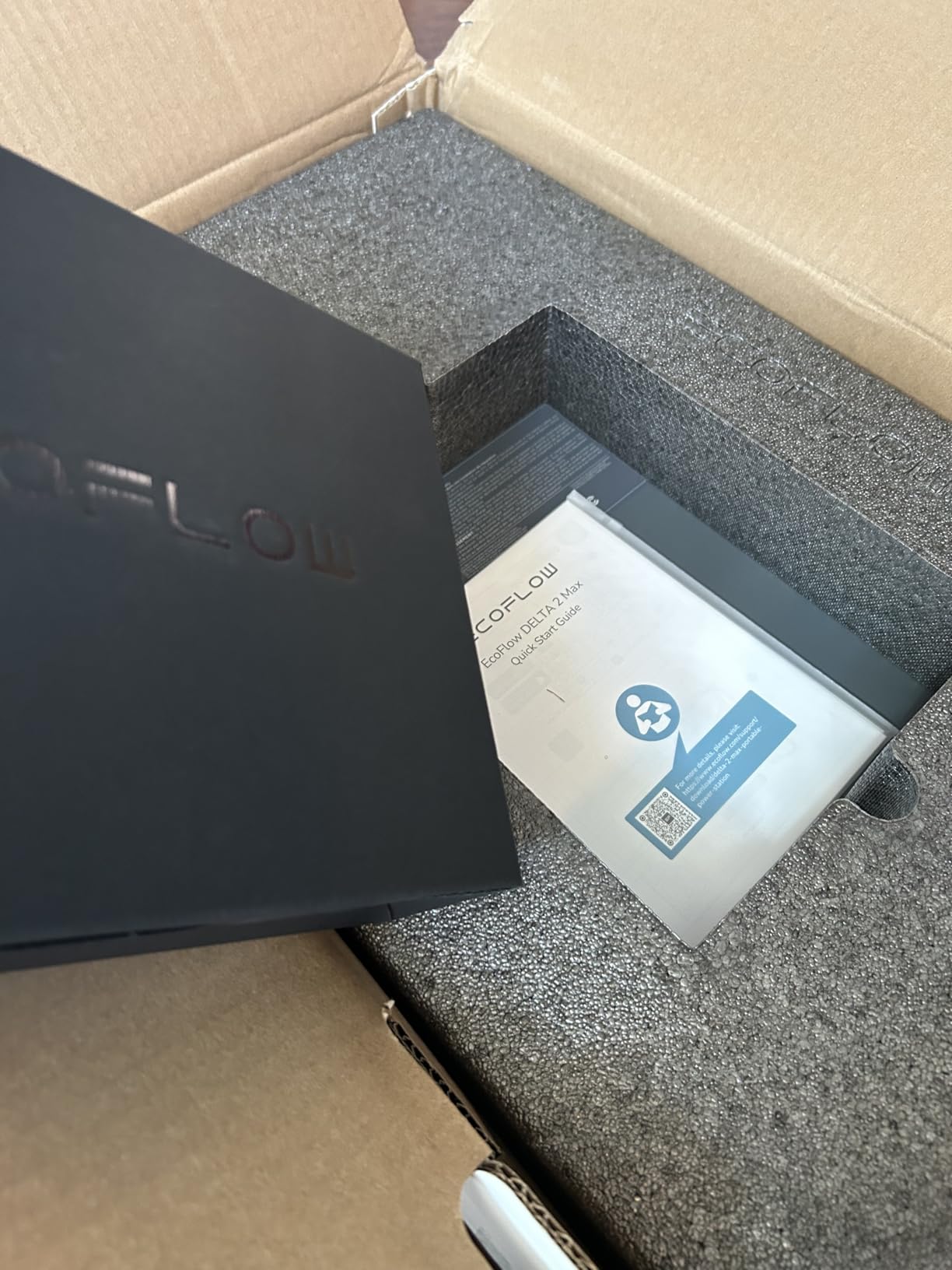
The expansion path is the quiet strength. Two extra batteries take the unit from 2kWh to 6kWh with plug-and-play connections, which covers a cabin that adds occupants or appliances over a few seasons. Reviewers on this listing point to charging speed, quiet running and that expandability as the three reasons it earns its place.
Noise starts at 30 dB, so it can live in the cabin rather than in a shed. The 20 inch tall body is taller than most of its 2kWh competitors, and at 23 kg it is a two-person lift in most setups, both of which owners flag alongside the fact that no panel is included in this configuration.
Why fast refill matters in a cloudy cabin
This is the pick for a full-time cabin owner who wants insurance against consecutive cloudy days and who expects to grow the system. A pair of 400W panels, the 1000W solar ceiling and 2400W of continuous output cover a fridge, lighting, a pump and internet without strain, and the 6kWh ceiling means a winter stay is a configuration change rather than a new purchase.
Why the 3000-cycle rating is now a compromise
The 3000-cycle rating is now two generations behind, so a station cycling hard every day for a decade will reach its end of rated life sooner than a 4000 or 6000-cycle alternative. The tall chassis eats shelf space, and the weight rules out carrying it between buildings solo. If your cabin is seasonal and light on loads, this capacity is money spent on headroom you may not use.
5. Anker SOLIX S2000 – Best for Battery Lifespan
Anker SOLIX S2000 Portable Power Station with 200W Solar Panel
2010Wh LFP rated 10,000 cycles
1500W continuous, 3000W peak
35 hours fridge backup
400W solar input, 35.7 lb
Pros
- 10000 cycle LFP battery rated for a 15 year lifespan
- Longest cycle rating in the group by a wide margin
- 35.7 lb and 30 percent smaller than the class average
- Up to 35 hours of fridge backup from a 6W idle draw
- Six recharge paths including generator and alternator inputs
Cons
- Solar input capped at 400W
- 1500W continuous trails same capacity rivals
- No 12V DC port on this model
- Panel ordered separately from the station
The S2000 is the battery-lifespan answer. Its 2010Wh LFP pack is built from 314Ah cells rated to 10,000 cycles, which no rival in this roundup approaches and which projects to around 15 years of service. For a cabin that will charge and discharge every single day for a decade, that spec matters more than any fast-charge headline.
Output is 1500W continuous with 3000W peak across 8 outlets, split between front and rear panels so always-on appliances like a router stay neatly separated from temporary loads. The 35-hour fridge backup figure assumes a 6W idle draw, and at 35.7 lb the unit is 30 percent smaller and 25 percent lighter than the class average at the same capacity.
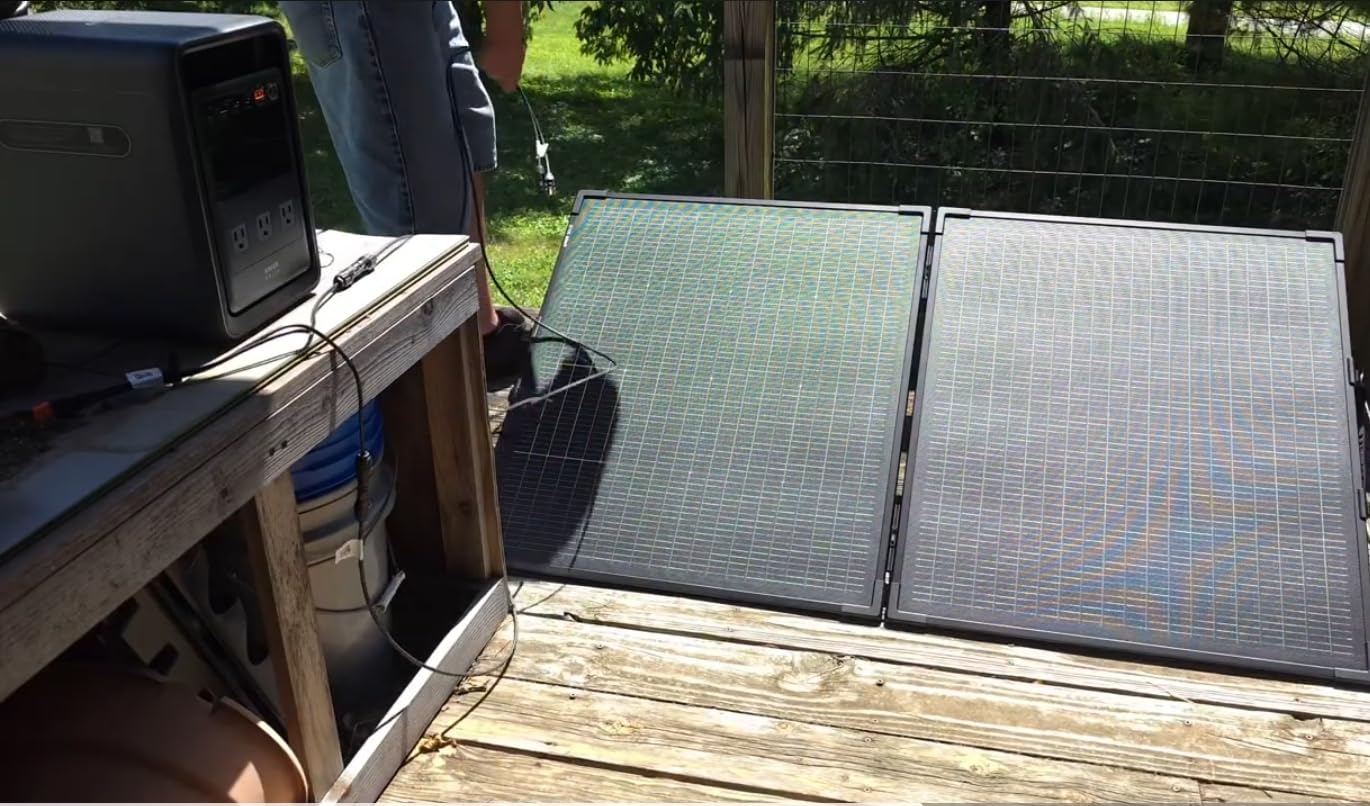
Recharge flexibility is the quiet feature. Six paths are supported, including wall outlet, solar, generator input, alternator charger and car outlet. That last one is the emergency valve: off-grid forum regulars consistently report that running a generator for two hours through the AC input can push 2,000-3,000Wh back into a station, and a unit that accepts generator input makes that recovery usable.
Owners highlight the 10,000-cycle pack, the compact 2kWh footprint and the fridge runtime as standouts. The criticisms are measured rather than serious: no 12V DC port, a 400W solar input ceiling that is genuinely restrictive for daily off-grid use, and 1500W of continuous output that trails same-capacity rivals.
Why a decade-long battery claim is worth paying for
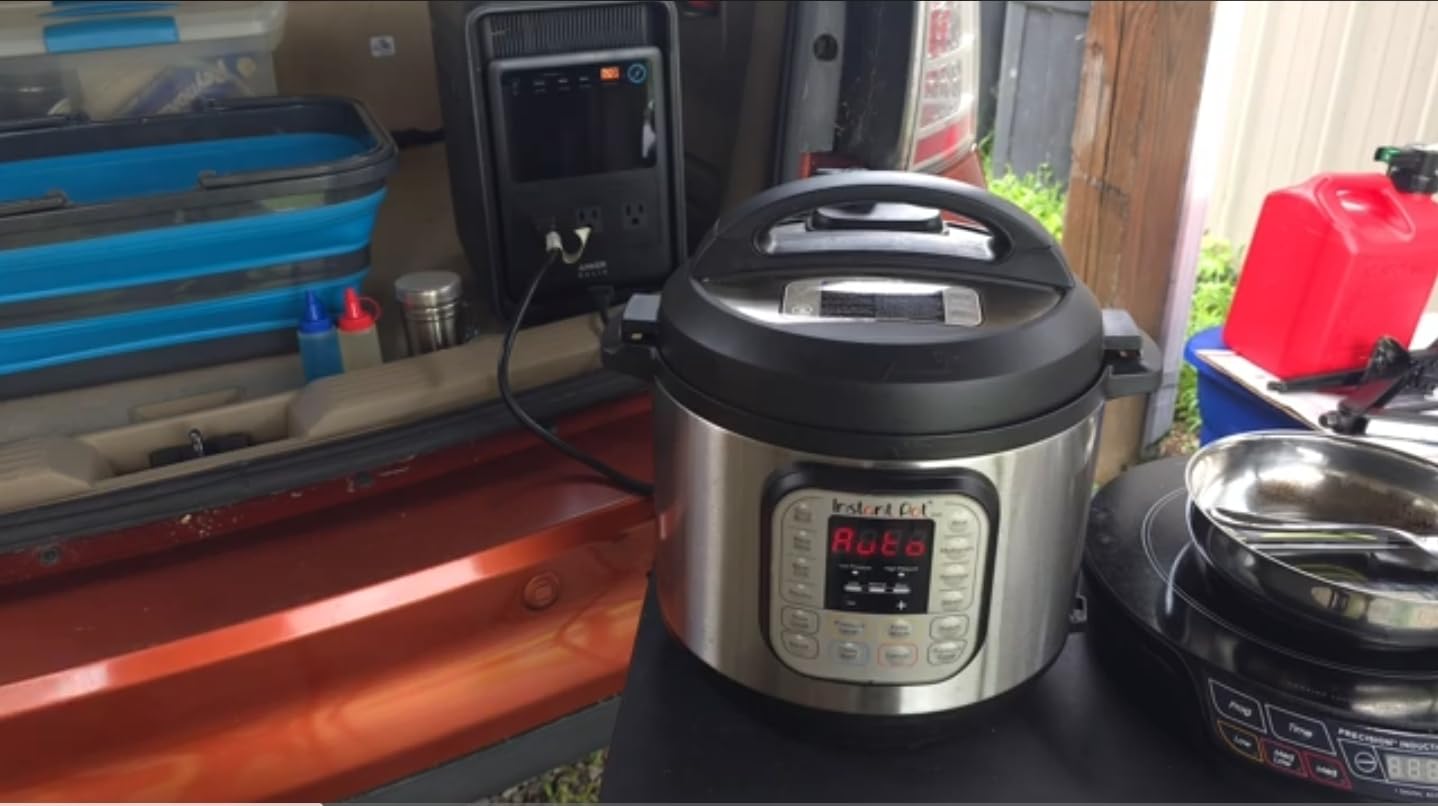
This suits a long-horizon build where the plan is to install once and leave it. A 2010Wh pack with exceptional cycle endurance covers a refrigerator, lighting, electronics and a modest pump, and the 15 year rating means you are unlikely to replace the battery before the cabin changes ownership. The separate front and rear outlet banks also keep always-on circuits tidy.
Why the 400W solar ceiling is the real limit
The 400W solar ceiling is the problem for genuine off-grid running. A full daily refill in winter needs a panel array most buyers will not want to prop up, so this unit leans on grid or generator charging more than a rival with 1000W of solar input. It also cannot run a microwave and a water heater together, and the missing 12V port closes off RV-style distribution.
6. BLUETTI Elite 100 V2 – Best for Lightweight Mobility
BLUETTI Solar Generator Elite 100 V2 with 200W Solar Panel Included, 1024Wh
1024Wh LFP, 4000+ cycles
1800W AC, 3600W surge
25 lb with integrated handle
1000W solar input, 30 dB
Pros
- 1800W rated output with 3600W surge beats most 1kWh rivals
- 4000+ cycle LFP rated for roughly a 10 year life
- 0-80% in about 45 minutes and full in about 70 on AC
- Only 25 lb with an integrated handle for one-person repositioning
- XT60 solar connectors are industry standard not proprietary
Cons
- Real usable capacity closer to 768Wh after conversion losses
- Display shows watts but not amps and volts
- Solar input limited to 1000W
- Warranty length not stated on this listing
At 25 lb with an integrated handle, the Elite 100 V2 is one of the few models here you can genuinely carry between the truck, the deck and the shed by yourself. That sounds minor until you have tried moving a 37 lb or 50 lb unit across uneven ground in the dark, which is a real and frequently reported problem for cabin owners.
The inverter is the surprise. Despite a 1024Wh battery, it puts out 1800W continuous with 3600W of surge and 2700W of lifting power, which outclasses most units at this capacity. The battery is LFP rated above 4000 cycles to 80% capacity, roughly a 10 year life, and there are 11 ports for mixed device loads.
Charging is unusually quick for the class: 0-80% in about 45 minutes and full in roughly 70 on AC at 1200W, with a bundled 200W panel taking the battery from 0-80% in 4 hours. The 30 dB silent mode is described as roughly half as loud as other 1kWh stations, which is the difference between a unit beside a bed and a unit in a closet.
Users report reliable 24-hour runtime on a 12V fridge, ending near 44-47% remaining, and reviewers call it the sweet spot of the BLUETTI line. The recurring negatives are real usable capacity closer to 768Wh after conversion losses, no amps or volts on the display, and a solar input limit of 1000W that caps array size.
Why a 25 lb weight changes cabin placement
Weekend cabins, hunting shacks and short-stay retreats where the load is a fridge, lights, a phone charger and a radio. The 1800W inverter gives you headroom for a small microwave or a power tool, and the 1000W solar ceiling means a portable panel or two refills it overnight. It is also the easiest unit here to move when the weather turns and you want it inside.
Why 1024Wh runs out sooner than the label implies
1024Wh is 1024Wh. Anyone expecting to run a fridge, a well pump and Starlink on a daily basis will drain it, and with no expansion path it stays that size. Budget your real usable figure at nearer 768Wh once inverter losses are counted, not the nameplate, or the fourth night of a long weekend becomes a problem.
7. Anker SOLIX C1000 Gen 2 – Best for CPAP and Home Backup
Anker SOLIX C1000 Gen 2 Portable Power Station with 200W Solar Panel
1024Wh LFP 4000 cycles
2000W output, 3000W peak
49-minute AC recharge
1.8 hour solar refill at 600W
Pros
- 49-minute full recharge on 1600W HyperFlash AC
- 4000 cycle LFP with a 10 year InfiniPower rating
- Under 10 ms UPS switchover kept a CPAP machine running three nights
- 14 percent smaller and 11 percent lighter than comparable units
- Time-of-use scheduling and remote monitoring through the Anker app
Cons
- Gen 2 removed the expansion capability of the first generation
- Bundled PS200 panel frame described as not very stable in wind
- No protective storage case included for cables
- Measures about 15 to 20 percent harmonic distortion on a microwave load
The C1000 Gen 2 has the deepest owner record in this roundup, with more than 1,600 reviews, and the pattern is unusually consistent: charging speed, quiet running and compact size. The 1600W HyperFlash AC input fills it in 49 minutes, and 600W of solar produces a full recharge in about 1.8 hours on a good day.
Under the skin it is 1024Wh of LFP rated to 4000 cycles at 80% capacity with a 10 year InfiniPower rating. Output is 2000W continuous with 3000W peak across 9 ports, and the under-10 ms UPS switchover is fast enough that one owner ran a CPAP machine for three nights without a recharge, which is a real medical-device test rather than a marketing claim.
Time-of-use power management through the Anker app lets you schedule charging around off-peak grid windows or around the sun’s position, which is genuinely useful when a cabin has a weak connection or a metered supply. Reported noise is effectively silent, and the display is bright and readable in daylight.
Owners use it as a home UPS for CPAP machines, laptops and network gear as much as for cabins. The criticisms are the removal of expansion capability versus Gen 1, a bundled bifacial panel whose frame some reviewers describe as unstable in wind, no included storage case, and measured inverter distortion of roughly 15 to 20 percent when powering a microwave.
Why sub-10 ms switchover matters for medical gear
Cabins with medical device needs, heavy remote-work setups or a weak grid connection where outages are routine. A CPAP, a router, a Starlink terminal and a laptop chain sit comfortably inside 1024Wh, and the UPS switchover keeps them running without a reboot. The app scheduling is the sleeper feature for anyone charging on a metered or unreliable supply.
Why losing Gen 1 expandability is the deal-breaker
No expansion. Gen 2 dropped the add-on battery capability of the first generation, so 1024Wh is permanent, and that matters if your cabin load grows. The microwave harmonic distortion figure is worth knowing if you plan to run high-draw kitchen appliances, and the bundled panel is not a panel you would leave unattended in a gust.
8. Jackery Solar Generator 1000 v2 – Best for First-Time Buyers
Jackery Solar Generator 1000 v2 and 200W Solar Panel,1070Wh,1500W AC
1070Wh LFP, 4000 cycles
1500W pure sine wave AC, 3000W surge
23.8 lb with foldable handle
200W panel and 5 year coverage
Pros
- Just 23.8 lb with a foldable handle for one-handed carry
- LiFePO4 chemistry with 4000 cycles and a 10 year lifespan
- 1500W pure sine wave output with 3000W surge runs cooktops and small AC units
- Two 100W USB-C PD ports fast-charge laptops without adapters
- About 18 percent smaller than the predecessor
Cons
- Bundled panel is bulky sags in the middle and needs propping against wind
- Short panel cable forces an extension to place the panel in sun and the unit in shade
- 1500W ceiling cannot run high-draw loads alongside other appliances
- One-hour fast charge must be enabled in the app and reduces battery lifespan
The Jackery 1000 v2 is the most approachable unit in the group for someone who has never owned a portable power station, and the reasons are physical rather than electronic. At 23.8 lb with a foldable handle it is the easiest to move, and the LFP upgrade means you are not buying into the short-cycle chemistry the original shipped with.
Specs are 1070Wh of LFP retaining over 70% capacity after 4000 cycles, rated at a 10 year lifespan, with 1500W of pure sine wave AC output and 3000W surge. Ports cover two USB-C at 100W PD, one USB-A, a 12V DC car port and three AC outlets, and the 30 dB quiet charging mode is controllable from the app.
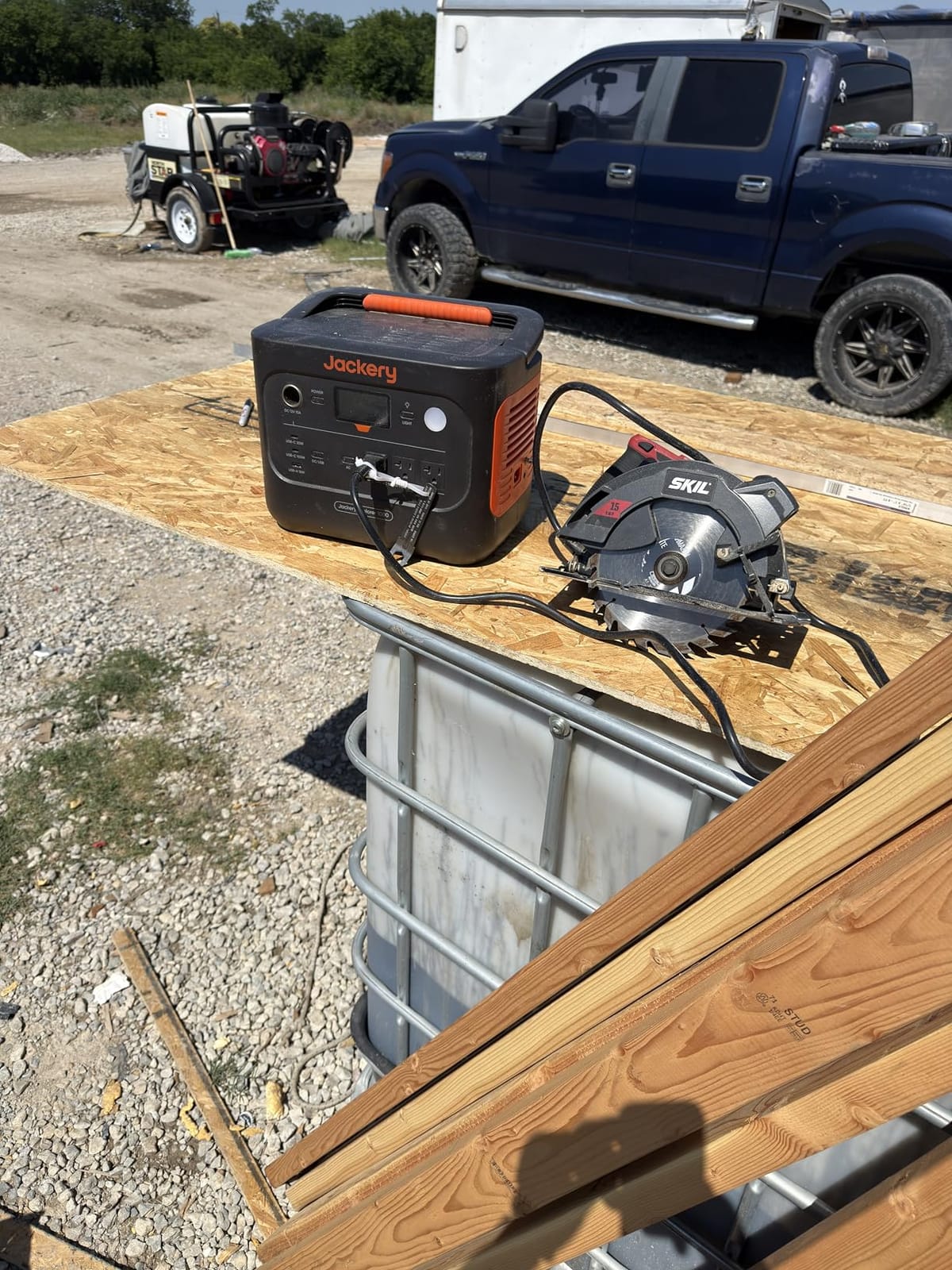
Charging options are unusually flexible for a starter unit. An emergency one-hour charge can be triggered in the app, the default full charge takes 1.7 hours, and a 600W alternator charger brings it home from a vehicle in about 3 hours. On solar, the bundled 200W panel takes it from 0-80% in roughly 6 hours, which is a realistic weekend replenishment rather than a daily one.
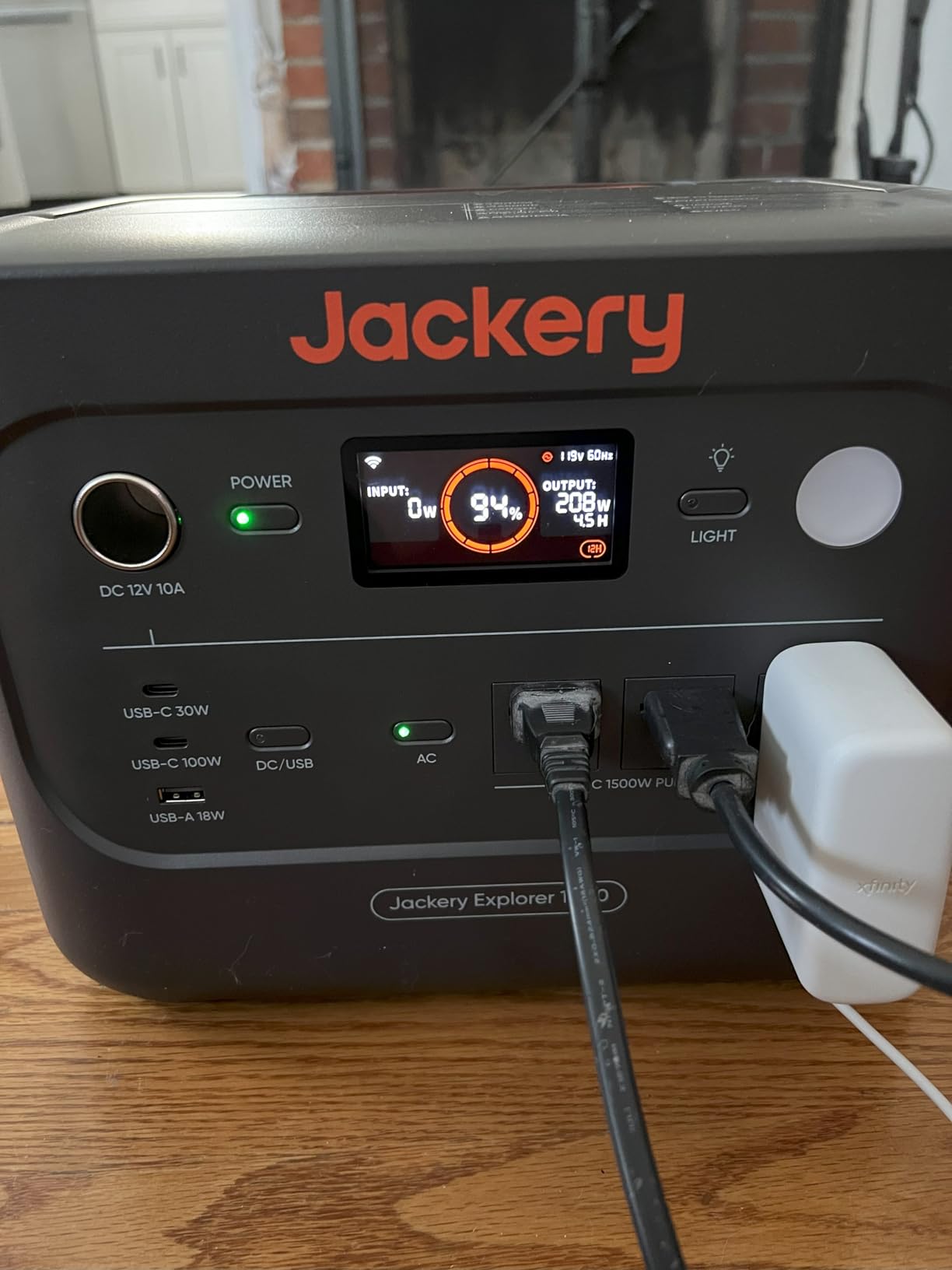
Owners report running a full-size side-by-side fridge for 9 hours and a portable freezer for 3 days. The most-cited drawbacks involve the bundled panel, which is bulky, sags in the middle and needs propping in wind, plus a short supplied solar cable that forces an awkward extension to get sun on the panel while the unit stays shaded.
Why one-handed carry wins for a first build
Weekend and seasonal cabins where the load list is short: a fridge, a freezer, lights, a laptop and a phone. Pure sine wave output keeps sensitive electronics happy, the 30 dB mode is quiet enough for a sleeping space, and the 23.8 lb weight means a single person can reposition it as the season changes. It also travels well, which suits a cabin reached by boat or a long gravel road.
Why the 1500W ceiling rules out multiple high-draw loads
The 1500W ceiling bites as soon as you add a load. A microwave plus a kettle plus a fridge is over budget, and the inverter will tell you so. The bundled panel will not carry a daily off-grid load on its own, and enabling the one-hour fast charge from the app is a trade the manufacturer says shortens battery life, which sits awkwardly with a 10 year claim.
9. BLUETTI AC180 – Best for Power Tools on Site
BLUETTI AC180 Solar Generator with 200W Solar Panel Included, 1152Wh 1800W
1152Wh LFP, 3000+ cycles
1800W AC, 2700W lifting
1440W flash charge, full in 1 hour
500W solar input
Pros
- 1800W output with 2700W lifting runs power tools and microwaves
- 1440W single-cable charging fills the 1152Wh pack in about an hour
- 11 outlets including a wireless charging pad and USB-C
- Clear display shows live input and output in watts and percent
- 20 ms UPS mode keeps routers and computers alive
Cons
- Roughly 35 to 40 lb makes it unsuitable for backpacking
- Bundled 200W panel is not approved for series or parallel use with other panels
- Cooling fan becomes audible under sustained heavy load
- Runtime is lower than 1152Wh once conversion losses are counted
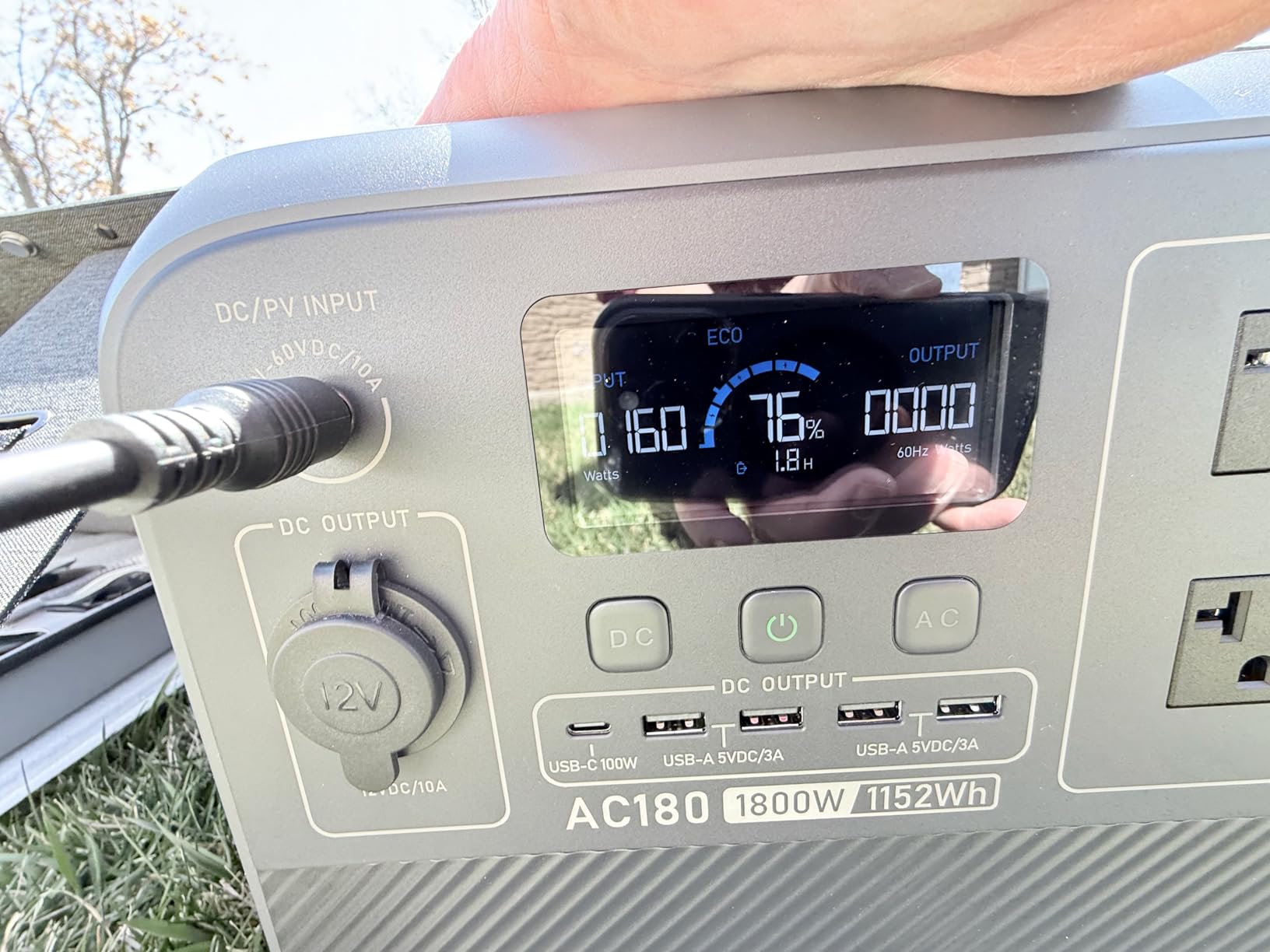
The AC180 earns its place through a different load: power tools. Anyone building a cabin and running a saw or a grinder from the same station that runs the fridge needs inverter headroom above 1800W of continuous output, and combined with 2700W of lifting power this is one of the few weekend-tier models that will not flinch when a motor spins up.
The battery is 1152Wh of LFP rated to 3000 plus cycles, and the 1440W single-cable flash charge fills it in about an hour. There are 11 outlets including 4 AC, USB-A, USB-C, 12V DC and a wireless charging pad, plus a 20 ms UPS mode for keeping routers and computers alive through an outage.
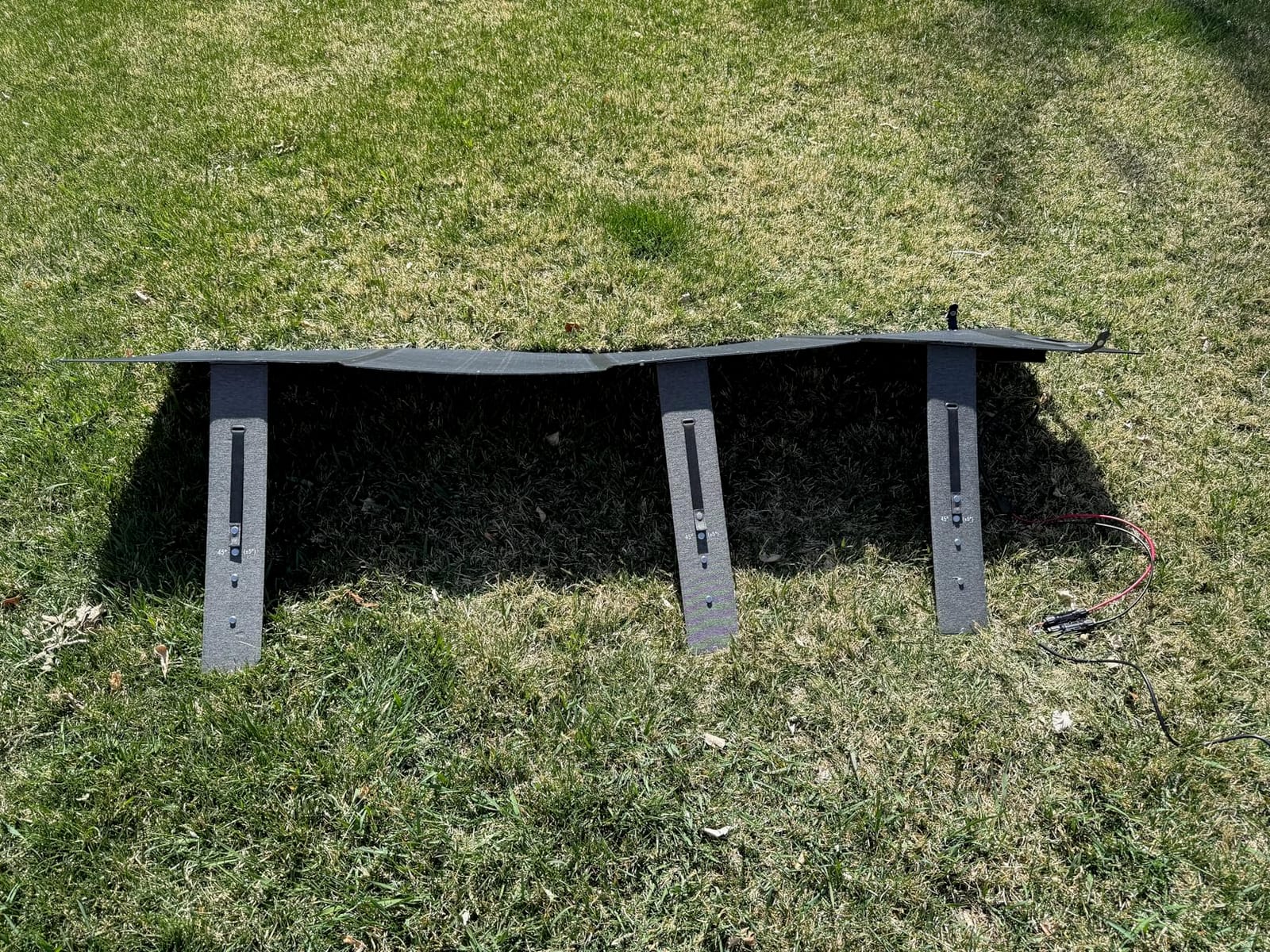
The display shows live input and output power in both watts and percent, so you can see at a glance whether the panel is keeping up with the load. Owners report mini fridges running 16-18 hours and a 5000 BTU window AC unit running about 7 hours on low, which is more than a typical 1kWh class station delivers.
Recurring criticisms are the weight at roughly 35 to 40 lb, a cooling fan that becomes audible under sustained heavy load, and a bundled 200W panel that BLUETTI does not recommend using in series or parallel with other panels. Real runtime also lands below the 1152Wh nameplate once inverter conversion losses are counted.
Why an outlet-rich 1800W inverter suits a build site
Build-and-occupy cabins, and any property where the station doubles as a job-site supply. The inverter handles a circular saw or a small compressor, the outlet count covers a scattered tool load, and the 500W solar ceiling is enough for a weekend top-up between trips. The wireless pad is a small touch that gets used constantly.
Why a 500W solar cap and fan noise hold it back
The 500W solar limit is the binding constraint for daily off-grid use, and at 35 to 40 lb it takes two people to move it out of a truck bed. The bundled panel cannot be chained with others, which slows recharging exactly when you would want more inputs. Fan noise under sustained load is also not something you want in a sleeping cabin at night.
10. OUPES Mega 1 – Best Power per Watt in the 1kWh Class
OUPES Mega 1 Portable Power Station 1024Wh 2000W (4500W Surge)
1024Wh LFP, 3500+ cycles
2000W continuous pure sine wave
0-80% in 36 minutes on AC
800W solar via MC4, expands to 5120Wh
Pros
- 2000W continuous output across four AC outlets
- 0-80% in 36 minutes on AC and 26 minutes on AC plus solar
- 3500+ cycle LFP with a smart BMS for cell balancing and thermal control
- Expands to 5120Wh with two B2 extra batteries and no second inverter
- Standard MC4 solar connectors integrate with existing panel arrays
Cons
- Advertised 4500W surge is not reached in practice with one unit tripping between 2050 and 2200W
- Proprietary charging cable is hard to replace
- Charging fan runs continuously during any charge cycle and is noticeable in a quiet room
- CleanEnergy app is basic with no cell-level or temperature data and Wi-Fi is unreliable
The Mega 1 is the value pick for anyone who wants more inverter than the price bracket suggests. It puts out 2000W continuous from a 1024Wh battery, a figure the Anker C1000 Gen 2 matches and the other 1kWh stations here do not, and it reaches 0-80% in 36 minutes on AC or 26 minutes combining AC and solar.
The battery is 1024Wh of LFP rated to 3500 plus cycles, managed by a BMS handling cell balancing and thermal control. Expansion to 5120Wh through two B2 extra batteries works without buying a second inverter, and 800W of solar input through standard MC4 connectors means it will take panels you may already own.
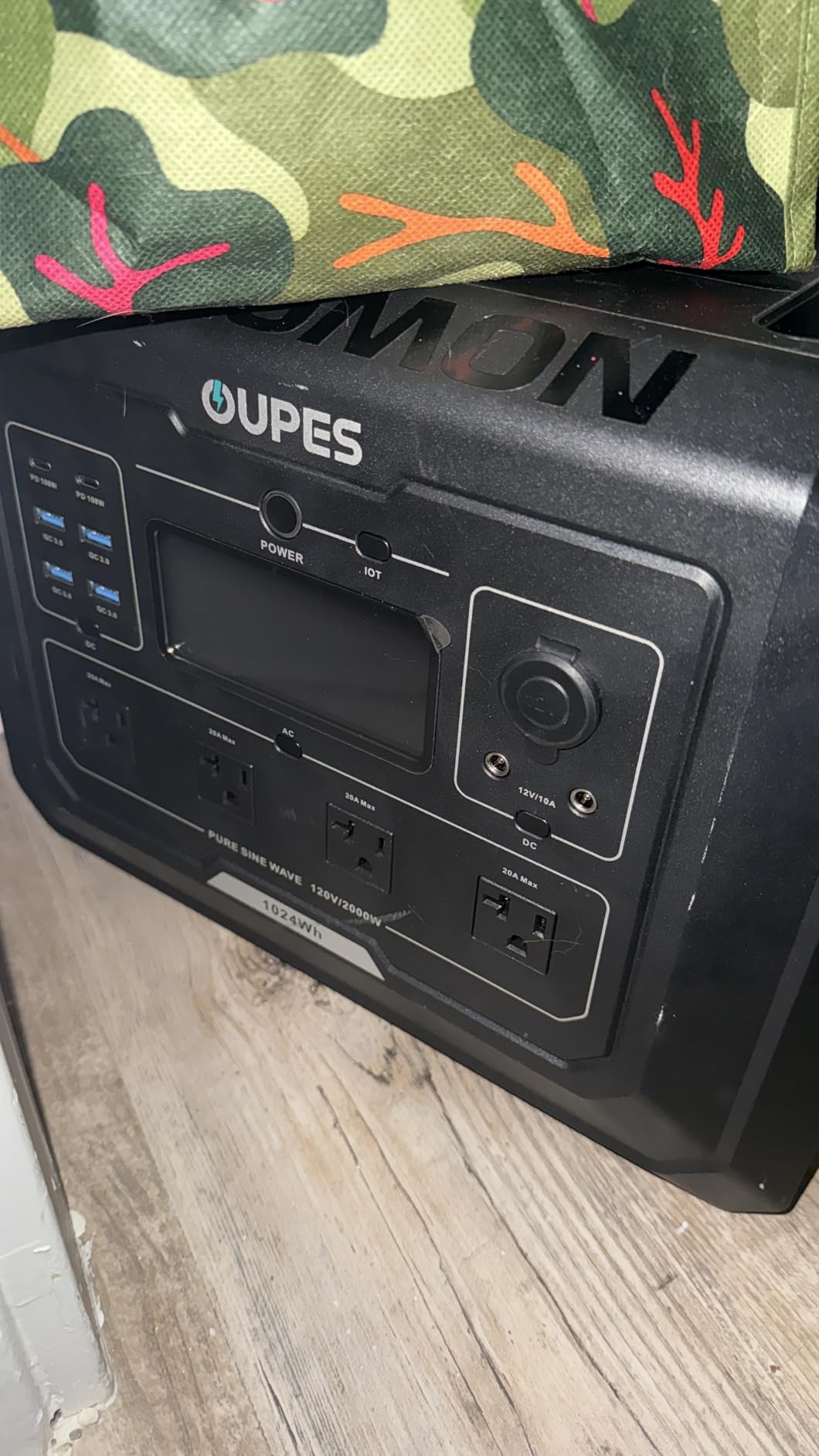
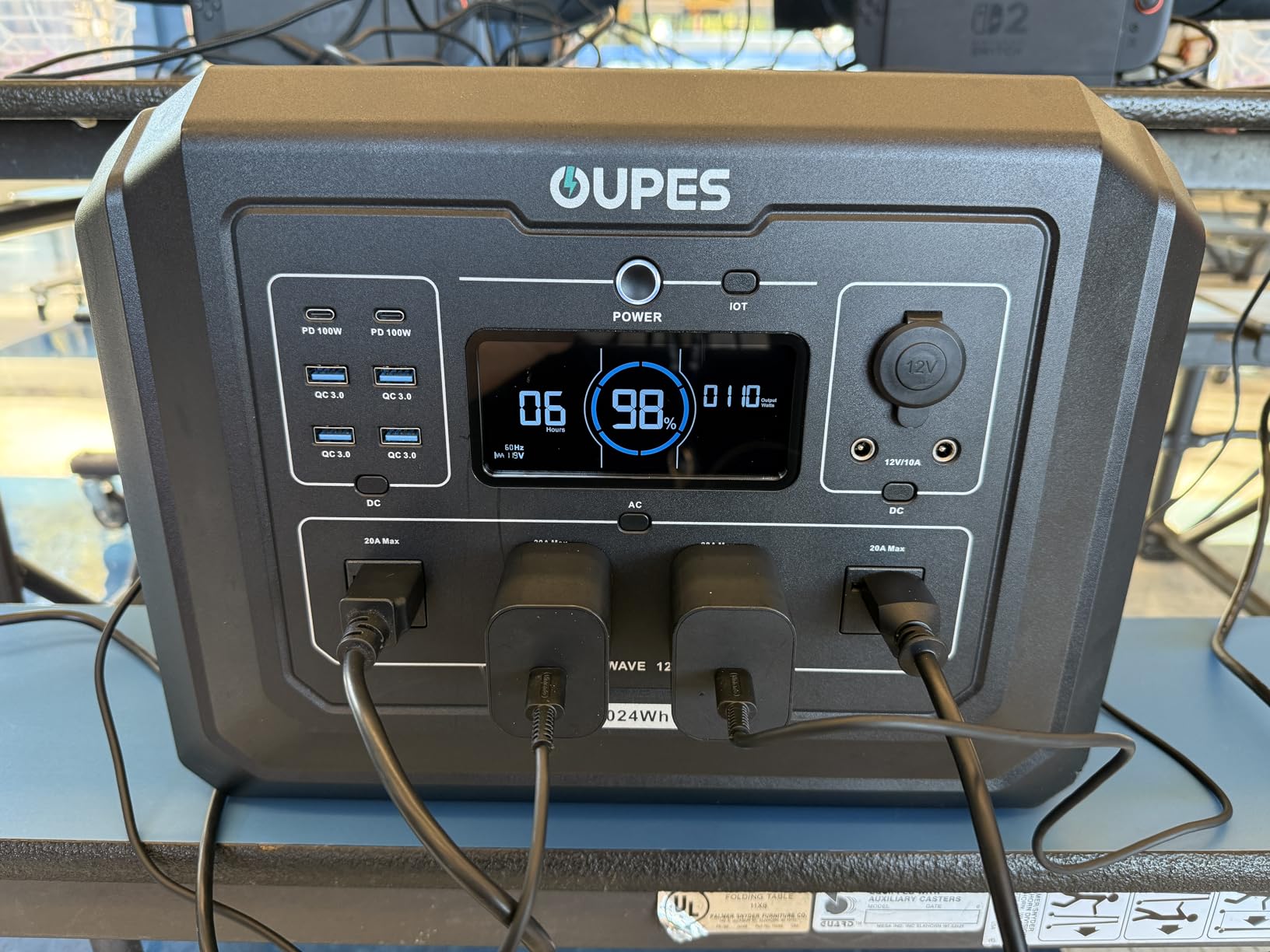
Port selection is generous for the bracket: dual 100W USB-C PD ports, four QC3.0 USB-A ports, 12V DC outputs and four 120V AC outlets, with under 20 ms UPS transfer to protect servers, workstations and medical devices. Users report running fridges, laptops, drone chargers and coffee makers for days on a charge, and reviewers treat it as the best power-per-dollar option at this capacity.
The most important caveat is the surge claim. Despite advertising 4500W, one unit consistently tripped between 2050 and 2200W, so size pumps and compressors against the 2000W continuous figure instead. The proprietary charging cable is hard to replace, the charging fan runs during any charge cycle, and the app is basic with no cell-level or temperature data.
Why 2000W from a 1kWh pack changes your kit list
A cabin on a budget that still wants inverter headroom, or a build site where tools and a fridge share one supply. The 800W solar ceiling is the highest in this bracket and the MC4 connectors mean you can use existing panels, and the 5120Wh expansion path gives a real upgrade route if the cabin grows. UPS transfer under 20 ms covers sensitive electronics adequately.
Why the surge figure is a 2000W rating in practice
Plan around 2000W continuous, not the advertised surge, or you will find out during a pump start. The charging fan is genuinely annoying in a quiet sleeping space, the Wi-Fi half of the app is unreliable, and a proprietary cable is a poor thing to lose at a remote cabin. Moulded handles are also uncomfortable on a long carry at 27.8 lb.
How to Choose a Solar Generator for an Off-Grid Cabin
The fastest way to waste money on a cabin power station is to size by advertised peak watts. Peak watts tell you what a device can start. They tell you nothing about how long it will last, and for a cabin the second number is the one that decides whether Thursday night is lit. Work through these steps in order.
What size solar generator do you need to run a house?
Add the running watts of every essential load, multiply each by the hours it runs per day, and add 20% for inverter losses. That total is your daily watt-hour budget. For a small cabin, a refrigerator running 8 hours at 100W, a 12V freezer at 8 hours, five lights at 5 hours, a router at 24 hours and a laptop at 6 hours lands near 2,400Wh a day. Multiply by two for one day of cloudy reserve, and you need roughly 5,000Wh of storage and a 2,000W-plus inverter.
Build the daily watt-hour budget first
Write every load on a list with its running watts and daily hours, then multiply. Add 20% for inverter conversion loss, which is close to the real figure. Add 25% if a well pump or refrigerator is on the list, because compressor cycling is far less predictable than a nameplate average suggests.
Once you have a daily figure, your storage target is that budget multiplied by your days of autonomy. One day is optimistic in winter, two is comfortable, three is what most full-time cabin owners end up wanting. Our guide to off-grid charge controllers covers the MPPT side of turning panel output into usable current.
Reference loads for a typical cabin
Use these as a starting point rather than gospel, since compressor efficiency and duty cycle vary widely between appliances. The point is the ratio: a refrigerator runs in bursts, a well pump is short and violent, and Starlink plus a router is a near-constant base load that people routinely forget to budget.
Refrigerator-freezer, 12V: about 100W running, cycling roughly half the day
Chest freezer: about 70W running, cycling for long stretches in warm cabins
Router and modem: about 15W, running 24 hours a day
Starlink terminal: about 110W while active, the sleeper load in most cabins
Laptop: about 60W while charging
Microwave: about 1000W for a short burst, with a startup surge above that
Coffee maker: about 900W for a few minutes
CPAP machine: about 40W, continuous overnight
Small well pump: about 350W running, several times that at startup
Deep well pump on 240V: 1000W or more, and the main reason to buy split-phase output
Space heater: about 1500W, and the reason to never power heat from a station
Solar panel sizing math that survives winter
Divide your daily watt-hour budget by your average peak sun hours, then apply a 0.75 real-world loss factor for heat, wiring, dust and inverter conversion. In a region with 4 summer peak sun hours, a 2,400Wh daily budget needs roughly 2,400 divided by 4 divided by 0.75, which is about 800W of panels. In winter at 2 peak sun hours that same array needs to double, which is why a dark week in November is a design problem, not bad luck.
Then check the station’s solar input ceiling. Several units here cap at 400W or 500W regardless of how many panels you own, so an oversized array simply cannot be used. Match the array to the ceiling, not to your ambition. If your roof or ground mount can deliver more than the station accepts, the extra panels are dead weight.
Well pumps, surge and the 240V question
Any pump with a motor needs two to three times its running watts at startup. A 350W shallow well pump can ask for 1000W before it spins up, and a deep well pump on 240V can pull 1000W or more continuously with a much harder start. That is the whole reason split-phase output exists, and it is why only the DELTA Pro 3 in this roundup solves the 240V problem natively.
No, a pump cannot run usefully straight from a panel. Panel output collapses as soon as a motor inrush hits it, and the controller has nowhere to put the surge. The pump runs from the battery, and the panel’s only job is to refill the battery. A pump also cannot be used to fill a water tank as an alternative, which is worth remembering if you are hoping to avoid a 240V purchase.
What not to power from a station
Electric space heating is the one to rule out first. A 1500W heater running 8 hours draws 12,000Wh overnight, which is more than most of these units can store. Electric cooking and electric water heating are the same problem in smaller form. Heat the cabin with wood or propane and let the station carry the fridge, the lights, the water pump and the internet, which together are a fraction of the load.
Winter charging, cold-soak and the 32F rule
Lithium packs, including LiFePO4, will not safely charge below roughly 32F. A station stored in an unheated shed will throttle or refuse to charge in deep winter, which owners on off-grid forums describe as the most common seasonal failure. Keep the unit indoors, or accept that it is a spring-to-autumn asset unless you can hold it above freezing.
The winter harvest is roughly half a summer harvest at most latitudes, so size panels for the dark months rather than for June. Angle panels steep enough to shed snow and keep them clear, then plan for a generator backstop: a small propane inverter generator run for two hours through the AC input can push 2,000-3,000Wh back into a station and turn a bad week into a survivable one. A cabin that runs from November to March without one is gambling.
Buy the platform, not the box
Four units here expand: the DELTA 3 to 5kWh, the DELTA 2 Max to 6kWh, the Mega 1 to 5120Wh and the DELTA Pro 3 to 48kWh. Two heavily reviewed models, the BLUETTI Elite 200 V2 and the Anker SOLIX C1000 Gen 2, cannot be expanded at all. Cabin loads grow, so the station that can grow with them is usually the better purchase even if the sealed unit looks like a better deal on day one.
All-in-one station or component system?
All-in-one stations win below roughly 10kWh of storage because they need no wiring knowledge, no electrician and no service call. Component builds, using separate lithium banks with a hybrid inverter, make more sense once you are past that point, where per-kWh cost drops and repairability improves. Our camping generator guide covers the small-combustion-engine end of the range for short trips where solar is not the primary supply.
Owner-reported friction nobody puts in the brochure
Across off-grid forums the same four complaints repeat. Fan noise under sustained heavy load is acceptable in a shed and unwelcome in a sleeping cabin.
Moving weight is real: models in the 50 to 115 lb range need two people, and station placement becomes a permanent decision. App quality varies, with BLUETTI drawing more mixed feedback than EcoFlow, and one OUPES owner reports Wi-Fi dropping while Bluetooth holds. Bundled portable panels are consistently described as undersized for the battery they arrive with, so plan to buy real panels rather than trusting the included one.
Frequently Asked Questions
What size solar generator do you need to run a house?
Add up the running watts of every essential load times the hours it runs daily, then add 20% for inverter losses. A small off-grid cabin with a fridge, freezer, lights, router and laptop typically needs a 2,000W-plus inverter and 2,000 to 5,000Wh of storage for one to two days of autonomy.
How big of a solar system do I need for off-grid living?
Divide your daily watt-hour budget by your average peak sun hours, then apply a 0.75 real-world loss factor. A 2,400Wh daily budget at 4 summer peak sun hours needs about 800W of panels, and roughly 1,600W if you want that same budget covered through a 2-hour winter day.
What type of backup generator is best for an off-grid solar system?
A small propane inverter generator is the standard backstop, because it is quiet, fuel-stable and can charge a station through the AC input. Running it for two hours can push 2,000 to 3,000Wh into a battery and cover a dark week without needing a full fuel system.
Can a solar generator run a well pump?
Yes, if the inverter surge rating is at least three times the pump’s running watts. A 350W shallow well pump can draw about 1,000W at startup, and a 240V deep well pump needs a station with split-phase output. The pump cannot run straight from a panel, only from the battery.
How long does a charge last on a solar generator?
Divide usable watt-hours by your average load. A 2,000Wh station at roughly 80% usable delivers about 1,600Wh, so a 150W average load runs for around 10 hours and a 60W load for close to 26 hours, before you factor in cold weather and inverter losses.
Can solar generators be used in winter?
With reduced output, yes. Lithium iron phosphate packs will not safely charge below roughly 32F, so a station in an unheated shed will throttle or refuse, and winter solar harvest is about half a summer day. Store the unit indoors above freezing and keep a generator backstop.
Final Verdict: Which Solar Generator Fits Your Cabin
The EcoFlow DELTA 3 is our pick for the best solar generators for off grid cabins overall, because its 4.8 rating across more than 1,300 reviews, 4000-cycle LFP pack, 1800W inverter and 5kWh expansion path cover the widest set of real cabin loads without a specific weakness. It handles a weekend retreat and a lightly equipped full-time cabin with equal ease.
Match the tier to the load and you are done. Weekend cabins that need lights, a fridge and a radio belong on the BLUETTI Elite 100 V2, the Jackery 1000 v2 or the OUPES Mega 1, with the C1000 Gen 2 for medical devices and weak-grid locations. Full-time cabins want the BLUETTI Elite 200 V2 for inverter headroom or the EcoFlow DELTA 2 Max for fast replenishment and a 6kWh ceiling. Whole-cabin households with a 240V pump or a serious heating load need the EcoFlow DELTA Pro 3 and nowhere else in this group.
Whatever you choose, run the watt-hour budget before you buy, size the panel array for winter rather than summer, keep the unit above 32F, and plan on a small generator for the weeks the sky closes in. Those four habits will do more for your cabin than any spec upgrade.