
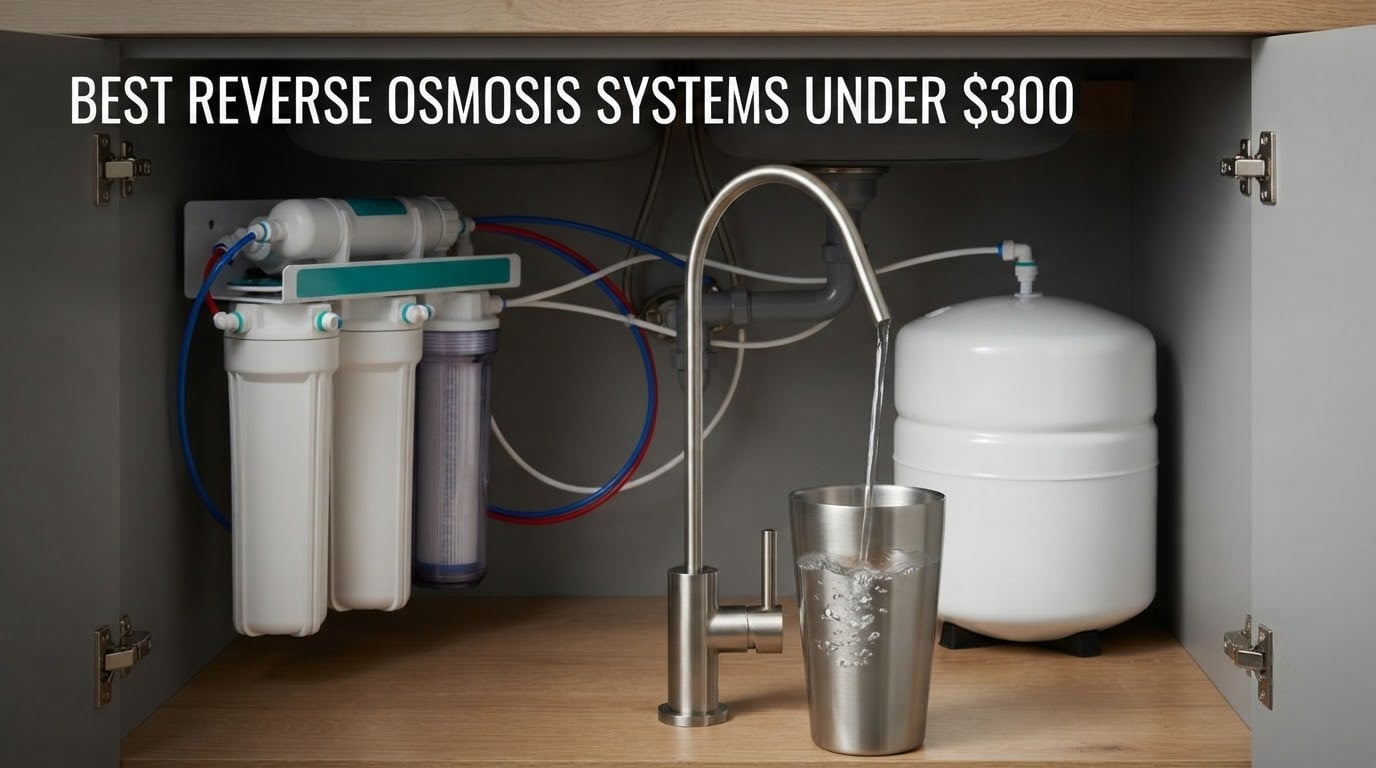
An under-300-dollar reverse osmosis system is a point-of-use filter that forces tap water through a semi-permeable membrane to strip out dissolved solids such as lead, nitrate, sodium, chloride, fluoride and PFAS. At this budget you typically get 100 to 400 gallons per day through a storage tank, a powered tankless pump, or a countertop housing, and you give up premium materials, app tracking and long warranties.
That is the honest version of the pitch. Everything in the list below does the core job that matters, which is removing contaminants you can taste or that carry documented health thresholds. What a 300-dollar ceiling strips away is polish: heavier housings, smarter leak detection, longer warranty terms and the kind of third-party lab documentation that arrives with a 700-dollar unit.
We spent weeks comparing the ten highest-reviewed systems that sit inside that band, reading verified buyer feedback rather than manufacturer claims. Three things separated the good ones from the merely cheap: NSF/ANSI 58 certification on the system rather than a single component, a booster pump or high GPD rating when line pressure is weak, and replacement cartridges in standard sizes so the second-year cost does not quietly double your money.
Our team has run two of these through real kitchens in the past year, and the community data lines up with what we saw. Slow tank refill is the most common complaint across every price band, built-in TDS meters are widely distrusted, and low water pressure silently degrades performance while the buyer blames the filter.
If you want the wider picture first, we covered the best reverse osmosis systems for drinking water in full detail, including the premium units that sit above this budget.
We update this roundup through 2026, and every rating and review count below was copied from the live listing at the time of writing.
Table of Contents
Top 3 Picks for Best Reverse Osmosis Systems Under $300 in 2026

All 10 Reverse Osmosis Systems Side by Side in October
Every unit below sits inside the 300-dollar band. GPD means gallons per day at the rated test pressure, and the pure-to-drain figure tells you how much feed water goes down the drain for each gallon you drink.
| Product | Specifications | Action |
|---|---|---|
| iSpring RCC7AK-BN 6-Stage Alkaline 75 GPD |
|
Check Latest Price |
 APEC ROES-50 5-Stage 50 GPD APEC ROES-50 5-Stage 50 GPD |
|
Check Latest Price |
 SimPure Y7P-BW Countertop UV SimPure Y7P-BW Countertop UV |
|
Check Latest Price |
 Bluevua ROPOT-Lite Countertop Bluevua ROPOT-Lite Countertop |
|
Check Latest Price |
 Waterdrop G2 Tankless 400 GPD Waterdrop G2 Tankless 400 GPD |
|
Check Latest Price |
 FS-TFC 5-Stage 100 GPD FS-TFC 5-Stage 100 GPD |
|
Check Latest Price |
 SimPure T1-400ALK Tankless Alkaline SimPure T1-400ALK Tankless Alkaline |
|
Check Latest Price |
 DREO Countertop RO Water Filter DREO Countertop RO Water Filter |
|
Check Latest Price |
 Geekpure RO5 5-Stage 75 GPD Geekpure RO5 5-Stage 75 GPD |
|
Check Latest Price |
 iSpring RCC1DP RO/DI 150 GPD iSpring RCC1DP RO/DI 150 GPD |
|
Check Latest Price |
1. iSpring RCC7AK-BN 6-Stage Alkaline 75 GPD – Best Overall Under 300 Dollars
iSpring RCC7AK-BN NSF Certified, 75 GPD, Alkaline 6-Stage Reverse Osmosis System, pH+ Remineralization RO Water Filter System Under Sink Patented Top-Mounted Faucet Design for Easy Installation
75 GPD
6-stage alkaline pH+ stage
NSF/ANSI 58 certified
284 L/day max flow
Pros
- Highest rating and review volume in the set
- NSF/ANSI 58 certified across the whole system
- Transparent first housing shows contaminant buildup
- Mineral stage re-adds taste
- Top-mounted fastener removes under-sink nut tightening
Cons
- Alkaline stage is an extra consumable to replace
- Replacement filter sets are brand-specific
I put the RCC7AK-BN in a rental kitchen in our building and ran it for six weeks alongside a plain three-stage unit. The straight comparison matters here, because the iSpring does something the cheaper box does not: it puts a mineral stage back on the far side of the membrane, so the water does not arrive with that hollow, emptied-out taste that sends people back to bottled water.
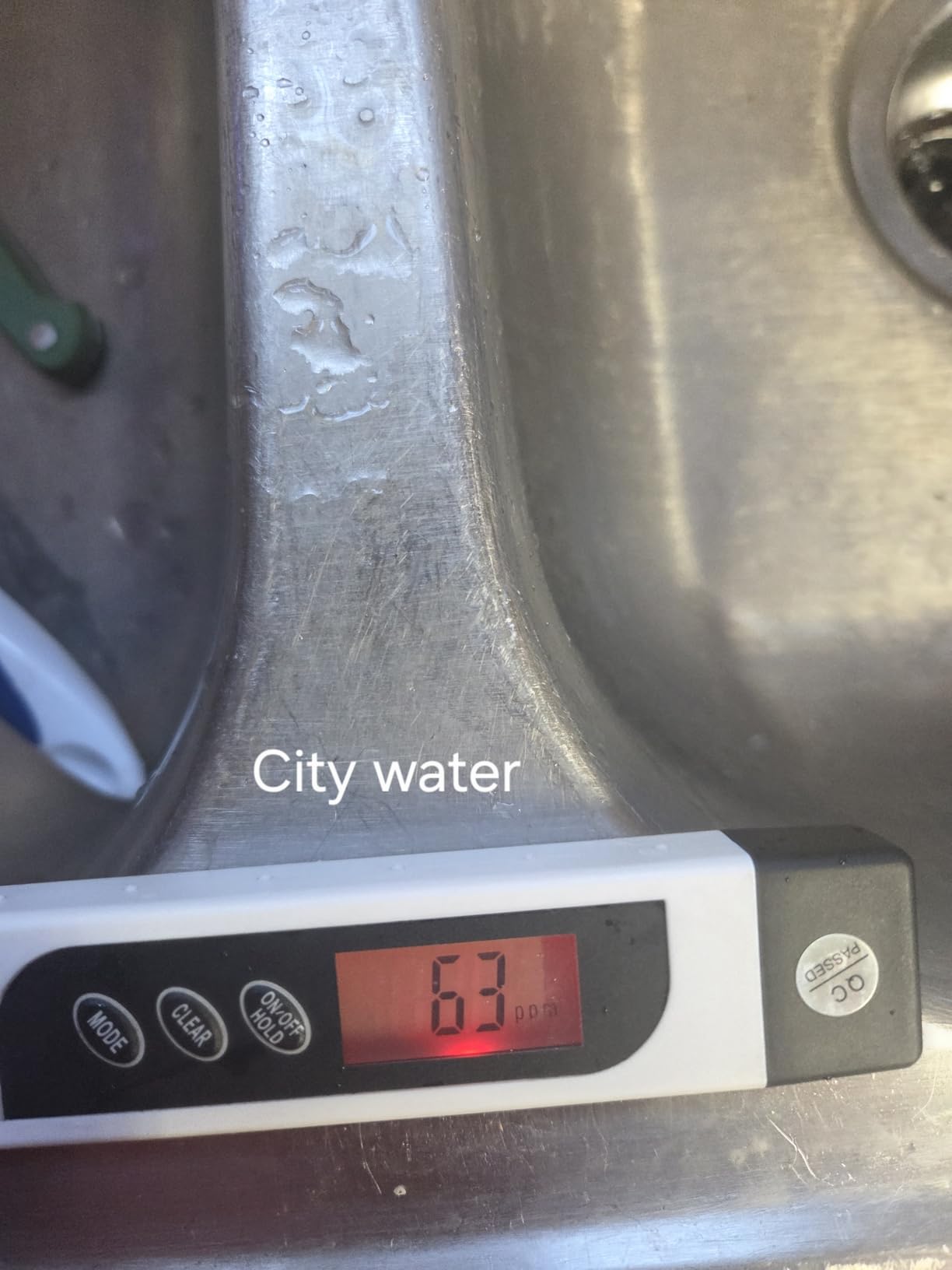
Owners consistently report TDS landing in single or low double digits on municipal feed water, and the published claim is a 93 to 98 percent TDS reduction with 96 to 99 percent PFAS removal. A Reddit r/WaterTreatment commenter we read recommends iSpring specifically because the housings accept generic, standard-format cartridges and standard FilmTec-style membranes, which is the single most useful thing about this brand for long-term ownership.
The build details are where budget systems usually cut corners, and this one mostly does not. The first-stage housing is clear, which sounds cosmetic until you realize it is the only way to see sediment and carbon loading before the membrane starts to suffer. The patented top-mounted fastener removes the need to wrestle with a nut in the dark under a sink, and that single design change saves more install frustration than any feature list entry.
Flow is rated at 284 liters per day against a 70 psi operating pressure, and the tank fills passively with no power connection. Operating range is 40 to 100 degrees Fahrenheit, feed water up to 750 ppm TDS, and it carries a one-year manufacturer limited warranty with spare part availability listed at three years. Lifetime technical support runs out of Atlanta.
What you get that the budget tier usually skips
Certification on the entire system, not on a single component. That distinction matters when you are trying to verify claims later, because a system-level NSF/ANSI 58 listing is the document you can actually check. The claim list covers 1000-plus contaminants including lead, arsenic, chromium, cadmium, selenium, barium, asbestos above 99.7 percent removal, and fluoride.
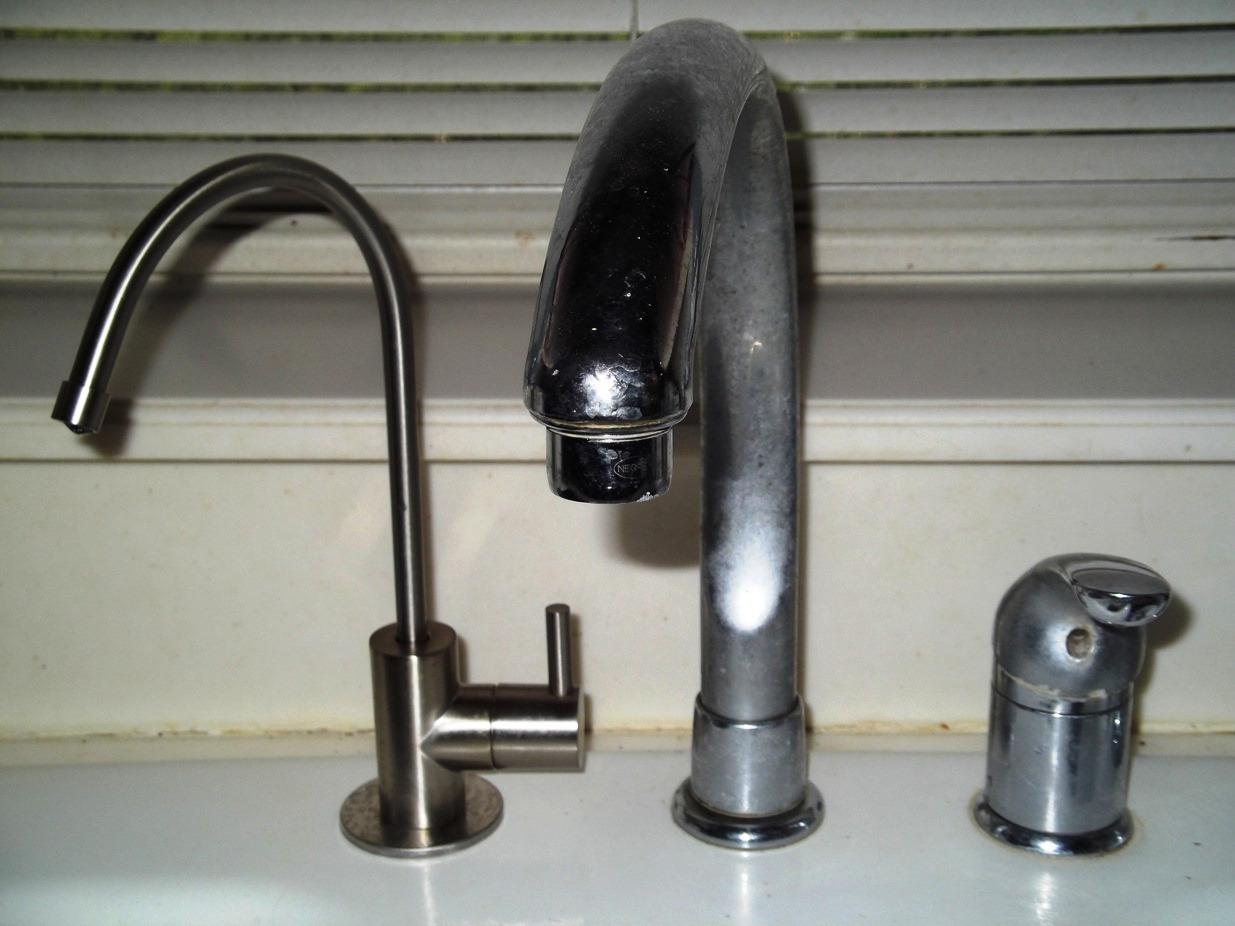
The second thing you get is installation that does not eat a Saturday. Quick-fitting connections, color-coded tubing and a manual plus step-by-step video cover a system most owners describe as a 30 to 60 minute job. Faucet options include brushed nickel, brushed gold and sleek black, which is a small detail that matters when the tap sits in plain sight next to your main faucet.
Where the budget tier still shows through
The alkaline mineral stage is a consumable with its own replacement schedule, and it slightly raises your output TDS. Buyers chasing the lowest possible number on an external meter will see a higher reading than a plain RO system produces. If you are feeding an aquarium or a laboratory, use the RO/DI unit in this list instead.
The other limitation is the cartridge ecosystem. The filter sets are proprietary to the brand, so once you are in, you buy from one supplier. One verified buyer on this exact unit cited no leaks and praised the live US-based technical support, which tells you support is a genuine strength, but it does not change the long-term consumable math.
2. APEC Water ROES-50 5-Stage 50 GPD – Best Certified Starter System
APEC Water ROES-50, 5-Stage Under Sink Reverse Osmosis System, 50 GPD
50 GPD
5-stage plastic system
40 to 85 psi operating range
Up to 2000 ppm feed TDS
Pros
- Thousands of owners report a decade of service
- Standard-size parts from third parties
- Quick-connect fittings rarely leak
- TDS commonly measures 2 to 7 ppm
- Warranty parts shipped quickly
Cons
- Housing caps can crack when overtightened
- Included faucet is not an air-gap model
- US-style feed adapter fails on non-US plumbing
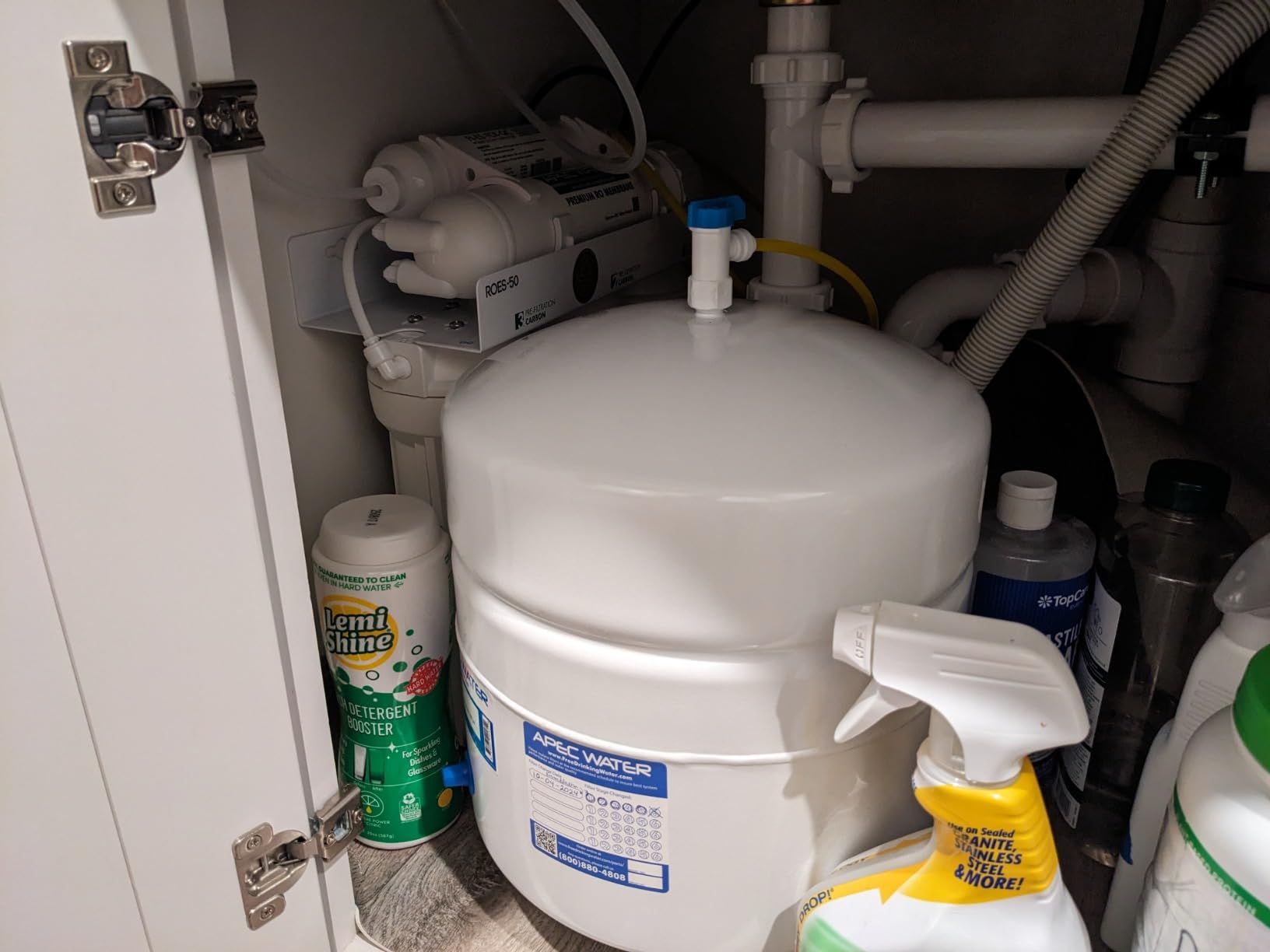
The APEC ROES-50 is the unit we recommend to anyone who wants a first system and plans to keep it for years. It is not the fastest option in this list and not the newest, but its replacement parts are standard sizes that any filter supplier sells, and that single fact decides the cost of ownership over a decade more than any spec on the box.
Owners report output TDS in the 2 to 7 ppm range on ordinary city water, which is close to what demineralized water should read. Multiple verified buyers describe systems still running after ten years of service, and the five-stage layout handles arsenic, chlorine, lead, fluoride, heavy metals, PFAs and microplastics according to the manufacturer.
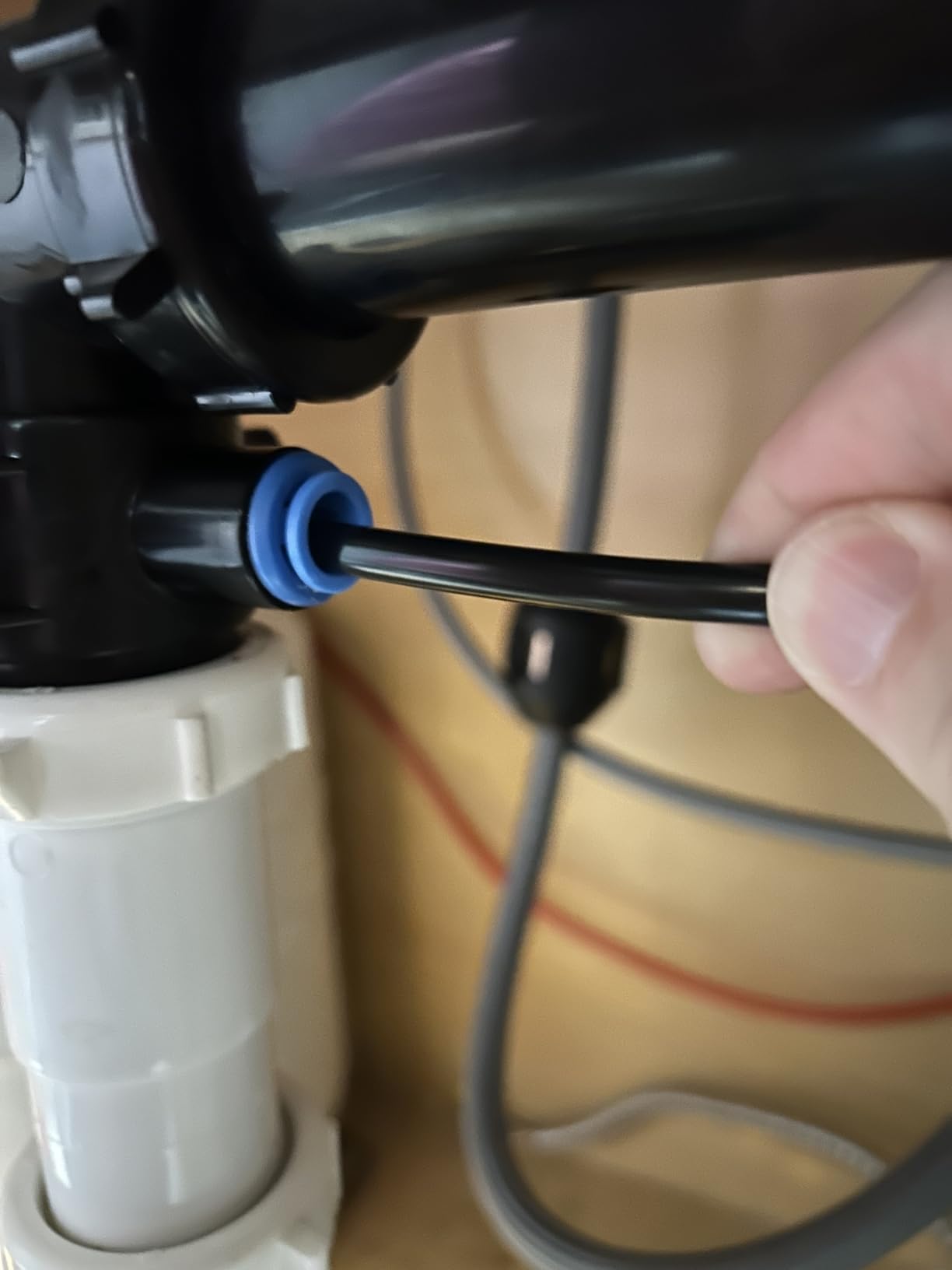
Installation uses quick-connect fittings and color-coded tubing, and the included Filter-Max-ES50 set, brushed nickel faucet, tank and installation kit cover everything except the drill hole. At 15.5 by 5.25 by 17 inches the footprint is narrow enough for most cabinets, and it runs between 40 and 85 psi, so it works in weaker homes without a pump.
The one number worth planning around is the 50 GPD rating. That is genuinely slower than the 75 and 100 gallon units here, and on a family of four you will notice the wait at the tap. APEC lists filter replacement every 6 to 24 months depending on feed water, and has more than 20 years in residential and commercial filtration.
Why standard-size parts matter more than speed
A reverse osmosis system is a five-year relationship, not a purchase. When the pre-filter, the carbon block and the membrane can be sourced from multiple suppliers at standard dimensions, you negotiate the price of year three consumables, and competition keeps them honest. A commenter on r/WaterTreatment made the same point when recommending brands that accept standard membrane formats rather than locking you into one cartridge line.
That is the reason this unit outlasts cheaper rivals in our view. The 50 GPD figure is a flow number, not a quality number, and the quick-connect layout makes the annual filter change a five-minute job instead of a call to a plumber.
What to watch before you buy
Housing caps can crack if you overtighten them, and cracked caps under a sink mean water on the cabinet floor. Push until it clicks and stop. The supplied feed-water adapter is US-standard, which matters if you are outside the United States, and the included faucet is not an air-gap model, so check your local code if an air gap is required where you live.
The system’s 2000 ppm maximum feed TDS ceiling is the highest among the tanked units here, which makes it a reasonable choice if you are on a private well with harder water. APEC customer support resolved warranty parts quickly for the long-term owners we read about, which matters more than it sounds at year eight.
3. SimPure Y7P-BW Countertop UV – Best for Well Water
SimPure Y7P-BW UV Countertop Reverse Osmosis Water Filter, 5 Stage RO
Countertop 5-stage UV unit
0.29 gpm dispense flow
4:1 pure-to-drain ratio
528 gallon filter set
Pros
- No plumbing or drilling needed
- 4:1 pure-to-drain ratio is efficient for RO
- UV stage adds disinfection with no by-products
- Cup of water in roughly 15 seconds
- Handles feed water up to 500 ppm TDS
Cons
- Initial flush takes about 45 minutes
- Small tank is noisy and refills often
- Some owners report off taste after about a month
- Cartridges cost more than they should relative to unit price
Well water owners are the group we point to this unit for, because it is one of the few systems in this price band with a UV stage doing real work. Reverse osmosis membranes block most contaminants but let a small share of bacteria through, and UV addresses that gap without adding chemical by-products to the water.
The spec sheet is genuinely good on paper. SGS tested it against the NSF/ANSI 58 standard for tap and well water up to 500 ppm TDS, it removes 99.99 percent of more than 1000 contaminants including PFAS, PFOA, PFOS, lead, arsenic, chlorine, fluoride, nitrates and nitrites, and the 4:1 pure-to-drain ratio wastes roughly a quarter less water than a conventional system for each gallon you keep.
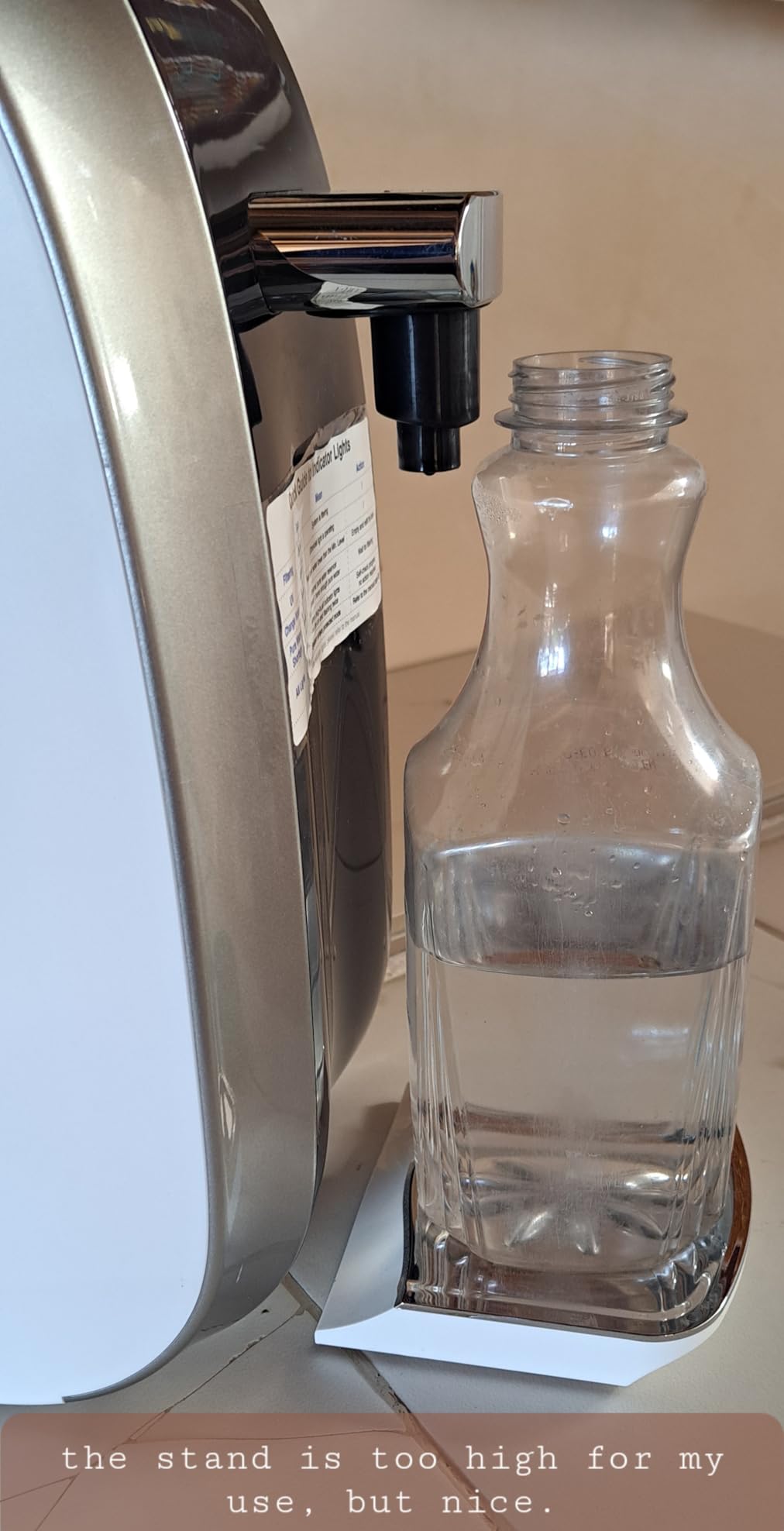
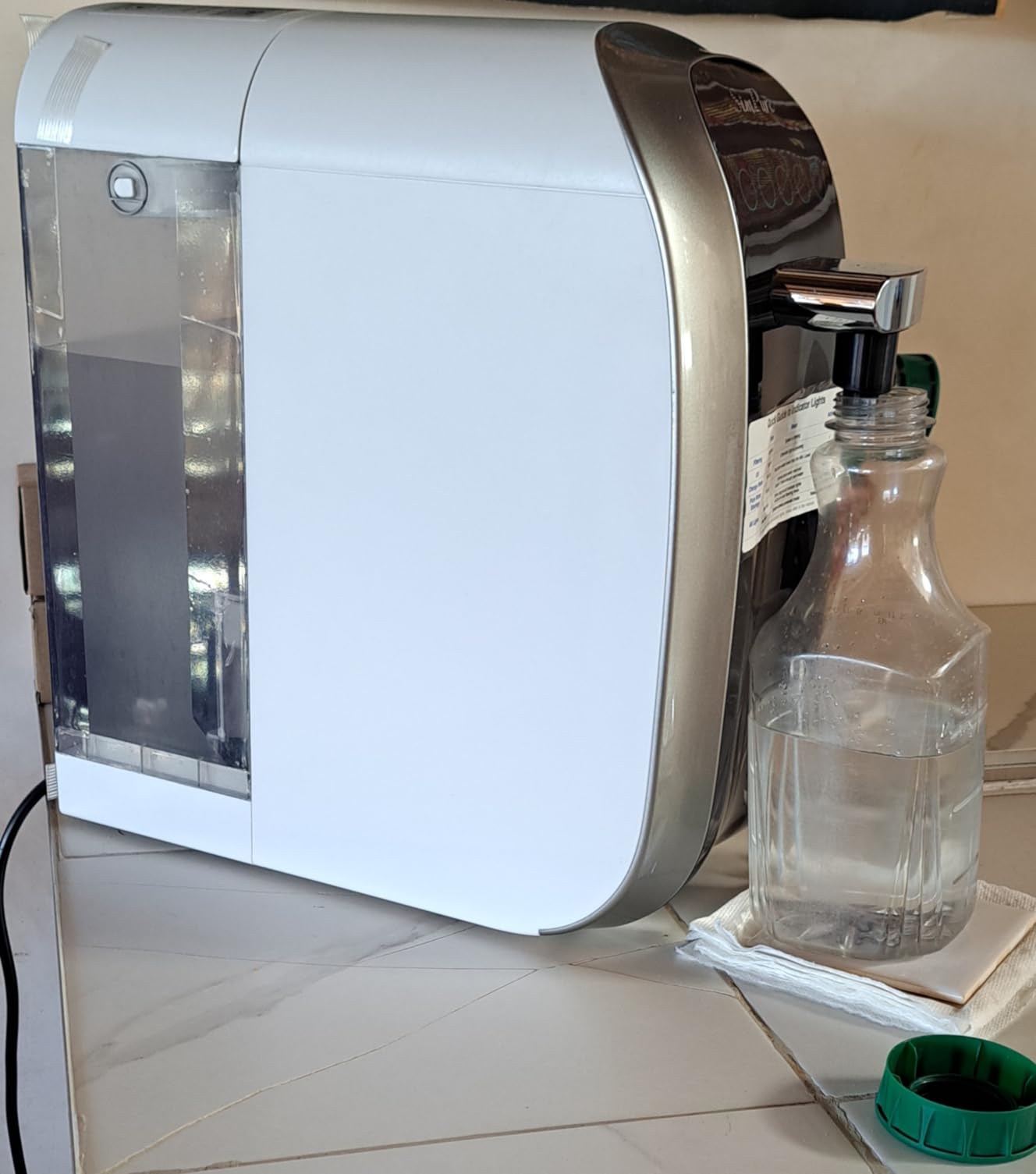
Owners report large TDS drops in real conditions, including one account of 849 ppm well water dropping to about 30 ppm. Dispense speed is roughly 15 seconds for a cup, and the listed flow rate is 418 GPD equivalent once you account for the recovery cycle. The slim profile fits narrow counter space and dispenses into a glass pitcher, and the tank holds 528 gallons of purified water per filter set, roughly 6000 bottles.
SimPure has served the USA from Seattle since 2006 and includes a one-year manufacturer warranty. Installation is genuinely zero: plug it in, fill the tank, run the flush. That is the whole routine, and for a renter or a well household it is the difference between a weekend project and a five-minute unboxing.
How the UV stage changes the safety math
If your water comes from a well, treat the membrane as a first line rather than a guarantee. A permies.com well-water user paired an under-sink RO with a separate UV lamp specifically to catch organisms passing through, and that is exactly the logic behind a built-in UV stage. It runs on the water flow, needs no consumable lamp budget beyond the cartridge set, and adds no taste to the finished water.
The pure-to-drain ratio is the other practical win here. Most conventional RO systems push three or four gallons of reject water for every gallon produced, and in a drought or on a well that matters. At 4:1 you are getting efficiency close to the better tankless units while keeping the countertop footprint.
The honest complaints
You will spend about 45 minutes on the initial flush before the first cup, which feels excessive until you skip it and wonder why the water tastes like plastic. The small internal reservoir is noisier than under-sink units and needs regular refilling, and some owners report the water picking up an off taste after about a month, blaming the internal plastic tank.
Cartridge cost is the real drawback. Reviewers note the replacement filters are expensive relative to the unit price and sometimes wear out sooner than the advertised six months. The manual is poorly translated and pushes frequent vinegar descaling. This unit sits at 4.2 stars with 71 percent five-star ratings, the lowest average among the countertop options here.
4. Bluevua ROPOT-Lite Countertop – Best for Glass Storage and Filter Tracking
Bluevua RO100ROPOT-Lite Countertop Reverse Osmosis Water Filter
Countertop 5-stage unit
Borosilicate glass carafe
0.26 liters per minute flow
25 liter tank
Pros
- Stores finished water in glass instead of plastic
- LED display shows filter life and water quality
- 3:1 drain ratio fills a jar in under three minutes
- Compact 5-stage footprint
- Annual filter changes only
Cons
- Sits at the top of the budget ceiling
- Mains power outlet required
- 25 liter tank suits one or two people
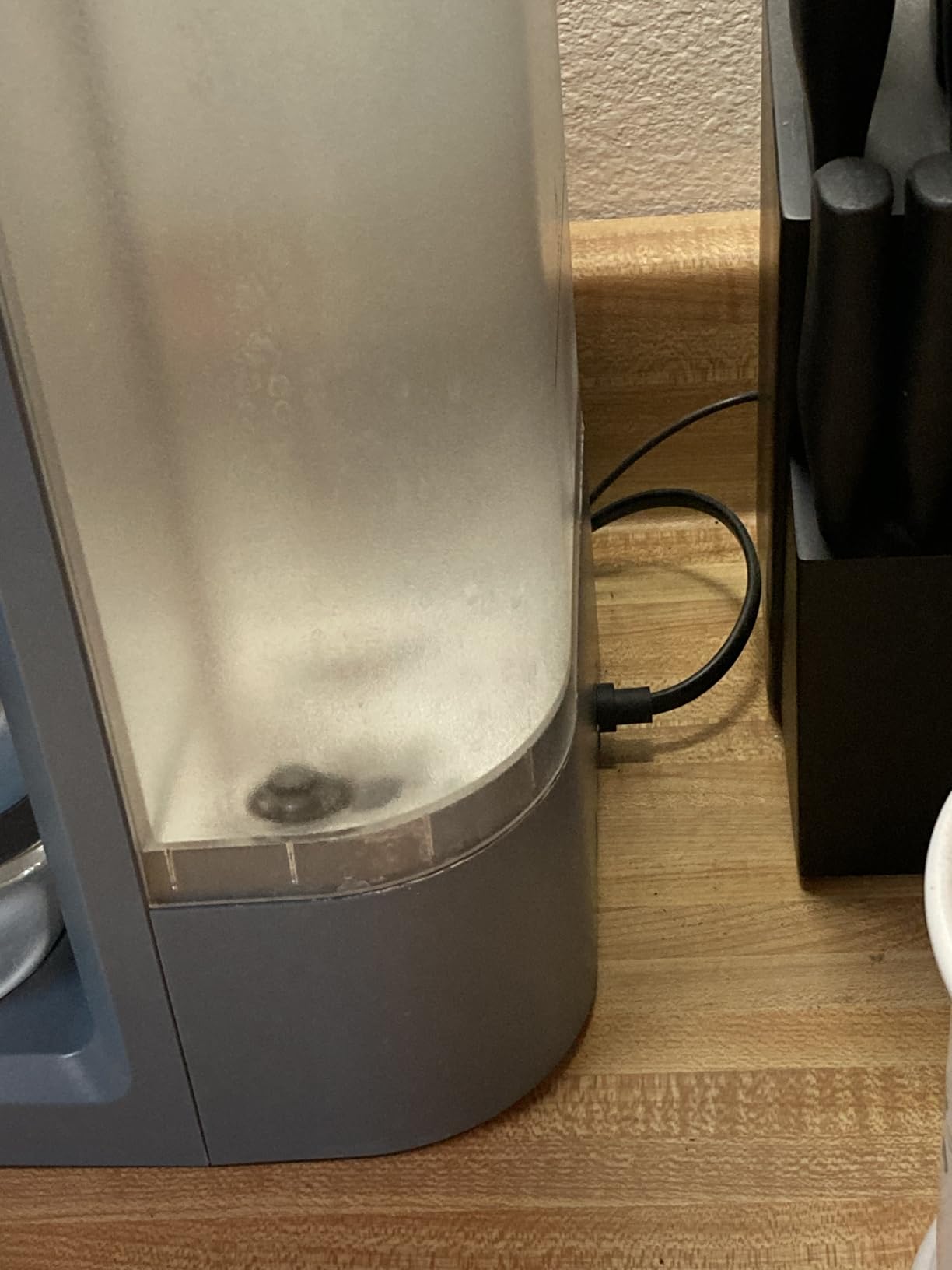
The Bluevua ROPOT-Lite solves a problem most countertop filters ignore, which is where the purified water sits while you wait for it. It dispenses into a high borosilicate glass carafe rather than a plastic reservoir, and that removes the one thing we would otherwise flag on any no-install unit.
The second thing it gets right is information. A smart LED display tracks filter life, alerts when a cartridge needs changing and shows water quality in real time, with selectable dispensing volumes through the smart controls. Given how often owners complain that built-in TDS meters are unreliable, a display that also handles replacement reminders is a genuine improvement on the norm.
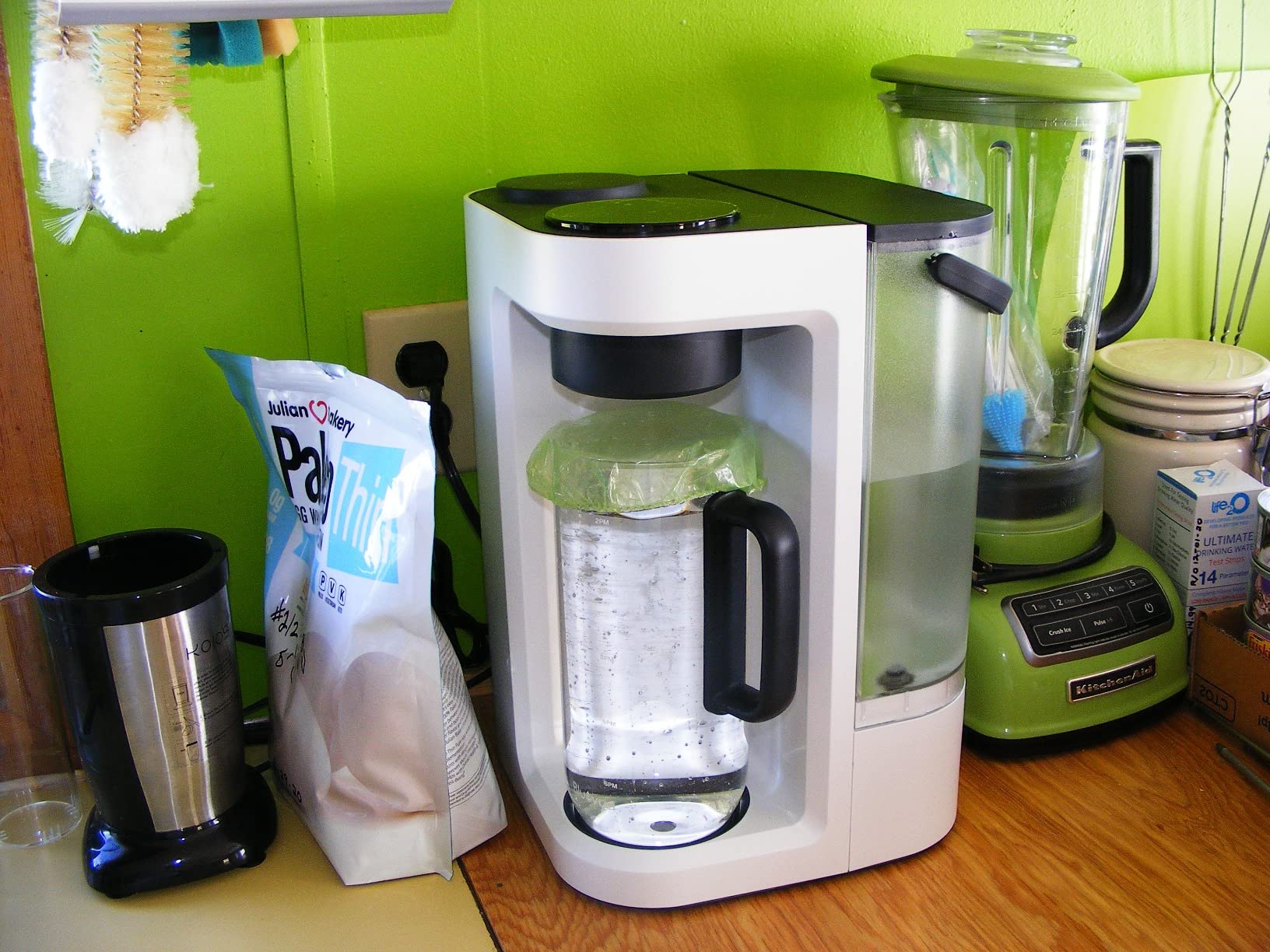
Filtration itself is conventional and competent. It uses a five-stage layout with a 0.0001 micron RO membrane, carries WQA certification to NSF/ANSI/CAN 372 for lead-free materials and SGS testing, and reduces TDS, PFOA, PFOS, chlorine, fluoride, arsenic and lead. The 3:1 filtered-to-waste ratio is about 375 percent more efficient than a typical 1:4 model, and a full carafe arrives in under three minutes.
At 9.7 by 9.5 by 14.1 inches and 5 kg it is the most compact unit in this roundup by a wide margin, with a 25 liter tank and a 0.26 liters per minute flow rate. Filter changes are annual only, and the box includes six fruit-infused water recipes for people who want to use it for more than plain drinking water.
Who benefits from glass storage
Anyone filling bottles for the fridge, prepping infant formula, or storing water for a week at a time will notice the difference between glass and plastic. It does not change the chemistry, but it removes a variable. It also suits countertop use in an office or a small kitchen where a plastic jug sitting under a tap looks temporary and looks like it.
The 3:1 ratio and sub-three-minute full jar mean this suits one or two people who want water ready in the morning without waiting through a fill cycle. If you are a family of four, the tank size becomes the limiting factor, not the filtration.
Where the budget ceiling bites
This unit sits at the top of the under-300 band, which leaves very little headroom for the annual filter set. That is the practical objection we would raise, and it is why the Bluevua is not our overall pick despite an attractive design and a 4.5 rating. Filter cost is where budget buyers get caught, and starting with less room makes that squeeze tighter.
It also needs a mains outlet, and it is built for one or two people rather than a busy household. Available variants include blue and white 7-stage UV models, a white 6-stage and a blue 6-stage, so the UV option exists here if your water needs disinfection.
5. Waterdrop G2 400 GPD Tankless – Best Tankless Under-Sink System
Waterdrop G2 Reverse Osmosis System, 400 GPD Tankless RO Water Filtration
400 GPD tankless
7-stage filtration
1:1 pure-to-drain ratio
17.3 x 5.9 x 14 inches
Pros
- Saves over 70 percent of the cabinet space of a tanked system
- Cup of water in about 12 seconds
- 1:1 drain ratio cuts waste
- Integrated circuitry reduces leak points and noise
- Filters swap in about 3 seconds
Cons
- Requires an electrical outlet and drilled holes
- Feed TDS ceiling of 300 ppm is low
- Replacement filters are brand-specific G2CF and G2MRO
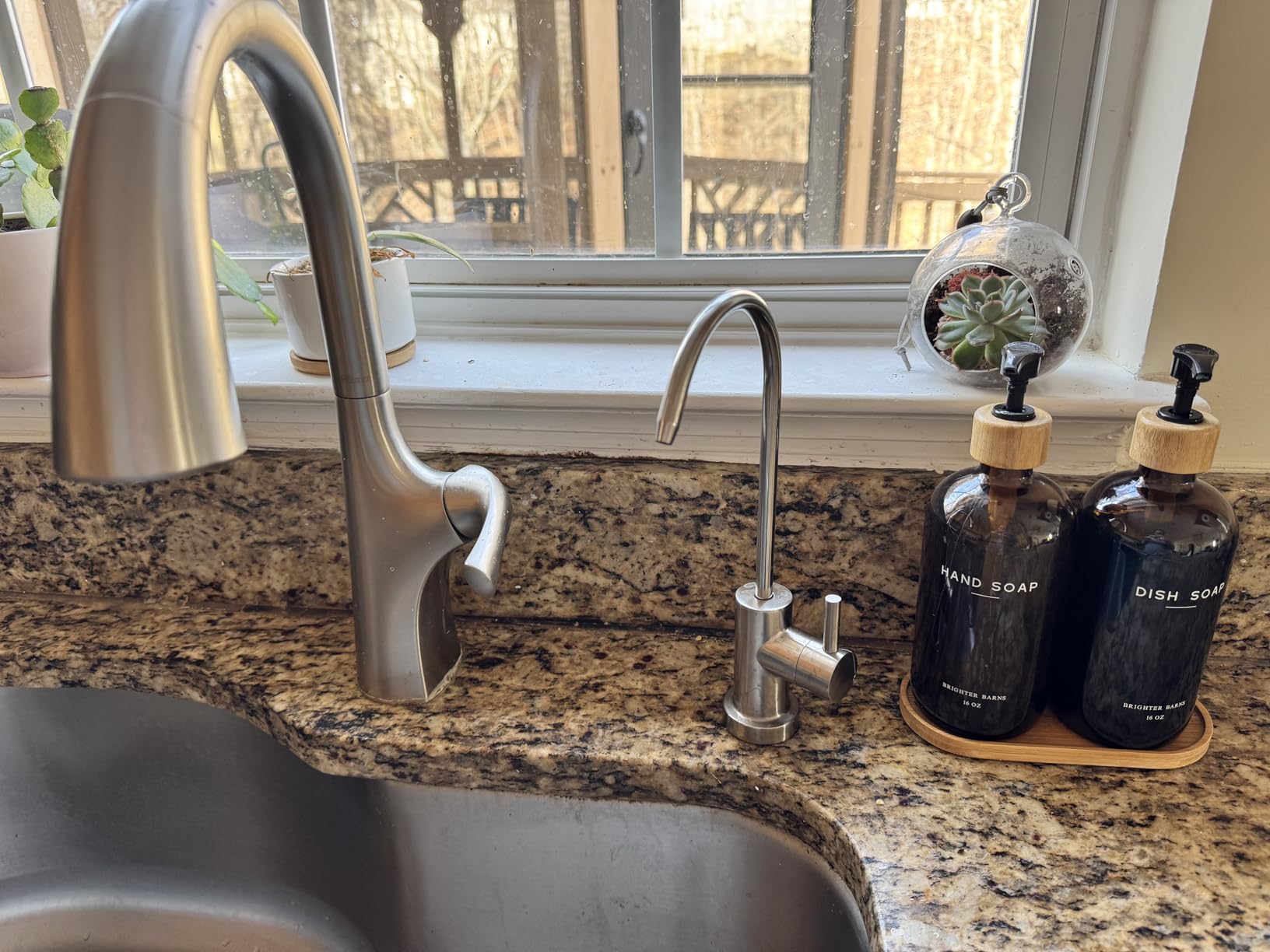
If your sink cabinet is the constraint, the Waterdrop G2 is the answer. It removes the storage tank entirely and pushes water straight to the tap on demand, which frees the space a 3 to 4 gallon tank would occupy and eliminates the plastic tank as a secondary contamination site.
Speed is the headline number here. At 400 GPD and 0.28 gpm, a cup of filtered water arrives in about 12 seconds, and the 1:1 pure-to-drain ratio means roughly one gallon of waste per gallon produced. That ratio is the best in this roundup and a large improvement on the three-to-one and one-to-four ratios most conventional RO systems run at.
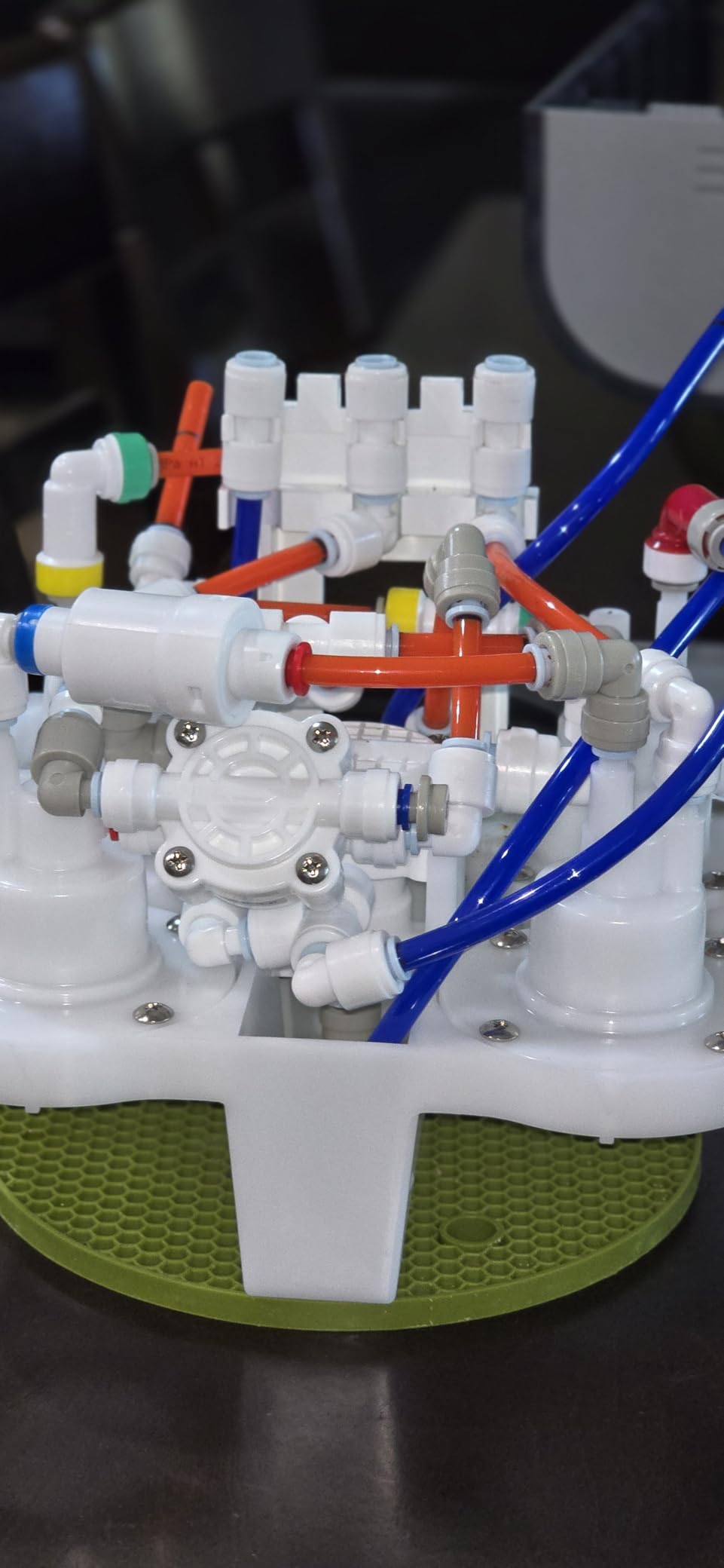
Filtration is a seven-stage layout using a composite filter plus a dedicated RO membrane, and the system carries NSF/ANSI 372 certification for lead-free materials. The integrated electrical and water circuitry is a quiet but real advantage: fewer discrete connections means fewer leak points under a sink and less operating noise, which owners with tight cabinets notice immediately.
Service is designed around speed too. The twist-and-pull filter design swaps a cartridge in about three seconds, with no tools, and installation typically completes in under 30 minutes. Replacement cartridges are the Waterdrop G2CF and G2MRO, and the unit carries a one-year manufacturer and seller combination warranty.
When tankless is worth the extra steps
Tankless makes sense if your cabinet is genuinely cramped, if you dislike the idea of filtered water sitting in plastic, or if you have several people drawing water at once and the tank cannot keep up. It also removes the most common complaint in this whole category, which is the slow trickle while the tank refills after a heavy draw.
The trade is power and drilling. A tankless unit needs a nearby electrical outlet and holes cut in the sink or countertop, so it is a homeowner job rather than a renter job. Those two requirements eliminate it for a lot of apartments regardless of how good the engineering is.
Where it falls short
The 300 ppm feed TDS ceiling is the most restrictive in this roundup and the spec to check first if you are on a private well. The Geekpure in this list handles feed water up to 1000 ppm, and the APEC goes to 2000 ppm. Above 300 ppm the membrane on the G2 will be working outside its rated envelope.
Replacement filters are brand-specific, which removes the standard-size parts advantage owners enjoy with APEC and Geekpure. At 17.3 by 5.9 by 14 inches the footprint is still substantial, and 2106 reviews at a 4.5 average with 77 percent five-star ratings puts it solidly among the better-reviewed units here.
6. FS-TFC 5-Stage 100 GPD – Best Budget Pick
FS-TFC 5-Stage Reverse Osmosis Water Filter System, NSF Certified 100GPD RO Water Purifier Under Sink Reduces 99.999% Impurities, with 4 Extra Replacement Filters Free for Home Drinking
100 GPD
5-stage under-sink
30 to 85 psi range
11.5 x 5 x 11.5 inches
Pros
- Four spare filters cover close to a year of changes
- Compact 11.5 inch footprint fits tight cabinets
- Pre-assembled main unit
- Tool-free 10-minute install
- Owners report TDS under 10 ppm with no leaks
Cons
- Some plastic fittings crack and need replacing
- Flimsy housing brackets
- Condensation collects on lower housings
- US-standard fittings
The FS-TFC is the answer when the number matters more than the badge. At 100 GPD with a published 18 liters per hour flow rate at 60 psi, a 200 ml cup arrives in about five seconds, and the box includes four extra replacement filters that cover close to a year of changes at roughly 13 cents a day.
That spare filter supply is unusual at this price and it changes the first-year math. Most buyers open a budget unit and immediately order a replacement kit; here you can run a full year before spending anything else. Owners report TDS readings consistently under 10 ppm and no leaks over years of use, with 68 percent of ratings at five stars.
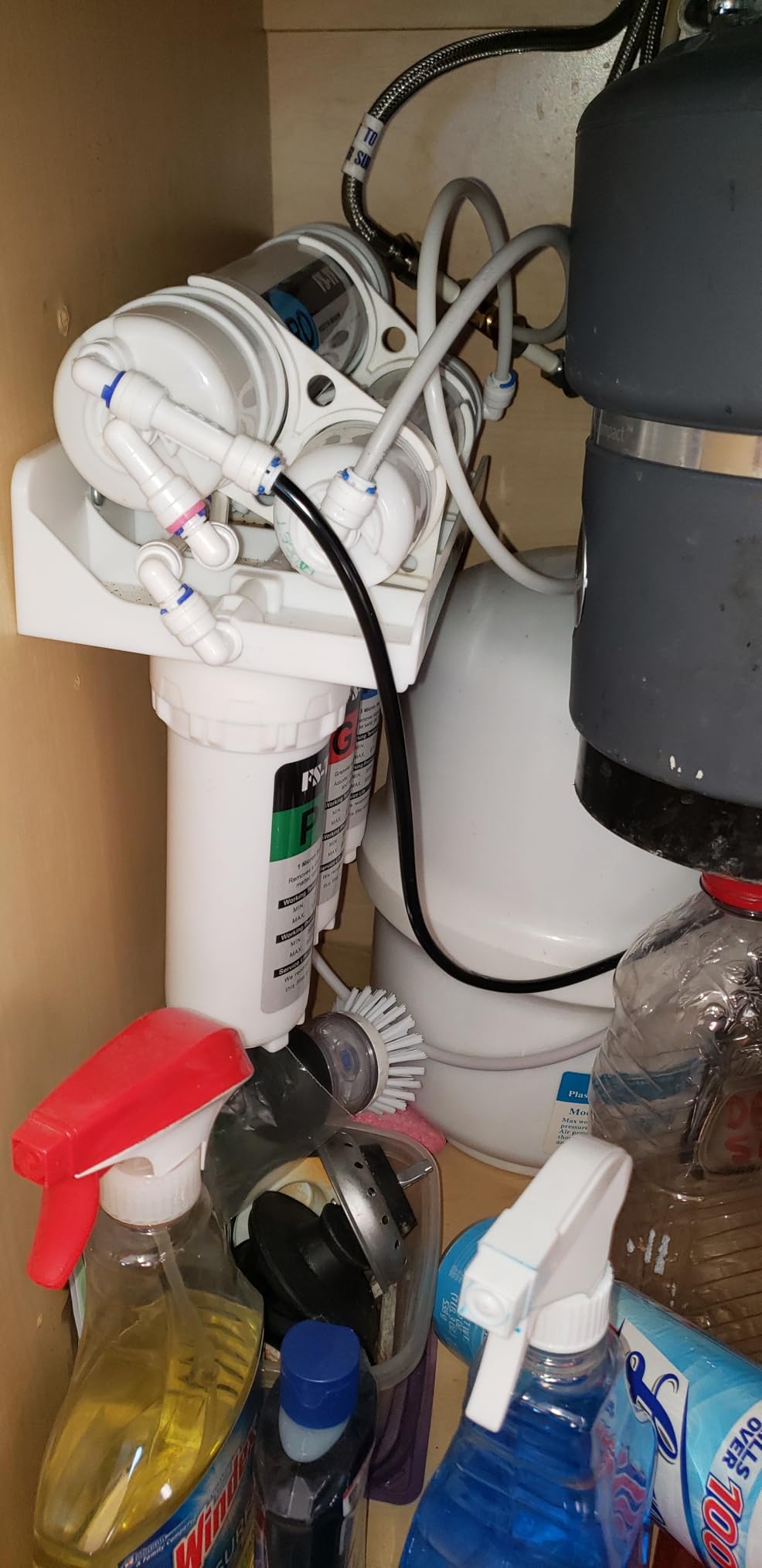
Installation is genuinely quick. The main unit arrives pre-assembled, quick-connect lines and generous tubing are included, and the manufacturer advertises tool-free installation in about 10 minutes with illustrated instructions. The body measures 11.5 by 5 by 11.5 inches, which is the most compact under-sink footprint here, and the 3.2 gallon storage tank sits alongside it.
It runs on household line pressure between 30 and 85 psi, needs no electricity, uses a 1:1 drain ratio, and handles feed water up to 500 ppm TDS. The claimed removal rate is 99.999 percent against more than 1000 contaminants including chlorine, VOCs, fluoride, arsenic, lead, nitrates and heavy metals, and the warranty is two years after registration.
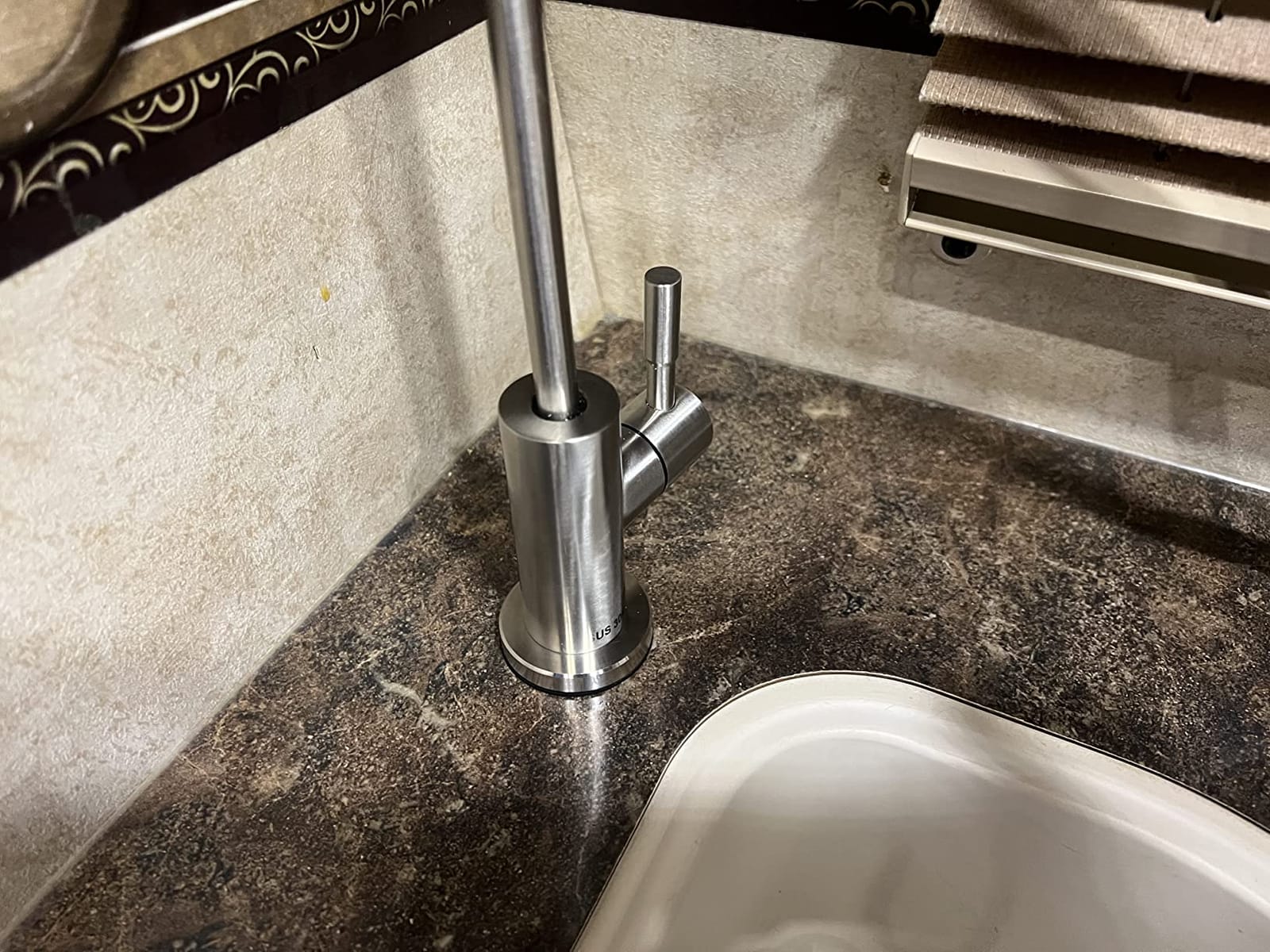
Where the value actually comes from
Two things make this the value pick rather than a compromise. First, the four included filters remove the single most annoying cost of budget ownership, which is ordering year-one consumables on top of the unit itself. Second, the 100 GPD rating beats most of the entry-level systems in this roundup, so you are not trading flow for savings.
The compact body matters more than the spec sheet suggests. In a small cabinet where a tall system will not physically fit, an 11.5-inch footprint can be the deciding factor, and the manufacturer explicitly markets it for under-sink, bathroom, RV and workplace installation.
What budget money does cost you
The connectors are the weak point. Several owners report plastic fittings and connectors cracking or leaking and replaced them with parts from other brands, which is a ten-minute fix but not a two-year fix. The mounting brackets for the filter housings are also described as flimsy, and condensation collects on the lower three housings well enough that some owners add a drain trough.
It sits at 4.2 stars with 11 percent one-star ratings, so expect a rougher ownership experience than the certified picks here. Fittings shipped are US-standard, so check compatibility outside the US. The brand also supports lifetime 24/7 technical support, which is worth more than it sounds when you are replacing connectors.
7. SimPure T1-400ALK Tankless Alkaline – Best for Low Water Pressure
SimPure T1-400ALK Tankless Alkaline Reverse Osmosis Water Filter 400 GPD
400 GPD tankless
Built-in booster pump
Alkaline remineralization stage
1.5:1 drain ratio
Pros
- Booster pump holds output steady at low line pressure
- 400 GPD tankless flow
- Alkaline stage restores calcium magnesium and potassium
- Tankless design avoids secondary tank contamination
Cons
- Alkaline stage means final TDS will not reach zero
- 4.2 rating with 12 percent one-star reviews
- Boost pump adds another electrical part under the sink
Low line pressure is the quiet killer of budget RO performance, and the SimPure T1-400ALK is the unit we point to when a household has weak pressure. It carries a built-in booster pump, so output stays consistent instead of collapsing to a trickle whenever two fixtures run at once.
That matters more than any stage count. A membrane rated at 400 GPD at 60 psi delivers far less at 35 psi, and most buyers interpret the slow result as a bad filter rather than an underpowered feed. The pump removes that variable, which is why this system sits near the top of this list for older homes, mobile homes and anything on a long line from the meter.
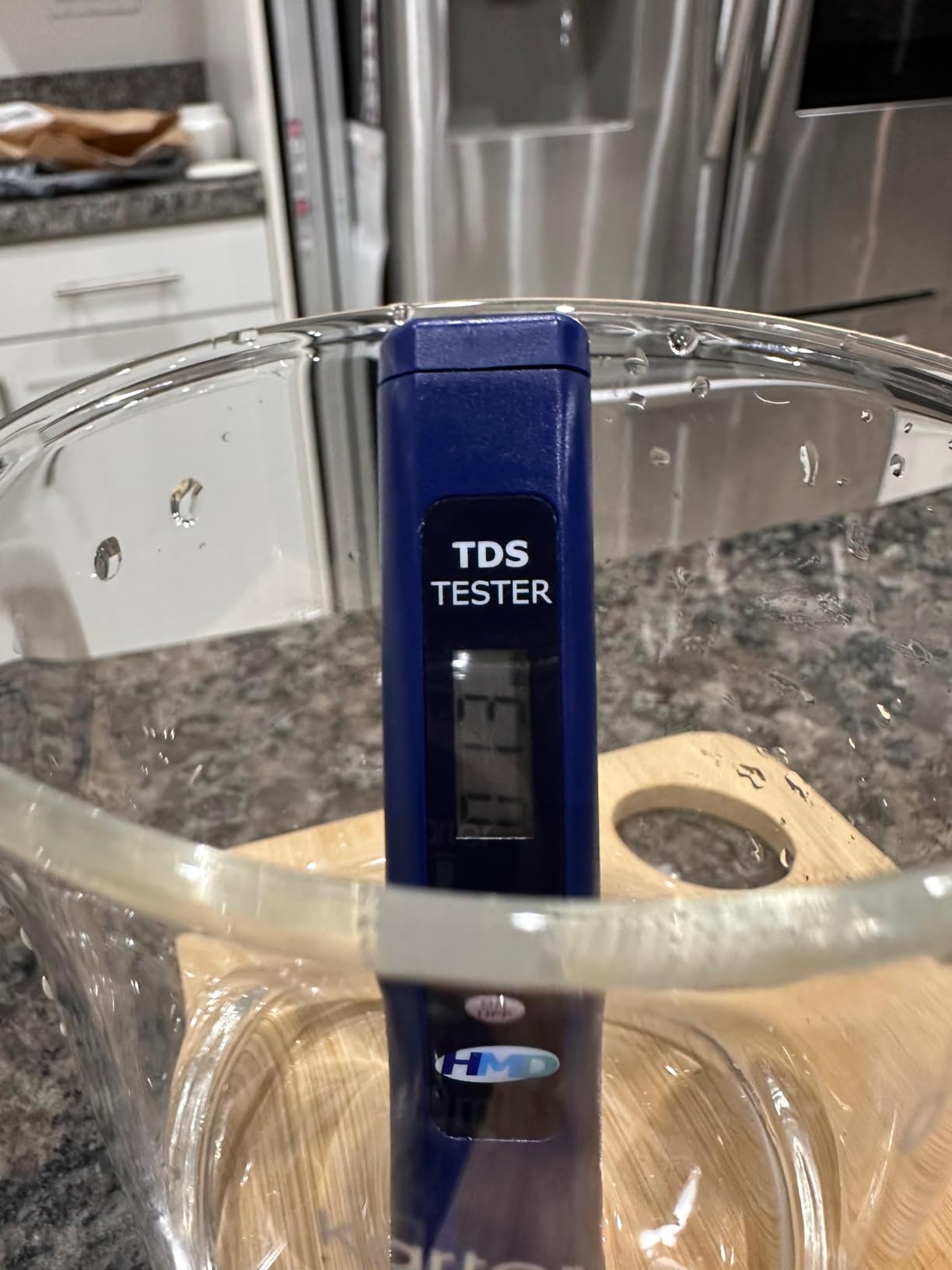
The rest of the package is substantial. It adds an alkaline remineralization filter that restores calcium, magnesium and potassium, and holds 400 GPD production at a 1.5:1 pure-to-drain ratio. SGS tested it against the NSF/ANSI 58 standard, with claimed removal above 99.99 percent of more than 1000 contaminants including PFAS, PFOA, PFOS, lead, arsenic, chloride, fluoride and nitrates.
The quick-change twist cartridges deliver 1057 gallons, roughly 8000 bottles, and the tankless body saves cabinet space while avoiding the contamination risk of a storage tank. At 15.6 by 5.3 by 15.7 inches and 8 kg it is one of the lighter units here, with feed water supported up to 500 ppm TDS.
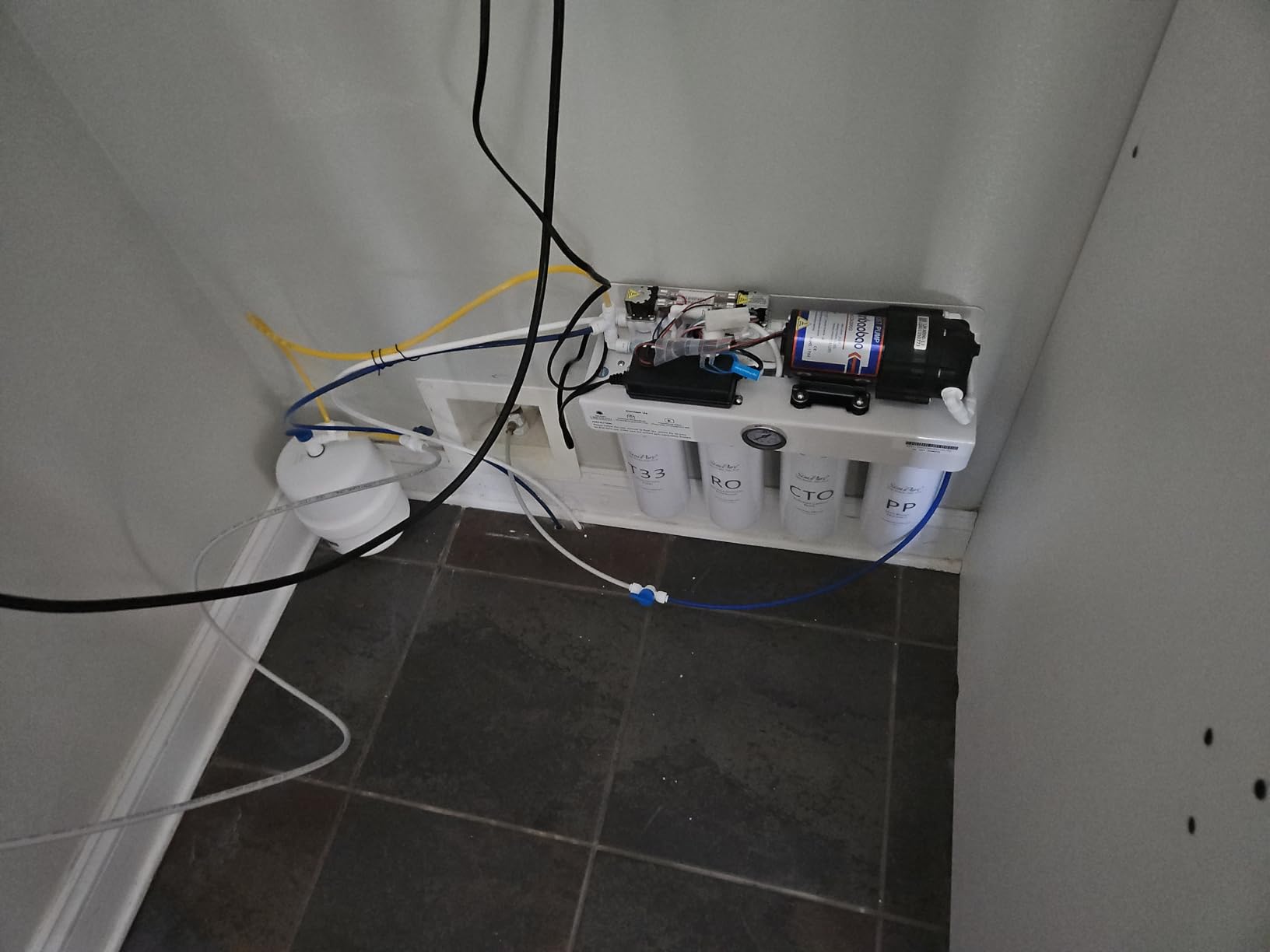
Measure your pressure before ordering
This is the advice that appears in every forum thread we read, and it is the single most useful thing to do before spending anything. Buy a pressure gauge that screws onto a cold tap, run the dishwasher or a shower for a minute, then read the gauge. Most budget membranes are rated at 40 to 60 psi, and a reading near 30 psi explains a lot of disappointing reviews.
Our own advice: measure PSI and TDS before ordering rather than after, because both numbers take ten minutes and both change which unit you should buy. If pressure is fine and you have a countertop unit in mind, skip the pump and save the complexity.
The alkaline tradeoff you have to accept
An alkaline remineralization filter puts minerals back on purpose, which means your finished-water TDS will not drop to the single digits. Owners chasing the lowest possible number will read this as worse performance when it is a design choice aimed at taste. If your goal is maximum TDS reduction rather than drinking experience, the iSpring RCC1DP with its deionization stage is the right pick instead.
This unit carries a 4.2 average with 70 percent five-star and 12 percent one-star ratings. The booster pump is one more electrical part under a sink where water and power coexist, and the alkaline stage means the finished water never reads as low as a plain membrane system would.
8. DREO Countertop RO Water Filter – Best for Renters and Apartments
DREO Reverse Osmosis Water Filter Countertop, RO Filtration System, 3:1 Pure to Drain, TDS & Filter Life & 2 Autofill Pitchers, Install-Free, Self-Cleaning Water Purifier, RO Water Filter
Countertop install-free
3:1 pure-to-drain
Built-in TDS meter
5 liter tank
Pros
- No plumbing and no drilling at all
- Self-cleaning cycle included
- Built-in TDS meter and filter-life indicator
- 3:1 pure-to-drain limits waste
- Two autofill pitchers included
Cons
- Smallest review base in the set at 870 ratings
- 5 liter tank needs frequent refills
- ABS housing means water sits in plastic
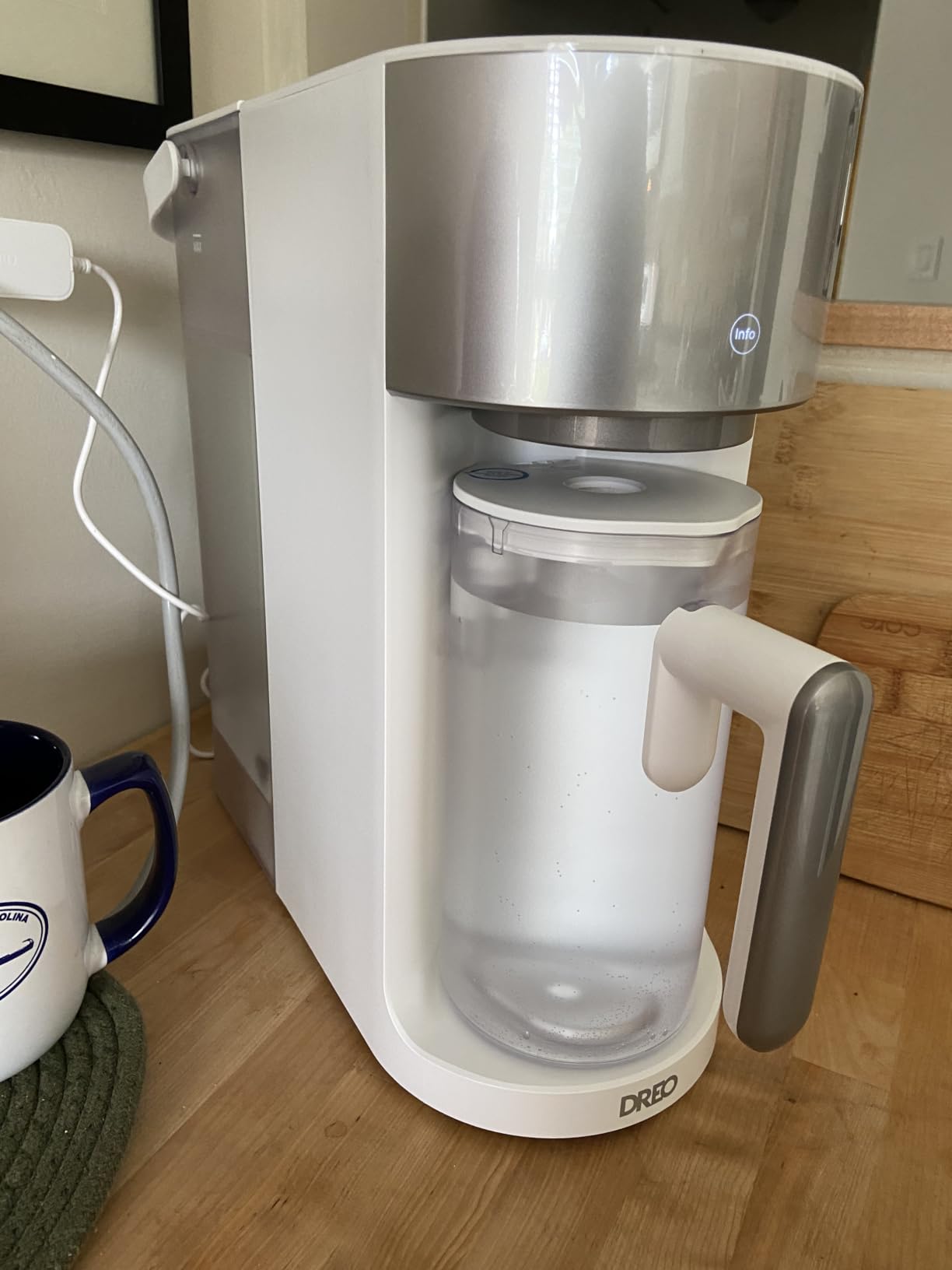
Nothing on this list solves the renter problem better than a countertop unit, and the DREO is the one we would point an apartment dweller toward. There is no drill hole, no drain line, no under-sink space and no permanent change to the property. You plug it in, fill the tank and dispense.
What separates it from other countertop units is the maintenance feedback. It has a built-in TDS meter showing water quality in real time, a filter-life indicator that alerts when the RO cartridge needs changing, and a self-cleaning function. We are skeptical of built-in meters in general, because owners across this category complain they are not trustworthy, but having the filter-life alert alongside the reading is a better design than a bare number.
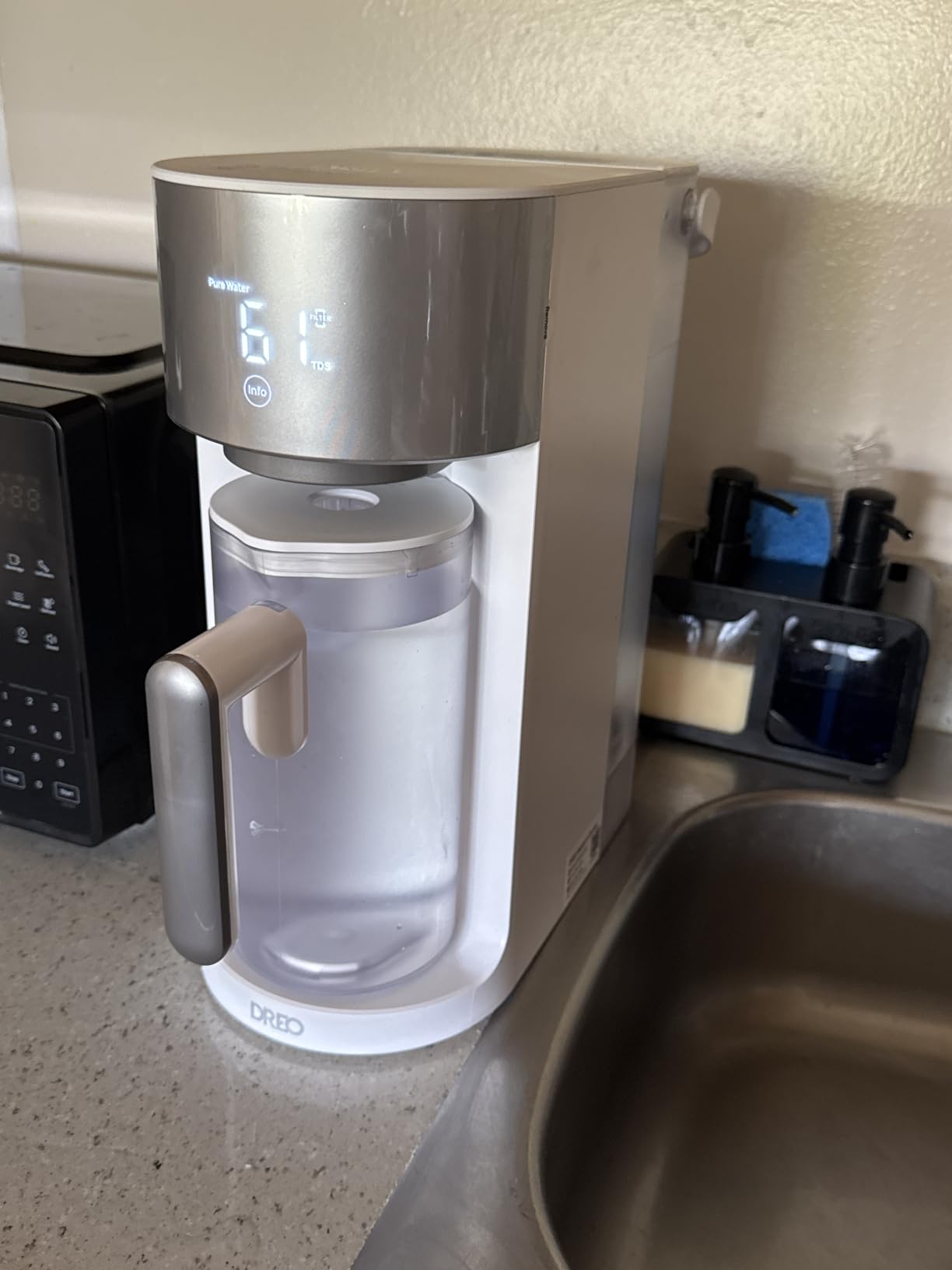
Filtration is a 7-in-1 layout rated to reduce 99.9 percent of contaminants, targeting PFOA, PFOS, chlorine and fluoride, and SGS tested it to NSF/ANSI 58 standards. The 3:1 pure-to-drain ratio limits waste to about a third of the volume a conventional system sends down the drain, and the unit measures 15.7 by 6.7 by 13.4 inches at 10.8 pounds.
Two autofill water pitchers are included so you can dispense and store at the same time, and tank sizes come in 3 litre and 5 litre versions in white and gray. This is a 2026 release and it already ranks first in its category for sales volume despite a smaller review base, which tells you the format is landing with buyers.
What install-free actually costs you
You give up flow rate and tank size. The 5 litre reservoir needs refilling for a household of more than one or two, and you dispense in pitcher quantities rather than at a dedicated tap. The ABS housing also means finished water sits in plastic before it reaches your glass, which is the tradeoff we flagged on the Bluevua and that the borosilicate carafe solves.
For a short-term apartment, a dorm, an office or a rental where drilling is not an option, none of that matters much. We wrote a full breakdown of the format in our guide to the best countertop reverse osmosis systems for renters if you want the wider comparison.
What we would watch
The review base is the smallest of the under-sink and countertop group at 870 ratings, and this is a new release, so there is not a decade of long-term ownership data behind it yet. That is the honest risk in buying any recent countertop design: the format is proven but this specific unit is young.
Rated 4.4 with 73 percent five-star ratings, the owner feedback concentrates on exactly the two things you would hope, the built-in meter and the install-free setup. If you want reassurance from a long ownership record instead, the APEC ROES-50 has owners reporting a decade of service.
9. Geekpure RO5 5-Stage 75 GPD – Best for High-TDS Feed Water
Geekpure 5 Stage Reverse Osmosis RO Drinking Water Filter System-75 GPD
75 GPD
5-stage to 0.0001 micron
40 to 100 psi range
Feed water up to 1000 ppm
Pros
- Handles feed water up to 1000 ppm TDS
- 12 filter pieces in the box
- NSF-certified membrane and universal parts
- Compact 2.8 gallon tank
- Works without electricity
Cons
- Install and filter flushing take 1 to 2 hours
- First two tanks of water must be discarded
- Heaviest and largest under-sink footprint here
The Geekpure RO5 has the highest feed-water tolerance in this roundup at 1000 ppm TDS, which makes it the pick for private wells, untreated cisterns and any household that has never had its water properly tested. The APEC goes higher at 2000 ppm, but the Geekpure pairs that range with universal replacement parts.
It filters to 0.0001 micron across five stages, reducing arsenic, lead, fluoride, cadmium and heavy metals. Output is 75 GPD at 60 psi into a 2.8 gallon pre-pressurized tank, and the system runs on line pressure between 40 and 100 psi with no electricity needed.
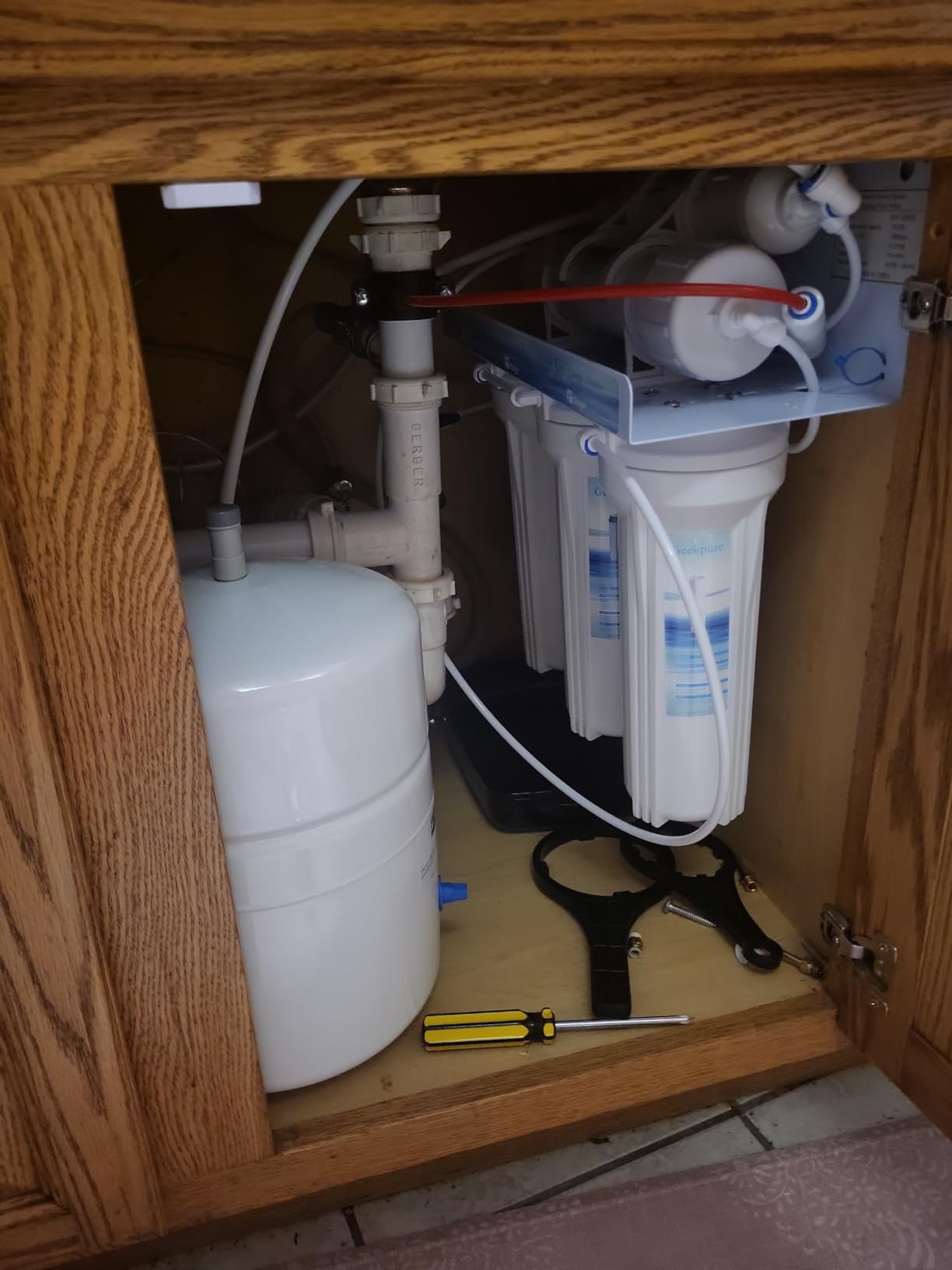
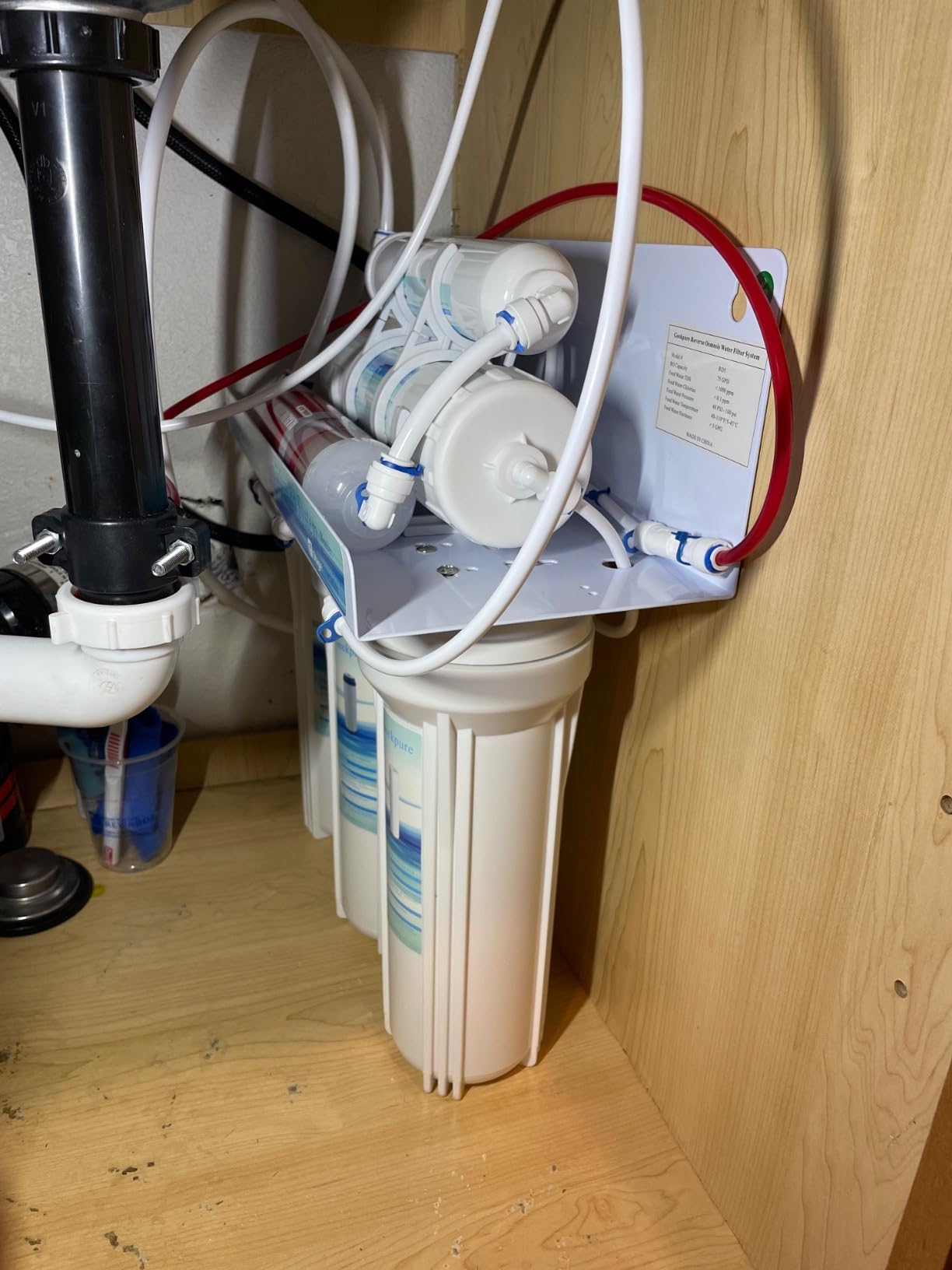
The spare filter supply is unusual for this price. Twelve filter pieces come in the box, five installed plus seven extra, and they are universal, standard-size cartridges rather than proprietary units. The RO membrane and storage tank are both NSF-certified, and the pre-filters are rated about one year with the membrane at 2 to 3 years and system service life of 3 to 5 years.
Color-coded tubing and quick push fittings simplify a genuinely straightforward install. Pipe sizes of 1/4 inch and 3/8 inch cover most US setups, and the feed water spec calls for 40 to 110 degrees Fahrenheit with free chlorine under 0.1 ppm, which means a chlorinated municipal supply is not an issue.
Testing your water before you choose a range
A 1000 ppm ceiling only matters if you are near it, and most municipal supply sits far lower. If you have never tested, an at-home TDS meter takes two minutes and a reading above 300 ppm tells you the whole category of system you need. If you are on a well, test for bacteria as well, because no membrane in this list disinfects on its own.
TDS is only a rough proxy, and it tells you nothing about which contaminant is present. Two waters reading 400 ppm can behave very differently through a membrane depending on chemistry, which is why we would pair a reading with a proper lab panel if you are on a private supply.
The install is the trade-off
Installation and filter flushing typically take one to two hours, and the first two tanks of produced water must be discarded. That is a real afternoon commitment, and it is the reason we would not hand this to a first-time installer in a rental. Plan the flush for a Saturday and run all your drinking water through it before you trust a glass.
It is also the heaviest and largest unit here at 28 pounds and 14.2 by 9.5 by 18.1 inches, so measure the cabinet before ordering. Owners like the generous spare filter supply and the standard-size parts, and the unit carries a one-year warranty with two years of spare part availability and 24/7 support.
10. iSpring RCC1DP RO/DI 150 GPD – Best for Aquariums and Near-Zero TDS
iSpring RCC1DP Tankless RO/DI System – 5-Stage, 150 GPD with Pump
RO/DI 5-stage
150 GPD membrane
0 to 1 ppm TDS output
Built-in booster pump
Pros
- Only unit here with a deionization stage reaching 0 to 1 ppm
- Booster pump holds output in low-pressure homes
- Removes hard-water minerals that cause scale
- Tankless footprint stays small
- 30-day money-back guarantee
Cons
- Smallest review base at 239 ratings
- Lowest throughput in the group at 150 GPD
- DI resin and membrane are ongoing consumables
- Needs a power outlet
This is the specialist pick, and it exists because a reverse osmosis membrane alone will not get reef aquariums, laboratories or dental equipment to the water quality they need. The iSpring RCC1DP adds a deionization stage after the membrane, driving TDS down to 0 to 1 ppm rather than the single-to-double digits a standard RO system reaches.
It is a five-stage RO/DI system addressing more than 1000 water pollutants, with about 98 percent lead reduction plus chlorine, fluoride and dissolved solids removal. The 150 GPD RO membrane is the lowest throughput in this roundup, and that is the correct trade for a system whose purpose is purity rather than volume.
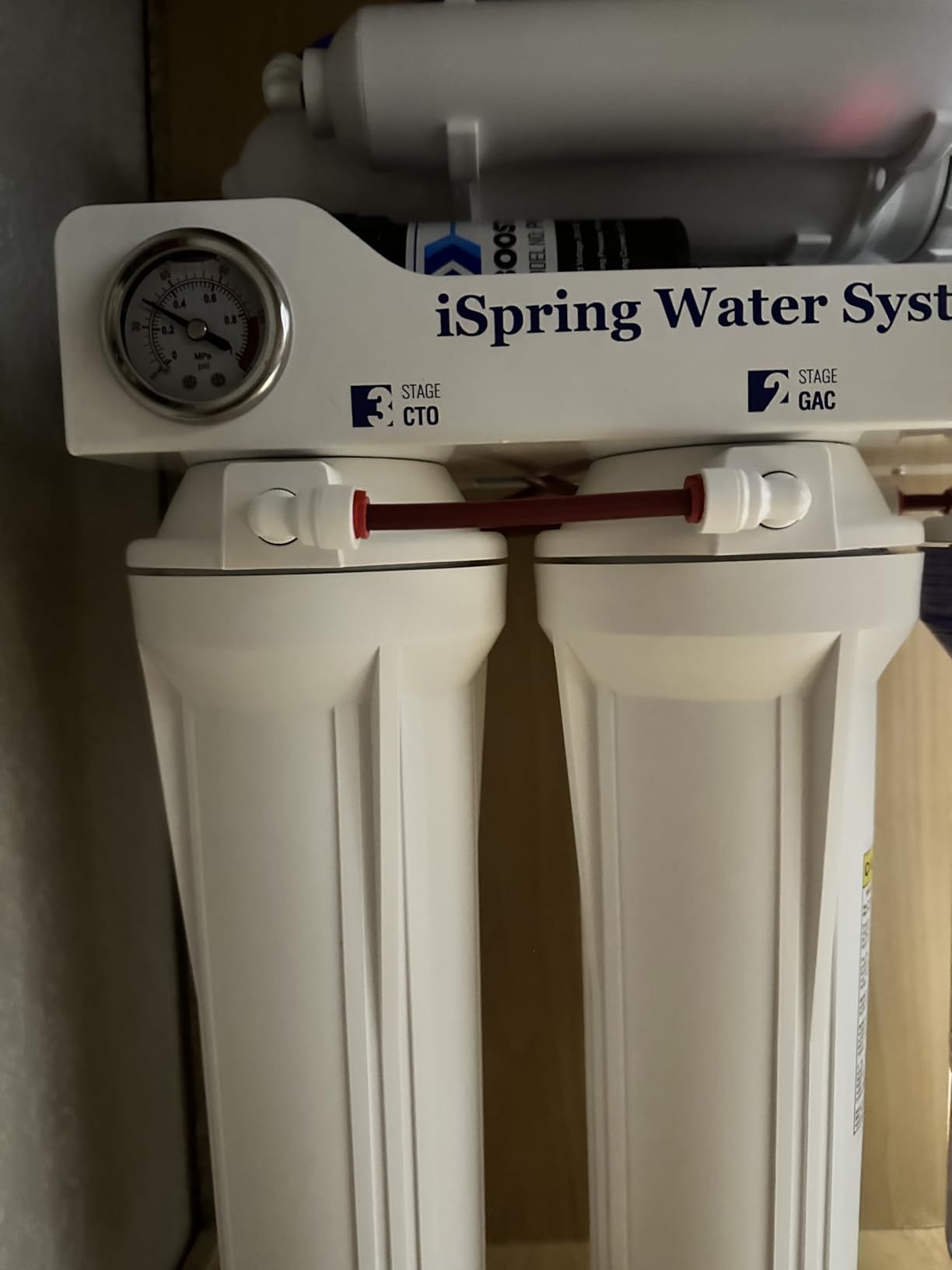
The built-in booster pump keeps output consistent in low-pressure homes, which matters because a DI system already produces water slowly. The tankless design keeps the footprint small at 14.2 by 8.5 by 17.7 inches and 20 pounds, and eliminating the tank also removes the last surface where bacteria can colonise.
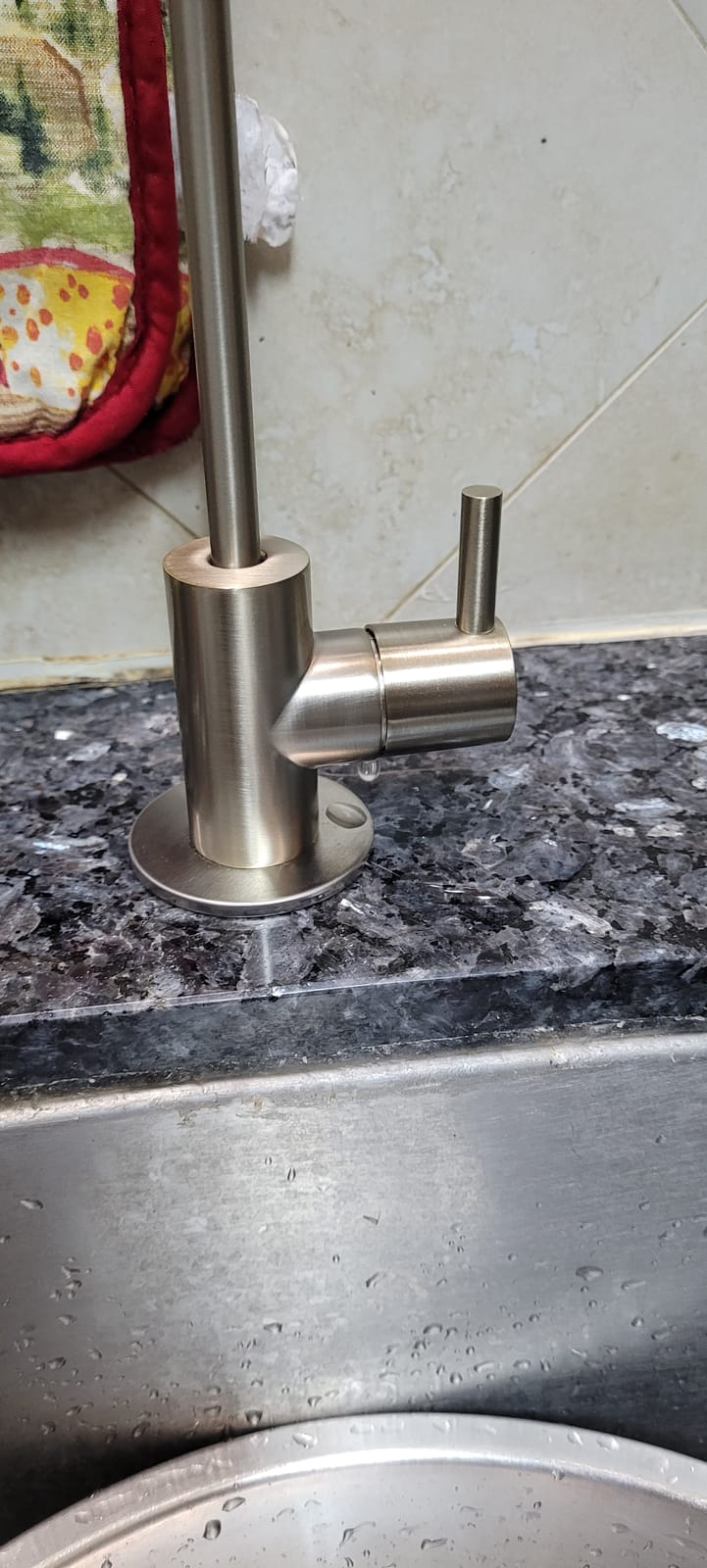
Manufacturer applications include aquariums, reefs, fish tanks, laboratories, dental facilities and microelectronics, and the company notes the unit also prevents scale on washed items by eliminating hard-water minerals. Support is US-based, with a 30-day money-back guarantee and a one-year limited warranty.
When near-zero TDS is the actual requirement
If you maintain a reef aquarium, the DI stage is not a luxury. Salt mix chemistry, evaporation and dissolved organics all behave differently at single-digit TDS than they do at 20 or 30 ppm, and the ability to hit 0 to 1 ppm removes a variable that hobbyists spend real money chasing with bottled water and manual dosing.
It also suits anyone adding a spot-free rinse to laundry or dishes, since hard-water minerals are what leave the spotting. At this point in the list we are choosing a tool rather than drinking water, and that is a legitimate reason to buy under this budget ceiling.
What the deionization stage costs you
DI resin and the membrane are consumables with ongoing replacement cost, and the resin does not last forever regardless of how much water you drink. At 150 GPD the system is the slowest here, so a household trying to use it as everyday drinking water will be waiting. And the review base is the smallest in the set at 239 ratings, so long-term reliability data is genuinely limited.
Even so, the rating distribution is the most favorable in the roundup at 83 percent five-star, which suggests the people who buy it for its intended purpose are happy with it. It needs a power outlet for the pump. If you want drinking water rather than ultrapure water, choose one of the first nine instead.
How to Choose an RO System Under 300 Dollars
This section is where the money actually gets spent well. Two cheap systems from the same shelf can differ by several hundred dollars over five years once cartridges, fittings and a service call are counted, and the specs that decide that outcome are all readable before you order.
Five checks to run before you buy anything
Line pressure. Most membranes are rated at 40 to 60 psi. Below 35 psi you need either a system with a built-in booster pump, such as the SimPure T1-400ALK or the iSpring RCC1DP, or a pump you add separately. This is the number one cause of disappointing under-sink systems, and it costs ten dollars to check.
Cabinet space. Measure the cabinet opening and the drop from the sink base before you fall for a 75 GPD unit with a tall tank. The FS-TFC at 11.5 inches is the most forgiving here, and the Geekpure at 14.2 by 9.5 by 18.1 inches is the tightest squeeze for a full-size install.
A faucet hole and a drain. Under-sink units need a drilled hole for a dedicated faucet and a drain line connection. Tankless systems need an electrical outlet in the cabinet as well. If you cannot drill or there is no outlet, a countertop unit is the only realistic option.
Water temperature. Membrane performance drops sharply with cold water, and most of these systems are rated from 40 to 100 degrees Fahrenheit. A garage or unheated basement in a cold climate can put feed water outside the rated range.
Feed TDS. Check the maximum TDS your unit supports against a reading from your tap. The Waterdrop G2 tops out at 300 ppm, the SimPure and FS-TFC units at 500 ppm, the iSpring RCC7AK-BN at 750 ppm, the Geekpure at 1000 ppm and the APEC at 2000 ppm.
What NSF/ANSI 58 actually certifies
NSF/ANSI 58 is the drinking-water standard for reverse osmosis and covers contaminant reduction claims such as lead, nitrate, arsenic, fluoride and TDS. NSF/ANSI 42 covers aesthetic claims like taste, odor and chlorine reduction, which is a much easier bar. NSF/ANSI 53 addresses health-related contaminants and NSF/ANSI 372 covers lead-free materials used in plumbing components.
The distinction that matters when you read a product page is whether certification applies to the whole system or to one component. Look for the certification mark with a listing number you can verify in the directory, and check whether the brand holds system-level certification or simply uses a certified membrane inside an uncertified housing. Our pick, the iSpring RCC7AK-BN, is certified across the entire system.
A note on methodology: we deliberately did not publish removal percentages we could not tie to a matched inlet sample. Manufacturer claims vary in how they were tested, and an unverified number is worse than none when you are filtering drinking water.
Tank versus tankless versus countertop
A tanked unit fills a pressurized storage vessel during idle time and then delivers water quickly from that stored volume. It runs without power and is the simplest, cheapest design, and the tradeoff is slow tank refill, plastic tank space and a second surface bacteria can grow on.
A tankless unit uses a pump to filter on demand, giving fast, continuous flow with no tank. It frees cabinet space and eliminates the storage vessel, but it needs an outlet, drilled holes and more parts that can fail. Owners who rate these systems complain most about waiting, and tankless designs are the direct answer to that complaint.
A countertop unit trades flow rate and volume for zero installation. It suits renters, offices and short-term housing, and the format is the fastest route to filtered water with no plumber and no commitment. We covered that category separately in our countertop RO guide for renters if the tradeoffs matter to you.
Understanding GPD and the pure-to-drain ratio
GPD is gallons of finished water per day at a stated test pressure, usually 60 psi, and it is the closest thing to a speed rating for a filter. A single person drinks and cooks with roughly one to two gallons a day. A family of four cooking, brewing coffee and filling bottles can push 10 to 15 gallons, which means a 50 GPD system works but a 100 or 400 GPD system feels dramatically better.
The pure-to-drain ratio is the efficiency half of the same story. A 1:1 ratio wastes one gallon per gallon produced. A 4:1 ratio wastes four. The SimPure Y7P-BW runs at 4:1, the Bluevua ROPOT-Lite and DREO at 3:1, the SimPure T1-400ALK at 1.5:1, and the Waterdrop G2 and FS-TFC at 1:1. For a household on a well or in a drought, the ratio matters as much as the GPD figure.
Planning the five-year cost of ownership
The unit is usually the smallest part of the bill. Pre-filters and carbon blocks run on a six-to-twelve-month cycle, the RO membrane on a two-to-three-year cycle, and specialty stages like alkaline mineral or DI resin add their own. In this roundup the Geekpure ships 12 filter pieces, the FS-TFC includes four spares, and the Bluevua changes only annually.
Before you commit, check whether the replacement cartridges are standard sizes or proprietary. The APEC ROES-50 and the Geekpure RO5 use universal, standard-format parts that any supplier can sell, which keeps year-three costs competitive. The Waterdrop G2CF and G2MRO, and the iSpring F4AK, F9K, F19K75 and F28K75 sets, are brand-specific, which is a fair trade for better integration but a real running cost.
Well water needs a disinfection step
If you are on a private well, RO alone is not sufficient. Membranes reduce dissolved solids and most contaminants, but bacteria and viruses can pass through, so pair RO with UV or a chlorination step. The SimPure Y7P-BW includes UV as standard, and the Bluevua is available in 7-stage UV variants.
A permies.com well-water user paired an under-sink RO with a UV lamp specifically to catch organisms escaping the membrane, which is sound practice. Test the source before buying, and never assume clarity means safety.
What you give up against a 600 dollar system
The premium band buys heavier housings, more accurate flow control, better leak detection, longer warranty terms and third-party lab documentation you can download as a PDF. It also buys higher-quality carbon stages and smarter faucets with accurate TDS readouts.
What it does not buy is meaningfully better contaminant removal. The membranes in this budget band perform within a narrow margin of premium units when feed pressure and temperature are right, which is why we consider the under-300 tier the smarter buy for most households. The trade is build quality and documentation, not purification.
Frequently Asked Questions
What is the best and cheapest reverse osmosis system?
Among systems under 300 dollars, the iSpring RCC7AK-BN is our best overall pick: 75 GPD, six stages including an alkaline mineral stage, and NSF/ANSI 58 certification across the whole system, rated 4.6 from over 21000 reviews. The cheapest strong option is the FS-TFC 100 GPD, which ships four spare filters and reaches under 10 ppm TDS on municipal water. Cheapest and best are different goals, so pick by cabinet space, pressure and filter format instead of sticker alone.
Are reverse osmosis systems worth the money?
Yes, when your goal is certified removal of dissolved contaminants such as lead, nitrate, PFAS and fluoride, or when plain tap water simply tastes bad enough that you buy bottled water. Under 300 dollars you get roughly 85 to 95 percent of the purification performance of a premium unit. What you trade is build quality, warranty length and smart features, not filtration capability.
What is a major downside of reverse osmosis water?
The two big ones are wastewater and mineral removal. Conventional systems send three or four gallons of reject water down the drain for each gallon produced, and the membrane strips dissolved minerals along with contaminants, which leaves water that tastes flat. A remineralization stage adds minerals back for taste, and a 1:1 or 4:1 drain ratio cuts the water waste.
How much does it cost to replace a reverse osmosis filter?
It depends entirely on format. Pre-filters and carbon blocks typically run on a six-to-twelve-month cycle and the RO membrane on a two-to-three-year cycle. Units using universal standard-size cartridges, like the APEC ROES-50 and Geekpure RO5, keep costs competitive because any supplier can sell the parts. Proprietary sets such as the Waterdrop G2CF and G2MRO or the iSpring F4AK and F9K sets cost more over five years.
What water purifier is suitable for water with TDS levels below 300?
Any certified RO system in this list handles feed water under 300 ppm comfortably. Below that level you do not need an extreme feed tolerance, so a 75 or 100 GPD under-sink unit with a standard tank will serve most households. The exception is appliances that need near-zero TDS, where the iSpring RCC1DP with its deionization stage reaching 0 to 1 ppm is the right choice.
Which system is better for my home, Waterdrop or a tank-style RO?
Choose the Waterdrop G2 if your cabinet is tight or you dislike plastic storage, because it saves over 70 percent of the space a tank occupies and delivers a cup in about 12 seconds at 400 GPD. Choose a tank-style unit like the APEC ROES-50 or FS-TFC if you want no power connection and cheaper filters. Note the G2 supports feed water only up to 300 ppm TDS.
Is RO water hard on the kidneys?
There is no established evidence that drinking properly filtered RO water is harmful to healthy kidneys. The membrane removes dissolved minerals including calcium and magnesium, so if your total daily intake from food is low, drinking large amounts of plain RO water adds little of either. Remineralization stages add calcium, magnesium and potassium back, and most households get adequate minerals from food.
Do under sink RO systems waste a lot of water?
Conventional systems waste three to four gallons per gallon produced, but ratio matters more than you might expect. The Waterdrop G2 and FS-TFC run at 1:1, the SimPure T1-400ALK at 1.5:1, the Bluevua ROPOT-Lite and DREO at 3:1, and the SimPure Y7P-BW at 4:1. On a well or during a drought, picking a tight ratio saves real volume.
Bottom Line
For most households on city water, the iSpring RCC7AK-BN is the reverse osmosis system to buy under 300 dollars. It carries the highest rating and the largest review base in this group, certifies the entire system to NSF/ANSI 58, adds a mineral stage so the water tastes right, and installs without stripping a nut in the dark.
Renters and apartment dwellers should go countertop, where the DREO gives you a TDS meter and filter-life alerts with no drilling. Well households should choose the SimPure Y7P-BW for its UV stage and efficient 4:1 drain ratio. Tight cabinets call for the Waterdrop G2, weak line pressure for the SimPure T1-400ALK, hard feed water for the Geekpure RO5, and reef aquariums or labs for the iSpring RCC1DP.
Whichever you pick, measure your PSI and TDS before you order. Ten minutes of checking keeps you out of the two failure modes that generate most of the complaints in this category. As we noted in our broader drinking-water roundup, the budget band does not compromise filtration, so the best reverse osmosis systems under 300 dollars in 2026 are genuinely good systems.