
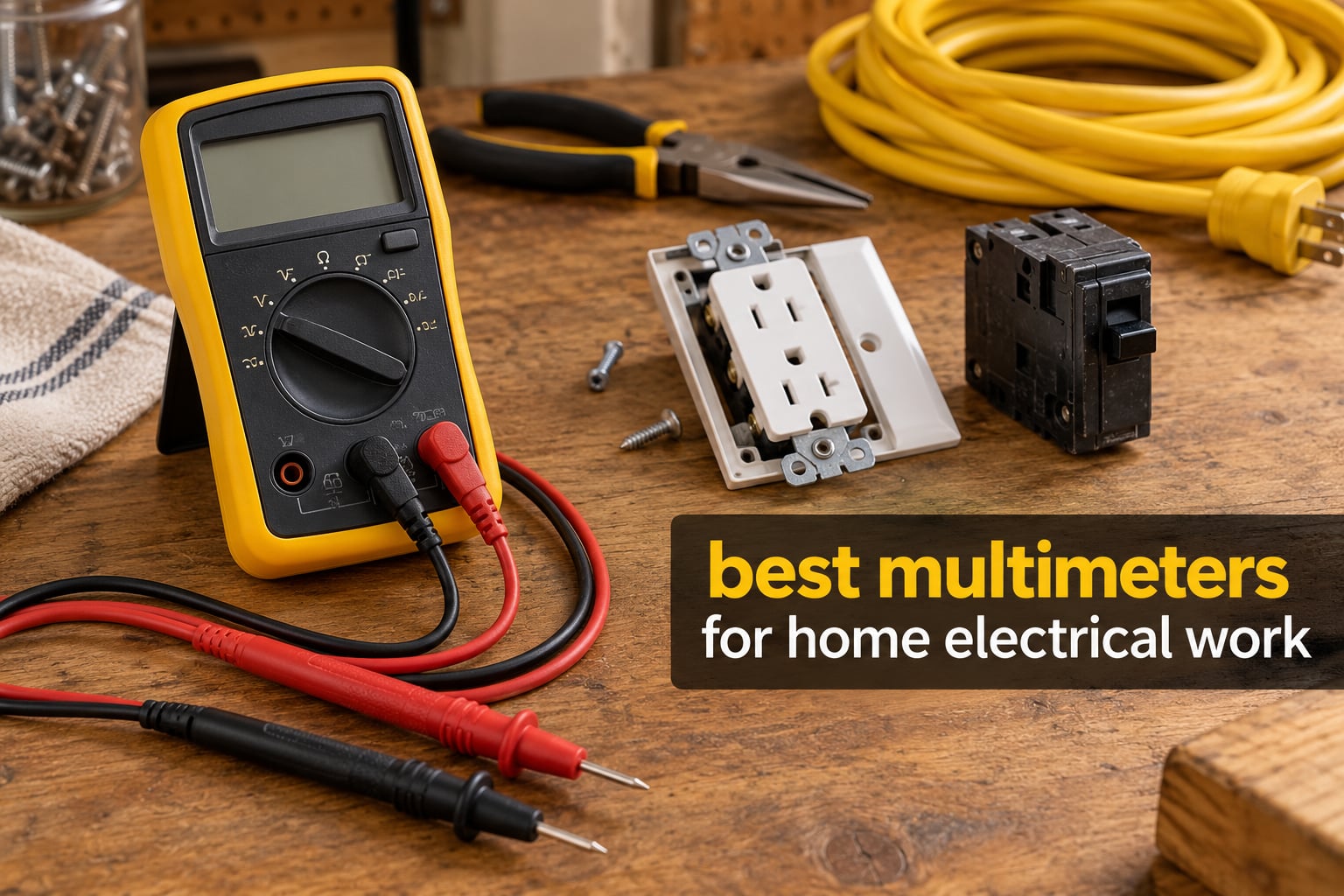
Most homeowners buy a multimeter for one job: finding out why an outlet is dead, why a breaker keeps tripping, or whether a car battery is finished. The best multimeters for home electrical work are the ones that tell you the truth on a de-energized circuit, hold their calibration for a decade, and do not punish you for picking the wrong jack. We compared ten of them across outlets, breakers, batteries and panels to separate the meters that merely read a number from the ones you can actually make a decision with.
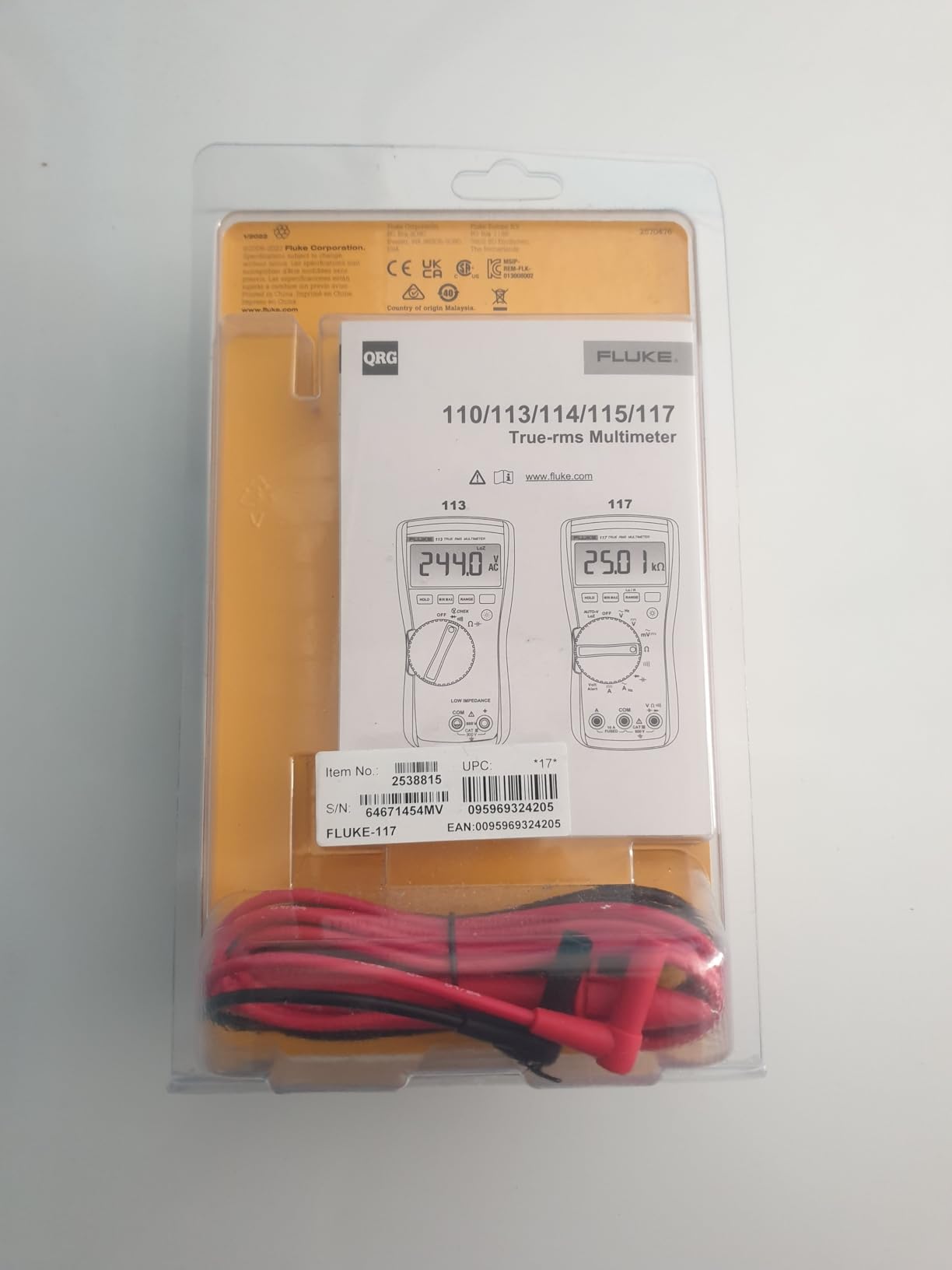
The gap between budget and professional meters is wider than the spec sheets suggest. A low-cost meter can show 45 volts on a wire you know is dead, because it is picking up capacitive coupling from an adjacent hot conductor. A Fluke 117 has a dedicated low impedance mode for exactly that situation, and that single feature is why pros keep buying it.
We also cover what to look for in a meter you already own, how to test a household outlet without guessing, and where a homeowner’s scope legally and safely ends. If you want a meter built specifically for professional panel work, our guide to the best multimeters for electricians goes deeper on CAT IV service-entrance work.
Table of Contents
Top 3 Best Multimeter Picks for Home Electrical Work in October

AstroAI 6000-Count True RMS
- True RMS 6000 counts
- Temperature and duty cycle
- Rear magnet and kickstand
AstroAI 2000-Count Tester
- 1999-count backlit LCD
- AC DC voltage and DC current
- Double fuse protection
All 10 Multimeters at a Glance in 2026
| Product | Specifications | Action |
|---|---|---|
 Fluke 117 Digital Multimeter Fluke 117 Digital Multimeter |
|
Check Latest Price |
| AstroAI True RMS 6000-Count |
|
Check Latest Price |
| AstroAI 2000-Count Multimeter |
|
Check Latest Price |
 Klein Tools MM325 Multimeter Klein Tools MM325 Multimeter |
|
Check Latest Price |
 Klein Tools MM320KIT Test Kit Klein Tools MM320KIT Test Kit |
|
Check Latest Price |
 Fluke 15B+ Digital Multimeter Fluke 15B+ Digital Multimeter |
|
Check Latest Price |
 Fluke 107 Handheld Multimeter Fluke 107 Handheld Multimeter |
|
Check Latest Price |
 AstroAI TRMS 4000-Count AstroAI TRMS 4000-Count |
|
Check Latest Price |
 Crenova MS8233D True RMS Crenova MS8233D True RMS |
|
Check Latest Price |
 KAIWEETS KIT01 Electrical Test Kit KAIWEETS KIT01 Electrical Test Kit |
|
Check Latest Price |
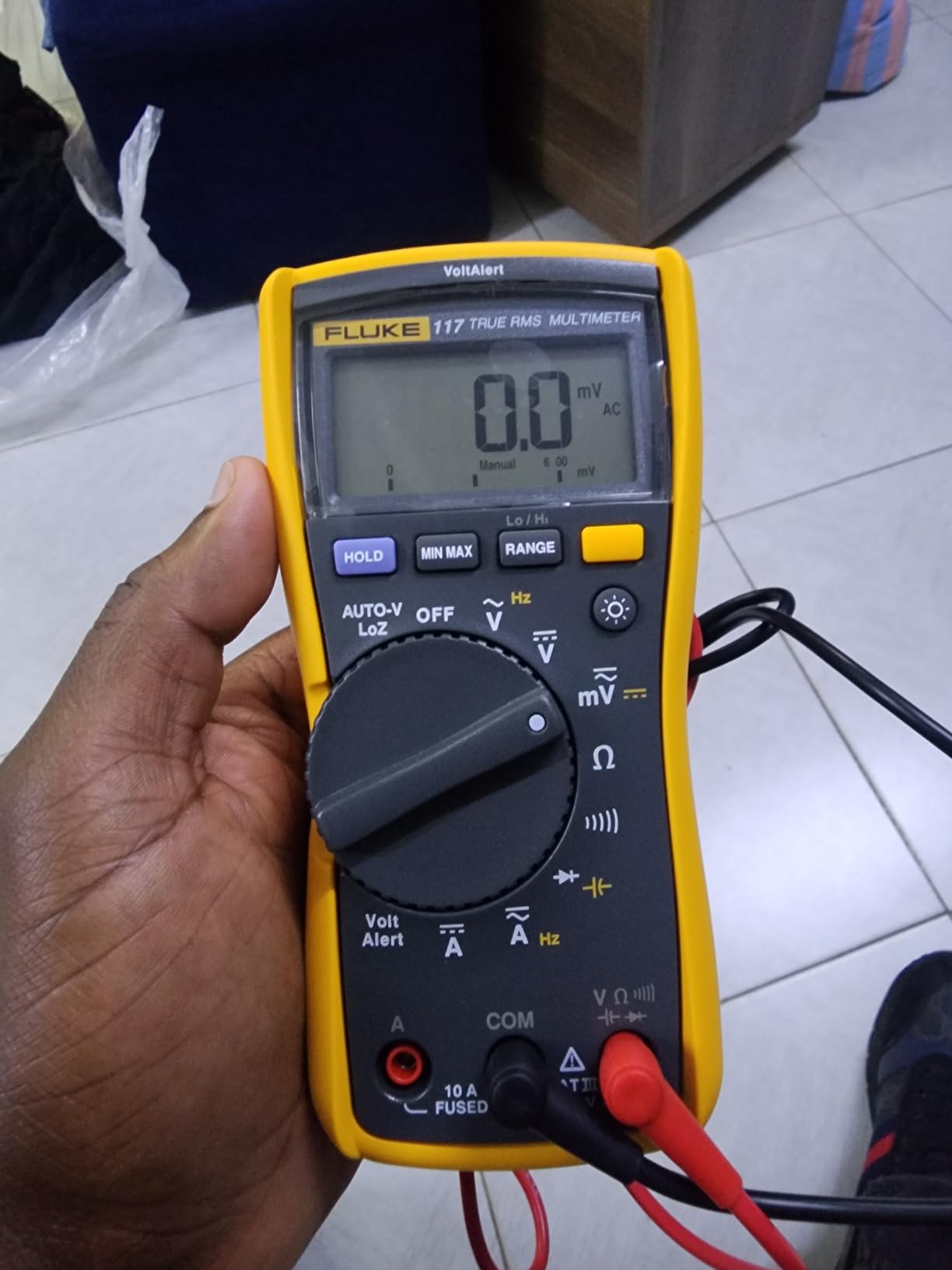
1. Fluke 117 Digital Multimeter
Fluke 117 Digital Multimeter, Non-Contact AC Voltage Detection, Measures Resistance/Continuity/Frequency/Capacitance/Min Max Average, Automatic AC/DC Selection, Low Impedance Mode
True RMS
LoZ ghost voltage mode
VoltAlert NCV
AutoVolt
600V max
Pros
- Low impedance mode defeats ghost voltage
- True RMS on non-linear loads
- VoltAlert plus AutoVolt speed up routine checks
- White LED backlight and min/max/average
- 3-year warranty
Cons
- No current clamp or milliamp range
- DC current limited to 10 amps
- Supplied probes are basic
The Fluke 117 is the best multimeter for home electrical work, full stop. It is the meter that solves the problem the cheap ones create. If you probe a de-energized breaker with an ordinary 10-megaohm meter and get 45 volts, you cannot tell whether the wire is live or whether the reading is capacitive coupling from a neighbouring conductor. The 117’s LoZ mode loads the circuit down hard enough to make that phantom voltage collapse.
Owners repeatedly describe the LoZ mode as more useful than expected, and it doubles as a rough GFCI test that tells you whether a receptacle is actually interrupting current. VoltAlert gives you a beep and a light before you touch anything, and AutoVolt picks AC or DC without you moving the dial, which removes a whole class of beginner mistakes.
True RMS matters more in a modern house than it used to. Dimmers, LED drivers, variable-speed compressors and switched-mode power supplies all draw non-sinusoidal current, and an average-responding meter reading those circuits can be off by a wide margin. For the sort of diagnostics a homeowner does on an outlet or a run capacitor, the 117 is accurate.
The build quality is the other half of the argument. Electricians describe Fluke meters as effectively indestructible, and the white LED backlight is bright enough to work in an unlit crawlspace. The 3-year warranty and a large accessory ecosystem mean replacement leads and cases are easy to source.
When LoZ mode changes your diagnosis
LoZ mode is not a gimmick, and it is the feature that most budget meters simply cannot replicate. Any meter with a high input impedance can be fooled by a few picofarads of coupling from an adjacent hot wire in the same conduit, and the result is a reading that looks alarming and is entirely false. LoZ mode drops the input resistance into the kilohm range, which is low enough to bleed off that induced charge.
For a homeowner, this means the difference between a confident answer and a panicked trip to the breaker box. If you own older wiring bundled tightly with newer cable runs, or you have ever had a meter read 30 volts on a dead circuit, you understand the value.
When a Fluke 117 is more than you need
There is no clamp included, and there is no milliamp range, so testing a gas fireplace or a thermistor-style component means buying a separate clamp such as the i410. DC current measurement tops out at 10 amps, which limits how you chase a tripped 20A branch circuit. Neither gap matters much for outlet and switch work.
If your entire electrical life is checking one dead outlet per year and testing batteries, a True RMS auto-ranging meter in the budget tier gives you accurate voltage, resistance and continuity. You give up LoZ, the CAT III 600V certified surge protection envelope, and the build quality that keeps calibration honest for a decade. That is a real trade, but it is not the same trade as losing accuracy on live circuits.
2. AstroAI True RMS 6000-Count Multimeter
AstroAI Digital Multimeter, True RMS 6000 Counts Auto-Ranging Volt Meter for Automotive & Home Electrical Troubleshooting, AC/DC Voltage Current Resistance Continuity Capacitance Temperature Tester
True RMS
6000 counts
Auto-ranging
Temperature and duty cycle
Pros
- True RMS verified against reference meters in bench testing
- Temperature capacitance frequency and duty cycle
- Backlit display kickstand and rear magnet
- Double ceramic anti-burn fuses
Cons
- Claimed frequency range runs well below spec
- hFE transistor test reads roughly half true gain
- Backlight is short-lived and no case included
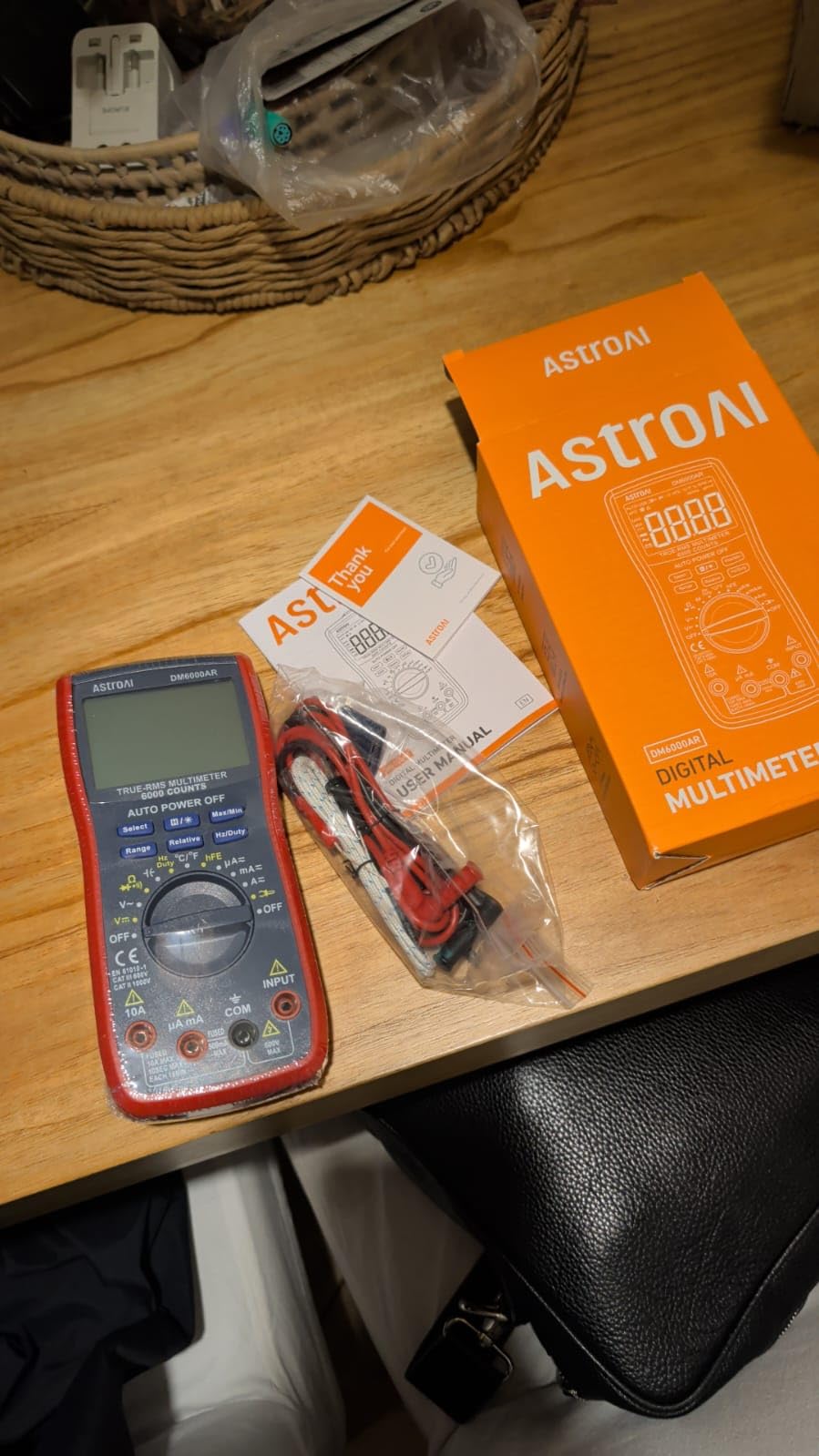
If you want True RMS accuracy and a feature list that would have cost several times as much a few years ago, this is the meter. It measures AC and DC voltage and current, resistance, capacitance, frequency, duty cycle, continuity, diode and temperature, all on a 6000-count auto-ranging display.
The measurement quality is the surprise. Detailed reviewers who tested it against an Amprobe AM-570 found DC and AC RMS, resistance, current and diode readings within spec, and the capacitance range even exceeded the stated 600 microfarad limit. Owners doing automotive work report readings that line up with Snap-on and Fluke meters on 12V circuits.
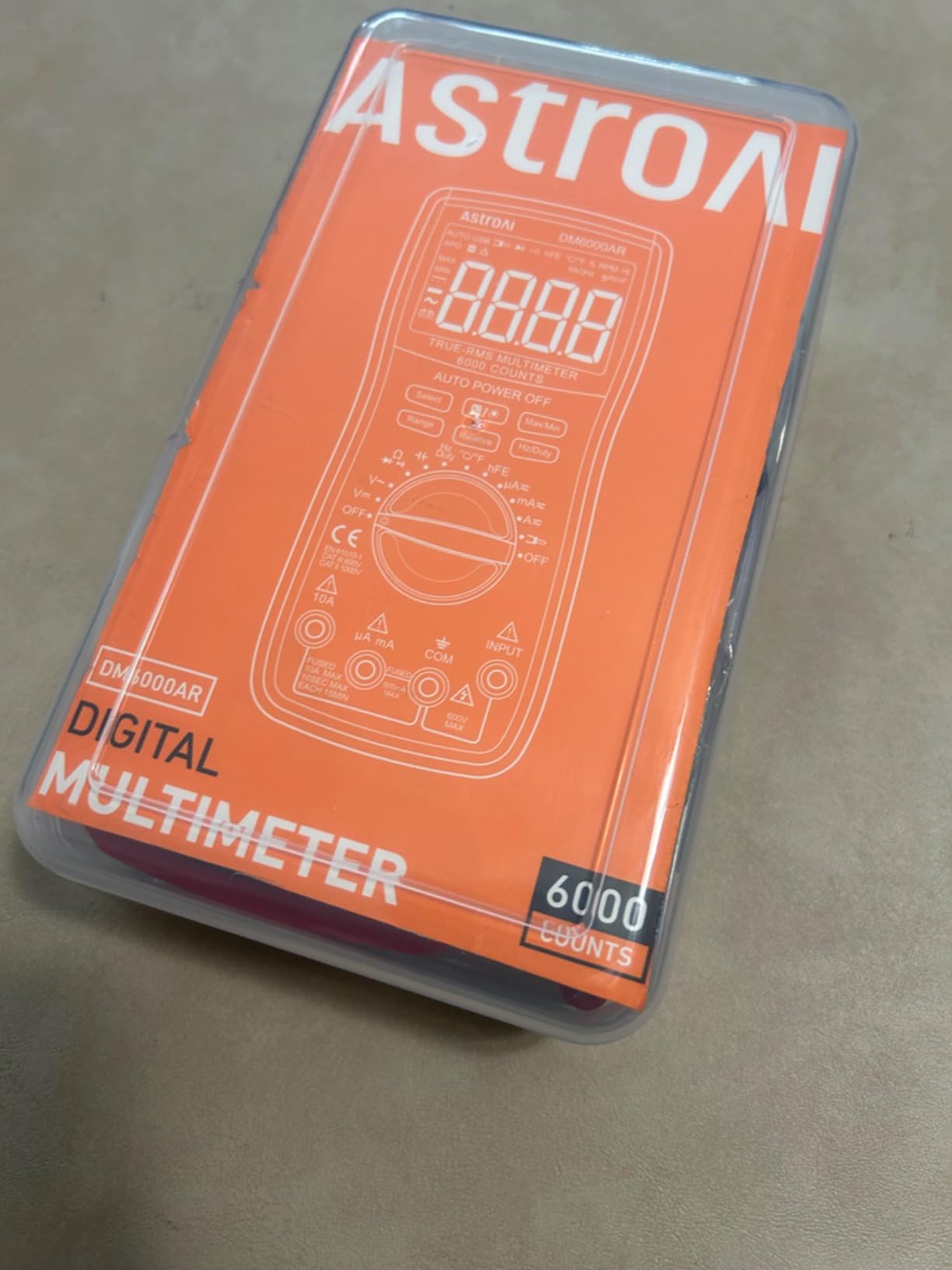
For home electrical work, the practical extras matter. A rear magnet sticks the meter to a steel panel cover or a fridge door, the kickstand holds it on a counter, and the large backlit display is readable in a basement. Double ceramic fuses rated F400mA and F10A protect the current inputs.
The one thing to watch is that it has no LoZ mode. It will still show phantom voltage on a de-energized circuit, which means you need a second confirmation step before you commit to stripping a wire.
Which measurements earn their keep at home
For a homeowner, temperature is more useful than it sounds. A K-type thermocouple probe is included, so you can check an oven thermostat, a water heater element or HVAC supply temperature without a separate instrument. Capacitance covers run capacitors and motor start capacitors, and duty cycle covers dimmers and some LED drivers.
Frequency matters less in a house but becomes valuable the moment you touch electronics. If you are diagnosing a switched-mode power supply or a smart thermostat, having frequency on the same meter saves a second tool.
Where the shortcuts are
The claimed 60 MHz frequency counter limit behaves more like 16 MHz and needs a strong signal to hold a reading, so treat the frequency function as a relative indicator rather than a measurement. The transistor hFE mode uses a very low test current and returns roughly half the expected gain, and the multi-function transistor socket is wired C-B-E rather than B-C-E, which makes testing a TO-220 package awkward.
It also lacks a low impedance mode, so the ghost voltage problem described earlier applies here in full, and the backlight shuts off quickly, which matters in a dark panel closet. Bring your own case; none is included. Users do raise long-term calibration drift as a fair concern with budget brands, so if your livelihood depends on the reading, this is not the category you buy in.
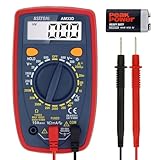
3. AstroAI 2000-Count Multimeter
AstroAI Digital Multimeter Tester 2000 Counts with DC AC Voltmeter and Ohm Volt Amp Meter; Measures Voltage, Current, Resistance, Continuity and Diode, Blue
1999-count backlit LCD
AC DC voltage
DC current
Double fuse
Pros
- Most widely owned budget multimeter in the category
- Backlit LCD usable in dim areas
- Double fuse and silicone cover
- Data hold and continuity buzzer included
Cons
- Cannot measure AC current
- 2000-count resolution is low
- AC voltage below 100mV is out of range
With over 56,000 reviews, this is the most widely owned first multimeter in the category, and for simple residential work it does the job. It covers AC and DC voltage, DC current, resistance, continuity and diode on a 1999-count backlit LCD running at two samples per second.
It comes with a 9V battery, test leads and a manual, and it carries a 3-year warranty from AstroAI. Buyers consistently pick it as a capable first meter for outlets, fuses, batteries and basic automotive checks, which is exactly the list of jobs most households actually have.
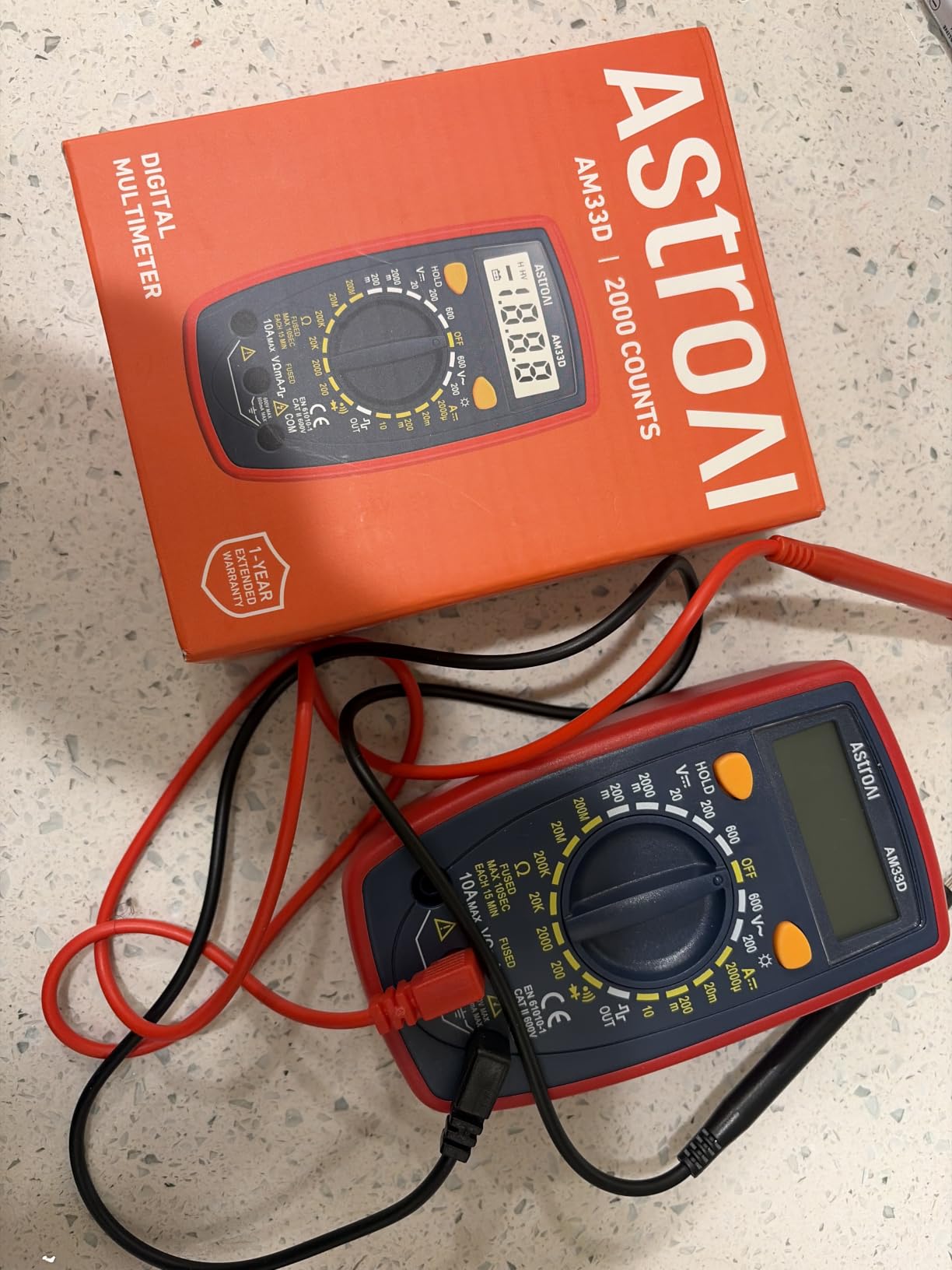
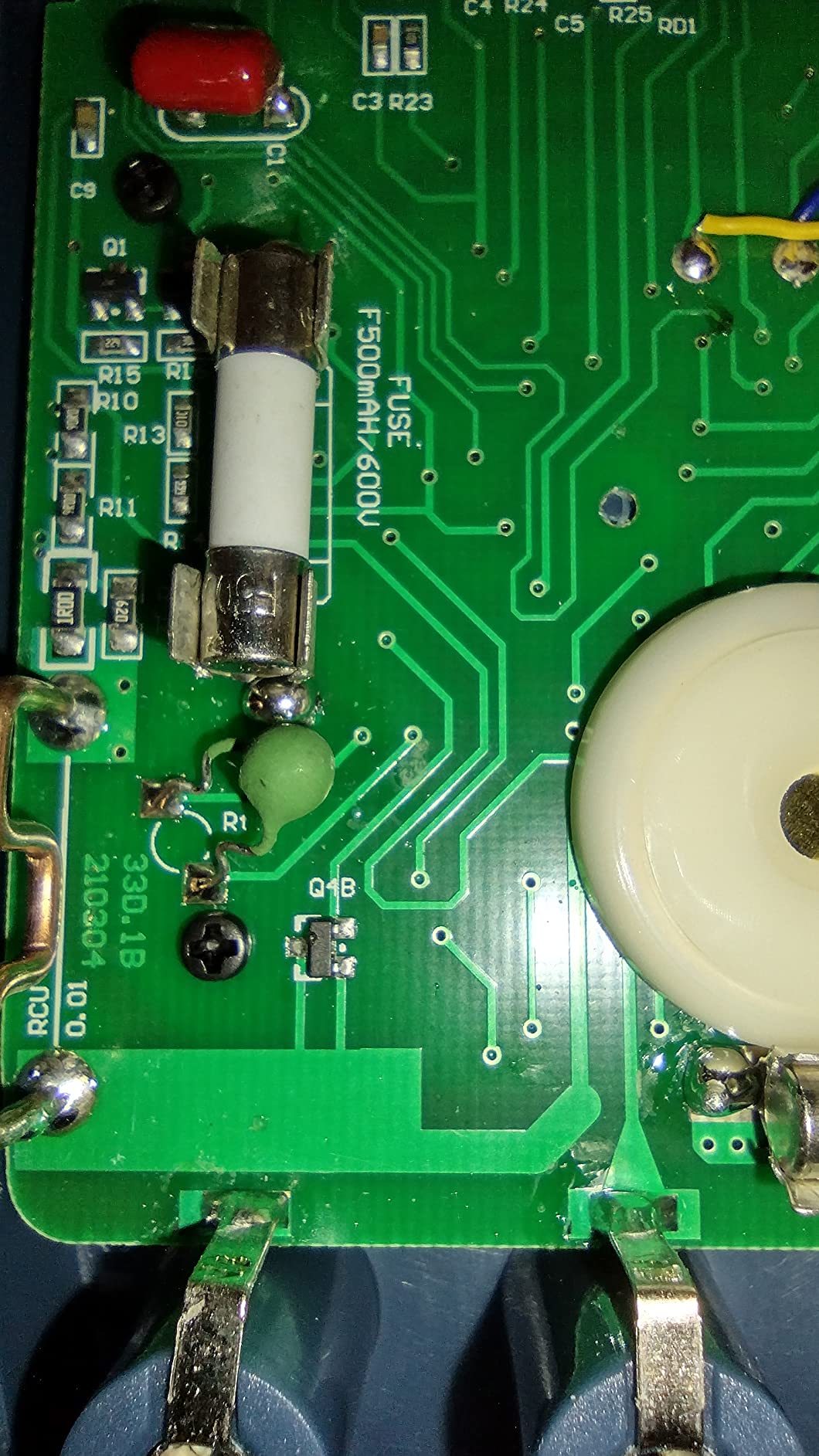
The double-fuse anti-burn protection and the silicone cover are the sensible details at this level. A low battery indicator tells you when the 9V cell is going, and the continuity buzzer plus data hold cover the two functions you reach for most when chasing a broken wire.
Operating range is 2 to 500 volts, which comfortably covers 120V and 240V household circuits. The measurement type is a plain digital multimeter, not True RMS, so readings on dimmers and LED drivers should be treated as indicative rather than exact.
Is a 2000-count display enough for a house
For yes-or-no questions about a 120V circuit, absolutely. You are looking for roughly 120 or roughly 0, and 1999 counts resolves that with room to spare. The resolution limit shows up when you want to compare two closely matched readings or measure a small voltage drop across a long piece of wire, where a 6000-count display gives finer steps.
The genuine gap is AC current. This meter cannot measure it at all, and it will not read AC voltage below 100 millivolts. If your project list includes checking an appliance draw or testing a dimmer, step up a tier.
When this is the right first meter
This is the meter to buy if you want to learn on something forgiving, replace a receptacle, verify a switch, and test batteries, without spending real money. Reviewers note one trap: results are misleading if the leads are not fully seated or the rotary switch is in the wrong position, so push the probes in until they click and read the dial before you trust a number.
It is also a sensible second meter to keep in a garage or vehicle, which is the two-meter pattern that automotive DIYers commonly report using. Just do not use it as your only meter for panel work, because there is no CAT safety rating in the specification.
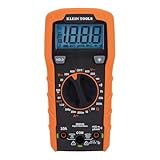
4. Klein Tools MM325 Multimeter
Klein Tools MM325 Multimeter, Digital Manual-Ranging 600V AC/DC Voltage Tester, Tests Batteries, Current, Resistance, Diodes, and Continuity
CAT III 600V
Manual ranging
Lead-Alert LEDs
Backlit LCD
Pros
- Lead-Alert LEDs flag wrong lead placement
- Recognisable Klein Tools build quality
- Backlit display kickstand and magnetic hanger
- Battery test mode for household cells
Cons
- Manual ranging with no auto mode
- Resistance limited to 2M ohms
- No NCV and no temperature
- No carrying case in the base kit
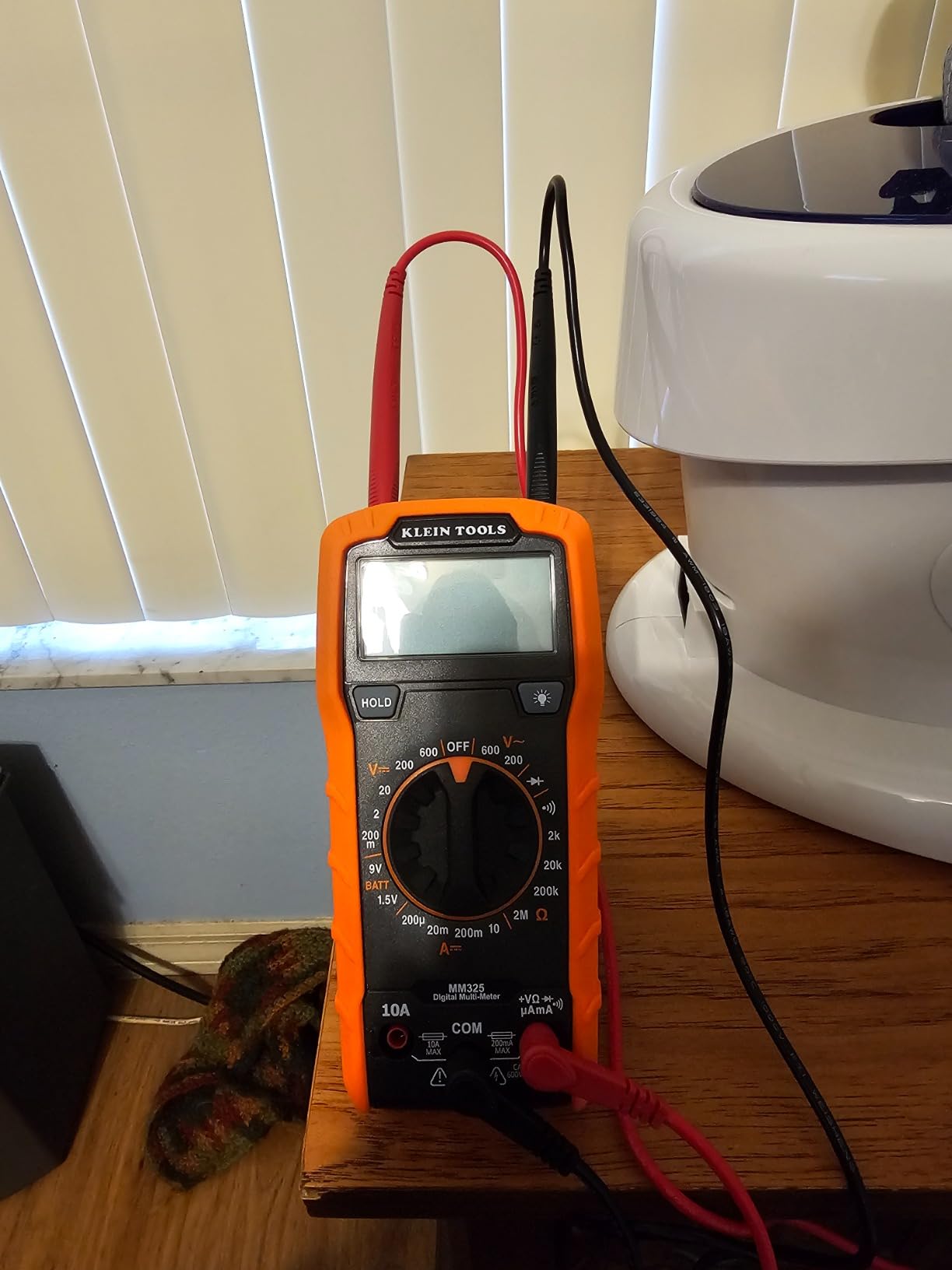
The Klein MM325 is the meter to buy if you want a big obvious dial and no surprises about which range you are on. It measures AC and DC voltage to 600V, DC current to 10A and resistance to 2M ohms, plus continuity, diode and battery test, all at a CAT III 600V safety rating.
Lead-Alert is the feature worth knowing about. LEDs above the input jacks light up when the test leads are plugged into the wrong port, which is exactly the mistake beginners make and the one that blows an internal fuse. Owners who are electricians or serious DIYers tend to like the direct, dial-based control.
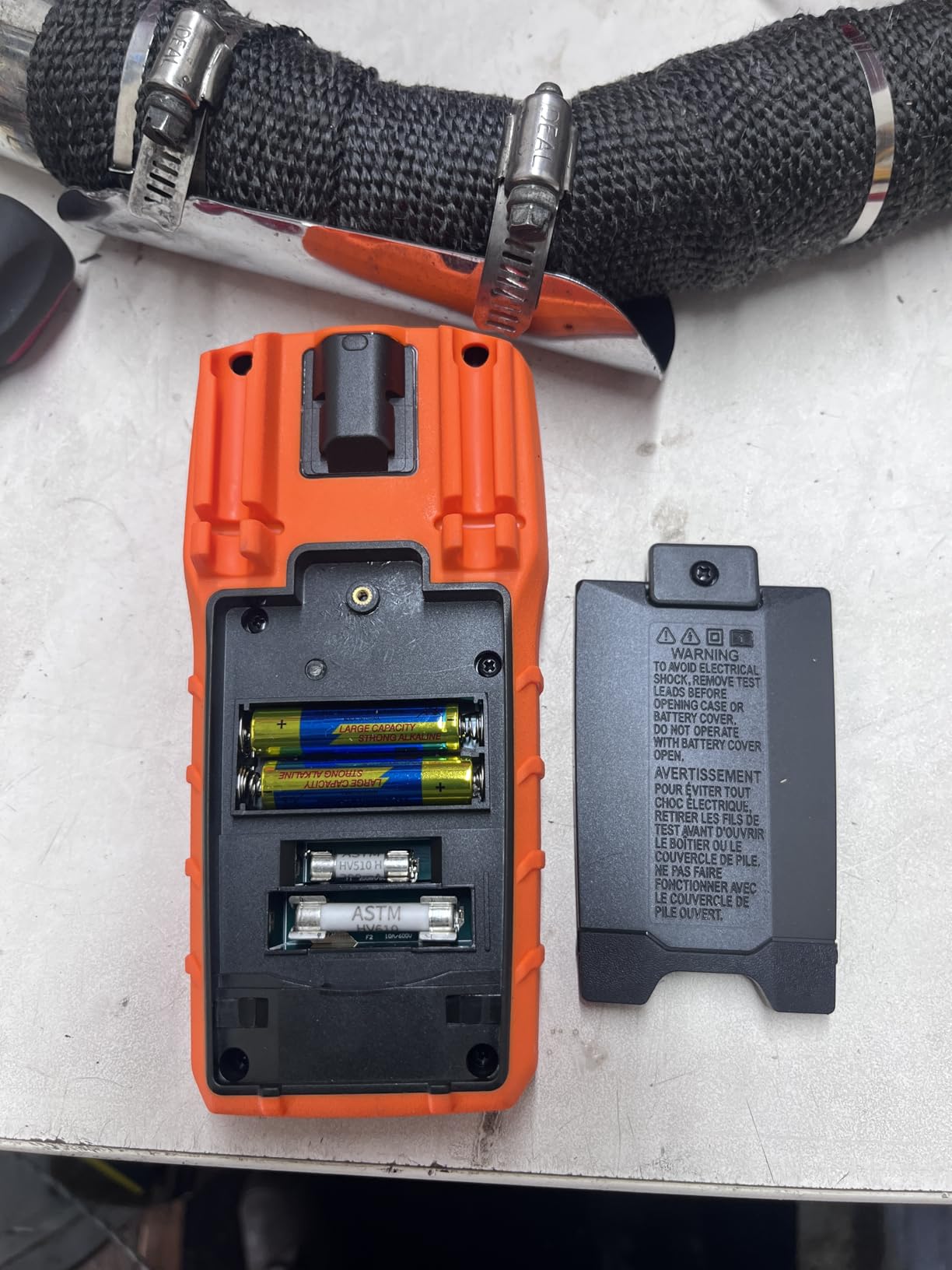
The physical design suits a house. A backlit LCD keeps the display readable in a garage, test lead holders free up both hands, and a kickstand plus an optional magnetic hanger let you work hands-free while probing a ceiling box.
It weighs under 14 ounces, so it is easy to hold one-handed at a receptacle while the other hand manages the probes. Battery test mode covers the AA and 9V cells you are most likely to check at home.
Why manual ranging still has defenders
Manual ranging removes an entire category of error. On an auto-ranging meter, a meter in the wrong mode can silently measure the wrong thing. With a manual dial, you set AC voltage to the 600V range yourself and the reading means what you think it means, which is a genuine safety benefit on a live panel.
Forum regulars on r/electrical and r/AskElectricians repeatedly report buying Klein auto-ranging meters and being fully satisfied for home use, and the manual MM325 appeals to the same instinct: fewer menu behaviours, more physical certainty.
Where the limits show
A 2-megohm resistance ceiling is low compared with competitors that reach 20 or 40 megaohms, which limits precision work on electronics. There is also no NCV detection and no temperature function, so for checking a live conductor without contact or an oven temperature you need a different tool.
The biggest omission is auto-ranging. If you are new to meters, having the meter pick the range is safer than having you choose it. Manual ranging also means more blown-fuse risk when the wrong range is selected, since the common thread across forum complaints is confusion about which jack to use.
5. Klein Tools MM320KIT Electrical Test Kit
Klein Tools MM320KIT Digital Multimeter Electrical Test Kit, Non-Contact Voltage Tester, Receptacle Tester, Carrying Case and Batteries
Multimeter plus NCV and receptacle testers
Carrying case
Batteries included
Pros
- Three tools in one case for whole-home checks
- Receptacle tester flags the common wiring faults
- NCV tester has an independent flashlight
- Voltage tester stores its leads on the back
Cons
- MM320 resistance range of 2 ohms is very low
- Manual ranging only
- Bundle is bulkier than a single meter
- Testers show fault codes by LED not text
Most homeowner problems are not exotic. They are a receptacle with an open ground, a reverse polarity from a DIY wiring mistake, or a non-contact check before you touch a box. This kit bundles all three tools for exactly those cases: an MM320 manual-ranging multimeter, an NCVT3P non-contact voltage tester and an RT210 receptacle tester, with a carrying case and batteries.
The RT210 is the reason to own this one. It identifies open ground, reverse polarity, open hot, open neutral and hot/ground reversed on both standard and GFCI receptacles. That is a far more useful diagnostic for a homeowner than a raw voltage number, because it tells you what to fix.
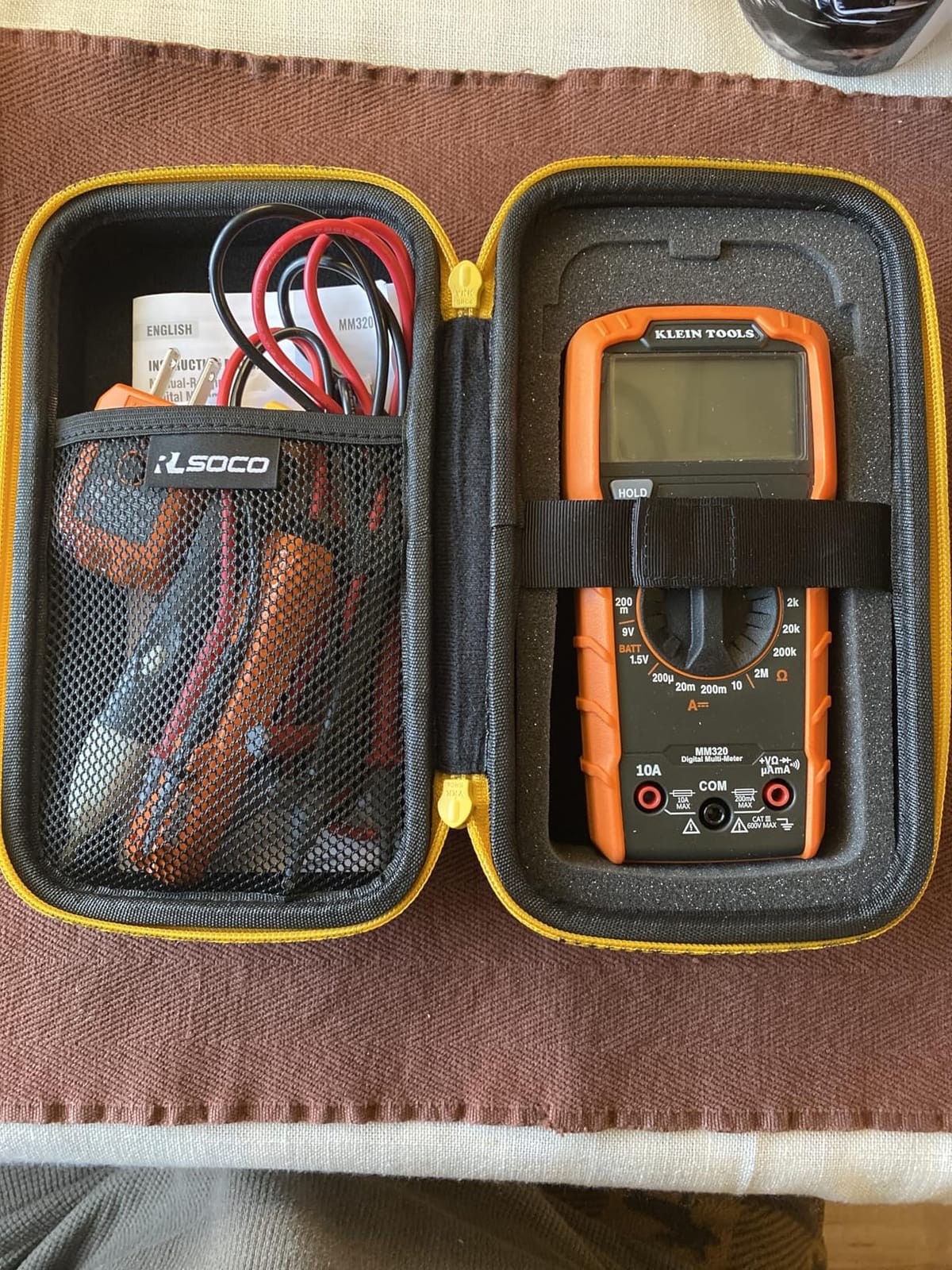
The NCVT3P detects 12-1000V AC in its low range and 70-1000V AC in its high range, and its built-in flashlight works independently of the detection function, which matters in an unlit panel closet. The ET45 voltage tester covers AC 28-240V and DC 32-330V and stores its leads on the back for tamper-resistant probing.
Everything is CE, ETL, NIST, RoHS and UL certified, and the case means nothing gets lost in a toolbox drawer. Reviewers consistently call it a sensible one-stop purchase for outlet and wiring checks alongside basic voltage and current readings.
Which tool answers which question
Use the receptacle tester for a fast yes-or-no verdict on a suspect outlet. Use the NCV tester to sweep a bundle of cables and find which one is energised before you cut anything. Use the multimeter when you need an actual number, such as confirming 120V at a receptacle or measuring a voltage drop across a run.
Keeping those three roles separate is the lesson that saves time. Beginners often try to make one tool do all three jobs and end up with an ambiguous answer.
When to buy a meter instead of a kit
The MM320 has a resistance range of only 2 ohms, which is very low for any electronics work, and it is manual ranging only. The bundle is also bulkier and heavier than a single meter at 1.6 pounds, which matters if you are carrying it up a ladder.
The two testers are basic non-LCD units, so fault codes show as coloured LEDs rather than readable text, and the GFCI check is a pass or fail rather than a measurement. If your work leans toward panels, HVAC or motor circuits, a single True RMS meter with a proper safety rating is the better purchase.
6. Fluke 15B+ Digital Multimeter
Fluke 15B+ Digital Multimeter, for Electrical Applications, Measures AC/DC Voltage and Current Measurements up to 1000V and 10A, Along with Resistance, Continuity, Diode, and Capacitance Capabilities
CAT III 600V
AC DC voltage to 1000V
Current to 10A
Capacitance
Pros
- Fluke build with CAT III 600V rating
- 1000V voltage ceiling
- Measures AC and DC current to 10A
- TL75 test leads in the box
Cons
- No temperature frequency or duty cycle
- No LoZ mode and no NCV detection
- Current capacity limited to 10 amps
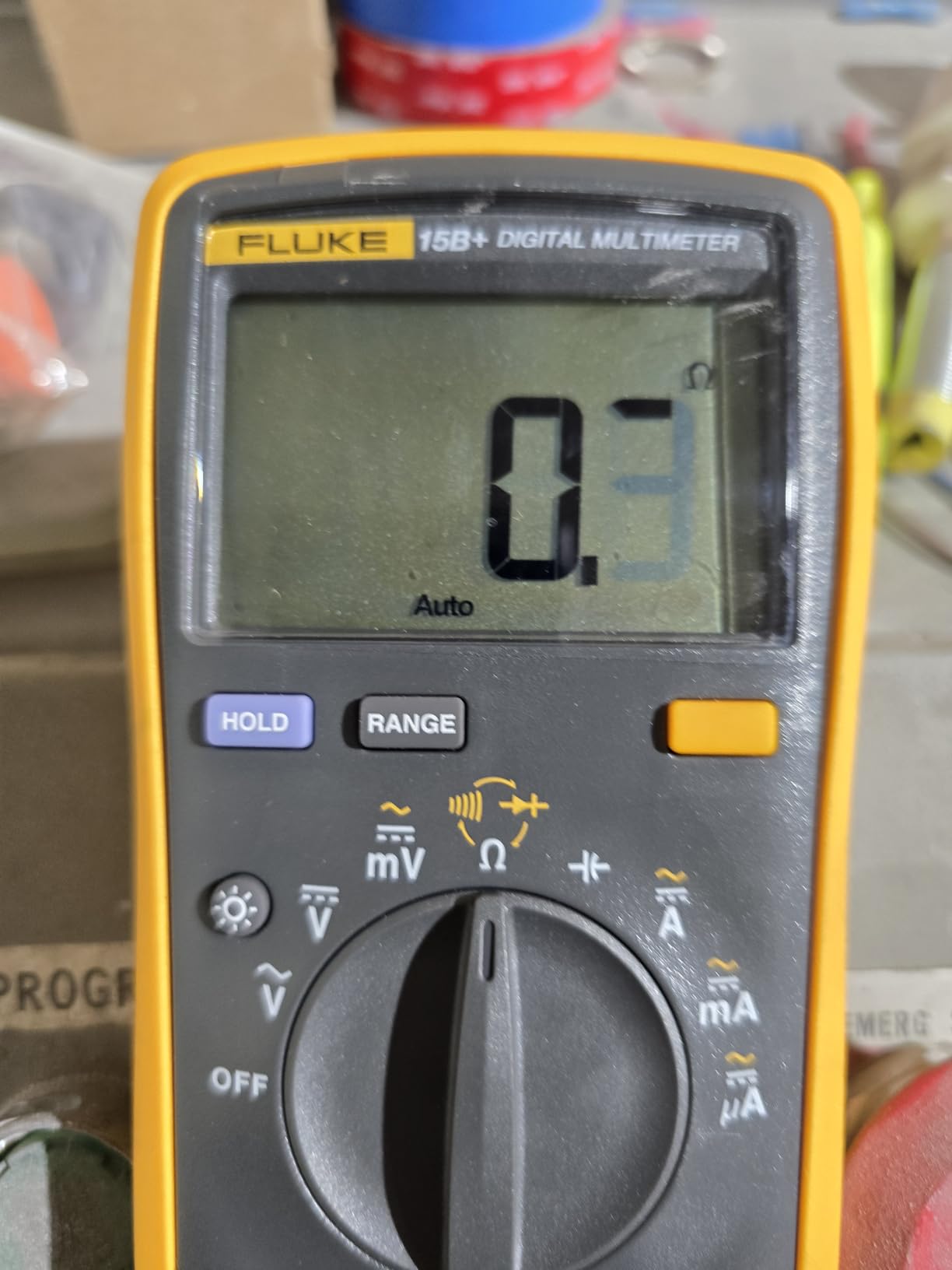
The 15B+ is the value entry into the Fluke line, and the thing it buys over a cheaper brand is the CAT III 600V safety rating on a residential and commercial instrument. It measures AC and DC voltage up to 1000V, AC and DC current up to 10A, plus resistance, continuity, diode and capacitance.
Reviewers frame it as the sensible way to get Fluke build quality without stepping up to the 117. It is lighter and more compact than the larger Fluke models, at 460 grams, which makes it easy to hold at an outlet or in a crowded panel.
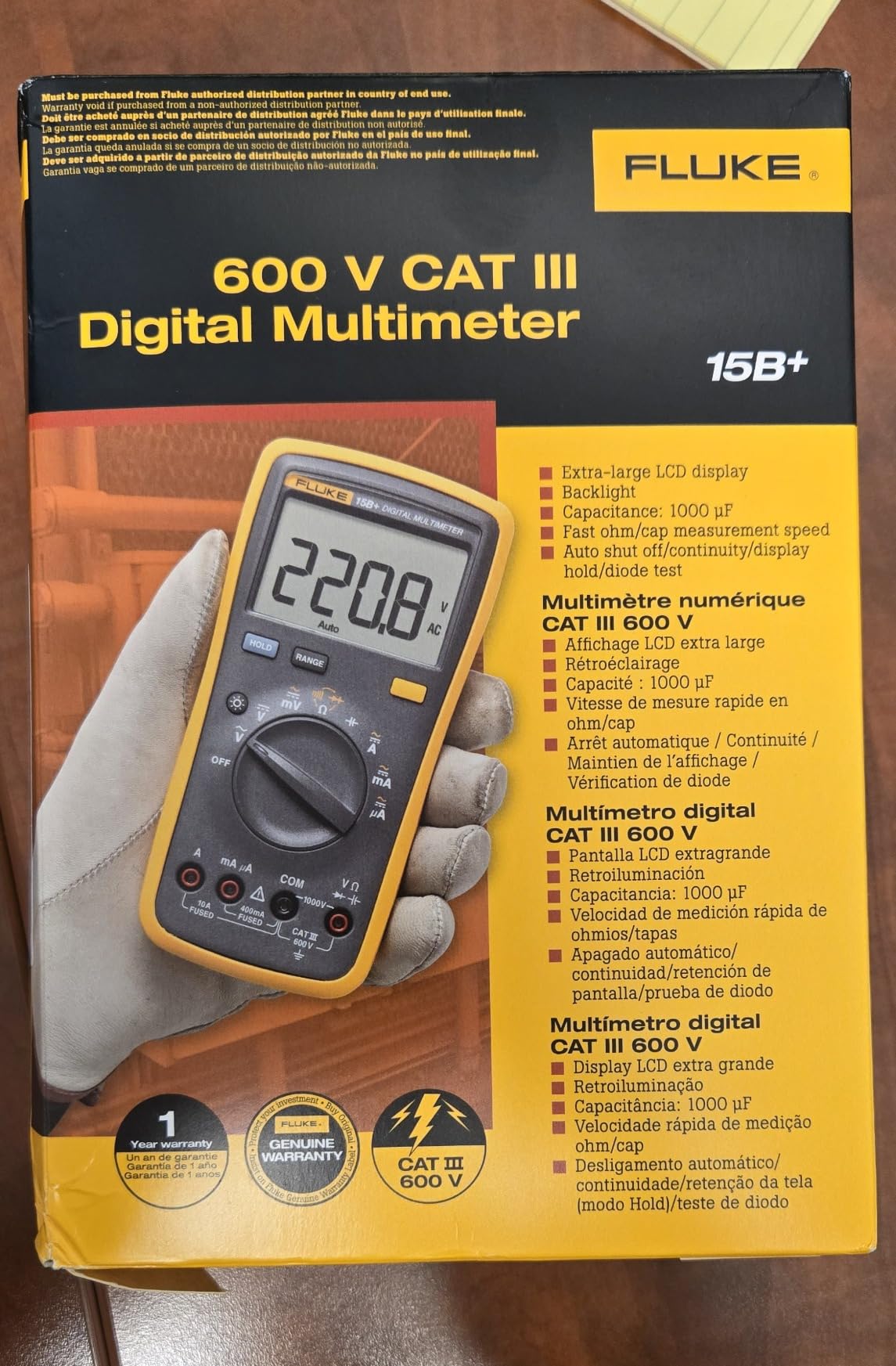
TL75 test leads are included in the box, which matters more than it sounds, because replacement Fluke leads are a real expense. The dedicated 10A input terminal is clearly marked, and the instrument is CE, CSA, ETL and UL certified to IEC 61010-1.
For a homeowner, the 1000V ceiling is honest headroom. You will never measure that on a 240V branch circuit, but it means the meter is not the limiting factor if you later work on a supply or a heavy appliance feed.
When 1000V and CAT III matter more than features
The CAT rating is the honest reason to pay for a Fluke. It certifies that the instrument is designed to survive the transient energy found at distribution equipment, which is a different promise from simply reading a voltage correctly. CAT ratings are treated as non-negotiable in trade circles for anyone working near a panel.
The 1000V ceiling is a secondary benefit. For household work at 120V and 240V it changes nothing, but it removes one ceiling from the list of things that can limit you later.
What you give up against the 117
There is no temperature, frequency or duty cycle measurement, and no non-contact voltage detection, so you cannot sweep a cable bundle with a beep before touching it. More importantly, there is no LoZ mode, which means you have no reliable way to defeat ghost voltage on a de-energized circuit.
Current capacity is still capped at 10 amps. Reviewers regularly note that owners end up buying a second meter for the jobs this one cannot do, which is the main argument for choosing the 117 instead if you can.
7. Fluke 107 Handheld Digital Multimeter
Fluke 107 AC/DC Current Handheld Digital Multimeter, Gray
AC DC voltage and current
Capacitance and duty cycle
Backlit display
Magnetic lanyard
Pros
- Compact and light at 0.2 kg
- Frequency duty cycle and capacitance included
- Backlit display and data hold
- Magnetic lanyard for hands-free work
Cons
- Not True RMS so non-linear loads read less reliably
- No NCV detection and no LoZ mode
- 600V maximum rather than 1000V
- One-year warranty is shorter than the 117
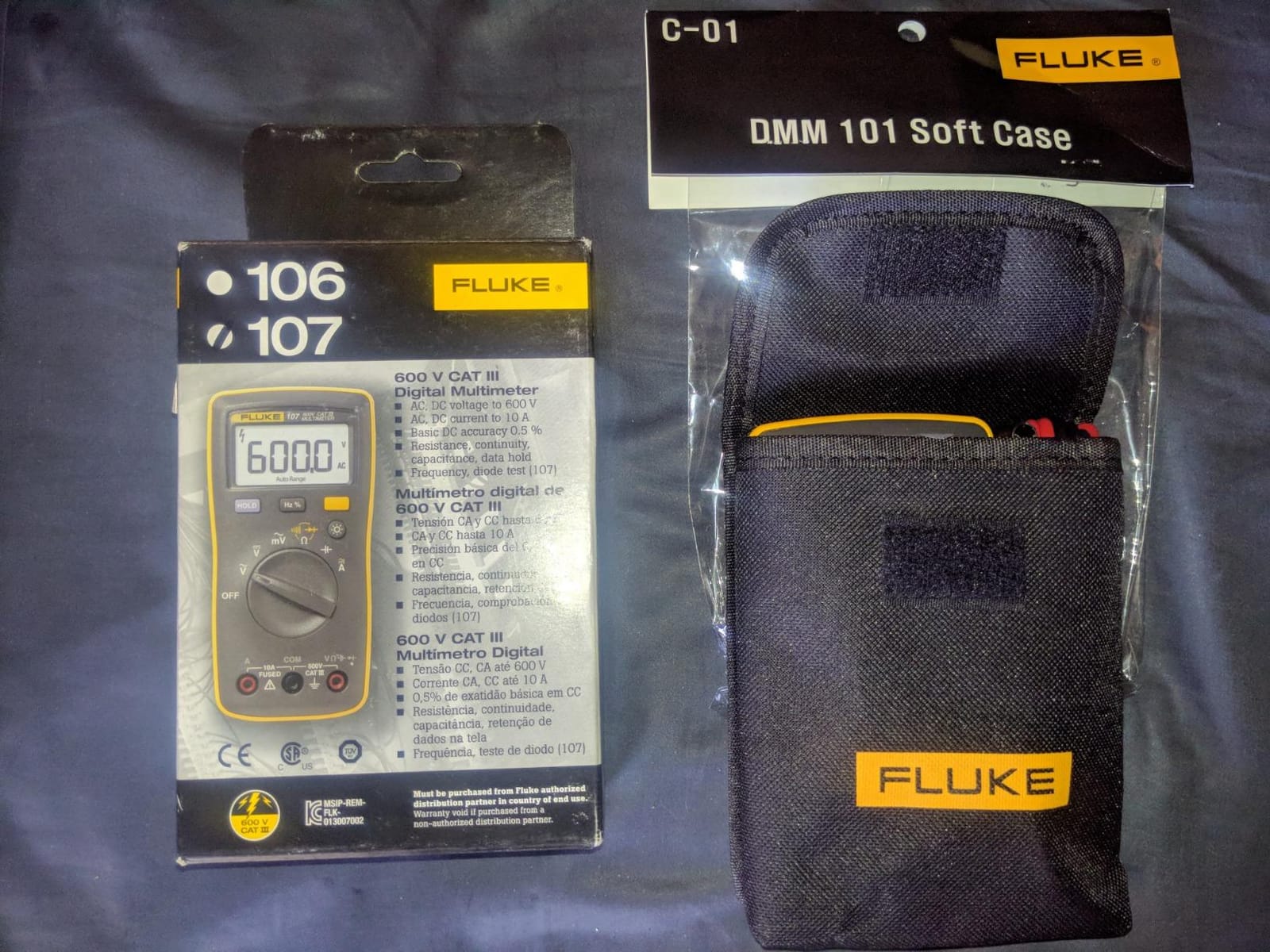
The Fluke 107 is the meter you put in the pocket rather than the truck. At 0.2 kg it is one of the lightest instruments here, and it still measures AC and DC voltage and current, resistance and capacitance, plus diode, frequency and duty cycle, all at a CAT III 600V safety rating.
Reviewers typically buy it as a portable second Fluke rather than a sole meter. That is a sensible pattern if you also own the 117, and a sensible way to keep a known-good instrument in the car without hauling the bigger tool everywhere.
The magnetic lanyard is a small touch that matters more than it sounds. Working overhead or wedged in a tight cavity, being able to let the meter hang frees up both hands. The backlit display and data hold support the same kind of one-handed work.
Frequency and duty cycle in a basic Fluke package is unusual and genuinely useful for anyone touching a dimmer, an LED driver or a small motor circuit.
When True RMS actually costs you
Average-responding meters read correctly on a pure sine wave, which is what a 120V household circuit is. They drift on non-sinusoidal loads: switched-mode power supplies, LED drivers, dimmer outputs and variable-speed HVAC compressors. If you are diagnosing anything with a modern electronics power supply in it, that drift becomes a wrong answer.
That is the honest limitation here, and reviewers flag it consistently. It is also why most owners treat the 107 as a secondary instrument for quick checks rather than a diagnostic tool.
What you trade away for the size
There is no non-contact voltage detection and no low impedance mode, so you get neither a pre-touch sweep nor a way to collapse ghost voltage. The 600V maximum is lower than the 1000V offered on the 15B+, which matters only for higher-voltage work.
The warranty is one year against three years on the 117, which is a real difference if you expect to keep this meter for a decade. For most homeowners the size saving wins and the warranty does not matter much.
8. AstroAI True RMS 4000-Count Battery Test Multimeter
AstroAI Digital Multimeter, TRMS 4000 Counts, Auto-Ranging, Battery Test
True RMS 4000 counts
1.5V 9V and 12V battery test
NCV and flashlight
CAT III 600V
Pros
- Only meter here with dedicated battery test modes
- True RMS and auto-ranging at an entry level
- NCV detection plus backlit display and flashlight
- Light at 219 g with CAT III 600V compliance
Cons
- 4000 counts is below rivals in the same band
- Resistance range stops at 40M ohms
- Basic silicone cover rather than a full holster
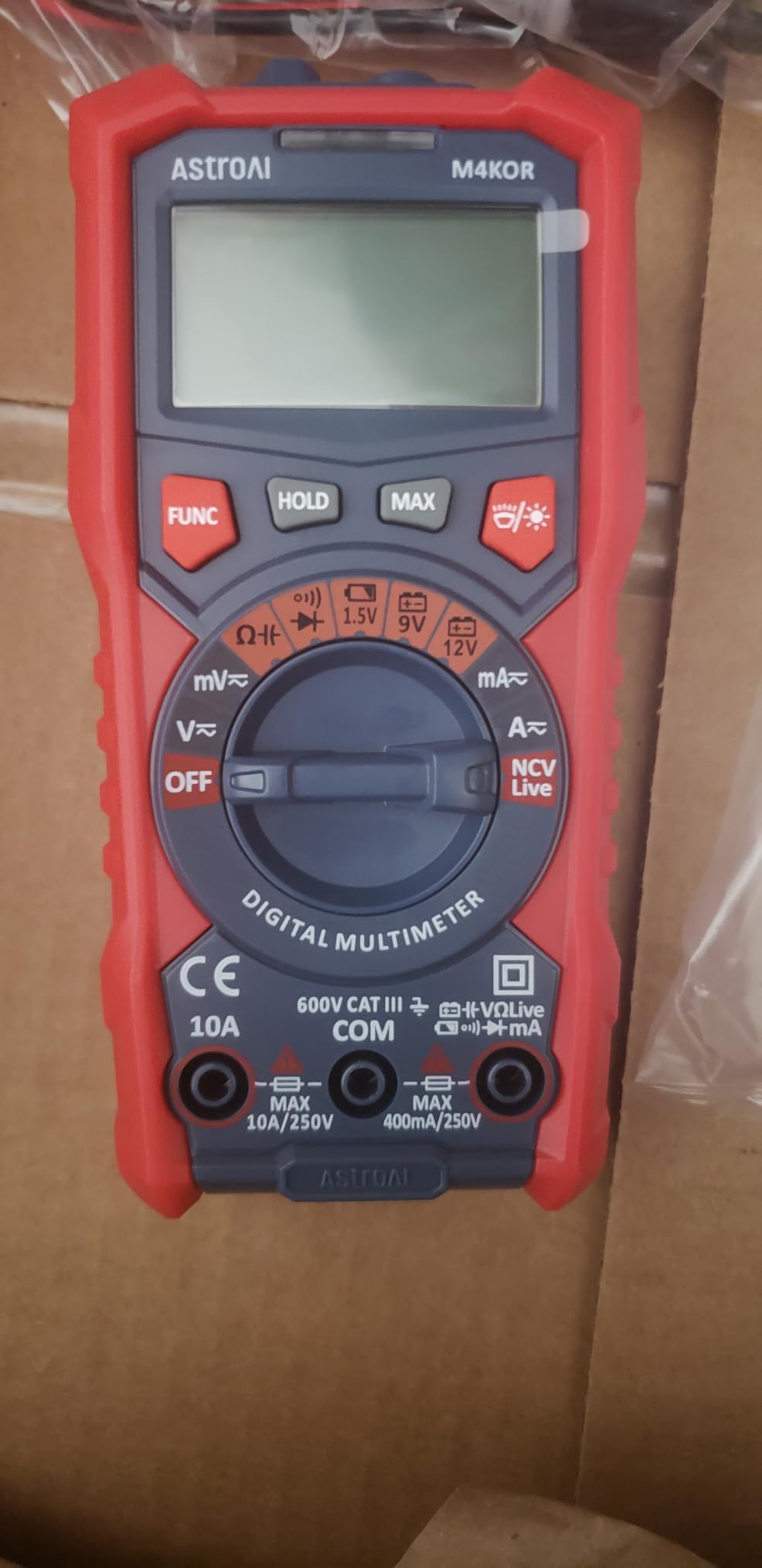
If your electrical work includes batteries, this is the pick in the list. It is the only meter here with dedicated battery test modes for 1.5V, 9V and 12V cells, and each one lights a red or green indicator so you get a pass or fail rather than a number you have to interpret.
Underneath that, it is a straightforward True RMS 4000-count auto-ranging meter measuring AC and DC voltage to 600V, current to 10A and resistance to 40M ohms. NCV detection uses a red indicator light and buzzer, and there is a backlit LCD plus a built-in flashlight.
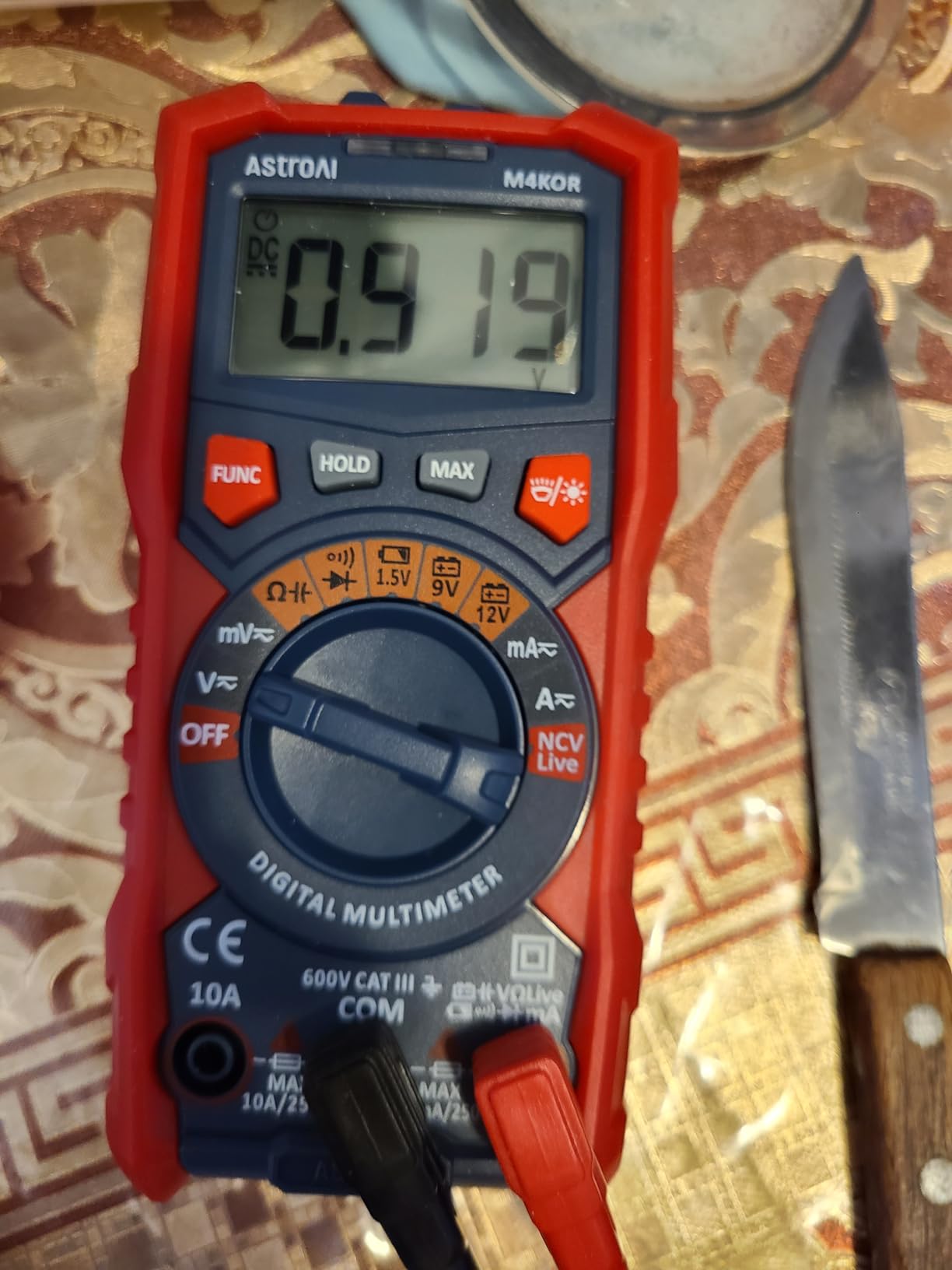
Reviews are unusually positive, with 79 percent five-star and very few negative remarks. The recurring theme is that the multi-voltage battery test is what buyers of household and automotive batteries use most, combined with the confidence of a CAT III 600V rating and True RMS accuracy.
At 219 grams it is light in the hand, and the dimensions are compact enough for a panel box or a crowded workbench. Battery test on a car, a smoke alarm or a remote control takes seconds.
Battery testing versus reading voltage
Most meters can tell you a battery is at 12.4 volts. That is a measurement, not a verdict. A dedicated battery test mode applies a small load and reports pass or fail against the chemistry’s expected threshold, which is what you actually want when deciding whether to replace a cell.
Covering three voltages in one instrument matters in a house, because the batteries you test are not all the same. AA and AAA cells are 1.5V, smoke alarm and remote batteries are 9V, and vehicle and mower batteries are 12V.
What you give up at this level
4000 counts is below the 6000-count rivals available in the same price band, so fine voltage drop comparisons have coarser steps. The 40-megohm resistance ceiling is fine for household tracing but limited compared with meters reaching 200 megaohms.
Protection is a basic silicone cover rather than a full rubber holster, and there is no temperature, frequency, capacitance or duty cycle measurement. For most homeowner diagnostics that is an acceptable trade; for HVAC and electronics work it is not.
9. Crenova MS8233D True RMS 6000-Count Multimeter
Crenova MS8233D Multimeter TRMS 6000 Counts Auto-Ranging Live Wire NCV
True RMS 6000 counts
Switchable manual and auto range
NCV with audible alarm
CAT III 600V
Pros
- True RMS capacitance frequency and duty cycle in an entry meter
- Carry bag alligator clips and batteries in the box
- Switchable manual and auto ranging
- CAT III 600V with two fuses and a rubber holster
Cons
- Heaviest handheld here at 0.55 kg
- Only a one-year warranty
- Orange holster adds bulk and can obscure the dial
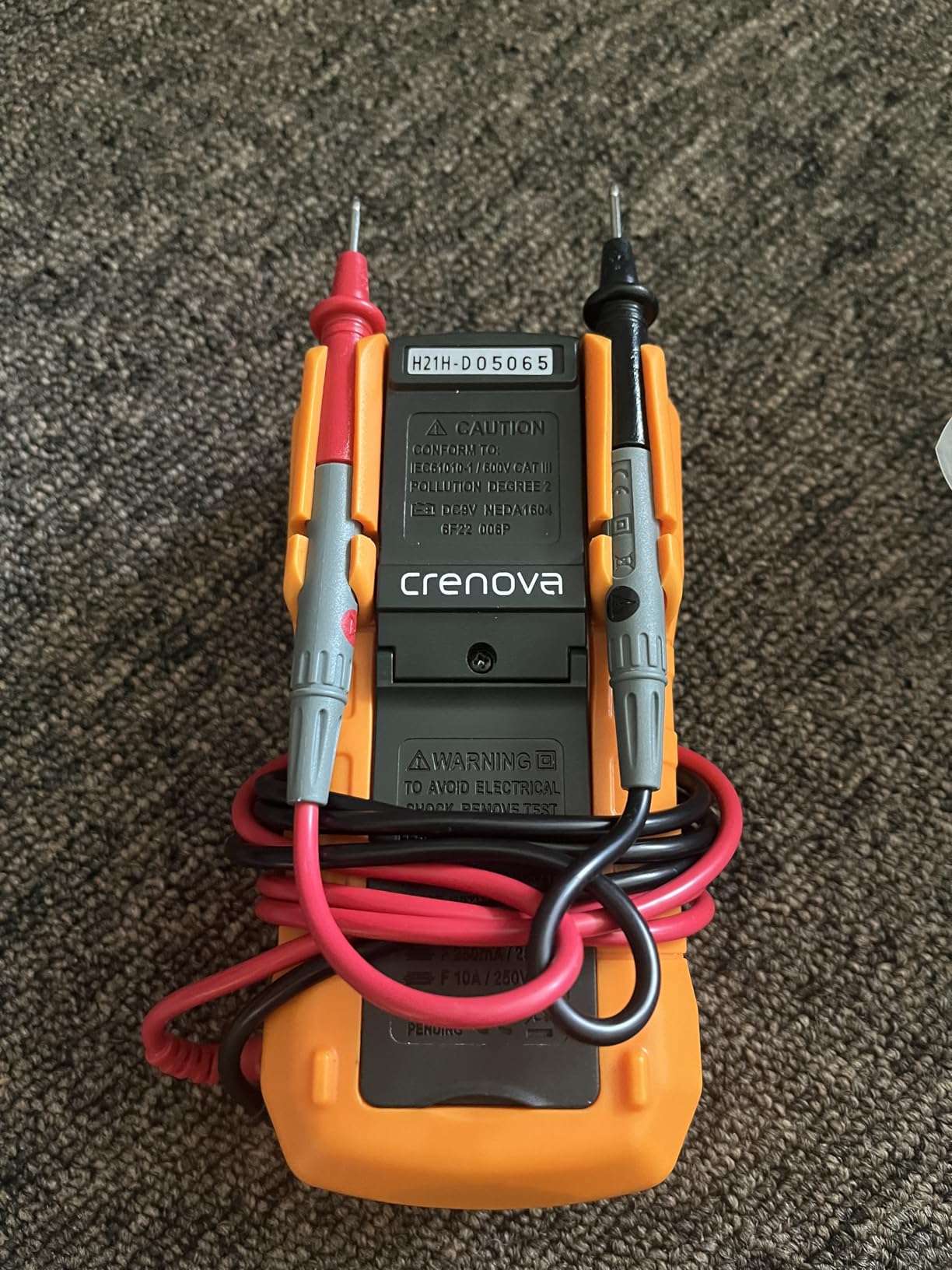
The Crenova MS8233D is the rare entry meter where the accessory list is as good as the measurement list. A carry bag, alligator clips, test leads and two AAA batteries are all in the box, which removes the most common complaint about buying a meter without a case.
On the measurement side it is genuinely capable: True RMS on AC voltage and current, 6000 counts, plus DC and AC voltage and current, resistance, capacitance, frequency, duty cycle, continuity and diode, on a bright backlit LCD running at three samples per second.
Non-contact voltage detection uses both sound and light alarms and beeps faster at higher voltage, which gives you a rough proximity signal without touching the conductor. Switchable manual and auto ranging is unusual in this class and gives you direct control when you want it.
It is rated to IEC61010-1 CAT III 600V with two built-in fuses, and the insulated rubber holster provides real drop protection. Reviewers describe the feature-per-dollar value as the reason for the strong 4.6 average.
Capacitance and duty cycle on a home circuit
Capacitance is not an exotic measurement in a house. Run capacitors on air conditioners, fan motors and water heaters fail more often than most owners expect, and a multimeter that measures capacitance turns a guess into a test. Duty cycle matters for dimmers and some LED drivers.
Frequency covers HVAC and motor control circuits. Combined with True RMS, that puts this meter ahead of most of the entry tier for the kind of diagnostics a homeowner does on a condensing unit.
Where the compromises sit
At 0.55 kg it is the heaviest handheld in this group, which is noticeable over a long session in a crawlspace. The orange insulated holster adds bulk and can partly obscure the range selector, so you are looking at the dial more than you would on a slim body.
The one-year warranty is shorter than several rivals and is the most common complaint in reviews. Complaints otherwise centre on size and warranty rather than measurement quality, which is the right balance of concerns to have.
10. KAIWEETS KIT01 Electrical Test Kit
KAIWEETS Electrical Test Kit KIT01, Digital Multimeter, Smart Non-Contact Voltage Tester & GFCI Outlet Tester with LCD, Complete Set with Carrying Case & Batteries for Electrician, DIY & HVAC
Multimeter plus NCV and GFCI testers
LCD readouts
Carrying case
3-year warranty
Pros
- Three tools with an LCD readout rather than beeps
- GFCI tester freezes the fault code for 5 minutes
- 20M ohm range and 1.5V and 9V battery test
- NCV detector carries CAT IV 600V rating
Cons
- Multimeter itself has no True RMS frequency or duty cycle
- GFCI tester limited to CAT II 125V
- Bulkier than a single meter
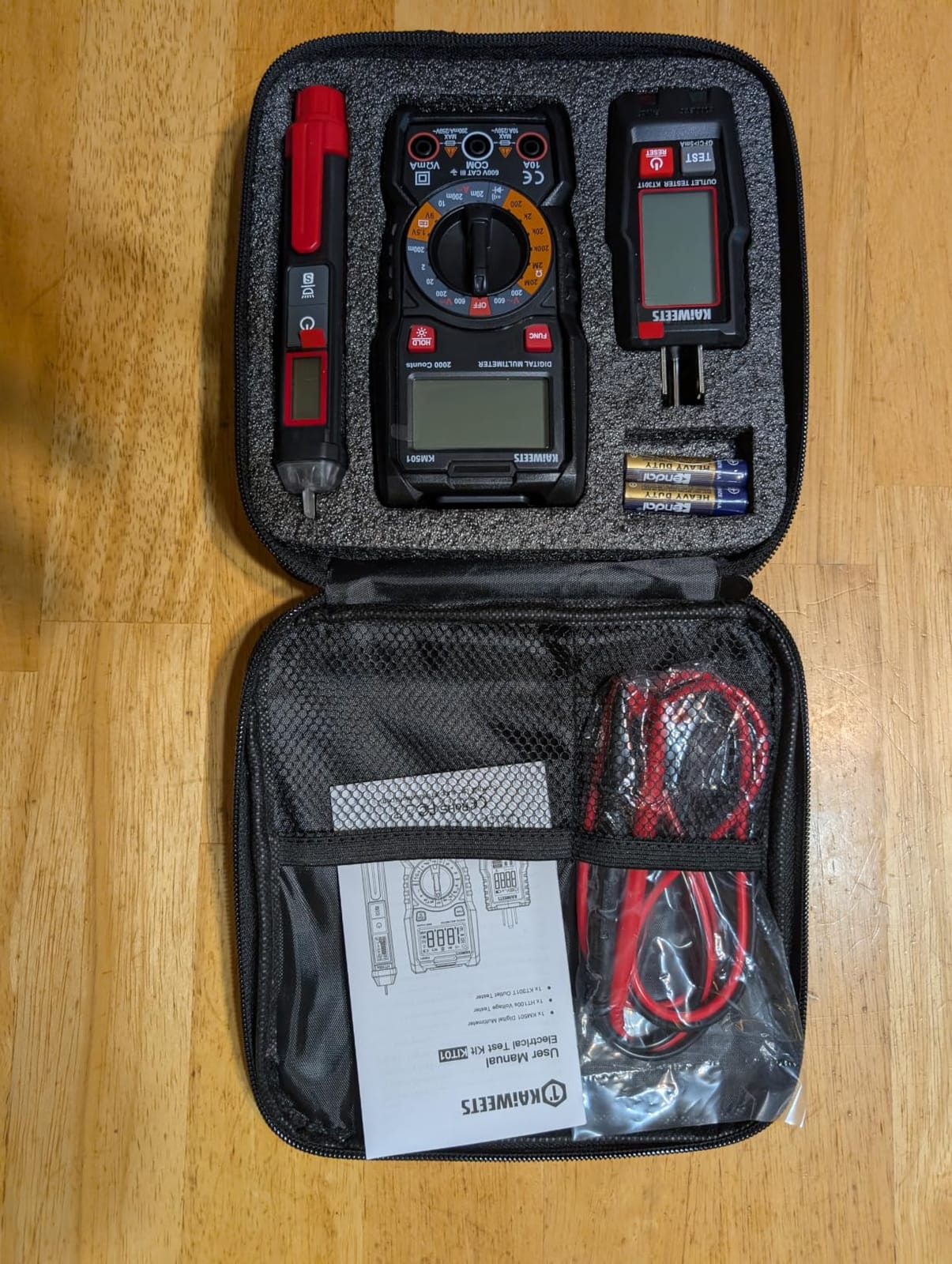
The KAIWEETS KIT01 does something the other kits here do not: it puts a screen on every tool. The non-contact detector shows a live voltage percentage with colour indication and flashing LEDs, and the GFCI outlet tester freezes the fault code on screen for five minutes so you can read it at a glance instead of racing back to the panel.
The multimeter itself measures AC and DC voltage to 600V, DC current to 10A and resistance to 20M ohms, plus continuity, diode and 1.5V and 9V battery tests, with a backlit LCD, data hold and auto-off.
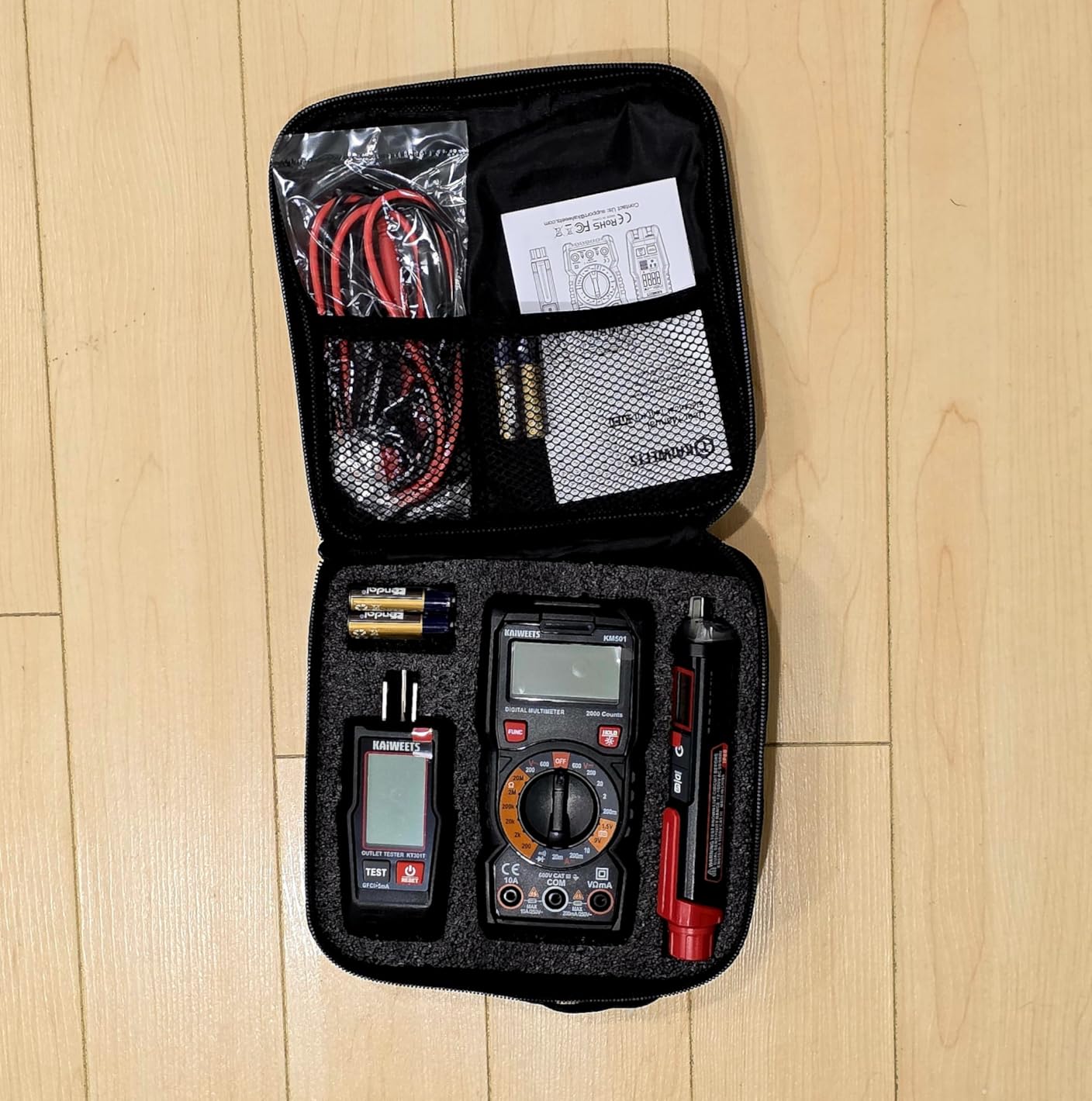
Safety ratings are the standout. The multimeter is CAT III 600V, the NCV detector is rated CAT IV 600V and CAT III 1000V with a built-in flashlight, and the GFCI tester is CAT II 125V. A 3-year warranty with 24/7 after-sales service comes with it, which is better than most kits at this level.
Everything lands in a carrying case with test leads and six AAA batteries, so there is nothing else to buy before the first job.
When a percentage readout beats a beep
A beep tells you one thing: something nearby is energised. A percentage readout tells you how much, which changes what you do next. When you are deciding between a dead cable and a cable that is merely picking up coupling from a neighbouring conductor, that distinction is the whole diagnosis.
The five-minute code hold on the GFCI tester is the other quietly useful feature. GFCI faults often clear or change state when you move, and holding the code means you can read the result properly rather than re-running the test.
What this kit is not
The multimeter is a basic 600V and 10A unit with no True RMS, no frequency and no duty cycle. If your work touches dimmers, LED drivers or modern electronics, you want a True RMS meter instead and this kit is the wrong purchase.
The GFCI tester is limited to CAT II 125V, and carrying three tools plus a case is bulkier than a single meter. Reviewers also note the bundle adds weight, which matters when you are working in a panel closet or an attic.
What to Look for in a Multimeter for Home Electrical Work
Look for True RMS if your house has anything modern in it. True RMS means the meter measures the actual root mean square value of the AC signal rather than estimating from the average of the wave. Average-responding meters read a 120V sine wave correctly, which is why they get away with it for years, but they drift on dimmers, LED drivers, variable-speed compressors and switched-mode power supplies. If your troubleshooting involves any of those, True RMS is not optional.
Read the CAT rating before anything else
The CAT rating tells you how much transient energy the meter is designed to survive. CAT II covers plug-in loads and receptacles, CAT III covers fixed installation equipment such as your breaker panel and the wiring feeding it, and CAT IV covers the service entrance and the line side of the meter. CAT III 600V is the minimum sensible rating for residential panel work, and CAT IV 600V gives you headroom for the service side.
The 600 in CAT III 600V is the maximum voltage the rating applies to. It is not the same as the meter’s maximum measurable voltage, which is a separate spec and often higher. Both numbers appear on quality meters, and confusing them is a common early mistake.
Prefer auto-ranging if you are new to meters
Auto-ranging means the meter selects the measurement range itself. It removes the single most common beginner error, which is setting the dial to the wrong range and blowing an internal fuse. Manual ranging gives you more direct control and is preferred by some electricians, but the forum consensus is consistent: if you are learning, auto-ranging is the safer choice.
Whatever the ranging mode, learn which jack is which before you probe anything. The COM jack takes the black lead always. Voltage goes in the V jack. The 10A jack is for current measurement only, and putting a probe there while measuring voltage is what destroys meters.
Prioritise backlight, display count and NCV
A backlit display is not a luxury. Crawlspaces, basements, garages and panel closets are where electrical work happens, and the inability to read your meter in the dark is one of the most common complaints from real users. Every meter in this roundup except a couple has one.
Display count tells you the resolution. A 6000-count meter has finer steps than a 2000-count one, which matters for small voltage drops and for comparing two similar readings. It is a secondary concern for household circuits but a visible difference on precision work.
Non-contact voltage detection gives you a beep before you touch anything. It is not a substitute for a meter reading, and it can be fooled by shielded cable, but it is fast and it belongs on any homeowner tool list.
LoZ mode is the feature budget meters cannot fake
Low impedance mode drops the meter’s input resistance into the kilohm range, which collapses induced or ghost voltage on a de-energized conductor. This is the answer to the most common confusing result a homeowner will ever see: your meter reads 30 or 45 volts on a wire with the breaker off, and you cannot tell whether it is live.
Ghost voltage is capacitive coupling. Your meter’s 10-megohm input and a few picofarads of stray capacitance between adjacent cables form a voltage divider, and the result looks like a live circuit. LoZ mode beats it. Without LoZ, the workaround is a known-good comparison reading or a low-impedance load, which is why pros pay for the feature.
Check what is actually in the box
Test leads are the most commonly missing item on premium meters, and a case matters more than most buyers expect. Fluke leads and cases are a real ongoing expense if you buy them separately. Budget kits that include a carry bag, alligator clips and spare batteries are quietly better value than the spec sheet suggests.
Also check the warranty length. Three years is common on better instruments, one year on several budget ones, and in both cases the number that matters more is whether replacement fuses and leads are available from the same brand.
Fluke vs Klein Tools: Which Brand Should Homeowners Buy?
Choose Fluke if your livelihood depends on the reading or you work around a panel; choose Klein Tools if you want a recognisable, durable instrument with a straightforward dial at a lower tier. Neither brand is wrong for home work, but they solve different problems.
Fluke meters carry CAT III 600V ratings as standard, publish accuracy figures that hold for decades, and are described in trade circles as effectively indestructible. Electricians report that they hold calibration over a long working life, which is why the price premium exists. LoZ mode on the 117 is a genuine professional feature that budget brands at a fraction of the cost cannot replicate.
Klein Tools meters are built with the same seriousness at a lower tier. The MM325 holds a CAT III 600V rating, adds Lead-Alert LEDs for lead placement, and includes a battery test mode. Reddit homeowners report buying Klein auto-ranging meters from big-box stores and being fully satisfied for home use, and the brand carries the kind of name recognition that makes a tool feel like a real tool.
A third name worth knowing is Milwaukee. A professional residential electrician recommends the Milwaukee Auto Ranger for homeowners specifically because it auto-detects voltage and continuity with minimal setup friction. If you want a meter that requires almost no dial knowledge, that is the argument for it. Extech, Southwire, INNOVA and Greenlee all appear in homeowner toolboxes too, with INNOVA and Southwire leaning automotive and technician respectively.
The simple decision rule: buy Fluke if you will be probing near a panel or measuring anything with electronics in it. Buy Klein or a quality budget brand if you are checking outlets, switches, batteries and breakers, and you value a durable tool with a safety rating over a mode that defeats ghost voltage.
When to Stop and Call a Licensed Electrician
Stop and call a professional when the work involves the service entrance, the panel internals, aluminium wiring, any circuit you cannot positively identify, or any reading you cannot explain. This is not caution for its own sake. Household circuits can be mislabelled, improperly grounded, or wired in ways that break every assumption you made about which breaker feeds which outlet.
Never work on a live circuit to measure current. Breaking a hot conductor to put a meter in series is how people get shocked, and it is why clamp meters exist. If you need to measure current, either use a clamp or de-energize and verify with a meter you have just tested on a known-good circuit.
Wear eye protection, keep your hands dry, and never rely on the meter’s low battery indicator as your only warning. Replace the 9V cell yearly, and if a meter reads suspiciously low on a circuit you know is live, suspect the meter or its battery before you suspect the wiring.
For panel enclosures and enclosures sized for the equipment you are fitting, our guide to electrical enclosures for panels covers the hardware side of that work.
A working meter tells you what is present, not what is permitted. Code requirements under the NEC and your local amendments apply to every change you make, even the ones that seem trivial. Knowing where your jurisdiction stands is part of doing the job properly, and it is also a good reason to bring in a licensed electrician for anything beyond replacing a device on an existing circuit.
Frequently Asked Questions
What is a multimeter used for?
A multimeter is a handheld test instrument that measures voltage, current (amps) and resistance (ohms). Homeowners use it to confirm a circuit is fully de-energized before touching it, read 120 or 240 volts at a receptacle, check continuity through a switch or wire run, and test battery voltage under load.
What is a good affordable multimeter for home use?
A True RMS, auto-ranging meter with a CAT III 600V rating and a backlit display covers almost all residential work. In the budget tier, the Crenova MS8233D and the AstroAI 6000-count model both provide True RMS, 6000-count resolution, NCV and a CAT III 600V rating. You give up LoZ mode and long-term calibration assurance, so verify any de-energized reading a second way.
Which is better, Klein or Fluke?
Fluke if you work near a panel or measure anything with electronics in it, because Fluke meters carry CAT III 600V ratings as standard and hold calibration over decades. Klein Tools if you want a durable, recognised brand with a straightforward dial, Lead-Alert lead placement LEDs and a CAT III 600V rating at a lower tier. Neither is wrong for checking outlets, switches and breakers.
What does True RMS mean on a multimeter?
True RMS means the meter calculates the root mean square value of an AC signal, which is the value that corresponds to equivalent heating power. Average-responding meters estimate from the middle of the wave and read correctly on a pure sine wave such as 120V household current, but drift on non-linear loads including dimmers, LED drivers, variable-speed compressors and switched-mode power supplies.
Do I need a True RMS multimeter for my house?
If your home has dimmers, LED lighting, smart thermostats, variable-speed HVAC or any modern electronics, yes. Those loads draw non-sinusoidal current, and an average-responding meter can read meaningfully wrong on them. If your work is limited to 120V receptacles, switches and breakers on older resistive circuits, an average-responding meter is adequate.
Why is my multimeter reading voltage when the circuit is off?
That is ghost voltage, caused by capacitive coupling from a live conductor running alongside the wire you are probing. Your meter’s 10-megohm input resistance and a few picofarads of stray capacitance form a voltage divider that produces a false reading without any current flowing. A meter with LoZ mode collapses this by loading the circuit, and without it you should confirm the reading another way before touching anything.
Our Verdict on the Best Multimeters for Home Electrical Work in 2026
The Fluke 117 is our pick for the best multimeters for home electrical work, and the reason is one feature rather than a spec sheet. LoZ mode is the only reliable way to tell a dead wire from a phantom reading, and that single question comes up in almost every residential electrical job there is.
For most people, though, the AstroAI 6000-count True RMS model is the smarter purchase. It gives you accurate readings on modern electronics, temperature and capacitance for capacitors, a kickstand and a rear magnet, and it costs a fraction of what a Fluke does. Pair it with the KAIWEETS kit or a receptacle tester and you have covered every outlet job in the house.
Choose the Fluke when you work near panels, need a milliamp range, or want one instrument that holds its calibration for the next fifteen years. Choose the budget tier if you are learning, checking batteries, and replacing devices on existing circuits. Either way, test your meter on a known-good circuit before you trust it, and stop at the panel if the readings do not make sense.
For the workshop side of the toolkit, our guide to workbench vises for home shops covers the bench you will be mounting all of this to.