
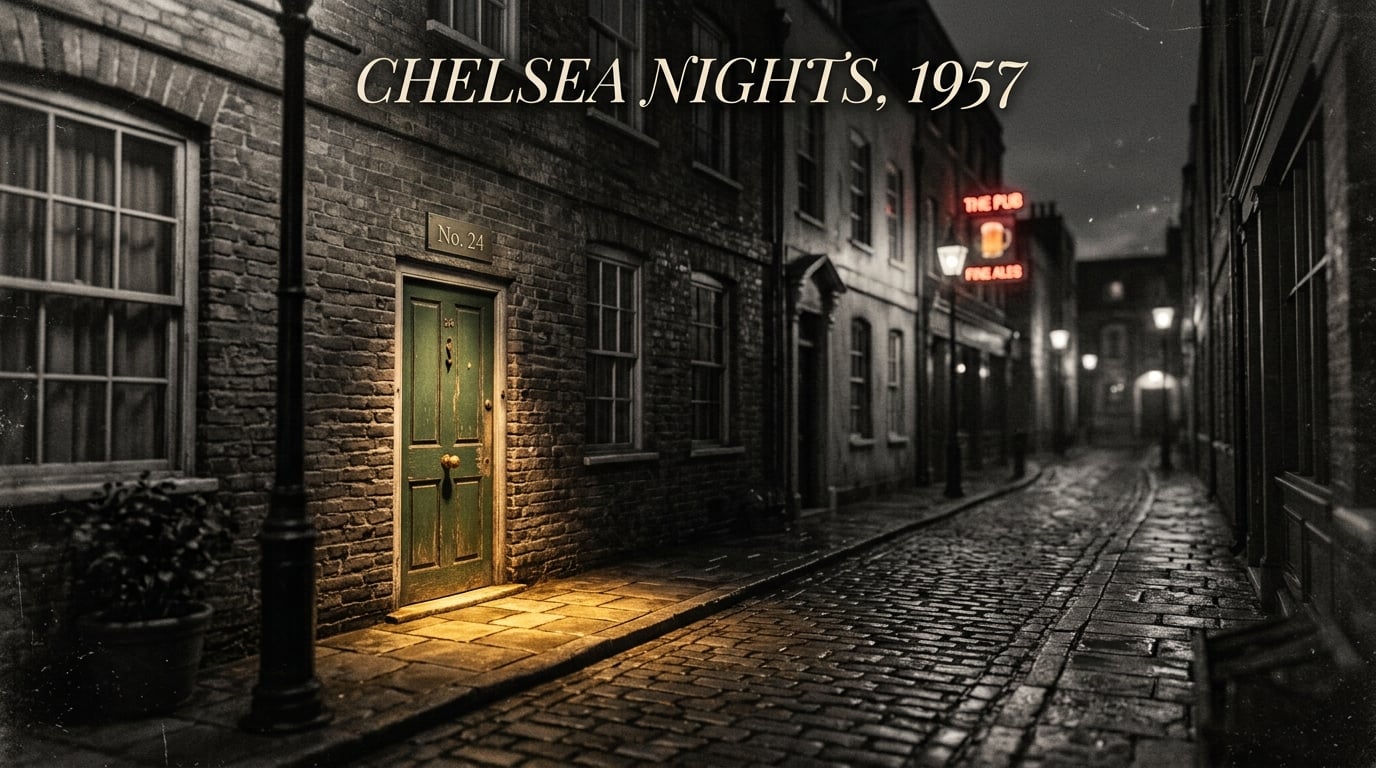
Behind a small green door at 239 King’s Road, Chelsea, down a steep and rickety staircase, thousands of women found something they could find nowhere else in Britain: a place to be entirely themselves. That door belonged to the Gateways Club, the longest-surviving lesbian nightclub in the world, and for over five decades it served as a sanctuary for women who loved women during a time when their very existence was criminalized.
But the Gateways was not alone. Across London, from the smoky cellar bars of Soho to the bohemian corners of Notting Hill, a network of forgotten lesbian clubs once thrived. These venues offered more than just drinks and dancing. They offered survival, community, and freedom.
Today, most of these spaces have vanished entirely. Buildings have been demolished, redeveloped, or repurposed. The women who danced on those small floors have grown older, and their stories risk fading with them. In 2026, as London’s queer landscape continues to shift, there has never been a more important time to remember the forgotten lesbian clubs of London like the Gateways.
This article traces the history of these venues, from the legendary Gateways Club itself to the lesser-known spaces that surrounded it. We will explore who ran them, what happened inside them, why they disappeared, and what legacy they leave behind.
Table of Contents
The Gateways Club: London’s Longest-Surviving Lesbian Nightclub
The Gateways Club was the most famous and longest-lived lesbian nightclub in British history. Operating from approximately 1931 until its closure in September 1985, it occupied a cellar bar at 239 King’s Road on the corner of Bramerton Street in Chelsea. For over fifty years, it stood as a beacon for queer women across the country.
The club was the best-known and longest-lived lesbian social venue in London, according to English Heritage. A blue plaque now marks its historic location, recognizing its significance to British queer heritage. Women traveled from across the UK to visit Gateways, some making weekly journeys from cities hundreds of miles away just for a few hours of freedom behind that green door.
Founding and Early History: From 1931 Bohemia to Lesbian Sanctuary
The Gateways Club opened around 1931, during a period when Chelsea was the epicenter of London’s bohemian and artistic counterculture. In its earliest years, the venue operated as a mixed-members club, attracting artists, writers, and free spirits drawn to the creative atmosphere of the King’s Road area.
During the 1930s and 1940s, same-sex relationships between women were not explicitly illegal in the way male homosexuality was, but the social stigma was crushing. Women risked losing their jobs, their families, and their homes if their sexuality became known. Venues like Gateways offered a rare pocket of safety in a hostile world.
The club gradually became known as a gathering place for women, even in its mixed early days. Lesbians who discovered the venue would quietly spread the word through trusted networks. This word-of-mouth system was how queer communities survived in an era before the internet, before Pride, and before any legal protections existed.
By the 1950s, the Gateways had firmly established its identity as a lesbian venue, though it retained its membership club structure. The post-war years brought more women through its doors, and the club became an anchor institution for a community that had almost no public-facing spaces of its own.
Ted Ware, Gina Ware, and Smithy: The Women Who Ran It
The story of Gateways is inseparable from the women who managed it day to day. In the late 1940s, a woman known as Smithy took over management of the club and set the tone for what it would become. She was a formidable presence who kept the club running through the challenging post-war years.
In the 1950s, Ted Ware became the owner and public face of the Gateways Club. Ted was a well-known figure in the lesbian community, and under her ownership the club flourished. She held the liquor licence, which was a significant responsibility in an era when authorities scrutinized queer venues heavily.
When Ted Ware passed away in the early 1960s, her partner Gina Ware inherited the club. Gina was a Canadian-born woman who had been part of the Gateways community for years. She took on the running of the club with determination, maintaining its character and its role as a sanctuary through the turbulent decades that followed.
Gina’s management saw the club through some of its most significant years, including the introduction of the women-only policy and the filming of The Killing of Sister George. Her story, and that of her family, was later told in the 2022 BBC documentary Gateways Grind, which brought the history of the club to a new generation.
Inside the Green Door: What the Club Was Actually Like
Patrons entered the Gateways Club through a distinctive green door on Bramerton Street. Behind that door, a steep staircase led down into a cellar bar that measured approximately 35 feet by 18 feet. It was small, intimate, and according to those who visited, utterly magical.
The room was smoky, dark, and warm with the energy of women who could finally relax. A small dance floor sat at the center, and a bar ran along one wall. The ceiling was low, and the atmosphere was thick with cigarette smoke, cheap perfume, and the relief of being surrounded by people who understood you.
Regulars have described Gateways as a wonderland, a sanctuary, and a second home. Women dressed up for nights out there, with butch women in sharp suits and ties and femme women in dresses and heels. The dress code was not enforced by the club but emerged naturally from the butch-femme culture that defined lesbian social life in mid-century Britain.
The club held a late licence, meaning it could serve drinks well beyond standard pub hours. This made it a destination rather than just a local. Women would arrive after finishing drinks elsewhere, knowing Gateways would be the last place standing at the end of the night.
The Women-Only Policy of 1967
In 1967, the Gateways Club made a decision that would define its identity for the remaining eighteen years of its operation. It became a women-only venue, meaning no men were admitted as patrons. This was a radical move that reflected both the politics of the era and the practical needs of the community.
The women-only policy was not about excluding men out of hostility. It was about creating a space where women could exist without being watched, judged, or harassed. In the 1960s, even in supposedly liberal London, women in queer spaces faced constant intrusion from men who treated lesbian venues as spectacles to be observed.
By going women-only, Gateways created a sealed world. Women could dance together, hold hands, argue, laugh, and simply exist without performing for anyone else. This policy became a core part of what made the club so beloved and so fiercely protected by its regulars.
The year 1967 is significant for another reason: it was the year the Sexual Offences Act partially decriminalized homosexual acts between men in England and Wales. While this legislation did not directly affect women, it shifted the cultural landscape. Gateways responded by claiming its space even more firmly as a women’s domain.
The Gateways Grind: A Dance of Liberation
If you have heard of the Gateways Club, you may have heard of the Gateways Grind. This was a distinctive style of slow dancing that became the signature of the club. Two women would hold each other close and move together in a slow, grinding rhythm on that tiny cellar dance floor.
The Gateways Grind was more than just a dance. It was an act of public intimacy between women at a time when such displays were virtually unseen anywhere else in the country. Women who experienced it describe the feeling of slow-dancing with another woman in a room full of women who understood, a sensation of total acceptance that was impossible to replicate in the outside world.
The dance became so iconic that it gave its name to the 2022 BBC Four documentary about the club. In that film, former patrons spoke about the Grind with visible emotion, describing it as one of the things they missed most about the club after it closed.
The Killing of Sister George: When Hollywood Came to Gateways
In 1968, the Gateways Club entered the cultural mainstream in a way that no lesbian venue in Britain had before. The American film The Killing of Sister George, directed by Robert Aldrich, featured scenes actually filmed inside the club using real Gateways patrons as extras.
The film starred Beryl Reid as June Buckridge, an actress on a popular BBC radio soap opera whose life unravels when her lesbian relationship is threatened. It was one of the first mainstream films to depict lesbian characters with any degree of complexity, though it was controversial and remains debated within queer communities.
For the Gateways scenes, the production crew brought cameras into the cellar bar. Real members of the club appeared on screen, giving audiences around the world a glimpse inside a world that had previously existed almost entirely in secret. This was a landmark moment in the visibility of lesbian life in Britain.
The film’s release was met with mixed reactions within the community. Some women were proud to see their world represented. Others felt the portrayal reinforced negative stereotypes. But regardless of opinion on the film itself, there is no doubt that The Killing of Sister George cemented the Gateways Club’s place in cultural history.
Famous patrons of the club over the years reportedly included Dusty Springfield, Diana Dors, and other prominent figures in entertainment. The club attracted women from every walk of life, from working-class girls to aristocratic bohemia, all united by the simple fact that they loved women.
Other Forgotten Lesbian Clubs of London
The Gateways may have been the most famous, but it was part of a wider ecosystem of lesbian venues across London. Many of these clubs have been almost entirely forgotten, erased from collective memory as buildings changed hands and communities dispersed. Here are some of the other forgotten lesbian clubs of London that deserve to be remembered.
The Champion (Notting Hill)
The Champion pub in Notting Hill was a well-known lesbian gathering spot, particularly in the 1970s and 1980s. While not exclusively a lesbian venue, it hosted regular women’s nights that drew crowds from across west London. The pub was a more accessible alternative to the members-only Gateways, offering a place where women could drop in without needing to be signed in by an existing member.
Notting Hill in this period was a diverse, culturally rich neighborhood with a strong alternative scene. The Champion fit into this landscape as a venue where working-class and middle-class women mingled, where the politics of the era were debated over pints, and where relationships were formed that lasted lifetimes.
Like so many queer venues, the Champion eventually lost its identity as a lesbian space. The building has changed hands multiple times, and most current residents of Notting Hill would have no idea that it once served as a lifeline for generations of women.
Pigott’s Bar and the Collector’s Set
Pigott’s Bar was another venue that served London’s lesbian community in the mid-twentieth century. Located in central London, it attracted a crowd that overlapped with the Gateways regulars but offered a different atmosphere. Where Gateways was a dedicated nightclub with a dance floor, Pigott’s was more of a drinking establishment where women gathered to talk and connect.
The Collector’s Set was a related social phenomenon, referring to informal networks of women who moved between venues like Gateways, Pigott’s, and private house parties. These networks formed the invisible infrastructure of London’s lesbian community in the 1950s and 1960s. Women who belonged to one group often knew members of others, creating a web of mutual support that stretched across the city.
These informal networks were how many women first discovered the existence of venues like Gateways. A chance encounter at a party, a whispered recommendation from a trusted friend, or a coded conversation at work could open the door to an entire community.
The Spotted Dog (Soho)
Soho has long been the heart of London’s nightlife, and its queer history runs deep. The Spotted Dog was a Soho venue that hosted lesbian nights and attracted a mixed queer crowd. In the 1960s and 1970s, Soho was home to numerous gay and lesbian venues, though many operated under the radar to avoid police attention.
The Spotted Dog was known for its lively atmosphere and its role as a meeting point for women exploring the broader Soho queer scene. Women would move between venues over the course of an evening, starting at one bar and ending at another. This pub-crawl culture was a defining feature of lesbian social life in Soho during this period.
Soho’s queer venues faced constant pressure from licensing authorities, property developers, and moral crusaders. Many were short-lived, opening and closing within a few years. The Spotted Dog is one of many Soho venues whose history has been partially preserved through oral histories and community archives but remains largely absent from official records.
The Glass Bar at Euston (1995-2008)
The Glass Bar was a lesbian and bisexual women’s bar located near Euston station, operating from 1995 until 2008. It was one of the few dedicated women’s venues to emerge in the post-Gateways era, filling a gap that had existed since the closure of London’s older lesbian clubs.
Run by members of the lesbian community, the Glass Bar offered a welcoming space for women to socialize without the intrusion that came with attending mixed venues. It hosted events ranging from live music to comedy nights, book readings to political discussions. For many women who came out in the late 1990s and early 2000s, the Glass Bar was their first experience of a dedicated lesbian space.
The closure of the Glass Bar in 2008 was a significant loss to the community. It coincided with a broader trend of lesbian venue closures across London, a pattern that has continued into 2026. Women who frequented the bar have spoken about how difficult it has been to find a replacement space that offered the same sense of safety and belonging.
Ace of Clubs (1980s-1990s)
The Ace of Clubs was a lesbian club night that operated in London from the mid-1980s through the mid-1990s, filling the void left by the closure of the Gateways Club in 1985. It catered to a new generation of women who had come of age after the Gay Liberation Front and who wanted a space that reflected the changing politics and culture of the era.
Unlike Gateways, which had maintained a somewhat traditional members-club atmosphere, the Ace of Clubs embraced the energy of the 1980s and 1990s club scene. It featured DJs, themed nights, and a more openly political atmosphere that reflected the activism of the period, including the visibility gained through Section 28 protests and the broader LGBTQ+ rights movement.
The Ace of Clubs has received almost no coverage in existing articles about London’s lesbian history, making it one of the most genuinely forgotten venues on this list. Yet for the women who attended, it was a defining space that carried the spirit of Gateways into a new era.
First Out Cafe (Tottenham Court Road)
First Out was a queer cafe and bar located on Tottenham Court Road, near the border of Soho and Bloomsbury. It operated as a daytime and early-evening venue, offering something different from the nightclub model that dominated London’s queer scene. Women could meet for coffee, read, work, and socialize in a relaxed environment that did not revolve around late-night drinking.
The cafe model was significant because it provided a space for women who did not feel comfortable in the club scene or who wanted community connections outside of nightlife. First Out attracted a diverse crowd, including students, artists, and professionals who used the space as a social hub.
First Out has received virtually no coverage in existing online articles about London’s lesbian history, making it another genuinely forgotten venue. Its closure removed one of the few non-nightlife queer spaces available to women in central London.
Butch and Femme Culture and Community Life
To understand the world of London’s forgotten lesbian clubs, it is essential to understand butch and femme culture. This was not a dress code enforced by clubs. It was a lived system of identity and community that shaped how women presented themselves, how they related to each other, and how they navigated a hostile world.
Butch women typically presented in masculine clothing, including suits, ties, and short hair. Femme women embraced feminine presentation with dresses, makeup, and styled hair. These were not just aesthetic choices. They carried social meaning within the community, signaling roles, preferences, and identities.
Butch women faced particular dangers in mid-century Britain because their appearance made them visibly queer. They could be harassed on the street, ejected from pubs, or questioned by police simply for how they dressed. Inside clubs like the Gateways, they could exist without that constant threat. This is one reason the women-only policy was so fiercely defended.
The butch-femme culture of these venues has sometimes been dismissed by later generations as old-fashioned or conformist. But for the women who lived it, it was a system of mutual recognition and protection. It allowed women to find each other in a world designed to keep them invisible.
Publications like Sappho magazine, which was founded in 1972, served as an extension of this community life. The magazine covered lesbian issues, published fiction and poetry, and helped connect women who could not access venues like Gateways in person. Organizations like Kenric, a social group for lesbians founded in 1965, and the Minorities Research Group also provided community infrastructure alongside the physical venues.
Why Did London’s Lesbian Clubs Disappear?
The disappearance of London’s lesbian clubs is not a simple story. Multiple forces converged over decades to erase these venues from the physical landscape of the city. Understanding why they vanished is essential to understanding why their memory matters so much.
Gentrification is one of the biggest factors. Neighborhoods like Chelsea, Notting Hill, and Soho underwent massive transformation from the 1980s onward. Property values skyrocketed, and venues that had operated on thin margins for decades suddenly faced rents they could not sustain. Buildings that once housed lesbian clubs were sold, redeveloped into luxury flats, or converted into high-end restaurants and bars.
The loss of liquor licences was another factor. Queer venues were always subject to greater scrutiny from licensing authorities than mainstream establishments. A single complaint, a police raid, or a change in local council policy could result in a venue losing its ability to serve alcohol. Without a late licence, clubs like Gateways could not survive financially.
Cultural shifts within the LGBTQ+ community also played a role. From the 1990s onward, many queer venues became mixed, serving gay men, lesbians, bisexual people, and later trans and non-binary patrons under one roof. While this integration was positive in many ways, it often meant that dedicated lesbian spaces were absorbed into larger queer venues and lost their distinct identity.
Dating apps and the internet changed how women connected. Apps like HER and dating platforms reduced the need for physical venues as the primary way to meet other women. While technology expanded access for many, it also contributed to the decline of the social spaces that had once been irreplaceable.
There is also a painful truth at the center of this story. Lesbian venues have always been more vulnerable to closure than gay male venues because they typically generate less revenue. Women’s average incomes were lower than men’s, and lesbian social culture historically revolved less around heavy spending on drinks. This economic reality made lesbian clubs harder to sustain as commercial enterprises.
The Closure of the Gateways Club in September 1985
The Gateways Club closed its doors for the final time on 21 September 1985. The closure came after years of financial pressure, changing social conditions, and the inevitable toll of maintaining a small cellar bar in one of London’s most expensive neighborhoods.
The loss of the club’s liquor licence was a decisive blow. Without the ability to serve drinks, the business model that had sustained the venue for decades collapsed. Gina Ware, who had run the club since Ted Ware’s death, could not keep it going under those conditions.
The final night was described by those who were there as both a celebration and a wake. Women who had been regulars for decades returned to say goodbye to a place that had been their second home. The dance floor was full, the Gateways Grind was danced one last time, and the green door closed behind the last patron.
The building at 239 King’s Road still stands today, but it has been repurposed. Passersby on the King’s Road walk past it without any indication that it was once the site of the most significant lesbian venue in British history. This is the nature of queer heritage. Spaces disappear, and without deliberate effort to remember them, the stories vanish with the buildings.
Legacy: The Blue Plaque and the Gateways Grind Documentary
In recent years, there has been a renewed effort to preserve and celebrate the memory of the Gateways Club and London’s broader lesbian nightlife history. This effort has taken two major forms: the English Heritage blue plaque and the BBC documentary Gateways Grind.
English Heritage installed a blue plaque at 239 King’s Road to commemorate the Gateways Club. The plaque recognizes the venue as a meeting place for lesbians and acknowledges its role as the longest-surviving lesbian nightclub in the world. For the women who frequented the club, this official recognition was deeply emotional. It meant that the space they loved would not be forgotten.
The blue plaque campaign was supported by public figures including Sandi Toksvig, who has been a vocal advocate for preserving lesbian history. The campaign drew attention to how few heritage markers exist for women’s queer history compared to the markers commemorating men’s queer spaces.
In 2022, BBC Four aired Gateways Grind, a documentary that told the story of the club through interviews with former patrons, archival footage, and the personal narrative of Gina Ware’s family. The documentary brought the history of the club to a new generation of viewers who had never known that such a world existed.
The film was met with an outpouring of emotion from queer women across the UK. Many described watching it with tears, seeing a world they had either experienced or wished they had. The documentary demonstrated that the hunger for this history is alive and well, and that the story of London’s lesbian clubs resonates far beyond the women who were there.
Publications like Diva Magazine have continued to cover this history, publishing retrospectives that keep the memory of venues like Gateways alive. Academic institutions and community archives have also worked to preserve oral histories, photographs, and memorabilia from these spaces.
FAQs
What is the famous lesbian club in London?
The most famous lesbian club in London was the Gateways Club, located at 239 King’s Road, Chelsea. It operated from approximately 1931 until September 1985 and was the longest-surviving lesbian nightclub in the world. It became women-only in 1967 and served as a sanctuary for queer women during decades when their identities were stigmatized and criminalized.
Is the Gateways Club still open?
No, the Gateways Club is not still open. It closed permanently on 21 September 1985 after losing its liquor licence. The building at 239 King’s Road, Chelsea still stands but has been repurposed. English Heritage has installed a blue plaque at the site to commemorate its historical significance.
When did the Gateways Club close?
The Gateways Club closed on 21 September 1985. The closure followed years of financial pressure and the loss of the venue’s liquor licence. Gina Ware, who had managed the club since the death of Ted Ware, was unable to keep it operating under the changed conditions.
What was the Gateways Grind?
The Gateways Grind was a distinctive style of slow dancing that became the signature of the Gateways Club. Two women would hold each other closely and move together in a slow rhythm on the small cellar dance floor. It was an act of public intimacy between women at a time when such displays were almost unheard of anywhere else in Britain. The dance gave its name to the 2022 BBC Four documentary about the club.
What does lavender mean for lesbians?
Lavender has been used as a symbol of lesbian and queer women’s identity since the early twentieth century. The association is sometimes traced to the use of lavender as a code color in queer communities when open expression of homosexuality was dangerous. The term was reclaimed by activists and writers, and lavender imagery has appeared in lesbian literature, protest, and culture as a marker of pride and solidarity.
Why did so many lesbian bars close in London?
Lesbian bars in London closed due to a combination of gentrification, rising rents, loss of liquor licences, the integration of queer venues into mixed spaces, and the rise of dating apps that reduced the need for physical meeting places. Venues like the Gateways Club, the Glass Bar, and the Ace of Clubs all fell victim to these forces. Dedicated lesbian spaces have proven harder to sustain commercially than mixed queer venues or gay male venues.
Remembering the Forgotten Lesbian Clubs of London
The forgotten lesbian clubs of London like the Gateways were more than just places to drink and dance. They were lifelines. They were the spaces where women discovered who they were, found partners and friends, built communities, and experienced the radical freedom of being surrounded by people who understood them.
From the legendary green door at 239 King’s Road to the vanished venues of Soho, Notting Hill, and Euston, these clubs formed a geography of belonging that has been almost entirely erased from the physical city. But the stories remain, carried by the women who lived them and preserved by historians, filmmakers, and heritage organizations working to ensure they are not lost.
The Gateways Club may be gone, but its legacy endures. The blue plaque on Bramerton Street, the Gateways Grind documentary, and the ongoing work of community archives all ensure that future generations can learn about the world that existed behind that green door. And as new queer spaces emerge in 2026, they stand on foundations laid by the women who danced on that tiny cellar floor in Chelsea.
If there is one lesson to take from this history, it is that queer spaces are never guaranteed. They exist because people fight for them, fund them, show up to them, and refuse to let them disappear. The forgotten lesbian clubs of London remind us that community is not just a feeling. It is a place. And when that place is lost, the work of remembering becomes its own form of resistance.