
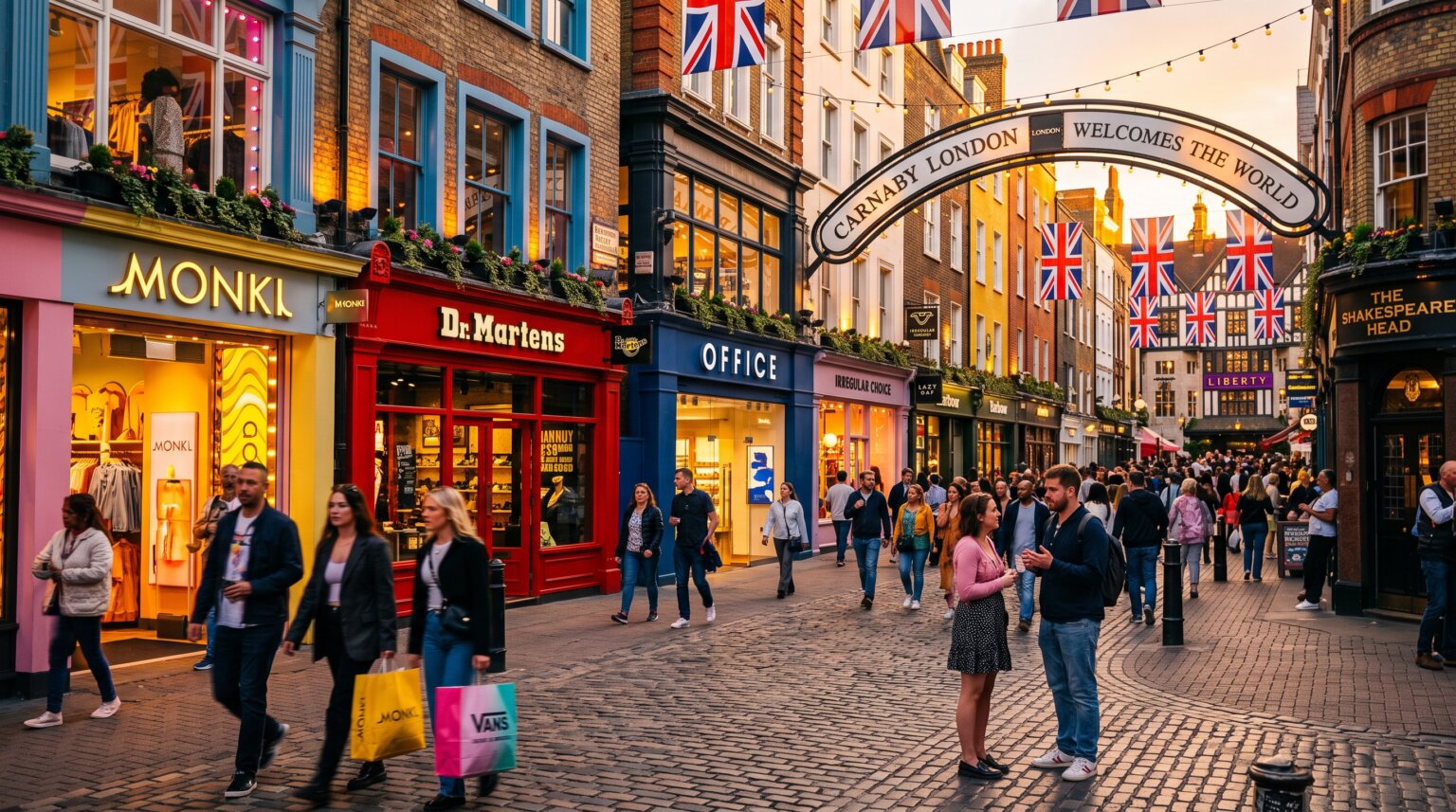
If you are planning a trip to London and wondering is Carnaby Street worth visiting, you are not alone. Thousands of travelers ask the same question every year, torn between the street’s legendary reputation and the mixed reviews they read online. Some call it an unmissable slice of Swinging London history. Others say it has been overrun by chain stores and lost its soul.
I have walked Carnaby Street dozens of times over the years, at different seasons, different times of day, and with different expectations. This guide gives you the honest answer to whether Carnaby Street deserves a spot on your London itinerary, along with everything you should know before you go.
Here is what we will cover: the street’s history and why it became famous, what it is actually like in 2026, where to eat and shop, how it compares to nearby Oxford Street and Regent Street, practical tips for getting there, and a clear verdict on who should visit and who can skip it.
Table of Contents
Is Carnaby Street Worth Visiting? Our Honest Verdict
Yes, Carnaby Street is worth visiting for most first-time visitors to London, especially if you are interested in fashion, food, or 1960s cultural history. The pedestrianised layout makes it a pleasant break from traffic-heavy streets, the dining scene in Kingly Court is genuinely excellent, and the street still carries echoes of its Swinging Sixties heyday. However, if you are expecting the bohemian, independent boutique paradise of the 1960s, you will be disappointed. The street is more commercial than it once was, and seasoned shoppers who remember the old Carnaby Street often leave underwhelmed.
Here is the quick breakdown. You will likely enjoy Carnaby Street if you are a first-time London visitor, a fashion enthusiast, a foodie, a photography lover, or someone who appreciates music and cultural history. You might want to skip it or lower your expectations if you are looking for truly independent boutiques, you hate crowds, you are short on time and prefer major museums, or you remember Carnaby Street from decades past and do not want to overwrite those memories.
The TripAdvisor rating sits at 4.1 out of 5 from over 1,600 reviews. That is a solid score but not a glowing one, and it tells you something important. Most people enjoy their visit, but a meaningful minority walk away feeling it was overhyped. The key is knowing what to expect before you arrive.
What Is Carnaby Street Famous For?
Carnaby Street is famous as the epicenter of the 1960s Swinging London fashion and music revolution. It was the birthplace of mod fashion, where designers like John Stephen and Mary Quant dressed a generation of young people who rejected postwar austerity in favor of bold colors, miniskirts, and sharp tailoring. Bands like The Who, The Rolling Stones, and The Small Faces hung out here, and Time magazine declared it the center of Swinging London in a famous 1966 cover story.
Today, Carnaby Street is a pedestrianised shopping and dining destination spread across 14 streets in the heart of Soho. The area houses over 150 brands, more than 60 independent restaurants and cafes, and a mix of fashion boutiques, concept stores, and flagship shops. It remains one of the most photographed streets in London, known for its colorful overhead installations and seasonal decorations that change throughout the year.
The Brief History of Carnaby Street: Swinging Sixties and Beyond
To understand whether Carnaby Street is worth visiting, it helps to understand what made it famous in the first place. The story begins long before the 1960s.
The street dates back to 1685, when it was named after Karnaby House, a building that once stood nearby. For most of its early history, it was a fairly unremarkable residential street in the Soho area. That all changed in the late 1950s and early 1960s, when a Scottish tailor named John Stephen opened a series of menswear shops that catered to the growing youth culture. Stephen is often credited as the father of Carnaby Street, because he was the first to recognize that young people wanted their own fashion, not watered-down versions of what their parents wore.
By 1965, Carnaby Street was the fashion capital of the world. Mary Quant, who had her nearby Bazaar boutique, popularized the miniskirt and hot pants. The mod movement, with its obsession with Italian suits, scooters, and American soul music, made the street its spiritual home. The Who, The Rolling Stones, and The Small Faces were regulars. When Time magazine published its famous 1966 cover story on Swinging London, Carnaby Street became an international phenomenon.
The 1970s and 1980s saw the street evolve again. The mod scene faded, replaced by punk, new wave, and eventually the Britpop era of the 1990s. Ben Sherman and Fred Perry became staples of the street’s shop windows. By the 2000s, however, many observers felt Carnaby Street had become a victim of its own success. Rents rose, independent boutiques were priced out, and chain stores moved in. The street that once defined counterculture had become a mainstream shopping destination.
Carnaby Street Then vs Now: Has It Lost Its Charm?
This is the question that divides visitors more than any other, and it deserves an honest answer. The short version is this: Carnaby Street has absolutely changed, and if you are comparing it to its 1960s peak, you will notice the difference. But that does not mean it has nothing to offer in 2026.
The most common complaint from long-time visitors is that the independent boutiques have been replaced by chain stores. On Reddit and TripAdvisor forums, the sentiment repeats constantly. One visitor described returning after many years and finding that all the small traditional stores had gone. Another called it a big disappointment compared to the unique shops they remembered from the 1970s. These are valid feelings, and if you are hoping to discover one-of-a-kind independent designers, you will find fewer of them than you might expect.
On the other hand, the street has gained things it never had before. Kingly Court, a three-story courtyard of restaurants just off Carnaby Street, is one of the best food destinations in the West End. The Newburgh Quarter offers a slightly more independent feel with smaller shops and cafes. The overall infrastructure has improved, with better pedestrian areas, cleaner streets, and more organized events and seasonal installations.
The colorful overhead installations that hang above the street throughout the year are a genuine highlight. They change with the seasons and often feature bold, Instagram-worthy designs. During the holiday season, the Carnaby Street Christmas lights are among the most creative in London, consistently praised by visitors and locals alike. These installations give the street a visual identity that sets it apart from the more generic shopping thoroughfares nearby.
So has Carnaby Street lost its charm? It has lost a specific kind of charm, the raw, independent, countercultural energy of the 1960s. But it has gained a different kind of appeal as a well-maintained, pedestrian-friendly destination with a strong food scene and a sense of style. Whether that trade-off is worth it depends entirely on what you are looking for.
What to Expect When You Visit Carnaby Street
When you arrive at Carnaby Street, the first thing you will notice is that it is fully pedestrianised. There are no cars, no buses, and no taxis. This makes it a refreshing change from the busy roads that surround it, and it gives the street a relaxed, walkable feel that Oxford Street simply cannot match.
The street itself is relatively short. You can walk the main stretch of Carnaby Street in about five minutes, but the surrounding area, including the 13 side streets that make up the Carnaby estate, offers much more to explore. Most visitors spend between 45 minutes and two hours here, depending on whether they stop to shop, eat, or take photos.
Expect crowds, especially on weekends and during the holiday season. The narrow street can feel packed during peak times, which is one of the most common complaints from visitors. If you want a calmer experience, visit on a weekday morning. The atmosphere is generally lively and energetic, with street musicians, window displays, and a steady flow of tourists and locals.
The colorful overhead installations are a constant feature. Whether it is a massive light display for Christmas, a floral arrangement for spring, or a themed art installation, there is almost always something visually striking hanging above your head. These installations are one of the most photographed features of the street and one of the main reasons people leave with positive memories.
Best Shops and Boutiques on Carnaby Street
Shopping is the main reason most people visit Carnaby Street, so let us talk honestly about what you will find. The reality is that the street has a mix of chain stores, heritage brands, and a smaller number of independent boutiques than it once had. But that does not mean there is nothing worth browsing.
Heritage brands with strong connections to the street’s mod history are still well represented. Ben Sherman, the shirt brand that became synonymous with mod culture, has maintained a presence here. Fred Perry, another mod-era staple, is nearby. These shops appeal to fans of classic British fashion and anyone interested in the street’s cultural legacy.
The concept stores and flagship shops offer a more curated experience than you will find on Oxford Street. Several fashion retailers use their Carnaby Street locations to showcase exclusive lines and limited editions that you cannot find in their other London stores. If you are into streetwear, contemporary fashion, or designer collaborations, these shops are worth a look.
For independent shopping, the side streets are where you should focus. The Newburgh Quarter, located just off the main drag, has a slightly more indie feel with smaller retailers and boutiques. You will find vintage clothing, record shops, and specialty stores that feel closer to the old Carnaby Street spirit. These are the shops that long-time visitors say still capture some of the original magic.
The key is to set your expectations correctly. If you come looking for nothing but unique independent designers, you will likely be disappointed by the number of familiar chain store facades. But if you approach it as a curated mix of heritage, fashion, and hidden independents, there is plenty here to enjoy.
Where to Eat and Drink: Kingly Court and Beyond
If there is one thing that has genuinely improved on Carnaby Street in recent years, it is the food scene. Kingly Court, located just off the main street, is a three-story courtyard packed with independent restaurants, bars, and cafes. It is widely regarded as one of the best casual dining destinations in the West End, and for many visitors, it ends up being the highlight of their visit.
You will find an impressive range of cuisines in Kingly Court alone. Mexican street food, Korean fried chicken, Italian pasta, American barbecue, Japanese ramen, vegetarian and vegan options, and traditional British pub fare are all within a few steps of each other. The open-air courtyard seating makes it a pleasant spot year-round, and the atmosphere is lively without feeling chaotic.
Beyond Kingly Court, the surrounding side streets offer more dining options. The Newburgh Quarter has several independent eateries and cafes that provide a quieter alternative to the main strip. Traditional British pubs in the area serve real ale and classic pub food in settings that have changed little over the decades. If you want a proper British pint in an atmospheric Soho pub, you are in the right neighborhood.
Price-wise, the area covers a wide range. You can grab a quick lunch for a reasonable price at one of the casual spots in Kingly Court, or you can spend considerably more at a sit-down restaurant. The variety is one of the strengths here, because it means Carnaby Street has something for almost any budget.
Carnaby Street vs Oxford Street vs Regent Street: Which to Choose
One of the most common questions from London visitors is how Carnaby Street compares to the other major shopping streets nearby. Since all three are within walking distance of each other, understanding the differences helps you plan your time efficiently.
Oxford Street is the heavyweight. It is the busiest shopping street in Europe, with over 300 shops including massive department stores like Selfridges. If your goal is sheer shopping volume, big-name brands, and flagship department stores, Oxford Street delivers. But it is also crowded, traffic-heavy, and can feel overwhelming. The pedestrian experience is poor compared to Carnaby Street, and the atmosphere is more transactional than enjoyable.
Regent Street sits between the two in character. It is broader and more elegant than Oxford Street, with beautiful architecture and high-end stores. Regent Street is home to luxury brands, Apple’s flagship store, Hamleys toy store, and some of the best shopfronts in London. It feels more refined than Oxford Street but is still a major traffic road, so you are walking along the sidewalk rather than in a pedestrian zone.
Carnaby Street offers something different from both. It is pedestrianised, which immediately makes it more pleasant to walk. It is smaller and more intimate, with a stronger sense of place and identity. The food scene is better than either Oxford Street or Regent Street, thanks to Kingly Court. And the cultural history gives it a narrative that the other streets lack.
My recommendation for most visitors is to do all three in sequence. Start on Oxford Street for the big shopping, walk down Regent Street for the architecture and window displays, and finish at Carnaby Street for food, atmosphere, and a more relaxed wander. They are all within a 10-minute walk of each other, and the contrast between them is part of what makes the West End interesting.
If you only have time for one and shopping is not your priority, Carnaby Street is the most enjoyable purely as a place to walk, eat, and soak up the atmosphere. If shopping is your main goal, Oxford Street or Regent Street will serve you better.
One note for trivia fans who ask what is the poshest shopping street in London. That title generally goes to Bond Street, which runs parallel to Regent Street and is home to luxury brands like Chanel, Dior, and Louis Vuitton. Neither Carnaby Street nor Oxford Street claims that crown.
Getting to Carnaby Street: Practical Info
Getting to Carnaby Street is straightforward, which is one of its advantages. The nearest tube station is Oxford Circus, served by the Bakerloo, Central, and Victoria lines. From Oxford Circus, it is a four-minute walk south down Great Marlborough Street to reach the top of Carnaby Street.
If you are coming from the south, Piccadilly Circus station is about a seven-minute walk away. It is served by the Bakerloo and Piccadilly lines. Tottenham Court Road station, on the Northern and Central lines, is roughly a 10-minute walk to the northeast.
Carnaby Street is also easy to reach on foot from many major West End attractions. It is a five-minute walk from Soho Square, eight minutes from Chinatown, and about 10 minutes from Leicester Square. If you are already exploring the West End, you will likely stumble across it without needing specific directions.
There is no parking on Carnaby Street itself since it is pedestrianised. If you are driving, the nearest car parks are on Brewer Street and Lexington Street. However, driving in central London is generally not recommended due to congestion charges and limited parking. Public transport is by far the easiest option.
Best Time to Visit Carnaby Street
Timing can make a significant difference to your Carnaby Street experience. The street is open year-round and there is no entry fee, but the atmosphere changes dramatically depending on when you go.
For the quietest experience, visit on a weekday morning between 10am and noon. The shops will be open, the crowds will be manageable, and you will be able to browse and take photos without feeling rushed or packed in. Tuesday and Wednesday mornings are typically the calmest.
Avoid Saturday afternoons if you dislike crowds. This is when Carnaby Street is at its busiest, with shoppers, tourists, and street performers all competing for space on the narrow street. Sunday afternoons are also busy, though slightly less so than Saturdays.
The Christmas season, roughly mid-November through early January, is when Carnaby Street puts on its most spectacular display. The annual Christmas lights installation is consistently ranked among the best in London, often outshining the more famous displays on Oxford Street and Regent Street. The designs are bold, creative, and usually tied to a musical or cultural theme. If you are visiting London in December, seeing the Carnaby Street Christmas lights is genuinely worth the detour.
In terms of how long to spend, most visitors spend between 45 minutes and two hours. If you are just walking through and taking photos, 30 to 45 minutes is enough. If you plan to shop, eat in Kingly Court, and explore the side streets, budget two hours or more.
Is Carnaby Street a Tourist Trap? The Honest Truth
This is the question many visitors are really asking when they search is Carnaby Street worth visiting. And the honest answer is complicated.
In some ways, yes, Carnaby Street has tourist trap elements. The prices in some stores are higher than you would pay elsewhere. The street leans heavily on its 1960s reputation to attract visitors, and some of the stores are familiar chains you could find in any major city. If you arrive expecting a hidden gem full of cutting-edge independent designers, you will feel like you have been sold a fantasy.
But calling it a pure tourist trap is unfair and inaccurate. The street is genuinely pedestrianised, which is rare and valuable in central London. The food scene in Kingly Court is legitimately good, with real independent restaurants serving quality food. The Christmas lights and seasonal installations are creative and well-executed. And the history is real, not manufactured. This is the actual street where the mod movement happened, where Mary Quant sold miniskirts, and where The Who shopped for clothes.
The trick is to approach Carnaby Street with the right expectations. Do not come here expecting to discover underground designers or authentic counterculture. Come for a pleasant walk through a car-free street with good food, decent shopping, and a sense of fashion history. Eat in Kingly Court. Browse the side streets of the Newburgh Quarter. Take photos of the overhead installations. And if you have time, visit during the Christmas season when the street is at its most magical.
For non-shoppers, Carnaby Street still has value. The architecture, the history, the food, and the atmosphere make it worth a brief visit even if you have no intention of buying anything. Grab a coffee, sit in Kingly Court, and enjoy the energy of one of London’s most famous streets. Just do not make it the centerpiece of your entire London trip.
Nearby Attractions to Combine With Your Visit
One of the best things about Carnaby Street is its location. It sits in the heart of the West End, surrounded by attractions that can easily be combined into a single day of exploring. Here are the highlights you can walk to within minutes.
Soho itself is worth exploring. The neighborhood around Carnaby Street is full of independent bars, jazz clubs, comedy venues, and historic pubs. Ronnie Scott’s, the legendary jazz club, is a short walk away on Frith Street. Soho Square, a small park surrounded by historic buildings, is a nice spot for a quick rest.
Chinatown is roughly five minutes south of Carnaby Street. The area around Gerrard Street is packed with Chinese restaurants, bakeries, and supermarkets. The decorative gates and lanterns make it a colorful photo stop, and the food ranges from quick dim sum to elaborate banquet-style meals.
Piccadilly Circus and Leicester Square are about a 10-minute walk to the south. Piccadilly Circus is one of London’s most recognizable landmarks, with its neon signs and the statue of Eros. Leicester Square is the center of London’s cinema culture, surrounded by theaters, casinos, and entertainment venues.
Regent Street and Oxford Street border Carnaby Street to the north and west. If you want the full London shopping experience, you can easily combine all three in a single afternoon. Start at Marble Arch on Oxford Street, walk east to Regent Street, turn south toward Carnaby Street, and finish with dinner in Kingly Court.
For a longer walk, Hyde Park is about 20 minutes to the west, and the British Museum is about 15 minutes to the east. The West End is one of the most densely packed areas of London for attractions, so almost anything you want to see is within walking distance.
FAQs
Is Carnaby Street worth visiting?
Yes, Carnaby Street is worth visiting for most first-time London tourists. It offers a pedestrianised shopping experience, excellent dining in Kingly Court, colorful overhead installations, and genuine 1960s fashion history. It is especially worthwhile if you are interested in fashion, food, or cultural history, though shoppers expecting purely independent boutiques may find it more commercialized than anticipated.
What is Carnaby Street best known for?
Carnaby Street is best known as the center of the 1960s Swinging London fashion revolution. It was home to designers like John Stephen and Mary Quant, hosted musicians like The Who and The Rolling Stones, and was featured on the cover of Time magazine in 1966. Today it is a pedestrianised shopping and dining area with over 150 brands and 60 restaurants.
Are Carnaby Street and Oxford Street the same?
No, Carnaby Street and Oxford Street are not the same. They are nearby but distinct. Oxford Street is a major traffic road with over 300 large chain stores and department stores. Carnaby Street is a smaller, pedestrianised street focused on fashion boutiques, independent shops, and restaurants in the Soho area. Carnaby Street is about a four-minute walk from Oxford Circus station.
What is the poshest shopping street in London?
The poshest shopping street in London is generally considered to be Bond Street, located near Oxford Street and Regent Street. Bond Street is home to luxury brands like Chanel, Dior, and Louis Vuitton. Carnaby Street is more focused on contemporary fashion and independent retailers, while Oxford Street is known for mainstream high-street chains.
How long should I spend at Carnaby Street?
Most visitors spend between 45 minutes and two hours at Carnaby Street. If you are just walking through and taking photos, 30 to 45 minutes is enough. If you plan to shop, eat at Kingly Court, and explore the side streets like Newburgh Quarter, budget at least two hours.
What is the best time to visit Carnaby Street to avoid crowds?
The best time to visit Carnaby Street to avoid crowds is a weekday morning between 10am and noon, with Tuesday and Wednesday being the quietest days. Avoid Saturday afternoons, which are the busiest. The Christmas season from mid-November to early January is popular for the spectacular light displays but will be more crowded.
The Final Verdict: Should You Visit Carnaby Street?
So, is Carnaby Street worth visiting? For most travelers, the answer is yes, with realistic expectations. It is not the cutting-edge fashion incubator it was in 1966, and it has more chain stores than many visitors would like. But it remains one of the most characterful shopping streets in London, with a pedestrianised layout that makes it genuinely pleasant to explore, a food scene that punches well above its weight, and a cultural history that gives every visit a sense of place.
Visit for an hour or two, eat in Kingly Court, browse the Newburgh Quarter side streets, and enjoy the overhead installations. Then move on to the rest of what the West End has to offer, because Carnaby Street is just one piece of one of the most exciting neighborhoods in the world.