
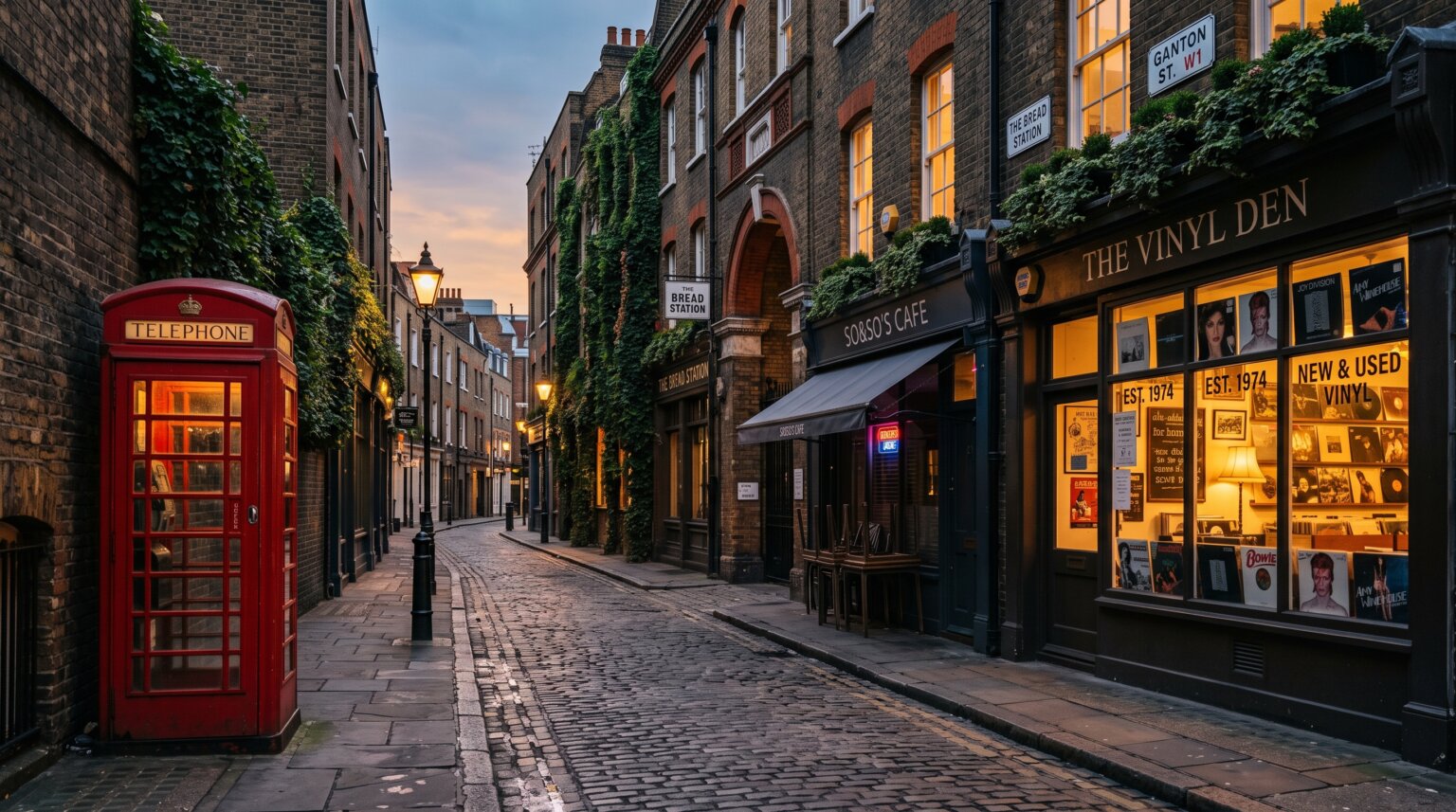
Soho never sits still. One minute you’re sipping a flat white on a quiet side street watching delivery riders weave past. The next you’re shoulder-to-shoulder in a packed cocktail bar while a saxophone bleeds out of a basement jazz club next door. That contrast is exactly what makes learning how to experience the real Soho London like a local so rewarding.
Most guides treat Soho as a checklist of restaurants and bars. But Soho is not a museum you visit. It is a neighbourhood you feel, smell, and stumble through. The locals who live and work here do not queue for tourist-trap restaurants on the main drags. They know which side street has the best Korean food, which basement bar has no sign on the door, and which coffee shop opens at 6am for the market traders.
I have spent years wandering these streets at every hour. Early mornings when only bakers and bin collectors are out. Saturday nights when the pavement vibrates with energy. Weekday lunchtimes when office workers flood Berwick Street for a quick wrap. Soho has at least four different personalities depending on when you visit, and understanding that rhythm is the difference between a tourist experience and a local one.
This guide skips the obvious recommendations you will find on every travel site. Instead, we are going deep into how actual Londoners use Soho. Where they eat. How they navigate. What they avoid. And the hidden corners that, as one Reddit user perfectly put it, “may not show up through a Google search.”
Table of Contents
What Makes Soho, Soho: A Quick Orientation
Soho sits in the heart of London’s West End, boxed in by four major roads. Oxford Street marks the northern edge. Regent Street runs along the west. Charing Cross Road borders the east. And Shaftesbury Avenue curving across the south separates it from Chinatown and the theatre district. Everything inside that rough square mile is Soho.
It is genuinely tiny. You can walk from one side to the other in about ten minutes. But density is the point. Soho packs more restaurants, bars, clubs, theatres, shops, and history into its few blocks than most London boroughs manage across miles. Locals measure distance in “a two-minute wander” rather than actual street names.
The name “Soho” has murky origins. The most popular story traces back to a hunting cry used in the 1500s when this area was open fields and royal hunting grounds. “Soho!” was apparently the equivalent of “tally-ho.” Whether that is true or Victorian embellishment, the name stuck when the fields gave way to streets in the 1670s. Since then, Soho has reinvented itself roughly every few decades.
What borders Soho matters just as much as what is inside. Mayfair sits to the west, all money and polish. Fitzrovia nudges the north, with its media agencies and Literary Walk heritage. Covent Garden lies to the southeast with its tourist crowds and street performers. Chinatown presses right against the southern edge, which is why the best late-night noodles are always a two-minute walk from any Soho bar. Knowing these boundaries helps you plan routes and escape the crowds when you need a breather.
How to Experience the Real Soho London Like a Local: 10 Insider Rules
If you want to experience the real Soho London like a local, you need to change how you move through the area. Tourists follow the main roads. Locals cut through the side streets. Here are the rules that separate a visitor from someone who actually belongs here.
1. Walk everywhere. Soho is compact and the tube is pointless for short hops within the area. Lace up comfortable shoes and explore on foot. Every shortcut and hidden passage reveals itself only when you slow down and look sideways.
2. Start early. Soho before 11am is a different world. The streets are quiet, coffee shops are calm, and Berwick Street Market is setting up. Locals who live here cherish these morning hours. By 1pm the tourists and office crowds arrive and the character shifts entirely.
3. Use contactless payment, not an Oyster card. Tap your bank card or phone on the yellow reader at any tube station. The daily cap applies automatically. No tourist who has visited London in the past few years bothers with Oyster anymore, and locals certainly do not.
4. Avoid Oxford Street. It borders Soho and it is a tourist conveyor belt of chain stores and stress. Cross it to get to Soho, then forget it exists. Everything worth your time is on the smaller streets south of it.
5. Eat where the queues are full of office workers, not tourists with cameras. If the line at lunchtime has people in lanyards and trainers, you have found a local spot. If the menu has pictures and someone is handing out flyers on the pavement, keep walking.
6. Explore side streets off Old Compton Street and Greek Street. These are the main arteries, and they are great. But the real discoveries sit one street over. Frith Street, Dean Street, Wardour Street, and Brewer Street all hide independent shops and bars that do not need a marketing budget because locals keep them busy.
7. Do not pre-book dinner for 6pm. That is a tourist timeslot. Londoners eat late. Book for 8pm or 8:30pm, or better yet, eat at the bar counter at places that do not take reservations. You will meet actual locals that way.
8. Learn the Night Tube. The Central and Victoria lines run through the night on Fridays and Saturdays. Oxford Circus and Tottenham Court Road stations are your gateways. This is how locals get home after midnight without spending on taxis.
9. Talk to bartenders and shop staff. Soho’s workforce are some of the friendliest, most connected people in London. Ask where they drink on their night off. Ask which restaurant just opened that locals are buzzing about. You will get better recommendations than any blog can offer.
10. Accept that Soho is loud. Locals do not complain about the noise. They moved here or work here because of the energy. If you want quiet, Mayfair is a ten-minute walk west. Soho is not trying to be peaceful, and that is precisely its appeal.
Daytime Soho vs Nighttime Soho: Two Different Worlds
One of the biggest mistakes visitors make is only seeing Soho after dark. The area has two completely different personalities, and understanding both is essential if you want to experience it like a local.
Morning Soho, from about 7am to 11am, is almost meditative. Delivery vans restock restaurants. Bakers pull trays out of ovens. The smell of fresh bread from Maison Bertaux on Greek Street drifts across the street. Coffee shops like Department of Coffee and Social Affairs open early and fill with freelancers and market traders. Berwick Street Market starts laying out its fruit and vegetable stalls. This is when Soho feels like a real neighbourhood rather than an entertainment district.
Afternoon Soho, from noon to 5pm, belongs to office workers and shoppers. Lunch queues form at every decent sandwich spot and street food stall. Carnaby Street fills with browsers. Liberty London gets busy with people admiring the Tudor-revival building even if they cannot afford anything inside. This is a good time for a relaxed coffee, a wander through independent shops, or a matinee at one of the smaller theatres.
Evening Soho, from 6pm onwards, is when the area transforms. Pre-theatre crowds rush to their seats. After-work drinkers spill onto pavements outside pubs. Restaurant kitchens hit full tilt. By 9pm, Soho is electric. Cocktail bars fill up, comedy clubs open their doors, and the side streets hum with conversation and laughter.
Late-night Soho, from midnight to 3am, is where things get interesting. The tourists have gone to bed. What remains is a mix of hospitality workers finishing shifts, clubbers, and dedicated night owls. This is when you find the best conversations, the most interesting people, and the rawest version of Soho’s character. It is also when you need to be a bit more street-smart, which we cover in the safety section below.
The point is simple. Do not just come to Soho for dinner and drinks. Come back in the morning. Walk the same streets at 8am and see how different they feel. That contrast is what locals know intimately.
Where to Eat in Soho: From Hidden Gems to Icons
Soho’s food scene is one of the best in London, full stop. New restaurants open constantly, old favourites close, and the cycle never stops. That constant churn is exactly what keeps it exciting. Here is how to eat your way through Soho the way locals do.
Budget-Friendly and Quick Bites
Berwick Street Market is the daytime anchor. Fruit and veg stalls have been here since the 1840s, but the real draw now is the street food. You will find everything from Ethiopian injera to authentic jerk chicken to proper Italian arancini. Prices hover around the 6 to 10 pound mark, and the queues at lunchtime tell you everything. Follow the office workers.
The Breakfast Club on D’Arblay Street is a Soho institution for brunch. Yes, there is often a queue. Locals know to arrive before 10am on weekends or hit it on a weekday. The pancakes and the chorizo hash are worth the wait. Honest Burgers on Meard Street does some of the best affordable burgers in central London, with locally sourced meat and proper rosemary salted chips.
For something genuinely cheap, head to Chinatown’s edge. A bowl of hand-pulled noodles from one of the smaller spots on Wardour Street’s southern end costs less than a pub sandwich and tastes infinitely better. This is where Soho hospitality workers eat between shifts.
The Korean Food Scene
Forum discussions repeatedly highlight Soho’s Korean food as exceptional, and locals absolutely agree. The area around the Centre Point end of Tottenham Court Road and St Giles High Street has become London’s most concentrated Korean dining hub. Koba on Rathbone Place does sizzling barbecue at tables where the meat cooks in front of you. Asakusa on Eversholt Street is a bit further out but worth the walk for its authentic stews and bibimbap.
If you want something quick, the Korean fried chicken spots tucked into side streets offer incredible value. Crispy, glossy, spicy, and perfect with a cold beer. This is the kind of recommendation that rarely shows up in mainstream guides but comes up constantly in conversations with people who actually live nearby.
Mid-Range Favourites Locals Love
Dishoom on Kingly Street needs no introduction, but the reason locals keep going back is consistency. The bacon naan at breakfast and the black daal at dinner are genuinely excellent. The queue is legendary but moves faster than you think. Go before noon or after 2:30pm to skip the worst of it.
Yalla Yalla does outstanding Lebanese wraps and mezze from a tiny spot on Winsley Street. It is fast, affordable, and the kind of place you become a regular at within two visits. Polpo on Beak Street serves Venetian small plates in a buzzy, candlelit room that feels impossibly cool without trying too hard. Grab a spritz and a plate of cicheti and you understand why locals never stop coming here.
Blanchette on Berwick Street is a favourite for date nights and catch-ups with friends. French-inspired small plates, a great wine list, and an atmosphere that manages to feel intimate even when packed. Barrafina on Frith Street, with its counter-only seating, serves some of the best Spanish food in London. Sitting at the bar, watching the kitchen work, is the experience.
Fine Dining When You Want to Splash
Soho has its share of Michelin-starred and high-end dining. Yauatcha on Broadwick Street serves exquisite dim sum in a sleek, moody setting. The paddle of dumplings is a masterclass in technique. The brasserie-style rooms downstairs feel like a secret club.
For a proper splurge, try one of the chef-led restaurants that open and evolve constantly. The scene changes so fast that asking a bartender for tonight’s recommendation is often better than trusting a guide written months ago. That constant reinvention is part of what makes dining in Soho so thrilling.
Coffee and Brunch Culture
Coffee in Soho is serious business. Department of Coffee and Social Affairs on Carnaby Street pulls consistently excellent espresso. Flat White on Berwick Street, an Antipodean-run spot, basically introduced proper third-wave coffee to this part of London. Drink the flat white and trust the process.
Maison Bertaux on Greek Street has been baking French pastries since 1871. It is the oldest French patisserie in London. The upstairs seating area is tiny, cramped, and perfect. Order a mille-feuille and a coffee and sit by the window watching Soho wake up.
Where to Drink: Pubs, Cocktail Bars, and Secret Speakeasies
If food is Soho’s body, drinking is its soul. This is a neighbourhood built around socialising, and the variety of drinking establishments is staggering. From historic pubs to hidden basement bars, here is where locals actually drink.
Historic Pubs With Real Character
The French House on Dean Street is a Soho legend. It served Free French forces during World War II and still has an aggressively French atmosphere. No mobile phones, no lager, and wine served in miniature glasses. Charles de Gaulle drank here. Dylan Thomas drank here. You should too. It is the quintessential Soho pub experience, and locals treasure it.
The Dog and Duck on Bateman Street is a tiny, tile-fronted Fuller’s pub that packs drinkers into a space roughly the size of a living room. The upstairs room is quieter if you want a conversation. The John Snow on Broadwick Street, named after the doctor who traced a cholera outbreak to a Soho water pump, is a solid traditional pub with a good street-side seating area for summer.
Cocktail Bars Worth Seeking Out
Swift Soho on Old Compton Street is one of the best cocktail bars in London, full stop. The Irish coffee is famous, and deservedly so. The room is split across two levels, with the ground floor buzzing and the basement more intimate. Bartenders here are genuine craftspeople. Ask for a recommendation based on what you usually like and let them work.
The Experimental Cocktail Club on Gerrard Street sits at the edge of Chinatown and Soho. It has no obvious sign. You walk down a seemingly ordinary street, spot a small door, descend stairs, and suddenly you are in a moody, gorgeous cocktail bar that feels like a Parisian speakeasy. This is the kind of place locals bring friends visiting from out of town to impress them.
Bar Termini on Old Compton Street does exceptional Italian cocktails and Negronis in a room so small you will be sharing elbow space with strangers. That closeness is part of the charm. The Negroni here is widely considered one of the best in London.
Secret Bars and Speakeasies
Cahoots is the speakeasy that forum users recommend most. You enter through what looks like an abandoned Underground station entrance on Kingly Court. Descend the stairs and you are in a 1940s-themed cocktail bar styled like an abandoned tube carriage. The commitment to the theme is total, the cocktails are excellent, and it is exactly the kind of hidden spot Reddit users mean when they ask for places that “may not show up through a Google search.”
For something even more under the radar, look for the unmarked doors. Several Soho cocktail bars deliberately keep their signage minimal or nonexistent. You need to know the address, not look for a sign. Ask a bartender where they drink on their night off, and you will end up somewhere with no website and no sign but a queue of people who clearly know the password.
Rooftop and Al Fresco Drinking
Kingly Court has multiple levels of bars and restaurants, and the rooftop is a local favourite for summer evenings. You order a drink, find a spot on the terrace, and watch Soho stretch out below you. It is one of the few places in the area where you get genuine sky and air.
During summer, every pub with a patch of pavement puts out tables and chairs. The atmosphere on a warm Friday evening, with the whole neighbourhood spilling onto the streets, is unmatched anywhere in London. This al fresco culture is deeply embedded in how locals experience Soho from May through September.
LGBTQ+ Bars and Old Compton Street
Old Compton Street is the beating heart of London’s LGBTQ+ scene and has been for decades. The bars here are loud, proud, and welcoming. Comptons of Soho is a classic gay pub with a great upstairs space. Admiral Duncan is a piece of living history, having survived a horrific bombing in 1999 and reopened as a defiant celebration of queer Soho. Heaven, just a short walk away near Charing Cross, remains one of the most famous LGBTQ+ clubs in the world.
This part of Soho is not a tourist attraction. It is a living community. The locals who drink here have fought for the right to exist openly in these streets, and that history gives the area a depth and warmth that chain bars can never replicate. Come with respect, tip your bartenders, and enjoy one of the most welcoming atmospheres in London.
Hidden Gems and Secret Passages Most Tourists Miss
The hidden corners of Soho are what separate a local experience from a tourist one. These are the spots you only find by accident, by following someone who knows, or by reading a guide like this one.
Kingly Court is a three-tiered courtyard tucked off Carnaby Street. Most tourists walk right past the entrance. Inside, you find independent restaurants, bars, and shops across multiple levels, with a rooftop terrace at the top. It feels like a secret village in the middle of Soho. Locals use it as a meeting point, a dinner destination, and an escape from the Carnaby Street crowds.
Neal’s Yard sits just outside Soho’s official boundary in neighbouring Seven Dials, but no local would ever tell you to skip it. This tiny, colourful courtyard is reached through a narrow alley between Monmouth Street and Shorts Gardens. The buildings are painted in vivid oranges, purples, and greens. There is a natural remedies shop, a cheese shop, and a cafe. It feels like stumbling into a fairy tale in the middle of central London.
Soho Square is the neighbourhood’s green heart. Most tourists walk past it on their way somewhere else. Locals know it as the best lunch spot in the area. Grab food from a nearby market stall or sandwich shop, find a bench, and watch Soho’s workforce take their break. The square has a small half-timbered hut in the centre that looks like it belongs in a storybook. On sunny days, every patch of grass is covered with people eating, reading, and talking.
St Anne’s Churchyard on Wardour Street is another tucked-away green space. The church itself has a fascinating history, and the small garden provides a genuinely quiet moment in the middle of Soho’s chaos. It is rarely busy, which is exactly why locals love it.
Denmark Street, also known as Britain’s Tin Pan Alley, sits at the eastern edge of Soho. This is where the British music industry was born. The Sex Pistols lived above a shop here. David Bowie recorded nearby. Reggae and blues records were pressed in basement studios. Today it still has music shops, guitar stores, and a palpable sense of rock history. Walk down it slowly and listen for the sound of someone testing an amplifier.
Golden Square is Soho Square’s quieter, posher cousin. Surrounded by media companies and townhouses, it has a more refined feel. Locals who work nearby eat lunch here, and it is almost always less crowded than Soho Square. The statue in the centre depicts George II, and the whole square feels like a time capsule from the 1700s.
A Self-Guided Soho Walking Route
No competitor guide offers a connected walking route, so here is one you can follow. This self-guided wander takes about two to three hours and connects some of Soho’s best spots in a logical flow. Do it on a weekday morning or early afternoon for the best experience.
Start: Oxford Circus Station (Exit 4). Head south down Argyll Street. Within a minute you hit Carnaby Street. Turn left and walk down this iconic shopping street. Notice the independent shops mixed with chains. At the end, turn right into Foubert’s Place, a quiet side street with boutiques.
Turn left onto Broadwick Street. On your left you will see Yauatcha. Keep walking and you hit Berwick Street on your right. Walk down Berwick Street to experience the market. Browse the fruit stalls and food vendors. Grab a coffee at Flat White if the queue is manageable.
Continue south on Berwick Street until you reach Old Compton Street. Turn left. This is the heart of Soho’s LGBTQ+ scene. Walk slowly and soak in the atmosphere. Stop at Bar Italia at number 9 for an espresso standing at the counter like a real Italian. The cafe has been here since 1949 and the coffee is excellent.
Continue along Old Compton Street, then turn right up Frith Street. This street has some of Soho’s best restaurants and bars. You will pass Barrafina and Ronnie Scott’s Jazz Club. Turn right onto Dean Street to see The French House. Keep walking and you reach Soho Square on your left. Walk through it, find a bench, and take a break.
Exit the square on the north side onto Soho Street, then turn left onto Oxford Street. Cross carefully and turn right into Marshall Street. Walk through to Golden Square for a quieter moment. From here, head east along Brewer Street, passing independent shops and restaurants.
Turn left onto Wardour Street. This is one of Soho’s main arteries and is packed with history. You will pass St Anne’s Churchyard on your right. Keep going south until Wardour Street meets Shaftesbury Avenue. From here, Chinatown is directly ahead. Turn right along Shaftesbury Avenue, then duck into Gerrard Street for the heart of Chinatown.
End: Leicester Square Station. From Chinatown, walk south through the arches and you arrive at Leicester Square. From here, Leicester Square Station connects you to the Northern and Piccadilly lines to get anywhere in London.
This route covers roughly 1.5 miles and hits markets, bars, history, shopping, squares, and Chinatown. Adjust it based on your interests and how long you linger at each stop.
Soho Shopping Like You Live Here
Soho shopping is not about Oxford Street chains. It is about independent shops, vintage finds, and places with genuine character. Here is how locals shop in Soho.
Carnaby Street: Beyond the Brands
Carnaby Street is famous for a reason. In the Swinging Sixties, this was the fashion capital of the world. Mini skirts, boutique culture, and youth fashion were invented or perfected here. Today it still has energy, but the trick is to look past the international chains. The side streets branching off Carnaby are where the interesting shops hide. Lowndes Court and Foubert’s Place have independent boutiques and smaller brands you will not find on every high street in the country.
Berwick Street: Fabric, Vintage, and Records
Berwick Street has been a shopping destination since the 19th century. The market is the headline act, but the street itself has fabric shops that have supplied London’s fashion industry for generations. If you sew, this is your paradise. Walk into any of them and you will find rolls of silk, wool, and cotton stacked floor to ceiling.
The street also has record shops that survived the digital age. Sister Ray on Berwick Street is a proper independent record store with vinyl new and old. Crate-digging here is a genuine pleasure, and the staff know their stuff. This is the kind of shopping experience Amazon will never replicate.
Liberty London: An Experience, Not Just a Shop
Liberty sits just on the edge of Soho on Great Marlborough Street. Even if you cannot afford anything inside, walk through. The building is a stunning mock-Tudor creation built from the timbers of two ships. The fabric department, the beauty hall, and the Christmas shop (year-round) are worth browsing. Locals come here for gift shopping, luxury indulgence, and simply to admire the architecture.
Independent Shops and Vintage
Scattered across Soho’s side streets are independent shops selling everything from rare books to vintage clothing to specialist cookware. Cecil Court, just on the eastern edge, is a street of antique bookshops and print dealers that feels like Diagon Alley. Walker’s Court has vintage and second-hand shops worth a browse.
The joy of Soho shopping is the discovery. Walk slowly, look up at the shop names above eye level, and duck into any doorway that looks interesting. The best finds are never on the main streets.
Soho After Dark: Music, Theatre, and Comedy
Soho is the entertainment capital of London. After dark, the area comes alive with music, theatre, comedy, and cabaret. Here is where to find the best of it.
Live Music: Ronnie Scott’s and the 100 Club
Ronnie Scott’s on Frith Street is one of the most famous jazz clubs in the world. It opened in 1959 and has hosted everyone from Ella Fitzgerald to Hendrix. The room is intimate, the sound is warm, and the programming is consistently excellent. Book ahead for big names, or turn up on a weeknight for lesser-known acts. Either way, you are experiencing a piece of music history.
The 100 Club on Oxford Street is equally legendary. It claims to be the oldest independent music venue in the world, and its walls have absorbed decades of punk, blues, jazz, and rock. The Rolling Stones played here. Sex Pistols played here. It is a no-frills, standing-room-only venue, and that is exactly why it matters.
West End Theatre
Soho sits at the heart of London’s theatreland. Prince Edward Theatre on Old Compton Street hosts major musicals. The Palace Theatre on Cambridge Circus, just at Soho’s eastern edge, is home to large-scale productions. Harry Potter and the Cursed Child plays at the Palace, and booking well in advance is essential.
Locals know the best strategy for West End shows is not booking months ahead for blockbuster seats. It is checking the TKTS booth in Leicester Square for last-minute discounted tickets, or entering daily lotteries for cheap seats at major shows. You can see world-class theatre for a fraction of the standard price if you are flexible.
Comedy at Soho Theatre
Soho Theatre on Dean Street is the beating heart of London’s comedy scene. It programmes stand-up, cabaret, and experimental performance. The room is small, the atmosphere is intimate, and you will often see comedians testing new material before a tour. Tickets are affordable, the bar is good, and you might see the next big name before anyone else does.
Jazz, Cabaret, and Late-Night Culture
Beyond the big names, Soho has a layer of smaller venues programming jazz, cabaret, and alternative performance. The Crazy Coqs at Brasserie Zedel offers cabaret in an art-deco room. Basement venues across the area host everything from burlesque to experimental theatre. The deeper you dig, the more you find.
This late-night cultural layer is what makes Soho different from every other London neighbourhood. It does not shut down at 10pm. It transforms.
Soho on a Budget: Realistic Tips That Actually Work
Most guides skew toward mid-range and upscale recommendations. But Soho can be done on a budget, and locals who work in hospitality prove it every day. Here is how.
Eat at markets and food stalls. Berwick Street Market and the food stalls in Chinatown offer substantial meals for under 10 pounds. A bowl of noodles, a wrap, a plate of jerk chicken. These are not compromises. They are genuinely good food that happens to be affordable.
Drink in pubs, not cocktail bars. A pint in a traditional Soho pub costs half what a cocktail in a speakeasy does. The atmosphere in places like The French House or The John Snow is better than any overpriced lounge. Sit, sip, and soak it in.
Take advantage of happy hours. Many Soho bars run happy hours from 4pm to 7pm on weekdays. Cocktails that cost 14 pounds after 8pm can be 7 or 8 pounds earlier. Locals who work nearby know exactly when and where to go.
Use free museums and galleries. The National Gallery, National Portrait Gallery, and Royal Academy are all within walking distance of Soho and have free entry to permanent collections. The Photographers’ Gallery on Ramillies Street, just on the edge of Soho, is small but excellent and affordable.
Walk instead of taking the tube. Soho is walkable from most central London locations. Covent Garden is five minutes away. Trafalgar Square is ten. The South Bank is fifteen. Walking saves money and shows you the city.
Book theatre tickets smartly. Use the TKTS booth in Leicester Square for discounted same-day tickets. Enter online lotteries for major shows. Some theatres release cheap day seats on the morning of performance. A bit of effort saves a lot of money.
Stay outside Soho. Hotels in and around Soho are expensive. Stay in zones 2 or 3 and take the tube in. You will save enough on accommodation to fund several excellent meals and drinks. Local Londoners do not stay in Soho. They travel in.
Getting to and Around Soho
Soho is one of the best-connected areas in London. Here is how to navigate it like a local.
Nearest Tube Stations
Oxford Circus (Central, Bakerloo, Victoria lines) sits at the northwest corner. Tottenham Court Road (Central, Northern, Elizabeth lines) anchors the northeast. Piccadilly Circus (Piccadilly, Bakerloo lines) is at the southeast. Leicester Square (Northern, Piccadilly lines) is just south of Piccadilly Circus. Covent Garden (Piccadilly line) is a short walk southeast.
Most locals use Oxford Circus or Tottenham Court Road as their main entry point. Both have step-free access if you need it. Avoid Covent Garden station at peak times if you have luggage, as the lifts get very crowded.
Contactless Payment
Tap your contactless bank card or phone on the yellow reader at the station gate. The system calculates your fare automatically and applies a daily cap. You do not need an Oyster card anymore. This works on tubes, buses, and most overground trains within London. It is how every local pays.
The Night Tube
On Friday and Saturday nights, the Central and Victoria lines run through the night. This is essential knowledge for anyone experiencing Soho’s nightlife. The last train is not a thing on these lines on weekends. Oxford Circus and Tottenham Court Road keep you connected until morning.
Walking, Buses, and Taxis
Within Soho itself, walking is the only sensible option. The area is too compact for buses or taxis to be efficient. For longer journeys, iconic red double-decker buses run along all the major border roads. Use contactless to tap on and off. For late nights, licensed black cabs are safe and reliable, though more expensive than the tube. Uber and other ride apps work well too.
Safety in Soho: Honest Advice
Soho is generally safe, but like any busy nightlife area, it has nuances. Here is realistic, non-alarmist advice.
Most of Soho is well-lit, busy, and safe at all hours. The main streets, Old Compton Street, Greek Street, Wardour Street, and Shaftesbury Avenue have constant foot traffic and a visible police presence on busy nights. You are rarely truly alone here.
The quieter side streets deserve more caution after midnight. Forum users specifically mention Bateman Street, parts of Greek Street, and the southern end of Old Compton Street as areas to be aware of between midnight and 3am. This is not because they are dangerous, but because the crowd thins out and the energy gets a bit edgier. Stick to well-lit main roads if you are alone late at night.
Solo travellers should exercise the same common sense they would in any major city nightlife district. Keep valuables secure, know your route home, and do not accept drinks from strangers. If a situation feels off, walk toward a busy, well-lit area. Soho’s density means a busy street is rarely more than a minute away.
The Night Tube is your safest late-night transport option. If it is not running, use a licensed black cab from a rank or a booked ride app rather than accepting offers from unlicensed drivers. Black cab drivers are licensed, knowledgeable, and accountable.
Above all, trust Soho’s energy. The area has a visible, active community of hospitality workers, residents, and regulars who look out for their neighbourhood. It is not a place where bad things happen in broad daylight on busy streets. Be smart, be aware, and enjoy one of the most alive neighbourhoods in London.
FAQs
How to experience London like a local?
Use contactless payment instead of an Oyster card, avoid Oxford Street for shopping, and visit Soho during weekdays when crowds are smaller. Eat where office workers queue rather than where flyers are handed out, walk everywhere within central London, and use the Night Tube on weekends. Visit neighbourhoods like Soho at different times of day to see their true character.
Is Soho still seedy?
Soho’s seedy reputation is largely historical. Today it is a vibrant mix of LGBTQ+ culture, nightlife, theatre, restaurants, and independent shops. Some side streets retain an edgier atmosphere after midnight, but the area has gentrified significantly. It remains eclectic and boundary-pushing, which is part of its appeal.
Is Soho still a red light district?
No, Soho is no longer a functioning red light district. It was historically known for that, but most of that activity has moved on. Today Soho is known for its LGBTQ+ community, nightlife, restaurants, West End theatre scene, and independent shopping. Some remnants of its countercultural past remain in the area’s atmosphere.
What is the vibe of Soho, London?
Soho is diverse, fun-loving, eclectic, and never quiet. It attracts a wide mix of people and is known for lively, at times risque vibes. It is the heart of London’s LGBTQ+ community, a hub for live music and West End theatre, and home to London’s most exciting and constantly evolving food and drink scene.
Is Soho sketchy at night?
Most of Soho is safe at night, especially the main streets which are well-lit and busy. Some smaller side streets like Bateman Street and parts of Greek Street can feel edgier between midnight and 3am. Stick to well-lit main roads, travel in groups when possible, and use the Night Tube or licensed black cabs for late-night transport.
Is $1000 enough for a week in London?
Yes, if you plan carefully. Stay in budget accommodation outside central Soho, use contactless payment on public transport, eat at markets and pubs rather than fine dining restaurants, and take advantage of free museums and galleries. Book West End tickets through the TKTS booth for discounts. Focus on free activities like walking tours and exploring neighbourhoods on foot.
What is Soho London known for?
Soho is known for its LGBTQ+ community and Old Compton Street, its nightlife including cocktail bars and speakeasies, its live music venues like Ronnie Scott’s and the 100 Club, its West End theatres, its constantly evolving restaurant scene, and its history as the centre of the Swinging Sixties and British music industry on Denmark Street’s Tin Pan Alley.
Why is it called Soho in London?
The most popular theory is that Soho comes from a hunting cry used in the 1500s when the area was open fields used for royal hunting. Soho was apparently the equivalent of tally-ho. The name stuck when the fields were developed into streets in the 1670s. The exact origin is debated but the hunting cry theory is the most widely accepted.
The Real Soho Is Waiting
Learning how to experience the real Soho London like a local is not about memorising a list of places. It is about approaching the neighbourhood with curiosity, slowing down enough to notice the side streets, and being willing to change your plans when you spot something interesting.
Walk the same streets in the morning and at midnight. Eat where the office workers eat. Drink where the bartenders drink on their night off. Ask questions. Get lost on purpose. Soho rewards people who engage with it on its own terms.
The neighbourhood will have changed by your next visit. A new bar will have opened. A favourite restaurant will have closed. The constant evolution is part of what makes Soho the most exciting square mile in London. Come back often, come at different times, and let the real Soho reveal itself to you.