
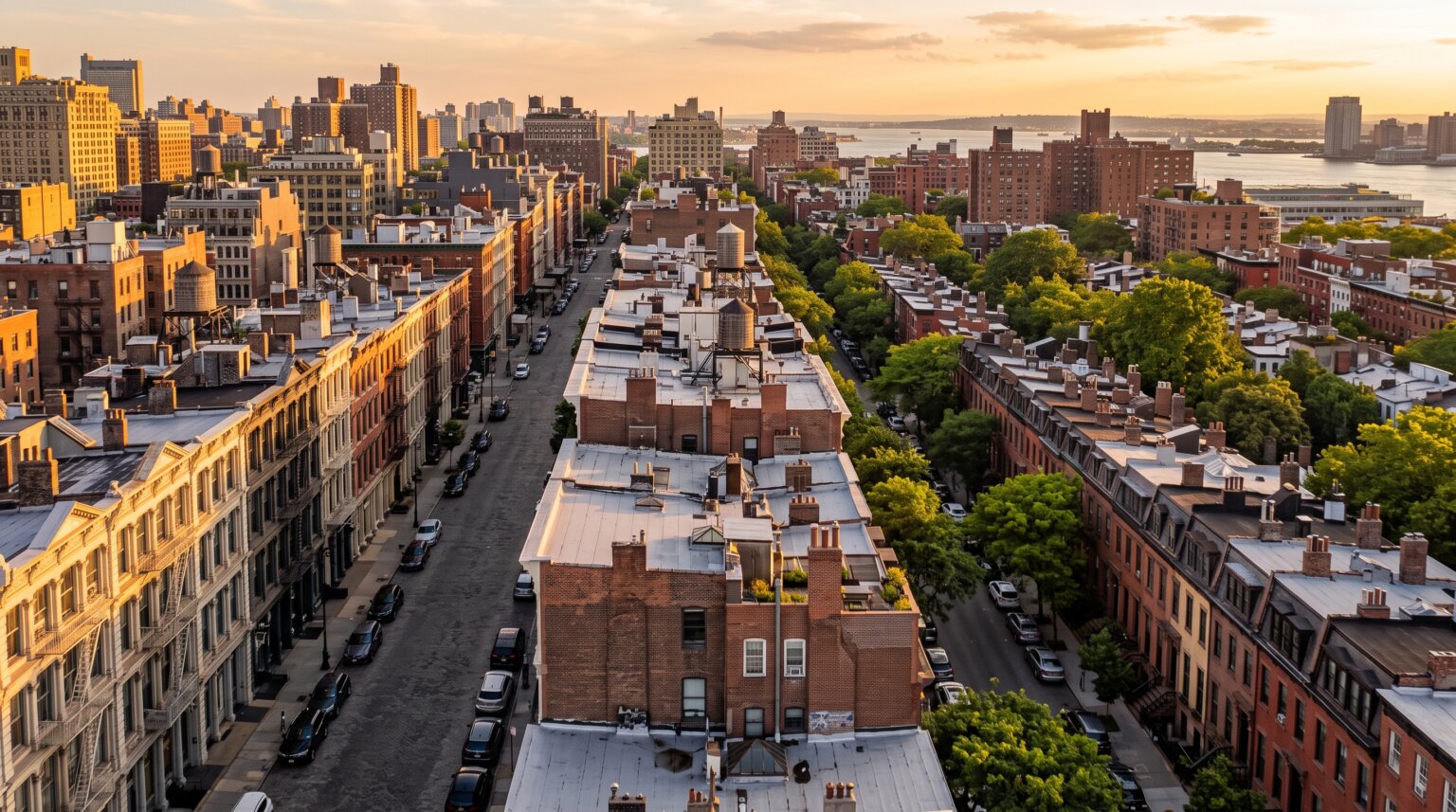
Two of Manhattan’s most recognizable neighborhoods sit just minutes apart, yet they feel like entirely different cities. SoHo dazzles with polished cast-iron facades and flagship luxury stores, while Greenwich Village wraps you in tree-lined brownstone streets and decades of bohemian history. If you have ever wondered how SoHo compares to New York’s Greenwich Village, you are not alone. This is one of the most common questions from first-time visitors and even lifelong New Yorkers.
Our team has spent years walking every block of both neighborhoods, from the cobblestone corners of Mercer Street to the arch at Washington Square Park. In this guide, we break down exactly how SoHo compares to Greenwich Village across architecture, culture, dining, transit, safety, and daily atmosphere. Whether you are planning a trip, choosing a place to live, or just curious about New York’s geography, this comparison will give you a clear picture of what makes each neighborhood unique.
Here is the quick version: SoHo is a fashion and architecture destination with world-class shopping and the largest collection of cast-iron buildings on Earth. Greenwich Village (which locals simply call “The Village”) is a cultural landmark known for its artistic heritage, folk music clubs, Washington Square Park, and the birthplace of the modern LGBTQ rights movement. Both are expensive, both are walkable, and both are absolutely worth your time. But they serve very different purposes depending on what you are looking for.
Let us get into the details so you can decide which neighborhood fits your plans, or how to experience both in a single day.
Table of Contents
SoHo Overview: South of Houston Street
SoHo takes its name directly from its geography. The abbreviation stands for “SOuth of HOuston Street,” and the neighborhood stretches from Houston Street south to Canal Street, bounded roughly by Lafayette Street to the east and the Hudson River to the west. What was once an industrial wasteland of empty factories is now one of the most expensive and stylish zip codes in Manhattan.
The defining feature of SoHo is its architecture. The neighborhood contains the greatest concentration of full-block cast-iron buildings in the world, with over 250 such structures still standing. These buildings, constructed between 1840 and 1880, were originally textile warehouses and manufacturing spaces. Their ornate iron facades were designed to mimic carved stone, giving SoHo a distinctly European feel that sets it apart from anywhere else in New York.
In the 1960s and 1970s, artists began moving into these abandoned warehouses illegally, converting them into massive loft studios with soaring ceilings and enormous windows. The city eventually legalized these loft conversions, and the artist population gave SoHo its creative identity. By the 1980s and 1990s, galleries, boutiques, and eventually major retail chains followed. Today, SoHo is a global shopping destination with flagship stores for brands like Prada, Chanel, Apple, and Nike drawing millions of visitors annually.
The streets themselves tell a story too. Many of SoHo’s side streets still feature original cobblestone paving, particularly on Mercer, Greene, and Wooster Streets. These cobblestones, combined with the cast-iron facades overhead, create a visual atmosphere that feels more like a film set than a working neighborhood. That cinematic quality is exactly why so many movies and television shows have filmed here over the decades.
SoHo’s current identity is a blend of high-end retail, art galleries, expensive restaurants, and luxury residential conversions. The artist lofts that once rented for a few hundred dollars a month now sell for millions. But the architecture remains, and walking those cobblestone streets on a quiet Sunday morning, you can still feel the ghost of the neighborhood’s industrial and artistic past.
Greenwich Village Overview: The Bohemian Heart
Greenwich Village is the neighborhood New Yorkers simply call “The Village.” It sits directly north and west of SoHo, generally bounded by 14th Street to the north, Houston Street to the south, Broadway to the east, and the Hudson River to the west. Where SoHo feels like an open-air luxury mall, Greenwich Village feels like a neighborhood that somehow survived the march of Manhattan’s grid system with its soul intact.
The centerpiece of Greenwich Village is Washington Square Park, anchored by the iconic Washington Square Arch designed by Stanford White in 1892. The park has been a gathering place for political protests, jazz musicians, chess players, and college students from nearby New York University for over a century. On any given afternoon, you will find street performers, artists, and families sharing the same space in a way that captures the inclusive spirit the Village is known for.
Greenwich Village earned its bohemian reputation through decades of countercultural history. In the 1950s, the Beat Generation writers gathered in Village coffee shops and bars. In the 1960s, folk music exploded here, with Bob Dylan, Joan Baez, and Simon and Garfunkel all playing at clubs like Cafe Wha? and The Gaslight Cafe. The neighborhood’s music clubs, including the still-operating Village Vanguard and Blue Note, remain pilgrimage sites for jazz fans from around the world.
The Village is also the birthplace of the modern LGBTQ rights movement. The Stonewall Inn, located on Christopher Street, was the site of the 1969 Stonewall Uprising that launched the gay liberation movement. The Stonewall National Monument, designated in 2016, preserves this history. Every June, Pride celebrations in New York trace their roots directly back to this small bar in Greenwich Village.
Architecturally, the Village is defined by its low-rise brownstones, narrow streets, and refusal to conform to Manhattan’s grid system. While SoHo’s cast-iron buildings are grand and uniform, Greenwich Village’s buildings are intimate and varied. Red-brick townhouses with private stoops line residential blocks, and the streets curve and intersect at odd angles, creating the feeling of a small town nested inside a massive city.
The Village has long attracted celebrities who appreciate its relative privacy and neighborhood feel. Over the years, residents have included Sarah Jessica Parker, Matthew Broderick, Alec Baldwin, Emma Stone, and many others. Unlike SoHo, where the energy is public and commercial, Greenwich Village maintains a residential character that makes it feel like an actual community rather than a destination.
How Soho Compares to New York’s Greenwich Village: Side-by-Side
When you put these two neighborhoods next to each other, the differences become immediately clear even though they share a border along Houston Street. The best way to understand how SoHo compares to New York’s Greenwich Village is to look at them category by category.
Architecture: SoHo owns the cast-iron crown with over 250 iron-fronted buildings, the largest such collection anywhere. Greenwich Village counters with classic brownstone rowhouses and pre-war apartment buildings that top out at five or six stories. SoHo’s architecture is theatrical and grand. The Village’s is warm and residential.
Atmosphere: Walk through SoHo on a Saturday and you will encounter crowds of shoppers, tourists photographing cobblestone streets, and a fast-paced commercial energy. Walk through Greenwich Village on the same Saturday and you will find a slower rhythm, with people lounging in Washington Square Park, reading on brownstone stoops, and lingering at sidewalk cafes. SoHo buzzes with retail energy. The Village hums with neighborhood life.
Transit access: SoHo holds a significant advantage here. The neighborhood is served by approximately 11 subway lines, including the A, C, E, N, Q, R, W, J, Z, 6, and B, D, F, M at the Broadway-Lafayette station complex. Greenwich Village has fewer options, with about 5 main lines serving the area (the A, B, C, D, E, F, and M at West 4th Street, plus the 1 train at Christopher Street). Both are extremely well-connected by Manhattan standards, but SoHo’s subway density gives it an edge for commuters.
Walkability: Both neighborhoods score among the highest in the country for walkability. The key difference is the street layout. SoHo follows a grid pattern with long, straight blocks that make navigation straightforward. Greenwich Village defies the grid entirely, with diagonal streets, named roads, and irregular intersections that can confuse first-time visitors but reward exploration. Reddit users on r/AskNYC frequently note that the Village feels more walkable because there are simply more interesting things to discover on foot.
Crowds and tourist density: SoHo, particularly Broadway and the blocks between Spring and Prince Streets, gets extremely crowded on weekends. The shopping draws busloads of tourists and the sidewalks can feel packed. Greenwich Village spreads its foot traffic more evenly across a larger residential area. Even on busy days, you can always find a quiet side street in the Village.
Price levels: Both neighborhoods are among the most expensive in New York. SoHo tends to be more expensive for retail and dining, with many restaurants and shops catering to a luxury market. Greenwich Village real estate is astronomical, but the dining and entertainment options range more widely, with historic pizza slices, bagels, and pub food available alongside fine dining. If budget is a concern, the Village offers more accessible options.
Street character: This is where the contrast is sharpest. SoHo’s cobblestone streets and massive loft windows create an industrial-chic aesthetic. Greenwich Village’s tree-lined blocks, wrought-iron fences, and hidden courtyards create a European-village feel. One frequent observation on travel forums is that SoHo feels like a fashion runway, while the Village feels like a real place where people actually live.
Architecture and History: Cast-Iron Meets Brownstone
The architectural contrast between SoHo and Greenwich Village is not just aesthetic. It tells the story of how Manhattan developed over the past two centuries. Understanding this history adds enormous depth to any visit, and it is one of the most fascinating aspects of how SoHo compares to Greenwich Village.
SoHo’s cast-iron buildings were a product of mid-19th century innovation. Builders discovered that they could cast iron into decorative molds and attach these prefabricated facades to standard brick structures. This method was faster and cheaper than carving stone, and it allowed for the ornate French and Italian Renaissance-style details that define SoHo’s look. The iron columns also supported larger windows, which is why SoHo lofts have those famous floor-to-ceiling panes of glass that artists later fell in love with.
The SoHo-Cast Iron Historic District was designated in 1973, protecting approximately 26 blocks and over 250 buildings. This designation came after years of grassroots activism, when artists and preservationists fought off plans to demolish the area for an expressway. Without that fight, SoHo as we know it would not exist today. The district remains one of the most significant architectural preservation achievements in American history.
Greenwich Village has its own historic districts, multiple in fact. The Greenwich Village Historic District, designated in 1969, is one of the largest in New York City. It protects hundreds of buildings including Federal-style rowhouses from the early 1800s, Italianate brownstones from the mid-1800s, and institutional buildings like the Jefferson Market Library. The preservation movement in Greenwich Village actually predates SoHo’s, and it was instrumental in creating the legal framework that later saved SoHo.
The most visible architectural difference is height. SoHo’s buildings generally range from four to six stories, but they feel taller because of their wide facades and ornate detailing. Greenwich Village’s buildings are similarly low-rise, but they feel more intimate because the streets are narrower and the buildings are set closer together. The Village also has far more residential architecture, while SoHo’s buildings were commercially built and later converted.
The street grid is the other major difference. Most of Manhattan north of Houston Street follows the Commissioners’ Plan of 1811, which imposed a rigid grid of numbered streets and avenues. Greenwich Village was already developed before the grid was imposed, so its streets were grandfathered in. This is why the Village has winding roads like Minetta Lane, diagonal streets like Waverly Place, and irregular intersections that make it feel like a separate village (which it originally was). SoHo, by contrast, sits on the grid, with orderly numbered streets running east to west.
The cultural histories diverge as well. SoHo’s defining cultural moment was the artist loft movement of the 1960s through 1980s, when painters, sculptors, and musicians transformed industrial spaces into living and working environments. Greenwich Village’s cultural moments span a longer period, from the 19th century literary scene through the Beat Generation, the folk music revival, and the Stonewall uprising. SoHo’s history is about space and architecture. The Village’s history is about people and movements.
Dining and Shopping: Two Different Worlds
If architecture is the most visible difference between these neighborhoods, dining and shopping are where the practical contrast hits hardest. SoHo and Greenwich Village offer completely different experiences for anyone looking to eat, drink, or buy something.
SoHo is Manhattan’s premier shopping district outside of Fifth Avenue. Broadway running through SoHo is lined with massive flagship stores from global brands. The side streets offer a mix of high-end boutiques, concept stores, and independent designers. Shopping in SoHo is an event. Stores like the Prada Epicenter on Broadway (designed by Rem Koolhaas), the Apple SoHo store, and the Nike flagship are architectural destinations in their own right. On weekends, the shopping crowds are intense, and the energy feels closer to a luxury mall than a city street.
Greenwich Village offers a completely different shopping experience. Bleecker Street was once the epicenter of boutique shopping in New York, and while many of the original independent stores have been replaced by chains, the area still retains pockets of unique retail. West 8th Street near NYU has shoe stores and music shops. Christopher Street has LGBTQ-owned bookstores and specialty shops. The overall vibe is less about luxury brands and more about discovery.
The dining scenes reflect the same division. SoHo’s restaurants tend to be polished, expensive, and design-forward. You will find high-end Italian at Estela, Japanese fusion at Buddakan, and farm-to-table New American at various spots along West Broadway. The restaurant interiors are often as stylish as the food, with exposed brick, custom lighting, and carefully curated playlists. Reservations are essential at most dinner spots.
Greenwich Village has a deeper, more varied food history. This is the neighborhood of Joe’s Pizza on Carmine Street, a slice institution since 1975. Murray’s Cheese on Bleecker Street has been a fromage destination since 1940. The Village is home to White Horse Tavern, a literary bar where Dylan Thomas drank, and Chumley’s, a former speakeasy with no street sign. The dining options range from dollar slices to Michelin-starred tasting menus, and everything in between.
Coffee culture is another area where the neighborhoods diverge. SoHo has excellent third-wave coffee shops, but they tend to be busy and commercial. Greenwich Village’s coffee scene feels more rooted, with cafes that have served the community for decades alongside newer specialty spots. The Village is the kind of place where you can sit with a coffee and a book for an hour without anyone rushing you.
For nightlife, SoHo skews toward upscale cocktail bars and lounge-style venues. Greenwich Village offers a richer variety, from jazz clubs like the Village Vanguard (open since 1935) and the Blue Note, to Irish pubs on MacDougal Street, to comedy clubs like the Comedy Cellar. If your night out involves live music or comedy, the Village wins hands down.
Safety, Nightlife, and Walkability
One of the most searched questions about these neighborhoods is whether they are safe, particularly at night. The short answer for both is yes. SoHo and Greenwich Village are among the safest neighborhoods in Manhattan, with violent crime rates well below the city average. But there are nuances worth knowing.
SoHo at night is generally safe and well-lit, particularly on main thoroughfares like Broadway, Spring Street, and Prince Street. The side streets can be quieter and emptier after stores close, which some visitors find unsettling. A common question on forums is “Is SoHo sketchy at night?” The honest answer is that SoHo is not sketchy by any reasonable standard. It is a wealthy, heavily trafficked neighborhood with active restaurants and bars. However, because it is primarily a commercial area, it can feel deserted on side streets after business hours. Sticking to main streets eliminates any concern.
Greenwich Village is also very safe at night, and because it is more residential, it actually tends to feel more populated and active after dark than SoHo. One Reddit user from r/AskNYC described it perfectly: the West Village goes from active nightlife to quiet residential neighborhood just by turning a corner. This means you can find both energy and peace within a single block, depending on what you are looking for.
In terms of walkability, both neighborhoods are exceptional. SoHo’s grid layout makes it easy to navigate, with numbered cross streets and clear landmarks. The blocks are relatively short, and you can walk from one end of SoHo to the other in about 15 minutes. Greenwich Village is more spread out and its non-grid streets can be confusing, but that confusion is part of the charm. Getting lost in the Village is practically a rite of passage, and you will usually stumble onto something interesting.
For visitors with mobility concerns, SoHo is slightly easier to manage due to its flatter terrain and wider sidewalks on main streets. Greenwich Village has some uneven sidewalks and narrower passages, particularly on the oldest streets near the waterfront. Both neighborhoods have curb cuts and accessible transit stations, but SoHo’s newer commercial infrastructure gives it a slight accessibility edge.
The best time to visit each neighborhood also differs. SoHo is best experienced on weekday mornings or afternoons when the shopping crowds are lighter. Weekends in SoHo can be overwhelming. Greenwich Village is wonderful at any time, but it truly shines in the evening, when the restaurants fill up, the jazz clubs open, and Washington Square Park takes on a magical quality under the lights.
FAQs
What is the difference between SoHo and Greenwich Village?
SoHo is a commercial and architectural district known for cast-iron buildings, luxury shopping, and cobblestone streets, located south of Houston Street. Greenwich Village is a residential and cultural neighborhood known for brownstones, Washington Square Park, bohemian history, and the Stonewall Inn, located north and west of SoHo.
Which is better, SoHo or Greenwich Village?
It depends on your goals. Choose SoHo for world-class shopping, photography, and upscale dining. Choose Greenwich Village for live music, historic bars, a neighborhood feel, and cultural history. Most visitors benefit from experiencing both in a single day, since they are only a 10-minute walk apart.
Is SoHo sketchy at night?
No, SoHo is not sketchy at night. It is one of the wealthiest neighborhoods in Manhattan with low crime rates. Some side streets can feel quiet after stores close, but main streets like Broadway and Spring Street remain active and well-lit. Use standard urban awareness and you will have no issues.
Is SoHo a wealthy area?
Yes, SoHo is one of the wealthiest neighborhoods in New York City. Median sale prices for homes regularly exceed $1.8 million, and the neighborhood is home to luxury boutiques, high-end galleries, and multimillion-dollar loft conversions. It is among the most expensive real estate markets in Manhattan.
What do New Yorkers call Greenwich Village?
New Yorkers simply call it u0022The Village.u0022 You will rarely hear a local say the full name u0022Greenwich Villageu0022 in casual conversation. The West Village is a specific sub-neighborhood within Greenwich Village, west of Seventh Avenue.
Which celebrities live in Greenwich Village?
Greenwich Village has long attracted celebrity residents who appreciate its privacy and neighborhood character. Past and present residents include Sarah Jessica Parker, Matthew Broderick, Alec Baldwin, Emma Stone, Daniel Radcliffe, and many others. The Village’s low-rise buildings and residential streets make it easier for public figures to maintain a normal life.
Is SoHo or West Village better?
SoHo is better for shopping, architecture photography, and a fast-paced urban experience. The West Village is better for romantic walks, intimate dining, jazz clubs, and a quieter, more residential atmosphere. Many visitors prefer the West Village for evening outings and SoHo for daytime exploration.
Can I visit both SoHo and Greenwich Village in one day?
Absolutely. The two neighborhoods share a border along Houston Street, and you can walk from the heart of SoHo to Washington Square Park in about 10 to 15 minutes. A great itinerary is shopping and lunch in SoHo during the day, then walking north into Greenwich Village for dinner, live music, and an evening stroll.
Conclusion: Two Neighborhoods, One Unforgettable Walk
Understanding how SoHo compares to New York’s Greenwich Village comes down to this: SoHo is where you go to see and be seen, to shop, to photograph architecture, and to experience Manhattan’s commercial energy at its most polished. Greenwich Village is where you go to slow down, to listen to jazz, to eat a slice on a stoop, and to feel the layers of history that made New York the cultural capital of the world.
The good news is that you do not have to choose. These neighborhoods are separated by a single street. You can have coffee in a SoHo loft building in the morning and watch the sun set behind the Washington Square Arch in the evening. That ten-minute walk between them is one of the best experiences New York has to offer, and it is entirely free.
Our recommendation for 2026 visitors: start in SoHo around 10 AM when the stores open and the crowds are still manageable. Spend two or three hours exploring the cobblestone side streets and cast-iron facades. Then walk north across Houston Street into Greenwich Village, grab lunch, and spend the afternoon wandering toward Washington Square Park. Come evening, find a jazz club or a historic bar and let the neighborhood do the rest.
Both neighborhoods represent essential pieces of the New York story. SoHo shows you what visionary preservation and commercial ambition can create together. Greenwich Village shows you what community, culture, and counterculture can build over generations. Together, they form a perfect day in Manhattan.