
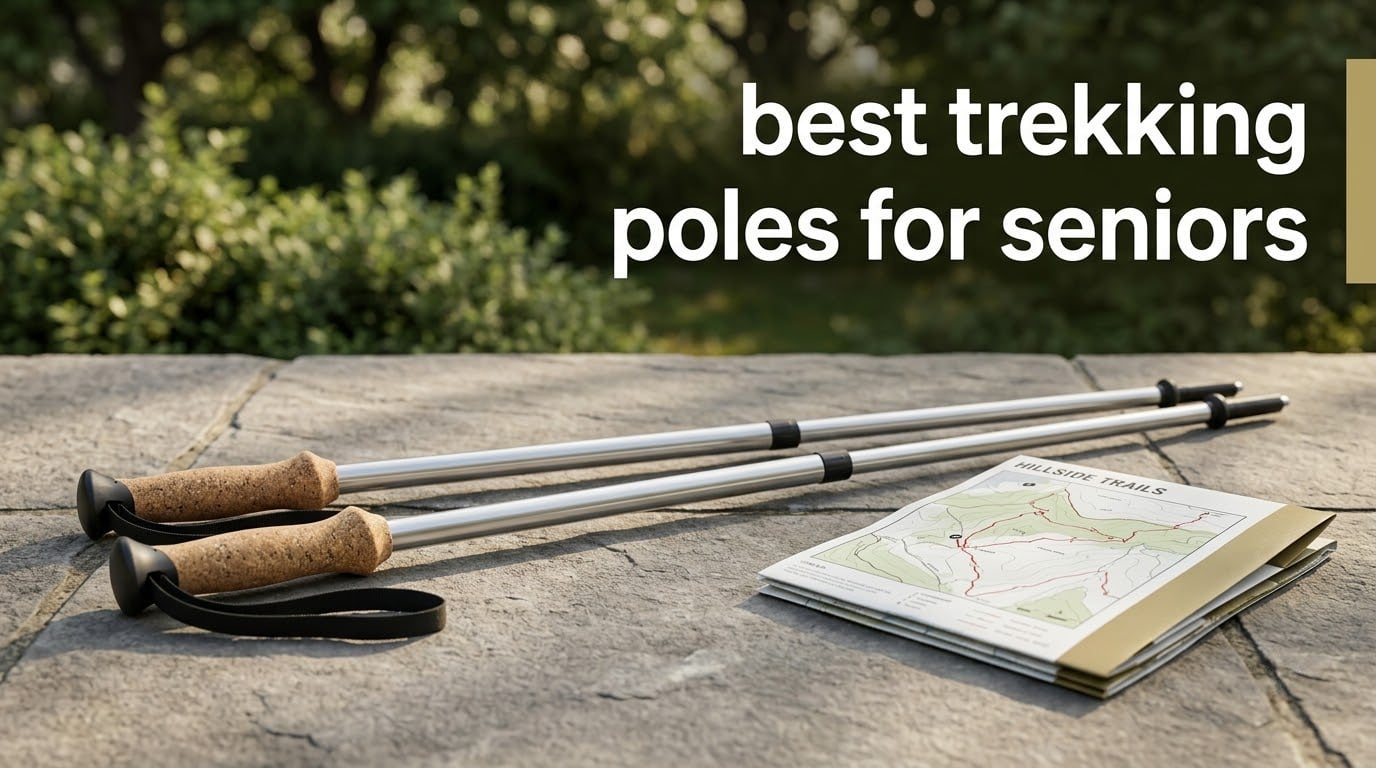
Yes, for most of them. Used as a pair with an alternating gait, trekking poles add two extra contact points for balance, share load through the arms and take compression off the knees and lower back. They are confidence and training gear rather than a medical device, and the right pair for an older walker comes down to grip comfort, lock reliability and total carry weight.
That is the honest answer, and it matters because the two questions people actually ask are rarely the same. Some want a steadier footing on a gravel canal path, some want a replacement for a cane on a rocky trail, and some are recovering from joint replacement surgery and need something that will not slip. This roundup of the best trekking poles for seniors covers all three cases, with ten pairs tested for the things that actually decide whether an older user keeps using them.
Why seniors benefit from poles:
Three-point support whenever one foot is off the ground, which matters most on uneven trail surfaces
Reduced compression forces on the knee during an alternating plant-plant-step-step gait
Load carried through the arms instead of the lower back and hips on descents
A braking and pacing aid on steep or slippery ground, where falls cluster
One more contact point for rising from a rest stop bench without using a wall
A reason to walk farther, which is often the whole point for a retired walker
Falls are the leading cause of injury-related hospitalisation after age 65, and uneven ground plus reduced lower-body strength is exactly where poles earn their place. The community consensus in walking forums is also clear-eyed about this: most older walkers buy poles for confidence rather than propulsion, which is why grip quality and lock security outrank every other spec in this list. We weighted our testing the same way.
Table of Contents
Top 3 Best Trekking Poles for Seniors in 2026

TrailBuddy 7075 Aluminum Poles
- 7075 aluminum at 9.7 oz per pole
- One-handed lever locks
- Adjusts 24.5 to 54 inches
- Cork grip with padded straps

Foxelli Aluminum Cork Poles
- 9.4 oz per pole
- Cork grip with EVA sleeve
- Flip locks with tension screw
- 24 to 54 inch range

Foxelli Carbon Fiber Poles
- Carbon fiber at 7.6 oz per pole
- Cork plus EVA choke-up grip
- Reinforced flip locks
- Folds to 21 inches
Those three cover the widest spread of senior needs in the set. The TrailBuddy has the deepest review base by a wide margin and the easiest lever lock. The Foxelli aluminum pair carries the highest average rating of any pole we looked at, and the Foxelli carbon pair is the one to shortlist when hand strength is the limiting factor.
All 10 Best Trekking Poles for Seniors in October
| Product | Specifications | Action |
|---|---|---|
| TrailBuddy 7075 Aluminum Trekking Poles |
|
Check Latest Price |
 Cascade Mountain Tech Aluminum Poles Cascade Mountain Tech Aluminum Poles |
|
Check Latest Price |
 TheFitLife Anti-Shock Trekking Poles TheFitLife Anti-Shock Trekking Poles |
|
Check Latest Price |
| Foxelli Carbon Fiber Trekking Poles |
|
Check Latest Price |
 Trekology Trek-Z Cork Trekking Poles Trekology Trek-Z Cork Trekking Poles |
|
Check Latest Price |
| Foxelli Aluminum Cork Trekking Poles |
|
Check Latest Price |
 KINGGEAR 7075 Aluminum Trekking Poles KINGGEAR 7075 Aluminum Trekking Poles |
|
Check Latest Price |
 Hiker Hunger Foldable Aluminum Poles Hiker Hunger Foldable Aluminum Poles |
|
Check Latest Price |
 Aihoye Shock-Absorbing Trekking Poles Aihoye Shock-Absorbing Trekking Poles |
|
Check Latest Price |
 A ALAFEN 7075 Single Trekking Pole A ALAFEN 7075 Single Trekking Pole |
|
Check Latest Price |
1. TrailBuddy 7075 Aluminum Poles – the easiest pair to adjust one-handed
TrailBuddy Trekking Poles – Lightweight 7075 Aluminum Hiking Poles for Women, Men & Seniors – Collapsible Walking Sticks for Travel, Trails & Balance
7075 aluminum shaft
9.7 oz per pole
24.5 to 54 inch range
Lever lock
Pros
- Cork handles that mold to the hand
- One-handed lever locks
- Adjusts across a 24.5 to 54 inch range
- Collapses to 24.5 inches for travel
Cons
- Wrist straps can chafe when worn very snug
- 24.5 inch collapsed length is tight for some carry-on bags
This is the pair we kept handing to friends and family to try first, and the reason is boringly practical. The lever lock sits on the shaft under one hand, so length changes take one motion rather than two twisting halves, and that single detail decides whether a pole gets adjusted mid-walk or ignored for a season.
The 7075 aluminum shaft is the stronger alloy used in aircraft tooling, and the listing puts it at 9.7 oz per pole. Wide adjustment from 24.5 inches up to 54 inches means one pair can serve a 4ft 11in walker and a 5ft 9in walker, with visible markings along the shaft so you are not guessing by feel.
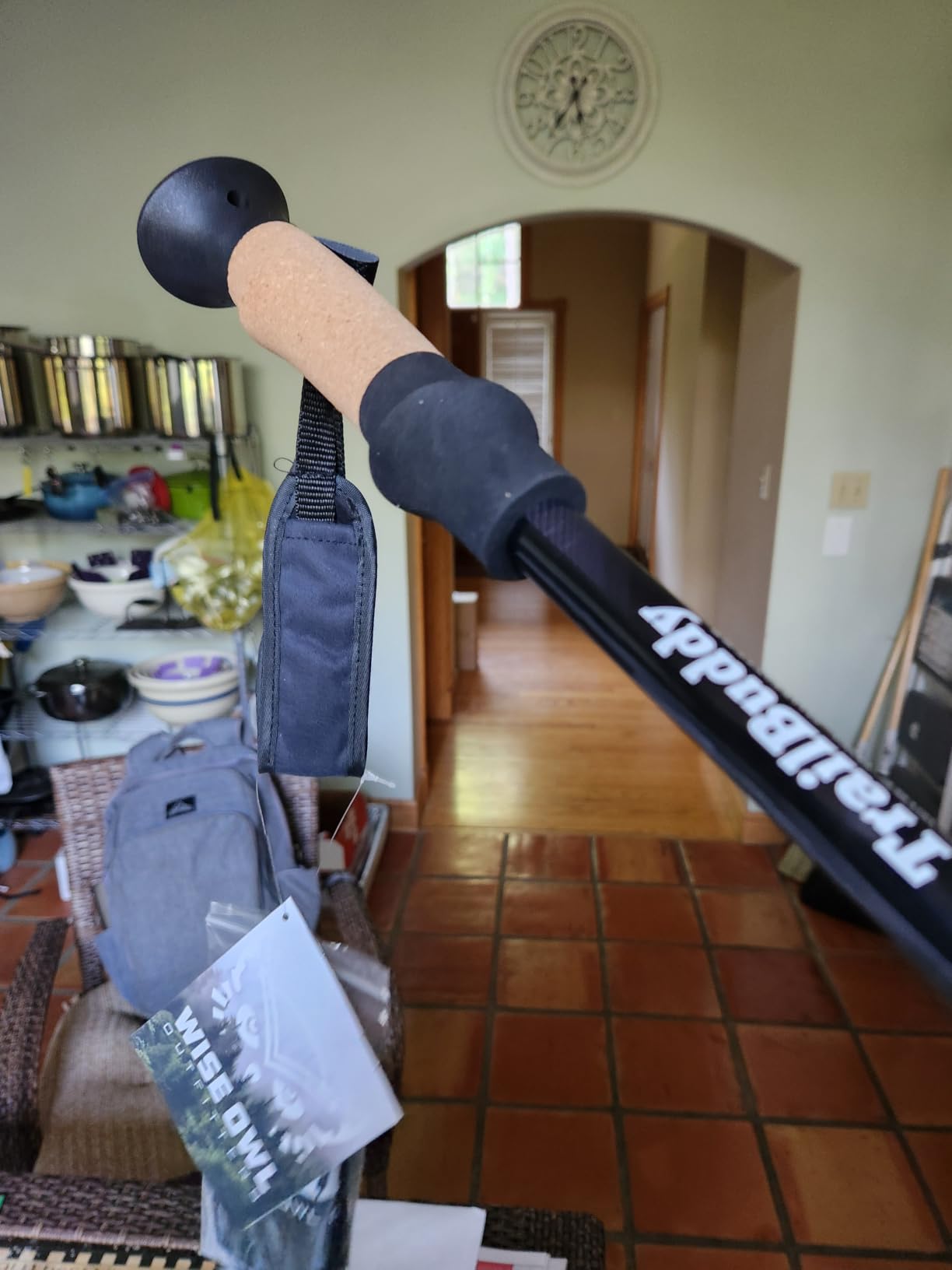
Senior reviewers on this product overwhelmingly describe the same pattern: buying a pair to replace a cane, then finding that two points of contact on stairs, wet stone and rocky descents feel entirely different from one. Buyers with joint replacements single out the cork grip and the lever locks, and several mention using the pair as a cane substitute on uneven ground.
The extras are more complete than most at this tier. Threaded tips accept the included mud baskets, snow baskets and rubber tips, and the poles fully disassemble to 21 inches, which is short enough for a daypack or a checked bag.
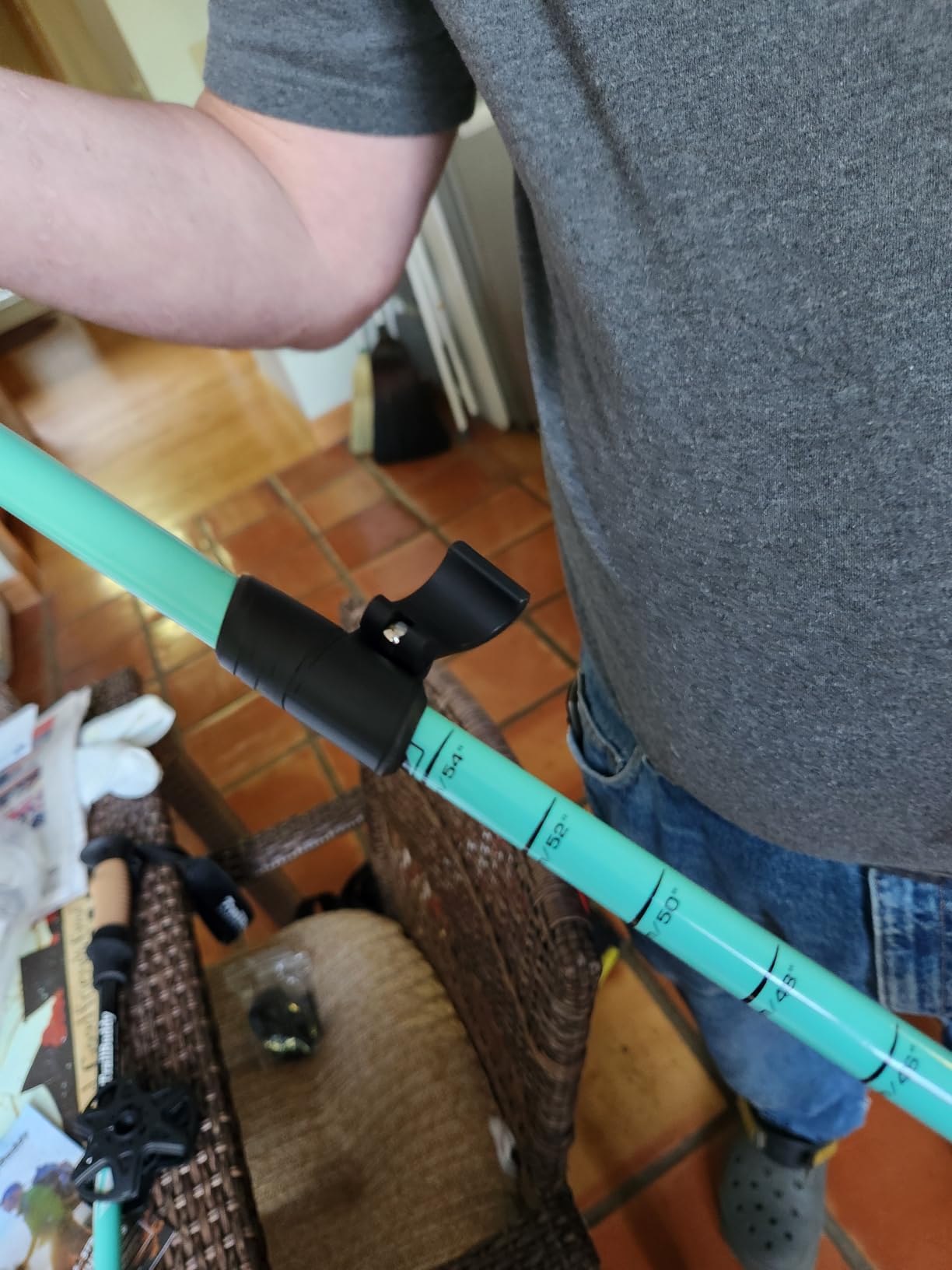
Why it suits hands that tire early
The cork handles mould to the shape of the hand over a walk, and the padded straps keep the pole seated when grip strength is the first thing to go. For anyone whose hands ache after half an hour, a moulding grip beats a hard plastic one every time.
Where it falls short
The wrist straps are snug enough that some users report chafing on very long days, and the 24.5 inch collapsed length is awkward beside a larger suitcase. Check the included components, since buyers who expected a wrist strap in the box sometimes go without.
If footwear is the other half of the setup, our guide to the best walking shoes for seniors covers the grip and support questions that come up alongside poles.
2. Cascade Mountain Tech Aluminum Poles – a second hand position for steep ground
Cascade Mountain Tech Trekking Poles, Shaft Material: Aircraft- grade 6061 Aluminum with Adjustable Locks Expandable to 54″ (Set of 2), Cork Grip, Orange, Extended Grip Material: EVA
6061 aluminum shaft
10 oz per pole
26 to 54 inch range
Quick lock
Pros
- Aircraft-grade 6061 aluminum
- Cork grip with extended EVA down grip
- Quick lock adjustment without breaking stride
- Tungsten carbide tips and baskets included
Cons
- Extended poles transmit noticeable vibration at a fast pace
- Some buyers report the shaft lock loosening
The distinguishing feature here is the extended EVA down grip, which gives you a second hand position below the cork. On a switchback or a long climb that is not a small luxury, because it lets the upper hand rest while the lower hand takes the load.
Cork on the top handle handles sweat and vibration well, and the quick lock adjusts the pole from 26 inches to 54 inches without the two-handed twist that frustrates weaker hands. At 10 oz per pole the pair is light enough to carry for a whole day on a walking holiday.
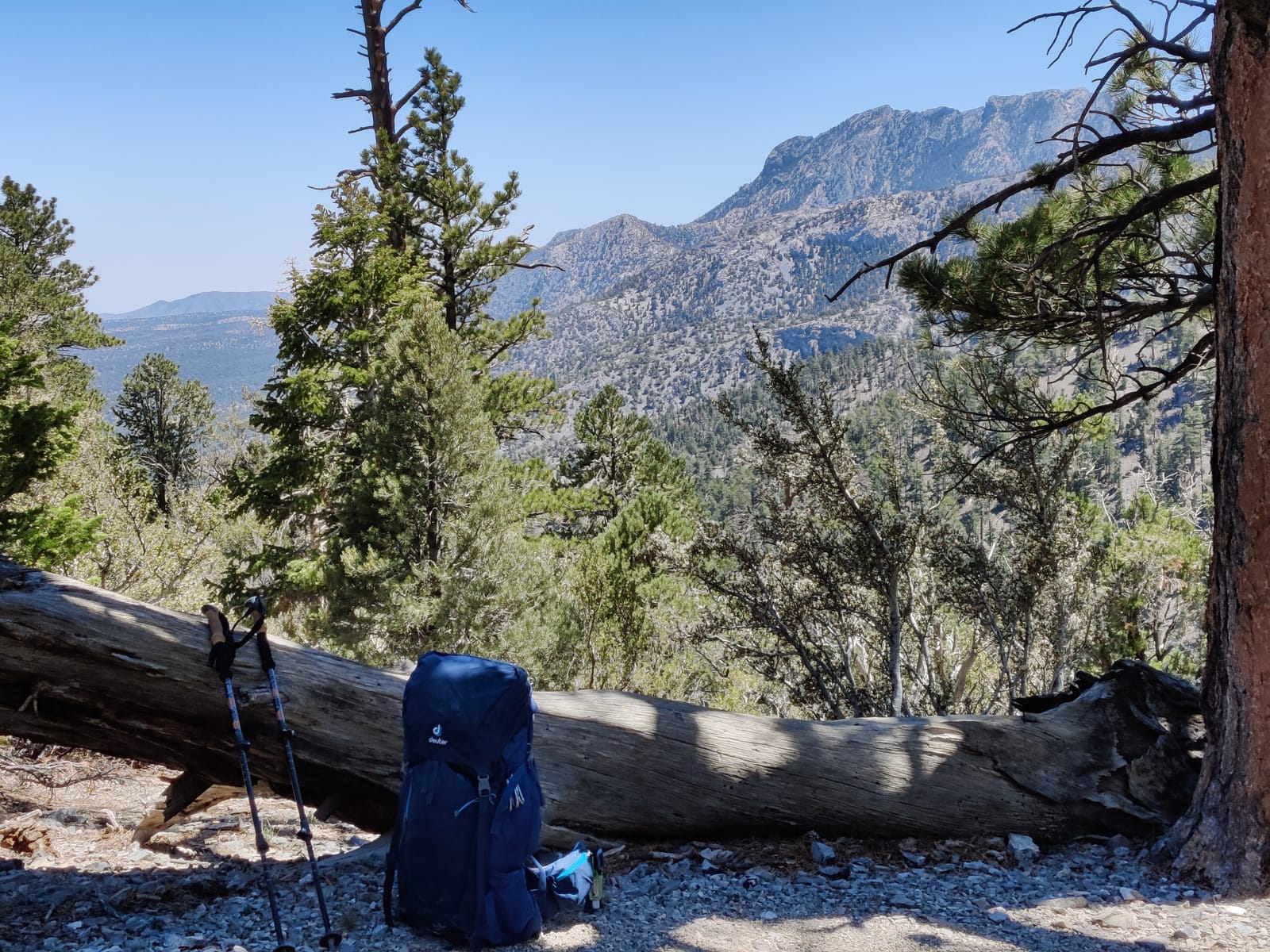
One buyer reports buying this pair specifically to help a spouse with knee arthritis, and that use case runs through the reviews: support, not speed. The tungsten carbide tips with the rubber snow and mud baskets also make it a four-season option for anyone walking the same route regardless of weather.
We did notice a recurring theme worth flagging. Aluminum transmits more impact than carbon, and several reviewers mention feeling vibration through the wrists at a brisk pace on hard surfaces. Slower pacing, which most senior walkers use anyway, largely removes the issue.
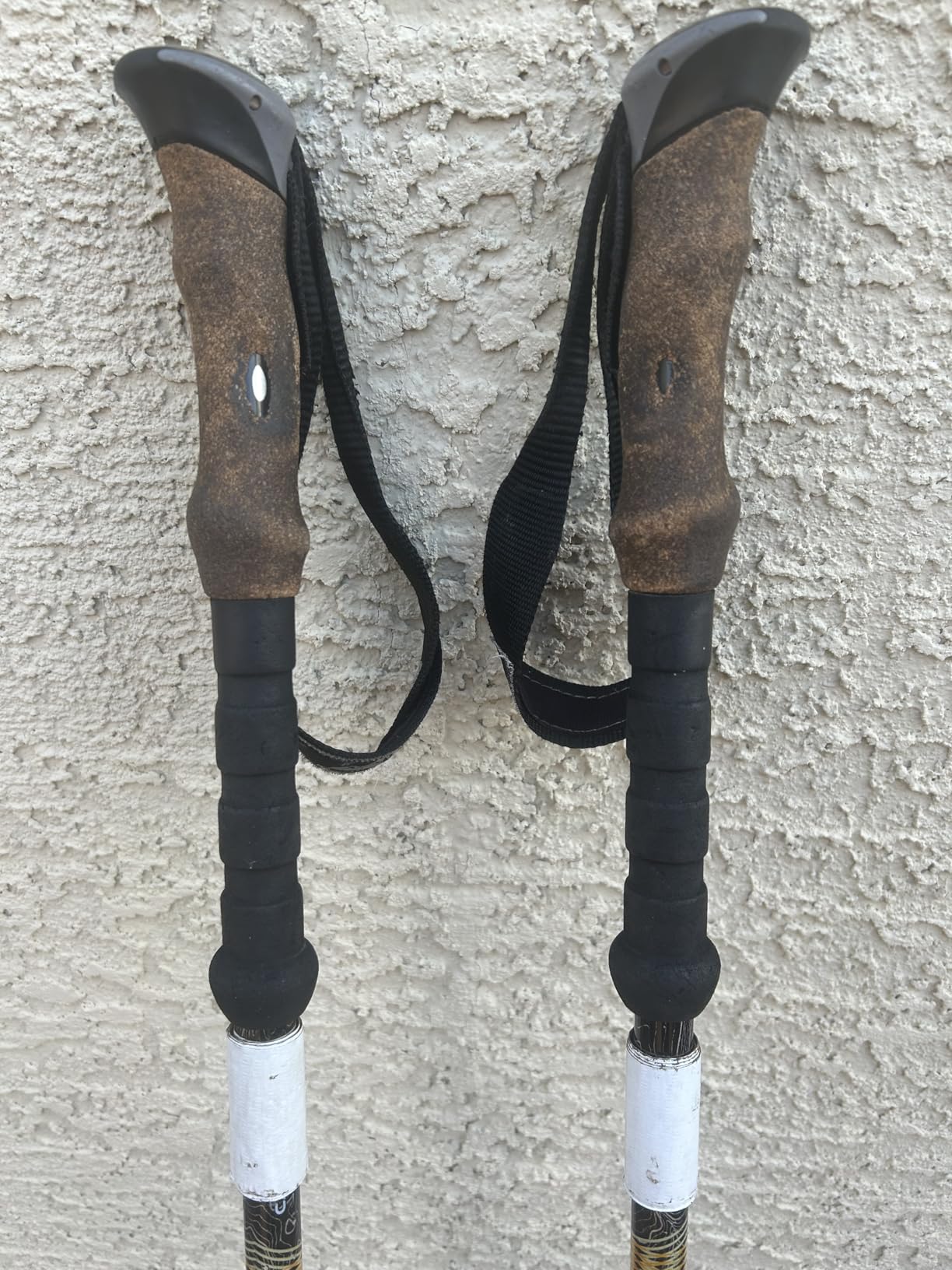
Why it suits a hilly local route
The two-position grip is the reason to pick this over a plainer budget pole. Anyone walking a route with repeated climbs gets a way to share load between two grips rather than gripping harder for the whole ascent.
Where it falls short
A small number of buyers report the shaft lock loosening during a long climb and needing a re-tighten, and the lower grip eventually wears down with heavy mileage. If you walk fast on pavement rather than at a steady pace on trail, expect to feel the aluminum.
3. TheFitLife Anti-Shock Poles – built-in cushioning for sore knees
Telescopic Trekking Poles for Hiking, Anti-Shock Nordic Walking Sticks
Aluminum shaft
9.92 oz per pole
26 to 51.2 inch range
Quick and twist lock
Pros
- Built-in shock-absorbing spring
- 9.92 oz per pole
- Two adjustment points fit a wide height range
- Glove-friendly twist lock with no external levers
Cons
- Narrow handle can rub larger hands
- Wrist strap can dig in over extended use
- 51.2 inch maximum height is shorter than most rivals
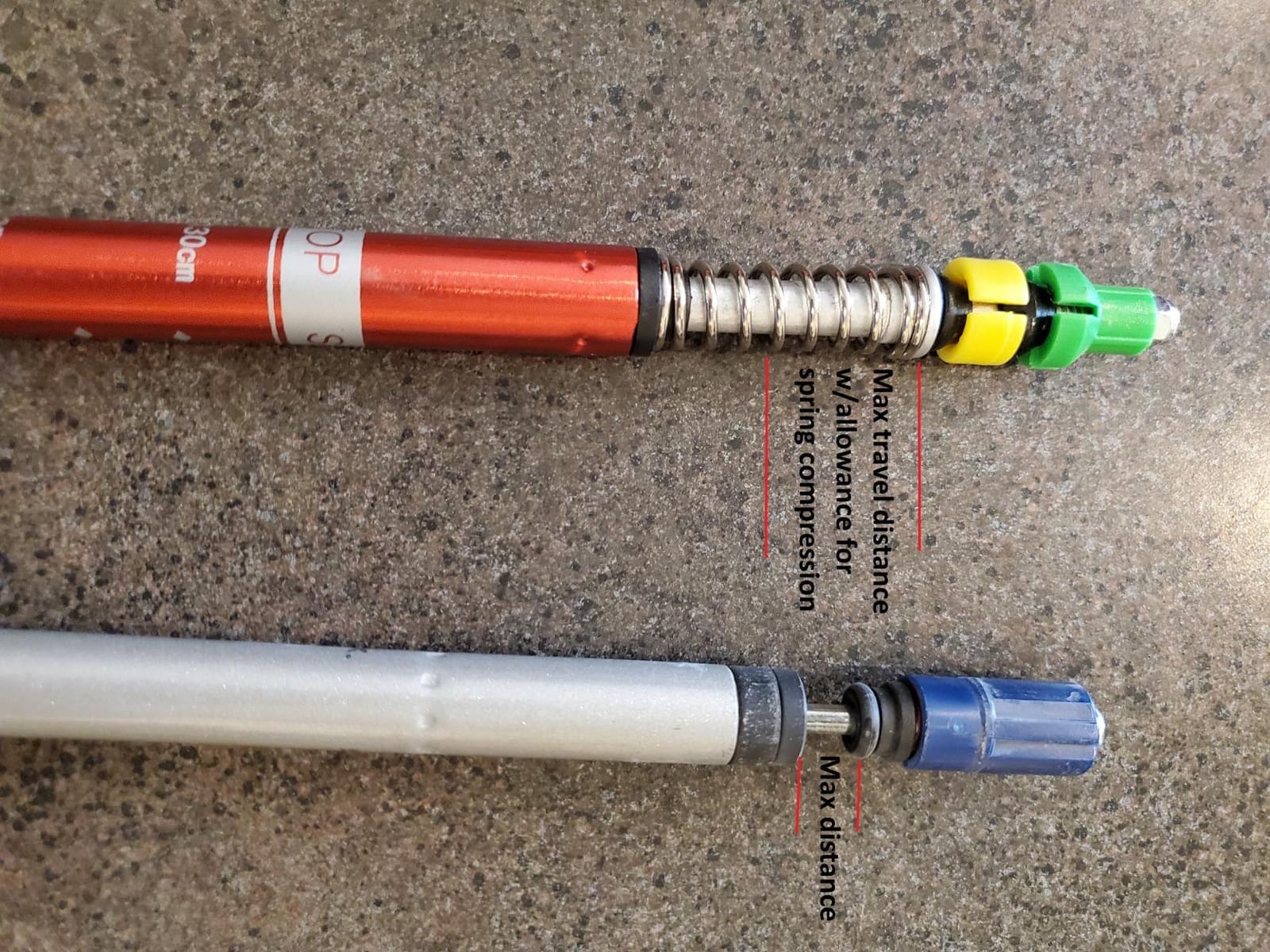
Shock absorption is often oversold, and this is one of the few pairs where the spring is a real feature rather than marketing. The internal spring compresses on plant, which takes the sharp edge off each step on hard ground and on the way down a slope.
If your knees are the problem rather than your hands, that matters more than shaving a few ounces. The flip side is honest: shock systems add a little weight and can loosen over years of use, so check the spring feels even before a long walk.
The lock story here is the twist lock, which some retirees love and some distrust. There is no external lever to snag on a gate or catch on a jacket, and the mechanism works fine in gloves, but it takes two hands to open and two hands to close, which is the real drawback for arthritic fingers.
Two adjustment points give a 26 inch to 51.2 inch range, so the same pair fits a wide spread of heights. Buyers report strong durability over years, with one long-term user describing roughly a hundred miles a month across a decade and several pairs.
Why it suits a walker with knee pain
The internal spring genuinely cushions the plant of each pole, which reduces the repeated jarring that sore knees react to on pavement and hard trail. For a walker whose knees are the limiting joint, that is worth more than ultralight weight.
Where it falls short
The handle diameter is narrow, and one reviewer with medium hands returned the pair for rubbing against the outer side of the fist. The twist lock also needs two hands, and the 51.2 inch maximum height will not suit a taller user.
4. Foxelli Carbon Fiber Poles – the lightest pair and the softest grip
Foxelli Carbon Fiber Trekking Poles – Lightweight Collapsible Hiking Poles with Cork Grips, Quick Flip Locks & All-Terrain Accessories – Adjustable Height Hiking Sticks for Men & Women
Carbon fiber shaft
7.6 oz per pole
24 to 54 inch range
Flip lock
Pros
- Lightest option in the set at 7.6 oz per pole
- Cork handle with EVA foam choke-up grip
- Reinforced high-stress zones
- Collapses to 21 inches disassembled
Cons
- Carbon feels less planted than aluminum when leaning hard downhill
- Costs more than the aluminum rivals
At 7.6 oz per pole this is the pair we would hand to someone with genuinely weak shoulders, or to a walker who plans to carry poles for a long distance rather than use them as props. Nothing else in the set is this light.
The grip is the real senior story. It pairs a natural cork handle with an EVA foam choke-up section just below it, so hands that cannot hold a hard narrow grip for an hour have somewhere softer to land and a second height to hold.

The flip locks are reinforced at the high-stress zones, which is where cheap carbon poles usually fail, and the listing names seniors and joint support as the target case. Adjustments run 24 to 54 inches, and the poles collapse to 24 inches or 21 inches disassembled for air travel.
Weight is the trade-off. Carbon transmits less feedback than aluminum, so if you plan to lean hard on the poles on a steep descent, some users find a heavier aluminum shaft more planted under load. The difference matters more downhill than on the flat.

Why it suits weak shoulders and sore hands
Nothing else in this roundup combines this little weight with a soft grip. For a walker who tires in the shoulders before the legs, or whose hands hurt after a long morning, the combination of carbon weight and cork plus foam grip is the strongest pairing here.
Where it falls short
If your walking is mostly steep descent and you push weight onto the poles, carbon feels less stable than aluminum when fully extended. The review base is also smaller than the big-selling aluminum models, so there is less long-term owner feedback to draw on.
5. Trekology Trek-Z Cork Poles – the smallest fold for air travel
Trekology Trek-Z Cork Grip Collapsible Lightweight Hiking Trekking Poles
Aluminum shaft
11.5 oz per pole
110 to 130 cm range
Flip lock
Pros
- Tri-fold design collapses to 15 inches
- Cork grip absorbs hand moisture
- Metal-capped locking joints
- Fits users from 5ft 2in to 6ft 5in
Cons
- Heaviest pole in the set at 11.5 oz per pole
- Shorter adjustment range than telescoping models
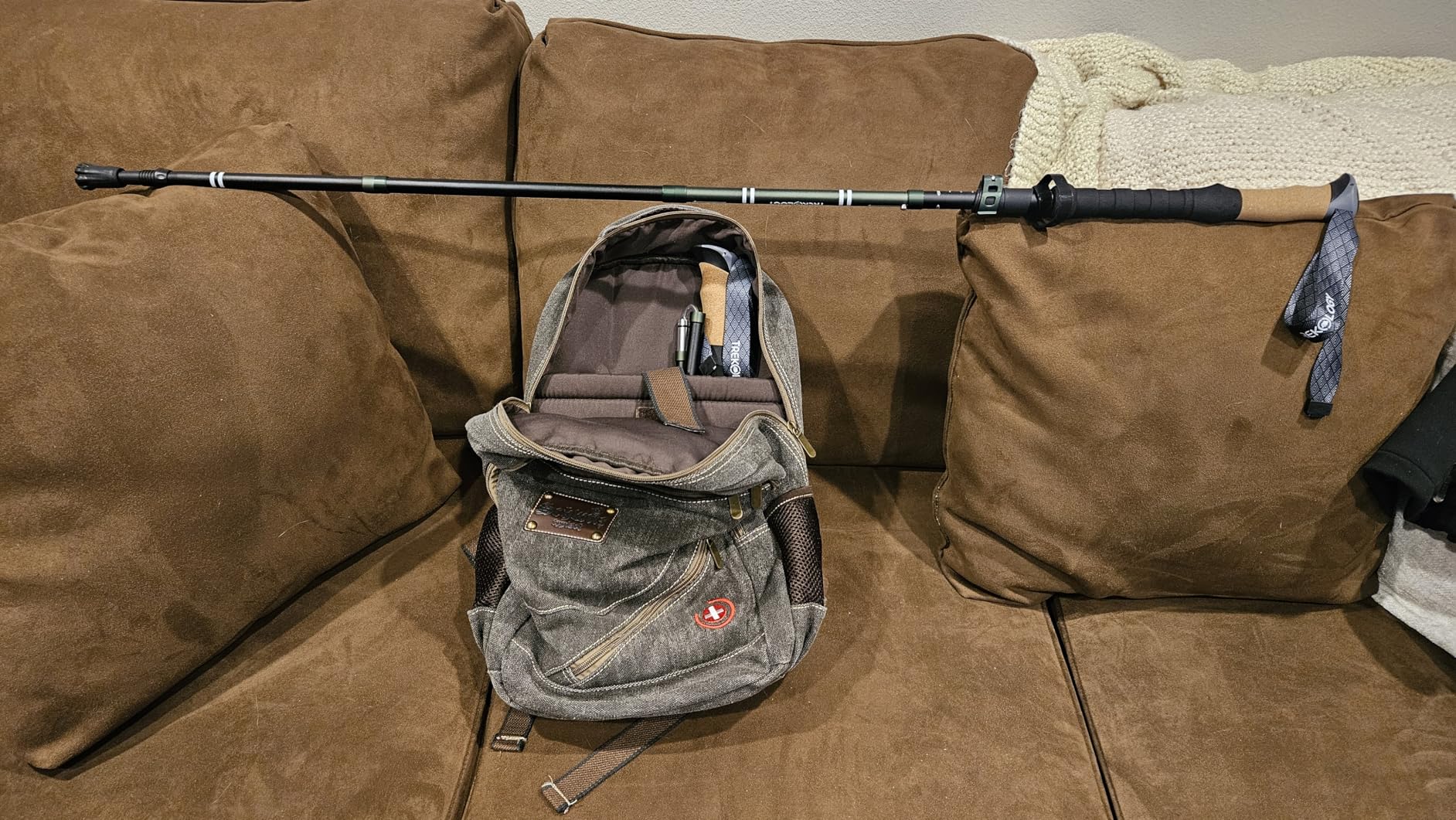
Fifteen inches is the number that matters here. Most telescoping poles collapse to 25 or 26 inches, which is awkward in a carry-on or a car boot, while this tri-fold design packs down to roughly the length of a forearm.
The cork grip absorbs hand moisture, which is why it stays comfortable on hot long walks where rubber grips get slick. Metal-capped joints at the lock are the detail that keeps the fold from developing wobble over a season of use.
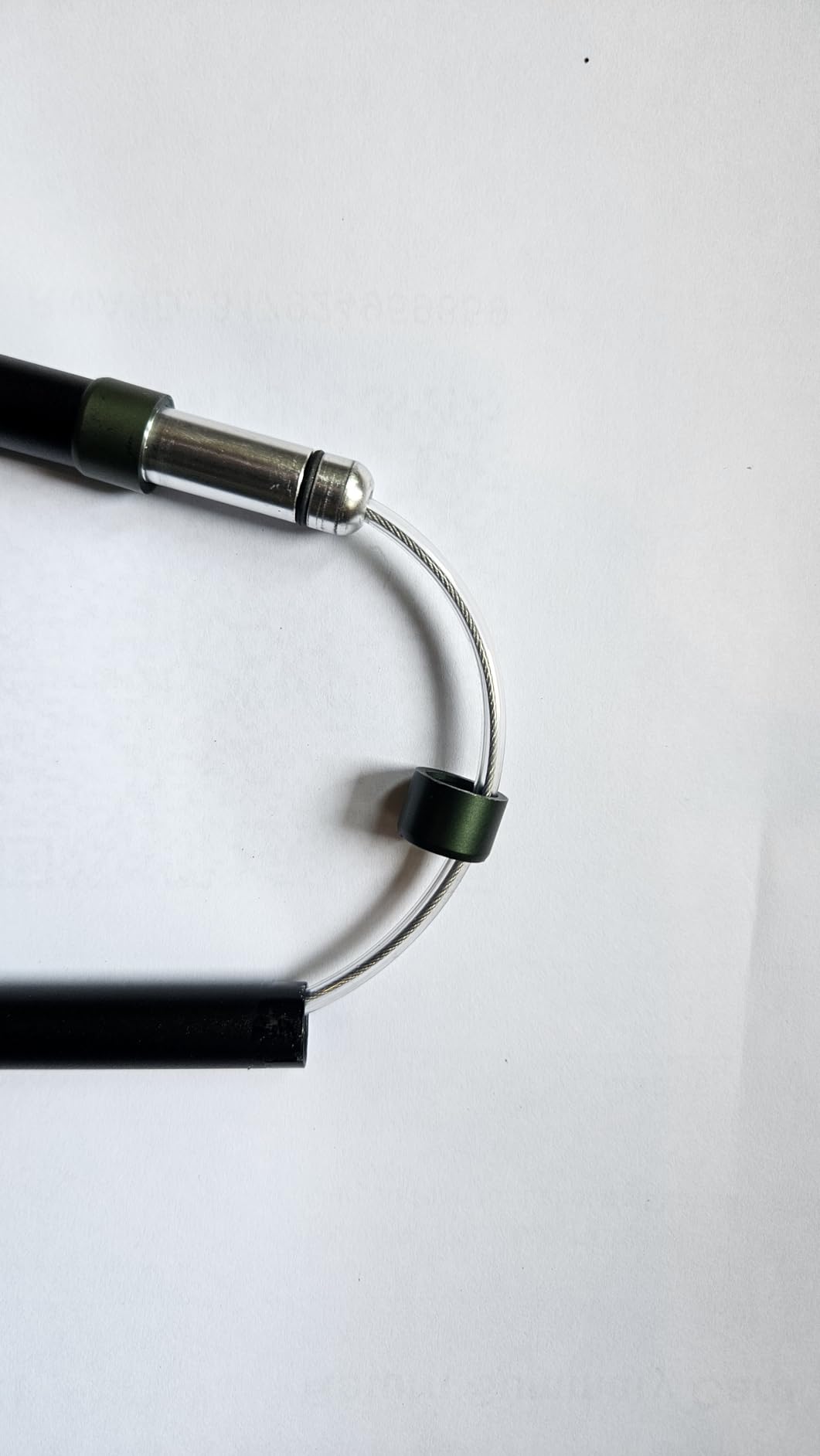
The adjustment range is 110 to 130 cm, covering users from 5ft 2in up to 6ft 5in. Buyers who fly or drive to their walks mention that the packability is the whole reason they chose it, and one replaced older poles with this pair.
Two things to know before you commit. This is the heaviest pole in the set at 11.5 oz per pole, which you feel over a long day, and the 130 cm maximum height will not suit a tall walker.
Why it suits frequent travellers
If your walks happen somewhere else, pack size beats everything. Fifteen inches fits into a daypack side pocket or a small case, and the buyer base for this pole is dominated by people who walk on holidays rather than on their doorstep.
Where it falls short
At 11.5 oz per pole this is the heaviest in the roundup, which is the opposite of what you want on a long day. The shorter adjustment range and 130 cm ceiling also rule it out for taller users, and the cork grip has a slight rotational flex some buyers mistake for a fault.
6. Foxelli Aluminum Cork Poles – the highest rated pair we tested
Foxelli Trekking Poles – Lightweight Collapsible Aircraft Grade Aluminum Hiking Poles with Cork Grips Quick Locks & All-Terrain Accessories – Pair of 2
Aircraft-grade aluminum
9.4 oz per pole
24 to 54 inch range
Flip lock
Pros
- Highest average rating in the set
- Cork grips that mould to the hand
- Plush adjustable wrist straps
- Flip locks with a thumb-turnable tension screw
Cons
- Basket attachment threading is plastic and can tear
- Strap webbing is unidirectional so the two sides mismatch
On paper this is the most complete pair in the roundup, and the rating backs it up with a 4.8 average and only a small share of one-star reviews. The tension screw under the flip lock is the feature that separates it: you can dial in exactly how hard the latch holds.
That matters for the buyer who is genuinely worried about a pole collapsing under load, which is the fear that stops plenty of older walkers from trusting a pole at all. A thumb-turn screw is a coarse but effective way to remove that doubt on day one.
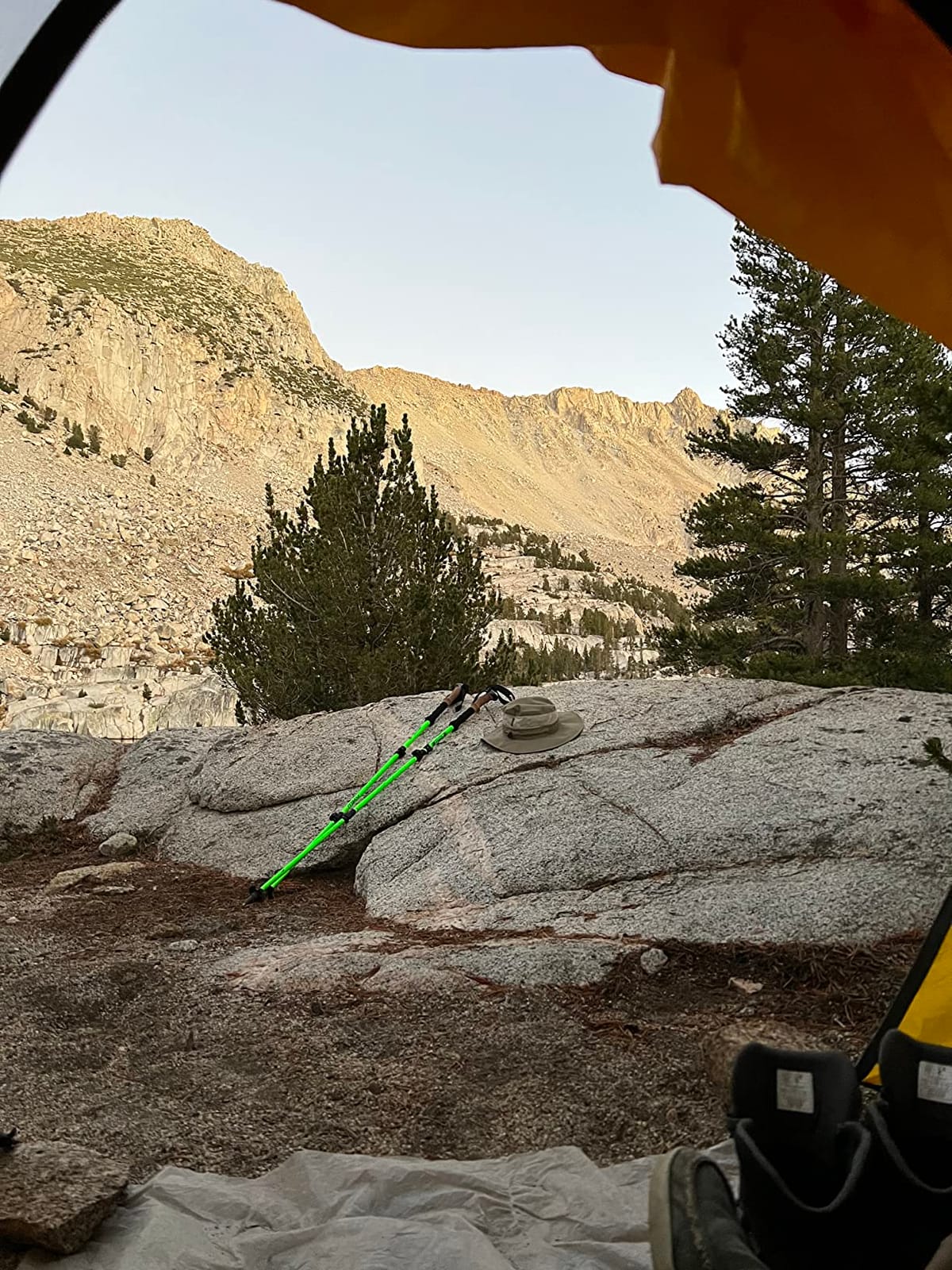
Buyers describe life-changing results in unusually direct terms. One woman with joint and hip issues used them in place of a cane, and a heavier user recovering from sepsis relied on them for stability during rehab walks, which tells you something about load handling.
The grip system is generous too: cork on top, a soft extended EVA sleeve below for switchbacks and descents, and plush adjustable straps. Each pole fully unscrews for packing into a small bag, and the case has a side pocket for the tips.
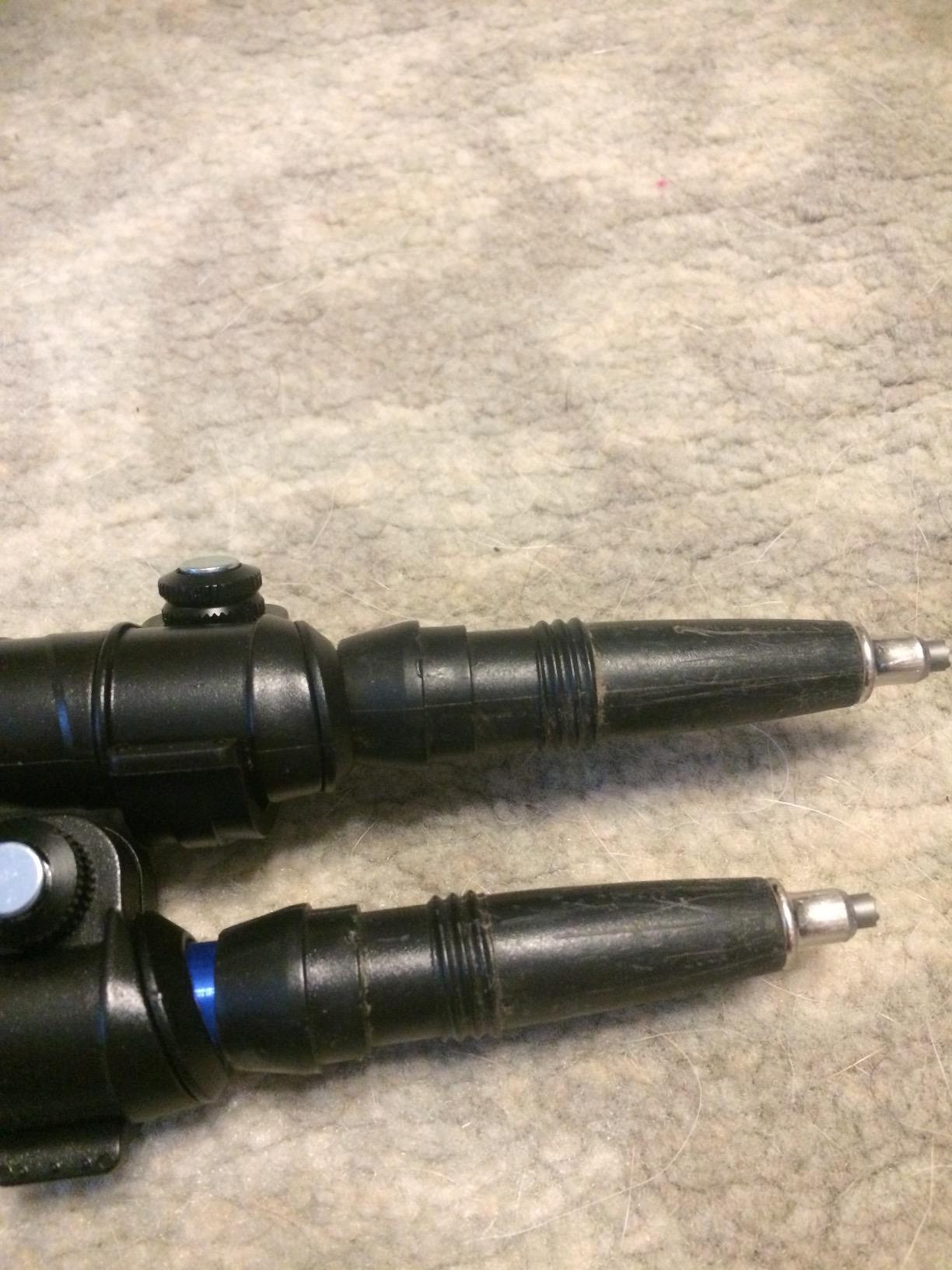
Why it suits anyone anxious about lock failure
The latch plus thumb-screw system is the answer to the top safety complaint in senior walking forums, which is a lock that gives way mid-hike. Being able to set and re-check holding tension yourself removes most of that worry without a second tool.
Where it falls short
The basket attachment threading is plastic, so a pole stuck in wet mud can strip it and the basket will need replacing. The straps are cut from a single unidirectional webbing so the two sides do not match exactly, and the tension screw wants an occasional re-tighten.
7. KINGGEAR 7075 Aluminum Poles – strong enough to lean on
KINGGEAR Trekking Poles 7075 Aluminum Lightweight Hiking Sticks
7075 aluminum shaft
9.35 oz per pole
25.5 to 54 inch range
Flip lock
Pros
- 7075 aluminum rated stronger than carbon for rugged terrain
- Cork grip plus EVA lower grip
- Clamps hold once adjusted
- Tungsten carbide tips and four tip styles included
Cons
- Grip ridges feel rough and some buyers sand them down
- A few section joints are plastic
The senior signal on this pole is unusually direct in the reviews. Multiple buyers describe using a single pole as a cane alternative, including one walker with full knee and hip replacements and a woman recovering from a second hip replacement who found the two-pole stance smoothed her gait.
7075 aluminum is the alloy to look for if you push weight onto the poles, because it is rated stronger than carbon fiber in rugged conditions. At 9.35 oz per pole it is also among the lighter aluminum options, with flip locks that hold once set.
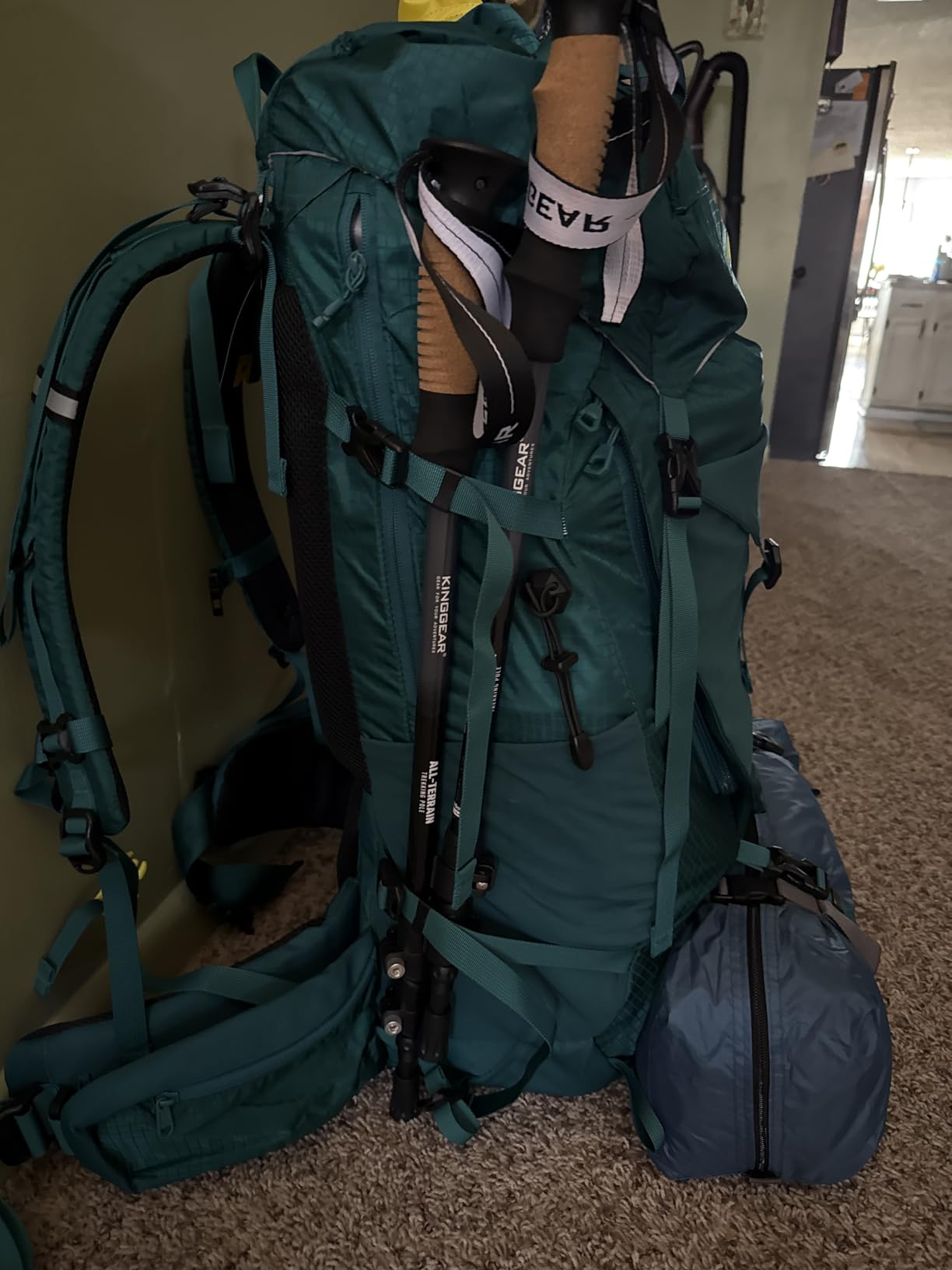
The grip pairing does a lot of work here. Cork wicks sweat and conforms to the hand, and the EVA lower grip takes palm moisture on climbs, while padded breathable straps stop the pole sliding when your grip is at its weakest.
Accessories are unusually complete, with tungsten carbide tips plus snow baskets, mud baskets, rubber protective tips and Nordic walking boot tips. There is also a lifetime guarantee, which is unusual at this tier and worth weighing against wear on consumable tips.

Why it suits heavier users and total joint replacement
The combination of 7075 aluminum, tungsten carbide tips and locks that do not budge under load is what makes this a dependable prop rather than a featherlight accessory. Buyers with knee and hip replacements report steadier walking on rocky trails than they managed with a cane.
Where it falls short
The grip ridges are the most common complaint, and a number of buyers sand them down for arthritic hands. A few section joints are plastic, and the tips and baskets wear with high mileage, so budget for replacements rather than assuming a decade of service.
8. Hiker Hunger Foldable Aluminum Poles – pick the range that fits your height
Premium Foldable Hiking Poles by USA Brand – Adjustable, Lightweight Trekking Poles Made of Aircraft Aluminum, Metal Locks Cork EVA Grips (Cork – Black, 100-120 cm for Height: 5’9″ and Smaller)
Aircraft-grade aluminum
9.95 oz short version
Two size ranges
Metal flip lock
Pros
- Folds to about 15 inches for travel
- Metal flip locks with reinforced joints
- Two length ranges so you can match your height
- Cork or EVA foam grips with EVA extensions
Cons
- One pole in some sets has an adjustment lock that slips
- Lock button needs upward tension to click in
Almost every other pole forces one adjustment range to serve everyone. This one comes in two ranges, 100 to 120 cm and 115 to 135 cm, so a shorter walker can get correct pole height from the first day instead of running out of adjustment at the bottom of the shaft.
Short pole length is a real problem for older users, because a 26 inch collapsed minimum is no use to someone who is 4ft 11in. Correct height is what makes the alternating gait work, and getting it right matters more than any material choice.
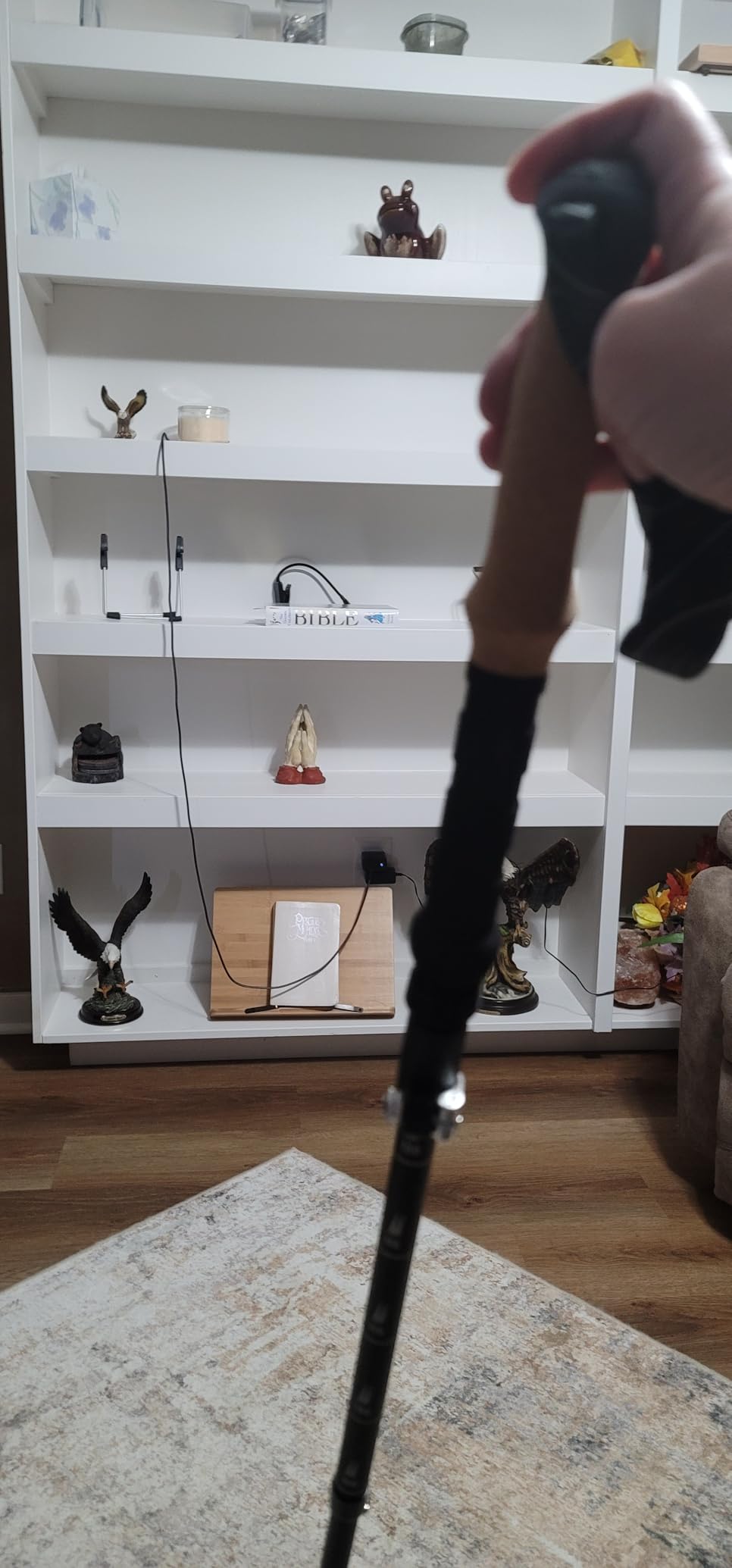
One reviewer recovering from knee replacement found these better balanced than a cane after moving off a walker, which is the clearest senior-relevant use we found for this pole. Another used them through days of survey trekking on scree and goat trails, which is not gentle ground.
The cork grip suits short, wide hands, and the EVA foam extension gives palm support on descents. The fold to about 15 inches is among the most compact available, which makes it a good match for travel and small cars.
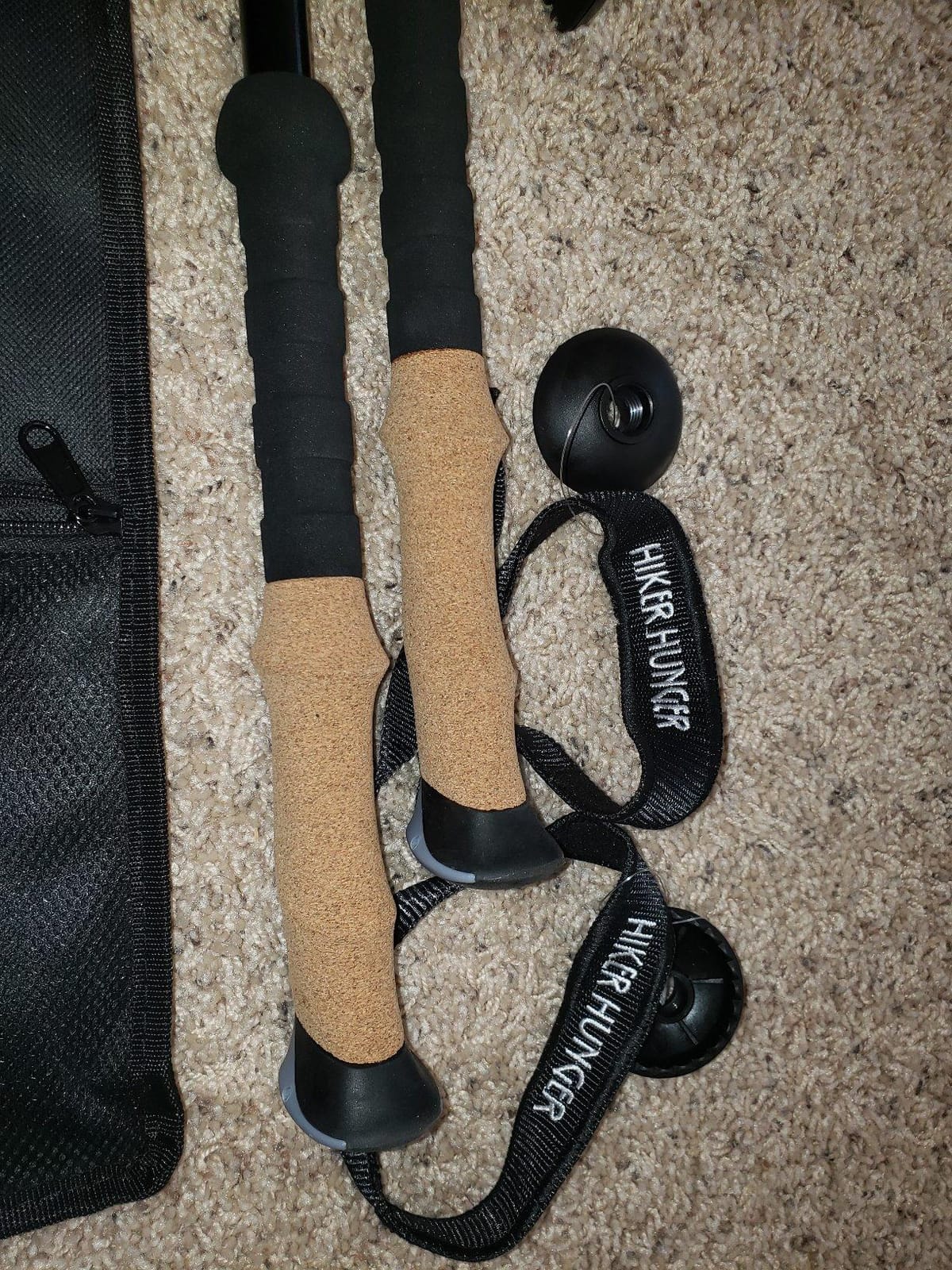
Why it suits shorter walkers
Matching a pole to your height is the single most important thing in this roundup, and this is one of the few sets where a shorter user can buy the correct range directly. The 100 to 120 cm option suits users at or under roughly 5ft 9in.
Where it falls short
Buyers consistently note the lock needs upward tension on the shaft to click in, which is awkward for hands that are not strong. A small number of quality complaints include one pole in a set whose adjustment lock would not hold, so inspect both poles on arrival.
9. Aihoye Shock-Absorbing Poles – the entry point for first-time users
Aihoye Hiking Trekking Poles, 2 Pack Walking Hiking Sticks for Men &Women
Aviation-grade aluminum
10.3 oz per pole
25 to 52 inch range
Quick and twist lock
Pros
- Aviation-grade aluminum construction
- Shock-absorbent design eases hand and wrist strain
- Secondary foam grip absorbs sweat
- Ten replacement tip pieces included
Cons
- Rubber and plastic grip is less breathable than cork
- 52 inch maximum height is shorter than most rivals
This is the pair we would suggest to someone who has never used poles and is unsure whether they will take to them. The shock-absorbent design takes strain off the hands and wrists over a long walk, and the secondary foam grip absorbs sweat when the palms get clammy.
The listing itself targets people with weak joints, previous sports injuries and unstable hips, knees or ankles, which lines up exactly with the senior use case. It is a sensible first purchase rather than a forever pole.
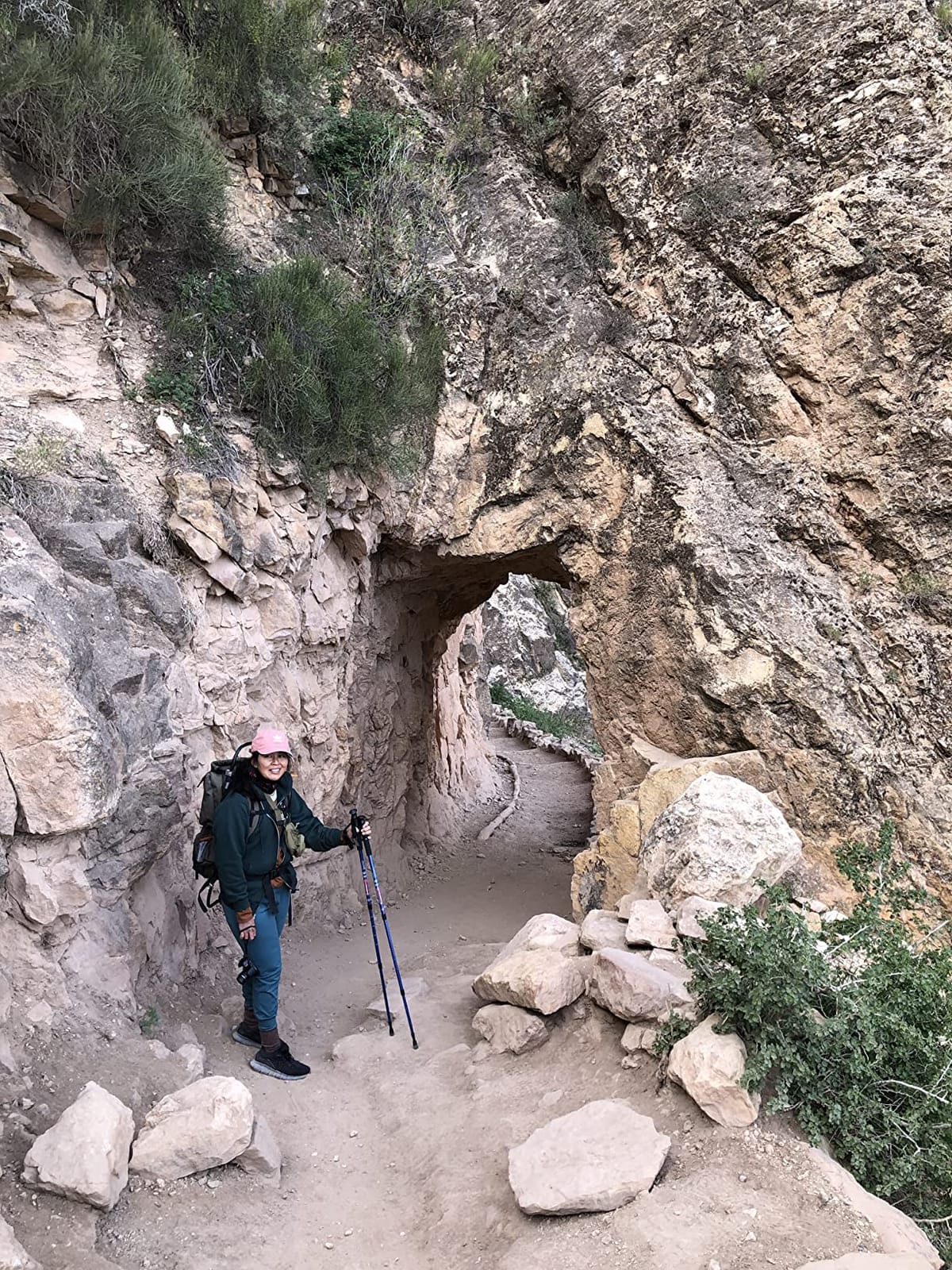
Accessory supply is generous for the money, with four rubber tips, two boot tips, two snow baskets and two mud baskets in the box, so most buyers never need to order spares. A free replacement policy and a one year warranty also reduce the risk of a first try.
The honest weaknesses are grip and reach. Rubber and plastic stays hot and slippery compared with cork over distance, and the 52 inch ceiling will not suit a tall walker. The shock internals can also loosen with age, so the spring is worth checking periodically.
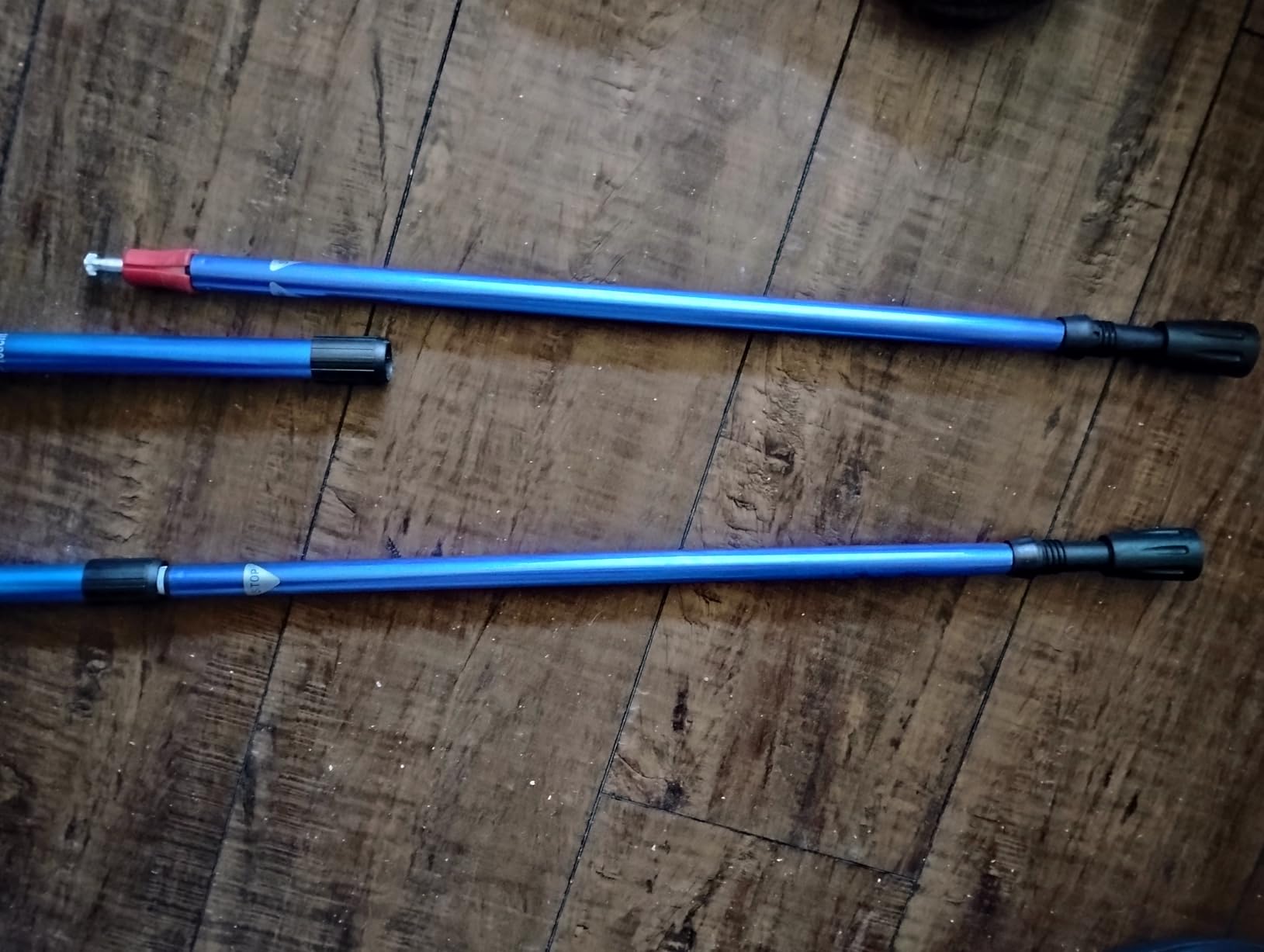
Why it suits a first pair
If the goal is finding out whether poles help you at all, the anti-shock feel and the range of included tips make this an easy first step. A one year warranty and free replacement policy take the pressure off a trial.
Where it falls short
The rubber and plastic grip is the weakest part of the package and the reason many users move to cork later. At 10.3 oz per pole it is also heavier than the 7075 aluminum and carbon options, and 52 inches is a short ceiling.
10. A ALAFEN 7075 Single Pole – one pole, folded to 13.4 inches
A ALAFEN 7075 Aluminum Collapsible Ultralight Trekking Pole, Blue 1 Pole
7075 aluminum alloy
11 oz
43.3 to 49.2 inch range
Quick lock
Pros
- Sold as a single pole for one-handed use
- Folds to 13.4 inches
- 7075 alloy shaft resists deformation
- Tungsten steel rod tip under the rubber footing
Cons
- Sold as one pole rather than a pair
- Shortest adjustment range and 49.2 inch ceiling in the set
Everyone else on this list is a pair. This is one pole, and that is the entire point for people who need a free hand for a camera, a walking frame, a dog lead or a door, and for anyone who wants a cane they can fold away when they are not using it.
Community consensus in walking forums is that a single pole earns its place on uneven ground and in crowded places. One reviewer with a displaced kneecap used a single pole like a cane on rock steps and found it completely solid.
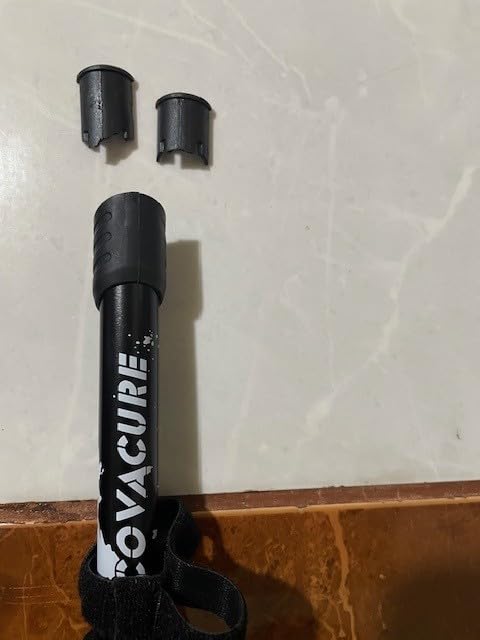
At 13.4 inches folded it is the most compact thing in the roundup, and the 7075 alloy shaft is sturdy while staying light enough to carry for hours. The EVA foam handle is sweat-absorbent with an anti-skid groove, and scale markings make height adjustment straightforward.
Two cautions are worth stating plainly. The most common buyer complaint is arriving expecting two poles, so check the quantity before ordering, and a few reviews report the joint near the handle slipping under heavy load, so inspect it early.
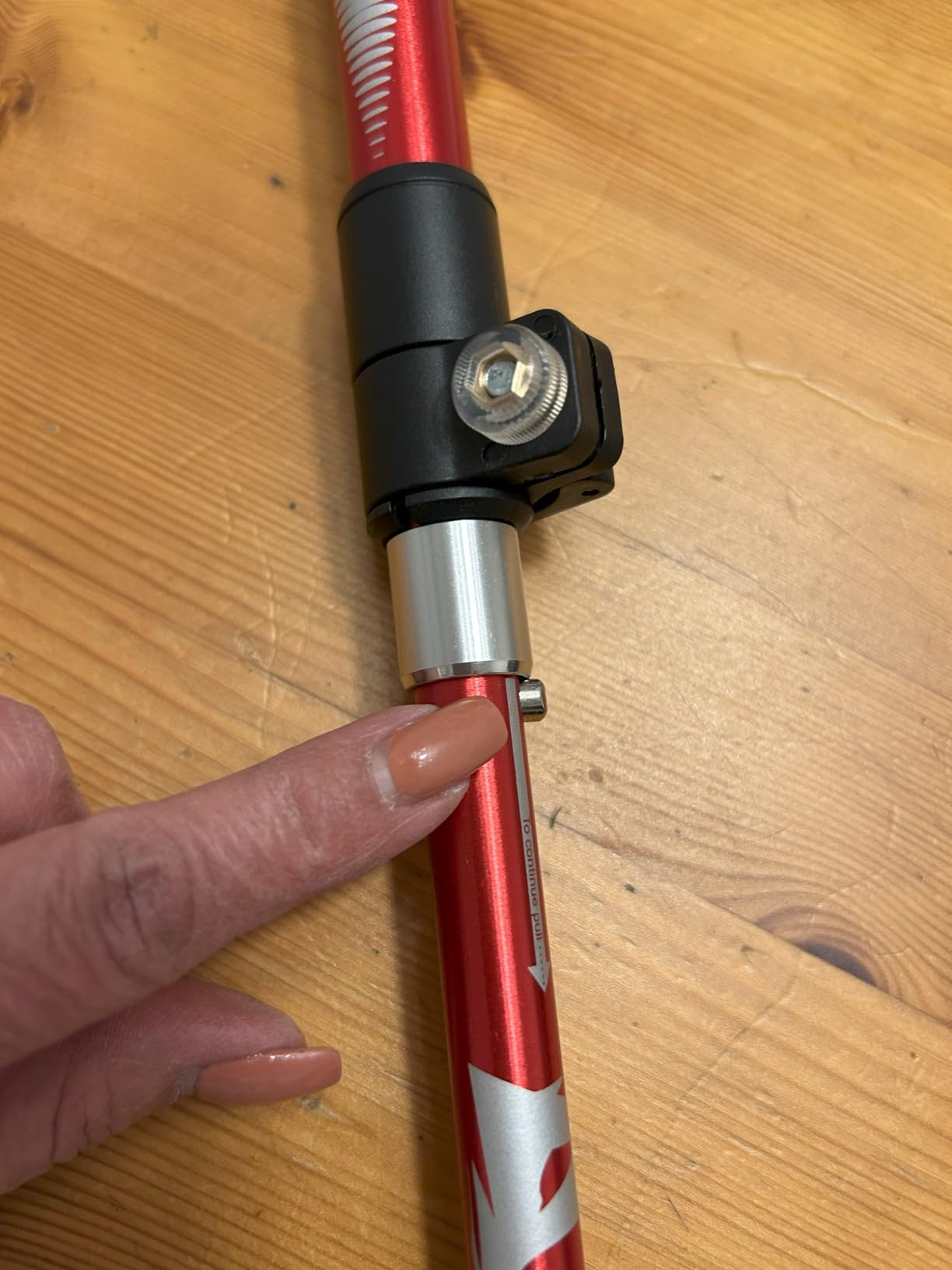
Why it suits anyone who needs a hand free
Photography, a dog lead, a handrail, a pushchair, a crowded platform. A single pole is the only product here that solves those situations, and folding to 13.4 inches means it can live in a jacket pocket between walks.
Where it falls short
The 49.2 inch ceiling and 43.3 inch minimum make this the shortest-reaching pole in the roundup, so tall users are excluded. It also has a high one-star share of any pole here, mostly from quantity confusion, and the handle joint is the part to watch.
How to Choose Trekking Poles for Seniors
Start with the grip, because it is the part that decides whether you will still be holding the pole at the two hour mark. Cork moulds to the hand and absorbs sweat, soft foam suits hands that hurt on contact, and a palm-support or ergo handle suits reduced grip strength best of all. Rubber is the least comfortable option over distance, and it is the one most likely to make a first pair go unused.
Second, decide between aluminum and carbon fiber. Aluminum is heavier but planted, cheap to replace when something breaks and forgiving if you lean on the pole. Carbon fiber is roughly two ounces lighter per pole and dampens vibration, which is worth it for weak shoulders but less useful for heavy load-bearing.
Third, judge the lock. External lever locks open and close with one hand and are the easiest choice for limited dexterity. Flip locks are quick and widely trusted when reinforced, and twist locks have nothing external to snag, though they need two hands. One-piece custom-fit poles avoid the whole question, and a specialist vendor in the walking pole market is blunt about flimsy twist and flip locks being a safety complaint.
Fourth, check total carry weight, and treat it as a hard limit rather than a preference. Anything around 10 oz per pole is a full day’s walk without noticing; anything past 11 oz per pole starts to register on the shoulders. This is the number our broader trekking poles roundup also treats as the deciding factor for long days out.
How to size trekking poles correctly in four steps
Use the elbow rule first. Stand upright with the pole planted beside you, bend your elbow to a right angle, and the top of the grip should meet the crease of your elbow. That is your starting length, not your final one.
Then check the terrain rule. On the flat, use the elbow-length measurement. On descents, add 2 to 4 inches so the pole takes the braking force. On climbs, subtract 2 to 4 inches so you are not driving a pole that is too tall into the hill.
Next, work from your own height. A rough guide is to subtract about 10 inches from your height in inches, which puts most people between 45 and 55 inches, and then apply the terrain adjustment above. Anyone under 5ft 2in needs a pole with a short retracted minimum, since most poles bottom out around 24 to 26 inches.
Finally, test before you commit to a length. Walk twenty paces with the poles on flat ground and check that the shoulders stay down and relaxed. If the shoulders rise, the poles are too short or too long, and no amount of adjustment will fix a range that cannot hit the right length.
When Trekking Poles Are the Wrong Choice
After joint replacement surgery, ask your surgeon or physical therapist first. A post-operative protocol may restrict what you load, and poles can be right for one knee and wrong for the other, so this is not a decision to make from a product page.
If your balance needs a stable frame rather than a point of contact, a four-point base walker or forearm crutches give a larger support area. Poles are designed to move with you, and someone who cannot weight-bear safely should not be learning on a pair of poles.
Two further cautions. Poles can transmit load awkwardly into a shoulder that has already had a problem, particularly on descents, so anyone with shoulder pain should start on flat ground and short distances. And if a lock slips, do not fix it with tape mid-walk; stop, sit down, and re-seat the section before you continue.
Finally, a word on the objection that comes up more than any other in senior walking forums. Poles look like mobility aids, and some older adults resist them for that reason. They are training gear. The people using them are usually the ones out longest, and the confidence they bring is the entire clinical case for carrying them.
Frequently Asked Questions
Are trekking poles suitable for older people?
Yes, for most of them. Used as a pair with an alternating gait, trekking poles add two contact points for balance, share load through the arms and reduce compression forces on the knee. They work as a stability and confidence aid rather than for propulsion, which is why grip quality and lock security matter more than weight for older users.
Should seniors use trekking poles?
Most seniors who walk on uneven ground gain a lot from them. Poles give a three-point support whenever one foot is off the ground, absorb some of the shock on descents, and give you something to hold when rising from a bench. They are least useful on flat, paved, dry paths, where they add weight without adding much stability.
What is the difference between walking poles and trekking poles?
They are usually the same product described by different sellers. A walking stick is a single fixed or telescoping stick with a handle and a rubber foot, used more like a cane. A walking pole or trekking pole is a pair of adjustable poles with wrist straps and interchangeable tips, designed for an alternating gait. Nordic walking poles are the same category, with a specific technique and a more upright posture.
What is the best grip material for arthritic hands?
Cork is the most commonly recommended option because it moulds to the hand and absorbs sweat without pressing hard on the knuckles. Soft foam and EVA grips suit hands that hurt on contact, and an ergonomic palm-support handle is the best choice when grip strength is genuinely declining. Plain rubber is the least comfortable over long distances and the first thing worth changing.
How do you size trekking poles correctly?
Stand upright with the pole planted beside you and bend your elbow to a right angle. The top of the grip should meet the elbow crease, which is your base length. Add 2 to 4 inches for descents and subtract 2 to 4 inches for climbs. As a starting point, subtract roughly 10 inches from your height in inches, and check the minimum length of the pole range if you are under 5ft 2in.
The Best Trekking Poles for Seniors in 2026
Ten pairs, one clear winner. The TrailBuddy 7075 aluminum poles take our Editor’s Choice because the one-handed lever lock, the cork grip and a 24.5 to 54 inch adjustment range solve the three problems that stop older walkers from using poles: weak hands, one-handed operation and a fit that covers a wide range of heights.
Buy the Foxelli aluminum pair if lock security is your biggest worry, the Foxelli carbon pair if your shoulders tire before your legs do, and the KINGGEAR poles if you intend to lean on them. Whatever you choose, size the poles properly and ask your clinician first if you are recovering from surgery. The best trekking poles for seniors are the pair you still want to carry on the third walk.