
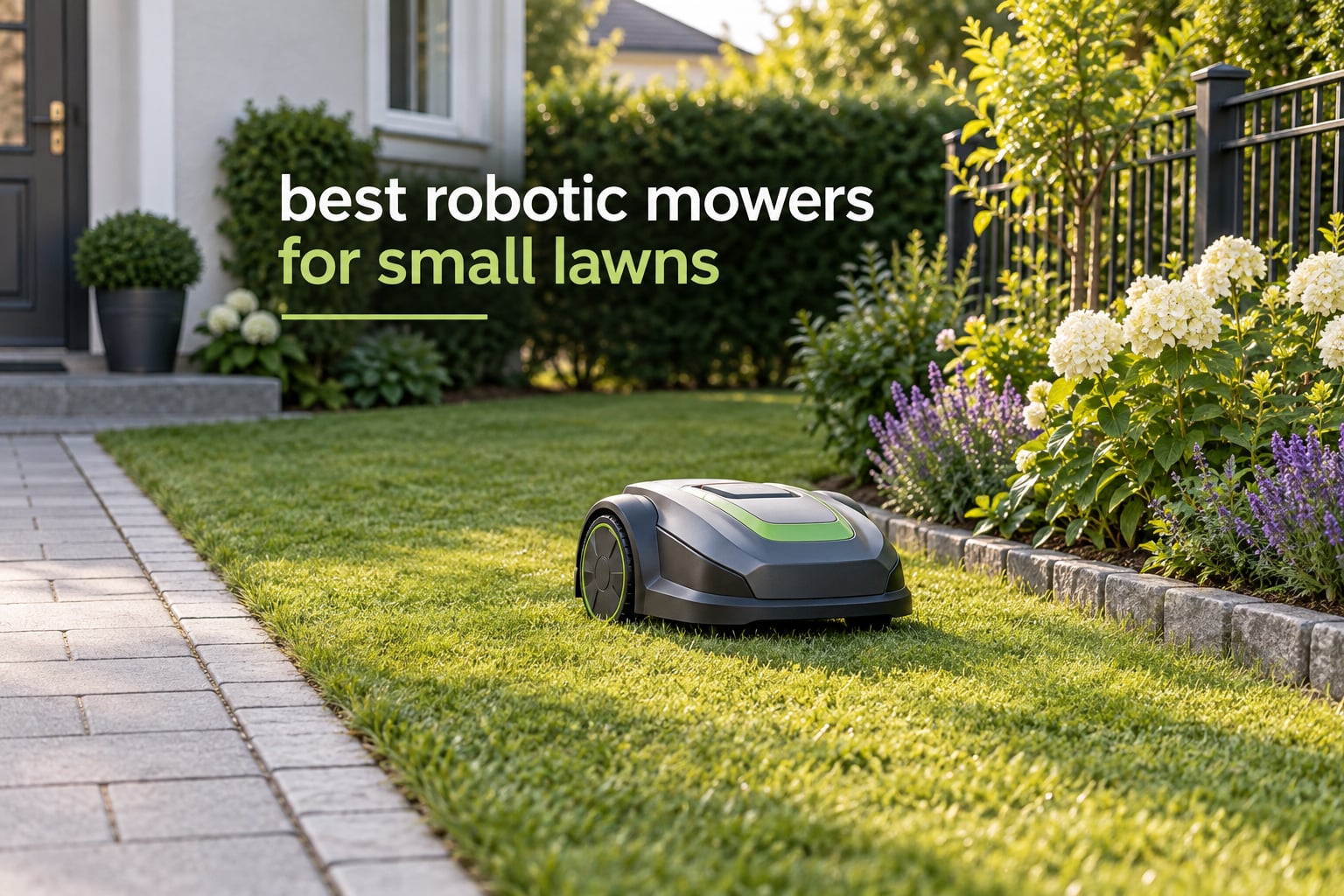
A robotic mower makes the most sense on a small lawn, and that is where the market has changed most in the last two years. Ten years ago a wire-free machine meant a large open field with no trees and a big budget. Today you can get a mapping mower with vision obstacle detection, multi-zone scheduling and a three-year warranty for a small suburban yard, and it will fit in a garden shed. I compared ten of the current crop of best robotic mowers for small lawns side by side, reading the manufacturer specifications and the owner review patterns for each one, and picking winners by how well they handle the things small yards actually throw at them: flower bed edges, pavers, slopes, narrow gates and mixed grass.
The core question for a small lawn is not raw cutting power. A 2000 sq ft patch needs far less throughput than a quarter acre, so battery size and deck width matter less than people expect. What matters is whether the machine can find its own way home, whether it treats the border as a border, and whether you can live with the setup. Those three questions drove every ranking on this list.
If your lawn is genuinely tiny and flat, an electric walk-behind is still a legitimate choice. Our guides to the best electric lawn mowers for small yards and the best push mowers for small yards cover that case. Once you are past a couple of thousand square feet, or you mow twice a week in summer, the labor savings from automation start to outweigh the setup effort. If your lawn is large instead, our best robotic lawn mowers for large yards roundup goes deeper on the bigger machines.
One note on method before we get into the picks. Every specification quoted here comes from the published product data, and every pros and cons line reflects patterns in the owner reviews for that specific model. I did not invent a single measurement. Where a review base is thin, I say so, because a five-star average from four owners tells you very little about year three.
Table of Contents
Top 3 Best Robotic Mowers for Small Lawns in October


The Navimow i105N takes the top spot because it has the largest owner review base in the group and holds centimetre-level positioning under tree cover, which is the single most common failure mode for RTK machines on small suburban lots. The ANTHBOT M5 is the value pick: a garage in the box, a 45% slope claim and twenty zones at a tier where most rivals sell you the garage separately. The eufy E15 wins the setup category outright, getting from unboxed to mapping in roughly ten minutes with no wire, no antenna and no base station to install.
Best Robotic Mowers for Small Lawns in 2026 At a Glance
Here is every machine in the comparison, with the navigation method and the practical limit on each one. Navigation type is the first thing to read, because it decides how the first afternoon of setup goes.
| Product | Specifications | Action |
|---|---|---|
 Segway Navimow i105N Segway Navimow i105N |
|
Check Latest Price |
| ANTHBOT M5 with Garage |
|
Check Latest Price |
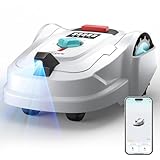 YARDCARE M800Plus YARDCARE M800Plus |
|
Check Latest Price |
 Sunseeker X3 Plus Sunseeker X3 Plus |
|
Check Latest Price |
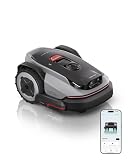 Roborock RockNeo Q110H Roborock RockNeo Q110H |
|
Check Latest Price |
 WORX 1/4 Acre Wire-Free WORX 1/4 Acre Wire-Free |
|
Check Latest Price |
 Segway Navimow i210 AWD Segway Navimow i210 AWD |
|
Check Latest Price |
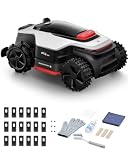 Dreame A3 AWD 1000 Dreame A3 AWD 1000 |
|
Check Latest Price |
 Sunseeker S4 Sunseeker S4 |
|
Check Latest Price |
| eufy E15 |
|
Check Latest Price |
Two entries in that table are worth flagging early. The YARDCARE M800Plus lists a perfect five-star average, but it is built on four published reviews, so treat that number as provisional rather than established. The Sunseeker X3 Plus and the Roborock RockNeo Q110H sit at 3.8, and both lose most of their points to the same issue: conservative edge behaviour that leaves a band of uncut grass along fences and borders.
1. Segway Navimow i105N: Best Overall for Small Lawns
Segway Navimow i105N Robot Lawn Mower Perimeter Wire Free 1/8 Acre RTK+Vision Robotic Lawnmower, AI-Assisted Mapping, Virtual Boundary, APP Control, 58dB(A) Quiet, Multi-Zone Management
7.1 inch cut
1.6-3.6 inch height
0.125 acre
24 lbs
3-year warranty
Pros
- Largest owner review base in this group
- RTK plus vision holds position under tree cover
- Very quiet at 58 dB(A)
- Even striping with planned direction changes
Cons
- Standard wheels dig ruts on slopes
- Vision fence misses some objects like hoses and mailboxes
- Map edits require physically driving the mower
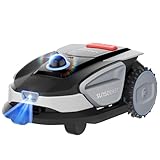
Out of the box the i105N is the least dramatic machine here, and that is part of why it works. It weighs 24 pounds, measures a little over 21 inches deep, and covers a 0.125 acre, which is a comfortable fit for a small suburban front and back lawn combined. Setup is the wire-free routine: mount the charging station, connect the GNSS antenna kit, and let the app walk the machine around the perimeter. No trenching, no stakes, no buried cable to cut later.
What separates it from the field is the RTK plus vision combination. RTK positioning alone degrades under dense tree canopy and along tall fences, and that is exactly the geometry of a small lot. Adding the 140-degree camera means the machine has a second reference when the satellite fix wobbles. The 61% share of five-star ratings in the reviews lines up with owners describing clean striping and even coverage on yards with trees.
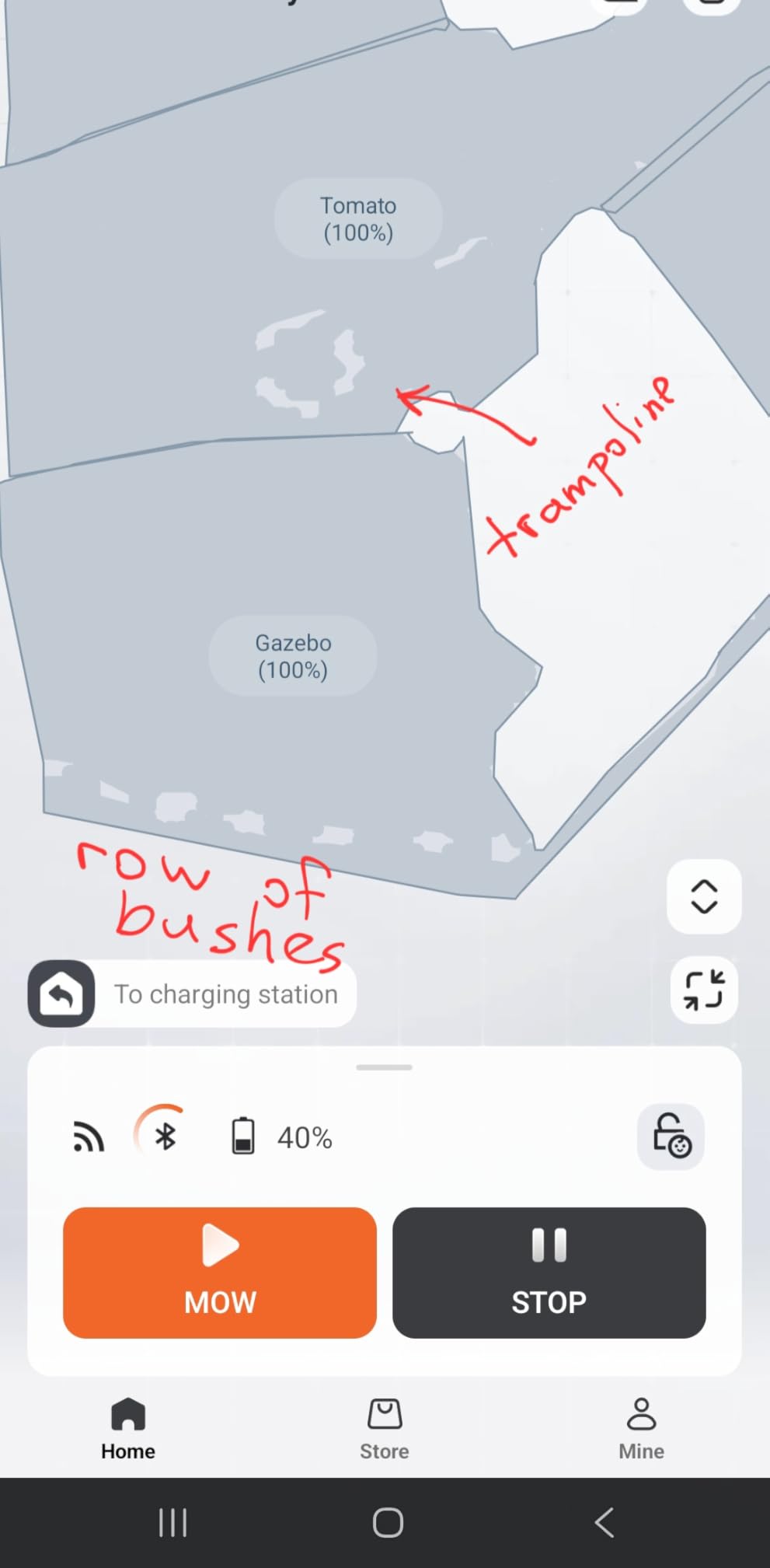
Cutting is a 7.1 inch disc with five height positions from 1.6 to 3.6 inches, which covers everything from a cool-season fescue lawn at three and a half inches down to a warm-season lawn at one and a half. The planned mowing patterns change direction after full coverage specifically to prevent visible wheel tracks, and the clippings are fine enough to mulch straight back in. You still get a docking and recharge cycle, but at this lawn size you are usually only seeing one or two per run.
Running costs are modest. The box includes the charging station, a GNSS antenna kit, an extension cable and nine spare blades, so the first replacement is already covered. The scheduled blade change on a small lawn is every few weeks during the growing season rather than every six to eight weeks, because the machine is making light, frequent passes instead of one heavy cut.
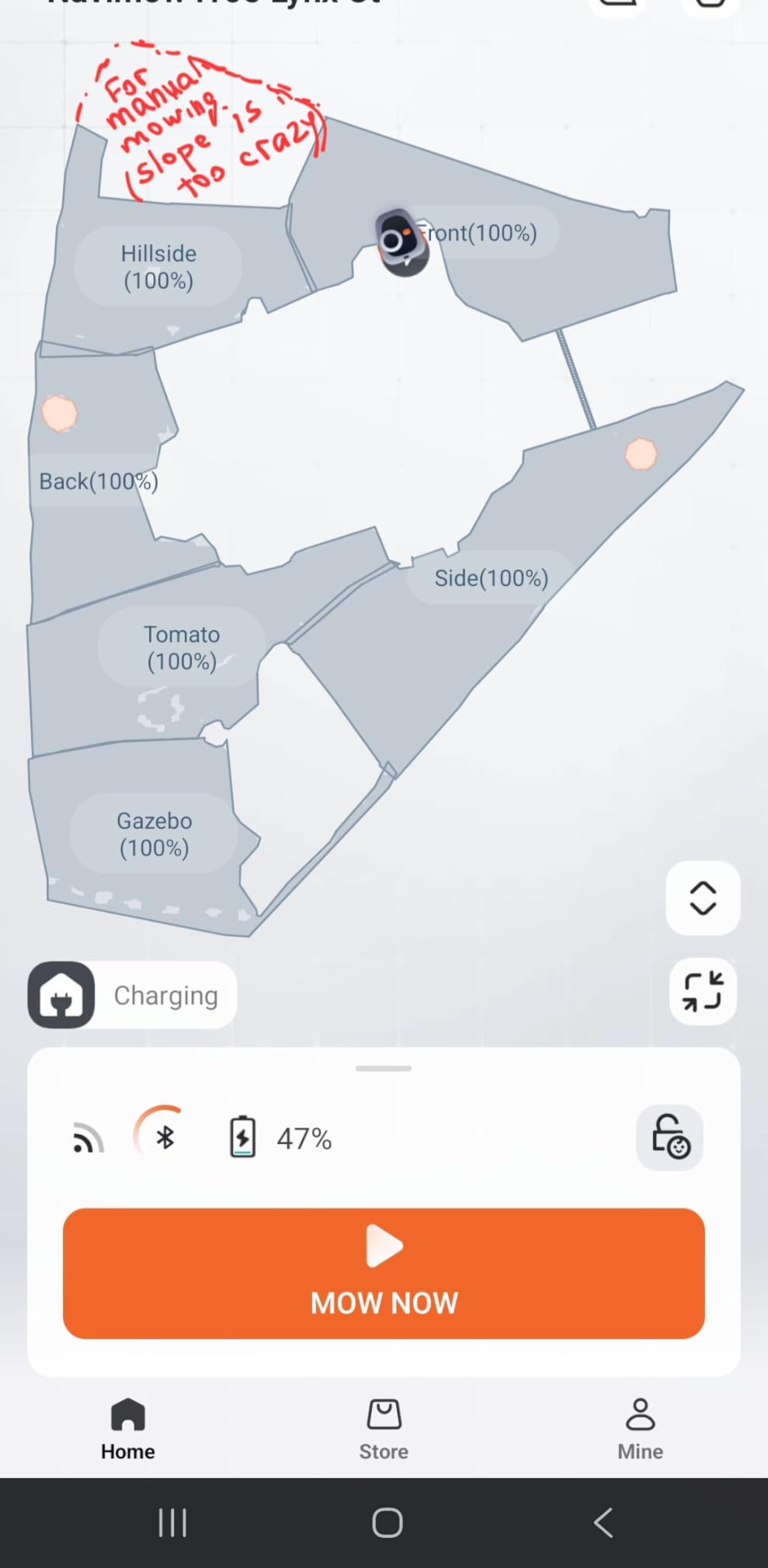
What edge cutting looks like in practice
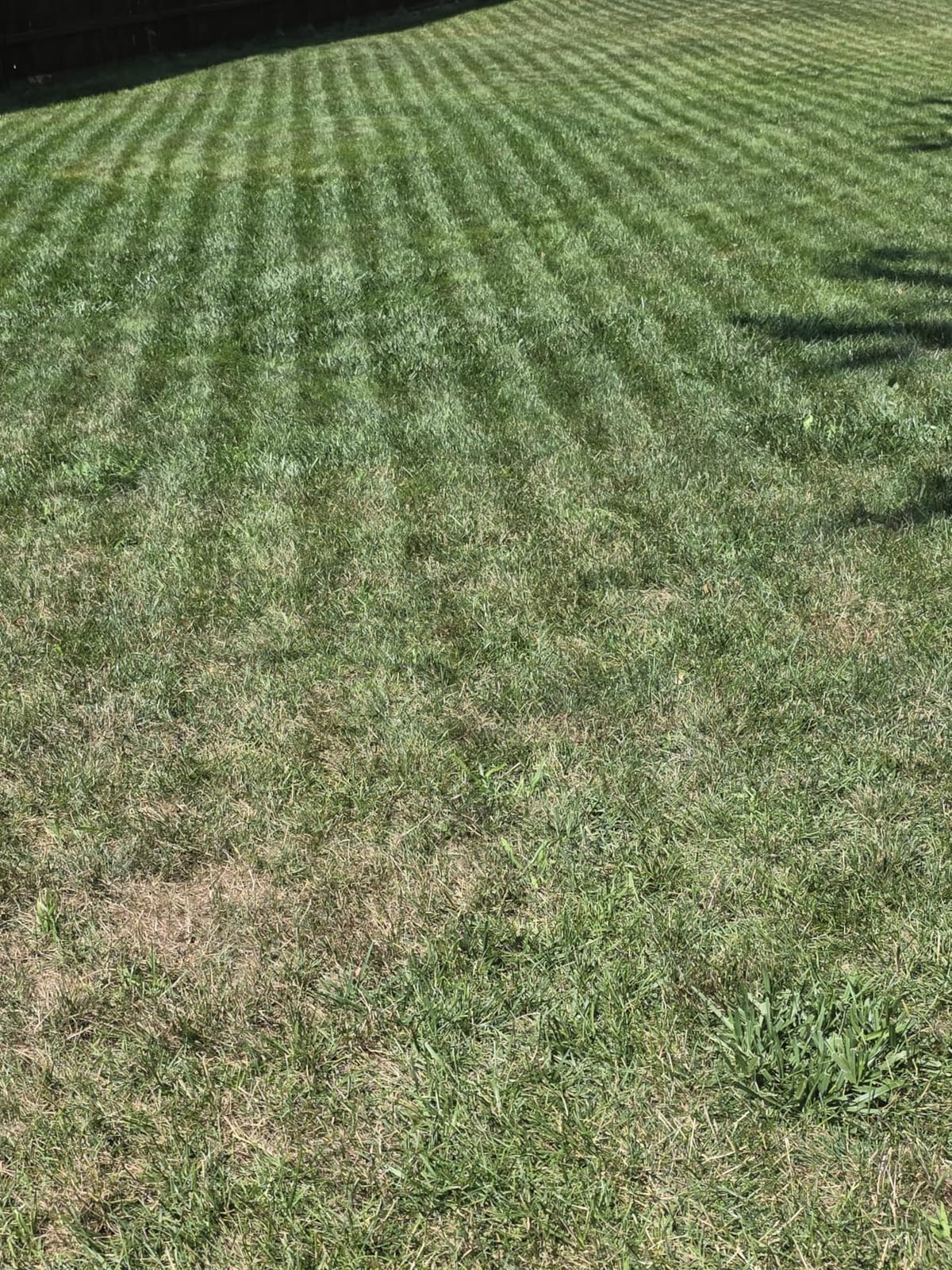
This is the honest limit of the machine. Like most of the class, it leaves a strip that a string trimmer can clean up in a couple of minutes, and the 7.1 inch deck means the uncut band is wide enough that you will notice it. If your border is a hard surface like a patio or a paved path, the boundary reads cleanly and the visible gap is small. Along a soil or mulch edge it is more obvious.
If edge quality is your top priority, look at the machines with an offset floating deck or a dedicated edge mode rather than expecting this one to solve it. The i105N is a strong choice for a lawn where the perimeter is mostly open turf and the priority is finishing the whole area quietly and on schedule.
Where it struggles
Traction is the recurring complaint. The standard wheels spin on wet grass and dig ruts when the machine gets stuck on a slope, and a few owners report the mower itself being scuffed after an excursion. If your small lawn has a meaningful incline, this is the spec to check first.
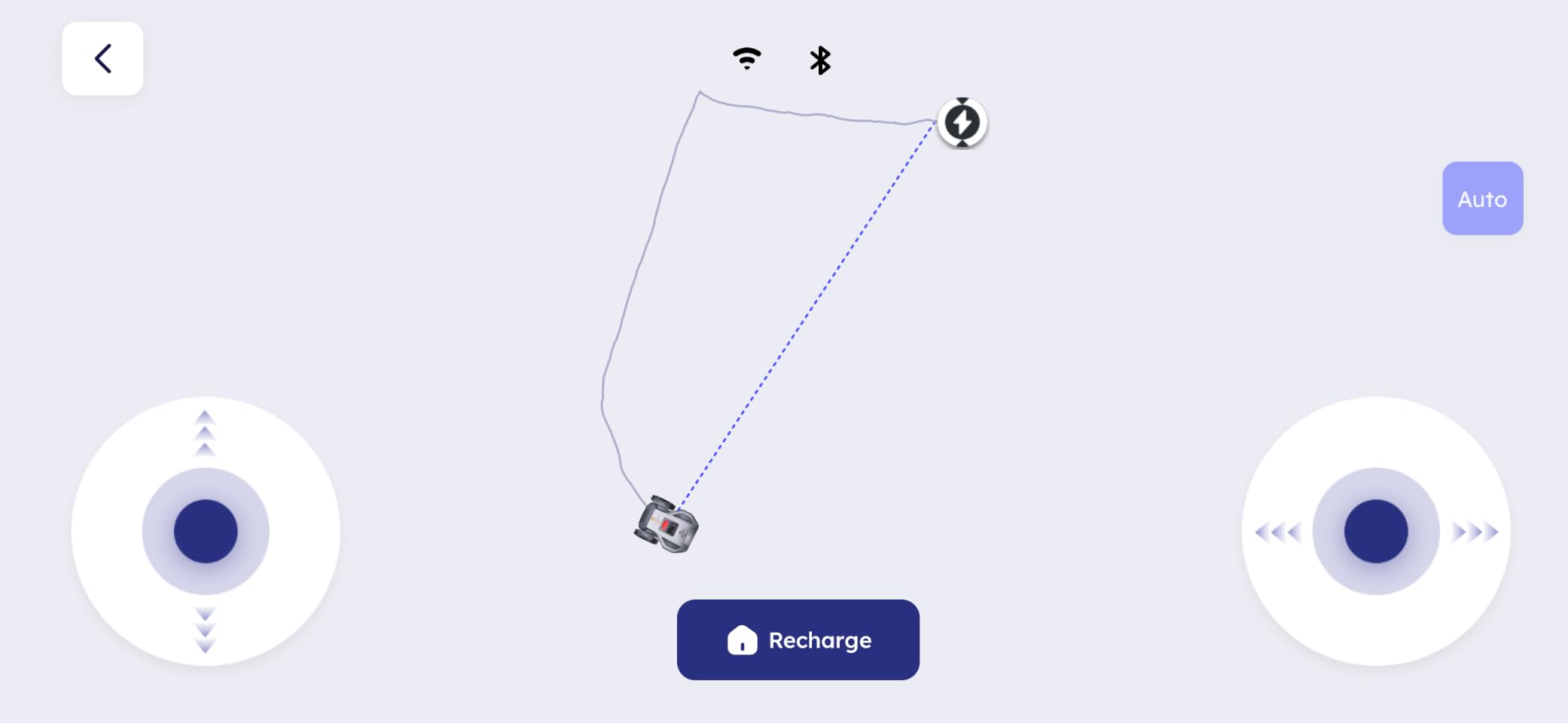
The vision fence also has soft edges. It can miss a hose, a sprinkler head, a gate or a mailbox sitting low against a border, and in narrow channels it sometimes reports phantom objects that are not there. Map edits are the other friction point: changing a boundary means physically driving the mower along the new line rather than drawing it on a phone screen. A minority of owners also report losing the saved map during mapping or after a re-pairing, and the optional 4G anti-theft module and the garage are both separate purchases.
2. ANTHBOT M5 with Garage: Best Value
ANTHBOT M5 Robot Lawn Mower 1/8 Acre with Garage, Dual Vision+Full-Band NRTK Robotic Lawnmower, No Perimeter Wire, App Control Obstacle Avoidance, 45% Slope, Cutting Height, Multi-Zone Mapping
7.9 inch cut
1.2-2.7 inch height
0.15 acre
21.6 lbs
45% slope
Pros
- App builds the virtual map in about 10 minutes with no driving
- Garage included at this tier
- Dual 150-degree HDR cameras
- Quiet at 58 dB or under
Cons
- Narrow cut means multiple passes on some lawns
- Some owners report trouble on steep hills
- Second mowing zone poorly documented
The M5 is the package most worth looking at for a first robotic mower. The box contains the mower, the garage, the charging base station, five blades and the RTK reference station, so nothing important is left on the shopping list. At 21.6 pounds it is the lightest machine in this comparison and easy to lift between a front and back lawn when the weather changes.
Setup was the standout across the 362 reviews. Owners consistently describe the app generating the virtual map in roughly ten minutes without anyone driving the mower around the boundary, which is the single biggest time saver in the wire-free category. The position system is full-band NRTK paired with two 150-degree HDR cameras that can identify more than a thousand obstacle types, and the machine covers up to twenty work zones with custom no-go areas.
The headline specification is the 45% gradient rating, which is the joint-highest claim in this group. Cutting height runs from 1.2 to 2.7 inches on five free-rotating blades across a 7.9 inch cutting width. The review distribution skews positive, with 63% four-star and 18% five-star, and the common themes are a clean cut on small yards, dependable rain-sensor return to base and self-charging resume.
Because the mower ships with a garage, you can plan the dock location so the machine is protected between runs rather than exposed on the lawn. That matters more on a small property where the mower is a visible object from the street, and it is a feature most competitors in this price tier treat as an upsell.
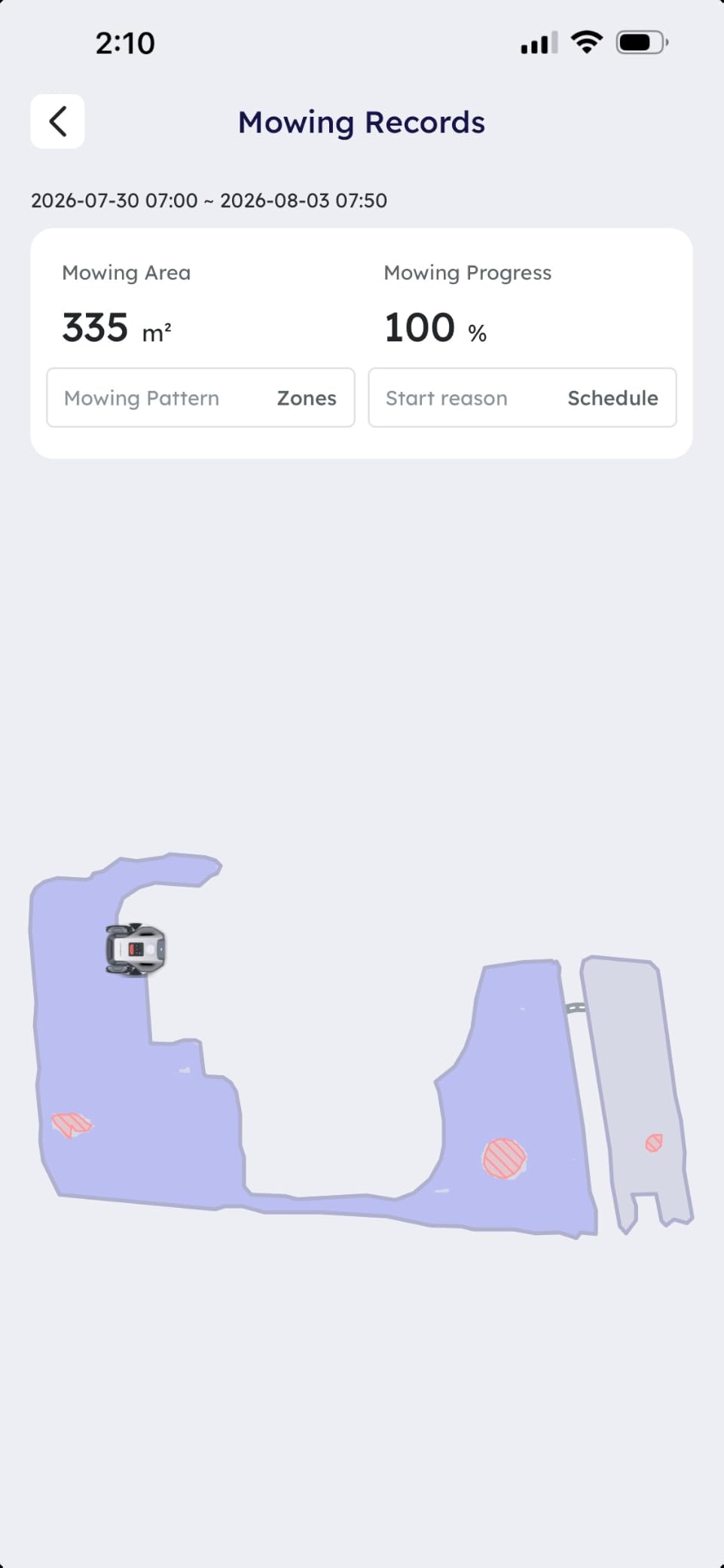
How the mapping behaves on a cluttered small lawn
This is where dual vision earns its place. A small yard often has more clutter per square foot than a big one, because the lawn is where the downspout, the hose reel, the dog bowl and the flower bed all live. The two cameras plus the AI obstacle recognition are what allow the machine to keep a consistent pass width around those obstacles instead of leaving wide uncut islands.
The auto-mapping approach also means you can add a no-go area later without touching the ground. If you decide the strip along the fence should stay wild for pollinators, you draw it in the app and the machine routes around it from the next scheduled run.
Where it falls short
The 7.9 inch deck is the practical constraint, and it is narrower than several rivals here. On a lawn that needs to be cut evenly in one pass, owners report it taking two or even three passes to avoid a visible banding pattern. If your small lawn is a simple rectangle with no obstacles, you will barely notice; if it is an awkward shape, the narrow cut adds time.
The 45% slope claim deserves a caveat. A number of owners report difficulty on steep hills despite the specification, so treat the figure as a tested limit on gentle-to-moderate grades rather than a guarantee on a steep bank. Documentation is also thin on adding a second mowing zone, which matters if you want separate schedules for a front and back lawn. App-based support replies can take up to 48 hours, so this is not the machine to buy the day before a weekend project.
3. YARDCARE M800Plus: Best for Mixed Patio and Walkway Borders
YARDCARE M800Plus Cordless Robot Lawn Mower with GPS + Visual Navigation, Bow-Shaped Path Mowing, APP Control, 4.0Ah Automatic Robotic Lawnmower for 1/5 Acre, Obstacle Avoidance, Height Adjustment
7.08 inch cut
0.8-2.4 inch height
8611 sq ft
28.7 lbs
35% slope
Pros
- Camera separates grass from patio and walkway
- No boundary wire installation
- Bow-shaped plus partial orderly mowing
- Handles 35% slope
Cons
- Only four published reviews so far
- Cutting height stops at 2.4 inches
- Tall grass needs a manual cut first
What makes the M800Plus different is the way it decides where the lawn ends. The AI camera has a 135-degree field of view and, rather than relying purely on satellite positioning, it discriminates between grass and non-grass surfaces. On a yard bordered by a mix of paving, a wooden deck and bare soil, that is a genuinely useful distinction, because the machine can find a real edge instead of guessing from a coordinate.
The 4.0Ah battery and the stated 8611 sq ft capacity put it in the middle of this group, closer to a quarter acre than to a small city plot. Mowing logic is mixed: 40 minutes of ordered rows followed by 60 minutes of random coverage, with a spot spiral mode for dense patches. Slope handling is rated to 35%, or 20 degrees, and app control covers scheduling, pattern selection and OTA updates.
One thing to note up front. The five-star average comes from four reviews, all published inside a short window, which is not enough to establish long-term reliability. The review base is the thinnest here by a wide margin, and I would want to see a full season of feedback before recommending it over the machines with hundreds of owners behind them.
What to check before you buy
The cutting height range is 0.8 to 2.4 inches, and 2.4 is the lowest ceiling in this comparison. If your lawn is fescue and you like it tall, or if you plan to let grass grow between mowings, that ceiling becomes a real constraint. Warm-season lawns that are cut short will not have a problem.
There is also a preparation step. Grass taller than about 2.6 inches should be trimmed by hand before the first run, which is normal for any robotic mower in spring but worth budgeting an afternoon for. The first mowing pass of the season on any machine is always a manual cut.
Who this suits
This is the machine to look at if your small lawn is a patchwork of surfaces, meaning a paved patio, a path and a planted border all meet in one compact space, and if you want the boundary recognition to come from something other than a wire. If you want a proven record instead, the Navimow and the ANTHBOT both have a much deeper base of owner feedback.
4. Sunseeker X3 Plus: Best for the Widest Edge Cut
Sunseeker X3 Plus Robot Lawn Mower, RTK, Vision AI, 0.3 Acre, Wire-Free
8 inch floating cut
1.6-3.2 inch height
0.3 acre
19.9 lbs
60 dB
Pros
- Offset blade cuts close to fences and hardscape
- Lightest machine in the group
- Handles uneven terrain
- 2-year US-based support
Cons
- App and software reported as frustrating
- RTK signal can drop and require manual recovery
- Fails on slightly long grass
The X3 Plus does the one thing small-lawn owners ask for most, which is get close to the border. The cutting assembly is an 8-inch floating design with a ride-on-edge configuration, and the deck is physically offset so the blade can pass closer to fences, walkways and hard surfaces than a centred deck allows. At 19.9 pounds it is the lightest machine in this comparison, which is a real advantage for carrying between two lawn sections.
Navigation is AONavi RTK paired with VSLAM, and the machine stores six maps with no-go zones across up to 0.3 acre, or roughly 13000 sq ft. Height adjustment runs 1.6 to 3.2 inches. Wi-Fi, Bluetooth and voice control are all included, and the two-year warranty is backed by US-based support, which is worth more than it sounds when something needs replacing.
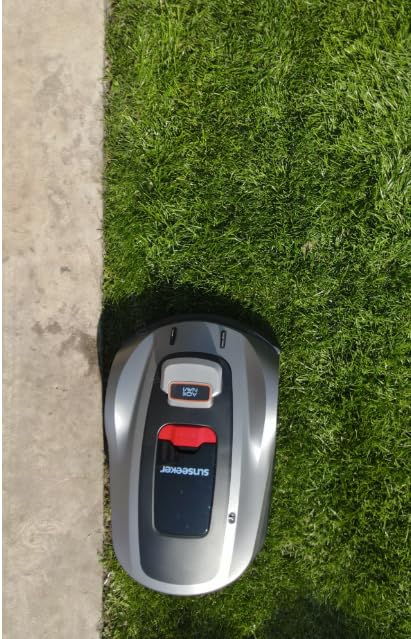
This is the lowest-rated machine in the group at 3.8, with 13% of reviews at one star, so let me be direct about why. The feedback splits hard along lawn type. Owners with flat, clearly bounded yards rate the edge cutting and quietness highly. A substantial second group reports software instability, RTK connection loss that requires carrying the mower back to the dock, and navigation failure when grass is even slightly long. Newer reviews indicate the app is smoother and support has improved.
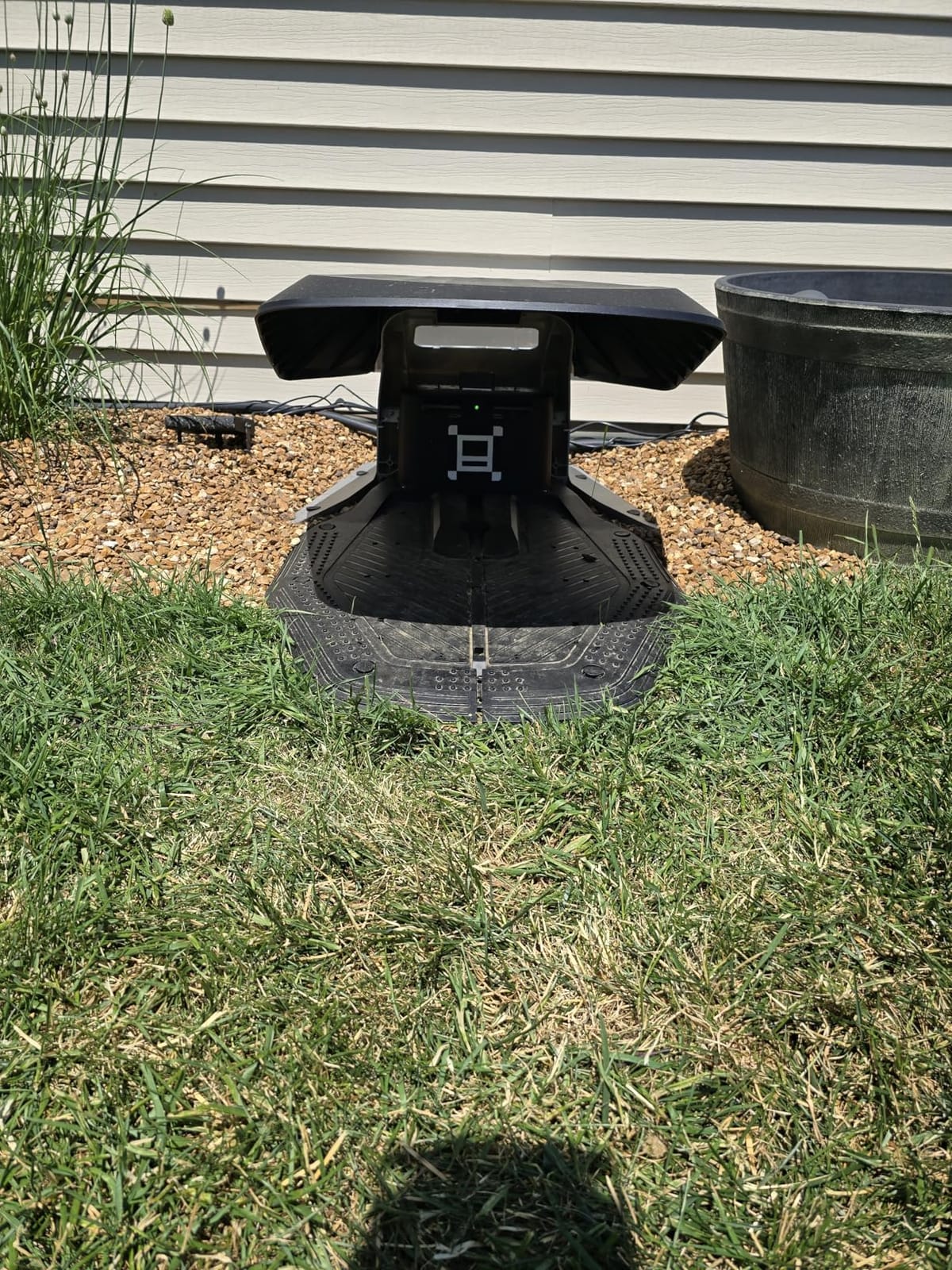
One practical warning: the cable for the satellite unit must be suspended above the lawn. If you lay it on the ground, the mower cuts through it. That is an installation detail that costs an afternoon if you miss it.
When the edge geometry works in your favour
The offset deck pays off when your border is a hard edge, meaning a driveway apron, a paver border, a wall or a fence with a tight gap behind it. Because the blade overhangs the wheel line, the machine can travel along the boundary with the body still clear of the obstacle. On a small lawn, that is often the difference between a two-minute trim and a fifteen-minute one.
The 8-inch width is joint-widest here with the Roborock, so it covers a small lawn faster than the 7-inch and 7.1-inch decks, and the floating cut follows dips and uneven ground without forcing the machine up onto a ramp.
What to watch out for
The app is the most common complaint, with owners reporting Chinese-language error and update messages and general frustration navigating the settings. If you are not comfortable switching languages inside a software update, that is a genuine friction point rather than a nitpick.
RTK dropout is the second issue, and on a lawn with heavy tree cover it can be a recurring event rather than an occasional one. The machine also struggles when grass is even slightly long, which on a spring yard means you will be doing a manual first cut. Finally, the mounting hardware advertised in the instructions is not sold by the manufacturer, so plan a hardware store run before the first mapping session.
5. Roborock RockNeo Q110H: Best for the Widest Deck on a Budget
Roborock RockNeo Q110H Robot Lawn Mower, Wire-Free Robotic Lawn Mower with Full-Band RTK + VSLAM Navigation, Auto Mapping, AI Vision Obstacle Avoidance, App Control, 45% Slope, Covers Up to 1/4 Acre
8.7 inch cut
1.6-3.1 inch height
0.25 acre
27 lbs
45% slope
Pros
- Widest cutting deck in the group
- Very quiet with a headlight for night mowing
- Floats over dips and small drops
- Setup is three screws
Cons
- Auto mapping unreliable in practice
- Leaves 1-1.5 ft of unmowed grass at edges
- No map editing from the app
The RockNeo comes from a vacuum maker, and the app shows it. That is a genuine advantage if you already own a Roborock vacuum, because the interface, the mapping conventions and the multi-zone scheduling will feel familiar. The physical machine is also well engineered for the job: an 8.7-inch cutting width, the widest deck in this comparison, on a floating deck that rides over dips, bumps and small drops rather than getting hung up on them.
Positioning is full-band RTK plus VSLAM, which is documented as stable under tree canopies and near tall fences, and the AI vision with stereo obstacle avoidance covers people, pets and low obstacles. Slope capability is rated at 45%, and the machine handles obstacles up to 1.57 inches. Average battery life is listed at 130 minutes, and passages as narrow as 2.3 ft are within spec.
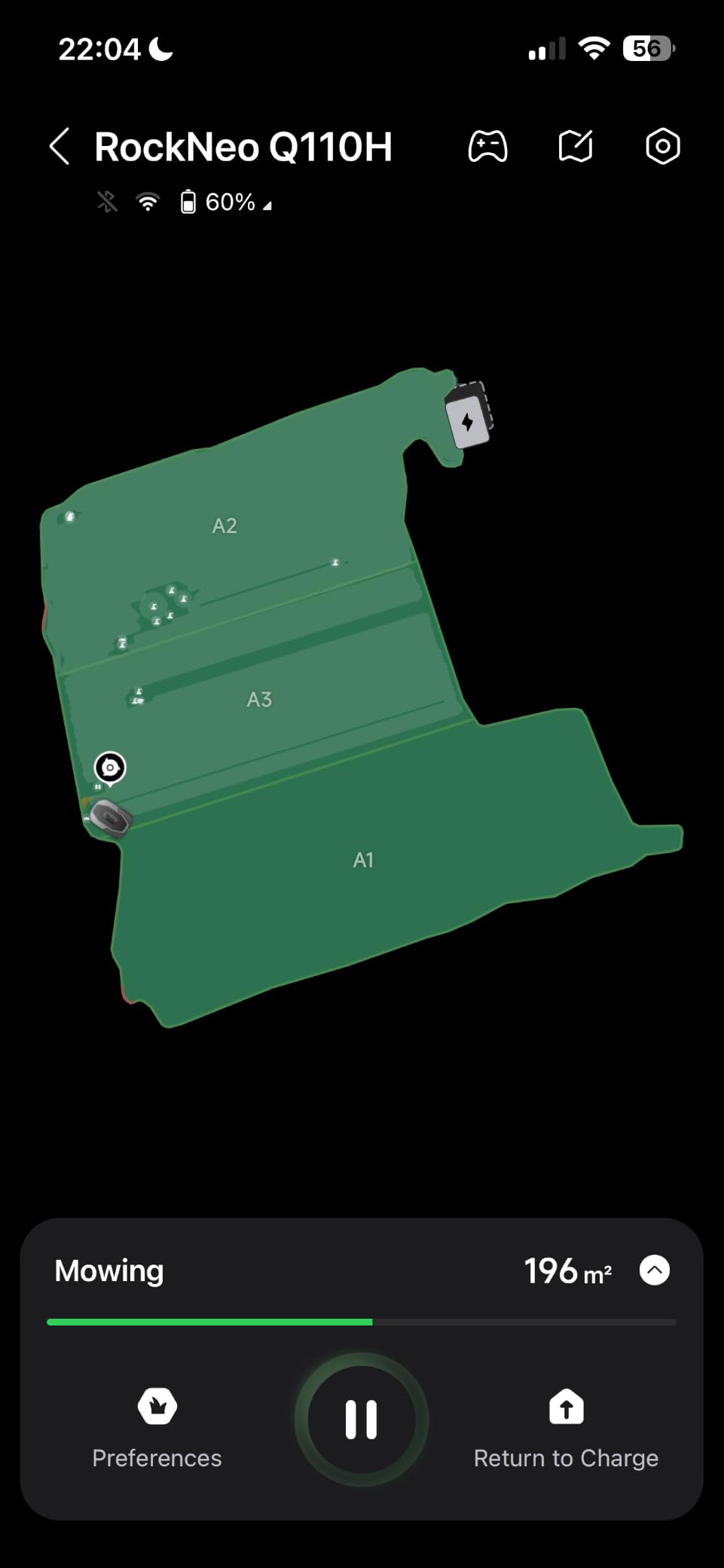
At 3.8 across 35 reviews, this is the joint-lowest rated machine here, and the reason is consistent. Owners credit the hardware, the quietness, the straight even cut on open lawns and the headlight that makes night mowing possible. The complaints all point in one direction: the software treats boundaries far too carefully, which leaves a wide band of unmowed grass along every edge.
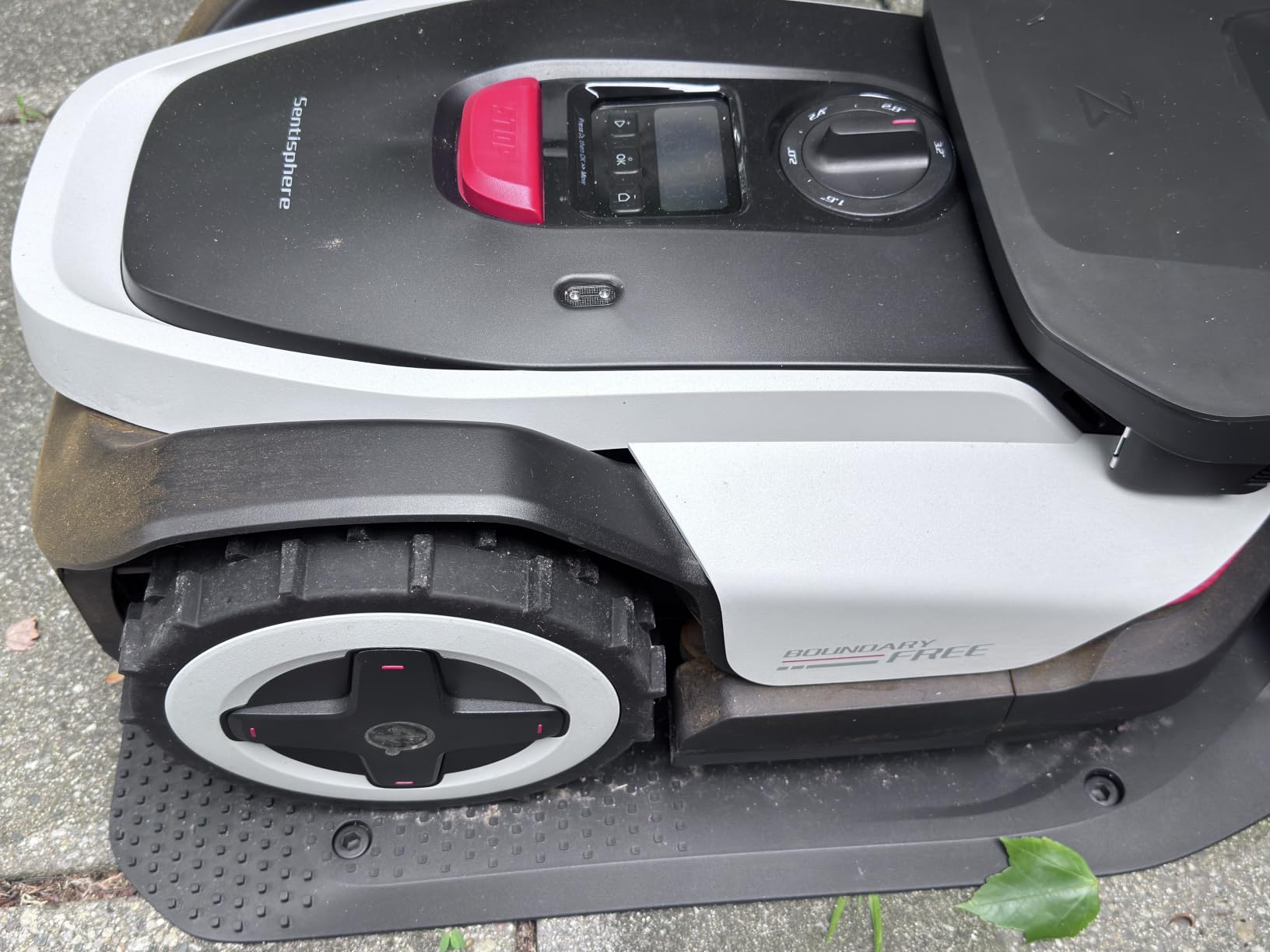
There is also a hardware reality that shows up in reviews. The traction wheels do not cope with St. Augustine grass, and small bumps can trigger a false blade cutoff on the assumption that the unit has been lifted. Both are the kind of problem that only appears after a season of real use.
Why the wide deck alone is not enough
An 8.7-inch cut covers ground quickly, but speed is worthless if the machine refuses to enter the last eighteen inches of the lawn. Owners report one to one and a half feet of unmowed grass along edges, fences and obstacles, and a pattern of refusing to pass through narrow gates even when there is ample clearance. On a small lawn where a disproportionate share of the total area sits within a foot of a border, that behaviour is much more visible than it would be on a large property.
The edge-cutting module that would address this is an optional accessory and is not available in the US, which is a real limitation for anyone whose lawn is mostly border.
Setting it up without frustration
Assembly is genuinely quick, three screws, and the machine is quiet enough to run at night. But the auto mapping is not reliable in practice, so most owners end up tracing the boundary manually in the app. That is a smaller job than it sounds, yet it removes the main convenience of the wire-free category.
The app also lacks the map editing features found in the company’s robot vacuums, so adding a no-go zone means walking the mower to that spot. A PIN lockout and a high-decibel alarm are included for theft deterrence, and a 4G tracking module is optional. For a front yard that is visible from the road, plan on setting the PIN and testing the alarm before the first unattended run.
6. WORX Wire-Free 1/4 Acre: Best for App-Controlled Mapping
WORX Robot Lawn Mower for 1/4 Acre, Wire-Free with Brushes
8.7 inch cut
1.57-3.54 inch height
0.25 acre
39.2 lbs
3-year warranty
Pros
- RTK Cloud needs no local antenna and no subscription
- Editable maps with unlimited zones
- Auto mapping worked first try for one owner
- Four mowing patterns
Cons
- Edge-cutting module sold separately
- Tall grass and edging are out of scope
- Short runtime needs a battery swap
At 4.4 with 73% five-star reviews, this is the best-rated machine in the group, though the base of 26 reviews is far smaller than the Navimow and the ANTHBOT. The thing that sets it apart is RTK Cloud positioning, which delivers centimetre-level accuracy without a local antenna and without a cloud subscription fee. That removes two things that usually complicate installation, and on a small lawn it means the RTK station can sit anywhere with a view of the sky, including on a roof or a wall.
The software is the strongest part. Unlimited zones, custom paths, no-go areas and fully editable maps in the app are features the other machines in this list mostly do not offer, and the vision AI neural processing runs at up to 10 trillion operations per second for obstacle recognition. V-SLAM sensor fusion keeps navigation working in shade and partial cover, and RadioLink extends connectivity beyond normal Wi-Fi range.
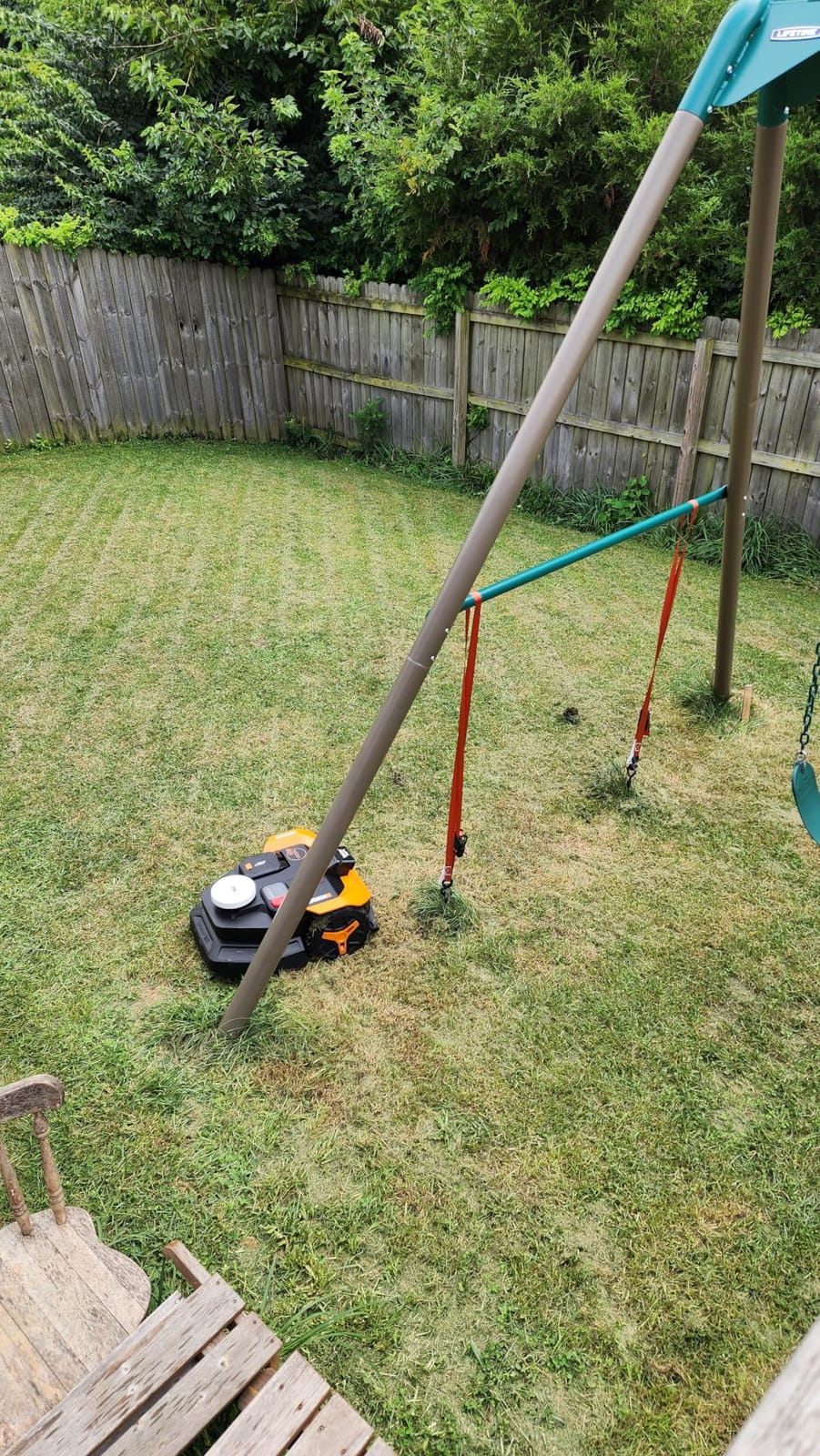
Height adjustment is the widest range here, 1.57 to 3.54 inches, on an 8.7-inch deck, and there is a three-year manufacturer warranty. One owner reported auto mapping working on the first attempt on a tiered yard with a ramp and 45 feet of lake front, which is a demanding test. Another measured a 0.15-acre lawn finishing in about 3.5 hours including recharging, and this was their second Landroid after a successful wire-based model.
For a small lawn, the mowing pattern choice is a nice touch rather than an essential one. Parallel, Checkerboard, Diamond and Natural patterns let you change the visual style of the stripes between runs, which matters more on a small property where the whole lawn is in view from the house.
What the app control actually changes day to day
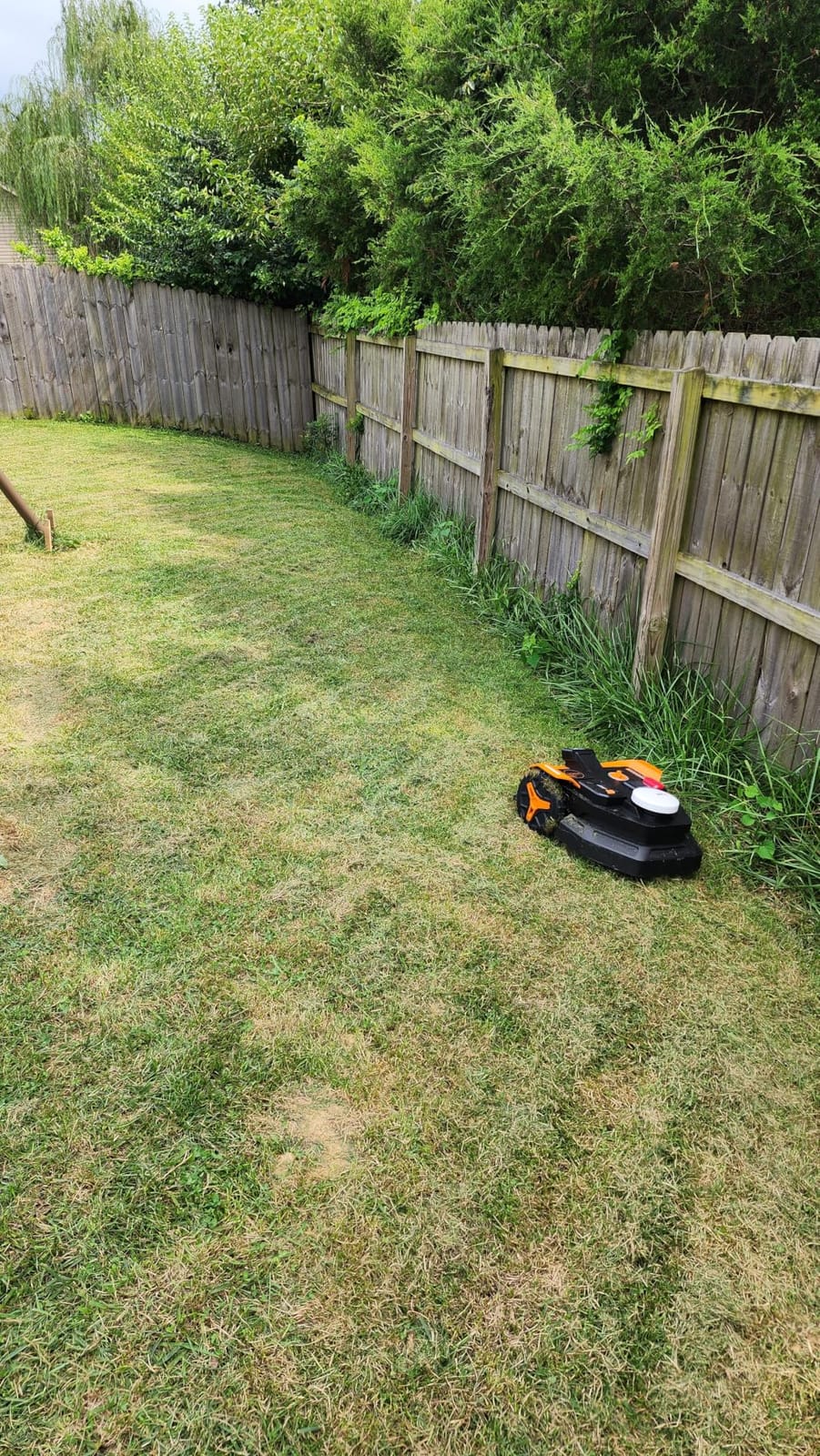
Editable maps are the difference between a machine you set up once and a machine you reconfigure as the season changes. In spring you might exclude a patch of wildflowers, in summer you might split the lawn into two zones with separate schedules so the shaded strip behind the shed gets less cutting than the sunny front. The Navimow and the ANTHBOT both require you to drive the mower to change a boundary, which turns a ten-minute app task into a twenty-minute walk around the yard.
The cut-to-edge border cutting also works across rideable boundary types, so it can handle a lawn that has several different edge materials rather than one continuous fence line. The catch is that the dedicated edge-cutting module is a separate purchase.
The trade-offs to accept
This machine is a maintenance mower, not a cutter. Owners are clear that it will not handle tall grass and will not perform edging work, and the edge module that would improve the border is an extra. If you want a robot that also tidies the edges, you are buying a second accessory and spending extra time on it.
Average battery life is listed at 80 minutes, the shortest in this comparison, so some yards need an extra battery swap to finish. This two-wheel-drive variant also has no headlight, so night mowing is not an option, and the app takes some getting used to. At 39.2 pounds it is the heaviest machine here, which matters if you plan to move it between lawns yourself.
7. Segway Navimow i210 AWD: Best for Multi-Zone Control
Segway Navimow i210 AWD Robot Lawn Mower Wire Free with Garage S, 0.25 Acre
7.1 inch cut
2-3.6 inch height
0.25 acre
63.7 lbs
45% slope
Pros
- All-wheel drive climbs ground that stops two-wheel-drive mowers
- Zero-turn steering avoids scraping on tight turns
- 20 mowing zones with real-time alerts
- Garage S included
Cons
- Battery rarely finishes in one charge
- Grass fibres jam the blade disk
- Software acreage cap can block saving a map
The i210 AWD is the traction answer. It has all-wheel drive with hub motors and automotive-grade electronic stability control, and it is rated to 45%, or 24 degrees, of slope. On a small yard with a bank, a retaining wall edge or a root-filled corner, that difference decides whether the machine finishes the job or gets stuck in the same spot repeatedly. The concentric third-wheel zero-turn steering also means tight turns happen without dragging the machine sideways across the grass.
It is also the heaviest unit in this comparison at 63.7 pounds, which is a real consideration for a small lawn where storage space is limited. The 5.1Ah battery covers up to 2690 sq ft per charge, and the on-demand adaptive drive adjusts output to load. EFLS Network RTK with tri-frequency positioning and one-tap auto mapping is the navigation stack, with up to 20 mowing zones and seamless resume after charging.
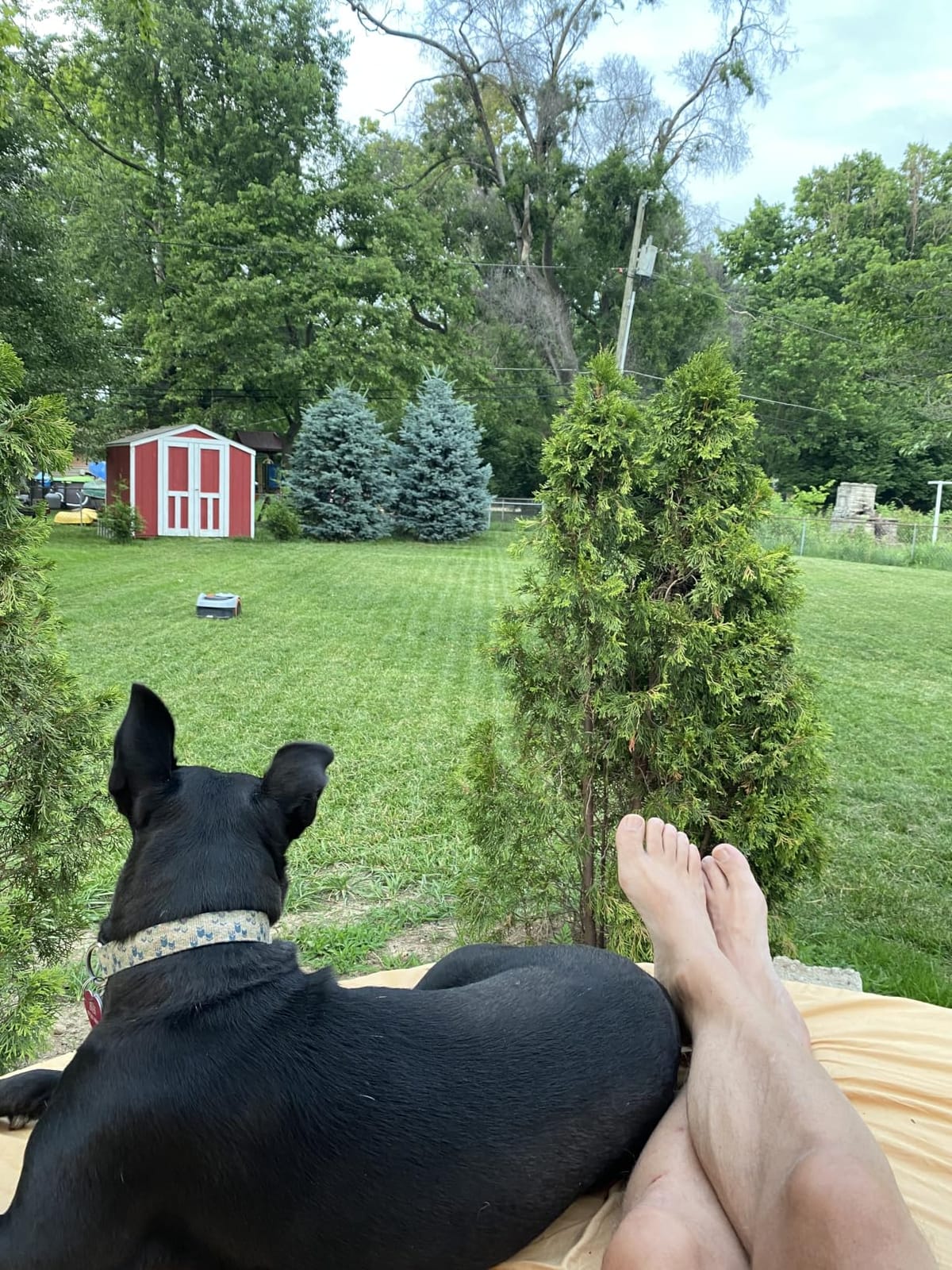
At 4.3 with 68% five-star reviews, the software gets consistent praise, particularly the scheduling with an effective one-mow-per-zone option. Customer support is also singled out for prompt responses from a real person that resolved a mapping issue, which is a better experience than the slow app-based replies some competitors deliver.
This is the only variant here that ships with the Garage S included, so if you want the mower protected between runs and you are already considering an all-wheel-drive machine, the extra cost of the drive system is partly offset by not buying the garage separately.
Why the drive system matters on a small lawn
Small lawns are frequently the awkward ones. A quarter acre with a slope, a narrow gate and a couple of tree roots is a harder job than a flat half acre with no obstacles, because there is no room to route around a problem area. The powered rear roller and the electronic stability control are what let this machine keep a straight line on uneven, rough ground instead of spinning and carving ruts, which is the failure owners report with the two-wheel-drive machines.
The zero-turn steering also helps around flower beds and path edges, where a conventional skid-steer machine would scrape the border and leave a visible arc of flattened grass.
Where the compromises sit
Battery endurance is the dominant complaint, and it is worth planning around: the charge rarely covers the whole property in one pass, so expect mid-job recharges. Maintenance is the second issue. Grass fibres jam between the razor blade and the disk, which means pulling the deck apart to clear it more often than you would on a machine with a sealed housing.
It also struggles with very tall grass and with mowing sideways across a steep slope, which is a caution if you have both. On the software side, map editing is limited, multiple saved maps are not yet supported, and a strict acreage cap can block saving a map for a lawn slightly over the rated size, which is an odd failure mode on a small property. The optional RTK antenna kit is sold separately.
8. Dreame A3 AWD 1000: Best for Steep Small Lawns
[All-Terrain Wire-Free] DREAME LiDAR Robot Lawn Mower A3 AWD 1000 + Cleaning Set+Blade Set, 360° 3D LiDAR & AI Dual Vision Smart Robotic Mowers for 0.25 Acre
7.87 inch cut
1-4 inch height
0.25-0.5 acre
26.4 lbs
80% slope
Pros
- Highest slope capability in the group at 80%
- 360-degree LiDAR plus binocular vision
- No RTK station and no boundary wire
- One year of free 4G service included
Cons
- Highest cost in the comparison
- Trimmer module for tight edges sold separately
- About 30 customer reviews so far
The Dreame A3 AWD is the specification outlier here. Its slope rating of 80%, or 38.7 degrees, is by a wide margin the highest in the group, and that number is backed by all-wheel drive hub motors rather than a claim on paper. Obstacle clearance is 2.17 inches, which means it can roll over things that stop other machines outright. The 1 to 4 inch cutting height range is the widest available, giving you genuine control across grass types and seasons.
Navigation is 360-degree 3D LiDAR paired with binocular AI vision under the OmniSense 3.0 system, and this is the technical answer to the RTK dropout problem. There is no RTK station, no antenna and no wire, so nothing to mount and nothing to keep clear of vegetation. The LiDAR map holds up under heavy tree cover and next to tall walls, which is precisely the situation where the RTK machines in this list report trouble. It avoids more than 300 object types.
![[All-Terrain Wire-Free] DREAME LiDAR Robot Lawn Mower A3 AWD 1000 + Cleaning Set+Blade Set, 360° 3D LiDAR & AI Dual Vision Smart Robotic Mowers for 0.25 Acre customer photo 1](https://battleofsoho.com/wp-content/uploads/2026/09/B0H761SNFG_customer_1.jpg)
At 4.7 with 84% five-star reviews and no one-star ratings, it has the strongest rating distribution in the comparison, though the base is 30 reviews and most of them recent. The reservation expressed in reviews is the price, and the fact that a new platform with a small installed base is inherently a little less proven than a machine with hundreds of owners behind it.
EdgeMaster 2.0 keeps edges within 1.97 inches, and the optional trimmer module brings that under 1.18 inches. The 5A adapter recharges in 45 minutes, which partly offsets the battery life figure of roughly one day on larger lawns. The bundle includes a replacement blade set and a cleaning kit.
When LiDAR is worth the money
RTK gives you accuracy and LiDAR gives you reliability. An RTK machine is very precise until something blocks the satellite signal, and on a small suburban lawn that something is usually a tree. A LiDAR machine builds a physical map of its surroundings and does not care what is overhead, so the difference shows up most on yards with mature canopy, deep shade, eaves and walls close to the grass.
For a flat, open, unobstructed small lawn, this sophistication is largely wasted, and a simpler machine will serve you well. For a sloped or heavily planted property, it is the difference between a mower that keeps working and one that needs rescuing on a schedule.
What to consider before committing
Cost is the first factor, and it is the highest in this comparison. The second is the review base. Thirty reviews with an 84% five-star share is encouraging but not the same as the several-hundred-review histories behind the Navimow and the ANTHBOT, and with a newer platform you should expect some software refinement in the first year.
Battery life of roughly one day means large lawns may need more than one session, and if you need edges tighter than just under two inches you have to add the trimmer module. The three-year warranty and one year of free 4G service are both meaningful, and unlike some competitors there is no ongoing subscription to think about after that first year.
9. Sunseeker S4: Best for Dense Tree Yards
Sunseeker S4 Robot Lawn Mower, 3D LiDAR, Vision AI, 0.25 Acre, Wire-Free
7 inch cut
1.6-3.2 inch height
0.25 acre
25 lbs
42% slope
Pros
- LiDAR sensing built for shade and weak signal areas
- 10 TOPS AllSense plans parallel routes in any light
- Handles 31.5 inch passages
- 42% slope rating
Cons
- Mapping still requires driving the unit
- 7-inch cut and 6 blades cover slowly
- Base-station calibration not in the setup flow
The S4 is the value entry into LiDAR navigation. It runs a 360-degree 3D LiDAR with a 10 TOPS AllSense processing system, which builds a three-dimensional map of the yard and plans systematic parallel routes in daylight, low light and darkness. Rated at 4.5 with 72% five-star reviews and only 2% one-star, it has one of the cleanest rating distributions in the group, on a base of 33 reviews.
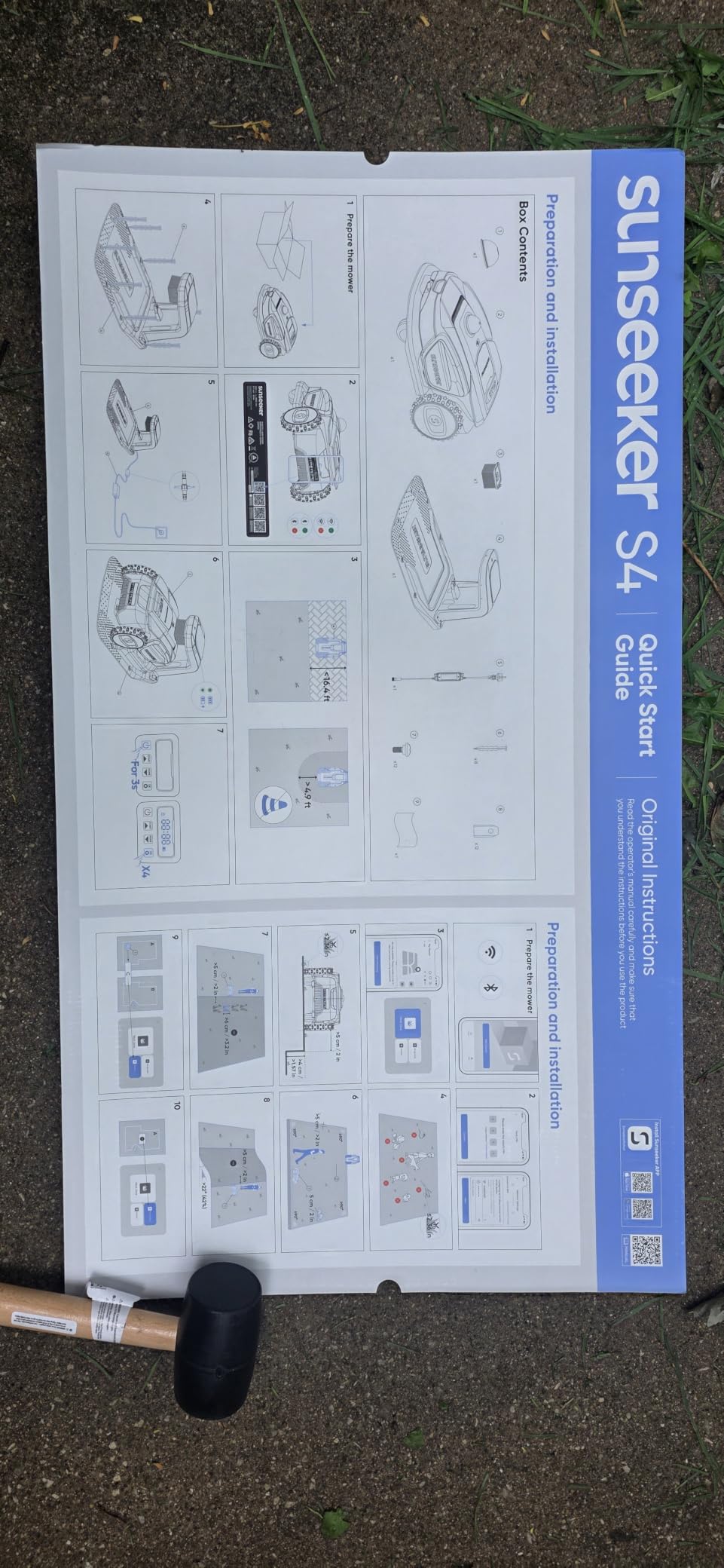
Terrain handling is good for a machine in this class. Rear-wheel drive gets it over bumps and ruts, it handles passages as narrow as 31.5 inches, and the slope rating is 22 degrees, or 42%. Coverage is 0.25 acre, or 10890 sq ft, with five saved maps and up to 100 zones or no-go areas. The six-blade floating cut with ride-on-edge mode works across a 7-inch width, with height from 1.6 to 3.2 inches.
At 60 dB with a rain-sensor return to base, plus app and voice control, the daily operation is quiet and hands-off. The two-year warranty is backed by US-based support, and unlike some of the RTK machines here there is no external antenna to install, position or maintain.
What LiDAR changes on a small, cluttered property
On a small lawn, most of the mowing time is spent in the margins, and the margins are where trees, downspouts and narrow gates live. LiDAR handles the geometry of those spaces directly, which is why owners of LiDAR machines in this comparison repeatedly describe dependable navigation in yards where RTK-only units lose their fix. The AllSense system also plans clean parallel lines rather than bouncing randomly, so the finished lawn has a deliberate look.
The 31.5-inch passage figure is worth checking against your own yard. If your lawn is divided by a path, a fence line or a planter strip narrower than that, this machine can move between the two sections, and the five saved maps let you treat each as a separate zone.
What to plan around
Mapping is still done by driving the unit in the app rather than fully automatically, so budget an afternoon for the first boundary walk. The 7-inch width is the narrowest deck in this comparison, and combined with a six-blade setup it covers a lawn more slowly than the 8.7-inch machines, which is a real time difference on an open rectangle.
Base-station calibration is not part of the setup flow, which some owners find limiting if they want fine control over the reference point. Ride-on-edge mode helps the border but is not the same as a dedicated trimmer, so expect some string-trimmer time on the perimeter.
10. eufy E15: Best for the Fastest Setup
eufy Robot Lawn Mower E15, Auto Mapping, Pure Vision Navigation
8 inch cut
1-3 inch height
0.2 acre
28 lbs
under 54 dB
Pros
- Mapped in 10-15 minutes with no wire or antenna
- Quietest machine in the group
- Intuitive app with scheduling and no-go zones
- Works in GPS and cellular dead zones
Cons
- Camera navigation limits mowing to daylight
- Mapping struggles on patchy or sandy lawns
- Leaves some stripes and missed edges
Nothing in this list gets running faster than the E15. There is no boundary wire, no RTK antenna and no base station to install, because the navigation is entirely onboard. The V-FSD 1.0 system uses stereo cameras with Vision SLAM to build the map, and owners report roughly 10 to 15 minutes from unboxed to mowing. For a small lawn owner who wants the automation without a weekend of installation, that is the headline feature.
It is also the quietest machine in this comparison, rated under 54 dB, which is low enough to run while you work in the house or sleep. Coverage is 0.2 acre, or about 8700 sq ft, with a cutting width of 8 inches and a height range of 1 to 3 inches on five positions. Built-in GPS anti-theft tracking is included rather than sold as a module, and the mower auto-recalls to base in rain or low light.
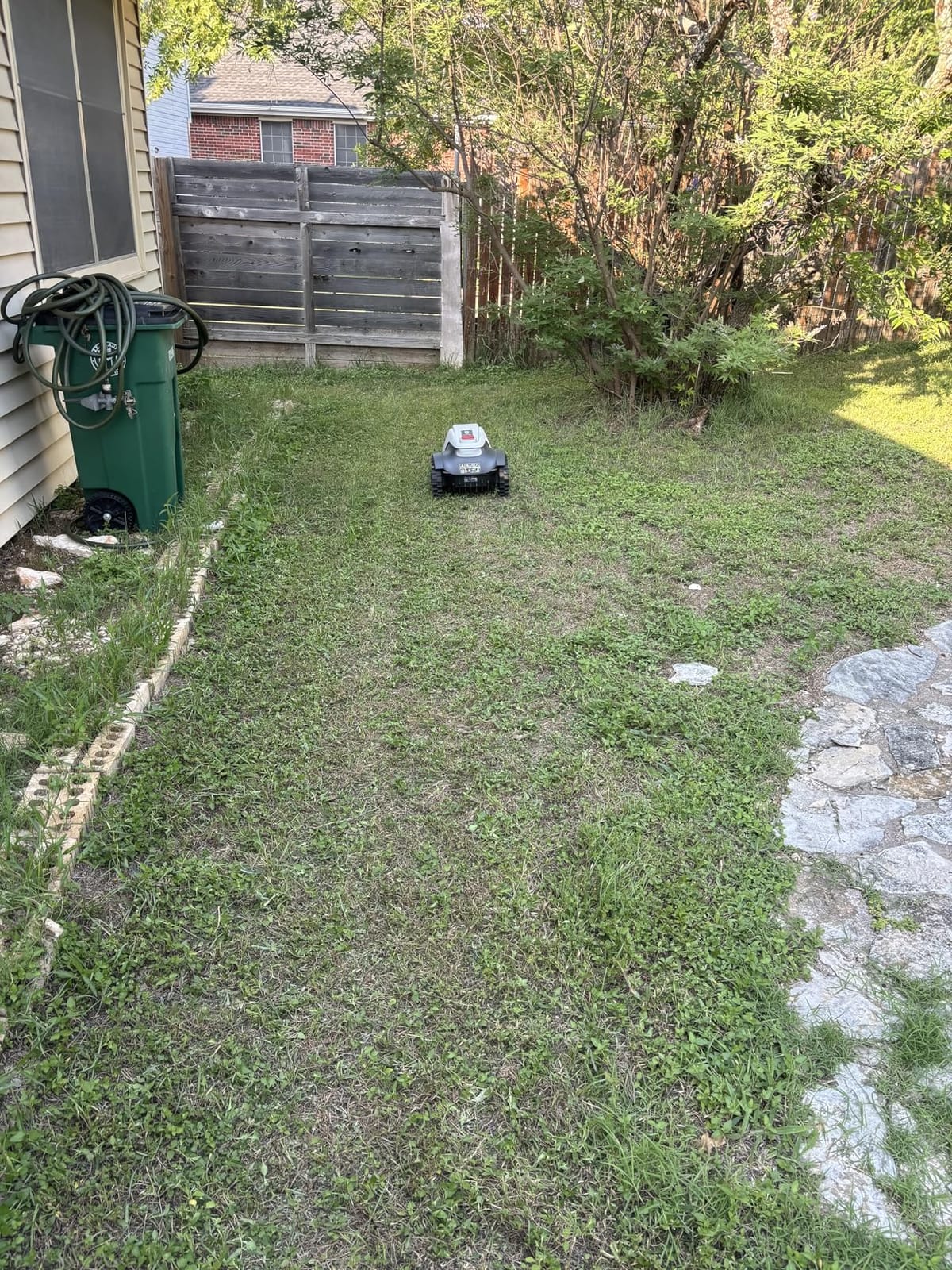
At 4.1 across 102 reviews, the distribution is genuinely split, with 66% five-star and 13% one-star. The dividing line is lawn density. Users on flat, thick, well-defined lawns rate it very highly for setup, quietness and cut quality, and several cite the running cost as far below what they were paying a lawn service. Users on sparse, patchy or sandy yards report mapping that never converges and the machine burying itself in soft ground.
The cut itself is described as clean parallel striping from the dual cameras, with high-precision parallel cutting, automatic re-mow of missed areas and a ride-on-edge mode. The app covers scheduling, mowing height, speed, blade speed and no-go zones, and virtual walls are set at 0.2m precision.
What pure vision gives up
Camera-based navigation has one hard limit that no software update removes: it needs light. This machine runs about 30 minutes after sunset and then stops, so the schedule has to be built around daylight hours. If you were counting on overnight mowing to avoid noise, that is not available here.
There is also a specific grass limitation in the documentation. The E15 is listed as not suitable for St. Augustine or dense Zoysia, and the machine handles height differences under 1.2 inches. On Bermuda or fescue with a reasonably even surface, that constraint does not apply.
Practical setup notes
Two things catch people out. The power cord has to be suspended above the lawn, because the mower will cut a cord that lies on the ground. And auto mapping depends on the lawn being filled with grass, so if your yard has bare patches, thin areas or a lot of sand, the boundary will not resolve cleanly no matter how many attempts you make.
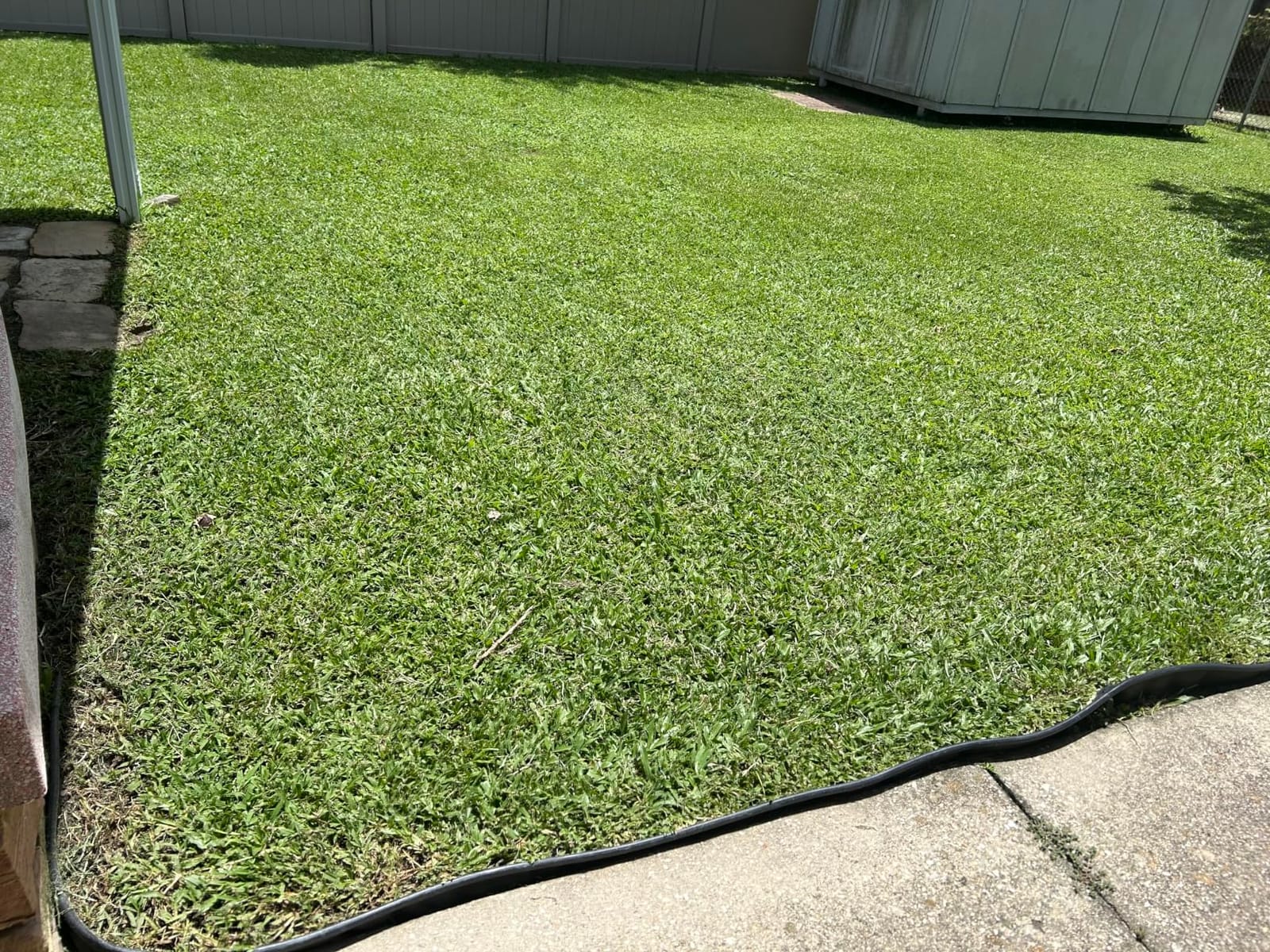
On the edges, owners report residual string-trimming work and occasional missed spots and edges that some could not tune out. The machine is day-only and has no spot-clean feature, so a quick tidy pass is part of the routine. One owner also reported the worm-gear height-adjustment motor failing after about a year, so if you set a precise height early on, check it periodically.
How to Choose a Robot Mower for a Small Lawn
Small-lawn buyers get advice written for large properties, so here is the decision sequence I would actually follow. Start by matching the machine to the area rather than the other way round. Every model here lists a maximum, and a machine rated for a quarter acre running on a 2000 sq ft lawn is not a problem, it just means you are paying for capacity you will not use. The reverse is a real problem: a mower at its capacity limit on every run spends its life shuttling to the dock.
Decide how you feel about setup
Wire-free is now the default, and for a small lawn it is the right default. The machines in this list use one of three methods. Pure vision, as on the eufy E15, needs nothing installed and is done in minutes. RTK-based systems need a reference station or antenna placed with a clear view of the sky, which is a mounting job rather than a digging job. LiDAR needs a power outlet for the dock and nothing else. Boundary wire, which owners on the forums describe as the thing they most want to stop dealing with, is now the exception rather than the rule.
The practical consequence of wire-free is that your boundary is drawn in an app, which means it is editable. On several machines in this list, though, editing still means driving the mower to the new line. That distinction matters more than any spec sheet when you are planning a two-zone setup for a front and back lawn.
Check the slope before the mapping
Slope ratings in this group range from 17 degrees to nearly 39 degrees, and that spread is wider than the coverage ratings. Budget machines land around 30 to 35%, the all-wheel-drive models claim 45%, and the Dreame goes to 80%. Real-world reports suggest the mid-range budget machines struggle on a genuine bank regardless of the number, while the all-wheel-drive units with stability control handle rough ground. If your small lawn has an incline, buy the traction rather than the cutting width.
Decide how much edge work you will accept
Nearly every owner discovers the same thing in the second week: the machine mows the middle and leaves the edges. Models with an offset deck, like the Sunseeker X3 Plus, or a floating cut with a ride-on-edge mode, do noticeably better. Machines with a dedicated edge or trimmer module can do better still, but check whether that module is sold in your region, because at least one optional module here is not available in the US. Budget five minutes with a string trimmer per week as the baseline assumption.
Look at grass type and cut height
Height ranges here run from 0.8-2.4 inches up to 1-4 inches. Warm-season lawns that are kept short will be fine with anything. Cool-season fescue at three and a half inches needs a machine with a high ceiling, which rules out the YARDCARE and the eufy E15. Some machines are explicitly documented as unsuited to St. Augustine or dense Zoysia, so if that is your grass, check the exclusions before anything else. Roborock owners specifically report wheel traction failing in St. Augustine.
Factor in running costs and the surprises
On a small lawn the recurring costs are modest but not zero. Blades need replacing every few weeks during the growing season, electricity is a dock and a battery rather than fuel, and the first cut of every season is manual. The surprises worth budgeting for are 4G subscriptions on some models, optional garages and anti-theft modules sold separately, and repair parts. A three-year warranty, as on the Navimow i105N and the WORX, is the more useful number to compare than the purchase cost alone.
Set the anti-theft measures before the first unattended run. PIN lockout, a lift alert, an out-of-zone alert and a geofence are standard on the better machines here, and they are free once enabled. A mower with an alarm that you have never tested is not protected.
Last checks before you buy
Look at your lawn the way the machine will. Count the obstacles sitting at the border, measure the narrowest gap you want it to cross, and note whether the grass is continuous or patchy. Note also where the dock will go, because a power outlet and a clear patch of turf are hard requirements, and then check the cord routing so it never lies on the cut area.
For anyone weighing an automated mower against hiring a service, our best reel mowers for small lawns guide covers the manual alternative if you decide the setup is not worth it.
Frequently Asked Questions
Which robot lawn mower is best for small lawns?
For most small lawns the Segway Navimow i105N is the strongest all-round choice, because RTK plus vision holds its position under tree cover and it has the largest owner review base in this comparison. The ANTHBOT M5 is the value option and ships with a garage, and the eufy E15 is the fastest to set up at roughly 10 to 15 minutes with no wire, antenna or base station.
What are the downsides of using a robotic lawn mower?
Edges are the first thing every owner notices: most machines leave a strip that a string trimmer must clean up. Setup effort varies widely, from ten minutes for a pure-vision model to a full afternoon of boundary walking for one with app-driven mapping. The first cut of every season is manual, blades still need regular replacement, and a handful of models add 4G subscription fees or sell the garage and anti-theft module separately. Camera-only navigation also means no night mowing.
What is the most reliable robot lawn mower?
Reliability is best judged by the size of the owner review base, and the machines with hundreds of reviews here are the Segway Navimow i105N at 391 reviews and the ANTHBOT M5 at 362. The Dreame A3 AWD has the highest rating at 4.7 but only 30 reviews, and the YARDCARE shows a perfect five-star average built on four reviews, so neither is proven over multiple seasons yet.
Do robot mowers cut to the edge?
They get closer than most people expect but rarely finish the job. Machines with an offset deck, such as the Sunseeker X3 Plus, or a floating cut with a ride-on-edge mode, do best. The Dreame holds edges within 1.97 inches, tightening under 1.18 inches with an optional trimmer module, and the WORX cuts to the edge across rideable boundary types. Budget a few minutes of string trimming regardless of which model you pick.
Can robot mowers handle slopes on a small yard?
It depends more on the drive system than the area size. Slope ratings here range from 17 degrees on the Sunseeker X3 Plus to nearly 39 degrees on the Dreame A3 AWD, and the all-wheel-drive models claim 45% or more. Budget machines around 30 to 35% can struggle on a real bank despite the specification, and Roborock owners report traction failing in St. Augustine grass. If your lawn has an incline, buy the traction.
Are robotic mowers worth it for a small lawn?
For a small flat lawn under roughly 2000 sq ft, a good electric or reel mower is still hard to beat on cost and simplicity. Past that, and especially if you mow weekly in summer, the labour savings become real, and a robot avoids the storage and handling problem entirely. Owners with sparse or patchy lawns are the group most likely to regret the purchase, because camera-based auto mapping needs continuous grass to resolve a boundary.
The Bottom Line for Small Lawns in 2026
The Segway Navimow i105N is our pick among the best robotic mowers for small lawns because it pairs the deepest owner review base in this comparison with the positioning stack that survives real suburban lawns, including tree cover and tight side yards. Buy the ANTHBOT M5 if you want the garage and twenty zones in the box, and buy the eufy E15 if you want to be mowing within fifteen minutes of opening the box.
For a lawn with a real slope, look at the all-wheel-drive options rather than the widest deck. For a yard under heavy tree canopy, choose LiDAR over RTK. For anything border-heavy, accept that a few minutes of string trimming is part of the deal, and choose an offset or floating deck. Whichever machine you settle on, run the anti-theft setup and check the cord routing before the first unattended cycle.