
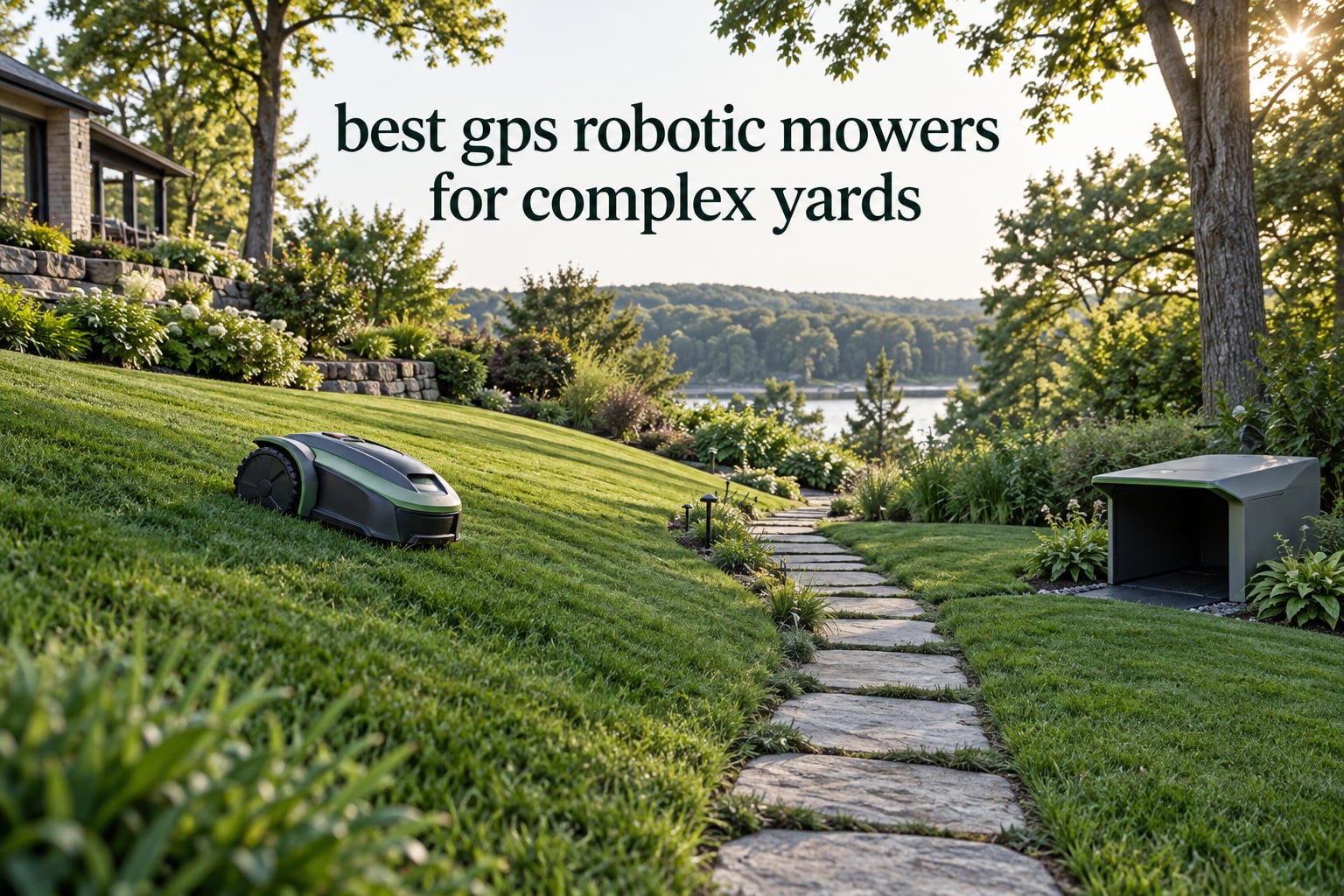
If your yard is anything other than a flat rectangle, the mower you pick matters more than the mower most people buy. A complex yard usually means several lawn areas joined by a walkway or driveway, slopes that make a push mower fight back, mature trees that eat the satellite signal, beds and paths the robot must not touch, and maybe a dog in the middle of it all. The best GPS robotic mowers for complex yards in 2026 are the ones that hold position when the sky disappears, climb without spinning their wheels, and can be told to stay inside a line you drew yourself.
One thing to clear up before we get into the list. Almost nothing you will find advertised as a “GPS lawn mower” is running plain GPS. Plain GPS is accurate to a few metres, which is useless for holding a straight edge along a flower bed. Every mower worth owning runs RTK, which is Real-Time Kinematic correction layered on top of the satellite fix to land the machine within roughly two centimetres of where it should be. RTK gets its correction signal from either a reference station you plant on your own property or a cell network. Some of the mowers below skip satellites entirely and navigate with LiDAR or cameras instead, and for a yard with heavy tree cover that is often the smarter buy.
We spent weeks reading owner reviews, comparing stated slope ratings against the terrain they were actually used on, and looking hard at what breaks. The result is ten machines that each solve a different version of complexity, from a quarter-acre suburban lot with one tree to a six-acre property with mud and stone. We also cover the problems nobody prints on the box, including getting stuck in shade, the narrow-passage mapping trick that saves most owners a second visit from support, and what these things really cost to run after the first year. If you are still weighing a robot against a conventional machine, our picks for [10 Best Robotic Lawn Mowers for Large Yards](https://battleofsoho.com/best-robotic-lawn-mowers-for-large-yards/) are a useful next read.
Table of Contents
Top 3 Best GPS Robotic Mowers for Complex Yards in 2026

Mammotion LUBA 2 AWD 3000HX
- 165W four-wheel motor
- 80% slope climbing
- UltraSense AI Vision plus RTK
- Up to 30 mowing areas

Segway Navimow i105N
- RTK plus vision with EFLS 2.0
- 140-degree camera
- 150+ obstacle types
- 58 dB(A) quiet running

Mammotion LUBA mini 2 AWD 1500H
- 360 degree LiDAR plus dual cameras
- Two 88W motors
- 80% slope
- DropMow mode needs no map
All 10 GPS Robotic Mowers at a Glance in October
| Product | Specifications | Action |
|---|---|---|
| Mammotion LUBA 2 AWD 3000HX |
|
Check Latest Price |
| Segway Navimow i105N |
|
Check Latest Price |
 ANTHBOT M5 ANTHBOT M5 |
|
Check Latest Price |
| Mammotion LUBA mini 2 AWD 1500H |
|
Check Latest Price |
 Mammotion LUBA 3 AWD 3000 Mammotion LUBA 3 AWD 3000 |
|
Check Latest Price |
 ECOVACS GOAT O1000 LiDAR PRO ECOVACS GOAT O1000 LiDAR PRO |
|
Check Latest Price |
 YARBO Robot Lawn Mower Pro YARBO Robot Lawn Mower Pro |
|
Check Latest Price |
 Sunseeker X3 Plus Sunseeker X3 Plus |
|
Check Latest Price |
 Roborock RockNeo Q110H Roborock RockNeo Q110H |
|
Check Latest Price |
 Segway Navimow i215 LiDAR Segway Navimow i215 LiDAR |
|
Check Latest Price |
1. Mammotion LUBA 2 AWD 3000HX – Best Overall for Genuinely Broken Ground
Mammotion LUBA 2 AWD 3000HX Robot Lawn Mower with 4G, All-Wheel-Drive for 80% Slope, Perimeter Wire Free for 0.75 Acre, UltraSense AI Vision & RTK Auto-Mapping, 2.2″-4.0″ Adjustable Cutting Height
165W four-wheel motor
Climbs 80% slope (38 degrees)
RTK plus UltraSense AI Vision
Up to 30 mowing areas
15.7 inch cutting width
Pros
- Handles hilly
- uneven
- multi-zone properties with many obstacles
- Precise boundary and edge cutting with visible striping
- Very quiet and works at night
- GPS tracking and anti-theft protection
Cons
- RTK base or house mount is sold separately
- Setup is involved and the manual is long
- Grass can tear on tight in-place turns
This is the one we would put on the hardest yard we could find. The LUBA 2 AWD 3000HX runs a 165 watt four-wheel motor that Mammotion rates for 80 percent slope climbing, which is 38 degrees, and owners on genuinely broken ground report it climbing ground that defeated their push mower. Four driven wheels plus adaptive suspension means it steps over roots and thresholds instead of stopping dead.
Navigation is the part that matters most here, and Mammotion pairs RTK positioning with UltraSense AI vision. That combination is why it can keep mowing a lawn under tree cover where a pure satellite mower would simply sit and wait for a signal. It recognises more than 200 object types and manages up to 30 separate mowing areas with no-go zones, which is the number you want when the property is a patchwork rather than a field.
Reviewers describe the finished lawn in one word: stripey. The dual-blade disc and RTK accuracy produce clean parallel lines at whatever angle you set, and the cutting height adjusts from 2.2 to 4.0 inches across five positions, which is a wide enough range for thick warm-season turf. At 15.7 inches the deck is wide for a robotic machine, so a large lawn does not eat the whole afternoon.
The catch is setup, and we would be lying if we said otherwise. Owners consistently call the initial configuration involved, with a long manual and a learning curve. The RTK base or house mount is sold separately and on some properties needs to go on a roof or a high wall to see enough sky. Several buyers also report grass tearing when the mower spins in place to change direction, and one or two have had a unit fail early with an unrepaired warranty claim.
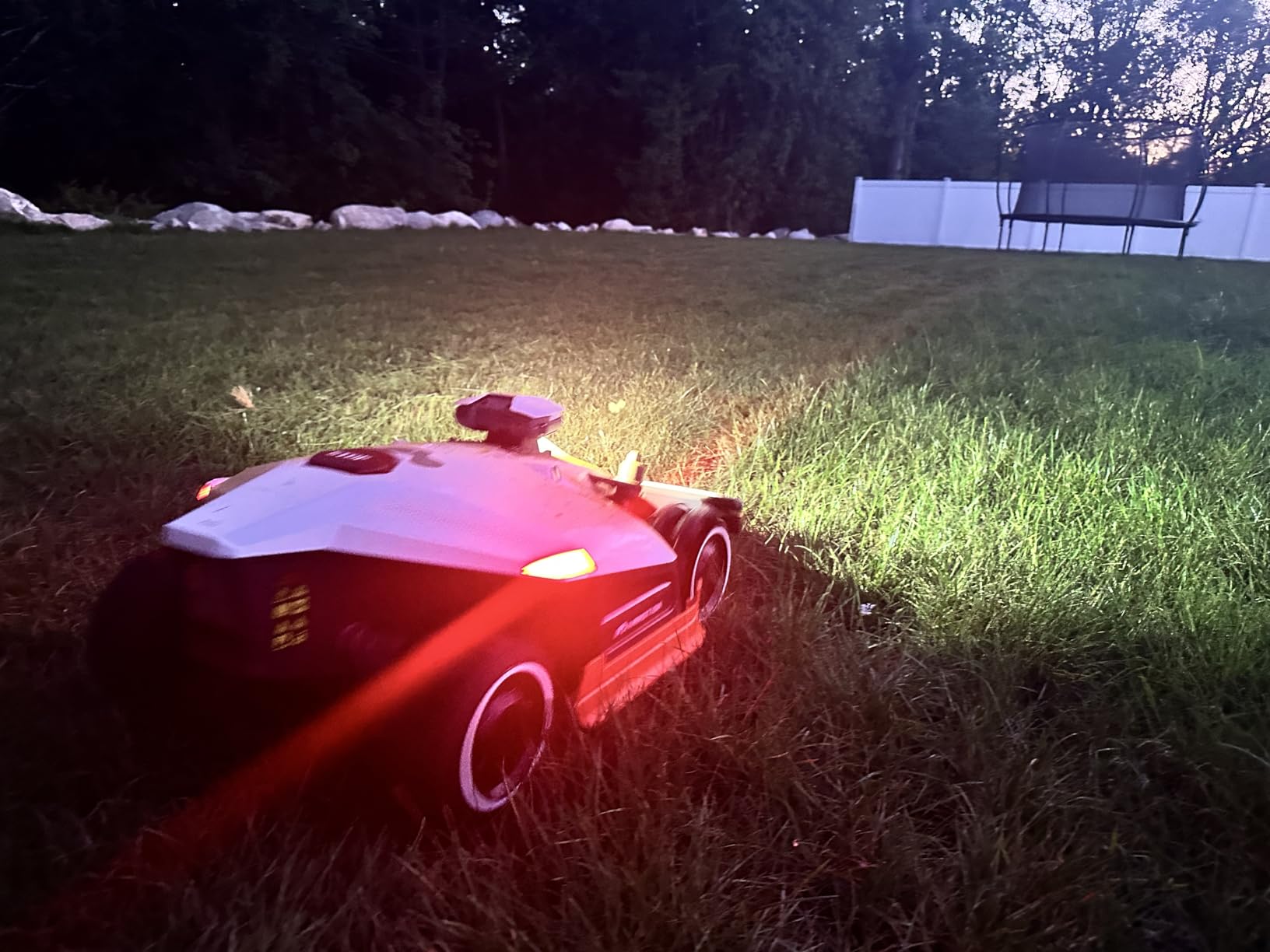
What kind of yard suits the LUBA 2 AWD 3000HX
This is the mower for a yard that has defeated everything else you have tried. Steep banks, uneven fill, tree roots, a dozen separate beds and a path network all sit comfortably inside what this machine is built to handle. If you have a lawn that is genuinely multi-zone and genuinely sloped, the 30-area limit means you will not run out of zones.
It is also a good fit for owners who mow at night. Reviewers specifically praise the low noise and the fact that it keeps working in the dark, which lets the schedule run when the household is asleep. The 4G, Bluetooth and Wi-Fi app control with GPS tracking gives you theft alerts on a machine at this level.
Where it disappoints
Do not buy it for a small lawn with clear sky and no slopes. You would be paying for capability you will never use, and you would still have to deal with the separately sold RTK mount. The 4.0 rating across 42 reviews is a thin sample, and at least one owner reports a failed machine that was never repaired, so warranty service quality is worth checking for your region before you commit.
It also will not mulch leaves. That is not a defect, it is just a boundary on what it does, and owners who expected autumn leaf management were disappointed. On very tight turns the drive can tear turf, so it is worth keeping the mowing direction aligned with your main travel lines.
2. Segway Navimow i105N – Best Value Wire-Free Mower for a Suburban Lot
Segway Navimow i105N Robot Lawn Mower Perimeter Wire Free 1/8 Acre RTK+Vision Robotic Lawnmower, AI-Assisted Mapping, Virtual Boundary, APP Control, 58dB(A) Quiet, Multi-Zone Management
RTK plus vision with EFLS 2.0
140-degree camera, 150+ object types
Up to 12 zones, 58 dB(A)
Cutting height 1.6 to 3.6 inches
Pros
- Strong value among wire-free GPS mowers
- Holds navigation under tree cover and in narrow corridors
- Quiet enough to run overnight
- Returns to dock reliably
Cons
- Supplied wheels dig ruts on slopes and mulch
- VisionFence misses small objects like hoses and gates
- Antenna and dock need a clear view of the sky
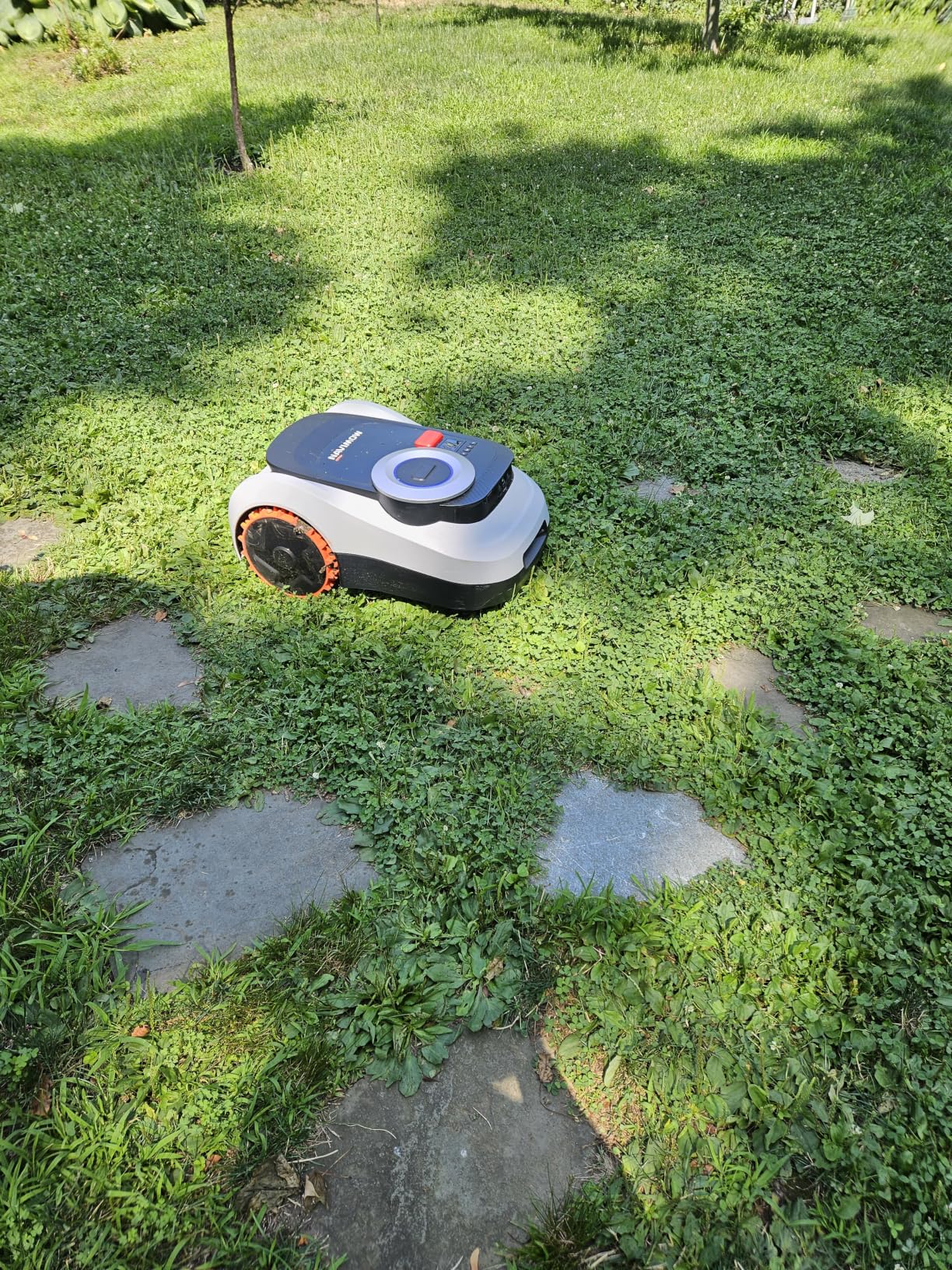
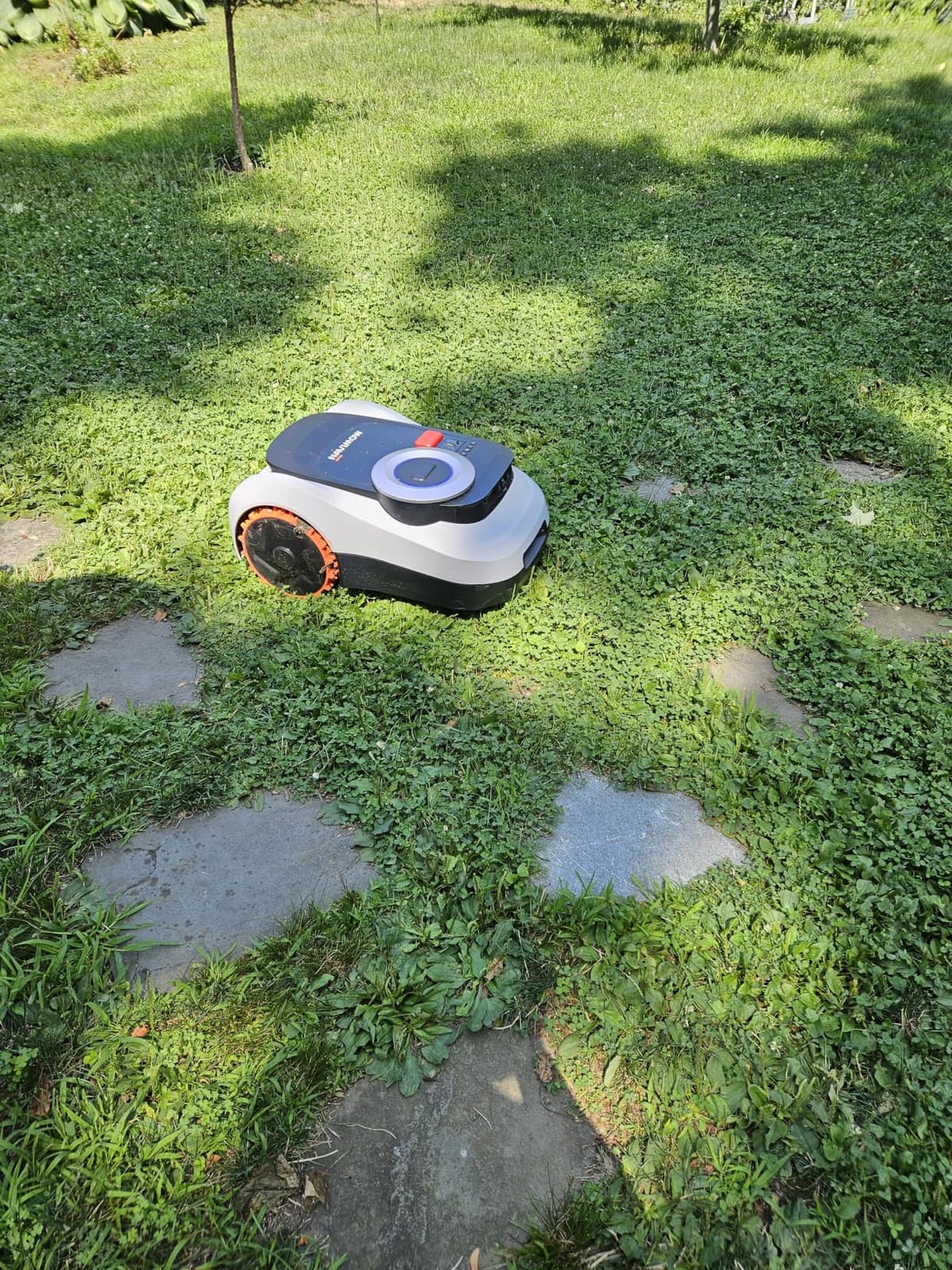
With 391 reviews at a 4.1 average, the Navimow i105N has the largest owner base of anything on this list, and the feedback is unusually consistent. It is repeatedly described as the best-value wire-free GPS mower for a small yard, and the reason is simple: RTK plus vision with enhanced EFLS 2.0 in a machine that covers 0.125 acre at 58 dB(A). It is quiet enough that owners say they forget it is running.
That quietness matters for a specific reason on a complex lot. If you have a neighbour close enough to complain, or a household that sleeps, you can schedule overnight mowing and the machine will not announce it. Reviewers also praise the parallel striping finish and reliable dock returns, which is the thing that decides whether a robot feels set-and-forget or feels like another chore.
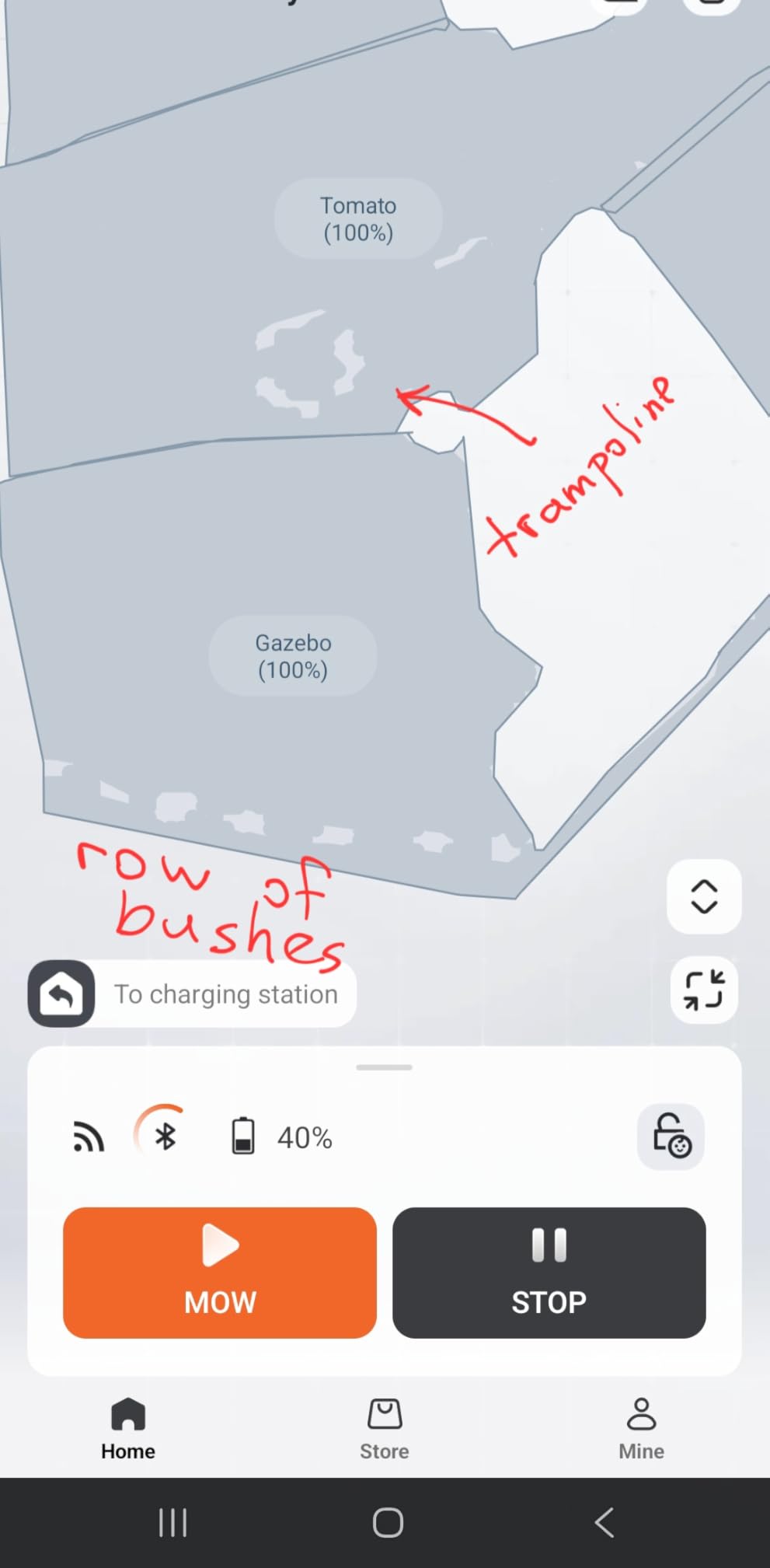
For the complex-yard question specifically, the vision layer earns its keep. Owners with mature trees report the mower holding its line under canopy where satellite-only machines stall, and it manages corridors and narrow passages better than its size suggests. The 140-degree camera detects more than 150 object types, and AI-assisted mapping builds the virtual boundary automatically without a boundary wire in the ground.
You get up to 12 zones from the app, cutting height adjusts from 1.6 to 3.6 inches in small increments, and there is a full three-year warranty. Segway support has even sent free off-road wheels and accessories in some cases, which tells you something about how they handle the traction problem below.
Why this is the value pick
It is the cheapest machine here that still has a genuine sensor fusion story. Most of the field at this level relies on RTK alone and quietly stops working the moment your lawn sits under trees. The i105N keeps going, and 391 owners have now documented that it does.
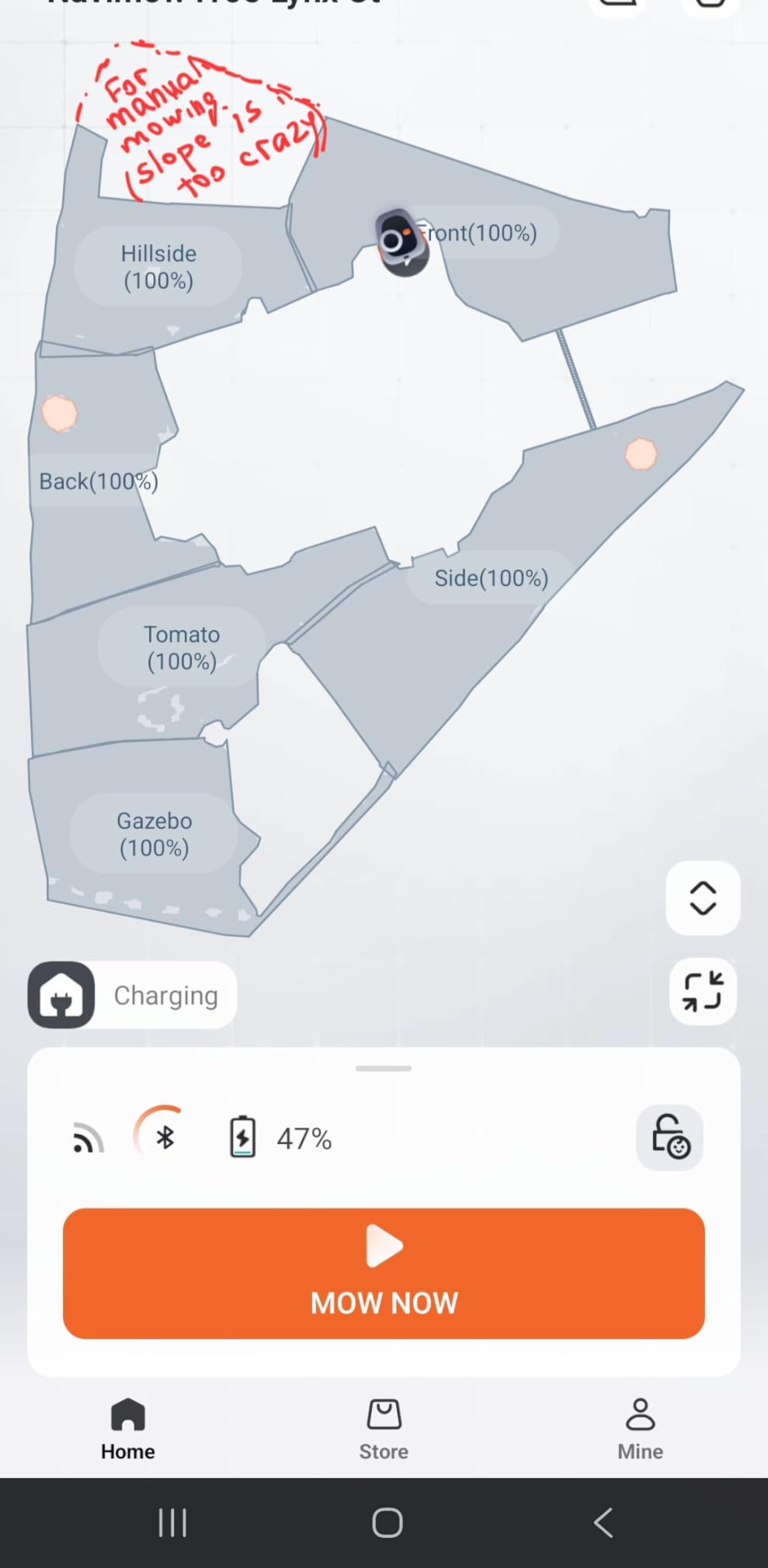
It suits a suburban lot with a couple of separate lawn areas, moderate obstacles, and a household that wants quiet overnight mowing. Multi-zone support up to 12 handles a front and back yard on a single machine as long as a route between them exists.
Where it disappoints
The supplied wheels are the most repeated complaint. On slopes and in mulch beds they dig ruts rather than gripping, and owners on sloped ground should budget for off-road wheels. VisionFence also misses small objects, with hoses, sprinklers, gates and mailboxes named specifically, so clear those before the first run.
Both the antenna and the dock need an unobstructed view of the sky, which constrains where you can put them. Mapping adjustments require physically driving the mower, which reviewers call clunky, and battery runtime of roughly 90 minutes means multiple charge cycles on anything larger than a small lawn. One owner also reported a map that could not be recovered after an app error.
3. ANTHBOT M5 – Best for Owners Who Want the Setup to Just Work
ANTHBOT M5 Robot Lawn Mower 1/8 Acre with Garage, Dual Vision+Full-Band NRTK Robotic Lawnmower, No Perimeter Wire, App Control Obstacle Avoidance, 45% Slope, Cutting Height, Multi-Zone Mapping
Dual 150-degree HDR cameras, 1,000+ object types
Full-band NRTK positioning
45% slope rating, up to 20 zones
Garage included in the box
Pros
- Bundled garage gives weather protection at no extra cost
- App builds the virtual map in about 10 minutes
- Handles slopes
- uneven ground and mulch reliably
- Good value with the garage included
Cons
- Narrow 7.9 inch cut width means frequent recharging
- Struggles on steep hills in some conditions
- RTK reference station needs a clear view of the sky
The M5 solves a problem the rest of this list treats as normal: how much effort it takes to get the thing running. The app creates the virtual map automatically in about ten minutes with no manual driving, and the package includes a garage, charging base, five blades and the RTK reference station. Owners on small to medium yards describe the setup as the easiest they have had.
Positioning uses full-band NRTK with Adaptive Cruise Control, layered with dual 150-degree HDR cameras that recognise more than 1,000 common garden objects. In practice owners report it holds position around trees and garden beds without wandering, which is exactly the behaviour you need on a yard with a lot of obstacles near the edges.
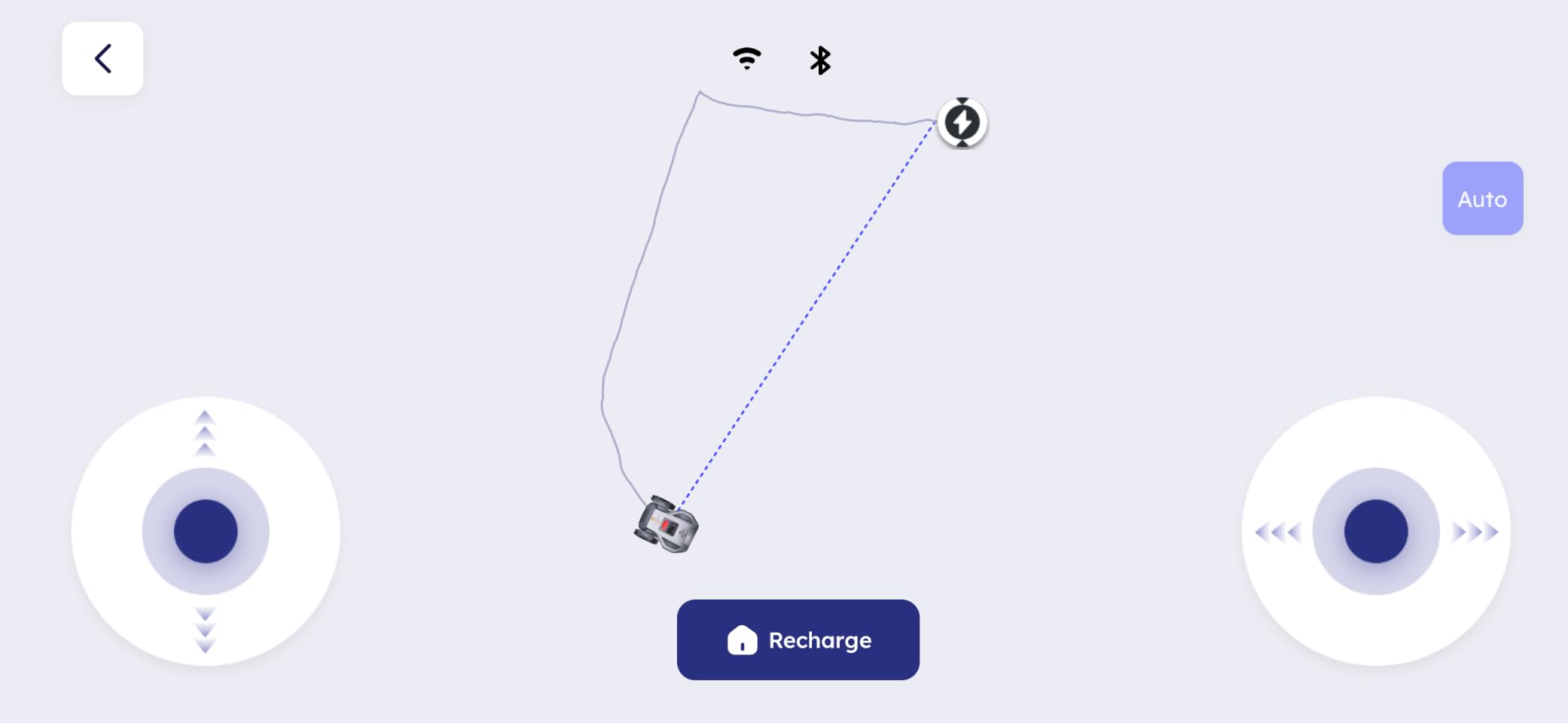
It is rated for 45 percent gradient, handles up to 20 work zones with seamless paths and custom no-go zones, and adjusts cutting height from 1.2 to 2.7 inches. Operating noise stays at or below 58 dB with emergency braking and OTA wireless updates, and the five free-rotating blades are simple to swap.
For a complex yard that is complicated by objects rather than by height, this is a strong pick. The 1,000-object recognition figure is the highest in the group outside the large machines, and it is the reason reviewers say it navigates garden beds and mulch reliably instead of creeping into them.
Where the M5 makes life easier
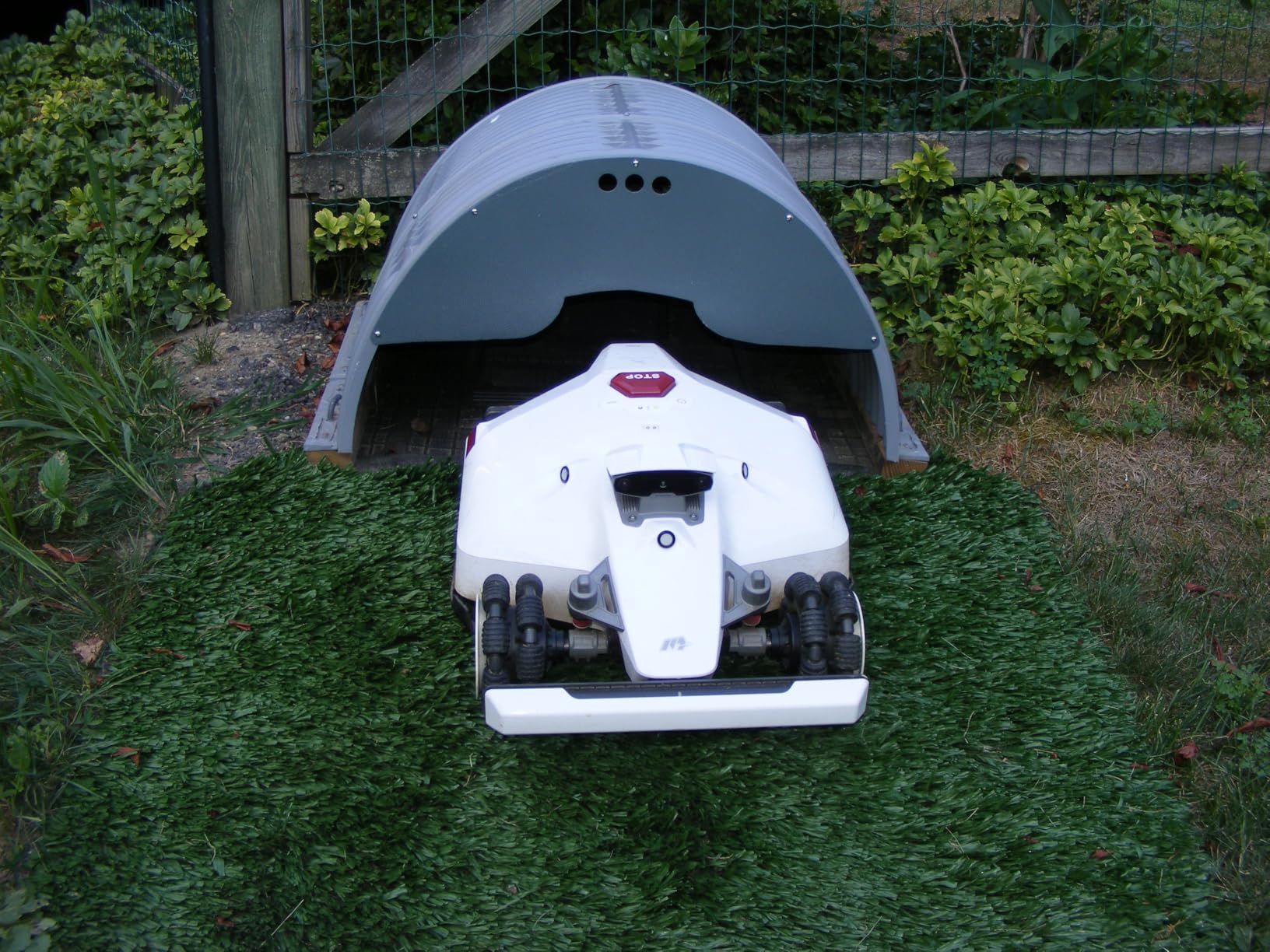
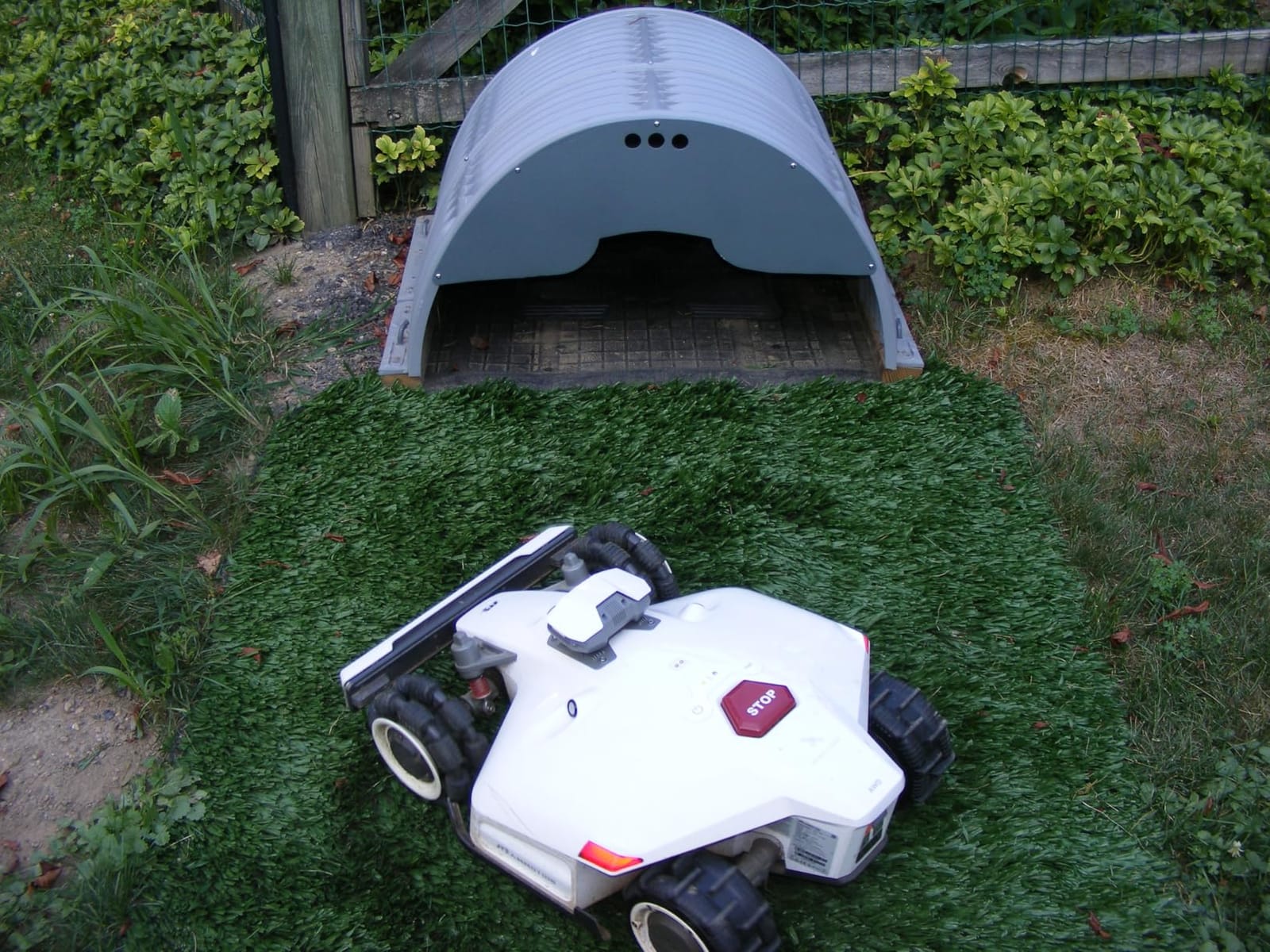
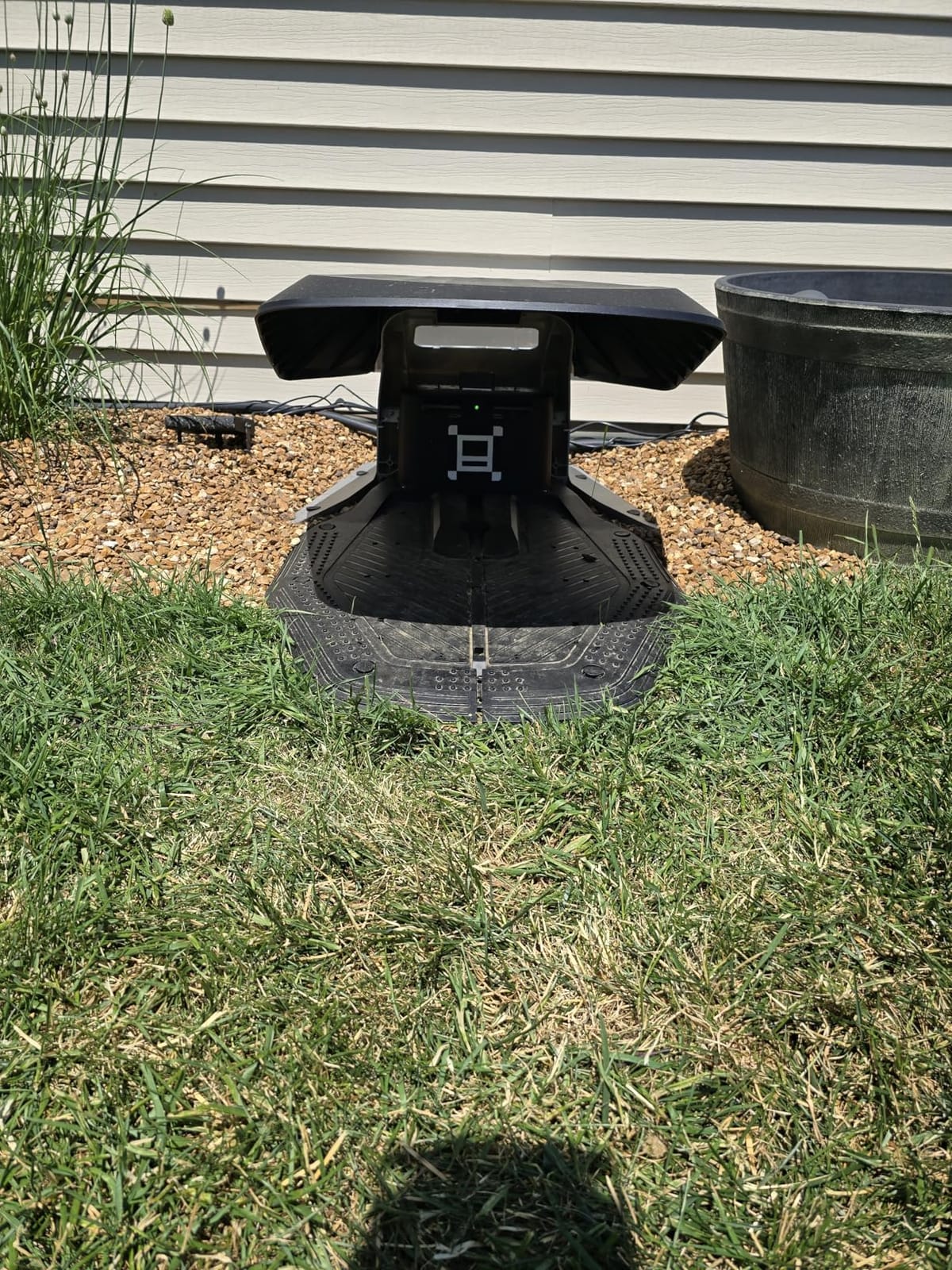
Start with the garage. A weather-protected parking shell is normally an extra purchase or an afterthought, and having it in the box changes how the machine ages over a decade. Combined with automatic mapping, this is the set-and-forget option on the list for anyone who does not want to spend an afternoon learning an app.
It is also a good fit for a yard with plenty of garden clutter, small pets, or a lot of beds, because the dual-camera AI is tuned for exactly that. Quiet operation makes it fine for early starts in a close neighbourhood.
Where it disappoints
The 7.9 inch cutting width is narrow, and owners point out it means several passes and frequent recharging on anything but a small lawn. Combined with a 1.2 inch minimum cutting height, this is a mower for tidy cool-season turf rather than tall coarse grass.
Reviewers also say it can struggle on uneven ground and does not handle steep hills as advertised, so treat the 45 percent figure as a ceiling rather than a working grade. Some localized manual edge trimming is still needed, and the RTK reference station needs a clear view of the sky just like the Segway units do.
4. Mammotion LUBA mini 2 AWD 1500H – Top Rated with Satellite-Free Navigation
(2026 NEW) Mammotion LUBA mini 2 AWD 1500H Robot Lawn Mower with Garage, for 0.37 Acres, 360° LiDAR+Dual-Camera AI Vision, 80% Slope, DropMow, 20 Multi-Zone Management
360 degree LiDAR plus dual-camera vision
Two 88W motors for 80% slope climbing
45mm adaptive suspension clearance
Dedicated edge cutting disc
Pros
- No GPS tower required and mapping is accurate
- Handles steep inclines and rough hole-filled lawns
- Dedicated edge blade gives noticeably clean borders
- Quiet enough for night runs
Cons
- 0.37 acre is a hard mapping limit that cannot be expanded
- Long mow times and two to three hour charging
- Map editing in the app is clunky
The 4.4 rating here is the joint-highest on the list, and it comes with 263 reviews, which is a much thicker sample than most of the wire-free category. Owners bought it because their lawn defeated a push mower, and the consistent report is that it handles steep inclines, rough ground and hole-filled turf without getting stuck.
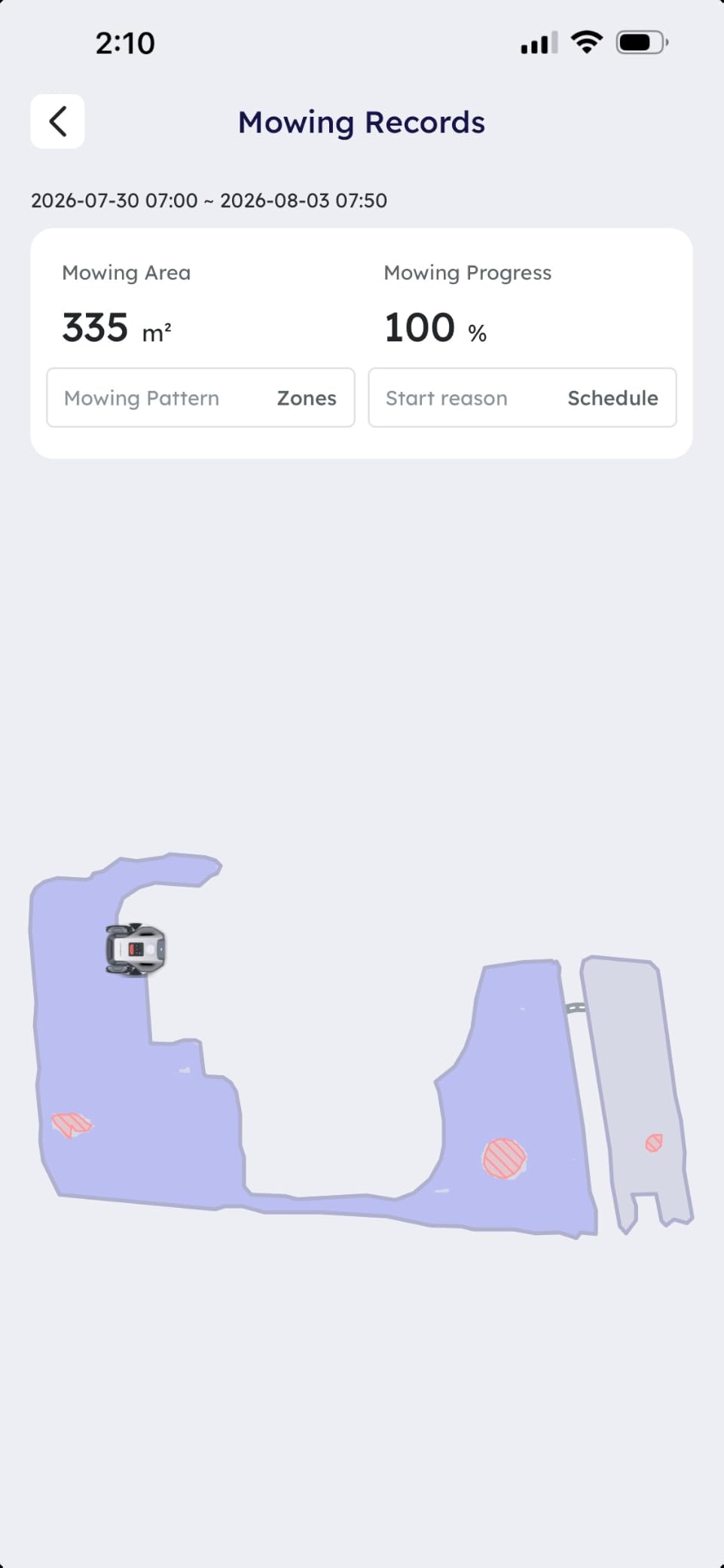
Navigation is the interesting part. A 360 by 45 degree field of view LiDAR works alongside dual-camera AI vision, which means no GPS tower has to be planted on your property. For a yard that is walled in by trees, that removes the single most common setup failure we see. There is a DropMow mode too, which mows without a saved map for one-time jobs.
The drive side is serious hardware: two independently driven 88 watt motors rated for 80 percent climbing, with adaptive suspension that steps over curbs, roots and thresholds up to 45mm. Cutting uses a main disc plus a dedicated edge disc, and owners single out the border finish as noticeably cleaner than a standard deck produces.
You get up to 20 independent mowing zones, custom charge limits and off-peak charging scheduling, and the box includes the mower, charging station and twelve blades. Reviewers mention battery and smart charge management preserving long-term battery health, which matters more than people expect over five seasons.
Why it suits a difficult yard
LiDAR plus vision plus all-wheel drive is the combination we would want on a property with heavy tree cover, real gradient and a lot of obstacles. It does not depend on a clear sky, it climbs, it steps over roots, and it has the best-rated feedback of any machine here.
It is also a strong choice for allergy sufferers and busy families, since owners run it overnight and the noise level allows it. The dedicated edge disc is the sleeper feature if you are tired of string trimming after every robot run.
Where it disappoints
The 0.37 acre cap is a hard mapping limit that cannot be expanded, so measure before you fall in love with it. The narrow blade and walking-pace cutting speed mean long mow times, and charging can take two to three hours from low.
Map editing in the app is clunky and boundary accuracy demands care on the first pass. Some owners report software glitches and long waits for customer support responses, which is a real consideration for Mammotion given how often support quality comes up in owner threads.
5. Mammotion LUBA 3 AWD 3000 – Best for Thick Turf and Big Multi-Zone Lawns
Mammotion LUBA 3 AWD 3000 Robot Lawn Mower with Cleaning Stand (Ship Separately), 360° LiDAR+NetRTK+AI Vision, AWD for 80% Slopes, 5400 sq.ft/h, Cutting Height 1.0″-2.7″
360 degree LiDAR, NetRTK and dual-camera fusion
Four independently driven motors, 80% slope
Up to 175 minutes per charge, 500 square metres per hour
Up to 30 mowing zones
Pros
- LiDAR navigation is dependable and it has never lost location
- Works out of the box with no RTK antenna
- Very quiet with extremely low power draw
- All-wheel drive handles thick St Augustine turf
Cons
- Sparse online manual
- needs video tutorials
- Hard to establish channel links between separate areas
- Battery pack is not user replaceable
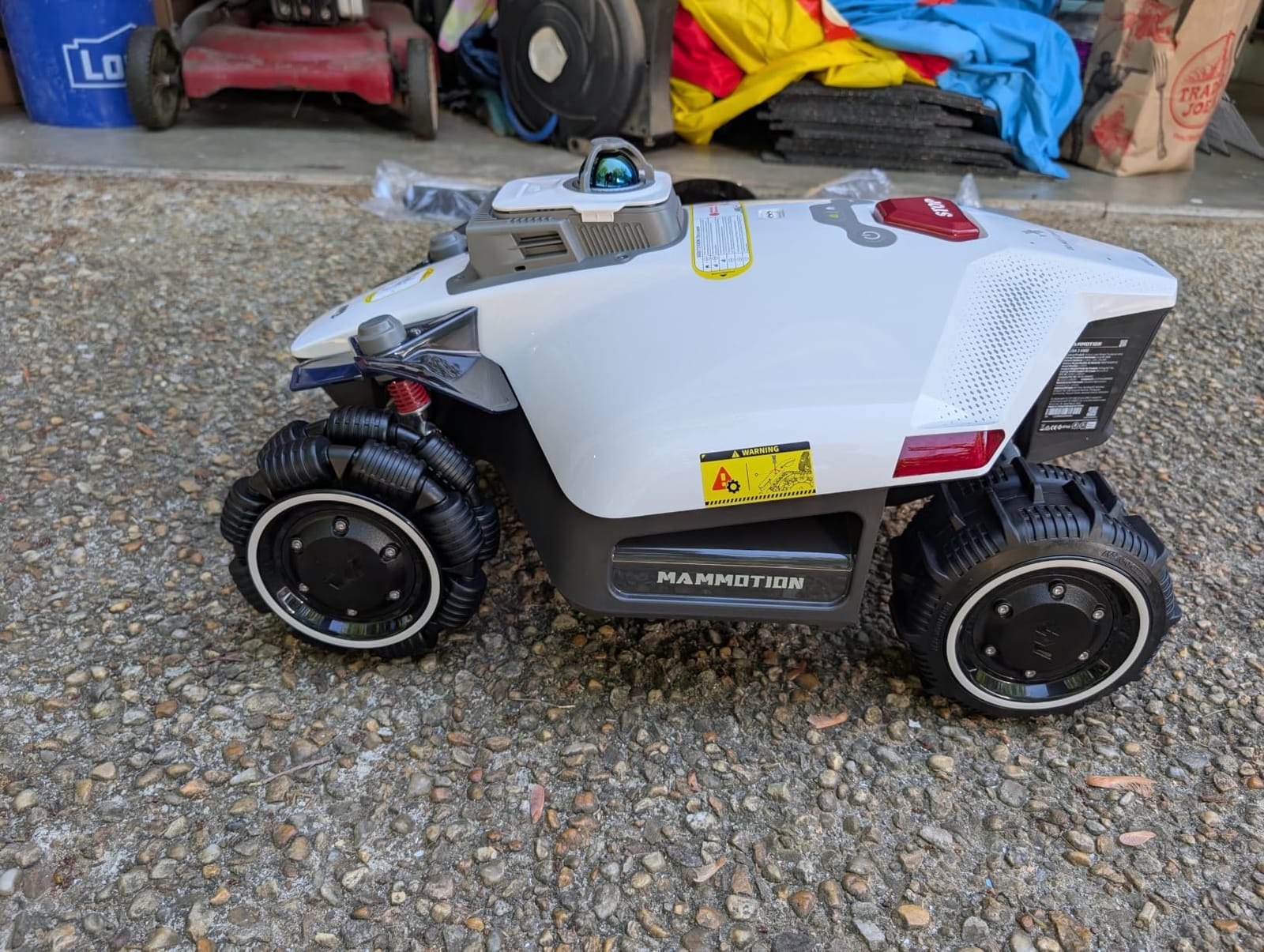
This is the tri-fusion machine: 360 degree LiDAR with a range up to 230 feet, NetRTK correction, and dual-camera AI vision all feeding one position estimate. Owners report it has never lost location, and several note it works straight out of the box with no RTK antenna needed, including at night with headlights.
On turf rather than on flat grass, the drive system is the story. Four independently driven motors handle 80 percent slopes, and adaptive suspension clears curbs, roots and thresholds up to 50mm. One owner specifically calls out thick St Augustine grass, which is notoriously hard on a wheeled robot because the stolons knit together and glue the wheels down.
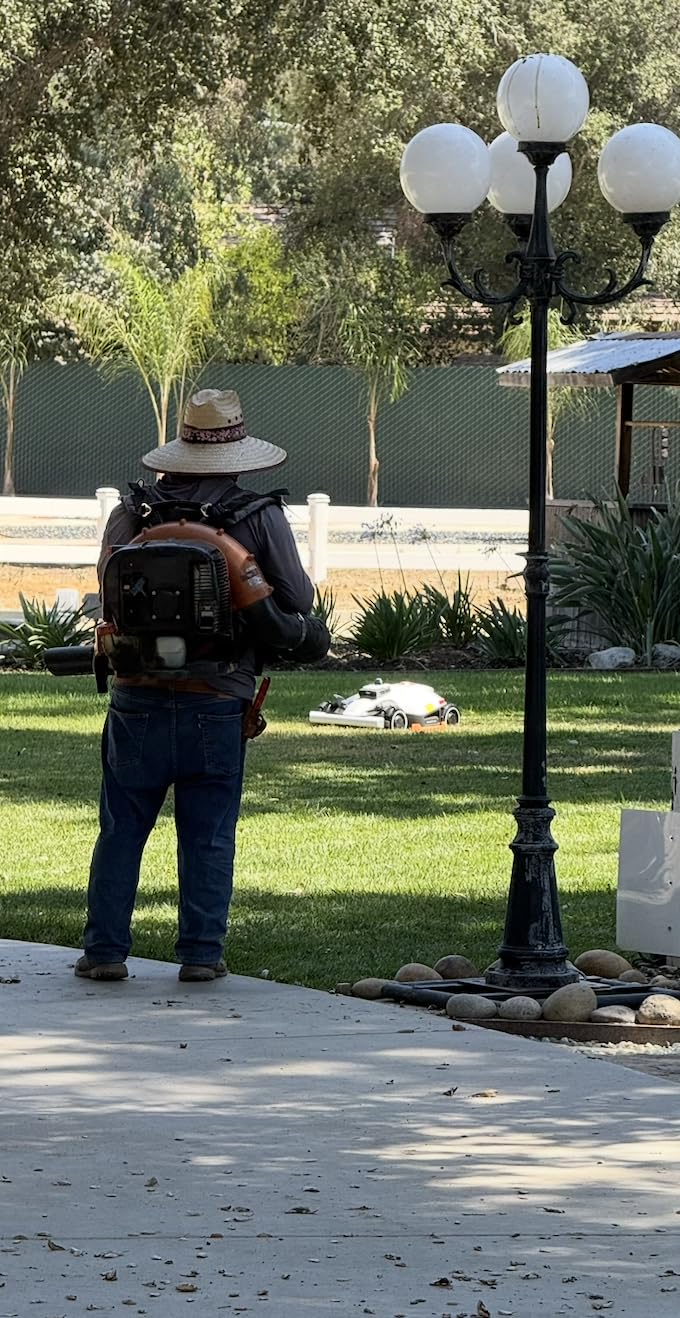
Throughput is the other advantage. A 12Ah lithium battery gives up to 175 minutes per charge and up to 500 square metres per hour, with two 165 watt high-torque cutting motors driving six-blade discs. Owners report cutting a full yard in under two hours in some setups, which is a real difference on a property with multiple lawn areas.
The AI processor identifies more than 300 obstacle types and calculates safe paths around them, and you get up to 30 mowing zones with no-go areas plus perimeter, zigzag, checkerboard or adaptive patterns. Very low electricity consumption comes up repeatedly in reviews, and several owners mention forgetting the machine is running.
What makes this the terrain pick
It is the widest combination of capability in the group: 30 zones, 80 percent slope, 50mm clearance, no antenna required, and enough throughput to matter on acreage. If your complexity comes from a mix of gradient, thick grass and several disconnected areas, this is the machine with the fewest compromises.
It is also the one to consider if mowing in darkness is part of your plan, since owners confirm it works at night. The pattern options let you match the finish to the shape of the lawn rather than forcing one route on an awkward layout.
Where it disappoints
Documentation is thin. The online manual is sparse enough that owners say they rely on YouTube tutorials, and the phone app is difficult to use for mapping in bright daylight because of glare. Both are fixable, but they are real friction on the day you set it up.
Channel and tunnel links between areas separated by a driveway or walkway can be hard to establish, which is the most common complaint for anyone with a truly split lawn. The wide wheels push grass over rather than lifting it, so occasional uneven cutting shows up on uneven ground, and the battery pack is not user replaceable. A few owners also report a machine failing within weeks.
6. ECOVACS GOAT O1000 LiDAR PRO – Best for Narrow Side Yards and Tight Passages
ECOVACS Goat O1000 LiDAR PRO Robot Lawn Mower, Wire-Free Robotic Lawn Mower with Dual-LiDAR Navigation, Built-in Edge Trimming, AI Obstacle Avoidance, App Control, for Lawns Up to 1/4 Acre
HoloScope 360 degree dual-LiDAR navigation
No boundary wire and no RTK antenna
TrueEdge built-in border trimming
Passages as narrow as 31.5 inches
Pros
- No wire and no antenna
- set up from a phone in minutes
- Quiet enough to run overnight unnoticed
- Sees and avoids toys
- pets and garden decor
- Slim body suits narrow side yards
Cons
- Edge trimming is hesitant and leaves manual work
- Single-joystick app makes straight-line mapping difficult
- Front caster wheels cannot climb curbs or high grass
The narrow body is the reason to look at this one. Owners with tight side yards and thin corridors report that the slim frame navigates passages down to 31.5 inches, which is narrower than most competitors can manage. If your complexity is a maze rather than a hill, that matters more than any slope rating.
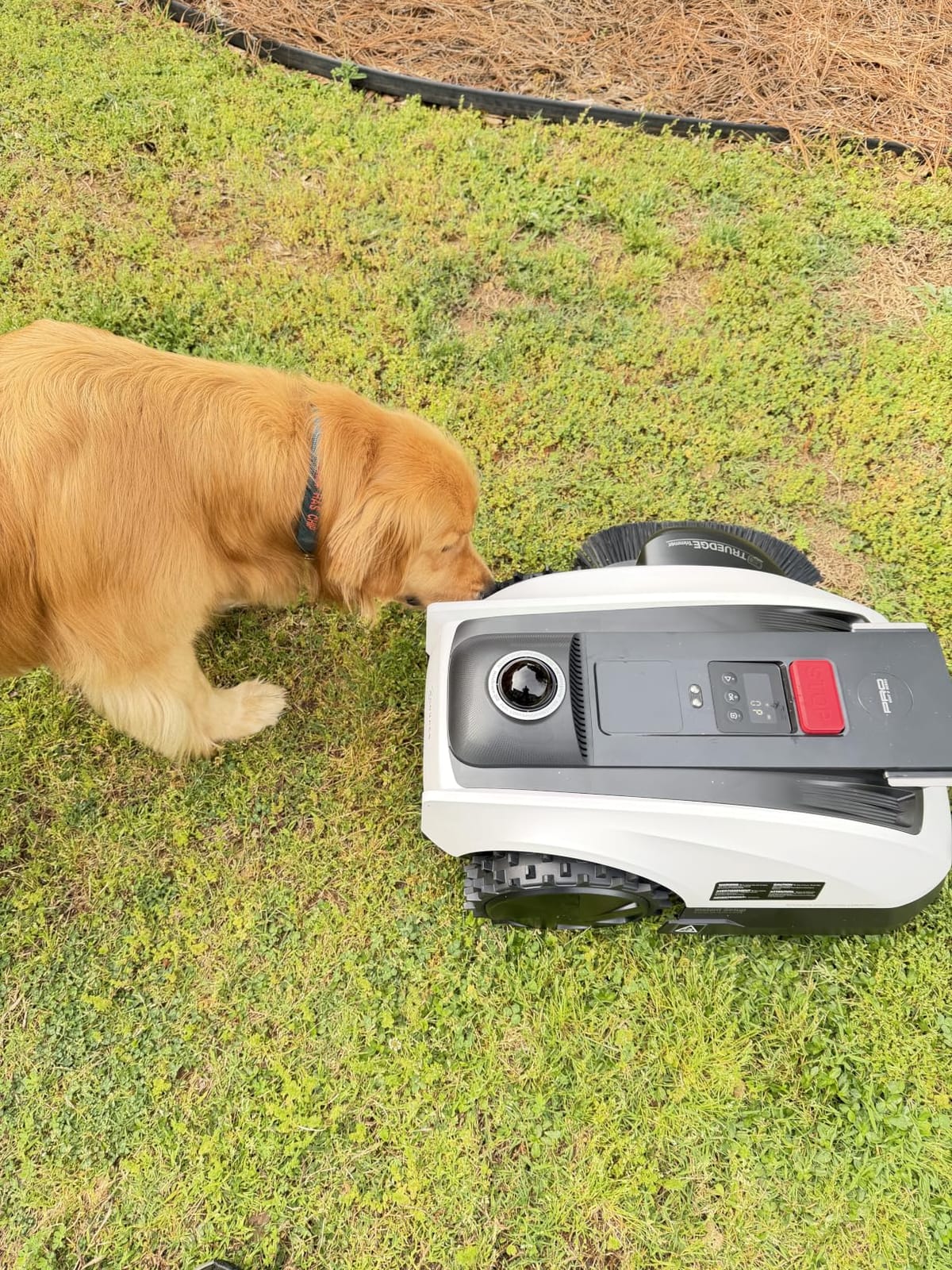
Setup is refreshingly simple. There is no boundary wire and no RTK antenna; ECOVACS HoloScope 360 degree dual-LiDAR navigation and a phone get you mowing in minutes. Owners also praise how quiet it is, with several saying it runs overnight without being noticed, and the AI vision with 3D time-of-flight LiDAR detects more than 200 outdoor obstacle types including toys and pets.
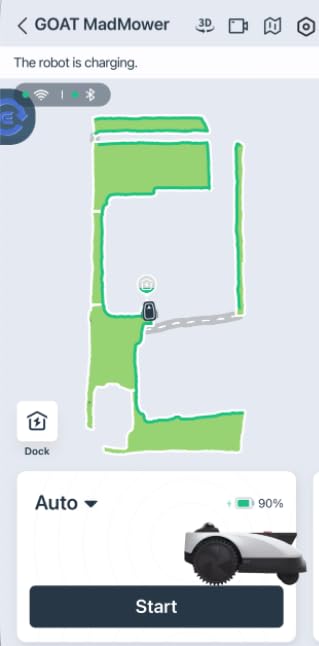
App control covers zones, schedules, cutting preferences and no-go areas, which is the coverage you want for a front and back yard on a quarter acre. Blades are easy to fit, and one owner reports customer service resolved the single issue they raised, which is worth something on a category where support varies widely.
There is a built-in TrueEdge border trimming system for edges, driveways, walks and beds, and the appeal is obvious on a yard with a lot of hard surfaces. Getting it to actually perform is where the criticism sits, and we cover that below.
Where the GOAT O1000 earns its place
Pick it when the shape of your yard is the problem. Corridors between beds, a side yard between two fences, a lawn broken up by paths: this machine physically fits where a wide-bodied robot will not. Owners with dense obstacle layouts also like the 200-object detection and the fact that the app needs no antenna placement.
It is a good fit for small pets and a household that wants overnight mowing on a budget. The 0.25 acre ceiling is honest and clearly stated, so there are no surprises if your lawn fits.
Where it disappoints
Edge trimming is hesitant at boundaries and still leaves manual work, which undercuts the main selling point. The single-joystick app control makes straight-line manual mapping genuinely difficult, and the LiDAR appears to be used for object detection rather than active mapping, which produces zig-zaggy borders in some yards.
There is no mowing-pattern intelligence or border laps in the app, and the caster front wheels cannot climb high grass or curbs, so this is a flat-lawn machine. The thin plastic shell also feels lower quality than competing mowers, and some parts are only available through European distributors, which is a genuine ownership risk outside that region.
7. YARBO Robot Lawn Mower Pro – Best for Multi-Acre and Rough Ground
YARBO Robot Lawn Mower Pro, Wire-Free for 6 Acres, Four Seasons Yard Care
Rated for up to 6 acres
70% slope with tracked drive and steel skid shoes
Triple fusion: RTK, binocular vision, PPVS
20 inch cutting width, IPX6 rated
Pros
- Handles multi-acre properties that took days with a competing robot
- Cuts thick
- wet and overgrown grass
- Very deep control over mapping
- pathways and no-go zones
- Support replaced both modules on a defective machine
Cons
- Mapping is a steep learning curve of six hours or more
- GPS signal loss and map drift around dense trees
- Cobalt-based battery limits cycle life
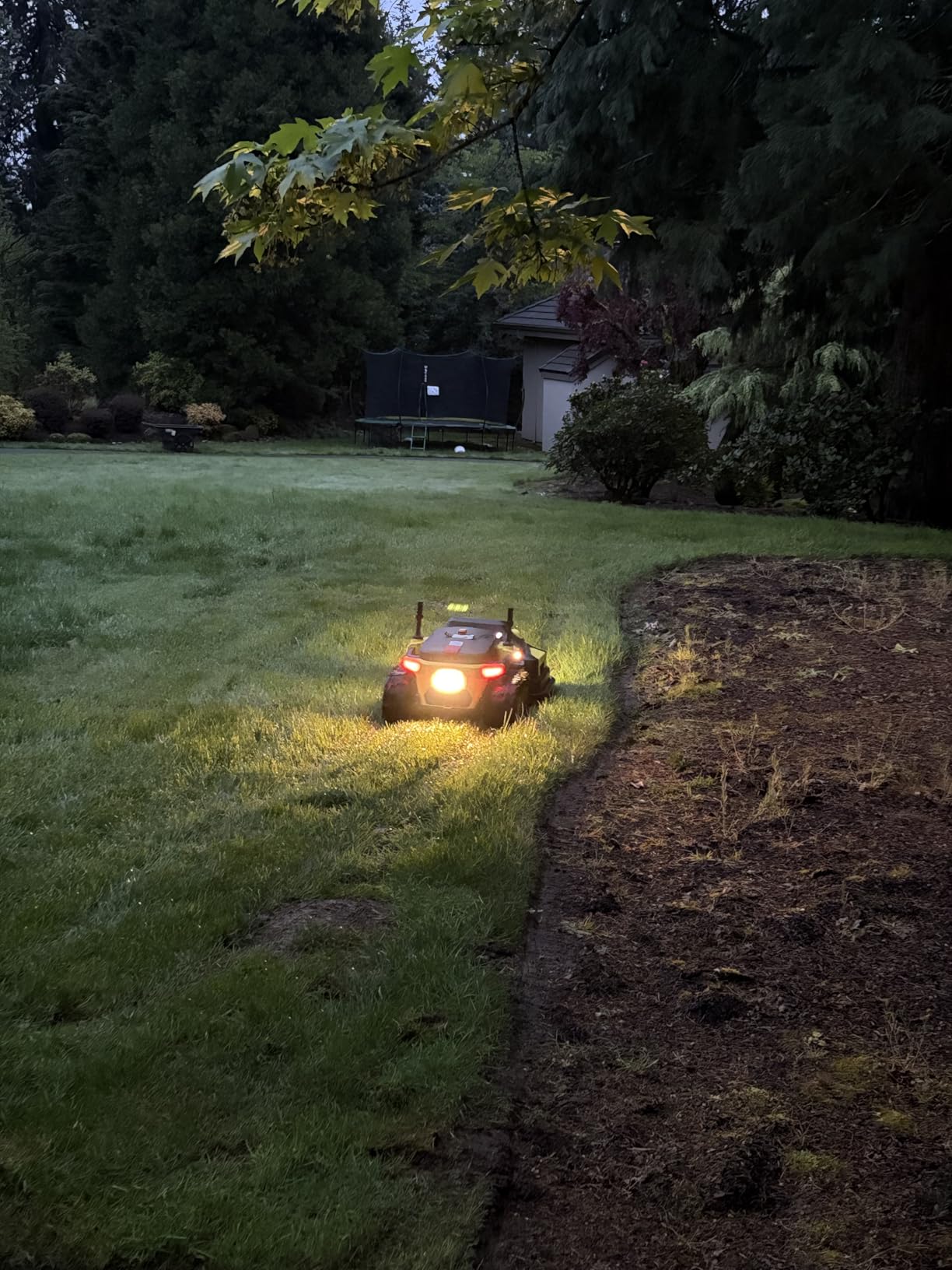
Nothing else here covers this much ground. The YARBO Pro is rated for up to six acres and is aimed at homes, turf farms, hotels and resorts, with a 20 inch cutting width, a 300 watt dual-motor drive and patented multi-terrain tracks with all-steel skid shoes rated for 70 percent climbing. Owners with two to six acres report large time savings and cut quality comparable to a zero-turn machine.
Rough terrain is the honest strength. Reviewers describe it cutting thick, wet and overgrown grass and negotiating muddy, stony, uneven ground, which is precisely the situation that ends a lighter robot’s day. The metal chassis is stout and IPX6 rated for four-season use, and the cutting height adjusts from 0.8 to 4.0 inches with switchable razor and straight blades for cool and warm season grass.
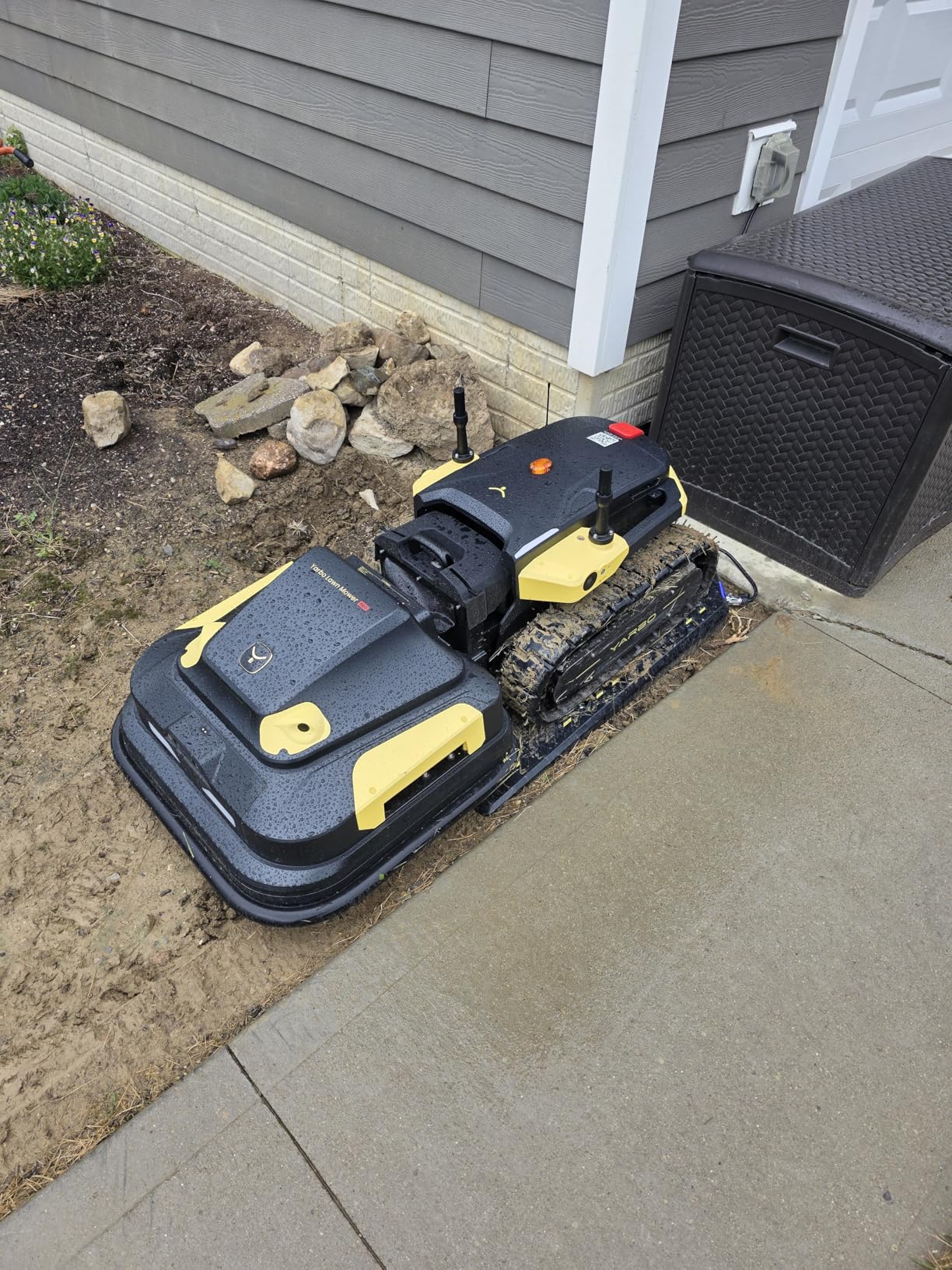
Navigation is triple fusion: RTK-GPS, binocular vision and a multi-sensor PPVS array. That gives unusually deep control over mapping, pathways, mowing patterns and no-go zones, and the in-app cameras with remote control let you drive it around a soccer ball from the sofa. Support replaced both the Core and mower module on a defective machine for one owner, which is a good sign for a brand this new.
It is also modular, with a hitch for carts and seasonal attachments such as a snow blower. If you are buying for a property rather than a lawn, the same platform can carry you through more than one season of work.
Where the YARBO Pro earns its price
Two to six acres with mud, stone and uneven fill. If a competing robot needed three to four days to get through your grounds, this is the machine built for that, and the 70 percent slope figure has a physical explanation behind it in the tracks and steel skid shoes.
It suits owners who want fine control over routes and patterns on a large property, and the IPX6 chassis means it can work through poor weather without a garage. For very large estates that need a single machine for multiple seasons, the attachment platform is a genuine advantage.
Where it disappoints
Mapping is a steep learning curve even for technical users, with owners reporting six hours or more of mapping before the first mow. GPS signal loss around dense trees means driving the robot back manually during mapping, and map drift mid-session triggers frequent notifications and reconfiguration.
The battery is cobalt-based, which limits cycle life to roughly 500 to 600 cycles, so plan on an earlier replacement than a lithium-phosphate pack. The Data Center needs a 120 degree unobstructed view of the sky, its mount is unstable and the rectangular unit can be knocked about in wind, a plastic-roofed garage is advised for extreme weather, and ground clearance is low on rough ground. It is a large machine, and assembly needs two adults.
8. Sunseeker X3 Plus – Best for the Cleanest Edge Finish in a Small Yard
Sunseeker X3 Plus Robot Lawn Mower, RTK, Vision AI, 0.3 Acre, Wire-Free
AONavi RTK plus VSLAM navigation
Ride-on-edge offset blade cutting
Six saved maps with no-go zones
60 dB, 0.3 acre coverage
Pros
- Clean edge cutting impressively close to borders and walkways
- Steady navigation under trees and near fence lines
- Quiet enough to run at 3 a.m.
- Light and easy to carry
- Two-year warranty with US-based support
Cons
- Connection and satellite calibration failures reported
- Hazard zones can reappear after deletion
- App reported as painful to use by some owners
The Sunseeker X3 Plus exists for one reason, and owners make that clear: the ride-on-edge design with an offset blade cuts close to fences, walkways and hardscape better than almost anything at this level. If the thing that annoys you about robot mowers is the stripe of long grass along your border, this is the one to look at.
Navigation is AONavi RTK combined with VSLAM, giving planned routes and reliable coverage across front, back, side and multi-area lawns up to 0.3 acre. Vision AI with ultrasonic sensing handles daylight obstacle detection, and owners report steady navigation under trees and right along fence lines, which is where cheaper machines wander.
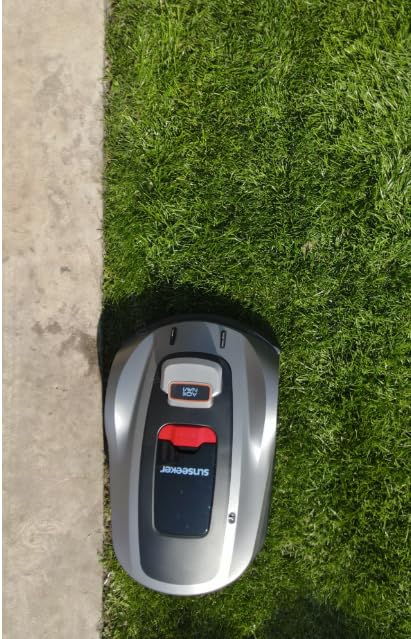
It is quiet at 60 dB, and owners specifically say it runs at 3 a.m. without disturbing anyone. The 8 inch floating cut adjusts from 1.6 to 3.2 inches, it weighs under 20 pounds so you can lift it to clear a blockage, and it carries a two-year warranty with US-based support, which matters more for a brand most people have never heard of.
Six saved maps with boundaries, mowing areas and no-go zones cover most real layouts, and Wi-Fi, Bluetooth and voice control round out a genuinely complete small-yard package. The maths works out well if you want a tidy quarter-acre rather than an acreage.
Why the edge finish stands out
An offset blade that rides up onto the wheel side lets the mower cut right at the boundary, which removes most of the manual string trimming that follows every other robot run. On a yard defined by paths, hard edges and a lot of beds, that is the single most visible quality difference you will notice in the finished lawn.
It is also a good fit for a quiet neighbourhood, a small yard with trees near the fence lines, and anyone who wants a machine light enough to carry up steps or reposition themselves.
Where it disappoints
The 3.8 rating is the second-lowest here, and the reason is software rather than mechanics. Owners report connection and satellite calibration failures that force daily manual checks, hazard zones that reappear after deletion, and error messages appearing in Chinese. Some machines cannot handle two days of grass growth and report navigation failure in deep grass.
The app is described as painful to use by some owners, though newer reviews report it has smoothed out. Occasional manual string trimming is still required, and the advertised mounting hardware for the satellite is not sold by the company, so you may need to source that yourself.
9. Roborock RockNeo Q110H – Best for Small Yards Where Night Mowing Matters
Roborock RockNeo Q110H Robot Lawn Mower, Wire-Free Robotic Lawn Mower with Full-Band RTK + VSLAM Navigation, Auto Mapping, AI Vision Obstacle Avoidance, App Control, 45% Slope, Covers Up to 1/4 Acre
Full-band RTK plus VSLAM dual navigation
Passages down to 2.3 feet
Dual-camera AI with stereo obstacle understanding
PIN lockout with high-decibel alarm
Pros
- Very quiet
- with headlights for mowing in darkness
- Cuts straight lines and handles 30% slope well
- Holds signal near fences and walls
- Three-screw assembly and an intuitive app
Cons
- Auto-mapping unreliable
- manual remote mapping required
- Leaves a 1 to 1.5 foot unmowed strip along edges
- Refuses to pass through narrow openings like gates
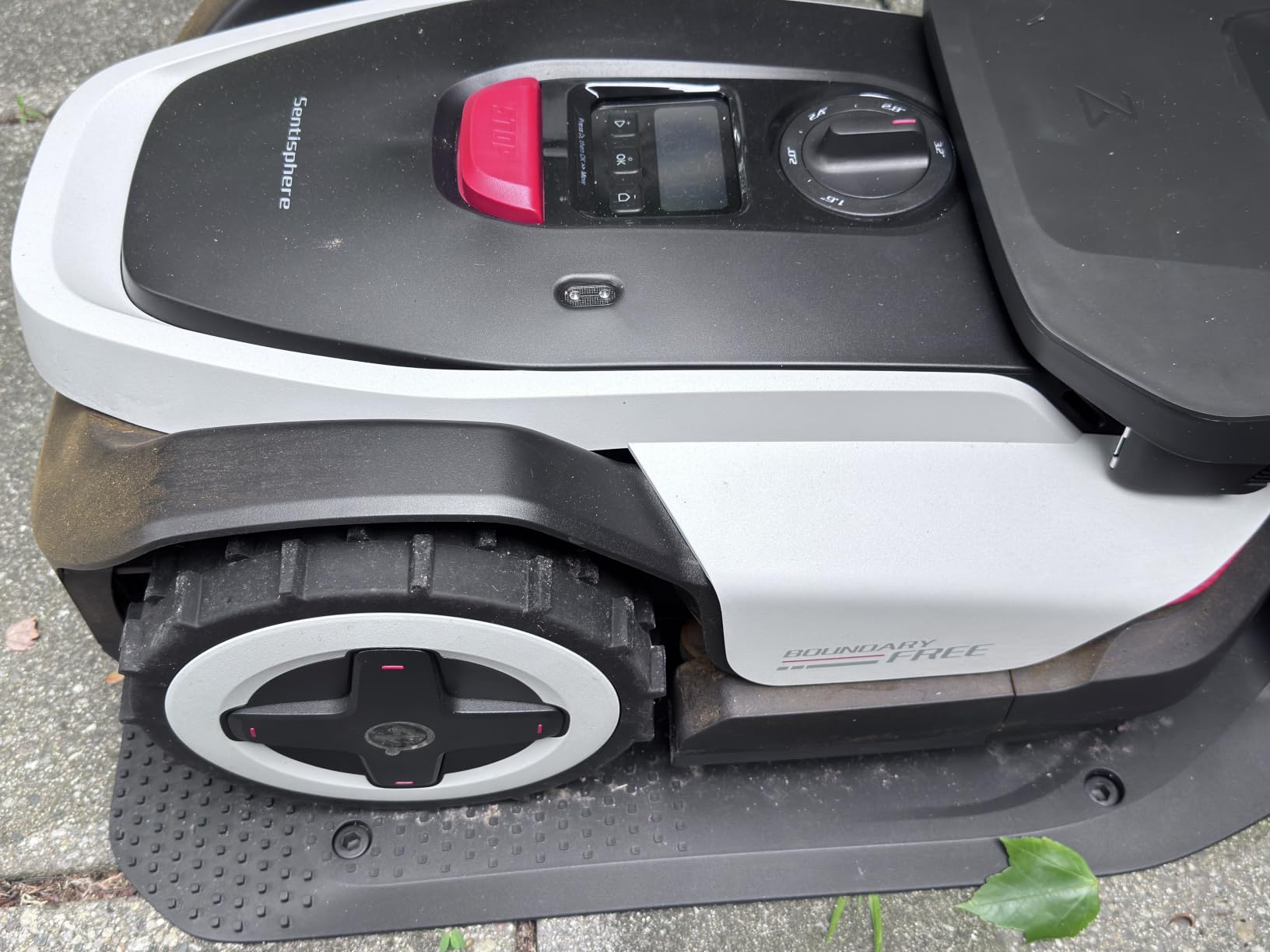
Roborock came to this from robot vacuums and it shows in the best way here: the app is familiar to anyone who has owned one, and assembly is three screws. Reviewers credit it with genuinely good navigation, holding position near fences and walls without LiDAR, and cutting in straight lines on a 30 percent slope.
It is also the quietest machine for night work on this list, with headlights that let it mow in darkness. Dual-camera AI vision with stereo obstacle understanding routes around garden objects and can tolerate small drops, and the floating cutting deck adapts to ground contours. For a small yard where the household is asleep, that combination is the reason to pick it.
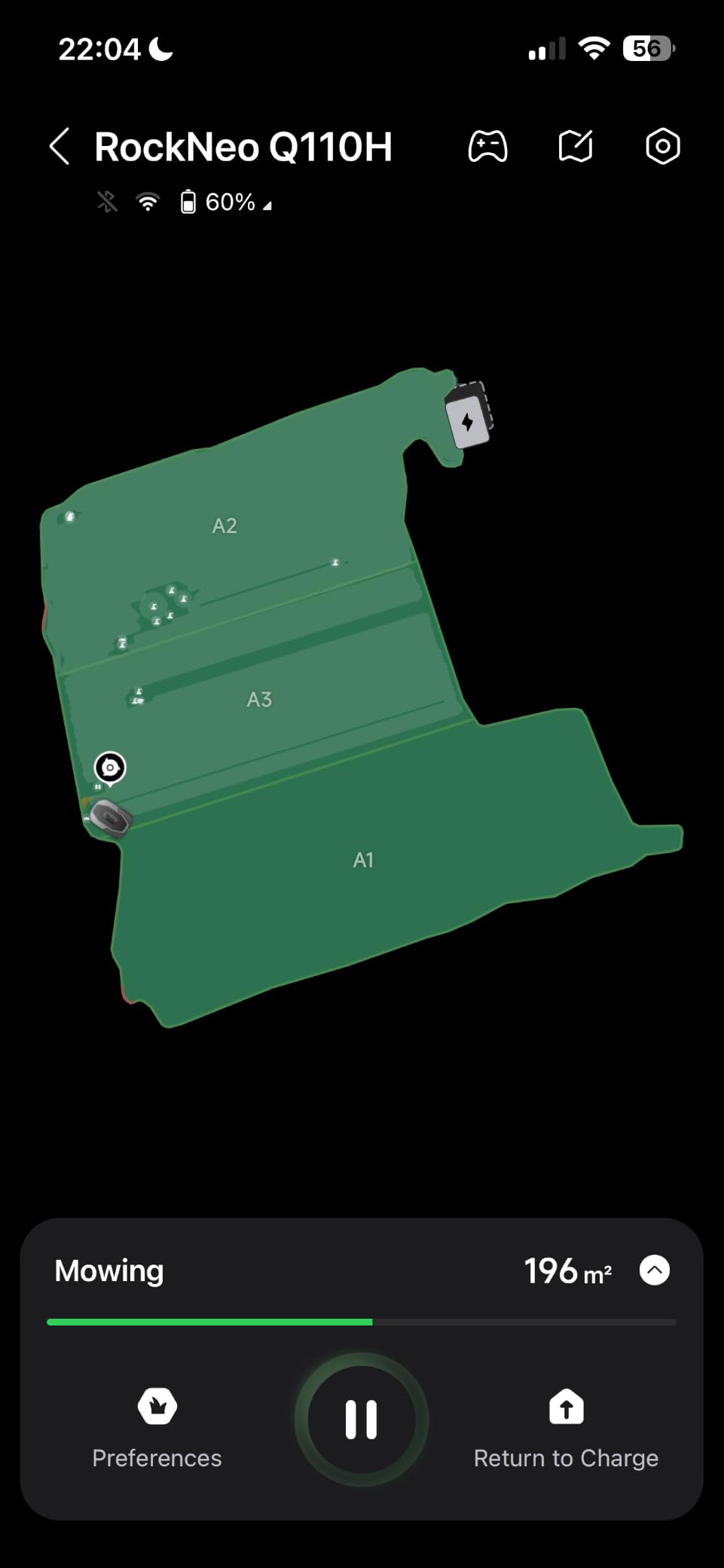
Full-band RTK plus VSLAM is a sensible pairing for a quarter-acre yard, and large-diameter wheels handle 45 percent slopes and 1.57 inch obstacles. Security is handled with a PIN code lockout and a high-decibel alarm, plus an optional 4G anti-theft module and a wildlife-friendly mode, which is a nice touch if you have anything nesting in the lawn.
The slim body also navigates passages down to 2.3 feet, which is narrower than most and useful for a side yard or a corridor between two beds. Several owners found it fine for simple open lawns, and that is a fair description of its comfort zone.
Where it makes sense
Pick it for a small, relatively open yard where noise and night mowing are the priority. If you already use Roborock vacuums, the app will feel instantly familiar, and the three-screw assembly means no afternoon lost to construction.
It handles a modest slope and enough obstacles to be useful, and the PIN lock plus alarm is real protection for a machine at this level. The straight-line cut finish is consistently praised.
Where it disappoints
The boundary algorithm is overly conservative. Reviewers report it leaving one to one and a half feet of grass unmowed along edges, fences, trees and even its own antenna pole, and it refuses to pass through narrow openings such as gates despite there being enough clearance. That combination makes it a poor fit for the tight-corridor yards at the top of this list.
Auto-mapping did not work as expected for most owners, so manual remote-control mapping was required. Maps cannot be edited without physically walking the mower and partial zone mowing is unsupported, the optional edge module for 1.2 inch edge precision is not sold in the US, and the traction wheels are too weak for St Augustine grass. With only 35 reviews, long-term reliability is the least documented on this list.
10. Segway Navimow i215 LiDAR – Best for Yards With Heavy Tree Cover
Segway Navimow i215 LiDAR Robot Lawn Mower, Wire Free Robotic Lawn Mower for 0.37 Acre, LiDAR & Vision Dual Fusion, Auto Mapping, Off-Road Wheels for 45% Slopes, Quiet 59 dB(A) Mowing
Solid-state LiDAR with vision for satellite-free navigation
GeoSketch map with up to 20 editable zones
Off-road wheels and stability control for 45% slopes
59 dB(A), cutting height 2 to 4 inches
Pros
- Satellite-free navigation removes antenna placement constraints
- One-tap auto mapping with no boundary wire
- Off-road traction and stability control on 45% slopes
- Rich security with geo-fence
- lift detection and Find My alerts
Cons
- Coverage limited to 0.37 acre
- Thin critical feedback
- so long-term reliability is not well documented
This is the cleanest answer to the tree cover problem on the list. Solid-state LiDAR fuses with vision sensors for satellite-free navigation, so there is no antenna, no reference station and no base station to place anywhere on your property. If your signal is blocked for most of the day, that removes the constraint entirely.
It works day or night with 3D awareness, and the AI VisionFence detects more than 200 obstacle types at 0.4 inch accuracy. The GeoSketch interactive map supports up to 20 editable mowing zones, which gives you room for a front yard, a back yard and the beds between them without running out of structure.
For terrain, off-road wheels plus Electronic Stability Control handle 45 percent slopes, and the 100 watt motor drives a six-blade disc with a 7.1 inch cutting width. Cutting height adjusts from 2 to 4 inches, and operation sits at 59 dB(A), which owners say is quiet enough for evening mowing.
Security is unusually thorough for a machine in this class: GPS, geo-fence, lift detection and Apple Find My alerts. True Drop and Mow works with voice control through Alexa and Google Home, and an in-app Doodle tool lets you set custom mowing patterns for an awkward layout.
Why it fits a tree-covered property
When a lawn sits under mature canopy for most of the mowing window, a satellite-dependent machine spends its life paused. This one does not need the sky at all, which is the difference between a machine you use daily and one you find stalled under the oak every Tuesday.
It suits small to medium yards up to 0.37 acre with real gradient, several separated lawn areas, and a household that wants evening schedules. The Find My integration is a genuine convenience for theft monitoring without a separate subscription.
Where it disappoints
The 0.37 acre limit is the hard constraint, and it is a smaller yard than several cheaper machines here cover. At 7.1 inches the cut width is narrow, so expect longer sessions and more charging than the wide-deck models.
With 46 reviews the 4.4 rating is impressive but lightly sampled, and the returned data contained little detailed critical feedback, so long-term reliability is not well documented. Verify local warranty service before buying a satellite-free machine from a less established platform. If you need more coverage, our [picks for large yards](https://battleofsoho.com/best-robotic-lawn-mowers-for-large-yards/) cover the bigger end of the market.
GPS vs RTK vs LiDAR vs Vision: What the Labels Actually Mean
Plain GPS is accurate to a few metres. A mower that thought it knew its position to three metres would leave a visible gap at every flower bed, so nobody builds one. RTK, which stands for Real-Time Kinematic, adds a correction stream to the satellite fix and brings the accuracy down to roughly two centimetres, which is accurate enough to hold a straight edge.
That correction comes from somewhere, and this is the decision that actually matters for a complex yard. The four options are:
RTK with a local reference station. A GNSS antenna and base station are planted on your property, giving the tightest fix and no ongoing connectivity cost. The downside is placement: both the mower antenna and the base need a clear view of the sky, and on a tree-covered property that can mean a roof mount.
RTK with network correction. Instead of an antenna on your land, the correction arrives over 4G from a network of reference stations. Nothing to mount, and it is what most modern wire-free mowers use, but it depends on cellular coverage at your address.
RTK plus vision. The camera picks up the trees, walls and shadows that confuse the satellite alone. This is the pattern most owners in our research ended up happiest with on complex layouts, and it is what the Segway i105N and the Mammotion LUBA 2 AWD do.
LiDAR or pure vision. No satellite dependency at all. The machine builds a map of your lawn from what it can see and where it has been. For heavy tree cover this is the only category that simply does not care, which is why the GOAT O1000, the Navimow i215 and the LUBA 3 all sit here.
Wired boundary robots are still the reliability baseline under heavy canopy, and some buyers run one alongside a wire-free machine for exactly that reason. If you want a comparison of the wireless category against everything else, our [robotic mower roundup](https://battleofsoho.com/best-robotic-lawn-mowers-for-large-yards/) sets out where each navigation type belongs.
Real-World Robot Mower Problems Nobody Puts on the Box
Every spec sheet describes the best week of a machine’s life. The recurring complaints in owner threads are more useful to you, and none of them appear in a marketing brochure.
Spinning wheels in shade. This is the single most common problem, and it comes up again and again in r/lawncare and r/roboticLawnmowers. A mower loses position under a tree, keeps trying to move, and digs a hole in the turf. It is the clearest argument for buying a vision or LiDAR machine if your yard has canopy.
Getting stuck, or stuck in one specific corner. A very common thread is a machine that works fine in most zones and fails repeatedly in one. The fix owners report is unglamorous: delete the map and re-map the area. Support frequently cannot explain the underlying cause.
Grass that grew too long. Most of these mowers are built for routine mowing, not recovery. Owners who let a lawn go for a week report navigation failures in deep grass, so the first cut after a holiday still needs a walk-behind.
Uncut edges. The border is the most visible failure in a finished lawn. Models with a dedicated edge disc or an offset blade do noticeably better, and we have called that out where the data supports it.
Firmware friction. App bugs, phantom hazard zones, and maps that cannot be recovered after an error all appear in reviews. This is why we weight review count heavily on this list: a category this new has very different reliability between machines that have 391 owners and machines that have 35.
Support and parts. Owners running newer brands describe support responsiveness as the deciding factor, not features. Local technical support and parts availability should influence your choice as heavily as the slope rating.
How to Map a Complex Yard So You Never Have to Re-Map
Most re-mapping problems are created in the first hour. These steps come straight from what works in owner threads, and they apply to every wire-free machine on this list.
Walk the perimeter before you map anything. Look for the pinch points between lawn areas, the low spots, the tree roots and the driveway ramps. These are the places the mower will fail, so they need deliberate treatment rather than hope.
Map in good light, not at dusk. The app is often the limiting factor, not the mower. Owners of the LUBA 3 and the GOAT O1000 both mention glare or joystick controls making mapping harder, so do the mapping at midday when the screen is readable.
Drive the channel twice. If two lawn areas are joined by a path or a gap in a fence, drive that corridor deliberately and slowly in both directions. This is the step that fixes the machines that work in every zone except one, and the single most common fix owners report is simply re-mapping the channel.
Set a no-go zone around every object you care about. Vision systems miss hoses, sprinklers, gates and mailboxes. Draw those exclusions rather than trusting detection, and treat the mower’s reported boundary as approximate on the first pass.
Check your first three mows from the doorway. Look for an unmowed strip along edges or a patch being skipped. Correct the boundary in the app immediately rather than letting the pattern set in over a season.
Know when to delete the map. If a machine repeatedly fails in one area and support cannot explain it, the owner-reported fix is to delete the map and re-map. It is a ten-minute job that solves a problem that can otherwise go on for months.
How to Choose a GPS Mower for a Complex Yard
1. Identify what kind of complexity you have. A slope problem, a signal problem, a space problem and an obstacle problem all have different answers. Space needs a narrow body like the GOAT O1000. Slope needs all-wheel drive like the LUBA 2 AWD or tracked drive like the YARBO. Signal needs LiDAR or vision. Measure before you shop.
2. Check the sky before you check the spec sheet. Stand in your yard and work out what percentage of the mowing area can see the sky. Under heavy canopy, an RTK-only machine will disappoint you no matter what its accuracy rating says, and a vision or LiDAR machine becomes the sensible buy.
3. Be honest about your maximum slope. Manufacturer slope ratings are ceilings tested on clean ground. If your worst section is close to the stated rating, move up a category. Three of the models here claim 80 percent, but real-world performance depends far more on traction and ground clearance than the headline figure.
4. Count your lawn areas, then add two. A yard that looks like one lawn from the house is often three areas joined by paths. Check the zone count against that number with headroom, because a machine working in five zones and failing in the sixth will send you back to support.
5. Look at what is between the areas, not just the areas. A driveway, a fence, a wall or a hedge with no gap means a physically disconnected lawn. No app feature fixes that. Owners with genuinely separated front and back yards are running two machines, and that is the honest answer rather than a workaround.
6. Treat anti-theft as a real requirement. A machine in this category is a meaningful theft target. Look for a PIN lock, lift detection, a geo-fence and a tracking integration. Most theft happens when the machine is lifted, so lift detection matters more than most spec sheets suggest.
7. Weigh support and parts over features. The machine is a ten-year purchase with a battery and blades inside it. Local service capability and parts availability decide whether a problem is a phone call or a shipping address. This is the factor owners complain about most, and it is the one spec lists never mention.
8. Check the grass type. Thick stolon-forming turf such as St Augustine and Zoysia punishes weak traction wheels and narrow decks. All-wheel drive and a wide deck matter more here than any software feature, and a couple of the machines here are explicitly not suited to it.
9. Plan the first month. A robot does not replace cutting the lawn once. Expect to mow by hand for the first cut, keep the grass short while the machine learns your zones, and expect a couple of boundary corrections in the first week. Budgeting for that makes the whole experience better.
What a GPS Mower Costs to Keep Running Year After Year
The purchase is the easy number. The running costs are what owners ask about, and almost nobody publishes them.
Connectivity. Most machines in this category have no mandatory monthly subscription for mowing. Connectivity exists for app control and anti-theft alerts rather than for the mower to function, and several owners specifically value that the machine keeps cutting its mapped lawn if the Wi-Fi or cellular drops. Some anti-theft tracking requires a 4G module bought separately or an optional plan, so read what the module actually unlocks before you budget for it.
Blades. Blades are consumable and the interval depends entirely on your grass and how often you mow. Replacement sets are inexpensive and easy to fit on most of these machines, and owners on the GOAT O1000 confirm the fit is straightforward. Keep a spare set rather than ordering mid-season.
Battery. Expect a battery replacement somewhere in the three to five year range, and check whether the pack is user replaceable before you buy. The LUBA 3’s pack is not user replaceable, and the YARBO Pro’s cobalt-based chemistry limits cycle life to roughly 500 to 600 cycles, so a high-mileage machine on a large property will reach that sooner.
Grass preparation. Mowers that mulch leaves are not common here, and the LUBA 2 AWD’s review base specifically notes it does not. Fall leaf cleanup stays a manual job, and if your lawn produces heavy thatch, budget for a dethatching pass each spring.
Edge work. Even the best edge cutters leave something behind. If you currently pay for a lawn service that includes string trimming, compare the two costs honestly over a few years rather than assuming the robot eliminates the line item.
Storage. A weather-protected garage matters in climates with freeze-thaw cycles. The ANTHBOT M5 includes one, the Navimow i215 is available in a garage variant, and the YARBO Pro is advised to have a plastic-roofed shelter for extreme weather.
Who Should Not Buy a GPS Robotic Mower Yet
We would rather talk you out of this than take a return. A robotic mower is a poor fit right now if any of these describe you.
Your lawn is only weeks old. New sod and seed need weeks of regular cutting to knit together before a robot can handle them without tearing the turf.
Your grass is taller than the mower’s maximum cutting height. Every machine here has a ceiling, several around 3 to 4 inches. A neglected lawn needs a walk-behind first.
Your lawn areas are physically disconnected. A solid wall, a closed gate or a hedge with no gap between sections will not be solved by any app. Owners in this situation run two machines.
You want a striped, show-piece finish. Striping requires perfectly even growth and consistent mowing direction. Owners of heavily shaded lawns say plainly that they stopped caring about stripes and simply wanted the weekends back, and that is the more honest expectation.
You will not clear the first cut. Every owner we read mowed by hand first. Machines that skip their initial manual cut become the skipped-patch machine.
Your grass is very thick stolon turf and your only option is a small two-wheel machine. Check traction and deck width before buying, and if you are still deciding between a robot and a conventional machine, our [push mower picks](https://battleofsoho.com/best-push-mowers-for-small-yards/) cover the small-lawn case properly.
Frequently Asked Questions
What is the best GPS robot lawn mower?
For most complex yards, the Mammotion LUBA 2 AWD 3000HX is the strongest all-round choice, combining RTK positioning with AI vision, 80 percent slope climbing and support for 30 mowing areas. If your yard is smaller and mostly flat, the Segway Navimow i105N offers the same navigation approach with the largest owner base we found at 391 reviews.
What is RTK for robot mowers?
RTK stands for Real-Time Kinematic. It is a correction technique layered on top of a standard satellite fix that brings a mower’s positional accuracy from a few metres down to roughly two centimetres. The correction comes either from a reference station installed on your property or from a cellular network, and that accuracy is what allows a robot to hold a straight edge and stay inside a boundary you drew.
Does a GPS robot mower work under trees?
It depends on the navigation type. A machine relying on satellites alone will pause, drift or stop under dense canopy, which is the most common complaint in owner discussions. A machine that fuses GPS with vision, or one using LiDAR, keeps working because it builds its map from what it can see. If most of your lawn sits under trees, choose the vision or LiDAR models on this list.
Which robot mower is best for hilly yards?
All-wheel drive models are the right category, and the strongest here are the Mammotion LUBA 2 AWD 3000HX and LUBA 3 AWD 3000, both rated for 80 percent slope with four driven motors and adaptive suspension. The YARBO Pro uses tracked drive for 70 percent. Treat these as ceilings, and step up a category if your worst section is anywhere near the stated figure.
Which robot mower is best for large acreage?
The YARBO Robot Lawn Mower Pro is the only machine here rated for up to six acres, with a 20 inch cutting width, a 300 watt dual-motor drive and tracked running gear for 70 percent slopes. For large but not enormous properties, the Mammotion LUBA 3 AWD 3000 covers 500 square metres per hour with up to 30 mowing zones.
Do robot lawn mowers need a monthly subscription?
Usually not for mowing. Connectivity in these machines exists for app control and anti-theft alerts rather than for the mower to operate, and owners value that the machine keeps cutting its mapped lawn if the connection drops. Some brands sell a 4G module or offer an optional tracking plan, so check what that module unlocks rather than assuming a monthly fee applies to basic operation.
What are the downsides of using a robotic lawn mower?
The recurring complaints are getting stuck or spinning wheels in shade, uneven or missed patches in irregular layouts, poor satellite signal under dense tree canopy, and uncut edges that still need manual trimming. You also need to mow by hand for the first cut, expect boundary corrections during the first week, and plan for blade and battery replacement over the life of the machine.
What is the difference between GPS and RTK on a robot mower?
Plain GPS is accurate to a few metres, which is far too coarse for holding a lawn edge. RTK adds a correction stream from a local reference station or a cellular network, bringing accuracy to about two centimetres. That difference is why every mower worth buying runs RTK, and why the label on the box is often misleading.
The Bottom Line for Complex Yards in 2026
The best GPS robotic mowers for complex yards in 2026 are not the ones with the longest spec lists. They are the ones that keep their position when the trees close in, climb what they claim to climb, and give you enough zones to describe a real property. Our overall pick is the Mammotion LUBA 2 AWD 3000HX for slope, obstacle handling and 30-area multi-zone support, with the Segway Navimow i105N as the value option for a smaller lot and the Mammotion LUBA mini 2 AWD 1500H if you want satellite-free navigation with the best-rated feedback on this list.
Choose fast if your grass is thin and your yard is mostly flat, because the jump to a 45 percent slope machine is wasted money. Choose the Navimow i215 LiDAR or the GOAT O1000 if canopy is your problem. Choose the YARBO Pro if you are mowing more than two acres. And whatever you pick, mow the first cut by hand, map your channels twice, and expect one week of boundary corrections. That is the honest version of the set-and-forget promise, and these ten will hold up to it.
Ready to compare against the machines you already own? Our [electric mower roundup](https://battleofsoho.com/best-electric-lawn-mowers-for-small-yards/) and [riding mower picks](https://battleofsoho.com/best-riding-lawn-mowers-for-big-yards/) cover the situations where a robot is not the answer yet.