

Short answer: MRCOOL and Zone Air lead the true DIY category because they ship a factory pre-charged quick-connect line set you can connect yourself, but the ten kits we reviewed in this roundup are mostly Amazon-listed heat pumps that include a line set and leave the electrical and refrigerant steps to a technician. Our top pick among them, the Senville LETO, leads on review volume and included hardware.
That distinction matters more than any spec sheet. A pre-charged line set arrives sealed and full of refrigerant with quick-connect fittings on both ends, so the refrigerant circuit is never opened and you never cut, flare, evacuate or charge. That is the single biggest cost removed from a ductless project. What it does not remove is the dedicated circuit, the permit, the wall penetration, the condensate drain or the judgment call on sizing.
We pulled ten of the highest-rated 115V and 230V ductless heat pump kits with bundled line sets, checked the ratings and review counts against the manufacturer specs, and flagged where the marketing language and the manual disagree. If you want the short version of the best diy mini split kits for homeowners, start with the table below, then read the section that matches your room. If you already know your BTU number and just need a machine that fits an existing 115V circuit, the picks below will save you a lot of reading.
A note on our testing: we worked from published specifications, AHRI and ETL listing data, and owner review themes rather than from a controlled lab. Where a number came from a listing and not from a lab sheet, we say so. Our buying guide also covers a related topic we have covered in depth, best mini split air conditioners for homes, if you are also weighing contractor-installed equipment.
Table of Contents
Top 3 DIY Mini Split Kits for Homeowners in October 2026
These three came out ahead on the combination of rating, review volume and how much hardware actually lands in the box. The Senville takes the top slot on 2185 reviews and a 5 year parts and compressor warranty. COSTWAY wins on efficiency pairing and noise. Della Vario wins on documentation.
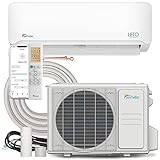
Senville LETO 12000 BTU
- 20.8 SEER2
- 16 ft pre-charged line set
- Heats down to 5F
- Alexa and app control

COSTWAY 12000 BTU
- 20 SEER2 and 8.5 HSPF2
- 23 dB indoor operation
- 115V plug-in
- Full copper line set included

Della Vario 12000 BTU
- 20.5 SEER2 at 115V
- Heating to -4F
- 16.4 ft line set
- Install support line
DIY Mini Split Kits Compared Side by Side in October 2026
Every kit below ships with copper line set, a communication cable, a drain hose and a remote. Where a listing disagrees with itself on coverage or on what the install requires, we note it in the individual review rather than here.
| Product | Specifications | Action |
|---|---|---|
| Senville LETO 12000 BTU |
|
Check Latest Price |
| COSTWAY 12000 BTU |
|
Check Latest Price |
| Della Vario 12000 BTU |
|
Check Latest Price |
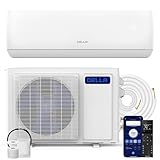 Della Motto 18000 BTU Della Motto 18000 BTU |
|
Check Latest Price |
 ROVSUN 9000 BTU ROVSUN 9000 BTU |
|
Check Latest Price |
 Albott Easy DIY 12000 BTU Albott Easy DIY 12000 BTU |
|
Check Latest Price |
 Rellytech 12000 BTU Rellytech 12000 BTU |
|
Check Latest Price |
 Temprium 12000 BTU Temprium 12000 BTU |
|
Check Latest Price |
| ROVSUN 12000 BTU |
|
Check Latest Price |
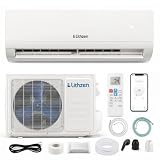 LITHZEN 12000 BTU LITHZEN 12000 BTU |
|
Check Latest Price |
1. Senville LETO 12000 BTU – Best Overall Pick with the Longest Track Record
Senville LETO Mini Split Air Conditioner, Heat Pump, White, 12000 BTU
12000 BTU 1 ton
20.8 SEER2 at 110V
Heating to 5F
16 ft line set
Pros
- 16 ft line set and communication wire in the box
- Alexa and app control with programmable routines
- 12000 BTU inverter covers rooms up to 700 sq ft
- 5 year parts and compressor warranty
Cons
- Manufacturer specifies professional installation
- Labor is not covered by the warranty
- 28 dB indoor rating is audible in a very quiet room
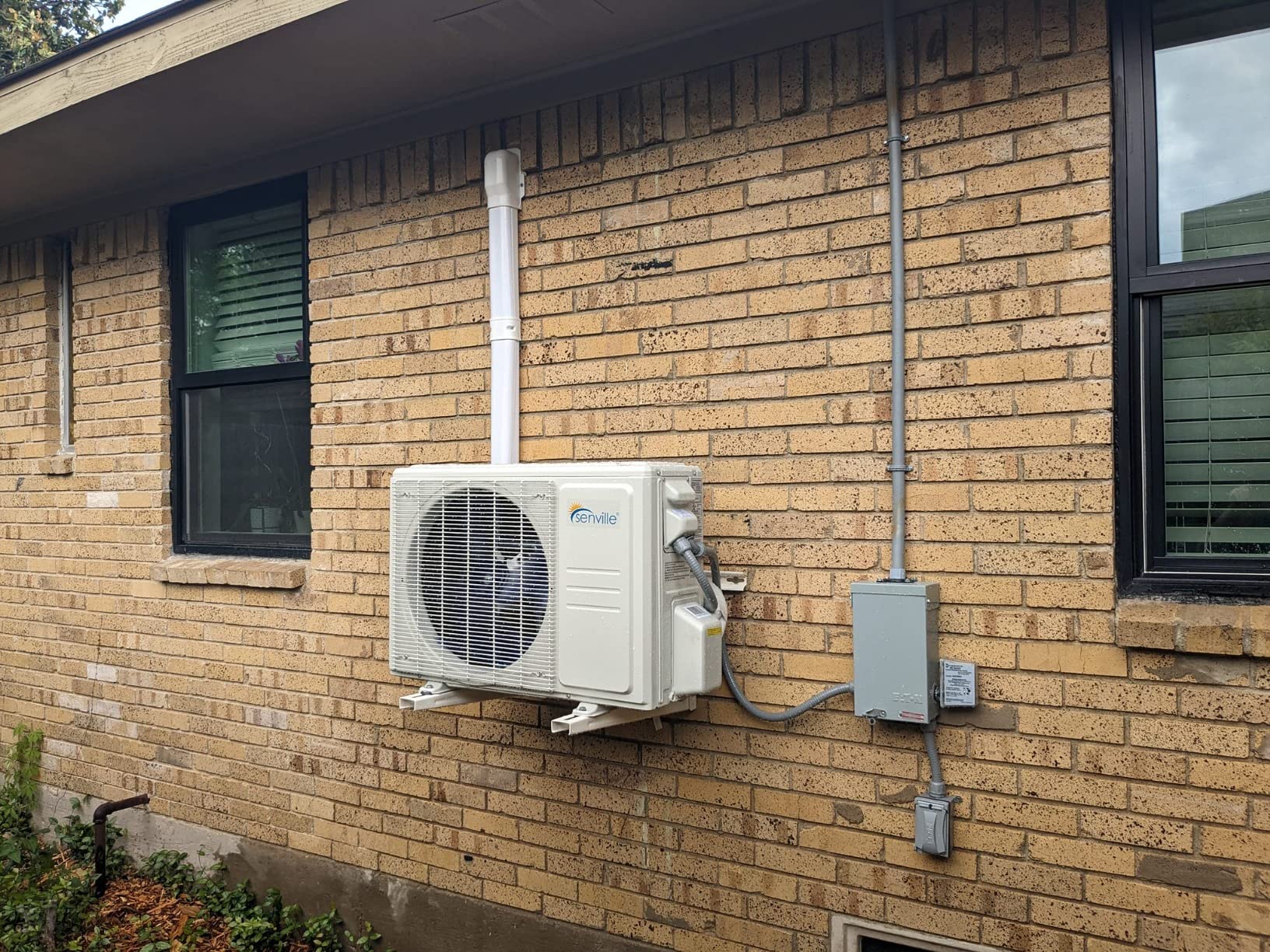
The LETO is the one we kept coming back to while reading through the ten kits. Two thousand one hundred eighty five reviews at 4.4 stars is a much longer owner history than anything else in this group, and that matters more than a spec line when you are putting refrigerant lines through a finished wall. It is a 1 ton 12000 BTU inverter system rated for rooms up to 700 sq ft, drawing 1020W on a 110V circuit.
What you get in the carton is unusually complete: the indoor head, the outdoor condenser, a remote, a 16 ft pre-charged line set and the communication wire. That refrigerant charge is rated for the full 16 ft, which means the common complaint about coiling 10 ft of excess copper inside the wall sleeve does not apply if your wall run is short. The 4-in-1 mode set covers cooling, heat pump, dehumidification and fan, and the heat pump function is rated to operate down to 5F.
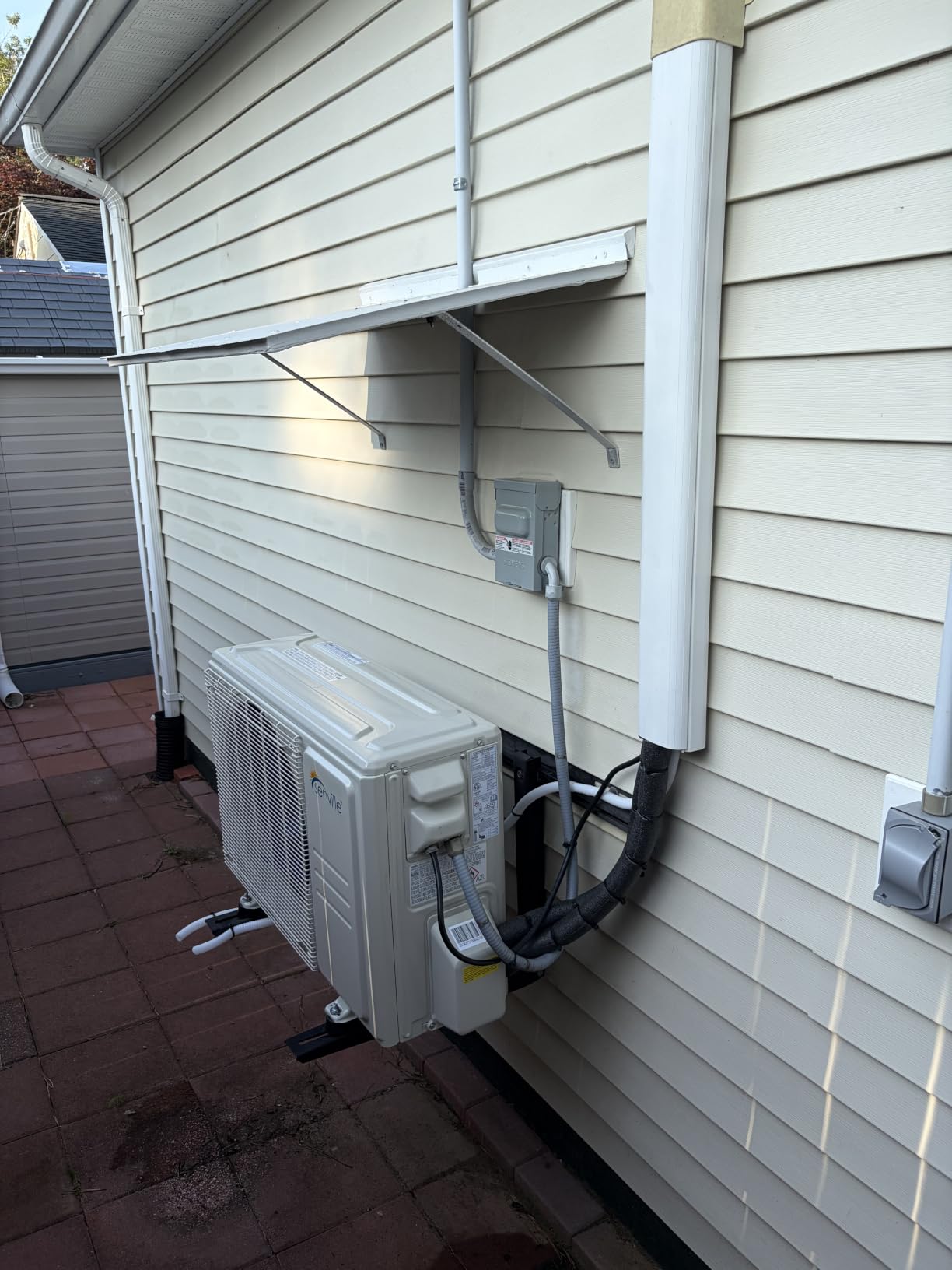
Two specifications deserve a second look. The compressor is a DC rotary scroll unit that is both UL listed and AHRI certified, which is the baseline you want before a contractor will touch it. And the listed indoor noise figure is 28 dB, quiet enough for a bedroom but not silent, so if you are installing next to a recording setup you will hear it turn on.
The warranty is the strongest shape in this roundup: 5 years parts and 5 years compressor. The catch sits in the same sentence, because labor is not included. That is standard across the category, but it means a claim still depends on someone being willing to show up. Owners on r/hvacadvice repeatedly separate the brands that are easy to find parts for from the ones that are not, and that is where a 2185-review brand earns its place over a cheaper sheet of numbers.
What to check before you buy the LETO
Confirm the 110V rating matches your available circuit. At 1020W this is a 9 amp draw, so a 15A circuit has headroom, but it needs to be a dedicated circuit rather than a shared receptacle. Check the 700 sq ft figure against your room, not against the total floor area of your house.
Ask yourself whether heat pump heating at 5F is enough for your climate. The rating is a minimum operating temperature, not a promise of full capacity in deep cold, and that distinction is where cold-climate buyers get disappointed.
Where the LETO is the wrong pick
If you need more than 12000 BTU for an open-plan space, this is a one-ton machine and the 1.5 ton Della Motto covers twice the area. If you want a ceiling cassette or a concealed duct head rather than a wall mount, neither model in this roundup offers that configuration.
If the labor exclusion matters to you, assume you will pay a technician for a few hours of commissioning no matter which brand you pick. The pre-charged line set removes the expensive part of that visit, not the visit itself.
2. COSTWAY 12000 BTU – Best Value Head and the Best Efficiency Pairing
COSTWAY 12000 BTU Mini Split Air Conditioner & Heater
12000 BTU cooling
20 SEER2 and 8.5 HSPF2
115V
23 dB sleep mode
Pros
- Quietest indoor head here at 23 dB
- Full copper line set
- communication wire and drain hose included
- 20 SEER2 paired with 8.5 HSPF2 heating
- Seven modes
- five fan speeds and 4D swing
Cons
- 13 ft line set is shorter than most kits here
- Manufacturer requires licensed installation
- Listed 17.6 lb weight covers the indoor head only
COSTWAY is the only kit in this roundup that publishes both halves of the efficiency number. You get 20 SEER2 on cooling and 8.5 HSPF2 on heating, and that heating figure is the one that decides whether a cold-climate buyer is getting a real heat pump or a cooling unit with a weak backup mode. On paper this is the most complete efficiency pairing we found among the 115V kits.
The indoor head is also the quietest in the group at 23 dB in sleep mode, and it carries seven operating modes with five fan speeds and 4D swing across a 26 ft effective remote range. The self-cleaning function runs the coil up to 137F, and the filters pull out for washing. For a bedroom or a home office where noise decides whether the system stays switched on, that combination is the reason to pick this one.
Coverage is listed at 750 sq ft for 12000 BTU of cooling and 12300 BTU of heating, which is on the generous side of what most manufacturers claim at this capacity. The outdoor unit uses a chassis electric heating element and is rated to operate down to 5F. Maximum rated draw is 1600W, the highest in the roundup, so plan a 15A circuit rather than a 10A one.
Two things to keep in mind. The included line set is 13 ft of liquid and gas copper, the shortest paired with a full accessory bundle in this group, and buyers most often point to that as the item that forces a separate purchase if your wall run is longer. The listed 17.6 lb weight also covers the indoor head only, so do not use it to plan your mounting bracket.
What to check before you buy the COSTWAY
Measure your wall run first. If the distance from the outdoor pad to the indoor head exceeds 13 ft, budget for an extension and understand that a longer line set changes the refrigerant charge math unless the manufacturer supplies a pre-charged extension.
Verify the circuit. At 1600W you need a 15A dedicated branch circuit at 115V, and if your panel has no spare slot this is the point where an electrician gets involved.
Where the COSTWAY is the wrong pick
If your space is larger than roughly 750 sq ft or has serious west-facing glass, 12000 BTU will feel undersized. If you need heat below 5F, the 5F rating is a limit worth respecting rather than a spec to brag about.
If quiet operation is not a priority for your room, you are leaving the best feature on the table. This is a feature-pack machine, and it prices accordingly against simpler 12000 BTU kits.
3. Della Vario 12000 BTU – Best Documentation and the Only Kit Rated to -4F
DELLA Vario Series 12000 BTU Mini Split AC, Work with Alexa and Wifi, 20.5 SEER2 Cools Up to 550 Sq.Ft, Energy Efficient, 115V Ductless Inverter System, Pre-Charged Heat Pump and 16.4ft Kits
12000 BTU at 20.5 SEER2
115V
Heating to -4F
16.4 ft line set
Pros
- Strong value for a 12000 BTU 115V kit
- Detailed install documentation plus a support line
- Della+ app handles scheduling more easily than the remote
- Owners report buying a second Della unit
Cons
- Included line-set insulation and drain tubing degrade within about two years
- Remote uses unlabeled icons and the unit is nearly inoperable without it
- Listed 20.5 SEER2 configuration misses the federal HSPF2 threshold for the tax credit
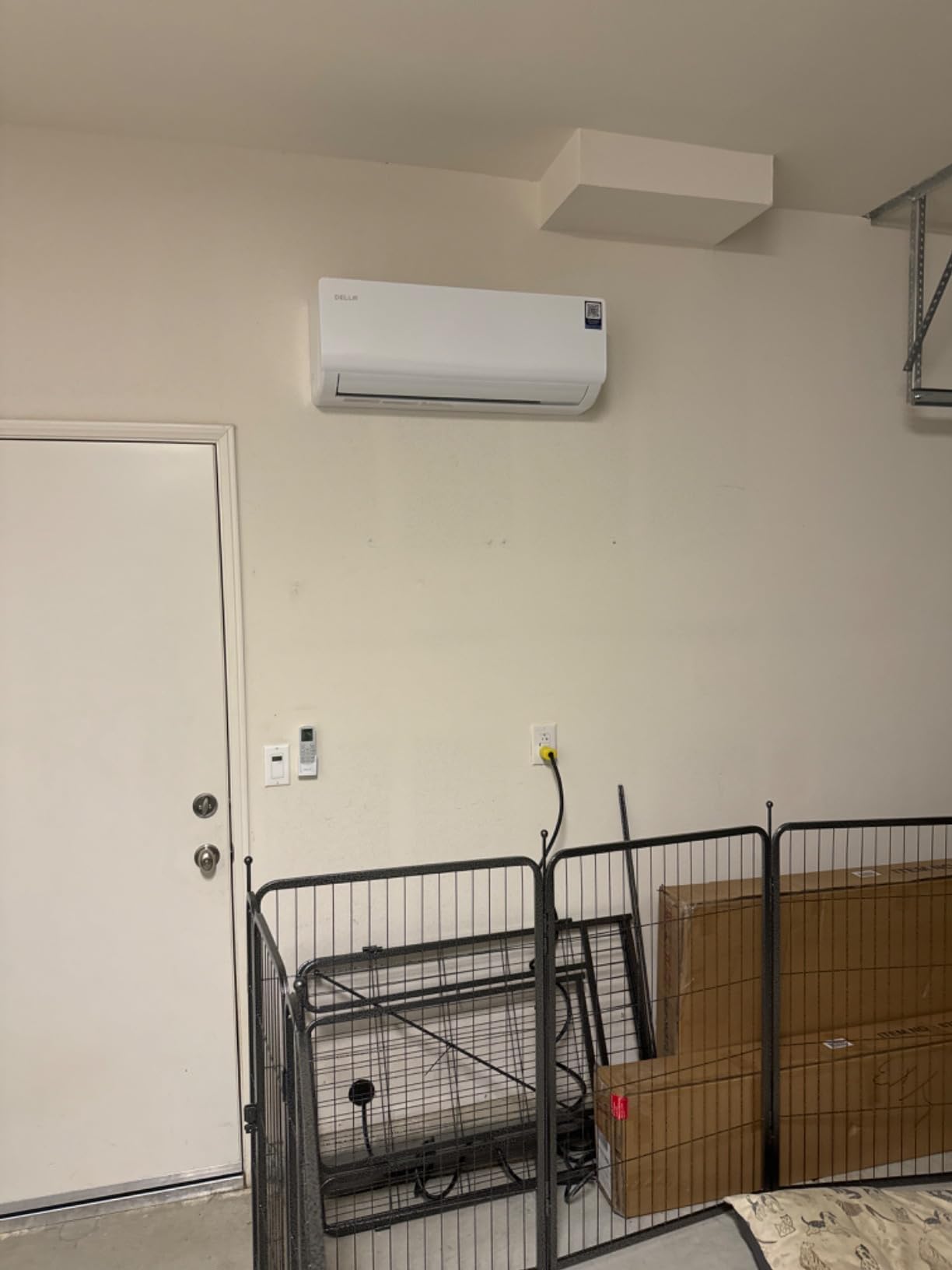
The Vario is the kit we would hand to a homeowner who intends to read the manual from cover to cover. It ships with a 16.4 ft line set, quarter inch and three-eighth inch copper, a 78.7 in drain pipe, and the brand runs an install support line alongside written documentation and video guides. On a job where the wall penetration is the part that goes wrong, clear paper is worth as much as a better compressor.
It is also the most capable heating machine in this roundup, rated to operate down to -4F with a DC inverter that the brand claims up to 30 percent power savings. Capacity is 12000 BTU for both cooling and heating, covering up to 550 sq ft on the listing. That coverage figure is the most conservative we saw at 1 ton, and we would rather you believe the manufacturer than the square footage rule of thumb.
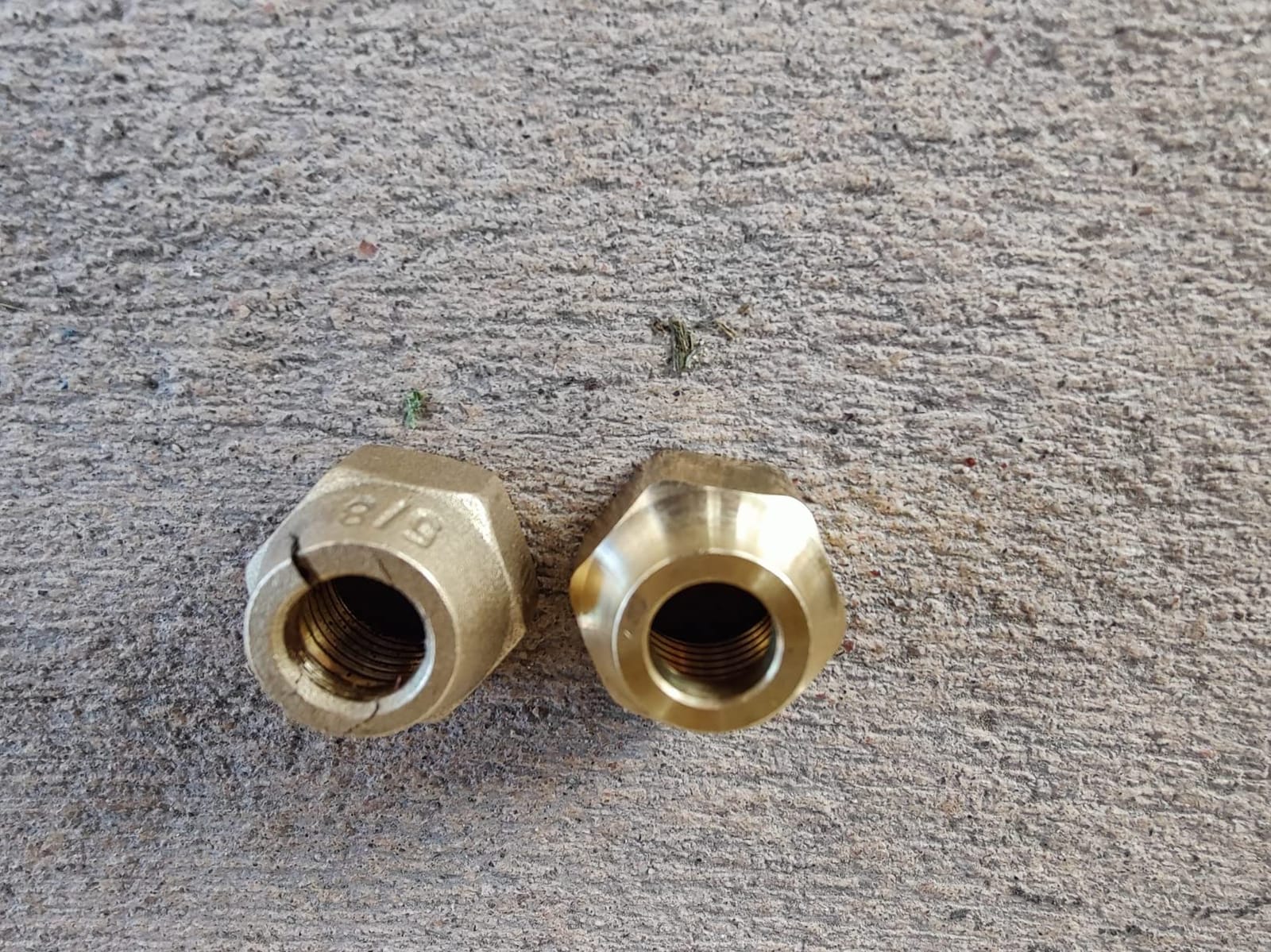
Two honesty notes. The manufacturer states that line-set vacuuming is required and that any line-set length change requires a refrigerant adjustment, which means this is not a true no-vacuum DIY install even though the system ships pre-charged. And the same manual specifies professional installation, so you are buying the parts convenience, not a licence-free permit-free job.
The recurring complaint in reviews is the consumables, not the machine. Owners report the included line-set insulation and drain tubing degrading within about two years, and the supplied Teflon wrap covering only part of the tubing. The remote is a second theme: the display uses icons with no labels, and the Alexa skill is reported to handle on and off only. Budget for replacement consumables in year two.
What to check before you buy the Vario
Accept that you will need a vacuum pump and gauges, or a technician who has them. That changes the cost comparison against a true quick-connect kit substantially, so treat this as a well-supported install rather than a no-equipment one.
Check the listed 25A maximum fuse size against your planned circuit and your panel. This is a 115V system at 1130W, and the manufacturer calls for a dedicated circuit rather than a shared one.
Where the Vario is the wrong pick
If your goal is genuinely to avoid refrigerant tools, this is the wrong kit in the roundup. If the room is above roughly 550 sq ft, the listing capacity will disappoint you, and the Della Motto at 18000 BTU covers more than twice the area.
If you plan to claim the federal efficiency credit, check the HSPF2 rating before you commit. At 12000 BTU and 20.5 SEER2, this configuration does not clear the federal heating threshold, and a rebate check is a five minute task that saves a much larger argument later.
4. Della Motto 18000 BTU – Best for Larger Rooms at 1000 Sq Ft
DELLA Motto Series 18000 BTU 19 SEER2 230V Mini Split AC, Cools Up to 1000 Sq.Ft, Works with Alexa and Wifi, Ductless Inverter System Air Conditioner, Pre-Charged Heat Pump and 16.4ft Kits
18000 BTU at 19 SEER2
230V circuit required
Cools up to 1000 sq ft
Outdoor rated to 5F
Pros
- Only 1.5 ton option here
- covering up to 1000 sq ft
- R-32 refrigerant with a low global warming potential
- 29 dBa indoor head with a cold-weather outdoor unit
- Alexa and WiFi app control with scheduling
Cons
- Requires a 230V circuit so it is unusable without 208-230V service
- 19 SEER2 sits below the 115V units in this group
- Line-set vacuuming is required during installation
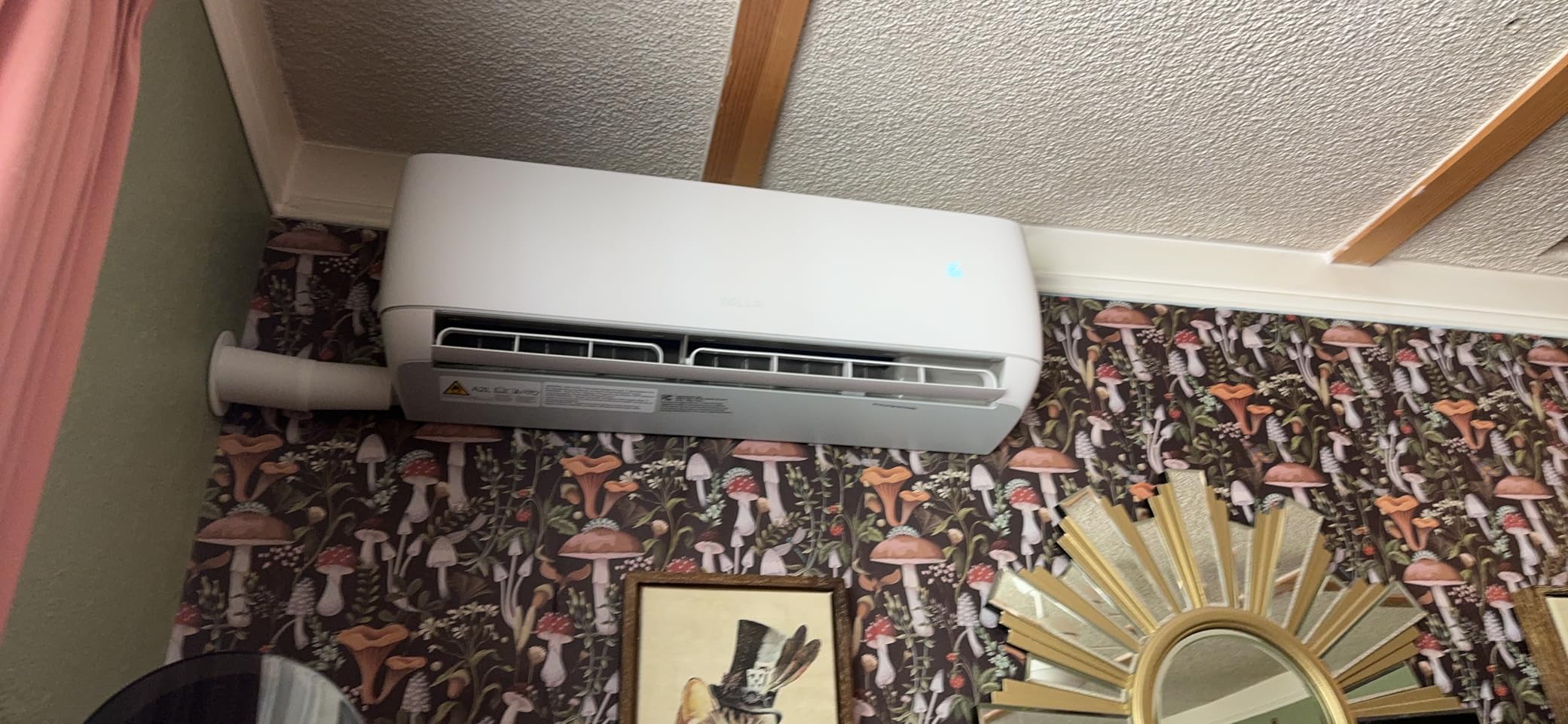
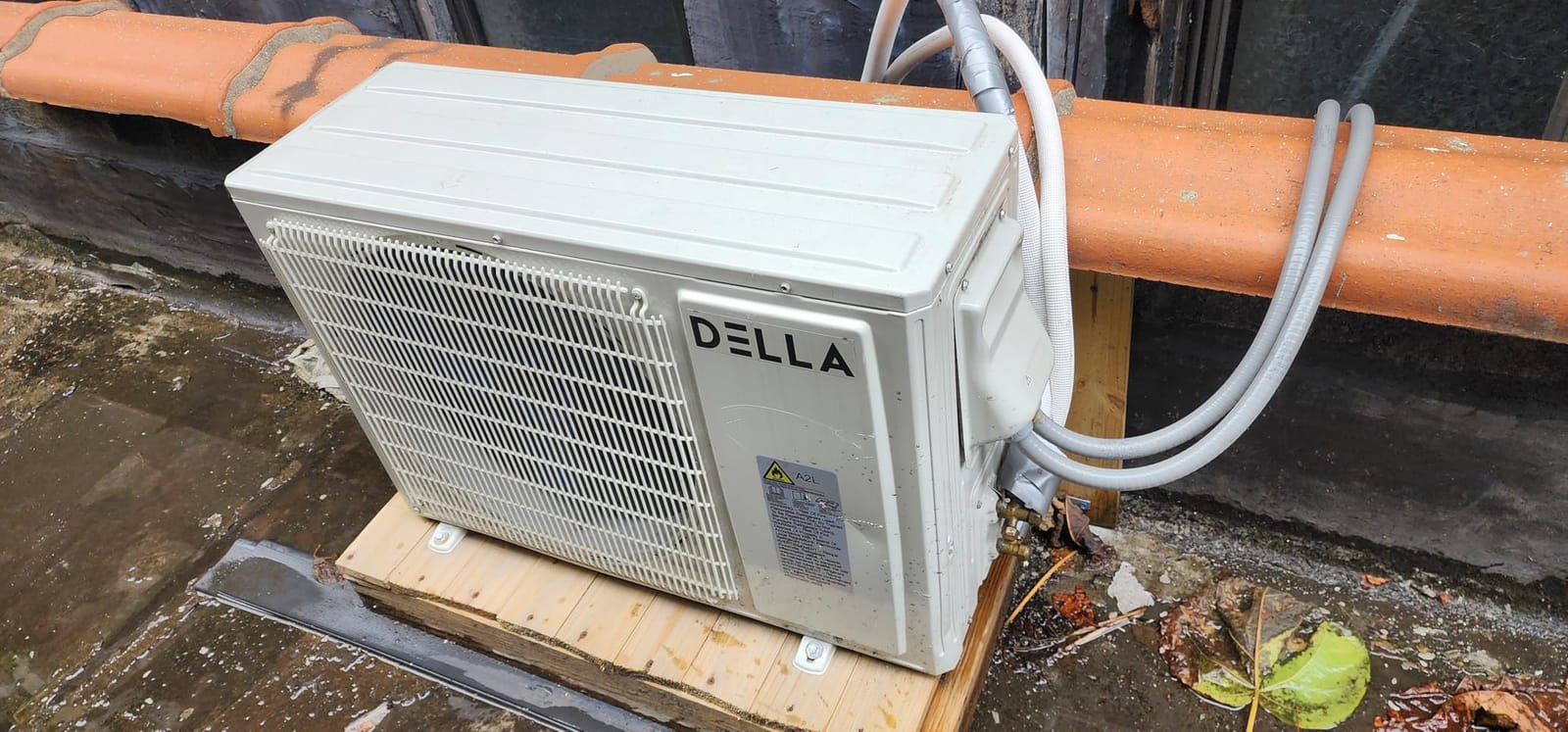
The Motto is the only 1.5 ton kit in this roundup, and for an open-plan living space, a great room, or a small addition over 1000 sq ft it is the only one of these ten that is properly sized without oversizing a smaller machine. It runs 18000 BTU cooling and 18700 BTU heating on 208-230V, with a 15A maximum fuse and a 3450W rated draw.
Refrigerant is R-32, which carries a lower global warming potential than the older R-410A blends, and the outdoor unit has an upgraded bottom heating element that brings the operating floor to 5F. The indoor head runs at 29 dBa with 4D airflow, an I Feel mode, a 24 hour timer, and sleep and eco modes. It is ETL listed, AHRI certified and carries a 4 Star BEE rating.
Here is the honest tradeoff. At 19 SEER2 this is the least efficient machine in the roundup, and it is less efficient than the cheaper 115V kits on this list, which is unusual but a direct consequence of the larger compressor. You are buying capacity, not efficiency. If your priority is a lower power bill rather than square footage coverage, a 12000 BTU unit at 20 or 22 SEER2 serves you better.
Reviews also carry the highest one-star share of the two Della machines here at 12 percent, and the recurring practical complaint is not the machine but the power. A 230V circuit is the single most common reason homeowners abandon a mini split project, so check the panel before anything else. Line-set vacuuming is required here as well, so the same equipment caveat from the Vario applies.
What to check before you buy the Motto
Confirm you have 208-230V service with a spare 15A slot. If your home is all 115V, this machine is not an option at any point in the project, and the decision is made before the rest of the planning starts.
Confirm the 1000 sq ft coverage figure against your room rather than your house. West-facing glass, a high ceiling and a top-floor space can each push a 18000 BTU machine past comfortable in summer.
Where the Motto is the wrong pick
If a small bedroom or office is the problem space, this is badly oversized. Oversizing is not a free upgrade: it drives short cycling, weak dehumidification and faster compressor wear, all of which show up as warranty problems later.
If electricity cost is your main concern, the 19 SEER2 rating works against you across a decade of running hours. The Temprium at 22 SEER2 is the opposite trade and the right read for a different kind of buyer.
5. ROVSUN 9000 BTU – Smallest Capacity and the Best Repeat Purchase Signal
ROVSUN 9000 BTU Wifi Enabled Mini Split Air Conditioner & Heater with Inverter, 20 SEER2 Energy Saving 115V Ductless Split AC Unit with Pre-Charged Condenser, Heat Pump & Installation Kit
9000 BTU
20 SEER2 at 115V
Cools 400-450 sq ft
16.4 ft line set
Pros
- Entry-level 115V heat pump with a full feature set
- Long-term owners report it still running after two years
- Very quiet at 28 dB indoors and outdoors
- Several buyers purchased a second or third unit
Cons
- Manual skips the leak-testing step before first startup
- Included line-set tape is short and poor quality
- Only a one year warranty
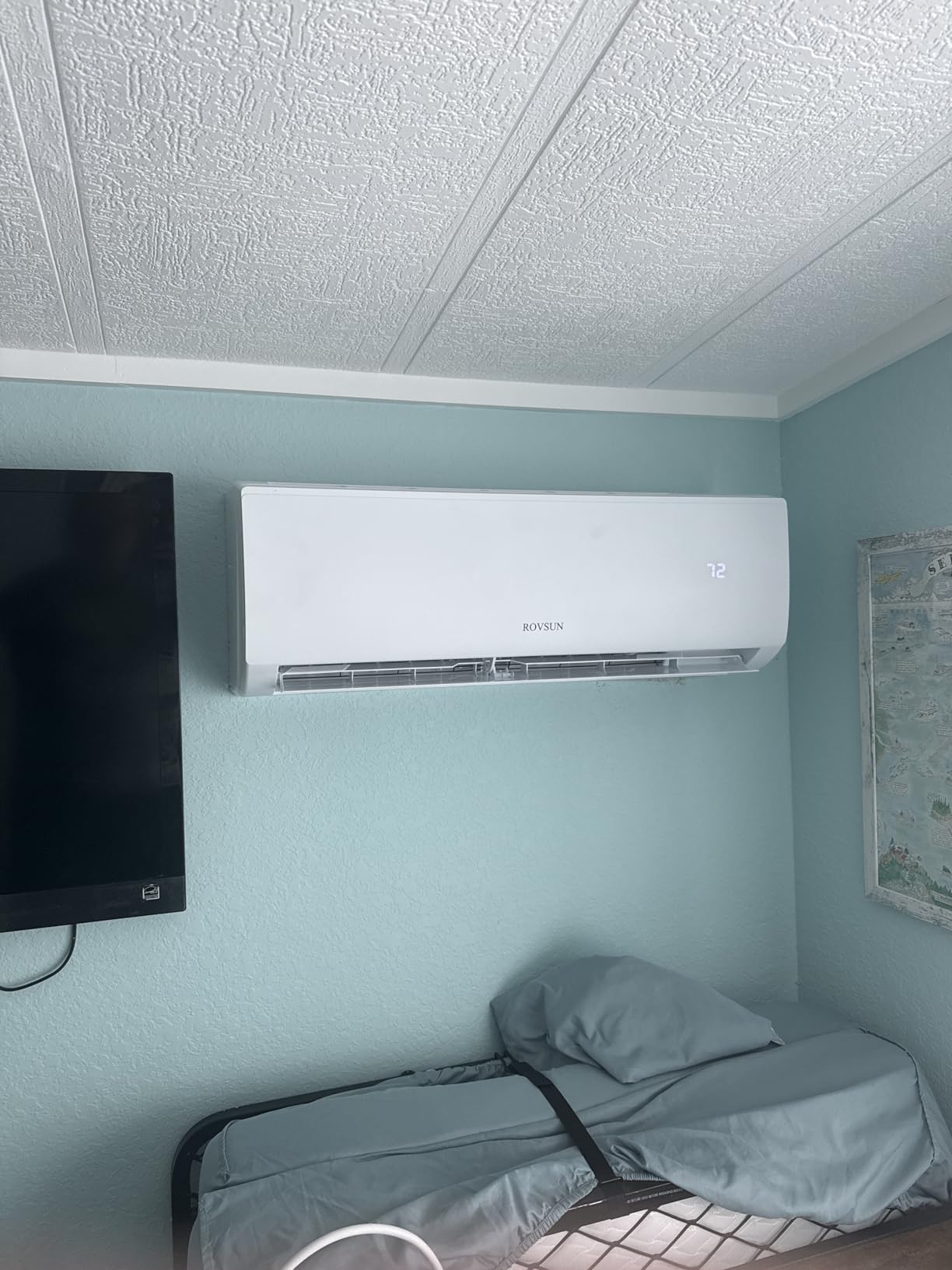
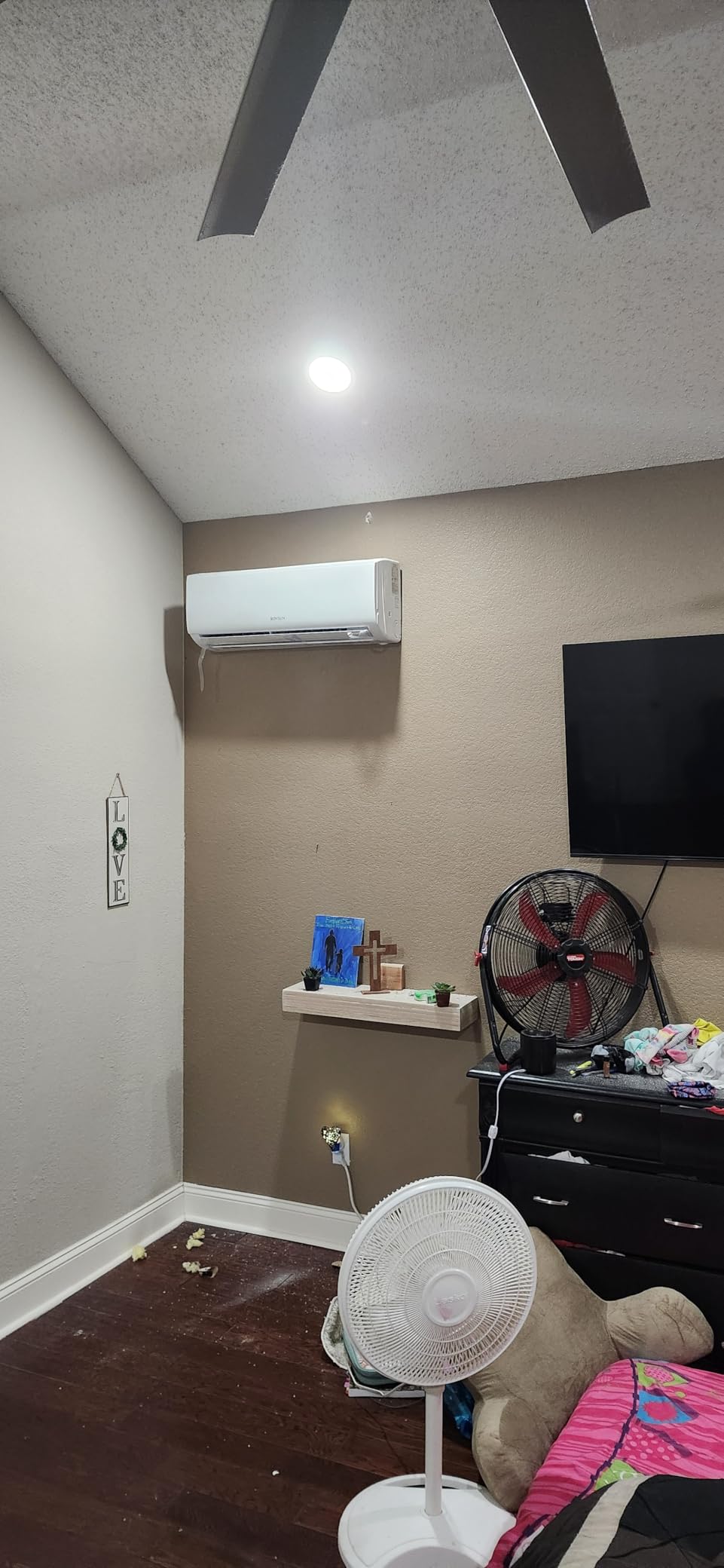
This is the smallest machine in the roundup at 9000 BTU, and at 4.2 stars with 462 reviews it is also one of the lower rated. What makes it worth a look is the pattern in the reviews rather than the specification: several buyers describe owning two or three of these, and long-term owners report the unit still running well after two years. Repeat purchase is a reliability signal that a star average does not capture.
Specs are respectable for the size. You get 20 SEER2 with an inverter compressor rated for up to 35 percent energy savings, a 4 Star BEE rating, 28 dB operation, and WiFi app control with Alexa and Google Assistant voice control. The head offers 4 way swing with eco, sleep, turbo and auto-defrost modes, and the outdoor unit has a heat pump mode alongside dehumidify.
Two install details matter here. The unit must stay upright for 24 hours before installation, which matters if it is stored in a garage or an attic over a cold weekend, and it arrives in two cartons. Owners also report the printed instructions skip the leak-testing step before first startup, so you need to source that procedure elsewhere and follow it before you power the system up for a full load.
Coverage is listed at 400-450 sq ft, the smallest in the roundup, and that makes it a genuine bedroom or single office machine rather than a living room unit. The one year warranty is the shortest shape we see here, which is the real argument against buying two of them. One documented report describes severe condensation and mold in a sealed room that support did not resolve, so do not put this in an unventilated enclosure.
What to check before you buy the 9000 BTU ROVSUN
Measure the room carefully and add west-facing window area to your square footage count. At 400-450 sq ft of coverage, a 500 sq ft bedroom with afternoon sun is right at the limit and will run continuously in summer.
Plan for a 115V dedicated circuit at 875W rated draw, and source a power cord separately since it is not in the kit. If the room is a sealed bedroom, plan the condensate route before the head goes on the wall.
Where the 9000 BTU ROVSUN is the wrong pick
If you are covering anything larger than a small bedroom, the 12000 BTU sibling in this roundup roughly doubles the coverage for a similar outlay and carries a better 4.4 rating. Buyers who want the small format usually want it because the room is genuinely small.
If you want long-term coverage, the one year warranty is thin. A compressor failure in year three on a one year warranty is an out-of-pocket event, and no amount of good installation changes that.
6. Albott Easy DIY 12000 BTU – Pre-Wired Head and the Only No-Vacuum Claim
Albott Easy DIY Series 12,000 BTU 115V Mini Split AC & Heat Pump, 18 SEER2
12000 BTU at 18 SEER2
115V
Outdoor needs no vacuuming
5 year compressor and 7 year parts
Pros
- Only kit here claiming the outdoor unit needs no vacuuming
- Pre-wired indoor head cuts on-site work
- Longest parts warranty here at 7 years
- Quiet at 29 dB with a self-cleaning coil
Cons
- Lowest SEER2 in this roundup at 18
- Manual is largely Chenglish and the refrigerant section is unclear
- Included line set and power cable are thin gauge and the bracket bends easily
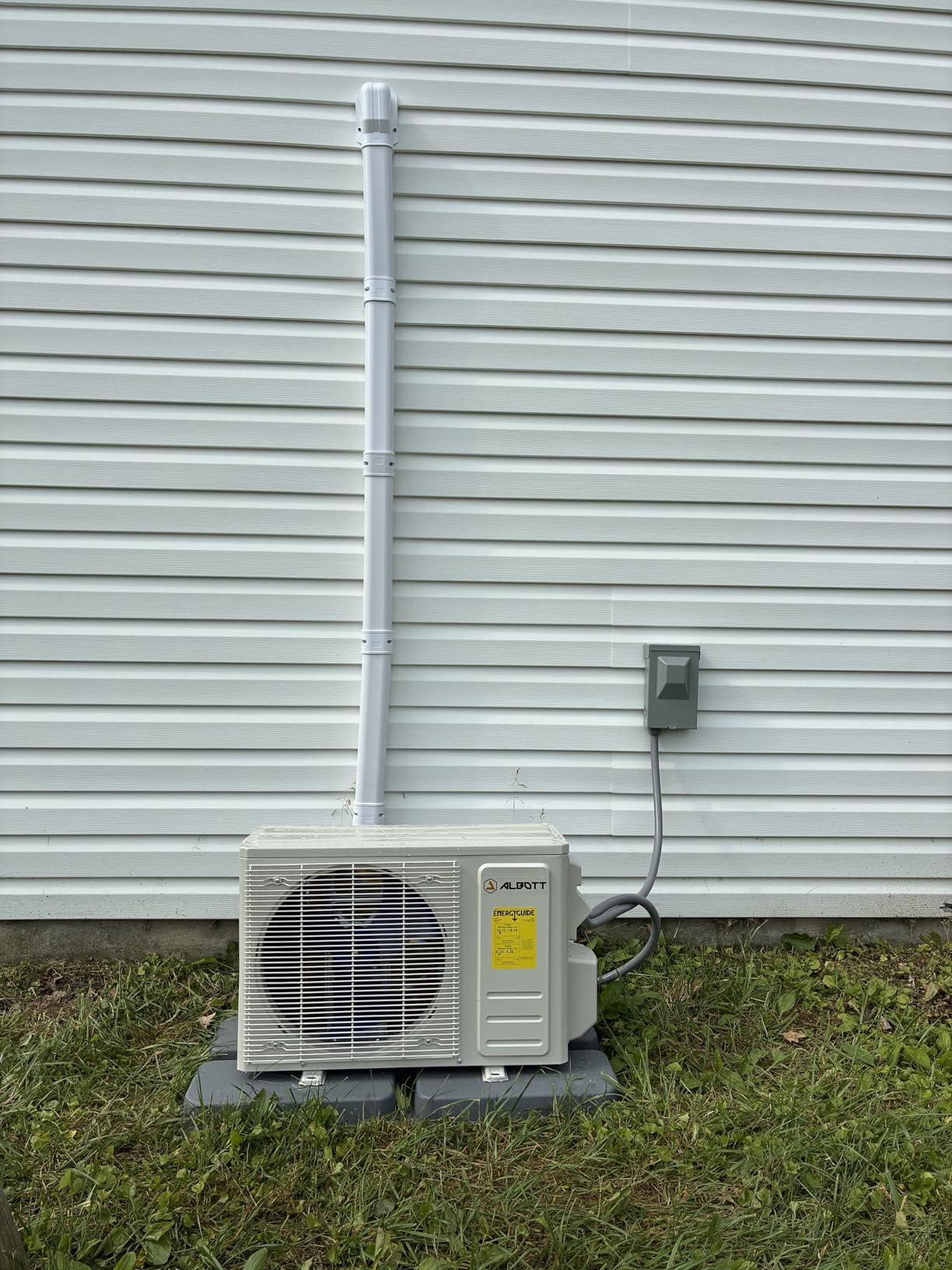
The Albott is the most interesting install story in the roundup. It is the only kit here where the manufacturer states the outdoor unit requires no vacuuming, and the indoor head arrives pre-wired, which removes the biggest on-site wiring task. Multiple buyers report completing the install in two to three hours, and at 360 reviews with a 4.1 rating that is the closest thing to a documented fast install we found.
The warranty is also the best shaped on paper: 5 years compressor and 7 years parts, the longest parts coverage of the ten. Capacity is 12000 BTU for rooms up to 750 sq ft on a 115V circuit at 980W, with an 18 SEER2 inverter that operates from 5F to 122F. The setpoint is adjustable from 61F to 90F, and the head has cooling, heating, dehumidifying and fan modes with sleep mode and a 24 hour timer.
Now the reasons it sits at the bottom of our ranking on 4.1 stars with a 14 percent one-star share, the highest of the ten. The manual is largely in Chenglish and the refrigerant connection section is unclear, and one owner responding to that ambiguity vented all the refrigerant rather than call a technician. Documentation that pushes a homeowner toward destroying a charge is a serious defect in a kit whose entire appeal is a simpler install.
Also on the list: an 18 SEER2 rating, the lowest here, a hard-coded auto mode setpoint at 77F that cannot be changed, reported app connectivity problems, thin-gauge line set and power cable, and a mounting bracket owners describe as bending easily. One documented report describes a unit that would not hold vacuum after installation with the seller refusing the return, which sits awkwardly beside the no-vacuum claim.
What to check before you buy the Albott
Read the manual before you buy, not after. If the refrigerant section is not clear to you, that is a reason to budget for a technician visit regardless of what the carton says, and the 7 year parts warranty is worthless if the connection is made wrong on day one.
Check that the wall bracket suits your wall. At 151 lb listed weight, the indoor head is the heaviest in the roundup and thin-gauge hardware is the first thing to fail.
Where the Albott is the wrong pick
If you are in a market where power cost matters, 18 SEER2 is a real operating cost handicap against 20 and 22 SEER2 machines at the same capacity. Over ten years that gap compounds.
If you want predictable control, skip it. A fixed 77F auto mode and an app with reported connectivity problems are the wrong combination for anyone who wants the system to make decisions for them.
7. Rellytech 12000 BTU – Most Complete Hardware Bundle and Longest Warranty
Rellytech Mini Split AC/Heating System 12000 BTU Heat Pump, 20 SEER2 115V
12000 BTU at 20 SEER2
115V
R454B refrigerant
Heating range to -13F
8 year warranty
Pros
- Most complete install bundle in this roundup
- 8 year warranty is the longest listed here
- 20 SEER2 at a very low relative price point
- Widest low-temperature operating range at -13F
Cons
- Power cord is not included in the kit
- Manufacturer requires a licensed HVAC technician
- Two-carton delivery can arrive on different days
- Only 334 reviews compared with the 1400 plus brands
The Rellytech is the value outlier of the group. At 4.4 stars it sits alongside brands with triple its review count, and it ranks number one in its Amazon sales category, which tells you something about recent demand that a review total cannot. Twenty SEER2 at 12000 BTU on 115V, with an 8 year warranty, is a specification set you would expect to pay a premium for.
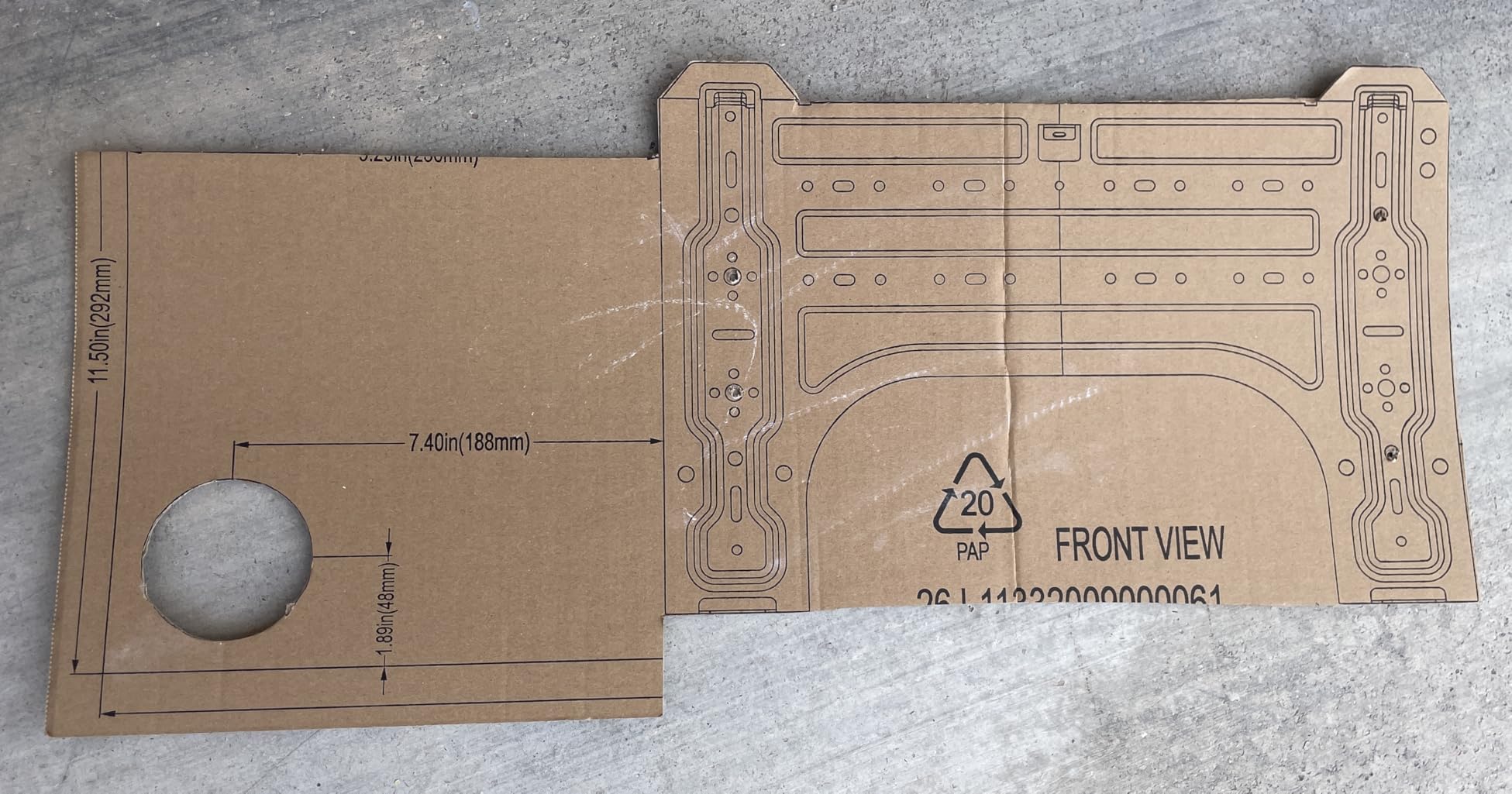
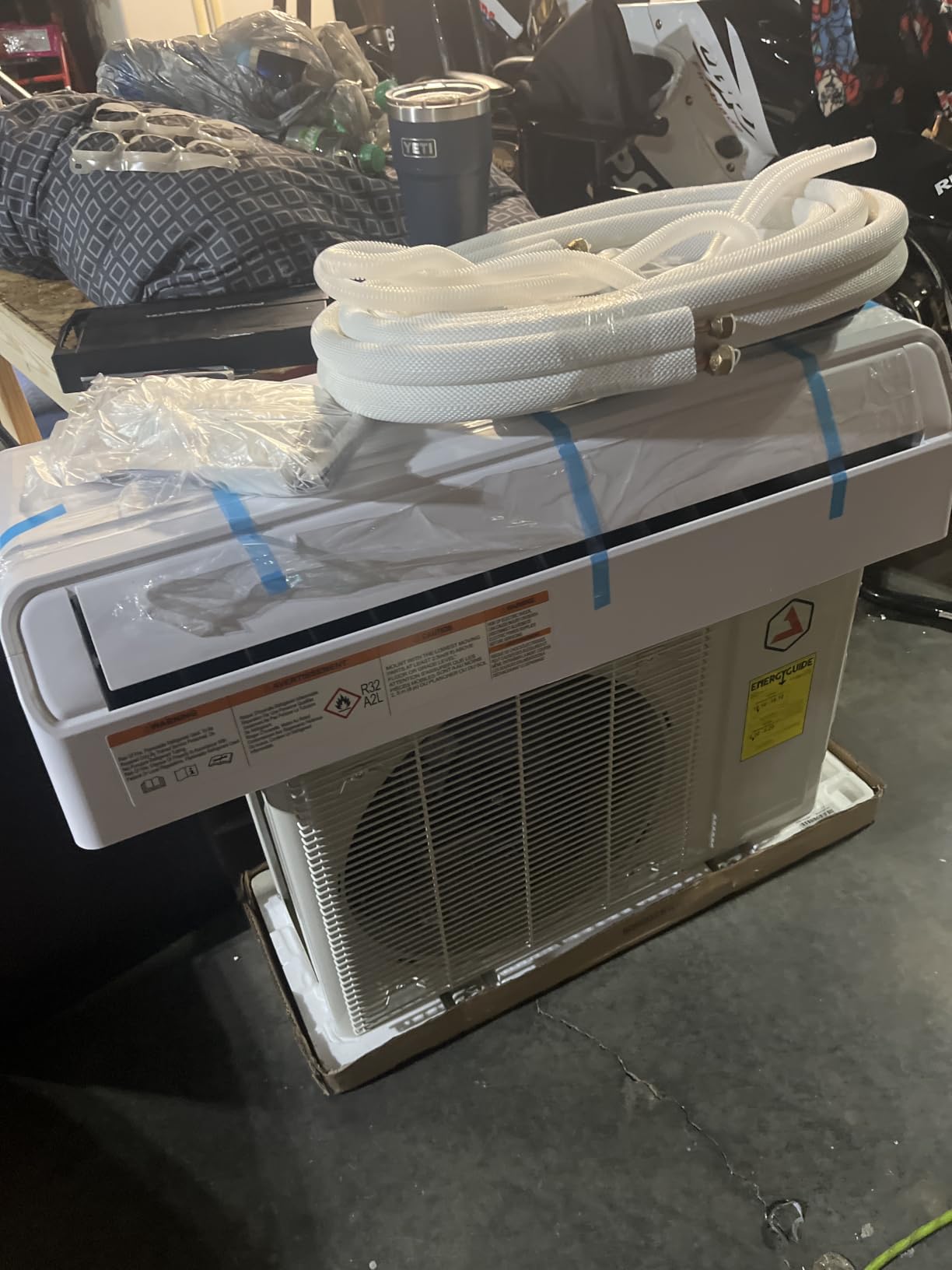
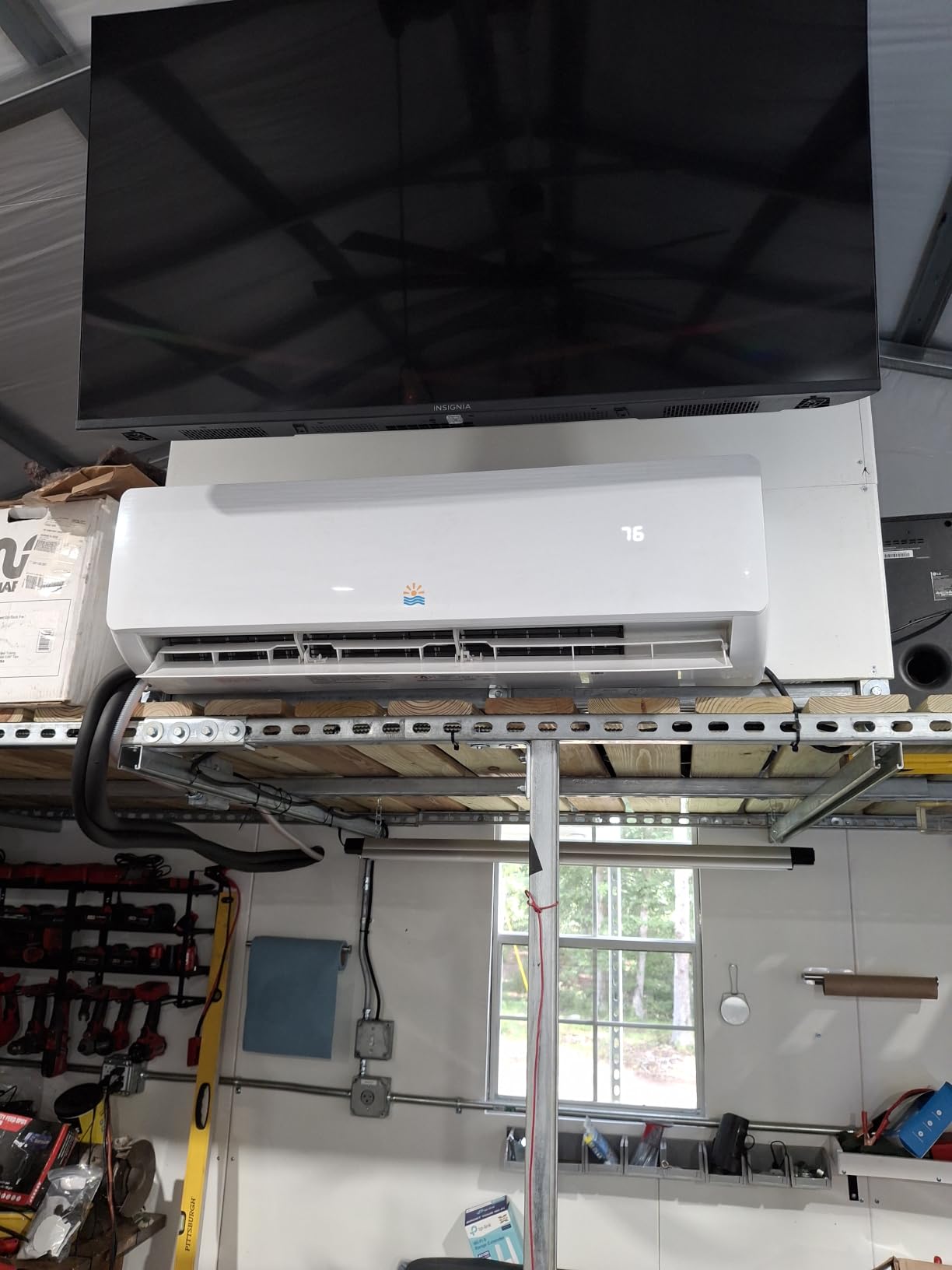
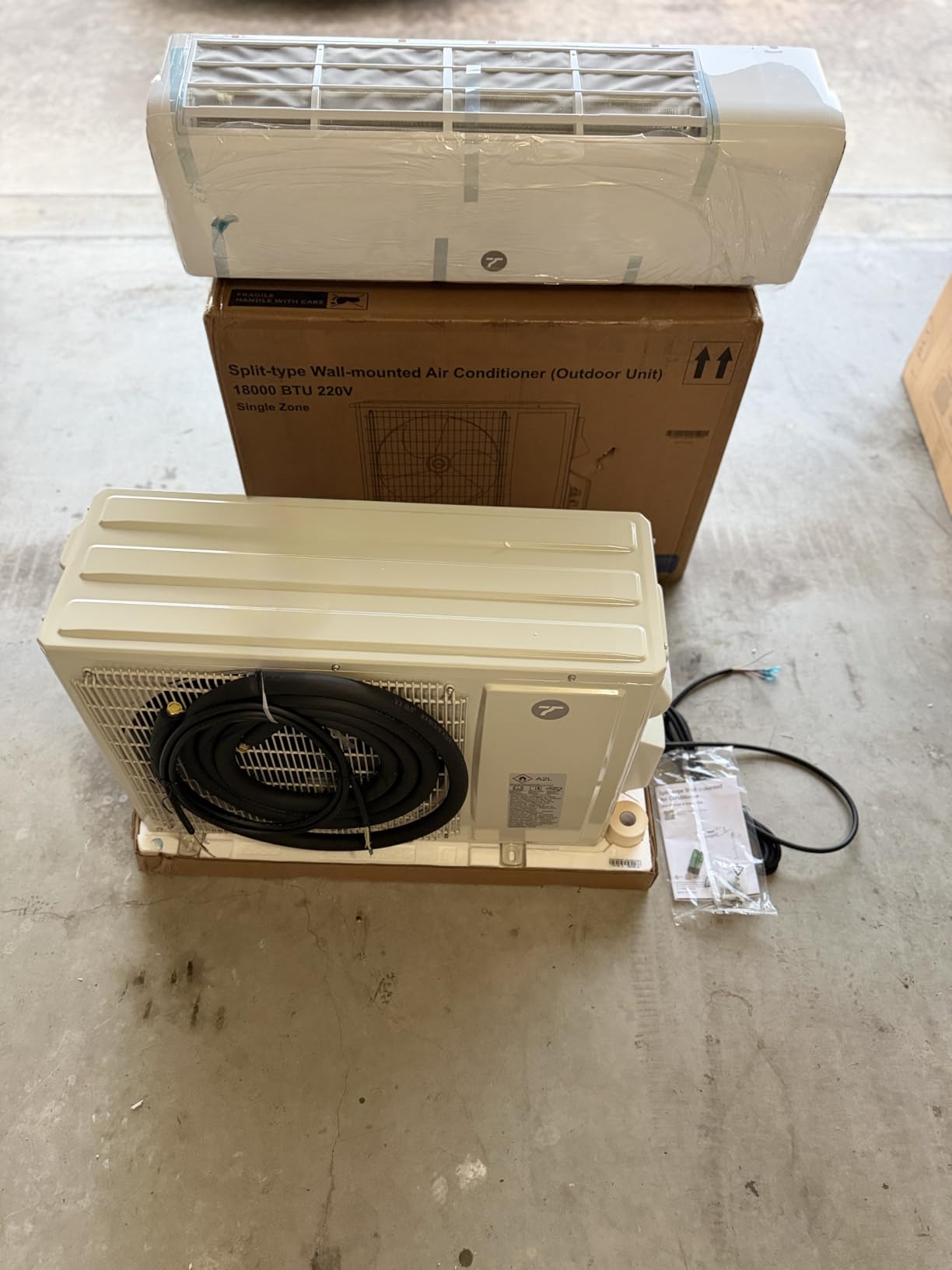
The hardware bundle is the most complete we found. You get the indoor head, the outdoor unit, 16 ft of copper pipes, a 19 ft connection cable, a 6 ft drain pipe, an installation template, sealing clay, insulation tape, a wall sleeve, mounting hardware and a remote with holder. That template alone is the difference between a clean penetration and a crooked one, and it is the item most often missing from kits in this roundup.
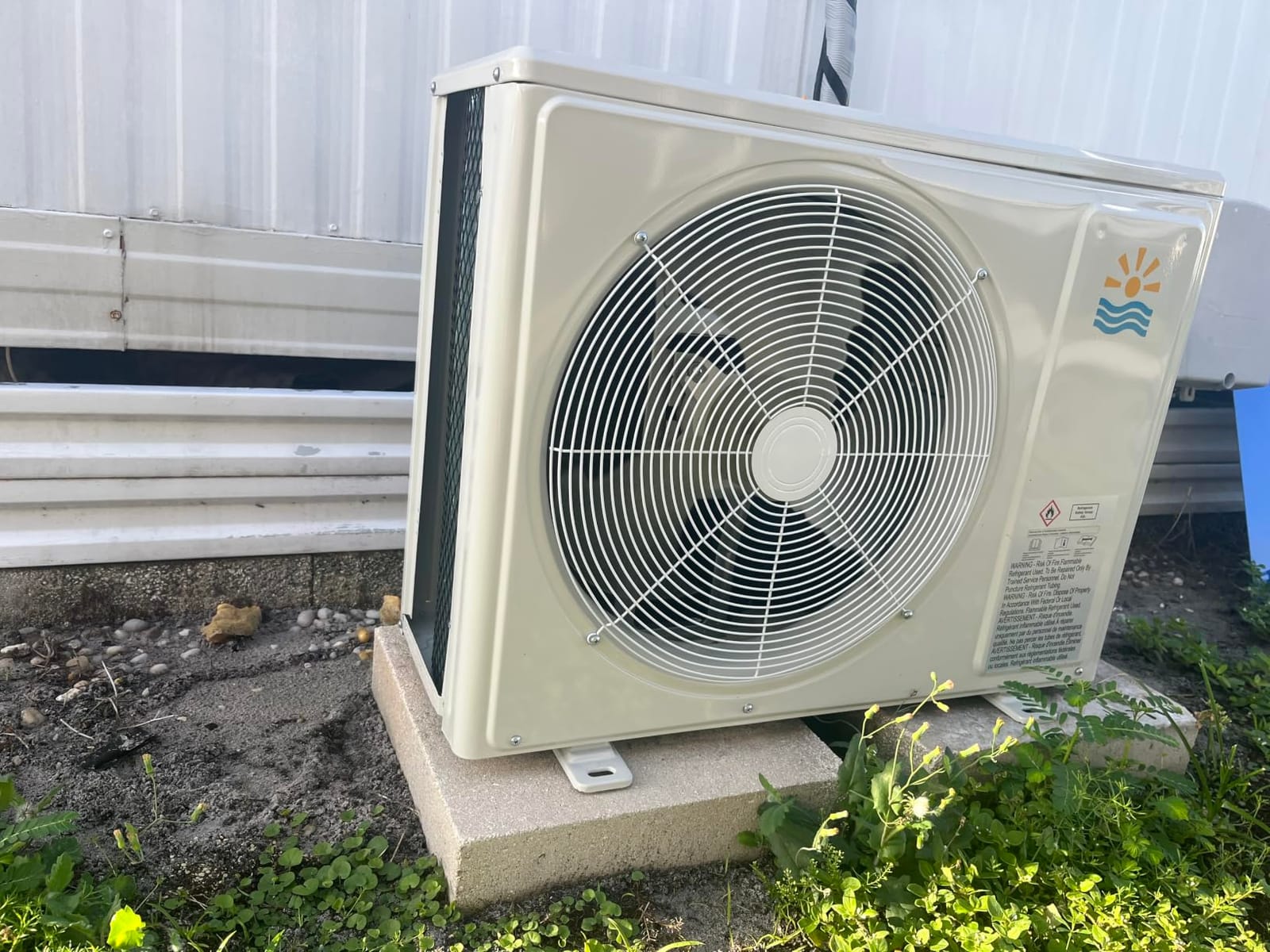
The heating range is the widest in the roundup at -13F to 122F, using R-454B refrigerant, and the unit is both ETL and AHRI certified. Controls cover a WiFi app with scheduling, a digital display remote, and auto-defrost, turbo, iFEEL, sleep, silent and eco modes, with 24 hour customer service behind them. Rated draw is 1050W and the indoor head is 28 dB.
Three cautions. The power cord is not included, so source one before the install day. The manufacturer requires installation by a licensed HVAC technician, which places it in the same category as the rest of these kits rather than in the true quick-connect tier. And 334 reviews is a small base compared with Senville or Della, so the long-term reliability record is not yet established the way a four figure review count would establish it.
What to check before you buy the Rellytech
Buy the power cord and a 15A breaker at the same time. The kit is otherwise complete, which makes an omitted cord feel like a gap rather than a feature, but it is genuinely your first purchase on the list.
Plan around the two-carton delivery. Both cartons must arrive before you start, and the indoor head should sit upright for a period before mounting if it has been on its side in transit.
Where the Rellytech is the wrong pick
If you want an established long-term record, this is not it. A 334-review brand with an 8 year warranty is a bet on the warranty doing the work, and warranty service quality varies more than buyers expect.
If you are installing in a cold climate and need a specific rated capacity at low temperature rather than a minimum operating temperature, the -13F figure is a floor, not a capacity guarantee. Ask for the AHRI certified capacity at your design temperature.
8. Temprium 12000 BTU – Highest Efficiency and Lowest Power Draw
Temprium 12000 BTU Mini Split Air Conditioner, 115V 22 SEER2 AC & Heat Pump
12000 BTU at 22 SEER2
115V
23 dB
780W draw
Heating to 5F
Pros
- Highest SEER2 rating in this roundup at 22
- Lowest power draw at 780W and lowest weight at 40.8 lb
- Ties the quietest indoor head at 23 dB
- Seven modes and seven fan speeds with the most granular control here
Cons
- Only a one year manufacturer warranty
- Smallest review base in this roundup at 165 reviews
- Line set length is not specified in the listing
On paper this is the most efficient machine in the roundup. Twenty-two SEER2 with a DC inverter compressor, 780W rated draw and a 40.8 lb indoor head make it the lightest and the thriftiest on paper, and it ties for the quietest indoor rating at 23 dB with sleep mode and a dimmed display. It is also the only kit here with seven operating modes and seven fan speeds plus 4D auto swing.
Filtration gets attention too, with a 133F high-temperature self-cleaning function, a washable filter, and separate air purification and anti-bacterial filters. Control runs through a WiFi app, Alexa and Google Assistant voice control. Cooling runs to 122F outdoor ambient and heating to 5F. ETL and AHRI certified.
What stops us recommending it more strongly is the warranty. One year manufacturer coverage is the shortest in the roundup, and it is paired with the smallest review base at 165, so there is very little long-term data behind an efficiency claim that only pays off over a decade. A 22 SEER2 machine that fails in year four has cost you a lot more than the running-hour savings were worth.
There is also a listing problem. Included components are described generically as an installation kit with no line set length specified, and the published annual energy figure of 1.6 kWh is not a standard measure, so neither number helps you plan. Confirm the line set length with the seller before you commit, because that is the single detail that determines whether this kit is installable in your wall.
What to check before you buy the Temprium
Ask for the actual line set length in writing. Every other kit in this roundup states it, and an unspecified length is not a detail you can skip when the unit runs on 115V through a finished wall.
Check the warranty terms directly with the seller rather than relying on the listing. If the one year figure is confirmed, budget for parts availability in your area before you commit to a ten year efficiency investment.
Where the Temprium is the wrong pick
If you want a system you can install and then stop thinking about for a decade, a one year warranty is the wrong risk. The efficiency advantage only pays if the compressor outlives its coverage, and one year is not a credible foundation for that.
If you need heat below 5F, this is the wrong machine despite the efficiency. The Rellytech at -13F is the cold-temperature read in this roundup, and cold-climate buyers should weight operating range above SEER2.
9. ROVSUN 12000 BTU – Best-Rated ROVSUN for Bedrooms and Home Offices
ROVSUN 12000 BTU Wifi Enabled Mini Split Air Conditioner & Heater with Inverter, 20 SEER2 Energy Saving 115V Ductless Split AC Unit with Pre-Charged Condenser, Heat Pump & Installation Kit
12000 BTU at 20 SEER2
115V
12600 BTU heating
28 dB
16.4 ft line set
Pros
- 79 percent five-star reviews with an 8 percent one-star share
- 12000 BTU covers far more area than the 9000 BTU sibling
- Quiet at 28 dB with 4D airflow distribution
- WiFi app and voice control for scheduled routines
Cons
- Extra power cord is not included
- Only a one year warranty
- Two-carton delivery can arrive on different days
- Listing gives two different coverage figures
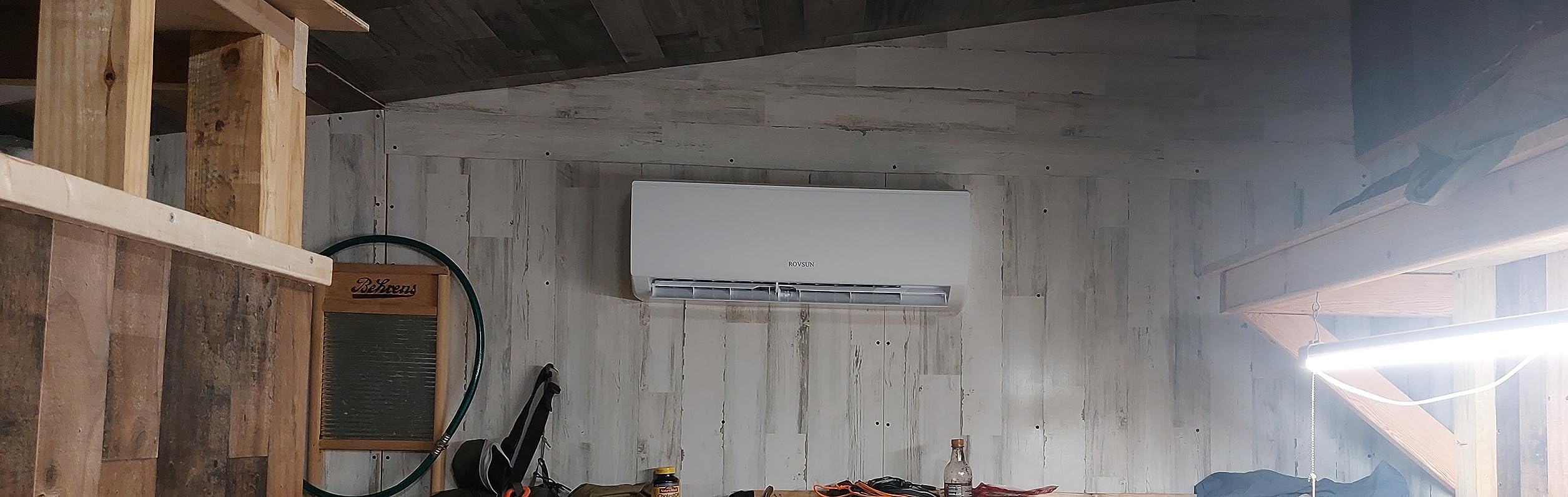
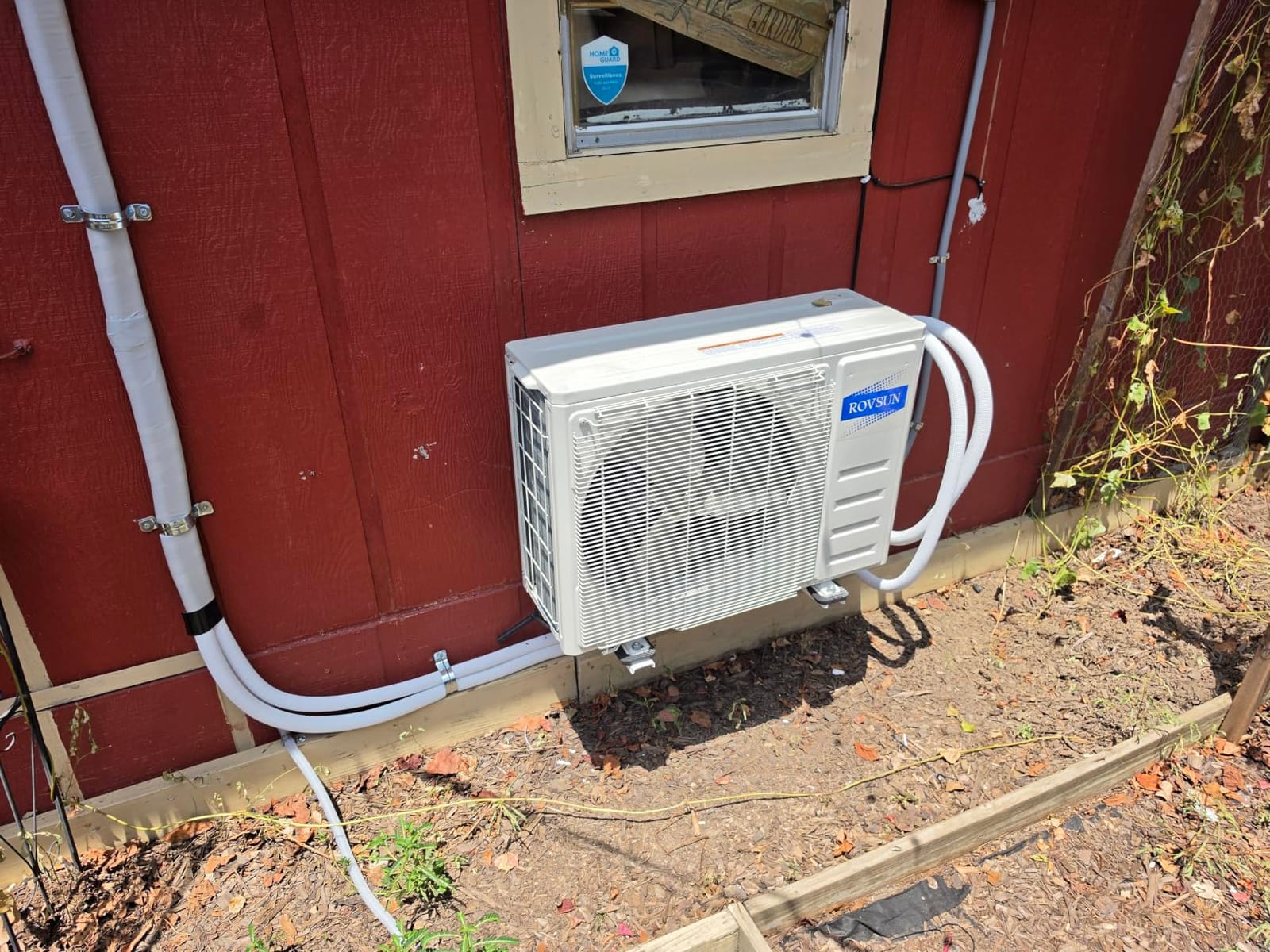
The 12000 BTU ROVSUN is the better of the two ROVSUN kits in this roundup, with a 4.4 rating and 79 percent five-star reviews against the 9000 BTU model. It delivers 12000 BTU cooling and 12600 BTU heating on 20 SEER2, which covers roughly double the area of its smaller sibling for a similar outlay, and it keeps the same 28 dB noise figure and the same smart control feature set.
Controls are a WiFi app plus Alexa and Google Assistant voice control with routine scheduling, and the head runs 4 way swing with eco, sleep, turbo and auto-defrost modes. The inverter is claimed at up to 35 percent energy savings. The included hardware is a remote, 16.4 ft of copper lines and a signal cord, with the power cord sold separately.
Two listing conflicts are worth knowing about before you order. The floor area is given as 750 sq ft in the product details and 550 sq ft in the feature list, so the honest read is somewhere between those numbers and you should size on the lower one. Rated draw is 1240W at 115V, and the unit must stay upright for 24 hours before installation if it has been stored on its side.
The warranty is one year, which is the main reason this is not higher in the ranking despite an excellent 4.4 score. The heat pump function also extends seasonal use well beyond what a cooling-only window unit offers, which is the real argument for a bedroom or office that is uncomfortable in January rather than just July.
What to check before you buy the 12000 BTU ROVSUN
Size on 550 sq ft, not 750. The conservative figure is the one the manufacturer lists in two places, and an undersized-by-spec machine that runs constantly costs you more in power than the rating suggests.
Buy the power cord and confirm a dedicated 115V circuit at 15A. Also plan the install around two cartons arriving separately, and do not start until both have landed.
Where the 12000 BTU ROVSUN is the wrong pick
If you want a long warranty behind a heat pump that will run eight months a year, the one year term is the deal breaker. The Rellytech at eight years or the Albott at seven compressor years is a better fit for that buyer.
If your space is genuinely small, this is overkill. The 9000 BTU ROVSUN is the right size for a 400-450 sq ft room and this machine will short cycle trying to condition it.
10. LITHZEN 12000 BTU – Compact Kit Suited to Sunrooms and Garages
LITHZEN 12000 BTU Mini Split AC/Heating System, 17 SEER2 115V
12000 BTU at 17 SEER2
115V
9.8 ft line set
R32
WiFi and touch control
Pros
- Cools quickly and quietly in garages
- basements and sunrooms
- App
- touch and Alexa control set up without difficulty
- Washable filter and straightforward maintenance
Cons
- Lowest SEER2 here at 17 and shortest line set at 9.8 ft
- Smallest review base at 88 with all reviews recent
- Manufacturer directs installation to professionals
- One control board fault that a replacement board did not resolve
The LITHZEN, sold by COSTWAY, is the newest and least proven entry here with 88 reviews that are almost all recent. That is not by itself disqualifying for a room like a garage, a basement or a glass sunroom, where the goal is fast cooling at a modest efficiency level rather than a decade of operating cost optimisation.
Owners using it in those add-on spaces report fast cooling, quiet running and painless smart-control setup with the WiFi app, touch control and Alexa. The head runs 17 SEER2 on an inverter with R-32 refrigerant, offering 7 operating modes and 5 fan speeds, a 24 hour timer, a child lock and a washable filter, rated for areas up to 750 sq ft at 1230W.
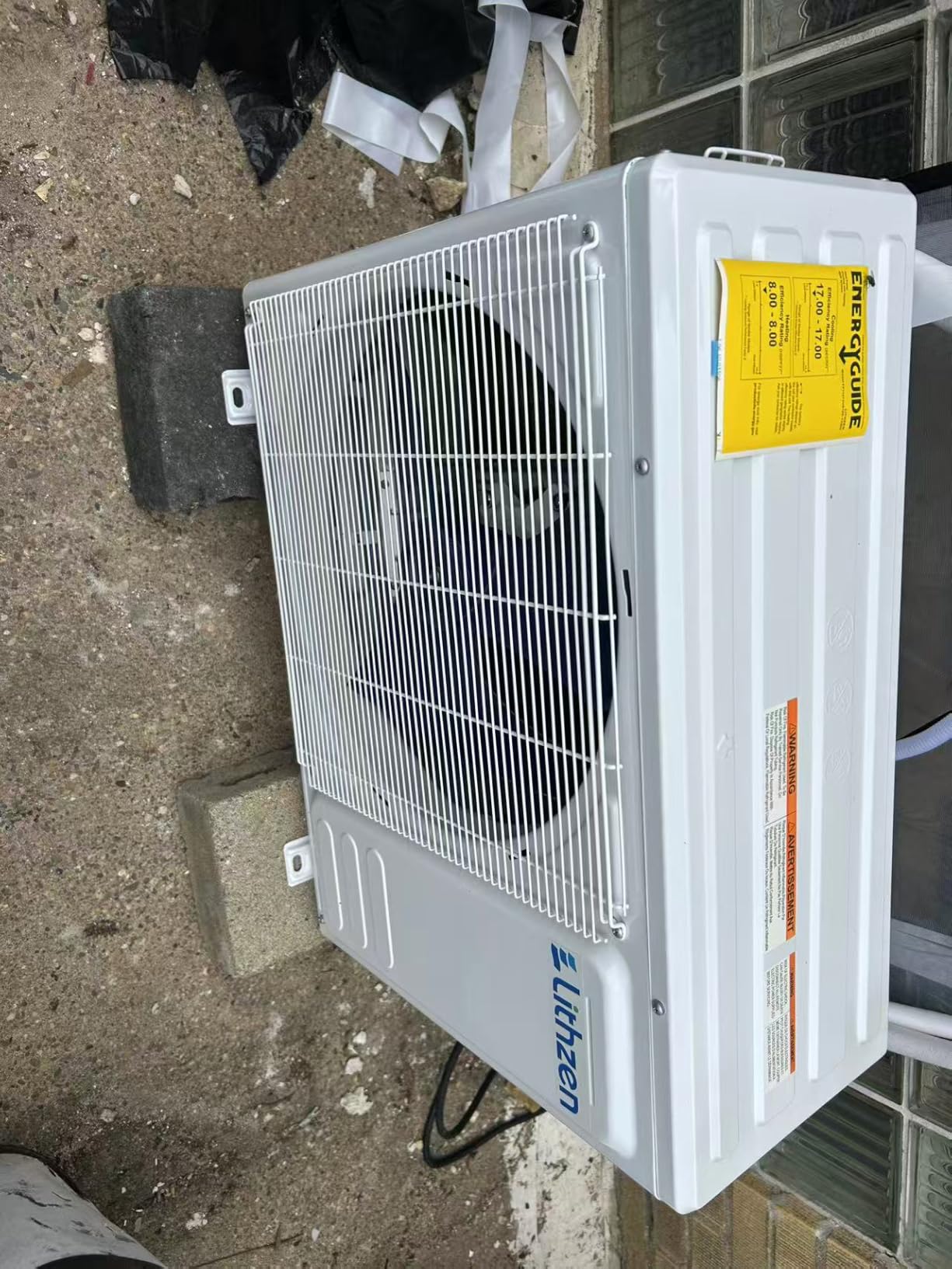
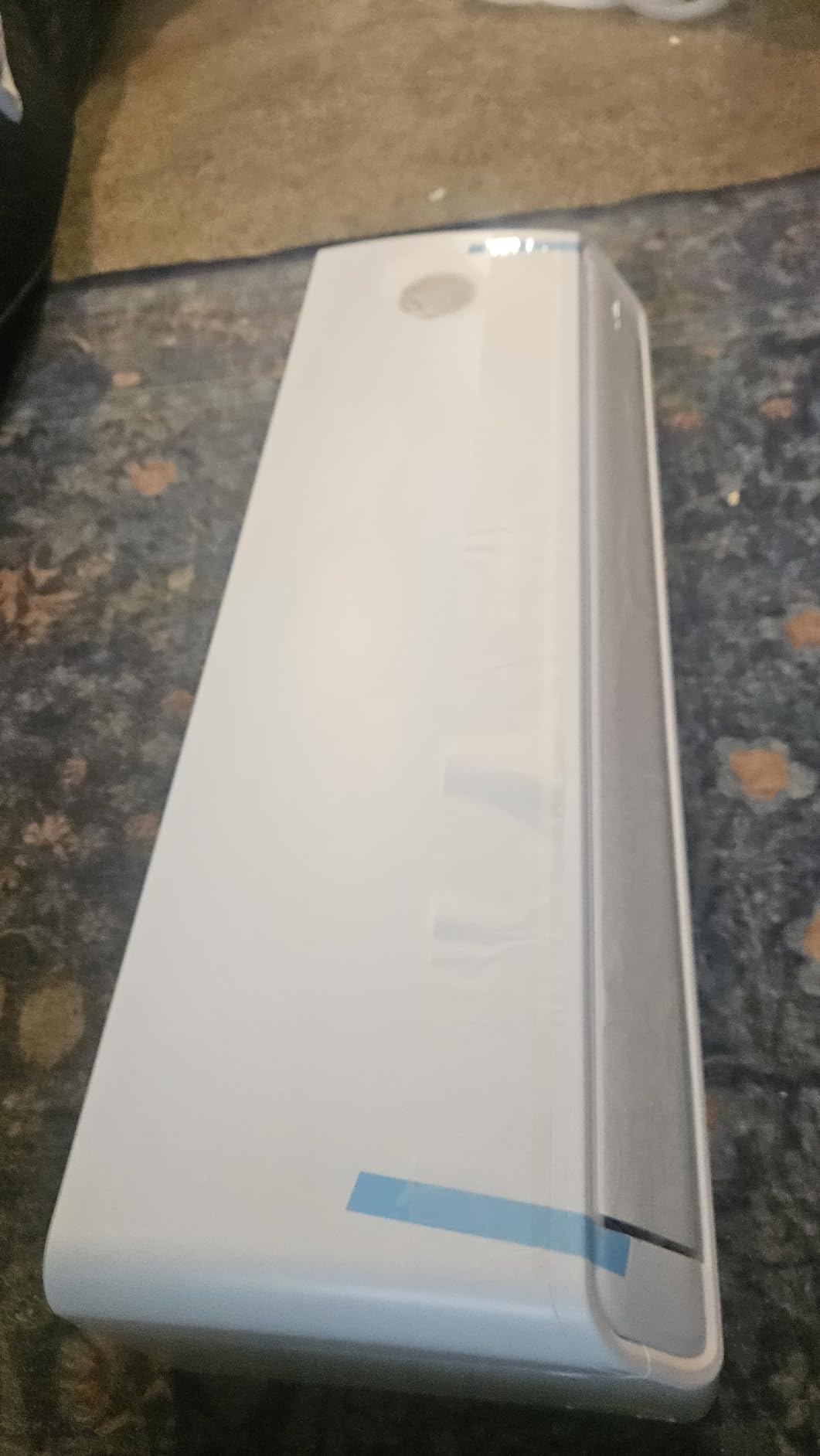
The 9.8 ft line set is the real constraint. That is roughly 6 ft shorter than the 16 ft standard across this roundup, and it arrives as 9.8 ft of air pipe and 9.8 ft of liquid pipe with a 6.5 ft drain hose and a 10.8 ft communication wire. If your wall run is longer, this kit is not installable as shipped and you are looking at an extension plus a refrigerant charge, which erases the advantage of buying a bundled kit at all.
It also carries the lowest efficiency rating in the roundup at 17 SEER2, and 17 is the baseline the higher numbers are measured against, so there is no efficiency story to tell. One documented report describes a control board fault that a replacement board did not resolve. At 88 reviews, the reliability record simply does not exist yet.
What to check before you buy the LITHZEN
Measure the wall run and compare it to 9.8 ft before you order anything. This is the one decision that determines whether the kit is usable in your home, and it takes two minutes with a tape measure.
Check your panel for a spare 15A slot at 1230W, and confirm the local permit position. Because the manufacturer directs installation to professionals, you should plan the same way you would for a contractor install rather than treating this as a weekend project.
Where the LITHZEN is the wrong pick
If the space is a primary living area, the 17 SEER2 rating will show up on your power bill every summer month. The Temprium at 22 SEER2 costs more in equipment terms and less over a decade of running hours.
If you want a warranty behind the purchase, there is no meaningful warranty term in the data here. An 88-review record with a reported control board fault is a thinner foundation than any of the 1000-review brands in this roundup.
What Still Needs a Licensed Professional
Here is the part most DIY marketing leaves out. A pre-charged line set removes the refrigerant work from the job, and on a true Quick Connect kit that is the expensive part. It does not remove the electrical work, the permit, or the building inspection. Every manufacturer in this roundup still specifies licensed or professional installation in its own documentation, and that is not boilerplate.
Before you plan the weekend, work through this list and mark the items you cannot do yourself.
The dedicated circuit. Every one of these machines requires a dedicated branch circuit, not a shared receptacle. A 12000 BTU 115V kit typically needs a 15A two-pole breaker on modern split-phase panels. Extending a circuit into a garage, attic or pole barn is electrical work in every jurisdiction we looked at, and it is the single most common reason a DIY mini split project gets paused.
Permits and code compliance. Local rules vary by jurisdiction type. Electrical permits are near universal, some building departments require a mechanical permit for a ductless head, and outside the United States the rules are different again, with f-gas certification requirements that put a licensed contractor between you and the refrigerant regardless of what the line set contains.
Panel work. If you need a new breaker, a subpanel or a feeder run, that is licensed electrical work. This is also the point where a warranty claim can be lost, because a manufacturer inspecting a failed unit will look for an electrical permit sticker or a licensed invoice.
Any refrigerant work outside the sealed line set. If the kit requires vacuuming, if you need an extension kit, or if you shorten and re-flare a line, you are now handling refrigerant and you are outside EPA Section 608 certification. Two of the kits in this roundup, the Della Vario and the Della Motto, state plainly that vacuuming is required.
The wall penetration in a finished wall. Drilling through a finished interior wall to reach a sleeve in the rim joist, and then fishing the line back into the room, is the messiest part of the job and the part most likely to damage drywall. Homeowners on r/hvacadvice describe this as the step that turns a weekend into a week, and the cost of a repair here often exceeds the equipment.
Condensate routing in a location that needs drilling. Sloping a drain line through finished trim or a second storey requires a hole you may not want to make. Confirm the exit point before the head goes on the wall.
Commissioning and the first startup. A leak test, a superheat and subcool check, and a final refrigerant verification are not optional. Owners who skipped the leak test step and started the system at full load are the source of most of the early-failure complaints in this roundup.
Our recommendation is a hybrid. Do the mounting, the routing, the drilling and the connections yourself, and pay an electrician for the circuit and a qualified technician for commissioning. That is how most successful homeowner installations on the HVAC forums describe their projects, and it is the same path that keeps a warranty claim alive. If you enjoy the process of a finished project, our guide to DIY equipment and finishing kits covers the same tool-and-jig mindset from a different workshop. For the tools that make a weekend install far less eventful, our picks for OBD2 scanners for DIY mechanics explain how to read codes on a system that is throwing them.
How to Size a DIY Mini Split Kit for Your Rooms
Sizing is where most homeowner mistakes are made, and the square footage rule of thumb is only a starting point. The rule of thumb for a ductless heat pump is roughly 600 sq ft per ton of cooling capacity, so 12000 BTU lands near 550 to 700 sq ft, and every listing in this roundup uses a figure inside that band. The band is wide because the variable is not the room, it is the room’s heat load.
Adjust upward for west or south facing glass, a top-floor space, a high ceiling, poor insulation, a room full of electronics, or a sunroom with glass on three walls. Adjust downward for a shaded north-facing room with good insulation and no solar gain. A 9000 BTU machine in a 450 sq ft sunroom will run without pause all afternoon and never catch up. Oversizing does not fix that; it causes short cycling, weak dehumidification and faster compressor wear, all of which are documented compressor failure modes.
Now the zone question, which is simpler for these ten kits than for a full multi-zone platform. All ten products in this roundup are single-zone systems: one condenser, one indoor head. If you need two or three rooms conditioned, you are combining separate single-zone systems, each with its own circuit, and the honest advice is that a licensed HVAC designer is worth a consultation before you commit to three separate installs.
Multi-zone sizing is not simple addition. The outdoor unit has a total capacity, each connected indoor head draws on that total, and simultaneous heating demand on cold days is where the calculation breaks down for inexperienced buyers. If you are planning more than two independent zones, spend the money on a load calculation rather than on a third kit.
The 115V versus 230V decision is more straightforward. Nine of the ten kits here run on 115V, which is the deciding factor for a home with no 208-230V service, an older panel with no spare slots, or a detached building you want to energize simply. The single 230V option, the Della Motto at 18000 BTU, trades that convenience for coverage of 1000 sq ft. If you have 230V service and a large open space, that trade is worth making. If you do not have it, the circuit run is the most expensive line item in the project.
Line set length deserves more attention than any brand comparison. Kits here ship with 9.8 ft, 13 ft, 16 ft and 16.4 ft line sets, and the pre-charged charge is rated for the included length. Measure the outdoor pad to indoor head distance before you order, add the height drop if the pad is below the head, and remember you cannot cut a pre-charged line set without a refrigerant charge. A coiled excess inside the wall sleeve is the standard workaround and is why the 16 ft kits fit more rooms cleanly than the 9.8 ft one.
Finally, check the local incentive picture before you buy. High-efficiency systems that clear both the cooling and heating thresholds can qualify for a federal credit, and many states and utilities run their own rebates on ductless heat pumps. A five minute check with your utility can change which model you choose, and one of the kits in this roundup is documented as not clearing the heating threshold at its listed configuration.
Efficiency, Refrigerant and Warranty Compared Across the 10 Kits
SEER2 is the seasonal cooling efficiency number and HSPF2 is the seasonal heating number, both measured under the newer US rating standard. Only one kit in this roundup publishes both: the COSTWAY at 20 SEER2 and 8.5 HSPF2. The rest publish cooling only, which means you are buying heating performance on a promise rather than a certified number.
On cooling efficiency the spread runs from 17 SEER2 on the LITHZEN to 22 on the Temprium, with 20 clustering around the Senville at 20.8, the Della Vario at 20.5 and four kits at 20. The 17 figure is the baseline, so the LITHZEN is a space that is unclaimed by design rather than by failure.
Refrigerant splits three ways here. R-32 appears on the COSTWAY, the Della Motto, both ROVSUN kits and the LITHZEN, and carries a lower global warming potential than the older blends. R-454B, a blend, appears on the Senville and the Rellytech. The transition away from R-410A is now well underway, and if your installer still stocks only the older refrigerant, that is a practical reason to choose a kit that uses the newer one.
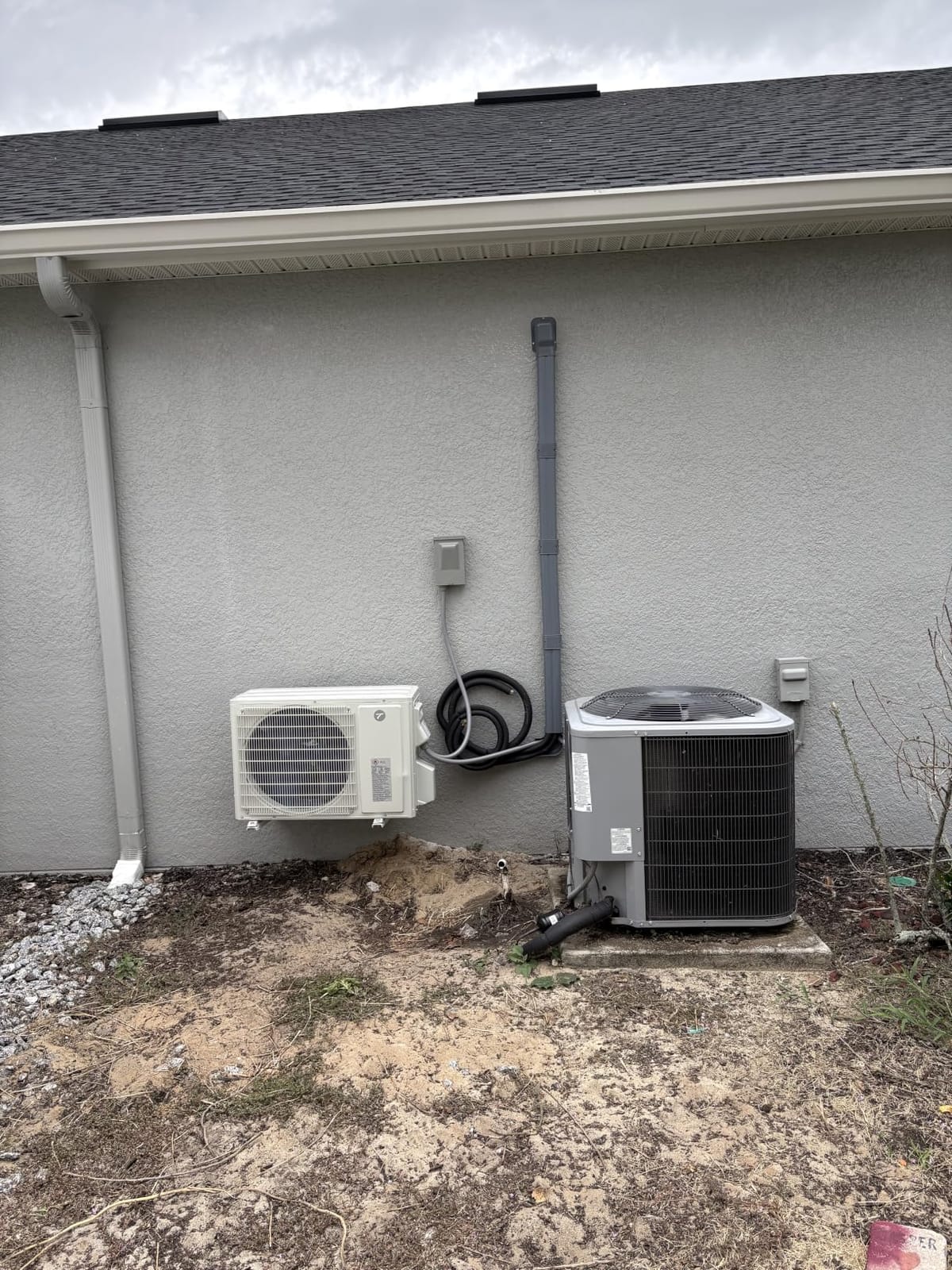
On cold-climate heating, read minimum operating temperature carefully. A 5F rating means the machine will keep running at 5F, not that it delivers full rated capacity there. The spread in this roundup is wide: the Rellytech claims -13F, the Della Vario claims -4F, and six kits stop at 5F. If you heat with the system on the coldest days of the year, ask for the certified capacity at your design temperature before you choose, because the operating floor alone will not tell you whether the room is warm.
Warranty terms are the clearest differentiator and the easiest to over-read. The Rellytech lists 8 years, the Albott lists 5 years compressor and 7 years parts, the Senville lists 5 years parts and compressor, and four kits list only 1 year. Labor is excluded across the board, and every manufacturer in this roundup requires professional or licensed installation in its documentation, so the warranty protects parts rather than your weekend.
One useful distinction from the forum data: minimum operating temperature is not rated capacity at that temperature. Cold-climate buyers who confuse the two are the source of most of the disappointed heating reviews in this category, and it is a five minute conversation with a dealer to get the certified number.
Common Mistakes That Cause Leaks, Short Cycling and Voided Claims
Almost every problem we saw in owner reports traced back to one of six mistakes, and none of them involve refrigerant.
Running the condensate drain uphill or kinking it. Leaks in mini split installations are overwhelmingly a drain line problem rather than a refrigerant circuit problem. The line needs a continuous slope with no dips, and it needs to be secured so a bracket does not pinch it later. Decide the exit point before you drill anything, and if the drain has to travel more than a few feet, add a pump.
Skipping the leak test before first startup. One kit’s manual omits this step entirely, and owners who do not source the procedure elsewhere energize the system at full load and find out later. Test the circuit with a proper method before the first full run, every time.
Coiling excess line set in a confined space. You cannot shorten a pre-charged line set without a refrigerant charge, so the excess gets coiled inside the sleeve. Coiling too tightly can stress the copper, so leave enough room to form a wide coil rather than a tight one, and buy the longest line set your measurement allows.
Oversizing the room. A machine that is too large cycles on and off, dehumidifies weakly and wears the compressor faster. Match capacity to heat load rather than to square footage alone, and if two options bracket your load, choose the smaller one.
Running an inadequate circuit. Every kit here needs a dedicated branch circuit at the listed amperage. A shared circuit or an undersized breaker causes nuisance tripping at best and compressor damage at worst, and it is the most common finding during a warranty inspection.
Not registering the product or missing the documentation. Warranty windows and registration deadlines are real, and an unregistered unit is harder to claim. Photograph the serial plate on both heads and the outdoor unit on install day, keep the manual, and register the system the week it goes in.
One last habit worth building in: measure your room before you shop, not after. Almost every return and every disappointment in this category traces back to a capacity decision made from a listing square footage figure rather than from the actual room.
Frequently Asked Questions
Who makes the best DIY mini split system?
MRCOOL and Zone Air lead the true DIY category because they ship a factory pre-charged quick-connect line set that connects without cutting, flaring or vacuuming. Among the ten kits we reviewed here, the Senville LETO led on review volume at 2185 ratings, included hardware and a five year parts and compressor warranty.
Are DIY mini splits any good?
Yes, when the equipment is right and the install is careful. A pre-charged line set removes the refrigerant work, which is the most expensive part of a ductless job, and the machines in this roundup run from 17 to 22 SEER2. Owner reports across the category show the failures come from install mistakes, drain line slope and short cycling rather than from the equipment itself.
What is the easiest DIY mini split system to install?
By our reading, the easiest true DIY path is a single-zone 115V kit with a factory pre-charged quick-connect line set of at least 16 ft, a pre-wired indoor head and no vacuum requirement. Within this roundup the Albott Easy DIY has the shortest reported install time at two to three hours because its head arrives pre-wired, though its documentation quality is the weakest.
Do DIY mini splits need a vacuum pump?
A true pre-charged quick-connect kit does not, because the sealed line set already contains refrigerant and the circuit is never opened. Several kits sold with a bundled line set do require vacuuming, and the Della Vario and Della Motto both state it explicitly. If the manual calls for vacuuming, you need a pump, gauges and EPA Section 608 certification.
Does DIY installation void a mini split warranty?
It can. Every manufacturer in this roundup specifies licensed or professional installation in its own documentation, so a homeowner install is outside the stated terms regardless of the pre-charged line set. Registration, a compliant electrical permit and commissioning by a qualified technician are what keep a claim alive in practice.
What is the cheapest DIY mini split that still works well?
The ROVSUN 9000 BTU is the lowest-cost kit in this roundup and has the strongest repeat purchase signal, with owners reporting second and third units and two years of service. Its one year warranty is the main reason it does not lead our ranking. Among the 12000 BTU kits, the Rellytech pairs 20 SEER2 with an eight year warranty.
Who makes the most reliable DIY mini split?
Reliability correlates with how long a brand has been shipping and how large its owner base is, and the Senville LETO leads this group with 2185 reviews at 4.4 stars plus a five year parts and compressor warranty. Brands sold widely through big-box retailers also win on parts availability when a claim needs a technician, which matters more than the warranty length on paper.
What size mini split do I need for my room?
Roughly 600 sq ft per ton, so a 12000 BTU 1 ton machine covers about 550 to 700 sq ft and a 9000 BTU covers 400-450 sq ft. Adjust upward for west-facing glass, a top floor, a high ceiling, poor insulation or a sunroom, and downward for a shaded insulated room. Oversizing causes short cycling and weak dehumidification.
Conclusion: Where to Start With Your DIY Mini Split Kit
Start with the room, not the brand. Measure the square footage and the wall run, check whether you have a 115V circuit with a spare slot, and then pick the machine that matches. If you have 115V service and a room between 550 and 700 sq ft, the Senville LETO is our pick of the best diy mini split kits for homeowners because its 2185-review owner history and 5 year parts and compressor warranty are the most established record in this group, and its 16 ft pre-charged line set fits most wall runs without an extension.
Pick the COSTWAY if quiet operation and a published heating efficiency number matter most to you. Pick the Rellytech if warranty length and hardware completeness matter more than review volume. Pick the Albott if you want the shortest install, and accept the documentation tradeoff. Pick the Temprium only if the one year warranty does not worry you. Pick the Della Motto if you genuinely have 230V service and a room near 1000 sq ft.
And whatever you choose, buy the circuit and the commissioning from a professional. The equipment in this roundup is good enough that the install is the variable that decides whether you enjoy the result. The best diy mini split kits for homeowners in 2026 are the ones whose line set reaches your wall, whose circuit a licensed electrician can run cleanly, and whose drain line slopes all the way to a legal exit.